1. Introduction
Global oral health challenges persist despite affecting billions worldwide. Oral cancers and related complications disproportionately burden low-resource settings like India. These challenges stem from limited access, cultural factors, and low awareness. Oral mucositis (OM), a dose-limiting toxicity in head and neck cancer radiotherapy, is a serious and common complication that can significantly impact patient outcomes and quality of life. Affecting 40–90% of patients, OM manifests as severe mucosal inflammation, ulceration, pain, xerostomia, and dysphagia. Symptoms often emerge 4–5 days after chemotherapy or after 10–30 Gy of radiation. OM prolongs recovery and necessitates supportive mouthrinses [
1,
2].
Standard interventions—low-level laser therapy, analgesics, antibiotics, and agents such as rebamipide mouthwash—offer partial relief but are associated with high costs, variable efficacy, microbial resistance, and inadequate anti-inflammatory effects amid radiotherapy-induced oxidative stress. Nanotechnology emerges as a versatile solution for oral therapeutics, enabling targeted delivery of antimicrobials with reduced toxicity [
1,
3]. Nanotechnology has revolutionized oral care by enabling precise, multifunctional therapeutics. Plant-mediated green-synthesized silver nanoparticles (AgNPs, typically 10–50 nm) have emerged as frontrunners, thanks to their broad-spectrum antimicrobial potency against oral biofilms. These AgNPs disrupt bacterial membranes, generate reactive oxygen species (ROS), inhibit quorum sensing, and eradicate multidrug-resistant pathogens. Notable examples include
Streptococcus mutans,
Staphylococcus aureus,
Enterococcus faecalis, and
Pseudomonas aeruginosa, which contribute to secondary infections in OM. Green synthesis using plant extracts outperforms chemical methods. It employs natural phytochemicals (flavonoids, phenolics, terpenoids, alkaloids) as reducing and capping agents, eliminating toxic stabilizers such as sodium borohydride or citrate, which pose risks of residual cytotoxicity and environmental harm. This biomimetic approach yields stable, monodisperse nanoparticles with prolonged colloidal stability in aqueous mouthwash. It also enhances biocompatibility through stealth properties that reduce macrophage uptake and mucosal irritation, while delivering synergistic bioactivity. Capping agents retain intrinsic anti-inflammatory (NF-κB inhibition, downregulation of IL-6/TNF-α), antioxidant (ROS scavenging), and wound-healing effects. Recent studies validate green AgNP mouthrinses. Examples include ulvan-AgNPs (8–33 nm; MIC 16–64 µg/mL vs.
S. mutans/
Candida biofilms, >90% cell viability, stable 90 days), papaya-AgNPs (30–55 nm; 85%
S. mutans biofilm reduction, MIC 31.25 µg/mL), and neem-AgNPs (20–40 nm; MIC 15.6 µg/mL vs.
P. gingivalis). All consistently achieve MICs < 100 µg/mL and provide mucositis-relevant benefits. Medicinal plants like carqueja (
Baccharis trimera), rich in quercetin and chlorogenic acid, enable rapid, room-temperature Ag
+ reduction. This makes AgNP synthesis scalable and cost-effective (70–90% savings vs. chemical routes). It also aligns with sustainable dentistry, addressing OM’s dual needs: infection control and mucosal repair [
4,
5].
2. Methods
2.1. Synthesis of Silver Nanoparticles
AgNPs were synthesized by instantaneous reduction of Ag
+ to Ag
0 at room temperature (~25 °C), as described by Franco et al. [
6], without pH adjustment or external heating.
Plant extract preparation: A commercial carqueja (Baccharis trimera) tea sachet (0.1 g; local market source) was immersed in 100 mL distilled water (98 °C) and boiled for 2 min. The same sachet underwent three sequential extractions; the third boil extract was used, yielding a final concentration of 0.1 g tea·mL−1. Extract was employed immediately post-preparation.
Nanoparticle synthesis: In a 15 mL centrifuge tube, 10 mL AgNO3 (1.0 mM, Sigma-Aldrich, St. Louis, MO, USA, 99.9% purity) was combined with 1 mL carqueja extract (final [extract] = 0.0091 g·mL−1) and vortex-mixed (30 s, 2500 rpm). Next, 100 µL of reducing solution—prepared by dissolving dextrose (Perfyl Tech, São Paulo, SP, Brazil, pharmaceutical grade) to 0.1 M in 0.1 M NaOH (Synth, Diadema, SP, Brazil, 98% purity)—was added rapidly using a micropipette, followed by vortexing (30 s, 2500 rpm). Notably, the main innovation of this protocol lies in the instantaneous synthesis of AgNPs, which does not depend on temperature control, pH changes, or other external parameters. This approach represents the first report in the literature on the use of carqueja extract for this purpose.
2.2. UV-Vis Spectroscopy
UV-Vis spectroscopic analyses were performed using a Thermo Scientific NanoDrop One spectrophotometer, Waltham, MA, USA. The AgNPs samples were placed in the 3 mL quartz cuvette. The blank was performed by water. For EBAgNP analyses, the blank was performed using the commercial vehicle. The range was from 190 to 850 nm.
2.3. Dynamic Light Scattering (DLS)
To determine the hydrodynamic radius and particle size distribution, dynamic light scattering (DLS) was used (Anton Paar, Graz, Austria, model Litesizer 100). For analysis, the sample was diluted in water and placed in a quartz cuvette with 4 polished sides, at 25 °C.
2.4. Scanning Electron Microscopy (SEM)
Morphological and surface evaluation were conducted using a field-emission SEM (MYRA 3 LMH, TESCAN, Brno, Czech Republic). A 1 µL nanoparticle suspension was placed on the sample holder and dried at 36 °C for 24 h. Samples were gold metalized using a mini Sputter Coater SC7620, Quorum Technologies, Laughton, UK. Micrographs were obtained at acceleration voltages of 10–25 kV and recorded with the instrument’s software.
2.5. Fourier Transform Infrared Spectroscopy (FTIR) with Attenuated Total Reflection (ATR)
The AgNPs were characterized by infrared spectroscopy using an Agilent Technologies Cary 620 spectrometer, Santa Clara, CA, USA, in transmittance mode. The range was 4000–400 cm−1, with 64 scans and a resolution of 4 cm−1. The analyses were carried out using dry AgNPs (freeze-dried).
2.6. AgNPs Toxicity Test in Meristematic Cells of A. cepa Roots
The A. cepa bulbs used come from local organic produce stores. Initially, the dehydrated cataphylls were removed, and the bulbs were washed with deionized water.
The roots collected from the bulbs were fixed in 3:1 Carnoy fixative (methanol (Sigma-Aldrich, St. Louis, MO, USA): acetic acid (Sigma-Aldrich, St. Louis, MO, USA) for 12 h. After that, the roots were washed with distilled water, placed in 1 M HCl (Sigma-Aldrich) for 10 min, and then washed again with distilled water. To mount the slides, the meristematic regions of the roots were crushed and stained with 2% acetic orcein (Sigma-Aldrich). These slides were analyzed under a Nikon optical microscope. After analysis, the Mitotic Index (MI) was determined for each treatment by counting 2000 cells per bulb and 10,000 per treatment. The MI was calculated as follows (Equation (1)).
The Cellular Alteration Index (IAC) was calculated using Equation (2) to assess the genotoxic potential. One thousand cells were analyzed per treatment (200 cells per bulb). The cellular changes considered were micronuclei, sticky chromosomes, chromosomal disorganization at different stages of mitosis (prophase, metaphase, anaphase, and telophase), chromosomal breaks and bridges, and polyploidy.
2.7. Obtaining EBAgNP Formulations
Four stable mouthrinse formulations were prepared by directly adding as-synthesized carqueja-AgNP dispersions to a commercial vehicle, enabling systematic evaluation across Ag concentrations. Commercial vehicle composition and function: (i) Steomatin (0.05%
w/
v): Non-ionic surfactant/poloxamer derivative acting as mucoadhesive agent and wetting enhancer to enable prolonged mucosal contact and AgNP penetration. (ii) Strawberry flavor (1.0%
w/
v): Taste-masking agent to ensure patient compliance for repeated use in oral mucositis therapy. (iii) Nipagin (methylparaben, 0.05%
w/
v): Antifungal preservative preventing microbial overgrowth during storage. (iv) Nipazol (propylparaben, 0.025%
w/
v): Antibacterial preservative complementing nipagin for full antimicrobial protection. (v) Purified water q.s.p. 100 mL: Maintains isotonicity (~300 mOsm/kg) and low viscosity for effective delivery. (vi) Formulation protocol: Sterile-filtered vehicle (0.22 µm membrane) transferred to a sterile beaker. Fresh AgNP colloid ([Ag] = 0.90 mM, UV-Vis quantified) was added dropwise under magnetic stirring (300 rpm, 25 °C) to reach desired concentrations (see
Table 1).
Final volume: 10.0 mL per formulation. Post-addition homogenization continued for 30 min at 300 rpm. All excipients comply with the Brazilian Pharmacopeia monograph standards for oral antiseptics. Formulations were stored in amber glass vials at 5 °C and 25 °C for stability assessment. This composition ensures pharmaceutical elegance (stability, sensory acceptance) while delivering therapeutically relevant AgNP concentrations (22–85 ppm) for antimicrobial efficacy evaluation against oral mucositis pathogens.
2.8. Stability of EBAgNP Formulations
2.8.1. Centrifugation Test
The newly prepared EBAgNP formulations were placed in a refrigerated centrifuge (Brand Nova Técnica, Piracicaba, SP, Brazil, model NT 805) and subjected to three centrifugation cycles at 3000 rpm for 30 min each. After each cycle, the occurrence or non-occurrence of phase separation was observed.
2.8.2. Thermal Stress
To verify the thermal behavior of the formulations, thermal stress tests were carried out. A 2 mL volume of each formulation was heated in a water bath with circulation (Solab brand, model SL-154/10, Piracicaba, SP, Brazil) at a temperature range of 30 °C to 70 °C. It was increased by 5 °C every 30 min to evaluate the occurrence of phase separation. The test followed the classifications: no change (SA), slightly modified (LM), modified (M), intensely modified (IM), and phase separation (SF), as described by Brasil [
7].
2.9. Stability of EBAgNP over 60 Days
2.9.1. pH Measurement
The pH of EBAgNP was measured using a pH meter, model Satra PHS-3E, Forlab, São Paulo, SP, Brazil, with a glass electrode.
2.9.2. Surface Tension
The drop method was used to determine surface tension [
8]. The EBAgNP was placed in a pipette to form drops, which fell into a watch glass, allowing precise measurement of the droplet mass. The analysis was performed in quintuplicate. The analytical balance used was a Urano UA220, Caxias do Sul, RS, Brazil. Surface tension was obtained by Equation (3).
where:
γ is surface tension (N/m),
g is acceleration of gravity (m/s
2),
r is droplet radius, and
m is the mass (Kg) measured on the scale.
2.10. Antimicrobial Activity of EBAgNP
For antimicrobial activity tests, the broth microdilution method [
9] was used with adaptations. Serial concentrations of 500, 250, 125, 62.5, 31.25, 15.62, 7.81, 3.91, 1.95, and 0.98 µL mL
−1 were tested. The materials studied were EBAgNP at 85 ppm, carqueja tea extract at the proportion used for synthesis, and the commercial vehicle. The following microorganisms were tested: Gram-positive bacteria (
Staphylococcus aureus subsp.
aureus Rosembach INCQS 00381 (ATCC 29213),
Staphylococcus epidermidis INCQS 00016 (ATCC 12228), and
Enterococcus faecalis INCQS 00017 (ATCC 4083)), Gram-negative bacteria (
Escherichia coli INCQS 00033 (ATCC 25922) and
Pseudomonas aeruginosa INCQS 00230 (ATCC 9027)), and the yeast
Candida albicans INCQS 40006 (ATCC 10231). All cultures were obtained from the Collection of Reference Microorganisms in Health Surveillance (CMRVS), FIOCRUZ-INCQS, Rio de Janeiro, RJ, Brazil. To prepare the inocula, cultures were activated in BHI broth (Himedia, Mumbai, India) at 37 °C for 24 h, then streaked by exhaustion on Plate Count Agar (Kasvi, Pinhais, PR, Brazil) plates at 37 °C for 24 h. Inocula from isolated colonies were standardized to 0.5 MacFarland scale (1.0 × 10
8 CFU.mL
−1) using a spectrophotometer (Kasuaki, model IL-227, São Paulo, SP, Brazil) at 625 nm for bacteria and 530 nm for yeast. Two serial dilutions were performed: first, a 1:10 dilution in saline solution (1.0 × 10
7 CFU.mL
−1), then another 1:10 dilution in Muller Hinton Broth (Kasvi, Pinhais, PR, Brazil) (1.0 × 10
6 CFU.mL
−1). 50 µL of the inoculum was added to each well, yielding 5.0 × 10
5 CFU.mL
−1. The microplates were incubated at 37 °C for 24 h. To check the MIC, 50 µL of 0.01% resazurin (Inlab, São Paulo, SP, Brazil) indicator was added to each well, and the plate was incubated for four hours before reading. The development of pink color indicated microbial growth; the persistence of blue color indicated inhibition. MBC and MFC were verified by plating each well onto Mueller-Hinton Agar before MIC reading. The plates were incubated at 37 °C for 24 h. The lack of colony development indicated bactericidal or fungicidal activity, as evidenced by the MBC and MFC values. Negative controls (only Mueller-Hinton broth at the highest and lowest concentrations for each treatment) and positive controls (only the inocula) were included. All assays were performed in quadruplicate for each microorganism.
2.11. Preliminary Ex Vivo Efficacy: EBAgNP-85 Performance Against Native Human Oral Microbiota (n = 4 Healthy Volunteers)
As preliminary screening for real-world translatability, EBAgNP-85 (85 ppm) was tested against complex native oral biofilms collected via standardized self-swabbing from 4 healthy volunteers (2 adults: AdMasc/AdFem; 2 adolescents: Adoles1/Adoles2; Ethics CAAE 86701125.6.0000.8156). This ex vivo assay [
10] simulates mouthrinse exposure to >700 bacterial species [
11], thereby representing a more realistic polymicrobial challenge than axenic cultures.
To obtain the inoculum, samples of bacteria from the inner cheek of the volunteers were collected using a sterile SWAB, which was swabbed in the oral cavity for 5 to 10 s by the volunteer himself. The procedure was performed in triplicate. The SWAB was then placed in a test tube containing previously autoclaved Muller-Hinton (Kasvi, Pinhais, PR, Brazil) broth. The inocula were taken to a bacteriological culture greenhouse (Nova Técnica, Piracicaba, SP, Brazil) and incubated for 24 h at 35 °C. After preparing the inoculum, the mouthwash’s antimicrobial activity was tested. In a 96-well microplate, a 50 mL aliquot of the inoculum from each volunteer was added individually. Next, 50 mL of mouthwash was pipetted into the plate cavities, a process performed in triplicate. The negative control was performed on the same plate containing only the broth and inoculum. After adding the inoculum to the plates, the absorbance was measured with a KASUAKI microplate reader (model DR-200BS-NM-BI, Araucária, PR, Brazil) at 630 nm. Next, the microplates were placed in the bacteriological oven and incubated for 24 h at 35 °C. Finally, the final absorbance reading was performed.
To calculate bacterial growth percentages, absorbance measurements were taken on the day of inoculation (initial absorbance) and after 24 h of incubation (final absorbance). The percentage calculation was performed using Equation (4).
where:
Afm = average of final absorbances;
Aim = average of initial absorbances
3. Results and Discussion
The formation of AgNPs occurs shortly after the addition of the reducing solution, as it was observed that the color of the reaction medium changed from yellow to brown.
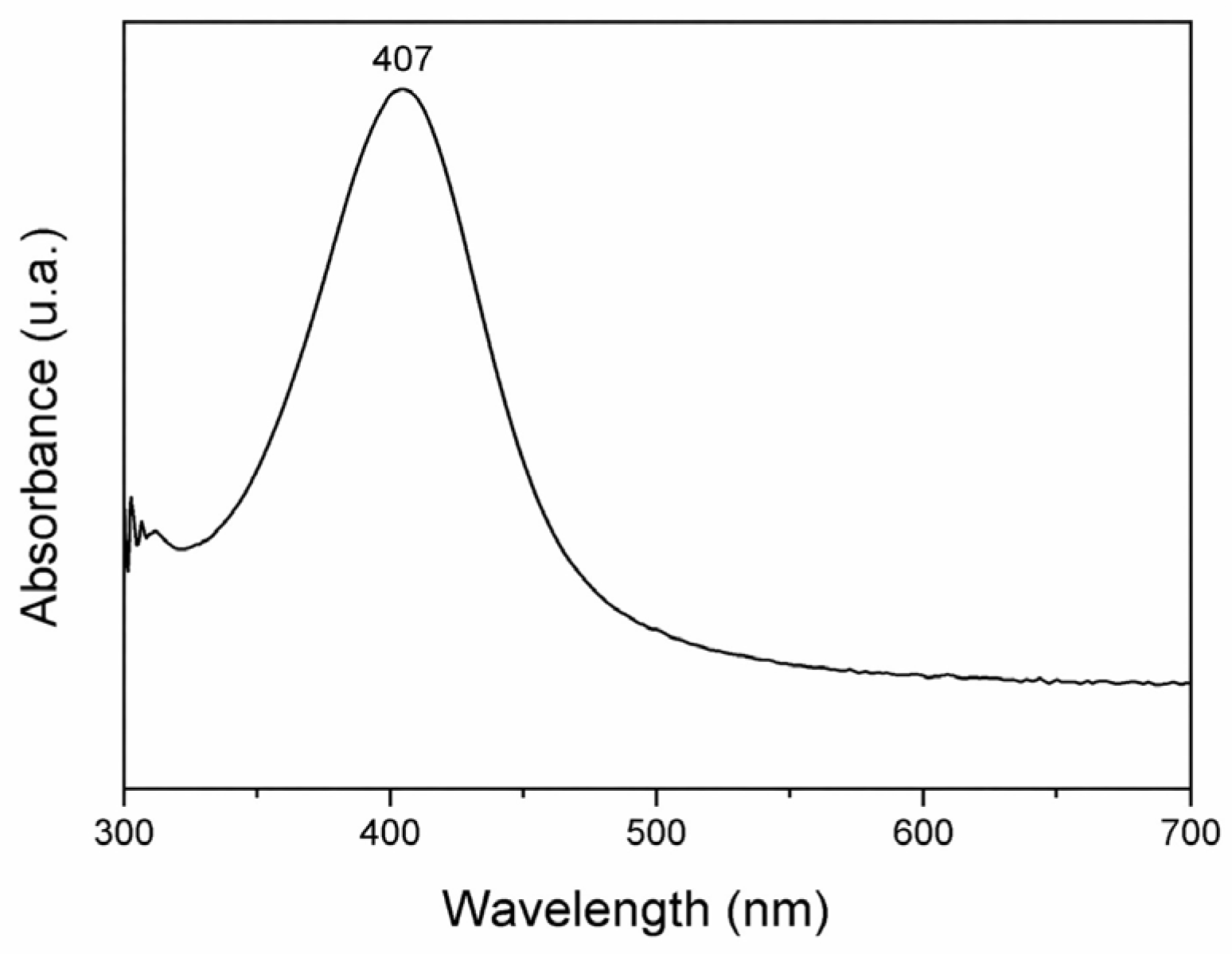
Figure 1 shows the result of the UV-Vis spectrum of the newly prepared AgNP, with the presence of the plasmon band (surface plasmon resonance) around 407 nm.
The surface plasmon resonance (SPR) band at 407 nm confirms metallic AgNP formation, as λmax < 420 nm is characteristic of spherical silver nanoparticles, and the average size is below 50 nm. MD ALIM-AL-RAZY [
12] found that the closer to 400 nm the absorption maximum is, the smaller the diameter. On the other hand, RAMAZANLI and AHMADOV [
13] observed that the size, shape, and size distribution of the particles in the colloidal dispersion influence the absorption amplitude, shape, and width of the plasmonic band.
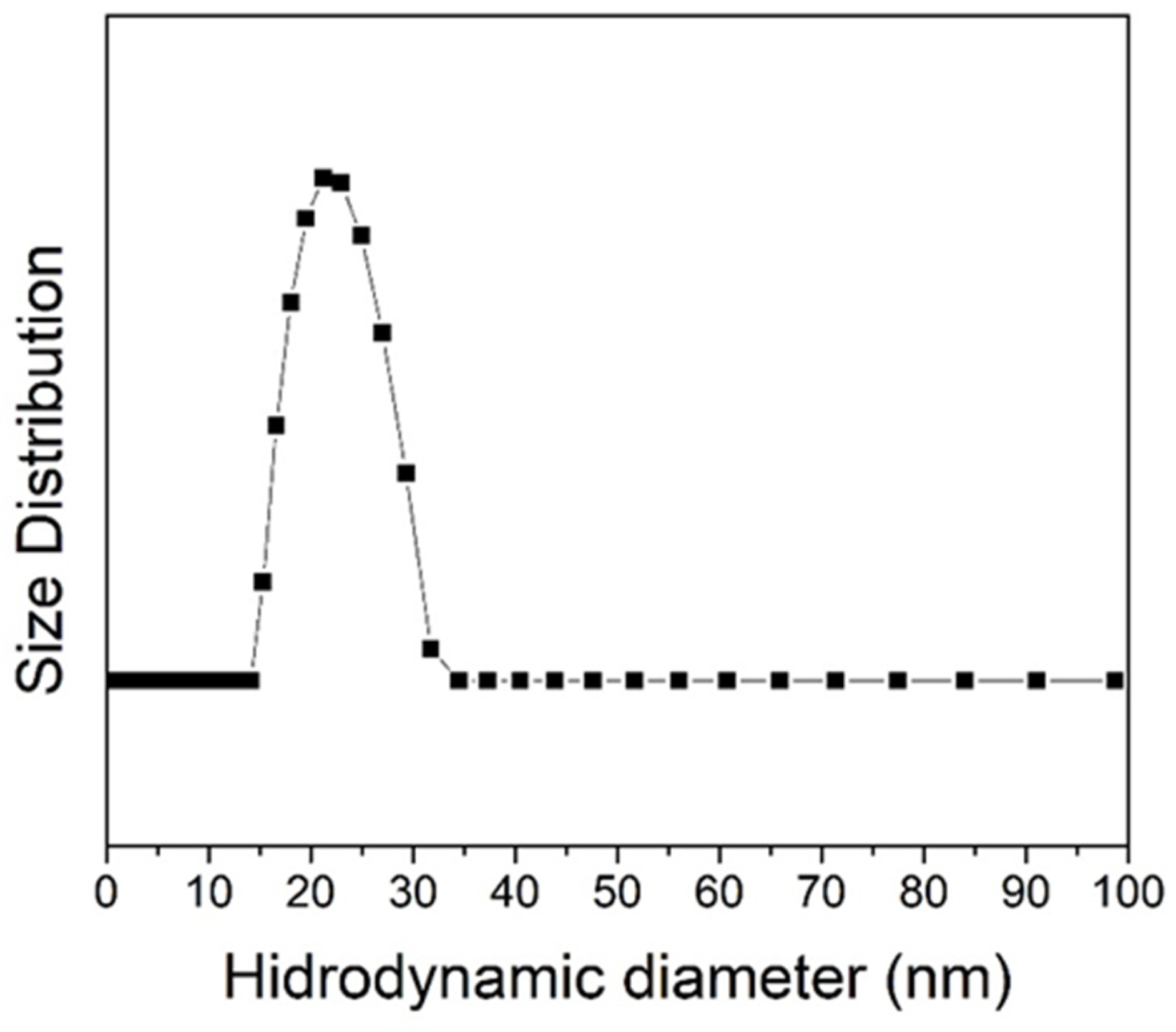
Figure 2 presents the result of the average hydrodynamic radius for AgNPs.
The obtained particle size distribution exhibited a monomodal profile with a hydrodynamic diameter of 25 nm and a polydispersity index (PDI) of 0.24, as determined by dynamic light scattering (DLS). A PDI value below 0.3 indicates high homogeneity and low polydispersity, indicating a stable, uniform nanomaterial suitable for colloidal applications. Monomodal distributions are advantageous in nanotechnology, as they reduce variability in bioavailability, colloidal stability, and pharmacological response compared with polymodal systems that are prone to aggregation [
14]. In comparison, Lima [
15] reported PDI values ranging from 0.20 to 0.35 for silver nanoparticles synthesized using extracts from different parts of
Paullinia cupana Kunth, with the lowest PDI (0.20) achieved from seed extracts, reflecting similarly low polydispersity suitable for antimicrobial applications. Our PDI of 0.24 aligns closely with their optimal results, suggesting comparable synthesis efficiency via green routes, though our monomodal distribution may confer enhanced stability over their slightly broader range. The result corroborates the plasmon band, with the absorption maximum indicating particles smaller than 50 nm, consistent with DLS-derived hydrodynamic diameters typically below this threshold for green-synthesized AgNPs. Together, these characterizations affirm the nanoparticles’ suitability for biomedical applications, with enhanced stability over time [
16].
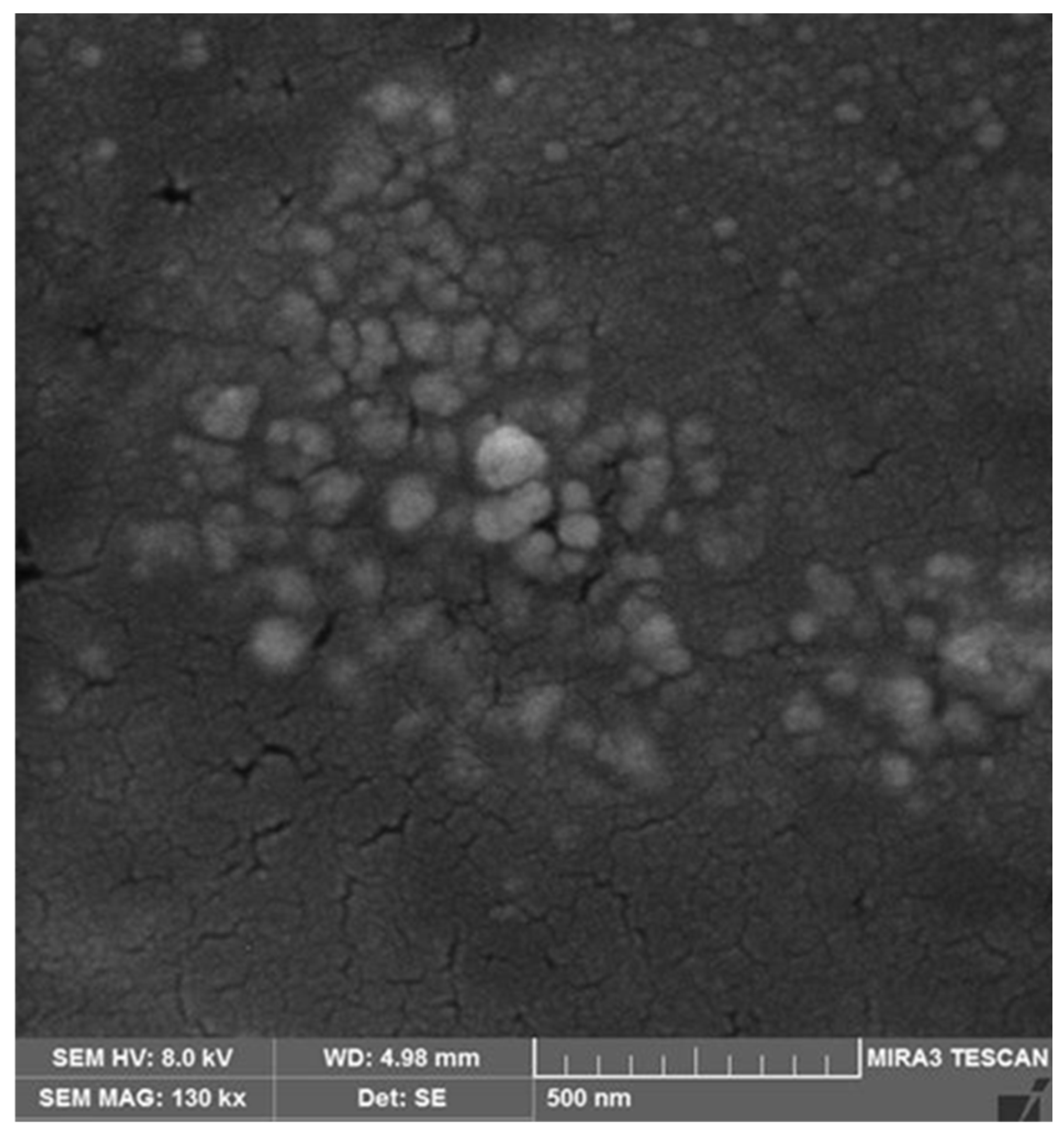
The morphology and size of the nanoparticles were evaluated using scanning electron microscopy. The image obtained is in
Figure 3.
The synthesized AgNPs exhibited a size range of 25–35 nm and a predominantly spherical morphology, as confirmed by SEM. This size range and shape profile are particularly advantageous, enabling enhanced cellular penetration [
17], superior antimicrobial efficacy [
18], and improved solubility in aqueous media [
19], which are critical for biomedical and pharmaceutical applications. Our AgNPs exhibit nanoscale dimensions and spherical uniformity comparable to those reported by Ansari et al. [
20], who obtained 20–40 nm particles using tomato plant extracts for agricultural applications, and by Paul et al. [
21], who achieved 15–30 nm spherical neem-derived nanoparticles with strong bioactivity. Similarly, Bharathi et al. [
22] synthesized 10–50 nm spherical AgNPs via
Merremia quinquefolia leaf extract, highlighting consistent outcomes across green synthesis routes. These alignments affirm the robustness of carqueja-mediated approaches, positioning our particles as equally promising for targeted therapies due to their optimal size for bioavailability and minimal aggregation.
Infrared spectroscopic analyses were conducted to investigate how the chemical compounds in the aqueous plant extract contribute to nanoparticle stabilization.
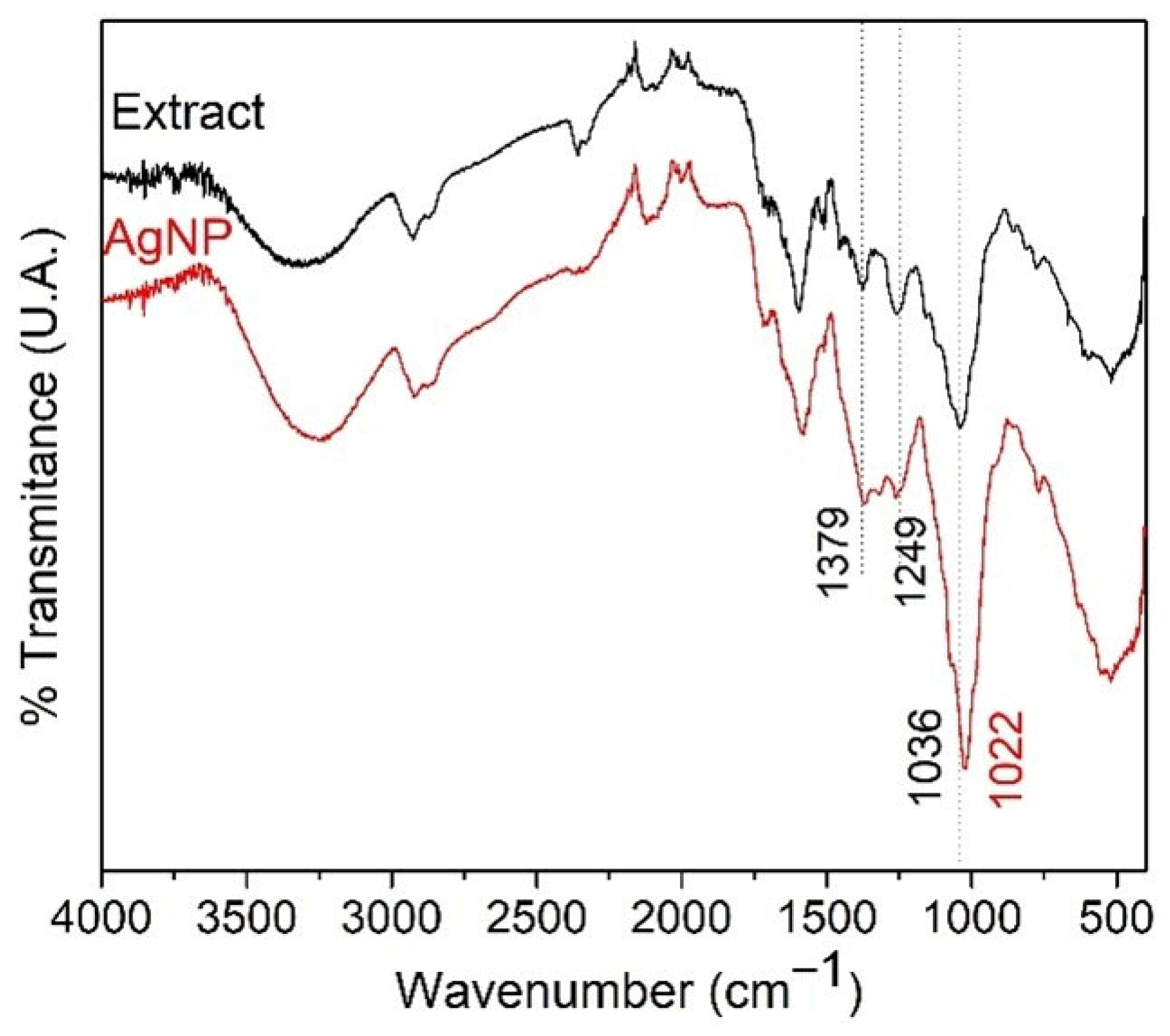
Figure 4 presents a comparison of the FTIR spectra results for the carqueja extract and AgNPs.
The bands observed in the spectra of both the carqueja extract and AgNPs are similar, suggesting that the compounds on the nanoparticle surface are derived from the tea. Specifically, the band at 1036 cm
−1 (extract) corresponds to the C–OH stretching, which is, for example, associated with quercetin, a flavonoid found in tea. In the nanoparticle spectrum, this band shifts to a lower wavenumber (1022 cm
−1), indicating a change in the chemical bond and suggesting that the biomolecules in the extract interact with the nanoparticle surface via their oxygen atoms. Furthermore, bands at 1379 and 1249 cm
−1 are associated with the C–O–C bond and are characteristic of phenolic compounds [
23]. Together, these findings indicate that multiple chemical compounds from carqueja tea are present on the nanoparticle surface, likely acting synergistically to stabilize the AgNPs. Moreover, the presence of phenolic compounds on the nanoparticles may enhance their antimicrobial properties [
24]. Additionally, the AgNPs exhibited an SPR band at 407 nm (UV-Vis), a hydrodynamic diameter of ~25 nm with a monomodal distribution (DLS), a spherical morphology of 25–35 nm (SEM), and carqueja-mediated stabilization via phytochemical coordination (FTIR-ATR).
To evaluate potential toxicity and contribute to studies aimed at preventing harm to human health, the cytogenotoxicity test on
Allium cepa roots is an effective method. This test is commonly used for initial toxicity screening due to its low cost, high reliability, and strong correlation with other assessment methods [
25].
Table 2 presents the results of the mitotic index (MI) and cellular alterations.
The results demonstrated that the nanoparticles exhibited neither cytotoxic nor genotoxic effects, a highly significant finding. These findings suggest that incorporating AgNPs into products for human use is safe and poses no health risks. This evidence further supports the potential of AgNPs for safe inclusion in EB formulations intended for people. The results show that increasing the concentration of AgNPs in the mouthwash may increase Eb’s toxicity; however, since the defined concentrations are for application, this suggests that using Eb at the tested concentrations is safe. Having confirmed the safety of adding AgNPs to consumer products, we proceeded to develop the formulations and initiated a preliminary stability assessment, including 60 days of monitoring. Our results align with de Casillas-Figueroa [
26], who found no cytotoxicity or genotoxicity of PVP-stabilized AgNPs (5–100 µg/mL) in
Allium cepa. Dental studies also show AgNPs are more effective antimicrobials than traditional agents, with minimal cytotoxicity. Subchronic rat studies (e.g., Fernandez [
27]) confirm low oral toxicity at relevant doses, mainly because silver ions are excreted without causing systemic harm. Overall, these findings support the suitability of our AgNPs for oral EB formulations, as they address concerns about ROS-induced oxidative stress while providing broad-spectrum antimicrobial benefits. The fundamental mechanisms of the cell cycle—such as cell division progression and checkpoint regulation at the G1/S and G2/M transitions—are highly conserved among eukaryotic organisms. Likewise, key processes, including mitotic spindle organization (mediated by microtubules) and DNA damage response pathways, show strong structural and functional conservation [
28,
29].
In this context, the Allium cepa assay is widely used as a bioindicator of cytotoxicity and genotoxicity. It is considered a sensitive and reliable model for detecting cytogenetic alterations caused by environmental contaminants. Changes in the mitotic index and the presence of chromosomal aberrations reflect disruptions in essential cellular processes conserved across eukaryotes.
The preliminary stability of the EBAgNP formulation was evaluated using centrifugation. After three centrifugation cycles, no solid precipitation was observed, suggesting that the formulations were stable. A thermal stress test was conducted to assess the resistance of the AgNPs in the mouthwash formulation to high temperatures. Key parameters, such as visual appearance, phase separation, and homogeneity, were monitored. No changes were observed at any of the tested temperatures (30, 35, 40, 45, 50, 55, 60, 65, and 70 °C), indicating that the formulations’ thermal stability was unchanged and designating them “No Change” (NC). To further assess stability, UV-Vis analysis was used over 60 days to observe AgNP behavior in the EB base.
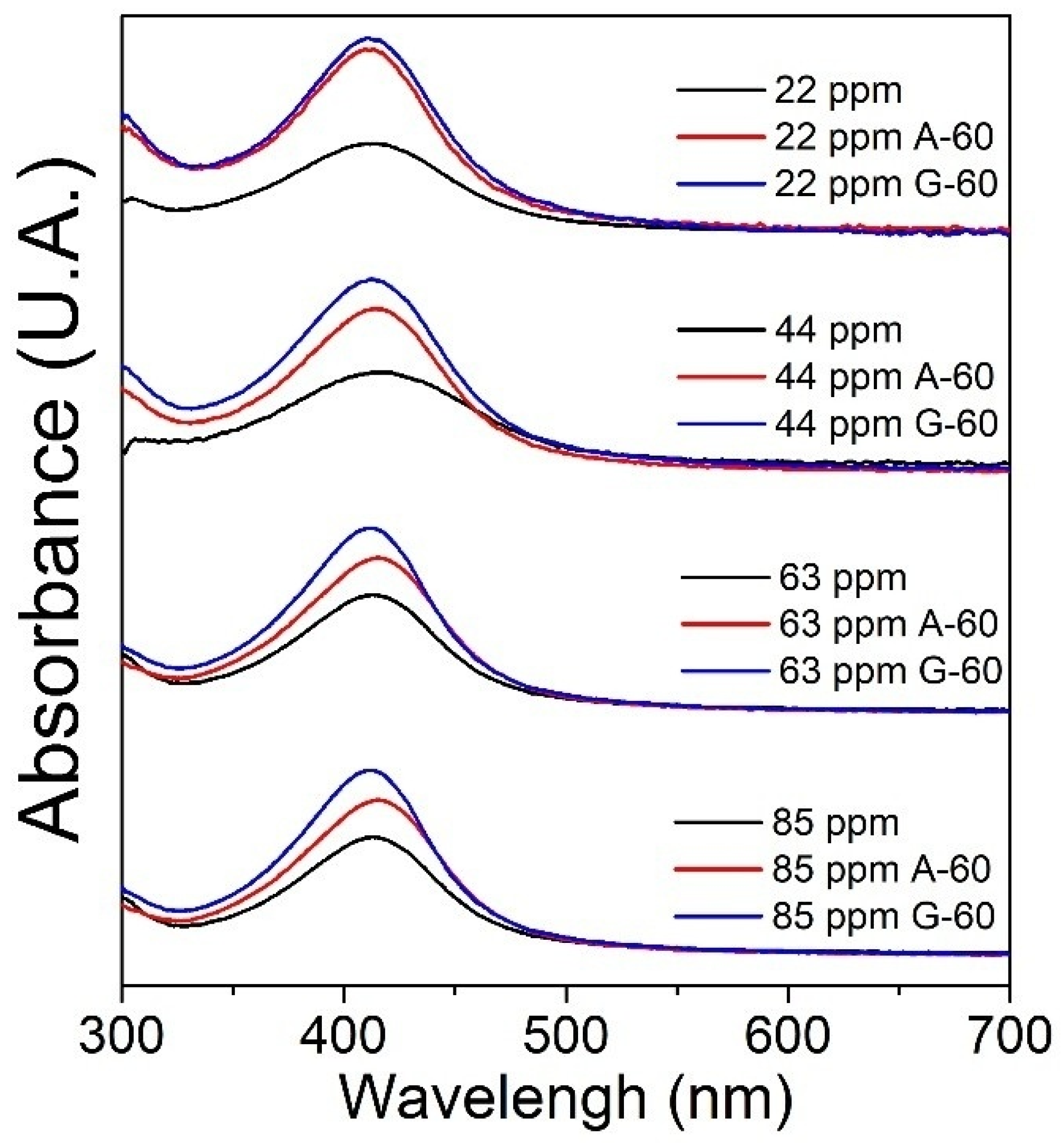
Figure 5 shows the UV-Vis spectra of mouthwash formulations stored in a refrigerator (G, 5 °C) and at room temperature (A, 25 °C).
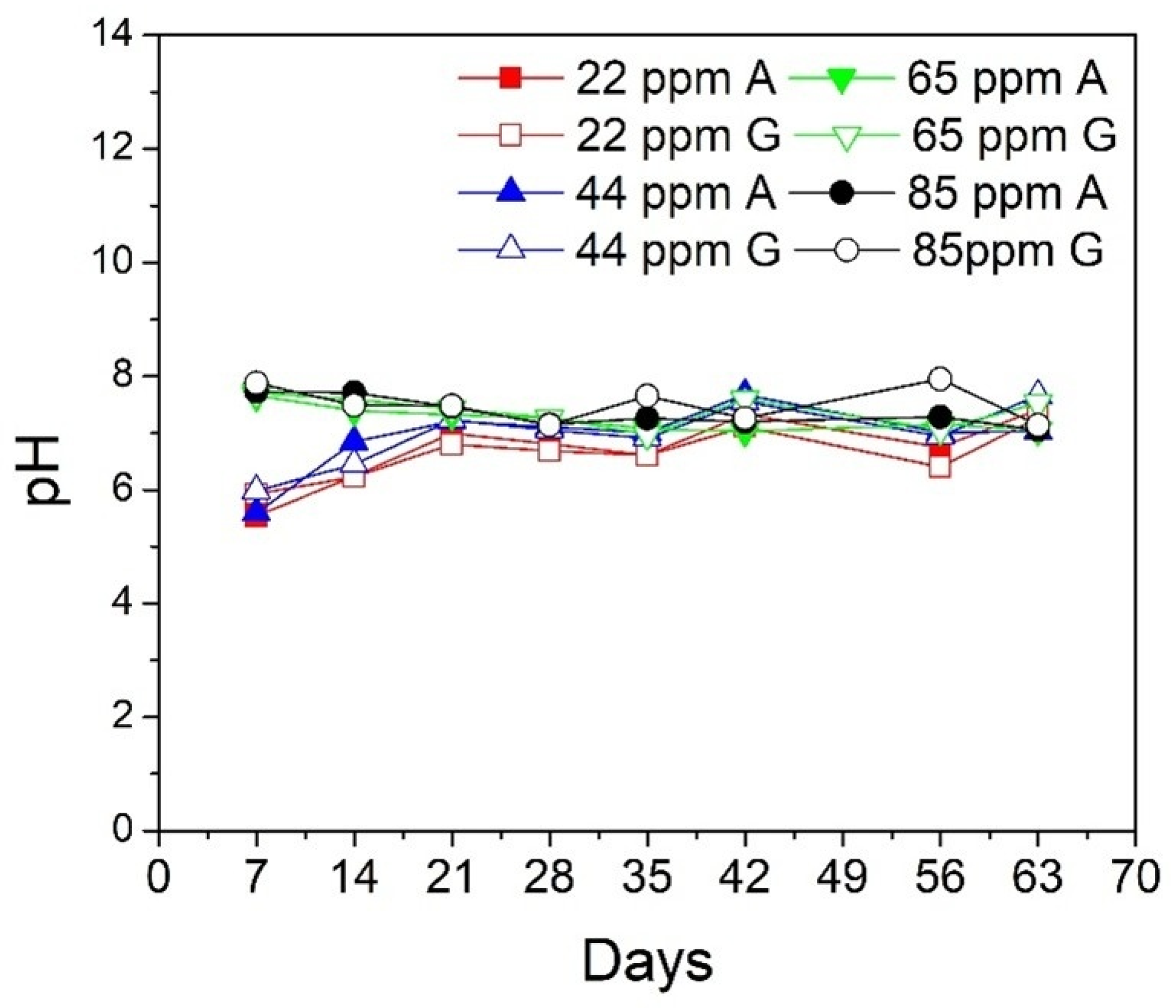
The UV-Vis spectra results for the four EB formulations, stored at both 25 °C and 5 °C, showed a consistent plasmon band across all spectra. This suggests that the AgNPs remained stable, with their nanoparticle size preserved, regardless of the storage temperature. The pH measurements taken over the 60 days are presented in
Figure 6.
The pH values observed over time remained near neutral, indicating that the EBAgNPs are unlikely to compromise tooth enamel. Maintaining a near-neutral pH is crucial to prevent demineralization and protect tooth structure [
30].
In the initial days, the EBAgNPs exhibited a slight increase in pH, which then stabilized after one week and remained consistent throughout the 60-day study period. This behavior indicates that the inclusion of AgNPs in the mouthwash base does not significantly affect the pH, ensuring that tooth enamel remains unaffected. Notably, Lima et al. [
15] measured the pH of commercial EBs and found that many products were neutral, a trend also observed in this study, highlighting the importance of pH control. The results for the surface tension of EBAgNPs are presented in
Figure 7.
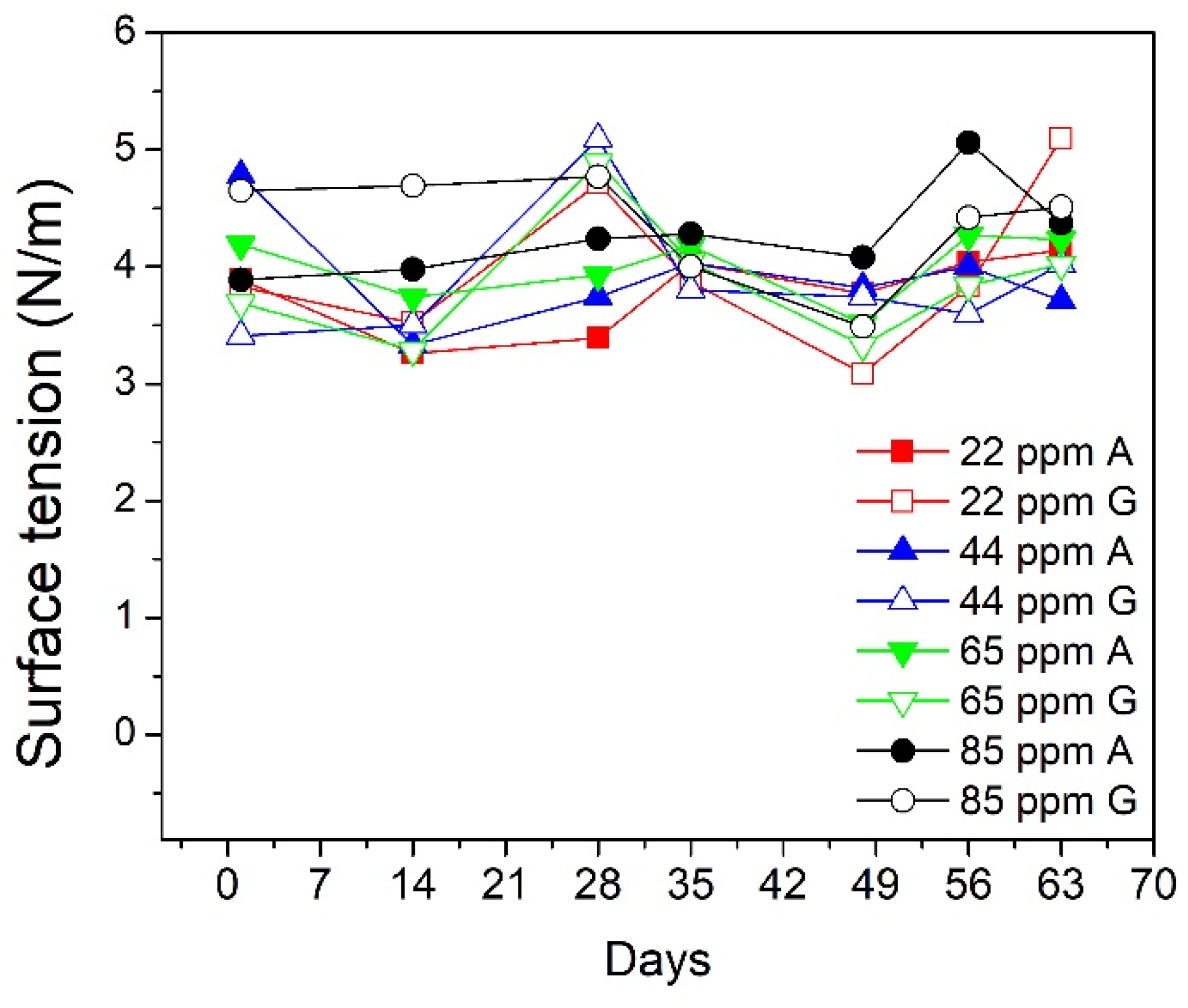
The surface tension values of the mouthwashes were very low, below 5 N/m. This suggests that the solution may penetrate the dental tissues more effectively (Pretel et al. [
31] and demonstrate improved spreadability and penetration of EBAgNP into the oral cavity [
32], indicating enhanced efficacy of the formulation.
An essential characteristic for evaluating EBAgNP is its antimicrobial activity. The carqueja extract, EB base, and EBAgNP were tested against various microorganisms. The results for the minimum inhibitory concentration (MIC), minimum bactericidal concentration (MBC), and minimum fungicidal concentration (MFC) are shown in
Table 3. After performing MIC and MBC analyses, it was observed that neither the carqueja extract nor the commercial base exhibited antimicrobial activity against the tested cultures (MIC and MBC > 500 µL/mL). In contrast, the EBAgNP sample (85 ppm) demonstrated MIC values against all tested bacteria, indicating excellent inhibition of bacterial growth against several pathogens commonly found in the oral cavity. The MBC of EBAgNP was effective against
Pseudomonas aeruginosa, a bacterium known for its resistance to many antibiotics.
It is important to emphasize that the antimicrobial activity was attributed to the presence of AgNPs in the mouthwash formulation, as the commercial vehicle alone did not inhibit bacterial growth under the tested conditions. The antimicrobial behavior of EBAgNP closely resembles that observed by Abadi et al. [
33]. In patients with oral mucositis who have ulcerations and compromised mucosal barriers, the risk of secondary bacterial and yeast infections increases. Inhibiting the growth of a broad spectrum of pathogens promotes the healing of mucosal lesions. Consequently, the use of EBAgNP can accelerate the restoration of natural oral flora at the conclusion of treatment [
34].
Unfortunately, against
Candida albicans—a major opportunistic pathogen in head and neck cancer patients undergoing radiotherapy—the EBAgNP mouthwash formulation showed no antifungal activity at tested concentrations (MIC/MFC > 500 µg/mL). Soliman et al. [
35] emphasize the high incidence of
Candida-driven fungal infections complicating mucositis treatment in immunocompromised cancer patients. The lack of antifungal activity in the mouthwash may be a limiting factor in the product’s use. However, the formulation demonstrated robust broad-spectrum activity against key bacterial pathogens (
P. aeruginosa bactericidal 125 µg/mL; Gram+ MICs 62.5–250 µg/mL), representing a promising advancement for bacterial secondary infection control.
Building on the promising in vitro results, in which only the EBAgNP mouthwash demonstrated antimicrobial activity against reference pathogens, we conducted a preliminary pilot case study to provide initial evidence of real-world translatability. This ex vivo case series (
n = 4 healthy volunteers: 2 adults—AdMasc, AdFem; 2 male adolescents—Adoles1, Adoles2) assessed EBAgNP-85 performance against the complex native oral cavity.
Table 4 presents the results for bacterial growth inhibition in the oral cavity.
Analysis of
Table 4 shows that microbial growth in the oral microbiota was significantly lower in the EBAgNP medium, confirming the product’s effectiveness against a broad range of microbial species [
11]. Notably, for Adolescent 1, a marked decrease in bacterial load—as indicated by lower absorbance after incubation—suggests a more pronounced inhibition of bacterial growth.
The results for the oral microbiota align with the MIC data, confirming the inhibition of microorganism growth across all individuals studied. These findings are particularly relevant, as oral mucositis is caused by microorganisms in the patient’s microbiota when immune function is compromised by radiotherapy. Therefore, demonstrating the efficacy of EBAgNP in this context underscores the potential of this innovative product to improve the quality of life for cancer patients and contribute to social well-being.




 ,
,