1. Introduction
In the recent century, the accelerating accumulation of plastic waste, coupled with its low recycling efficiency and persistent release into terrestrial and marine environments, has escalated into a global environmental crisis [
1,
2,
3]. In parallel, biomass residues from cities, industries, and agriculture have increased rapidly, placing additional pressure on current waste management systems and natural resources [
4,
5]. Together, these converging waste streams underscore the urgent need for advanced valorization pathways that can transform plastic and biomass waste into value-added products within a circular and low-carbon framework [
1,
3,
5]. On the other hand, the rapid growth of plastic production has led to significant waste accumulation, highlighting the need for efficient waste-to-energy conversion technologies such as thermochemical processing [
6].
Global plastic production has expanded to unprecedented levels, with annual output surpassing several hundred million tons, reflecting a persistent rise in consumption and waste generation worldwide [
1]. Similarly, the continuous growth of organic and biomass residues, driven by rapid urbanization, industrial expansion, and agricultural activities, has intensified global solid-waste generation [
5,
6].
Landfilling remains one of the least sustainable disposal options, as non-biodegradable plastics persist for decades in soil and water, causing progressive contamination and accelerating the degradation of surrounding ecosystems [
7]. The growing volumes of single-use plastics have intensified pressure on landfill capacity, while the inability to recover materials from buried waste prevents any contribution to circular economy targets [
8]. Incineration, although capable of energy recovery, generates hazardous airborne pollutants and volatile organic compounds (VOCs), requiring advanced emission-control systems to mitigate environmental and health risks [
1].
Global sustainability frameworks increasingly emphasize circular economy principles, encouraging transitions from linear production models toward regenerative systems that minimize waste, enhance resource efficiency, and reduce environmental burdens [
2]. Aligned with these efforts, waste-to-energy strategies have gained prominence as nations explore pathways that simultaneously reduce landfill dependence and recover energy from residual waste streams, particularly in regions actively expanding waste valorization technologies [
4]. These policy directions collectively reflect a broader global push toward low-carbon transitions, where integrating renewable energy systems, closing material loops, and promoting carbon-efficient waste valorization routes support long-term climate mitigation ambitions [
5].
Conventional thermochemical pathways, including pyrolysis, gasification, reforming, and catalytic cracking, represent the most established routes for converting plastic and biomass waste, yet they suffer from persistent operational and performance drawbacks that limit their broader deployment [
9,
10]. These methods often require high temperatures and energy-intensive conditions, which can lead to severe tar formation, catalyst deactivation, unstable heat transfer, and inconsistent product distributions, particularly when processing heterogeneous or mixed waste streams [
9,
11].
In thermochemical conversion of plastic waste, extensive coke deposition, complex volatile compositions, and difficulties in achieving process stability without advanced control strategies [
12] frequently hinder the process [
9,
10,
13]. Similarly, biomass conversion encounters challenges associated with its intrinsic variability, the formation of oxygenated intermediates, and the production of condensable fractions, all of which complicate downstream handling [
9,
14]. Biological and hybrid routes such as fermentation also remain constrained by slow kinetics, feedstock impurities, and sensitivity to operating conditions, further limiting their scalability and economic viability [
15]. Biomass gasification is a key thermochemical route for producing energy-rich syngas, though its scale-up remains limited by biomass quality constraints and the formation of tar and other contaminants during conversion [
16]. Beyond catalytic and heat-transfer challenges, variations in the stream’s physicochemical parameters can lead to operational instabilities and performance losses through multiple pathways [
17]. For example, in porous media, these parameters can disrupt particle–surface interactions and reduce permeability via fine-particle migration and/or swelling [
18]. Collectively, these limitations underscore the need for more efficient, controllable technologies, motivating the exploration of intensified systems, such as membrane reactors (MRs), that can overcome heat- and mass-transfer limitations, mitigate catalyst deactivation, and enhance conversion selectivity. Alongside process-design approaches and intensified integration of reaction–separation systems, microscale surface-engineering strategies can also be considered to stabilize performance [
19]. For instance, review studies indicate that nanoparticles—through mechanisms such as reducing zeta potential, altering interfacial interaction energy, and modifying pH and surface roughness—can mitigate fine-particle migration and its associated impacts [
20].
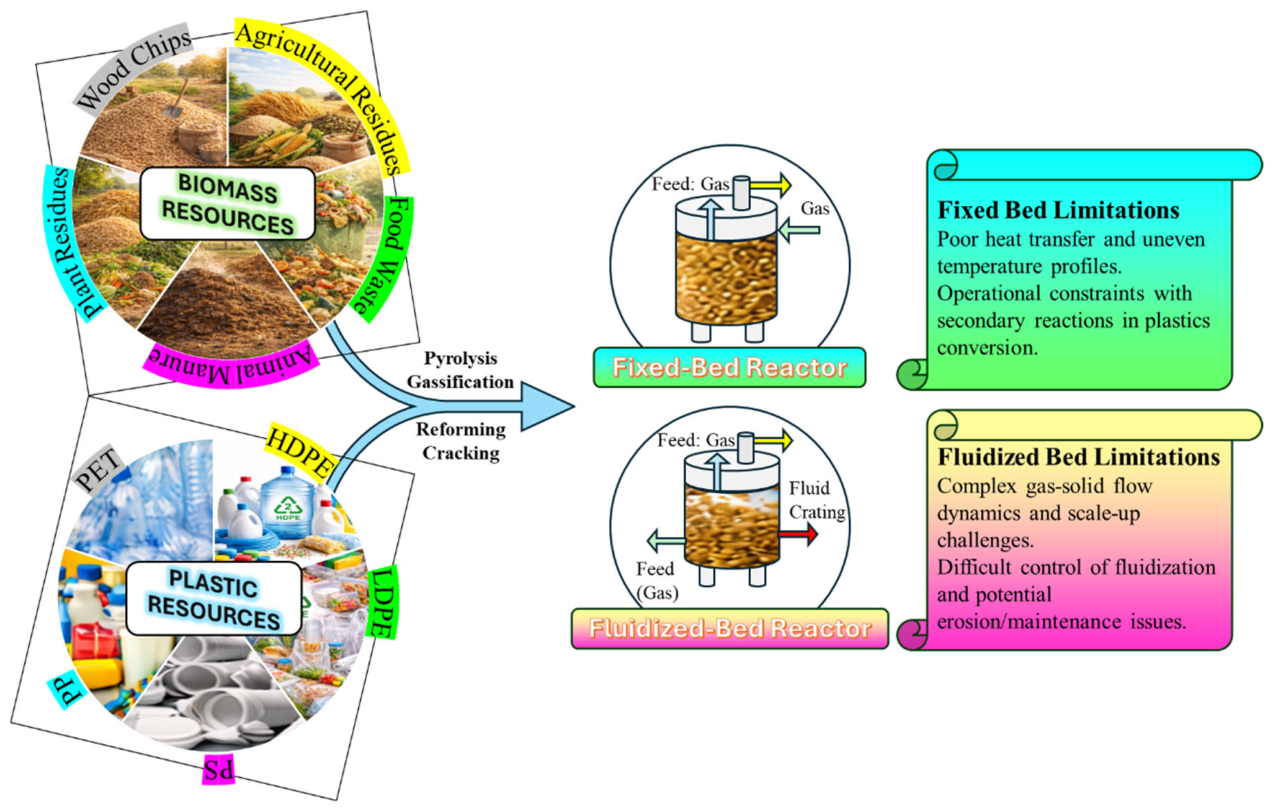
Conventional reactor configurations, including packed-bed, fixed-bed, and fluidized-bed systems, often fall short in processes where reaction progress is constrained by equilibrium limits or where byproducts accumulate within the reaction zone [
21]. Fixed-bed reactors are widely employed in biomass pyrolysis because of their relatively simple design and operational flexibility; nevertheless, limited heat-transfer efficiency within the packed bed can result in non-uniform temperature distribution and uneven heating of biomass particles. In contrast, fluidized-bed reactors enhance mixing between solids and the fluidizing gas, enabling more homogeneous temperature profiles and improved heat-transfer performance, which has made them attractive for rapid thermochemical conversion and larger-scale applications [
22]. These units generally lack the capacity to selectively remove formed species during operation, thereby intensifying mass-transfer resistance, promoting catalyst deactivation, and necessitating elevated temperatures to sustain acceptable conversion levels. Moreover, relying on downstream separation steps introduces additional energy penalties and operational complexity, making these traditional systems less suited for processes that demand high selectivity, efficient heat removal, or tight control over reaction pathways. As a result, such reactors often exhibit reduced efficiency, shortened catalyst lifetimes, and increased environmental footprint, highlighting inherent constraints on their ability to deliver intensified, low-energy chemical transformations [
23].
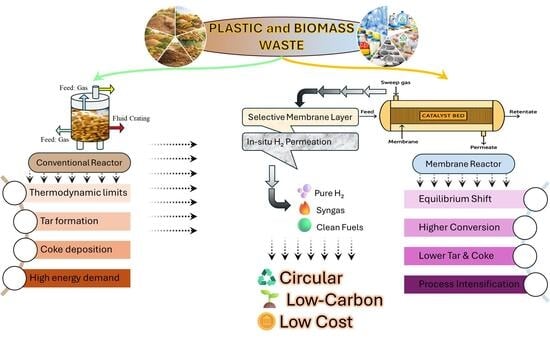
Figure 1 schematically summarizes the main biomass and plastic valorization pathways and highlights the key characteristics of the two most commonly employed reactor configurations, namely fixed-bed and fluidized-bed reactors [
22,
24,
25]. These reactor types are widely used in thermochemical conversion processes due to their distinct hydrodynamic and operational features. Depending on process requirements, different types of membranes can be incorporated into either fixed-bed or fluidized-bed systems to enhance performance through selective transport and improved reaction–separation integration. Thus, both configurations provide flexible platforms for both conventional and membrane-assisted operation in biomass and plastic conversion processes.
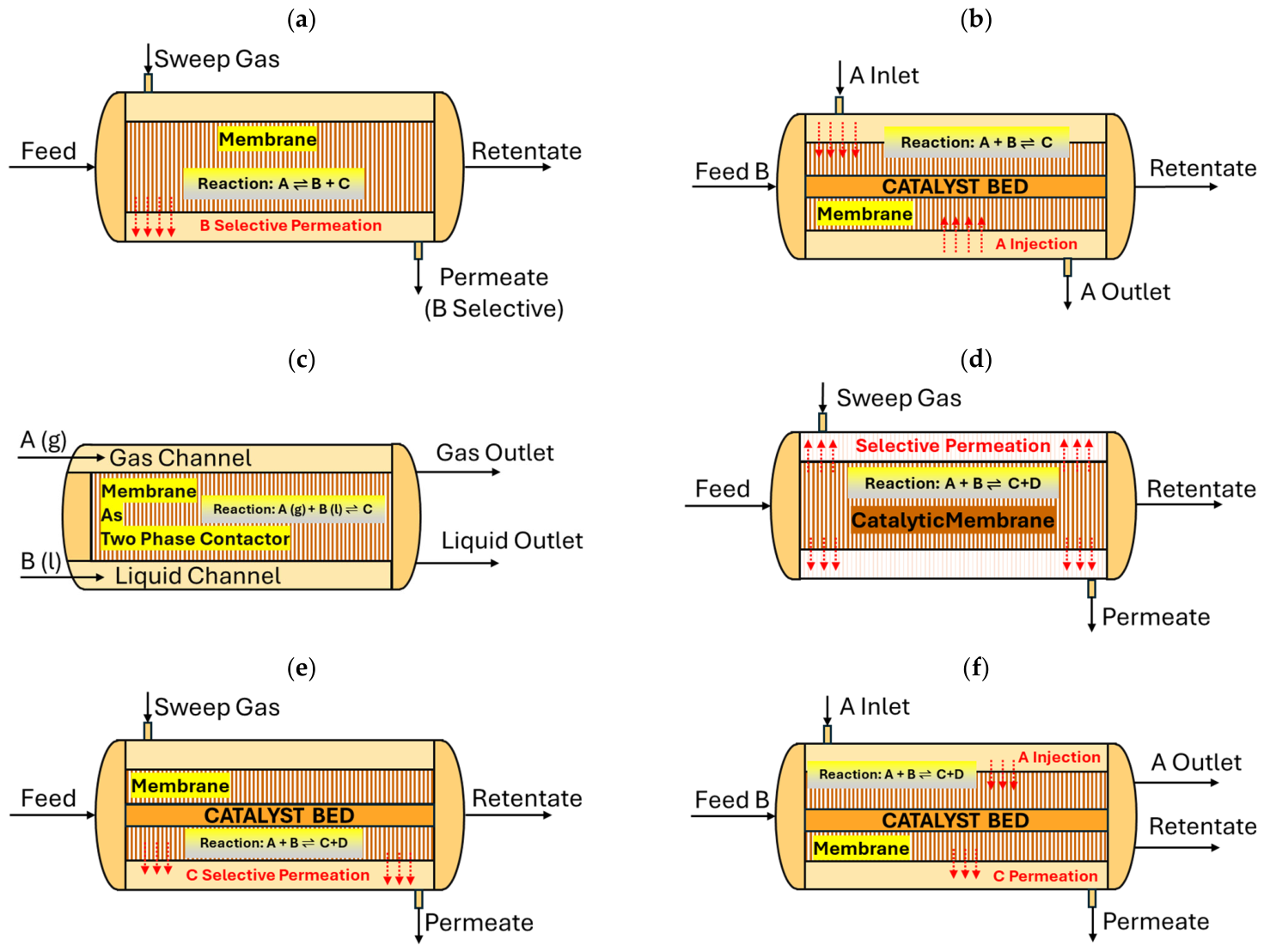
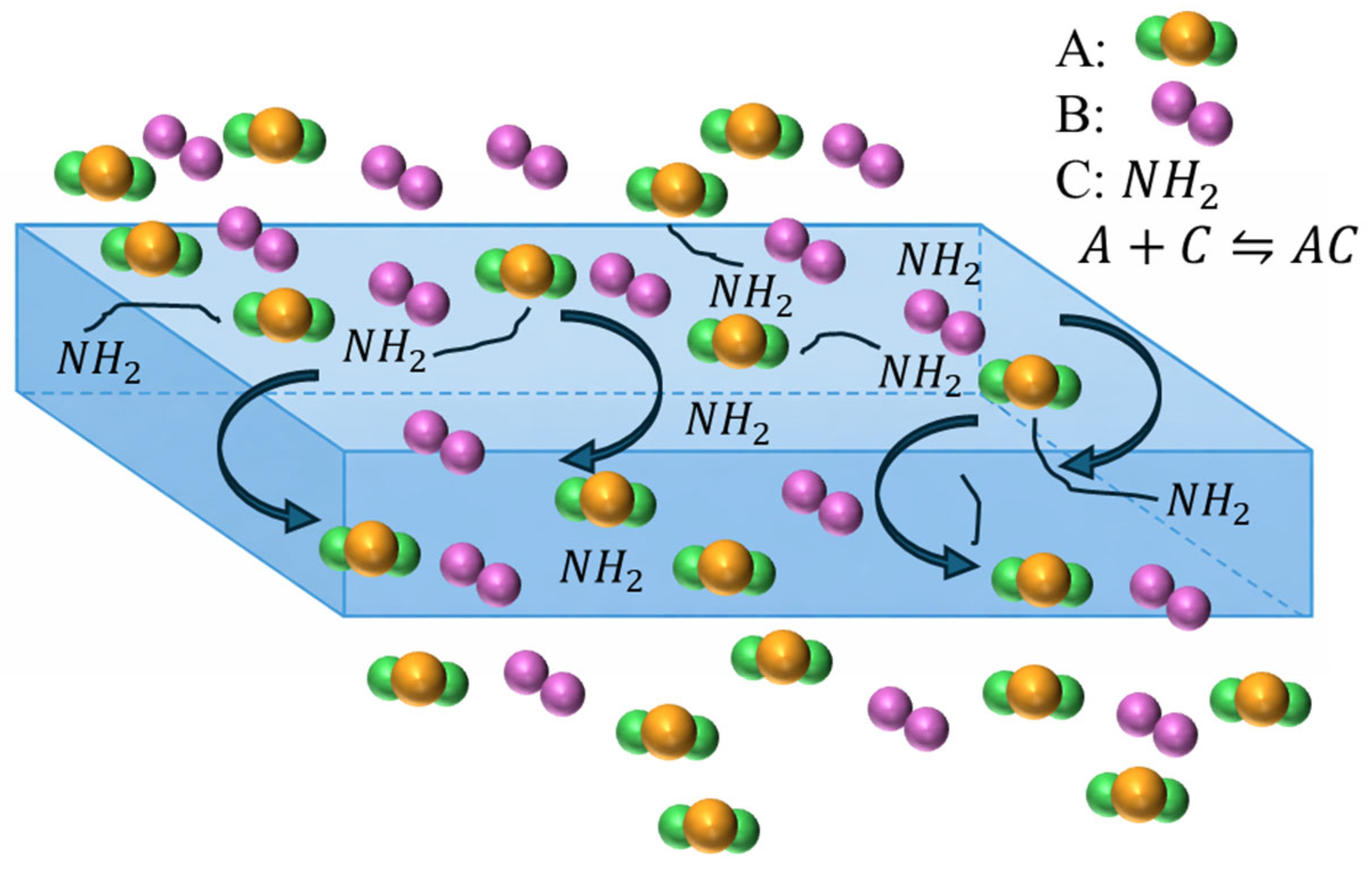
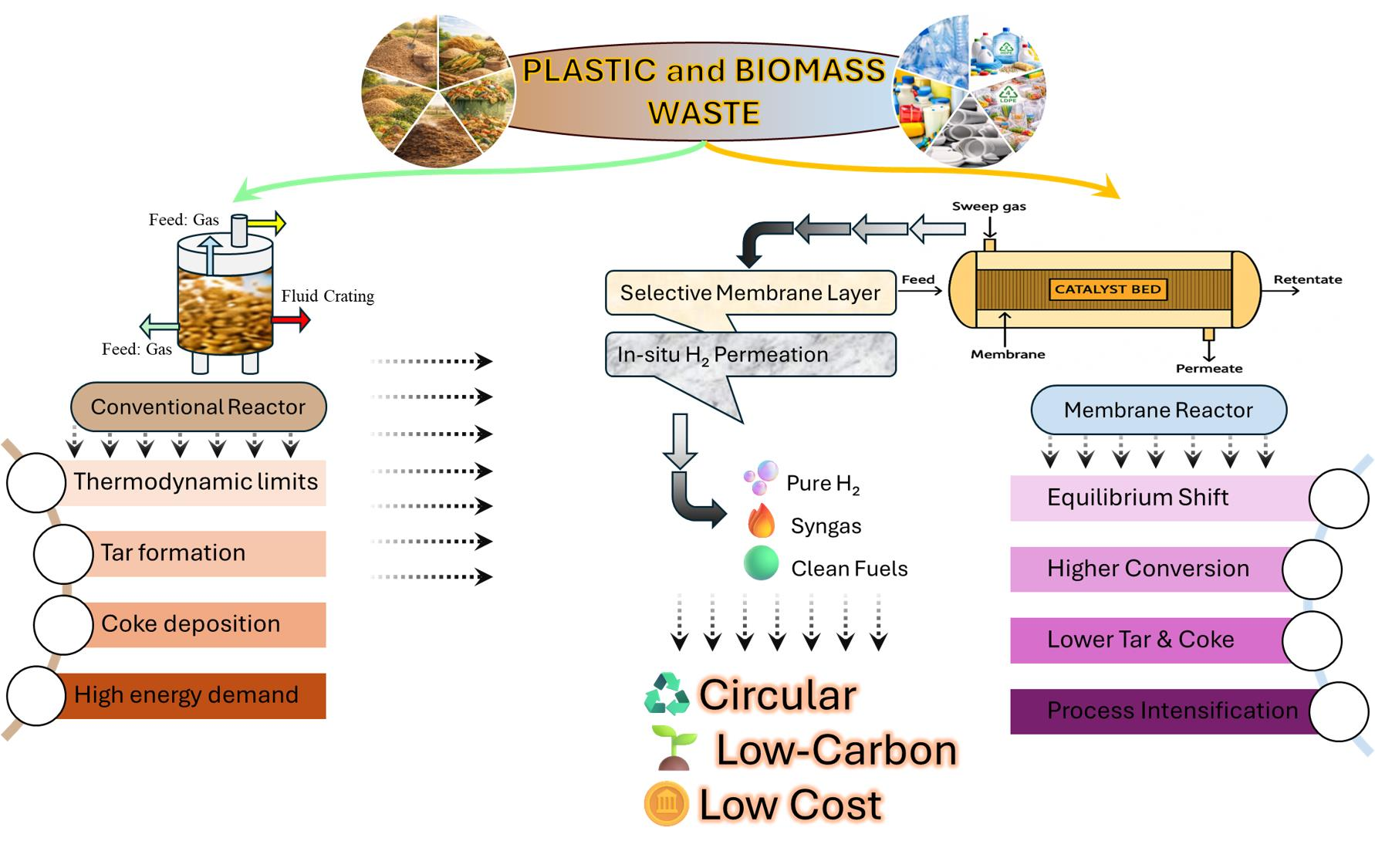
MRs offer a fundamentally different approach by integrating reaction and separation into a single intensified unit, enabling the selective removal of targeted products or byproducts directly as they form. This in situ separation shifts the reaction equilibrium toward greater conversion, reduces the accumulation of inhibitory species, and alleviates mass-transfer limitations that hinder conventional designs [
26].
According to the reference, MRs offer additional advantages, including improved selectivity, greater thermal stability, and significantly lower energy demand due to the elimination of multiple downstream purification steps. Their modular nature and flexibility also support superior control of reaction zones and promote cleaner, more environmentally sustainable operation. Collectively, these benefits demonstrate that MRs directly address the constraints of traditional systems, making them a compelling alternative for next-generation fuel and chemical production [
23].
In plastic and biomass valorization processes, hydrogen is one of the main and most valuable products generated during thermochemical and catalytic conversion routes such as pyrolysis, gasification, and reforming. The produced hydrogen not only serves as a clean energy carrier but also plays a crucial role as a chemical feedstock for downstream synthesis processes, thereby enhancing the overall economic and environmental performance of waste-to-value pathways.
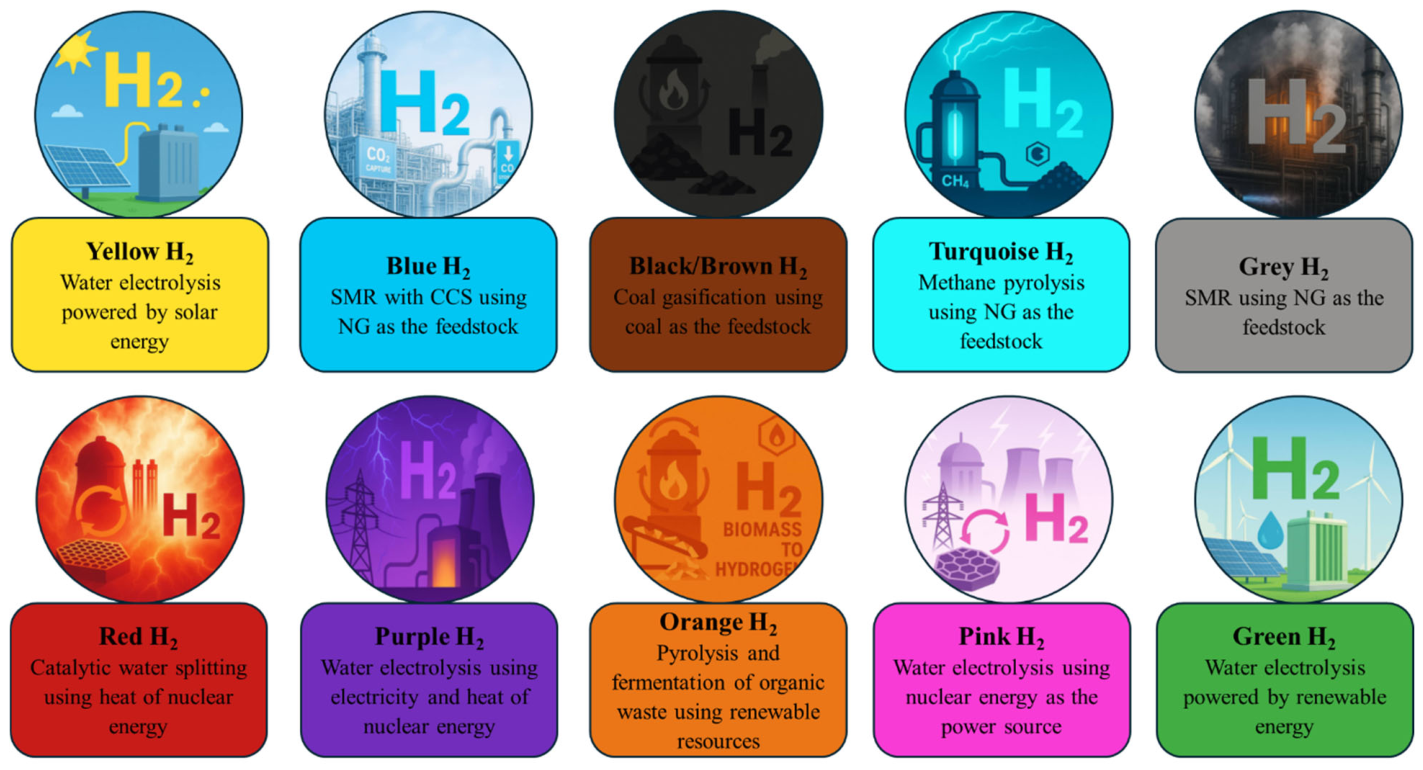
Figure 2 illustrates the major hydrogen production routes, classified according to the widely adopted color-coding scheme that reflects both the feedstock and the associated carbon footprint. Gray hydrogen is produced from fossil fuels via steam methane reforming (SMR) or coal gasification and remains the dominant industrial route, albeit with substantial CO
2 emissions. Blue hydrogen follows the same reforming pathways but integrates carbon capture and storage (CCS) to mitigate greenhouse gas emissions.
Turquoise hydrogen is generated via methane pyrolysis, yielding solid carbon as a byproduct and offering the potential for near-zero direct CO
2 emissions. Green hydrogen produced by water electrolysis powered by renewable electricity is the most sustainable pathway for large-scale decarbonization. Additional routes, such as yellow hydrogen from solar-powered electrolysis and pink hydrogen from nuclear-driven electrolysis, further expand the portfolio of low-carbon hydrogen technologies. Together, these color-coded pathways highlight the technological diversity of hydrogen production and its central role in future low-carbon energy systems. Despite the growing body of research on MRs, available studies remain highly fragmented, with most investigations focusing on isolated reaction systems or specific membrane configurations rather than offering an integrated perspective [
27]. Furthermore, the literature on the valorization of plastic waste using membrane-based technologies is comparatively limited, often overshadowed by the more mature field of hydrogen production [
28]. Existing review articles primarily focus on single domains such as catalytic reforming, reactor modeling, or membrane materials without bridging the broader spectrum of membrane-assisted pathways for both plastic and biomass conversion [
24,
25]. To date, no comprehensive assessment has systematically examined how MRs can simultaneously address the challenges of plastic and biomass valorization within a unified framework, underscoring the need for a consolidated, critical review.
In recent years, research in this field has increasingly focused on membrane-based systems for the valorization of plastic and biomass waste.
Figures S1 and S2 (Supplementary Materials) provide visual insights into this research trend.
Figure S1 illustrates the chronological evolution of research on MRs for the valorization of biomass and plastic waste. The overlay visualization indicates that early studies were primarily associated with biomass conversion, anaerobic digestion, and wastewater treatment, reflecting the initial focus on biological and environmental applications of membrane bioreactors. In more recent years, however, the research landscape has shifted toward catalytic and thermochemical approaches, with increasing attention to topics such as steam reforming, hydrogen production, and biofuel generation, highlighting a growing interest in integrated reaction–separation systems and process intensification strategies for waste-to-fuel conversion.
Figure S2 presents the density visualization of research keywords, highlighting the main hotspots and emerging topics in MR studies for biomass and plastic waste valorization. The map shows that biomass and bioreactors constitute the most densely studied areas, indicating their central role in the field, whereas topics such as hydrogen production, MRs, and steam reforming appear as emerging research directions, suggesting a growing focus on catalytic membrane systems for the thermochemical conversion of plastic and biomass wastes.
This review aims to provide a unified, in-depth examination of MR technologies for the valorization of plastic and biomass wastes.
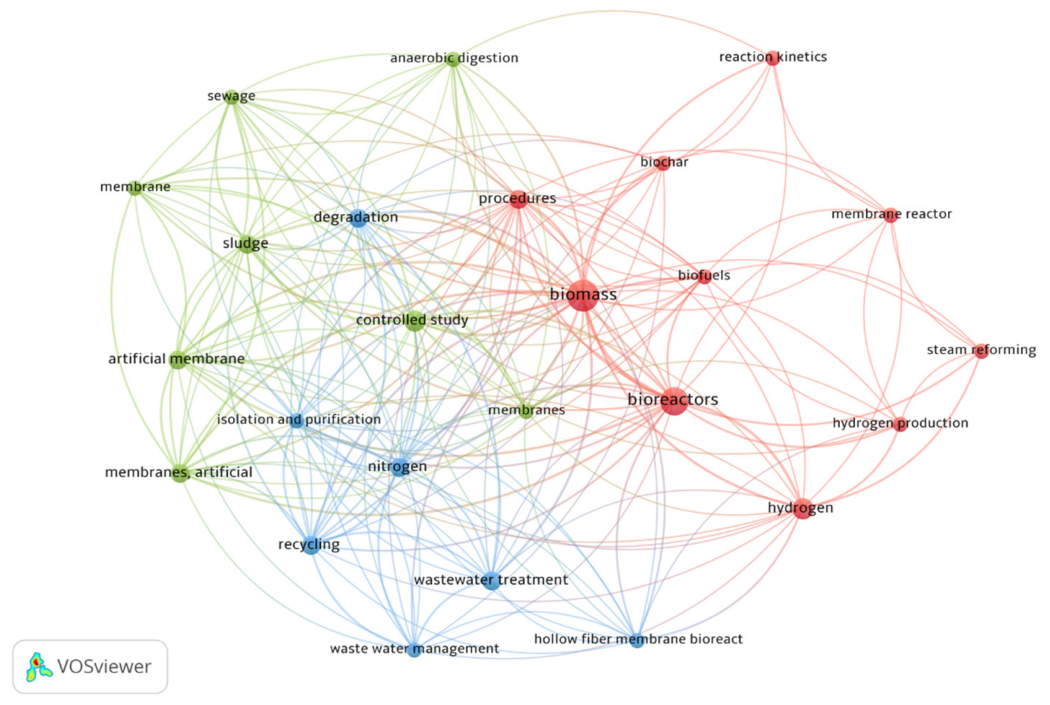
Figure 3 was generated using the VOSviewer software version 1.6.20, based on a keyword co-occurrence analysis of bibliographic data retrieved from the Scopus database. Author keywords associated with MR research in biomass and plastic waste valorization were extracted and analyzed to construct the network visualization. The keyword co-occurrence network in
Figure 3 illustrates the conceptual framework of research on MRs for the valorization of biomass and plastic waste. Distinct clusters highlight primary thematic directions, including catalytic and thermochemical routes (e.g., biomass, biofuels, hydrogen, steam reforming), environmental and biotechnological processes (wastewater treatment, membrane bioreactors, sludge, recycling), and material innovation (artificial membranes, isolation and purification). The central role of biomass, bioreactors, and membranes emphasizes the integration of biological conversion with reaction–separation systems characteristic of MRs. Overall, the network demonstrates a convergence of biochemical conversion, catalytic membrane reforming, and environmental engineering, underscoring the emergence of MRs as multifunctional platforms for sustainable waste management, hydrogen generation, and clean fuel production.
The review systematically evaluates reactor configurations, catalytic behavior, reaction kinetics, and mass-transfer phenomena that govern process efficiency. Particular attention is given to membrane performance parameters, including permeance, selectivity, stability, and transport mechanisms, to elucidate their influence on conversion and product distribution. Moreover, techno-economic and environmental assessments are conducted to contextualize the practical viability of membrane-assisted systems. Finally, it outlines technology readiness levels (TRLs), current deployment gaps, and prospective development pathways to guide future research and industrial implementation.
2. Review Methodology and Evaluation Framework
This critical and semi-systematic review investigates MR-based valorization of biomass and plastic waste. The literature search and study selection process were conducted in accordance with the PRISMA guidelines, as detailed in the flowchart presented in
Figure 4.
A comprehensive search was performed across major scientific databases (Web of Science, Scopus, ScienceDirect, and Google Scholar) covering the period from 2000 to 2025. The search strategy utilized combinations of keywords such as “membrane reactor”, “biomass”, “plastic waste”, “waste valorization”, “pyrolysis”, and “gasification”.
Studies were included if they were peer-reviewed articles directly addressing membrane-assisted processes for converting biomass or plastic waste. Conversely, records were excluded if they focused solely on conventional reactors, isolated membrane separations unrelated to reaction environments, or lacked sufficient qualitative/quantitative data for comparison [
29].
The selected literature was evaluated through a multi-level framework. This assessment covered reactor configurations, catalytic behavior, membrane transport properties (permeance, selectivity, stability), and system-level performance indicators (conversion efficiency, hydrogen yield, techno-economic metrics, and TRLs).
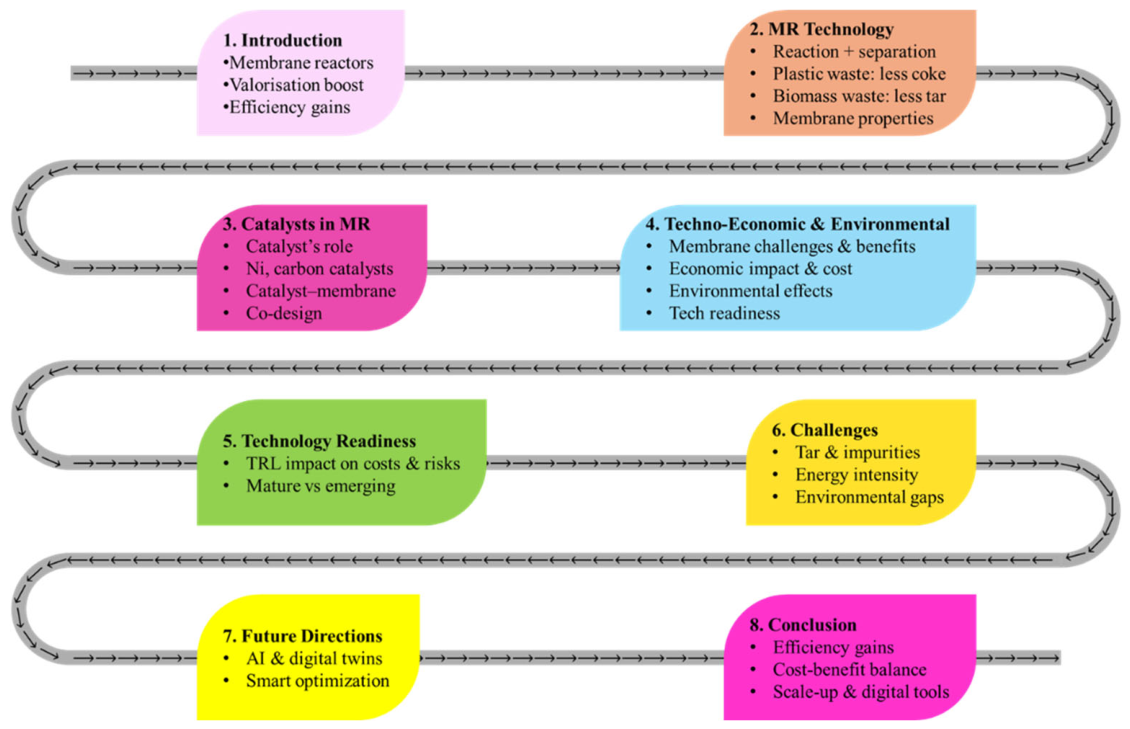
The overall structure of this review and the logical progression of its thematic sections are schematically illustrated in
Figure 5. Following this methodological flow, the review synthesizes fundamental MR concepts, evaluates catalyst–membrane integration, identifies key bottlenecks (e.g., membrane durability and feed tolerance), and highlights future development directions.
4. Catalysts in Membrane Reactor Systems
Catalysts play a system-defining role in MR systems for the valorization of plastics and biomass. Unlike conventional reformers, catalytic performance in MRs cannot be treated as an intrinsic property because selective permeation of species such as H
2 or CO
2 continuously modifies local equilibria, concentration gradients, and residence times [
64,
65,
66]. Thus, catalyst behavior is inherently coupled with membrane function and operating conditions. Catalyst deactivation remains a major limitation in reforming and pyrolysis–reforming pathways. Carbon deposition, metal sintering, support phase transformation, poisoning, and volatilization reduce active sites and alter surface chemistry [
15,
67,
68]. Biomass-derived oxygenates favor encapsulating carbon species, while plastic-derived aromatics promote filamentous or polymeric carbon structures [
15,
67].
In MRs, selective permeation reshapes these pathways. H
2 or CO
2 removal shifts equilibria and modifies methane cracking, Boudouard disproportionation, and steam gasification reactions [
65,
66,
69]. Hydrogen withdrawal may either suppress or intensify coking depending on operating conditions [
66,
70], suggesting that stability depends on alignment between catalytic kinetics and permeation-driven reactions. Ni-based catalysts are widely employed due to their high catalytic activity and cost-effectiveness [
71]. Under optimized hydrogen-selective MR conditions, high hydrogen yields with limited carbon formation are achievable [
66,
70]. Membrane-assisted H
2 removal enhances reforming and water–gas shift reactions, yet Ni remains vulnerable under high hydrocarbon pressures or low steam ratios [
15,
65]. Bimetallic and promoted systems improve dispersion and suppress carbon nucleation [
15,
68].
Support properties critically influence sintering and coke resistance [
15,
72], while compatibility with membrane materials prevents interfacial degradation and permeability loss [
66,
69,
73].
Carbon-based catalysts such as biochar act as reactive components rather than inert supports [
67,
74,
75], and integrated MR–biochar systems exhibit strong synergistic effects [
76]. Controlled carbon consumption may even become a design feature [
75,
76]. Catalyst–membrane interactions further affect membrane integrity. Insufficient catalytic activity can intensify side reactions and surface deposition [
69], whereas appropriate catalysts preserve membrane microstructure under demanding conditions [
69,
77]. Overall, long-term MR feasibility requires integrated catalyst–membrane co-design to manage degradation phenomena at the systems level [
65,
67,
68].
4.1. Reaction Mechanisms and Kinetics
4.1.1. Mechanistic Pathways in Catalytic Plastic and Biomass Conversion
The conversion of plastic- and biomass-derived feedstocks proceeds through complex, multi-step mechanistic networks rather than through single dominant reactions. Experimental and modeling studies consistently show that both feedstock classes undergo initial thermal depolymerization or devolatilization, followed by a cascade of radical-driven reactions, molecular rearrangements, and secondary reforming steps that ultimately determine product distribution [
78,
79,
80,
81,
82,
83]. In plastic conversion, the dominant pathways depend strongly on polymer structure. Polyolefins such as PE and PP primarily decompose via random and end-chain scission accompanied by hydrogen transfer reactions. In contrast, PS exhibits preferential β-scission of side chains, yielding high monomer selectivity [
79,
80,
81]. These mechanistic differences lead to distinct intermediate pools that directly affect downstream reforming and gasification behavior.
Biomass conversion follows similarly complex but composition-dependent pathways. Thermogravimetric and devolatilization studies reveal sequential contributions from hemicellulose, cellulose, and lignin, each characterized by distinct activation energies and reaction regimes [
83,
84,
85]. Primary devolatilization generates volatiles, condensable oxygenates, and reactive char, while secondary reactions—including cracking, repolymerization, and gas–solid interactions—modify both gas composition and solid residue [
83,
85]. Notably, several studies demonstrate that these pathways evolve continuously with temperature and conversion degree, confirming that biomass conversion is inherently stage-dependent rather than governed by a single kinetic regime [
81,
83,
85].
Across both plastics and biomass, the literature highlights that reaction mechanisms are strongly influenced by the local chemical environment, particularly by the accumulation or removal of key intermediates and products such as hydrogen, water, or light hydrocarbons [
78,
86,
87,
88,
89]. As a result, mechanistic pathways observed in conventional reactors cannot be assumed to remain valid under membrane-assisted conditions, where selective permeation continuously alters species concentrations and reaction driving forces [
78,
88,
89]. The key reaction pathways involved in the conversion and reforming of plastic- and biomass-derived volatiles can be represented by a set of global reactions, including cracking, steam reforming, and water–gas shift reactions, as summarized in
Table 4 These reactions capture the dominant transformations governing product distribution and hydrogen generation under catalytic conditions.
4.1.2. Kinetic Limitations in Conventional Reactors
In conventional fixed-bed and fluidized-bed reactors, kinetic behavior is often masked by thermodynamic constraints, transport limitations, and product accumulation. Numerous kinetic studies based on thermogravimetric analysis or integral reactor data demonstrate that apparent activation energies and rate constants frequently reflect combined effects of heat and mass transfer rather than intrinsic reaction kinetics [
81,
83,
84,
90]. For both plastic and biomass feeds, increasing heating rates or residence times can shift observed reaction peaks to higher temperatures, indicating thermal inertia and diffusion limitations rather than changes in fundamental reaction mechanisms [
83,
84].
Conventional reactors also suffer from equilibrium-induced kinetic suppression. Accumulation of hydrogen, water, or carbon dioxide increases the partial pressures of the products and progressively reduces net reaction rates, particularly in reforming and gasification reactions [
78,
87,
88]. Several studies report that large portions of catalytic beds operate far from optimal kinetic conditions due to early approach to equilibrium, resulting in underutilization of active sites and misleading estimates of catalytic performance [
87,
88]. In plastic pyrolysis–reforming systems, prolonged residence times further promote secondary reactions such as aromatization and coke formation, which alter reaction pathways and introduce additional kinetic barriers [
79,
81,
82].
These limitations explain why kinetic parameters derived from conventional reactor studies often show wide variability and limited transferability. Comparative analyses emphasize that reported rate constants and activation energies are frequently "effective" values specific to reactor configuration and operating conditions, rather than intrinsic descriptors of reaction chemistry [
81,
84,
85,
90]. This recognition provides the kinetic rationale for alternative reactor concepts that can decouple reaction progress from equilibrium and transport constraints.
4.1.3. Membrane-Induced Kinetic Enhancement
MRs fundamentally alter the kinetic landscape by selectively removing reaction products, thereby reshaping the driving forces of coupled reaction networks. Experimental and modeling studies consistently demonstrate that selective permeation of hydrogen, water, or other key species can maintain reactions far from equilibrium, effectively sustaining higher net reaction rates without altering intrinsic catalytic activity [
78,
86,
87,
88]. In hydrogen-selective MRs, continuous hydrogen withdrawal reduces its inhibitory effect on reforming and shift reactions, enabling reaction pathways that are kinetically suppressed in conventional systems [
78,
88].
Notably, the literature emphasizes that membrane-induced enhancement does not imply an increase in intrinsic rate constants. Instead, the observed kinetic improvement arises from changes in effective reaction environments, including reduced product inhibition and altered surface coverages [
86,
87,
89]. Detailed modeling studies show that neglecting membrane permeation terms leads to systematic overestimation of reaction rates and misinterpretation of kinetic parameters [
86,
87,
88]. Moreover, membrane effects can be conditional: under specific operating regimes, excessive product removal may intensify side reactions or surface blockage, underscoring the need for balanced coupling between reaction and separation [
87,
89].
For plastic- and biomass-derived systems, these effects are particularly significant because primary reaction stages generate highly reactive intermediates whose fate is strongly influenced by local species concentrations [
79,
80,
81,
85]. By selectively extracting products, MRs can suppress secondary polymerization and condensation reactions, effectively preserving kinetically favorable pathways that are otherwise masked in conventional configurations [
78,
82,
88].
4.1.4. In Situ Coupling of Reaction–Transport Phenomena
A defining feature of MR kinetics is the intrinsic coupling between chemical reactions and transport processes. Unlike conventional reactors, where mass transfer is often treated as an external limitation, MRs integrate permeation directly into species balances, making transport an active component of observed kinetics [
86,
87,
88]. Multiple studies demonstrate that reaction rates, concentration gradients, and permeation fluxes evolve simultaneously and cannot be decoupled without loss of physical meaning [
86,
88,
89].
Micro-kinetic- and Computational fluid dynamics (CFD)-based investigations reveal that membrane fluxes depend not only on pressure gradients but also on surface coverage, intermediate adsorption, and local reaction rates [
88,
89]. In hydrogen-selective systems, for example, adsorbed reaction intermediates can transiently block membrane surfaces, reducing effective permeance and introducing feedback between surface chemistry and transport [
89]. These findings confirm that MRs operate as fully coupled reaction–transport systems rather than as reactors with an add-on separation step.
In biomass and plastic conversion, a similar coupling arises from the interactions among devolatilization, reforming, and gas-phase transport. Studies show that heat and mass transfer limitations can significantly distort apparent kinetics unless reaction–transport coupling is explicitly accounted for [
83,
84,
85]. MRs, by design, modify these couplings through controlled permeation, offering a pathway to manage transport effects rather than merely mitigate them [
78,
86,
88].
4.1.5. Kinetic Modeling Approaches Used in Membrane Reactor Studies
Given the complexity of coupled reaction and transport phenomena, kinetic modeling approaches for MRs have evolved beyond conventional global-rate descriptions. The reviewed literature highlights a progression from lumped and global kinetic models toward multi-step, micro-kinetic, and hybrid frameworks that explicitly incorporate permeation terms [
86,
87,
88,
89,
90]. These models typically distinguish intrinsic reaction kinetics from transport parameters by employing separate Arrhenius-type expressions for reaction rates and membrane fluxes [
86,
88].
Iso-conversional and stage-resolved kinetic analyses are frequently used to capture the evolution of activation energy with conversion degree, particularly for biomass and plastic feedstocks exhibiting multi-regime behavior [
81,
82,
83,
85]. Such approaches show that no single kinetic model adequately captures the entire conversion process, reinforcing the need for coupled, adaptive modeling strategies. Advanced studies further integrate CFD with detailed surface kinetics to resolve spatial variations in temperature, composition, and permeation, achieving close agreement with experimental data [
88,
89].
Overall, the literature converges on the conclusion that kinetic models for MRs must be system-specific and explicitly account for reaction–transport coupling. Simplified models that ignore permeation or assume equilibrium conditions risk misrepresenting both reaction mechanisms and catalyst performance [
86,
87,
88,
89,
90]. For membrane-assisted plastic and biomass valorization, robust kinetic modeling therefore emerges as a critical tool for interpreting experimental results and guiding reactor design.
The variety of kinetic modeling approaches summarized in
Table 5 reflects the progressive refinement of methodologies used in membrane reactor studies. As shown, models range from simple global/lumped descriptions, which offer low computational cost but limited mechanistic insight, to multi-step and micro-kinetic frameworks that explicitly incorporate surface reactions, adsorption/desorption phenomena, and hydrogen permeation. Coupling these models with CFD allows for spatial resolution of temperature, concentration, and flux gradients, providing more realistic predictions of reactor performance. Iso-conversional approaches complement these strategies by capturing the evolution of activation energies across multi-stage reactions, particularly in complex feedstock such as biomass and plastics. Collectively, the table emphasizes that no single modeling approach universally applies; rather, the choice depends on the balance between desired accuracy, mechanistic detail, and computational feasibility, underscoring the importance of selecting system-specific, reaction–transport-coupled models for MR design and optimization.
4.2. Catalyst Types, Composition, and Structural Characteristics
Building on the system-level role of catalysts discussed in
Section 4 and the reaction–transport coupling analyzed in
Section 4.1, this section examines how catalyst type, composition, and structure determine performance in MR environments. Unlike conventional reactors, where catalyst selection is often guided solely by intrinsic activity, MR configurations impose additional constraints on membrane compatibility, selective permeation, and long-term structural stability. As demonstrated across recent experimental and review studies, catalyst effectiveness under membrane integration arises from the interplay among chemical composition, microstructural features, and their interactions with the membrane material itself [
92,
93,
94,
95].
4.2.1. Overview of Catalyst Families Used in Membrane Reactors
The literature reports a diverse range of catalyst families employed in MR systems, reflecting the variety of reactions and operating conditions addressed. A comparative summary of the main catalyst families, along with their reported operating conditions and performance metrics in MRs, is presented in
Table 6. Nickel-based catalysts remain among the most widely investigated materials due to their high reforming activity and economic feasibility, particularly in processes involving plastic- and biomass-derived feeds [
96,
97]. Modifications through carbide formation or mixed-metal oxides have been shown to improve resistance to carbon accumulation and structural degradation under reforming conditions [
96].
Copper-based catalysts represent another important family, especially in membrane-assisted methanol steam reforming (MSR), where their moderate operating temperatures align well with palladium-based hydrogen-selective membranes [
98]. As shown in
Table 6, these systems typically operate under conditions dictated by membrane stability constraints rather than solely by catalytic activity. In such systems, catalyst selection is closely linked to the thermal and chemical constraints imposed by the membrane, rather than to activity alone.
Precious-metal-based systems, particularly palladium-based membranes combined with Ru- or Ni-based catalysts, form the backbone of many high-temperature MR concepts for hydrogen production and purification [
92,
93,
94,
95]. These systems often blur the distinction between catalyst and membrane, as the membrane itself participates in surface reactions or influences reaction pathways through selective permeation.
In parallel, carbon-based and metal-free catalysts derived from plastic waste or biomass have gained increasing attention. These materials, including doped carbons and char-derived catalysts, offer high surface areas, tunable defect structures, and intrinsic resistance to specific poisoning mechanisms, making them attractive candidates for integration into membrane-assisted systems [
99,
100]. As shown in
Table 6, catalyst performance in MRs strongly depends on reaction type and operating temperature. Ni-based systems operating at 800 °C in plastic dry reforming exhibit moderate hydrogen yields with clear feedstock sensitivity (e.g., Low-density polyethylene (LDPE) versus PS), whereas Ru-based catalysts in ammonia decomposition achieve very high conversion and hydrogen recovery at comparatively lower temperatures. Cu-based catalysts coupled with Pd membranes deliver high hydrogen purity under intermediate conditions, highlighting the benefit of membrane-assisted reforming.
Overall, the comparative data indicate that catalyst effectiveness in MR systems is closely linked to feedstock characteristics, operating severity, and the extent of reaction–membrane integration rather than to intrinsic catalytic activity alone.
4.2.2. Structural and Compositional Parameters Affecting Performance
Catalyst performance in MR systems is strongly governed by structural and compositional parameters that extend beyond conventional descriptors such as metal loading or surface area. Studies consistently show that pore architecture, metal dispersion, and support composition play decisive roles in determining accessibility of active sites under conditions of continuous product removal [
96,
97,
98].
For metal-based catalysts, alloying and promoter addition modify both electronic properties and resistance to sintering or coking. Carbide-modified Ni catalysts, for instance, exhibit altered metal–support interactions and enhanced tolerance toward carbon formation during reforming of plastic-derived feeds [
96]. Similarly, incorporating ceria or other oxides into Cu-based catalysts improves thermal stability and mitigates deactivation during membrane-assisted operation [
98].
In carbon-based catalysts, defect density, heteroatom doping, and hierarchical porosity have been identified as key determinants of catalytic behavior. High specific surface areas combined with interconnected micro- and mesopores facilitate mass transport and sustain activity in continuous-flow, membrane-integrated configurations [
99,
100]. These structural attributes directly influence how reaction intermediates interact with both catalytic surfaces and membrane interfaces.
4.2.3. Catalyst–Membrane Compatibility
Compatibility between catalyst and membrane materials constitutes a defining constraint in MR design. Mechanical integrity, thermal expansion matching, and chemical inertness at the catalyst–membrane interface are repeatedly highlighted as prerequisites for stable operation [
93,
94,
95]. In palladium-based membrane systems, interdiffusion between membrane layers and catalyst-derived species can lead to loss of selectivity or mechanical failure if not properly managed [
93].
Experimental studies demonstrate that metallic supports often provide superior mechanical robustness and sealing performance compared to ceramic supports, particularly under high-temperature or pressure-cycling conditions [
94].
Intermediate layers and surface treatments are commonly employed to prevent undesirable interactions, reduce roughness-induced defects, and maintain consistent permeation behavior [
93,
95].
In emerging configurations where catalysts are immobilized directly within or onto membrane structures, compatibility becomes even more critical. Such designs require careful control of catalyst particle size, distribution, and chemical functionality to avoid pore blockage or loss of membrane permeability [
99].
4.2.4. Deactivation Pathways Specific to Membrane-Assisted Systems
While many deactivation mechanisms observed in MRs resemble those in conventional reactors, selective permeation introduces additional, system-specific pathways. Carbon deposition, for example, may be either suppressed or intensified depending on how membrane-driven equilibrium shifts alter local reaction environments [
94,
96,
97].
In some cases, carbon formation transitions from a purely detrimental phenomenon to a controllable or even functional process, particularly in systems producing structured carbon materials [
97,
100].
For palladium-based membranes, embrittlement, poisoning by sulfur- or carbon-containing species, and intermetallic diffusion represent critical degradation modes that are exacerbated under reactive atmospheres [
92,
93,
95].
Long-term studies reveal that these effects often develop gradually, underscoring the importance of time-on-stream analysis rather than short-term performance metrics [
94].
Carbon-based and metal-free catalysts exhibit distinct deactivation behaviors, with stability often governed by structural evolution of the carbon matrix rather than by classical site poisoning or sintering [
99,
100]. In membrane-integrated systems, this evolution can be slowed or stabilized through controlled operating conditions and catalyst-immobilization strategies.
4.2.5. Strategies for Enhancing Catalyst Durability in Membrane Reactors
Enhancing catalyst durability in MR environments requires strategies that explicitly account for reaction–separation coupling. Material-level approaches include alloy design, carbide formation, and heteroatom doping to stabilize active phases and inhibit undesired transformations [
95,
96,
100].
Structural control through pore engineering and support selection further contributes to maintaining accessibility and limiting degradation [
97,
98].
At the system level, durability is improved by aligning catalyst properties with membrane operating windows. Matching optimal reaction temperatures, minimizing concentration polarization, and employing protective or barrier layers are repeatedly identified as effective measures [
93,
94,
95]. In some designs, deliberate acceptance of controlled catalyst consumption or transformation is proposed as an alternative to attempting to suppress degradation phenomena completely [
97,
99].
4.2.6. Structure–Performance Relationships Under Membrane Integration
Across the reviewed studies, a consistent conclusion emerges: under membrane integration, catalyst structure and performance are inseparable. Activity, selectivity, and stability are jointly determined by how the catalyst microstructure interacts with membrane-driven transport phenomena [
92,
94,
95,
98]. Variations in alloy composition, pore architecture, or carbon structure translate directly into differences in permeation rates, local reaction equilibria, and long-term operability.
These structure–performance relationships confirm that catalyst optimization for MR systems cannot rely on descriptors derived from conventional reactors. Instead, effective design requires a holistic perspective in which catalyst composition, structure, and membrane properties are co-optimized as components of a single, coupled system [
93,
94,
100]. Such an approach aligns with the broader system-level framework established in
Section 4 and
Section 4.1 and provides a foundation for rational design of durable, high-performance MR configurations.
5. Techno-Economic and Environmental Assessment
The techno-economic and environmental performance of plastic and biomass waste valorization routes is crucial in determining their long-term viability and industrial importance. Although many recycling and upcycling pathways have been proposed over the past decade, only a few have moved beyond laboratory or pilot scale. This slow progress is mainly due to uncertainties in capital investment, operating costs, energy needs, and environmental impact, especially for heterogeneous waste streams, where feedstock variability and separation complexity significantly affect process economics [
101,
102].
The techno-economic and environmental assessments discussed in this section are inherently dependent on the assumptions and system boundaries defined in the underlying studies [
103,
104]. Reported system boundaries vary from reactor-level analyses to integrated process-level or cradle-to-gate life cycle assessments (LCAs), which significantly affect the comparability of results [
104]. Common assumptions include feedstock composition and variability, energy integration strategies, membrane lifetime and replacement intervals, and the handling or valorization of byproducts [
103]. In addition, economic indicators such as CAPEX, operating expenditure (OPEX), and levelized cost metrics are sensitive to plant scale, TRL, and regional factors such as energy prices and infrastructure. From an environmental perspective, the inclusion or exclusion of upstream processes (e.g., feedstock collection and preprocessing) and downstream treatment units (e.g., gas cleanup and wastewater management) can substantially influence life cycle impact results. Therefore, careful consideration of these assumptions and boundaries is essential when interpreting and comparing techno-economic and environmental performance across different studies.
Comparative assessments consistently show that no single valorization pathway outperforms all alternatives across economic and sustainability indicators. Instead, cost competitiveness and environmental performance depend on polymer composition, contamination level, conversion severity, and the extent of downstream separation and purification [
105]. These findings highlight the need for system-level evaluation frameworks that jointly consider material recovery efficiency, energy consumption, and environmental trade-offs, rather than relying on isolated unit-level metrics.
Within this context, membrane-based technologies have attracted growing attention as enablers of process integration and intensification. Recent reviews on plastic recycling and PET valorization emphasize that membranes can reduce separation severity, improve product purity, and lower overall resource consumption when strategically integrated into process flowsheets [
102]. Rather than functioning as standalone separation units, membranes increasingly reshape process architectures by coupling reaction and separation, thereby influencing both economic performance and environmental footprint. This role is particularly relevant for emerging thermochemical and hybrid valorization routes, where conventional downstream separation schemes are often energy-intensive and capital-demanding [
40].
From an environmental perspective, life-cycle-based assessments indicate that recycling and valorization routes can offer climate and resource benefits compared with landfilling or direct energy recovery, although these benefits remain highly context-dependent [
105]. Energy intensity, auxiliary utilities, and solvent or water use consistently rank among the dominant contributors to environmental impact. Several studies report that membrane integration can reduce overall energy demand and improve resource efficiency, reinforcing the close interconnection between economic and environmental performance in advanced waste valorization systems [
40,
102].
Before comparing conventional and membrane-assisted valorization configurations, it is useful to situate waste-derived hydrogen pathways within the broader cost landscape of hydrogen production technologies. As shown in
Table 7, SMR remains the lowest-cost hydrogen pathway (1.5–2.0 USD/kg H
2), reflecting its high TRL and mature infrastructure, whereas adding CCS increases costs to 2.0–3.0 USD/kg. Coal and biomass gasification fall within a higher, broader cost window (2.0–3.5 USD/kg), primarily due to their higher capital intensity and feedstock logistics. Electrolysis-based routes exhibit the highest levelized cost of hydrogen (LCOH) values (3.0–6.0 USD/kg), highlighting their strong dependence on electricity price and CAPEX.
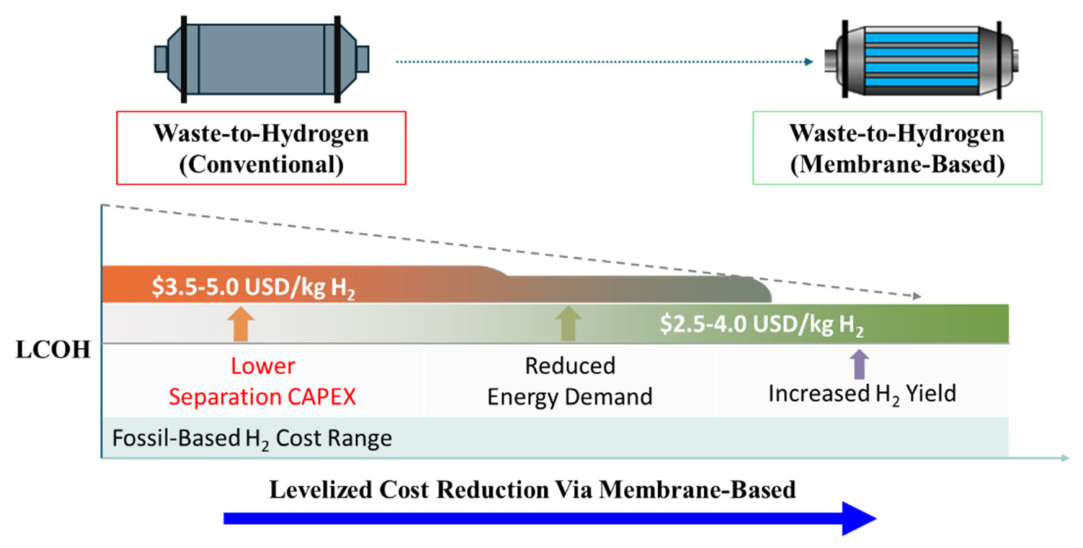
Waste-derived hydrogen pathways fall within an intermediate but comparatively wider cost range (2.5–5.0 USD/kg), reflecting uncertainties in pretreatment, gas cleanup, and system integration. Notably, membrane-assisted waste-to-hydrogen systems exhibit a downward shift in LCOH (2.5–4.0 USD/kg) compared with conventional waste conversion, reflecting the economic impact of improved separation efficiency and process intensification.
Table S5 (Supplementary Materials) summarizes the key reactions involved in the SMR process, including the corresponding reaction equations, standard reaction enthalpies, and typical operating temperature ranges, providing an overview of the thermal characteristics and high-temperature requirements of these reactions. The reported LCOH ranges represent consolidated values from recent techno-economic assessments and international roadmaps.
For emerging waste-derived and membrane-assisted pathways, these values reflect pilot-to-early demonstration-scale systems and should therefore be interpreted as indicative rather than definitive. Downward cost trajectories are expected as system integration improves and TRLs increase. On the other hand, one of the important reaction categories in biomass and plastic valorization processes is dry methane reforming. In this process, methane reacts with carbon dioxide to produce syngas, which can be further converted into valuable chemicals and fuels. Such reactions play a key role in transforming waste biomass and plastics into high-value products while reducing greenhouse gas emissions.
Overall, this comparison underscores that improvements in reactor design, separation efficiency, and system integration are central to enhancing the competitiveness of waste-to-hydrogen systems. In this context, MR-based configurations emerge as system-level interventions capable of addressing key economic and environmental bottlenecks identified across conventional valorization routes. Building on this framework, the following subsections examine how MR integration influences capital and operating costs, dominant cost drivers, and the effects of process intensification in plastic and biomass waste valorization pathways.
5.1. Economic Impacts of Membrane Reactor Integration
The economic implications of MR integration extend beyond individual equipment costs and must be evaluated at the level of overall process architecture. Across plastic and biomass valorization pathways, MRs introduce a fundamentally different design philosophy by combining reaction and separation within a single unit. This integration modifies material flows, reduces reliance on extensive downstream purification, and redistributes economic burdens across the process chain [
113,
114].
Numerous techno-economic studies show that the primary economic benefit of MR integration arises from improved feedstock utilization and enhanced conversion efficiency [
115]. Selective in situ removal of reaction products, such as hydrogen or water, shifts thermodynamic equilibria and enables higher single-pass conversions compared with conventional reactor–separator configurations. This effect has been widely reported in biomass reforming and gasification systems, where MRs reduce recycle ratios and the size of auxiliary separation units [
35,
113]. Similar mechanisms are increasingly relevant for plastic-derived feedstocks, particularly in thermochemical valorization routes characterized by complex product distributions and separation penalties.
From a capital investment perspective, MRs often lead to more compact, simpler process layouts. Conventional plastic and biomass valorization routes typically rely on multi-stage conversion followed by energy-intensive separation and purification. In contrast, membrane-assisted configurations integrate part of the separation task within the reactor environment, reducing the number and scale of downstream units and lowering balance-of-plant complexity [
114,
116]. Although membrane modules introduce additional equipment costs, these are frequently offset by reductions in reactor volume, catalyst inventory, and downstream separation infrastructure.
The economic relevance of this architectural shift is particularly pronounced for heterogeneous feedstocks. In biomass gasification and reforming systems, MRs enhance hydrogen recovery while producing concentrated retentate streams, such as carbon dioxide-rich off-gases, that are easier to manage or valorize [
35,
117]. Comparable benefits are anticipated for mixed or contaminated plastic waste streams, where membrane-assisted designs mitigate separation-driven cost bottlenecks.
However, it is important to note that MR systems generally operate at lower TRLs than conventional reactors. As discussed in
Section 4, this lower maturity introduces higher capital uncertainty and necessitates conservative contingency factors in early-stage deployments. As shown in
Table 8, MR configurations reduce reactor volume and catalyst inventory by integrating reaction and separation within a single unit, thereby lowering equipment size and associated capital costs. In addition, partial elimination of downstream separation units shifts the cost structure away from large balance-of-plant components. However, these savings are offset by the introduction of membrane modules, which add specific CAPEX and durability-related cost considerations.
Overall, while the installed cost of MR-based systems can be lower or comparable due to process intensification benefits, their lower TRL (≈5–6 versus 7–9 for conventional systems) implies greater investment uncertainty and deployment risk.
5.2. Cost Drivers and Process Intensification Effects
From an economic standpoint, MR-based waste valorization processes are governed by a limited number of dominant cost drivers that are fundamentally linked to process intensification mechanisms. Unlike conventional reactor–separator configurations, where costs are distributed across multiple downstream units, MRs concentrate both performance gains and economic trade-offs within fewer, highly integrated components. As a result, CAPEX and OPEX are no longer dominated solely by reactor sizing or utility demand, but increasingly by membrane-related parameters such as material cost, durability, and replacement frequency [
113,
115,
119,
120].
Among these factors, the membrane itself represents the most critical cost element. Membrane material selection directly influences hydrogen recovery, reactor sizing, operating temperature, and system lifetime, thereby affecting both CAPEX and OPEX. As summarized in
Table 9, membrane materials used for the valorization of plastic and biomass waste span a wide range of costs and technological maturity, reflecting trade-offs among separation performance, thermal stability, and investment risk. High-performance Pd-based metallic membranes exhibit exceptional hydrogen selectivity and permeability, enabling compact reactor designs and high single-pass conversions. However, their high material cost and sensitivity to contaminants such as sulfur introduce non-negligible replacement and maintenance costs, particularly under waste-derived feed conditions [
113,
115].
Ceramic and proton-conducting ceramic membranes offer an alternative pathway for high-temperature MR operation, particularly in reforming and water–gas shift environments. Their lower material cost and superior thermal stability can partially offset their lower hydrogen selectivity or emerging technological status, making them attractive for integrated thermochemical valorization routes where operating severity is high [
119,
120,
122].
Table 9.
Key membrane types used in membrane reactors for plastic and biomass waste valorization.
Table 9.
Key membrane types used in membrane reactors for plastic and biomass waste valorization.
| Membrane Type | Application | Cost Range (USD/m2) | Lifetime Assumption | Key Economic Remarks | Ref. |
|---|
| Pd-based metallic | Hydrogen separation, reforming | 800–1500 | 2–5 years | Highest performance; high cost and contaminant sensitivity | [113,114,115] |
| Pd–Ag alloy | Hydrogen separation, reforming | 1000–1800 | 3–5 years | Improved mechanical stability; still high CAPEX | [113,115] |
| Ceramic (Al2O3, ZrO2) | Gas separation, WGS | 100–300 | 3–6 years | Thermally robust; moderate selectivity | [119,120,123] |
| Proton-conducting ceramic | Hydrogen permeation, reforming | 200–600 | 3–6 years | Suitable for high-temperature MR; emerging | [120,122] |
| Perovskite-type (MIEC) | Oxygen transport, reforming | 300–800 | 3–5 years | Enables autothermal operation; low TRL | [124] |
| Polymeric | CO2 separation | 20–100 | 2–3 years | Low CAPEX; limited temperature tolerance | [125] |
| Composite (metal–ceramic) | H2 separation, reforming | 300–900 | 3–5 years | Balanced cost–performance trade-off | [119] |
| CMS | H2, CO2 separation | 150–400 | 3–5 years | Good selectivity; aging effects | [126,127] |
| MOF-derived membranes | Gas separation, emerging MR | 200–700 | <3 years | Very high selectivity; early-stage | [128,129] |
In contrast, polymeric and CMS membranes represent lower-cost options primarily suited for carbon dioxide separation or moderate-temperature applications. While these membranes significantly reduce upfront CAPEX, their limited thermal resistance and susceptibility to aging constrain their applicability in high-temperature waste-to-hydrogen systems [
110,
130].
Emerging membrane classes, including perovskite-type mixed ionic–electronic conductors and metal–organic framework (MOF)-derived membranes, offer additional opportunities for process intensification by enabling oxygen transport, autothermal operation, and enhanced reaction–separation coupling. However, their relatively low TRLs and limited long-term operational data result in greater capital uncertainty and more conservative cost contingencies at the deployment stage [
131]. Consequently, membrane selection in MR-based waste valorization is inherently a risk-informed economic decision rather than a purely performance-driven one.
Importantly, membrane-related costs must be evaluated alongside the system-level benefits enabled by process intensification. By embedding selective separation within the reaction zone, MRs reduce reactor volume, catalyst inventory, recycle ratios, and the scale of downstream separation units. These effects collectively redistribute costs away from large balance-of-plant equipment toward smaller, more integrated reactor systems. Techno-economic assessments consistently indicate that, when these system-level savings are accounted for, MR configurations can achieve lower or comparable total installed costs relative to conventional designs, despite higher unit costs for membrane materials [
113,
115,
119,
120].
As illustrated in
Figure 9, these combined effects translate into a measurable reduction in the LCOH. Reported studies indicate that membrane-assisted waste-to-hydrogen systems can achieve overall LCOH reductions of 15–30%, depending on membrane type, process configuration, and operating conditions [
110,
113,
119,
120,
122,
130,
131]. Although membrane replacement and lifetime considerations introduce additional operating costs, these are partially offset by reduced energy demand, enhanced conversion efficiency, and simplified process layouts. This balance between intensified performance and membrane-related costs provides a clear economic rationale for MR integration while simultaneously highlighting the importance of technological maturity and durability, which are addressed in the following section on TRL and deployment readiness.
5.3. Environmental and Sustainability Metrics
Beyond techno-economic performance, the integration of MRs into plastic and biomass waste valorization pathways has been increasingly assessed using environmental and sustainability indicators. Recent studies demonstrate that membrane-assisted process intensification not only reshapes cost structures, as discussed in
Section 5.1 and
Section 5.2, but also modifies the environmental footprint of waste-to-hydrogen systems by altering energy demand, material use, and emission profiles [
132,
133].
LCA is the primary framework employed to quantify these impacts and to enable consistent comparisons between conventional reactor–separator configurations and membrane-based alternatives. Across a range of thermochemical and reforming-based pathways, MR integration is generally associated with lower greenhouse gas emissions, mainly driven by reduced energy consumption and enhanced feedstock utilization [
133,
134]. By enabling in situ product separation and equilibrium shifting, MRs reduce reliance on energy-intensive downstream purification units, which are often major contributors to global warming potential and cumulative energy demand in conventional systems [
118].
Environmental benefits are particularly evident in hydrogen-oriented valorization routes, where selective hydrogen extraction improves conversion efficiency and reduces fuel and utility requirements. In biomass-based systems, these effects are further amplified by the biogenic nature of the feedstock, which partially offsets process-related emissions on a life cycle basis [
118,
121]. Although plastic waste valorization does not inherently benefit from biogenic carbon neutrality, MR integration can still contribute to emission mitigation by lowering process severity and minimizing secondary waste streams that require additional treatment [
135].
Water footprint and auxiliary resource consumption also emerge as important sustainability metrics. Membrane-based configurations typically exhibit reduced steam demand and simplified cooling requirements compared to conventional designs, resulting in lower water usage and wastewater generation [
118,
132]. This aspect is especially relevant for reforming and gasification-derived pathways, where utilities represent a significant share of both operating costs and environmental burdens.
Overall, the literature indicates that MRs can deliver net environmental benefits over conventional reactor–separator systems when appropriately integrated and operated under optimized conditions. Importantly, the environmental performance improvements observed are closely coupled to the economic and process intensification mechanisms discussed in the preceding sections. At the same time, the dependence of sustainability outcomes on membrane durability and operational stability underscores the critical role of technology readiness and deployment risk, providing a direct transition to the TRL- and scale-up-oriented discussion presented in
Section 6.
7. Challenges, Research Gaps, and Limitations
As discussed in
Section 6, thermochemical gasification pathways generally have higher TRLs compared to biological and electrochemical routes. However, their progress toward large-scale industrial deployment remains limited by ongoing environmental challenges that are only partly addressed. Tackling these issues is becoming more important, as environmental performance is key to regulatory approval, societal acceptance, and long-term investment.
One of the most significant environmental and operational challenges related to biomass and waste gasification is the formation of tar and other condensable hydrocarbons in the raw syngas stream. Due to the multi-step thermochemical reactions that occur during drying, pyrolysis, oxidation, and reduction, gasification naturally produces a complex mixture of syngas along with tar, char, soot, and ash. Tar formation is widely recognized as a major obstacle because it readily condenses at lower temperatures, causing fouling, clogging, and damage to downstream equipment, while also generating secondary waste streams that require treatment or disposal [
142,
143].
Despite decades of technological advancements, tar formation remains fundamentally connected to gasification thermochemistry and cannot be eliminated. Consequently, extensive downstream cleaning and remediation strategies are necessary, including mechanical separation, wet scrubbing, catalytic conversion, or plasma-based treatment. These additional process units increase system complexity, energy use, and overall environmental impact, emphasizing the need for system-level evaluation rather than focusing solely on reactor-level optimization [
141].
Beyond tar-related issues, gasification systems produce various environmentally relevant byproducts, including particulate matter, fly ash, unconverted char, and contaminated aqueous effluents. Depending on feedstock composition and operating conditions, syngas streams may contain ammonia, hydrogen sulfide, halides, and trace nitrogen-containing compounds. These impurities negatively impact downstream catalytic and membrane-based upgrading units and create additional environmental challenges when aqueous scrubbing systems generate tar-laden wastewater requiring further treatment [
144,
145]. Therefore, the environmental footprint of gasification must include auxiliary treatment units and waste management infrastructure, rather than being assessed solely at the reactor level.
LCA studies show significant variability in the reported environmental impacts of gasification-based systems. This variability mainly results from differences in system boundaries, functional units, and assumptions about feedstock sourcing and co-product use. Although many studies report lower greenhouse gas emissions from gasification than from landfilling or uncontrolled waste disposal, the extent of these benefits is highly sensitive to assumptions about energy integration, transportation distances, and valorization pathways for syngas and biochar.
Recent large-scale LCA analyses further demonstrate that feedstock origin significantly influences environmental performance. Systems using waste-derived biomass generally produce better environmental outcomes than those relying on dedicated biomass cultivation, especially when transportation distances are kept short. However, toxicity-related impact categories may rise when biochar is applied to land, depending on its contaminant levels and physicochemical properties. This suggests that co-product valorization strategies can create additional environmental trade-offs rather than always providing positive effects [
144].
Another key limitation is the inherently high energy demand of gasification processes, which usually operate at temperatures over 800 to 1000 degrees Celsius. Although gasification is often called autothermal, practical implementations often need additional energy for feedstock pretreatment, oxygen production, gas cleanup, and syngas upgrading. Life cycle studies consistently show that these auxiliary energy needs can significantly reduce net environmental benefits if energy integration is not carefully optimized [
143,
145].
From a broader sustainability perspective, several research gaps remain insufficiently addressed. Most existing studies focus on syngas composition, hydrogen yield, and cold gas efficiency, while environmental and social dimensions are often considered secondary concerns. Integrated assessments that concurrently evaluate process performance, emissions, and waste management across the entire system are still limited. Additionally, uncertainty analysis is inconsistently implemented, despite its importance for interpreting environmental indicators in complex multi-output systems [
144].
Catalyst-assisted gasification has been proposed as a strategy to reduce tar formation and increase hydrogen yield. However, catalyst deactivation, regeneration, and disposal add extra environmental burdens that are rarely accounted for. The environmental impacts associated with catalyst production, operational lifetime, and end-of-life management are often omitted from LCAs, creating a notable gap in current sustainability evaluations [
67].
Overall, although gasification technologies demonstrate relatively advanced TRLs and strong potential for waste-to-hydrogen applications, their environmental performance remains constrained by intrinsic process characteristics, including tar formation, impurity generation, high energy demand, and system-level complexity.
9. Conclusions
The rapid growth of plastic and biomass waste streams has intensified the need for advanced valorization technologies that convert heterogeneous residues into fuels, chemicals, and clean energy carriers within a circular economy framework. Although conventional thermochemical and biochemical routes such as pyrolysis, gasification, reforming, and fermentation are technologically mature, their large-scale deployment remains constrained by thermodynamic limitations, tar formation, catalyst deactivation, high energy demand, and complex downstream separation requirements.
MR technology offers a fundamentally different approach by integrating reaction and selective separation within a single unit. Continuous in situ removal of key products shifts reaction equilibria toward higher conversion, improving hydrogen and syngas yields while suppressing tar formation and enhancing catalyst stability. Compared to conventional reactor–separator systems, MRs offer a more compact, energy-efficient process architecture.
From a materials perspective, palladium-based and proton-conducting ceramic membranes are the most mature platforms for reforming-based hydrogen production, while oxygen-permeable ceramics enable autothermal and partial oxidation pathways. Porous ceramic, zeolite, and composite membranes further expand the possibilities for selective transport. System performance depends on coupled reaction–transport phenomena, in which permeance, selectivity, membrane thickness, and temperature govern equilibrium shifts.
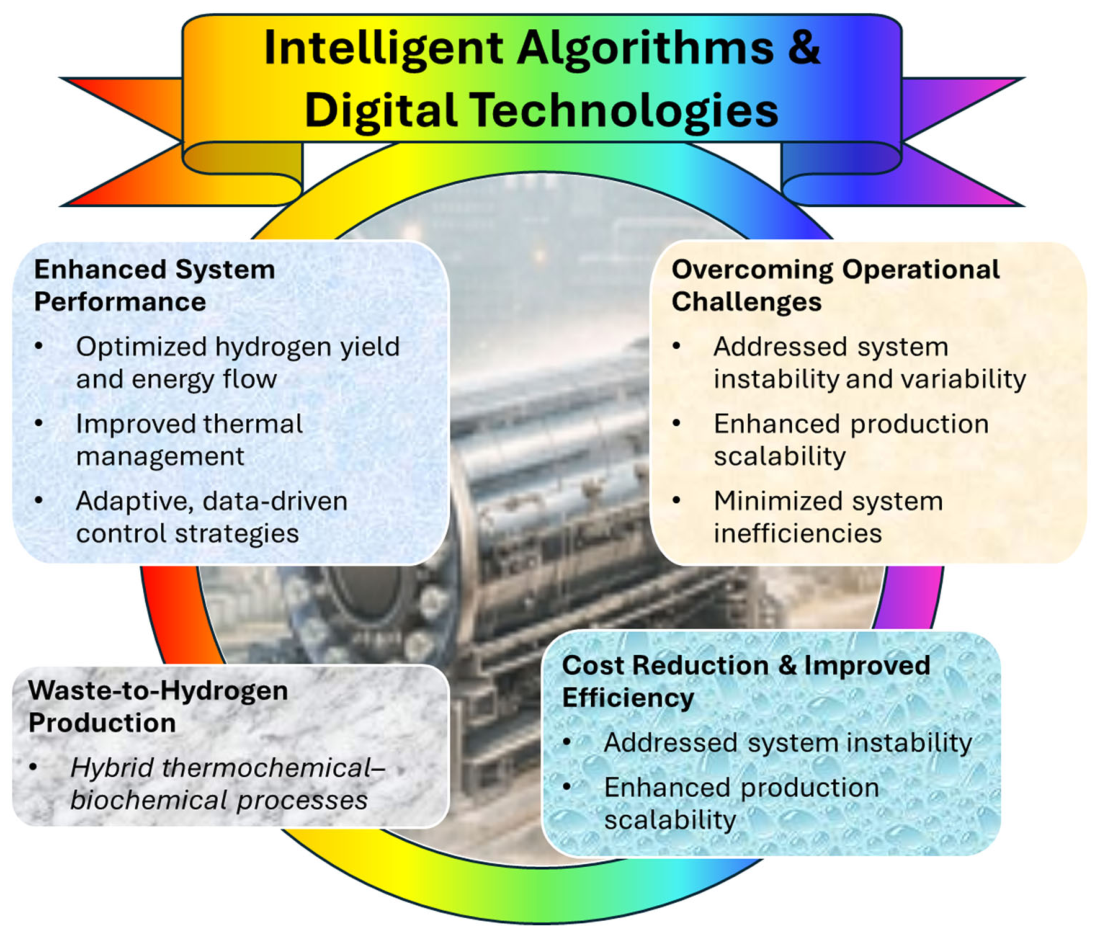
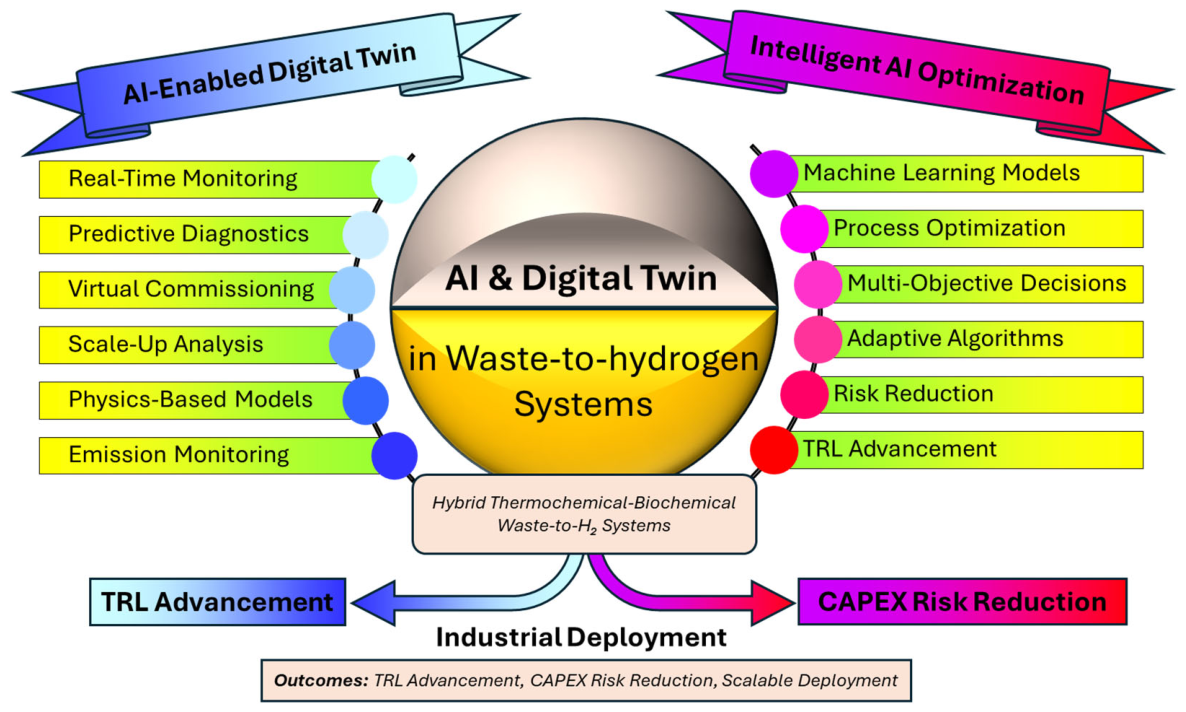
Catalysts in MR systems play a system-defining role beyond intrinsic activity. Nickel-based, bimetallic, carbide-modified, and carbon-derived catalysts have shown strong potential, and biochar-assisted systems introduce carbon as both reactant and catalytic component. Techno-economic and life cycle assessments indicate reduced reactor volume, lower separation intensity, and environmental benefits, particularly for hydrogen pathways. However, membrane durability, contaminant sensitivity, and high-temperature stability remain key barriers, keeping most MR systems at pilot-scale maturity. Continued advances in materials, co-design strategies, and digital optimization will be critical for industrial deployment.