Review

Membrane Reactors for Plastic and Biomass Waste Valorization: A Critical Review

1
School of Chemical Engineering, College of Engineering, University of Tehran, Tehran 1417614418, Iran
2
KORE Group, School of Engineering, Lancaster University, Lancaster LA1 4BY, UK
3
School of Engineering, University of Edinburgh, Edinburgh EH8 9YL, UK
*
Author to whom correspondence should be addressed.
Processes 2026, 14(9), 1485; https://doi.org/10.3390/pr14091485
Submission received: 23 February 2026 / Revised: 23 April 2026 / Accepted: 29 April 2026 / Published: 4 May 2026

Abstract

The rapid accumulation of plastic and biomass waste has emerged as a major environmental and resource management challenge, driven by increasing global consumption, low recycling efficiency, and the long-term persistence of waste in natural ecosystems. Conventional valorization routes such as pyrolysis, gasification, reforming, and fermentation provide promising pathways for converting waste into fuels and chemicals, yet their industrial deployment remains constrained by thermodynamic limitations, tar formation, catalyst deactivation, high energy demand, and complex downstream separation requirements. Despite increasing research activity, a comprehensive review that systematically addresses membrane reactor (MR) mechanisms, configurations, and their specific applications in the valorization of both plastic and biomass waste remains lacking in the current literature. In recent years, MR technology has attracted increasing attention as a platform for process intensification, integrating reaction and selective separation within a single unit. By enabling in situ product removal, MRs shift reaction equilibria toward higher conversion, selectivity improvement, and a reduction in separation severity and overall energy consumption. This critical review provides a unified and systematic assessment of MR technologies for the valorization of plastic and biomass waste. Reactor configurations, membrane materials, transport mechanisms, and catalytic systems are comprehensively examined, with particular emphasis on hydrogen-selective, oxygen-permeable, and water-selective membranes and their roles in reforming, tar mitigation, and syngas upgrading. The techno-economic and environmental implications of MR integration are critically discussed, together with current technology readiness levels (TRLs) and scale-up challenges. Overall, this review highlights MRs as a versatile and enabling platform for next-generation waste-to-value technologies and outlines their potential role in supporting the transition toward circular, low-carbon fuel and chemical production.

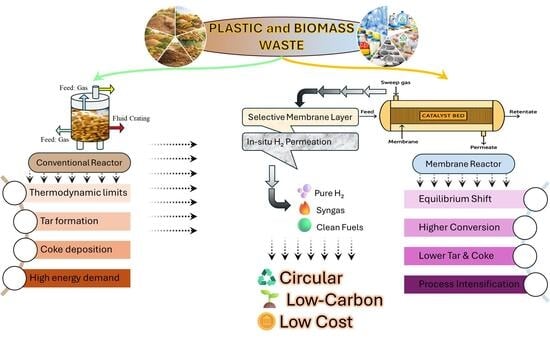
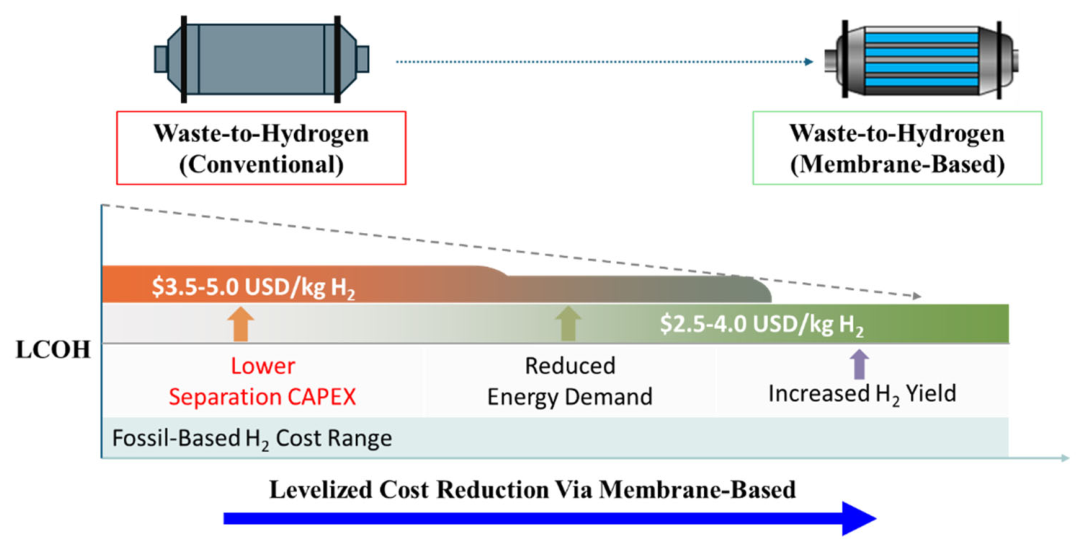
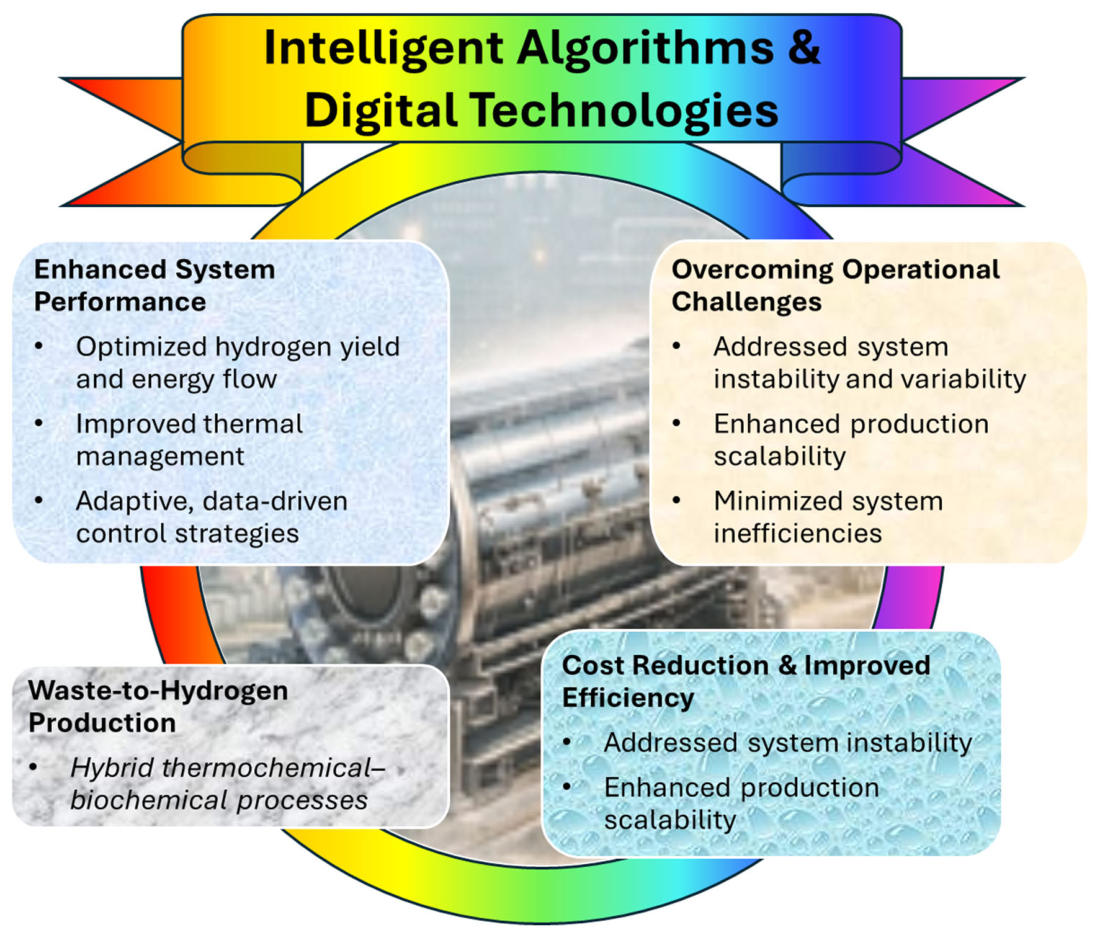
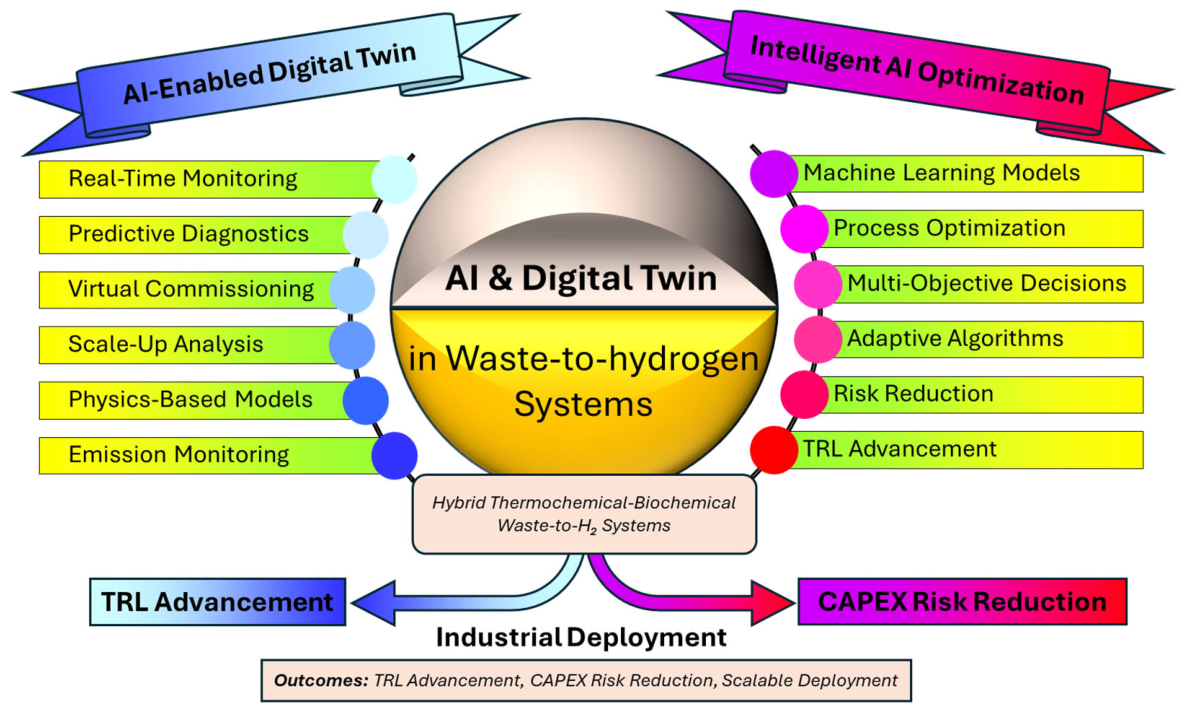
Graphical Abstract

1. Introduction

In the recent century, the accelerating accumulation of plastic waste, coupled with its low recycling efficiency and persistent release into terrestrial and marine environments, has escalated into a global environmental crisis [1,2,3]. In parallel, biomass residues from cities, industries, and agriculture have increased rapidly, placing additional pressure on current waste management systems and natural resources [4,5]. Together, these converging waste streams underscore the urgent need for advanced valorization pathways that can transform plastic and biomass waste into value-added products within a circular and low-carbon framework [1,3,5]. On the other hand, the rapid growth of plastic production has led to significant waste accumulation, highlighting the need for efficient waste-to-energy conversion technologies such as thermochemical processing [6].
Global plastic production has expanded to unprecedented levels, with annual output surpassing several hundred million tons, reflecting a persistent rise in consumption and waste generation worldwide [1]. Similarly, the continuous growth of organic and biomass residues, driven by rapid urbanization, industrial expansion, and agricultural activities, has intensified global solid-waste generation [5,6].
Landfilling remains one of the least sustainable disposal options, as non-biodegradable plastics persist for decades in soil and water, causing progressive contamination and accelerating the degradation of surrounding ecosystems [7]. The growing volumes of single-use plastics have intensified pressure on landfill capacity, while the inability to recover materials from buried waste prevents any contribution to circular economy targets [8]. Incineration, although capable of energy recovery, generates hazardous airborne pollutants and volatile organic compounds (VOCs), requiring advanced emission-control systems to mitigate environmental and health risks [1].
Global sustainability frameworks increasingly emphasize circular economy principles, encouraging transitions from linear production models toward regenerative systems that minimize waste, enhance resource efficiency, and reduce environmental burdens [2]. Aligned with these efforts, waste-to-energy strategies have gained prominence as nations explore pathways that simultaneously reduce landfill dependence and recover energy from residual waste streams, particularly in regions actively expanding waste valorization technologies [4]. These policy directions collectively reflect a broader global push toward low-carbon transitions, where integrating renewable energy systems, closing material loops, and promoting carbon-efficient waste valorization routes support long-term climate mitigation ambitions [5].
Conventional thermochemical pathways, including pyrolysis, gasification, reforming, and catalytic cracking, represent the most established routes for converting plastic and biomass waste, yet they suffer from persistent operational and performance drawbacks that limit their broader deployment [9,10]. These methods often require high temperatures and energy-intensive conditions, which can lead to severe tar formation, catalyst deactivation, unstable heat transfer, and inconsistent product distributions, particularly when processing heterogeneous or mixed waste streams [9,11].
In thermochemical conversion of plastic waste, extensive coke deposition, complex volatile compositions, and difficulties in achieving process stability without advanced control strategies [12] frequently hinder the process [9,10,13]. Similarly, biomass conversion encounters challenges associated with its intrinsic variability, the formation of oxygenated intermediates, and the production of condensable fractions, all of which complicate downstream handling [9,14]. Biological and hybrid routes such as fermentation also remain constrained by slow kinetics, feedstock impurities, and sensitivity to operating conditions, further limiting their scalability and economic viability [15]. Biomass gasification is a key thermochemical route for producing energy-rich syngas, though its scale-up remains limited by biomass quality constraints and the formation of tar and other contaminants during conversion [16]. Beyond catalytic and heat-transfer challenges, variations in the stream’s physicochemical parameters can lead to operational instabilities and performance losses through multiple pathways [17]. For example, in porous media, these parameters can disrupt particle–surface interactions and reduce permeability via fine-particle migration and/or swelling [18]. Collectively, these limitations underscore the need for more efficient, controllable technologies, motivating the exploration of intensified systems, such as membrane reactors (MRs), that can overcome heat- and mass-transfer limitations, mitigate catalyst deactivation, and enhance conversion selectivity. Alongside process-design approaches and intensified integration of reaction–separation systems, microscale surface-engineering strategies can also be considered to stabilize performance [19]. For instance, review studies indicate that nanoparticles—through mechanisms such as reducing zeta potential, altering interfacial interaction energy, and modifying pH and surface roughness—can mitigate fine-particle migration and its associated impacts [20].
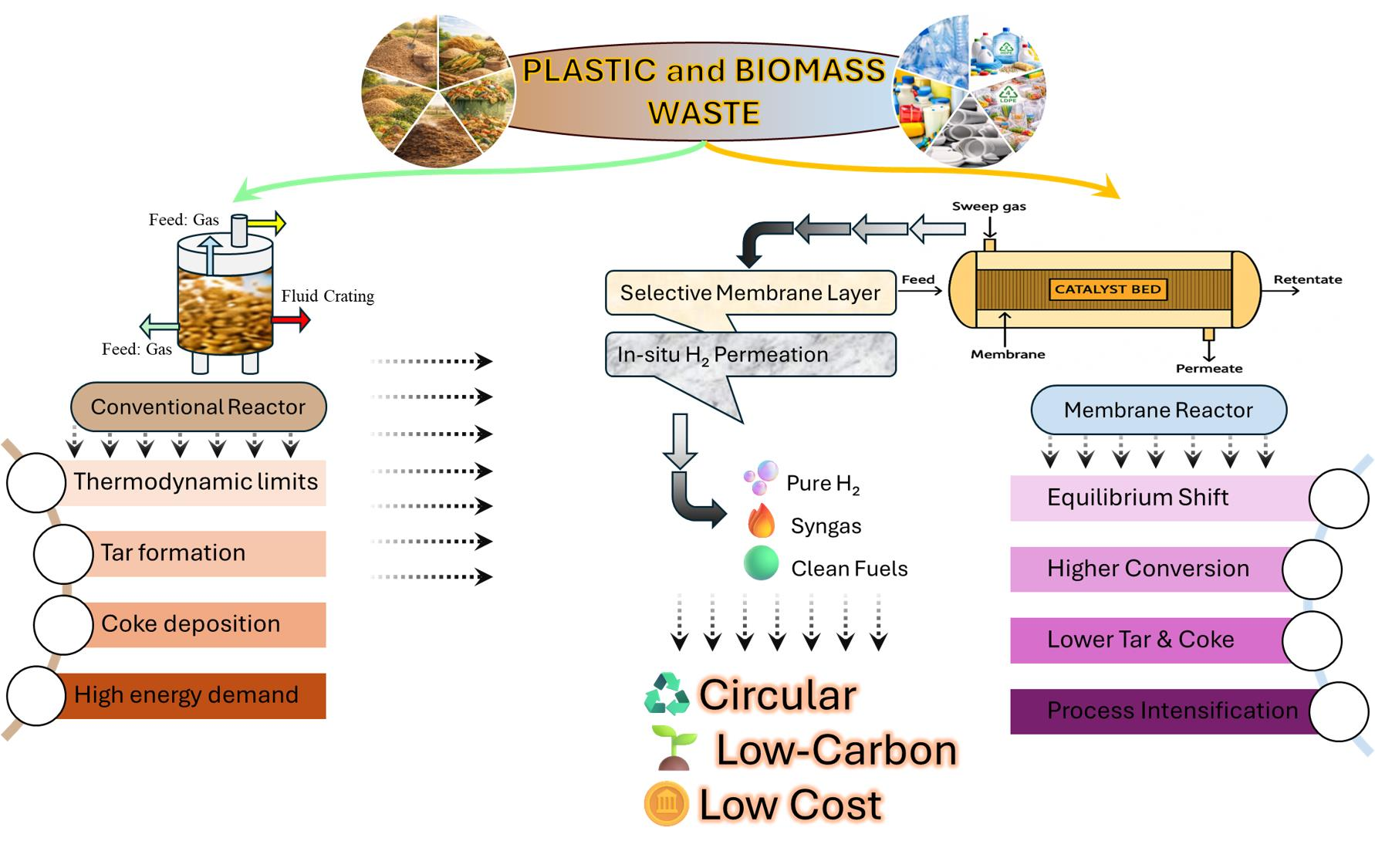
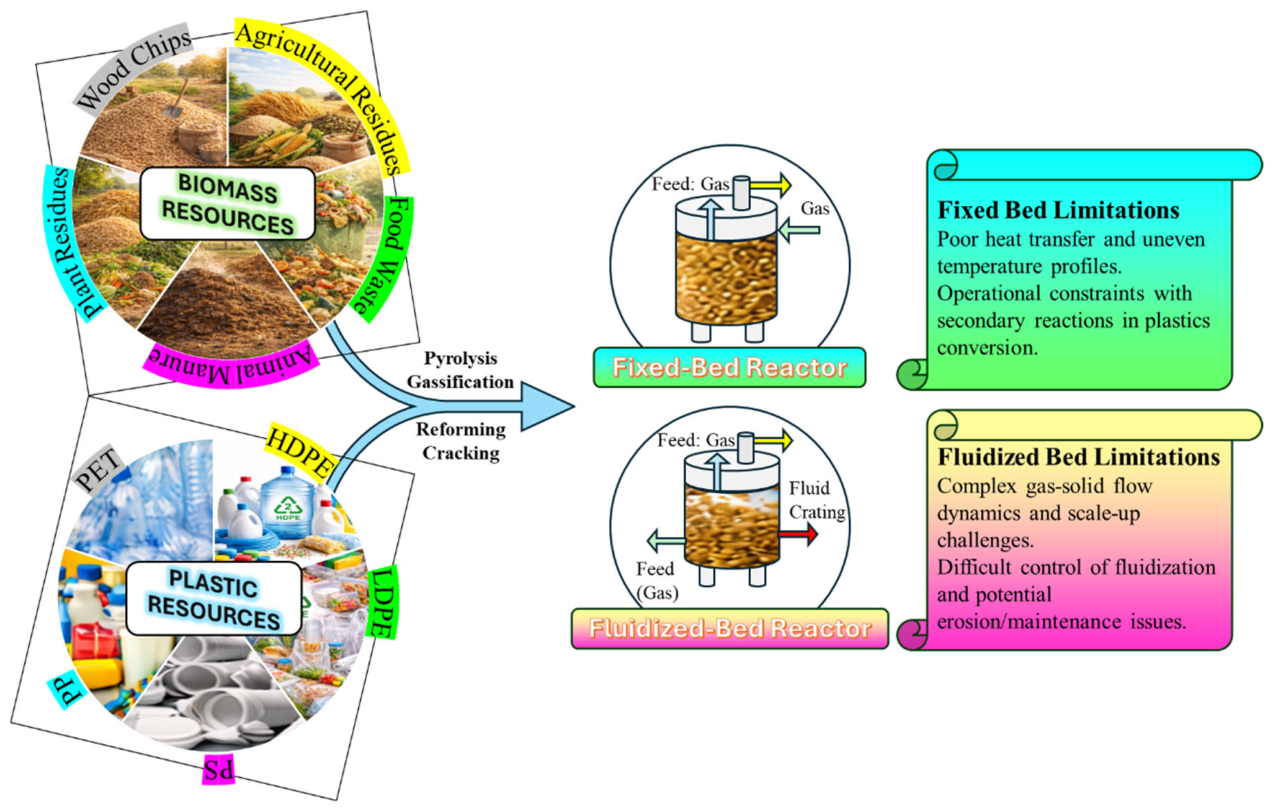
Conventional reactor configurations, including packed-bed, fixed-bed, and fluidized-bed systems, often fall short in processes where reaction progress is constrained by equilibrium limits or where byproducts accumulate within the reaction zone [21]. Fixed-bed reactors are widely employed in biomass pyrolysis because of their relatively simple design and operational flexibility; nevertheless, limited heat-transfer efficiency within the packed bed can result in non-uniform temperature distribution and uneven heating of biomass particles. In contrast, fluidized-bed reactors enhance mixing between solids and the fluidizing gas, enabling more homogeneous temperature profiles and improved heat-transfer performance, which has made them attractive for rapid thermochemical conversion and larger-scale applications [22]. These units generally lack the capacity to selectively remove formed species during operation, thereby intensifying mass-transfer resistance, promoting catalyst deactivation, and necessitating elevated temperatures to sustain acceptable conversion levels. Moreover, relying on downstream separation steps introduces additional energy penalties and operational complexity, making these traditional systems less suited for processes that demand high selectivity, efficient heat removal, or tight control over reaction pathways. As a result, such reactors often exhibit reduced efficiency, shortened catalyst lifetimes, and increased environmental footprint, highlighting inherent constraints on their ability to deliver intensified, low-energy chemical transformations [23].
Figure 1 schematically summarizes the main biomass and plastic valorization pathways and highlights the key characteristics of the two most commonly employed reactor configurations, namely fixed-bed and fluidized-bed reactors [22,24,25]. These reactor types are widely used in thermochemical conversion processes due to their distinct hydrodynamic and operational features. Depending on process requirements, different types of membranes can be incorporated into either fixed-bed or fluidized-bed systems to enhance performance through selective transport and improved reaction–separation integration. Thus, both configurations provide flexible platforms for both conventional and membrane-assisted operation in biomass and plastic conversion processes.
MRs offer a fundamentally different approach by integrating reaction and separation into a single intensified unit, enabling the selective removal of targeted products or byproducts directly as they form. This in situ separation shifts the reaction equilibrium toward greater conversion, reduces the accumulation of inhibitory species, and alleviates mass-transfer limitations that hinder conventional designs [26].
According to the reference, MRs offer additional advantages, including improved selectivity, greater thermal stability, and significantly lower energy demand due to the elimination of multiple downstream purification steps. Their modular nature and flexibility also support superior control of reaction zones and promote cleaner, more environmentally sustainable operation. Collectively, these benefits demonstrate that MRs directly address the constraints of traditional systems, making them a compelling alternative for next-generation fuel and chemical production [23].
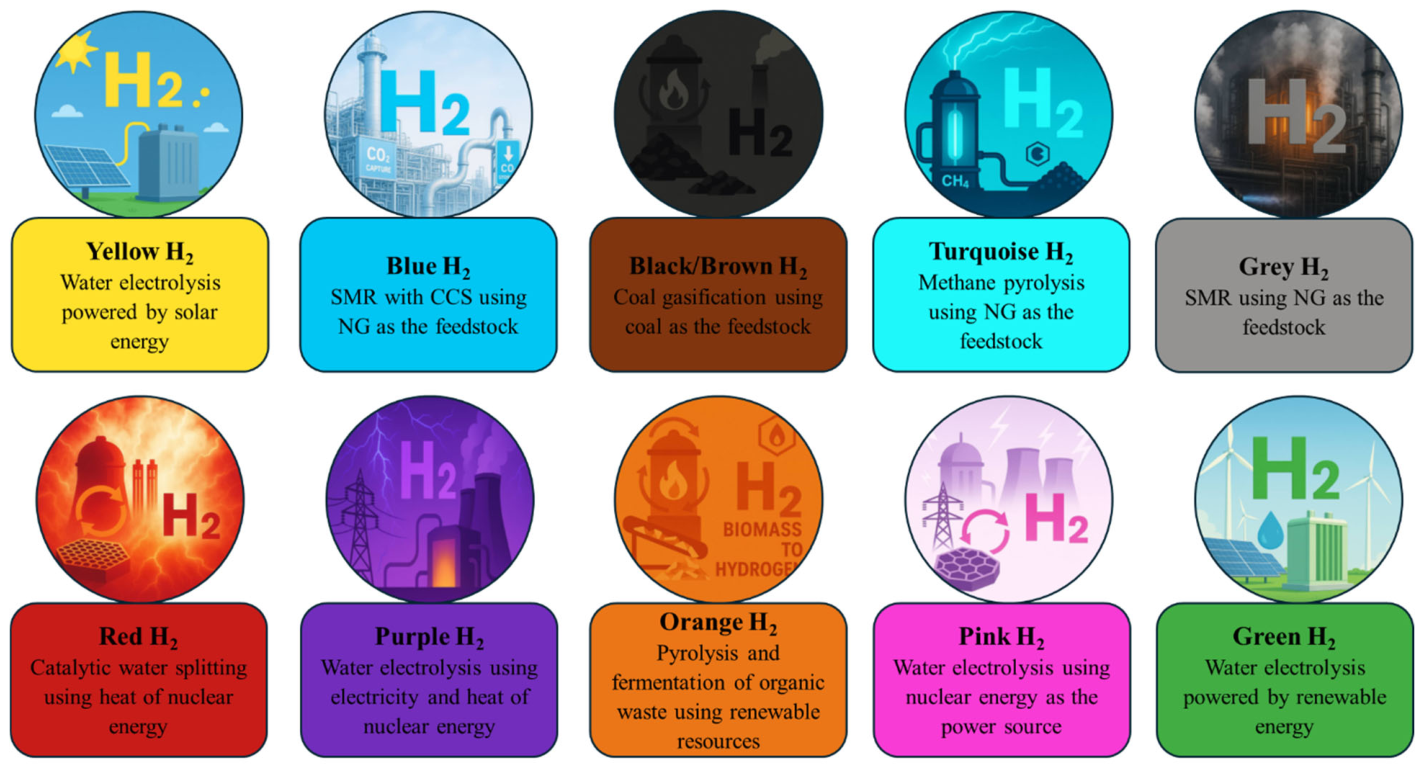
In plastic and biomass valorization processes, hydrogen is one of the main and most valuable products generated during thermochemical and catalytic conversion routes such as pyrolysis, gasification, and reforming. The produced hydrogen not only serves as a clean energy carrier but also plays a crucial role as a chemical feedstock for downstream synthesis processes, thereby enhancing the overall economic and environmental performance of waste-to-value pathways. Figure 2 illustrates the major hydrogen production routes, classified according to the widely adopted color-coding scheme that reflects both the feedstock and the associated carbon footprint. Gray hydrogen is produced from fossil fuels via steam methane reforming (SMR) or coal gasification and remains the dominant industrial route, albeit with substantial CO2 emissions. Blue hydrogen follows the same reforming pathways but integrates carbon capture and storage (CCS) to mitigate greenhouse gas emissions.
Turquoise hydrogen is generated via methane pyrolysis, yielding solid carbon as a byproduct and offering the potential for near-zero direct CO2 emissions. Green hydrogen produced by water electrolysis powered by renewable electricity is the most sustainable pathway for large-scale decarbonization. Additional routes, such as yellow hydrogen from solar-powered electrolysis and pink hydrogen from nuclear-driven electrolysis, further expand the portfolio of low-carbon hydrogen technologies. Together, these color-coded pathways highlight the technological diversity of hydrogen production and its central role in future low-carbon energy systems. Despite the growing body of research on MRs, available studies remain highly fragmented, with most investigations focusing on isolated reaction systems or specific membrane configurations rather than offering an integrated perspective [27]. Furthermore, the literature on the valorization of plastic waste using membrane-based technologies is comparatively limited, often overshadowed by the more mature field of hydrogen production [28]. Existing review articles primarily focus on single domains such as catalytic reforming, reactor modeling, or membrane materials without bridging the broader spectrum of membrane-assisted pathways for both plastic and biomass conversion [24,25]. To date, no comprehensive assessment has systematically examined how MRs can simultaneously address the challenges of plastic and biomass valorization within a unified framework, underscoring the need for a consolidated, critical review.
In recent years, research in this field has increasingly focused on membrane-based systems for the valorization of plastic and biomass waste. Figures S1 and S2 (Supplementary Materials) provide visual insights into this research trend. Figure S1 illustrates the chronological evolution of research on MRs for the valorization of biomass and plastic waste. The overlay visualization indicates that early studies were primarily associated with biomass conversion, anaerobic digestion, and wastewater treatment, reflecting the initial focus on biological and environmental applications of membrane bioreactors. In more recent years, however, the research landscape has shifted toward catalytic and thermochemical approaches, with increasing attention to topics such as steam reforming, hydrogen production, and biofuel generation, highlighting a growing interest in integrated reaction–separation systems and process intensification strategies for waste-to-fuel conversion. Figure S2 presents the density visualization of research keywords, highlighting the main hotspots and emerging topics in MR studies for biomass and plastic waste valorization. The map shows that biomass and bioreactors constitute the most densely studied areas, indicating their central role in the field, whereas topics such as hydrogen production, MRs, and steam reforming appear as emerging research directions, suggesting a growing focus on catalytic membrane systems for the thermochemical conversion of plastic and biomass wastes.
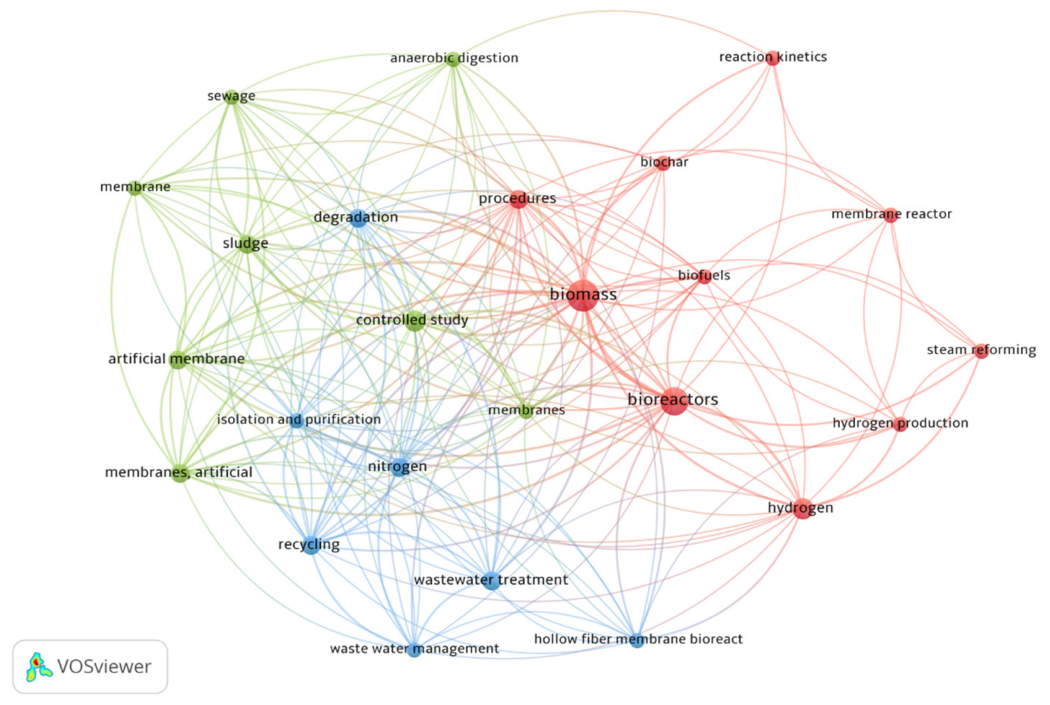
This review aims to provide a unified, in-depth examination of MR technologies for the valorization of plastic and biomass wastes. Figure 3 was generated using the VOSviewer software version 1.6.20, based on a keyword co-occurrence analysis of bibliographic data retrieved from the Scopus database. Author keywords associated with MR research in biomass and plastic waste valorization were extracted and analyzed to construct the network visualization. The keyword co-occurrence network in Figure 3 illustrates the conceptual framework of research on MRs for the valorization of biomass and plastic waste. Distinct clusters highlight primary thematic directions, including catalytic and thermochemical routes (e.g., biomass, biofuels, hydrogen, steam reforming), environmental and biotechnological processes (wastewater treatment, membrane bioreactors, sludge, recycling), and material innovation (artificial membranes, isolation and purification). The central role of biomass, bioreactors, and membranes emphasizes the integration of biological conversion with reaction–separation systems characteristic of MRs. Overall, the network demonstrates a convergence of biochemical conversion, catalytic membrane reforming, and environmental engineering, underscoring the emergence of MRs as multifunctional platforms for sustainable waste management, hydrogen generation, and clean fuel production.
The review systematically evaluates reactor configurations, catalytic behavior, reaction kinetics, and mass-transfer phenomena that govern process efficiency. Particular attention is given to membrane performance parameters, including permeance, selectivity, stability, and transport mechanisms, to elucidate their influence on conversion and product distribution. Moreover, techno-economic and environmental assessments are conducted to contextualize the practical viability of membrane-assisted systems. Finally, it outlines technology readiness levels (TRLs), current deployment gaps, and prospective development pathways to guide future research and industrial implementation.

2. Review Methodology and Evaluation Framework

This critical and semi-systematic review investigates MR-based valorization of biomass and plastic waste. The literature search and study selection process were conducted in accordance with the PRISMA guidelines, as detailed in the flowchart presented in Figure 4.
A comprehensive search was performed across major scientific databases (Web of Science, Scopus, ScienceDirect, and Google Scholar) covering the period from 2000 to 2025. The search strategy utilized combinations of keywords such as “membrane reactor”, “biomass”, “plastic waste”, “waste valorization”, “pyrolysis”, and “gasification”.
Studies were included if they were peer-reviewed articles directly addressing membrane-assisted processes for converting biomass or plastic waste. Conversely, records were excluded if they focused solely on conventional reactors, isolated membrane separations unrelated to reaction environments, or lacked sufficient qualitative/quantitative data for comparison [29].
The selected literature was evaluated through a multi-level framework. This assessment covered reactor configurations, catalytic behavior, membrane transport properties (permeance, selectivity, stability), and system-level performance indicators (conversion efficiency, hydrogen yield, techno-economic metrics, and TRLs).
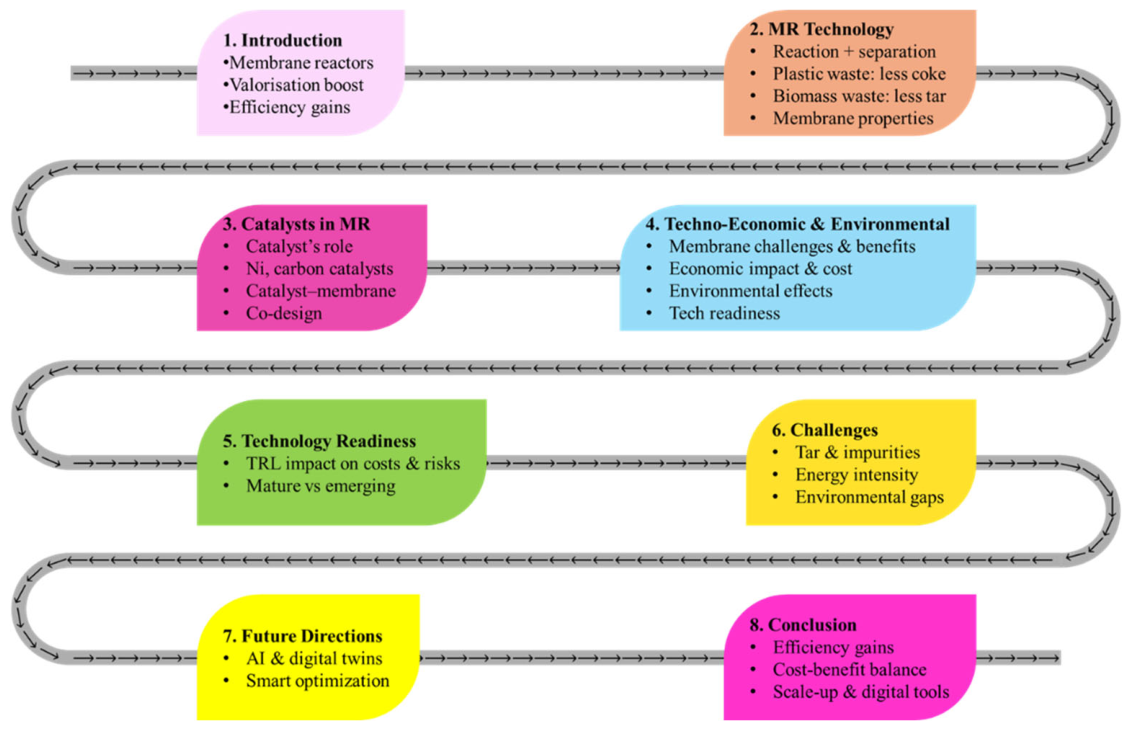
The overall structure of this review and the logical progression of its thematic sections are schematically illustrated in Figure 5. Following this methodological flow, the review synthesizes fundamental MR concepts, evaluates catalyst–membrane integration, identifies key bottlenecks (e.g., membrane durability and feed tolerance), and highlights future development directions.

3. Fundamentals of Membrane Reactor Technology

3.1. Different Types of Membrane Reactors

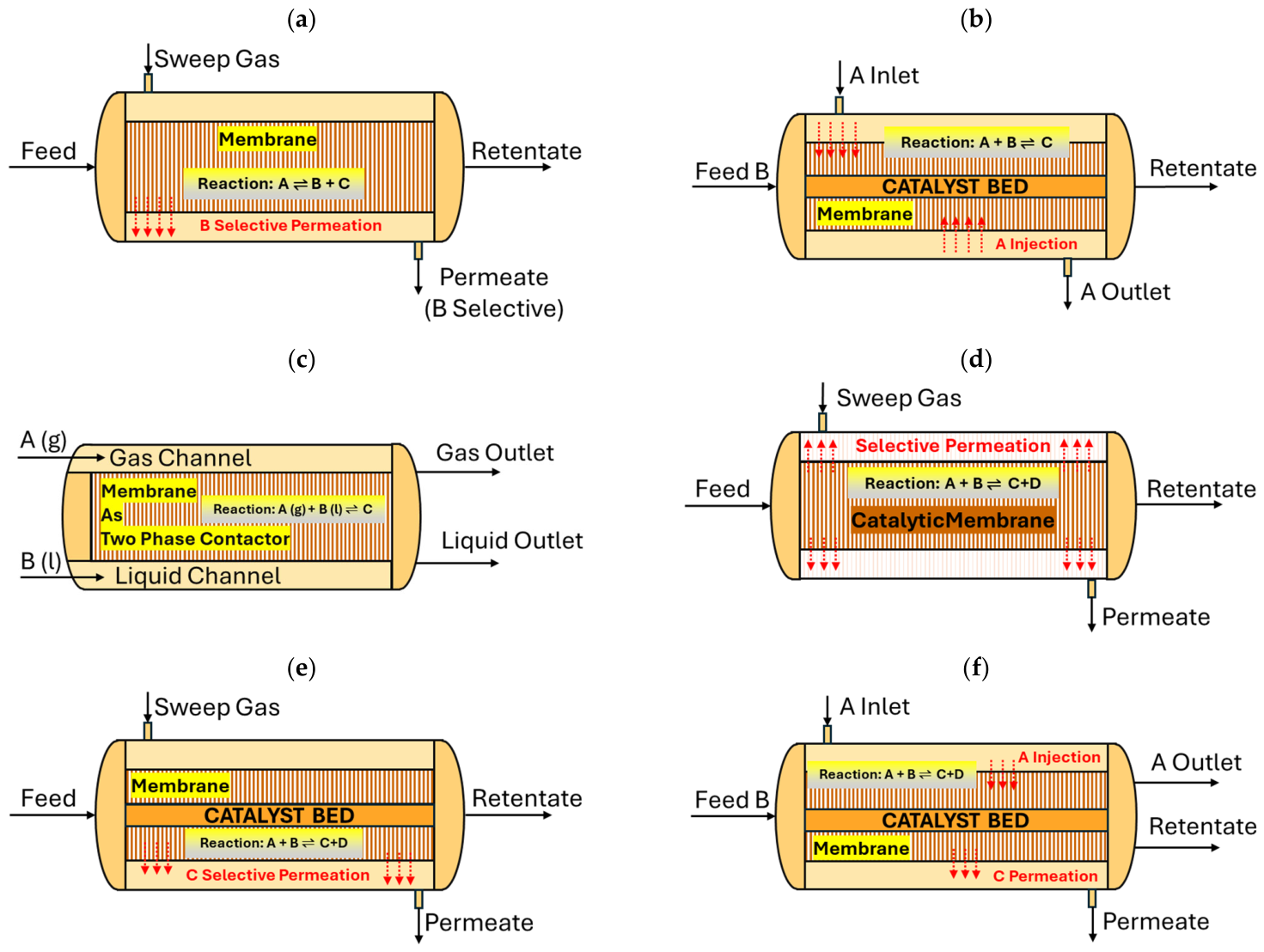
MRs can be classified in different ways depending on their configuration, function, and integration with reaction–separation tasks. As discussed in the literature, membrane-based systems include various process configurations, such as pervaporation-integrated reactors, gas-separation membranes, membrane contactors, membrane distillation units, and MRs that combine reaction and selective permeation [30]. Accordingly, MRs are not limited to a single design concept; rather, they can be categorized by operational role (e.g., extractor, distributor, contactor, or catalytic membrane reactor (CMR)), membrane material, and flow arrangement. Among these classifications, functional role-based categories are particularly relevant for reaction–separation intensification and are discussed below. The most representative and practically relevant configurations are schematically illustrated in Figure 6a–f.
An MR integrates a selective membrane with a catalytic reaction zone, enabling simultaneous chemical conversion and separation within a single unit [23,30]. In the extractor-type configuration (Figure 6a), this integration selectively withdraws one or more reaction products during operation. Unlike conventional fixed- or packed-bed reactors, which rely on downstream separation steps to remove products or impurities, MRs use the permselective transport of one or more species to control the reactor composition during operation [23,31]. The fundamental design philosophy is to couple reaction and membrane-driven separation so that products or inhibiting species are removed in situ, shifting the reaction equilibrium, enhancing conversion and selectivity, and enabling more compact and energy-efficient process intensification [23,31,32].
In contrast, the distributor-type configuration (Figure 6b) uses the membrane to gradually introduce one reactant into the catalytic bed, enabling controlled concentration and temperature profiles. The contactor-type reactor (Figure 6c) facilitates controlled mass transfer between two physically separated phases through a membrane interface without direct mixing. In the CMR (Figure 6d), the membrane itself exhibits catalytic activity and may simultaneously promote reaction and selective permeation. Conversely, the inert MR (Figure 6e) consists of a conventional catalytic bed coupled with a non-catalytic membrane responsible solely for selective transport. Finally, the multifunctional or integrated configuration (Figure 6f) combines reaction, selective permeation, and reactant distribution within a single intensified unit.
By removing key species during the reaction, MRs substantially reduce the need for extensive downstream separation units, which are often among the most energy-intensive stages in conventional processing chains [23,32]. This integrated configuration not only minimizes purification steps but also lowers the overall thermal duty of the system, since product withdrawal prevents overprocessing and suppresses the formation of heavy or undesirable intermediates [31]. As a result, membrane-assisted systems demonstrate markedly lower energy consumption and enable more compact, modular reactor designs with a significantly smaller process footprint, advancing the broader principles of process intensification and sustainable chemical production [23,33].
The selection of a specific MR configuration in practical applications is governed not only by reaction kinetics, thermodynamic constraints, membrane stability, and process integration feasibility, but also by the technological maturity of membrane materials and reactor systems. From a TRL perspective, MR technologies are still progressing from laboratory validation toward pilot-scale demonstration. For instance, Pd-based membranes for hydrogen separation have reached intermediate maturity levels (around TRL 4), while other membrane concepts such as mixed ionic–electronic conducting (MIEC) membranes remain at similar or slightly lower TRLs, reflecting validation under controlled laboratory conditions rather than industrial operation [34]. In line with this, recent techno-economic assessments of ammonia cracking systems report that MRs typically fall within TRL 4–5, whereas more conventional reactor technologies such as fired tubular reactors (FTRs) are already at significantly higher maturity levels (TRL ≈ 7), highlighting the existing gap between innovation and commercialization [35].
Among the various configurations, extractor-type MRs are generally considered the most technologically mature and practically relevant. These systems are particularly preferred for equilibrium-limited reactions, such as hydrogen production or esterification, where the continuous in situ removal of products shifts the reaction equilibrium toward higher conversions and improves selectivity [23,33]. Consequently, extractor-type MRs, especially Pd-based CMRs in packed-bed configurations, have been widely adopted in processes such as methane steam reforming for high-purity hydrogen production [30,33]. Their comparatively higher TRL is largely attributed to the more advanced development of Pd-based membranes and their successful validation in pilot-scale and pre-industrial environments.
From an operational standpoint, packed-bed CMRs are often favored over fluidized-bed configurations due to their simpler design and the fixed position of the catalyst, which minimizes membrane damage caused by particle attrition [33]. Inert MRs also demonstrate relatively high practical applicability, as they allow independent optimization of the catalyst and membrane, thereby improving operational flexibility and stability [36].
CMRs, in which the membrane simultaneously provides catalytic functionality and selective permeation, offer significant process intensification potential. However, their large-scale implementation remains limited not only due to challenges related to long-term membrane stability, catalyst deactivation, and fabrication complexity [37], but also because these systems are still positioned at relatively low TRLs, with insufficient long-term validation under realistic industrial conditions [34].
Distributor-type and contactor-type MRs are typically employed in more specialized applications. Distributor-type systems are particularly attractive for reactions requiring controlled reactant dosing and improved thermal management, such as partial oxidation processes [23], while contactor-type reactors are mainly used to facilitate controlled mass transfer between separate phases. Nevertheless, these configurations are generally at earlier stages of technological development and are less commonly implemented at scale compared to extractor-type systems.
Overall, multifunctional and integrated MR configurations are increasingly prioritized in process scale-ups. However, their industrial deployment strongly depends on advancing the TRL of both membrane materials and reactor designs, demonstrating long-term stability under realistic feed conditions, and overcoming integration and scalability challenges. Bridging the gap between laboratory-scale innovation and industrial application therefore remains a key challenge for MR technologies [23,30,35].

3.2. Membrane Reactors for Plastic Waste Valorization

Plastic waste poses significant challenges for thermochemical processing because common polymers such as polyethylene (PE), polypropylene (PP), polystyrene (PS), and poly(ethylene terephthalate) (PET) undergo distinct degradation pathways, generating highly variable reaction intermediates and product distributions during pyrolysis and reforming [38]. These polymers typically require high temperatures to initiate radical-driven cracking, producing unstable fragments that rapidly evolve into mixtures of light gases, aromatics, waxes, and heavy condensates, depending on polymer type and operating severity [39]. Such reactive intermediates also accelerate coke deposition on catalytic surfaces, leading to pore blockage and rapid deactivation, a problem particularly severe in the processing of aromatic-rich or heteroatom-containing plastics like PS and PET [39]. The combination of broad product spectra, elevated coking tendencies, and strong dependence on temperature and residence time makes the conversion of mixed-plastic streams complicated in conventional reactor systems [38].
MRs offer clear advantages for plastic valorization because their selective removal of hydrogen or other light gases helps regulate the reactive environment that forms during high-temperature polymer cracking [38]. By continuously lowering the local hydrogen partial pressure, these systems suppress secondary reactions that broaden product distributions and instead promote the formation of more stable intermediates, thereby improving selectivity toward desirable liquid fractions in plastic pyrolysis [39]. In reforming applications, hydrogen-permeable membranes such as Pd-based alloys enhance overall efficiency by shifting the equilibrium toward deeper conversion of plastic-derived volatiles, enabling higher hydrogen yields than conventional reformers operating under similar conditions [40]. This permeation-driven enhancement, combined with improved control of reactive intermediates, enables more efficient and stable upgrading pathways for diverse plastic feedstocks [41,42].
Hydrogen-selective MRs incorporating palladium and Pd–alloy films are the most widely examined configurations for plastic-derived syngas upgrading, as these membranes provide high hydrogen permeance and maintain excellent separation performance even in the presence of impurities commonly produced during pyrolysis and reforming [38]. Their ability to extract hydrogen at high purity strengthens overall conversion, particularly in systems where plastic volatiles are routed through reforming pathways to increase H2 yield [40]. Beyond dense-metal membranes, porous ceramic and SiC (silicon carbide)-based reactors have also been explored for plastic processing because their thermal stability and controlled diffusional properties help manage light-gas transport while withstanding severe cracking conditions [39]. More recently, hybrid mixed-matrix and mixed-metal-oxide membrane configurations have attracted attention for pyrolysis applications, where their tailored porosity and catalytic functionalities improve the handling of reactive vapors and contribute to more stable, selective product formation [41,42].
The scientific performance of MRs in plastic valorization is powerfully shaped by their ability to control hydrogen partial pressure during cracking and reforming. Continuous removal of permeating hydrogen lowers its concentration in the reaction zone, helping suppress inhibition effects and driving the further conversion of plastic-derived intermediates beyond equilibrium limits [38]. As shown in Table 1, membrane-assisted plastic valorization operates through distinct mechanisms and feedstocks yet consistently delivers measurable performance enhancements. In electrochemical Polymethyl methacrylate (PMMA) conversion, proton-selective transport enables hydrogen production at reduced energy demand [40], whereas in PET-based systems, ultrafiltration and cellulose membranes significantly enhance depolymerization efficiency and product yield by facilitating in situ removal of soluble intermediates. The mixed-plastic case further illustrates that membrane integration can achieve high contaminant removal efficiency under mild conditions, demonstrating functional versatility beyond equilibrium shifting.
Overall, despite differences in operating temperature and reaction pathway, the configurations summarized in Table 1 indicate that selective permeation improves hydrogen productivity, product distribution control, and conversion efficiency compared with conventional systems [38,40]. Moreover, by stabilizing reactive intermediates and limiting secondary recombination, membrane integration reduces coke formation and improves catalyst stability under plastic reforming conditions [39].
Compared with conventional fixed- or fluidized-bed systems, MRs offer a more controlled environment for managing reactive intermediates generated during plastic cracking and reforming. Traditional reactors cannot selectively remove hydrogen or light gases as they form, leading to higher local hydrogen partial pressures that slow reforming reactions and intensify coke deposition [39]. In contrast, membrane-assisted configurations continuously withdraw permeating species, shifting reaction equilibria toward deeper conversion and enabling higher hydrogen yields with narrower product distributions [38]. The combined influence of selective permeation and catalyst–membrane coupling also suppresses secondary radical recombination, thereby improving stability and reducing deactivation rates that commonly limit the performance of conventional reactors in plastic processing [40]. These advantages demonstrate that MRs provide a more efficient and robust platform for upgrading plastic waste, delivering enhanced conversion, improved selectivity, and more sustainable operating conditions than conventional technologies can typically achieve [41,42].
Despite their well-established advantages, MRs applied to plastic waste valorization face several critical operational challenges. The presence of heavy hydrocarbon vapors and waxy compounds can promote severe membrane fouling and coke deposition, leading to a progressive decline in permeation performance and selectivity. In addition, heteroatom-containing species, particularly chlorine- and sulfur-based compounds originating from mixed-plastic streams, can induce catalyst poisoning and compromise membrane stability. These effects are further exacerbated by the thermal limitations of certain membrane materials, particularly metallic systems, which restrict their operational window. Consequently, additional feed pretreatment and gas conditioning steps are often required, increasing overall process complexity, energy demand, and operational cost [43].
In addition to these general advantages, a more detailed analysis of plastic-specific MR configurations and challenges is described. In the context of plastic waste valorization, MR configurations require more detailed consideration compared to conventional thermochemical systems. Most studies have focused on catalytic pyrolysis and steam reforming of polymers such as PE, PP, PS, and PET, employing hydrogen-selective dense metallic membranes (e.g., Pd and Pd-alloys) or high-temperature ceramic and SiC membranes. These membranes are typically integrated either within the catalytic reactor or in a coupled downstream separation unit, enabling continuous removal of hydrogen and light gases [39,43].
This selective removal shifts reaction equilibria toward enhanced dehydrogenation and reforming pathways, promoting deeper cracking of polymer chains while suppressing secondary condensation reactions that form heavy waxes and aromatics. As a result, MR systems can improve plastic conversion efficiency, hydrogen yield, and product selectivity, while also contributing to improved catalyst stability and more controlled product distributions.
However, plastic-derived feedstocks introduce specific challenges, including severe coke formation, organic fouling, and catalyst deactivation due to reactive intermediates and heavy condensable species. In addition, contaminants such as chlorine and sulfur can poison membranes and degrade materials, while high operating temperatures impose thermal and mechanical stresses. These factors highlight the need for optimized reactor design, feed pretreatment, and regeneration strategies, and indicate that further advancements in membrane robustness and scalability are required for practical deployment.

3.3. Membrane Reactors for Biomass Waste Valorization

Lignocellulosic biomass is structurally composed of cellulose, hemicellulose, and lignin, each contributing distinct thermal and chemical behaviors during conversion processes [44]. Cellulose and hemicellulose generally decompose at relatively lower temperatures, producing a broad spectrum of oxygenated volatiles, while the aromatic, highly cross-linked structure of lignin yields heavier phenolic fragments and substantial char [45]. Beyond this intrinsic heterogeneity, biomass feedstocks exhibit significant variability depending on botanical origin, ash content, and moisture levels, leading to fluctuations in reaction kinetics and product distribution during thermochemical processing [46]. A persistent challenge arises from tar formation: complex mixtures of condensable hydrocarbons generated during pyrolysis and gasification that can foul downstream equipment, deactivate catalysts, and reduce overall process efficiency if not effectively managed [47].
Building on these physicochemical complexities, MRs offer significant advantages for thermochemical biomass conversion by selectively removing key reaction products and thereby enhancing the performance of reforming and gasification pathways [44]. In steam- and dry-reforming of biomass-derived volatiles, integrating hydrogen-permeable membranes shifts reaction equilibria toward deeper reforming, lowering the concentration of inhibitory species and improving carbon utilization efficiency [45]. Coupling membrane units with biomass gasification further enables continuous withdrawal of hydrogen and other light components, reducing secondary tar reactions and stabilizing syngas composition under varying feed conditions [47]. As a result, membrane-assisted systems can generate hydrogen-rich syngas with higher purity and conversion than conventional reactors, offering a more controlled, energy-efficient route for upgrading oxygenated and tar-prone intermediates inherent to lignocellulosic feedstocks [46].
To enable such intensified upgrading routes, multiple MR configurations have been developed for biomass-derived intermediates, each tailored to address distinct transport and separation needs within reforming and gasification environments [44]. Hydrogen-permselective membranes, particularly those based on palladium alloys, are frequently employed to extract H2 during reforming, thereby promoting equilibrium shift and producing cleaner syngas streams with reduced byproduct formation [45]. Zeolite-based membranes have also attracted attention for their ability to selectively remove H2O generated during steam-mediated reactions, thereby suppressing unwanted hydrothermal side reactions and stabilizing catalyst performance under high-moisture conditions [47]. For more oxidizing environments, oxygen-permeable MRs constructed from perovskite-type ceramics facilitate controlled oxygen transport, enabling partial oxidation or autothermal reforming modes that enhance carbon conversion efficiency while minimizing tar formation [46]. Collectively, these membrane configurations provide a versatile platform for tailoring reaction atmospheres and improving the robustness of biomass thermochemical processes beyond what conventional reactors can deliver.
Compared to conventional reformers, membrane-assisted systems offer substantial performance enhancements by continuously steering reaction conditions toward more favorable pathways during biomass conversion [44]. The selective extraction of hydrogen not only drives reforming reactions beyond their equilibrium limits but also yields markedly higher H2 with improved product purity [45]. As reflected in Table 2, membrane-assisted biomass valorization spans a broad temperature range and multiple reaction regimes, from high-temperature thermochemical conversion (500–700 °C pyrolysis and 250–350 °C gasification-Water Gas Shift (WGS)) to mild biochemical and separation-driven processes below 70 °C. In thermochemical routes, hydrogen-selective membranes such as Pd–Ag and Carbon molecular sieve (CMS) primarily enhance H2 recovery and shift the equilibrium, directly addressing the challenges of tar formation and product inhibition associated with lignocellulosic gasification [47].
By contrast, in biochemical and liquid-phase systems, such as enzymatic transesterification and esterification, membranes primarily function by in situ removing water, glycerol, or soluble intermediates, thereby improving conversion efficiency under relatively mild conditions. Separation-oriented applications (e.g., dye adsorption and macromolecule retention at room temperature) further illustrate that membrane roles extend beyond reaction enhancement to selective purification and resource recovery.
Overall, the comparative data in Table 2 indicate that while the dominant selective function varies, hydrogen extraction at high temperature versus product or water removal in low-temperature systems, membrane integration consistently enables tighter control over reaction environments, improved catalytic stability [46], and enhanced carbon utilization efficiency aligned with sustainable processing objectives [44].
Although MRs address many of the same thermodynamic and kinetic limitations encountered in the valorization of plastic and biomass wastes, the underlying conversion requirements of these two feedstock classes differ in important operational respects [44]. Plastic-derived streams typically consist of hydrocarbon-rich volatiles with a strong tendency toward coke formation, requiring membranes that can withstand high temperatures and efficiently remove light gases to steer cracking and reforming pathways [45]. In contrast, biomass conversion must contend with oxygenated vapors, moisture variability, and persistent tar formation, conditions that benefit from membranes capable of selectively transporting hydrogen, water, or oxygen depending on the targeted reforming route [47]. As a result, while both waste types profit from equilibrium shifting, enhanced selectivity, and improved process stability offered by MRs, the optimal membrane configuration and operating strategy must be tailored to the distinct physicochemical signatures of each feedstock [46].
Similarly, biomass-derived feedstocks introduce additional layers of complexity in MR operation. The formation and deposition of tar species and ash particulates can rapidly deactivate both membrane surfaces and catalytic sites, significantly impairing long-term system performance. Moreover, the presence of alkali metals, halides, and other inorganic contaminants adversely affects membrane durability and structural integrity under prolonged operation. Variability in feedstock composition, including fluctuations in moisture content and impurity levels, further contributes to unstable operating conditions. These factors collectively challenge the continuous operation, reliability, and techno-economic feasibility of biomass-based MR systems [50,51].

3.4. Membrane Characteristics: Permeance, Selectivity, and Performance

3.4.1. Permeability and Permeance

Permeability describes the intrinsic ability of a membrane material to allow a penetrant species to dissolve and diffuse through its structure under a defined pressure gradient. According to the referenced formulation, permeability is expressed as the product of the penetrant’s diffusivity and its solubility in the membrane matrix, capturing the essential thermodynamic and transport properties that govern molecular mobility within the membrane [41]. In practical gas-separation studies, permeability is often reported in units such as Barrer or gas permeation unit (GPU), where its magnitude reflects both the chemical affinity of the species for the membrane and its ability to migrate through the polymer or inorganic network [41,52].
Permeance, in contrast, is an operational parameter that normalizes permeability to membrane thickness. It reflects the rate at which a species permeates through a unit area of membrane under a specified transmembrane driving force. As described in the referenced equations, permeance is defined as the membrane mass-transfer coefficient, obtained by dividing the permeability coefficient by the effective thickness of the active layer, thereby providing a more practical measure for engineered membrane systems where material thickness can vary significantly [52]. This distinction makes permeance particularly valuable in membrane reactor evaluations, as it directly quantifies the flux achievable under real operating conditions without requiring material-specific normalization [41,52].
Permeability, therefore, characterizes the intrinsic transport capability of the membrane material itself, while permeance characterizes the performance of the actual membrane module, encompassing both material and architectural contributions. These two parameters form the foundation for interpreting membrane behavior in reactive systems, where high permeance is essential for effective in situ product withdrawal, and high intrinsic permeability enables selective and efficient species transport [41,52].

3.4.2. Selectivity

Membrane selectivity is the ability of a membrane to discriminate between permeating species and is defined as the ratio of their permeabilities or permeances under identical operating conditions. In gas-separation applications, selectivity arises from differences in solubility, diffusivity, or molecular size among the penetrants, leading to preferential transport of one component over another through the membrane [52]. This distinction becomes especially important in reactive environments such as membrane reforming, where selective hydrogen transport plays a central role in shifting reaction equilibria and enhancing overall conversion efficiency [53].
For dense metallic membranes, particularly Pd-based systems, selectivity is driven by hydrogen’s unique ability to dissociate on the membrane surface, dissolve into the metal lattice, and diffuse through it, resulting in nearly exclusive hydrogen permeation even in mixtures containing CO, CO2, CH4, or heavier hydrocarbons [53]. Such near-infinite selectivity enables high-purity hydrogen production from complex syngas streams and prevents the passage of species that would otherwise inhibit catalysts or contribute to secondary reactions. In contrast, porous ceramic or mixed-matrix membranes (MMMs) rely on size- and diffusivity-based discrimination, where Knudsen or molecular sieving mechanisms govern the selective flow of light gases relative to larger or less mobile molecules [41].
Operational selectivity often deviates from its ideal theoretical value due to factors such as competitive sorption, membrane compaction, surface adsorption, and interactions between impurities and the transport pathways. These effects can reduce the membrane’s effective separation capability, making experimentally measured selectivity a critical performance indicator in membrane reactor studies [52]. As a result, membrane selectivity not only reflects material-level transport properties but also directly influences reaction–separation coupling, the extent of equilibrium shifting, and the overall efficiency of intensified reactor configurations [41,53].

3.4.3. Transport Mechanisms

Solution–Diffusion Mechanism
The solution–diffusion mechanism dominates transport in dense metallic and polymeric membranes, where permeating species first dissolve into the membrane material and subsequently diffuse through its bulk according to a concentration or chemical-potential gradient. Hydrogen-permeable metals such as Pd and Pd–alloys exhibit this behavior strongly, as hydrogen molecules dissociate at the membrane surface, enter the metal lattice as atomic hydrogen, and migrate through interstitial sites before recombining and desorbing on the permeate side [53]. In polymer-based or MMMs, solubility differences and molecular affinity govern the extent of sorption, making solution–diffusion a key determinant of both permeability and selectivity under reactive or multi-component conditions [52].
Knudsen Diffusion
Knudsen diffusion becomes the controlling mechanism in porous ceramic or inorganic membranes when pore diameters are sufficiently small that gas–wall collisions dominate over intermolecular collisions. Under these conditions, molecular transport depends on molecular weight and pore geometry, leading to preferential permeation of lighter gases, such as hydrogen, relative to larger species, such as hydrocarbons or CO2 [41]. This mechanism is frequently exploited in high-temperature MRs, where porous layers maintain structural stability while enabling selective enhancement of light-gas fluxes [54].
Surface Diffusion
Surface diffusion contributes to transport when adsorbed species migrate along the membrane surface or pore walls. This mechanism is particularly relevant in membranes with catalytic or chemically active surfaces, where adsorption strength and surface coverage influence the mobility of intermediates [54]. In reactive environments, such as the reforming of plastic- or biomass-derived volatiles, surface diffusion may facilitate the migration of adsorbed hydrogen or light radicals, thereby influencing overall flux and contributing to the synergistic coupling between catalytic reactions and membrane transport [53].
Molecular Sieving
Molecular sieving governs permeation in materials with highly uniform and narrowly distributed pore sizes, such as specific zeolites or microporous inorganic frameworks, where only molecules smaller than a critical kinetic diameter can enter and traverse the pore network. This strict size exclusion results in sharp selectivity contrasts, enabling the separation of gases or vapors with minimal differences in molecular size [52]. Molecular sieving mechanisms are advantageous in MRs handling biomass- or plastic-derived vapors, as they prevent the passage of larger condensable species while supporting selective transport of hydrogen or other light gases.
Capillary Condensation
Capillary condensation occurs in nanoporous materials when vapor transport under an imposed pressure gradient approaches phase-transition conditions, leading to liquid formation within the pores. The referenced study demonstrates that, above a critical pressure difference, vapor entering a nanoslit condenses, and liquid flow develops within the confined region, whereas at lower pressure gradients, the vapor phase remains stable. The resulting liquid–vapor interface forms a curved meniscus whose pressure difference follows the Young–Laplace relation and is primarily governed by the fluid–wall interaction strength rather than by the mass flow rate. The formation and deformation of this meniscus determine the transition between vapor-dominated and liquid-dominated transport regimes. Under such conditions, viscous liquid flow becomes the prevailing transport mechanism within the confined pore space.
Facilitated Transport
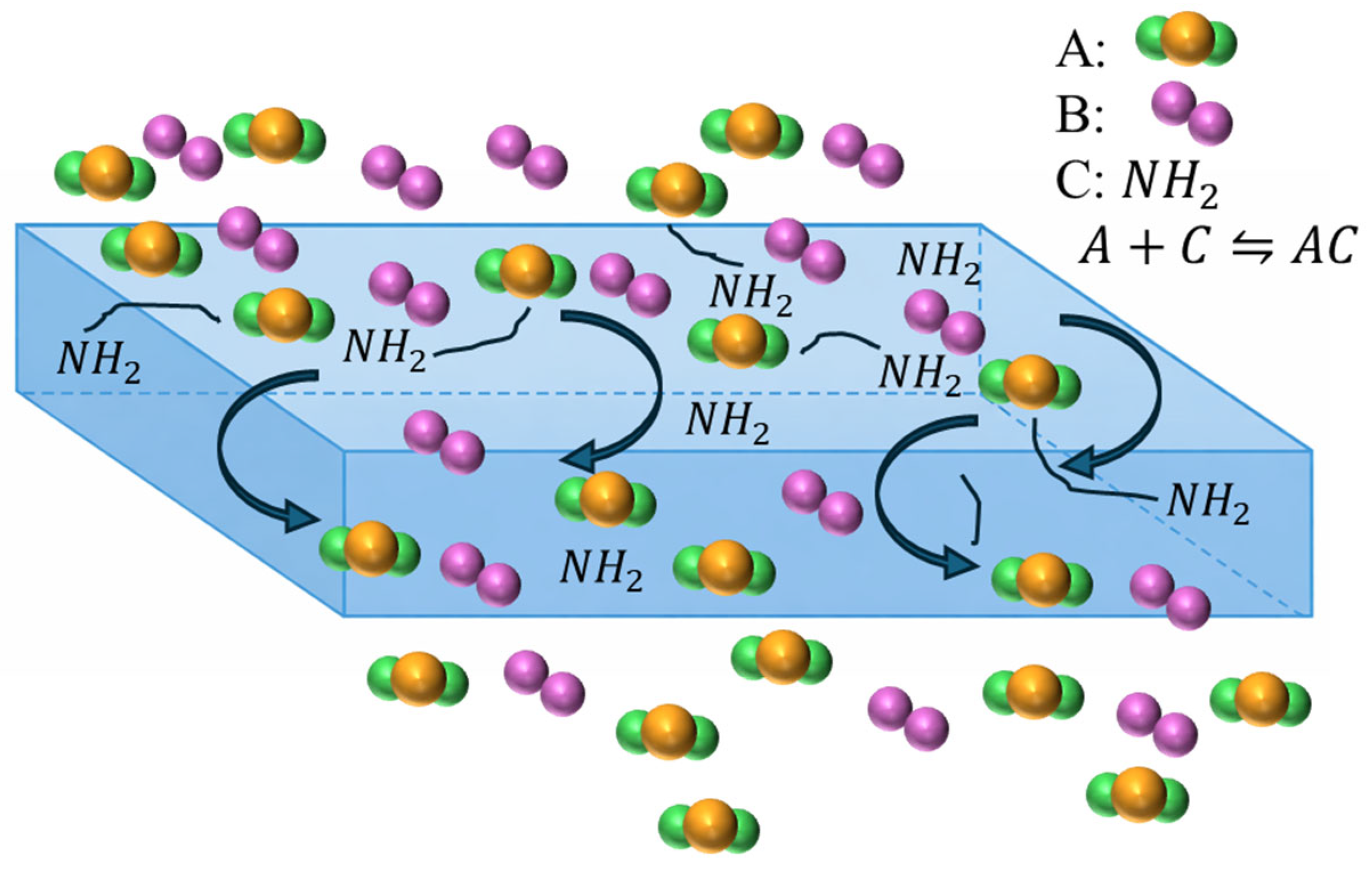
Facilitated transport involves the reversible interaction of permeating species with specific carrier sites embedded within the membrane matrix, enabling selective and enhanced transport across the membrane, as schematically illustrated in Figure 7. The target molecule temporarily forms a complex with a carrier, which increases its effective solubility and mobility relative to non-interacting species. The carrier–permeant complex then diffuses through the membrane under a chemical-potential gradient and dissociates on the permeate side, regenerating the carrier. Carriers may be either mobile within the membrane phase or immobilized on the polymer structure, influencing transport kinetics and stability. This coupled reaction–diffusion mechanism can yield permeation rates and selectivities beyond those predicted by conventional solution–diffusion behavior.
Poiseuille (Viscous) Flow
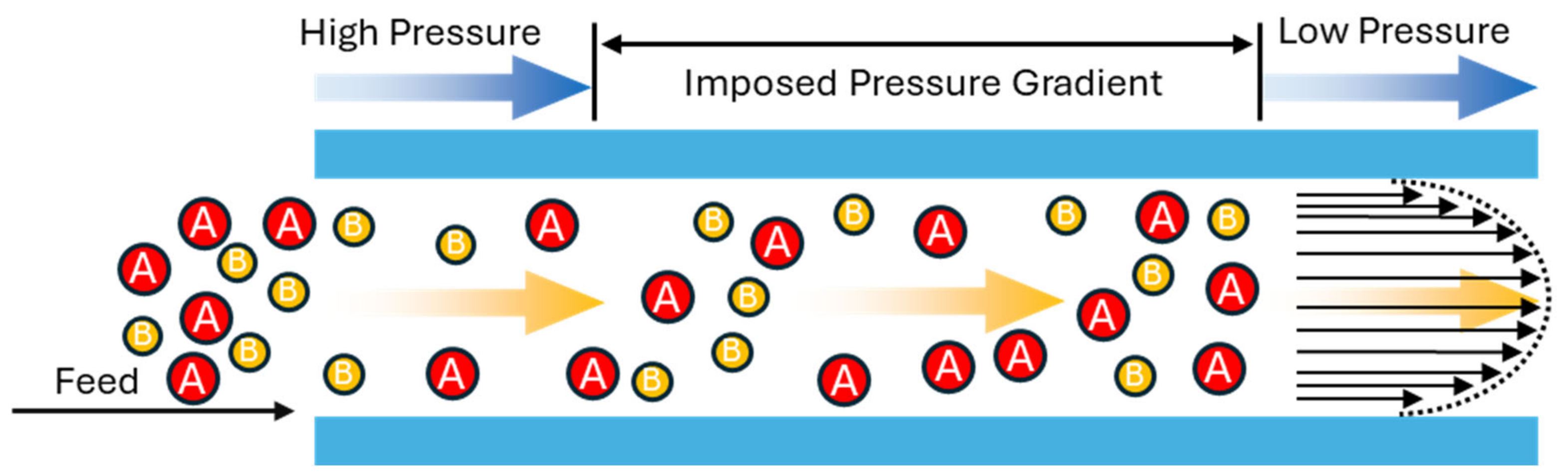
Poiseuille flow governs transport in porous membranes when pore diameters are sufficiently large relative to the molecular mean free path, so that intermolecular collisions dominate over molecule–wall interactions, as schematically illustrated in Figure 8. In this regime, mass transfer is driven by a pressure gradient and follows the Hagen–Poiseuille relation, where flux is proportional to the fourth power of the pore diameter and inversely related to fluid viscosity and pore length. In membranes with broad pore-size distributions, viscous flow becomes increasingly dominant as larger pores dominate overall permeability. When pore sizes exceed a critical threshold, the contribution of Poiseuille flow surpasses that of Knudsen and transitional mechanisms, making permeability highly sensitive to the presence of large pores.
Recent developments in catalytic membrane technologies demonstrate that integrating catalytic functionality with separation capabilities enables simultaneous pollutant degradation and selective transport within a single system. In such multifunctional membranes, catalytic reactions can be initiated directly at or near the membrane interface, where contaminants are concentrated due to filtration. This spatial coupling enhances reaction efficiency and allows continuous in situ degradation of foulants and dissolved pollutants, thereby mitigating membrane fouling while improving overall treatment performance. Unlike conventional membranes that rely solely on physical separation, these systems exploit catalytic pathways such as photocatalysis, advanced oxidation processes, and electrocatalysis to transform complex contaminants into smaller, less harmful species [55].
From a mechanistic and materials perspective, the performance of catalytic membranes is governed by the interplay between reaction kinetics, mass transfer, and membrane structure. The incorporation of catalytic sites onto membrane surfaces or within pore channels facilitates adsorption–reaction–diffusion processes that enhance selectivity and suppress the accumulation of contaminants. In parallel, advanced fabrication strategies, including surface functionalization, in situ catalyst growth, blending, and nanostructuring, have enabled precise control over catalyst distribution, membrane porosity, and interfacial properties. These approaches not only improve catalytic efficiency and antifouling behavior but also address key challenges such as catalyst leaching, stability under operating conditions, and long-term durability. Consequently, the rational design of catalytic membranes through the integration of material engineering and reaction–transport principles is emerging as a critical pathway toward next-generation MR systems [55].

3.4.4. Performance-Determining Factors

Membrane thickness directly influences permeation rates because flux is inversely proportional to the effective diffusion path. As reported in MR studies, reducing the active-layer thickness enhances permeance and accelerates hydrogen withdrawal, thereby amplifying equilibrium shifts in reforming environments [52,53]. Thin metallic layers in Pd–Ag membranes similarly exhibit higher mass-transfer coefficients and improved responsiveness under reactive conditions [56].
Temperature effects are equally critical, as permeability in both dense-metal and polymeric membranes increases with temperature due to enhanced solubility–diffusion kinetics. High-temperature operation in MRs enhances hydrogen flux and suppresses inhibition by competing species; however, excessively high temperatures can alter membrane microstructure or accelerate undesired side reactions, requiring careful thermal management for long-term stability [23,53,57].
Plasticization and fouling introduce additional performance constraints. In polymer-containing or hybrid membranes, exposure to condensable vapors, such as biomass-derived oxygenates or plastic pyrolysis intermediates, can cause swelling, increased chain mobility, and a subsequent loss of selectivity [52]. Fouling and coke deposition, widely observed in high-temperature reforming and plastic pyrolysis environments, block transport pathways and reduce flux, leading to a gradual decline in membrane performance unless regeneration strategies are employed [41,58].
Thermal degradation can alter the crystallinity, mechanical strength, or lattice structure of membrane materials during sustained high-temperature operation. Pd-based membranes may experience phase changes or alloy redistribution, affecting hydrogen solubility and diffusivity, while ceramic or mixed-metal-oxide structures can undergo sintering or pore restructuring under severe conditions [53,54]. These changes reduce effective permeance and compromise operational durability.
Catalyst–membrane interactions also influence overall transport behavior. In integrated MRs, catalytic activity determines the concentration of permeating species at the membrane interface, while the membrane’s selective withdrawal of hydrogen or oxygen modifies the local reaction environment. This coupling enhances reaction–separation synergy but can also increase susceptibility to poisoning or deposition at the interface, depending on feed impurities and catalyst composition [23,53,58].
Finally, partial pressures and driving force remain the primary determinants of flux across all membrane types. Hydrogen-permeable metals exhibit a square-root dependence of permeation on the hydrogen partial-pressure gradient. In contrast, porous and mixed-oxide membranes depend directly on gas-phase concentration differences or oxygen chemical-potential gradients. Maintaining an adequate driving force is therefore essential to sustain selective transport and to achieve meaningful equilibrium shifting in both biomass and plastic reforming processes [53,56].
The effectiveness of MRs in the valorization of plastic and biomass streams is ultimately determined by the membrane material’s intrinsic properties and the transport parameters that govern permeation under reactive conditions. Materials with high hydrogen permeability, such as Pd and Pd–alloys, enable rapid and selective withdrawal of hydrogen, shifting reforming equilibria and stabilizing reactive intermediates generated from both hydrocarbon-rich plastics and oxygenated biomass volatiles [53,56]. In contrast, porous ceramics, zeolites, and mixed-metal-oxide structures rely on mechanisms such as Knudsen diffusion or molecular sieving, allowing selective removal of light gases while rejecting larger condensable species that commonly promote tar formation or coke deposition [41,54]. These material-dependent transport pathways determine how effectively the membrane modulates the local reaction environment, regulates partial pressures, and minimizes inhibitory interactions at the catalyst surface.
Transport parameters, including permeance, selectivity, membrane thickness, and temperature sensitivity, further determine the extent to which the membrane can enhance reaction–separation coupling. High permeance is essential for maintaining strong driving forces during reforming or pyrolysis, while robust selectivity prevents the passage of heavier impurities that destabilize catalytic surfaces or degrade product quality [52]. The thermal and chemical resilience of the membrane also becomes critical, as long-term operation with plastic- or biomass-derived intermediates exposes the membrane to fouling, structural rearrangements, and fluctuating moisture or oxygen levels that can alter transport behavior [23,58]. Consequently, the successful deployment of MRs for waste valorization hinges on precise alignment between membrane material properties, dominant transport mechanisms, and the reactive characteristics of the feedstock. These interdependencies collectively determine the extent of equilibrium shifting, stability enhancement, and selectivity improvements attainable across the diverse conditions associated with plastic and biomass conversion [41,53].
Table 3 summarizes the main membrane types used in plastic and biomass valorization, along with their key transport and performance features. Dense metallic membranes, particularly Pd-based systems, offer high hydrogen selectivity and flux, although their performance can be limited by sensitivity to contaminants. Porous ceramic membranes provide broader operational flexibility and improved mechanical stability, making them suitable for various reforming processes. Microporous inorganic membranes, such as zeolites, silica, and graphene-based materials, rely on molecular sieving mechanisms to achieve selective gas separation under moderate conditions. In contrast, polymeric and MMMs operate via solution–diffusion but are generally constrained by lower permeability and limited thermal stability. Overall, the table highlights how membrane type, transport mechanism, and operating conditions must be carefully balanced for efficient process design.
Detailed supporting information on membrane materials, transport characteristics, and structure–performance relationships is provided in the Supplementary Information. Specifically, Table S1 (Supplementary Materials) summarizes the range of membrane materials, classes, and transported species reported for plastic and biomass valorization across gas- and liquid-phase systems, together with their typical operating windows.
Table S2 (Supplementary Materials) compiles the dominant reaction–separation mechanisms governing membrane-assisted processes, highlighting how in situ product removal, size exclusion, and diffusive transport reshape conversion pathways and process limitations. Representative operating conditions and performance metrics of membrane-based systems are further consolidated in Table S3, (Supplementary Materials) enabling comparison across different feedstocks and process configurations. Finally, Table S4 (Supplementary Materials) elucidates structure–performance relationships by linking key membrane properties to limiting phenomena and performance impacts for plastic- and biomass-derived streams.

3.5. Limitations, Operational Constraints, and Scale-Up Challenges of Membrane Reactors

Although MRs provide significant advantages in process intensification, selective product removal, and energy efficiency, several inherent limitations continue to hinder their large-scale implementation and long-term industrial reliability [62].
From a materials and economic perspective, high-performance membranes, particularly palladium-based systems, are associated with substantial capital costs and exhibit pronounced sensitivity to contaminants such as sulfur, chlorine, and other halogenated compounds. The fabrication of defect-free membranes and the development of mechanically robust and leak-tight sealing technologies remain technically demanding and economically limiting factors, especially when compared to conventional reactor systems [19].
In addition, operational stability under realistic process conditions presents a major challenge. Membrane materials are frequently exposed to high temperatures, pressure gradients, and thermal cycling, which can induce structural degradation phenomena such as cracking, delamination, and loss of permeance over time. These effects are particularly critical under heterogeneous feed conditions typical of plastic and biomass valorization processes.
Fouling, coking, and catalyst deactivation further represent key bottlenecks in MR performance. The deposition of heavy hydrocarbons, tar compounds, and particulates on membrane surfaces leads to reduced selectivity and permeability, while coke formation and impurity poisoning progressively deactivate catalytic sites. These phenomena significantly limit long-term operational stability and increase maintenance requirements [19].
Another fundamental limitation lies in the intrinsic trade-off between permeance and selectivity. Enhancing selectivity toward a target product, such as hydrogen, often results in reduced permeation flux, which can lead to increased pressure drops and reduced process productivity. Achieving an optimal balance between these parameters remains a central challenge in membrane and reactor design [62].
Finally, scale-up and process integration introduce additional complexities. Industrial deployment requires large membrane areas, reliable sealing under high-pressure differentials, and precise control of thermal and flow conditions. The integration of MRs into multi-unit systems further increases process complexity and capital expenditure (CAPEX). From a techno-economic perspective, uncertainties related to membrane lifetime, replacement frequency, and performance under real feed conditions remain critical barriers. Consequently, further pilot-scale and demonstration studies are necessary to validate the long-term feasibility and economic competitiveness of MR technologies [63].

4. Catalysts in Membrane Reactor Systems

Catalysts play a system-defining role in MR systems for the valorization of plastics and biomass. Unlike conventional reformers, catalytic performance in MRs cannot be treated as an intrinsic property because selective permeation of species such as H2 or CO2 continuously modifies local equilibria, concentration gradients, and residence times [64,65,66]. Thus, catalyst behavior is inherently coupled with membrane function and operating conditions. Catalyst deactivation remains a major limitation in reforming and pyrolysis–reforming pathways. Carbon deposition, metal sintering, support phase transformation, poisoning, and volatilization reduce active sites and alter surface chemistry [15,67,68]. Biomass-derived oxygenates favor encapsulating carbon species, while plastic-derived aromatics promote filamentous or polymeric carbon structures [15,67].
In MRs, selective permeation reshapes these pathways. H2 or CO2 removal shifts equilibria and modifies methane cracking, Boudouard disproportionation, and steam gasification reactions [65,66,69]. Hydrogen withdrawal may either suppress or intensify coking depending on operating conditions [66,70], suggesting that stability depends on alignment between catalytic kinetics and permeation-driven reactions. Ni-based catalysts are widely employed due to their high catalytic activity and cost-effectiveness [71]. Under optimized hydrogen-selective MR conditions, high hydrogen yields with limited carbon formation are achievable [66,70]. Membrane-assisted H2 removal enhances reforming and water–gas shift reactions, yet Ni remains vulnerable under high hydrocarbon pressures or low steam ratios [15,65]. Bimetallic and promoted systems improve dispersion and suppress carbon nucleation [15,68].
Support properties critically influence sintering and coke resistance [15,72], while compatibility with membrane materials prevents interfacial degradation and permeability loss [66,69,73].
Carbon-based catalysts such as biochar act as reactive components rather than inert supports [67,74,75], and integrated MR–biochar systems exhibit strong synergistic effects [76]. Controlled carbon consumption may even become a design feature [75,76]. Catalyst–membrane interactions further affect membrane integrity. Insufficient catalytic activity can intensify side reactions and surface deposition [69], whereas appropriate catalysts preserve membrane microstructure under demanding conditions [69,77]. Overall, long-term MR feasibility requires integrated catalyst–membrane co-design to manage degradation phenomena at the systems level [65,67,68].

4.1. Reaction Mechanisms and Kinetics

4.1.1. Mechanistic Pathways in Catalytic Plastic and Biomass Conversion

The conversion of plastic- and biomass-derived feedstocks proceeds through complex, multi-step mechanistic networks rather than through single dominant reactions. Experimental and modeling studies consistently show that both feedstock classes undergo initial thermal depolymerization or devolatilization, followed by a cascade of radical-driven reactions, molecular rearrangements, and secondary reforming steps that ultimately determine product distribution [78,79,80,81,82,83]. In plastic conversion, the dominant pathways depend strongly on polymer structure. Polyolefins such as PE and PP primarily decompose via random and end-chain scission accompanied by hydrogen transfer reactions. In contrast, PS exhibits preferential β-scission of side chains, yielding high monomer selectivity [79,80,81]. These mechanistic differences lead to distinct intermediate pools that directly affect downstream reforming and gasification behavior.
Biomass conversion follows similarly complex but composition-dependent pathways. Thermogravimetric and devolatilization studies reveal sequential contributions from hemicellulose, cellulose, and lignin, each characterized by distinct activation energies and reaction regimes [83,84,85]. Primary devolatilization generates volatiles, condensable oxygenates, and reactive char, while secondary reactions—including cracking, repolymerization, and gas–solid interactions—modify both gas composition and solid residue [83,85]. Notably, several studies demonstrate that these pathways evolve continuously with temperature and conversion degree, confirming that biomass conversion is inherently stage-dependent rather than governed by a single kinetic regime [81,83,85].
Across both plastics and biomass, the literature highlights that reaction mechanisms are strongly influenced by the local chemical environment, particularly by the accumulation or removal of key intermediates and products such as hydrogen, water, or light hydrocarbons [78,86,87,88,89]. As a result, mechanistic pathways observed in conventional reactors cannot be assumed to remain valid under membrane-assisted conditions, where selective permeation continuously alters species concentrations and reaction driving forces [78,88,89]. The key reaction pathways involved in the conversion and reforming of plastic- and biomass-derived volatiles can be represented by a set of global reactions, including cracking, steam reforming, and water–gas shift reactions, as summarized in Table 4 These reactions capture the dominant transformations governing product distribution and hydrogen generation under catalytic conditions.

4.1.2. Kinetic Limitations in Conventional Reactors

In conventional fixed-bed and fluidized-bed reactors, kinetic behavior is often masked by thermodynamic constraints, transport limitations, and product accumulation. Numerous kinetic studies based on thermogravimetric analysis or integral reactor data demonstrate that apparent activation energies and rate constants frequently reflect combined effects of heat and mass transfer rather than intrinsic reaction kinetics [81,83,84,90]. For both plastic and biomass feeds, increasing heating rates or residence times can shift observed reaction peaks to higher temperatures, indicating thermal inertia and diffusion limitations rather than changes in fundamental reaction mechanisms [83,84].
Conventional reactors also suffer from equilibrium-induced kinetic suppression. Accumulation of hydrogen, water, or carbon dioxide increases the partial pressures of the products and progressively reduces net reaction rates, particularly in reforming and gasification reactions [78,87,88]. Several studies report that large portions of catalytic beds operate far from optimal kinetic conditions due to early approach to equilibrium, resulting in underutilization of active sites and misleading estimates of catalytic performance [87,88]. In plastic pyrolysis–reforming systems, prolonged residence times further promote secondary reactions such as aromatization and coke formation, which alter reaction pathways and introduce additional kinetic barriers [79,81,82].
These limitations explain why kinetic parameters derived from conventional reactor studies often show wide variability and limited transferability. Comparative analyses emphasize that reported rate constants and activation energies are frequently "effective" values specific to reactor configuration and operating conditions, rather than intrinsic descriptors of reaction chemistry [81,84,85,90]. This recognition provides the kinetic rationale for alternative reactor concepts that can decouple reaction progress from equilibrium and transport constraints.

4.1.3. Membrane-Induced Kinetic Enhancement

MRs fundamentally alter the kinetic landscape by selectively removing reaction products, thereby reshaping the driving forces of coupled reaction networks. Experimental and modeling studies consistently demonstrate that selective permeation of hydrogen, water, or other key species can maintain reactions far from equilibrium, effectively sustaining higher net reaction rates without altering intrinsic catalytic activity [78,86,87,88]. In hydrogen-selective MRs, continuous hydrogen withdrawal reduces its inhibitory effect on reforming and shift reactions, enabling reaction pathways that are kinetically suppressed in conventional systems [78,88].
Notably, the literature emphasizes that membrane-induced enhancement does not imply an increase in intrinsic rate constants. Instead, the observed kinetic improvement arises from changes in effective reaction environments, including reduced product inhibition and altered surface coverages [86,87,89]. Detailed modeling studies show that neglecting membrane permeation terms leads to systematic overestimation of reaction rates and misinterpretation of kinetic parameters [86,87,88]. Moreover, membrane effects can be conditional: under specific operating regimes, excessive product removal may intensify side reactions or surface blockage, underscoring the need for balanced coupling between reaction and separation [87,89].
For plastic- and biomass-derived systems, these effects are particularly significant because primary reaction stages generate highly reactive intermediates whose fate is strongly influenced by local species concentrations [79,80,81,85]. By selectively extracting products, MRs can suppress secondary polymerization and condensation reactions, effectively preserving kinetically favorable pathways that are otherwise masked in conventional configurations [78,82,88].

4.1.4. In Situ Coupling of Reaction–Transport Phenomena

A defining feature of MR kinetics is the intrinsic coupling between chemical reactions and transport processes. Unlike conventional reactors, where mass transfer is often treated as an external limitation, MRs integrate permeation directly into species balances, making transport an active component of observed kinetics [86,87,88]. Multiple studies demonstrate that reaction rates, concentration gradients, and permeation fluxes evolve simultaneously and cannot be decoupled without loss of physical meaning [86,88,89].
Micro-kinetic- and Computational fluid dynamics (CFD)-based investigations reveal that membrane fluxes depend not only on pressure gradients but also on surface coverage, intermediate adsorption, and local reaction rates [88,89]. In hydrogen-selective systems, for example, adsorbed reaction intermediates can transiently block membrane surfaces, reducing effective permeance and introducing feedback between surface chemistry and transport [89]. These findings confirm that MRs operate as fully coupled reaction–transport systems rather than as reactors with an add-on separation step.
In biomass and plastic conversion, a similar coupling arises from the interactions among devolatilization, reforming, and gas-phase transport. Studies show that heat and mass transfer limitations can significantly distort apparent kinetics unless reaction–transport coupling is explicitly accounted for [83,84,85]. MRs, by design, modify these couplings through controlled permeation, offering a pathway to manage transport effects rather than merely mitigate them [78,86,88].

4.1.5. Kinetic Modeling Approaches Used in Membrane Reactor Studies

Given the complexity of coupled reaction and transport phenomena, kinetic modeling approaches for MRs have evolved beyond conventional global-rate descriptions. The reviewed literature highlights a progression from lumped and global kinetic models toward multi-step, micro-kinetic, and hybrid frameworks that explicitly incorporate permeation terms [86,87,88,89,90]. These models typically distinguish intrinsic reaction kinetics from transport parameters by employing separate Arrhenius-type expressions for reaction rates and membrane fluxes [86,88].
Iso-conversional and stage-resolved kinetic analyses are frequently used to capture the evolution of activation energy with conversion degree, particularly for biomass and plastic feedstocks exhibiting multi-regime behavior [81,82,83,85]. Such approaches show that no single kinetic model adequately captures the entire conversion process, reinforcing the need for coupled, adaptive modeling strategies. Advanced studies further integrate CFD with detailed surface kinetics to resolve spatial variations in temperature, composition, and permeation, achieving close agreement with experimental data [88,89].
Overall, the literature converges on the conclusion that kinetic models for MRs must be system-specific and explicitly account for reaction–transport coupling. Simplified models that ignore permeation or assume equilibrium conditions risk misrepresenting both reaction mechanisms and catalyst performance [86,87,88,89,90]. For membrane-assisted plastic and biomass valorization, robust kinetic modeling therefore emerges as a critical tool for interpreting experimental results and guiding reactor design.
The variety of kinetic modeling approaches summarized in Table 5 reflects the progressive refinement of methodologies used in membrane reactor studies. As shown, models range from simple global/lumped descriptions, which offer low computational cost but limited mechanistic insight, to multi-step and micro-kinetic frameworks that explicitly incorporate surface reactions, adsorption/desorption phenomena, and hydrogen permeation. Coupling these models with CFD allows for spatial resolution of temperature, concentration, and flux gradients, providing more realistic predictions of reactor performance. Iso-conversional approaches complement these strategies by capturing the evolution of activation energies across multi-stage reactions, particularly in complex feedstock such as biomass and plastics. Collectively, the table emphasizes that no single modeling approach universally applies; rather, the choice depends on the balance between desired accuracy, mechanistic detail, and computational feasibility, underscoring the importance of selecting system-specific, reaction–transport-coupled models for MR design and optimization.

4.2. Catalyst Types, Composition, and Structural Characteristics

Building on the system-level role of catalysts discussed in Section 4 and the reaction–transport coupling analyzed in Section 4.1, this section examines how catalyst type, composition, and structure determine performance in MR environments. Unlike conventional reactors, where catalyst selection is often guided solely by intrinsic activity, MR configurations impose additional constraints on membrane compatibility, selective permeation, and long-term structural stability. As demonstrated across recent experimental and review studies, catalyst effectiveness under membrane integration arises from the interplay among chemical composition, microstructural features, and their interactions with the membrane material itself [92,93,94,95].

4.2.1. Overview of Catalyst Families Used in Membrane Reactors

The literature reports a diverse range of catalyst families employed in MR systems, reflecting the variety of reactions and operating conditions addressed. A comparative summary of the main catalyst families, along with their reported operating conditions and performance metrics in MRs, is presented in Table 6. Nickel-based catalysts remain among the most widely investigated materials due to their high reforming activity and economic feasibility, particularly in processes involving plastic- and biomass-derived feeds [96,97]. Modifications through carbide formation or mixed-metal oxides have been shown to improve resistance to carbon accumulation and structural degradation under reforming conditions [96].
Copper-based catalysts represent another important family, especially in membrane-assisted methanol steam reforming (MSR), where their moderate operating temperatures align well with palladium-based hydrogen-selective membranes [98]. As shown in Table 6, these systems typically operate under conditions dictated by membrane stability constraints rather than solely by catalytic activity. In such systems, catalyst selection is closely linked to the thermal and chemical constraints imposed by the membrane, rather than to activity alone.
Precious-metal-based systems, particularly palladium-based membranes combined with Ru- or Ni-based catalysts, form the backbone of many high-temperature MR concepts for hydrogen production and purification [92,93,94,95]. These systems often blur the distinction between catalyst and membrane, as the membrane itself participates in surface reactions or influences reaction pathways through selective permeation.
In parallel, carbon-based and metal-free catalysts derived from plastic waste or biomass have gained increasing attention. These materials, including doped carbons and char-derived catalysts, offer high surface areas, tunable defect structures, and intrinsic resistance to specific poisoning mechanisms, making them attractive candidates for integration into membrane-assisted systems [99,100]. As shown in Table 6, catalyst performance in MRs strongly depends on reaction type and operating temperature. Ni-based systems operating at 800 °C in plastic dry reforming exhibit moderate hydrogen yields with clear feedstock sensitivity (e.g., Low-density polyethylene (LDPE) versus PS), whereas Ru-based catalysts in ammonia decomposition achieve very high conversion and hydrogen recovery at comparatively lower temperatures. Cu-based catalysts coupled with Pd membranes deliver high hydrogen purity under intermediate conditions, highlighting the benefit of membrane-assisted reforming.
Overall, the comparative data indicate that catalyst effectiveness in MR systems is closely linked to feedstock characteristics, operating severity, and the extent of reaction–membrane integration rather than to intrinsic catalytic activity alone.

4.2.2. Structural and Compositional Parameters Affecting Performance

Catalyst performance in MR systems is strongly governed by structural and compositional parameters that extend beyond conventional descriptors such as metal loading or surface area. Studies consistently show that pore architecture, metal dispersion, and support composition play decisive roles in determining accessibility of active sites under conditions of continuous product removal [96,97,98].
For metal-based catalysts, alloying and promoter addition modify both electronic properties and resistance to sintering or coking. Carbide-modified Ni catalysts, for instance, exhibit altered metal–support interactions and enhanced tolerance toward carbon formation during reforming of plastic-derived feeds [96]. Similarly, incorporating ceria or other oxides into Cu-based catalysts improves thermal stability and mitigates deactivation during membrane-assisted operation [98].
In carbon-based catalysts, defect density, heteroatom doping, and hierarchical porosity have been identified as key determinants of catalytic behavior. High specific surface areas combined with interconnected micro- and mesopores facilitate mass transport and sustain activity in continuous-flow, membrane-integrated configurations [99,100]. These structural attributes directly influence how reaction intermediates interact with both catalytic surfaces and membrane interfaces.

4.2.3. Catalyst–Membrane Compatibility

Compatibility between catalyst and membrane materials constitutes a defining constraint in MR design. Mechanical integrity, thermal expansion matching, and chemical inertness at the catalyst–membrane interface are repeatedly highlighted as prerequisites for stable operation [93,94,95]. In palladium-based membrane systems, interdiffusion between membrane layers and catalyst-derived species can lead to loss of selectivity or mechanical failure if not properly managed [93].
Experimental studies demonstrate that metallic supports often provide superior mechanical robustness and sealing performance compared to ceramic supports, particularly under high-temperature or pressure-cycling conditions [94].
Intermediate layers and surface treatments are commonly employed to prevent undesirable interactions, reduce roughness-induced defects, and maintain consistent permeation behavior [93,95].
In emerging configurations where catalysts are immobilized directly within or onto membrane structures, compatibility becomes even more critical. Such designs require careful control of catalyst particle size, distribution, and chemical functionality to avoid pore blockage or loss of membrane permeability [99].

4.2.4. Deactivation Pathways Specific to Membrane-Assisted Systems

While many deactivation mechanisms observed in MRs resemble those in conventional reactors, selective permeation introduces additional, system-specific pathways. Carbon deposition, for example, may be either suppressed or intensified depending on how membrane-driven equilibrium shifts alter local reaction environments [94,96,97].
In some cases, carbon formation transitions from a purely detrimental phenomenon to a controllable or even functional process, particularly in systems producing structured carbon materials [97,100].
For palladium-based membranes, embrittlement, poisoning by sulfur- or carbon-containing species, and intermetallic diffusion represent critical degradation modes that are exacerbated under reactive atmospheres [92,93,95].
Long-term studies reveal that these effects often develop gradually, underscoring the importance of time-on-stream analysis rather than short-term performance metrics [94].
Carbon-based and metal-free catalysts exhibit distinct deactivation behaviors, with stability often governed by structural evolution of the carbon matrix rather than by classical site poisoning or sintering [99,100]. In membrane-integrated systems, this evolution can be slowed or stabilized through controlled operating conditions and catalyst-immobilization strategies.

4.2.5. Strategies for Enhancing Catalyst Durability in Membrane Reactors

Enhancing catalyst durability in MR environments requires strategies that explicitly account for reaction–separation coupling. Material-level approaches include alloy design, carbide formation, and heteroatom doping to stabilize active phases and inhibit undesired transformations [95,96,100].
Structural control through pore engineering and support selection further contributes to maintaining accessibility and limiting degradation [97,98].
At the system level, durability is improved by aligning catalyst properties with membrane operating windows. Matching optimal reaction temperatures, minimizing concentration polarization, and employing protective or barrier layers are repeatedly identified as effective measures [93,94,95]. In some designs, deliberate acceptance of controlled catalyst consumption or transformation is proposed as an alternative to attempting to suppress degradation phenomena completely [97,99].

4.2.6. Structure–Performance Relationships Under Membrane Integration

Across the reviewed studies, a consistent conclusion emerges: under membrane integration, catalyst structure and performance are inseparable. Activity, selectivity, and stability are jointly determined by how the catalyst microstructure interacts with membrane-driven transport phenomena [92,94,95,98]. Variations in alloy composition, pore architecture, or carbon structure translate directly into differences in permeation rates, local reaction equilibria, and long-term operability.
These structure–performance relationships confirm that catalyst optimization for MR systems cannot rely on descriptors derived from conventional reactors. Instead, effective design requires a holistic perspective in which catalyst composition, structure, and membrane properties are co-optimized as components of a single, coupled system [93,94,100]. Such an approach aligns with the broader system-level framework established in Section 4 and Section 4.1 and provides a foundation for rational design of durable, high-performance MR configurations.

5. Techno-Economic and Environmental Assessment

The techno-economic and environmental performance of plastic and biomass waste valorization routes is crucial in determining their long-term viability and industrial importance. Although many recycling and upcycling pathways have been proposed over the past decade, only a few have moved beyond laboratory or pilot scale. This slow progress is mainly due to uncertainties in capital investment, operating costs, energy needs, and environmental impact, especially for heterogeneous waste streams, where feedstock variability and separation complexity significantly affect process economics [101,102].
The techno-economic and environmental assessments discussed in this section are inherently dependent on the assumptions and system boundaries defined in the underlying studies [103,104]. Reported system boundaries vary from reactor-level analyses to integrated process-level or cradle-to-gate life cycle assessments (LCAs), which significantly affect the comparability of results [104]. Common assumptions include feedstock composition and variability, energy integration strategies, membrane lifetime and replacement intervals, and the handling or valorization of byproducts [103]. In addition, economic indicators such as CAPEX, operating expenditure (OPEX), and levelized cost metrics are sensitive to plant scale, TRL, and regional factors such as energy prices and infrastructure. From an environmental perspective, the inclusion or exclusion of upstream processes (e.g., feedstock collection and preprocessing) and downstream treatment units (e.g., gas cleanup and wastewater management) can substantially influence life cycle impact results. Therefore, careful consideration of these assumptions and boundaries is essential when interpreting and comparing techno-economic and environmental performance across different studies.
Comparative assessments consistently show that no single valorization pathway outperforms all alternatives across economic and sustainability indicators. Instead, cost competitiveness and environmental performance depend on polymer composition, contamination level, conversion severity, and the extent of downstream separation and purification [105]. These findings highlight the need for system-level evaluation frameworks that jointly consider material recovery efficiency, energy consumption, and environmental trade-offs, rather than relying on isolated unit-level metrics.
Within this context, membrane-based technologies have attracted growing attention as enablers of process integration and intensification. Recent reviews on plastic recycling and PET valorization emphasize that membranes can reduce separation severity, improve product purity, and lower overall resource consumption when strategically integrated into process flowsheets [102]. Rather than functioning as standalone separation units, membranes increasingly reshape process architectures by coupling reaction and separation, thereby influencing both economic performance and environmental footprint. This role is particularly relevant for emerging thermochemical and hybrid valorization routes, where conventional downstream separation schemes are often energy-intensive and capital-demanding [40].
From an environmental perspective, life-cycle-based assessments indicate that recycling and valorization routes can offer climate and resource benefits compared with landfilling or direct energy recovery, although these benefits remain highly context-dependent [105]. Energy intensity, auxiliary utilities, and solvent or water use consistently rank among the dominant contributors to environmental impact. Several studies report that membrane integration can reduce overall energy demand and improve resource efficiency, reinforcing the close interconnection between economic and environmental performance in advanced waste valorization systems [40,102].
Before comparing conventional and membrane-assisted valorization configurations, it is useful to situate waste-derived hydrogen pathways within the broader cost landscape of hydrogen production technologies. As shown in Table 7, SMR remains the lowest-cost hydrogen pathway (1.5–2.0 USD/kg H2), reflecting its high TRL and mature infrastructure, whereas adding CCS increases costs to 2.0–3.0 USD/kg. Coal and biomass gasification fall within a higher, broader cost window (2.0–3.5 USD/kg), primarily due to their higher capital intensity and feedstock logistics. Electrolysis-based routes exhibit the highest levelized cost of hydrogen (LCOH) values (3.0–6.0 USD/kg), highlighting their strong dependence on electricity price and CAPEX.
Waste-derived hydrogen pathways fall within an intermediate but comparatively wider cost range (2.5–5.0 USD/kg), reflecting uncertainties in pretreatment, gas cleanup, and system integration. Notably, membrane-assisted waste-to-hydrogen systems exhibit a downward shift in LCOH (2.5–4.0 USD/kg) compared with conventional waste conversion, reflecting the economic impact of improved separation efficiency and process intensification.
Table S5 (Supplementary Materials) summarizes the key reactions involved in the SMR process, including the corresponding reaction equations, standard reaction enthalpies, and typical operating temperature ranges, providing an overview of the thermal characteristics and high-temperature requirements of these reactions. The reported LCOH ranges represent consolidated values from recent techno-economic assessments and international roadmaps.
For emerging waste-derived and membrane-assisted pathways, these values reflect pilot-to-early demonstration-scale systems and should therefore be interpreted as indicative rather than definitive. Downward cost trajectories are expected as system integration improves and TRLs increase. On the other hand, one of the important reaction categories in biomass and plastic valorization processes is dry methane reforming. In this process, methane reacts with carbon dioxide to produce syngas, which can be further converted into valuable chemicals and fuels. Such reactions play a key role in transforming waste biomass and plastics into high-value products while reducing greenhouse gas emissions.
Overall, this comparison underscores that improvements in reactor design, separation efficiency, and system integration are central to enhancing the competitiveness of waste-to-hydrogen systems. In this context, MR-based configurations emerge as system-level interventions capable of addressing key economic and environmental bottlenecks identified across conventional valorization routes. Building on this framework, the following subsections examine how MR integration influences capital and operating costs, dominant cost drivers, and the effects of process intensification in plastic and biomass waste valorization pathways.

5.1. Economic Impacts of Membrane Reactor Integration

The economic implications of MR integration extend beyond individual equipment costs and must be evaluated at the level of overall process architecture. Across plastic and biomass valorization pathways, MRs introduce a fundamentally different design philosophy by combining reaction and separation within a single unit. This integration modifies material flows, reduces reliance on extensive downstream purification, and redistributes economic burdens across the process chain [113,114].
Numerous techno-economic studies show that the primary economic benefit of MR integration arises from improved feedstock utilization and enhanced conversion efficiency [115]. Selective in situ removal of reaction products, such as hydrogen or water, shifts thermodynamic equilibria and enables higher single-pass conversions compared with conventional reactor–separator configurations. This effect has been widely reported in biomass reforming and gasification systems, where MRs reduce recycle ratios and the size of auxiliary separation units [35,113]. Similar mechanisms are increasingly relevant for plastic-derived feedstocks, particularly in thermochemical valorization routes characterized by complex product distributions and separation penalties.
From a capital investment perspective, MRs often lead to more compact, simpler process layouts. Conventional plastic and biomass valorization routes typically rely on multi-stage conversion followed by energy-intensive separation and purification. In contrast, membrane-assisted configurations integrate part of the separation task within the reactor environment, reducing the number and scale of downstream units and lowering balance-of-plant complexity [114,116]. Although membrane modules introduce additional equipment costs, these are frequently offset by reductions in reactor volume, catalyst inventory, and downstream separation infrastructure.
The economic relevance of this architectural shift is particularly pronounced for heterogeneous feedstocks. In biomass gasification and reforming systems, MRs enhance hydrogen recovery while producing concentrated retentate streams, such as carbon dioxide-rich off-gases, that are easier to manage or valorize [35,117]. Comparable benefits are anticipated for mixed or contaminated plastic waste streams, where membrane-assisted designs mitigate separation-driven cost bottlenecks.
However, it is important to note that MR systems generally operate at lower TRLs than conventional reactors. As discussed in Section 4, this lower maturity introduces higher capital uncertainty and necessitates conservative contingency factors in early-stage deployments. As shown in Table 8, MR configurations reduce reactor volume and catalyst inventory by integrating reaction and separation within a single unit, thereby lowering equipment size and associated capital costs. In addition, partial elimination of downstream separation units shifts the cost structure away from large balance-of-plant components. However, these savings are offset by the introduction of membrane modules, which add specific CAPEX and durability-related cost considerations.
Overall, while the installed cost of MR-based systems can be lower or comparable due to process intensification benefits, their lower TRL (≈5–6 versus 7–9 for conventional systems) implies greater investment uncertainty and deployment risk.

5.2. Cost Drivers and Process Intensification Effects

From an economic standpoint, MR-based waste valorization processes are governed by a limited number of dominant cost drivers that are fundamentally linked to process intensification mechanisms. Unlike conventional reactor–separator configurations, where costs are distributed across multiple downstream units, MRs concentrate both performance gains and economic trade-offs within fewer, highly integrated components. As a result, CAPEX and OPEX are no longer dominated solely by reactor sizing or utility demand, but increasingly by membrane-related parameters such as material cost, durability, and replacement frequency [113,115,119,120].
Among these factors, the membrane itself represents the most critical cost element. Membrane material selection directly influences hydrogen recovery, reactor sizing, operating temperature, and system lifetime, thereby affecting both CAPEX and OPEX. As summarized in Table 9, membrane materials used for the valorization of plastic and biomass waste span a wide range of costs and technological maturity, reflecting trade-offs among separation performance, thermal stability, and investment risk. High-performance Pd-based metallic membranes exhibit exceptional hydrogen selectivity and permeability, enabling compact reactor designs and high single-pass conversions. However, their high material cost and sensitivity to contaminants such as sulfur introduce non-negligible replacement and maintenance costs, particularly under waste-derived feed conditions [113,115].
Ceramic and proton-conducting ceramic membranes offer an alternative pathway for high-temperature MR operation, particularly in reforming and water–gas shift environments. Their lower material cost and superior thermal stability can partially offset their lower hydrogen selectivity or emerging technological status, making them attractive for integrated thermochemical valorization routes where operating severity is high [119,120,122].
Table 9. Key membrane types used in membrane reactors for plastic and biomass waste valorization.
Membrane TypeApplicationCost Range (USD/m2)Lifetime AssumptionKey Economic RemarksRef.
Pd-based metallicHydrogen separation, reforming800–15002–5 yearsHighest performance; high cost and contaminant sensitivity[113,114,115]
Pd–Ag alloyHydrogen separation, reforming1000–18003–5 yearsImproved mechanical stability; still high CAPEX[113,115]
Ceramic (Al2O3, ZrO2)Gas separation, WGS100–3003–6 yearsThermally robust; moderate selectivity[119,120,123]
Proton-conducting ceramicHydrogen permeation, reforming200–6003–6 yearsSuitable for high-temperature MR; emerging[120,122]
Perovskite-type (MIEC)Oxygen transport, reforming300–8003–5 yearsEnables autothermal operation; low TRL[124]
PolymericCO2 separation20–1002–3 yearsLow CAPEX; limited temperature tolerance[125]
Composite (metal–ceramic)H2 separation, reforming300–9003–5 yearsBalanced cost–performance trade-off[119]
CMSH2, CO2 separation150–4003–5 yearsGood selectivity; aging effects[126,127]
MOF-derived membranesGas separation, emerging MR200–700<3 yearsVery high selectivity; early-stage[128,129]
In contrast, polymeric and CMS membranes represent lower-cost options primarily suited for carbon dioxide separation or moderate-temperature applications. While these membranes significantly reduce upfront CAPEX, their limited thermal resistance and susceptibility to aging constrain their applicability in high-temperature waste-to-hydrogen systems [110,130].
Emerging membrane classes, including perovskite-type mixed ionic–electronic conductors and metal–organic framework (MOF)-derived membranes, offer additional opportunities for process intensification by enabling oxygen transport, autothermal operation, and enhanced reaction–separation coupling. However, their relatively low TRLs and limited long-term operational data result in greater capital uncertainty and more conservative cost contingencies at the deployment stage [131]. Consequently, membrane selection in MR-based waste valorization is inherently a risk-informed economic decision rather than a purely performance-driven one.
Importantly, membrane-related costs must be evaluated alongside the system-level benefits enabled by process intensification. By embedding selective separation within the reaction zone, MRs reduce reactor volume, catalyst inventory, recycle ratios, and the scale of downstream separation units. These effects collectively redistribute costs away from large balance-of-plant equipment toward smaller, more integrated reactor systems. Techno-economic assessments consistently indicate that, when these system-level savings are accounted for, MR configurations can achieve lower or comparable total installed costs relative to conventional designs, despite higher unit costs for membrane materials [113,115,119,120].
As illustrated in Figure 9, these combined effects translate into a measurable reduction in the LCOH. Reported studies indicate that membrane-assisted waste-to-hydrogen systems can achieve overall LCOH reductions of 15–30%, depending on membrane type, process configuration, and operating conditions [110,113,119,120,122,130,131]. Although membrane replacement and lifetime considerations introduce additional operating costs, these are partially offset by reduced energy demand, enhanced conversion efficiency, and simplified process layouts. This balance between intensified performance and membrane-related costs provides a clear economic rationale for MR integration while simultaneously highlighting the importance of technological maturity and durability, which are addressed in the following section on TRL and deployment readiness.

5.3. Environmental and Sustainability Metrics

Beyond techno-economic performance, the integration of MRs into plastic and biomass waste valorization pathways has been increasingly assessed using environmental and sustainability indicators. Recent studies demonstrate that membrane-assisted process intensification not only reshapes cost structures, as discussed in Section 5.1 and Section 5.2, but also modifies the environmental footprint of waste-to-hydrogen systems by altering energy demand, material use, and emission profiles [132,133].
LCA is the primary framework employed to quantify these impacts and to enable consistent comparisons between conventional reactor–separator configurations and membrane-based alternatives. Across a range of thermochemical and reforming-based pathways, MR integration is generally associated with lower greenhouse gas emissions, mainly driven by reduced energy consumption and enhanced feedstock utilization [133,134]. By enabling in situ product separation and equilibrium shifting, MRs reduce reliance on energy-intensive downstream purification units, which are often major contributors to global warming potential and cumulative energy demand in conventional systems [118].
Environmental benefits are particularly evident in hydrogen-oriented valorization routes, where selective hydrogen extraction improves conversion efficiency and reduces fuel and utility requirements. In biomass-based systems, these effects are further amplified by the biogenic nature of the feedstock, which partially offsets process-related emissions on a life cycle basis [118,121]. Although plastic waste valorization does not inherently benefit from biogenic carbon neutrality, MR integration can still contribute to emission mitigation by lowering process severity and minimizing secondary waste streams that require additional treatment [135].
Water footprint and auxiliary resource consumption also emerge as important sustainability metrics. Membrane-based configurations typically exhibit reduced steam demand and simplified cooling requirements compared to conventional designs, resulting in lower water usage and wastewater generation [118,132]. This aspect is especially relevant for reforming and gasification-derived pathways, where utilities represent a significant share of both operating costs and environmental burdens.
Overall, the literature indicates that MRs can deliver net environmental benefits over conventional reactor–separator systems when appropriately integrated and operated under optimized conditions. Importantly, the environmental performance improvements observed are closely coupled to the economic and process intensification mechanisms discussed in the preceding sections. At the same time, the dependence of sustainability outcomes on membrane durability and operational stability underscores the critical role of technology readiness and deployment risk, providing a direct transition to the TRL- and scale-up-oriented discussion presented in Section 6.

6. Technology Readiness and Industrial Deployment

The relationship between TRL and capital cost uncertainty is well established in techno-economic evaluation frameworks for emerging energy technologies. Authoritative cost assessment guidelines indicate that technologies at lower TRLs require significantly higher process contingency allowances to account for design uncertainty, scale-up risk, and limited operational experience. Indicative ranges of process contingency costs for different TRL categories are summarized in Table 8 and provide a generalized reference applicable across advanced process technologies [136].
As shown in Table 10, early-stage concepts with limited experimental validation have high contingency requirements, indicating significant uncertainty in process definition and scale-up feasibility. In contrast, technologies that have advanced to full-scale module operation or commercial deployment exhibit much narrower contingency ranges, reflecting greater design confidence and operational knowledge. This inverse relationship between technology maturity and capital cost uncertainty underpins TRL-based investment assessment.
Building on this general framework, Table 11 specifically applies the TRL-contingency relationship to representative waste-to-hydrogen pathways.
By aligning typical TRL ranges and development scales reported in the literature with qualitative deployment implications, Table 9 converts the broad guidance of Table 8 into pathway-specific insights relevant to waste-derived hydrogen systems [25,121,137,138].
Together, Table 10 and Table 11 show that thermochemical pathways like gasification and pyrolysis, which operate at TRLs near 7, have moderate capital risks and are suitable for demonstration and early commercial deployment. In contrast, hybrid thermochemical–biochemical systems, MR-assisted configurations, and biological or electrochemical routes remain at lower TRLs and carry higher uncertainty due to subsystem coupling, limited durability data, and incomplete system integration. These pathways thus require more conservative CAPEX estimates and phased deployment strategies.
Overall, the combined analysis of Table 10 and Table 11 shows that TRL functions not only as a measure of technical maturity but also as an important economic indicator that directly affects capital cost uncertainty, investment confidence, and deployment feasibility in waste-to-hydrogen technologies. This TRL-based perspective provides both quantitative and qualitative foundations for understanding the deployment barriers discussed in Section 7 and guides the future research directions outlined in Section 8 [25,78,121,136,137,138,139,140,141].

7. Challenges, Research Gaps, and Limitations

As discussed in Section 6, thermochemical gasification pathways generally have higher TRLs compared to biological and electrochemical routes. However, their progress toward large-scale industrial deployment remains limited by ongoing environmental challenges that are only partly addressed. Tackling these issues is becoming more important, as environmental performance is key to regulatory approval, societal acceptance, and long-term investment.
One of the most significant environmental and operational challenges related to biomass and waste gasification is the formation of tar and other condensable hydrocarbons in the raw syngas stream. Due to the multi-step thermochemical reactions that occur during drying, pyrolysis, oxidation, and reduction, gasification naturally produces a complex mixture of syngas along with tar, char, soot, and ash. Tar formation is widely recognized as a major obstacle because it readily condenses at lower temperatures, causing fouling, clogging, and damage to downstream equipment, while also generating secondary waste streams that require treatment or disposal [142,143].
Despite decades of technological advancements, tar formation remains fundamentally connected to gasification thermochemistry and cannot be eliminated. Consequently, extensive downstream cleaning and remediation strategies are necessary, including mechanical separation, wet scrubbing, catalytic conversion, or plasma-based treatment. These additional process units increase system complexity, energy use, and overall environmental impact, emphasizing the need for system-level evaluation rather than focusing solely on reactor-level optimization [141].
Beyond tar-related issues, gasification systems produce various environmentally relevant byproducts, including particulate matter, fly ash, unconverted char, and contaminated aqueous effluents. Depending on feedstock composition and operating conditions, syngas streams may contain ammonia, hydrogen sulfide, halides, and trace nitrogen-containing compounds. These impurities negatively impact downstream catalytic and membrane-based upgrading units and create additional environmental challenges when aqueous scrubbing systems generate tar-laden wastewater requiring further treatment [144,145]. Therefore, the environmental footprint of gasification must include auxiliary treatment units and waste management infrastructure, rather than being assessed solely at the reactor level.
LCA studies show significant variability in the reported environmental impacts of gasification-based systems. This variability mainly results from differences in system boundaries, functional units, and assumptions about feedstock sourcing and co-product use. Although many studies report lower greenhouse gas emissions from gasification than from landfilling or uncontrolled waste disposal, the extent of these benefits is highly sensitive to assumptions about energy integration, transportation distances, and valorization pathways for syngas and biochar.
Recent large-scale LCA analyses further demonstrate that feedstock origin significantly influences environmental performance. Systems using waste-derived biomass generally produce better environmental outcomes than those relying on dedicated biomass cultivation, especially when transportation distances are kept short. However, toxicity-related impact categories may rise when biochar is applied to land, depending on its contaminant levels and physicochemical properties. This suggests that co-product valorization strategies can create additional environmental trade-offs rather than always providing positive effects [144].
Another key limitation is the inherently high energy demand of gasification processes, which usually operate at temperatures over 800 to 1000 degrees Celsius. Although gasification is often called autothermal, practical implementations often need additional energy for feedstock pretreatment, oxygen production, gas cleanup, and syngas upgrading. Life cycle studies consistently show that these auxiliary energy needs can significantly reduce net environmental benefits if energy integration is not carefully optimized [143,145].
From a broader sustainability perspective, several research gaps remain insufficiently addressed. Most existing studies focus on syngas composition, hydrogen yield, and cold gas efficiency, while environmental and social dimensions are often considered secondary concerns. Integrated assessments that concurrently evaluate process performance, emissions, and waste management across the entire system are still limited. Additionally, uncertainty analysis is inconsistently implemented, despite its importance for interpreting environmental indicators in complex multi-output systems [144].
Catalyst-assisted gasification has been proposed as a strategy to reduce tar formation and increase hydrogen yield. However, catalyst deactivation, regeneration, and disposal add extra environmental burdens that are rarely accounted for. The environmental impacts associated with catalyst production, operational lifetime, and end-of-life management are often omitted from LCAs, creating a notable gap in current sustainability evaluations [67].
Overall, although gasification technologies demonstrate relatively advanced TRLs and strong potential for waste-to-hydrogen applications, their environmental performance remains constrained by intrinsic process characteristics, including tar formation, impurity generation, high energy demand, and system-level complexity.

8. Future Perspectives and Research Opportunities

8.1. AI Technologies and Digital Twin

Future progress in waste-to-hydrogen systems will increasingly rely on digital frameworks that reduce system-level uncertainty during scale-up and long-term operation. As shown conceptually in Figure 10, artificial intelligence (AI) and digital technologies act as enabling layers that improve operational performance, cut inefficiencies, and address deployment challenges across hydrogen production systems. Digital twin (DT) approaches have advanced from static simulation tools into dynamic, data-driven virtual representations of physical assets, supported by continuous feedback from sensors and operational data streams [146,147].
Within hydrogen systems, recent DT-oriented studies highlight their role as integrated decision-support platforms that combine real-time monitoring, predictive diagnostics, and operational validation [147]. These capabilities are especially relevant for waste-to-hydrogen pathways, where heterogeneous feedstocks and tightly coupled thermochemical–biochemical stages greatly increase integration complexity. By coupling physics-based process models with data-driven learning algorithms, DTs enable continuous monitoring of system behavior under varying operating conditions and support early detection of deviations and performance issues [148].
As further shown in Figure 11, DT-based tools facilitate virtual commissioning and scenario analysis, enabling the evaluation of alternative operating strategies and scale-up configurations digitally before physical implementation. This capability directly addresses the TRL bottlenecks discussed in Section 6, where overall readiness is often limited by subsystem integration rather than by individual unit maturity. Chemical engineering perspectives increasingly view DTs as essential tools for bridging pilot-scale validation and industrial deployment through long-term monitoring and adaptive model updating [146].

8.2. Intelligent Algorithms and AI-Based Optimization

Figure 11 schematically summarizes the role of intelligent algorithms and AI-based optimization methods as emerging research directions for advancing waste-to-hydrogen technologies. Complementary to DT infrastructures, these approaches, particularly machine learning (ML) models and adaptive optimization routines, are increasingly employed to capture nonlinear process behavior and support informed operational decisions. Recent reviews highlight the growing use of data-driven, physics-informed ML approaches to predict system performance indicators and dynamic responses across different operating conditions [147,148].
From an optimization standpoint, intelligent algorithms support multi-objective decision-making frameworks that balance efficiency, operational stability, and economic performance. This is especially crucial for waste-derived hydrogen systems, where trade-offs between feedstock flexibility, operating severity, and downstream upgrading needs must be continually balanced. AI-based optimization is thus seen as a valuable tool for reducing operational variability and enhancing reproducibility in pilot-scale and demonstration systems, which is essential for advancing TRL and boosting investment confidence [149].
Overall, Figure 10 and Figure 11 demonstrate how AI-enabled DTs and intelligent optimization algorithms act as integrated enablers rather than standalone solutions. DTs offer a life cycle-aware environment for real-time validation and risk management, while intelligent algorithms support adaptive modeling and optimization. Together, these technologies are likely to play a key role in reducing technical uncertainty, accelerating TRL progression, and enabling risk-informed industrial deployment of waste-to-hydrogen systems [146,147,148,149,150].

8.3. Advanced Membrane–Catalyst Materials, Durability, and Operational Robustness

Recent developments indicate that long-term industrial deployment of MRs depends on the simultaneous advancement of membrane materials, catalyst integration, and contaminant tolerance under realistic waste-derived operating conditions. Nanostructured systems such as MXene-based membranes have demonstrated enhanced hydrogen permeance and high conversion performance in ammonia decomposition applications [151]. Similarly, hybrid and MMMs incorporating porous fillers have shown improved gas transport properties and structural stability through synergistic material design [152].
Beyond intrinsic transport performance, membrane–catalyst integration and co-design are increasingly recognized as central design principles for next-generation MR systems. Rather than treating the membrane and catalyst as independent components, integrated architectures enable simultaneous separation and catalytic transformation, thereby reducing process steps, improving selectivity, and lowering overall energy demand [37]. The rational design of membrane structures—through controlled porosity, surface functionalization, and incorporation of catalytically active phases—facilitates synergistic coupling between reaction kinetics and transport phenomena, enhancing mass transfer and stabilizing reactive intermediates [153].
However, durability limitations remain a critical bottleneck. In particular, Pd-based hydrogen-selective membranes suffer from phase instability, embrittlement, and strong sensitivity to contaminants such as CO and sulfur-containing species. Hydrogen transport through dense Pd membranes is highly susceptible to surface poisoning, which can significantly suppress permeation flux and induce long-term degradation [37]. Prolonged exposure to such impurities may also result in structural damage and loss of selectivity, particularly under high-temperature reforming conditions typical of plastic and biomass valorization pathways.
Accordingly, improving contaminant tolerance, alloy design, support engineering, and membrane–catalyst compatibility must be treated as a unified materials challenge rather than as isolated performance optimizations. Future research should prioritize co-optimization strategies that align membrane composition, catalyst microstructure, and operating conditions to ensure stable hydrogen recovery under heterogeneous feed compositions characteristic of waste-derived streams.
Recent advances in membrane fabrication have increasingly leveraged atomic-level engineering strategies, among which atomic layer deposition (ALD) has emerged as a particularly powerful and versatile technique. Unlike conventional surface modification approaches that often suffer from non-uniform coverage and structural disruption, ALD enables sequential, self-limiting reactions that yield highly conformal coatings with angstrom-scale thickness control, even on porous and complex substrates. This precise control over film growth allows for fine tuning of interfacial properties, including surface chemistry, charge distribution, and wettability. Furthermore, ALD processes are inherently reproducible and adaptable through variation in precursor chemistry and process conditions, enabling systematic tailoring of membrane characteristics without compromising structural integrity [154].
In addition to its fabrication precision, ALD offers broad compatibility with a wide range of membrane materials, including polymeric substrates, through vapor-phase reactions that can penetrate complex pore architectures. This capability facilitates the development of hybrid organic–inorganic membranes with enhanced mechanical strength, stability, and functionality. ALD-engineered interfaces have demonstrated significant improvements in applications such as selective separations, antifouling performance, catalytic degradation, and ion transport regulation, owing to their ability to precisely manipulate pore size, surface charge, and chemical functionality. Moreover, the scalability of ALD processes, including their potential integration into continuous manufacturing systems, highlights their promise for practical implementation in advanced membrane technologies [154].

8.4. Scale-Up Strategies, Modular Design, and Techno-Economic–Sustainability Integration

Recent studies indicate that MR scale-up should prioritize performance-based design rather than simple geometric enlargement. Techno-economic assessments show that membrane area is the primary design variable controlling hydrogen recovery and production rates, enabling flexible optimization via generalized performance charts [155]. This performance-driven scaling approach directly links reactor design variables to economic indicators such as CAPEX, OPEX, and LCOH, thereby reducing scale-up uncertainty.
Moreover, modular reactor configurations offer a practical pathway to industrial deployment by enabling incremental capacity expansion, operational flexibility, and lower financial exposure than large centralized plants [156]. Modularization also supports distributed waste-to-hydrogen systems, which are particularly relevant for geographically dispersed biomass and plastic waste streams. Together, performance-based scaling and modular architecture provide a structured route for transitioning MR technologies from pilot to commercial applications.
From a techno-economic perspective, the feasibility of membrane-assisted plastic and biomass valorization remains strongly dependent on capital cost uncertainty, membrane lifetime, and system integration efficiency. Despite extensive academic interest, only a limited number of processes have progressed beyond pilot scale, largely due to uncertainties associated with CAPEX, OPEX, energy intensity, and long-term operational stability under heterogeneous feed conditions [157].
Techno-economic analyses indicate that MR integration can enhance hydrogen recovery while maintaining competitive production costs. When membrane durability and optimized area selection are incorporated into system-level design, membrane-assisted configurations can achieve a lower or comparable LCOH relative to conventional reforming with pressure swing adsorption (PSA), primarily through reduced downstream separation intensity and improved equilibrium shifting [151].
In parallel, sustainability evaluations emphasize the importance of energy integration, reduction in auxiliary utility demand, and minimization of separation-driven energy penalties to ensure favorable environmental performance across the system life cycle [156]. Consequently, future deployment strategies must integrate material durability, modular design, economic optimization, and life cycle sustainability within a single decision-making framework rather than treating these dimensions independently.
Membrane-based systems employed in plastic and biomass valorization are inherently subject to performance deterioration due to fouling phenomena, which significantly hinder permeation flux, increase transmembrane pressure, and elevate overall energy demand. To restore membrane functionality, regeneration and chemical cleaning strategies are widely applied, aiming to remove accumulated organic, inorganic, and biological foulants and recover the intrinsic transport properties of the membrane [31].
However, while regeneration processes can effectively recover permeability—sometimes even approaching or exceeding the performance of pristine membranes—these treatments are not without trade-offs. The use of chemical agents, oxidative cleaning, or solvent-based regeneration can progressively alter membrane structure, affect surface chemistry, and potentially accelerate material degradation, thereby shortening membrane lifetime [31]. From a techno-economic perspective, this introduces a critical balance between operational recovery and long-term cost. Although membrane regeneration and recycling strategies can reduce material consumption and offer substantial cost savings compared to full membrane replacement, their implementation often requires additional processing steps, chemical usage, and operational complexity [31].
At the system level, membrane integration in valorization processes can still provide overall economic advantages by reducing energy consumption, enhancing process efficiency, and simplifying downstream separations, partially offsetting the costs associated with membrane maintenance and replacement [158]. Therefore, the role of membrane regeneration in waste valorization systems should be evaluated within a holistic framework that considers not only performance recovery but also durability, life cycle impacts, and system-level cost redistribution, rather than as an isolated operational parameter.

8.5. Multi-Coupled and Integrated Membrane Reactor Systems

Recent advances in process intensification highlight that future large-scale applications will increasingly rely on multi-coupled systems integrating different types of MRs within unified process architectures. Membrane engineering inherently enables such integration due to its operational flexibility and compatibility with diverse separation and reaction functionalities. As reported in the literature, combining multiple membrane operations or coupling them with other process units can significantly enhance overall system efficiency while overcoming the limitations of individual units [159].
In this context, hybrid configurations allow the simultaneous handling of heterogeneous feedstocks, complex reaction networks, and coupled reaction–separation phenomena that cannot be achieved using a single MR alone. Representative examples include CMRs integrated with hydrogen-selective extraction units to improve conversion and product purity, reforming-based MRs coupled with membrane absorption or contactor modules for in situ CO2 removal, and biorefinery platforms combining pervaporation, catalytic, and inert membrane systems for sequential upgrading of biomass-derived intermediates.
Such multi-reactor, multi-functional configurations are increasingly recognized as a key technological direction for addressing the growing complexity, flexibility, and performance requirements of next-generation sustainable chemical and energy systems.

9. Conclusions

The rapid growth of plastic and biomass waste streams has intensified the need for advanced valorization technologies that convert heterogeneous residues into fuels, chemicals, and clean energy carriers within a circular economy framework. Although conventional thermochemical and biochemical routes such as pyrolysis, gasification, reforming, and fermentation are technologically mature, their large-scale deployment remains constrained by thermodynamic limitations, tar formation, catalyst deactivation, high energy demand, and complex downstream separation requirements.
MR technology offers a fundamentally different approach by integrating reaction and selective separation within a single unit. Continuous in situ removal of key products shifts reaction equilibria toward higher conversion, improving hydrogen and syngas yields while suppressing tar formation and enhancing catalyst stability. Compared to conventional reactor–separator systems, MRs offer a more compact, energy-efficient process architecture.
From a materials perspective, palladium-based and proton-conducting ceramic membranes are the most mature platforms for reforming-based hydrogen production, while oxygen-permeable ceramics enable autothermal and partial oxidation pathways. Porous ceramic, zeolite, and composite membranes further expand the possibilities for selective transport. System performance depends on coupled reaction–transport phenomena, in which permeance, selectivity, membrane thickness, and temperature govern equilibrium shifts.
Catalysts in MR systems play a system-defining role beyond intrinsic activity. Nickel-based, bimetallic, carbide-modified, and carbon-derived catalysts have shown strong potential, and biochar-assisted systems introduce carbon as both reactant and catalytic component. Techno-economic and life cycle assessments indicate reduced reactor volume, lower separation intensity, and environmental benefits, particularly for hydrogen pathways. However, membrane durability, contaminant sensitivity, and high-temperature stability remain key barriers, keeping most MR systems at pilot-scale maturity. Continued advances in materials, co-design strategies, and digital optimization will be critical for industrial deployment.

Supplementary Materials

The following supporting information can be downloaded at: https://www.mdpi.com/article/10.3390/pr14091485/s1, Figure S1: Overlay visualization of keyword co-occurrence in studies on membrane reactors for biomass and plastic waste valorization, illustrating the temporal development of research themes from 2000 to 2025; Figure S2: Density visualization of keyword co-occurrence in studies on membrane reactors for biomass and plastic waste valorization, highlighting the concentration and intensity of research activity across thematic areas; Table S1: Membrane materials and transport characteristics used in plastic and biomass valorization Table S2: Reaction/separation mechanisms in membrane systems; Table S3: Operating conditions and performance of membrane systems; Table S4: Structure–performance relationships of membranes; Table S5: Reactions that can be performed in ion-conducting ceramic membrane reactors [23,27,28,32,48,49,54,160,161,162].

Author Contributions

Conceptualization, K.G. and M.J.; investigation, M.J., A.A. and G.B.; data curation, M.J.; writing—original draft preparation, M.J. and A.A.; writing—review and editing, G.B. and K.G.; visualization, A.A.; supervision, K.G. and G.B.; project administration, K.G. All authors have read and agreed to the published version of the manuscript.

Funding

This research received no external funding.

Data Availability Statement

The original contributions presented in this study are included in the article/Supplementary Materials. Further inquiries can be directed to the corresponding author.

Conflicts of Interest

The authors declare no conflicts of interest.

Nomenclature

TermDefinition
AIArtificial intelligence
ALDAtomic layer deposition
CAPEXCapital expenditure
CCSCarbon capture and storage
CFDComputational fluid dynamics
CMRCatalytic membrane reactor
CMSCarbon molecular sieve
CNCCellulose nanocrystals
DMDynamic membrane
DTDigital twin
Ex-RPETExtruded recycled polyethylene terephthalate
FTRFired tubular reactor
GD-DMFGlycolysis-derived dimethyl fumarate
GPUGas permeation unit
HTLHydrothermal liquefaction
LCALife cycle assessment
LCOHLevelized cost of hydrogen
LDPELow-density polyethylene
MBRMembrane bioreactor
MIECMixed ionic electronic conductor
MLMachine learning
MMMMixed-matrix membrane
MOFMetal–organic framework
MRMembrane reactor
MSRMethanol steam reforming
NFNanofibre
OPEFBOil palm empty fruit bunch
OPEXOperating expenditure
PANPolyacrylonitrile
PCDRPlastic catalytic dry reforming
PEPolyethylene
PEMPolymer electrolyte membrane
PETPoly(ethylene terephthalate)
PMMAPolymethyl methacrylate
PMSPeroxymonosulfate
PPPolypropylene
PRFPlastic recycling facility
PSPolystyrene
PSAPressure swing adsorption
PVDFpoly(vinylidene fluoride)
RTRoom temperature
SiCSilicon carbide
SMRSteam methane reforming
SSStainless steel
TPATerephthalic acid
TRLTechnology readiness level
UFUltrafiltration
VOCVolatile organic compounds
WGSWater gas shift
ZIFsZeolitic imidazolate frameworks
Symbols
SymbolDefinition
AMembrane area
DDiffusivity
EaActivation energy
FMolar flow rate
GGibbs free energy
HEnthalpy
JPermeation flux
KEquilibrium constant
kReaction rate constant
LMembrane thickness
PPermeability
pPartial pressure
QHeat duty
RUniversal gas constant
SSolubility
TTemperature
XConversion
Greek Symbols
SymbolDefinition
αSelectivity
δMembrane thickness
ΔGGibbs free energy change
ΔHEnthalpy change
ΔPTransmembrane pressure difference
ηEfficiency
μViscosity

References

  1. Roy, P.S.; Garnier, G.; Allais, F.; Saito, K. Strategic Approach towards Plastic Waste Valorization: Challenges and Promising Chemical Upcycling Possibilities. ChemSusChem 2021, 14, 4007–4027. [Google Scholar] [CrossRef]
  2. Paletta, A.; Leal Filho, W.; Balogun, A.-L.; Foschi, E.; Bonoli, A. Barriers and Challenges to Plastics Valorisation in the Context of a Circular Economy: Case Studies from Italy. J. Clean. Prod. 2019, 241, 118149. [Google Scholar] [CrossRef]
  3. Schultz, F.C.; Reinhardt, R.J. Technological Challenges and Opportunities to Plastics Valorization in the Context of a Circular Economy in Europe. Sustainability 2023, 15, 3741. [Google Scholar] [CrossRef]
  4. Nzihou, A. Toward the Valorization of Waste and Biomass. In Waste and Biomass Valorization; Springer: Berlin/Heidelberg, Germany, 2010; pp. 3–7. [Google Scholar] [CrossRef]
  5. Varjani, S.; Manu, M.K.; Awasthi, S.K.; Kumar, S.N.; Gaur, V.K.; Vithanage, M.S. Innovative Valorization of Biomass Waste: A Pathway to Sustainable Solutions. J. Environ. Manag. 2024, 356. [Google Scholar] [CrossRef]
  6. Salaudeen, S.A.; Arku, P.; Dutta, A. Gasification of Plastic Solid Waste and Competitive Technologies. In Plastics to Energy; William Andrew Publishing: Norwich, NY, USA, 2019. [Google Scholar]
  7. Manikanda Bharath, K.; Muthulakshmi, A.L.; Natesan, U. Microplastic Contamination around the Landfills: Distribution, Characterization and Threats: A Review. Curr. Opin. Environ. Sci. Health 2023, 31, 100422. [Google Scholar] [CrossRef]
  8. Arijeniwa, V.F.; Akinsemolu, A.A.; Chukwugozie, D.C.; Onawo, U.G.; Ochulor, C.E.; Nwauzoma, U.M.; Kawino, D.A.; Onyeaka, H. Closing the Loop: A Framework for Tackling Single-Use Plastic Waste in the Food and Beverage Industry through Circular Economy- a Review. J. Environ. Manag. 2024, 359, 120816. [Google Scholar] [CrossRef]
  9. Goad, M.A.; Ali, R.; Goad, M.A.; Thermal, R.A.; Cracking, C. Thermal and Catalytic Cracking of Plastic Wastes into Hydrocarbon Fuels. Int. J. Eng. Inf. Syst. 2017, 1, 56–61. [Google Scholar]
  10. Ren, G.; Tan, H.; Daniel, D.; Vui, C.; Yee, H.; Bevan, B.; Sin, K.; Hafiz, M.; Othman, D.; Siang, H.; et al. A Review on Plastic Waste Valorisation to Advanced Materials: Solutions and Technologies to Curb Plastic Waste Pollution. J. Clean. Prod. 2024, 434, 140180. [Google Scholar]
  11. Tan, H.; Hafiz, M.; Othman, D.; Tong, W.; Yee, H.; Luing, S.; Bevan, B.; Ren, G.; Abdul, R.; Wong, Y. Turning Plastics/Microplastics into Valuable Resources ? Current and Potential Research for Future Application. J. Environ. Manag. 2024, 356, 120644. [Google Scholar] [CrossRef] [PubMed]
  12. Dennison, M.S.; Paramasivam, S.K.; Wanazusi, T.; Sundarrajan, K.J.; Erheyovwe, B.P.; Meji, A.; Williams, M. Addressing Plastic Waste Challenges in Africa: The Potential of Pyrolysis for Waste-to-Energy Conversion. Clean Technol. 2025, 7, 20. [Google Scholar] [CrossRef]
  13. Qureshi, M.S.; Oasmaa, A.; Pihkola, H.; Deviatkin, I.; Tenhunen, A.; Mannila, J.; Minkkinen, H.; Pohjakallio, M.; Laine-ylijoki, J. Pyrolysis of Plastic Waste: Opportunities and Challenges. J. Anal. Appl. Pyrolysis 2020, 152, 104804. [Google Scholar] [CrossRef]
  14. Liu, Z.; Zhang, C.; Lu, Y.; Wu, X.; Wang, L.; Wang, L.; Han, B.; Xing, X. States and Challenges for High-Value Biohythane Production from Waste Biomass by Dark Fermentation Technology. Bioresour. Technol. 2013, 135, 292–303. [Google Scholar] [CrossRef]
  15. Santamaria, L.; Lopez, G.; Fernandez, E.; Cortazar, M.; Arregi, A.; Olazar, M. Progress on Catalyst Development for the Steam Reforming of Biomass and Waste Plastics Pyrolysis Volatiles: A Review. Energy Fuels 2021, 35, 17051–17084. [Google Scholar] [CrossRef]
  16. Wang, F.; Peng, W.; Zeng, X.; Sun, D.; Cui, G.; Han, Z.; Wang, C. Science of the Total Environment Insight into Staged Gasification of Biomass Waste: Essential Fundamentals and Applications. Sci. Total Environ. 2024, 953, 175954. [Google Scholar] [CrossRef]
  17. Yee, H.; Tan, H.; Hafiz, M.; Othman, D.; Tin, C.; Batrisyia, F.; Ahmad, J.; Dayana, N.; Bevan, B.; Quen, K.; et al. Transforming Pollution into Solutions: A Bibliometric Analysis and Sustainable Strategies for Reducing Indoor Microplastics While Converting to Value-Added Products. Environ. Res. 2024, 252, 118928. [Google Scholar] [CrossRef]
  18. Sadeghein, A.; Abbaslu, A.; Riahi, S.; Hajipour, M. Geoenergy Science and Engineering Comprehensive Analysis of Fine Particle Migration and Swelling: Impacts of Salinity, PH, and Temperature. Geoenergy Sci. Eng. 2024, 240, 213044. [Google Scholar] [CrossRef]
  19. Richard, S.; Olivier, P.; Jegoux, M.; Makhloufi, C.; Gallucci, F. Membrane Reactors Technologies for E-Fuel Production & Processing: A Review. Int. J. Hydrogen Energy 2025, 112, 446–467. [Google Scholar] [CrossRef]
  20. Madadizadeh, A.; Sadeghein, A.; Riahi, S. The Use of Nanotechnology to Prevent and Mitigate Fine Migration: A Comprehensive Review. Rev. Chem. Eng. 2020, 38, 1–16. [Google Scholar] [CrossRef]
  21. Zambrano, D.; Soler, J.; Herguido, J.; Menéndez, M. Conventional and Improved Fluidized Bed Reactors for Dry Reforming of Methane: Mathematical Models. Chem. Eng. J. 2020, 393, 124775. [Google Scholar] [CrossRef]
  22. Talwar, P.; Agudelo, M.A.; Nanda, S. Pyrolysis Process, Reactors, Products, and Applications: A Review. Energies 2025, 18, 2979. [Google Scholar] [CrossRef]
  23. Hafeez, S.; Salem, S.M.A.; Manos, G.; Constantinou, A. Fuel Production Using Membrane Reactors: A Review. Environ. Chem. Lett. 2020, 18, 1477–1490. [Google Scholar] [CrossRef]
  24. Wang, L.; Zhou, T.; Hou, B.; Yang, H.; Hu, N. A Comprehensive Review of Biomass Gasification Characteristics in Fluidized Bed Reactors: Progress, Challenges, and Future Directions. Fluids 2025, 10, 147. [Google Scholar] [CrossRef]
  25. Shah, H.H.; Amin, M.; Iqbal, A.; Nadeem, I.; Kalin, M.; Soomar, A.M.; Galal, A.M. A Review on Gasi Fi Cation and Pyrolysis of Waste Plastics. Front. Chem. 2023, 10, 1–38. [Google Scholar] [CrossRef]
  26. Masud, M.A.A.; Khuu, N.H.; Sanyal, O.; Tian, Y. Advances in Membrane-Assisted Reactors: An Integrative Review for Modeling and Experiments. Sep. Purif. Technol. 2025, 371, 133095. [Google Scholar] [CrossRef]
  27. Mahdavi, H.; Halim, L.; Giles, S.; Jin, X. Processes with the Integration of Membrane. Green Chem. 2025, 2019, 12115–12150. [Google Scholar] [CrossRef]
  28. Grimaldos-osorio, N.; Sordello, F.; Passananti, M.; Vernoux, P.; Caravaca, A. From Plastic-Waste to H2: Electrolysis of a Poly(Methyl Methacrylate) Model Molecule on Polymer Electrolyte Membrane Reactors. J. Power Sources 2020, 480, 1–9. [Google Scholar] [CrossRef]
  29. Page, M.J.; McKenzie, J.E.; Bossuyt, P.M.; Boutron, I.; Hoffmann, T.C.; Mulrow, C.D.; Shamseer, L.; Tetzlaff, J.M.; Akl, E.A.; Brennan, S.E.; et al. The PRISMA 2020 Statement: An Updated Guideline for Reporting Systematic Reviews. J. Clin. Epidemiol. 2021, 134, 178–189. [Google Scholar] [CrossRef] [PubMed]
  30. Kancherla, R.; Nazia, S.; Kalyani, S.; Sridhar, S. Modeling and Simulation for Design and Analysis of Membrane-Based Separation Processes. Comput. Chem. Eng. 2021, 148, 107258. [Google Scholar] [CrossRef]
  31. Al-juboori, R.A.; Khatri, M.; Ahmed, F.E.; Ibrahim, Y. Sustainability in Membrane Technology: Membrane Recycling and Fabrication Using Recycled Waste. Membranes 2024, 14, 52. [Google Scholar] [CrossRef] [PubMed]
  32. Busra, E.; Uyanik, I.; Elbir, H.; Sahinkaya, E. A Novel Gravity-Driven Dynamic Membrane Filtration Reactor for Microplastic Removal from Plastic Recycling Facility Wastewater. J. Environ. Chem. Eng. 2025, 13, 115793. [Google Scholar] [CrossRef]
  33. Saidi, M.; Hossein, M.; Ali, G.; Ramezani, T. Hydrogen Production from Waste Gasification Followed by Membrane Filtration: A Review. Environ. Chem. Lett. 2020, 18, 1529–1556. [Google Scholar] [CrossRef]
  34. Gallucci, F.; Medrano, J.A.; Roses, L.; Brunetti, A.; Barbieri, G.; Viviente, J.L. Process Intensification via Membrane Reactors, the DEMCAMER Project. Processes 2016, 4, 16. [Google Scholar] [CrossRef]
  35. Richard, S.; Ramirez, A.; Olivier, P.; Gallucci, F. Techno-Economic Analysis of Ammonia Cracking for Large Scale Power Generation. Int. J. Hydrogen Energy 2024, 71, 571–587. [Google Scholar] [CrossRef]
  36. Tafete, G.A.; Habtu, N.G. Reactor Configuration, Operations and Structural Catalyst Design in Process Intensification of Catalytic Reactors: A Review. Chem. Eng. Process.-Process Intensif. 2023, 184, 109290. [Google Scholar] [CrossRef]
  37. Binazadeh, M.; Mamivand, S.; Sohrabi, R.; Taghvaei, H.; Iulianelli, A. Membrane Reactors for Hydrogen Generation: From Single Stage to Integrated Systems. Int. J. Hydrogen Energy 2023, 48, 39225–39253. [Google Scholar] [CrossRef]
  38. Tasleem, S.; Soliman, A.; Alsharaeh, E.H. RSC Advances Recent Developments in Catalytic Materials and Reactors for the Catalytic Pyrolysis of Plastic Waste into Hydrogen: A Critical Review with a Focus on the Circular Economy. RSC Adv. 2025, 26, 20881–20907. [Google Scholar] [CrossRef]
  39. Chen, D. Chem Soc Rev Generation from Waste Plastics. Chem. Soc. Rev. 2025, 54, 4948–4972. [Google Scholar] [CrossRef]
  40. Ayafor, C.; Chang, A.C.; Patel, A.; Abid, U.; Xie, D. In-Situ Product Removal for the Enzymatic Depolymerization of Poly(Ethylene Terephthalate) via a Membrane Reactor. ChemSusChem 2025, 18, e202400698. [Google Scholar] [CrossRef]
  41. Uddin, M.B.; Rasul, M.G.; Chowdhury, A.A.; Hassan, N.M.S. Hydrogen Production from Plastic Waste Pyrolysis Syngas: A Review on Progresses and Challenges. Int. J. Hydrogen Energy 2025, 158, 150512. [Google Scholar] [CrossRef]
  42. Cao, F.; Wang, L.; Zheng, R.; Guo, L. Research and Progress of Chemical Depolymerization of Waste PET and High-Value Application of Its Depolymerization Products. RSC Adv. 2022, 49, 31564–31576. [Google Scholar] [CrossRef]
  43. Zhang, J.; Chu, Z.; Cao, R.; Wu, X.; Han, K. A Review of Resource Recovery from Waste Plastics via Pyrolysis and Gasification. Fuel 2026, 404, 136319. [Google Scholar] [CrossRef]
  44. Peterson, B.; Engtrakul, C.; Evans, T.J.; Iisa, K.; Watson, M.J. Optimization of Biomass Pyrolysis Vapor Upgrading Using a Laminar Entrained-Flow Reactor System. Energy Fuels 2020, 34, 6030–6040. [Google Scholar] [CrossRef]
  45. Kawi, S.; Ashok, J.; Dewangan, N.; Pati, S.; Junmei, C. Recent Advances in Catalyst Technology for Biomass Tar Model Reforming: Thermal, Plasma and Membrane Reactors. In Waste Biomass Valorization; Springer: Berlin/Heidelberg, Germany, 2021. [Google Scholar] [CrossRef]
  46. Hoff, K.L.; Eisenacher, M. Process Intensification Strategies for Esterification: Kinetic Modeling, Reactor Design, and Sustainable Applications. Int. J. Mol. Sci. 2025, 26, 7214. [Google Scholar] [CrossRef] [PubMed]
  47. Parrillo, F.; Ardolino, F.; Boccia, C.; Calì, G.; Marotto, D.; Pettinau, A.; Arena, U. Co-Gasification of Plastics Waste and Biomass in a Pilot Scale Fluidized Bed Reactor. Energy 2023, 273, 127220. [Google Scholar] [CrossRef]
  48. Goh, P.S.; Hafiz, M.; Othman, D.; Matsuura, T. Waste Reutilization in Polymeric Membrane Fabrication: A New Direction in Membranes for Separation. Membranes 2021, 11, 782. [Google Scholar] [CrossRef]
  49. Yu, J.; Tan, M.; Liu, P.K.T.; Sahimi, M.; Tsotsis, T.T. Hydrogen Production from Biomass-Derived Syngas Using a Membrane Reactor Based Process. Ind. Eng. Chem. Res. 2013, 53, 819–827. [Google Scholar] [CrossRef]
  50. Trejo, F. Review of Biomass Gasification Technologies with a Particular Focus on a Downdraft Gasifier. Processes 2025, 13, 2717. [Google Scholar] [CrossRef]
  51. Ren, J.; Liu, Y.-L.; Zhao, X.-Y.; Cao, J.-P. Biomass Thermochemical Conversion: A Review on Tar Elimination from Biomass Catalytic Gasification. J. Energy Inst. 2020, 93, 1083–1098. [Google Scholar] [CrossRef]
  52. Jyoti, G.; Keshav, A.; Anandkumar, J. Review on Pervaporation: Theory, Membrane Performance, and Application to Intensification of Esterification Reaction. J. Eng. 2015, 2015, 927068. [Google Scholar] [CrossRef]
  53. Habib, M.A.; Harale, A.; Paglieri, S.; Alrashed, F.S.; Al-sayoud, A.; Rao, M.V.; Nemitallah, M.A.; Hossain, S.; Hussien, M.; Ali, A.; et al. Palladium-Alloy Membrane Reactors for Fuel Reforming and Hydrogen Production: A Review. Energy Fuels 2021, 7, 5558–5593. [Google Scholar] [CrossRef]
  54. Zhang, Z.; Zhou, W.; Wang, T.; Gu, Z.; Zhu, Y.; Liu, Z.; Wu, Z.; Zhang, G.; Jin, W. Ion—Conducting Ceramic Membrane Reactors for the Conversion of Chemicals. Membranes 2023, 13, 621. [Google Scholar] [CrossRef]
  55. Wang, H.; Di, J.; Yang, X.; Mamba, B.B.; Lau, C.H.; Shao, L. Advanced Catalytic Cleaning Membranes: Contemporary Status and Future Prospects. Mater. Sci. Eng. R Rep. 2025, 164, 100969. [Google Scholar] [CrossRef]
  56. Albano, M.; Madeira, M.; Miguel, C. V Use of Pd-Ag Membrane Reactors for Low-Temperature Dry Reforming of Biogas—A Simulation Study. Membranes 2023, 13, 630. [Google Scholar] [CrossRef]
  57. Filter, T.H.; Steam, M.; Gallucci, F. Intensification of Hydrogen Production: Pd—Ag Membrane on Methane Reforming. Processes 2024, 12, 40. [Google Scholar]
  58. Iglesias-v, S.; Remiro, A.; Elordi, G.; Alique, D.; Santos-carballes, A.J.; Sanz, R.; Calles, A.; Bilbao, J.; Gayubo, A.G. Steam Reforming of Bio-Oil Stabilized with Ethanol over a Ni/MgAl2O4 Catalyst in a Pd-Membrane Reactor. Catal. Today 2025, 460, 115445. [Google Scholar] [CrossRef]
  59. Al-mufachi, N.A.; Rees, N.V. Hydrogen Selective Membranes: A Review of Palladium-Based Dense Metal Membranes. Renew. Sustain. Energy Rev. 2015, 47, 540–551. [Google Scholar] [CrossRef]
  60. Altaf, C.T.; Colak, T.O.; Karagoz, E.; Kurt, M.; Sankir, N.D.; Sankir, M. A Review of the Recent Advances in Composite Membranes for Hydrogen Generation Technologies. ACS Omega 2024, 9, 23138–23154. [Google Scholar] [CrossRef]
  61. Meng, L.; Tsuru, T. Microporous Membrane Reactors for Hydrogen Production. Curr. Opin. Chem. Eng. 2015, 8, 83–88. [Google Scholar] [CrossRef]
  62. Feng, Y.; Ling, Y.; Wang, Y.; Li, P.; Xiao, R.; Yang, G.; Li, T. Membrane Reactors for Sustainable Production of Fuels and Value-Added Chemicals: Innovations, Challenges and Future Directions. Renew. Sustain. Energy Rev. 2025, 219, 115846. [Google Scholar] [CrossRef]
  63. Jokar, S.M.; Farokhnia, A.; Tavakolian, M.; Pejman, M.; Parvasi, P.; Javanmardi, J.; Zare, F.; Gonçalves, M.C.; Basile, A. The Recent Areas of Applicability of Palladium Based Membrane Technologies for Hydrogen Production from Methane and Natural Gas: A Review. Int. J. Hydrogen Energy 2023, 48, 6451–6476. [Google Scholar] [CrossRef]
  64. Algieri, C.; Coppola, G.; Mukherjee, D.; Shammas, M.I.; Calabro, V.; Curcio, S.; Chakraborty, S. Catalytic Membrane Reactors: The Industrial Applications Perspective. Catalysts 2021, 11, 691. [Google Scholar] [CrossRef]
  65. Juan, J.; Caballero, B.; Zaini, I.N.; Yang, W. Reforming Processes for Syngas Production: A Mini-Review on the Current Status, Challenges, and Prospects for Biomass Conversion to Fuels. Appl. Energy Combust. Sci. 2022, 10, 100064. [Google Scholar] [CrossRef]
  66. Yang, X.; Wang, S.; He, Y. Review of Catalytic Reforming for Hydrogen Production in a Membrane-Assisted Fluidized Bed Reactor. Renew. Sustain. Energy Rev. 2022, 154, 111832. [Google Scholar] [CrossRef]
  67. Alptekin, F.M.; Celiktas, M.S. Review on Catalytic Biomass Gasification for Hydrogen Production as a Sustainable Energy Form and Social, Technological, Economic, Environmental, and Political Analysis of Catalysts. ACS Omega 2022, 29, 24918–24941. [Google Scholar] [CrossRef]
  68. Sudalaimuthu, P.; Sathyamurthy, R. The Clean Energy Aspect of Plastic Waste — Hydrogen Gas Production, CO2 Reforming, and Plastic Waste Management Coincide with Catalytic Pyrolysis—An Extensive Review. Environ. Sci. Pollut. Res. 2023, 30, 66559–66584. [Google Scholar] [CrossRef]
  69. Ovalle-encinia, O.; Lin, J.Y.S. Water-Gas Shift Reaction in Ceramic-Carbonate Dual-Phase Membrane Reactor at High Temperatures and Pressures. Chem. Eng. J. 2022, 448, 137652. [Google Scholar] [CrossRef]
  70. Xue, K.; Hu, Z.; Li, C.; Wang, M.; Tan, X.; Wang, Z.; Kawi, S.; Meng, X.; Qiu, J.; Liu, S. Hydrogen Production by Glucose Reforming Using a Nickel Hollow Fiber Membrane Reactor. J. Membr. Sci. 2024, 695, 122488. [Google Scholar] [CrossRef]
  71. Cai, T.; Tian, M.; Wang, L.; Lu, C.; Feng, F.; Zhang, Q.; Wang, Q.; Li, X. Recent Advances in Nickel-Based Catalysts for Hydrogenation Reactions: Deactivation Mechanisms and Design Principles. ACS Catal. 2026, 16, 5346–5379. [Google Scholar] [CrossRef]
  72. Aminu, I.; Nahil, M.A.; Williams, P.T. Hydrogen Production by Pyrolysis2014Nonthermal Plasma/Catalytic Reforming of Waste Plastic over Di Ff Erent Catalyst Support Materials. Energy Fuels 2022, 36, 3788–3801. [Google Scholar] [CrossRef]
  73. Guo, Z.; Du, Y.; Zhang, J.; Tang, Z.; Jiang, H.; Chen, R. Multi-Channel Ceramic Catalytic Membrane Microreactors for Highly Efficient Heterogeneous Catalysis. Chem. Eng. Sci. 2024, 287, 119710. [Google Scholar] [CrossRef]
  74. Mohamed, A.; Abdelnaby, M.A. Pyrolysis Kinetic Behavior and TG-FTIR-GC-MS Analysis of End-Life Ultrafiltration Polymer Nanocomposite Membranes. Chem. Eng. J. 2022, 428, 131181. [Google Scholar]
  75. Li, Y.; Nahil, M.A.; Williams, P.T. Pyrolysis-Catalytic Steam Reforming of Waste Plastics for Enhanced Hydrogen/Syngas Yield Using Sacrificial Tire Pyrolysis Char Catalyst. Chem. Eng. J. 2023, 467, 143427. [Google Scholar] [CrossRef]
  76. Ding, A.; Zhou, Q.; Wei, W.; Li, S.; Chen, H.; Zeng, F.; Zhang, Y.; Zhong, Z.; Girolamo, A.D.; Zhang, L.; et al. Synergistic Intensification of Membrane Reactor with Biochar Catalyst for Efficient Production of Clean Syngas from Biomass Gasification. Chem. Eng. J. 2025, 512, 162452. [Google Scholar] [CrossRef]
  77. Cerone, N.; Zimbardi, F.; Contuzzi, L.; Tosti, S.; Fabbiano, L.; Domenico, G.; Carnevale, M.O.; Valerio, V. Pre-Pilot Scale Study of Hydrogen Production from Biomass Syngas via Water-Gas Shift in Pd—Ag Catalytic Membrane Reactor and Dedicated Hydrogen Permeation Unit. Int. J. Hydrogen Energy 2024, 95, 1204–1214. [Google Scholar] [CrossRef]
  78. Al-qadri, A.A.; Ahmed, U.; Ahmad, N.; Gani, A.; Jameel, A.; Zahid, U.; Raza, S. A Review of Hydrogen Generation through Gasification and Pyrolysis of Waste Plastic and Tires: Opportunities and Challenges. Int. J. Hydrogen Energy 2024, 77, 1185–1204. [Google Scholar] [CrossRef]
  79. Hua, F.; Fu, Z.; Cheng, Y. A Simplified and Effective Molecular-Level Kinetic Model for Plastic Pyrolysis. Chem. Eng. Sci. 2022, 264, 118146. [Google Scholar] [CrossRef]
  80. Richards, T. Gaseous Products from Primary Reactions of Fast Plastic Pyrolysis. J. Anal. Appl. Pyrolysis 2021, 158, 105248. [Google Scholar] [CrossRef]
  81. Ding, Z.; Chen, H.; Liu, J.; Cai, H.; Evrendilek, F.; Buyukada, M. Pyrolysis Dynamics of Two Medical Plastic Wastes: Drivers, Behaviors, Evolved Gases, Reaction Mechanisms, and Pathways. J. Hazard. Mater. 2021, 402, 123472. [Google Scholar] [CrossRef] [PubMed]
  82. Pan, J.; Jiang, H.; Qing, T.; Zhang, J.; Tian, K. Chemosphere Transformation and Kinetics of Chlorine-Containing Products during Pyrolysis of Plastic Wastes. Chemosphere 2021, 284, 131348. [Google Scholar] [CrossRef]
  83. Afessa, M.M.; Ramayya, A.V.; Nega, D.T.; Mossisa, H.M.; Locaspi, A.; Faravelli, T.F. Investigation of Kinetic, Thermodynamic and Performance Parameters during Devolatilization of Agricultural Biomass Waste via TGA. Ethiop. J. Appl. Sci. Technol. 2023, 16–24. Available online: https://journals.ju.edu.et/index.php/ejast/article/view/4543 (accessed on 28 April 2026).
  84. Peterson, C.A.; Hornbuckle, M.K.; Brown, R.C. Biomass Pyrolysis Devolatilization Kinetics of Herbaceous and Woody Feedstocks. Fuel Process. Technol. 2022, 226, 107068. [Google Scholar] [CrossRef]
  85. Yi, W.; Wang, S.; Lu, X.; Yu, W.; Huang, F.; Liao, L. Influence of Devolatilization Treatment on Gasification Kinetics Characteristics of Biomass across Different Gasification Stages. Energy 2025, 314, 134314. [Google Scholar] [CrossRef]
  86. Ikeda, A.; Matsuura, W.; Abe, C.; Hasegawa, Y. Chemical Engineering and Processing-Process Intensification Kinetic Study of the Zeolite Membrane-Assisted Transesterification Reaction with Methanol Removal. Chem. Eng. Process.-Process Intensif. 2022, 172, 108778. [Google Scholar] [CrossRef]
  87. Hamedi, H. Membrane-Assisted Methanol Synthesis Processes and the Required Permselectivity. Membranes 2021, 11, 596. [Google Scholar] [CrossRef] [PubMed]
  88. Torres, R.; Llorca, J. Methanol Steam Reforming over PdZn/ZnAl2O4/Al2O3 in a Catalytic Membrane Reactor: An Experimental and Modelling Study. Int. J. Hydrogen Energy 2022, 47, 11574–11588. [Google Scholar]
  89. Sheintuch, M.; German, E.D. Permeance Inhibition Due to Reaction, Coking and Leakage of Pd Membranes during Methane Steam Reforming Estimated from a Micro-Kinetic Model. Chem. Eng. J. 2021, 411, 128272. [Google Scholar] [CrossRef]
  90. Armenise, S.; Wong, S.; Ramírez, J.M. Application of Computational Approach in Plastic Pyrolysis Kinetic Modelling: A Review. React. Kinet. Mech. Catal. 2021, 134, 591–614. [Google Scholar] [CrossRef]
  91. Vyazovkin, S.; Burnham, A.K.; Favergeon, L.; Koga, N.; Moukhina, E.; Pérez-Maqueda, L.A.; Sbirrazzuoli, N. ICTAC Kinetics Committee Recommendations for Analysis of Multi-Step Kinetics. Thermochim. Acta 2020, 689, 178597. [Google Scholar] [CrossRef]
  92. Kolor, E.; Usman, M.; Boonyubol, S.; Mikami, K.; Cross, J.S. Advances in Palladium-Based Membrane Research: High-Throughput Techniques and Machine Learning Perspectives. Processes 2024, 12, 2855. [Google Scholar] [CrossRef]
  93. Tu, G.; Engineering, C. Development of Metallic Supported Pd-Based Membranes for H2 Separation Development of Metallic Supported Pd-Based Membranes for H2 Separation. Ph.D. Thesis, Eindhoven University of Technology, Eindhoven, The Netherlands, 2025. Volume 1. [Google Scholar]
  94. Cechetto, V.; Agnolin, S.; Felice, L.D.; Tanaka, A.P.; Tanco, M.L.; Gallucci, F. Metallic Supported Pd-Ag Membranes for Simultaneous Ammonia Decomposition and H2 Separation in a Membrane Reactor: Experimental Proof of Concept. Catalysts 2023, 13, 920. [Google Scholar] [CrossRef]
  95. Cerone, N.; Zito, G.D.; Florio, C.; Fabbiano, L.; Zimbardi, F. Recent Advancements in Pd-Based Membranes for Hydrogen Separation. Energies 2024, 17, 4095. [Google Scholar] [CrossRef]
  96. Pawelczyk, E.; Wysocka, I.; Dymerski, T.; Jacek, G. Catalytic Activity of Ni-MgAl2O4 Modified with Transition Metal (Ti, Mo, W) Carbides as Potential Catalysts for Resource Recovery via Dry Reforming of Waste Plastics Spinel Preparation Temeprature Programmed. Catal. Today 2024, 427, 114414. [Google Scholar] [CrossRef]
  97. Sheikh, F.; Hussain, H.; Naz, M.Y.; Shoukat, B.; Khan, Y.; Shoaib, M. Chinese Journal of Chemical Engineering Effect of Sodium Zeolite Mixed Metal Oxide Catalysts on Catalytic Conversion of Mixed-Density Plastic into Carbon Nanotubes and Hydrogen Fuel. Chin. J. Chem. Eng. 2025, 78, 196–204. [Google Scholar] [CrossRef]
  98. Wang, C.; Weng, J.; Liao, M.; Luo, Q.; Luo, X.; Tian, Z.; Shu, R.; Chen, Y.; Du, Y. Configuration of Coupling Methanol Steam Reforming over Cu-Based Catalyst in a Synthetic Palladium Membrane for One-Step High Purity Hydrogen Production. J. Energy Inst. 2023, 108, 101245. [Google Scholar] [CrossRef]
  99. Hou, Y.; Fu, Q.; Zhong, H.; Yu, J.; Tao, Y.; Gong, Z.; Li, J.; Wei, S.; Qiu, J.; Wang, J.; et al. Science of the Total Environment High-Performance Plastic-Derived Metal-Free Catalysts for Organic Pollutants Degradation via Fenton-like Reaction. Sci. Total Environ. 2024, 916, 170185. [Google Scholar] [CrossRef]
  100. Muhyuddin, M.; Mustarelli, P.; Santoro, C. Recent Advances in Waste Plastic Transformation into Valuable Platinum-Group Metal-Free Electrocatalysts for Oxygen Reduction Reaction. ChemSusChem 2021, 14, 3785–3800. [Google Scholar] [CrossRef] [PubMed]
  101. Roux, M.; Varrone, C. Assessing the Economic Viability of the Plastic Biorefinery Concept and Its Contribution to a More Circular Plastic Sector. Polymers 2021, 13, 3883. [Google Scholar] [CrossRef]
  102. Prifti, K.; Galeazzi, A.; Manenti, F. Design and Simulation of a Plastic Waste to Methanol Process: Yields and Economics. Ind. Eng. Chem. Res. 2023, 12, 5083–5096. [Google Scholar] [CrossRef]
  103. Hamedi, H.; Gonzales-Calienes, G.; Yang, J. Life Cycle Assessment of Hydrogen Delivery Pathways: A Review. Energy Convers. Manag. X 2026, 30, 101711. [Google Scholar] [CrossRef]
  104. Puig-Samper, G.; Bargiacchi, E.; Iribarren, D.; Dufour, J. Life-Cycle Assessment of Hydrogen Systems: A Systematic Review and Meta-Regression Analysis. J. Clean. Prod. 2024, 470, 143330. [Google Scholar] [CrossRef]
  105. Anglou, E.; Ganesan, A.; Chang, Y.; Go, K.M.; Fu, Q.; Bradley, W.; Jones, C.W.; Sievers, C.; Nair, S.; Boukouvala, F. Process Development and Techno-Economic Analysis for Mechanochemical Recycling of Poly (Ethylene Terephthalate). Chem. Eng. J. 2024, 481, 148278. [Google Scholar] [CrossRef]
  106. International Energy Agency (IEA). Global Hydrogen Review; International Energy Agency (IEA): Paris, France, 2022.
  107. OEDC. Global Hydrogen Review 2022; OEDC: Paris, France, 2022. [CrossRef]
  108. OEDC. The Future of Hydrogen; OEDC: Paris, France, 2019. [CrossRef]
  109. International Energy Agency (IEA). International Energy Agency Global Hydrogen Review 2025; International Energy Agency (IEA): Paris, France, 2025.
  110. Javed, M.H.; Ahmad, A.; Rehan, M.; Musharavati, F.; Nizami, A.; Khan, M.I. Advancing Sustainable Energy: Environmental and Economic Assessment of Plastic Waste Gasification for Syngas and Electricity Generation Using Life Cycle Modeling. Sustainability 2025, 17, 1277. [Google Scholar] [CrossRef]
  111. Chang, A.C.C.; Chang, H.F.; Lin, F.J.; Lin, K.H.; Chen, C.H. Biomass Gasification for Hydrogen Production. Int. J. Hydrogen Energy 2011, 36, 14252–14260. [Google Scholar] [CrossRef]
  112. Vickers, O.J.; Peterson, D.; Randolph, K.; Miller, E.; Satyapal, S. Table 1—Hydrogen Costs for PEM Electrolysis from H2A with Associated Inputs of Electricity Cost, Capacity Factor, and Uninstalled System Capital Cost. In DOE Hydrogen and Fuel Cells Program Record; United States Department of Energy: Washington, DC, USA, 2020; pp. 5–9. [Google Scholar]
  113. Agi, D.T.; Hawa, H.A.E.; Dowling, A.W.; Hawley, K. Techno-Economic Analysis and Optimization of Water-Gas Shift Membrane Reactors for Blue Hydrogen Production. Int. J. Hydrogen Energy 2025, 102, 1010–1025. [Google Scholar] [CrossRef]
  114. Spallina, V.; Pandolfo, D.; Battistella, A.; Romano, M.C.; Annaland, M.V.S.; Gallucci, F. Techno-Economic Assessment of Membrane Assisted Fl Uidized Bed Reactors for Pure H2 Production with CO2 Capture. Energy Convers. Manag. 2016, 120, 257–273. [Google Scholar] [CrossRef]
  115. Jafari, M.; Spallina, V.; Ghasemzadeh, K.; Robinson, P. Techno-Economic Assessment of Flare Gas Valorisation during Membrane-Based GTL Process by Net-Zero Strategy. Energy Convers. Manag. 2024, 315, 118796. [Google Scholar] [CrossRef]
  116. By, C.C. Techno-Economic Assessment of the One-Step CO2 Conversion to Dimethyl Ether in a Membrane-Assisted Process. J. CO2 Util. 2025, 69, 102419. [Google Scholar] [CrossRef]
  117. Marcoberardino, G.D.; Knij, J.; Binotti, M.; Gallucci, F.; Manzolini, G. Techno-Economic Assessment in a Fluidized Bed Membrane Reactor for Small-Scale H 2 Production: E Ff Ect of Membrane Support Thickness. Membranes 2019, 9, 116. [Google Scholar] [CrossRef]
  118. Ghasemzadeh, K.; Jafari, M.; Bansod, Y.; Spallina, V.; Robinson, P. Integrated Environmental and Techno-Economic Assessment for Membrane-Based Gas-to-Liquid Process to Green Flare Gas Valorisation. Fuel Process. Technol. 2025, 279, 108357. [Google Scholar] [CrossRef]
  119. Lee, H.; Lee, B.; Byun, M.; Lim, H. Chemical Engineering Research and Design Comparative Techno-Economic Analysis for Steam Methane Reforming in a Sorption-Enhanced Membrane Reactor: Simultaneous H2 Production and CO2 Capture. Chem. Eng. Res. Des. 2021, 171, 383–394. [Google Scholar] [CrossRef]
  120. Nur, D.; Amali, H.; Haji, P.; Ali, O.; Suhaimi, H. Membrane-Based Hydrogen Production: A Techno-Economic Evaluation of Cost and Feasibility. Hydrogen 2025, 6, 9. [Google Scholar]
  121. IEA Bioenergy. Emerging Gasification Technologies for Waste & Biomass Emerging Gasification Technologies for Waste & Biomass; IEA Bioenergy: Paris, France, 2020; ISBN 9781910154847.
  122. Carpenter, A.C.; Baldwin, M.; Beckham, G.T. Techno-Economic Analysis and Life Cycle Production of Methanol and Hydrogen. Green Chem. 2023, 25, 5068–5085. [Google Scholar] [CrossRef]
  123. El-Shazly, A.H.; Fahmy, Y.A. Cost-Effective and Durable Ceramic Membrane: Fabrication and Performance Optimization. Membranes 2025, 15, 307. [Google Scholar] [CrossRef] [PubMed]
  124. Spallina, V.; Melchiori, T.; Gallucci, F.; Van Sint Annaland, M. Auto-Thermal Reforming Using Mixed Ion-Electronic Conducting Ceramic Membranes for a Small-Scale H2 Production Plant. Molecules 2015, 20, 4998–5023. [Google Scholar] [CrossRef]
  125. Han, Y.; Ho, W.S.W. Polymeric Membranes for CO2 Separation and Capture. J. Membr. Sci. 2021, 628, 119244. [Google Scholar] [CrossRef]
  126. Haider, S.; Lindbråthen, A.; Hägg, M.B. Techno-Economical Evaluation of Membrane Based Biogas Upgrading System: A Comparison between Polymeric Membrane and Carbon Membrane Technology. Green Energy Environ. 2016, 1, 222–234. [Google Scholar] [CrossRef]
  127. Liu, P.K.T. Carbon Molecular Sieve Membrane as Reactor/Separator for Water Gas Shift Reaction; Media and Process Tech Inc.: Pittsburgh, PA, USA, 2008. [Google Scholar]
  128. Nenoff, T.M. MOF Membranes Put to the Test. Nat. Chem. 2015, 7, 377–378. [Google Scholar] [CrossRef]
  129. Cheng, Y.; Datta, S.J.; Zhou, S.; Jia, J.; Shekhah, O.; Eddaoudi, M. Advances in Metal-Organic Framework-Based Membranes. Chem. Soc. Rev. 2022, 51, 8300–8350. [Google Scholar] [CrossRef]
  130. Singh, A.; Afzal, S.; Nicholson, S.; Beckham, G.T. Techno-Economic Analysis of Waste Plastic Gasification to Methanol Process; National Renewable Energy Laboratory (NREL): Golden, CO, USA, 2022; pp. 1–39.
  131. Ng, K.S.; Phan, A.N. Evaluating the Techno-Economic Potential of an Integrated Material Recovery and Waste-to-Hydrogen System. Resour. Conserv. Recycl. 2021, 167, 105392. [Google Scholar] [CrossRef]
  132. Lee, J.; Lee, M.; Shin, Y.; Kim, D.; Lee, J.W. Techno-Economic and Environmental Impact Assessment of Feasible Alternatives to Steam Methane Reforming for Hydrogen Production: Dry and Chemical Looping Reforming Routes. Sustain. Energy Technol. Assess. 2025, 82, 104512. [Google Scholar] [CrossRef]
  133. Chen, W.; Pratim, P.; Kumar, A.; Yadav, B.; Chang, J. A Review of Life Cycle Assessment and Techno-Economic Analysis of Methanol and Ethanol Reforming for Hydrogen Production to Achieve Carbon Credit and Combat Global Warming. Int. J. Hydrogen Energy 2025, 138, 705–722. [Google Scholar] [CrossRef]
  134. Fu, J.; Naimah, N.; Ahmad, R.; Peng, C.; Mikhail, J.; Jerome, I.; Cruz, D.; Alamani, B.; Paw, S. Techno-Economic and Life Cycle Assessment of Membrane Separation in Post-Combustion Carbon Capture: A Review. Gas Sci. Eng. 2024, 129, 205401. [Google Scholar] [CrossRef]
  135. Osman, A.I.; Al-fatesh, A.S.; Rooney, D.W. Life Cycle Assessment of Hydrogen Production, Storage, and Utilization toward Sustainability. Wiley Interdiscip. Rev. Energy Environ. 2024, 13, e526. [Google Scholar] [CrossRef]
  136. IEAGHG. Technical Re View Towards Improved Guidelines for Cost Evaluation of Carbon Capture and Storage; IEA Environmental Projects Ltd.: Cheltenham, UK, 2021. [Google Scholar]
  137. Alcocer-garcía, H.; Sánchez-ramírez, E.; García-garcía, E.; Ramírez-márquez, C.; Ponce-ortega, J.M. Unlocking the Potential of Biomass Resources: A Review on Sustainable Process Design and Intensification. Resources 2025, 14, 143. [Google Scholar] [CrossRef]
  138. Subbiah, G.; Pratap, R.; Sulakshana, C.; Samantaray, S. Results in Engineering Waste-to-Hydrogen Technologies: Advances in Catalytic, Thermochemical, and Biochemical Conversion Pathways for a Circular Hydrogen Economy. Results Eng. 2025, 28, 107157. [Google Scholar] [CrossRef]
  139. Bartoli, M.; Pirri, C.F. A Comprehensive Review on Hydrogen Production from Biomass Gasification. Molecules 2025, 31, 99. [Google Scholar] [CrossRef] [PubMed]
  140. Shi, F.; Wang, P. Plastic Waste Gasification for Low-Carbon Hydrogen Production: A Comprehensive Review. Energy Adv. 2025, 4, 330–363. [Google Scholar] [CrossRef]
  141. Rauch, R.; Kiros, Y.; Engvall, K.; Kantarelis, E.; Brito, P.; Nobre, C.; Santos, S.M.; Graefe, P.A. Hydrogen from Waste Gasification. Hydrogen 2024, 5, 70–101. [Google Scholar] [CrossRef]
  142. Barahmand, Z.; Eikeland, M.S. A Scoping Review on Environmental, Economic, and Social Impacts of the Gasification Processes. Environments 2022, 9, 92. [Google Scholar] [CrossRef]
  143. Arfelli, F.; Tosi, C.; Ciacci, L. Life Cycle Assessment of a Wood Biomass Gasification Plant and Implications for Syngas and Biochar Utilization. Energies 2024, 17, 2599. [Google Scholar] [CrossRef]
  144. Jayanarasimhan, A.; Pathak, R.M.; Shivapuji, A.M.; Rao, L. Tar Formation in Gasification Systems: A Holistic Review of Remediation Approaches and Removal Methods. ACS Omega 2024, 2, 2060–2079. [Google Scholar] [CrossRef]
  145. Ayub, Y.; Ren, J.; Shi, T. Exploring Gasification Process and Technology for Biomass-Waste Utilization: A Comprehensive Review on the Path to Sustainable Energy. Process Saf. Environ. Prot. 2024, 188, 1489–1501. [Google Scholar] [CrossRef]
  146. Allal, Z.; Noura, H.N.; Salman, O.; Vernier, F.; Chahine, K. A Review on Machine Learning Applications in Hydrogen Energy Systems. Int. J. Thermofluids 2025, 26, 101119. [Google Scholar] [CrossRef]
  147. Ding, C.; Gui, X.; Jiang, J. Advancing Chemical Engineering Technology with Artificial Intelligence. Clean Energy 2025, 9, 55–74. [Google Scholar] [CrossRef]
  148. Kim, M.; Ghobadi, F.; Saman, A.; Charmchi, T.; Lee, M.; Lee, J. Digital Twins for Clean Energy Systems: A State-of-the-Art Review of Applications, Integrated Technologies, and Key Challenges. Sustainability 2026, 18, 43. [Google Scholar] [CrossRef]
  149. Naanani, H.; Nachtane, M.; Faik, A. Advancing Hydrogen Safety and Reliability through Digital Twins: Applications, Models, and Future Prospects. Int. J. Hydrogen Energy 2025, 115, 344–360. [Google Scholar] [CrossRef]
  150. Nassar, A.M.; Mahmoud, M.; Alashkar, A. An Overview of Digitalization Pathways for Green Hydrogen Production: AI, Machine Learning, IoT, Digital Twin, and Blockchain. Renew. Sustain. Energy Technol. 2025, 2, 3. [Google Scholar] [CrossRef]
  151. Khoiruddin, K.; Kadja, G.T.M.; Ismadji, S.; Wenten, I.G. Enhanced Hydrogen Production in Membrane Reactors: A Novel Approach. Int. J. Hydrogen Energy 2024, 83, 946–966. [Google Scholar] [CrossRef]
  152. Yang, W.; Tang, X.; Ma, X.; Elvis, X.; He, Y. Synergistic Intensication of Palladium-Based Membrane Reactors for Hydrogen Production: A Review. Energy Convers. Manag. 2025, 325, 119424. [Google Scholar] [CrossRef]
  153. Gebreslassie, G.; Desta, H.G.; Zhang, J.; Lin, B.; Dong, Y.; Yan, W.; Zhang, J. Advanced Membrane Materials/Structures and Technologies for New Energy Production Wastewater Treatment and Resource Recovery. Mater. Sci. Eng. R Rep. 2025, 166, 101040. [Google Scholar] [CrossRef]
  154. Yang, X.; Martinson, A.B.F.; Elam, J.W.; Shao, L.; Darling, S.B. Water Treatment Based on Atomically Engineered Materials: Atomic Layer Deposition and Beyond. Matter 2021, 4, 3515–3548. [Google Scholar] [CrossRef]
  155. Yoo, J.Y.; Choi, H.; Lee, H.; Lee, J.H.; Bae, J. A Design Study on a Flat Membrane-Reactor Stack for on-Site Hydrogen Production. Chem. Eng. Res. Des. 2024, 207, 494–504. [Google Scholar] [CrossRef]
  156. Ongis, M.; Baiguini, M.; Di Marcoberardino, G.; Gallucci, F.; Binotti, M. Techno-Economic Analysis for the Design of Membrane Reactors in a Small-Scale Biogas-to-Hydrogen Plant. Int. J. Hydrogen Energy 2025, 101, 887–903. [Google Scholar] [CrossRef]
  157. Meys, R.; Frick, F.; Westhues, S.; Sternberg, A.; Klankermayer, J.; Bardow, A. Towards a Circular Economy for Plastic Packaging Wastes—The Environmental Potential of Chemical Recycling. Resour. Conserv. Recycl. 2020, 162, 105010. [Google Scholar] [CrossRef]
  158. Hu, Y.; Cai, X.; Du, R.; Yang, Y.; Rong, C.; Qin, Y.; Li, Y.-Y. A Review on Anaerobic Membrane Bioreactors for Enhanced Valorization of Urban Organic Wastes: Achievements, Limitations, Energy Balance and Future Perspectives. Sci. Total Environ. 2022, 820, 153284. [Google Scholar] [CrossRef]
  159. Drioli, E.; Stankiewicz, A.I.; Macedonio, F. Membrane Engineering in Process Intensification-An Overview. J. Membr. Sci. 2011, 380, 1–8. [Google Scholar] [CrossRef]
  160. Haan, Y.; Ting, A.; Huan, W.; Hong, Z. Optimization of Waste Plastic Reutilized Polymeric Membrane Fabrication for Efficient Wastewater Treatment. Next Sustain. 2025, 6, 100117. [Google Scholar] [CrossRef]
  161. Esfahani, M.R.; Weinman, S.T. Membranes from Upcycled Waste Plastics: Current Status, Challenges, and Future Outlook. Curr. Opin. Chem. Eng. 2025, 48, 101106. [Google Scholar] [CrossRef]
  162. Zhang, Z.; Zhang, W.; Lichtfouse, E. Membranes for Environmental Applications; Springer: Berlin/Heidelberg, Germany, 2020; ISBN 3030339785. [Google Scholar]
Figure 1. Schematic overview of biomass and plastic valorization pathways and associated reactor technologies [22,24,25].
Processes 14 01485 g001
Figure 2. Color-coded classification of hydrogen production pathways based on feedstock and carbon intensity.
Processes 14 01485 g002
Figure 3. Network visualization of keyword co-occurrence for studies on membrane reactors used in the valorization of biomass and plastic waste.
Processes 14 01485 g003
Figure 4. PRISMA flowchart illustrating the study selection process for this review (* indicates the number of records identified from each individual database and register; ** indicates that all excluded records were screened and removed manually by human reviewers).
Processes 14 01485 g004
Figure 5. Overall structure and workflow of the review.
Processes 14 01485 g005
Figure 6. Schematic illustrations of membrane reactor configurations: (a) Extractor-type membrane reactor; (b) distributor-type membrane reactor; (c) contactor-type membrane reactor; (d) catalytic membrane reactor (CMR); (e) inert membrane reactor (IMR); (f) multifunctional (integrated) membrane reactor.
Processes 14 01485 g006
Figure 7. Facilitated transport mechanism showing carrier-assisted complex formation and diffusion across the membrane.
Processes 14 01485 g007
Figure 8. Poiseuille (viscous) flow driven by a pressure gradient in a porous channel.
Processes 14 01485 g008
Figure 9. Conceptual pathway for reducing the LCOH in waste-to-hydrogen systems through membrane reactor integration.
Processes 14 01485 g009
Figure 10. High-level impacts of AI-driven digital technologies on waste-to-hydrogen systems, highlighting improvements in operational performance, cost efficiency, and mitigation of deployment challenges.
Processes 14 01485 g010
Figure 11. Conceptual framework of future research pathways for hybrid thermochemical–biochemical waste-to-hydrogen systems, illustrating the role of AI-enabled digital twins and intelligent optimization in TRL advancement, CAPEX risk reduction, and industrial deployment.
Processes 14 01485 g011
Table 1. Plastic waste types, conversion routes, and membrane reactor configurations.
Plastic/Waste TypeConversion RouteMembrane MaterialOperating T (°C)Main Performance GainRef.
PMMAElectro-oxidation → H2NafionTM PEM50–80H2 production below water electrolysis voltage[28]
Mixed plastics (PRF)GD-DMFSS mesh + DMAmbient>99.5% MP removal[32]
PETEnzymatic hydrolysisUF~70% increase in hydrolysis efficiency vs. batch[27]
PETDialysisUF cellulose>2× PET depolymerization and TPA yield[27]
Ex-RPETEnzymatic depolymerizationRegenerated cellulose55>2× PET conversion and TPA yield[40]
Notes: DM: Dynamic membrane; Ex-RPET: Extruded recycled polyethylene terephthalate; GD-DMF: Gravity-driven dynamic membrane filtration; PEM: Polymer Electrolyte Membrane; PRF: Plastic recycling facility; SS: Stainless steel; TPA: Terephthalic acid; UF: Ultrafiltration.
Table 2. Biomass types, conversion pathways, and membrane functions.
Biomass TypeConversion PathwayMembrane MaterialSelective FunctionOperating
T (°C)
Ref.
Algal HTL biocharPyrolysis (MR)Pd–AgH2 selective extraction500–700[23]
Eruca sativa oilEnzymatic transesterification (MBR)PANProduct removal/enzyme retention<60[23]
Vegetable oilsCatalytic transesterificationCeramicIn situ water/glycerol removal60–70[23]
Palm fatty acid distillateEsterification (pervaporation MR)PolyimideIn situ water removal135[23]
PMMA-derived organicsPEM electrolysisNafionTM 117Proton transport enabling H2 evolution50–80[28]
Wool wasteExtraction → membraneKeratin NFDye adsorptionRT[48]
OPEFBCellulose extractionCellulose/PVDF UFDye removalRT[48]
Kapok fiberCNC self-assemblyCNC UFDye adsorptionRT[48]
Cotton textile wasteRegenerationCellulose UFMacromolecule retentionRT[48]
Lignocellulosic biomassGasification + WGSCMS membraneSelective H2 separation250–350[49]
Notes: CNC: Cellulose nanocrystals; HTL: Hydrothermal liquefaction; MBR: Membrane bioreactor; NF: Nanofibre; OPEFB: Oil palm empty fruit bunch; PAN: Polyacrylonitrile; PEM: Polymer electrolyte membrane; PVDF: poly(vinylidene fluoride); RT: Room temperature; UF: Ultrafiltration.
Table 3. Summary of Membrane Characteristics for Plastic and Biomass Valorization.
Material/Membrane TypePermeance/PermeabilitySelectivity/Target SpeciesOperating Conditions/NotesRef.
Pd-based Dense Metallic Membranes 1.07 1.39 × 10 8   m o l · m 2 · s 1 · P a 0.5 H 2 High H2 flux, stable under 300–600 °C; sensitive to H2S, HCl[41]
Pd–Ag Alloy
Membranes
1.65 3.21 × 10 8
m o l · m 2 · s 1 · P a 0.5
H 2 Improved durability, resistance to sulfur poisoning, 300–600 °C[59]
Porous Ceramic Membranes 2.1 × 10 5 3.9 × 10 9
m o l · m 2 · s 1 · P a 1
H 2 Methane, ethanol, biomass reforming; 383–1073 K; composite ceramic[60]
Zeolite/Microporous Inorganic Membranes 1.1 × 10 7 10 5
m o l · m 2 · s 1 · P a 1
H 2 Zeolites, ZIFs, silica, carbon, graphene oxide; molecular sieving; 200–500 °C[61]
Polymer/MMMsLow H 2 Proton-conducting polymers; solution/diffusion; swelling and compaction issues; >100 °C[41]
Note: ZIF: Zeolitic imidazolate frameworks.
Table 4. Representative Reactions for the Reforming of Volatile Compounds from Biomass and Waste Plastics [15].
Reaction NameReaction Formula
Bio-oil cracking C n H m O k C x H y O z + C a H b + C H 4 + C O + C O 2 + C
Hydrocarbons cracking C n H m C H 4 + C a H b + C
Bio-oil steam reforming C n H m O k + ( n k ) H 2 O n C O + ( n + m 2 K ) H 2
Methane steam reforming C H 4 + H 2 O C O + 3 H 2   H = 206.3   k J · m o l 1
HCs steam reforming C n H m + n H 2 O n C O + ( n + m 2 ) H 2
Water gas shift (WGS) C O + H 2 O H 2 + C O 2   H = 41.2   k J · m o l 1
Interconversion C n H m O k C x H y O z
Table 5. Summary of Kinetic Modeling Approaches in Membrane Reactor Studies.
Model TypeDescription/FeaturesIncluded PhenomenaStrengthsLimitationsRef.
Global/LumpedOverall rate models based on experimental dataOverall conversionSimple, low computational costLow accuracy, no mechanistic detail[90]
Multi-step kineticMultiple parallel/consecutive reactions explicitly modeledMain reaction networkBetter prediction than lumped modelsMore parameters, moderate complexity[91]
Micro-kineticElementary surface reactions + adsorption/desorption + H2 permeation (Sieverts law)Intermediates, inhibition, permeationHigh mechanistic accuracyVery complex, data-intensive[89]
CFD-coupledCoupling kinetics with CFD for spatial resolutionTemperature, species, flow gradientsRealistic reactor-scale insightComputationally intensive[88]
Iso-conversionalActivation energy as a function of conversionMulti-stage reaction behaviorCaptures kinetic evolutionDescriptive only, not predictive[81]
Table 6. Operating conditions and performance of different catalyst systems in membrane reactors.
CatalystOperating Conditions (°C, bar)H2 Yield/Recovery (%)Reaction TypeRef.
2 wt.% Ru/Al2O3475 °C, 5 bar60.7 (H2 recovery); 99.2 (NH3 conv.)NH3 decomposition MR[94]
Ni/MgAl2O4800 °C, 1 atm30.63 (H2 yield, LDPE); 10.55 (H2 yield, PS)PCDR (plastic catalytic dry reforming)[96]
Ni-TiC/MgAl2O4800 °C, 1 atm28.30 (H2 yield, LDPE); 13.66 (H2 yield, PS)PCDR[96]
Ni-Mo2C/MgAl2O4800 °C, 1 atm25.59 (H2 yield, LDPE); 16.27 (H2 yield, PS)PCDR[96]
Ni-WC/MgAl2O4800 °C, 1 atm23.43 (H2 yield, LDPE); 14.64 (H2 yield, PS)PCDR[96]
ZSM-5/Al2O3/NiO450 °C, 1 atm88 (H2, vol%)Microwave catalytic pyrolysis[97]
CuCe/Al2O3–H400 °C, 3 bar836.68 (μmol·gcat−1·min−1); 99.36 (H2 purity, vol%)MSR–Pd MR[98]
NG-PVC (metal-free carbon)25 °C, 1 atm98 (SD removal, 5 min)peroxymonosulfate (PMS) activation (batch)[99]
Char-supported catalyst800 °C, 1 atm52.4 (H2, vol%); 94.7 (tar conversion)Biomass tar reforming[100]
Table 7. Typical LCOH for major hydrogen production pathways.
Hydrogen Production PathwayFeedstock/Energy SourceTypical TRLLCOH Range (USD/kg H2)Key Cost DriversRef.
SMRNatural gas91.5–2.0Natural gas price, scale[106]
SMR with CCS (blue H2)Natural gas + CCS8–92.0–3.0Capture cost, CO2 transport[107]
Coal gasificationCoal8–92.5–3.5Capital intensity, emissions[107]
Biomass gasificationBiomass6–72.0–3.5Feedstock logistics, scale[108]
Waste gasificationMunicipal/plastic waste5–72.5–4.5Pretreatment, gas cleanup[109,110]
Biomass gasification + CCSBiomass + CCS6–72.5–4.0Capture integration[106,111]
Electrolysis (grid electricity)Electricity7–84.0–6.0Electricity price[109,112]
Electrolysis (renewable)Wind/solar6–83.0–5.5Capacity factor, CAPEX[109]
Waste-to-hydrogen (conventional)Plastic/biomass waste5–63.0–5.0Separation, energy demand[109,110]
Waste-to-hydrogen (membrane-assisted)Plastic/biomass waste5–62.5–4.0Membrane cost, lifetime[33,109]
Table 8. Comparison of capital cost structure and deployment features of conventional and membrane reactor-based waste valorization processes.
Cost AspectConventional Reactor ProcessMembrane Reactor ProcessKey ImplicationRef.
Reactor volumeLarge, separate reaction and separation unitsReduced due to integrationLower equipment size[118,113]
Catalyst inventoryHighLowerReduced catalyst cost[118,113]
Downstream separationExtensivePartially eliminatedCAPEX reduction[118]
Membrane modulesNot requiredRequiredAdditional CAPEX[118,119,120]
Overall installed costHigherLower or comparableProcess intensification benefits[118,119,120]
Typical TRLHigher (≈7–9)Lower (≈5–6)Higher investment risk[25,121]
Table 10. Indicative relationship between Technology Readiness Level and process contingency costs.
Technology Development StatusIndicative TRLProcess Contingency Cost (% of Process CAPEX)Ref.
New concept with limited data~3>45%[136]
Concept with bench-scale data~440–60%[136]
Small pilot plant data5–625–40%[136]
Full-sized modules operated7–810–25%[136]
Commercially deployed process90–10%[136]
Table 11. Deployment implications of Technology Readiness Level for waste-to-hydrogen pathways.
Waste-to-Hydrogen PathwayTypical TRL RangeDevelopment ScaleKey Implications for DeploymentRef.
Thermochemical gasification (biomass or waste)~7Demonstration of early commercialModerate capital risk, suitable for early deployment[25,121,137]
Pyrolysis-based hydrogen pathways~7DemonstrationComparable to gasification, integration remains critical[25,137]
Hybrid thermochemical–biochemical systems5–6Pilot scaleElevated uncertainty due to subsystem coupling[25,121,138]
MR-assisted hydrogen production5–6Pilot scaleConservative CAPEX estimation required[25,121]
Dark fermentation~5Pilot scaleCost sensitive to yield stability[25,137]
Photo-fermentation~4Laboratory scaleHigh capital risk, not near-term deployable[25,137]
Microbial electrolysis cells2–4Laboratory scaleResearch-driven with very high uncertainty[25,121,137,138]
Disclaimer/Publisher’s Note: The statements, opinions and data contained in all publications are solely those of the individual author(s) and contributor(s) and not of MDPI and/or the editor(s). MDPI and/or the editor(s) disclaim responsibility for any injury to people or property resulting from any ideas, methods, instructions or products referred to in the content.