The Influence of Cellulose Fiber Content on the Mechanical Properties of Composites Based on Modified Thermoplastic Starch


Abstract
1. Introduction
2. Research Materials and Methodology
- -
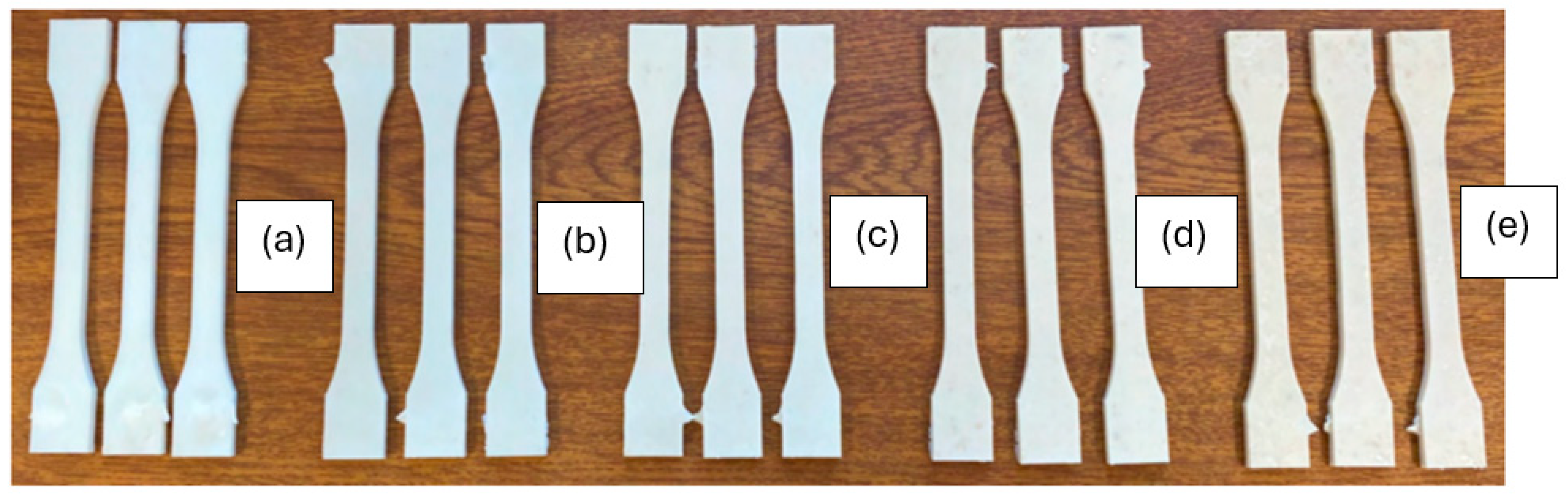
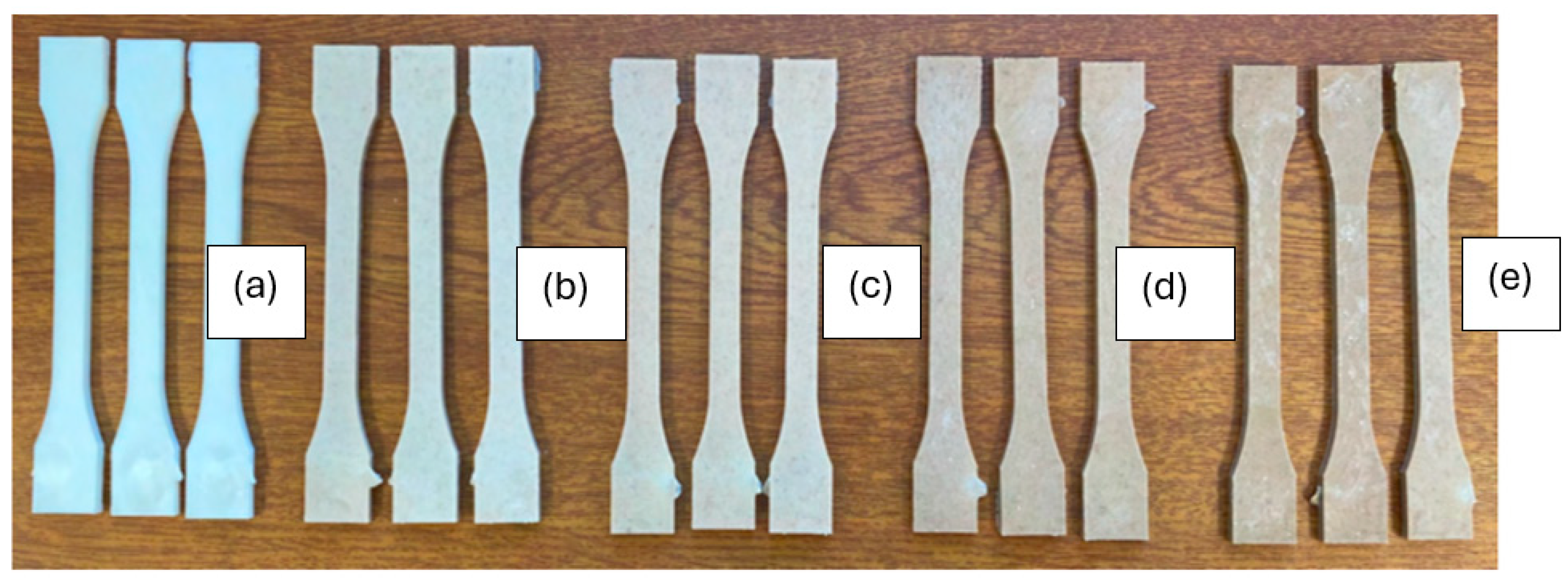
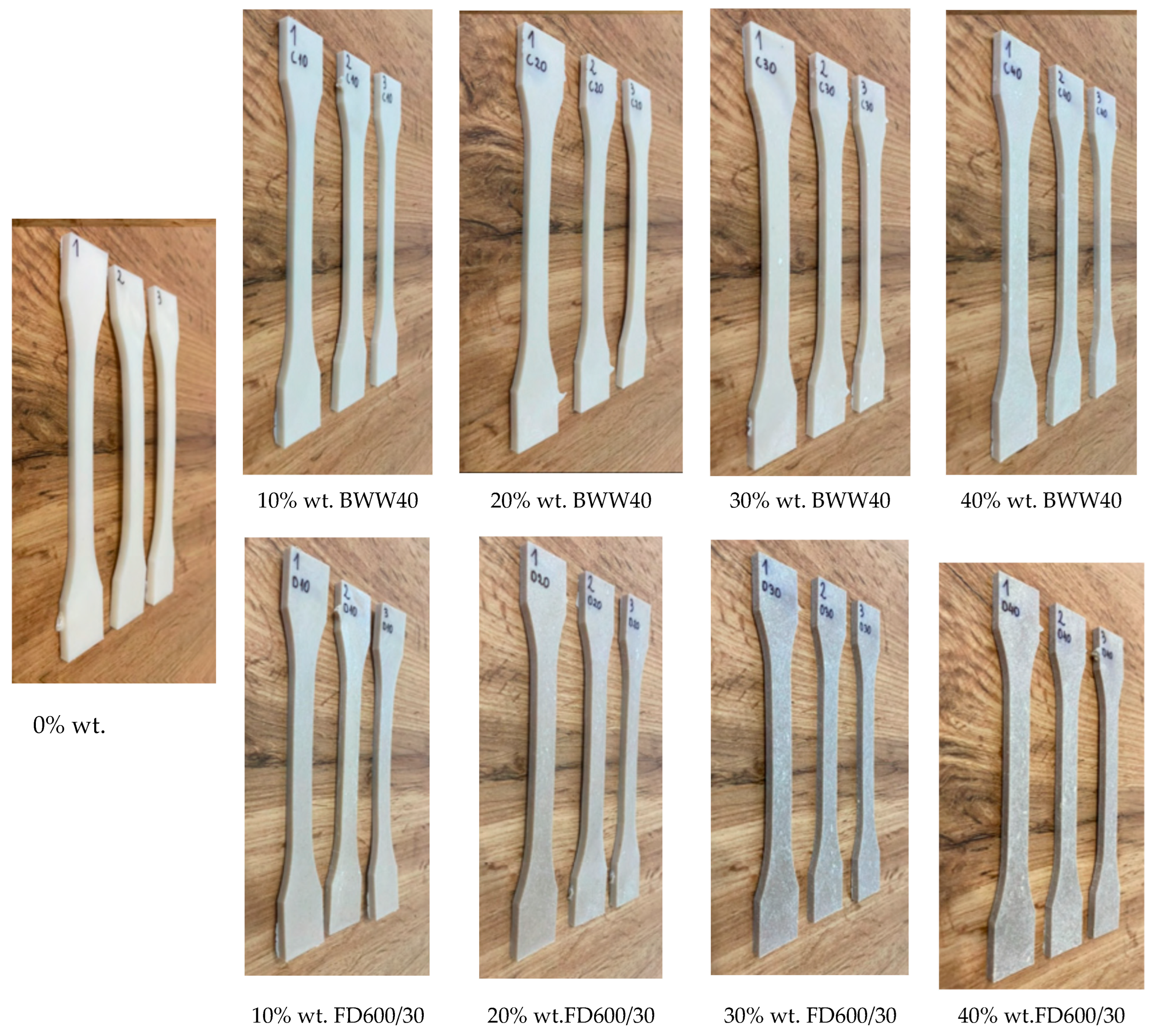
- 100% wt. polymer;
- -
- 90% wt. polymer and 10% wt. filler;
- -
- 80% wt. polymer and 20% wt. filler;
- -
- 70% wt. polymer and 30% wt. filler;
- -
- 60% wt. polymer and 40% wt. filler.
3. Results and Discussion
4. Conclusions
Author Contributions
Funding
Data Availability Statement
Conflicts of Interest
References
- Gautam, B.P.S.; Qureshi, A.; Gwasikoti, A.; Kumar, V.; Gondwal, M. Global scenario of plastic production, consumption, and waste generation and their impacts on environment and human health. In Advanced Strategies for Biodegradation of Plastic Polymers; Soni, R., Debbarma, P., Suyal, D.C., Goel, R., Eds.; Springer: Cham, Switzerland, 2024. [Google Scholar] [CrossRef] [Scilit]
- Dilshad, E.; Waheed, H.; Ali, U.; Amin, A.; Ahmed, I. General structure and classification of bioplastics and biodegradable plastics. In Bioplastics for Sustainable Development; Kuddus, M., Roohi, Eds.; Springer: Singapore, 2021; pp. 61–82. [Google Scholar] [CrossRef] [Scilit]
- Santhosh, R.; Ahmed, J.; Thakur, R.; Sarkar, P. Starch-based edible packaging: Rheological, thermal, mechanical, microstructural, and barrier properties—A review. Sustain. Food Technol. 2024, 2, 307–330. [Google Scholar] [CrossRef] [Scilit]
- Garbarski, J.; Fabijański, M. Application of a Filler in the Form of Micronized Chalcedonite to Biodegradable Materials Based on Thermoplastic Starch as an Element of the Sustainable Development of Polymeric Materials. Sustainability 2025, 17, 2731. [Google Scholar] [CrossRef] [Scilit]
- Alassmy, Y.A.; Abduljawad, M.M.; Al-shamrani, K.M.; Alnafisah, M.S.; Mustapha El Hariri Nokab, M.H.; Pour, Z.A.; Gomes, D.R.; Yolcu, S.; Sebakhy, K.O. A green/sustainable organocatalytic pathway for the preparation of esterified supercritical CO2-dried potato starch products. J. Appl. Polym. Sci. 2023, 140, 10.e53585. [Google Scholar] [CrossRef] [Scilit]
- Zhu, W.; Zhang, D.; Liu, X.; Ma, T.; He, J.; Dong, Q.; Cai, J. Improving the hydrophobicity and mechanical properties of starch nanofibrous films by electrospinning and cross-linking for food packaging applications. LWT 2022, 169, 114005. [Google Scholar] [CrossRef] [Scilit]
- Mukaila, T.; Adeniyi, A.; Bello, I.; Sarker, N.C.; Monono, E.; Hammed, A. Optimizing film mechanical and water contact angle properties via PLA/starch/lecithin concentrations. Clean. Circ. Bioeconomy 2024, 8, 100095. [Google Scholar] [CrossRef] [Scilit]
- Żołek-Tryznowska, Z.; Jeznach, A.; Bednarczyk, E.; Murawski, T.; Piłczyńska, K.; Sikora, S.; Tryznowski, M. Effect of hydrophobic nano-silica content on the surface properties of corn-starch films. Ind. Crops Prod. 2024, 214, 118582. [Google Scholar] [CrossRef] [Scilit]
- Fabijański, M. Mechanical strength and flammability of polylactide. Przem. Chem. 2019, 94, 4. [Google Scholar]
- Trinh, B.M.; Chang, C.C.; Mekonnen, T.H. Facile fabrication of thermoplastic starch/poly (lactic acid) multilayer films with superior gas and moisture barrier properties. Polymer 2021, 223, 123679. [Google Scholar] [CrossRef] [Scilit]
- Fabijański, M.; Garbarski, J. Mechanical properties of thermoplastic starch filled with calcium carbonate. Przem. Chem. 2023, 102, 829. [Google Scholar] [CrossRef] [Scilit]
- Rydz, J.; Sikorska, W.; Musioł, M. Biosynthesis and Biodegradation—Eco-Concept for Polymer Materials. Int. J. Mol. Sci. 2024, 25, 2674. [Google Scholar] [CrossRef] [Scilit] [PubMed]
- Saavedra-Rojas, F.A.; Bhandari, S.; Lopez-Anido, R.A. Environmental Durability of Bio-Based and Synthetic Thermoplastic Composites in Large-Format Additive Manufacturing. Polymers 2024, 16, 787. [Google Scholar] [CrossRef] [Scilit] [PubMed]
- Karbhari, V.; Chin, J.; Hunston, D.; Benmokrane, B.; Juska, T.; Morgan, R.; Lesko, J.; Sorathia, U.; Reynaud, D. Durability gap analysis for fiber-reinforced polymer composites in civil infrastructure. J. Compos. Constr. 2003, 7, 238–247. [Google Scholar] [CrossRef] [Scilit]
- Garbarski, J.; Fabijański, M. Strength of the thermoplastic starch/polylactide mixture. Przem. Chem. 2024, 103, 381. [Google Scholar] [CrossRef] [Scilit]
- Khan, B.; Khan Bilal Niazi, M.; Samin, G.; Jahan, Z. Thermoplastic starch: A possible biodegradable food packaging material—A review. Food Process Eng. 2017, 40, e12447. [Google Scholar] [CrossRef] [Scilit]
- Domínguez-Solera, E.; Gadaleta, G.; Ferrero-Aguar, P.; Navarro-Calderón, Á.; Escrig-Rondán, C. The Biodegradability of Plastic Products for Agricultural Application: European Regulations and Technical Criteria. Clean Technol. 2025, 7, 11. [Google Scholar] [CrossRef] [Scilit]
- Folino, A.; Pangallo, D.; Calabrò, P.S. Assessing Bioplastics Biodegradability by Standard and Research Methods: Current Trends and Open Issues. J. Environ. Chem. Eng. 2023, 11, 109424. [Google Scholar] [CrossRef] [Scilit]
- Fabijański, M.; Garbarski, J. Physical properties of the mixture polylactide/thermoplastic starch. Przem. Chem. 2023, 102, 954. [Google Scholar] [CrossRef] [Scilit]
- Airinei, D.N.; Modrogan, C.; Orbuleț, O.D.; Dǎncilǎ, A.M.; Boşomoiu, M.; Matei, C. Biodegradable Thermoplastic Materials with Application in the Manufacture of Bags Without Synthetic Polymers. Polymers 2025, 17, 356. [Google Scholar] [CrossRef] [Scilit]
- Lee, W.S.; Lee, T.G. Development of biodegradable bag materials as a sustainable alternative to conventional plastic bags. J. Ind. Eng. Chem. 2024, 138, 332–337. [Google Scholar] [CrossRef] [Scilit]
- Mohery, M.; Mindil, A.; Soliman, M. Assessing the adverse impacts of biodegradable plastic bags: Chemical elements and radionuclides considerations. J. Environ. Chem. Eng. 2024, 12, 111887. [Google Scholar] [CrossRef] [Scilit]
- Makroo, H.A.; Naqash, S.; Saxena, J.; Sharma, S.; Majid, D.; Dar, B.N. Recovery and characteristics of starches from unconventional sources and their potential applications: A review. Appl. Food Res. 2021, 1, 100001. [Google Scholar] [CrossRef] [Scilit]
- Wei, D.; Lv, S.; Liu, J.; Zuo, J.; Mu, Y.; Liu, L.; He, T.; Zeng, Q. Esterification modified corn starch composite with chitosan and PVP for enhanced mechanical properties and antimicrobial freshness preservation of starch-based films. React. Funct. Polym. 2024, 202, 105991. [Google Scholar] [CrossRef] [Scilit]
- Swetha, T.A.; Bora, A.; Mohanrasu, K.; Balaji, P.; Rathinam Raja, R.; Ponnuchamy, K.; Muthusamy, G.; Arun, A. A comprehensive review on polylactic acid (PLA) Synthesis, processing and application in food packaging. Int. J. Biol. Macromol. 2023, 234, 123715. [Google Scholar] [CrossRef] [Scilit]
- Yusoff, N.H.; Pal, K.; Narayanan, T.; Gomes de Souza, F. Recent trends on bioplastics synthesis and characterizations: Polylactic acid (PLA) incorporated with tapioca starch for packaging applications. J. Mol. Struct. 2021, 1232, 129954. [Google Scholar] [CrossRef] [Scilit]
- Kiattijiranon, P.; Auras, R.A.; Sane, A. Enhanced functional properties for packaging applications using sodium alginate/starch bilayer and multilayer films. ACS Appl. Polym. Mater. 2024, 6, 4642–4650. [Google Scholar] [CrossRef] [Scilit]
- Tan, S.X.; Andriyana, A.; Ong, H.C.; Lim, S.; Pang, Y.L.; Ngoh, G.C. Roles of nanofillers and plasticizers towards sustainable starch-based bioplastic fabrication. Polymers 2022, 14, 664. [Google Scholar] [CrossRef] [Scilit] [PubMed]
- Żołek-Tryznowska, Z.; Cudna, K.; Tryznowski, M. Comparative Study of Seal Strength and Mechanical Behavior of Untreated and Corona-Treated Polymer Films. Processes 2025, 13, 3190. [Google Scholar] [CrossRef] [Scilit]
- Szramowski, H.; Krzemiński, M.P. Comparative Analysis of Primers and Alternative Polypropylene Pre-Treatment Techniques. J. Adhes. 2024, 100, 867–889. [Google Scholar] [CrossRef] [Scilit]
- Stepczyńska, M.; Śpionek, A. Plasma Modification Effects of Thermoplastic Starch (TPS) Surface Layer: Film Wettability and Sterilization. Materials 2025, 18, 2156. [Google Scholar] [CrossRef] [Scilit] [PubMed]
- Rytlewski, P.; Stepczyńska, M.; Moraczewski, K.; Malinowski, R.; Karasiewicz, T.; Sikorska, W.; Żenkiewicz, M. Flax fibers reinforced polycaprolactone modified by triallyl isocyanurate and electron radiation. Polym. Compos. 2019, 40, 481–488. [Google Scholar] [CrossRef] [Scilit]
- Cheng, H.; Chen, L.; McClements, D.J.; Yang, T.; Zhang, Z.; Ren, F.; Miao, M.; Tian, Y.; Jin, Z. Starch-based biodegradable packaging materials: A review of their preparation, characterization and diverse applications in the food industry. Trends Food Sci. Technol. 2021, 114, 70–82. [Google Scholar] [CrossRef] [Scilit]
- Fabijański, M.; Garbarski, J.; Szymaniak, Z. Modifying Polylactide with Powdered Cork Filler. Materials 2025, 18, 5606. [Google Scholar] [CrossRef] [Scilit] [PubMed]
- Muthuraj, R.; Misra, M.; Mohanty, A.K. Biodegradable compatibilized polymer blends for packaging applications: A literature review. J. Appl. Polim. 2018, 135, 45726. [Google Scholar] [CrossRef] [Scilit]
- Degli Innocenti, F.; Tony Breton, T. Intrinsic Biodegradability of Plastics and Ecological Risk in the Case of Leakage. ACS Sustain. Chem. Eng. 2020, 8, 9239–9249. [Google Scholar] [CrossRef] [Scilit]
- Suleman, A.; Bora, J.; Kalita, A.J.; Chetia, B. Starch-based nanocomposite for food packaging applications. In Engineering Applications of Polymer-Based Nanocomposites; Visakh, P.M., Ed.; Springer: Cham, Switzerland, 2025. [Google Scholar] [CrossRef] [Scilit]
- Kesari, A.K.; Mandava, S.; Munagala, C.K.; Nagar, H.; Aniya, V. DES-ultrasonication processing for cellulose nanofiber and its compounding in biodegradable starch-based packaging films through extrusion. Ind. Crops Prod. 2022, 188, 115566. [Google Scholar] [CrossRef] [Scilit]
- Huang, X.; Chen, L.; Liu, Y. Effects of ultrasonic and ozone modification on the morphology, mechanical, thermal and barrier properties of corn starch films. Food Hydrocoll. 2024, 147, 109376. [Google Scholar] [CrossRef] [Scilit]
- Roschhuk, V.; Laorenza, Y.; Klinmalai, P.; Harnkarnsujarit, N. Active TPS/PBAT Blown Films Incorporating Sodium Lactate for Improved Oxygen Barrier, Antimicrobial Activity, and Cheese Preservation. Foods 2026, 15, 763. [Google Scholar] [CrossRef] [Scilit] [PubMed]
- Vieira, E.F.; Amaral, T.; Domingues, V.F.; Delerue-Matos, C. Hydrophobicity Strategies of Starch-Based Films: Recent Advances and Perspectives. Polymers 2026, 18, 490. [Google Scholar] [CrossRef] [Scilit]
- Moreno-Bohorquez, E.; Arias-Tapia, M.J.; Jaramillo, A.F. Recent Advances in Thermoplastic Starch (TPS) and Biodegradable Polyester Blends: A Review of Compatibilization Strategies and Bioactive Functionalities. Polymers 2026, 18, 289. [Google Scholar] [CrossRef] [Scilit]
- Zhu, F. Isolation, Composition, Structure, Properties, Modifications, and Uses of Yam Starch. Compr. Rev. Food Sci. Food Saf. 2015, 14, 357–386. [Google Scholar] [CrossRef] [Scilit]
- Gil-Trujillo, E.; Lomelí-Ramírez, M.G.; Silva-Guzmán, J.A.; Anzaldo-Hernández, J.; Vargas-Radillo, J.J.; Barrientos-Ramírez, L.; Cisneros-López, E.O.; Jiménez-Amezcua, R.M.; Kronemberger, F.d.A.; Hupsel, A.L.; et al. Eco-Friendly Thermoplastic Starch Nanocomposite Films Reinforced with Microfibrillated Cellulose (MFC) from Fraxinus uhdei (Wenz.) Lingelsh. Appl. Sci. 2025, 15, 12925. [Google Scholar] [CrossRef] [Scilit]
- Shamsabadi, O.D.; Soltanolkottabi, F. Green nanocomposite of (starch/polylactic acid/cellulose nanofiber) thermoplastic. Polym. Polym. Compos. 2024, 32, 09673911241294213. [Google Scholar] [CrossRef] [Scilit]
- Montero, B.; Rico, M.; Barral, L.; Bouza, R.; López, J.; Schmidt, A.; Bittmann-Hennes, B. Preparation and characterization of bionanocomposite films based on wheat starch and reinforced with cellulose nanocrystals. Cellulose 2021, 28, 7781–7793. [Google Scholar] [CrossRef] [Scilit]
- Freitas, P.A.; Arias, C.I.L.F.; Torres-Giner, S.; González-Martínez, C.; Chiralt, A. Valorization of rice straw into cellulose microfibers for the reinforcement of thermoplastic corn starch films. Appl. Sci. 2021, 11, 8433. [Google Scholar] [CrossRef] [Scilit]
- Midhun, C.D.M.; dos Santos Rosa, D.; Camani, P.H.; Kumar, A.S.; Kv, N.; Begum, P.S.; Dinakaran, D.; John, E.; Baby, D.; Thomas, M.M.; et al. Thermoplastic starch nanocomposites using cellulose-rich Chrysopogon zizanioides nanofibers. Int. J. Biol. Macromol. 2021, 191, 572–583. [Google Scholar] [CrossRef] [Scilit]
- Babaee, M.; Jonoobi, M.; Hamzeh, Y.; Ashori, A. Biodegradability and mechanical properties of reinforced starch nanocomposites using cellulose nanofibers. Carbohydr. Polym. 2015, 132, 1–8. [Google Scholar] [CrossRef] [Scilit] [PubMed]
- Ghanbari, A.; Tabarsa, T.; Ashori, A.; Shakeri, A.; Mashkour, M. Thermoplastic starch foamed composites reinforced with cellulose nanofibers: Thermal and mechanical properties. Carbohydr. Polym. 2018, 197, 305–311. [Google Scholar] [CrossRef] [Scilit] [PubMed]
- Ul-Islam, M.; Habis, F.; Fatima, A.; Saidi, A.K.A.; Shehzad, A.; Koofan, F.; Almashli, F.; Kashoob, A.A.A.; Ullah, M.W.; Khan, S.; et al. Sustainable antibacterial and wound-healing hydrogels: Croton confertus-loaded bacterial cellulose composites. Mater. Adv. 2026, 7, 4293–4306. [Google Scholar] [CrossRef] [Scilit]
- Holguín Posso, A.M.; Macías Silva, J.C.; Castañeda Niño, J.P.; Mina Hernandez, J.H.; Fajardo Cabrera de Lima, L.d.P. Characterization and Implementation of Cocoa Pod Husk as a Reinforcing Agent to Obtain Thermoplastic Starches and Bio-Based Composite Materials. Polymers 2024, 16, 1608. [Google Scholar] [CrossRef] [Scilit]
- Grupa Azoty. Available online: https://tarnow.grupaazoty.com/upload/1/files/2022/envifill/m/envifill%20MB%20173.pdf (accessed on 27 February 2026).
- Deffner & Johann. Available online: https://www.chempoint.com/products/j-rettenmaier/natural-and-synthetic-fibers/arbocel-fibers/bww-40?srsltid=AfmBOor-8GS-1NNyVeWgAG1UhPIHfl5rlxDM9TGcE1vO85x1fsLFbx3K (accessed on 27 February 2026).
- SpecialChem. Available online: https://www.specialchem.com/polymer-additives/product/jrs-rettenmaier-arbocel-fd-600-30 (accessed on 27 February 2026).
- ISO 527-1:2019; Plastics—Determination of Tensile PropertiesPart 1: General Principles. International Organization for Standardization: Geneva, Switzerland, 2019.
- ISO 527-2: 2025; Plastics—Determination of Tensile PropertiesPart 2: Test Conditions for Moulding and Extrusion Plastics. International Organization for Standardization: Geneva, Switzerland, 2025.
- ISO 868:2003; Plastics and Ebonite—Determination of Indentation Hardness by Means of a Durometer (Shore Hardness). International Organization for Standardization: Geneva, Switzerland, 2003.
- ISO 179-1:2010; Plastics—Determination of Charpy Impact Properties. Part 1: Non-Instrumented Impact Test. International Organization for Standardization: Geneva, Switzerland, 2010.
- ISO 62:2008; Plastics—Determination of Water Absorption. International Organization for Standardization: Geneva, Switzerland, 2008.
- Ondiek, W.; Ridzuan, A.; Iwamoto, M.; Macadre, A.; Goda, K. Comparative Analysis of Mechanical and Morphological Properties of Cordenka and Ramie Fiber-Reinforced Polypropylene Composites. Materials 2024, 17, 5519. [Google Scholar] [CrossRef] [Scilit]
- Jonoobi, M.; Harun, J.; Mathew, A.P.; Oksman, K. Mechanical properties of cellulose nanofiber (CNF) reinforced polylactic acid (PLA) prepared by twin screw extrusion. Compos. Sci. Technol. 2010, 70, 1742–1747. [Google Scholar] [CrossRef] [Scilit]
- Jörg, M. Industrial Applications of Natural Fibres: Structure, Properties and Technical Applications; John Wiley & Sons: Hoboken, NJ, USA, 2010. [Google Scholar]





| Average Weight of Samples, g | |||||
|---|---|---|---|---|---|
| Filler content | 0% wt. | 10% wt. | 20% wt. | 30% wt. | 40% wt. |
| BBW40 | 24.00 ± 0.01 | 24.76 ± 0.02 | 25.12 ± 0.02 | 25.44 ± 0.12 | 25.93 ± 0.07 |
| FD600/30 | 24.78 ± 0.06 | 24.87 ± 0.07 | 25.31 ± 0.02 | 25.53 ± 0.05 | |
| Filler Content | 0% wt. | 10% wt. | 20% wt. | 30% wt. | 40% wt. |
|---|---|---|---|---|---|
| BWW40 | |||||
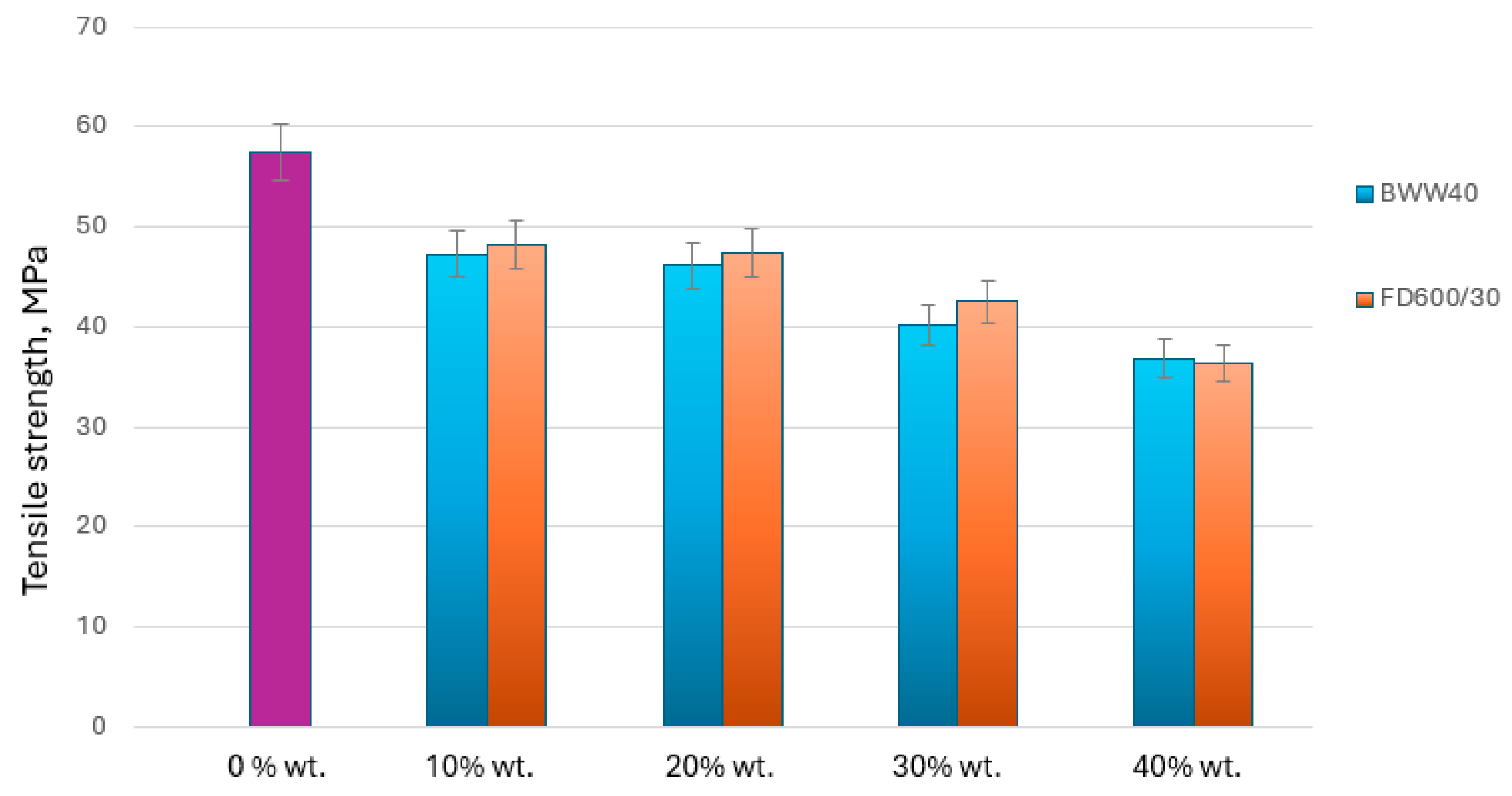
| Tensile strength, MPa | 57. 44 ± 1.66 | 47.28 ± 1.01 | 46.20 ± 1.21 | 40.20 ±2.38 | 36.84 ±2.01 |
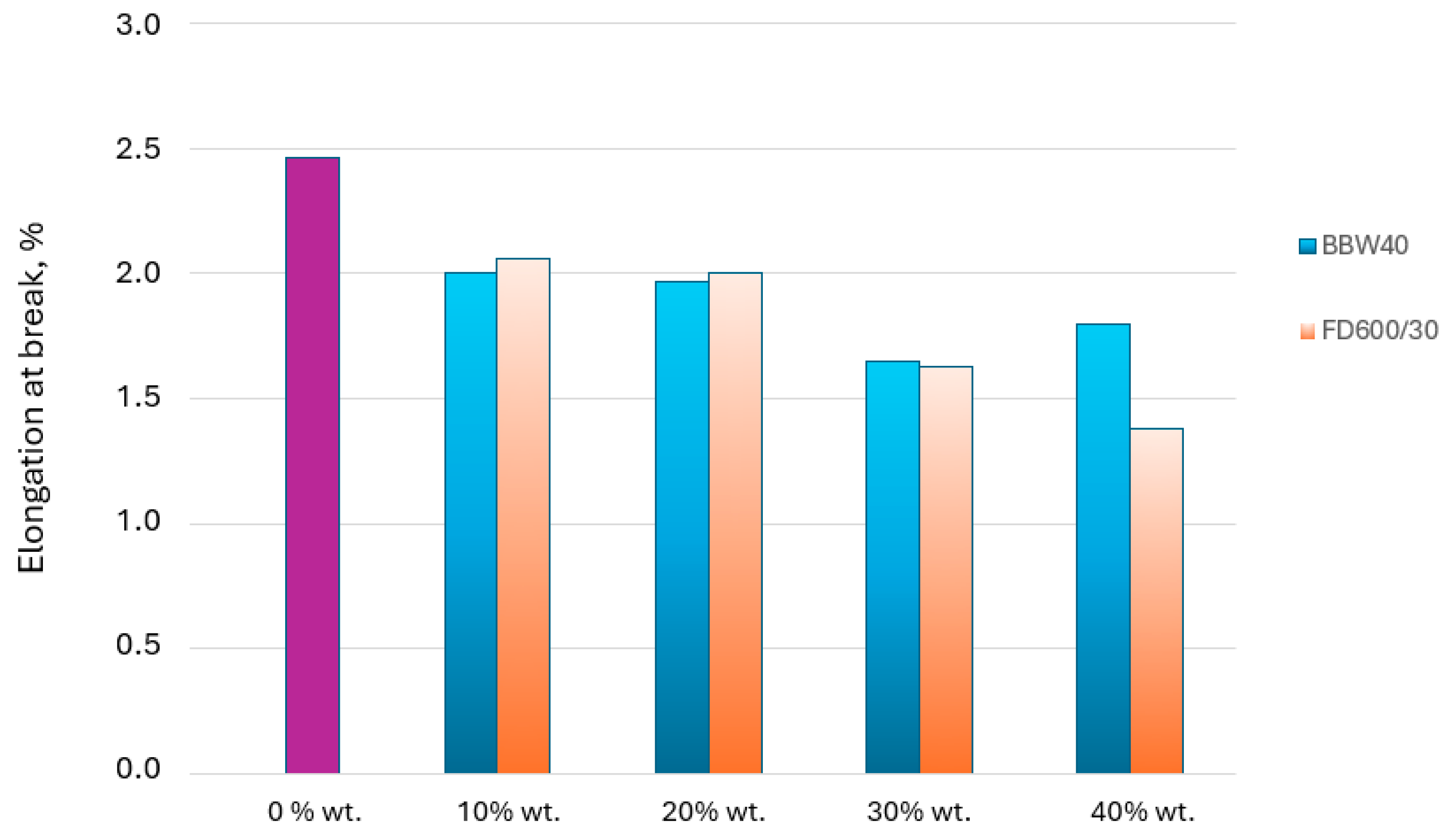
| Elongation at break, % | 2.46 ± 0.15 | 2.0 ± 0.14 | 1.97 ± 0.13 | 1.65 ± 0.11 | 1.38 ± 0.10 |
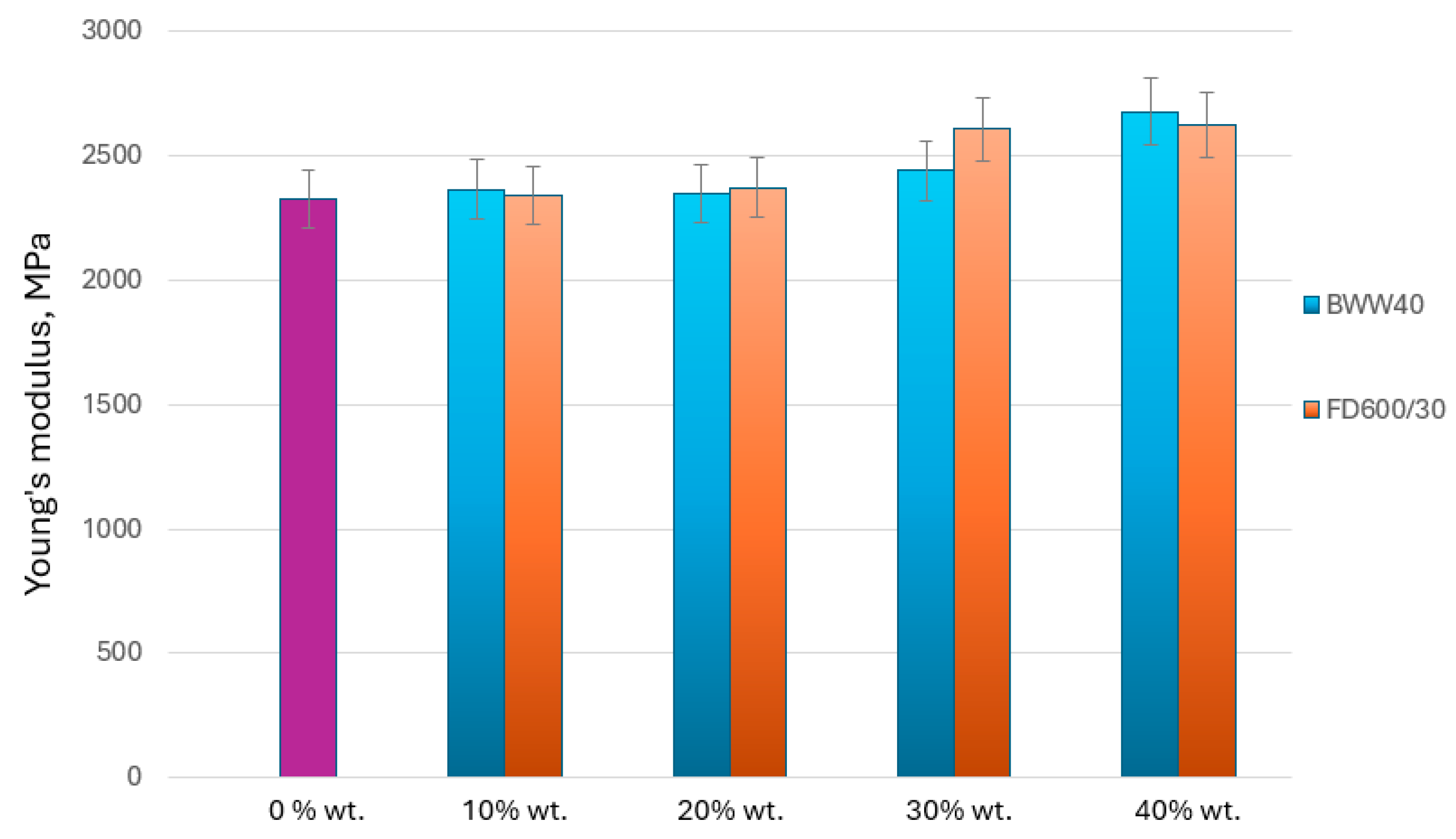
| Young’s modulus, MPa | 2321 ± 74 | 2363 ± 51 | 2344 ± 53 | 2437 ± 58 | 2675 ± 66 |
| FD600/30 | |||||
| Tensile strength, MPa | 57. 44 ± 1.66 | 48.26 ± 1.33 | 47.48 ± 0.90 | 42.56 ± 2.05 | 36.40 ± 1.69 |
| Elongation at break, % | 2.46 ± 0.15 | 2.06 ± 0.14 | 2.0 ± 0.14 | 1.63 ± 0.11 | 1.38± 0.10 |
| Young’s modulus, MPa | 2321 ± 74 | 2338 ± 68 | 2369 ± 70 | 2604± 83 | 2621 ± 84 |
| Filler Content | 0% | 10% | 20% | 30% | 40% |
|---|---|---|---|---|---|
| BWW40 | |||||
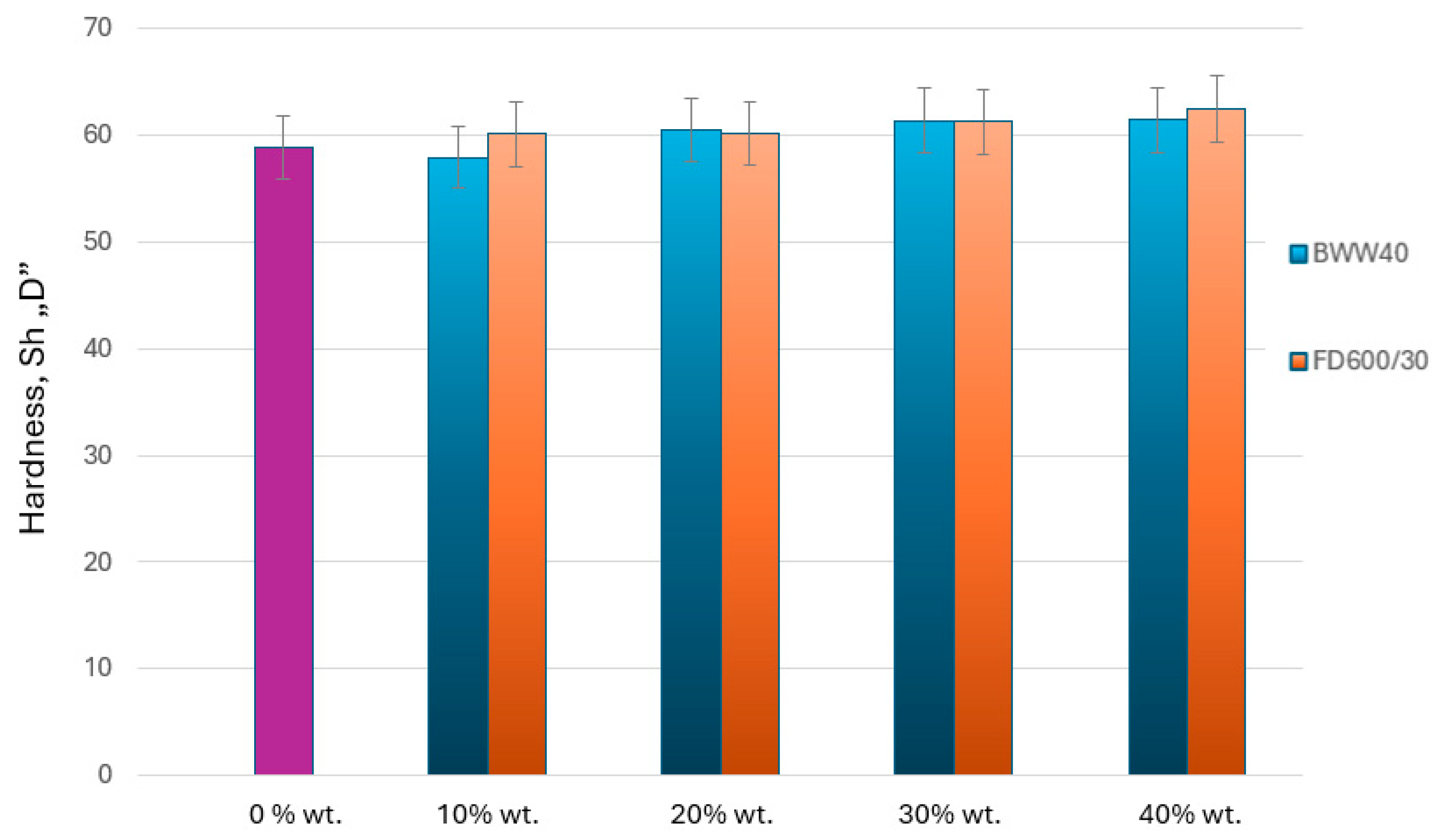
| Hardness, Sh D | 58.85 ± 0.53 | 57.90 ± 0.691 | 60.45 ± 0.39 | 61.35 ± 0.51 | 61.40 ± 0.75 |
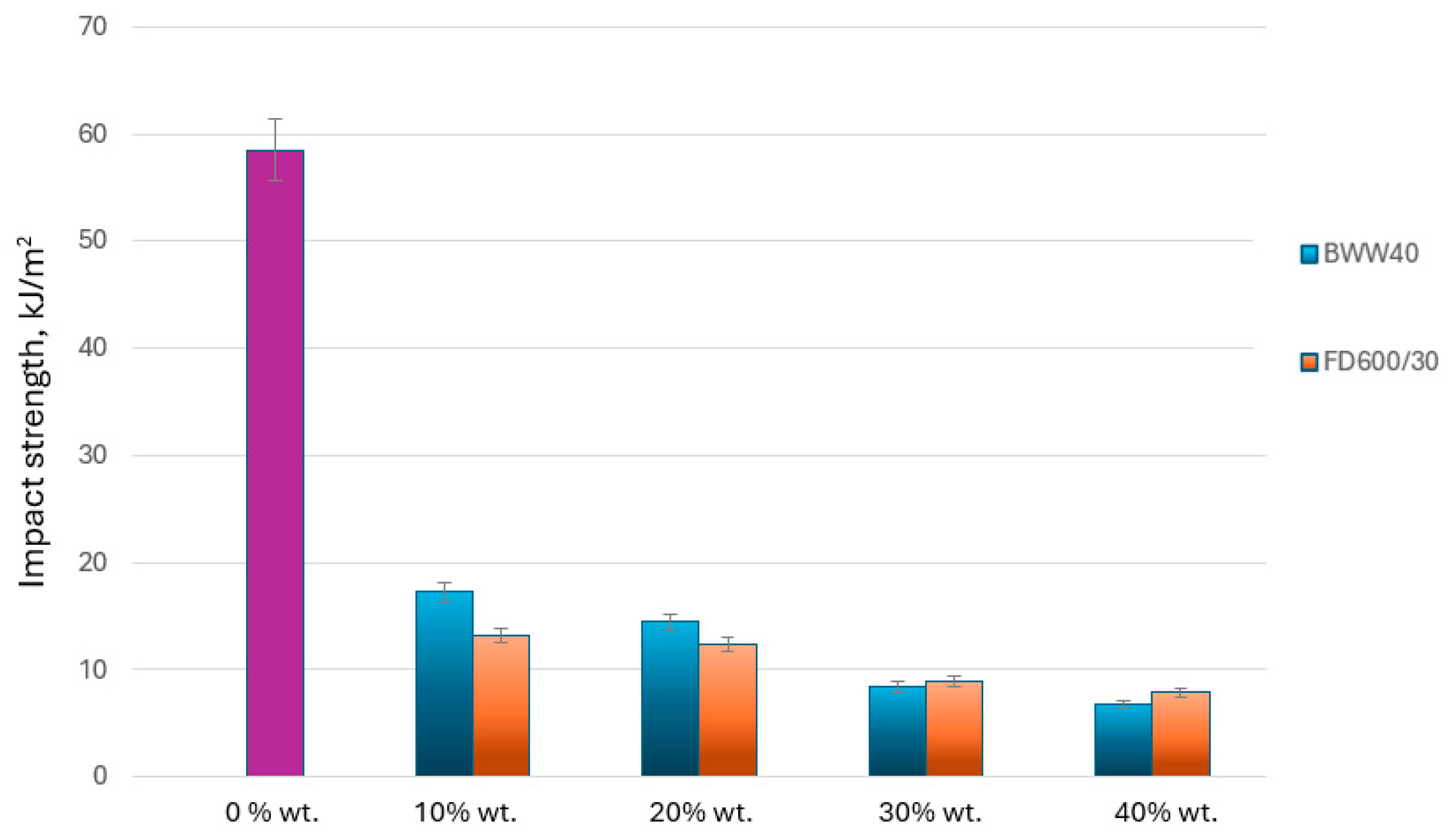
| Impact strength, kJ/m2 | 50.50 ± 15.12 | 17.25 ± 2.05 | 14.45 ± 0.77 | 8.43 ± 0.96 | 6.78 ± 0.78 |
| FD600/30 | |||||
| Hardness, Sh D | 58.85 ± 0.53 | 60.10 ± 0.77 | 60.15 ± 0.77 | 61.25 ± 0.77 | 62.50 ± 0.58 |
| Impact strength, kJ/m2 | 50.50 ± 15.12 | 13.23 ± 1.50 | 12.40 ± 0.57 | 8.90 ± 0.95 | 7.88 ± 0.94 |
| Filler Content | 0% wt. | 10% wt. | 20% wt. | 30% wt. | 40% wt. |
|---|---|---|---|---|---|
| BWW40 | |||||
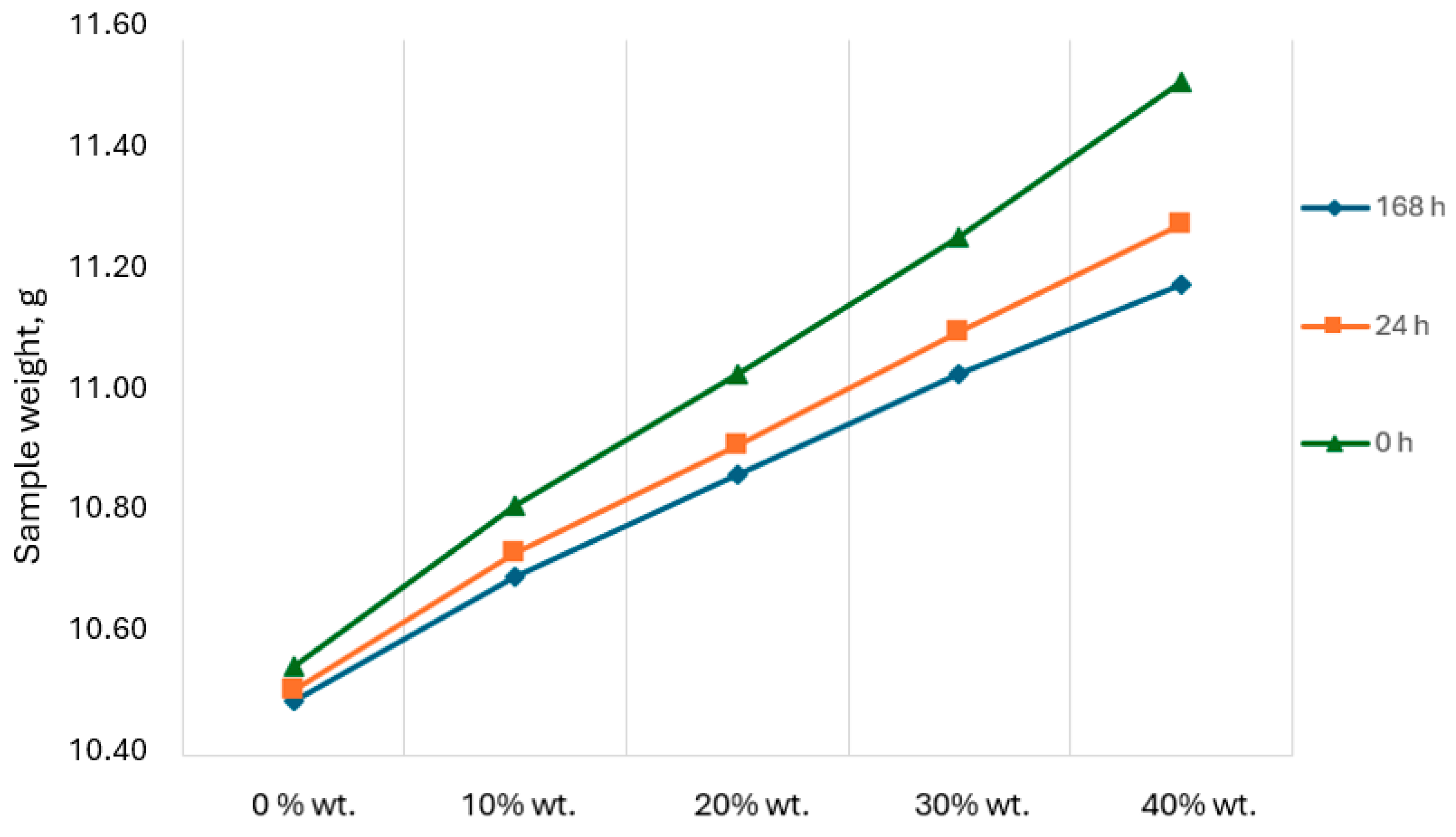
| Mass, g—0 h | 10.49 ± 0.09 | 10.70 ± 0.07 | 10.87 ± 0.06 | 11.04 ± 0.08 | 11.19 ± 0.06 |
| Mass, g—24 h | 10.51 ± 0.09 | 10.74 ± 0.06 | 10.92 ± 0.06 | 11.11 ± 0.09 | 11.10 ± 0.02 |
| Mass, g—168 h | 10.55 ± 0.09 | 10.82 ± 0.07 | 11.04 ± 0.08 | 11.27 ± 0.07 | 11.53 ± 0.03 |
| FD600/30 | |||||
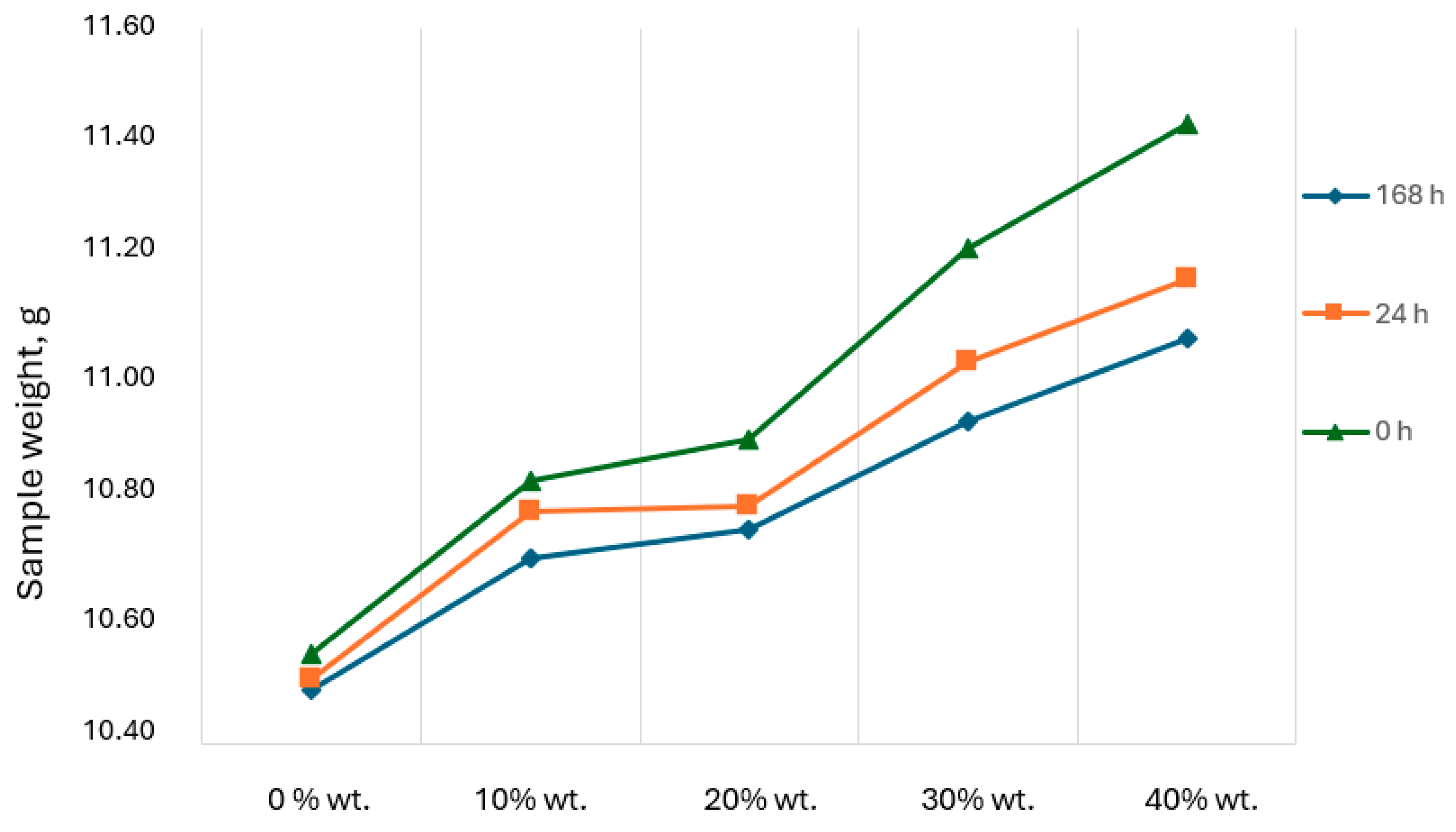
| Mass, g—0 h | 10.49 ± 0.02 | 10.71 ± 0.02 | 10.76 ± 0.07 | 10.94 ± 0.07 | 11.08 ± 0.08 |
| Mass, g—24 h | 10.51 ± 0.01 | 10.79 ± 0.02 | 10.80 ± 0.08 | 11.04 ± 0.08 | 11.18 ± 0.02 |
| Mass, g—168 h | 10.55 ± 0.02 | 10.84 ± 0.02 | 10.91 ± 0.09 | 11.23 ± 0.08 | 11.44 ± 0.03 |
Disclaimer/Publisher’s Note: The statements, opinions and data contained in all publications are solely those of the individual author(s) and contributor(s) and not of MDPI and/or the editor(s). MDPI and/or the editor(s) disclaim responsibility for any injury to people or property resulting from any ideas, methods, instructions or products referred to in the content. |
© 2026 by the authors. Licensee MDPI, Basel, Switzerland. This article is an open access article distributed under the terms and conditions of the Creative Commons Attribution (CC BY) license.
Share and Cite
Fabijański, M.; Garbarski, J. The Influence of Cellulose Fiber Content on the Mechanical Properties of Composites Based on Modified Thermoplastic Starch. Processes 2026, 14, 1480. https://doi.org/10.3390/pr14091480
Fabijański M, Garbarski J. The Influence of Cellulose Fiber Content on the Mechanical Properties of Composites Based on Modified Thermoplastic Starch. Processes. 2026; 14(9):1480. https://doi.org/10.3390/pr14091480
Chicago/Turabian StyleFabijański, Mariusz, and Jacek Garbarski. 2026. "The Influence of Cellulose Fiber Content on the Mechanical Properties of Composites Based on Modified Thermoplastic Starch" Processes 14, no. 9: 1480. https://doi.org/10.3390/pr14091480
APA StyleFabijański, M., & Garbarski, J. (2026). The Influence of Cellulose Fiber Content on the Mechanical Properties of Composites Based on Modified Thermoplastic Starch. Processes, 14(9), 1480. https://doi.org/10.3390/pr14091480