Article

Application of Prior-Information-Constrained Audio-Magnetotelluric Method in Rock Salt Deposit Exploration


1
PetroChina Research Center of Salt-Cavern UGS Technology, Zhenjiang 212000, China
2
State Key Laboratory of Geomechanics and Geotechnical Engineering, Institute of Rock and Soil Mechanics, Chinese Academy of Sciences, Wuhan 430071, China
3
School of Sustainable Energy, China University of Geosciences (Wuhan), Wuhan 430078, China
4
Shandong Luyin Salt Cave Energy Storage Engineering Technology Co., Ltd., Tai’an 271605, China
*
Author to whom correspondence should be addressed.
Processes 2026, 14(9), 1441; https://doi.org/10.3390/pr14091441
Submission received: 4 March 2026 / Revised: 25 April 2026 / Accepted: 28 April 2026 / Published: 29 April 2026
(This article belongs to the Topic Exploitation and Underground Storage of Oil and Gas)

Abstract

The study area is located within a fault-controlled sedimentary basin and hosts abundant evaporite resources, including gypsum and rock salt, indicating favorable prospects for exploration and development. Previous investigations of rock salt deposits in this area have primarily relied on drilling and seismic exploration. Although these methods provide high resolution, they are associated with high costs and significant environmental disturbance, which to some extent constrain efficient resource development. To investigate the three-dimensional electrical characteristics of the rock salt deposit, six audio-frequency magnetotelluric (AMT) survey lines were deployed in the study area, and a total of 42 MT stations were acquired. Dimensionality analysis indicates that the subsurface geological structure exhibits pronounced three-dimensional electrical features. Subsequently, a prior-information-constrained three-dimensional inversion was conducted, leading to the establishment of a resistivity structural model characterized by “shallow low resistivity–intermediate high resistivity–deep low resistivity” zoning. Integration with regional geological data suggests that the shallow low-resistivity layer corresponds to Quaternary and Neogene unconsolidated sediments, whereas the deep low-resistivity zone is interpreted as the potential occurrence zone of rock salt deposits. The results demonstrate that three-dimensional AMT exploration provides reliable geophysical evidence for deep mineral prospecting and offers technical support for the scientific evaluation of salt resources and the development of underground gas storage caverns.

1. Introduction

Rock salt is an important non-metallic mineral resource formed through evaporative sedimentation and is widely distributed in continental and marine evaporite sequences. Its primary component is sodium chloride (NaCl), and it commonly occurs in association with gypsum, anhydrite, sodium–magnesium salts, and potassium–magnesium salts [1,2,3]. Owing to its excellent plasticity, ductility, and sealing capacity, rock salt plays a significant economic and engineering role in the chemical industry, salt production, underground gas storage, energy storage, and subsurface space utilization [4,5,6]. However, rock salt deposits are typically deeply buried and rarely exposed at the surface, making them difficult to identify through conventional geological mapping. Although drilling provides reliable verification, it is costly, time-consuming, and unsuitable for establishing large-scale, continuous spatial constraints [7]. Therefore, efficiently delineating the spatial distribution of rock salt deposits at the regional scale remains a key challenge in evaporite resource exploration. To address this issue, geophysical methods have been introduced for the investigation of rock salt deposits and evaporite systems. Among them, seismic exploration provides high-resolution imaging of salt dome geometry, salt layer boundaries, and structural features, and has achieved successful applications in several salt basins [8,9,10]. Nevertheless, seismic surveys are associated with high acquisition costs and considerable environmental disturbance. In recent years, electromagnetic (EM) methods have been increasingly applied in mineral exploration due to their sensitivity to subsurface electrical structures and relatively flexible field deployment [11,12,13]. Common EM techniques include audio-frequency magnetotellurics (AMT), controlled-source magnetotellurics (CSAMT), and wide-field electromagnetic methods [14,15,16]. As a passive EM technique, the audio-frequency magnetotelluric (AMT) method utilizes naturally occurring electromagnetic fields to obtain subsurface resistivity information. It offers advantages such as relatively large investigation depth, adaptability to complex terrain conditions, and low operational cost, and has been widely used to distinguish electrical contrasts between ore bodies and surrounding rocks [17,18], characterize electrical structures and structural features of ore belts [19,20,21,22,23], reveal the coupling relationship between concealed intrusions and mineralization structures [24,25,26], delineate ore body geometry and spatial distribution [27,28,29], and assess the exploration potential of concealed deposits [30,31,32]. However, most of the above application cases rely solely on the conventional ModEM inversion framework to derive the subsurface electrical structure from the observed data. In the context of rock salt and evaporite systems, such approaches face notable limitations. Rock salt deposits and their surrounding strata commonly occur within low- to moderate-resistivity backgrounds. In evaporite successions, mudstone, siltstone, and gypsum-bearing mudstone with relatively low resistivity are widely interbedded, resulting in limited resistivity contrasts between stratigraphic units. This electrical similarity may lead to response superposition and reduce the capability to resolve salt layer boundaries. Consequently, purely data-driven conventional inversion strategies often struggle to accurately delineate the spatial geometry and stratigraphic position of deep-seated rock salt deposits. Scholars have proposed a variety of structural constraint approaches, the first is structural similarity constraints, which strengthen structural consistency among different physical-property models through cross-gradient or joint inversion frameworks. Liao et al. implemented structurally constrained joint inversion of MT–seismic–gravity data and demonstrated that jointly constrained results are superior to those from single-method inversion [33]. The second is stratigraphic prior constraints. Huang et al. proposed a multi-constraint guided structure (MCGS) constrained inversion method, pointing out that the conventional cross-gradient method exhibits weak coupling in regions of small gradients, whereas the introduction of stratigraphic constraints enables more accurate characterization of the electrical structure of sedimentary layers [34]. The third is geometric or binary structural constraints. Zhang et al. proposed an adaptive binary structural constraint method for AMT inversion to improve non-uniqueness and boundary blurring; Diba et al. further developed a structurally guided regularized inversion for 3D MT by controlling roughness weights so that the inversion model remains structurally consistent with an independent guiding model, and showed that this method outperforms conventional smooth inversion and cross-gradient inversion [35,36]. In addition, Nascimento et al. introduced seismic structural images as guiding information in CSEM studies, demonstrating that image-guided model updating can significantly improve the resolution and accuracy of low-frequency electromagnetic inversion [37]. Although the above studies have provided important ideas for structurally constrained electromagnetic inversion, their research objects are mostly focused on metallic deposits, geothermal systems, or marine oil and gas targets, and their constraint schemes are generally oriented toward general structural guidance or multiphysics joint imaging. In contrast, the target of this study is a continental evaporite-hosted rock salt system under a low- to moderate-resistivity background, the resistivity contrast between the target horizon and surrounding rocks is limited, making electrical responses more prone to superposition.
In light of these challenges, this study focuses on the target area and utilizes 42 AMT stations systematically acquired across the site. By incorporating spatial information of rock salt distribution derived from seismic inversion profiles, a multi-source prior-information-constrained resistivity model was constructed, and a three-dimensional inversion was subsequently performed. The proposed strategy effectively enhances imaging capability for deep evaporite sequences and reveals the three-dimensional electrical structure of the study area. The results provide multi-source geophysical support for the scientific evaluation and sustainable development of rock salt resources.

2. Regional Overview

2.1. Geological Background

The study area is located within a fault-controlled sedimentary basin characterized by significant regional tectonic activity. The overall geomorphology is marked by the alternation of denudation hills and alluvial plains, which provided a relatively enclosed and stable paleogeographic environment favorable for basin-type saline lake deposition. Climatic conditions play a fundamental role in the formation of rock salt deposits. The study area lies within a warm-temperate semi-humid to semi-arid continental monsoon climate zone, where precipitation exhibits strong seasonal variability. The annual evaporation generally exceeds annual precipitation, resulting in persistent water deficit conditions. This strong evaporative setting promotes progressive salinity increase in lake waters and brine concentration, constituting an essential climatic prerequisite for the formation of continental evaporites and rock salt deposits. From a tectonic perspective, the region has experienced multiple evolutionary stages since the Mesozoic. During the late Mesozoic Yanshanian movement, intense compression and uplift led to crustal differentiation and localized structural uplift, establishing the fundamental tectonic framework of the area. In the early Cenozoic, continuous lithospheric thinning and craton destruction enhanced extensional deformation, accompanied by frequent fault activity, resulting in the development of a series of half-graben structures and synsedimentary faults. During the Himalayan tectonic phase, the regional stress regime shifted toward extensional dominance, and pre-existing fault-controlled depressions underwent inherited reactivation and further deepening, leading to intensified segmentation of the basin. Two principal fault systems, trending NW–NWW and NE–NNE, are well developed in the region. These fault systems not only controlled the location of sedimentary depocenters but also served as pathways for brine circulation and salt migration, exerting significant structural control on the formation and enrichment of gypsum and rock salt (Figure 1).
The stratigraphic succession in the study area is well developed. From bottom to top, it consists of the Paleogene Guanzhuang Group (Dawenkou Formation), overlain by Neogene and Quaternary unconsolidated deposits. Rock salt mineralization is primarily hosted in the middle to upper members of the Dawenkou Formation within the Guanzhuang Group. The lithology is dominated by argillaceous limestone, gypsum, halite, and salt-bearing gypsiferous mudstone, forming a multi-cycle evaporite depositional sequence. The lower member of the Dawenkou Formation is characterized by interbedded sandstone, siltstone, and mudstone; the middle member contains well-developed gypsum–halite assemblages; and the upper member is dominated by sodium–magnesium and potassium–magnesium salts (see Table 1 for details). Therefore, the geological setting of the study area suggests a vertically zoned electrical structure controlled jointly by the shallow unconsolidated cover, the fault-influenced evaporite sequence, and the internal lithologic heterogeneity of the salt-bearing strata.

2.2. Electrical Characteristics

The stratigraphic sequence in the study area exhibits a distinct vertical zoning in electrical properties. The shallow Quaternary and Neogene deposits, composed primarily of silt, clay, siltstone, and locally distributed sandstone, are characterized by high porosity and strong water-bearing capacity, serving as major pathways for subsurface brine migration and accumulation. Owing to the high electrical conductivity of pore water, coupled with the abundance of highly mobile ions such as Na+, Cl, and Mg2+ within the mixed fresh–brine groundwater system, this interval typically presents markedly low resistivity values.
Rock salt, as a key constituent of the evaporite sequence, displays electrical properties that are controlled jointly by mineral composition, crystal structure, water content, ionic concentration, and depositional conditions. Evaporite minerals formed during different stages of chemical precipitation exhibit substantial variations in electrical resistivity, providing fundamental physical indicators for identifying depositional cycles and delineating salt-bearing horizons. Mineralogically, halite—composed predominantly of NaCl—possesses a dense crystal lattice, extremely low porosity, and virtually no structural water, making it one of the highest-resistivity minerals within the evaporite assemblage. In principle, a pure halite layer should manifest as a distinct high-resistivity body [38]. However, when halite undergoes partial dissolution, the released ions (e.g., Na+ and Cl) readily enter the surrounding pore fluids, transforming the system into a highly conductive electrolyte [39,40].
Under natural depositional conditions, halite rarely occurs as a perfectly pure, isolated layer; instead, it commonly interlayers or coexists with mudstone, gypsiferous mudstone, and siltstone. The presence of pore water and fracture-controlled fluids promotes halite dissolution, and the liberated ions migrate and accumulate within the pores and fractures of adjacent mudstone and sandstone, or are adsorbed onto clay mineral surfaces, significantly enhancing the electrical conductivity of the surrounding strata. Consequently, although localized high-resistivity patches of dense halite may still be preserved within the evaporite system, the salt-bearing interval as a whole generally manifests as a low-to-moderately low low-resistivity zone on apparent resistivity sections, reflecting the composite electrical response of the evaporite–clastic interbedded system.

3. Data Collection and Analysis

3.1. Data Collection

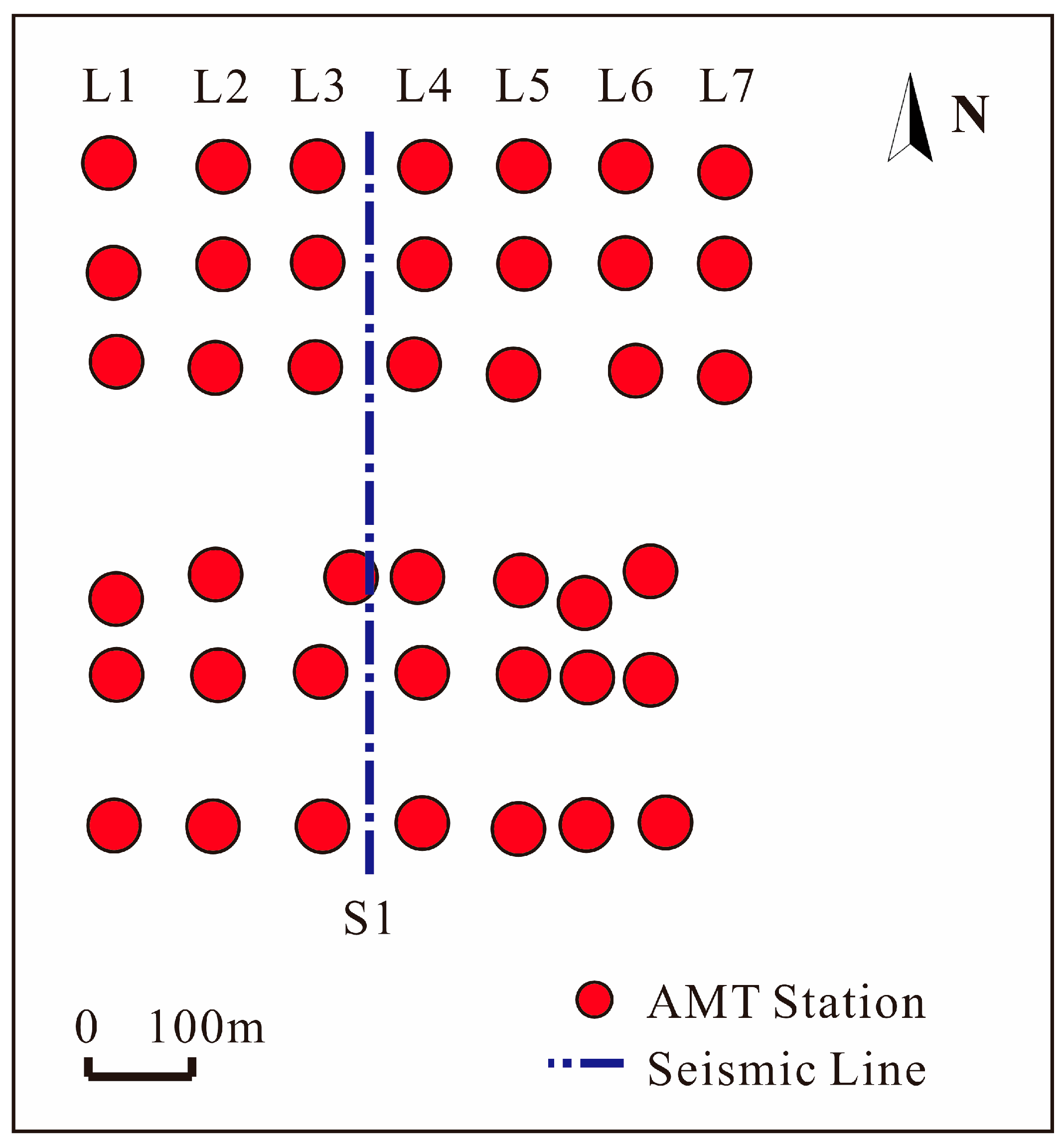
Based on the structural framework and geological characteristics of the study area, seven audio-frequency magnetotelluric (AMT) survey lines (L1–L7) were deployed, all oriented approximately north–south. The station spacing along each line ranged from 100 to 200 m, with line spacing controlled at about 100 m, resulting in a total of 42 AMT measurement stations (Figure 2). Data acquisition was conducted using a Phoenix MTU-5A electromagnetic system manufactured in Canada (Phoenix Geophysics Ltd., Toronto, ON, Canada). A tensor measurement configuration was adopted, with electric and magnetic sensors arranged in a cross (“+”) layout. Each station recorded four components, including two horizontal electric field components (Ex and Ey) and two horizontal magnetic field components (Hx and Hy). The acquisition frequency range was 1 Hz–104 Hz, and the average recording duration for each site was approximately one hour. Because high-voltage transmission lines, highways, and industrial facilities in the area produced potential electromagnetic interference, several stations were relocated slightly from their planned positions within the allowable tolerance to minimize external noise. However, three stations still exhibited obvious jumps in the apparent resistivity and phase curves, together with low signal-to-noise ratios at multiple frequencies. Therefore, only 39 stations were ultimately retained for the subsequent inversion. The excluded stations were not concentrated in critical portions of the same survey line, and the remaining stations still maintained good along-line and cross-line continuity. As a result, the overall spatial coverage pattern was not significantly affected and remains sufficient to meet the requirements of this study.

3.2. Dimensionality Analysis

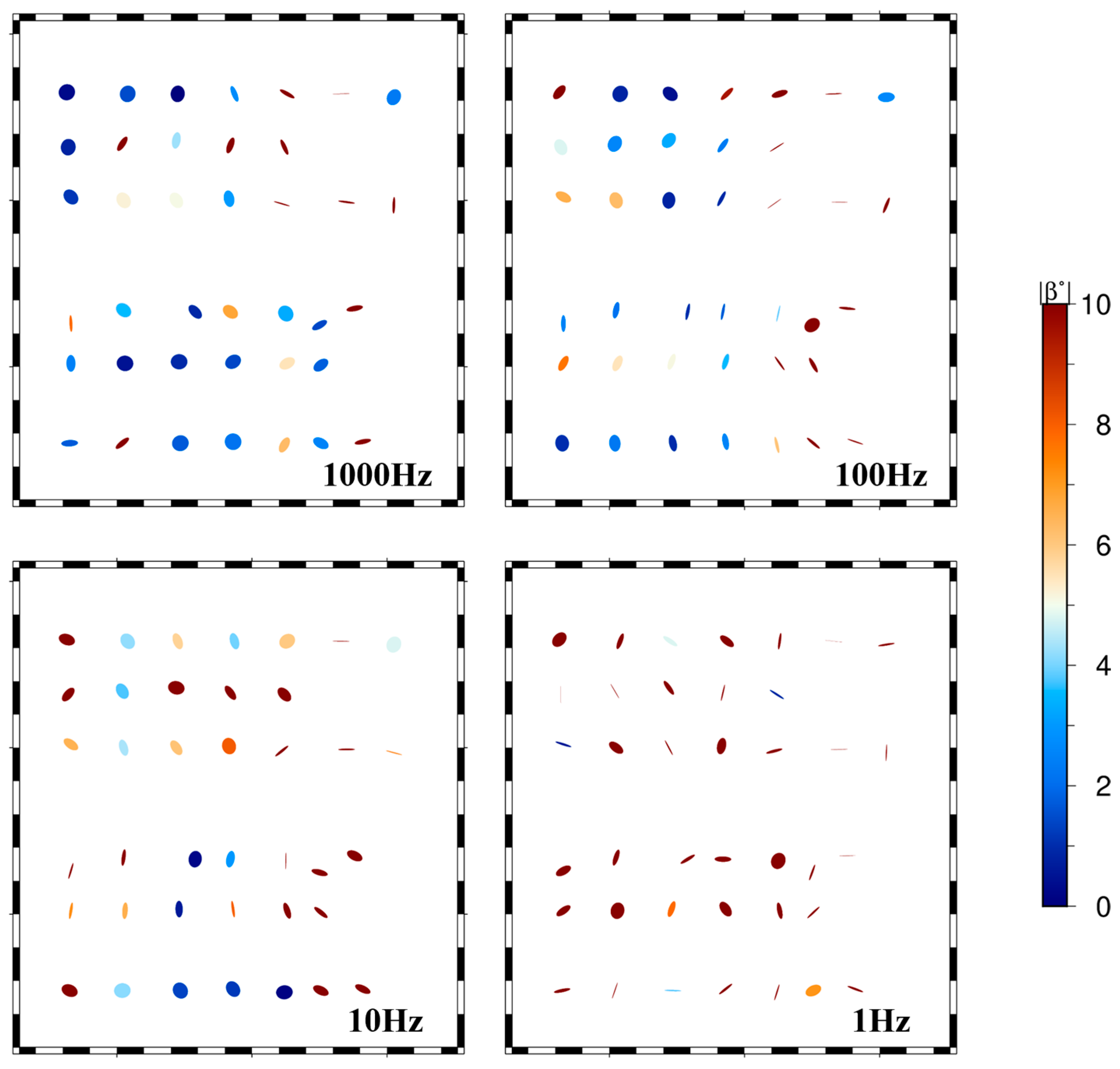
To improve the accuracy of inversion results, dimensionality analysis was performed prior to inversion to identify the structural dimensionality and the orientation of electrical principal axes. The phase-tensor decomposition method [41] was adopted, as it is independent of prior models and is not affected by near-surface galvanic distortion, thereby providing a robust basis for establishing reliable inversion constraints. In phase-tensor analysis, the skew angle β is widely used to quantify the degree to which the regional electrical structure departs from an ideal two-dimensional model. When β approaches 0°, the conductivity distribution can be approximately regarded as two-dimensional; in contrast, persistently elevated β values generally indicate significant three-dimensional heterogeneity in the subsurface. In such cases, applying a 2D inversion scheme may lead to distortion of anomaly geometry, displacement of structural boundaries, and oversimplification of the electrical model, thereby reducing the geological reliability of the interpretation. Therefore, the spatial distribution of β is not only diagnostic of subsurface dimensionality, but also provides a methodological basis for selecting the inversion strategy. Figure 3 presents the phase-tensor decomposition plots of AMT stations at different frequencies. In the figure, the color filling of the phase-tensor ellipses represents the absolute value of the two-dimensional (2D) skew angle, which indicates the degree of deviation from a 2D structure. As frequency decreases, the number of ellipses increases and the skew angle β gradually becomes larger. At frequencies of 100 Hz and 10 Hz, most stations exhibit β > 5°, indicating a pronounced three-dimensional (3D) behavior. When the frequency is reduced to 1 Hz, nearly all stations show β > 5°, suggesting that the subsurface structure is dominantly 3D in nature. These results demonstrate that the deep geological structure of the study area possesses distinct three-dimensional electrical characteristics, thereby satisfying the dimensionality requirements for subsequent 3D inversion.

3.3. Skin Depth Estimation

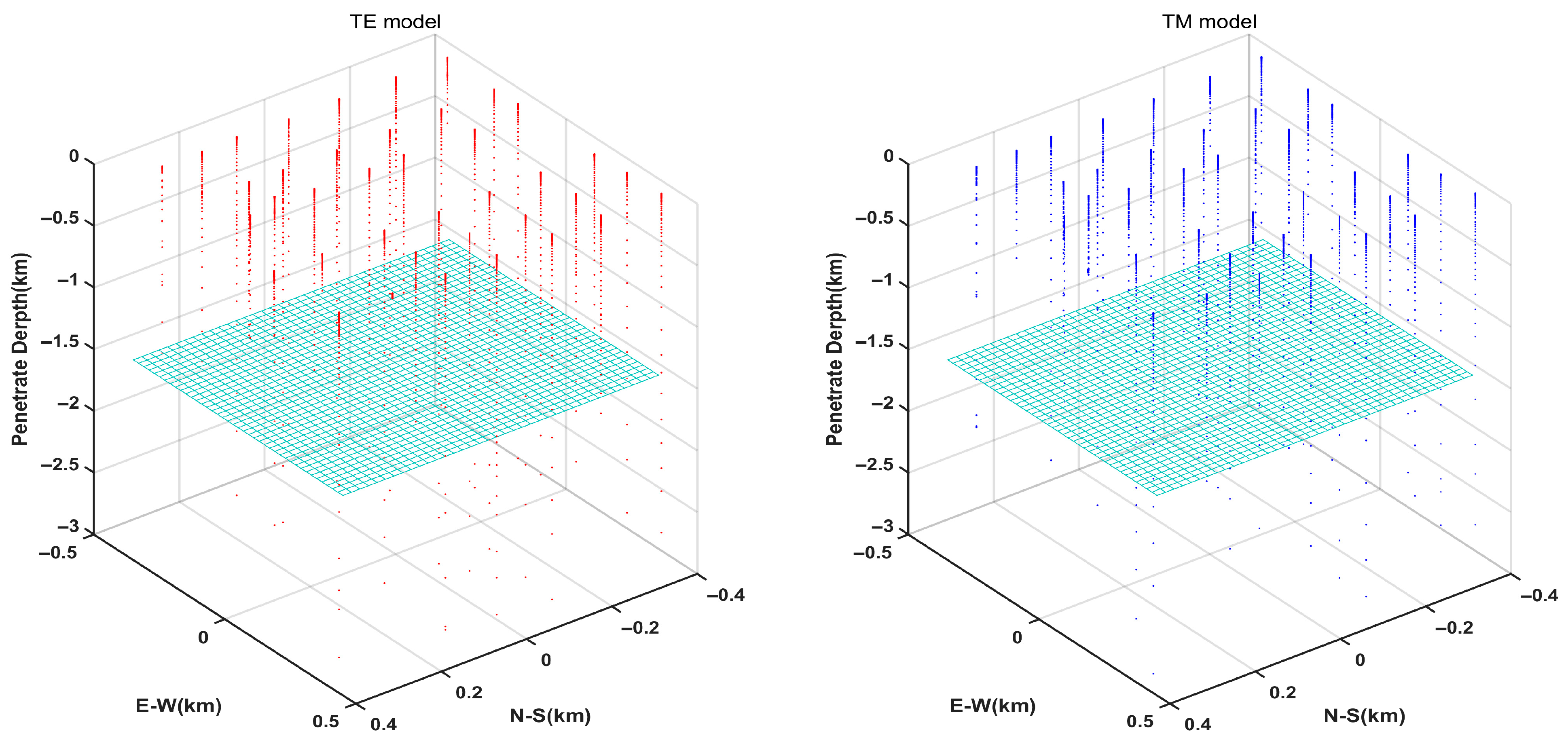
To evaluate the capability of the audio-frequency magnetotelluric (AMT) data to resolve deep subsurface structures, the Niblett–Bostick transformation was applied to estimate the skin depth at all stations under both TE and TM polarization modes across the full frequency range. The calculated results (Figure 4) illustrate the effective investigation depths corresponding to different frequencies for each station in both polarization modes. Overall, the distribution patterns show that, under both TE and TM modes, greater skin depths are achieved at lower frequencies, exhibiting a clear increase in penetration depth with decreasing frequency. At the lowest frequency band, the estimated skin depths at all stations exceed 1.5 km. Spatially, although minor variations in skin depth are observed among stations, the overall differences are limited, and no localized areas with insufficient penetration depth are identified. The skin depth distributions derived from TE and TM modes are generally consistent, both indicating adequate electromagnetic field penetration within the target depth range.
In summary, the AMT dataset provides stable and relatively uniform depth coverage across the study area. The theoretical depth of electromagnetic field penetration exceeds 1.5 km, thereby providing a fundamental guarantee for the reliability of the subsequent inversion results.

4. Prior-Information-Constrained Three-Dimensional Inversion

4.1. Prior Constraints

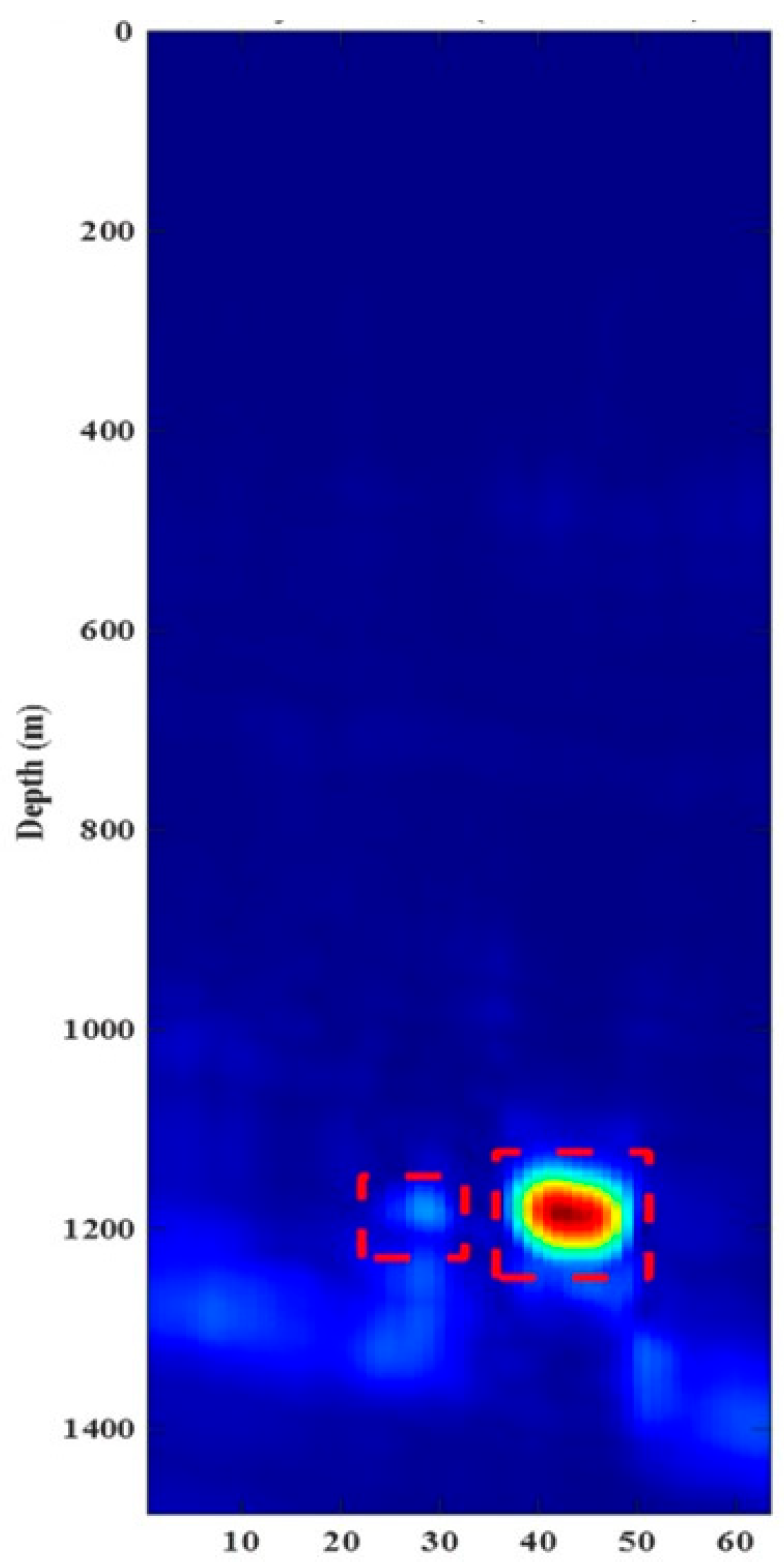
Figure 5 presents the seismic inversion results of the profile in the study area. From the characteristics of the profile, a laterally continuous zone of strong-amplitude reflections is observed at depths of approximately 900–1300 m. This interval is characterized by enhanced reflection amplitudes, stable waveforms, and relatively strong lateral continuity, forming a clear contrast with the weaker or chaotic reflection patterns of the surrounding strata. Such strong reflection anomalies generally indicate significant contrasts in physical properties between adjacent media. Considering the known stratigraphic framework of the study area, these reflections are interpreted to be associated with dense evaporite layers (e.g., gypsum–halite assemblages) or their upper boundaries. In addition, localized strong-amplitude anomalies exhibit lateral discontinuities and geometric variations, suggesting that the evaporite sequence experienced differential subsidence or structural modulation during deposition, resulting in localized thickening and spatial heterogeneity controlled by tectonic fluctuations. The seismic constraint adopted in this study does not involve a strict one-to-one physical correspondence between seismic velocity and electrical resistivity. Instead, it is based on structural information provided by the seismic profile, such as the position, burial depth, and lateral extent of the cavity-related anomaly. On this basis, the low-velocity anomaly zone is assigned a relatively low initial resistivity value in order to guide the electromagnetic inversion toward a solution that is more consistent with the geological understanding [42]. The purpose of this treatment is to fully utilize the structural constraint capability of the seismic data, reduce the non-uniqueness of the AMT inversion, and improve the stability and geological plausibility of the inversion results.

4.2. Three-Dimensional Inversion Theory

Considering the incompleteness of the observed data and the presence of measurement errors, magnetotelluric inversion inevitably suffers from non-uniqueness. Therefore, to reduce the ambiguity of the inversion results, the objective function of magnetotelluric inversion based on the Tikhonov regularization theory can be expressed as:
min m Φ ( m ) = φ d ( m ) + λ φ m ( m )
where φ d ( m ) represents the data misfit term, φ m ( m ) denotes the model regularization term, and λ is the regularization parameter used to balance the relative weights between the data misfit term φ d ( m ) and the model constraint term φ m ( m ) . m = ln σ represents the model parameters, m = ln σ 1 , ln σ 2 , , ln σ N m T , while ln σ i   ( i = 1 , 2 , , N m ) denotes the natural logarithm of the electrical conductivity of the inversion cells.
The data misfit function φ d ( m ) and the model constraint term φ m ( m ) can be expressed as:
φ d m = 1 2 W d F ( m ) d o b s T W d F ( m ) d o b s
φ m m = 1 2 m m r e f T C m 1 m m r e f
where d o b s represents the observed data vector of dimension N d , and m r e f denotes the prior model containing various prior constraints, such as geological structures and borehole information. F is the forward operator, and F ( m ) represents the forward response data with the same dimension as the observed data d o b s ; W d is the data weighting matrix. In this study, the open-source ModEM code was employed to perform the three-dimensional AMT inversion [43]. The prior model m r e f used in the inversion was constructed by integrating constraints derived from the seismic inversion profile. The proposed approach does not constitute a full seismic–AMT joint inversion; instead, it is a prior-information-constrained AMT inversion in which the seismic inversion results are used only to construct the prior model.

4.3. 3d Inversion

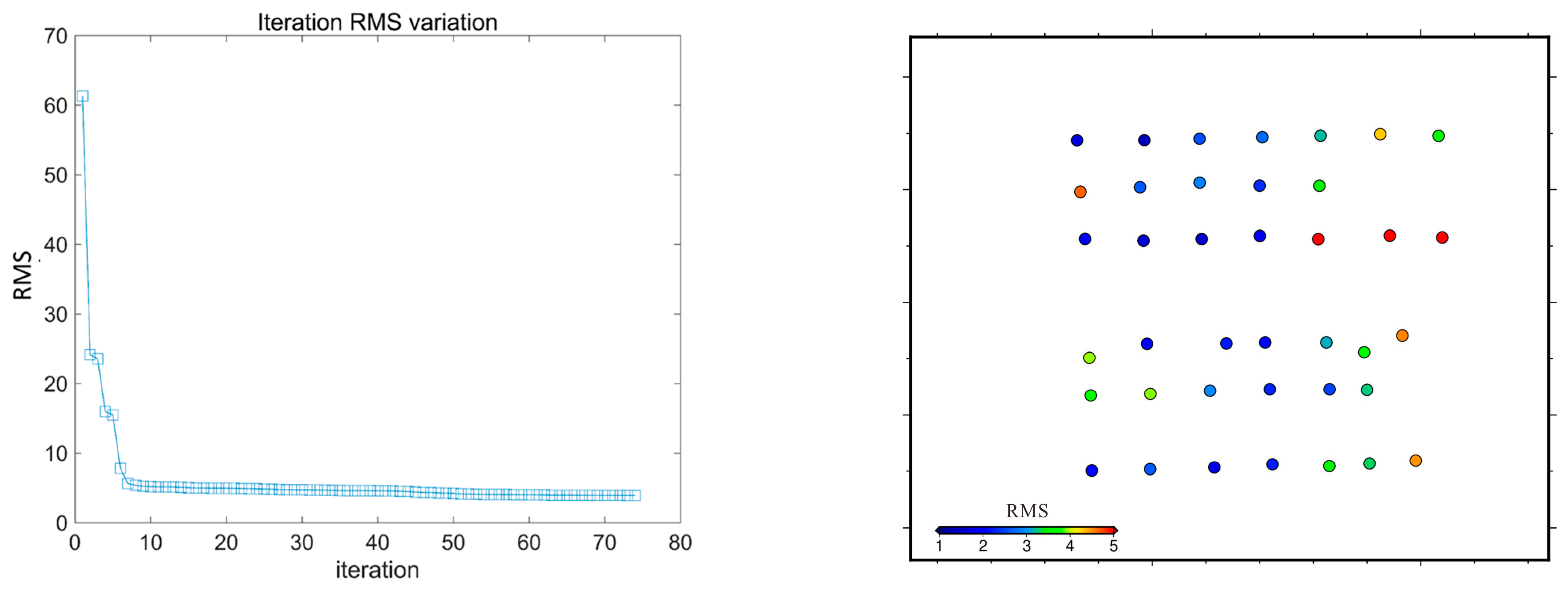
The key parameters of the ModEM 2014 inversion model are as follows: the core grid cell size was set to 40 m × 40 m, the prior resistivity model consists of a uniform half-space with a resistivity of 50 Ω·m, within which a low-resistivity layer (10 Ω·m) is embedded at a depth of 1200 m with a thickness of 200 m. The smoothing regularization coefficients in the three directions were each set to 0.4. The horizontal padding cell numbers and expansion factors were 1.4 and 1.6, respectively, while the vertical padding number was 10 with an expansion factor of 1.2. The thickness of the shallowest layer was 10 m, and the acceptable error threshold was defined as 8% × |Zxy·Zyx|0.5. The final inversion mesh consisted of 39 × 41 × 60 cells (excluding the air layer). Given that the study area exhibits minimal topographic relief, terrain effects were neglected in the inversion model. A total of 27 logarithmically spaced frequencies ranging from 10,000 Hz to 1 Hz were used in the inversion. The inversion proceeded through 74 iterations, during which the root mean square (RMS) misfit decreased significantly from 61.31 to 3.92. Furthermore, most stations yielded RMS values below 3.5 (Figure 6), indicating a high level of consistency between observed and modeled data both globally and locally. These results collectively demonstrate the reliability and stability of the 3D inversion outcomes.
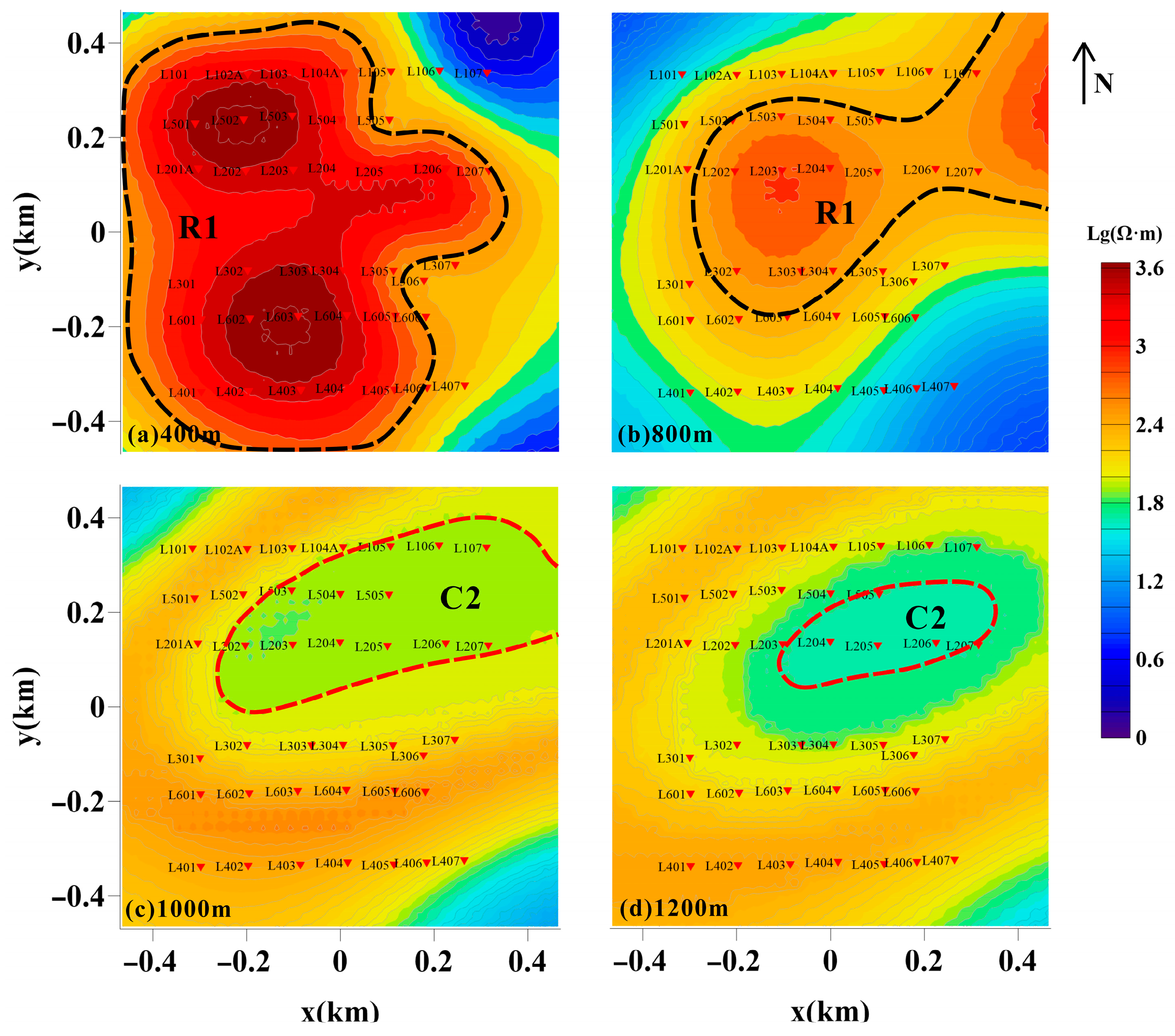
Figure 7 shows the horizontal slices of the three-dimensional inversion results for the study area. At a depth of 400 m, a large-scale high-resistivity anomaly (R1) is observed, exhibiting a continuous and relatively concentrated high-resistivity response with broad spatial coverage. At a depth of 800 m, the planar extent of the high-resistivity anomaly gradually decreases, and its geometry becomes more confined. When the depth reaches 1000 m, the high-resistivity feature significantly weakens, and the previously continuous high-resistivity zone becomes discontinuous. Meanwhile, a low-resistivity anomaly (C2) begins to emerge in the central part of the study area. At a depth of 1200 m, the characteristics of the low-resistivity anomaly C2 become more pronounced.
Overall, the type, scale, and spatial distribution of anomalies vary with depth across the horizontal slices, indicating a clear vertical differentiation in the electrical structure.
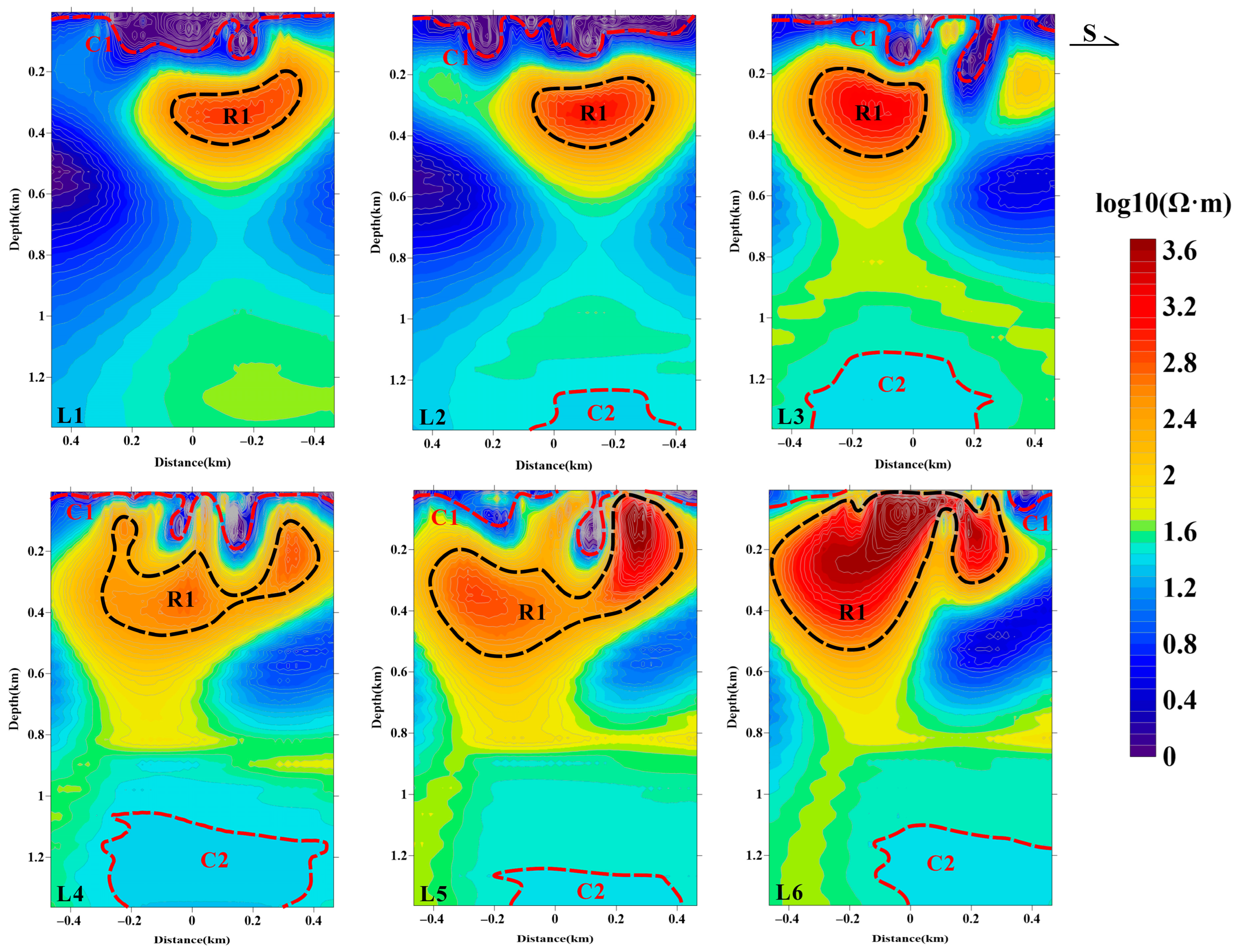
Figure 8 presents the vertical resistivity sections of the three-dimensional inversion results along the survey lines. Overall, the subsurface electrical structure can be divided into three major components: a shallow low-resistivity zone, an intermediate high-resistivity region, and a deep low-resistivity body. Within the upper 200 m, a low-resistivity anomaly (C1) is widely developed, with resistivity values of approximately 10 Ω·m. This anomaly is consistently observed across all profiles and extends laterally throughout most of the study area, indicating a broad horizontal distribution. Above a depth of approximately 600 m, a continuous high-resistivity anomaly (R1) is observed. Its spatial geometry varies among different survey lines. From west to east, the lateral extent of anomaly R1 gradually increases, and the high-resistivity zone becomes more pronounced. At a depth of approximately 1200 m, a low-resistivity anomaly (C2) appears in profiles L2–L6. This anomaly exhibits a block-like distribution with relatively good continuity across these profiles. In contrast, the deep low-resistivity feature is less distinct in profile L1.
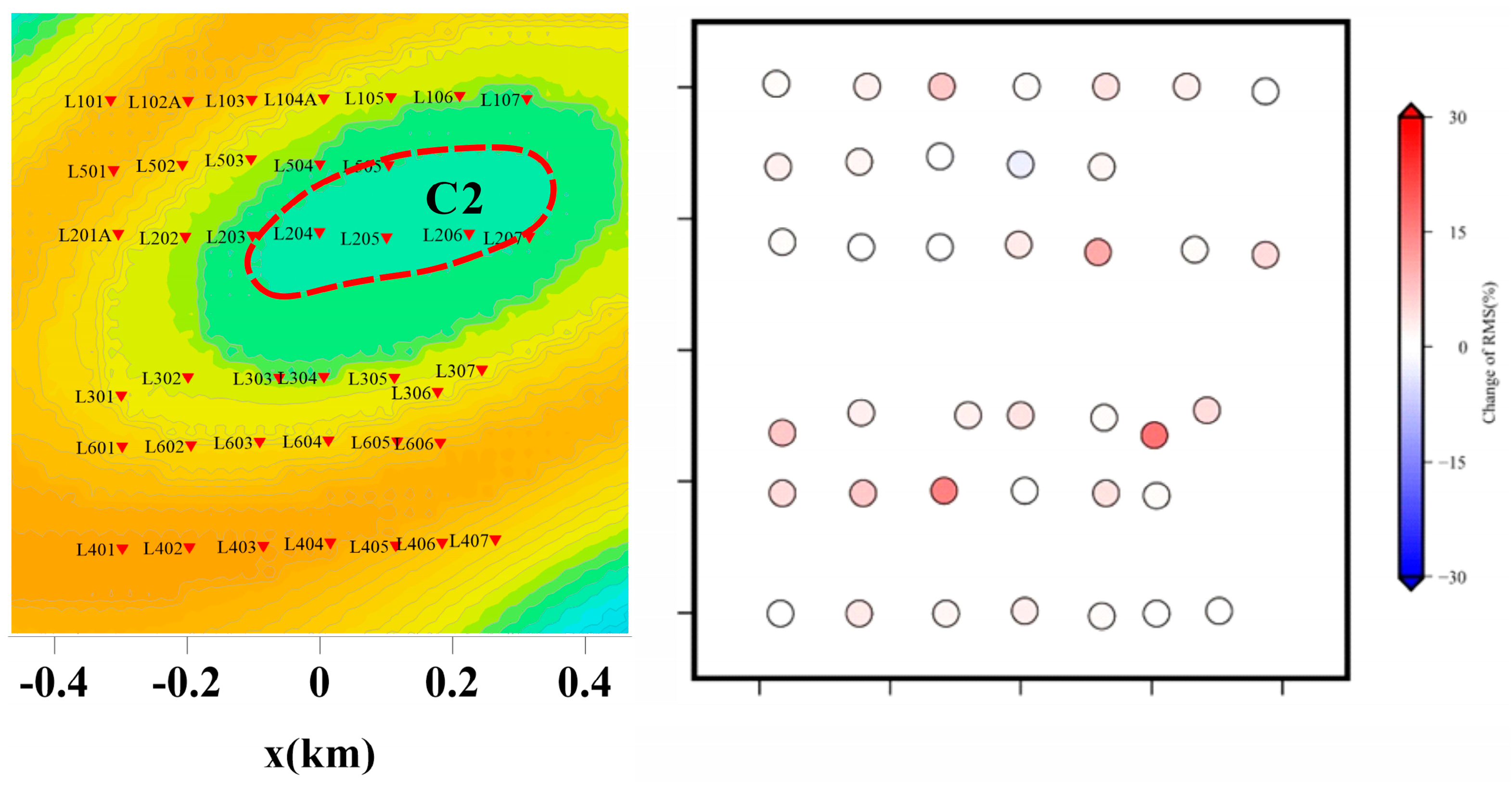
To further examine the sensitivity and interpretability of the low-resistivity anomaly (C2), an anomaly-replacement forward test was conducted. Specifically, the anomaly (C2) in the inversion model was replaced by a background body with a resistivity of 100 Ω·m, while all other model parameters were kept unchanged. Forward modeling was then performed, and the RMS misfit values before and after the replacement were compared at each station (Figure 9). The results show that, after replacing the anomaly (C2), the RMS values at most stations increased to varying degrees, with a maximum increase of up to 16% at some stations. Therefore, the anomaly (C2) exhibits a certain degree of data sensitivity and inversion stability.

5. Analysis and Discussion

According to the three-dimensional inversion results, the subsurface electrical structure of the study area exhibits a distinct zonation pattern characterized by “shallow low resistivity–intermediate high resistivity–deep low resistivity.” From shallow to deep, the electrical structure can be broadly divided into three lithophysical units corresponding to different stratigraphic intervals. The low-resistivity anomaly C1, primarily distributed within the upper 200 m, shows a significant resistivity contrast relative to the underlying strata. Based on regional geological data, this anomaly is interpreted to correspond to the Quaternary and Neogene unconsolidated sediments, which are mainly composed of clay, silty soil, and locally sandstone. These materials are loosely structured and widely distributed, exhibiting overall low resistivity consistent with the characteristics of anomaly C1. In several profiles, local bulging or thinning features of C1 are observed, reflecting differential sedimentation controlled by micro-topographic variations and secondary depressions within the basin during deposition. These features may also indicate localized secondary water–rock interaction and brine migration within this stratigraphic level. The high-resistivity anomaly R1 displays markedly higher resistivity than the surrounding strata. Combined with the regional stratigraphic framework, it is inferred to correspond to the upper member of the Dawenkou Formation within the Paleogene Guanzhuang Group. Stratigraphically, the middle member of the Dawenkou Formation is relatively thick, and rock salt deposits are mainly developed in its central portion. The upper part of the middle member is influenced by evaporative depositional cycles and contains a considerable proportion of soluble salts and high-mobility ionic components, forming a relatively low-resistivity background together with the underlying salt-bearing strata. In contrast, the upper member of the Dawenkou Formation is dominated by argillaceous limestone, laminated marl, and locally sandstone, with relatively lower salt content and reduced pore fluid salinity and ion concentration. Under the overall low- to moderate-resistivity background, this interval therefore manifests as a relatively high-resistivity zone. Furthermore, horizontal slices indicate that below approximately 800 m depth, resistivity gradually transitions from intermediate–high values to lower values, and the low-resistivity zones become more concentrated and pronounced with increasing depth. Integrating the vertical sections, regional tectonic framework, and electrical characteristics, the deep low-resistivity anomaly C2 is interpreted as the integrated electrical response of the evaporite sequence, mainly corresponding to the gypsum–halite assemblage and associated interlayers [44,45,46].
In summary, the seismic inversion results provide critical geometric prior constraints for the three-dimensional AMT inversion. These constraints enable the electromagnetic inversion to focus more effectively on the target stratigraphic interval under complex low-resistivity background conditions, thereby significantly improving the imaging stability and interpretative reliability of the deep evaporite structures.

6. Conclusions

In this study, the audio-frequency magnetotelluric (AMT) method was applied in conjunction with regional geological data, and spatial information of rock salt distribution derived from seismic inversion profiles was incorporated to investigate the three-dimensional electrical structure of the study area. The main conclusions are summarized as follows:
(1) Phase-tensor analysis of the AMT data indicates that the deep subsurface structure exhibits pronounced three-dimensional electrical characteristics. The dataset satisfies the requirements for three-dimensional inversion and interpretation down to a depth of approximately 1.5 km.
(2) The subsurface electrical structure displays a zoned pattern characterized by “shallow low resistivity–intermediate high resistivity–deep low resistivity.” The shallow low-resistivity zone maybe corresponds to Quaternary and Neogene unconsolidated sediments. The intermediate relatively high-resistivity body is interpreted as the upper member of the Dawenkou Formation within the Paleogene Guanzhuang Group, whereas the deep low-resistivity zone is inferred to represent the potential occurrence zone of rock salt deposits.
(3) The prior-information-constrained three-dimensional AMT inversion strategy provides beneficial geophysical constraints for imaging deep evaporite sequences and offers encouraging support for structural delineation.

Author Contributions

Conceptualization, H.G. and G.H.; Methodology, H.G. and G.H.; Formal analysis, H.G.; Investigation, H.G., G.H., L.W., M.L., Y.K. and W.D.; Data curation, Y.Y.; Visualization, H.G.; Writing—original draft preparation, H.G.; Writing—review and editing, H.G., G.H. and H.M.; Funding acquisition, H.M.; Supervision, G.H. All authors have read and agreed to the published version of the manuscript.

Funding

This research was supported in part by the National Key R&D Program of China under Grant 2024YFB4007100, in part by the National Major Science and Technology Projects of China under Grand 2024ZD1004300, in part by National Natural Science Foundation of China under Grant 42304133 and 42574175, and in part by Key project from the Hubei Research Center for Basic Disciplines of Earth Sciences under Grant HRCES-202401.

Data Availability Statement

The original contributions presented in this study are included in the article. Further inquiries can be directed to the corresponding author.

Conflicts of Interest

Authors Huaxing Ma were employed by the Shandong Luyin Salt Cave Energy Storage Engineering Technology Co., Ltd. The remaining authors declare that the research was conducted in the absence of any commercial or financial relationships that could be construed as a potential conflict of interest.

References

  1. Zhang, H.; Zhang, G.M.; Liu, K.; Fu, X.H.; Li, Y.P.; Liu, Y.X. Schemes comparation of layered and continuous solution mining in bedded salt formations by horizontal interconnected wells. Int. J. Min. Sci. Technol. 2025, 35, 2213–2229. [Google Scholar] [CrossRef]
  2. Sheikheh, S.; Rabiei, M.; Rasouli, V. A review of evaporite beds potential for storage caverns: Uncovering new opportunities. Appl. Sci. 2025, 15, 4685. [Google Scholar] [CrossRef]
  3. Samperi, L.; Giorgio, M.; Kamaldeen, O.O.; Alba, Z.; Nicolas, W.; Sabrina, N.; Cristina, P.; Francesco, B. Estimation of the physical, petrophysical and mineralogical properties of Messinian salt rocks, Sicily: Implications for multidisciplinary applications. Mar. Pet. Geol. 2020, 112, 104032. [Google Scholar] [CrossRef]
  4. Vandeginste, V.; Ji, Y.K.; Buysschaert, F.; Anoyatis, G. Mineralogy, microstructures and geomechanics of rock salt for underground gas storage. Deep Undergr. Sci. Eng. 2023, 2, 129–147. [Google Scholar] [CrossRef]
  5. Luo, Y.; Liu, W.; Wang, H.X.; Li, K.Y. The use of abandoned salt caverns for energy storage and environmental protection: A review, current status and future protections. Energies 2025, 18, 2634. [Google Scholar] [CrossRef]
  6. Wei, X.X.; Shi, X.L.; Li, Y.P.; Li, P.; Xu, M.N.; Huang, Y.S.; Hong, Y. A review of enhanced methods for oil recovery from sediment void oil storage in underground salt caverns. Energies 2025, 18, 360. [Google Scholar] [CrossRef]
  7. Liu, L.H.; Xiong, Y.X.; Ma, X.X.; Shan, W.; Chi, N.J. Deep geological characteristics and mineral prospecting verification in the northeastern margin of the Jiaolai Basin. Geol. Rev. 2025, 71, 124–126. [Google Scholar]
  8. Li, S.N. Research and application of fine detection technology based on high-precision 3D seismic for salt mine cavities. Coal Geol. China 2024, 36, 69–72+54. [Google Scholar]
  9. Wang, H.W.; Tian, X.F.; Liu, Q.X.; Cheng, J.; Zhou, M.; Xu, Z.P.; Lin, Z.Y.; Zhu, S.P. Sedimentary structure characteristics and spatial distribution pattern of the zhaoji salt mine derived from dense array ambient noise tomography. J. Earth Sci. 2025, 36, 2094–2108. [Google Scholar] [CrossRef]
  10. Kukla, P.A.; Urai, J.L.; Back, S.; Sachse, F. External and internal salt geometries–a mining and geoscience review. J. Struct. Geol. 2025, 197, 105438. [Google Scholar] [CrossRef]
  11. Gan, J.; Li, H.; He, Z.W.; Gan, Y.; Mu, J.Q.; Liu, H.; Wang, L. Application and significance of geological, geochemical, and geophysical methods in the Nanpo gold field in Laos. Minerals 2022, 12, 96. [Google Scholar] [CrossRef]
  12. Li, Z.Y.; Cheng, W.S.; Li, X.; Qi, Y.F.; Qi, Z.P. Magnetic field imaging of ground–airborne transient electromagnetic data: A case study from Jinchuan Mine, China. J. Geophys. Eng. 2026, 23, 119–129. [Google Scholar]
  13. Yin, Y.C.; Chen, J.; Zhao, Z.H.; Yang, Y.J.; Li, C.L.; Li, H.N.; Zhao, X. Integrated geophysical prospecting for deep ore detection in the Yongxin gold mining area, Heilongjiang, China. Sci. Rep. 2025, 15, 7258. [Google Scholar] [CrossRef]
  14. Guo, Z.W.; Xue, G.Q.; Liu, J.X.; Wu, X. Electromagnetic methods for mineral exploration in China: A review. Ore Geol. Rev. 2020, 118, 103357. [Google Scholar] [CrossRef]
  15. Zhang, Y.Y.; Ye, X.; Chen, L.; Zhou, Y.; Qu, D.M. Progress of deep exploration artificial-source electromagnetic instruments in China: A review. Electronics 2025, 14, 433. [Google Scholar] [CrossRef]
  16. Jiang, Y.F.; Li, H.; Yan, X.H.; Zhang, T.; Wei, X.L.; Meng, C.; Chen, Q. Identification and prospecting application of wide filed electromagnetic method to deep pluton: Take the Longkou-Tudui gold deposit in Jiaodong as an example. J. Cent. South Univ. (Sci. Technol.) 2025, 56, 966–978. [Google Scholar]
  17. Zhang, X.L. Application of comprehensive geophysical methods in the survey of rock salt mines. Energy Technol. Manag. 2023, 48, 149–152. [Google Scholar]
  18. Hu, J.H.; Xu, L.Y.; Yin, Y.T.; Jia, X.; Qi, P.; Liang, Z.; Su, P.; Liu, C.; Tang, W.D.; Chen, L.; et al. Application of 3-D inversion of AMT data in exploration of concealed nonmetallic deposits: A Case Study on the Huashitou Mountain fluorite deposit in Beishan metallogenic belt, China. J. Appl. Geophys. 2025, 233, 105632. [Google Scholar] [CrossRef]
  19. He, L.F.; Li, L.; Liu, Y.; Yang, Z.F.; Zhao, Y.G.; Yang, K.F.; Chen, R.J.; Fan, H.R. Audio magnetotelluric view of the giant carbonatite-hosted Bayan Obo REE deposit, Inner Mongolia, northern China. Ore Geol. Rev. 2024, 172, 106208. [Google Scholar] [CrossRef]
  20. Pitiya, R.; Lu, M.; Chen, R.J.; Nong, G.H.; Chen, S.W.; Yao, H.C.; Shen, R.J.; Jiang, E.H. Audio magnetotellurics study of the geoelectric structure across the Zhugongtang giant lead–zinc deposit, NW Guizhou Province, China. Minerals 2022, 12, 1552. [Google Scholar] [CrossRef]
  21. Rodriguez, B.D.; Yager, D.B.; Anderson, E.D.; Hoogenboom, B.E.; Runkel, R.L.; Smith, B.D.; Deszcz-Pan, M. Deep resistivity geophysics of the San Juan–Silverton caldera complex, San Juan County, Colorado (USA). Geosphere 2024, 20, 910–934. [Google Scholar] [CrossRef]
  22. Singh, R.K.; Gupta, A.K.; Maurya, V.P.; Singh, S.; Shalivahan. 3D Inversion of audio magnetotelluric data for Sulphide Mineralization over Dhanjori Basin. J. Geol. Soc. India 2019, 93, 213–217. [Google Scholar] [CrossRef]
  23. Yue, H.Y.; Guo, P.; Zhang, T.Y.; Huang, X.B.; Pi, J.J.; Xu, H.; Zhang, F.G. Integrated geophysical exploration of favorable potassium salt mineralization on the northeastern margin of Qaidam Basin, China. J. Geophys. Eng. 2025, 22, 889–900. [Google Scholar] [CrossRef]
  24. Li, F.C.; Zeng, Q.D.; Zhu, R.X.; Chu, S.X.; Xie, W.; Zhang, B.L.; Zhang, X.X. Application of the AMT method to gold deposits: A case study in the Qinling metallogenic belt of North China Craton. Minerals 2021, 11, 1200. [Google Scholar] [CrossRef]
  25. He, L.F.; Shen, P.; Li, L.; Wang, S.H.; Liu, X.C.; Chen, R.J.; Qin, K.Z. Metallogenic electromagnetism study reveals the pegmatite rare metal mineral system in Koktokay, Altai, Western China. Ore Geol. Rev. 2025, 188, 107084. [Google Scholar] [CrossRef]
  26. Singh, R.K.; Maurya, V.P.; Singh, S. Imaging regional geology and Au–sulphide mineralization over Dhanjori greenstone belt: Implications from 3-D inversion of audio magnetotelluric data and petrophysical characterization. Ore Geol. Rev. 2019, 106, 369–386. [Google Scholar] [CrossRef]
  27. Qu, Y.H.; Hu, B.; Tang, B.; Wu, C.F.; Zhou, F. Genetic relationship between granite and pegmatite in the Kaluan lithium deposit, Western China: Evidence from the inversion of audio-magnetotelluric data. Appl. Geophys. 2023, 20, 62–76. [Google Scholar] [CrossRef]
  28. Lahti, I.; Kontinen, A.; Nykänen, V. AMT survey in the Outokumpu ore Belt, Eastern Finland. Explor. Geophys. 2019, 50, 351–363. [Google Scholar] [CrossRef]
  29. Chen, X.B.; Lü, Q.T.; Yan, J.Y. 3D electrical structure of porphyry copper deposit: A case study of Shaxi copper deposit. Appl. Geophys. 2012, 9, 270–278. [Google Scholar] [CrossRef]
  30. He, G.L.; Kang, H.M.; Wang, G.J.; Xiao, T.J.; Yang, X.Y. Application of audiomagnetotellurics to delineate an iron deposit in the Liguo area, eastern China. Solid Earth Sci. 2020, 5, 83–92. [Google Scholar] [CrossRef]
  31. Fu, G.M.; Yan, J.Y.; Chen, H.; Meng, G.X.; Yu, H.; Luo, F.; Luo, L.; Tao, X. 3D inversion of audio-magnetotelluric data for mineral exploration: A case study of Layikeleke buried porphyry copper deposit, Xinjiang, China. Appl. Geophys. 2020, 17, 576–588. [Google Scholar] [CrossRef]
  32. Han, S.L.; Wang, S.; Tang, Z.P.; Tan, K.X.; Duan, X.Z.; He, H.Y.; Feng, Z.G.; Xie, Y.S. Integrated geophysical exploration of the coupling of a concealed rock body and metallogenic structures—Ag-Pb-Zn mining area case study in Jilinbaolige, Inner Mongolia, China. J. Appl. Geophys. 2020, 178, 104048. [Google Scholar] [CrossRef]
  33. Liao, C.; Hu, X.Y.; Zhang, S.H.; Li, X.W.; Yin, Q.Z.; Zhang, Z.; Zhang, L.F. Joint inversion of gravity, magnetotelluric and seismic data using the alternating direction method of multipliers. Geophys. J. Int. 2022, 229, 203–218. [Google Scholar] [CrossRef]
  34. Huang, Z.W.; Yu, P.; Zhao, C.J.; Zhang, L.L.; Song, H. Enhancing electrical structure in magnetotelluric inversion by the constraint of minimum cross-gradient support coupling. Front. Earth Sci. 2024, 12, 1506399. [Google Scholar] [CrossRef]
  35. Zhang, R.Z.; Pan, X.M.; Li, T.L.; Deng, X.H.; Dong, X.T. Audio-frequency magnetotelluric data inversion method based on an adaptive binary structure constraint and its application in geothermal exploration. Geophysics 2025, 90, WA207–WA220. [Google Scholar] [CrossRef]
  36. Diba, D.; Song, H.; Uyeshima, M.; Usui, Y. Three-dimensional magnetotelluric inversion with structurally guided regularization constraint. Phys. Earth Planet. Inter. 2025, 361, 107333. [Google Scholar] [CrossRef]
  37. Nascimento, D.; Costa, J.; Medeiros, W.E. Image-Guided CSEM inversion with seismic structural constraints. Pure Appl. Geophys. 2025, 182, 4059–4077. [Google Scholar] [CrossRef]
  38. Yaramanci, U.; Flach, D. Resistivity of rock-salt in Asse (Germany) and petrophysical aspects. Geophys. Prospect. 1992, 40, 85–100. [Google Scholar] [CrossRef]
  39. Nover, G. Electrical properties of crustal and mantle rocks—A review of laboratory measurements and their explanation. Surv. Geophys. 2005, 26, 593–651. [Google Scholar] [CrossRef]
  40. Falcon-Suarez, I.H.; Dale, M.; Marin-Moreno, H. Experimental study of geophysical and transport properties of salt rocks in the context of underground energy storage. Geophys. Prospect. 2024, 72, 2032–2048. [Google Scholar] [CrossRef]
  41. Caldwell, T.G.; Bibby, H.M.; Brown, C. The magnetotelluric phase tensor. Geophys. J. Int. 2004, 158, 457–469. [Google Scholar] [CrossRef]
  42. Vanyan, L.; Tezkan, B.; Palshin, N. Low electrical resistivity and seismic velocity at the base of the upper crust as indicator of rheologically weak layer. Surv. Geophys. 2002, 22, 131–154. [Google Scholar]
  43. Kelbert, A.; Meqbel, N.; Egbert, G.D.; Tandon, K. ModEM: A modular system for inversion of electromagnetic geophysical data. Comput. Geosci. 2014, 66, 40–53. [Google Scholar] [CrossRef]
  44. Zhu, M. Stuty on the origin of salt deposit in Dawenkou basin in Shandong Province. Shandong Land Resour. 2015, 31, 27–30. [Google Scholar]
  45. Wang, L. Evaluation on geological conditions of salt cave for gas storage in rock salt mining area of Shandong Province. Geol. Chem. Miner. 2022, 44, 257–264. [Google Scholar]
  46. Ma, H.L.; Liang, X.P.; Zhao, K.; Shi, X.L.; Ma, H.X.; Mo, L.; Yang, C.H. Geological feasibility analysis of Tai’an salt cavern gas storagein Shandong Province. Hazard Control Tunn. Undergr. Eng. 2022, 4, 19–27. [Google Scholar]
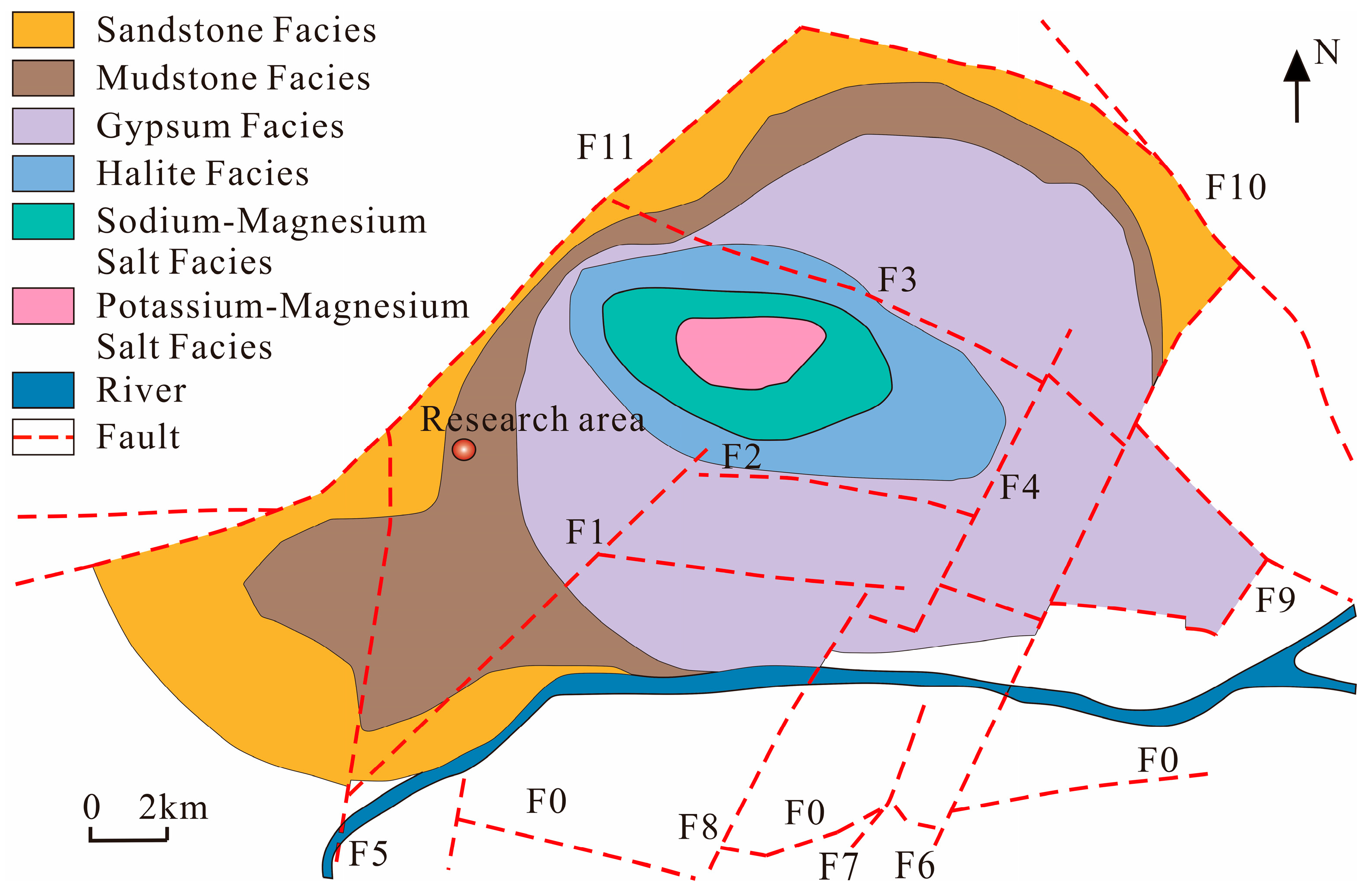
Figure 1. Lithofacies zonation map of the study area.
Processes 14 01441 g001
Figure 2. AMT measuring points in the study area.
Processes 14 01441 g002
Figure 3. Phase-tensor ellipses at different frequencies.
Processes 14 01441 g003
Figure 4. Skin depth.
Processes 14 01441 g004
Figure 5. Frequency-divided seismic profile.
Processes 14 01441 g005
Figure 6. Convergence curve of 3D inversion and data misfit at AMT sites.
Processes 14 01441 g006
Figure 7. Horizontal slices of the 3D inversion model at different depths.
Processes 14 01441 g007
Figure 8. Vertical resistivity cross-sections from the 3D inversion model.
Processes 14 01441 g008
Figure 9. Sensitivity analysis of anomaly (C2).
Processes 14 01441 g009
Table 1. Stratigraphic summary of the study area.
Eon/EraSystemSeriesGroupFormationSymbolThickness (m)Lithological Characteristics
GenozoicQuaternaryQ35Yellowish-brown sandy clay and sand–gravel layers
NeogeneN2m35Apricot-yellow claystone interbedded with thin layers of fine sandstone
PaleogeneEocene–early OligoceneGuanzhuang GroupDawenkou Formation (Upper Member)E2-3dw3~800Upper part dominated by argillaceous limestone and platy marl, interbedded with sandstone, sandy conglomerate, and gypsum; locally intruded by diabase
Dawenkou Formation (Middle Member)E2-3dw2~1200Upper section composed mainly of argillaceous limestone and platy marl with minor thin sandstone and gypsum; middle section consists of interbedded gypsum, anhydrite, and marl containing disseminated native sulfur; halite, sodium–magnesium salts, and potassium–magnesium salts occur toward the basin center; lower section dominated by mudstone with minor marl and anhydrite, grading downward into variegated mudstone
Dawenkou Formation (Lower Member)E2-3dw1~1000Dominantly purplish-red mudstone and sandy mudstone, interbedded with sandstone, siltstone, and conglomerate; upper part locally contains nodular anhydrite
Disclaimer/Publisher’s Note: The statements, opinions and data contained in all publications are solely those of the individual author(s) and contributor(s) and not of MDPI and/or the editor(s). MDPI and/or the editor(s) disclaim responsibility for any injury to people or property resulting from any ideas, methods, instructions or products referred to in the content.