Article

Preparation and Anodic Bonding Properties of PEG-Based Bonding Encapsulation Materials

Department of Materials Science and Engineering, Jinzhong University, Jinzhong 030619, China
*
Author to whom correspondence should be addressed.
Processes 2026, 14(9), 1426; https://doi.org/10.3390/pr14091426
Submission received: 29 March 2026 / Revised: 24 April 2026 / Accepted: 27 April 2026 / Published: 28 April 2026
(This article belongs to the Section Chemical Processes and Systems)

Abstract

In this work, a composite solid polymer electrolyte was prepared for anodic bonding encapsulation. The effects of additives on the anodic bonding performance of the composites were investigated. Characterizations including AC impedance and X-ray diffraction show that CeO2 and TiO2 particles reduce the crystallinity of the (PEG)12LiClO4 matrix, thereby improving ionic conductivity and mechanical properties. The composite of (PEG)12LiClO4 with 5 wt.% CeO2 and 5 wt.% TiO2 achieves a room-temperature ionic conductivity of 1.01 × 10⁻⁵ S·cm−1. Anodic bonding tests and interfacial characterization confirm its optimal bonding performance with aluminum. The interfacial tensile strength reaches 4.65 MPa at room temperature, and element migration is observed across the bonding interface.

1. Introduction

Micro-Electro-Mechanical Systems (MEMS), characterized by miniaturization, low power consumption, high integration, and low cost, have emerged as the core fundamental devices in modern science and technology, widely penetrating nearly all high-tech fields, including consumer electronics, automotive, medical care, industry, aerospace, and the Internet of Things [1,2,3,4]. Encapsulation is an indispensable and critical link in the MEMS production process; good encapsulation quality not only serves as a prerequisite for ensuring stable system operation but also acts as a key factor in extending service life and expanding application scenarios [5,6,7].
Anodic bonding, as an advanced material joining technology, has currently become the preferred process for achieving precise sealing and heterogeneous material connection in fields such as MEMS, microfluidics, semiconductor packaging, quantum sensing, and optoelectronic devices [8,9,10,11]. Polyethylene glycol (PEG) possesses a favorable spatial coordination structure and high-density electron groups; composed of flexible polyether segments, its ethoxy groups can be easily transformed, thereby facilitating the formation of a homogeneous system [12,13,14,15]. As a common non-magnetic rare earth oxide, CeO2 has a typical fluorite structure and high structural stability, which prevents phase transition below its softening temperature [16,17,18]. TiO2, with a large specific surface area, is an efficient and multi-functional nano-filler that can significantly enhance the comprehensive performance of polymer matrices [19,20].
Anodic bonding technology has certain special requirements for cathode materials, such as ionic conductivity, crystallinity, mechanical properties, and thermal stability, all of which reflect the anodic bonding performance of materials to a certain extent. Single fillers have limitations in modification; for example, they cannot balance room-temperature ionic conductivity and mechanical properties. In our previous studies, we reported the effects of CeO2 and SiO2 on the anodic bonding performance of PEG-based solid electrolytes, respectively. In this work, the CeO2–TiO2 dual-filler system is introduced into PEG-based solid electrolytes via high-energy ball milling and hot-pressing for the first time. The co-doping of CeO2 and TiO2 achieves complementary advantages and synergistic effects. Specifically, CeO2 optimizes interfacial compatibility and suppresses anion migration, while TiO2 further refines the micropore structure and improves the mechanical strength and thermal stability of the material. We systematically investigate the room-temperature ionic conductivity, crystallinity, tensile properties, and other characteristics of the composite [21,22]. Moreover, the anodic bonding encapsulation performance between the prepared material and aluminum was systematically investigated through the anodic bonding method. This work further expands the application of solid polymer electrolytes in the field of encapsulation materials.

2. Materials and Methods

2.1. Preparation of PEG-Based Bonding Encapsulation Materials

Polyethylene glycol (PEG) with a molecular weight (Mw) of 4000 Da, a purity of ≥99.6%, and a particle size of ≤70 μm was adopted in this experiment. Lithium perchlorate (LiClO4) was of analytical grade, with a purity exceeding 99.2% and a particle size of <50 μm. Similarly, cerium dioxide (CeO2) and titanium dioxide (TiO2) were both of analytical grade, with purities higher than 99% and particle sizes of <500 nm and <100 nm, respectively. Anhydrous ethanol (CH3CH2OH), an analytical grade reagent with a purity of >99.7%, was employed as the grinding agent. All materials were supplied by Liaoning Oxiranchem Co., Ltd., Liaoyang, China.
Prior to material preparation, all raw materials were dried to remove moisture, which could otherwise adversely affect the final properties of the composite materials. Specifically, PEG was dried at 50 °C for 48 h, while LiClO4 and CeO2 were both dried at 120 °C for 24 h, and TiO2 was dried at 100 °C for 6 h.
After drying, the powders were mixed in a predetermined ratio and then transferred into an agate jar, with anhydrous ethanol used as the grinding agent. Among them, the molar ratio of ethylene oxide (EO) units to Li+ ions was controlled at 12:1 (n(EO):n(Li+) = 12:1), and CeO2 and TiO2 were added with different mass fractions, respectively (10 wt.% CeO2, 10 wt.% TiO2, 5 wt.% CeO2 and 5 wt.% TiO2). The amount of grinding agent used was 10 mL. The grinding medium consisted of agate balls with diameters of 8, 5, and 3 mm, respectively. Ball milling was conducted at a rotational speed of 280 rpm for 6 h, with a ball-to-material ratio of 8:1. Upon completion of ball milling, the fine mixed powder was sieved to remove coarse particles. The uniformly mixed powder was then heated to a molten state (heating temperature 60–100 °C, heating time 5–10 min, applied pressure 8 MPa, cooling rate 1–3 °C/min), poured into a pre-prepared mold, and pressed into shape to obtain circular samples with a diameter of 25 mm and a thickness of 2 mm. Finally, the as-prepared (PEG)12LiClO4-CeO2-TiO2 composite materials were stored in a drying oven for subsequent use. The planetary ball mill model is XQM-0.5L (Changsha Tianchuang Powder Technology Co., Ltd. (Brand: TENCAN), Changsha, China).

2.2. Material Characterization and Anodic Bonding Experiments

X-ray diffraction (XRD) analysis was performed on the prepared PEG-based solid electrolyte materials using an X’Pert PRO X-ray diffractometer manufactured by PANalytical B.V. (Almelo, The Netherlands). Before the experiment, the material position was carefully adjusted to ensure it was placed flat. The main experimental parameters were set as follows: Cu-Kα radiation source with a wavelength of λ = 0.15406 nm, tube current of 20 mA, tube voltage of 30 kV, scanning speed of 2θ = 5°/min, and scanning range of 10–60°.
AC impedance analysis was performed using a CHI604C electrochemical workstation (Shanghai Chenhua Instrument Co., Ltd., Shanghai, China). The prepared solid electrolyte was sandwiched between two stainless steel (SS) electrodes, and the test was conducted at room temperature with a frequency range of 1 Hz to 100,000 Hz. The bulk resistance and ionic conductivity of the prepared materials were determined through the AC impedance measurements.
Scanning electron microscopy (SEM) was conducted on the samples using a Hitachi S-4800 scanning electron microscope (Hitachi High-Technologies Corporation, Tokyo, Japan) to characterize their microstructural features, including surface structure and morphology. Additionally, an ultra-light element energy dispersive spectrometer (EDS) was utilized to analyze the element distribution at the bonding interface.
The mechanical properties of the bonded samples were tested using an AP10-10 electro-hydraulic servo fatigue testing machine (Jinan Nake Test Equipment Co., Ltd., Jinan, China). The as-bonded samples were cut into tensile specimens with dimensions of 10 × 10 × 2 mm. The anode material (Al) and cathode material (PEG-based solid polymer electrolyte) were separately bonded to the testing patches using AB adhesive. The assembled specimen was then mounted onto the upper and lower connecting rods of the universal tensile testing machine. Prior to the tensile test, the stability of the fixture was examined, and the specimen was aligned horizontally. Tensile tests were performed at room temperature at a crosshead speed of 0.01 mm/s until the specimen failed.
Anodic bonding encapsulation experiments between the PEG-based solid electrolyte and aluminum (Al) were carried out using a JYL/KYJH-1000 anodic bonding platform (Beijing KYKY Technology Co., Ltd., Beijing, China). First, the aluminum foil was cut and soaked in acetone solution for 5 min, followed by rinsing with deionized water. It was then cleaned in a standard RCA solution (NH4OH:H2O2:H2O = 0.25:1:5) for 10 min, rinsed again with deionized water, and finally dried with nitrogen to avoid the formation of a new oxide layer. The treated Al and the prepared solid electrolyte were overlapped and placed into the anodic bonding equipment, where Al was connected to the anode and the solid electrolyte to the cathode, as illustrated in Figure 1. After setting the bonding parameters (bonding temperature, bonding voltage, bonding time, and bonding pressure), the bonding process was initiated, and the variation in bonding current with time was recorded. Upon completion of bonding, the bonding pressure was maintained, and the sample was furnace-cooled for 1 h at a cooling rate of approximately 2 °C/min before being taken out to complete the bonding process.

3. Results

3.1. X-Ray Diffraction Analysis

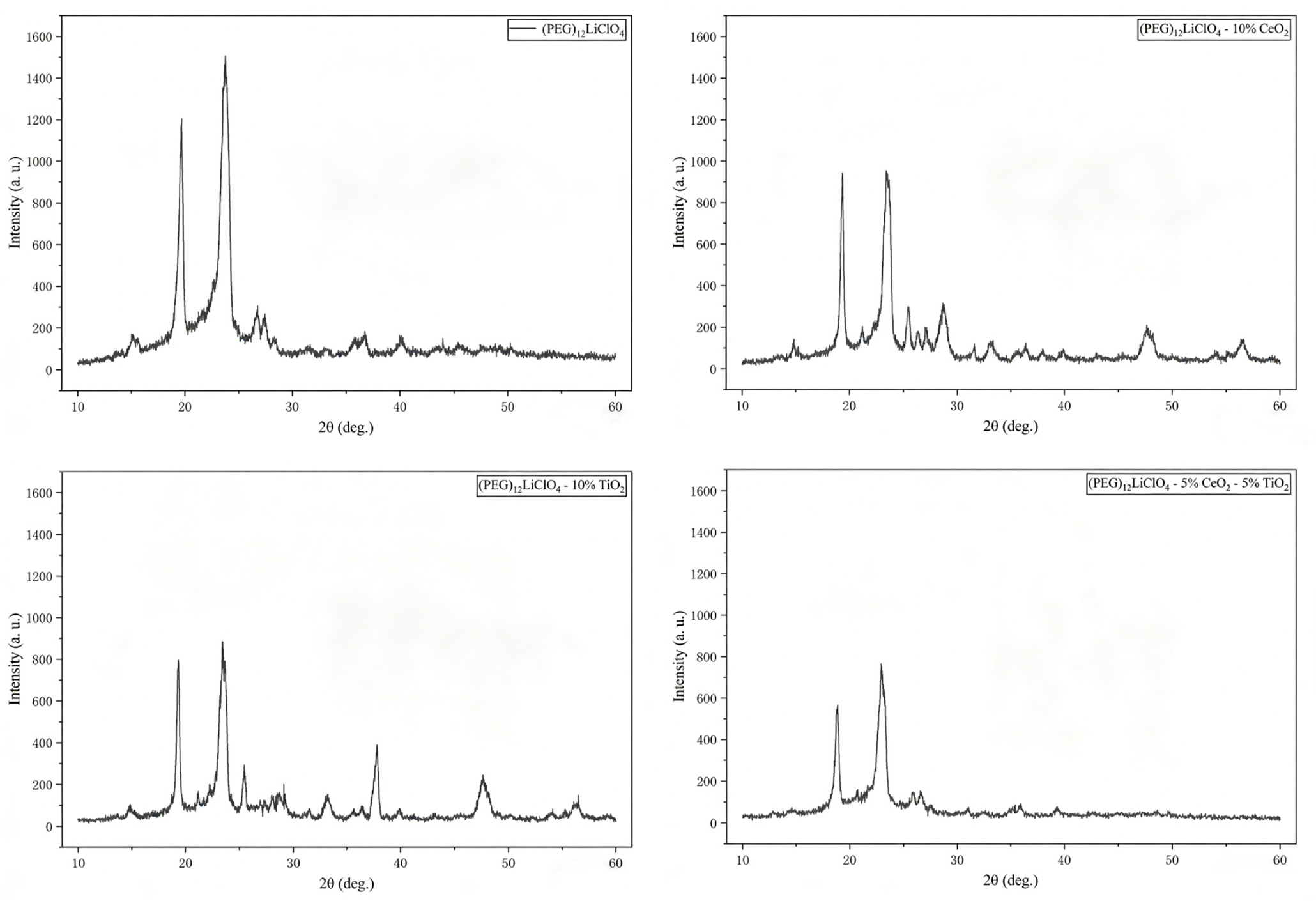
Figure 2 presents the XRD patterns of the prepared PEG-based solid electrolytes. As can be seen from the patterns, all samples showed two relatively distinct diffraction peaks around 19.5° and 23.5°, but with different intensities. When the system was not modified with CeO2 and TiO2 particles, the material exhibited high overall crystallinity. After adding 10 wt.% CeO2 and 10 wt.% TiO2 separately, the diffraction peak intensity of the composite materials decreased significantly. With the total amount of additives kept constant, the diffraction peak intensity of the composite material dropped to the lowest when 5 wt.% CeO2 and 5 wt.% TiO2 were added simultaneously. At this time, the characteristic peaks of CeO2 around 28.5° and 48°, as well as the characteristic peaks of TiO2 around 25.3°, 37.8°, and 48.2°, disappeared—this indicates that CeO2 and TiO2 particles were fully integrated with the (PEG)12LiClO4 system.
Pure PEG possesses highly regular molecular chains, which readily fold and arrange in an ordered manner to form dense crystalline regions. The restricted chain mobility within crystalline domains severely hinders lithium-ion transport, acting as a critical bottleneck for ionic conduction. Incorporation of CeO2 and TiO2 into the (PEG)12LiClO4 system effectively disrupts the crystallization behavior and remarkably reduces the overall crystallinity.
Based on the experimental results and material preparation process, reasonable speculations are made as follows: Due to its small particle size and large specific surface area, TiO2 can achieve uniform dispersion with the polymer matrix during the material preparation process, thereby exerting a good physical barrier effect. On this basis, the composite additive can effectively inhibit the long-range ordered arrangement of PEG molecular chains, restrict the growth and development of lamellar crystals, and thus interrupt the continuity of the crystallization process. Through further analysis and speculation, it can be known that the abundant oxygen vacancies on the surface of CeO2, as well as the hydroxyl groups and Lewis acid sites loaded on the surface of TiO2, can interact with the ether oxygen bonds in the PEG molecular chains to form stable hydrogen bonds and dipole–dipole interactions. This interfacial binding effect can anchor part of the PEG segments on the surface of the inorganic filler, thereby effectively hindering the folding movement of the PEG molecular chains, significantly inhibiting the regular stacking and ordered crystallization process of the crystals, and ultimately regulating the crystallization performance of PEG.
Moreover, both CeO2 and TiO2 serve as heterogeneous nucleation sites, inducing the rapid formation of numerous tiny crystal nuclei throughout the system. These crowded nuclei mutually constrain one another and fail to grow completely, leading to refined grains and reduced crystalline integrity, and ultimately a significant decline in the proportion of crystalline regions. Since TiO2 exhibits a finer particle size than CeO2, the two fillers jointly disrupt polymer crystallization across multiple scales through a synergistic effect. This accounts for the lowest diffraction intensity observed in the dual-doped composite system.

3.2. AC Impedance Analysis

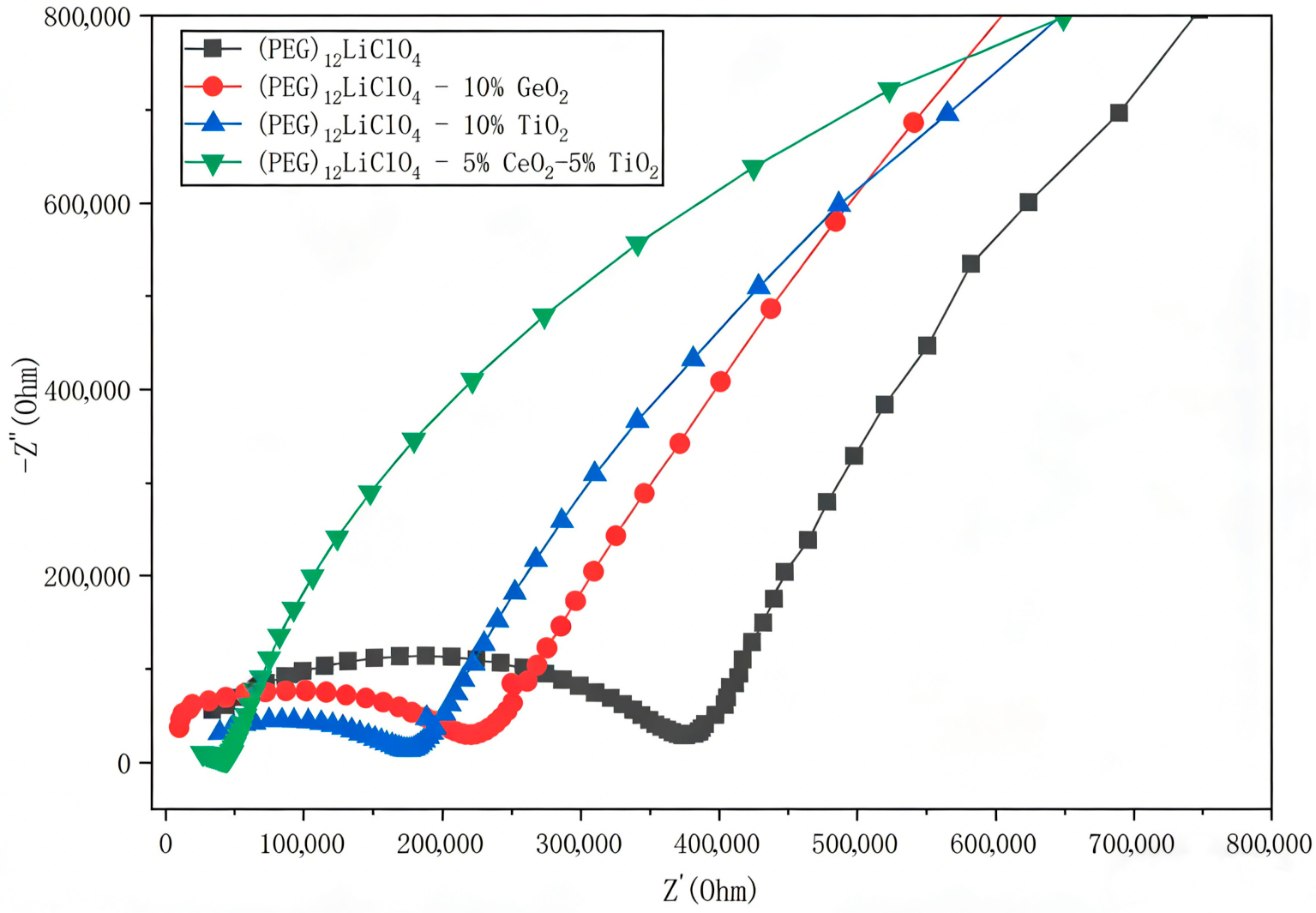
Figure 3 presents the AC impedance spectra of the prepared PEG-based solid polymer electrolytes. Each spectrum consists of a high-frequency semicircular arc and a low-frequency straight line. For the pure electrolyte without CeO2 and TiO2 doping, both the high-frequency arc and low-frequency tail are well-defined, corresponding to a relatively high bulk resistance (Rb). Upon the separate addition of 10 wt.% CeO2 and 10 wt.% TiO2, the profile of the high-frequency arc changes significantly and shifts toward the higher frequency region, accompanied by an obvious reduction in bulk resistance. Furthermore, the simultaneous incorporation of 5 wt.% CeO2 and 5 wt.% TiO2 enables the composite to achieve an even lower bulk resistance.
Table 1 presents the room-temperature ionic conductivity of the prepared PEG-based solid polymer electrolytes. Consistent with the above structural and impedance results, the pristine sample without CeO2 and TiO2 shows low conductivity. The addition of 10 wt.% CeO2 or 10 wt.% TiO2 effectively improves ionic conductivity. Notably, the co-doped (PEG)12LiClO4–5 wt.% CeO2–5 wt.% TiO2 achieves a conductivity of 1.01 × 10⁻⁵ S·cm−1, one order of magnitude higher than that of (PEG)12LiClO4.
This trend agrees well with the reduced crystallinity revealed by XRD. In PEG electrolytes, Li+ transport relies on amorphous chain motion, while crystalline regions severely hinder ion migration. CeO2 and TiO2 suppress crystallization and expand amorphous domains, constructing continuous Li+ conduction pathways. Based on speculation, their interfacial interactions weaken PEG chain entanglement, lower the glass transition temperature, activate segment mobility, and accelerate Li+ hopping along ether oxygen sites. In pure PEG-LiClO4, Li+ and ClO4 easily form ion pairs, reducing the concentration of free charge carriers. After further speculation, Ce4+ weakens Li+-PEG coordination to promote salt dissociation and release more free Li+; filler–polymer interfacial interactions relieve excessive Li+ coordination with ether oxygen groups and reduce the migration energy barrier.
During anodic bonding, Li+ migration forms a cation-depleted layer and promotes interfacial bonding. Accordingly, the 5 wt% CeO2/5 wt% TiO2 co-doped sample possesses the highest content of mobile Li+, which greatly facilitates the formation of a favorable anodic bonding interface.

3.3. Tensile Property Analysis

During anodic bonding, compressive loading ensures intimate interfacial contact and facilitates the progress of bonding reactions. Table 2 presents the room-temperature tensile performance of the as-prepared PEG-based solid polymer electrolytes. The tensile strength exhibits a distinct enhancement with the incorporation of CeO2 and TiO2 nanoparticles.
The pristine PEG-LiClO4 system suffers from inhomogeneous crystalline distribution and weak molecular chain entanglement, which renders the matrix susceptible to plastic deformation and fracture under external stress. Owing to their small particle size and large specific surface area, uniformly dispersed CeO2 and TiO2 nanofillers fill the interchain voids and structural defects within the polymer matrix, constructing a dense and continuous phase structure. Upon mechanical loading, these nanoparticles effectively disperse external stress and suppress crack propagation along crystalline domains, thereby remarkably improving the mechanical robustness of the solid electrolyte.

3.4. Anodic Bonding Analysis

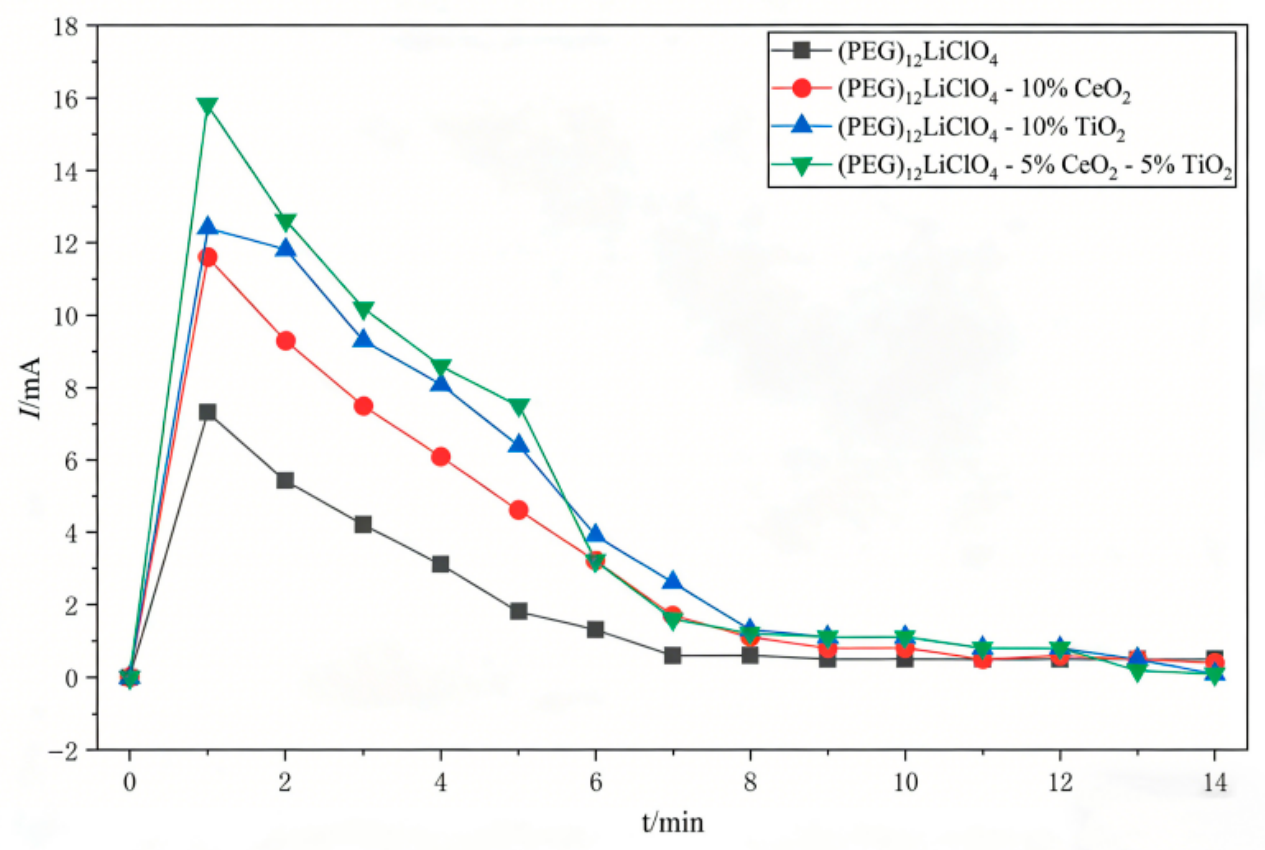
We conducted the anodic bonding experiment at room temperature, setting the bonding voltage to 600–900 V, the bonding time to 15 min, and the bonding pressure to 0.2 MPa. During the bonding process, we recorded the variation in bonding current with time, and after the bonding was completed, it was naturally cooled to room temperature. Figure 4 shows the current–time curves of the anodic bonding between (PEG)12LiClO4–CeO2–TiO2 and Al at room temperature under 800 V. For all samples, the current peaks at the initial stage, declines gradually, and finally approaches zero upon bonding completion. The incorporation of CeO2 and TiO2 increases the peak current; the co-doped sample (5 wt.% CeO2 + 5 wt.% TiO2) achieves a maximum bonding current of 15.8 mA.
The bonding current originates from the field-driven directional migration of internal free ions, leading to a high initial current. As ion migration saturates and interfacial reactions terminate, the current gradually decays until bonding finishes.
The pristine sample exhibits a low peak current of only 7.3 mA due to its high crystallinity and restricted ion mobility. By contrast, CeO2 and TiO2 reduce matrix crystallinity, expand amorphous regions, and release more free Li+. The improved ionic conductivity effectively elevates the bonding current during anodic bonding.
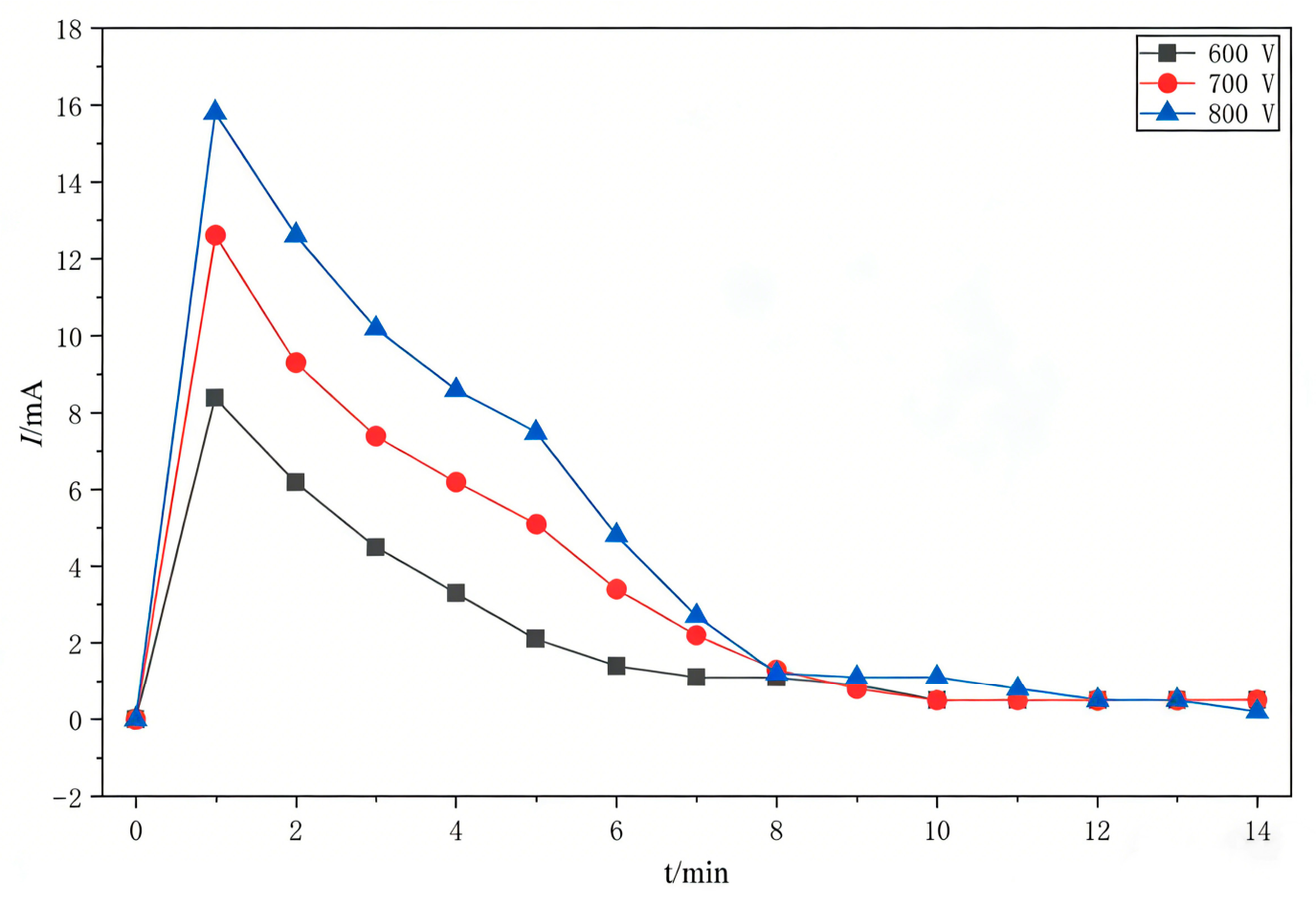
Figure 5 illustrates the current–time profiles of anodic bonding between the (PEG)12LiClO4–5 wt.%CeO2–5 wt.%TiO2 electrolyte and aluminum substrate under various applied electric fields at room temperature. It is observed that the peak current increases monotonically with the elevation of the bonding voltage.
Anodic bonding proceeds dominantly under intense electrostatic field excitation; a higher applied potential effectively accelerates the migration of mobile ions and facilitates interfacial bonding reactions. This phenomenon further verifies that anodic bonding is essentially a synergistic process governed by electric-field-driven ion migration and interfacial reactions. Nevertheless, excessively high voltage may induce dielectric breakdown of the electrolyte matrix, thereby resulting in the failure of anodic bonding.

3.5. Interface Characterization

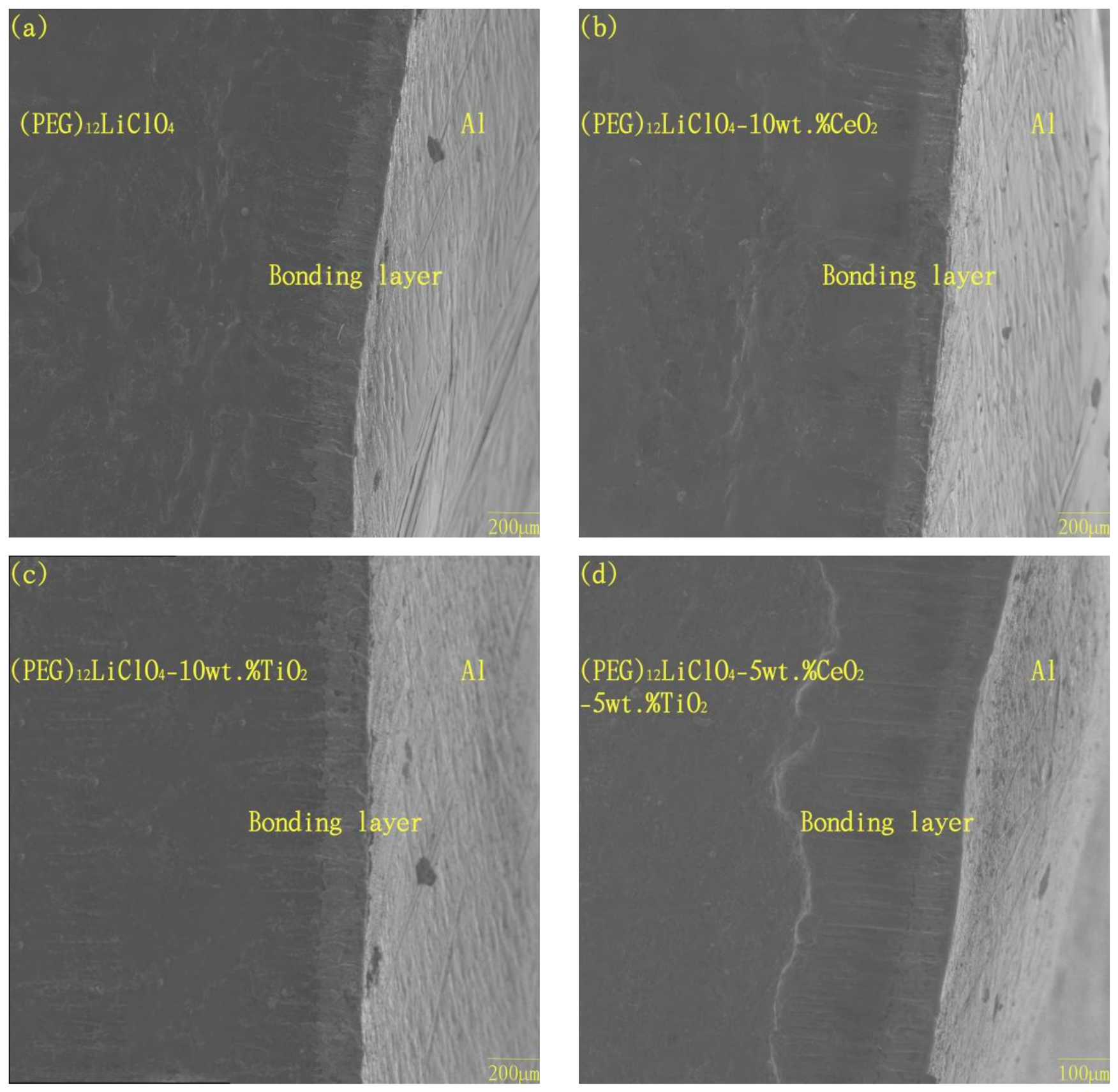
Figure 6 displays the cross-sectional SEM micrographs of the anodic bonding interfaces between the as-fabricated PEG-based solid polymer electrolytes and aluminum substrates at ambient temperature. A distinct interlayer can be clearly identified between the electrolyte and aluminum phase. Under the synergistic excitation of intense electrostatic and thermal fields, directional ion migration occurs within the polymer matrix, which induces complex interfacial physicochemical reactions and ultimately facilitates the formation of the bonding interphase.
Figure 7 corresponds to the interfacial morphology of the (PEG)12LiClO4–5 wt.% CeO2–5 wt.% TiO2 composite bonded with Al. The intermediate bonding layer presents a compact structure free of observable voids and defects, demonstrating sufficient interfacial reaction progress and superior interfacial bonding integrity.
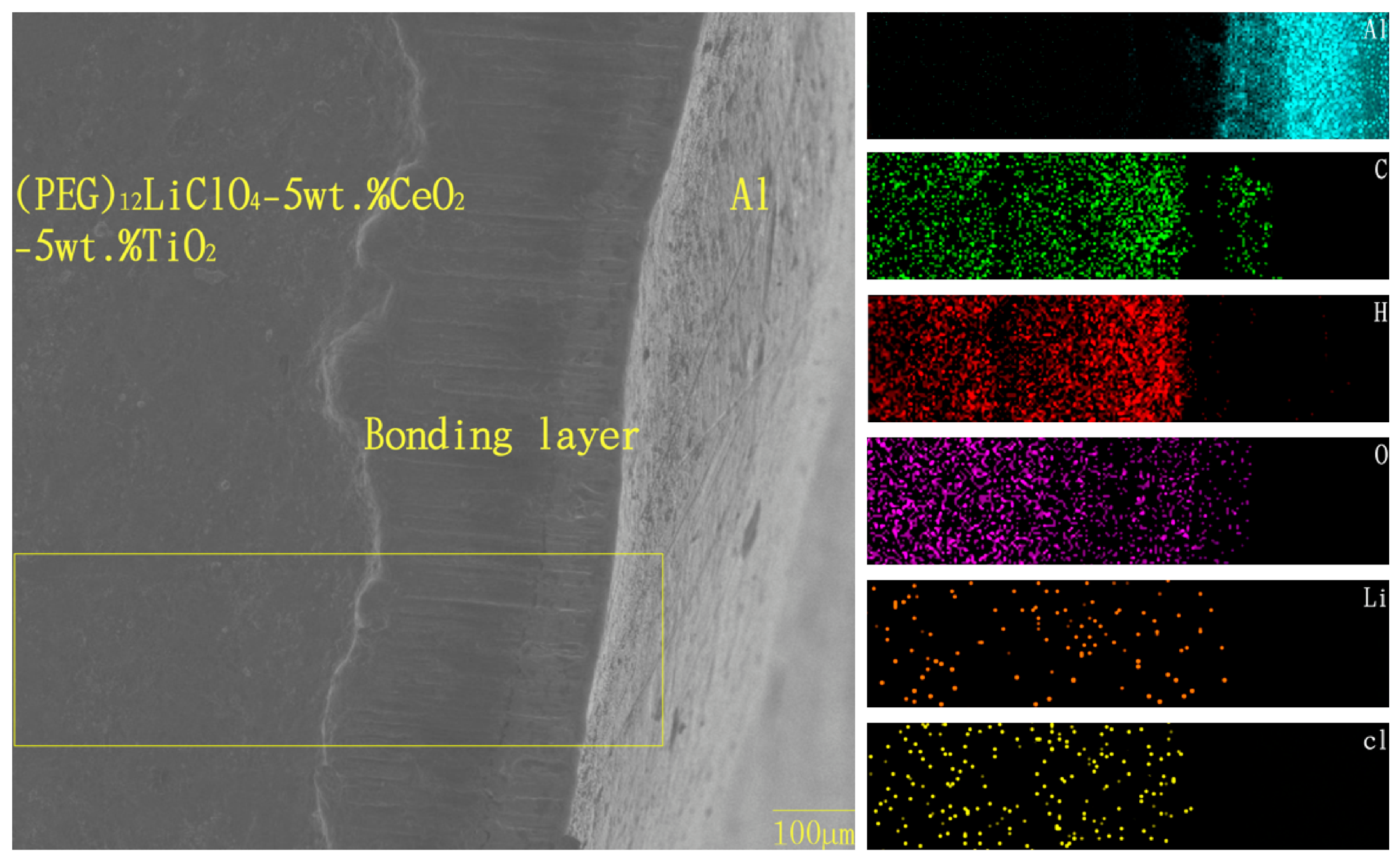
Figure 7 shows the EDS mapping of the bonding interface between (PEG)12LiClO4–5wt.% CeO2–5 wt.% TiO2 and Al. Lithium-dominated cations migrate toward the cathode (negative electrode) under an electric field, anions such as ClO4− migrate toward the anode (positive electrode), forming a cation-depleted layer at the interfacial side of the electrolyte. The negatively charged depletion layer and positively charged Al substrate generate strong interfacial electrostatic attraction. Upon the completion of Li+ migration, this electrostatic force reaches its maximum. Anions and aluminum elements diffuse toward the interface. It is speculated that complex chemical reactions occur, and the resultant products eventually constitute the bonding layer. As can be observed in the EDS images, the content of lithium (Li) element decreases at the bonding layer, which is attributed to the migration of part of the lithium ions. Elements including oxygen (O), chlorine (Cl), carbon (C), and aluminum (Al) are all detected at the bonding layer, confirming the existence of element migration.
Table 3 lists the room-temperature tensile strength of anodic bonding interfaces. Filler modification significantly enhances interfacial mechanical strength, where the (PEG)12LiClO4 composite with 5 wt.% CeO2 and 5 wt.% TiO2 achieves the maximum bonding strength of 4.65 MPa.
Uniformly dispersed CeO2 and TiO2 introduced via ball milling suppress matrix crystallinity to facilitate ion transport, while releasing abundant mobile ions under bonding conditions. This promotes sufficient interfacial reactions and ultimately optimizes the structural integrity and bonding performance of the joint.

4. Conclusions

In this work, the CeO2–TiO2 dual-filler system is introduced into PEG-based solid electrolytes via the “high-energy ball milling-hot-pressing forming” method for the first time, and the synergistic effects of the dual fillers on ionic conductivity, crystallinity, mechanical properties, and anodic bonding performance are systematically studied and compared. Characterizations demonstrate that CeO2 and TiO2 suppress the crystallinity of the (PEG)12LiClO4 matrix and enhance ionic conductivity. The composite modified with 5 wt.% CeO2 and 5 wt.% TiO2 achieves a room-temperature conductivity of 1.01 × 10⁻⁵ S·cm−1. It exhibits the highest peak current during anodic bonding with Al and a superior interfacial tensile strength of 4.65 MPa. EDS confirms evident interfacial element migration, and the bonding layer formed at the bonding interface serves as the key factor for successful connection.

Author Contributions

Conceptualization, C.D.; Methodology, C.D.; Formal analysis, Y.Z.; Investigation, Y.Z.; Resources, Y.Z.; Data curation, Y.Z.; Writing—original draft, C.D.; Writing—review & editing, C.D.; Project administration, Y.Z.; Funding acquisition, C.D. All authors have read and agreed to the published version of the manuscript.

Funding

This research was funded by the Natural Science Foundation for Young Scientists of Shanxi Province (Grant No. 202303021222260) and the Scientific Research Project of the “Young Talents” Support Program of Jinzhong University (Grant No. jzxyqnyc202403).

Data Availability Statement

The original contributions presented in this study are included in the article. Further inquiries can be directed to the corresponding author.

Conflicts of Interest

The authors declare no conflicts of interest.

References

  1. Khan, A.A.; Nguyen, K.T.; Trinh, T.Q.; Nguyen, N.; Dao, D.V.; Zhu, Y. Wafer Bonding Technologies for Microelectromechanical Systems and 3D ICs: Advances, Challenges, and Trends. Adv. Eng. Mater. 2025, 27, 2500342. [Google Scholar] [CrossRef]
  2. Abdelrahman, R.; Elhady, A.; Shama, S.Y.; Abdelrahman, M.; Jollivet, A.; Ozyigit, D.; Yavuz, M.; Abdel-Rahman, E.M. Resonant Drive Techniques for Electrostatic Microelectromechanical Systems (MEMS): A Comparative Study. Sensors 2025, 25, 1719. [Google Scholar] [CrossRef]
  3. Li, C.; Jia, M.; Hong, Y.; Xue, Y.; Xiong, J. Wireless passive flexible accelerometer fabricated using micro-electro-mechanical system technology for bending structure surfaces. Front. Inf. Technol. Electron. Eng. 2022, 23, 801–809. [Google Scholar] [CrossRef]
  4. Martyniuk, M.; Silva, K.K.M.B.D.; Putrino, G.; Kala, H.; Tripathi, D.K.; Gill, G.S.; Faraone, L. Optical Microelectromechanical Systems Technologies for Spectrally Adaptive Sensing and Imaging. Adv. Funct. Mater. 2021, 32, 2103153. [Google Scholar] [CrossRef]
  5. Amiri, I.S.; Ariannejad, M.; Vigneswaran, D.; Lim, C.; Yupapin, P. Performances and procedures modules in micro electro mechanical system packaging technologies. Results Phys. 2018, 11, 306–314. [Google Scholar] [CrossRef]
  6. Du, C.; Liu, C.R.; Yin, X. Effect of Cooling Mode on Anodic Bonding Properties of Solid Polymer Electrolytes. J. Inorg. Organomet. Polym. Mater. 2018, 28, 146–151. [Google Scholar] [CrossRef]
  7. Shen, S.; Xu, Y.; Yu, G.; Ding, W.; Zhuang, Y. Research Progress in Packaging Technology of MEMS Inertial Navigation Micro-system. World Sci. Res. J. 2024, 11, 27–33. [Google Scholar] [CrossRef]
  8. Hou, Z.; Hu, L.; Liu, W.; Zhao, R.; Liu, W.; Mi, X.; Li, J.; Xun, J. Research on SiC-glass-Al interfacial microstructure and mechanical properties based on two-step anodic bonding process. J. Am. Ceram. Soc. 2025, 108, e70038. [Google Scholar] [CrossRef]
  9. Li, J.; Sato, I.S.; Barthel, A.; Colenbrander, T.; Abad, E.C.; Ramsay, B.; Ohshima, T.; Imaizumi, M.; Hirst, L.C. Radiation-resilient ultra-thin GaAs solar cells on glass transferred by anodic bonding. Sol. Energy Mater. Sol. Cells 2025, 290, 113672. [Google Scholar] [CrossRef]
  10. Knechtel, R.; Wenig, M.; Seyring, M.; Hauck, L.; Rana, A. The use of glasses in low-temperature wafer bonding processes. Jpn. J. Appl. Phys. 2025, 64, 04SP41. [Google Scholar] [CrossRef]
  11. Cheng, X.; Hu, L.; Liu, W.; Chou, Z.; Jia, W.; Mu, W. Study on the mechanism of glass-SiC-glass anodic bonding process. J. Micromechanics Microengineering 2024, 34, 045010. [Google Scholar] [CrossRef]
  12. Minea, A.A.; Chereches, I.E.; Tugui, A.C.; Tofan, G.C. Discussion of Polyethylene Glycol Mixtures and PEG + MWCNT Nanocolloids’ Behavior in Thermal Applications. Appl. Sci. 2025, 15, 9898. [Google Scholar] [CrossRef]
  13. Ayub, Y.; Farrukh, A.M.; Khalifa, B.S.; Chebaane, S.; Ghodhbani, R.; Ismail, M.A.; Ibrar, M.; Munawar, T.; Allakhverdiev, S.I. In-situ synthesis of polyethylene glycol-assisted combined semiconductor metallic oxides nanocomposite for solar cell, supercapacitor, photocatalytic, and antibacterial applications. Ceram. Int. 2025, 51, 39432–39444. [Google Scholar] [CrossRef]
  14. Adekoya, C.O.; Adekoya, J.G.; Kupolati, K.W.; Hamam, Y.; Sadiku, R.E. Polyethylene Glycol-Functionalized Graphene Oxide Nanocomposites: Advances in Biomedical Applications. Nano Sel. 2025, 6, e70051. [Google Scholar] [CrossRef]
  15. Jung, Y.; Lee, S.; Pal, V.; Ye, S.; Kwon, G.; Lee, D.-K.; Lee, J.-K. Enhanced long-term stability of perovskite solar cells using a polymer-nanoparticle composite encapsulation layer. Chem. Eng. J. 2025, 520, 165837. [Google Scholar] [CrossRef]
  16. Nasrabadi, M.; Anbaran, T.H.; Ebrahimibasabi, E. Experimental study of radiation shielding and mechanical properties of polymer nanocomposite reinforced with CeO2 NPs. Mater. Today Commun. 2025, 48, 113369. [Google Scholar] [CrossRef]
  17. Abdulsalam, S.H.; Hashim, A.; Mohammed, K.M. Ameliorating and tailoring the microstructure and optical behaviors of SiO2–CeO2 futuristic nanoceramic-doped transparent polymer for nanoelectronics and radiation shielding applications. J. Mater. Sci. Mater. Electron. 2025, 36, 1480. [Google Scholar] [CrossRef]
  18. Zhao, Y.; Jin, X.; Zhou, Z.; Yao, R.; Guo, Z.; Zhang, H.; Yin, W.; Zhao, Y.; Wang, D. Preparation and characterization of room-temperature polymer-stabilized blue-phase CeO2 nanoparticle-doped liquid crystals with high stability and wide temperature range. Phys. B Condens. Matter 2025, 715, 417595. [Google Scholar] [CrossRef]
  19. Jawad, A.A.; Ahmed, A.S.; Abedi, A.J.H. High-efficiency acid-base catalysts: ZrO2, TiO2, amine, and Br functionalized porous polymers for CO2 and epoxide to cyclic carbonate conversion. RSC Adv. 2026, 16, 8797. [Google Scholar] [CrossRef]
  20. Kraskouski, A.; Nealy, S.; Kharlampieva, E. Polymer/Titania Composites for the Remediation of Water from Pharmaceuticals: A Review. ACS Omega 2026, 11, 6848–6882. [Google Scholar] [CrossRef]
  21. Du, C.; Liu, C.; Yin, X.; Zhao, H. Effect of rare earth oxide CeO2 on the anodic bonding performance of PEG-based MEMS encapsulation materials. Adv. Mech. Eng. 2021, 13, 16878140211007712. [Google Scholar] [CrossRef]
  22. Du, C.; Liu, C.; Yin, X. Polyethylene Glycol-Based Solid Polymer Electrolytes: Encapsulation Materials with Excellent Anodic Bonding Performance. J. Inorg. Organomet. Polym. Mater. 2017, 27, 1521–1525. [Google Scholar] [CrossRef]
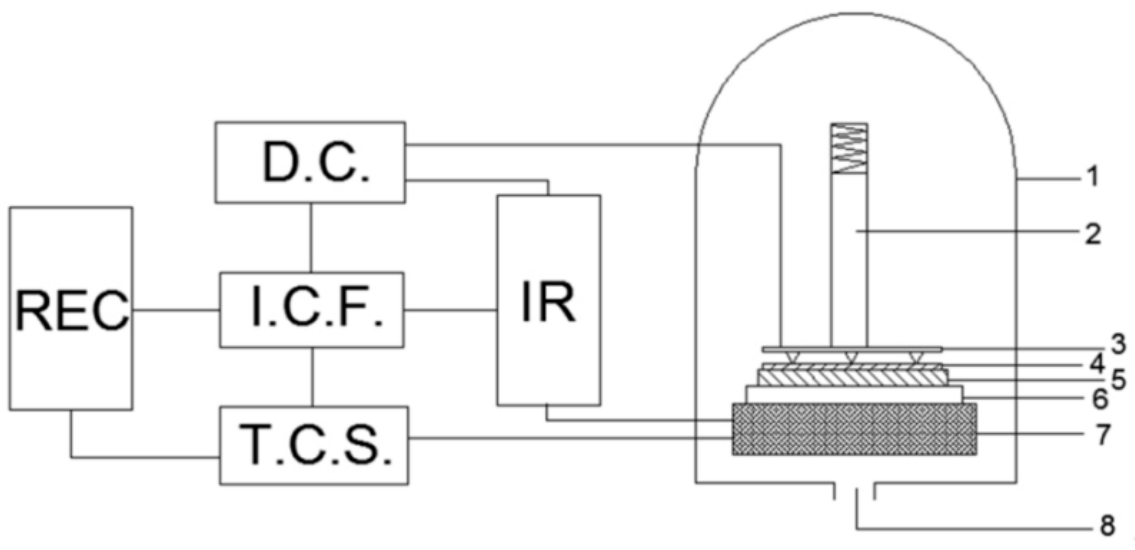
Figure 1. The anodic bonding schematic. 1. Thermal bonding box, 2. Pressurizing pole, 3. Anode, 4. AI, 5. PEG-based solid electrolyte, 6. Cathode, 7. Heating plate, 8. Air. DC: direct current mains; IR: data collection system; REC: recording and calculation module; ICF: regulation and protection module; TCS: temperature control system.
Processes 14 01426 g001
Figure 2. XRD patterns of PEG-based composite materials.
Processes 14 01426 g002
Figure 3. AC impedance plots of PEG-based composites.
Processes 14 01426 g003
Figure 4. Time–current curves of PEG-based composites and Al during the anodic bonding process.
Processes 14 01426 g004
Figure 5. Time–current curves of (PEG)12LiClO4–5 wt.% CeO2–5 wt.% TiO2 and Al under different bonding voltages during anodic bonding.
Processes 14 01426 g005
Figure 6. SEM images of the bonding interface. (a) (PEG)12LiClO4, (b) (PEG)12LiClO4–10 wt.% CeO2, (c) (PEG)12LiClO4–10 wt.% TiO2, (d) (PEG)12LiClO4–5 wt.% CeO2–5 wt.% TiO2).
Processes 14 01426 g006
Figure 7. EDS patterns of the bonding interface.
Processes 14 01426 g007
Table 1. Ionic conductivity of PEG-based composites at room temperature.
Content of Additives (wt.%)Thickness
(d/cm)
Electrode–Electrolyte Contact Area
(S/cm2)
Bulk Resistance (Rb/Ω)Ionic Conductivity
(σ/S·cm−1)
-0.210.53.74 × 1051.12 × 10−6
10% CeO20.20.52.21 × 1051.81 × 10−6
10% TiO20.190.51.74 × 1052.18 × 10−6
5% CeO2 5% TiO20.210.54.14 × 1041.01 × 10−5
Table 2. Tensile strength of PEG-based solid electrolytes at room temperature.
SpecimenTensile Strength (MPa)
(PEG)12LiClO41.71 ± 0.026
(PEG)12LiClO4–5 wt.%CeO25.42 ± 0.045
(PEG)12LiClO4–5 wt.%TiO26.72 ± 0.040
(PEG)12LiClO4–10 wt.%CeO29.23 ± 0.035
(PEG)12LiClO4–10 wt.%TiO28.61 ± 0.040
(PEG)12LiClO4–5 wt.%CeO2–5 wt.%TiO28.74 ± 0.021
Table 3. The tensile strength of the bonding interface at room temperature.
Content of Additives (wt.%)Tensile Strength (Rm/MPa)
-1.45 ± 0.133
10% CeO23.71 ± 0.120
10% TiO24.24 ± 0.091
5% CeO2 5% TiO24.65 ± 0.063
Disclaimer/Publisher’s Note: The statements, opinions and data contained in all publications are solely those of the individual author(s) and contributor(s) and not of MDPI and/or the editor(s). MDPI and/or the editor(s) disclaim responsibility for any injury to people or property resulting from any ideas, methods, instructions or products referred to in the content.