1. Introduction
The progression of global Sustainable Development Goals (SDGs) and the Paris Agreement’s has led governments worldwide to emphasize green governance as a critical cornerstone of ecological progress and sustainable development. The Paris Agreement underscores the pressing need to curb climate change and demonstrates that stronger action on waste management, resource efficiency, and the shift toward a circular economy can influence policy outcomes. Green governance calls for stronger action on resource efficiency, as governments and businesses face growing ecological strain. In this context, waste management stands out as a vital element of green governance, offering a practical route to tackle environmental pressures while promoting long-term sustainability amid resource scarcity.
As the world’s second-largest economy, China has made significant strides toward becoming an ecological civilization, with green governance as a key institutional pillar. Launched in 2019, the Zero-Waste City Pilot (ZWCP) program is a flagship policy aimed at improving resource efficiency and reducing waste generation to foster sustainable urban development. While the ZWCP addresses critical domestic environmental challenges, its potential lessons for green transitions in other countries remain to be explored. Despite its importance, empirical evidence on how the ZWCP affects corporate green governance performance (GGP)—particularly at the micro-level—is scarce. Furthermore, the specific mechanisms through which this localized policy influences firm behavior represent a critical gap in the literature.
Existing research on environmental governance and firm behavior has centered on how environmental regulations influence corporate innovation and performance. The Porter Hypothesis suggests that well-designed, stringent regulations can spur technological innovation, enabling firms to reduce pollution while gaining a competitive edge [
1]. In the U.S. manufacturing, Shapiro and Walker found sector that tighter regulations lowered emissions and improved production efficiency [
2]. However, other scholars caution that overly heavy regulatory burdens can raise compliance costs, potentially stifling innovation and straining firm resources, especially in the early stages [
3]. These mixed findings indicate that regulatory outcomes vary across contexts.
Despite these valuable insights, significant gaps remain. First, most existing studies focus on macro-level outcomes or specific policy domains like carbon trading, with limited micro-level evidence on how localized, place-based green policies such as the ZWCP affect corporate green governance. Second, the transmission mechanisms linking such policies to firm-level behavioral change—especially the roles of government support, managerial environmental commitment, and credit supply—are undertheorized and empirically underexplored. Third, little is known about how the ZWCP, as a key instrument for advancing the circular economy in China, compares with similar initiatives in other major economies, such as the EU’s circular economy action plan, and what lessons can be drawn.
This paper aims to fill these gaps by making the following contributions. First, it provides novel micro-level evidence on the causal impact of the ZWCP on corporate GGP using a difference-in-differences design with a large panel of Chinese A-share listed firms. Second, it identifies and empirically tests three distinct mechanisms—government support, top management’s environmental commitment, and credit supply willingness—through which the policy enhances GGP, thereby opening the “black box” of policy transmission. Third, by situating the ZWCP within the broader circular economy transition agenda and offering a comparative discussion with EU practices, the paper extends the policy relevance of the findings beyond the Chinese context and provides actionable insights for other economies pursuing zero-waste and circular economy goals.
The paper is structured as follows:
Section 2 reviews the literature and theoretical background.
Section 3 presents the research hypotheses and mechanism analysis.
Section 4 outlines the materials and methods, including data sources, variable definitions, and econometric methods.
Section 5 reports the empirical results and discussion. Finally,
Section 6 provides the conclusions of the study.
2. Literature Review
Green governance has emerged as a key policy instrument to address global environmental problems. A considerable portion of the literature studies how environmental policies affect firms’ green innovation and governance performance [
4]. Most of this literature addresses how environmental policies promote pro-environmental firm behavior, the channels through which green governance works, and the characteristics of effective policy instruments. However, several gaps remain, particularly in our understanding of the micro-mechanisms through which localized policies in developing countries operate and how they affect firm behavior.
In the broader context of the circular economy (CE), green governance has evolved from end-of-pipe pollution treatment toward a systemic approach that emphasizes source reduction, resource efficiency, waste minimization, and closed-loop material flows [
5]. The CE transition seeks to decouple economic growth from resource depletion by promoting cleaner production, reuse, recycling, and institutional coordination across the full life cycle of materials. Against this background, zero-waste governance can be understood as an important policy pathway for advancing CE objectives. China’s Zero-Waste City Construction program is a localized embodiment of this logic. By focusing on reducing solid-waste generation, improving recycling, and minimizing landfill dependence through integrated urban governance, the ZWCP links macro-level CE goals to concrete local policy practice. Although existing studies have shown that CE-oriented policies can improve resource productivity and environmental performance at the aggregate level, direct micro-level evidence of how such place-based initiatives affect firm-level green governance remains limited.
Environmental regulation theory offers one of the clearest views on these dynamics. The Porter Hypothesis argues that effective regulations can drive technological innovation, as firms find ways to reduce pollution while also enhancing their competitive position—a win–win situation [
6]. Evidence for this claim has been built up in a range of settings. For example, Martin et al. demonstrated, using UK firm-level data, that while environmental policies substantially reduce carbon emissions, they also raise production efficiency through technological upgrading [
7]. Similarly, Guo et al. found that when firms are pressured by regulation, they tend to adopt innovative strategies to consolidate their market position [
8]. Nonetheless, the bulk of this evidence has been in developed countries and tends to remain quite aggregate. Very little is known about what localized policies in developing countries—and especially in China—look like at the micro level in terms of firm behavior.
At the same time, scholars have gradually shifted their attention to the broader and more heterogeneous impacts of green governance policies, particularly, their ability to promote green innovation. Waqas et al. introduced the concept of “green competitive advantage” and argued that strict environmental rules force firms to make technological and managerial changes that result in win–win situations for both the environment and the economy [
9]. It is worth mentioning that the evidence from Chinese context strongly supports scholars’ arguments mentioned above. For instance, Bai et al. found that government support and market-based incentives greatly facilitate investment in green technology from energy-intensive firms [
10]. However, most of the studies in this area still focus on overall policy impact at a macro level, while few studies focus on how different instruments, such as fiscal subsidies or green credit, affect corporate green governance in firms (at firm level). Furthermore, the heterogeneity of firm types and context has surprisingly drawn little attention in the context of place-based policies [
11].
A comparison between China’s and the European Union’s approaches to green governance and CE transition further highlights the importance of institutional context. China relies more heavily on top-down coordination, pilot-based experimentation, administrative mobilization, and staged policy expansion. This approach can be effective in rapidly organizing local action and scaling policy implementation, especially in areas such as cleaner production, industrial upgrading, and zero-waste demonstration projects. By contrast, the EU’s Circular Economy Action Plan places greater emphasis on market-oriented instruments, eco-design, Extended Producer Responsibility, sustainable product standards, and cross-sector innovation. This framework is often better suited to stimulating decentralized participation and long-term market incentives, but it may also face fragmentation in implementation across member states. Therefore, the strengths of the Chinese approach lie in policy coordination and implementation capacity, whereas the strengths of the EU approach lie in institutionalized market incentives and product-chain governance. These differences also imply that EU experience cannot be directly transplanted into China.
Against this background, several gaps in the literature remain. First, while environmental regulation and CE transition have both been widely studied, relatively little is known about how localized zero-waste policies affect firm-level green governance performance in developing countries. Second, existing studies rarely identify the concrete mechanisms through which such place-based policies influence firms’ internal environmental governance. Third, the role of firm heterogeneity in shaping policy effectiveness remains insufficiently explored. Finally, although CE transition is often discussed at the macro or policy level, direct micro-level evidence linking CE-oriented local initiatives to changes in firm behavior is still limited. The present study addresses these gaps by examining the impact of the ZWCP on corporate GGP using firm-level data, identifying the main mechanisms through which the policy operates, and clarifying the conditions under which its effects are stronger. In doing so, this study contributes not only to the literature on environmental regulation and firm behavior, but also to the broader research agenda on the transition to a circular economy.
3. Theoretical Analysis and Research Hypothesis
3.1. ZWCP Policy and Green Governance
As a place-based green policy, the ZWCP aims to reduce waste generation, promote resource recycling, and improve resource-use efficiency [
12]. Although the policy is implemented at the city level, it directly changes the regulatory environment faced by firms. By introducing clearer environmental targets, stronger supervision, and more explicit responsibilities regarding waste reduction and cleaner production, ZWCP increases the compliance pressure on firms and encourages them to improve their environmental behavior.
From the perspective of environmental regulation theory, stricter external regulation can induce firms to adjust production processes and upgrade technologies. Under ZWCP, firms are more likely to invest in waste-treatment facilities, improve recycling systems, optimize material use, and adopt cleaner production technologies in order to meet policy requirements [
13]. These adjustments not only help firms satisfy regulatory obligations, but also improve their internal environmental management capacity.
Institutional theory also suggests that policy intervention can reshape firms’ strategic priorities by changing the institutional expectations they face [
14]. Under ZWCP, firms in pilot areas are encouraged to move from passive compliance to more proactive environmental governance. In practice, this means strengthening environmental auditing, improving pollution-control procedures, and embedding green management into daily operations [
15]. At the same time, the policy promotes the development and application of green technologies that improve waste recovery and resource productivity, thereby reinforcing firms’ environmental governance capabilities [
16,
17].
Taken together, ZWCP is expected to improve corporate green governance performance (GGP) through stronger regulatory constraints, cleaner production adjustment, and the upgrading of internal environmental governance systems. Therefore, this study proposes the following hypothesis:
Hypothesis 1. ZWCP policy enhances corporate green governance performance.
3.2. Mechanism of Government Support
ZWCP may improve corporate green governance performance not only through direct regulatory pressure, but also through stronger government support. As a localized green program, ZWCP requires local governments to achieve concrete goals in waste reduction, recycling, and cleaner production. To facilitate implementation, local authorities are more likely to provide firms with environmental subsidies, tax incentives, technical support, and related policy resources [
18].
From the perspective of resource dependence theory, firms often rely on external support when environmental upgrading requires substantial upfront investment [
19]. Green transition usually involves expenses related to cleaner equipment, process redesign, and environmental facilities. Government subsidies and tax relief can reduce these adjustment costs and make firms more willing to undertake green investment [
20,
21].
Government support under ZWCP may also go beyond direct financial assistance. Local governments may increase investment in shared environmental infrastructure, waste-treatment facilities, and collaborative innovation platforms, thereby lowering firms’ uncertainty and resource constraints during the transition process [
22,
23]. In addition, closer cooperation among governments, firms, and research institutions can facilitate the diffusion of green technologies and management practices, which further strengthens firms’ environmental governance capacity [
24,
25].
Therefore, government support constitutes an important mechanism through which ZWCP improves corporate GGP. Accordingly, this study proposes:
Hypothesis 2. The ZWCP policy promotes corporate green governance performance by enhancing government support.
3.3. Mechanism of Top Management’s Environmental Commitment
Top management’s environmental commitment plays an important role in translating external policy pressure into substantive organizational change. Although ZWCP imposes stronger requirements regarding waste reduction and resource efficiency, whether these requirements lead to meaningful improvements in green governance depends to a large extent on how senior executives interpret policy signals and incorporate them into strategic decision-making [
26,
27].
After the implementation of ZWCP, firms in pilot areas face stronger environmental expectations and regulatory pressure [
28]. Under such conditions, executives are more likely to treat environmental issues as strategic rather than peripheral concerns. Once top managers attach greater importance to environmental responsibility, they are more likely to incorporate green objectives into long-term planning, operational management, and internal evaluation systems [
29].
This stronger environmental commitment can improve GGP through several channels. First, it provides strategic guidance by making environmental governance a core corporate objective [
30]. Second, it affects resource allocation by encouraging greater investment in green R&D, environmental facilities, and waste management systems [
31]. Third, it promotes technological upgrading and the adoption of green innovations that improve firms’ environmental performance [
32]. Fourth, it helps cultivate a corporate culture that values environmental responsibility and encourages employee participation in green practices [
33]. In this way, executive commitment transforms policy pressure into sustained organizational change and stronger green governance [
34].
Therefore, top management’s environmental commitment constitutes an important mechanism through which ZWCP improves corporate GGP. Based on this reasoning, this study proposes:
Hypothesis 3. ZWCP promotes corporate green governance performance by increasing top management’s environmental commitment.
3.4. Mechanism of Credit Supply Willingness
ZWCP may also improve corporate green governance performance by increasing financial institutions’ willingness to provide credit. Green transition often requires substantial capital investment in cleaner equipment, waste-treatment systems, recycling facilities, and process upgrading. For many firms, especially those facing internal financial constraints, access to external financing is therefore critical [
12,
21].
From the perspective of credit market theory, financial institutions are often cautious about green investment projects because of information asymmetry, long payback periods, and uncertainty regarding technology and policy outcomes [
35,
36]. ZWCP can reduce these concerns in at least two ways. First, the policy sends a clear signal that green transformation is supported by the government and will remain an important policy direction. Second, policy support measures such as green credit guidance, guarantees, and related incentives reduce the perceived risk of lending to green projects [
37,
38].
As financial institutions become more willing to provide credit, firms can obtain funding more easily and at lower cost. This helps ease financing constraints and enables firms to invest more steadily in environmental facilities, cleaner production, and resource-recycling systems [
39,
40]. Over time, improved financing conditions support not only compliance with current policy requirements, but also the long-term upgrading of firms’ environmental governance systems [
41].
Therefore, credit supply willingness constitutes an important mechanism through which ZWCP enhances corporate GGP. Accordingly, this study proposes:
Hypothesis 4. ZWCP promotes corporate green governance performance by enhancing financial institutions’ willingness to supply credit.
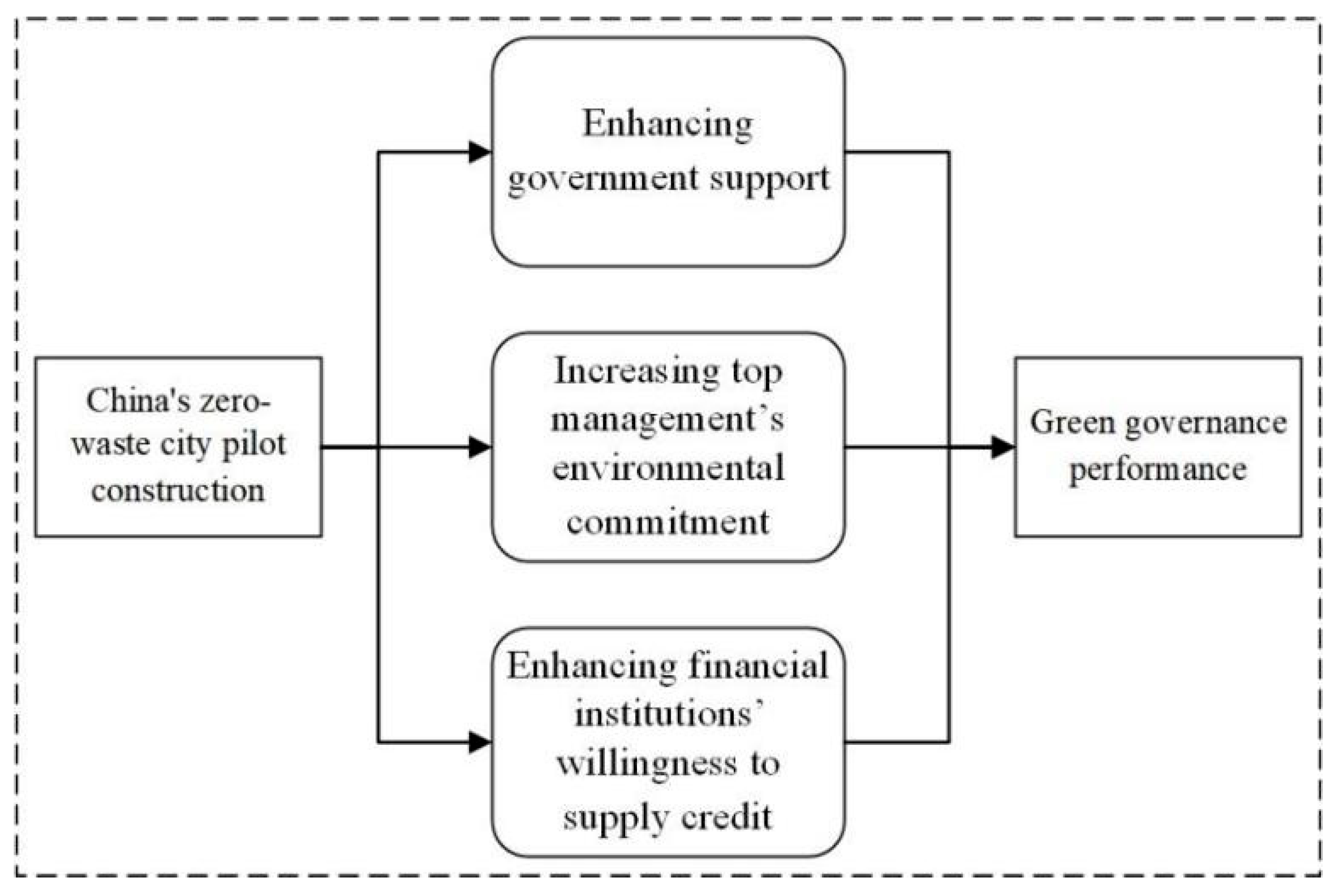
Figure 1 illustrates the analytical framework and mechanism pathways of this study.
4. Materials and Methods
4.1. Sample Selection
This study uses panel data from Chinese A-share listed companies, spanning 2009 to 2023, to investigate the impact of the ZWCP policy on corporate GGP. The empirical analysis in this study was conducted using Stata 18. After applying the necessary filters, the final sample contains 4170 firms and a total of 32,623 firm-year observations. The broad coverage and representativeness of this sample provide a reliable foundation for examining how the policy influences firms’ environmental governance practices.
To reduce potential bias in the results, we further defined the sample as follows. We only retained the companies that were listed on the A-share market for the entire period under investigation and published full financial information; companies with incomplete or unreliable financial information were excluded. Firms that experienced significant restructurings, mergers & acquisitions, delistings, etc., were also excluded because these may cause structural breaks or other irregularities in the data that could bias the results. Furthermore, we deleted all firm-year observations that were missing with respect to the respective variables.
Finally, the sampled companies appear to be sufficiently diverse in terms of industry and firm characteristics. That is, we could find manufacturing, service, energy, and other types of companies. In terms of size, we could find small, medium, and large companies as reflected in market capitalization and total assets, which ensures that the analyzed ZWCP policy exerts different impacts on companies with different strength and market positions. Such heterogeneity enables the external validity of our findings and reveals possible implications of the ZWCP policy on corporate green governance in China.
4.1.1. Dependent Variable
This study uses corporate green governance performance as the dependent variable. In the context of this paper, GGP is intended to capture a firm’s overall environmental governance status by jointly considering positive environmental practices and negative environmental events. Rather than focusing on a single dimension such as pollution emissions, green innovation, or environmental investment, this measure emphasizes whether firms have established and maintained a relatively balanced set of environmental governance arrangements and outcomes.
To construct GGP, this study follows the Janis–Fadner coefficient method. Specifically, the positive score (
p) is the sum of four binary indicators, including whether the firm has obtained ISO 14001:2015 certification [
42], received environmental honors, passed green audits, and continuously controlled pollutant emissions. The negative score (
q) is the sum of three adverse environmental events, including environmental violations, environmental accidents, and environmental complaints. The index is calculated as follows:
where
p represents the corporate’s positive score,
q represents the negative score, and
r denotes the absolute difference between
p and
q, calculated as
r = p + |q|. GGP values range from −1 to 1, with scores closer to 1 indicating superior green governance performance and scores closer to −1 reflecting significant deficiencies. This measurement method offers several advantages. A higher value indicates that positive environmental governance practices dominate negative environmental events, whereas a lower value indicates the opposite. When positive signals increase or adverse events decrease, the index rises monotonically; conversely, when negative events accumulate or positive practices weaken, the index declines. Therefore, the measure is sensitive not only to the direction of change in environmental governance, but also to the relative balance between “good” and “bad” environmental signals.
The use of the Janis–Fadner coefficient is well suited to the present study for three reasons. First, the Zero-Waste City Pilot affects firms through multiple dimensions of environmental governance, including environmental certification, management practices, compliance performance, and adverse environmental events. A composite index is therefore more appropriate than any single indicator for capturing the overall governance effect of the policy. Second, the underlying items are disclosed in a relatively standardized dichotomous form in firm-level databases and annual reports. This coding approach enhances cross-firm and intertemporal comparability and helps avoid distortions arising from heterogeneous disclosure styles or reporting conventions. Third, the Janis–Fadner coefficient incorporates both positive and negative environmental signals into a unified and normalized framework, thereby reflecting the relative dominance of favorable versus unfavorable governance outcomes. This feature makes it particularly suitable for panel-data analysis of corporate green governance performance across firms and over time.
In addition, the Janis–Fadner coefficient has been widely used in studies that evaluate the balance between positive and negative information, and it is especially appropriate when the core objective is to identify firms’ overall governance orientation rather than a single environmental outcome. In the context of this paper, the index provides a concise, transparent, and operationally consistent measure of corporate green governance performance. To further demonstrate the robustness of the main findings, this paper also employs alternative proxy variables in subsequent robustness tests. The results remain qualitatively unchanged, which further confirms the validity of the GGP measure adopted in this study.
4.1.2. Independent Variable
This study employs the ZWCP policy as the core independent variable and examines its impact on corporate GGP. The institutional background of the policy is as follows. In December 2018, the General Office of the State Council issued the Work Plan for the Construction of Pilot Zero-Waste Cities, which formally launched China’s national pilot program for zero-waste city construction. The program was designed to be implemented in stages so as to allow for gradual exploration, policy experimentation, and experience accumulation. In April 2019, the Ministry of Ecology and Environment announced the first batch of pilot areas, including 11 cities—Shenzhen, Baotou, Tongling, Weihai, the main urban area of Chongqing, Shaoxing, Sanya, Xuchang, Xuzhou, Panjin, and Xining—as well as 5 special areas, such as Xiong’an New Area and other policy demonstration zones. These pilot areas officially entered the implementation stage after submitting and approving their local implementation plans. During the subsequent policy process, the zero-waste city initiative was further extended and promoted under the broader national agenda of green development and circular economy transition.
The ZWCP focuses on the whole life cycle of solid-waste management. Its major policy tasks include source reduction through cleaner production and green design, resource utilization and recycling, safe disposal with reduced landfill dependence, and the strengthening of institutional arrangements such as extended producer responsibility, green finance support, performance evaluation, and regulatory enforcement against illegal dumping. In essence, the program aims to build an integrated system of institutions, technologies, markets, and supervision in order to reduce solid-waste generation at source, increase recycling and reuse, and minimize the environmental risks associated with waste disposal. These measures jointly provide the policy foundation through which the ZWCP can affect firms’ environmental behavior and green governance performance.
An important issue is whether the selection of pilot cities was random. In practice, pilot areas were not selected through purely random assignment. Instead, pilot inclusion reflected a combination of local government willingness, prior work foundation, policy representativeness, and expected implementation effectiveness. In other words, the pilot program was policy-guided and selective rather than mechanically random. Therefore, the empirical strategy in this paper does not rely on strict exogeneity in the sense of random assignment. Rather, it treats the ZWCP as a quasi-natural experiment and identifies its effect through the staggered rollout of the policy, while further alleviating potential selection bias through firm fixed effects, year fixed effects, control variables, and multiple robustness checks.
To capture the policy effect, this study constructs a dummy variable for ZWCP. It takes the value of 1 for firms located in pilot cities or pilot areas from the year in which the policy became effective in that location, and 0 otherwise. This coding incorporates both regional and temporal variation in policy implementation and provides the basis for the staggered DID design used in this paper [
43].
4.1.3. Control Variables
To better isolate the effect of the ZWCP policy on corporate GGP, the analysis includes a set of control variables that account for key firm-level characteristics likely to influence GGP. These controls help address potential confounding factors related to financial condition, operational scale, growth prospects, managerial incentives, and asset structure. The selected controls are as follows: Leverage (Lev) is measured as total liabilities divided by total assets, reflecting the firm’s debt burden and financial risk. Cash flow from operations (CFO) is net operating cash flow scaled by total assets, capturing short-term liquidity and operational health. Growth (Growth) is the annual growth rate of operating revenue, indicating the firm’s expansion potential and market opportunities. Return on assets from the prior period (ROA) is net profit divided by total assets, serving as a proxy for past profitability. Firm age (lnage) is the natural logarithm of the number of years since the company’s listing, which reflects accumulated experience and maturity. Firm size (Size) is the natural logarithm of total assets, controlling for scale differences that may affect resource availability and governance practices. Managerial shareholding (Share) is the proportion of shares held by top executives, capturing alignment of interests and internal governance incentives. Finally, asset tangibility (Tang) is the ratio of fixed assets to total assets, indicating capital intensity and the proportion of less liquid assets. By incorporating these variables, the model reduces the risk that observed changes in GGP are driven by differences in financial health, size, growth trajectory, or other structural factors rather than the ZWCP policy itself. This comprehensive set of controls enhances the reliability of the causal inferences drawn from the analysis.
4.2. Model Construction
To analyze how the ZWCP policy affects corporate GGP, this study adopts the standard DID approach, which is widely applied in policy evaluation research [
44]. In order to strengthen the reliability and precision of the estimates, we use a two-way fixed effects specification that accounts for unobserved firm-specific characteristics as well as common time-varying factors that might otherwise confound the results [
45]. Drawing on these established methods, the analysis employs a staggered DID framework with two-way fixed effects to accommodate the gradual rollout of the policy across cities and years. The specific model is presented as follows:
In this equation, the subscripts j, i, and t represent city, corporate, and year, respectively. The dependent variable denotes corporate green governance performance, while the independent variable represents the policy shock, which includes both temporal and regional dimensions, equivalent to the interaction term in a traditional DID model. To control for heterogeneity at the corporate level, a series of control variables are incorporated. Furthermore, to account for unobservable corporate fixed characteristics and time-varying macroeconomic environments, corporate fixed effects and time fixed effects are included, and represents a random error term. In estimation model (2), the coefficient of interest, , quantifies the impact of the ZWCP policy on GGP, providing insights into how policy interventions drive corporate green governance transitions.
5. Results and Discussion
5.1. Descriptive Statistics
Table 1 Descriptive statistics of the main variables. Mean Std. Dev. Min. Max.Dependent variable GGP 0.603 0.450 −1.000 1.000. The large variation suggests that there is considerable heterogeneity in how firms perform on green governance in the sample, and therefore offers a robust empirical basis to investigate the impact of ZWCP policy. Policy dummy ZWCP 0.081 0.273 0.000 1.000. Summary statistics of control variables are generally consistent with what has been documented in previous studies using similar Chinese listed-firm data, and thus adds to the robustness of the Chinese sample.
5.2. Baseline Results
This study employs econometric model (2) to assess the direct impact of the ZWCP policy on GGP.
Table 2 presents the baseline regression results. In Column (2), which includes the full set of control variables, the coefficient on ZWCP is 0.0411 and statistically significant at the 1% level. This indicates that the implementation of the Zero-Waste City Pilot leads to a significant improvement in corporate green governance performance (GGP). Considering that GGP is a composite index ranging from −1 to 1 that balances positive environmental actions against negative events, such an increase implies that treated firms experience a noticeable shift toward stronger environmental management systems, better regulatory compliance, and fewer environmental incidents. For an average listed firm, this enhancement can translate into improved stakeholder relations, reduced environmental penalties, easier access to green credit, and enhanced long-term reputation and competitiveness in an increasingly environmentally conscious market.
In addition to statistical significance, the estimated coefficient is also economically meaningful. The coefficient of 0.0411 suggests that, on average, the implementation of ZWCP increases GGP by about 0.041. Given that the sample mean of GGP is approximately 0.603, this corresponds to an increase of about 6.8% relative to the average level. In absolute terms, the policy raises the GGP index by around 0.025 when evaluated against the sample mean, indicating a non-negligible improvement in firms’ green governance performance. This result suggests that the ZWCP policy does not merely produce a statistically detectable effect, but also generates a meaningful improvement in firms’ environmental management behavior. Overall, the baseline regressions provide consistent support for a positive effect of ZWCP on corporate GGP and lay the empirical foundation for the subsequent robustness, mechanism, and heterogeneity analyses.
5.3. Robustness Test
5.3.1. Validity Check of the Staggered DID Model
- (1)
Parallel Trend Test
To assess whether the effects of the ZWCP policy are influenced by other factors, a parallel trend test was performed. The parallel trend test aims to evaluate whether the GGP of the treatment and control groups exhibited similar trends before the policy implementation. If these trends are consistent pre-implementation, any observed post-implementation effects can be attributed to the policy rather than external factors. Following [
46], this study constructs the following model for the parallel trend test:
where
represents the implementation status of the ZWCP policy, while
denotes the time dummy variable, which takes the value of 1 when year t is n years before or after the ZWCP policy implementation in the corresponding region, and
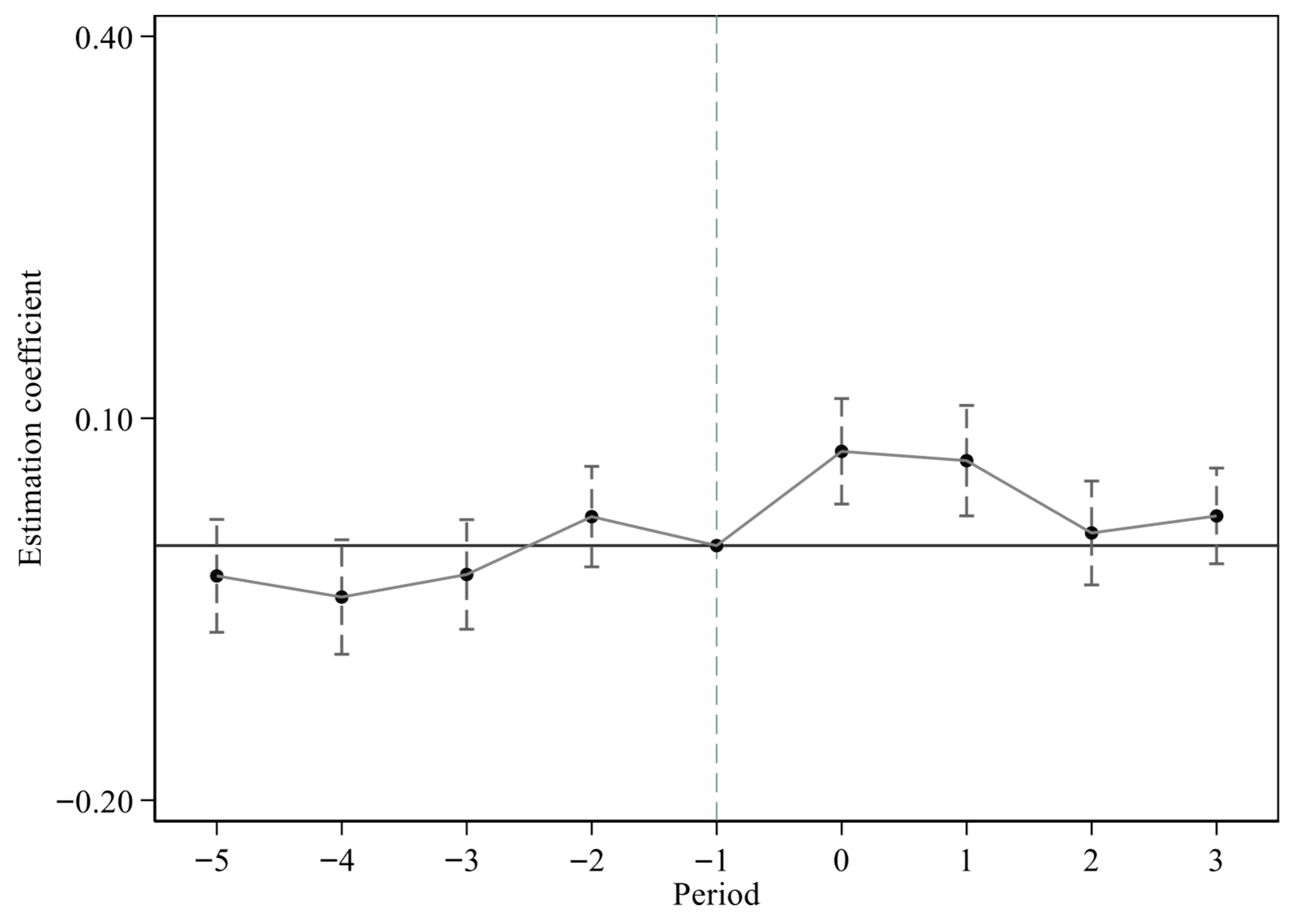
takes the value of 0 otherwise. The time window is set to (−5, 2), with the fifth year before implementation serving as the baseline for comparison. The results, depicted in
Figure 2, reveal that pre-implementation GGP trends in the treatment and control groups were consistent, with no significant differences. Only after the ZWCP policy implementation did changes in GGP become significantly different from zero, validating the effectiveness of the policy’s impact on GGP. Specifically, during the pre-policy periods, regression coefficients were not significantly different from zero, and the 95% confidence intervals included zero, indicating no significant trend differences. However, post-implementation, changes in GGP were significantly different from zero. These findings confirm that the policy’s effects are both statistically significant and consistent with the assumptions of the DID model.
To complement the visual inspection in
Figure 2, this study further conducts formal joint significance tests for the coefficients in the event-study specification. Specifically, the coefficients on all pre-treatment leads are jointly tested for equality to zero. The results show that the pre-treatment coefficients are jointly insignificant (F = 1.10,
p = 0.2941), indicating that there is no systematic difference in the evolution of GGP between the treatment and control groups prior to policy implementation. This finding provides formal statistical support for the parallel trends assumption. By contrast, the coefficients for the contemporaneous and post-treatment periods are jointly significant (F = 9.26,
p = 0.0024), suggesting that the policy generated a statistically significant change in firms’ green governance performance after implementation. Overall, the evidence from both the dynamic coefficients and the joint significance tests supports the validity of the DID identification strategy.
- (2)
Heterogeneous treatment effects
Because the ZWCP policy was rolled out gradually across different cities and at different times, firms experienced the treatment at varying points, which can lead to heterogeneous responses depending on region and timing. This kind of variation might influence the reliability of the baseline estimates, so further checks are warranted. To handle this staggered timing properly, the analysis uses a staggered difference-in-differences framework that accounts for differences in treatment onset. This approach is well suited to policies implemented in phases, as it directly addresses timing heterogeneity [
47]. Unlike a one-time nationwide rollout, ZWCP began as pilots and expanded step by step, creating structural shifts between treated and control groups over the sample period [
48]. By allowing for dynamic treatment effects, the staggered DID method improves on standard DID and enables a more granular look at how impacts differ by entry cohort and comparison group.
The gradual rollout also means that the composition of treatment and control groups evolves over time, which could plausibly introduce bias into simpler estimates. Given that the significant empirical evidence suggests that staggered adoption may well distort standard estimates, we apply the Bacon decomposition to break down the overall DID coefficient into its key component parts. Moreover, this approach might indicate that combining the decomposition with subgroup regressions could provide additional robustness. Thus, findings may show the combination yields clearer results. However, results may support conclusions about policy effects across treatment timings.
The decomposition results could indicate that the significant empirical findings summarized in
Table 3 reveal an overall Diff-in-Diff estimate of 0.035 for the ZWCP policy, suggesting that these critical analytical outcomes demonstrate a meaningful positive effect on GGP, consistent with important baseline regression findings. Moreover, the Earlier T vs. Later C group may suggest that the weight of 0.019 and the average difference estimate of 0.014 indicate important performance differences before and after implementation. In light of the policy’s early phase, results might indicate minimal effects had fully emerged across enterprises. However, findings may show the Later T vs. Earlier C group reflects a weight of 0.006, with results indicating effects had not materialized. Thus, data may suggest policy outcomes remained limited in certain enterprises during initial stages. Given that the T vs. Never treated group exhibits the most significant performance differences, the substantial weight of 0.950 and the important average difference estimate of 0.037 could reasonably demonstrate that these critical empirical findings reveal the policy’s meaningful incremental effect on green governance, consistent with significant theoretical expectations surrounding environmental compliance outcomes. Furthermore, the T vs. Already treated group may suggest that the weight of 0.025 and the difference of −0.031 indicate important marginal constraints on outcomes. Nevertheless, evidence might indicate that enterprises previously adhering to similar policies had already adopted relevant environmental measures. Therefore, results may show prior compliance could limit additional effects. Additionally, findings may indicate the overall evidence supports these key analytical conclusions.
The significant empirical analysis could indicate that these critical diagnostic results, examined through the approach of De Chaisemartin and D’Haultfoeuille and presented in
Table 4, may well suggest that the evidence supports robust findings [
49]. Moreover, the results may suggest that 2359 firms (91.2%) demonstrate positive treatment effects, while important evidence shows that 228 firms (8.8%) indicate negative effects. Furthermore, findings may indicate the total weight sums to 1.000. However, data might show no substantial imbalance exists in decomposition. Thus, evidence may support robustness of the estimates.
Taken together, these checks confirm that the ZWCP policy exerts a clear positive overall effect on GGP while revealing meaningful heterogeneity across firm groups and treatment cohorts. The pattern suggests that policy design and rollout should pay close attention to firms’ starting levels of green governance to achieve the strongest possible impact. More broadly, the evidence provides useful guidance for crafting and scaling similar place-based green policies in the future.
5.3.2. Placebo Test
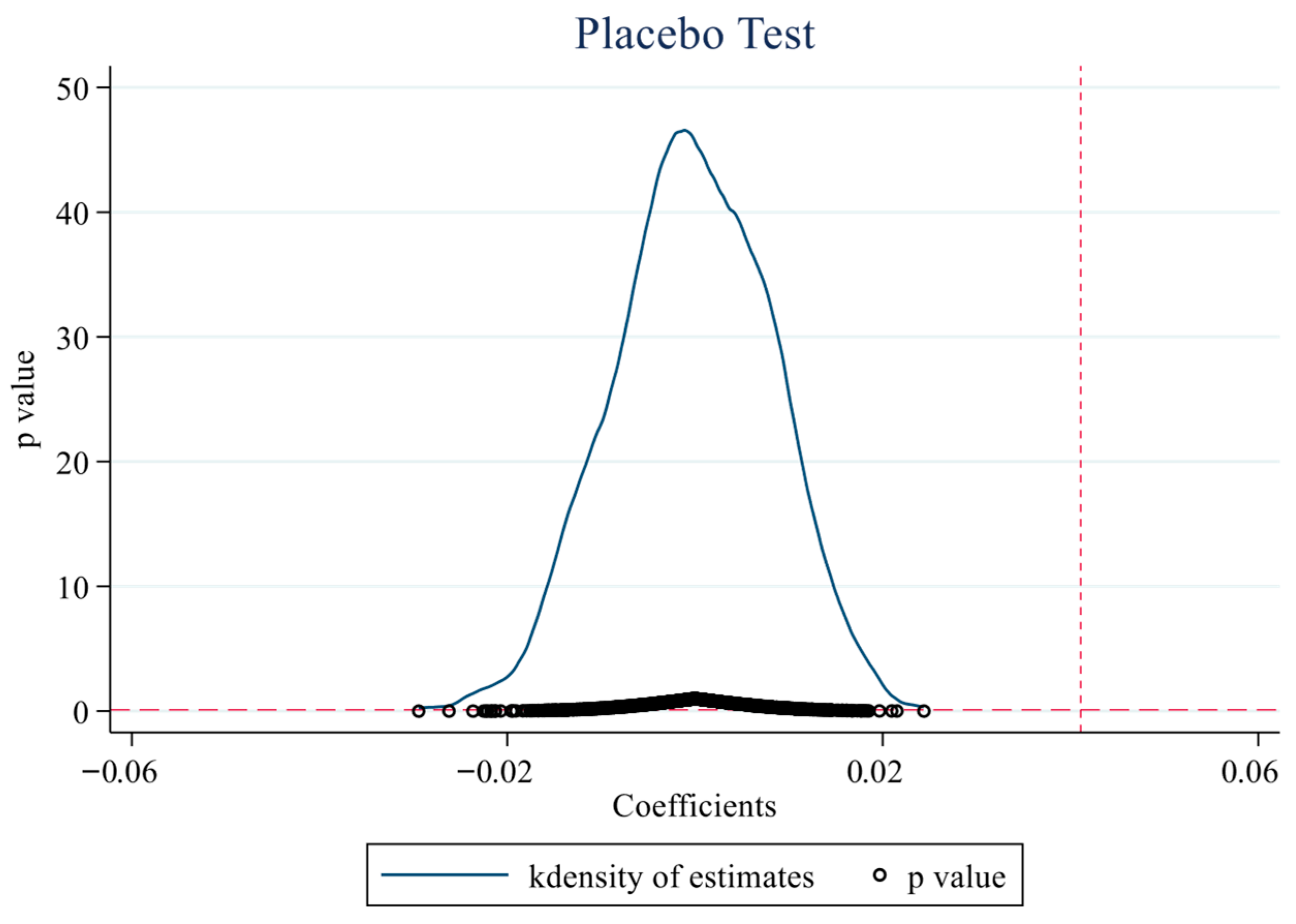
To provide an additional test of the validity of the causal relationship between ZWCP and GGP, we conduct a placebo test of implementation randomness by randomly splitting the fake policy implementation dates and forming a pretend treatment group. We then run main regressions using this pretend treatment indicator. If the placebo policy is insignificant, we can exclude the possibility that real results are due to random patterns or data mass effects.
The results are displayed in
Figure 3. The coefficients from the placebo regressions are clustered around zero. For the great majority of them, the corresponding
p-values are high. This means that the randomly chosen “policy” has no systematic impact on GGP. In contrast, the true ZWCP coefficient (highlighted with a red dashed line) stands away from zero and is clearly in the statistically significant area. The clear difference between the placebo and the true estimates confirms the genuineness of the policy impact that we have observed, and excludes the possibility that random factors could have influenced our results.
Overall, the placebo exercise delivers reassuring evidence that the main findings rest on solid causal ground. It effectively rules out spurious correlations that might arise from random assignment issues or hidden data patterns, thereby boosting confidence in the empirical results. These checks reinforce the conclusion that ZWCP has a meaningful and reliable positive effect on corporate green governance performance.
5.3.3. Endogeneity Analysis
To further alleviate potential endogeneity concerns, this study employs a two-stage least squares (2SLS) approach using river density as an instrumental variable for ZWCP policy exposure. The relevance of this instrument lies in the policy design of the Zero-Waste City Pilot. Because the program emphasizes solid-waste management, ecological protection, and resource recycling, areas with denser river networks generally face stronger ecological governance demands and greater pressure for environmental protection, making them more likely to be included in the pilot program or to promote related policy implementation earlier.
At the same time, the identifying assumption is that, conditional on firm fixed effects, year fixed effects, and other control variables, river density affects corporate green governance performance mainly through its effect on ZWCP policy exposure rather than through direct firm-level governance channels. A potential concern is that river density may also be correlated with regional industrial structure or environmental pressure. To mitigate this concern, the empirical specification controls for a rich set of firm-level characteristics and fixed effects, thereby absorbing time-invariant regional heterogeneity and common macro shocks. In addition, the IV results are interpreted as supplementary evidence to the baseline DID estimates rather than as the sole source of identification.
The 2SLS results are reported in
Table 5. In the first stage, river density (lniv) is positively and significantly associated with ZWCP implementation (coefficient = 0.0217,
p < 0.01). The first-stage F-statistic is 55.89, and the Kleibergen–Paap rk Wald F statistic is 363.779, both indicating that weak-instrument concerns are unlikely to drive the results. In the second stage, the coefficient on the instrumented ZWCP variable remains positive and statistically significant at the 5% level, suggesting that the main conclusion is robust after accounting for potential endogeneity. Overall, the IV estimates are consistent with the baseline findings and provide additional support for the conclusion that the Zero-Waste City Pilot improves corporate green governance performance.
5.3.4. Replacing Clustered Standard Errors
To examine how sensitive our main results are to the chosen approach to accounting for possible correlation in the errors, we reestimate the baseline model using alternative clustering levels for the standard errors: at the province level, at the province-year level, and at the industry level. These different levels of grouping attempt to control for any possible cross-sectional or temporal dependence within provinces, within province-year cells, or across firms in the same industry that may bias the standard errors.
The results are presented in
Table 6. Column (1) shows estimates with standard errors clustered at the provincial level, Column (2) uses province-year clustering, and Column (3) clusters at the industry level. In all three specifications, the coefficient on ZWCP stays positive and statistically significant. The fact that the sign, magnitude, and significance remain stable across these clustering choices indicates that the policy’s positive effect on GGP is not sensitive to how we handle within-group dependence. This consistency indicates that the policy’s positive effect on GGP is robust to changes in the clustering approach. Notably, clustering at the provincial-year level accounts for temporal correlations within regions, while clustering at the industry level mitigates the influence of common shocks across industries. While variations in clustering methods may slightly alter the standard errors, the direction and statistical significance of the policy effect remain unchanged.
These findings confirm the robustness of the ZWCP policy’s positive impact on GGP across varying clustering settings. Thus, the study’s conclusions are not dependent on a specific clustering approach, highlighting the reliability and reproducibility of the analysis. This strengthens the credibility of the research findings and provides robust empirical support for the effectiveness of the ZWCP policy in enhancing GGP.
5.3.5. PSM-DID
In order to provide more evidence to support the robustness of the effect of ZWCP policy on GGP, this study employs Propensity Score Matching (PSM) and Difference-in-Differences (DID) methods, which can be referred to as PSM-DID in this study. PSM method reduces the biases caused by systematic differences between treated group and control group by matching covariates. DID method identifies the net effect of the ZWCP policy by exploiting the variations before and after policy implementation. The study uses two methods complementing each other to identify the policy effects more accurately and improve the credibility of causal inferences.
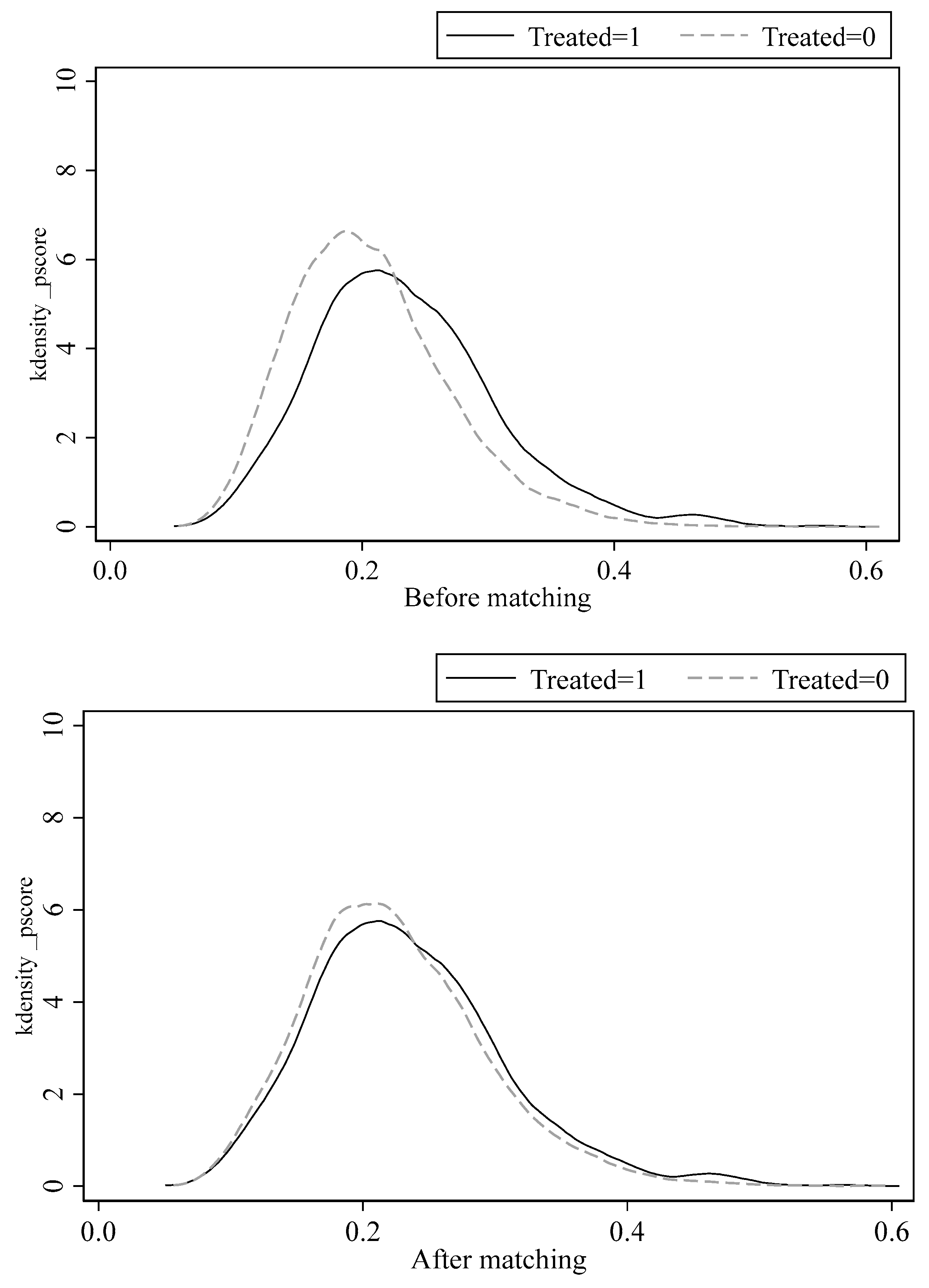
In the matching step, we employ nearest-neighbor matching at a 1:2 ratio, each observed treated observation is matched to the two untreated observations most similar according to the propensity score. This keeps a sufficiently large sample size after matching on balance. We also examine the kernel density plots and a standardized bias table (reported in
Appendix A) to assess matching quality. Indeed, the kernel density plots reveal that the covariate distributions for the treated and control populations are much closer together after matching. Moreover, the bias table shows a sharp decline in standardized differences, and all remaining biases are maintained below 10%, satisfying conventional balance requirements.
The DID regression on the matched sample is presented in
Table 7. The coefficient on ZWCP is 0.0411 and remains statistically significant at the 1% level. This estimate indicates that, even in a sample where observable characteristics are closely balanced between treated and control firms, the policy still leads to a meaningful increase in corporate green governance performance—consistent with the baseline findings.
Overall, applying nearest-neighbor 1:2 matching followed by DID effectively addresses concerns about selection on observables. The results reinforce that the positive ZWCP effect on GGP is not driven by pre-existing differences between groups and holds up in the more comparable matched sample. These checks add further credibility to the causal interpretation and provide solid empirical support for the policy’s role in improving firm-level green governance.
5.3.6. Excluding Interference from Other Policies
To make sure the estimated effect of ZWCP on GGP is not simply picking up the influence of other concurrent environmental or economic policies, we add several potentially overlapping policy indicators to the baseline regression. Specifically, we include four additional dummies: the Free Trade Zone Policy (FTZP), the Carbon Emission Trading Policy (CETP), the Central Environmental Protection Supervision Policy (CEPSP), and the New Energy Demonstration City Policy (NEDCP). The sequential addition of these variables allows the study to evaluate the stability of the ZWCP policy’s effect under multiple policy controls.
The results are reported in
Table 8. Columns (1) through (4) each include one of the four additional policies alongside ZWCP and the standard controls. In every case, the coefficient on ZWCP stays positive and significant at the 1% level, showing that the policy’s positive association with GGP holds up even after accounting for each of these other initiatives individually. In Column (5), all four policy variables are entered simultaneously; again, the ZWCP coefficient remains positive and retains its statistical significance.
This exercise helps separate the independent contribution of ZWCP from the effects of other relevant policies operating during the same period. The consistent pattern across specifications provides stronger reassurance that the main result reflects a genuine policy impact rather than confounding from overlapping regulations. At the same time, the findings remind us how important it is to consider policy interactions in this kind of analysis and they highlight the distinct role that ZWCP appears to play in improving corporate green governance. These insights are valuable for designing and coordinating green policies to maximize their overall effectiveness.
5.3.7. Replacing the Dependent Variable
To further enhance the credibility of the findings, this study replaces the baseline dependent variable with an alternative indicator of firms’ green governance performance. Specifically, we use the annual mean Huazheng ESG score (ESG_Score_mean) as a proxy variable. Compared with the Janis–Fadner-based GGP index, the ESG score captures a broader dimension of firms’ environmental, social, and governance practices and is widely used in related empirical studies. If the estimated policy effect remains significant after replacing the dependent variable, this would indicate that the positive impact of ZWCP is not sensitive to the specific measurement of green governance performance.
The results are reported in Column (1) of
Table 9. The coefficient on ZWCP remains positive and statistically significant at the 1% level, suggesting that the implementation of the Zero-Waste City Pilot significantly improves firms’ ESG-related performance as well. This finding is consistent with the baseline results and provides additional support for the robustness of the main conclusion.
5.3.8. Adding Province-by-Year Fixed Effects
To further control for time-varying unobserved provincial factors, this study introduces province-by-year interaction fixed effects into the baseline regression. This specification more strictly absorbs province-level shocks that vary over time, such as regional environmental campaigns, macroeconomic fluctuations, industrial restructuring, or province-specific policy adjustments, thereby alleviating omitted-variable concerns more comprehensively.
Column (2) of
Table 9 reports the results. After controlling for province-by-year fixed effects, the coefficient on ZWCP remains positive and statistically significant at the 5% level. This indicates that the main finding is not driven by unobserved provincial shocks that evolve over time and further strengthens the causal interpretation of the baseline estimates.
5.3.9. Alternative Estimators Robust to Heterogeneous Treatment Effects
Because the ZWCP policy was implemented in a staggered manner across cities and years, treatment effects may vary across cohorts and over time. Although the baseline analysis has already reported Goodman-Bacon decomposition and heterogeneous treatment-effect diagnostics, recent econometric studies suggest that it is also important to verify the results using estimators that are robust to heterogeneous treatment effects. This helps ensure that the positive effect identified in the two-way fixed-effects specification is not driven by potential biases arising from treatment-effect heterogeneity.
Accordingly, this study re-estimates the policy effect using the methods proposed in the literature [
50,
51]. These approaches are specifically designed for staggered-adoption settings and provide a more robust assessment when treatment effects differ across groups or periods. The results are presented in
Table 10. In both specifications, the coefficient on ZWCP remains positive and statistically significant. Specifically, the estimated coefficient is 0.0402 under the Sun and Abraham approach and 0.0579 under the Borusyak et al. [
51] approach. These findings are consistent with the baseline DID results, indicating that the positive effect of ZWCP on corporate green governance performance is robust to alternative estimators designed for heterogeneous treatment effects.
Overall, the series of robustness checks conducted above substantially strengthens the validity of our main findings. The parallel trends test and event-study analysis confirm that the treatment and control groups followed similar trends prior to the ZWCP implementation, supporting the key identifying assumption of the DID strategy. The Bacon decomposition and heterogeneous treatment-effect diagnostics suggest that the baseline estimates are not driven by problematic weighting in the staggered DID setting. The placebo test rules out the possibility that our estimates are due to random chance or unobserved time trends. The instrumental variable approach using river density further alleviates endogeneity concerns arising from non-random selection of pilot cities. Alternative clustering of standard errors and the PSM-DID method confirm that the results are robust to different specifications of variance and sample selection bias. Controlling for other major environmental policies shows that the ZWCP effect remains significant and is not confounded by concurrent policy shocks. In addition, replacing the dependent variable with the Huazheng ESG score, introducing province-by-year fixed effects, and applying heterogeneous-treatment-effect-robust estimators all yield qualitatively consistent results. Collectively, these extensive robustness checks indicate that the positive impact of the Zero-Waste City Pilot on corporate green governance performance is highly robust and causally credible, rather than an artifact of model specification, sample selection, omitted variables, or estimator choice.
5.4. Mechanism Analysis
To investigate how the ZWCP policy enhances corporate GGP, this study examines three key mechanisms: government support (GS), executives’ environmental awareness (EEA), and credit supply willingness (CSW). Detailed measurement methods for these indicators are provided, and the regression results are presented in
Table 11.
Government support emerges as one important pathway. We measure it using the intensity of environmental subsidies, calculated as the amount of environmental subsidies a firm receives in a given year divided by its total assets. This variable captures the direct financial assistance available for green activities and reflects the policy’s role in providing economic incentives for cleaner production and governance. In Column (1) of
Table 11, the coefficient on ZWCP is 0.0059 and significant at the 5% level. The result suggests that the policy noticeably increases the environmental subsidies firms receive. By easing financial burdens through these subsidies, ZWCP encourages greater investment in green technologies and sustainable operations, which in turn lifts overall GGP.
Another key channel is executives’ environmental awareness. We proxy this using the frequency of environment-related terms (such as “green,” “environmental protection,” “sustainability,” and similar phrases) appearing in the firm’s annual reports. Text analysis is used to identify and count these keywords, and the measure is expressed as their proportion of the total word count in the report. As shown in Column (2), the ZWCP coefficient is 0.0555 and significant at the 5% level. This indicates that the policy meaningfully raises the attention executives give to environmental matters. When top management places greater emphasis on these issues, it tends to shift corporate priorities toward stronger green governance practices. The finding is consistent with the mechanism that ZWCP improves GGP by increasing managerial attention to environmental issues.
The third mechanism operates through credit supply willingness. We measure this using the ratio of total loans obtained by the firm to its total assets, which serves as a reasonable indicator of how readily financial institutions are willing to lend. Higher values suggest greater lender confidence in the firm’s creditworthiness, including perceptions of lower environmental risk. Column (3) reports a ZWCP coefficient of 0.0073, significant at the 1% level. The result implies that the policy increases firms’ access to credit, likely because banks view improved green governance as a signal of reduced future risk. Easier financing then relieves liquidity constraints and enables more substantial investments in green initiatives and practices.
In conclusion, the ZWCP policy improves GGP through three critical mechanisms: strengthening government support, enhancing executives’ environmental awareness, and increasing credit supply willingness. These findings validate the transmission pathways of the ZWCP policy effect and offer valuable theoretical and practical insights for the design and evaluation of green policies.
5.5. Heterogeneity Analysis
To explore whether the ZWCP policy affects firms differently depending on their characteristics, this study examines heterogeneity along four dimensions: ownership structure, industry pollution levels, competition intensity, and regulatory stringency. The results are presented in
Table 12.
Looking first at ownership, Columns (1) and (2) present separate estimates for state-owned enterprises (SOEs) and private enterprises (PEs). The policy shows no statistically significant effect on SOEs, but it has a clear positive impact on private firms (coefficient = 0.0642, significant at the 5% level). Private companies appear more responsive, probably because they enjoy greater flexibility in decision-making and are quicker to capitalize on policy incentives, resource support, or market advantages. SOEs, by contrast, may already benefit from substantial government backing and resources, which could dampen the incremental effect of ZWCP.
Next, from the perspective of industry pollution levels, Columns (3) and (4) display the results for high-pollution industries (HP) and non-high-pollution industries (NHP). The results indicate that the ZWCP policy has a more pronounced effect on HP industries (coefficient = 0.0968, significant at the 1% level) compared to NHP industries (coefficient = 0.0431, significant at the 10% level). Firms in HP industries, driven by policy pressures and heightened social scrutiny, are more inclined to adopt proactive green governance measures. Although NHP industries face relatively lower environmental risks, the policy’s guidance still encourages these firms to enhance their green governance practices.
Columns (5) and (6) compare high-intensity competition (HIC) and low-intensity competition (LIC) industries. The policy exerts a positive effect in both groups—coefficient of 0.0586 (p < 0.10) in HIC industries and 0.0460 (p < 0.10) in LIC industries. The direction is consistent regardless of competition level, yet the slightly larger point estimate in more competitive settings suggests that firms in tougher markets may invest more aggressively in green governance to differentiate themselves and protect their position.
Finally, Columns (7) and (8) divide the sample according to the stringency of local environmental regulation—high regulatory intensity (HR) versus low regulatory intensity (LR). The policy impact is stronger in high-regulation environments (coefficient = 0.0784, significant at the 5% level) than in low-regulation ones (coefficient = 0.0456, significant at the 5% level). Tighter oversight appears to amplify the policy’s effectiveness, as firms already under close watch have more to gain (or lose) from compliance and proactive green measures. Still, even in less strictly regulated areas, ZWCP provides noticeable guidance and motivation for better environmental practices.
Taken together, the heterogeneity results show that the ZWCP policy’s influence on GGP varies meaningfully across firm ownership, industry characteristics, and regulatory contexts. Private enterprises, heavily polluting sectors, highly competitive industries, and firms facing stricter regulation tend to experience the largest improvements. These patterns highlight the value of designing and implementing green policies with sensitivity to the diverse conditions firms face, which can help maximize their reach and effectiveness in promoting corporate sustainability.
5.6. Further Analysis
This study investigates the broader impacts of the ZWCP policy, specifically its influence on corporate green innovation capability and long-term sustainability. Green innovation and sustainability are critical pathways for corporates to tackle environmental challenges and achieve successful green transitions. By constructing regression models with green innovation (GI) and sustainable growth rate (SGR) as dependent variables, this study validates the indirect and extended effects of the ZWCP policy. The results are presented in
Table 13.
Starting with green innovation, the results show that the ZWCP policy significantly promotes corporate green innovation activities. The green innovation indicator (GI) is measured as the natural logarithm of the number of green patent applications plus one, reflecting the extent of corporate R&D investments and innovative outcomes in green technologies. In Column 1 of
Table 13, the regression coefficient of ZWCP is 0.0804, statistically significant at the 5% level. This finding suggests that the ZWCP policy, via mechanisms like green subsidies, resource optimization, and market incentives, has significantly driven corporate efforts in green technology innovation. By fostering innovation, companies can more effectively meet policy requirements, reduce environmental footprints, and gain an edge in sustainability-oriented markets, delivering both ecological and economic gains.
Turning to long-term sustainability, the ZWCP policy also appears to strengthen firms’ capacity for sustained growth. The sustainable growth rate (SGR) reflects a company’s ability to grow profitably over time while maintaining efficient asset use and a balanced capital structure. It is calculated following the standard theoretical framework for long-run corporate growth potential. The formula for SGR is as follows:
The higher the SGR value, the stronger the potential for a corporate’s long-term sustainable development. Column 2 of
Table 13 shows that the regression coefficient of the ZWCP policy is 0.0334, significant at the 5% level. This result indicates that the ZWCP policy, by guiding corporates toward accelerated green transformation, enhances their adaptability and competitiveness in green markets, laying a solid foundation for long-term sustainable development. Following policy implementation, corporates demonstrate improved profitability, resource utilization efficiency, and capital management, reflecting enhanced growth potential and stability.
In conclusion, further analysis reveals that the ZWCP policy not only directly improves GGP but also significantly strengthens competitiveness and resilience by fostering green innovation and enhancing sustainable development capacity. These findings offer valuable insights into the comprehensive design and execution of green policies. Future policy efforts should prioritize optimizing support mechanisms to incentivize corporate green innovation and long-term growth, driving breakthroughs in green technology R&D and fostering sustainable development [
52]. Such measures will not only accelerate green transformation at the corporate level but also provide robust support for advancing societal sustainable development [
53].
6. Conclusions
Using a difference-in-differences strategy, this study examines the impact of ZWCP on corporate GGP based on panel data for Chinese A-share listed companies from 2009 to 2023. The results show that the ZWCP significantly improves firms’ GGP. The positive effect is particularly strong among private enterprises, heavily polluting industries, firms in highly competitive markets, and regions with stricter environmental regulations. Mechanism analyses indicate that the policy works through three main channels: enhancing government support, increasing top executives’ environmental awareness, and improving financial institutions’ willingness to supply credit. In addition, the ZWCP also promotes corporate green innovation and long-term sustainable development capacity. These findings provide micro-level support for the Porter Hypothesis in developing economies, showing that well-designed localized waste regulations can generate win–win outcomes for environmental performance and firm competitiveness. They also contribute to the circular economy literature by demonstrating how place-based policies translate macro-level CE objectives into tangible firm-level behavioral changes.
The study offers several policy implications. Governments should continue deepening the Zero-Waste City initiative by strengthening supporting systems such as green subsidies, tax incentives, and green finance instruments, while adapting measures to local conditions. More differentiated policy designs are needed, taking into account firm ownership, industry characteristics, and regional regulatory intensity. For heavily polluting and competitive sectors, stricter standards paired with targeted incentives are recommended, while SMEs require additional technological and financing support. From an international perspective, the ZWCP experience offers valuable lessons for other developing countries advancing circular economy transitions. However, adaptation must consider specific cultural, economic, and political contexts. Countries with stronger market institutions may benefit more from market-based instruments and private-sector leadership, whereas nations with centralized governance systems may find the demonstration-project model more transferable. Selective integration of EU practices, such as eco-design standards and Extended Producer Responsibility, through international cooperation could further enhance policy effectiveness.
Despite its contributions, this study has several limitations. First, the sample is restricted to A-share listed companies, which may limit the generalizability of the findings to unlisted small and medium-sized enterprises that often face more severe resource and financing constraints. Second, although the staggered DID, parallel trend tests, placebo tests, and instrumental variable approaches help mitigate endogeneity concerns, the mechanism tests are essentially based on regression correlations between ZWCP and the mechanism variables. These correlations do not fully establish strict causal chains and may be influenced by unobserved factors or reverse causality. Third, this paper mainly examines the isolated effect of the ZWCP and pays limited attention to its potential interactions or synergistic effects with other concurrent environmental policies. Future research could extend the sample to unlisted firms and SMEs, employ more advanced causal mediation methods or experimental designs to better interpret the correlation results in the mechanism analysis, explore multi-policy interaction frameworks, and use survey-based or more direct measures for mechanism variables to strengthen the robustness of the transmission channel findings.