Based on Equation (2) and the variation in the in-cylinder pressure obtained from the experimental research, the values of the polytropic expansion exponent were calculated for D100 and the blends:
3.1. Results for Medium-High Load Regimes
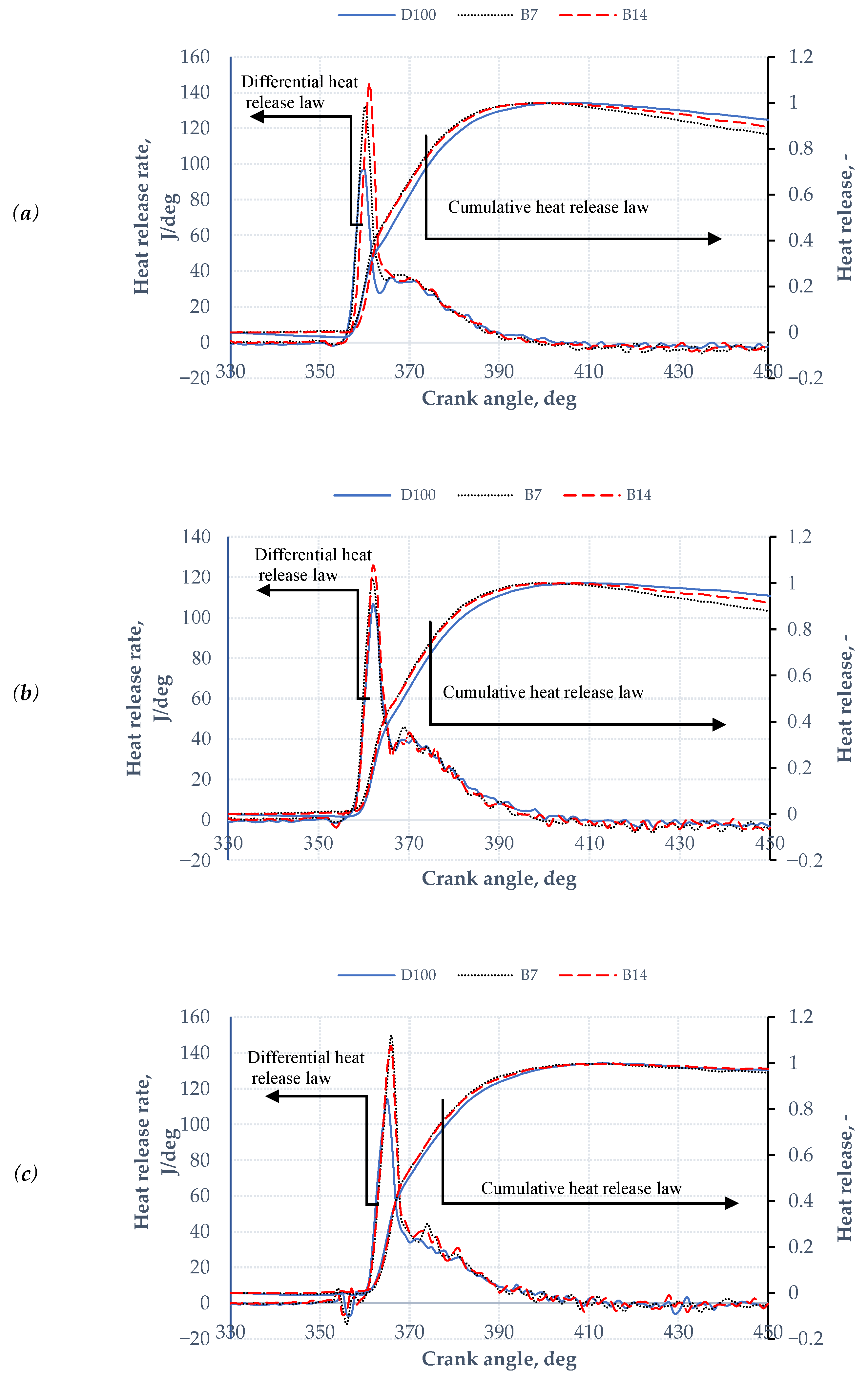
Table 5 summarizes the parameters of the differential and cumulative heat release laws, including the maximum combustion rates for the blends and D100; the crank angle positions of the maximum combustion rates relative to TDC; and the combustion progress at 5%, 10%, 50%, and 90% of the total fuel injected per cycle. The differential and cumulative heat release laws for the tests conducted at a 4.2 bar BMEP are graphically illustrated in
Figure 3.
The heat release characteristics during the combustion process influence not only the engine’s energy efficiency but also the mechanical loading of its components and the noise level. Rapid heat release and high peak heat release rates lead to steep pressure rises and elevated peak pressures within the engine cylinder, resulting in increased mechanical stresses on engine parts and a progressive increase in noise levels. The timing of the maximum heat release rate is also a critical parameter affecting both mechanical loading and engine noise.
It can also be observed that the blends exhibit higher peak heat release rates compared to D100 (
Figure 3). For the engine speeds of 1635 rpm and 1937 rpm and the 4.2 bar BMEP, blend B14 shows the highest peak heat release rate, while at an engine speed of 2239 rpm and the 4.2 bar BMEP, blend B7 reaches the maximum. The higher peak heat release rates of the blends compared to the D100 are a consequence of the longer ignition delay period, caused by the higher density and viscosity of the blends. The difference in peak heat release rates between the blends decreases with increasing engine speed, reaching only 4.2% at the maximum engine speed.
The B7 blend, at 2239 rpm and 4.2 bar BMEP, achieves a higher maximum heat release rate compared to B14 due to the dynamics of the injection system. The injection system of the tested engine is mechanical, and therefore the injection process directly depends on the engine speed.
Taking into consideration the timing of the peak heat release rate, it can be observed that the blends generally reached their maximum heat release rates later than D100 at 1635 rpm and the 4.2 bar BMEP, or, in some cases, simultaneously, which was the case for the B7 blend at engine speeds of 1635 rpm and 1937 rpm and the 4.2 bar BMEP. For all tested fuels, the timing of the peak heat release rate shifted further from TDC as the engine speed increased, meaning that the maximum combustion rate occurred later.
The cumulative heat release law is a combustion process parameter used to assess the impact of combustion on engine cycle efficiency and exhaust emissions. From an efficiency perspective, the crank angle at which 50% of the cycle’s heat is released is considered particularly important.
At a 4.2 bar BMEP, the highest heat release rates during the combustion of the first 5% and 10% of the cycle fuel occurred with blend B7 at engine speeds of 1635 rpm and 1937 rpm and with D100 at an engine speed of 2239 rpm. For the first 50% of the fuel cycle, combustion was slowest for D100 and fastest for B7 across all three tests. The same trend was observed for the combustion of 90% of the cycle fuel. Thus, combustion lasted the longest for D100 and the shortest for B7.
3.2. Results for the Full-Load Regimes
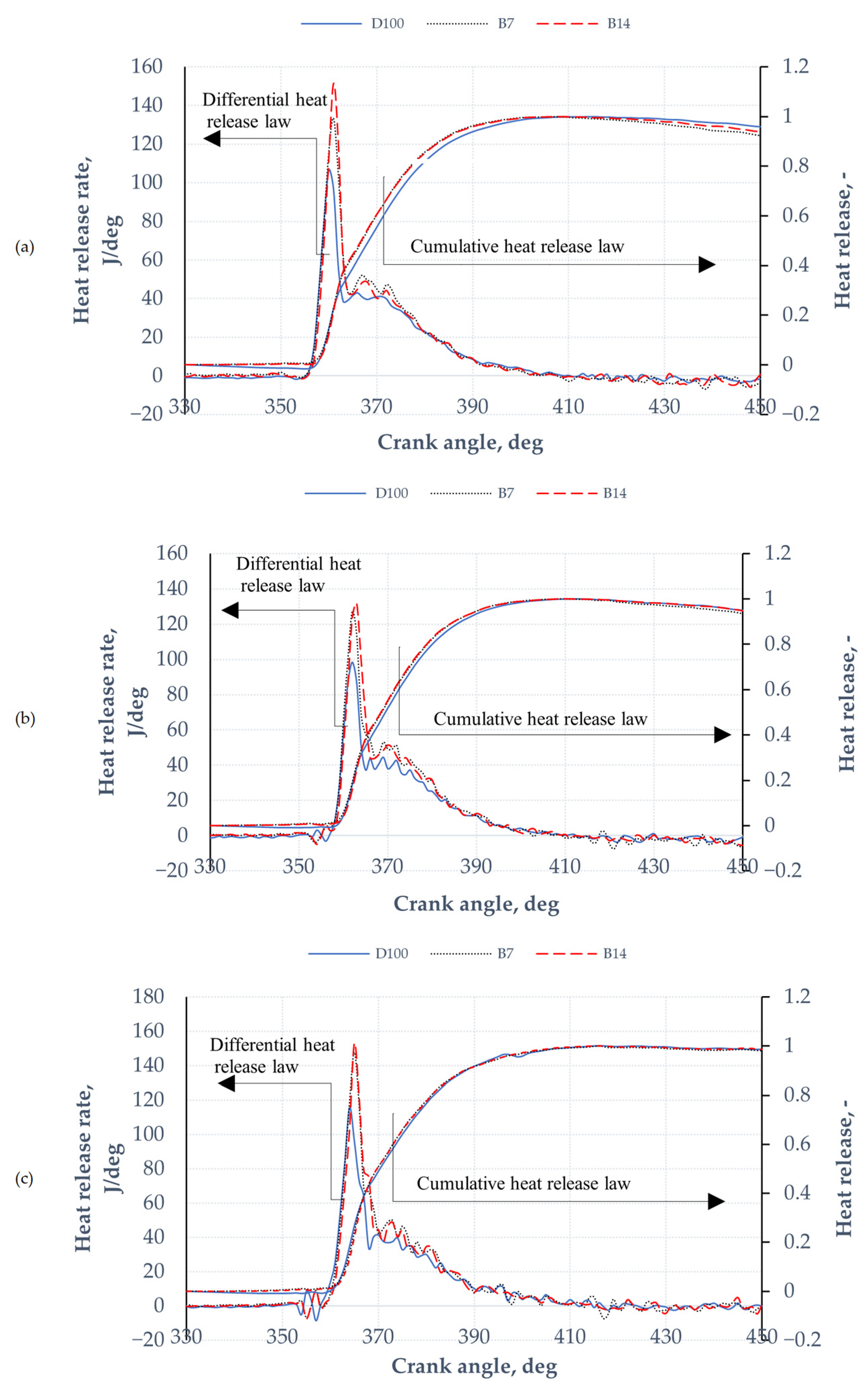
The combustion process parameters, i.e., the heat release laws for full-load regimes that were conducted for a 5.6 bar BMEP, are given in
Table 6, while a graphical representation of the differential and cumulative heat release laws is shown in
Figure 4.
For all three tests, in the cases of using fuel blends, higher maximum heat release rates were achieved compared to D100 (
Figure 3), which is logical. The highest maximum heat release rate was obtained at the highest engine speed test, for the blend with the higher biodiesel content (B14), and it amounted 152.99 kJ·deg
−1.
Furthermore, for each test, the blends reached the maximum heat release rate later than D100, except for the B7 blend at an engine speed of 1937 rpm and a 5.6 bar BMEP, where B7 and D100 simultaneously reached their maximum values at 2 deg.
When observing the integral combustion law, i.e., combustion by phases, it is noticeable that the first 5% and 10% of the cycle fuel quantity burned the fastest in the case of the B7 blend, except in the case of the 2239 rpm engine speed and 5.6 bar BMEP, where D100 had the fastest combustion.
During these phases of the combustion process, fuel injection and mixture formation are still intense. Since the mixture formation process depends on many factors, the behavior of the blends in terms of the combustion rates of the first 5% and 10% of the burned fuel cannot be generalized. For all three tests, 50% of the cycle fuel quantity burned faster when using the blends than when using D100. A higher biodiesel content in the blend corresponds to a faster combustion of 50% of the cycle fuel quantity, or, in some cases, this combustion phase has lasted the same for both blends at an engine speed of 2239 rpm.
The combustion of 90% of the cycle fuel quantity, for all three tests, lasted the longest for D100. It can also be observed that the differences in the combustion duration of 90% of the cycle fuel quantity between B7 and B14 are small and depend on the engine speed.
Finally, it can also be observed that with an increase in the biodiesel share in the blend, the maximum heat release rate increases, which is unfavorable from the standpoint of mechanical loads and engine noise. However, it can be seen that under certain operating conditions, with an increasing biodiesel share, the maximum heat release rate occurs later (during the expansion stroke), which is favorable.
It is also important to note that the center of combustion (50% of the cycle fuel mass) is located closer to TDC in the case of blend combustion than in the case of D100 combustion. The position of the combustion center is one of the influential parameters on the efficiency of the working cycle, i.e., the overall engine efficiency, and it can be concluded that the blends have a more favorable combustion center position than D100.
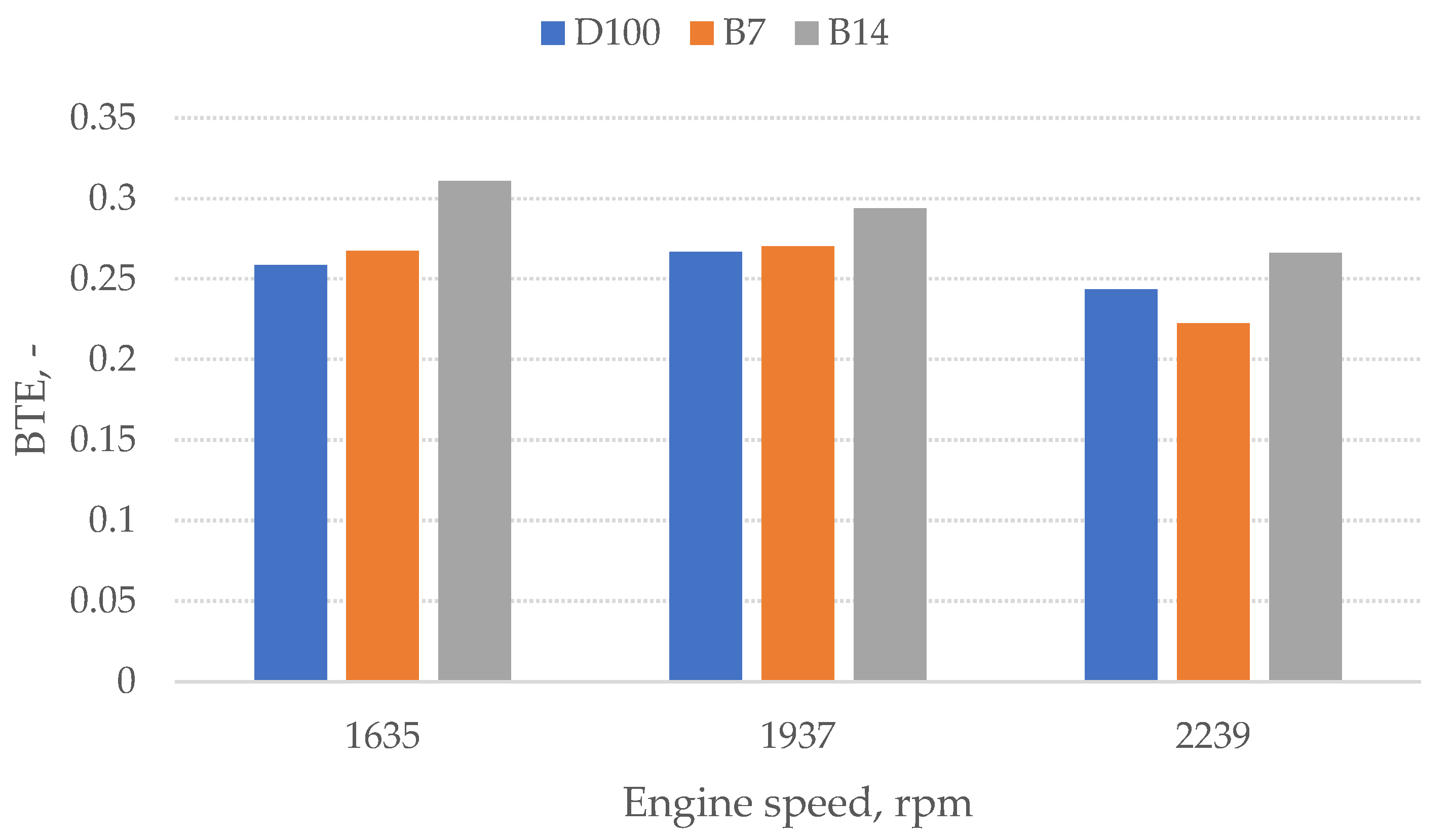
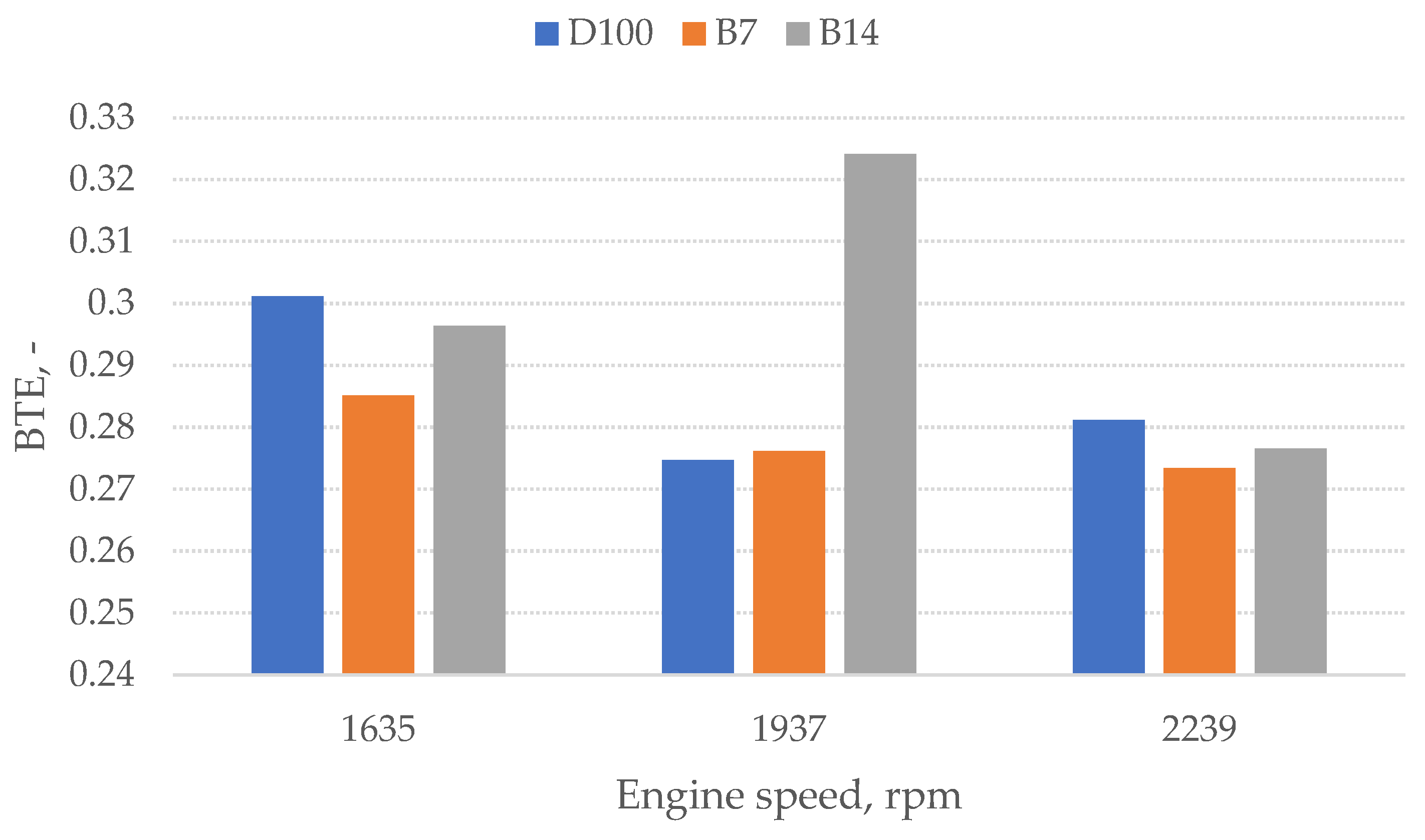
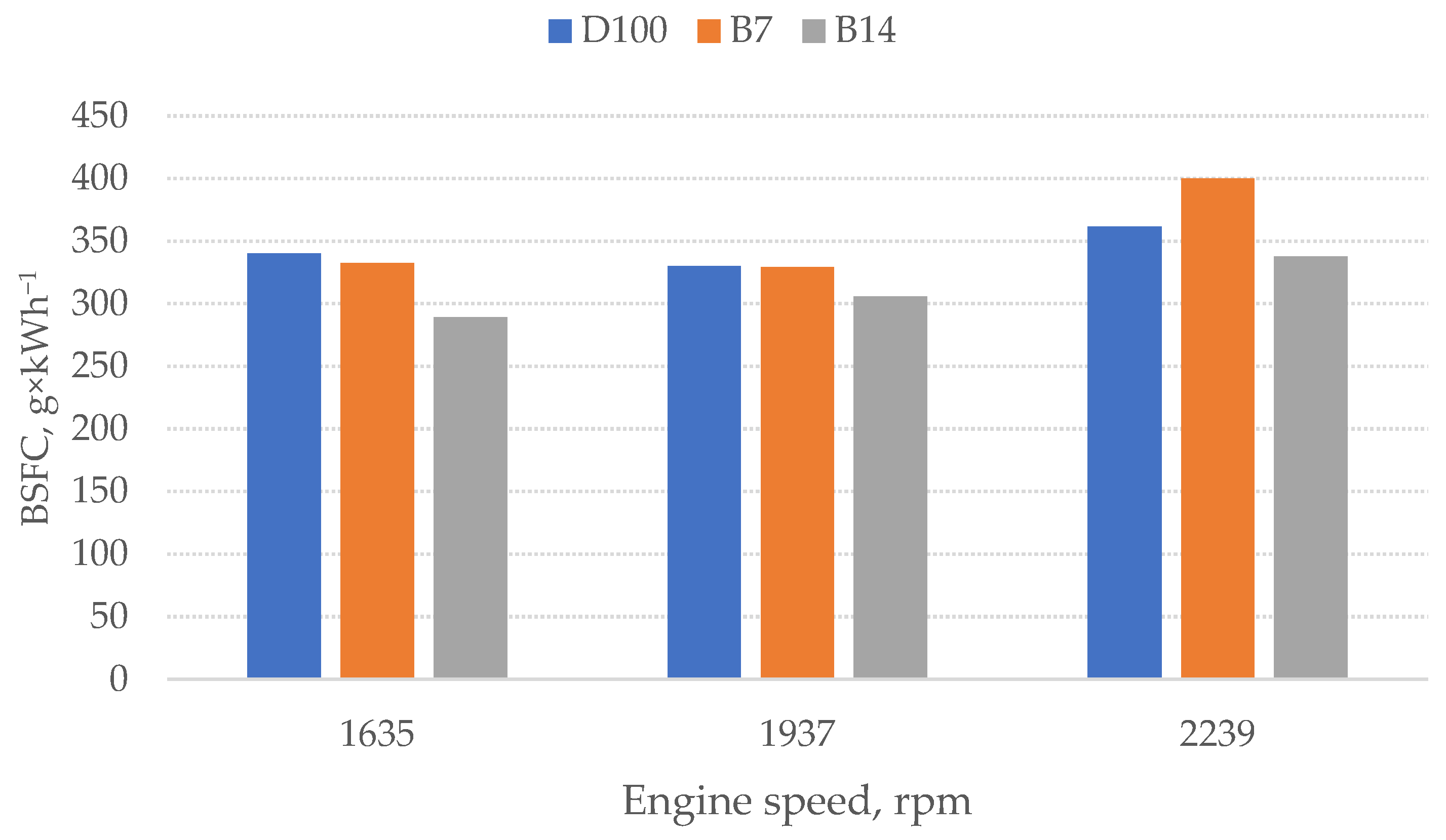
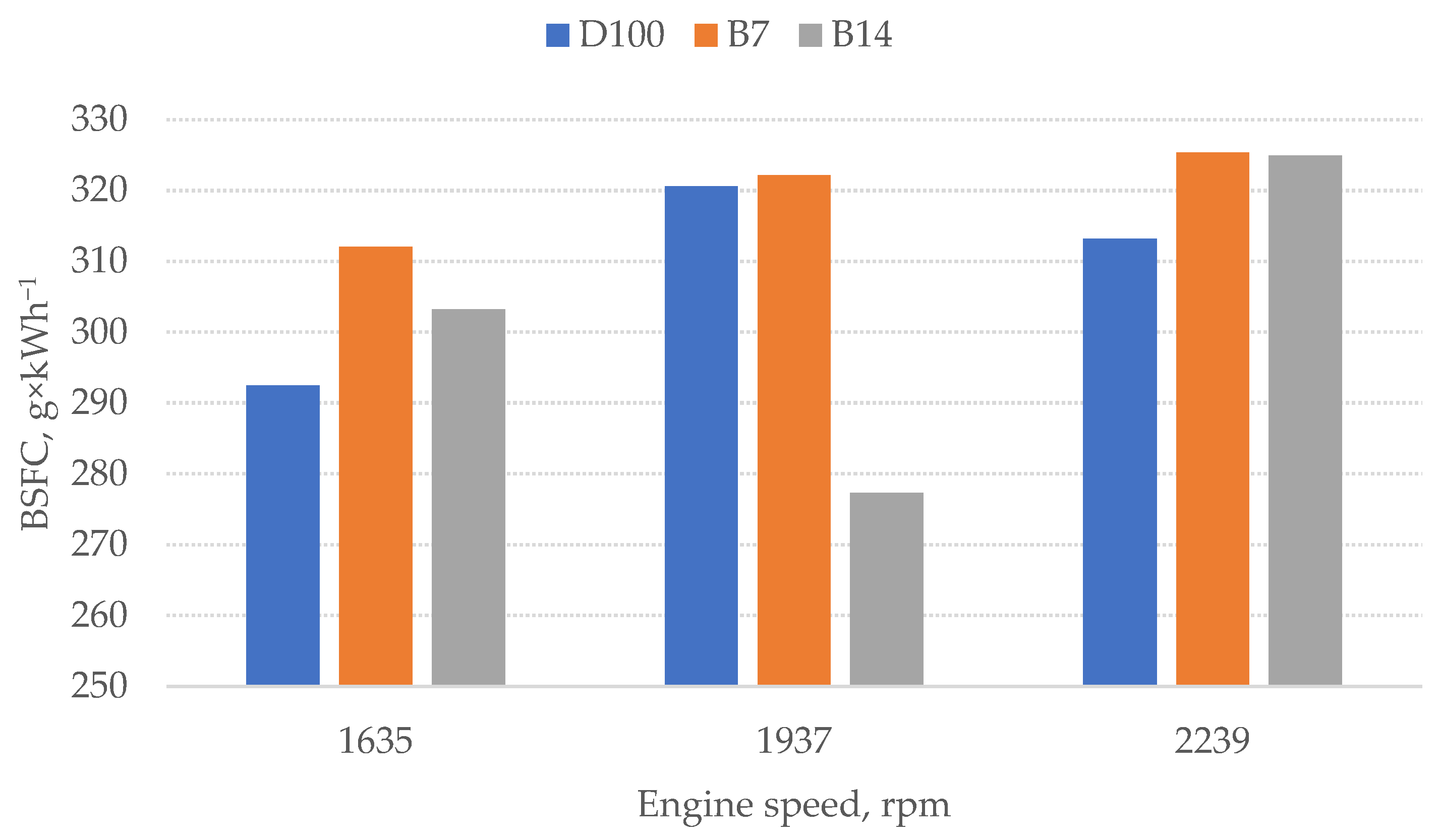
From the standpoint of BTE, the most favorable for application is the B14 blend, followed by B7 and then D100. Therefore, the research has shown that under most operating regimes, a higher share of biodiesel fuel in the blend results in greater engine economy. In addition to the oxygen contained in the blends, a parameter that contributes to this trend is the selected fuel injection advance angle (21 deg BTDC). Injection timing influences the ignition delay period as well as the heat release rate. It is typical for biodiesel fuels to exhibit a longer ignition delay period than D100. It has already been stated that a fixed injection timing was applied in this study and that the injection timing was selected to ensure the smoothest engine operation with the B7 blend. The chosen injection timing did not significantly deviate from the optimal injection timing for D100 operation, thereby reducing potential bias in the comparison of the obtained HRR and BTE results for D100 and the blends. The influence of the injection timing selection, as well as the determination of the optimal injection timing for B7 and B14, are planned for future research.
A similar trend, in terms of heat release and engine efficiency, was observed for the blends used in this study, as well as for blends of biodiesel derived from waste fish oil and D100 (B25, B50, B75, B100), which were tested in a single-cylinder diesel engine.
With an increasing proportion of waste fish oil biodiesel in the blends, at loads of 50% and 100%, the maximum heat release rate increased, while the peaks occurred almost simultaneously or slightly later [
30]. At full load, the B25, B50, B75, and B100 blends achieved higher brake thermal efficiency compared to D100, by 0.74%, 1.77%, 2.75%, and 3.74%, respectively. These authors attribute this to more complete combustion due to the oxygen content present in biodiesel fuel.
In study [
19], in which blends of biodiesel derived from waste grape seeds (B5 and B10) were tested in a four-cylinder engine under full load, it was found across all operating conditions that the maximum heat release rates were identical for B10 and D100, while B5 exhibited a slightly lower maximum heat release rate compared to D100 and B10. In comparison to D100, the engine showed lower BTE, i.e., higher BSFC. The authors concluded that a higher proportion of biodiesel in a blend leads to a reduction in engine efficiency.
For the case of testing a four-cylinder engine with biodiesel blends from waste grape seeds (B0, B30, B50, B70, B100), the authors of [
31] found that at full load, the highest efficiency is achieved with B70, while the lowest is with B100. In that case, there was no clear trend in efficiency variation with changing biodiesel share in the blend.
However, it should be emphasized that in both studies (19 and 24), the engines differed from the engine used in this work (number of cylinders, injection timing, compression ratio, combustion chamber shape…).
The most widely used biodiesel fuel derived from waste materials is biodiesel produced from waste cooking oil. Testing of this biodiesel in a single-cylinder engine showed that the B5 and B10 blends achieved nearly the same maximum heat release rate, which was slightly lower compared to D100 [
32]. It was also observed that the peak heat release rate for these blends occurred slightly earlier than for D100. The authors found that the addition of 5% and 10% biodiesel leads to a slight increase in BSFC (up to 4%) and a reduction in BTE (up to 2.8%).



 ,
,