Article

Relationship Between Moisture Transfer and Pore Structure Evolution and Its Induced Damage Mechanism During Lignite Drying

1
State Key Laboratory of Coking Coal Resources Green Exploitation, China University of Mining and Technology, Xuzhou 221116, China
2
School of Chemical Engineering and Technology, China University of Mining and Technology, Xuzhou 221116, China
3
Center of Mineral Resource Waste Recycling, China University of Mining and Technology, Xuzhou 221116, China
*
Author to whom correspondence should be addressed.
Processes 2026, 14(9), 1362; https://doi.org/10.3390/pr14091362
Submission received: 19 March 2026 / Revised: 20 April 2026 / Accepted: 21 April 2026 / Published: 24 April 2026
(This article belongs to the Section Chemical Processes and Systems)

Abstract

Lignite particles generate considerable dust during drying due to structural damage, which increases the dust removal costs of the drying system, pollutes the environment, and raises the risk of combustion and explosion, thereby posing a threat to the safety of the drying system. Moisture plays a crucial role in the structural damage of lignite particles during drying. In this study, lignite samples with moisture contents of 60%, 36%, and 18% were prepared and dried in hot air at 200 °C. The transfer behavior of moisture in the pore structure was investigated, and the evolution of the pore structure was observed. The relationship between pore structure evolution and moisture transfer behavior was correlated, and the mechanism of structural damage under the action of moisture during the drying process was proposed. The results demonstrated that the moisture in large pores was transported rapidly in the form of a gas–liquid mixture; the liquid moisture in the pores boiled into water vapor, and the water vapor pressure was the main reason for the destruction of the pore structure. For raw lignite, the total pore volume decreased sharply from 0.92 to 0.37 mL/g within the first 360 s of drying, and the fractal dimension dropped from 2.701 to 2.545, indicating severe pore collapse. However, the moisture in small pores migrated by molecular diffusion, which is nondestructive to the lignite structure.

1. Introduction

Lignite, which is the lowest-rank coal, is the least expensive and most accessible energy source in the world [1]. The global lignite reserve is approximately 4 trillion tons, of which China has approximately 130 billion tons [2]. Thus, lignite is very important in terms of ensuring energy security in many countries. Furthermore, lignite can also be converted into synthesis gas, char, and tar, which are very important raw materials for the chemical industry nowadays [3]. It is also rich in humic acid, an organic compound of substantial molecular size that finds extensive application in disciplines such as chemical engineering and environmental preservation [4,5]. However, its high moisture content (25–65%) reduces the efficiency of power plants as well as increases greenhouse gas emissions and transportation costs [6]. Drying lignite using low-quality energy to remove moisture is an attractive way to improve the efficiency of lignite power plants. The literature [7] indicates that the efficiency of a power plant can be increased by 0.6–0.9% for every 0.1 kg of moisture removed from 1 kg of raw coal.
Among the various technologies currently used for drying lignite, evaporative drying is the most prevalent. It is capable of reducing the lignite’s moisture level from 45–65% down to 10–45% [8]. Nevertheless, during this process, lignite particles tend to fragment due to thermal shock [9], generating large amounts of dust. This not only raises the expenses associated with dust removal from the drying system but also causes environmental pollution and increases the risks of combustion and explosion, thereby posing a serious threat to the safety of lignite drying operations. According to research [10], the structural damage to lignite particles becomes more severe as the drying intensity increases. Therefore, it is essential to explore the mechanisms behind this structural deterioration in order to develop effective strategies to prevent the fragmentation of lignite particles.
Dewatering shrinkage and high-pressure water vapor directly damage the macroscopic structure of lignite during the drying process [10]. In fact, macroscopic damage is caused by the destruction of microscopic pore structures. Deng et al. [11] proposed that the removal of moisture causes changes to the pore structure of lignite when drying lignite at a temperature below 160 °C. Specifically, as the drying temperature increased, the pore volume exhibited a trend of first increasing and then decreasing. Wu et al. [12] found that the non-thermal effect of the microwave drying process promotes the fragmentation of lignite, resulting in an increase in specific surface area, average pore size, and pore volume. The evolution of the pore structure during the drying process has been discussed in the above studies; however, to the best of our knowledge, the mechanism of the microstructural damage has not been revealed. In our previous study [13], the correlation between residual moisture content and pore structure characteristics was identified, and it was found that the pore structure was most severely damaged during the process of reducing the moisture content of lignite from 1.19 to 0.62 gmoisture/gdry coal. Moreover, high-pressure water vapor inside the pores caused serious damage to the macropores and mesopores during hot air drying of lignite, and the collapse of the macropores was the primary cause of the macroscopic structural shrinkage [14].
The above observations suggest that moisture present in the pores plays a key role in the structural damage of lignite during drying. Therefore, this study employed nuclear magnetic resonance (NMR) technology to investigate the moisture transfer behavior of lignite with varying initial moisture contents throughout the drying process and simultaneously tracked the changes in pore structure. By correlating moisture occurrence with the evolution of pore structure, the mechanism by which moisture transfer behavior damages the lignite pore structure during drying was clarified. The findings on lignite drying damage presented in this study are expected to support the development of effective strategies to prevent particle fragmentation, thereby avoiding severe breakage and pulverization during drying. This would enhance process safety, reduce dust removal costs in drying systems, minimize environmental pollution, and promote the large-scale utilization of lignite.

2. Experimental Section

2.1. Coal Samples and Preparation

The experiment selected Zhaotong lignite, a typical young lignite from Yunnan Province, China, as the research subject. The Zhaotong lignite has a moisture content of 59.62%, making it necessary to undergo drying to enhance its calorific value.
Coal samples with different moisture contents were prepared in a vacuum drying oven at a temperature of 50 °C and a vacuum of 0.08 MPa. The specific operation was performed as follows: Coal samples with a particle size of −0.5 mm were placed in a vacuum drying oven. It was taken out at regular intervals, and its moisture content was determined using a fast moisture analyzer (METTLER-TOLEDO HE53, Greifensee, Switzerland). The process continued until the moisture content of the sample reached the expected value. According to this method, coal samples with moisture contents of 60%, 36%, and 18% were prepared, and integer digits were retained for the moisture content of the samples here for easy numbering. Note that the 36% and 18% moisture samples were prepared from the same raw lignite (~60% moisture) by partial pre-drying. Therefore, the results represent the progressive structural evolution of a single coal sample during different drying stages.

2.2. Experimental Setup and Drying Procedure

The drying experiment was performed in a tube furnace. Prior to the test, the temperature of the tube furnace reached the set point of 200 °C, and the nitrogen flow rate was 150 mL/min. Here, 8 g of the sample was quickly placed into the quartz tube, and a filter in the quartz tube held it in the middle of the tube. The sample was placed in the tube furnace and dried for 2 min. After the drying was completed, the sample was cooled in a nitrogen atmosphere, and its wet basis moisture content (MC, %) was determined using the fast moisture analyzer. Subsequently, samples of the same weight were dried separately under the same drying conditions for 4, 6, and 8 min, etc. (time intervals of 2 min).
The dry basis moisture content (X) and the drying rate (DR) were calculated as follows:
X = MC / ( 1 MC )
DR = dX / dt
where t is the drying time (s). Replicate drying tests showed relative errors generally below 5% when the moisture content exceeded 0.2 g/g, indicating good reproducibility.

2.3. NMR Measurements

The NMR measurements were performed using the NMRC12-010V instrument (Suzhou Niumai Corporation, Suzhou, China) to detect the moisture distribution [15] in the pore structure of lignite and follow the moisture migration during the drying process.
The transverse relaxation time T2 is inversely proportional to the pore surface-to-volume ratio, and thus to the pore radius. According to the theory established by Wang et al. [16], the relationship between T2 and pore diameter r can be expressed as:
1 T 2 = ρ S V = F s ( ρ / r )
where ρ is the transverse surface relaxivity, r is the pore radius, and Fs is a geometric factor. The values of Fs are 1, 2, and 3, corresponding to slit hole, cylindrical hole, and circular hole, respectively. In this study, a circular pore model (Fs = 3) is adopted for lignite, and the transverse surface relaxivity ρ is taken as 30 μm/s.
Herein, 2.5 g of lignite sample (−0.5 mm) was placed in the sample tube, and the experimental parameters were set up with an echo spacing of 0.110 ms, an echo number of 2000, a repetition time of 2 s, and a scan number of 64.

2.4. Mercury Intrusion Porosimetry (MIP)

MIP was performed using a Micromeritics Autopore IV 9500 instrument to characterize the pore structure of lignite samples with different moisture contents during the drying process. It was assumed that the pores in the sample are cylindrical, and the relationship between pore size and pressure satisfies the Washburn equation [17,18]. To characterize the pore structure with diameters between 0.006 and 330 μm using the MIP technique, a pressure ranging from 3.7 kpa to 206 MPa was used. Prior to MIP analysis, moisture was removed from the samples via freeze-drying [19] (−40 °C freezing for 4 h followed by vacuum sublimation at <5 Pa for 5 h). Bergins et al. [20] pointed out that the boundary between interparticle and intraparticle regions is 50 μm, implying that only structures with a diameter less than 50 μm can be considered as pores within the particles; otherwise, they are gaps between the particles. Thus, the mercury intrusion test results were corrected to ensure that the results represent the intraparticle pores rather than gaps between the particles. The Xodot decimal classification scheme was used in this study to classify the pores as macropores (>1000 nm), mesopores (100–1000 nm), transition pores (10–100 nm), and micropores (<10 nm) [21]. Here, the pore volume divided by pore diameter was used as the ordinate in the pore size distribution curves, which can represent the proportional distribution of pore length for the corresponding pore size.
The fractal dimension (D) serves as a quantitative indicator of pore surface roughness [22]. This parameter can be derived from the thermodynamic relationships observed in porous materials during mercury intrusion [23]. According to thermodynamic theory, as mercury penetrates the pore volume of lignite, a defined relationship exists between the incremental increase in intruded volume and the corresponding rise in surface energy. Thus, D can be calculated as follows [24]:
lg ( W n / r n 2 ) = C + D l g ( V n 1 / 3 / r n )
where rn is the pore radius (nm), C is a constant, Vn is the accumulated amount of mercury intrusion (cm3/g) as the mercury invades the pore with r, and Wn is the surface energy, which can be obtained as follows:
W n = i = 1 n P i ¯ V i
where P i ¯ is the average pressure (kPa), and ΔVi is the mercury volume (cm3/g). Note that D is the slope of the linear fitting between lg ( W n / r n 2 ) and l g ( V n 1 / 3 / r n ) in Equation (4). The values of D for lignite samples with different moisture contents during the drying process can be obtained using this method, and it can quantitatively describe the change in pore surface irregularity of lignite samples with different moisture contents during drying.

3. Results and Discussion

3.1. Drying Characteristics of Lignite Samples with Different Moisture Contents

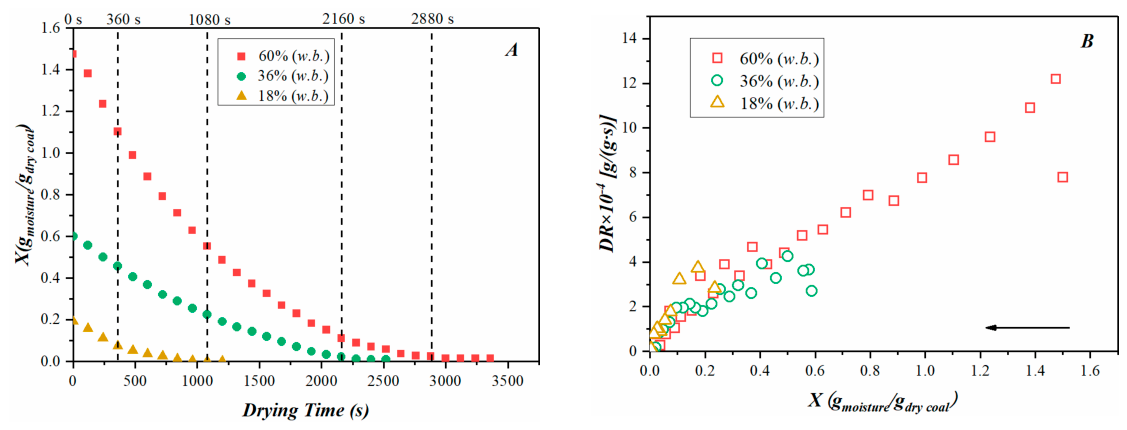
Figure 1A shows the drying curves of samples with different moisture contents. It was observed that as drying time progressed, the moisture contents of the coal samples with different moisture contents exhibited a downward trend. Coal samples with different moisture contents all exhibited shorter drying rate increase stages and longer drying rate decrease stages. In the stage of increasing drying rate, the sample was heated, and the moisture was quickly removed. The higher the initial moisture content, the longer the duration of the drying rate decrease stages. Conversely, the lower the moisture content of the lignite sample, the shorter drying time it took. For example, it took ~ 3000 s to remove moisture from the lignite sample with a moisture content of 60%, while it took only ~ 800 s for the sample with a moisture content of 18%. However, samples with high moisture contents have a larger drying curve slope in the early stages of drying, which indicates a faster drying rate, as demonstrated in Figure 1B. Moreover, the overall drying rate of the sample with a moisture content of 60% remained at a considerably fast stage, with the maximum drying rate reaching 1.48 × 10⁻⁴ g/(g·s). Furthermore, the maximum drying rate considerably decreased as the initial moisture content of the sample decreased.

3.2. Changes in Moisture Distribution During Drying

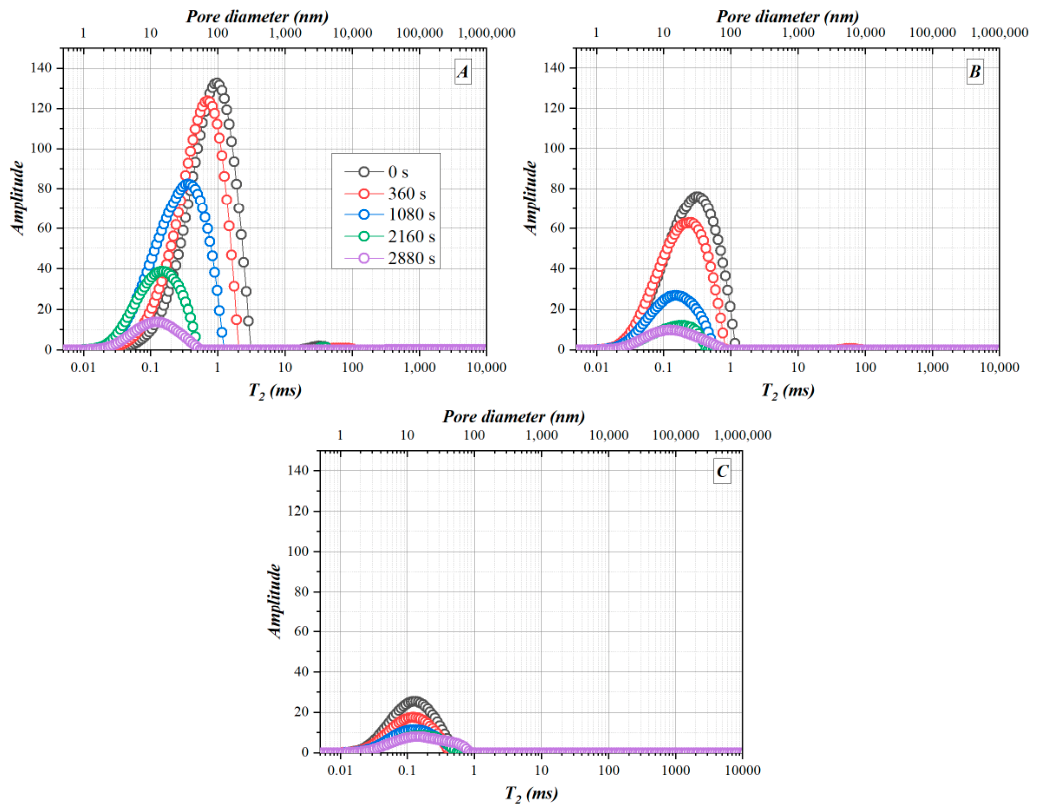
Based on the moisture content changes during the drying process shown in Figure 1, samples at different drying stages were prepared by selecting drying times of 0, 360, 1080, 2160, and 2880 s. These samples were subsequently subjected to NMR testing to analyze the moisture transfer behavior during drying. Figure 2 summarizes the evolution of T2 with drying time of lignite samples with moisture contents of 60%, 36%, and 18%. As shown in Figure 2A, the T2 of moisture in the Zhaotong raw coal (60%) is 0.1–3 ms, corresponding to a pore size range of 10–300 nm, with a peak at 100 nm. As drying progressed, the moisture in the pores larger than 100 nm continuously decreased, and the T2 curve noticeably moved to the left. That is, the moisture in lignite particles transferred to the smaller pores under the action of new capillary forces, and the interaction force between coal and moisture increased [25]. After the sample was dried for 1080 s, the moisture content was reduced from 1.48 to 0.55 gmoisture/gdry coal. During this period, moisture in pore structures greater than 100 nm was almost completely removed. After drying for 2160 s, the residual water was only 0.11 gmoisture/gdry coal. The moisture primarily existed in pore structures of 15 nm. At this point, the moisture stopped migrating to smaller pore structures.
The moisture in lignite samples with a 36% moisture content primarily existed in pores with a diameter of 1–100 nm. After drying for 1080 s, the moisture content was reduced from 0.60 to 0.22 gmoisture/gdry coal, and the moisture migrated to pore structures with a diameter of 16 nm. In this process, the interaction between coal and moisture gradually increased. Subsequently, moisture no longer migrated with further reduction in the moisture content.
In the sample with 18% moisture content, the moisture primarily existed in pores of 1–50 nm. However, as drying time progressed, the T2 curve of the moisture only exhibited a decrease in the peak area without any change in the peak position. The interaction between this type of moisture and coal was strong, and the removal of moisture required more energy [25].

3.3. Evolution of Pore Structure

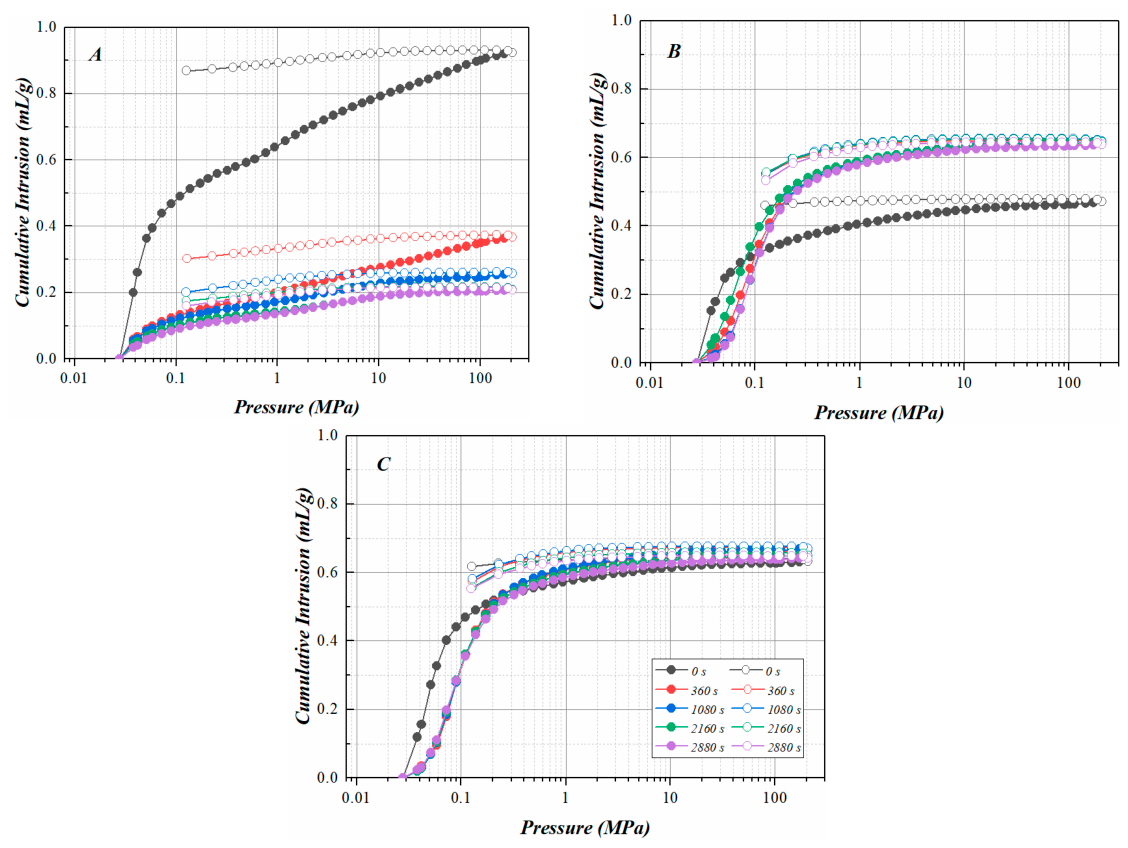
Following the same protocol as the NMR testing, samples for MIP were also prepared at drying times of 0, 360, 1080, 2160, and 2880 s to represent different drying stages. This approach was taken to investigate the dynamic evolution of the pore structure in coal samples with different initial moisture contents during drying. Figure 3 shows the mercury cumulative intrusion and extrusion curves of lignite samples with different moisture contents during the drying process. This can be used to analyze the pore structure evolution of lignite samples with different moisture contents during drying. The mercury cumulative intrusion and extrusion curves of raw coal with a moisture content of 60% exhibited the largest hysteresis loop (Figure 3A). The literature [26] indicates that the hysteresis loop reflects the connectivity of pores; thus, this sample exhibited the largest connectivity. As the moisture content decreased during the drying process, the hysteresis loop gradually decreased, indicating that the connectivity of the pores gradually decreased. For lignite samples with a moisture content of 36% (Figure 3B), once the moisture was removed, the connectivity decreased (i.e., the hysteresis loop became smaller). Furthermore, as the moisture content continued to decrease, the connectivity of the sample no longer changed. For the sample with a moisture content of 18% (Figure 3C), there was almost no change in the connectivity of the sample as the moisture content decreased.
During the intrusion of mercury, the mercury first fills the large pores of the lignite sample. Subsequently, as the intrusion pressure increases, mercury gradually enters the small pores. As shown in Figure 3A, lignite samples with a moisture content of 60% had multiple large and small pores, and as moisture was removed, the number of pores considerably decreased. For samples with a moisture content of 36% (Figure 3B), once the moisture was removed during the hot air drying process, the number of large pore structures increased. However, as the moisture content continued to decrease, the pore structure did not undergo further changes. However, for the samples with a moisture content of 18% (Figure 3C), there was almost no significant change in the pore structure during the hot air drying process.
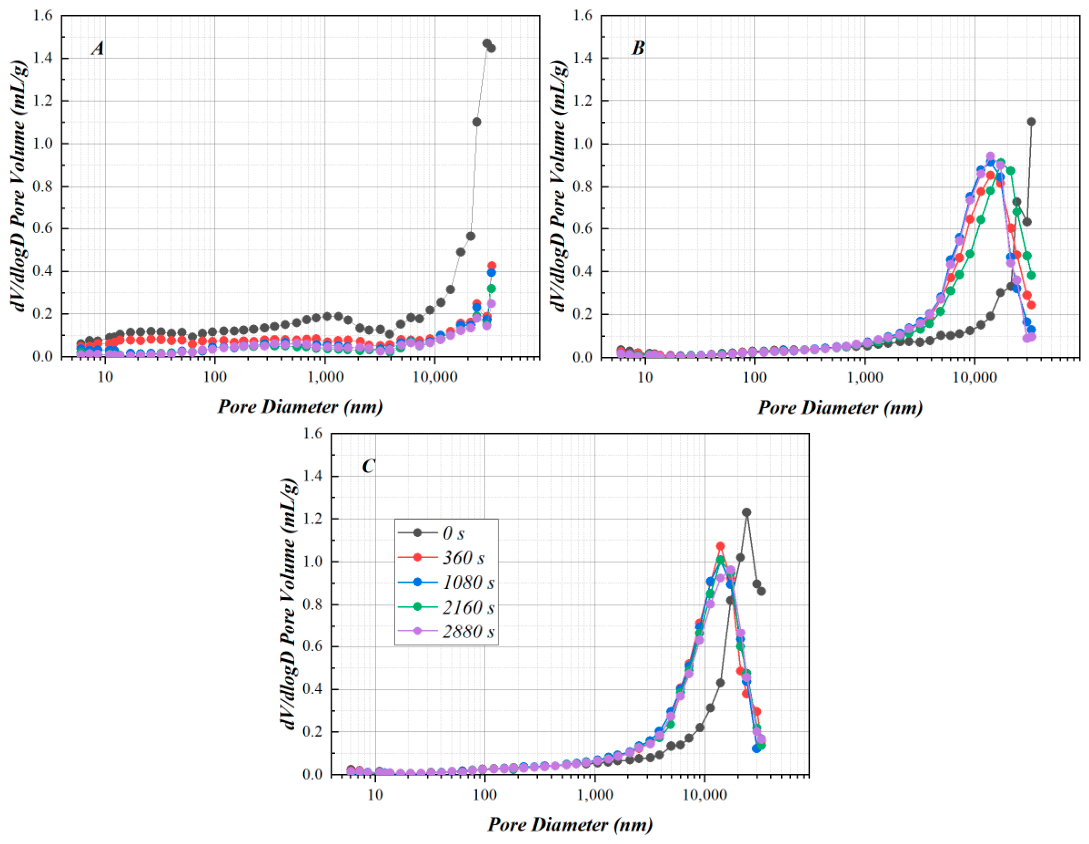
Figure 4 depicts the pore size distribution of lignite samples with different moisture contents during the drying process. The pore structure of raw coal with a moisture content of 60% is considerably rich, with multiple pore types. First, the number of pore structures larger than 100 nm considerably decreased as the drying process progressed. Subsequently, a large amount of moisture was removed, considerably decreasing the number of pore structures smaller than 100 nm. For samples with a moisture content of 36%, there were considerably few pore structures smaller than 1000 nm. As hot air drying progressed, the number of pores larger than 1000 nm considerably increased; however, as the degree of drying further increased, there was no significant change. For samples with a moisture content of 18%, there was a slight increase in pore structures greater than 1000 nm during the drying process.
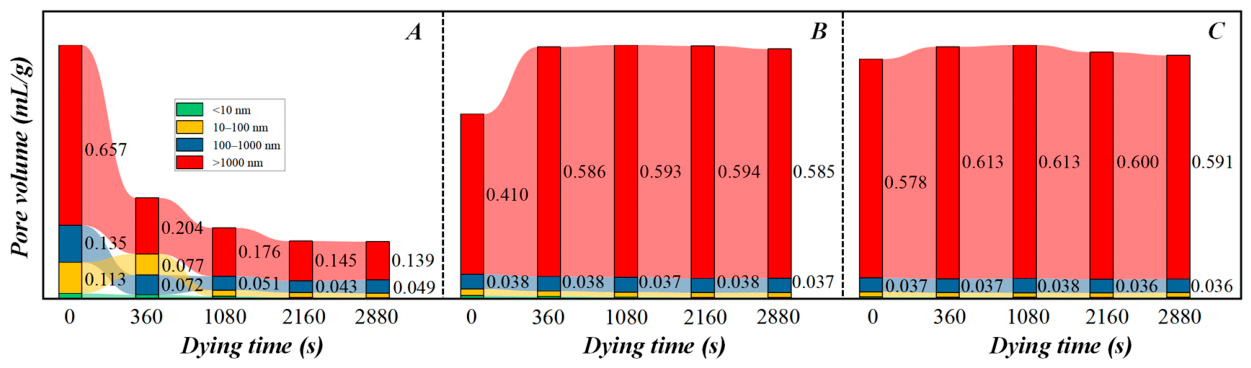
Figure 5 depicts the total pore volume and pore volume distribution of lignite samples with different moisture contents during the drying process. As shown in Figure 5, the total pore volume of raw coal with a moisture content of 60% is 0.92 mL/g. After 360 s of hot air drying at 200 °C, the total pore volume rapidly decreased to 0.37 mL/g. During this process, the pore structure was severely damaged, particularly in macropores. Subsequently, as drying progressed, the total pore volume continued to slowly decrease. Toward the end of drying, only a small amount of macropores and mesopores was retained, and the transition pores and micropores almost completely disappeared. The total pore volume of the coal samples with a moisture content of 36% exhibited completely different trends during the drying process. After drying at 200 °C for 360 s, the total pore volume increased from 0.47 to 0.64 mL/g, with a significant increase in the volume of macropores. Then, as drying progressed, the total pore volume remained almost unchanged. For the 36% sample, the vapor pressure caused damage to the pore structure, but this damage promoted pore merging rather than collapse, leading to a 42.9% relative increase in macropore volume (from 0.410 to 0.586 mL/g). This contrasts with the 60% sample, where higher vapor pressure caused severe pore collapse. The total pore volume and various pore volumes of the coal samples with a moisture content of 18% did not show significant changes during drying at 200 °C.
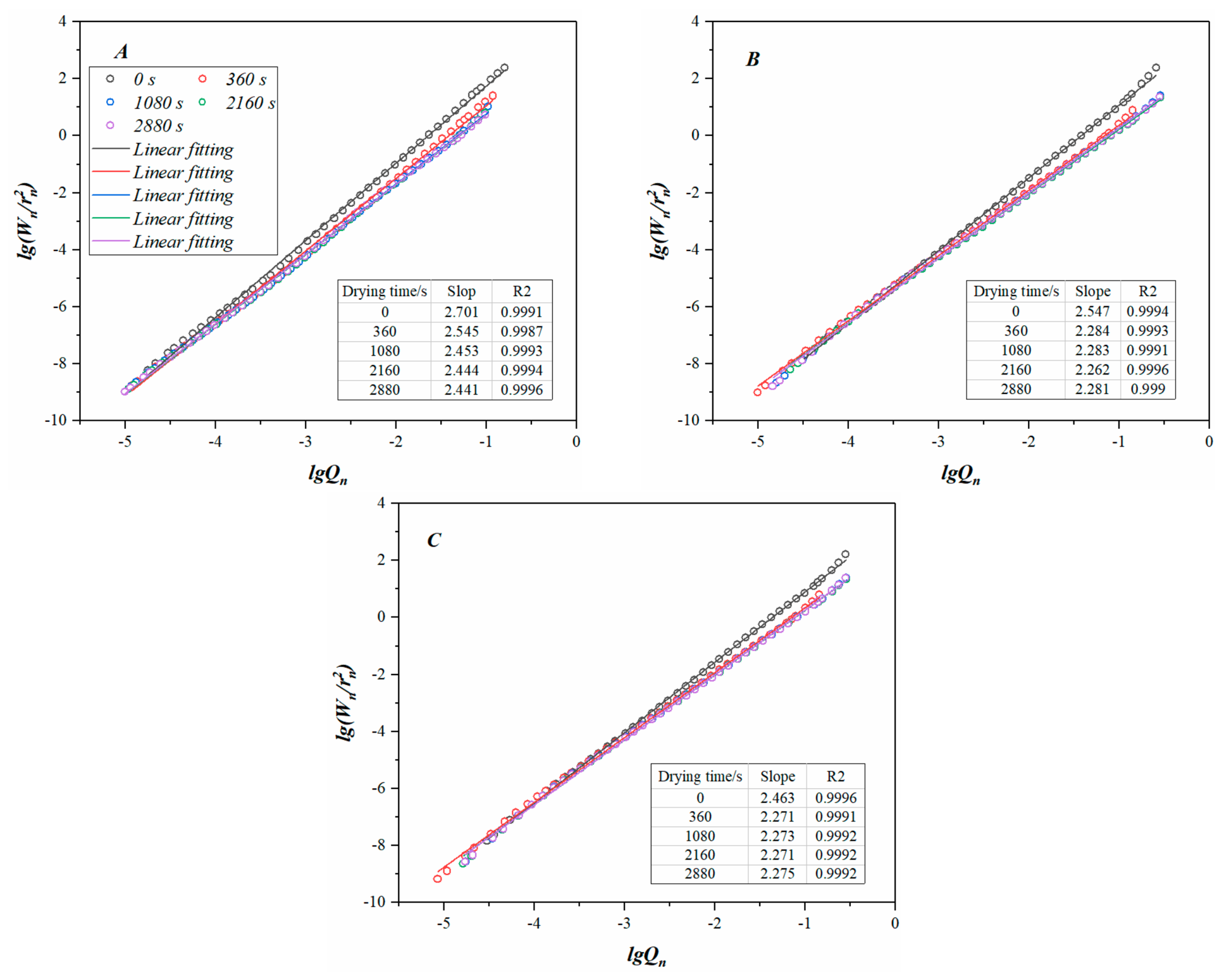
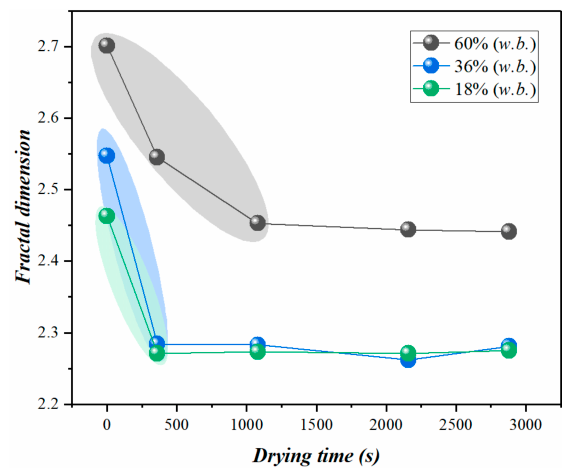
As shown in Figure 6, the correlation coefficients of the linear fitting between lg(Wn/rn2) vs. lgQn for all samples exceeded 0.99, which indicates a very significant linear relationship between them. Thus, D was calculated accurately based on Equation (4), and the D values of all samples are listed in Figure 7. As shown, the D value of raw coal with a 60% moisture content was the highest, corresponding to its rich pore distribution characteristics (Figure 4). After 360 s of hot air drying at 200 °C, the D value decreased from 2.701 to 2.545. As the drying time was extended to 1080 s, the D value continued to decrease to 2.453. However, as the drying process continued, D remained nearly unchanged. The D value of the coal sample with a 36% moisture content dried in hot air at 200 °C for 360 s dropped sharply from 2.547 to 2.284, and the pore structure was severely damaged. Then, as the moisture continued to be removed, the changes in the D value were very small. The D value of the coal sample with a moisture content of 18% was 2.463. After drying for 360 s at 200 °C, the D value decreased to 2.271, and then it was mostly unchanged.

3.4. Mechanism of Moisture Damage to Pore Structure During Drying

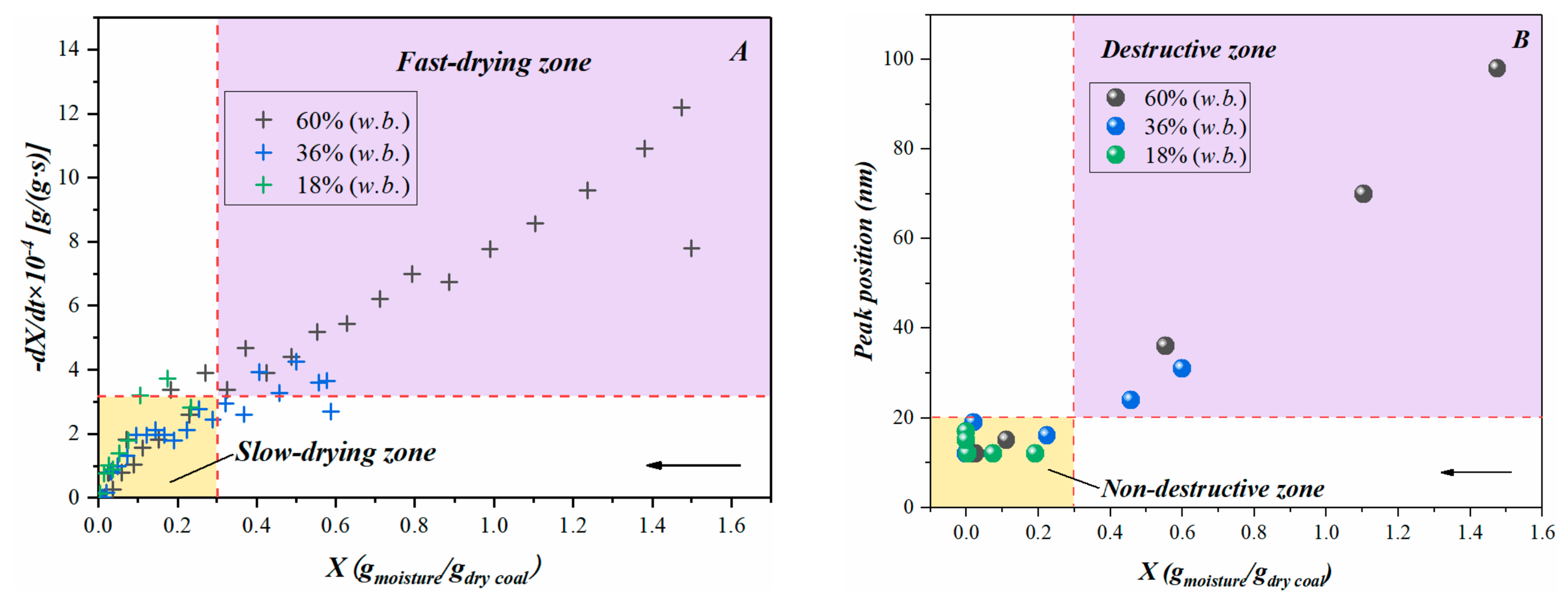
Regardless of the initial moisture content of the lignite sample, when the moisture content of lignite was greater than approximately 0.3 gmoisture/gdry coal, the drying rate was faster (Figure 8A). At this time, the peak positions of the T2 curve measured by NMR were all greater than 20 nm (Figure 8B); however, as the moisture content decreased, the peak positions exhibited a clear trend of migration toward small pores, which indicates an enhanced interaction force between the coal and moisture. During this moisture removal process, the pore structure of lignite was severely damaged. When the moisture content was less than approximately 0.3 gmoisture/gdry coal, the drying rate was very slow. At this time, the peak position of T2 remained at approximately 15 nm and did not change significantly as the moisture content decreased. Note that the coal–water interaction force was always strong; however, the removal of this type of moisture did not cause damage to the lignite structure.
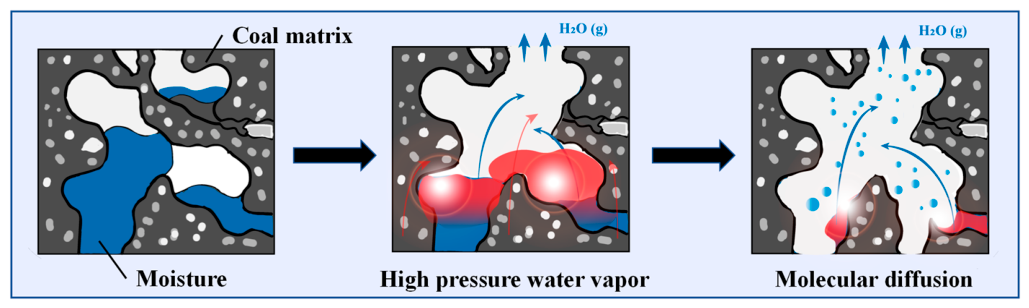
Figure 9 schematically illustrates the water vapor pressure-induced pore collapse in large pores and the non-destructive molecular diffusion in small pores. The vapor transfer in large pores is a viscous flow driven by pressure gradients, and gas–liquid mixtures are generally transported rapidly through larger pores [27]. Here, the moisture is in a continuous medium state. The liquid moisture in the pores boils into water vapor, and the maximum water vapor pressure inside the lignite during drying at 200 °C is determined to be 1.55 MPa by the Antoine equation [28,29]. At this point, the water vapor pressure is the main cause of pore structure damage; however, the moisture in small pores migrates in the form of molecular diffusion, which is considered to be nondestructive to the lignite structure.

4. Conclusions

Herein, the transfer behavior of moisture in the pores during lignite drying was explored, and the pore structure evolution was investigated. Next, the moisture occurrence was correlated with the pore structure evolution. Subsequently, the damage mechanism of moisture transfer behavior on the pore structure of lignite during drying was explained. The key findings are summarized as follows:
(1) Lignite samples with initial moisture contents of 60%, 36%, and 18% exist in pore structures with pore size ranges of 10–300, 1–100, and 1–50 nm, respectively. As the moisture was removed, the residual moisture gradually migrated toward smaller pores, and the interaction between the coal and moisture increased.
(2) Lignite with a moisture content of 60% first experienced severe damage to the macropores after drying. As drying continued, the total pore volume continued to decrease slowly. The transition pores and micropores nearly disappeared at the end of the drying process.
(3) The macropore volume in lignite samples with a moisture content of 36% increased significantly after drying. The total pore volume and various pore volumes of lignite with a moisture content of 18% did not exhibit significant changes.
(4) The moisture in large pores was transported rapidly in the form of a gas–liquid mixture, and the liquid moisture in the pores boiled into water vapor. The water vapor pressure was the main reason for the destruction of the pore structure. The moisture in small pores migrated in the form of molecular diffusion, which is considered to be nondestructive to the lignite structure.

Author Contributions

Conceptualization, M.G. and Z.M.; methodology, M.G. and P.J.; validation, M.G. and C.C.; Data Curation, M.G., P.J. and C.C.; writing—original draft, M.G. and K.W.; writing—review and editing, C.C., Q.H. and Z.M.; supervision, Z.M.; funding acquisition, Z.M. and M.G. All authors have read and agreed to the published version of the manuscript.

Funding

This work was supported by the National Key R&D Program of China (2023YFE0100600), the National Natural Science Foundation of China (Grant No. 52304308), the Natural Science Foundation of Jiangsu Province (BK20231072), the National Natural Science Foundation of China (Grant No. 51774285) and the Qing Lan Project.

Data Availability Statement

The data presented in this study are available on request from the corresponding author.

Conflicts of Interest

The authors declare that they have no known competing financial interests or personal relationships that could have appeared to influence the work reported in this paper.

References

  1. Xu, M.D.; Guo, F.Y.; Zhang, Y.F.; Yang, Z.L.; Cao, Y.J.; Gui, X.H.; Xing, Y.W. Effect of hydrothermal pretreatment on surface physicochemical properties of lignite and its flotation response. Powder Technol. 2021, 386, 81–89. [Google Scholar] [CrossRef]
  2. Liu, X.C.; Li, G.Q.; Xie, R.L.; Zhao, Z.G.; Cui, P. A review on moisture re-adsorption of lignite treated using different drying techniques. Dry. Technol. 2022, 40, 1263–1277. [Google Scholar] [CrossRef]
  3. Bai, B.Y.; Qiang, L.Y.; Zhang, S.S.; Peng, Z.W.; Mu, H.; Ma, X.X. The effect of hydrothermal pretreatment on the structure and fast pyrolysis behaviors of ShengLi lignite. Chin. J. Chem. Eng. 2021, 35, 265–274. [Google Scholar] [CrossRef]
  4. Jiang, F.; He, S.; Liu, B.J.; Fu, Y.X.; Sun, W.; Luo, Y.J.; Tang, H.H. Efficient activation of humic acid in lignite via Fenton oxidation-nitric acid leaching for sustainable resource utilization. J. Environ. Chem. Eng. 2025, 13, 118248. [Google Scholar] [CrossRef]
  5. Xue, S.W.; Xiao, Y.W.; Wang, G.Q.; Fan, J.J.; Wan, K.J.; He, Q.Q.; Gao, M.Q.; Miao, Z.Y. Adsorption of heavy metals in water by modifying Fe3O4 nanoparticles with oxidized humic acid. Colloid Surf. A-Physicochem. Eng. Asp. 2021, 616, 126333. [Google Scholar] [CrossRef]
  6. Ma, Y.F.; Chi, T.H.; Yu, Y.; Lyu, J.; Wang, Z.R. A green and efficient lignite-fired power generation process based on superheated-steam-dried open pulverizing system. Energy 2024, 294, 130928. [Google Scholar] [CrossRef]
  7. Xu, C.; Xu, G.; Zhao, S.F.; Dong, W.; Zhou, L.Y.; Yang, Y.P. A theoretical investigation of energy efficiency improvement by coal pre-drying in coal fired power plants. Energy Conv. Manag. 2016, 122, 580–588. [Google Scholar] [CrossRef]
  8. Fu, P.B.; Yu, H.; Li, Q.Q.; Cheng, T.T.; Zhang, F.Z.; Yang, T.; Huang, Y.; Li, J.P.; Fang, X.C.; Xiu, G.L.; et al. Cyclone rotational drying of lignite based on particle high-speed self-rotation: Lower carrier gas temperature and shorter residence time. Energy 2022, 244, 123005. [Google Scholar] [CrossRef]
  9. Zhang, T.; Lou, C.F.; Teng, D.G.; Li, G.S.; Li, P.; Yun, Q.H.; Zhou, G.L. Hot-air drying behavior of lignite and quantitative characterization for its surface damage. Dry. Technol. 2023, 41, 2171–2188. [Google Scholar] [CrossRef]
  10. Gao, M.Q.; Wan, K.J.; Miao, Z.Y.; He, Q.Q.; Xue, S.W.; Dong, X.Y. Hot-air drying shrinkage process of lignite and its cracking mechanism. Fuel 2022, 316, 123187. [Google Scholar] [CrossRef]
  11. Deng, B.W.; Liang, Y.K.; Zhang, H.D.; Hu, Q.; Wu, J.B.; Zhao, Y.H.; Xu, Z. Study on pore structure characteristics of Indonesian lignite during low temperature drying process. Int. J. Coal Prep. Util. 2023, 43, 1679–1696. [Google Scholar] [CrossRef]
  12. Wu, L.; Shi, Y.Q.; Yang, F.; Reddy, B.R.; Zhang, W.Q.; Guan, Y.N.; Zhang, X.W.; Zhang, Q.L.; Zhou, J. Revelation of non-thermal effects on lignite microwave drying II: Impacts on the structure and the properties of dried lignite. Fuel 2025, 398, 135529. [Google Scholar] [CrossRef]
  13. Gao, M.Q.; Ji, P.C.; Miao, Z.Y.; Wan, K.J.; He, Q.Q.; Xue, S.W.; Pei, Z. Pore structure evolution and fractal characteristics of Zhaotong lignite during drying. Fuel 2020, 267, 117309. [Google Scholar] [CrossRef]
  14. Cheng, C.; Gao, M.Q.; Miao, Z.Y.; Wan, K.J.; He, Q.Q. Structural changes mechanism of lignite during drying: Correlation between macroscopic and microscopic. Fuel 2023, 339, 126955. [Google Scholar] [CrossRef]
  15. Wang, Y.; Wang, H.C.; Li, X.; Jia, C.; Cheng, X.Q.; Zhang, N.; Wang, B.; Lai, P.; Hu, Z.P.; Liao, Z.K. Research on pore structure and fractal characteristics of low-medium rank coals before and after acidification with H2S aqueous solution based on NMRC. Fuel 2026, 405, 136739. [Google Scholar] [CrossRef]
  16. Wang, G.; Han, D.Y.; Qin, X.J.; Liu, Z.; Liu, J.F. A comprehensive method for studying pore structure and seepage characteristics of coal mass based on 3D CT reconstruction and NMR. Fuel 2020, 281, 118735. [Google Scholar] [CrossRef]
  17. Sun, W.J.; Liang, Y.P.; Li, Q.G.; Li, Z.Q.; Zhao, Z.D.; Zheng, X.W.; Wang, M.J.; Liu, S.Y.; Wu, Z.P. Experimental study on effects of tetrahydrofuran soaking on pore structure and gas adsorption and desorption characteristics of coal. Powder Technol. 2024, 445, 120117. [Google Scholar] [CrossRef]
  18. Zhou, H.W.; Sun, X.T.; Xie, H.; Xue, D.J.; Ren, W.G.; Liu, Z.L.; Li, X.N.; Hou, W. The determination of surface relaxivity and application to coal spontaneous imbibition. Fuel 2022, 309, 122165. [Google Scholar] [CrossRef]
  19. Xin, F.D.; Xu, H.; Tang, D.Z.; Liu, D.; Cao, C. Problems in pore property testing of lignite: Analysis and correction. Int. J. Coal Geol. 2021, 245, 103829. [Google Scholar] [CrossRef]
  20. Bergins, C.; Hulston, J.; Strauss, K.; Chaffee, A.L. Mechanical/thermal dewatering of lignite. Part 3: Physical properties and pore structure of MTE product coals. Fuel 2007, 86, 3–16. [Google Scholar] [CrossRef]
  21. Miao, Z.; Gao, M.; Wan, K.; Pei, Z.; He, Q.; Ji, P.; Bai, L. Modification of Zhaotong Lignite by Steam Explosion Treatment: Pore Structure and Oxygen-Containing Functional Groups. Energy Fuels 2019, 33, 4033–4040. [Google Scholar] [CrossRef]
  22. Zhang, Z.; Liu, G.F.; Wang, X.M.; Lv, R.S.; Liu, H.; Lin, J.; Barakos, G.; Chang, P. A fractal Langmuir adsorption equation on coal: Principle, methodology and implication. Chem. Eng. J. 2024, 488, 150869. [Google Scholar] [CrossRef]
  23. Wang, F.Y.; Yang, K.; You, J.X.; Lei, X.J. Analysis of pore size distribution and fractal dimension in tight sandstone with mercury intrusion porosimetry. Results Phys. 2019, 13, 102283. [Google Scholar] [CrossRef]
  24. Liu, P.; Cui, S.G.; Li, Z.H.; Xu, X.F.; Guo, C. Influence of surrounding rock temperature on mechanical property and pore structure of concrete for shotcrete use in a hot-dry environment of high-temperature geothermal tunnel. Constr. Build. Mater. 2019, 207, 329–337. [Google Scholar] [CrossRef]
  25. Wan, K.J.; Ji, P.C.; Miao, Z.Y.; Chen, Z.S.; Wan, Y.J.; He, Q.Q. Analysis of Water Forms in Lignite and Pore Size Distribution Measurement Utilizing Bound Water as a Molecular Probe. Energy Fuels 2017, 31, 11884–11891. [Google Scholar] [CrossRef]
  26. Zhang, X.F.; Zhang, X.D.; Liu, J.S.; Pang, S.; Zhu, K.X.; Zheng, Z.Y. Multi-scale quantitative characterization of three-dimensional pores and fissures in deep coal and study of the evolution laws. Constr. Build. Mater. 2024, 449, 138449. [Google Scholar] [CrossRef]
  27. van der Heijden, G.H.A.; Bijnen, R.M.W.; Pel, L.; Huinink, H.P. Moisture transport in heated concrete, as studied by NMR, and its consequences for fire spalling. Cem. Concr. Res. 2007, 37, 894–901. [Google Scholar] [CrossRef]
  28. Barakat, A.J.; Pel, L.; Krause, O.; Adan, O.C.G. Direct observation of the moisture distribution in calcium aluminate cement and hydratable alumina-bonded castables during first-drying: An NMR study. J. Am. Ceram. Soc. 2020, 103, 2101–2113. [Google Scholar] [CrossRef]
  29. Arends, T.; Barakat, A.J.; Pel, L. Moisture transport in pine wood during one-sided heating studied by NMR. Exp. Therm. Fluid Sci. 2018, 99, 259–271. [Google Scholar] [CrossRef]
Figure 1. (A) Drying curves and (B) drying rate curves of samples with different moisture contents.
Processes 14 01362 g001
Figure 2. Evolution of the T2 values of lignite samples relative to drying time for samples with moisture contents of (A) 60%, (B) 36%, and (C) 18%.
Processes 14 01362 g002
Figure 3. Mercury cumulative intrusion (filled dots) and extrusion curves (hollow dots) of lignite samples with moisture contents of (A) 60%, (B) 36%, and (C) 18% during the drying process.
Processes 14 01362 g003
Figure 4. Pore size distribution of lignite samples with moisture contents of (A) 60%, (B) 36%, and (C) 18% during the drying process.
Processes 14 01362 g004
Figure 5. Pore volume distribution of lignite samples with moisture contents of (A) 60%, (B) 36%, and (C) 18% during the drying process.
Processes 14 01362 g005
Figure 6. Fractal calculation results showing lg(Wn/rn2) vs. lgQn of mercury porosimetry for lignite samples with moisture contents of (A) 60%, (B) 36%, and (C) 18% during the drying process.
Processes 14 01362 g006
Figure 7. Evolution of D values of lignite samples with different moisture contents during the drying process.
Processes 14 01362 g007
Figure 8. Changes in (A) drying rate and (B) peak position with moisture content of lignite samples.
Processes 14 01362 g008
Figure 9. Schematic diagram of the moisture-induced pore structure damage mechanism during lignite drying.
Processes 14 01362 g009
Disclaimer/Publisher’s Note: The statements, opinions and data contained in all publications are solely those of the individual author(s) and contributor(s) and not of MDPI and/or the editor(s). MDPI and/or the editor(s) disclaim responsibility for any injury to people or property resulting from any ideas, methods, instructions or products referred to in the content.