1. Introduction
In drilling and completion operations associated with secondary or tertiary development of mature reservoirs, oil and gas reentry wells, and densely spaced injection-production systems, long-term pressure depletion has emerged as a primary factor governing the wellbore stress environment and borehole stability [
1,
2,
3]. As pore pressure declines, the corresponding increase in effective stress leads to redistribution of the in situ stress field. This redistribution alters both the magnitudes and the relative differences among the vertical and horizontal principal stresses [
4,
5], while the local wellbore stress components—circumferential, radial, and shear—evolve dynamically in response to variations in the differential between mud column pressure and formation pore pressure [
6,
7]. Such stress reconfiguration tends to reactivate pre-existing weaknesses such as bedding planes, joints, and natural fractures, thereby enhancing the susceptibility of the borehole to tensile failure. These processes collectively promote the initiation and enlargement of lost-circulation pathways. Once a permeable conduit forms within the wellbore–formation system, additional annular pressure drawdown and increased bottom-hole overbalance can further drive fracture extension and aperture growth, producing a positive feedback loop among pressure differential, flow, and fracture development. Operationally, this manifests as a narrow safe mud-density window, a coupled risk of simultaneous loss and influx, increased non-productive time and operational costs, and under severe circumstances, potential threats to well control.
With respect to the mechanisms governing lost circulation in depleted formations, previous studies have primarily followed two conceptual approaches. The first is a mechanics-based perspective grounded in poroelasticity and rock failure criteria, emphasizing how reductions in pore pressure elevate effective stress, modify principal stress differences, and satisfy the conditions for tensile failure at the borehole wall, thereby defining criteria for the initiation and propagation of induced fractures [
8,
9]. The second is a hydraulics-based perspective focusing on flow–fracture interactions, which provides quantitative descriptions of fluid loss, fracture conductivity, particulate bridging, and consolidation-layer formation during drilling [
10,
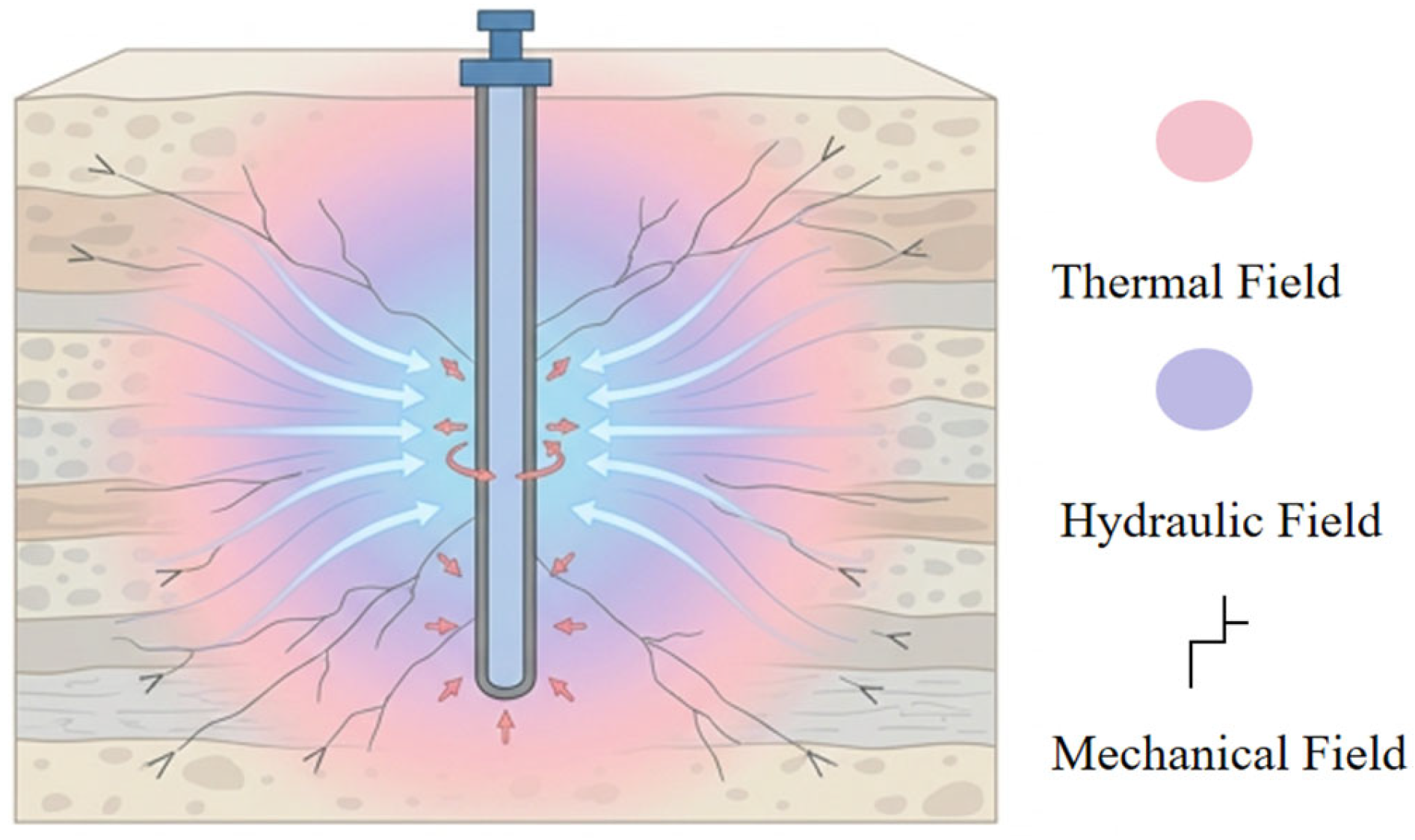
11]. In both frameworks, temperature effects are often simplified or neglected. Many analyses assume that the temperature difference between the wellbore and the formation is of secondary importance or substitute the transient thermal field with a steady-state approximation. Similarly, existing models for predicting fracture width evolution often consider only net pressure, fluid viscosity, elastic parameters, and in situ stresses, while overlooking the thermoelastic effects associated with coupled convective and conductive heat transfer between wellbore fluids and the formation. As a result, under depletion conditions, estimations of fracture initiation pressure, propagation driving force, and width evolution are frequently biased toward purely mechanical or hydraulic interpretations, failing to capture the essential thermos-hydro-mechanical coupling processes, as shown in
Figure 1.
In reality, the temperature field exerts a fundamental and non-negligible influence on lost circulation in depleted reservoirs [
12,
13,
14,
15]. Significant temperature contrasts and strong convective exchange occur between wellbore fluids and the formation. High Reynolds number flow near the well wall induces rapid temperature variations, and once losses occur, the invading fluids transport heat along fractures or high-permeability channels, generating directional convective heat transfer superimposed upon conductive diffusion. This interaction produces a highly nonuniform and transient temperature field. Temperature variations induce additional volumetric strain and stress through thermal expansion and contraction of the rock matrix; cooling tends to generate volumetric shrinkage and increases tensile hoop stress. For the circulating and invading fluids, temperature affects viscosity and density, thereby modifying the filtration rate, pressure distribution, and net driving pressure. In depleted formations, temperature variations can further alter pore compressibility and permeability sensitivity, intensifying the feedback between the flow and mechanical responses. When pre-existing or induced fractures are present, heat conduction and convection within the fractures enhance localized cooling, promoting tensile stress development and fracture opening. This behavior, driven by temperature variations, is a key aspect of thermally induced fracture propagation. Neglecting these effects unavoidably underestimates the driving forces for fracture initiation and propagation, leading to systematic errors in the prediction of lost-circulation risk and fracture aperture dynamics.
Previous studies that considered wellbore temperature together with pore pressure and fluid flow have provided analytical solutions for stress responses under heating or cooling and have been widely used to evaluate the breakdown and collapse pressures of intact boreholes [
16,
17,
18,
19,
20,
21,
22]. However, these studies generally assume a homogeneous, unfractured medium and therefore do not explicitly account for pre-existing or induced fractures, although severe lost circulation in practice is often associated with fracture reactivation and sustained conductivity. Studies within hydraulic-fracturing frameworks have also examined fracture initiation and propagation, but most do not simultaneously incorporate fluid temperature, transient heat transfer, and the associated thermal stress field, making it difficult to fully clarify temperature-induced stress evolution around fractures [
23,
24,
25]. More recent THM studies have further improved the understanding of coupled fracture–matrix behavior. For example, Pandey et al. [
26] showed that thermo-poroelastic deformation can significantly affect fracture aperture and reservoir deformation, Stefansson et al. [
27] highlighted the importance of fracture dilation and stress redistribution in matrix–fracture interaction, and Peng et al. [
28] improved the description of near-wellbore thermal–hydraulic behavior through a fully coupled borehole model with dynamic mudcake growth. Nevertheless, these studies focused mainly on geothermal production, subsurface stimulation, or intact near-wellbore response, and did not explicitly address depletion-induced fracture opening and leak-off evolution during drilling. In contrast, the THM model developed in this paper simultaneously incorporates depletion-induced in situ stress redistribution, transient heat transfer among the wellbore, fractures, and formation, and dynamic fracture-aperture evolution, thereby providing a more direct framework for evaluating leak-off-induced fracture width evolution and lost-circulation risk in depleted reservoirs.
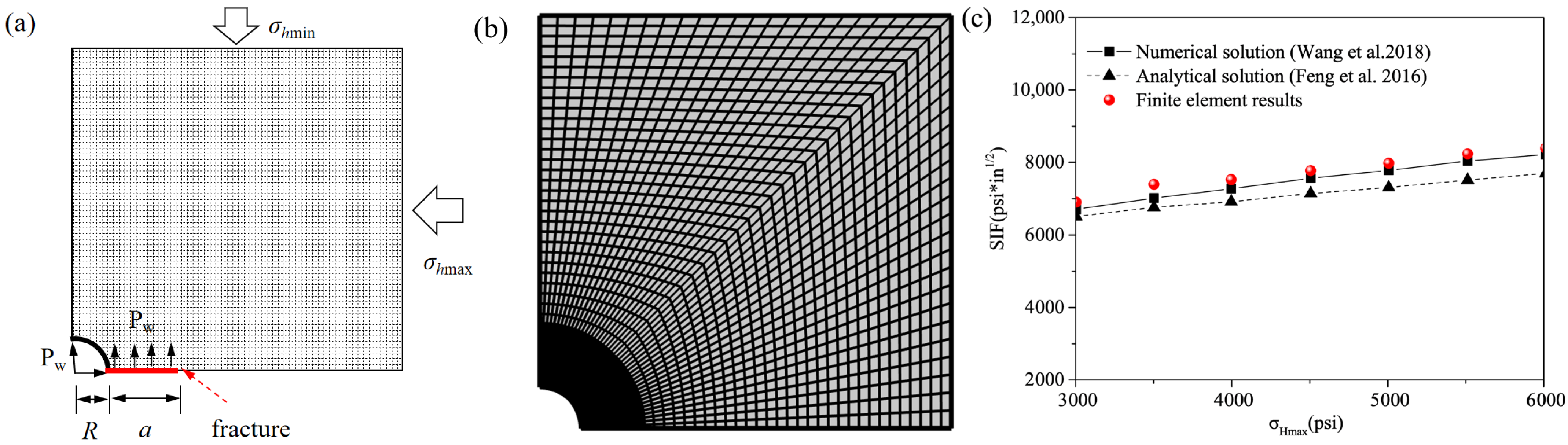
To address these research gaps, this study uses version 6.2 of COMSOL to construct a fully coupled thermo-hydro-mechanical model that characterizes transient heat exchange between wellbore fluids and the surrounding formation together with fluid migration in the porous medium. Compared with earlier THM studies, the present model explicitly combines depletion-induced stress redistribution, transient heat transfer, and dynamic fracture-aperture evolution in a drilling-oriented framework, thereby clarifying the study’s position relative to prior work. The model incorporates conductive heat transfer through the rock matrix and convective processes predominantly governed by fluid leakage along fractures and high-permeability pathways. From a mechanical perspective, thermoelastic stresses resulting from rock expansion and contraction are embedded within a poroelastic framework. Additionally, the influence of pressure depletion on the redistribution of in situ stresses is considered, with a focus on its impact on fracture behavior. This comprehensive modeling framework captures the coupled evolution of the near-wellbore stress and pore-pressure fields and elucidates their integrated impact on fracture aperture behavior. The findings provide a robust theoretical foundation for quantifying and predicting the mechanisms underlying lost circulation in depleted formations.
3. Results and Discussion
3.1. Effect of Pressure Depletion on In Situ Stresses
A systematic parametric study was conducted to investigate the effects of pressure depletion, wellbore pressure, fracture geometry, and thermal conditions on near-wellbore THM responses and fracture width evolution in depleted reservoirs. As described above, the rock and fluid physical properties were determined from laboratory measurements. The baseline values and tested ranges for all key parameters are summarized in
Table 3 as follows: the baseline values represent the actual physical conditions of the producing well, while the tested ranges are treated as independent variables to evaluate their influence on the system response. The formation temperature was held constant in all simulation cases to isolate the effect of injection temperature contrast.
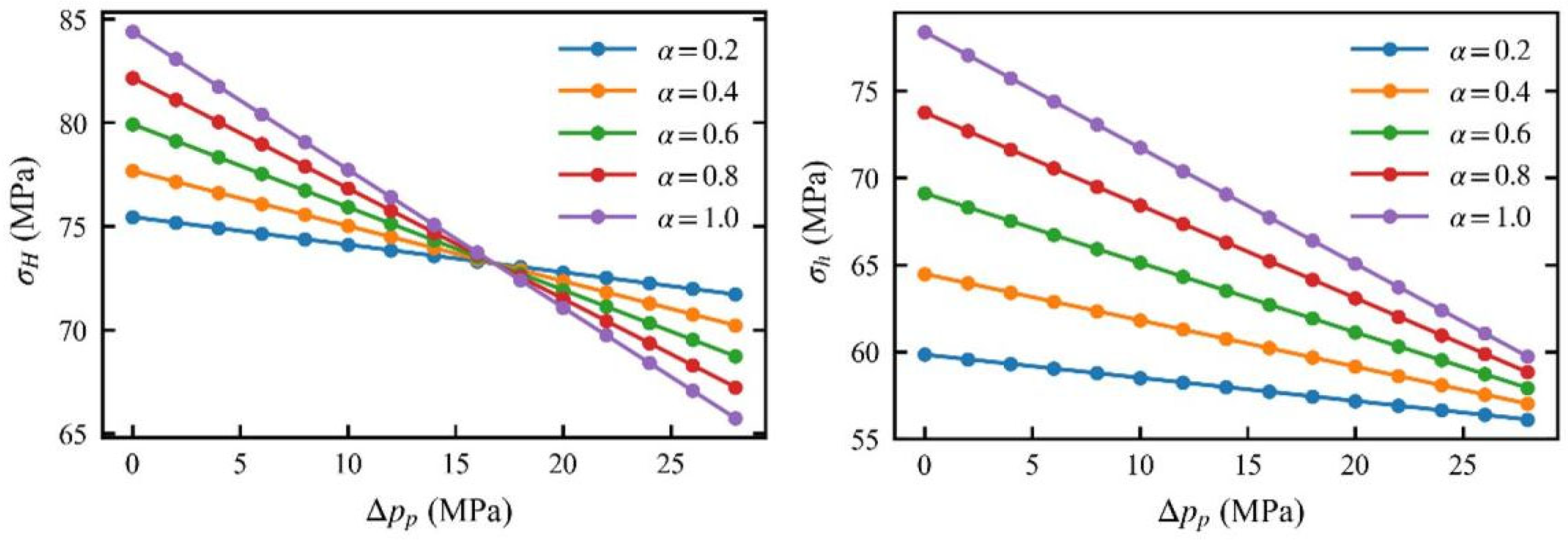
In situ stresses are the primary control on fracture initiation and, consequently, on loss-induced fracture propagation. We therefore first quantify how pressure depletion modifies the stress state, with particular attention to the role of the effective-stress (Biot) coefficient. The model parameters are kept consistent with those in
Table 1. Additionally, a parametric study is performed at a depth of 6000 m in the W Block of China, with overburden stress
= 90 MPa, pore pressure
p = 60 MPa, tectonic stress coefficients of 0.48 and 0.28, and Poisson’s ratio
v = 0.25, examining the responses of the maximum and minimum horizontal stresses under different effective-stress coefficients.
Figure 3 demonstrates that both
σH and
σh decrease linearly with pore-pressure depletion, consistent with poroelastic scaling. The larger the effective-stress coefficient, the steeper the decline rate of the horizontal stresses. Moreover, the minimum horizontal stress
σℎ exhibits greater sensitivity to depletion than
, implying that depletion narrows the differential between
and
more rapidly and lowers the fracture-initiation threshold preferentially along the minimum-stress azimuth. These trends highlight that formations with higher compressibility and larger effective-stress coefficients experience a more pronounced stress relaxation for a given pressure drawdown, increasing the propensity for tensile failure and leakoff.
3.2. Effect of the Degree of Pressure Depletion
When pressure depletion occurs, the in situ stress field undergoes redistribution, leading to concurrent variations in pore pressure, radial stress, circumferential stress, and the aperture of induced fractures surrounding the wellbore [
35]. These coupled changes can intensify lost circulation by enhancing fluid migration into the formation. This section examines how the magnitude of pressure depletion influences these four interdependent responses.
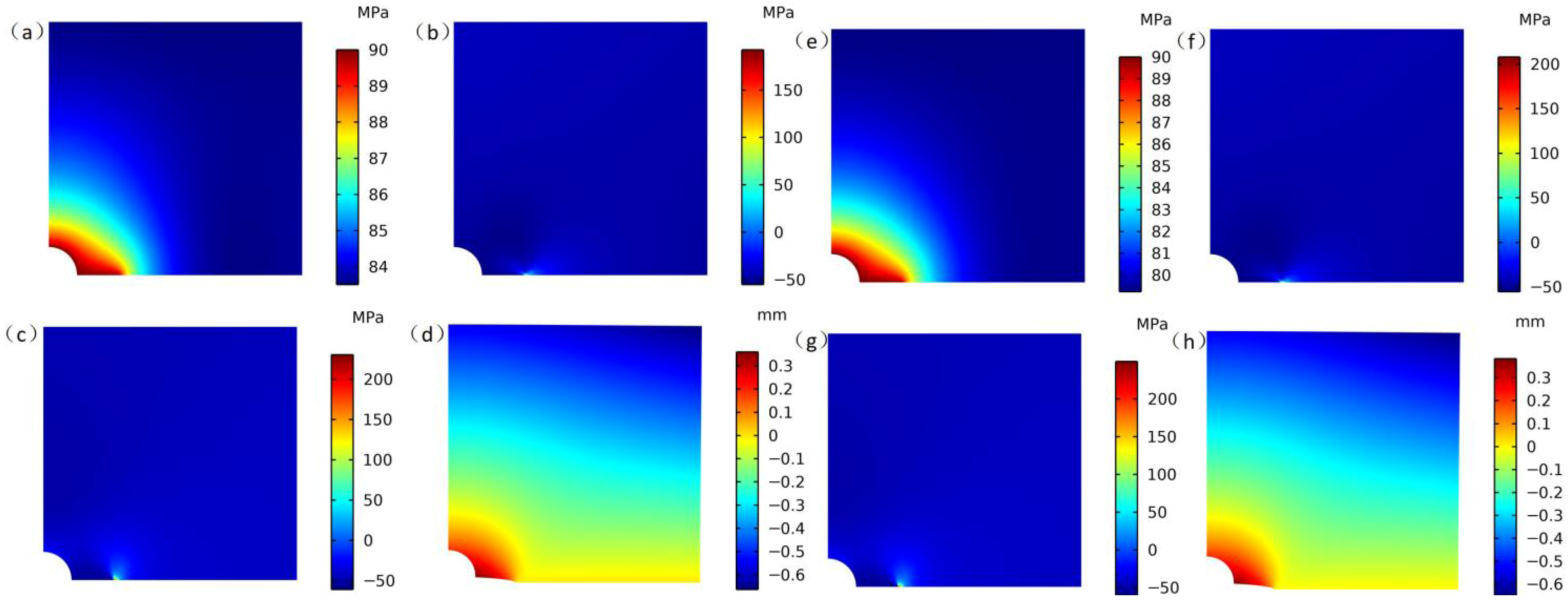
Under the baseline scenario, where the initial formation pressure is 60 MPa, the wellbore hydrostatic pressure is 90 MPa, the fracture half-length is 6 inches, and the injected-fluid temperature is 400 K.
Figure 4 illustrates the contour distributions of pore pressure, radial stress, circumferential stress, and fracture width at t = 1000 s for the following two representative cases: (a–d) without depletion and (e–h) with a depletion magnitude of 4 MPa. Increasing depletion reduces the background pore pressure and relaxes the overall stress field, thereby increasing the local net pressure and promoting fracture opening in the vicinity of the wellbore.
For the same baseline conditions,
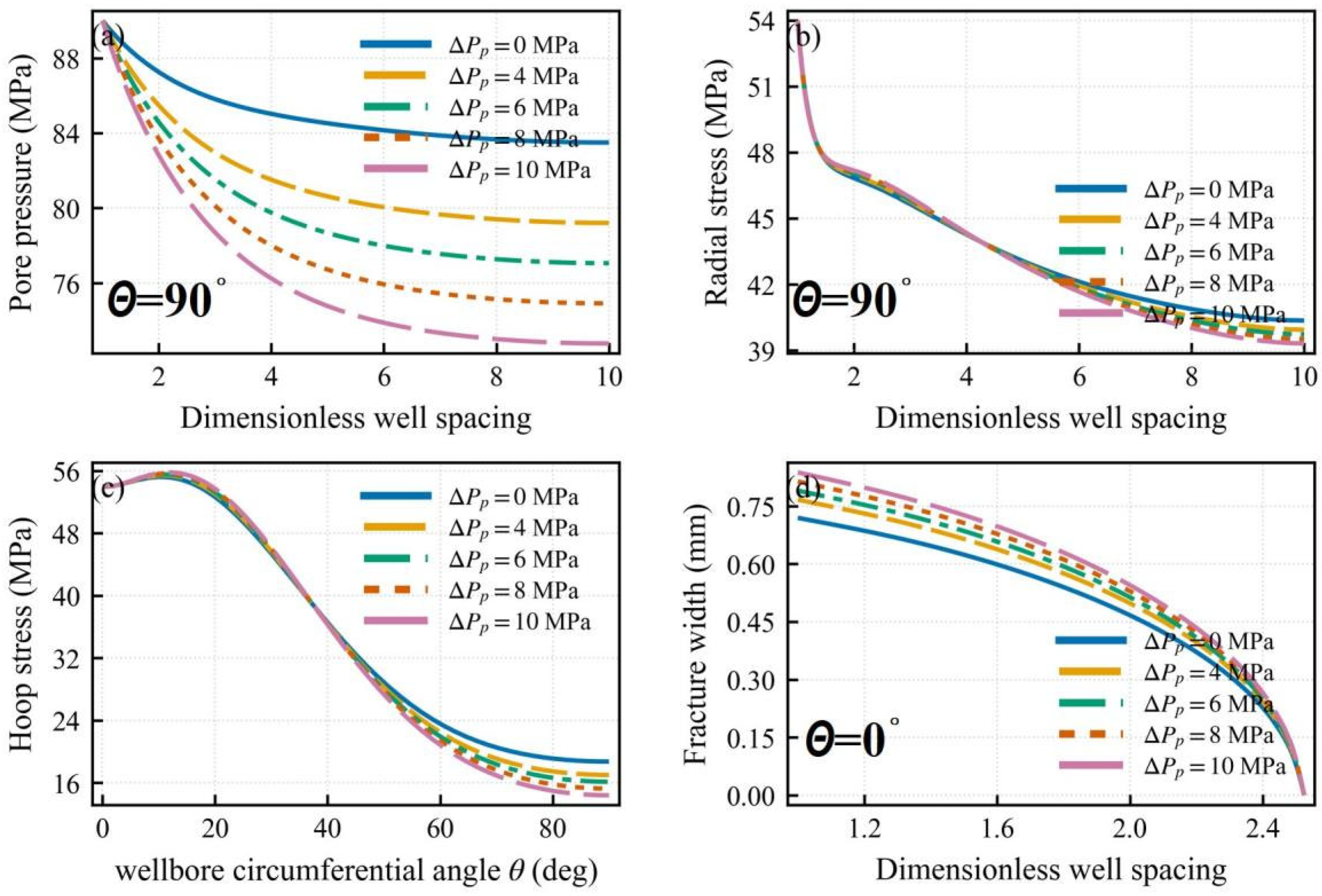
Figure 5 quantifies the dependence on dimensionless radius r/rw and azimuth θ. Pore pressure in
Figure 5a decays monotonically with increasing r/rw and approaches a quasi-steady background. Greater depletion shifts the entire profile downward, indicating a lower far-field pressure. In the near-wellbore zone with r/rw ≲ 2, overbalanced infiltration from the mud column yields the highest pore pressure, and this influence weakens with distance as the curve relaxes toward the reservoir background.
Radial stress in
Figure 5b decreases with r/rw and exhibits three stages consisting of an initial rapid drop, a near-linear descent, and a gradual approach to a plateau. For r/rw > 2, higher depletion produces a steeper decay, reflecting stronger poroelastic unloading of the radial component.
Hoop stress in
Figure 5c declines monotonically with azimuth, revealing pronounced directional anisotropy around the borehole. The θ = 0° direction aligns with the potential fracture plane and attains the maximum hoop stress, whereas θ = 90° is minimal. As depletion intensifies, all curves translate downward with little change in shape, which implies that depletion primarily modulates amplitude rather than anisotropy. For θ < 40° the decline rate becomes milder with increasing depletion, whereas for θ > 40° depletion accelerates the drop in hoop stress.
Figure 5d shows that fracture width decreases progressively with increasing r/rw, consistent with a near-wellbore peak in net pressure followed by outward attenuation. Larger depletion yields larger apertures at a given radius, meaning that the fracture is more open near the wellbore. Mechanistically, depletion lowers the pore-pressure background and, through poroelastic coupling, reduces both radial and hoop total stresses. Relative to the approximately fixed wellbore or fracture-fluid pressure, this raises net pressure and enlarges the near-wellbore opening. Consequently, induced fractures become more susceptible to initiation and further propagation, and the likelihood of lost circulation rises significantly.
3.3. Effect of the Hydrostatic Column Pressure
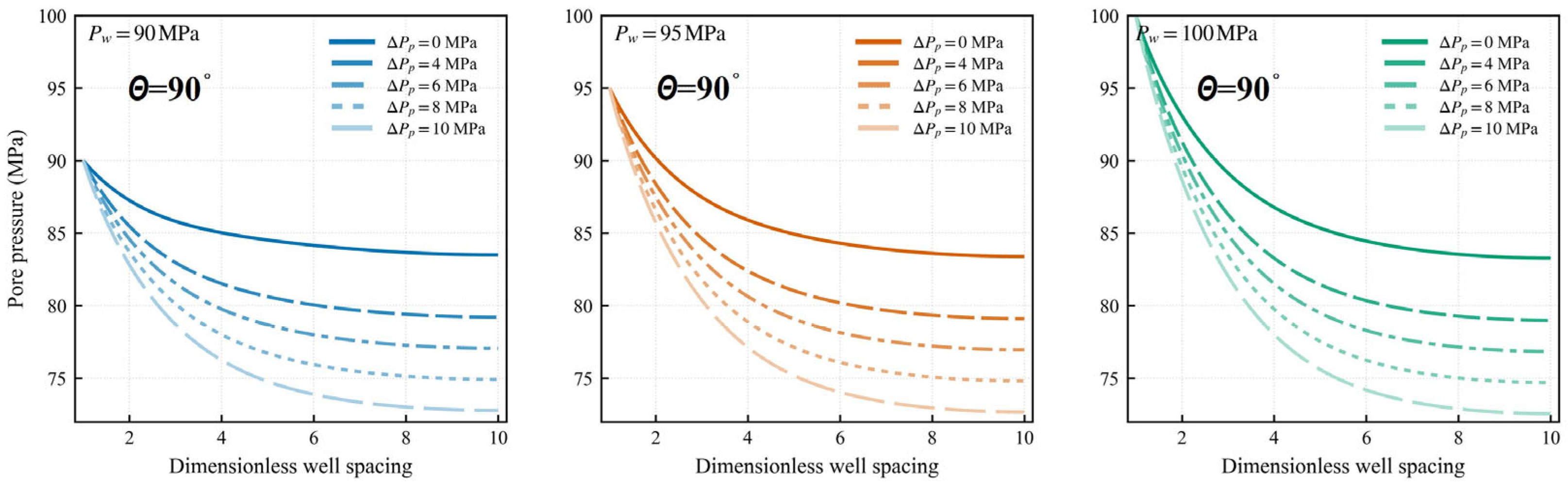
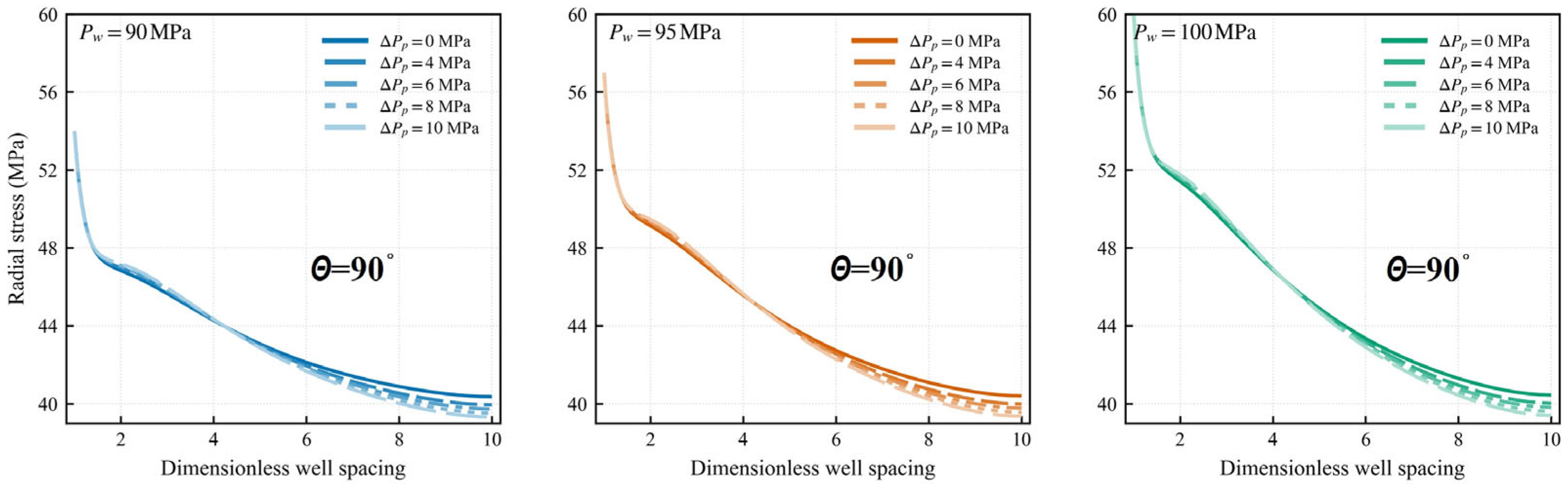
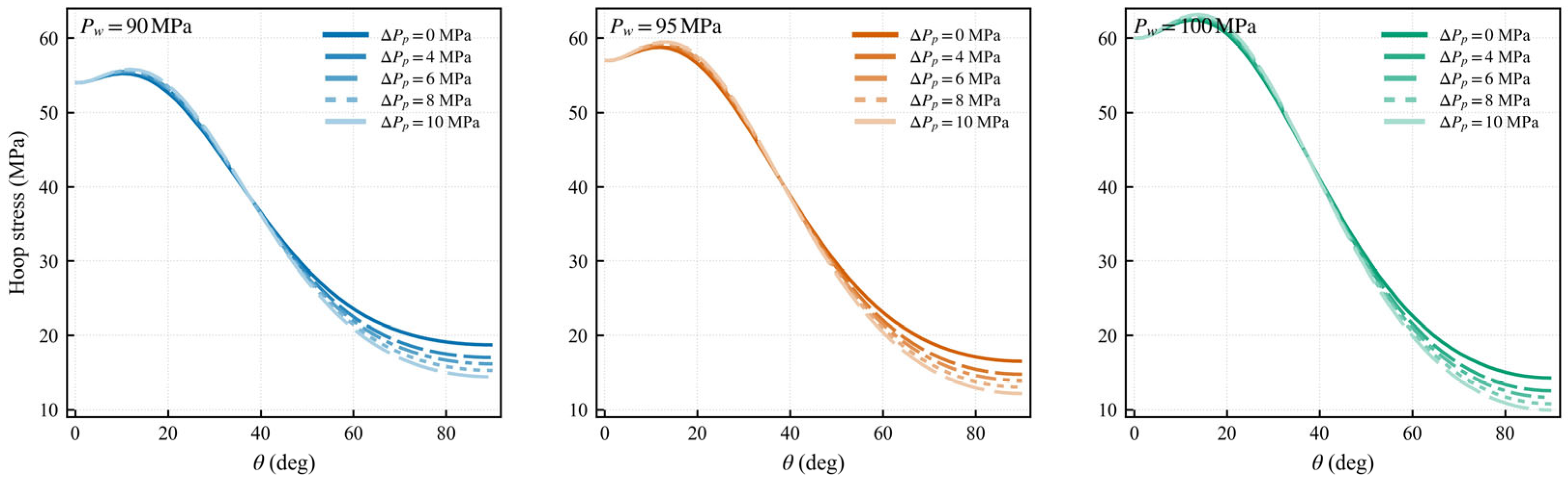
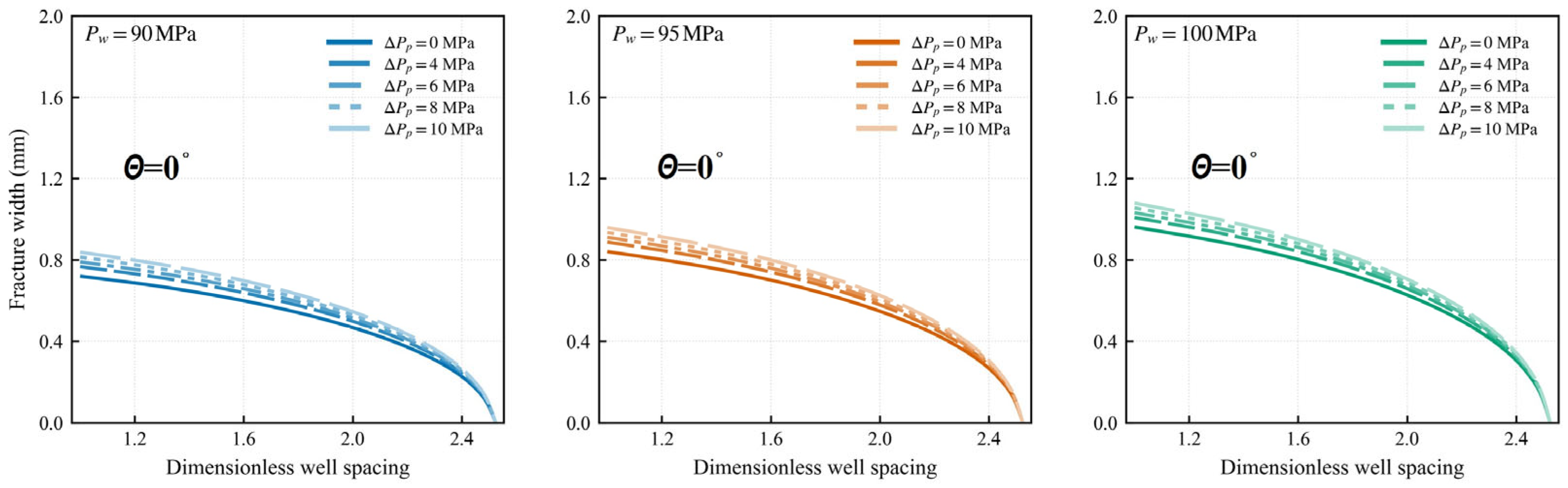
Under initial formation pressure 60 MPa, fracture half-length 6 inches, and injected fluid temperature 400 K, the responses are compared for wellbore hydrostatic pressures of 90, 95, and 100 MPa at different depletion levels. The analysis covers pore pressure, the near wellbore stress field, and fracture width.
Pore pressure decays monotonically with increasing dimensionless radius r/rw. Depletion shifts the entire curve downward. A larger hydrostatic pressure produces a steeper decline in the near wellbore zone. For r/rw > 8 the influence of hydrostatic pressure on pore pressure becomes negligible, as shown in
Figure 6.
In the near wellbore region with r/rw < 2, radial stress is strongly controlled by the hydrostatic pressure. For hydrostatic pressures of 90, 95, and 100 MPa, at r/rw = 2 depletion raises the radial stress slightly. A depletion of 10 MPa yields only about 0.32 to 0.34 MPa of additional radial stress. At r/rw = 10 the radial stress approaches about 40 MPa for all cases, as shown in
Figure 7. This indicates that the degree of depletion has a limited effect on radial stress regardless of the hydrostatic pressure level.
Hoop stress varies with azimuth in a pattern that first increases and then decreases. A peak appears at azimuths between about 10° and 18°. With further increase in azimuth, hoop stress drops rapidly and eventually approaches a plateau. When the azimuth exceeds 45°, depletion produces an overall reduction in hoop stress. Increasing hydrostatic pressure raises hoop stress in the low azimuth sector while reducing it in the high azimuth sector, as shown in
Figure 8.
Fracture width increases with hydrostatic pressure. At r/rw = 1 the fracture width is approximately linearly and positively correlated with hydrostatic pressure. The three curves are nearly parallel and the differences between adjacent pressure levels are nearly constant. A hydrostatic pressure of 100 MPa gives a stable increase in width of about 0.242 mm relative to 90 MPa, and 95 MPa gives about 0.121 mm relative to 90 MPa. As depletion deepens, the relative increment diminishes gradually, as shown in
Figure 9. The relationship between fracture width and hydrostatic pressure, quantified with an R
2 value of 0.88, confirms a strong linear correlation and provides a direct reference for the dynamic adjustment of the drilling fluid density window.
3.4. Effect of Fracture Length
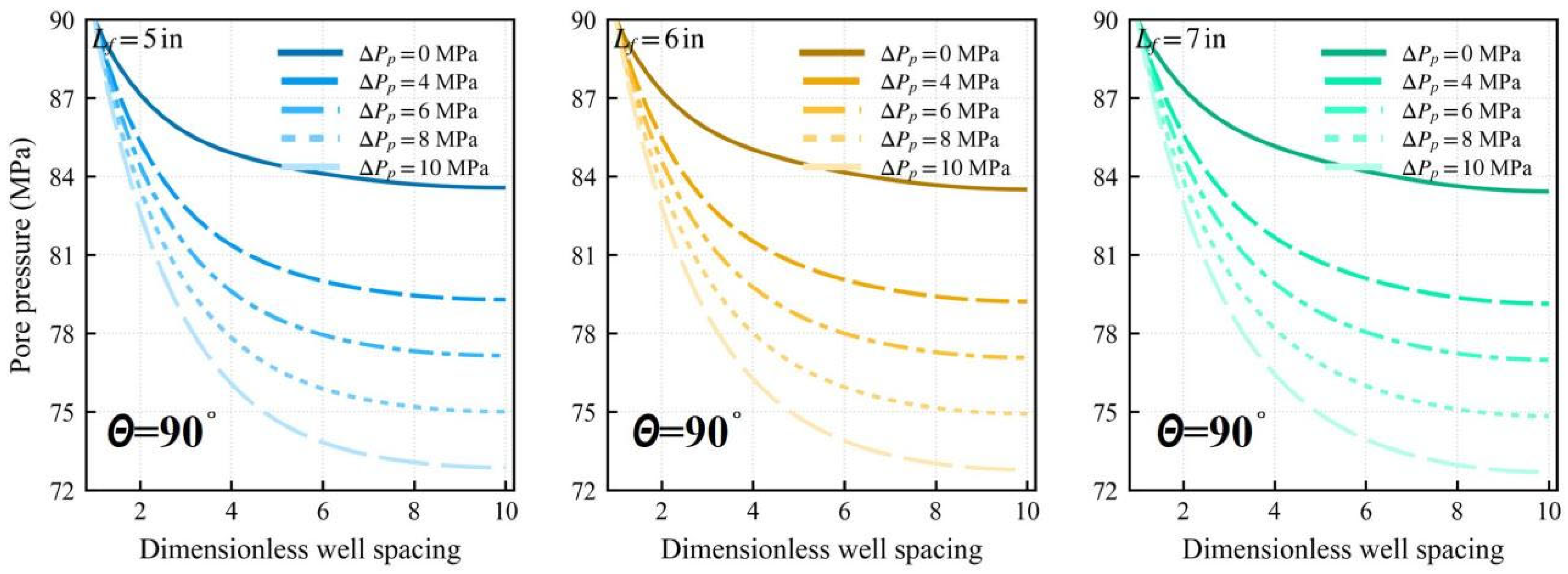
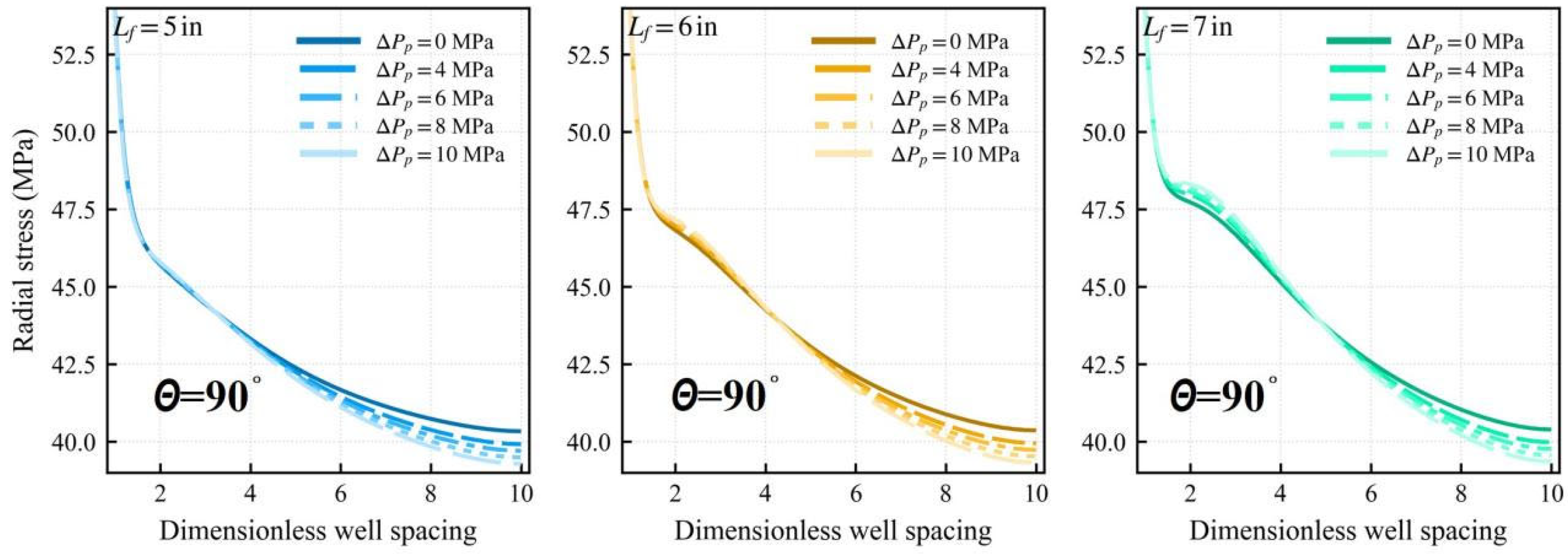
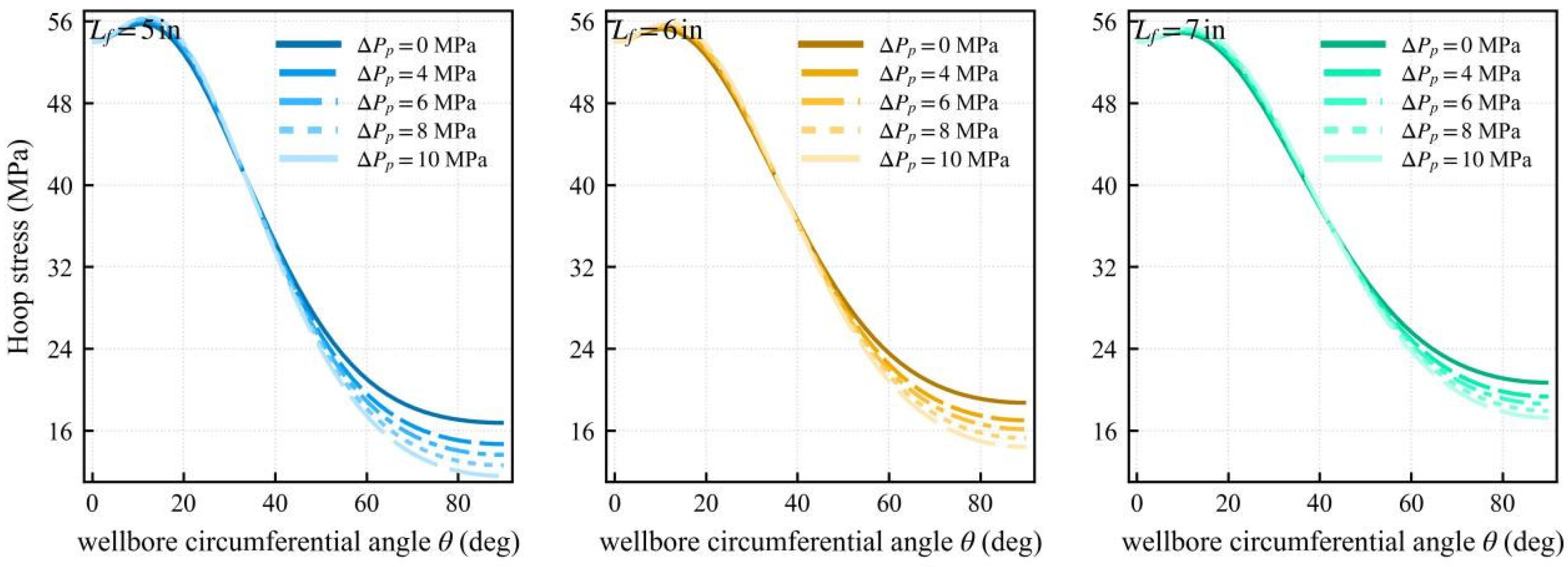
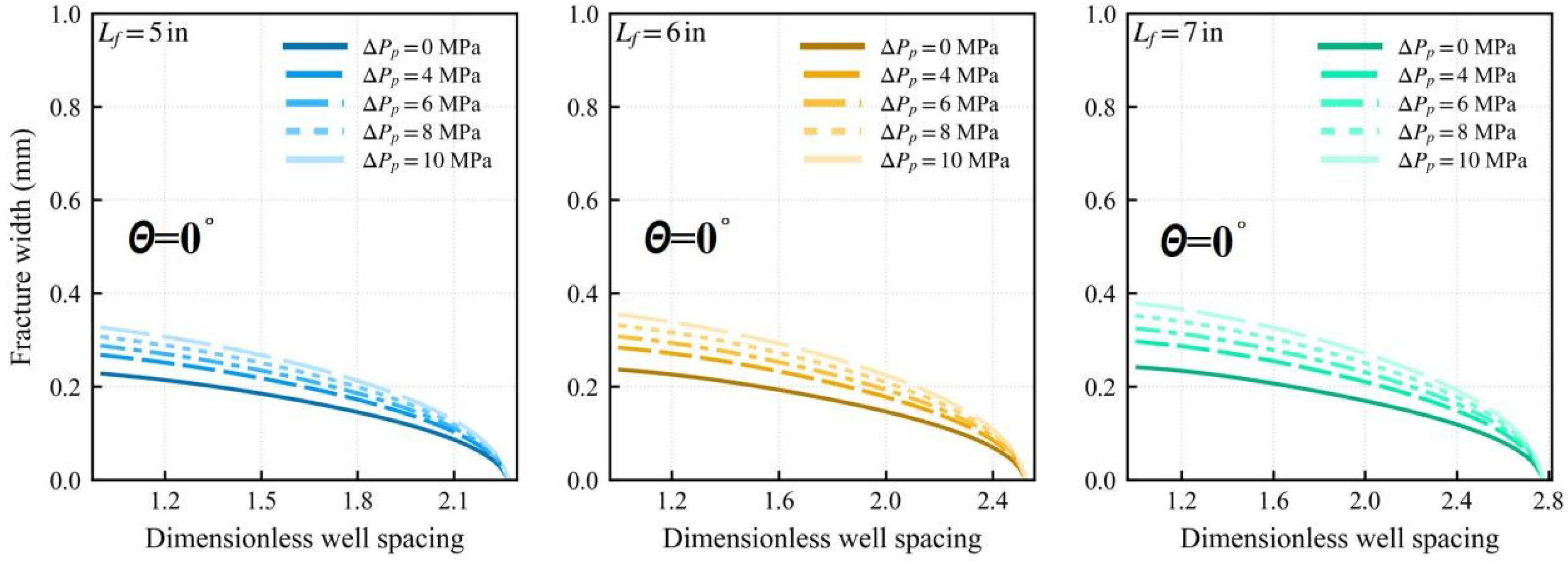
Under initial formation pressure of 60 MPa, wellbore hydrostatic pressure of 90 MPa, injected fluid temperature of 400 K, and fracture half lengths of 5, 6, and 7 in, the effects of fracture length are compared across multiple depletion levels for pore pressure, the near-wellbore stress field, and fracture width.
Pore pressure decreases monotonically with increasing dimensionless radius r/rw, and at r/rw = 1 it equals the wellbore pressure. The influence of fracture length on pore pressure is marginal with magnitude not exceeding 0.191 MPa, though it increases slightly with stronger depletion. Around r/rw ≈ 1.35 the longer fracture yields a slightly higher pore pressure, whereas at r/rw = 10 the longer fracture yields a slightly lower value and the difference remains small. These features indicate weak length sensitivity that is confined to the near-wellbore transition and the far field, as shown in
Figure 10.
Radial stress decays from about 54 MPa near the wellbore to about 40 MPa in the far field, and the values at r/rw = 1 are essentially identical for all lengths. The length-dependent difference peaks near r/rw ≈ 1.354 and grows with increasing depletion, while the far-field difference remains small not exceeding 0.069 MPa, as shown in
Figure 11.
Hoop stress attains a peak at small azimuths θ ≈ 10–12° and then drops to a minimum at θ = 90°. Depletion lowers the overall level, yet the peak at small azimuths is nearly insensitive to length. Longer fractures produce higher minima at θ = 90°, indicating a more uniform circumferential stress field. The impact of fracture length is most pronounced at larger azimuths, where larger lengths yield larger hoop stress. For a given length, the depletion-induced change becomes smaller as length increases, whereas the cross-length difference at a fixed azimuth grows with depletion and reaches a maximum near θ ≈ 58.4–58.7°, as shown in
Figure 12.
Fracture width decreases with r/rw, reflecting maximum net pressure near the wellbore followed by outward attenuation. Longer fractures produce larger widths over the entire profile. At the same radius, the cross-length difference peaks near r/rw ≈ 1.354 and increases with depletion; the difference at r/rw = 1 increases concurrently. Relative to the undepleted case, the near-wellbore width grows approximately linearly with depletion (R
2 = 0.83), and the growth rate is larger for longer fractures, as shown in
Figure 13.
The impact of fracture length on near-wellbore parameters is mainly concentrated within approximately 1.35 times the wellbore radius. Longer fractures not only lead to a significant increase in fracture width within this region but also result in a greater rate of fracture width growth as pressure depletion intensifies. This explains why pressure depletion induces nonlinear increases in leak-off rates in formations with well-developed natural or induced fractures. This phenomenon complements the study by van den Hoek et al. (1993), with our contribution being the quantification of the relationship between fracture length and fracture width amplification under depletion conditions [
36].
3.5. Effect of Injection Temperature
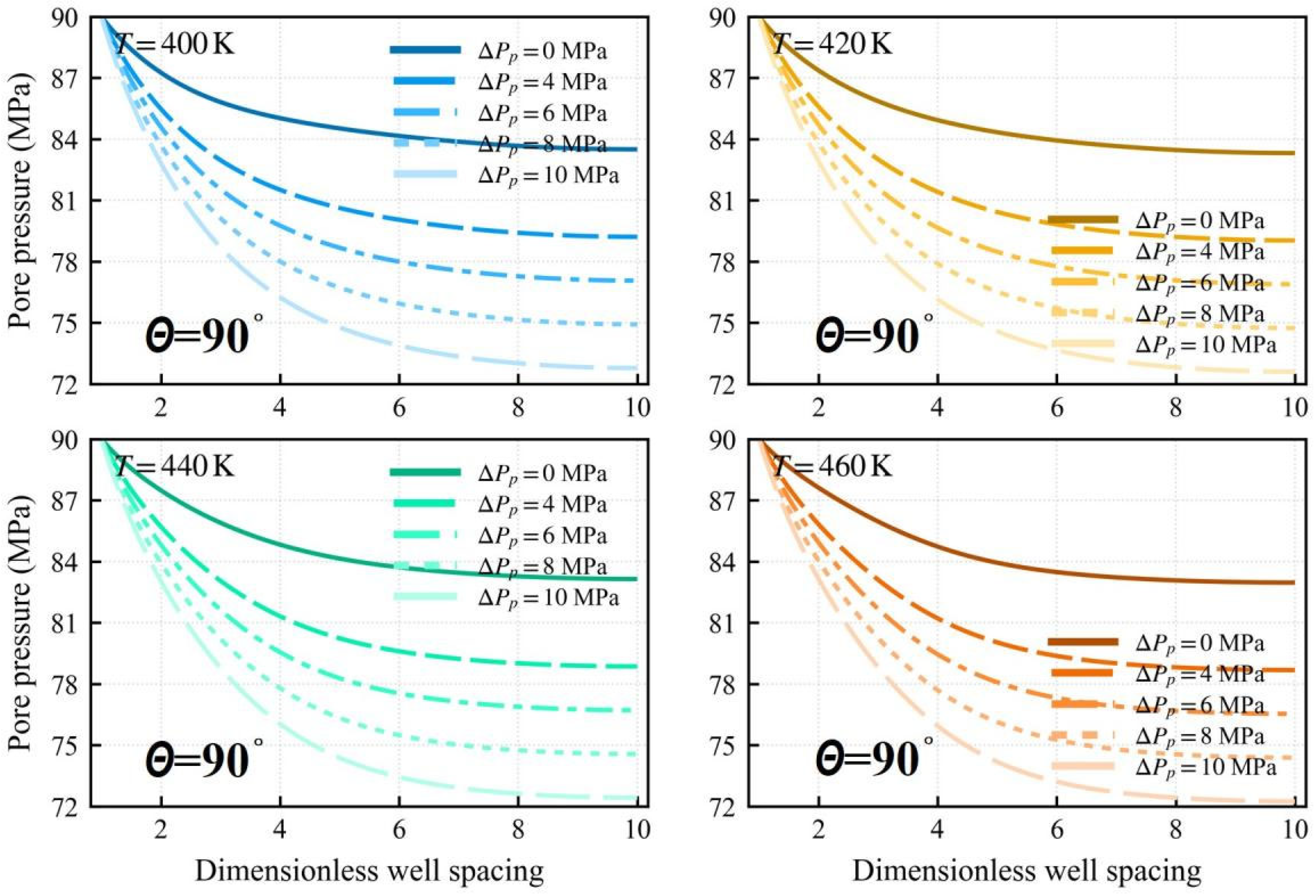
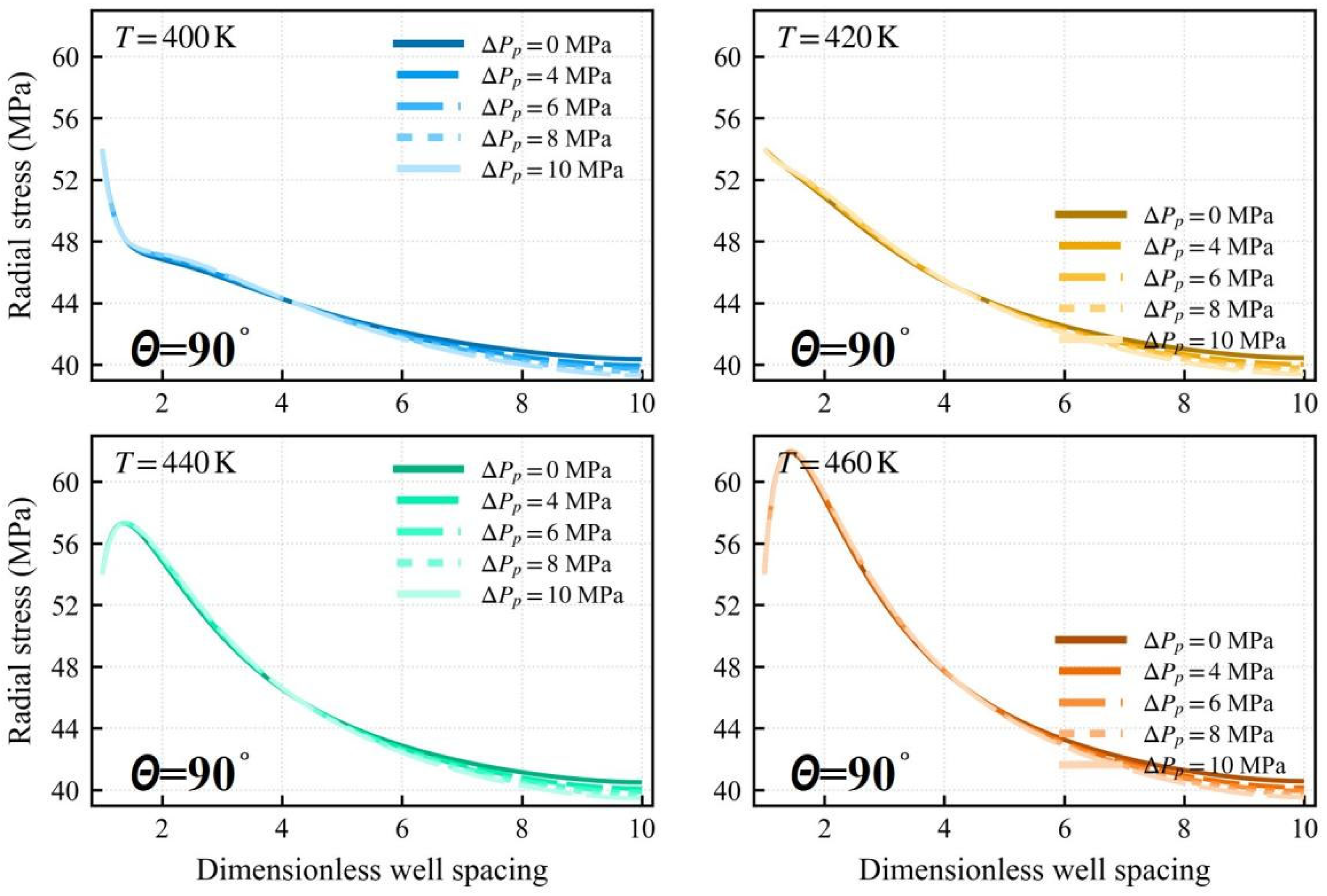
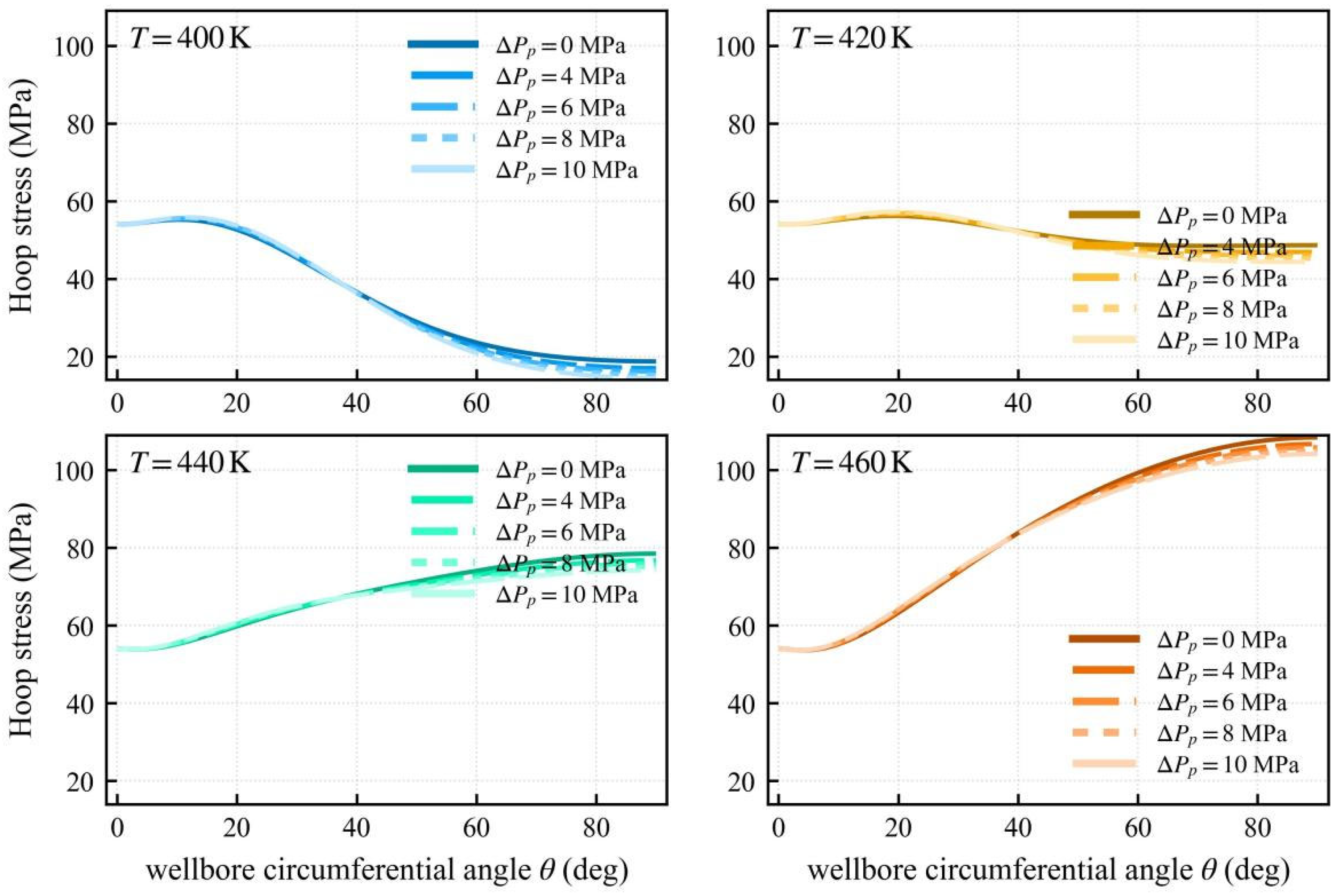
Under initial formation pressure 60 MPa, initial formation temperature 430 K, wellbore hydrostatic pressure 90 MPa, and fracture half-length 6 inches, four injection temperatures are examined—400 K, 420 K, 440 K, and 460 K—across multiple depletion levels to evaluate pore pressure, the near-wellbore stress field, and fracture width.
At r/rw = 1, the pore pressure is identical for all temperatures and then decreases with increasing r/rw. A higher injection temperature produces a slight increase in pore pressure. The temperature difference effect is most evident in the mid- to-far field while its magnitude remains below 0.7 MPa and shows negligible sensitivity to depletion. See
Figure 14.
Radial stress decreases monotonically from the near wellbore to the far field. Hotter injection yields a small overall elevation, and colder injection yields a small overall reduction. The spatial distribution of the temperature influence is nonuniform, with the largest spread near r/rw ≈ 1.51. Sensitivity to temperature varies only at the parts per thousand with depletion. The region just outside the near wellbore exhibits stronger sensitivity, whereas the far field shows only minor offsets that are effectively decoupled from depletion. See
Figure 15.
The hoop stress is most sensitive to injection temperature at an azimuth of 90°. The four temperatures display their largest spread at this azimuth for all depletion levels, whereas the effect at small azimuths around 10° to 12° is limited. Injection above the formation temperature markedly increases hoop stress, and injection below the formation temperature markedly decreases it. The temperature sensitivity is nearly independent of depletion (
Figure 16).
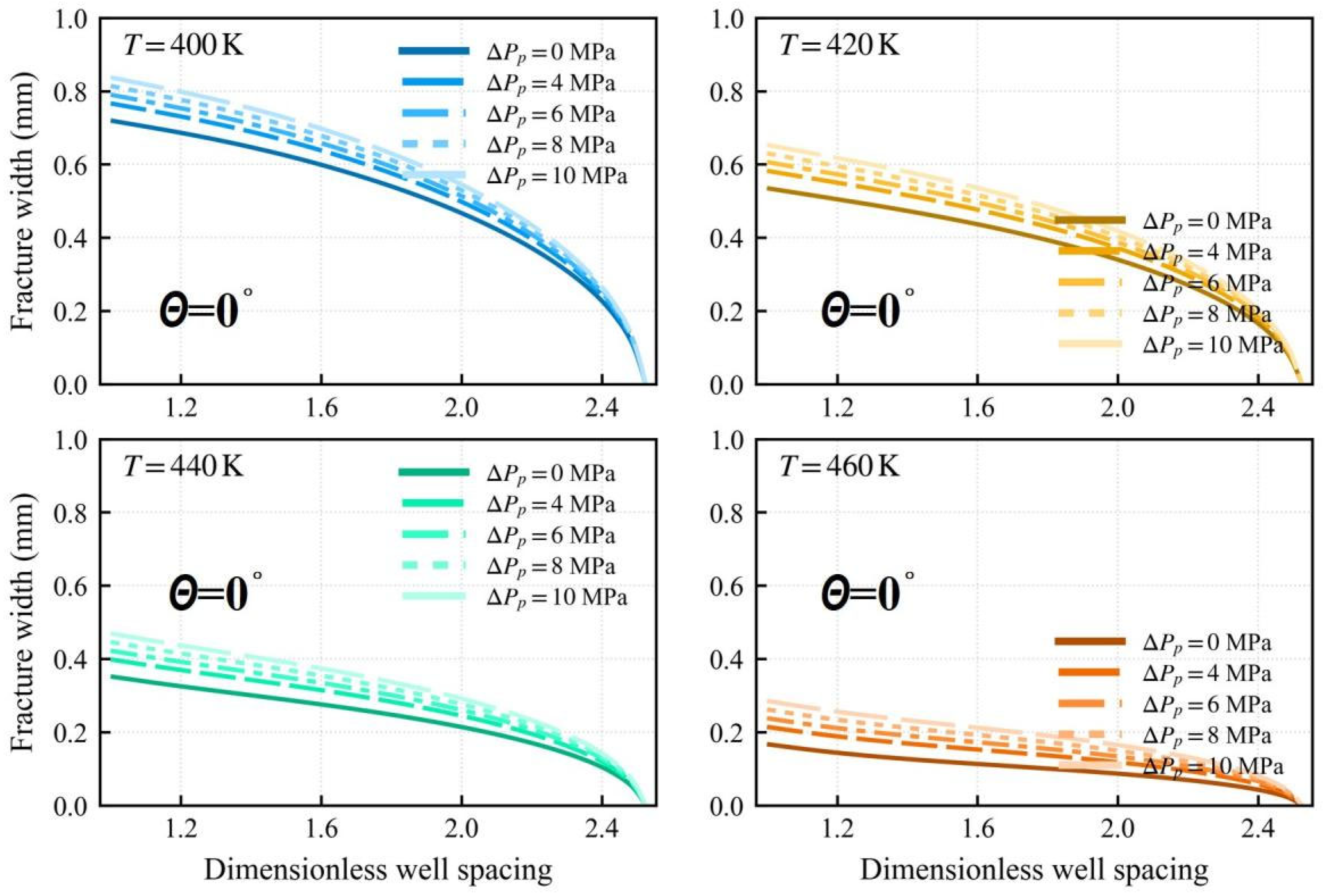
Fracture width progressively decreases with distance from the wellbore. An increase in injection temperature markedly reduces the near-wellbore aperture, whereas a decrease in temperature leads to its enlargement. The thermal influence diminishes toward the fracture tip, as illustrated in
Figure 17. Taking
pp = 6 MPa and a dimensionless well spacing of 1.6 as an example, when the temperature increases from 400 K to 460 K, the fracture width decreases from 0.7 mm to 0.17 mm, representing a reduction of 75%. The principal mechanism involves temperature-induced modification of circumferential stress, with secondary effects arising from variations in pore pressure and radial stress. When mitigating lost circulation is a priority, the temperature contrast between the injected fluid and the formation should be minimized, and a moderately higher injection temperature is recommended to constrain the near-wellbore aperture and suppress fluid loss.
4. Conclusions
A fully coupled thermo–hydro–mechanical model is developed. The model allows simultaneous specification of wellbore pressure, injected-fluid temperature boundary conditions, and induced fracture length, and quantitatively evaluates their combined effects on pore-pressure evolution, near-wellbore stress redistribution, and fracture-aperture development.
(1) Reservoir pressure depletion linearly reduces horizontal in situ stresses, with the minimum horizontal stress being more sensitive. Higher effective-stress coefficients and greater rock-frame compressibility intensify this decrease. Depletion mainly affects stress magnitudes while maintaining spatial and azimuthal distributions, and near-wellbore fracture aperture increases nearly linearly with depletion.
(2) Increasing hydrostatic column pressure enhances near-wellbore drawdown, raises hoop stress at low azimuths, and increases fracture width approximately linearly, while dominating radial-stress variation within r/rw < 2. Pore-pressure depletion reduces the pore-pressure background, and through poroelastic coupling, lowers radial and hoop stresses, raising net pressure relative to wellbore pressure, which further promotes fracture opening, though the effect weakens at higher depletion levels. Fracture length has minor impact on pore-pressure field but more strongly affects high-azimuth hoop stress and near-wellbore fracture aperture.
(3) Temperature differences cause only small changes in pore pressure, mainly in the mid- to far-field. In contrast, thermoelastic effects exert first-order control on local stress redistribution. Injection at temperatures above the formation temperature increases hoop and radial stresses—most prominently near the 90° azimuth—thereby tending to reduce near-wellbore fracture aperture, whereas colder injection decreases these stresses and promotes fracture opening. This thermal sensitivity is largely independent of depletion level, indicating that injection temperature can serve as an effective operational lever for managing near-wellbore fracture behavior and mitigating lost-circulation risk in depleted formations.
(4) Although the homogenization approach ensures model convergence and variable uniqueness, it has limitations when dealing with formations with fractures of varying scales. Long fractures should be identified pre-drilling using seismic and logging methods, while short fractures can be managed through wellbore pressure adjustments and temperature regulation. The current model is suited to simplified scenarios and does not account for complex fracture networks or strongly variable geological conditions. Therefore, its most appropriate application is in single-fracture or weakly fractured near-wellbore settings where the dominant leak-off pathway can be approximated explicitly. In reservoirs with dense fracture networks or strong heterogeneity, the results should be interpreted primarily as trend-based guidance rather than direct quantitative predictions. Future research will expand the model to multi-fracture networks and real-world conditions, refine modeling techniques, and address the limitations of homogenization, particularly in heterogeneous formations. These advancements, supported by additional field data, will improve accuracy and operational strategies in complex geological environments.