Detoxification and Valorization of Hazardous Secondary Aluminum Dross: A Critical Review of Contaminant Transformation, Processing Technologies, and Emerging Frontiers

 ,
,
Abstract
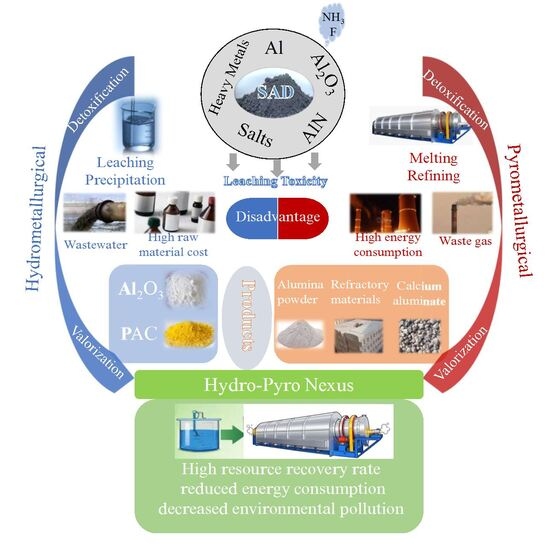
1. Introduction
Compositional Characteristics and Hazard Assessment of Aluminum Dross
2. Overview of SAD Treatment and Disposal Processes
2.1. Technology Readiness and Scalability Assessment
2.2. Quantitative Comparative Analysis of Processing Routes
2.3. Comparative Synthesis of Processing Trade-Offs and the Rationale for Hybrid Integration
3. Hydrometallurgical Detoxification and Valorization
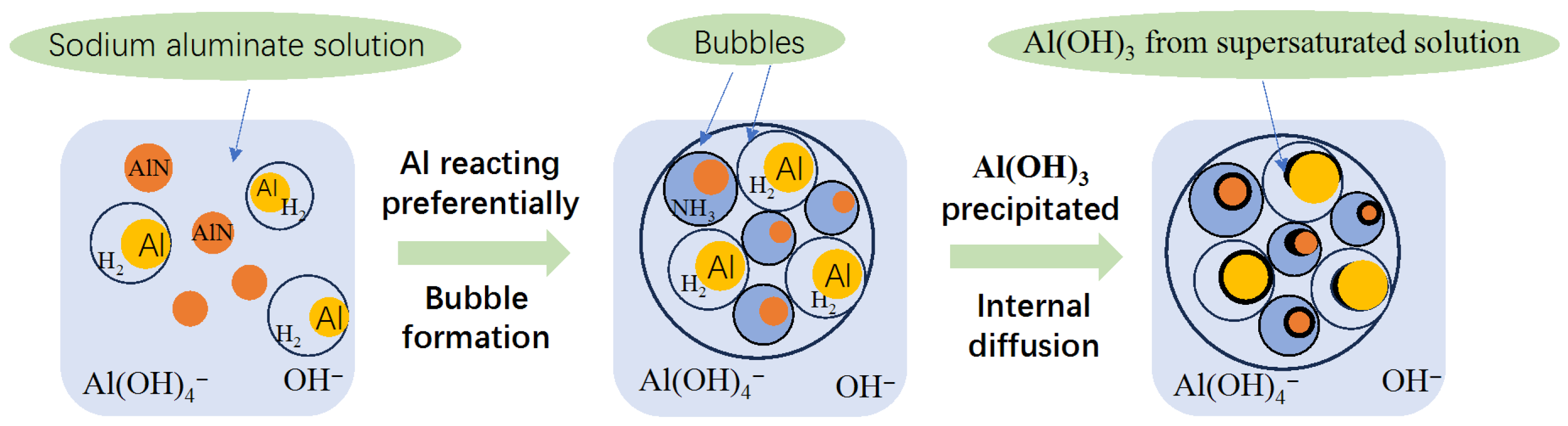
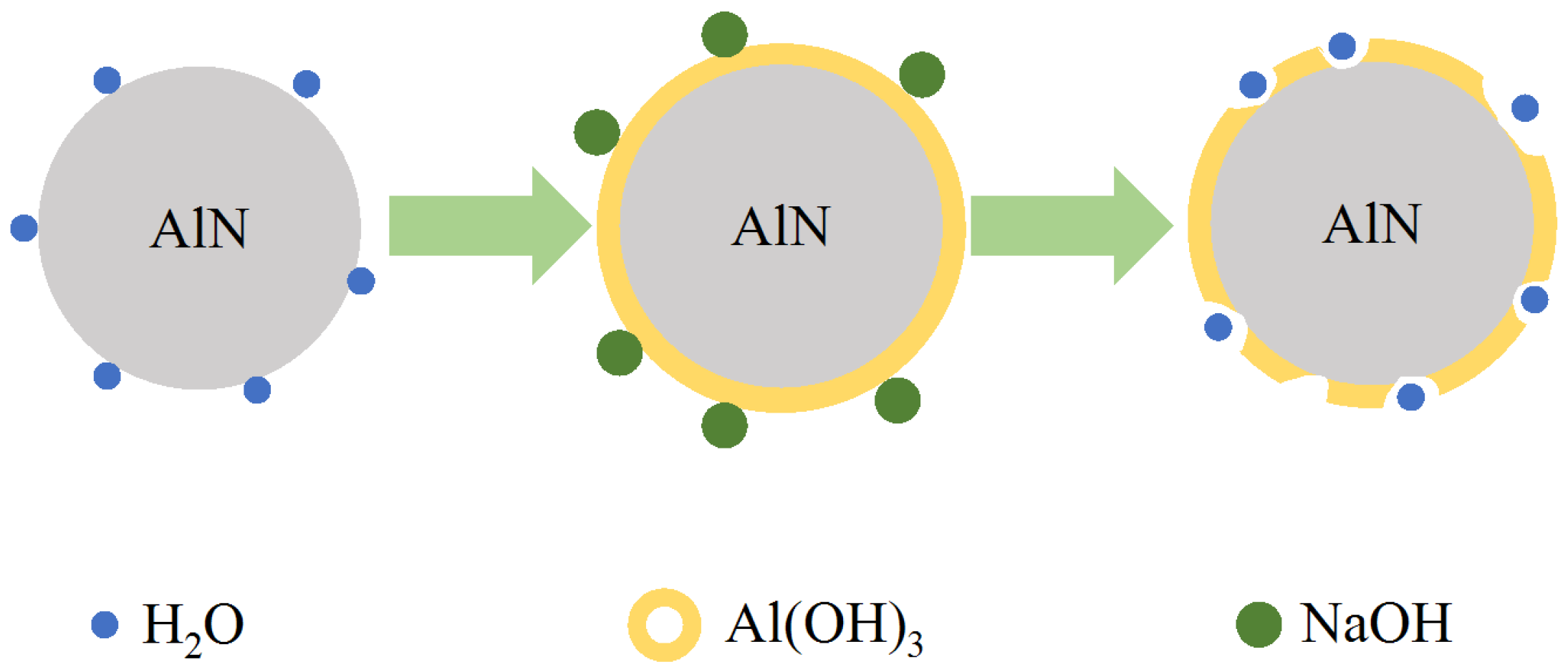
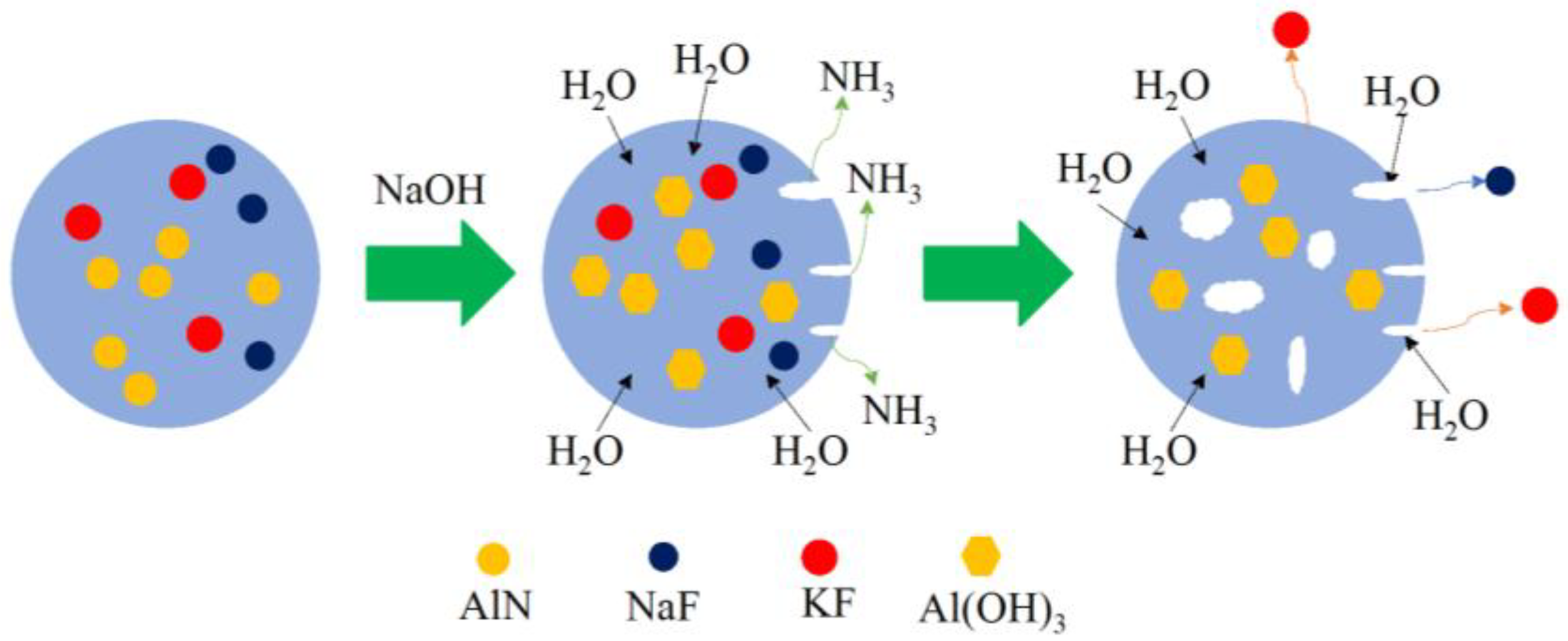
3.1. Elimination Kinetics of AlN
3.2. Fluoride and Chloride Leaching and Fixation
3.3. Hydrometallurgical Resource Recovery Products
3.3.1. Alumina Recycling
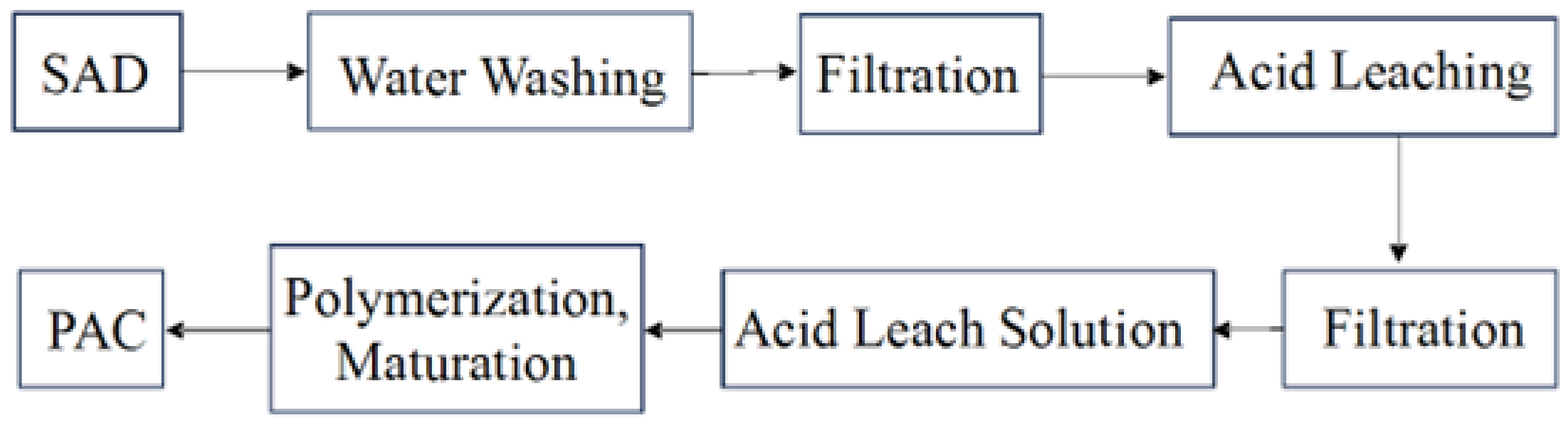
3.3.2. Preparation of Water Purifiers
3.3.3. Preparation of Adsorbents
3.4. Optimization of Operational Parameters
4. Pyrometallurgical Detoxification and Valorization
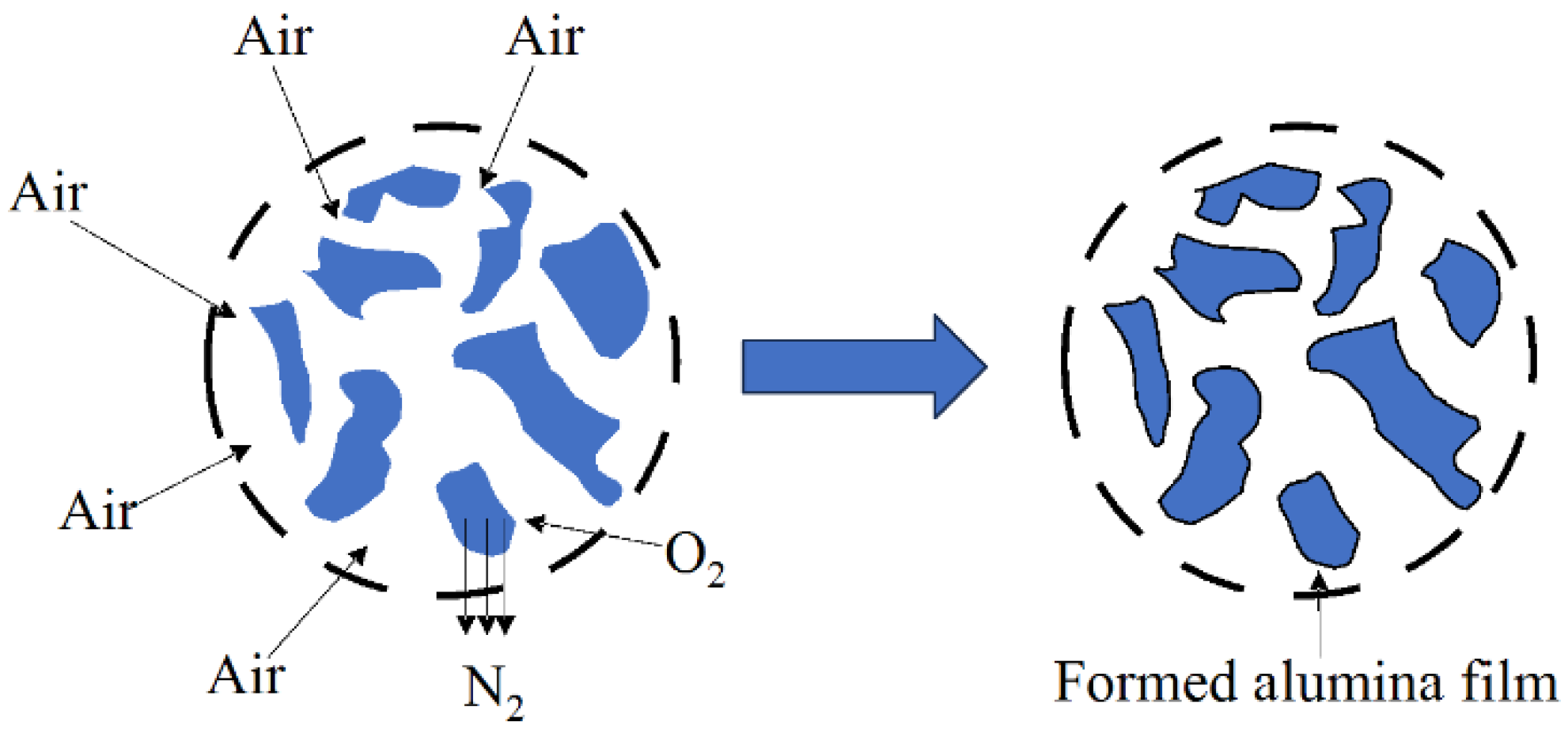
4.1. Oxidative Destruction of AlN
4.2. Thermal Decomposition of Aluminum Carbide
4.3. Fluoride Fixation and Emission Control
4.4. Chloride Behavior and Removal
4.5. Immobilization of Heavy Metals
4.6. Valorization via Pyrometallurgical Synthesis
4.6.1. Recovery of Alumina
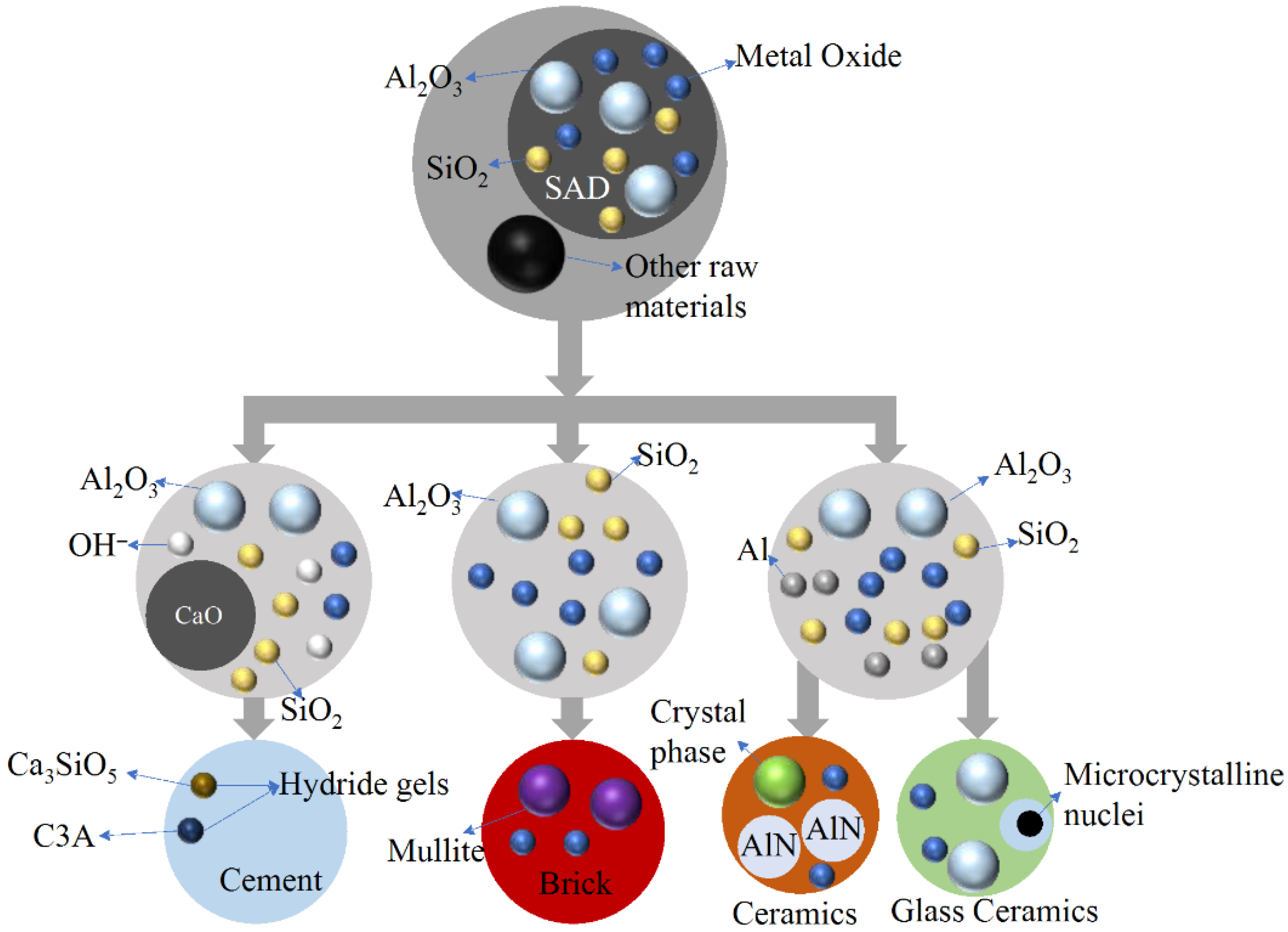
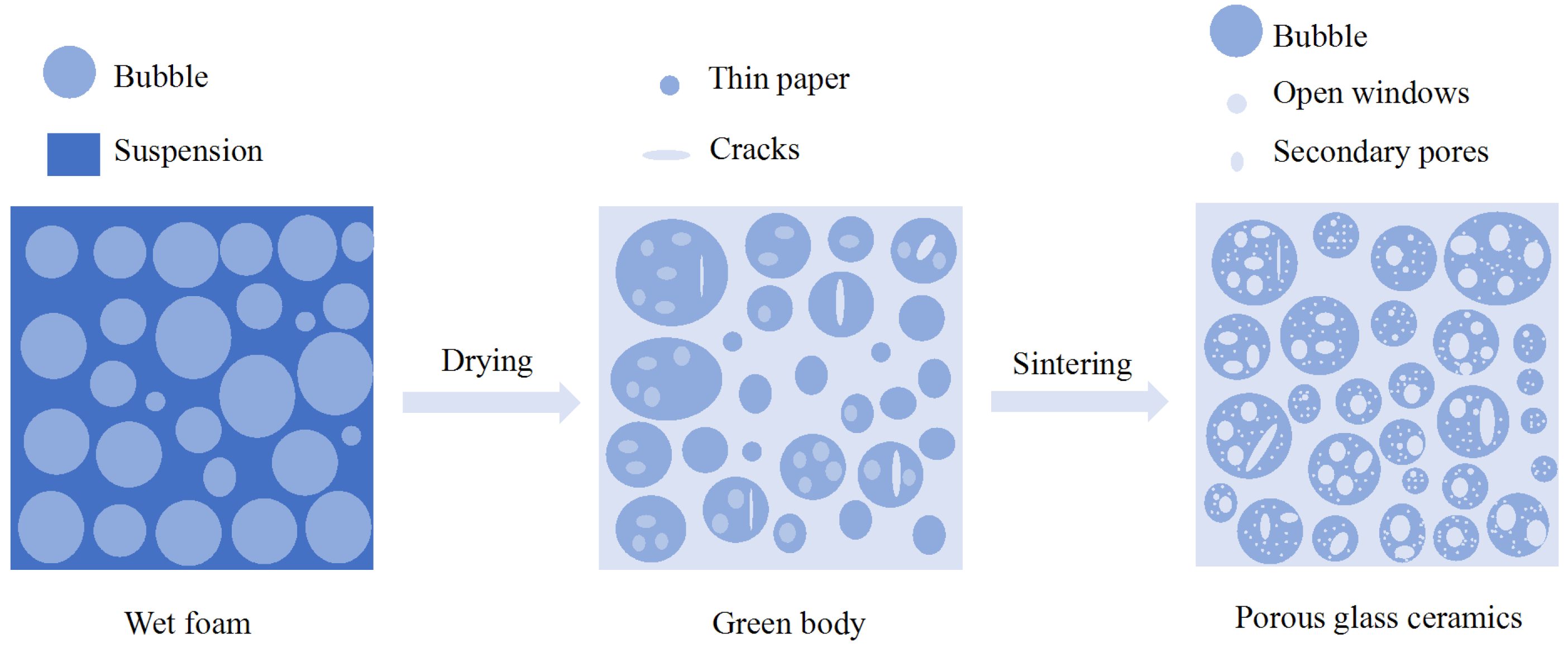
4.6.2. Advanced Construction Materials
4.6.3. Preparation of Calcium Aluminate
4.6.4. Preparation of Magnesia-Alumina Spinel
4.6.5. Other Resource Utilization Technologies
4.7. Mechanistic Role of Additives in Pyrometallurgical Processing
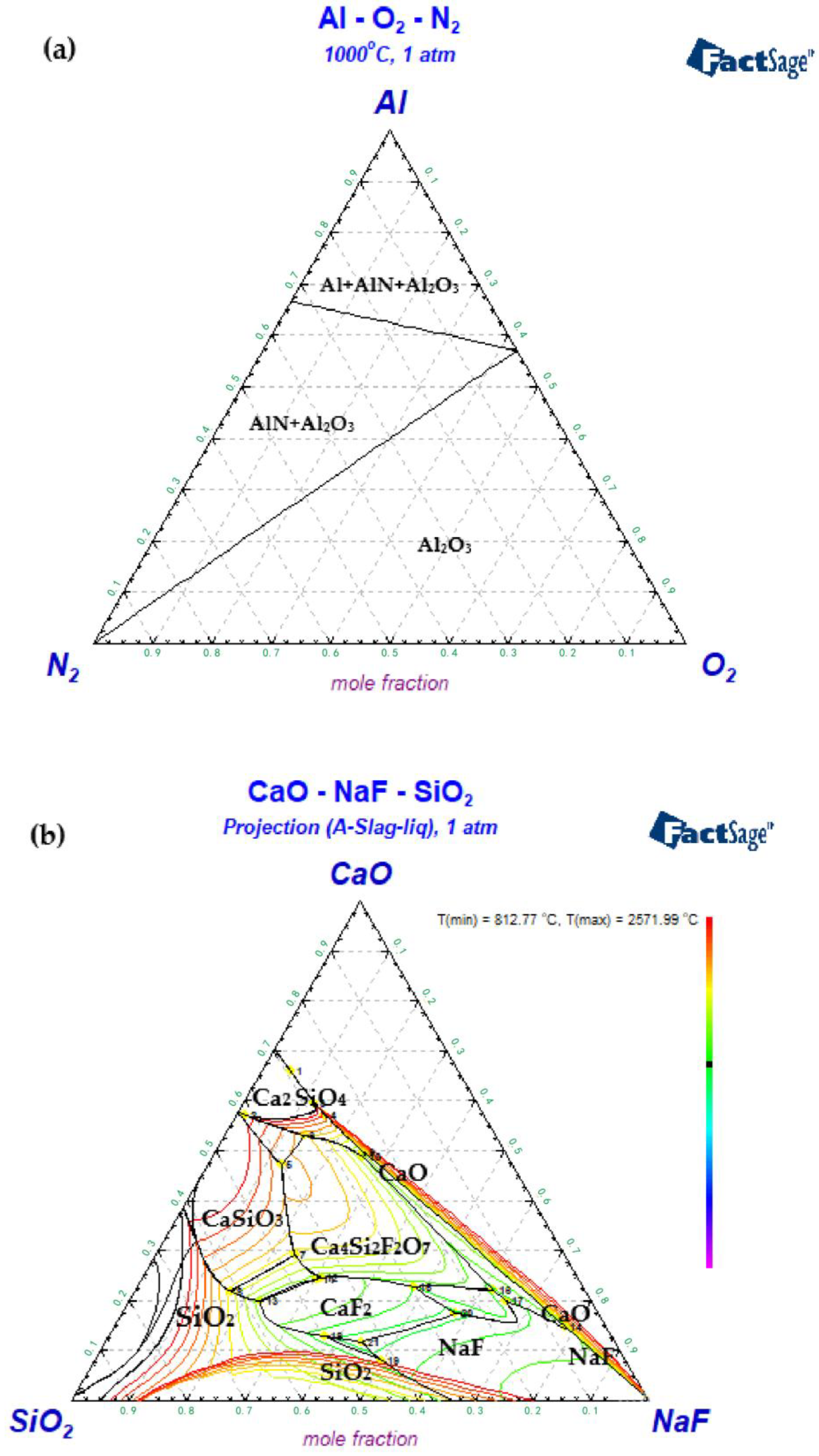
4.8. Thermodynamic Analysis of Pyrometallurgical Transformations
4.9. Gaseous Emissions and Their Fate
4.9.1. Nitrogen Species
4.9.2. Fluorinated Compounds
4.9.3. Chlorinated Compounds
4.9.4. Heavy Metals
4.9.5. Integrated Off-Gas Management
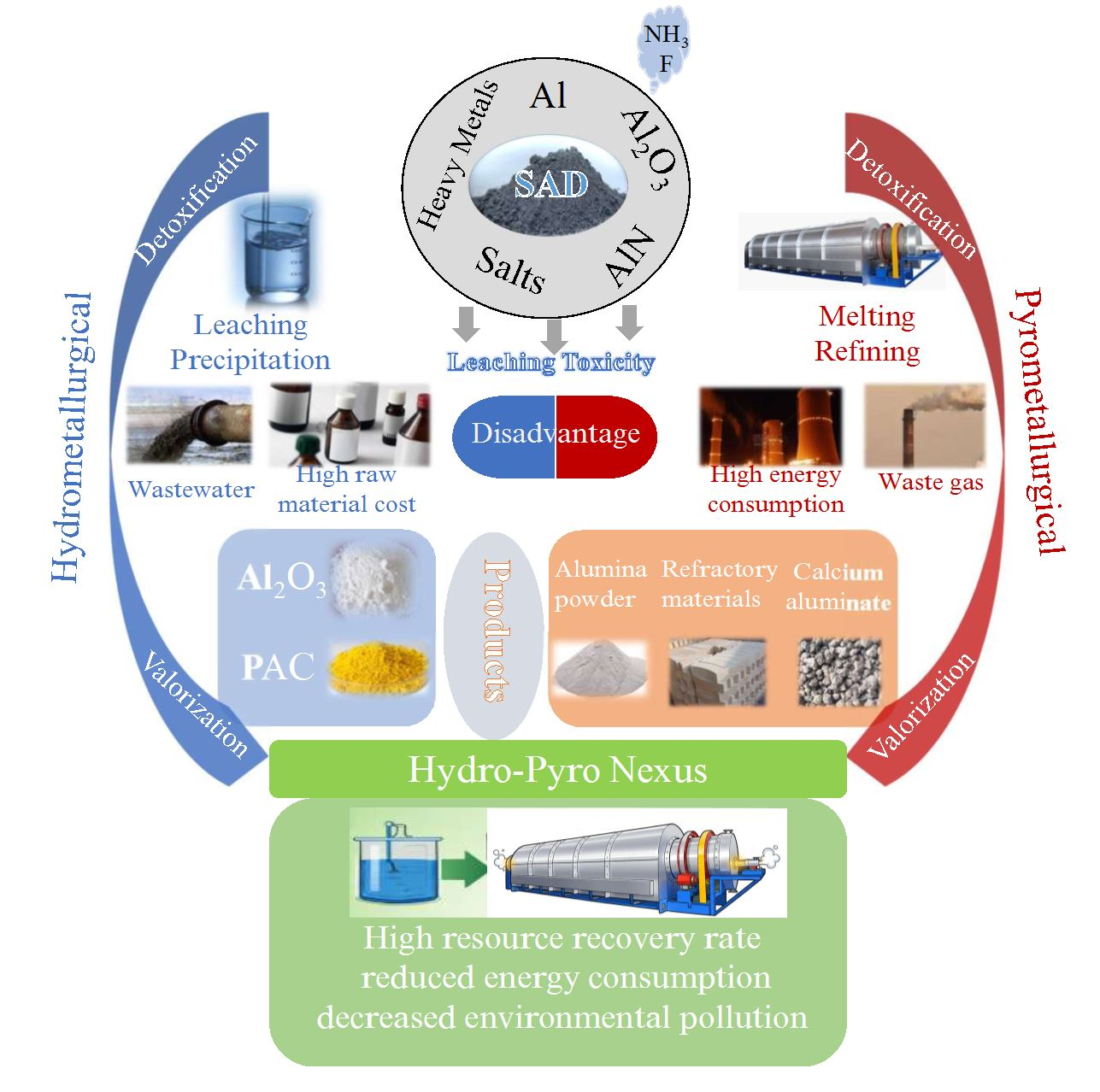
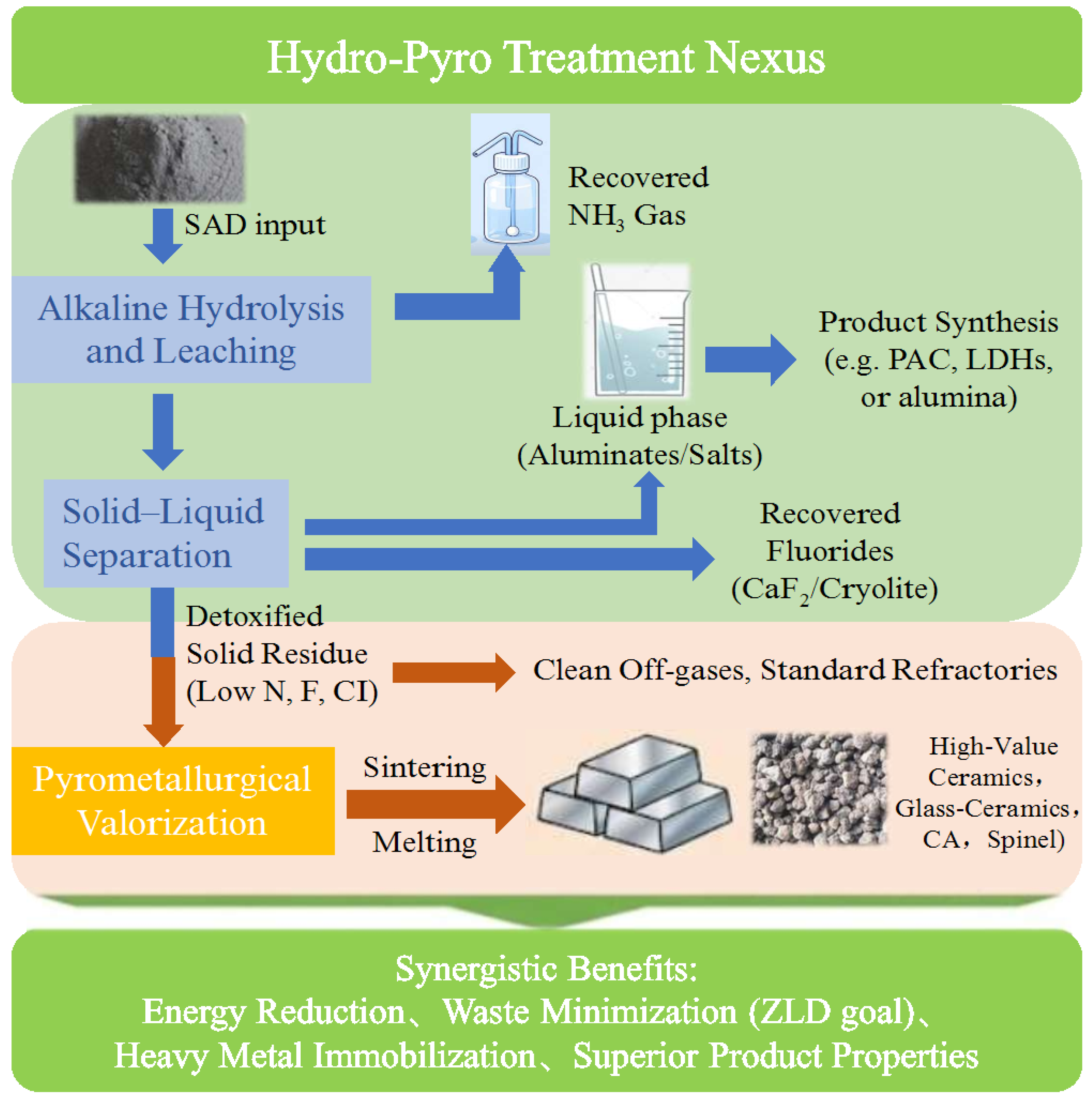
5. Toward an Integrated Hydro–Pyro Treatment Nexus
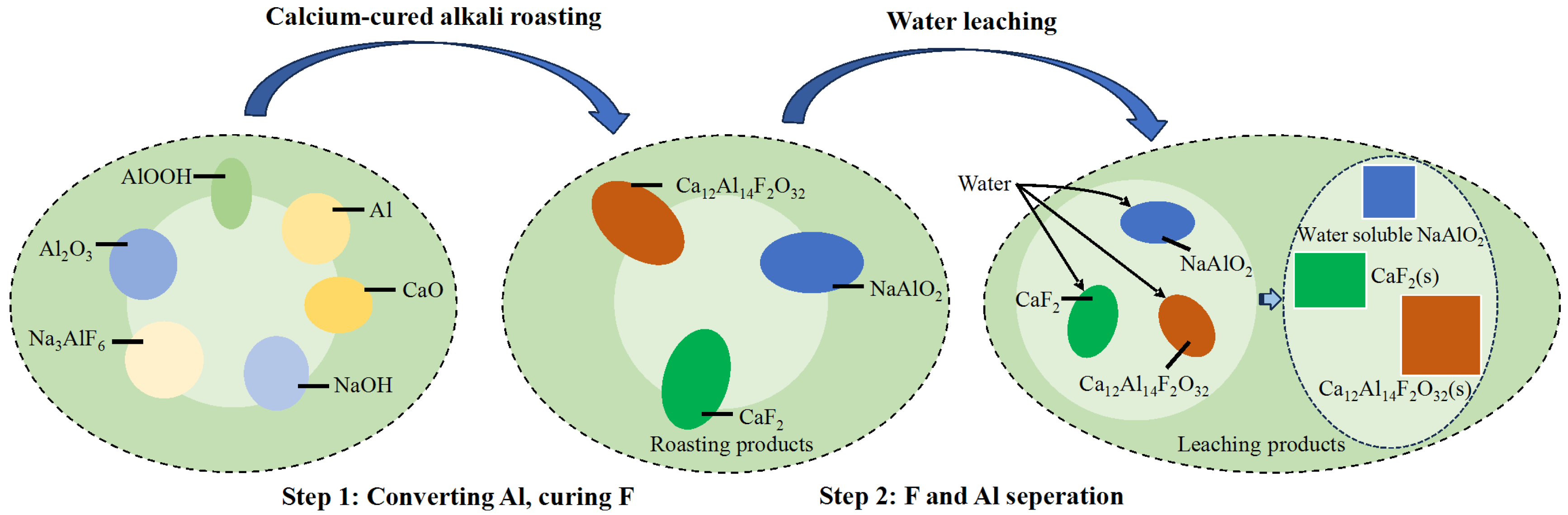
5.1. Conceptual Frameworks and Process Flows
5.2. Synergistic Benefits and Contaminant Fate
5.3. Case Examples and Research Needs
5.4. Prioritization of Research and Development Challenges for Industrialization
- Consistent product quality and purity: Feedstock compositional variability remains the single greatest obstacle to industrial adoption. The absence of robust, composition-tolerant processing protocols leads to batch-to-batch product inconsistency, undermining market acceptance and commercial viability. This challenge is ranked highest because it directly impacts revenue generation and customer confidence.
- Economic viability under variable market conditions: The economic feasibility of SAD processing is highly sensitive to energy prices, reagent costs, and market values for recovered products. While Table 3 demonstrates that net positive margins are achievable under optimal conditions, the margin of safety is narrow. Process designs must incorporate operational flexibility to maintain profitability across fluctuating market conditions.
- 3.
- Integrated wastewater and off-gas management: Both hydrometallurgical and pyrometallurgical routes generate secondary pollution streams (high-salinity wastewater, NOx, HF, heavy metal-laden dust) that require management. The failure to address these streams simply shifts the environmental burden rather than eliminating it. The development of cost-effective ZLD systems and integrated off-gas treatment trains is essential for regulatory compliance and social license to operate.
- 4.
- Energy efficiency and carbon footprint: The high energy consumption of pyrometallurgical routes and the embodied energy of reagents in hydrometallurgical routes represent both a cost driver and an environmental liability. Optimizing energy efficiency is particularly critical in jurisdictions with carbon pricing or high energy costs.
- 5.
- Process integration and control: The development of hybrid hydro–pyro systems requires optimization of the integration point and adaptive process control strategies. While challenging, these are fundamentally engineering problems amenable to systematic optimization.
- 6.
- Byproduct valorization: The management of secondary streams (e.g., chloride salts, ammonia, fluoride precipitates) as valuable products rather than wastes would improve overall economics and sustainability. This represents a significant opportunity but is not a prerequisite for initial deployment.
- 7.
- Long-term material durability: For construction and refractory applications, the long-term performance of SAD-derived materials under environmental exposure conditions requires validation. This is critical for market acceptance but can be addressed through parallel product testing and standardization efforts.
6. Comparative Analysis of Environmental Impact and Economic Benefits
Sensitivity Analysis: Energy Price and Reagent Cost as Critical Determinants of Process Viability
7. Summary and Outlook
- (1)
- Comprehensive and broad-spectrum detoxification: Current research is disproportionately focused on AlN and fluorides, whereas other hazardous constituents, such as Al4C3, chlorides, and speciated heavy metals (e.g., Cr(VI) and Cd), remain insufficiently addressed. Future efforts should prioritize integrated detoxification strategies capable of simultaneously mineralizing carbides, stabilizing heavy metals, and eliminating soluble salts, thus ensuring long-term environmental safety rather than short-term risk reduction.
- (2)
- Mechanistic understanding of AlN-driven reduction processes: The use of AlN in SAD as a metallurgical reductant represents a promising but underdeveloped pathway for metal recovery. Fundamental knowledge gaps remain regarding thermodynamic driving forces, nitrogen evolution pathways, and impurity-phase transformations during reduction. Advanced in situ characterization (e.g., high-temperature spectroscopy) combined with process-based and data-driven modeling is required to optimize process parameters (e.g., temperature, atmosphere, and additives) and expand applications to strategic metals, including rare-earth elements.
- (3)
- Integration of hydrometallurgical and pyrometallurgical routes (the hydro–pyro nexus): Future technologies must build upon the conceptual framework established in Section 5, focusing on the development of practical hybrid hydro–pyro systems. Systematic investigation of contaminant migration and transformation across coupled stages, optimization of the integration point, and holistic sustainability assessment are critical research needs to demonstrate viability.
- (4)
- Energy recovery and proactive resource utilization: Beyond material recovery, the latent chemical energy associated with residual metallic Al and AlN in SAD remains largely untapped. The development of advanced reactors that couple controlled hydrolysis with hydrogen or ammonia capture could potentially transform SAD treatment from an energy-intensive liability into a supplementary renewable-energy source, fundamentally reshaping its sustainability profile.
- (5)
- High-value product functionalization and standardization: Future research should move beyond low-grade fillers and construction additives toward high-value functional materials, such as mesoporous alumina for catalysis, layered double hydroxides for energy storage and adsorption, optical-grade spinels, and tailored glass-ceramics. Importantly, universal, composition-tolerant processing protocols and performance-based product standards must be developed to accommodate variability in SAD feedstocks and enable market acceptance.
- (6)
- Sustainability assessment and systems integration: LCA and TEA are currently underrepresented in SAD research. Quantitative evaluation of environmental footprint, carbon intensity, and economic viability is essential for guiding technology selection and policy formulation. Integration of SAD valorization into industrial symbiosis networks, such as cement kilns, power plants, and metallurgical complexes, offers further opportunities to enhance system-level sustainability.
Author Contributions
Funding
Data Availability Statement
Conflicts of Interest
Nomenclature
| Symbol/Term | Definition |
| Al | Aluminum |
| Al(OH)3 | Aluminum hydroxide |
| Al2O3 | Alumina (aluminum oxide) |
| Al4C3 | Aluminum carbide |
| AlN | Aluminum nitride |
| AlO2− | Aluminate ion |
| CaF2 | Fluorite (calcium fluoride) |
| CA | Calcium aluminate |
| CH4 | Methane |
| CO2 eq | Carbon dioxide equivalent |
| CEI | Comprehensive Evaluation Index |
| EI | Environmental Impact Index |
| F− | Fluoride ion |
| GWP | Global warming potential |
| HF | Hydrogen fluoride |
| HW48 | Chinese hazardous waste code for wastes from non-ferrous metal smelting |
| L/S ratio | Liquid-to-solid ratio |
| LCA | Life cycle assessment |
| LCC | Life cycle costing |
| LDH | Layered double hydroxide |
| ML | Machine learning |
| MOC | Magnesium oxychloride cement |
| Na3AlF6 | Cryolite (sodium hexafluoroaluminate) |
| NH3 | Ammonia |
| NOx | Nitrogen oxides (NO, NO2) |
| PAC | Polyaluminum chloride |
| PAD | Primary aluminum dross (white dross) |
| SAD | Secondary aluminum dross (black dross) |
| SiF4 | Silicon tetrafluoride |
| SMS | Silicon manganese slag |
| TEA | Techno-economic analysis |
| ZLD | Zero liquid discharge |
References
- Ji, F.; Li, Z.; Xiong, M.; Zhang, H.; Yu, Z.; Gu, Y.; Wang, Y.; Li, F. Market value and carbon reduction potential of secondary aluminum ash resource utilization: A strategic analysis. Chem. Eng. J. 2025, 507, 160446. [Google Scholar] [CrossRef]
- Tang, Y.; Yang, W.; Chen, B.; Ma, T.; Qiu, Z.; Lin, Y. Research Progress on Clean Disposal and Recovery Technologies of Typical Hazardous Solid Waste from Aluminum Electrolysis Process. Hydrometall. China 2023, 42, 551–558. [Google Scholar] [CrossRef]
- Meshram, A.; Singh, K.K. Recovery of valuable products from hazardous aluminum dross: A review. Resour. Conserv. Recycl. 2018, 130, 95–108. [Google Scholar] [CrossRef]
- Srivastava, A.; Meshram, A. Valorization of aluminium dross for the development of al-rich product. Agron. Res. 2024, 22, 1297–1311. [Google Scholar] [CrossRef]
- Wang, Y.; Zhao, H.; Wang, X.; Chong, J.; Huo, X.; Guo, M.; Zhang, M. Transformation and Detoxification of Typical Metallurgical Hazardous Waste into a Resource: A Review of the Development of Harmless Treatment and Utilization in China. Materials 2024, 17, 931. [Google Scholar] [CrossRef] [PubMed]
- Shen, H.; Liu, B.; Ekberg, C.; Zhang, S. Harmless disposal and resource utilization for secondary aluminum dross: A review. Sci. Total Environ. 2021, 760, 143968. [Google Scholar] [CrossRef] [PubMed]
- Shinzato, M.C.; Hypolito, R. Effect of disposal of aluminum recycling waste in soil and water bodies. Environ. Earth Sci. 2016, 75, 628. [Google Scholar] [CrossRef]
- Yang, J.; Tian, L.; Meng, L.; Wang, F.; Die, Q.; Yang, Y.; Huang, Q. Thermal utilization techniques and strategies for secondary aluminum dross: A review. J. Environ. Manag. 2024, 351, 119939. [Google Scholar] [CrossRef]
- Liu, Y.; Zhang, J.; Shen, H. Research progress of secondary aluminum dross resource utilization. Rare Met. 2024, 48, 277–287. [Google Scholar] [CrossRef]
- Mahinroosta, M.; Allahverdi, A. A promising green process for synthesis of high purity activated-alumina nanopowder from secondary aluminum dross. J. Clean. Prod. 2018, 179, 93–102. [Google Scholar] [CrossRef]
- Yang, Q.; Li, Q.; Zhang, G.; Shi, Q.; Feng, H. Investigation of leaching kinetics of aluminum extraction from secondary aluminum dross with use of hydrochloric acid. Hydrometallurgy 2019, 187, 158–167. [Google Scholar] [CrossRef]
- Li, L.; Song, M.; Jin, Q. Recovery of alumina from secondary aluminum dross by alkali leaching. Inorg. Chem. Ind. 2019, 51, 53–57. [Google Scholar]
- Feng, H.; Wang, L.; Li, G.; Jin, Q. Removal of impurities for the synthesis of high-property alumina-spinel ceramic from secondary aluminum dross. Ceram. Int. 2023, 49, 34616–34626. [Google Scholar] [CrossRef]
- Lv, H.; Xie, M.; Shi, L.; Zhao, H.; Wu, Z.; Li, L.; Li, R.; Liu, F. A novel green process for the synthesis of high-whiteness and ultrafine aluminum hydroxide powder from secondary aluminum dross. Ceram. Int. 2022, 48, 953–962. [Google Scholar] [CrossRef]
- Deng, W.; Xie, Q.; Zhou, R.; Tuo, H.; Liu, X.; Deng, H.; Lin, Z. Mechanism study of synergistic aluminum extraction and purification by ammonium for high-value conversion of secondary aluminum dross. J. Environ. Chem. Eng. 2024, 12, 113298. [Google Scholar] [CrossRef]
- Liu, Y.; Shen, H.; Zhang, J.; Li, W.; Liu, J.; Liu, B.; Zhang, S. High strength porous ceramics and its potential in adsorption and building materials: A short process to co-disposal secondary aluminum dross and quicklime. Constr. Build. Mater. 2023, 395, 132292. [Google Scholar] [CrossRef]
- Zuo, Z.; Zhao, Y.; Zhang, H.; Li, S.; Li, Z.; Wu, W.; Li, H.; Zhang, J. Preparation of calcium aluminate by passivation-acid modulation coupling control of secondary aluminum dross. Sep. Purif. Technol. 2025, 360, 130830. [Google Scholar] [CrossRef]
- Zhang, Y.; Guo, Z.-H.; Han, Z.-Y.; Xiao, X.-Y.; Peng, C. Feasibility of aluminum recovery and MgAl2O4 spinel synthesis from secondary aluminum dross. Int. J. Miner. Metall. Mater. 2019, 26, 309–318. [Google Scholar] [CrossRef]
- Shen, H.; Lou, B.; Liu, B.; Zhang, J.; Zhang, X.; Wen, Q.; Liu, J.; Hu, Y.; Zhang, S. Migration of nitrogen in calcium aluminate made from aluminum dross. J. Alloys Compd. 2025, 1022, 179692. [Google Scholar] [CrossRef]
- Hu, S.; Wang, D.; Hou, D.; Zhao, W.; Li, X.; Qu, T.; Zhu, Q. Research on the preparation parameters and basic properties of premelted calcium aluminate slag prepared from secondary aluminum dross. Materials 2021, 14, 5855. [Google Scholar] [CrossRef]
- Lou, B.; Shen, H.; Liu, B.; Liu, J.; Zhang, S. Recycling secondary aluminum dross to make building materials: A review. Constr. Build. Mater. 2023, 409, 133989. [Google Scholar] [CrossRef]
- Liu, J.; Zhang, S.; Shen, H.; Lou, B.; Zhang, B. Recycling of secondary aluminum dross to make alumina by hydrometallurgy: A review. J. Mater. Res. Technol.-JMRT 2024, 32, 4234–4245. [Google Scholar] [CrossRef]
- Zhu, X.; Jin, Q.; Ye, Z. Life cycle environmental and economic assessment of alumina recovery from secondary aluminum dross in China. J. Clean. Prod. 2020, 277, 123291. [Google Scholar] [CrossRef]
- Du, X.; Zhao, Z.; Lv, G.; Chen, F.; Zhao, X.; Zhang, T. Study on preparation of polyaluminum chloride by nitrogen removal from secondary aluminum ash. Light Met. 2023, 3, 9–14. [Google Scholar] [CrossRef]
- Li, L.; Dong, X.; Cheng, Y.; Xue, L.; Yang, J.; Huang, X. Preparation of polymeric aluminum chloride from secondary aluminum dross and its water purification effect. Can. Metall. Q. 2025, 64, 1510–1520. [Google Scholar] [CrossRef]
- Zuo, W.; Zhao, R.; Dong, G.; Ma, G.; Zhou, H.; Song, T.; Tu, Y.; Xie, H.; Wang, X. CO2-assisted water-washing process of municipal solid waste incineration fly ash for chloride removal. Energy Fuels 2022, 36, 13732–13742. [Google Scholar] [CrossRef]
- Chen, X.; Bi, Y.; Zhang, H.; Wang, J. Chlorides removal and control through water-washing process on MSWI fly ash. Procedia Environ. Sci. 2016, 31, 560–566. [Google Scholar] [CrossRef]
- Xiao, L.; Wang, Y.; Zheng, R.; Liu, J.; Zhao, J.; Maraseni, T.; Qian, G. Identification of recycling pathways for secondary aluminum dross with integrated hybrid life cycle assessment. Resour. Conserv. Recycl. 2023, 193, 106987. [Google Scholar] [CrossRef]
- Wang, J.; Cui, H.; Guo, Y.; Wang, Z.; Sun, Z.; Liang, J.; Lv, L.; Gao, W. Understanding Environmental-Economic and Risk Feasibilities toward Aluminum Ash Treatment Processes: A Multiobjective Assessment. ACS Sustain. Chem. Eng. 2025, 13, 20349–20362. [Google Scholar] [CrossRef]
- Zhu, X.; Jin, Q. Comparison of three emerging dross recovery processes in China’s aluminum industry from the perspective of life cycle assessment. ACS Sustain. Chem. Eng. 2021, 9, 6776–6787. [Google Scholar] [CrossRef]
- Tripathy, A.; Mahalik, S.; Sarangi, C.; Tripathy, B.; Sanjay, K.; Bhattacharya, I. A pyro-hydrometallurgical process for the recovery of alumina from waste aluminium dross. Miner. Eng. 2019, 137, 181–186. [Google Scholar] [CrossRef]
- Li, Q.; Yang, Q.; Zhang, G.; Shi, Q. Investigations on the hydrolysis behavior of AlN in the leaching process of secondary aluminum dross. Hydrometallurgy 2018, 182, 121–127. [Google Scholar] [CrossRef]
- He, Y.; Li, Y.; Ma, B.; Sun, X.; He, X.; Gao, X. Effects of wet process on harmless nitrogen removal from secondary Al ash. Spec. Cast. Nonferrous Alloys 2021, 41, 679–683. [Google Scholar] [CrossRef]
- Feng, H.; Liu, Y.; Jin, Q. Effect of in-situ nano-alumina on the properties of alumina ceramics from secondary aluminum dross. Ceram. Int. 2024, 50, 46227–46238. [Google Scholar] [CrossRef]
- Guo, Q.; Li, H.; Fu, M.; Li, Y.; Tian, D.; Zhang, L. Enhanced Hydrolysis of Aluminum Nitride from Secondary Aluminum Dross Through Combination of Wet-Stirred Milling and Alkaline Leaching. Waste Biomass Valorization 2023, 14, 4257–4268. [Google Scholar] [CrossRef]
- Gao, Q.; Guo, Q.; Li, Y.; Ren, B.; Fu, M.; Li, H.; Tian, D.; Ding, M. Innovative technology for defluorination of secondary aluminum dross by alkali leaching. Miner. Eng. 2021, 172, 107134. [Google Scholar] [CrossRef]
- Lin, K.; Su, Z.; Xu, J.; Jiang, T.; Zhang, Y. Calcium-driven hydrolysis mechanisms of secondary aluminum dross (SAD) in the hydrometallurgical process to simultaneous denitrification, desalination, and fluoride fixation. Chem. Eng. J. 2024, 499, 155910. [Google Scholar] [CrossRef]
- Xie, H.; Guo, Z.; Xu, R.; Zhang, Y. Particle sorting to improve the removal of fluoride and aluminum nitride from secondary aluminum dross by roasting. Environ. Sci. Pollut. Res. 2023, 30, 54536–54546. [Google Scholar] [CrossRef]
- Dong, L.-M.; Jiao, F.; Liu, W.; Huang, Y.-L.; Wei, X.; Qin, W.-Q. Separation of fluorine and aluminum from secondary aluminum dross by calcium-cured alkali roasting-water leaching. Trans. Nonferrous Met. Soc. China 2024, 34, 2007–2019. [Google Scholar] [CrossRef]
- Zhang, Y.; Guo, Z.-H.; Han, Z.-Y.; Xiao, X.-Y. Effects of AlN hydrolysis on fractal geometry characteristics of residue from secondary aluminium dross using response surface methodology. Trans. Nonferrous Met. Soc. China 2018, 28, 2574–2581. [Google Scholar] [CrossRef]
- Li, G.; Liu, Z.; Yan, H.; Li, M.; Xia, C.; Liu, S. Research on the Reaction Behavior of Aluminum Nitride and Fluoride in Hazardous Waste Aluminum Ash in Different Systems. J. Sustain. Metall. 2025, 11, 2343–2354. [Google Scholar] [CrossRef]
- Zhu, B.; Feng, H.; Zhu, X.; Jin, Q. Preparation of adsorbent from secondary aluminum dross by deep hydrolysis of active aluminum components. J. Environ. Chem. Eng. 2024, 12, 112501. [Google Scholar] [CrossRef]
- Yang, H.-L.; Li, Z.-S.; Ding, Y.-D.; Ge, Q.-Q.; Jiang, L. Hydrolysis behavior and kinetics of AlN in aluminum dross during the hydrometallurgical process. Materials 2022, 15, 5499. [Google Scholar] [CrossRef] [PubMed]
- Zhao, X.; Liu, Y.; Lyu, G.; Zhang, Y.; Zhang, T.-A. Removal of fluorine, chlorine, and nitrogen from aluminum dross by wet process. In Light Metals 2022; Springer: Berlin/Heidelberg, Germany, 2022; pp. 48–55. [Google Scholar] [CrossRef]
- Tang, J.; Liu, G.; Qi, T.; Zhou, Q.; Peng, Z.; Li, X.; Wang, Y.; Shen, L.; Zhao, J.; Hao, H. Rich microbubbles modifying the leaching mechanism of aluminum and aluminum nitride of secondary aluminum dross in sodium aluminate solution. Hydrometallurgy 2022, 214, 105962. [Google Scholar] [CrossRef]
- Li, Z.; Li, H.; Huang, X.; Wu, W.; Sun, Z.; Wu, X.; Li, S. Removal of nitrides and fluorides from secondary aluminum dross by catalytic hydrolysis and its mechanism. Heliyon 2023, 9, e12893. [Google Scholar] [CrossRef]
- Lv, H.; Zhao, H.; Zuo, Z.; Li, R.; Liu, F. A thermodynamic and kinetic study of catalyzed hydrolysis of aluminum nitride in secondary aluminum dross. J. Mater. Res. Technol.-JMRT 2020, 9, 9735–9745. [Google Scholar] [CrossRef]
- Wang, C.; Guo, Y.; He, Y.; Li, S.; Liu, J.; Liu, H. Mechanism of the denitrification of secondary aluminum dross (SAD) during water leaching with delayed addition of a low dosage of sodium hydroxide. Hydrometallurgy 2024, 226, 106318. [Google Scholar] [CrossRef]
- Huo, Q.; Li, R.; Chen, M.; Zhou, R.; Li, B.; Chen, C.; Liu, X.; Xiao, Z.; Qin, G.; Huang, J. Mechanism for leaching of fluoride ions from carbon dross generated in high-temperature and low-lithium aluminum electrolytic systems. J. Hazard. Mater. 2024, 469, 133838. [Google Scholar] [CrossRef]
- Bao, S.; Li, S.; Zhang, C.; Miao, X. Leaching and recycling analysis of fluorine and chlorine in secondary aluminum dross. Chin. Met. 2018, 28, 24–28. [Google Scholar] [CrossRef]
- Wu, X.; Zhao, Q.; Yu, X.; Shen, Q.; Lin, Y. Environmental Protection Treatment and Resource Utilization of Aluminum Dross. Metall. Mater. Trans. B 2025, 56, 4218–4229. [Google Scholar] [CrossRef]
- Shi, J.; Huang, Z.; Qin, Q.; Yuan, C.; Chen, J.; Zhou, Y. Experiment study on the preparation of polyaluminum chloride with secondary aluminum dross. Met. Mine 2021, 7, 206–210. [Google Scholar] [CrossRef]
- Xi, C.; Zhang, T.; Zhang, Y.; Lv, G.; Chen, Y. Study on the preparation of polyaluminum chloride by acid leaching of secondary aluminum dross. Nonferrous Met. Sci. Eng. 2021, 12, 1–9. [Google Scholar] [CrossRef]
- Mahinroosta, M.; Allahverdi, A. Conversion of secondary aluminum dross into hierarchical carbonate-intercalated Mg-Al layered double hydroxide for efficient CO2 capture. Process Saf. Environ. Prot. 2024, 188, 617–628. [Google Scholar] [CrossRef]
- Mahinroosta, M.; M Moattari, R.; Allahverdi, A.; Ghadir, P. Malachite green dye removal with aluminosilicate nanopowder from aluminum dross and silicomanganese slag. Circ. Econ. 2024, 3, 100100. [Google Scholar] [CrossRef]
- Wen, J.; Liu, G.; Qi, T.; Zhou, Q.; Peng, Z.; Shen, L.; Wang, Y.; Shi, Z.; Zhao, J. Safe comprehensive utilization of the hazardous secondary aluminum dross: Mechanism and technology. J. Environ. Chem. Eng. 2025, 13, 115939. [Google Scholar] [CrossRef]
- Zhu, X.; Yang, J.; Yang, Y.; Huang, Q.; Liu, T. Pyrometallurgical process and multipollutant co-conversion for secondary aluminum dross: A review. J. Mater. Res. Technol.-JMRT 2022, 21, 1196–1211. [Google Scholar] [CrossRef]
- Zhu, C.; Dai, W.; Wang, Y.; Evrendilek, F.; Liang, J.; Zhuang, G.; Liu, J.; Cai, B.; Huang, J.; Xie, Y.; et al. Fluoride leaching and retention dynamics of co-thermal disposal of secondary aluminum dross and fly ash. Process Saf. Environ. Prot. 2024, 188, 982–994. [Google Scholar] [CrossRef]
- Ni, H.; Lu, C.; Zhang, Y.; Wang, X.; Zhu, Y.; Lv, S.; Zhang, J. Effects of sodium carbonate and calcium oxide on roasting denitrification of recycled aluminum dross with high nitrogen content. Coatings 2022, 12, 922. [Google Scholar] [CrossRef]
- Xie, H.; Guo, Z.; Xu, R.; Zhang, Y.; Xu, Z. Synergistic effect of inorganic salt and AlN removal in the secondary aluminum dross during the roasting process. J. Alloys Compd. 2023, 966, 171518. [Google Scholar] [CrossRef]
- Wang, J.-H.; Zhong, Y.-Q.; Tong, Y.; Xu, X.-L.; Lin, G.-Y. Removal of AlN from secondary aluminum dross by pyrometallurgical treatment. J. Cent. South Univ. 2021, 28, 386–397. [Google Scholar] [CrossRef]
- Qu, Y.; Luo, H.; Gao, G.; Wang, Y.; Wu, L.; Gao, Y.; Xing, Y. Two-step harmless treatment of secondary aluminum dross (SAD) by vacuum distillation and alkaline roasting. J. Mater. Cycles Waste Manag. 2023, 25, 1130–1141. [Google Scholar] [CrossRef]
- Lv, H.; Xie, M.; Wu, Z.; Li, L.; Yang, R.; Han, J.; Liu, F.; Zhao, H. Effective extraction of the Al element from secondary aluminum dross using a combined dry pressing and alkaline roasting process. Materials 2022, 15, 5686. [Google Scholar] [CrossRef] [PubMed]
- Lou, B.; Shen, H.; Liu, B.; Zhang, J.; Zhang, X.; Liu, J.; Zhang, S. In-situ preparation of porous metal-ceramic composite from secondary aluminum dross and red mud for adsorption of organic pollutant. J. Alloys Compd. 2024, 986, 174135. [Google Scholar] [CrossRef]
- Yuan, H.; Luo, T.; Zhang, D.; Wang, Q. Harmless treatment and recycling of secondary aluminum dross: A review. J. Sustain. Cem.-Based Mater. 2023, 12, 1460–1473. [Google Scholar] [CrossRef]
- Chen, F.; Liu, F.; Zhang, T.; Liao, C.; Wang, J.; Zhang, J.; Wang, H. Selective separation and recovery aluminum oxide from secondary aluminum dross by ammonium sulfate roasting transformation followed by cooling crystallization. Miner. Eng. 2024, 216, 108866. [Google Scholar] [CrossRef]
- Cil, G.; Yildiz, K. Evaluation of secondary aluminium dross in calcium aluminate cement. Mater. Tehnol. 2022, 56, 541–546. [Google Scholar] [CrossRef]
- Cui, J.; Ma, H.; Ma, Z.; Wang, S.; Ji, L.; Ba, M. Effects of sintered secondary aluminum ash grinding fine power on the properties of modified magnesium oxysulfate cement-based materials. Constr. Build. Mater. 2025, 468, 140428. [Google Scholar] [CrossRef]
- Yao, X.; Wang, W.; Liu, M.; Yao, Y.; Wu, S. Synergistic use of industrial solid waste mixtures to prepare ready-to-use lightweight porous concrete. J. Clean. Prod. 2019, 211, 1034–1043. [Google Scholar] [CrossRef]
- Zhang, Y.; Ni, H.; Lv, S.; Wang, X.; Li, S.; Zhang, J. Preparation of sintered brick with aluminum dross and optimization of process parameters. Coatings 2021, 11, 1039. [Google Scholar] [CrossRef]
- Zhang, Z.J.; Li, S.Z.; Wang, L.L.; Li, M.K.; Huang, K.P.; Wu, W.; Liu, J.; Yi, X.M. Preparation of aluminum dross microporous bricks and the pore formation mechanisms. JOM 2023, 75, 4701–4713. [Google Scholar] [CrossRef]
- Zhu, W.; Wu, K.; Zhang, S.; Liu, J.; Yi, X.; Zhang, L. Zero-waste progress for the synthesis of high-purity β-sialon ceramics from secondary aluminum dross. Adv. Eng. Mater. 2021, 23, 202001298. [Google Scholar] [CrossRef]
- Qi, T.; Liu, X.; Man, S.; Liu, J.; Bao, W. Study on the preparation of secondary aluminium ash based porous mullite ceramics. Non-Met. Mines 2024, 47, 18–21. [Google Scholar] [CrossRef]
- Zan, W.; Ma, B.; Chen, G.; Cao, C.; Li, M. Preparation of porous mullite ceramic-based aggregates from low-voltage electroceramic wastes and secondary aluminum dross. Refractories 2024, 58, 302. [Google Scholar] [CrossRef]
- Liu, Y.; Yang, J.; Shen, H.; Zhang, J.; Li, W.; Zhang, X.; Liu, J.; Liu, B.; Zhang, S. Synthesis of porous glass ceramics with hierarchical and interconnected pores from secondary aluminum dross and waste glass. Ceram. Int. 2022, 48, 34364–34373. [Google Scholar] [CrossRef]
- Shen, H.; Liu, B.; Zhao, S.; Zhang, J.; Yuan, J.; Zhang, Y.; Zhang, S. Iron oxide and jadeite nucleation in high alumina glass-ceramics prepared from secondary aluminum dross. Ceram. Int. 2021, 47, 21744–21750. [Google Scholar] [CrossRef]
- Hassan, A.M.; Bunnori, N.M.; Ramesh, S.; Tan, C.Y.; Mo, K.H. Alkali activation of waste glass and aluminium dross for self-foaming glass ceramics production. Ceram. Int. 2025, 51, 6365–6378. [Google Scholar] [CrossRef]
- Gollapalli, V.; Jana, P.; Önal, M.A.R.; Borra, C.R.; Babu, N.K. Valorization of Aluminium Dross and Ladle Furnace Slag for Sustainable Production of Calcium Aluminate for Steel Refining. J. Sustain. Metall. 2025, 11, 2780–2793. [Google Scholar] [CrossRef]
- GB/T 29341-2022; Calcium Aluminate for Water Treatment Chemicals. State Administration for Market Regulation, National Standardization Administration: Beijing, China, 2022.
- Zhao, Y.; Zuo, Z.; Li, Z.; Zhang, J.; Wu, W.F.; Ma, W.P.; Zhu, G.; Li, S.; Wang, F. Preparation of calcium aluminate and spinel by hydrolysis and calcination from secondary aluminum dross. Asia-Pac. J. Chem. Eng. 2024, 19, e3117. [Google Scholar] [CrossRef]
- Shi, M.; Li, Y.; Shi, J. Fabrication of periclase and magnesium aluminate spinel refractory from washed residue of secondary aluminum dross. Ceram. Int. 2022, 48, 7668–7676. [Google Scholar] [CrossRef]
- Benkhelif, A.; Kolli, M. Synthesis of pure magnesium aluminate spinel (MgAl2O4) from waste aluminum dross. Waste Biomass Valorization 2022, 13, 2637–2649. [Google Scholar] [CrossRef]
- Zhang, Y.; Guo, Z.; Han, Z.; Xiao, X. Effect of rare earth oxides doping on MgAl2O4 spinel obtained by sintering of secondary aluminium dross. J. Alloys Compd. 2018, 735, 2597–2603. [Google Scholar] [CrossRef]
- Xu, L.; Li, X.; Liu, Y.; Chen, M.; Wang, N. Recovery of low phosphorus iron from steel slag using secondary aluminum dross as the reductant. J. Environ. Chem. Eng. 2023, 11, 110973. [Google Scholar] [CrossRef]
- Shen, H.; Liu, B.; Liu, Y.; Zhang, J.; Liu, J.; Zhang, S. Recovery of Fe, Cr and Ni in pickling sludge with aluminum nitride in secondary aluminum dross. Miner. Eng. 2022, 184, 107659. [Google Scholar] [CrossRef]
- McKay, G. Dioxin characterisation, formation and minimisation during municipal solid waste (MSW) incineration. Chem. Eng. J. 2002, 86, 343–368. [Google Scholar] [CrossRef]
- Xiao, Y.; Huang, Y.; Cheng, H.; Zhu, Z.; Yu, M.; Xu, W.; Li, Z.; Zuo, W.; Zhou, H.; Jin, B. Advances and outlook of heavy metal treatment technology from municipal solid waste incineration fly ash: A review. Energy Fuels 2023, 38, 895–918. [Google Scholar] [CrossRef]
- Reynolds, J.G. Salt solubilities in aqueous solutions of NaNO3, NaNO2, NaCl, and NaOH: A Hofmeister-like series for understanding alkaline nuclear waste. ACS Omega 2018, 3, 15149–15157. [Google Scholar] [CrossRef]
- Jiang, K.; Zeng, X. Desorption and recovery of fluoride adsorbed by the aluminum-loaded chelating resin. Desalination Water Treat. 2021, 224, 178–186. [Google Scholar] [CrossRef]
- Wan, B.; Li, W.; Sun, W.; Liu, F.; Chen, B.; Xu, S.; Chen, W.; Yi, A. Synthesis of cryolite (Na3AlF6) from secondary aluminum dross generated in the aluminum recycling process. Materials 2020, 13, 3871. [Google Scholar] [CrossRef]
- Wang, C.; Wang, R.; Yang, T.; Xin, Y.; Yao, Z.; Li, P.; Wang, F.; Huang, Y.; Qi, X.; Zhao, J. The Application of Secondary Aluminum Dross in Refractories: A Review. J. Sustain. Metall. 2025, 12, 64–81. [Google Scholar] [CrossRef]
- Li, A.; Zhang, H.; Yang, H. Evaluation of aluminum dross as raw material for high-alumina refractory. Ceram. Int. 2014, 40, 12585–12590. [Google Scholar] [CrossRef]
- Tang, Y.; Ma, L.; Qiu, Z.; Yang, W.; Chen, B.; Lin, Y. Sustainable approaches for multidimensional disposal and applications of aluminum dross: A review. Miner. Eng. 2025, 225, 109194. [Google Scholar] [CrossRef]
- Li, C.; Song, B.; Chen, Z.; Liu, Z.; Yu, L.; Zhi, Z.; Zhao, Y.; Wei, H.; Song, M. Immobilization of heavy metals in ceramsite prepared using contaminated soils: Effectiveness and potential mechanisms. Chemosphere 2023, 310, 136846. [Google Scholar] [CrossRef] [PubMed]
- Zhao, S.; Wen, Q.; Zhang, X.; Liu, B.; Zhang, S. Migration, transformation and solidification/stabilization mechanisms of heavy metals in glass-ceramics made from MSWI fly ash and pickling sludge. Ceram. Int. 2021, 47, 21599–21609. [Google Scholar] [CrossRef]
- Huang, K.; Yi, X. Resource Utilization and High-Value Targeted Conversion for Secondary Aluminum Dross: A Review. JOM 2023, 75, 279–290. [Google Scholar] [CrossRef]
- Farjana, S.H.; Huda, N.; Mahmud, M.P. Impacts of aluminum production: A cradle to gate investigation using life-cycle assessment. Sci. Total Environ. 2019, 663, 958–970. [Google Scholar] [CrossRef]
- Liu, G.; Müller, D.B. Addressing sustainability in the aluminum industry: A critical review of life cycle assessments. J. Clean. Prod. 2012, 35, 108–117. [Google Scholar] [CrossRef]
- Zhang, Y.; Cai, Y.; Liu, S.; Su, Z.; Jiang, T. Life cycle assessment of aluminum-silicon alloy production from secondary aluminum in China. J. Clean. Prod. 2023, 392, 136214. [Google Scholar] [CrossRef]
- Yeoh, Y.X.; Muhammad, N.I.S.; Kittappa, S.; Ramalingam, M.; Mansor, M.J.A.; Zainal Abidin, S. Quantitative Technoeconomic Assessment of Alumina Extraction from Aluminum Dross: Process Efficiency and Cost-Benefit Analysis. Process Integr. Optim. Sustain. 2025, 1–25. [Google Scholar] [CrossRef]
- Zhang, G.; Wang, Y.; Meng, X.; Zhang, D.; Ding, N.; Ren, Z.; Gao, W.; Sun, Z. Life cycle assessment on the vanadium production process: A multi-objective assessment under environmental and economic perspectives. Resour. Conserv. Recycl. 2023, 192, 106926. [Google Scholar] [CrossRef]





| Component | PAD (wt.%) [5,6] | SAD (wt.%) [5,6,7] | Hazard/Risk |
|---|---|---|---|
| Metallic Al | 50–85 | 3–15 | Explosion risk; energy resource. |
| AlN | 1–10 | 5–35 | Hydrolysis → NH3 (toxic, malodorous). |
| Al4C3 | <0.5 | 0.5–3 | Hydrolysis → CH4 (GHG, explosion risk). |
| NaCl/KCl | 5–15 | 10–40 | Soil/water salinization, corrosion. |
| Fluorides (F−) | 0.5–2 | 1–10 | Toxicity, leachability (e.g., NaF, Na3AlF6). |
| Al2O3/oxides | 10–30 | 20–50 | Inert; resource for Alumina, ceramics. |
| Heavy Metals | <0.1 | 0.01–2 | Ecotoxicity (e.g., Pb, Cr, Zn). |
| SAD Characteristic | Favorable Technology | Rationale |
|---|---|---|
| High metallic Al (>15 wt.%) | Pyrometallurgical with prior metal recovery | Recovery of metallic Al prior to detoxification improves overall economics; metallic Al can reduce energy consumption in pyrometallurgical processes. |
| High salt content (>25 wt.%) | Hydrometallurgical (water washing) | Water washing effectively removes soluble salts, preventing corrosion and fouling in downstream thermal units. |
| High AlN (>25 wt.%) | Alkaline hydrometallurgical or hybrid | Alkaline conditions maximize AlN hydrolysis efficiency; if energy prices are low, thermal oxidation is feasible. |
| High fluoride (>5 wt.%) | Pyrometallurgical with CaO addition or hybrid | CaO effectively fixes fluoride as stable CaF2 during thermal treatment; hydrometallurgical leaching requires complex wastewater treatment for F−. |
| High heavy metals (e.g., Pb, Zn) | Pyrometallurgical with vitrification | High-temperature sintering can incorporate heavy metals into a stable glass-ceramic matrix; hydrometallurgical leaching may require selective separation steps. |
| Variable, heterogeneous composition | Pyrometallurgical or hybrid with robust pretreatment | Pyrometallurgical processes exhibit greater tolerance to feedstock variability; coupling with a homogenizing pretreatment step enhances process stability. |
| Process | Advantage | Disadvantage | Typical Energy Consumption (kWh/t SAD) | Typical Resource Recovery Product |
|---|---|---|---|---|
| Hydrometallurgical | High AlN/fluoride removal efficiency; lower energy consumption; versatile product portfolio. | High-salinity/ammonia wastewater treatment; process complexity; product purity sensitive to feed variability. | Acidic Leaching: 200–400 [10,11] Alkaline Leaching: 400–800 [12] (Heating, mixing, and solids handling) | Alumina, Polyaluminum chloride (PAC), layered double hydroxides (LDH). |
| Pyrometallurgical | Simple flow, suitable for scale-up; effective detoxification; high product stability. | High energy demand; emissions of NOx, fluorides, particulates; risk of heavy metal volatilization. | Oxidative Roasting: 600–1200 [13,14] Sintering/Ceramic Formation: 1200–2500 [15,16] (Heating to 800–1450 °C) | Refractories, ceramics, glass-ceramics, calcium aluminate, spinel. |
| Hybrid (Hydro–Pyro) | Maximizes detoxification prior to thermal treatment; reduces harmful gas generation; enhances metal recovery. | Increased process complexity and capital cost; requires optimized integration. | 300–800 (combined) (Hydro-stage: 50–100; Pyro-stage: 250–700) [17,18] | High-purity alumina, advanced ceramics, alloy precursors. |
| Technology Category | Representative Process | TRL | Scale of Demonstration | Key Industrial Examples/ References |
|---|---|---|---|---|
| Pyrometallurgical | Rotary kiln sintering for CA/spinel | 8–9 | Industrial (10,000–100,000 t/year) | Commercial operation [19,20] |
| Cement kiln co-processing | 8–9 | Industrial (50,000+ t/year) | On the verge of industrialization [21] | |
| Oxidative roasting for detoxification | 7–8 | Pilot–Industrial (1000–10,000 t/year) | Multiple facilities in China [13,14] | |
| Hydrometallurgical | Alkaline leaching for alumina | 5–7 | Pilot (1000–5000 t/year) | Based on the Bayer process, it is relatively mature [22,23]. |
| Acidic leaching for PAC | 5–6 | Pilot (100–1000 t/year) | Pilot studies [24,25] | |
| Water washing for salt removal | 7–8 | Industrial (5000–20,000 t/year) | Pretreatment units integrated with pyro-processes [26,27] | |
| Hybrid (Hydro–Pyro) | Alkaline leach + sintering for CA | 3–4 | Laboratory (1–10 kg/batch) | Zuo et al. [17] |
| Acid leach + sintering for spinel | 3–4 | Laboratory (1–10 kg/batch) | Zhang et al. [18] | |
| Hydrothermal pretreatment + ceramic synthesis | 3–4 | Laboratory | Shen et al. [19] |
| Parameter | Hydrometallurgical | Pyrometallurgical | Hybrid (Hydro–Pyro) |
|---|---|---|---|
| Al recovery efficiency (%) | 75–98 [10,11,12] | 70–92 [13,15,31] | 88–96 [17,18] |
| AlN removal efficiency (%) | 80–100 [32,33,34] | 90–99 [13,14] | >99 [35] |
| F removal/fixation efficiency (%) | 80–99 [36,37] | 90–99 [13,38,39] | >95 [17] |
| Energy consumption (kWh/t SAD) | 200–800 [10,11,12,22] | 600–2500 [13,14,15,16] | 300–800 [17,18] |
| CO2 emissions (kg CO2 eq/t SAD) | −1200 to −1600 [23,29] | +150 to +800 [28,30] | −200 to +200 [28] |
| Water consumption (m3/t SAD) | 5–20 [11,22] | 1–3 [13] | 3–8 [17] |
| Operational cost (USD/t SAD) | 100–200 [23,29] | 80–200 [28] | 90–160 [28] |
| Net profit (USD/t SAD) | 300–500 [23,29] | 250–450 [28] | 380–480 [28] |
| Parameter | Range | Effect on AlN Hydrolysis | Effect on Fluoride Removal | Effect on Salt Dissolution | Optimization Considerations |
|---|---|---|---|---|---|
| pH | Acidic (0–4) | High H+ concentration accelerates Reaction (3); risk of Al3+ complexation with F− [32,50]. | High F− solubility; risk of HF volatilization requiring off-gas treatment [50]. | Promotes dissolution; corrosion concerns for equipment. | Acidic conditions favor F− removal but may require HF capture. |
| Neutral (5–8) | Slow kinetics; passivating Al(OH)3 film formation limits conversion [45]. | Moderate F− solubility; complex fluorides (Na3AlF6) poorly soluble [41]. | High solubility for NaCl/KCl. | Not optimal for complete detoxification. | |
| Alkaline (9–14) | OH− dissolves Al(OH)3 film; achieves near-complete conversion (Reactions (4), (6) and (7)) [33,46,48]. | OH− displaces F− from Na3AlF6 and CaF2 (Reactions (8) and (9)); high removal efficiency [36]. | High solubility; may form aluminate scales. | Preferred for simultaneous AlN and F− removal. | |
| Temperature | 20–50 °C | Limited kinetics; <40% conversion without additives [44]. | Low F− dissolution; HF volatilization negligible. | Moderate salt dissolution. | Energy-efficient but incomplete detoxification. |
| 60–100 °C | Substantially enhanced kinetics; 70–99% conversion achievable [41,48]. | Enhanced F− solubility; HF volatilization may occur under acidic conditions [50]. | Near-complete salt dissolution [26]. | Optimal balance for most processes. | |
| >100 °C (autoclave) | Rapid, near-complete conversion; potential for NH3 recovery under pressure [47]. | High F− mobilization; may require specialized equipment. | Complete salt removal. | High efficiency but increased capital cost. | |
| L/S Ratio (mL/g) | 2–5 | Limited by mass transfer; risk of supersaturation and scaling. | Moderate removal; potential for incomplete dissolution. | Partial salt removal. | Low water consumption; may require post-treatment. |
| 6–15 | Enhanced mass transfer; 70–95% conversion typical [44,48]. | High removal efficiency; 80–95% F− removal reported [36,37]. | Complete salt removal [26]. | Optimal range for most processes. | |
| >15 | Diminishing returns; increased wastewater volume. | Maximized removal but diluted F− concentration for recovery. | Complete removal. | High water consumption; ZLD challenges. | |
| Reagent Concentration | NaOH (0.5–3 M) | Directly accelerates AlN hydrolysis; optimal range 1–2.5 M [33,48]. | Enhances F− displacement from complex fluorides; optimum 1.5–2.5 M [36]. | Increases ionic strength; may inhibit Al(OH)3 passivation [32]. | Balance between efficiency and reagent cost. |
| HCl (2–6 M) | Rapid AlN conversion under strong acidic conditions [32]. | High F− solubility; HF volatilization at >2 M [50]. | Complete dissolution. | Corrosion concerns; neutralization required. | |
| Ca2+ Additives (CaCl2, CaO) | Minimal direct effect. | Immobilizes F− as CaF2; >99% fixation at 5–10 wt.% CaCl2 [37]. | May increase scaling. | Effective for post-leaching F− fixation. |
| No. | Raw Material | Molar/Mass Ratio | Calcination Temperature (°C) | Calcination Time (h) | Product | Reference |
|---|---|---|---|---|---|---|
| 1 | SAD, SiO2 | 1.8 | 1200 | 4 | Porous mullite ceramics | [73] |
| 2 | SAD, low-voltage electrical porcelain waste | 0.25 | 1000 | 1 | Porous aggregate based on mullite ceramics | [74] |
| 3 | SAD, quicklime | 0.65 | 1400–1500 | 2 | Porous ceramics | [16] |
| Additive | Primary Function | Mechanism | Optimal Conditions | Limitations |
|---|---|---|---|---|
| Na2CO3 | AlN oxidation promoter; aluminate formation | Decomposes to Na2O; reacts with Al2O3 to form NaAlO2; disrupts dense Al2O3 passivation layer; enhances oxygen diffusion [31,59]. | 800–1000 °C; 5–15 wt.% addition | Can form soluble aluminate phases; may require subsequent water leaching for product purification. |
| CaO | Fluoride fixative; fluxing agent | Reacts with fluorides to form stable CaF2 (Reaction (18)); lowers melt viscosity; promotes sintering; forms calcium aluminates (CaO·Al2O3, CaO·2Al2O3) [39,59]. | 900–1000 °C; CaO:F molar ratio 1.5–2.5:1 | High CaO dosages generate voluminous residues; may dilute product purity. |
| MgO | Spinel formation; sintering aid | Reacts with Al2O3 to form MgAl2O4 spinel; promotes densification; inhibits grain growth [81,83]. | 1400–1600 °C; MgO:Al2O3 molar ratio 0.8–1.2:1 | High temperature requirement; energy intensive. |
| SiO2 | Vitrification agent; film disruptor | Forms low-melting silicates; disrupts Al2O3 passivation film on AlN; promotes glass phase formation [60,70]. | 800–1200 °C; 5–20 wt.% addition | May promote undesirable silicate phases; dilutes alumina content. |
| NH4HSO4/ (NH4)2SO4 | Sulfation agent | Converts Al phases to soluble Al2(SO4)3; enables subsequent water leaching for high-purity alumina recovery [15,66]. | 400–600 °C (roasting); 1:1 to 2:1 (salt:Al) | Generates SO2 and NH3 off-gases; requires off-gas treatment. |
| Category | Pathway I: Alumina Production | Pathway II: Premelted CA | Pathway III: PAC |
|---|---|---|---|
| Economic performance | |||
| Net profit (USD/t SAD) | 490.71 (Highest) | 431.03 (Lowest) | 435.82 (Medium) |
| Primary cost drivers | Materials and Energy (High-Temperature Sintering) | Simple Process, Low Energy Consumption | High HCl Consumption, High Labor Cost |
| Cost ratio | 0.36 | 0.24 (Lowest) | 0.47 (Highest) |
| Environmental impact | |||
| Total Environmental Impact Index (EI) | 2.46 × 10⁻⁵ (Lowest) | 2.76 × 10⁻¹ (Highest) | 4.05 × 10⁻⁵ (Medium) |
| Carbon footprint (kg CO2 eq/t) | −1443.89 | About +200 | +347.36 |
| Primary Environmental Impact Sources | Particulate and NOx emissions from high-temperature calcination | Iron powder release, exhaust gas emissions | Heavy metal risk from filter residue and spray waste liquid |
| Comprehensive Evaluation Index (CEI) | 5.04 (Best) | 1.17 (Worst) | 4.72 (Medium) |
Disclaimer/Publisher’s Note: The statements, opinions and data contained in all publications are solely those of the individual author(s) and contributor(s) and not of MDPI and/or the editor(s). MDPI and/or the editor(s) disclaim responsibility for any injury to people or property resulting from any ideas, methods, instructions or products referred to in the content. |
© 2026 by the authors. Licensee MDPI, Basel, Switzerland. This article is an open access article distributed under the terms and conditions of the Creative Commons Attribution (CC BY) license.
Share and Cite
Zou, Z.; Yang, S.; Chen, Y.; Chen, Z.; Huang, J.; Xie, Y.; Evrendilek, F.; Xie, W.; Zhong, S.; Yang, Z.; et al. Detoxification and Valorization of Hazardous Secondary Aluminum Dross: A Critical Review of Contaminant Transformation, Processing Technologies, and Emerging Frontiers. Processes 2026, 14, 1212. https://doi.org/10.3390/pr14081212
Zou Z, Yang S, Chen Y, Chen Z, Huang J, Xie Y, Evrendilek F, Xie W, Zhong S, Yang Z, et al. Detoxification and Valorization of Hazardous Secondary Aluminum Dross: A Critical Review of Contaminant Transformation, Processing Technologies, and Emerging Frontiers. Processes. 2026; 14(8):1212. https://doi.org/10.3390/pr14081212
Chicago/Turabian StyleZou, Zhanghua, Shizhong Yang, Yankai Chen, Zhibin Chen, Jianli Huang, Yuan Xie, Fatih Evrendilek, Wuming Xie, Sheng Zhong, Zuoyi Yang, and et al. 2026. "Detoxification and Valorization of Hazardous Secondary Aluminum Dross: A Critical Review of Contaminant Transformation, Processing Technologies, and Emerging Frontiers" Processes 14, no. 8: 1212. https://doi.org/10.3390/pr14081212
APA StyleZou, Z., Yang, S., Chen, Y., Chen, Z., Huang, J., Xie, Y., Evrendilek, F., Xie, W., Zhong, S., Yang, Z., & Liu, J. (2026). Detoxification and Valorization of Hazardous Secondary Aluminum Dross: A Critical Review of Contaminant Transformation, Processing Technologies, and Emerging Frontiers. Processes, 14(8), 1212. https://doi.org/10.3390/pr14081212