1. Introduction
With the continuous expansion of deepwater oil and gas exploration and development, the number of deepwater exploratory wells and the scale of deepwater field development projects have increased steadily. Deepwater oil and gas wells are typically completed with subsea wellheads and multi-string casing systems. After cementing, enclosed annular spaces are formed between the tubing and casing, as well as between adjacent casing strings [
1]. Under the combined effects of high formation pressure, steep geothermal gradients, and variations in wellbore operating conditions, pressure buildup is prone to occur within these sealed annuli, which may in turn induce a series of engineering problems such as casing failure, cement sheath damage, and degradation of wellbore integrity. These issues significantly increase the safety risks associated with deepwater drilling, completion, and production operations [
2]. Unlike onshore/shallow-water operations, deepwater annulus pressure management is further constrained by subsea wellhead configurations and the high cost/limited accessibility of remedial interventions, making reliable “in situ” pressure control a persistent challenge throughout the well lifecycle [
3,
4]. Therefore, passive protection concepts that do not rely on continuous downhole monitoring or active control have practical appeal, among which rupture-disc-based annular pressure relief is a promising option [
3,
4,
5].
Annular pressure buildup is widely encountered during the drilling, completion, and production stages of deepwater oil and gas wells. Its formation mechanism is highly complex and is generally associated with factors such as thermally induced fluid expansion due to wellbore temperature variations, gas migration, degradation of cement integrity, and coupled interactions between casing and annular fluids. Zhang et al. systematically reviewed the mechanisms, prediction approaches, and risk mitigation strategies of APB, highlighting its pronounced nonlinearity and strong sensitivity to operating conditions. They pointed out that the evolution of annular pressure is jointly governed by temperature, pressure, wellbore configuration, and operational stages, which poses substantial challenges to accurate prediction [
6]. Gao et al. and Zhang et al. proposed a variety of annular pressure prediction models for steady-state and transient conditions in deepwater wells, respectively, attempting to improve predictive accuracy through coupled thermo–hydro-mechanical processes. However, a common limitation is that model outputs remain strongly dependent on uncertain inputs (e.g., annular fluid properties, boundary heat transfer, and integrity assumptions of casing/cement/formation), so prediction uncertainty can remain substantial under field conditions. However, these models are strongly parameter-dependent and highly sensitive to boundary conditions and assumptions regarding wellbore integrity. Subsequent studies have further demonstrated that, even with increasingly sophisticated numerical models, annular pressure buildup in practical engineering applications still exhibits considerable uncertainty [
7,
8]. Xie and Zhang emphasized that actual downhole conditions are often difficult to fully characterize, particularly the temperature field and pressure evolution within sealed annuli, which are challenging to monitor in real time. This limitation significantly constrains the engineering applicability of prediction models [
9]. From a production management perspective, Hasan et al. stressed that annular pressure buildup is characterized by being “difficult to predict, difficult to eliminate, and prone to accumulation,” indicating that reliance solely on predictive models is insufficient to ensure long-term wellbore integrity [
10]. Nygaard and Nævdal attempted to stabilize annular pressure using model predictive control schemes; however, the effectiveness of such approaches remains highly dependent on model accuracy and the availability of reliable real-time feedback [
11]. In safety-critical pressure systems, passive protection devices are widely adopted as an additional safeguard to mitigate risks associated with model uncertainty, monitoring limitations, and unexpected operating conditions. Unlike predictive control approaches that rely on accurate models and continuous feedback, passive devices operate independently of external control systems and are triggered automatically once the pressure exceeds a predefined threshold. Therefore, incorporating passive pressure-relief mechanisms can provide a deterministic and fail-safe protection layer for sealed annuli, complementing predictive and active control strategies in maintaining long-term wellbore integrity. Taken together, the above studies imply that prediction and active regulation alone may not provide robust protection for sealed annuli in deepwater wells, which motivates complementary passive pressure-limiting solutions.
Against the backdrop that annular pressure buildup is difficult to accurately predict and actively regulate, pressure control technologies based on passive safety release principles have gradually attracted increasing attention. Among these approaches, rupture discs, owing to their simple structure and reliable response, are regarded as a potentially effective solution for mitigating annular pressure buildup. Li et al., in their review of the development of offshore oil and gas drilling and completion technologies in China, pointed out that the use of pressure relief devices provides an engineering-feasible and promising passive protection strategy for addressing pressure buildup in sealed annuli of deepwater wells [
12]. dos Santos et al. investigated the application of rupture discs for annular pressure control in oil wells through numerical simulations, demonstrating that rupture discs can effectively limit the upper bound of annular pressure under specific operating conditions [
13]. Furthermore, Hu Zhiqiang et al. conducted engineering development and field application studies on annular pressure relief devices, showing that rupture-disc-based pressure relief schemes can contribute to improved wellbore integrity in deepwater wells [
14]. In addition, rupture discs have been explicitly modelled as APB mitigation devices that open at a prescribed differential pressure to redistribute annular pressures, further supporting their feasibility as a low-complexity mitigation option [
5].
However, existing studies on rupture discs have primarily focused on structural design or numerical validation, and a systematic understanding of their acactivation behaviour under complex service conditions remains limited. With respect to the intrinsic performance of rupture discs, previous studies have shown that burst pressure is significantly influenced by manufacturing processes, structural configurations, and operating conditions. For instance, Liu et al. investigated the effect of forming pressure on the burst pressure of reverse-acting rupture discs [
15], Feng et al. analyzed the influence of operating pressure and back-pressure conditions on rupture performance [
16], and Liu et al. explored the burst characteristics of rupture discs under ultra-high-pressure conditions using combined experimental and numerical approaches [
17]. Beyond these factors, broader rupture-disc research also indicates that coincident temperature and backpressure should be treated as key specification variables in device selection and testing, as reflected in international requirements for bursting disc safety devices [
18]. Temperature-dependent material softening and deformation mode transitions can shift burst pressure for metallic domed discs [
19], while pressurization rate and backpressure can significantly alter dynamic bursting performance and failure modes [
16]. Moreover, cyclic loading may introduce fatigue damage and progressive deformation, causing burst-pressure drift and potentially premature activation—an issue that is particularly relevant for long-service devices subjected to repeated pressure/temperature fluctuations [
20]. Nevertheless, these studies are largely oriented toward chemical engineering or pressure vessel applications, and their operating environments differ substantially from those encountered in deepwater oil and gas well annuli. Critically, deepwater annuli combine (i) stage-dependent temperature variation, (ii) possible gas involvement and different loading rates, and (iii) long-term “no-replacement” constraints; thus, conclusions drawn from conventional surface-service scenarios cannot be directly transferred without targeted validation.
For the specific application scenario of annular pressure management in deepwater oil and gas wells, there is still a lack of systematic experimental investigations into the effects of key factors—such as temperature variations, annular pressure severity, and gas loading rate—on rupture disc burst pressure and its associated randomness. This knowledge gap restricts the engineering application of rupture discs in annular pressure control and limits the assessment of their safety margins. Therefore, it is necessary to conduct controlled laboratory experiments to systematically investigate the activation response of rupture discs under the coupled effects of multiple operating factors. Accordingly, this study aims to address the following specific scientific questions: (1) how do temperature variation, annular pressure severity, and gas loading rate individually and jointly influence the burst pressure of rupture discs; (2) how does the statistical dispersion (randomness) of burst pressure evolve under multi-factor coupled loading conditions, which directly govern the design safety margins for deepwater annular pressure control? Such studies can provide an experimental basis for the rational design and application of rupture discs in deepwater annular pressure control. Moreover, they are of significant engineering importance for determining appropriate design safety margins, evaluating long-term service reliability under complex downhole conditions, and reducing annular pressure-related risks throughout the entire lifecycle of deepwater oil and gas wells.
2. Pressure Inversion Mechanism Based on Annular Volume Balance
Deepwater oil and gas wells commonly adopt subsea wellheads and multi-string casing configurations. After cementing, an oil–casing annulus and sealed inter-casing annular spaces are formed, which generally preclude direct pressure monitoring and pressure relief operations. To indirectly identify the pressure evolution process within such sealed annuli, a pressure inversion mechanism model based on the principle of annular volume balance is established in this study [
21,
22].
2.1. Basic Assumptions and Annular Volume Balance Relationship
Prior to the rupture of the burst disc, the sealed annulus is treated as an axisymmetric closed system with no mass exchange. The annular fluid is assumed to be a single-phase compressible medium, while the casing–cement sheath system is considered to undergo linear elastic deformation within the pressure range investigated. In addition, the annular pressure is assumed to be uniformly distributed along the wellbore axis [
22,
23]. Under these assumptions, the sealed annular system satisfies the volume conservation relationship:
where
denotes the variation in annular fluid volume,
represents the equivalent annular volume change induced by elastic deformation of the casing–cement sheath system, and
corresponds to the measurable volume input to or released from the annulus during the experiment.
2.2. Pressure Response Characteristics of Annular Volume
The volume variation in the annular fluid induced by changes in pressure and temperature can be described using thermodynamic relationships as follows:
where
is the initial annular volume,
is the fluid isothermal compressibility,
is the volumetric thermal expansion coefficient.
Under experimental conditions that are approximately isothermal or where the temperature effects have been corrected, Equation (2) can be simplified as follows:
Meanwhile, changes in annular pressure will induce radial elastic deformation of the casing–cement sheath system, thereby altering the effective volume of the annulus. Based on the thick-walled cylinder elasticity theory, this deformation effect can be equivalently represented by the structural volume compressibility coefficient, as follows:
where
comprehensively reflects the influence of factors such as the casing’s elastic modulus, cement mechanical properties, and geometric parameters on the change in annular volume.
2.3. Volume-Pressure Inversion Relationship
By substituting Equations (3) and (4) into the volume balance Equation (1), the inversion expression for the closed annular pressure variation can be obtained as follows:
Equation (5) represents the core pressure inversion formula of the volume balance method. It indicates that, given the initial annular volume and the equivalent volume compressibility coefficient, the evolution of the closed annular pressure can be quantitatively inverted through the measured volume change during the experiment.
Under closed annular conditions, the loading and rupture initiation process of a rupture disc is fundamentally a nonlinear structural response driven by annular pressure evolution. Integrating the aforementioned annular pressure transmission pathways with the rupture disc’s loading characteristics, the operational process can be logically divided into three distinct phases from a mechanical response perspective: elastic loading, critical instability and rupture initiation, and rapid pressure relief with pressure reconstruction. Each stage corresponds to distinct dominant mechanical mechanisms, with their pressure-stress relationships exhibiting marked differences.
Considering the annular pressure transmission pathway, the rupture disc’s loading characteristics, and the transient flow response after initiation, the operational process of the rupture disc under pressurized annular conditions can be summarized as three interconnected stages with significantly different dominant mechanisms. The control mechanism undergoes a clear transition from structural mechanics dominance to fluid dynamics dominance. Therefore, the operational process of annular rupture discs under pressurized annular conditions fundamentally evolves through the sequential stages of “structural elastic load-bearing → localized instability-induced cracking initiation → transient flow-induced pressure relief,” with the governing mechanism progressively shifting from structural mechanics to fluid dynamics.
2.4. Elastic Load-Bearing Stage
When annular pressure is below the rupture disc’s initiation threshold, the disc undergoes typical elastic loading. At this stage, annular pressure is stably transmitted along the wellbore in the form of hydrostatic pressure, acting upon the pressure-facing surface of the rupture disc. Neglecting the effects of local flow disturbances, the pressure acting on the rupture disc surface can be approximated as uniformly distributed:
Among these, represents the initial annular pressure, while denotes the pressure increment caused by factors such as temperature rise, fluid migration, or structural deformation.
For a typical flat rupture disc, its stress state is primarily characterized by in-plane tensile stress. Under the assumption of small deformation, the equivalent membrane stress in the central region of the rupture disc can be expressed as:
Here, is the effective compressed radius of the rupture disc, is the disc thickness, and is a dimensionless coefficient related to boundary constraints.
During this stage, the rupture disc material exhibits linear elastic behaviour, with its stress exhibiting a linear or quasi-linear relationship with annular pressure:
The rupture disc structure remains intact, the pressure relief passage has not yet formed, the annular space remains completely sealed, and pressure continues to accumulate within the system.
2.5. Critical Instability and Crack Initiation Stage
As the annular pressure continues to increase, the overall stress level of the rupture disc gradually approaches the material yield point or structural stability limit. When the equivalent stress in localized regions (such as notched areas, thinning zones, or clamping edges) first satisfies the criteria for instability or failure, the system enters the critical instability and crack initiation stage.
Considering the effects of geometric discontinuities and manufacturing defects, the local maximum equivalent stress can be expressed as:
Among these, represents the stress concentration factor, whose value is governed by factors such as groove geometry, corrosion thinning, and assembly eccentricity.
When local stress satisfies any of the following conditions, the rupture disc will undergo irreversible response:
Material yield condition:
or local instability/fracture conditions
Here, represents the material yield strength, and denotes the equivalent fracture or buckling strength.
At this stage, the initiation mechanism of rupture discs shifts from overall strength control to localized defect control. Local stress concentration effects are significantly amplified, markedly increasing the rupture pressure’s sensitivity to manufacturing errors, corrosion defects, and loading paths. Once a through-crack or weak zone fails, the disc’s overall load-bearing path is disrupted, causing rapid structural instability and forming an initial pressure relief channel.
2.6. Rapid Pressure Relief and Pressure Reconstruction Phase
After the rupture disc initiates cracking, an instantaneous communication channel forms between the enclosed annular space and the external low-pressure environment, transforming the system from a sealed pressurized system to a controlled venting system. During this phase, the evolution of annular pressure is no longer governed by structural load-bearing capacity but is primarily controlled by transient flow processes within the rupture channel, essentially constituting a non-steady-state compressible venting problem.
To quantitatively describe this process, it is necessary to theoretically derive the pressure decay law within the annulus. Focusing on the annular gas after rupture disc initiation, the entire enclosed annular volume is selected as the control volume. The following reasonable assumptions are made (consistent with experimental scale and engineering scenarios):
- (1)
Gas within the annulus is thoroughly mixed before and after rupture, with pressure and temperature spatially uniform;
- (2)
The pressure decay process is short-duration, allowing neglect of heat exchange with surrounding structures and treating it as a quasi-adiabatic process;
- (3)
External ambient pressure is approximately constant (e.g., hydrostatic seawater pressure);
- (4)
After rupture disc initiation, an equivalent flow area is formed, and flow can be regarded as discharge through a thin-walled orifice;
- (5)
The annular volume can be considered constant over the short time scale.
For the gas within the control volume, the ideal gas equation of state is applied:
where
is the instantaneous pressure in the annular space;
is the mass of gas in the annular space;
is the gas constant;
is the gas temperature.
Taking the derivative with respect to time under the condition that the volume remains constant, we have:
During the rapid pressure relief phase, pressure changes are primarily driven by mass leakage, while temperature variations have a relatively minor impact on pressure evolution. If we further assume that temperature changes can be neglected or incorporated into the effective flow coefficient, the relationship can be approximated as:
After the rupture disc initiates cracking, high-pressure gas in the annulus discharges through the rupture channel to the external low-pressure zone. For subcritical discharge conditions (where the critical pressure ratio is not reached), the orifice mass flow rate can be calculated using the classical orifice flow model:
where
is the flow coefficient;
is the equivalent flow area of the fracture channel;
is the gas density in the annulus; and
is the average flow velocity at the orifice.
According to Bernoulli’s equation, neglecting height differences and viscous losses, the flow velocity can be expressed as:
Substituting into the mass flow rate expression yields:
Gas density is given by the ideal gas equation.
Substitute it into the mass flow rate expression:
Substitute the pressure-mass relationship:
Fundamental Control Equation for Pressure Decay in the Annular Space Following Rupture Disc Initiation
Among these, represents the system’s pressure relief capability parameter, which comprehensively reflects the scale of the rupture channel, annular volume, and gas state.
In most deepwater well annular conditions, the fracture instant satisfies:
At this point, it can be approximated that:
The pressure decay equation can then be simplified to:
Its analytical solution takes the form of exponential decay:
Results indicate that after rupture disc initiation, annular pressure exhibits exponential decay dominated by transient flow processes. The pressure decay rate is directly proportional to the equivalent flow area of the rupture channel and inversely proportional to the annular volume . During this phase, pressure evolution remains largely unaffected by the material properties of the rupture disc.
As the pressure relief process progresses, the annular pressure gradually approaches the external ambient pressure . The pressure relief driving force weakens, flow velocity decreases, and the system enters a pressure re-establishment phase. At this point, the annular pressure ultimately stabilizes near the ambient pressure or the design safety threshold, completing a passive overpressure relief process.
4. Experimental Results
In this study, a series of comparative experiments were systematically conducted to investigate the critical operating conditions of rupture discs used for annular pressure control in deepwater oil and gas wells. The focus was on analyzing the effects of environmental and loading condition variations on the rupture disc’s initiation behaviour. The experimental results primarily address four key factors: temperature effects, annular pressure levels, gas production flow rates, and corrosion degrees. By comparing and analyzing the initiation pressures and the associated variability of rupture discs under different operating conditions, the findings provide experimental insights for the design, selection, and safety evaluation of rupture discs used in annular pressure relief in deepwater oil and gas wells [
34,
35]. For each operating condition, ten independent replicate tests (
n = 10) were conducted to ensure statistical reliability and repeatability of the experimental results. Prior to statistical analysis, raw data were screened for abnormal values. Outliers identified through statistical criteria (based on the 1.5× interquartile range rule) were excluded from subsequent calculations to prevent extreme measurement errors from distorting the dispersion evaluation. The statistical characteristics of initiation pressure under each condition were presented using box plots. In the box plots, the central line represents the median value, the box boundaries correspond to the interquartile range (IQR, 25th–75th percentile), and the whiskers denote the range of non-outlier data. Discrete test results were superimposed as scatter points to illustrate the actual data distribution. This visualization method allows simultaneous characterization of central tendency, variability, and distribution symmetry. In this study, the terms “increased dispersion” and “significant effects” are quantitatively interpreted based on changes in interquartile range, overall data range, and distribution spread observed in the box plots. Specifically, an increase in box height (IQR expansion), longer whiskers, and a wider scatter distribution are regarded as indicators of enhanced variability in initiation pressure. Conversely, a reduction in these statistical features indicates more concentrated failure behaviour. Therefore, the evaluation of dispersion and operational influence is not based solely on qualitative observation but is supported by systematic statistical representation of repeated measurements.
4.1. Effect of Temperature on Rupture Disc Initiation Pressure Characteristics
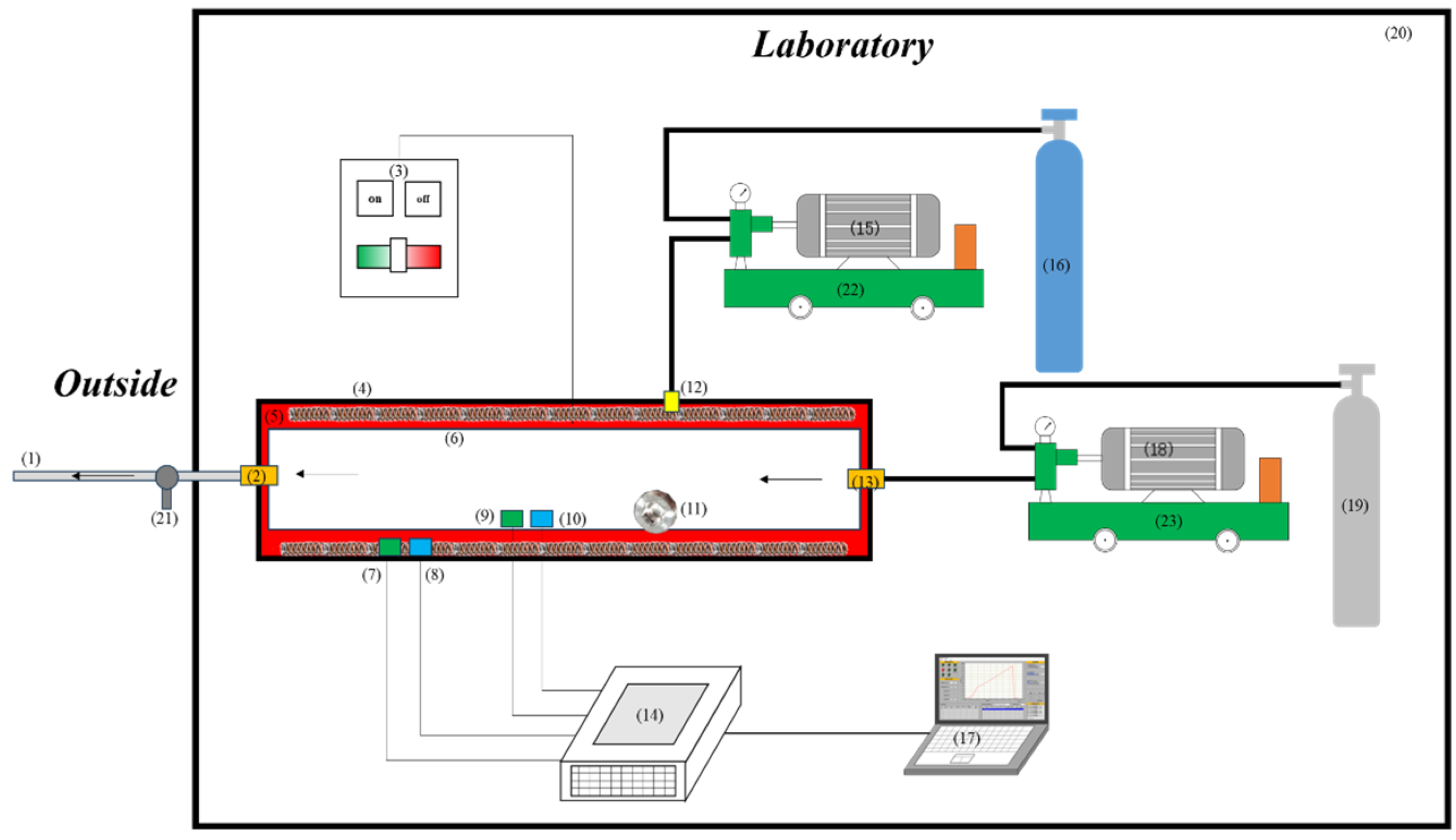
In this series of experiments, the effect of temperature variations on the rupture disc initiation pressure characteristics was investigated. The loading conditions were kept consistent across all tests to isolate the influence of temperature. During the experiments, a constant gas injection rate of 5 m3/s was maintained to ensure repeatability of the pressurization process and consistency in the loading rate. The gas pressure inside the pressurization chamber was gradually increased to the target level, with the annular pressure on the rupture disc rising at a rate of 400 psi/h, while the internal pipe pressure was maintained at 500 psi. This setup ensured a stable and controllable pressure differential across the rupture disc.
Temperature was the primary control variable in this set of experiments. The temperature of the gas inside the chamber was precisely regulated using a heating control system, with set points of 30 °C, 50 °C, 70 °C, 90 °C, 110 °C, and 130 °C. At each temperature condition, the gas loading process was initiated once the chamber temperature stabilized, and pressure and temperature changes upstream and downstream of the rupture disc were continuously recorded during the loading process. The initiation pressure at the moment the rupture disc activated was recorded as the actual initiation pressure for each specific temperature condition [
36].
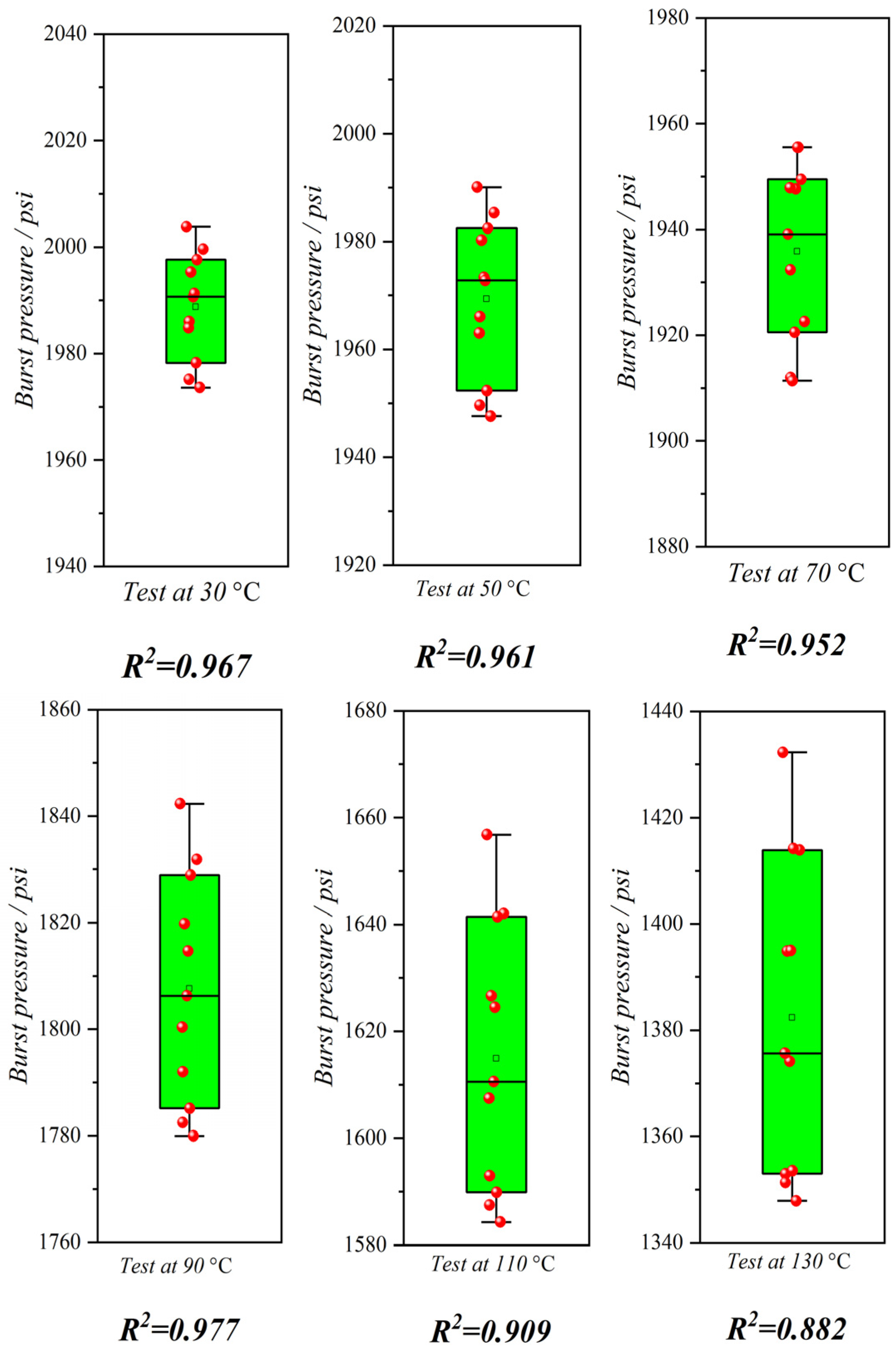
Figure 3 presents the box-plot distribution of rupture disc initiation pressures at six temperature conditions (30 °C, 50 °C, 70 °C, 90 °C, 110 °C, and 130 °C), where each box represents the statistical range of repeated tests and the overlaid scatter points denote individual experimental measurements. As shown in
Figure 3, the initiation pressure test results of the rupture disc at different temperatures (30 °C, 50 °C, 70 °C, 90 °C, 110 °C, and 130 °C) are presented. Multiple repeated tests were conducted at each temperature condition, and the discrete test data are overlaid as scatter points on the box plot to illustrate the statistical distribution characteristics of the initiation pressure. From the box plot, it can be observed that under low-temperature conditions (30–50 °C), the initiation pressure of the rupture disc is generally high, with a small box height. The median and interquartile range show limited variation, indicating that the initiation behaviour is relatively stable and the repeatability is good. As the temperature increases to 70–90 °C, the median initiation pressure begins to significantly decrease, while the box height gradually increases, showing that the dispersion of the initiation pressure has also increased. When the temperature further rises to 110–130 °C, the initiation pressure drops markedly, and the range of scatter point distribution widens significantly, indicating that the initiation process of the rupture disc under high-temperature conditions exhibits a stronger random characteristic. In addition to the changes in the average initiation pressure level, the experimental results also demonstrate that an increase in temperature significantly enhances the dispersion of the rupture disc’s initiation pressure. Specifically, as the temperature increases, the interquartile range in the box plot gradually widens, the extreme values expand, and the scatter points become more dispersed. This phenomenon suggests that under high-temperature conditions, the rupture disc’s initiation behaviour becomes more sensitive to the microstructural state of the material, manufacturing defects, and localized stress concentrations. The increased uncertainty in initiation pressure under high-temperature conditions means that a single nominal initiation pressure is no longer sufficient to fully reflect the actual operating state of the rupture disc in high-temperature environments. This highlights the need for a higher safety margin in the design of annular pressure control for deepwater oil and gas wells.
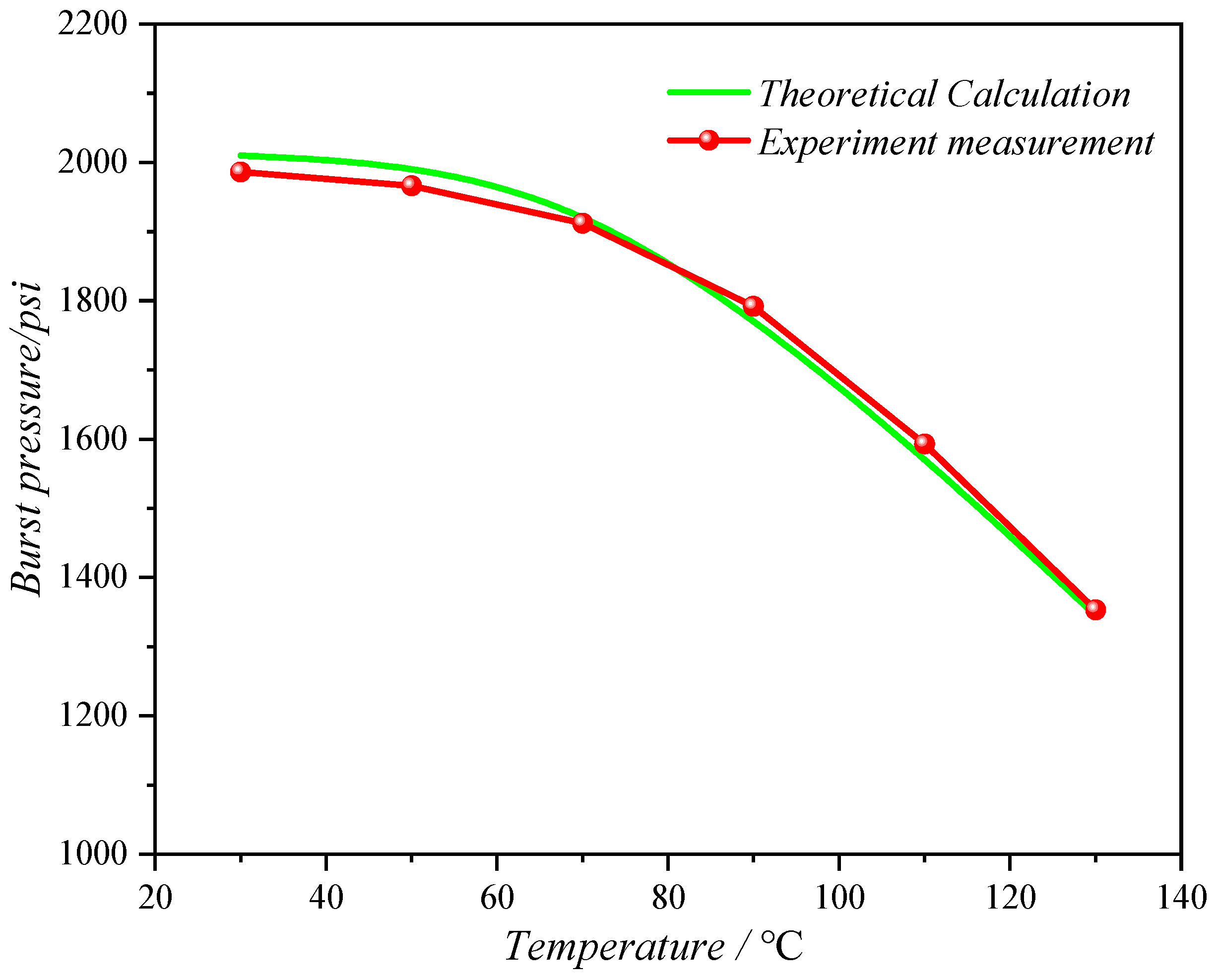
To quantitatively characterize the influence of temperature on rupture disc initiation pressure, the median values extracted from the box-plot statistics at each temperature condition were plotted together with the theoretical predictions derived from the pressure inversion model, as shown in
Figure 4. The green solid curve represents the theoretical calculation, while the red circular markers denote the experimentally measured median initiation pressures. As illustrated in the figure, both the theoretical and experimental results exhibit a consistent monotonic nonlinear decreasing trend with increasing temperature. In the low-temperature range (30–70 °C), the initiation pressure decreases gradually, and the theoretical curve closely overlaps with the experimental data points, indicating good agreement. As the temperature increases to 90–130 °C, the initiation pressure declines more rapidly, demonstrating an accelerated decay behaviour. In this higher temperature range, although minor deviations between theory and experiment can be observed, the overall trend remains highly consistent. The close alignment between the theoretical curve and experimental measurements confirms that the proposed model effectively captures the temperature-dependent degradation behaviour of the rupture disc. Overall, the comparison demonstrates that temperature exerts a significant and nonlinear control on rupture initiation pressure, and the theoretical framework provides a reliable quantitative description of this trend across the entire tested temperature range.
4.2. Influence of Annular Pressure Rate on Rupture Disc Initiation Behaviour
To investigate the effect of varying annular pressure rates on the initiation behaviour of the rupture disc, a series of experiments were conducted under different annular pressure conditions, while keeping other loading parameters constant. During the experiments, gas was injected at a constant rate of 5 m
3/s to simulate production conditions, and the chamber temperature was precisely controlled and stabilized at 70 °C to ensure the stability of the pressurization process and the repeatability of the experimental results. The annular pressure on the rupture disc was applied using a controlled linear loading method to simulate the gradual accumulation of pressure within the closed annular space. The loading rate was set at 400 psi/h until the rupture disc initiated, ensuring that the initiation process occurred under quasi-static loading conditions. The internal pipe pressure on the rupture disc’s pressurized side was maintained constant at 500 psi to establish stable and repeatable boundary conditions. The annular pressure increase rate was the primary control variable in this set of experiments, and was set to 200 psi/h, 300 psi/h, 400 psi/h, 500 psi/h, 600 psi/h, and 700 psi/h, respectively. At each annular pressure condition, the gas loading system was first used to stabilize the annular side pressure at the target level, and then the annular pressure loading process was initiated. During the loading process, the pressure variations upstream and downstream of the rupture disc were continuously recorded. When the rupture disc initiated, the corresponding instantaneous pressure value on the pressurized side was recorded and defined as the actual initiation pressure for that particular annular pressure rate condition [
37].
As shown in
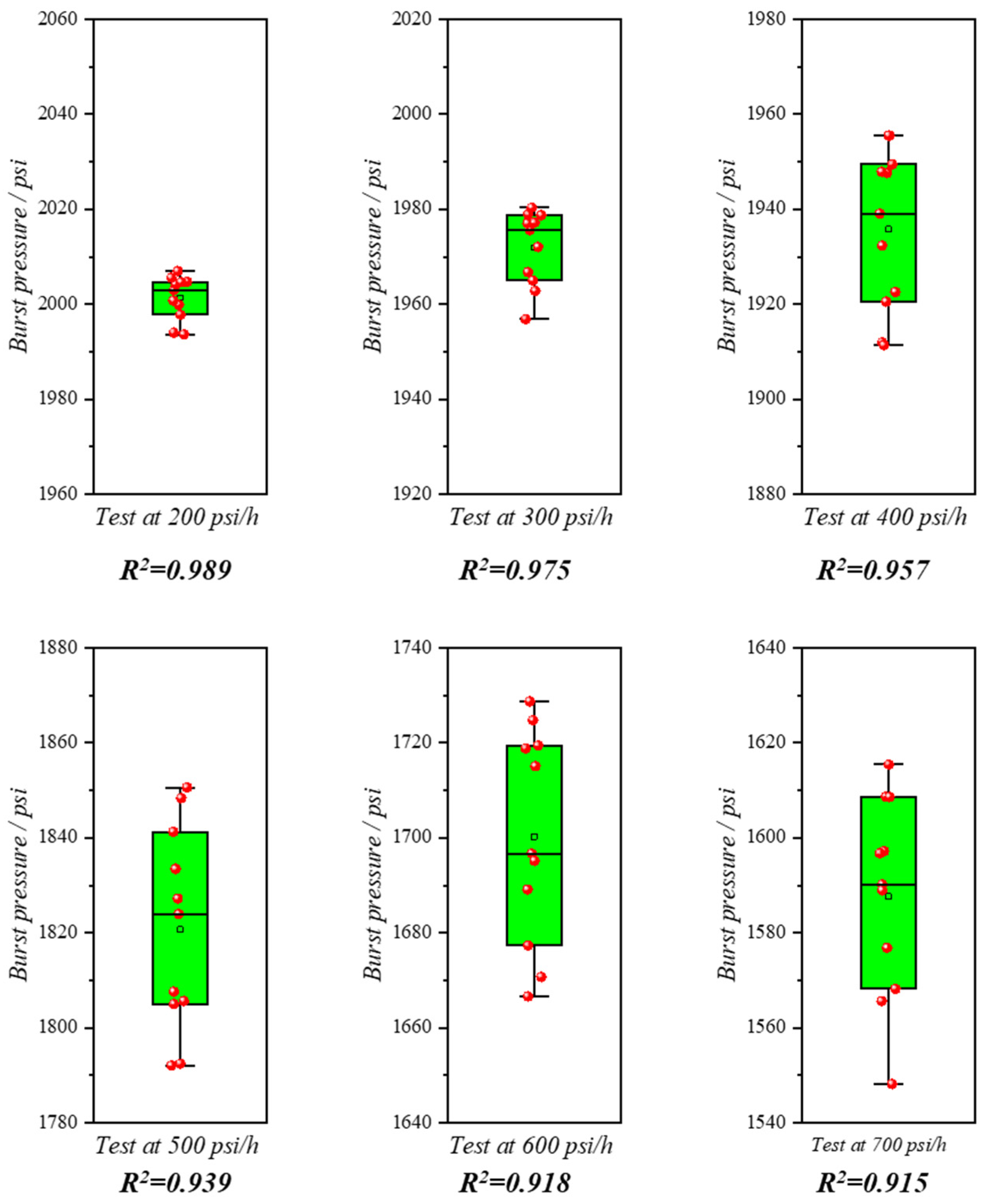
Figure 5, the statistical distribution characteristics and trend of rupture disc initiation pressure under different annular pressure increase rates are presented. In this set of experiments, the annular pressure increase rate was used as the primary control variable, with the following rates: 200 psi/h, 300 psi/h, 400 psi/h, 500 psi/h, 600 psi/h, and 700 psi/h. Multiple repeated tests were conducted at each loading rate, and the initiation pressure test results were plotted as scatter points overlaid on the box plot, representing the statistical distribution and dispersion characteristics of the rupture disc initiation pressure. From the overall distribution in the box plot, it is evident that as the annular pressure increase rate increases, the rupture disc initiation pressure shows a clear downward trend. Under lower annular pressure loading rates 200 psi/h–300 psi/h, the initiation pressure level is relatively high, with a small box height and limited variation in the median value, indicating a more concentrated scatter distribution. This suggests that under slow, quasi-static annular pressure loading conditions, the initiation behaviour of the rupture disc is relatively stable and repeatable. When the annular pressure increase rate is increased to 400 psi/h–500 psi/h, the median initiation pressure begins to decrease significantly, while the box height gradually increases, and the range of scatter point distribution expands, indicating an increase in the dispersion of the initiation pressure. Further increasing the annular pressure increase rate to 600 psi/h–700 psi/h results in a significant decrease in rupture disc initiation pressure, with a marked increase in the interquartile range of the box plot and a substantial expansion in the extreme value range. The scatter points show a more dispersed distribution pattern. These results indicate that under higher annular pressure loading rates, the initiation process of the rupture disc exhibits stronger randomness. The rupture disc’s initiation behaviour becomes more sensitive to local defects, material heterogeneity, and transient stress concentration effects. In addition to the shift in the average initiation pressure level, the experimental results clearly show that increasing the annular pressure increase rate significantly amplifies the dispersion of the initiation pressure. As the loading rate increases, the statistical distribution of initiation pressure evolves from being relatively concentrated to becoming more dispersed, reflecting that under rapid annular pressure loading conditions, the rupture disc’s initiation control mechanism shifts from being dominated by the overall material strength to being primarily influenced by local weak areas or defects.
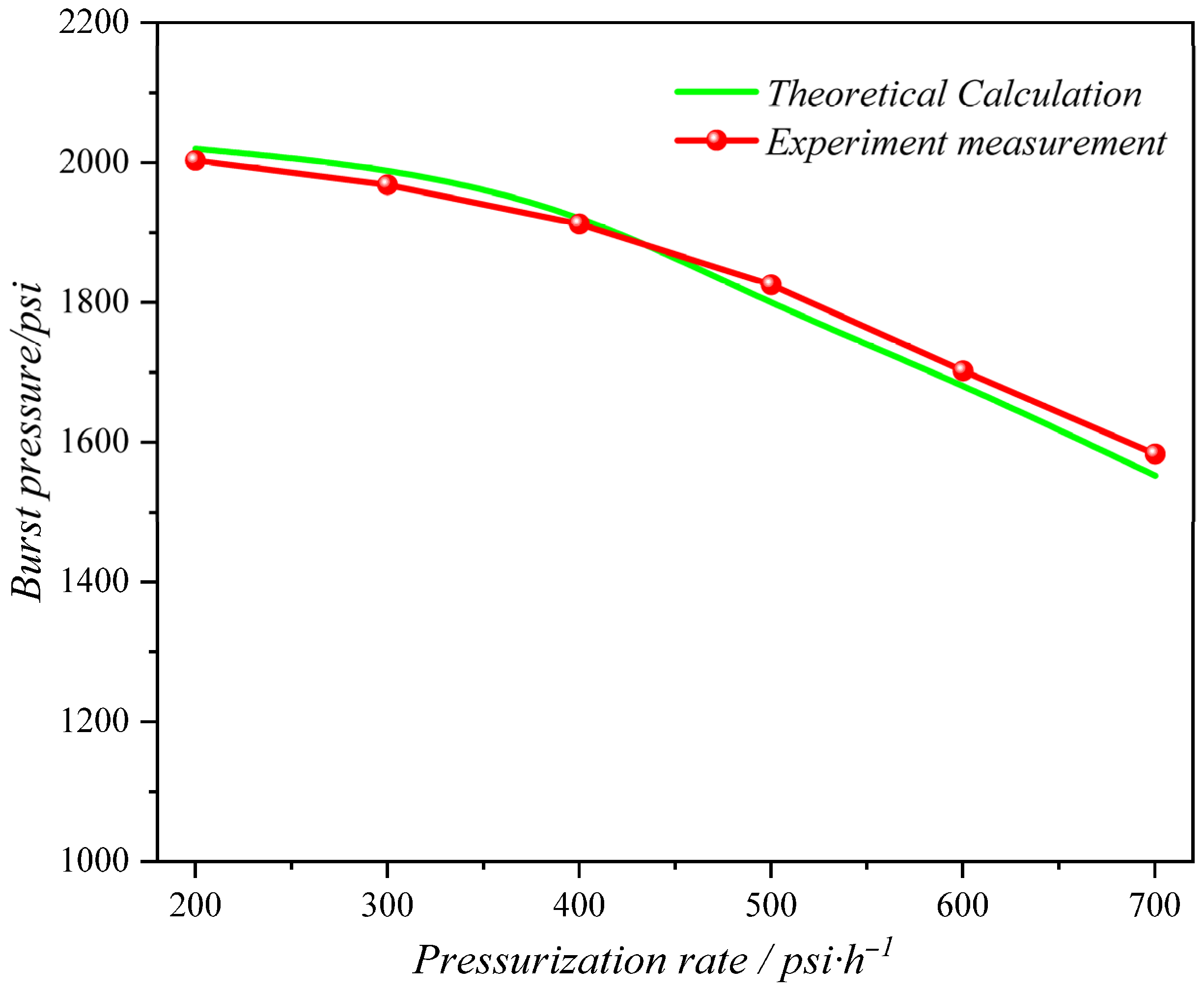
To further quantify the influence of the annular pressure increase rate on rupture disc initiation pressure, the median values extracted from the box-plot statistics at each loading rate were plotted together with the theoretical predictions derived from the pressure inversion model, as shown in
Figure 6. In the figure, the green solid curve represents the theoretical calculation, while the red circular markers denote the experimentally measured median initiation pressures. As illustrated, both the theoretical and experimental results exhibit a clear monotonic decreasing trend with increasing annular pressure increase rate. In the lower loading rate range (200–400 psi·h
−1), the reduction in initiation pressure is relatively gradual, and the theoretical curve closely matches the experimental data, indicating good agreement. As the annular pressure increase rate rises to 500–700 psi·h
−1, the initiation pressure decreases more rapidly, demonstrating a pronounced nonlinear decay characteristic. Although slight deviations between theoretical predictions and experimental measurements appear at higher loading rates, the overall variation trend remains highly consistent. The comparison confirms that increasing annular pressure increase rate significantly lowers the rupture disc initiation pressure, and this effect exhibits nonlinear behaviour. The close correspondence between theoretical and experimental curves validates the capability of the proposed model to capture the dynamic loading effect associated with rapid pressure accumulation. Overall, the results demonstrate that annular pressure increase rate is a critical dynamic control parameter influencing rupture disc initiation behaviour, and the theoretical framework provides a reliable quantitative description of the observed trend across the tested loading rate range.
4.3. Effect of Gas Flow Rate on Rupture Disc Initiation Response
To investigate the impact of gas injection rate on the initiation pressure characteristics of the rupture disc, initiation tests were conducted under varying gas injection rates while maintaining constant temperature and internal pressure conditions. During the experiments, the gas temperature inside the chamber was controlled and stabilized at 70 °C using a heating control system, to eliminate any interference from temperature variations on the rupture disc’s mechanical response. The annular pressure on the rupture disc was increased at a rate of 400 psi/h, with the internal pipe pressure maintained at 500 psi, thereby establishing stable and repeatable boundary conditions. The simulated gas production flow rates were set at 3 m
3/s, 4 m
3/s, 5 m
3/s, 6 m
3/s, 7 m
3/s, and 8 m
3/s to replicate different production scenarios. For each gas injection rate condition, the pressure on the rupture disc’s pressurized side gradually increased as gas was continuously injected, and real-time monitoring of pressure was conducted through the pressure measurement system. When the rupture disc initiated, the corresponding instantaneous pressure value on the pressurized side was recorded and defined as the actual initiation pressure for that specific gas injection rate condition [
38].
As shown in
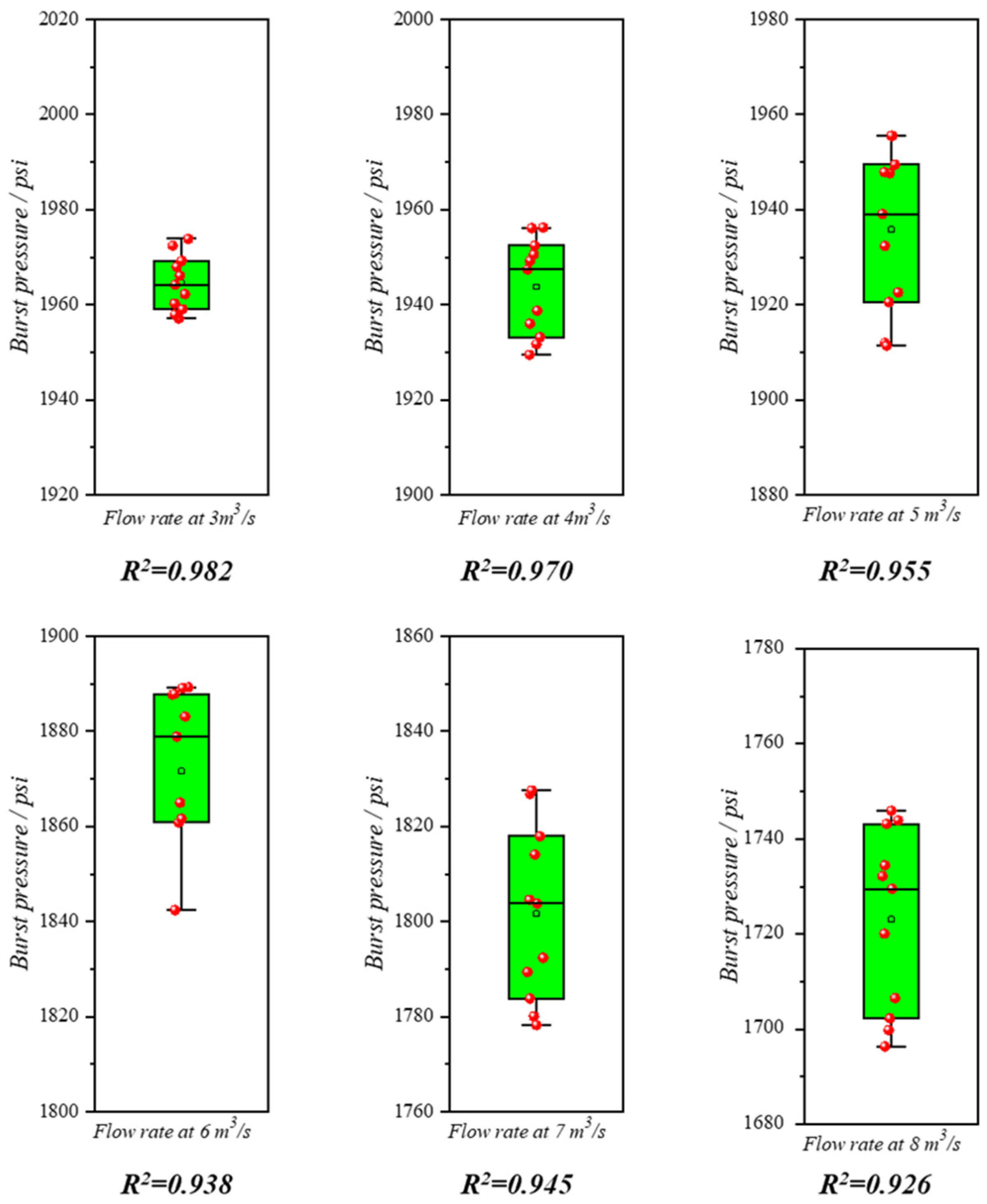
Figure 7, the experimental test results of rupture disc initiation pressure under different gas production flow rates are presented. Simulated gas production conditions were set with gas injection flow rates of 3 m
3/s, 4 m
3/s, 5 m
3/s, 6 m
3/s, 7 m
3/s, and 8 m
3/s. Multiple repeated tests were conducted at each flow rate condition, and the resulting initiation pressure data were overlaid as scatter points on the box plot to represent the statistical distribution and dispersion characteristics of the initiation pressure. From the box plot, it can be observed that under lower flow rate conditions (3–4 m
3/s), the initiation pressure of the rupture disc is relatively high, with a small box height and a more concentrated distribution of data points. This indicates that under these conditions, the initiation behaviour of the rupture disc exhibits good stability and repeatability. As the gas flow rate increases to 5–6 m
3/s, the median initiation pressure begins to decrease, the box height increases, and the scatter point distribution gradually expands, indicating that the dispersion of the initiation pressure starts to increase. When the flow rate further increases to 7–8 m
3/s, the initiation pressure significantly decreases, and the scatter points become more dispersed. Some experimental points deviate further from the median, suggesting that at higher flow rates, the initiation process of the rupture disc exhibits stronger random characteristics.
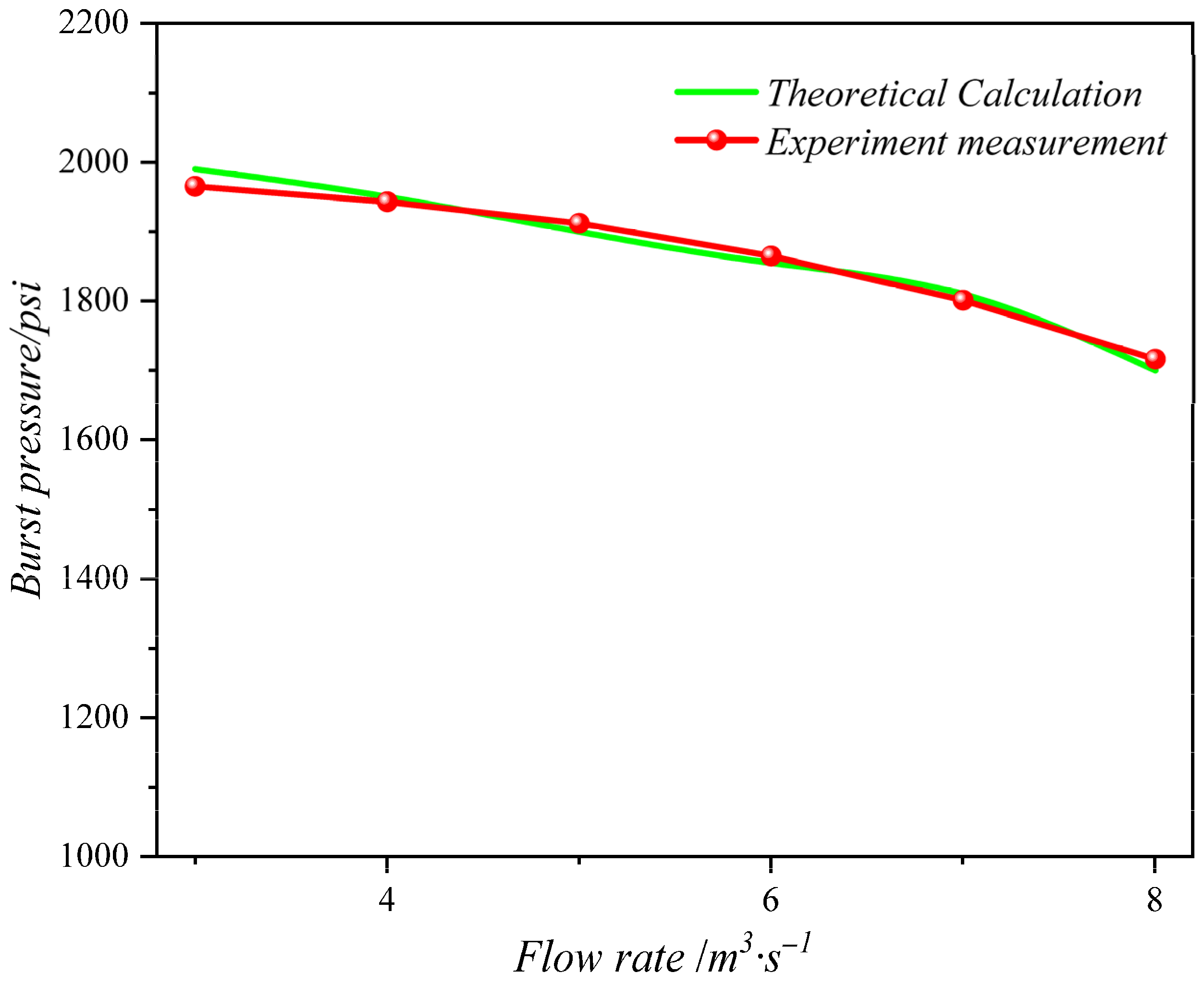
To quantitatively analyze the influence of gas flow rate on rupture disc initiation pressure, the median values extracted from the box-plot statistics at each flow rate were plotted together with the theoretical predictions derived from the pressure inversion model, as shown in
Figure 8. In the figure, the green solid line represents the theoretical calculation, while the red circular markers denote the experimentally measured median initiation pressures under each flow rate condition. As illustrated, both theoretical and experimental results demonstrate a clear monotonic decreasing trend with increasing gas flow rate. In the lower flow rate range (3–5 m
3·s
−1), the decline in initiation pressure is relatively moderate, and the theoretical curve closely coincides with the experimental data, indicating strong agreement. As the flow rate increases further (6–8 m
3·s
−1), the reduction in initiation pressure becomes more pronounced, exhibiting a nonlinear decay characteristic. Although slight deviations between the theoretical predictions and experimental measurements can be observed at higher flow rates, the overall variation trend remains highly consistent. The comparison confirms that increasing gas flow rate significantly reduces the rupture disc initiation pressure and that this influence exhibits nonlinear behaviour. The close correspondence between the calculated and measured values indicates that the proposed theoretical model effectively captures the dynamic loading effects introduced by higher flow rates. Overall, the results demonstrate that gas flow rate is a critical operational parameter governing rupture disc initiation behaviour, and the theoretical framework provides a reliable quantitative representation of the observed experimental trend across the tested range.
4.4. Effect of Corrosion on Rupture Disc Initiation Pressure
To simulate the corrosion degradation behaviour of rupture discs in high-temperature acidic fluid environments typically found in wells, an accelerated acidic salt mist corrosion treatment was performed on the rupture discs prior to testing. The corrosion tests were conducted in an acidic salt mist chamber, with the temperature set at 70 °C to replicate downhole high-temperature conditions. The relative humidity was maintained at ≥95% to ensure stable condensation and corrosion conditions. The mist was applied using a continuous spraying mode, with the spray rate controlled at 2.0 mL/(80 cm
2·h). The corrosive medium consisted of water mixed with glacial acetic acid, which was used to adjust the pH of the solution to 3.0, simulating the weak acidic corrosion environment formed by CO
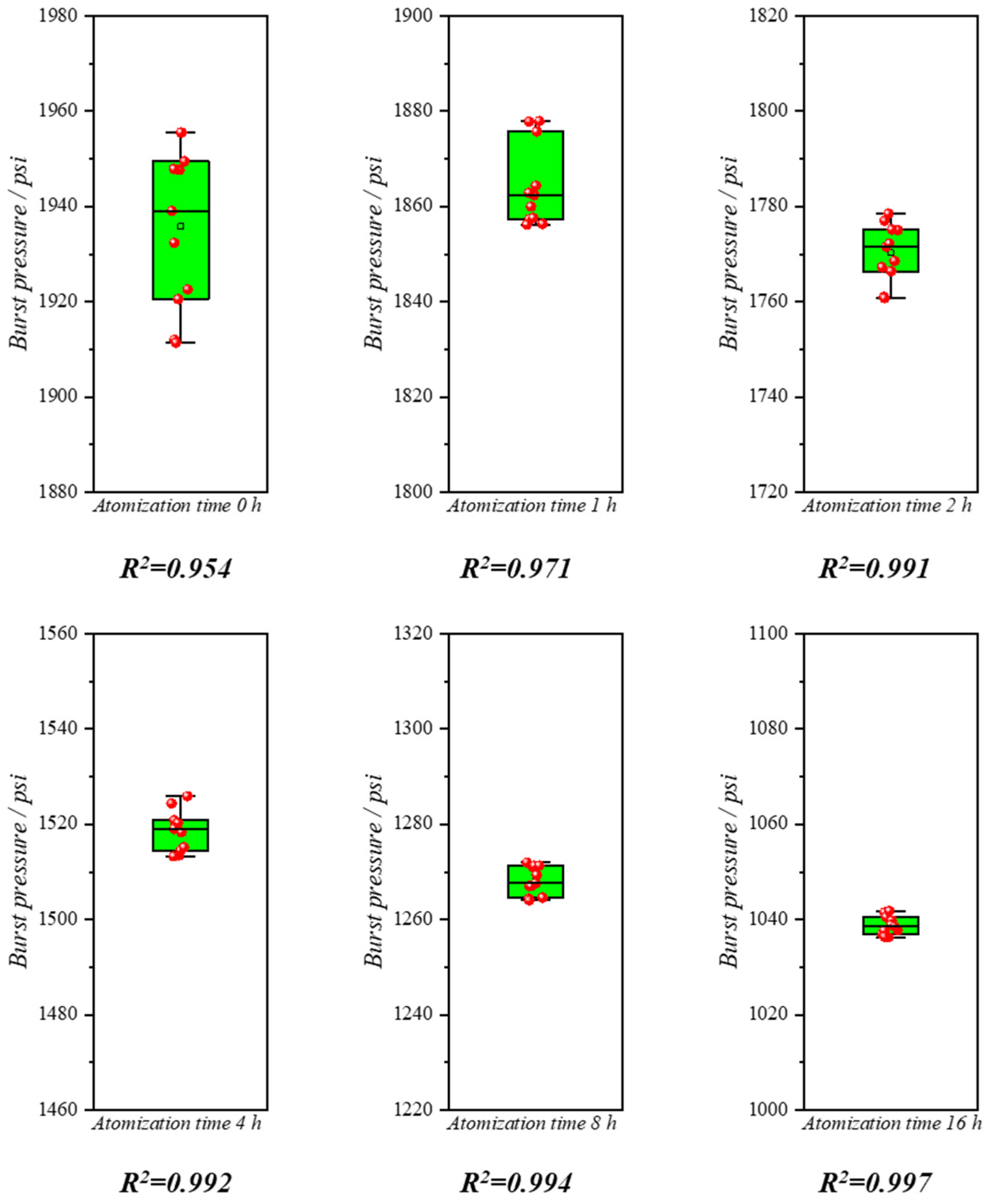
2 dissolved in the water in oil and gas wells. Rupture disc samples were exposed to the corrosive environment for varying durations of 1 h, 2 h, 4 h, 8 h, and 16 h to achieve different levels of corrosion degradation. After corrosion treatment, all rupture disc samples were gently rinsed with deionized water to remove residual corrosive media from the surface, then naturally dried at room temperature, and were subsequently used for initiation pressure testing. By controlling the exposure time, a graded level of corrosion degradation was achieved, providing an experimental basis for analyzing the impact of corrosion on initiation pressure and its dispersion [
39].
Figure 9 presents the statistical results of rupture disc initiation pressure under different exposure times to acidic salt mist corrosion, including 1 h, 2 h, 4 h, 8 h, and 16 h, as well as the trend curve of initiation pressure variation with corrosion time. It is evident that as the corrosion exposure time increases, the rupture disc initiation pressure exhibits a clear decreasing trend, indicating that corrosion degradation significantly weakens the load-bearing capacity of the rupture disc. From the distribution characteristics of the box plot, it can be observed that during the short-term corrosion phase 1 h–4 h, the initiation pressure decreases notably, and the dispersion between different samples is relatively large. However, when the corrosion exposure time is extended to 8 h and 16 h, the initiation pressure continues to decrease, but the rate of decline slows down significantly, and the overall trend becomes more gradual. This result suggests that the effect of corrosion on rupture disc initiation pressure follows a phase-dependent characteristic.
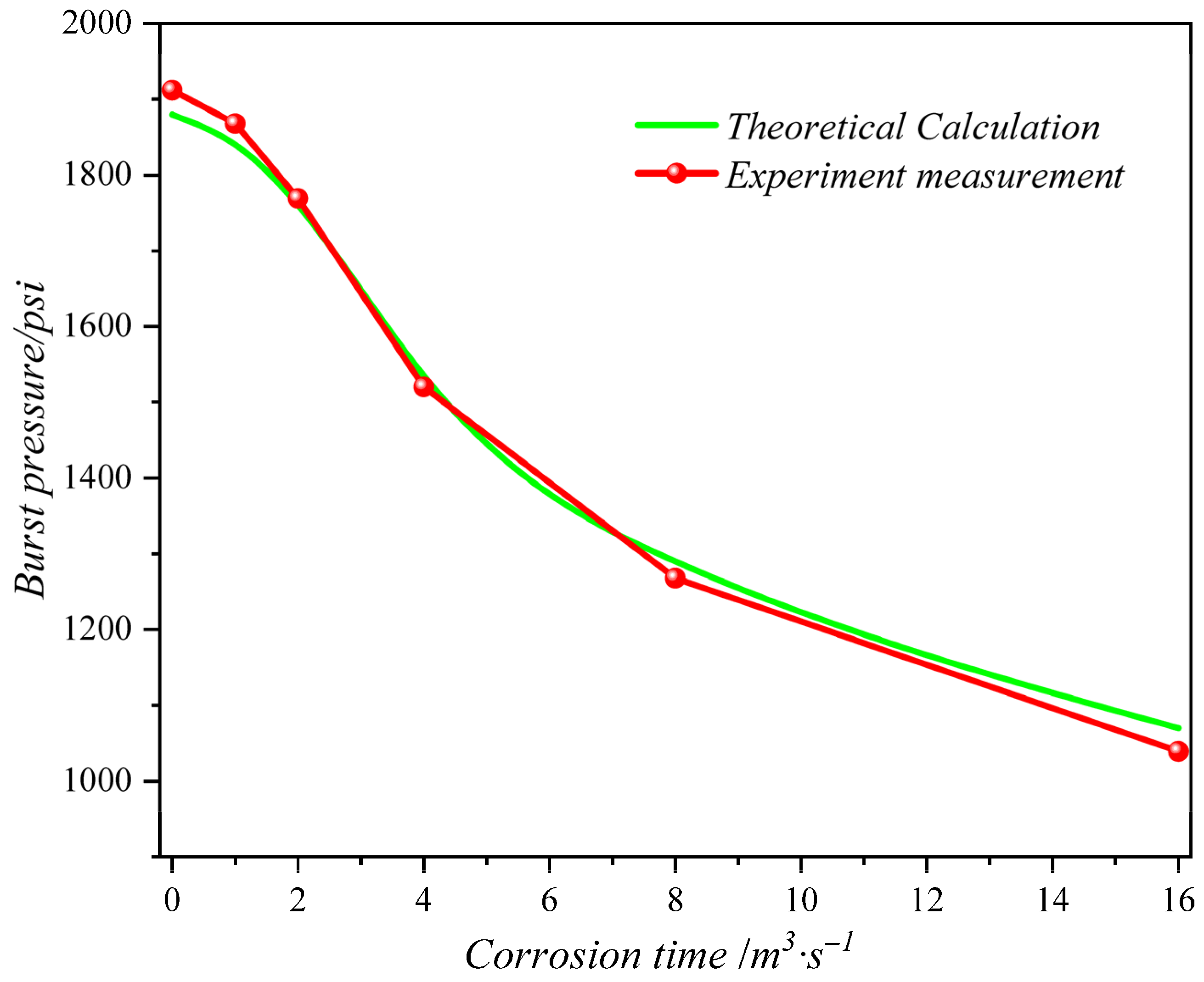
To quantitatively evaluate the effect of corrosion degradation on burst pressure, the median values extracted from the box-plot statistics under each corrosion duration were plotted together with the theoretical predictions derived from the corrosion-coupled pressure inversion model, as shown in
Figure 10. In the figure, the green solid line represents the theoretical calculation, while the red circular markers denote the experimental measurements. Overall, both theoretical and experimental results exhibit a pronounced nonlinear decreasing trend with increasing corrosion time. In the early stage of corrosion (short exposure duration), the burst pressure declines rapidly, indicating that initial material degradation and thickness reduction significantly weaken the load-bearing capacity of the rupture disc. As corrosion time further increases, the rate of pressure reduction gradually slows, and the curve transitions into a more moderate decay phase, demonstrating a typical “rapid initial degradation followed by gradual stabilization” characteristic. From a comparative perspective, the theoretical curve closely follows the experimental data across the entire corrosion range. The two sets of results show strong consistency in both magnitude and trend, with only minor deviations at longer exposure times. This agreement confirms that the theoretical model effectively captures the coupling mechanism between corrosion-induced geometric thinning, material property degradation, and pressure-bearing capacity reduction. Under dynamic loading conditions, the reduction in burst pressure is primarily associated with transient stress redistribution and amplification of local weak regions, which enhances the sensitivity of rupture initiation to spatial heterogeneity. As a result, multiple potential initiation sites may compete, leading to increased statistical dispersion. In contrast, under progressive corrosion, the material undergoes more uniform degradation at the structural scale, and the burst behaviour gradually becomes governed by overall strength reduction rather than localized defects. This transition suppresses the competition among multiple initiation sites, thereby reducing the variability of burst pressure. Therefore, the observed opposite trends in statistical dispersion reflect a shift in controlling mechanisms: from localized instability-driven stochastic failure (dynamic loading) to global strength-controlled failure (corrosion degradation).
In summary, corrosion exposure significantly reduces the burst pressure of rupture discs in a nonlinear manner, and the proposed model provides a reliable quantitative description of this degradation process. The good correspondence between theoretical predictions and experimental results further validates the applicability of the model for assessing rupture disc performance under corrosion-damaged conditions.
5. Discussion
Before discussing the underlying mechanisms, it is necessary to clarify the scaling relationship between the laboratory experiments and field-scale annuli. The experimental system is designed to reproduce the key physical processes of pressure accumulation and rupture under controlled conditions; however, differences exist in pressure ramp rates, thermal gradients, and time scales compared with actual deepwater well environments. In field conditions, pressure buildup is typically slower but sustained over longer durations, and thermal gradients are more complex due to formation heat transfer. Despite these differences, the governing mechanisms—such as the competition between pressure loading rate and stress redistribution capacity—remain consistent. Therefore, the experimental results are considered to capture the fundamental trends and failure mechanisms, although direct quantitative extrapolation to field-scale conditions requires careful calibration.
Based on the experimental results, it is necessary to further discuss the evolution mechanisms of rupture disc initiation pressure and its dispersion under different operational conditions by integrating solid mechanics principles, failure control mechanisms, and corrosion-induced structural degradation. Under quasi-static conditions, the stress state of the flat rupture disc can be approximated by a uniformly distributed membrane stress field governed primarily by classical thin plate theory. However, at elevated gas flow rates, transient pressure fluctuations and flow-induced dynamic loads reduce the characteristic time available for stress redistribution across the membrane. As a result, localized regions reach the material yield or instability criterion earlier than the global membrane, causing premature initiation. From a material perspective, this behaviour is associated with strain-rate sensitivity under rapid pressurization, where limited stress redistribution enhances local yielding in weak regions. This mechanism explains the observed reduction in initiation pressure under high flow rate conditions.
Meanwhile, the enhanced dispersion of initiation pressure under high flow rates can be interpreted in the framework of failure mode transition. Under dynamic loading, the rupture disc behaviour gradually shifts from a strength-controlled failure mode, dominated by the nominal material properties, to a defect-controlled failure mode, governed by local geometric imperfections, machining-induced thickness variations, and microstructural inhomogeneities. These micro-defects act as stress concentration sites, and their interaction with transient dynamic stresses significantly amplifies local stress intensity, leading to greater sensitivity of initiation behaviour to weak regions. This results in increased uncertainty in crack initiation location and path, and thus a broader statistical distribution of initiation pressure.
These observations further substantiate the transition from strength-controlled to defect-controlled failure. Under quasi-static conditions, rupture is governed by the global material strength, and failure occurs when the overall membrane stress reaches the nominal yield or instability limit. In contrast, under dynamic loading conditions, localized stress concentration at micro-defects becomes dominant, leading to premature initiation at stress levels lower than the nominal material strength. This mechanism directly explains both the reduction in initiation pressure and the increased dispersion observed under high flow rate conditions.
In contrast, corrosion degradation exhibits a fundamentally different influence on rupture disc initiation behaviour. The experimental results demonstrate a nonlinear decrease in initiation pressure with corrosion time, characterized by a rapid decline in the early stage followed by a gradual slowdown. From a corrosion engineering and structural integrity perspective, early-stage corrosion preferentially attacks surface asperities and stress concentration zones, effectively reducing the local load-bearing cross-section and amplifying stress concentration factors. This leads to a rapid reduction in initiation pressure. As corrosion progresses and becomes more spatially uniform, the rupture disc thickness and strength distribution degrade more evenly. Consequently, the relative differences between local weak points are reduced, and failure becomes increasingly governed by the overall residual strength rather than isolated defects. This evolution explains the observed decrease in initiation pressure dispersion at higher corrosion levels, indicating a transition from multi-source defect-controlled initiation to a more uniform strength-controlled failure mode.
The effects of gas flow rate are mechanistically consistent with those of temperature and pressure loading rate. For 316L stainless steel, increasing temperature leads to a reduction in yield strength and elastic modulus, as well as a decrease in fracture resistance, thereby lowering the rupture disc’s load-bearing capacity. This temperature-dependent degradation of material properties directly governs the reduction in burst pressure observed at elevated temperatures. Higher pressure loading rates and elevated flow rates further exacerbate stress localization by limiting stress relaxation and redistribution, resulting in a combined effect of reduced initiation pressure and increased dispersion.
Therefore, in deepwater annular pressure control scenarios, the rupture disc initiation pressure should not be treated as a fixed material parameter. Instead, it should be regarded as a state-dependent response, jointly governed by temperature, pressure evolution rate, production flow rate, and corrosion severity. Neglecting the effects of high flow rate and dynamic pressure evolution may result in a systematic overestimation of the effective initiation threshold, thereby compromising the reliability of wellbore pressure safety design.
It should be noted that the findings of this study can be interpreted at two levels. The observed relationships between operating conditions and rupture disc behaviour—such as the reduction in initiation pressure and the evolution of dispersion—primarily reflect general qualitative trends and underlying failure mechanisms, which are expected to be applicable to similar systems. In contrast, the quantitative values of initiation pressure and the corresponding fitted relationships are specific to the experimental configuration, material properties, and controlled laboratory conditions. Therefore, direct application of these values in engineering design requires appropriate calibration based on actual field conditions, geometry, and loading history. In this context, the present results provide a mechanistic basis and reference range rather than direct design values.
These mechanism transitions provide direct guidance for engineering design. Under dynamic loading conditions, where failure is defect-controlled, design strategies should focus on minimizing sensitivity to local imperfections through optimized geometries (e.g., controlled pre-scored patterns) and improved manufacturing consistency. Materials with higher toughness and resistance to dynamic fatigue are also preferable. Under corrosion-dominated conditions, where failure is governed by global strength degradation, the priority shifts to enhancing material durability. This can be achieved through corrosion-resistant alloys, composite materials, or protective coatings with predictable degradation behaviour. Incorporating degradation models into design can further improve long-term reliability.