Article

Resonance-Driven Ultrasound-Assisted Germination of Cucurbita pepo: A Multiphysics-Based Process Intensification Approach


by
Daniel Aguilar-Torres
1,2,*,
Omar Jiménez-Ramírez
3,
Felipe A. Perdomo
4 and
Rubén Vázquez-Medina
1,*
1
Instituto Politécnico Nacional, Centro de Investigación en Ciencia Aplicada y Tecnología Avanzada Unidad Querétaro, Cerro Blanco 141, Colinas del Cimatario, Santiago de Querétaro 76090, Mexico
2
Secretaría de Ciencia, Humanidades, Tecnología e Innovación, Insurgentes Sur 1582, Crédito Constructor, Benito Juárez, Mexico City 03940, Mexico
3
Instituto Politécnico Nacional, Escuela Superior de Ingeniería Mecánica y Eléctrica Unidad Culhuacan, Santa Ana 1000, San Francisco Culhuacan, Coyoacán, Mexico City 04440, Mexico
4
Faculty of Engineering and Science, University of Greenwich, Central Avenue, Chatham Maritime, Kent ME4 4TB, UK
*
Authors to whom correspondence should be addressed.
Processes 2026, 14(7), 1168; https://doi.org/10.3390/pr14071168
Submission received: 26 February 2026 / Revised: 1 April 2026 / Accepted: 2 April 2026 / Published: 4 April 2026

Abstract

Ultrasound-assisted germination (UAG) has emerged as a process intensification strategy to enhance seed performance while improving resource efficiency. In this study, a multiphysics framework combining thermoacoustic modeling with experimental validation was developed to investigate resonance-driven UAG in Cucurbita pepo. Frequency-domain analysis identified 40 kHz as the resonance condition of the seed–fluid system, enabling spatial localization of acoustic energy. Simulations showed that temperature remained below 46 °C across all exposure times, excluding bulk thermal effects and supporting a predominantly mechanical activation mechanism. Experimental treatments (40 kHz, 1.5 MPa, 5–25 min) revealed a non-linear germination response. The optimal condition (10 min) increased final germination from ∼20% to 46.8% and reduced the time to steady state from 13 to 10 days. Statistical analysis confirmed significant improvements for treatments between 10 and 25 min ( p < 0.001 ), while 5 min showed no effect. Longer exposures did not produce proportional gains, indicating a finite acoustic energy window. Because daily water (0.45 L·day−1) and electrical (0.438 kWh·day−1) consumption remained constant, shorter process duration reduced cumulative resource demand. The optimal treatment decreased water use by 1.35 L (23.1%) and energy consumption by 1.29 kWh (22.7%). When normalized per germination output, energy and water requirements decreased by ∼67%. These results demonstrate that integrating resonance-based multiphysics modeling with experimental validation enables rational optimization of UAG, providing a scalable and resource-efficient strategy for controlled-environment agricultural systems.

1. Introduction

Seed germination is a critical stage in plant development and agricultural production, directly influencing crop establishment, uniformity, and yield. Conventional approaches to enhance germination, such as chemical priming, thermal treatments, and mechanical scarification, are often limited by long processing times, high resource consumption, or potential environmental and physiological drawbacks [1,2,3]. In this context, physical process intensification techniques have gained increasing attention as sustainable alternatives for improving seed performance without chemical inputs [4,5,6].
Among these approaches, ultrasound-assisted processing has gained increasing attention as a promising technique to enhance germination and early seedling development. Ultrasonic waves generate mechanical oscillations and pressure fluctuations in the surrounding medium, leading to cavitation, microstreaming, and enhanced mass transfer phenomena [7,8,9]. When applied to seeds, these effects have been associated with modifications in seed coat permeability, accelerated water uptake, and stimulation of metabolic activity, ultimately improving germination kinetics and uniformity [10,11,12]. Previous studies have consistently reported improvements in germination performance across diverse plant species, including increases in germination percentage, reductions in mean germination time, and enhanced seedling vigor under controlled ultrasonic treatments [13,14,15].
However, as highlighted in recent literature, the effects of ultrasound-assisted germination are highly dependent on process parameters such as frequency, acoustic intensity, exposure time, and treatment conditions [16]. The absence of standardized methodologies and the variability in experimental configurations have resulted in limited reproducibility and comparability across studies. More importantly, most investigations treat ultrasound as an empirical input, often reporting nominal operating parameters without accounting for the spatial and temporal distribution of acoustic pressure, energy density, and cavitation activity within the treatment system [17,18]. Consequently, the relationship between acoustic field characteristics and biological responses remains insufficiently understood, restricting the rational design, optimization, and scale-up of ultrasound-assisted germination (UAG) processes.
From an engineering standpoint, a critical knowledge gap lies in the quantitative characterization of ultrasound–seed interactions under controlled conditions. In particular, limited attention has been devoted to the analysis of acoustic energy localization, pressure field distribution, and associated thermal effects at the seed level. Existing studies have predominantly focused on biological and physiological responses, while neglecting the underlying physical mechanisms governing ultrasound propagation and its interaction with heterogeneous biological media [19,20]. Addressing these limitations requires the integration of experimental methodologies with physics-based modeling frameworks capable of describing the multiphysics behavior of acoustic systems and their coupling with biological processes.
In this context, Cucurbita pepo was selected as a model system due to its agronomic relevance, well-documented germination physiology, and sensitivity to physical stimulation techniques [21,22,23]. Its relatively large seed size and robust seed coat facilitate experimental handling, reproducibility, and monitoring of germination dynamics, making it particularly suitable for investigating ultrasound–matter interactions from a process engineering perspective. This relevance is further supported by the strong responsiveness of its germination behavior to both environmental conditions and external stimuli. Under optimal conditions, germination percentages above 90% have been reported; however, exposure to abiotic stresses such as salinity and heavy metals leads to significant reductions in germination performance, including decreases of 16.1% in germination percentage, increases of 15.5% in mean germination time, and reductions of up to 46.9% in seedling vigor, accompanied by metabolic and structural alterations [24,25]. These responses highlight the sensitivity of Cucurbita pepo to external perturbations and reinforce its suitability as a model system for evaluating process-intensification strategies.
These general effects are supported by quantitative evidence across multiple species. In Capparis spinosa, ultrasound accelerated imbibition through partial testa modification, achieving germination levels of up to 71.7% under optimized conditions, although temperatures above 40 °C resulted in near-complete inhibition of germination [26]. In Hordeum vulgare, ultrasonic treatment enhanced water uptake and modulated hormonal pathways associated with germination, improving performance in hard-grain varieties [27]. Similarly, in Zea mays, variable-frequency ultrasound (20–40 kHz) increased germination percentage by approximately 10.4% and radicle length by up to 230.5%, accompanied by enhanced enzymatic activity and transcriptional regulation [13].
Beyond germination kinetics, ultrasound has also been shown to influence biochemical and structural properties. In Chenopodium quinoa, ultrasonic treatment increased phenolic content by up to 12%, flavonoids by 24.5%, and antioxidant capacity by 15% [28], while in Oryza sativa, phenolic and flavonoid contents increased by up to 36% and 24%, respectively, alongside improved antioxidant activity [29]. In Moringa oleifera, ultrasound reduced mean germination time by more than 11.5% and increased germination percentage by over 12%, while enhancing radicle and seedling growth by up to 35.7% and 42%, respectively [30]. Collectively, these studies demonstrate that ultrasound acts as an abiotic stimulus capable of modifying both structural and metabolic processes during germination.
In the specific case of Cucurbita pepo, previous research has primarily focused on physiological and biochemical regulation, including hormonal interactions governing germination [31]. For example, modulation of ethylene and abscisic acid pathways has been shown to influence germination timing and sensitivity, while environmental stressors such as salinity significantly impair germination dynamics and membrane integrity [25,32,33]. Ultrasound has also been applied to this species in the context of mass transfer enhancement, where it has been shown to facilitate the extraction of phenolic compounds and antioxidants by inducing microstructural modifications in the seed matrix [34]. More recently, ultrasound-assisted germination studies in Cucurbita pepo have reported significant improvements in both hydration and germination performance. For instance, optimized ultrasonic treatments (approximately 300 W for 30 min at 40 kHz) have achieved germination percentages exceeding 90% within 72 h, along with reductions in mean germination time [35]. In addition, intermittent ultrasound application has been shown to reduce hydration time by up to 54.3%, decrease the lag phase of germination by approximately 11.7%, and enhance early seedling vigor, including increases in radicle length of up to 19.4% [36]. Despite these promising results, these studies largely rely on empirical parameter selection and provide limited insight into the underlying acoustic mechanisms.
Building upon these limitations, the present study establishes a mechanistically grounded and quantitatively validated framework for ultrasound-assisted germination (UAG) in large-seeded systems. Unlike prior studies largely based on empirical parameter screening, the proposed approach integrates thermoacoustic multiphysics modeling with controlled experimentation to enable physics-informed optimization in Cucurbita pepo, linking frequency-domain analysis with germination kinetics.
A central contribution is the identification of 40 kHz as a resonance condition of the seed–fluid system, enabling spatial localization of acoustic energy while maintaining temperatures below critical thresholds. The modeling framework predicts acoustic pressure distributions and transient thermal fields, reducing reliance on trial-and-error approaches and providing a transferable methodology for ultrasound-based process design. Experimental results reveal a finite acoustic energy window governing germination response, with optimal conditions identified at 10 min, 40 kHz, and 1.5 MPa. This regime enhances germination efficiency, accelerates steady-state attainment, and reduces cumulative water and energy consumption. The observed non-linear response to prolonged exposure underscores the need for energy-normalized optimization. Overall, by coupling acoustic field characterization with biological performance and resource-intensity metrics, this work reframes UAG as a rational process intensification strategy and establishes a reproducible pathway for the optimization of acoustic pre-treatments in seed systems.
Consequently, this paper is organized as follows: Section 2 describes the seed material, the thermoacoustic model, the multiphysics simulation framework, and the experimental procedures, including ultrasound treatment conditions and resource consumption assessment. Section 3 presents both the numerical and experimental results, including germination performance and energy consumption. Section 4 interprets these findings in terms of resonance effects and process efficiency. Finally, Section 5 summarizes the main contributions and suggests directions for future work.

2. Materials and Methods

2.1. Seed Material

Seeds of Cucurbita pepo were used as the biological material in this study. The seeds were obtained from Semillas El Trébol S.A. de C.V., Cuatitlán, Mexico, from batch STAC-2024, with a declared purity of 99%. Seeds were pre-treated with thiram to prevent fungal contamination during germination. For experimental and modeling purposes, the seeds were considered orthodox dicotyledonous structures with a defined seed coat and internal embryo. To support thermoacoustic simulations, a set of physical and geometrical properties was defined, including density ( ρ ), speed of sound propagation ( c s ), elastic modulus (E), acoustic impedance ( Z s ), thermal conductivity ( k s ), specific heat capacity ( C p s ), and characteristic dimensions: length (l), width (w), and height (h). These parameters are required to describe acoustic wave propagation, energy absorption, and thermal response within the seed matrix under ultrasound exposure. Table 1 summarizes the average values adopted for Cucurbita pepo seeds, based on literature data and complementary estimations.
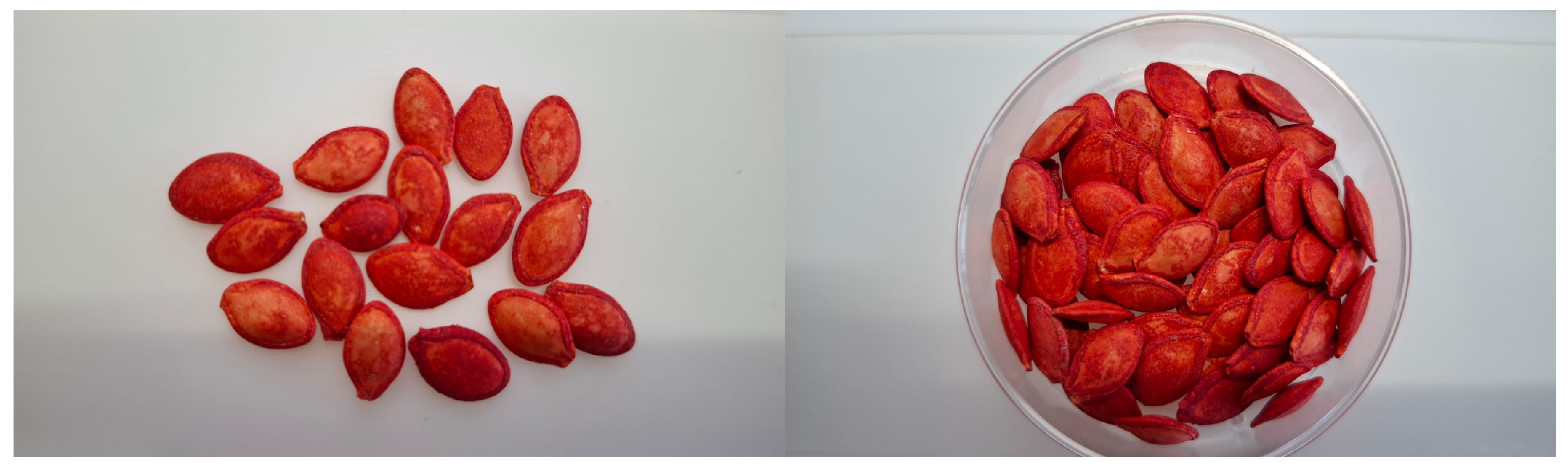
Additionally, the seeds shown in Figure 1 correspond to the batch used in the UAG experiments described in this study.

2.2. Mathematical Modeling

To simulate the propagation of ultrasound signals within Cucurbita pepo seeds, the classical linear wave equation (Equation (1)) was solved using the finite element method (FEM), following the formulation established by Blackstock et al. [37]. This equation governs the behavior of acoustic waves in heterogeneous media, including aqueous environments and biological tissues such as seed matrices:
c 2 2 u 2 u t 2 = 0 ,
where u denotes the ultrasound pressure field, c is the speed of sound in the medium, t is time, and 2 is the Laplacian operator applied to the spatial coordinates of u ( x , y , z ) . This formulation assumes linear, lossless propagation, which is valid for low-intensity ultrasound regimes typically used in germination studies.
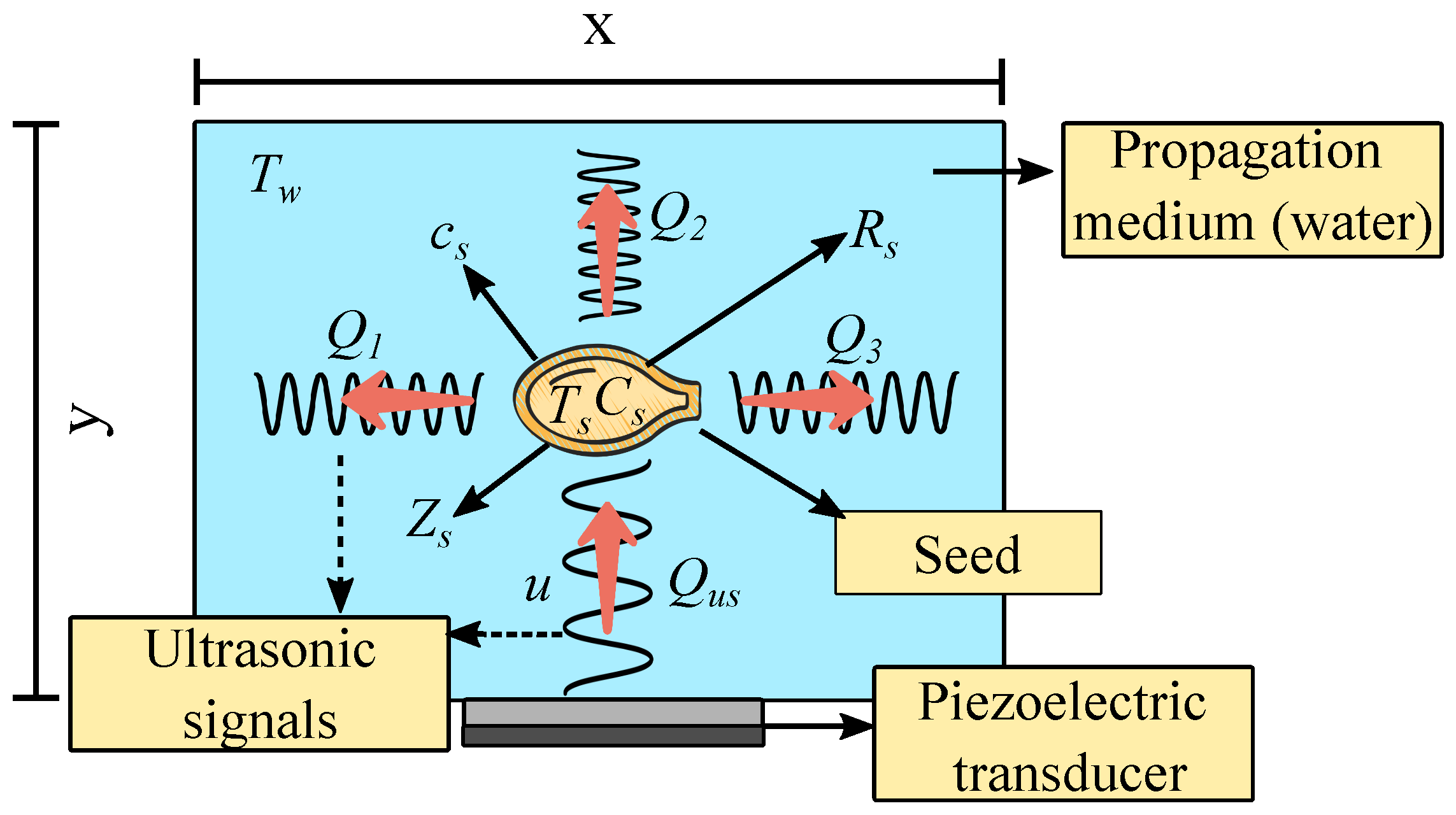
Although the linear acoustic approximation provides a computationally efficient framework to describe wave propagation, it does not account for nonlinear phenomena such as harmonic generation, acoustic streaming, or cavitation bubble dynamics, which may become significant at high pressure amplitudes. These effects are not considered in the present model and represent a limitation of the current approach. A simplified two-dimensional geometry was constructed to resolve the acoustic field. The transmission medium (water) was modeled as a rectangular domain, while the seed was represented as an elliptical inclusion (Figure 2). This geometric simplification reduces computational cost while capturing the dominant features of wave propagation and energy localization. However, real seeds exhibit internal heterogeneity, including distinct structural regions such as the seed coat, endosperm, and embryo, which may influence local acoustic energy distribution and heat deposition. These features are not explicitly resolved in the current model, which assumes a homogeneous domain, and should be addressed in future three-dimensional modeling efforts.
Based on the defined geometry and wave equation, the model computes the spatio-temporal distribution of ultrasound signals as they propagate through the medium and interact with the seed. Key acoustic properties such as impedance mismatch, absorption coefficient, and density gradients are incorporated to capture realistic wave–tissue interactions. To extend the analysis beyond mechanical stimulation, a thermal model was coupled to the acoustic field, treating ultrasound signals as localized heat sources that modulate the internal temperature of the seed. This approach enables the prediction of thermo-acoustic effects, which are relevant for evaluating safe and effective germination conditions. The thermal behavior of the seed under ultrasound exposure is described by Equation (2), adapted from Aguilar et al. [38,39]. This equation models transient heat transfer within the seed, incorporating both the input heat flux ( Q u s ) generated by ultrasound and the output fluxes ( Q 1 , Q 2 , Q 3 ) representing dissipation to the surrounding medium:
T s t = α P ρ s C p s A ε ¯ t 3 k s ρ s C p s e T f ,
where α is the local acoustic absorption coefficient, P is the pressure amplitude of the ultrasound signal, ε ¯ is the particle velocity, ρ s is the seed density, C p s is the specific heat capacity, A is the transverse area, k s is the thermal conductivity, and T f is the temperature gradient between the seed ( T s ) and the surrounding fluid ( T w ).
Heat transfer is assumed to occur primarily by conduction within the seed and across the seed–water interface. Convective effects in the surrounding fluid and localized thermal interactions associated with cavitation bubbles are not explicitly included, as the model focuses on first-order thermo-acoustic behavior. The energy balance is governed by the relation Q n e t = Q i n Q o u t , where
  • Q i n = Q u s = 2 α I = 2 α P ε ¯ t , with I = P ε ¯ t representing the local acoustic intensity.
  • Q 1 = Q 2 = Q 3 = 1 R s ( T s T w ) , with R s = e k s as the thermal resistance and e = Δ V the seed volume.
  • Q o u t = Q 1 + Q 2 + Q 3 = 3 R s ( T s T w ) .
  • C s = ρ s C p s A is the thermal capacitance of the seed.
It should be noted that the acoustic absorption coefficient ( α ) is treated as an effective, frequency-dependent parameter that accounts for bulk attenuation within the seed matrix. In this study, the seed is modeled as a homogeneous domain; therefore, local variations in absorption between structural components such as the seed coat and internal tissues are not explicitly resolved. The particle velocity ( ε ¯ ) corresponds to the time-averaged acoustic particle velocity derived from the pressure field, following classical linear acoustics. Accordingly, the acoustic intensity (I) is defined as the product of pressure and particle velocity.
Under initial equilibrium conditions ( T s = T w at t = 0 ), only the ultrasound-induced flux Q u s is active, and no temperature gradient is present, highlighting the onset of thermoacoustic energy deposition. The right-hand terms of Equation (2) thus represent the competing heat fluxes entering and leaving the seed system. By integrating Equations (1) and (2), spatiotemporal simulations were performed using the thermophysical properties of Cucurbita pepo seeds. These simulations revealed localized temperature elevations within the seed and surrounding fluid, offering mechanistic insight into how ultrasound signals modulate thermal behavior. This coupled modeling framework supports the use of ultrasound as a non-invasive, energy-efficient strategy to influence seed physiology and enhance germination performance. A detailed analysis of ultrasound–seed interactions is presented in Section 3.

2.3. Multiphysics Simulation Considerations

  • Software used: Simulations were performed using COMSOL Multiphysics®, Software Version 5.3a employing the Pressure Acoustics and Heat Transfer interfaces. These modules were coupled to resolve acoustic wave propagation and thermo-acoustic energy deposition within the seed.
  • Geometry and mesh configuration: A 2D rectangular domain was defined to represent the water-filled germination chamber. A piezoelectric transducer with a diameter of 5 cm was placed at one boundary to emit ultrasound signals. The seed was modeled as an elliptical inclusion centered within the domain (see Figure 2). Mesh resolution was set to h = λ / 10 [40].
  • Boundary conditions and physical models: The transducer boundary was defined as a harmonic pressure source with amplitude P = 1.5 MPa. Non-reflective boundary conditions were applied elsewhere to minimize artificial reflections. The acoustic field was resolved using the classical wave equation, while the thermal field was governed by a heat transfer model incorporating ultrasound-induced flux as a volumetric source.
  • Simulation parameters: Water properties were defined as speed of sound c w = 1480 m/s, density ρ w = 998 kg/m3, and acoustic absorption coefficient α w = 0.002 Np/m. Seed properties were defined according to Table 1. A temperature threshold of 60 °C was imposed to prevent thermal damage and ensure physiological viability.
  • Simulation workflow: A structured multiphysics simulation pipeline was implemented to characterize ultrasound–seed interactions across spectral, spatial, and temporal domains. First, a high-resolution spectral analysis was conducted over a frequency range of 20–50 kHz with a 1 Hz increment to identify the resonance frequency of the seed. Subsequently, a spatial analysis of the acoustic pressure field was performed at the seed–medium interface to resolve energy localization patterns, enabling the identification of pressure nodes and antinodes and their influence on the seed structure. Finally, coupled temporal and spatial analyses of temperature gradients were carried out to quantify transient thermal effects induced by ultrasonic excitation within both the seed and the surrounding propagation medium.

2.4. Ultrasound Treatment Setup

Ultrasound-assisted germination was performed using a benchtop ultrasonic bath (Vevor Commercial Ltd., Richmond Pl, CA, USA) with a working volume of 1.5 L, operating at a fixed frequency of 40 kHz and an acoustic pressure of 1.5 MPa. These conditions were selected based on the outcomes of the multiphysical analysis presented in Section 3, which identified optimal sonication parameters to enhance seed water imbibition and early metabolic activity without causing structural damage. Although the bath can reach temperatures up to 80 °C, the water level was maintained constant throughout all experiments to ensure uniform ultrasonic energy distribution and reproducible treatment conditions.
Cucurbita pepo seeds were fully submerged and subjected to one of five sonication durations: 5, 10, 15, 20, or 25 min. These times were selected to explore a range of exposure sufficient to induce microstructural modifications in the seed coat while minimizing potential stress or overheating effects. Each treatment was performed in quintuplicate to ensure statistical robustness. Immediately after sonication, seeds were transferred to standard germination conditions.
A control group, subjected to identical immersion and handling without ultrasound, was included to isolate the specific effects of ultrasonic treatment on germination performance and subsequent physiological responses. By maintaining consistent sonication parameters, immersion conditions, and post-treatment handling, this setup allowed for a reproducible evaluation of the influence of ultrasound on seed germination dynamics.

2.5. Germination Conditions

Germination experiments were conducted in a controlled growth chamber (VIVOSUN Inc., Ontario, CA, USA; 50.8 × 35.5 × 53.3 cm) providing a stable environment to evaluate the physiological effects of ultrasound treatment independently of external factors. A full-spectrum LED lighting system maintained a 16 h light/8 h dark photoperiod, simulating favorable diurnal conditions, while an internal blower ensured homogeneous air circulation throughout the chamber. The chamber temperature and relative humidity were maintained at approximately 25 ± 1 °C and 60–65%, respectively, providing stable and uniform conditions for seed germination. Each treatment consisted of 5 replicates, with 30 seeds per replicate, germinated using a rinse-based method without substrate. Seeds were considered germinated when both cotyledons were fully exposed, and the process was followed until the germination rate reached a steady state. Periodic hydration ensured that seeds remained fully imbibed and properly oxygenated throughout the experiment, while uniform placement prevented localized microclimatic variations. These controlled conditions ensured reproducible and consistent environments, allowing observed differences in germination performance to be attributed primarily to the applied experimental treatments.

2.6. Ultrasound-Assisted Germination Setup

After the application of the ultrasonic pre-treatments and the inclusion of a non-sonicated control, seed germination was carried out using a custom-designed automated system to ensure process control and reproducibility. The system was developed to ensure precise regulation of hydration, illumination, and energy input during the germination stage. All structural components were fabricated from biodegradable polyethylene terephthalate (PET), providing mechanical stability and structural integrity.
The germination unit consists of a 20 cm × 23 cm × 10 cm water tank with a maximum capacity of 4 L. The tank is connected to a rinse module composed of a 20 cm × 23 cm × 5 cm tray designed to facilitate controlled hydration cycles. The tray includes three 2.5 mm diameter perforations that allow water to drain back into the tank, ensuring continuous recirculation. Inside the tray, a 15.5 cm × 22.5 cm drainer (3 cm height) contains twelve individual cavities (4 cm × 4 cm each) for seed placement, providing an effective germination area of 192 cm2. Additionally, 1 mm2 perforations distributed across the tray surface enable efficient drainage and prevent water accumulation, thereby reducing the risk of hypoxic conditions.
Illumination was provided by 22 W LED lamps programmed to maintain the established photoperiodic cycles required for germination. The automated hydration system incorporates a 3 W water pump responsible for recirculating water from the tank to the rinse tray. To maintain adequate seed hydration while ensuring proper oxygen availability, the pump operated under alternating cycles of 30 min ON and 30 min OFF. This intermittent regime promoted sustained moisture levels during imbibition while preventing prolonged submersion that could compromise gas exchange.
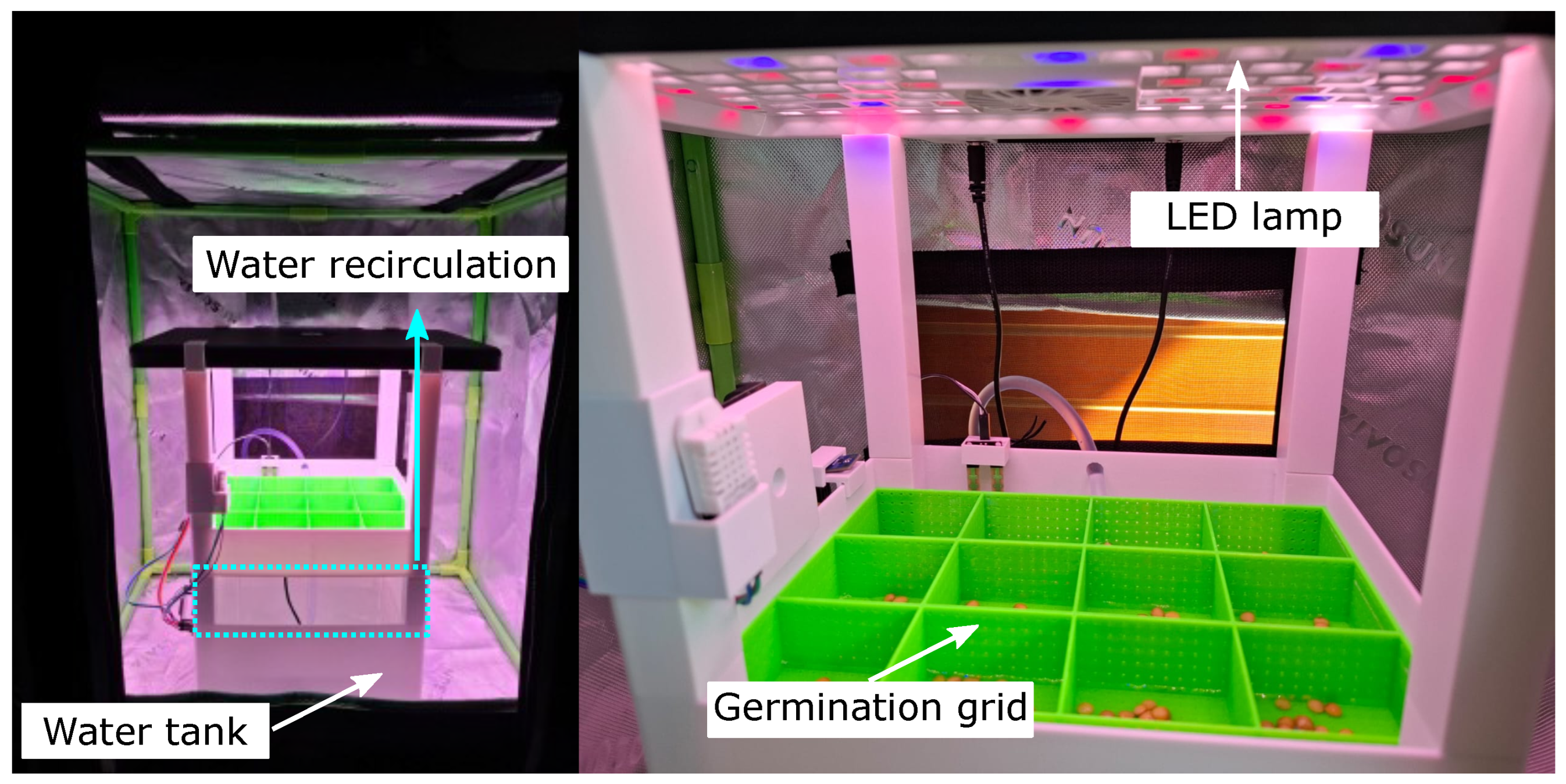
The complete system was implemented in experiments designed to quantify both water and energy consumption associated with the germination process, allowing for an integrated evaluation of germination performance and process efficiency under controlled conditions. Figure 3 illustrates the germination system employed during the Cucurbita pepo germination assays, as well as the germination chamber used to maintain the controlled environmental conditions throughout the experimental period.

2.7. Germination Performance Assessment

Germination performance was evaluated using quantitative indicators to ensure an objective and reproducible assessment of seed behavior under the different experimental conditions. Two primary parameters were determined: germination rate ( G r ) and germination index ( G i ), which provide complementary but distinct information regarding germination capacity and temporal dynamics [41,42]. Specifically, G r quantifies the final proportion of seeds that successfully germinate, whereas G i incorporates the temporal distribution of germination events, thereby reflecting both germination speed and uniformity. Each treatment consisted of five independent replicates of 30 seeds each (150 seeds per treatment). Germination was monitored at 24-h intervals under controlled environmental conditions. A seed was considered germinated when the cotyledons were visibly emerged, according to the predefined viability criteria established for this study.
The germination rate ( G r ) was calculated as the ratio of the total number of germinated seeds to the total number of seeds evaluated per treatment, according to Equation (3):
G r = G s T s
where G s is the total number of germinated seeds and T s is the total number of seeds. Results were expressed as percentage values. This parameter reflects the overall germination capacity at the end of the observation period but does not provide information on the rate at which germination occurs. To capture the temporal dynamics of germination, the germination index ( G i ) was calculated according to Equation (4):
G i = G t t
where G t represents the number of seeds germinated at time t, and t corresponds to the observation time (days). This formulation assigns greater weight to seeds that germinate earlier, making G i a sensitive indicator of germination speed and synchronization among seeds. All measurements were performed simultaneously for ultrasound-treated and control groups to ensure direct comparability of germination dynamics.

2.8. Statistical Analysis

All experiments were conducted in quintuplicate, and results are reported as mean values ± standard deviation. A one-way analysis of variance (ANOVA) was performed to evaluate the effect of ultrasonic treatment conditions on germination rate ( G r ). The ANOVA was used to determine whether statistically significant differences existed among treatment groups. When a significant effect was detected, a Dunnett post hoc test was applied to compare each ultrasound-treated group against the control condition (non-sonicated seeds), thereby identifying treatments that produced statistically significant improvements in germination performance. Statistical significance was established at a confidence level of 95% ( p < 0.05 ). All statistical analyses were performed using JASP statistical software (version 0.18.3; JASP Team).

2.9. Energy and Water Consumption Assessment

A comparative assessment of energy and water consumption was conducted to evaluate the operational efficiency of ultrasound-assisted germination (UAG) of Cucurbita pepo relative to conventional (control) germination. The analysis quantified direct resource inputs under identical environmental conditions for the complete germination cycle. Water consumption was determined by measuring the total volume of water used per germination unit (batch basis) throughout the entire germination period, including the initial soaking stage and the automated hydration cycles applied during seed development. Total water consumption was calculated using Equation (5) as a function of daily water input and process duration.
W total = W daily × t
where W total is the cumulative water consumption [L], W daily is the average daily water input [L day−1], and t is the duration of the germination process [days]. For ultrasound-treated samples, water use corresponded to the full post-treatment germination process, while control samples followed the same hydration protocol without ultrasonic exposure. Energy consumption was directly measured using a calibrated power meter connected to the system. The total electrical energy required for system operation ( E system ) was calculated using Equation (6).
E system = P daily × t
where E system is the total energy consumption [kWh], P daily is the average daily power consumption of the system [kWh day−1], and t is the process duration (days). This value includes the combined electrical demand of the 3 W water recirculation pump and the 22 W LED illumination system, both operating under identical programmed conditions for the treated and control groups. For ultrasound-assisted treatments, the additional energy input associated with sonication ( E US ) was calculated using Equation (7) based on the nominal power of the ultrasonic bath.
E US = P US × t US
where E US is the energy consumed during the ultrasound treatment [kWh], P US is the ultrasonic bath power (0.1 kW), and t US is the ultrasound exposure time [h]. The total energy consumption for each treatment ( E total ) was then obtained using Equation (8).
E total = E system + E US
To enable comparison of process efficiency, energy and water consumption were normalized relative to germination performance using Equations (9) and (10).
Energy efficiency = E total G r
Water efficiency = W total G r
where G r is the final germination percentage [%].
Baseline environmental conditions were maintained constant across all experiments to ensure comparability. This methodological framework enabled a direct and quantitative evaluation of resource consumption and process efficiency between ultrasound-assisted and conventional germination systems.

3. Results

3.1. Thermoacoustic Simulation of Ultrasound–Seed Interaction

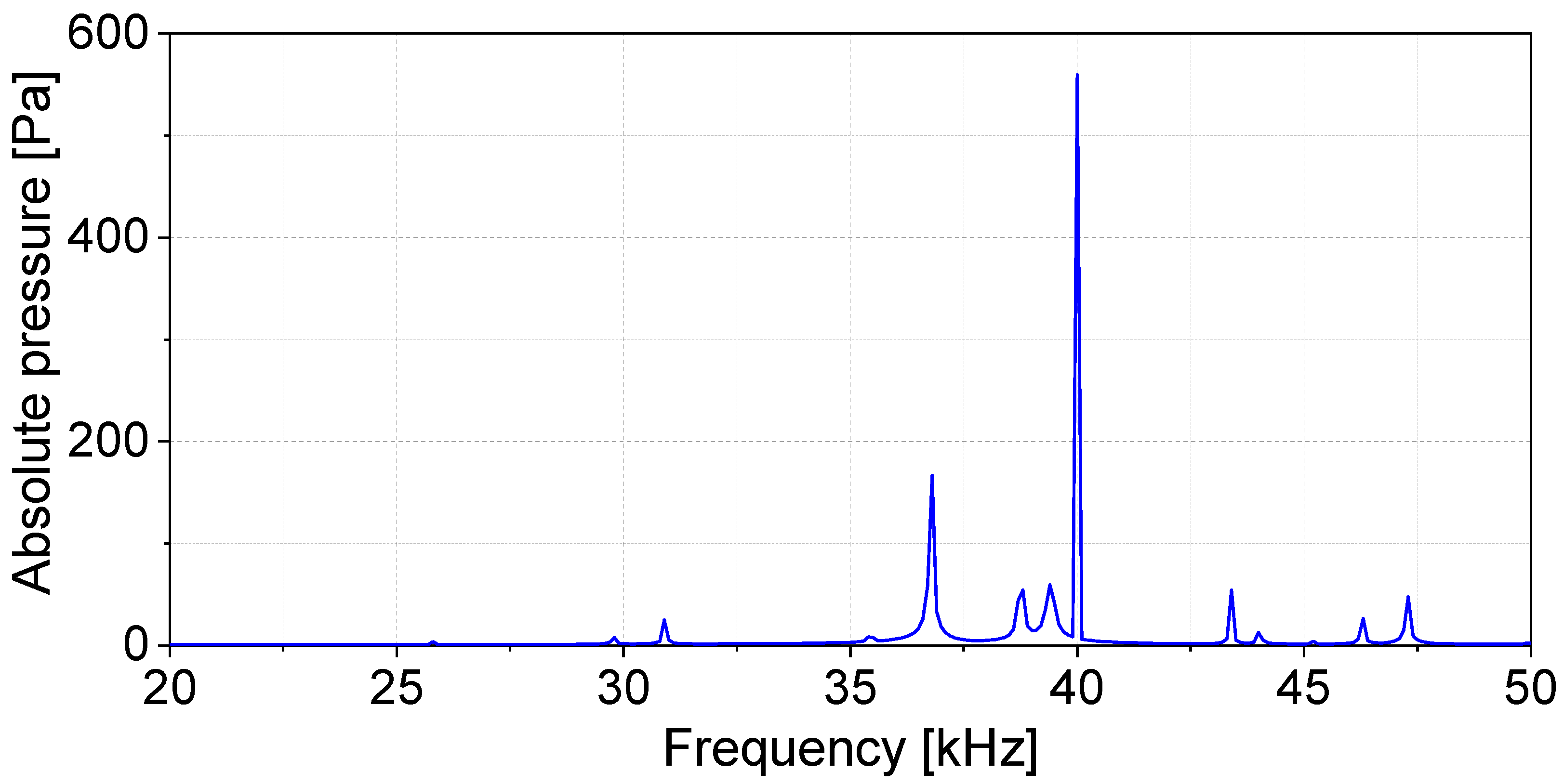
In the initial stage of the multiphysics simulation, the resonance frequency of Cucurbita pepo seeds was determined through a frequency-domain spectral analysis. This approach is motivated by the need to establish a physics-based criterion for ultrasound application, given that the efficiency of ultrasonic stimulation depends on the coupling between the applied acoustic field and the intrinsic mechanical response of the seed. To this end, a frequency sweep was performed over a bandwidth ranging from 20 to 50 kHz with a resolution of 1 Hz, using an ultrasonic source delivering an acoustic pressure amplitude of 550 Pa. This pressure level was arbitrarily selected solely for resonance identification purposes and does not correspond to the operational conditions used in the experimental treatments. The spectral analysis revealed that the frequencies exerting the greatest influence on the mechanical response of the seed were concentrated within the 35–40 kHz range. Within this ultrasonic bandwidth, 40 kHz exhibited the highest response amplitude and was therefore identified as the resonance frequency of the Cucurbita pepo seed. At this frequency, enhanced acoustic energy localization and pressure amplification are expected within the seed–fluid system, promoting more efficient interaction between the acoustic field and the biological matrix. This resonance-based selection provides a mechanistic rationale for employing a fixed operating frequency, in contrast to conventional empirical approaches. While variable-frequency excitation may offer additional flexibility, the identification of a dominant resonance condition enables targeted energy delivery, improved process efficiency, and reduced risk of thermal or mechanical overstimulation. The resulting spectral response is presented in Figure 4, where the resonance peak at 40 kHz can be observed.
Following the spectral analysis and the identification of 40 kHz as the resonance frequency of Cucurbita pepo seeds, a spatial analysis of the acoustic field was conducted at this frequency. The simulation incorporated the average seed dimensions reported in Table 1 to ensure the geometric representativeness of the biological material. For this stage, the acoustic source was defined with a pressure amplitude of 1.5 MPa (∼244 dB @ 1 μ Pa) in order to maintain consistency with the operational conditions of the ultrasonic bath employed in the experimental trials.
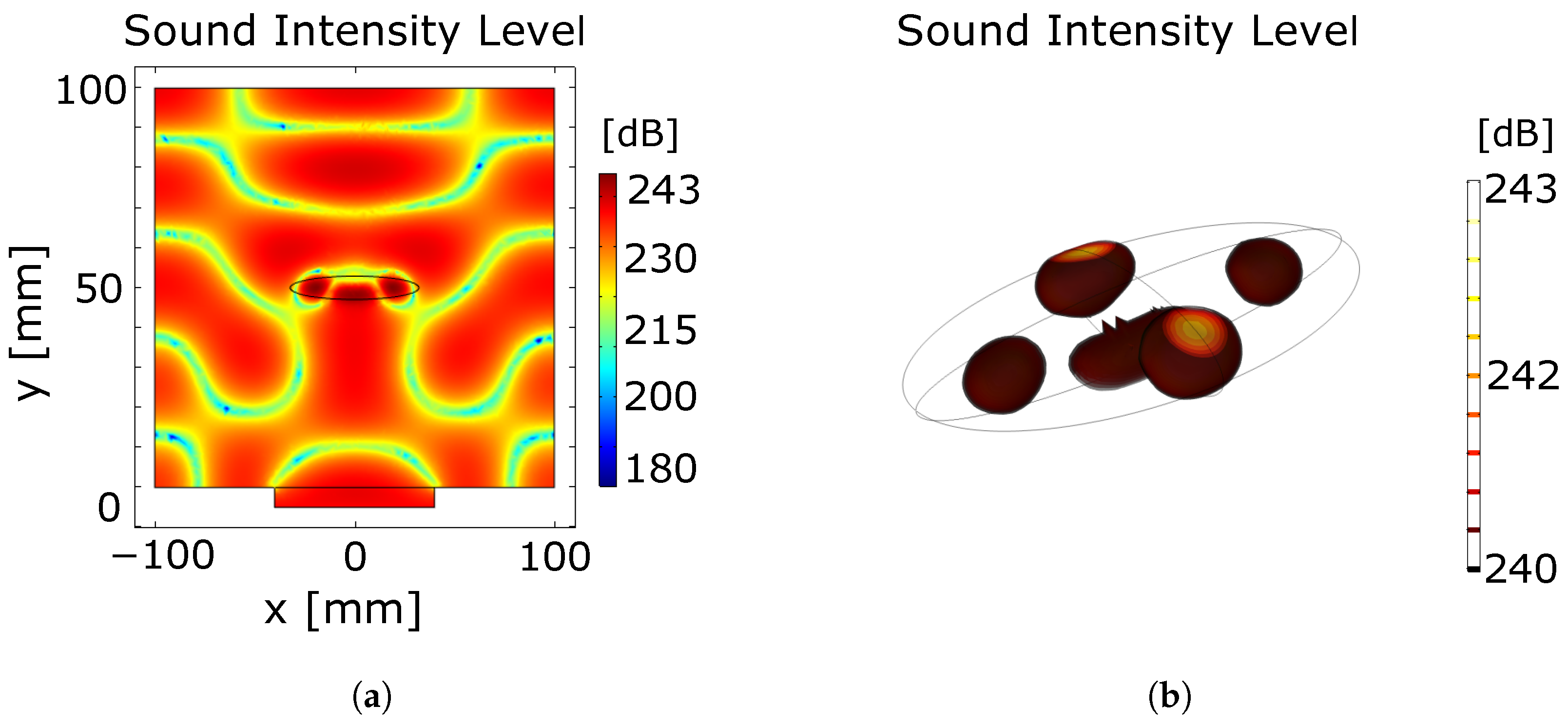
The acoustic field distribution was evaluated through both two-dimensional (2D) and three-dimensional (3D) models to achieve a comprehensive visualization of ultrasound propagation and acoustic–structure interaction within the system. This approach enabled detailed characterization of pressure gradients and energy localization patterns at the resonance frequency. The spatial distribution of the acoustic field at 40 kHz is presented in Figure 5.
The spatial distribution of the acoustic field at the identified resonance frequency (40 kHz) reveals a non-uniform pressure pattern characterized by the formation of well-defined pressure nodes and antinodes within the system. As shown in Figure 5a, the two-dimensional sound intensity map exhibits alternating regions of high and low acoustic pressure resulting from constructive and destructive wave interference under resonant conditions. The maximum sound pressure level reaches approximately 243 dB, while adjacent regions display comparatively lower intensity values, thereby generating pronounced spatial pressure gradients. This structured distribution is indicative of standing wave formation, where nodal and antinodal regions define zones of minimum and maximum acoustic energy concentration, respectively. The presence of these pressure nodes is particularly relevant, as they create microdomains of intensified mechanical stimulation on the seed surface. At 40 kHz, the acoustic field does not distribute uniformly; instead, energy becomes spatially concentrated, enhancing localized stress and oscillatory loading on specific regions of the seed coat. Such localized pressure amplification increases the likelihood of microstructural perturbations in the testa, potentially facilitating enhanced water permeability and accelerating imbibition processes—critical early steps in seed germination.
The three-dimensional representation shown in Figure 5b further confirms the spatial localization of acoustic energy around and within the seed geometry. The 3D model illustrates discrete high-intensity nodes, with pressure levels ranging between approximately 240 and 243 dB, distributed across different regions of the seed structure. These nodes correspond to nodal regions of maximum acoustic pressure, where mechanical energy transfer from the ultrasonic field to the biological material is most efficient. Importantly, the distribution of these high-intensity zones is not confined to the external surface; rather, the acoustic coupling enables partial penetration and internal field modulation, suggesting volumetric mechanical stimulation. From a mechanistic standpoint, this resonance-driven concentration of acoustic energy supports a controlled stimulation regime, wherein energy delivery is maximized at specific structural locations without requiring indiscriminate increases in global pressure. The formation of pressure nodes and antinodes at 40 kHz therefore represents a physically optimized condition for UAG, as it promotes targeted mechanical activation.
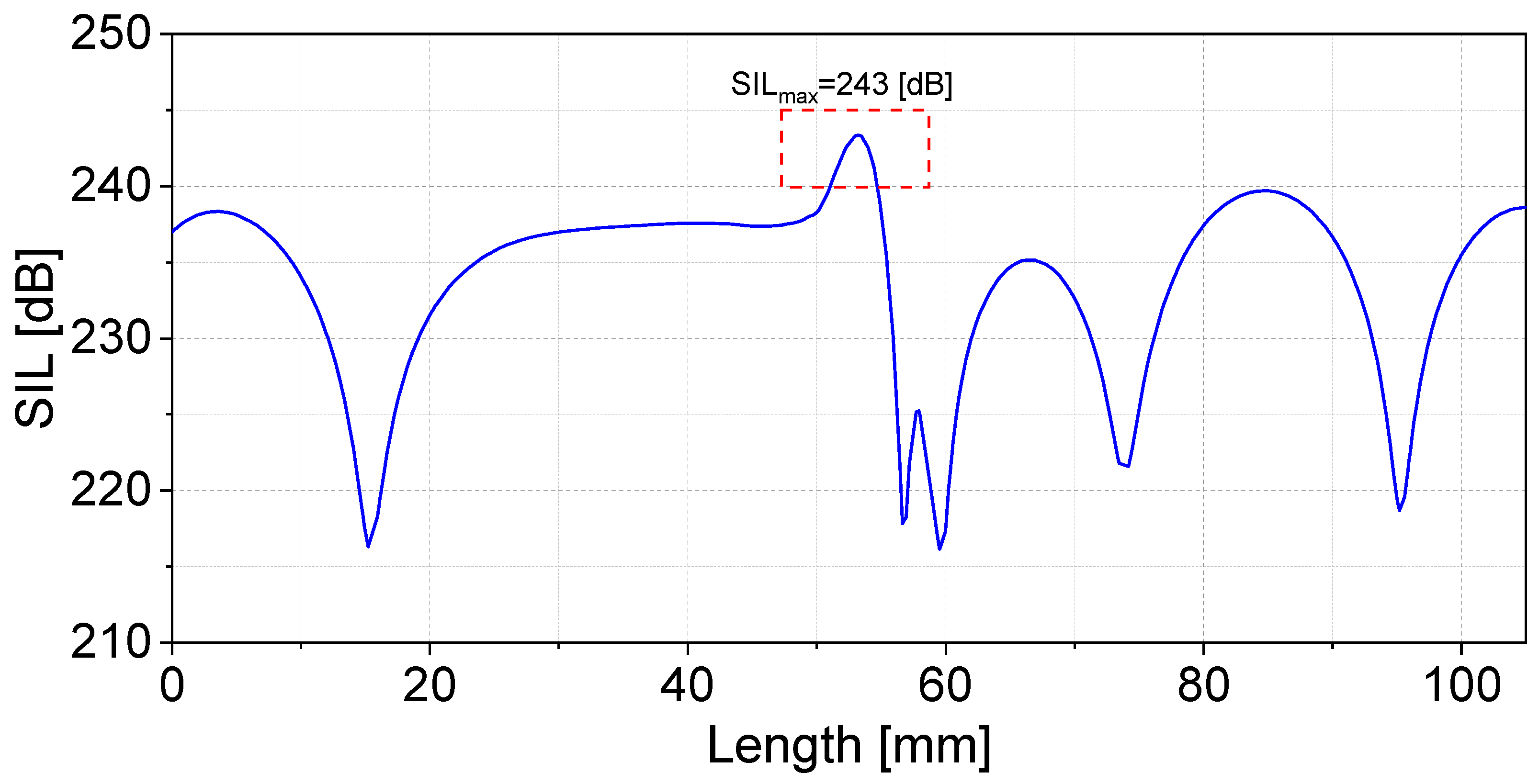
Collectively, the 2D and 3D analyses demonstrate that excitation at the resonance frequency enhances acoustic field localization, increases pressure amplitude within defined microregions, and establishes spatially structured stimulation patterns. To further quantify the spatial localization of the acoustic field at the resonance frequency, the sound intensity level (SIL) distribution was evaluated along a linear path across the system, as shown in Figure 6. This line was defined perpendicular to the central axis of the model, extending from the base of the ultrasonic transducer, traversing the geometric center of the Cucurbita pepo seed, and terminating at the boundary of the transmission medium (water domain). This approach enables a one-dimensional characterization of pressure amplitude variations along the principal axis of acoustic propagation.
As illustrated in Figure 6, the maximum acoustic intensity (SILmax) reaches approximately 243 dB at a position located around 55 mm along the evaluated length. Notably, this peak corresponds spatially to the domain representing the seed, consistent with the seed position depicted in Figure 5a. The coincidence between the resonance frequency (40 kHz) and the location of the maximum pressure amplitude within the biological domain provides strong evidence of effective acoustic–structure coupling under these operating conditions. The profile further reveals oscillatory behavior characterized by alternating high- and low-intensity regions, reflecting the presence of pressure nodes and antinodes generated by standing wave formation. However, the dominant energy concentration occurs within the seed domain, confirming that resonance at 40 kHz promotes preferential energy localization in the biological material rather than in the surrounding aqueous medium. This spatial amplification within the seed structure substantiates the mechanistic role of resonance in maximizing mechanical stimulation, thereby reinforcing the suitability of 40 kHz as the optimal frequency for UAG enhancement.
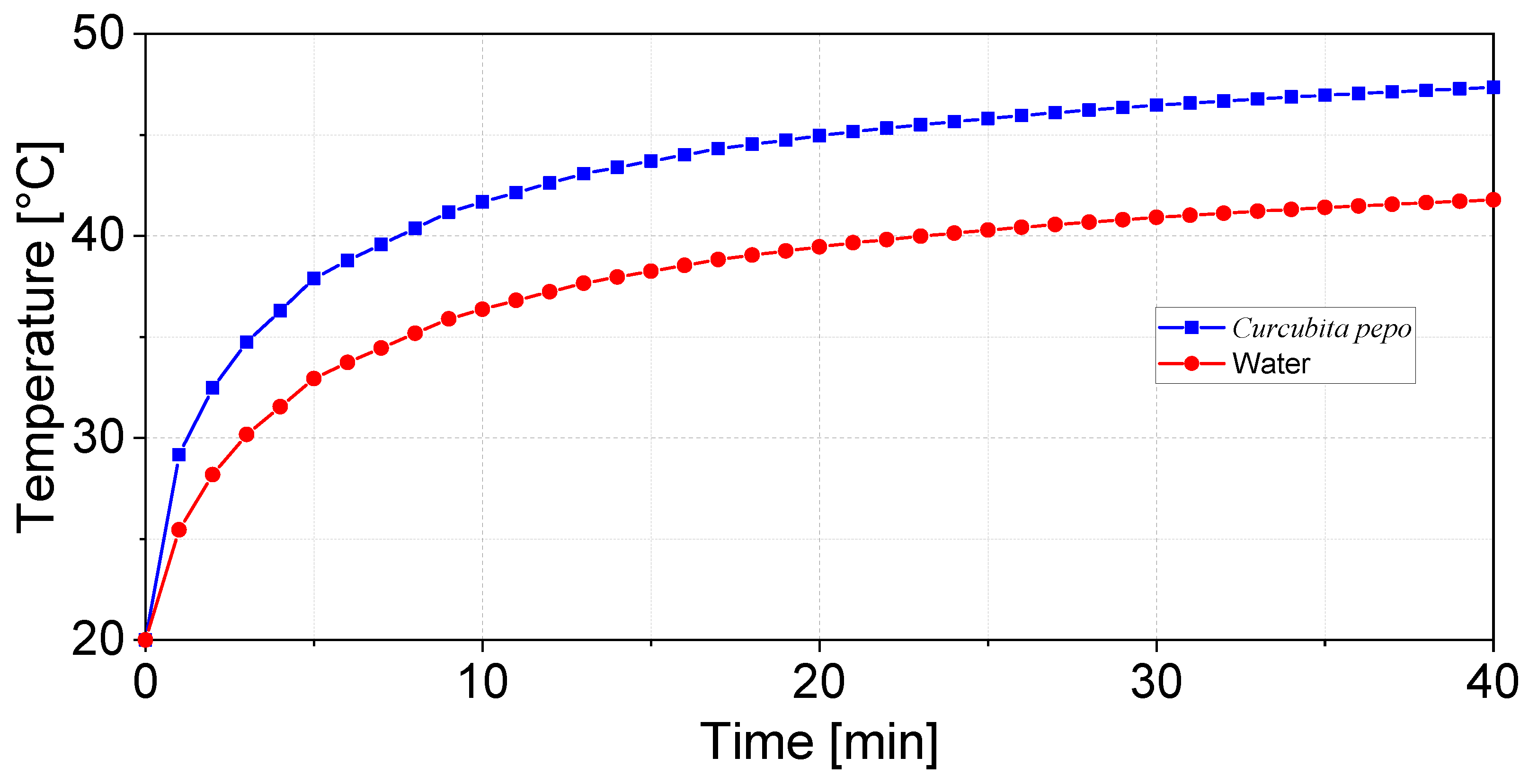
Following the two- and three-dimensional characterization of the acoustic pressure field, which enabled the identification of the resonant condition at 40 kHz and the spatial localization of acoustic energy within the Cucurbita pepo seed domain, the numerical framework was subsequently extended through a fully coupled thermo-acoustic formulation. The acoustic model was integrated with the Heat transfer module to quantify the temperature gradients generated by ultrasonic energy absorption within both the biological matrix and the surrounding aqueous medium. To ensure strict consistency with the experimental configuration, simulations were conducted under a static pressure of 1.5 MPa, corresponding to the operating conditions of the ultrasonic bath employed during the germination assays. A time-dependent analysis was performed over the interval t = 0–40 min, with an initial uniform temperature of 20 °C, representing the mean ambient temperature at which the experimental treatments were carried out. This temporal window was defined based on the ultrasonic treatment durations applied experimentally (5–25 min), allowing for the evaluation of temperature evolution at each exposure time and the assessment of cumulative thermal effects beyond the maximum treatment period. The thermo-acoustic coupling accounts for the conversion of acoustic energy into heat through absorption and viscous dissipation mechanisms, enabling the computation of spatially resolved and temporally evolving thermal fields. This approach allows verification that resonance-enhanced ultrasonic exposure at 40 kHz does not induce detrimental thermal loads that could compromise seed viability. Figure 7 presents the temporal temperature dynamics in both the seed and the aqueous medium, illustrating the differential thermal response under sustained ultrasound irradiation.
As shown in Figure 7, the temporal evolution of the thermally induced gradients generated by ultrasonic irradiation at 40 kHz is observed over the interval t = 0–40 min, both within the Cucurbita pepo seed domain and in the surrounding aqueous propagation medium. The results reveal a progressive and spatially continuous temperature increase, consistent with the cumulative absorption of acoustic energy and its conversion into heat through viscous and relaxation mechanisms accounted for in the coupled thermo-acoustic model.
Within the seed domain, the temperature rises monotonically from the initial condition of 20 °C at t = 0 to approximately 48 °C at t = 40 min under sustained ultrasonic exposure. The heating profile exhibits a rapid initial increase during the first minutes of irradiation, followed by a gradual attenuation in the rate of temperature rise as conductive and convective heat dissipation mechanisms toward the surrounding medium become more significant. This behavior reflects the balance between localized acoustic energy deposition at resonance and thermal diffusion across the seed–water interface.
Importantly, when the analysis is restricted to the ultrasonic stimulation times implemented experimentally (5, 10, 15, 20, and 25 min), the predicted temperatures remain well below thresholds associated with thermally induced loss of seed viability. Specifically, the seed temperature reaches 37.8 °C at 5 min, 41.6 °C at 10 min, 43.7 °C at 15 min, 44.9 °C at 20 min, and 45.8 °C at 25 min. These values are significantly lower than the critical thermal range reported to induce irreversible damage in plant embryonic tissues, typically above 60 °C. Therefore, under the resonant ultrasonic conditions evaluated, the thermal load imposed on the biological matrix remains within a physiologically safe regime.
Regarding the propagation medium, the maximum temperature attained in the surrounding water was 41.6 °C, indicating a lower thermal accumulation compared to the seed interior. This difference is attributed to the higher volumetric heat capacity and enhanced thermal dissipation capacity of the aqueous medium, which acts as a heat sink, moderating localized temperature elevations generated at the seed surface. The spatial gradients observed between the seed and the medium further confirm that the dominant energy absorption occurs within the resonant biological domain rather than uniformly in the fluid.
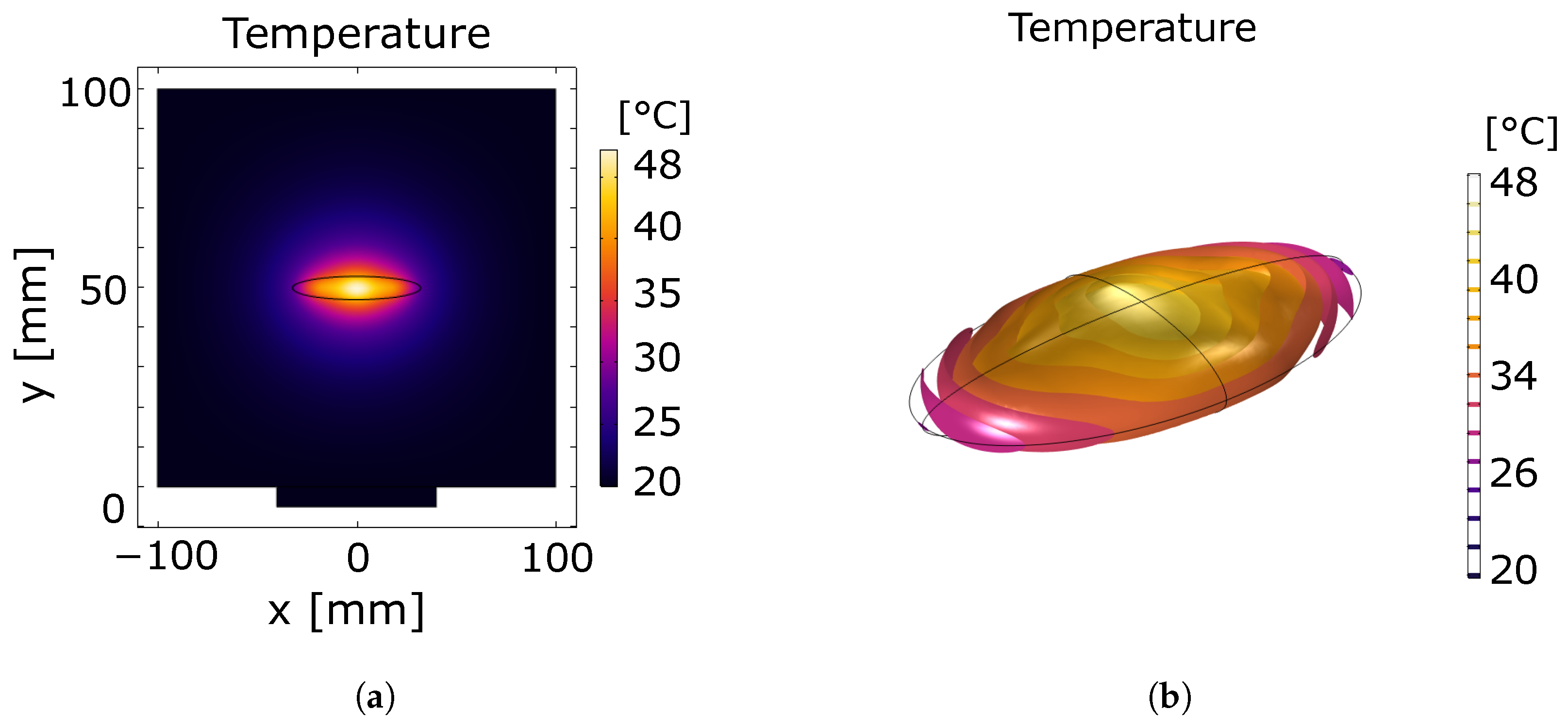
While the previous analysis quantitatively describes the temporal evolution of the temperature field, a spatially resolved interpretation is required to fully characterize the thermo-acoustic behavior of the system. Figure 8 presents the two- and three-dimensional distributions of the temperature field generated under resonant ultrasonic excitation at 40 kHz, providing a detailed visualization of the spatial gradients and the geometric confinement of thermal energy within the Cucurbita pepo seed and its surrounding aqueous medium.
Figure 8 provides a spatially resolved visualization of the temperature distribution induced by resonant ultrasonic excitation at 40 kHz through complementary two- and three-dimensional representations. In the 2D cross-sectional map (Figure 8a), the temperature field is depicted using a chromatic scale ranging from dark blue (≈20 °C) to bright yellow–white tones (≈45–48 °C). The surrounding aqueous medium is predominantly characterized by dark blue and violet shades, indicating temperatures close to the initial condition and evidencing limited bulk heating. In contrast, the central region corresponding to the seed domain exhibits a progressive transition from blue to green, orange, and finally yellow hues toward its core, revealing a well-defined radial thermal gradient. The highest temperatures are localized in the central axis of the seed, coinciding with the region of maximum acoustic energy concentration previously identified in the pressure field analysis. This distribution indicates that heat generation is spatially confined and directly correlated with resonance-enhanced acoustic absorption rather than uniformly distributed throughout the medium.
The three-dimensional rendering (Figure 8b), which complements the 2D cross-sectional representation, exclusively depicts the thermal gradients developed within the seed structure, thereby isolating the biological domain from the surrounding aqueous medium. The volumetric visualization reveals an ellipsoidal temperature distribution spanning from approximately 20 °C in the outermost layers to peak values approaching 48 °C in the central core, according to the color scale. Warmer tones (orange to yellow), corresponding to temperatures above 44–48 °C, are concentrated in the inner region of the seed, whereas comparatively cooler hues (pink to light violet, ∼30–36 °C) dominate the peripheral zones. This spatial configuration confirms that thermal accumulation is not homogeneous but instead follows the localized pattern of acoustic energy density previously identified under resonant conditions. The temperature progressively decreases from the central resonant region toward the seed surface, where conductive heat transfer toward the surrounding water facilitates thermal dissipation and stabilizes the overall thermal field.
Collectively, these spatial representations confirm that ultrasonic-induced heating remains geometrically confined to the seed domain, exhibiting well-defined and smoothly distributed thermal gradients without evidence of diffuse or uncontrolled heat propagation into the surrounding aqueous medium. The temperature magnitudes and their spatial distribution are fully consistent with the temporal evolution previously reported, reinforcing the internal coherence of the coupled thermo-acoustic model. Under the applied resonant operating conditions, the resulting thermal field is therefore characterized by localized energy deposition, controlled spatial confinement, and stable heat dissipation toward the propagation medium.

3.2. Baseline Germination Performance

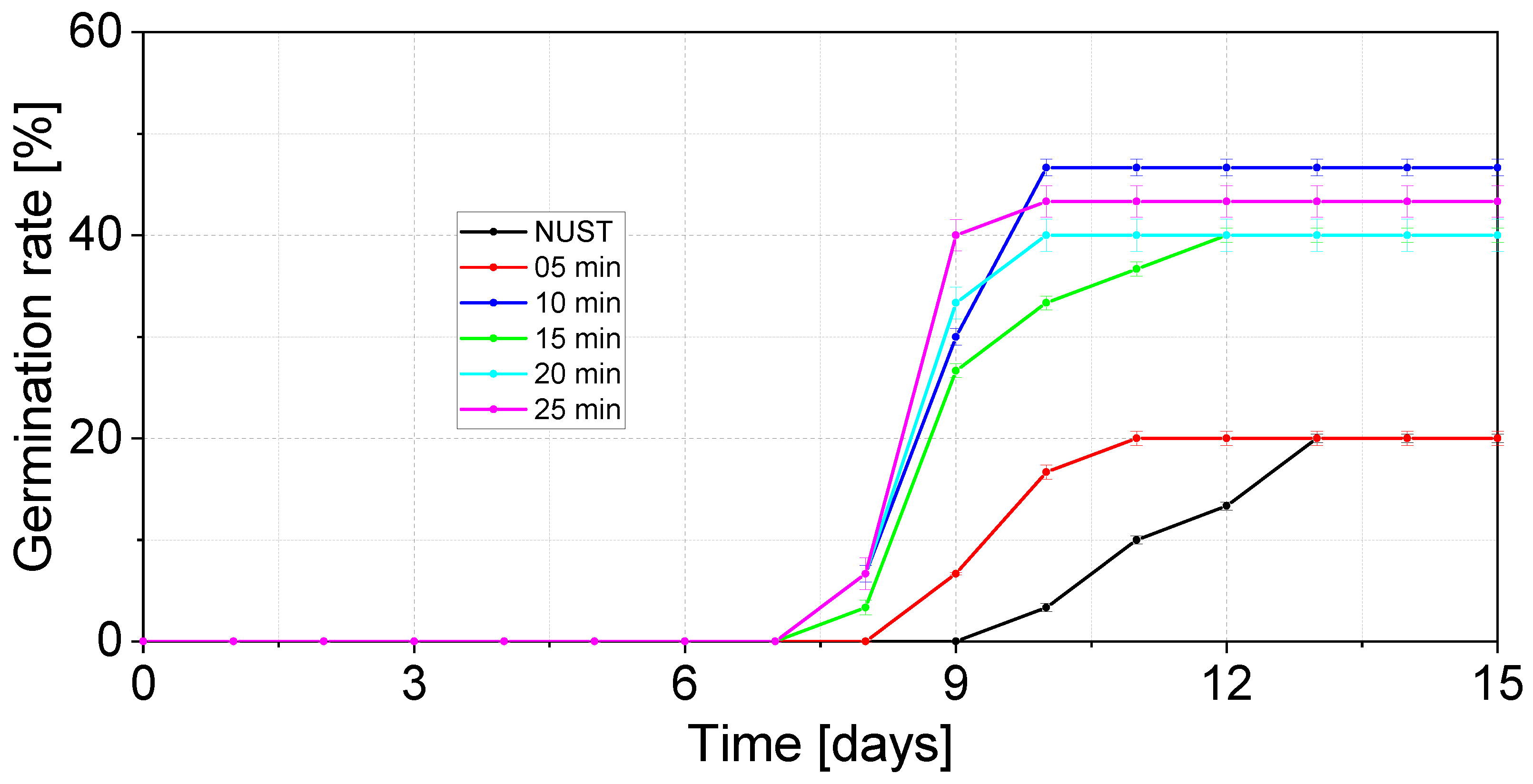
The germination kinetics of non-sonicated Cucurbita pepo seeds (NUST) under controlled environmental conditions are presented in Figure 9. The control group exhibited markedly limited germination performance throughout the 15-day experimental period. Germination onset was first detected on day 10, reaching approximately 3%, followed by a gradual increase to 10% on day 11 and 13% on day 12. The maximum germination rate (Gr) attained under untreated conditions was approximately 20%, reached on day 13 and remaining statistically unchanged through day 15, thereby establishing the maximum germination time (tmax) at 13 days.
The overall germination index (Gi), calculated from Equation (4), yielded a value of approximately 7.8, reflecting low germination vigor and slow emergence dynamics. From a kinetic standpoint, the slope of the germination curve between days 10 and 13 indicates a constrained activation rate, suggesting that intrinsic physical and physiological barriers limit rapid embryo development under baseline conditions.
The relatively low Gr (≈20%) is particularly noteworthy, as it indicates that a substantial fraction of the seed population did not reach the physiological threshold required for cotyledon exposure within the experimental timeframe. Given that environmental variables such as temperature, relative humidity, illumination, and hydration cycles were rigorously controlled, the restricted germination efficiency can be attributed primarily to inherent seed coat permeability constraints and the natural rate of metabolic reactivation.
From a process engineering perspective, these results define a low-efficiency baseline characterized by an extended process duration (13 days to reach steady state) and limited conversion of viable seeds into fully germinated seedlings. Such performance highlights the existence of internal mass transfer limitations governing water uptake and subsequent biochemical activation. Consequently, the baseline condition provides a quantitative benchmark against which the degree of process intensification achieved via ultrasound-assisted pre-treatment can be rigorously assessed.

3.3. Ultrasound-Assisted Germination Response

Figure 9 illustrates the germination behavior of Cucurbita pepo seeds subjected to increasing ultrasound exposure times compared with the non-ultrasound-treated control (NUST). Ultrasound pre-treatment markedly enhanced germination performance; however, the response exhibited a non-linear dependence on exposure duration.
The untreated control reached a Gr of approximately 20% at day 13, displaying slow and limited activation kinetics. In contrast, all ultrasound-treated groups showed earlier germination onset and steeper kinetic slopes. Descriptive statistics for the final germination rate (Gr) across treatments are summarized in Table 2.
As shown in Table 2, the 10 min treatment exhibited the highest mean germination rate, whereas the 0 and 5 min treatments showed comparable values, confirming the limited effect of short exposure durations. These trends were statistically supported by a one-way analysis of variance (ANOVA), which revealed a highly significant effect of treatment duration on germination rate (F(5, 24) = 628.7, p < 0.001; Table 3), confirming that the observed differences are attributable to the applied ultrasound treatments rather than random variation.
The 5 min treatment resulted in minimal improvement, reaching a similar final germination percentage (∼20%) as the control, although stabilization occurred slightly earlier. This indicates modest acceleration without enhancement in overall conversion efficiency. Consistently, Dunnett’s post hoc test (Table 4) confirmed that this treatment did not differ significantly from the control ( p D u n n e t t = 1.000), reinforcing the interpretation that short exposure is insufficient to induce a measurable biological effect.
The most pronounced improvement was observed at 10 min of sonication. This treatment achieved the highest Gr (≈47%) by day 10, representing more than a twofold increase relative to the untreated seeds. Additionally, the time required to reach steady state was reduced by approximately three days. The steep slope between days 8 and 10 reflects accelerated metabolic activation and enhanced mass transfer. Statistically, this condition exhibited the largest mean difference relative to the control (mean difference = 26.84; Table 4), indicating the strongest treatment effect within the evaluated range.
The 15 and 20 min treatments both reached a similar final germination percentage of approximately 40%. However, their kinetic profiles differed. The 20 min treatment attained steady state earlier (around day 10–11), whereas the 15 min treatment required approximately one additional day to stabilize. This indicates comparable final efficiency but superior activation kinetics at 20 min. The 25 min treatment achieved a slightly higher final germination (∼43%) but did not surpass the 10 min condition. All these treatments (10–25 min) showed statistically significant increases relative to the control (all p D u n n e t t < 0.001; Table 4), confirming that ultrasound exposure beyond a critical threshold induces a consistent enhancement in germination performance.
The Gi values provide a complementary and more integrative assessment of germination behavior by incorporating both the extent and temporal dynamics of the process. Unlike Gr, which reflects only the final germination capacity, Gi is intrinsically sensitive to the timing of germination events, assigning greater weight to seeds that germinate earlier. As such, it captures not only the magnitude of germination but also the rate and synchronization of seed activation, making it a more robust descriptor of treatment performance. In this context, the control group exhibited a low Gi value (∼7.8), indicative of delayed and poorly synchronized germination. The 5 min treatment showed only a marginal increase (∼8.5), which is consistent with both its limited improvement in Gr and the absence of statistically significant differences relative to the control, as demonstrated by Dunnett’s test. This reinforces the interpretation that short ultrasound exposure does not substantially modify the temporal structure of germination.
In contrast, the marked increases in Gi observed for the 10, 15, 20, and 25 min treatments (∼23, 18, 20, and 19, respectively) reflect a pronounced shift toward earlier and more synchronized germination. Notably, the maximum Gi at 10 min aligns with the highest Gr and the largest mean difference relative to the control identified in the post hoc analysis, providing convergent evidence that this condition maximizes both germination capacity and kinetic efficiency. Although the 15, 20, and 25 min treatments exhibited statistically significant improvements over the control, their lower Gi values compared to the 10 min treatment indicate reduced temporal efficiency, suggesting that a larger proportion of seeds germinate later in the process. This pattern is consistent with the plateau behavior observed in both the kinetic profiles (Figure 9) and the statistical comparisons, reinforcing the conclusion that 10 min represents the optimal balance between activation intensity and temporal coordination of germination.
Overall, ultrasound application significantly intensified the germination process by simultaneously increasing the final germination percentage and accelerating activation kinetics, as consistently supported by the convergence of kinetic profiles (Figure 9), germination indices (Gr and Gi), and statistical analyzes (ANOVA and Dunnett’s test); (ANOVA and Dunnett’s test; Table 3 and Table 4). Within the evaluated range, the 10 min treatment represents the optimal condition, as it maximizes both germination capacity and temporal efficiency, yielding the highest Gr and Gi values together with the largest statistically significant improvement relative to the control. The fact that longer exposure times (15–25 min) maintained significant enhancements but did not surpass this response indicates the onset of a plateau regime, where additional energy input does not translate into proportional biological gains. This non-linear behavior is further reflected in the reduced Gi values at extended durations, suggesting a loss of synchronization despite sustained germination capacity. From a mechanistic perspective, these results are consistent with ultrasonic stimulation at 40 kHz, near the resonance frequency of the seed–fluid system. This promotes efficient acoustic energy localization and coupling with the seed structure. Under these conditions, the applied acoustic pressure (1.5 MPa) is sufficient to induce controlled cavitation and microstreaming. This enhances mass transfer and accelerates metabolic activation without exceeding thermal damage thresholds. However, prolonged exposure likely alters this balance, leading to diminishing returns associated with physiological saturation or stress effects. Collectively, these findings support the existence of a finite and well-defined acoustic energy window. This window is governed by the interplay between frequency-specific resonance, pressure amplitude, and exposure duration, within which germination performance is maximized.

3.4. Water and Energy Consumption Analysis

The germination system operated with a daily electrical consumption of 0.438 kWh and an average daily water consumption of 0.450 L. Because the automated hydration and illumination cycles were maintained constant across all treatments, total resource consumption was primarily governed by the time required to reach steady-state germination. Thus, process duration represents the dominant factor controlling cumulative energy and water demand. Under baseline conditions (NUST), steady state was achieved on day 13, resulting in a total electrical consumption of approximately 5.69 kWh and a cumulative water use of 5.85 L per experimental cycle. This condition, therefore, represents the reference resource demand associated with conventional, non-assisted germination. Energy and water consumption for all treatments were calculated according to the methodology described in Section 2. The inclusion of ultrasound energy input in the total energy balance allowed for a comprehensive evaluation of process efficiency. Although the ultrasonic bath contributed additional energy (0.008–0.042 kWh depending on exposure time), this input remained small relative to the overall system demand.
In agreement with the accelerated germination kinetics described in the previous section, ultrasound pre-treatment significantly reduced the time required to reach steady state, resulting in proportional reductions in both energy and water consumption. The 10 min treatment, identified as the optimal condition based on germination performance, required approximately 4.40 kWh in total (including ultrasound), corresponding to an energy saving of 1.29 kWh (22.7%) relative to the control. Similarly, the 20 min treatment required approximately 4.85 kWh, representing a reduction of 0.84 kWh (14.8%), while the 15 min treatment consumed approximately 5.29 kWh, corresponding to a reduction of 0.40 kWh (7.0%). In contrast, the 5 min treatment showed negligible improvement, with a total energy consumption (≈5.27 kWh) comparable to that of the control. Water consumption followed the same proportional trend, as it is directly linked to process duration. The 10 min treatment reduced total water use from 5.85 L (control) to 4.50 L, corresponding to a saving of 1.35 L (23.1%). The 20 min treatment achieved a reduction of 0.90 L (15.4%), while the 15 min and 5 min treatments showed only minor decreases (≈0.45 L, ∼7.7%), consistent with their longer stabilization times. To further evaluate process performance, resource consumption was normalized per unit of biological output, as defined in Section 2. Under control conditions, the system required approximately 0.285 kWh per percentage point of germination, whereas the 10 min treatment required only 0.094 kWh/%, even after accounting for ultrasound energy input. This corresponds to an improvement of approximately 67% in energy efficiency. Similarly, water consumption decreased from approximately 0.29 L/% in the control to 0.096 L/%, reflecting a comparable improvement in water-use efficiency. From a process engineering perspective, these findings demonstrate that ultrasound-assisted germination (UAG) achieves effective process intensification, as it simultaneously enhances biological performance and reduces resource consumption. Importantly, the inclusion of ultrasound energy does not offset these gains, as the reduction in time-to-steady-state remains the dominant factor governing total system demand. The identification of an optimal exposure window (10 min) is therefore critical. Although longer ultrasound treatments (15–25 min) maintained improved germination relative to the control, they did not yield proportional resource savings, reflecting a plateau behavior and diminishing returns under excessive energy input. Overall, ultrasound-assisted germination provides a net reduction in both energy and water consumption while enhancing germination performance. The integration of kinetic acceleration with measurable resource savings supports the scalability of this approach within sustainable and controlled-environment agricultural systems.

4. Discussion

The experimental findings demonstrate that ultrasound pre-treatment significantly intensifies the germination process of Cucurbita pepo, enhancing both kinetic performance and final conversion efficiency while simultaneously reducing cumulative resource consumption. Importantly, these biological outcomes are strongly supported by thermo-acoustic multiphysics simulations, which provide a mechanistic and physically grounded explanation for the observed improvements. The baseline condition (NUST) exhibited limited germination efficiency (≈20%) and required 13 days to reach steady state, reflecting intrinsic mass transfer limitations associated with seed coat permeability and delayed metabolic activation.
The relatively low germination observed under control conditions (≈20%) is consistent with the behavior reported for certain Cucurbita pepo cultivars exhibiting limited physiological readiness for germination. This reduced performance can be attributed to a combination of structural and biochemical factors, including low seed coat permeability, which restricts water uptake during the initial imbibition phase, and delayed metabolic activation associated with dormancy-like states. In addition, variability in endogenous hormone balance—particularly the ratio between abscisic acid and gibberellins—may further inhibit germination onset in low-performing cultivars. Such constraints are reflected in the wide variability reported in the literature, where germination percentages can range from below 10% to nearly complete germination depending on genotype and environmental conditions. Within this context, the control condition in the present study represents a physiologically constrained baseline, providing a suitable reference point to evaluate the effectiveness of ultrasound as a process intensification strategy. In contrast, ultrasound exposure at 40 kHz substantially accelerated germination kinetics and increased the final germination percentage, with the 10 min treatment achieving ≈47% germination in only 10 days. This improvement highlights the role of ultrasound in overcoming diffusional barriers, enhancing water uptake, and promoting earlier metabolic activation. When compared with literature data, the germination performance obtained in this study falls within the intermediate range reported for Cucurbita pepo cultivars. As summarized in Table 1, germination percentages reported by Liang et al. [35] vary widely, ranging from less than 10% in low-performing cultivars (LR-2 and LR-3) to approximately 97% in highly responsive cultivars such as XC-2. The ≈47% germination achieved in the present work is comparable to cultivars such as RF-9 and JH-4 (≈45–55%), indicating that ultrasound-assisted germination can effectively elevate performance to competitive levels even without genetic optimization.
From a processing standpoint, Liang et al. reported optimal ultrasonic-assisted conditions of 220 W and 14.4 min, which exceed both the power and exposure time applied in the present study (100 W, 10 min). Despite operating at a lower energy input, the current system achieved comparable germination performance to intermediate cultivars, suggesting an efficient balance between energy consumption and biological response. However, a critical limitation of the study by Liang et al. is the absence of explicitly reported ultrasonic frequency and acoustic intensity. These parameters are fundamental in defining cavitation regimes, energy dissipation, and microstreaming behavior, and their omission restricts direct mechanistic comparison. In contrast, the present work defines a working frequency of 40 kHz, selected based on resonance analysis, thereby enabling a more physically consistent interpretation of ultrasound–seed interactions. Temperature differences may also contribute to the observed variability. While Liang et al. conducted germination at approximately 30 °C, the present system reached a maximum temperature of 41.6 °C during ultrasound exposure. Although this temperature remains within a biologically tolerable range, it may introduce mild thermal constraints that partially limit germination efficiency. Nevertheless, the thermoacoustic model confirms that temperature is not the dominant driver of the observed enhancement, as thermal effects remain spatially localized and below critical damage thresholds (Table 5).
The selection of 40 kHz was not arbitrary but derived from frequency-domain spectral analysis, identifying this value as the resonance frequency of Cucurbita pepo seeds. Multiphysics simulations revealed pronounced acoustic energy localization within the seed domain at resonance, characterized by well-defined pressure nodes and antinodes and maximum sound intensity levels approaching ≈243 dB. This spatial concentration of acoustic energy provides a mechanistic basis for enhanced mechanical stimulation at specific regions of the seed coat.
Such resonance-driven energy localization explains the non-linear response observed experimentally. At 10 min of exposure, cavitation and microstreaming effects likely induce sufficient microstructural perturbations to increase permeability and accelerate imbibition without causing structural damage. However, increasing the exposure time beyond this optimal window does not proportionally enhance germination. The plateau observed at longer treatment times suggests that permeability enhancement reaches a saturation point, after which additional acoustic energy yields diminishing physiological returns.
The thermo-acoustic coupling further clarifies the governing mechanisms by demonstrating that temperature increases remain within a physiologically safe regime during all experimental conditions. At 10 min, the predicted seed temperature reached approximately 41.6 °C, while even at extended exposure times it remained well below reported thermal damage thresholds (>60 °C). Spatial temperature distributions further indicate that heating is localized and efficiently dissipated into the surrounding medium.
This confirms that the enhanced germination performance cannot be attributed to bulk thermal effects. Instead, the dominant mechanism is associated with resonance-enhanced mechanical energy localization, which induces controlled microstructural modifications in the seed coat while preserving cellular integrity. The agreement between experimental observations and simulation results, therefore, supports a physically consistent interpretation of ultrasound-assisted germination.
From a process engineering perspective, the reduction in time-to-steady-state achieved under optimal ultrasound exposure directly translates into improved resource efficiency. Because daily energy (0.438 kWh·day−1) and water consumption (0.450 L·day−1) remain constant, shortening the germination period proportionally reduces cumulative demand. The 10 min treatment resulted in approximately 23% reductions in both electricity consumption and water use relative to the control. When normalized per unit of germination achieved, energy productivity increased nearly threefold, highlighting the effectiveness of ultrasound as a process intensification strategy. The integration of experimental kinetics with thermo-acoustic modeling strengthens the robustness of these conclusions. The simulations provide predictive insight into resonance-driven energy localization, while the experimental data confirm its biological effectiveness. This combined framework represents a rational design approach in which physical modeling informs process optimization, reducing empirical uncertainty and improving scalability. Nevertheless, opportunities for further optimization remain. Although 10 min was identified as the optimal exposure time under the studied conditions, future work should prioritize the evaluation of acoustic energy density as a governing parameter, enabling more scalable and transferable process design. Additionally, combining ultrasound with controlled hydration strategies or mild thermal modulation could further enhance germination kinetics without increasing overall energy input.
Beyond process optimization, a more comprehensive characterization of the seed–ultrasound interaction is required to fully elucidate the underlying mechanisms. Future studies should focus on resolving microstructural effects induced by ultrasound, including direct observation of seed coat alterations using techniques such as scanning electron microscopy and permeability analysis. In parallel, metabolic profiling approaches should be implemented to evaluate biochemical responses associated with ultrasound exposure, including enzyme activation, oxidative stress indicators, and early-stage metabolic pathways involved in germination. Such a multiscale approach, integrating structural and metabolic analyses, would provide deeper insight into how acoustic energy is transduced into biological function, enabling more precise control of ultrasound-assisted germination processes. Overall, the combined experimental and thermo-acoustic evidence demonstrates that ultrasound-assisted germination at the resonance frequency of 40 kHz constitutes a physically grounded and sustainability-oriented strategy for process intensification. By aligning acoustic energy localization with biological activation thresholds, the system achieves enhanced germination performance, reduced processing time, and lower cumulative resource consumption. These findings highlight the importance of integrating multiphysics modeling with experimental validation in the design of efficient and scalable agricultural bioprocesses.

5. Conclusions

A multiphysics-based approach combining thermoacoustic simulation, germination kinetics, and resource consumption analysis enabled a comprehensive evaluation of ultrasound-assisted germination in Cucurbita pepo. Resonance analysis identified 40 kHz as the characteristic frequency of the seed–fluid system, at which acoustic energy was spatially localized within the seed structure, reaching sound intensity levels of approximately 243 dB. Thermoacoustic simulations confirmed that under experimental conditions, temperature remained within a physiologically safe range (37.8–45.8 °C for 5–25 min), indicating that the observed biological effects are not driven by thermal damage but by mechanically induced phenomena. Ultrasound pre-treatment significantly enhanced germination performance. The optimal condition (10 min) increased the final germination rate from approximately 20% (control) to 46.8%, representing an absolute increase of ∼27 percentage points. This treatment also reduced the time required to reach steady state from 13 to 10 days and produced the highest germination index (Gi∼23), indicating faster and more synchronized seed activation. Statistical analysis (ANOVA and Dunnett’s test) confirmed that treatments between 10 and 25 min produced significant improvements relative to the control ( p < 0.001 ), while the 5 min treatment showed no statistically significant effect. From a process engineering perspective, ultrasound application resulted in measurable reductions in resource consumption. The optimal treatment (10 min) decreased total energy use from 5.69 to 4.40 kWh (22.7% reduction) and water consumption from 5.85 to 4.50 L (23.1% reduction). When normalized per unit of germination, energy consumption decreased from 0.285 to 0.094 kWh/%, corresponding to an improvement of approximately 67% in energy efficiency, with a comparable trend observed for water-use efficiency. Overall, the integration of resonance-based ultrasound application with experimental validation demonstrates that ultrasound-assisted germination constitutes an effective process intensification strategy, enabling simultaneous enhancement of germination performance and reduction of resource consumption. These findings provide a quantitative and physically grounded framework for the optimization and potential scaling of ultrasound-assisted agricultural processes.

Author Contributions

Conceptualization, D.A.-T., O.J.-R. and R.V.-M.; Methodology, D.A.-T. and O.J.-R.; Software, D.A.-T.; Validation, D.A.-T., O.J.-R. and R.V.-M.; Formal analysis, D.A.-T. and O.J.-R.; Investigation, D.A.-T. and F.A.P.; Resources, O.J.-R. and R.V.-M.; Data curation, F.A.P.; Writing—original draft preparation, D.A.-T. and R.V.-M.; Writing—review and editing, D.A.-T., F.A.P., O.J.-R. and R.V.-M.; Visualization, D.A.-T. and F.A.P.; Supervision, R.V.-M. and O.J.-R.; Project administration, R.V.-M.; Funding acquisition, R.V.-M. and O.J.-R. All authors have read and agreed to the published version of the manuscript.

Funding

This research was funded by Instituto Politécnico Nacional under grant number: MULTI-2026-0038.

Data Availability Statement

Dataset available on request from the authors.

Acknowledgments

D. Aguilar-Torres (CVU-829790) is grateful for the grant provided by Secretaría de Ciencia, Humanidades, Tecnología e Innovación (SECIHTI, Mexico).

Conflicts of Interest

The authors declare no conflict of interest.

Abbreviations

The following abbreviations are used in this manuscript:
UAGUltrasound–assisted germination
ABAAbscisic acid
ETEthylene
JAJasmonate
GmaxMaximum germination capacity
λ Lag phase
FEMFinit element method
2DTwo dimensions
3DThree dimensions
PETPolyethylene Terephthalate
GrGermination rate
GiGermination index
ETotal energy input
SILSound Intensity Level
tmaxMaximum germination time
NUSTNon-ultrasound-treated

References

  1. Bewley, J.D.; Bradford, K.J.; Hilhorst, H.W.; Nonogaki, H. Seeds: Physiology of Development, Germination and Dormancy, 3rd ed.; Springer: New York, NY, USA, 2013. [Google Scholar] [CrossRef]
  2. Paparella, S.; Araújo, S.S.; Rossi, G.; Wijayasinghe, M.; Carbonera, D.; Balestrazzi, A. Seed priming: State of the art and new perspectives. Plant Cell Rep. 2015, 34, 1281–1293. [Google Scholar] [CrossRef] [PubMed]
  3. Farooq, M.; Wahid, A.; Siddique, K.H.M. Micronutrient application through seed treatments: A review. J. Soil Sci. Plant Nutr. 2012, 12, 125–142. [Google Scholar] [CrossRef]
  4. Javed, T.; Afzal, I.; Shabbir, R.; Ikram, K.; Saqlain Zaheer, M.; Faheem, M.; Haider Ali, H.; Iqbal, J. Seed coating technology: An innovative and sustainable approach for improving seed quality and crop performance. J. Saudi Soc. Agric. Sci. 2022, 21, 536–545. [Google Scholar] [CrossRef]
  5. Araújo, S.d.S.; Paparella, S.; Dondi, D.; Bentivoglio, A.; Carbonera, D.; Balestrazzi, A. Physical Methods for Seed Invigoration: Advantages and Challenges in Seed Technology. Front. Plant Sci. 2016, 7, 646. [Google Scholar] [CrossRef] [PubMed]
  6. Jarrar, H.; El-Keblawy, A.; Ghenai, C.; Abhilash, P.; Bundela, A.K.; Abideen, Z.; Sheteiwy, M.S. Seed enhancement technologies for sustainable dryland restoration: Coating and scarification. Sci. Total Environ. 2023, 904, 166150. [Google Scholar] [CrossRef]
  7. Mason, T.J.; Lorimer, J.P. Applied Sonochemistry: Uses of Power Ultrasound in Chemistry and Processing; Wiley: Hoboken, NJ, USA, 2002. [Google Scholar] [CrossRef]
  8. Rifna, E.; Ratish Ramanan, K.; Mahendran, R. Emerging technology applications for improving seed germination. Trends Food Sci. Technol. 2019, 86, 95–108. [Google Scholar] [CrossRef]
  9. Aguilar-Torres, D.; Jiménez-Ramírez, O.; Perdomo, F.; Vázquez-Medina, R. Advanced Sustainable Food Processing: Ultrasound-Assisted Germination of Cucurbita pepo Seeds. In Proceedings of the 4th International Electronic Conference on Processes, Online, 20–22 October 2025. [Google Scholar]
  10. Goussous, S.J.; Samarah, N.H.; Alqudah, A.M.; Othman, M.O. Enhancing Seed Germination of Four Crop Species Using an Ultrasonic Technique. Exp. Agric. 2010, 46, 231–242. [Google Scholar] [CrossRef]
  11. Yaldagard, M.; Mortazavi, S.A.; Tabatabaie, F. Influence of ultrasonic stimulation on the germination of barley seed and its alpha-amylase activity. Afr. J. Biotechnol. 2008, 7, 2465–2471. [Google Scholar]
  12. Nogueira, A.; Teixeira, A.; Gerós, H.; Puga, H. Ultrasound Prototype for Improving Germination and Seedling Growth in Tomato and Maize Seeds. J. Plant Growth Regul. 2023, 43, 1216–1229. [Google Scholar] [CrossRef]
  13. Gong, M.; Kong, M.; Huo, Q.; He, J.; He, J.; Yan, Z.; Lu, C.; Jiang, Y.; Song, J.; Han, W.; et al. Ultrasonic treatment can improve maize seed germination and abiotic stress resistance. BMC Plant Biol. 2024, 24, 758. [Google Scholar] [CrossRef]
  14. Nogueira, A.; Puga, H.; Gerós, H.; Teixeira, A. Ultrasound-enhanced seed hydration: Impacts on seedling vigor, gene expression and absorption kinetics in maize, bean and pepper seeds. J. Sci. Food Agric. 2025, 105, 7227–7241. [Google Scholar] [CrossRef]
  15. Huang, S.; Ashraf, U.; Duan, M.; Ren, Y.; Xing, P.; Yan, Z.; Tang, X. Ultrasonic seed treatment improved seed germination, growth, and yield of rice by modulating associated physio-biochemical mechanisms. Ultrason. Sonochem. 2024, 104, 106821. [Google Scholar] [CrossRef]
  16. Nogueira, A.; Puga, H.; Gerós, H.; Teixeira, A. Seed germination and seedling development assisted by ultrasound: Gaps and future research directions. J. Sci. Food Agric. 2023, 104, 583–597. [Google Scholar] [CrossRef]
  17. Király, A.; Farkas, D.; Dobránszki, J. Ultrasound in Plant Life and Its Application Perspectives in Horticulture and Agriculture. Horticulturae 2025, 11, 318. [Google Scholar] [CrossRef]
  18. Alfalahi, A.O.; Alobaidy, B.S.; Almarie, A.A.; Dhanoon, O.M.; Qasem, J.R.; Almehemdi, A.F.; Najda, A. Ultrasonic Treatment Enhances Germination and Affects Antioxidant Gene Expression in Soybean (Glycine max L. Merr). Agronomy 2022, 12, 2446. [Google Scholar] [CrossRef]
  19. Tufail, T.; Ul Ain, H.B.; Ashraf, J.; Saeed, F.; Basharat, Z.; Ahmed, Z.; Waseem, M.; Xu, B.; Manzoor, M.F.; Mugabi, R. Effects of germination and ultrasound treatment on the thermodynamics, nutritional and structural quality of highland barley fractions. Ultrason. Sonochem. 2025, 123, 107652. [Google Scholar] [CrossRef]
  20. Villamiel, M.; García-Pérez, J.V.; Montilla, A.; Carcel, J.A.; Benedito, J. Ultrasound in Food Processing: Recent Advances; Wiley Blackwell: Hoboken, NJ, USA, 2017. [Google Scholar]
  21. Dhatt, A.; Pandey, S.; Garch, K.S.; Verma, N.; Sagar, V.; Sharma, M. Comprehensive review of pumpkin (Cucurbita spp.): Domestication, global distribution, genetic characterization, breeding strategies, and genomic insights. Veg. Sci. 2024, 51, 196–210. [Google Scholar] [CrossRef]
  22. Paris, H.S. Historical records, origins, and development of the edible cultivar groups of Cucurbita pepo (Cucurbitaceae). Econ. Bot. 1989, 43, 423–443. [Google Scholar] [CrossRef]
  23. Decker, D.S. Origin(s), evolution, and systematics of Cucurbita pepo (Cucurbitaceae). Econ. Bot. 1988, 42, 4–15. [Google Scholar] [CrossRef]
  24. Acila, S.; Derouiche, S.; Allioui, N. Embryo growth alteration and oxidative stress responses in germinating Cucurbita pepo seeds exposed to cadmium and copper toxicity. Sci. Rep. 2024, 14, 8608. [Google Scholar] [CrossRef]
  25. Irik, H.A.; Bikmaz, G. Effect of different salinity on seed germination, growth parameters and biochemical contents of pumpkin (Cucurbita pepo L.) seeds cultivars. Sci. Rep. 2024, 14, 6929. [Google Scholar] [CrossRef]
  26. Foschi, M.L.; Juan, M.; Pascual, B.; Pascual-Seva, N. Effects of High Intensity Ultrasound Stimulation on the Germination Performance of Caper Seeds. Plants 2023, 12, 2379. [Google Scholar] [CrossRef] [PubMed]
  27. Qin, Q.; Zhang, L.; Yin, H.; Yu, J.; Hu, S.; Zhang, Z.; Liu, J. Enhancing malting performance of harder barley varieties through ultrasound treatment. Ultrason. Sonochem. 2024, 105, 106860. [Google Scholar] [CrossRef] [PubMed]
  28. Ramos-Pacheco, B.S.; Peralta-Guevara, D.E.; Yauris-Silvera, C.R.; Medina-Gutierrez, C.A.; Loayza-Buleje, J.J. Ultrasound-Assisted Germination: Impact of Time and Frequency on the Physical, Chemical, Thermal Properties and Bioactive Compounds of High Andean Quinoa. Processes 2025, 14, 98. [Google Scholar] [CrossRef]
  29. Rashid, M.T.; Liu, K.; Muzaffar, N.; Alohali, B.M.; Jatoi, M.A.; Usman, H.; Aadil, R.M. Impact of ultrasound-assisted germination and varied drying methods on phenolic biosynthesis, antioxidant capacity, and oxidative enzyme activity in selenium-biofortified black rice. Ultrason. Sonochem. 2025, 123, 107692. [Google Scholar] [CrossRef]
  30. dos Santos, M.A.; Pacheco, F.C.; Gusmão, M.H.A.; Andressa, I.; Pacheco, A.F.C.; Paiva, P.H.C.; Gomes, F.T. Ultrasound-assisted Hydration Improves Germination and Early Growth of Moringa oleifera Under Salinity Stress. J. Soil Sci. Plant Nutr. 2026. [Google Scholar] [CrossRef]
  31. Khalaf, E.M.; Raizada, M.N. Taxonomic and functional diversity of cultured seed associated microbes of the cucurbit family. BMC Microbiol. 2016, 16, 131. [Google Scholar] [CrossRef]
  32. Iglesias-Moya, J.; Cebrián, G.; Garrido, D.; Martínez, C.; Jamilena, M. The ethylene receptor mutation etr2b reveals crosstalk between ethylene and ABA in the control of Cucurbita pepo germination. Physiol. Plant. 2023, 175, e13864. [Google Scholar] [CrossRef]
  33. Alonso, S.; Gautam, K.; Iglesias-Moya, J.; Martínez, C.; Jamilena, M. Crosstalk between Ethylene, Jasmonate and ABA in Response to Salt Stress during Germination and Early Plant Growth in Cucurbita pepo. Int. J. Mol. Sci. 2024, 25, 8728. [Google Scholar] [CrossRef]
  34. Macedo, C.; Silva, A.M.; Ferreira, A.S.; Moreira, M.M.; Delerue-Matos, C.; Rodrigues, F. Microwave- and Ultrasound-Assisted Extraction of Cucurbita pepo Seeds: A Comparison Study of Antioxidant Activity, Phenolic Profile, and In-Vitro Cells Effects. Appl. Sci. 2022, 12, 1763. [Google Scholar] [CrossRef]
  35. Liang, L.; Chen, L.; Liu, G.; Zhang, F.; Linhardt, R.J.; Sun, B.; Li, Q.; Zhang, Y. Optimization of germination and ultrasonic-assisted extraction for the enhancement of aminobutyric acid in pumpkin seed. Food Sci. Nutr. 2022, 10, 2101–2110. [Google Scholar] [CrossRef]
  36. Pacheco, F.C.; Cunha, J.S.; Andressa, I.; dos Santos, F.R.; Pacheco, A.F.C.; Nalon, G.A.; Paiva, P.H.C.; Tribst, A.A.L.; Augusto, P.E.D.; Leite Júnior, B.R.d.C. Ultrasound-Assisted Intermittent Hydration of Pumpkin Seeds: Improving the Water Uptake, Germination, and Quality of a Clean Label Ingredient. Food Bioprocess Technol. 2024, 18, 618–632. [Google Scholar] [CrossRef]
  37. Blackstock, D.T. Fundamentals of Physical Acoustics; John Wiley & Sons: Hoboken, NJ, USA, 2000. [Google Scholar]
  38. Aguilar-Torres, D.; Jiménez-Ramírez, O.; Hernández-Gama, R.; Perdomo-Hurtado, F.A.; Vázquez-Medina, R. Multiphysics analysis for ultrasound settings that can disinfect food: Inactivation of E. coli in apples. Food Control 2025, 172, 111191. [Google Scholar] [CrossRef]
  39. Aguilar-Torres, D.; Jiménez-Ramírez, O.; Camacho-Martínez, J.L.; Vázquez-Medina, R. Multiphysics analysis of a high-intensity ultrasound system applied to a three-layer animal tissue. WFUMB Ultrasound Open 2024, 2, 100039. [Google Scholar] [CrossRef]
  40. Prinn, A.G. A Review of Finite Element Methods for Room Acoustics. Acoustics 2023, 5, 367–395. [Google Scholar] [CrossRef]
  41. Ranal, M.A.; Santana, D.G.d. How and why to measure the germination process? Braz. J. Bot. 2006, 29, 1–11. [Google Scholar] [CrossRef]
  42. Chiapusio, G.; Sánchez, A.M.; Reigosa, M.J.; González, L.; Pellissier, F. Do Germination Indices Adequately Reflect Allelochemical Effects on the Germination Process? J. Chem. Ecol. 1997, 23, 2445–2453. [Google Scholar] [CrossRef]
Figure 1. Cucurbita pepo seeds used in the experimental procedure of UAG. The reddish coloration is due to thiram treatment applied by the seed distributor.
Processes 14 01168 g001
Figure 2. Simulation geometry for the thermoacoustic modeling of Cucurbita pepo seeds, where T w (water temperature), T s (seed temperature), Q 1 , Q 2 , and Q 3 (heat fluxes at the seed–fluid interfaces), C s (thermal capacitance of the seed), R s (thermal resistance of the seed), Z s (acoustic impedance of the seed), c s (speed of sound propagation within the seed), and x and y (spatial coordinates).
Processes 14 01168 g002
Figure 3. Experimental germination setup for Cucurbita pepo, including the water recirculation tank, automated intermittent hydration system, biodegradable PET germination grid, and LED-based photoperiod control inside the environmental chamber.
Processes 14 01168 g003
Figure 4. Spectral analysis of Cucurbita pepo seeds showing 40 kHz as the dominant resonance frequency.
Processes 14 01168 g004
Figure 5. Spatial localization of the acoustic field at 40 kHz within the ultrasonic system. (a) 2D intensity distribution; (b) 3D acoustic energy concentration in the seed structure.
Processes 14 01168 g005
Figure 6. Sound intensity level (SIL) distribution along the central propagation axis at 40 kHz.
Processes 14 01168 g006
Figure 7. Temporal temperature dynamics of Cucurbita pepo seeds and the surrounding water during ultrasonic exposure at 40 kHz.
Processes 14 01168 g007
Figure 8. Spatial localization of the thermal field at 40 kHz within the ultrasonic system. (a) 2D intensity distribution; (b) 3D thermal energy concentration in the seed structure.
Processes 14 01168 g008
Figure 9. Germination kinetics of Cucurbita pepo seeds subjected to ultrasound pre-treatment for 5–25 min compared with non-treated seeds (NUST).
Processes 14 01168 g009
Table 1. Physical parameters of Cucurbita pepo seeds used for UAG modeling.
Species ρ c s E Z s α lwh k s C ps
[kg/m3][m/s][MPa][kPa·s/m] [mm][mm][mm][W/(m·K)][kJ/(kg·K)]
Cucurbita pepo1152.00201.2946.65125.710.9016.108.402.930.502000.00
Table 2. Germination rate (Gr) of Cucurbita pepo seeds as a function of ultrasound treatment duration. Values are expressed as mean ± standard deviation (n = 5).
TreatmentGermination Rate (Gr) [%]
0 min19.96 ± 0.152
5 min20.00 ± 0.707
10 min46.80 ± 0.837
15 min40.00 ± 0.707
20 min40.00 ± 1.581
25 min43.00 ± 1.571
Table 3. One-way ANOVA results for the effect of ultrasound treatment duration on germination rate.
CasesSum of SquaresdfMean SquareFp
Treatments35225704.40628.70<0.001
Residuals26.89241.12
Table 4. Dunnett’s post hoc test comparing ultrasound treatments against the control (0 min).
ComparisonMean Difference p Dunnett
05 min—0 min0.041.000
10 min—0 min26.84<0.001
15 min—0 min20.04<0.001
20 min—0 min20.04<0.001
25 min—0 min23.04<0.001
Table 5. Germination percentages of Cucurbita pepo cultivars from Liang et al. and the present study. Values for Liang et al. were estimated from graphical data; germination temperature is included for comparison.
StudyCultivarGr [%]Temperature [°C]
This workNE∼4741.6
Liang et al. [35]LR-1∼15–17∼30
Liang et al. [35]LR-2∼9–11∼30
Liang et al. [35]LR-3∼7–9∼30
Liang et al. [35]JH-4∼53–56∼30
Liang et al. [35]RF-9∼45–48∼30
Liang et al. [35]YH-3∼88–91∼30
Liang et al. [35]XC-2∼95–98∼30
Disclaimer/Publisher’s Note: The statements, opinions and data contained in all publications are solely those of the individual author(s) and contributor(s) and not of MDPI and/or the editor(s). MDPI and/or the editor(s) disclaim responsibility for any injury to people or property resulting from any ideas, methods, instructions or products referred to in the content.