1. Introduction
CBM, commonly known as gas in the coal industry, is an unconventional natural gas found within coal seams [
1]. The presence of CBM significantly escalates the risk of coal and gas outbursts during the mining process or abnormal surges of gas (CBM) from the working face, leading to potential hazards such as asphyxiation or gas explosions, and will eventually result in significant casualties and property losses [
2]. Such incidents can trigger severe hazards, including asphyxiation and gas explosions, ultimately causing substantial casualties and property losses. Consequently, gas management is pivotal for operational safety in coal mines. Against the backdrop of the global “dual carbon” goals, CBM ranks as the world’s second-largest greenhouse gas, rendering its prevention, control, exploitation and utilization of paramount importance. As a naturally occurring carbon-rich porous medium, coal features a complex pore structure that directly regulates gas storage and migration in coal seams [
3,
4,
5,
6]. Accordingly, an in-depth investigation and analysis of coal pore structure is of great significance. It enables the accurate clarification of CBM occurrence and migration laws, the formulation of scientific and effective gas control measures, and the fundamental reduction in coal and gas outburst risks—thereby safeguarding safe coal mine production and facilitating the achievement of the global “dual carbon” goals. However, the existing research literature on this topic is fragmented and lacks systematic organization. Research teams worldwide have separately focused on isolated research aspects, including pore structure testing techniques (e.g., mercury intrusion Porosimetry and nitrogen adsorption) [
7,
8,
9], influencing factors (e.g., coal rank and metamorphism degree) [
10,
11,
12], and the correlation mechanisms between pore structure and gas migration [
13]. To date, there has been no systematic collation of the overall research context, interdisciplinary hotspot intersections, and evolutionary trends of this field—a gap that hinders researchers from rapidly identifying core research issues and existing knowledge deficits. Thus, efficient analytical tools are urgently needed, such as knowledge graph and bibliometric analysis methods, to synthesize the relevant literature and accurately identify research hotspots and evolutionary trends.
Numerous scholars have recognized the importance of using knowledge graphs and bibliometric analysis to synthesize the research literature. For instance, in the field of coal mine safety and gas hazard control, relevant studies have laid a certain foundation: Xie and Dai (2020) and Gu et al. (2021) conducted visual analysis on coal and gas outbursts and gas hazard control [
14,
15]; Hu et al. (2023) focused on the relationship between coal and gas outbursts and faults for visual research [
16]; Han (2025) carried out visual analysis on the correlation between coal and gas outburst prevention and gas extraction [
7]; Xu et al. (2023) centered on the field of coal and gas co-mining to conduct knowledge graph visualization research [
17]; and Liu et al. (2025) further analyzed the basic research status, hotspots, and trends of coal and gas outburst prediction indicators in China, divided relevant research in this field into different stages in chronological order, and proposed future research directions [
18]. These studies have verified the effectiveness of knowledge graph methods in collating the literature and exploring laws in specialized fields of coal mine safety (gas-related directions), providing a methodological reference for their application in the specialized field of the pore structure of coal, which is closely related to gas migration.
Nevertheless, in the research field of the pore structure of coal, specialized visual analysis targeting the precise keyword “pore structure of coal” remains absent. To date, a search of two core databases—CNKI and WOS—has revealed only one relevant study published by Shao et al. (2022) in the journal
Fuel in early 2022 [
19]. This study only analyzed the literature on the broad topic of “coal pores” and suffered from limitations such as a long literature time span, a single database (only WOS), and insufficient keyword precision. It cannot meet the requirements of systematic collation with cross-regional coverage, strong timeliness, and targeted focus on research of the pore structure of coal, nor does it support in-depth comparison of research differences between domestic and foreign databases.
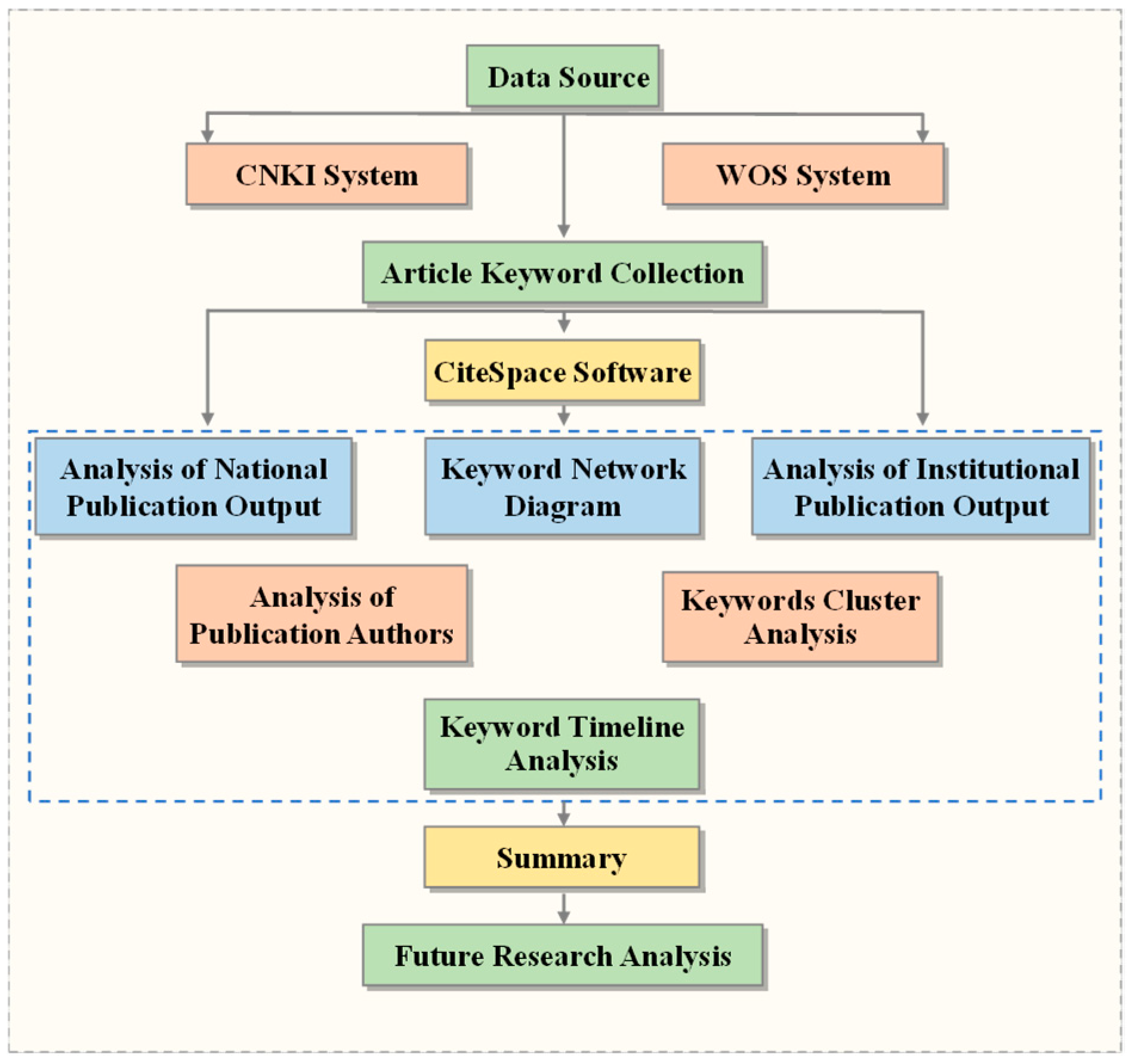
To address the aforementioned research gaps, this study selects the high-timeliness core literature published over the past 10 years (2015–2025) with the keyword “pore structure of coal”, expanding the data sources to include both Chinese (CNKI) and English (WOS) databases, aiming to conduct a broader and more comprehensive analysis of research related to the pore structure of coal. Based on the CiteSpace visualization analysis software—a mainstream tool in bibliometrics due to its mature algorithms and wide application in collaboration network construction, research hotspot evolution tracking, and burst term identification [
20,
21,
22,
23,
24,
25,
26]—this study integrates the core literature from both databases to perform collaboration network analysis and hotspot evolution analysis in the field of the pore structure of coal. The collaboration network analysis includes publication output, as well as national, institutional, and author collaboration network analysis; the hotspot evolution analysis involves keyword co-occurrence, clustering, timeline visualization of co-occurrence clusters, and burst term analysis. This study quantitatively and visually characterizes the research status of the pore structure of coal, interprets the visualization results in combination with traditional literature analysis methods, and accordingly proposes current challenges and future research directions in this field.
This study features three key innovative aspects: first, the integration of Chinese and English dual-core databases and high-timeliness literature addresses the limitations of incomplete data coverage and temporal lag in previous relevant studies, laying a more solid foundation for subsequent bibliometric analysis; second, the CiteSpace visualization method is systematically applied to research centered on the keyword “pore structure of coal”, which refines the research scope, breaks the single research mode of relying on traditional literature analysis in this field, and makes the research status, collaboration networks and hotspot evolution more intuitively visualizable; third, the dual approach of “visual characterization and traditional analysis” not only accurately extracts research laws in this field but also targets proposed challenges and future directions, providing not only a reference for the research context for subsequent scholars but also a theoretical basis for the optimization of gas control technologies in coal mine sites.
3. Results and Analysis
3.1. Trend Analysis of Annual Publication
Publication volume is a crucial indicator reflecting the development status of this field at a specific research stage and its future trends, while the publication volume within a certain time series reflects the attention paid by researchers to this field [
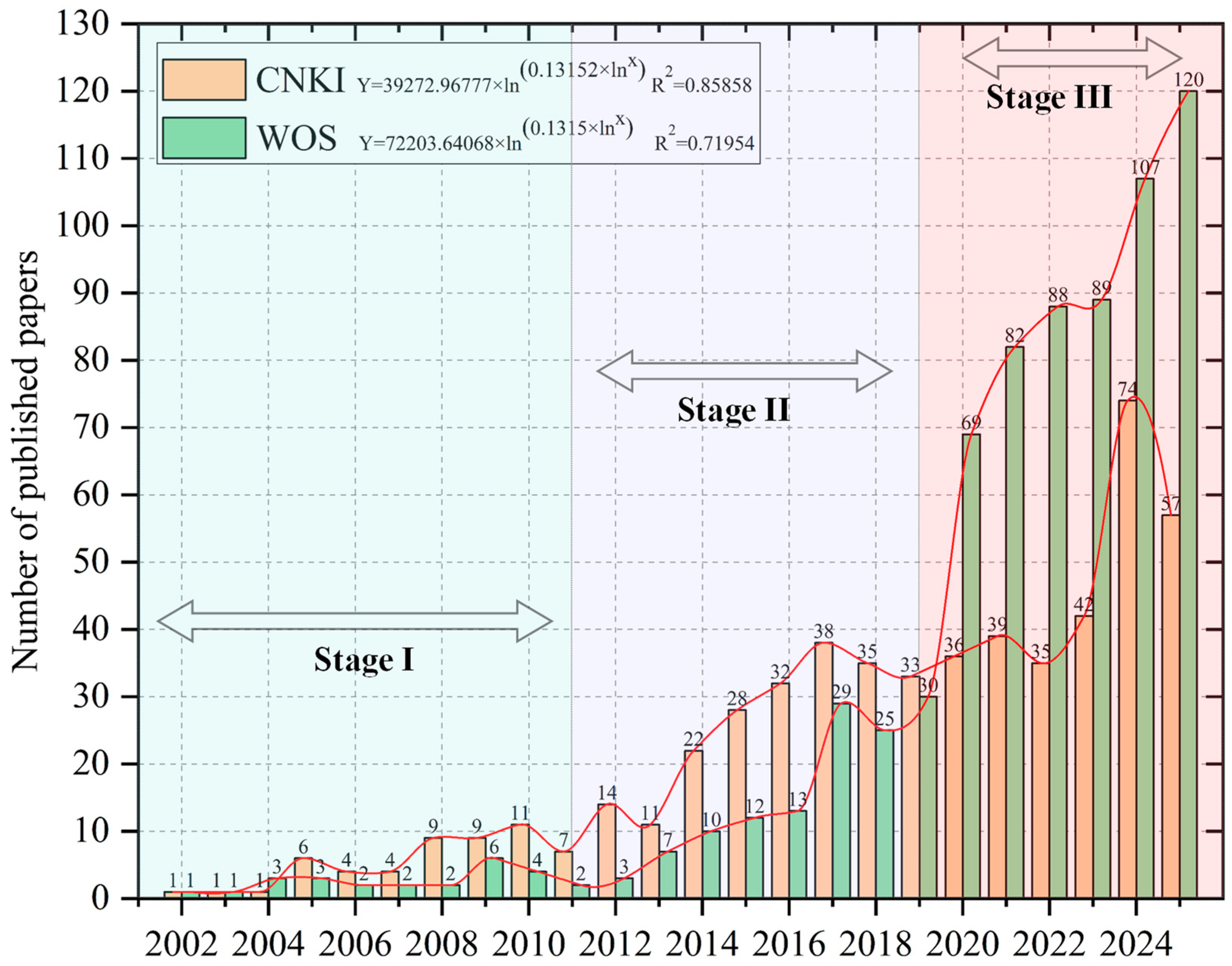
29]. Based on the number of relevant studies retrieved with the keyword “pore structure of coal” from the core databases of CNKI and WOS, a line chart and a development trend curve of the number of research studies on “pore structure of coal” during 2002–2025 were plotted, with the publication year as the abscissa and the publication volume as the ordinate. Nonlinear curve fitting was further performed on the data, as shown in
Figure 2.
Figure 2 systematically presents the annual publication trends of papers with the keyword “pore structure of coal” in the core databases of CNKI and WOS from 2002 to 2025. From the perspective of research stage evolution, this field clearly exhibits a development trajectory across three distinct phases: 2002–2011 as the embryonic stage, where the annual publication volumes in both databases basically remained in the single-digit range, with the volume in the CNKI database fluctuating between 1 and 11 papers per year and that in WOS database consistently below six papers per year, indicating that this research direction was in a relatively marginalized stage at that time, and its scientific value in fields such as the pore structure of coal and coal reservoir property characterization had not been widely recognized; 2012–2019 as the development stage, with the publication volume showing sustained growth, where the volume in the CNKI database reached a stage-specific peak of 38 papers in 2017 and that in the WOS database climbed to 30 papers in 2019, signifying that the field had shifted from phased exploration to systematic research; and 2020–2025 as the explosive stage, following the proposal of the “dual carbon” goals at the 75th United Nations General Assembly in September 2020, where the publication volume in the WOS database surged from 30 papers in 2019 to 69 papers in 2020 and further increased to 120 papers from 2020 to 2025, while although the publication volume in the CNKI database underwent a phase adjustment after reaching 74 papers in 2024, it still maintained high-level output, which is highly coupled with the release of coalbed methane development potential in the context of global energy transition and the research demand for coal seam carbon sequestration technology driven by the “dual carbon” goals.
Regarding the significant heterogeneity in publication volumes between the core databases, the CNKI and WOS databases exhibit obvious differences in development rhythm and peak performance: both started similarly in the embryonic stage with low publication volumes, but the publication volume of the CNKI database was much higher than that of the WOS database, possibly because China promulgated the Work Safety Law in November 2002. Therefore, the coal industry gradually entered a “golden period” of development with sustained growth in coal output [
26], and domestic scholars began to conduct theoretical research in this field. During the development stage, the CNKI database initiated publication growth earlier, while the WOS database showed late-stage accelerated growth; by the explosive stage, the growth rate of publication volume in the WOS database was significantly higher than that in the CNKI database, and its peak of 120 papers in 2025 was much higher than the 57 papers in the CNKI database. This difference may stem from the advantages of international research in interdisciplinary innovation between energy engineering and environmental science, as well as the global influence of carbon sequestration technology under the “dual carbon” goals, and it also reflects the structural adjustment of domestic research in China during this period; it may also be because Chinese researchers publish their academic achievements in international journals to enhance the influence of their papers. From this perspective, the domestic research in China is not experiencing a decline in popularity or insufficient innovation, but rather indicates that publication channels have become more diversified. Its research quality and innovative value are indirectly confirmed by the high publication volume in the WOS core database, which, together with the phased adjustment of the CNKI database, constitutes the development pattern of China’s research in this field.
The Hertzberg–Bradley (H-B) model was employed for nonlinear curve fitting of the publication volumes in the CNKI and WOS core databases. Based on the logarithmic fitting characteristics of the growth pattern, the fitting equation for the publication volumes in the CNKI core database is . The coefficient of determination R2 is 0.85858, and the high goodness of fit indicates that the publication trend is highly consistent with the logarithmic growth law, presenting the typical development path of research fields characterized by “stable growth in the embryonic stage—rapid growth in the development stage—explosive growth in the explosive stage”; the fitting equation for the publication volumes in the WOS core database is . The coefficient of determination R2 is 0.71954. Although slightly lower than that of the CNKI core database, it still indicates that its growth pattern conforms to the logarithmic growth law. The minor attenuation of R2 may be attributed to the phased impact of the rapid growth in the explosive stage on the model’s fitting accuracy.
Based on the comprehensive analysis of the development characteristics of publication volumes and the results of nonlinear curve fitting in this field, as mentioned above, the following predictions can be made regarding the future trends of publication volumes in research: the WOS database will maintain a medium-to-high-speed growth trend, but, limited by the phased boundary of knowledge accumulation in the field, the growth rate may gradually moderate, and it is expected to enter a “high-level plateau period” during 2026–2030, with annual publication volumes remaining in the range of 120–150 papers; the CNKI database, by contrast, may resume growth after 2025. With the release of engineering demands such as deep coal seam development and coal-based carbon sequestration in China, as well as the phased adjustment of paper publication policies, its publication volume is expected to recover to 70–80 papers per year, and the gap with the WOS database will gradually narrow.
3.2. Cooperation Network Analysis
Collaboration network analysis is a core method for deciphering interaction patterns and synergy mechanisms in academic research [
30,
31,
32]. To systematically reveal the global academic collaboration landscape in the field of pore structure of coal, this study conducts multi-dimensional analysis from three levels: national, institutional, and authorial. Specifically, national-level analysis focuses on the global collaboration layout and core participating entities; institutional-level analysis aims to identify key research institutions and their collaborative networks; and authorial-level analysis emphasizes exploring core researchers and interdisciplinary collaboration pathways. This multi-scale analytical framework facilitates a systematic clarification of the collaborative characteristics and evolutionary regularities in this field.
3.2.1. Country Cooperation Network Analysis
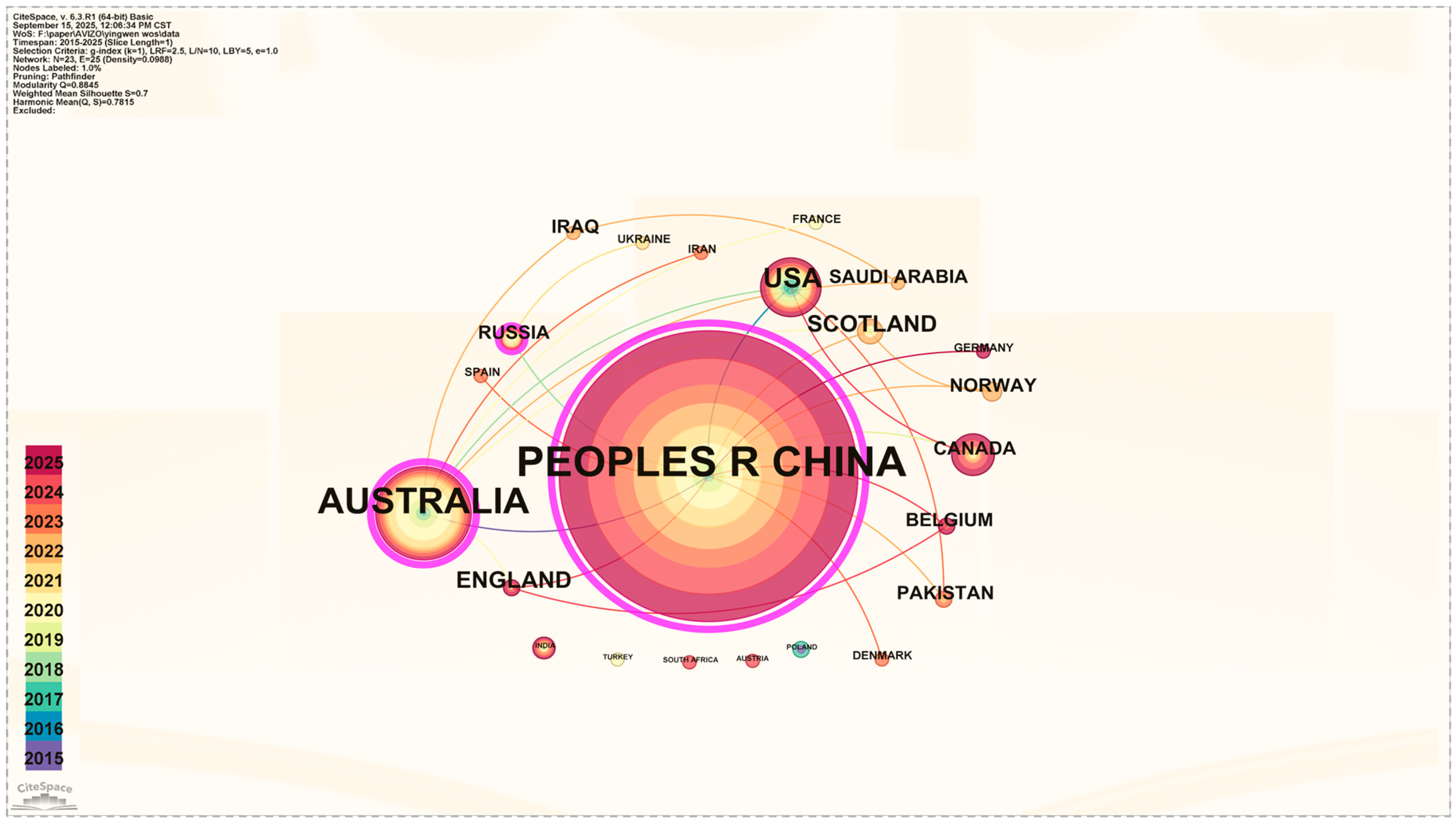
After importing the literature on the pore structure of coal from the CNKI and WOS Core Collection databases into CiteSpace, “Country” was selected as the node type, and the Pathfinder algorithm was adopted for the analysis. Thus, a cooccurrence network map of “Nodes = 23 (representing the number of different countries)” and “Links = 25 (representing the cooperation between the two countries, the thicker the connection, the stronger the cooperation between the two countries)” can be obtained. The node size is directly proportional to the publication number in that country. The thickness of the purple outer circle of the node represents the strength of the betweenness centrality. The color of the link demonstrates the year of the first collaboration between two countries.
As shown in
Figure 3, a total of 23 countries worldwide is engaged in research on the pore structure of coal. Among them, China, Australia, and the United States exhibit core node attributes through prominent publication output, high betweenness centrality, and extensive collaborative links. These three nations play a pivotal role in transnational scientific research resource integration and cooperation, which are associated with their scientific research capacity and comprehensive national strength. Predominated by red hues, the colors of nodes and links reveal a recent dynamic growth trend in inter-country cooperation within this field, reflecting the temporal evolution of research hotspots. This indicates a recent surge in internationally co-authored publications and confirms that research on the pore structure of coal is attracting growing global attention. From the perspective of the overall topological network structure, it presents a typical core–periphery pattern, forming a multi-level collaborative radiation network. China is located at the center of the core cluster, maintaining cooperative research with most surrounding countries; its core status highlights its scientific research influence and knowledge diffusion efficiency in this field, while Australia, the United States, and other nations form secondary clusters. In addition, several regions (e.g., countries in South America and India) represent “collaborative blank areas” with low participation in international cooperation. This is partially associated with their energy structure types and coal reserve quantities, but it also provides a visual reference for optimizing the layout of future transnational cooperation to a certain extent. Overall, these findings hold significant guiding significance for promoting interdisciplinary and transnational collaborative innovation and scientific research exchanges in the field.
To further elaborate on the national cooperative network in
Figure 3, the top 10 countries by total publications (TPs) were selected for analysis (see
Table 1). Countries with a centrality greater than or equal to 0.1 were defined as core countries for coal porosity research [
33]. Among them, China, Australia, and the USA rank as the top three in terms of betweenness centrality, with values of 0.81, 0.51, and 0.14, respectively. Correspondingly, these three countries also lead in publication output, with 468, 54, and 21 publications, respectively. To quantify these findings and provide empirical support for the network structure analysis,
Table 1 presents detailed statistics on each country’s publication output, betweenness centrality, and the year of their first collaborative publication.
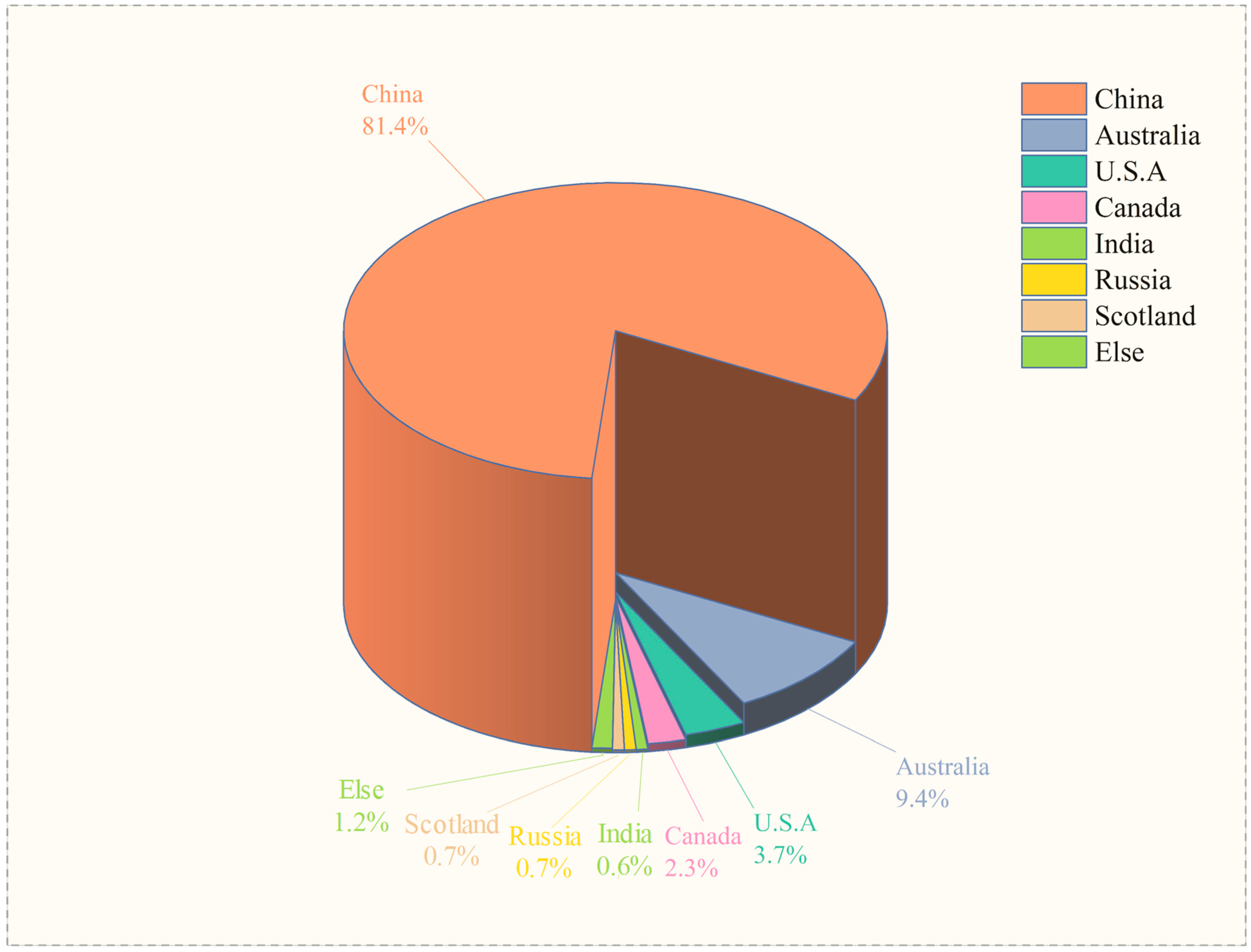
To further illustrate the distribution of publication output across countries,
Figure 4 presents a pie chart depicting the proportion of publications contributed by each nation. It clearly shows that China accounts for the largest share, with 81.4% of the total publications, followed by Australia (9.4%), the USA (3.7%), and other countries with relatively smaller proportions (e.g., Canada at 2.3%, and Russia and India each at 0.7%). This visualization complements the quantitative data in
Table 1, offering an intuitive perspective on the hierarchical distribution of national publication contributions in pore structure of coal research.
3.2.2. Institution Cooperation Network Analysis
Through the analysis of cooperative organizations, the information of the most productive organizations in the field of the pore structure of coal and the cooperation between them can be determined [
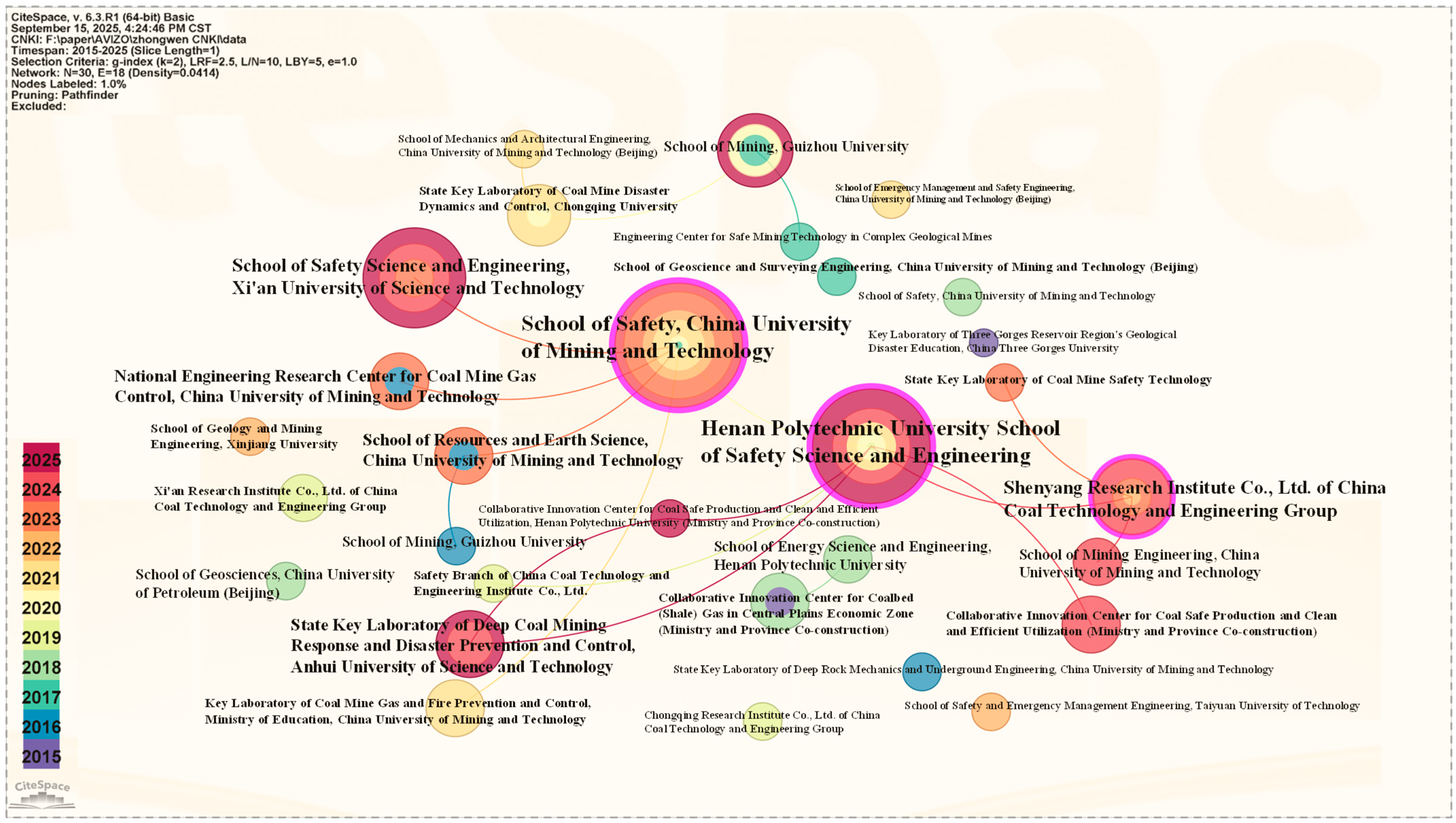
34]. To analyze the institutional collaboration networks in the CNKI and WOS databases, we follow a methodological framework analogous to the national cooperation analysis. For the CNKI database, “Institution” was set as the node type in CiteSpace, where nodes and links represent the number and frequency of collaborating institutions. Subsequently, the institutional collaboration network was constructed, with its characteristics reflected in the network visualization (
Figure 5) and corresponding statistical data (
Table 2).
The China University of Mining and Technology (centrality = 0.30, 48 publications, starting from 2016) and Henan Polytechnic University (centrality = 0.29, 29 publications, starting from 2015), as established mining institutions with long-standing expertise in coal-related research, emerge as core nodes, highlighting their pivotal roles in domestic collaborative research on the pore structure of coal. Other institutions, such as Xi’an University of Science and Technology (13 publications, starting from 2013) and China Coal Technology and Engineering Group Shenyang Research Institute Co., Ltd. (8 publications, starting from 2022), form a secondary collaborative layer. The network also exhibits a core–periphery structure. As evident from the figure, most institutions engaged in this field exhibit weak collaborative ties and low betweenness centrality, which partially indicates that many domestic institutions have insufficient collaborative awareness. This is partly attributed to the fact that research in this field involves multiple disciplines such as mining, geology, and materials science. For different institutions, interdisciplinary research may encounter “disciplinary barriers,” which hamper inter-institutional collaboration. The color coding (2015–2025) reveals the recent emergence of more institutional engagement (e.g., Xi’an University of Science and Technology’s publications in 2023; Anhui University of Science and Technology’s publications in 2024), which partially indicates a growing research momentum in this field within China. Yet, the number of studies related to this field remained relatively limited over the past two years. The potential reasons may include, but are not limited to, the following: under the “dual carbon” goals, the research funding and investment of some institutions tend to lean toward the new energy sector; furthermore, the characterization of the pore structure of coals relies heavily on test technologies such as low-temperature nitrogen adsorption (LN2GA), high-pressure mercury intrusion porosimetry (HMIP), and computed tomography (CT), and some institutions may reduce their research efforts in this field due to research funding constraints.
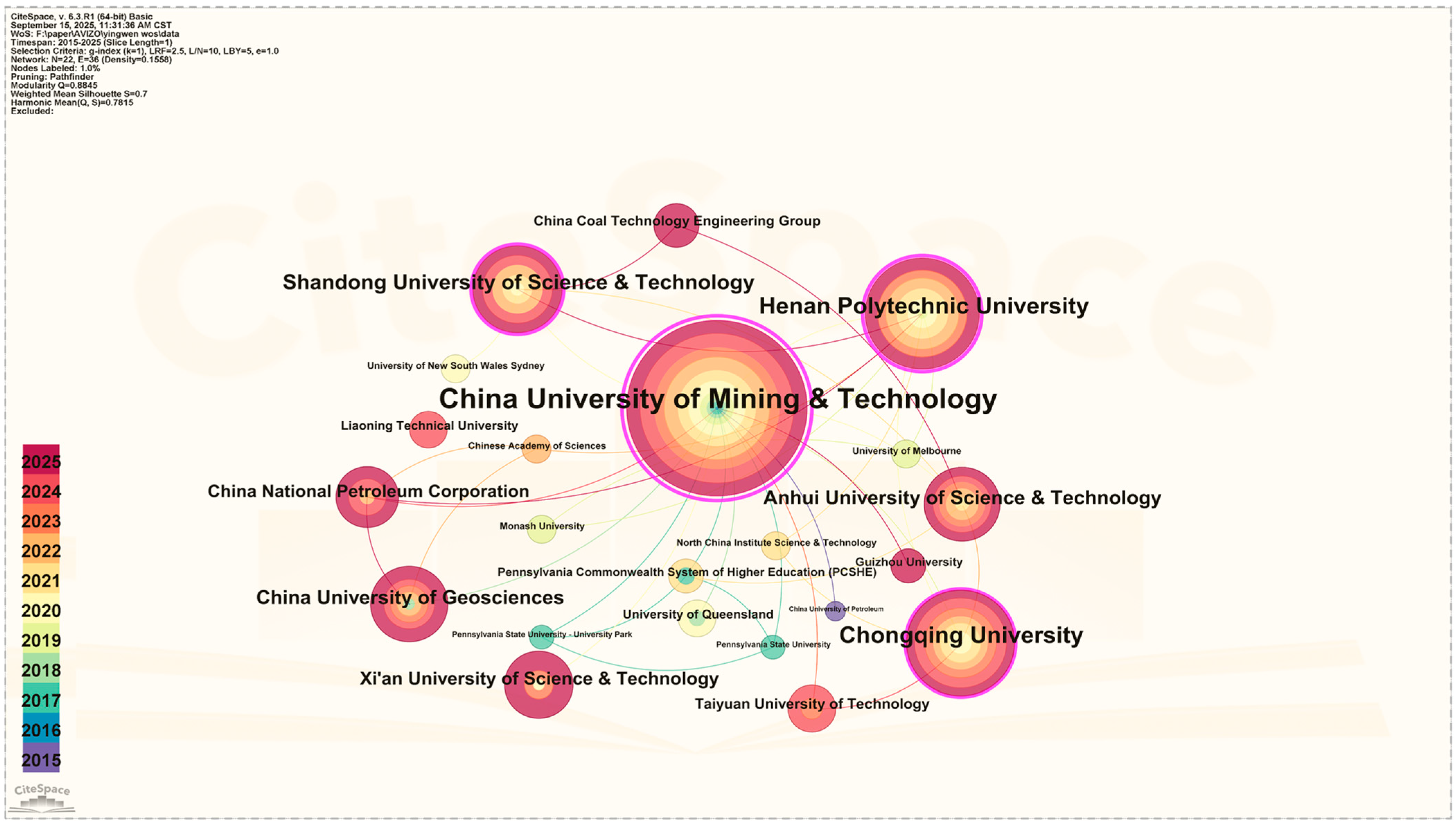
Turning to the WOS database, its institutional collaboration network (
Figure 6 and
Table 3) demonstrate a more globally oriented landscape, still led by Chinese institutions. The China University of Mining and Technology stands out with a remarkable centrality of 1.17 and 164 publications (starting from 2015), underscoring its global academic leadership. Henan Polytechnic University (centrality = 0.53, 64 publications, 2019) and Chongqing University (centrality = 0.28, 60 publications, 2019) also play critical roles in international collaboration. Shandong University of Science and Technology, Anhui University of Science and Technology, China University of Geosciences, and other universities also rank closely behind in terms of publication output and betweenness centrality. The temporal gradient of the network (2015–2025) demonstrates sustained collaborative dynamics. New nodes, such as China Coal Technology Engineering Group (10 publications, 2025), partially indicate that emerging institutions are continuously disseminating their research findings in this field via international journals.
3.2.3. Author Collaboration Network Analysis
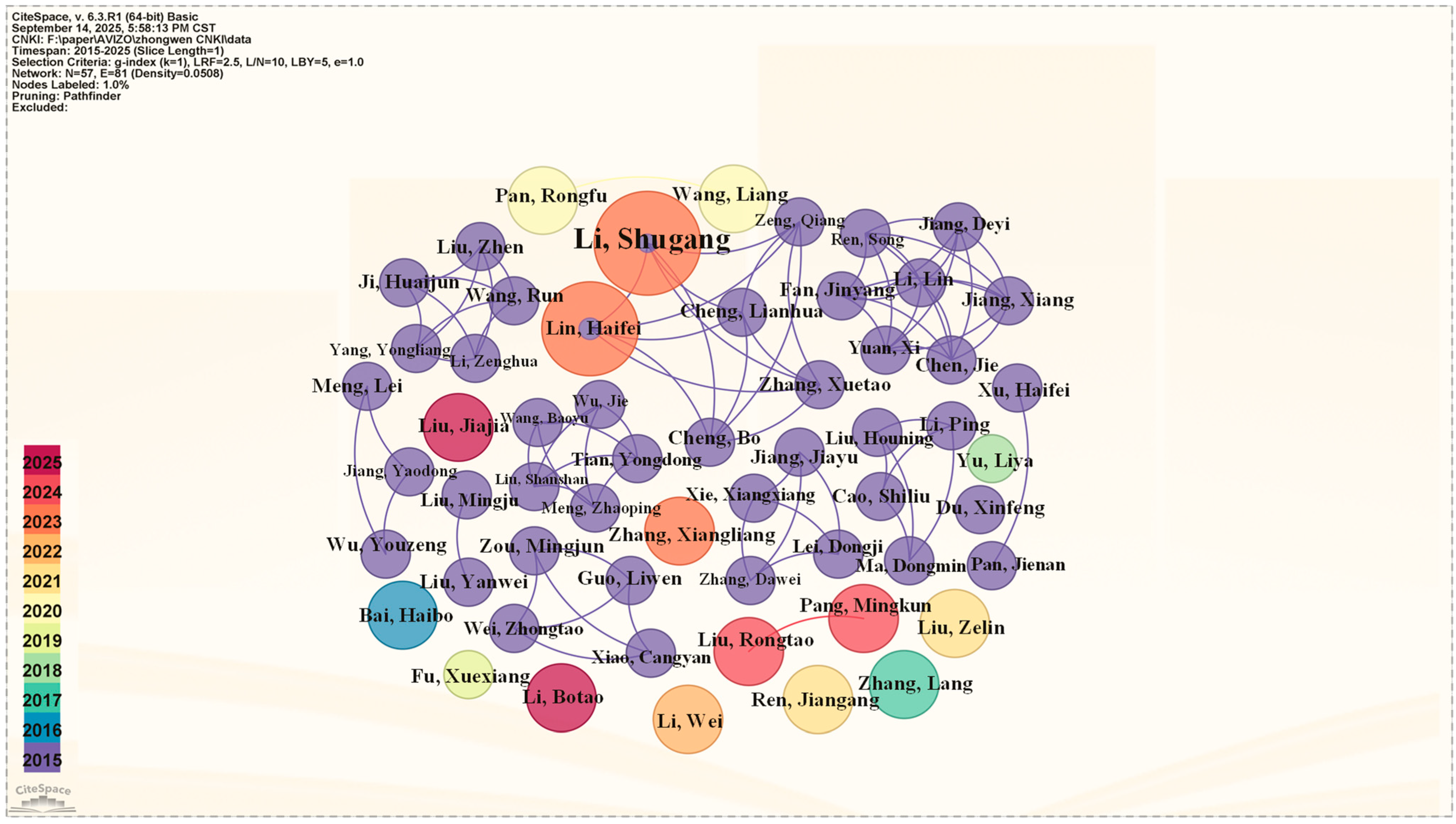
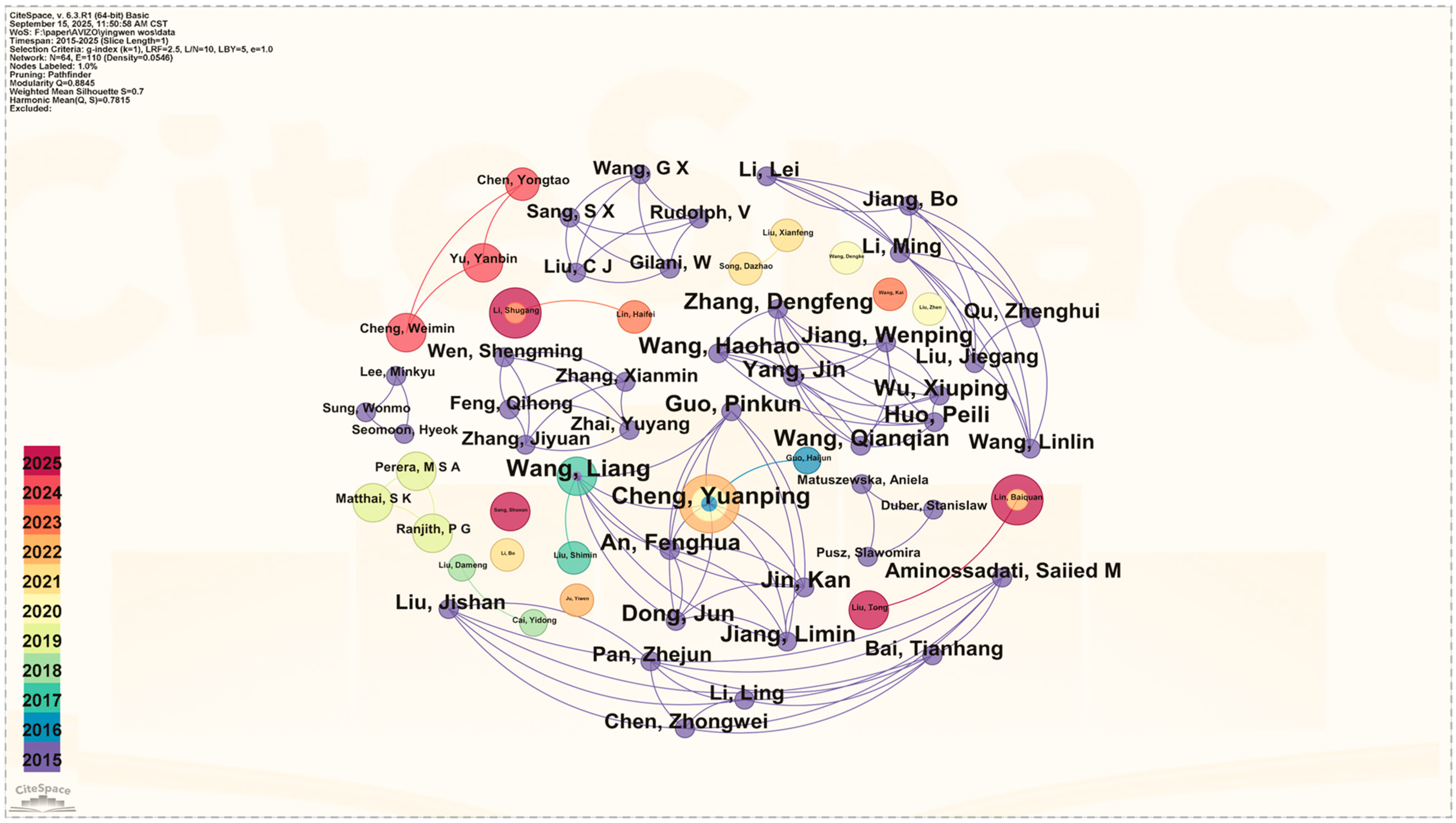
To dissect the collaborative relationships among scholars in the field of the pore structure of coal, this study employs CiteSpace to construct author co-occurrence network knowledge maps for the CNKI and WOS databases, with author designated as the node type. Node size represents the volume of co-authored publications, links between nodes indicate collaborative ties (where the thicker the link, the closer the collaboration), and different colors denote distinct collaborative clusters. The analysis focuses on collaborative density, core author identification, and temporal dynamics, as illustrated in
Figure 7 and
Figure 8, and
Table 4.
As illustrated in
Figure 7, the author collaboration network in the CNKI database consists of 57 nodes and 81 links, with a network density of 0.0508. This density indicates that the collaboration pattern among domestic scholars is relatively dispersed, yet distinct core collaborative clusters exist. For instance, the collaborative group led by Li, Shugang, Cheng Lianhua, and Lin Haifei is primarily formed because the three scholars are affiliated with Xi’an University of Science and Technology and all conduct research on coalbed methane prevention and utilization. Another core team, featuring Jiang Deyi, Li Lin, and Fan Jinyang, co-authored a paper titled “Influence of Adsorbed Gas on Seepage Characteristics of Outburst Coal” in the
Journal of China Coal Society, with the State Key Laboratory of Coal Mine Disaster Dynamics and Control at Chongqing University as the sole institutional affiliation. Thus, it can be inferred that researchers in the pore structure of coal field have not yet formed a tightly integrated collaborative network. Most teams are composed of members from the same institution, and inter-institutional collaborations are relatively scarce, which is not conducive to in-depth research in this field. The red nodes in the figure indicate that scholars such as Li Botao and Liu Jiajia have recently engaged in research in this field, demonstrating that the research in this domain remains active and continuously evolving.
As illustrated in
Figure 8, the author collaboration network in the WOS database comprises 64 nodes and 110 collaborative links, with a network density of 0.0546. While the number of author nodes and network density in the WOS database are comparable to those in the CNKI database, the quantity of collaborative links in WOS is 35.8% higher. This discrepancy suggests that international author participation in collaborations is more extensive. In recent years, scholars such as Li Shugang, Lin Baiquan, Liu Tong, and Sang Shuxun have continued to conduct in-depth research in this field, with their findings published in international journals, highlighting the sustained development momentum of the research domain. The prevalence of red nodes in the figure indicates a recent increase in international collaborations. Compared with the author co-occurrence network in the CNKI database (
Figure 7), the WOS author network exhibits greater node diversity and higher collaborative link density, which, to a certain extent, reflects the more extensive global interconnectedness in this research field.
Table 4 presents a comparison of the top 10 authors with the highest publication outputs in the CNKI and WOS databases, showing partial overlap among indexed authors but distinct database-specific characteristics. Specifically, the top two authors in the CNKI database—Li, Shugang and Lin, Haifei, both affiliated with Xi’an University of Science and Technology—have the highest publication counts, whereas the leading contributors in the WOS database are Cheng, Yuanping and Lin, Baiquan from China University of Mining and Technology, reflecting varying publication database preferences across research institutions. In terms of temporal span, WOS-indexed authors have extended their publication outputs to 2025, while the latest contributions from CNKI-indexed authors date back to 2023, indicating that international research maintains greater timeliness in addressing academic frontiers.
3.3. Evolution Analysis of Research Hotspots
Keywords in a scientific paper represent a concise distillation of the entire manuscript’s core content. Extracting and analyzing these keywords enables accurate identification of research hotspots in the corresponding field. Studies were retrieved from the core collections of the CNKI and WOS databases, spanning the period 2015–2025. Following data integration, keyword co-occurrence networks, cluster analysis results, timeline visualization graphs, and burst keyword detection outcomes related to the research on “pore structure of coal” were obtained.
3.3.1. Keyword Enumeration Analysis
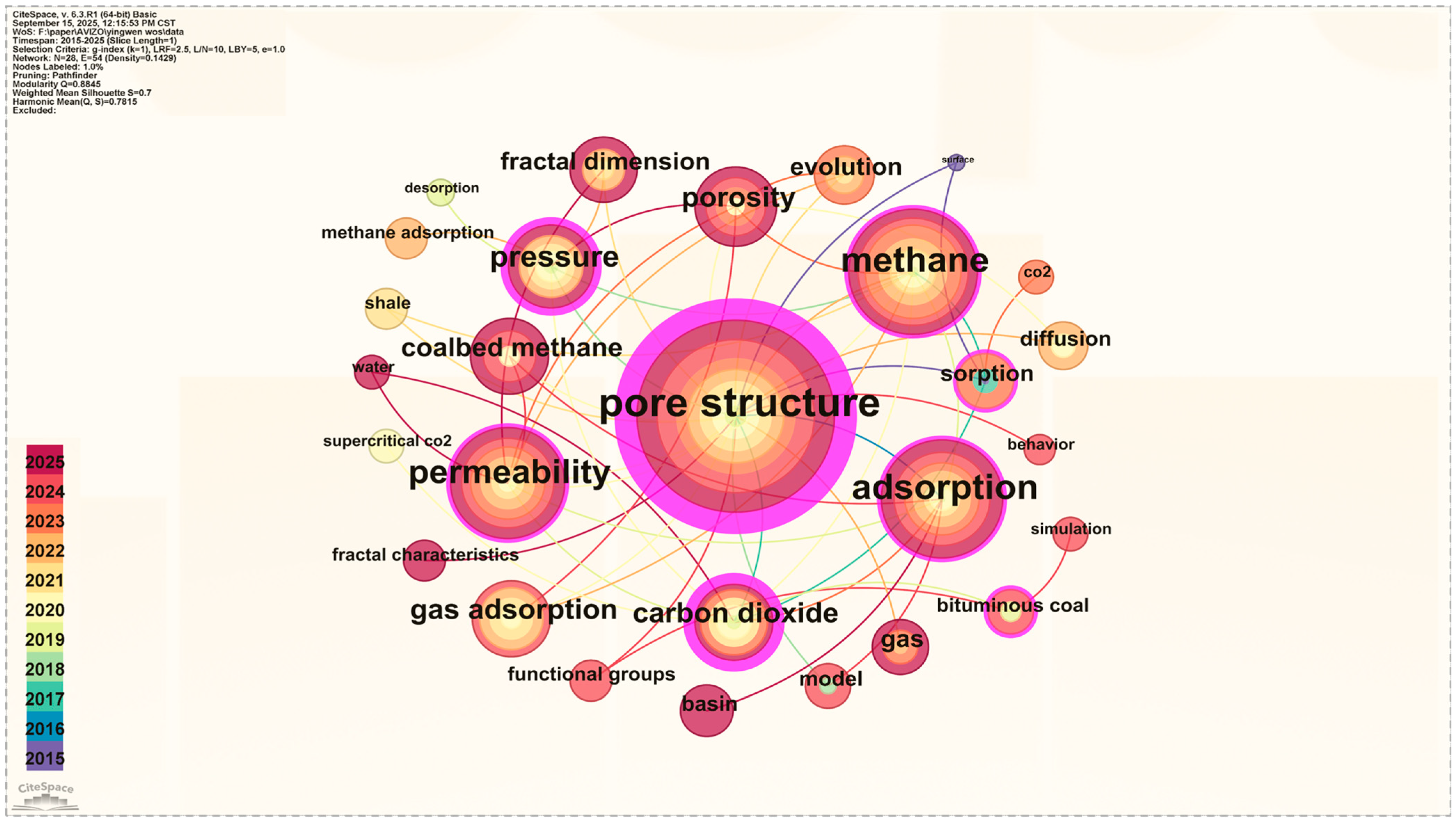
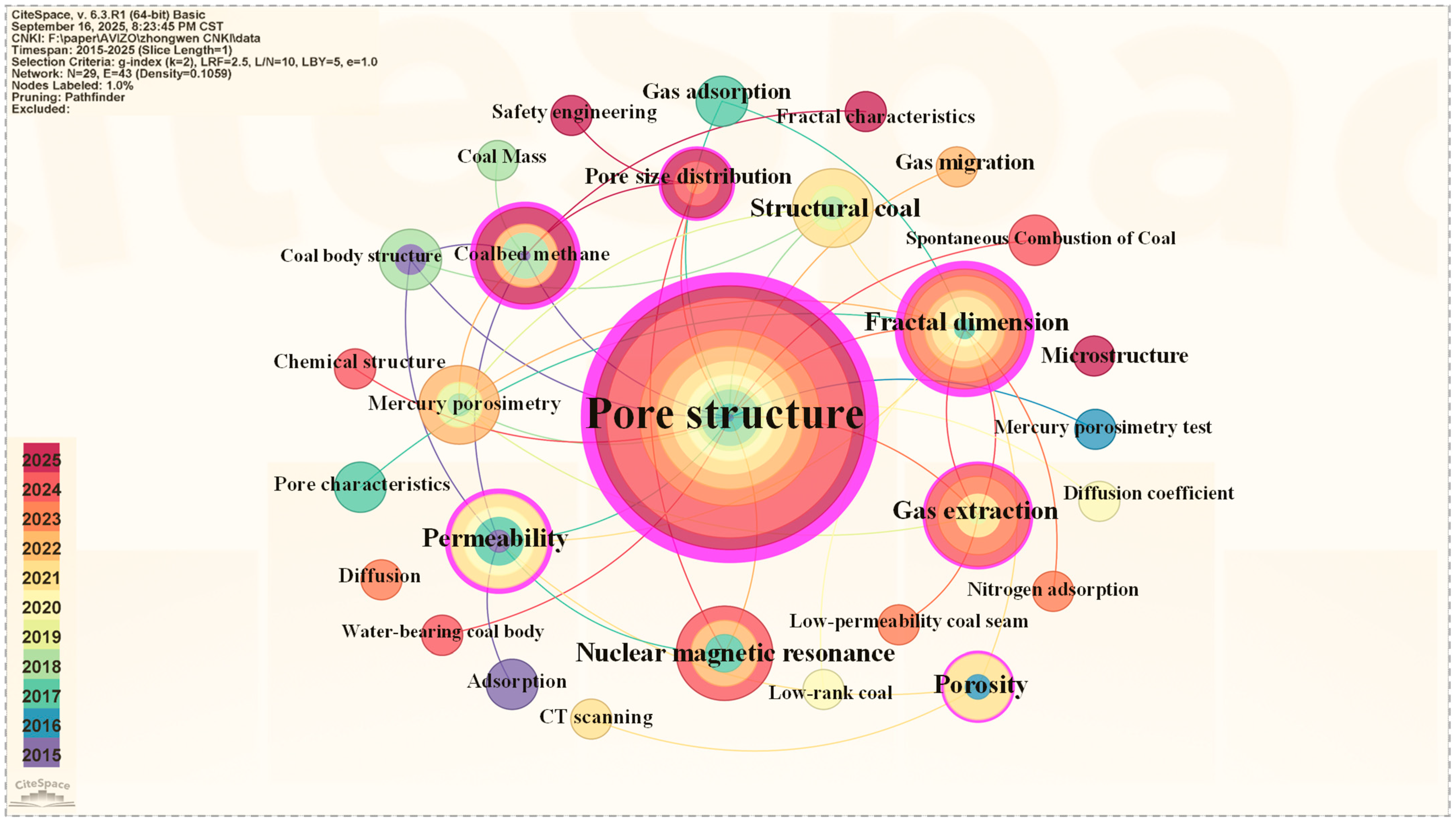
Keyword co-occurrence networks intuitively visualize the occurrence frequency of keywords through node size, facilitating the clear identification of research hotspots in this field. Using CiteSpace software, keyword co-occurrence maps were constructed for the CNKI and Web of Science (WOS) databases based on keyword frequencies, as presented in
Figure 9 and
Figure 10. The detailed comparative data of the keyword co-occurrence networks between the two databases are presented in
Table 5.
In these networks, nodes denote keywords, where the total number of nodes is consistent with the total count of keywords across the literature. Lines represent the co-occurrence relationship between keywords: two keywords are connected by a line if they co-occur in the same document. Node size is proportional to the occurrence frequency of the corresponding keyword, with larger nodes indicating higher frequencies.
As can be seen from
Figure 9 and
Table 5, in the CNKI database, “pore structure” is the dominant keyword, with a betweenness centrality of 1.00, 83 publications, and its first appearance in 2015. This indicates that it serves as the core theme of domestic research in this field. An analysis of the research orientations indicates that the co-occurring keywords can be clustered into two major thematic groups. The first group revolves around pore structure characterization, exemplified by keywords such as fractal dimension (betweenness centrality = 0.22, 20 publications, first appearance in 2016), Mercury porosimetry (betweenness centrality = 0.04, 9 publications, 2017), Nuclear magnetic resonance (betweenness centrality = 0.18, 14 publications, 2017), and pore size distribution (betweenness centrality = 0.03, 7 publications, 2016). These terms correspond to core experimental techniques employed for the quantitative characterization of the pore structure of coal, focusing on quantifying geometric properties and structural complexity. The second group centers on engineering applications, represented by keywords including coalbed methane (betweenness centrality = 0.26, 20 publications, 2015), gas extraction (betweenness centrality = 0.12, 13 publications, 2019), and structural coal (betweenness centrality = 0.08, 9 publications, 2017). This cluster underscores the critical role of the pore structure of coal in practical scenarios such as coal mine safety and coalbed methane exploitation. Collectively, these two thematic clusters provide clear directional guidance for domestic research, bridging fundamental characterization techniques with industrial application demands.
As can be seen from
Figure 10 and
Table 5, in the WOS database, “pore structure” is also a dominant keyword but with a lower betweenness centrality of 0.06, 228 publications, and its first appearance in 2015. This reflects a more dispersed research focus. Key associated keywords include methane (betweenness centrality = 0.03, 106 publications, 2017), adsorption (betweenness centrality = 0.06, 97 publications, 2015), permeability (betweenness centrality = 0.05, 90 publications, 2017), and gas adsorption (betweenness centrality = 0.07, 52 publications, 2016). This indicates that research primarily centers on gas adsorption behavior and the interactions between pores and seepage, in contrast to the CNKI database where keywords exhibit distinct thematic clustering.
By comparing the keyword data of the two databases in
Table 5, it is evident that compared with those in the CNKI database, the keywords in the WOS database exhibit higher publication volumes but lower betweenness centrality, along with a weaker correlation with engineering applications. Research associated with CNKI’s keywords relies heavily on experimental characterization methods, whereas that in the WOS database leans more toward numerical simulations and multiphysics analysis. Specifically, the former prioritizes domestic industrial applications such as coal mine safety and coalbed methane extraction, while the latter emphasizes fundamental science through numerical simulations and multiphysics analysis. This discrepancy underscores the necessity of cross-database collaboration, which can bridge the gap between applied and theoretical advancements in the field. By consulting the literature from both databases, researchers can gain a more comprehensive understanding of the current research landscape.
3.3.2. Keyword Co-Occurrence Clustering Analysis
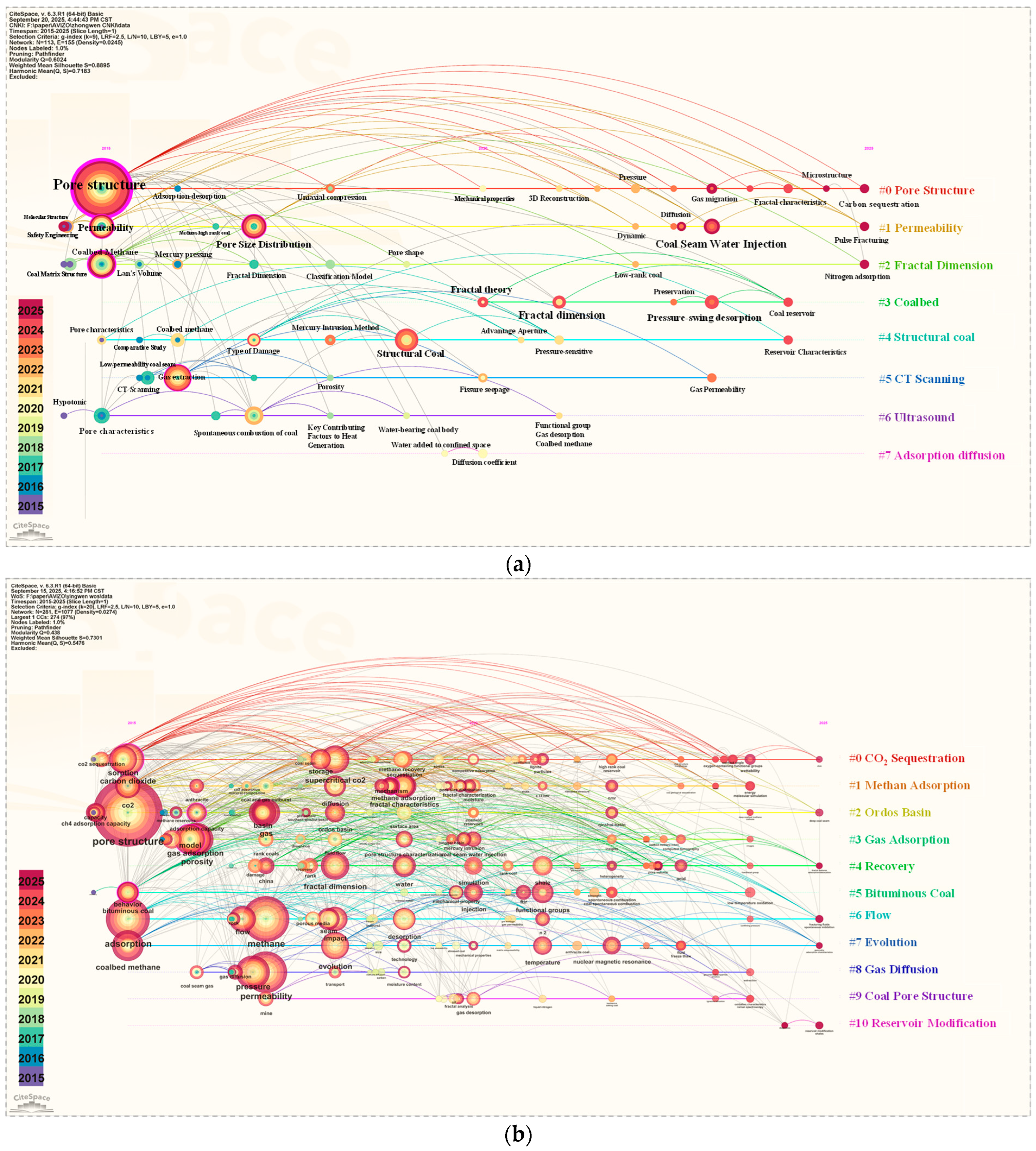
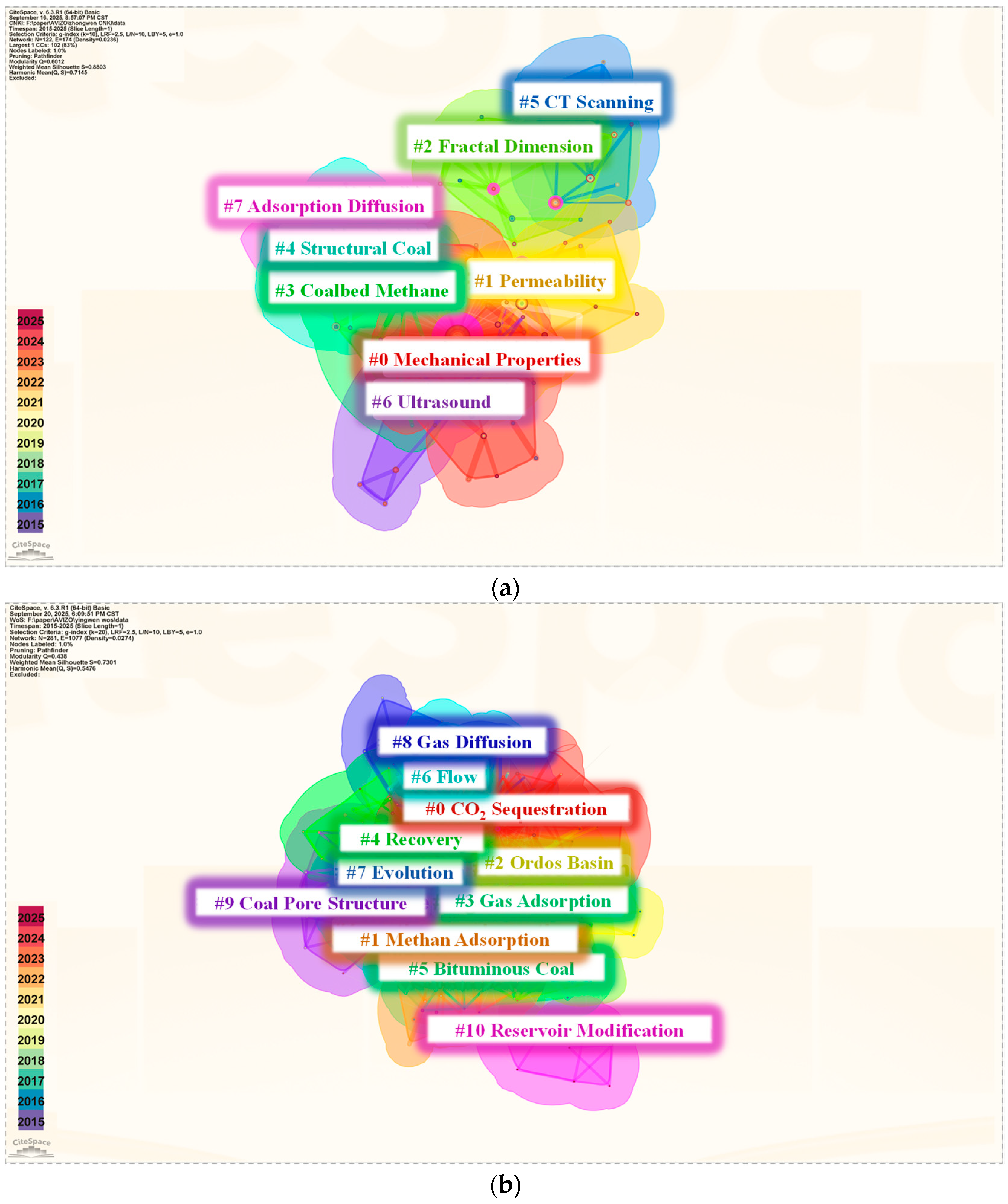
Keyword cluster maps enable correlation analysis and systematic synthesis of keywords, achieving categorical integration through clustering. They intuitively illustrate the closeness of association and coverage scope of research themes. Keyword cluster analysis was performed using the log-likelihood ratio (LLR) algorithm in CiteSpace software. The co-occurrence clustering results of keywords integrated from the literature in the CNKI and WOS databases are presented in
Figure 11.
In the CiteSpace analysis, modularity Q is a key network analysis metric that primarily serves to evaluate the community structure of a network, thereby reflecting the aggregation status and organizational pattern of elements such as studies and keywords. Weighted mean silhouette S is an evaluation index in cluster analysis, used to measure the quality of clustering results. While many scholars employ silhouette S to assess clustering quality, it was originally designed to evaluate the clustering effect of individual data points. In contrast, weighted mean silhouette S weights this index to better reflect the overall clustering quality. As shown in
Figure 11a, the modularity Q value of the keyword clustering map in the CNKI database is 0.6012, and the weighted mean silhouette S value reaches 0.8803, indicating the validity of this clustering map. Specifically, modularity Q = 0.6012 > 0.6, which implies that the community structure division of the network is at a relatively optimal level, exhibiting good aggregation characteristics. Meanwhile, weighted mean silhouette S = 0.8803 > 0.8, meaning that data points have high similarity with other points within the same cluster and significant differences from points in adjacent clusters, further confirming the excellent clustering effect. From
Figure 11b, the modularity Q value of the keyword clustering map in the WOS database is 0.438, and the weighted mean silhouette S value is 0.7301, indicating that this clustering map is also valid. The specific analysis is consistent with the above. Although the keyword clustering effect in the WOS database is less prominent than that in the CNKI database, it is still valid and can present good aggregation characteristics.
In the keyword clustering results of the CNKI database, keywords are grouped into eight clusters. Clusters #0 mechanical properties, #1 permeability, and #2 fractal dimension focus on quantifying the correlation between pore structure of coal and mechanical properties. Clusters #3 coalbed methane and #4 structural coal target engineering applications such as CBM extraction and gas disaster prevention in structurally deformed coal seams. Clusters #5 CT Scanning, #6 Ultrasound, and #7 Adsorption Diffusion represent several laboratory characterization methods and result analyses for the pore structure of coal.
In the keyword clustering results of the WOS database, keywords are grouped into 11 clusters. Notably, clusters #2 Ordos Basin, #5 Bituminous Coal, and #9 coal pore structure integrate basin-scale pore evolution and coal rank effects, which are grounded in practical geological contexts and reflect the interdisciplinary integration of geoscience and engineering. Clusters #6 flow, #7 evolution, #8 Gas Diffusion, and #10 reservoir modification rely on numerical simulation and multiphysics modeling, highlighting the importance of fundamental science and echoing the groupings in the keyword co-occurrence network analysis.
The clustering results of both databases are closely related to the field of the pore structure of coal, which underscores the validity of the clustering results from another perspective.
3.3.3. Timeline Visualization of Keyword Co-Occurrence Clustering Analysis
Keyword cluster timeline visualization maps unfold keywords in chronological order after cluster analysis. They enable the observation of the distribution characteristics of research content and methods in keyword-related fields over a long time span. Analyzing the evolutionary trends of keywords facilitates understanding the dynamic development of research hotspots in this field. The keyword clustering result timelines for the pore structure of coal, collated from journal studies in the CNKI and WOS databases during 2015–2025, are presented in
Figure 12.
As shown in
Figure 12a, the field of the pore structure of coal is characterized by a rich network with 113 nodes and 155 connections, and a network density of 0.0245, reflecting the complexity and diversity of research in this domain. In the early research stage, it primarily focused on the characterization of basic pore structures, with keywords such as permeability, pore size distribution, and fractal dimension laying the foundation for subsequent applied research; in the mid-stage, the research focus shifted to engineering applications and advanced techniques, exemplified by coalbed methane, structural coal, CT Scanning, and Ultrasound, highlighting the integration of theoretical and experimental techniques with on-site engineering applications; and in the late stage, research evolved toward multi-process coupling, such as adsorption diffusion, gas extraction, and carbon sequestration. Driven by the increasing burial depth of coal seams and the response to the “dual carbon” goals, on-site challenges have become more complex, making this stage a deep integration of fundamental characterization and engineering practice.
Figure 12a presents a development trajectory of this field driven by domestic industrial policies in China.
As shown in
Figure 12b, the field of the pore structure of coal is characterized by a rich network with 281 nodes and 1077 connections, and a network density of 0.0274, reflecting the richness and tightness of research in this domain. The research in the early and middle stages of the keyword clustering timeline in the WOS database is largely consistent with that in the CNKI database, while notable differences emerge in the late stage, where late-stage research emphasizes numerical simulation and reservoir engineering, exemplified by keywords such as flow, evolution, and reservoir modification. In the future, fundamental scientific research, including multiphysics modeling techniques (e.g., mechanical fields and seepage fields), may be applied to large-scale engineering projects such as CBM development and reservoir gas stimulation, aiming to enhance energy utilization efficiency and carbon storage capacity.
3.3.4. Keyword Outburst Analysis
Burst keywords refer to terms whose occurrence frequency surges within a specific time period. Analysis of their visualization maps enables the identification of which keywords become research hotspots and when. These keywords can be used to identify emerging trends in research fields and reflect temporal shifts in the research focus of specific domains [
35], thereby assisting in the analysis of future research hotspots and trends [
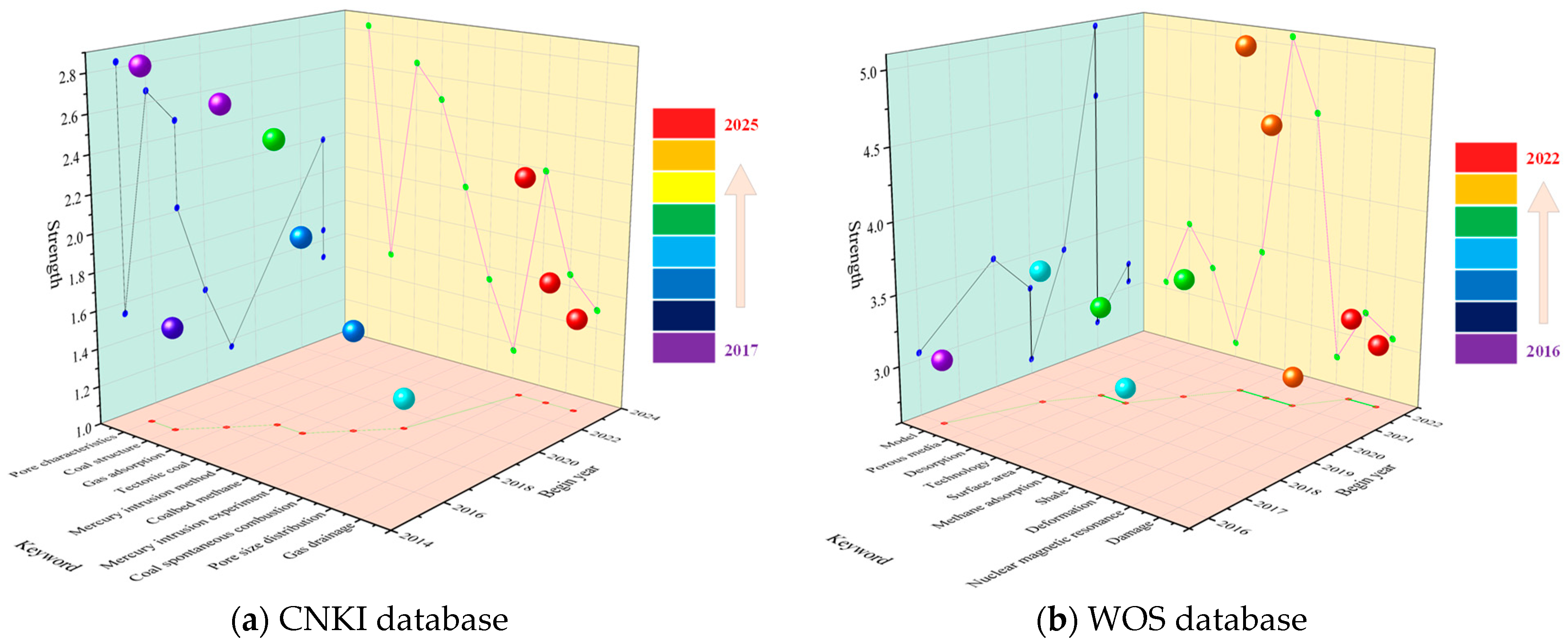
29]. Burst keywords in this field from studies in the CNKI and WOS databases over the 10-year period from 2015 to 2025 were generated using CiteSpace software. The top 10 burst keywords from each database were selected for presentation, as shown in
Figure 13.
As shown in
Figure 13a, in the CNKI database, the burst keywords span from 2017 to 2025, with a burst strength range of 1.16–2.83. The colors are mostly purple and red, indicating that during the early and late stages of the selected literature period, there were scholars concentrating on research directions in this field. For example, the burst keywords in the early stage are pore structure and coal structure, while those in the late stage are pore size distribution and gas drainage.
Figure 13b illustrates the keyword burst detection in the WOS database. The burst keywords span from 2016 to 2022, with a higher burst strength range of 2.71–5.06. The colors are mostly orange and blue, indicating that the international research enthusiasm is more intense and rapid. However, there has been a lack of concentrated research on specific directions in this field in the past two years, and the research is relatively scattered.
The keyword burst patterns of the two databases are consistent with the keyword clustering and timeline network diagrams in the previous sections. The CNKI database’s keywords are oriented toward coal mine engineering scenarios, such as gas drainage and coal spontaneous combustion. In contrast, the WOS database’s keywords focus on basic scientific analysis and future trend exploration, such as the efficient development, utilization, and storage of coalbed methane and reservoir gas.
4. Discussion
4.1. Spatiotemporal Evolution and Global Collaboration Patterns
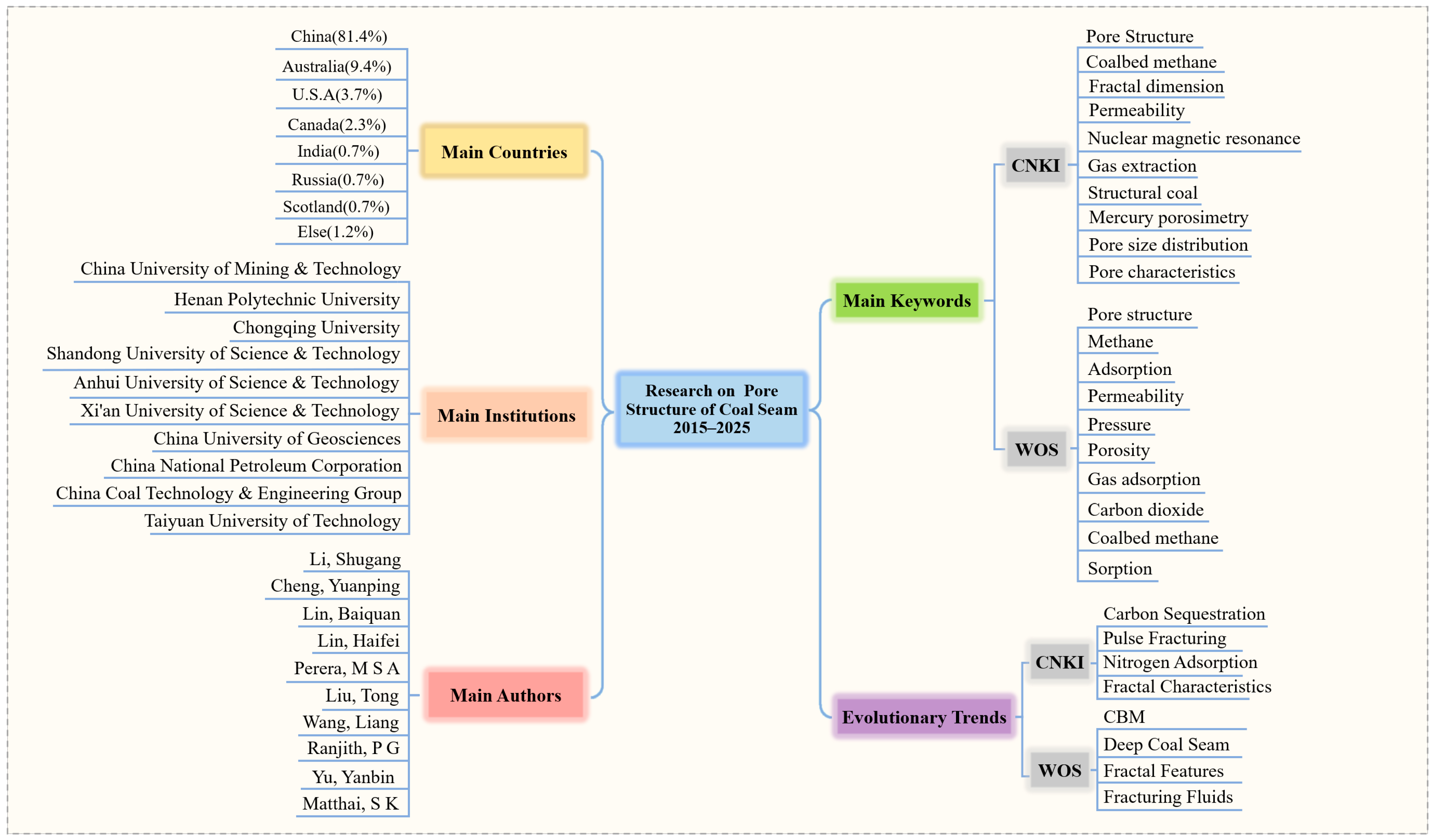
This study employed knowledge mapping and bibliometric methods based on CiteSpace software to systematically analyze 223 and 499 high-quality studies on the pore structure of coal from the core databases of CNKI and WOS, respectively, spanning 2015–2025. The core findings are as follows: First, the field has experienced three distinct development stages from 2002 to 2025, namely the embryonic stage (2002–2011), the steady development stage (2012–2019), and the explosive growth stage (2020–2025), with the “dual carbon” goals significantly driving the surge in research attention in recent years. Second, the global cooperation network exhibits a core–periphery structure, where China, Australia, and the United States serve as the core nodes. Chinese institutions such as China University of Mining and Technology (CUMT) are in a leading position in terms of research output both domestically and internationally, and domestic Chinese authors including Li Shugang, Cheng Yuanping, and Lin Haifei have published a large number of papers in both domestic and international journals. Third, regarding research hotspots, studies in the CNKI database focus on experimental technical characterization and engineering applications, with research evolving toward the direction of multi-process coupling; in contrast, studies in the WOS database emphasize basic scientific research and future development studies, with recent research focusing on numerical simulation and reservoir modification. Detailed analyses have been presented in the corresponding sections above, so they are not repeated here. A summary of the specific research results is presented in
Figure 14.
Despite the contributions of this study, several limitations remain. First, the literature screening relied strictly on the exact keyword “pore structure of coal” to maintain a consistent comparative baseline. However, this focused approach may not be entirely comprehensive, as it potentially excludes relevant studies utilizing alternative terms such as “Pore and Fracture Structure” or “Pore and Fracture Network Model.” Since coal is fundamentally a dual-porosity medium, future research should incorporate these extended keywords to expand the literature scope and reduce selection bias. Second, regarding the literature search scope and exclusion criteria, this study exclusively analyzed peer-reviewed articles from core journals in CNKI and the Web of Science Core Collection. By deliberately excluding other document types—such as review articles, short communications, conference proceedings, and academic dissertations—the dataset might have omitted some of the most recent, cutting-edge research findings or preliminary field data. Explicit quantitative exclusion standards for these formats should be established in future bibliometric studies. Third, to accelerate the generation of visualization results using CiteSpace software, the parameter settings followed a simplification principle. While this may have exerted a slight impact on the visualization outcomes, the high modularity Q value and weighted mean silhouette S value strongly confirm the overall reliability of the clustering results.
Based on the summary of this study’s findings, the future advancement of this field relies heavily on the precise determination of the pore structure of coal, alongside the development of innovative methodologies to support the “dual carbon” goals. Because various determination methods possess specific optimal measurement ranges, accurately characterizing the pore structure of coal necessitates a multi-scale, integrated approach. A recent systematic bibliometric review on the multi-scale pore–fracture system of coal reservoirs further confirmed this conclusion, and pointed out that the characterization techniques of the pore structure of coal have evolved from semi-quantitative fluid injection methods to quantitative digital imaging technologies, and the combination of multiple methods is the only way to realize the full-scale characterization of coal reservoirs [
36].
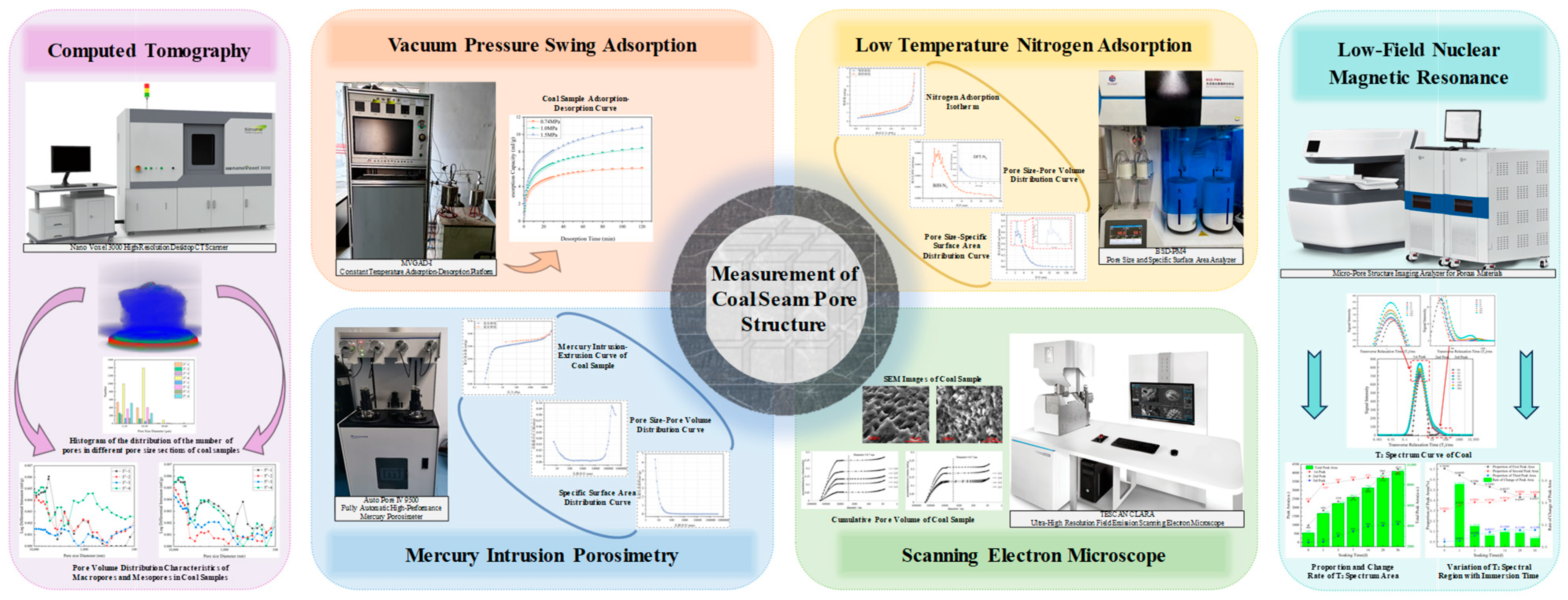
Commonly employed techniques are summarized in
Figure 15. However, when applied to complex geological environments—such as deep coal seams or dynamic CO
2 injection processes—each method exhibits distinct capabilities and constraints. For instance, computed tomography (CT) provides non-destructive, 3D morphological visualization of macro-cleats and micro-fractures, which is crucial for evaluating the impacts of deep in situ stress and has been successfully applied to quantify the evolution of the pore structure of coal under uniaxial loading and its correlation with gas permeability [
37]; yet, it frequently lacks the resolution required to quantify the nano-pores where primary CO
2 adsorption occurs. Conversely, traditional techniques like mercury intrusion porosimetry (MIP) and low-temperature nitrogen adsorption (LTNA) yield highly accurate quantitative data on pore size distributions and specific surface areas. Nevertheless, the high-pressure intrusion associated with MIP can artificially alter or destroy the fragile matrix of tectonically deformed coal. Furthermore, neither LTNA nor MIP can capture dynamic structural evolutionary behaviors—such as matrix swelling or permeability reduction—under actual CO
2 injection conditions.
In this context, Low-Field Nuclear Magnetic Resonance (NMR) offers a unique advantage. As a non-destructive tool highly sensitive to fluid-bearing pores, NMR can dynamically evaluate fluid migration and matrix swelling effects during high-pressure CO2 injection, though its accuracy is contingent upon the complex mathematical conversion of relaxation times. Consequently, to effectively facilitate carbon sequestration initiatives, the future characterization of deep coal seams must transition from static, single-method measurements to dynamic, fluid–solid coupled, and multi-method integrations.
Beyond methodological advancements, realizing these strategic objectives requires strengthened interdisciplinary and inter-institutional cooperation, particularly among domestic Chinese research bodies. Joint initiatives must be launched to bridge the existing divide between applied engineering practices (CNKI-oriented) and fundamental theoretical research (WOS-oriented). Concurrently, investigations into emerging hotspots—such as multi-process coupling simulations and deep coal seam carbon sequestration—must be intensified. Furthermore, the future advancement of this field will be profoundly driven by big data technology. As multi-scale characterizations—ranging from nano-porosity to field-scale geomechanics—generate massive and complex datasets, relying solely on empirical models is no longer sufficient. Big data analytics, integrated with artificial intelligence (AI) and machine learning (ML), will become essential to perform cross-scale data fusion. Jia et al. proposed an innovative deep learning-based multi-scale modeling framework, which directly linked the pore-scale structural parameters of porous media to macroscopic fluid transport characteristics and realized quantitative analysis of cross-scale control mechanisms, providing a feasible technical framework and empirical reference for the cross-scale data fusion research of the pore structure of coal [
38]. By mining big data, researchers can identify hidden nonlinear correlations between micro-structural parameters and macro-engineering behaviors. Such data-driven approaches will be pivotal in dynamically predicting coal and gas outburst risks and optimizing CO
2 injection parameters, ultimately efficiently resolving key technical bottlenecks to harmonize carbon reduction objectives with safe coal mine production.
Figure 15.
Coupled summary of characterization methods for the pore structure of coal: comparison of the applicability and limitations of each method to provide a reference for multi-method integrated characterization under complex geological conditions [
7,
11,
12,
39].
Figure 15.
Coupled summary of characterization methods for the pore structure of coal: comparison of the applicability and limitations of each method to provide a reference for multi-method integrated characterization under complex geological conditions [
7,
11,
12,
39].
4.2. The Safety–Sustainability Nexus: Bridging Engineering Reality and Scientific Vision
The bibliometric analyses highlight a stark divergence in research priorities [
40,
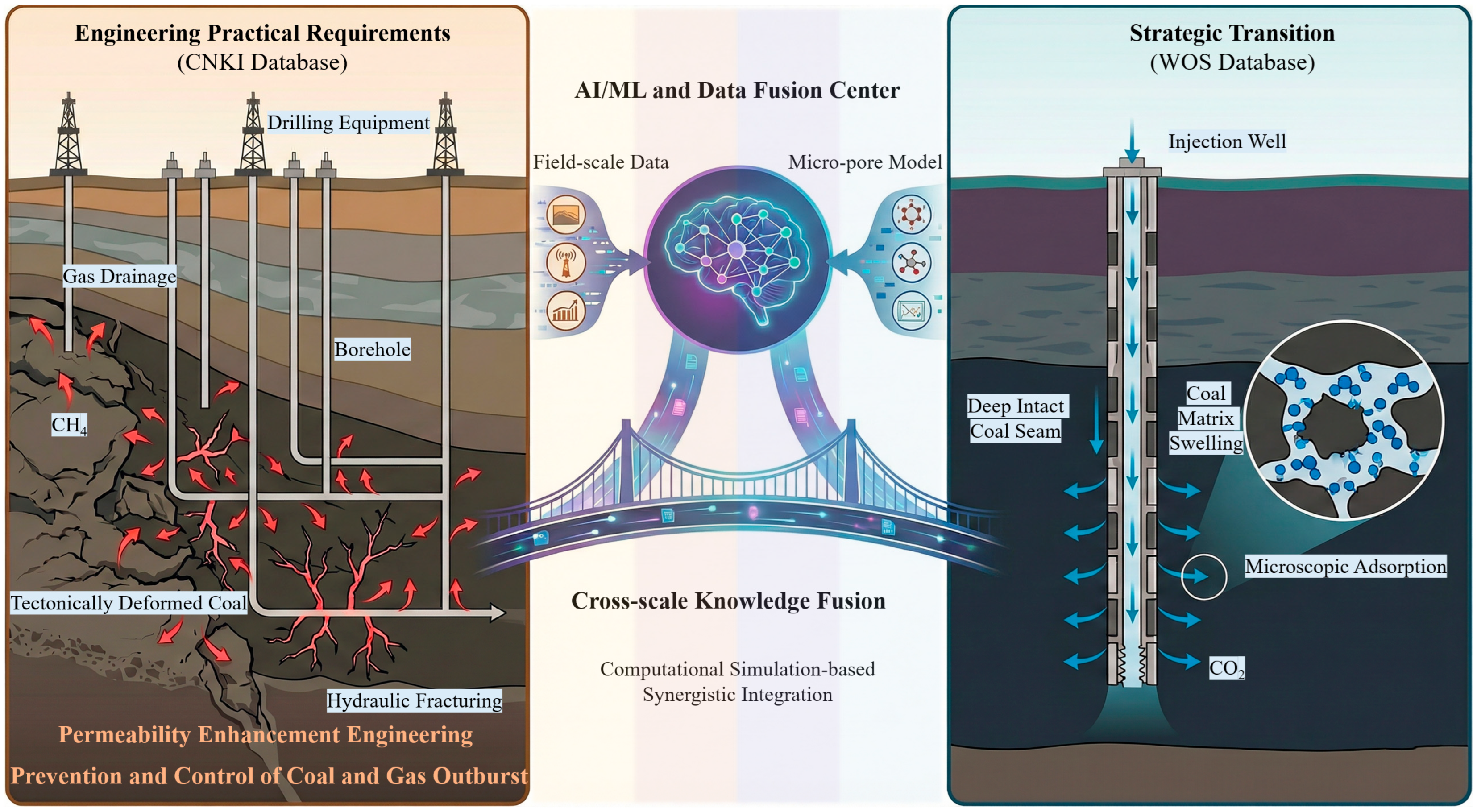
41]. Within China (CNKI), scholarship is predominantly anchored in immediate operational interventions for active mine safety, whereas international (WOS) research increasingly centers on the theoretical foundations of long-term geological storage. This separation extends beyond mere keyword frequency; it represents a deeper paradigmatic schism between urgent engineering necessities and strategic future objectives. Addressing the inevitable transition from “resource extraction” to “pore space utilization” within coal strata requires visualizing this gap and charting a pathway for integration. Consequently, we propose a conceptual framework illustrating this “Safety–Sustainability Nexus,” as visualized in
Figure 16.
The framework delineates the critical interface between operational safety and environmental sustainability. The left panel captures the “operational imperatives” of managing China’s unique geological hazards, particularly tectonic coal, where critically low permeability necessitates aggressive fracturing for outburst prevention [
42,
43,
44,
45,
46,
47]. In decades of practice, Chinese field engineers have strictly relied on sensitive indicators—such as drill cuttings weight and gas desorption indices—as the ‘red lines’ for outburst risk [
48,
49,
50,
51,
52,
53], yet these critical safety thresholds are often absent in the theoretical adsorption models favored by the WOS literature. Conversely, the right panel reflects the “strategic transition” prioritized in the WOS literature, focusing on micro-scale adsorption kinetics and storage potential.
However, maintaining this dichotomy poses a significant risk to process safety in future CCUS projects. Relying solely on theoretical storage models (Right Panel) without integrating the geomechanical constraints of tectonic coal (Left Panel) creates a dangerous “knowledge silo.” A pertinent example involves the differential swelling of the coal matrix during CO
2 injection—a mechanism heavily studied in WOS. If applied without context to the soft tectonic coal layers described in the CNKI literature, this swelling could drastically reduce effective permeability, triggering rapid annular pressure accumulation. Such unpredicted dynamics could compromise wellbore seal integrity, potentially leading to a “loss of containment” or caprock fracture. Therefore, achieving intrinsic safety in the geo-energy transition requires the dismantling of these silos. The central computational bridge in
Figure 16 offers the solution: a reciprocal validation process driven by AI/ML data fusion. We argue that the next generation of research must prioritize validating international multiphysics models against China’s extensive field-scale safety data. This cross-scale synthesis ensures that emerging carbon storage protocols are not only theoretically efficient but also operationally secure within complex geological realities.
5. Conclusions
Based on a systematic bibliometric analysis of core publications from 2015 to 2025, this study characterizes the evolutionary path and structural divergence in coal pore structure research. The key findings are summarized as follows:
(1). The field has entered a phase of explosive growth driven by global climate goals, yet collaboration remains concentrated. Following the establishment of dual carbon targets, research output has accelerated markedly post-2020. Projections suggest that international publication volume will stabilize at a high level of 120–150 articles annually by 2030, underscoring the field’s foundational role in the geo-energy transition. However, the global collaboration network remains spatially constrained, organized in a core–periphery structure centered on China, Australia, and the United States, indicating a need for more diversified and intensive cross-institutional partnerships.
(2). A clear complementary divergence exists between Chinese and international research priorities, creating a potential knowledge silo. Analysis reveals a distinct schism in focus. The CNKI-indexed literature is predominantly oriented toward operational imperatives, such as gas extraction and outburst prevention in tectonic coal. In contrast, WOS-indexed scholarship prioritizes strategic transition topics, including adsorption kinetics and CO2-ECBM. This functional separation is not merely academic but poses a tangible process safety risk, as future CCUS projects that rely solely on theoretical models without integrating field-validated geomechanical constraints may compromise containment integrity.
(3). Research frontiers are evolving toward complex simulation and sequestration, demanding advanced integration tools. The progression of research hotspots—from single-factor characterization to multi-process coupling simulation and deep coal seam carbon sequestration—signals increasing technical complexity. To effectively bridge the identified gap between theory and practice, the role of artificial intelligence must evolve. AI should transition from a tool for basic characterization to a platform for cross-scale validation, capable of reconciling micro-scale theoretical models with macro-scale field safety data.
(4). A safety-first paradigm is essential for the sustainable deployment of carbon management technologies. The pursuit of carbon neutrality must not compromise foundational mine safety. Accordingly, we recommend that CO2-ECBM pilot projects formally integrate traditional outburst prevention indicators, such as drill cuttings weight and gas desorption indices, as non-negotiable safety benchmarks. The industry must adopt a safety-first, capacity-optimized approach, where carbon injection strategies are dynamically calibrated within the proven stress sensitivity limits of the coal reservoir.