Article

Impact of Strut Geometry on the Aeroacoustic Performance of Firefighting EC Axial Fans

1
Shandong Key Laboratory of CNC Machine Tool Functional Components, School of Mechanical Engineering, Qilu University of Technology (Shandong Academy of Sciences), Jinan 250353, China
2
Shandong Institute of Mechanical Design and Research, Jinan 250031, China
3
Shandong Huanke Environmental Engineering Co., Ltd., Jinan 250199, China
4
Shandong Leading Green Industry Development Co., Ltd., Jinan 250013, China
*
Author to whom correspondence should be addressed.
Processes 2026, 14(7), 1104; https://doi.org/10.3390/pr14071104 (registering DOI)
Submission received: 27 January 2026 / Revised: 20 March 2026 / Accepted: 27 March 2026 / Published: 29 March 2026
(This article belongs to the Special Issue Numerical Modeling and Optimization of Fluid Flow in Engines)

Abstract

In fire emergency ventilation systems, EC (Electronically Commutated) internal-rotor axial fans are critical devices, but their high-speed operation generates aerodynamic noise often exceeding 90 dB (A). While struts are core structural components regulating flow field stability, their specific geometric impact on trailing-edge vortex shedding and noise generation mechanisms remains unclear. This study investigates three strut configurations: a hexagonal annular type, a hexagonal double-ring type, and a three-pronged type. A coupled numerical model was established using Large Eddy Simulation (LES) and the Ffowcs Williams and Hawkings (FW-H) acoustic analogy. The Q-criterion was employed to analyze vortical structures, with numerical predictions validated against experimental measurements in a semi-anechoic chamber. The results quantitatively demonstrate that optimizing the strut geometry significantly mitigates unsteady flow separation. The three-pronged strut (Model C) effectively dispersed high-velocity airflow, reducing the peak turbulent kinetic energy (TKE) at the inlet by 30% compared to the original design (Model a). Furthermore, Model C achieved a 6.7 dB reduction in the sound pressure level at the blade-passing frequency (BPF), alongside a 14.1% reduction in pressure pulsation amplitude near the blade tip. Structural optimization of struts enables synergistic control over turbulence distribution and pressure fluctuations. By disrupting the phase coherence of shed vortices, the optimized design fundamentally suppresses aerodynamic noise, advancing axial fan design toward precise quantitative aeroacoustic optimization.

1. Introduction

Axial flow fans designed for fire protection are fundamental components of emergency ventilation systems in both industrial and civil buildings, playing a crucial role in controlling smoke generated by fires. Unlike conventional cooling fans, these fans must deliver high air volumes in extreme conditions, thus ensuring the safe evacuation of personnel and the effectiveness of firefighting operations [1]. However, the aerodynamic noise produced by their high-speed operation often exceeds 90 dB (A), posing a health risk to rescue personnel and potentially disrupting emergency communications [2]. Aerodynamic noise, arising from turbulent flow interactions with fan components, constitutes the dominant acoustic emission mechanism in axial flow fans and can be broadly classified into broadband and discrete frequency components [3]. Through particle image velocimetry (PIV) and acoustic holography experiments, Quinlan et al. [4] identified that secondary flow structures at the blade tip region contribute significantly to broadband noise generation in small-scale axial fans. Subsequent investigations have confirmed that unsteady flow phenomena within the tip clearance, including vortex shedding and tip leakage flow, are primary contributors to high-frequency acoustic emissions.
To address these sources of noise, researchers have explored various aerodynamic optimization strategies, including trailing edge serrations, leading edge protuberances, and modifications to tip geometry, aimed at mitigating turbulent flow separation while maintaining or enhancing aerodynamic efficiency [5,6,7,8,9]. Marcus et al. [10] observed that clearance flow exits the gap and subsequently flows toward the blade, triggering severe pressure fluctuations at the blade tip. Bo [11] pinpointed leakage flow in the tip clearance, alongside a high-speed region on the suction side in the vicinity of the blade tip, through flow field analysis. Zhao et al. [12] compared tip vortex intensity among blades with different tip clearances, finding that a strut reduces tip vortex strength. Mo et al. [13] detected prominent tonal noise at the blade leading edge, characterized by elevated sound pressure levels (SPLs). Wang et al. [14] pointed out that trailing-edge blade vortices contain elevated turbulent kinetic energy (TKE), which makes the associated vortex-induced noise a significant issue. Using a hybrid method that combines URANS and acoustic analogy, Park et al. [15] detected prominent low-frequency broadband noise at the leading edge of the blade tip. Furthermore, noise levels can be heightened by interactions with components adjacent to the blades. Tip vortices, arising from the clearance between blades and the casing, were found by Lim et al. [16] to generate high SPLs on the casing strut surfaces. Bianchi et al. [17] presented an extensive overview of passive noise control methods for industrial fans, encompassing blade count optimization, rotational speed modulation, airfoil profile tailoring, nozzle integration, and tip strut design. In practice, for safety and aesthetic considerations, the base frame is installed within the fan struts at both the inlet and outlet. However, a suboptimal design of the struts can lead to an increase in aerodynamic noise [18,19]. Currently, research on the aerodynamic noise associated with fan struts remains limited. Therefore, this study focuses on the struts of internal-rotor axial flow fans used in fire-fighting applications, investigating the impact of three commonly employed strut configurations on fan aerodynamic noise.
Previous research [6] has established that coherent flow structures in the vicinity of axial fans, along with their interactions with inflow turbulence, rotor blades, and stator components, are responsible for generating broadband, tonal, and narrowband acoustic emissions [20]. The properties and spectral distribution of these noise sources within the overall fan acoustic signature have been thoroughly examined in earlier investigations [21]. Of particular note, trailing edge noise—closely linked to coherent vortex structures developing at the blade trailing edge—exhibits a hybrid nature, encompassing both tonal peaks and broadband energy distributions. In fans equipped with struts, turbulent flows around the blades, tip leakage, and vortex shedding from both the impeller and struts are particularly pronounced. Tian et al. investigated the aeroacoustics of air-conditioning outdoor units with grid-shaped struts using CFD. They controlled the total sound pressure level (SPL) via vortex shedding models. Existing studies on strut modifications focus primarily on grid or simple ring structures. Still, the impact of complex strut geometries on both broadband and tonal noise remains unclear. Fundamentally, tonal noise in axial turbomachinery is governed by rotor–strut interactions, primarily driven by viscous wake interception and inviscid potential flow unsteadiness. Tonal noise in axial turbomachinery is commonly associated with periodic rotor–stator interaction. The classical Tyler–Sofrin framework provides a useful qualitative basis for understanding why such interactions can generate discrete acoustic components at the blade-passing frequency and its harmonics. In addition, previous studies such as Milidonis et al. have shown that the spatial arrangement between rotating and stationary components can influence tonal-noise characteristics. In the present study, these theories are used only as qualitative interpretive background; no formal modal decomposition based on Tyler–Sofrin theory is performed.
As elucidated by Milidonis et al. [22], the interference pattern of these waves dictates the near-field sound pressure. Therefore, the primary aim of this manuscript is to investigate how optimizing the geometric asymmetry of the complex struts disrupts the phase coherence of these rotor–strut interactions, thereby suppressing the specific tonal noise generation and regulating trailing-edge vortex shedding. A significant scientific gap exists in the limited understanding of how strut geometry governs the acoustic phase distribution. While geometry comparison is common, the quantitative link between topological features and phase decorrelation remains under-explored, leaving the design of low-noise struts largely empirical.
This study employs Fluent to perform numerical simulations and analyses on three distinct configurations of struts for internal-rotor axial flow fire-fighting fans. High-fidelity numerical simulations were performed by incorporating sophisticated turbulence models and broadband acoustic prediction frameworks, with the obtained results validated against experimental flow rate data to ensure the reliability of noise reduction mechanism analyses. Coherent structures arise due to the clearance between the baffled fan and its blades, resulting in vortex shedding at the trailing edges of the blades. Noise analysis is therefore focused on the application of turbulent noise models. Therefore, the acoustic analysis in this study specifically focuses on employing the Ffowcs Williams–Hawkings (FW-H) acoustic analogy and the Proudman acoustic power model to quantitatively evaluate the flow-induced noise generated by these highly turbulent structures.
The scientific contributions of this study can be summarized as follows. First, compared with previous studies mainly focused on simple annular, grid, or conventional stator geometries, this work clarifies how a non-aligned complex strut topology modifies wake development, turbulent kinetic energy distribution, pressure pulsation, and tonal-noise generation in an internal-rotor axial fan. Second, the proposed three-pronged strut is treated not as a fundamentally new fan concept, but as a deliberate geometric variation designed to weaken wake coherence and reduce rotor–strut interaction intensity. Third, the present results provide a practical low-noise design guideline for axial fans: under the condition of maintaining overall flow capacity, strut configurations that reduce local blockage, improve spanwise flow uniformity, and weaken coherent wake–structure interaction are beneficial for suppressing pressure pulsation and BPF-related tonal noise.

2. Methods

This study focuses on the EC internal-rotor axial flow fan for fire-fighting applications. Table 1 presents the key design parameters. This numerical study evaluates the coupled aeroacoustic and aerodynamic performance using separate sets of governing equations and tailored computational approaches. Aerodynamic performance quantification is achieved via computational fluid dynamics (CFD) techniques(Ansys2024R1), whereas aeroacoustic performance evaluation entails determining sound pressure levels at designated locations—an objective efficiently addressed through computational aeroacoustics (CAA) approaches.

2.1. Steady Analysis Method

The RNG k-ε turbulence model shows minimal errors when simulating the flow field of axial fans; hence, this study employs this model for steady-state calculations [23]. Gravitational effects on air are neglected. The Multiple Reference Frame (MRF) model is adopted to simulate blade rotation, coupled with the SIMPLE pressure-velocity coupling algorithm. The convective terms of the momentum equations, along with the TKE and dissipation rate equations, are discretized via a second-order upwind scheme to augment solution precision, while near-wall flow regions are handled using the Standard Wall Function (SWF) approach [24,25]. Convergence criteria for observed residuals are set at less than 10−3 and remain consistent throughout [26].

2.2. Transient Analysis Method

Transient simulations are performed using the Large Eddy Simulation (LES) framework, with rotor motion captured via the sliding mesh method. Subgrid-scale turbulence is modelled using the Smagorinsky–Lilly approach, pressure–velocity coupling is handled through the Coupled algorithm, and all physical quantities are discretized using a 2nd-order scheme to bolster both stability and precision. A time step of 2.5 × 10⁻⁵ s is configured, and 1500 time steps are computed. This configuration satisfies the temporal resolution criteria for transient simulations, ensuring the Courant number remains within acceptable limits while capturing acoustic frequencies up to 7.5 kHz [27]. For each time step, the maximum iteration count is capped at 30 to guarantee convergence at every temporal increment. The convergence criterion is likewise defined as observation residuals falling below 10−3 and exhibiting negligible variation.
The LES model directly resolves large-scale vortical structures, while small-scale vortex effects are approximated using a subgrid-scale model. LES was explicitly chosen over hybrid methods like DES because DES applies RANS modeling in near-wall regions, which artificially damps the high-frequency surface pressure fluctuations crucial for predicting dipole aerodynamic noise. Furthermore, to avoid excessive subgrid-scale turbulent viscosity and accurately resolve trailing-edge vortex shedding, the Smagorinsky constant was strictly set to 0.1, because a larger value would lead to excessive subgrid-scale eddy viscosity and artificially damp the resolved vortex shedding and surface-pressure fluctuations that are crucial for aeroacoustic prediction. In the present wall-resolved LES framework, this relatively conservative value was selected to preserve the transient wake structures near the blade trailing edge, blade tip, and strut surfaces while maintaining numerical stability.

2.3. Aerodynamic Noise Analysis Method

In 1952, Lighthill [28] described the hydrodynamic sound generation phenomenon under the assumption of a free-space environment using mathematical methods and derived the most fundamental aeroacoustic equation.
2 ρ τ 2 c 0 2 2 ρ = 2 T i j y i y j
In the formula, T i j is the stress tensor of Lighthill turbulent, which is defined as follows.
T i j = e i j + δ i j p c 0 2 δ i j ρ + ρ u i u j
The FW-H is now widely recognized as the generalized version of Lighthill’s equation. Unlike the aforementioned classic acoustic wave equation—solvable via classical acoustics and numerical methods—this refined formulation transcends the limitation of being confined solely to unconstrained free-space acoustic scenarios, thereby broadening its applicability to practical contexts [29].
1 c 0 2 t 2 2 x i 2 p = t ρ ν n δ f f x i n i p δ f f + 2 x i x j T i j H f
In the expression, p denotes the gas pressure fluctuation, p represents the static pressure, n i is the vector of unit normal, ν n stands for the normal velocity component, c 0 refers to the local speed of sound, δ f denotes the Dirac delta function, and H f is the Heaviside step function. Aerodynamic noise data can be computed using the equation specified earlier. The fluid parameters mentioned above, which are necessary for calculations, can be derived by solving the turbulence model. The broadband noise originates from the turbulent boundary layer, with its intensity being most noticeable near the blade trailing edge, where it is induced by vortex separation. To unravel the intrinsic mechanisms of noise abatement. The vortex structures near the blade trailing edge are primarily identified using the Q-criterion method. During the FW-H acoustic calculations, the solid surfaces of the rotating impeller blades and the stationary struts were explicitly defined as the dipole noise source surfaces to capture and integrate the pressure fluctuations for far-field noise propagation.
As a widely adopted visualization tool for vortex identification, it is expressed as follows [30,31]:
Q = 1 2 A i j A i j Ω i j Ω i j
In this context, Ω i j denotes the rotation rate tensor, while A i j represents the strain rate tensor.
The numerical noise prediction in this study was conducted utilizing a rigorous, sequential computational aeroacoustics (CAA) workflow. First, to establish a stable and converged initial flow field, a steady-state simulation was performed using the RNG k-ε turbulence model combined with the Multiple Reference Frame (MRF) technique. Second, initialized by this steady-state result, the unsteady flow field was resolved using the Large Eddy Simulation (LES) framework and the sliding mesh method. A highly refined time step of 2.5 × 10⁻⁵ s was employed. Finally, the Ffowcs Williams–Hawkings (FW-H) equation was employed for the far-field noise prediction. The time-domain pressure data extracted from the LES computations were fed into the FW-H model to compute the final aerodynamic noise spectra.

3. CFD Model and Validation

3.1. Geometric Model

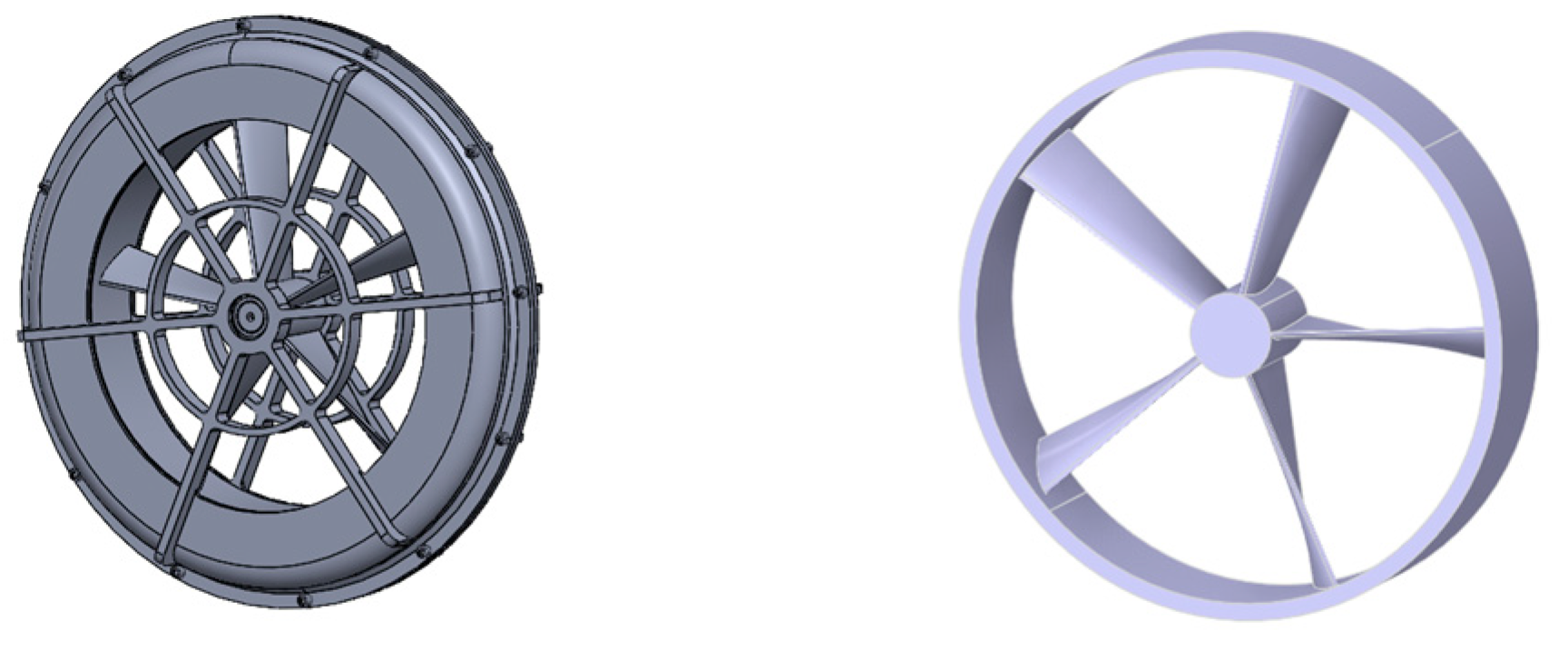
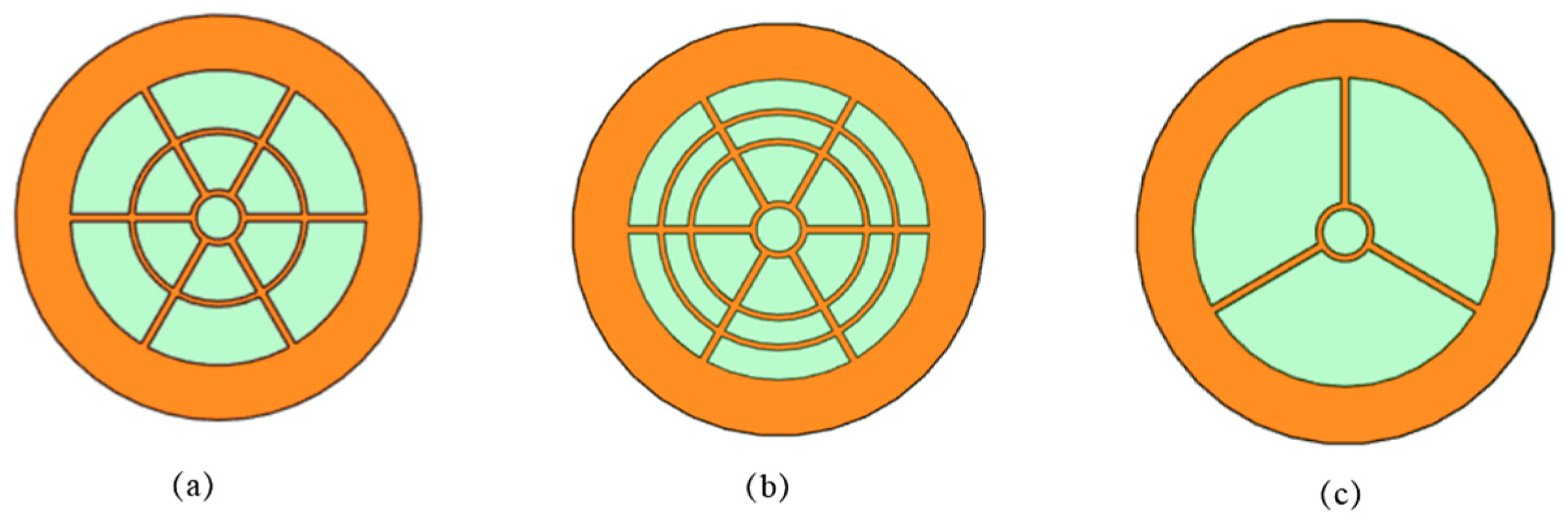
This configuration corresponds to an internal-rotor axial flow fan designed for fire-fighting applications, which is currently marketed by a company based in Shandong. Figure 1 depicts the three-dimensional model of the EC axial flow fan. To achieve a balance between computational efficiency and the macroscale validity of the simulations, simplifications were made to the fan’s struts, chamfers, bolts, and internal motor supports. The simplified internal blade assembly is also illustrated in Figure 1. Key dimensional parameters are provided in the table below. Figure 2 illustrates the geometric models of the three struts: (a) a hexagonal annular configuration (the initial model), (b) a hexagonal double-ring obstruct, and (c) a three-pronged obstruct.

3.2. Calculation Domain Model

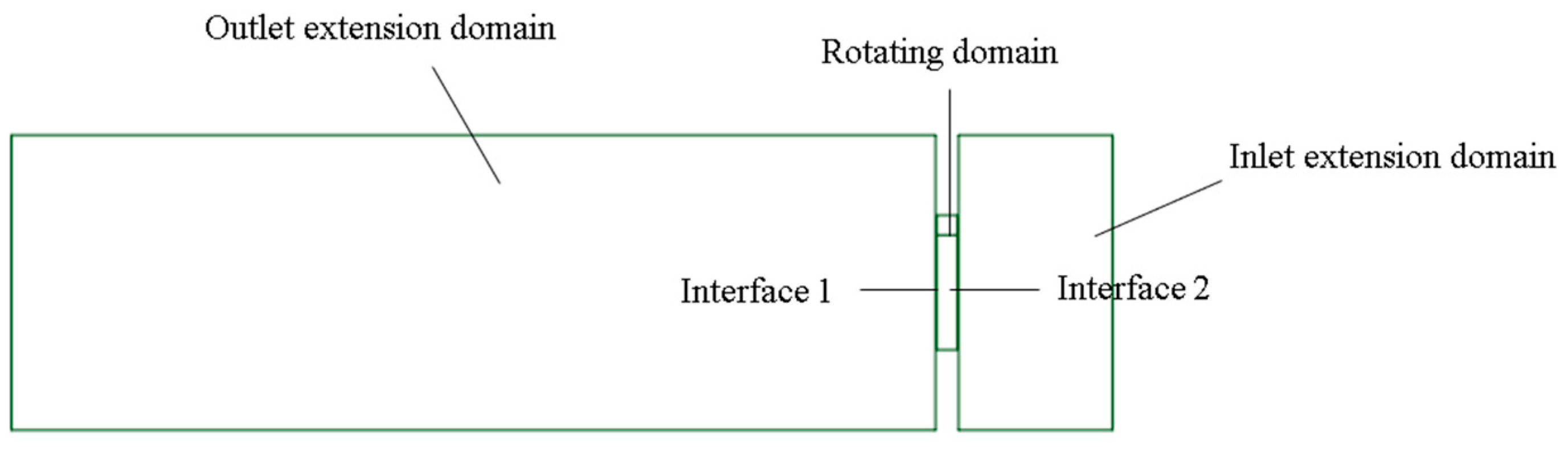
The axial flow fan has a rotational radius of 159 mm. To ensure the rationality of the fluid domain, a 1 mm gap is maintained between the rotating domain and the struts, which serve as the stationary domain. The stationary and rotating domains are connected via an interface, enabling data transfer, as illustrated in Figure 3. The computational domain comprises an extended inlet region, an extended outlet region, the rotating domain, and the primary fluid domain. The inlet region extends 500 mm, while the outlet region extends 3000 mm.

3.3. Grid Discretization and Boundary Condition Specifications

Mesh discretization of the fluid domain constitutes a pivotal step in computational fluid dynamics (CFD) analyses, given that mesh quality and density directly impact simulation accuracy and computational efficiency. Unstructured polyhedral meshes were generated for both rotating and stationary domains using Fluent’s meshing module, with mesh refinement and boundary layer processing applied to inlet, outlet, and rotating regions to resolve complex flow structures in the vicinity of fan blades. The first boundary layer thickness was set to 0.01 mm, with a growth rate of 1.1 and ten layers specified to maintain a y+ value near 1. To further assess the near-wall resolution quality, y+ statistics were evaluated in the critical near-wall regions, including the blade surface, blade-tip region, strut/hub vicinity, and hub/shroud region. The mean y+ values for these regions are 0.85, 1.15, 0.95, and 0.78, respectively. The corresponding 95th percentile values are 1.70, 2.30, 1.90, and 1.45, while the maximum y+ values are 4.20, 4.80, 4.10, and 3.20. These results indicate that the near-wall mesh remains close to unity on average, with all maximum y+ values below 5, confirming that the near-wall resolution is sufficient for the present LES-based aeroacoustic analysis. thereby satisfying the numerical requirements for Large Eddy Simulation (LES).
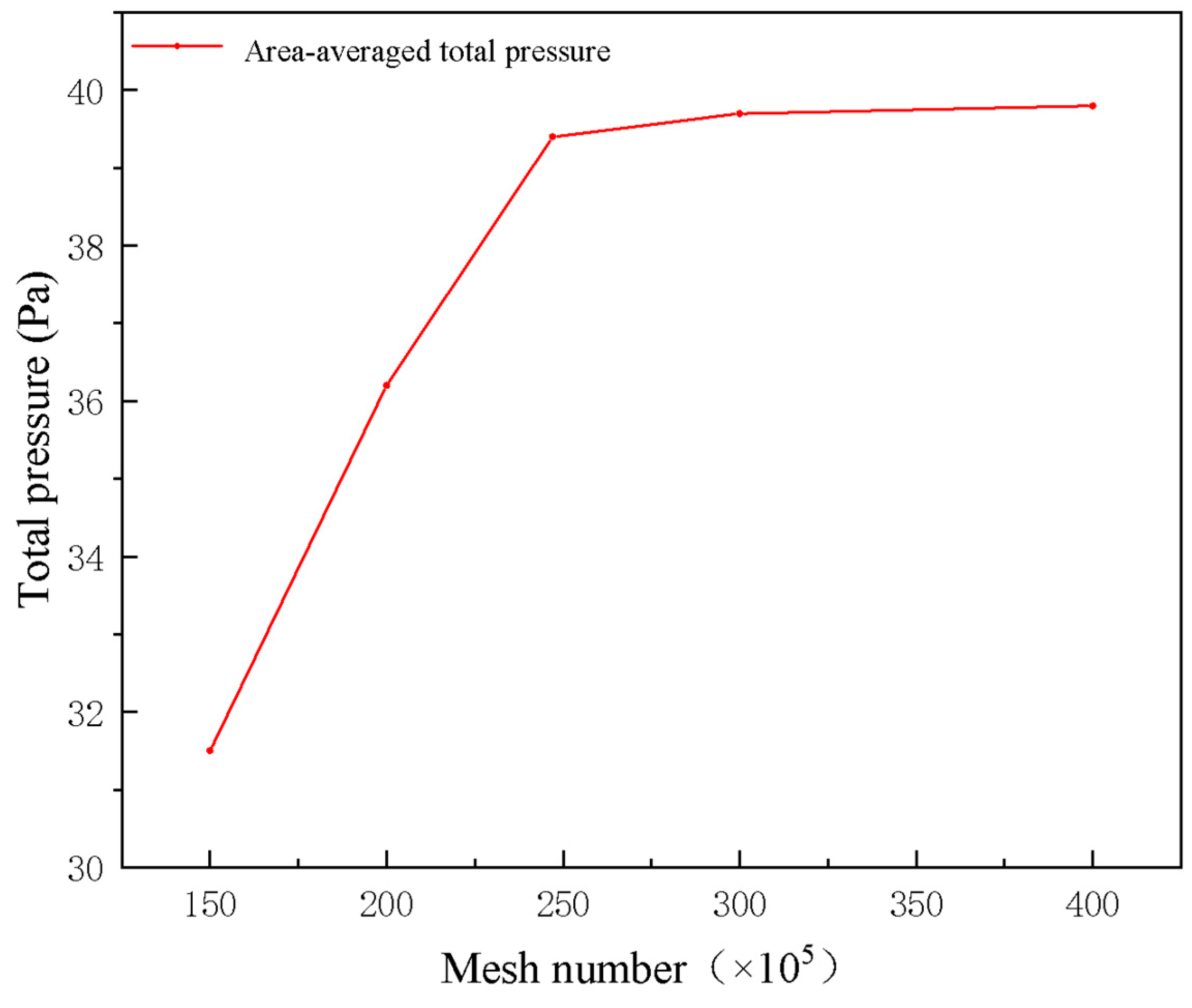
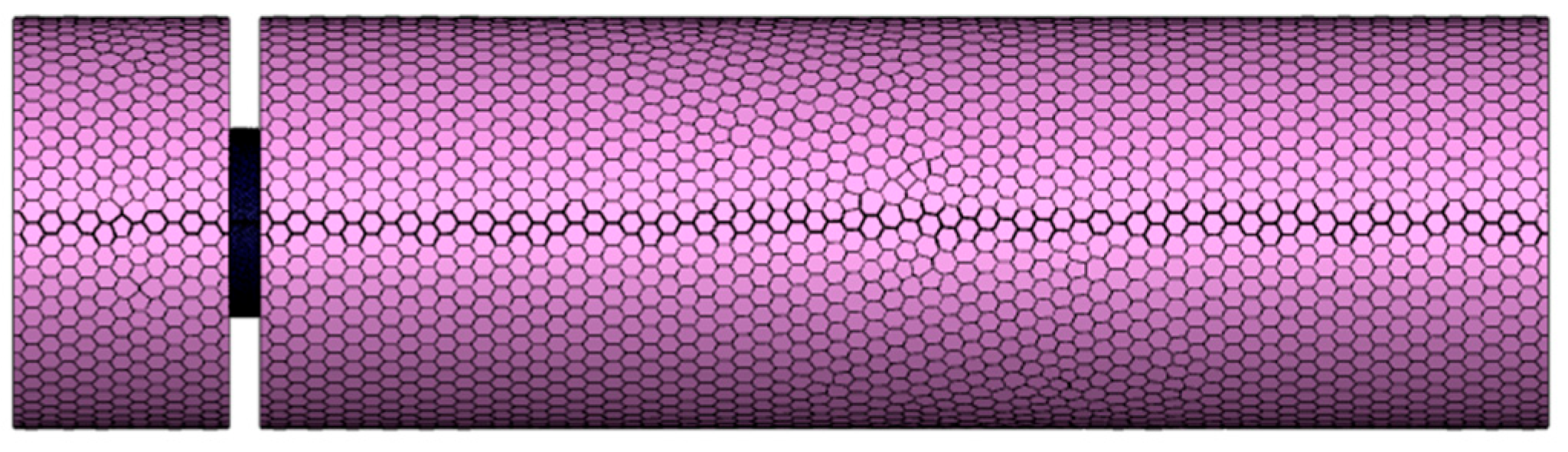
To further assess the adequacy of the LES mesh in critical flow regions, the local resolution quality was examined not only in the blade-tip region, but also near the blade trailing edges, strut leading edges, and the rotor–stator interaction gap. The mesh was designed to ensure sufficient resolution of the dominant unsteady structures in these regions, where wake development, local separation, and pressure fluctuation are most pronounced. In particular, the Pope criterion indicates that approximately 81.2% of the turbulent kinetic energy is resolved in the blade-tip region, and similar fine-resolution treatment was applied to the main interaction zones to satisfy the requirements of the present comparative LES analysis. The overall meshing configuration is presented in Figure 4. To rigorously verify grid independence, a core aerodynamic parameter—the area-averaged total pressure of the fan—was monitored across varying mesh densities. Furthermore, to quantify the numerical uncertainty due to spatial discretization, the Grid Convergence Index (GCI) methodology proposed by Celik et al. [32] was employed. Based on the total pressure values from three consecutive grid sets (coarse: 20.0 million, medium: 24.7 million, fine: 30.0 million), the fine-grid GCI was calculated to be 1.26%. As shown in Figure 5, the area-averaged total pressure converges at approximately 24.7 million elements. Since the GCI value is well below the standard threshold of 3%, the numerical uncertainty is deemed minimal, and the 24.7 million mesh was selected for all subsequent simulations to balance computational accuracy and cost.
Regarding the boundary condition specifications, a pressure inlet was applied at the inlet boundary. The inlet turbulence intensity was set to 5%, and the turbulent length scale was specified based on the inlet hydraulic diameter to accurately represent the incoming ambient flow. At the outlet boundary, a pressure outlet condition was assigned with a static gauge pressure of 0 Pa, simulating the discharge into an open atmospheric environment. The impermeable FW-H formulation was employed to predict the far-field noise, as the surface dipole is the dominant acoustic source in the current low-Mach-number interaction.

3.4. Validation

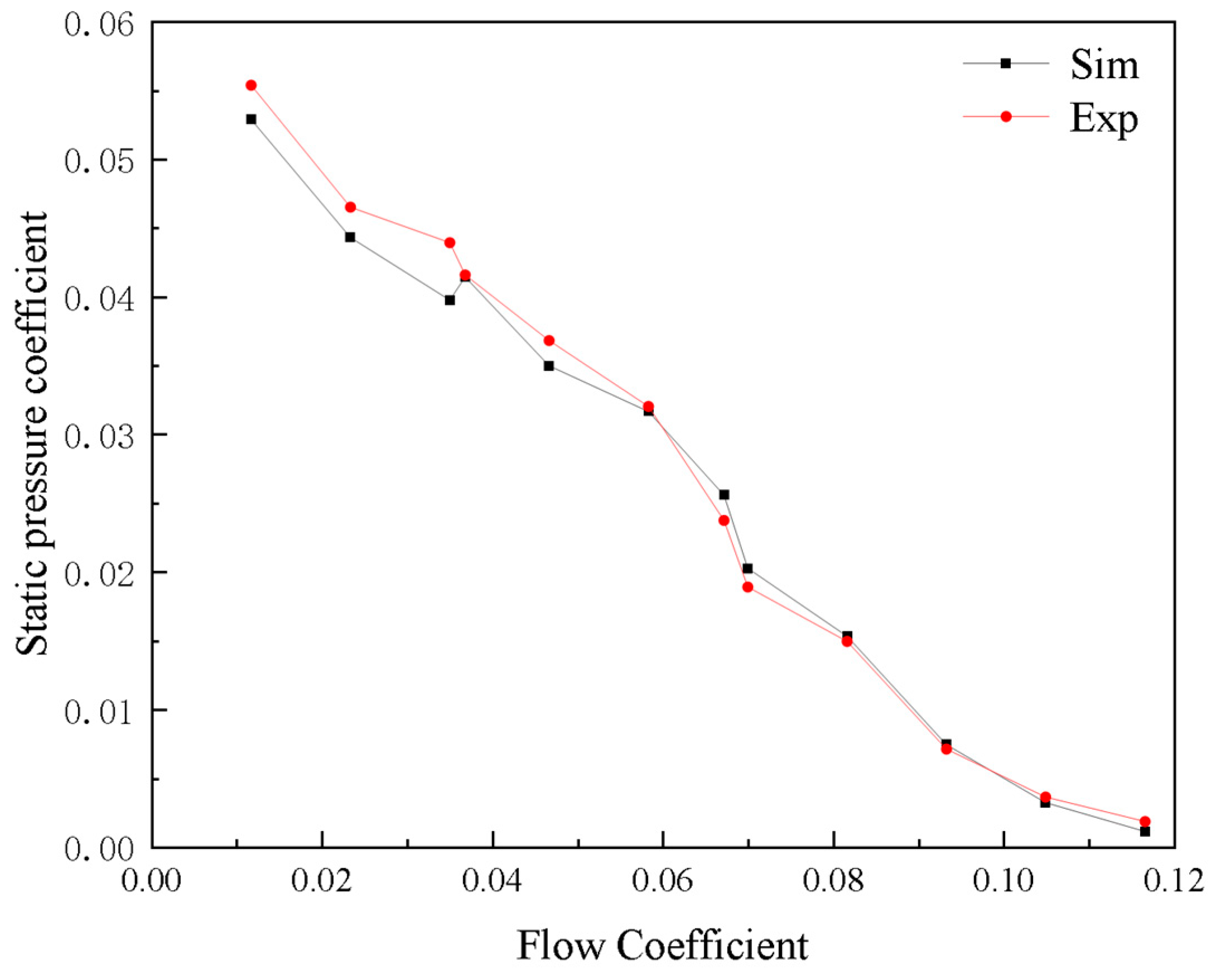
To verify the accuracy of the simulation, an aerodynamic test was conducted on the initial fan. For static pressure measurements, a Setra Model C239 pressure transducer (Setra Systems, Boxborough, MA, USA) was used. The volumetric flow rate is calculated based on the pressure difference between the upstream and downstream positions of the nozzle flowmeter. The flow rate curve is shown in Figure 6 below.
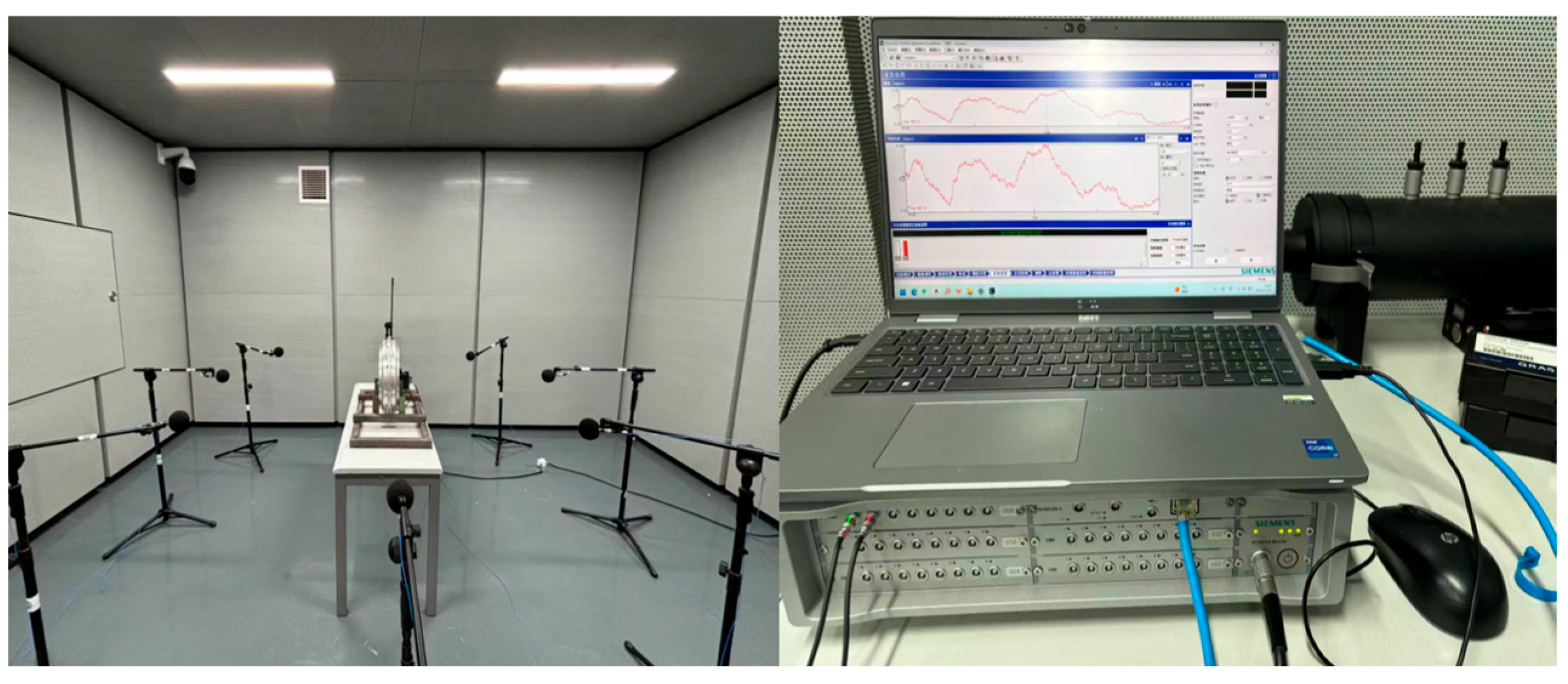
In Figure 7, to measure the noise of the optimized fan in an acoustically treated test room, the chamber has dimensions of 3650 mm in length, 3000 mm in width, and 3200 mm in height, with a cut-off frequency of 200 Hz and a background noise level of 12.86 dB (A). As illustrated in the figure, the semi-anechoic chamber experiment was established in accordance with GB/T 2888-2008 [33] Measurement Methods for Noise of Fans and Roots Blowers. A GRAS 46AE microphone (GRAS Sound & Vibration, Holte, Denmark), Simcenter SCADAS SCM2E05 (Siemens Digital Industries Software, Plano, TX, USA) data acquisition chassis, and Simcenter Testlab data analysis software (2306) were employed. Microphones were positioned 1 m away from the fan inlet, aligned with the fan shaft, and arranged at 45° intervals around the shaft. Synchronous monitoring was performed to record the sound pressure in real time.
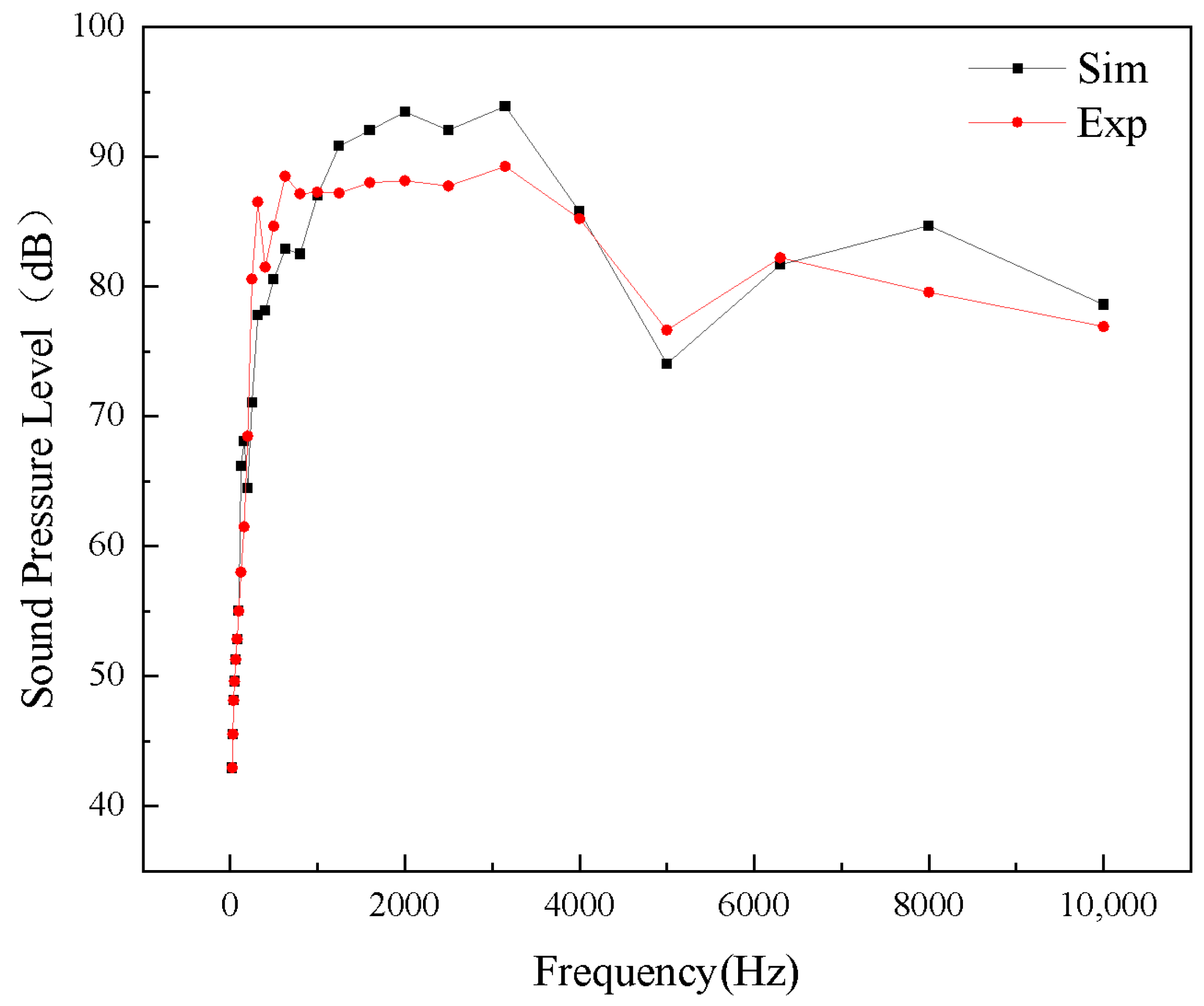
To validate the accuracy of computational fluid dynamics (CFD) simulations and experimental measurements, a comparative analysis of the 1/3-octave band sound pressure levels (SPLs) of the aerodynamic noise was conducted, as presented in Figure 8. Specifically, the data presented in Figure 8 corresponds to the sound pressure recorded by the single microphone positioned directly on the central axis, 1 m upstream of the fan inlet. At the blade-passing frequency (BPF), the simulated SPL was 78.1 dB, while the experimentally measured value was 81.52 dB, resulting in a relative error of 4.38%. This discrepancy is primarily attributed to vibrations generated during fan operation, which propagate to the surrounding environment through structural transmission and interfere with the microphone measurements.
In addition to structural vibration, several other factors may contribute to the discrepancy between the numerical and experimental SPL results. First, unavoidable uncertainties in the acoustic experiment, including microphone positioning, background reflections, and installation-induced disturbances, may affect the measured sound pressure levels. Second, the FW-H acoustic analogy, although effective for comparative far-field prediction, cannot fully capture structure-borne noise and certain installation effects present in the experiment. Third, geometric simplifications introduced in the numerical model, such as the omission of minor structural details, may also slightly alter the local flow field and acoustic response. Therefore, the observed 4.38% error is considered acceptable for the present aeroacoustic analysis, while the remaining difference can be reasonably attributed to the combined influence of structural, experimental, and modeling factors.

4. Simulation Results Analysis

4.1. Analysis of Noise Characteristics

Aeroacoustic investigations employ various metrics, including the Proudman, Goldston, Curl, Lilley, and Lee indices. In the present study, however, emphasis is placed on the Proudman number, also known as the Proudman index. The Proudman index provides a direct, computationally efficient correlation between local turbulent kinetic energy and acoustic power density. It serves as a precursor to the FW-H analysis, allowing for the rapid identification of high-intensity noise regions before performing the definitive far-field acoustic predictions. Drawing on the Lighthill analogy, Proudman introduced a theoretical framework for characterizing noise generation mechanisms, employing statistical models of various two-point correlation moments [34]. While the Proudman model assumes isotropic turbulence and low Mach numbers, its application in the blade tip region may have limitations due to the strong anisotropy of tip-leakage vortices and high relative speeds. Nonetheless, it remains a consistent tool for the comparative analysis of noise reduction trends in this study. Within this framework, the acoustic power per unit volume is formulated as follows:
A P = α ρ 0 u 3 l u 5 c 0 5
where α represents the root mean square value of a velocity component and this is related to the shape of the curve, which is a constant function of the longitudinal velocity, u represents the square root of the mean square value of the velocity component, l represents the integral length scale along the longitudinal direction of the velocity, ρ 0 stands for the density in the far-field, and c o is the far-field speed of sound.
The integral length scale l along the longitudinal direction of the velocity is evaluated based on the spatial autocorrelation method of the turbulent velocity field, where the velocity data are extracted from the high-fidelity LES transient flow field simulation results. Specifically, the autocorrelation coefficient R ( Δ x ) of the streamwise velocity component u is calculated as:
R ( Δ x ) = u ( x ) u ( x + Δ x ) ¯ u ( x ) 2 ¯
l = 0 R ( Δ x ) d Δ x
In this study, discrete integration of the autocorrelation curve is performed for the velocity field data in the blade trailing edge and strut flow separation regions (the dominant noise source regions of the fan), with a spatial step of Δ x = 0.5 mm adopted to ensure the calculation accuracy.
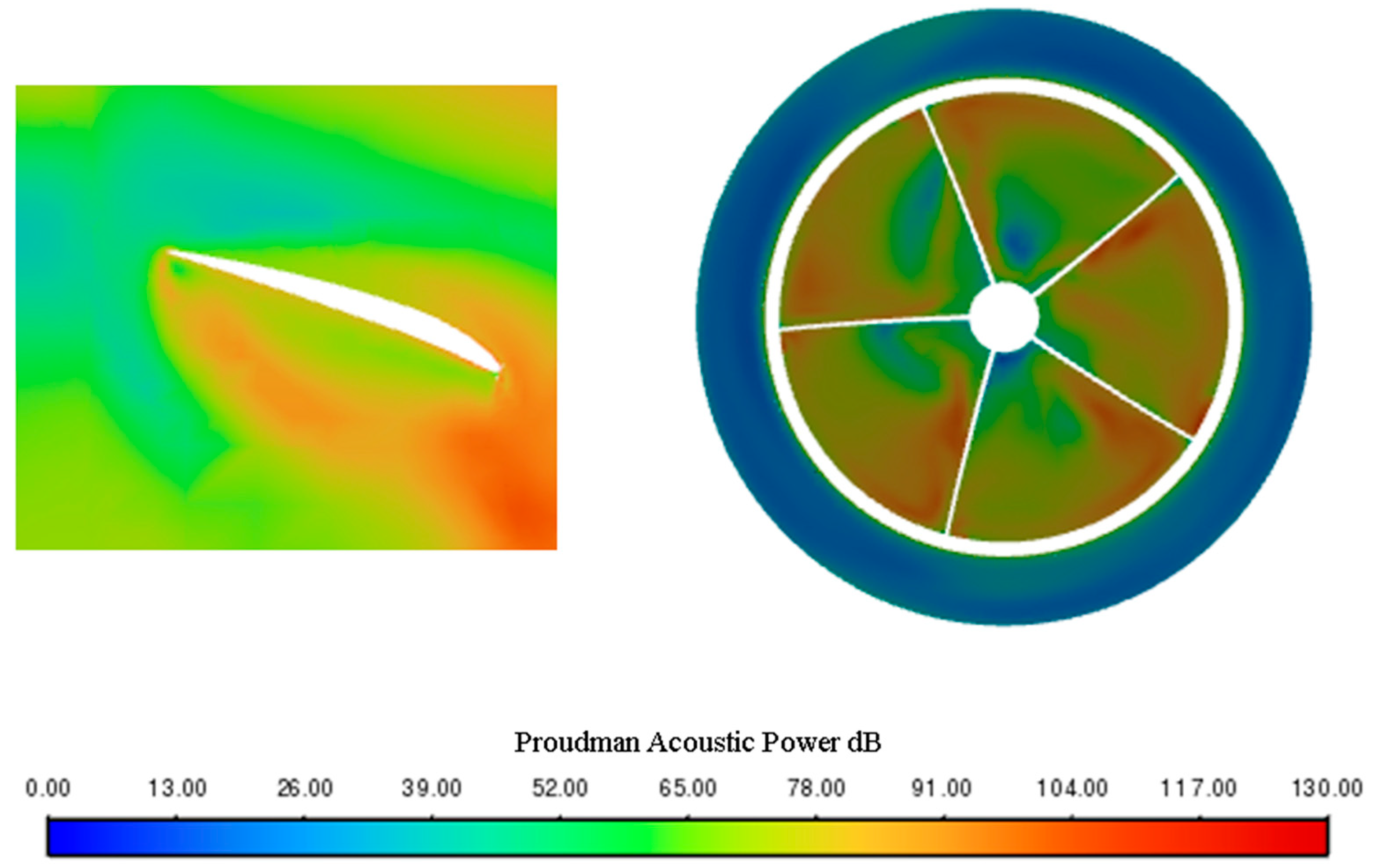
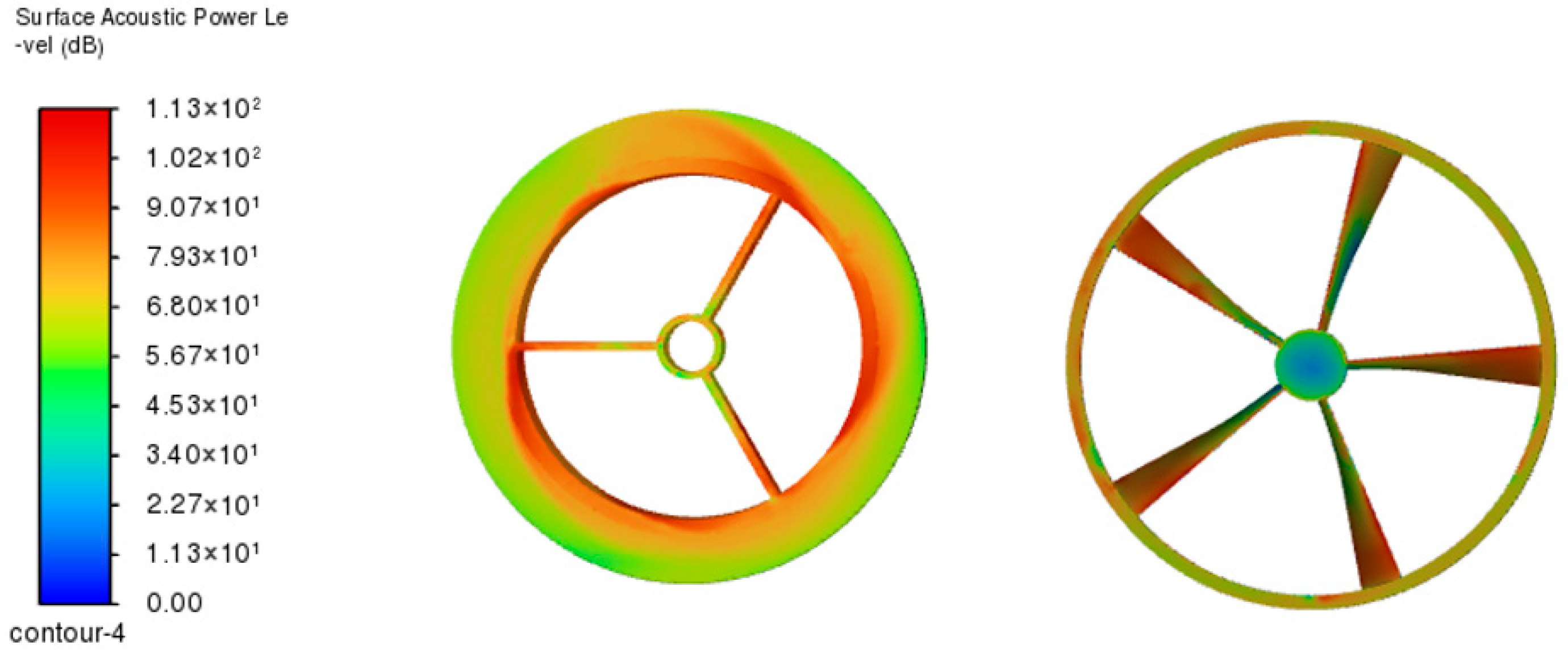
As illustrated in Figure 9, Proudman index analysis was performed on the windward side of the axial flow fan to identify regions of prominent noise emission. Owing to the impingement of high-velocity airflow on the blade leading edges and windward surfaces, this results in elevated airflow velocities over the windward surfaces, intense inlet flow impingement, and reduced static pressure. Vortex shedding at the trailing edge amplifies turbulent kinetic energy (TKE) accumulation, leading to a local peak in acoustic power (Proudman index)—in line with Lighthill’s analogy, where turbulent stress tensor gradients are responsible for noise generation. Flow separation within the struts markedly elevates the Proudman index; in the original model, the trailing-edge region exhibits the highest acoustic power (AP) values. From Figure 10, the overall surface acoustic power is significantly reduced compared to the baseline. The optimized non-aligned strut geometry effectively mitigates direct high-velocity flow impingement and suppresses severe flow separation on the structural surfaces. Consequently, the high-intensity acoustic sources, which typically concentrate at the blade trailing edges and the windward surfaces of the struts, are remarkably attenuated. To mitigate the influence of turbulence within the fan, an investigation into the turbulent flows within the three fan configurations is undertaken.

4.2. Analysis of Flow Field Characteristics

At a blade rotational speed of 4000 rpm, the flow coefficients of Models a, b, and c are 0.1138, 0.1124, and 0.1128, respectively, indicating that the three strut configurations have only a limited influence on the overall flow capacity. However, despite these similar global aerodynamic performances, the internal flow organizations differ markedly. This suggests that the strut geometry mainly affects flow stability and unsteady structure evolution rather than the bulk flow rate. Therefore, the following analysis focuses on turbulent kinetic energy distribution, vortex evolution, and pressure-related unsteady characteristics.
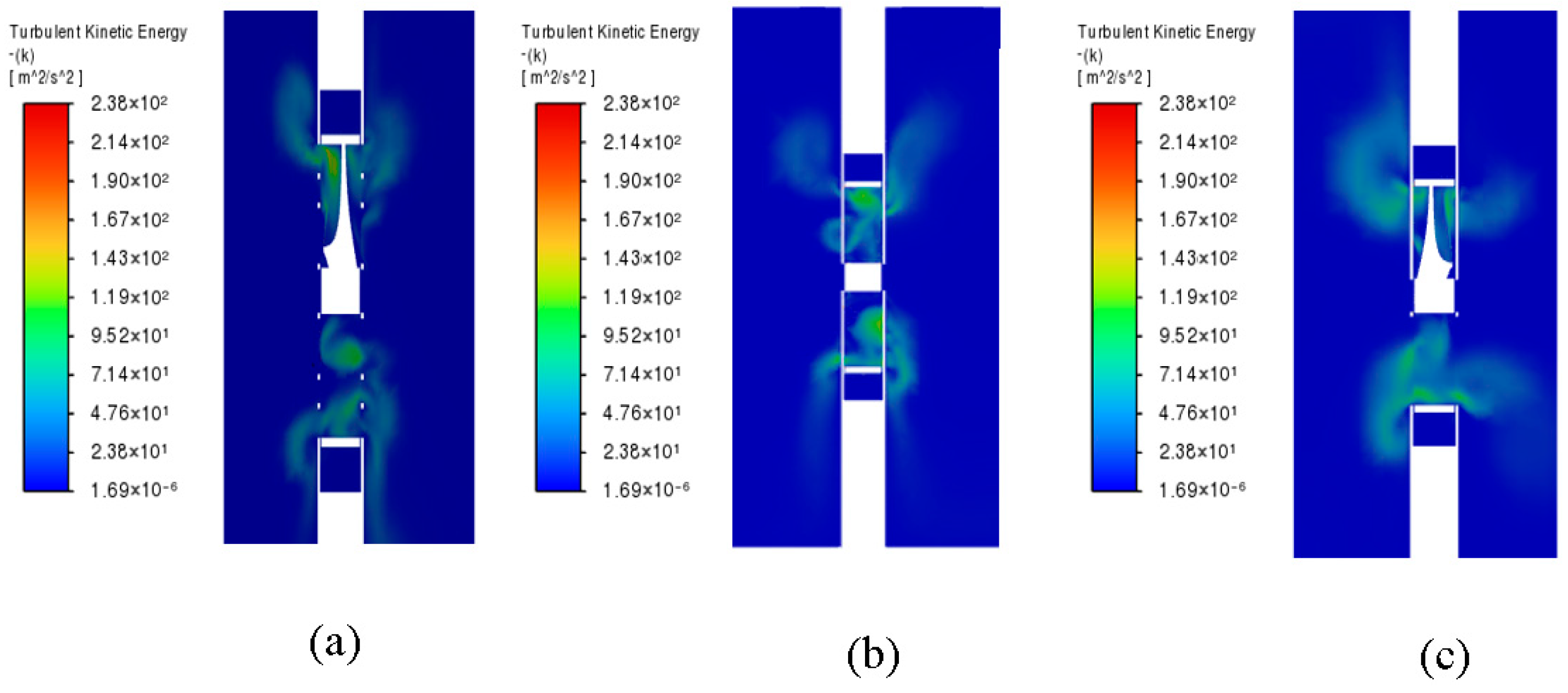
Figure 11 compares the turbulent kinetic energy (TKE) distributions at the inlet and outlet cross-sections for the three configurations. Model a exhibits the highest local TKE concentration near the inlet and the blade windward side, indicating severe flow impingement and intensified energy accumulation caused by the sharp-edged strut geometry. In contrast, Model c produces a smoother inflow pattern and a more uniform TKE distribution, especially in the 60–90% spanwise region, which corresponds to the main working flow area of the impeller. Compared with Model a, the peak inlet TKE of Model c is reduced by about 30%, indicating that the non-aligned three-pronged strut effectively redistributes the incoming momentum and weakens forced flow separation. This improvement in flow uniformity reduces the localized unsteady excitation imposed on the rotor and provides the hydrodynamic basis for subsequent pressure pulsation and noise reduction.
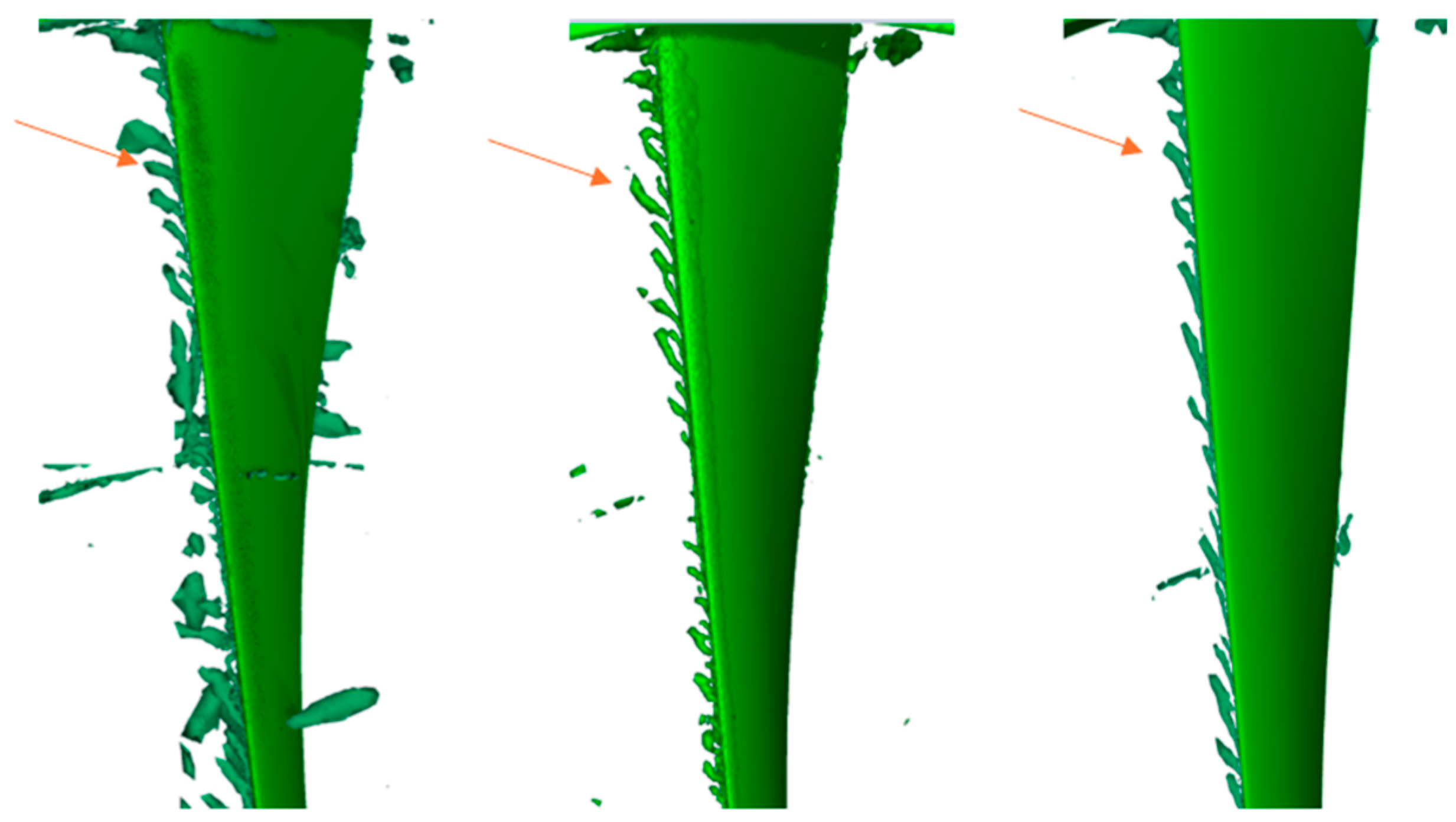
The Q-criterion isosurfaces further reveal the differences in coherent vortex evolution among the three models. Model a is characterized by large-scale detached vortices downstream of the blade trailing edge, together with additional local vortices generated near the strut leading edges due to direct airflow impingement. These structures enlarge the wake diffusion region and intensify vortex breakdown, thereby enhancing flow instability. By contrast, Models b and c both show a clear suppression of trailing-edge vortex shedding and a reduction in the spatial extent of the vortex cores. Among them, Model c exhibits the weakest large-scale coherent structures, suggesting that the non-aligned three-pronged geometry disrupts wake development more effectively and weakens the coherence of rotor–strut interaction.
In summary, strut geometry directly modulates the fan’s TKE distribution, vortex structure evolution and flow separation characteristics. The inhomogeneous flow field of Model a (high TKE peaks, severe vortex shedding) acts as a strong aerodynamic noise source, while the three-pronged strut (Model c) optimizes flow uniformity and suppresses turbulent vortex generation, laying a solid physical foundation for reducing pressure pulsations and aerodynamic noise.
These flow-field differences are directly reflected in the subsequent pressure pulsation and acoustic responses. In particular, the reduction in TKE concentration and coherent vortex shedding in Model c is accompanied by lower pressure fluctuation amplitude and reduced tonal noise at the blade-passing frequency. The attenuation of pressure fluctuation amplitude in the tip region is consistent with the reduction in tonal acoustic radiation, since periodic pressure loading associated with rotor–strut interaction is the main source of the BPF-related noise peaks.
Furthermore, based on the Pope criterion for Large Eddy Simulation, the index of resolution quality was evaluated. In the critical blade-tip region, the LES grid resolved approximately 81.2% of the total turbulent kinetic energy. These results indicate that strut geometry modifies the rotor wake development primarily by changing the local blockage distribution and the inflow momentum redistribution before the wake impinges on the downstream interaction region. As a result, the growth, diffusion, and coherence of the wake are all geometry-dependent.
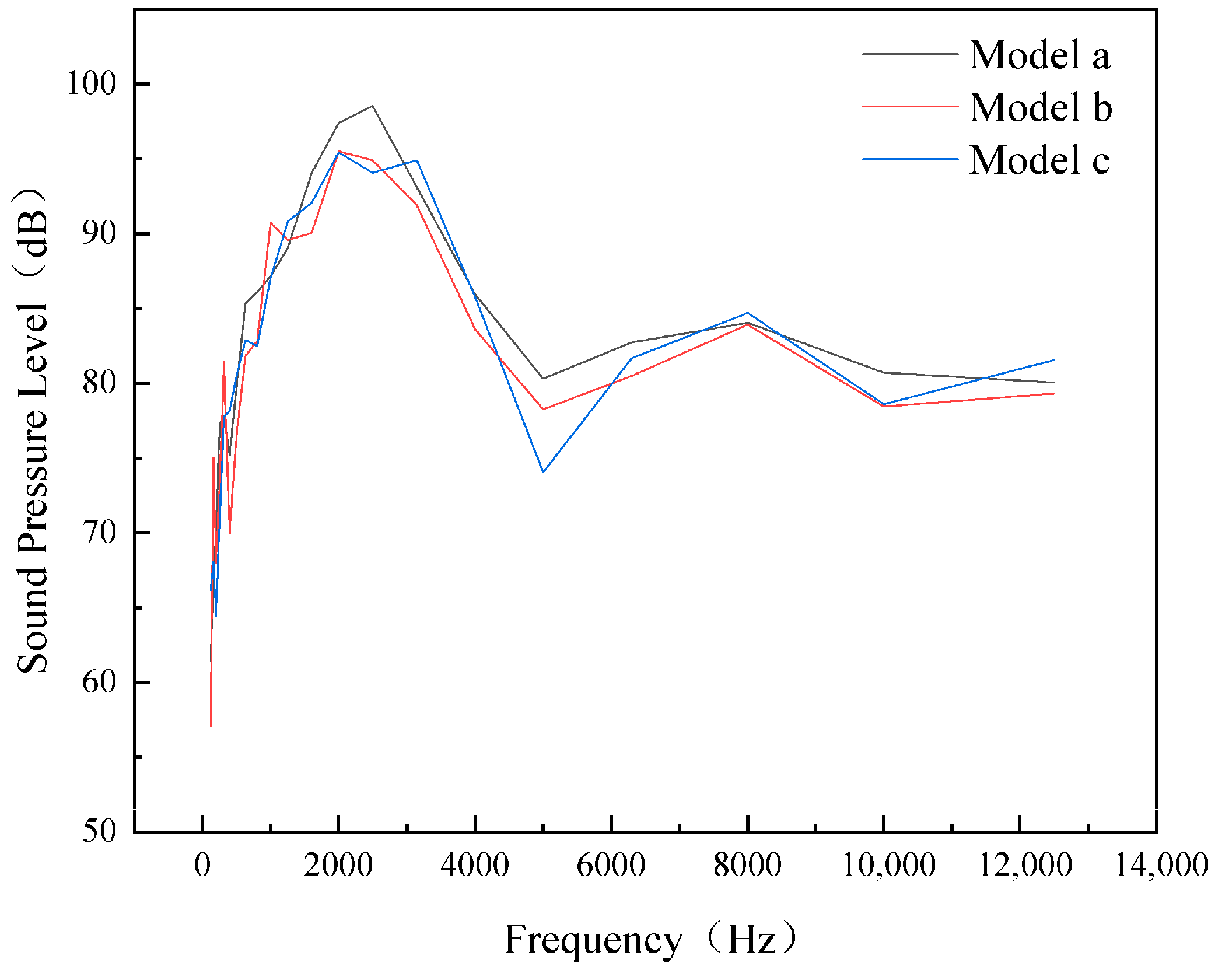
Figure 12 compares the 1/3-octave-band noise levels of the three fan configurations. Model c exhibits the lowest overall tonal-noise level in the frequency range associated with the blade-passing frequency and its first harmonic. The blade pass frequency is calculated as follows:
f B P F = Z × n 60
where f B P F is the blade-passing frequency (Hz), Z is the number of rotor blades, and n is the rotational speed of the fan in revolutions per minute (rpm).
The fan features five blades rotating at 4000 rpm, resulting in a blade passing frequency (BPF) of 333.33 Hz, as shown in Figure 12. The control strategy implemented in this study effectively mitigates noise levels at the BPF and, notably, in the vicinity of its first harmonic. This harmonic region, characterized by a narrowband hump-shaped noise profile, exhibits significant attenuation. In particular, Model c realizes a 6.7 dB reduction in comparison with Model a.
Figure 13 presents the instantaneous coherent vortex structures resolved by LES, reflecting the transient wake evolution and vortex shedding behavior of the three fan configurations. Vortex distributions across the blade surfaces show overall resemblances among the models, with vorticity chiefly clustered at the trailing edges, leading edges, and blade tips. In the baseline fan setup, a large-scale area of irregularly detached vortices forms in the region downstream of the blades, stemming predominantly from the trailing edges. The installation of struts at the blade leading edges gives rise to local flow vortices, enhancing both the number and spatial spread of vortices in the downstream area of these structures.
Compared with the initial model, a significant reduction in trailing edge vortex shedding is observed in models b and c. This suggests that the optimized struts help guide the incoming airflow radially, preventing large impacts on the blade surface, reducing the formation of large vortices, and thereby mitigating the noise caused by vortex shedding and flow turbulence. Furthermore, the non-aligned geometry of the optimized struts (such as Model c) introduces spatial phase shifts in the wake-strut interaction along the radial direction. This geometric variation effectively disrupts the phase coherence of the trailing-edge vortices. By decorrelating the vortex shedding process along the blade span, the large-scale coherent structures are broken down into smaller, out-of-phase eddies, which significantly weakens the constructive interference of pressure pulsations and reduces the radiated noise. The weaker vortex cores and reduced wake coherence observed in Model c indicate that the wake–strut interaction intensity is effectively reduced by the optimized geometry, which in turn lowers the strength of the dominant unsteady aerodynamic source.
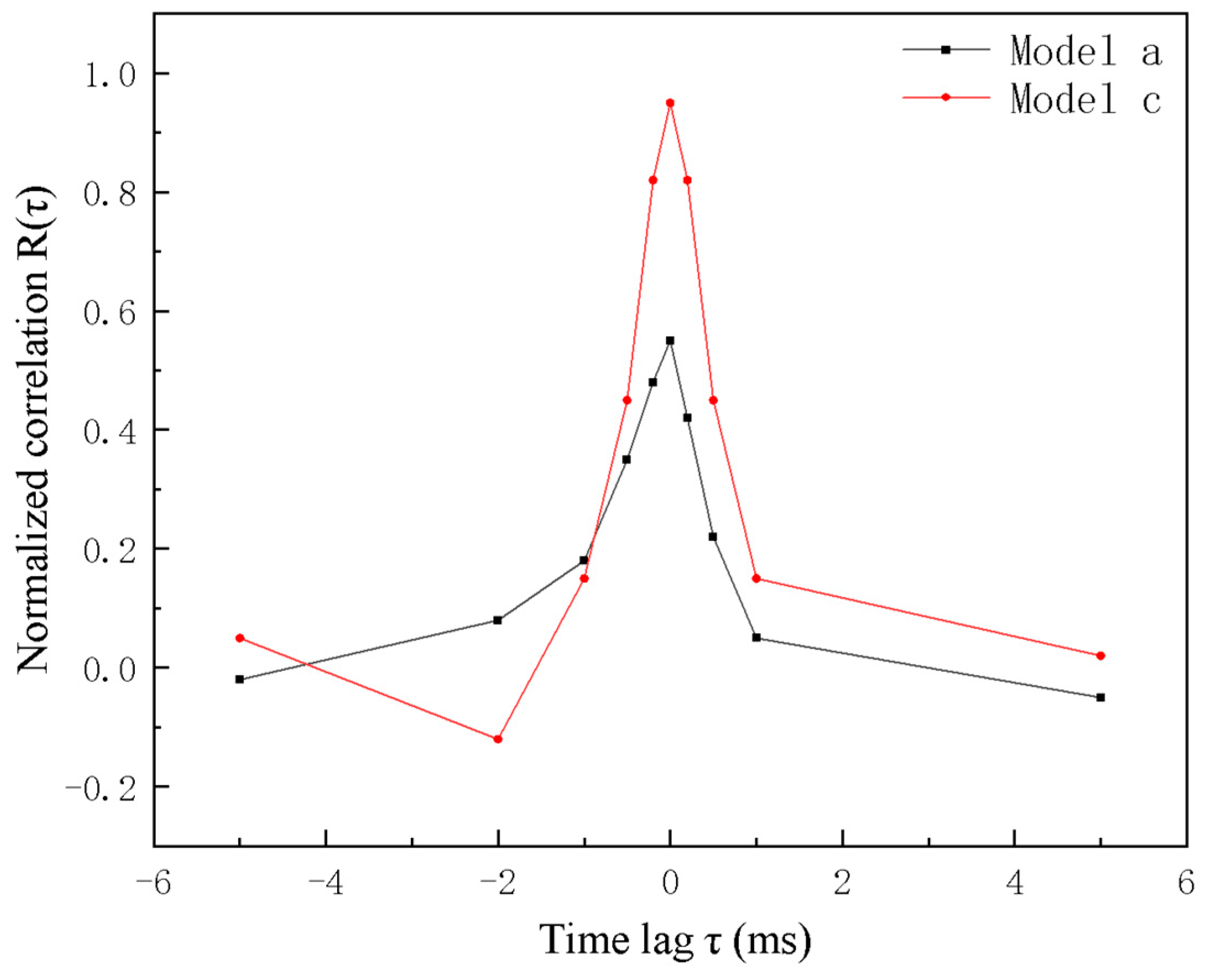
Figure 14 further characterizes the spanwise coherence of the unsteady wake dynamics. In Model a, the near-unity correlation peak at zero delay indicates highly synchronized wake evolution along the span, implying strong coherent rotor–strut interaction. In contrast, Model c exhibits a much weaker correlation peak and an observable temporal shift, indicating that the optimized asymmetric strut geometry disrupts the synchronization of vortex shedding and weakens the coherence of the unsteady flow structures. The reduced spanwise correlation in Model c suggests weaker synchronization of rotor–strut interaction, which provides a plausible explanation for the attenuation of the BPF-related tonal peaks.

4.3. Analysis of Pressure Pulsation

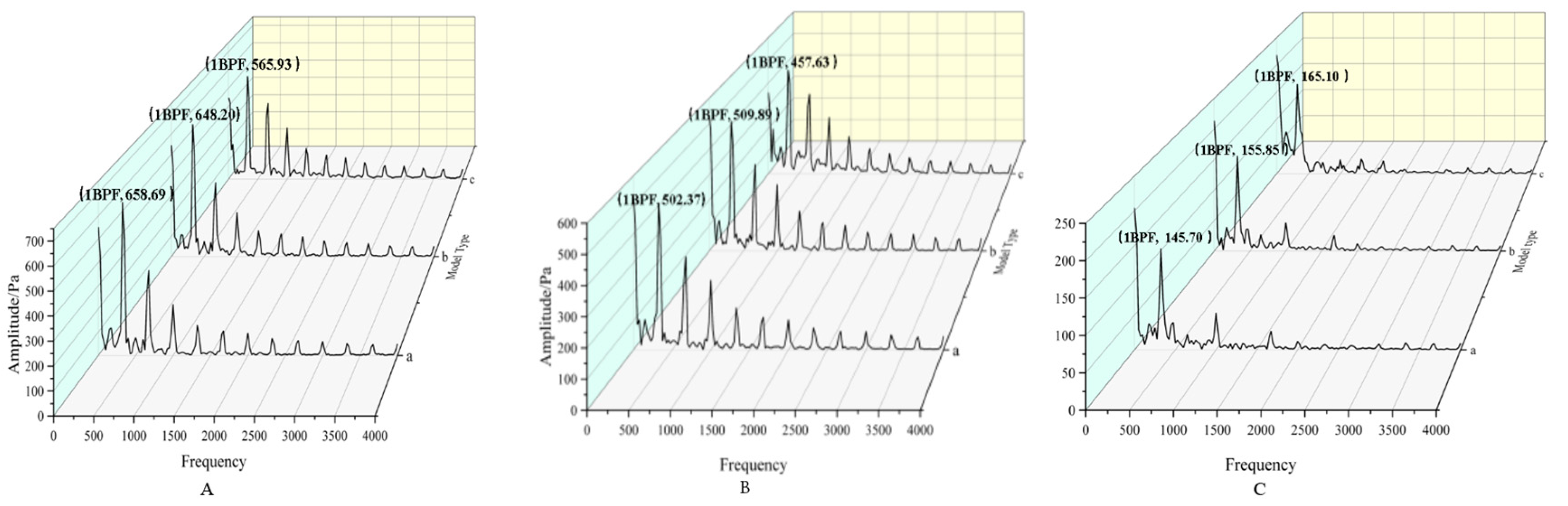
To further characterize the unsteady aerodynamic response of the fan, transient pressure fluctuations were extracted at representative spanwise monitoring points and analyzed in the frequency domain. Monitoring points were positioned at 75% (blade tip), 50% (mid-span), and 25% (hub) along the blade height. These pressure signals directly reflect the unsteady aerodynamic loading induced by rotor–strut interaction and therefore provide a quantitative measure of transient flow intensity at different blade heights. A Fast Fourier Transform (FFT) was employed to process time-domain pressure pulsation data obtained from each monitoring point across the three fan configurations. It exhibited a consistent trend across all conditions: pressure pulsation amplitudes peak at the first blade-passing frequency (1 BPF), with the resulting spectra shown in Figure 15.
A clear spanwise dependence is observed in the pressure fluctuation amplitude. The pressure pulsations gradually decrease from the blade tip toward the hub, indicating that the tip region is the most sensitive area to unsteady aerodynamic excitation. At Monitoring Point 1 near the blade tip, Models b and c reduce the pressure pulsation amplitude by 1.6% and 14.1%, respectively, relative to Model a. This trend is fully consistent with the flow-field observations in Section 4.2, where Model c exhibits a lower inlet TKE peak and weaker coherent vortex shedding in the main flow region. Therefore, the attenuation of pressure pulsation is a direct consequence of the improved internal flow stability induced by the optimized strut geometry. Model c achieves the strongest suppression because its non-aligned three-pronged topology simultaneously reduces local blockage, weakens coherent wake impingement, and distributes the interaction more unevenly along the span, thereby lowering the amplitude of periodic pressure loading more effectively than the other two configurations.
The present results are qualitatively consistent with the general understanding that periodic rotor–strut interaction is responsible for tonal peaks at the blade-passing frequency and its harmonics. The stronger suppression achieved by Model c can be attributed to the weaker periodic pressure loading and reduced wake coherence produced by the optimized strut geometry. Therefore, the reduction in pressure pulsation amplitude, especially near the blade tip, provides a direct physical explanation for the attenuation of BPF-related tonal noise. This interpretation is also in line with previous studies on rotor–strut interaction noise, which have shown that weakening wake coherence and reducing unsteady loading amplitude are effective routes for suppressing tonal noise at the blade-passing frequency.

5. Conclusions

Analysis of the internal flow characteristics, particularly the distribution of TKE, revealed the inhomogeneous nature of the internal flow field. A rational relative layout between the struts and blades enabled more uniform dispersion of high-velocity airflow, minimizing forced flow separation. In Model c, the non-aligned, three-pronged geometry effectively alters the local aerodynamic blockage and the subsequent wake development. Unlike Model a, whose symmetric bluff-body features induce severe stagnation and immediate downstream flow separation, the topology of Model c forces the incoming air to be guided radially. This spanwise redistribution of flow momentum effectively circumvents the abrupt accumulation of turbulent kinetic energy (TKE) at the strut leading edges, yielding a 30% reduction in peak inlet TKE compared to Model a. Consequently, by mitigating this initial forced separation, Model c significantly suppresses the intensity of the unsteady rotor-wake interaction, proving that topology-driven flow uniformity is a critical prerequisite for aerodynamic noise abatement.
Pressure fluctuation characteristics exhibited distinct frequency and spatial differences among the three configurations. Compared with Model a, Model c showed a clear reduction in pressure pulsation amplitude, especially near the blade tip, indicating weaker unsteady aerodynamic loading in the main flow region. This trend is consistent with the observed reduction in wake coherence and trailing-edge vortex intensity. The gradual reduction in pressure amplitude demonstrated that structural improvements suppressed unsteady tip flow, enhanced the stability of the internal flow field, and reduced the potential for vibration and noise radiation induced by pressure pulsations. These results indicate that the reduction in unsteady pressure loading, especially near the blade tip, is directly associated with the attenuation of tonal noise emission in the BPF and harmonic bands
Experimentally validated numerical simulations, using the Proudman index, identify blade trailing edges as key acoustic power sources, highlighting the criticality of optimizing inlet/outlet airflow diffusion. Dominant noise arises at the BPF and its first harmonic, with Model C achieving a 6.7 dB reduction in peaks within these bands.
Structural optimization of struts enables synergistic control over turbulence distribution, vortex shedding, and pressure fluctuations, driving significant noise reductions in BPF and harmonic ranges. These findings provide theoretical and practical foundations for enhancing axial fan aerodynamics via multi-physics coupling analyses. Future work should extend to broader operating conditions, refine quantitative links between unsteady flows and noise radiation, and explore the engineering scalability of such optimizations—ultimately advancing axial fan design toward lower noise and higher stability.

Author Contributions

Conceptualization, F.W. and H.Z.; methodology, H.Z.; software, P.D.; validation, H.Z., F.W. and F.Z.; formal analysis, N.L.; investigation, Y.Y.; resources, F.W.; data curation, P.D.; writing—original draft preparation, H.Z.; writing—review and editing, F.W.; visualization, N.L.; supervision, F.W.; project administration, F.Z.; funding acquisition, F.W. All authors have read and agreed to the published version of the manuscript.

Funding

This research was funded by the Shandong Provincial Key Research and Development Program, grant number 2024TSGC0926; the Rizhao Municipal Key Research and Development Program, grant number 2025ZDYF0105; and the Shandong Green Industry and Environmental Safety Innovation and Entrepreneurship Program, grant number 2024-LSGTT-CX-005.

Data Availability Statement

The original contributions presented in this study are included in the article. Further inquiries can be directed to the corresponding author.

Conflicts of Interest

Peng Du, Ning Liu, and Yimin Yin were employed by Shandong Huanke Environmental Engineering Co., Ltd. Feng Zhang was employed by Shandong Leading Green Industry Development Co., Ltd. The remaining authors declare that the research was conducted in the absence of any other commercial or financial relationships that could be construed as a potential conflict of interest. The authors declare that this study received funding from Shandong Huanke Environmental Engineering Co., Ltd., Shandong Leading Green Industry Development Co., Ltd., the Shandong Provincial Key Research and Development Program (grant number 2024TSGC0926), the Rizhao Municipal Key Research and Development Program (grant number 2025ZDYF0105), and the Shandong Green Industry and Environmental Safety Innovation and Entrepreneurship Program (grant number 2024-LSGTT-CX-005). The funders were not involved in the study design, collection, analysis, interpretation of data, the writing of this article, or the decision to submit it for publication.

References

  1. Fan, C.G.; Ji, J.; Wang, W.; Sun, J.H. Effects of vertical shaft arrangement on natural ventilation performance during tunnel fires. Int. J. Heat Mass Transf. 2014, 73, 158–169. [Google Scholar] [CrossRef]
  2. Song, I.-H.; Lhee, J.-H.; Jeong, J.-W. Energy efficiency and economic analysis of variable frequency drive and variable pitch system: A case study of axial fan in hospital. J. Build. Eng. 2021, 43, 103213. [Google Scholar] [CrossRef]
  3. Qingyi, S.; Haodong, X.; Jian, C.; Jiangtao, Z. Experimental and numerical study on a new noise reduction design for a small axial fan. Appl. Acoust. 2023, 211, 109535. [Google Scholar] [CrossRef]
  4. Quinlan, D.; Bent, P.H. High frequency noise generation in small axial flow fans. J. Sound Vib. 1998, 218, 177–204. [Google Scholar] [CrossRef]
  5. Che, B.; Chu, N.; Schmidt, S.J.; Cao, L.; Likhachev, D.; Wu, D. Control effect of micro vortex generators on leading edge of attached cavitation. Phys. Fluids 2019, 31, 044102. [Google Scholar] [CrossRef]
  6. Paramasivam, K.; Rajoo, S.; Romagnoli, A.; Yahya, W.J. Tonal noise prediction in a small high speed centrifugal fan and experimental validation. Appl. Acoust. 2017, 125, 59–70. [Google Scholar] [CrossRef]
  7. Longxin, Z. Effects of blade stagger angle adjustment on the flow and noise of a counter-rotating fan. J. Build. Eng. 2025, 106, 112638. [Google Scholar] [CrossRef]
  8. Jung, J.H.; Joo, W.-G. The effect of the entrance hub geometry on the efficiency in an axial flow fan. Int. J. Refrig. 2019, 101, 90–97. [Google Scholar] [CrossRef]
  9. Avallone, F.; van der Velden, W.C.P.; Ragni, D.; Casalino, D. Noise reduction mechanisms of sawtooth and combed-sawtooth trailing-edge serrations. J. Fluid Mech. 2018, 848, 560–591. [Google Scholar] [CrossRef]
  10. Becher, M.; Krusche, R.; Tautz, M.; Mauß, M.; Springer, N.; Krömer, F.; Becker, S. Influence of the Gap Flow of Axial Vehicle Cooling Fans on Radiated Narrowband and Broadband Noise. Acta Acust. United Acust. 2019, 105, 435–448. [Google Scholar] [CrossRef]
  11. Luo, B.; Chu, W.; Zhang, H. Tip leakage flow and aeroacoustics analysis of a low-speed axial fan. Aerosp. Sci. Technol. 2020, 98, 105700. [Google Scholar] [CrossRef]
  12. Zhao, W.; Wasala, S.; Persoons, T. On the Fast Prediction of the Aerodynamic Performance of Electronics Cooling Fans Considering the Effect of Tip Clearance. IEEE Trans. Compon. Packag. Manuf. Technol. 2023, 13, 1139–1146. [Google Scholar] [CrossRef]
  13. Mo, J.-o.; Choi, J.-h. Numerical Investigation of Unsteady Flow and Aerodynamic Noise Characteristics of an Automotive Axial Cooling Fan. Appl. Sci. 2020, 10, 5432. [Google Scholar] [CrossRef]
  14. Wang, S.; Yu, X.; Shen, L.; Yang, A.; Chen, E.; Fieldhouse, J.; Barton, D.; Kosarieh, S. Noise reduction of automobile cooling fan based on bio-inspired design. Proc. Inst. Mech. Eng. Part D J. Automob. Eng. 2020, 235, 465–478. [Google Scholar] [CrossRef]
  15. Park, M.-J.; Lee, D.-J. Sources of broadband noise of an automotive cooling fan. Appl. Acoust. 2017, 118, 66–75. [Google Scholar] [CrossRef]
  16. Moreau, S. Direct Noise Computation of Low-speed Ring Fans. Acta Acust. United Acust. 2019, 105, 30–42. [Google Scholar] [CrossRef]
  17. Bianchi, S.; Corsini, A.; Sheard, A.G. A Critical Review of Passive Noise Control Techniques in Industrial Fans. J. Eng. Gas Turbines Power 2014, 136, 044001. [Google Scholar] [CrossRef]
  18. Yoshida, K.; Semura, J.; Kohri, I.; Kato, Y. Reduction of the BPF Noise Radiated from an Engine Cooling Fan. In Proceedings of the SAE 2014 World Congress & Exhibition, Detroit, MI, USA, 8–10 April 2014. [Google Scholar] [CrossRef]
  19. Wang, C.; Zhang, W.; Huang, L. Noise Source Analysis and Controlfor Two Axial-Flow Cooling Fans in Series. In Fluid-Structure-Sound Interactions and Control; Lecture Notes in Mechanical Engineering; Springer: Berlin/Heidelberg, Germany, 2015; Volume 64, pp. 677–687. [Google Scholar] [CrossRef]
  20. Huang, B.; Xu, J.; Wang, J.; Xu, L.; Chen, X. Numerical Investigation on the Aerodynamic and Aeroacoustic Characteristics in New Energy Vehicle Cooling Fan with Shroud. Processes 2024, 12, 333. [Google Scholar] [CrossRef]
  21. Zhang, L.; Wang, R.; Wang, S. Simulation of Broadband Noise Sources of an Axial Fan under Rotating Stall Conditions. Adv. Mech. Eng. 2015, 6, 507079. [Google Scholar] [CrossRef]
  22. Milidonis, K.; Semlitsch, B.; Hynes, T. Effect of Clocking on Compressor Noise Generation. AIAA J. 2018, 56, 4225–4231. [Google Scholar] [CrossRef]
  23. Heo, S.; Ha, M.; Kim, T.-H.; Cheong, C. Development of high-performance and low-noise axial-flow fan units in their local operating region. J. Mech. Sci. Technol. 2015, 29, 3653–3662. [Google Scholar] [CrossRef]
  24. Boudet, J.; Cahuzac, A.; Kausche, P.; Jacob, M.C. Zonal Large-Eddy Simulation of a Fan Tip-Clearance Flow, With Evidence of Vortex Wandering. J. Turbomach. 2015, 137, 061001. [Google Scholar] [CrossRef]
  25. Reboul, G.; Polacsek, C.; Lewy, S.; Heib, S.J.J.o.t.A.S.o.A. Aeroacoustic computation of ducted-fan broadband noise using LES data. J. Acoust. Soc. Am. 2008, 123, 3539. [Google Scholar] [CrossRef]
  26. Shaheed, R.; Mohammadian, A.; Kheirkhah Gildeh, H. A comparison of standard k–ε and realizable k–ε turbulence models in curved and confluent channels. Environ. Fluid Mech. 2018, 19, 543–568. [Google Scholar] [CrossRef]
  27. Hu, B.-B.; OuYang, H.; Wu, Y.-D.; Jin, G.-Y.; Qiang, X.-Q.; Du, Z.-H. Numerical prediction of the interaction noise radiated from an axial fan. Appl. Acoust. 2013, 74, 544–552. [Google Scholar] [CrossRef]
  28. Lighthill, M.J. On sound generated aerodynamically I. General theory. Proc. R. Soc. Lond. Ser. A Math. Phys. Sci. 1997, 211, 564–587. [Google Scholar] [CrossRef]
  29. Ffowcs Williams, J.E.; Hawkings, D.L. Theory relating to the noise of rotating machinery. J. Sound Vib. 1969, 10, 10–21. [Google Scholar] [CrossRef]
  30. Alfonsi, G.; Primavera, L. Temporal Evolution of Vortical Structures in the Wall Region of Turbulent Channel Flow. Flow Turbul. Combust. 2008, 83, 61–79. [Google Scholar] [CrossRef]
  31. Fu, W.-S.; Lai, Y.-C.; Li, C.-G. Estimation of turbulent natural convection in horizontal parallel plates by the Q criterion. Int. Commun. Heat Mass Transf. 2013, 45, 41–46. [Google Scholar] [CrossRef]
  32. Celik, I.B.; Ghia, U.; Roache, P.J.; Freitas, C.J.; Coleman, H.; Raad, P.E. Procedure for Estimation and Reporting of Uncertainty Due to Discretization in CFD Applications. J. Fluids Eng. 2008, 130, 078001. [Google Scholar] [CrossRef]
  33. GB/T 2888-2008; Measurement Methods for Noise of Fans and Roots Blowers. Standards Press of China: Beijing, China, 2008.
  34. Yadegari, M.; Ommi, F.; Karimian Aliabadi, S.; Saboohi, Z. Reducing the aerodynamic noise of the axial flow fan with perforated surface. Appl. Acoust. 2024, 215, 109720. [Google Scholar] [CrossRef]
Figure 1. Three-dimensional models of the original fan and its blades.
Processes 14 01104 g001
Figure 2. Three fan strut models: (a) hexagonal annular type; (b) hexagonal double-ring type; (c) three-pronged type.
Processes 14 01104 g002
Figure 3. Computational domain in aeroacoustic simulation.
Processes 14 01104 g003
Figure 4. Mesh grid in aerodynamic simulation.
Processes 14 01104 g004
Figure 5. Mesh independency investigation.
Processes 14 01104 g005
Figure 6. Comparison of test and simulation results for the flow and pressure coefficients.
Processes 14 01104 g006
Figure 7. Schematic diagram and the layout of the experimental devices.
Processes 14 01104 g007
Figure 8. Comparison of test and simulation results in the 1/3 frequency spectrum.
Processes 14 01104 g008
Figure 9. Proudman’s index within the trailing edge cross-sectional plane.
Processes 14 01104 g009
Figure 10. Acoustic intensity level contribution from the dipole sources on the fan casing and blades.
Processes 14 01104 g010
Figure 11. Contours of turbulent kinetic energy at the inlet and outlet cross-sections for fans of models (ac).
Processes 14 01104 g011
Figure 12. 1/3 octave band noise variation chart for three distinct fan struts.
Processes 14 01104 g012
Figure 13. Instantaneous coherent vortex structures identified by the Q-criterion (Q = 1.0 × 10⁶ s−2).
Processes 14 01104 g013
Figure 14. Normalized spanwise cross-correlation R (τ) for Model a and Model c.
Processes 14 01104 g014
Figure 15. Pressure Pulsation Amplitudes at Monitoring Points (Models AC: Points 1–3).
Processes 14 01104 g015
Table 1. Fan Specification.
Rotor of the Prototype
Rated rotational speed (rpm)4000
Tip diameter (mm)318
Stagger angle (°)15.5
Blade number5
Fundamental frequency (Hz)333.3
Hub ratio0.16
Disclaimer/Publisher’s Note: The statements, opinions and data contained in all publications are solely those of the individual author(s) and contributor(s) and not of MDPI and/or the editor(s). MDPI and/or the editor(s) disclaim responsibility for any injury to people or property resulting from any ideas, methods, instructions or products referred to in the content.