1. Introduction
Within the entire CCUS industrial chain, high-pressure pipeline transportation represents the most cost-effective solution for large-scale CO
2 delivery [
1]. Buried pipelines are widely adopted in CO
2 transportation projects to address complex topographic conditions and special environmental requirements [
2]. However, factors including electrochemical corrosion and microbial metabolic activities in the soil medium continuously act on the outer surface of pipelines, leading to the attenuation of mechanical strength in pipeline defect areas and a substantial increase in the risk of pipeline perforation and leakage [
3]. Once leakage occurs in buried CO
2 pipelines, it will trigger cascading environmental hazards such as soil ecological structure damage and microbial community imbalances [
4,
5]. In addition, affected by the Joule-Thomson effect, the leaked CO
2 undergoes an instantaneous temperature drop, which can lead to the formation of dry ice under extreme conditions, further amplifying the severity of leakage accidents [
6]. With the global scale-up of CCUS deployment, the migration behaviour of escaped sCO
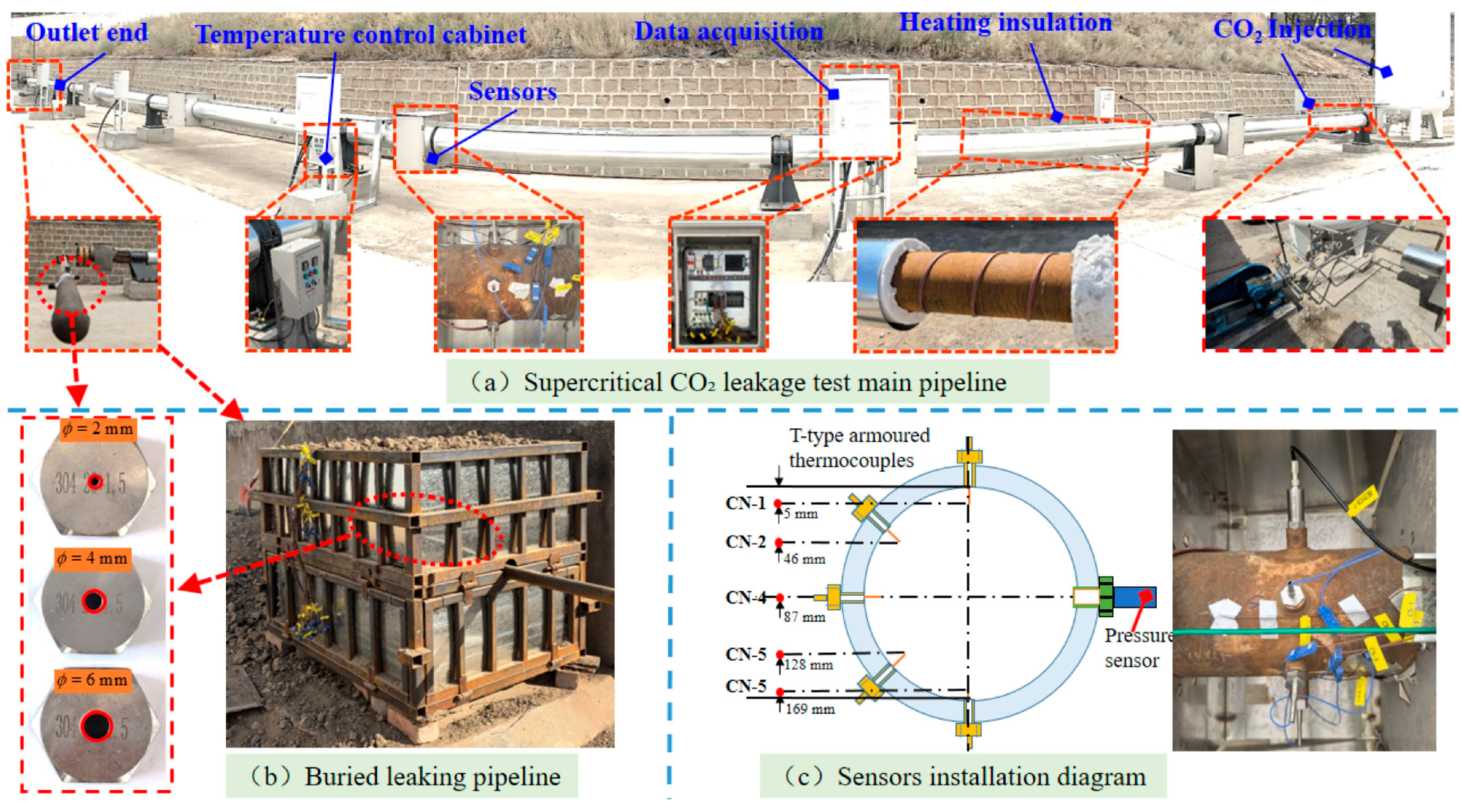
2 in buried geological environments remains poorly characterized, which impairs the reliability of numerical simulation models and quantitative risk assessment frameworks for such systems. The full-scale experimental facility developed in this study was designed to generate empirical datasets on the dynamic release characteristics of sCO
2, validate the predictive performance of computational models, and provide evidence-based insights to inform the formulation of emergency response protocols for CCUS pipeline transportation systems.
In the field of research concerning pipeline leaks during operation, Xie et al. [
7], Guo et al. [
8], Ten et al. [
9], Hu et al. [
10], and Hu et al. [
4,
11] have investigated the temperature distribution within leakage zones during above-ground sCO
2 pipeline leaks. This body of research has substantially elucidated the thermodynamic characteristics of the expanding jet region, thereby laying a theoretical foundation and providing empirical data support for understanding the risk of leakage for above-ground sCO
2 pipelines. In the case of buried pipeline leakage, a considerable body of research findings has been accumulated, which establishes a robust empirical and theoretical basis for revealing the migration and leakage behaviour of CO
2 in soil media. Yu et al. [
5] investigated leakage morphology and soil temperature; aperture and direction were analyzed by experiments focused on buried sCO
2. The research findings demonstrate that dry ice pellets exhibit adhesion to pipeline surfaces and migrate toward geotechnically weak soil zones. Furthermore, under the action of soil resistance, the cumulative volume of dry ice pellets generated from a 3 mm leakage orifice is found to be more than nine times that produced by a 1 mm orifice throughout the entire leakage process. Small pore discharge experimental results demonstrate that lower initial temperatures lead to higher near-field pressure peaks, while larger orifice diameters result in larger near-field pressure peaks [
12]. Qiao et al. [
13] found the initial pressure has the most significant influence on the temperature variation. Zhang et al. [
14] observed soil fissuring above 3 mm leakage; downward leakage maximizes frozen/dry ice areas, with optimal 0.8–1.2 m monitoring heights guiding detection and risk assessment for CO
2 pipelines. These researchers [
15,
16] have also verified that soil properties regulate leakage dynamics: porous and permeable soil accelerates sCO
2 diffusion, while compact soil inhibits it. Existing studies still lack full-scale fracture tests and accurate phase transition simulation, which are key directions for future research, laying a foundation for the safe operation of buried sCO
2 pipelines.
A critical review of the aforementioned literature indicates that experimental investigations into the atmospheric release of sCO2 from pipelines are already extensive, allowing for a well-established mechanistic understanding of how leak orifice sizes and the initial thermophysical state of CO2 modulate the leakage process. Concurrently, the diffusion behaviour of CO2 within soil media subsequent to buried pipeline leakage has been largely elucidated. Nevertheless, a notable research gap remains in the systematic investigation of how leakage direction, leak orifice diameter, and initial operational state jointly influence the evolution of thermophysical properties of CO2 inside the pipeline following pinhole leakage from buried sCO2 pipelines. Through authentic sCO2 pipeline leakage experiments, the evolution of pressure, temperature, and phase state within the pipeline following pinhole leaks at different locations can be investigated, particularly whether pressure wave propagation occurs within the pipe, whether the minimum temperature inside the pipe reaches the ductile-to-brittle transition temperature as the leak progresses, and the differences in phase transition pathways between the circumferential and axial directions compared to a full-bore leak. These studies provide fundamental experimental data for comparing pinhole and full-bore leakage.
3. Results and Discussion
Our previous work has extensively investigated leakage behaviour from large-diameter leaks, documenting the evolution of parameters such as internal pressure, temperature, and phase state. These studies have primarily focused on pipeline drainage phenomena. However, buried sCO2 pipelines exhibit external wall corrosion, predominantly resulting in pinhole leakage behaviour, an area in which research remains severely lacking.
3.1. The Effect of Leak Diameter on the Leakage Process
3.1.1. The Effect of Leakage Diameter on the Evolution of Pressure Inside the Pipe
As shown in
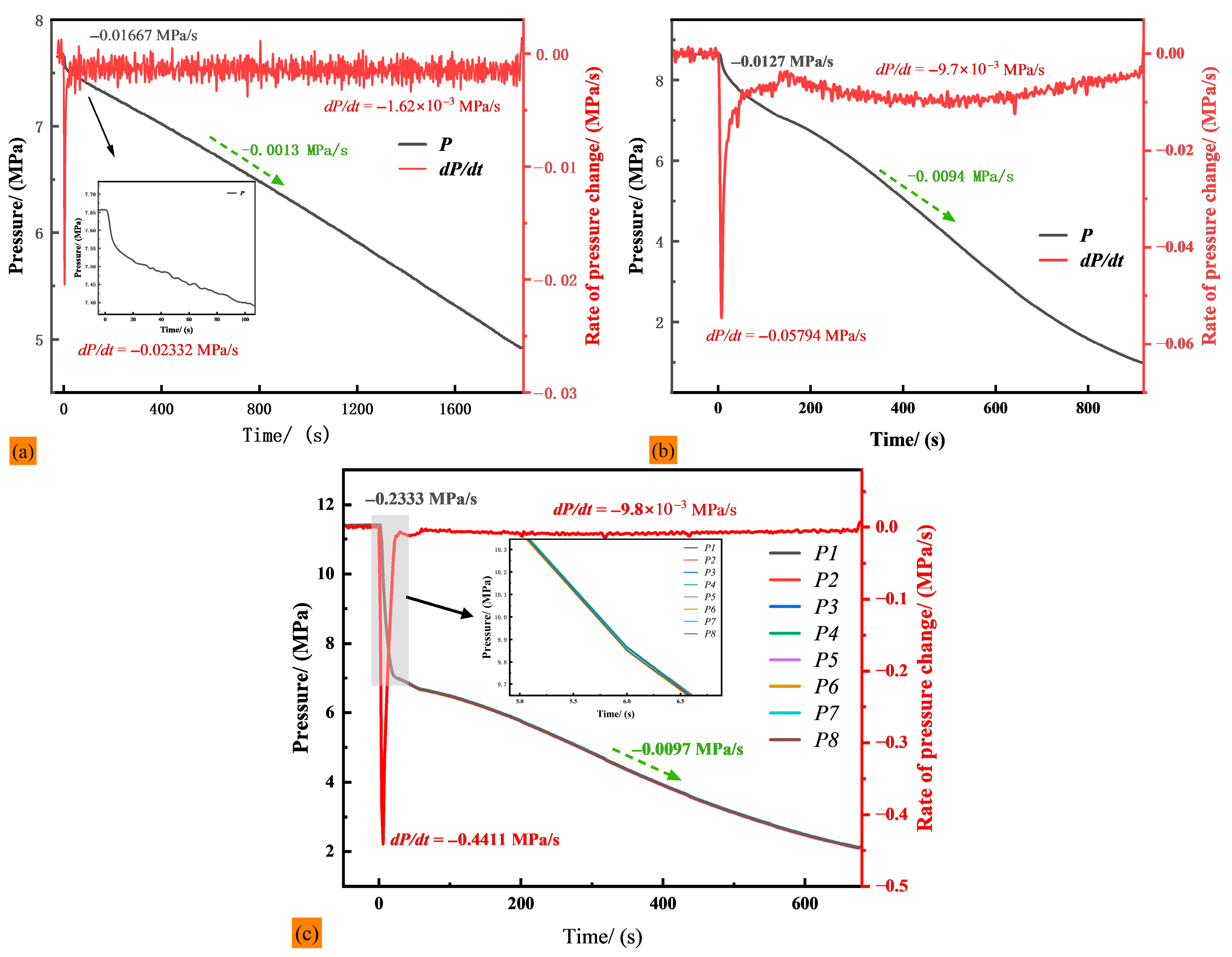
Figure 2, the pressure variation within the pipe over time during Test1, Test5, and Test6 is depicted. From
Figure 2, it can be observed that the pressure curve’s variation process can be divided into two distinct phases: the first phase represents a rapid decline. In contrast, the second phase exhibits a linear decrease in the pipe’s internal pressure. During the initial stage of pressure reduction, the pressure in Test1 (
Figure 2a) decreased rapidly from 7.6 MPa to 7.4 MPa, with a rate of 0.0167 MPa/s. The pressure drop rate for Test2 (
Figure 2c) was 0.127 MPa/s. From the pressure drop rates, the maximum values for Test1 and Test2 were determined to be −0.0233 MPa/s and −0.05794 MPa/s, respectively. During the second stage of pressure reduction, the pressure decay rate curve revealed fluctuations within a certain range. The pressure decay rates for Test1 and Test2 were −1.62 × 10
−3 MPa/s and −9.7 × 10
−3 MPa/s respectively.
During the initial phase, characterized by the rapid leakage of sCO
2 within the pipe, the mass flow rate of the medium is substantial, resulting in a correspondingly high rate of pressure drop. When the pipe pressure decreases to the critical pressure, a saturated vapour–liquid state has already formed within the pipe [
18]. As the pipe pressure continues to decrease, the liquid CO
2 undergoes uniform vaporization, resulting in a constant rate of pressure decrease.
From
Figure 2c, it can be observed that as the initial pressure in Test3 increases, the leakage diameter and the pressure drop rate in Stage 1 increase significantly, reaching −0.2333 MPa/s. An intriguing observation is that although Test6 and Test5 exhibit substantial differences in initial pressure, their rates and speeds of linear pressure reduction are remarkably similar. This phenomenon is primarily attributable to the congestion flow caused by pipeline leakage [
19].
3.1.2. The Effect of Leakage Diameter on Temperature Distribution Within the Pipe
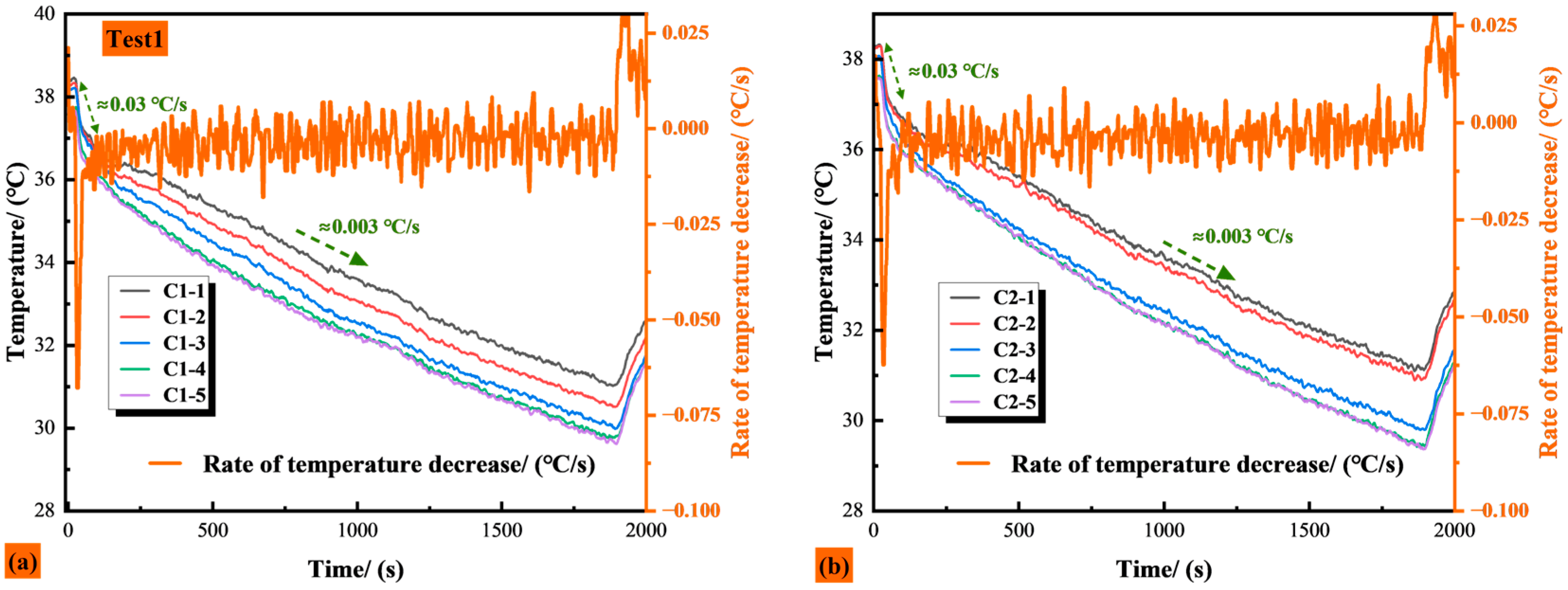
The temperature variations over time at each measurement point within the C1 and C2 cross-sections during Test1 are depicted in
Figure 3. In
Figure 3a,b, it can be observed that following the reduction in internal pipe pressure, the temperature exhibits a decreasing trend. The temperature variation along the circumferential height within the pipe occurs in two distinct phases, primarily associated with the pressure decay process within the pipe. During Stage 1, the temperature decreases rapidly, with both C1 and C2 sections exhibiting a cooling rate of 0.3 MPa/s. In Stage 2, the temperature decline predominantly follows a linear pattern, with a cooling rate of 0.03 MPa/s. Within Stage 1, the maximum rate of temperature change in both the C1 and C2 sections is identical at −0.0678 °C/s.
As shown in
Figure 3, the temperature in the lower section of the pipeline decreases first, followed by the upper section. This phenomenon differs from the pattern observed with large-diameter changes. This is because, during the small-hole leakage process, the pipeline pressure decreases uniformly. To maintain the gas–liquid saturated state within the pipeline, the liquid CO
2 at the bottom absorbs more heat during its conversion to gaseous CO
2 than the CO
2 in the upper section [
20]. Consequently, the rate of temperature decrease is faster. As leakage progresses, the temperature differential between CO
2 in the lower and upper sections of the pipeline increases.
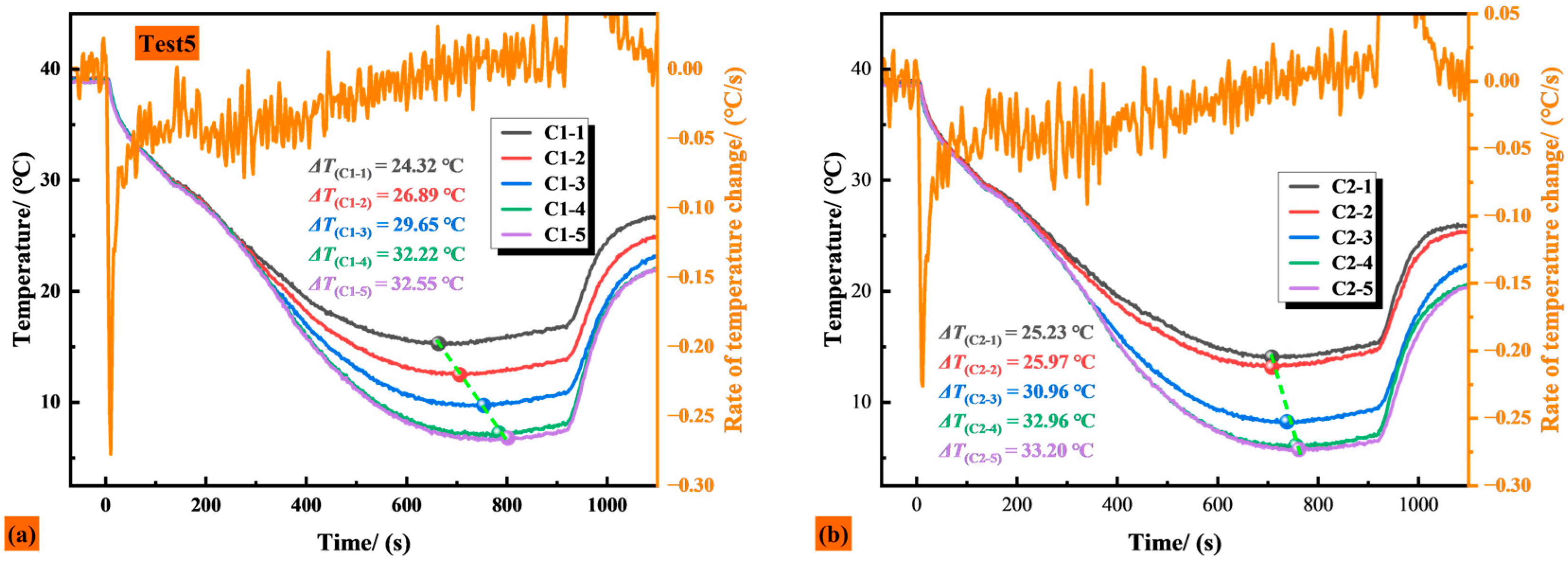
As shown in
Figure 4, the graph depicts the temporal variation in temperature for thermocouples at different heights within the C1 and C2 sections during Test5. Research indicates that as the leakage diameter increases, the rate of temperature decrease for thermocouples at varying heights within the C1 and C2 sections exhibits differences compared to Test1. In Test1, the rate of temperature decrease for thermocouples across all sections remained nearly consistent, whereas in Test5, the rate of temperature decrease at measurement points in the lower section of the pipeline was greater than that in the upper section. At the C1 and C2 sections, the maximum temperature differences between the lower and upper pipe sections were 8.23 °C and 7.97 °C, respectively. Furthermore, at sections C3 to C8, the maximum temperature differences between the lower and upper pipe sections were 7.56 °C, 7.13 °C, 7.09 °C, 7.04 °C, and 6.99 °C, respectively.
In engineering practice, the Joule–Thomson coefficient is commonly used to calculate the temperature drop during throttling. The definition of the Joule–Thomson coefficient is given by
where
Di denotes the Joule–Thomson coefficient, °C/MPa;
T denotes temperature, °C;
P denotes pressure, MPa.
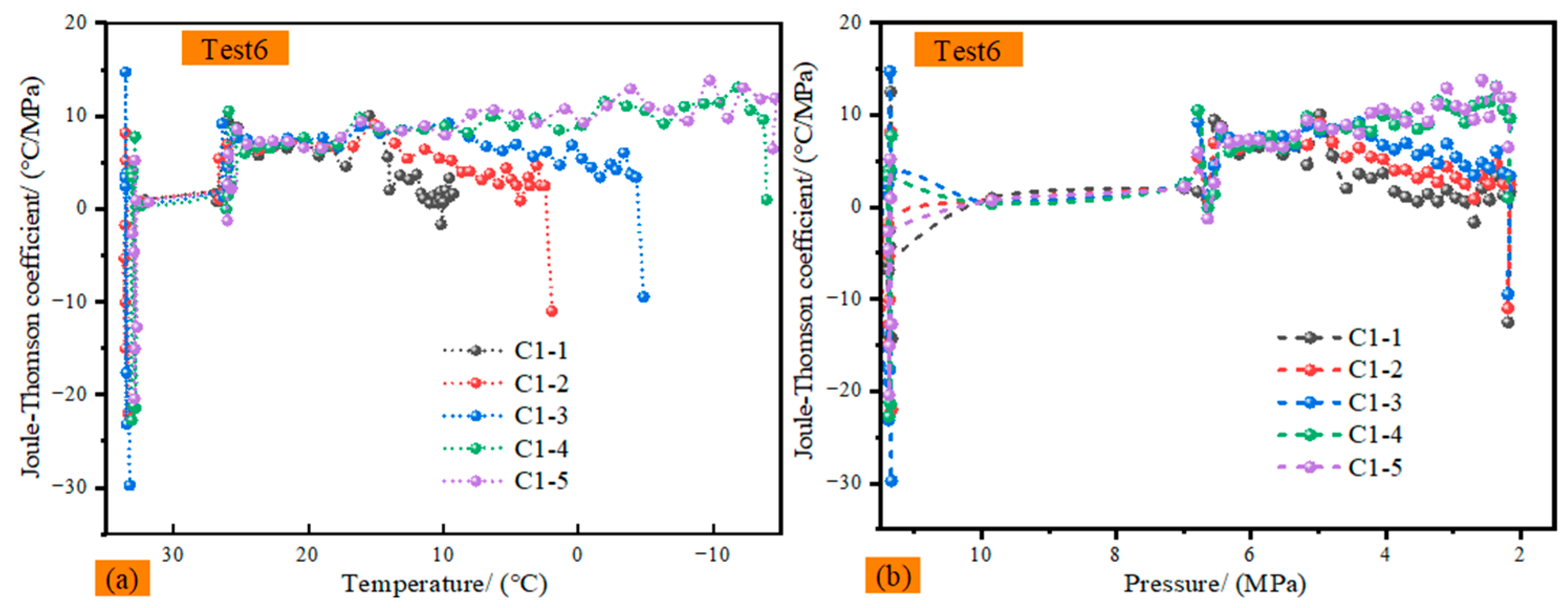
Figure 5 illustrates the variations in the apparent Joule–Thomson (J–T) coefficient with respect to temperature and pressure during Test6. A positive coefficient indicates that the CO
2 undergoes a cooling process, whereas a negative value signifies heating. As depicted in
Figure 6a, non-equilibrium transient perturbations at the onset of the leakage cause the coefficient to exhibit chaotic fluctuations. However, as the release continues and the pressure drops to approximately 7.8 °C/MP, the fluid transitions into the gas–liquid two-phase region and becomes constrained by the saturation curve. Consequently, the coefficient increases and exhibits a stable plateau. Furthermore, the measurement point at the bottom of the pipeline maintains the longest stability plateau and records the maximum coefficient values. This phenomenon is attributed not only to the higher localized density but fundamentally to gravity-induced phase stratification, which leads to liquid-phase enrichment at the bottom. As a result, the endothermic effect driven by decompression-induced flash boiling is substantially intensified. Additionally, toward the end of the leakage process, the depletion of the liquid phase (dry-out) coupled with the environmental heat ingress surpassing the expansion cooling capacity causes the temperature at certain measurement points to rebound, resulting in an abrupt shift in the coefficient to negative values.
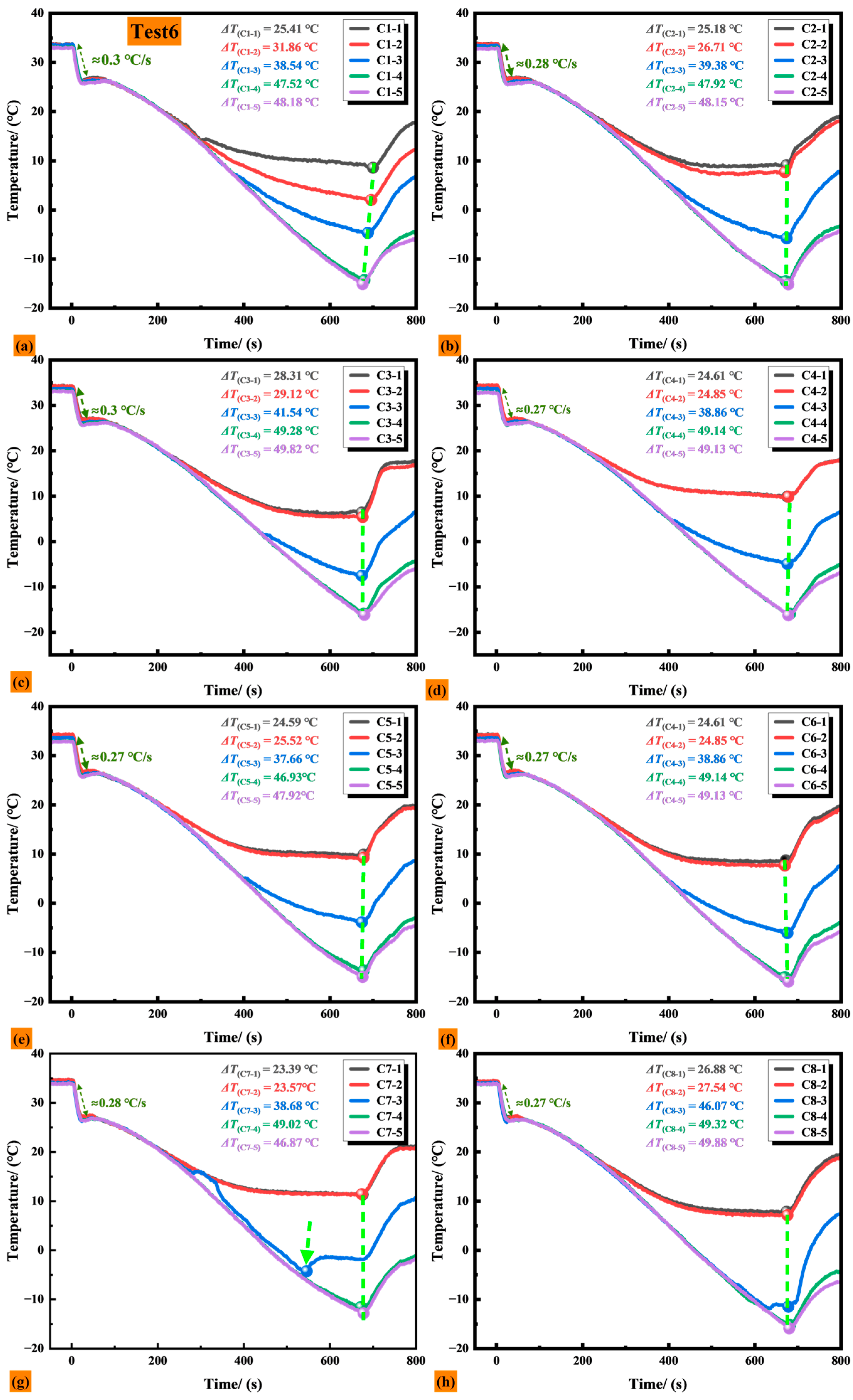
Figure 6 illustrates the temporal evolution of temperature measurements across thermocouples at sections C1 to C8 in Test6. Given that Test6 featured higher initial pressure and a larger leak aperture than Test1 and Test5, the temperature reduction trend is markedly more pronounced. It is readily apparent from
Figure 6, that following a pipeline leak, temperatures first decrease at the same axial height near the leak point. Circumferentially, temperature trends are similar in the upper and middle sections of the pipeline. Temperatures in the middle section evolve towards the pipeline’s base, with the maximum temperature difference persisting at the base. Furthermore, the maximum temperature difference increases with distance from the leak point.
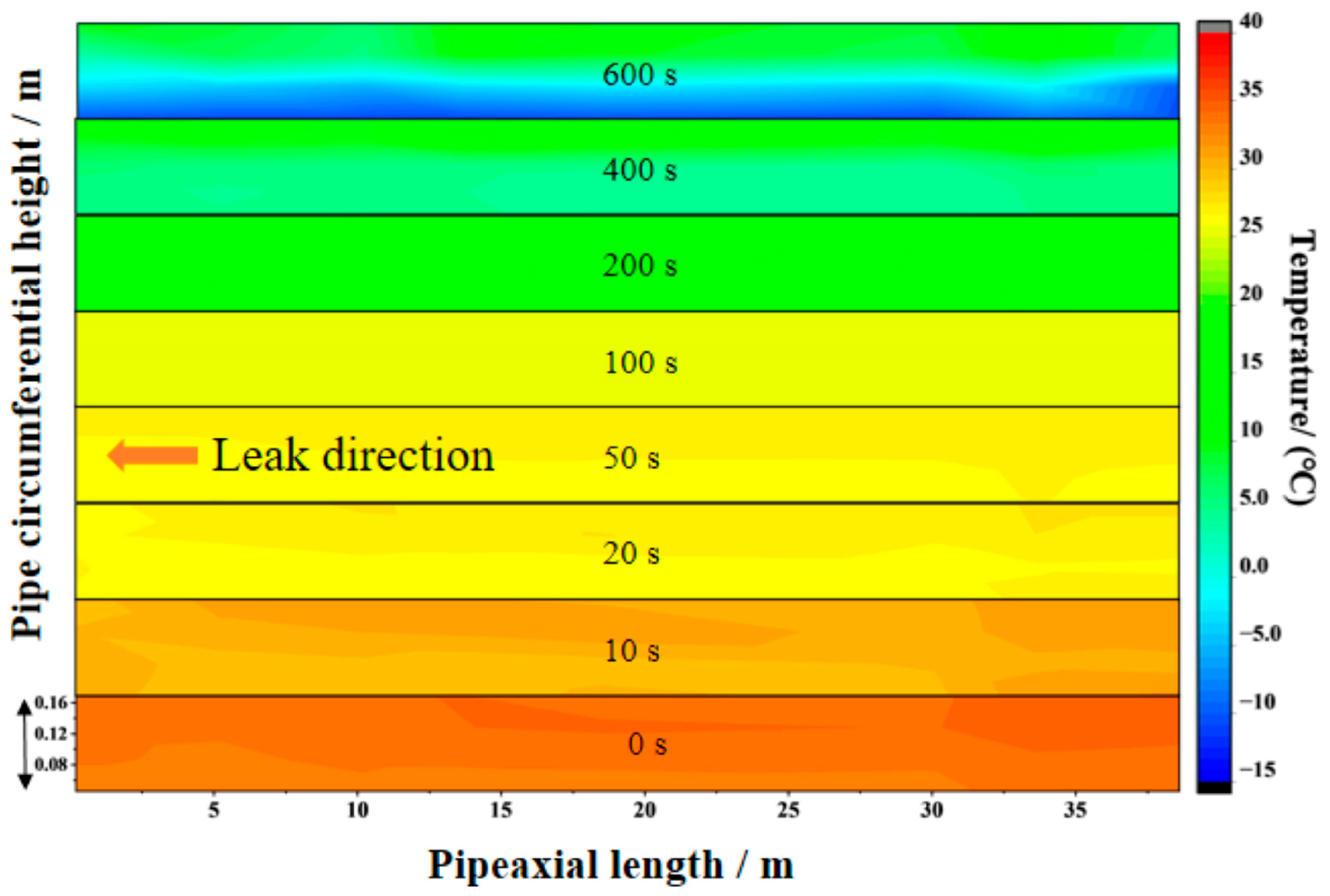
As
Figure 7 illustrates, this figure depicts the temperature distribution along the circumferential and axial directions within the pipe at different leakage durations during Test6. The temperature contour map reveals that at 10 s, the upper section of the pipe exhibits higher temperatures than the lower section. This temperature disparity becomes progressively more pronounced as the leakage persists. By 600 s, the low-temperature zone at the pipe’s base has fully enveloped the lower portion of the pipe. This temperature variation pattern differs significantly from that observed in large-diameter leakage scenarios.
3.1.3. The Effect of Leakage Diameter on the Phase Distribution Within the Pipe
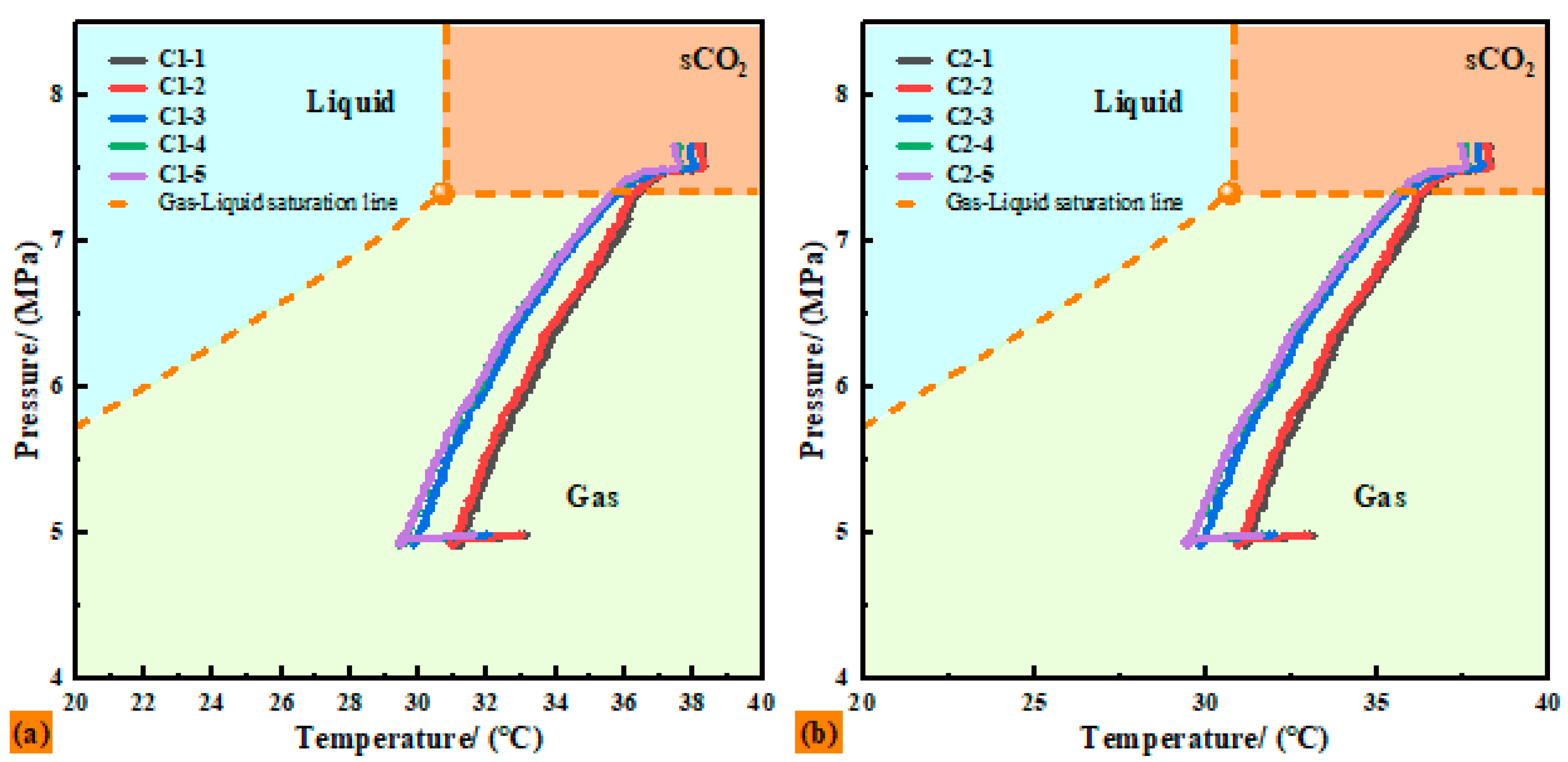
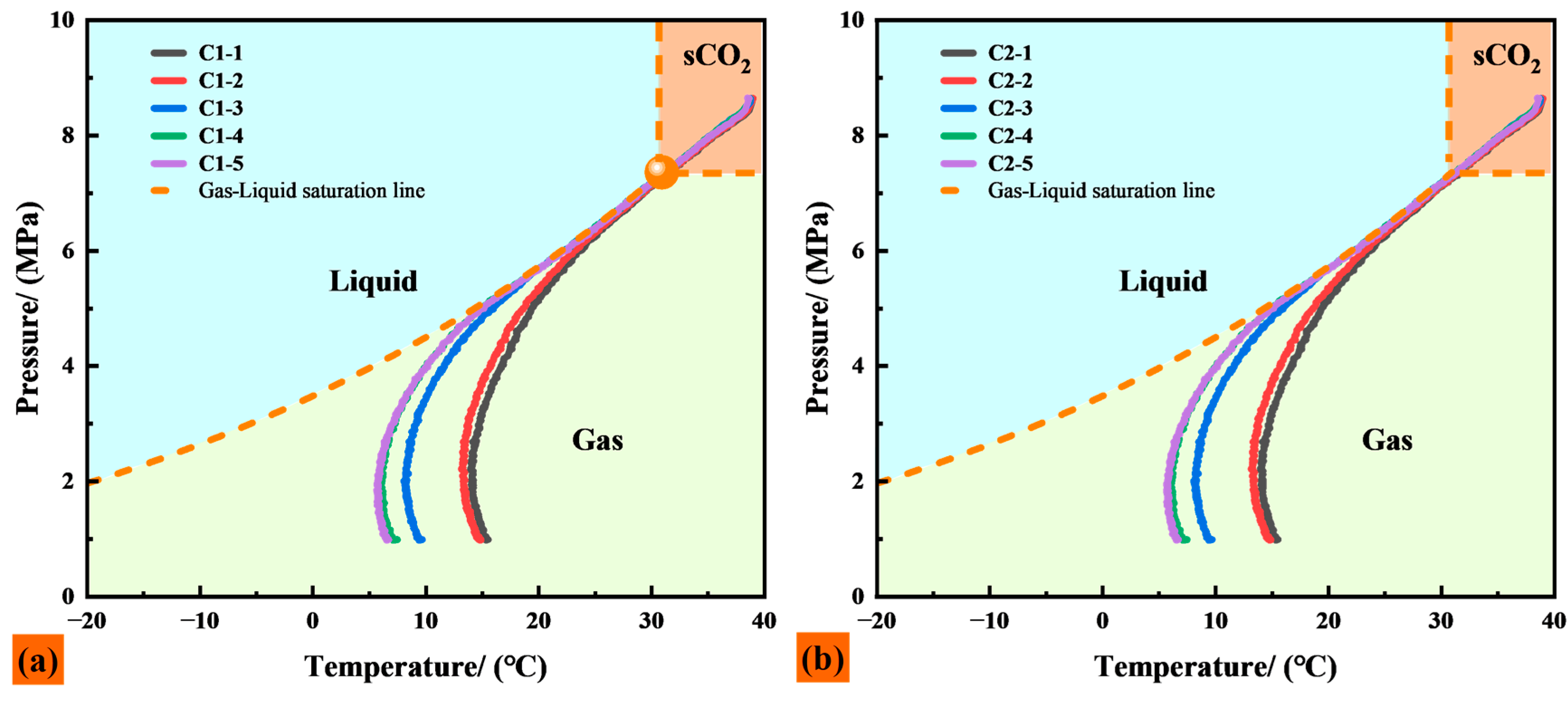
As shown in
Figure 8, this depicts the phase transition process at the C1 and C2 cross-sections within Test1. From
Figure 7, it is evident that the phase state within the tube underwent a direct transformation from a supercritical phase to a gaseous state, without transitioning towards the gaseous phase along the gas–liquid saturation line.
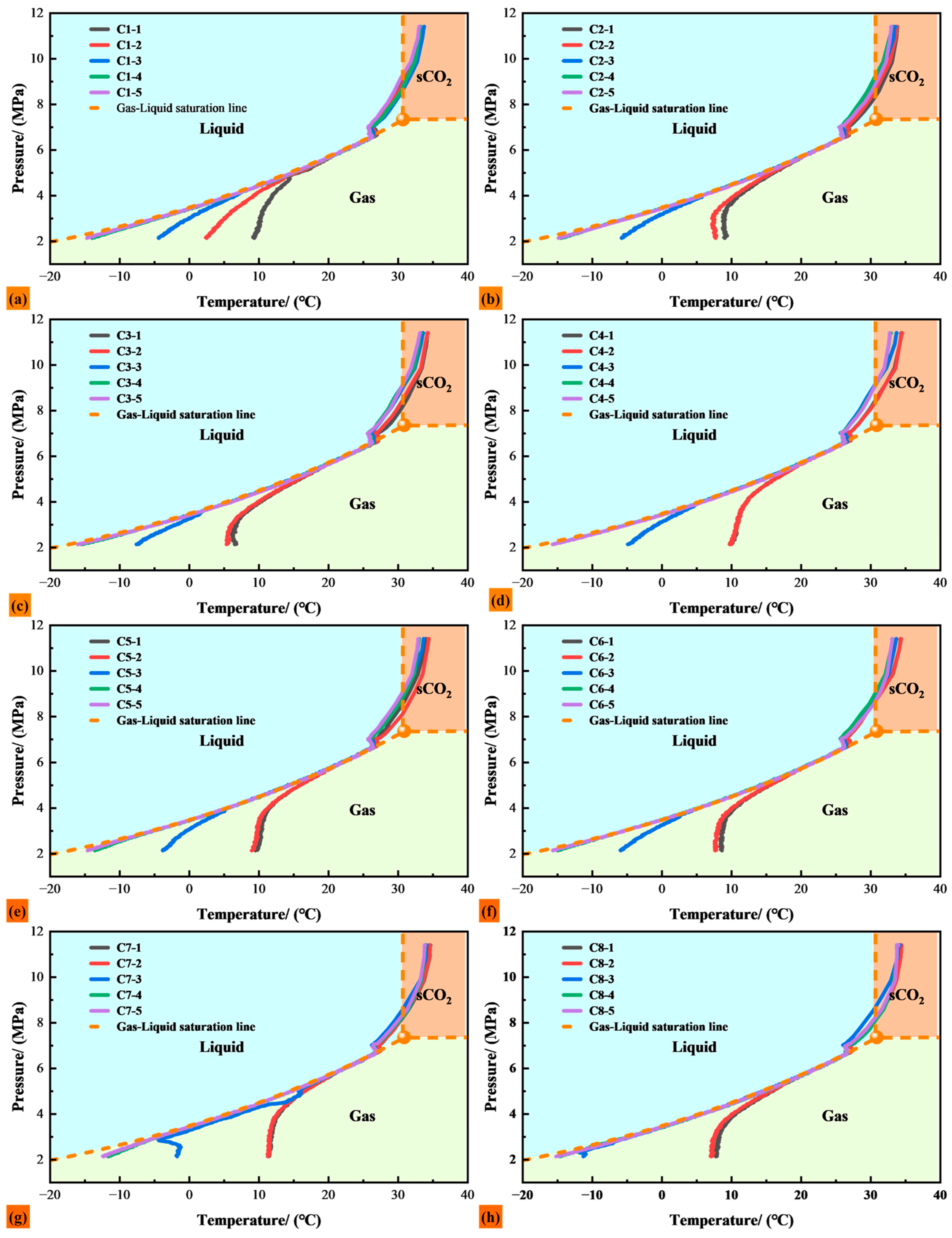
As illustrated in
Figure 9, the phase transition processes at the C1 and C2 cross-sections during Test5 are presented. It can be observed that, subsequent to pipeline leakage, the phase state at different vertical positions within the pipeline initially evolves along the gas–liquid saturation line. As the pressure decreases below the supercritical point, CO
2 in the upper region of the pipeline first deviates from the saturation line. Subsequently, CO
2 at locations progressively farther from the upper pipeline section successively departs from the saturation line until the entire medium is converted into gaseous CO
2.
As illustrated in
Figure 10, the phase evolution characteristics of the sCO
2 working medium within the buried pipeline are systematically and comprehensively presented across the eight measurement cross-sections C1 to C8 along the axial direction. It can be clearly observed that the CO
2 inside the pipeline initially undergoes a rapid phase transition from the stable supercritical state to the liquid phase under the action of a pressure drop caused by leakage, and subsequently evolves along the gas–liquid saturation line in accordance with the thermodynamic equilibrium law. Following this thermodynamic evolution stage, the CO
2 located in the upper region of the pipeline cross-section first undergoes a phase transformation into the gaseous phase driven by the continuous pressure reduction and heat exchange, accompanied by a gradual departure from the gas–liquid saturation line at successive circumferential heights throughout the entire pipe cross-section in a hierarchical manner. Notably, the pipeline segments positioned in the near-leakage zone (e.g., C1 and C2) exhibit an earlier deviation from the gas–liquid saturation line compared with those in the far-leakage sections (e.g., C7 and C8) along the axial direction. This distinct spatiotemporal evolution phenomenon can be directly attributed to the rapid propagation of the pressure wave generated during the leakage event in the pipeline, which induces a significantly higher vaporization rate in the circumferential direction near the leakage orifice, in sharp contrast to the relatively slower vaporization rate observed at locations further from the leak exit due to the attenuation of pressure wave intensity and delayed pressure response.
3.2. The Influence of Leakage Direction on the Leakage Process
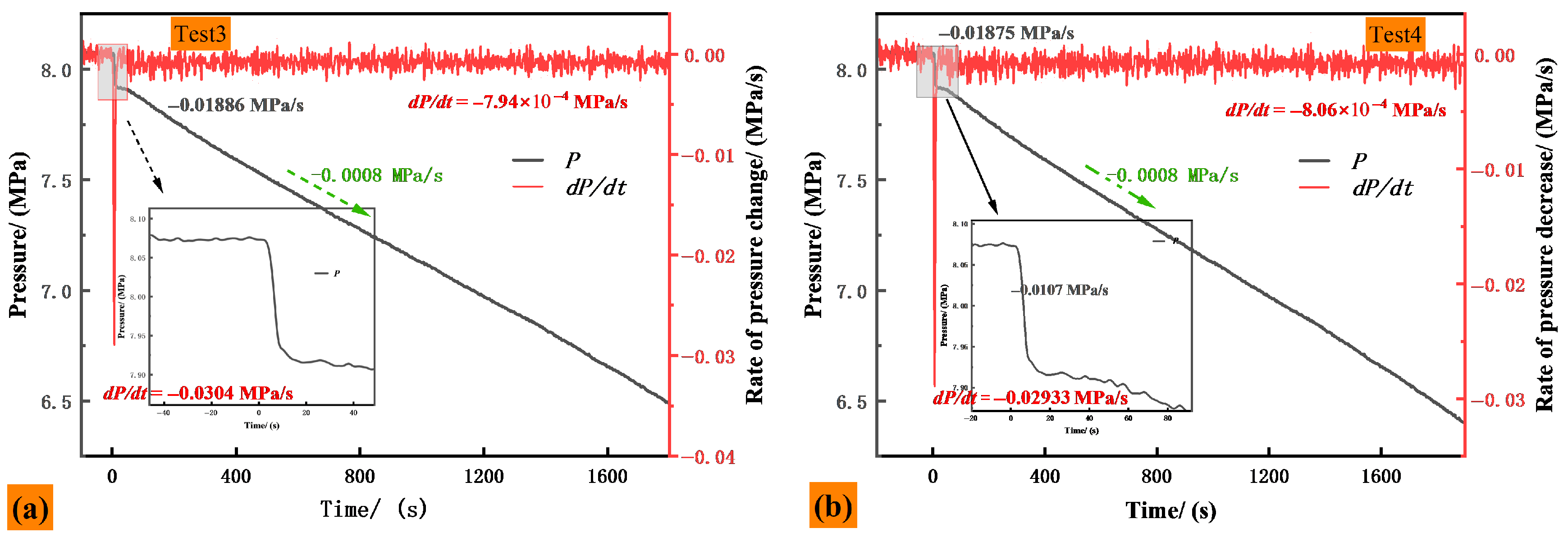
Figure 11a,b illustrate the temporal evolution of internal pressure under initial pressures of 8.1 MPa and leakage angles of 90° and 135°, respectively. In Test3 and Test4, the maximum pressure change rates were 0.0304 MPa/s, and 0.0293 MPa/s, respectively, which are lower than the value recorded in Test1 (−0.0678 °C/s). This difference is largely attributable to the orientation of the leakage aperture. In Test1, the leak port was oriented vertically upward towards the atmosphere. High-pressure CO
2 within the pipe was ejected as a high-velocity jet through the leak port, propelling the jet plume to displace the overlying soil. This unimpeded jet plume resulted in a rapid decline in pressure. In contrast, the leakage orifices in Test3 and Test4 were oriented at 90°, and 135°, respectively. The jet cloud encountered greater resistance as it dislodged soil, substantially reducing its kinetic energy. The greater the deviation angle between the jet direction and the ground surface, the greater the resistance the jet encounters. Consequently, both the rate of the pressure decrease during the first stage and the rate of pressure change throughout the pressure decline process were reduced.
Moreover, it is readily apparent from the pressure curves of Test1, Test3, and Test4 that during the phase of linear pressure reduction, the rate of pressure decline in Test1 was 0.0013 MPa/s, whereas in Test3 and Test4 it was 0.0008 MPa/s. This is primarily because the CO2 escaping in Tests3 and Test4 did not leak directly into the atmosphere; instead, it diffused into the surrounding soil at a reduced rate. Consequently, the rate of pressure reduction within the pipes was nearly identical.
The patterns of temperature and phase state variation at different circumferential heights within the C1 and C2 cross-sections in Test3 and Test4 are highly consistent with those in Test1, all employing the same 2 mm small leakage aperture. Specifically, consistent with Test1’s temperature evolution, the pipeline internal temperature in Test3 and Test4 shows a two-stage variation in rapid decline followed by a linear decrease after pinhole leakage, with the maximum temperature change rate at C1 and C2 cross-sections matching that of Test1 in the rapid cooling stage. Meanwhile, the pipeline bottom temperature drops prior to the upper section, and the vertical temperature difference between them gradually widens with leakage progression. This is due to the more intense heat absorption of liquid CO2 at the bottom during vaporization, which maintains the gas–liquid saturation state under uniform pressure drops in small-aperture leakage. In terms of phase evolution, CO2 at the C1 and C2 cross-sections in Test3 and Test4 also undergoes a direct transition from the initial supercritical state to the gaseous state, without evolving along the gas–liquid saturation line—a typical phase change characteristic of small-diameter pinhole leakage in buried sCO2 pipelines, distinct from the phase transition rules of medium and large aperture leakage (e.g., Test5 and Test6). Given paper length constraints and the high similarity with Test1, the detailed temporal evolution data and quantitative analysis of temperature and phase state in Test3 and Test4 are not elaborated further.
3.3. The Effect of Initial Pressure on the Leakage Process
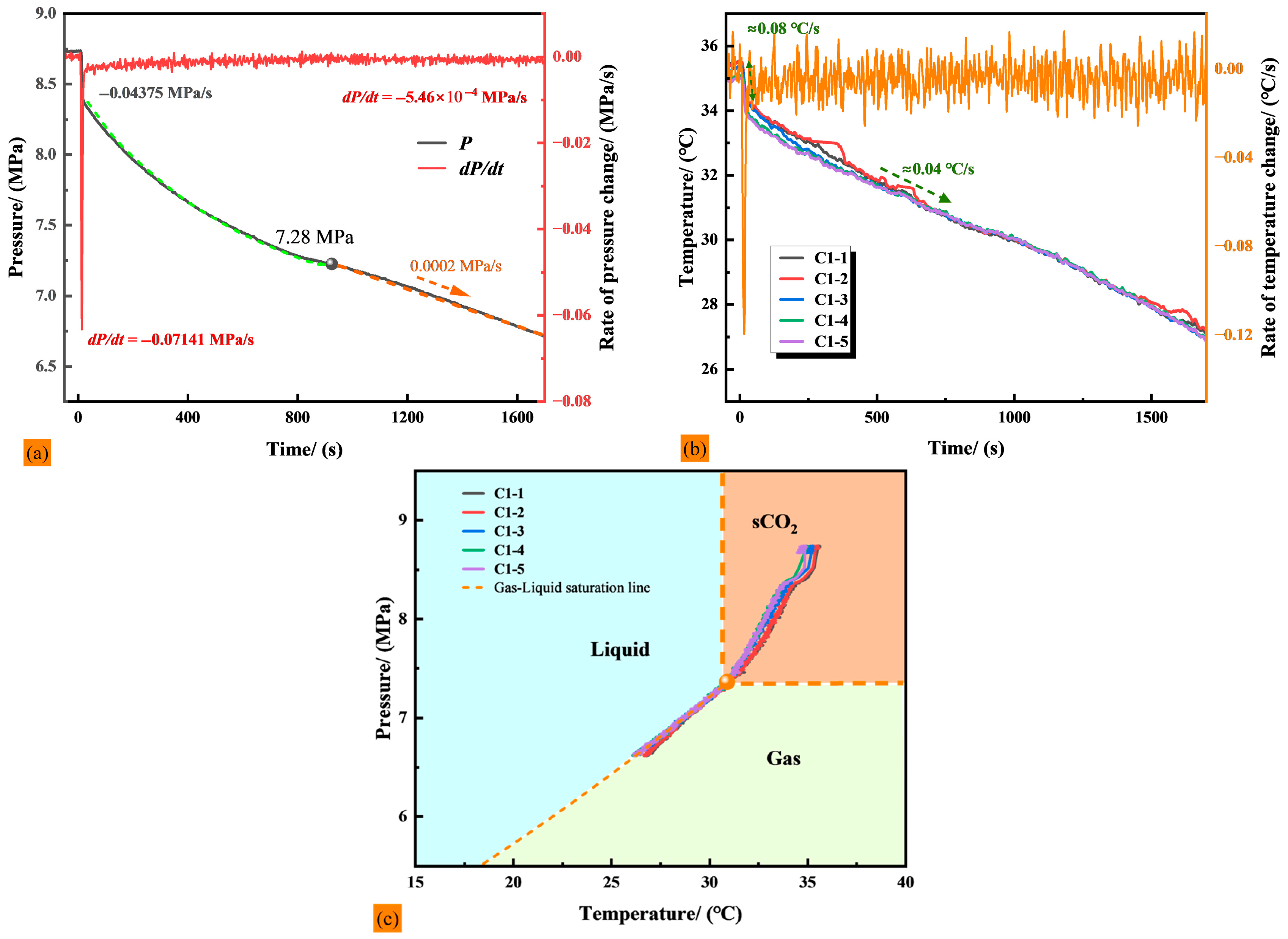
As shown in
Figure 12, this depicts the temporal evolution of pressure, temperature, and phase state within the pipe during Test2. Compared to Test1, the initial pressure increased by 0.6 MPa, yet the trend in physical property evolution exhibited significant divergence. Specifically, as the initial pressure within the tube increased, the rate of pressure decline during the first stage of pressure reduction markedly accelerated to −0.0438 MPa/s. Concurrently, the rate of change in pressure decline reached −0.0741, representing a substantial increase compared to Test1. During the stable pressure decline phase, from the initial stage to the critical pressure, behaviour resembling negative exponential decay was observed. Subsequent pressure reduction primarily exhibited linear decrease, with a rate of 0.0002 MPa/s—markedly lower than Test1. This primarily resulted from substantial CO
2 leakage before reaching critical pressure, leading to reduced CO
2 mass in the tube and significantly diminished leakage rates.
The temperature curve in
Figure 12b also reveals an accelerated rate of temperature decrease. This is attributable to the more pronounced pressure reduction, which significantly amplified the heat absorption effect of CO
2 within the pipe. The phase evolution curve in
Figure 12c shows the phase transition progressing along the gas–liquid saturation line from the supercritical phase. No distinct vapour phase was observed at the C1 cross-section.
4. Conclusions
A full-scale buried sCO2 pipeline facility was built, and six leakage tests were conducted under varied pressures, temperatures, aperture sizes, and directions. Compared to large-diameter leak-off types, small-diameter leaks lack the presence of pressure waves, and axial temperature variations within the pipe do not exhibit the “hot front, cold rear” pattern characteristic of large leaks. The conclusions drawn from this paper are as follows:
(1) The sCO2 leakage from buried pipelines shows a two-stage pressure decline: an initial rapid drop driven by high-speed mass flow, followed by a linear decline when internal pressure falls below the critical value, and liquid CO2 vaporizes uniformly. Leakage diameter correlates positively with the first-stage pressure drop rate, and choking flow can equalize linear pressure drop rates across different initial pressures.
(2) Leakage diameter dictates pipeline temperature distribution. Small-aperture leaks lead to consistent temperature drop rates at different heights; larger apertures lead to faster cooling at the pipeline bottom, creating distinct vertical temperature differences that grow closer to the leakage port.
(3) Leakage direction and initial pressure regulate sCO2 leakage dynamics. Vertical upward leakage (0°) has a higher pressure drop rate due to the lower soil resistance, while oblique leakage (90° and 135°) slows pressure decline. Higher initial pressure intensifies the first-stage pressure drop rate, strengthens the CO2 endothermic effect, and alters the sCO2 phase transition paths.
(4) Small-pore leaks differ sharply from large-diameter ones, lacking pressure waves and axial “front-hot-back-cold” profiles but enabling direct supercritical-to-gas transitions. Aperture, direction and initial pressure govern in-pipe thermodynamics and phase behaviour. This study clarifies these mechanisms, advancing CCUS pipeline leakage theory and resolving the theoretical mismatch between large and pinhole leak models, thus laying an empirical foundation for holistic CO2 leakage models across all apertures and operating conditions.