Article

Effects of Increasing Microbial Fertilizers on Phenolic Acids in Fritillaria taipaiensis P. Y. Li Soil

1
Chongqing Key Laboratory of Development and Utilization of Genuine Medicinal Materials in Three Gorges Reservoir Area, Chongqing Key Laboratory of Quality Control and Safety Evaluation of Active Pharmaceutical Ingredients, Chongqing Institute for Food and Drug Control, Chongqing 401121, China
2
College of Biology and Food Engineering, Chongqing Three Gorges University, Chongqing 404100, China
3
College of Environmental and Chemical Engineering, Chongqing Three Gorges University, Chongqing 404100, China
4
Hubei Key Laboratory of Spices & Horticultural Plant Germplasm Innovation & Utilization, College of Horticulture and Gardening, Yangtze University, Jingzhou 434000, China
*
Author to whom correspondence should be addressed.
Processes 2026, 14(7), 1037; https://doi.org/10.3390/pr14071037
Submission received: 1 February 2026 / Revised: 19 March 2026 / Accepted: 23 March 2026 / Published: 24 March 2026

Abstract

To investigate the effect of microbial fertilizers on phenolic acids in the cultivation soil of Fritillaria taipaiensis P. Y. Li, a quantitative approach utilizing ultra-high-performance liquid chromatography was applied to assess the phenolic acid levels in both rhizosphere and non-rhizosphere soils of F. taipaiensis P. Y. Li under five different microbial fertilizer regimes. Detection of six key phenolic acids (p-hydroxybenzoic, p-coumaric, vanillic, syringic, chlorogenic, and ferulic) was consistent in all soil samples, regardless of rhizosphere status or inoculation treatment. Among these, chlorogenic acid had the highest content in both rhizosphere (17.651 μg/g, accounting for 55.51%) and non-rhizosphere (25.975 μg/g, accounting for 42.38%) soils, while vanillic acid (0.903 μg/g, accounting for 8.27% in rhizosphere soil) and p-hydroxybenzoic acid (0.086 μg/g, accounting for 1.34% in non-rhizosphere soil) were the lowest in their respective soils. Whereas the control (CK) showed higher levels, inoculation with Claroideoglomus claroideum resulted in a marked decrease in all six phenolic acids within the F. taipaiensis soil. In contrast, the other treatment groups exhibited higher overall phenolic acid content than CK. Correlation analysis indicated a subset of significant positive correlations among phenolic acids in the non-rhizosphere soil; by contrast, their intercorrelations within the rhizosphere soil were universally positive and significant. The phenolic acid content in F. taipaiensis soil was significantly altered by the application of different microbial fertilizers. Among them, C. claroideum was the most effective in reducing phenolic acid accumulation.

1. Introduction

Fritillaria taipaiensis P. Y. Li, a member of the genus Fritillaria (Liliaceae), is a perennial herb whose dried bulb is used as a medicinal material. It is known for its ability to moisten the lungs, relieve coughs, resolve phlegm, as well as alleviate asthma [1,2,3]. Wild F. taipaiensis grows in shrub forests or on grassy slopes at an altitude of approximately 2400 m and is mainly distributed in Shaanxi, Chongqing, and Sichuan provinces [4,5]. Wild resources of F. taipaiensis have been severely depleted due to overharvesting, making artificial cultivation the primary approach to meet market demand. However, the plant has specific requirements for climate and soil, and underdeveloped cultivation techniques can affect its quality. At the same time, continuous cropping obstacles caused by long-term monoculture planting are a common phenomenon, seriously endangering the normal growth of medicinal plants such as F. taipaiensis and affecting the quality of medicinal materials [6]. However, there are currently no efficient and green agricultural management measures for continuous cropping obstacles of traditional Chinese medicinal materials.
The primary causes of continuous cropping obstacles and germplasm degradation are soil nutrient deficiency and plant allelopathic autotoxicity [7,8,9]. Phenolic acids are described as phenolic compounds possessing an aromatic ring with at least one hydroxyl moiety. They influence soil pH and act as allelochemicals in crop interactions, affecting plant growth and reducing yield and quality. Moreover, allelopathic effects of phenolic acids are among the main causes of continuous cropping obstacles [10,11,12], a common phenomenon that seriously harms the normal growth of medicinal plants such as F. taipaiensis and affects the quality of their medicinal materials. Plant roots can secrete allelopathically active substances, with small-molecule phenols and acids being the most common [13,14]. Syringic acid is the dominant allelochemical responsible for the allelopathic effects of Rehmannia glutinosa, with effects becoming significant before tuber expansion and intensifying as the plant develops [15,16]. Therefore, regulating the phenolic acid content in soil through effective management practices can reduce allelopathic autotoxicity and, to some extent, alleviate the continuous cropping obstacles of F. taipaiensis.
Long-term monocropping leads to distinctive accumulation patterns of phenolic acid components in the rhizosphere soil of F. taipaiensis, whereas applying organic fertilizers has been shown to suppress phenolic acid accumulation in soil [17]. Microbial fertilizers contain live microorganisms that regulate plant growth by promoting nutrient absorption, thereby improving plant quality; they are a type of biofertilizer with broad application prospects [18,19,20,21]. Soil pH influences the growth of certain medicinal plants, whereas microbial activity, organic matter decomposition, and nutrient release can, in turn, affect soil pH [22,23,24]. Applying three antagonistic fungi—Penicillium arcum D12, Trichoderma harzianum, and Penicillium oxalicum A1—effectively reduced the soil phenolic acid content and promoted the growth and development of Malus hupehensis Rehd. var. pingyiensis, with the maximum reduction in individual phenolic acid content reaching 52.69% [11,25]. However, there is still a gap in research on the effects of using microbial fertilizers instead of traditional chemical fertilizers on phenolic substances in the soil of F. taipaiensis.
This study aims to explore the effects of different types of microbial fertilizers on the phenolic acid content in the root zone soil of F. taipaiensis. Using ultra-high-performance liquid chromatography, we analyzed F. taipaiensis cultivation soils treated with five microbial fertilizers. Six phenolic acids were identified: p-hydroxybenzoic acid, chlorogenic acid, vanillic acid, syringic acid, p-coumaric acid, and ferulic acid. The study sought to investigate the influence of microbial fertilizers on phenolic acid content in the cultivation soil of F. taipaiensis, providing a reference for large-scale cultivation and mitigation of continuous cropping obstacles in this species.

2. Material and Methods

2.1. Instruments and Reagents

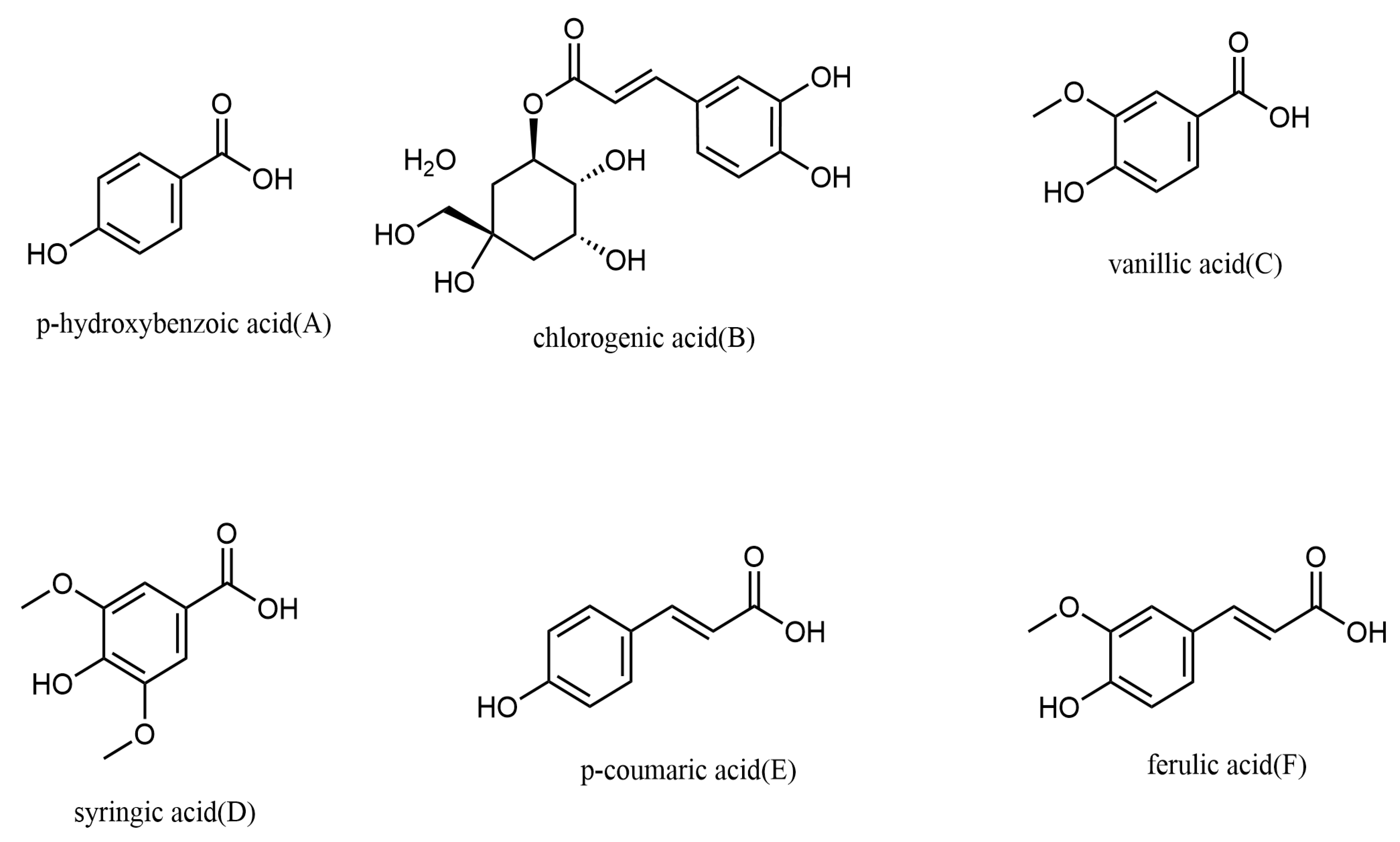
An ACQUITY UPLC H-Class ultra-high-performance liquid chromatograph (Waters, Milford, MA, USA); an FA 2004 electronic balance (Shanghai Jinpin Scientific Instrument Co., Ltd., Shanghai, China); a ZD-85 air bath thermostatic oscillator (Jintan Jingda Instrument Manufacturing Co., Ltd., Changzhou, China); a TG16-WS benchtop high-speed centrifuge (Hunan Pingfan Technology Co., Ltd., Changsha, China); and a YRE-2000A rotary evaporator (Gongyi Yuhua Instrument Co., Ltd., Gongyi, China) were used in this study. All required phenolic acid standards (p-hydroxybenzoic, p-coumaric, vanillic, syringic, chlorogenic, and ferulic acid (Figure 1); >98% pure) and HPLC-grade methanol were acquired from Chengdu Mansite Biotechnology Co., Ltd., (Chengdu, China) and Merck (Darmstadt, Germany), respectively. We obtained analytical reagent-grade hydrochloric acid and glacial acetic acid from Chengdu Cologne Chemical Co., Ltd., (Chengdu, China). All other reagents were of analytical grade. Purified water was obtained from the Yibao brand.

2.2. Experimental Materials

The fresh bulbs of F. taipaiensis were collected from three-year-old plants in the cultivation base of Hongchi Dam Scenic Area, Wuxi County, Chongqing City. The sampling area of this experiment was located at 31°32′32.09″/109°4′55.81″, at an altitude of approximately 1800–2630 m. It features a typical three-dimensional alpine cold climate, with an average summer temperature below 17 °C. The coverage area of forests and grasslands is over 85%. The collected samples were identified by Professor Zhou Nong from the Chongqing Engineering Laboratory for Green Planting and Deep Processing of Authentic Medicinal Materials in the Three Gorges Reservoir Area (Chongqing Three Gorges University) as fresh bulbs of F. taipaiensis P. Y. Li, a plant of the Liliaceae family. And then they were stored at 4 ◦C in the laboratory.
The cultivation substrate is humus soil from Tiefengshan National Forest Park, Wanzhou District, Chongqing City. The soil collection area is located at 30°55′20.40″/108°20′52.80″, altitude 530–1355 m. The humus soil was air-dried and sieved, then sterilized in a 121 °C autoclave for 2 h. The room-temperature pot (cultivation basket) method was adopted. The cultivation baskets were disinfected with 10% sodium hypochlorite solution for 15 min, then rinsed clean with pure water and set aside for later use. On 26 August 2017, the row spacing was 16 to 18 cm, the plant spacing was 3 to 4 cm, and after planting, 5 to 6 cm of soil was covered. The soil pH was 5.76, the organic matter content was 12.76 g/kg, and the alkali-hydrolyzable nitrogen, available phosphorus, and available potassium were 100.51 mg/kg, 13.94 mg/kg, and 134.6 mg/kg, respectively [26].
The International Culture Collection of (Vesicular) Arbuscular Mycorrhizal Fungi (INVAM, Morgantown, WV, USA) supplied the arbuscular mycorrhizal (AM) fungi used in this study. After propagation, the fungi Claroideoglomus claroideum and Racocetra coralloidea were used for inoculation. Potassium-solubilizing bacteria and phosphorus-solubilizing bacteria (both with a minimum effective viable count of 2 × 10¹⁰ CFU/g) were procured from Guangzhou Weiyuan Biotechnology Co., Ltd., (Guangzhou, China).
Five treatment and one control groups were established. In this study, the inoculation amount of soil microbial strains was determined with reference to the experimental design and dosage settings in the literature [27]. The inoculation regimen is as follows: T1 Group, inoculated with C. claroideum spores (inoculation dose: 35 g/pot); T2 Group, inoculated with R. coralloidea spores (inoculation dose: 35 g/pot); T3 Group, inoculated with potassium-solubilizing bacteria (inoculation dose: 35 g/pot); T4 Group, inoculated with phosphorus-solubilizing bacteria (inoculation dose: 35 g/pot); T5 Group, inoculated with a mixed microbial preparation containing C. claroideum, R. coralloidea, bacteria capable of solubilizing potassium, and bacteria capable of solubilizing phosphorus (each applied at one-quarter of the single inoculation dose used in T1–T4); CK Group, blank control. Each processing group is repeated 5 times, and three parallel samples are measured for each repetition. During the growth period of F. taipaiensis, routine management was conducted. On 29 May 2018, rhizosphere soil of F. taipaiensis was collected using the multi-point mixing method. The litter layer was gently removed, and a small wooden shovel was used to carefully scrape off the surface soil. The rhizosphere soil was collected using the root-shaking method, where large soil particles attached to the bulbs were shaken off, and the remaining portion was used as the experimental rhizosphere soil. For non-rhizosphere soil, soil was collected from 1–2 cm away from the roots, and sample information was recorded.

2.3. Preparation of Standard Solutions

Precise amounts of p-hydroxybenzoic, chlorogenic, vanillic, syringic, p-coumaric, and ferulic acids (Chengdu Mansite Biotechnology Co., Ltd., Chengdu, China; >98% pure) were weighed and prepared as reference standards. Each standard was dissolved in methanol and diluted to volume to prepare standard solutions with final concentrations of 2.22, 1.09, 0.98, 1.01, 1.19, and 2.00 mg/mL, respectively. The solutions were stored in a refrigerator at 4 °C for subsequent use.

2.4. Preparation of Sample Solutions

The extraction method for phenolic acids from soil samples was performed with modifications based on previous reports [17,28,29,30,31]. Five grams of soil (which had been passed through a 100-mesh sieve) from each treatment group was precisely weighed and transferred into a 50-milliliter centrifuge tube. Following the addition of 25 mL of 2 mol/L sodium hydroxide, the mixture underwent 30 min of sonication followed by a subsequent 2 h resting period. Subsequently, the samples were placed on a rotary shaker at 190 r/min for 12 h and maintained at 28 °C. Following shaking, the mixture was held at ambient temperature for 2 h prior to a 10 min centrifugation at 4000 rpm. The supernatant was collected and its pH adjusted to 2.5 with 12 mol/L HCl to precipitate humic acids. The mixture was vortexed thoroughly and then filtered. The obtained supernatant underwent triple extraction with ethyl acetate. The upper organic phases were pooled and evaporated to dryness at 45 °C under reduced pressure using a rotary evaporator. To prepare the test solution, the residue was dissolved in methanol, brought to a volume of 5 mL in a brown volumetric flask, and then passed through a 0.22-μm microporous membrane filter.

2.5. Chromatographic Conditions

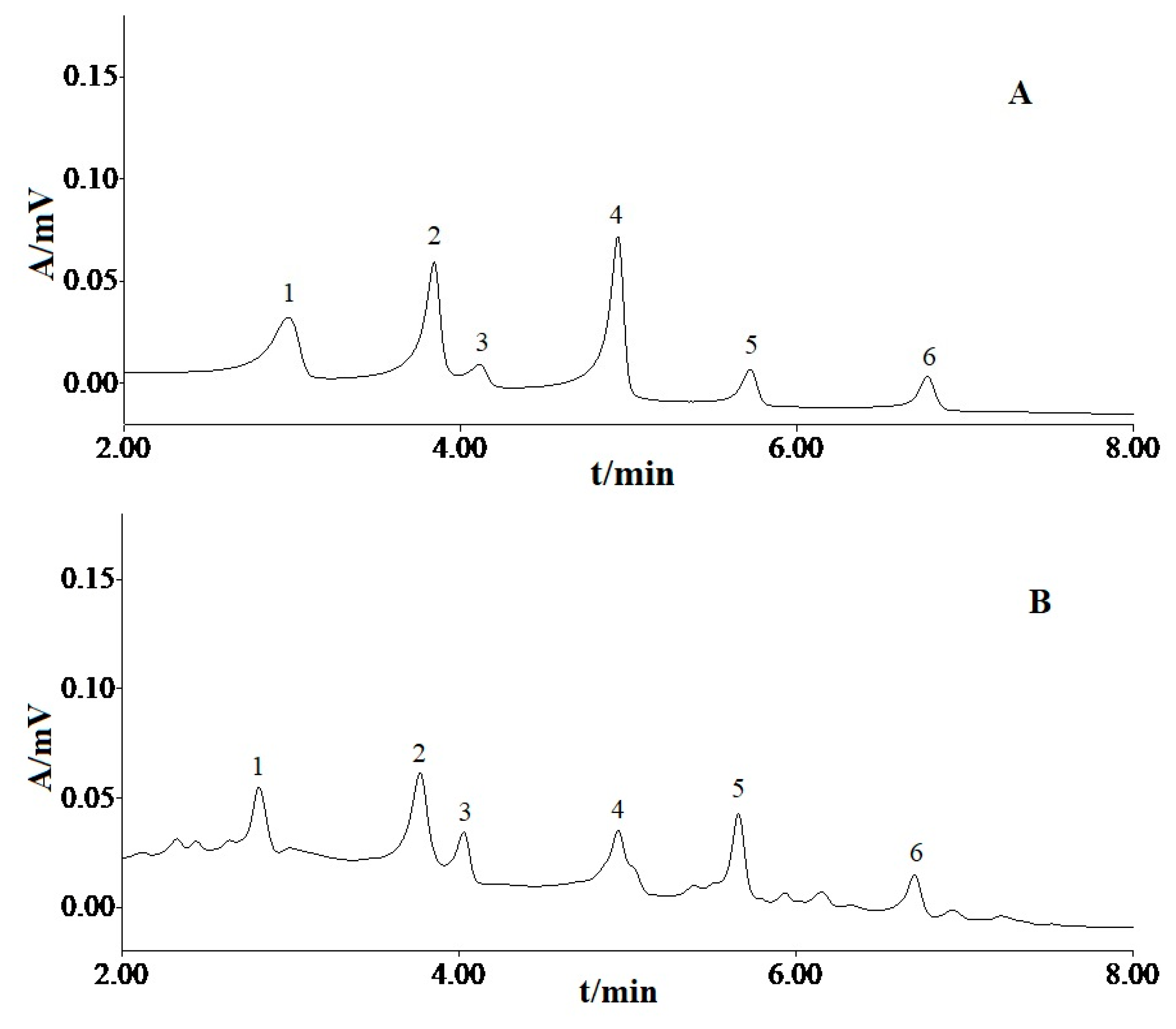
For the purpose of chromatographic separation, an ACQUITY UPLC BEH C18 analytical column (2.1 mm i.d. × 50 mm length, 1.7 μm particle size) was used [32]. A binary mobile phase comprising 0.1% aqueous acetic acid (A) and methanol (B) was employed under the following gradient conditions: 0 min, 95% A/5% B; 3 min, 80% A/20% B; 11 min, 70% A/30% B; 13 min, 95% A/5% B; and 15 min, 95% A/5% B. The chromatographic conditions were as follows: flow rate, 0.3 mL·min−1; injection volume, 10 μL; column temperature, 35 °C; and sample chamber temperature, 10 °C. The chromatogram is shown in Figure 2.

2.6. Data Analysis

Data analysis was conducted using SPSS 22.0. Before performing one-way ANOVA, the normality of residuals and homogeneity of variances were assessed using the Shapiro–Wilk test and Levene’s test, respectively. Since these assumptions were satisfied, differences among treatments were evaluated using one-way analysis of variance (one-way ANOVA), followed by Duncan’s multiple range test for groups showing significant effects in the ANOVA. Significant differences among treatments were indicated by different letters. Pearson correlation analysis was used to examine relationships among phenolic acids. Principal component analysis (PCA) was performed in R (version 4.4.2), primarily using the stats, factoextra, and ggplot2 packages for data analysis and visualization. In all statistical analyses, significance was defined at p < 0.05 and high significance at p < 0.01.

3. Results and Discussion

3.1. Experimental Quality Assessment

One milliliter of each of the six standard solutions prepared in Section 2.3 was pipetted and diluted to 10 mL with methanol. Then, an array of gradient dilutions was prepared to obtain mixed standard solutions containing the six phenolic acids at various concentrations. Every solution underwent injection following the chromatographic conditions described in Section 2.5. The peak area (y) was graphed against the injection concentration (x) to establish the standard calibration curves. The regression equations and linear ranges are summarized in Table 1.
To assess instrumental precision, a mixed standard solution was analyzed using the chromatographic conditions detailed in Section 2.5. The peak area-related relative standard deviations (RSDs) of p-hydroxybenzoic, p-coumaric, vanillic, syringic, chlorogenic, and ferulic acids were 1.90%, 2.18%, 0.80%, 0.41%, 1.11%, and 1.73%, respectively, indicating good instrumental precision. For repeatability testing, six portions of the same soil sample (non-rhizosphere soil, treatment T4) were analyzed. The method demonstrated excellent repeatability, as evidenced by the low RSD values (0.94%, 0.35%, 0.43%, 0.57%, 0.32%, and 0.58%) for the peak areas of the six phenolic acids. For stability testing, the prepared sample solution (non-rhizosphere soil, treatment T4) was analyzed over 24 h. With RSDs of 0.94%, 0.35%, 0.43%, 0.57%, 0.32%, and 0.58% for the six phenolic acids’ peak areas, the results confirm that the sample solution remained highly stable throughout the 24 h testing period.
Six portions of soil samples with known phenolic acid content (non-rhizosphere soil, treatment T4) were used for spike-and-recovery tests. The six phenolic acids showed mean recoveries of 98.34–102.48%, with RSD values within the range of 1.78–2.76% (Table 2).

3.2. Analysis of Phenolic Acid Components in F. taipaiensis Soils Under Different Fertilization Treatments

The prepared sample solutions were injected under the chromatographic conditions described in Section 2.5. Phenolic acid compounds were identified by comparison with reference standards, and their concentrations were calculated based on peak areas. The types and contents of phenolic acids in rhizosphere and non-rhizosphere soils across five fertilization treatment groups (T1–T5) and the blank control (CK) are shown in Table 3. Quantitative statistical comparisons indicated that the phenolic acid contents of rhizosphere soils were significantly distinct (p < 0.05) from those of non-rhizosphere soils across the tested fertilization treatments. A key finding was the detection of the complete set of six target phenolic acids across the soil samples. In the rhizosphere soil, chlorogenic acid content approximately doubled in treatments T2, T3, and T4 compared to CK, along with a general increase in all other phenolic acids. In T1, all phenolic acids except p-coumaric acid decreased. In non-rhizosphere soil, compared with CK, T2 exhibited decreased phenolic acid contents. Treatment T1 exerted contrasting effects on the phenolic acids: it downregulated the content of p-hydroxybenzoic acid, chlorogenic, and syringic acids, while elevating the concentrations of the other three. In T3, T4, and T5, the contents of all six phenolic acids increased. A comparison of rhizosphere versus non-rhizosphere soils across different treatments revealed the following patterns: in CK, T1, T4, and T5, non-rhizosphere soil exhibited a higher p-hydroxybenzoic acid content compared with rhizosphere soil; for chlorogenic and syringic acids, except for T2, non-rhizosphere soil contained a notably higher level of these substances, which was confirmed by experimental determination; for vanillic acid and ferulic acid, except for ferulic acid in T4, the contents of T1, T4, and T5 were higher in the non-rhizosphere soil; and for p-coumaric acid, treatments T4 and T5 exhibited higher contents of the tested substances in non-rhizosphere soil compared with rhizosphere soil.

3.3. Correlation of Phenolic Acid Contents in F. taipaiensis Soils Under Different Fertilization Treatments

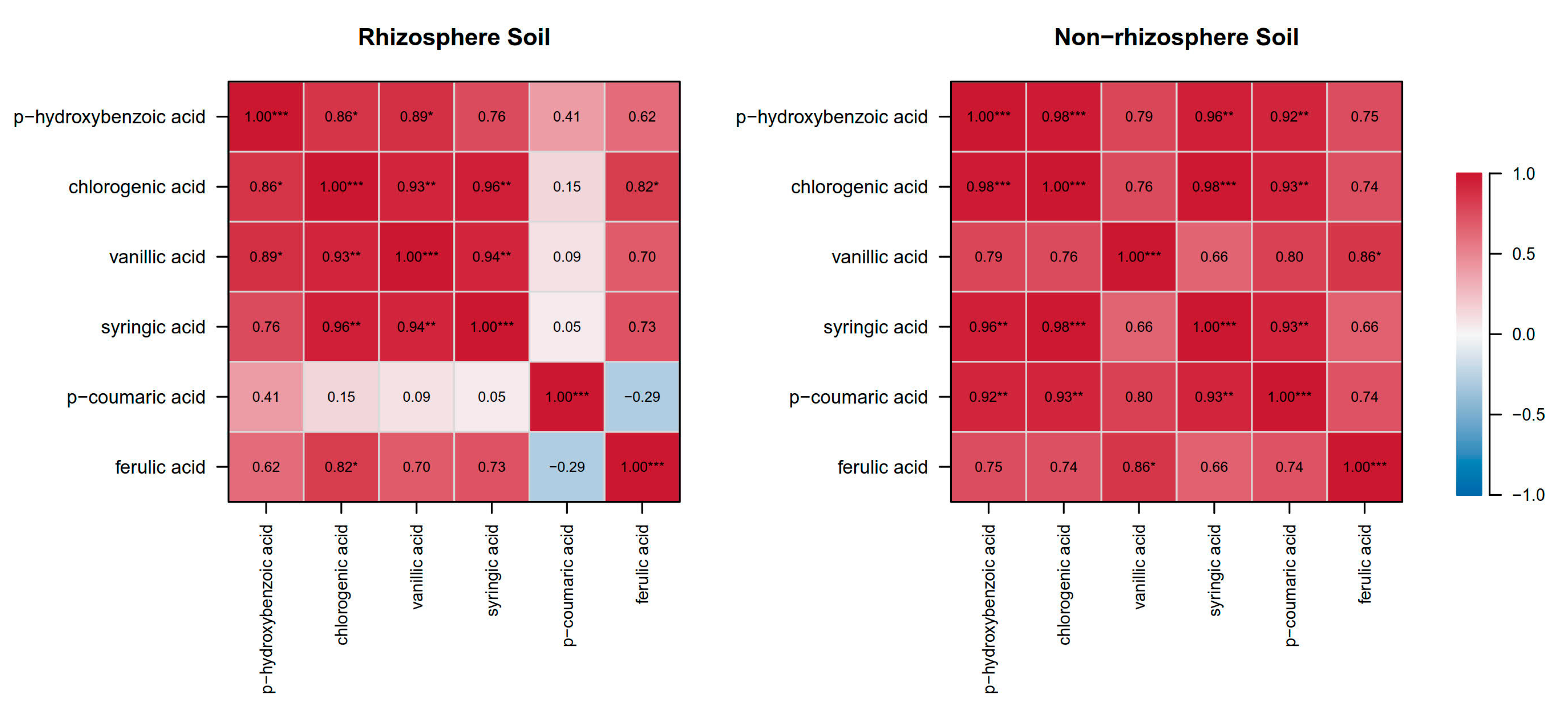
Correlation analysis among the six phenolic acids was conducted using SPSS 22.0, and the results are presented in Figure 3. In rhizosphere soil, the contents of the six phenolic acids exhibited highly significant positive correlations with each other. Significant positive correlations (p < 0.01) were observed among the phenolic acids, with the strongest occurring between chlorogenic and syringic acids (r = 0.96), suggesting potential synergistic interactions among these phenolic acids. In non-rhizosphere soil, p-hydroxybenzoic acid exhibited strong positive correlations (p < 0.01) with chlorogenic (r = 0.98), syringic (r = 0.96), and p-coumaric acids (r = 0.92). At the 0.01 significance level, correlation analysis confirmed significant positive intercorrelations (p < 0.01) among chlorogenic acid, syringic acid, and p-coumaric acid. The r-values for the chlorogenic–syringic, chlorogenic–p-coumaric, and syringic–p-coumaric acid pairs were 0.98, 0.93, and 0.96, respectively. The findings point to a coordinated upregulation of secondary metabolic pathways for the six phenolic acids in F. taipaiensis soil across the fertilization treatments [12].

3.4. Principal Component Analysis of Soil Organic Acid Contents Under Different Treatments

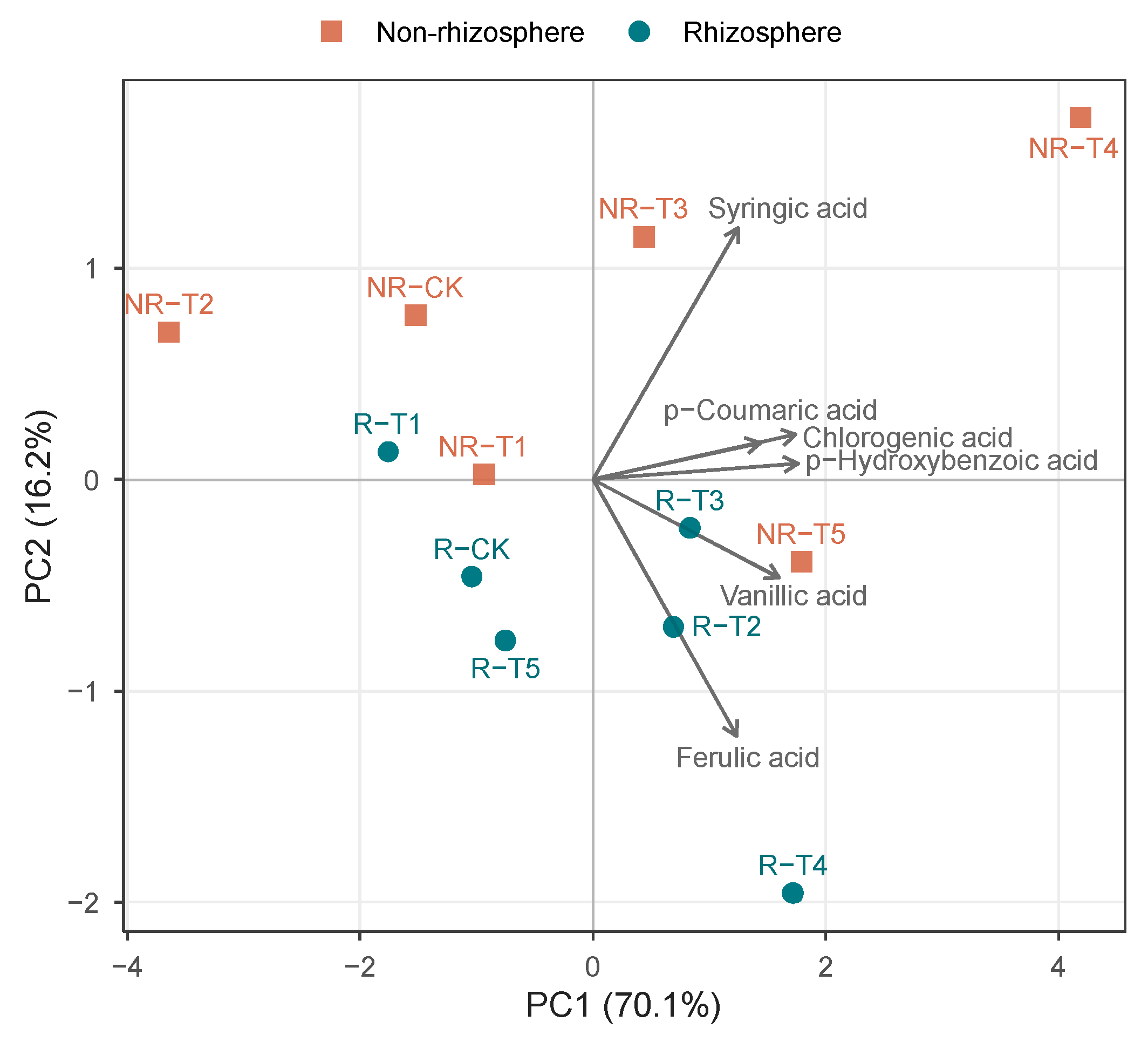
Principal component analysis of six phenolic acids in rhizosphere and non-rhizosphere soils showed that PC1 and PC2 explained 70.1% and 16.2% of the total variance, respectively, accounting for 86.3% overall (Figure 4). All six acids loaded positively on PC1, indicating that this axis mainly represented an overall gradient of phenolic acid accumulation, whereas PC2 reflected compositional differences among acids. Samples were primarily separated along PC1 according to treatment intensity, with T4 located at the positive end in both soil types, indicating the strongest shift in phenolic acid composition. Rhizosphere and non-rhizosphere soils were further differentiated mainly along PC2, suggesting a soil compartment effect in addition to treatment effects.

3.5. Effects of Microbial Fertilizer Application on Phenolic Compounds in the Rhizosphere Soil of F. taipaiensis

This work presents the first comprehensive investigation into how microbial fertilizers affect phenolic compounds in F. taipaiensis soils. The application of microbial fertilizer resulted in significant alterations to phenolic acid content, showing pronounced variation in accumulation levels among the treatment groups. Correlation analysis revealed highly significant positive correlations among the six measured phenolic acids, indicating intrinsic connections and mutual interactions among these compounds in F. taipaiensis cultivation soils. In comparison with CK, the T1 treatment resulted in a marked decline in the concentrations of all six phenolic acids within the rhizosphere soil of F. taipaiensis, whereas the other treatment groups exhibited higher overall phenolic acid contents than CK.
In another batch of samples tested during the same period, the use of microbial fertilizers improved the rhizosphere environment of F. taipaiensis and enhanced its medicinal quality [33,34], which may be related to changes in phenolic acid content in rhizosphere soil [17]. This indicates the harm of phenolic acids and the utilization/degradation of phenolic acids by microorganisms [35]. Therefore, reducing the accumulation of phenolic acids in the rhizosphere soil of F. taipaiensis through the application of microbial fertilizers has potential practical value.

3.6. Effects of Microbial Fertilizer Application on Phenolic Compounds in the Non-rhizosphere Soil of F. taipaiensis

This study further revealed that the amendment with microbial fertilizers resulted in elevated levels of specific phenolic compounds in non-rhizosphere soils compared to rhizosphere soils. This difference may be attributed to the generally higher abundance and metabolic activity of microorganisms in rhizosphere soils, which are in close contact with plant roots and typically harbor greater microbial biomass and diversity. These microorganisms can affect soil chemical substances, including phenolic compounds, through various mechanisms. Specifically, microorganisms in rhizosphere soil may secrete enzymes that accelerate the decomposition and transformation of phenolic compounds, thereby reducing their contents.

4. Conclusions

In summary, the application of microbial fertilizers can influence phenolic acid contents in F. taipaiensis soils. The T1 treatment, which applied C. claroideum microbial fertilizer, effectively lowered soil phenolic compounds, leading to a significant reduction in p-hydroxybenzoic and syringic acids, particularly in both rhizosphere and non-rhizosphere soils. Therefore, C. claroideum microbial fertilizer may help alleviate allelopathic effects during F. taipaiensis growth.

Author Contributions

W.Y.: Conceptualization, Methodology, Software, Formal analysis, Writing—Original Draft, Visualization. M.H.: Conceptualization, Methodology, Investigation. D.W.: Investigation, Resources, Data Curation, Writing—Original Draft. H.W.: Resources, Investigation, Supervision. Y.W.: Resources, Supervision. R.Y.: Investigation, Data Curation. L.W.: Validation, Supervision. S.H.: Investigation, Supervision. Q.W.: Writing—Review and Editing, Supervision. N.Z.: Resources, Writing—Review and Editing, Supervision, Funding acquisition. All authors have read and agreed to the published version of the manuscript.

Funding

This study has been supported by Study on Quality Standard of Genuine Medicinal Materials of Aucklandiae Radix, Polygonati Rhizoma, Citri Reticulatae Pericarpium and Fritillaria taipaiensis P. Y. Li in Three Gorges Reservoir Area (Sys20210020, Sys20210027, Sys20210029) and supplementary Test Method for the Determination of 16 Amino Acids in Scorpio by Scientific Research Project of Chongqing Municipal Drug Administration (CQYJKJ2025-01).

Data Availability Statement

The original contributions presented in this study are included in the article. Further inquiries can be directed to the corresponding author.

Acknowledgments

Thanks to all the people who provided help for this research. They are all among the authors of the article.

Conflicts of Interest

The authors declare no conflict of interest.

References

  1. Chinese Pharmacopoeia Commission. Pharmacopoeia of the People’s Republic of China; China Medical Science and Technology Press: Beijing, China, 2020; p. 38. [Google Scholar]
  2. Zhang, H.; Wang, H.; Niu, B.; Guo, K.; Liu, L.; Jiang, Y.; Zhang, S. Screening, identification and broad-spectrum application of efficient IAA-producing bacteria dissolving phosphorus and potassium. Biotechnol. Bull. 2022, 38, 100–111. [Google Scholar] [CrossRef]
  3. Wang, H.; Lang, J.; Ren, X.; Liu, Z.; Wang, P.; Luo, Q.; Guo, D.; Zhou, N. Screening and identification of inter-root potassium-solubilising bacteria of Fritillaria taipaiensis P.Y.Li from different origins and their growth-promoting characteristics. Soil Fertil. Sci. China 2025, 6, 213–224. [Google Scholar] [CrossRef]
  4. Sini, H.N.; Barzegar, R.; Mashaee, S.S.; Ghahsare, M.G.; Mousavi-Fard, S.; Mozafarian, M. Effects of biofertilizer on the production of bell pepper (Capsicum annuum L.) in greenhouse. J. Agric. Food Res. 2024, 16, 101060. [Google Scholar] [CrossRef]
  5. Hou, M.; Hou, S.; Zhao, R.; Yu, J.; Lai, P. Optimization of the extraction process and antioxidant activity of polysaccharides from Fritillaria taipaiensis by Orthogonal test. West China J. Pharm. Sci. 2023, 38, 683–686. [Google Scholar] [CrossRef]
  6. Ma, H.; Li, J.; Luo, A.; Lv, H.; Ren, Z.; Yang, H.; Fang, X.; Shahzad, M.A.; Qu, H.; Zhang, K.; et al. Vanillin, a Newly Discovered Autotoxic Substance in Long-Term Potato Continuous Cropping Soil, Inhibits Plant Growth by Decreasing the Root Auxin Content and Reducing Adventitious Root Numbers. J. Agric. Food Chem. 2023, 71, 16993–17004. [Google Scholar] [CrossRef]
  7. Li, M.; Feng, F.; Zhang, B.; Gu, L.; Wang, F.; Yang, Y.; Tian, Y.; Chen, X.; Zhang, Z. Advances on molecular mechanisms of Rehmannia glutinosa consecutive monoculture problem formation in multi-omics era. China J. Chin. Mater. Medica 2017, 42, 413–419. [Google Scholar] [CrossRef]
  8. Xiong, J.X.; Du, L.S.; Li, N.N.; Wu, X.T.; Xiang, Y.; Li, S.; Zou, L.; Liu, D.; Huang, D.; Xie, Z.F.; et al. Pigmentiphaga kullae CHJ604 improved the growth of tobacco by degrading allelochemicals and xenobiotics in continuous cropping obstacles. J. Hazard. Mater. 2024, 465, 133466. [Google Scholar] [CrossRef]
  9. Mu, M. Study on Effect of Continuous Cropping Obstruction of Fritillaria taipaiensis P. Y. Li and Its Mitigation Measures. Master’s Thesis, Dali University, Dali, China, 2019. [Google Scholar] [CrossRef]
  10. Li, J.; Li, Y.; Gou, Y.; Zhang, T.; Zhu, J.; Xiao, X. Research Progress in Phenolic Acid Metabolism and Allelopathic Effect. Heilongjiang Agric. Sci. 2019, 8, 175–182. [Google Scholar] [CrossRef]
  11. Zhu, B.; Li, Y.; Rensing, C.; Ye, J.; Qiu, J.; Li, Q.; Wu, L.; Lu, Q.; Lin, Y.; Jia, X. Improvement of phenolic acid autotoxicity in tea plantations by Pseudomonas fluorescens ZL22. J. Hazard. Mater. 2023, 458, 131957. [Google Scholar] [CrossRef]
  12. Kanjana, N.; Li, Y.; Shen, Z.; Mao, J.; Zhang, L. Effect of phenolics on soil microbe distribution, plant growth, and gall formation. Sci. Total Environ. 2024, 924, 171329. [Google Scholar] [CrossRef]
  13. Wang, Y.; Wang, H. Allelochemicals from Roots Exudation and Its Environment Behavior in Soil. Chin. J. Soil Sci. 2010, 41, 501–507. [Google Scholar] [CrossRef]
  14. Wang, Q.; Zhang, C.; Tian, B.; Han, L.; Liu, D.; Li, G.; Gui, S.; Smagghe, G.; Chen, X.; Wu, X. Consortia of Bacillus sp. LY05 and Bacillus cereus LGY06 immobilized on coconut shell charcoal remediates pendimethalin and cadmium contaminated sites in-situ and alleviates peanut’s continuous cropping obstacles. J. Hazard. Mater. 2025, 492, 138168. [Google Scholar] [CrossRef] [PubMed]
  15. Zhang, B.; Li, X.; Feng, F.; Gu, L.; Zhang, J.; Zhang, L.; Zhang, C. Correlation of Allelopathy of Rehmannia glutinosa Root Exudates and Their Phenolic Acids Contents. J. Chin. Med. Mater. 2015, 38, 659–663. [Google Scholar] [CrossRef]
  16. Vázquez-Vázquez, J.; Barajas-Salazar, M.; Casas-Godoy, L.; Alcázar-Valle, M.; Arellano-García, L.; Barrera-Martínez, I. Enhanced extraction of antioxidant phenolics: Quercetin, Kaempferol, Gallic Acid, Syringic Acid, and Epicatechin from fresh berries and their waste using Ultra-Turrax and Ultrasonication. Appl. Food Res. 2024, 4, 100539. [Google Scholar] [CrossRef]
  17. Yang, W.; Li, J.; Zhou, Y.; Wang, Y.; Wenting, W.; Zhou, N.; Wu, Q.S. Phenolic acid reduction in Fritillaria taipaiensis rhizosphere via organic fertilization. Plant Signal. Behav. 2025, 20, 2554917. [Google Scholar] [CrossRef]
  18. Microbes: Next-generation fertilizers. Nat. Biotechnol. 2024, 42, 1163. [CrossRef]
  19. Li, X.; Du, X.; Jones, D.L.; He, Z.; Liu, J.; Guo, X.; Tang, Z. Nanoplastic and phthalate induced stress responses in rhizosphere soil: Microbial communities and metabolic networks. J. Hazard. Mater. 2025, 489, 137591. [Google Scholar] [CrossRef]
  20. Wang, J.; Li, M. Research progress in the application of microbial fertilizers in chemical fertilizer reduction and efficiency increase in orcharding. Microbiol. China 2024, 51, 4394–4415. [Google Scholar] [CrossRef]
  21. Zhou, N.; Mei, C.M.; Zhu, X.Y.; Zhao, J.J.; Ma, M.G.; Li, W.D. Research progress of rhizosphere microorganisms in Fritillaria L. medicinal plants. Front. Bioeng. Biotechnol. 2022, 10, 1054757. [Google Scholar] [CrossRef]
  22. Qu, X.; Lin, Y.; Tian, B.; Song, Y. The correlation between traditional Chinese medicine resources and environment: A review. Pharm. Clin. Chin. Mater. Medica 2020, 11, 21–25. [Google Scholar]
  23. Dong, J.; Zhao, W.; Shi, P.; Zhou, M.; Liu, Z.; Wang, Y. Soil differentiation and soil comprehensive evaluation of in wild and cultivated Fritillaria pallidiflora Schrenk. Sci. Total Environ. 2023, 872, 162049. [Google Scholar] [CrossRef]
  24. Zhu, N.; Zhou, Y.; Yang, M.; Leng, F.; Lv, X.; Chen, J.; Luo, W.; Wang, Y. Investigating the Regulatory Role of Seasonal Changes in Soil and Microbial Communities on Codonopsis pilosula Physiology. Biocatal. Agric. Biotechnol. 2025, 69, 103765. [Google Scholar] [CrossRef]
  25. Wang, Y.; Sun, Q.; Duan, Y.; Wang, K.; Chen, X.; Shen, X.; Yin, C.; Mao, Z. Effect of three microbial fertilizers on environmental improvement of apple replanted soil and growth of Malus hupehensis Rehd. seedlings. J. Plant Nutr. Fertil. 2019, 25, 630–638. [Google Scholar] [CrossRef]
  26. Chen, Y.; Gong, Y.; Chen, M.; Wang, S.; Zhan, L. Analysis of Soil Nutrient Status in Wanzhou Rose Fragrant Orange Orchard. South China Fruits 2020, 49, 23–26. [Google Scholar] [CrossRef]
  27. Papin, M.; Philippot, L.; Breuil, M.C.; Bru, D.; Dreux-Zigha, A.; Mounier, A.; Le Roux, X.; Rouard, N.; Spor, A. Survival of a microbial inoculant in soil after recurrent inoculations. Sci. Rep. 2024, 14, 4177. [Google Scholar] [CrossRef] [PubMed]
  28. Li, Z.; Zhou, R.; Xie, Y.; Fu, J. Allelopathic effects of phenolic compounds of ginseng root rhizosphere on Cylindrocarpon destructans. Chin. J. Appl. Ecol. 2016, 27, 3616–3622. [Google Scholar] [CrossRef]
  29. Bai, B.; Meng, S.; Guo, Y.; Zhang, Z.; Chen, R.; Bo, T.; Zhang, J.; Fan, S.; Yang, Y. Extraction of phenolic acids and tetramethylpyrazine in Shanxi aged vinegar base on vortex-assisted liquid-liquid microextraction-hydrophobic deep eutectic solvent: COSMO-RS calculations and ANN-GA optimization. Food Chem. 2025, 463, 141353. [Google Scholar] [CrossRef]
  30. Özcan, S.; Uzunoğlu, Ü.E.; Levent, S.; Can, N.Ö. A solid phase extraction of bisphenol derivatives for their LC-PDA-MS/MS determination in beverages of the Turkish market and its greenness, whiteness, and blueness assessment. J. Food Compos. Anal. 2024, 136, 106794. [Google Scholar] [CrossRef]
  31. He, B.; Zhang, L.L.; Yue, X.Y.; Liang, J.; Jiang, J.; Gao, X.L.; Yue, P.X. Optimization of Ultrasound-Assisted Extraction of phenolic compounds and anthocyanins from blueberry (Vaccinium ashei) wine pomace. Food Chem. 2016, 204, 70–76. [Google Scholar] [CrossRef]
  32. Cui, H.; Feng, S.; Ye, R.; Liu, Y.; Fang, S.; Zhu, M.; Fan, X. Determination of themass fraction of Lp-PLA2 by pre-column derivatization UPLC. J. China Univ. Metrol. 2023, 34, 325–331. [Google Scholar] [CrossRef]
  33. Wei, Z.; Pan, X.; Huang, X.; Li, H.; Guo, D.; Zhou, N. Effects of inoculation of Fritillaria taipaiensis P. Y. Li with growth-promoting bacteria on inorganic elements in rhizosphere soil. Environ. Chem. 2021, 40, 1254–1262. [Google Scholar] [CrossRef]
  34. Zhou, N.; Mu, M.; Yang, M.; Zhou, Y.; Ma, M. The effect of microbial fertilizer on the growth, rhizospheric environment and medicinal quality of Fritillaria taipaiensis. Horticulturae 2021, 7, 500. [Google Scholar] [CrossRef]
  35. Fritsch, C.; Heinrich, V.; Vogel, R.F.; Toelstede, S. Phenolic acid degradation potential and growth behavior of lactic acid bacteria in sunflower substrates. Food Microbiol. 2016, 57, 178–186. [Google Scholar] [CrossRef]
Figure 1. Structure diagram of p-hydroxybenzoic acid (A), chlorogenic acid (B), vanillic acid (C), syringic acid (D), p-coumaric acid (E), and ferulic acid (F).
Processes 14 01037 g001
Figure 2. UPLC chromatogram of mixed control substance (A) and sample (B). Note: 1. p-hydroxybenzoic acid; 2. chlorogenic acid; 3. vanillic acid; 4. syringic acid; 5.p-coumaric acid; 6. ferulic acid.
Processes 14 01037 g002
Figure 3. Correlation analysis of phenolic acid content in Fritillaria taipaiensis P. Y. Li rhizosphere soil and non-rhizosphere soil. Note: * p < 0.05; ** p < 0.01; *** p < 0.001.
Processes 14 01037 g003
Figure 4. Principal component analysis of six organic acids in rhizosphere and non-rhizosphere soils under different treatments.
Processes 14 01037 g004
Table 1. Linearity and range of controls.
ComponentLinear Equationr2Linear Range/(μg/mL)
p-hydroxybenzoic acidy = 11 430x + 48 1140.999 31.11~22.20
chlorogenic acidy = 5 286x + 137 3640.999 65.45~43.60
vanillic acidy = 12 299x + 14 6590.999 30.98~9.80
syringic acidy = 24 226x + 115 5600.999 74.04~20.20
p-coumaric acidy = 26 660x + 40 1410.999 10.60~5.95
ferulic acidy = 14 759x + 33 5870.999 81.00~10.00
Table 2. Spiked recovery test results (n = 6).
ComponentContent/μgAdded/μgMeasurement/μgRecovery/%Average Recovery/%RSD/%
p-hydroxybenzoic acid16.23416.20632.31599.22998.342.76
16.22816.20631.82496.234
16.23216.20631.67095.260
16.23616.20631.93296.855
16.22516.20632.838102.513
16.23816.20632.43499.938
chlorogenic acid70.33170.305144.146104.992102.482.27
70.32970.305141.851101.731
70.33570.305139.57398.482
70.33970.305143.635104.255
70.32670.305142.030101.990
70.33770.305143.039103.410
vanillic acid9.7179.70219.41899.985101.112.34
9.7219.70219.36299.369
9.7159.70219.678102.692
9.7239.70219.519100.970
9.7199.70219.906104.996
9.7259.70219.29898.666
syringic acid11.76911.81724.047103.902101.022.32
11.76511.81723.26997.347
11.77211.81723.903102.660
11.77511.81723.825101.974
11.76711.81723.54099.630
11.77811.81723.663100.578
p-coumaric acid6.0146.06912.06699.72299.722.05
6.0216.06911.97798.137
6.0186.06912.249102.666
6.0256.06912.179101.404
6.0266.06911.92097.122
6.0156.06912.04099.268
ferulic acid5.3725.40010.811100.724102.041.78
5.3685.40010.973103.802
5.3755.40010.74499.424
5.3795.40010.877101.811
5.3655.40010.992104.198
5.3755.40010.898102.277
Table 3. Determination results of phenolic acids in Fritillaria taipaiensis P. Y. Li soil under different fertilization treatments ( x ¯ ± s, n = 5, μg/g).
No.p-Hydroxybenzoic AcidChlorogenic AcidVanillic AcidSyringic Acidp-Coumaric AcidFerulic Acid
rhizosphere
soil
CK2.010 ± 0.060 f7.918 ± 0.057 g1.814 ± 0.013 f1.808 ± 0.022 h1.683 ± 0.020 g1.609 ± 0.042 e
T11.430 ± 0.034 g4.252 ± 0.056 i0.903 ± 0.018 h1.123 ± 0.039 j1.952 ± 0.011 c1.262 ± 0.014 f
T23.406 ± 0.043 c12.681 ± 0.251 d3.076 ± 0.063 c2.416 ± 0.010 d1.906 ± 0.021 d1.776 ± 0.003 d
T33.832 ± 0.051 b12.015 ± 0.140 e2.389 ± 0.045 d1.970 ± 0.017 h2.249 ± 0.006 b1.589 ± 0.015 e
T43.748 ± 0.044 b17.651 ± 0.072 b3.037 ± 0.063 c2.715 ± 0.021 f1.811 ± 0.014 e2.834 ± 0.020 a
T52.691 ± 0.034 d6.426 ± 0.145 h1.743 ± 0.028 f1.222 ± 0.013 i,j1.754 ± 0.018 f1.819 ± 0.069 c,d
non-rhizosphere
soil
CK2.346 ± 0.080 e9.454 ± 0.137 f0.968 ± 0.014 h6.822 ± 0.297 d1.388 ± 0.025 h1.178 ± 0.043 f
T11.931 ± 0.124 f7.888 ± 0.172 g1.518 ± 0.035 g6.309 ± 0.045 e1.661 ± 0.009 g1.656 ± 0.035 e
T20.086 ± 0.043 h2.399 ± 0.026 j0.418 ± 0.011 i1.439 ± 0.033 i1.352 ± 0.006 i0.727 ± 0.014 g
T33.420 ± 0.077 c12.433 ± 0.099 d2.183 ± 0.035 e10.562 ± 0.179 b1.925 ± 0.021 c,d1.192 ± 0.030 f
T45.544 ± 0.066 a25.975 ± 0.409 a3.276 ± 0.063 b22.267 ± 0.304 a2.342 ± 0.012 a1.886 ± 0.069 b,c
T53.502 ± 0.085 c14.743 ± 0.081 c4.219 ± 0.052 a9.341 ± 0.057 c1.902 ± 0.026 d1.941 ± 0.074 b
Note: In the same column, different lowercase letters represent significant differences (p < 0.05); T1: inoculated with C. claroideum spores; T2: inoculated with R. coralloidea spores; T3: inoculated with potassium-solubilizing bacteria; T4: inoculated with phosphorus-solubilizing bacteria; T5: inoculated with a mixed microbial preparation containing C. claroideum, R. coralloidea, bacteria capable of solubilizing potassium, and bacteria capable of solubilizing phosphorus.
Disclaimer/Publisher’s Note: The statements, opinions and data contained in all publications are solely those of the individual author(s) and contributor(s) and not of MDPI and/or the editor(s). MDPI and/or the editor(s) disclaim responsibility for any injury to people or property resulting from any ideas, methods, instructions or products referred to in the content.