1. Introduction
In recent years, coastal nuclear power plants in China have experienced successive water intake blockage incidents caused by marine organisms—such as phytoplankton, seagrass, jellyfish, and fish—as well as non-biological materials including ice, debris, and sediment [
1]. In April 2018, Units 1 and 2 of the Changjiang Nuclear Power Plant in Hainan were successively shut down due to an outbreak of
Sargassum. In March 2020, a large influx of shrimp entered the seawater circulation filtration system of the Yangjiang Nuclear Power Plant, leading to the automatic shutdown of six units and causing disturbances to the Guangdong power grid. In July 2023, the Hongyanhe Nuclear Power Plant experienced an influx of moon jellyfish (
Aurelia aurita) at its intake, resulting in power reduction in Units 1–4 [
2]. Frequent marine organism intrusions have significantly affected the safety and economic efficiency of power plant operations, prompting increased attention from government authorities on the prevention and control of cold source blockage risks. Recent reviews have systematically summarized the risk and prevention strategies for cooling water intake blockage in coastal nuclear power plants, highlighting the need for integrated hydrodynamic-biological approaches [
3,
4].
Predicting the intrusion pathways of blockages driven by tidal currents is essential for developing effective prevention and control measures at water intakes. Existing studies have predominantly employed mathematical models to simulate the movement trajectories of non-motile marine organisms (such as algae) and floating debris. Lin Jianwei et al. [
5], based on a hydrodynamic modeling study of the Zhanggang Sea Area in Changle City, applied a particle tracking method to simulate the drift trajectories of
Coelomactra antiquata larvae before and after the reclamation of the Outer Wenwu Bay, thereby assessing the impact of reclamation on the distribution of larval resources. Huang Juan et al. [
6], utilizing a three-dimensional fully dynamic POM ocean model and incorporating multi-source observational and monitoring data of the Yellow Sea green tides from 2008 to 2009, employed the Lagrangian particle-tracking method to conduct emergency predictions of green tide drift trajectories, taking into account the blocking effects of obstacles such as oil booms and drift nets near the Olympic Sailing Competition area. Li Risong et al. [
7] simulated the drift trajectories of
Ulva prolifera in the Yellow Sea using the FVCOM ocean model coupled with Lagrangian particle tracking. Ji Huifeng et al. [
8] employed the MIKE3 model to simulate the three-dimensional hydrodynamics and green tide drift and diffusion in key areas of the Jiangsu radial sandbars, predicted the drift pathways of green tides in Jiangsu coastal waters, and compared the results with satellite remote sensing observations. Chu Qinqin et al. [
9], based on the three-dimensional hydrodynamic model ECOMSED, applied a conservative particle tracer model to simulate the movement pathways of pollutants from a discharge outlet in Jiaozhou Bay at the surface, middle, and bottom layers. Their results indicated that the trajectories of tracer particles were not only related to the flow field within the bay but also influenced by the timing of particle release—particles released during high tide were more likely to drift out of the bay, facilitating pollutant transport. Chu Qinqin et al. [
10] employed the FVCOM hydrodynamic model coupled with Lagrangian particle tracking to simulate the drift trajectories of conservative pollutants from seven estuaries along the Qinhuangdao coast under the combined effects of wind and tidal currents, analyzing the respective influences of these two forcing factors on pollutant transport pathways in nearshore areas. The aforementioned studies have primarily focused on the transport pathways and aggregation areas of marine organisms within sea areas, but have yet to address the entrainment effects inside water intake structures.
The flow rate for circulating cooling water intake in power plants is typically large, on the order of 10–100 m
3/s, which perturbs the ambient flow field near the intake. Near-surface transport mechanisms are critical for understanding floating debris movement. Espenes et al. (2024) found that Stokes drift from crossing windsea and swell significantly affects particle residence time near coastlines, a factor often overlooked in traditional intake entrainment models [
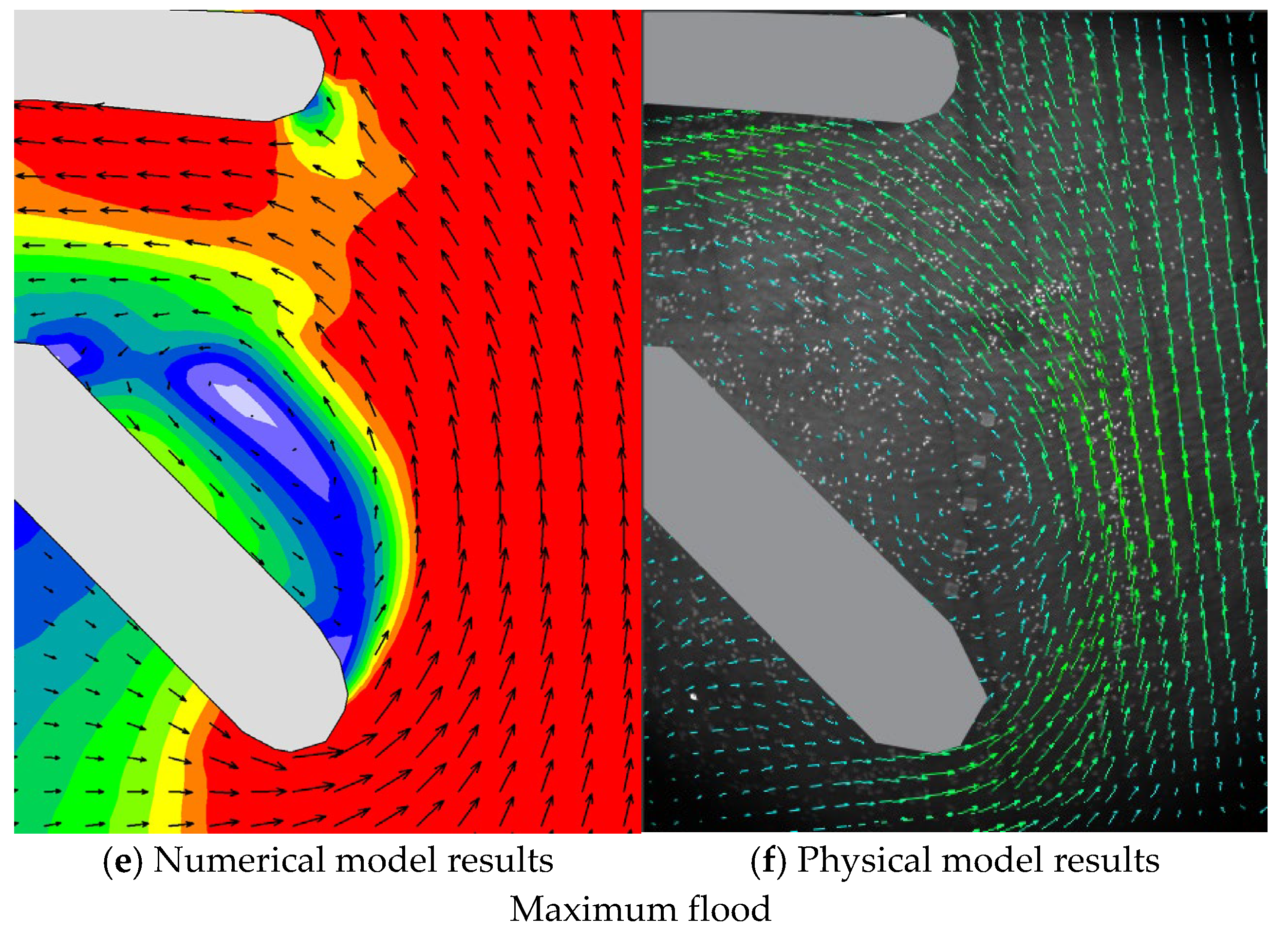
11]. Through hydraulic experiments and numerical simulations, optimizing the local configuration of the intake can improve inflow patterns and reduce the proportion of floating debris, sediment, and organisms entering the intake. For intakes employing open channels, the inflow direction generally forms an angle with the ambient flow direction. Due to flow separation, a recirculation zone forms around the intake entrance, and the inflow within the open channel entrance typically exhibits a spiral flow pattern [
12]. Gu et al. (2024) demonstrated that tidal creeks and flats significantly influence contaminant transport in macro-tidal estuaries using Lagrangian particle tracking, emphasizing the importance of capturing tidal dynamics in transport simulations [
13]. The layout of the intake entrance and the ratio of intake flow velocity to ambient flow velocity are considered critical factors closely related to intake entrainment risk. Recent methodological advances offer new possibilities: Fajardo-Urbina et al. (2024) proposed a deep learning surrogate model that predicts particle patch transport in coastal waters at speeds two orders of magnitude faster than traditional methods, which could significantly accelerate risk assessment under various tidal scenarios [
14]. Cao Jiwen et al. [
15,
16], through experiments and simulations, investigated measures to reduce flow separation at river intakes and minimize sediment entry by installing guide vanes. Han Rui et al. [
17] conducted physical model experiments under steady flow conditions and demonstrated that optimizing the layout of curved breakwaters at the intake entrance can effectively divert blockages using the flow, thereby reducing the risk of intake blockage. Fu et al. [
18] analyzed the entrainment probability at a nuclear power plant intake and concluded that intake flow rate, tidal current direction, and water depth significantly influence entrainment risk. Their flow field analysis indicated that water masses within a 1 km radius could potentially enter the intake entrance. He Xiaoqi [
19] investigated nuclear power intakes in strong tidal current areas and suggested that the optimal configuration for minimizing entrainment risk involves contracting the intake entrance width with an oblique short dike and orienting the intake inflow direction perpendicular to the tidal current. Shi Wenqi et al. [
20] measured flow velocities at the open channel entrance of a coastal nuclear power plant. Their results showed that measurement points near the intake entrance were significantly influenced by tidal currents, whereas points inside the channel exhibited nearly unidirectional flow, indicating a substantial impact of water intake on the local flow field. Zhang Haiwen et al. [
21] studied the flow field and entrainment variations in the waters around a nuclear power intake under the combined dynamics of typhoons and astronomical tides. They found that typhoons led to an increasing trend in the number of particles entrained at the intake entrance.
Identification of marine organism risk sources is fundamental for risk early warning and prevention. Existing studies have conducted simulations based on prescribed particle source locations, such as specific line sources or area sources [
22,
23], to assess the probability of particle entrainment into water intakes under tidal action. Given the uncertainty regarding the origins of marine organisms near nuclear power water intakes, it is necessary to first determine their potential source range in order to provide enveloping engineering recommendations. Despite recent advances in hydrodynamic modeling and particle tracking [
11,
13,
14], a clear research gap remains: most existing studies rely on simplified steady-flow assumptions that do not capture the unsteady tidal effects on three-dimensional flow structures at intake gates, and systematic evaluations of local retrofit measures under tidal dynamics are still lacking [
13,
14]. To overcome the bias introduced by the arbitrary specification of particle sources in existing simulations, the potential source range must be investigated. Regarding research on intake configurations, existing physical model tests and three-dimensional numerical models are generally simplified to steady flow conditions. However, the transport of clogging materials under tidal conditions differs from that under steady flow. Due to the three-dimensional spiral structure of flow velocities at intake gates, the tidal variation of debris entering the open channel is highly complex. Therefore, further in-depth research is needed on the continuous guiding and blocking effects of intake structures under tidal conditions. A major shift in current anti-clogging strategies for water intakes involves replacing a single intake head with multiple intake heads or enlarging the suction range of intake heads to mitigate the risk of simultaneous entrainment and clogging. However, for existing intake open channels, whether retrofitting measures such as simply dividing the inflow path or adding localized protective measures at the intake heads yield substantial improvements remains insufficiently studied. Fundamental studies on particle behavior in complex geometries provide insights: Yan et al. (2024) investigated particle-laden flows in 90° pipe bends using direct numerical simulation coupled with Lagrangian particle tracking, revealing that secondary flow and particle-wall collisions significantly affect particle distribution and transport dynamics [
24]. These findings have implications for understanding particle trajectories in intake channels with bends or sudden expansions.
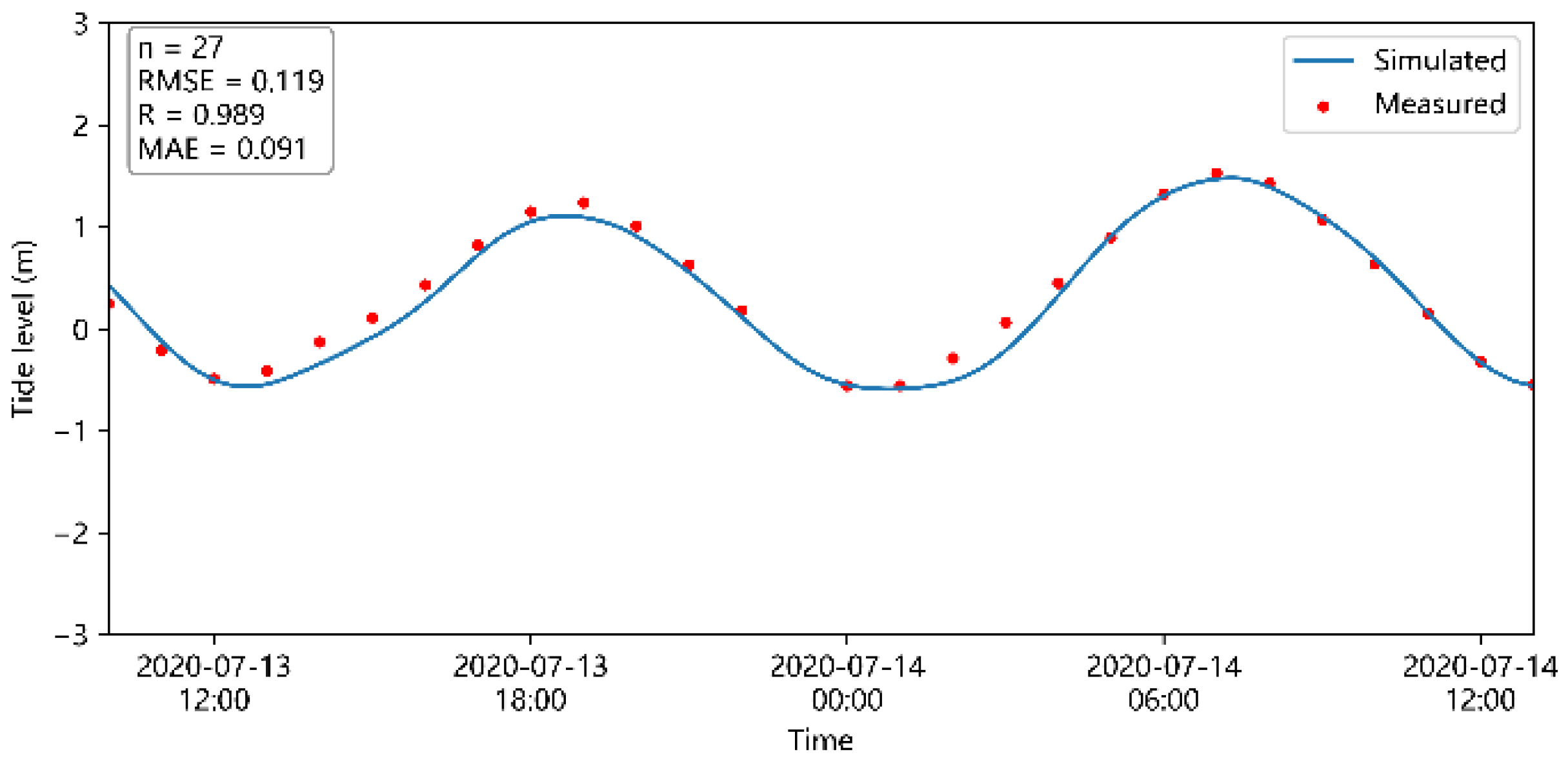
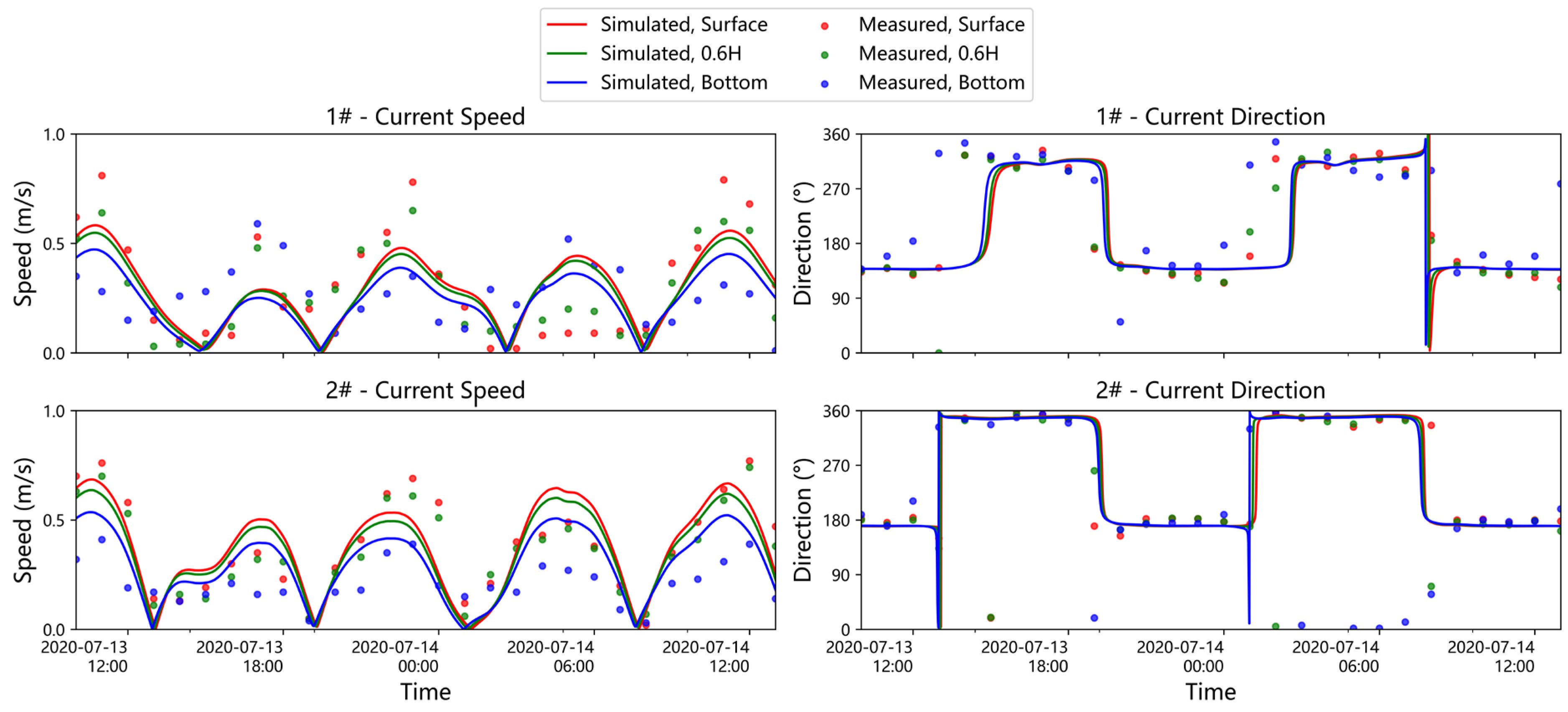
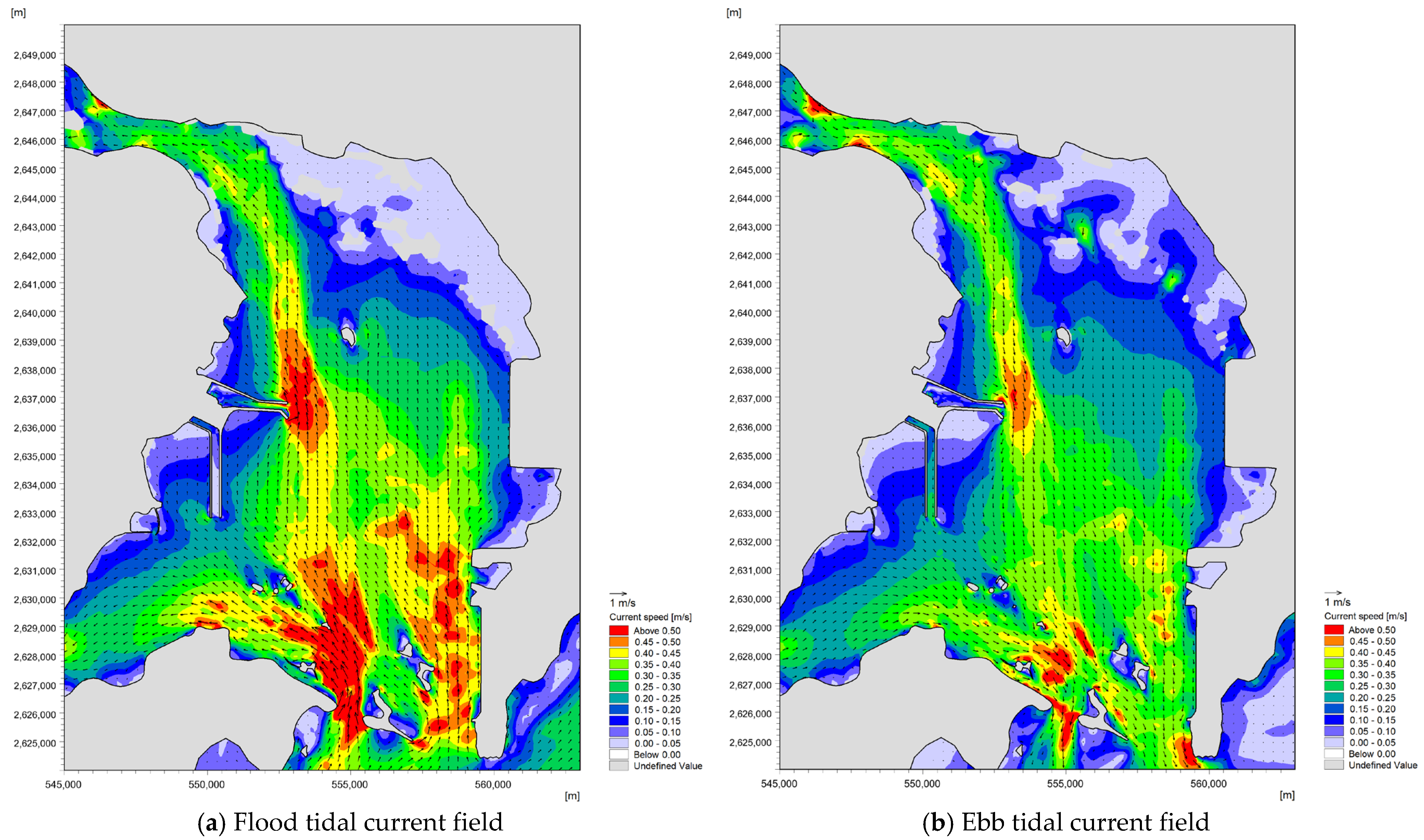
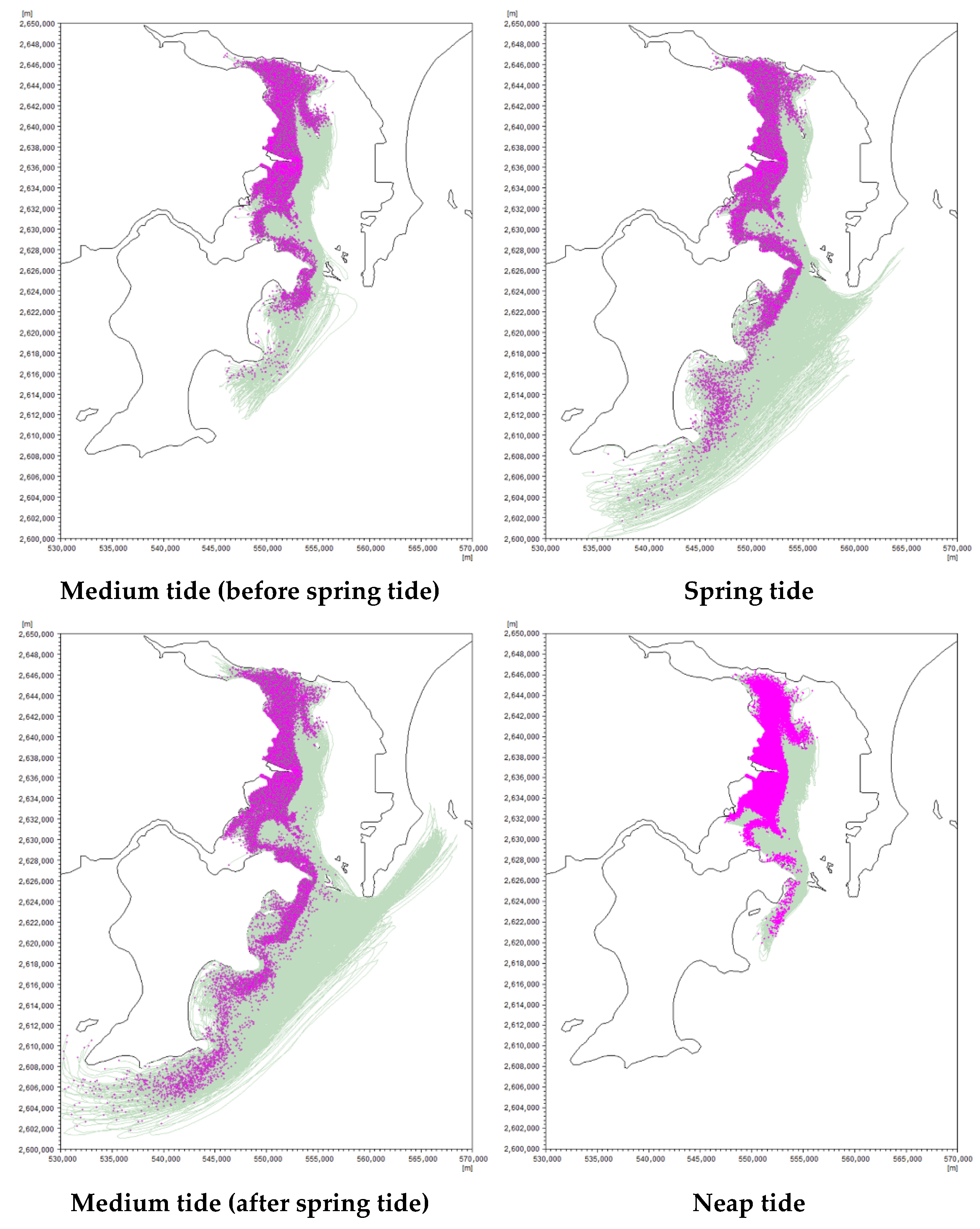
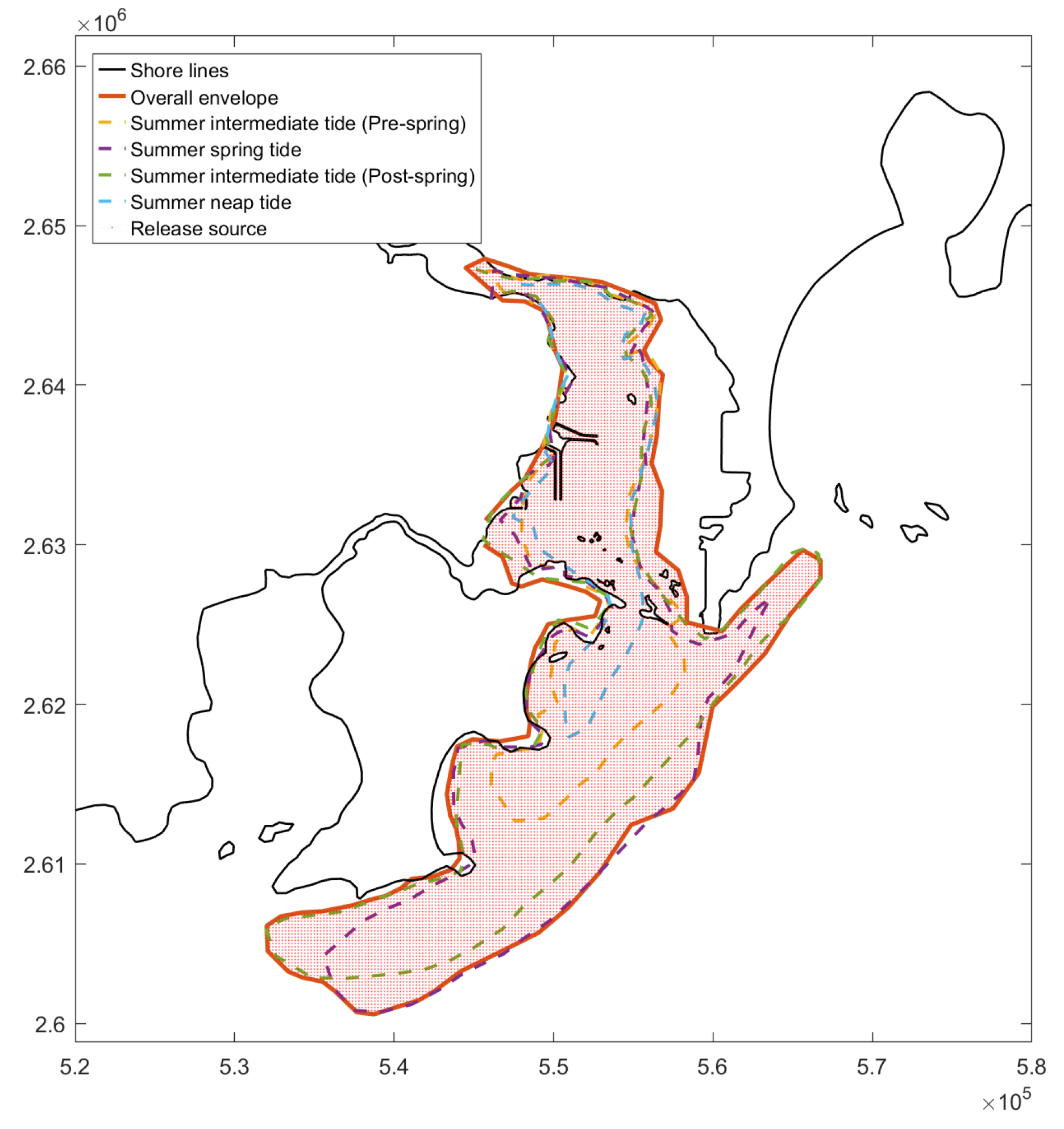
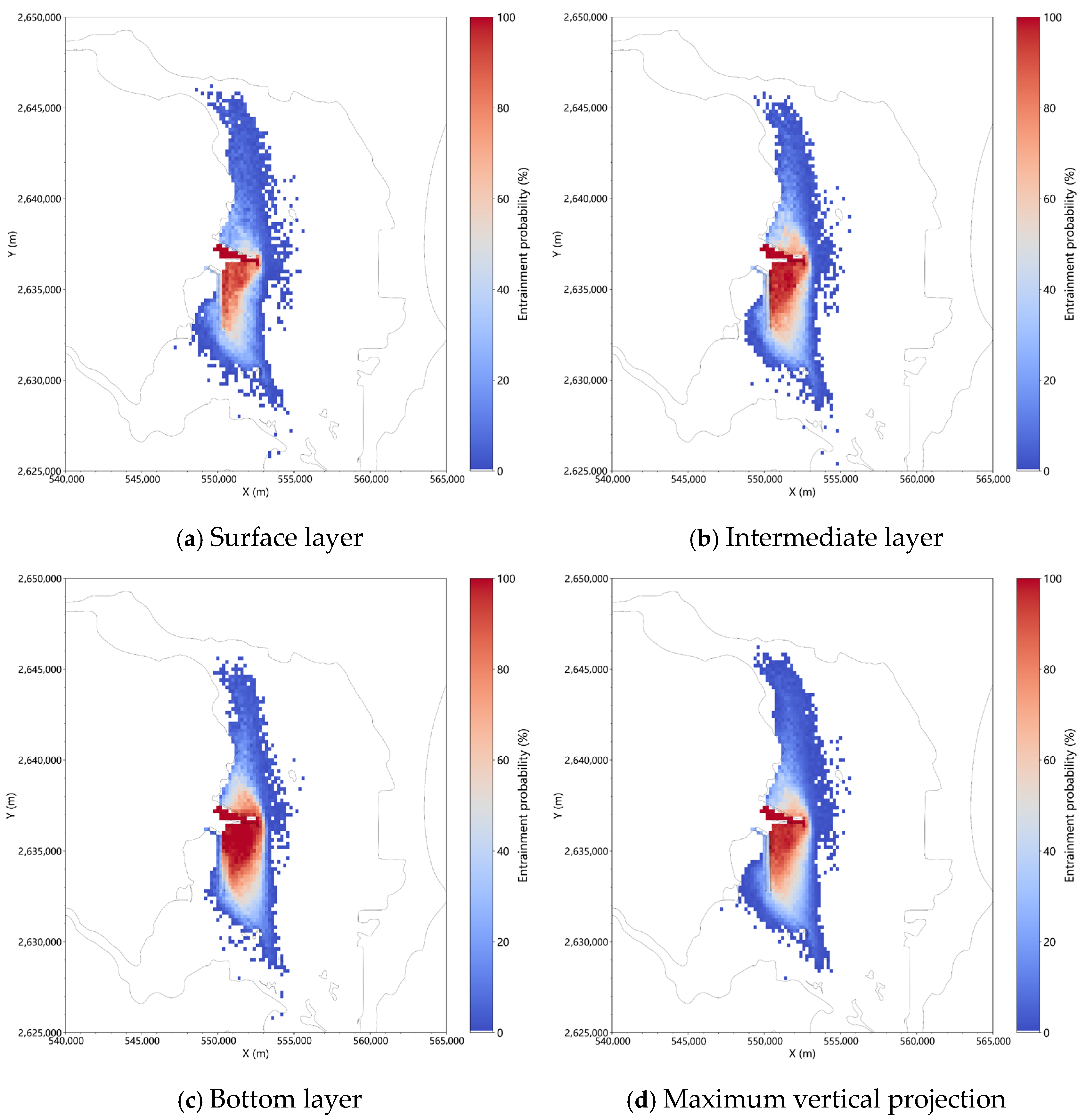
This study takes a nuclear power plant as an example, employing a three-dimensional hydrodynamic model and a particle tracking model to investigate the characteristics of surface, intermediate, and bottom tidal currents, as well as particle transport patterns, in the engineering sea area. A reverse tracing method is adopted to delineate the particle release zone for full-scale non-point sources in the nearshore area, thereby identifying potential source regions of entrained materials at the intake. The worst-case tidal scenario is determined by comparing the cumulative entrainment rates under different tidal conditions. Based on this, the simulated tidal current field is validated against field measurements. The dynamic tidal processes and the influence of wind on intake entrainment are further explored. The probability distribution of intake entrainment risk under tidal action is investigated. The inflow field and entrainment characteristics of different intake schemes are compared and analyzed, and the effectiveness of various retrofitting measures for existing intake open channels in mitigating blockage risks is discussed. This study aims to provide a reference for the engineering design of anti-clogging measures for water intakes at the case study plant and other similar facilities, as well as for the emergency response to cold source events.
2. Overview of the Study Site
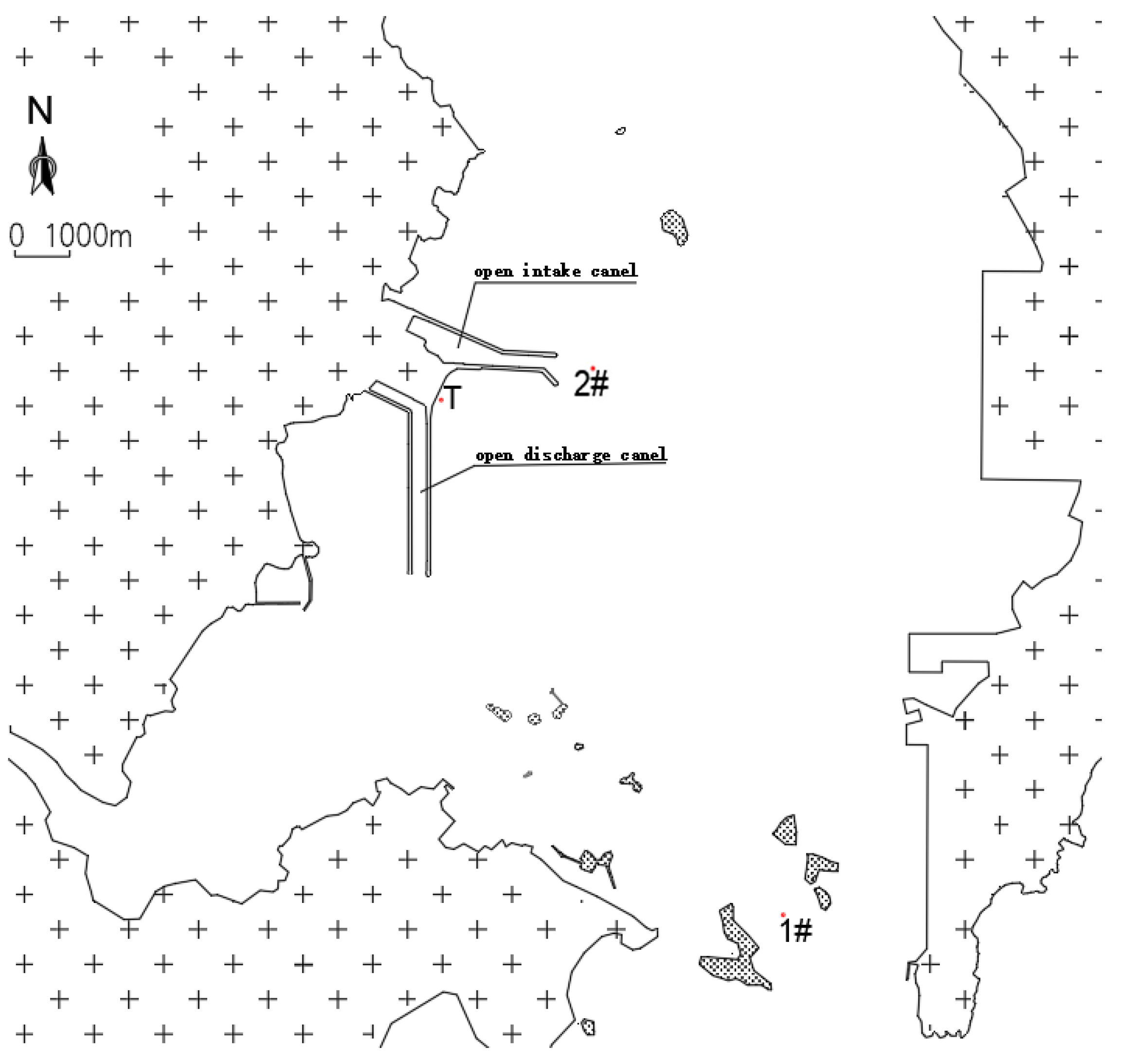
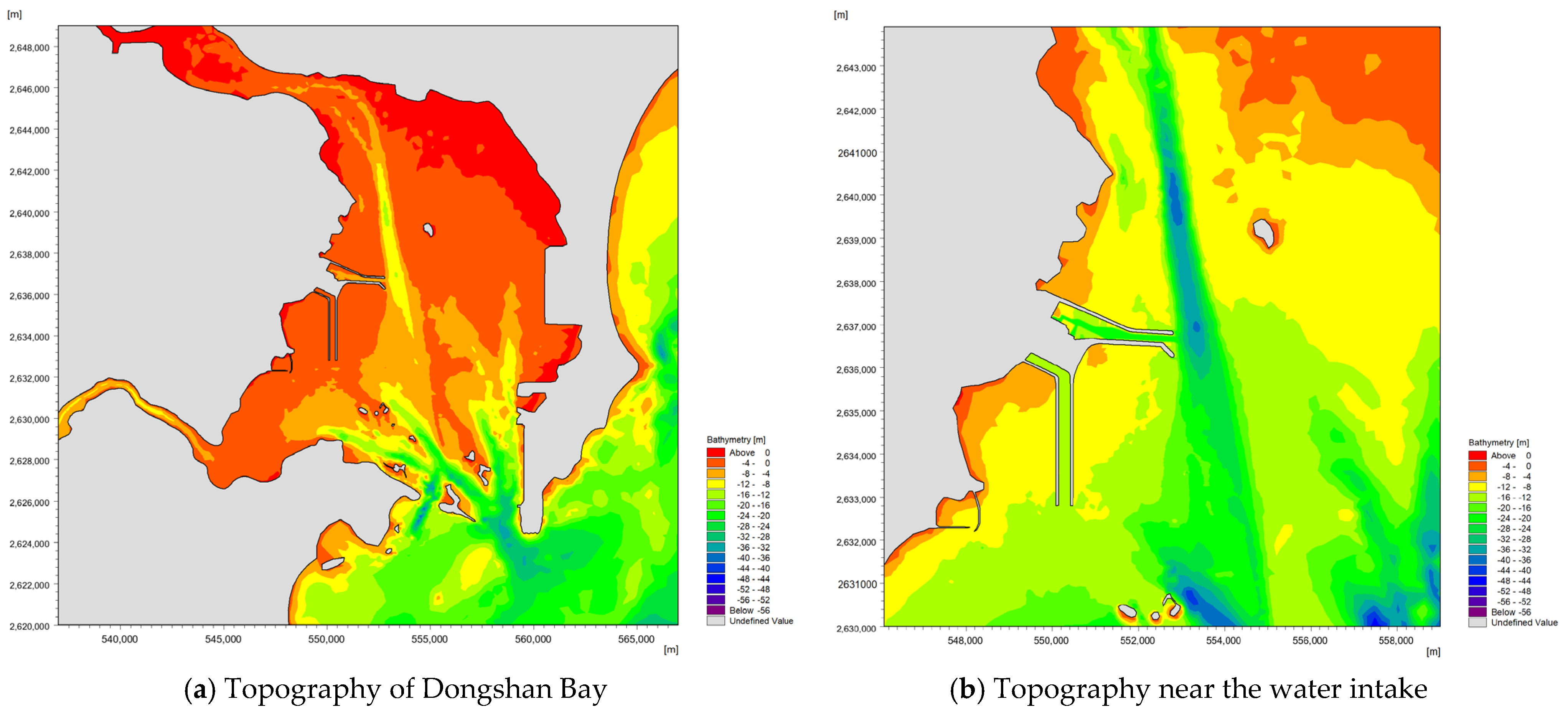
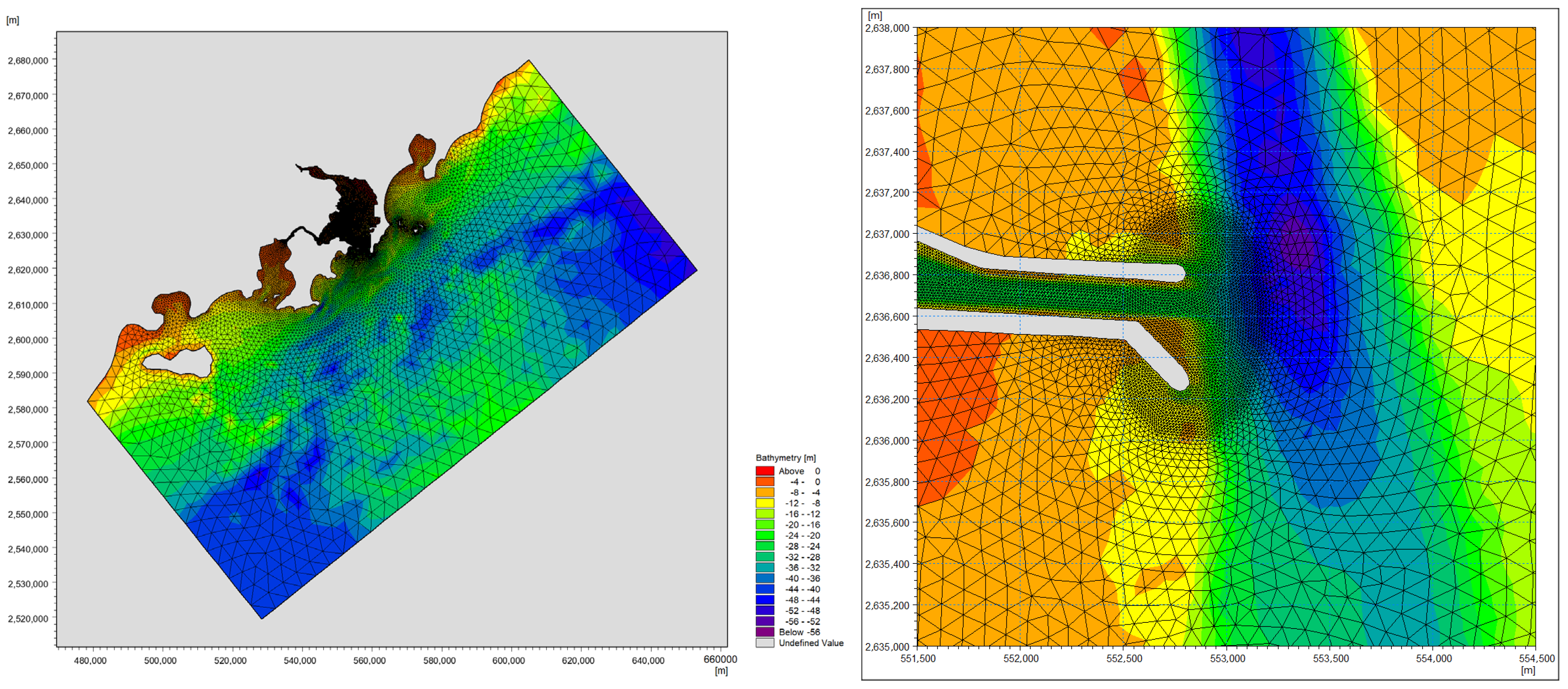
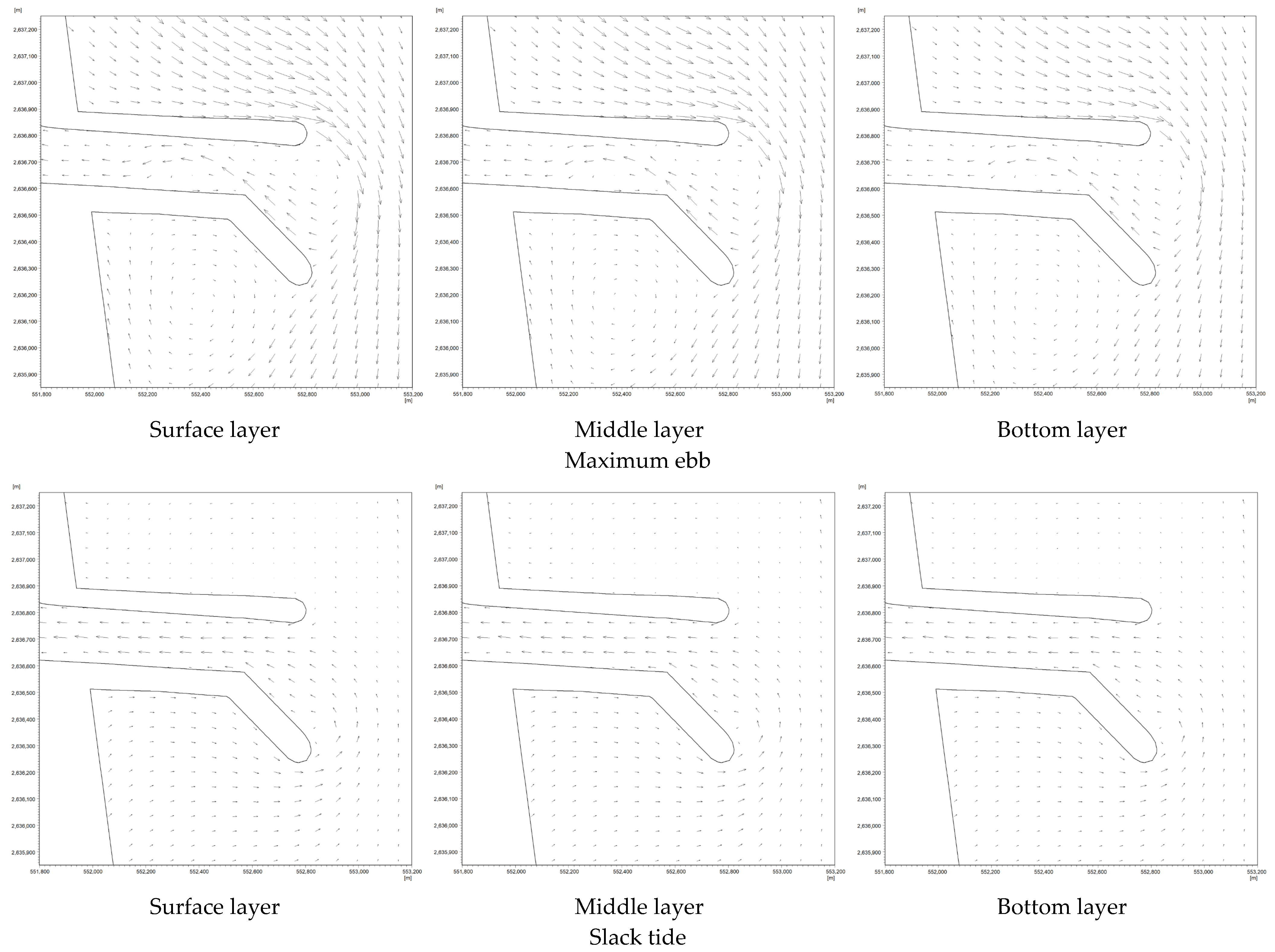
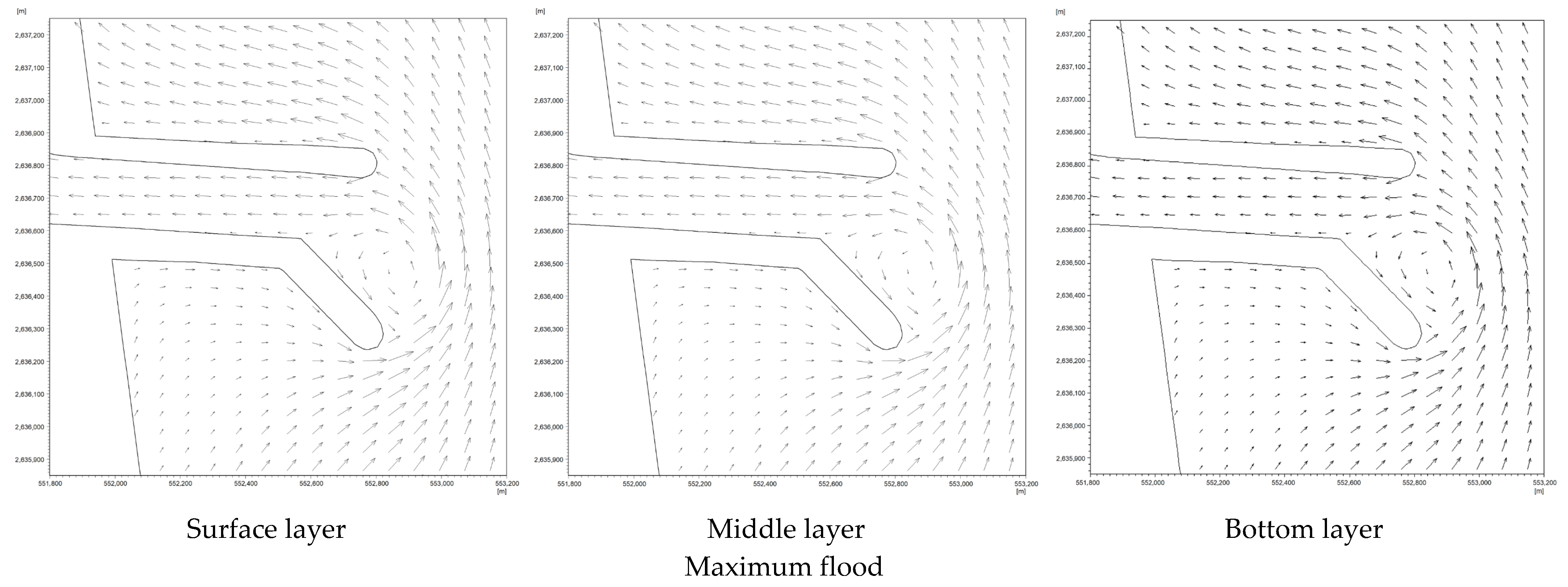
A nuclear power plant (Fujian, China) is located on the western coast of Dongshan Bay, with plans to construct six million-kilowatt-class pressurized water reactor nuclear power units. Units 1–6 share a common open intake channel. The intake entrance is situated near the deep trough on the eastern side of the plant site, adopting a splayed configuration. A heavy equipment wharf for nuclear power components is constructed inside the intake channel, serving as a branch channel for the heavy equipment wharf. The channel engineering has been completed, and the intake entrance is located near the deep trough on the western side of central Dongshan Bay, in an area with a water depth of approximately −7 m, the straight section of the intake open channel has a bottom width of 120 m and a top width of 278 m, as shown in
Figure 1. The design intake flow rate for the six units during summer is 287.4 m
3/s.
Dongshan Bay, where the nuclear power plant is situated, lies on the western coast of the southern entrance of the Taiwan Strait. It is a narrow-mouthed, semi-enclosed bay, stretching 20 km from north to south and approximately 15 km from east to west. The bay mouth faces south, with a narrow entrance approximately 6 km wide. The Zhangjiang River discharges into the bay from the northwestern head of the bay.
High-risk blockages in the vicinity of nuclear power plant intakes and adjacent waters include floating blockages, planktonic blockages, motile blockages, and fouling organisms. Specific examples include aquaculture rafts, Sargassum, Cyanea nozakii, Rhopilema hispidum, Stolephorus spp., among others. The comprehensive risk level of cold source blockages in the intake area and adjacent waters of the nuclear power plant is highest during spring and summer. The primary period for prevention and control measures extends from April to September. During spring, blockage risks mainly stem from threats associated with biological reproduction and growth periods. During summer, risks primarily arise from the multi-factor coupling of biological reproduction and growth periods with storm surges and other phenomena. In contrast, the comprehensive risk level is relatively lower in autumn and winter, particularly from late autumn through the winter period. This study focuses on the summer season, and the swimming ability of marine organisms is not considered. To reflect the differential impacts of tidal transport between the surface and bottom layers, simulations are conducted separately for three vertical layers: surface, middle, and bottom.
5. Comparison of Entrainment Effects at the Intake Entrance Under Different Open-Channel Intake Configurations
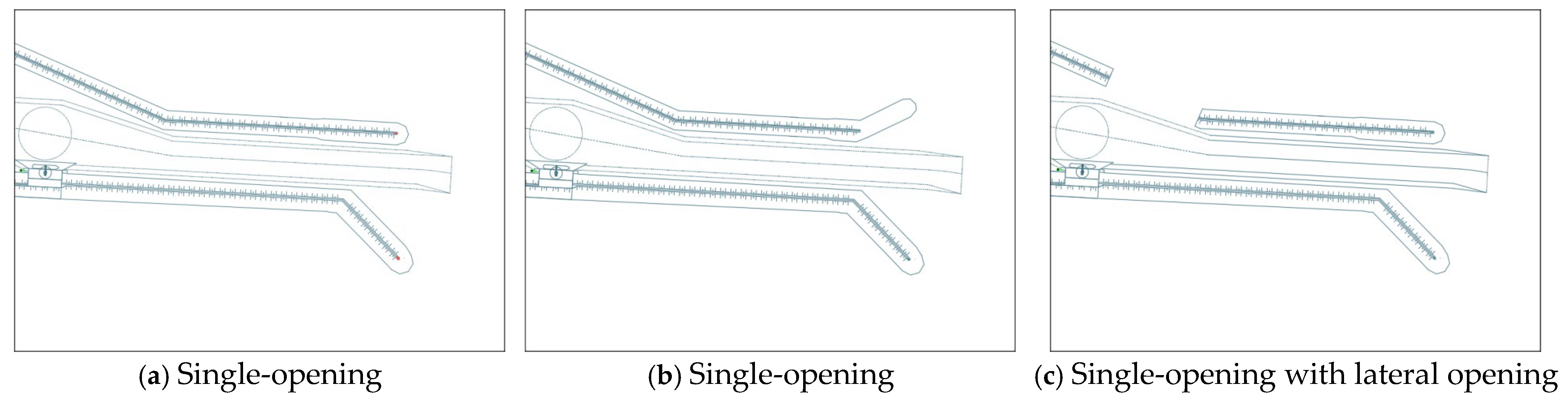
Based on the topographic and shoreline characteristics of the engineering sea area, three configurations for the intake open-channel entrance were considered, as shown in
Figure 12. In
Figure 12a, the northern side of the intake open channel is a straight dike, while the southern dike bends outward by approximately 45° at the entrance. In
Figure 12b, based on the southern opening configuration, the northern side of the intake open channel is rotated outward by 30° to further widen the entrance, aiming to reduce entrainment risk by decreasing the flow velocity at the intake entrance. In
Figure 12c, based on the southern opening configuration, an additional 80 m wide opening is introduced in the middle of the northern dike, transforming the intake open channel from a single-entrance to a dual-entrance configuration, with the aim of avoiding intake blockage caused by high-intensity entrainment associated with a single entrance.
5.1. Comparative Analysis of Flow Fields
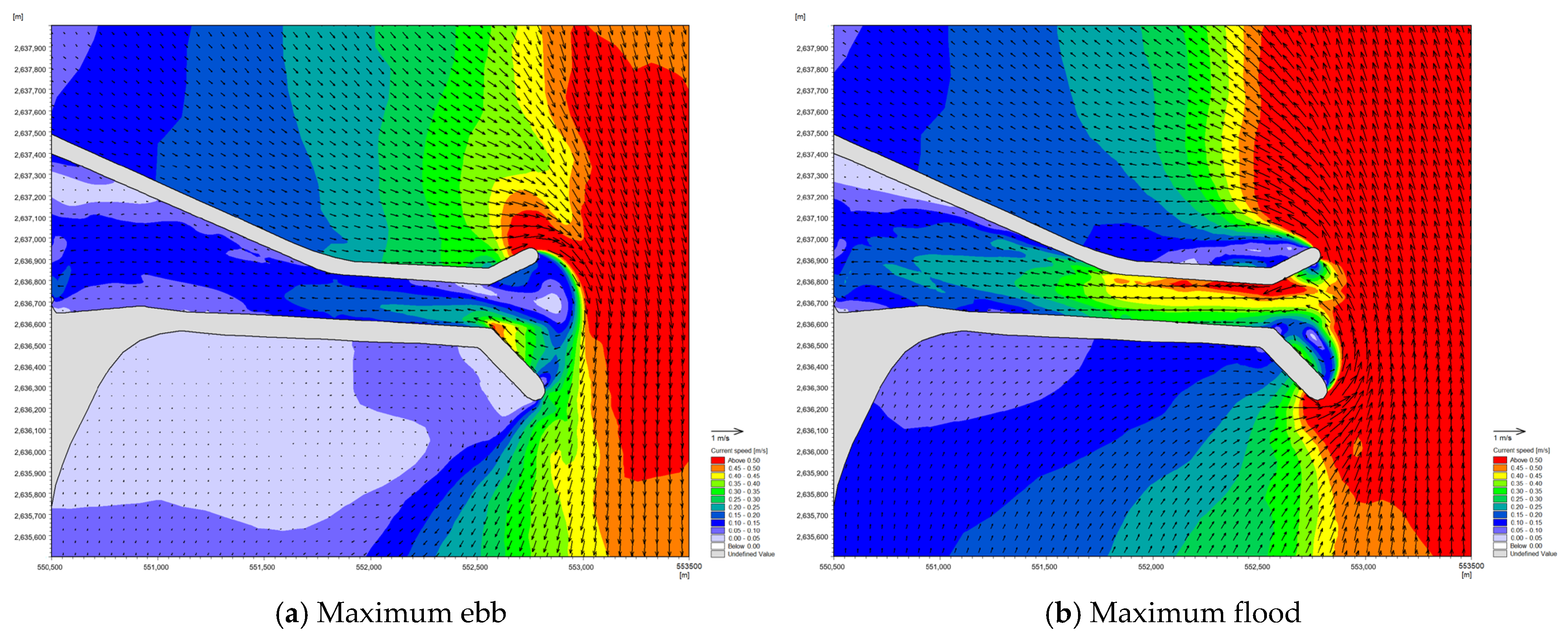
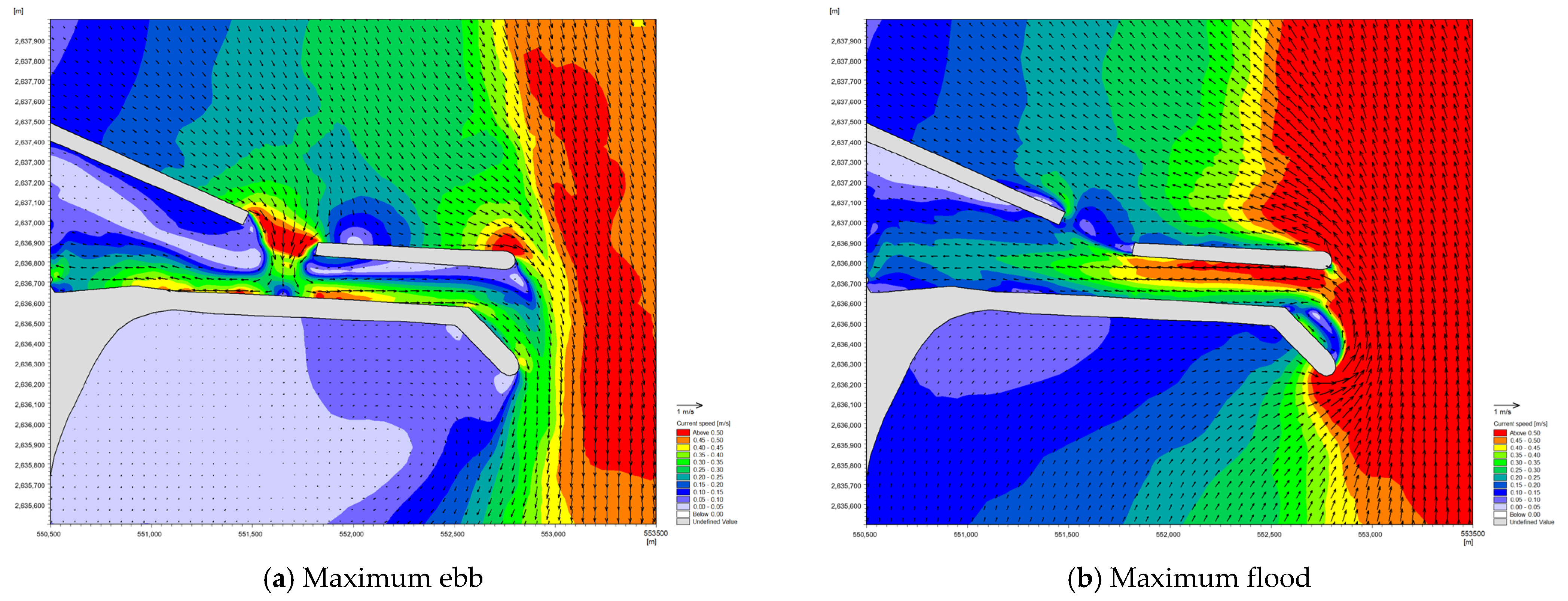
Figure 13 and
Figure 14 show the flow fields in the vicinity of the engineering area for different intake open-channel configurations during characteristic tidal phases (maximum ebb and maximum flood) in the summer neap tide. In
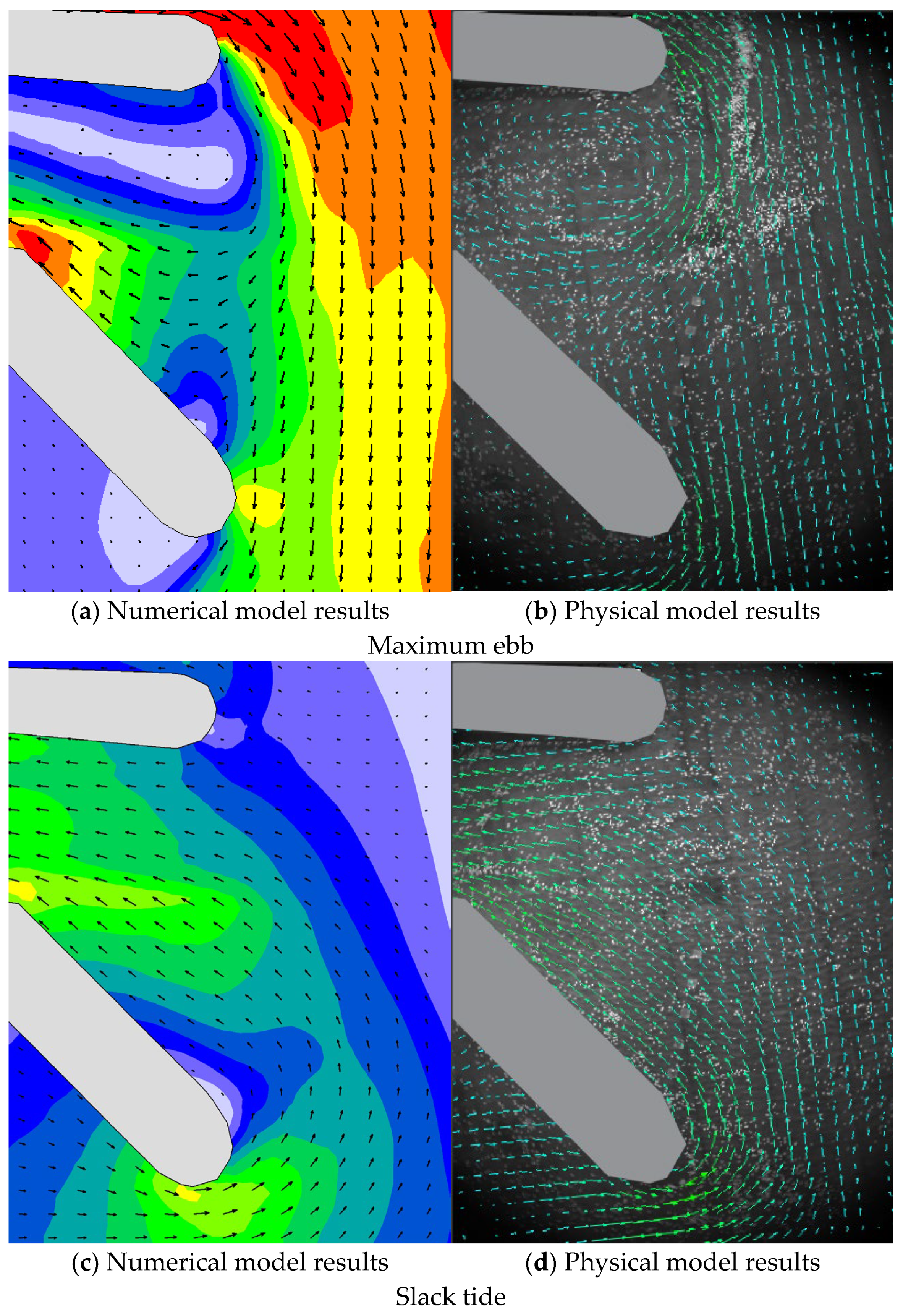
Figure 13, for the double-opening intake entrance configuration, at maximum ebb, the flow-deflecting effect of the northern dike is more pronounced. The vortex at the intake expands, and marine organisms primarily enter the open channel along the dike alignment from the stagnation point at the southern dike. Additionally, a new recirculation zone forms outside the northern side of the open channel. At maximum flood, marine organisms tend to enter the open channel from the inner side of the northern dike under the combined action of tidal currents and intake withdrawal.
In
Figure 14 and
Figure 15, for the single-opening with lateral opening configuration, at maximum ebb, the offshore tidal current directly enters the open channel through the new intake opening at the northern dike. The flow separates into two branches at the southern dike: one branch flows toward the western side of the open channel, forming a large clockwise vortex, while the other branch flows toward the eastern side of the open channel and eventually exits the channel, forming a smaller vortex. At this time, marine organisms enter the open channel directly with the tidal current through the new opening at the northern dike. At maximum flood, the offshore tidal current enters the open channel through the eastern intake opening. Part of the flow continues westward into the intake, while another part exits the open channel through the middle opening in the northern dike.
It can be observed that the two openings do not experience inflow simultaneously. For marine organisms originating from specific directions, the dual-opening configuration provides a certain buffering effect, preventing the complete failure of all cold sources at the same time.
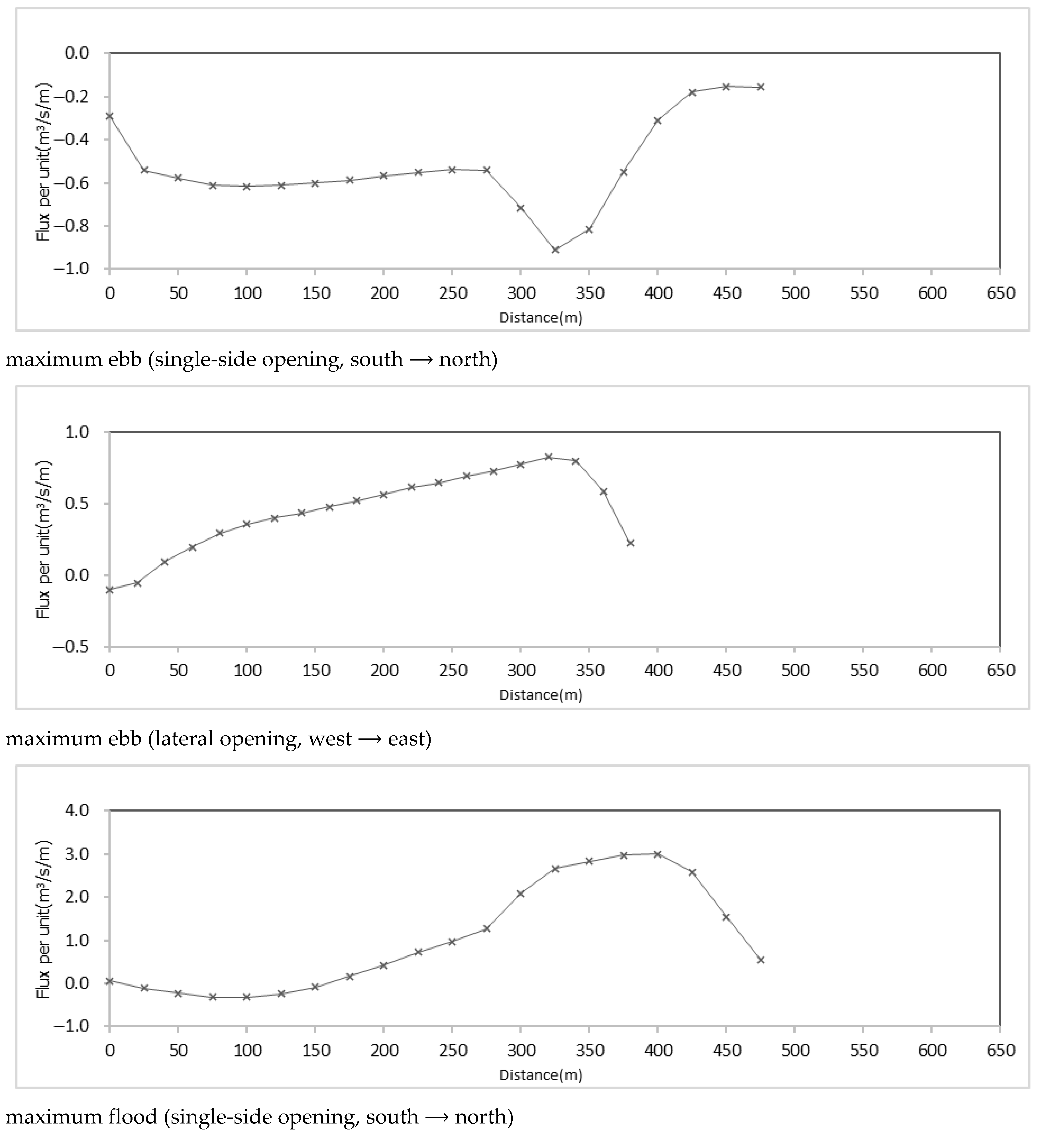
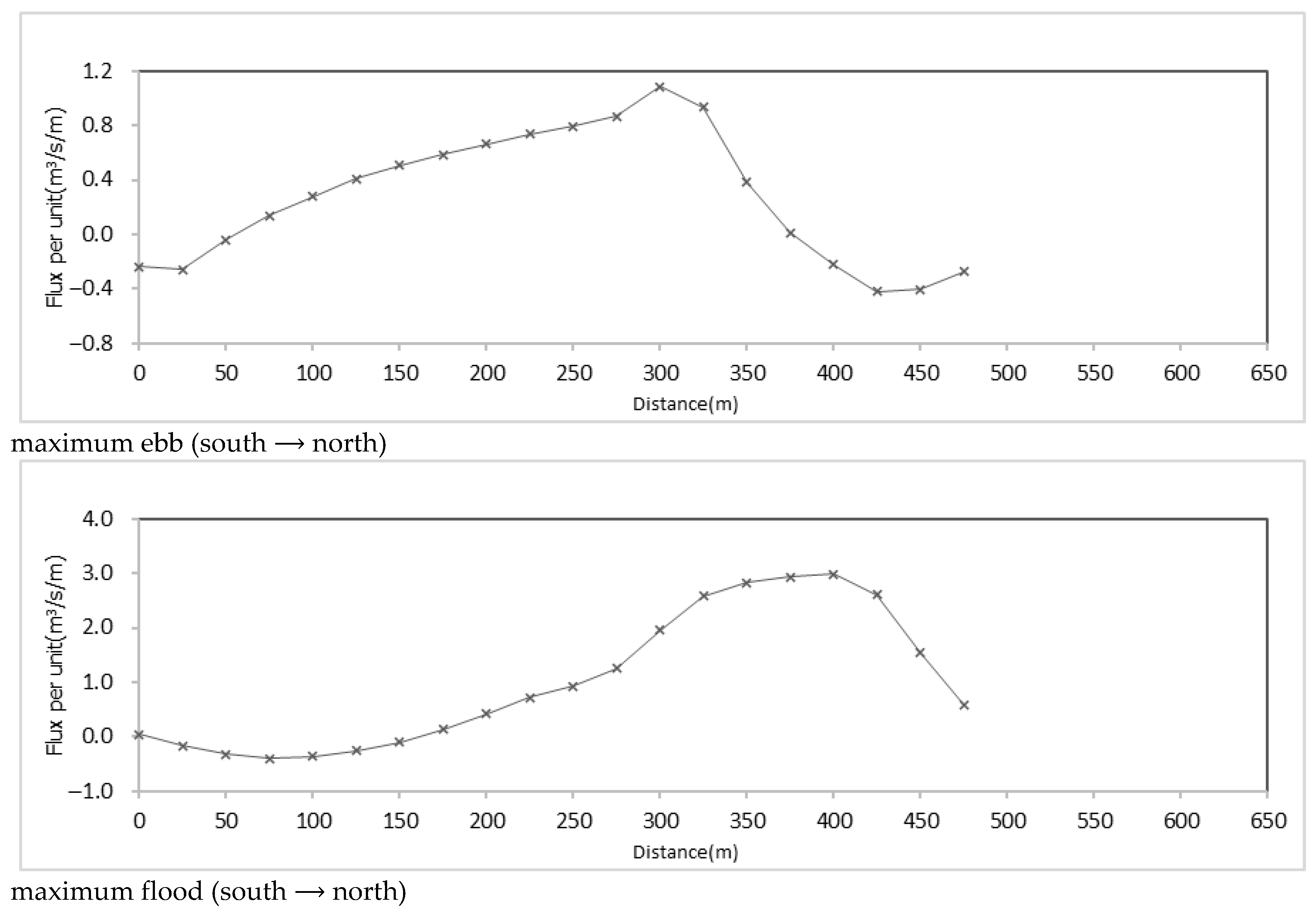
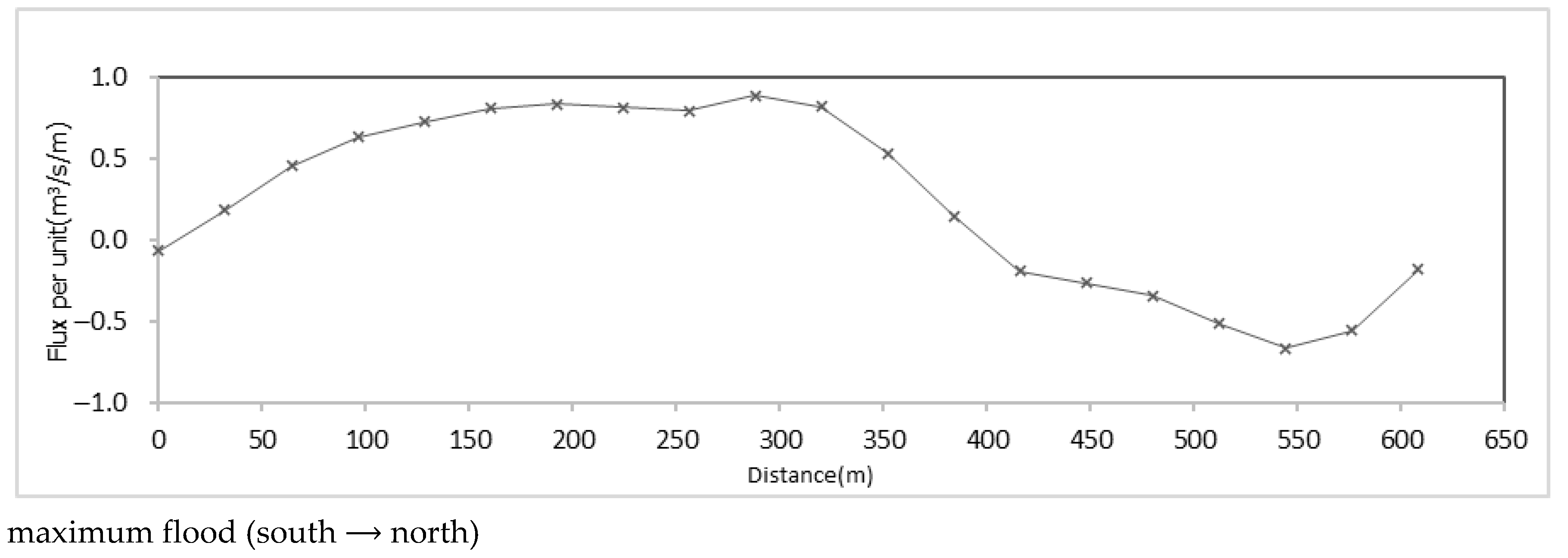
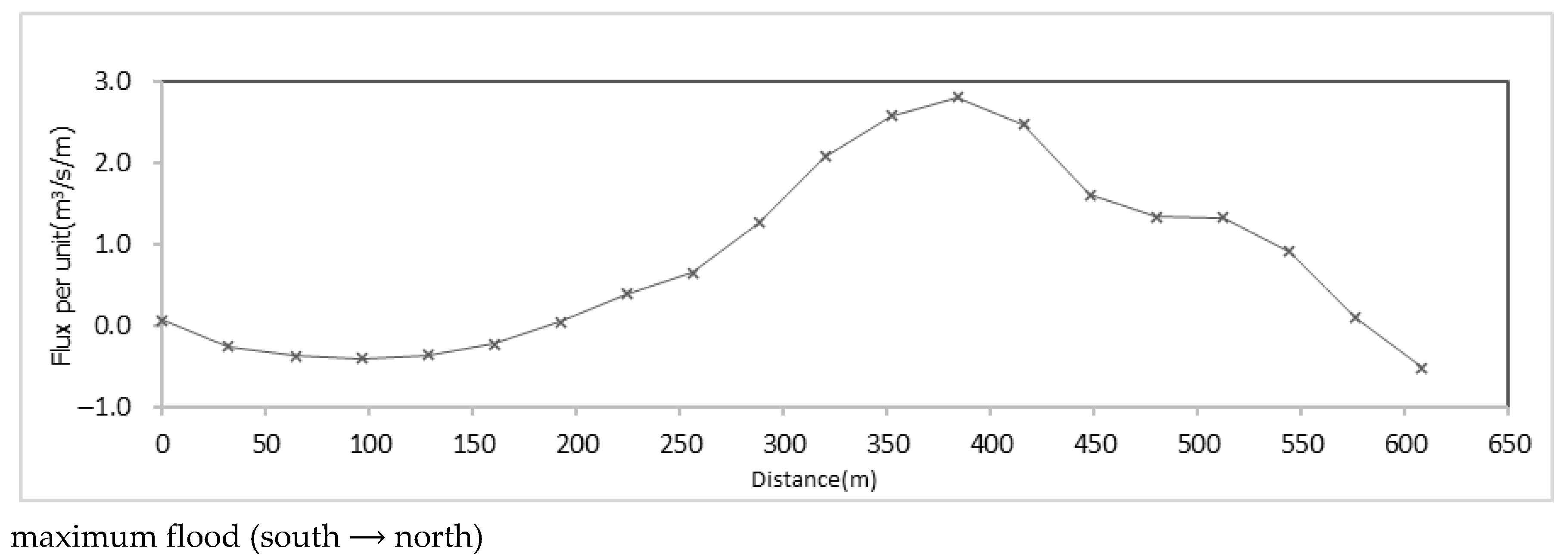
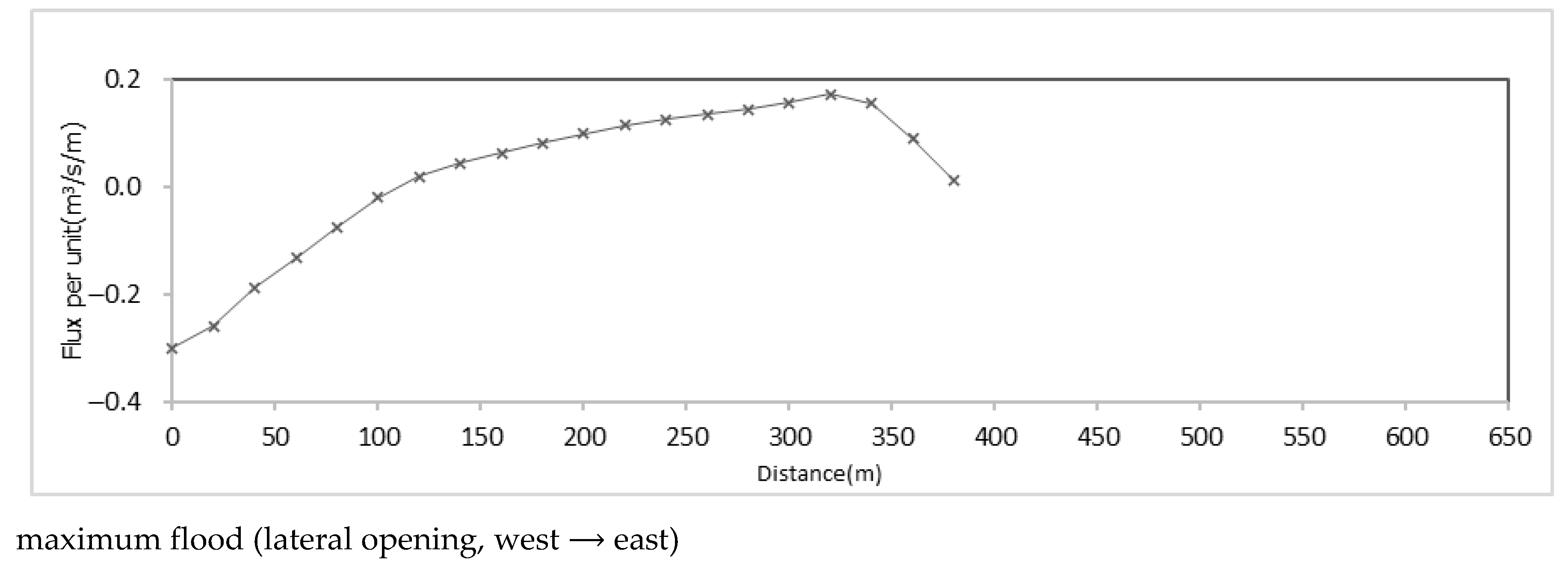
The flow rate distributions at the intake entrance section for different schemes are shown in
Figure 16,
Figure 17 and
Figure 18. It can be observed that during maximum flood, the three schemes exhibit similar inflow distributions along the original inflow cross-section, with inflow predominantly on the south side. The maximum discharge per unit width at the cross-section is approximately 3 m
3/s/m, located about 400 m from the south breakwater in all cases. During ebb tide, both the single-side opening and double-side opening schemes show inflow on the north side of the cross-section, with maximum discharge per unit width of 1.0 m
3/s/m and 0.9 m
3/s/m, respectively, located approximately 300 m from the south breakwater. The inflow uniformity across the cross-section is slightly better for the double-side opening scheme compared to the single-side opening scheme. For the single-side opening combined with lateral opening scheme, the original intake entrance transitions to outflow on the south side during ebb tide, with a maximum outflow of approximately 0.9 m
3/s/m located about 320 m from the south breakwater. The lateral opening experiences nearly full cross-section inflow during ebb tide, with a maximum inflow per unit width of 0.8 m
3/s/m on the east side. During flood tide, the west side of the lateral opening exhibits outflow, with a maximum outflow per unit width of 0.4 m
3/s/m, while the east side shows inflow, with a maximum inflow per unit width of 0.17 m
3/s/m. Comparison of flow rates further indicates that modifying the single-side opening to a double-side opening has little effect on the inflow at the intake entrance, while the lateral opening significantly alters inflow during ebb tide. During flood tide, considering the original intake remains unblocked, the lateral opening has limited impact; however, if the original intake becomes blocked during flood tide, the lateral opening, being closer to the pump house, can serve as a temporary water supply channel, and its inflow would increase accordingly.
5.2. Comparison of Entrainment Rate and Entrainment Intensity Under Near-Field Full-Area Non-Point Source Outbreak Conditions
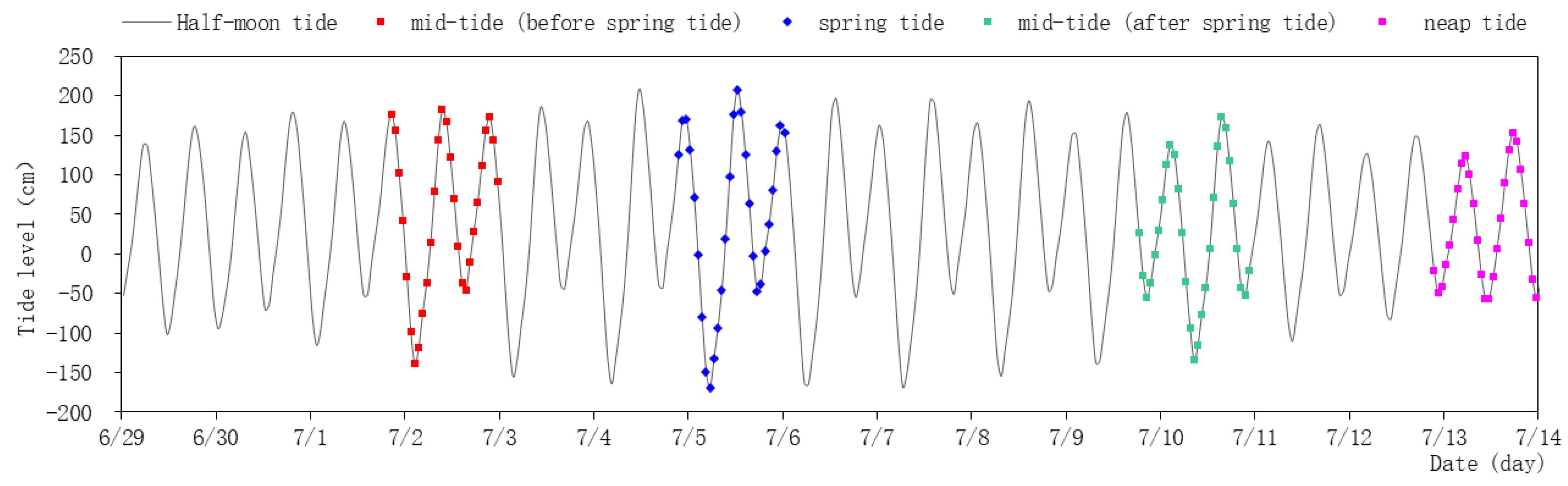
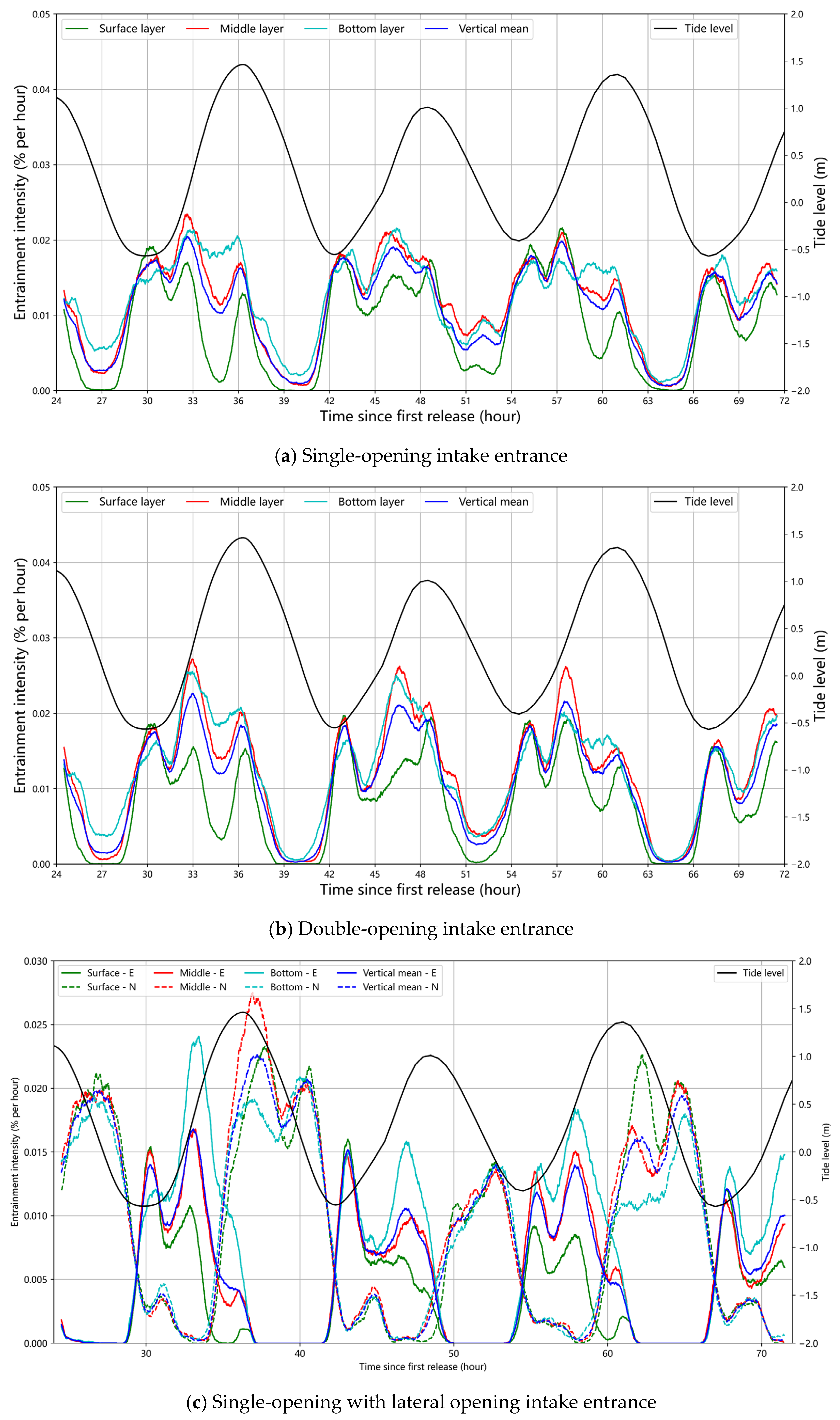
Based on an outbreak scenario within the maximum potential source area of entrained materials, the entrainment processes of different schemes were calculated under the worst-case tidal scenario, and the hourly entrainment intensities for different schemes were statistically analyzed using Equation (10), as shown in
Figure 19. It can be observed that the entrainment intensities of the single-side opening and double-side opening schemes at the intake open channel exhibit little difference, with the maximum entrainment intensity occurring at the early stage of flood tide and the minimum at the late stage of ebb tide. The entrainment intensity during flood tide is higher than that during ebb tide. For the single-side opening combined with lateral opening scheme, the entrainment intensity differs significantly from the former two schemes, showing multiple peaks during both flood and ebb tides, alternately appearing at the east side (original front intake of the open channel) and the north side lateral intake. The entrainment intensity exhibits no significant troughs and is more uniformly distributed over time. From the perspective of layered results, the entrainment intensity of surface layer particles is significantly lower than that of the intermediate and bottom layers.
Table 3 presents the maximum entrainment rates and maximum entrainment intensities for each intake flow configuration. It can be observed that, in terms of depth-averaged maximum entrainment rate and entrainment intensity, the single-side opening and double-side opening schemes at the intake open channel exhibit relatively small overall differences. The entrainment rate of the single-side opening combined with lateral opening scheme is higher than those of the former two, while the entrainment intensity is essentially comparable.
5.3. Discussion
Prevention and control of risks to the cold source for nuclear power plant intakes encompass total entrainment control, entrainment intensity control, and prevention of simultaneous cold source failure across multiple units. For existing or approved nuclear power intake projects, retrofitting the intake open channel locally to reduce entrainment risk is a commonly adopted research approach. The intake open channel examined in this study incorporates a heavy-lift wharf. To ensure the normal passage of heavy-lift transport vessels, the conventional outer curved dike configuration used in previous open channels was not feasible. Instead, two measures were adopted: increasing the inflow cross-section at the intake to reduce flow velocity, or adding lateral openings to increase the number of intake points, thereby mitigating the risk of blockage at a single intake. The findings of this study indicate that locally enlarging the opening has limited effectiveness in reducing entrainment. The lateral opening configuration enables peak shaving of entrainment intensity; however, due to the relatively shallow water depth at the lateral opening, the total entrainment rate is higher under a holistic marine organism outbreak scenario. From the perspective of controlling the total entrainment rate, the original scheme remains optimal.
From the perspective of ensuring the safety of the nuclear power plant’s cold source, the lateral opening could be configured as a standby intake, kept closed under normal conditions. When hazardous materials approach the intake area from the southern waters of the engineering site, the different inflow directions of the east-side opening and north-side opening during ebb tide could be utilized to achieve self-cleaning of the trash booms inside the open channel, thereby reducing the accumulation of hazardous materials within the channel. In the event of blockage at the east-side opening of the open channel, activating the standby north-side intake could also mitigate the risk of the plant losing its cold source.
In reality, marine organisms may outbreak in specific sea areas, with potentially uneven spatiotemporal distribution. Moreover, these organisms possess their own ability to avoid or adapt to currents; therefore, their migration is not entirely governed by advective transport. These factors can influence the actual risk of organisms entering the intake. Given the uncertainty regarding the source location and intensity of risk sources, this study adopted an enveloping source area based on hydrodynamic transport to conduct a relative assessment of the effectiveness of current local retrofitting measures for intake blockage mitigation. The differences among these measures primarily stem from localized flow effects. The relative strengths and weaknesses of different schemes and the improvement ratios obtained from this study under uncertain source conditions can serve as a reference for decision-making. In practice, engineering measures should be determined comprehensively based on assessments of actual marine organism outbreak risk probabilities in different areas, the layout of the intake entrance, trash boom facilities within the open channel, and debris cleaning facilities, to establish a risk prevention and control system for intake blockage by marine organisms.
6. Conclusions
Based on a three-dimensional hydrodynamic model, this study proposes a method for determining the maximum potential source area of entrainment risk and the worst-case tidal scenario from a hydrodynamic perspective. The spatial distribution of intake entrainment probability was calculated for the case study site, and quantitative comparative analyses of intake entrainment effects were conducted using the metrics of “intake entrainment rate” and “entrainment intensity.” The effectiveness of local retrofitting measures at the intake in mitigating intake blockage risk was also investigated.
The results indicate that the recirculation zone formed around the intake and drainage dikes of the nuclear power plant constitutes a high-risk area for entrainment. Simply increasing the opening width of the intake gate has limited effectiveness in reducing entrainment risk. In contrast, increasing the number of intake openings, positioning them in different orientations, and separating them horizontally can enable phased inflow among intakes and mutual backwashing, thereby mitigating the risk of cold source loss following blockage at a single intake. The effectiveness of entrainment prevention measures is closely related to the location of the risk source. Future efforts should focus on further optimizing anti-clogging engineering measures and operational management based on the characteristics of entrainment sources in the project sea area.
Furthermore, a wide variety of organisms can cause intake blockages. This paper primarily focuses on organisms with weak or no active swimming ability, investigating their transport characteristics under tidal action. Species with strong swimming ability, such as schooling or medium-to-large fish, are currently not considered due to the complexity of their behavioral dynamics. Future work will refine the model based on field investigations of biological characteristics and gradually expand its applicability to enhance the overall relevance of the research findings.