Multi-Objective Mix Proportion Optimization of Basalt Fiber-Reinforced Concrete Considering Cost and Carbon Emission Constraints


Abstract
1. Introduction
2. Optimization of Concrete Mix Proportion
2.1. Objective Function
2.2. Constraint Conditions
2.3. GA Optimization
3. Prediction Models for Compressive and Tensile Strengths of BFRC
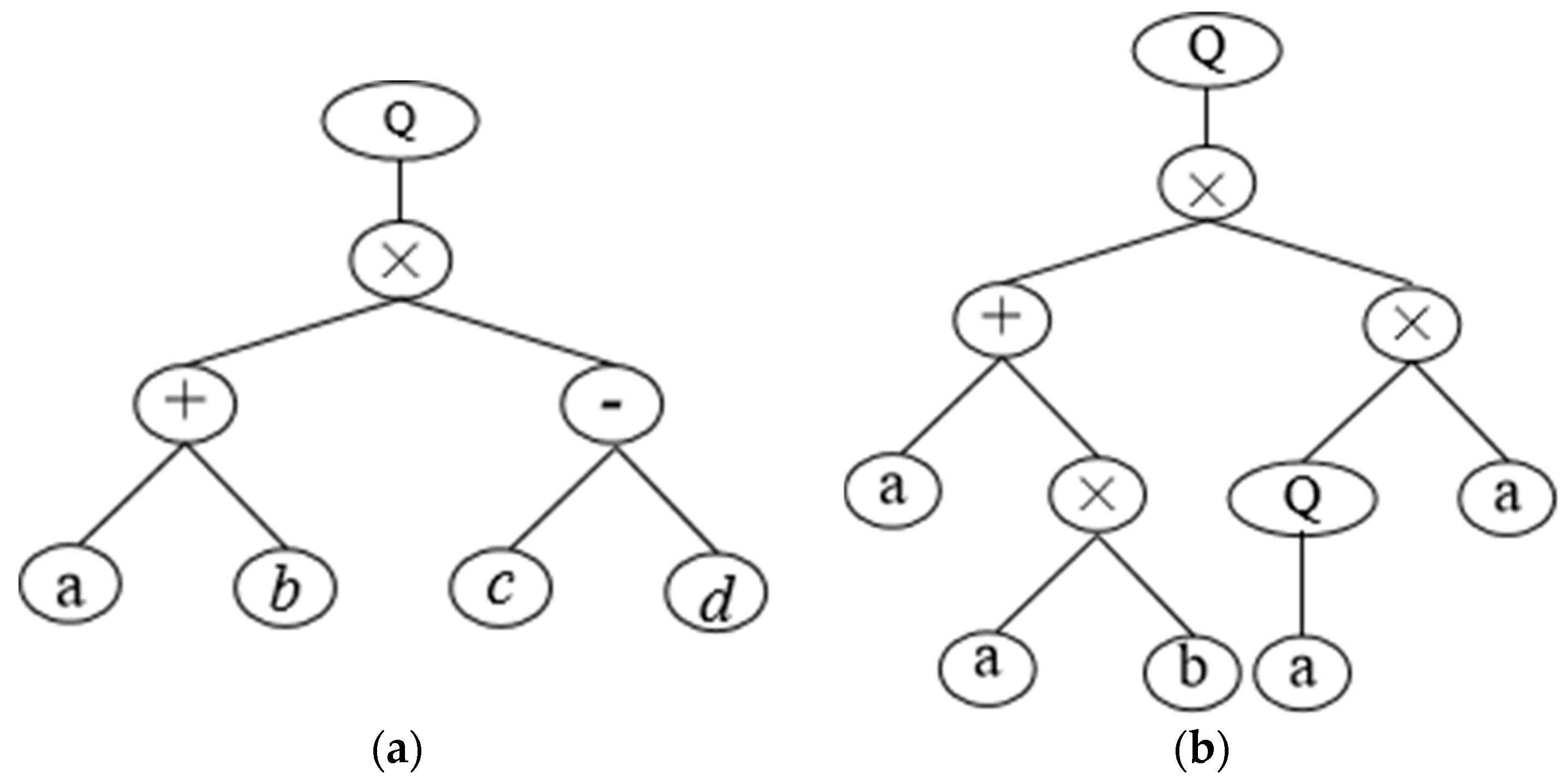
3.1. Gene Expression Programming
3.2. Prediction Models for Compressive and Tensile Strengths
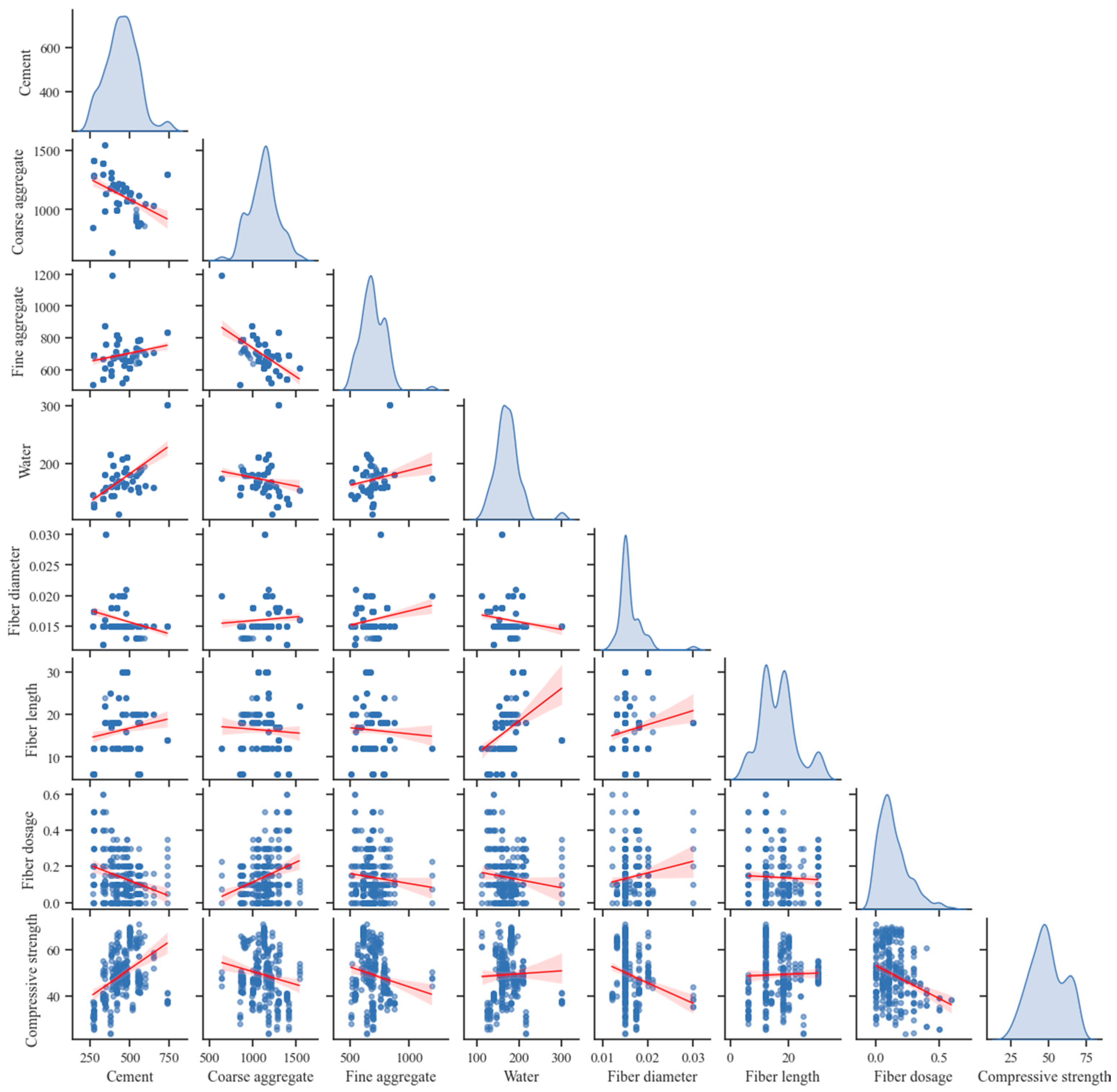
3.2.1. Data Collection
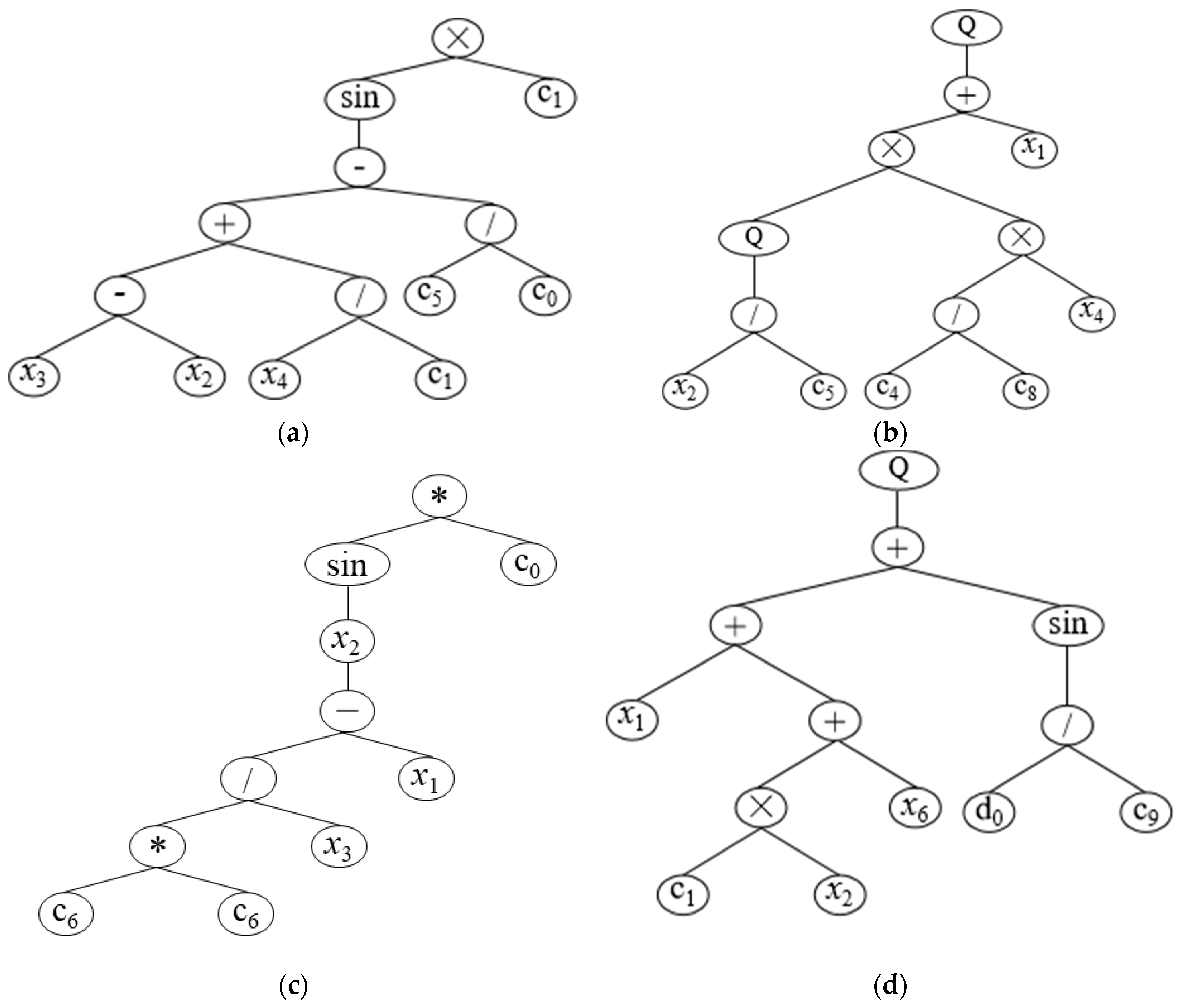
3.2.2. Prediction Model
4. Performance Comparison and Analysis of BFRC Mix Proportion Schemes
- (1)
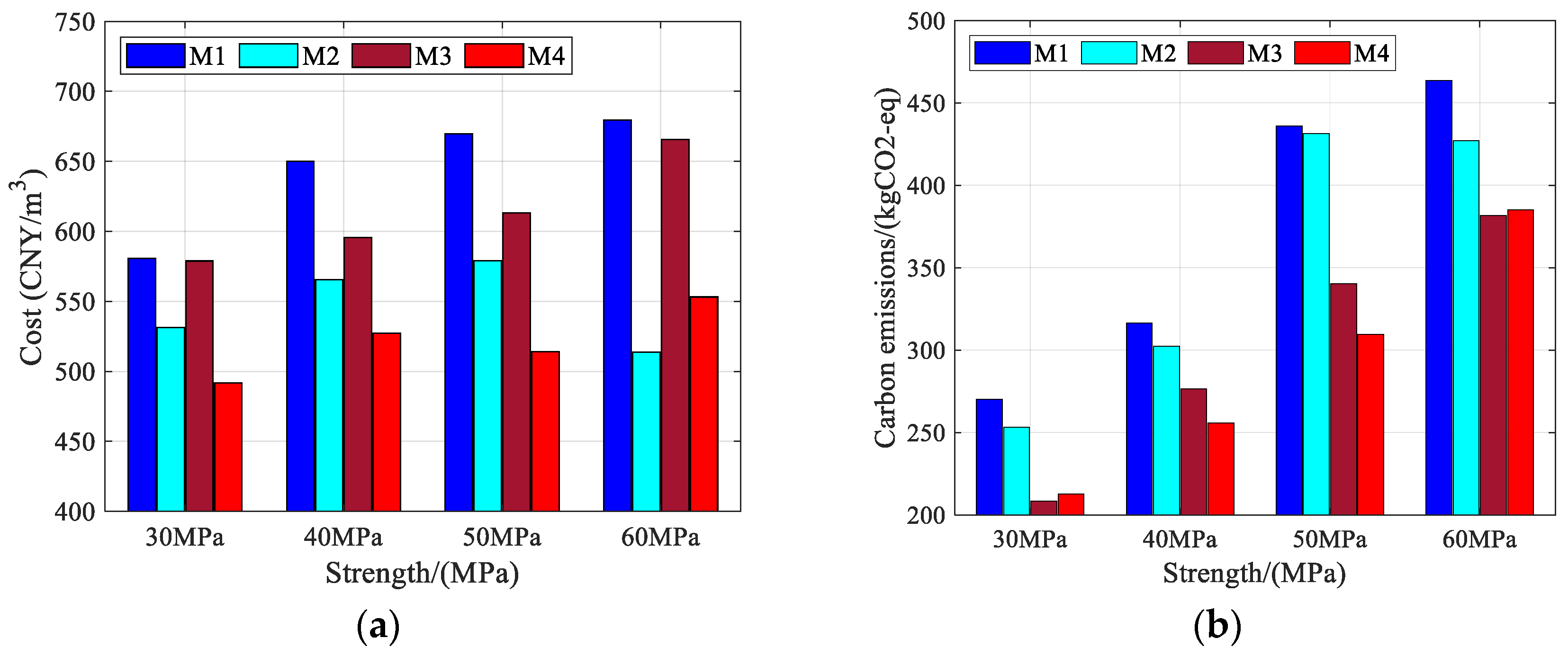
- Correlation between Strength and Carbon Emissions: As the target fc increases from 30 MPa to 60 MPa, the carbon emissions associated with various mix design methods generally increase. For instance, the carbon emissions of Scheme M1 increase from 238.47 kg CO2-eq to 463.65 kg CO2-eq, suggesting that high-strength concrete largely comprises materials with high carbon footprints, such as cement.
- (2)
- Correlation between Compressive Strength and Cost: As the target fc increases, the unit cost of concrete per cubic meter exhibits an overall upward trend. For example, using the M1 method, the unit cost rises from 553.87 ¥/m3 for C30 concrete to 679.49 ¥/m3 for C60 concrete.
- (3)
- Evaluation of the Universality of the M4 Method: The results indicate that BFRC demonstrates excellent mechanical performance and strong potential for the synergistic optimization of low carbon emissions and cost-effectiveness. These computational results align with those of Marani et al. [16] regarding ML-driven optimization for high-performance concrete while suggesting the theoretical potential of extending such frameworks to tensile-strength-centered BFRC design—a dimension not explored in existing multi-objective studies [11,12,17]. To further enhance its generalizability, future research should focus on evaluating the durability of the M4 mix design under complex environmental conditions, thereby supporting its broader application in developing green, high-performance concrete.
5. Conclusions
- (1)
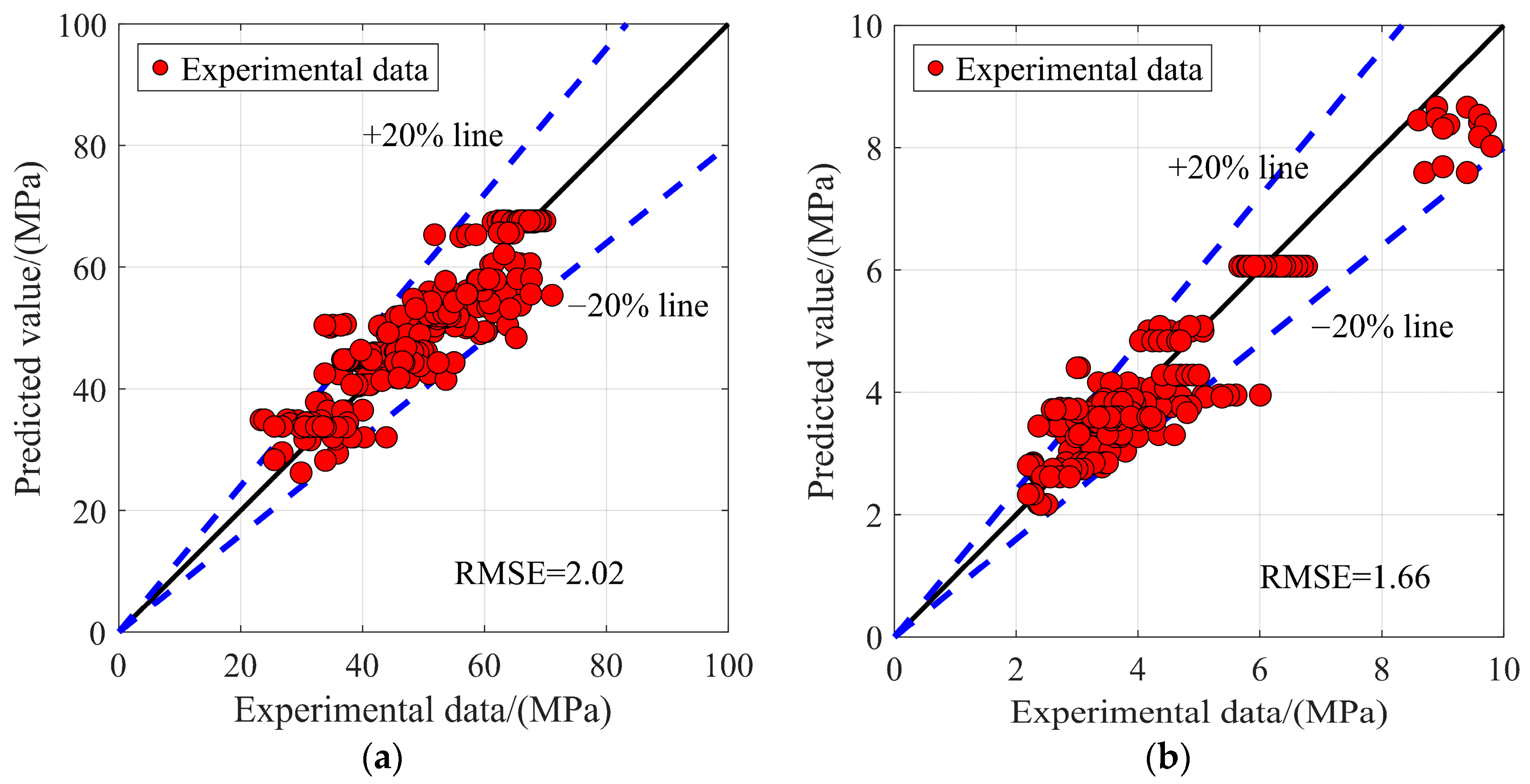
- The GEP-based prediction models for fc and ft exhibit satisfactory prediction accuracy, with root mean square error (RMSE) values of 2.02 MPa and 1.66 MPa, respectively, and relative errors controlled within ±20%. These models not only avoid the limitations of traditional empirical formulas but also provide a reliable and efficient theoretical foundation for the subsequent BFRC mix design optimization, providing a theoretical basis for future application of the proposed optimization framework.
- (2)
- The proposed method identifies trade-offs among mechanical performance, cost, and carbon emissions. Within the investigated strength range (30–60 MPa), model predictions suggest potential cost reductions of 11–19% and carbon emission reductions of 11–30% compared to conventional methods, pending experimental confirmation.
- (3)
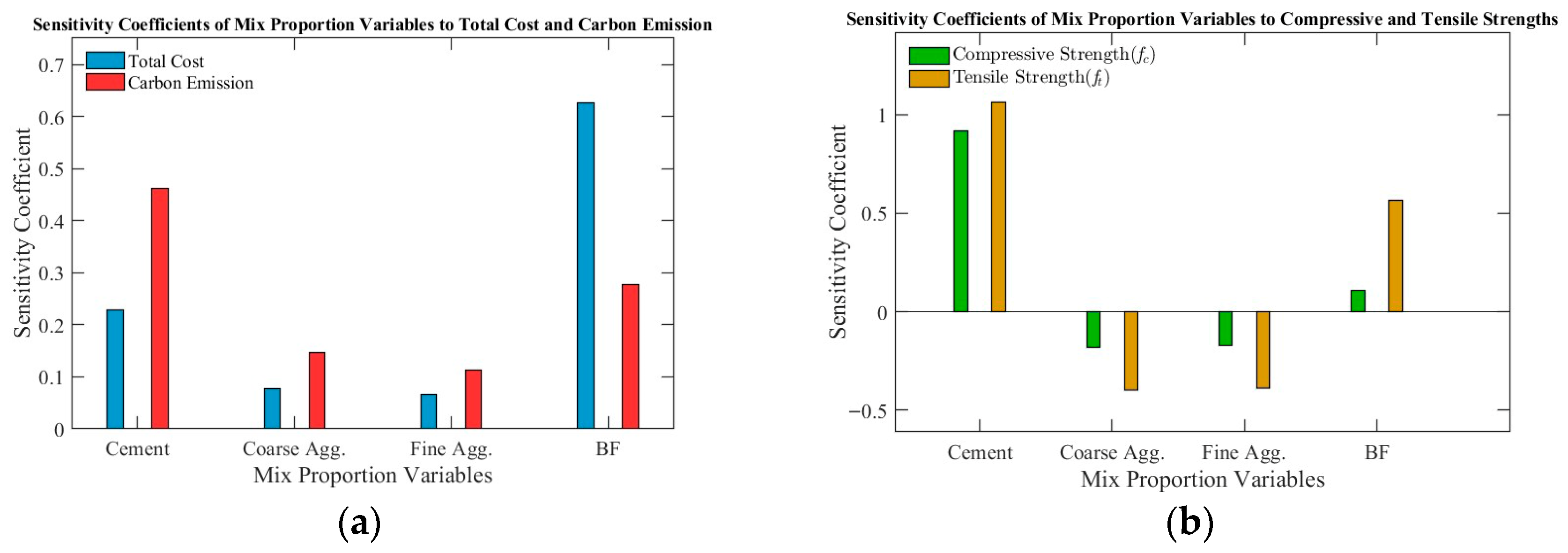
- The optimization results further reveal that cement dosage is the dominant factor influencing both the cost and carbon emissions of BFRC, as cement production accounts for the majority of carbon emissions and material costs in concrete preparation. In contrast, basalt fiber dosage significantly affects the tensile strength of BFRC, which is consistent with the core design objective of this study. The M4 method thus offers a systematic and scientific approach for balancing these competing objectives in BFRC mix design, providing a reference for potential applications.
- (4)
- This study develops a methodological framework for multi-objective BFRC optimization that addresses the limitations of existing black-box approaches. The GEP-based explicit modeling strategy enables transparent trade-off analysis among competing objectives, offering a reproducible methodology for optimizing fiber-reinforced cementitious composites. Unlike previous applications that treat optimization as a post-prediction step [11,12], this study presents a methodological advance by seamlessly integrating transparent GEP-based predictive equations into the NSGA-II optimization loop, enabling direct gradient-informed Pareto exploration for BFRC—an approach not realizable with black-box alternatives. Experimental validation is currently underway to confirm the practical applicability of the proposed method.
Author Contributions
Funding
Data Availability Statement
Conflicts of Interest
References
- Almohammed, F.; Thakur, M.S.; Lee, D.; Kumar, R.; Singh, T. Flexural and split tensile strength of concrete with basalt fiber: An experimental and computational analysis. Constr. Build. Mater. 2024, 414, 134936. [Google Scholar] [CrossRef]
- Ozcan, O.; Binici, B.; Ozcebe, G. Improving seismic performance of deficient reinforced concrete columns using carbon fiber-reinforced polymers. Eng. Struct. 2008, 30, 1632–1646. [Google Scholar] [CrossRef]
- Branston, J.; Das, S.; Kenno, S.Y.; Taylor, C. Mechanical behaviour of basalt fiber reinforced concrete. Constr. Build. Mater. 2016, 124, 878–886. [Google Scholar] [CrossRef]
- Vatin, N.I.; Hematibahar, M.; Gebre, T.H. Impact of basalt fiber reinforced concrete in protected buildings: A review. Front. Built Environ. 2024, 10, 1407327. [Google Scholar] [CrossRef]
- Al-Rousan, E.T.; Khalid, H.R.; Rahman, M.K. Fresh, mechanical, and durability properties of basalt fiber-reinforced concrete (BFRC): A review. Dev. Built Environ. 2023, 14, 100155. [Google Scholar] [CrossRef]
- Li, B.; Chen, Z.; Wang, S.; Xu, L. A review on the damage behavior and constitutive model of fiber reinforced concrete at ambient temperature. Constr. Build. Mater. 2024, 412, 134919. [Google Scholar] [CrossRef]
- Abid, M.; Hou, X.; Zheng, W.; Hussain, R.R. Effect of fibers on high-temperature mechanical behavior and microstructure of reactive powder concrete. Materials 2019, 12, 329. [Google Scholar] [CrossRef]
- Guo, Z.; Zhuang, C.; Li, Z.; Chen, Y. Mechanical properties of carbon fiber reinforced concrete (CFRC) after exposure to high temperatures. Compos. Struct. 2021, 256, 113072. [Google Scholar] [CrossRef]
- JGJ 55-2011; Specification for Mix Proportion Design of Ordinary Concrete. Ministry of Housing and Urban-Rural Development of the People’s Republic of China: Beijing, China, 2011.
- Celik, K.; Meral, C.; Gursel, A.P.; Mehta, P.K.; Horvath, A.; Monteiro, P.J. Mechanical Properties, Durability, and Life-Cycle Analysis of Self-Consolidating Concrete Mixtures Made with Blended Portland Cements Containing Fly Ash and Limestone Powder. Cem. Concr. Compos. 2015, 56, 59–72. [Google Scholar] [CrossRef]
- Zhang, J.; Huang, Y.; Wang, Y.; Ma, G. Multi-objective optimization of concrete mixture proportions using machine learning and metaheuristic algorithms. Constr. Build. Mater. 2020, 253, 119208. [Google Scholar] [CrossRef]
- Dabbaghi, F.; Tanhadoust, A.; Nehdi, M.L.; Nasrollahpour, S.; Dehestani, M.; Yousefpour, H. Life cycle assessment multi-objective optimization and deep belief network model for sustainable lightweight aggregate concrete. J. Clean. Prod. 2021, 318, 128554. [Google Scholar] [CrossRef]
- Campos, H.F.; Klein, N.S.; Marques Filho, J. Proposed mix design method for sustainable high-strength concrete using particle packing optimization. J. Clean. Prod. 2020, 265, 121907. [Google Scholar] [CrossRef]
- Rath, B.; Deo, S.; Ramtekkar, G. A Proposed Mix Design of Concrete with Supplementary Cementitious Materials by Packing Density Method. Iran. J. Sci. Technol. Trans. Civ. Eng. 2020, 44, 615–629. [Google Scholar] [CrossRef]
- Young, B.A.; Hall, A.; Pilon, L.; Gupta, P.; Sant, G. Can the compressive strength of concrete be estimated from knowledge of the mixture proportions: New insights from statistical analysis and machine learning methods. Cem. Concr. Res. 2019, 115, 379–388. [Google Scholar] [CrossRef]
- Marani, A.; Jamali, A.; Nehdi, M.L. Predicting ultra-high-performance concrete compressive strength using tabular generative adversarial networks. Materials 2020, 13, 4757. [Google Scholar] [CrossRef]
- Onyelowe, K.C.; Kontoni, D.P.N.; Ebid, A.M.; Dabbaghi, F.; Soleymani, A.; Jahangir, H.; Nehdi, M.L. Multi-objective optimization of sustainable concrete containing fly ash based on environmental and mechanical considerations. Buildings 2022, 12, 948. [Google Scholar] [CrossRef]
- Nunez, I.; Marani, A.; Nehdi, M.L. Mixture optimization of recycled aggregate concrete using hybrid machine learning model. Materials 2020, 13, 4331. [Google Scholar] [CrossRef]
- Kang, M.-C.; Yoo, D.-Y.; Gupta, R. Machine learning-based prediction for compressive and flexural strengths of steel fiber-reinforced concrete. Constr. Build. Mater. 2021, 266, 121117. [Google Scholar] [CrossRef]
- Pakzad, S.S.; Roshan, N.; Ghalehnovi, M. Comparison of various machine learning algorithms used for compressive strength prediction of steel fiber-reinforced concrete. Sci. Rep. 2023, 13, 3646. [Google Scholar] [CrossRef] [PubMed]
- Duan, S. Compressive strength prediction of fiber-reinforced recycled aggregate concrete based on optimization algorithms. Front. Built Environ. 2024, 10, 1509714. [Google Scholar] [CrossRef]
- Zheng, J.; Yao, T.; Yue, J.; Wang, M.; Xia, S. Compressive Strength Prediction of BFRC Based on a Novel Hybrid Machine Learning Model. Buildings 2023, 13, 1934. [Google Scholar] [CrossRef]
- GB/T 51366-2019; Standard for Calculation of Building Carbon Emissions. Ministry of Housing and Urban-Rural Development of the People’s Republic of China: Beijing, China, 2019.
- Wang, X.; Taylor, P.; Wang, K.; Morcous, G. Effects of Paste-To-Voids Volume Ratio on Performance of Self-Consolidating Concrete Mixtures. Mag. Concr. Res. 2015, 67, 771–785. [Google Scholar] [CrossRef]
- Laskar, A.I. Mix design of high-performance concrete. Mater. Res. 2011, 14, 429–433. [Google Scholar] [CrossRef]
- GB/T 50476-2019; Code for Durability Design of Concrete Structures. Ministry of Housing and Urban-Rural Development of the People’s Republic of China: Beijing, China, 2019.
- JGJ/T 221-2010; Technical Specification for Application of Fiber Reinforced Concrete. Ministry of Housing and Urban-Rural Development of the People’s Republic of China: Beijing, China, 2010.
- De Jong, K.A. An Analysis of the Behavior of a Class of Genetic Adaptive Systems. Ph.D. Thesis, University of Michigan, Ann Arbor, MI, USA, 1975. [Google Scholar]
- Deb, K.; Pratap, A.; Agarwal, S.; Meyarivan, T. A fast and elitist multiobjective genetic algorithm: NSGA-II. IEEE Trans. Evol. Comput. 2002, 6, 182–197. [Google Scholar] [CrossRef]
- Akin, O.O.; Ocholi, A.; Abejide, O.S.; Obari, J.A. Prediction of the Compressive Strength of Concrete Admixed with Metakaolin Using Gene Expression Programming. Hindawi Adv. Civ. Eng. 2020, 2020, 8883412. [Google Scholar] [CrossRef]
- Sun, X.; Gao, Z.; Cao, P.; Zhou, C. Mechanical properties tests and multiscale numerical simulations for basalt fiber reinforced concrete. Constr. Build. Mater. 2019, 202, 58–72. [Google Scholar] [CrossRef]
- Wang, K.; Wang, W.; Guo, Y.; Liu, Y.; Duan, P.; Shi, W.; Liu, Y. Grey modeling study on mechanical properties and pore structure of concrete with different basalt fiber contents based on NMR. J. Build. Eng. 2024, 89, 109287. [Google Scholar] [CrossRef]
- Zhou, H.; Jia, B.; Huang, H.; Mou, Y. Experimental Study on Basic Mechanical Properties of Basalt Fiber Reinforced Concrete. Materials 2020, 13, 1362. [Google Scholar] [CrossRef] [PubMed]
- Bai, D.; Chen, J.; Wang, J.; Liu, C. Mechanical performance prediction of basalt fiber reinforced concrete based on random forest and hyperparameter optimization. Mater. Res. Express 2025, 12, 065702. [Google Scholar] [CrossRef]
- Wang, M. Mechanical Properties Dataset of BFRC for strength prediction with machine learning. Mendeley Data 2022, 1, 8. [Google Scholar] [CrossRef]
- Mehta, P.K.; Aïtcin, P.C. Principles underlying production of high-performance concrete. Cem. Concr. Aggreg. 1990, 12, 70–78. [Google Scholar] [CrossRef]
- Xu, X.; Chase, N.; Peng, T. Economic structural change and freight transport demand in China. Energy Policy 2021, 158, 112567. [Google Scholar] [CrossRef]



| Authors | Cement/ (kg/m3) | Coarse Aggregate/(kg/m3) | Fine Aggregate/(kg/m3) | Water/(kg/m3) | Fiber Diameter /(mm) | Fiber Length /(mm) | Fiber Dosage /(%) | Compressive Test | Splitting Tensile Test | ||
|---|---|---|---|---|---|---|---|---|---|---|---|
| fc/(MPa) | Number | ft/(MPa) | Number | ||||||||
| Sun X [31] | 271 | 1416 | 694 | 130 | 17.4 | 6, 12 | 0–0.5 | 25.5–37.2 | 11 | 2.2–2.51 | 11 |
| Wang K [32] | 392 | 1211 | 672–682 | 196 | 15 | 18 | 0–0.35 | 39.71–48.75 | 8 | 2.59–3.01 | 8 |
| Zhou H [33] | 330 | 1389.6 | 540.5 | 139 | 12 | 12 | 0–0.6 | 39.1–41.23 | 7 | 3.36–4.21 | 7 |
| Chen W [34] | 480 | 1069 | 656 | 210 | 15 | 30 | 0–0.35 | 45.4–55.0 | 7 | 4.0–5.0 | 7 |
| Wang M [35] | 264–740 | 642–1540 | 507–1194 | 112–301 | 13–30 | 6–30 | 0–0.6 | 23.33–71.1 | 281 | 2.2–9.8 | 260 |
| Total | 314 | 293 | |||||||||
| Parameters Notation | Parameters | Constant Notations | Constant Values |
|---|---|---|---|
| x1 | Cement | G1C1 | 7.088 |
| x2 | Coarse aggregate | G1C5 | 8.305 |
| x3 | Fine aggregate | G1C0 | 5.322 |
| x4 | Water | G2C5 | −7.574 |
| x5 | Fiber diameter | G2C4 | 9.311 |
| x6 | Fiber length | G2C8 | −5.181 |
| x7 | Fiber dosage | G3C0 | −6.896 |
| fc | 28-day compressive strength | G3C6 | −0.630 |
| ft | 28-day tensile strength | G4C9 | −2.799 |
| - | - | G4C1 | −0.306 |
| Parameter Definition | Compressive Strength Values/Designations | Tensile Strength Values /Designations |
|---|---|---|
| Number of generations | 100,000~800,000 | 100,000~800,000 |
| Number of chromosomes | 80 | 80 |
| Function set | +, −, ×, /, x2, sin, cos | +, −, ×, /, x2, tan, sin, cos, e, ln |
| Number of genes | 4 | 5 |
| Head size | 12 | 12 |
| Linking function | + | + |
| Mutation rate | 0.00138 | 0.00138 |
| Component | Density/ (kg·m−3) | Price/ (¥·kg−1) | Carbon Emission Factor/(kg CO2e·kg−1) | Lower Limit/ (kg) | Upper Limit/(kg) | Proportion Parameter | Lower Limit | Upper Limit |
|---|---|---|---|---|---|---|---|---|
| Cement c1 | 3150 | 0.3 | 0.735 | 100 | 500 | R1 | 0.26 | 0.55 |
| Coarse Aggregate c2 | 2500 | 0.3 | 2.18 × 10⁻³ | 700 | 1810 | R2 | 0.29 | 0.61 |
| Fine Aggregate c3 | 2650 | 0.14 | 2.51 × 10⁻³ | 500 | 1260 | R3 | 1.55 | 4.92 |
| Water c4 | 1000 | 0.006 | 1.68 × 10⁻⁴ | 100 | 260 | R4 | 0.49 | 0.54 |
| Fiber c5 | 2700 | 30 | 2.2 | 1 | 5 | R5 | 0.05 | 0.3 |
| Strength | Method | c1 /(kg) | c2 /(kg) | c3 /(kg) | c4 /(kg) | BF Diameter /(mm) | BF Length /(mm) | BF Dosage /(Mass Fraction, %) | Total Cost /(¥) | Carbon Emission Cost/(¥) | ft /(MPa) | fc /(MPa) |
|---|---|---|---|---|---|---|---|---|---|---|---|---|
| 30 MPa | M1 | 362.2 | 941.2 | 630.2 | 189.10 | 0.016 | 15 | 0.1 | 553.87 | 238.47 | 5.70 | 36.98 |
| M2 | 339.4 | 692.3 | 868.7 | 176.6 | 0.016 | 12 | 0.1 | 578.84 | 208.45 | 5.97 | 37.61 | |
| M3 | 278.1 | 658.2 | 854.5 | 155.3 | 0.016 | 15 | 0.2 | 531.21 | 253.10 | 5.26 | 37.61 | |
| M4 | 284.7 | 706.5 | 693.1 | 157.6 | 0.016 | 19 | 0.1 | 491.63 | 212.78 | 5.32 | 35.60 | |
| 40 MPa | M1 | 425.0 | 781.0 | 730.8 | 167.3 | 0.016 | 24 | 0.2 | 650.06 | 316.38 | 5.85 | 44.76 |
| M2 | 406.5 | 875.7 | 551.0 | 171.7 | 0.016 | 20 | 0.1 | 565.39 | 302.32 | 7.16 | 47.72 | |
| M3 | 371.3 | 672.6 | 708.7 | 174.2 | 0.016 | 15 | 0.2 | 595.60 | 276.62 | 8.16 | 45.64 | |
| M4 | 343.2 | 784.8 | 633.3 | 151.1 | 0.016 | 9 | 0.1 | 527.27 | 255.80 | 6.10 | 44.08 | |
| 50 MPa | M1 | 588.7 | 752.8 | 521.1 | 185.2 | 0.013 | 19 | 0.2 | 669.84 | 436.11 | 8.51 | 57.94 |
| M2 | 582.7 | 735.7 | 502.6 | 242.7 | 0.013 | 15 | 0.1 | 578.94 | 431.41 | 9.74 | 57.92 | |
| M3 | 458.5 | 384.9 | 590.1 | 148.0 | 0.013 | 16 | 0.2 | 613.15 | 340.44 | 7.92 | 57.72 | |
| M4 | 416.4 | 605.4 | 740.7 | 135.8 | 0.013 | 22 | 0.1 | 514.12 | 309.48 | 7.63 | 57.86 | |
| 60 MPa | M1 | 626.0 | 695.0 | 621.6 | 151.3 | 0.013 | 17 | 0.2 | 679.49 | 463.65 | 9.43 | 64.62 |
| M2 | 576.6 | 511.9 | 664.6 | 232.8 | 0.013 | 18 | 0.2 | 613.69 | 427.06 | 9.14 | 64.94 | |
| M3 | 513.6 | 1025.0 | 679.6 | 111.7 | 0.013 | 12 | 0.1 | 665.51 | 381.68 | 8.84 | 65.94 | |
| M4 | 519.5 | 639.2 | 686.8 | 168.4 | 0.013 | 18 | 0.1 | 553.14 | 385.20 | 9.94 | 65.97 |
| Method | Objective Function | Optimization Strategy |
|---|---|---|
| M1 | Achieve fc = ftarget | Single-objective (empirical) |
| M2 | Achieve fc ≥ ftarget, maximize ft (empirical) | Trial and error |
| M3 | Maximize ft, minimize CT | Multi-objective: strength + cost |
| M4 | Maximize ft, minimize CT and CJC | Multi-objective: strength + cost + carbon |
Disclaimer/Publisher’s Note: The statements, opinions and data contained in all publications are solely those of the individual author(s) and contributor(s) and not of MDPI and/or the editor(s). MDPI and/or the editor(s) disclaim responsibility for any injury to people or property resulting from any ideas, methods, instructions or products referred to in the content. |
© 2026 by the authors. Licensee MDPI, Basel, Switzerland. This article is an open access article distributed under the terms and conditions of the Creative Commons Attribution (CC BY) license.
Share and Cite
Fang, Y.; Yang, C.; Wang, J.; Bai, D. Multi-Objective Mix Proportion Optimization of Basalt Fiber-Reinforced Concrete Considering Cost and Carbon Emission Constraints. Processes 2026, 14, 1033. https://doi.org/10.3390/pr14071033
Fang Y, Yang C, Wang J, Bai D. Multi-Objective Mix Proportion Optimization of Basalt Fiber-Reinforced Concrete Considering Cost and Carbon Emission Constraints. Processes. 2026; 14(7):1033. https://doi.org/10.3390/pr14071033
Chicago/Turabian StyleFang, Yingshun, Chengshu Yang, Jialiang Wang, and Dalian Bai. 2026. "Multi-Objective Mix Proportion Optimization of Basalt Fiber-Reinforced Concrete Considering Cost and Carbon Emission Constraints" Processes 14, no. 7: 1033. https://doi.org/10.3390/pr14071033
APA StyleFang, Y., Yang, C., Wang, J., & Bai, D. (2026). Multi-Objective Mix Proportion Optimization of Basalt Fiber-Reinforced Concrete Considering Cost and Carbon Emission Constraints. Processes, 14(7), 1033. https://doi.org/10.3390/pr14071033