Article

Experimental Study on Layerwise Expansion of Hydraulic Fractures in Tight Sandstone Reservoirs Controlled by Fractures


1
Research Institute of Petroleum Engineering, SINOPEC Northwest Oilfield Company, Urumqi 830011, China
2
National Key Laboratory of Oil and Gas Reservoir Geology and Exploitation, Urumqi 830011, China
3
College of Petroleum Engineering, China University of Petroleum (Beijing), Beijing 102249, China
*
Author to whom correspondence should be addressed.
Processes 2026, 14(6), 977; https://doi.org/10.3390/pr14060977
Submission received: 6 February 2026 / Revised: 11 March 2026 / Accepted: 17 March 2026 / Published: 19 March 2026
(This article belongs to the Section Energy Systems)

Abstract

The bottom water of the Shizhouji Formation tight sandstone reservoir in the Tazhong Shun 9 well area is developed. General fracturing faces the problem of excessive extension of hydraulic fractures and easy communication with water layers. A true triaxial fracturing physical simulation experiment was conducted on the sandstone and mudstone outcrops of the same layer to explore the expansion laws of hydraulic fractures in the tight sandstone reservoir and consider the influence of mudstone interlayers, horizontal stress difference, fracturing fluid flow rate, and viscosity. The mechanism of multi-cluster fractures/artificial fractures penetrating through the layers was revealed. The research results show that the existence of mudstone interlayers greatly increases the complexity of fractures, from 1.88 to 2.96, an increase of 57%. When there is a mudstone interlayer in the rock, the fracturing process is prone to open weak planes, hindering the expansion of hydraulic fractures. The hydraulic fractures of Sample No. 4 were cut off four times and penetrated through the layers once. The larger the flow rate, the greater the complexity of hydraulic fractures, and the easier the fractures penetrate through the layers. The fractures with a large flow rate (200 mL/min) were cut off three times, and the stress difference was larger, the hydraulic fractures tended to be simple, and the penetration through the layers was zero times at a high-level stress difference (18 MPa); the greater the viscosity, the greater the fracture pressure, and the complexity of fractures first increased and then decreased; the greater the viscosity, the more easily the hydraulic fractures penetrate through the layers, with low viscosity cutting off three times, medium viscosity cutting off four times, and high viscosity cutting off five times. Therefore, considering the limitation requirements of the on-site fracturing on the extension of fracture height, it is recommended that the on-site fracturing construction flow rate be 6 m3/min, and the fracturing fluid viscosity be 10 mPa·s.

1. Introduction

The Tarim Basin is the largest oil-bearing basin in China, with an oil resource volume of 7.506 billion tons and natural gas of 1.297 trillion cubic meters. The ultra-deep (burial depth > 6000 m) oil and gas resources account for 34% of the national total [1,2,3]. The preliminary geological reserves of the Shiqing Faulted Supergroup oil reservoirs in Keping are 55.56 million tons of oil equivalent. The Taizhong Shuntuoqiele block, where the Shuntuoqiele well area is located, is controlled by the north-eastward strike-slip fault system, forming a low-amplitude anticline trap group, which is a favorable place for oil and gas accumulation [4,5]. The Shiqing Supergroup tight sandstone reservoirs in the Taizhong Shuntuoqiele area are of extremely low porosity (porosity < 10%) and ultra-low permeability (permeability < 0.1 mD), with bottom water development. The vertical distance between the oil layer and the bottom water is approximately 20–30 m, and the thickness of some interlayers is less than 5 m. General fracturing faces the problem of excessive extension of hydraulic fractures and easy communication with water layers during modification [6,7]. To address this modification difficulty, based on the geological mechanical characteristics of the reservoir, the fracturing process parameters are optimized specifically to obtain an appropriate fracture height [8,9,10]. This is the main task of fracture-controlled fracturing, and it is widely applied in the large-scale development of low-grade resources in China.
Domestic scholars have conducted extensive research and practice on the fracture through-layer. Chuprakov et al. [11] established a two-dimensional “T”-shaped fracture model to study the influence of interface cementation degree on the layerwise extension and propagation of hydraulic fractures. Their research indicated that layered reservoirs would lead to a pressure drop phenomenon during the layerwise extension of hydraulic fractures. Ouchi et al. [12] aimed to investigate the influence of interface conditions on the longitudinal extension of hydraulic fractures, and based on near-field dynamics, they established a corresponding fluid-solid coupling model. Their research showed that hydraulic fractures would exhibit three extension modes under this condition: penetration, bifurcation, and turning. Tan et al. [13,14] conducted various physical simulation experiments with interlayer combinations to prove that the influencing factors of hydraulic fracturing fractures during the layerwise extension process are the interlayer interface cementation properties of the reservoir and isolation layers. The phenomenon of tight sandstone gas and mudstone stacking is obvious, and the longitudinal heterogeneity is strong. Mastering the communication criteria between hydraulic fractures and layer interfaces is crucial to avoiding through-layer fracturing [15,16,17,18,19]. Currently, there are few studies on the influence of mudstone interlayers on the expansion law of hydraulic fractures through layers. The research mainly focuses on the fracture expansion of unconventional reservoirs such as shale, tight sandstone, and gravel rock. Many scholars use hydraulic fracturing physical simulation experiments to analyze the influence of various factors, such as fracturing fluid flow rate, viscosity, stress difference, bedding development degree, and reservoir heterogeneity on hydraulic fracture expansion and the complexity of fractures [20,21,22]. The through-layer fracturing of thin interbedded sandstone and mudstone mainly involves the interaction between hydraulic fractures and lithologic interfaces. The interface strength is low, and usually, the hydraulic fractures expand along the lithologic interface after communicating with the interface, which is consistent with the phenomenon of limited fracture height in thin interlayers observed in on-site fracturing monitors. Based on the geological conditions, optimizing the fracturing construction parameters and reasonably optimizing the fracture height have been studied by many scholars and established multi-layer and bedding fracture through-layer criteria [23]. It was found that the horizontal stress difference and interface strength are the main geological factors affecting the longitudinal expansion of hydraulic fractures, and the fracturing fluid flow rate and viscosity are the main engineering factors [24,25,26]. It is necessary to draw on the experience of shale fracturing modification to clarify the influence of mudstone interlayers of the Shiqing Supergroup tight sandstone reservoirs in the Taizhong Shun 9 Tuoqiele area on the longitudinal extension of fractures and quantitatively evaluate the influence of the above geological and engineering parameters on the through-layer effect. The above studies mainly focused on whether the fractures penetrated the layers, but did not consider the relationship between the complexity coefficient of the fractures and the aforementioned geological parameters and engineering parameters. For the Shizhou Formation tight sandstone reservoir in the Shun 9 well area of the Tarim Basin, horizontal well fracture control layer penetration fracturing experiments were conducted, taking into account both the penetration situation and the complexity coefficient of the fractures to clarify the influence of the mudstone interlayer of the Shizhou Formation tight sandstone reservoir in the Shun 9 well area on the longitudinal extension of the fractures, and to determine the optimal fracturing design parameters for the block.
For the horizontal well fracture-controlled through-layer fracturing of the Shiqing Supergroup tight sandstone reservoirs in the Taizhong Shuntuoqiele area, through the processing of lithology-similar outcrop rock samples, large-scale true triaxial hydraulic fracturing simulation experiments were conducted, fully considering the lithology combination of actual sandstone and mudstone interlayers, stress characteristics, based on geological mechanical parameters, by optimizing key fracturing construction parameters, the vertical expansion law of fractures in the sand-mud interlayer was revealed, achieving high optimization of fracture-controlled fracturing and avoiding the expansion of hydraulic fractures through layers, aiming to provide technical support for on-site fracturing construction.

2. Rock Mechanics and In Situ Stress Experiments

2.1. Triaxial Compression Experiment

Standard test samples (cylindrical, with a length of 50 mm and a diameter of 25 mm) required for the laboratory core preparation experiments were prepared. The comprehensive rock mechanics testing system (GCTS, RTR-1000, manufactured by GCTS Testing Systems located in Tempe, AZ, USA) was used to determine the effects of different in situ stress conditions on the mechanical parameters, such as Young’s modulus and Poisson’s ratio of the target reservoir tight sandstone.
Based on the comprehensive rock mechanics testing system, the triaxial compression mechanical characteristics of the core samples in the Shun 9 well area of the Tarim Basin were characterized. The effective confining pressure range of the experiment was 0–50 MPa, and the axial stress was loaded at a constant rate of 0.5–1.0 MPa/s. Based on the mechanical responses of the regular specimens under the combined action of uniaxial and confining pressure, the key mechanical parameters, such as the elastic modulus and Poisson’s ratio of the samples, were inversely calculated by synchronously collecting the axial pressure, lateral pressure, and corresponding longitudinal and lateral deformation quantities. A total of 16 sets of effective triaxial compression experiments were completed, and the experimental data and result statistics are detailed in Table 1.
According to the experimental results, as the confining pressure increases, the elastic modulus increases and Poisson’s ratio decreases. When the confining pressure increases from 20 MPa to 60 MPa, the Young’s modulus increases from 22.03 GPa to 23.58 GPa, an increase of 1.55 MPa, and the Poisson’s ratio decreases from 0.24 to 0.22, with an average reduction of 0.22. The block Young’s modulus ranges from 20.76 to 24.00 GPa, and Poisson’s ratio ranges from 0.18 to 0.27.

2.2. Tensile Strength Test

According to the third part of the industry standard recommended by the American Rock Mechanics Association (ARMA), the GCTS RTR-1500 high-temperature and high-pressure rock comprehensive testing system was adopted to conduct the Brazilian splitting test on the core samples from the Shun 9 well area in the tower. Before the experiment, the rock samples were processed into standard short cylindrical specimens with a diameter of 25 mm and a length of 15 mm using a vertical core drilling machine and a face grinding machine. The failure load of the specimens in the diameter direction was precisely measured, and combined with the geometric dimensions of the specimens, the rock tensile strength was calculated. The specific calculation formula is as follows [27]:
σ t = 2 P π D t
where σt represents the tensile strength, MPa; P is the maximum load when the rock breaks, N; D is the diameter of the rock sample, mm; and t is the thickness of the rock sample, mm.
A total of 16 rock samples were tested through the Brazilian splitting test. Table 2 shows the test results of the Brazilian splitting tensile strength for these 16 groups. The average tensile strength in the Shun 9 well area of the Tarim Basin is 7.91 MPa.

2.3. Experimental Study on the Magnitude of In Situ Stress

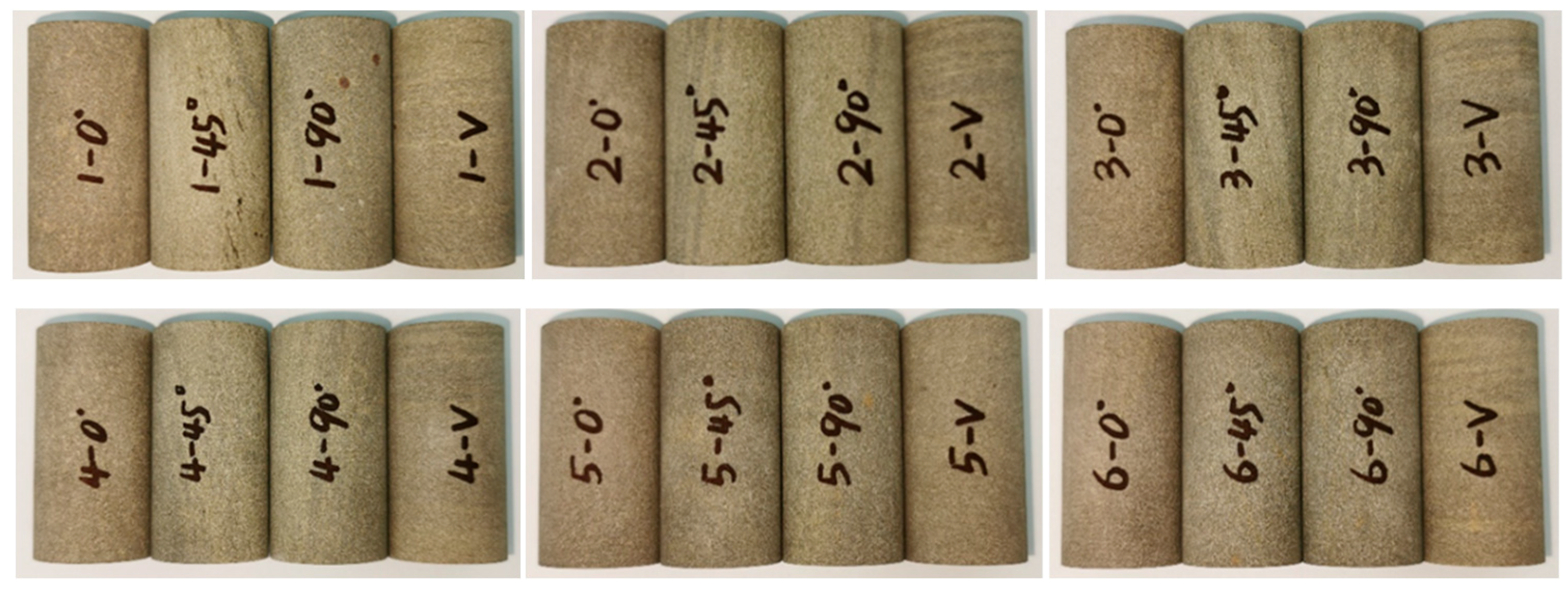
All the core samples for this experiment were taken from the target area. Through drilling and processing of the full-diameter oilfield core samples, three cylindrical specimens (with a diameter of 25 mm and a height of 50 mm) in three directions were prepared: one group of vertical direction (Z-axis) specimens and two groups of horizontal direction (perpendicular to the core axis) specimens. A total of 24 effective specimens were obtained, as shown in Figure 1. Triaxial compression tests were conducted in each direction of the specimens, and acoustic emission monitoring was carried out simultaneously. Based on the Caesar effect (a phenomenon where the number of acoustic emission events in rocks increases sharply when the stress reaches the in situ stress level underground during monotonic loading), stress characteristic points were identified. The above characteristic stresses were substituted into Equations (2)–(5) [28], and the in situ stresses in the three main directions of the stratum were inversely calculated.
σ v = σ + α P p K P c
σ H = σ 0 ° + σ 90 ° 2 + σ 0 ° σ 90 ° 2 ( 1 + t g 2 2 α ) 1 2 + α P p K P c
σ h = σ 0 ° + σ 90 ° 2 σ 0 ° σ 90 ° 2 ( 1 + t g 2 2 α ) 1 2 + α P p K P c
tan 2 α = σ 0 ° + σ 90 ° 2 σ 45 ° σ 0 ° σ 90 °
where σH, σh, and σv represent the maximum, minimum horizontal principal stress, and vertical stress, MPa; PP represents the formation pore pressure, MPa; α is the Biot coefficient; σ is the Kaiser point stress of the core in the vertical direction, MPa; and σ, σ45°, and σ90° are the Kaiser point stresses of the core in the three horizontal directions of 0°, 45°, and 90°, respectively, MPa.
A total of six full-diameter cores were taken for in situ stress testing in the experiment. These six full-diameter cores were from typical wells in the block. The core depths were approximately 5800 m. The confining pressure set for the experiment was 30 MPa. Table 3 shows the in situ stress test results of the six groups of the Ta Zhong Shun 9 well area. The maximum horizontal principal stress in the Ta Zhong Shun 9 well area ranged from 104.81 to 125.33 MPa, the minimum horizontal principal stress ranged from 95.75 to 106.66 MPa, the vertical stress was 148.50 MPa, and the horizontal stress difference ranged from 8.32 to 18.67 MPa.

3. Design of Indoor Fracturing Simulation Experiment

3.1. Rock Sample Preparation

The Shun 9 Well Area is located in the Shuntogelere block among the eight registered blocks of Sinopec in the Tazhong area. The geological formation depth is approximately 5500 m. Mineral composition tests were conducted on the downhole core samples, revealing that the content of brittle mineral quartz was 32.2%, calcite content was 14.7%, and clay mineral content was 39.5%. The rock samples used in the hydraulic fracturing experiment were taken from the outcrops of the same formation layer as the target layer to ensure the mechanical compatibility between the outcrops and the downhole core samples. Outcrops with a mechanical property difference of no more than 10% from the downhole full-diameter core were selected for the experimental study. To ensure that the rock samples produced can cover both the cases where there is a mudstone interlayer and where there is no mudstone interlayer, during the selection of outcrops, the outcrops with mudstone interlayers and those without mudstone interlayers are separated, and the original mudstone layers in the outcrops are well preserved during the processing of the samples to meet the experimental requirements.
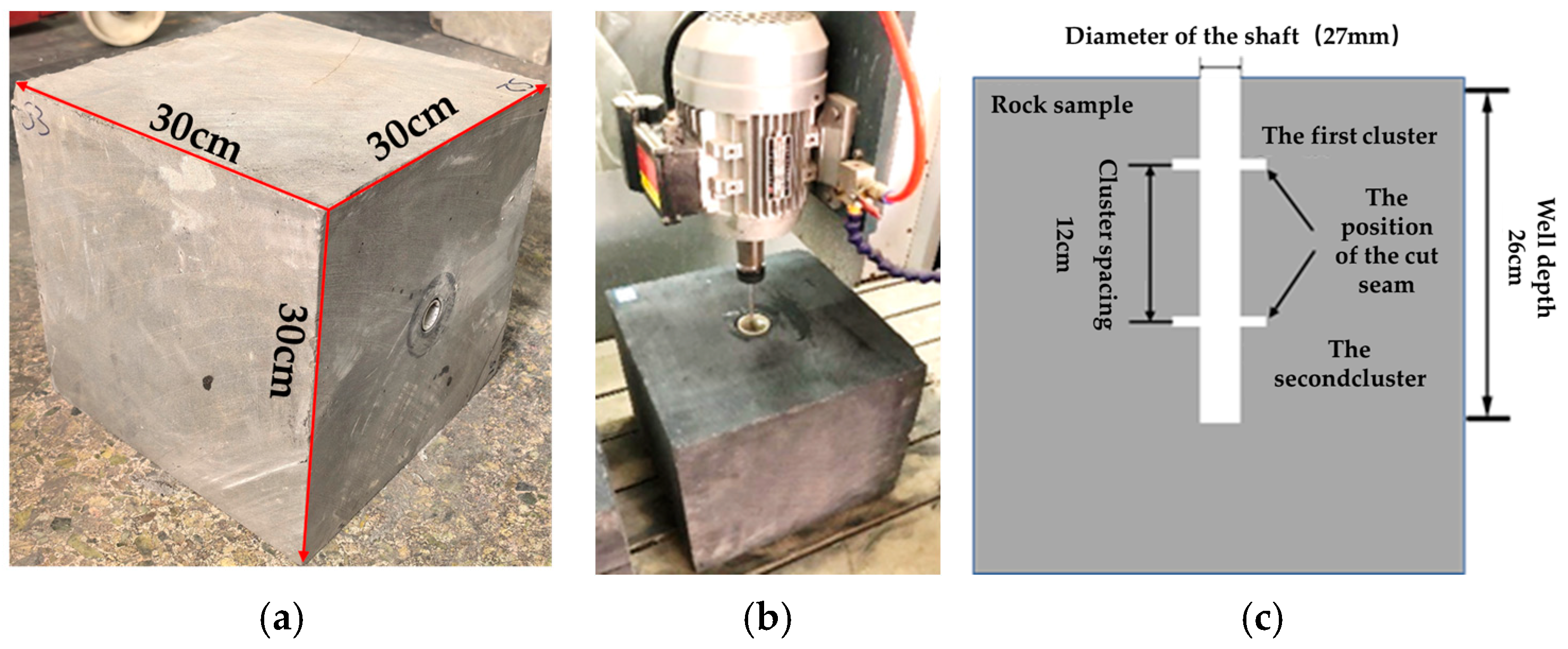
The full-diameter downhole core was prepared into a 30 cm × 30 cm × 30 cm cube sample (Figure 2a). A vertical hole with a diameter of 27 mm and a depth of 26 cm was drilled at the center of the square plane to simulate a horizontal well. A PVC pipe with an outer diameter of 29 cm and a length of 26 cm was lowered to the bottom of the well to simulate the casing. High-strength epoxy resin cement was used to solidify the wellbore (Figure 2b). Radial circular vertical notches with a radius of 0.2–0.3 cm were etched and slit at the bottom of the wellbore to simulate perforation (Figure 2c). During the experiment, fracturing fluid and proppant were pumped into the wellbore, and after establishing high pressure, the water fractures were induced to crack at the circular notches.

3.2. Experimental Setup and Plan

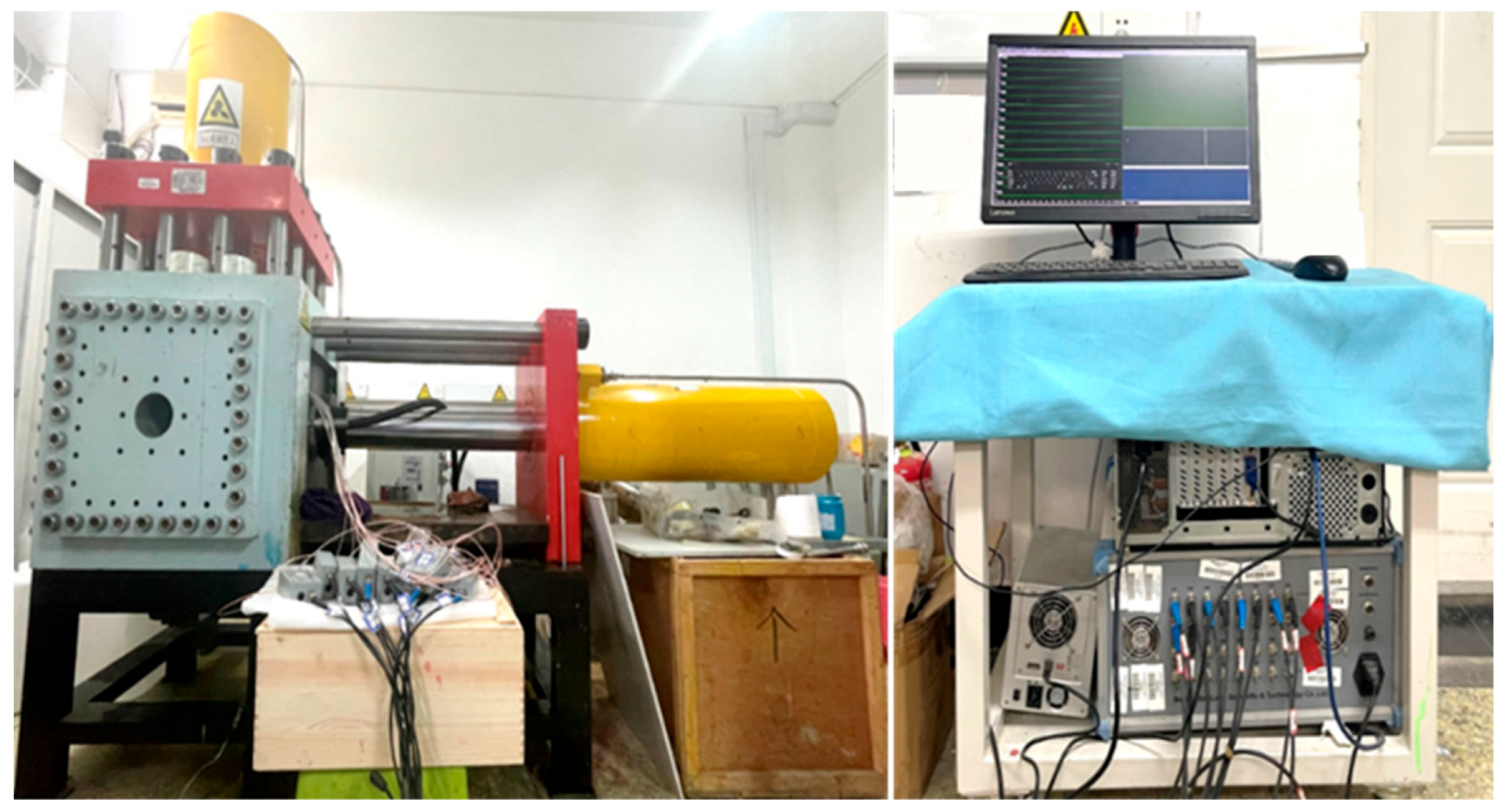
The experiment adopted a large-sized true triaxial fracturing simulation experimental system. This system mainly consists of a stress loading system, a core chamber, a constant-speed constant-pressure pump, a temperature control system, an intermediate container, a data acquisition system, and auxiliary devices. This test system can conduct material model tests on rock samples with a size of 30 cm × 30 cm × 30 cm. The true triaxial loading module can achieve triaxial loading at a certain stress or displacement loading rate in a proportional or non-proportional manner, realize computer control of the loading process, and adjust the loading size and loading speed arbitrarily. It uses a servo control system to stabilize the pressure and automatically collect stress, displacement, data, etc. In this true triaxial loading test system, the X, Y, and Z directions can be independently pressurized to achieve automatic control and adjustment of the loading size and loading speed. The load loading rate can reach up to 300 kN/min, the displacement loading control speed is 0.2 mm/min, and the load stability range is ±8 kN. To ensure the overall compatibility of the new fracture control system and the true triaxial loading test system, coordinated operation and mutual non-interference can be achieved, as shown in Figure 3.
Each hydraulic cylinder for each axis is equipped with a hydraulic source and a water-cooling system, ensuring the stable power output of the true triaxial fracturing device for a long time. Three independent booster cylinders ensure the stable output of the maximum force in the X, Y, and Z directions (8000 kN). The independent servo control systems for the X, Y, and Z directions ensure the precise and stable loading of the triaxial stress of the sample. For a 30 cm × 30 cm × 30 cm specimen, it can achieve triaxial stress loading of 0 to 55 MPa, thereby providing an important guarantee for simulating the stress conditions of deep dense sand reservoirs. The fracturing fluid pump-injection system can ensure the smooth progress of the fracturing material model test under different working conditions. The maximum pump-injection pressure of the ultra-high-pressure sand-carrying pump-injection system can reach 50 MPa, the flow rate control accuracy can reach 0.01 mL/s, the pressure control accuracy is 0.05 MPa/s, and the maximum pump-injection volume is 800 mL.
Large-scale physical simulation experiments of fracturing were conducted using underground core samples, with a focus on examining the development of pores and natural fractures, the type of fracturing fluid (viscosity), single cluster flow rate, stress difference, etc., and their effects on artificial fractures. The main injection parameters of the experiments were calculated based on the similarity criterion, as shown in Equations (6) and (7) [20,21]: The flow rate per cluster in horizontal wells is 4 to 8 m3/min, and the viscosity of the fracturing fluid is 10 to 70 mPa·s. The main injection parameters of the experiments were calculated based on the similarity criterion: The radius of the fracture expansion characteristics of the reservoir is approximately 50 to 60 m, while the radius of the experimental fracture expansion characteristics is 0.15 m (half of the length of the rock sample), and the maximum calculated injection flow rate is 200 mL/min, and the viscosity of the fracturing fluid is 5 to 50 mPa·s (Table 4).
μ l = α μ f t l max t f max Q f Q l 3 / 2 E f E l 13 / 2 K l K f 9 2 / 5
t max = R max 5 / 2 K Q E
where E represents the elastic modulus of the rock, GPa; E′ represents the elastic modulus under plane strain, GPa; K′ represents the modified fracture toughness, MPa·m1/2; Q represents the displacement, m3/min; α represents the similarity coefficient, with a value approximately 0.85 (dimensionless); R represents the characteristic radius of the fracture, in m; t represents the fracture expansion time, s; and μ represents the viscosity of the fracturing fluid, mPa·s. Subscripts: f represents the field parameters; l represents the laboratory parameters; and max represents the maximum value.
According to the geometric similarity criterion, considering the on-site cluster spacing of 15 m and the fracture half-length ranging from 120 to 150 m, the experimental fracture half-length is approximately 0.15 m (which is half of the rock sample length), and the experimental cluster spacing can be calculated by Equation (8) [29] to be approximately 12 cm.
S M = β L M L F S F
where S represents the seam spacing, cm, and L represents the half-seam length, m. The subscripts M and F respectively indicate physical experiments and field conditions.
The main experimental steps are as follows: (1) Place the rock sample in the triaxial core chamber and apply variable frequency loading. Through the triaxial hydraulic servo system, successively apply the minimum horizontal principal stress, the maximum horizontal principal stress, and the vertical stress to the preset values and maintain stability. (2) Add the prepared certain viscosity fracturing fluid to the intermediate container, tighten the intermediate container, turn it back half a turn, and connect the pump-in line. (3) Open the discharge valve of the intermediate container and the wellhead discharge valve, click the “Constant Flow” button, set a small flow rate, click “Run”, and check if the displacement pump pressure is normal. After seeing liquid at the discharge valve of the intermediate container, close the intermediate container valve, and after seeing liquid at the wellhead discharge valve, close the wellhead valve. (4) Check if all pipelines are connected properly and the valves are opened and closed correctly. (5) After all equipment is inspected, set the corresponding flow rate according to the experimental plan and start continuous pumping of the fracturing fluid until the wellhead pressure rises sharply, then drops and stabilizes for a period of time before stopping the pump. (6) Place the staining solution in another intermediate container, tighten it, turn it back half a turn, and connect the pumping pipeline. Inject the staining solution into the rock sample at a pumping rate of 0.5 mL/min. Stop the pumping when the cumulative injection volume reaches 20 mL (when observing the sample, it is indicated that the staining agent has seeped out. (7) During the fracturing experiment, use the acoustic emission monitoring technology to capture the acoustic emission signals generated by the emergence and expansion of fractures inside the rock sample in real time. This is used to make a preliminary judgment on the distribution characteristics of the fractures inside the rock sample. After the experiment, use the fracture observation instrument (two-dimensional fracture scanning imaging system) to perform high-definition imaging of the surface fractures. Combined with the staining trace contour, perform two-dimensional projection extraction and quantitative characterization of the fractures. The measurement resolution should not be lower than 0.01 mm. At least three repeated measurements should be conducted for the same fracture, and the average value should be taken to reduce human error.
The viscosity of the liquid is one of the key parameters of fracturing fluid performance, and it has complex and crucial dual effects on the penetration expansion of hydraulic fractures. Its effect is not simply “the higher, the better” or “the lower, the better”, but is closely combined with parameters such as the construction flow rate and the difference in ground stress, jointly determining the expansion form of the fractures. Therefore, for different liquid types, construction flow rates, and plane and penetration expansion under different stress differences, conduct experimental research, and analyze the influence of liquid type and construction flow rate on the penetration expansion of fractures. The specific experimental scheme is shown in Table 5.

3.3. Quantitative Evaluation of Crack Characteristics

For different experimental conditions, the number of fractures generated by hydraulic fracturing of each rock sample, the total fracture length, and the complexity coefficient were statistically analyzed to study the relationship between various construction parameters and fracture complexity. To quantitatively describe the complexity of hydraulic fractures, a “unified fracture complexity coefficient” was proposed. This coefficient is defined as the ratio of the actual fracture length to the length of the rock sample along the maximum horizontal principal stress direction.
Formula for calculating the complexity coefficient of cracks:
F c = i = 1 n l 1 + l 2 + + l n d
where n represents the number of cracks; l1 represents the actual length of crack 1, l2 represents the actual length of crack 2, and ln represents the actual length of crack n. In large-scale physical simulation experiments, d represents the circumference of the rock sample in the direction of the maximum horizontal principal stress, and its value is 120 cm.

4. Experimental Results and Analysis

4.1. The Influence of Mudstone Interlayers on the Complexity of Fractures

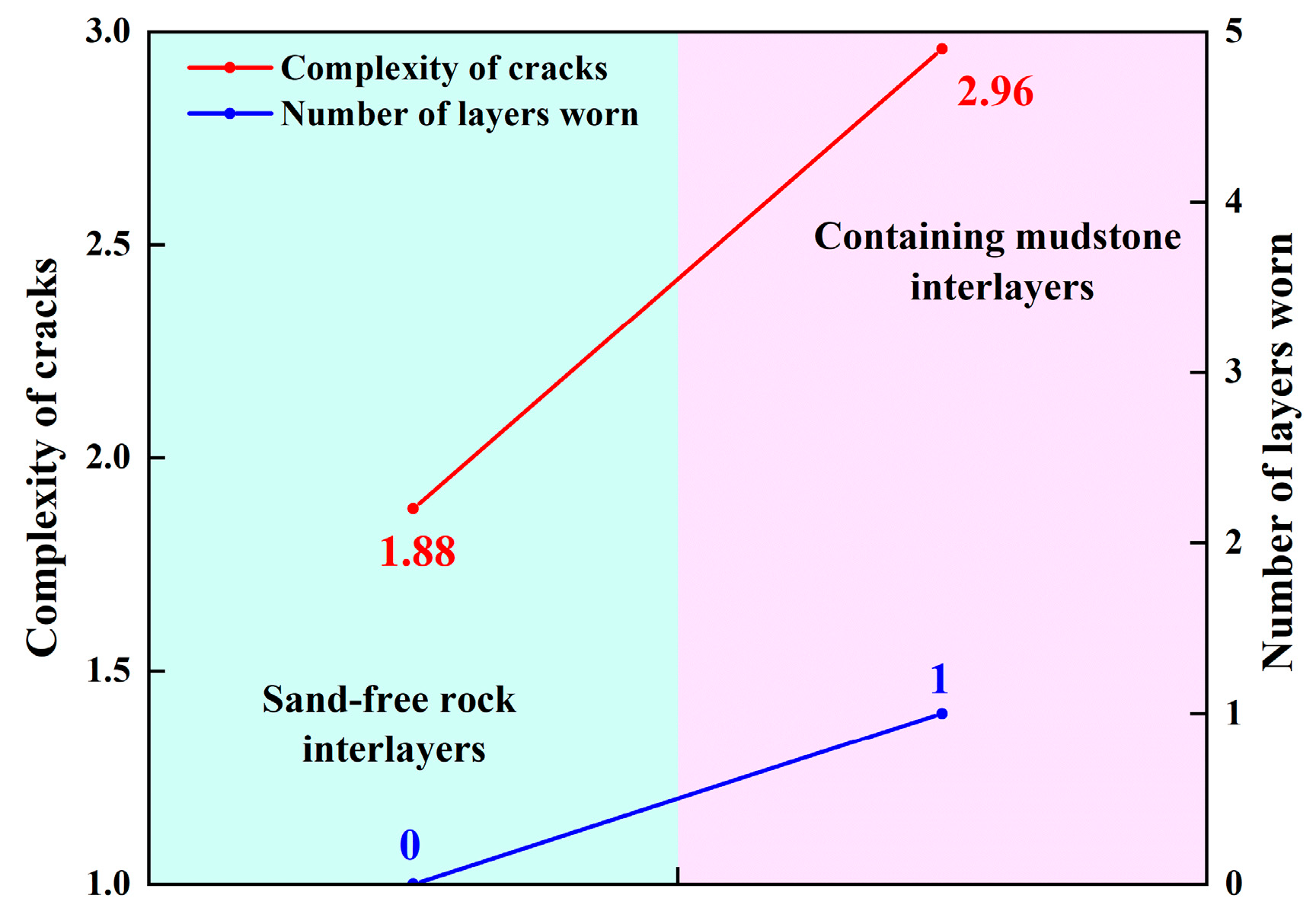
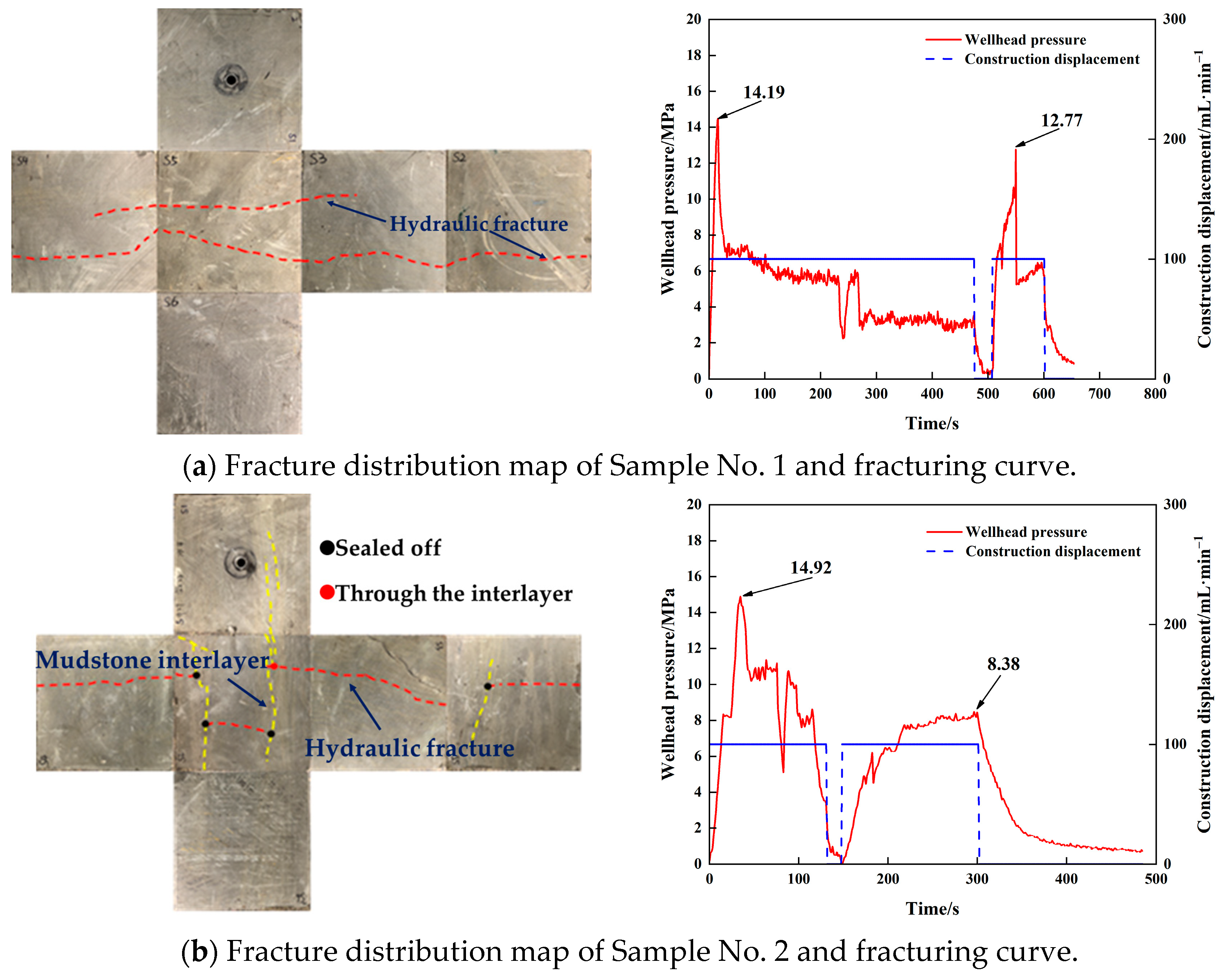
The study investigated the influence of the development of mudstone interlayers on the complexity of fractures. Based on Sample No. 1, which did not have any mudstone interlayers, the experimental parameters were a fracturing fluid flow rate of 100 mL/min, a low-pressure fracturing fluid viscosity of 5 mPa·s, and a horizontal ground stress difference of 12 MPa. Hydraulic fracturing resulted in two cross-cutting fractures, with a total fracture length of 226 cm. The fracture complexity coefficient was 1.88. The rupture pressure of the first cluster was 14.19 MPa, and that of the second cluster was 12.77 MPa. The surface fracture distribution map of the rock sample after the hydraulic fracturing experiment is shown in Figure 4a. When there is a mudstone interlayer in the rock Sample, and the hydraulic fractures extend to the mudstone interlayer, they may either penetrate through the interlayer or be blocked by it. This article defines penetrating through as when hydraulic fractures penetrate through the mudstone interlayer and continue to extend on the other side of the interlayer. Conversely, being blocked is defined as when the crack tip stops inside or at the interface of the mudstone interlayer and does not achieve cross-interlayer extension. As shown in Figure 4b, the fracture distribution map of sample 2, the black dots represent that the hydraulic fractures are blocked by the mudstone interlayer, and the red dots represent that the hydraulic fractures penetrate through the mudstone interlayer. When there is no mudstone interlayer, the fracture rupture pressures of the two clusters are similar. When there is a mudstone interlayer, the rupture pressure of the second cluster decreases significantly. The existence of the mudstone interlayer has a significant influence on the fracture morphology and the complexity of the fracture complex layer. As shown in Figure 5, the existence of the mudstone interlayer greatly increases the complexity of the fractures, from 1.88 to 2.96, an increase of 57%. When there is a mudstone interlayer in the rock, the fracturing process is prone to opening weak planes, hindering the extension of the hydraulic fractures. For sample 4, the hydraulic fractures were blocked four times and penetrated once.

4.2. The Impact of Injection Rate and Horizontal Stress Differential on the Ability of Hydraulic Fractures to Penetrate Interlayers

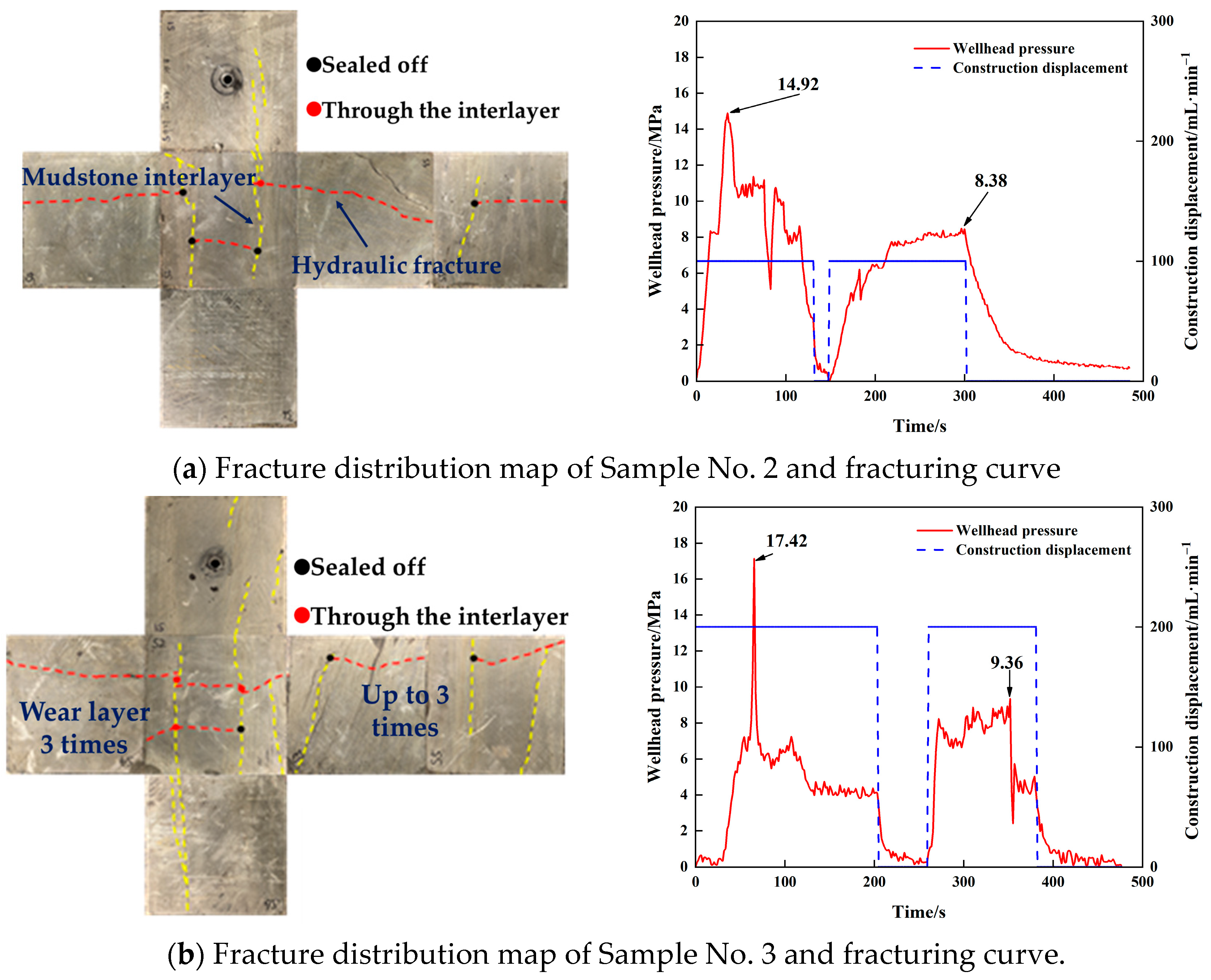
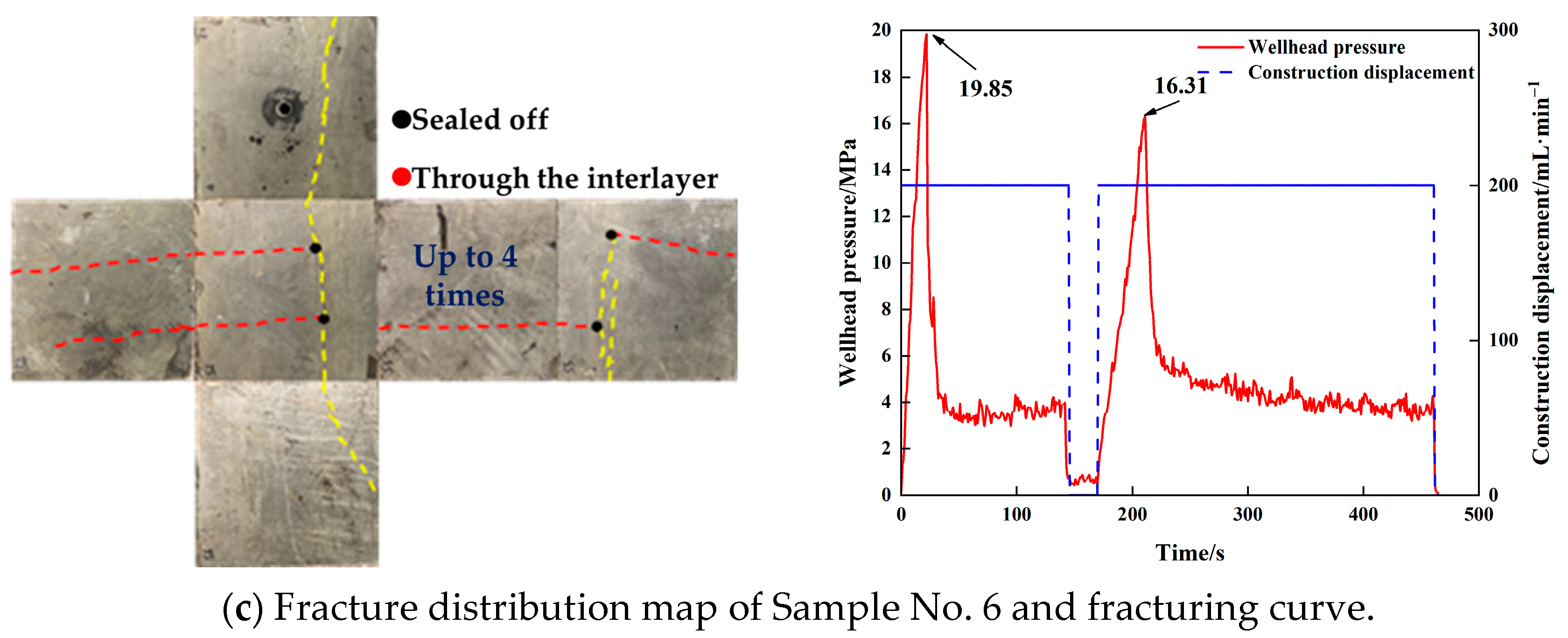
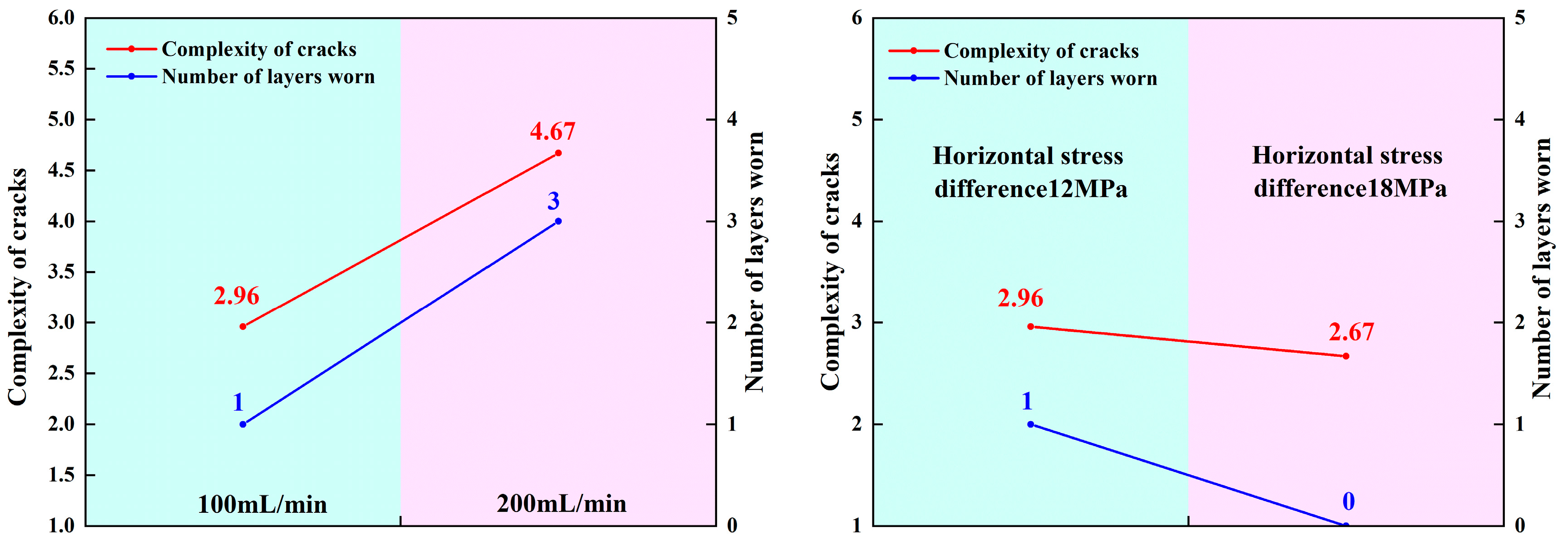
The experimental parameters for Sample No. 2 were a low-pressure fracturing fluid flow rate of 100 mL/min, a low-pressure fracturing fluid viscosity of 5 mPa·s, and a horizontal stress difference of 12 MPa. For Sample No. 3, the flow rate was increased to a high flow rate of 200 mL/min, and for Sample No. 6, the horizontal stress difference was increased to 18 MPa. The study focused on the influence of flow rate and horizontal stress difference on the penetration of fractures. The hydraulic fracture distribution map and the wellhead pressure curve after the experiment are shown in Figure 6. The influence diagrams of flow rate and horizontal stress difference on the penetration of fractures and their complexity are shown in Figure 7. The greater the flow rate, the greater the fracture pressure, and the greater the complexity of the hydraulic fractures. From low flow rate to high flow rate, the complexity of the fractures increased by 58%. The greater the horizontal stress difference, the greater the fracture pressure, and the hydraulic fractures tended to be simpler. When the stress difference increased from 12 MPa to 18 MPa, the fracture complexity coefficient decreased by 9.8%. Flow rate affects the penetration effect of hydraulic fractures. For Sample No. 2 with a low flow rate, the fractures were blocked four times and penetrated once. In the high flow rate condition, the fractures were penetrated three times and blocked three times. Increasing the flow rate made the hydraulic fractures more likely to penetrate. Under high stress difference conditions, the hydraulic fractures were blocked four times, and no fracture penetration occurred. Corresponding to the on-site fracturing parameters, that is, when the construction flow rate is less than 6 m3/min and the horizontal stress difference is greater than 18 MPa, the fractures are less likely to cause layer penetration.

4.3. The Influence of Viscosity Changes on the Penetration of Cracks

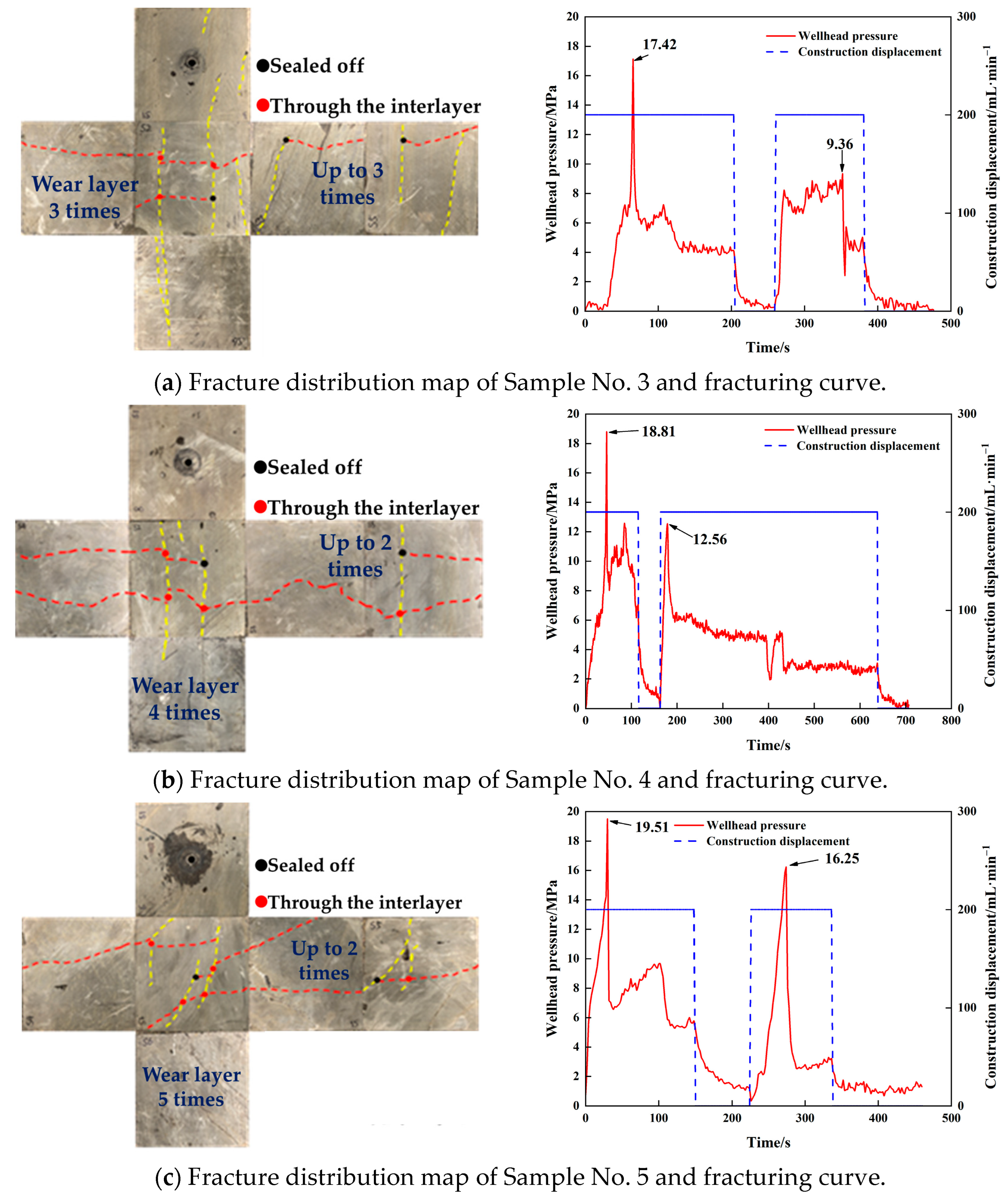
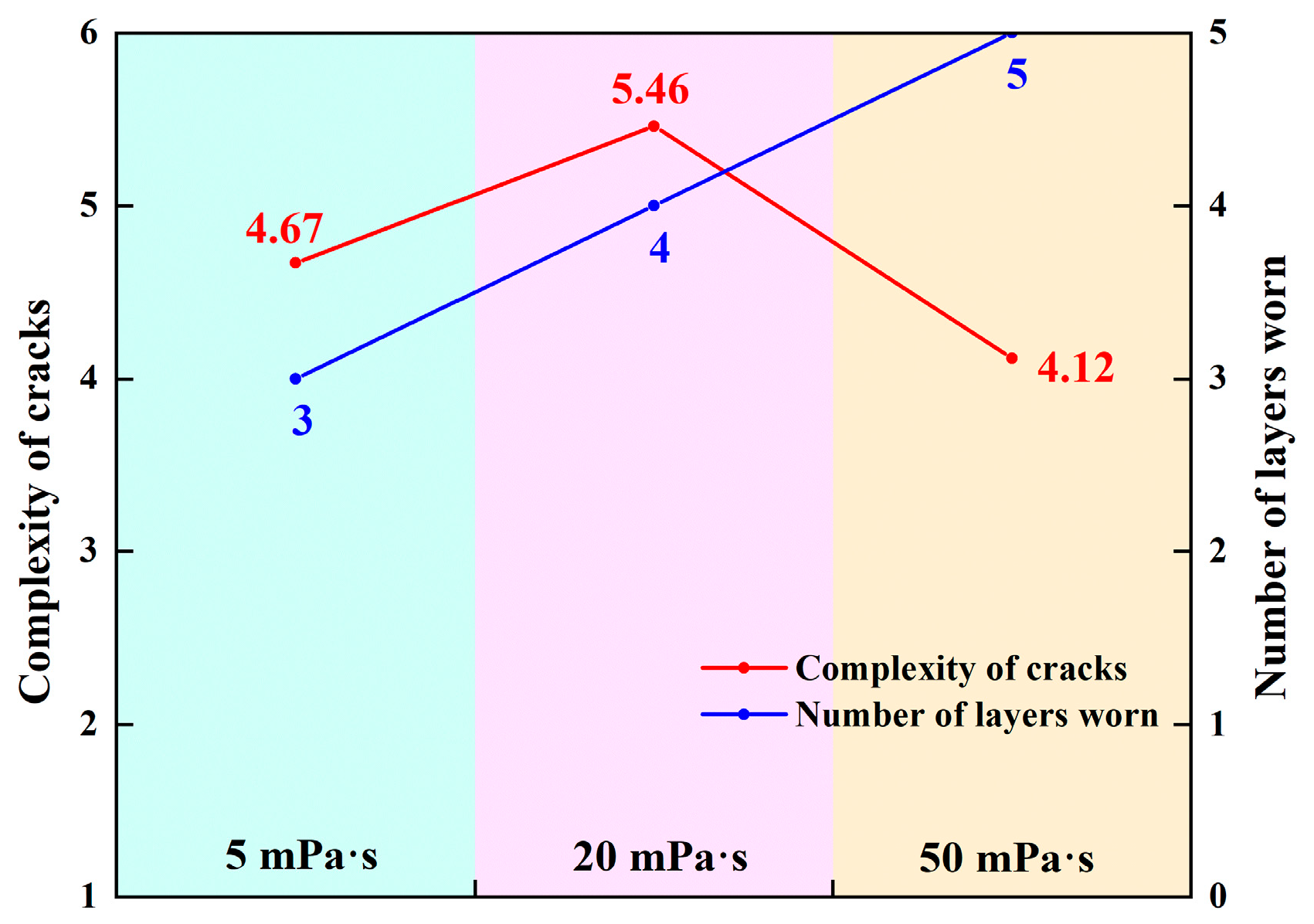
The experimental parameters for Sample No. 3 were a low-pressure fracturing fluid flow rate of 200 mL/min, a low-pressure fracturing fluid viscosity of 5 mPa·s, and a horizontal ground stress difference of 12 MPa. For Sample No. 4, the viscosity was increased to a medium viscosity of 20 mPa·s, and for Sample No. 5, the viscosity was increased to a high viscosity of 50 mPa·s. The study focused on the influence of fracturing fluid viscosity on the penetration of fractures. The hydraulic fracture distribution map and the wellhead pressure curve after the experiment are shown in Figure 8, and the influence diagram of viscosity on the penetration of fractures and the complexity is shown in Figure 9. The greater the viscosity, the greater the fracture pressure. The complexity of the fractures first increases and then decreases, from low viscosity to medium viscosity, the fracture complexity coefficient increases from 4.67 to 5.46, an increase of 17%; from medium viscosity to high viscosity, the fracture complexity coefficient decreases from 5.46 to 4.12, a decrease of 25%. The greater the viscosity, the better the penetration effect of the hydraulic fractures. Low viscosity penetration three times, medium viscosity penetration four times, and high viscosity penetration five times. Corresponding to the on-site fracturing parameters, that is, when the liquid viscosity is less than 10 mPa·s, the fractures are less likely to experience layer-penetrating phenomena.

5. Conclusions

Through large-scale physical simulation experiments on six groups of mudstone interlayers and sandstone, the initiation and propagation process of hydraulic fracturing was physically simulated, the fracture morphology after hydraulic fracturing was studied, and the initiation and extension laws were investigated. The following conclusions were drawn:
(1) The presence of mudstone interlayers significantly increases the complexity of fractures, increasing from 1.88 to 2.96, by 57%. When there is a mudstone interlayer in the rock, the fracturing process is more likely to open weak planes, hindering the expansion of hydraulic fractures. The hydraulic fractures of sample number 4 were cut off four times and penetrated through the rock layer once.
(2) The greater the flow rate, the greater the complexity of hydraulic fractures. When the flow rate increased from 100 mL/min to 200 mL/min, the complexity increased by 58%. The hydraulic fractures were more likely to penetrate through the rock layer, and the fractures with a large flow rate (200 mL/min) penetrated through the rock layer three times.
(3) The greater the viscosity, the greater the fracture pressure. The complexity of fractures first increases and then decreases. From low viscosity to medium viscosity, the fracture complexity coefficient increased from 4.67 to 5.46, an increase of 17%. From medium viscosity to high viscosity, the fracture complexity coefficient decreased from 5.46 to 4.12, a decrease of 25%. The greater the viscosity, the better the penetration effect of hydraulic fractures. Low viscosity fractures penetrated three times, medium viscosity fractures penetrated four times, and high viscosity fractures penetrated five times.
(4) As the vertical distance between the oil layer and the bottom water is approximately 20–30 m, to prevent the formation of longitudinal fractures that could communicate with the water layer, it is recommended that the on-site fracturing operation’s fluid discharge rate be 6 m3/min and the liquid viscosity be 10 mPa·s.

Author Contributions

Conceptualization, Y.Y.; methodology, Q.Z.; validation, P.L., and C.L.; formal analysis, X.M.; resources, L.L.; data curation, Y.W., and H.M. All authors have read and agreed to the published version of the manuscript.

Funding

This research received no external funding.

Data Availability Statement

Data are contained within the article.

Conflicts of Interest

Authors Yujie Yan, Quan Zhong, Pandeng Luo, and Chunyue Li were employed by the company Research Institute of Petroleum Engineering, SINOPEC Northwest Oilfield Company, and National Key Laboratory of Oil and Gas Reservoir Geology and Exploitation. The remaining authors declare that the research was conducted in the absence of any commercial or financial relationships that could be construed as a potential conflict of interest.

References

  1. Zhang, Q.; Tian, J.; Zhang, X.; Hao, S.; Li, Z.; Ji, K. Provenance Analysis of the Silurian Kepingtag Formation in the Northwest Margin of Tarim Basin-Evidence from Petrology and Geochemistry. Minerals 2025, 15, 934. [Google Scholar] [CrossRef]
  2. Dengfa, H.E.; Jia, C.; Zhao, W.; Xu, F.; Luo, X.; Liu, W.; Tang, Y.; Gao, S.; Zheng, X.; Li, D.; et al. Research progress and key issues of ultra-deep oil and gas exploration in China. Pet. Explor. Dev. 2023, 50, 1333–1344. [Google Scholar] [CrossRef]
  3. Liu, J.; Lin, C.; Cai, Z.; Zhu, Y.; Yang, Y.; Peng, L.; Su, Z. Palaeogeomorphology and its control on the development of sequence stratigraphy and depositional systems of the Early Silurian in the Tarim Basin. Pet. Sci. 2010, 7, 311–322. [Google Scholar] [CrossRef][Green Version]
  4. Rukai, Z.; Ping, L.; Dongbo, H. Sedimentary facies and models of the Kepingtage Formation of Silurian in Tazhong area, Tarim Basin. J. Palaeogeogr. 2005, 7, 197–206. [Google Scholar]
  5. Song, J.G.; Wu, Z.Q. Some Considerations on the Silurian petroleum exploration in the Tarim Basin-Taking Tazhong region as an example. Pet. Explor. Dev. 2004, 31, 127–129. [Google Scholar]
  6. XIONG, W.C.; LI, H.F.; SU, A. Hydrocarbon charging history for Silurian reservoirs of Shuntuoguole block in the north slope of Tazhong uplift, Tarim Basin: Constraints from fluid inclusion of Well Shun 9. Acta Pet. Sin. 2013, 34, 239. [Google Scholar]
  7. He, S.; Huang, T.; Bai, X.; Ren, J.; Meng, K.; Yu, H. Dramatically Enhancing Oil Recovery via High-Efficient Re-Fracturing Horizontal Wells in Ultra-Low Permeability Reservoirs: A Case Study in HQ Oilfield, Ordos Basin, China. Processes 2024, 12, 338. [Google Scholar] [CrossRef]
  8. Lei, Q.; Yang, Z.; Weng, D.; Liu, H. Techniques for improving fracture-controlled stimulated reservoir volume in ultra-deep fractured tight reservoirs: A case study of Kuqa piedmont clastic reservoirs, Tarim Basin, NW China. Pet. Explor. Dev. 2022, 49, 1169–1184. [Google Scholar] [CrossRef]
  9. Qun, L.E.I.; Dingwei, W.E.N.G.; Baoshan, G.U.A.N.; Lijun, M.U.; Yun, X.U.; Zhen, W.A.N.G.; Shuai, L.I. A novel approach of tight oil reservoirs stimulation based on fracture controlling optimization and design. Pet. Explor. Dev. 2020, 47, 632–641. [Google Scholar] [CrossRef]
  10. Qun, L.E.I.; Dingwei, W.E.N.G.; Bo, C.A.I.; Chunming, H.; Yang, S.; Zeyuan, M. Progress, key challenges and countermeasures of reservoir stimulation technology of PetroChina. China Pet. Explor. 2023, 28, 15. [Google Scholar]
  11. Chuprakov, D.; Prioul, R. Hydraulic fracture height containment by weak horizontal interfaces. In Proceedings of the SPE Hydraulic Fracturing Technology Conference and Exhibition, The Woodlands, Texas, USA, 3–5 February 2015; SPE: Richardson, TX, USA, 2015; p. D011S001R003. [Google Scholar]
  12. Ouchi, H.; Foster, J.T.; Sharma, M.M. Effect of reservoir heterogeneity on the vertical migration of hydraulic fractures. J. Pet. Sci. Eng. 2017, 151, 384–408. [Google Scholar] [CrossRef]
  13. Tan, P.; Chen, Z.; Fu, S.; Zhao, Q. Experimental investigation on fracture growth for integrated hydraulic fracturing in multiple gas bearing formations. Geoenergy Sci. Eng. 2023, 231, 212316. [Google Scholar] [CrossRef]
  14. Tan, P.; Chen, G.; Wang, Q.; Zhao, Q.; Chen, Z.; Xiang, D.; Xu, C.; Feng, X.; Zhai, W.; Yang, Z.; et al. Simulation of hydraulic fracture initiation and propagation for glutenite formations based on discrete element method. Front. Earth Sci. 2023, 10, 1116492. [Google Scholar] [CrossRef]
  15. Adachi, J.E.S.A.P.J.D.; Siebrits, E.M.; Peirce, A.; Desroches, J. Computer simulation of hydraulic fractures. Int. J. Rock Mech. Min. Sci. 2007, 44, 739–757. [Google Scholar] [CrossRef]
  16. Sherratt, J.; Haddad, A.S.; Wejzerowski, F.; Rafati, R. Optimising well orientation in hydraulic fracturing of naturally fractured shale gas formations. J. Nat. Gas Sci. Eng. 2021, 94, 104141. [Google Scholar] [CrossRef]
  17. Zeng, Q.; Bo, L.; Li, Q.; Sun, J.; Yao, J. Numerical investigation of hydraulic fracture propagation interacting with bedding planes. Eng. Fract. Mech. 2023, 291, 109575. [Google Scholar] [CrossRef]
  18. Wan, L.; Hou, B.; Meng, H.; Chang, Z.; Muhadasi, Y.; Chen, M. Experimental investigation of fracture initiation position and fluid viscosity effect in multi-layered coal strata. J. Pet. Sci. Eng. 2019, 182, 106310. [Google Scholar] [CrossRef]
  19. Hou, B.; Zhang, Q.; Chen, M. Status and tendency of physical simulation technology for hydraulic fracturing of shale reservoirs. Pet. Drill. Tech. 2023, 51, 66–77. [Google Scholar]
  20. Detournay, E. Mechanics of hydraulic fractures. Annu. Rev. Fluid Mech. 2016, 48, 311–339. [Google Scholar] [CrossRef]
  21. Dontsov, E.V. An approximate solution for a plane strain hydraulic fracture that accounts for fracture toughness, fluid viscosity, and leak-off. Int. J. Fract. 2017, 205, 221–237. [Google Scholar] [CrossRef]
  22. Zou, Y.; Shi, S.; Yu, T.; Tian, G.; Ma, X. Experimental modeling of sanding fracturing and conductivity of propped fractures in conglomerate: A case study of tight conglomerate of Mahu sag in Junggar Basin, NW China. Pet. Explor. Dev. 2021, 48, 1383–1392. [Google Scholar] [CrossRef]
  23. Zou, Y.; Shi, S.; Li, J.; Wang, F.; Wang, J. Hydraulic fracture geometry and proppant distribution in thin interbedded shale oil reservoirs. Pet. Explor. Dev. 2022, 49, 1185–1194. [Google Scholar] [CrossRef]
  24. Madyarov, A.; Prioul, R.; Zutshi, A.; Seprodi, N.; Groves, D.; Pei, J.; Wong, S.W. Understanding the impact of completion designs on multi-stage fracturing via block test experiments. In ARMA US Rock Mechanics/Geomechanics Symposium; ARMA: Alexandria, VA, USA, 2021; p. ARMA-2021. [Google Scholar]
  25. Lei, Q.; Weng, D.; Liu, H.; Guan, B.; Deng, Q.; Yan, X.; Ma, Z. Progress and development directions of shale oil reservoir stimulation technology of China National Petroleum Corporation. Pet. Explor. Dev. 2021, 48, 1198–1207. [Google Scholar] [CrossRef]
  26. Cui, Z.; Hou, B. Criteria for discriminating layer-penetration fracturing considering pressure drop and interfaces. Eng. Fract. Mech. 2023, 292, 109622. [Google Scholar] [CrossRef]
  27. Yun, X.; Mitri, H.S.; Yang, X.; Wang, Y. Experimental investigation into biaxial compressive strength of granite. Int. J. Rock Mech. Min. Sci. 2010, 47, 334–341. [Google Scholar] [CrossRef]
  28. Lavrov, A. The Kaiser effect in rocks: Principles and stress estimation techniques. Int. J. Rock Mech. Min. Sci. 2003, 40, 151–171. [Google Scholar] [CrossRef]
  29. Zou, Y.; Gao, B.; Zhang, S.; Ma, X.; Sun, Z.; Wang, F.; Liu, C. Multi-fracture nonuniform initiation and vertical propagation behavior in thin interbedded tight sandstone: An experimental study. J. Pet. Sci. Eng. 2022, 213, 110417. [Google Scholar] [CrossRef]
Figure 1. Schematic diagram of standard core sampling.
Processes 14 00977 g001
Figure 2. (a) Standard fracturing pattern; (b) section drawing of the gap; (c) completion schematic diagram.
Processes 14 00977 g002
Figure 3. Large-scale true three-axis fracturing simulation experimental system.
Processes 14 00977 g003
Figure 4. The presence or absence of interlayers and the form of fractures in the rock samples.
Processes 14 00977 g004
Figure 5. The presence or absence of interlayers in the rock samples, and the complexity of the fractures within the layers.
Processes 14 00977 g005
Figure 6. Fracture morphology of pores in rock samples under different discharge rates.
Processes 14 00977 g006aProcesses 14 00977 g006b
Figure 7. Graph showing the influence of reservoir volume and horizontal stress difference on the penetration of fractures and the complexity level.
Processes 14 00977 g007
Figure 8. Fracture morphologies of pore-forming rock samples under different viscosities.
Processes 14 00977 g008
Figure 9. Graph showing the influence of fracturing fluid viscosity on the penetration of fractures and the complexity of the process.
Processes 14 00977 g009
Table 1. Triaxial compressive strength test scheme and results.
Sample
Number
Confined Pressure
(MPa)
Length
(mm)
Diameter
(mm)
Load
(kN)
Young Modulus
(Gpa)
Poisson’s
Ratio
L1-12049.3925.2124,77820.760.25
L1-22049.3325.2130,58622.100.23
L2-14049.5225.2163,71023.620.27
L2-24049.5525.2161,74823.170.25
L2-34049.5325.21161,70823.240.24
L3-16049.7425.19185,90823.500.26
L3-26049.5125.16187,68022.620.24
L3-36049.4925.12196,44224.000.22
J1-12048.5425.24132,35822.550.23
J1-22047.8925.36132,75622.720.23
J2-14046.17525.19163,56023.270.24
J2-24047.125.36162,26123.440.22
J2-34047.525.32161,61323.560.22
J3-16047.53525.37186,90423.720.22
J3-26046.225.21192,63123.790.19
J3-36045.2425.35195,62223.840.18
Table 2. Test results of splitting tensile strength in Brazil.
Number of
Samples
Diameter
(mm)
Thickness
(mm)
Load
(N)
Tensile Strength
(Mpa)
125.0015.0053209.03
225.0015.0046247.85
325.0015.0041867.11
425.0015.0034685.89
525.0015.0050968.65
625.0015.0056449.58
725.0015.0046927.97
825.0015.0052408.90
925.0015.0041196.99
1025.0015.0038296.50
1125.0015.0046007.81
1225.0015.0044587.57
1325.0015.0051458.73
1425.0015.0038136.47
1525.0015.0054719.29
1625.0015.0048318.20
Table 3. Results of in situ stress tests.
NumberDepth
(m)
Max Horizontal Stress
(Mpa)
Min Horizontal Stress
(Mpa)
Vertical Stress
(Mpa)
Horizontal Stress Difference
(Mpa)
15800119.75105.14148.5014.61
2125.33106.66148.5018.67
3110.6898.16148.5012.53
4105.9397.75148.508.32
5104.8195.75148.509.05
6120.28102.86148.5017.42
Table 4. Main construction parameters of the fracturing experiment.
ParametersOn-Site Parameter ValuesExperimental Parameter Values
Crack characteristic radius (m)50~600.15
Each cluster capacity4~8 m3/min100~200 mL/min
Fracturing fluid viscosity (mPa·s)10-30-705-20-50
Table 5. Fracturing simulation experiment plan.
Serial NumberStress (MPa)
(σh/σH/σV)
Flow Rate
(mL/min)
Fluid Viscosity
(mPa·s)
Influencing FactorsNote
112(13/25/30)1005Mudstone interlayerAn unclayey interlayer
212 (13/25/30)1005There is a mudstone interlayer.
312 (13/25/30)2005Displacement
412 (13/25/30)20020Viscosity
512 (13/25/30)20050
618 (7/25/30)20020Horizontal stress difference
Disclaimer/Publisher’s Note: The statements, opinions and data contained in all publications are solely those of the individual author(s) and contributor(s) and not of MDPI and/or the editor(s). MDPI and/or the editor(s) disclaim responsibility for any injury to people or property resulting from any ideas, methods, instructions or products referred to in the content.