Article

Cascaded Thermal Storage for Low-Carbon Heating: An Air-Assisted Ground-Source Heat Pump with Zoned Boreholes in a Cold-Climate Building

1
College of Power and Energy Engineering, Harbin Engineering University, Harbin 150001, China
2
School of Chemical Engineering and Technology, Hebei University of Technology, Tianjin 300401, China
3
College of Civil Engineering and Architecture, East University of Heilongjiang, Harbin 150066, China
4
College of Aerospace and Civil Engineering, Harbin Engineering University, Harbin 150001, China
*
Author to whom correspondence should be addressed.
Processes 2026, 14(6), 958; https://doi.org/10.3390/pr14060958
Submission received: 26 February 2026 / Revised: 11 March 2026 / Accepted: 16 March 2026 / Published: 17 March 2026

Abstract

The pursuit of carbon neutrality demands advanced low-carbon energy processes and their effective integration into building systems. Ground-source heat pumps (GSHPs) offer a key pathway for decarbonizing heating, yet their cold-climate application is compromised by soil thermal imbalance, which degrades their long-term efficiency. This study proposes and evaluates an innovative air-assisted GSHP system that integrates a vegetable greenhouse with a zoned borehole configuration for seasonal thermal storage to achieve carbon neutrality. The system segregates boreholes into core and peripheral zones to establish a controlled soil temperature gradient, enabling cascaded heat storage and thermal optimization. A comprehensive year-long field test was conducted on a residential building in Harbin, China. The results demonstrate that the system reliably maintains comfortable indoor conditions during severe winters, achieving average seasonal COPs of 3.82 for the heat pump unit and 2.85 for the overall system. The zoned operation strategy successfully generated a significant intra-field soil temperature gradient, with a maximum differential of 5.9 °C between the core and peripheral boreholes during charging. The measured heat extraction-to-storage ratio was 0.598, confirming effective cascaded utilization. From an environmental perspective aligned with low-carbon energy technologies, the system achieves annual savings of 8.66 tons of standard coal and a net CO2 reduction of 1.3 tons when accounting for regional grid carbon intensity. This research provides empirical validation and practical design guidance for implementing efficient GSHP systems in severely cold regions, thereby contributing substantively to building sector decarbonization.

1. Introduction

The global commitment to achieving carbon neutrality has intensified the imperative to develop and deploy advanced low-carbon energy processes across all sectors of the economy [1]. In the building sector, which represents a significant frontier for emissions reduction, the transition away from fossil fuel-based heating towards highly efficient electric alternatives is paramount [2,3,4]. Heat pump technologies have emerged as a cornerstone of this transition, offering the potential to dramatically reduce greenhouse gas emissions while providing reliable space conditioning [5,6,7]. Among these, ground-source heat pump (GSHP) systems are recognized for their superior energy efficiency, leveraging the stable temperatures of the shallow subsurface to achieve coefficients of performance that are substantially higher than those of conventional air-source alternatives [8]. When coupled with a decarbonizing electricity grid, GSHPs represent a mature and scalable solution for low-carbon heating and cooling, capable of reducing energy consumption and grid strain while supporting the integration of renewable energy sources [9]. However, a persistent technical barrier limits their widespread application, particularly in cold climates: the progressive development of soil thermal imbalance. In regions where heating loads dominate, prolonged heat extraction without adequate seasonal regeneration leads to long-term cold accumulation in the ground, degrading system efficiency and undermining the very system optimization principles that are essential for sustained low-carbon performance [10]. Addressing this challenge through innovative system design and engineering integration is critical to unlocking the full decarbonization potential of GSHP technology and advancing the objectives of carbon neutrality in the built environment [11].
Extensive research efforts have focused on developing advanced hybrid GSHP systems aimed at mitigating soil thermal imbalance and enhancing overall system thermal performance [12]. The hybrid systems developed can be divided into the following two types: In the first group of hybrid systems, which usually use air heat energy or energy from a solar boiler as an auxiliary heat source, the heating demand is generally higher than the cooling demand. Lu et al. [13] developed a hybrid framework integrating physical simulation, data-driven modeling, and multi-objective optimization to evaluate PVT-GSHP systems. The system achieved an annual COP of 3.34, reduced CO2 emissions by 76.1 tons/year, and cut life-cycle cost to 77% of conventional systems. Optimization further improved COP to 5.04. However, PV module degradation was not considered. Complementing this, Wang et al. [14] developed an annual simulation model of an air-source regenerative GSHP system, where summer air heat is stored underground for winter extraction. Their model predicted a heat pump COP as high as 4.17, further confirming the potential of hybrid designs for performance enhancement. Yue et al. [15] proposed a multi-objective optimization method based on the thermal imbalance rate (TIR), the energy efficiency ratio, the life-cycle cost (LCC), and carbon reduction to mitigate soil thermal imbalance in PVT-GSHP systems. The optimized scheme reduced the TIR and LCC by 49.8% and 18.91%, respectively. However, the findings are limited to Beijing’s climate and require validation in other regions. Li et al. [16] conducted a TRNSYS simulation on a solar-coupled GSHP system in a cold-region office building, optimizing it using a PSO-MSVR network and a genetic algorithm. The optimized system achieved a 17.7% reduction in annual cost and a 29.2% improvement in COP. However, the study lacked experimental validation and did not address long-term soil thermal imbalance. Meng et al. [17] proposed a solar–GSHP system using heating network return water as an auxiliary heat source. Simulations showed COP improvements of 20% and 13.7% over series and parallel configurations, with only a 0.16 °C drop in soil temperature. However, the system’s feasibility depends on the availability of regional return water and its temperature stability. Kwon et al. [18] developed a ground-source hybrid heat pump system to address GSHP performance degradation. The system improved cooling and heating performance by 15% and 3%, respectively, while reducing the initial investment by 5.3%. However, its application is limited to regions with stable surface water sources. Li et al. [19] proposed a solar–GSHP system with latent heat storage for an oilfield water heating station. Using PCM with a 70 °C melting point increased the collector efficiency to 53.9% and reduced the annual soil temperature drop to 0.19 °C. However, the study did not address PCM encapsulation and practical heat transfer efficiency. Eisapour et al. [20] compared photovoltaic-assisted and photovoltaic–thermal hybrid systems for GSHP applications in cold regions. After 20 years, the photovoltaic–thermal system achieved a 15% higher seasonal performance factor under heating mode, but did not provide an improvement in cooling. The study recommended the use of photovoltaic–thermal systems in communities where heating loads exceed 75% of annual demand, though their applicability to other climates requires further validation. Another technical approach within hybrid systems involves enhancing the heat transfer performance of the ground heat exchanger (GHE) to minimize soil thermal extraction by the GSHP. Although it is acknowledged that a well-designed GHE boosts system thermal efficiency [21], universal design standards are currently lacking. Typical design parameters include borehole diameters of 150–200 mm [22], depths ranging from 50 m to 150 m [23], pipe materials such as PVC or PE [24], and backfill materials like cement and bentonite [25]. Zhang et al. [26] developed an analytical model incorporating interlayer thermal contact resistance (TCR) for borehole heat exchangers in layered soils. A 0.01 m2·K/W increase in TCR raised interface temperature differences by 0.18–1.39 °C, exacerbating vertical temperature non-uniformity and local heat accumulation. However, groundwater advection was neglected. Zhou et al. [27] established a heat transfer model considering interlayer thermal resistance to analyze temperature fields around borehole heat exchangers in layered soils. Interlayer resistance caused temperature jumps at soil interfaces, intensifying vertical non-uniformity and thermal imbalance risks. However, the dynamic effects of zoned borehole operation were not considered. Feng et al. [28] conducted experimental and simulation studies on medium–deep GSHP systems in cold regions. The system maintained indoor temperatures above 18 °C, with an average COP of 5.67. However, the high cost of medium-deep borehole heat exchangers limits their economic feasibility. Li et al. [29] proposed a simulation-based configuration method for medium-deep GSHP systems, optimizing source-side parameters for residential and office buildings in northern China. The optimal borehole inlet/outlet temperatures of 5.5 °C/17.5 °C and a flow rate of 65.77 m3/h minimized cost while maximizing heating reliability. However, the study lacked experimental validation and did not consider geological variability. Kerme et al. [30] experimentally investigated GSHP systems coupled with vertical and horizontal boreholes in cold climates. The heat pump achieved COPs of 2.7–3.15 under heating mode and 3.75–5.4 under cooling mode, with parallel operation leading to system COPs of 5.42 and 5.36. However, the study focused on short-term performance and did not address long-term soil thermal imbalance.
Nevertheless, the existing hybrid GSHP systems remain predominantly designed for urban buildings equipped with dedicated auxiliary heat sources (e.g., solar collectors, boilers), leaving a critical gap in the literature on solutions tailored to rural residential contexts where such infrastructure is often unavailable or economically unfeasible. Furthermore, while various heat injection strategies have been proposed to mitigate soil thermal imbalance, most approaches focus on the total quantity of heat injected rather than the spatial distribution of thermal energy within the borehole field. The potential of deliberately creating and maintaining a radial temperature gradient across the borehole array—where core zones retain higher temperatures than peripheral zones—to minimize lateral heat loss and enable cascaded thermal utilization remains largely unexplored. Addressing these gaps requires an integrated system that simultaneously leverages locally accessible low-grade thermal resources (e.g., greenhouse air) and implements zoned heat injection strategies to establish preferential temperature stratification for efficient seasonal thermal storage.
This paper introduces a novel air-assisted ground-source heat pump (AGSHP) system, designed with the dual objectives of preserving the energy quality of seasonal ground thermal storage and supplying a more suitable heat source for subsurface charging. Considering the climatic conditions of the project area and the energy supply characteristics of rural single-family residential buildings, vegetable greenhouses can be regarded as large solar collectors. Hence, an air-assisted ground-source heat pump that utilizes the hot air inside vegetable greenhouses as the soil heat storage source during the non-heating period is proposed. This method actively utilizes the system’s excess cooling capacity in summer. A dual-zone buried pipe operation (core and peripheral) is implemented to inject heat from hot air, generating a deliberate soil thermal gradient (core > periphery) that substantially improves the storage efficiency. This approach differs significantly from conventional uniform heat injection methods, where heat is evenly distributed across the entire borehole field. Such uniform distribution often creates a sharp temperature gradient only at the periphery, driving rapid heat dissipation into the surrounding soil and resulting in substantial storage losses. In contrast, by establishing a deliberate temperature gradient with a warmer core, the proposed system minimizes lateral heat diffusion and effectively ‘traps’ the thermal energy within the borefield, thereby enabling true thermal cascaded heat storage and utilization. During the non-heating period, hot air from the greenhouse is channeled into the ground via core-zone operation of the buried pipes. This elevates the core soil temperature, creating a concentrated thermal reservoir that minimizes lateral heat dissipation and promotes efficient energy retention. The present study details the system’s configuration and operational principles, reports on a full-scale engineering test conducted in the first operational year, and subsequently evaluates the overall performance and inter-component energy flows. An economic and environmental assessment is also provided, incorporating greenhouse revenue potential. The collected operational data offer valuable references for practical implementation and inform heat source selection for single-family dwellings in cold climates.

2. Engineering Overview

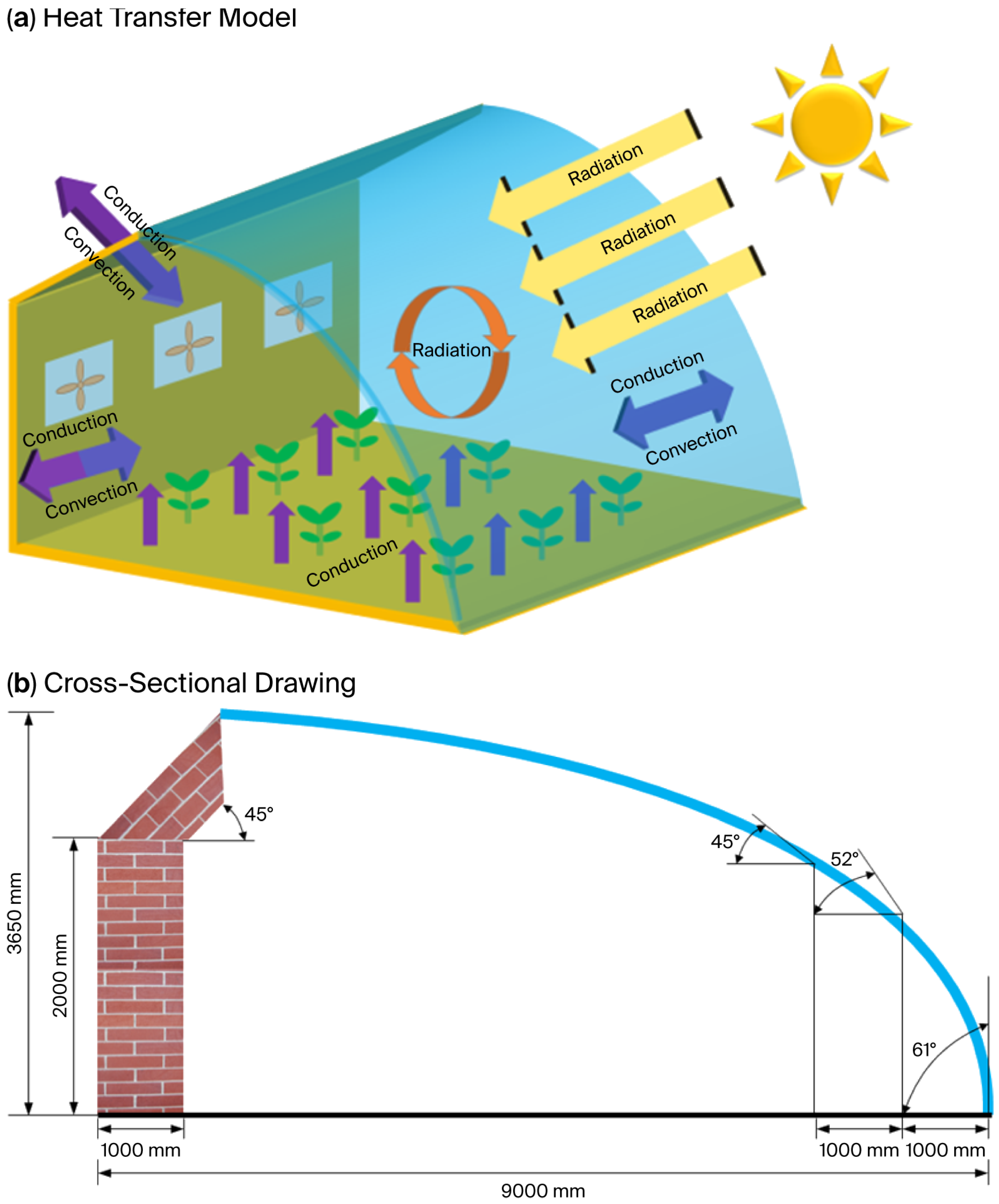
This study focuses on a rural dwelling in Harbin, a representative city within China’s cold-climate zone [31] (125°42′–130°10′ E, 44°04′–46°40′ N). The region experiences pronounced annual temperature variations and distinct seasonality, conventionally divided into a prolonged heating season and a non-heating period based on building thermal demand. The heating season, extending approximately from 15 October to 15 April of the following year, is characterized by severe and persistent cold. During the coldest month, temperatures can plummet to −28.6 °C, with a monthly average temperature below −10 °C and relatively minimal diurnal fluctuation. The cooling load of buildings in the non-heating period is relatively small. In the hottest month, the temperature is 33 °C, the average outdoor temperature is 24 °C, and the fluctuation in outdoor temperature is relatively minimal. The non-heating period approximately lasts from 16 April to 14 October. The building has a total floor area of 710 m2 and a design heating load of 28.4 kW. As depicted in Figure 1, an attached vegetable greenhouse forms part of the structure. The integrated system provides space conditioning via a radiant floor system on the user side.

3. Experimental Protocol

3.1. System Components

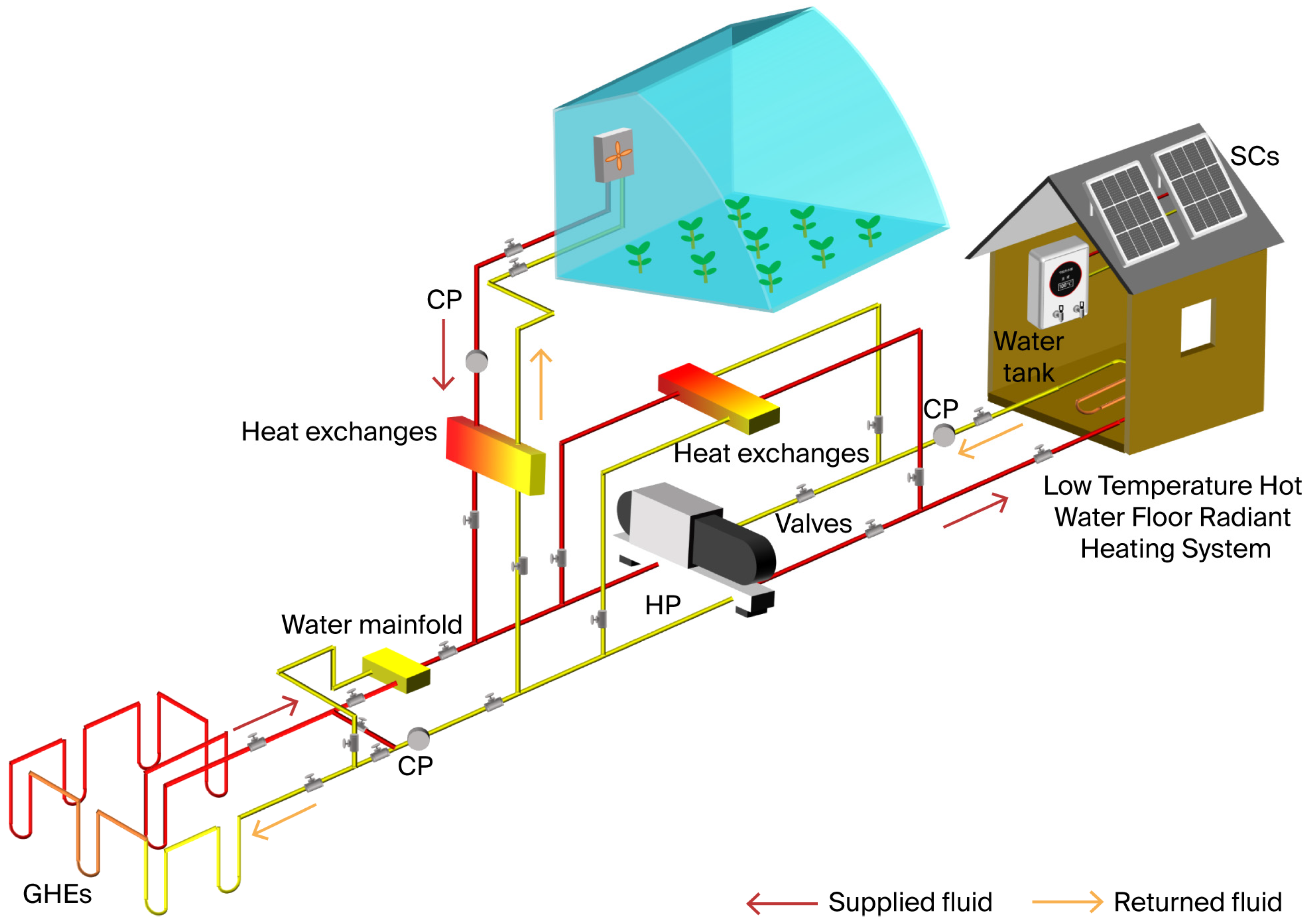
Figure 2 presents a schematic of the air-source heat storage GSHP system, which integrates two modular subsystems. The air-source heat storage module consists of a fan coil, a circulation pump (CP), connecting pipes, and a ground heat exchanger (GHE). The separate GSHP module includes a GHE, circulation piping, a working fluid pump, a heat pump unit, and an indoor terminal coil. Additionally, the flow directions within the system are indicated by red and yellow arrows, where red represents the supply fluid and yellow represents the return fluid. In the proposed hybrid system, the circulating fluids vary across different subsystems: water is used on the load side (building radiant floor) and the greenhouse side, while ethylene glycol serves as the circulating fluid in the ground heat exchanger (GHE) subsystem to ensure stable operation under low-temperature conditions.
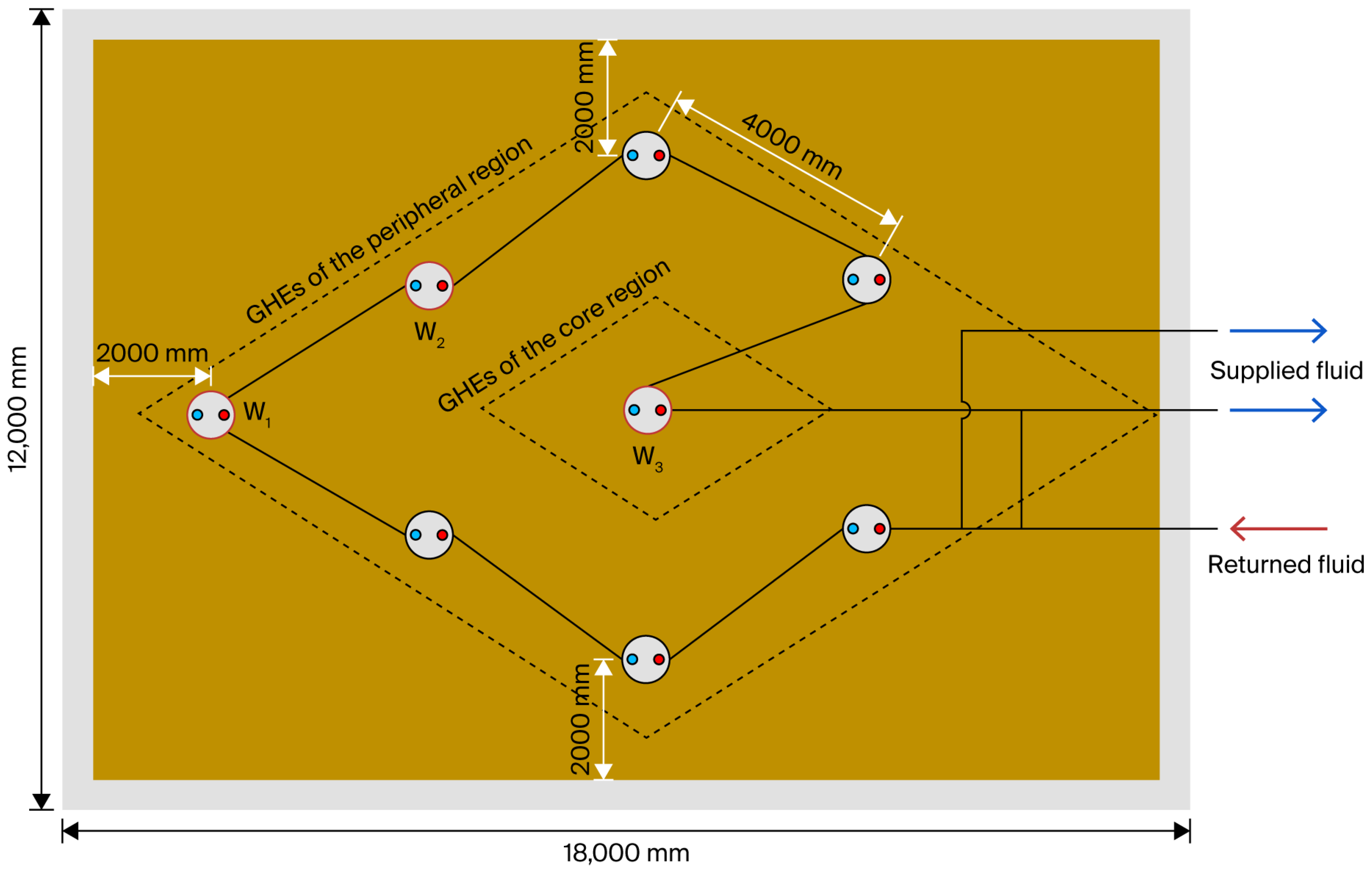
Based on the building’s peak annual heating demand, a heat pump unit. was selected. The model LFKT-30S has a rated heating capacity of 35 kW, a rated cooling capacity of 30 kW, and uses R22 as the circulating refrigerant. The GHE was designed based on the method described by Zhao et al. [10]. In conventional research, a solar thermal collection system is commonly integrated into the GSHP configuration to address the progressive soil thermal imbalance resulting from long-term system operation and to mitigate subsurface cold accumulation. A limitation of conventional solar-integrated designs lies in the even distribution of collected heat throughout the entire GHE field, which minimizes the radial temperature difference within the borehole array. This creates a sharp thermal gradient at the array’s periphery, driving heat diffusion into the surrounding soil and causing considerable storage losses. As a result, solar energy is inefficiently applied for ground temperature restoration, impairing the system’s performance in maintaining thermal equilibrium [32]. In response to this issue, research has investigated the zonal control of buried pipe networks as a means to generate a deliberate and beneficial soil temperature profile in the vicinity of the heat exchangers. Sun et al. [33] proved that the partitioned operation of buried pipes can reduce wastage in soil heat storage to a certain extent through the field test method. Extending earlier research, the GHE layout in this work adopts a partitioned design consisting of a core zone and a peripheral zone (the borehole field occupies a rectangular area of approximately 18 m × 12 m (216 m2)). The spacing between adjacent boreholes is 4 m, and the distance from the peripheral boreholes to the outer edge of the borehole field is 2 m. Within each zone, every three boreholes form an equilateral triangular pattern to ensure uniform thermal interaction. This geometric configuration was designed to maximize heat storage efficiency while maintaining sufficient separation to prevent excessive thermal interference between adjacent boreholes. Figure 3 illustrates the borehole layout with all dimensions clearly indicated.). Eight vertical boreholes were constructed, each equipped with a single U-shaped PE100 pipe. The design specifications include outer pipe diameters of 26 mm and 32 mm, a burial depth of 100 m, and an 80 mm spacing between the two branches of each U-tube.

3.2. Experimental Operation Modes

This study investigated the operational characteristics of an air-source-assisted GSHP system under three distinct modes: GSHP heating, GHE cooling, and air-source heat storage. Mode switching is achieved through thermostatic valves, with activation/deactivation governed by predefined temperature setpoints. The control logic maintains the current mode if all monitored parameters remain within their respective thresholds. Key control variables include the GHE outlet temperature, indoor coil outlet temperature, building interior temperature (denoted as TBI), and greenhouse interior temperature (denoted as TGI). Integrating the coupled system’s working principle, annual solar irradiance patterns, and outdoor temperature profiles, a comprehensive annual operating schedule was formulated. The specific system operation scheme is shown in Table 1. During the non-heating period, the material of the southward outer protective structure of the vegetable greenhouse is plastic film, and the solar radiation intensity is high. The incident solar radiation transmitted into the vegetable greenhouse through the plastic film causes the temperature inside the greenhouse to rise sharply. At this time, the soil can be used as a cooling source and the system directly extracts the cooling energy from the soil to cool the vegetable greenhouse. Concurrently, the system transfers surplus thermal energy from the greenhouse to the ground for storage. The greenhouse effectively functions as a large-scale solar air collector of equivalent aperture area. During the heating season, the soil serves as the primary heat source. The heat pump extracts both the seasonally stored thermal energy and the native ground heat to meet the building’s heating demand, thereby regulating the indoor temperature. Consequently, a sustainable annual energy cycle is established, integrating seasonal storage with on-demand extraction.
The detailed control logic for each operation mode is as follows:
During the heating period (from 15 October through 15 April of the following year): The GSHP heating mode is activated based on the building indoor temperature (TBI). When TBI falls below 18 °C, the GSHP heating mode is turned on. When TBI rises above 20 °C, the heating mode is turned off. When TBI is between 18 °C and 20 °C, the system maintains its current operational state until TBI reaches either threshold to trigger a mode switch. This hysteresis-based control prevents frequent on/off cycling.
During the non-heating period (16 April to 14 October): The system operates under two distinct modes:
(1) GHE direct cooling mode: When TBI exceeds 28 °C, the GHE direct cooling mode is turned on, extracting cooling energy directly from the soil to cool the building. When TBI falls below 25 °C, this mode is turned off. When TBI is between 25 °C and 28 °C, the system maintains its current operational state.
(2) Air-source heat storage mode: When TGI exceeds 30 °C, the air-source heat storage mode is turned on. The greenhouse-side circulation pump starts, and the fan coil unit extracts heat from the greenhouse air. This heat is transferred via the plate heat exchanger to the GHE-side circulating fluid and stored in the soil through the borehole heat exchangers. When TGI falls below 25 °C, this mode is turned off. When TGI is between 25 °C and 30 °C, the system maintains its current operational state.
These threshold values were selected based on thermal comfort requirements (18–20 °C for building heating, 25–28 °C for building cooling) and greenhouse crop temperature tolerances (25–30 °C for heat storage activation).

3.3. Measurement System

3.3.1. Data Collection

The experimental monitoring system encompasses the acquisition of solar irradiance, temperature, flow rate, and electrical power data. Solar radiation intensity is recorded at one-minute intervals in real time using a YGY-TBQ total solar radiometer. The PT100 temperature sensor and turbine flowmeter, are used to monitor the temperature of the borehole walls (Borehole W1, W2, W3); the temperature and flow rate of the GHE inlet and outlet; the temperature and flow rate on the source side and load side of the unit; and the temperature and flow rate of the vegetable greenhouse-side and load-side plate heat exchanger inlets and outlets. The total power of the three-phase multifunctional electric instrument monitoring system, is adopted. The accuracies of the YGY-TBQ total solar radiation recorder, the PT100 temperature sensor, the turbine flowmeter, and the electricity meter were ±3%, 0.1 °C, ±0.5%, and ±0.5%, respectively.

3.3.2. Energy Metrics

The size of the greenhouse area is based on the principle of energy conservation. Theoretically, the solar thermal energy collected within the greenhouse during the non-heating season should equal the heat extracted from the ground via the buried pipe heat exchanger during the heating season. This seasonal energy balance can be expressed as [34]
E t A i τ = Q B 1 1 C O P
where Et is the mean daily solar radiation (MJ/(m2·d)), Ai is the south-facing greenhouse glazing area (m2), and τ is the transmittance of the film, which is 0.8. QB is the peak building heating load (kW), and COP is the heat pump unit coefficient of performance.
The calculation formula for the heat storage of the vegetable greenhouse is as follows [35]:
Q V G = c V G ρ V G M V G T o u t V G T i n V G
where QVG is the heat stored by the vegetable greenhouse (W), cVG is the specific heat capacity of the greenhouse-side fluid (J/(kg·°C)), ρVG is the density of the circulating fluid in the buried pipe on the greenhouse side (kg/m3), MVG is the volume flow of fluid in the buried pipe on the greenhouse side (m3/s), ToutVG is the outlet temperature of the buried pipe on the side of the greenhouse (°C), and TinVG is the inlet temperature (°C) of the buried pipe on the greenhouse side.
The calculation formula for the heat supply of the heat pump unit is as follows [36]:
Q H P = c H P ρ H P M H P T o u t H P T i n H P
where QHP is the heat output of the heat pump unit (W), cHP is the specific heat capacity of the user-side fluid (J/(kg·°C)), ρHP is the density of the user-side fluid (kg/m3), MHP is the user-side volume flow rate (m3/s), ToutHP is the fluid outlet temperature of the heat pump (°C), and TinHP is the fluid inlet temperature of the heat pump (°C).
Buried pipe heat transfer is expressed as [37]
Q G H E = c G H E ρ G H E M G H E T o u t G H E T i n G H E ,
where cGHE is the specific heat capacity of the buried pipe fluid (J/(kg·°C)), ρGHE is the density of the buried pipe fluid (kg/m3), MGHE is the volumetric flow rate in the buried pipe (m3/s), TinGHE is the heat exchanger inlet temperature (°C), and ToutGHE is the heat exchanger outlet temperature (°C).
The coefficient of performance (COPHP) for the heat pump unit is given by [38]
C O P = Q H P × t 1000 W 1 ,
where W1 is the compressor energy consumption (kWh).
The system COP is expressed as [39]
C O P s y s = Q s y s W 1 + W 2 ,
where Qsys is the energy supply to the system (kWh), and W2 is the energy consumption of the circulating water pump (kWh).

3.3.3. Economic Metrics

Numerous economic assessment approaches exist for engineering projects, among which two are predominant: the static evaluation method, which is applicable to short-term investments as it ignores the time value of capital, and the dynamic evaluation method, which accounts for the time value of money and is thus suited to long-cycle projects [40]. Given that the air-assisted ground-source heat pump system entails a lengthy investment horizon and a service life extending to 30 years, the dynamic evaluation method is adopted for its economic analysis.
(1)
Net present value (NPV)
NPV is defined as the sum of the discounted net cash flows over the system’s lifespan, brought to their present value at discount rate r, and it measures the project’s lifetime profitability. For economic comparison, schemes with higher NPV are considered superior, and the optimal scheme is selected. The formula is given by the following [41]:
N P V = 0 L I t C t 1 + r t C 0
where L is the service life (a), which is the revenue in year T of operation (10,000 CNY); Ct is the operating cost in year t (10,000 CNY); r is the discount rate; and C0 is the initial investment (10,000 CNY).
(2)
Dynamic payback period
The dynamic payback period refers to the time required to compensate for the initial investment with the accumulated value of project income considering the time value of capital. The dynamic payback period is calculated as follows [41]:
0 T P I t C t 1 + r t C 0 = 0
where TP is the dynamic payback period (a).

3.3.4. Error Analysis

The reliability of experimental results is contingent upon their error margins. Hence, an error assessment was performed, covering estimations for both directly measured and subsequently calculated parameters (refer to Section 3.3.1 for measurement details). The relative errors for the measurement parameter (δRxi) and the calculation parameter (δRF) are given by the following [33]:
δ R x i = A · γ i x i
δ R F = 1 n ( δ F i δ x i A · γ i ) 2 F
where A is the upper limit of the measurement range, γi is the accuracy grade, and F is a function of the independent variables xi.
The relative errors associated with key experimental parameters are summarized in Table 2. Among these, the COP of the heat pump unit has a relative error of 5.2%, which propagates from the uncertainties in temperature measurements (PT100 sensors, accuracy: 0.1 °C), flow rate measurements (turbine flowmeters, accuracy: ±0.5%), and power consumption measurements (three-phase multifunctional electric instrument, accuracy: ±0.5%), as detailed in Section 3.3.1. This uncertainty level is comparable to those reported in similar GSHP field studies (e.g., 5.57% in Ref. [42] and 12.2% in Ref. [43]), indicating that our measurement system provides reliable data within acceptable engineering tolerances.

4. Results and Discussion

4.1. Vegetable Greenhouse Temperature During the Non-Heating Period

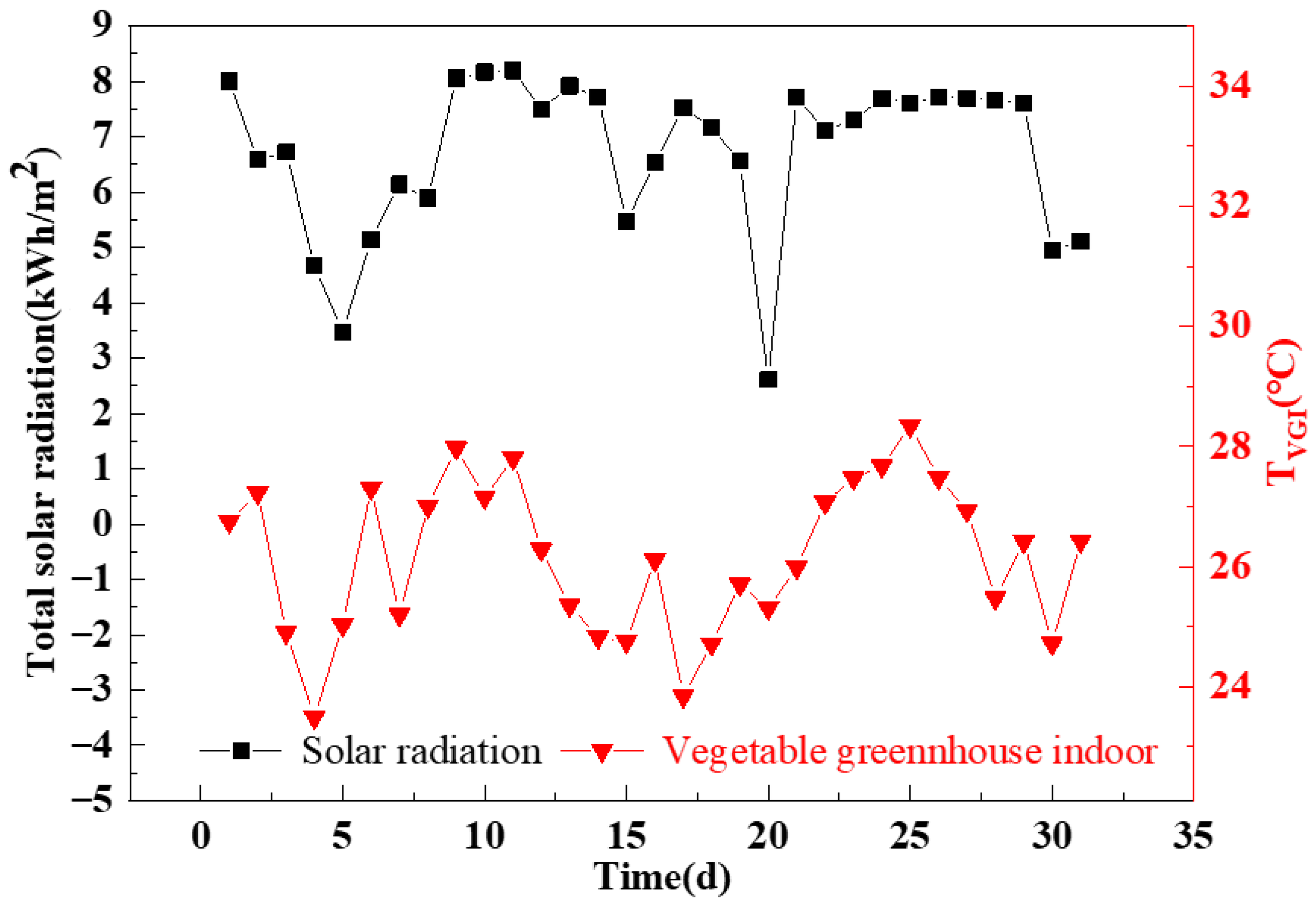
Figure 4 illustrates the measured daily profiles of solar radiation and indoor air temperature within the vegetable greenhouse for July, a representative month in the heat storage period. The solar irradiance data exhibit considerable daily variability during this interval. During the first monitoring year, July experienced atypical weather conditions. In contrast to the previous year, there were 24 days of rainy weather that month. In particular, the weather conditions were the most unfavorable between 5 July and 20 July. Despite the rainy days, the daily solar radiation in July ranged from 2.6 to 8.2 kWh/m2, with an average of 6.7 kWh/m2. Compared with outdoor crops, the growth process of vegetable greenhouse crops is also affected by environmental temperature, humidity, light intensity, and CO2 content. During the heat storage period (16 April to 14 October), humidity and CO2 concentration in the vegetable greenhouse can be managed by irregular watering and ventilation [44]. The outer protective structure of the vegetable greenhouse consists of a plastic film with high light transmittance and a brick wall with good heat preservation performance. Because the experimental site is a cold region in China, the annual sunshine duration in the south-facing side is longer than in other directions. When constructing a vegetable greenhouse, the plastic film is oriented towards the south; therefore, the duration of sunshine on the crops in the vegetable greenhouse can be considered approximately the same as that of outdoor crops. Therefore, precise regulation of the greenhouse interior temperature is critical for optimizing crop growth conditions, as evidenced by the observed thermal management requirements. Different crops have different temperature requirements. For example, the optimal temperature for tomato growth [45] is 18–30 °C. Concurrently, precise indoor temperature management remains a critical operational challenge for vegetable greenhouses, as prior research indicates that associated climate control costs constitute a major component of the overall operating expenses [46]. Figure 4 further illustrates a marked disparity in fluctuation patterns: while solar radiation varies substantially, the greenhouse interior temperature remains moderated. Nevertheless, the system successfully sustained the internal environment at 26 ± 2 °C throughout July. The purpose of this study is to consider the vegetable greenhouse as a large solar collector. Throughout the heat storage phase, the solar radiation incident on the greenhouse elevates the interior air temperature, effectively transforming the structure into a large-scale air-type solar collector. Once this air temperature attains a predefined threshold, the system activates the air-source heat storage mode, transferring the captured thermal energy from the greenhouse into the ground for seasonal storage. This process not only stores energy but also prevents the air temperature in the vegetable greenhouse from overheating, which could otherwise adversely affect the growth of vegetable greenhouse crops.

4.2. Environmental Temperature During Heating Period

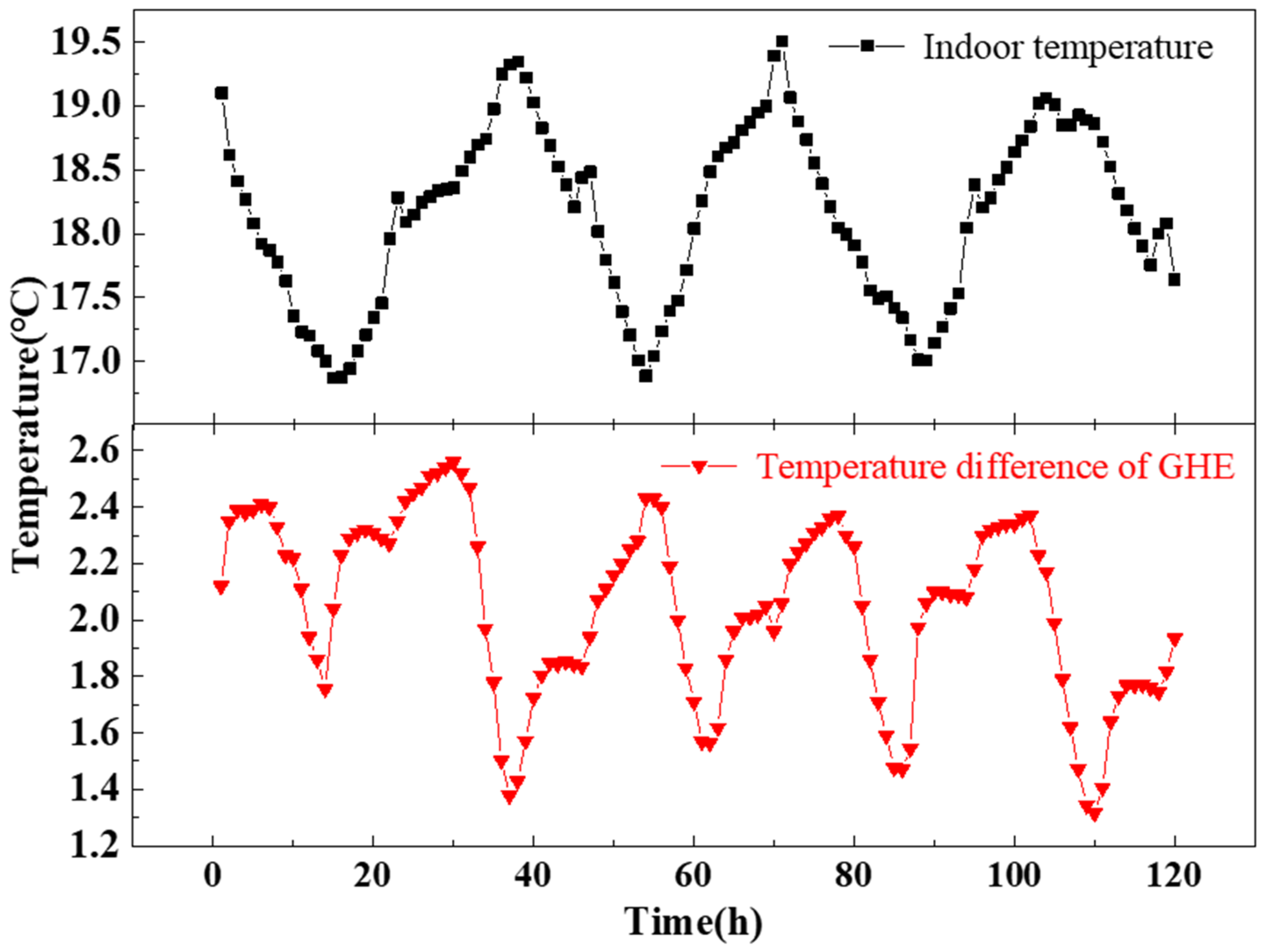
Figure 5 illustrates the hourly profiles of indoor air temperature alongside the corresponding inlet–outlet temperature differential of the buried pipe loop within the air-source heat storage GSHP system during a typical week in the heating season. Despite the severe cold climate imposing a substantial heating demand—evidenced by an average indoor–outdoor temperature differential of 39.8 °C—the system maintained indoor temperatures within a stable range of 16.9–19.3 °C, averaging 18.1 °C. Therefore, the ground-source heat pump system using the indoor air of the greenhouse as the soil heat storage source can control the room temperature within the requirements of Chinese standards. In Figure 5, it can also be seen that in typical weeks during the heating period, the temperature difference between the inlet and the outlet of the buried tube heat exchanger is similar to the change in indoor temperature. The observed range for the temperature differential across the buried tube heat exchanger was 1.4–2.6 °C, with a mean of 2.0 °C. This conclusion is similar to the experimental conclusion of Naranjo-Mendoza et al. [47] that the difference between the inlet and outlet temperatures of buried pipe heat exchangers can reach 3 °C under optimal operating conditions. At low outdoor temperatures, the buried tube heat exchanger can still maintain good heat exchange performance. This phenomenon can be attributed to the inherent thermal stability of the subsurface at a depth of 30 m, where soil temperature exhibits minimal fluctuation despite significant variations in ambient air temperature. Consequently, the ground serves as a stable thermal source, sustaining effective heat exchange even during periods of extreme cold [48]. Therefore, the soil constitutes a reliable and effective low-temperature heat source under such conditions.
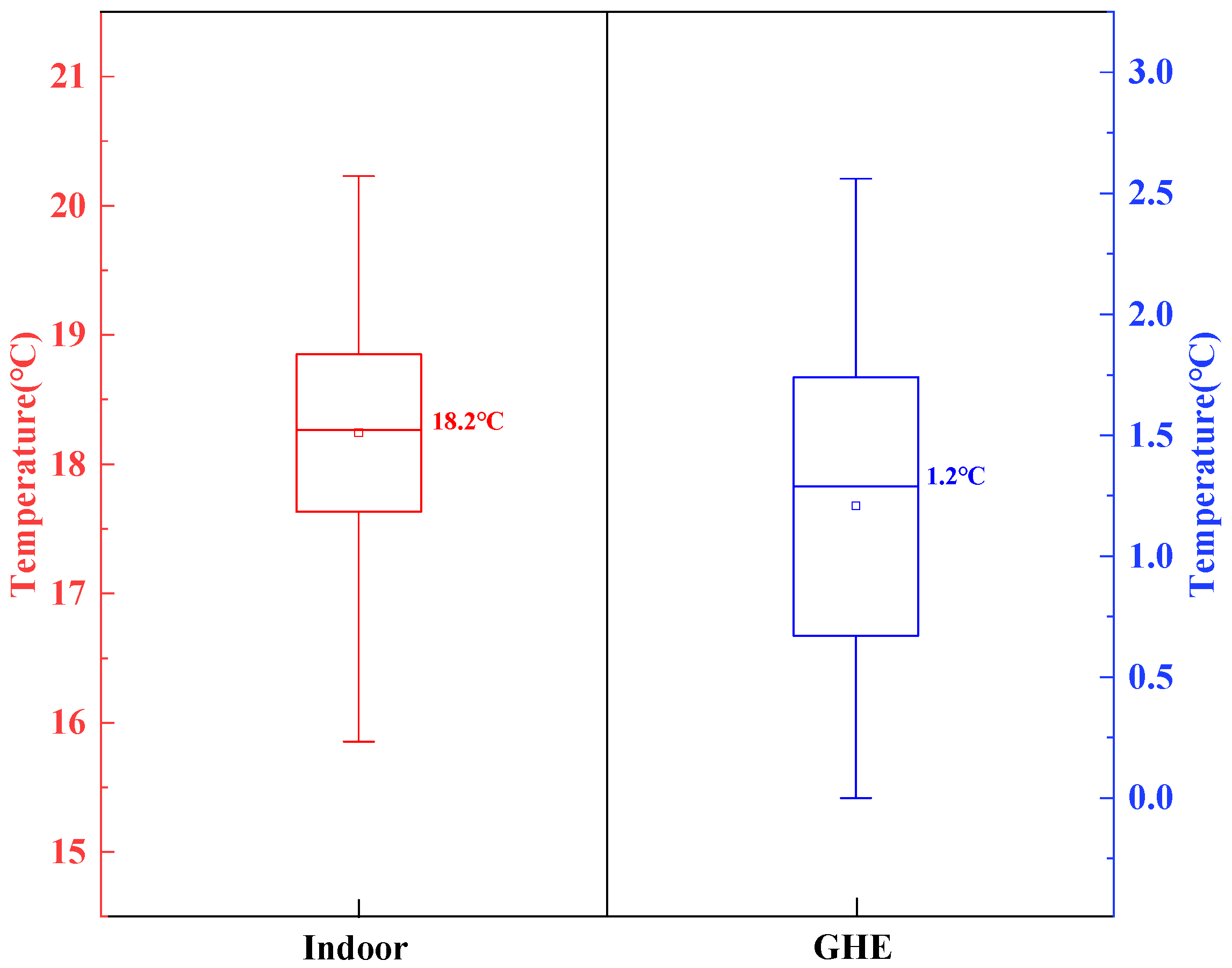
Figure 6 shows the distribution of the indoor building temperature and the corresponding GHE inlet–outlet temperature difference throughout the entire heating period. As illustrated, indoor temperatures are predominantly concentrated in the range of 17.6–18.9 °C, with a seasonal average of 18.2 °C, while the GHE inlet–outlet temperature differences are mostly distributed between 0.68 and 1.75 °C, yielding a seasonal mean of 1.2 °C. This concentrated distribution confirms the system’s stable long-term heating performance. Notably, the minimum temperature differential across the GHE approached zero at times. These near-zero values correspond to the transitional periods at the beginning and end of the heating season (from 15 October to 15 April), during which daytime outdoor temperatures can be relatively mild, leading to low, or even negligible, heating demands. Consequently, the circulation pumps on both the load and source sides may operate intermittently, causing periods of stagnant flow and near-zero temperature difference across the GHE, which in turn lowers the seasonal average. The scattered distribution of data points with higher temperature differences reflects the system’s response to varying outdoor temperatures and heating load demands throughout the core winter period.

4.3. Heat Pump Performance

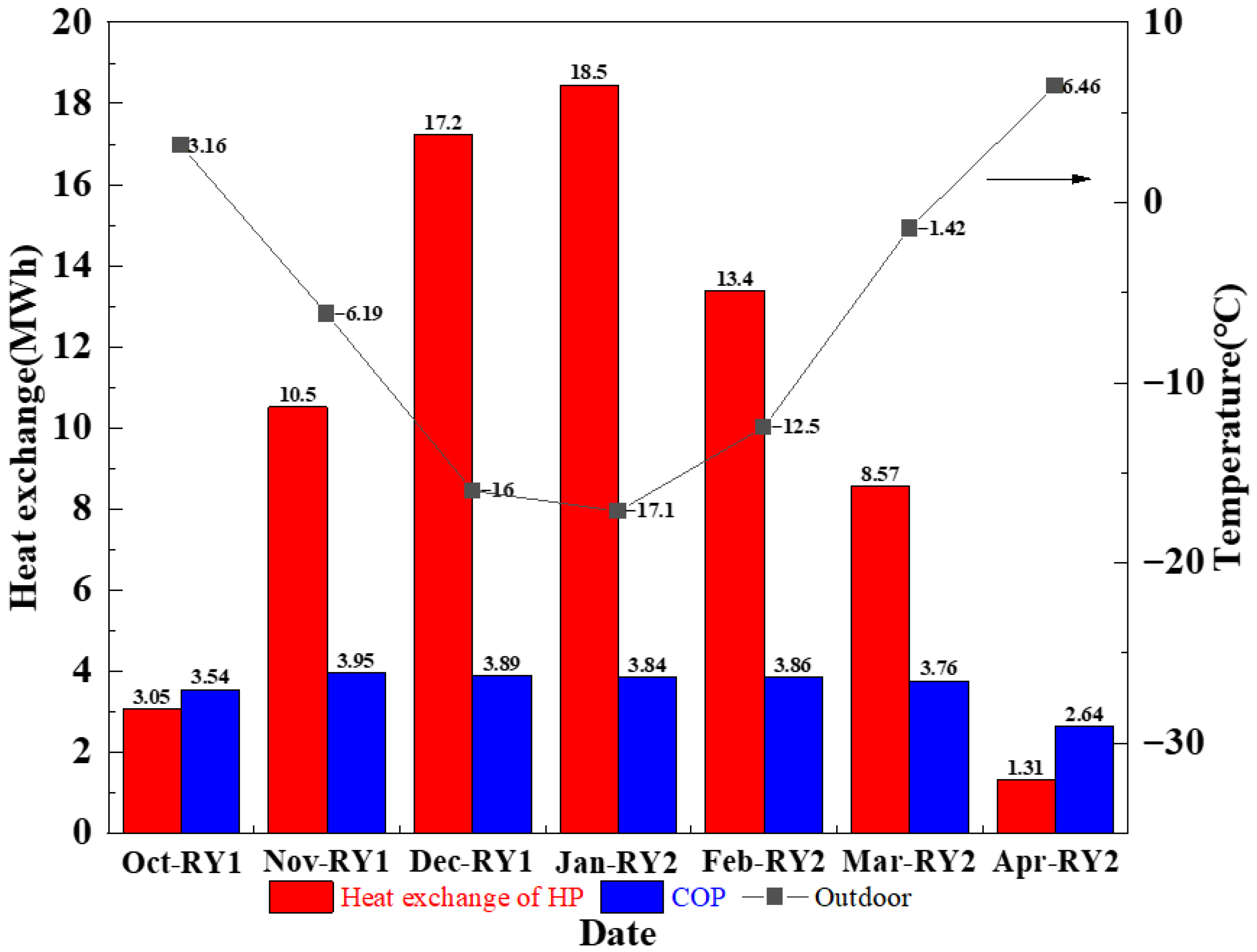
Figure 7 shows the monthly changes in the outdoor average temperature, heat produced by the HP unit, and the COP of the air-source heat storage GSHP system during the heating period. As can be seen in the figure, the lowest average outdoor temperature in the heating period occurs in January, and the minimum value is −17.1 °C. Operational data reveal distinct trends: the heating season’s onset and termination were characterized by milder average outdoor temperatures (3.16 °C and 6.46 °C) and correspondingly lower heat pump outputs (3.05 MWh and 1.31 MWh). Maximum heating production (18.5 MWh) occurred in January, aligning with the coldest period. These observations demonstrate a clear inverse correlation between the outdoor temperature and the heat pump thermal output over time. Notably, the heat pump’s COP remained elevated for most of the season but dropped during the transitional beginning and end phases. This efficiency reduction is attributable to the specific operating conditions in these periods: the building load is minimal yet non-zero, necessitating system operation despite higher outdoor (and thus ground-source) temperatures. Under such low-load conditions, frequent compressor cycling occurs, which increases specific compressor energy consumption while delivering limited useful heat, ultimately depressing the COP.

4.4. Variation in Borehole Wall Temperature

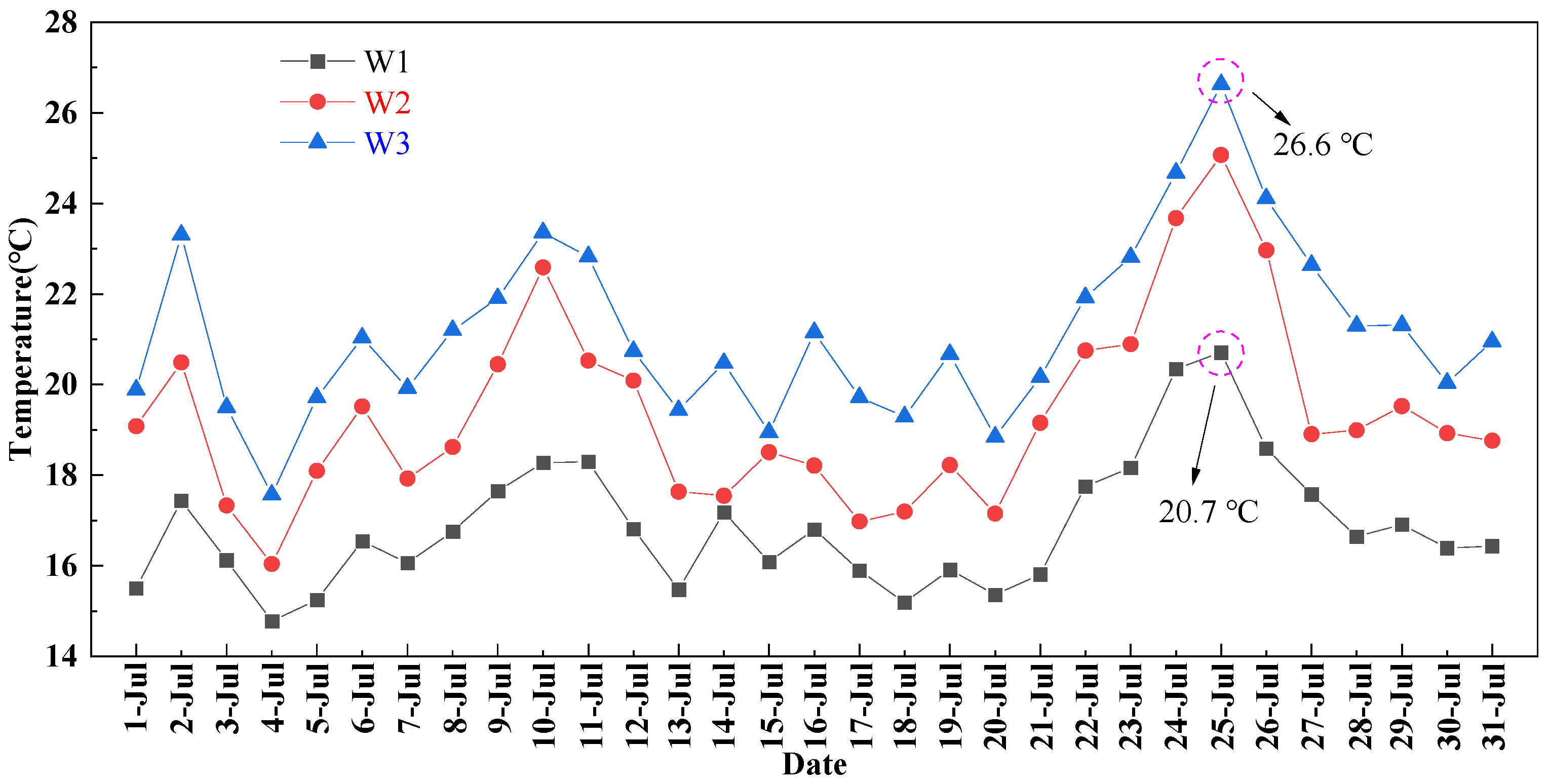
Figure 8 depicts the diurnal borehole wall temperature variations for individual ground heat exchangers (GHEs, see Figure 3) over a representative month within the heat storage phase. The data reveal a pronounced radial temperature gradient across the borehole field, characterized by elevated temperatures in the central core region and progressively lower temperatures toward the periphery. Specifically, the monthly average borehole wall temperatures followed a descending order: W1 (21.2 °C), W2 (19.4 °C), and W3 (16.9 °C). This temperature of the borehole wall was higher than some others and also established a soil temperature gradient. For comparison, Li et al. [49] observed an average temperature of 15.2 °C. It can be clearly observed that the borehole wall temperatures in the core and peripheral regions of GHEs reached their minimum values on 4 July and 20 July. This is due to the continuous cloudy and rainy days from 3 to 5 July and 13 to 20 July, with relatively low solar radiation intensity. During the heat storage phase, solar-derived thermal energy accumulated in the greenhouse air is extracted and transferred to the ground. The working fluid, after collecting heat via a plate exchanger, flows first through the core GHEs and then the peripheral ones before returning. As heat is progressively dissipated along this path, the temperature of the heat source (greenhouse air) decreases. This incremental cooling effect ultimately manifests as a measurable drop in borehole wall temperatures.
Figure 8 further indicates that the peak daily average borehole wall temperatures during the representative month followed a radial decline: 26.6 °C (W1, periphery), 25.1 °C (W2), and 20.7 °C (W3, core). The resulting maximum intra-field temperature gradient between the innermost and outermost boreholes reached 5.9 °C. As annotated in Figure 8, this maximum temperature difference of 5.9 °C occurred between W3 and W1 on 25 July. The increase in temperature in the inner region indicates that the higher the soil temperature gradient in the GHE region, the greater the energy utilization potential.

4.5. Energy Balance of System

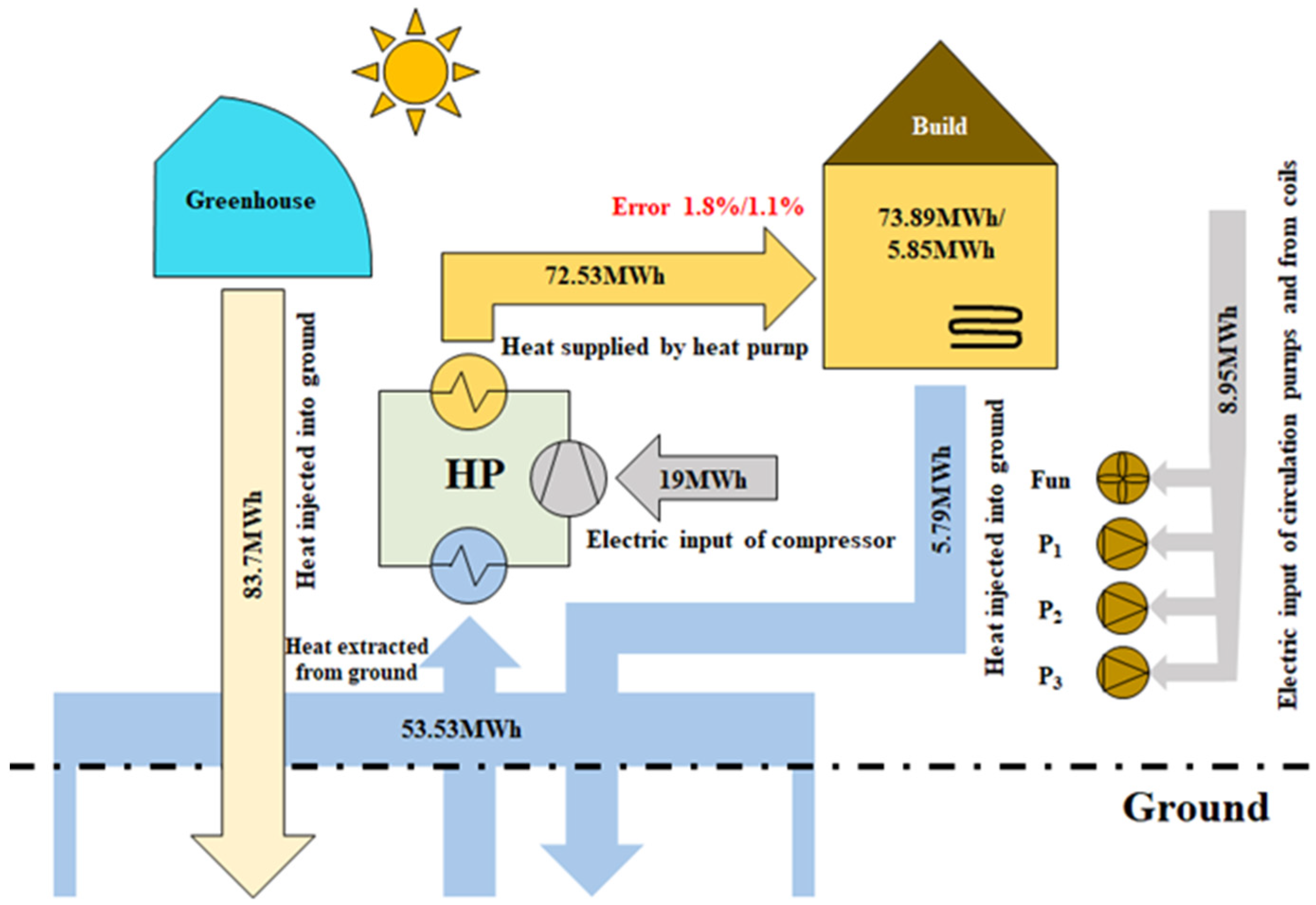
The annual energy balance depicted in Figure 9 quantifies key system flows: greenhouse-to-soil heat storage (83.7 MWh), direct buried pipe cooling (5.85 MWh), heat pump condenser output (72.53 MWh), compressor work (19 MWh), and circulating pump work (8.95 MWh). These values correspond to a heat pump COP of 3.82 and a system COP of 2.85. Both metrics surpass those reported in prior studies (e.g., COPsys = 2.53 [50]; COPHP = 3.29 [51]). The performance improvement stems from the implemented zoned borehole operation, which establishes a marked soil temperature gradient, contrasting with the uniform injection methods commonly used in conventional systems that yield minimal thermal stratification and lower storage efficiency. An analysis of energy consumption reveals that the heat pump compressor and circulating pump account for 68% and 32% of total system input, respectively. Consequently, enhancing the system COP requires both optimizing heat pump performance and minimizing auxiliary pumping energy.
The ratio of heat extracted from the ground to heat injected into the ground (He/Hs) serves as a key indicator for evaluating the efficiency of cascaded thermal storage utilizing an air source [23]. A lower He/Hs value denotes higher cascade utilization and air-source storage efficiency. For the present system, this ratio is quantified as 0.598 (extracted heat: 53.53 MWh; stored heat: 83.7 + 5.79 MWh). This metric reflects the effectiveness of the established radial thermal gradient, characterized by increasing borehole wall temperatures from the periphery to the core (see Section 4.4), in retaining injected energy. This established radial temperature gradient, with the core region maintaining a higher temperature than the periphery (Section 4.4), enables true cascaded thermal utilization. During the heating season, the heat pump preferentially extracts heat from the warmer core zone first, where the higher source temperature improves the unit’s COP and reduces compressor work. As heat is progressively drawn down from the core, the peripheral zone acts as a thermal buffer, gradually supplying stored heat while minimizing losses to the far-field soil. This preferential extraction sequence, enabled by the deliberate temperature stratification, defines the cascaded benefit: higher-grade thermal energy is preserved in the core for peak demand periods, while lower-grade energy in the periphery serves as a reserve, collectively enhancing both storage efficiency and heat pump performance. On the load side, the heating and cooling supply was provided by the heat pump output and direct ground cooling, respectively. The errors were 1.8% (73.89–72.53)/73.89) and 1.1% (5.85–5.79)/5.85). The causes of these errors are described in Section 3.3.4 and will not be explained here.
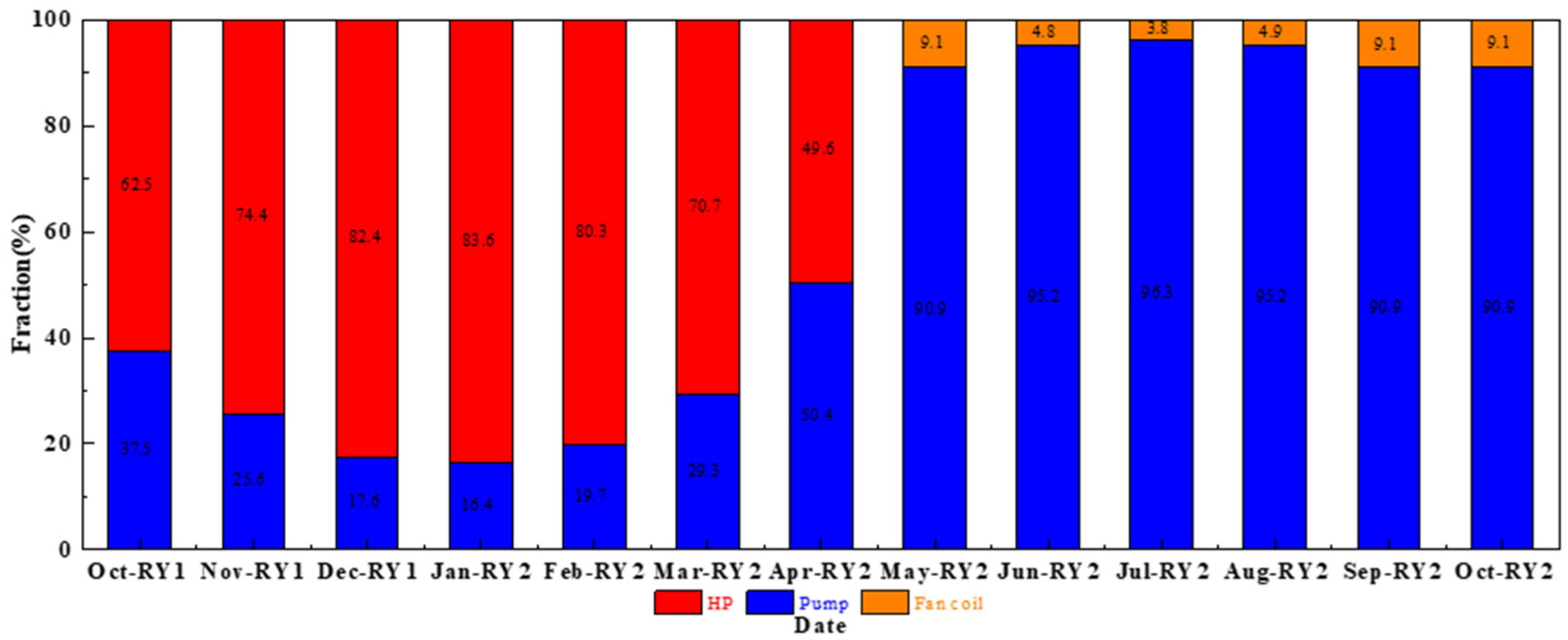
Figure 10 illustrates the monthly variation in the proportion of total system energy consumption attributable to the heat pump unit, the circulating water pump, and the fan coil unit over an annual operating cycle. Analyzing the figure, it can be seen that across the entire annual cycle, the circulating water pump constituted a significant fraction of overall energy usage. A marked contrast is observed during the heat storage phase, where the pump energy demand exceeded 90% of the total, fan coil consumption fell below 10%, and the heat pump was inactive, contributing 0%. This is because the power for the operation of the system comes from the water pump. The pump’s operation is integral to both the greenhouse thermal charging and direct geothermal cooling modes, leading to its substantial cumulative energy use. The heat storage period coincides with negligible building loads, deactivating the heat pump and eliminating its energy consumption. Conversely, during the heating season, system energy use shifts dramatically: the heat pump becomes the primary consumer (up to 83.6% of total), significantly outweighing the circulating pump, while the greenhouse fan coil is idle. If the transitional shoulder seasons are excluded, the heat pump’s contribution exceeds 70.7% during the core heating period. This pattern arises because the greenhouse storage mode is discontinued in winter, shutting down its fan coil, whereas the persistent 24 h heating demand in cold climates mandates extended heat pump runtime, leading to its dominant energy share.

4.6. Economic Analysis

4.6.1. Economic Benefits

The economic evaluation of the air-assisted ground-source heat pump (AGSHP) system encompasses three primary components: initial capital investment, annual operating expenditures, and revenue streams. Initial investment costs, influenced by local factors such as construction techniques, labor rates, and material (e.g., buried pipe) prices, predominantly consist of equipment procurement, installation, and drilling expenses, totaling 100,350 CNY. Annual operating costs, largely attributable to system electricity consumption, amount to 13,975 CNY based on local utility rates. Projected annual revenue is derived primarily from the sale of vegetables or fruits cultivated within the integrated greenhouse. During the system test phase, cucumbers were planted in the vegetable greenhouse. The price of cucumbers is greatly influenced by supply and demand. However, as people pay more attention to health, the demand for cucumbers has increased, and thus the price has become higher. According to recent market research, the profit generated after the sale of cucumbers is approximately 8 CNY/kg. In the economic analysis of the system, the cucumber yield is 7.5 CNY/kg, 8 CNY/kg, and 8.5 CNY/kg.
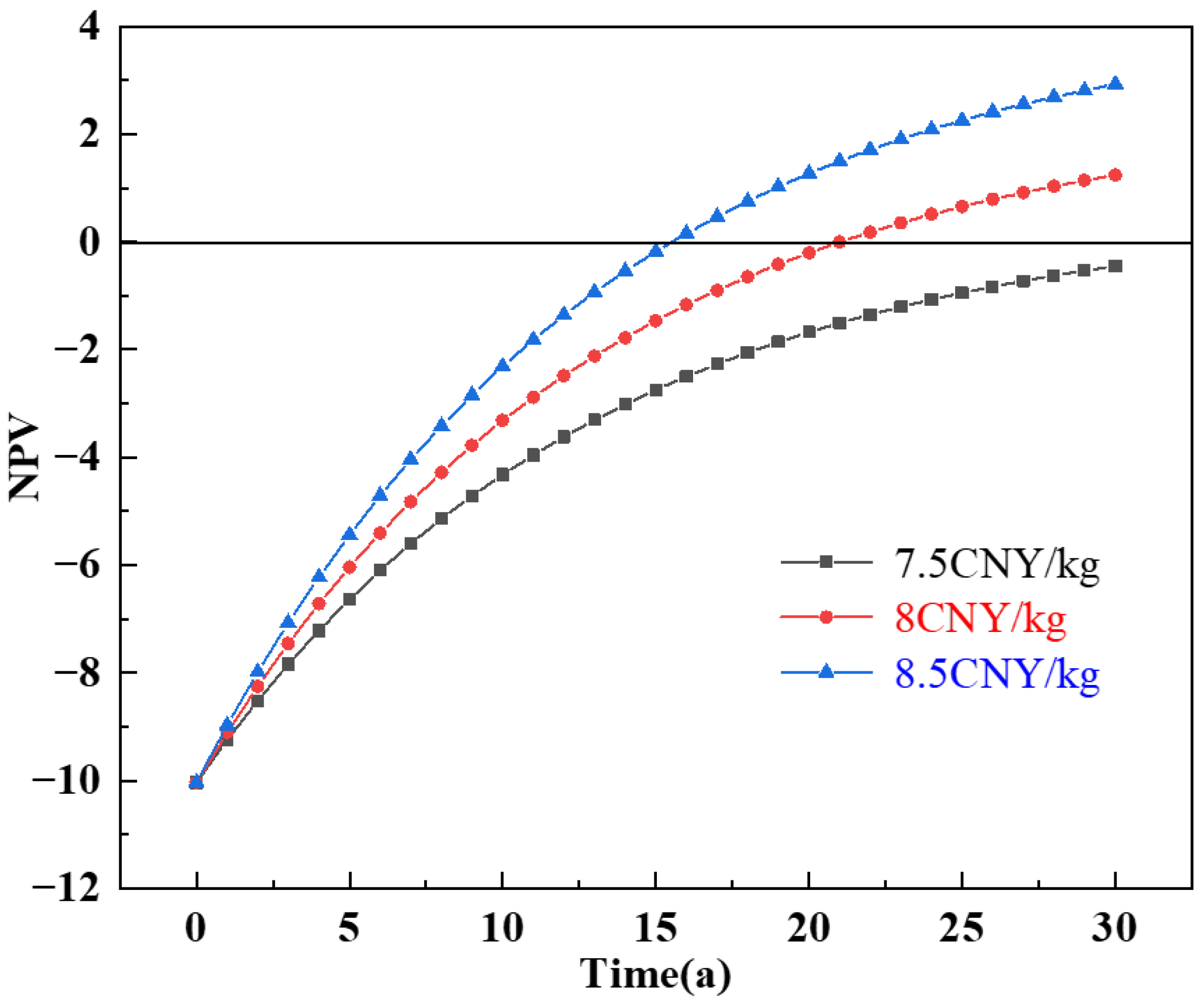
A quantified economic evaluation was conducted following the method described in Section 3.3.3, applying an 8% discount rate and a 30-year system life [27]. The sensitivity of system profitability to crop income was analyzed, with the temporal evolution of net present value (NPV) presented in Figure 11. The figure shows that higher crop revenues directly reduce the dynamic payback period. For instance, at a cucumber price of 7.5 CNY/kg, the project NPV is negative over its lifespan, failing to return on the investment. At 8 CNY/kg and 8.5 CNY/kg, positive NPVs of 12,374 CNY and 29,252 CNY are achieved, with payback periods of 21 years and 15.5 years, respectively. These outcomes confirm the material influence of crop value on the project cost. Given that post-pandemic market prices have often exceeded 8 CNY/kg, the system is expected to deliver a satisfactory return, recovering costs within about 15.5 years. Additionally, the greenhouse environment promotes higher-quality, and potentially greater, yields than outdoor farming, thereby enhancing revenue streams and optimizing the overall investment return when paired with the AGSHP system.

4.6.2. Energy Conservation and Environmental Protection

To quantify the system’s energy and environmental benefits, its annual electricity consumption (27.95 MWh) was converted into standard coal equivalent using a conversion factor of 0.31 kgce/kWh. Based on standard emission coefficients for coal (CO2: 2.47; SO2: 0.02; dust: 0.01), the corresponding annual reductions relative to a coal-based heating system are estimated at 8.66 tons of standard coal, 21.4 tons of CO2, 1.7 tons of SO2, and 0.9 tons of dust.
However, to account for regional variations in grid carbon intensity, a more refined analysis was conducted using province-specific emission factors. Provincial power grid carbon emission factors vary significantly across China, ranging from 0.39 kgCO2/kWh in Fujian to 0.90 kgCO2/kWh in Hebei. For Heilongjiang province—the location of this study—the precise emission factor is not yet publicly available from national statistics. Based on data from comparable cold-climate provinces (e.g., Liaoning: 0.7219 kgCO2/kWh), a regional emission factor of 0.72 kgCO2/kWh was adopted. Using this factor, the annual CO2 emissions associated with the system’s electricity consumption are approximately 20.1 tons, yielding a net CO2 reduction of 1.3 tons annually compared to the regional grid average.
It should be noted that this environmental benefit would be further enhanced as the regional grid continues to decarbonize over the system’s 30-year lifespan. Future work should incorporate dynamic, time-resolved emission factors as they become available through emerging provincial-level carbon accounting systems. Nevertheless, the results clearly reflect the advantages of air-assisted ground-source heat pump systems in cold regions based on energy efficiency and environmental protection, aligning with global carbon emission reduction goals.

5. Conclusions

This study proposed and evaluated a novel air-assisted ground-source heat pump (AGSHP) system integrating a vegetable greenhouse for seasonal thermal storage in a cold-climate residential building in Harbin, China. Based on a full year of field monitoring and performance analysis, the system demonstrated effective thermal regulation, maintaining indoor temperatures between 16.9 °C and 19.3 °C during a representative winter week and sustaining the greenhouse at 26 ± 2 °C throughout the heat storage period, thereby confirming its dual functionality for both building heating and crop cultivation. The zoned borehole operation successfully established a significant radial soil temperature gradient, with a maximum difference of 5.9 °C between core and peripheral zones during charging. This deliberate temperature stratification enabled cascaded thermal utilization, as evidenced by a heat extraction-to-storage ratio of 0.598, indicating effective energy retention and reduced peripheral heat loss. The system achieved average COP values of 3.82 for the heat pump unit and 2.85 for the overall system, outperforming previously reported values for conventional GSHP systems. Energy consumption analysis revealed that the heat pump compressor and circulating pump accounted for 68% and 32% of the total system input, respectively, highlighting the need for simultaneous optimization of both components. Economic analysis showed that under a representative cucumber price of 8 CNY/kg, the system achieved a dynamic payback period of 15.5 years, with profitability sensitive to crop revenue. Furthermore, the system delivers substantial environmental benefits, including annual savings of 8.66 tons of standard coal equivalent and net CO2 reductions of 1.3 tons when accounting for regional grid carbon intensity.
To advance the practical application of this integrated AGSHP system, future work should address several key challenges. Long-term multi-year monitoring is essential to verify the system’s thermal stability and assess whether the established soil temperature gradient can be sustained without progressive cold accumulation. Furthermore, the optimal core-to-periphery borehole ratio under different climatic and load conditions warrants systematic investigation, as this design parameter directly influences cascaded utilization efficiency. System economics could be improved by optimizing the greenhouse-to-GHE area ratio to reduce initial costs, while advanced control strategies are needed to maximize operational efficiency. Finally, comparative studies across diverse cold-climate regions and building types are required to assess broader applicability and develop generalized design guidelines.

Author Contributions

Conceptualization, Z.W.; Formal analysis, Z.W.; Investigation, P.C.; Data curation, Z.W.; Writing—original draft, P.C.; Writing—review & editing, Y.L.; Supervision, Y.L.; Project administration, P.C.; Funding acquisition, Y.L. All authors have read and agreed to the published version of the manuscript.

Funding

This research was funded by the Natural Science Foundation of Heilongjiang Province (grant number LH2024E101).

Data Availability Statement

The original contributions presented in this study are included in the article. Further inquiries can be directed to the corresponding author.

Acknowledgments

The authors wish to thank their supervisors and academic mentors for their steadfast support and expert guidance during the course of this study. Additionally, we express our sincere thanks to the journal editor and the anonymous reviewers for their critical commentary and constructive suggestions, which have been instrumental in enhancing the overall quality and precision of this paper.

Conflicts of Interest

The authors declare no conflicts of interest.

References

  1. Zhang, Y.; He, C.-Q.; Tang, B.-J.; Wei, Y.-M. China’s energy consumption in the building sector: A life cycle approach. Energy Build. 2015, 94, 240–251. [Google Scholar] [CrossRef]
  2. Karim, A.; Kim, K.; Chae, H.; Oh, J.; Nam, Y. Latest trends and new approaches in ground source heat pump systems: A comprehensive review of performance, sustainability, and future directions. Geothermics 2026, 134, 103515. [Google Scholar] [CrossRef]
  3. Zhang, L.; Jiang, Y.; Dong, J.; Yao, Y. Advances in vapor compression air source heat pump system in cold regions: A review. Renew. Sustain. Energy Rev. 2018, 81, 353–365. [Google Scholar] [CrossRef]
  4. Hong, D.; Cheng, R.; Lei, H.; Zhou, X.; Yang, L.; Feng, C.; Gao, S. Comprehensive review on the impact of building envelopes on indoor thermal comfort in office buildings: Balancing occupant comfort and energy efficiency. Build. Environ. 2026, 289, 114018. [Google Scholar] [CrossRef]
  5. Zhang, W.; Pei, G.; Zhao, B. Performance analysis of switchable radiative cooling and solar heating for building energy-saving. Energy 2025, 333, 137507. [Google Scholar] [CrossRef]
  6. Liang, Y.; Song, M.; Zhang, L.; Yu, S.; Liu, Q.; Cheng, J. Experimental study on the influence of convex structures of a single vertical fin on condensation and frosting under constrained airflow conditions. Int. J. Heat Mass Transf. 2026, 260, 128444. [Google Scholar] [CrossRef]
  7. Liang, Y.; Song, M.; Zhang, L.; Xu, T.; Liu, Q.; Kuang, W. Experimental study on the distribution characteristics of condensation frosting and defrosting on a single vertical straight fin under constrained airflow conditions. Int. Commun. Heat Mass Transf. 2026, 172, 110695. [Google Scholar] [CrossRef]
  8. Kumar, A.; Alam, T. A review on geothermal energy systems and various approaches to enhance the system’s performance. Energy Build. 2025, 344, 115962. [Google Scholar] [CrossRef]
  9. Rohit, R.V.; Kiplangat, D.C.; Veena, R.; Jose, R.; Pradeepkumar, A.P.; Kumar, K.S. Tracing the evolution and charting the future of geothermal energy research and development. Renew. Sustain. Energy Rev. 2023, 184, 113531. [Google Scholar] [CrossRef]
  10. Zhao, Y.; Gao, J.; Wu, F.; Sun, Y.; Liu, A.; Yu, Z.; Zhang, X. Study on the thermal imbalance characteristics and optimal operation strategy of ground source heat pump system in hot summer and cold winter areas. Energy Convers. Manag. 2025, 343, 120184. [Google Scholar] [CrossRef]
  11. Wang, J.; Yan, T.; Tang, X.; Pan, W. Design and operation of hybrid ground source heat pump systems: A review. Energy 2025, 316, 134537. [Google Scholar] [CrossRef]
  12. Tu, Z.; Jin, H.; Zhang, Z.; Li, H.; Liu, J.; Hao, J.; Huang, L.; Li, X. Performance optimization and long-term evaluation of a hybrid air–ground source heat pump system for cold-climate buildings. Appl. Therm. Eng. 2026, 286, 129340. [Google Scholar] [CrossRef]
  13. Lu, Y.; Hou, G.; Li, J.; Taherian, H. Optimal design and long-term performance analysis of photovoltaic/thermal—Ground source heat pump system based on hybrid data-driven approaches. Energy Convers. Manag. 2026, 356, 121313. [Google Scholar] [CrossRef]
  14. Wang, Y.; Quan, Z.; Zhao, Y.; Rosengarten, G.; Mojiri, A. Feasibility and performance of coupled air-ground source heat pump systems with thermal storage. Energy 2025, 315, 134431. [Google Scholar] [CrossRef]
  15. Yue, H.; Wei, W.; Zhang, Y.; Cheng, C.; Huang, J.; Liu, H.; Zhang, H.; Chen, H. Improving the long-term sustainability of photovoltaic thermal—Ground source heat pump system by soil thermal balance regulation. Energy 2026, 347, 140434. [Google Scholar] [CrossRef]
  16. Li, P.; Cheng, J.; Yang, Y.; Yin, H.; Zang, N. Research on multi-objective optimization configuration of solar ground source heat pump system using data-driven approach. Energy 2024, 313, 133793. [Google Scholar] [CrossRef]
  17. Meng, Z.; Huo, Z.; Dong, S.; Liu, Y.; Zhai, S.; Ding, C.; Hu, K.; Yang, J.; Han, W. Simulation study on the system performance of solar-ground source heat pump using return water of the district heating network as supplementary heating. Renew. Energy 2024, 231, 120906. [Google Scholar] [CrossRef]
  18. Kwon, Y.; Bae, S.; Chae, H.; Nam, Y. Feasibility study on the optimal design method of ground-water source hybrid heat pump system applied to office buildings. Renew. Energy 2024, 228, 120555. [Google Scholar] [CrossRef]
  19. Li, D.; Wang, Z.; Wu, Y.; Yu, N.; Zhao, X.; Meng, L.; Arıcı, M. Combined solar and ground source heat pump heating system with a latent heat storage tank as a sustainable system to replace an oilfield hot water station. Energy 2024, 307, 132726. [Google Scholar] [CrossRef]
  20. Eisapour, A.H.; Rad, F.M.; Fung, A.S. Techno-economic and environmental study of a hybrid solar ground source heat pumps for a heating-dominated community in a cold climate; a case study in Toronto. Renew. Energy 2024, 231, 120874. [Google Scholar] [CrossRef]
  21. Wang, J.; Ding, Y.; Liang, G.; Li, X.; Luo, Y.; Hou, P.; Li, Y.; Zhao, J. A review on direct expansion ground heat exchanger: Experimental advancement, system instability, and heat transfer model. Renew. Sustain. Energy Rev. 2026, 226, 116227. [Google Scholar] [CrossRef]
  22. Song, Y.; Chang, Y.; Liu, D.; Guo, H.; Zhang, Z. Proposal of graded cooling and heat storage system based on thermal short-circuit analysis of single U-shaped buried pipe. Int. J. Therm. Sci. 2026, 225, 110801. [Google Scholar] [CrossRef]
  23. Xiang, Z.; Wu, X.; Wang, J.; Zhong, Y. Neuro-evolutionary multi-objective optimization of borehole heat exchangers in ground source heat pump systems. J. Build. Eng. 2025, 112, 113758. [Google Scholar] [CrossRef]
  24. Li, H.; Zhou, J.; Cao, J.; Zhao, M.; Chen, J.; Liu, L.; Cuce, E.; Liu, W. Advances in photovoltaic/thermal assisted ground source heat pump: Structural design, material selection, coupling integration, and control strategy optimization. Renew. Sustain. Energy Rev. 2026, 229, 116669. [Google Scholar] [CrossRef]
  25. Zade, F.A.; Ghafurian, M.M.; Arabkoohsar, A. Solar-ground synergies for sustainable energy: A critical review of ground material performance and applications in solar energy. Sol. Energy Mater. Sol. Cells 2026, 296, 114021. [Google Scholar] [CrossRef]
  26. Zhang, X.; Yu, Z.; Cui, W.; Zhou, X.; Gao, Y.; Sun, X. Analytical heat transfer analysis of multiple ground heat exchangers in layered soils considering thermal contact resistance. Appl. Therm. Eng. 2026, 290, 130078. [Google Scholar] [CrossRef]
  27. Zhou, X.; Hu, S.; Zhuo, W.; Zhang, X.; Gao, Y.; Sun, D.; Wen, M. An analytical thermal model for vertical ground heat exchangers in layered soil with thermal resistance. Comput. Geotech. 2025, 179, 106963. [Google Scholar] [CrossRef]
  28. Feng, H.; Xu, H.; Feng, H.; Gao, Y. Numerical simulation and experimental study of medium and deep ground source heat pump system in a cold and arid region. Case Stud. Therm. Eng. 2024, 64, 105473. [Google Scholar] [CrossRef]
  29. Li, J.; Lu, F.; Xu, W.; Li, J.; Sun, Z.; Qiao, B.; Sun, Z.; Zheng, F.; Xiang, Z.; Zhang, G.; et al. Configuration method for medium-deep ground source heat pump system considering renewable energy consumption and smart grid interaction. Energy Build. 2024, 318, 114432. [Google Scholar] [CrossRef]
  30. Kerme, E.D.; Alzahrani, W.S.; Fung, A.S.; Leong, W.H. Experimental investigation of ground-source heat pump system coupled to vertical and horizontal ground loops: A case study. Renew. Energy 2024, 236, 121482. [Google Scholar] [CrossRef]
  31. Yin, Q.; Cao, Y.; Sun, C. Research on outdoor thermal comfort of high-density urban center in severe cold area. Build. Environ. 2021, 200, 107938. [Google Scholar] [CrossRef]
  32. Hesaraki, A.; Holmberg, S.; Haghighat, F. Seasonal thermal energy storage with heat pumps and low temperatures in building projects—A comparative review. Renew. Sustain. Energy Rev. 2015, 43, 1199–1213. [Google Scholar] [CrossRef]
  33. Sun, T.; Yang, L.; Jin, L.; Luo, Z.; Zhang, Y.; Liu, Y.; Wang, Z. A novel solar-assisted ground-source heat pump (SAGSHP) with seasonal heat-storage and heat cascade utilization: Field test and performance analysis. Sol. Energy 2020, 201, 362–372. [Google Scholar] [CrossRef]
  34. Zhou, K.; Li, Y.; Li, C.; Jin, Z.; Xia, M.; Li, Z. Preliminary numerical investigation on the thermal feasibility of ground source heat pump system in civil defense facility. Case Stud. Therm. Eng. 2026, 77, 107639. [Google Scholar] [CrossRef]
  35. Ryu, S.-B.; Heo, S.; Yook, S.-J. Performance evaluation of a hybrid ground source heat pump system with thermal recovery and intermittent operation strategies. Case Stud. Therm. Eng. 2025, 75, 107102. [Google Scholar] [CrossRef]
  36. Ma, J.; Wen, H.; Wang, R.; Ma, K.; Du, S.; Wang, Y.; Ren, G. Life cycle assessment of a solar-assisted ground source heat pump with integrated phase change material and borehole thermal energy storage. J. Energy Storage 2026, 154, 121156. [Google Scholar] [CrossRef]
  37. Kim, K.; Kim, K.; Hwang, S.; Choi, Y.; Chae, S.; Park, C.; Nam, Y. Economic and performance analysis of heat pump system with renewable heat sources for recirculating aquaculture system (RAS). Energy Rep. 2026, 15, 108964. [Google Scholar] [CrossRef]
  38. Lee, Y.; Song, J.; Hong, H. Long-term performance analysis of a photovoltaic thermal–ground source heat pump (PVT–GSHP) system in heating-dominated climates. J. Build. Eng. 2025, 112, 113772. [Google Scholar] [CrossRef]
  39. Xing, Z.; Xu, R.; Xu, Q.; Chen, H.; Li, G.; Xu, K.; Li, X. Performance assessment of a photovoltaic/thermal heat pump coupled ground source heat pump hybrid system across five climate zones in China. Appl. Therm. Eng. 2026, 290, 130069. [Google Scholar] [CrossRef]
  40. Han, J.; Cui, M.; Chen, J.; Lv, W. Analysis of thermal performance and economy of ground source heat pump system: A case study of the large building. Geothermics 2021, 89, 101929. [Google Scholar] [CrossRef]
  41. Majdabadi, M.M.; Irandoostshahrestani, M.; Koohi, S. Integration of air-source to ground-source heat pump systems: Impact on borehole design and life-cycle cost in Canada. Geothermics 2026, 138, 103640. [Google Scholar] [CrossRef]
  42. Boahen, S.; Abu Alhassan, I.; Amoabeng, K.O.; Choi, J.M.; Sekyere, C.K.K.; Ayetor, G.K.K. Experimental analysis and control of secondary fluid flow rate in a cascade dual-purpose heat pump. Appl. Therm. Eng. 2026, 292, 130399. [Google Scholar] [CrossRef]
  43. Xiao, T.; Feng, R.; Zhao, X.; Han, Y.; Guo, M.; Wu, J.; Cui, H. Heating performance, exergy, and economic analysis of a heat pump drying system with an independent operating ability for drying shiitake mushrooms. J. Clean. Prod. 2023, 426, 138982. [Google Scholar] [CrossRef]
  44. La Notte, L.; Giordano, L.; Calabrò, E.; Bedini, R.; Colla, G.; Puglisi, G.; Reale, A. Hybrid and organic photovoltaics for greenhouse applications. Appl. Energy 2020, 278, 115582. [Google Scholar] [CrossRef]
  45. Yamaura, H.; Kanno, K.; Takano, N.; Isozaki, M.; Iwasaki, Y. Supra-optimal daily mean temperature stimulates plant growth and carbohydrate use in tomato. Sci. Hortic. 2021, 276, 109780. [Google Scholar] [CrossRef]
  46. Qu, X.; Wu, G.; Feng, C.; Liu, N.; Liang, H. Research on the heating performance of Chinese solar greenhouses achieved by the indoor compound parabolic collector and dual-source heat pump coupling system. Energy 2026, 342, 139713. [Google Scholar] [CrossRef]
  47. Naranjo-Mendoza, C.; Oyinlola, M.A.; Wright, A.J.; Greenough, R.M. Experimental study of a domestic solar-assisted ground source heat pump with seasonal underground thermal energy storage through shallow boreholes. Appl. Therm. Eng. 2019, 162, 114218. [Google Scholar] [CrossRef]
  48. Xi, J.; Li, Y.; Liu, M.; Wang, R. Study on the thermal effect of the ground heat exchanger of GSHP in the eastern China area. Energy 2017, 141, 56–65. [Google Scholar] [CrossRef]
  49. Li, H.; Xu, W.; Wu, J.; Yu, Z. Discussion of a combined solar thermal and ground source heat pump system operation strategy for office heating. Energy Build. 2018, 162, 42–53. [Google Scholar] [CrossRef]
  50. Bina, S.M.; Fujii, H.; Tsuya, S.; Kosukegawa, H. Comparative study of hybrid ground source heat pump in cooling and heating dominant climates. Energy Convers. Manag. 2022, 252, 115122. [Google Scholar] [CrossRef]
  51. Bordignon, S.; Emmi, G.; Zarrella, A.; De Carli, M. Energy analysis of different configurations for a reversible ground source heat pump using a new flexible TRNSYS Type. Appl. Therm. Eng. 2021, 197, 117413. [Google Scholar] [CrossRef]
Figure 1. Structure of vegetable greenhouse. (a) Heat transfer model (arrows indicate heat exchange). (b) Cross-sectional drawing.
Processes 14 00958 g001
Figure 2. Integrated schematic of air-source thermal storage and ground-source heat pump system (The color gradient from yellow to red along the pipes indicates the gradual increase in fluid temperature.).
Processes 14 00958 g002
Figure 3. Layout of buried pipes. (The blue and red circles indicate the fluid inlet and outlet, respectively. Solid lines represent the fluid pipes, while the dashed lines delineate the borehole area and illustrate the diamond-shaped arrangement of the ground heat exchangers).
Processes 14 00958 g003
Figure 4. Daily variations in solar radiation and greenhouse temperature.
Processes 14 00958 g004
Figure 5. Indoor temperature and GHE inlet and outlet temperature difference in typical week.
Processes 14 00958 g005
Figure 6. The distribution relationship between indoor temperature and the inlet–outlet temperature difference of the GHE over the heating period.
Processes 14 00958 g006
Figure 7. Monthly changes in outdoor average temperature, heat produced by the HP unit, and COP during the heating period (RY1: first research year; RY2: second research year).
Processes 14 00958 g007
Figure 8. The temperature distribution of the borehole wall in a typical month during the heat storage period.
Processes 14 00958 g008
Figure 9. Energy diagram of system after periodic operation. The building icon represents the geothermal coil. In the heat pump, the upper and lower icons indicate the condenser and evaporator (winter: upper condenser, lower evaporator; summer: reverse). The right icon represents the compressor.
Processes 14 00958 g009
Figure 10. Monthly variation in the proportion of total system energy consumption contributed by the heat pump (HP), circulating pump, and fan coil over the annual operating cycle (RY1: first research year; RY2: second research year).
Processes 14 00958 g010
Figure 11. The influence of crop revenue on the net present value (NPV) of the system over its operational lifetime.
Processes 14 00958 g011
Table 1. Air-source heat storage GSHP system operation scheme.
SeasonOperation ModeControl Strategy
Heating periodGSHP system for heatingTBI < 18 °C on; TBI > 20 °C off
Non-heating periodGHE for cooling directlyTBI > 28 °C on; TBI < 25 °C off
Air-source heat storageTGI > 30 °C on; TGI < 25 °C off
Table 2. Experimental errors of the main parameters.
ParameterUnitRelative Error
Solar radiationW/m23.82%
Outdoor temperature°C0.64%
Indoor temperature°C0.6%
Borehole wall temperature°C0.36%
Flow rate of user loopm3/s3.66%
Flow rate of GHE loopm3/s3.75%
Heat at vegetable greenhouse sidekWh4.91%
Heat at GHE sidekWh4.91%
Heat produced by heat pumpkWh5.36%
Energy consumption of heat pumpkWh1.82%
COP of the heat pump-5.2%
Disclaimer/Publisher’s Note: The statements, opinions and data contained in all publications are solely those of the individual author(s) and contributor(s) and not of MDPI and/or the editor(s). MDPI and/or the editor(s) disclaim responsibility for any injury to people or property resulting from any ideas, methods, instructions or products referred to in the content.