Skip to Content
ProcessesProcesses
  • Article
  • Open Access

13 March 2026

Experimental Study on Desorption and Heat Storage Characteristics of Magnesium Sulfate Hydrate in a Moving-Bed Heat Exchange System


,
,
,
and
1
China Liaohe Petroleum Engineering Co., Ltd., Panjin 124000, China
2
College of New Energy, China University of Petroleum (East China), Qingdao 266580, China
*
Author to whom correspondence should be addressed.

Abstract

Thermochemical heat storage technology serves as an effective approach for efficient recovery and cross-seasonal storage of low-grade waste heat. However, traditional packed-bed heat exchange methods in industrial applications are prone to material contamination and performance degradation due to impurities in waste heat gases. To address this, this study proposes and constructs a thermochemical heat storage system based on moving-bed indirect heat exchange, using magnesium sulfate heptahydrate (MgSO4·7H2O) as the heat storage medium. The system investigates its desorption and heat storage characteristics within the moving bed. A small-scale moving-bed experimental platform was established, incorporating a vacuum-assisted system to promptly remove water vapor generated during desorption. The experimental system examines the effects of different operating parameters (e.g., inlet water temperature and flow rate) on particle temperature fields, desorption rates, and overall heat transfer performance. Results demonstrate that MgSO4·7H2O exhibits excellent heat storage stability and reaction controllability in the medium-low temperature range (60–95 °C). Increasing inlet water temperature and flow rate enhances desorption processes, but high temperatures also lead to increased temperature gradients, reducing waste heat recovery rates. Practical applications require optimizing the balance between heat transfer enhancement and desorption time. Compared to conventional heat storage particles, the moving-bed system using magnesium sulfate heptahydrate achieves approximately 30% higher overall heat transfer coefficient. Compared to traditional packed beds, the moving-bed heat exchange method demonstrates superior heat transfer uniformity and storage efficiency. This study validates the feasibility of the “moving-bed + thermochemical heat storage + vacuum desorption” technology under non-clean heat source conditions, providing experimental evidence and technical references for efficient industrial waste heat recovery and high-density storage.

1. Introduction

Gas storage facilities are essential infrastructure in the natural gas industry, providing storage and regulating supply to meet fluctuating market demand [1]. Underground gas storage facilities are particularly important for regulating natural gas supply and demand, given their large capacity, cost-effectiveness, and high operational safety [2,3]. By the end of 2023, China had constructed 30 underground gas storage facilities with a peak-shaving capacity of 23 billion m3, accounting for 5.8% of national natural gas consumption. This number is expected to increase to about 40 by 2025, with total working gas volume exceeding 20 billion m3 [4,5]. These facilities typically operate on an annual cycle, injecting gas during summer and autumn and extracting it during winter and spring [6]. During gas injection, compressors generate a substantial amount of waste heat [7]. However, this heat is often dissipated or removed using conventional cooling systems, resulting in significant energy losses and increased operating costs [8]. Moreover, the lack of effective heat storage prevents this energy from being used when demand arises [9,10]. Maximizing the recovery and utilization of waste heat formed during the gas injection process has therefore become an urgent challenge under growing energy demand and efficiency requirements.
Thermal energy storage technologies improve energy efficiency by storing heat for later use and have been widely applied in buildings, industrial processes, and renewable energy systems [11]. These technologies are generally classified as sensible, latent, and thermochemical heat storage [12,13,14]. Sensible heat storage relies on raising the temperature of media such as water or rock, but it requires large volumes and suffers from considerable heat loss [15,16]. Latent heat storage uses phase change materials to store heat during phase transitions, offering higher energy density and stable operating temperatures. Although compact and adaptable [17,18], latent heat storage systems still experience heat losses over time and may suffer from phase separation [19,20], limiting their suitability for long-term or seasonal storage. In contrast, relying on reversible chemical reactions [21], thermochemical heat storage shows promising prospects, especially waste heat recovery via thermochemical particle heat exchange technology [22]. In energy storage research, solid particles serve as thermal storage media to improve storage and release efficiency [23,24,25]. Particle-based waste heat recovery technology has reached maturity. Gravity-driven moving-bed heat exchangers are widely used for solid slag waste heat recovery, offering simpler system structures compared to traditional heat exchange technologies [26]. As a result, thermochemical approaches have attracted increasing attention for industrial waste heat recovery.
Most existing studies on thermochemical heat storage focus on improving material performance through composite design performance from a single perspective [27,28], such as nanoparticle doping or porous matrix loading. In parallel, packed-bed systems with direct gas–solid contact are commonly used because of their high heat transfer rates. However, direct contact systems face practical challenges in industrial environments, where waste heat gases often contain moisture and impurities that can contaminate and degrade storage materials [29,30,31]. In contrast, indirect heat exchange systems can avoid these issues, yet the adsorption–desorption behavior of hydrated salts under indirect heat exchange conditions remains insufficiently explored [32,33].
In this study, the inefficient utilization of waste heat generated during summer gas injection in underground storage facilities is addressed. A moving-bed heat exchange system integrated with thermochemical heat storage particles (e.g., MgSO4·7H2O) is proposed to enable efficient recovery, long-term storage, and cross-seasonal (long-distance) utilization of mid-temperature waste heat [34,35]. During charging, injection waste heat drives the desorption reaction of thermochemical particles, and the stored thermal energy is preserved in insulated underground chambers with minimal heat loss. The released water vapor is extracted under vacuum and collected for reuse. During discharge, the exothermic adsorption reaction releases heat to warm natural gas, which can further support steam expansion and power generation. This system provides a practical solution to seasonal and spatial mismatches in waste heat recovery and offers additional flexibility for integrating clean energy sources such as wind and solar power during gas injection periods. Compared with the existing research, this paper focuses on the following: For waste heat gas containing impurities, it proposes to recover waste heat through indirect heat exchange and verifies the feasibility of the moving-bed system. For the problem of water vapor generated during the desorption of hydrated salt, it combines with the real-time removal of water vapor in the vacuum system to prevent particle agglomeration and reaction inhibition.

2. Methodology

2.1. Experimental Device

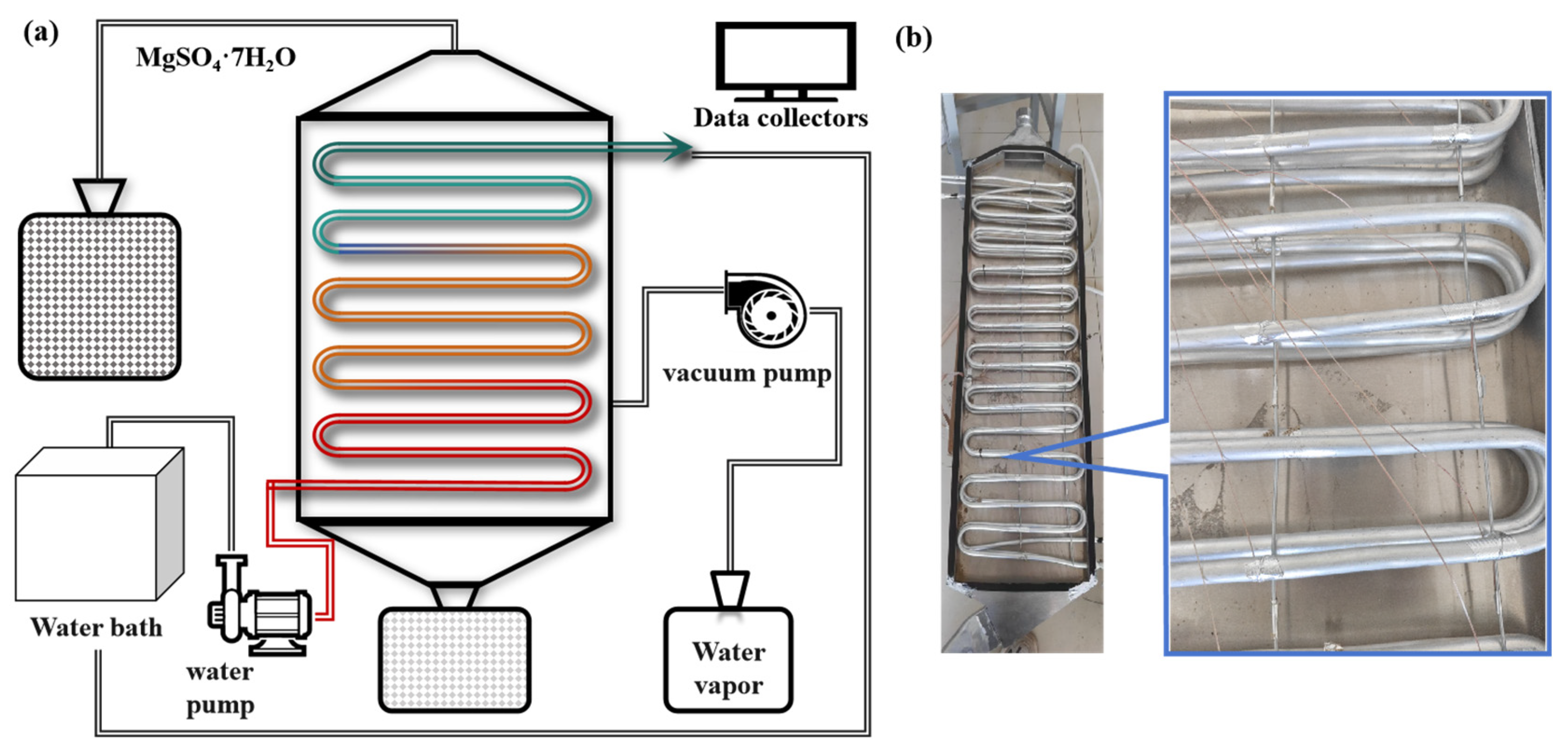
This study exploits the endothermic and exothermic behavior associated with hydrate dehydration and rehydration to achieve rapid cooling of natural gas during injection into storage reservoirs, while simultaneously recovering and storing waste heat for long-term and cross-seasonal use. To evaluate the thermal storage performance of hydrated salts under practical operating conditions, a laboratory-scale moving-bed system was developed. The setup combines a moving-bed heat exchanger with thermochemical adsorption-based heat storage to simulate waste heat recovery during gas injection. As illustrated in Figure 1, a water bath system was used to represent the waste heat source. The experimental platform consists of a water bath heating unit, heat exchange pipelines, a moving-bed heat exchanger, and a data acquisition system, including temperature thermocouples, pressure sensors, and humidity sensors.
Figure 1. (a) Experimental apparatus diagram, (b) layout of temperature measurement points.
During the experimental process, the particle size characteristics were as follows: the average diameter of MgSO4·7H2O particles was in the range of 1–2 mm, while the ceramic particles had a diameter of 2–3 mm. The mass mixing ratio of MgSO4·7H2O to ceramic particles was maintained at 10:1 to enhance fluidity and heat transfer efficiency. The bed characteristics included a height of 150 cm and a width of 30 cm, with the heat exchange tube having an outer diameter of 6 mm and an inner diameter of 5 mm, resulting in a total length of 515 cm. Additionally, the vacuum system was maintained at a pressure of −10 kPa to promptly evacuate the water vapor generated during the desorption of the hydrated salt.
In the packed heat exchanger experiment, 4.5 kg of MgSO4·7H2O particles were used per cycle. When employing a moving heat exchanger, the particle flow rate was set at 8 g/s, with water mass flow rates of 6 g/s, 8 g/s, and 10 g/s, respectively, to compare the system’s waste heat recovery performance under different waste heat flow rates.

2.2. Experimental Methodology

During the experiments, high-temperature water from the water bath was circulated through the heat exchange pipes, allowing waste heat to be transferred into the system. At the same time, MgSO4·7H2O granules were fed into the top of the moving-bed heat exchanger. Driven by gravity, the particles flowed downward and exchanged heat with the hot fluid inside the pipes. As heat was absorbed, the hydrated salt underwent dehydration, forming MgSO4·2H2O. After heat exchange, the particles were collected in a sealed storage vessel for subsequent analysis.
To monitor the thermal behavior of the moving bed, temperature measurement points were strategically distributed along the direction of particle flow, stretching from the upper inlet to the lower outlet. A total of 20 thermocouples were installed at vertical intervals of 10 cm. Specifically, ten thermocouples were positioned near the center of the heat exchange pipes to capture temperatures in the core region of the bed, while the remaining ten were placed near the wall to assess radial temperature variations. Temperature data were recorded every 6 s using a data acquisition system.
The measurement system included a precision balance, a data collector (Keithley 2700, USA), and K-type thermocouples with an operating range of 0–1300 °C. All sensors were connected to a computer through the data acquisition unit for real-time monitoring and data storage.

2.3. Experimental Error Analysis

The experiment measured the particle temperature field and inlet/outlet water temperatures within the moving bed. As the desorption reaction of hydrated salts is influenced by ambient temperature and humidity, and slight fluctuations in experimental conditions occurred during each run, resulting in experimental data errors. To minimize these errors, each heating condition was tested three times. The error calculation formula is as follows:
σ = Σ d i 2 n
where n is the number of experiments; di is the deviation between the measured value and the mean, di = xi-a. Based on the experimental data, the maximum repeatability error under different operating conditions was calculated to be 3.9%. These errors primarily stem from environmental temperature fluctuations, thermocouple calibration deviations, and uneven particle flow. To minimize these errors, we recommend the following practical measures: installing a constant temperature system in the experimental environment to maintain temperature fluctuations within ±0.5 °C; using high-precision thermocouples with regular calibration; and optimizing the particle feeding system to ensure uniform particle distribution.

3. Results and Discussion

3.1. Heat Transfer Performance of Packed Bed

Before examining the heat absorption behavior of hydrated salt thermochemical storage particles, the heat transfer performance of a packed bed filled with inert ceramic particles was first evaluated. Ceramic particles were loaded into the moving bed, and hot water was circulated through the heat exchange pipes to provide a controlled heat source. Once temperatures at all measurement points reached steady values, the experiment was concluded. Temperature data were recorded every 6 s using a data acquisition system and stored on a computer. After each run, the packed bed was cleaned to ensure repeatable initial conditions for subsequent experiments.
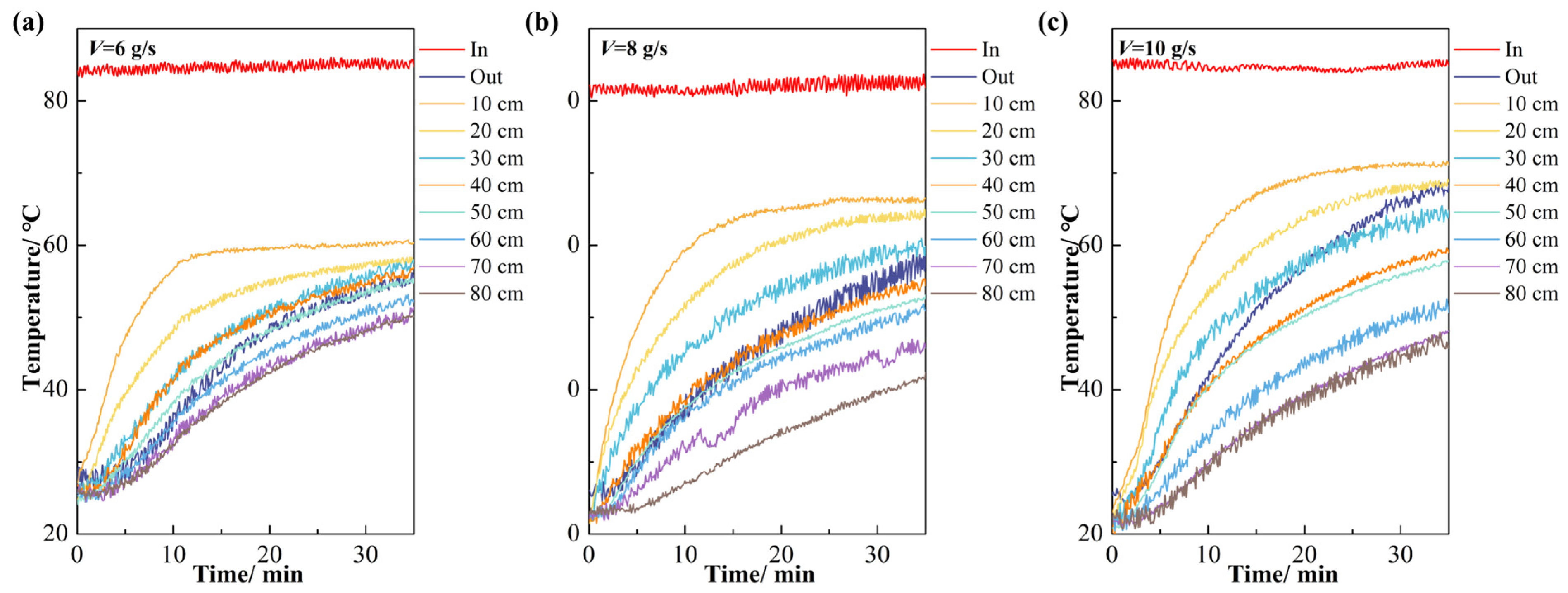
Figure 2 presents the temperature evolution of ceramic particles in the packed bed under different operating conditions. In all cases, particle temperature increased continuously during heating and gradually approached a steady state. At the initial stage, heat was transferred from the hot water inside the pipes to the surrounding packed bed, leading to a rapid rise in particle temperature. As heating continued, the temperature difference between the fluid and particles decreased, and the system eventually reached thermal equilibrium.
Figure 2. The temperature rise in ceramic particles in the packed bed and the inlet and outlet water temperature curves at different water flow rates: (a) water flow rate of 6 g/s, (b) water flow rate of 8 g/s, (c) water flow rate of 10 g/s.
As the flow rate increased, both particle temperature and outlet water temperature rose progressively. When the flow rate increased from 6 g/s to 10 g/s, the particle temperature at the bottom of the bed increased from 68 °C to 77 °C, while the outlet water temperature increased from 55 °C to 68 °C. These results indicate that higher flow rates enhance heat transfer intensity, resulting in faster particle heating and higher equilibrium temperatures. However, the increased outlet water temperature suggests reduced heat utilization efficiency, as the compact structure of the experimental device limits fluid residence time in the heat exchange pipes. This limitation implies that extending the flow path or increasing the system size could improve heat transfer by allowing longer contact between the fluid and the packed bed, thereby lowering outlet water temperature. Overall, the observed temperature profiles clearly reflect the transient and steady-state heat transfer behavior of the packed bed and highlight the strong influence of water flow rate on temperature distribution. These findings provide a solid thermal baseline for subsequent experiments involving thermochemical storage particles and offer practical guidance for optimizing moving-bed heat exchanger design.
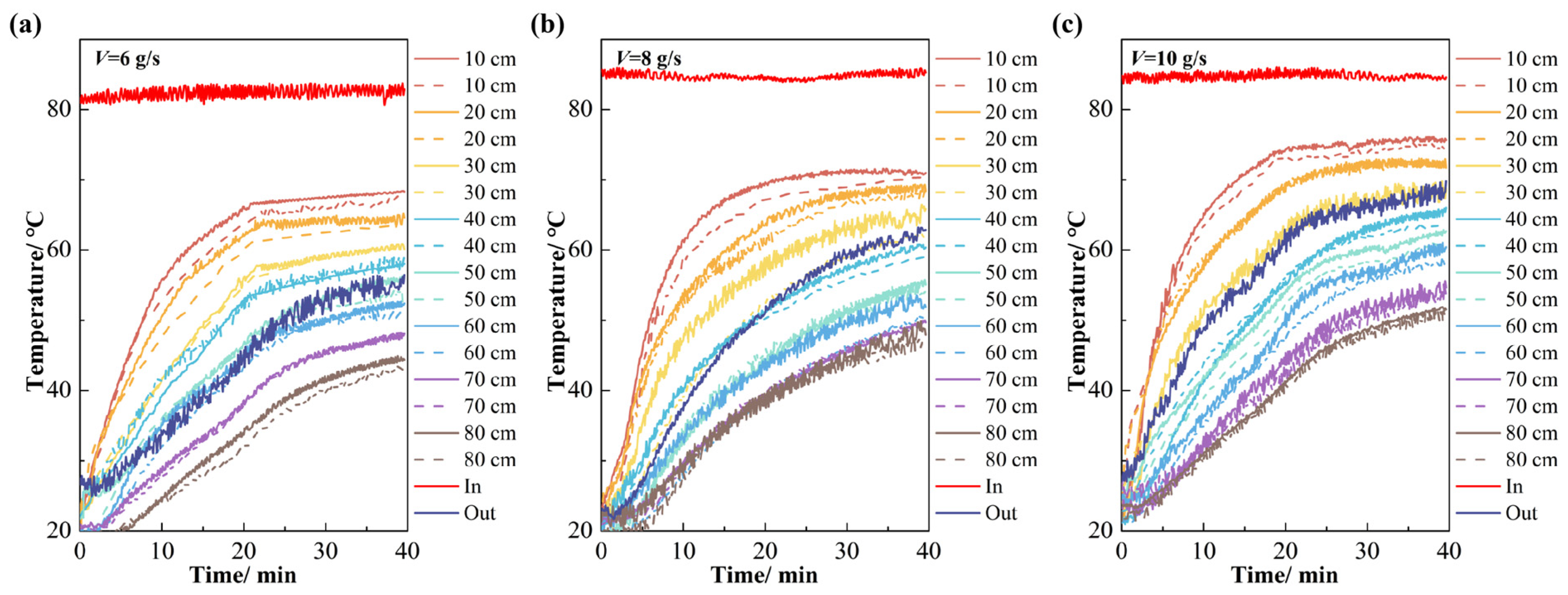
After establishing the baseline heat transfer behavior of ceramic particles, additional experiments were conducted using magnesium sulfate hydrate particles to assess their thermochemical heat storage performance. Figure 3 shows the temperature evolution of magnesium sulfate hydrate particles under different operating conditions. As heating progressed, particle temperature increased gradually and then stabilized. A rapid temperature rise occurred during the first 15 min, followed by a slower increase until thermal equilibrium was reached. Compared with ceramic particles, magnesium sulfate hydrate consistently exhibited lower particle temperatures under the same heating conditions. This behavior indicates that a significant portion of the supplied heat was stored through thermochemical reactions rather than being converted directly into sensible heat, confirming the superior energy storage capability of the hydrated salt.
Figure 3. The temperature rise of magnesium sulfate particles in the packed bed and the inlet and outlet water temperature curves at different water flow rates: (a) water flow rate of 6 g/s, (b) water flow rate of 8 g/s, (c) water flow rate of 10 g/s.
As the flow rate increased from 6 g/s to 10 g/s, the bottom particle temperature rose from 60 °C to 73 °C, while the outlet water temperature increased from 53 °C to 66 °C. Higher flow rates enhanced heat transfer intensity and accelerated particle heating, but also resulted in higher outlet water temperatures. This outcome reflects the limited size of the experimental device, which restricts fluid residence time in the heat exchange pipes. In practical applications, extending the flow path or scaling up the equipment would allow longer heat exchange duration, thereby improving heat utilization efficiency and reducing outlet water temperature.
Notably, while increased water flow enhances heat transfer rates, the corresponding rise in outlet water temperature reduces heat recovery efficiency. When the flow rate increased from 6 g/s to 10 g/s, the bottom temperature of magnesium sulfate hydrate particles only rose from 60 °C to 73 °C, whereas ceramic particles saw an increase from 68 °C to 77 °C. During prolonged operation, high-flow conditions demonstrate lower heat recovery efficiency compared to low-flow conditions. Even with an 80% increase in heat input to the system, the efficiency gain remains limited to 20%. This efficiency decline stems from reduced contact time between fluid and particles in compact experimental setups, which diminishes heat exchange efficiency.
Compared to fixed bed sensible heat storage systems, this system employs the thermochemical heat storage technology using MgSO4·7H2O particles, significantly increasing the heat storage density from approximately 0.5 GJ/m3 to 1.2 GJ/m3, which is 2.4 times that of the fixed bed system. In comparison to phase change storage systems, traditional phase change materials (PCMs) face issues such as supercooling and phase separation, leading to a degradation of storage performance over time. However, this system, based on the thermochemical reactions of hydrated salts, does not carry the risk of PCM degradation and offers greater long-term stability. Additionally, the use of indirect heat exchange in this system effectively avoids direct contact between the heat storage material and the heat source, preventing material contamination and making it particularly suitable for handling industrial heat sources with impurities, such as waste heat containing dust and oil.
These results also highlight the inherent limitations of conventional packed-bed heat exchange. Stationary particles lead to significant contact resistance and uneven heat transfer, producing strong temperature gradients within the bed. In contrast, moving-bed heat exchange introduces continuous particle flow, allowing fresh particles to enter the heat exchange zone and enhancing overall heat transfer uniformity. This dynamic behavior effectively overcomes the constraints of packed-bed systems and provides a more suitable configuration for thermochemical heat storage applications.

3.2. Heat Transfer Performance of Moving Bed

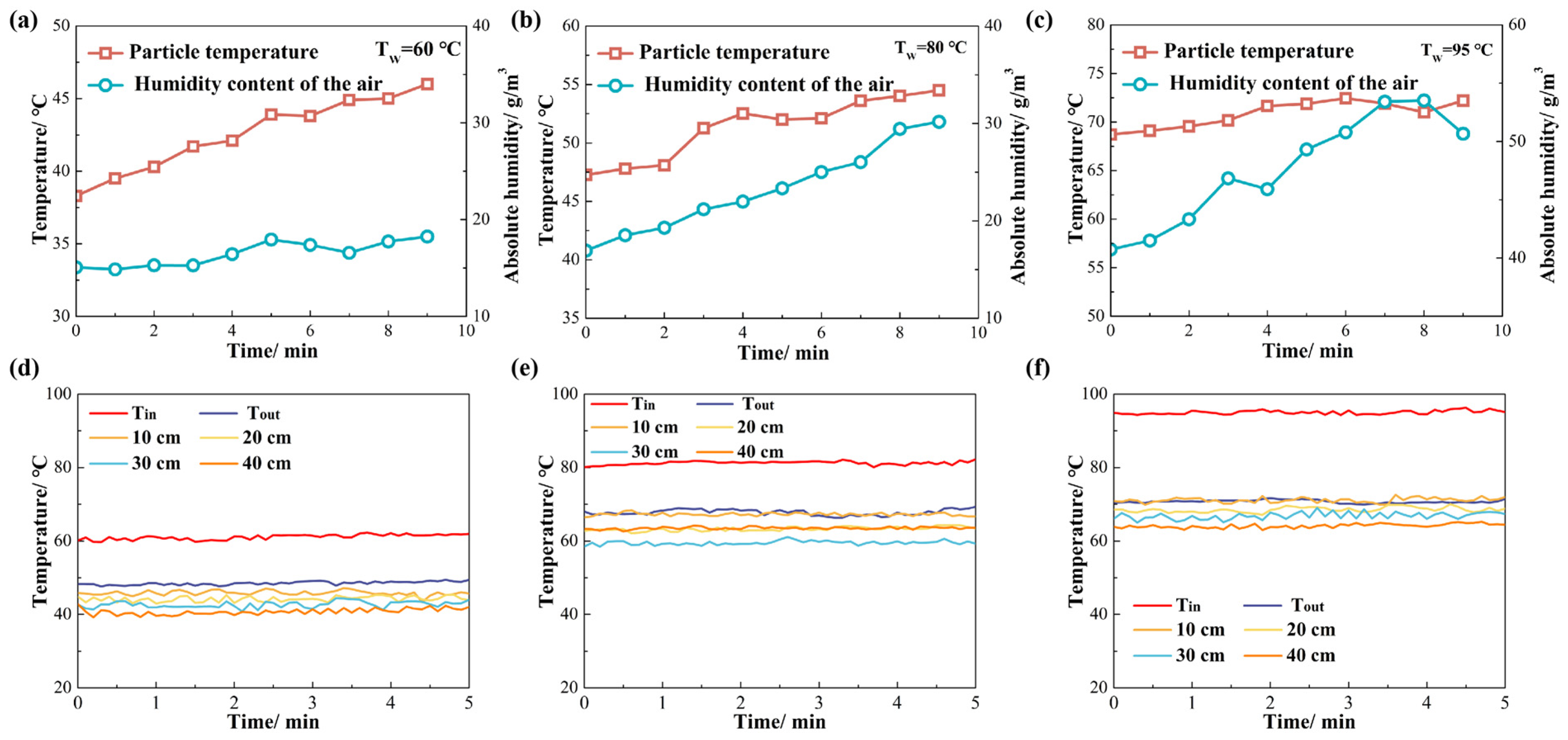
Previous studies have demonstrated the thermal storage behavior of hydrated salt particles in packed-bed systems. Building on these findings, this section examines their heat transfer performance in a moving-bed configuration. During the experiments, the water bath temperature and flow rate were varied to investigate their effects on the temperature field within the moving bed. Particle temperatures, outlet water temperatures, and heat transfer efficiency were recorded at specified time intervals, and the resulting temperature distributions were analyzed. Figure 4 summarizes the outlet temperatures of hydrated salt particles during moving-bed operation, together with the temporal evolution of dehydration behavior and temperature gradients.
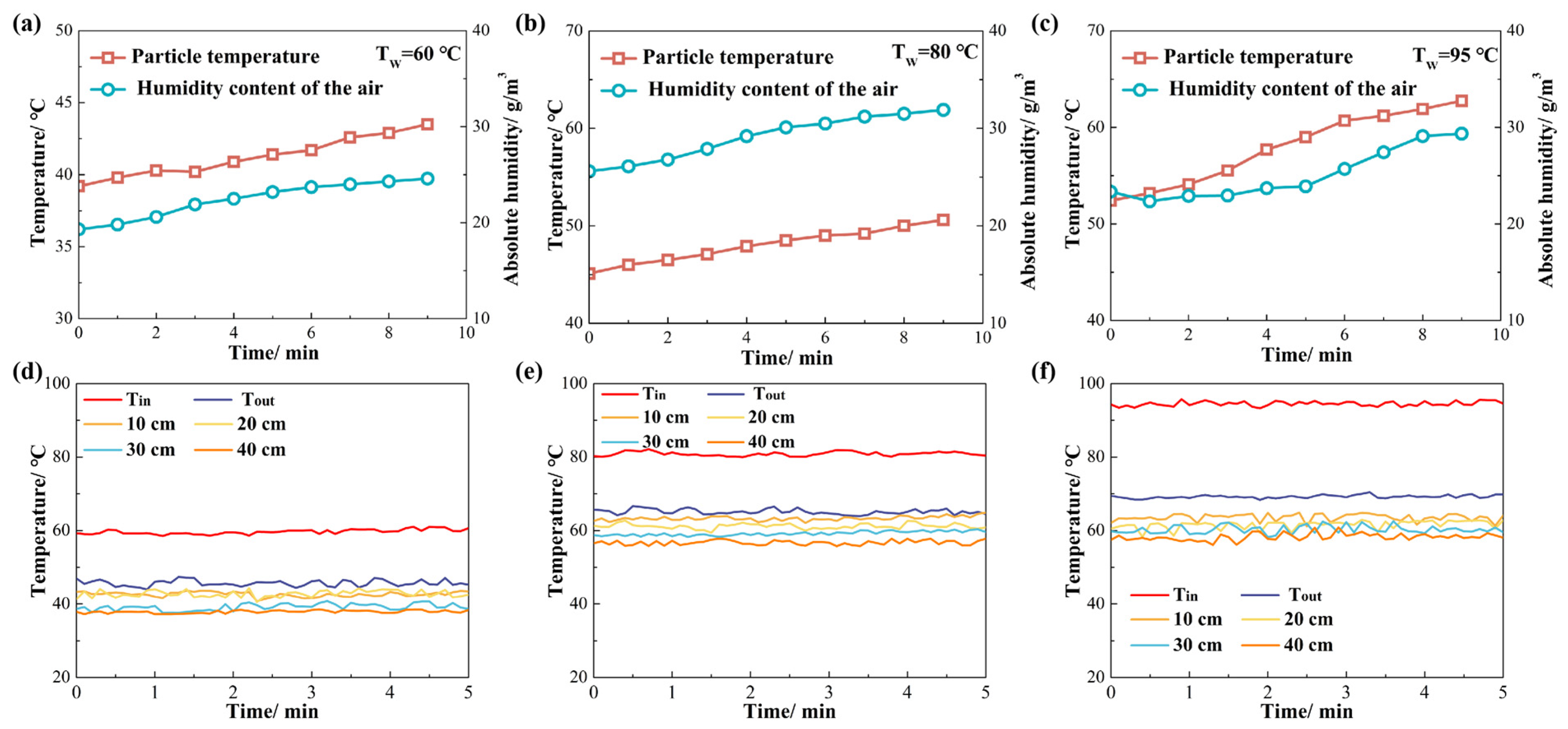
Figure 4. (ac) The outlet temperature of magnesium sulfate hydrate during heat exchange in a moving bed at a water bath flow rate of 6 g/s, and the variation in dehydration amount over time; (df) the temperature gradient distribution along the height direction of magnesium sulfate hydrate during heat exchange in a moving bed.
Figure 4a–c show the time-dependent temperature evolution of magnesium sulfate hydrate during continuous operation in the moving bed. The experiments were conducted at a water flow rate of 6 g/s and an average particle mass flow rate of 8 g/s, while the inlet water temperature was increased from 60 °C to 95 °C. Under all conditions, particle temperature increased gradually with time. At an inlet temperature of 60 °C, particle temperature rose from 39 °C at the start of the experiment to 44 °C after 9 min, corresponding to an average heating rate of approximately 0.56 °C/min. When the inlet temperature was increased to 95 °C, particle temperature increased from 53 °C to 68 °C over the same period, yielding a higher average heating rate of about 1.67 °C/min. These results indicate that higher inlet temperatures enhance heat transfer intensity in the moving bed.
Despite reaching a quasi-steady state, a clear temperature difference remained between the inlet and outlet of the heat exchange process. This persistent temperature gap suggests notable thermal resistance on the particle side, which limits heat transfer efficiency and warrants further optimization. The observed heating behavior, characterized by a rapid initial temperature increase followed by stabilization, reflects the establishment of thermal equilibrium within the moving bed. In parallel, analysis of the moisture content in the extracted air indicates that dehydration reactions began once the particle temperature approached the decomposition range of magnesium sulfate hydrate.
To prevent the accumulation of water vapor produced during dehydration and to avoid particle agglomeration or bed compaction, the moving bed was equipped with a vacuum system to continuously remove steam. Measurements of the moisture content in the exhaust air confirm this behavior. At an inlet water temperature of 60 °C, the humidity of the discharged air increased from approximately 20 g/m3 at the beginning of the experiment to 25 g/m3 after 9 min, representing an increase of about 25%. During the experiments, ambient air humidity remained in the range of 5–8 g/m3. The substantially higher moisture levels observed in the exhaust gas provide direct evidence of water vapor release from the hydrated salt, confirming that desorption and decomposition reactions occurred within the moving bed under these conditions.
Figure 4d–f present the vertical temperature distribution of magnesium sulfate hydrate particles in the moving bed after the system reached a stable operating state. Under a water flow rate of 6 g/s, particle temperature decreased gradually along the upward direction of the bed. Near the particle outlet (y = 10 cm), the average temperature was approximately 62 °C, decreasing to about 57 °C at y = 40 cm. This corresponds to an average vertical temperature gradient of roughly −0.17 °C/cm, indicating progressive heat consumption as particles move upward through the heat exchange zone. At a given height, particle temperature exhibited small temporal fluctuations. For example, at y = 10 cm, temperatures varied between 61 °C and 63 °C, which can be attributed to particle motion and local heat exchange near the coils. The outlet water temperature from the heat exchange pipes was approximately 66 °C, while the water temperature within the moving bed decreased by about 14 °C after heat exchange. Increasing the height or overall size of the moving bed would enlarge the heat exchange area and extend contact time, thereby further reducing outlet water temperature and improving heat utilization efficiency.
The combined analysis of particle temperature and moisture content under different heating conditions shows that both the initial and steady-state particle temperatures increased with higher inlet water temperatures. This trend indicates that elevated heating temperatures promote stronger heat absorption by the particles, which directly influences the extent of dehydration. Correspondingly, the moisture content of the extracted air increased during the early stages of heating and then stabilized, reflecting the progression of the desorption reaction. Higher heating temperatures produced higher peak moisture contents, consistent with enhanced water release at elevated temperatures.
Further examination of vertical temperature gradients reveals that higher heating temperatures also lead to larger temperature differences along the bed height. While elevated temperatures accelerate dehydration and increase overall heat storage, they also intensify spatial non-uniformity in the temperature field. This effect highlights the need to carefully optimize operating parameters, such as water flow rate and particle velocity, to maintain a balanced temperature distribution and avoid localized overheating or uneven dehydration within the moving bed.
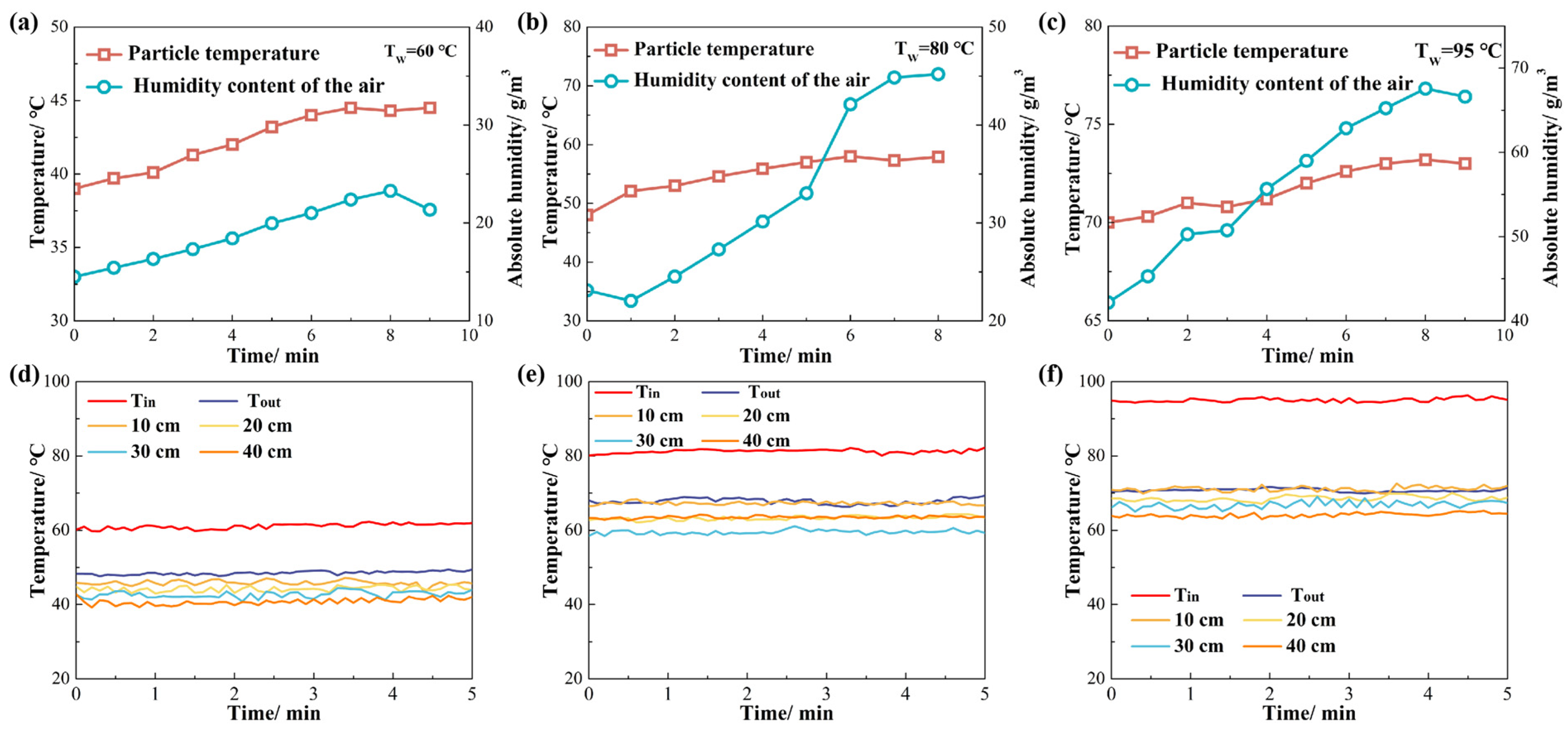
To evaluate the heat transfer performance of hydrated salts under high residual heat conditions, experiments were conducted by increasing the inlet water flow rate under various operating scenarios, as summarized in Figure 5 and Figure 6. Under high flow rates, the humidity of air discharged from the vacuum system increased progressively during the desorption process. For example, at a water flow rate of 15 g/s, discharged air humidity rose from 40 g/m3 at the start of the experiment to 53 g/m3 after 9 min, representing an increase of approximately 32%. This increase was substantially higher than that observed at lower flow rates, indicating that dehydration of magnesium sulfate occurs more rapidly under elevated flow conditions.
Figure 5. (ac) The outlet temperature of magnesium sulfate hydrate during heat exchange in a moving bed at a water bath flow rate of 8 g/s, and the variation in dehydration amount over time; (df) the temperature gradient distribution along the height direction of magnesium sulfate hydrate during heat exchange in a moving bed.
Figure 6. (ac) The outlet temperature of magnesium sulfate hydrate during heat exchange in a moving bed at a water bath flow rate of 10 g/s, with the variation in dehydration content over time; (df) the temperature gradient distribution along the height direction of magnesium sulfate hydrate during heat exchange in a moving bed.
Analysis of particle temperature fields and desorption performance across varying water flow rates and inlet temperatures revealed that higher inlet temperatures raise particle temperatures, enabling the hydrated salt to reach higher reaction levels. This accelerates salt decomposition and increases moisture content in the surrounding air. Timely removal of water vapor is essential to sustain continuous desorption, and the vacuum extraction system effectively prevents vapor accumulation. Similarly, increasing water flow rate enhances heat transfer efficiency, accelerating particle heating and desorption rates. However, excessive flow velocity may reduce heat exchange time, causing elevated outlet water temperatures and lower heat recovery efficiency. This limitation can be addressed by using moving-bed systems with extended heat transfer pathways to prolong fluid–particle interaction, improving overall heat utilization.
The experiments also demonstrate that both heating temperature and packing height strongly influence the desorption behavior of hydrated salts. Higher temperatures accelerate the reaction and increase moisture release, while larger packing heights affect the temperature distribution along the bed. To maintain efficient and continuous desorption, vacuum extraction must promptly remove generated water vapor. These results provide critical insights for optimizing operating parameters, controlling the thermal and moisture environment, and enhancing the efficiency of moving-bed thermochemical heat storage systems under high residual heat conditions.

3.3. Performance Comparison of Different Heat Exchange Methods

Analysis of temperature field data from the moving bed reveals that particle temperatures initially rise rapidly, reaching thermal equilibrium before stabilizing. The resulting temperature distribution demonstrates uniformity, indicating efficient heat transfer within the moving bed. By measuring water flow rates and inlet/outlet temperatures in the system’s heat exchange pipes, the heat input to the moving-bed heat exchanger per unit time can be calculated.
The heat flow Q into the moving-bed heat exchanger per unit time is calculated as follows:
Q = c q m ( T w i n - T w o u t )
where c is the specific heat capacity of water, qm is the mass flow rate of water, Tw-in is the inlet water temperature, and Tw-out is the outlet water temperature. In this experiment, the logarithmic mean temperature difference ΔTm is used to calculate the combined heat transfer coefficient h between particles and water during the moving-bed heat exchange process, with the following formula:
Δ T m = ( T w - i n T s - o u t ) ( T w - o u t T s - i n ) ln T w - i n T s - o u t T w - o u t T s - i n
h = Q A t Δ T m
Q is the heat input to the heat exchange system per unit time, At is the heat exchange tube area, and the heat exchange tube area of this device is 0.15 m2.
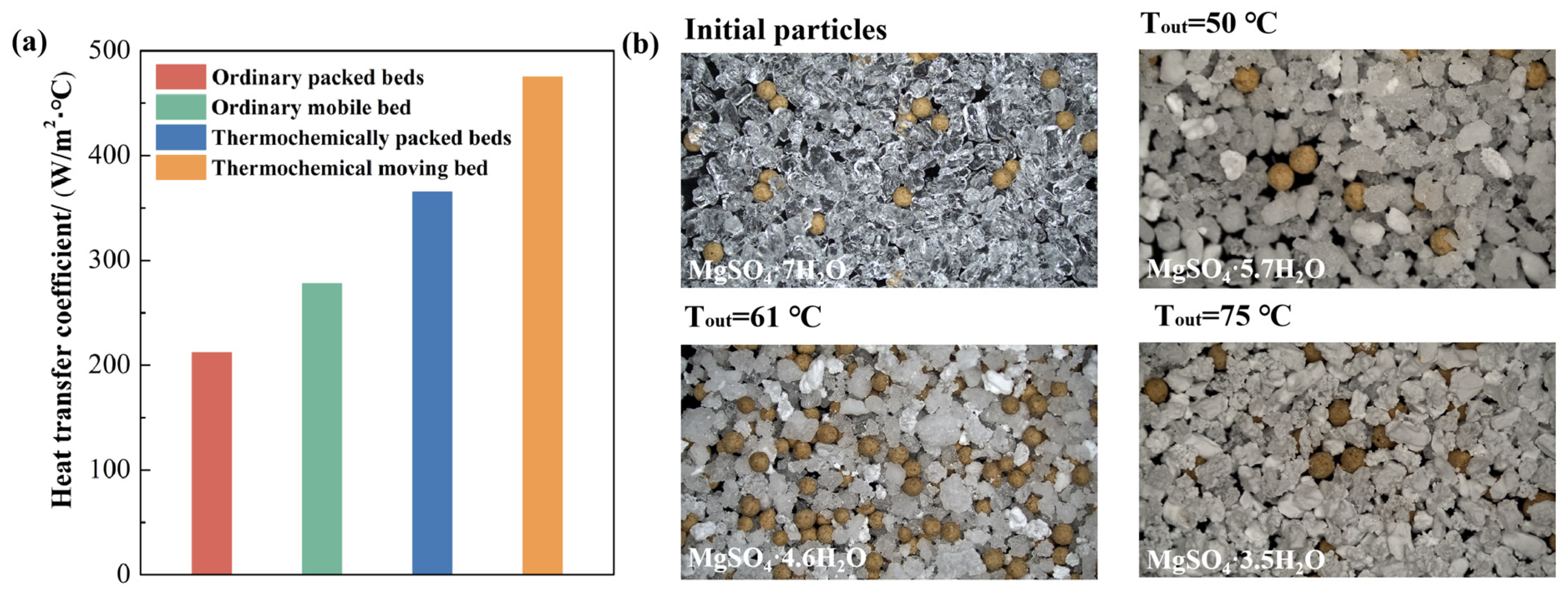
Figure 7a presents the comprehensive heat transfer coefficients under various heat exchange conditions. To ensure the reliability of the comparison results, all experiments were conducted under strictly uniform operating conditions: inlet water temperature of 95 °C, water flow rate of 10 g/s, particle flow rate of 8 g/s, and a total particle mass of 4.5 kg. The heat absorbed by the system per unit time can be calculated from the water flow rate and the inlet and outlet water temperatures. The heat flowing into the moving-bed heat exchange system per second is 1.045 kw. Experimental data analysis revealed that under identical conditions, the thermal storage method using magnesium sulfate as the heat storage material demonstrated higher heat transfer coefficients compared to conventional ceramic particles. For instance, the heat transfer coefficient of conventional ceramic particles in a moving-bed system was 278 W/(m2·K), whereas magnesium sulfate particles achieved 475 W/(m2·K), representing a 70% improvement over ceramic particles. Furthermore, for the same heat storage material, the moving-bed configuration exhibited superior heat transfer performance compared to traditional packed beds. This indicates that adopting a moving-bed design effectively enhances system heat transfer efficiency, thereby achieving greater performance gains.
Figure 7. (a) Comparison of heat transfer coefficients under different heat exchange conditions, (b) morphological changes in MgSO4·7H2O particles at different outlet temperatures.
Figure 7b illustrates the morphological changes in particles at different outlet temperatures. The original particles were composed of MgSO4·7H2O and ceramsite particles. The ceramic particles not only enhance the fluidity of hydrated magnesium sulfate but also improve heat transfer performance in the moving bed due to their excellent thermal conductivity. Initially, the particles appeared as transparent crystals. When heated to 53 °C, they transitioned from transparent to white, indicating that as the temperature rose, the particles began dehydrating and releasing heat upon reaching the decomposition temperature of water and salt. As the outlet temperature increased, the proportion of white particles grew. At 75 °C, most MgSO4·7H2O particles turned white. Tests revealed that some MgSO4·7H2O had desorbed into MgSO4·3H2O. By extending the heat exchange time and raising the water temperature, hydrated magnesium sulfate particles with lower moisture content can be obtained.
With the increase in the number of cycles, the heat storage capacity of the particles decreases, primarily due to changes in the surface structure and porosity of the particles, which prevent the internal water vapor from being expelled during the desorption process. During long-term operation of the system, it is necessary to regularly monitor the morphological changes in the particles and consider using surface-modified particles to enhance long-term stability.
The above research findings not only confirm that the use of a moving-bed heat exchange method can lead to a breakthrough in thermochemical heat storage efficiency, but also reveal that its core mechanism lies in the continuous optimization of the dynamic reaction interface. The moving bed addresses three major drawbacks of packed beds—“interface blockage, temperature fluctuations, and insufficient reactions”—through particle flow, thereby unlocking the thermochemical storage potential of magnesium sulfate hydrates. This discovery will promote the transition of thermochemical storage technology from laboratory settings to engineering applications. In future system designs, the focus will shift from merely “increasing temperature” to “maintaining reaction activity”. The adoption of moving-bed heat exchange is not just an improvement in heat transfer methods, but represents a crucial leap for thermochemical storage technology from “passive storage” to “active reaction”. In industrial applications, further optimization of waste heat recovery schemes can be achieved by aligning with the characteristics of the heat source. For instance, when dealing with low-temperature heat sources, thermochemical storage materials with lower desorption temperatures can be selected while extending the length of the heat exchange channel to ensure a higher desorption rate. For medium- to high-temperature heat sources, hydrates with higher desorption temperatures can be chosen to obtain heat at elevated temperatures during use.

4. Conclusions

This study systematically explored the desorption thermal storage characteristics of MgSO4·7H2O as a thermochemical storage material in a moving-bed heat exchange system by building a small-scale moving-bed experimental platform. By incorporating a vacuum extraction system, water vapor generated during the desorption process was effectively removed, preventing particle agglomeration and ensuring continuous operation. The results demonstrate that magnesium sulfate heptahydrate, as a medium- to low-temperature thermochemical storage material, exhibits stable thermal storage capacity and reliable performance. The main findings are summarized as follows:
(1) Compared to the heat exchange method of packed beds, the heat transfer coefficient of MgSO4·7H2O particles in the moving-bed system increased by 30% (from 365 W/(m2·K) to 475 W/(m2·K)). Simultaneously, the heat storage density and reaction uniformity of the magnesium sulfate particles were optimized. The moving bed overcomes the limitations of traditional packed beds, such as uneven temperature distribution and local reaction saturation, through continuous particle flow. This dynamic operation not only enhances heat transfer efficiency but also improves the uniformity of thermal storage.
(2) MgSO4·7H2O exhibits consistent desorption and thermal storage behavior between 60 and 95 °C. Increasing the inlet water temperature significantly enhances both the desorption rate and the final reaction temperature of the particles, though it also increases the temperature gradient within the bed. Using a vacuum system ensures continuous reaction by removing water vapor and preventing product inhibition.
(3) Water flow rate and inlet temperature strongly influence particle heating and desorption rates. Excessively high flow rates can reduce heat exchange time and efficiency, requiring optimized system design for effective waste heat recovery.
(4) When using ordinary ceramic particles, the heat transfer coefficient during the moving-bed heat exchange process is 278 W/(m2·K), whereas the coefficient for magnesium sulfate particles increases to 475 W/(m2·K). Compared to traditional ceramic particles, MgSO4·7H2O achieves a higher heat transfer coefficient and thermal storage density. Additionally, the latent heat absorption during the desorption process enhances both energy storage and heat transfer performance.
This study applies the “mobile bed + vacuum-assisted desorption” system to thermochemical heat storage of magnesium sulfate heptahydrate under non-clean heat source conditions, systematically investigating its practical performance in medium–low temperature waste heat recovery. The research validates the feasibility of thermochemical heat storage through mobile bed heat exchange in non-clean heat source environments, while revealing the intrinsic relationship between operating parameters and system performance. Compared with existing studies, this paper focuses on proposing an efficient indirect heat exchange method for recovering residual heat from impurity-containing waste heat gases and demonstrates the feasibility of the mobile bed system. Additionally, addressing the water vapor generation during desorption of hydrated salts, the study integrates a real-time vacuum system removal to prevent particle agglomeration and reaction inhibition. These innovative approaches provide novel insights and methodologies for medium–low temperature waste heat recovery. Future work can focus on optimizing particle size and distribution, precise control of vacuum levels, long-term stability of the system, and validating scale-up during the pilot phase to advance this technology from experimental research to engineering applications. For instance, in large-scale industrial application systems, it is essential to consider optimizing particle size gradation and composite ratios to enhance flowability and anti-fragmentation capabilities while improving the long-term cycling stability of the particles. When using a vacuum extraction system, it is crucial to study dynamic pressure control strategies to reduce energy consumption in industrial applications.

Author Contributions

Conceptualization, L.W.; methodology, Y.J.; software, S.L.; validation, L.W.; investigation, L.W. and Y.J.; data curation, C.S.; writing—original draft preparation, L.W. and B.D.; writing—review and editing, B.D.; project administration, B.D.; funding acquisition, B.D. All authors have read and agreed to the published version of the manuscript.

Funding

This work was supported by the National Natural Science Foundation of China (No. 52276091).

Data Availability Statement

The original contributions presented in the study are included in the article, and further inquiries can be directed to the corresponding author.

Conflicts of Interest

Authors Liang Wang, Shuang Li and Chuanqi Shi was employed by the company China Liaohe Petroleum Engineering Co., Ltd. The remaining authors declare that the research was conducted in the absence of any commercial or financial relationships that could be construed as a potential conflict of interest.

References

  1. Lee, S.; Lee, Y.; Seo, D.; Moon, S.; Ok, Y.; Yang, W.; Park, Y. Enhancing gas storage capacity by controlling the cage occupancy of natural gas hydrate. Chem. Eng. J. 2025, 518, 164493. [Google Scholar] [CrossRef] [Scilit]
  2. Xue, W.; Liu, Z.; Yang, Y. Study on the thermo-mechanical coupling performance of fluid sloshing in a liquefied natural gas storage tank. Energy Sources Part A Recovery Util. Environ. Eff. 2025, 47, 1–18. [Google Scholar]
  3. Zhou, J.; Li, Z.; Liu, S.; Li, C.; Zhao, Y.; Zhou, Z.; Liang, G. Hybrid genetic algorithm for parametric optimization of surface pipeline networks in underground natural gas storage harmonized injection and production conditions. Nat. Gas Ind. B 2025, 12, 234–250. [Google Scholar] [CrossRef] [Scilit]
  4. Zheng, S.; Dai, Z.; Wang, F.; Wang, F.; Wang, Y.; Bie, Q.; Jiang, W.; Chen, J.; Peng, Z.; Sun, J. Analysis and Control of Abnormal Wear of Reciprocating Compressors in Natural Gas Underground Storage Caverns. Processes 2025, 13, 996. [Google Scholar] [CrossRef] [Scilit]
  5. Hibbard, L.; Gilfillan, S.M.V. Constraining the hydrogen storage capacity of natural gas storage sites in the United States. Int. J. Hydrogen Energy 2024, 68, 74–84. [Google Scholar] [CrossRef] [Scilit]
  6. Sun, J.; Xu, H.; Wang, J.; Shi, L.; Li, C.; Tang, L.; Zhong, R. Injection–production mechanisms and key evaluation technologies for underground gas storages rebuilt from gas reservoirs. Nat. Gas Ind. B 2018, 5, 616–622. [Google Scholar] [CrossRef] [Scilit]
  7. Al-Shafi, M.; Massarweh, O.; Abushaikha, A.S.; Bicer, Y. A review on underground gas storage systems: Natural gas, hydrogen and carbon sequestration. Energy Rep. 2023, 9, 6251–6266. [Google Scholar] [CrossRef] [Scilit]
  8. Jiang, T.; Chi, Z.; Xie, D.; He, T.; Cao, D. Geometry inversion model for sediment zones of salt cavern used for natural gas storage. Geoenergy Sci. Eng. 2025, 252, 213959. [Google Scholar] [CrossRef] [Scilit]
  9. Song, Y.; Liu, H.; Min, Z.; Liu, M.; Qiu, X.; Liu, J.; Yang, C. Mechanism of fault slippage in the underground gas storage and preliminary application in the Shuang 6 UGS in China. Geoenergy Sci. Eng. 2025, 251, 213881. [Google Scholar] [CrossRef] [Scilit]
  10. Chen, F.; Zou, X.; Hu, H.; Chen, J. A real-time monitoring method of natural gas leakage and diffusion in well site of salt cavern gas storage. Measurement 2025, 245, 116649. [Google Scholar] [CrossRef] [Scilit]
  11. Yang, Z. Thermal Energy Storage Options: Comparisons between Molten Salt, Liquid Air, and Liquid Nitrogen Technologies. In Proceedings of the 2022 International Conference on Environment Engineering, Nanomaterials and Chemical Technology, Sanya, China, 10–11 December 2022; pp. 89–95. [Google Scholar]
  12. Padamurthy, A.; Vatala, M.; Kumar Gandla, P.; Santosh P, V.C.R.K.; Sheelwant, A.; Vemanaboina, H. A Review on Energy Storage Technologies: Current Trends and Future Opportunities. J. Phys. Conf. Ser. 2024, 2765, 012007. [Google Scholar] [CrossRef] [Scilit]
  13. Hübner, S.; Eck, M.; Stiller, C.; Seitz, M. Techno-economic heat transfer optimization of large scale latent heat energy storage systems in solar thermal power plants. Appl. Therm. Eng. 2016, 98, 483–491. [Google Scholar] [CrossRef] [Scilit]
  14. Zhang, X.; Xun, H.; Zhou, Y.; Zhang, Q.; Li, R.; Wu, X.; Jin, T. Research progress on thermochemical adsorption heat storage technology of porous matrix loaded hydrated salt. J. Energy Storage 2025, 128, 117040. [Google Scholar] [CrossRef] [Scilit]
  15. Singh, A.P.; Tiwari, S.; Sinhmar, H.; Sahdev, R.K.; Tripathi, S. Enhancing solar drying performance with heat storage technologies and nanoparticles integration: A clean energy production. J. Energy Storage 2025, 105, 114669. [Google Scholar] [CrossRef] [Scilit]
  16. Akshansh, A.; Naman, G.; Anil, K. Thermal characteristics of sensible heat storage materials applicable for concentrated solar power systems. Mater. Today Proc. 2021, 47, 5812–5817. [Google Scholar]
  17. Huang, Y.; Zhang, C.; Chen, Y. Rapid charging and discharging strategies for latent heat storage. Renew. Sustain. Energy Rev. 2025, 222, 115953. [Google Scholar] [CrossRef] [Scilit]
  18. Xu, H.J.; Han, X.C.; Hua, W.S.; Friedrich, D.; Santori, G.; Bevan, E.; Vafai, K.; Wang, F.Q.; Zhang, X.L.; Yu, G.J.; et al. Progress on thermal storage technologies with high heat density in renewables and low carbon applications: Latent and thermochemical energy storage. Renew. Sustain. Energy Rev. 2025, 215, 115587. [Google Scholar] [CrossRef] [Scilit]
  19. Charmala, S.; Prasad, S.R. An experimental study on the performance evaluation of a combined sensible-latent heat thermal energy storage. Int. J. Energy Res. 2020, 45, 5730–5746. [Google Scholar]
  20. Qu, S.; Ma, F.; Ji, R.; Wang, D.; Yang, L. System design and energy performance of a solar heat pump heating system with dual-tank latent heat storage. Energy Build. 2015, 105, 294–301. [Google Scholar] [CrossRef] [Scilit]
  21. Reynolds, J.; Koungampillil, N.; Elvins, J.; Jewell, E.; Searle, J.; Mumford, N.C.; Pearce, C.P.; Johnston, R.E. Assessing the effect of size variation in graphite and alginate matrices for thermochemical heat storage. Appl. Therm. Eng. 2025, 269, 126138. [Google Scholar] [CrossRef] [Scilit]
  22. Carrillo, A.J.; Serra, J.M. Recent Progress on Redox Materials for High-Temperature Thermochemical Heat Storage. Adv. Energy Sustain. Res. 2025, 6, 2400317. [Google Scholar] [CrossRef] [Scilit]
  23. Ding, B.; He, R.T.; Song, W.H.; Gong, Z.Q.; Zhou, J.; Feng, H. Dynamic behavior of surface frosting and droplet impact on the frosting superhydrophobic surface. Exp. Therm. Fluid Sci. 2026, 171, 111634. [Google Scholar] [CrossRef] [Scilit]
  24. Wang, L.; Jia, Y.; Tan, Y.; Ding, B. Numerical Investigation of Heat Transfer Characteristics Between Thermochemical Heat Storage Materials and Compressed Natural Gas in a Moving Bed. Processes 2024, 13, 8. [Google Scholar] [CrossRef] [Scilit]
  25. Dwivedi, A.; Veerabagu, M.; Rajagopal, M.; Sinha, S. Coupled heat transfer and chemical kinetics in a calcium oxide/hydroxide fixed bed thermochemical energy storage reactor. Appl. Therm. Eng. 2025, 258, 124699. [Google Scholar] [CrossRef] [Scilit]
  26. Zheng, H.; Liu, X.; Flamant, G. Design of reactive particle fluidized bed heat exchangers for gas–solid thermochemical energy storage. Chem. Eng. J. 2024, 489, 151305. [Google Scholar] [CrossRef] [Scilit]
  27. Yan, J.; Jiang, L.; Zhao, C. Numerical Simulation of the Ca(OH)2/CaO Thermochemical Heat Storage Process in an Internal Heating Fixed-Bed Reactor. Sustainability 2023, 15, 7141. [Google Scholar] [CrossRef] [Scilit]
  28. Xiao, G.; Wang, Z.; Ni, D.; Zhu, P. Kinetics and Structural Optimization of Cobalt-Oxide Honeycomb Structures Based on Thermochemical Heat Storage. Energies 2023, 16, 3237. [Google Scholar] [CrossRef] [Scilit]
  29. Hao, C.; Feng, G.; Ma, C.; Barreneche, C.; She, X. Performance analysis of a novel multi-module columnar packed bed reactor with salt hydrates for thermochemical heat storage. J. Energy Storage 2024, 86, 111170. [Google Scholar] [CrossRef] [Scilit]
  30. Jack, R.; Rhodri, W.; Jonathon, E.; Eifion, J.; Justin, S.; Xinyuan, K. Development and characterisation of an alginate and expanded graphite based composite for thermochemical heat storage. J. Mater. Sci. 2023, 58, 5610–5624. [Google Scholar] [CrossRef] [Scilit]
  31. Timo, R.; Kai, R.; Nathalie, M.; Christian, S. Non-Stoichiometric Redox Thermochemical Energy Storage Analysis for High Temperature Applications. Energies 2022, 15, 5982. [Google Scholar] [CrossRef] [Scilit]
  32. Prill, T.; Latz, A.; Jahnke, T. Modeling of powder bed dynamics in thermochemical heat storage. Appl. Energy 2025, 383, 125275. [Google Scholar] [CrossRef] [Scilit]
  33. Lv, X.; Jiang, L.; Yan, J.; Zhao, C. Dehydration performance improvement of calcium hydroxide/calcium oxide system based on horizontal biaxial stirred reactor. Energy 2024, 313, 133895. [Google Scholar] [CrossRef] [Scilit]
  34. Bennici, S.; Polimann, T.; Ondarts, M.; Gonze, E.; Vaulot, C.; Pierrès, N.L. Long-term impact of air pollutants on thermochemical heat storage materials. Renew. Sustain. Energy Rev. 2020, 117, 109473. [Google Scholar] [CrossRef] [Scilit]
  35. Chang, X.L.; Yan, T.; Wang, Z.; Pan, W.G.; Wang, L.W. State of the art on solid–gas sorption based long-term thermochemical energy storage. Chem. Eng. Sci. 2025, 302, 120853. [Google Scholar] [CrossRef] [Scilit]
Disclaimer/Publisher’s Note: The statements, opinions and data contained in all publications are solely those of the individual author(s) and contributor(s) and not of MDPI and/or the editor(s). MDPI and/or the editor(s) disclaim responsibility for any injury to people or property resulting from any ideas, methods, instructions or products referred to in the content.

Article Metrics

Citations

Article Access Statistics

Multiple requests from the same IP address are counted as one view.