Article

The Application of Eichhornia crassipes Biomass to the Removal of Lead (II) from an Aqueous Solution


by
Juan Fernando Cárdenas González
1,
Ismael Acosta Rodríguez
2,
María Eugenia Sánchez Briones
3 and
Adriana Sarai Rodríguez Pérez
1,*
1
Facultad de Estudios Profesionales Zona Media, Universidad Autónoma de San Luis Potosí, Carretera Rioverde-San Ciro Km. 4, El Carmen, Rioverde C.P. 79615, San Luis Potosí, Mexico
2
Laboratorio de Micología Experimental, Centro de Investigación y de Estudios de Posgrado, Facultad de Ciencias Químicas, Universidad Autónoma de San Luis Potosí, Av. Dr. Manuel Nava No. 6, Zona Universitaria, San Luis Potosí C.P. 78320, Mexico
3
Facultad de Estudios Profesionales Zona Huasteca, Universidad Autónoma de San Luis Potosí, Calle Romualdo del Campo No. 501, Ciudad Valles C.P. 79060, San Luis Potosí, Mexico
*
Author to whom correspondence should be addressed.
Processes 2026, 14(6), 895; https://doi.org/10.3390/pr14060895
Submission received: 27 December 2025 / Revised: 23 February 2026 / Accepted: 3 March 2026 / Published: 11 March 2026

Abstract

The purpose of this work is to investigate the removal of lead (II) from an aqueous solution using live and dead water lily biomass by the dithizone colorimetric method. It was found that the optimal conditions for the removal of 100 mg/L of lead (II) are 1 g of biomass at 100 rpm, a pH of 4.0, and 28 °C for 28 h of incubation. An amount of 5 g of biomass eliminated 86.3% of lead (II) from water contaminated with 263 mg/L of the metal after 7 days of incubation at 28 °C, and 52% and 48% of the metal can be desorbed in the presence of HCl 0.1 M and 0.5 M, respectively, while the living plant removed 40% of the metal (263 mg/L) after 6 weeks at 28 °C under static conditions. The analyzed biomass efficiently removed the metal from the solution and can be an excellent alternative approach for the removal of lead (II) from contaminated sites.

1. Introduction

Water pollution is currently one of the major problems we face since water is increasingly becoming a scarce resource and the human population is constantly growing, which causes demand to progressively increase. The deterioration of water quality can take place due to different circumstances, resulting in serious health problems that severely affect flora, fauna, and human health. Some ecosystems are used as the final disposal site for industrial effluents, mainly in urban areas. Other harmful factors include increased agricultural activity; invisible pollution from such sources as the excessive use of heavy metals or agrochemicals (such as pesticides, fertilizers, and plastics); and biological and radioactive contamination. Unfortunately, these problems cannot always be solved, and sometimes only partial recovery is achieved, consequently leading to the destruction of ecosystems, eutrophication, and increased migration flows [1,2]. Another direct consequence of the pollution of different water sources (rivers, lakes, and seas) is the presence of various toxic elements in the food chain. Since humans are the final recipients in the food chain, they can ingest large quantities of pollutants, such as heavy metals, which accumulate from one animal to another. Therefore, it is recommended to avoid consuming certain aquatic animal products to prevent the risk of ingesting these contaminants. Furthermore, the more polluted water is by these toxic compounds, the more likely it is that these elements will evaporate and cause acid rain, which can lead to the elimination of entire species due to the lack of oxygen, making the environment completely hostile to aquatic plant and animal life [2].
Furthermore, of the various heavy metals, many lead-based compounds are found distributed throughout our ecosystems (we find them in animals, plants, lakes and oceans, soil, rivers, drinking water, etc.). Humans use these metals to manufacture batteries, containers, coatings, and ointments and in the manufacture of pigments [3], and they have numerous applications in the metallurgical industry: cable sheathing, soldering, bearing metals, ammunition, ceramic glazes, pigments, etc. It has been established that there is a problem when the permitted occupancy limit (TLV-TWA) exceeds 0.15 mg Pb/m3 [4]. Lead has a negative effect with chronic exposure, mainly on systems such as the muscular, renal, nervous and gastrointestinal systems, causing relatively minor effects. The main symptoms are headache, fatigue, nausea and vomiting, abdominal cramps, behavioral problems, difficulty concentrating, and decreased learning and work efficiency. Therefore, it has been classified as an environmental threat (due to its prevalence in various environments) and a potential health hazard for pregnant women and children [5]. It has also been detected in umbilical cord samples [6].
Additionally, there has been an increase in research on the removal of large quantities of contaminants, including heavy metals, using different bioadsorbents derived from microorganisms; in recent decades, research has been conducted into the use of biomaterials for the remediation of water contaminated with metals such as lead (II), with highly satisfactory results [7]. In this regard, there are reports on the use of bacteria, algae, fungi, and plants, with dead and/or live biomass of the water hyacinth (Eichhornia crassipes) being particularly useful. Therefore, some research has been conducted to analyze the promising use of the water hyacinth, with the intention being to promote the plant’s growth rather than eradicating it from water bodies [8]. The water hyacinth is known for its rapid propagation and excessive growth and its tolerance to extreme conditions such as temperature, pH, and nutrients. For the reasons mentioned above, it has been recognized by the International Union for Conservation of Nature as one of the 100 most aggressive and invasive species, and it has been designated as one of the 10 most severe weeds in the world [9]. Its success as an invader is attributed to its ability to generate biomass and outcompete native vegetation and phytoplankton, as well as the absence of predators within its native range. However, this weed is also considered a resource of immense potential. Among the most common problems caused by the invasion of water hyacinth are its wide distribution and rapid growth in bodies of water, particularly in irrigation and drainage systems [8], which decreases water flow, interferes with navigation, and increases water loss and evaporation, health risks, and alterations in the physicochemical characteristics of the water body. The health problems caused include the water hyacinth providing a habitat for organisms that are vectors of pests and pathogens, such as filariasis, helminthiasis, dengue fever, encephalitis, malaria, and yellow fever, among others, which affect communities near water bodies colonized by this plant [9]. Furthermore, the accumulation of contaminants by the plant carries the risk of these entering the food chain, leading to biomagnification and posing a risk to human health [8]. On the other hand, the large amount of biomass that can be easily generated has been used in wastewater treatment and heavy metal remediation, as it has been reported to have very efficient removal percentages for different contaminants, including dyes and heavy metals such as cadmium, manganese, chromium, zinc, iron, mercury, arsenic and copper [10]. However, very few studies have been conducted on the direct application of water hyacinth and its derivatives for the removal of dyes and heavy metals from textile effluents and wastewater [11]. The water hyacinth also has other applications as it is used as a source of biofuel, in electricity generation, in industry, in human food and antioxidants, in medicines, in animal feed, in agriculture, in allelopathy, and in the manufacture of household goods [8]. The plant has also been used to treat gastrointestinal diseases. It contains various compounds with pharmacological properties (such as antioxidant, antimicrobial, antitumor, and anticancer properties), and due to its capacity to accumulate heavy metals, it has significant applications in the phytoremediation of wastewater [10]. The removal of cadmium (II) and cobalt (II) from contaminated water by E. crassipes biomass has been reported [12,13], as have the removal of chromium (VI) by activated carbon from the same plant [14]; the phytoremediation of different heavy metals and fluoride from wastewater [15,16]; the removal of nickel (II), copper (II), chromium, and lead from wastewater [17,18,19]; and the use of malachite green, Congo red, crystal violet and methylene blue [20]. The plant has also been efficiently used to remove organophosphorus compounds, such as the insecticide chlorpyrifos, demonstrating that this invasive species can be used for the benefit of contaminated environments [21]. Therefore, the objective of this study was to analyze the capacity of water hyacinth (E. crassipes) biomass to remove lead (II) from aqueous solutions derived from metal-contaminated water.

2. Materials and Methods

The methodology is presented in five subsections: the first describes how the water hyacinth biomass was obtained; the second describes how the metal removal studies were carried out using the analyzed biomass; the third describes desorption studies; the fourth describes a bioremediation trial using contaminated water samples from an industrial waste lagoon; and the final section describes the methodology for metal removal using the live plant.

2.1. Obtaining Natural Biomass

The water lily was collected from the San Jose Dam, a place very close to the capital of San Luis Potosi, S.L.P., Mexico, during March 2020. The biomass was obtained as follows: the plant was washed for 24 h with 10% (w/v) EDTA due to its complexing effect, leaving the plant free of ions such as Ca2+, Mg2+ and other metallic ions; the analyzed biomass was free of heavy metals that could cause interference [12]. This was followed by washing for one week in trideionized water under constant agitation, with water changes every 12 h. It was heated to boiling for 60 min to remove dust and adhering organic components, washed again under the same conditions for 72 h in a bacteriological oven at 80 °C (Felisa, Zapopan, Jalisco, Mexico), ground in a blender, and stored in amber bottles until use.

2.2. Lead (II) Removal

Removal studies were conducted using 100 mL of a 100 mg/L lead (II) solution obtained by diluting a 1 g/L standard solution prepared from Pb(NO3)2 in trideionized water. The pH of the working solutions was adjusted with 1 M HNO3 and/or 1 M NaOH before adding it to the biomass. Subsequently, dilutions were made to concentrations of 100 to 500 mg/L of the metal. For the removal studies, 250 mL Erlenmeyer flasks were used with the adjusted solutions, and 1.0 g of biomass was added to be analyzed (previously sterilized at 120 °C/20 min), and this was added to 100 mL of a 100 mg/L Pb (II) solution and incubated at 28 °C and 100 rpm. Aliquots of 5 mL were taken at 0, 4, 8, 12, 16, 20, 24, and 28 h, which were centrifuged at 3000 rpm (10 min). The concentration of the metal ion in solution was determined in the respective supernatant by the dithizone colorimetric method, which resulted in the formation of a cherry-red complex, which was read at an absorbance of 510 nm, with a minimum detectable concentration of lead of 1.0 μg/10 mL of dithizone [22]. All experiments were performed at least three times.

2.3. Metal Desorption

Three 250 mL Erlenmeyer flasks containing 1 g of water hyacinth biomass samples were supplemented with 100 mL of a 100 mg/L Pb (II) solution at pH 4.0; 5 mL of the solution at time zero was used as a control. The working flasks were incubated at 28 °C and 100 rpm for 72 h and were then filtered with Whatman No. 1 paper to separate any possible sediment present. The metal concentration in the filtrate was then determined. Each sample of biomass was washed with 200 mL of sterile, trideionized water, and the metal concentration was again determined. Subsequently, the biomass samples were placed in treated and sterile 250 mL Erlenmeyer flasks, and 100 mL of the following solutions was added: 0.5 M and 0.1 M HCl and sterile trideionized water. The reaction mixture was incubated for 72 h at a temperature of 28 °C and a stirring speed of 100 rpm, and the concentration of the metal in the solution was determined.

2.4. Bioremediation Assay

A bioremediation study was also conducted on 100 mL of natural water contaminated with 263 mg/L of Pb (II), in previously sterilized plastic containers. A sample of water was taken (approximately 30 cm below the surface) and one of sludge (with a Gravity-type sampler) from each of the 4 zones near the farmland of “Tanque Tenorio”, which is southeast of the city, in the municipality of Soledad de Graciano Sánchez, S.L.P., México, and this is a catchment lagoon of wastewater, of which 60% is of urban origin and 40% of industrial origin (it should be noted that the industrial zone of San Luis Potosí has more than 520 companies, including those in the fields of mining–metallurgy, textiles and chemicals). The pH was adjusted to 4.0, and 5 g of water hyacinth biomass was added. The mixture was incubated at 28 °C with constant stirring for 72 h, with samples taken at 0 and 72 h. The biomass was removed by centrifugation (3000 rpm/10 min), and the metal ion concentration of the supernatant was analyzed using the dithizone colorimetric method [22].

2.5. Metal Removal Using a Live Plant

An in vivo experiment was conducted with the plant under study, incubating it in the presence and absence of industrial effluents containing 263 mg/L of the metal at pH 3.63, in a final volume of 500 mL, and incubated at 28 °C under static conditions, with 5 mL samples taken every week to determine the metal concentration in the supernatant.

3. Results and Discussion

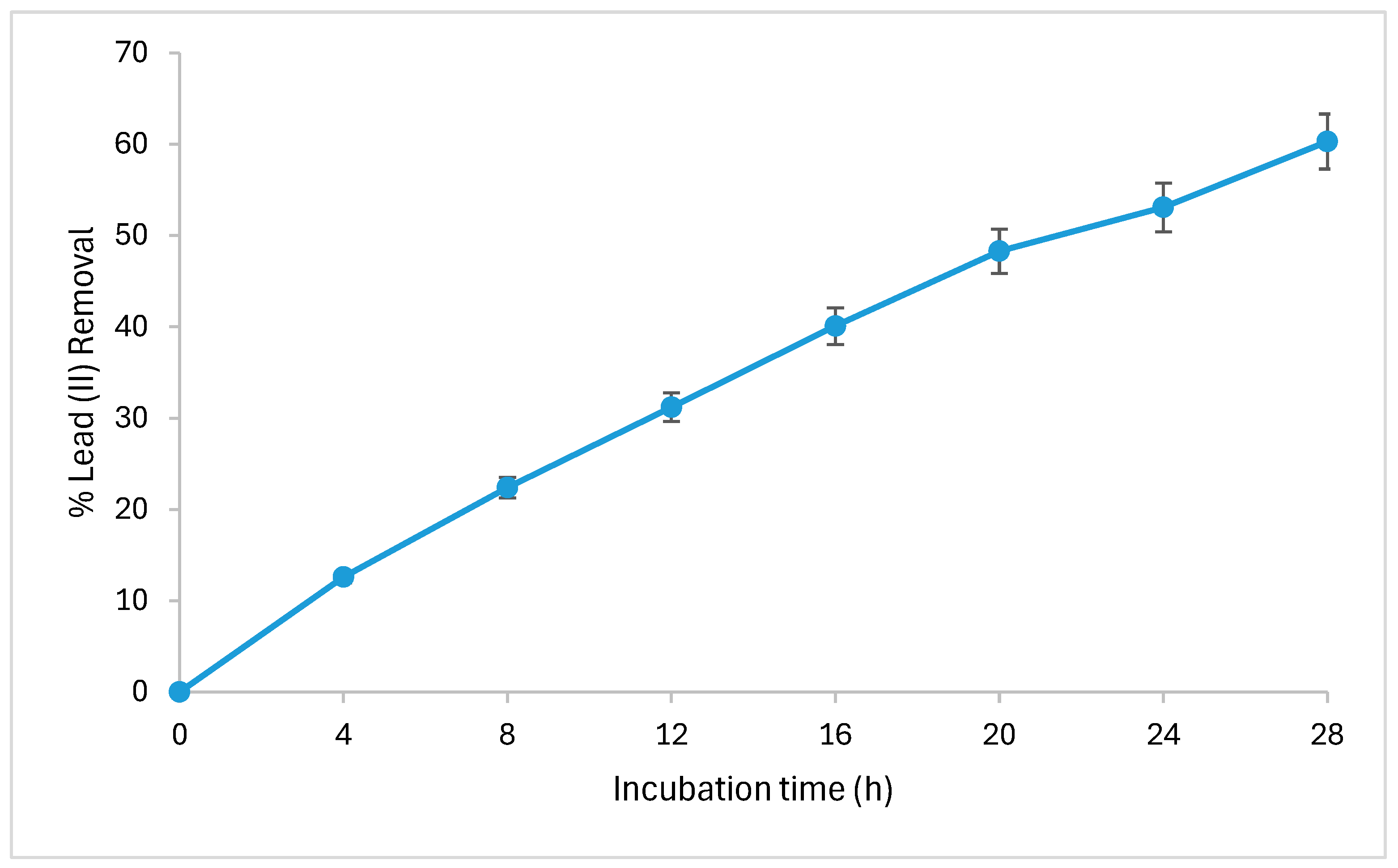
The lead (II) removal capacity of the water hyacinth biomass was studied, showing that the metal was effectively removed from the water samples [100 mg Pb (II)/L]; 60.2% of the lead (II) was removed by 1 g of biomass after 28 h of incubation at 28 °C, 100 rpm, and pH 4.0 (Figure 1).
The results shown in this work are similar to others reported for the removal of lead (II) from coal extraction site wastewater with pretreated red algae, orange peel, and prickly pear biomass, after an incubation time of 24 h [23]. However, these results differ from those reported for the modified biomass of the dried stems and leaves of water hyacinth, which exhibited a removal efficiency of 99% after 3 h of incubation, with different biomass concentrations [24]. Only 2 h was needed for the removal of 100 mg/L of the same metal by 1 g of potato and banana peel biomass [25]; 2 h was also needed for the removal of lead (II) from coal extraction site wastewater with 5 g of pretreated red algae, orange peel, or prickly pear biomass [23]; 90 min was necessary for the removal of 75 mg/L of the metal by peanut shell biomass [26]; 30 min was required for the removal of different heavy metals by the powder of A. lebbeck pods [27]; and 90 and 105 min were needed for corn cob (Zea mays) and coffee pulp biomass to remove the same metal [28,29].
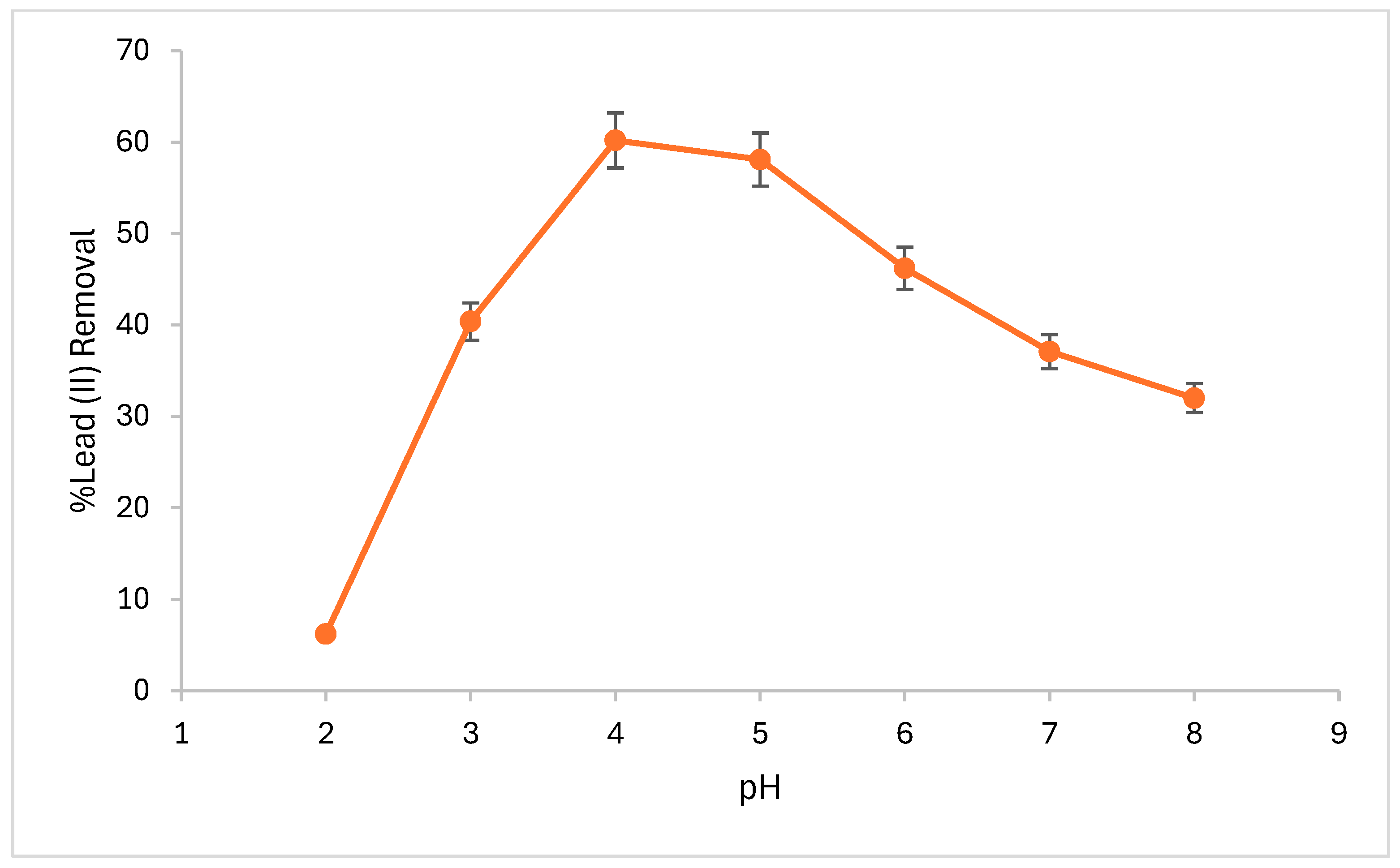
Regarding pH, this has been described as the most important parameter in the removal capacity of some types of biomass for various contaminants since it exerts a great deal of influence on surface electrostatic interactions where the biomass comes into contact with the different chemical species of the metal [28]. The best metal removal performance was observed at a pH of 4.0, with an efficiency of 60.2%, and as pH increases, the removal efficiency decreases to 32% at a pH value of 8.0 (Figure 2). This is apparently due to the fact that the net negative charge of the materials is increasing, which favors a greater attraction between the metallic cations present in the solution and the surface of the bioadsorbent. Nag et al. (2024) [30] mention that with an increase in pH, protonation decreases, the surface becomes negative and functional groups are more activated, resulting in the electrostatic attraction of cations. The lead ions may be dissociated in aqueous medium, and the precipitation of metal ions starts at a pH greater than 6.0 [30].
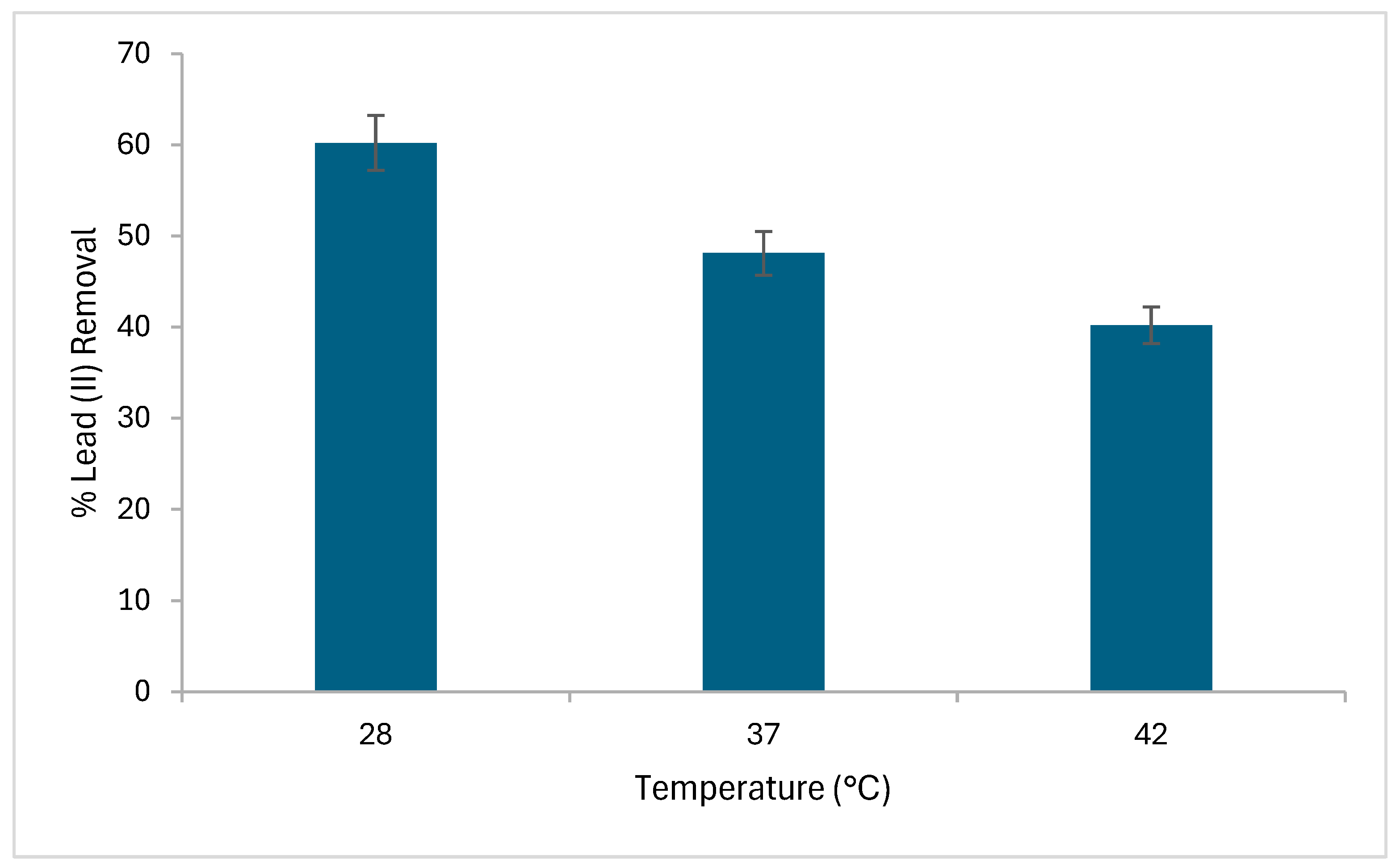
However, these results differ from those reported for dry and modified biomass from the stems and leaves of the water lily, which achieved a 99% removal efficiency at a pH value of 5.5 [24]. A pH of 5.0 was the optimal pH value for the removal of the same metal by residues of Agave lechuguilla (lechuguilla) and Yucca carnerosana (Yuca) or biomass sourced from potato and banana peel and corn cob [25,28,30]. A pH of 8.0 was optimal for the removal of 75 mg/L of lead by peanut shell biomass [26]; a pH range between 6.0 and 8.0 was optimal for the removal of different heavy metals by A. lebbeck pod powder [27]; and a pH of 2.0 was optimal for removal using coffee pulp biomass [29]. Regarding the incubation temperature, the maximum efficiency was observed at 28 °C (Figure 3), which is similar to that reported for potato and banana peel biomass [25] and for corn cob [28].
However, these results differ from those reported for the removal of the same metal using lechuguilla and cassava waste, where increasing the incubation temperature also increases the metal removal efficiency [30], which is also true for the removal of various heavy metals using A. lebbeck pod powder [27].
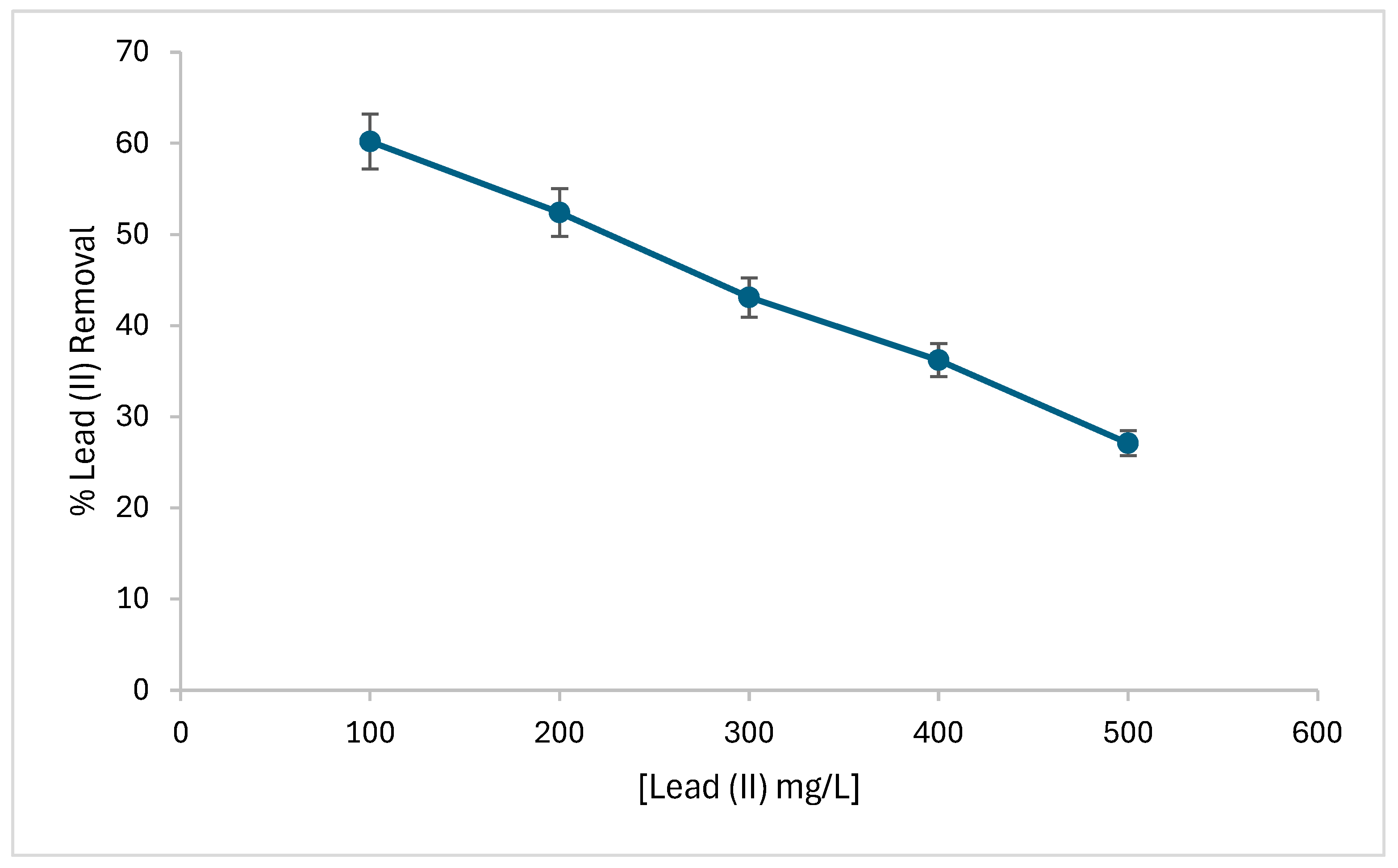
Furthermore, as the metal concentration increases from 100 to 500 mg/L, the metal removal efficiency in solution decreases from 60.2% to 27.1% (Figure 4).
The data obtained in this work are very similar to those reported for potato and banana peel biomass, where increasing the metal concentration from 10 to 100 mg/L decreases the metal removal rate [25], and for the removal of different heavy metals (10–30 mg) by A. lebbeck pod powder [27]. However, they differ from those reported for corn cob biomass, where increasing the metal concentration also increases the metal removal rate up to concentrations of 30 mg/L [28].
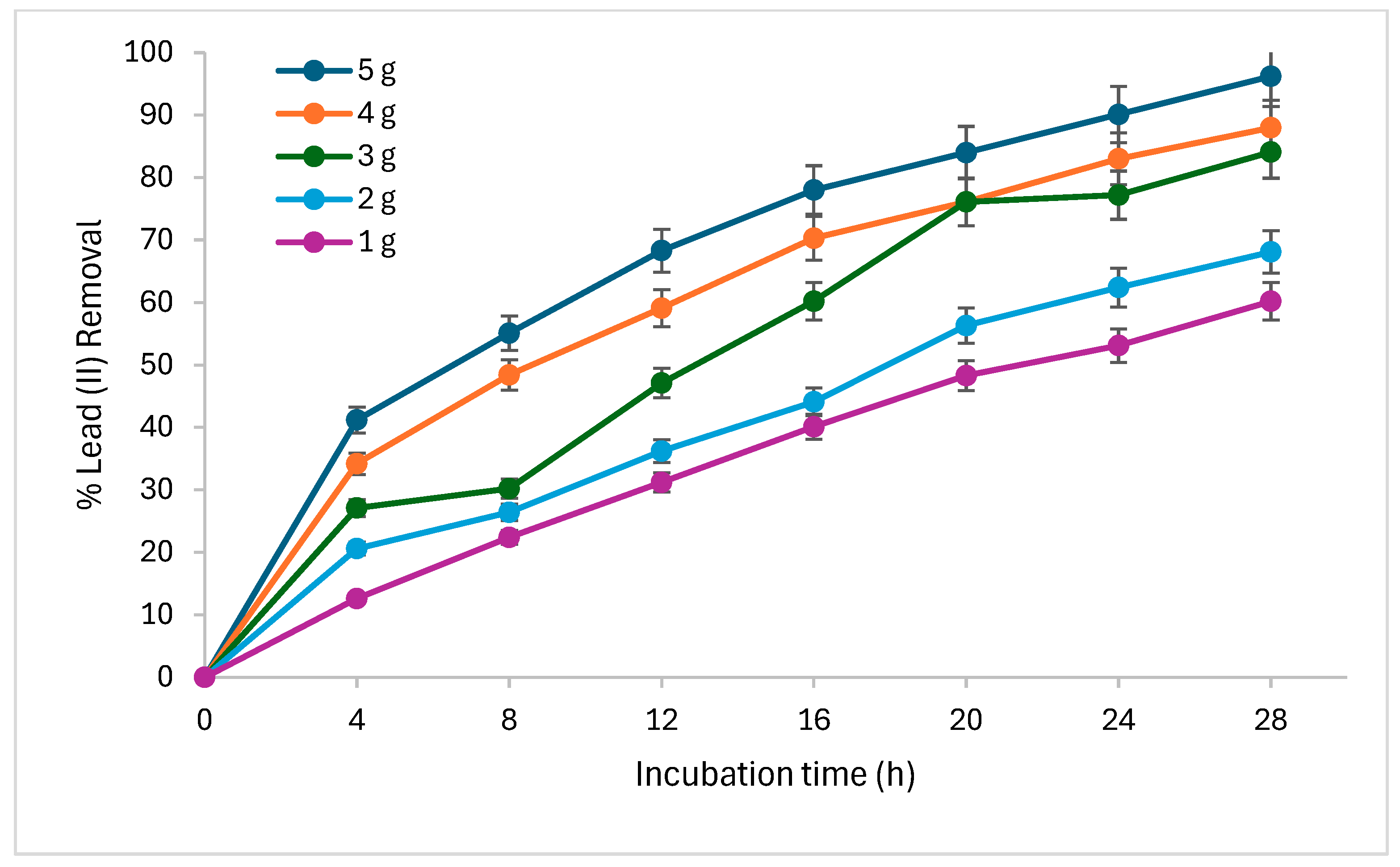
On the other hand, with higher concentrations of water hyacinth biomass, the metal removal efficiency increases from 60.2% with 1 g of the bioadsorbent to 96.2% with 5 g, after 28 h of incubation. (Figure 5). This increase is related to the increase in the contact area of the solid adsorbent and the number of biosorption sites available on its surface [24].
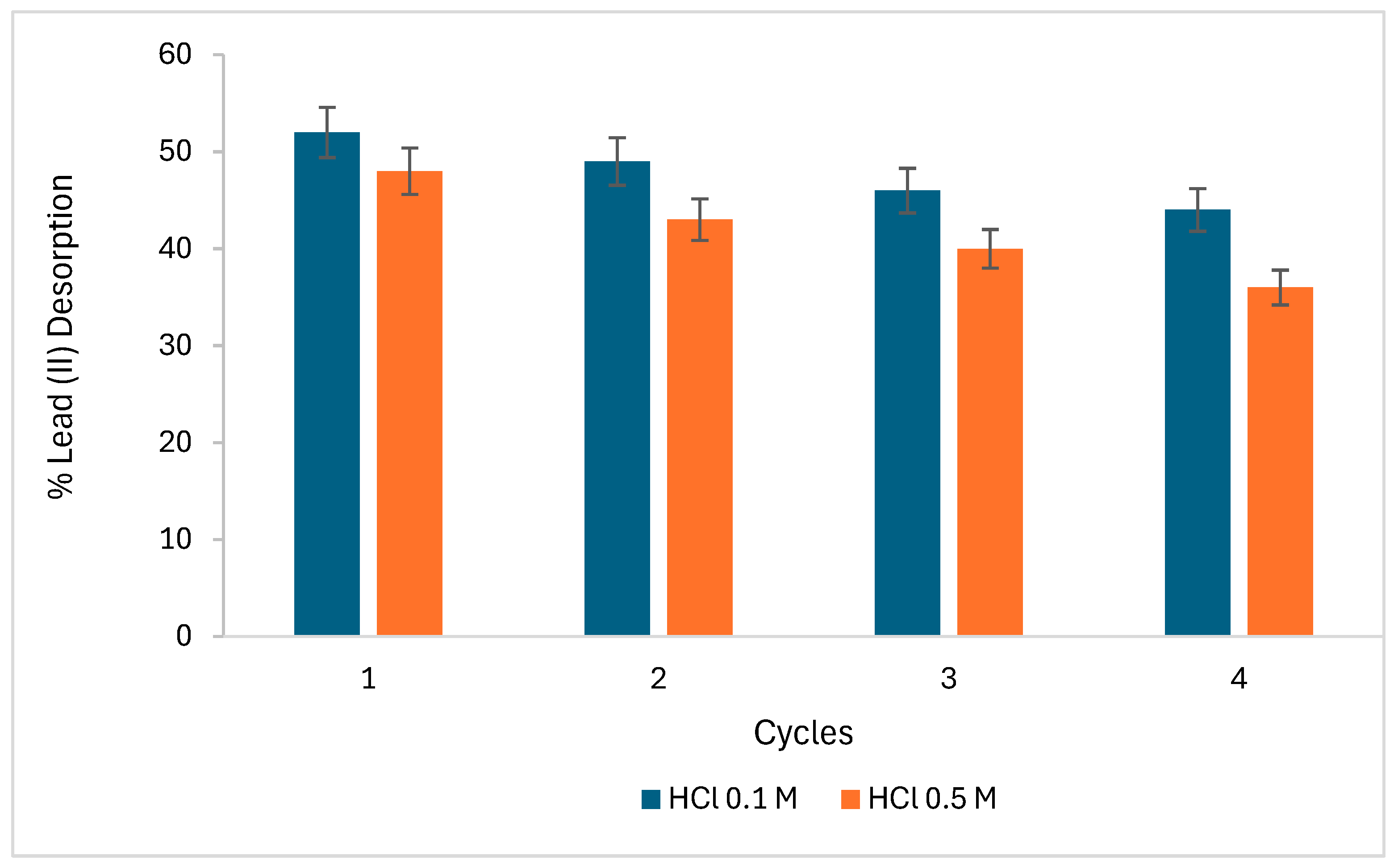
The data obtained in this work are very similar to those reported for modified biomass from the stems and leaves of water hyacinth, which exhibited a 97% removal efficiency when the biomass concentration was increased from 0.2 to 2.0 g/200 mL [24], and for potato and banana peel biomass, where increasing the biomass concentration from 0.05 to 0.1 g increased metal removal [25]. The same was also true for the removal of various heavy metals by A. lebbeck pod powder when the biomass concentration was increased from 0.4 to 1.2 g [27] and for corn cob biomass up to a concentration of 4 g/L [28]. Regarding the reuse of the analyzed biomass, it was found that, when incubated with different solutions, the desorption of the metal was more efficient with 0.1 M HCl (52%), followed by 0.5 M HCl (48%) [31,32,33], while desorption was not detected with trideionized water. In addition, over four adsorption/desorption cycles, efficiency decreases to 16.4% and 25%, respectively, for both solutions (Figure 6), which suggests that the bioadsorption mechanism is being carried out by ion exchange, with possible functional groups present on the surface of the bioadsorbent [30].
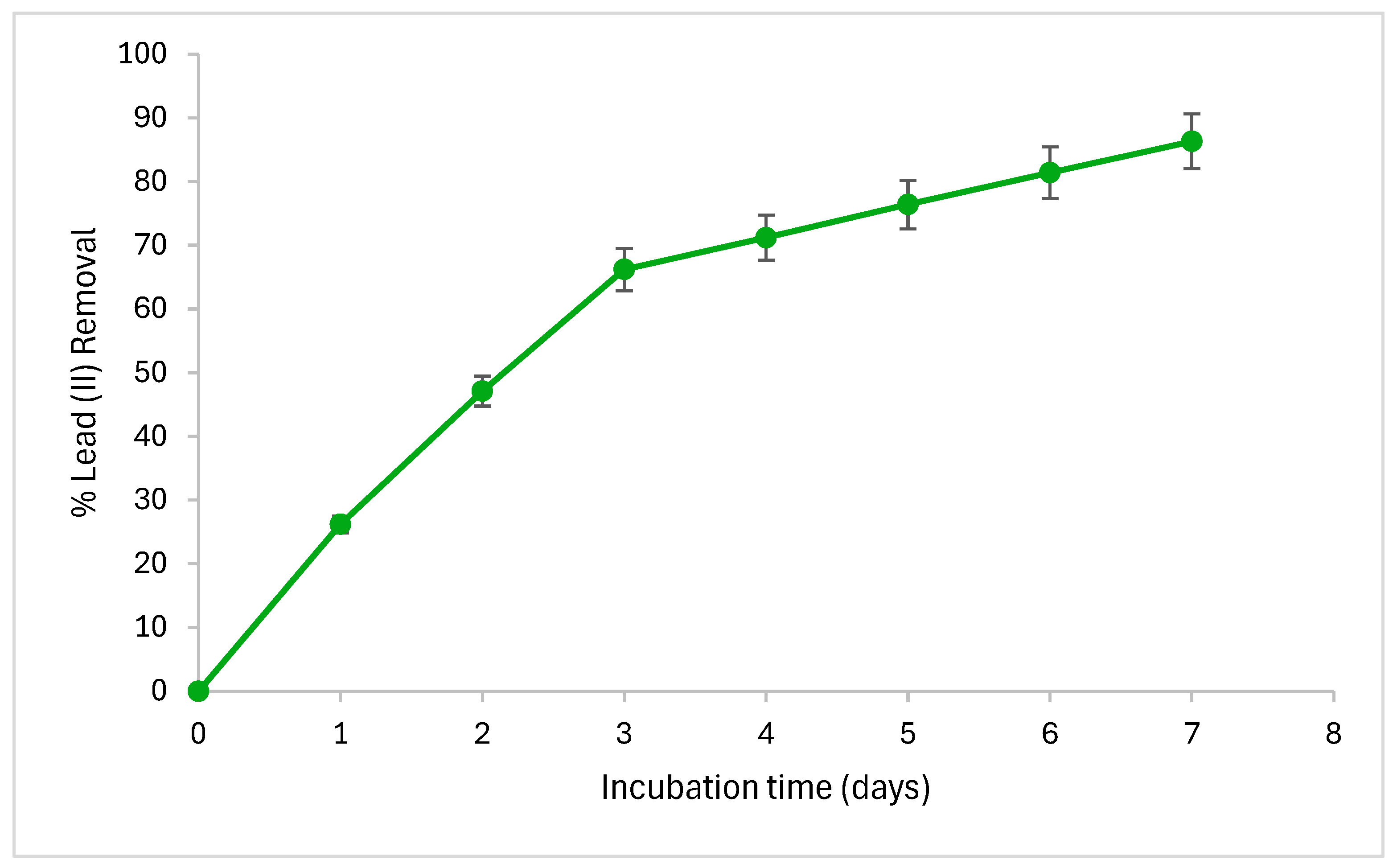
The results showed similarity to those reported for the desorption of the metal from corn cobs, using HNO3 in a molarity range of 0.05 M to 0.3 M, with a desorption efficiency of 96% [28], and to some reports that indicate that the bioadsorption of heavy metals is reversible if the biomass is treated with acidic solutions [34,35]. Nevertheless, these results are different from those reported for the calcined stems and leaves of the same biomass, since the ash is more resistant to acidic solutions, as only a small percentage of the metal is released by the effect of HNO3 [24]. The results of the desorption process indicate that the use of the biomaterial is a viable approach not only to removing the contaminant but also to storing and deactivating it. Additionally, the analyzed biomass removes 86.3% of the metal [263 mg/L Pb (II)] from effluents in an industrial waste lagoon after 7 days of incubation at 28 °C (Figure 7), which is similar to the performance reported for the bioremediation of water contaminated with 100 mg/L of Co (II) and Cd (II), also obtained from an industrial effluent lagoon, observing that at the same incubation time, removal is efficient with the same analyzed biomass (90.1% and 54.2%) [12,13]. This performance is also similar to that reported for the removal of lead (II) from the effluents of coal extraction sites with pretreated red algae, orange peel, and prickly pear biomass [23]; for the bioremediation of soils contaminated with 105 mg/L of the metal using sunflower and vermicompost [36]; for the bioremediation of the same metal from real and synthetic wastewater with coffee pulp biomass [29]; and for the treatment of wastewater contaminated with different heavy metals from a mine by different concentrations of corn cob biomass [28].
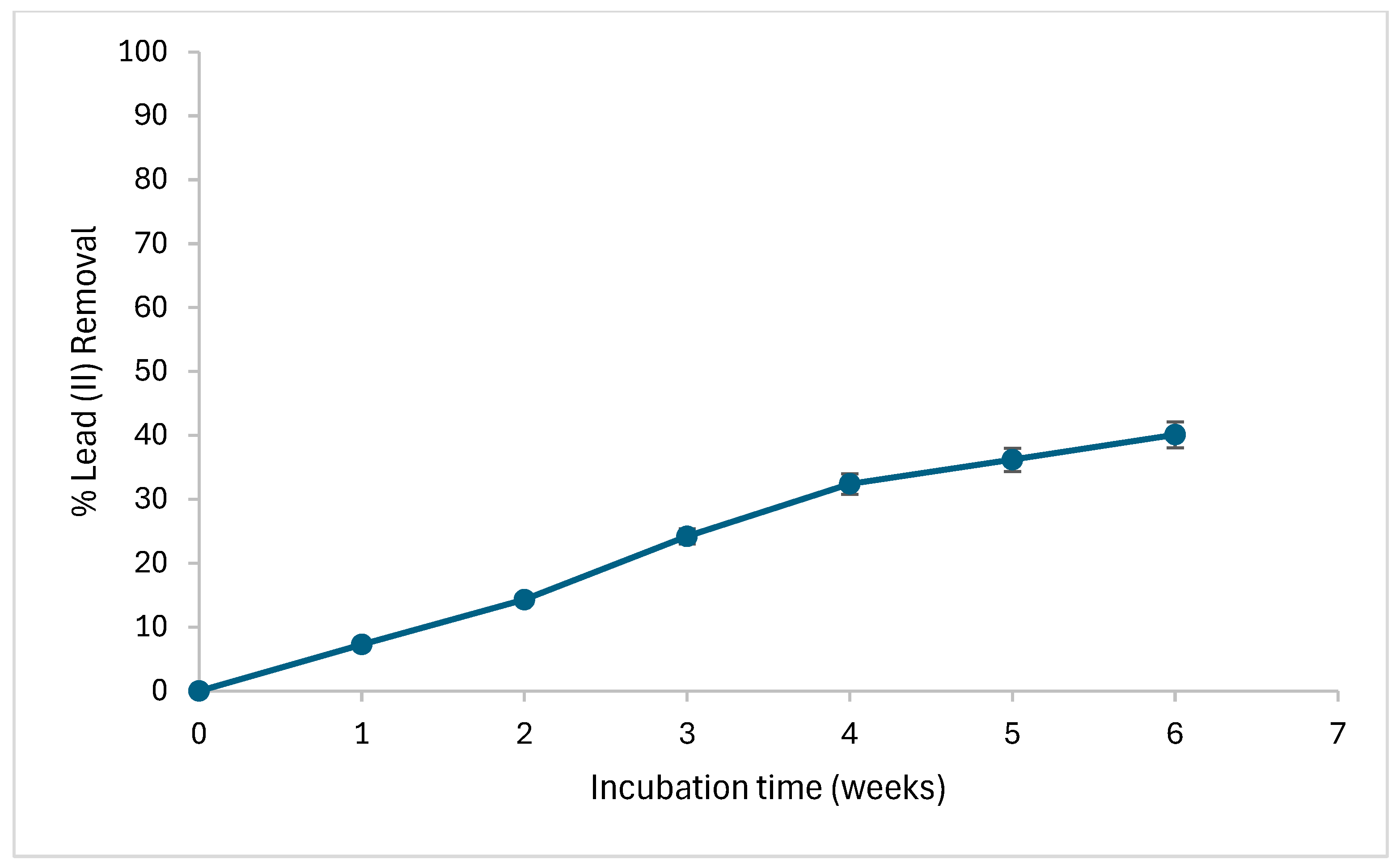
Finally, the live biomass removed 40.1% of the metal from contaminated water in an industrial waste lagoon in the San Luis Potosí industrial zone, S.L.P., Mexico, after six weeks of incubation under static conditions at 28 °C (Figure 8). These experiments were important because heavy metals were detected in the contaminated waters, such as As 0.00154 ppm, Cu 0.2455 ppm, Pb 0.0020, and Zn 0.1246 ppm and other factors such as TDS 33 kg/h, NO3 28.67 kg/h, Ca 0.00, N-NH3 1.66 kg/h, NH3 2.02 kg/h, phosphates 1.13 kg/h and pH 6.8–7.3 [37].
These results are superior to those reported for the removal of cobalt and cadmium (17.3% and 16.2%) after 4 weeks of incubation with the same biomass [12,13] and similar to those reported for the removal of the same metal from synthetic waters using agricultural waste [25]; for the phytoremediation of chromium and lead from contaminated waters [15,18]; for the removal of dyes from water [20]; and for the use of other natural biomasses for the bioremediation of wastewater, as reported in the literature [1,7,8,10]. Table 1 shows a comparison of different natural adsorbents and the present work, where we can observe that the biomass of the water lily can be a bioremediation alternative.

4. Conclusions

Based on the results of our research, it can be concluded that the biomass of E. crassipes, both live and dead, exhibits a high capacity for the phytoremediation of lead-contaminated wastewater. The following conclusions were drawn: (1) The biomass (1 g) efficiently removes 100 mg/L of the metal from solution after 28 h at 28 °C, pH 4.0, and 100 rpm. (2) Increasing the metal concentration decreases removal efficiency. (3) Increasing the biomass concentration increases removal efficiency. (4) The biomass efficiently removes 86.3% of the metal from contaminated wastewater after 7 days of incubation. (5) The metal can be desorbed by incubating the biomass in acidic solutions. (6) The live biomass also removes the metal from solution, although less efficiently.

Author Contributions

All authors actively participated in the research work. Conceptualization, J.F.C.G., A.S.R.P., I.A.R. and M.E.S.B.; methodology, J.F.C.G., A.S.R.P., I.A.R. and M.E.S.B.; validation, J.F.C.G., A.S.R.P., I.A.R. and M.E.S.B.; formal analysis, J.F.C.G. and A.S.R.P.; investigation, J.F.C.G., A.S.R.P., I.A.R. and M.E.S.B.; resources, J.F.C.G., A.S.R.P. and I.A.R.; writing—original draft preparation, J.F.C.G. and A.S.R.P.; writing—review and editing, J.F.C.G., A.S.R.P., I.A.R. and M.E.S.B.; supervision, J.F.C.G., A.S.R.P., I.A.R. and M.E.S.B. All authors have read and agreed to the published version of the manuscript.

Funding

This research received no external funding.

Data Availability Statement

All data provided for publication in this MDPI journal is new and has not been published elsewhere.

Acknowledgments

We thank the Laboratory of Experimental Mycology of the Faculty of Chemical Sciences of the UASLP and the Laboratory of Soil and Water Biotechnology of the Research and Extension Center of the Middle Zone-El Balandran for giving us the opportunity to carry out experiments at their facilities.

Conflicts of Interest

The authors declare no conflicts of interest.

References

  1. Acharyya, S.; Das, D.; Thaker, T.P. Remediation processes of hexavalent chromium from groundwater: A short review. Water Infrastruct. Ecosyst. Soc. 2023, 72, 648–662. [Google Scholar] [CrossRef]
  2. Velázquez-Chávez, L.J.; Ortiz-Sánchez, I.A.; Chávez-Simentel, J.A.; Pamanes-Carrasco, G.A.; Carrillo-Parra, A.; Pereda-Solís, M.E. Influencia de la contaminación del agua y el suelo en el desarrollo agrícola nacional e internacional. TIP Rev. Espec. Cienc. Quím. Biol. 2022, 25, 1–13. [Google Scholar] [CrossRef]
  3. Guillama-Barroso, G.; Ramos-Delgado, N.A.; Sanjuan-Galindo, R.; Herrera-Mendoza, R.; Rivera-Haro, J.A.; Quevedo-Alvarez, O. Evaluación de la contaminación por As, Ni, Cu, Pb, Zn y Cr en sedimentos de la zona marino-costera asociada a la terminal marítima de Nuevitas, Cuba. Rev. Int. Contam. Ambient. 2022, 38, 81–94. [Google Scholar] [CrossRef]
  4. ATSDR (Agency for Toxic Substance and Disease Registry). Priority List of Hazardous Substances. 2022. Available online: https://www.atsdr.cdc.gov/programs/substance-priority-list.html?CDC_AAref_Val=https://www.atsdr.cdc.gov/SPL/resources/ (accessed on 19 June 2022).
  5. Gómez-Aguilar, D.L.; Esteban-Muñoz, J.A.; Baracaldo-Guzmán, D. Tecnologías no convencionales para la remoción de plomo presente en aguas residuales: Una revisión bibliográfica 2010–2019. Tecnura 2020, 24, 97–116. [Google Scholar] [CrossRef]
  6. Tellez-Rojo, M.M.; Bautista-Arredondo, L.F.; Rosa-Parra, A.; Martínez-Silva, G. Concentración de metales en sangre de cordón umbilical debido a exposición prenatal en una cohorte de la Ciudad de México. Gac. Méd. Méx. 2023, 159, 132–137. [Google Scholar] [CrossRef]
  7. Namdeti, R. A review on removal of heavy metals by biosorption: A green technology. Int. J. Res. Rev. 2023, 10, 531–543. [Google Scholar] [CrossRef]
  8. Rodríguez-Lara, J.W.; Cervantes-Ortiz, F.; Arámbula-Villa, G.; Mariscal-Amaro, L.A.; Aguirre-Mancilla, C.L.; Andrio-Enríquez, L.A. Lirio acuático (Eichhornia crassipes): Una revisión. Agron. Mesoam. 2022, 33, 1–13. [Google Scholar] [CrossRef]
  9. Ben-Bakrim, W.; Ezzariai, A.; Karouach, F.; Sobeh, M.; Kibret, M.; Hafidi, M.; Kouisni, L.; Yasri, A. Eichhornia crassipes (Mart.) Solms: A Comprehensive Review of Its Chemical Composition, Traditional Use, and Value-Added Products. Front. Pharmacol. 2022, 13, 842511. [Google Scholar] [CrossRef]
  10. Amalina, A.; Abd-Razaka, A.S.; Krishnan, S.; Zularisam, S.; Nasrullah, M. Water hyacinth (Eichhornia crassipes) for organic contaminants removal in water—A review. J. Hazard. Mat. Adv. 2022, 7, 100092. [Google Scholar] [CrossRef]
  11. Sanmuga-Priya, E.; Senthamil-Selvan, P. Water hyacinth (Eichhornia crassipes) An efficient and economic adsorbent for textile effluent treatment—A review. Arab. J. Chem. 2014, 10, S3548–S3558. [Google Scholar] [CrossRef]
  12. Acosta-Rodríguez, I.; Rodríguez-Pérez, A.; Pacheco-Castillo, N.C.; Enríquez-Domínguez, E.; Cárdenas-González, J.F.; Martínez-Juárez, V.M. Removal of Cobalt (II) from Waters Contaminated by the Biomass of Eichhornia crassipes. Water 2021, 13, 1725. [Google Scholar] [CrossRef]
  13. Gutiérrez, P.; Aradillas, D.; Acosta, I. Aplicación de la biomasa de Eichhornia crassipes en la remoción de Cd+2 en aguas contaminadas por desechos industriales. Av. Cienc. Ing. 2021, 12, 17–29. [Google Scholar]
  14. Fito, J.; Solomon-Tibebu, S.; Nkambule, T.T.I. Optimization of Cr (VI) removal from aqueous solution with activated carbon derived from Eichhornia crassipes under response surface methodology. BMC Chem. 2023, 17, 4. [Google Scholar] [CrossRef]
  15. Rasool, S.; Ahmad, I.; Jamal, A.; Saeed, M.F.; Zakir, A.; Abbas, G.; Seleiman, M.F.; Caballero-Calvo, A. Evaluation of Phytoremediation Potential of an Aquatic Macrophyte (Eichhornia crassipes) in Wastewater Treatment. Sustainability 2023, 15, 11533. [Google Scholar] [CrossRef]
  16. Vaz, L.R.L.; Borges, A.C.; Ribeiro, D.M. Auxinas y giberelinas exógenas en la fitorremediación de flúor por Eichhornia crassipes. Plants 2023, 12, 1624. [Google Scholar] [CrossRef]
  17. González-Tavares, C.; Salazar-Hernández, M.; Talavera-López, A.; Salgado-Román, J.M.; Hernández-Soto, R.; Hernández, J.A. Removal of Ni(II) and Cu(II) in Aqueous Solutions Using Treated Water Hyacinth (Eichhornia crassipes) as Bioadsorbent. Separations 2023, 10, 289. [Google Scholar] [CrossRef]
  18. Balamurugan, P.; Shunmuga, P.K. Phytoremediation potential of water hyacinth in heavy metal removal in chromium and lead contaminated water. Int. J. Environ. Anal. Chem. 2023, 103, 3081–3096. [Google Scholar] [CrossRef]
  19. Buta, E.; Borșan, I.L.; Omotă, M.; Trif, E.B.; Bunea, C.I.; Mocan, A.; Bora, F.D.; Rózsa, S.; Nicolescu, A. Comparative Phytoremediation Potential of Eichhornia crassipes, Lemna minor, and Pistia stratiotes in Two Treatment Facilities in Cluj County, Romania. Horticulturae 2023, 9, 503. [Google Scholar] [CrossRef]
  20. Carneiro, M.T.; Barros, A.Z.B.; Morais, A.I.S.; Carvalho Melo, A.L.F.; Bezerra, R.D.S.; Osajima, J.A.; Silva-Filho, E.C. Application of Water Hyacinth Biomass (Eichhornia crassipes) as an Adsorbent for Methylene Blue Dye from Aqueous Medium: Kinetic and Isothermal Study. Polymers 2022, 14, 2732. [Google Scholar] [CrossRef]
  21. Anudechakul, C.; Vangnai, A.; Ariyakanon, N. Removal of chlorpyrifos by water hyacinth (Eichhornia crassipes) and the role of a plant-associated bacterium. Int. J. Phytoremediat. 2015, 17, 678–685. [Google Scholar] [CrossRef] [PubMed]
  22. Greenberg, A.E.; Clesceri, L.S.; Eaton, A.D. Standard Methods for the Examination of Water and Waste Water, 18th ed.; American Public Health Association: Washington, DC, USA, 1992. [Google Scholar]
  23. Vizcaíno-Mendoza, L.; Fuentes-Molina, N. Biosorción de Cd, Pb y Zn por biomasa pretratada de algas rojas, cáscara de naranja y tuna. Cien. Ing. Neogranad. 2015, 25, 43–60. [Google Scholar] [CrossRef]
  24. Vizcaíno-Mendoza, L.; Fuentes-Molina, N.; González-Fragozo, H. Adsorción de Plomo (II) en solución acuosa con tallos y hojas de Eichhornia crassipes. Rev. UDCA Actual. Divulg. Científica 2017, 20, 435–444. [Google Scholar]
  25. Ashfaq, A.; Nadeem, R.; Bibi, S.; Rashid, U.; Hanif, M.A.; Jahan, N.; Ashfaq, Z.; Ahmed, Z.; Adil, M.; Naz, M. Efficient Adsorption of Lead Ions from Synthetic Wastewater Using Agrowaste-Based Mixed Biomass (Potato Peels and Banana Peels). Water 2021, 13, 3344. [Google Scholar] [CrossRef]
  26. Bayuo, J.; Pelig-ba, K.B.; Abdullai-Abukari, M. Isotherm Modeling of Lead(II) Adsorption From Aqueous Solution Using Groundnut Shell As A Low Cost Adsorbent. IOSR J. Appl. Chem. 2018, 11, 18–23. [Google Scholar] [CrossRef]
  27. Mustaph, S.; Shuaib, D.T.; Ndamitso, M.M.; Etsuyankpa, M.B.; Sumaila, A.; Mohammed, U.M.; Nasiruden, M.B. Adsorption isotherm, kinetic and thermodynamic studies for the removal of Pb(II), Cd(II), Zn(II) and Cu(II) ions from aqueous solutions using Albizia lebbeck pods. Appl. Water Sci. 2019, 9, 142. [Google Scholar] [CrossRef]
  28. Oré-Jiménez, F.; Lavado-Meza, C.; Bendezú-Montes, S. Biosorción de Pb(II) de aguas residuales de mina usando el marlo de maíz (Zea mays). Rev. Soc. Quím. Perú 2015, 81, 122–134. [Google Scholar] [CrossRef]
  29. Gómez-Aguilar, D.L.; Rodríguez-Miranda, J.P.; Baracaldo-Guzmán, D.; Salcedo-Parra, O.J.; Esteban-Muñoz, J.A. Biosorption of Pb(II) Using Coffee Pulp as a Sustainable Alternative for Wastewater Treatment. Appl. Sci. 2021, 11, 6066. [Google Scholar] [CrossRef]
  30. Nag, S.; Bhowmik, S.; Bar, N.; Das, S.K. Biosorption of pb(II) from aqueous solution by citrus reticulate: Adsorption studies, and modeling. Int. J. Phytoremediat. 2024, 26, 1996–2009. [Google Scholar] [CrossRef] [PubMed]
  31. Kovo-Godfrey, A.; Folasegun-Anthony, D.; Kayode-Oyebode, A. Mechanism on the sorption of heavy metals from binary-solution by a low cost montmorillonite and its desorption potential. Alex. Eng. J. 2015, 54, 757–767. [Google Scholar] [CrossRef]
  32. Thi-Sinh, V.; Muhammad-Mohsin, H.; Hyung-Mo, J.; Kyunghoon, K. Heavy metal removal applications using adsorptive membranes. Nano Converg. 2020, 7, 36. [Google Scholar] [CrossRef]
  33. Fouda-Mbanga, B.G.; Prabakaran, E.; Pillay, K. Carbohydrate biopolymers, lignin based adsorbents for removal of heavy metals (Cd2+, Pb2+, Zn2+) from wastewater, regeneration and reuse for spent adsorbents including latent fingerprint detection: A review. Biotechnol. Rep. 2021, 30, e00609. [Google Scholar] [CrossRef]
  34. Velazquez, L.H.; Pavlick, A.; Rangel, J.R. Chemical characterization of raw and treated agave bagasse and its potential as adsorbent of metal cations from water. Ind. Crops Prod. 2013, 43, 200–206. [Google Scholar] [CrossRef]
  35. Phuong-Nguyen, T.; Hung-Nguyen, T.; Doan-Nguyen, V.; Tu-Trinh, M.; Thuyet-Nguyen, M.; Tuan-Vu, A. Effective biosorptive removal of Pb2+ ions from wastewater using modified lettuce leaves: A novel sustainable and eco-friendly biosorbent. J. Hazard. Mater. Adv. 2025, 19, 100770. [Google Scholar] [CrossRef]
  36. Sarmiento-Sarmiento, G.; Febres-Flores, S. Recuperación de plomo en suelo agrícola contaminado artificialmente como estrategia de remediación mediante girasol y vermicompost. Rev. Chapingo Ser. Hortic. 2021, 27, 199–212. [Google Scholar] [CrossRef]
  37. Alvarez-Leobard, M.; Cárdenas-Tristan, A.; Alfaro-Torre, M.C. Evaluation of the water purification process in the Tanque Tenorio treatment plant. Rev. Latinoam. Ambiente Cienc. 2020, 11, 395–398. [Google Scholar]
  38. Herandez-Pérez, Y.; Castañeda, E.J.L.; Estrada, J.M.; Montesinos-Pedro, E.; Markeb, A.A.; Font, X. Removal of Pb(II) and Cd(II) Ions from Aqueous Solutions Using Modified Fish Scale Bioadsorbent. ChemEngineering 2025, 9, 23. [Google Scholar] [CrossRef]
  39. Yirdaw, G. Efficient removal of lead (II) from paint factory wastewater using Noug stalk activated carbon: A sustainable adsorption approach. Heliyon 2025, 11, 23. [Google Scholar] [CrossRef]
  40. Abdelkarim, M.S.; Ali, M.H.H.; Kassem, D.A. Remediación ecológica de cadmio, plomo y zinc mediante células muertas de Microcystis aeruginosa. Sci. Rep. 2025, 15, 3677. [Google Scholar] [CrossRef]
  41. Tejada-Tovar, C.; Villabona-Ortíz, A.; González-Delgado, Á.D. High-Efficiency Removal of Lead and Nickel Using Four Inert Dry Biomasses: Insights into the Adsorption Mechanisms. Materials 2023, 16, 4884. [Google Scholar] [CrossRef]
  42. Sandip-Parasnis, M.; Deng, E.; Yuan, M.; Lin, H.; Kordas, K.; Paltseva, A.; Frimpong-Boamah, E.; Judelsohn, A.; Nalam, P. Heavy Metal Remediation by Dry Mycelium Membranes: Approaches to Sustainable Lead Remediation in Water. Langmuir 2024, 40, 6317–6329. [Google Scholar] [CrossRef]
Figure 1. Effect of incubation time on removal of 100 mg of lead (II)/L for 1 g of biomass at 28 °C, pH 4.0, 100 rpm and 28 h of incubation.
Processes 14 00895 g001
Figure 2. Effect of pH on removal of 100 mg/L of lead (II) by water hyacinth biomass for 1 g biomass at 28 °C and 100 rpm after 28 h of incubation.
Processes 14 00895 g002
Figure 3. Effect of temperature on removal of 100 mg/L of lead (II) by water hyacinth biomass for 1 g biomass at 28 °C, 100 rpm, and pH 4 after 28 h of incubation.
Processes 14 00895 g003
Figure 4. Effect of lead (II) concentration on removal of 100 mg/L of lead with 1 g of biomass at 28 °C, 100 rpm, and pH 4 after 28 h of incubation.
Processes 14 00895 g004
Figure 5. Effect of water hyacinth biomass concentration (1–5 g) on removal of 100 mg/L of lead (II) at 28 °C, pH = 4, and 100 rpm.
Processes 14 00895 g005
Figure 6. Desorption of 100 mg/L of lead (II) by different solutions.
Processes 14 00895 g006
Figure 7. Lead (II) removal from the effluents of an industrial waste lagoon (Tanque Tenorio) contaminated with 263 mg/L of lead (II) by 5 g of biomass at 28 °C, 100 rpm, and pH = 4.
Processes 14 00895 g007
Figure 8. Bioremediation of water from effluents of industrial waste lagoon (Tanque Tenorio) contaminated with 263 mg/L of lead (II) using in vivo water hyacinth biomass under static conditions at 28 °C and pH = 6.3.
Processes 14 00895 g008
Table 1. Comparison of adsorption capacities of lead (II) with other biosorbents.
AdsorbentpHAdsorption
Capacity
Reference
Modified fish bioadsorbent4.0166Herandez-Pérez et al. (2025) [38]
Noug stalk activated carbon6.6222.36Yirdaw (2025) [39]
Dead cells of Microcystis aeruginosa6.089.4Abdelkarim et al. (2025) [40]
Corn cob residues6.0101Tejada-Tovar et al. (2023) [41]
Cocoa husk6.0116Tejada-Tovar et al. (2023) [41]
Dry mycelium membranes5.5960Sandip-Parasnis et al. (2024) [42]
Orange peel4.50.47Vizcaíno-Mendoza and Fuentes-Molina (2017) [24]
Tuna4.50.63Vizcaíno-Mendoza and Fuentes-Molina (2017) [24]
Biomass of E. crassipes4.060.2This work
Disclaimer/Publisher’s Note: The statements, opinions and data contained in all publications are solely those of the individual author(s) and contributor(s) and not of MDPI and/or the editor(s). MDPI and/or the editor(s) disclaim responsibility for any injury to people or property resulting from any ideas, methods, instructions or products referred to in the content.