

Investigation on Flowback Efficiency and Permeability Damage Characteristics in Coal Reservoirs: A Case Study of the Midong Block, Xinjiang

Abstract
1. Introduction
2. Materials and Methods
2.1. Sample Preparation
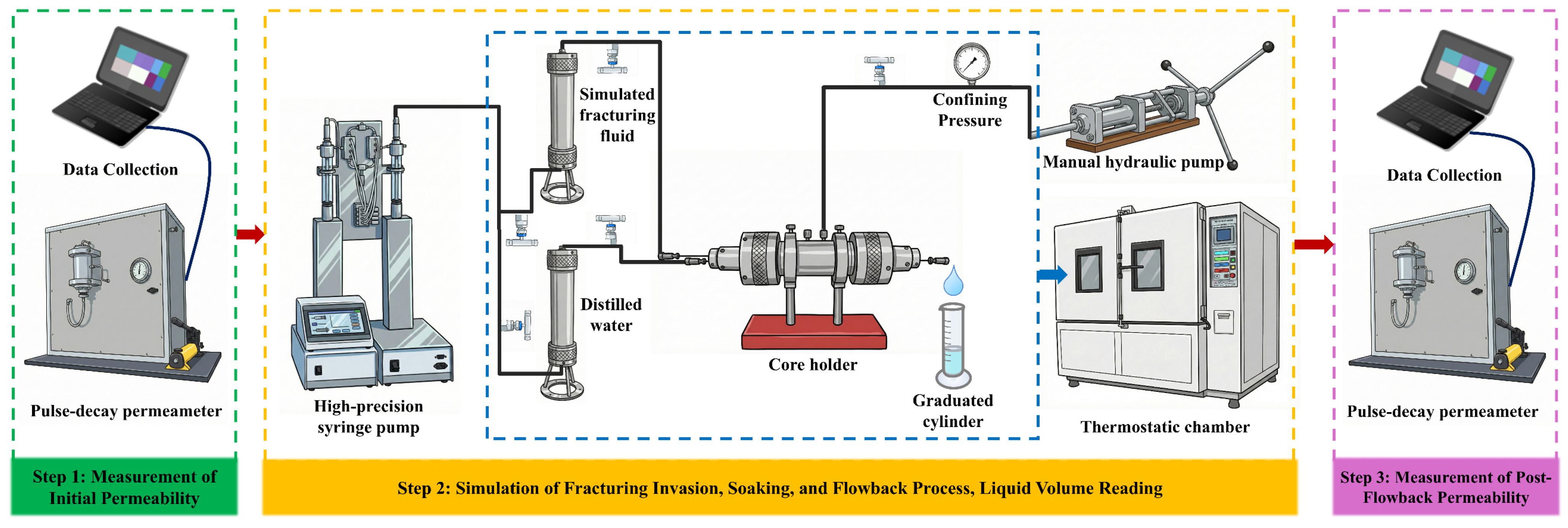
2.2. Experimental
2.3. Experimental Procedures
3. Results
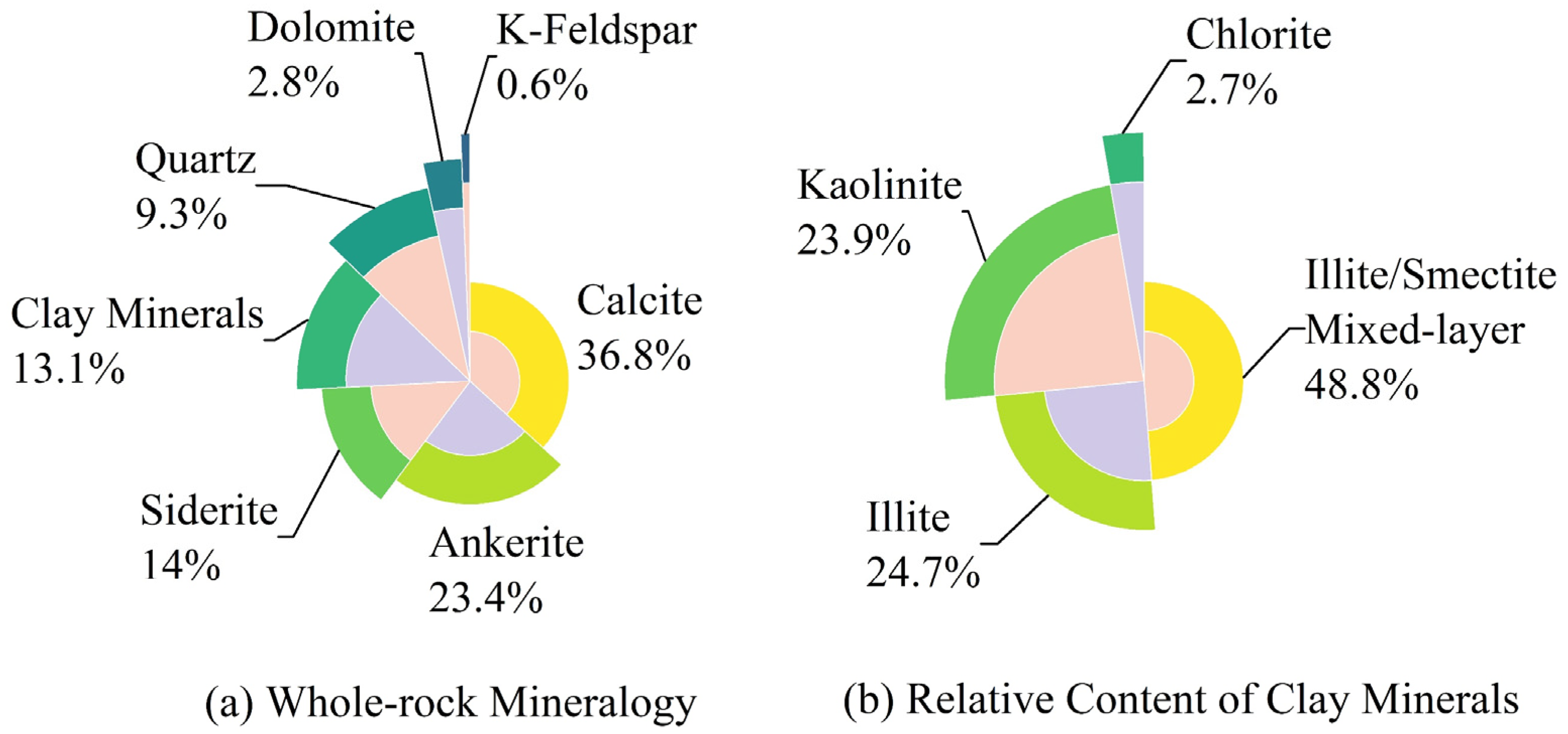
3.1. Analysis of Mineral Compositions
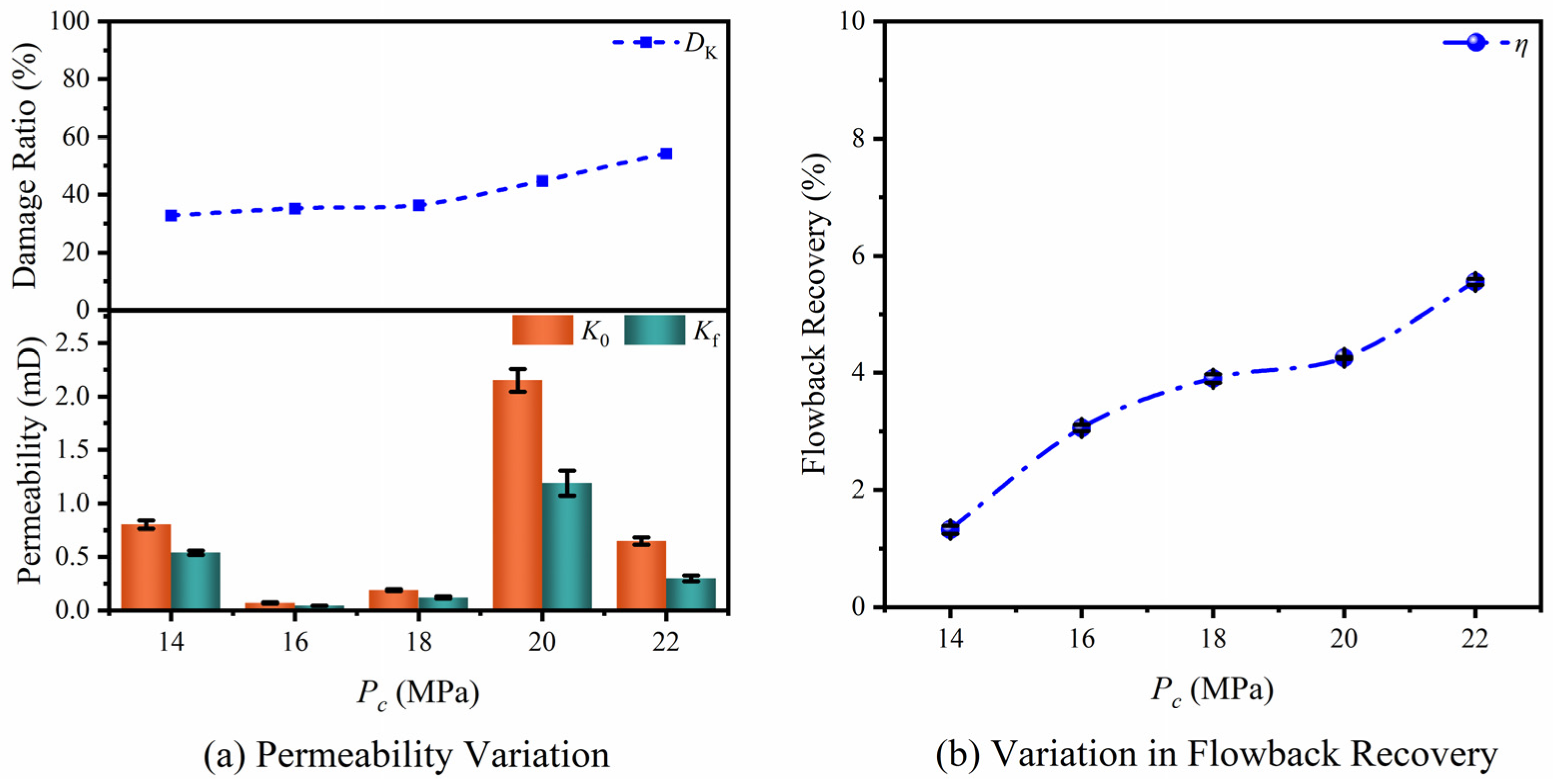
3.2. Effect of Confining Pressure
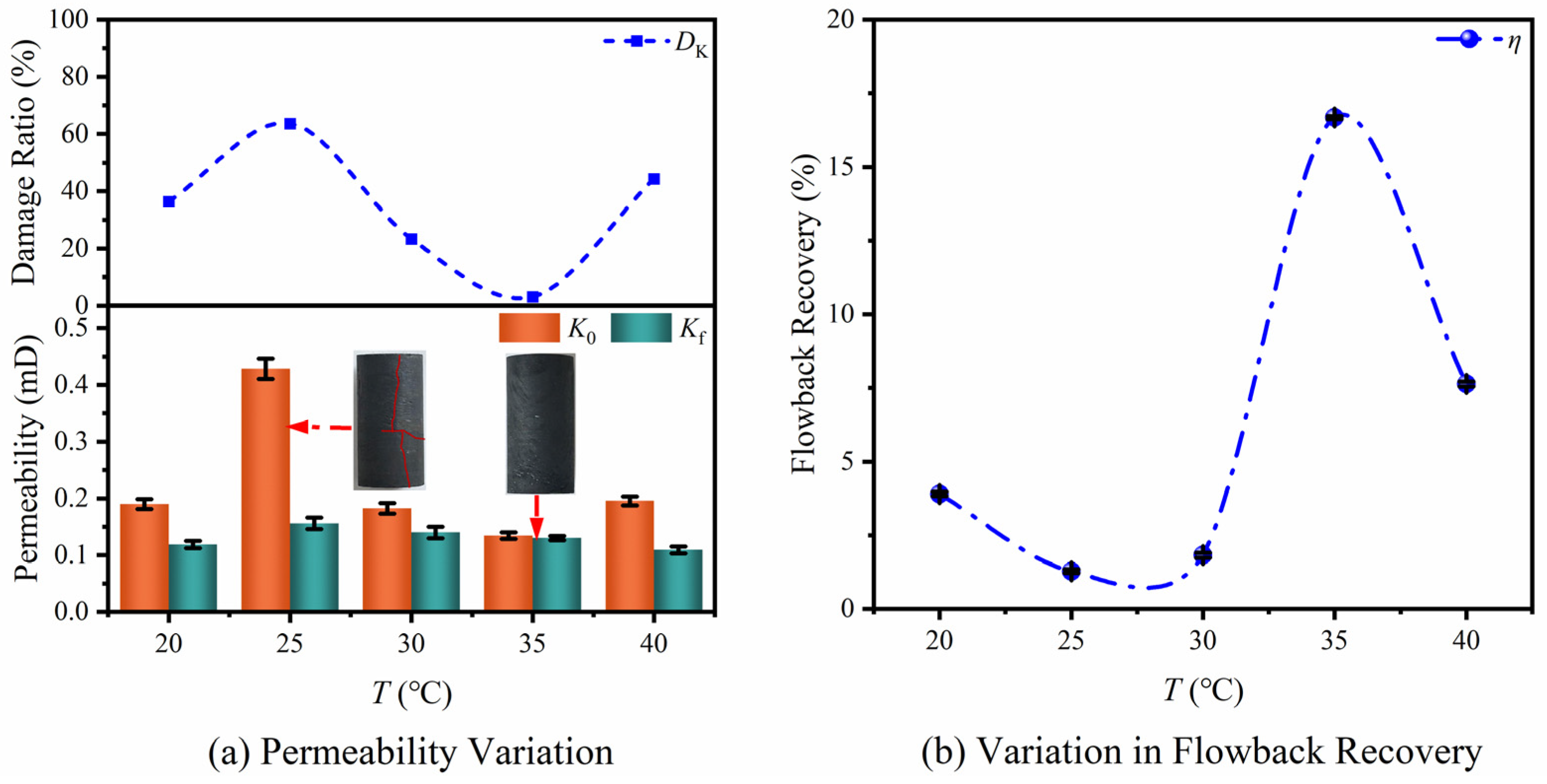
3.3. Effect of Temperature
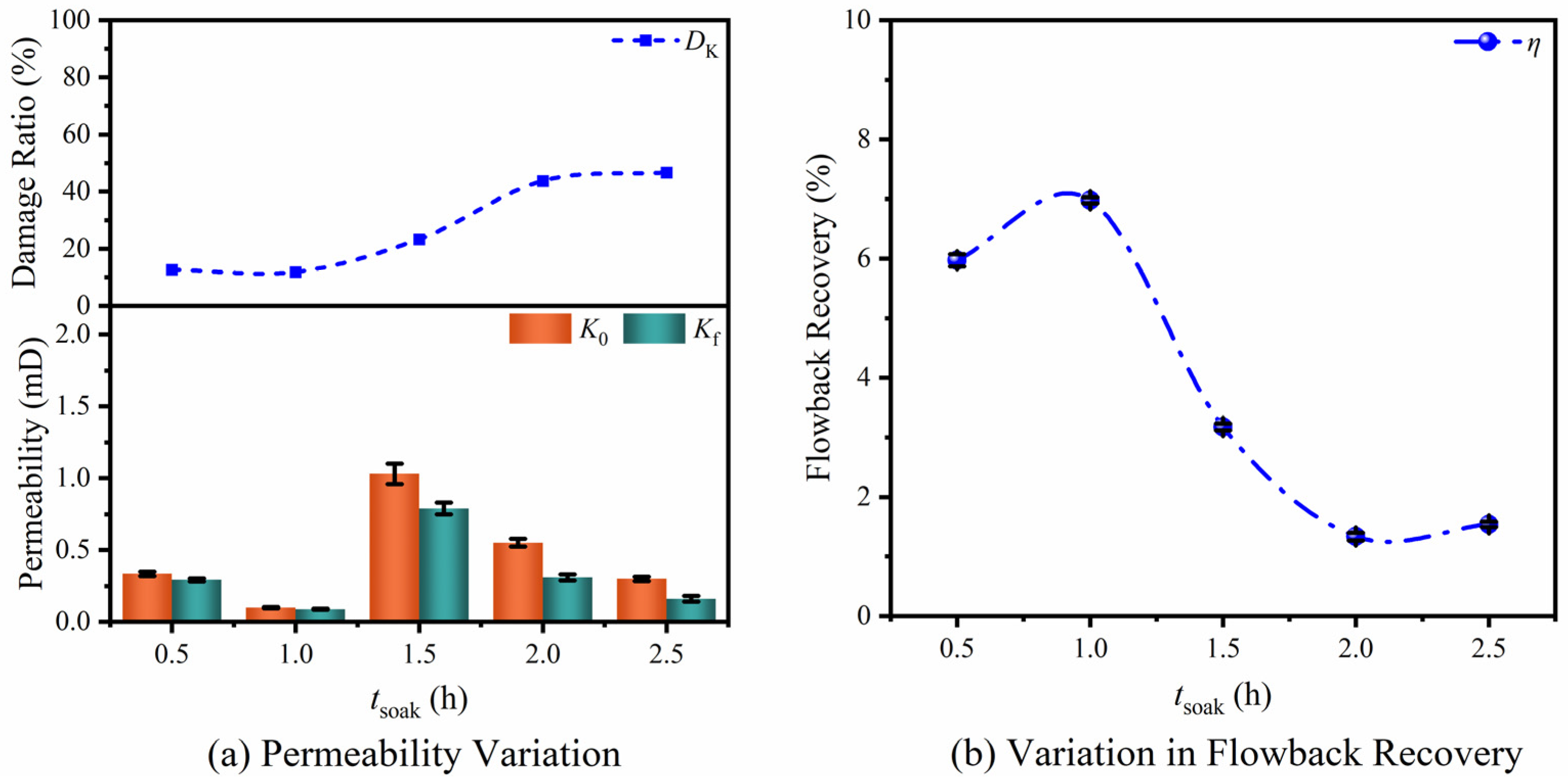
3.4. Effect of Soaking Time
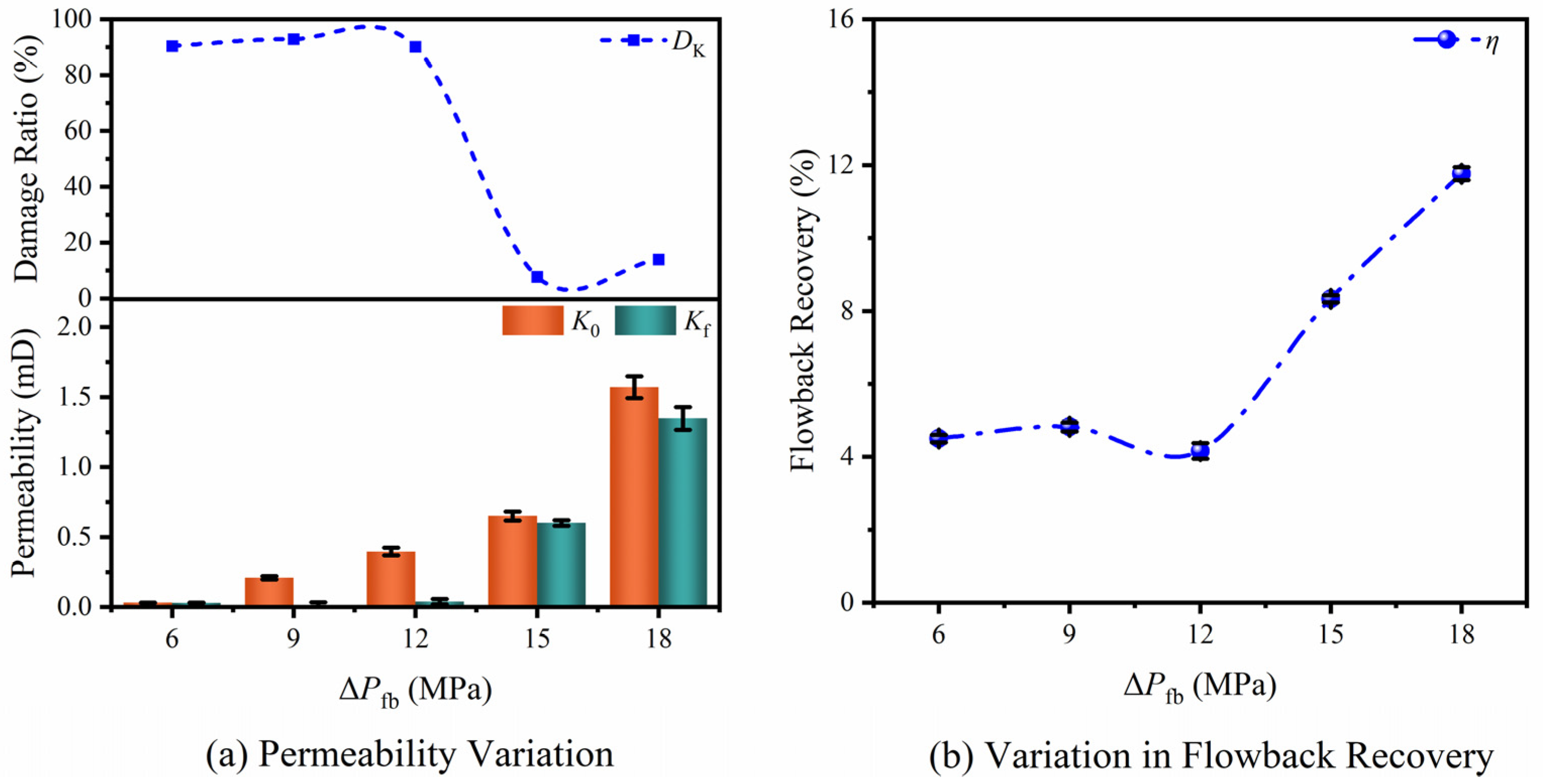
3.5. Effect of Flowback Pressure Differential
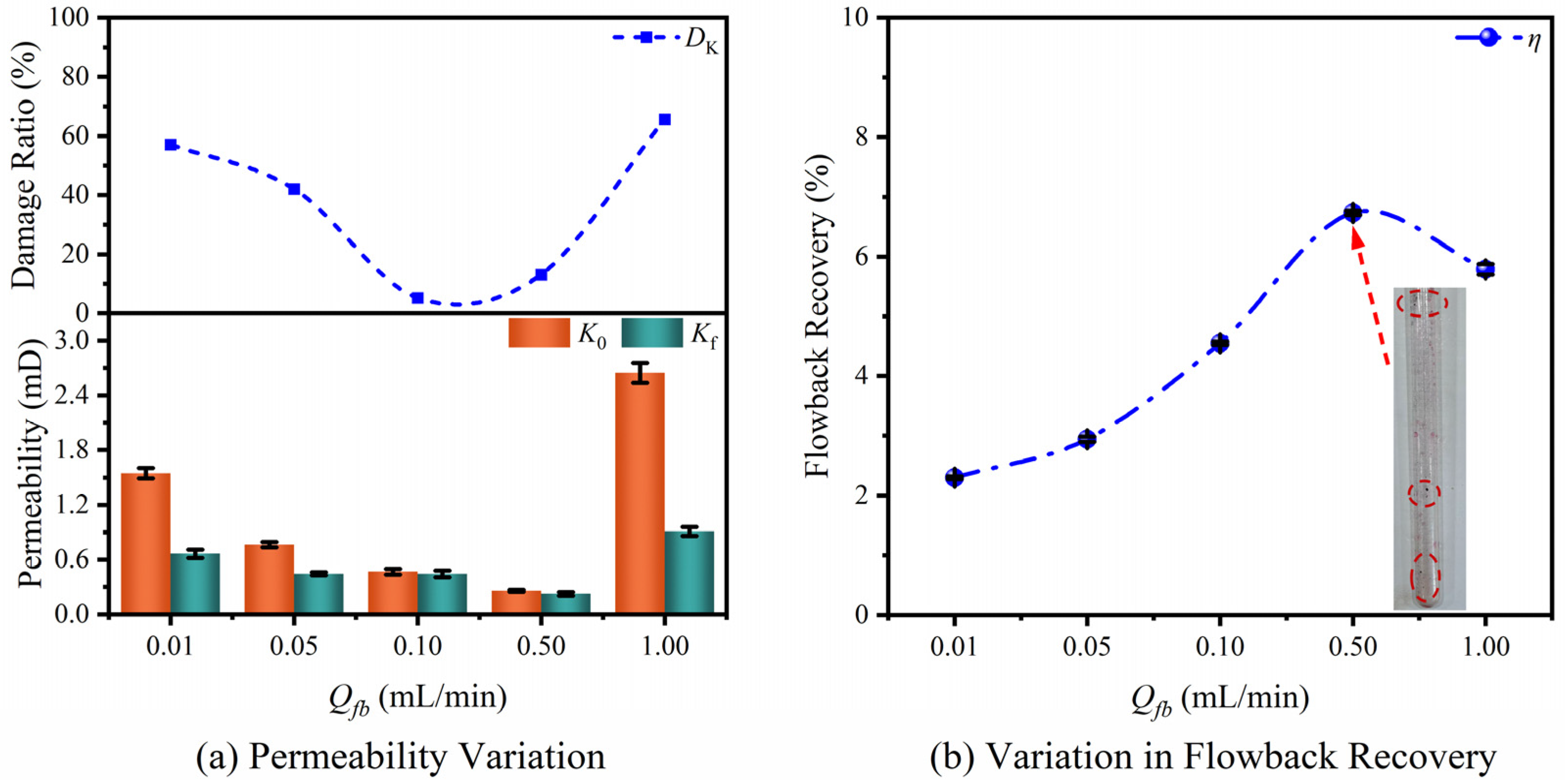
3.6. Effect of Flowback Velocity
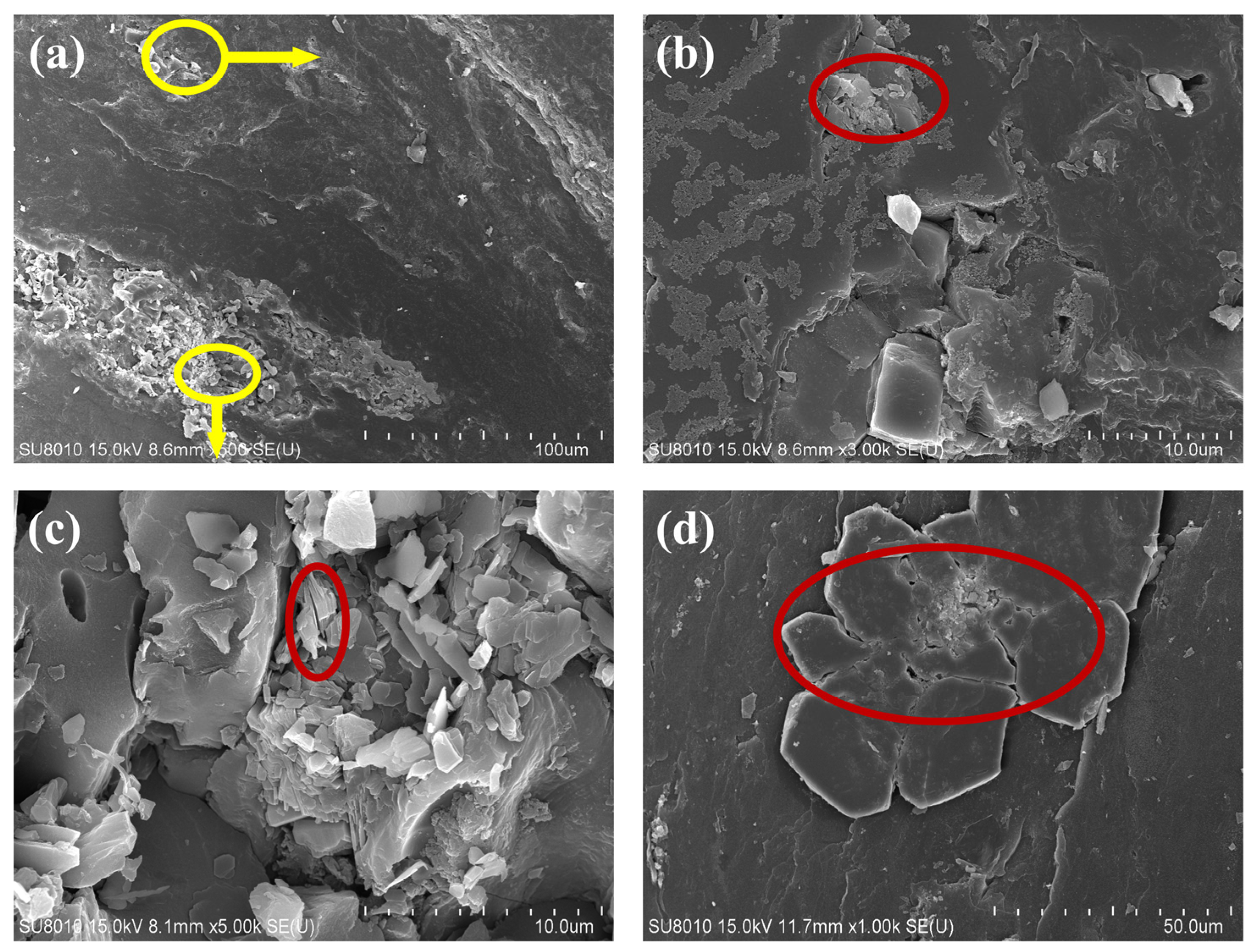
3.7. SEM Image Analysis
4. Discussion
5. Conclusions
- Experimental data indicate that the initial permeability of coal reservoirs in the Xishanyao Formation of the Midong Block ranges from 0.03 to 2.65 mD. Notably, 76% of the samples exhibit an initial permeability below 1 mD. Post-flowback permeability damage rates span from 3.12% to 92.86%. Furthermore, 92% of the samples yield a flowback efficiency of less than 10%. This high heterogeneity necessitates optimizing shut-in times or fracturing fluid systems according to localized permeability profiles. For this specific block, the recommended shut-in time is approximately 1.0 day. The flowback pressure differential must exceed 12 MPa. Additionally, the optimal flowback velocity should remain around 100 mL/min.
- Confining pressure exacerbated permeability damage through stress-induced compression of pores and natural fractures. Simultaneously, this pressure inhibited the deep leak-off of fracturing fluid into the matrix. This mechanism resulted in a “high damage, relatively high flowback” phenomenon. Conversely, prolonged soaking time induced clay mineral hydration swelling and strong capillary imbibition. These processes trapped fluid within the core and produced a “high damage, low flowback” response.
- Dual mechanisms of the Threshold Pressure Gradient (TPG) and velocity sensitivity govern the flowback process. Severe water locking damage occurred when the flowback pressure differential failed to overcome the capillary resistance threshold. Furthermore, an optimal flowback velocity exists. Excessive flow velocity triggered the migration of coal fines and particulates, which caused secondary damage to the coal matrix.
- In the low-temperature regime (20–40 °C), competitive thermal–hydro–mechanical (THM) coupling mechanisms control reservoir behavior. The synergistic effects of matrix thermal expansion and clay hydration blocked macropores and closed fractures. These mechanisms competed against the flow-enhancing impact of reduced fluid viscosity. Consequently, flowback efficiency proved highly sensitive to pore throat connectivity and maintained a strict negative correlation with the permeability damage rate.
Author Contributions
Funding
Data Availability Statement
Conflicts of Interest
References
- Yuan, Y.; Shan, Y.; Tang, Y.; Cao, D. Coalbed Methane Enrichment Regularity and Major Control Factors in the Xishanyao Formation in the Western Part of the Southern Junggar Basin. Acta Geol. Sin.-Engl. 2020, 94, 485–500. [Google Scholar] [CrossRef]
- Chen, Z.; Liu, W.; Zhu, X.; Tian, Y.; Xie, X. Prediction of geological and engineering integrated sweet spots of deep coalbed methane. Coal Geol. Explor. 2025, 53, 191–200. [Google Scholar] [CrossRef]
- Khilar, K.C.; Fogler, H.S. Practical Consequences of Release and Migration of Fines in Porous Media. In Migrations of Fines in Porous Media; Springer: Dordrecht, The Netherlands, 1998; pp. 1–8. [Google Scholar]
- Zou, Y.S.; Zhang, S.C.; Zhang, J. Experimental Method to Simulate Coal Fines Migration and Coal Fines Aggregation Prevention in the Hydraulic Fracture. Transp. Porous Media 2014, 101, 17–34. [Google Scholar] [CrossRef]
- Bai, T.; Chen, Z.; Aminossadati, S.M.; Rufford, T.E.; Li, L. Experimental investigation on the impact of coal fines generation and migration on coal permeability. J. Pet. Sci. Eng. 2017, 159, 257–266. [Google Scholar] [CrossRef]
- Shi, Q.; Qin, Y.; Zhou, B.; Zhang, M.; Wu, M.; Wang, L. An experimental study of the agglomeration of coal fines in suspensions: Inspiration for controlling fines in coal reservoirs. Fuel 2018, 211, 110–120. [Google Scholar] [CrossRef]
- Pan, Z.; Connell, L.D. A theoretical model for gas adsorption-induced coal swelling. Int. J. Coal Geol. 2007, 69, 243–252. [Google Scholar] [CrossRef]
- Ahmadi, M.; Sharma, M.M.; Pope, G.A.; Torres, D.E.; McCulley, C.A.; Linnemeyer, H. Chemical Treatment To Mitigate Condensate and Water Blocking in Gas Wells in Carbonate Reservoirs. SPE Prod. Oper. 2011, 26, 67–74. [Google Scholar] [CrossRef]
- Bazin, B.; Peysson, Y.; Lamy, F.; Martin, F.; Aubry, E.; Chapuis, C. In-Situ Water-Blocking Measurements and Interpretation Related to Fracturing Operations in Tight Gas Reservoirs. SPE Prod. Oper. 2010, 25, 431–437. [Google Scholar] [CrossRef]
- Fink, J. Hydraulic Fracturing Chemicals and Fluids Technology; Gulf Professional Publishing: Houston, TX, USA, 2013. [Google Scholar]
- Wang, S.; Elsworth, D.; Liu, J. Permeability evolution in fractured coal: The roles of fracture geometry and water-content. Int. J. Coal Geol. 2011, 87, 13–25. [Google Scholar] [CrossRef]
- Wu, H.; Kong, X. Analysis of geological characteristics and potential factors of formation damage in coalbed methane reservoir in Northern Qinshui basin. Sci. Rep. 2025, 15, 3025. [Google Scholar] [CrossRef]
- Tao, S.; Tang, D.; Xu, H.; Li, S. The influence of flow velocity on coal fines output and coal permeability in the Fukang Block, southern Junggar Basin, China. Sci. Rep. 2017, 7, 14124. [Google Scholar] [CrossRef]
- Ren, H.; Meng, Z.; Wang, X.; Deng, Y. Pore Structure and Porosity–Permeability Evolution Characteristics of Coal/Rocks under the Action of High-Viscosity Slickwater. Energy Fuels 2025, 39, 5279–5294. [Google Scholar] [CrossRef]
- Kapoorchali, Z.S.; Kazemzadeh, E.; Arian, M.; Kianoush, P. Quantification of fracture porosity and reservoir heterogeneity in carbonates: An integrated core-log zoning workflow, Southwest Iran. Results Earth Sci. 2026, 4, 100149. [Google Scholar] [CrossRef]
- Wu, J.; Liu, A.; Zhang, F.; Liu, Y.; Yan, L.; Jie, Y.; Wang, C. Research on Damage Characteristics of Clean Fracturing Fluid in Deep Coal Seam. Processes 2025, 13, 2669. [Google Scholar] [CrossRef]
- Lu, Y.; Wang, H.; Guan, B.; Liu, P.; Guo, L.; Wu, J.; Yi, X. Reasons for the low flowback rates of fracturing fluids in marine shale. Nat. Gas Ind. B 2018, 5, 35–40. [Google Scholar] [CrossRef]
- Xia, Y.; Li, L.; Wang, Z. Experimental and numerical study on influencing factors of replacement capacity and slickwater flowback efficiency using pre-CO2 fracturing in tight oil reservoirs. J. Pet. Sci. Eng. 2022, 215, 110697. [Google Scholar] [CrossRef]
- Li, X.; Kang, Y.; Luo, P. Rock deformation mechanisms and its influence on poecolationability for CBM reservoirs. Chin. Min. Mag. 2009, 18, 99–102. [Google Scholar]
- Palmer, I.; Mansoori, J. How Permeability Depends on Stress and Pore Pressure in Coalbeds: A New Model. Res. Eval. Eng. 1998, 1, 539–544. [Google Scholar] [CrossRef]
- You, G.; Feng, F.; Zhang, J.; Zhang, J. A Study on Fracture Propagation of Hydraulic Fracturing in Oil Shale Reservoir Under the Synergistic Effect of Bedding Weak Plane–Discrete Fracture. Processes 2025, 13, 362. [Google Scholar] [CrossRef]
- Liu, J.; Chen, Z.; Elsworth, D.; Miao, X.; Mao, X. Evolution of coal permeability from stress-controlled to displacement-controlled swelling conditions. Fuel 2011, 90, 2987–2997. [Google Scholar] [CrossRef]
- Teng, T.; Wang, J.G.; Gao, F.; Ju, Y. Complex thermal coal-gas interactions in heat injection enhanced CBM recovery. J. Nat. Gas Sci. Eng. 2016, 34, 1174–1190. [Google Scholar] [CrossRef]
- Bennion, D.B.; Thomas, F.B. Formation Damage Issues Impacting the Productivity of Low Permeability, Low Initial Water Saturation Gas Producing Formations. J. Energy Resour. Technol. 2005, 127, 240–247. [Google Scholar] [CrossRef]
- Dehghanpour, H.; Lan, Q.; Saeed, Y.; Fei, H.; Qi, Z. Spontaneous Imbibition of Brine and Oil in Gas Shales: Effect of Water Adsorption and Resulting Microfractures. Energy Fuels 2013, 27, 3039–3049. [Google Scholar] [CrossRef]
- Chen, W.; Wang, X.; Tu, M.; Qu, F.; Chao, W.; Chen, W.; Hou, S. The Influence of Fracturing Fluid Volume on the Productivity of Coalbed Methane Wells in the Southern Qinshui Basin. Energies 2022, 15, 7673. [Google Scholar] [CrossRef]
- Prada, A.; Civan, F. Modification of Darcy’s law for the threshold pressure gradient. J. Pet. Sci. Eng. 1999, 22, 237–240. [Google Scholar] [CrossRef]
- Muecke, T.W. Formation Fines and Factors Controlling Their Movement in Porous Media. J. Pet. Technol. 1979, 31, 144–150. [Google Scholar] [CrossRef]
- Gao, D.; Liu, Y.; Wang, T.; Wang, D. Experimental Investigation of the Impact of Coal Fines Migration on Coal Core Water Flooding. Sustainability 2018, 10, 4102. [Google Scholar] [CrossRef]

| Confining Pressure | Temperature | Soaking Time | Flowback Pressure Differential | Flowback Rate |
|---|---|---|---|---|
| MPa | ℃ | h | MPa | mL/min |
| 14 | 20 | 0.5 | 6 | 0.01 |
| 16 | 25 | 1.0 | 9 | 0.05 |
| 18 | 30 | 1.5 | 12 | 0.10 |
| 20 | 35 | 2.0 | 15 | 0.50 |
| 22 | 40 | 2.5 | 18 | 1.00 |
Disclaimer/Publisher’s Note: The statements, opinions and data contained in all publications are solely those of the individual author(s) and contributor(s) and not of MDPI and/or the editor(s). MDPI and/or the editor(s) disclaim responsibility for any injury to people or property resulting from any ideas, methods, instructions or products referred to in the content. |
© 2026 by the authors. Licensee MDPI, Basel, Switzerland. This article is an open access article distributed under the terms and conditions of the Creative Commons Attribution (CC BY) license.
Share and Cite
Xie, X.; Xin, X.; Chen, Z.; Wang, D.; You, G.; Shen, Z.; Li, J. Investigation on Flowback Efficiency and Permeability Damage Characteristics in Coal Reservoirs: A Case Study of the Midong Block, Xinjiang. Processes 2026, 14, 1010. https://doi.org/10.3390/pr14061010
Xie X, Xin X, Chen Z, Wang D, You G, Shen Z, Li J. Investigation on Flowback Efficiency and Permeability Damage Characteristics in Coal Reservoirs: A Case Study of the Midong Block, Xinjiang. Processes. 2026; 14(6):1010. https://doi.org/10.3390/pr14061010
Chicago/Turabian StyleXie, Xin, Xuesong Xin, Zhengrong Chen, Dian Wang, Guiyang You, Zhaoyu Shen, and Jun Li. 2026. "Investigation on Flowback Efficiency and Permeability Damage Characteristics in Coal Reservoirs: A Case Study of the Midong Block, Xinjiang" Processes 14, no. 6: 1010. https://doi.org/10.3390/pr14061010
APA StyleXie, X., Xin, X., Chen, Z., Wang, D., You, G., Shen, Z., & Li, J. (2026). Investigation on Flowback Efficiency and Permeability Damage Characteristics in Coal Reservoirs: A Case Study of the Midong Block, Xinjiang. Processes, 14(6), 1010. https://doi.org/10.3390/pr14061010