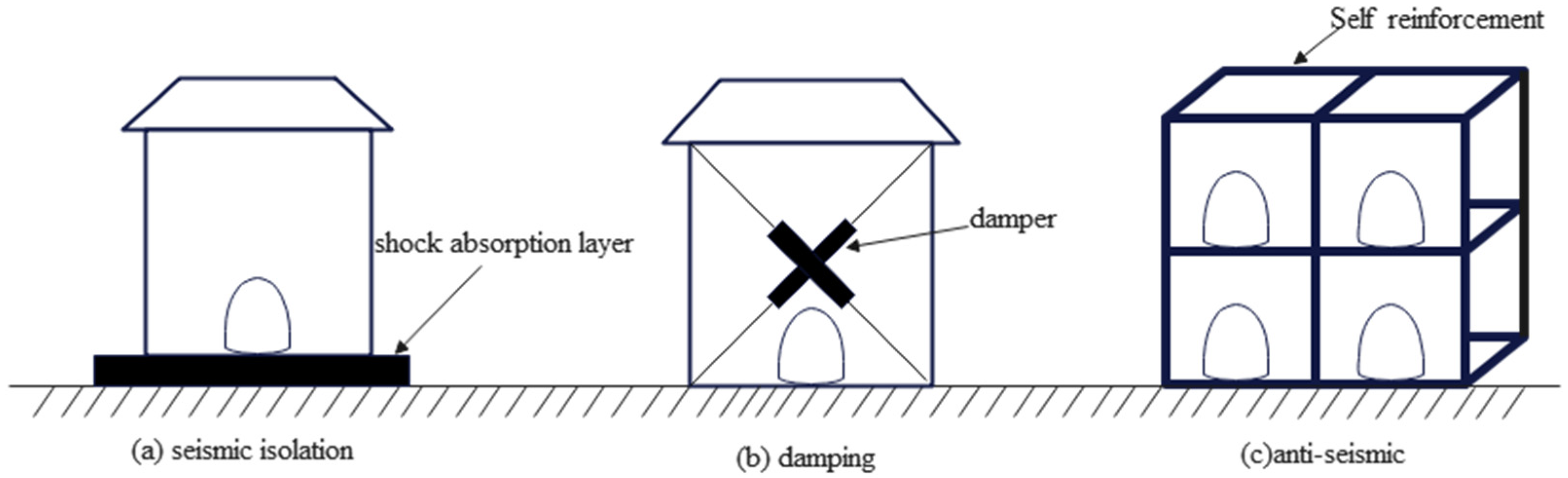
Shock Absorption Layer Materials for Tunnel Engineering: Classification, Performance, and Future Directions


Abstract
1. Introduction
2. Primary Mechanisms of Seismic Isolation by Shock Absorption Layers
- (1)
- Wave-Impedance Mismatch and Energy Reflection
- (2)
- Low Elastic Modulus and High Damping for Energy Dissipation
- (3)
- System Stiffness Reduction and Natural Period Elongation
3. Design Requirements for Shock Absorption Layers
- (1)
- Material performance requirements: The material must simultaneously satisfy compressive strength requirements under static conditions and exhibit excellent deformability and fatigue resistance, while remaining capable of accommodating large deformations and withstanding multiple reversed loading cycles during seismic events. The elastic modulus of shock absorption layer materials should preferably be 1/100 to 1/50 of the surrounding rock elastic modulus, and the damping ratio should not be less than 5% [26,27].
- (2)
- Thickness design requirements: The thickness of the shock absorption layer is an important parameter affecting the shock absorption effect. Studies have shown that the ratio of shock absorption layer thickness to tunnel diameter should preferably be controlled between 1/40 and 1/20. A shock absorption layer that is too thin is difficult to play a shock absorption role, while one that is too thick will increase engineering costs and construction difficulty [26,28,29].
- (3)
- Durability requirements: Considering the influence of various factors such as environmental chemical action, stray current, crack effects, concrete shrinkage, stress corrosion, and freeze–thaw damage, shock absorption layer materials should have good long-term durability and be able to maintain stable performance in underground humid environments [30]. For example, for metallic materials, corrosion protection should be considered; for polymer materials such as polypropylene, aging issues and aging contamination phenomena should also be considered [31,32,33,34,35].
- (4)
- Construction feasibility requirements: Shock absorption layer materials should be convenient for construction and able to combine well with lining structures and the surrounding rock. For cast-in-place concrete materials, construction processes and curing conditions should be considered; for prefabricated materials, joint treatment and connection methods should be considered [26,36].
4. Classification and Description of Tunnel Shock Absorption Layer Materials
4.1. Foamed Concrete
4.1.1. Material Composition and Physical Characteristics
4.1.2. Tunnel Shock Absorption Performance
4.1.3. Advantages and Limitations
4.1.4. Strategies for Overcoming Material Limitations
4.2. Other Types of Concrete
4.2.1. Material Composition and Physical Characteristics
4.2.2. Tunnel Shock Absorption Performance
4.2.3. Advantages and Limitations
4.2.4. Strategies for Overcoming Material Limitations
4.3. Polymeric Materials
4.3.1. Material Composition and Physical Characteristics
4.3.2. Tunnel Shock Absorption Performance
4.3.3. Advantages and Limitations
4.3.4. Strategies for Overcoming Material Limitations
4.4. Asphalt Materials
4.4.1. Material Composition and Physical Characteristics
4.4.2. Tunnel Shock Absorption Performance
4.4.3. Advantages and Limitations
4.4.4. Strategies for Overcoming Material Limitations
4.5. Porous Metallic Materials
4.5.1. Material Composition and Physical Characteristics
4.5.2. Tunnel Shock Absorption Performance
4.5.3. Advantages and Limitations
4.5.4. Strategies for Overcoming Material Limitations
5. Material Performance Comparison and Evaluation
6. Research Limitations, Development Directions, and Future Trends
6.1. Current Research Limitations
- (1)
- Insufficient systematicity: Existing studies predominantly focus on individual materials, lacking systematic and comprehensive horizontal comparisons and integrated evaluations across different material categories. To date, comprehensive review articles presenting comparative analyses of tunnel shock absorption layer materials remain scarce.
- (2)
- Inadequate mechanistic understanding: Quantitative relationships between material microstructure and macroscopic shock absorption performance have not been thoroughly investigated, with a notable absence of theoretical models capable of guiding rational material design.
- (3)
- Scarcity of long-term performance data: The majority of existing research relies upon laboratory experiments and numerical simulations, with insufficient monitoring and data accumulation regarding long-term service performance of materials in actual engineering applications.
- (4)
- Absence of standardized systems: Unified standards for the design, construction, and quality acceptance of tunnel shock absorption layers have yet to be established, thereby constraining the standardized application and widespread adoption of these technologies.
6.2. Development Directions for Tunnel Shock Absorption Layer Materials
- (1)
- Synergistic Optimization of Material Properties
- (2)
- Development of Multifunctional Integrated Materials
- (3)
- Intelligent Shock Absorption Materials and Technologies
- (4)
- Green Environmental Protection and Sustainable Development
- (5)
- Establishment of Technical Standards and Construction Specification Systems
6.3. Future Research Trends
- (1)
- Deepening mechanistic investigations: Strengthening fundamental research on the correlation between material microstructure and macroscopic performance, establishing multi-scale mechanical models.
- (2)
- Developing novel composite materials: Through multi-component and multi-scale hybridization approaches, developing new materials that combine excellent shock absorption performance with multifunctional characteristics.
- (3)
- Advancing intelligent applications: Exploring the integration of smart materials and technologies in tunnel shock absorption layers, achieving active and adaptive control of shock absorption performance.
- (4)
- Enhancing engineering application research: Conducting long-term field monitoring trials to accumulate service performance data of materials in actual engineering applications.
- (5)
- Perfecting standardization systems: Accelerating the formulation of relevant technical standards and specifications to provide scientific foundations for engineering design and construction, thereby promoting the industrialization of these technologies.
7. Conclusions
- (1)
- The shock absorption mechanisms of shock absorption layers are categorized into three aspects: (i) wave impedance mismatch and energy reflection, (ii) material damping and energy dissipation, and (iii) reduction in system stiffness and extension of natural vibration period, each of which is elaborated in detail.
- (2)
- Existing tunnel shock absorption layer materials are systematically classified into five categories: foamed concrete, alternative concrete variants, polymeric materials, asphalt materials, and porous metallic materials. For each category, the composition, physical characteristics, tunnel shock absorption performance, respective advantages and limitations, and pertinent optimization studies addressing material-specific deficiencies are elaborated.
- (3)
- Comparative analysis of the five categories of shock absorption layer materials reveals that foamed concrete and modified concrete exhibit relatively low costs and construction convenience, yet their waterproofing and durability require improvement; polymeric materials demonstrate excellent shock absorption performance, but face prominent issues regarding fire resistance and aging; asphalt materials possess waterproofing functionality and recyclability, but exhibit high temperature sensitivity; porous metallic materials display superior performance and recyclability, but entail high costs. Each material category exhibits distinctive performance characteristics, and no “universal” material exists; therefore, selection necessitates trade-offs based on specific engineering requirements.
- (4)
- This study summarizes the limitations of existing research and proposes future development directions and research trends for tunnel shock absorption layer materials. Currently, research on tunnel shock absorption layers still faces challenges, including insufficient systematicity, inadequate depth in mechanistic investigations, scarcity of long-term performance data, and absence of standardized systems. Regarding tunnel shock absorption layer materials, emphasis should be placed on synergistic optimization of material properties, development of multi-functional integrated materials, intelligent shock absorption materials and technologies, green environmental protection and sustainable development, and establishment of technical standards and construction specification systems. Future efforts should focus on deepening mechanistic research, developing novel composite materials, promoting intelligent applications, strengthening engineering applications, and improving the construction of standard systems.
- (5)
- Based on the systematic review presented herein, the authors’ research team maintains a strong ongoing interest in the future development directions for tunnel shock absorption layer materials outlined in Section 6. Specifically, ongoing and planned research includes: (i) development of novel multi-layer composite materials (such as polyurethane/closed-cell aluminum foam composites) possessing both high energy absorption capacity and excellent durability and waterproofing performance; (ii) establishment of multi-scale mechanical models to quantitatively characterize the correlation between material microstructure and macroscopic shock absorption performance; (iii) conduct of model tests and field monitoring studies to accumulate service performance data for novel materials in actual tunnel engineering applications; (iv) participation in the formulation of technical standards and construction specifications for tunnel shock absorption layers to promote the industrialization of this technology. Through these continued efforts, the authors hope to contribute to addressing current research limitations and advancing the practical application of high-performance tunnel shock absorption materials.
Author Contributions
Funding
Data Availability Statement
Conflicts of Interest
References
- Yoshida, N.; Nakamura, S.; Suetomi, I.; Esaki, J.I. Validation of analytical procedure on Daikai subway station damaged during the 1995 Hyogoken-Nanbu earthquake. In Seismic Behaviour of Ground and Geotechnical Structures: Special Volume of TC 4; CRC Press: Boca Raton, FL, USA, 2021. [Google Scholar]
- Wang, M.N.; Cui, G.Y.; Lin, G.J. Investigation and preliminary analysis on seismic damage of highway tunnels in Wenchuan earthquake disaster area. J. Southwest Highw. 2009, 4, 41–46. [Google Scholar]
- Peng, J.G.; Pan, J.C. Analysis of research status on seismic resistance and shock absorption of tunnels. Sichuan Build. Mater. 2017, 43, 89–92. [Google Scholar]
- Li, T.B. Deformation failure characteristics and influence factors of mountain tunnels during Wenchuan great earthquake. J. Eng. Geol. 2008, 16, 742–750. [Google Scholar]
- Wan, T. Preliminary Development and Application of Seismic Isolation (Vibration) Materials for Tunnels. Master’s Thesis, Guangzhou University, Guangzhou, China, 2024. [Google Scholar] [CrossRef]
- Xu, H.; Li, T.B. Seismic dynamic response and damping effect analysis of different damping layers in tunnels. China Civ. Eng. J. 2011, 44, 201–208. [Google Scholar]
- Xin, C.; Gao, B.; Zhou, J.; Shen, Y.; Quan, X. Vibration table test study on the performance of anti-seismic and shock absorption measures for cross-fault tunnels. J. Geotech. Eng. 2014, 36, 1414–1422. [Google Scholar] [CrossRef]
- Zheng, Y.L.; Yang, L.D.; Li, W.Y. Seismic Resistance of Underground Structures, 2nd ed.; Tongji University Press: Shanghai, China, 2011. [Google Scholar]
- Lu, J.; Luo, J.; Huang, X.; Hong, J.; Lu, Y.; Zhou, F. Study on deformation patterns of tunnel isolation layers and seismic response of a shield tunnel. Soil Dyn. Earthq. Eng. 2024, 187, 108998. [Google Scholar] [CrossRef]
- Lu, J.; Luo, J.; Huang, X.; Hong, J.; He, Y.; Zhou, F. Impact of surface-reflected seismic waves on the seismic isolation performance of circular tunnel isolation layers. J. Mt. Sci. 2024, 21, 901–917. [Google Scholar] [CrossRef]
- Wang, G.; Ba, F.; Ma, X.; Zhao, J.; Yue, Y. Research on seismic reduction and isolation measures for urban underground station structure. J. Earthq. Tsunami 2020, 15, 2150012. [Google Scholar] [CrossRef]
- Elgamal, A.; Elfaris, N. Seismic Isolation Materials for Bored Rock Tunnels: A Parametric Analysis. Infrastructures 2024, 9, 44. [Google Scholar] [CrossRef]
- Zhao, W.; Chen, W.; Tan, X.; Huang, S. Research on High-Performance Foam Concrete Tunnel Seismic Isolation Materials. J. Geotech. Eng. 2013, 35, 9. [Google Scholar]
- Liu, J.B.; Li, B. Several key issues in seismic analysis and design of subway underground structures. China Civ. Eng. J. 2006, 39, 106–110. [Google Scholar]
- Zheng, S.B.; Jiang, S.P. Seismic resistance and damping model test and numerical simulation of highway tunnel. Open Civ. Eng. J. 2015, 9, 673–681. [Google Scholar] [CrossRef]
- Hasheminejad, S.M.; Miri, A.K. Seismic Isolation Effect of Lined Circular Tunnels with Damping Treatments. Earthq. Eng. Eng. Vib. 2008, 7, 305–319. [Google Scholar] [CrossRef]
- Kim, D.; Konagai, K. Seismic Isolation Effect of a Tunnel Covered with Coating Material. Tunn. Undergr. Space Technol. 2000, 15, 437–443. [Google Scholar] [CrossRef]
- Lu, S.; Xu, H.; Wang, L.; Liu, S.; Zhao, D.; Nie, W. Effect of Flexibility Ratio on Seismic Response of Rectangular Tunnels in Sand: Experimental and Numerical Investigation. Soil Dyn. Earthq. Eng. 2022, 157, 107256. [Google Scholar] [CrossRef]
- Cui, G.; Wang, M.; Yu, L.; Lin, G. Experimental study on seismic mitigation technology model for tunnels crossing slippery and faulted faults. J. Geotech. Eng. 2013, 35, 1753–1758. [Google Scholar]
- Baziar, M.H.; Moghadam, M.R.; Choo, Y.W.; Kim, D.-S. Tunnel Flexibility Effect on the Ground Surface Acceleration Response. Earthq. Eng. Eng. Vib. 2016, 15, 457–476. [Google Scholar] [CrossRef]
- Li, D.; Liang, J.; Ba, Z. Seismic Design Method for Urban Underground Utility Tunnel System Based on Periodic Ground Deformation. Soil Dyn. Earthq. Eng. 2024, 184, 108856. [Google Scholar] [CrossRef]
- Hashash, Y.M.; Hook, J.J.; Schmidt, B.; Yao, J.I. Seismic Design and Analysis of Underground Structures. Tunn. Undergr. Space Technol. 2001, 16, 247–293. [Google Scholar] [CrossRef]
- Pitilakis, K.; Tsinidis, G. Performance and Seismic Design of Underground Structures. In Earthquake Geotechnical Engineering Design; Springer International Publishing: Cham, Switzerland, 2014; pp. 279–340. [Google Scholar] [CrossRef]
- Liao, R. Overview of Anti-Seismic Researches of Underground Structures. E3S Web Conf. 2018, 38, 03038. [Google Scholar] [CrossRef]
- Huo, H. Seismic Design and Analysis of Rectangular Underground Structures. Ph.D. Dissertation, Purdue University, Lafayette, IN, USA, 2005. [Google Scholar]
- Wang, S. Research on the Mechanical Mechanism of Shock Absorption Layer for Shallow Tunnels Based on Wave Mechanics Theory. Ph.D. Dissertation, Southwest Jiaotong University, Chengdu, China, 2017. [Google Scholar]
- Zhou, T.; Dong, C.; Fu, Z.; Li, S. Study on Seismic Response and Damping Performance of Tunnels with Double Shock Absorption Layer. KSCE J. Civ. Eng. 2022, 26, 2490–2508. [Google Scholar] [CrossRef]
- Zhao, M. Scattering of Seismic Waves by Shallow Buried Circular Tunnels and Their Dynamic Response. Doctoral Dissertation, Hunan University, Changsha, China, 2013. [Google Scholar]
- Konagai, K.; Johansson, J.; Zafeirakos, A.; Numada, M.; Sadr, A.A. Damage to Tunnels in the October 23, 2004 Chuetsu Earthquake. JSCE J. Earthq. Eng. 2005, 28, 75. [Google Scholar] [CrossRef]
- Pan, H.; Yang, L.; Tang, Y. Overview of the current research status and development direction of underground structure durability. J. Undergr. Space Eng. 2005, 5, 804–808+812. [Google Scholar]
- Eriksson, P.; Reitberger, T.; Stenberg, B. Gas-Phase Contribution to the Spreading of Oxidation in Polypropylene as Studied by Imaging Chemiluminescence. Polym. Degrad. Stab. 2002, 78, 183–189. [Google Scholar] [CrossRef]
- Eriksson, P.; Reitberger, T.; Ahlblad, G.; Stenberg, B. Oxidation fronts in Polypropylene as Studied by Imaging Chemiluminescence. Polym. Degrad. Stab. 2001, 73, 177–183. [Google Scholar] [CrossRef]
- Ahlblad, G.; Gijsman, P.; Terselius, B.; Jansson, A.; Möller, K. Thermo-Oxidative Stability of Pp Waste Films Studied by Imaging Chemiluminescence. Polym. Degrad. Stab. 2001, 73, 15–22. [Google Scholar] [CrossRef]
- Blakey, I.; Billingham, N.; George, G.A. Use of 9,10-Diphenylanthracene as A Contrast Agent in Chemiluminescence Imaging: The Observation of Spreading of Oxidative Degradation in Thin Polypropylene Films. Polym. Degrad. Stab. 2007, 92, 2102–2109. [Google Scholar] [CrossRef]
- Fairfull-Smith, K.E.; Blinco, J.P.; Keddie, D.J.; George, G.A.; Bottle, S.E. A Novel Profluorescent Dinitroxide for Imaging Polypropylene Degradation. Macromolecules 2008, 41, 1577–1580. [Google Scholar] [CrossRef][Green Version]
- Zhou, T.; He, T.; Wei, Y.; Li, S. Seismic Design and Performance Analysis of Perforated Rubber Buffer Layer in Tunnel. Structures 2023, 57, 105069. [Google Scholar] [CrossRef]
- Foam Concrete in Baidu Encyclopedia. 2026. Available online: https://baike.baidu.com/item/%e5%8f%91%e6%b3%a1%e7%a0%bc/8506492 (accessed on 9 November 2024).
- Hilal, A.A.; Thom, H.N.; Dawson, R.A. Pore Structure and Permeation Characteristics of Foamed Concrete. J. Adv. Concr. Technol. 2014, 12, 535–544. [Google Scholar] [CrossRef]
- Chaoming, P.; Shaohua, W.; Honggen, Q. Preparation and performance of the lightweight aggregate cellular concrete with high specific strength. Concrete 2016, 4, 142–145. [Google Scholar]
- Kearsley, E.P.; Wainwright, P.J. The Effect of Porosity on the Strength of Foamed Concrete. Cem. Concr. Res. 2002, 32, 233–239. [Google Scholar] [CrossRef]
- Wee, T.-H.; Daneti, S.B.; Tamilselvan, T. Effect of w/c Ratio on Air-Void System of Foamed Concrete and Their Influence on Mechanical Properties. Mag. Concr. Res. 2011, 63, 583–595. [Google Scholar] [CrossRef]
- Yang, H.; Jiang, X.; Liu, C.; Wang, H.; Wei, Z.; Yin, J.; Wang, Y. Shaking table test study on the vibration mitigation performance of a foamed concrete cushion layer in shallow-buried, unsymmetrically loaded twin-arch tunnels. J. Vib. Eng. 2026, 39, 195–204. [Google Scholar] [CrossRef]
- Othman, R.; Jaya, R.P.; Muthusamy, K.; Sulaiman, M.; Duraisamy, Y.; Abdullah, M.M.A.B.; Przybył, A.; Sochacki, W.; Skrzypczak, T.; Vizureanu, P.; et al. Relation Between Density and Compressive Strength of Foamed Concrete. Materials 2021, 14, 2967. [Google Scholar] [CrossRef] [PubMed]
- Wang, Z.; Jing, L.; Zhao, L. Elasto-Plastic Constitutive Model of Aluminum Alloy Foam Subjected to Impact Loading. Trans. Nonferrous Met. Soc. China 2011, 21, 449–454. [Google Scholar] [CrossRef]
- Su, B.Y. Mechanical Properties of Foamed Concrete and Study on Its Elastoplastic Damage Constitutive Model. Master’s Thesis, Taiyuan University of Technology, Taiyuan, China, 2018. [Google Scholar]
- Jiang, Q.; Zhang, J. Anti-Seismic Capability and Property Optimization of Foam Concrete in Tunnel as Isolation Layer. Adv. Sci. Lett. 2011, 4, 691–695. [Google Scholar] [CrossRef]
- Liu, H.; Li, R. Experimental study on energy absorption mechanism of foamed concrete. J. Chengdu Univ. (Nat. Sci. Ed.) 2010, 29, 166–167. [Google Scholar]
- Zhao, W.S.; Chen, W.Z.; Ma, S.S.; Zhao, K. Damping mechanism of foamed concrete as tunnel damping layer. Rock Soil Mech. 2018, 39, 1027–1036. [Google Scholar] [CrossRef]
- Ma, S.; Chen, W. Mechanical Properties and Seismic Isolation Mechanism of Foamed Concrete Longitudinal Joints of Tunnel in Rock. In Proceedings of Geoshanghai 2018 International Conference: Tunnelling and Underground Construction; Zhang, D., Huang, X., Eds.; Springer: Singapore, 2018; pp. 369–375. [Google Scholar] [CrossRef]
- Cui, Z.W. Study on Damping Mechanism and Performance of Steel Fiber Foamed Concrete as Initial Support. Master’s Thesis, Shijiazhuang Tiedao University, Shijiazhuang, China, 2024. [Google Scholar] [CrossRef]
- Zhu, Z.; Cui, Z.; Ma, C.; Fan, H.; Fang, X.; Ding, X.; Sun, M.; Wang, Z. Property Optimization of Steel Fiber Foamed Concrete Material as Primary Support for Shock Absorption. Zhongguo Tiedao Kexue/China Railw. Sci. 2022, 43, 1–7. [Google Scholar] [CrossRef]
- Lin, B.C.; Zhang, C.L.; Wang, W.; Wen, Q.; Li, Y. Study on mechanical properties and bubble structure of foamed concrete. Jiangxi Build. Mater. 2024, 11, 17–22. [Google Scholar]
- Hazlin, A.R.; Iman, A.; Mohamad, N.; Goh, W.I.; Sia, L.M.; Samad, A.A.A.; Ali, N. Microstructure and Tensile Strength of Foamed Concrete with Added Polypropylene Fibers. MATEC Web Conf. 2017, 103, 01013. [Google Scholar] [CrossRef]
- Raupit, F.; Saggaff, A.; Tan, C.S.; Lee, Y.L.; Tahir, M.M. Splitting Tensile Strength of Lightweight Foamed Concrete with Polypropylene Fiber. Int. J. Adv. Sci. Eng. Inf. Technol. 2017, 7, 424. [Google Scholar] [CrossRef]
- Yu, S. Study on Mechanical Properties and Wet-Dry Cycle Tests of Lightweight Foamed Concrete. Master’s Thesis, Tianjin University, Tianjin, China, 2021. [Google Scholar] [CrossRef]
- Eltayeb, E.; Ma, X.; Zhuge, Y.; Youssf, O.; Mills, J.E. Influence of Rubber Particles on the Properties of Foam Concrete. J. Build. Eng. 2020, 30, 101217. [Google Scholar] [CrossRef]
- Damiani, R.M.; Song, Y.; Lange, D.A. Effect of Waste Rubber Inclusion on the Microstructure and Mechanical Performance of Low-Density Foam Concrete. J. Mater. Civ. Eng. 2024, 36, 04024159. [Google Scholar] [CrossRef]
- Song, Y.; Lange, D. Influence of Fine Inclusions on the Morphology and Mechanical Performance of Lightweight Foam Concrete. Cem. Concr. Compos. 2021, 124, 104264. [Google Scholar] [CrossRef]
- Ahmad, M.R.; Chen, B. Experimental Research on the Performance of Lightweight Concrete Containing Foam and Expanded Clay Aggregate. Compos. Part B Eng. 2019, 171, 46–60. [Google Scholar] [CrossRef]
- Song, Y.; Lange, D. Crushing Performance of Ultra-Lightweight Foam Concrete with Fine Particle Inclusions. Appl. Sci. 2019, 9, 876. [Google Scholar] [CrossRef]
- Ghorbani, S.; Ghorbani, S.; Tao, Z.; de Brito, J.; Tavakkolizadeh, M. Effect of Magnetized Water on Foam Stability and Compressive Strength of Foam Concrete. Constr. Build. Mater. 2019, 197, 280–290. [Google Scholar] [CrossRef]
- She, W.; Du, Y.; Zhao, G.; Feng, P.; Zhang, Y.; Cao, X. Influence of Coarse Fly Ash on the Performance of Foam Concrete and Its Application in High-Speed Railway Roadbeds. Constr. Build. Mater. 2018, 170, 153–166. [Google Scholar] [CrossRef]
- Abdollahnejad, Z.; Mastali, M.; Dalvand, A. Comparative Study on the Effects of Recycled Glass–Fiber on Drying Shrinkage Rate and Mechanical Properties of the Self-Compacting Mortar and Fly Ash–Slag Geopolymer Mortar. J. Mater. Civ. Eng. 2017, 29, 04017076. [Google Scholar] [CrossRef]
- Lim, S.K.; Tan, C.S.; Li, B.; Ling, T.-C.; Hossain, U.; Poon, C.S. Utilizing High Volumes Quarry Wastes in the Production of Lightweight Foamed Concrete. Constr. Build. Mater. 2017, 151, 441–448. [Google Scholar] [CrossRef]
- Chindaprasirt, P.; Rattanasak, U. Shrinkage Behavior of Structural Foam Lightweight Concrete Containing Glycol Compounds and Fly Ash. Mater. Des. 2011, 32, 723–727. [Google Scholar] [CrossRef]
- Nambiar, E.K.K.; Ramamurthy, K. Shrinkage Behavior of Foam Concrete. J. Mater. Civ. Eng. 2009, 21, 631–636. [Google Scholar] [CrossRef]
- Nambiar, E.K.; Ramamurthy, K. Influence of Filler Type on the Properties of Foam Concrete. Cem. Concr. Compos. 2006, 28, 475–480. [Google Scholar] [CrossRef]
- Finished Rubber Cement Board in Baidu Encyclopedia. 2026. Available online: https://baike.baidu.com/item/%e6%a9%a1%e8%83%b6%e6%b0%b4%e6%b3%a5?frommodule=lemma_search-box (accessed on 18 January 2023).
- Zhang, J.; Chen, C.; Li, X.; Chen, X.; Zhang, Y. Dynamic Mechanical Properties of Self-Compacting Rubberized Concrete Under High Strain Rates. J. Mater. Civ. Eng. 2021, 33, 04020458. [Google Scholar] [CrossRef]
- Pham, T.M.; Liu, J.; Tran, P.; Pang, V.-L.; Shi, F.; Chen, W.; Hao, H.; Tran, T.M. Dynamic Compressive Properties of Lightweight Rubberized Geopolymer Concrete. Constr. Build. Mater. 2020, 265, 120753. [Google Scholar] [CrossRef]
- Lu, J.F. Mechanical property analysis of polypropylene fiber reinforced foamed concrete for tunnel damping layer. Concrete 2024, 2, 24–29. [Google Scholar]
- Zhang, J.Y. Research on the Improvement of Rubber Concrete Tunnel Resilience Layer and Its Seismic Absorption Performance. Master’s Thesis, Shijiazhuang Tiedao University, Shijiazhuang, China, 2023. [Google Scholar]
- Lin, C.-Y.; Yao, G.C.; Lin, C.-H. A Study on the Damping Ratio of Rubber Concrete. J. Asian Arch. Build. Eng. 2010, 9, 423–429. [Google Scholar] [CrossRef]
- Sugapriya, P.; Ramkrishnan, R.; Keerthana, G.; Saravanamurugan, S. Experimental Investigation on Damping Property of Coarse Aggregate Replaced Rubber Concrete. IOP Conf. Ser. Mater. Sci. Eng. 2018, 310, 012003. [Google Scholar] [CrossRef]
- Habib, A.; Yildirim, U. Estimating Mechanical and Dynamic Properties of Rubberized Concrete Using Machine Learning Techniques: A Comprehensive Study. Eng. Comput. 2022, 39, 3129–3178. [Google Scholar] [CrossRef]
- Deng, Z. Preliminary Study on Rubber-Cement Based Seismic Damping Materials for Tunnels Under Earthquake Action. Master’s Thesis, Guangzhou University, Guangzhou, China, 2022. [Google Scholar] [CrossRef]
- Mei, X.; Sheng, Q.; Cui, Z.; Zhang, M.; Dias, D. Experimental Investigation on the Mechanical and Damping Properties of Rubber-Sand-Concrete Prepared with Recycled Waste Tires for Aseismic Isolation Layer. Soil Dyn. Earthq. Eng. 2022, 165, 107718. [Google Scholar] [CrossRef]
- Mo, J.; Ren, F.; Feng, W.; Tian, S.; Guo, S.; Lu, H.; Lai, C.; Xiong, J.; Zhou, W. Enhancing of Damping Capacity in Crumb Rubber Concrete at Various Damage Levels: Effects of Fly Ash and Ground Granulated Blast Furnace Slag. J. Build. Eng. 2024, 92, 109739. [Google Scholar] [CrossRef]
- Zhou, C.; Pei, X.; Li, W.; Liu, Y. Mechanical and Damping Properties of Recycled Aggregate Concrete Modified with Air-Entraining Agent and Polypropylene Fiber. Materials 2020, 13, 2004. [Google Scholar] [CrossRef] [PubMed]
- Wang, C.; Wu, H.; Li, C. Hysteresis and Damping Properties of Steel and Polypropylene Fiber Reinforced Recycled Aggregate Concrete Under Uniaxial Low-Cycle Loadings. Constr. Build. Mater. 2022, 319, 126191. [Google Scholar] [CrossRef]
- Wu, J. Research on properties and application effects of new polymer tunnel grouting materials. Bridge Tunn. Eng. 2025, 211, 1–3. [Google Scholar]
- Wang, W.; Zhao, X.; Lei, Y.; Lu, Y. Research progress of natural rubber in the field of vibration and noise reduction. Polyest. Ind. 2024, 37, 66–69. [Google Scholar]
- Kaliyathan, A.V.; Varghese, K.; Nair, A.S.; Thomas, S. Rubber–rubber blends: A critical review. Prog. Rubber Plast. Recycl. Technol. 2019, 36, 196–242. [Google Scholar] [CrossRef]
- Ahirwar, D.; Telang, A.; Purohit, R.; Namdev, A. A Short Review on Polyurethane Polymer Composite. Mater. Today Proc. 2022, 62, 3804–3810. [Google Scholar] [CrossRef]
- Cui, G.Y.; Wu, X.G.; He, Z.C. Analysis of thermal insulation and seismic reduction effect of rubber plate damping layer in high geotemperature tunnel within strong earthquake area. J. North China Univ. Technol. 2018, 30, 45–50. [Google Scholar]
- Liu, Y.; Chen, W.; Jiang, D. Review on Heat Generation of Rubber Composites. Polymers 2022, 15, 2. [Google Scholar] [CrossRef]
- Caldona, E.B.; De Leon, A.C.C.; Pajarito, B.B.; Advincula, R.C. A Review on Rubber-Enhanced Polymeric Materials. Polym. Rev. 2016, 57, 311–338. [Google Scholar] [CrossRef]
- Zhang, X. Static and Dynamic Characteristics and Durability of Polypropylene Fiber-Modified Rubber Foam Lightweight Soil. Master’s Thesis, Shandong University, Jinan, China, 2023. [Google Scholar]
- Akindoyo, J.O.; Beg, M.D.H.; Ghazali, S.; Islam, M.R.; Jeyaratnam, N.; Yuvaraj, A.R. Polyurethane Types, Synthesis and Applications—A Review. RSC Adv. 2016, 6, 114453–114482. [Google Scholar] [CrossRef]
- Cherednichenko, K.; Kopitsyn, D.; Smirnov, E.; Nikolaev, N.; Fakhrullin, R. Fireproof Nanocomposite Polyurethane Foams: A Review. Polymers 2023, 15, 2314. [Google Scholar] [CrossRef]
- Jiang, X.L.; Yang, H.; Yu, L.; Qing, S.F.; Sheng, B.; Wang, H.D. Seismic reduction effect of rubber damping layer in shallow buried biased tunnel based on large-scale shaking table test. J. Vib. Shock. 2024, 43, 1–9. [Google Scholar]
- Zhao, F.F. Study on Damping Effect and Parameter Optimization of Rubber Damping Layer in Shallow Buried Biased Tunnel. Master’s Thesis, Central South University of Forestry and Technology, Changsha, China, 2020. [Google Scholar] [CrossRef]
- Zhao, F.F.; Jiang, X.L.; Yang, H.; Yang, J.Q.; Sun, G.C. Experimental study on influence of rubber damping layer on seismic acceleration response of shallow buried biased tunnel. Chin. J. Appl. Mech. 2021, 38, 1622–1628. [Google Scholar]
- Xie, J.; Zhao, G.F.; Pang, B.L.; Song, Y.K.; Zhang, B. Influence of rubber damping layer on seismic response of subway tunnel and adjacent surface buildings. Technol. Earthq. Disaster Prev. 2025, 20, 140–152. [Google Scholar]
- Ma, X.; Wang, F.M.; Guo, C.C.; Zhang, J.C. Two tests based on dynamic modulus of polymer and study on its application in external wrapping for tunnel seismic reduction. J. Earthq. Eng. Eng. Vib. 2022, 42, 191–199. [Google Scholar]
- Zhang, H. Research on Preparation of Modified Shock Absorption Rubber Composites and Their Performance Enhancement Mechanisms. Master’s Thesis, Shijiazhuang Tiedao University, Shijiazhuang, China, 2023. [Google Scholar]
- Zhong, B.; Luo, Y.; Chen, W.; Luo, Y.; Hu, D.; Dong, H.; Jia, Z.; Jia, D. Immobilization of Rubber Additive on Graphene for High-Performance Rubber Composites. J. Colloid Interface Sci. 2019, 550, 190–198. [Google Scholar] [CrossRef]
- Wang, X.; Xu, L.; Liu, Z.; Ma, L.; Li, X.; Peng, Z.; Li, P.; Yang, C.; Zhang, Y.; Song, G. Fabricating High-Performance Damping Rubber by Blending Nitrile Rubber with Epoxidized Eucommia Ulmoides Gum. Mater. Res. Express 2025, 12, 115304. [Google Scholar] [CrossRef]
- Bleszynski, M.; Kumosa, M. Aging Resistant TiO2/Silicone Rubber Composites. Compos. Sci. Technol. 2018, 164, 74–81. [Google Scholar] [CrossRef]
- Babar, M.; Verma, G. Development of Cloisite20A-Polyurethane Nanocomposite Coatings for Thermomechanical Performance. Prog. Org. Coat. 2023, 183, 107746. [Google Scholar] [CrossRef]
- Zheng, Q.; Zhu, Z.; Yao, J.; Sun, Q.; Fan, Q.; Liu, H.; Dong, Q.; Li, H. Synchronous Improvement of Mechanical and Room-Temperature Damping Performance in Light-Weight Polyurethane Composites by a Simple Carbon-Coating Strategy. Polymers 2025, 17, 2115. [Google Scholar] [CrossRef]
- Low, D.Y.S.; Mintarno, S.; Karia, N.R.; Manickam, S.; Tan, K.W.; Khalid, M.; Goh, B.H.; Tang, S.Y. Nano-Reinforced Self-Healing Rubbers: A Comprehensive Review. J. Ind. Eng. Chem. 2024, 139, 18–35. [Google Scholar] [CrossRef]
- Wee, J.-W.; Chudnovsky, A.; Choi, B.-H. Brittle–Ductile Transitions of Rubber Toughened Polypropylene Blends: A Review. Int. J. Precis. Eng. Manuf. Technol. 2023, 11, 1361–1402. [Google Scholar] [CrossRef]
- Asphalt in Baidu Encyclopedia. 2026. Available online: https://baike.baidu.com/item/%e6%b2%a5%e9%9d%92?frommodule=lemma_search-box (accessed on 6 January 2026).
- Zhao, B.B. Study on Seismic Isolation Performance of Asphalt-Based Grouting Materials behind Shield Tunnel Wall. Master’s Thesis, Southwest Jiaotong University, Chengdu, China, 2019. [Google Scholar] [CrossRef]
- Zaumanis, M.; Poulikakos, L.; Partl, M. Performance-Based Design of Asphalt Mixtures and Review of Key Parameters. Mater. Des. 2018, 141, 185–201. [Google Scholar] [CrossRef]
- Zahoor, M.; Nizamuddin, S.; Madapusi, S.; Giustozzi, F. Recycling Asphalt Using Waste Bio-Oil: A Review of the Production Processes, Properties and Future Perspectives. Process. Saf. Environ. Prot. 2021, 147, 1135–1159. [Google Scholar] [CrossRef]
- Wang, J.; Dong, Z.; Zhang, J. Advances in the Research of Interfacial Properties of Reclaimed Asphalt Mixture: A Comprehensive Review. J. Clean. Prod. 2024, 481, 144154. [Google Scholar] [CrossRef]
- Wang, F.; Xiao, Y.; Cui, P.; Lin, J.; Li, M.; Chen, Z. Correlation of Asphalt Performance Indicators and Aging Degrees: A Review. Constr. Build. Mater. 2020, 250, 118824. [Google Scholar] [CrossRef]
- Shi, B.; Dong, Q.; Chen, X.; Gu, X.; Wang, X.; Yan, S. A Comprehensive Review on the Fatigue Resistance of Recycled Asphalt Materials: Influential Factors, Correlations and Improvements. Constr. Build. Mater. 2023, 384, 131435. [Google Scholar] [CrossRef]
- Rahman, T.; Mohajerani, A.; Giustozzi, F. Recycling of Waste Materials for Asphalt Concrete and Bitumen: A Review. Materials 2020, 13, 1495. [Google Scholar] [CrossRef]
- Mehta, D.; Saboo, N. Performance of Bio-Asphalts: State of the Art Review. Environ. Sci. Pollut. Res. 2023, 30, 119772–119795. [Google Scholar] [CrossRef]
- Hasan, M.R.M.; You, Z.; Yang, X. A Comprehensive Review of Theory, Development, and Implementation of Warm Mix Asphalt Using Foaming Techniques. Constr. Build. Mater. 2017, 152, 115–133. [Google Scholar] [CrossRef]
- Xing, C.; Xiong, Z.; Lu, T.; Li, H.; Zhou, W.; Li, C. Performance of Asphalt Materials Based on Molecular Dynamics Simulation: A Review. Polymers 2025, 17, 2051. [Google Scholar] [CrossRef]
- Bi, Y.; Chen, H.; Chen, Z.; Pei, J.; Zhang, J.; Luo, Z.; Wang, W.; Gao, J. A Comprehensive Review of Rheological Behaviors of Asphalt Binders, Mastics, and Mixtures from A Generalized Rheology Perspective. Fuel 2025, 393, 134984. [Google Scholar] [CrossRef]
- Alamnie, M.M.; Taddesse, E.; Hoff, I. Advances in Permanent Deformation Modeling of Asphalt Concrete—A Review. Materials 2022, 15, 3480. [Google Scholar] [CrossRef]
- Sadeghi, P.; Karimi, A.; Torbatifard, S.; Goli, A. A Comprehensive Evaluation of Damping, Vibration, and Dynamic Modulus in Reclaimed Asphalt Pavement: The Role of Rejuvenators, Polymer, Temperature, and Aging. Case Stud. Constr. Mater. 2024, 21, e03366. [Google Scholar] [CrossRef]
- Mun, S. Determining the Dynamic Modulus of a Viscoelastic Asphalt Mixture Using an Impact Resonance Test with Damping Effect. Res. Nondestruct. Eval. 2015, 26, 189–207. [Google Scholar] [CrossRef]
- Ma, H.; Qian, S.; Li, V.C. Tailoring Engineered Cementitious Composite with Emulsified Asphalt for High Damping. Constr. Build. Mater. 2019, 201, 631–640. [Google Scholar] [CrossRef]
- Leiben, Z.; Wang, X.; Wang, Z.; Yang, B.; Tian, Y.; He, R. Damping Characteristics of Cement Asphalt Emulsion Mortars. Constr. Build. Mater. 2018, 173, 201–208. [Google Scholar] [CrossRef]
- Yang, Q.; Geng, P.; Wang, L.; Liu, G.; Tang, R. Study on Asphalt-Cement Isolation Layer for Shield Tunnels Using Seismic Fragility Curves. J. Earthq. Eng. 2022, 27, 2338–2357. [Google Scholar] [CrossRef]
- Yang, Q.; Geng, P.; Wang, J.; Chen, P.; He, C. Research of Asphalt–Cement Materials Used for Shield Tunnel Backfill Grouting and Effect on Anti-Seismic Performance of Tunnels. Constr. Build. Mater. 2022, 318, 125866. [Google Scholar] [CrossRef]
- Yang, Q.; Geng, P.; Wang, L.; Zhao, B.; Chen, P. Study on Asphalt-Cement Materials for Seismic Isolation Layer of Shield Tunnels. J. Mater. Civ. Eng. 2022, 34, 04022314. [Google Scholar] [CrossRef]
- Sun, M.; Zheng, M.; Qu, G.; Yuan, K.; Bi, Y.; Wang, J. Performance of Polyurethane Modified Asphalt and Its Mixtures. Constr. Build. Mater. 2018, 191, 386–397. [Google Scholar] [CrossRef]
- Yang, X.; Hong, J.; Xiong, Z.; Liu, W.; Gong, M.; Cheng, J.; Xu, Z.; Fu, C. Performance of PTMEG/CO Composite Polyurethane and Modification Mechanism of Polyurethane-Modified Asphalt. Constr. Build. Mater. 2025, 475, 141117. [Google Scholar] [CrossRef]
- Ibrahim, M.R.; Katman, H.Y.; Karim, M.R.; Koting, S.; Mashaan, N.S. A Review on the Effect of Crumb Rubber Addition to the Rheology of Crumb Rubber Modified Bitumen. Adv. Mater. Sci. Eng. 2013, 2013, 415246. [Google Scholar] [CrossRef]
- Jeong, K.-D.; Lee, S.-J.; Amirkhanian, S.N.; Kim, K.W. Interaction Effects of Crumb Rubber Modified Asphalt Binders. Constr. Build. Mater. 2010, 24, 824–831. [Google Scholar] [CrossRef]
- Wang, N.; Zhu, M.; Yang, R.; Shang, S.; Zhang, P.; Chen, N.; Tang, L.; Chen, X. Cell Size Controlling of Closed-Cell Aluminum Foams. J. Mater. Res. Technol. 2025, 36, 1294–1313. [Google Scholar] [CrossRef]
- Thorat, M.; Menezes, V.; Gokhale, A.; Dey, C. Shock Wave Mediation by Closed-Cell Aluminum Foams. J. Perform. Constr. Facil. 2021, 35, 06021005. [Google Scholar] [CrossRef]
- Shen, J.; Lu, G.; Ruan, D. Compressive Behaviour of Closed-Cell Aluminium Foams at High Strain Rates. Compos. Part B Eng. 2010, 41, 678–685. [Google Scholar] [CrossRef]
- Mu, Y.; Yao, G.; Luo, H. Anisotropic Damping Behavior of Closed-Cell Aluminum Foam. Mater. Des. 2010, 31, 610–612. [Google Scholar] [CrossRef]
- Linul, E.; Maravina, L.; Kováik, J.; Sadowski, T. Dynamic and quasi-static compression tests of closed-cell aluminium alloy foams. Proc. Rom. Acad. Ser. A 2017, 18, 361–369. [Google Scholar]
- Kader, M.; Hazell, P.; Islam, M.; Ahmed, S.; Hossain, M.; Escobedo, J.; Saadatfar, M. Strain-Rate Dependency and Impact Dynamics of Closed-Cell Aluminium Foams. Mater. Sci. Eng. A 2021, 818, 141379. [Google Scholar] [CrossRef]
- Dey, C.; Gokhale, A.A. Blast Mitigation Using Monolithic Closed-Cell Aluminum Foam. J. Eng. Mater. Technol. 2024, 147, 021007. [Google Scholar] [CrossRef]
- Rajak, K.D.; Kumaraswamidhas, A.L.; Das, S. Technical Overview of Aluminumalloy Foam. Rev. Adv. Mater. Sci. 2017, 48, 68–86. [Google Scholar]
- De Giorgi, M.; Carofalo, A.; Dattoma, V.; Nobile, R.; Palano, F. Aluminium Foams Structural Modelling. Comput. Struct. 2010, 88, 25–35. [Google Scholar] [CrossRef]
- Zhang, J.; An, Y.; Ma, H. Research Progress in the Preparation of Aluminum Foam Composite Structures. Metals 2022, 12, 2047. [Google Scholar] [CrossRef]
- Nisa, S.U.; Pandey, S.; Pandey, P. A Review of the Compressive Properties of Closed-Cell Aluminum Metal Foams. Proc. Inst. Mech. Eng. Part E J. Process. Mech. Eng. 2022, 237, 531–545. [Google Scholar] [CrossRef]
- Wei, J.; Gong, C.; Cheng, H.; Zhou, Z.; Li, Z.; Shui, J.; Han, F. Low-frequency Damping Behavior of Foamed Commercially Pure Aluminum. Mater. Sci. Eng. A 2002, 332, 375–381. [Google Scholar] [CrossRef]
- Liu, C.; Zhu, Z.G. Internal Friction of Foamed Aluminium. Solid State Phenom. 2003, 89, 273–278. [Google Scholar] [CrossRef]
- Mukherjee, M.; García-Moreno, F.; Jiménez, C.; Rack, A.; Banhart, J. Microporosity in aluminium foams. Acta Mater. 2017, 131, 156–168. [Google Scholar] [CrossRef]
- Su, L.J. Experimental Study on Seismic Reduction of Closed-Cell Aluminum Foam Lining Structure in High-Speed Railway Tunnel. Master’s Thesis, Southwest Jiaotong University, Chengdu, China, 2019. [Google Scholar]
- Wang, C.; Gao, F.; Tan, X.; You, D. Study on the Influence of Polyurethane Foam Aluminum on the Damping Effect of Tunnel. Syst. Sci. Control. Eng. 2024, 12, 2365332. [Google Scholar] [CrossRef]
- Bao, H.; Li, A. Characterization of Closed-Cell Aluminum Foam-Polyurethane Composites Under Cyclic Compression. Adv. Eng. Mater. 2020, 23, 2000729. [Google Scholar] [CrossRef]
- Xia, X.; Feng, H.; Zhang, X.; Zhao, W. The Compressive Properties of Closed-Cell Aluminum Foams with Different Mn Additions. Mater. Des. 2024, 52, 107–117. [Google Scholar] [CrossRef]
- Wu, D.; Zhang, Y.; Qin, S.; Deng, R. Effect of Foaming Gas on the Physical and Mechanical Properties of Foamed Concrete. Constr. Build. Mater. 2025, 478, 141465. [Google Scholar] [CrossRef]
- Mydin, A.O.; Wang, Y. Mechanical Properties of Foamed Concrete Exposed to High Temperatures. Constr. Build. Mater. 2012, 26, 638–654. [Google Scholar] [CrossRef]
- Joulak, N.S.; Kheirbek, A.I. An Experimental Study on the Effect of Foamed Concrete Bulk Density on its Thermal and Mechanical Properties. J. Eng. Res. Rep. 2025, 27, 224–235. [Google Scholar] [CrossRef]
- Ma, K.; Ren, F.; Huang, H.; Yang, X.; Zhang, F. Experimental Investigation on the Dynamic Mechanical Properties and Energy Absorption Mechanism of Foam Concrete. Constr. Build. Mater. 2022, 342, 127927. [Google Scholar] [CrossRef]
- Hu, N.; Deng, F.; Xu, W.R.; Deng, Y.J.; Yang, J.Q.; Zhang, J.; Yang, R. Random Foam Meso-Model and Mechanical Properties of Foam Concrete. Strength Mater. 2023, 55, 1079–1088. [Google Scholar] [CrossRef]
- Guo, M.; He, Y.; Zhi, X. Experimental Research on Dynamic Mechanical Properties of High-Density Foamed Concrete. Materials 2024, 17, 4781. [Google Scholar] [CrossRef]
- Pham, T.M.; Davis, J.; Ha, N.S.; Pournasiri, E.; Shi, F.; Hao, H. Experimental Investigation on Dynamic Properties of Ultra-High-Performance Rubberized Concrete (UHPRuC). Constr. Build. Mater. 2021, 307, 125104. [Google Scholar] [CrossRef]
- Zheng, L.; Huo, X.S.; Yuan, Y. Experimental Investigation on Dynamic Properties of Rubberized Concrete. Constr. Build. Mater. 2008, 22, 939–947. [Google Scholar] [CrossRef]
- Li, Y.-L.; Wei, J.-G.; Fu, Q.-L.; Zhang, L.-D.; Liu, F. Decay Characteristics of Mechanical Properties of Asphalt Mixtures under Sizeable Wet Temperature Cycle. Appl. Sci. 2023, 13, 11210. [Google Scholar] [CrossRef]
- Hin, M.S.W.N.; Ramadhansyah, P.J.; A Masri, K. Investigating the Impact of Hybrid Asphalt Mixtures on the Mechanical Properties. IOP Conf. Ser. Earth Environ. Sci. 2025, 1444, 012013. [Google Scholar] [CrossRef]
- Chen, L.; Dong, J.; Liu, Y.; Ning, Z.; Li, Y.; Meng, X.; Wang, Q. Dynamic Mechanical Properties of Hydraulic Asphalt Concrete Under Combined Compression-Shear Stresses. Constr. Build. Mater. 2025, 493, 143242. [Google Scholar] [CrossRef]
- Verma, K.S.; Muchhala, D.; Panthi, S.; Mondal, D.P. Experimental and Numerical Study of Compressive Deformation Behavior of Closed-Cell Aluminum Foam. Strength Mater. 2020, 52, 451–457. [Google Scholar] [CrossRef]
- Taherkhani, B.; Kadkhodapour, J.; Anaraki, A.P.; Saeed, M.; Tu, H. Drop Impact of Closed-Cell Aluminum Foam: Experiment and Simulation. J. Fail. Anal. Prev. 2020, 20, 464–469. [Google Scholar] [CrossRef]
- Mukai, T.; Miyoshi, T.; Nakano, S.; Somekawa, H.; Higashi, K. Compressive Response of A Closed-Cell Aluminum Foam at High Strain Rate. Scr. Mater. 2006, 54, 533–537. [Google Scholar] [CrossRef]
- Su, L.; Liu, H.; Yao, G.; Zhang, J. Experimental study on the Closed-Cell Aluminum Foam Shock Absorption Layer of A High-Speed Railway Tunnel. Soil Dyn. Earthq. Eng. 2019, 119, 331–345. [Google Scholar] [CrossRef]
- Paul, A.; Ramamurty, U. Strain Rate Sensitivity of a Closed-Cell Aluminum Foam. Mater. Sci. Eng. A 2000, 281, 1–7. [Google Scholar] [CrossRef]
- Raj, R.E.; Parameswaran, V.; Daniel, B. Comparison of Quasi-Static and Dynamic Compression Behavior of Closed-Cell Aluminum Foam. Mater. Sci. Eng. A 2009, 526, 11–15. [Google Scholar] [CrossRef]
- Movahedi, N.; Mirbagheri, S.M.H. Comparison of the Energy Absorption of Closed-Cell Aluminum Foam Produced by Various Foaming Agents. Strength Mater. 2016, 48, 444–449. [Google Scholar] [CrossRef]
- Lei, Q.; Ren, J.; Ren, H.; Chao, H.; Du, W. Study on Dynamic Characteristic of Closed-Cell Aluminum Foam. Vibroeng. Procedia 2019, 28, 142–147. [Google Scholar] [CrossRef]
- Saleem, F.; Li, S.; Cui, S.; Liu, X.; Xu, T.; Mei, L.; Bian, Y.; Miao, C.; Luo, T. The Strain Rate and Density Dependence of the Mechanical Properties of Closed-Cell Aluminum Foam. Mater. Sci. Eng. A 2023, 884, 145568. [Google Scholar] [CrossRef]

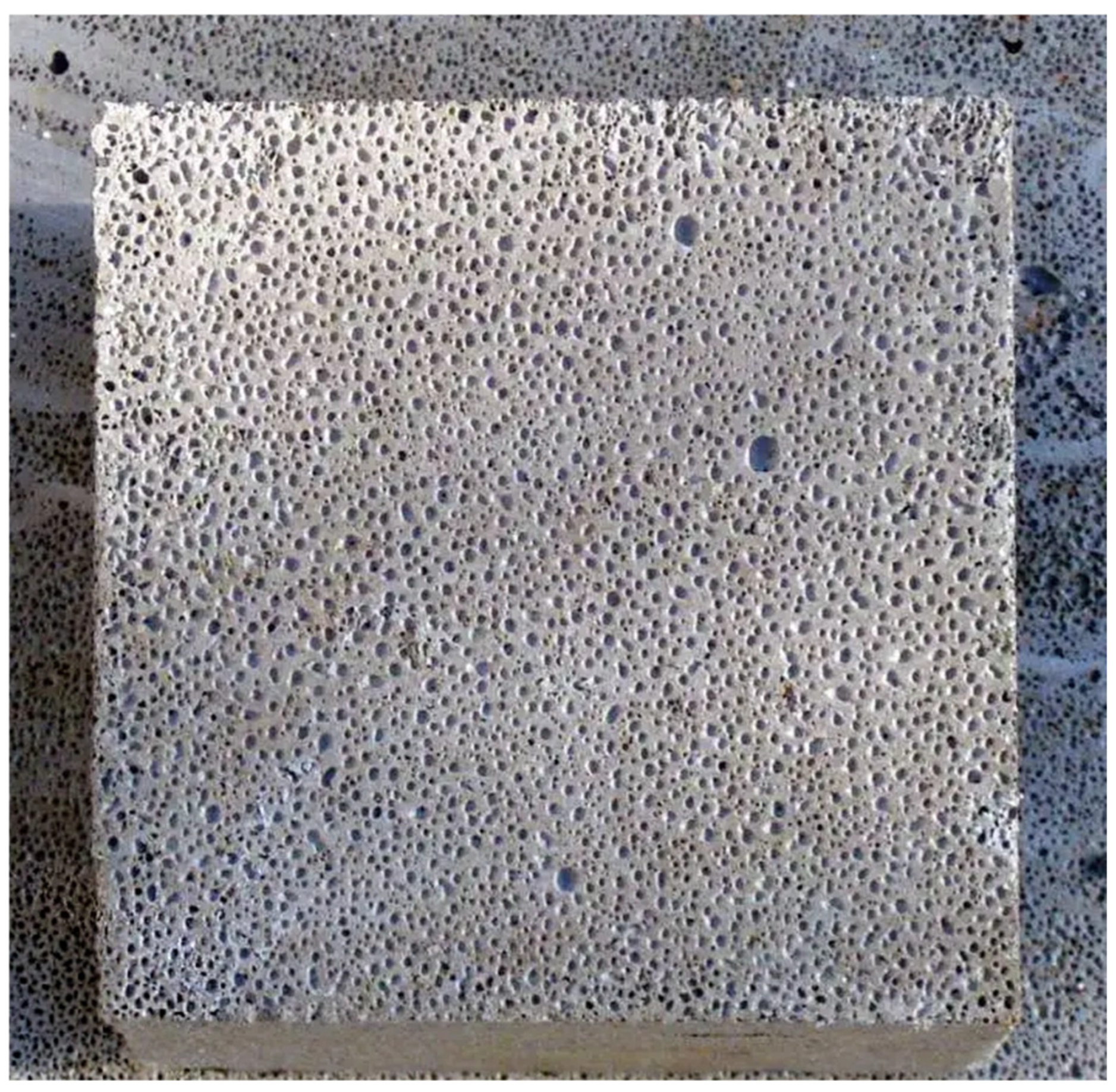
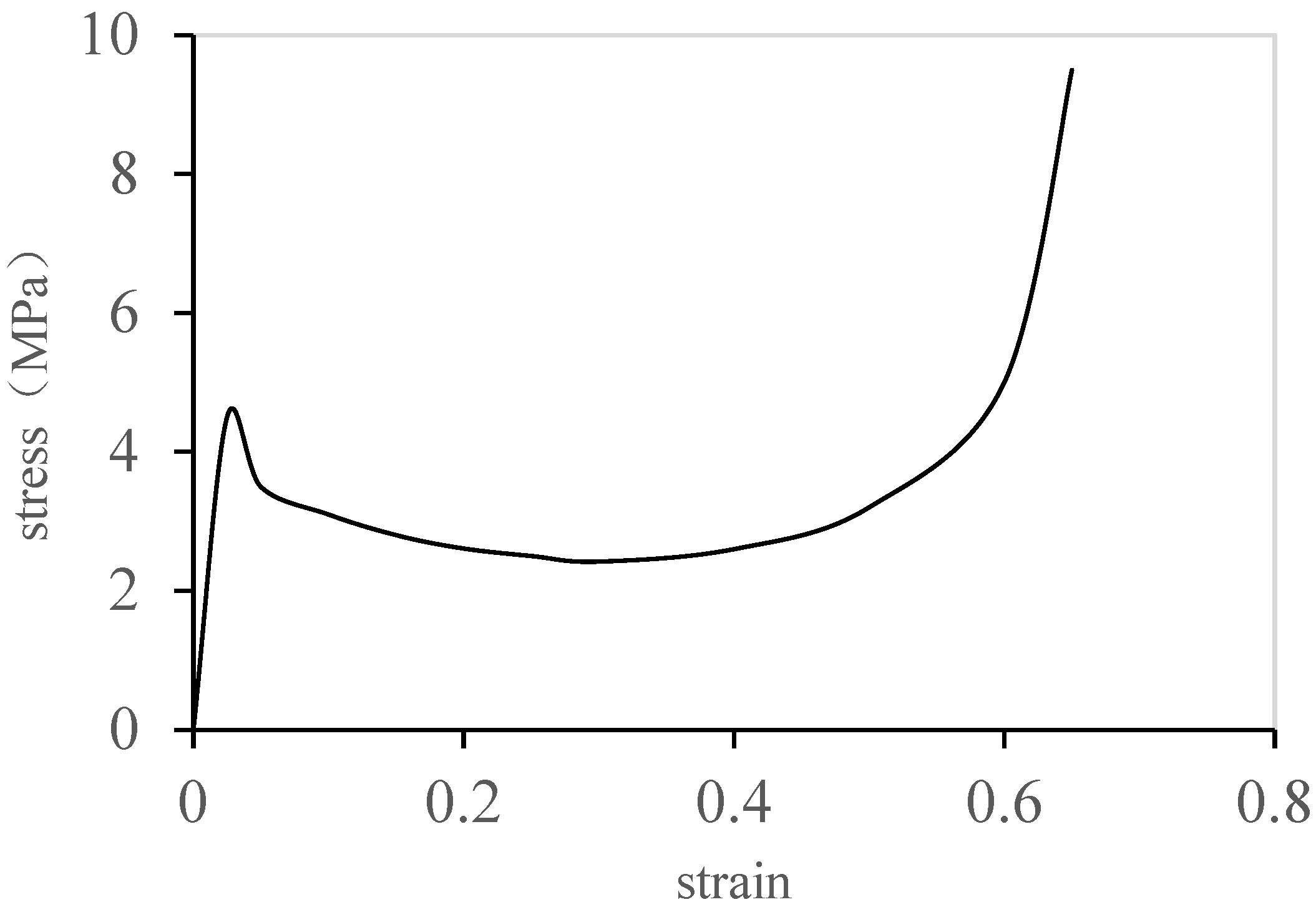
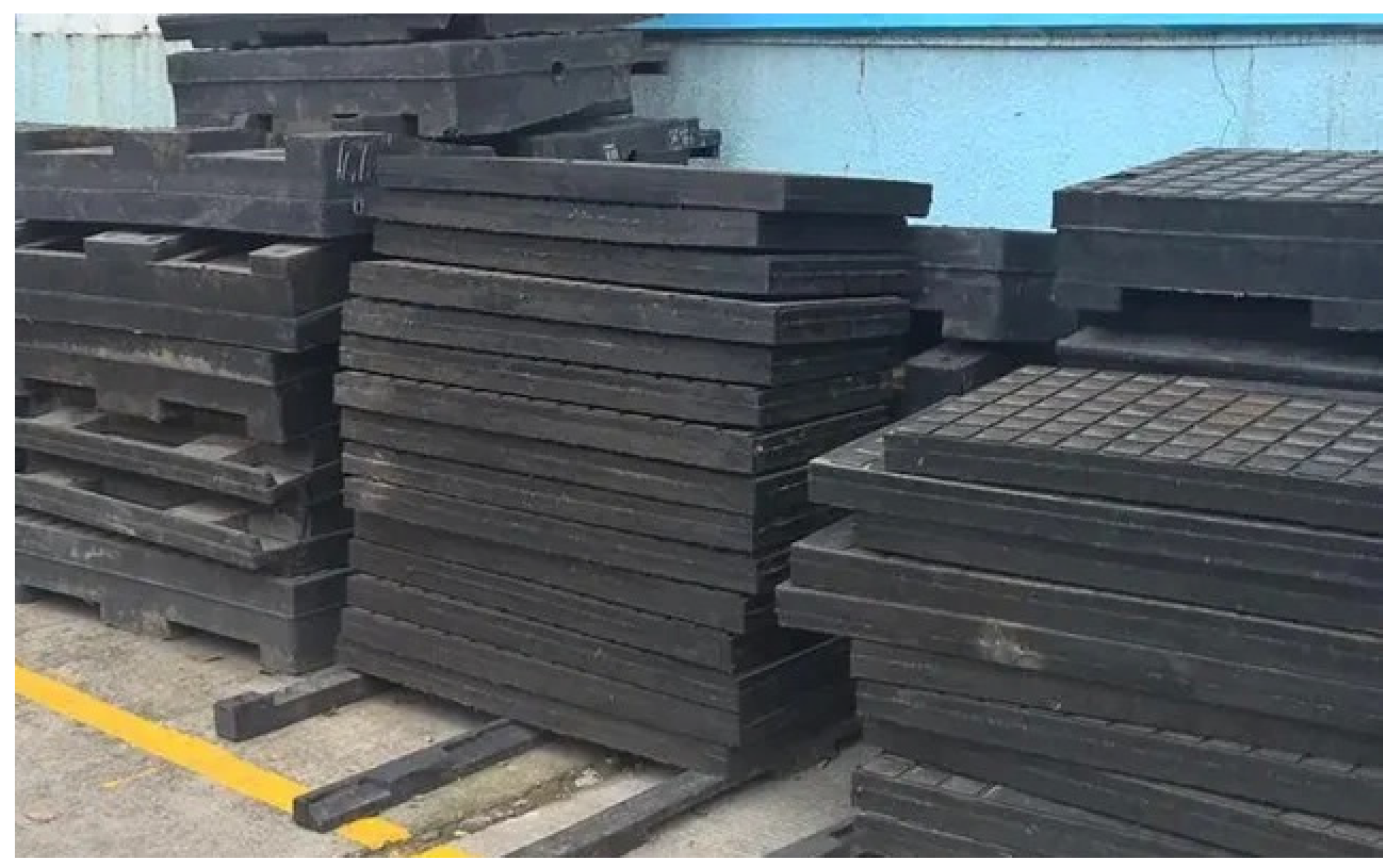
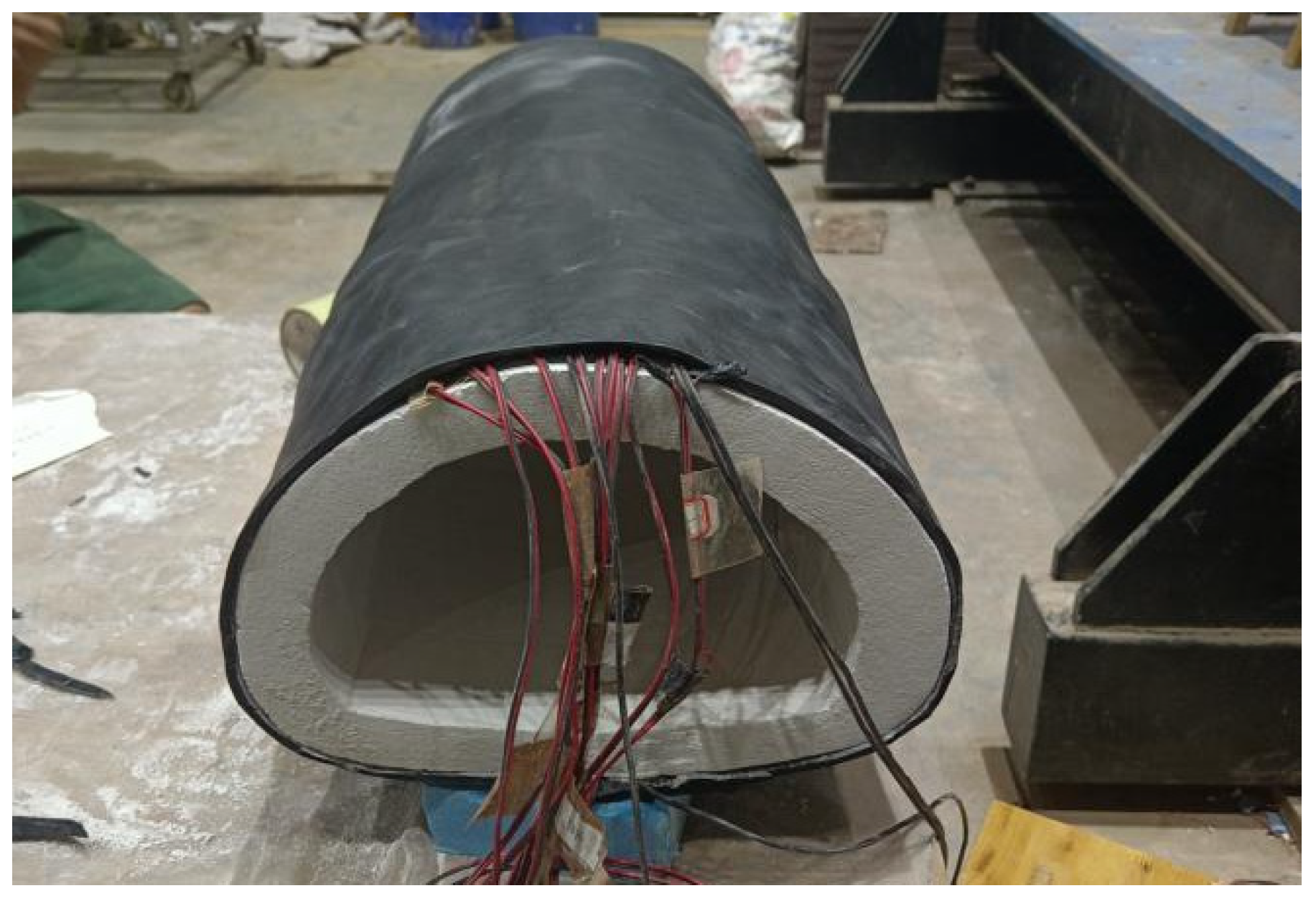
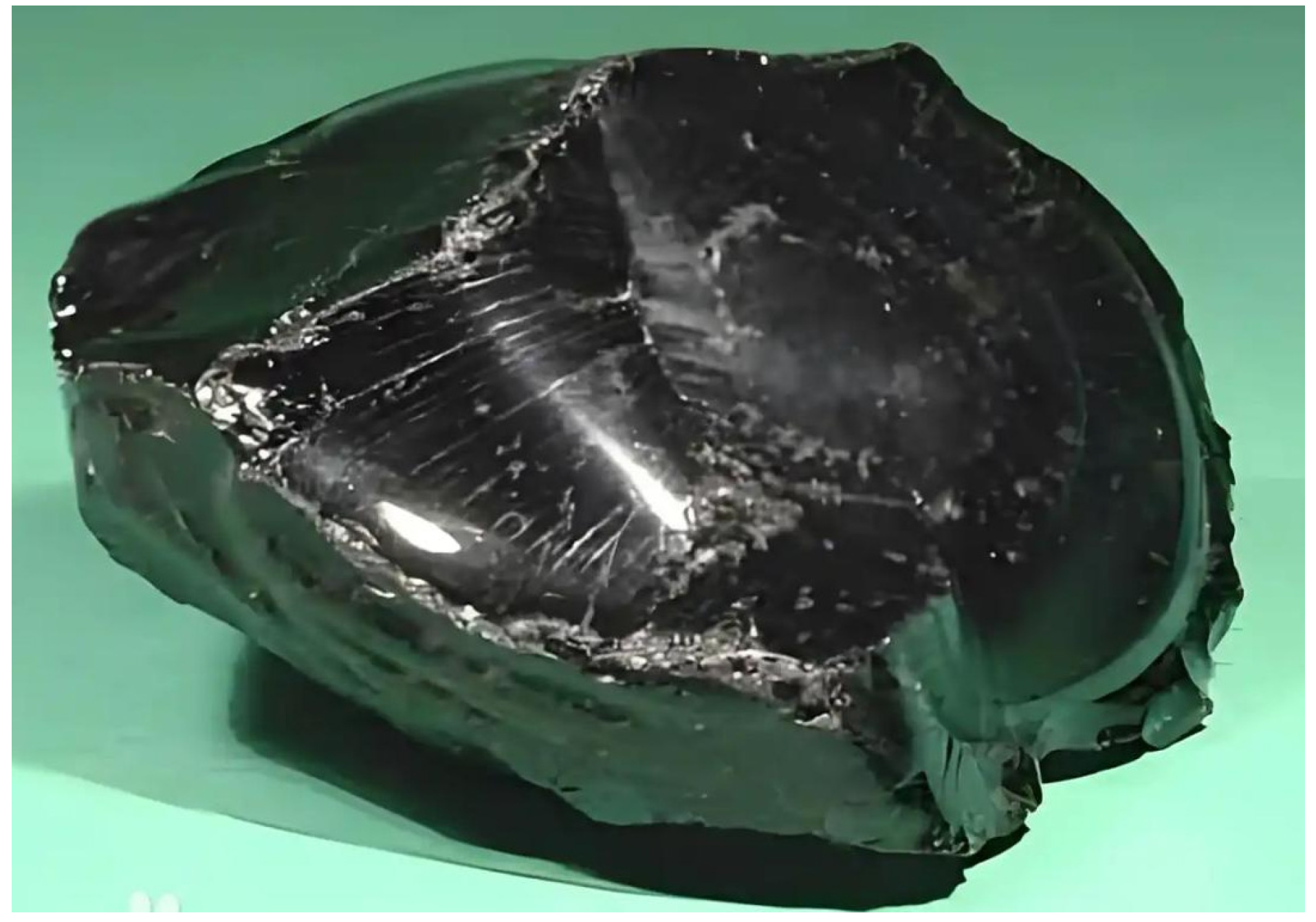
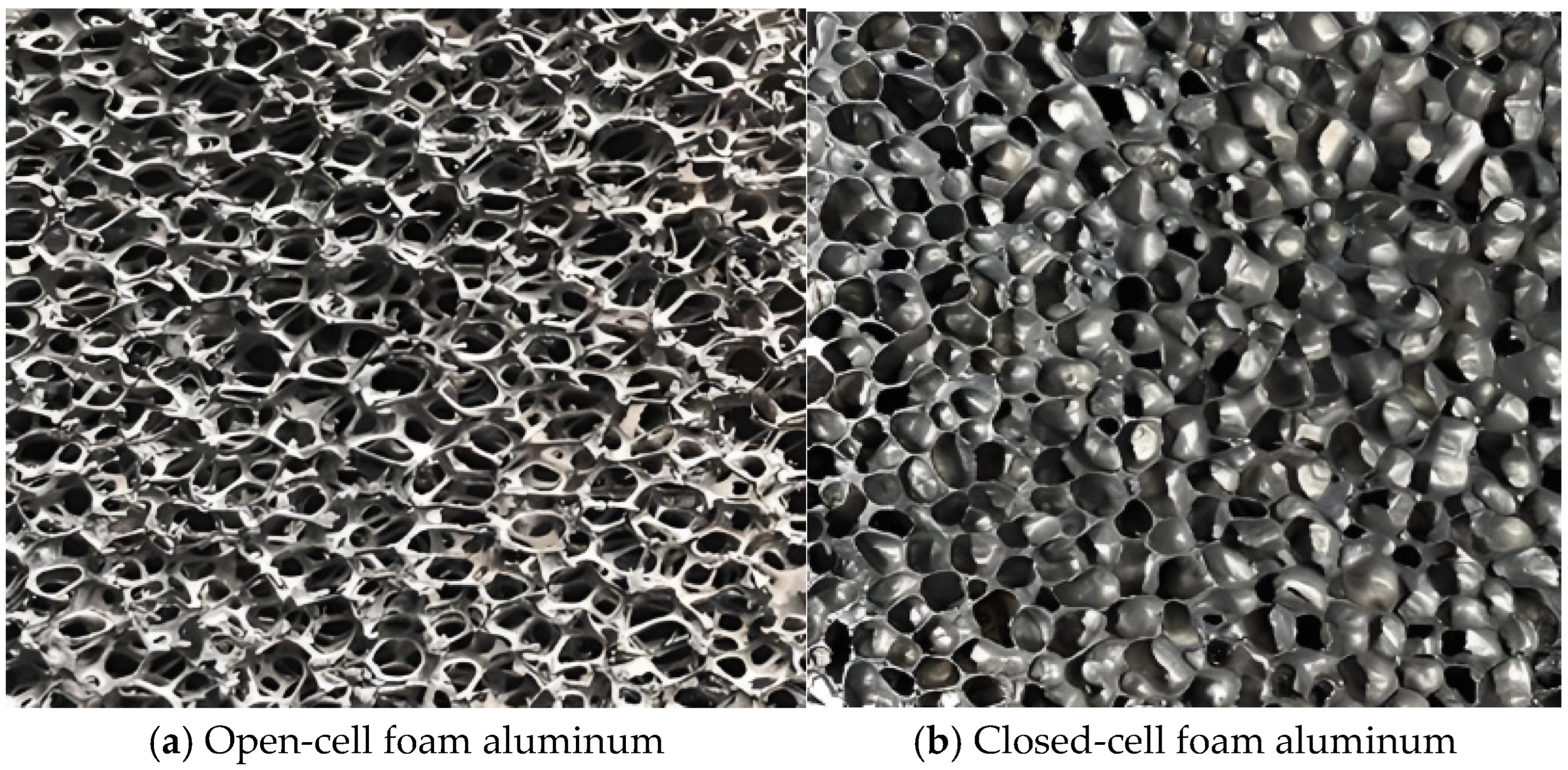
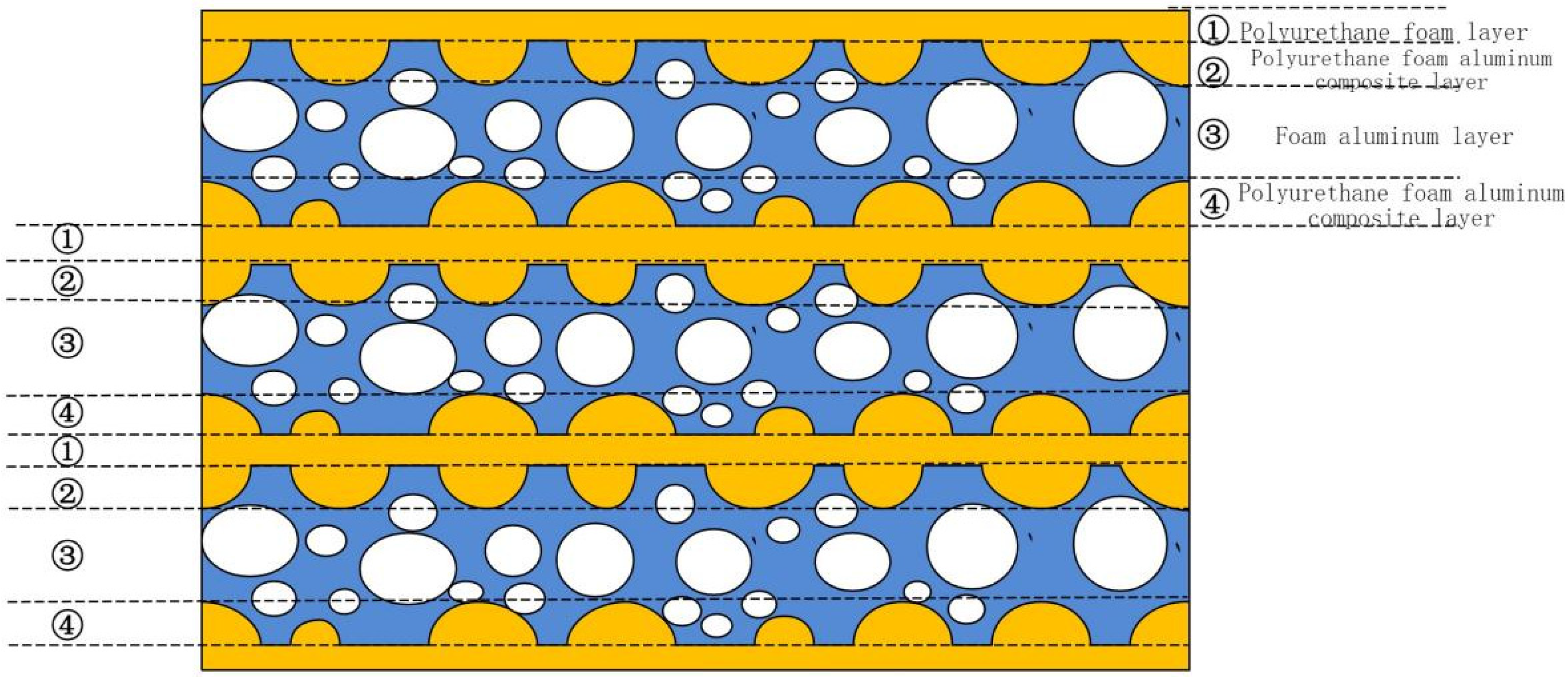

| Material Type | Mechanical Properties | Durability | Seismic Resistance | Constructability | Economics | Recyclability | Optimal Application Scenarios | References | |||||
|---|---|---|---|---|---|---|---|---|---|---|---|---|---|
| Density (kg/m3) | Elastic Modulus (MPa) | Damping Ratio (%) | Energy Absorption Density (J/g) | Waterproofness | Corrosion Resistance | Endurance | |||||||
| Foam concrete | 300–1600 | 20–1000 | 3–10 | 0.1–1 | Poor | Moderate | Excellent | Good | Excellent | Excellent | No | Economically constrained tunnel projects with shock absorption requirements under conditions of non-permanent water immersion or without frequent freeze–thaw cycles. | [13,42,47,48,146,147,148,149,150,151] |
| Other concrete types (exemplified by rubber cement concrete) | 1800–2200 | 12,000–25,000 | 5–12 | 0.05–0.8 | Moderate | Moderate | Good | Moderate | Excellent | Excellent | No | Resource recycling-oriented tunnels with specific seismic resistance requirements and environmental grades | [71,72,73,74,76,77,78,152,153] |
| Polymeric materials (exemplified by rubber) | 900–1600 | 1–300 | 5–30 | 0.1–2 | Excellent | Good | Moderate | Good | Good | Good | No | Tunnels requiring high shock absorption performance with favorable corrosion resistance and waterproofing adaptability under ambient temperature conditions. | [81,82,83,84,85,86,87,91,92,93,94,96] |
| Asphalt | 1000–1400 | 2000–20,000 | 10–20 | 0.02–0.3 | Good | Good | Moderate | Moderate | Excellent | Excellent | Yes | Tunnel projects requiring combined functions of waterproofing, structural reinforcement, and shock absorption under normal temperature conditions. | [105,154,155,156] |
| Porous metallic (exemplified by closed-cell aluminum foam) | 200–800 | 50–800 | 5–12 | 1–20 | Good | Excellent (requires anticorrosion treatment) | Excellent (requires anticorrosion treatment) | Excellent | Good | Moderate | Yes | Critical tunnel infrastructure with specific seismic resistance grade requirements in non-corrosive environments. | [139,140,141,142,143,157,158,159,160,161,162,163,164,165] |
Disclaimer/Publisher’s Note: The statements, opinions and data contained in all publications are solely those of the individual author(s) and contributor(s) and not of MDPI and/or the editor(s). MDPI and/or the editor(s) disclaim responsibility for any injury to people or property resulting from any ideas, methods, instructions or products referred to in the content. |
© 2026 by the authors. Licensee MDPI, Basel, Switzerland. This article is an open access article distributed under the terms and conditions of the Creative Commons Attribution (CC BY) license.
Share and Cite
Wang, C.; Gao, F.; Xu, G. Shock Absorption Layer Materials for Tunnel Engineering: Classification, Performance, and Future Directions. Processes 2026, 14, 741. https://doi.org/10.3390/pr14050741
Wang C, Gao F, Xu G. Shock Absorption Layer Materials for Tunnel Engineering: Classification, Performance, and Future Directions. Processes. 2026; 14(5):741. https://doi.org/10.3390/pr14050741
Chicago/Turabian StyleWang, Cheng, Feng Gao, and Guo Xu. 2026. "Shock Absorption Layer Materials for Tunnel Engineering: Classification, Performance, and Future Directions" Processes 14, no. 5: 741. https://doi.org/10.3390/pr14050741
APA StyleWang, C., Gao, F., & Xu, G. (2026). Shock Absorption Layer Materials for Tunnel Engineering: Classification, Performance, and Future Directions. Processes, 14(5), 741. https://doi.org/10.3390/pr14050741