Article

Production Prediction for Acid Stimulation in Long Horizontal Wells with Along-Well Property Heterogeneity in Carbonate Gas Reservoirs

1
Department of Petroleum and Natural Gas Engineering, Southwest Petroleum University, Chengdu 610500, China
2
Petro China Southwest Oil & Gasfield Company, Dazhou 635000, China
*
Author to whom correspondence should be addressed.
Processes 2026, 14(5), 731; https://doi.org/10.3390/pr14050731
Submission received: 26 January 2026 / Revised: 11 February 2026 / Accepted: 12 February 2026 / Published: 24 February 2026
(This article belongs to the Section Petroleum and Low-Carbon Energy Process Engineering)

Abstract

Due to reservoir heterogeneity and drilling/completion damage, the gas production distribution along the wellbore in low-permeability gas reservoirs generally exhibits significant unevenness, restricting the full utilization of single-well productivity. To address this issue, this paper constructs a novel multi-segment horizontal-well flow model considering the permeability differences along the wellbore. Our methodology developed the skin factor calculation method to quantitatively predict production after acid stimulation. Studies have shown that the heterogeneity of permeability along the wellbore significantly controls the gas production contribution and early production response of each well section, and the traditional homogeneity assumption is prone to leading to biases in production capacity evaluation. Compared with general acidizing, targeted acidizing combined with flow constraints can effectively reconstruct the gas production distribution, significantly enhance the contribution of low-yield sections, and improve overall production performance. Taking the P002-H3 well in the Sichuan Basin as an example, based on gas production profile identification and skin coefficient decomposition, drilling fluid invasion was identified as the dominant damage mechanism, and the acidizing scheme was optimized accordingly, verifying the engineering applicability of the proposed method in horizontal-well production capacity evaluation and stimulation optimization.

1. Introduction

Horizontal wells, due to their ability to significantly increase the contact area between the wellbore and the reservoir, have been widely used in the development of low-permeability, tight gas reservoirs and are considered one of the key technologies for improving single-well productivity and development efficiency [1,2,3]. In gas fields with complex structures and significant reservoir heterogeneity, horizontal wells are usually developed in conjunction with staged completion and reservoir stimulation techniques to improve near-wellbore flow conditions and enhance overall productivity [4,5,6].
However, extensive field testing and production practice have shown that the gas production distribution along the wellbore direction of horizontal wells generally exhibits significant heterogeneity, meaning that only some wellbore segments contribute significantly to the total production, while the remaining segments have limited or even almost no gas production [7,8,9]. These studies have shown that this heterogeneity in the gas production profile is mainly controlled by multiple factors, including variations in reservoir properties along the wellbore, differences in natural fracture development, and redistribution of flow pressure drop within the wellbore [10,11,12]. Ignoring the impact of heterogeneity along the wellbore in productivity evaluation and stimulation design often leads to systematic misjudgments of wellbore productivity and stimulation effects. To address the issue of uneven gas production along the drilling path in horizontal wells, numerous theoretical and numerical studies have been conducted by scholars. Babu and Odeh [13] and Wang et al. [14] established a horizontal-well productivity model considering the influence of wellbore pressure drop, revealing the coupling effect between wellbore and formation flows. Subsequently, semi-analytical models based on the idea of segmented line-sources or multi-segment coupling have been widely used to describe the gas production distribution characteristics of horizontal wells in heterogeneous reservoirs [15,16,17]. In recent years, with the development of production logging and inversion technologies, scholars have further verified the dominant role of permeability differences along the drilling path in the distribution of horizontal-well productivity contribution from the perspective of gas production profiles [18,19,20].
In addition to reservoir heterogeneity, near-wellbore damage caused during drilling and completion is also one of the important factors restricting the productivity of horizontal wells. Drilling fluid intrusion, fine particle transport, and clay swelling significantly reduce near-wellbore permeability, and their combined effect is usually characterized by the skin factor [21,22,23]. Studies have shown that the total skin factor obtained from horizontal-well testing often includes multiple components such as well inclination skin, non-Darcy flow skin, formation flow skin, and drilling fluid invasion skin. Reasonable decomposition of these components is crucial for identifying the controlling damage mechanism and developing effective unblocking measures [24,25,26,27].
To reduce near-wellbore damage and improve wellbore formation connectivity, reservoir stimulation techniques such as acidizing are widely used in the development of tight gas reservoirs and carbonate gas reservoirs [28,29,30,31]. Acidizing effectively reduces near-wellbore damage and increases single-well productivity by dissolving contaminants and improving pore–throat structure. However, existing research indicates that in the context of significant reservoir heterogeneity, uniform stimulation intensity often fails to achieve balanced improvement in gas production along the process, and the stimulation effect varies significantly between different well segments [32,33,34,35]. Therefore, from a process perspective, targeted stimulation and flow control based on gas production profiles and damage characteristics has become an important research direction.
While existing research has made significant progress in horizontal-well productivity prediction, studies that couple gas production profile analysis, skin decomposition, and stimulation process response are still relatively limited, especially in comprehensive analysis based on actual gas field case studies. Therefore, this paper analyzes the gas production profile characteristics using a multi-segment horizontal-well flow model. Then, we perform the skin factor calculation procedure and decompose the total skin coefficient to quantitatively evaluate the degree of drilling fluid invasion damage. A targeted acidizing process is thus designed, and the production response under different processes and flow distribution strategies is systematically analyzed. The research results can provide a theoretical basis and engineering reference for productivity evaluation and stimulation optimization of horizontal wells in heterogeneous gas reservoirs.

2. Multi-Segment Horizontal-Well Flow Model with Various Skin Factors

2.1. Well Production Profile

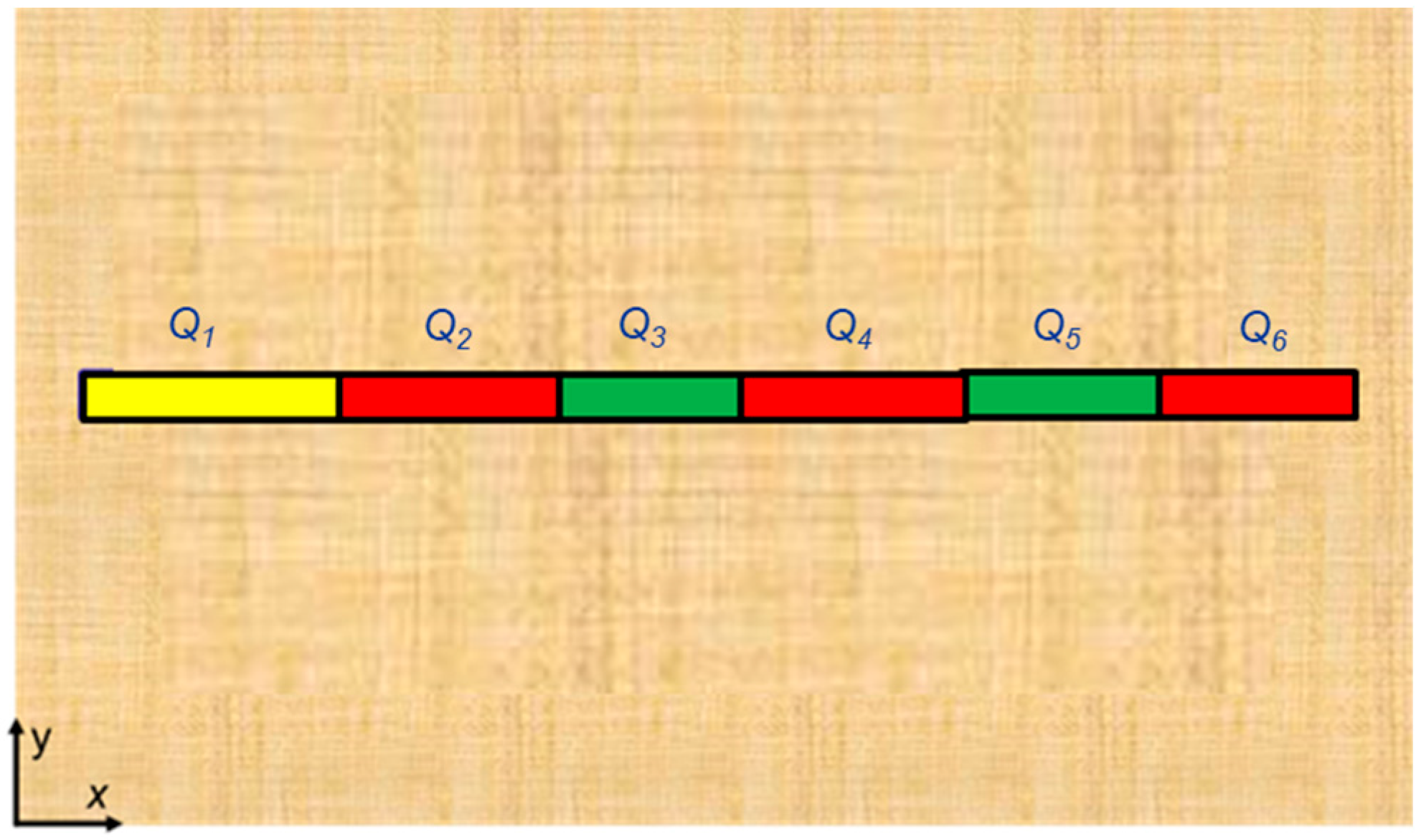
The gas production profile of a horizontal well refers to the spatial distribution of gas production per unit length along the horizontal section (Figure 1). Its non-uniformity represents a key issue in horizontal-well productivity prediction and completion optimization. From a physical perspective, the non-uniform gas production profile arises from the dynamic coupling between reservoir inflow capacity and wellbore flow conditions. On the one hand, reservoir heterogeneity is commonly present along the horizontal wellbore, where spatial variations in permeability, effective thickness, gas saturation, and fracture connectivity lead to significant differences in gas supply capacity at different locations. On the other hand, gas flow within the wellbore is accompanied by frictional and gravitational pressure losses, resulting in a gradual variation in wellbore pressure along the horizontal section. This causes inflow conditions near the heel or toe to be more favorable than those in the distal sections, thereby leading to an uneven contribution of gas production along the wellbore.
To address these issues, current calculations of horizontal-well gas production profiles are commonly based on the coupled solution of segmented productivity models and wellbore flow models. In the modeling process, the horizontal well is discretized into multiple computational segments along its length, with each segment treated as an independent gas inflow unit. The local gas production rate of each segment is jointly governed by the reservoir inflow capacity and the local wellbore pressure conditions. The gas production from an individual segment can be expressed in the form of a local productivity model, in which the gas production per unit wellbore length is proportional to the pressure difference between the reservoir and the corresponding wellbore segment. The proportionality coefficient is determined by a combination of permeability, effective thickness, gas properties, and skin effects. Meanwhile, the wellbore pressure distribution along the horizontal section is controlled by the cumulative gas flow rate, and the pressure losses between adjacent segments are calculated using wellbore flow equations.

2.2. Horizontal-Well Flow Model

A multi-segment horizontal-well flow model is employed to describe fluid flow along the wellbore while accounting for heterogeneous near-wellbore conditions. The horizontal well is discretized into multiple segments, each hydraulically connected to the reservoir and characterized by an individual skin factor to represent localized damage, stimulation efficiency, or completion quality. Flow from the reservoir into each segment is governed by the pressure difference between the reservoir and the corresponding wellbore segment, with the skin factor modifying the effective inflow resistance. Meanwhile, pressure losses along the wellbore due to friction and acceleration are considered to capture inter-segment flow redistribution. The model reflects the impact of spatially variable skin factors on segment-wise inflow rates and overall production performance, enabling a more realistic representation of production heterogeneity along horizontal wells.
Starting with diffusion equations of homogeneous and isotropic formations, we can write Green’s function for a unit point source in a three-dimensional infinite formation.
p i p ˜ x , y , z , t = d V ϕ c 1 2 e r f L + x x w 4 η t + e r f L x x w 4 η t 1 4 π η t exp y y w 2 4 η t 1 h 1 + 2 n = 1 exp n 2 π 2 η t h 2 cos n π z w h cos n π z h
where p ˜ is the instantaneous reservoir pressure at the spatial location; pi is the initial reservoir pressure; h is the formation thickness; h’ is the equivalent formation thickness; ϕ is the reservoir porosity; c is the total compressibility of the rock–fluid system; t is the production time; η is the hydraulic diffusivity; L is well length; and xw, yw and zw refer to wellbore coordinate.
Then, we perform spatial integration of the point source solution along the horizontal-well trajectory to obtain the commonly used three-dimensional line-source pressure solution for horizontal wells. After integration, the solution can be rewritten as
p i p x , y , z , t = Q 2 ϕ c L 1 2 h 0 t erf L + x x w 4 η t + erf L x x w 4 η t 1 4 π η t exp y y w 2 4 η t 1 + 2 n = 1 exp n 2 π 2 η t h 2 cos n π z w h cos n π z h d t
where p is the reservoir pressure at the spatial location, and Q is the well production rate.
Based on the production profile of the long horizontal well, a flow model based on linear superposition is formulated to evaluate the impacts of segmented gas production on bottom-hole pressure (BHP) response and well productivity. Considering the spatial variation in permeability and related reservoir properties along the horizontal section, the long horizontal well is discretized into N segments along the wellbore. Each segment corresponds to a locally homogeneous reservoir region and is represented as an independent line-source element acting on the formation, with a uniform line-source strength within each segment. For the ith segment with Li length, the pressure response induced in the reservoir is described by the three-dimensional line-source solution, and the corresponding mathematical expression is given by
p i p x , y , z , t = q i 2 ϕ c L i 1 2 h 0 t erf L i + x x w i 4 η t + erf L i x x w i 4 η t 1 4 π η t exp y y w i 2 4 η t 1 + 2 n = 1 exp n 2 π 2 η t h 2 cos n π z w i h cos n π z h d t
where qi is wellbore segment production rate and Li is wellbore segment length.
Under the assumption of Darcy flow, the governing flow equations are linear. Therefore, when multiple line-source elements coexist, their effects on the reservoir pressure field can be evaluated using the principle of superposition. Accordingly, the total pressure drop at any spatial location is obtained by summing the pressure responses induced by all segmented line-sources, which can be written as
p x , y , z , t = p i i = 1 N q i 2 ϕ c L i 1 2 h 0 t erf L i + x x w i 4 η t + erf L i x x w i 4 η t 1 4 π η t exp y y w i 2 4 η t 1 + 2 n = 1 exp n 2 π 2 η t h 2 cos n π z w i h cos n π z h d t
where N is the number of wellbore segments.
When the observation point is taken at the bottom-hole location, the total BHP drawdown results from the combined contributions of all N line-source elements distributed along the wellbore, and its mathematical form can be derived.
p x w , y w , z w , t = p i i = 1 N q i 2 ϕ c L i 1 2 h 0 t erf L i + x w x i 4 η t + erf L i x w x i 4 η t 1 4 π η t exp y w y i 2 4 η t 1 + 2 n = 1 exp n 2 π 2 η t h 2 cos n π z i h cos n π z w h d t
Within a unified modeling framework, the proposed formulation establishes a quantitative relationship between non-uniform gas production along the horizontal well and the bottom-hole pressure response, providing a basis for subsequent incorporation of skin effects, evaluation of near-wellbore additional pressure drop, and assessment of productivity changes under uniform acidizing conditions.

2.3. Production Model with Near-Wellbore Formation Damage

During drilling and completion operations, drilling and completion fluids invade the near-wellbore formation, forming a column-shaped damaged zone. Acid stimulation is primarily aimed at penetrating the drilling and completion fluid-induced damage zone by dissolving invaded plugging materials and restoring near-wellbore flow pathways. This process effectively reduces the skin factor and flow resistance, thereby expanding the effective drainage radius and significantly enhancing single-well productivity. Consequently, accurate estimation of the skin factor associated with drilling and completion fluid invasion damage is critical for evaluating the applicability and effectiveness of acid stimulation treatments.
The skin factor is a composite parameter, as multiple mechanisms can contribute to additional pressure losses during production. The total skin factor can be decomposed into the drilling and completion fluid invasion damage skin, deviation-induced pseudo-skin, non-Darcy flow pseudo-skin, and completion-related skin, and can be expressed as follows.
S t = S d + S θ + S n D + S c
The total skin factor can be obtained from pressure-transient test data by analyzing the pressure and pressure-derivative responses, in which it is directly quantified by the deviation between the pressure and pressure-derivative curves at early-time shut-in. When severe near-wellbore damage exists, the pressure-derivative curve exhibits a pronounced hump, corresponding to a large separation between the pressure and pressure-derivative responses.
The deviation-induced skin factor refers to the additional pressure drop that arises when the wellbore deviates from the vertical and interacts with formation anisotropy. Under such conditions, near-wellbore streamlines are forced to deviate from ideal axisymmetric radial flow, resulting in additional converging and diverging pressure losses. This effect is incorporated into the productivity equation as an additional pressure drop term in a dimensionless form. The deviation-induced skin factor is primarily controlled by the well deviation angle and azimuth, the formation thickness, and the wellbore position relative to the top and bottom boundaries, as well as the permeability anisotropy ratio.
S θ = ( θ W 41 ) 2.06 ( θ W 56 ) 1.865 log ( h D 100 )
where θ W = tan 1 [ k v k tan θ W ] ; h D = h r w k k v ; kv refers to the vertical permeability.
The non-Darcy pseudo-skin factor represents the additional pressure drop that occurs in the near-wellbore region under high-flow-velocity conditions, where inertial effects become significant and the pressure drop deviates from the linear Darcy relationship. This quadratic pressure drop component is equivalently transformed into a dimensionless skin term and incorporated into the productivity equation to characterize the additional flow resistance associated with high-rate wells. The non-Darcy pseudo-skin factor is primarily governed by the production rate or flow velocity, the non-Darcy coefficient, and fluid density and viscosity, as well as the near-wellbore permeability and porosity.
S n D = 2.715 × 10 15 β K M P s c h r w T sc μ g , wf · q
where β = 1.88 × 10 10 k 1.47 ϕ 0.53 .
Furthermore, regarding the impact of wormhole structures formed by acidizing in open-hole horizontal wells on near-wellbore seepage conditions, this paper introduces a wormhole skin coefficient to quantitatively characterize its permeability enhancement effect. The wormhole skin coefficient is calculated using the concept of equivalent seepage radius expansion, treating the high-conductivity channels in the near-wellbore area after wormhole development as an extension of the effective wellbore radius, thus converting the wormhole effect into a negative skin term introduced into the seepage model. During the calculation, the wormhole length, equivalent diameter, and spatial distribution characteristics are comprehensively considered. While maintaining unchanged far-field seepage conditions, the difference in flow resistance near the wellbore before and after wormhole development is compared to obtain the equivalent skin coefficient corresponding to the wormhole. The calculation equation can be written as
S w h = ln 1 I + 1 r w h H r w + r w h H r w 2 + I 2 1
where I is the square root of Kh/Kv and rwhH is the reach of the wormholes in the horizontal direction.
Recalling the flow model, we define dimensionless parameters to simplify the bottom-hole pressure solution.
p D x D , y D , z D , t D = i = 1 N π Q D i 4 0 t D erf L D i + x D w x D i 4 t + erf L D i x D w x D i 4 t 1 t exp y D w y D i 2 4 t 1 + 2 n = 1 exp n 2 π 2 t h D 2 cos n π z D i cos n π z D w d t
where p D = 2 π k h p i p Q μ B ; t D = k t ϕ μ c t L 2 ; Q D i = Q i Q ; L D i = L i L ; x D = x L ; y D = y L ; z D = z L ; h D = h L .
Through skin factor decomposition, once the total skin factor and all other skin components are determined, the damage skin factor associated with drilling and completion fluid invasion in each reservoir layer can be calculated. Therefore, dimensional bottom-hole pressure in Laplace domain can be written as
p ¯ D w x D , y D , z D , s = p ¯ D + S t / 2 s L D 1 + s C D S t / 2 L D + s 2 C D p ¯ D
where s refers to time in Laplace domain.
The dimensional production rate in the Laplace domain can be determined by
Q ¯ D = 1 s 2 p ¯ D
This production equation enables a quantitative evaluation of the degree of near-wellbore formation damage and contamination.

3. Results and Discussion

3.1. Effect of Permeability Heterogeneity Along the Horizontal Wellbore on Production Behavior

To quantify the effect of permeability variations along the horizontal wellbore on gas productivity, the horizontal-well flow model with non-uniform permeability distribution was employed. Under identical well geometry and boundary conditions, the permeability of each segment was varied to isolate the influence of along-well heterogeneity on overall production behavior.
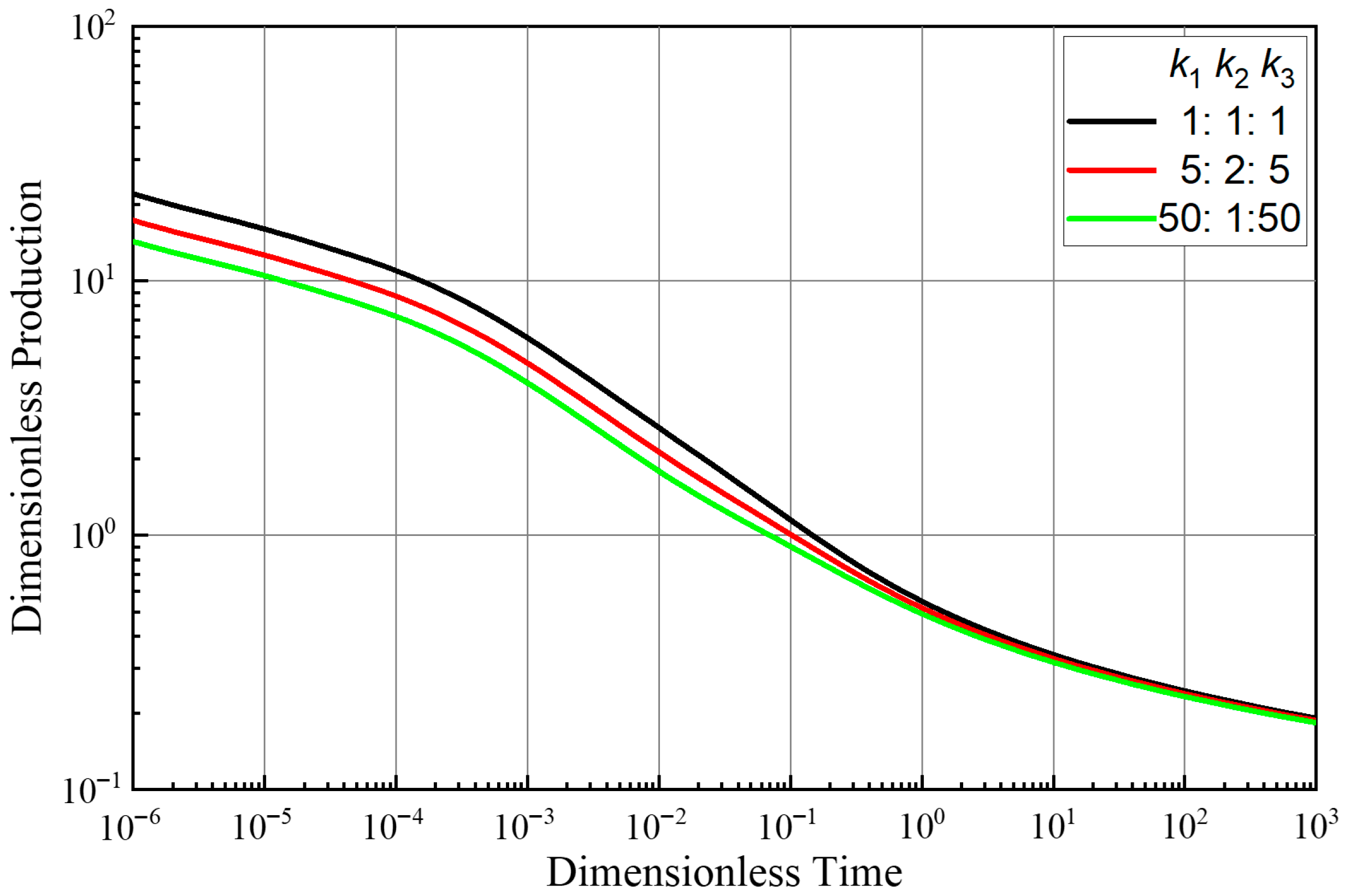
This case defined three scenarios to investigate the effect of varying along-well heterogeneity on production behavior. We set 50 md for heel and toe segments for all scenarios and define 50 md, 20 md, and 1 md, respectively for the three scenarios. The calculated results include the permeability contrast along the wellbore, which shows a pronounced non-uniform inflow profile. The results (Figure 2) illustrate that, although all scenarios set an identical production rate, the initial dimensional production and the following trend show significant differences. The production profile on a log–log plot exhibits slow declines at early times, followed by steep trends. However, the scenario with strong along-well property heterogeneity would deliver a lower initial production. Correspondingly, the production trend shows similar characteristics. These features suggest that varying along-well heterogeneity would impact well production, especially at early producing times.
From an integrated perspective, permeability heterogeneity alters the contribution of individual segments to the total well productivity, resulting in unique behavior of production compared with the homogeneous case. This indicates that neglecting along-well permeability variations may lead to systematic bias in productivity evaluation and inflow profile prediction. Also, this production estimation is the basis for acid stimulation for long horizontal wells.

3.2. Effect of Uniform Acid Stimulation on Production Behavior

To investigate the production response of a multi-segment horizontal well subjected to acid stimulation, a uniform acid injection was applied to all segments to represent a consistent acid treatment intensity. The stimulation effect was incorporated into the model by modifying wormhole parameters, while all other reservoir and wellbore parameters were kept unchanged, allowing direct comparison of production behavior before and after stimulation.
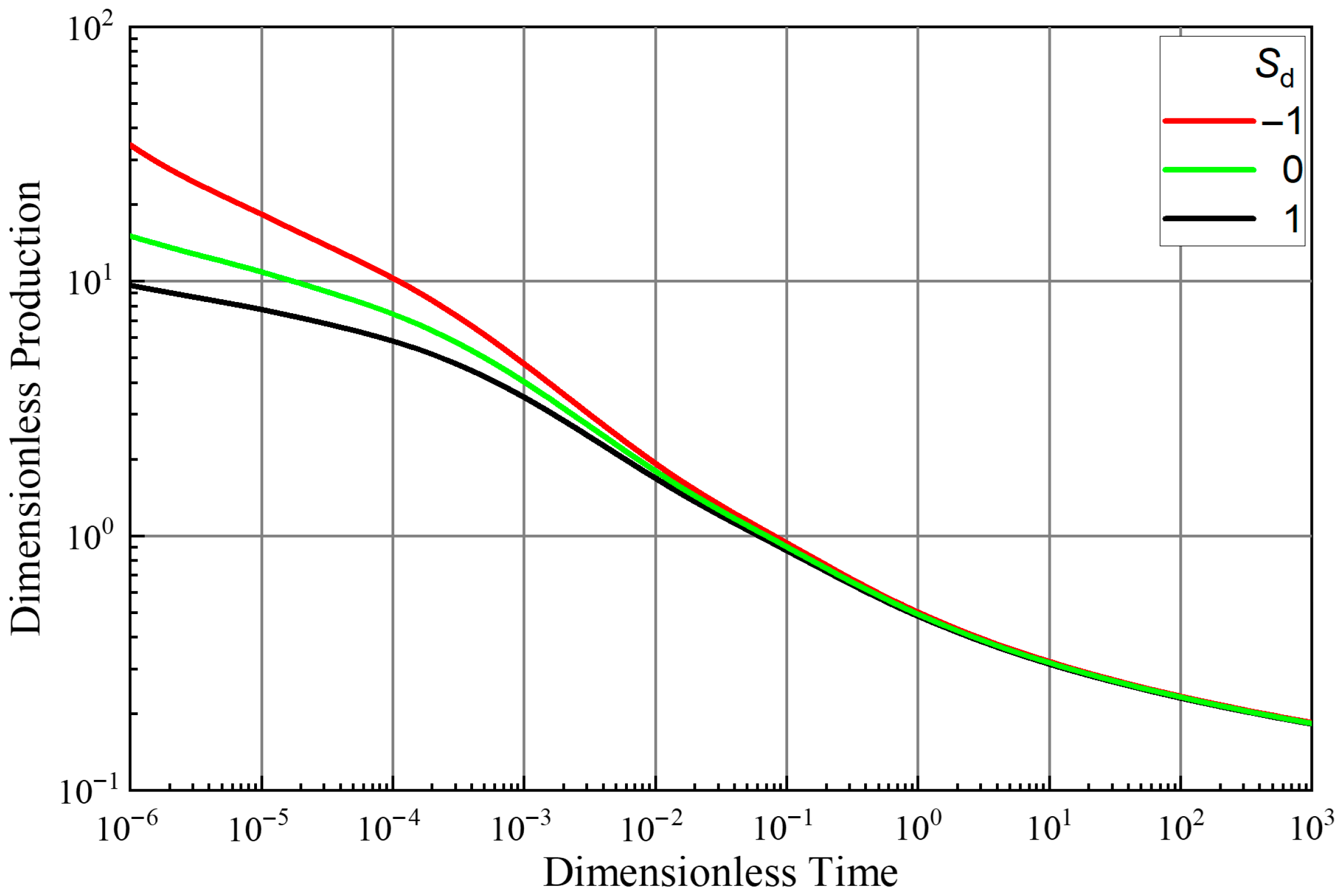
The resulting production curves (Figure 3) show that uniform-rate acid stimulation leads to initial productivity enhancement. Each segment receives the same injection rate, and the skin factor for all wellbore segments varies from −1 to 1. We observed the huge differences during early production. Once the damage has resolved, the initial production could be greatly improved. However, productivity from each segment still performs non-uniformly, leading to low ultimate recovery. This indicates that identical stimulation intensity does not translate into uniform productivity improvement along the wellbore.
From the perspective of overall well performance, the total production curve after stimulation demonstrates greater well production compared with the pre-stimulation case. The incremental production contribution from segments is highly related to treatment conditions. In addition, these results suggest that the effectiveness of uniform-rate acid stimulation is strongly conditioned by pre-existing heterogeneity along the wellbore.

3.3. Effect of Targeted Acid Stimulation on Production Behavior

To further assess the impact of flow allocation strategies following stimulation, targeted acid treatment was applied to individual segments, while an equal production rate was enforced for each segment to represent controlled flow sharing along the horizontal wellbore. The stimulation effect was incorporated by adjusting acid treatment volume and rate for each segment, and the total production was subsequently redistributed to ensure equal segmental flow rates.
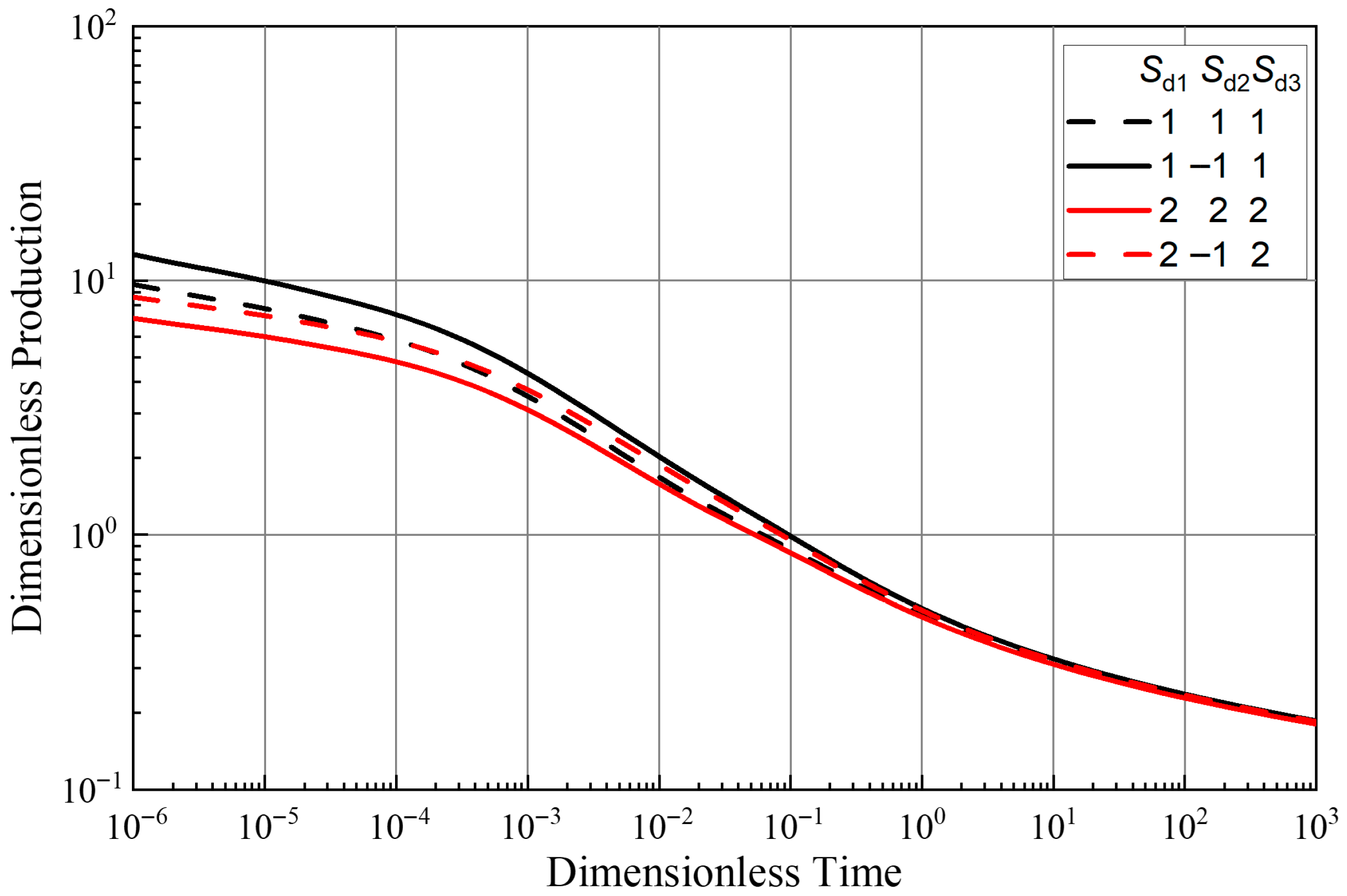
As illustrated in Figure 4, we first defined a low-productivity segment in the middle of the wellbore; the resulting production profile shows obvious non-uniformity. If acid stimulation is applied in the segment, we found that the overall production improved from the start of production. In addition, once the damage to the well is severe, the improvement through targeted acid stimulation would be better. The resulting production curves indicate that enforcing equal flow allocation leads to a distinct production response compared with the unconstrained case. This reflects the different stimulation effectiveness and reservoir capacities among segments.
At the well scale, the overall production curve under equal rate allocation demonstrates better treatment results relative to the uniform-rate stimulation scenario. The redistribution of flow suppresses contributions from high-permeability segments while enhancing low-permeability segments, resulting in positive changes in cumulative production. These observations suggest that equal flow allocation modifies the interaction between stimulation-induced conductivity enhancement and along-well heterogeneity. By using our methodology, we are able to maximize well productivity with optimized targeted-acid-stimulation design.

4. Case Study

This case shows an entire procedure to analyze a multi-segment horizontal well’s production after acid stimulation. Well P002-H3 is a horizontal well in the Sichuan Basin, with a total depth of 5251.00 m (vertical depth 3979.25 m). The well was completed using the perforation completion method. The well section traverses multiple sub-layers, exhibiting significant reservoir heterogeneity (well logging data is illustrated in Table 1).
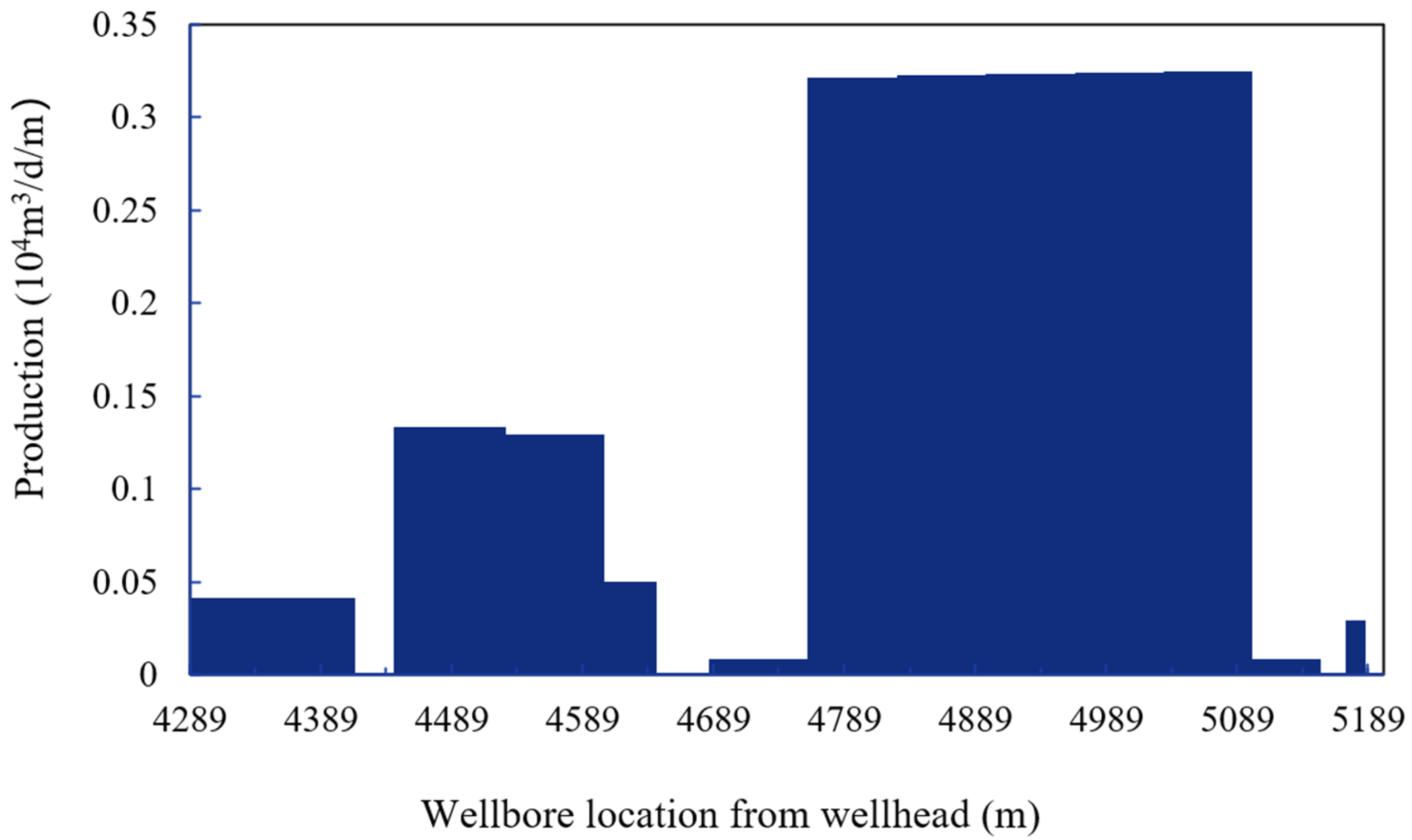
Based on the gas production distribution calculations with 27 sub-layers, the gas production profile of Well P002-H3 shows significant heterogeneity. Overall, the gas production contribution along the horizontal well section can be roughly divided into three categories (Figure 5), with significant differences in the contribution of different gas-producing sections to the total production, forming three main gas-producing grade zones. These gas production profile results provide a foundation for subsequent segmented-production capacity evaluation and control scheme analysis.
To quantify the extent of reservoir damage in the studied horizontal well, pressure buildup test data were interpreted to obtain a total skin factor of 9.7. This value reflects the combined effects of well trajectory, flow regime, and near-wellbore alteration. To isolate the dominant damage mechanisms, the total skin factor was further decomposed into inclination, non-Darcy flow, perforation, and drilling fluid invasion. The decomposition results are as shown in Table 2.
After removing these components, the residual skin is primarily attributed to drilling fluid invasion, suggesting significant near-wellbore impairment. The estimated drilling fluid invasion skin reaches 5.47~7.19, indicating that formation damage induced during drilling and completion plays a critical role in limiting well productivity.
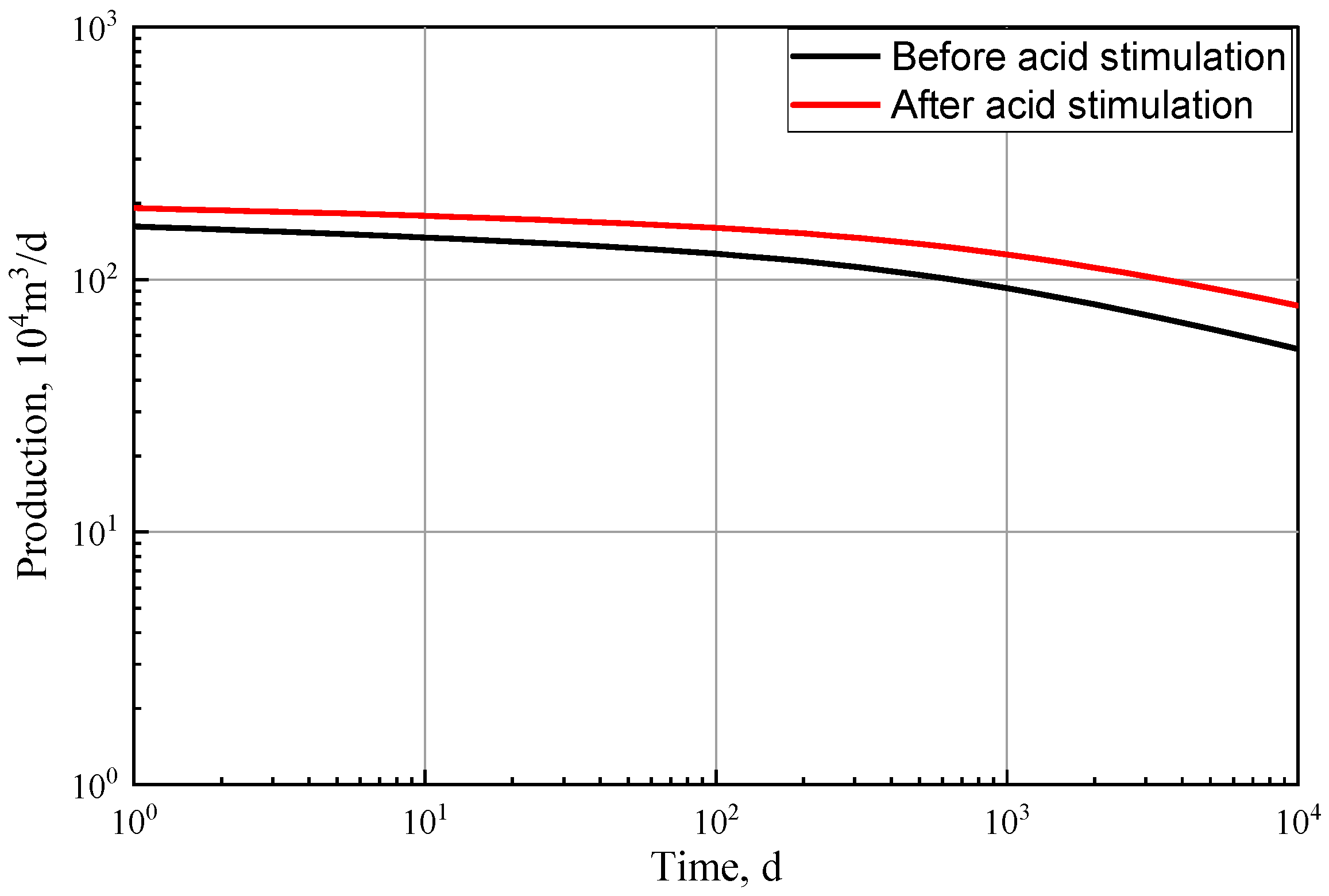
Based on the magnitude and origin of the drilling fluid-related skin, a targeted-acid-stimulation strategy should be designed to selectively mitigate the near-wellbore drilling fluid invasion damage. As demonstrated by Furui [25], the wormhole zone should cover an extra pressure drop from the drilling fluid invasion zone (~0.7 m); the wormhole skin is −1.49. This damage-oriented stimulation framework provides a quantitative basis for subsequent acidizing scenario analysis and production response evaluation (Figure 6).
Overall, the results demonstrate that incorporating segment-wise skin components significantly improves the ability of the model to capture production heterogeneity along the horizontal well. The sensitivity analyses further reveal that different skin mechanisms affect inflow distribution and pressure response in distinct ways, highlighting the importance of distinguishing their individual contributions rather than relying on a single lumped skin factor. These findings provide a quantitative basis for interpreting well performance and optimizing completion and stimulation strategies, which are further summarized in Section 5.

5. Conclusions

(1) This paper addresses the issue of uneven gas production along the wellbore in heterogeneous gas reservoirs by establishing a multi-stage flow mechanics model that considers the permeability differences along the wellbore. The model introduces a skin coefficient decomposition method to quantitatively characterize different flow effects in the near-wellbore area.
(2) This study systematically analyzed the impact of different stimulation strategies on horizontal-well productivity under multi-stage uneven gas production conditions. The research compared scenarios with no stimulation, general acidizing with the same displacement in each stage, and targeted acidizing based on damage characteristics. The results showed that different acidizing strategies had significant differences in gas production profile and production response.
(3) This paper presents a complete analytical process from gas production profile identification, skin coefficient decomposition, and damage assessment to acidizing process optimization. The case study results verify the applicability and operability of the established model and method under actual gas reservoir conditions, and can provide a reference for the productivity evaluation, stimulation scheme design, and effect prediction of horizontal wells in similar heterogeneous gas reservoirs.

Author Contributions

Conceptualization, X.Z. and Y.D.; methodology, X.Z.; formal analysis, X.Z. and J.Y.; investigation, X.Z. and Y.R.; writing—original draft preparation, X.Z.; writing—review and editing, Y.D., Y.R., J.Y. and Q.Z.; visualization, X.Z. All authors have read and agreed to the published version of the manuscript.

Funding

This research was funded by the PetroChina Foundation, grant number JS2024-64.

Data Availability Statement

The original contributions presented in this study are included in the article. Further inquiries can be directed to the corresponding author.

Conflicts of Interest

Authors X.Z., Y.R., J.Y. and Q.Z. were employed by the Petro China Southwest Oil & Gasfield Company. The remaining authors declare that the research was conducted in the absence of any commercial or financial relationships that could be construed as a potential conflict of interest. The Petro China Southwest Oil & Gasfield Company had no role in the design of the study; in the collection, analyses, or interpretation of data; in the writing of the manuscript; or in the decision to publish the results.

References

  1. Joshi, S.D. Horizontal Well Technology; PennWell Books: Tulsa, OK, USA, 1991. [Google Scholar]
  2. Economides, M.J.; Hill, A.D.; Ehlig-Economides, C.; Zhu, D. Petroleum Production Systems, 2nd ed.; Pearson Education: Boston, MA, USA, 2013. [Google Scholar]
  3. Lu, J. New productivity formulae of horizontal wells. J. Can. Pet. Technol. 2001, 40. [Google Scholar] [CrossRef]
  4. Ozkan, E.; Raghavan, R. New solutions for well-test-analysis problems: Part 1—Analytical considerations. SPE Form. Eval. 1991, 6, 359–368. [Google Scholar] [CrossRef]
  5. Ozkan, E.; Sarica, C.; Haci, M. Influence of pressure drop along the wellbore on horizontal-well productivity. SPE J. 1999, 4, 288–301. [Google Scholar] [CrossRef]
  6. Civan, F. Reservoir Formation Damage; Gulf Professional Publishing: Houston, TX, USA, 2007. [Google Scholar]
  7. Li, J.F. Progress and Prospect of Production Profile Testing Technology for Staged Fracturing in Horizontal Wells. Spec. Oil Gas Reserv. 2022, 29, 1–8. [Google Scholar] [CrossRef]
  8. Li, J.; Zhou, X.; Gayubov, A.; Shamil, S. Study on production performance characteristics of horizontal wells in low permeability and tight oil reservoirs. Energy 2023, 284, 129286. [Google Scholar] [CrossRef]
  9. Vodorezov, D.D. Estimation of horizontal-well productivity loss caused by formation damage on the basis of numerical modeling and laboratory-testing data. SPE J. 2019, 24, 44–59. [Google Scholar] [CrossRef]
  10. Zhao, Z.; Li, Y.; Jiang, T.; Hu, D.; Zhang, L.; Ma, R. Analysis and application of horizontal well test in low permeability porous carbonate reservoir. Processes 2022, 10, 1545. [Google Scholar] [CrossRef]
  11. Zhang, H.; Cheng, J.; Zhang, X.; Miao, Y.; Jiang, H.; Yu, B.; Meng, L. An Evaluation of the Applicability of the Steady-State Productivity Approach for Horizontal Wells in Low-Permeability Heterogeneous Gas Reservoirs. Processes 2025, 13, 173. [Google Scholar] [CrossRef]
  12. Kalhor Mohammadi, M.; Riahi, S.; Boek, E.S. An insight review on formation damage induced by drilling fluids. Rev. Chem. Eng. 2023, 39, 387–415. [Google Scholar] [CrossRef]
  13. Babu, D.K.; Odeh, A.S. Productivity of a horizontal well. SPE Reserv. Eng. 1989, 4, 417–421. [Google Scholar] [CrossRef]
  14. Sun, R.; Hu, J.; Zhang, Y.; Li, Z. A semi-analytical model for investigating the productivity of fractured horizontal wells in tight oil reservoirs with micro-fractures. J. Pet. Sci. Eng. 2020, 186, 106781. [Google Scholar] [CrossRef]
  15. Qin, J.; Cheng, S.; He, Y.; Wang, Y.; Feng, D.; Qin, G.; Yu, H. A novel well-testing model to analyze production distribution of multi-stage fractured horizontal well. J. Nat. Gas Sci. Eng. 2018, 59, 237–249. [Google Scholar] [CrossRef]
  16. Gringarten, A.C.; Ramey, H.J., Jr. The Use of Source and Green’s Functions in Solving Unsteady-Flow Problems in Reservoirs. SPE J. 1973, 13, 285–296. [Google Scholar] [CrossRef]
  17. Dikken, B.J. Pressure drop in horizontal wells and its effect on production. SPE J. 1990, 5, 142–148. [Google Scholar] [CrossRef]
  18. Ma, Y.; Li, M.; Li, Y.; Liu, P.; Yang, B.; Gao, H. Combining experimental and logging data for calculation of the true skin factor of a horizontal well. Energy Sci. Eng. 2021, 9, 1385–1393. [Google Scholar] [CrossRef]
  19. Liao, L.; Zhu, D.; Yoshida, N.; Hill, A.D.; Jin, M. Interpretation of array production logging measurements in horizontal wells for flow profile. In Proceedings of the SPE Annual Technical Conference and Exhibition, New Orleans, LA, USA, 30 September–2 October 2013. [Google Scholar] [CrossRef]
  20. Zhang, Q.; Taleghani, A.D. Downhole flow control: A key for developing enhanced geothermal systems in horizontal wells. Renew. Energy 2024, 237, 121578. [Google Scholar] [CrossRef]
  21. Civan, F. Reservoir Formation Damage: Fundamentals, Modeling, Assessment, and Mitigation; Gulf Professional Publishing: Houston, TX, USA, 2023. [Google Scholar]
  22. Yuan, L.; Li, X.P.; Tan, X.H.; Zhang, L.H. Study on skin factor and productivity of horizontal well after acidizing with nonuniform damage. J. Chem. 2015. [Google Scholar] [CrossRef]
  23. Wang, C.; Wang, Y.; Kuru, E.; Chen, E.; Xiao, F.; Chen, Z.; Yang, D. A new low-damage drilling fluid for sandstone reservoirs with low-permeability: Formulation, evaluation, and applications. J. Energy Resour. Technol. 2021, 143, 053004. [Google Scholar] [CrossRef]
  24. Cinco-Ley, H.; Samaniego-V, F. Transient pressure analysis for fractured wells. J. Pet. Technol. 1981, 33, 1749–1766. [Google Scholar] [CrossRef]
  25. Furui, K.; Zhu, D.; Hill, A.D. A rigorous formation damage skin factor and reservoir inflow model for a horizontal well. SPE Prod. Facil. 2003, 18, 151–157. [Google Scholar] [CrossRef]
  26. Economides, M.J.; Nolte, K.G. Reservoir Stimulation, 3rd ed.; Wiley: New York, NY, USA, 2000. [Google Scholar]
  27. Yang, Y.; Huang, F.; Kang, S. Mechanism of Penetration Rate Improvement in Hot Dry Rock under the Coupling of Impact Load and Confining Pressure Release. Reserv. Sci. 2026, 2, 52–64. [Google Scholar] [CrossRef]
  28. Economides, M.J.; Ben-Naceur, K.; Klem, R.C. Matrix stimulation methods for horizontal wells. J. Pet. Technol. 1991, 43, 854–861. [Google Scholar] [CrossRef]
  29. Milligan, M. Well stimulation using acids. J. Can. Pet. Technol. 1994, 33, 35–41. [Google Scholar] [CrossRef]
  30. Liu, F.; Fan, Y.; Li, L.; Li, J.; Chen, Y.; Lv, Z.; He, T. Case study of successfully staged acid fracturing on the ultra-deep horizontal well for the Qixia Fm HTHP tight carbonate gas reservoir in China. Front. Energy Res. 2022, 10, 917740. [Google Scholar] [CrossRef]
  31. Li, W.; Liao, J. Microscopic Analysis of Flow Resistance of Oil Displacement Fluid in Reservoir Fractures. Reserv. Sci. 2026, 2, 16–33. [Google Scholar] [CrossRef]
  32. Fahim, M.; Keshka, A.; Marzooqi, A.A.; Assreti, E.; Helmy, H.; Salim, D.; Neyaei, F.A.; Rafieenia, M.; Hudson, L. A Unique Stimulation Approach to Enhance Production Efficiency of Horizontal Wells in Heterogeneous Carbonate Reservoirs. In Proceedings of the SPE Middle East Oil and Gas Show and Conference, Manama, Bahrain, 25–28 September 2011. [Google Scholar] [CrossRef]
  33. Zhang, L.; Xu, H.; Zhao, K.; Wang, J.; Jiang, H. A Study on Effect Analysis and Process Parameter Optimization of Viscous Acid Acidification in a Porous Heterogeneous Carbonate Reservoir. Processes 2024, 12, 1443. [Google Scholar] [CrossRef]
  34. Wu, X.; Hill, A.D.; Oeth, C.; Zhu, D.; Gildin, E. Integrated 3D acid fracturing model for carbonate reservoir stimulation. In Proceedings of the Offshore Technology Conference Brasil, Rio de Janeiro, Brazil, 29–31 October 2013. [Google Scholar] [CrossRef]
  35. Xu, N.; Wang, Y. Effect of Nanomaterials on Improving the Apparent Viscosity of Heavy Oil and the Environmental Evaluation of Reservoir Environment. Reserv. Sci. 2026, 2, 1–15. [Google Scholar] [CrossRef]
Figure 1. Schematic of multi-segment wellbore horizontal well.
Processes 14 00731 g001
Figure 2. Effect of non-uniform wellbore production profile on production. Note that label shows different permeability for each segment.
Processes 14 00731 g002
Figure 3. Effect of uniform acid stimulation on production. Note that label shows different fluid invasion skin factors for all segments.
Processes 14 00731 g003
Figure 4. Effect of targeted acid stimulation on production. Note that label shows different fluid invasion skin factors for each segment.
Processes 14 00731 g004
Figure 5. Production profile for Well P002-H3.
Processes 14 00731 g005
Figure 6. Production profile before and after targeted acid stimulation.
Processes 14 00731 g006
Table 1. Well logging data for wellbore formation properties.
Layer No.Wellbore Segment (m)Length (m)Thickness (m)Porosity (%)Permeability (mD)
13957~3961.54.52.42.90.21
23966~3973.17.13.53.20.17
33976.5~3981.65.14.43.60.30
44072.4~4077.65.24.53.60.31
54115.1~4126.511.45.12.60.08
64129.6~4179.249.649.46.22.46
74182.6~4191.89.29.25.31.07
84197.8~4204.8774.30.50
94210.9~4249.738.837.24.40.92
104251.8~4269.117.37.32.60.09
114289.1~4303.314.211.32.90.14
124323.4~4345.4228.12.40.06
134352.4~4368.716.33.630.17
144389.5~4419.530265.41.41
154419.5~443212.542.90.15
164457.4~4467.19.73.92.70.09
174578.6~4598.820.214.92.80.12
184608.3~4635.527.219.530.23
194654.1~4660.161.32.80.12
204680.7~4767.686.973.64.30.80
214779.8~4921.8142138.96.93.22
224921.8~4961.239.428.24.51.29
234980.4~4998.518.19.430.16
244998.5~5143144.5144.59.27.06
255143~5163.320.315.43.10.20
265166.4~5182.115.711.13.70.47
275199.4~5211.812.47.23.60.36
Table 2. Skin factor decomposition for three segments of the horizontal well.
SegmentTotal Skin FactorInclination Skin FactorNon-Darcy FlowPartial PenetrationPerforationDrilling Fluid Invasion
(4289–4390 m)9.7−0.230.2502.497.19
(4391–4750 m)9.7−0.470.6403.126.41
(4751–5189 m)9.7−0.591.2803.545.47
Disclaimer/Publisher’s Note: The statements, opinions and data contained in all publications are solely those of the individual author(s) and contributor(s) and not of MDPI and/or the editor(s). MDPI and/or the editor(s) disclaim responsibility for any injury to people or property resulting from any ideas, methods, instructions or products referred to in the content.