Article

Research on a Highly Self-Cleaning Cyclone Separation System for Wheat Breeding Plot Combine Harvesting

1
College of Mechanical & Electrical Engineering, Xinjiang Agricultural University, Urumqi 830052, China
2
Yellow River Delta Intelligent Agricultural Machinery and Equipment Industry Research Academy, Dongying 257000, China
3
Qingdao Plantech Mechanical Technology Co., Ltd., Qingdao 266109, China
4
College of Mechanical & Electronical Engineering, Qingdao Agricultural University, Qingdao 266109, China
5
Key Laboratory of Agricultural Equipment for Breeding and Seed Production, Ministry of Agriculture and Rural Affairs, Qingdao 266109, China
*
Authors to whom correspondence should be addressed.
Processes 2026, 14(4), 726; https://doi.org/10.3390/pr14040726
Submission received: 31 January 2026 / Revised: 18 February 2026 / Accepted: 20 February 2026 / Published: 23 February 2026
(This article belongs to the Section Separation Processes)

Abstract

Domestically developed wheat breeding plot combine harvesters in China currently utilize cyclone separation self-cleaning systems. However, these systems struggle to meet the agronomic requirement of zero wheat grain residue. Seed mixing caused by residual grains can compromise the accuracy of entire breeding field trials. This study focused on the structural design of a cyclone separation self-cleaning system based on high self-cleaning agronomic requirements. Research was conducted on the key structural and operational parameters of the cyclone separator and the negative-pressure centrifugal fan, preliminarily determining the ranges for critical parameters such as the diameter of the cylindrical section of the separator wall, the dust outlet diameter, and the rotational speed of the negative-pressure centrifugal fan. A test bench for the cyclone separation self-cleaning system of wheat breeding plot combine harvesters was designed and developed. Through single-factor experiments and Box–Behnken design optimization, the effects of key parameters on system performance were investigated. The optimal parameter combination—cylindrical section diameter of 614 mm, dust outlet diameter of 290 mm, and fan speed of 1495 r/min—achieved a self-cleaning rate of 100%, self-cleaning time ≤ 12 s, loss rate of 1.70%, and impurity rate of 0.16%, fully meeting the requirements for high-quality, rapid, and effective separation and self-cleaning operations.

1. Introduction

Wheat, as one of the world’s major food crops, is critical to global food security, and ensuring its stable, high yield is paramount [1,2]. Breeding serves as the core pathway for improving wheat varieties, while field plot trials are a vital component in further verifying variety stability and evaluating the yield potential of new varieties’ agronomic traits. The harvest stage, as the final phase of the entire breeding process, directly impacts the accuracy of breeding trial data [3,4]. Traditional plot harvesting involves multiple operations—cutting, threshing, cleaning, and weighing—across thousands of wheat breeding plots. This process demands substantial labor input. Particularly in the cleaning stage, the separation of wheat grains from light impurities places high demands on personnel. They must reduce the light impurity rate during manual screening to ensure smooth subsequent sowing operations, preserve precious seed resources by minimizing grain loss during cleaning, and strictly prevent inter-variety contamination to avoid invalidating subsequent trial data [5,6]. Therefore, advancing plot breeding toward mechanization, precision, and high efficiency holds significant importance for enhancing breeding efficiency, ensuring breeding quality, and accelerating the breeding process.
With the rapid development of precision agriculture and smart agricultural machinery, the research and development of breeding equipment has become a global hotspot in agricultural engineering. Some international companies have developed fully automatic plot harvesters capable of performing harvesting, threshing, cleaning, seed collection, yield measurement, and data collection in one go, achieving standardized operations [7]. However, such equipment is expensive with high maintenance costs and is not fully compatible with domestic wheat cultivation practices [8]. Dai Fei from Gansu Agricultural University developed a walk-behind wheat plot combine harvester that employs a front-mounted ear-cutting method, significantly reducing the workload during cleaning. However, its harvest performance varies considerably when dealing with wheat varieties at different maturity stages, moisture levels, and grain sizes, leading to severely distorted experimental data [9]. Wheat seed threshing and cleaning machines developed by domestic research institutes, which utilize a combined air-screen cleaning method, have largely met the preliminary screening requirements for wheat breeding. However, when faced with the diversity of wheat breeding varieties and the demands for high efficiency and high self-cleaning rates in plot harvesting, the thoroughness of the cleaning process and the ability to prevent contamination remain inadequate. Residual wheat grains, stems, and other impurities on the sieve surfaces severely affect the purity of wheat seeds and the accuracy of subsequent yield measurements [10]. To further enhance the efficiency and effectiveness of combined cleaning in wheat plot breeding, research is being conducted on using cyclone separation to further screen wheat grains after the combined air-screen cleaning process. This aims to obtain cleaner wheat seeds while ensuring a high degree of self-cleaning within the machine to prevent variety mixing.
Cyclone separation technology is based on the centrifugal sedimentation principle of gas-solid two-phase flow. By utilizing the centrifugal force generated by particles within an airflow vortex, denser particles are forced toward the wall of the cyclone separator, thereby achieving separation between lighter impurities and heavier particles [11,12,13]. Theoretically, this enables flexible sorting of particles with different densities and sizes, making it suitable for free-flowing granular materials. This device is characterized by its simple structure and high separation efficiency [14]. After optimization of the cleaning system in traditional wheat harvesters, the impurity content can be reduced to 0.476%, and the grain loss rate to 0.438%. However, these systems still rely heavily on the cleaning function of vibrating screens, and manual cleaning of residual grains inside the machine is required after each cleaning operation. This results in low operational efficiency and fails to ensure the temporal consistency of breeding data during harvest. Jin Chengqian et al. explored a dual-outlet multi-duct cleaning system, achieving grain cleaning rates of 98–99%. Nevertheless, its complex structure and long self-cleaning cycle present certain limitations. Wan Xingyu, Yang Jia, and colleagues from Huazhong Agricultural University developed a cyclone separation system for rapeseed harvesting, which achieved cleaning efficiencies of 90.21–96.68% and a loss rate of 6.54% in field trials, though it still fell short of meeting the self-cleaning requirements of the machinery [15,16]. Hesham M. El-Batsh employed numerical calculation techniques based on the Euler–Lagrange method to investigate the particle and impurity outlet sizes of cyclone separators. By solving three-dimensional incompressible turbulent flow control equations, he systematically explored the operational characteristics of cyclone separators [17]. These research findings provide important theoretical foundations and technical pathways for advancing the development of specialized cyclone separation systems designed to achieve efficient separation, cleaning, and rapid self-cleaning capabilities, particularly for field combine harvesters.
Although cyclone separation cleaning technology has been widely applied in combine harvesting processes, existing studies have rarely addressed its use in wheat breeding plot combine harvesting. This process must achieve a high self-cleaning performance. Current cleaning systems require manual intervention to clean seed residues inside the machine after harvesting one plot, with the self-cleaning time typically exceeding 30 s. Manual intervention inevitably increases the probability of errors, and the self-cleaning rate fails to reach 100%. Therefore, this study focused on the agronomic requirements of wheat breeding harvesting, systematically optimizing the key structural and operational parameters of the cyclone separator and negative-pressure fan to achieve high self-cleaning performance while maintaining low loss rates and low impurity rate. Building on this foundation, bench tests will further validate the rationality of the structure and parameters of the developed cyclone separation device, addressing the challenges of poor cleaning and self-cleaning performance. This research aims to provide a highly reliable cleaning technology solution for high-performance plot combine harvesting equipment adapted to China’s agronomic requirements, offering theoretical support for advancing precision and efficiency in breeding research.

2. Structural Design of Cyclone Separation Self-Cleaning System Based on High Self-Cleaning Agronomic Requirements

2.1. Overall Structure and Working Principle of the Cyclone Separation Self-Cleaning System

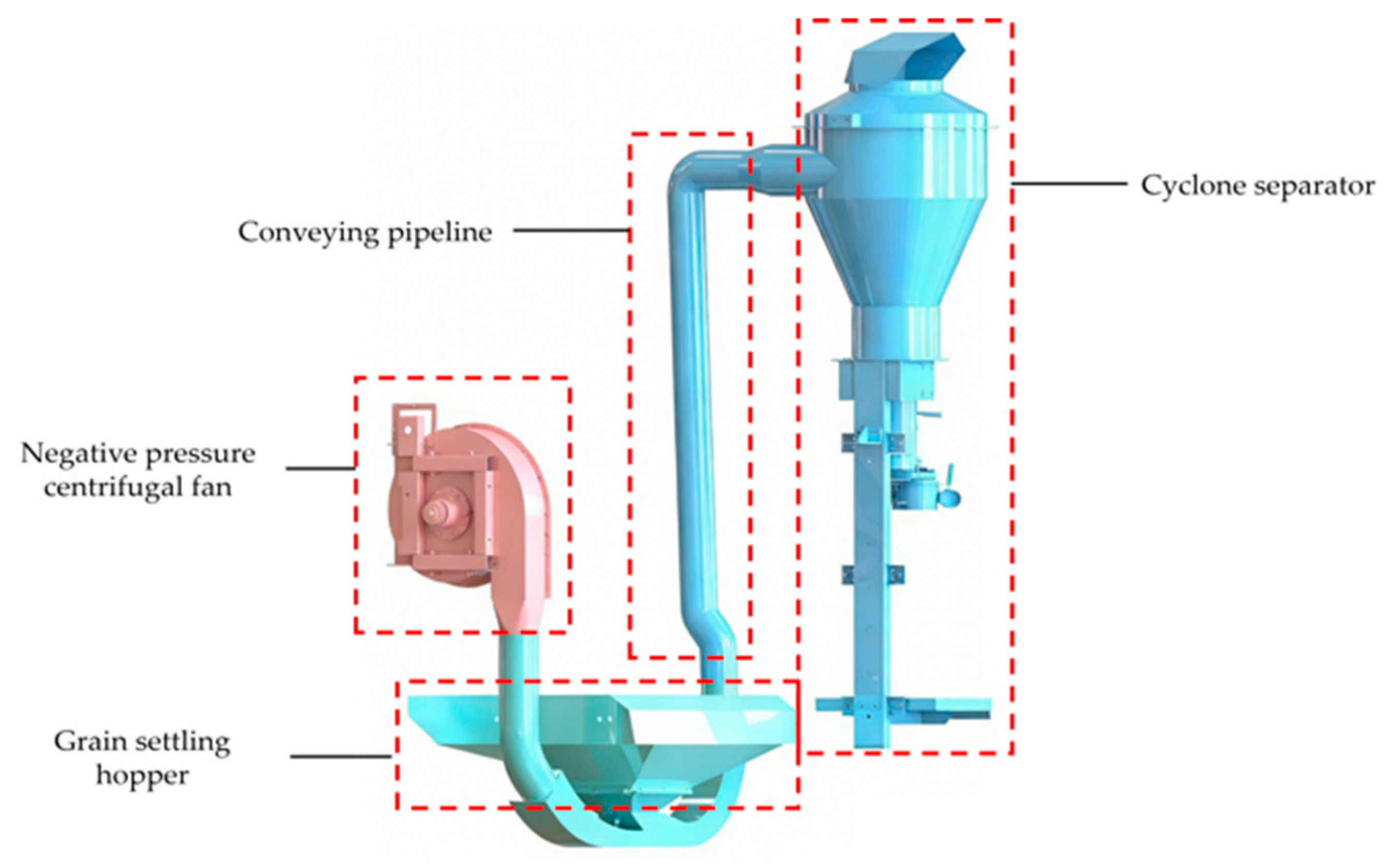
The designed cyclone separation self-cleaning system for wheat breeding plot combine harvesting mainly consists of a negative-pressure centrifugal fan, a conveying pipeline, a grain settling hopper, a cyclone separator, and other components. Its overall structure and composition are illustrated in Figure 1.
When the wheat breeding plot combine harvester is in operation, the cleaned wheat threshed materials fall into the grain settling hopper. As the negative-pressure centrifugal fan operates, the grains in the settling hopper are conveyed through the pipeline to the cyclone separator, where light impurities mixed with the grains are expelled from the machine, while the cleaned grains fall into the collection bag.

2.2. Research on Structural and Operational Parameters of Key Components in the Cyclone Separation Self-Cleaning System

Based on the working principle of the cyclone separation self-cleaning system, it is understood that the key components affecting the overall operational quality primarily include the negative-pressure centrifugal fan and the cyclone separator, both of which influence the separation of grains from impurities and the self-cleaning effectiveness. Therefore, it is essential to first conduct research on the structural and operational parameters of these two key components.

2.2.1. Research on Structural and Operational Parameters of Negative-Pressure Centrifugal Fans

The negative-pressure centrifugal fan is a key device responsible for conveying wheat grains from the grain settling hopper into the cyclone separator through the delivery pipeline [18]. Simultaneously, it serves as one of the core components for achieving further cleaning and self-cleaning. Therefore, the negative-pressure centrifugal fan is the central device in the cleaning and self-cleaning system of the wheat breeding plot combine harvester. After the wheat grains enter the cyclone separator under the action of the negative-pressure centrifugal fan, the residual fine impurities are expelled from the machine, completing the cleaning and self-cleaning operation of the grain settling hopper. The self-cleaning operation requires zero residual wheat grains in the grain settling hopper, with a self-cleaning time requirement of 12 s.
(1)
Overall Structure and Working Principle of the Negative-Pressure Centrifugal Fan
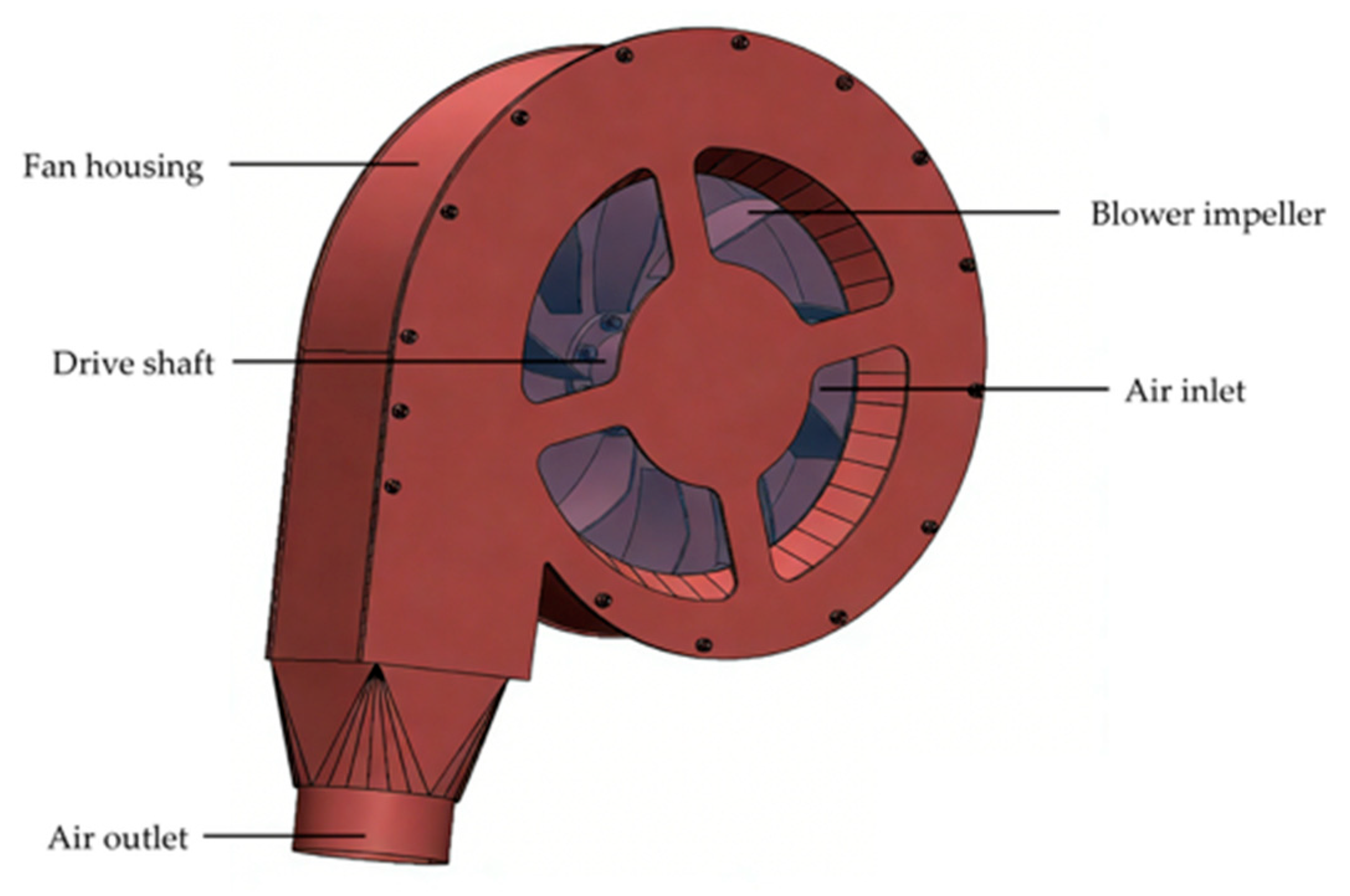
The negative-pressure centrifugal fan generally consists of key components such as the impeller, fan housing, drive shaft, air inlet, and air outlet. Its overall structure and composition are illustrated in Figure 2.
The blades of the negative-pressure centrifugal fan are fixed on the impeller, and the impeller is mounted on the drive shaft. When the drive shaft is driven to rotate, it causes the impeller and the fan blades to spin. This creates a pressure differential between the inside and outside of the fan housing, allowing external air to enter through the air inlet and form an airflow field. The airflow is then directed through the outlet toward the grain settling hopper, carrying wheat grains and fine impurities into the cyclone separator.
(2)
Design of Key Components for the Negative-Pressure Centrifugal Fan
From the overall structure and working principle of the negative-pressure centrifugal fan, it can be observed that the key components affecting its performance are the impeller and the fan blades. Therefore, it is necessary to conduct research on the structural and operational parameters of the impeller and the fan blades.
Research on Key Structural Parameters of the Negative-Pressure Centrifugal Fan Impeller and Blades
The impeller serves as the core mechanism of the negative-pressure centrifugal fan. Its rotation generates the airflow field, which directly affects the conveyance quality and efficiency of wheat grains [19]. The impeller of the negative-pressure centrifugal fan mainly consists of a hub disc and curved blades. Key structural design parameters of the impeller include: the inner and outer diameters of the impeller, blade width, blade chord length, blade center radius, number of blades, blade inclination angle, blade curvature radius, camber angle, and blade angles at the inner and outer circumferences of the impeller.
The curvature radius of the blade is related to the inner and outer radii of the impeller, as well as the magnitude of the blade angles at the inner and outer circumferences. Its calculation formula is:
R = R 2 2 R 1 2 2 ( R 2 cos β 2 R 1 cos β 1 )
where R is the curvature radius of the blade (mm); R 1 is the inner radius of the impeller (mm); R 2 is the outer radius of the impeller (mm); β 1 is the blade angle at the inner circumference of the impeller (°); β 2 is the blade angle at the outer circumference of the impeller (°).
The blade center radius is related to the outer diameter of the impeller, the curvature radius of the blade, and the magnitude of the blade angle at the outer circumference of the impeller. Its calculation formula is:
R p = D 2 0.25 + R D 2 ( R D 2 cos β 2 )
where R p is the radius of the blade center (mm); D 2 is the outer diameter of the impeller (mm).
The camber angle is related to the curvature radius of the blade, the radius of the blade center, and the sizes of the inner and outer radii of the impeller. Its calculation formula is:
φ = cos 1 R 2 + R p 2 R 2 2 2 R R p cos 1 R 2 + R p 2 R 1 2 2 R R p
where φ is the camber angle (°).
Based on the design specifications in agricultural machinery manuals [20], the fan was designed with the following parameters: impeller inner diameter D 1 = 105 mm, impeller outer diameter D 2 = 360 mm, blade width = 7 mm, blade angle at the inner circumference of the impeller = 90°, blade angle at the outer circumference = 25°, and number of blades = 16. Substituting these data into the respective calculation formulas yielded the following results: blade curvature radius R = 160 mm, blade center radius R p = 76 mm, camber angle φ = 44°, blade chord length C = 57 mm, and blade inclination angle δ = 87°.
Research on Airflow Rate and Air Velocity of Negative-Pressure Centrifugal Fan Based on Feeding Rate
Airflow rate and air velocity are the key core parameters of the negative-pressure centrifugal fan [21]. The airflow generated by the rotation of the blades carries wheat grains and fine impurities into the cyclone separator. Referring to research methods for the airflow rate and air velocity of cleaning fans, a study on the airflow rate and air velocity of the negative-pressure centrifugal fan was conducted.
Research on the airflow rate of the negative-pressure centrifugal fan was conducted based on the calculation formula for fan airflow rate:
V f = β Q μ ρ
where V f is the airflow rate of the negative-pressure centrifugal fan ( m 3 / s ); β is the impurity weight ratio; Q is the total feed rate ( k g / s ); μ is the air concentration ratio with impurities; ρ is the air density ( k g / m 3 ).
According to research on the mass proportion of various components in the wheat threshed materials entering the grain settling hopper, it was found that impurities accounted for 1.5% of the total material mass. With a total feed rate of 1.2 kg/s, an air concentration ratio containing impurities of 0.25, and an air density of 1.293 kg/m3, substituting these values into the above formula yielded the required fan airflow rate of 0.056 m3/s.
The air velocity at the outlet of the negative-pressure centrifugal fan is a key parameter affecting conveying efficiency. The air velocity of the negative-pressure centrifugal fan is related to the airflow rate, and their relationship is as follows:
v f = V f S f
where V f is the airflow velocity of the negative-pressure centrifugal fan (m/s); S f is the cross-sectional area of the outlet of the negative-pressure centrifugal fan (m2).
Among these, the cross-sectional area of the outlet is determined by the width and height of the fan, both designed to be 130 mm. Substituting the airflow rate into the equation yielded a fan air velocity of 3.30 m/s.
Research on Operational Parameters of Negative-Pressure Centrifugal Fans Based on Airflow Rate
Conduct research on the operational parameters of the negative-pressure centrifugal fan, where the calculation formula for the total pressure of the negative-pressure centrifugal fan is:
P q f = P j f + P d f
where P q f is the total pressure of the negative-pressure centrifugal fan (Pa); P j f is the static pressure of the negative-pressure centrifugal fan (Pa); P d f is the dynamic pressure of the negative-pressure centrifugal fan (Pa).
Wherein, the calculation formula for the static pressure of the negative-pressure centrifugal fan is:
P j f = μ f l f ρ v f 2 2 r s g + ψ ρ v f 2 2 g + λ ρ v f 2 2 g
where l f is the length of the suction channel of the negative-pressure centrifugal fan (mm); μ f is the friction factor of the airflow; r s is the hydraulic radius (mm);   ψ is the resistance coefficient of the channel to air; λ is the resistance coefficient of the inlet and outlet of the cleaning fan to air.
The formula for calculating the dynamic pressure of the negative-pressure centrifugal fan is:
P d f = ρ v f 2 2 g
Based on references and partial measurement tests [22], the designed length of the suction channel for the negative-pressure centrifugal fan was 120 mm. By substituting the parameters into the calculation formula, the total pressure P d f of the cleaning fan was determined to be 42 Pa.
The formula for calculating the rotational speed of the negative-pressure centrifugal fan is:
n f = 60 π D 2 P q f g ε ρ
where n f is the rotational speed of the cleaning fan (r/min); ε is the calculation coefficient.
Based on the range of the calculation coefficient, the fan speed can be determined to be between 1200 r/min and 1600 r/min.

2.2.2. Research on the Structure and Operational Parameters of Cyclone Separators

The cyclone separator is a key device for separating wheat grains from fine impurities [23], and it also serves as the core component for completing the final cleaning and self-cleaning processes. Therefore, the cyclone separator is the central unit in the cleaning and self-cleaning system of the wheat breeding plot combine harvester. After wheat grains enter the cyclone separator, the residual fine impurities are expelled from the machine, thereby accomplishing the cleaning and self-cleaning operation. The self-cleaning operation requires zero residual wheat grains inside the cyclone separator, with a self-cleaning time requirement of 12 s.
(1)
Overall Structure and Working Principle of Cyclone Separator
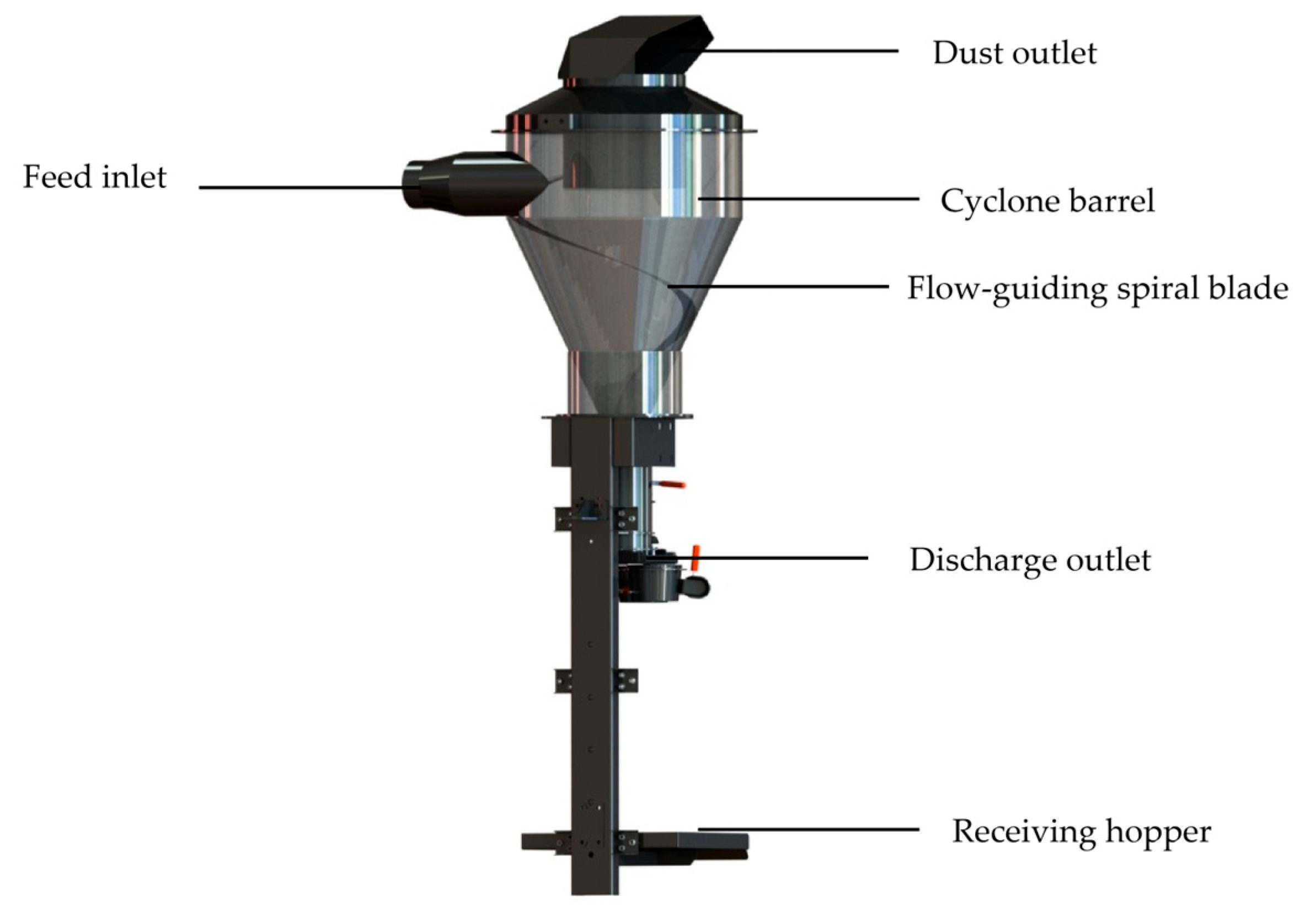
The cyclone separator mainly consists of key components such as the inlet, dust outlet, cyclone barrel, guide spiral blades, discharge outlet, and receiving hopper. Its overall structure and composition are illustrated in Figure 3.
During operation, wheat grains and fine impurities are transported by the negative-pressure centrifugal fan through the delivery pipeline to the inlet. After entering the cyclone separator, the wheat grains settle along the guide spiral blades fixed to the cylinder wall and are discharged into the seed collection bag through the outlet. Meanwhile, fine impurities, due to their suspension characteristics, move upward in the airflow field and are expelled from the machine through the dust removal port, achieving the final step of cleaning and self-cleaning.
(2)
Design of Key Components for Cyclone Separator
Based on the overall structure and working principle of the cyclone separator, it can be observed that the key components affecting its operational performance are the cylinder wall and the guide spiral blades. The interaction relationship between the structure of the guide spiral blades and the grains requires specific research. Therefore, this section focuses on studying the structural parameters of the cylinder wall, while the dimensions of the inlet, dust outlet, and discharge outlet also need to be designed.
Research on Key Structural Parameters of the Cylindrical Section of the Cyclone Separator Wall
The diameter of the cylindrical section of the cyclone separator wall is related to the airflow rate at the inlet, which is also tied to the airflow rate of the negative-pressure centrifugal fan. Therefore, the calculation formula for the diameter of the cylindrical section of the wall is:
R b = 2 V f v b π
where R b is the diameter of the cylindrical section of the wall (mm); v b is the airflow velocity in the cylindrical section of the wall (m/s).
The airflow velocity in the cylindrical section of the wall falls between the minimum separation velocity and the airflow velocity of the negative-pressure centrifugal fan. Through experimental analysis and calculations, a cylindrical section diameter R b in the range of 400–700 mm was sufficient to meet the requirements. Subsequent research can further refine the determination of the cylindrical section diameter.
Design of Inlet, Dust Outlet, and Discharge Outlet Dimensions
According to research on the dimensions of the negative-pressure centrifugal fan’s outlet, it can be inferred that the inlet size of the cyclone separator is identical to the fan’s outlet size, ensuring uniform material entry into the cyclone separator.
The dust outlet is designed in a circular shape, and its diameter is related to the airflow velocity at the outlet. The calculation formula is as follows:
R c = 2 V c v c π
where R c is the diameter of the dust outlet (mm); V c is the airflow rate at the dust outlet (m3/s); v c is the airflow velocity at the dust outlet (m/s).
Based on experimental analysis and calculations, a dust outlet diameter R c in the range of 290–320 mm can meet the requirements. Subsequent research can further refine the determination of the dust outlet diameter.
The discharge outlet is designed in a circular shape, and its diameter is related to the airflow rate and velocity at the discharge outlet. The calculation formula is:
R l = 2 V l v l π
where R l is the diameter of the discharge outlet (mm); V l is the airflow rate at the discharge outlet (m3/s); v l is the airflow velocity at the discharge outlet (m/s).
Based on experimental analysis and calculations, a discharge outlet diameter R l in the range of 120–135 mm can meet the requirements. According to the dimensional design specifications of the cylinder wall, the diameter of the discharge outlet should be as large as possible. Therefore, the discharge outlet diameter was designed to be 135 mm.
Research on Spiral Guide Blades Based on Dynamics and Fluid Mechanics
The cleaned wheat threshed material is blown into the cyclone separator by the negative-pressure centrifugal fan and moves under the influence of forces within the airflow field inside the cyclone separator. The gas–solid coupling relationship is related to the volume entering the cyclone separator. The volume of wheat threshed material blown into the cyclone separator per second was less than 10% of the volume of the airflow field inside the cyclone separator, which qualifies as a dilute-phase flow. Since the function of the cyclone separator is to separate wheat grains from fine impurities, and the proportion of fine impurities is relatively small and will be expelled from the machine through the cyclone separator, only the forces and motion of wheat grains within the airflow field of the cyclone separator need to be studied. The spiral guide blades are the key structure affecting the forces and motion of wheat grains, and their parameters also influence the operational performance of the cyclone separation self-cleaning system.
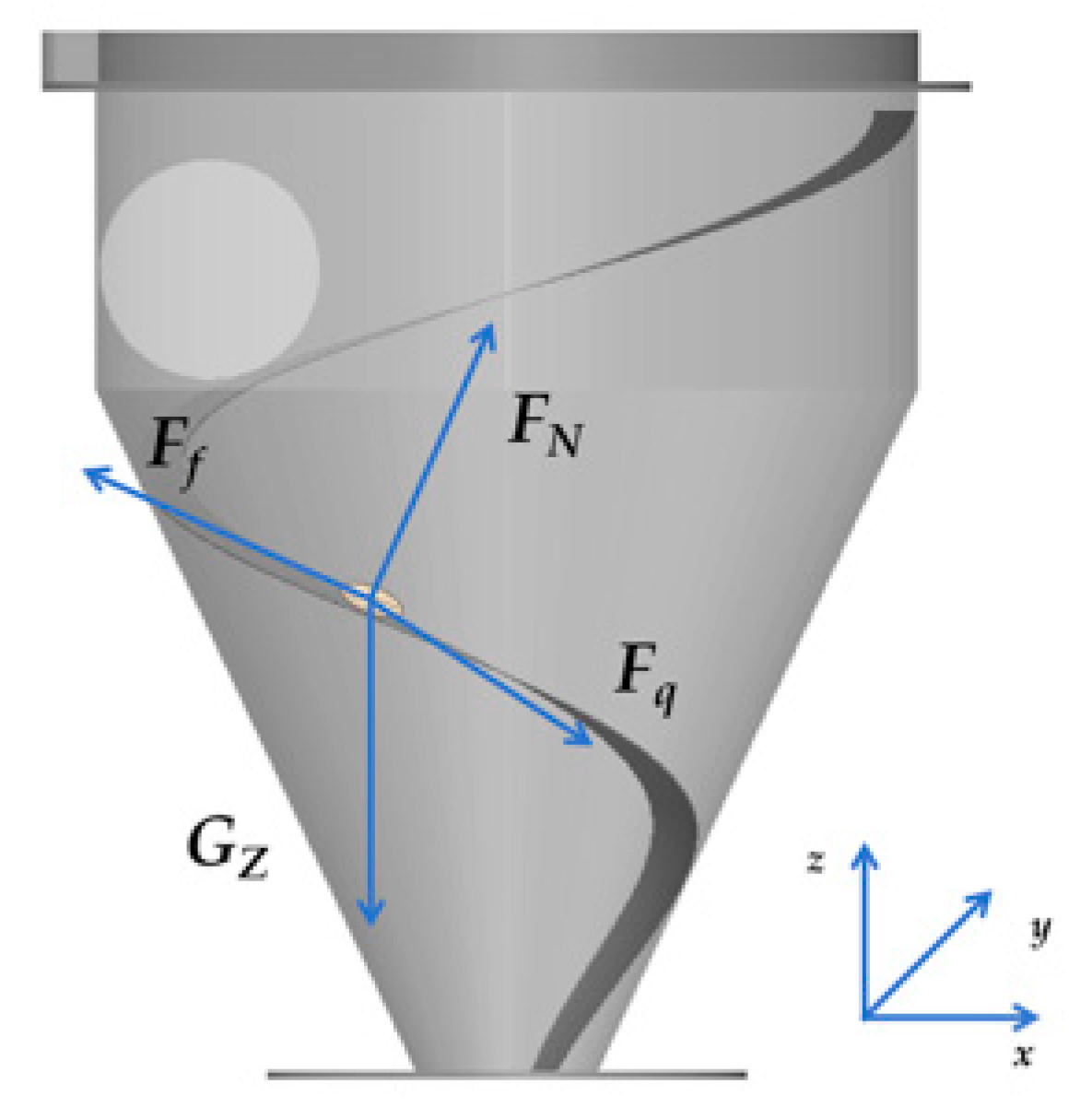
Research was conducted on the forces acting on wheat grains on the spiral guide blades, neglecting forces with smaller and variable magnitudes such as lift, buoyancy, and inertial forces. A three-dimensional Cartesian coordinate system was established, and force and motion analyses were performed within this coordinate system, as shown in Figure 4.
According to the figure above, the force equation for wheat grains on the spiral guide blades is:
F l = F q + F N + F f + G z
where F l is the resultant force acting on the wheat grains on the spiral guide blades (N); F q is the aerodynamic force acting on the wheat grains on the spiral guide blades (N); F N is the normal force acting on the wheat grains on the spiral guide blades (N); F f is the frictional force acting on the wheat grains on the spiral guide blades (N); G z is the gravitational force acting on the wheat grains on the spiral guide blades (N).
F q = 0.22 π r z 2 ρ z v q 2
where r z is the radius of the wheat grains (mm); ρ z is the density of the wheat grains (mm); v q is the relative velocity of the wheat grains to the airflow (m/s).
Wherein, the relative velocity of the wheat grains to the airflow
v q = v j v t
where v j is the absolute velocity of the airflow inside the cyclone separator (m/s); v t is the velocity at which the wheat grains are blown into the cyclone separator (m/s).
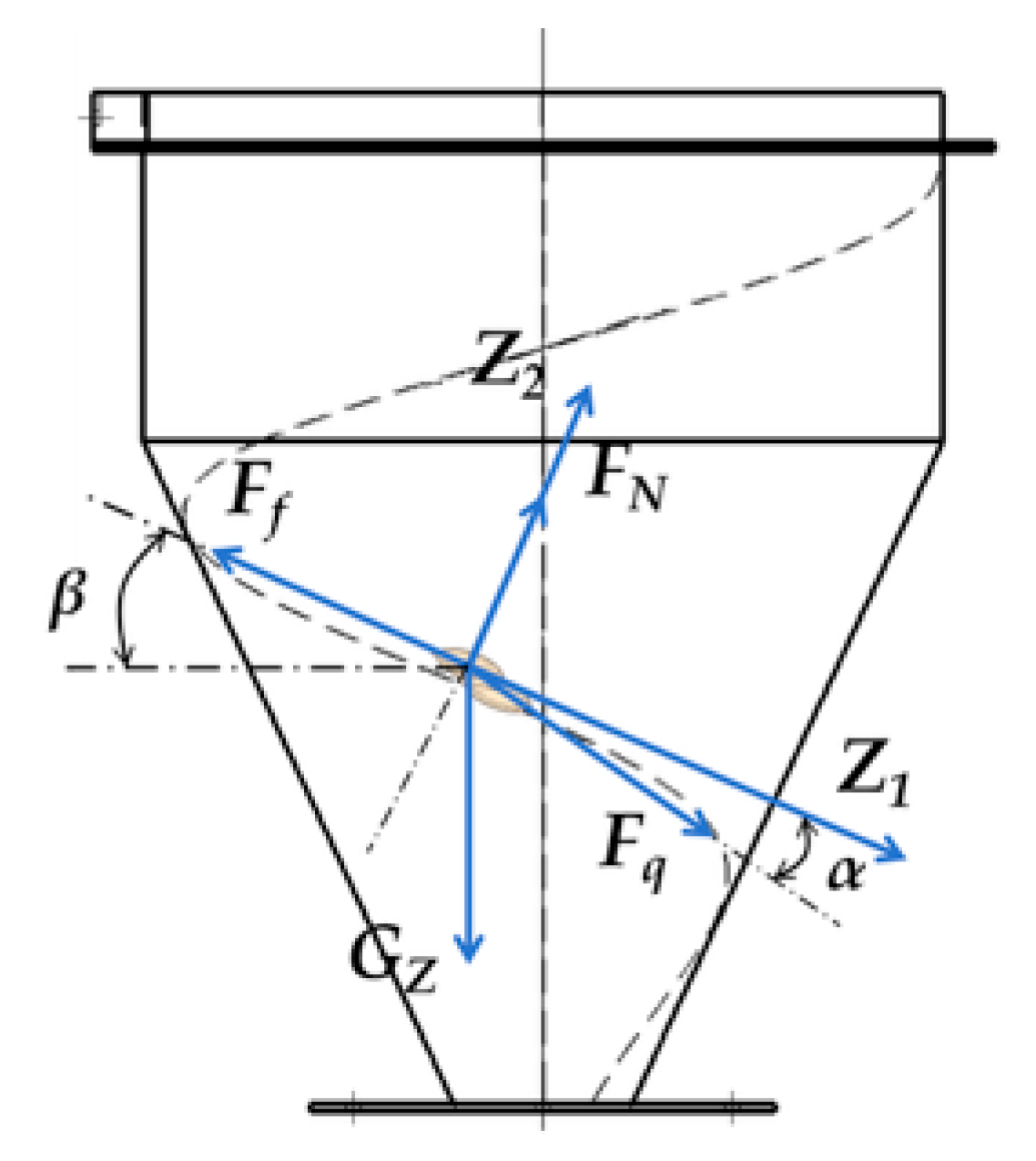
Within the vertical plane of the cyclone separator, wheat grains on the spiral guide blades are subjected to the influence of the airflow field and their own gravity, forming a downward trajectory. To ensure smooth movement toward the discharge outlet, a resultant force directed downward along the inclined surface of the blade must act on the wheat grains on the spiral guide blades. The force analysis of wheat grains on the spiral guide blades in the vertical plane is illustrated in Figure 5.
Establish the x-axis along the tangent to the wheat grains on the spiral guide blades and the y-axis perpendicular to the x-axis direction. Set up a planar Cartesian coordinate system with the center of mass of the wheat grains as the origin O.
By conducting a static analysis on the wheat grains located on the spiral guide blades, the static equilibrium equation was obtained as follows:
F q cos β + G z sin α F f
G z cos α + F q sin β F N
where β is the angle between the aerodynamic force and the tangent direction of the spiral guide blade (°); α is the helix angle of the spiral guide blade (°).
Combining the above equations and simplifying the calculation yields:
F q ( cos β μ z sin β ) G z μ z cos α sin α
The static friction coefficient between the spiral guide blades and wheat grains is 0.58. Substituting the respective parameters into the above equation and simplifying yields:
0 α 0.15 π + 2 k π
The calculation formula for the key structural dimensions of the spiral guide blades is:
S = π D tan α
where S is the pitch of the spiral guide blade (mm); D is the diameter of the spiral guide blade (mm).
Based on the dimensions of the key components of the cyclone separator and combined with the calculation formulas for the key structural dimensions of the spiral guide blades, the structural dimensions of the three segments of the spiral guide blades were calculated. The pitches of the three segments were 520 mm, 560 mm, and 1000 mm, respectively; the heights were 0 mm, 490 mm, and 685 mm, respectively; and the diameters were 590 mm, 580 mm, and 400 mm, respectively.
The parameter ranges of the cyclone separation cleaning and self-cleaning system derived from theoretical calculations—cylindrical section diameter of 400–700 mm, dust outlet diameter of 290–320 mm, and fan speed of 1200–1600 r/min—define the feasible design space for achieving the target self-cleaning rate of 100% and self-cleaning time ≤ 12 s. Subsequent experiments will further optimize the key parameters of the system to determine the optimal values that meet the operational quality requirements of breeding plot harvesting.

3. Materials and Methods

Based on the design research conducted on the key parameters of the negative-pressure centrifugal fan and the cyclone separator, some critical structural and operational parameters or their value ranges were determined. However, relying solely on a single calculation-based design approach makes it difficult to verify the rationality of the design and assess its operational effectiveness. Therefore, it is necessary to design and fabricate a test bench for the cyclone separation self-cleaning system to carry out bench tests. This will further refine the values of the key parameters and enhance the operational quality and efficiency of the cyclone separation self-cleaning system for wheat breeding plot combine harvesting.

3.1. Design of the Cyclone Separation Self-Cleaning System Test Bench

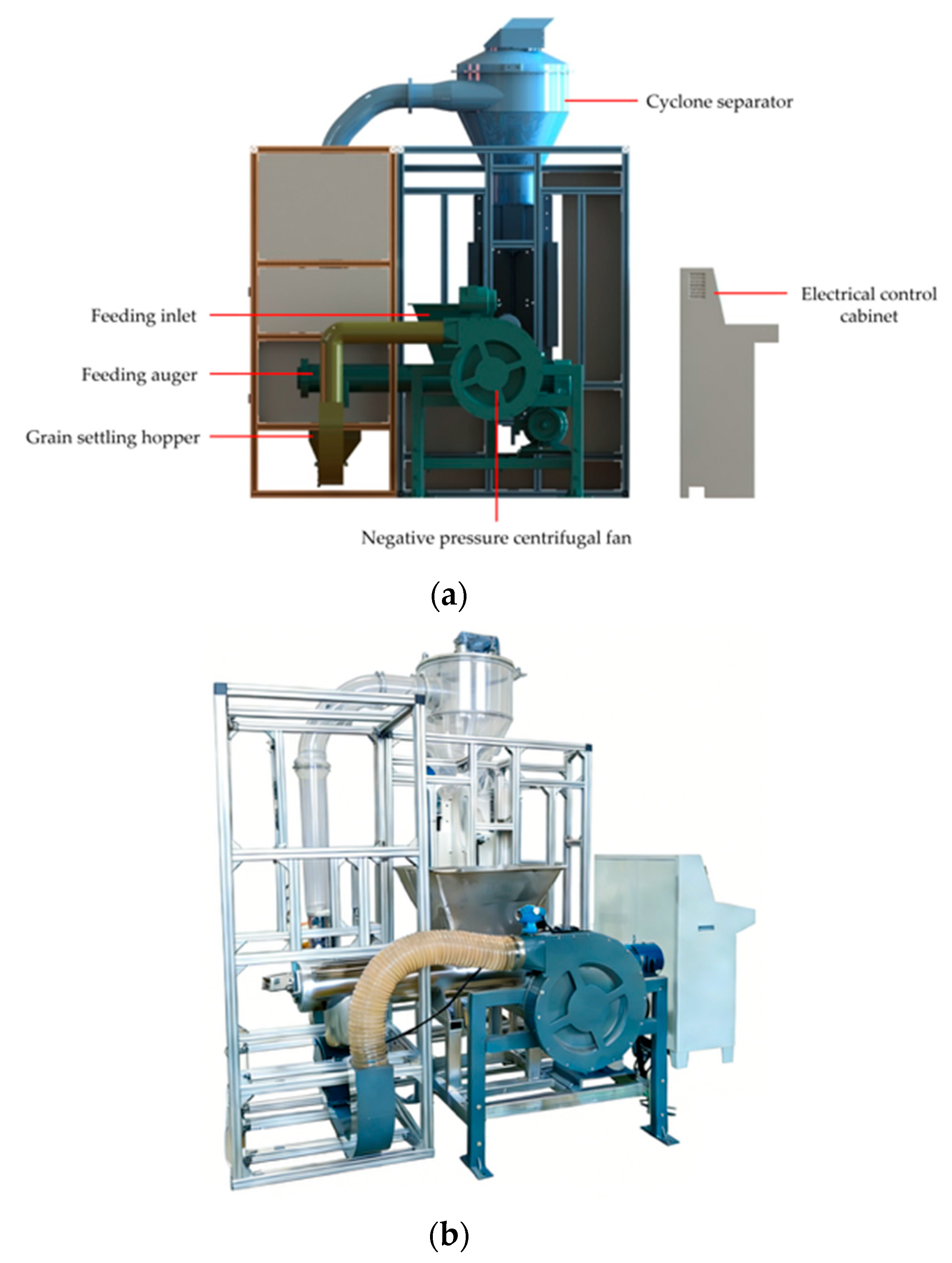
Based on the design research regarding the structural and operational parameters of key components in the cyclone separation self-cleaning system, the reasonable parameter ranges for the diameter of the cylindrical section of the cyclone separator wall, the diameter of the dust outlet, and the rotational speed of the negative-pressure centrifugal fan were determined. To enhance the operational performance of the cyclone separation self-cleaning system, a test bench for the system was designed, focusing on these three key parameters: the diameter of the cylindrical section of the cyclone separator wall, the diameter of the dust outlet, and the rotational speed of the negative-pressure centrifugal fan. The design is illustrated in Figure 6.

3.2. Bench Test Plan for Cyclone Separation Self-Cleaning System

3.2.1. Test Materials and Equipment

Test materials: Yannong 999 (Yantai Academy of Agricultural Sciences, Yantai, China), with moisture content consistent with actual harvest conditions, grain moisture content at 15.4% ± 2%.
Test Equipment: Cyclone separation self-cleaning system test bench, stopwatch, electronic scale.
The cyclone separation self-cleaning system test bench was equipped with the following sensors and measurement instruments:
Airflow Velocity Measurement: Airflow velocity at the outlet of the negative-pressure centrifugal fan and the inlet of the cyclone separator was measured using a hot-wire anemometer (TES Electrical Electronic Corp, Taibei, Taiwan) (Model TES-1341, measurement range 0–30 m/s, accuracy ±3% ±0.015 m/s). Three points evenly spaced across the cross-section were selected for measurement, and the average value was recorded.
Rotational Speed Measurement: A non-contact tachometer (Qingdao Top Technology Instruments Co., Ltd., Qingdao, China) (Model DT-2234C, measurement range 2.5–99,999 r/min, accuracy ±0.05% + 1 digit) was used to monitor the rotational speed of the negative-pressure centrifugal fan. Speed verification was performed before each test, and adjustments were made via the electronic control system.
Mass Measurement: An electronic balance (Shanghai Sunny Hengping Scientific Instrument Co., Ltd., Shanghai, China) (Model JA5003, measurement range 0–500 g, accuracy ±0.001 g) was used to weigh the wheat seed samples and impurities.
Data Acquisition: All measurement data were manually recorded during each test. Each test was repeated three times, and the average values were calculated and reported. The test bench was calibrated by conducting no-load tests prior to the experiments to verify baseline airflow and pressure conditions.

3.2.2. Test Plan and Methodology

Calibration procedure: Before conducting the formal tests, the following calibration steps were performed:
A hot-wire anemometer was calibrated using a standard pitot tube at five airflow velocity points (0, 5, 10, 15, 20 m/s) to verify its accuracy.
A tachometer was calibrated using a standard frequency generator to ensure the accuracy of rotational speed measurements.
Before each test, an electronic balance was calibrated using standard weights (10 g, 50 g, 100 g, 200 g, 500 g).
Before data collection, the test bench was operated under each parameter setting for 30 s to stabilize the airflow conditions.
Test Date: 10 June 2024.
Test Location and Environment: Qingdao Plantech Machanical Technology Co., Ltd., Qingdao, China, temperature 29 °C.
Test Plan: Based on the research and analysis of the cyclone separation self-cleaning system, the test factors selected for this experiment were the diameter of the cylindrical section of the cyclone separator wall, the diameter of the dust outlet, and the rotational speed of the negative-pressure centrifugal fan. Additionally, the self-cleaning rate, self-cleaning time, loss rate, and impurity rate were selected as the test indicators. The focus was on determining appropriate value ranges for the three test factors—diameter of the cylindrical section of the cyclone separator wall, diameter of the dust outlet, and rotational speed of the negative-pressure centrifugal fan. Single-factor experiments were conducted for each factor to analyze their influence trends on self-cleaning rate, self-cleaning time, loss rate, and impurity rate, and to explore the interactive effects of the three test factors on these indicators.
(1)
Influence of Cylindrical Section Diameter on Self-Cleaning Rate, Self-Cleaning Time, Impurity Rate, and Loss Rate
When studying the influence of the cylindrical section diameter on the self-cleaning rate, self-cleaning time, impurity rate, and loss rate of the cyclone separation self-cleaning system, the first step is to determine the values of the test factors for the dust outlet diameter and the rotational speed of the negative-pressure centrifugal fan. The dust outlet diameter was set to 300 mm, and the rotational speed of the negative-pressure centrifugal fan was set to 1300 r/min. Based on previous research, the cylindrical section diameter was selected within the range of 400–700 mm, with an interval of 50 mm between each test group. For measuring the self-cleaning rate, the time was set to 12 s, and the self-cleaning rate was recorded. When measuring the self-cleaning time, the time at which the self-cleaning rate reached 100% was recorded, i.e., the moment when no more wheat threshed material was expelled from the machine. If the time exceeded 20 s, no further recording was conducted. Since no specific national standards currently exist for wheat plot combine harvesters in China, this experiment adhered to the requirements of “NY/T 995-2025 Operating quality for grain combine harvester” [24] for grain impurity rate and grain loss rate as test indicators. By measuring the mass of wheat grains and light impurities in the collection device, the grain impurity rate and loss rate were calculated. The average of three random sampling measurements was taken as the test result.
The calculation method for the grain loss rate Y 3 is as follows:
Y 3 = M z 3 M z 2 + M z 3 × 100 %
where M z 2 is the mass of collected grains (kg); M z 3 is the mass of grains expelled from the machine (kg).
The calculation method for grain impurity rate Y 4 is as follows:
Y 4 = M z 1 M z 1 + M z 2 × 100 %
where M z 1 is the mass of impurities in the collected grains (kg).
(2)
Effect of Dust Outlet Diameter on Self-Cleaning Rate, Self-Cleaning Time, Loss Rate, and Impurity Rate
When studying the impact of the dust outlet diameter on the self-cleaning rate, self-cleaning time, loss rate, and impurity rate of the cyclone separation self-cleaning system, the first step is to determine the values of the test factors: the diameter of the cylindrical section of the wall and the rotational speed of the negative-pressure centrifugal fan. The diameter of the cylindrical section of the wall was set to 500 mm, and the rotational speed of the negative-pressure centrifugal fan was set to 1300 r/min. Based on previous research, the dust outlet diameter was selected within the range of 290–320 mm, with an interval of 5 mm between each test group. The methods for measuring self-cleaning rate, self-cleaning time, loss rate, and impurity rate were consistent with those described above.
(3)
Effect of Negative-Pressure Centrifugal Fan Speed on Self-Cleaning Rate, Self-Cleaning Time, Loss Rate, and Impurity Rate
When studying the impact of the rotational speed of the negative-pressure centrifugal fan on the self-cleaning rate, self-cleaning time, loss rate, and impurity rate of the cyclone separation self-cleaning system, the first step is to determine the values of the test factors: the diameter of the cylindrical section of the wall and the diameter of the dust outlet. The diameter of the cylindrical section of the wall was set to 500 mm, and the diameter of the dust outlet was set to 300 mm. Based on previous research, the rotational speed of the negative-pressure centrifugal fan was selected within the range of 1200–1600 r/min, with an interval of 50 r/min between each test group. The methods for measuring the self-cleaning rate, self-cleaning time, loss rate, and impurity rate are consistent with those described above.
(4)
Multi-factor Box–Behnken Experimental Design for Cyclone Separation Self-Cleaning System
After completing the single-factor experiments, the results were analyzed. The three test factors—cylindrical section diameter, dust outlet diameter, and negative-pressure centrifugal fan speed—were selected. Based on the analysis results of the completed single-factor experiments, three levels were chosen for each influencing factor.
To reveal the multivariate nonlinear effects of the three test factors (cylindrical section diameter, dust outlet diameter, and negative-pressure centrifugal fan speed) on the self-cleaning rate, self-cleaning time, loss rate, and impurity rate, the experiment was designed based on the Box–Behnken Design (BBD). Linear regression equations and response surface models were constructed to analyze the data.
(5)
Bench Test Validation Experiment
After completing the multi-factor Box-Behnken experiments, the corresponding parameters of the cyclone separation self-cleaning system were adjusted based on the obtained optimal parameter combination. Validation experiments were conducted, consisting of 10 replicate tests. The methods for measuring the self-cleaning rate, self-cleaning time, loss rate, and impurity rate remained consistent with those described above, and the average values were calculated.
To ensure the reliability of the experimental results, measurement uncertainties were evaluated. The maximum relative uncertainties were ±2.8% for airflow velocity, ±0.1% for rotational speed, ±0.1% for grain sample mass measurement, and ±0.02% for impurity sample mass measurement. All reported results are the mean of three replicate tests, and standard deviations were calculated to ensure data reliability.

4. Results and Discussion

4.1. Effects of Cylindrical Section Diameter on Self-Cleaning Rate, Self-Cleaning Time, Loss Rate, and Impurity Rate

The bench test protocol was followed, and the results of the single-factor experiments are presented in Table 1:
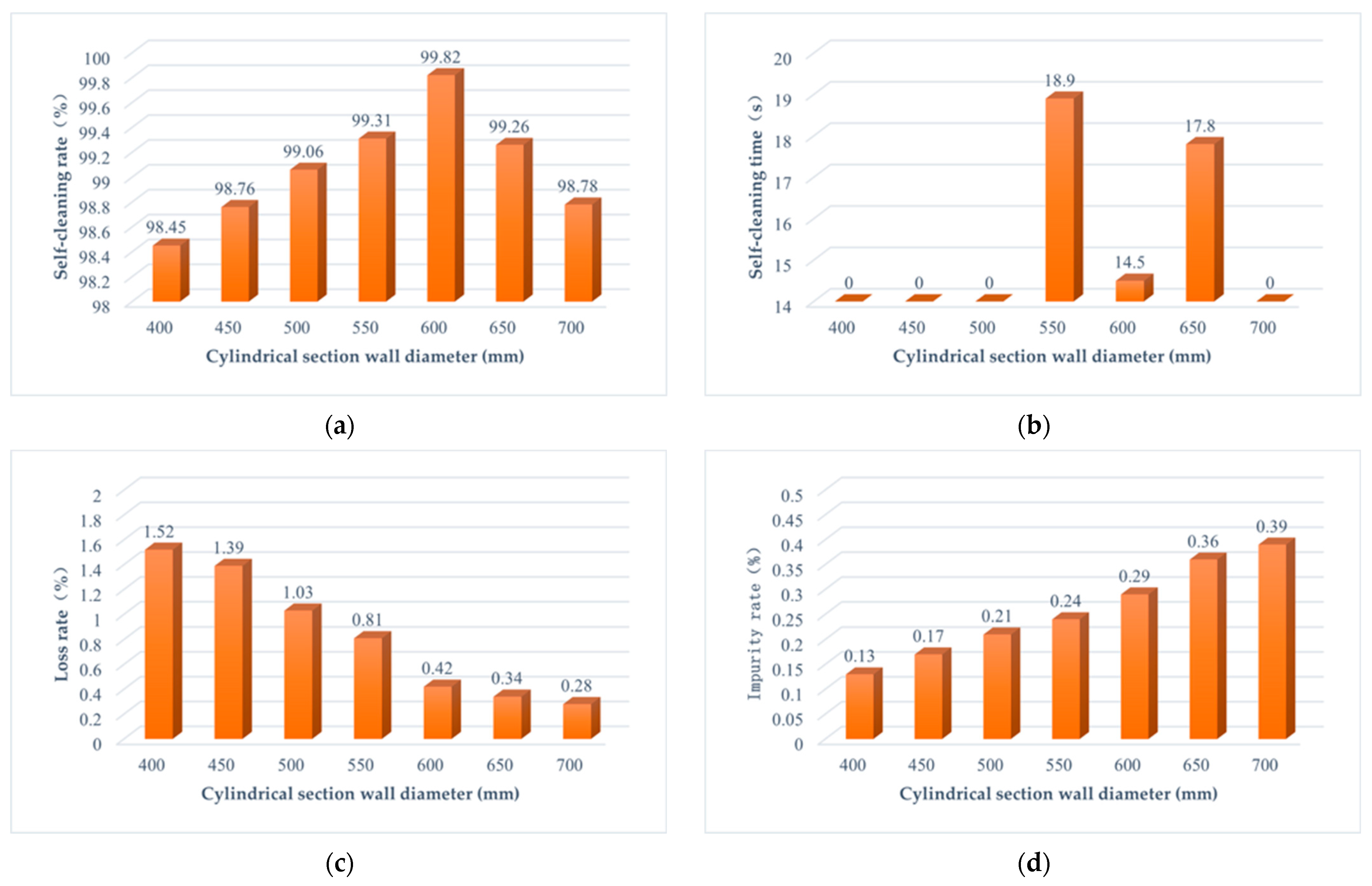
To visually illustrate the changes in self-cleaning rate, self-cleaning time, loss rate, and impurity rate with respect to the cylindrical section diameter, bar charts depicting these parameters as functions of the cylindrical section diameter were generated, as shown in Figure 7. As shown in Figure 7a,b, when the cylindrical section diameter of the cyclone separator was designed to be 600 mm, the self-cleaning rate reached 99.82%, and the self-cleaning time was reduced to 14.5 s. Figure 7c,d reveals that as the cylindrical section diameter increased, the grain loss rate decreased from 1.52% to 0.28%, while the impurity content increased from 0.13% to 0.39%.
Analysis of the experimental results indicates that the diameter of the cylindrical section directly influences the centrifugal force and airflow field distribution during cyclone separation. When the diameter is less than 500 mm, the smaller rotational radius generates stronger centrifugal force, resulting in better separation of grains from light impurities and thus a relatively low impurity content. However, the limited space leads to increased airflow velocity, which can blow some grains out of the machine, thereby increasing the loss rate. When the diameter ranges from 550 mm to 600 mm, the airflow field inside the cylinder stabilizes, providing sufficient space for grains to settle along the spiral guide blades while maintaining adequate centrifugal force. This balance achieves a self-cleaning rate of 99.82% and reduces the loss rate to 0.42%. When the diameter exceeds 650 mm, the centrifugal force weakens due to the larger diameter, reducing separation efficiency. As a result, impurities are not sufficiently blown out of the machine, and the impurity content increases to 0.39%. These findings demonstrate that optimizing the cylindrical section diameter effectively balances centrifugal separation efficiency and grain settling stability while also ensuring favorable self-cleaning performance of the system.

4.2. Effect of Dust Outlet Diameter on Self-Cleaning Rate, Self-Cleaning Time, Loss Rate, and Impurity Rate

Following the bench test plan, the results of the single-factor experiments are presented in Table 2.
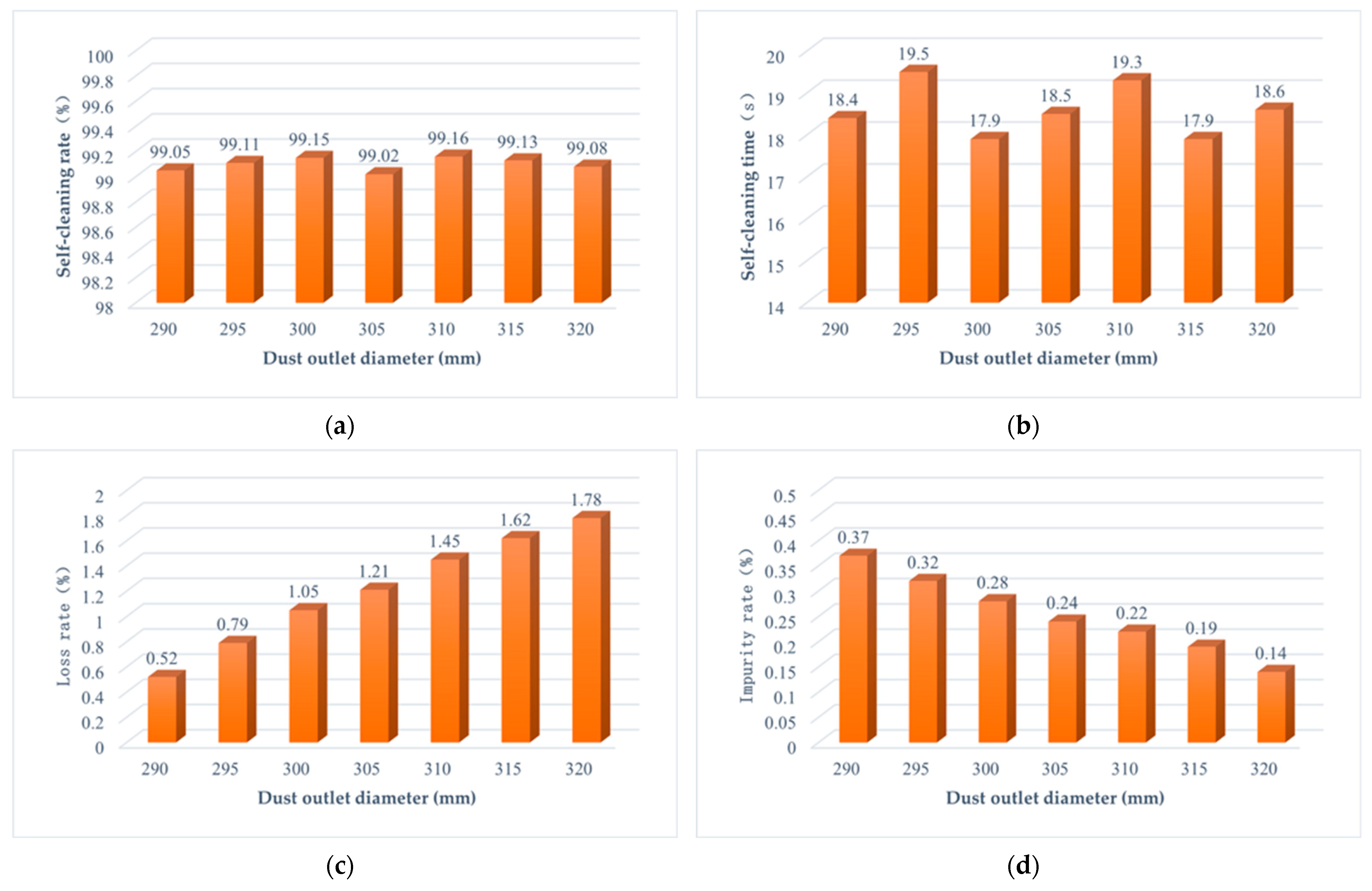
To visually illustrate the changes in self-cleaning rate, self-cleaning time, loss rate, and impurity rate with respect to the dust outlet diameter, bar charts depicting these parameters as functions of the dust outlet diameter were created, as shown in Figure 8. As shown in Figure 8a,b, when the dust outlet diameter was adjusted from 290 mm to 320 mm, the system’s self-cleaning rate remained generally above 99%, and the self-cleaning time was essentially stable within 20 s. It can be observed from Figure 8c,d that as the dust outlet diameter increased, the grain loss rate rose from 0.52% to 1.78%, while the impurity content decreased from 0.37% to 0.14%. Analysis of the experimental results suggests that the change in dust outlet diameter directly influences the outlet airflow velocity and pressure distribution inside the cyclone separator. When the dust outlet diameter was in the range of 290–300 mm, the gas-locking capacity of the cyclone separation cylinder was enhanced, suppressing the secondary entrainment of grains and thereby keeping the loss rate within a lower range of 0.52–1.52%. However, simultaneously, the airflow within the cyclone cylinder also caused light impurities to become mixed within the complex flow field, preventing timely discharge and resulting in a relatively higher impurity content range of 0.37–0.28%. When the dust outlet diameter was increased to 305–320 mm, the smoothness of impurity discharge within the cyclone cylinder improved. The circulation and mixing path of light impurities inside the cylinder was disrupted, allowing impurities to be more easily blown out, thus reducing the impurity content of the harvested grains. Nevertheless, with the increase in dust outlet diameter, airflow disturbance intensified. This caused some already settled wheat grains to be re-suspended and carried away by the airflow along with light impurities, leading to an increase in the loss rate to 1.78%. Therefore, optimizing the dust outlet diameter requires balancing the capacity for light impurity discharge with the minimization of grain loss.

4.3. Effect of Negative-Pressure Centrifugal Fan Speed on Self-Cleaning Rate, Self-Cleaning Time, Loss Rate, and Impurity Rate

Following the bench test plan, the results of the single-factor experiments are presented in Table 3.
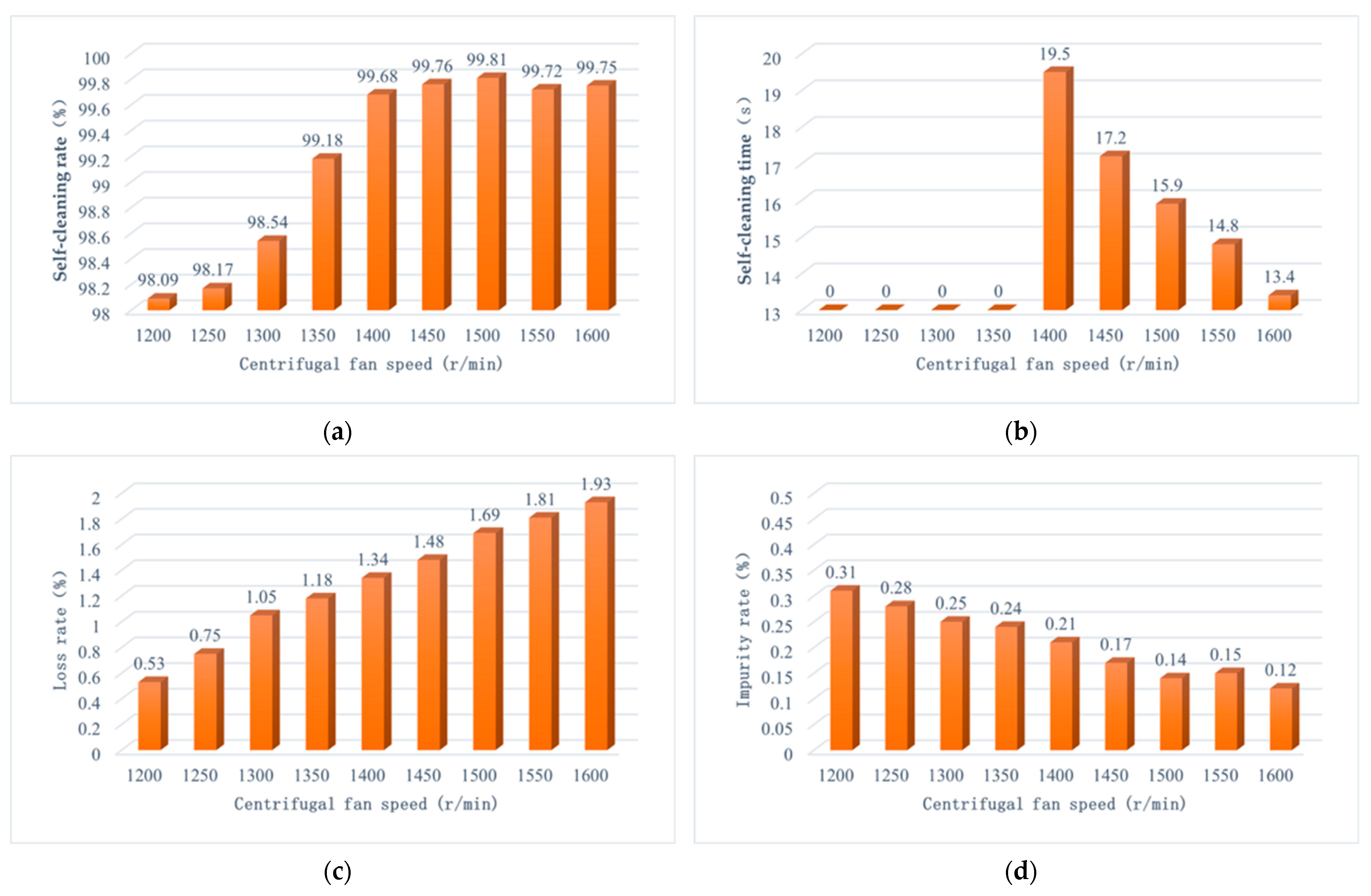
To visually illustrate the changes in self-cleaning rate, self-cleaning time, loss rate, and impurity rate with respect to the rotational speed of the negative-pressure centrifugal fan, bar charts depicting these parameters as functions of the rotational speed were generated, as shown in Figure 9. It can be observed from Figure 9a,b,d that when the rotational speed of the negative-pressure centrifugal fan was increased from 1200 r/min to 1500 r/min, the self-cleaning rate rose from 98.09% to 99.81%, the self-cleaning time was shortened from 19.5 s to 15.9 s, and the impurity content decreased from 0.31% to 0.14%. However, as shown in Figure 9c, the grain loss rate during the cleaning process also increased with increasing fan speed, rising from 0.53% to 1.69%.
Analysis of the experimental results indicates that the rotational speed of the negative-pressure centrifugal fan directly affects the airflow velocity and turbulence intensity within the cleaning system. At fan speeds of 1200–1300 r/min, the airflow velocity was relatively low, resulting in weak grain conveying power. Consequently, some grains remained in the grain drop box or conveying pipeline, leading to grain residue inside the machine and affecting the self-cleaning rate. When the speed reached 1400–1500 r/min, the airflow velocity increased to 3.5–4.0 m/s. At this point, the centrifugal force within the cyclone separation device was enhanced, leading to a more thorough separation of light impurities and grains. This reduced the impurity content to 0.14%, achieved a faster separation speed with good effectiveness, and increased the self-cleaning rate to 99.81%. However, the higher airflow velocity also intensified the turbulence within the cyclone separation device, causing some already settled grains to be re-entrained by the airflow and expelled from the machine along with impurities, thereby increasing the loss rate. This demonstrates that optimizing the rotational speed of the negative-pressure centrifugal fan requires balancing conveying efficiency with the stability of the cleaning separation process.

4.4. Multi-Factor Box-Behnken Test Results for the Operation of the Cyclone Separation Self-Cleaning System

Based on the agronomic requirements for wheat breeding plot combine harvesting, the ranking of importance for each indicator was: self-cleaning rate > loss rate > impurity rate > self-cleaning time. Combining the results and data analysis from the single-factor experiments on the operation of the cyclone separation self-cleaning system, a multi-factor Box–Behnken test plan was developed. The levels for each factor are presented in Table 4.
The statistical analysis was performed using Design-Expert software (version 13). Analysis of variance was employed to evaluate the significance of each factor and their interactions. Model goodness-of-fit was assessed using predicted R2, adjusted R2, and lack-of-fit tests. Regression coefficients and their 95% confidence intervals were calculated to quantify the effects of the variables. All statistical tests were conducted with a significance level of α = 0.05.
Bench tests were conducted according to the levels of cylindrical section diameter, dust outlet diameter, and negative-pressure centrifugal fan speed specified in Table 4. The test results are presented in Table 5.
Based on the single-factor experimental results and analysis of how the cylindrical section diameter of the wall, the dust outlet diameter, and the negative-pressure centrifugal fan speed affect the self-cleaning rate, self-cleaning time, loss rate, and impurity rate, a Box–Behnken design (BBD) test was conducted to study the response surfaces of the interactions AB, AC, and BC. This approach allows for a scientific investigation into the significance of the effects of the cylindrical section diameter of the wall, the dust outlet diameter, and the negative-pressure centrifugal fan speed on the self-cleaning rate, self-cleaning time, loss rate, and impurity rate.
(1)
Self-Cleaning Rate Regression Coefficients and Significance Analysis
Based on the bench test results, regression coefficient and significance analysis of the self-cleaning rate were conducted, as shown in Table 6:
An analysis of the test results in Table 6 showed that p = 0.0002 < 0.05, indicating highly significant results. The lack-of-fit test yielded a p-value of 0.2480 (>0.05), indicating that the model adequately fit the experimental data and no significant systematic error existed. The regression equation for the self-cleaning rate demonstrated a good fit, with a predicted R2 of 0.817 and an adjusted R2 of 0.925, indicating that the model could effectively analyze and predict the self-cleaning rate indicator. As can be seen from the table, the p-values for C, AC, A2, and C2 were all less than 0.05, which suggests that these four regression terms, including the AC interaction term, had a significant impact on the self-cleaning rate.
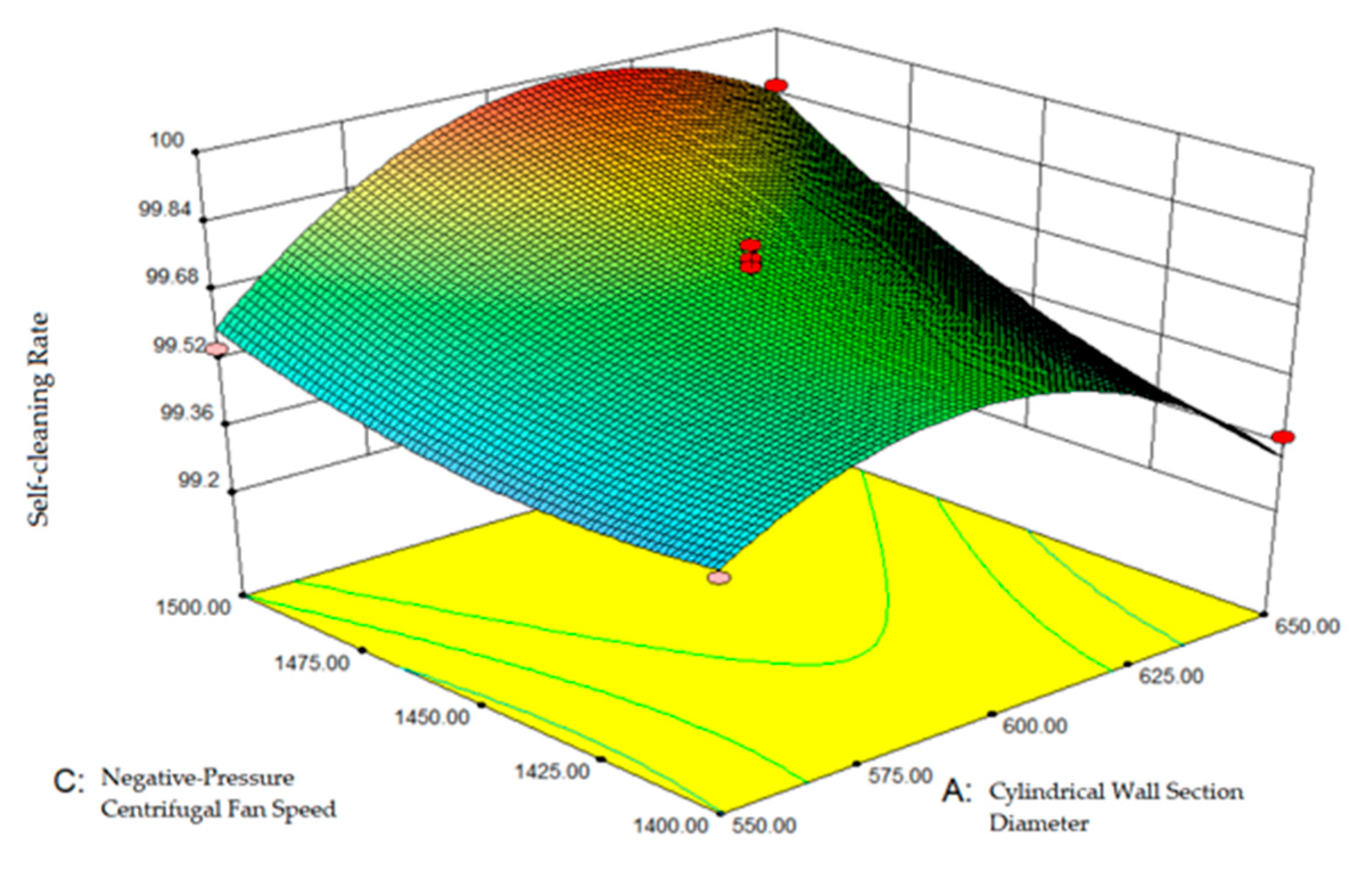
The interaction effect of AC on the self-cleaning rate reflects the coupling relationship between the flow field space (cylinder diameter) and energy input (fan speed). When the cyclone separator cylinder diameter was 550 mm, the limited space concentrated the energy; increasing the fan speed enhanced the separation effect, but excessive speed induced turbulence and led to grain re-entrainment. When the cylinder diameter was 650 mm, the expanded space dispersed the energy, requiring a higher fan speed to maintain the necessary centrifugal force. At A = 600–620 mm and C = 1450–1500 r/min, the flow field space and energy input achieved synergy, constituting the optimal balance interval for performance.
Based on the significance analysis and response surface of the self-cleaning rate, as shown in Figure 10. It can be observed that within the range of 290–300 mm, the dust outlet diameter had no significant effect on the self-cleaning rate, nor did it exhibit significant interaction with the cylindrical section diameter of the wall or the negative-pressure centrifugal fan speed. In contrast, the rotational speed of the negative-pressure centrifugal fan had a highly significant impact on the self-cleaning rate and showed interaction with the cylindrical section diameter of the wall. Analyzing the AC interaction response surface with a dust outlet diameter of 295 mm revealed that when both the cylindrical section diameter of the wall and the rotational speed of the negative-pressure centrifugal fan increased, the self-cleaning rate first gradually rose and then declined. Similarly, when the cylindrical section diameter of the wall increased while the rotational speed of the negative-pressure centrifugal fan decreased, the self-cleaning rate also first increased and then decreased, but with a more pronounced declining trend. Therefore, the ranking of factors influencing the self-cleaning rate was as follows: rotational speed of the negative-pressure centrifugal fan > cylindrical section diameter of the wall > dust outlet diameter.
Based on the analysis of Table 6, the regression equation for the self-cleaning rate is obtained as:
Y 1 = 99.76 + 0.020 A + 0.000 B + 0.15 C + 2.500 E 003 A B + 0.10 A C 7.500 E 003 B C 0.26 A 2 + 8.250 E 003 B 2 + 0.068 C 2
(2)
Self-Cleaning Time Regression Coefficients and Significance Analysis
Based on the bench test results, regression coefficient and significance analysis of the self-cleaning time were conducted, as shown in Table 7:
An analysis of the test results in Table 7 showed that p < 0.0001 < 0.05, indicating extremely significant results. The lack-of-fit test yielded a p-value of 0.2155 (>0.05), indicating that the model adequately fit the experimental data and no significant systematic error existed. The regression model for self-cleaning time demonstrated an excellent fit, with a predicted R2 = 0.971 and adjusted R2 = 0.994, indicating that the selected factors can accurately reflect the relationship with self-cleaning time. As can be seen from the table, the p-values for A, C, A2, and C2 were all less than 0.05. However, the interaction terms AB, AC, and BC had no significant effect on the impurity rate, so the interactions between the factors need not be considered.
(3)
Loss Rate Regression Coefficients and Significance Analysis
Based on the bench test results, regression coefficient and significance analysis of the loss rate were conducted, as shown in Table 8:
Analysis of the experimental results in Table 8 showed that p < 0.0001 < 0.05, which is highly significant. The lack-of-fit test yielded a p-value of 0.1691 (>0.05), indicating that the model adequately fit the experimental data and no significant systematic error existed. The regression model for the loss rate demonstrated an excellent fit, with predicted R2 = 0.972 and adjusted R2 = 0.995, accurately predicting the relationship between the various factors and the loss rate. As can be seen from the table, the p-values for B, C, AC, BC, and C2 were all less than 0.05, indicating that these five regression terms, including the AC and BC interaction terms, had a significant impact on the loss rate.
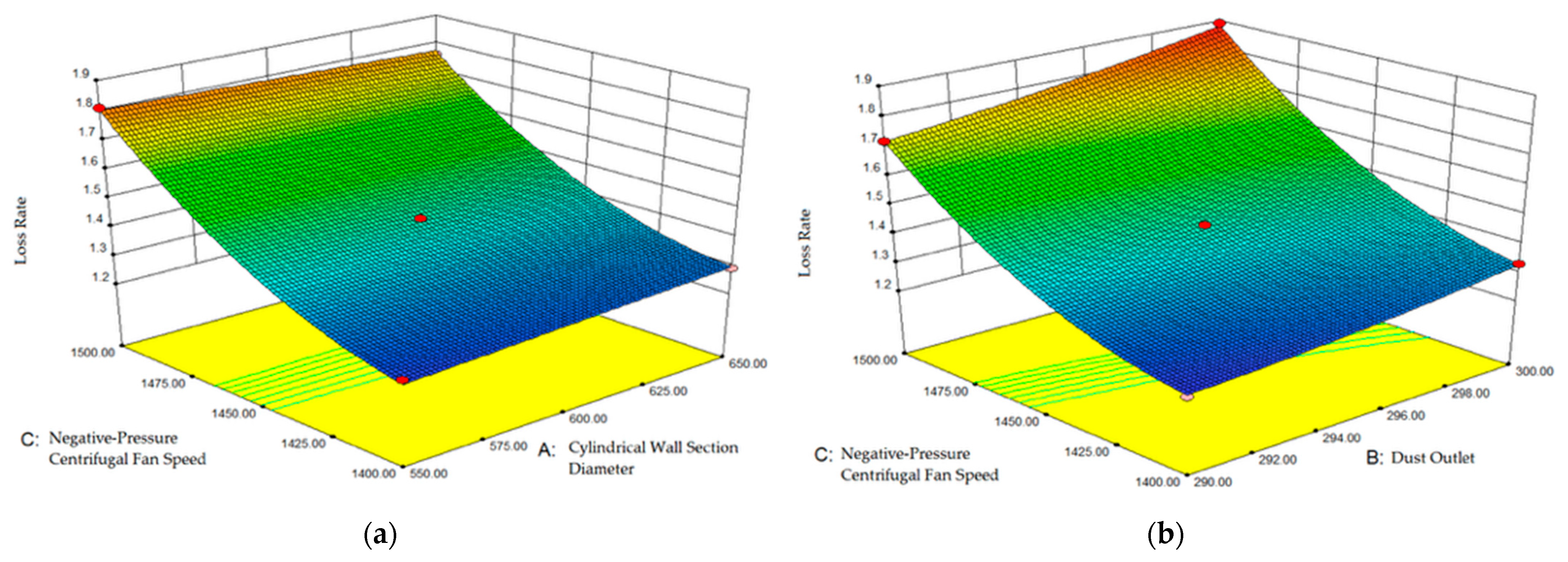
Based on the significance analysis and response surface of the loss rate, as shown in Figure 11. It can be observed that within the range of 550–650 mm, the cylindrical section diameter of the wall did not have a significant impact on the loss rate and showed no obvious interaction with the dust outlet diameter. However, it exhibited an interaction with the rotational speed of the negative-pressure centrifugal fan. Analyzing the AC interaction response surface with the dust outlet diameter fixed at 295 mm revealed that when both the cylindrical section diameter of the wall and the rotational speed of the negative-pressure centrifugal fan increased, the loss rate gradually rose. Similarly, when the cylindrical section diameter decreased while the rotational speed of the negative-pressure centrifugal fan increased, the loss rate also gradually increased. On the other hand, the dust outlet diameter and the rotational speed of the negative-pressure centrifugal fan had a highly significant impact on the loss rate and also exhibited interaction effects. Analyzing the BC interaction response surface with the cylindrical section diameter of the wall fixed at 600 mm showed that when both the dust outlet diameter and the rotational speed of the negative-pressure centrifugal fan increased, the loss rate gradually rose. Likewise, when the dust outlet diameter decreased while the rotational speed of the negative-pressure centrifugal fan increased, the loss rate also gradually increased. Thus, the ranking of factors influencing the magnitude of the loss rate was as follows: rotational speed of the negative-pressure centrifugal fan > dust outlet diameter > cylindrical section diameter of the wall.
Based on the analysis of Table 8, the regression equation for the self-cleaning rate is obtained as:
Y 1 = 1.44 + 5.000 E 003 A + 0.064 B + 0.26 C + 5.000 E 003 A B 0.020 A C + 0.017 B C + 2.500 E 004 A 2 + 0.012 B 2 + 0.092 C 2
(4)
Impurity Rate Regression Coefficients and Significance Analysis
Based on the bench test results, regression coefficient and significance analysis of the impurity rate were conducted, as shown in Table 9:
An analysis of the experimental results in Table 9 showed that p < 0.0001 < 0.05, which is highly significant. The lack-of-fit test yielded a p-value of 0.4028 (>0.05), indicating that the model adequately fit the experimental data and no significant systematic error existed. The impurity rate model demonstrated a good fit, with a predicted R2 = 0.899 and adjusted R2 = 0.973, indicating that the model can effectively analyze and predict the impurity rate indicator. As can be seen from the table, the p-values for B and C were both less than 0.05. However, the interaction terms AB, AC, and BC had no significant impact on the impurity rate, so the interactions between factors need not be considered.
Interaction analysis indicates that the optimal performance of the cleaning and self-cleaning system depends on the synergistic matching between parameters: the AC interaction balances the trade-off between centrifugal separation efficiency and grain re-entrainment, while the BC interaction coordinates the balance between impurity removal capacity and grain retention. The identified optimal parameter combination—A = 614 mm, B = 290 mm, C = 1495 r/min—represents the equilibrium point at which these competing effects are minimized.
Therefore, based on the analysis of the multi-factor Box–Behnken test results and the agronomic requirements, the optimal parameter combination was determined as: A = 614 mm, B = 290 mm, and C = 1495 r/min.

4.5. Test Bench Validation Experiment Results

A bench test validation was conducted for the optimal parameter combination. Through data research and analysis, adjustments were made to the diameter of the cylindrical section of the wall, the diameter of the dust outlet, and the rotational speed of the negative-pressure centrifugal fan. Cyclone separation self-cleaning tests were performed to validate the adjusted parameters. The test results are shown in Table 10:
As can be seen from Table 10, the optimized wheat breeding plot combine harvesting cyclone separation self-cleaning system, after bench test improvements, achieved a self-cleaning rate of 100%, a self-cleaning time of less than 12 s, a loss rate of 1.70%, and an impurity rate of 0.16%. Overall, the system is capable of performing separation and self-cleaning operations with high quality, speed, and efficiency.

5. Conclusions

To address the current challenge of achieving zero grain residue inside the machine during wheat breeding plot combine harvesting, this study systematically designed and optimized a cyclone separation cleaning and self-cleaning system for wheat breeding plot combines. The aim was to ensure the accuracy and scientific rigor of China’s wheat breeding trials by preventing inter-varietal contamination during harvest from affecting experimental results. The work was conducted through theoretical analysis, single-factor experiments, and the Box–Behnken design (BBD) response surface methodology. The main conclusions are as follows:
(1)
The structure of the cyclone separation self-cleaning system was designed based on the agronomic requirement of high self-cleaning performance. Through theoretical analysis and single-factor experiments, the ranges for key parameters were determined: the diameter of the cyclone separation cylinder (400–700 mm), the diameter of the dust outlet (290–320 mm), and the rotational speed of the negative-pressure centrifugal fan (1200–1600 r/min). The influence patterns of these parameters on self-cleaning and cleaning effectiveness within these ranges were established, providing a theoretical foundation for subsequent parameter optimization.
(2)
The BBD response surface methodology was employed to reveal the interaction mechanisms between factors. Experimental results indicated that the interaction between the fan speed and separation cylinder diameter significantly affected the self-cleaning rate and loss rate, while the interaction between dust outlet diameter and fan speed significantly affected the loss rate. Through response surface analysis, the optimal parameter combination was identified a separation cylinder diameter of 614 mm, a dust outlet diameter of 290 mm, and a negative-pressure centrifugal fan speed of 1495 r/min. Under this optimal combination, both self-cleaning performance and cleaning performance were optimized.
(3)
Bench test validation confirmed that the optimized parameters enabled a self-cleaning rate of 100%, a self-cleaning time shortened to 12 s, a loss rate reduced to 1.7%, and an impurity content of 0.16%. In comparison, current traditional wheat breeding plot harvesting and cleaning systems achieved self-cleaning rates of approximately 98–99%, self-cleaning times exceeding 30 s, loss rates around 2–3%, and an impurity content of about 1%. Overall, the developed system demonstrates high-quality, high-speed, and high-efficiency cleaning and separation performance, achieving for the first time the zero-residue requirement for breeding harvesting machinery.
(4)
The validation phase of this study was primarily based on bench tests and did not fully consider the impact of complex factors during actual harvesting, such as crop moisture content and field weed density, on the performance of the cleaning and self-cleaning system. Future research will focus on conducting validation through field trials to explore the adaptability and operational stability of the system when harvesting wheat of different varieties and maturity levels.

Author Contributions

Conceptualization, Z.G. and S.S.; methodology, Z.G. and C.Y.; software, Z.G. and C.X.; validation, Z.G., N.X., D.W. and C.H.; investigation, S.S.; resources, D.W.; data curation, Z.G. and N.X.; writing—original draft preparation, Z.G.; writing—review and editing, S.S.; project administration, S.S.; funding acquisition, S.S. All authors have read and agreed to the published version of the manuscript.

Funding

This research was funded by the Shandong Province Key Research and Development Program (Agricultural Seed Improvement Project) Project (2024LZGC004) and the Shandong Province Integrated Pilot Project for Agricultural Machinery R&D, Manufacturing, Promotion, and Application (SDNJYTH-202504).

Data Availability Statement

The original contributions presented in the study are included in the article, further inquiries can be directed to the corresponding authors.

Conflicts of Interest

Author Cheng Yang is employed by Qingdao Plantech Mechanical Technology Co., Ltd. The remaining authors declare that the research was conducted in the absence of any commercial or financial relationships that could be construed as potential conflicts of interest.

References

  1. Geng, D.Y.; Mou, X.D.; Zhang, G.D.; Wang, Z.Y.; Zhu, J.K.; Xu, H.G. Analysis and optimization of cleaning mechanism of wheat combine harvester. J. Jilin Univ. 2022, 52, 119–230. [Google Scholar]
  2. Jin, C.Q.; Li, Q.L.; Ni, Y.L.; Wang, T.E.; Yin, X. Experimental study on double air outlet multi-ducts cleaning device of wheat combine harvester. Trans. Chin. Soc. Agric. Eng. 2020, 36, 26–34. [Google Scholar]
  3. Yang, W.; Wang, F.; Hao, Z.F.; Li, J.D.; Yang, C.; Wang, C. Development Present Situation and Prospect of Plot Breeding Machinery. Agric. Eng. 2014, 4, 7–10. [Google Scholar]
  4. Xing, G.Y. Research on Intelligent Control System of Plot Grain Combine Harvester. Master’s Thesis, Jiangsu University, Zhenjiang, China, 2019. [Google Scholar]
  5. Wei, L.J.; Dai, F.; Han, Z.S.; Li, X.K.; Gao, A.M. Experiment on plot wheat breeding combine harvester. Acta Agric. Zhejiangensis. 2016, 28, 1082–1088. [Google Scholar]
  6. Li, Y.; Xu, L.Z.; Lv, L.Y.; Shi, Y.; Yu, X. Study on Modeling Method of a Multi-Parameter Control System for Threshing and Cleaning Devices in the Grain Combine Harvester. Agriculture 2022, 12, 1483. [Google Scholar] [CrossRef]
  7. Yi, Y.W. Research and Development on Air Blowing Headerof Plot Combine Harvester for Grain. Master’s Thesis, Nanjing Agriculture University, Nanjing, China, 2017. [Google Scholar]
  8. Dai, F.; Zhao, W.Y.; Han, Z.S.; Li, X.K.; Gao, A.M.; Liu, X.L. Improvement and Experiment on 4GX-100 Type Wheat Harvester for Breeding Plots. Trans. Chin. Soc. Agric. Mach. 2016, 47, 196–202. [Google Scholar]
  9. Dai, F. Design and Experimental on Longitudinal Axial Conical Cylinder Threshing Unit of Plot Wheat Seed. Master’s Thesis, Gansu Agriculture University, Lanzhou, China, 2012. [Google Scholar]
  10. Tao, X.; Xu, Z.X.; Li, J.D.; Yang, W.; Du, Y.Q. Research Situation and Application of Wheat Breeding Field Experiments Mechanization. Agric. Eng. 2013, 3, 12–15. [Google Scholar]
  11. Ahn, Y.C.; Jeong, H.K.; Shin, H.S.; Hwang, Y.J.; Kim, G.T.; Cheong, S.I.; Lee, J.K.; Kim, C. Design and performance evaluation of vacuum cleaners using cyclone technology. Korean J. Chem. Eng. 2006, 23, 925–930. [Google Scholar] [CrossRef]
  12. Mazyana, W.I.; Ahmadib, A.; Brinkerhoffa, J.; Ahmedc, H.; Hoorfara, M. Enhancement of cyclone solid particle separation performance based on geometrical modification: Numerical analysis. Sep. Purif. Technol. 2018, 191, 276–285. [Google Scholar] [CrossRef]
  13. Cristobal, C.; Antonia, G. Modeling the gas and particle flow inside cyclone separators. Prog. Energ. Combust. Sci. 2007, 33, 409–452. [Google Scholar]
  14. Liang, Z.W.; Xu, L.Z.; Baerdemaeker, J.D.; Li, Y.M.; Saeys, W. Optimisation of a multi-duct cleaning device for rice combine harvesters utilising CFD and experiments. Biosyst. Eng. 2020, 190, 25–40. [Google Scholar] [CrossRef]
  15. Wan, X.Y. Design and Working Mechanical Study on the Cyclone Separation Cleaning System for Rapeseed Combine Haverster. Doctoral Thesis, Huazhong Agriculture University, Wuhan, China, 2015. [Google Scholar]
  16. Yang, J. Improved Design and Experiment on the Cyclone Separation and Cleaning System for Rapeseed Combine Harvester. Master’s Thesis, Huazhong Agriculture University, Wuhan, China, 2017. [Google Scholar]
  17. El-Batsh, H.M. Improving cyclone performance by proper selection of the exit pipe. Appl. Math. Model. 2013, 37, 5286–5303. [Google Scholar] [CrossRef]
  18. Gebrehiwot, M.G.; Baerdemaeker, J.D.; Baelmans, M. Effect of a cross-flow opening on the performance of a centrifugal fan in a combine harvester: Computational and experimental study. Biosyst. Eng. 2010, 105, 247–256. [Google Scholar] [CrossRef]
  19. Zhang, X.L.; Zhang, Y.L.; Lu, C.G. Flow and Noise Characteristics of Centrifugal Fan in Low Pressure Environment. Processes 2020, 8, 985. [Google Scholar] [CrossRef]
  20. Chinese Academy of Agricultural Mechanization Sciences. Agricultural Machinery Design Manual; China Agricultural Science and Technology Press: Beijing, China, 2007. [Google Scholar]
  21. Sun, X.X.; Zheng, S.Y.; Shen, L.L.; Qin, C.Y.; Wang, J.W.; Zhou, L.; Mai, J.D.; Lu, M.B. Enhanced aerodynamic performance of irregular centrifugal fan casings through parametric and level-set topology optimization. Results Eng. 2025, 28, 107316. [Google Scholar] [CrossRef]
  22. Liang, Z.W.; Wada, M.E. Parameter optimisation of a centrifugal fan for rice combine harvesters based on airflow resistance coefficients and CFD simulations. Biosyst. Eng. 2025, 259, 104287. [Google Scholar] [CrossRef]
  23. Alamnia, A.T.; Admasu, B.T.; Getie, M.Z.; Tigabu, M.T. Numerical investigation of spiral-walled cyclone separators in solid-solid separation. Powder Technol. 2026, 469, 121934. [Google Scholar] [CrossRef]
  24. NY/T 995-2025; Operating Quality for Grain Combine Harvester. Quality Inspection Center for Agricultural Product Processing Machinery, Ministry of Agriculture: Beijing, China, 2025.
Figure 1. Overall Structure of the Cyclone Separation Self-Cleaning System.
Processes 14 00726 g001
Figure 2. Structural Diagram of the Negative-Pressure Centrifugal Fan.
Processes 14 00726 g002
Figure 3. Cyclone Separator Structural Diagram.
Processes 14 00726 g003
Figure 4. Force Analysis Diagram of Wheat Grains on the Spiral Guide Blades.
Processes 14 00726 g004
Figure 5. Force Analysis Diagram of Wheat Grains on Spiral Guide Blades in the Vertical Plane.
Processes 14 00726 g005
Figure 6. (a) Cyclone Separation Self-Cleaning System Test Bench. (b) Physical Diagram of the Cyclone Separation Self-Cleaning System Test Bench.
Processes 14 00726 g006
Figure 7. (a) Self-cleaning rate under different cylindrical section diameters. (b) Self-cleaning time under different diameters of the cylindrical segment of the barrel wall. (c) Loss rate under different diameters of the cylindrical segment of the barrel wall. (d) Impurity rate under different diameters of the cylindrical segment of the barrel wall.
Processes 14 00726 g007
Figure 8. (a) Self-cleaning rate under different dust outlet diameters. (b) Self-cleaning time under different dust outlet diameters. (c) Loss rate under different dust outlet diameters. (d) Impurity rate under different dust outlet diameters.
Processes 14 00726 g008
Figure 9. (a) Self-cleaning rate under different rotational speeds of the exhaust centrifugal fans. (b) Self-cleaning time under different rotational speeds of the exhaust centrifugal fan. (c) Loss rate under different rotational speeds of the exhaust centrifugal fan. (d) Impurity rate under different rotational speeds of the exhaust centrifugal fan.
Processes 14 00726 g009
Figure 10. Effect of the AC interaction on the self-cleaning rate.
Processes 14 00726 g010
Figure 11. (a) Effect of the AC interaction on the loss rate. (b) Effect of the BC interaction on the loss rate.
Processes 14 00726 g011
Table 1. Single-factor test results for the diameter of the cylindrical wall section.
No.Diameter of the Cylindrical Section of the Wall
(mm)
Self-Cleaning Rate (%)Self-Cleaning Time (s)Loss Rate (%)Impurity Rate
(%)
140098.45/1.520.13
245098.76/1.390.17
350099.06/1.030.21
455099.3118.90.810.24
560099.8214.50.420.29
665099.2617.80.340.36
770098.78/0.280.39
Table 2. Single-factor experimental results of dust outlet diameter.
No.Dust Outlet Diameter
(mm)
Self-Cleaning Rate (%)Self-Cleaning Time (s)Loss Rate (%)Impurity Rate
(%)
129099.0518.40.520.37
229599.1119.50.790.32
330099.1517.91.050.28
430599.0218.51.210.24
531099.1619.31.450.22
631599.1317.91.620.19
732099.0818.61.780.14
Table 3. Results of the single-factor experiment on the rotational speed of the negative pressure centrifugal fan.
No.Rotational Speed of the Negative-Pressure Centrifugal Fan
(r/min)
Self-Cleaning Rate (%)Self-Cleaning Time (s)Loss Rate (%)Impurity Rate
(%)
1120098.0900.530.31
2125098.1700.750.28
3130098.5401.050.25
4135099.1801.180.24
5140099.6819.51.340.21
6145099.7617.21.480.17
7150099.8115.91.690.14
8155099.7214.81.810.15
9160099.7513.41.930.12
Table 4. Factors and levels.
LevelA
Cylindrical Section Diameter
(mm)
B
Dust Outlet Diameter
(mm)
C
Negative-Pressure Centrifugal Fan Speed
(r/min)
−15502901400
06002951450
16503001500
Table 5. Test plan and test results.
No.A
Cylindrical Wall Section Diameter
B
Dust Outlet Diameter
C
Negative-Pressure Centrifugal Fan Speed
Y 1
Self-Cleaning Rate
/%
Y 2
Self-Cleaning Time
/s
Y 3
Loss Rate
/%
Y 4
Impurity Rate
/%
mmmmr/min
1550295140099.4815.91.260.23
2650290145099.514.31.40.2
3550295150099.5511.81.810.15
4600300150099.8910.71.890.15
5650300145099.4914.11.530.18
6600295145099.7113.61.430.19
7600295145099.7613.81.430.19
8600300140099.6815.31.330.22
9600295145099.7213.61.430.2
10600290150099.9110.91.720.16
11600290140099.6515.11.230.24
12550300145099.5114.51.490.17
13650295150099.511.51.760.15
14650295140099.3915.61.290.23
15600295145099.8113.71.450.19
16550290145099.5314.71.380.2
17600295145099.7813.81.450.19
Table 6. Significance analysis of self-cleaning rate.
Regression TermSum of SquaresDegrees of FreedomMean Square F-Valuep-Value
Model0.5290.05823.030.0002
A3.200 × 10−313.200 × 10−31.270.2967
B1.110 × 10−1611.110 × 10−164.411 × 10−141.0000
C0.1910.1973.91<0.0001
AB2.500 × 10−512.500 × 10−59.932 × 10−30.9234
AC0.04210.04216.700.0047
BC2.250 × 10−412.250 × 10−40.0890.7736
A20.2810.28110.27<0.0001
B22.866 × 10−412.866 × 10−40.110.7457
C20.02010.0207.790.0269
Residua0.01872.517 × 10−3//
Lack of Fit0.01133.567 × 10−32.060.2480
Error6.920 × 10−341.730 × 10⁻³//
Total0.5416///
Table 7. Significance analysis of self-empty time.
Regression TermSum of SquaresDegrees of FreedomMean SquareF-Valuep-Value
Model40.3594.48285.30<0.0001
A0.2410.2415.590.0055
B0.02010.0201.270.2964
C36.12136.122298.86<0.0001
AB0.00010.0000.0001.0000
AC0.00010.0000.0001.0000
BC0.04010.0402.550.1546
A22.0612.06131.29<0.0001
B20.00010.0000.0001.0000
C22.0612.06131.29<0.0001
Residua0.1170.016//
Lack of Fit0.07030.0232.330.2155
Error0.04040.010//
Total40.4616///
Table 8. Significance analysis of loss rate.
Regression TermSum of SquaresDegrees of FreedomMean SquareF-Valuep-Value
Model0.6190.068314.44<0.0001
A2.000 × 10−412.000 × 10−40.930.3669
B0.03310.033151.22<0.0001
C0.5410.542491.22<0.0001
AB1.000 × 10−411.000 × 10−40.470.5172
AC1.600 × 10−311.600 × 10−37.440.0294
BC1.225 × 10−311.225 × 10−35.700.0484
A22.632 × 10−712.632 × 10−71.224 × 10−30.9731
B26.318 × 10−416.318 × 10−42.940.1302
C20.03610.036166.66<0.0001
Residua1.505 × 10−372.150 × 10⁻⁴//
Lack of Fit1.025 × 10−333.417 × 10−42.850.1691
Error4.800 × 10−441.200 × 10⁻⁴//
Total0.6116///
Table 9. Significance analysis of impurity rate.
Regression TermSum of SquaresDegrees of FreedomMean SquareF-Valuep-Value
Model0.01391.438 × 10−364.93<0.0001
A1.250 × 10−511.250 × 10−50.560.4769
B8.000 × 10−418.000 × 10−436.130.0005
C0.01210.012542.50<0.0001
AB2.500 × 10−512.500 × 10−51.130.3233
AC0.00010.0000.0001.0000
BC2.500 × 10−512.500 × 10−51.130.3233
A25.158 × 10−515.158 × 10−52.330.1708
B24.211 × 10−614.211 × 10−60.190.6759
C29.474 × 10−619.474 × 10−60.430.5339
Residua1.550 × 10−472.214 × 10⁻⁵//
Lack of Fit7.500 × 10−532.500 × 10−51.250.4028
Error8.000 × 10−542.000 × 10⁻⁵//
Total0.01316///
Table 10. Experimental validation parameters and results.
Cylindrical Section Diameter (mm)Dust Outlet Diameter (mm)Rotational Speed of Negative-Pressure Centrifugal Fan (r/min)Self-Cleaning Rate
(%)
Self-Cleaning Time
(s)
Loss Rate (%)Impurity Rate
(%)
Parameter Values614290149510011.091.700.16
Disclaimer/Publisher’s Note: The statements, opinions and data contained in all publications are solely those of the individual author(s) and contributor(s) and not of MDPI and/or the editor(s). MDPI and/or the editor(s) disclaim responsibility for any injury to people or property resulting from any ideas, methods, instructions or products referred to in the content.