Economic Analysis of Nuclear Power Peak Shaving Based on AEL Hydrogen Production

 , ,
, ,
Abstract
1. Introduction
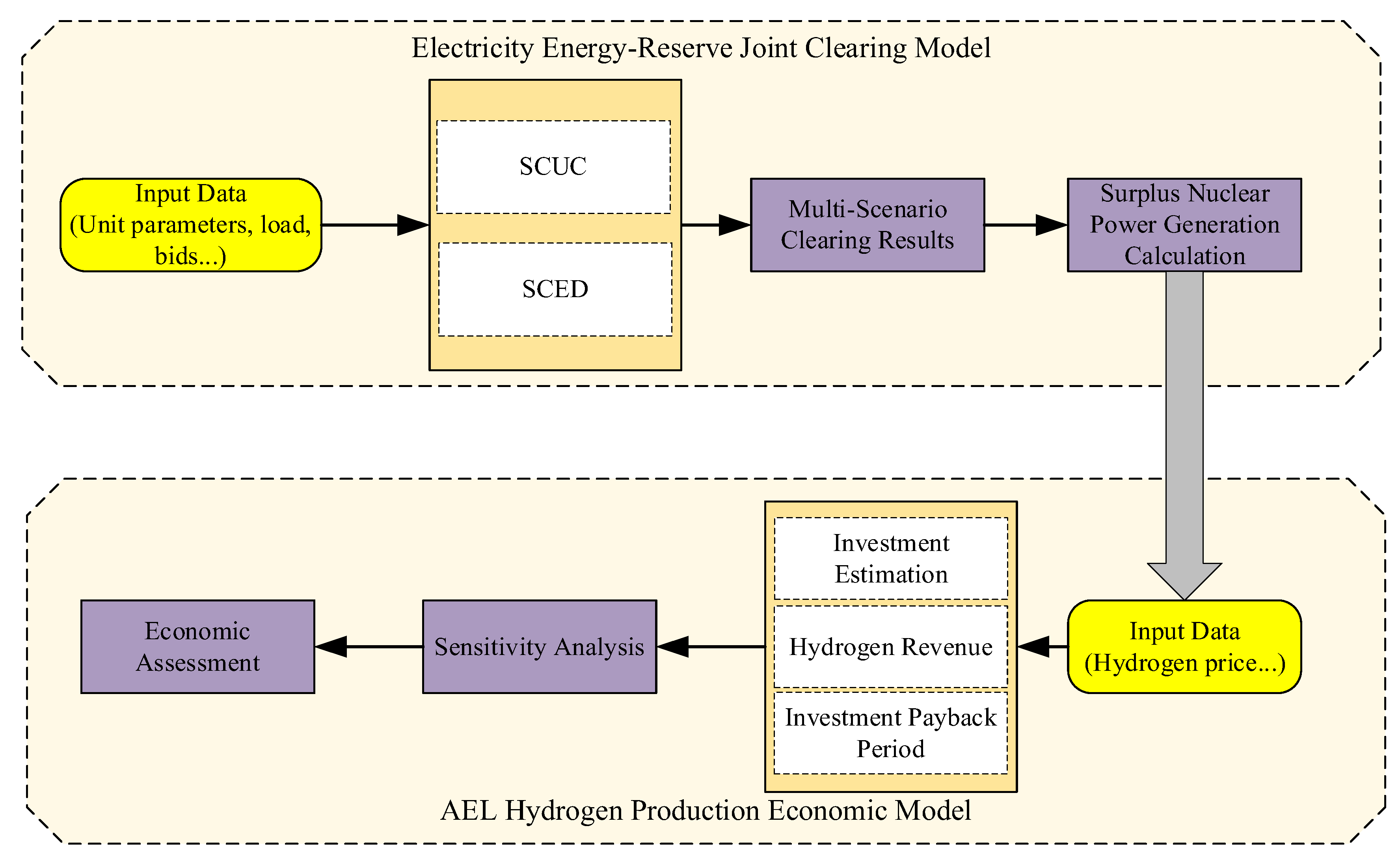
2. Methods: Power Market Clearing and Economic Analysis for Nuclear Hydrogen Production
2.1. Energy–Reserve Joint Clearing Model
2.1.1. SCUC
Objective Function
Constraints
- (1)
- Regional power balance constraint:
- (2)
- Minimum local reserve capacity constraint
- (3)
- Renewable generation output constraint:
- (4)
- Unit generation output limit constraint:
- (5)
- Unit ramping constraint:
- (6)
- Minimum unit up/down time constraint:
- (7)
- Reserve capacity limit constraint:
- (8)
- Nuclear-storage operational constraints:
2.1.2. SCED
Objective Function
Constraints
2.2. Bidding of Units in the Energy–Reserve Joint Clearing Model
2.2.1. Stepwise Bidding Model for Thermal Units
2.2.2. Bid Parameter Settings for Different Units
2.3. Economic Evaluation Method for Nuclear + Storage Coupled AEL Hydrogen Production
2.3.1. Nuclear Market Clearing Characteristics and the Rationale for AEL Hydrogen Technology Selection
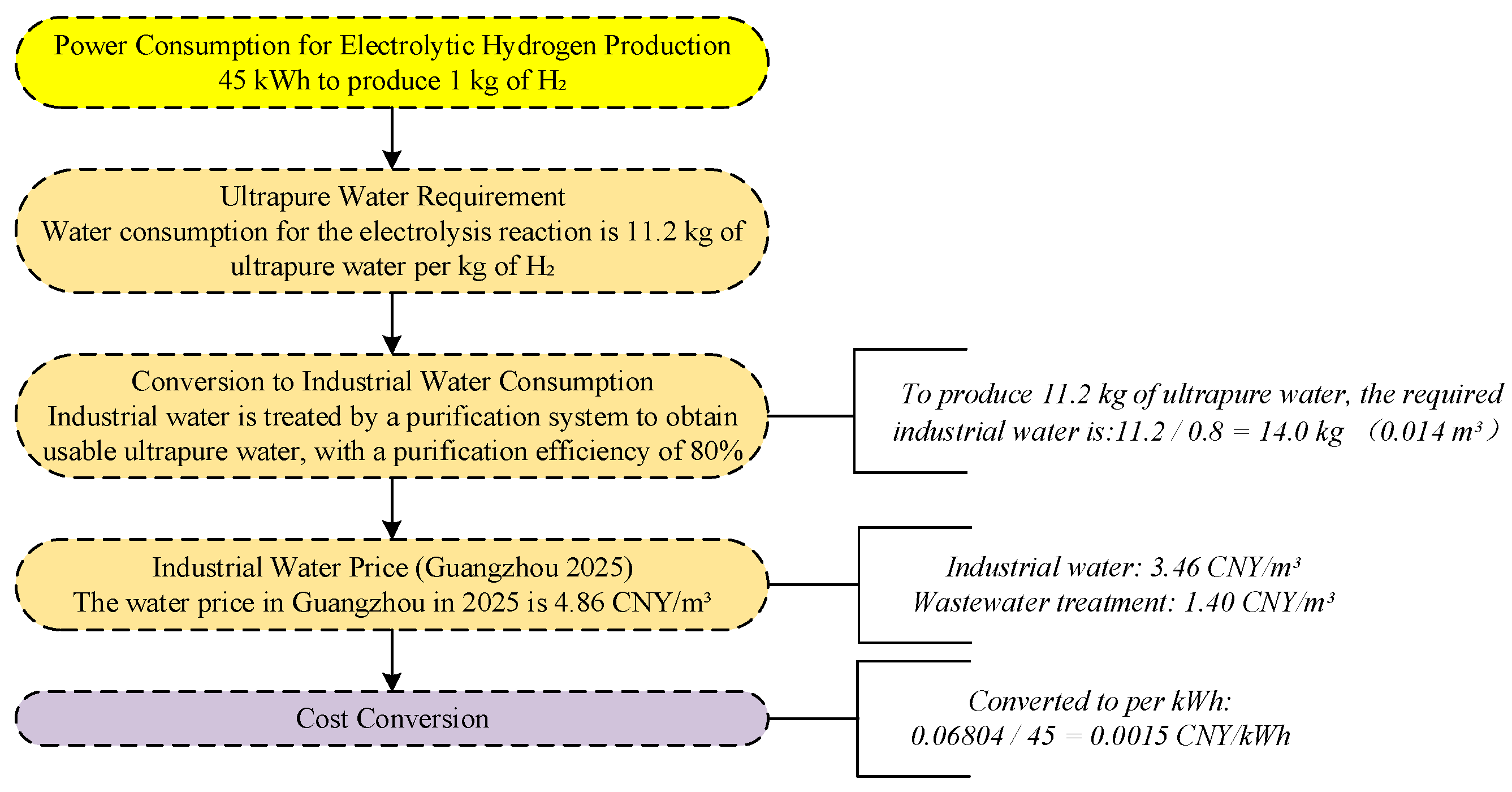
2.3.2. Technical Parameters of AEL Hydrogen Production Systems
2.3.3. Engineering Investment Estimation
Equipment Procurement Cost
Operating and Maintenance Costs
Land Cost for Hydrogen Production and Storage
Civil Construction Cost
Installation Cost
2.3.4. Hydrogen Price Assumptions
2.3.5. Hydrogen Production Benefit Model
Annualized Hydrogen Production Revenue
Annualized Hydrogen Production Profit
2.3.6. Discounted Payback Period
3. Simulation and Results
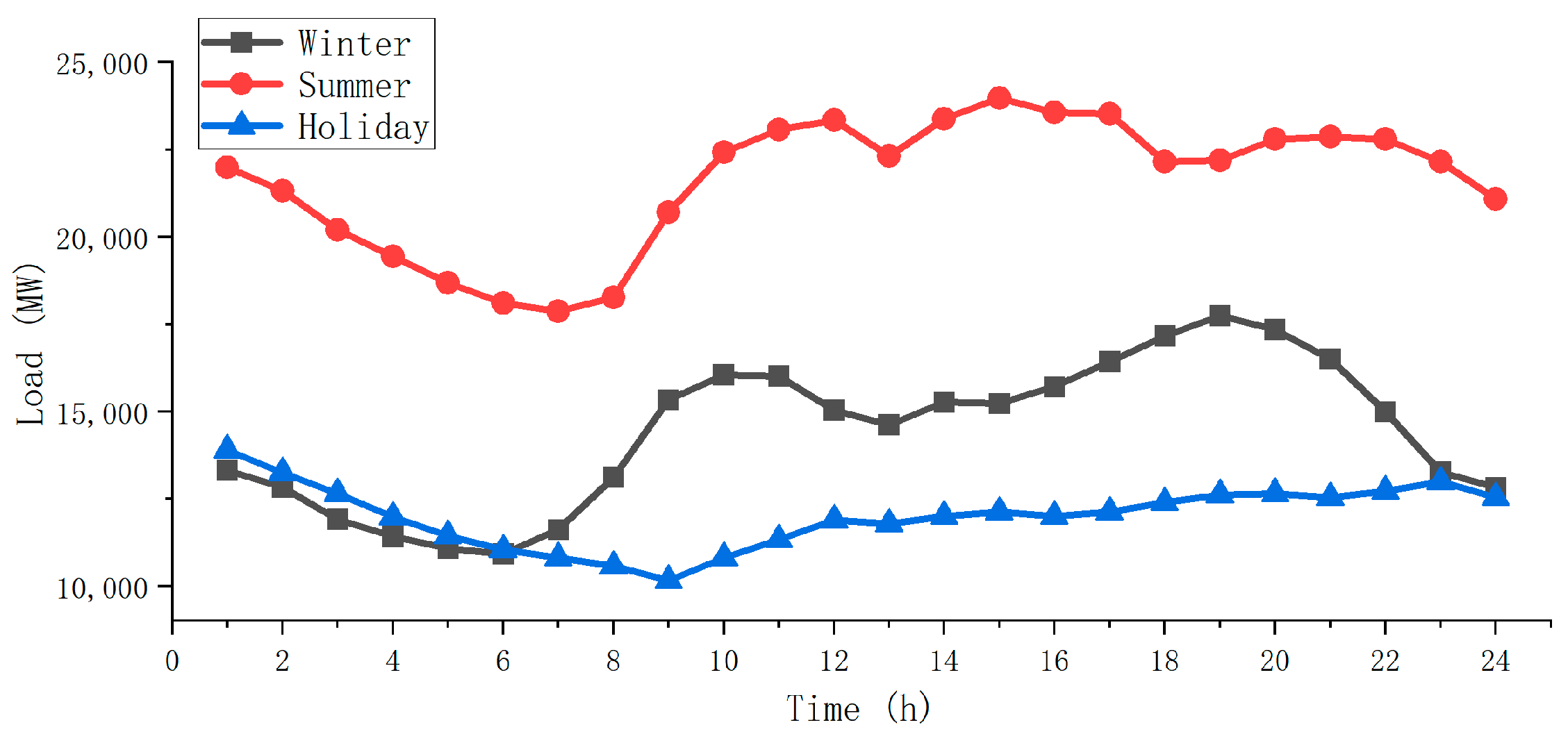
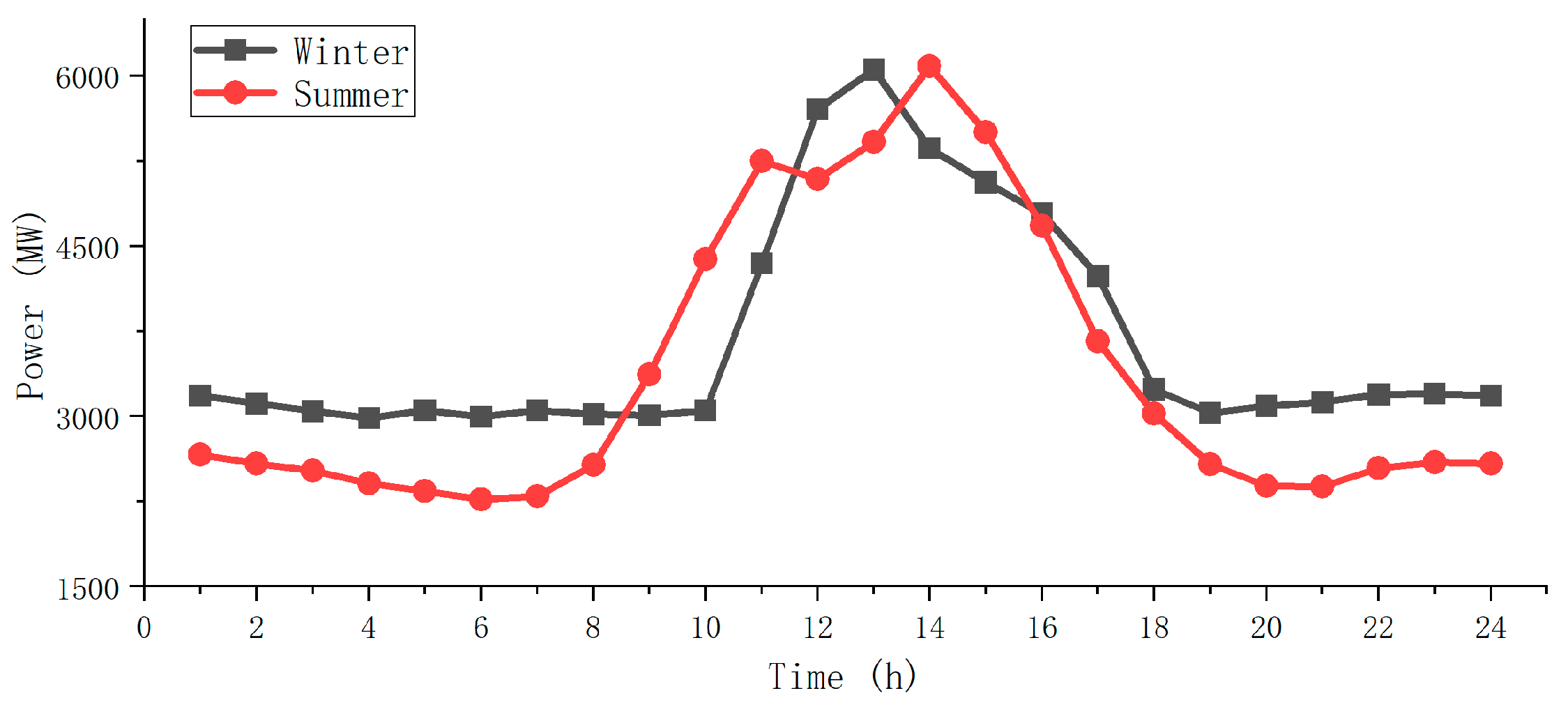
3.1. Basic Profiles of Typical Scenarios for the Guangdong Power Grid in 2035
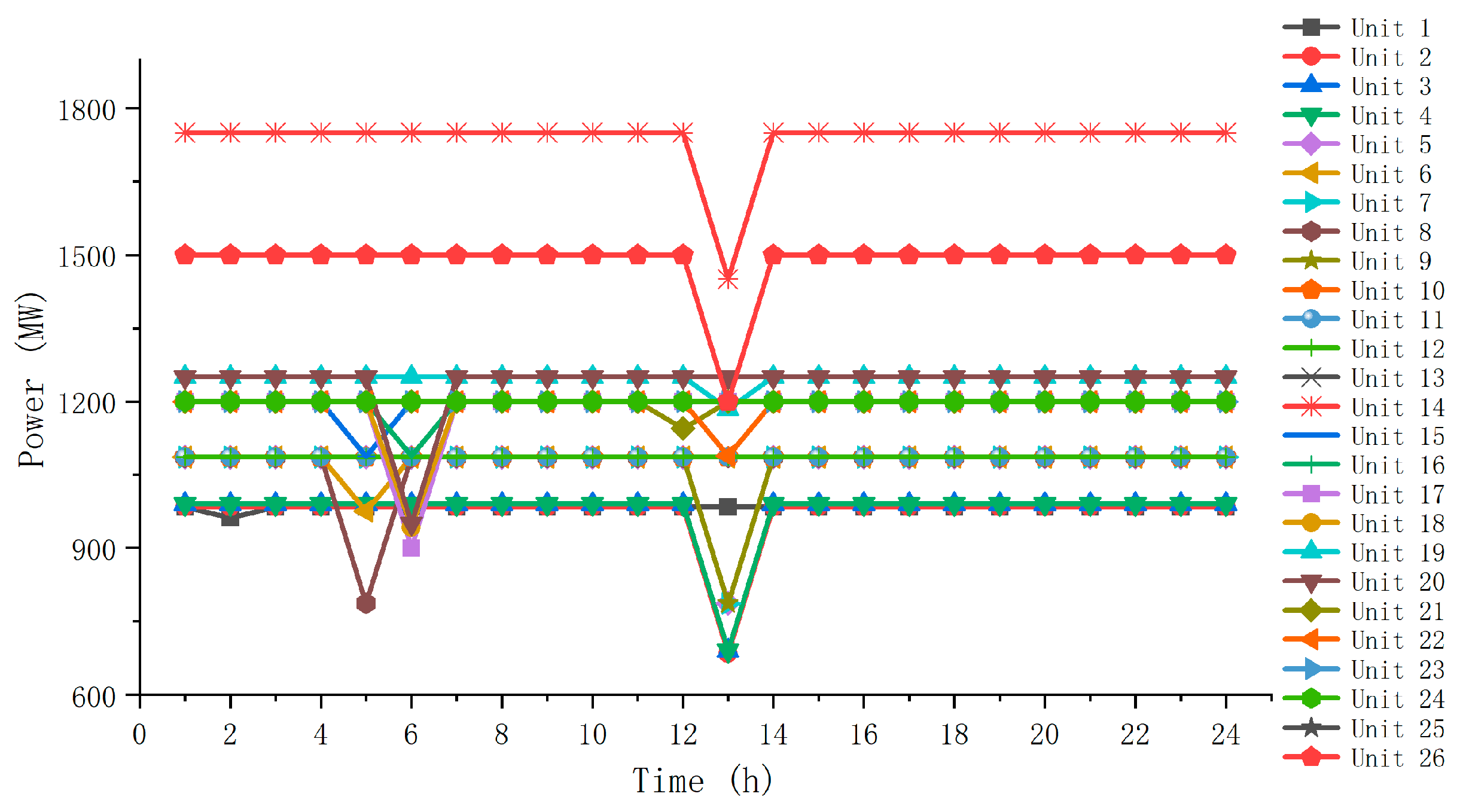
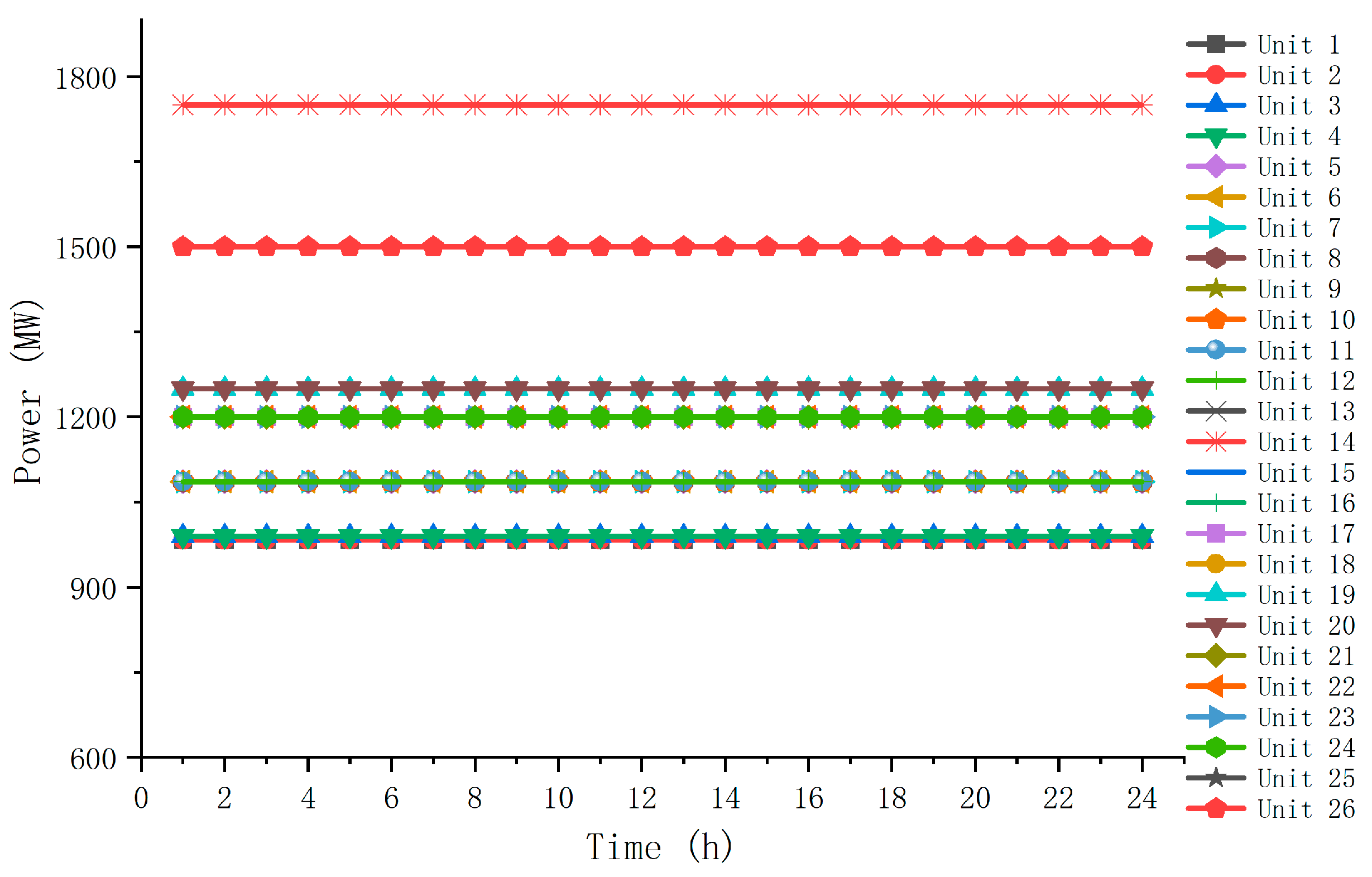
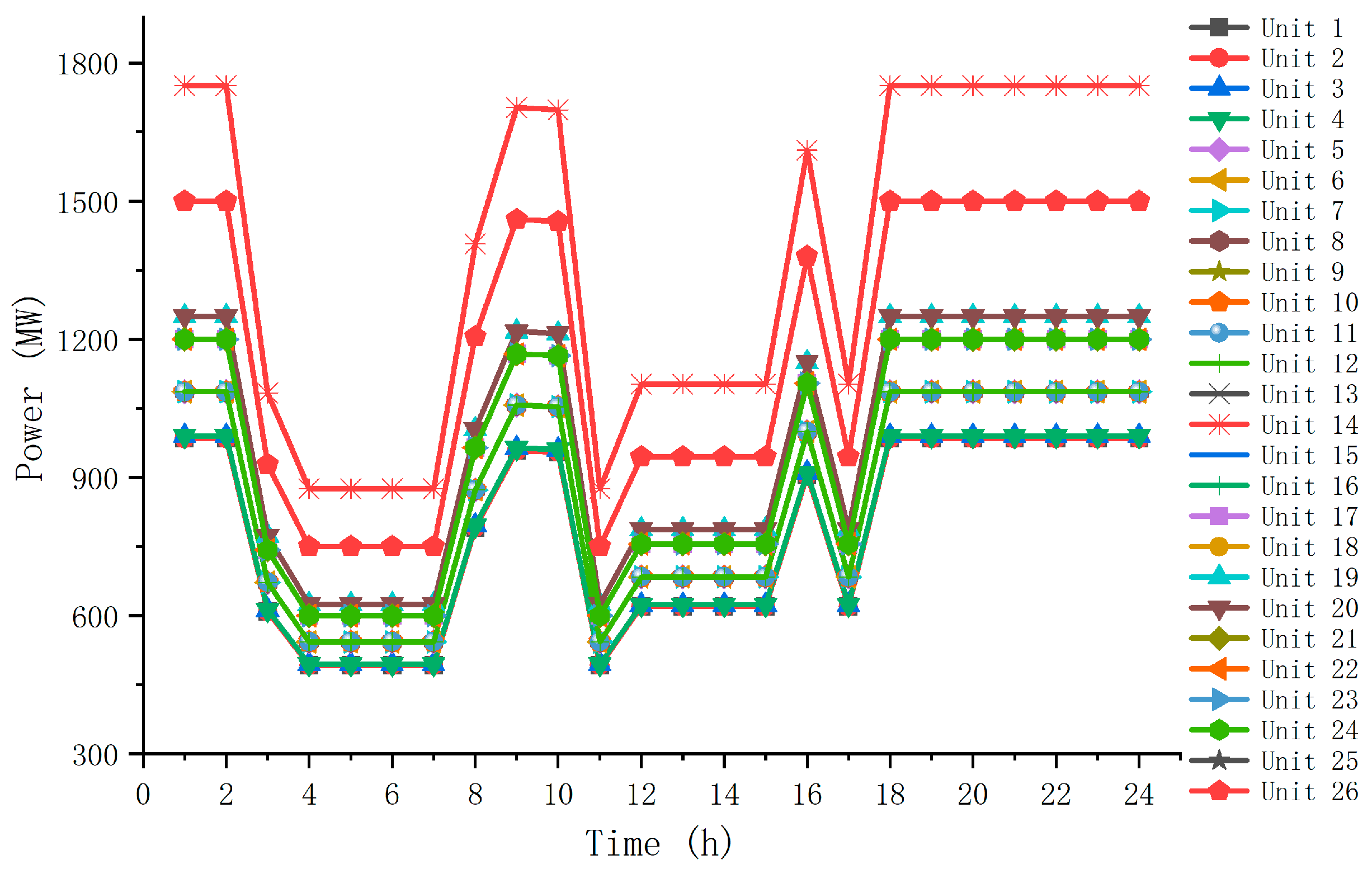
3.2. Operation of Nuclear Power Units Under Typical Scenarios of the Guangdong Power Grid in 2035
3.3. Analysis of Nuclear Power Plant Operation and Peak-Shaving Characteristics
3.3.1. Typical Nuclear Peak-Shaving Mode
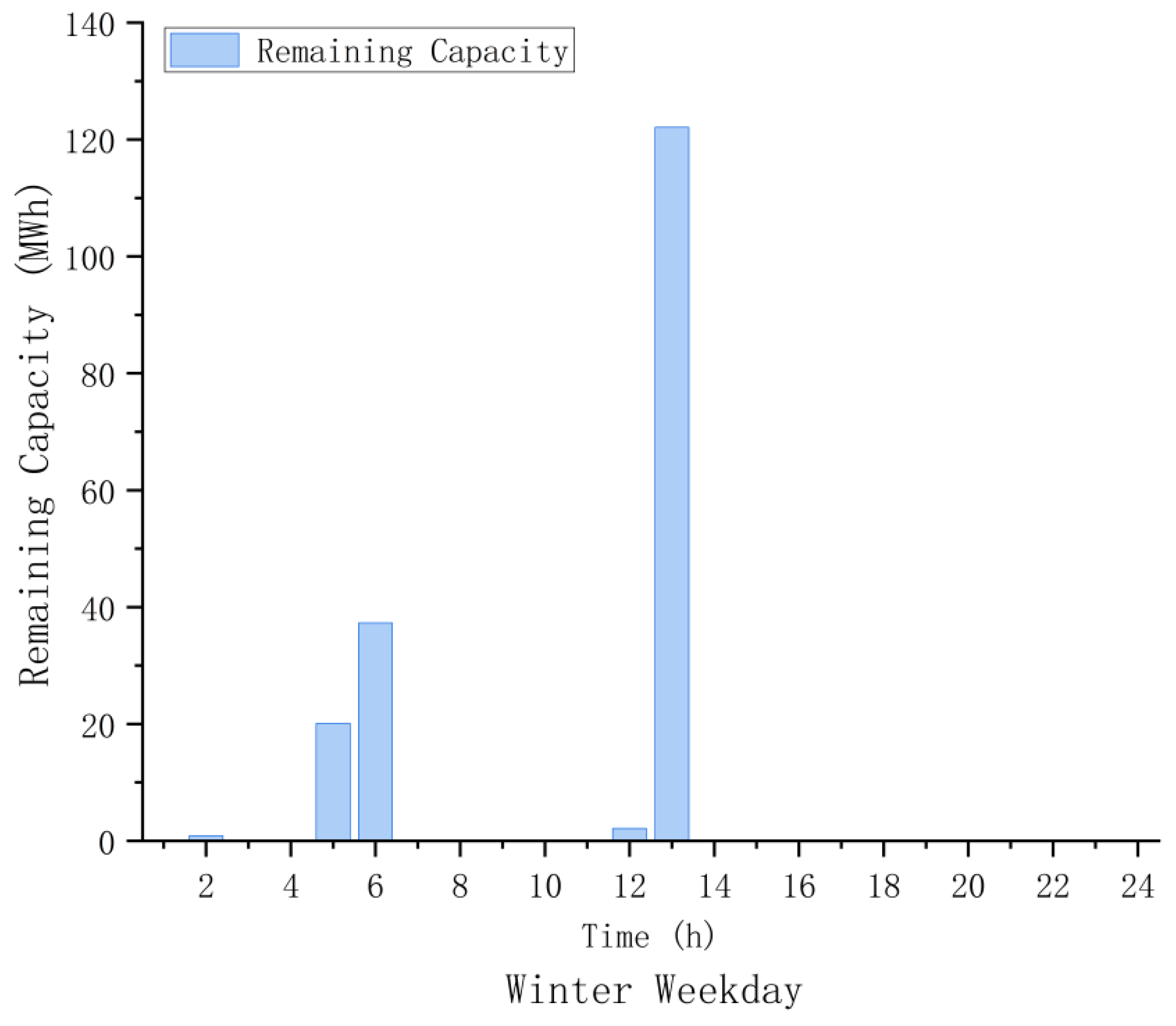
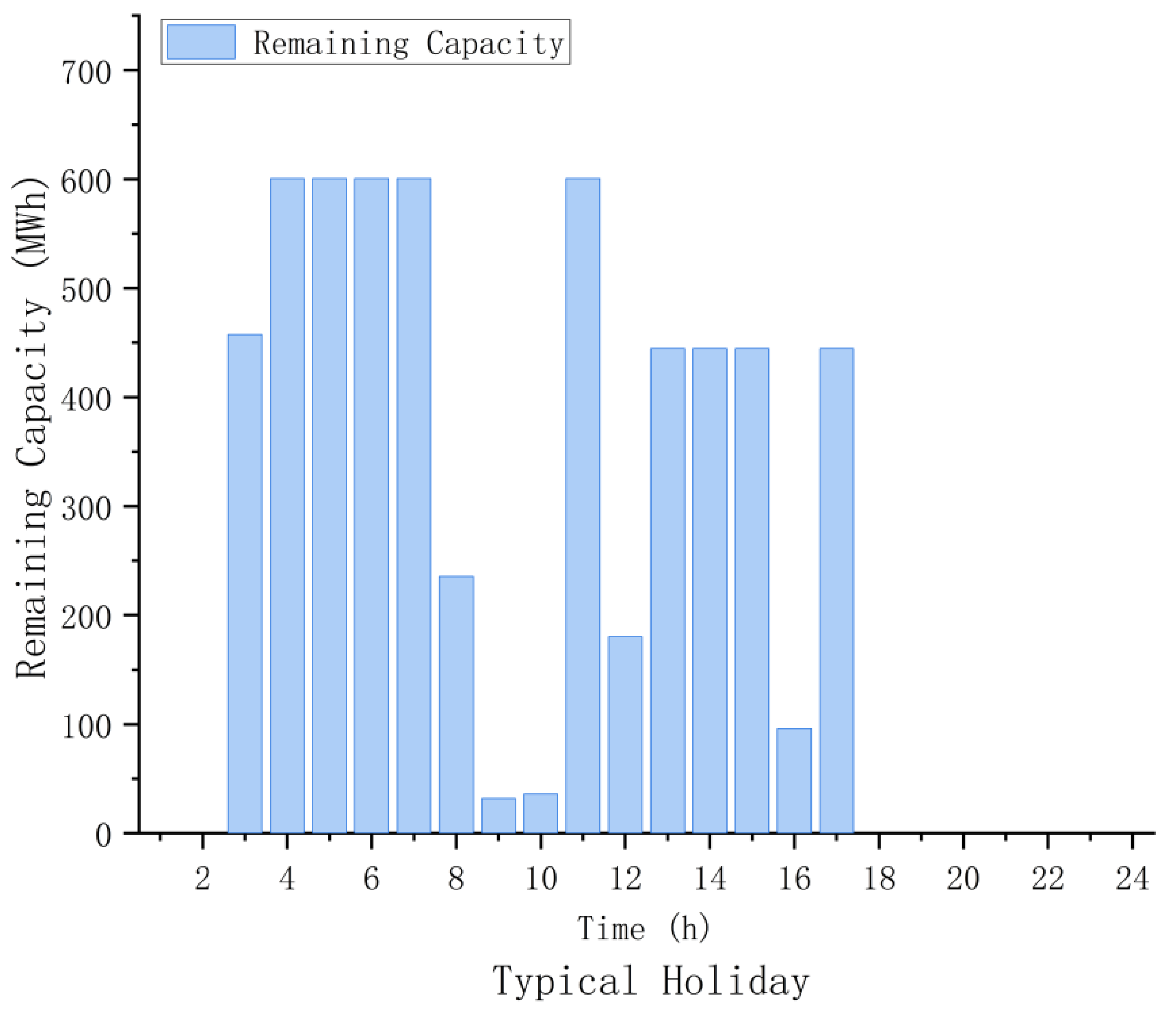
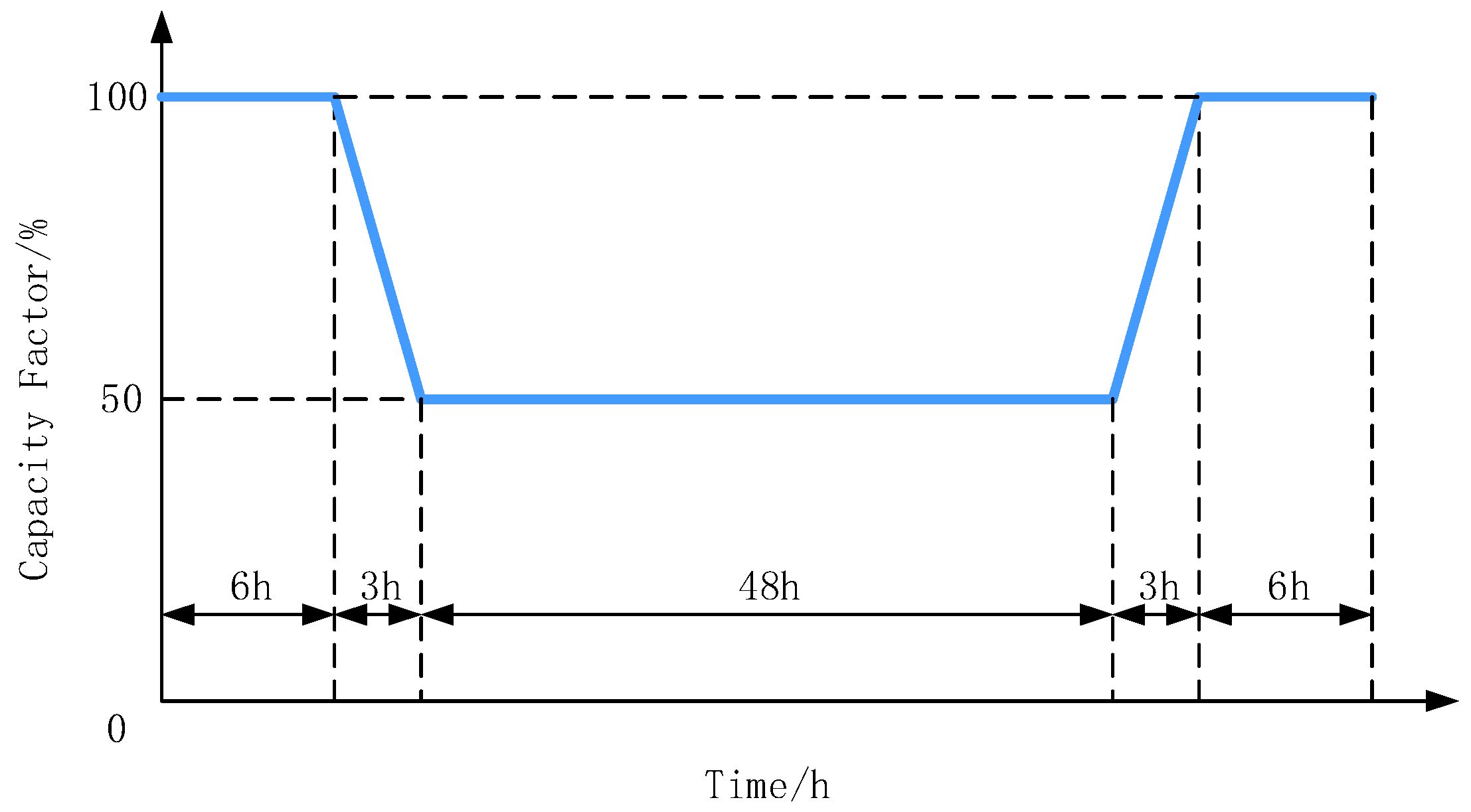
3.3.2. The “12-3-48-3” Nuclear Peak-Shaving Mode
3.4. Sensitivity Analysis of Nuclear Peak Shaving
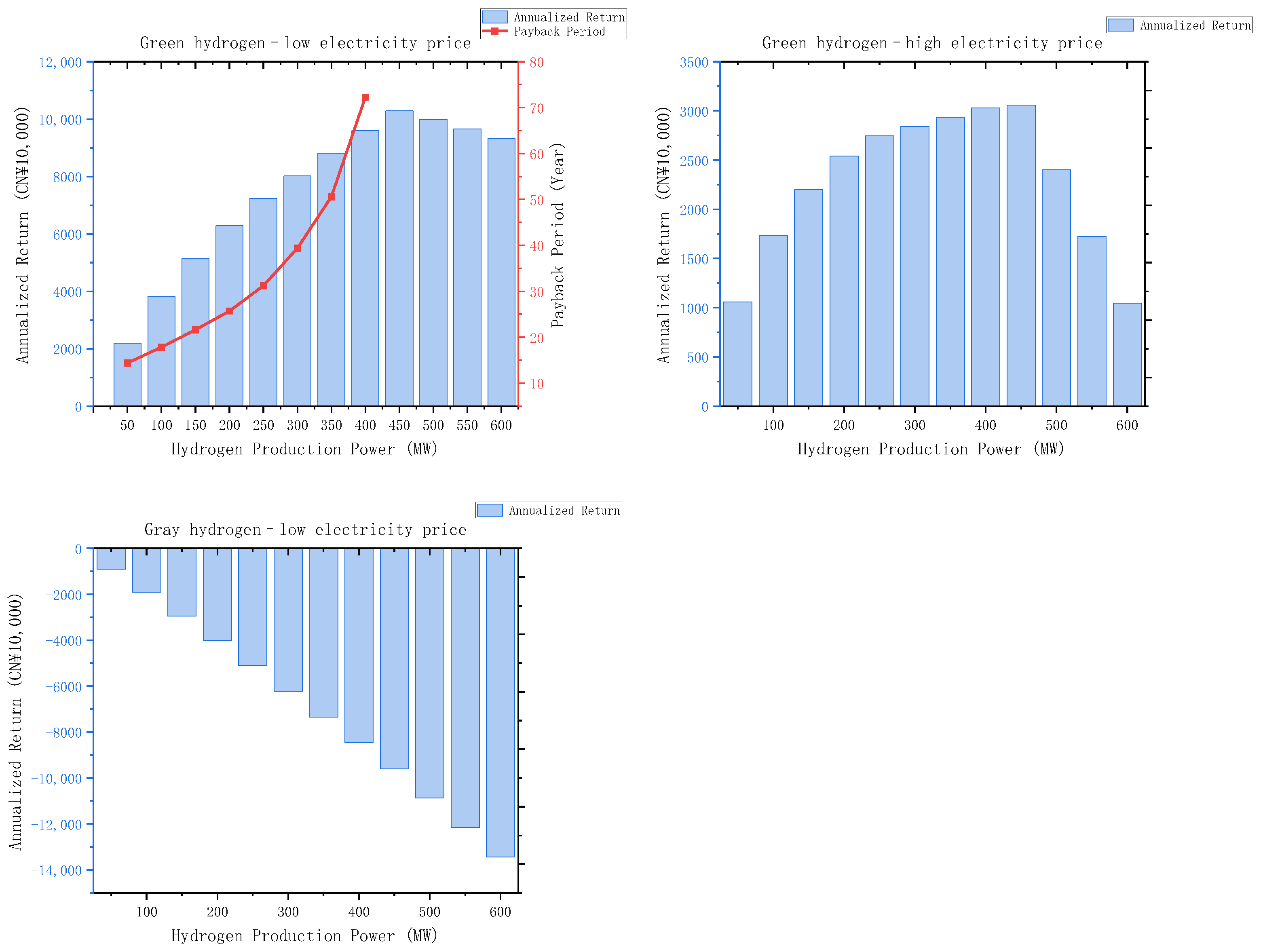
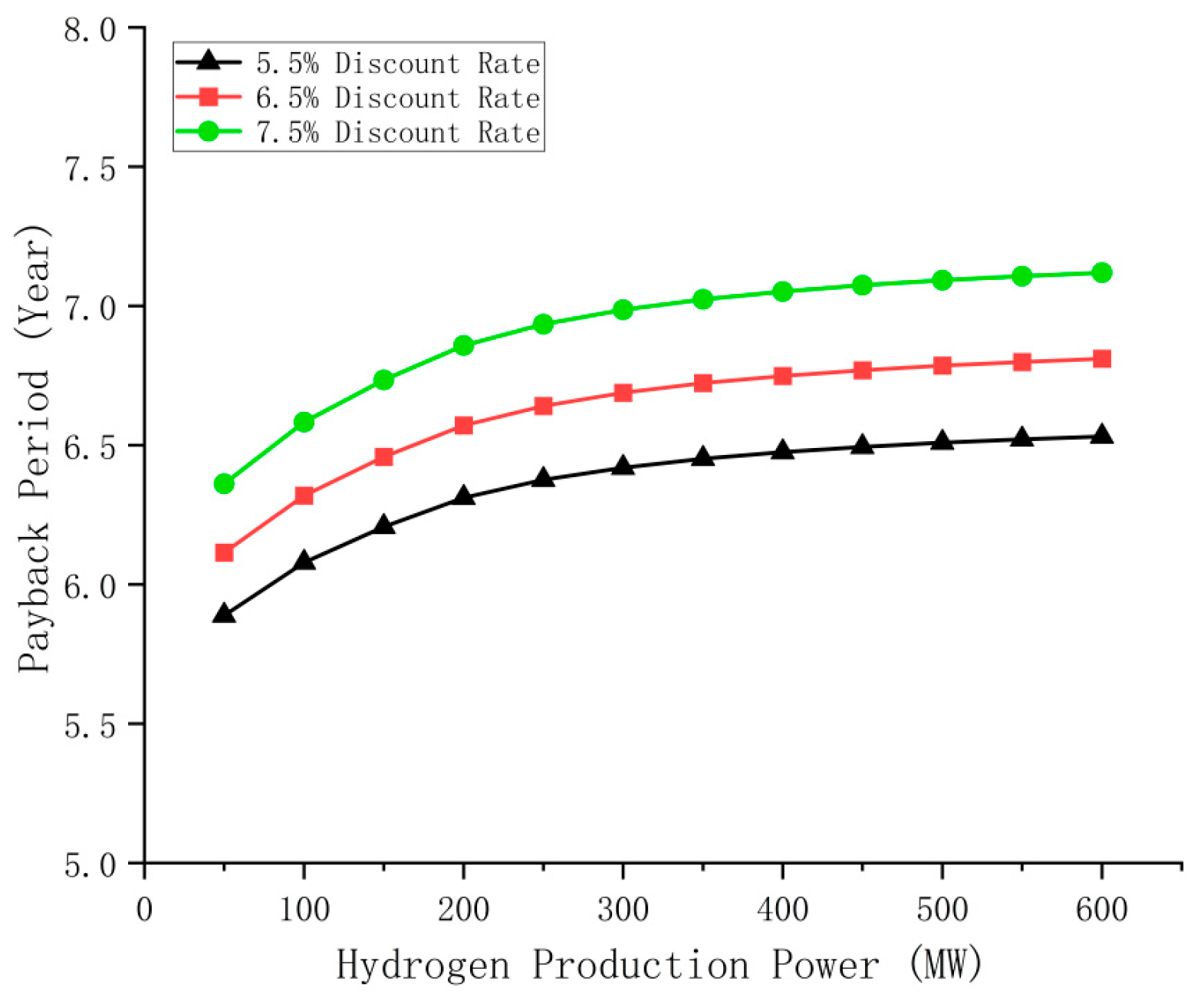
3.4.1. Sensitivity Under the Typical Nuclear Peak-Shaving Mode
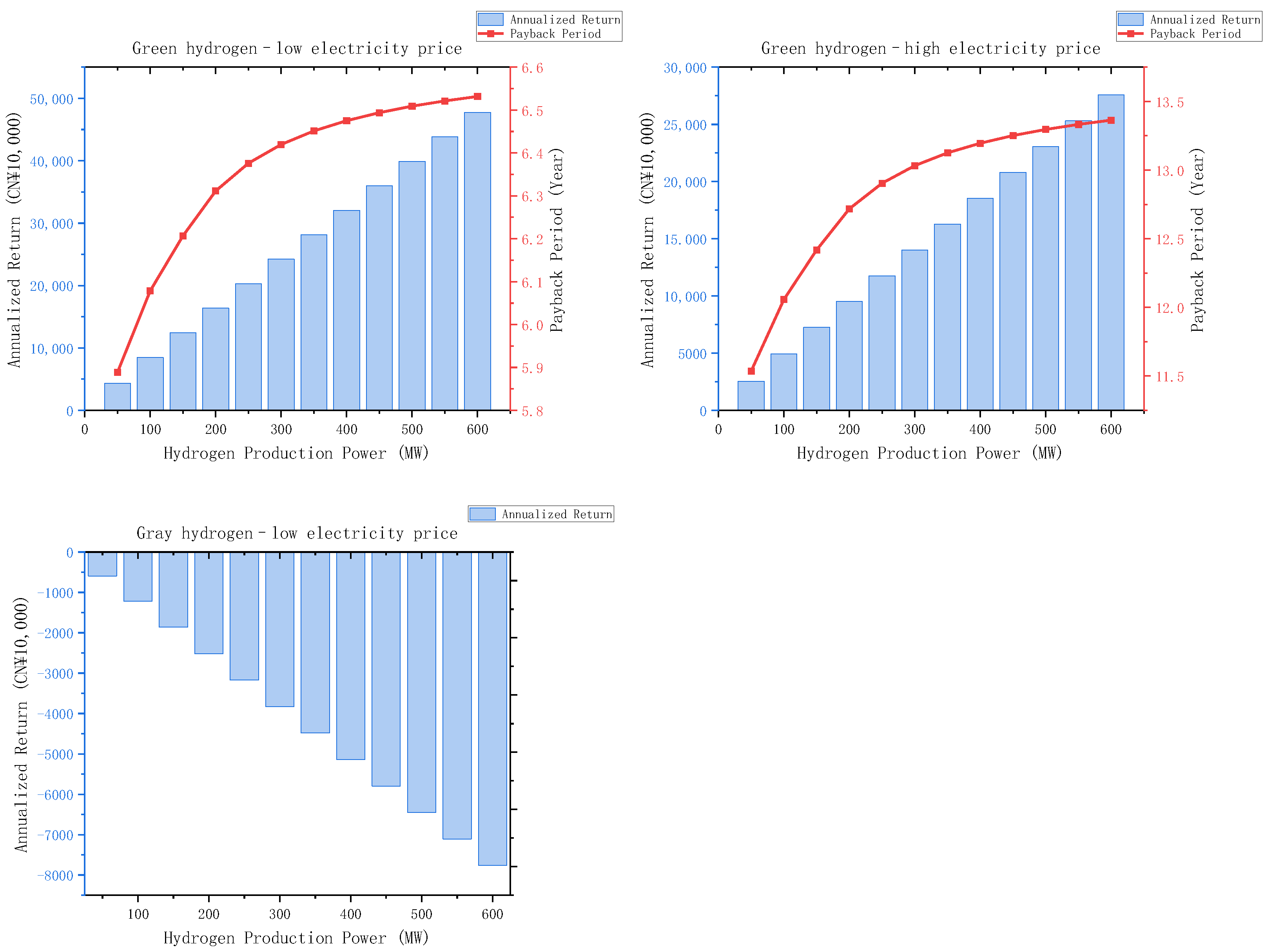
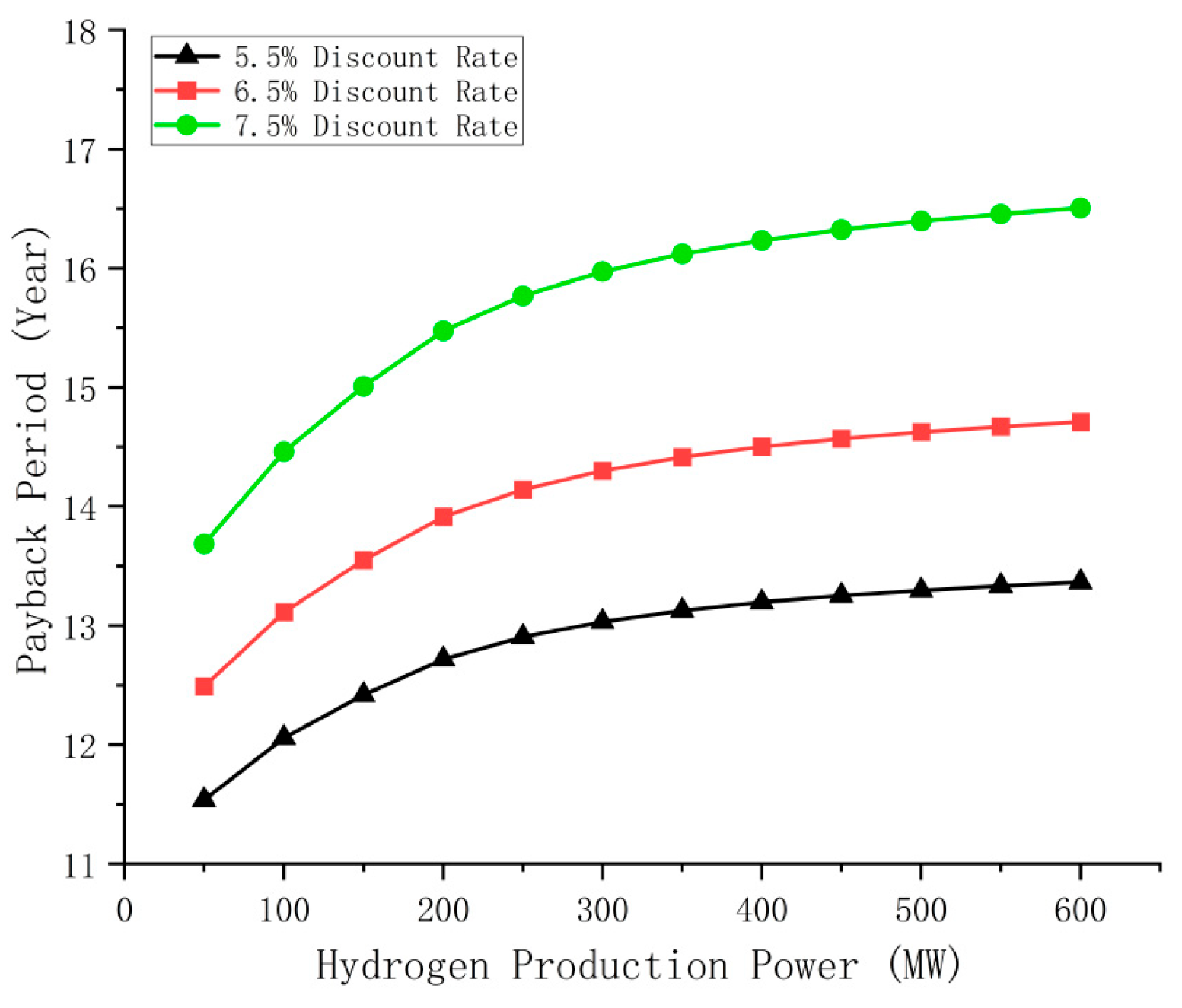
3.4.2. Sensitivity Under the “12-3-48-3” Peak-Shaving Mode
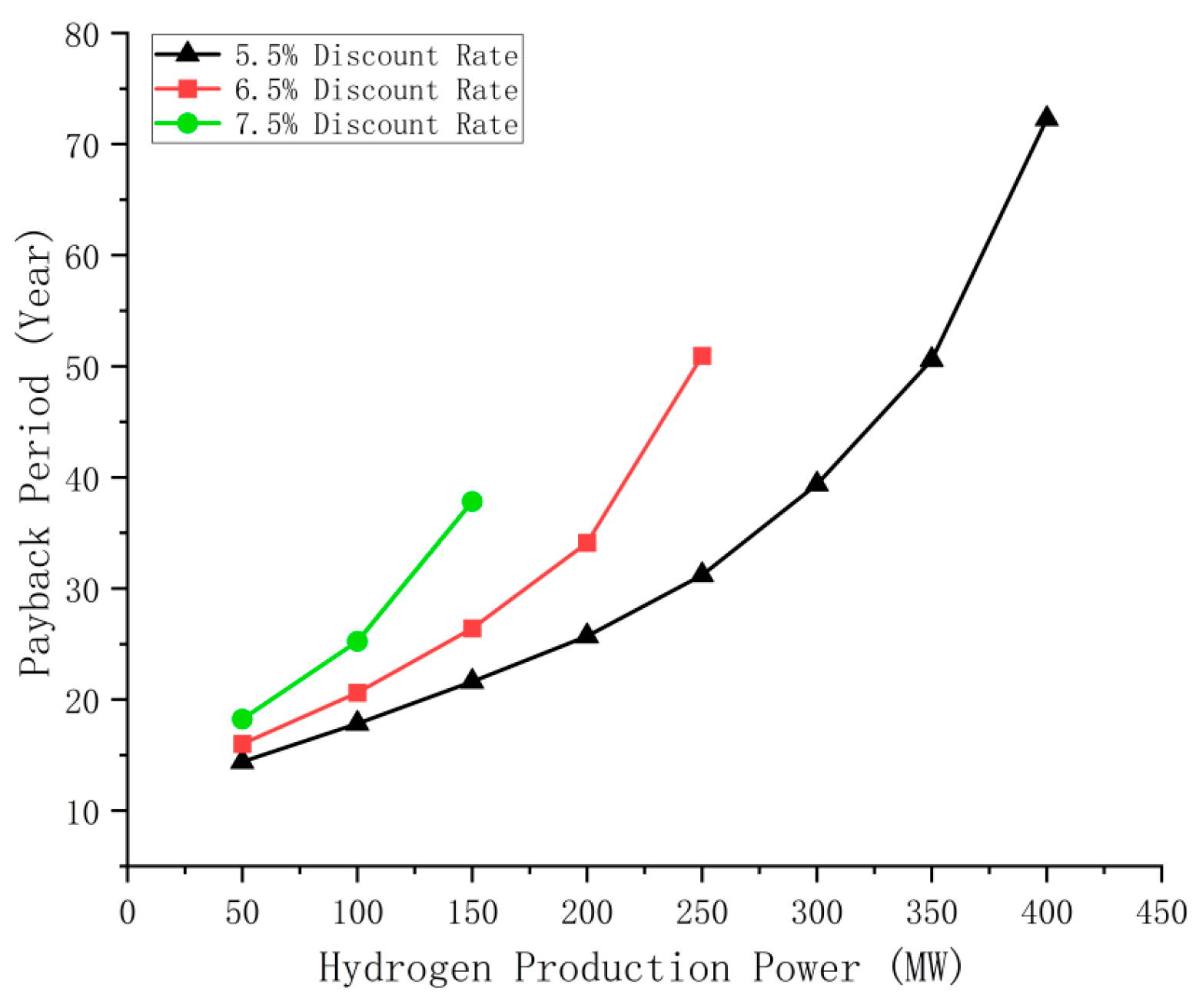
3.4.3. Sensitivity Analysis of Investment Payback Period with Respect to Discount Rate Under the “12-3-48-3” Mode
3.5. Discussion on the Impacts of Macroeconomic Parameters and Policy Factors
4. Conclusions
Author Contributions
Funding
Data Availability Statement
Conflicts of Interest
References
- Abhyankar, N.; Lin, J.; Kahrl, F.; Yin, S.; Paliwal, U.; Liu, X.; Khanna, N.; Luo, Q.; Wooley, D.; O’Boyle, M.; et al. Achieving an 80% carbon-free electricity system in China by 2035. iScience 2022, 25, 105180. [Google Scholar] [CrossRef] [PubMed]
- Jenkins, J.D.; Zhou, Z.; Ponciroli, R.; Vilim, R.; Ganda, F.; de Sisternes, F.; Botterud, A. The benefits of nuclear flexibility in power system operations with renewable energy. Appl. Energy 2018, 222, 872–884. [Google Scholar] [CrossRef]
- IAEA. Non-Baseload Operation in Nuclear Power Plants: Load Following and Frequency Control Modes of Flexible Operation; Nuclear Energy Series No. NP-T-3.23; IAEA: Vienna, Austria, 2018; Available online: https://www-pub.iaea.org/MTCD/Publications/PDF/P1756_web.pdf (accessed on 25 September 2025).
- Zhang, S. Optimal Operation Strategy of Nuclear Power Units Under Electricity Market Environment; Shenyang University of Technology: Shenyang, China, 2023. [Google Scholar]
- Lin, Y.; Pan, X.; Lin, Z.; Ai, X. Review of peak regulation for power system with a high penetration of nuclear power. Mod. Electr. Power 2020, 37, 51–58. [Google Scholar]
- Sepulveda, N.A.; Jenkins, J.D.; de Sisternes, F.J.; Lester, R.K. The role of firm low-carbon electricity resources in deep decarbonization of power generation. Joule 2018, 2, 2403–2420. [Google Scholar] [CrossRef]
- Romanos, P.; Al Kindi, A.A.; Pantaleo, A.M.; Markides, C.N. Flexible nuclear plants with thermal energy storage and secondary power cycles: Virtual power plant integration in a UK energy system case study. E-Prime—Adv. Electr. Eng. Electron. Energy 2022, 2, 100027. [Google Scholar] [CrossRef]
- Zakeri, B.; Syri, S. Electrical energy storage systems: A comparative life cycle cost analysis. Renew. Sustain. Energy Rev. 2015, 42, 569–596. [Google Scholar] [CrossRef]
- Aneke, M.; Wang, M. Energy storage technologies and real-life applications—A state of the art review. Appl. Energy 2016, 179, 350–377. [Google Scholar] [CrossRef]
- Faizan, M.; Alkaabi, A.K.; Nie, B.; Afgan, I. Thermal energy storage integration with nuclear power: A critical review. J. Energy Storage 2024, 96, 112577. [Google Scholar] [CrossRef]
- Wood, A.J.; Wollenberg, B.F. Power Generation, Operation, and Control, 2nd ed.; Wiley: Hoboken, NJ, USA, 2012; ISBN 978-1118585955. [Google Scholar]
- Morales, J.M.; Conejo, A.J.; Madsen, H.; Pinson, P.; Zugno, M. Integrating Renewables in Electricity Markets: Operational Problems; Springer: Berlin, Germany, 2014. [Google Scholar] [CrossRef]
- Jenkins, J.D.; Sepulveda, N.A. Enhanced Decision Support for a Changing Electricity Landscape: The GenX Configurable Electricity Resource Capacity Expansion Model. MIT Energy Initiative Working Paper (MITEI-WP-2017-10). Massachusetts Institute of Technology: Cambridge, MA, USA, 2017. Available online: https://energy.mit.edu/wp-content/uploads/2017/10/Enhanced-Decision-Support-for-a-Changing-Electricity-Landscape.pdf (accessed on 19 November 2025).
- Loulou, R.; Goldstein, G.; Noble, K. Documentation for the TIMES Model. In Energy Technology Systems Analysis Programme (ETSAP); International Energy Agency: Paris, France, 2004; Available online: https://iea-etsap.org/index.php/documentation (accessed on 25 November 2025).
- Keppo, I.; Strubegger, M. Capacity expansion planning under uncertainty. Energy Econ. 2017, 63, 235–246. [Google Scholar]
- Geidl, M.; Andersson, G. Optimal power flow of multiple energy carriers. IEEE Trans. Power Syst. 2007, 22, 145–155. [Google Scholar] [CrossRef]
- Mancarella, P. MES (multi-energy systems): An overview of concepts and evaluation models. Energy 2014, 65, 1–17. [Google Scholar] [CrossRef]
- Kyriakopoulos, G.L.; Aravossis, K.G. Literature review of hydrogen energy systems and renewable energy sources. Energies 2023, 16, 7493. [Google Scholar] [CrossRef]
- Gao, X.; Zheng, K.; Cai, C. Economic analysis of hydrogen energy storage for nuclear peak shaving. South. Energy Constr. 2021, 8, 1–8. [Google Scholar]
- National Energy Administration. Guangdong Electricity Market Operation Rules; South China Regulatory Bureau of NEA: Guangzhou, China, 2022. Available online: https://nfj.nea.gov.cn/xwzx/tzgg/202402/t20240208_245723.html (accessed on 13 September 2025).
- Hydropower and Water Resources Planning and Design General Institute. China Renewable Energy Engineering Cost Management Report. 2024. Available online: https://h2.in-en.com/html/h2-2442668.shtml (accessed on 11 September 2025).
- Xu, J.; Ding, X.; Gong, Y. Economic analysis of water electrolysis hydrogen production stations. Energy Storage Sci. Technol. 2022, 11, 2374–2385. [Google Scholar]
- Qi, Y.; Gao, D.; Zheng, X. Industrialization economics of SPE hydrogen production technology in China. Energy Storage Sci. Technol. 2022, 11, 4038–4047. [Google Scholar]
- China Energy News. Technological Innovation Drives Cost Reduction in the Hydrogen Energy Industry. 2024. Available online: https://paper.people.com.cn/zgnybwap/html/2024-06/10/content_26063866.htm (accessed on 11 November 2025).





| No. | Unit Type | Installed Capacity (MW) | Start-Up/Shut-Down Time (h) | Start-Up Cost (104 CNY) | Shut-Down Cost (104 CNY) |
|---|---|---|---|---|---|
| 1 | Coal-fired unit | 300 | 4.0 | 12 | 8 |
| 2 | 600 | 4.5 | 13.7 | 10 | |
| 3 | 660 | 4.5 | 14 | 10 | |
| 4 | 1000 | 5.0 | 18 | 12 | |
| 5 | Gas-fired unit | 60–150 | 0.5 | 20 | 5 |
| 6 | 150–270 | 0.5 | 30 | 6 | |
| 7 | 270–390 | 0.5 | 40 | 8 | |
| 8 | 390–500 | 0.5 | 50 | 9 | |
| 9 | 500–600 | 0.5 | 60 | 10 |
| No. | Equipment | Technical Specification | Unitprice (10,000 CNY) | Quantity | Subtotal (10,000 CNY) |
|---|---|---|---|---|---|
| 1 | Hydrogen power supply | 5.5 MW | 170 | 10 | 1700 |
| 2 | Electrolyzer hydrogen system | 1000 Nm3/h (5 MW) | 600 | 10 | 6000 |
| 3 | Purified water production system | 1 m3/h | 30 | 10 | 300 |
| 4 | Hydrogen storage tank | 2 MPa, 2000 m3 | 400 | 4 | 1600 |
| 5 | Hydrogen compressor | 600 Nm3/h, 20 MPa discharge | 68 | 17 | 1156 |
| 6 | Others | piping, instruments, electrical, control, etc. | 200 | 10 | 2000 |
| Total | 12,756 | ||||
| No. | O&M Cost Item | Treatment in the Economic Model |
|---|---|---|
| 1 | Electricity cost | Incorporated into hydrogen revenue modeling as a variable cost per unit of hydrogen |
| 2 | Hydrogen compression and purification cost | |
| 3 | Water cost | |
| 4 | Electrolyzer degradation and replacement | Included as fixed O&M cost, calculated as 3% of equipment investment per year |
| 5 | Start-up, shut-down, and cycling penalty cost |
| No. | Main Layout | Area (m2) |
|---|---|---|
| 1 | Electrolyzers and hydrogen purification equipment | 1500 |
| 2 | Hydrogen storage tank, purified water system, air compressor system, chiller | 1200 |
| 3 | Hydrogen compressor, manifold | 2100 |
| 4 | Substation system, hydrogen power supply | 2000 |
| 5 | Cooling tower, heat exchanger | 4000 |
| 6 | Tube trailer filling and storage | 2400 |
| 7 | Cylinder group filling and storage | 900 |
| 8 | Control room | 1800 |
| 9 | Duty room and other public areas | |
| 10 | Safety distance area, public land, etc. | Calculated as twice the actual used area |
| Total | 47,700 |
| No. | Building/Structure | Unit Price (CNY/m2) | Quantity (m2) | Subtotal (10,000 CNY) |
|---|---|---|---|---|
| 1 | Electrolyzers and hydrogen purification equipment | 1800 | 1500 | 270 |
| Hydrogen storage tank, purified water system, air compressor system, chiller | 1800 | 1200 | 216 | |
| Hydrogen compressor, manifold | 1800 | 2100 | 378 | |
| Substation system, hydrogen power supply | 1800 | 2000 | 360 | |
| Cooling tower, heat exchanger | 1800 | 4000 | 720 | |
| Tube trailer filling and storage | 1800 | 2400 | 432 | |
| Cylinder group filling and storage | 1800 | 900 | 162 | |
| 2 | Control room | 1200 | 1500 | 180 |
| 3 | Office | 1200 | 900 | 108 |
| 4 | Warehouse | 1000 | 1500 | 150 |
| 5 | Guard house | 1000 | 240 | 24 |
| 6 | Canteen and living facilities | 1000 | 1500 | 150 |
| 7 | Garage | 1000 | 600 | 60 |
| 8 | Factory wall and gate | 200 | 1200 | 24 |
| 9 | Factory road | 120 | 3000 | 36 |
| 10 | Factory greening | 50 | 9000 | 45 |
| Total | 3315 |
Disclaimer/Publisher’s Note: The statements, opinions and data contained in all publications are solely those of the individual author(s) and contributor(s) and not of MDPI and/or the editor(s). MDPI and/or the editor(s) disclaim responsibility for any injury to people or property resulting from any ideas, methods, instructions or products referred to in the content. |
© 2026 by the authors. Licensee MDPI, Basel, Switzerland. This article is an open access article distributed under the terms and conditions of the Creative Commons Attribution (CC BY) license.
Share and Cite
Xu, J.; Qin, G.; Zhang, C.; Dong, B.; Li, D.; Lu, J.; Ren, H. Economic Analysis of Nuclear Power Peak Shaving Based on AEL Hydrogen Production. Processes 2026, 14, 725. https://doi.org/10.3390/pr14040725
Xu J, Qin G, Zhang C, Dong B, Li D, Lu J, Ren H. Economic Analysis of Nuclear Power Peak Shaving Based on AEL Hydrogen Production. Processes. 2026; 14(4):725. https://doi.org/10.3390/pr14040725
Chicago/Turabian StyleXu, Jiaoshen, Ge Qin, Chengcheng Zhang, Bo Dong, Dongyuan Li, Jinling Lu, and Hui Ren. 2026. "Economic Analysis of Nuclear Power Peak Shaving Based on AEL Hydrogen Production" Processes 14, no. 4: 725. https://doi.org/10.3390/pr14040725
APA StyleXu, J., Qin, G., Zhang, C., Dong, B., Li, D., Lu, J., & Ren, H. (2026). Economic Analysis of Nuclear Power Peak Shaving Based on AEL Hydrogen Production. Processes, 14(4), 725. https://doi.org/10.3390/pr14040725