1. Introduction
The Ordos Basin is one of the largest tight sandstone gas reservoirs in China, located in the northwestern region, and holds significant strategic importance in terms of energy resources [
1]. With the gradual depletion of conventional natural gas resources, tight sandstone gas, as an unconventional natural gas resource, has become an important means of ensuring national energy security and promoting the transformation of the energy structure. The development of gas reservoirs in the Ordos Basin is not only of great significance for enhancing China’s energy self-sufficiency and promoting economic development, but also plays a positive role in environmental improvement and the realization of green development [
2,
3,
4]. However, during the development of tight sandstone gas, corrosion in gas wells has become increasingly severe. Corrosion not only causes serious damage to equipment and pipelines, leading to increased safety risks and economic costs, but may also result in environmental pollution, and has become a major challenge restricting the long-term stable production of gas fields [
5,
6,
7,
8,
9]. Therefore, an in-depth investigation of the corrosion mechanisms of tight sandstone gas wells in the Ordos Basin and their corrosion control measures, particularly the effective application of corrosion inhibitors, is of significant theoretical and practical importance for ensuring gas field safety and improving production efficiency.
In recent years, research on the formation mechanisms of gas well corrosion and corresponding corrosion control measures has continued to intensify both domestically and internationally, mainly focusing on experimental investigations and numerical simulations. Regarding experimental research progress, Askari conducted high-temperature and high-pressure dynamic corrosion experiments to elucidate the corrosion mechanisms of downhole tubing, systematically analyzing the effects of key factors such as the partial pressures of CO
2 and H
2S, temperature, water content, and fluid flow conditions on the corrosion process [
10]. Through a combination of laboratory experiments, Mubarak systematically investigated the corrosion mechanisms of oil and gas well casings under complex corrosive environments involving CO
2/H
2S, and emphasized the application performance of corrosion control measures, including corrosion-resistant materials, coating technologies, and corrosion inhibitors, in gas well engineering [
11]. Xu conducted laboratory-scale corrosion simulation experiments based on the service conditions of shale gas wells in the southern Sichuan Basin, revealing the controlling effects of synergistic corrosion between CO
2 and microorganisms as well as temperature on casing corrosion, and proposed a casing corrosion protection scheme capable of meeting a 20-year service life requirement [
12]. Yue employed electrical resistance corrosion monitoring, metallographic examination, and X-ray diffraction (XRD) analyses and found that the corrosion rate of mild steel was highest under coexisting CO
2/H
2S environments; moreover, although H
2S could not suppress uniform corrosion, it could retard the development of pitting corrosion through the formation of an FeS film [
13]. Focusing on the corrosion behavior of different tubular materials, Li systematically compared the corrosion performance of various steels in sulfur-containing waste gas environments using high-temperature and high-pressure autoclave simulation experiments combined with weight-loss measurements, corrosion product morphology analysis, and service life prediction, and concluded that N80/825 bimetallic composite pipes exhibited superior engineering applicability in terms of corrosion resistance and economic efficiency [
14]. Through laboratory experiments, Soomro concluded that by applying sodium dodecyl sulfate (SDS) as a surfactant along with condensate as a carrier fluid to address liquid accumulation in gas wells, SDS could significantly reduce surface tension, and condensate ensured uniform dispersion of the surfactant, thereby enhancing gas well liquid unloading efficiency [
15].
With respect to progress in numerical simulation studies, Liu established a corrosion rate prediction model for gas well tubing under CO
2 corrosive environments based on the Euler–Euler multiphase flow framework coupled with an electrochemical corrosion model, in combination with field data, and verified the rationality of the model [
16]. Wang performed computational fluid dynamics (CFD) simulations using the realizable
k–
ε turbulence model coupled with the volume of fluid (VOF) model to determine the gas–water volume fraction distribution and wall shear stress in gas–water two-phase pipelines, and subsequently developed a corrosion prediction model for gas well tubing [
17,
18]. Jones analyzed mechanistic chemical models through numerical simulations, demonstrating distinct response patterns of charge transfer- and mass transfer-controlled regions during the CO
2 corrosion process, and constructed contour maps of corrosion rate as a function of environmental parameters, such as temperature, CO
2 partial pressure, and pH, providing an intuitive reference for the design of corrosion-resistant materials [
19]. By developing a multiphysics-coupled finite element model integrating fluid dynamics, chemical reactions, and mass transfer and incorporating the large eddy simulation (LES) method, Fang showed that Fe
2+ tends to adhere to the upper region of the corroded surface, whereas H
+ preferentially accumulates in the lower region [
20]. Vagapov conducted numerical simulations of flow-induced corrosion in gas wellbore pipelines and established a variable wetting condition model, revealing that under high CO
2/H
2S conditions, the wellbore corrosion rate could reach 2–3 mm/a, and that the appropriate selection of corrosion inhibitors could significantly suppress internal pipeline corrosion processes [
21].
In summary, although notable progress has been achieved in the investigation of gas well corrosion mechanisms and corrosion control technologies, systematic studies focusing on the tight sandstone gas reservoirs of the X block in the Ordos Basin, a typical continental low-permeability gas reservoir, remain relatively limited, and existing results are insufficient to comprehensively characterize the wellbore corrosion features and their evolutionary behavior. Given the complex production conditions and pronounced regional variability of the corrosive environments in this area, targeted research is urgently required. In this study, laboratory-scale simulation experiments were conducted in combination with scanning electron microscopy (SEM), energy-dispersive spectroscopy (EDS), and XRD techniques to systematically elucidate the corrosion mechanisms of tight sandstone gas wells in the X block of the Ordos Basin from both macroscopic and microscopic perspectives. Furthermore, by comprehensively considering gas well production regimes, the characteristics of corrosive media, and the action mechanisms of corrosion inhibitors, the existing corrosion inhibitor dosing scheme was evaluated and optimized. The results of this study provide a theoretical basis and technical support for the scientific formulation and rational implementation of corrosion control measures for gas wells in this area (well depth 3500–4000 m, flow pressure 10–20 MPa).
Notably, CO2- and H2S-induced corrosion is common in many international oil and gas reservoirs. By highlighting this connection, the findings regarding corrosion mechanisms and inhibitor performance in the Ordos Basin X Block can offer valuable insights for corrosion management in similar global reservoirs, enhancing the international relevance and applicability of this study.
2. Analysis of Corrosive Media
The X Block is located in the central–eastern part of the Ordos Basin and is characterized as a low-pressure, sulfur-bearing gas reservoir under normal-temperature conditions, with formation temperatures ranging from 89 to 123 °C and formation pressures between 15 and 27 MPa. The reservoir is a tight lithologic gas reservoir with poor inter-reservoir connectivity and strong heterogeneity, exhibiting the characteristics of low porosity, low permeability, low productivity, and low abundance. With the continuous development of the X Block gas field, wellbore corrosion in gas wells has become increasingly severe, and the number of wells experiencing production constraints due to corrosion-related failures has been gradually increasing.
To further elucidate the wellbore corrosion mechanisms of tight sandstone gas wells in the X Block of the Ordos Basin, three representative gas wells in this area—X-1, X-2, and X-3—were selected as the research objects. As shown in
Table 1, these wells exhibit certain differences in reservoir burial depth, production regimes, and corrosive environments. Accordingly, the compositions of produced water and natural gas were analyzed.
2.1. Produced Water Quality Analysis
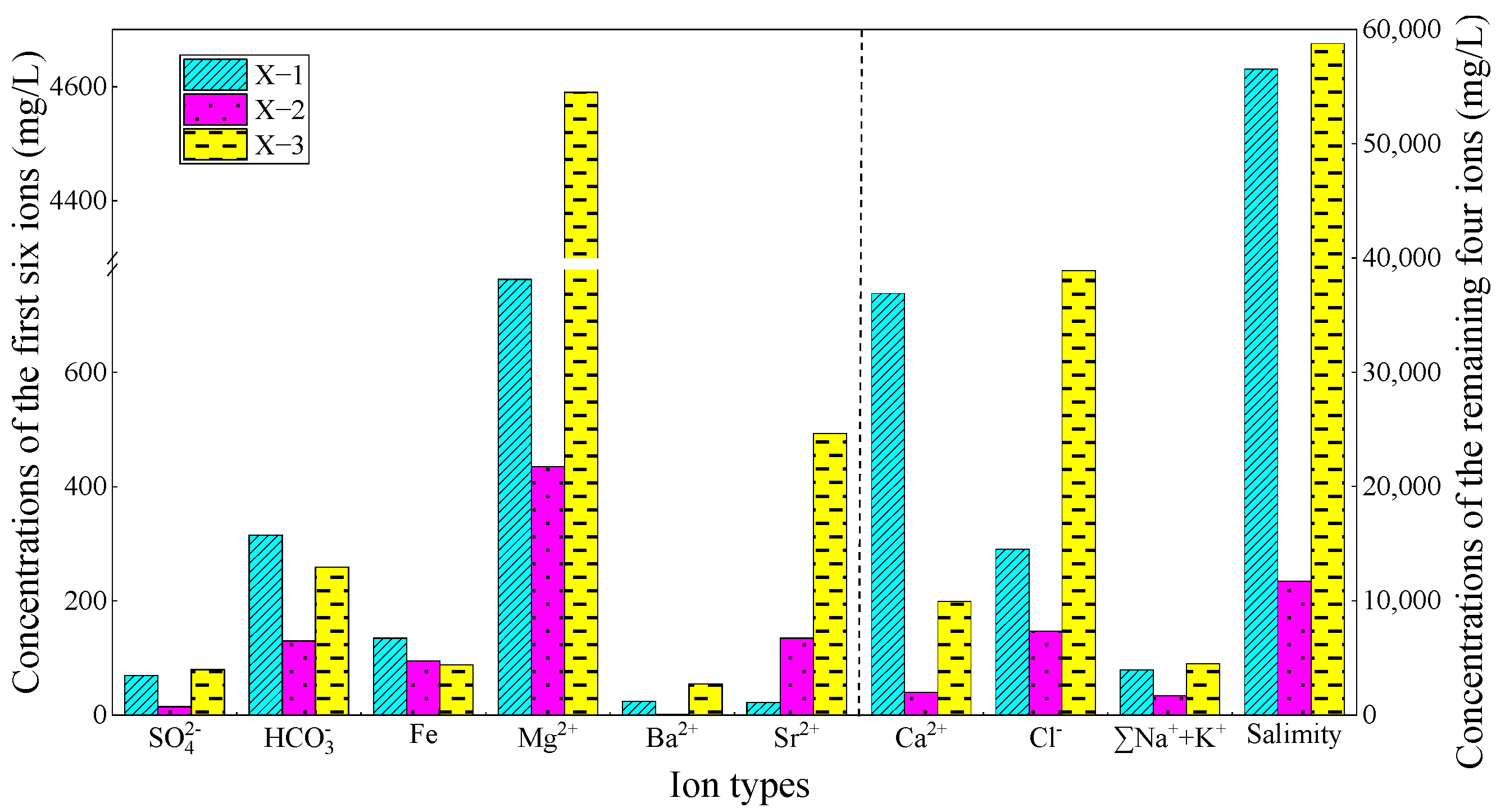
The major ionic composition, salinity, and concentrations of corrosive ions in the produced water from the three wells were analyzed to clarify the characteristics of the water-phase environment affecting wellbore corrosion. The results of the compositional analysis are shown in
Figure 1.
The pH values of the produced water from Wells X-1, X-2, and X-3 range from 6.08 to 6.56, with an average value of 6.27, indicating an overall weakly acidic environment with a certain corrosive tendency. The total salinity of the produced water ranges from 11,691.3 to 58,791.2 mg/L, with an average salinity of 42,347.1 mg/L, suggesting that the aqueous environment can be classified as a high-salinity, strong electrolyte system that is prone to inducing electrochemical corrosion. Chloride (Cl−) is the dominant anion in the produced water, with concentrations ranging from 7320 to 38,900 mg/L and an average value of 20,240 mg/L. High concentrations of Cl− exhibit strong penetration capability and can damage the protective passive film on metal surfaces, thereby promoting localized corrosion of the wellbore, particularly pitting corrosion. Water type analysis indicates that the produced water from all three gas wells belongs to the calcium chloride type. In addition, the produced water contained relatively high concentrations of scale-forming ions, including Ca2+, Mg2+, Ba2+, Sr2+, as well as SO42− and HCO3−, providing the material basis for the formation of calcium carbonate and barium and strontium sulfate scales, which can further aggravate under-deposit corrosion and pose potential threats to wellbore integrity and safe production.
2.2. Natural Gas Composition Analysis
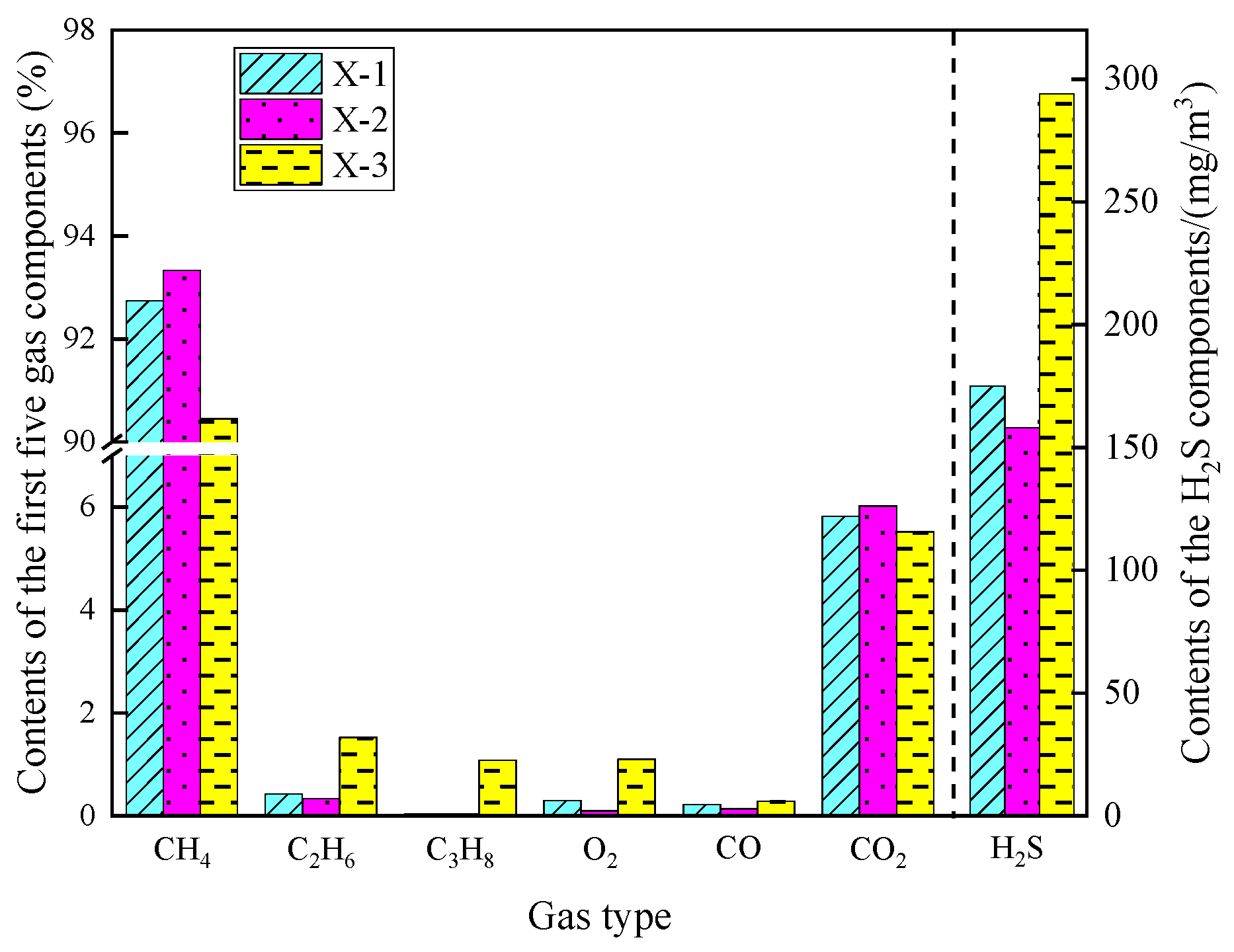
The bottom-hole flowing pressure of Well X-1 is 18.93 MPa, that of Well X-2 is 21.07 MPa, and that of Well X-3 is 13.37 MPa. To further investigate the gas-phase corrosion mechanism, this study employed gas chromatography to analyze the corrosive gas content in the natural gas of the three gas wells, with the composition analysis results shown in
Figure 2.
Based on the distribution characteristics of the natural gas composition, methane is the dominant component in the natural gas of Wells X-1, X-2, and X-3, but they also contain varying amounts of corrosive acidic gases such as CO
2 and H
2S, indicating that the wellbore system has the material basis for gas-phase corrosion. Specifically, the CO
2 content in Well X-2 was the highest, with a partial pressure of 1.27 MPa; Well X-1 had a partial pressure of 1.10 MPa; and the CO
2 partial pressure in Well X-3 was relatively lower at 0.74 MPa, but all three wells fell within the effective concentration range that can induce CO
2 corrosion. At the same time, H
2S was detected in all three wells, with the highest H
2S content in Well X-3 at 294 mg/m
3, followed by 175 mg/m
3 in Well X-1, and the lowest in Well X-2 at 158 mg/m
3. Under high temperature and high pressure conditions, H
2S can interact synergistically with CO
2, destroying the corrosion product film structure, thereby inducing or exacerbating localized corrosion [
22].
3. Experimental Procedures and Results
Through the above studies, it can be concluded that Wells X-1 to X-3 are all subject to complex corrosive environments. In this section, laboratory experiments were conducted to systematically investigate the corrosion mechanisms and severity for the three representative wells. The detailed experimental procedures are described as follows.
3.1. Materials and Methods
Experimental Materials: Corrosion test coupons (specification: 55 × 21 × 2 mm, Beijing Zhongke Kaili Technology Co., Ltd., Beijing, China); Petroleum ether (analytical grade, Xilong Scientific, Guangzhou, China); Anhydrous ethanol (Tianjin Fuyu Fine Chemical Co., Ltd., Tianjin, China); Hydrochloric acid (Xilong Scientific, China); Hexamethylenetetramine (Xilong Scientific, China); Ethylenediamine (Xilong Scientific, China); Phoenix brand epoxy resin (Sinopec, Beijing, China); Sandpaper (Shandong Shengquan Group Co., Ltd., Jinan, China); Diamond polishing paste (Shanghai Natural Diamond, Shanghai, China).
Experimental Instruments: ME204E external calibration electronic analytical balance (Mettler Toledo, Shanghai, China); OLYMPUS DSX500 optical digital microscope (Olympus Corporation, Tokyo, Japan); JEOL scanning electron microscope (JEOL Ltd, Tokyo, Japan); OXFORD INCA x-act energy dispersive spectrometer (Oxford Instruments, Oxford, UK); D/MAX-2400 XRD (Rigaku Corporation, Tokyo, Japan).
Experimental Methods:
- ➀
Corrosion Rate Measurement: The corrosion coupons were cleaned, dried, and weighed in the laboratory. The weight loss was measured using the gravimetric method to determine the uniform corrosion rate. After cleaning the corrosion product films, the coupons were observed using an OLYMPUS DSX500 optical digital microscope in bright field mode at an appropriate magnification. Multiple locations on both the front and back surfaces of the coupons were photographed to examine their corrosion morphology, and the maximum pitting depth was measured.
- ➁
Microstructural Morphology Measurement: The coupons were encapsulated by mixing epoxy resin and ethylenediamine in a specific ratio, followed by thorough stirring. After the coupons completely solidified, they were progressively polished using sandpaper of different grits (180, 240, 360, 800, 1000, 1200, and 1500 mesh). The surface was then polished using a diamond abrasive paste. The cross-sections were analyzed for elemental composition using a scanning electron microscope and an OXFORD INCA x-act energy dispersive X-ray spectroscopy analyzer. The mineral composition was analyzed using a D/MAX-2400 X-ray diffraction instrument (Japan).
3.2. Macroscopic Characterization
In this section, corrosion coupons that had been long-term exposed to acidic conditions within gas field wellbores were collected and subjected to laboratory cleaning, drying, and weighing. The weight-loss method was employed to determine mass loss, with the uniform corrosion rate (
rc) and pitting corrosion rate (
rpit) used as quantitative evaluation indices [
23], as expressed in Equations (1) and (2). In addition, three-dimensional surface morphology measurements and maximum pitting depth were used to macroscopically characterize the corrosion behavior under the wellbore environment of the gas wells in this area:
where (
rc) is the uniform corrosion rate, mm/a; (∆
m) is the mass loss of the corrosion coupon before and after the experiment, g; (
S) is the surface area of the corrosion coupon, cm
2; (
t) is the test duration, h; (
ρ) is the density of the coupon material, g/cm
3 (generally taken as 7.86 g/cm
3 for steel);
rpit is the pitting corrosion rate, mm/a; (
hmax) is the maximum pitting depth, mm; and (
t) is the exposure time, d.
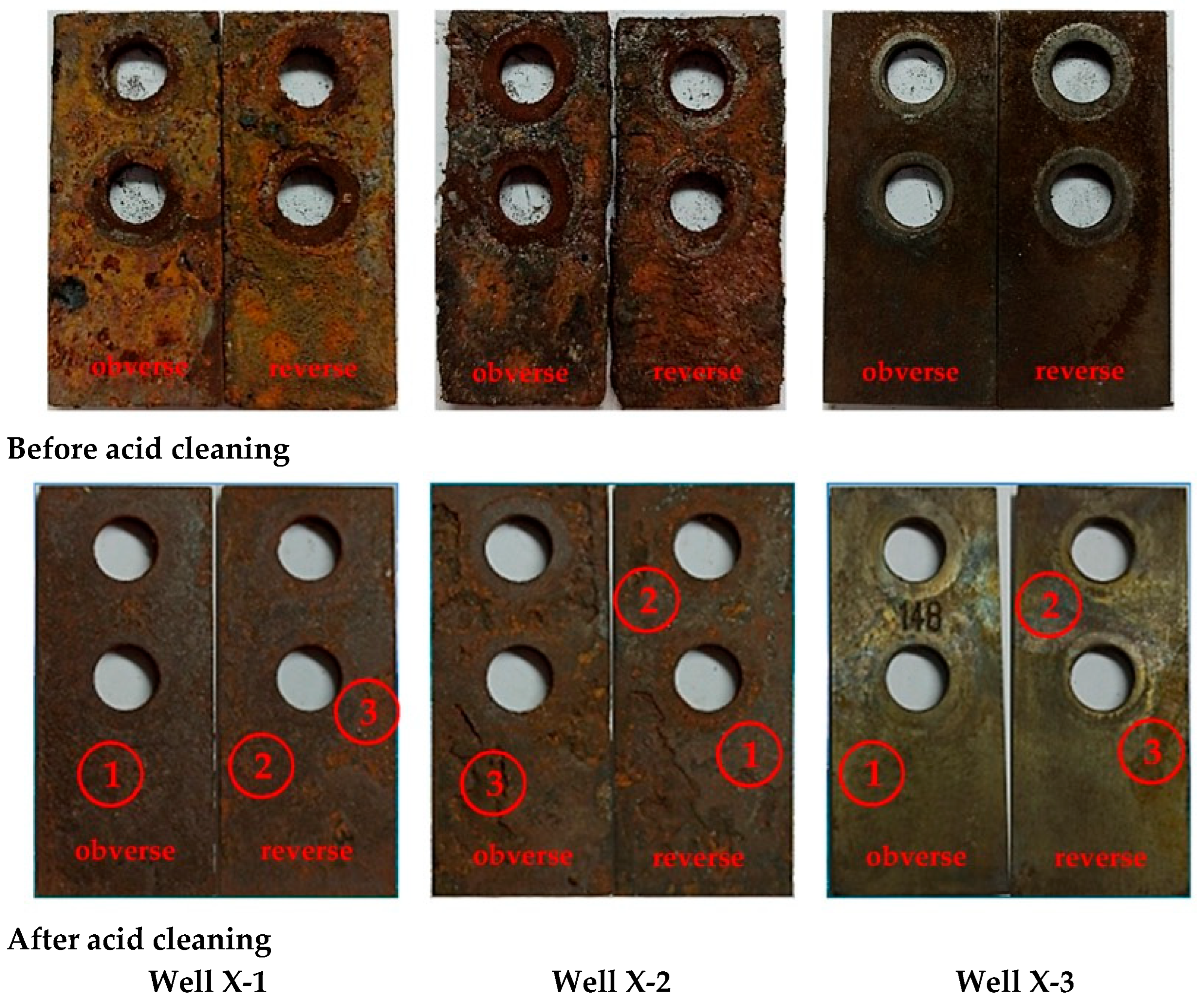
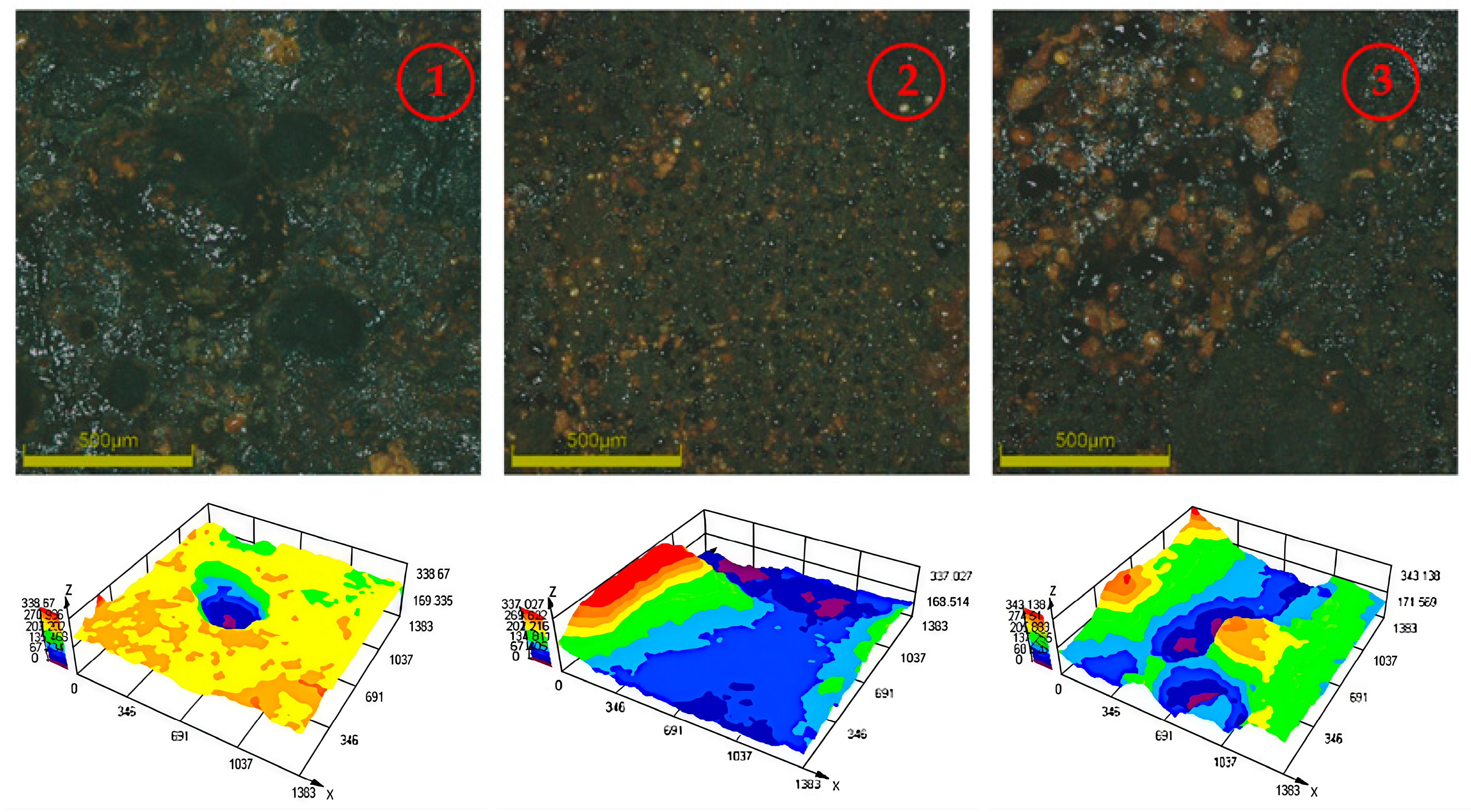
The surface morphologies of the corrosion coupons monitored in Wells X-1, X-2, and X-3 before and after acid cleaning are shown in
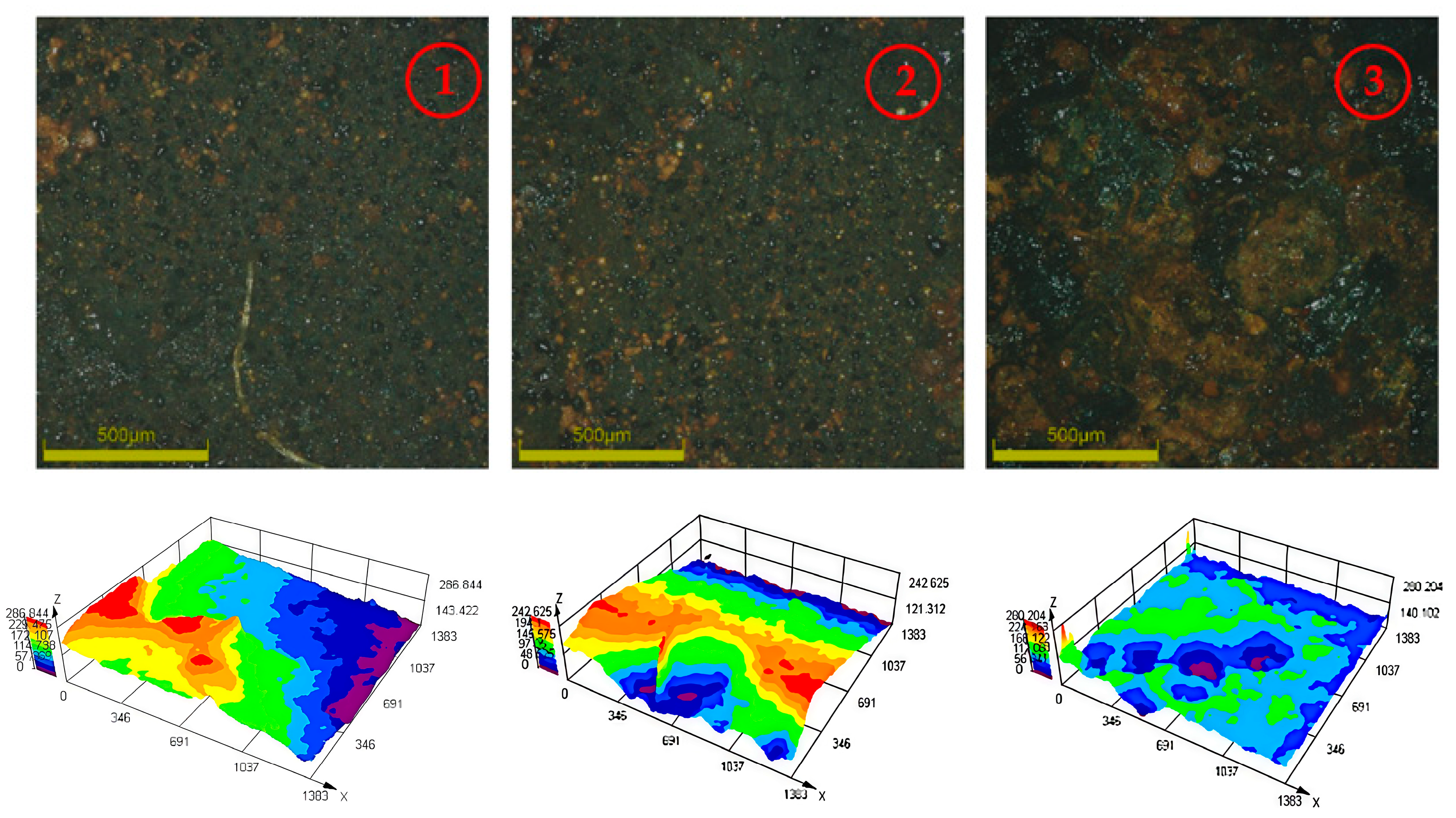
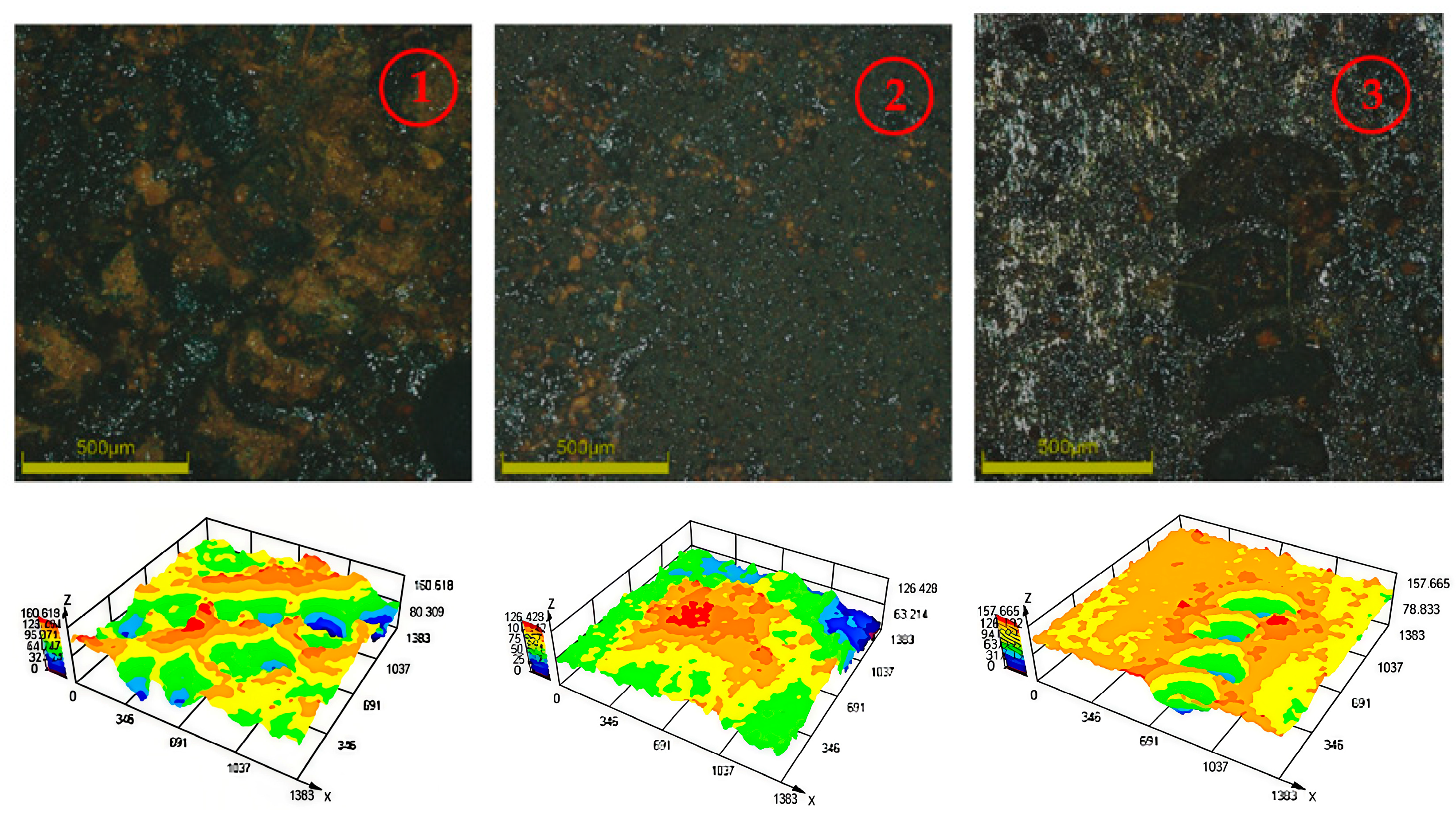
Figure 3. Three representative areas were selected on the surface of each coupon for three-dimensional morphology measurements, and the corresponding results are presented in
Figure 4,
Figure 5 and
Figure 6. On this basis, the corrosion products on the coupon surfaces were further removed to determine the maximum pitting depth, from which the pitting corrosion rate was calculated. The measured corrosion rates for each gas well are summarized in
Table 2.
As shown in
Figure 4,
Figure 5 and
Figure 6 and
Table 1, varying degrees of corrosion occurred on the surfaces of the corrosion coupons from the three gas wells, with incomplete coverage of corrosion products and distinct pitting pits observed locally. After removal of the corrosion product films, relatively deep pitting pits were observed on the coupon surfaces from Wells X-1 and X-2. The average and maximum pitting depths of Well X-1 were 269.891 μm and 286.844 μm, respectively, while those of Well X-2 were 339.611 μm and 338.670 μm, respectively. In contrast, the pitting severity of Well X-3 was relatively weak.
Based on the comprehensive evaluation of corrosion morphologies and rate parameters, Well X-2 was classified as severely corroded, Well X-1 as moderately corroded, and Well X-3 as mildly corroded. Pitting corrosion was dominant in Wells X-1 and X-2, whereas uniform corrosion prevailed in Well X-3. The overall trends of both uniform corrosion rate and pitting corrosion rate followed the order: X-2 > X-1 > X-3, indicating that higher uniform corrosion rates and greater pitting depths correspond to higher pitting corrosion rates. The development degree of pitting corrosion and the uniform corrosion rate are closely related to the corrosive medium conditions within the wellbore [
24].
3.3. Microscopic Characterization
To elucidate the corrosion mechanisms of tight sandstone gas wells at the microscopic scale, corrosion coupons from Wells X-1, X-2, and X-3 were subjected to combined SEM, EDS, and XRD analyses.
- ➀
Microscopic Morphology of Corrosion Product Films
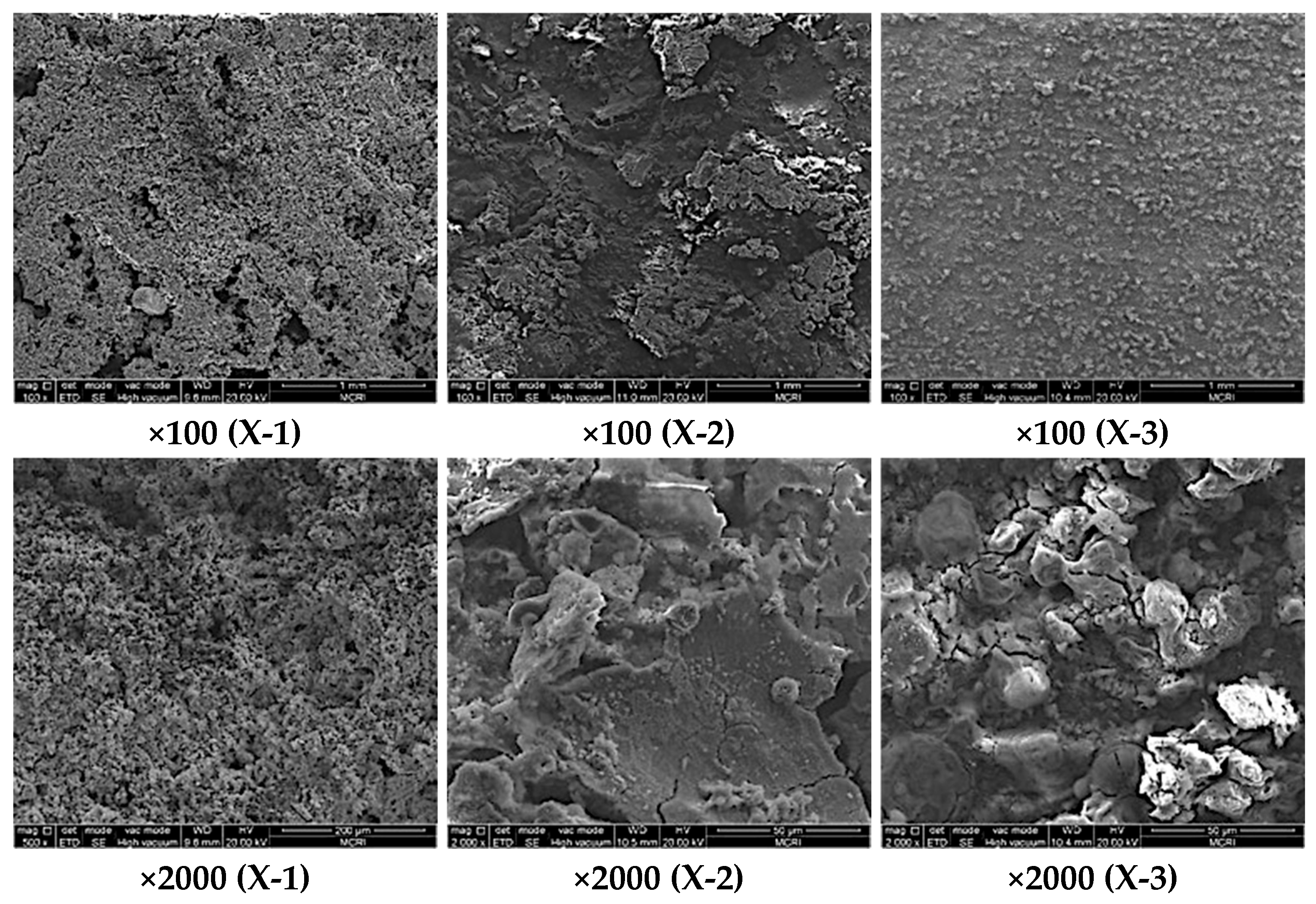
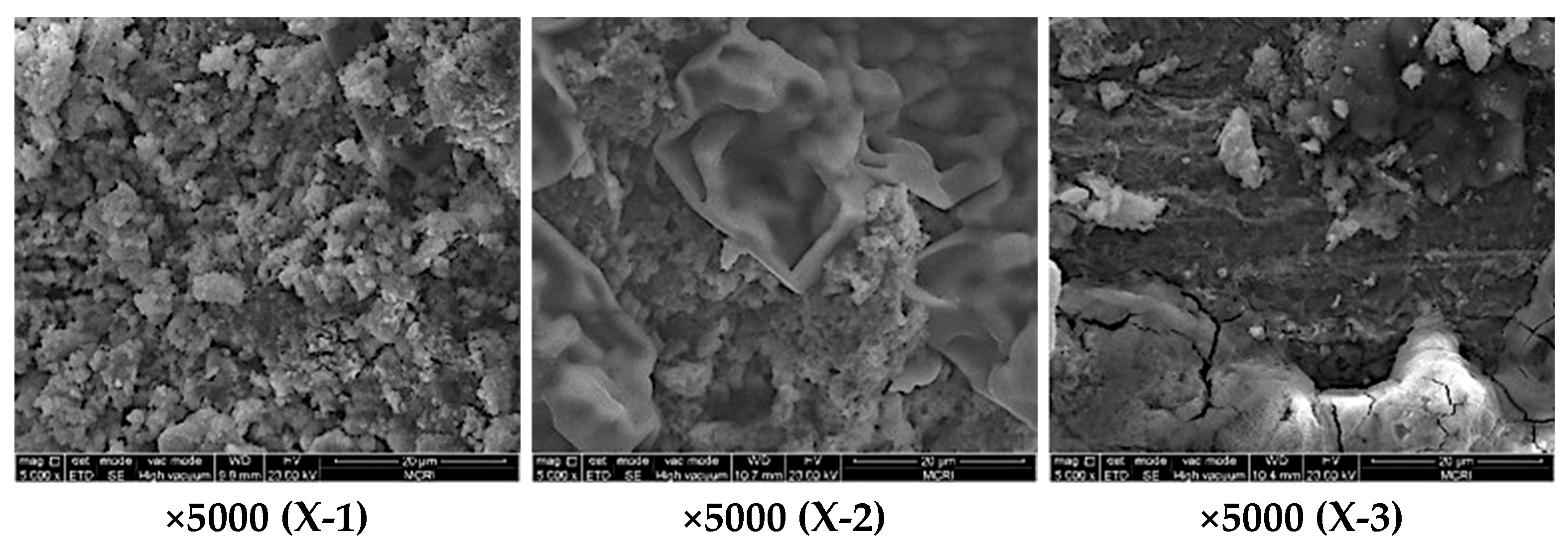
SEM was employed to randomly select one representative area on the surface of the corrosion coupons from the three gas wells, and the scanning was conducted at different magnifications to characterize the microscopic morphology of the corrosion product films. The corresponding SEM images are shown in
Figure 7.
According to
Figure 7, the surfaces of the corrosion coupons from the three gas wells generally exhibited a rough morphology; however, significant differences were observed in the corrosion product film morphologies. Specifically, the corrosion product film of Well X-1 showed distinct cracks, whereas that of Well X-2 was relatively loose in structure, allowing corrosive media to penetrate along the defects and act on the metal substrate, thereby promoting pitting corrosion. In contrast, Well X-3 exhibited a smaller amount of corrosion products with a relatively dense distribution, providing a certain barrier effect and protective function for the substrate.
- ➁
Elemental Analysis of the Cross-Section of Corrosion Products
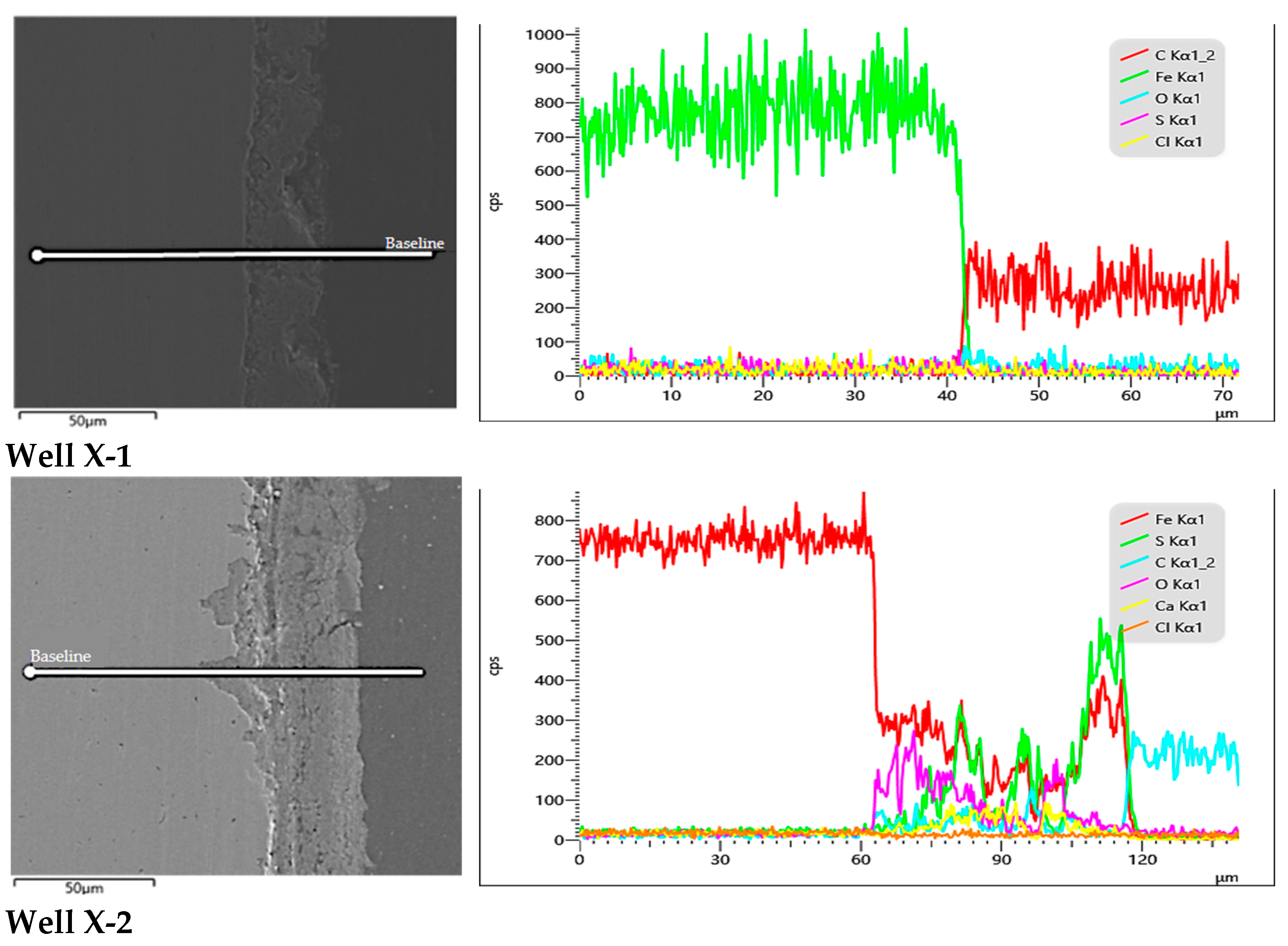
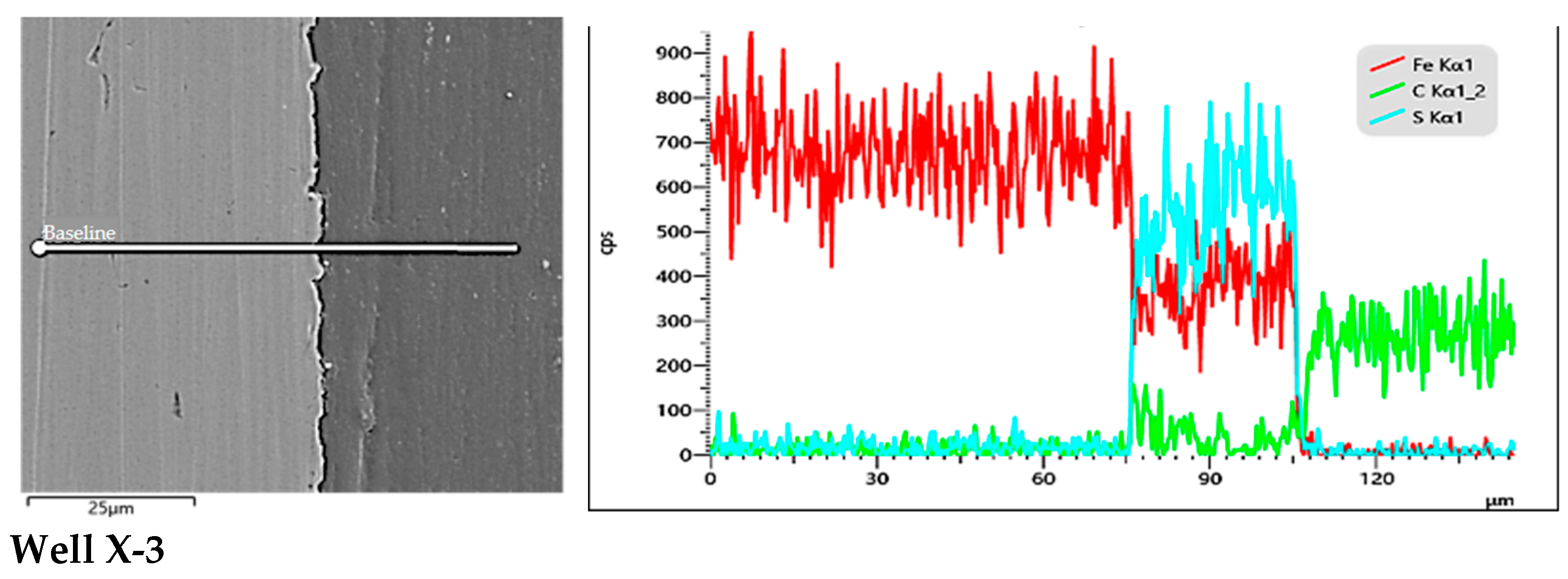
Cross-sectional microstructural analysis of the corrosion coupons was conducted using SEM. The corrosion coupons were encapsulated with a mixture of epoxy resin and ethylenediamine and allowed to fully cure, followed by sequential grinding with 180–1500 grit sandpapers and fine polishing using polishing paste. Subsequently, SEM-based elemental line scanning was performed on the cross sections of the corrosion coupons from the three gas wells to obtain the elemental distribution characteristics of the corrosion product films along the cross-section. The scanning results are shown in
Figure 8.
As shown in
Figure 8, the corrosion product film thickness on the corrosion coupons of the three gas wells followed the order: X-2 well > X-1 well > X-3 well. In the cross-section of the corrosion coupon from the X-1 well, the C element was significantly enriched near the substrate, indicating that the corrosion in this well is primarily caused by CO
2. In the cross-section of the X-2 well, the Cl element was evenly distributed, while C was enriched in the substrate area, suggesting that corrosion in this well is mainly caused by CO
2, with Cl
− penetrating the corrosion product film, inducing a galvanic cell effect and promoting pitting corrosion. The corrosion product film on the X-3 well was relatively thin, and a certain amount of S element was distributed in the cross section, indicating that the corrosion in this well is relatively mild, primarily caused by sulfides.
- ➂
Elemental Composition of Corrosion Product Film
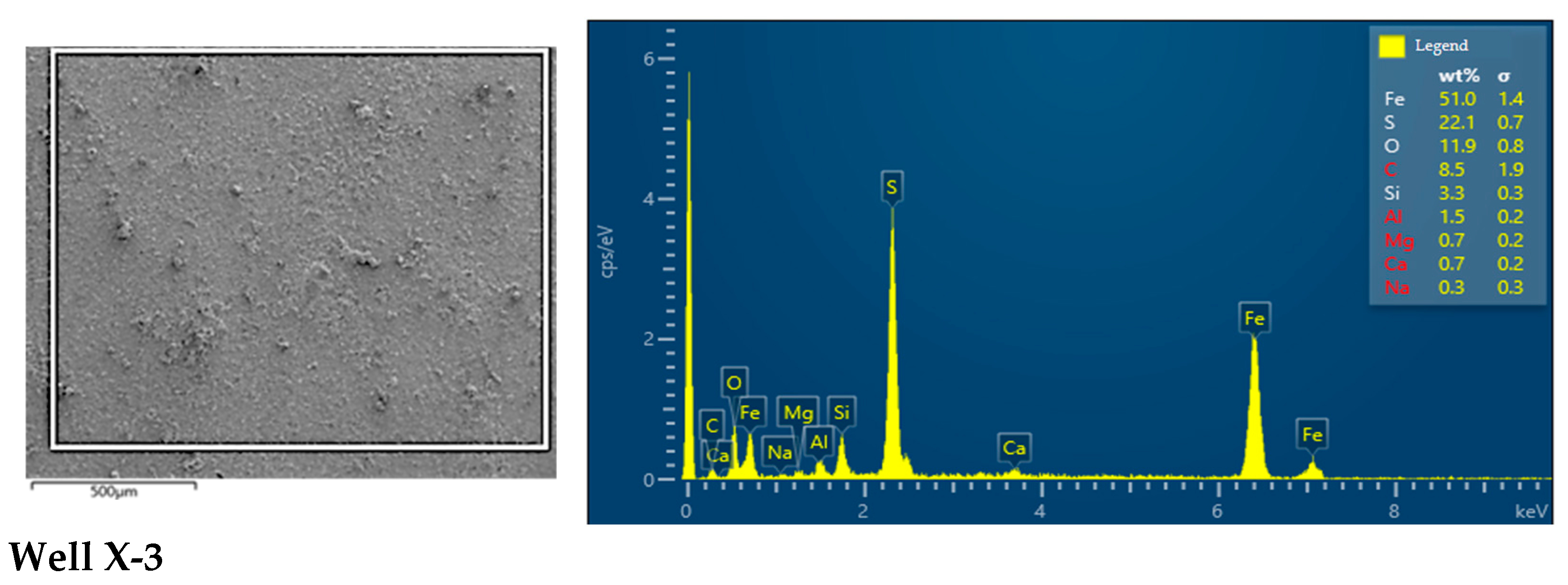
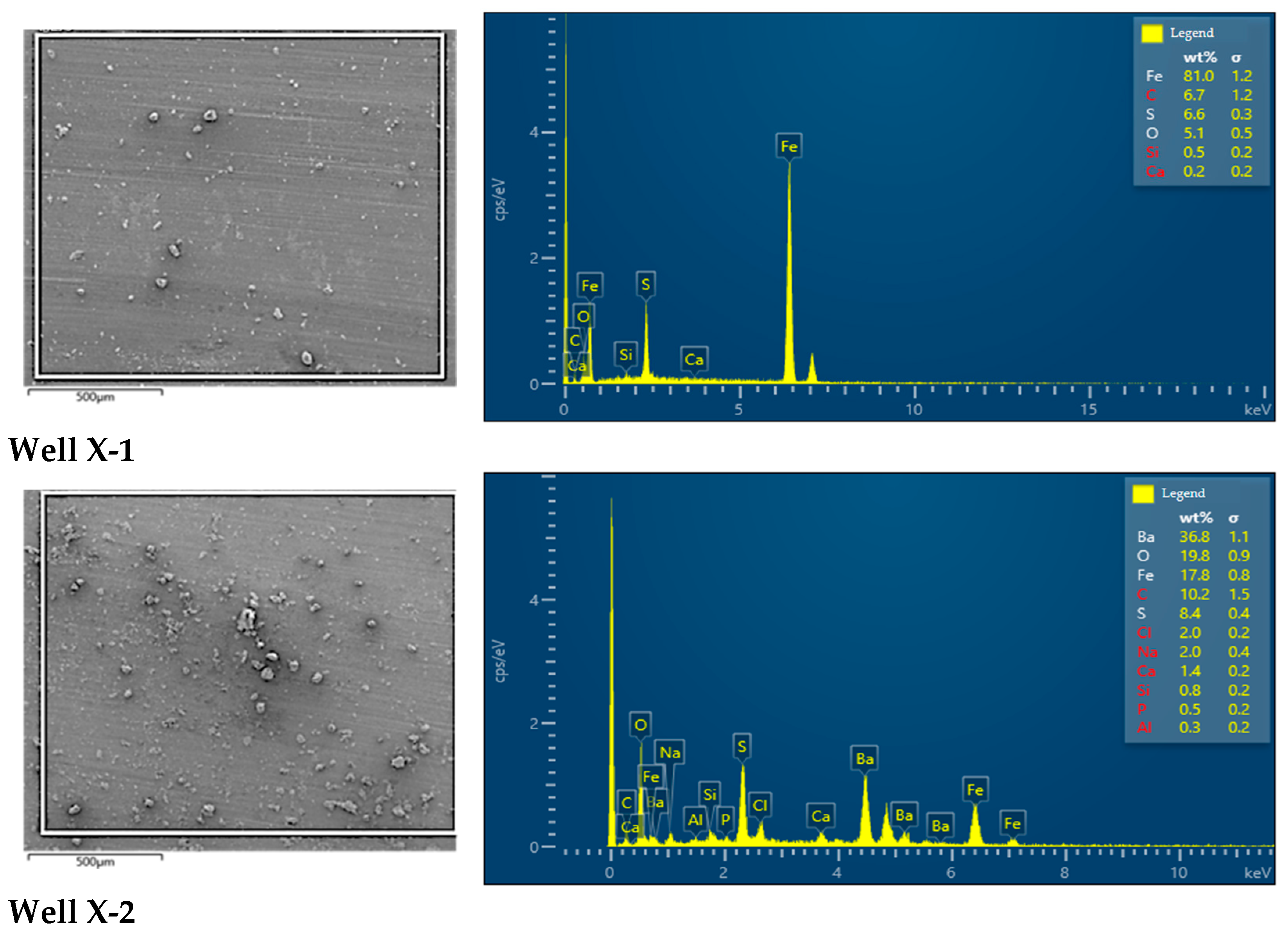
To analyze the elemental composition of the corrosion products, a representative area on the surface of the corrosion coupons from each well was selected. Scanning was conducted at a magnification of 200×, and EDS was performed on the surface of the corrosion coupons from the three gas wells using the OXFORD INCA x-act energy dispersive spectrometer. The results are shown in
Figure 9.
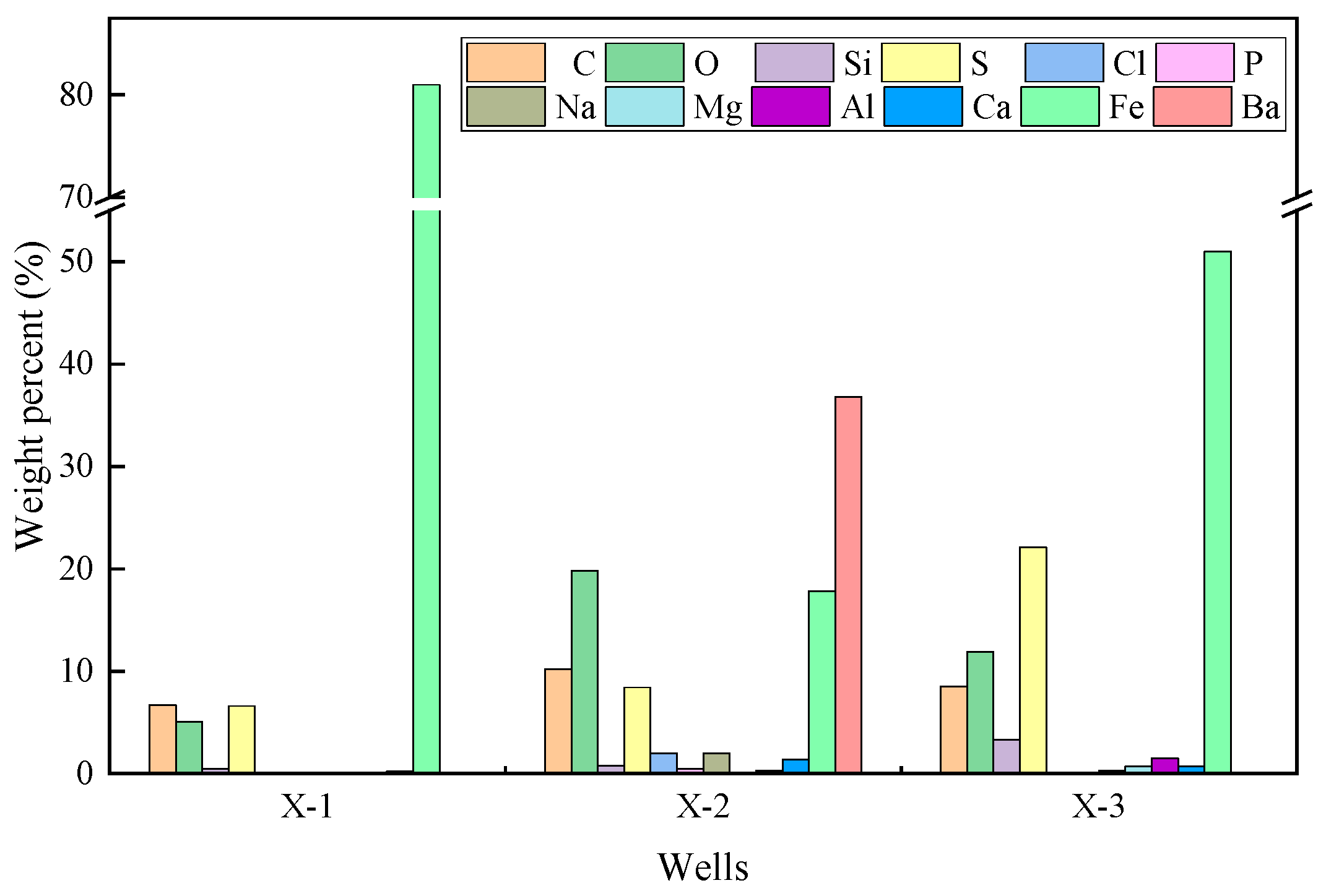
As shown in
Figure 9 and
Figure 10, the primary elements detected in the corrosion products of the three gas wells were Fe, C, S, and O, indicating the presence of CO
2 and H
2S corrosion within the wells. In the corrosion products of Well X-2, Cl elements were detected. The small ionic radius of Cl
− allows it to permeate the corrosion product film, making it one of the contributors to pitting corrosion formation. Ca elements were detected in the corrosion products of all three gas wells. Combined with the presence of S and O elements, it can be inferred that the surface of the corrosion coupons is covered by CaCO
3 scale, as well as FeS and FeCO
3 corrosion products. In the corrosion products of Well X-2, Ba elements were also detected, and combined with the distribution of S and O elements, it is speculated that BaSO
4 scale formed on the surface.
- ➃
XRD analysis results of corrosion products
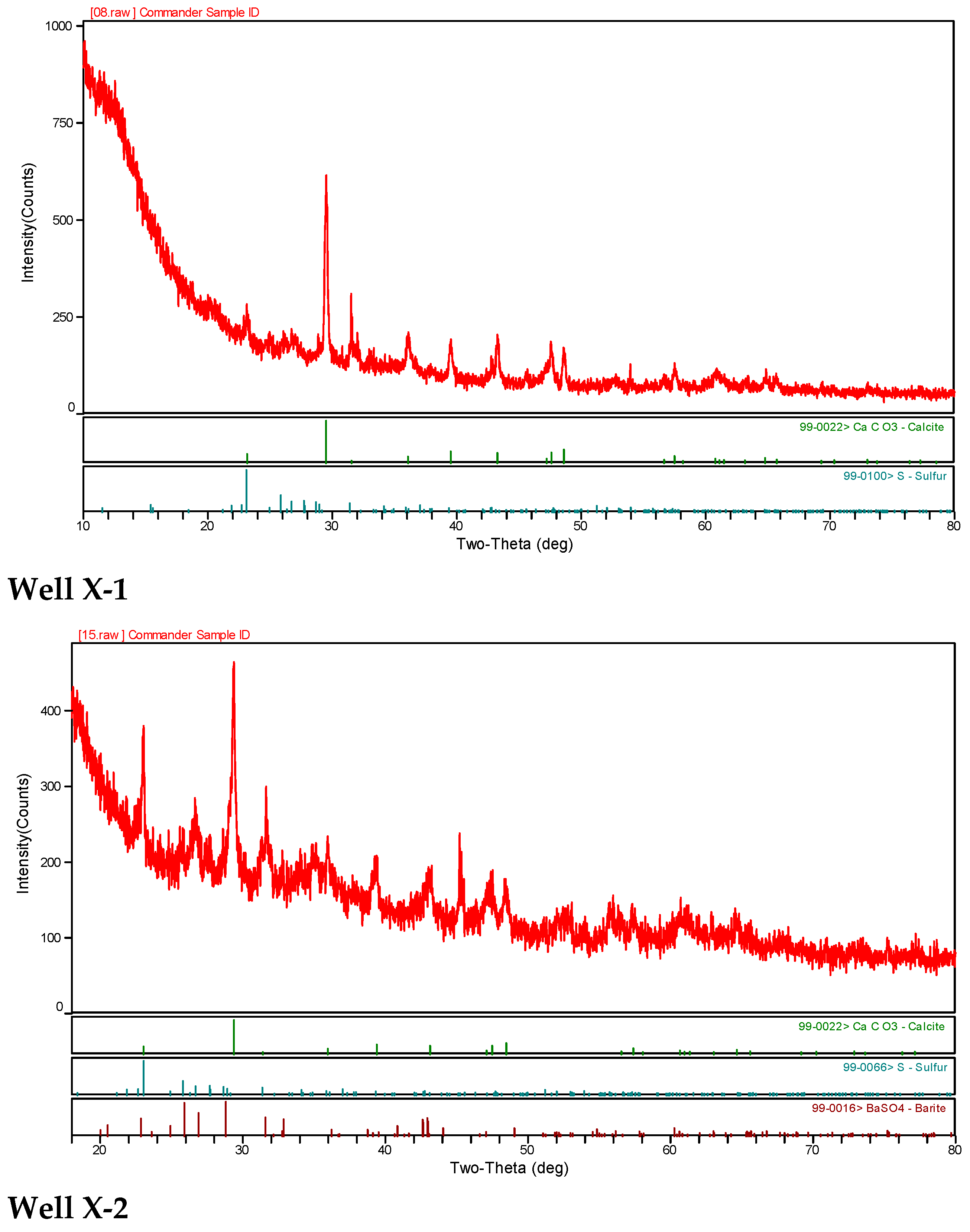
The mineral composition of the corrosion products on the corrosion coupons was analyzed using XRD. For Well X-3, the corrosion products on the coupon surface were insufficient for effective analysis. The results for Wells X-1 and X-2 are shown in
Figure 11.
According to
Figure 11, the corrosion products on the surface of the corrosion coupon from Well X-1 were mainly composed of CaCO
3 and elemental S, whereas those from Well X-2 were dominated by BaSO
4, CaCO
3, and elemental S. The results indicate that Well X-1 is characterized primarily by S deposition and CaCO
3 scaling, with CO
2 corrosion as the dominant corrosion type; Well X-2 exhibits more severe composite scaling of BaSO
4 and CaCO
3, and CO
2 corrosion likewise plays a dominant role. The above XRD analysis results are consistent with the EDS analysis, confirming the reliability of the interpretation of the wellbore corrosion and scaling mechanisms.
Based on the multi–dimensional analysis results from both macro and micro levels, this section systematically characterizes the corrosion mechanisms of the tight sandstone gas wells in the X Block of the Ordos Basin. Macroscopic experiments indicate that Well X-2 exhibited the most severe corrosion, followed by Well X-1 with moderate corrosion, and Well X-3 with the least corrosion. Well X-1 and Well X-2 were primarily affected by pitting corrosion, whereas Well X-3 is characterized by uniform corrosion. Microscopic experiments revealed that the corrosion product films on Well X-1 and X-2 were relatively loose, with cracks and accumulation phenomena, making them prone to pitting corrosion. The corrosion product film on Well X-3 was dense, offering some protective effect. EDS and XRD analyses showed that CO2 corrosion was predominant in Well X-1 and X-2, with Cl− in Well X-2’s corrosion products being a significant factor in pitting corrosion, while the corrosion in Well X-3 was primarily caused by sulfides. The above experimental results provide a theoretical basis for further research on the optimization of corrosion inhibitors in the X Block of the Ordos Basin.
4. Corrosion Inhibition Efficiency Evaluation
In order to evaluate the application effectiveness of the field corrosion inhibitor M (the detailed parameters are listed in
Table 3), this study employed a high-temperature, high-pressure reactor to simulate the actual production conditions of gas well boreholes in the Ordos Basin. The experimental conditions were set as follows: total pressure of 8 MPa, CO
2 partial pressure of 1.5 MPa, experimental temperature of 110 °C, rotational speed of 200 r/min, and H
2S concentration of 500 mg/m
3, with a duration of 3 days. This experimental design aimed to ensure that the corrosion inhibitor performed effectively under the most extreme conditions, thus providing a conservative assessment of its performance. Under different phases (gas phase, liquid phase), corrosion coupons of three different materials—P110, N80S, and 110S—were selected for testing [
25,
26,
27]. The inhibition efficiency and corrosion rate variations of inhibitor M at different injection volumes were assessed.
The corrosion inhibition efficiency
η is defined by Equation (3). This experiment provides experimental data to support the further optimization of the corrosion inhibitor injection scheme.
where (
η) is the corrosion inhibition efficiency, %; (
rblank) is the corrosion rate without inhibitor, mm/a; (
rinhibitor) is the corrosion rate with inhibitor, mm/a.
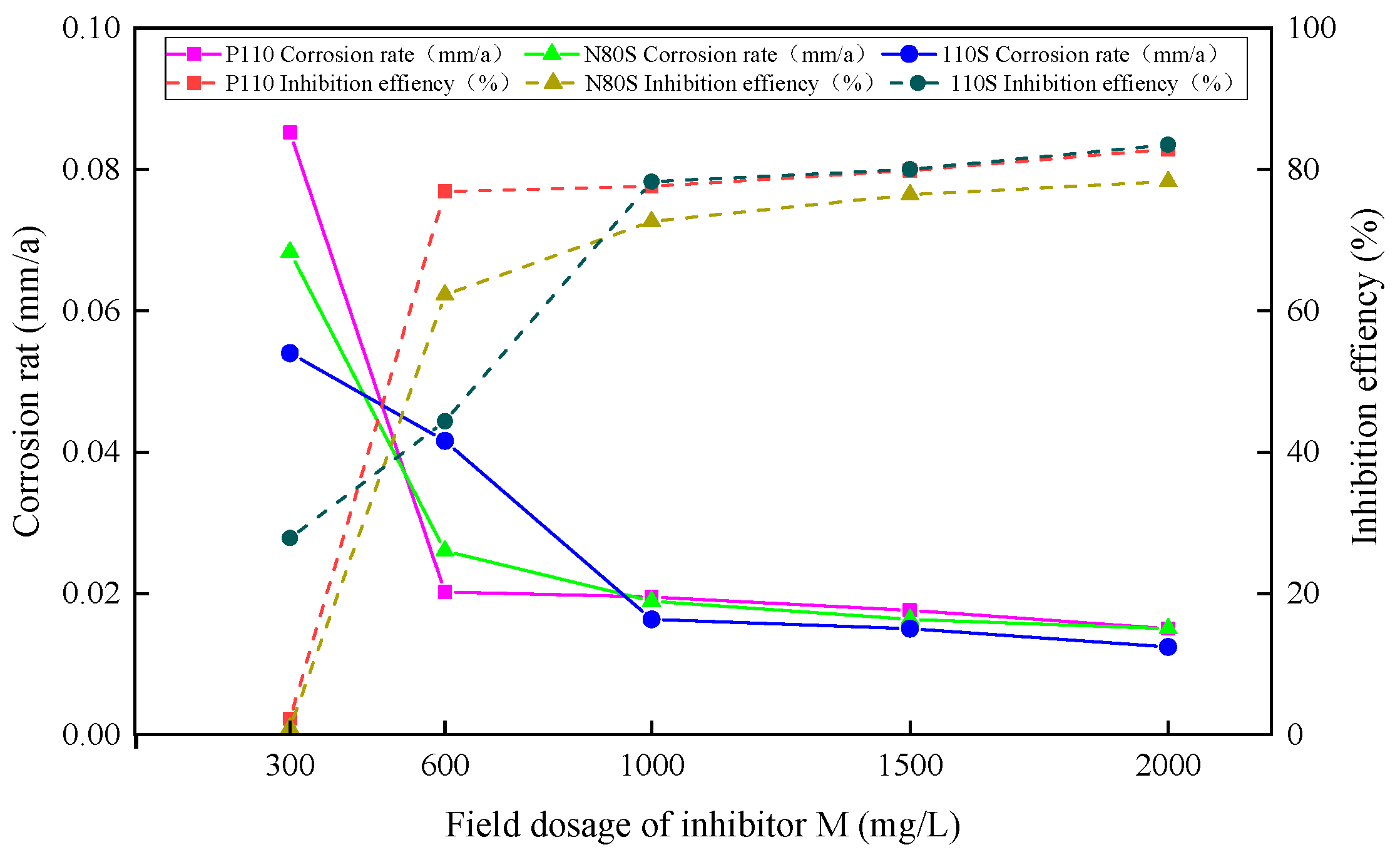
As shown in
Figure 12, with the increase in the dosage of inhibitor M, the corrosion inhibition efficiency of the three different material coupons (P110, N80S, and 110S) in the gas phase gradually improved. It is noteworthy that the increase in inhibition efficiency for the N80S coupon was more gradual, indicating more stable performance. When the dosage of inhibitor M reached 1000 mg/L, the corrosion inhibition efficiency for all three materials exceeded 70%, with the corrosion resistance ranking as follows: 110S > P110 > N80S. The corrosion rates for all materials were below 0.02 mm/a, indicating mild corrosion, with the corrosion rates ranked as follows: P110 > N80S > 110S. This suggests that the P110 material had the poorest corrosion resistance, while 110S exhibited the best corrosion resistance.
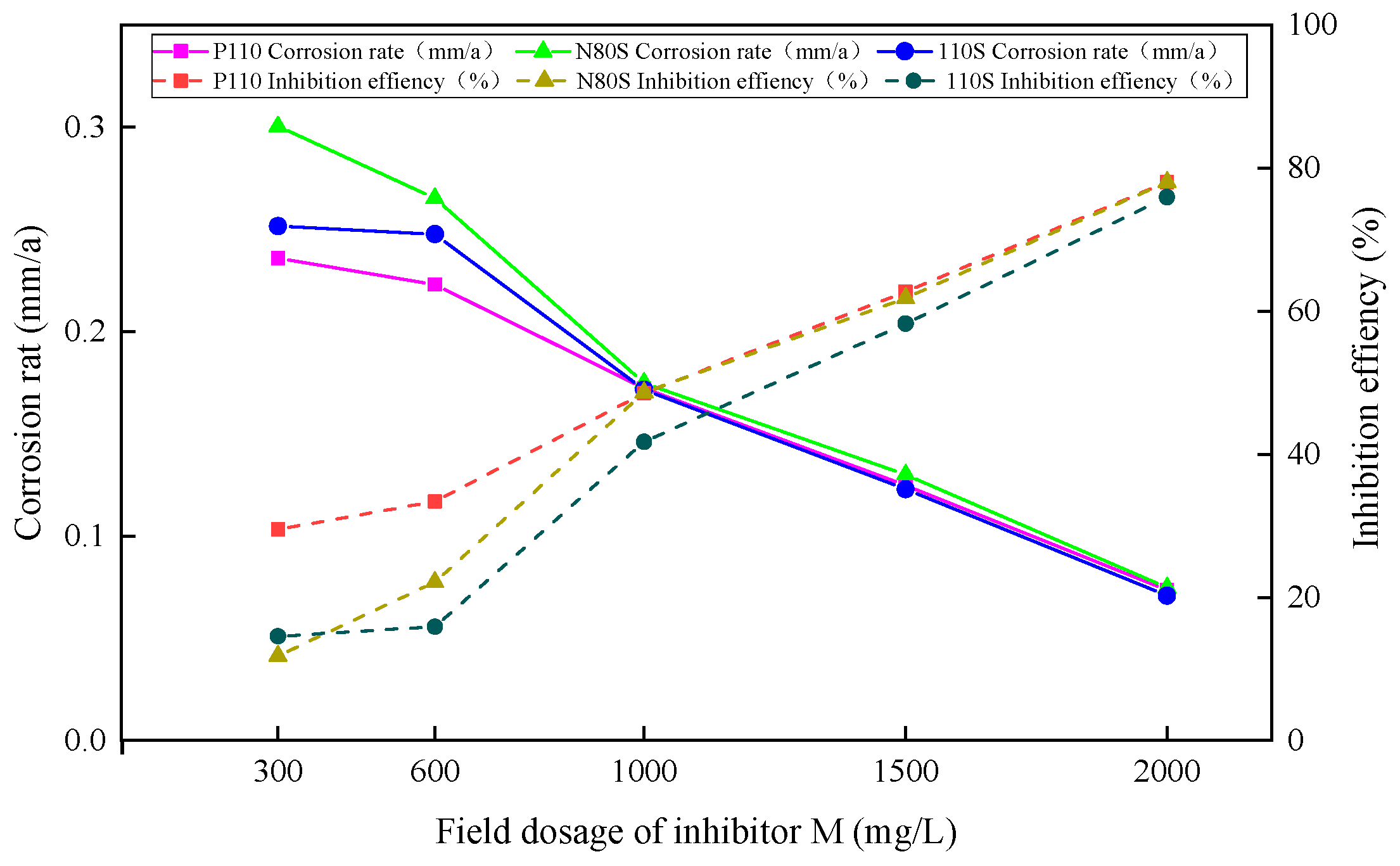
As shown in
Figure 13, with the increase in the dosage of inhibitor M, the inhibition efficiency of the P110, N80S, and 110S coupons in the liquid phase improved, with the inhibition efficiency following the order: P110 > N80S > 110S. When the dosage of inhibitor M reached 2000 mg/L, the inhibition efficiency for all three materials reached its maximum value, exceeding 75%. At this point, the corrosion rate in the liquid phase was below 0.076 mm/a, indicating mild corrosion.
Based on the above study, we plotted the efficiency-per-unit-dose of corrosion inhibitor M in both gas and liquid phases, as shown in
Table 4. The results indicate that corrosion inhibitor M exhibited a high efficiency-per-unit-dose at a dosage of 2000 mg/L, both in gas and liquid environments. Particularly in the gas phase, the concentration of corrosion inhibitor at 2000 mg/L was consistently higher than that at other dosages, demonstrating the best corrosion inhibition performance.
In conclusion, corrosion inhibitor M showed significant corrosion inhibition effects on the three types of material specimens at a dosage of 2000 mg/L. However, considering the relatively large dosage, further optimization of the inhibitor injection regime will be pursued to provide more operationally feasible and cost-effective solutions for field applications.
5. Optimization of Corrosion Inhibitor Dosing Scheme
In order to maximize the corrosion inhibition effect of the corrosion inhibitor on the field production tubing, this section aims to reduce the anti-corrosion costs by optimizing the field dosing scheme, based on the evaluation of the corrosion inhibition efficiency and optimal dosage of the currently used inhibitor M in the X Block of the Ordos Basin tight sandstone gas wells [
28,
29,
30]. The current corrosion inhibitor dosing scheme is shown in
Table 5.
Furthermore, a prediction model for the field corrosion inhibitor injection rate in the X Block of the Ordos Basin tight sandstone gas wells was constructed, with the following assumptions:
- (1)
The flow time of the corrosion inhibitor from the wellhead to the wellbore bottom is neglected;
- (2)
The diffusion time of the corrosion inhibitor in the wellbore is neglected, assuming that the corrosion inhibitor can rapidly diffuse and distribute uniformly within the wellbore;
- (3)
The gas well is in stable production, i.e., the daily water production is equal to the produced water entering the wellbore from the formation;
- (4)
The produced water entering the wellbore from the formation is assumed to mix uniformly with the liquid accumulated in the wellbore, with diffusion time neglected.
The model simplifies the complex hydrodynamic processes but remains applicable to predicting corrosion inhibitor concentration variations in gas wells under stable production conditions in the X Block. The model is presented in Equations (4)–(12), as shown below:
where (
Vliquid) is the wellbore liquid volume, L; (
d) is the oil pipe diameter, m; (
H) is the wellbore liquid depth, m; (
Vinitial) is the initial corrosion inhibitor injection volume, L; (
C1) is the initial wellbore corrosion inhibitor concentration, %; (
Q) is the daily water production rate, m
3/d; (
) is the first-day produced corrosion inhibitor volume, L; (
) is the remaining corrosion inhibitor volume in the well on the second day, L; (
C2) is the corrosion inhibitor concentration in the wellbore on the second day, %; (
) is the second-day produced corrosion inhibitor volume, L; (
) is the remaining corrosion inhibitor volume in the well on the nth day, L; (
Cn) is the corrosion inhibitor concentration in the wellbore on the nth day, %; (
) is the produced corrosion inhibitor volume on the nth day, L.
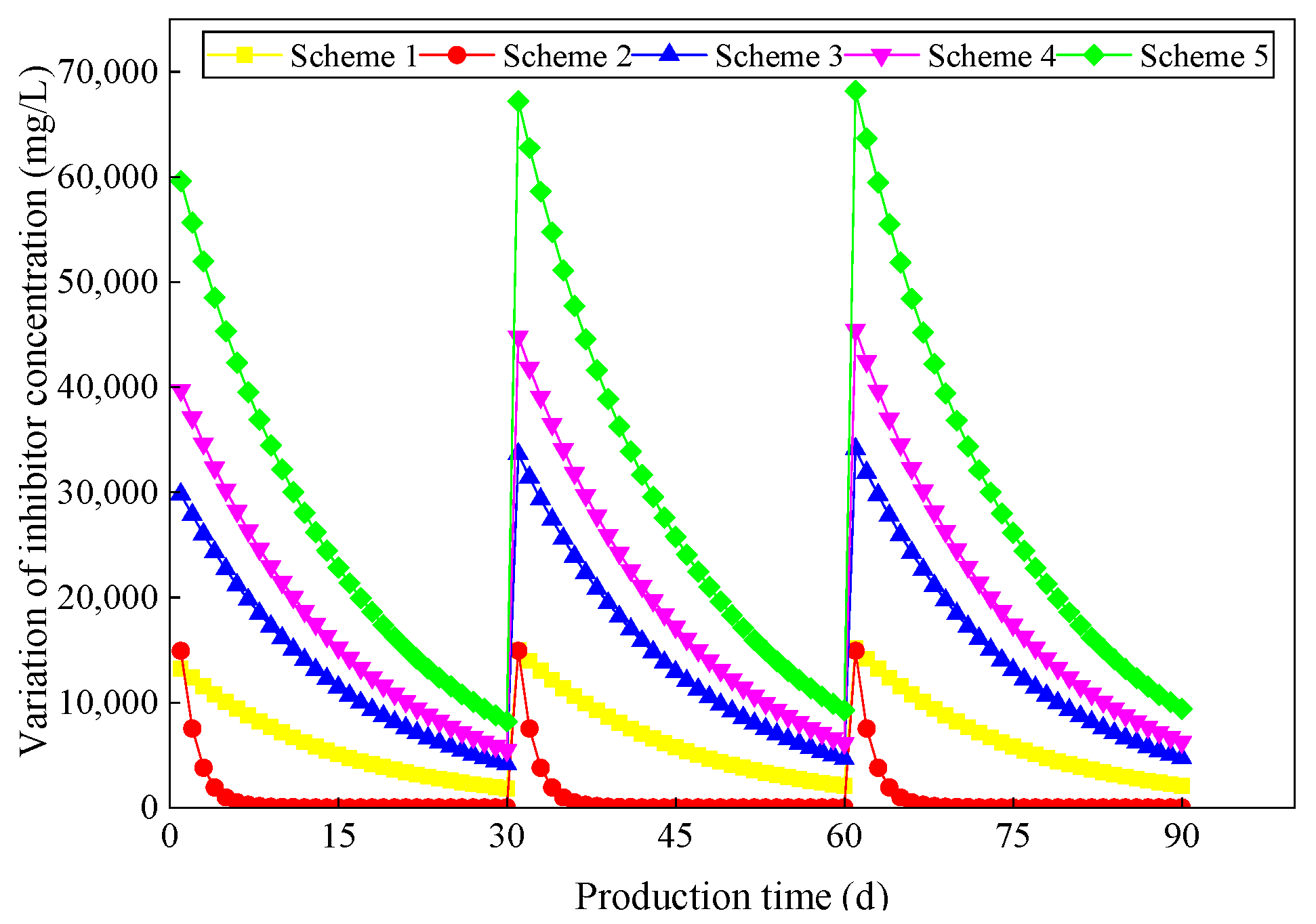
The inner diameter of the tubing was 62 mm. Except for dosing scheme 2, which has a daily water production rate of 3 m
3/d and a wellbore liquid column height of 2000 m, the daily water production rate for the other dosing schemes was 0.2 m
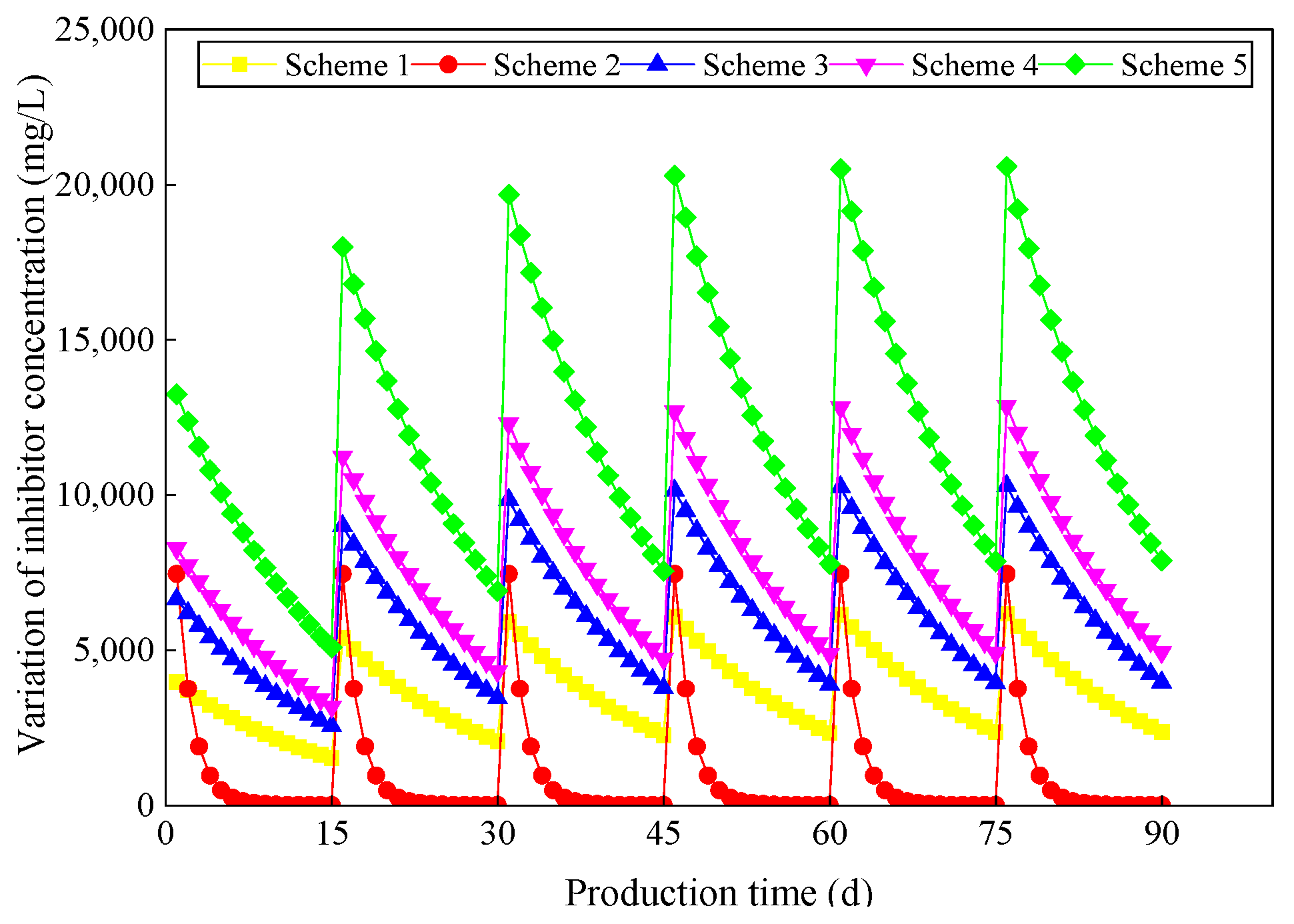
3/d, with a wellbore liquid column height of 1000 m. Based on the prediction model, the variation curve of on-site corrosion inhibitor concentration with production time is shown in
Figure 14.
As shown in
Figure 14, the corrosion inhibitor concentration in the wellbore liquid exhibited periodic variation with production time. In dosing schemes 1, 3, 4, and 5, the corrosion inhibitor concentration gradually decreased over one cycle, whereas in dosing scheme 2, the concentration rapidly decreased with production time. This is mainly due to the larger daily water production in scheme 2, causing the corrosion inhibitor to be quickly carried out of the wellbore after injection, resulting in a rapid decline in concentration.
Based on the findings in
Section 3, where the field corrosion inhibitor M showed good inhibition performance at a concentration of 2000 mg/L, the variation of the field corrosion inhibitor concentration with production time was studied using the predictive model, and the dosing scheme was optimized. The optimized dosing scheme is shown in
Table 6, and the variation of the corrosion inhibitor concentration with production time after optimization is illustrated in
Figure 15.
As shown in
Table 5 and
Figure 15, the optimized dosing scheme significantly reduced the total dosing amount while maintaining a similar variation trend in corrosion inhibitor concentration with production time as the existing scheme. The annual chemical saving was 566.4 L per well. Dosing schemes 1, 3, 4, and 5 all met the required effective concentration for corrosion inhibitor usage and should be subject to long-term field monitoring. However, Scheme 2 failed to meet the concentration standard. It is recommended to use solid corrosion inhibitors or switch to a continuous dosing method.
Subsequent studies will apply the optimized corrosion inhibitor dosing scheme in representative gas wells within the X Block. Combined with long-term monitoring methods such as corrosion coupons, electrical resistance probes, and periodic tubing inspections, we will evaluate the stability of corrosion inhibition performance and further optimize the dosing model under actual production conditions.