1. Introduction
Leuenbergeria bleo (Kunth) DC. holds a distinctive place in plant biology as a member of the phylogenetically basal lineages within the Cactaceae family [
1,
2,
3]. Recently reclassified from the genus
Pereskia based on molecular phylogenetic evidence,
L. bleo exhibits ancestral traits such as persistent leaves and non-succulent stems, distinguishing it from more derived cacti [
1]. Native to the humid lowlands of Central America and widely naturalized across Southeast Asia and southern China, this species has been documented in ethnomedicinal practices for treating metabolic disorders, inflammatory conditions, wounds, and malignancies [
4]. These traditional applications have spurred scientific interest in its phytochemical profile, prompting systematic investigations into its bioactive constituents.
Historically, phytochemical studies of
L. bleo have focused primarily on small-molecule secondary metabolites [
4,
5]. These efforts have led to the isolation of various phenolic compounds, alkaloids, and terpenoids, which were generally associated with the plant’s observed antioxidant and cytotoxic activities [
4,
5,
6,
7]. However, the traditional use of
L. bleo for tissue repair has long suggested underlying mechanisms that extend beyond simple antioxidant effects. Recent investigations have addressed this gap by identifying bleogens, a novel family of cysteine-rich peptides (CRPs), as the primary bioactive constituents responsible for its wound-healing properties [
8,
9,
10].
This review synthesizes current knowledge of the botanical features, ethnomedicinal uses, and chemical diversity of L. bleo, critically examining both the well-characterized small-molecule landscape and emerging peptidomic discoveries.
2. Botanical Characteristics
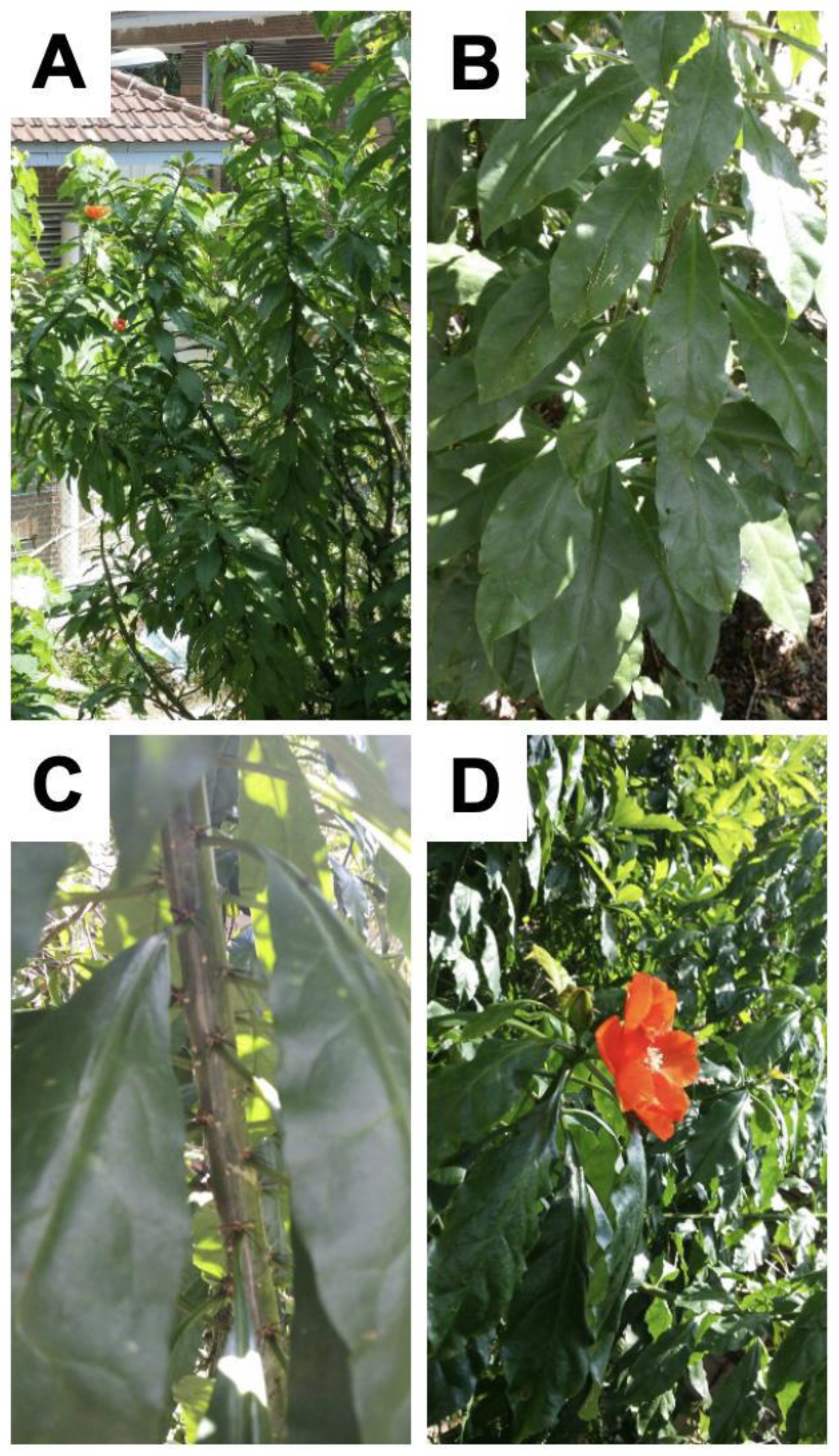
L. bleo, commonly known as rose cactus or leaf cactus, represents a morphological bridge between the leafy ancestors of cacti and their more derived, succulent descendants (
Figure 1,
Table 1). This perennial shrub or small tree reaches 0.6–8 m in height and features extensively branched woody stems adorned with areoles bearing fascicles of spines (typically 1–5 per areole, up to 5 cm long), characteristics that distinguish it from the stem-succulent members of the Cactaceae family [
11,
12,
13]. The root system is fibrous and relatively shallow, facilitating adaptation to rocky or disturbed soils.
The leaves are simple, ovate-lanceolate to oblanceolate, measuring 6–21 cm in length, with prominent venation that supports efficient photosynthesis in shaded, humid environments [
11,
12,
13]. Unlike more derived cacti,
L. bleo retains persistent leaves, which reduce water loss while maintaining photosynthetic capacity in its mesic habitats. Reproductive structures consist of hermaphroditic flowers (3–5 cm in diameter) with vivid orange-red perianth segments and numerous stamens [
14,
15]. Flowering occurs seasonally and is typically diurnal, attracting pollinators such as bees and other insects. The resulting fruits are turbinate or globose berries (2–4 cm wide) containing numerous black seeds embedded in mucilaginous pulp, dispersed by birds and small mammals.
Exhibiting notable phenotypic plasticity,
L. bleo thrives in diverse conditions, from the well-drained soils of its native Central American lowlands to disturbed habitats in its naturalized ranges across Southeast Asia and southern China [
16,
17]. This adaptability underscores its evolutionary significance as a model for studying the early diversification of the Cactaceae [
18,
19].
3. Traditional Usage
Ethnomedicinal records of
L. bleo reveal a convergence of applications across geographically distant cultures, influenced by its naturalization from Central America to Southeast Asia. This transoceanic distribution has fostered shared emphases on detoxification, anti-inflammatory effects, and tissue repair, often attributed to the plant’s purported cooling and purifying properties in traditional medicine systems [
4,
5]. Such uses reflect its role as a versatile folk remedy, bridging indigenous knowledge with contemporary herbal practices. An important consideration is the heterogeneity of evidence underlying these traditional applications. Uses documented in ethnobotanical surveys may reflect popular knowledge but require careful interpretation, as self-reported efficacy in traditional settings does not necessarily correlate with objective clinical benefit. Such uses may also reflect cultural beliefs that may not have biochemical counterparts. Conversely, uses documented in indigenous pharmacopoeias or established ethnomedicinal practices carries greater weight, as they reflect generations of empirical observation within specific cultural contexts, though they still require rigorous scientific validation. The following sections critically evaluate the scientific evidence supporting these traditional claims (
Table 2).
3.1. Southeast Asian Traditional Medicine
In Malaysia and Singapore,
L. bleo is commonly known as “jarum tujuh bilah” (seven needles), referring to its spiny areoles [
4,
5]. Fresh or dried leaves are consumed raw as a vegetable (
ulam) or prepared as decoctions, primarily for metabolic conditions such as diabetes mellitus, hypertension, and rheumatism [
5,
20]. Topically, mashed leaf poultices are applied to boils, wounds, and skin inflammations to promote healing and reduce infection [
5,
20]. Ethnobotanical surveys in Singapore indicate its prominence in complementary therapies, with 36% of respondents using it for cancer support and 32% for general wellness, often in combination with other herbs [
21].
3.2. Central American Indigenous Medicine
In its native regions of Panama and Costa Rica,
L. bleo features in indigenous pharmacopeias, where crushed leaves are applied as cataplasms for wound cleansing, infection prevention, and tissue repair [
22,
23]. Internal decoctions, sometimes combined with other plants, are used to address gastrointestinal disorders and to manage snakebite sequelae, including muscle spasms, swelling, and systemic inflammation [
24,
25,
26,
27,
28]. These practices reflect traditional uses documented among various indigenous communities in the region.
3.3. Contemporary Challenges
Despite widespread use, contemporary applications of L. bleo face challenges related to standardization, dosage variability, and potential safety concerns. The absence of regulated preparations emphasizes the need for rigorous scientific validation to bridge traditional knowledge with evidence-based medicine.
4. Extract-Level Pharmacology
Pharmacological investigations using various solvent extracts have provided validation for several ethnomedicinal claims of L. bleo, though most evidence remains confined to in vitro studies. This section synthesizes key bioactivities observed at the crude extract level, contextualizing them within traditional uses while noting limitations in mechanistic understanding and clinical translation.
4.1. Antioxidant Activity
Methanolic and aqueous leaf extracts of L. bleo demonstrate potent free radical scavenging activity in various antioxidant assays, including DPPH and FRAP, a finding that correlates with their phenolic content [
29,
30,
31,
32,
33,
34]. These findings support traditional uses for conditions involving oxidative stress, such as chronic inflammation and cancer prevention, although in vivo validation remains limited.
4.2. Cytotoxic and Anticancer Potential
Methanolic and ethyl acetate extracts of
L. bleo have been reported to exhibit dose-dependent cytotoxicity against various human cancer cell lines, including HeLa (cervical), MDA-MB-231 (breast), and T-47D (breast) [
6,
27,
35,
36,
37,
38]. Proposed mechanisms include apoptosis induction via caspase-3 activation, c-myc downregulation, and modulation of the p53 pathway [
35,
37,
38]. Additionally, both ethyl acetate and methanolic extracts have been shown to augment the anticancer activities of the immune system by increasing NK cell proliferation and activity, thereby suggesting a link to the cancer-immune system relationship [
36,
38]. While these findings align with traditional anticancer uses, they remain preliminary, lacking robust in vivo tumor suppression data and comprehensive selectivity assessments against non-cancerous cells.
4.3. Antimicrobial Activity
L. bleo, particularly its ethyl acetate and dichloromethane extracts, exhibits broad-spectrum antimicrobial effects against both bacteria and fungi. This validates its traditional use in wound care [
29,
30,
39,
40]. While these effects are promising, more detailed mechanistic studies on their antimicrobial activities remain limited.
4.4. Metabolic and Cardiovascular Effects
L. bleo exhibits metabolic regulatory activities, aligning with its traditional applications for diabetes mellitus and hypertension [
41,
42,
43]. Aqueous extracts significantly reduced blood glucose levels and improved lipid profiles (reduced total cholesterol, triglycerides, and low-density lipoprotein; elevated high-density lipoprotein) in streptozotocin-induced diabetic rats [
41]. Furthermore, ethanolic extracts demonstrated dose-dependent antihypertensive effects in NaCl-induced hypertensive rats, with the highest dose achieving efficacy comparable to captopril, likely through increased urinary sodium and potassium excretion [
42]. The extract has also been reported to possess moderate vasorelaxative activities by directly inducing aortic ring relaxation ex vivo [
43]. While these findings support the ethnomedicinal use for metabolic disorders, mechanistic details remain incomplete, and clinical translation requires comprehensive safety assessments and the identification of the active constituents responsible for these effects.
4.5. Analgesic and Larvicidal Activities
L. bleo leaf extracts demonstrate central and peripheral antinociceptive effects in rodent pain models [
44,
45]. Butanol fractions (p.o.) produced effects superior to morphine in hot plate tests, while various fractions reduced pain responses in capsaicin-, glutamate-, and formalin-induced nociception models [
44,
45]. The antinociceptive mechanism involves opioid receptor activation and nitrergic pathways, as demonstrated by naloxone and L-NAME antagonism [
44,
45]. These findings support traditional applications for rheumatism and gastric pain, though the moderate activity observed and the lack of identification of primary active constituents warrant further investigation [
45].
Ethanolic fruit endocarp extracts exhibit larvicidal activity against
Aedes aegypti third-instar larvae, with fractionated extracts achieving LC
50 values of 223.12–707.94 ppm at 24–48 h exposure [
46]. While this supports potential applications in dengue vector control, safety assessments for non-target organisms and efficacy against other mosquito vectors remain unexplored [
46].
Collectively, these pharmacological activities suggest a diverse chemical repertoire underlying
L. bleo’s therapeutic potential (
Table 3). However, the lack of standardized extracts, incomplete mechanistic characterization, and absence of clinical data limit translational application. The subsequent sections dissect the underlying phytochemistry, distinguishing contributions from small-molecule metabolites and cysteine-rich peptides.
5. Small-Molecule Constituents and Their Bioactivities
The small-molecule profile of
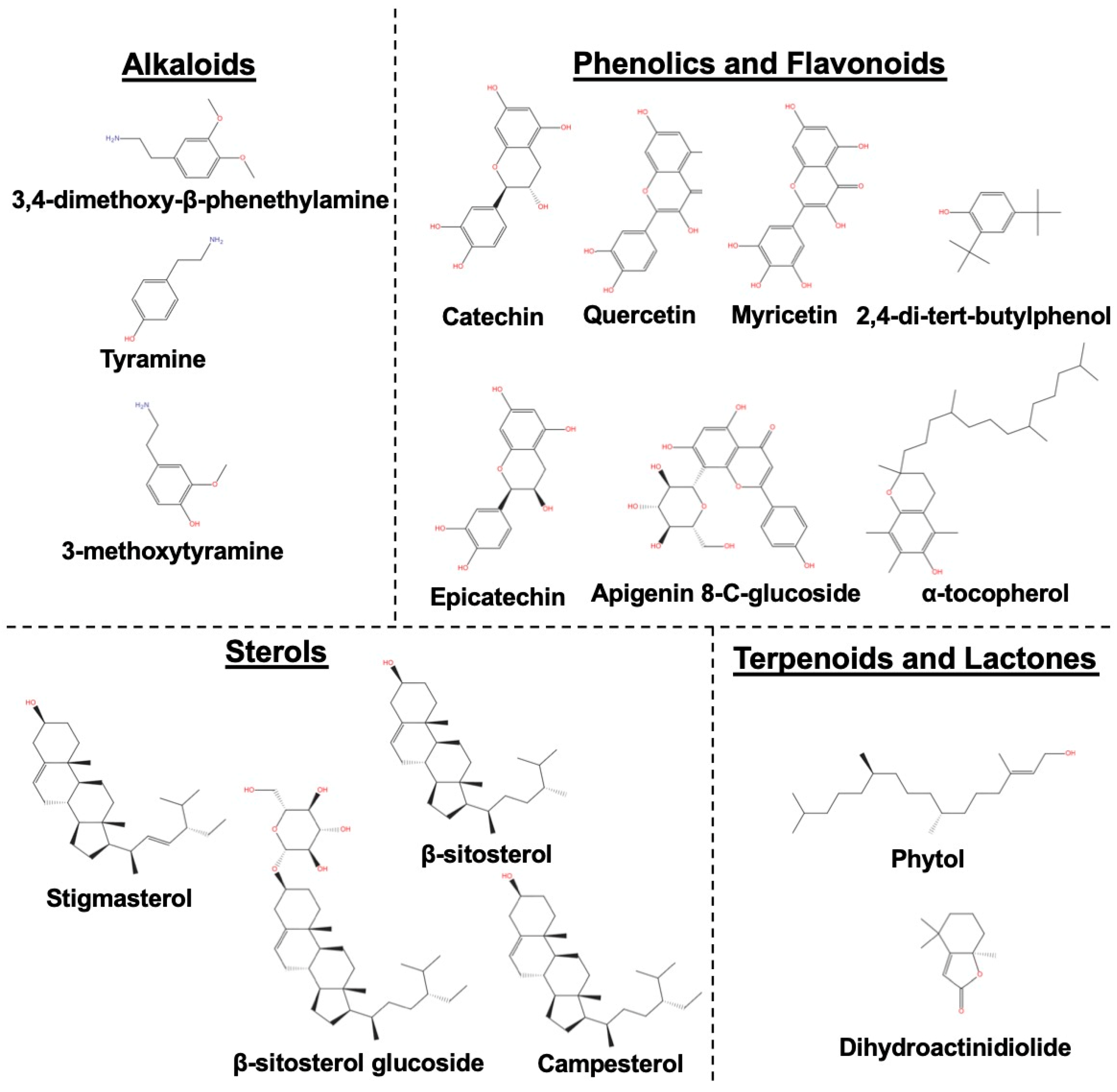
L. bleo, characterized primarily from leaf and fruit extracts, encompasses a diverse array of alkaloids, phenolics, sterols, terpenoids, carotenoids, and fatty acids (
Figure 2,
Table 4) [
4,
5]. These classes of secondary metabolites provide the chemical basis for many of the plant’s observed bioactivities, though the distinction between individual compound effects and synergistic extract activities remains an active area of investigation. This section highlights representative constituents and their pharmacological relevance.
5.1. Alkaloids
L. bleo leaves contain alkaloids, notably β-phenethylamine derivatives including 3,4-dimethoxy-β-phenethylamine, 3-methoxytyramine, and tyramine [
4,
50]. Functionally, 3-methoxytyramine and tyramine may influence vascular and neurological systems, with tyramine known for its vasopressor activity [
47,
48].
5.2. Phenolics and Flavonoids
Phenolic compounds are the most abundant bioactive molecules in
L. bleo leaves, and their presence correlates with the plant’s antioxidant capacity [
4,
30]. The total phenolic content is significantly influenced by the extraction solvent, with ethyl acetate fractions typically yielding the highest concentrations [
4,
30]. Key isolates include the flavonoid aglycones quercetin and myricetin, the flavan-3-ols catechin and epicatechin, and
-tocopherol (Vitamin E) [
49]. Notably, the lipophilic phenol 2,4-di-tert-butylphenol has shown potent cytotoxic activity against KB and MCF-7 cancer cell lines [
27]. Conversely, reports regarding the antinociceptive effects of vitexin (apigenin 8-C-glucoside) from the plant remain controversial [
44,
45].
5.3. Sterols
The sterol profile of
L. bleo leaves is characterized by a predominance of β-sitosterol and its glucoside, alongside minor constituents such as campesterol and stigmasterol [
4,
27].
-sitosterol exhibits moderate cytotoxicity against breast cancer cell lines [
27]. Additionally, β-sitosterol has been shown to possess a central antinociceptive effect [
45]. In complex mixtures, these sterols often show lower individual cytotoxicity, suggesting that their pharmacological impact may rely on synergistic interactions with other lipid-soluble constituents rather than potent single-agent activity [
27].
5.4. Terpenoids and Lactones
Essential oil and organic solvent extracts yield bioactive terpenoids, including phytol (a diterpene alcohol) and dihydroactinidiolide (a terpene lactone) [
27,
29]. Phytol contributes to the plant’s moderate cytotoxic activity [
27]. Dihydroactinidiolide also exhibits moderate cytotoxicity, complementing the effects of other compounds [
27].
6. Microproteins and Cysteine-Rich Peptides (CRPS)
While small-molecule metabolites have historically dominated the pharmacological characterization of
L. bleo, recent investigations have unveiled a significant proteomic dimension to its therapeutic profile. Investigations by Loo et al. (2017) identified a novel suite of ribosomally synthesized microproteins, marking a paradigm shift in understanding the plant’s bioactivity [
8].
6.1. Discovery and Identification
The discovery of “bleogens” represents a pivotal advancement in Cactaceae phytochemistry, moving beyond traditional alkaloid and phenolic profiling to plant peptidomics. Mass spectrometric analysis of aqueous
L. bleo leaf extracts revealed a distinct cluster of peptide signals in the 3000–5000 Da mass range [
8]. Subsequent transcriptomic mining led to the comprehensive identification of the bleogen family (pB1–pB15) [
8]. Bleogen pB1 (pB1) was identified as the archetypal member due to its high abundance, with extraction yields approximating 100 mg/kg wet leaf weight. These mature peptides are typically 30–40 amino acid residues in length, distinguishing them from larger proteinaceous toxins or enzymes [
8].
6.2. Structural Architecture and Stability
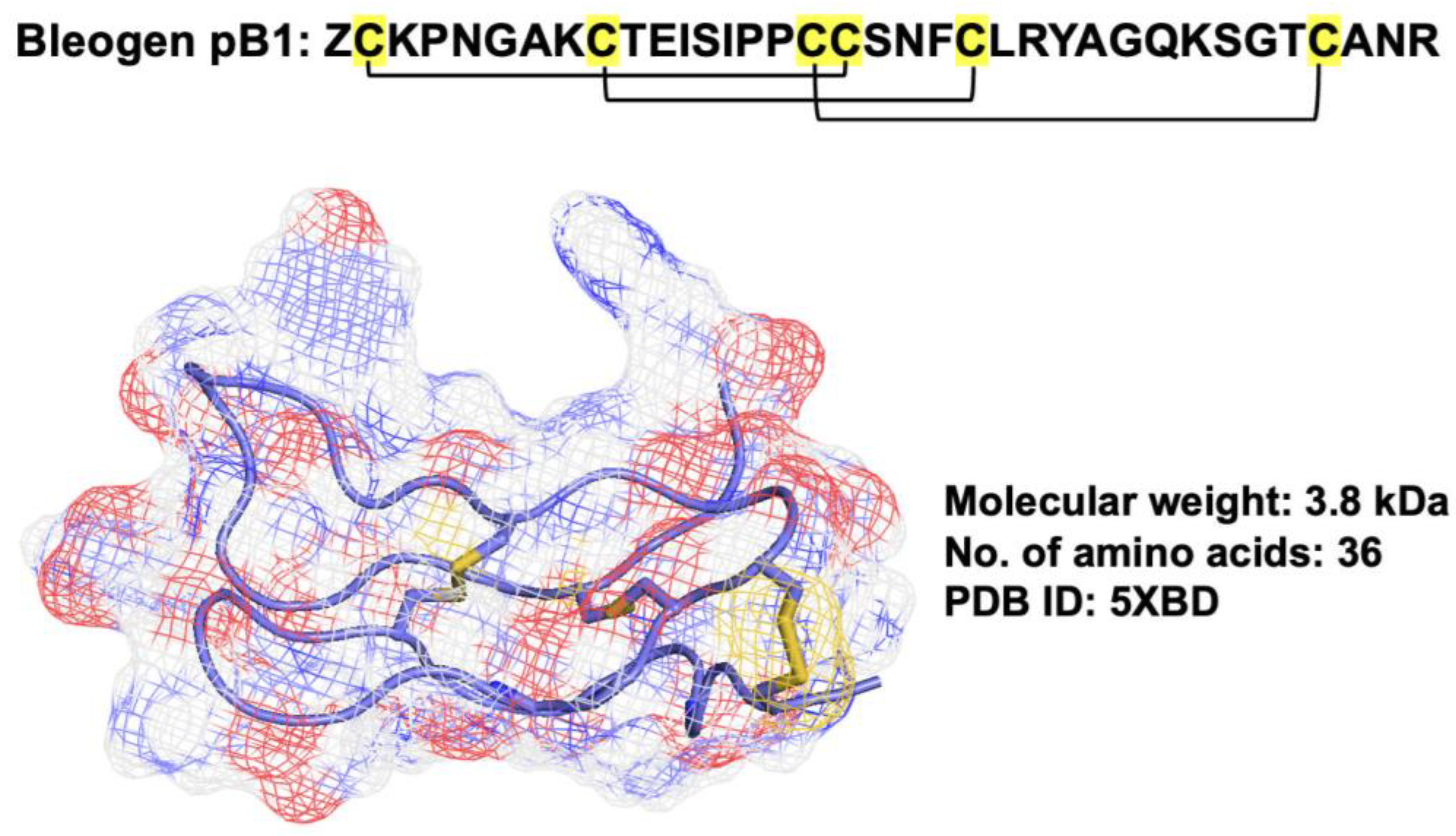
Bleogens are compact CRPs characterized by the six-cysteine hevein-like peptide (6C-HLP) signature motif (C–Xₙ–C–Xₙ–CC–Xₙ–C–Xₙ–C) and adopt highly stable, disulfide-constrained tertiary structures [
8]. 2-D Nuclear magnetic resonance (NMR) (TOCSY/NOESY) analysis of bleogen pB1 revealed a canonical cystine-knot connectivity (Cys I–IV, II–V, III–VI) that stabilizes two antiparallel β-sheets and four interconnecting loops (
Figure 3, PDB:5XBD) [
8]. This framework imparts exceptional physicochemical stability, including experimentally demonstrated thermal tolerance up to 100 °C, acid resistance down to pH 2, and robust protease resistance, attributes that align with potential defensive functions in plants and hold promise for therapeutic development [
8].
6.3. Genomic Organization and Biosynthesis
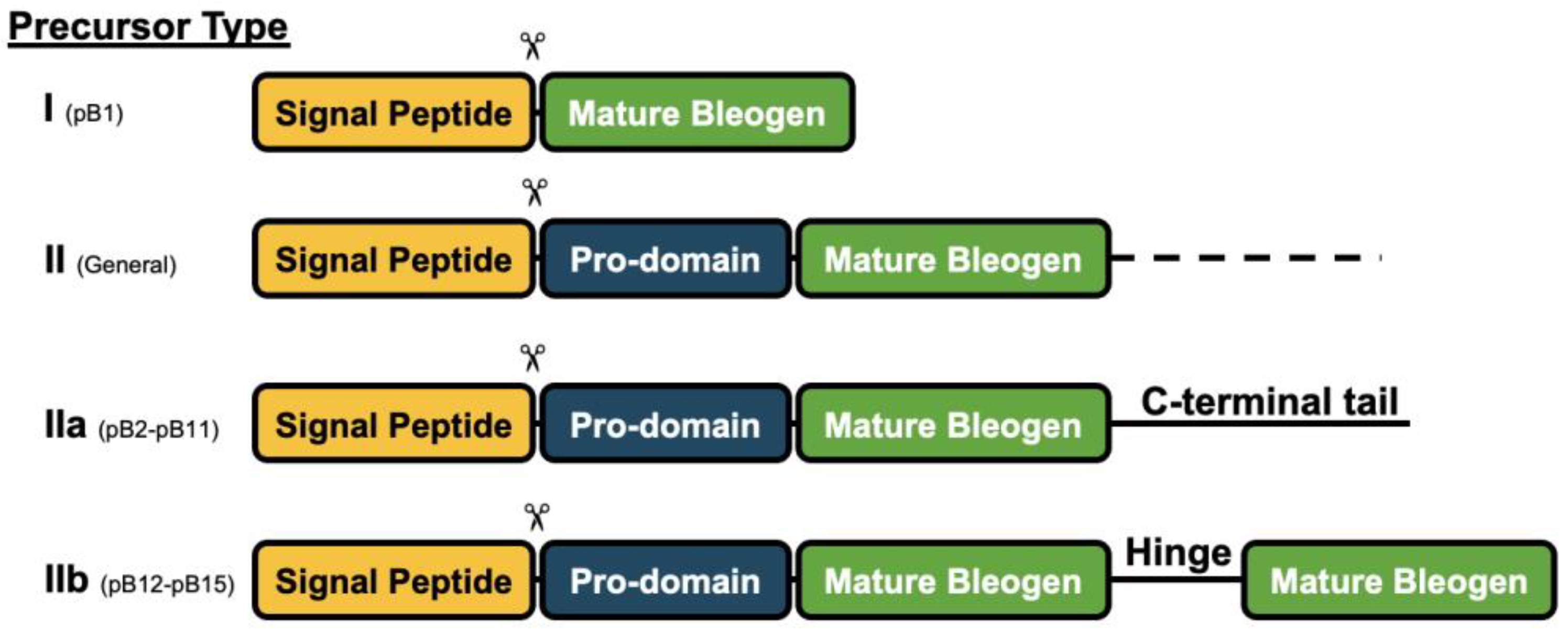
Unlike non-ribosomal peptides, bleogens are gene-encoded products processed from secretory precursor proteins (
Figure 4). Transcriptomic analysis reveals diverse precursor architectures. Bleogen pB1 derives from a Type I precursor containing an N-terminal endoplasmic reticulum (ER) signal peptide (29–31 residues) directly followed by the mature peptide domain [
8]. In contrast, pB2–pB15 originate from Type II precursors featuring an intervening propeptide region positioned between the signal peptide and mature peptide. This propeptide is likely involved in vacuolar targeting and regulating proteolytic maturation, a mechanism consistent with established patterns in plant peptide biosynthesis [
8].
Within the broader Type II classification, further distinctions based on domain organization are observed. A canonical Type II precursor generally comprises a signal peptide, a pro-domain, and the mature peptide. However, specific variations within the bleogen family: pB2–pB11 are classified as Type IIa precursors, characterized by this core three-domain structure with optional C-terminal extensions or cargo domains. In contrast, a subset of bleogens, pB12–pB15, are designated as Type IIb precursors due to their complex architecture, which features tandem repeats of the mature domain (e.g., signal peptide–pro-domain–mature peptide–hinge domain–mature peptide, potentially in multiple copies) [
8]. This tandem organization strongly suggests evolutionary gene duplication events, a mechanism well-documented in comparative genomic and peptidomic studies of other plant cysteine-rich peptide families, including hevein-like peptides in chickweed, oat and quinoa [
8,
51,
52,
53]. Such duplication-derived architectures enable the coordinated release of multiple active peptide copies from a single transcript, analogous to polyprotein processing and representative of an evolutionary strategy to maximize peptide-based defense.
6.4. Classification Within Plant Cysteine-Rich Peptides
The characterization of bleogens positions
L. bleo as a significant source of plant CRPs, comparable to species producing cyclotides, defensins, thionins, and knottins [
54]. However, structurally, bleogens are distinct. They strictly adhere to the hevein-like fold and 6C-HLP disulfide pattern, differentiating them from the cyclic backbones of cyclotides or the distinct
-core motifs found in plant defensins [
8]. This classification expands the known structural diversity of the Cactaceae peptidome and suggests that
L. bleo has evolved specific peptide scaffolds distinct from those found in other medicinal plant families (e.g., Violaceae or Rubiaceae).
6.5. Pharmacological Activities and Translational Potential
The bioactivity of bleogens provides a molecular rationale for the traditional use of
L. bleo in wound care and infection management. Bleogen pB1 exhibits potent, selective antifungal activity against
Candida albicans and
Candida tropicalis, with low-micromolar minimum inhibitory concentrations (MICs of 5 and 10 μM, respectively), without inducing cytotoxicity in mammalian cells at concentrations up to 100 μM [
8]. The antifungal mechanism does not involve direct membrane permeabilization, as demonstrated by propidium iodide staining assays, suggesting an intracellular target mechanism requiring further investigation [
8].
Beyond antimicrobial effects, pB1 functions as a wound-healing accelerator through epidermal growth factor receptor (EGFR) activation [
9]. Time-resolved fluorescence energy transfer (TR-FRET)-based competitive displacement assays demonstrate that native bleogen pB1 binds to the EGFR with an IC
50 of 1720 ± 75 nM, compared to EGF’s IC
50 of 31 ± 16 nM, representing a 55-fold lower affinity than native EGF. This places pB1 in the category of low-affinity EGFR agonists, similar to amphiregulin and epiregulin. However, chemical optimization through D-amino acid substitution at position 29 (specifically [K29k]pB1) dramatically improves EGFR affinity to IC
50 = 27 ± 50 nM, achieving a 60-fold improvement in binding and achieving near-parity with native EGF. This enhanced EGFR binding translates directly into robust cellular proliferative responses. In HaCaT keratinocyte cell proliferation assays using crystal violet staining, native bleogen pB1 promotes cell proliferation with an EC
50 of 130 nM at the 72 h timepoint, compared to EGF’s EC
50 of 1.2 nM. The optimized analog [K29k]pB1 exhibits 43% greater mitogenic potency than native pB1 in HaCaT cells, consistent with its improved EGFR affinity. Additionally, pB1 promotes primary human keratinocyte proliferation and enhances DNA synthesis in HaCaT cells as measured by EdU incorporation assays, demonstrating that EGFR binding produces genuine mitogenic activity. Importantly, anti-EGFR neutralizing antibodies completely block pB1-induced keratinocyte proliferation, definitively confirming the EGFR-dependency of its activity.
Mechanistically, bleogen pB1 activates the canonical EGFR-mitogen-activated protein kinase (MAPK) signaling pathway through dose-dependent increases in phosphorylation of EGFR, MEK1/2, and ERK1/2 in HaCaT cells [
9]. The peptide also stimulates serum response element (SRE)-mediated gene transcription in stably transfected HaCaT cells, as evidenced by increased luciferase activity, and upregulates mRNA expression of EGFR-associated immediate early genes
c-fos and
c-Jun, confirming activation of canonical EGF signaling cascades.
These in vitro findings were corroborated in vivo using a rat corneal alkali-burn model, where topical administration of pB1 accelerated re-epithelialization, reduced corneal opacity, and minimized neovascularization, achieving full corneal closure by day 7 [
10]. Further validation in a streptozotocin-induced diabetic mouse excisional wound model demonstrated that topical [K29k]pB1 (1 nmol/wound) promoted wound closure at a rate comparable to EGF (1 nmol/wound) and significantly faster than native pB1, suggesting that the enhanced EGFR affinity of the optimized analog translates to improved in vivo wound-healing efficacy [
9].
Notably, bleogen pB1 provides a distinct therapeutic advantage over endogenous growth factors like EGF due to its exceptional protease resistance. This hyperstability is mechanistically linked to three critical structural features that have been experimentally validated. First, the cystine-knot disulfide connectivity, where one disulfide bond threads through two others to create an intramolecular knot, provides the primary structural scaffold. The essential role of this knotted architecture is unambiguously demonstrated by a definitive control experiment: when the disulfide bridges of pB1 were chemically reduced and alkylated (
S-alkylated pB1), the resulting peptide was completely degraded within 1 min by all tested proteases (trypsin, pepsin, neutrophil elastase, and pronase) [
9]. This demonstrates conclusively that the intact cystine-knot structure is absolutely necessary for proteolytic resistance. Second, the N-terminal pyroglutamyl modification confers resistance to aminopeptidase degradation, a protective feature absent in EGF. Third, the compact 36-residue structure (17 residues shorter than EGF’s 53-residue sequence) results in a highly constrained architecture with limited conformational flexibility, further reducing susceptibility to protease cleavage.
Comprehensive biochemical assays directly validate bleogen pB1’s exceptional stability [
9]. Both native pB1 and its optimized analog [K29k]pB1 exhibited half-lives exceeding 500 min against a physiologically relevant panel of proteases (trypsin, pepsin, neutrophil elastase, and pronase) and greater than 800 h in human serum, representing approximately 100-fold greater stability than EGF (which demonstrates half-lives of 0.9–23.5 min against proteases and 3.1 h in serum). Additionally, pB1 exhibits remarkable thermal tolerance with a half-life exceeding 500 min at 100 °C (approximately 20-fold more stable than EGF) and exceptional acid resistance with a half-life exceeding 500 min in 0.2 M HCl at pH 2. These properties align with potential plant defensive functions and offer significant promise for therapeutic applications requiring sustained bioactivity. Collectively, these exceptional physicochemical properties enable bleogen pB1 to persist in the protease-rich and acidic microenvironment of chronic wounds far longer than EGF, making it a compelling scaffold for developing next-generation topical therapeutics [
9,
10].
7. Synergistic Mechanisms
While modern pharmacology often isolates single active constituents, the traditional efficacy of L. bleo likely stems from the concerted action of its diverse chemical arsenal. A comparative analysis of its small-molecule and peptide profiles suggests a bipartite mechanism of action, particularly relevant to its wound-healing and anti-inflammatory applications.
The small-molecule constituents, including phenolics, sterols, and fatty acids, likely provide immediate, broad-spectrum effects. For instance, phenolic antioxidants and sterols may rapidly neutralize reactive oxygen species (ROS) and modulate acute inflammatory cytokines (such as TNF-α, IL-6, IL-8) immediately upon application [
5,
32,
33,
34,
38]. In contrast, the cysteine-rich peptides (bleogens) appear to function through specific receptor-mediated signaling, such as the activation of the EGFR-MAPK pathway by pB1 to drive cellular proliferation and re-epithelialization [
9].
This temporal synergy hypothesis proposes that small molecules create a favorable micro-environment by reducing inflammation and oxidative stress, thereby facilitating the regenerative signaling activities of the slower-acting but highly specific peptides. Two plausible mechanisms underlying this temporal synergy hypothesis are: (1) ROS-mediated suppression of EGFR signaling, where elevated oxidative stress in chronic wounds may inhibit EGFR-mediated signaling. Phenolic antioxidants could enhance EGFR agonist efficiency by reducing this oxidative burden. (2) Anti-inflammatory priming, where reduction in pro-inflammatory cytokines (TNF-α, IL-6, IL-8) by small-molecule constituents may enhance EGFR-MAPK pathway responsiveness by downregulating negative feedback regulators, thereby permitting bleogen pB1 to activate keratinocyte proliferation more effectively. This concept is consistent with the “entourage effect” observed in other medicinal plants, where combinations of small molecules produce greater bioactivity than individual isolates alone. However, such demonstrations remain largely empirical, and direct mechanistic characterization of plant extract synergies is an underexplored area in phytopharmacology.
Despite these logical inferences, direct experimental validation of synergistic interactions between L. bleo constituents remains absent. To date, most studies have tested crude extracts or isolated fractions independently. Future research must prioritize comparative studies examining whole extracts against reconstituted mixtures of isolates to determine whether the combination of small molecules and peptides yields additive, synergistic, or antagonistic effects.
8. Future Directions
The comprehensive characterization of L. bleo, spanning from metabolic intermediates to gene-encoded microproteins, establishes a new paradigm for understanding the chemical ecology of the Cactaceae. While the dichotomy between its small-molecule and peptide constituents has been defined, bridging these two chemical worlds requires targeted investigation across multiple dimensions.
8.1. Standardization and Quantitative Profiling
Current phytochemical literature on L. bleo lacks standardized extraction protocols and quantitative chemical data essential for pharmaceutical development. Future research should prioritize: (1) establishing baseline concentrations of major bioactive classes (phenolics, alkaloids, terpenoids, and bleogens) across different plant tissues and growth conditions using complementary chromatographic methods (HPLC-UV/MS, LC-MS/MS); (2) determining extraction yields under standardized conditions to enable batch-to-batch consistency; and (3) correlating chemical composition with bioactivity using multivariate analysis to identify critical quality attributes for traditional preparations. Such standardization is prerequisite for comparative efficacy studies and regulatory compliance.
8.2. Expanding the Peptidomic Landscape
While the discovery of bleogens has shifted the analytical focus, current characterization is largely limited to the archetypal member, pB1. A priority for future chemical research is the structural and functional deorphanization of the remaining bleogen family members (pB2–pB15). Given the sequence variations in their variable loops, these uncharacterized isoforms may possess distinct target specificities or biological activities beyond the antifungal and wound-healing properties observed in pB1. Genomic mining approaches, including tblastn searches of plant transcriptome databases and whole-genome sequencing initiatives, could identify additional CRP precursors and their evolutionary relationships within Cactaceae and related plant families. Advanced peptidomic workflows combining de novo sequencing with high-throughput bioassays will be essential for mapping the full functional diversity of the L. bleo peptidome.
8.3. Elucidating Chemo-Biological Synergies and Multi-Omics Integration
The coexistence of small-molecule metabolites and stable microproteins within the same tissue raises intriguing questions regarding their combined effects. Research must move beyond isolated constituent screening to investigate potential “entourage effects” where small molecules may modulate the pharmacokinetics or pharmacodynamics of the peptides. A holistic multi-omics approach would strengthen such investigations: (1) Transcriptomics and proteomics profiling of L. bleo tissues under various developmental and stress conditions to characterize gene expression patterns controlling bleogen and metabolite biosynthesis; (2) Metabolomics to map the complete chemical space including minor metabolites and their temporal/spatial distribution; (3) Lipidomics to characterize the full complement of lipid constituents beyond currently identified sterols and fatty acids.
Such integrated profiling would reveal coordinated biosynthetic pathways and identify bioactive natural products that remain undiscovered. Importantly, these multi-omics data would enable mechanistic interrogation of chemical interactions. For example, whether the antioxidant milieu provided by phenolics and flavonoids protects the peptide scaffold from oxidative damage or if saponins and terpenoids enhance peptide permeation through biological membranes. Understanding these chemical interactions is crucial for rationalizing the efficacy of traditional crude preparations versus isolated compounds.
8.4. Clinical Translation and Preclinical Validation
Despite promising in vitro and limited in vivo data, L. bleo constituents, both small molecules and peptides, lack systematic clinical evaluation. A comprehensive translational pathway requires parallel development of both chemical classes.
The phenolic, alkaloid, and terpenoid constituents identified in L. bleo represent potential leads for therapeutic development. Future translational research should prioritize: (1) structure-activity relationship (SAR) studies to identify the most potent and selective compounds within each class; (2) pharmacokinetic profiling to determine bioavailability, tissue distribution, and metabolic stability, particularly for topical wound application where skin penetration is critical; (3) toxicology assessments including genotoxicity, systemic toxicity, and potential drug–drug interactions; and (4) efficacy validation in relevant preclinical disease models using purified isolates at physiologically relevant concentrations.
For bleogen pB1 and related peptides, clinical translation requires: (1) rigorous safety and toxicology assessments in appropriate animal models (dermal irritation, systemic toxicity); (2) pharmacokinetic/pharmacodynamic studies to determine tissue penetration, bioavailability, target engagement, and elimination kinetics under topical application conditions; (3) formulation optimization to address peptide stability and delivery challenges; (4) efficacy studies in clinically relevant disease models (diabetic wounds, chronic infection-prone wounds) using standardized L. bleo preparations versus isolated bleogens; and (5) well-designed Phase I/II clinical trials to evaluate safety, tolerability, and preliminary efficacy of bleogen-based therapeutics.
If traditional L. bleo preparations demonstrate superior efficacy to isolated constituents (supporting the entourage effect hypothesis), clinical development of standardized whole extracts should be pursued in parallel. Such studies would validate the traditional use paradigm and potentially accelerate regulatory approval through established botanical drug pathways.
9. Conclusions
L. bleo illustrates the transformative power of modern analytical science in validating and demystifying traditional medicine. The recent discovery of bleogens, existing alongside a well-characterized spectrum of small-molecule metabolites, reveals a dual chemical identity that offers a coherent mechanistic rationale for the plant’s diverse applications. Rather than functioning as independent agents, the pharmacological evidence supports a temporal synergy model: small-molecule constituents (phenolics, sterols, fatty acids) likely provide immediate, broad-spectrum antioxidant, anti-inflammatory, and metabolic regulation, while the robust cysteine-rich peptides deliver sustained, specific antifungal protection and tissue-regenerative signaling through receptor-mediated pathways (EGFR-MAPK activation). This synergistic interplay, wherein small molecules create a favorable biochemical microenvironment that potentiates peptide bioactivity, represents a sophisticated evolutionary strategy that underpins the plant’s historical reputation for “cooling” and “healing.”
The exceptional stability of the bleogen family, resistant to the harsh conditions of traditional processing and the proteolytic environment of wounds, highlights their potential as scaffolds for next-generation peptide therapeutics. Equally important, the phenolic, alkaloid, and terpenoid constituents merit rigorous pharmacological and clinical development as bioactive small-molecule leads.
Realizing L. bleo’s therapeutic potential requires a multifaceted research agenda: (1) standardization and quantitative profiling of all bioactive classes; (2) structural and functional characterization of remaining bleogen family members (pB2–pB15); (3) multi-omics integration to elucidate coordinated biosynthetic pathways and mechanistically validate synergistic effects; and (4) rigorous preclinical and clinical validation of isolated constituents and standardized extracts. This integrated approach, balancing traditional knowledge with rigorous scientific validation, will be essential to translate L. bleo’s therapeutic potential into evidence-based treatments for wound-healing, metabolic health, and infectious disease.
Author Contributions
Conceptualization, A.K. and S.L.; writing—original draft preparation, J.N., Y.B., C.D., A.K. and S.L.; writing—review and editing, A.K. and S.L.; supervision, A.K. and S.L.; project administration, A.K. and S.L.; funding acquisition, A.K. and S.L. All authors have read and agreed to the published version of the manuscript.
Funding
This research was funded in part by Xi’an Jiaotong-Liverpool University Research Development Fund (RDF-23-01-007 and RDF-23-01-008) and the 2025 GenScript Life Science Research Grant.
Data Availability Statement
The original contributions presented in this study are included in the article. Further inquiries can be directed to the corresponding authors.
Acknowledgments
S.L and A.K would also like to acknowledge the support of Jiangsu Province Higher Education Key Laboratory of Cell Therapy Nanoformulation, Suzhou Municipal Key Lab for Metabolic Syndrome Drug Research and the Suzhou Municipal Key Lab of Biomedical Sciences and Translational Immunology.
Conflicts of Interest
The authors declare that the research was conducted in the absence of any commercial or financial relationships that could be construed as a potential conflict of interest.
References
- de Vos, J.M.; Eggli, U.; Nyffeler, R.; Larridon, I.; McGinnie, C.; Epitawalage, N.; Maurin, O.; Forest, F.; Baker, W.J. Phylogenomics and classification of Cactaceae based on hundreds of nuclear genes. Plant Syst. Evol. 2025, 311, 28. [Google Scholar] [CrossRef]
- Guerrero, P.C.; Majure, L.C.; Cornejo-Romero, A.; Hernández-Hernández, T. Phylogenetic relationships and evolutionary trends in the cactus family. J. Hered. 2019, 110, 4–21. [Google Scholar] [CrossRef]
- Butterworth, C.; Edwards, E.J. Investigating Pereskia and the earliest divergences in Cactaceae. Haseltonia 2008, 2008, 46–53. [Google Scholar] [CrossRef]
- Zareisedehizadeh, S.; Tan, C.-H.; Koh, H.-L. A review of botanical characteristics, traditional usage, chemical components, pharmacological activities, and safety of Pereskia bleo (Kunth) DC. Evid. Based Complement. Altern. Med. 2014, 2014, 326107. [Google Scholar]
- Azizan, N.A.H.; Aris, F.; Mat Jalil, M.T.; Mohamed Yunus, N.; Ab Rashid, S.; Zakaria, N.A. Traditional uses, phytochemistry profile and biological properties of Jarum Tujuh Bilah, Pereskia bleo: A review. Sci. Lett. (ScL) 2024, 18, 97–118. [Google Scholar] [CrossRef]
- Mohd-Salleh, S.F.; Ismail, N.; Wan-Ibrahim, W.S.; Tuan Ismail, T.N.N. Phytochemical screening and cytotoxic effects of crude extracts of Pereskia bleo leaves. J. Herbs Spices Med. Plants 2020, 26, 291–302. [Google Scholar] [CrossRef]
- Nayaka, N.M.D.M.W.; Cahyaningsih, E.; Sasadara, M.M.V.; Yuda, P.E.S.K.; Indriani, F.R. Total Flavonoid Content and Antioxidant Activity of Different Polarity Extracts from Pereskia bleo Leaves. J. Ilm. Medicam. 2023, 9, 137–141. [Google Scholar] [CrossRef]
- Loo, S.; Kam, A.; Xiao, T.; Tam, J.P. Bleogens: Cactus-derived anti-Candida cysteine-rich peptides with three different precursor arrangements. Front. Plant Sci. 2017, 8, 2162. [Google Scholar] [CrossRef]
- Loo, S.; Kam, A.; Li, B.B.; Feng, N.; Wang, X.; Tam, J.P. Discovery of hyperstable noncanonical plant-derived epidermal growth factor receptor agonist and analogs. J. Med. Chem. 2021, 64, 7746–7759. [Google Scholar] [CrossRef] [PubMed]
- Loo, S.; Kam, A.; Tam, J.P. Hyperstable EGF-like bleogen derived from cactus accelerates corneal healing in rats. Front. Pharmacol. 2022, 13, 942168. [Google Scholar] [CrossRef] [PubMed]
- Bailey, I.W. Comparative Anatomy of the Leaf-Bearing Cactaceae, X: The Xylem of Pereskia colombiana, Pereskia guamacho, Pereskia cubensis, and Pereskia portulacifolia. J. Arnold Arbor. 1963, 44, 390–401. [Google Scholar] [CrossRef]
- Bailey, I. Comparative anatomy of the leaf-bearing Cactaceae, XI: The xylem of Pereskiopsis and Quiabentia. J. Arnold Arbor. 1964, 45, 140–157. [Google Scholar] [CrossRef]
- Mauseth, J.D.; Landrum, J.V. Relictual vegetative anatomical characters in Cactaceae: The genus Pereskia. J. Plant Res. 1997, 110, 55–64. [Google Scholar] [CrossRef]
- Kubitzki, K.; Rohwer, J.G.; Bittrich, V. Flowering Plants·Dicotyledons: Magnoliid, Hamamelid and Caryophyllid Families; Springer Science & Business Media: Berlin/Heidelberg, Germany, 2013; Volume 2. [Google Scholar]
- Taylor, N.P. Notes on cultivated Pereskia quisqueyana and related species (Cactaceae). Bradleya 2021, 2021, 69–110. [Google Scholar] [CrossRef]
- Barrios, D.; Sánchez, J.A.; Flores, J.; Jurado, E. Seed traits and germination in the Cactaceae family: A review across the Americas. Bot. Sci. 2020, 98, 417–440. [Google Scholar] [CrossRef]
- Cota-Sánchez, J.H. A compendium of vivipary in the Cactaceae: New reports, data, and research prospects. Braz. J. Bot. 2022, 45, 1001–1027. [Google Scholar] [CrossRef]
- Thompson, J.B.; Hernández-Hernández, T.; Keeling, G.; Vásquez-Cruz, M.; Priest, N.K. Identifying the multiple drivers of cactus diversification. Nat. Commun. 2024, 15, 7282. [Google Scholar] [CrossRef] [PubMed]
- Lopes, S.; Mota, L.; Castro, M.; Nobre, G.; Novoa, A.; Richardson, D.M.; Loureiro, J.; Castro, S. Genome size variation in Cactaceae and its relationship with invasiveness and seed traits. Biol. Invasions 2021, 23, 3047–3062. [Google Scholar] [CrossRef]
- Vijayablan, S.; Chigurupati, S.; Alhowail, A.; Das, S. A Retrospective Review of Pereskia Bleo (Kunth) DC on its Properties and Preclinical Insights for Future Drug Discovery Trends. Ann. Rom. Soc. Cell Biol. 2021, 25, 2123–2132. [Google Scholar]
- Zareisedehizadeh, S.; Siew, Y.-Y.; Wee, H.-L.; Tan, C.-H.; Koh, H.-L. Medicinal uses of a leafy cactus, Pereskia bleo, in Singapore: A survey on the users’ knowledge and their perceptions. Age 2022, 18, 1. [Google Scholar] [CrossRef]
- Torres, C.A.; Zamora, C.M.P.; Nuñez, M.B.; Gonzalez, A.M. Ethnobotanical uses and potential pharmaceutical applications of the Cactaceae family. In Ethnobotany; CRC Press: Boca Raton, FL, USA, 2023; pp. 63–99. [Google Scholar]
- de Castro Campos Pinto, N.; Scio, E. The biological activities and chemical composition of Pereskia species (Cactaceae)—A review. Plant Foods Hum. Nutr. 2014, 69, 189–195. [Google Scholar] [CrossRef]
- Hostettmann, K.; Marston, A.; Maillard, M.; Hamburger, M. Phytochemistry of Plants Used in Traditional Medicine; Oxford University Press: Cary, NC, USA, 1995. [Google Scholar]
- Otero, R.; Núñez, V.; Barona, J.; Fonnegra, R.; Jiménez, S.; Osorio, R.; Saldarriaga, M.; Dıaz, A. Snakebites and ethnobotany in the northwest region of Colombia: Part III: Neutralization of the haemorrhagic effect of Bothrops atrox venom. J. Ethnopharmacol. 2000, 73, 233–241. [Google Scholar] [CrossRef]
- Gupta, M.P.; Solis, P.N.; Jones, A.; Galdames, C.; Guionneau-Sinclair, F. Medicinal plant inventory of Kuna Indians: Part 1. J. Ethnopharmacol. 1993, 40, 77–109. [Google Scholar] [CrossRef]
- Malek, S.N.A.; Shin, S.K.; Wahab, N.A.; Yaacob, H. Cytotoxic components of Pereskia bleo (Kunth) DC. (Cactaceae) leaves. Molecules 2009, 14, 1713–1724. [Google Scholar] [CrossRef]
- Sim, K.; Nurestri, A.S.; Sinniah, S.; Kim, K.; Norhanom, A. Acute oral toxicity of Pereskia bleo and Pereskia grandifolia in mice. Pharmacogn. Mag. 2010, 6, 67. [Google Scholar] [PubMed]
- Wahab, S.; Abdul, A.; Mohan, S.; Al-Zubairi, A.; Elhassan, M.; Ibrahim, M. Biological activities of Pereskia bleo extracts. Int. J. Pharmacol. 2009, 5, 71–75. [Google Scholar] [CrossRef]
- Johari, M.A.; Khong, H.Y. Total phenolic content and antioxidant and antibacterial activities of Pereskia bleo. Adv. Pharmacol. Pharm. Sci. 2019, 2019, 7428593. [Google Scholar] [CrossRef] [PubMed]
- Simamora, A.; Santoso, A.W.; Timotius, K.H. Bioactive Compounds and Bioactivity Studies of Ethanol Extracts from Pereskia bleo Kunth. Thai J. Pharm. Sci. 2023, 47, 18. [Google Scholar] [CrossRef]
- Lui, H.C.; Ho, A.L.; Lee, J.-S.; Chan, P.-T.; Siew, C.K. Effects of solvent system and drying on the total phenolic content and antioxidant activities of leaf extract of Pereskia bleo. Trans. Sci. Technol. 2024, 11, 1–6. [Google Scholar]
- Hassanbaglou, B.; Hamid, A.A.; Roheeyati, A.; Saleh, N.M.; Abdulamir, A.; Khatib, A.; Sabu, M. Antioxidant activity of different extracts from leaves of Pereskia bleo (Cactaceae). J. Med. Plants Res. 2012, 6, 2932–2937. [Google Scholar] [CrossRef]
- Zulkipli, N.N.; Norasmadi, I.N.S.; Lob, S.; Sembok, W.Z.W.; Suhaimi, N.I.; Mubarak, A. Effect of different drying methods on retention of colour, total phenolic content, flavonoid content and antioxidant activity in Pereskia bleo leaves. Malays. Appl. Biol. 2024, 53, 83–93. [Google Scholar] [CrossRef]
- Mohd-Salleh, S.F.; Wan-Ibrahim, W.S.; Ismail, N. Pereskia bleo leaves extract induces cell death via cell cycle arrest and apoptosis in cervical cancer cells HeLa. Nutr. Cancer 2020, 72, 826–834. [Google Scholar] [CrossRef]
- Mohd-Salleh, S.F.; Ismail, N.; Yusoff, M.; Mat-Asan, J.; Sarmiento, M.E.; Acosta, A. Ethyl Acetate Extract of Pereskia bleo Leaves Enhances Natural Killer Cells Activation and Cytotoxicity Against Cervical Cancer HeLa Cells. Malays. J. Med. Health Sci. 2024, 20, 120–129. [Google Scholar] [CrossRef]
- Tan, M.; Sulaiman, S.; Najimuddin, N.; Samian, M.; Muhammad, T.T. Methanolic extract of Pereskia bleo (Kunth) DC. (Cactaceae) induces apoptosis in breast carcinoma, T47-D cell line. J. Ethnopharmacol. 2005, 96, 287–294. [Google Scholar] [CrossRef] [PubMed]
- Khalaf, T.K.; Ismail, N.; Nazri, N.A.; Ahmed, N.; Yajid, A.I.; Mohamud, R.; Kadir, R. Pereskia bleo augments NK cell cytotoxicity against triple-negative breast cancer cells (MDA-MB-231). PeerJ 2024, 12, e18420. [Google Scholar] [CrossRef]
- Razali, R.M.; Abdullah, F.A.; Mohd Basri, N.N.; Tajudin Tuan Johari, S.A.; Manisekaran, T.; Hashim, F. Autophagic cell death induction in a clinical isolate of Acanthamoeba sp. treated with methanolic extracts of Pereskia bleo Kuhn. Malays. J. Microbiol. 2024, 20, 224–236. [Google Scholar]
- de Oliveira, W.F.; da Silva, A.G.; de Souza Oliveira, L.; de Araújo, D.C.; da Silva, J.W.M.; de Brum Vieira, P.; Tasca, T.; Coelho, L.B. Cactaceae antimicrobials from seasonally dry tropical forests (Caatinga) in Northeast Brazil. In Understanding Microbial Pathogens: Current Knowledge and Educational Ideas on Antimicrobial Research, 7th ed.; Torres-Hergueta, E., Méndez-Vilas, A., Eds.; Formatex Research Centre: Badajoz, Spain, 2018; pp. 92–98. [Google Scholar]
- Rani, A.N.A.; Mahmud, R.; Amran, N.; Asmawi, M.Z.; Mohamed, N.; Perumal, S. In vivo hypoglycemic investigation, antihyperglycemic and antihyperlipidemic potentials of Pereskia bleo Kunth. in normal and streptozotocin-induced diabetic rats. Asian Pac. J. Trop. Biomed. 2019, 9, 73–79. [Google Scholar] [CrossRef]
- Siska, S.; Hanani, E.; Bariroh, T.; Febrianto, B.; Pratiwi, A.D.A.P.; Yaner, N.N.; Fitri, N.A. Effect of the ethanol extract of Pereskia bleo (Kunth) DC. on the blood pressure and electrolyte levels of hypertensive rats. J. Herbmed Pharmacol. 2023, 12, 448–452. [Google Scholar] [CrossRef]
- Ch’ng, Y.S.; Tan, C.S.; Loh, Y.C.; Ahmad, M.; Asmawi, M.Z.; Yam, M.F. Vasorelaxation study and tri-step infrared spectroscopy analysis of Malaysian local herbs. J. Pharmacopunct. 2016, 19, 145. [Google Scholar] [CrossRef]
- Abdul-Wahab, I.R.; Guilhon, C.C.; Fernandes, P.D.; Boylan, F. Anti-nociceptive activity of Pereskia bleo Kunth. (Cactaceae) leaves extracts. J. Ethnopharmacol. 2012, 144, 741–746. [Google Scholar] [CrossRef] [PubMed]
- Guilhon, C.C.; Abdul Wahab, I.R.; Boylan, F.; Fernandes, P.D. Central antinociceptive and mechanism of action of Pereskia bleo Kunth leaves crude extract, fractions, and isolated compounds. Evid.-Based Complement. Altern. Med. 2015, 2015, 915927. [Google Scholar] [CrossRef]
- Thongwat, D.; Ganranoo, L.; Chokchaisiri, R. Larvicidal activity of Pereskia bleo (Kunth) DC. (Cactaceae) fruit endocarp crude and fractionated extracts against Aedes aegypti (L.) (Diptera: Culicidae). Southeast Asian J. Trop. Med. Public Health 2014, 45, 1292–1300. [Google Scholar] [PubMed]
- Sotnikova, T.D.; Beaulieu, J.-M.; Espinoza, S.; Masri, B.; Zhang, X.; Salahpour, A.; Barak, L.S.; Caron, M.G.; Gainetdinov, R.R. The dopamine metabolite 3-methoxytyramine is a neuromodulator. PLoS ONE 2010, 5, e13452. [Google Scholar] [CrossRef]
- Varma, D.R.; Deng, X.-F.; Chemtob, S.; Nantel, F.; Bouvier, M. Characterization of the vasorelaxant activity of tyramine and other phenylethylamines in rat aorta. Can. J. Physiol. Pharmacol. 1995, 73, 742–746. [Google Scholar] [CrossRef]
- Saptarini, N.; Mustarichie, R.; Herawati, I.E.; Hadisoebroto, G. Isolation, identification, and quantification of major flavonoid in leaves of Pereskia Bleo (Kunth) DC. Int. J. Appl. Pharm. 2022, 14, 106–110. [Google Scholar] [CrossRef]
- Doetsch, P.W.; Cassady, J.M.; McLaughlin, J.L. Cactus alkaloids: XL. Identification of mescaline and other β-phenethylamines in Pereskia, Pereskiopsis and Islaya by use of fluorescamine conjugates. J. Chromatogr. A 1980, 189, 79–85. [Google Scholar] [CrossRef]
- Loo, S.; Tay, S.V.; Kam, A.; Lee, W.; Tam, J.P. Hololectin interdomain linker determines asparaginyl endopeptidase-mediated maturation of antifungal hevein-like peptides in oats. Front. Plant Sci. 2022, 13, 899740. [Google Scholar] [CrossRef]
- Loo, S.; Tay, S.V.; Kam, A.; Tang, F.; Fan, J.-S.; Yang, D.; Tam, J.P. Anti-fungal hevein-like peptides biosynthesized from quinoa cleavable hololectins. Molecules 2021, 26, 5909. [Google Scholar] [CrossRef] [PubMed]
- Slavokhotova, A.A.; Shelenkov, A.A.; Korostyleva, T.V.; Rogozhin, E.A.; Melnikova, N.V.; Kudryavtseva, A.V.; Odintsova, T.I. Defense peptide repertoire of Stellaria media predicted by high throughput next generation sequencing. Biochimie 2017, 135, 15–27. [Google Scholar] [CrossRef] [PubMed]
- Khan, S.S.; Luqman, S. Antimicrobial plant peptides: Structure, classification, mechanism and therapeutic potential. Curr. Top. Med. Chem. 2025, 25, 3103–3156. [Google Scholar] [CrossRef]
| Disclaimer/Publisher’s Note: The statements, opinions and data contained in all publications are solely those of the individual author(s) and contributor(s) and not of MDPI and/or the editor(s). MDPI and/or the editor(s) disclaim responsibility for any injury to people or property resulting from any ideas, methods, instructions or products referred to in the content. |