Article

Identification of Natural Fractures in Shale Reservoirs Using a Multimodal Neural Network: A Case Study of the Chang 7 Shale Formation in the Ordos Basin

1
Department of Geology, Northwest University, Xi’an 710069, China
2
State Key Laboratory of Continental Dynamics, Northwest University, Xi’an 710069, China
3
No. 12 Oil Production Plant, PetroChina Changqing Oilfield Company, Qingyang 745400, China
4
School of Earth Sciences and Engineering, Xi’an Shiyou University, Xi’an 710069, China
*
Author to whom correspondence should be addressed.
Processes 2026, 14(4), 657; https://doi.org/10.3390/pr14040657
Submission received: 23 December 2025 / Revised: 28 January 2026 / Accepted: 11 February 2026 / Published: 14 February 2026
(This article belongs to the Section Energy Systems)

Abstract

Natural fractures are critical controls on shale oil storage and migration in the Upper Triassic Chang 7 Member of the Ordos Basin. However, conventional identification techniques—such as mud-invasion correction, R/S rescaled range analysis, and radioactive element analysis—are time-consuming, computationally intensive, and highly dependent on specialized logging data, limiting their large-scale application. To overcome these challenges, this study develops a multi-modal deep neural network that integrates conventional well logs with borehole imaging data. A coupled convolutional neural network (CNN) and deep neural network (DNN) architecture was constructed to predict fracture occurrence, dip angle, and aperture. The model achieves dip-angle prediction accuracies of 98.82% for both training and testing datasets, while aperture prediction accuracies reach 95.97% and 95.91%, respectively. Predicted dip angles are concentrated between 65° and 80°, deviating by less than 0.48° from measured values, whereas apertures fall mainly within 0.5–4.5 cm, with deviations below 0.21 cm except in extreme cases. The CNN branch effectively extracts spatial features from imaging logs, while the DNN branch captures nonlinear relationships in conventional logs. The integrated framework substantially improves fracture characterization accuracy and efficiency. This study provides a scalable and cost-effective approach for rapid fracture identification based on conventional logging data, reducing reliance on specialized imaging logs and supporting integrated geological and engineering evaluations in shale oil reservoirs.

1. Introduction

Since the discovery of shale oil in the Williston Basin in 1953, the United States has achieved remarkable progress in shale oil development through more than six decades of continuous technological innovation and exploration, drawing extensively upon the theoretical and engineering foundations established in shale gas research. Although shale oil exploration and development in China commenced later than in North America, rapid advancements have been made in recent years, and the country possesses widespread and abundant continental shale oil resources [1,2,3]. Significant breakthroughs have already been realized in the Paleogene Kongdian and Shahejie formations of the Bohai Bay Basin, the Permian Lucaogou and Fengcheng formations of the Junggar Basin, the Cretaceous Qingshankou Formation of the Songliao Basin, and the Triassic Yanchang Formation of the Ordos Basin [4,5,6].
With the accelerated industrial development of the Chang 7 shale oil interval in the Ordos Basin, the degree of natural fracture development has become a critical factor for sweet-spot selection and fracturability evaluation. Well-developed fractures facilitate the formation of complex fracture networks during hydraulic stimulation, thereby enabling large-scale commercial production [3,7]. Traditionally, natural fractures have been identified using approaches such as laboratory core analysis, well-log interpretation, and seismic interpretation. However, core analysis is limited to point-scale observations [8]; seismic datasets typically provide insufficient resolution and limited spatial coverage [9,10]; and fracture identification from logging data is highly dependent on specialized logging tools and often requires extensive mathematical processing, high costs [11], and time-consuming workflows [12,13].
To overcome the limitations of traditional methods, recent studies have explored fracture characterization using various algorithms, including back-propagation neural networks (BPNN), probabilistic neural networks (PNN), support vector machines (SVM), clustering analysis, and decision-tree methods [14,15,16]. These studies have demonstrated that artificial intelligence (AI) techniques can effectively identify and predict fractures when large, high-quality datasets are available [17,18,19,20,21,22,23]. In 2014, Mohammad Ali Ahmadi et al. [17] employed a hybrid approach combining least squares support vector machines (LSSVM), artificial neural networks (ANN), fuzzy logic, Kalman filtering, and genetic algorithms (HFKGA) to predict water breakthrough time in weakly fractured reservoirs, utilizing extensive field data from northern Persian Gulf oil fields. In 2018, Qamar Yasin et al. [18] introduced a fracture identification constant (FIC) by integrating conventional and specialized logging tools. They classified reservoir intervals into homogeneous subgroups based on mineralogy, lithology, facies, and pore-fluid types, and developed a theoretical model to convert fracture-related logging responses into positive indicators. Their results indicated that cumulative anomalies across all logging curves corresponded to fracture density variations. In 2021, Meysam Rajabi et al. [19] proposed a fracture density prediction method using feature selection from twelve logging input variables. Their hybrid model combined a multiple extreme learning machine (MELM) network and multilayer perception (MLP) algorithm, optimized through genetic algorithms (GA) and particle swarm optimization (PSO). In 2022, Qamar Yasin et al. [20] presented a novel framework for identifying natural fractures in carbonate reservoirs by integrating conventional logging with seismic reflection data. Using a hybrid deep neural network (DNN) and clustering-based model, they predicted spatial variations in lithology, porosity, and fracture parameters derived from seismic inversion. In the same year, Somayeh Tabasi et al. [21] applied rock-physics logging and machine learning to predict fracture density in the Asmari fractured carbonate reservoir of Iran’s Marun oilfield. They utilized firefly and artificial bee colony optimizers to enhance distance-weighted k-nearest neighbor (DWKNN) and MLP network performance, confirming the accuracy of fracture detection and density prediction (FVDC). In 2023, Bo Liu et al. [22] developed a fracture density prediction model leveraging seismic attributes, convolutional neural networks (CNN), and long short-term memory (LSTM) networks to forecast fracture spatial distributions. The predictions were validated using seismic fracture attributes, geological modeling, and formation micro-resistivity image (FMI) data. In the same year, Shanbin He et al. [23] analyzed fractured cores and outcrop profiles, investigated key controlling factors of fracture development, and proposed an improved curve-rate method for fracture prediction based on conventional logging data, demonstrating effectiveness for Triassic Chang 6 tight sandstone reservoirs in the Ordos Basin, China.
Traditional machine learning methods (e.g., support vector machines, decision trees, and clustering analysis) can process structured logging data but rely on manual feature engineering and often fail to capture spatial fracture features in image logs. Deep learning approaches, particularly CNNs, enable automatic feature extraction from images but typically demand large datasets, incur high training costs, and are limited by single-modal input, which restricts the integration of multi-source logging data. Moreover, most existing models are designed either for fracture detection or for predicting a single fracture parameter, rather than simultaneously identifying fractures and predicting multiple fracture attributes from multimodal inputs.
In this study, the Chang 7 shale reservoir in the Ordos Basin is selected as a case study, and a novel multi-modal deep neural network approach is proposed for natural fracture identification and parameter prediction. By integrating conventional well-logging data and borehole imaging logs, a coupled CNN–DNN architecture is developed to simultaneously identify fracture occurrence and predict fracture dip and aperture. The innovation of this work lies in the application of a multi-modal neural network structure, wherein the CNN is used to extract spatial features from imaging logs, while the DNN captures complex non-linear relationships from conventional log data. This combined model greatly improves the comprehensiveness and accuracy of fracture characterization. Note that while FMI data are required as labeled data for model training, the trained model itself only requires conventional logs as input for fracture prediction, thereby reducing the dependence on costly FMI acquisition in ongoing development operations. Overall, the proposed approach provides an efficient and cost-effective solution for natural fracture evaluation based solely on conventional logging data and offers a practical tool for geoengineering integration in shale reservoirs. In future work, the model will be further optimized and generalized through the incorporation of additional regional datasets.

2. Geological Background

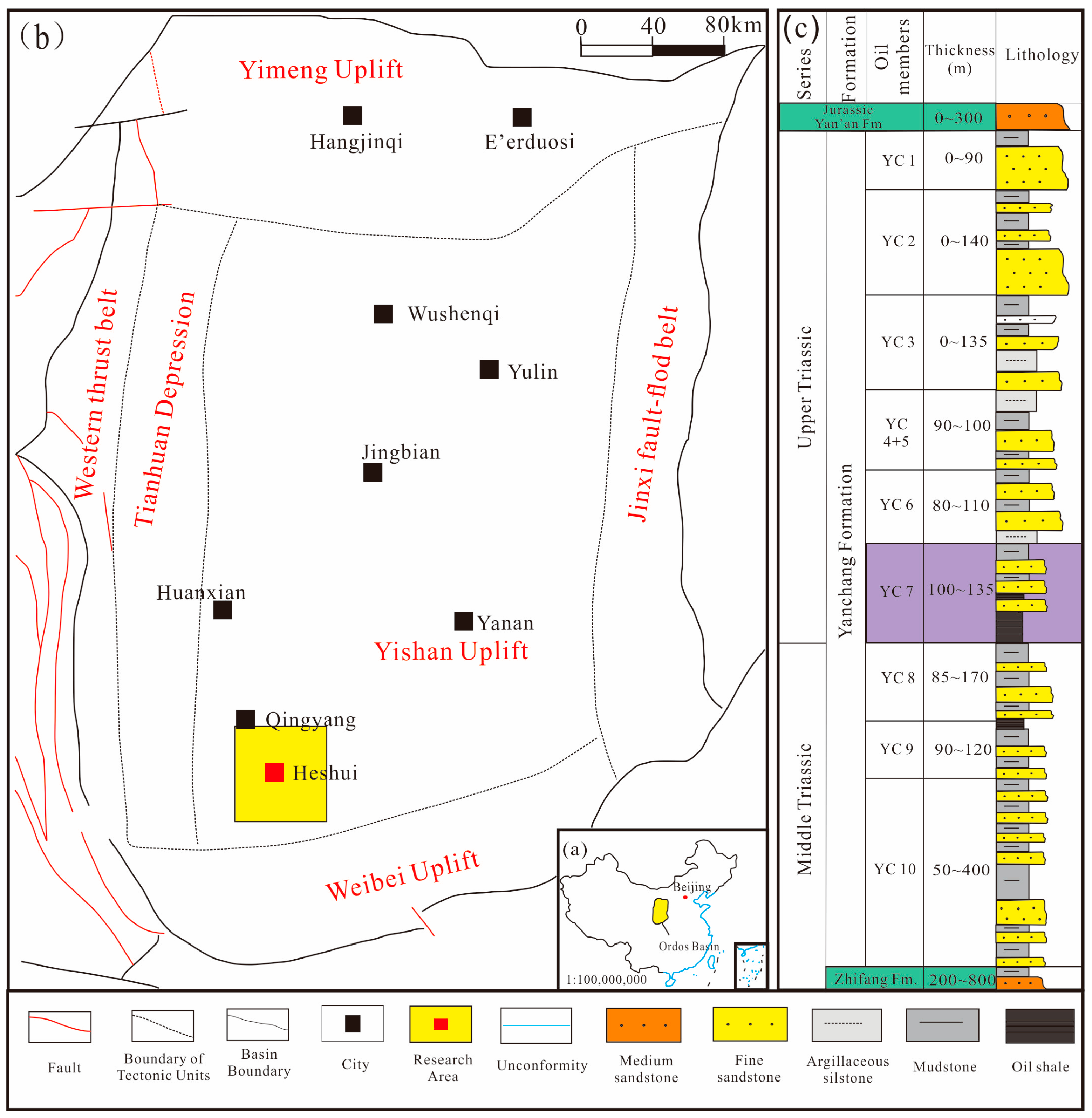
The study area is situated in the southwestern Ordos Basin, bounded by Huachi to the north, Ning County to the south, Tarwan to the east, and Qingyang to the west (Figure 1). Structurally, it occupies the Qingyang nose-shaped structural belt in the middle-to-lower portion of the Yishan Slope, encompassing an area of approximately 2170 km2. Based on sedimentary cycles, electrical properties, and hydrocarbon-bearing characteristics, the area is further subdivided into ten oil-bearing formations, numbered from Chang 10 to Chang 1 from bottom to top. Shale oil in the Ordos Basin is predominantly distributed within the Chang 7 section of the Triassic Yanchang Formation. Chang 7 mainly consists of mudstone and shale, interbedded with sandy turbidites within the deep-lake facies oil shale of eastern Longdong, which are oil-bearing [3,4,5,6]. These lithologies were deposited during the peak development of the Yanchang Formation Lake basin and constitute important source rocks, commonly referred to as “Zhangjiatan Shale”. They are widely distributed throughout the lake basin. In well logs, they exhibit the characteristic “three highs and one low” pattern: high resistivity, high natural gamma, high sonic travel time, and low spontaneous potential. Within Chang 7, the Chang 71 and Chang 72 intervals (interbedded type) comprise mudstone and shale interlayered with multiple thin fine-grained sandstone layers and currently represent the primary targets for exploration and development [5]. Chang 73 (shale type), predominantly composed of mudstone and shale, serves as the main target for high-risk exploration and in situ conversion experiments [4].

3. Methodology

3.1. Data Preparation

A total of 7480 sample points were collected from the Chang 7 shale oil reservoirs across eight vertical wells in the study area, all of which have fracture identification results and corresponding formation micro-resistivity image (FMI) logs. Seven logging parameters that most effectively represent formation characteristics were selected as input features: acoustic travel time (AC), caliper log (CAL), compensated neutron log (CNL), density log (DEN), natural gamma ray (GR), resistivity log (RT), and spontaneous potential (SP).
The logging curves were standardized using the StandardScaler function. Data were grouped by well and padded or truncated to 100 samples per well to ensure consistency. Corresponding FMIs were resized to 128 × 128 grayscale and augmented with a channel dimension; they were padded or truncated similarly to align with the logging data. Standardization was applied only to columns 3–9 (excluding well name and depth), followed by scaling to 0–1 to improve neural network training, mitigate instability from inconsistent units, and enhance model convergence.
Time-series samples were generated by slicing the seven logging parameters along the well-depth direction into fixed-length sequences (e.g., 10 consecutive data points per sample). For each sequence, the end-depth of the well segment was recorded as the label for supervised learning or auxiliary use. The two-dimensional tabular data were then transformed into three-dimensional arrays (samples × time steps × features) suitable for neural network input, simulating the logging process along well depth and effectively capturing the spatial characteristics of fracture development.
Specifically, this study utilized a dataset of 7480 samples from eight vertical wells, each containing fracture identification results and formation micro-resistivity imaging (FMI) logs. Seven representative logging parameters—acoustic travel-time (AC), caliper (CAL), compensated neutron (CNL), bulk density (DEN), gamma ray (GR), resistivity (RT), and spontaneous potential (SP)—were selected as input features. These parameters were standardized using Z-score normalization followed by rescaling to [0, 1] to mitigate scale discrepancies and enhance training stability. To construct inputs compatible with neural network architectures, the one-dimensional logging sequences along the well depth were segmented into fixed-length subsequences, forming a three-dimensional structure of samples × time steps × features. Corresponding FMIs were uniformly resized to 128 × 128 grayscale pixels and expanded with a channel dimension to align with the processed logging data along the depth axis.

3.2. Construction Method of the Multimodal Neural Network Model

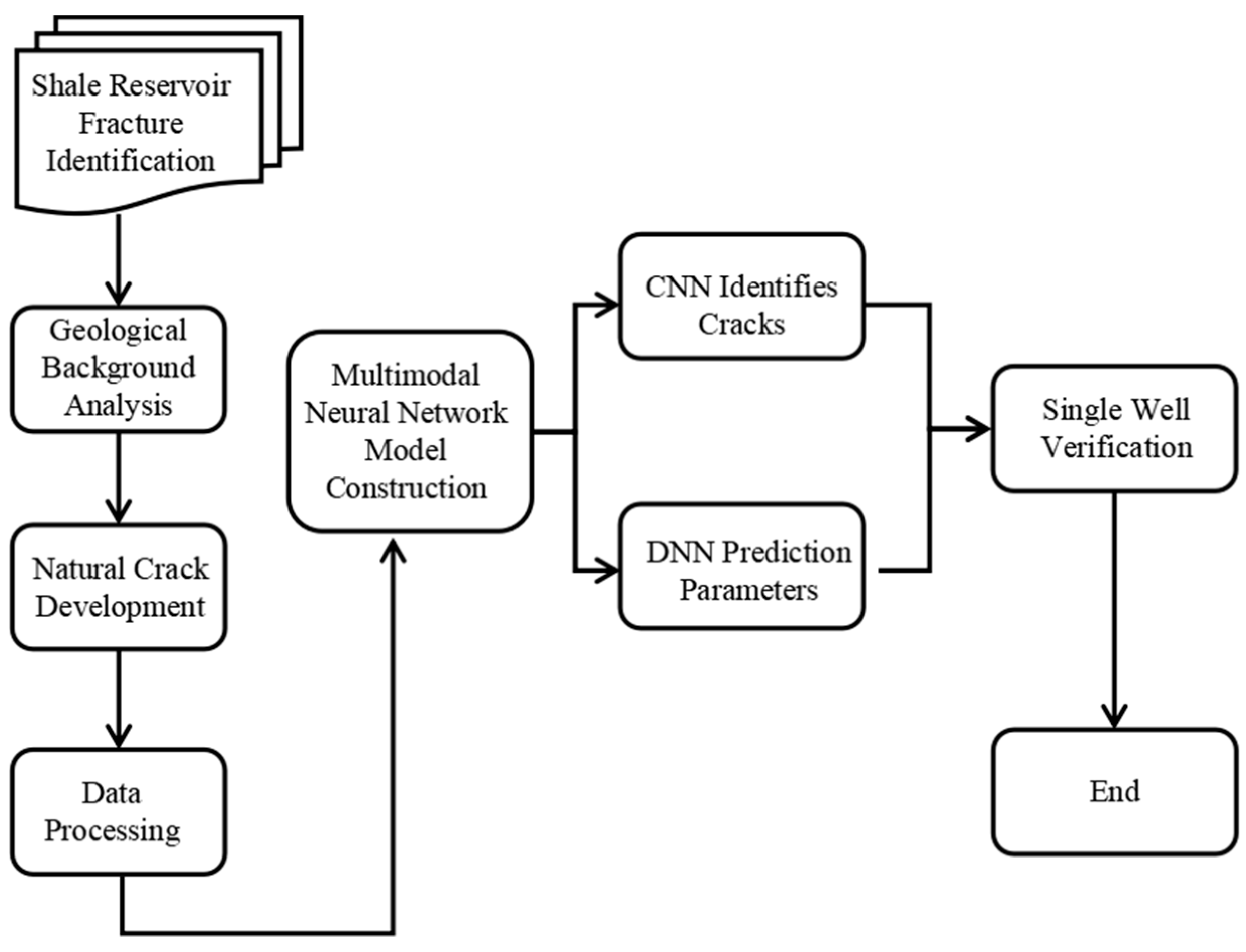
The research framework for identifying natural fractures in shale reservoirs is presented in Figure 2. Drawing on a review of various approaches from previous studies [11,14,15,25,26,27], the relevant data were selected to characterize the distribution patterns of natural fractures [16]. To overcome existing challenges, a multimodal neural network model was developed and subsequently optimized for fracture identification [28]. A well was randomly chosen, and its formation imaging log results were employed to validate the predictions of the deep neural network, thereby confirming the model’s applicability [16,29,30,31].
1. Fracture Identification Module (Dual-Input CNN)
This module performs binary classification of fractures and non-fractures by jointly processing two distinct data modalities:
Conventional Logging Data Input: Seven one-dimensional logging sequences (AC, CAL, CNL, DEN, GR, RT, SP) are structured as a three-dimensional tensor with dimensions (samples × time steps × features). Each depth point is treated as a sequential step within this framework. The tensor is processed through a TimeDistributed wrapper into two fully connected layers (32 and 64 neurons, respectively), enabling the extraction of high-level feature representations while preserving the sequential structure of the logging data along the depth axis.
FMI Data Input: The corresponding two-dimensional FMIs, resized to 128 × 128 grayscale format, are input to the CNN branch. This branch comprises three convolutional layers with 32, 64, and 128 filters, each followed by 2 × 2 max-pooling operations and ReLU activation functions to hierarchically extract spatial features associated with fracture morphology.
Feature Fusion and Classification: Feature vectors extracted from both the logging and imaging branches are concatenated along the feature dimension. The resulting fused feature vector is then processed through a series of fully connected layers and ultimately passed to a single neuron with a sigmoid activation function for binary prediction. To mitigate overfitting, a Dropout layer (rate = 0.5) is incorporated before the final layer. The model is optimized using binary cross-entropy loss and the Adam optimizer.
2. Fracture Parameter Prediction Module (DNN)
This module employs a deep neural network (DNN) architecture designed specifically to predict two key fracture parameters: dip angle and aperture.
Architecture: The DNN follows a fully connected architecture, accepting eight preprocessed logging features as input. These features are processed through three hidden layers containing 256, 128, and 64 neurons, respectively. Each hidden layer utilizes the ReLU activation function and is regularized with a Dropout layer (rate = 0.2) and L2 weight regularization (coefficient = 0.001) to enhance generalization performance.
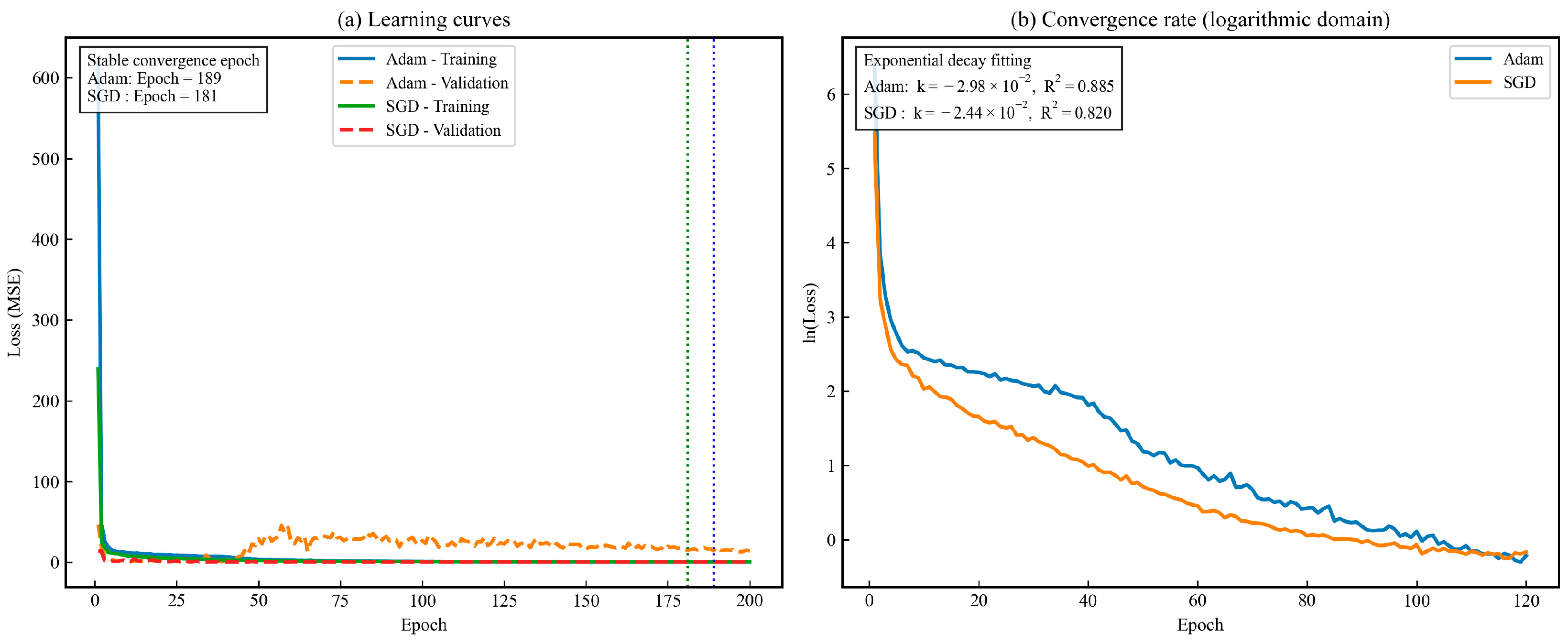
Output and Training: The output layer consists of two linear neurons corresponding to the predicted fracture dip angle and aperture. Model training aims to minimize the mean squared error (MSE) using the Adam optimizer (learning rate = 0.001) with a batch size of 32. An early stopping strategy is implemented, whereby training ceases if the validation loss improvement remains below 1 × 10⁻⁵ for 20 consecutive epochs, up to a maximum of 200 epochs.
3. Integrated Multimodal Workflow
The complete framework operates sequentially: the Fracture Identification Module first classifies intervals as fractured or non-fractured. Subsequently, data from intervals identified as fractured are passed to the Fracture Parameter Prediction Module to estimate their dip angle and aperture. By integrating spatial features from imaging data with sequential patterns from logging data, this multimodal approach provides a cost-effective, efficient, and comprehensive solution for identifying natural fractures in shale reservoirs and quantifying their key geometric attributes. The model employed Time Distributed wrapper layers to preserve the temporal sequence structure (with each depth point treated as a time step) and included a Dropout layer (rate 0.5) to prevent overfitting. Binary cross-entropy loss and the Adam optimizer were used for mini-batch training to accommodate memory constraints. The model’s key innovations include multimodal feature fusion and temporal sequence processing, effectively integrating numerical logging and imaging data. Data padding was applied to handle wells of varying depths while preserving stratigraphic continuity.

3.3. Neural Network Algorithms

(1) Convolutional Neural Network
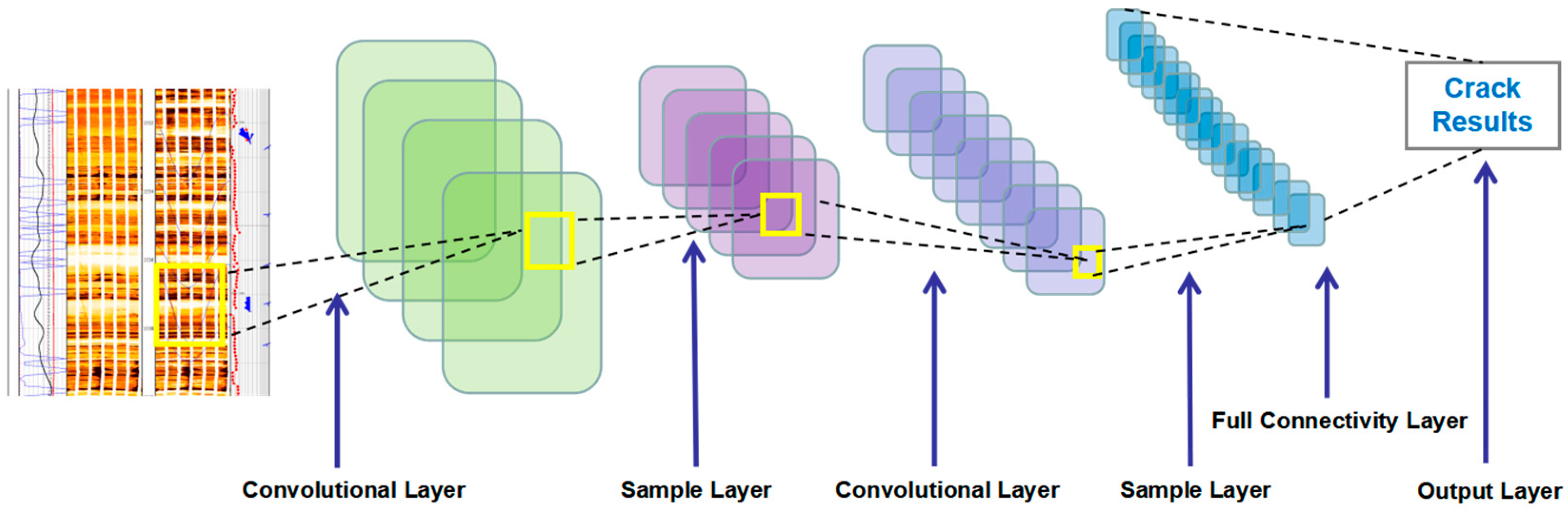
A convolutional neural network (CNN) typically comprises five layers. The input layer receives images or other data, convolutional layers extract low-level features, and pooling layers reduce dimensionality while mitigating overfitting. Fully connected layers integrate extracted features, and the output layer generates predictions, usually selecting the class with the highest probability [11,14,15,25,26,27].
Unlike conventional neural networks, CNN neurons are arranged in three dimensions: width, height, and depth (Figure 3). For input layers, width and height denote the spatial dimensions, while depth represents the number of channels—three for RGB images and one for grayscale. In intermediate layers, width and height correspond to feature map dimensions determined by convolution and pooling parameters, and depth indicates the number of feature map channels, typically defined by the number of convolutional kernels.
(2) Deep Neural Networks
Deep Neural Networks (DNNs) were first proposed in 1943 by American neurophysiologist Warren McCulloch and mathematician Walter Pitts [29]. DNNs are a subclass of artificial neural networks (ANNs) and emulate human brain information processing through multiple layers of neurons, enabling the solution of complex, data-driven problems.
A DNN is a multilayer neural network in which neurons are interconnected to form a deep architecture. It can process diverse data types, including images, text, and speech. The number of hidden layers and neurons per layer depends on the specific task and data characteristics. Training a DNN typically involves backpropagation and gradient descent optimization, iteratively adjusting network parameters to minimize prediction errors and the loss function.
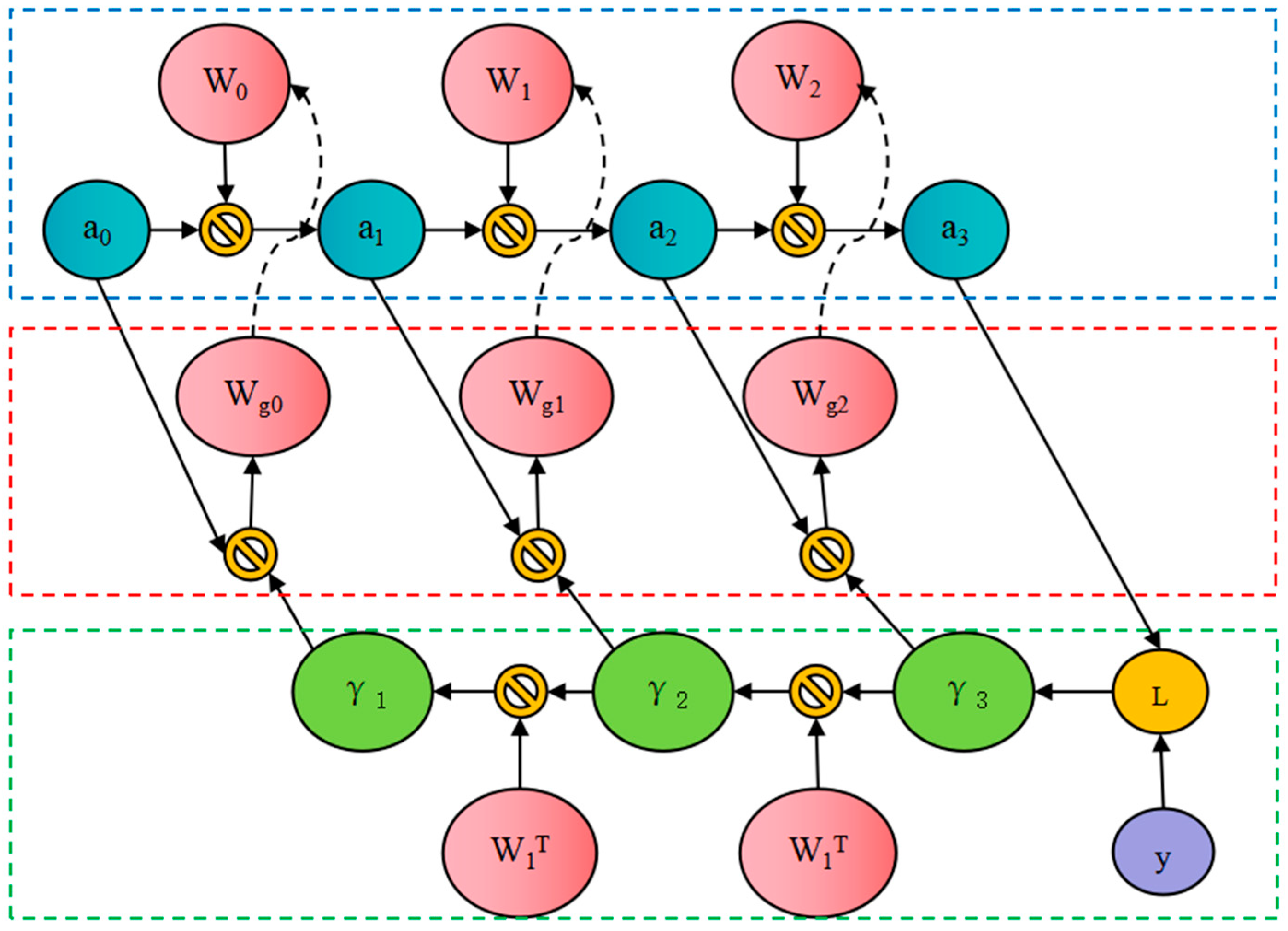
The training process consists of four primary steps: forward propagation, backward propagation, weight gradient computation, and weight updating. As illustrated in Figure 4, training data are fed into the network in batches, with forward computation proceeding layer by layer until the output layer is reached. The network output is then compared to the true labels, and the loss is calculated using a loss function. During backward propagation, gradients of the loss function with respect to each layer are computed via the chain rule. These weight gradients are then used to update network weights, completing the training cycle.
(3) Optimizer
Stochastic Gradient Descent (SGD) is a widely used optimizer and one of the most fundamental algorithms in deep learning. It implements the gradient descent method by updating neural network weights based on the gradient computed from each training sample, which is why it is also referred to as online learning. Compared to batch gradient descent (BGD), SGD is more efficient, particularly for large datasets. Model parameters are updated in the direction of the negative gradient, gradually minimizing the loss function. During training, the partial derivatives of each sample’s error with respect to all parameters are computed and used to update the parameters iteratively until convergence or until a predefined maximum number of iterations is reached.
SGD usually requires manual tuning of the learning rate, and techniques such as learning rate decay are often applied to improve convergence. The choice of learning rate strongly influences SGD performance. Convergence is typically slow in flat regions near local minima, but the inherent stochasticity can help the model escape shallow minima and achieve better generalization.
Adaptive Moment Estimation (Adam) is an optimizer with adaptive learning rates, developed based on momentum gradient descent and adaptive learning rate methods. Adam assigns different weights to different gradients, enabling faster and more stable convergence. It combines momentum and RMS Prop by computing exponential moving averages of the first moment (mean) and second moment (uncentered variance) of gradients, followed by bias correction to ensure accurate estimates during early training. This correction is crucial; without it, underestimated gradients can lead to overly small update steps, slowing convergence [32].
Adam automatically adjusts learning rates, usually eliminating the need for manual tuning, and often converges faster than SGD during the initial training phase. However, despite its rapid convergence in many tasks, Adam may lead to overfitting in some cases, and its generalization ability can be inferior to that of SGD.
Model training was conducted using both Adam and SGD optimizer, each with an initial learning rate set to 0.001. To ensure stability and comparability between the two training processes, no dynamic learning rate scheduling was implemented. The convergence criterion was defined as follows: training would cease if the validation loss showed no significant improvement—specifically, a decrease of less than 1 × 10⁻⁵—over 20 consecutive epochs, or when the maximum preset epoch count of 200 was reached. In practice, both optimizer demonstrated stable convergence after approximately 150 training epochs.

4. Results and Discussions

4.1. Subsection

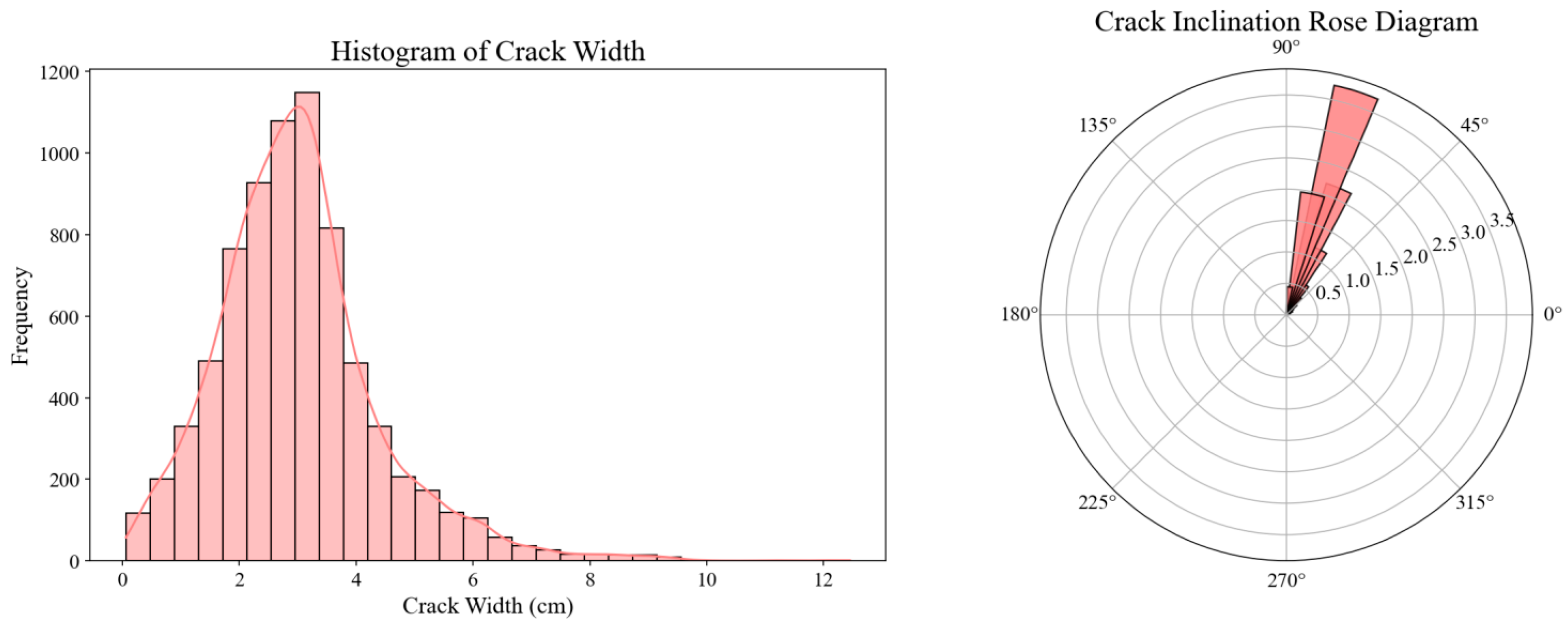
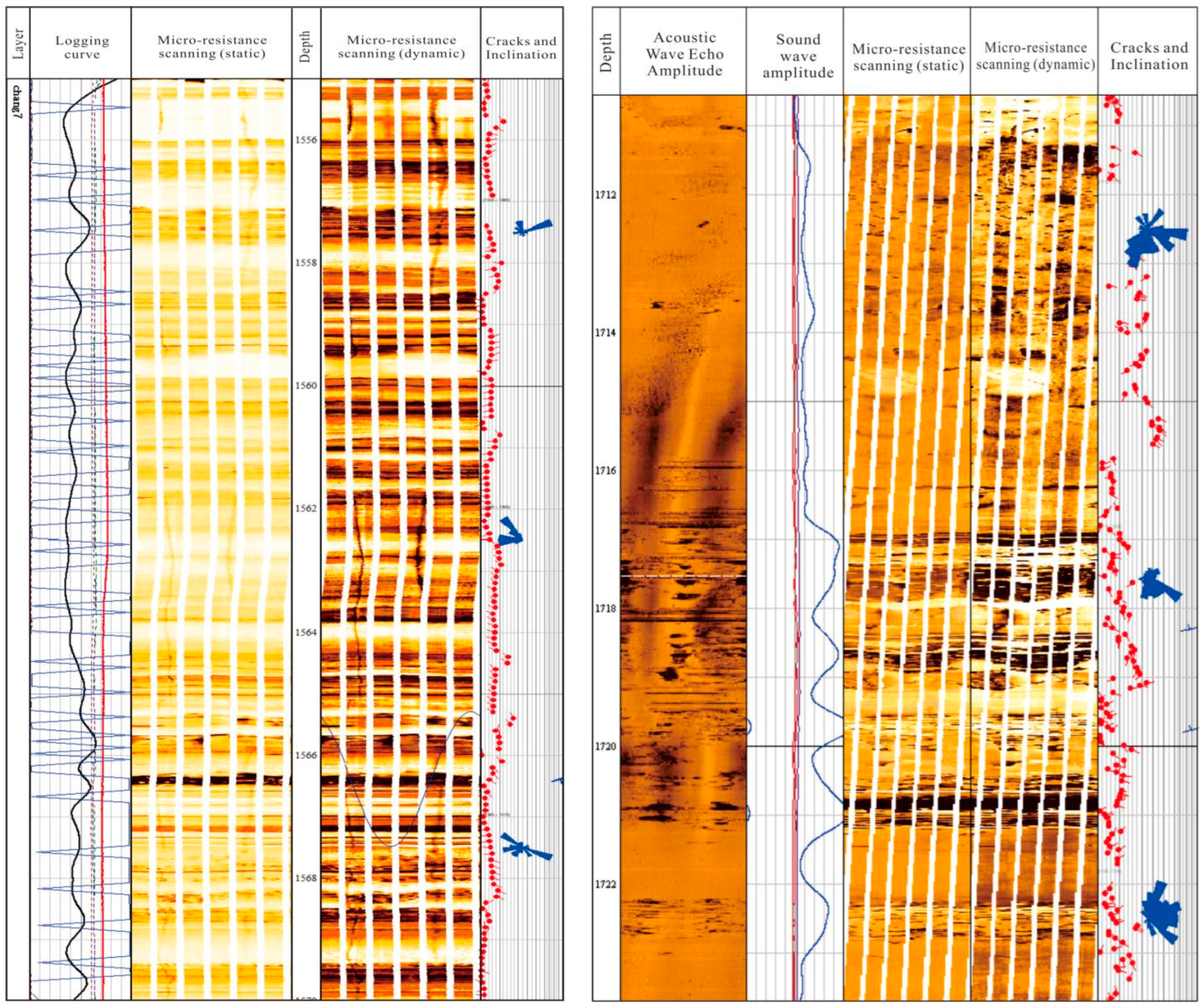
Figure 5 and Figure 6 display fracture detection results obtained from the Chang 7 formation imaging logging in the Heshui area of the southwestern Ordos Basin. The fracture width and fracture dip angle parameters were measured for 7480 sample points in the shale oil reservoirs of eight vertical wells within the study area. Vertical fractures are relatively well-developed and extend over long distances, whereas horizontal fractures are comparatively underdeveloped. The fracture population is dominated by high-angle and vertical fractures, followed by oblique fractures, with a minor occurrence of low-angle slip fractures in mudstone intervals. Fracture dips predominantly exceed 70°, ranging from 61.8° to 88.0° (mean 77.31°), while fracture widths vary from 0.06 cm to 12.45 cm (mean 2.99 cm).
Fractures within the studied 7 m thick shale reservoir are predominantly characterized by high-angle orientations (>70°), with dip angles concentrated in the range of 61.8° to 88.0°. This distribution is governed primarily by the interplay of tectonic stress and lithology. High-angle fractures were likely generated through extensional or shear failure under a Late Jurassic–Early Cretaceous regional extensional regime. Concurrently, fractures preferentially occur in intervals of high brittleness (indicated by low gamma-ray values) and low clay content, underscoring the critical role of favorable rock mechanical properties as a prerequisite for fracturing. Therefore, fracture “sweet spots” are expected to be located within high-brittleness lithofacies and in zones of elevated paleo-tectonic stress concentration.

4.2. Correlation Between Logging Parameters and Fractures

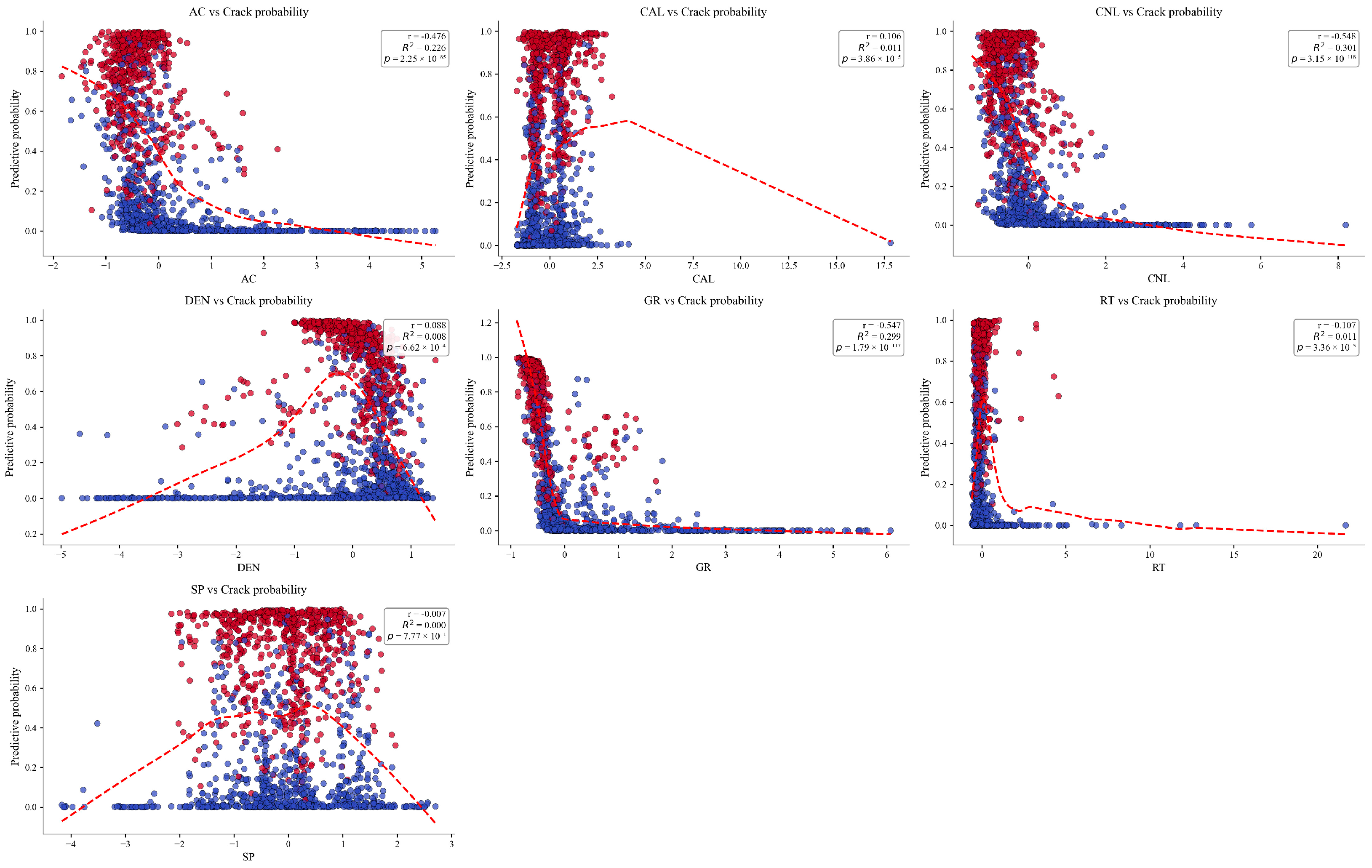
The observed differential responses of logging parameters to fractures arise from their distinct underlying physical measurement principles. A consistent monotonic decrease in acoustic transit time (AC), compensated neutron log (CNL), and natural gamma ray (GR) collectively signals a geomechanically favorable regime for fracture occurrence: reduced AC suggests increased rock stiffness via compaction or cementation; decreased CNL values may indicate elevated hydrocarbon saturation facilitated by fracture-enhanced fluid mobility; and lower GR readings correlate with clay-poor, brittle lithologies prone to brittle failure under stress. In contrast, the non-monotonic behavior of resistivity (RT), caliper (CAL), and bulk density (DEN) reflects the inherent complexity of fracture systems, encompassing variable fracture-fill properties (e.g., hydrocarbon versus clay-rich fluids), wellbore stability effects, and overprinting by diagenetic processes. These contrasting responses highlight the critical need for integrated multi-parameter approaches to accurately capture fracture heterogeneity.
Seven conventional logging parameters—acoustic travel time (AC), caliper (CAL), compensated neutron (CNL), density (DEN), natural gamma (GR), resistivity (RT), and spontaneous potential (SP)—were selected to analyze their relationship with fracture probability using standardized logging data. Correlation analysis constitutes the initial step in neural network modeling. As shown in Figure 7, the LOWESS-fitted curves for AC, CNL, and GR exhibit a monotonically decreasing trend with fracture probability, indicating that lower feature values correspond to a lower likelihood of fractures. Conversely, the curves for CAL, DEN, RT, and SP initially increase and then decrease, suggesting that fracture probability is maximized within specific parameter ranges.
After standardization, 7480 sample points from eight wells were evaluated. As illustrated in Figure 8, each of the seven subplots depicts the influence of a specific logging feature on the model’s predicted fracture probability. The x-axis represents the logging values, the y-axis corresponds to predicted fracture probability, and scatter colors indicate the true fracture labels (red for fractures, blue for non-fractures). Red lines show LOWESS fits, highlighting the nonlinear trends between each feature and fracture probability.

4.3. Fracture Results Based on Neural Network

4.3.1. CNN-Based Fracture Detection Results

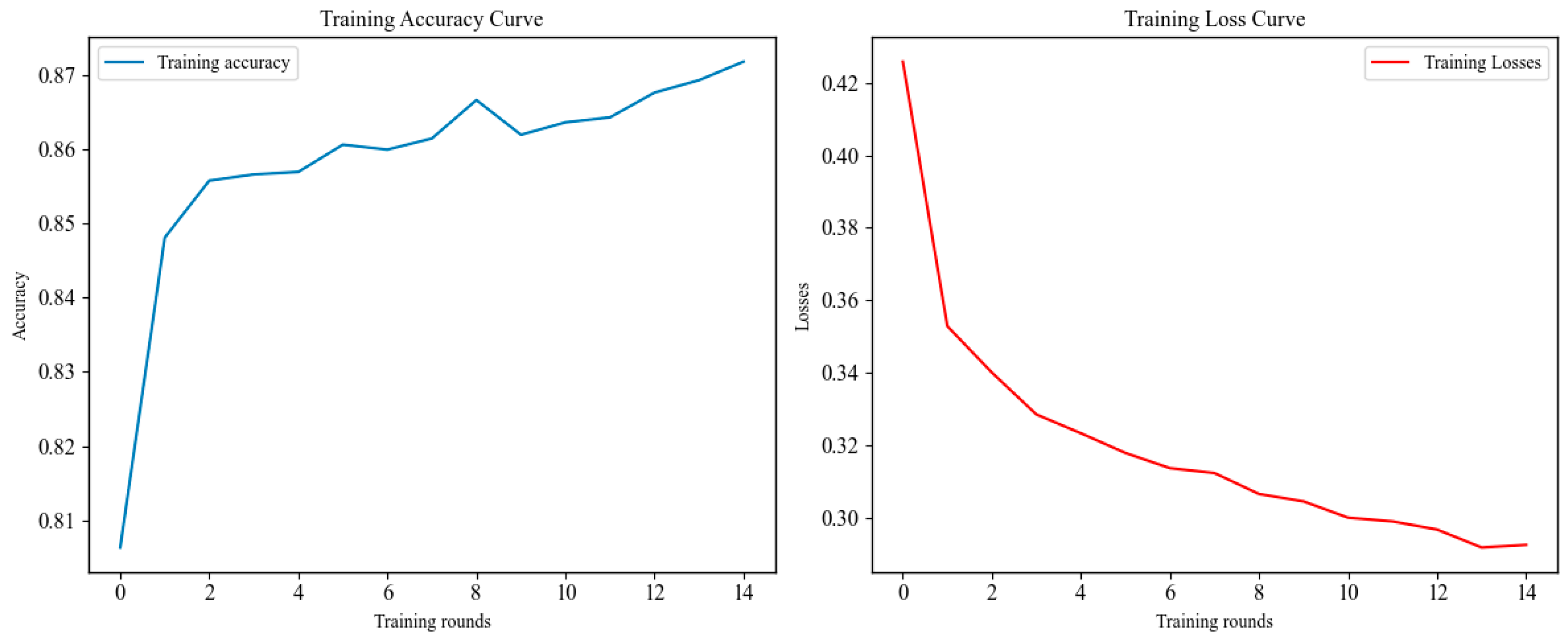
After standardizing the data, seven conventional logging parameters were used to train a convolutional neural network (CNN) to identify the presence and location of fractures, using imaging log results as labels. As shown in Figure 8, the left panel presents the training accuracy curve, illustrating the model’s accuracy on the training set across epochs; accuracy steadily increases, indicating continuous learning. The right panel shows the training loss curve, reflecting changes in model error; the loss consistently decreases, demonstrating improved data fitting. During training, accuracy gradually rises and stabilizes around 0.87, suggesting potential for further improvement, while loss declines and stabilizes below 0.30, with no evident oscillations or overfitting observed throughout the training process.
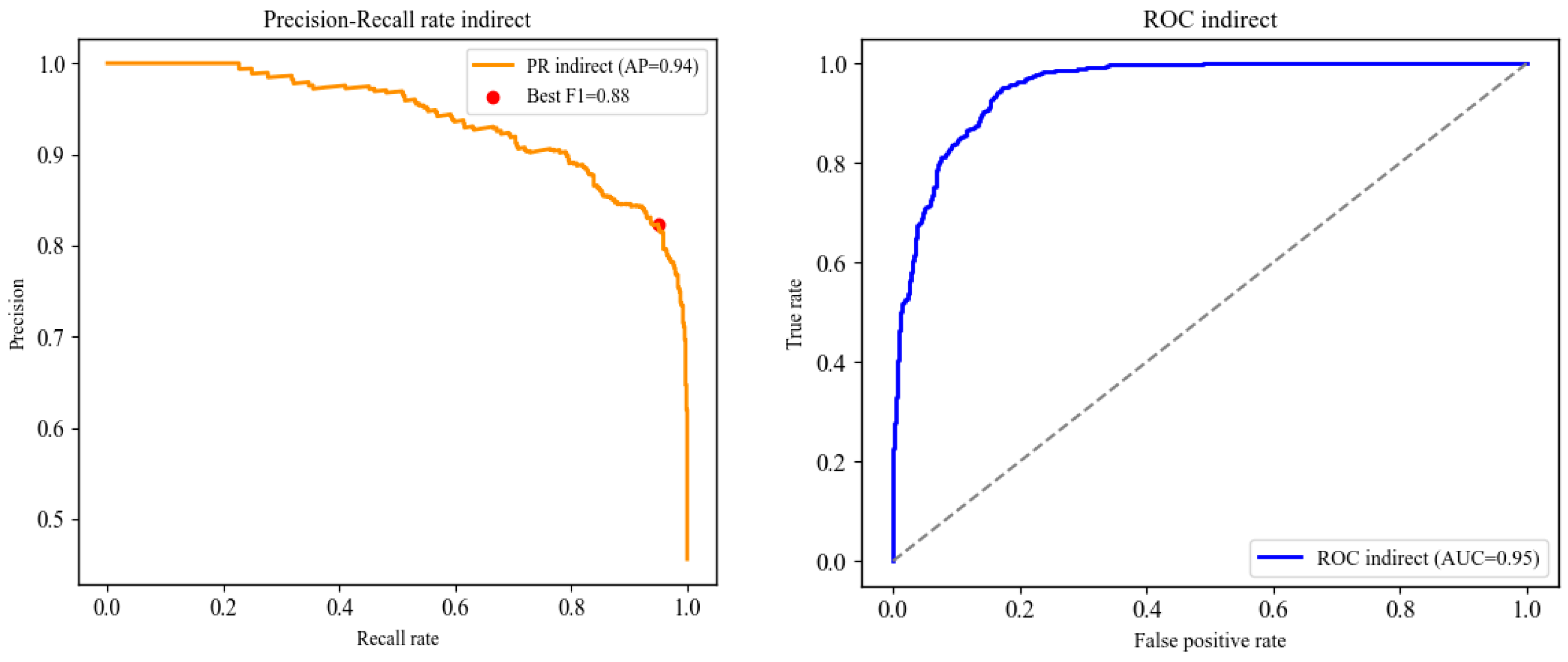
After training the CNN model, fracture identification results were evaluated using precision–recall (PR) and receiver operating characteristic (ROC) curves. Both PR and ROC curves employ the true positive rate (TPR, recall) and can be assessed using the area under the curve (AUC) to evaluate classifier performance. The key difference is that the ROC curve uses the false positive rate (FPR), while the PR curve uses precision, focusing exclusively on positive instances.
In the PR curve, the horizontal axis represents recall and the vertical axis represents precision; the red point indicates the optimal F1-score. The PR curve illustrates the model’s balance between precision and recall across different thresholds, with curves closer to the upper-right corner indicating superior performance. A higher area under the curve (average precision, AP) indicates better model performance, with the ideal value being 1. The F1-score, a harmonic mean of precision and recall, provides a combined measure of model accuracy and completeness, ranging from 0 to 1, with higher values indicating better performance.
The ROC curve plots TPR (sensitivity) against FPR (1-specificity) across a range of thresholds. Unlike traditional binary diagnostic tests that require dichotomization of results, the ROC curve allows for intermediate or ordered multi-class outputs. The AUC, ranging from 0 to 1, quantifies classifier performance, representing the probability that a randomly selected positive instance ranks higher than a randomly selected negative instance. Higher AUC values indicate better discriminative ability.
As shown in Figure 9, the left panel displays the PR curve, which approaches the upper-right corner, indicating that the model achieves both high recall and high precision; the AP is close to 1, and the F1-score is 0.88. The right panel shows the ROC curve, which approaches the upper-right corner during training, with an AUC of 0.95, indicating excellent fracture versus non-fracture discrimination, as values above 0.90 reflect strong model performance.
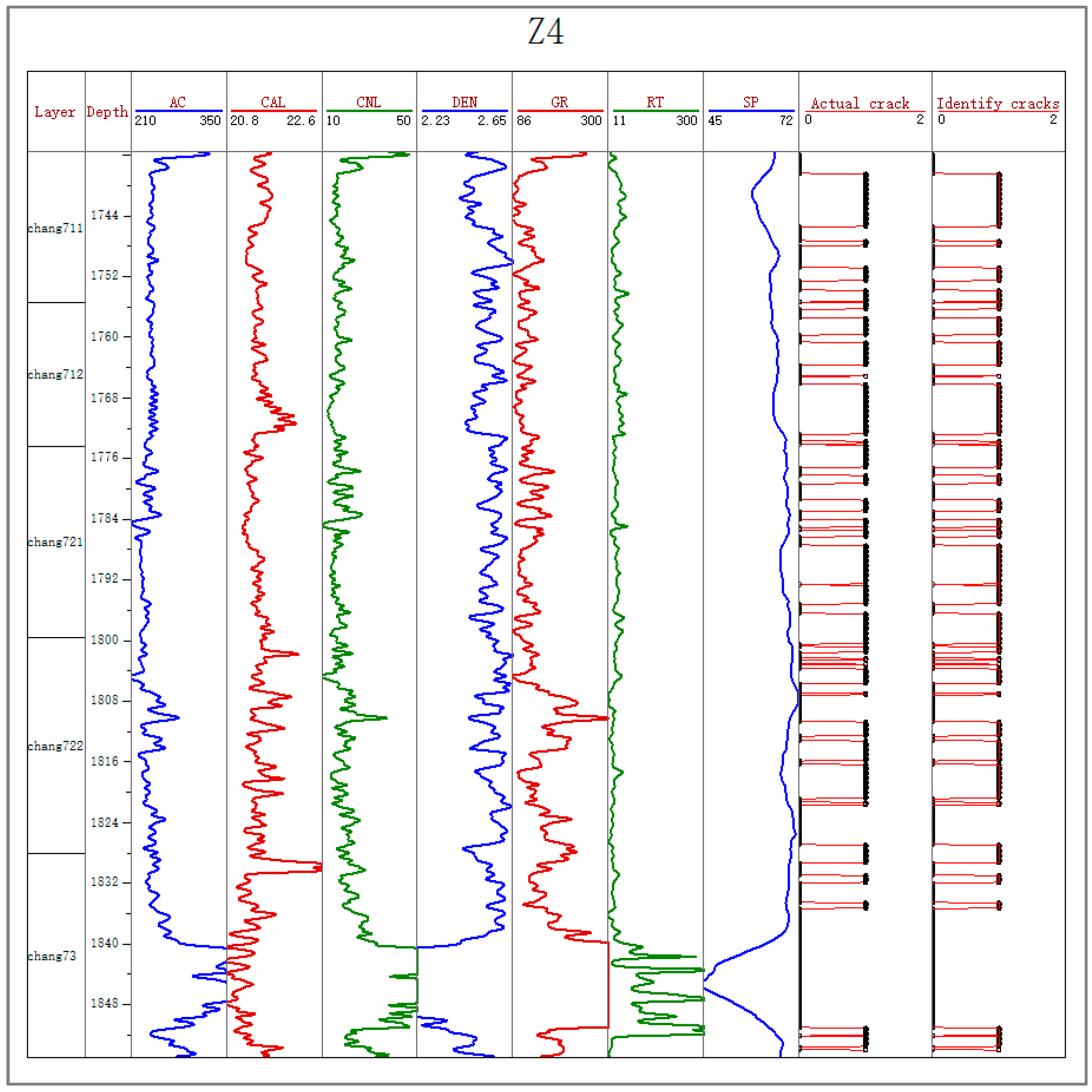
To validate the accuracy of the CNN-based fracture identification model, it was applied to a randomly selected well in the Ordos Basin. Figure 10 presents a comparison between the measured fractures and the CNN-identified fractures in the Chang 7 Formation of Well Z4. The results indicate that the CNN model’s predictions closely match the observed fractures, demonstrating the model’s reliability in fracture identification.

4.3.2. DNN-Based Fracture Parameter Prediction

Eight experimental wells in the Chang 7 shale formation were selected, and their conventional logging data along with the corresponding fracture identification results from formation imaging logs were used to construct the dataset for the deep neural network (DNN) model. The random partitioning strategy divides the dataset into an 80% training set and a 20% test set, ensuring random sample allocation and consistency in the distribution of key features between the training and test sets. This approach mitigates potential bias and guarantees the objectivity of model evaluation. Seven logging parameters were employed as input features, while the imaging-based fracture identification results served as the output targets to develop the DNN-based fracture prediction model. Given the relatively small dataset and the presence of outliers during data analysis, the model’s predictive performance could be affected, indicating potential room for accuracy improvement.
Mean Absolute Error (MAE) represents the average of the absolute differences between predicted and actual values, reflecting the average absolute deviation. Mean Squared Error (MSE) represents the average of the squared differences between predicted and actual values, making it more sensitive to larger errors. MAE is useful for evaluating overall model stability, whereas MSE is suitable for strictly controlling the model’s maximum error.
Figure 11 illustrates the iterative optimization processes of Adam and SGD. The SGD optimization process appears relatively stable. As shown in Table 1, the Adam-optimized model exhibits higher MAE and MSE values, while the SGD-optimized model demonstrates lower MAE and MSE, indicating superior predictive accuracy. Overall, the DNN model optimized with SGD exhibits enhanced stability and reduced maximum error compared to the Adam-optimized model.
As presented in Table 1, the deep neural network models optimized using Adam and SGD exhibited notable improvements in prediction accuracy. For the Adam-optimized models, the fracture dip model achieved a 1.99% increase in training accuracy and a 2.91% increase in test accuracy, while the fracture width model improved by 5.96% in training accuracy and 6.64% in test accuracy. In comparison, the SGD-optimized models demonstrated superior performance: the fracture dip model’s training accuracy increased by 2.9% and test accuracy by 3.64%, whereas the fracture width model improved by 7.76% in training accuracy and 8.56% in test accuracy, indicating that SGD optimization yielded higher overall precision.
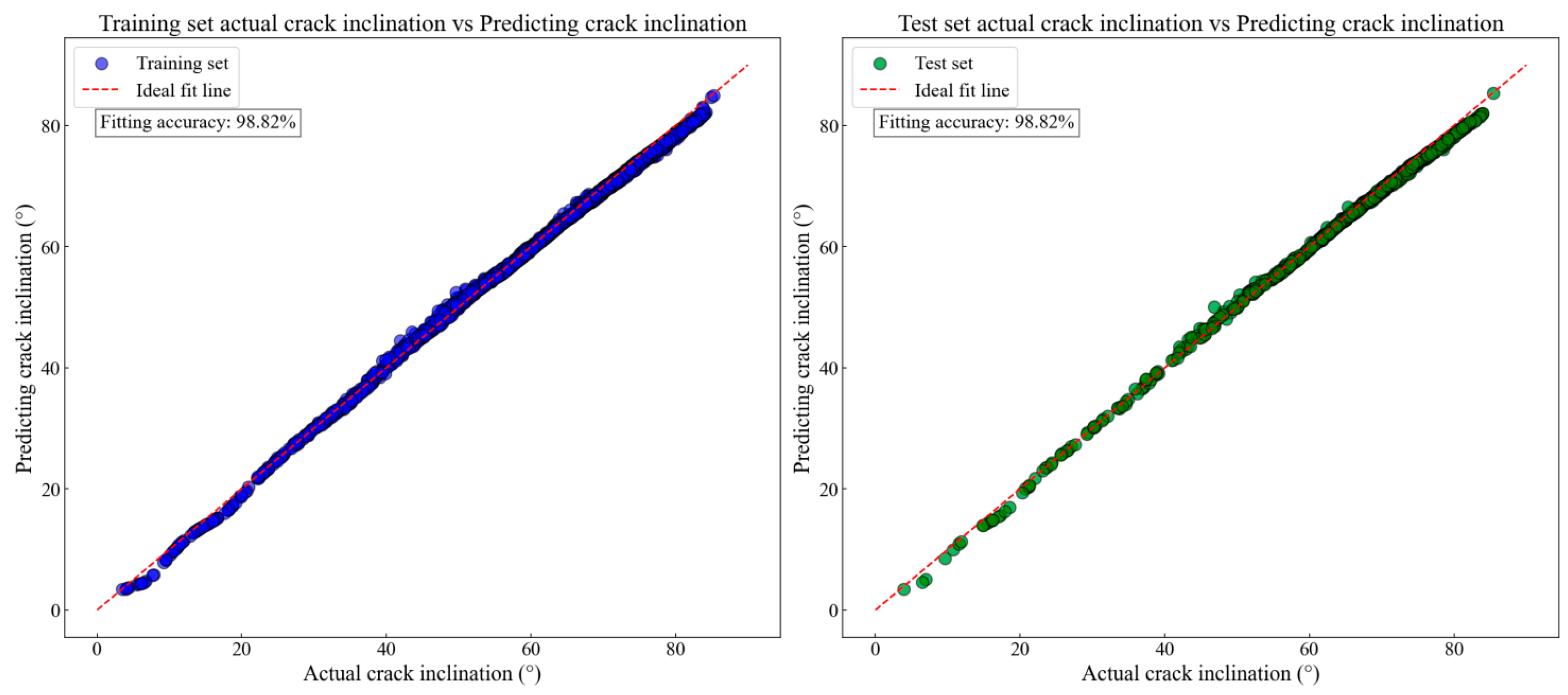
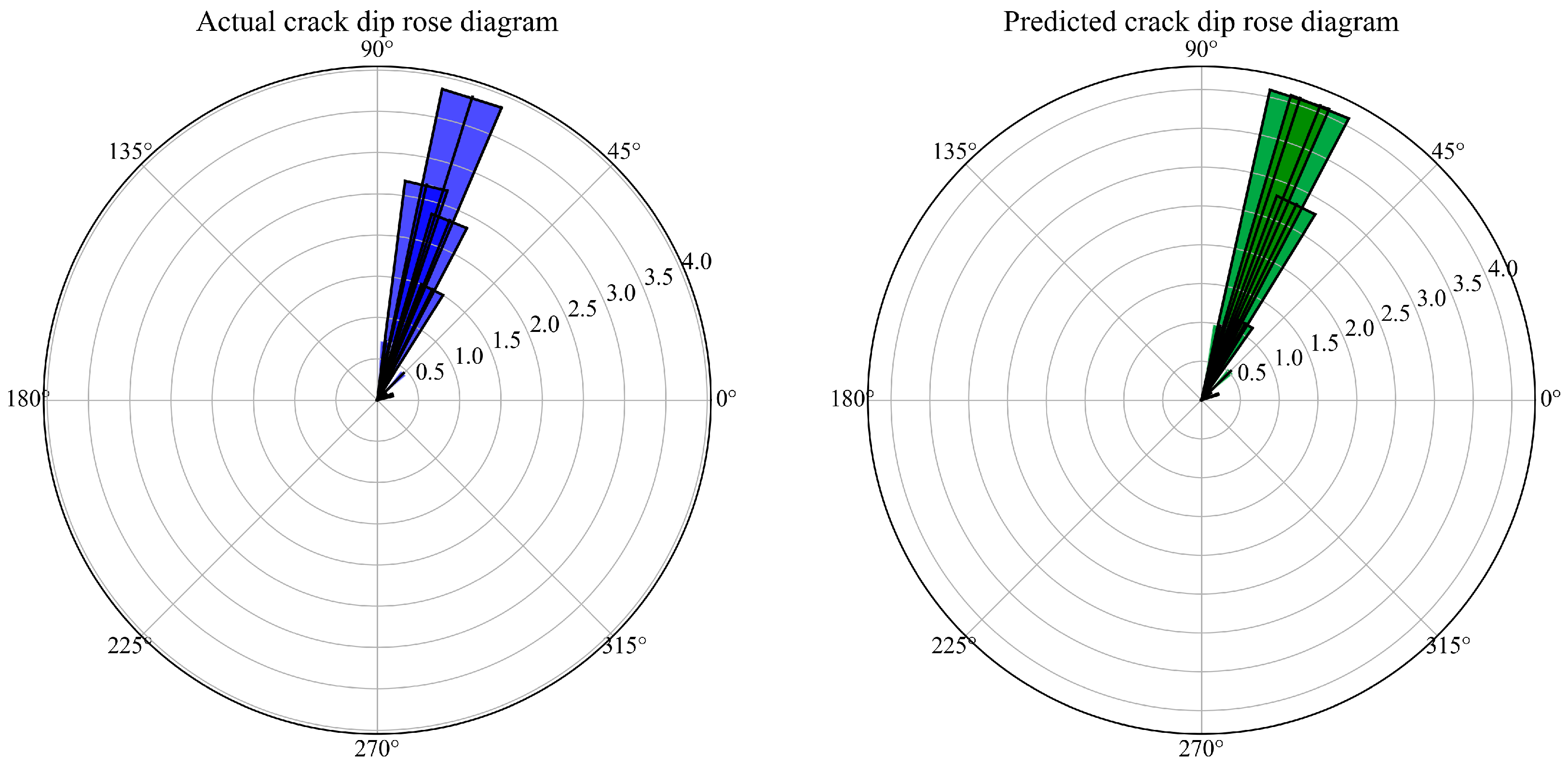
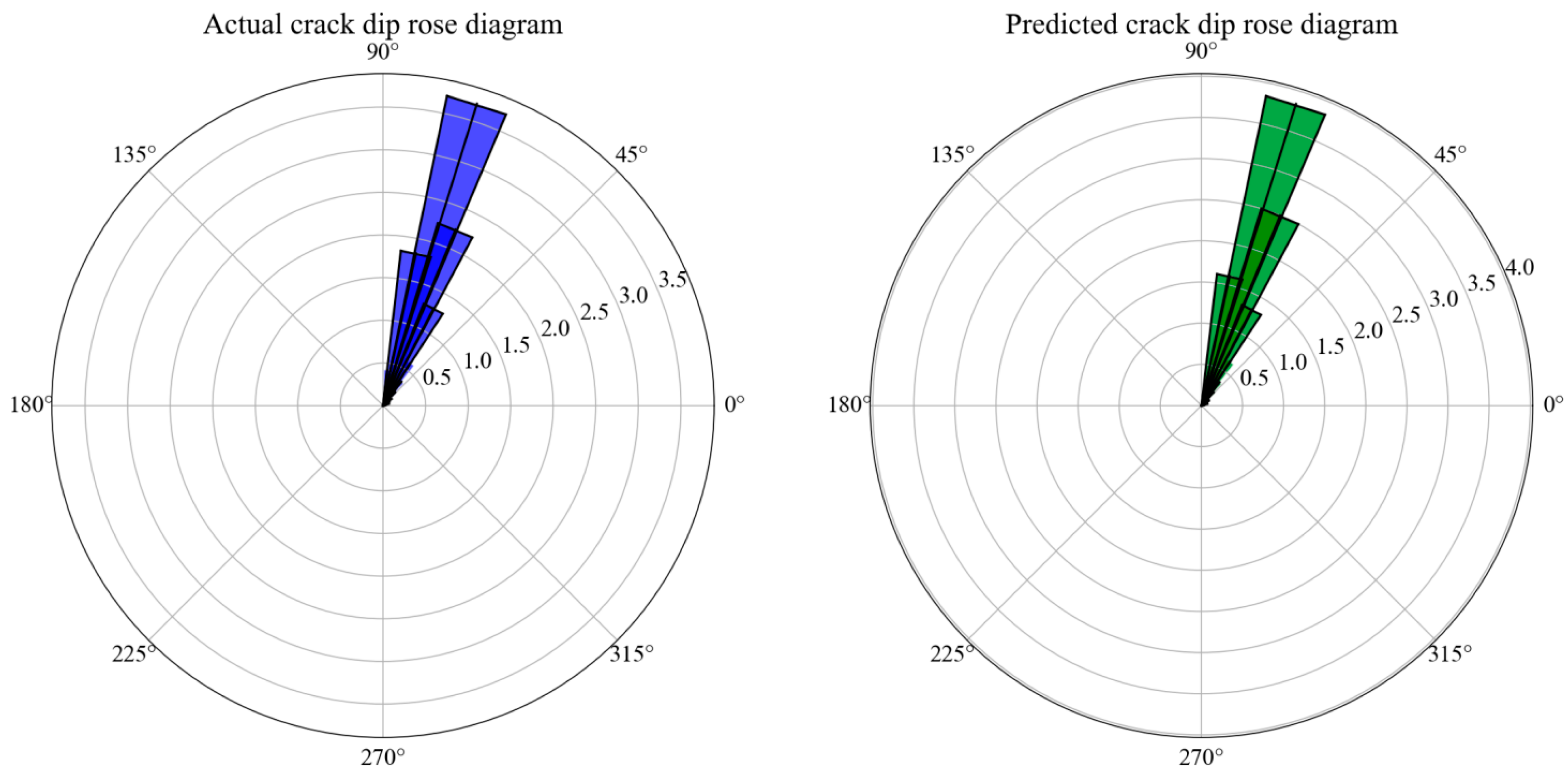
The optimized model’s fracture inclination predictions are shown in Figure 12. The model achieved a fitting accuracy of 98.82% on both the training and test sets, indicating that the deep neural network performs robustly in predicting natural fractures in shale reservoirs, with minimal deviation from the measured fracture data. The polar rose diagram in Figure 13 demonstrates that the measured and predicted fracture inclinations generally range between 65° and 80°, with only minor differences observed in the predictions.
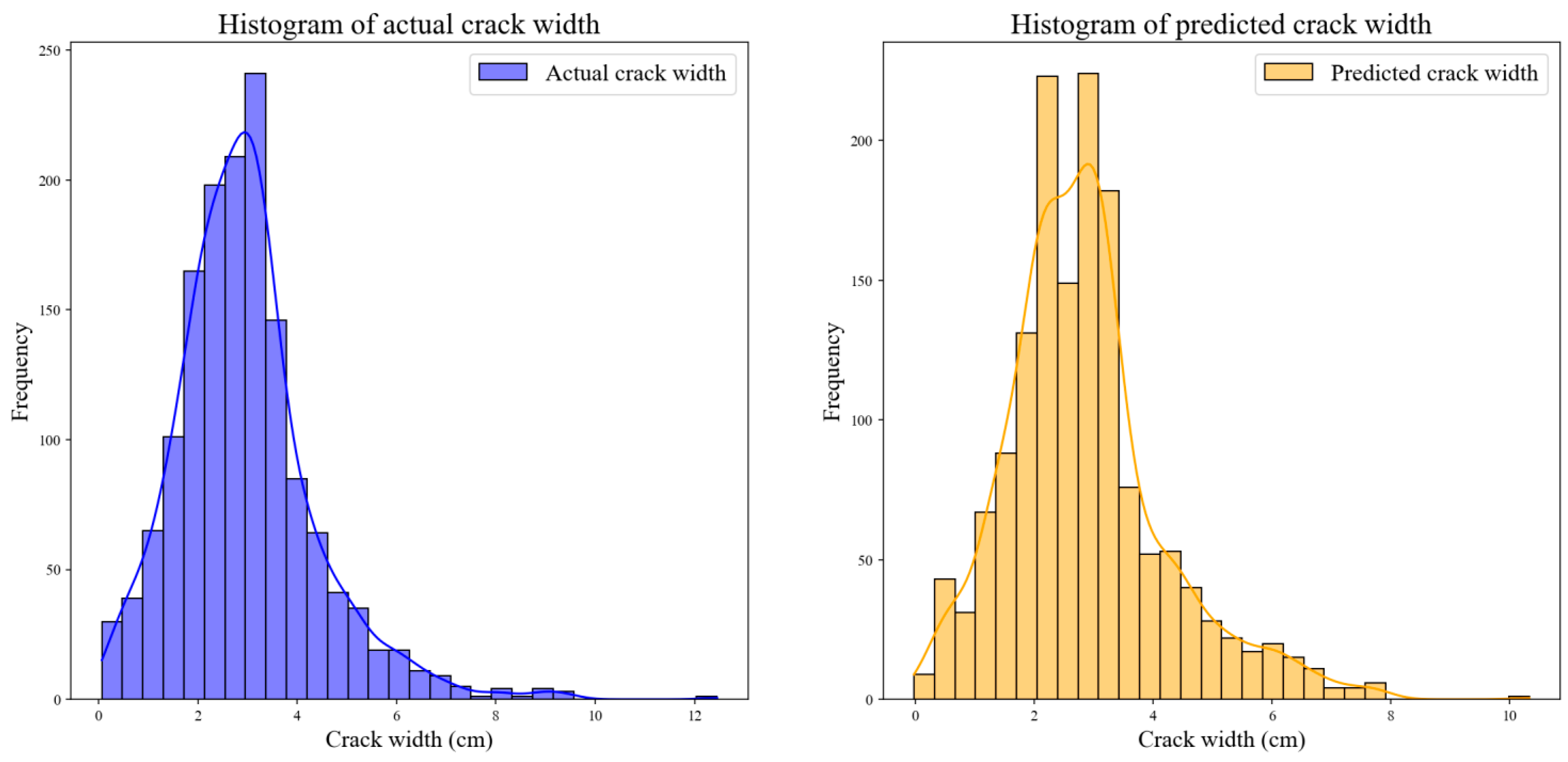
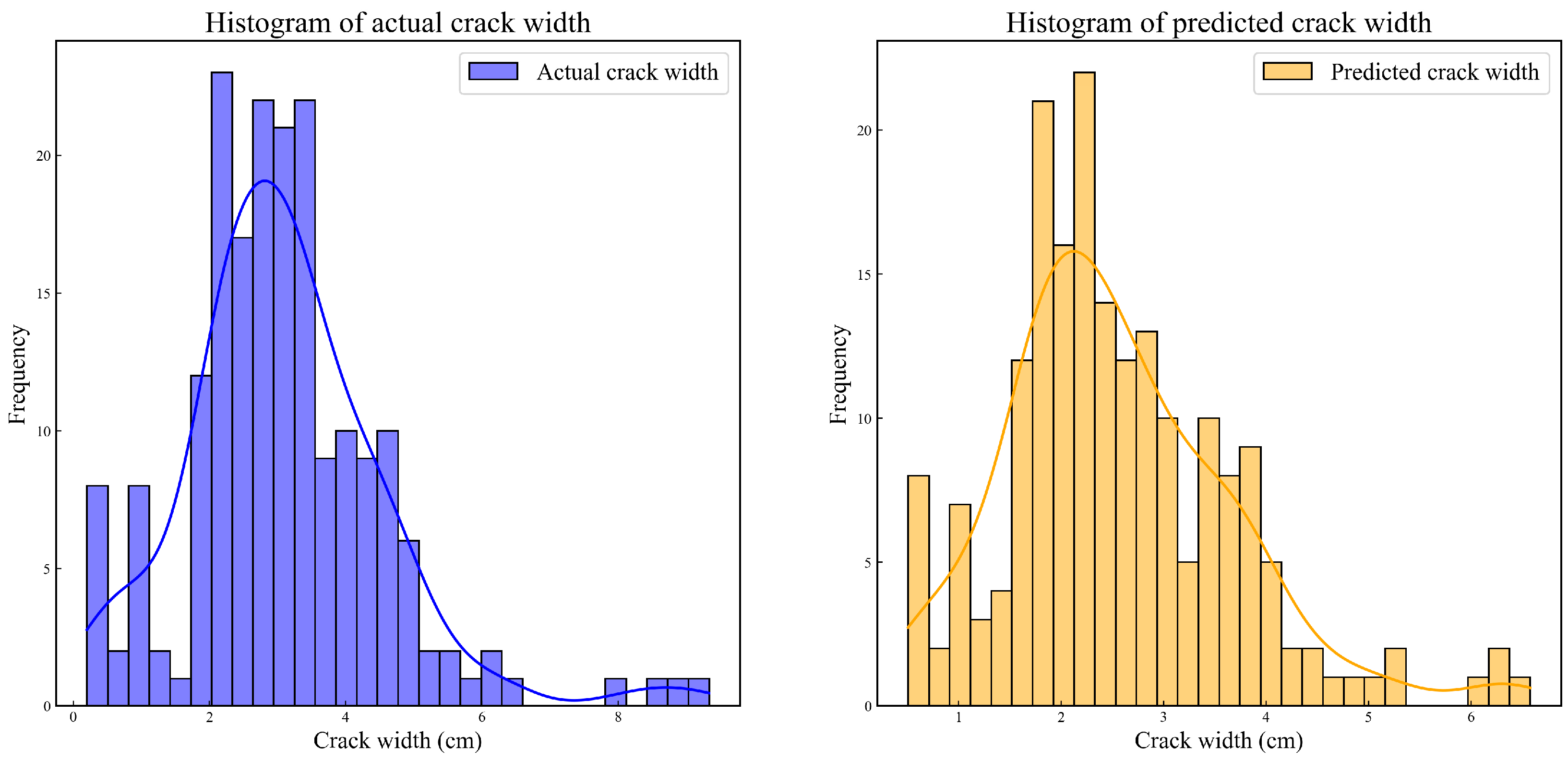
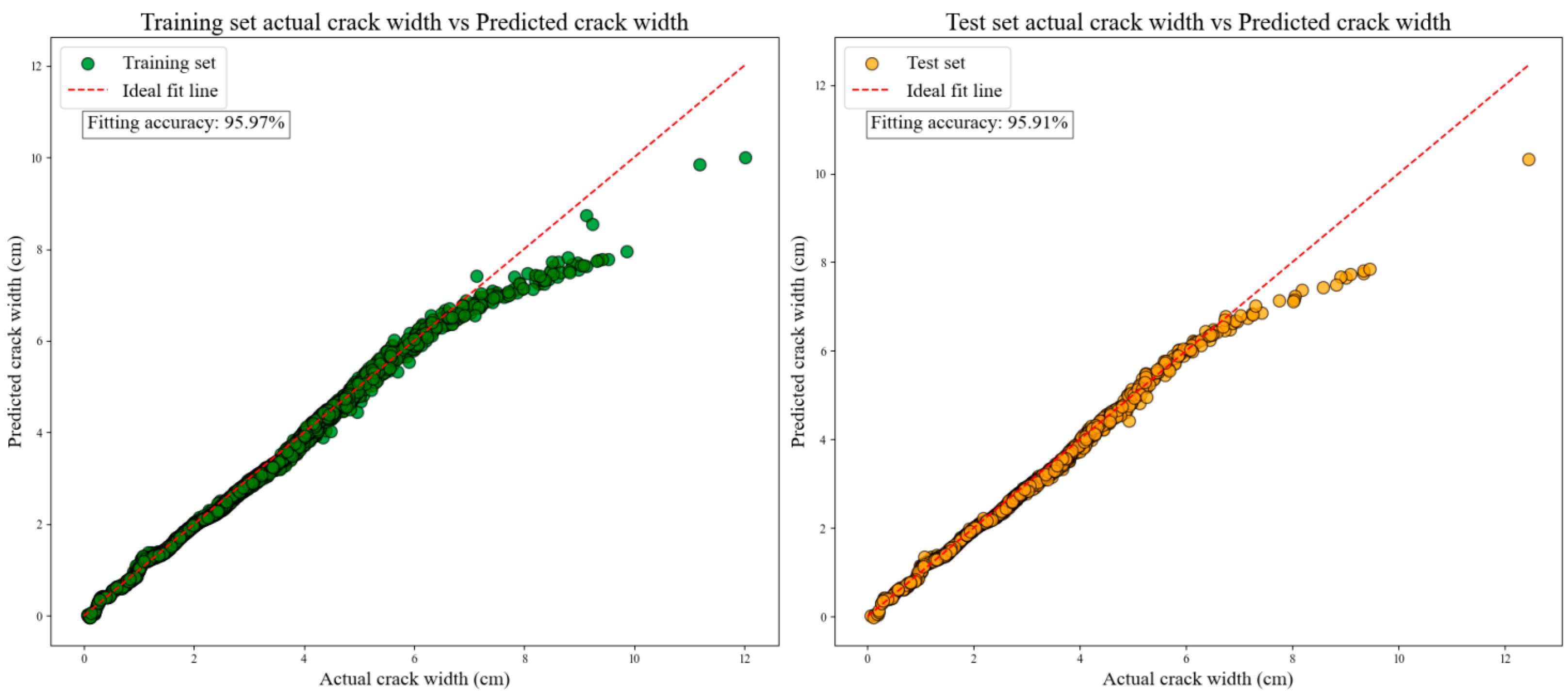
The optimized model’s fracture width predictions are presented in Figure 14. The model achieved a fitting accuracy of 95.97% on the training set and 95.91% on the test set, indicating that the deep neural network reliably predicts natural fractures in shale reservoirs, with errors relative to measured data remaining below 10%. The fracture width distribution histogram in Figure 15 shows that both measured and predicted widths generally fall between 0.5 cm and 4.5 cm, with the model slightly underestimating fracture widths compared to the measured values.

4.4. Fracture Parameter Validation

For a randomly selected single well in the Ordos Basin, the CNN-based fracture identification model achieved high accuracy. Building on this, a DNN model was employed to predict fracture inclination and width. Figure 16 and Figure 17 present the comparison between measured and predicted values for the seven shale layers of well Z4. The DNN model demonstrates a high fitting accuracy relative to the measured data. Measured fracture inclinations range from 15.46°to 83.89°, while predicted inclinations range from 15.42° to 77.72°. Measured fracture widths span 0.43 cm to 6.44 cm, with predicted widths ranging from 0.51 cm to 6.57 cm.
The accuracy of the DNN fracture prediction model optimized with SGD was validated by a comparison with FMI-derived fracture measurements. As shown in Table 2, 15 measured fractures were randomly selected and compared with the predicted results. Fracture inclinations closely match the measured values, with a maximum deviation of 0.48°. Fracture widths show minimal differences; excluding an outlier with a 1.96 cm deviation, the maximum deviation is 0.21 cm.
The slight systematic bias in fracture width prediction primarily stems from the limited longitudinal resolution of logging curves and the multi-solution nature of fracture physical responses. This results in inherent information loss when models recover millimeter-scale parameters from low-resolution data. The current validation of the model is confined to the specific geological context of the Chang 7 shale in the Ordos Basin. Its performance in other formations, basins, or under different diagenetic conditions requires further testing. Generalization to new geological settings would likely involve transfer learning strategies, such as fine-tuning the pre-trained model with a limited amount of labeled data from the target area, which is a key direction for future research.

5. Conclusions

This study addresses natural fracture identification and parameter prediction in the Chang 7 shale oil reservoirs of the Ordos Basin through a multimodal deep neural network (DNN) model integrating conventional logging curves and formation imaging data. The key findings are summarized as follows:
(1) Standardized conventional logging data revealed that lower AC, CNL, and GR values correspond to reduced fracture probabilities, while CAL, DEN, RT, and SP exhibit elevated fracture probabilities within specific ranges, highlighting the nonlinear coupling between fracture distribution and logging responses.
(2) The CNN model effectively fused logging and imaging data, achieving stable convergence with ~87% identification accuracy. PR and ROC analyses indicated robust performance (F1 = 0.88, AUC = 0.95), with predicted fracture locations closely matching measured data.
(3) SGD-optimized DNN models improved fracture inclination accuracy by 2.9% (training) and 3.64% (testing), and fracture width accuracy by 7.76% (training) and 8.56% (testing). Post-optimization, fit accuracies reached 98.82% for inclination and 95.97%/95.91% for width.
(4) Prediction errors were <0.48°for inclination and <0.21 cm for width. Inclinations clustered between 65 and 80°and widths between 0.54 and 0.5 cm, demonstrating strong generalization and precise parameter control.
(5) Comparison with 15 FMI-measured fracture samples from a randomly selected well confirmed model accuracy, with maximum deviations of 0.48° (inclination) and 0.21 cm (width, excluding a 1.96 cm outlier), supporting the model’s applicability for shale reservoir fracture prediction.
The proposed model demonstrates promising potential for engineering applications within the Chang 7 shale formation of the Ordos Basin. Its architecture is designed to be scalable, and it offers a cost-effective advantage during the prediction phase by relying solely on conventional logging data.


Author Contributions

Y.H.: Writing—original draft. D.Z. and Y.D.: Data curation and Conceptualization. Y.K. and J.D.: Formal analysis and Funding acquisition. W.S. and S.Y.: Methodology and Software. X.Z.: Visualization. W.D.: Writing—review and editing. All authors have read and agreed to the published version of the manuscript.

Funding

This research received no external funding.

Data Availability Statement

The original contributions presented in this study are included in the article. Further inquiries can be directed to the corresponding author. The complete preprocessed dataset, model training code, and key scripts have been uploaded to a public code repository, with permanent access links provided: https://github.com/heyawen256-png/fracture_recongnize_predict (accessed on 10 February 2026).

Acknowledgments

This study was supported by data provided by the 12th Refinery of China National Petroleum Corporation. Sincere thanks are extended to all colleagues who contributed to this research but are not individually listed.

Conflicts of Interest

Authors Dalin Zhou, Yaxin Dun, Yulin Kou, Jing Ding, Wenzhao Sun, Shanshan Yang were employed by the company No. 12 Oil Production Plant, PetroChina Changqing Oilfield Company. The remaining authors declare that the research was conducted in the absence of any commercial or financial relationships that could be construed as a potential conflict of interest.

References

  1. Fu, J.H.; Niu, X.B.; Dan, D.W.; Feng, S.B.; Liang, X.W.; Xin, H.G.; You, Y. The geological characteristics and the progress on exploration and development of shale oil in Chang7 Member of Mesozoic Yanchang Formation, Ordos Basin. China Pet. Explor. 2019, 5, 601–604. [Google Scholar] [CrossRef]
  2. Liu, G.; Jin, Z.; Zeng, L.; Huang, L.; Ostadhassan, M.; Du, X.; Lu, G.; Zhang, Y. Natural fractures in deep continental shale oil reservoirs: A case study from the Permian Lucaogou formation in the Eastern Junggar Basin, Northwest China. J. Struct. Geol. 2023, 174, 104913. [Google Scholar] [CrossRef]
  3. Jia, C.Z.; Wang, Z.G.; Jiang, L.; Zao, W. Progress and key scientific and technological problems of shale oil exploration and development in China. World Pet. Ind. 2024, 31, 1–11+13. [Google Scholar] [CrossRef]
  4. Jiao, F.Z. Theoretical technologies and practices concerning “volume development” of low pressure continental shale oil: Case study of shale oil in Chang 7 member, Ordos Basin, China. Nat. Gas Geosci. 2021, 6, 836–844. [Google Scholar]
  5. Zhang, K.S.; Mu, L.J.; Lu, H.J.; Qi, Y.; Xue, X.J.; Bai, J. Overview and Practical Understanding of The Construction of Shale Oil Hydraulic Fracture Field Labs in the Ordos Basin. Drill. Prod. Technol. 2024, 6, 16–27. [Google Scholar] [CrossRef]
  6. He, Y.A.; Cao, D.S.; Guo, W.; Hong, L.; Chang, R.; Bao, T.L.; Lu, Y.L. Development characteristics of intraplate strike-slip faults and their control on shale oil: A case study of the Chang 7 member in the Qingcheng oilfield, Ordos Basin. Chin. J. Geol. 2025, 60, 19–32. [Google Scholar] [CrossRef]
  7. Zou, Q.; Chen, Z.; Zhan, J.; Chen, C.; Gao, S.; Kong, F.; Xia, X. Morphological evolution and flow conduction characteristics of fracture channels in fractured sandstone under cyclic loading and unloading. Int. J. Min. Sci. Technol. 2023, 33, 1527–1540. [Google Scholar] [CrossRef]
  8. Pu, J.; Qin, Q.R. A Review of Methods for Predicting Fractures in Oil and Gas Reservoirs. Spec. Oil Gas Reserv. 2008, 3, 9–13. [Google Scholar]
  9. Chopra, S.; Marfurt, K.J. Integration of coherence and volumetric curvature images. Lead. Edge 2010, 29, 1092–1107. [Google Scholar] [CrossRef]
  10. Chopra, S.; Misra, S.; Marfurt, K.J. Coherence and curvature attributes on preconditioned seismic data. Lead. Edge 2011, 30, 386–393. [Google Scholar] [CrossRef]
  11. Wang, X.; Zhang, J.; Li, J.; Hu, S.; Kong, Q. Conventional logging identification of fracture-vug complex types data based on crossplots-decision tree: A case study from the Ordovician in Tahe oilfield, Tarim Basin. OIL GAS Geol. 2017, 4, 805–812. [Google Scholar] [CrossRef]
  12. Wang, T.; Xu, Y.; Jiang, J.; Tian, Z. The Application of Variable Metric Method in Pressure Distribution Analysis in Hydraulic Fracturing. Pet. Drill. T Echniques 2009, 37, 84–86. Available online: https://www.syzt.com.cn/article/id/964 (accessed on 10 February 2026).
  13. Ren, Y.F.; Qiang, L.; Bai, T.; Huang, C.; Zhang, X.D.; Shen, J.J. Application of Variable-scale Fractal Technique to Identification of Fractures in Tight Sandstone Reservoirs. Sino-Glob. Energy 2023, 5, 31–37. [Google Scholar]
  14. He, T.; Xie, X.; Wang, J.; Zhao, Y.; Su, J. Crack Width Prediction Model Based On Optimized BP Neural Network. Drill. Fluid Complet. Fluid 2021, 38, 201–220. [Google Scholar] [CrossRef]
  15. He, J.; Wen, X.T.; Nie, W.L.; Li, L.H.; Yang, J.X. Predicting crack development zones using the random forest algorithm. Pet. Geophys. Explor. 2020, 5, 161–166. [Google Scholar] [CrossRef]
  16. Xu, H. Fracture Intelligent Identification by Well Logs Based on Recurrent Neural Network—A Case Study of Chang 7 Reservoir in Qingcheng Oilfield, Ordos Basin; China University of Petroleum: Beijing, China, 2023. [Google Scholar] [CrossRef]
  17. Ahmadi, M.A.; Ebadi, M.; Hosseini, S.M. Prediction breakthrough time of water coning in the fractured reservoirs by implementing low parameter support vector machine approach. Fuel 2014, 117, 579–589. [Google Scholar] [CrossRef]
  18. Yasin, Q.; Du, Q.; Ismail, A.; Ding, Y. Identification and characterization of natural fractures in gas shale reservoir using conventional and specialized logging tools. In SEG Technical Program Expanded Abstracts 2018; ASME: New York, NY, USA, 2018; pp. 809–813. [Google Scholar] [CrossRef]
  19. Rajabi, M.; Beheshtian, S.; Davoodi, S.; Ghorbani, H.; Mohamadian, N.; Radwan, A.E.; Alvar, M.A. Novel hybrid machine learning optimizer algorithms to prediction of fracture density by petrophysical data. J. Pet. Explor. Prod. Technol. 2021, 11, 4375–4397. [Google Scholar] [CrossRef]
  20. Yasin, Q.; Ding, Y.; Baklouti, S.; Boateng, C.D.; Du, Q.; Golsanami, N. An integrated fracture parameter prediction and characterization method in deeply-buried carbonate reservoirs based on deep neural network. J. Pet. Sci. Eng. 2022, 208, 109346. [Google Scholar] [CrossRef]
  21. Tabasi, S.; Tehrani, P.S.; Rajabi, M.; Wood, D.A.; Davoodi, S.; Ghorbani, H.; Mohamadian, N.; Alvar, M.A. Optimized machine learning models for natural fractures prediction using conventional well logs. Fuel 2022, 326, 124952. [Google Scholar] [CrossRef]
  22. Liu, B.; Yasin, Q.; Sohail, G.M.; Chen, G.; Ismail, A.; Ma, Y.; Fu, X. Seismic characterization of fault and fractures in deep buried carbonate reservoirs using CNN-LSTM based deep neural networks. Geoenergy Sci. Eng. 2023, 229, 212126. [Google Scholar] [CrossRef]
  23. He, S.; Meng, K.; Wang, C.; Chen, Y.; Zhao, H.; Wang, H.; Yu, H. Fracture Identification Using Conventional Logs in Ultra-Low Permeability Sandstone Reservoirs: A Case Study of the Chang 6 Member of the Ordos Basin, China. Minerals 2023, 13, 297. [Google Scholar] [CrossRef]
  24. Fan, Y.; Zhang, Z.; Zhou, X.; Zhang, K.; Wen, Z.; Tian, W.; Gao, H.; Yang, Y.; Liu, Y.; Zheng, X. Occurrence Characteristics of Chang 7 Shale Oil from the Longdong Area in the Ordos Basin: Insights from Petrology and Pore Structure. Processes 2023, 11, 3090. [Google Scholar] [CrossRef]
  25. Yan, J.W.; Wang, W.Q.; Lv, F.F.; Zhu, G.J.; Fu, H.; Li, Z.Y. Multi-data fusion prediction technology for complex carbonate reservoir—Taking the Ordovician Formation of Qianmiao Bridge as an example. Pet. Geophys. Explor. 2021, 56, 583–592. [Google Scholar] [CrossRef]
  26. Li, M.Q.; Zhang, L.Q.; Li, Z.H.; Zhang, L.; Mao, L.X.; Xu, X.T. Diagenetic facies division and logging identification of tight sandstone in the lowerconglomerate member of Lower Jurassic Ahe Formation in Tarim Basin: Case study of Yiqikelike area in Kuqa Depression. Nat. GAS Geosci. 2021, 32, 1559–1570. [Google Scholar] [CrossRef]
  27. Jiang, L.Y. Fracture Characteristics and Fracture Identification Methods of the Chang 8 Oil Formation in the Zhenjing Area. Chin. J. Eng. Geophys. 2017, 32, 1559–1570. [Google Scholar] [CrossRef]
  28. Liu, Y.; Feng, S.; Wang, G. Research on the Application of Deep Neural Networks in Passive Location. Radar Sci. Technol. 2018, 16, 423–438. [Google Scholar] [CrossRef]
  29. Mcculloch, W.S.; Pitts, W. A Logical Calculus of the Ideas Immanent in Nervous Activity. Log. Calc. Nerv. Act. 1943, 5, 115–133. [Google Scholar] [CrossRef]
  30. Hurst, H.E. Long-term storage capacity of reservoirs. Trans. Am. Soc. Civ. Eng. 1951, 116, 770–799. [Google Scholar] [CrossRef]
  31. Geddes, L.A. A note on phase distortion. Electroencephalogr. Clin. Neurophysiol. 1951, 3, 517–518. [Google Scholar] [CrossRef]
  32. Kingma, D.P.; Ba, J.L. Adam A Method For Stochastic Optimization. arXiv 2015, arXiv:1412.6980. [Google Scholar] [CrossRef]
Figure 1. Schematic map showing the location of the study area ((a) Location of the study area; (b) structure units of the study area; (c) comprehensive stratigraphic column of the Triassic Yanchang Formation in the Ordos Basin) [24].
Processes 14 00657 g001
Figure 2. Research Technical Workflow.
Processes 14 00657 g002
Figure 3. Schematic Diagram of a CNN.
Processes 14 00657 g003
Figure 4. Workflow of a DNN [28].
Processes 14 00657 g004
Figure 5. Fracture Widths and dip Derived from Formation Imaging Logs.
Processes 14 00657 g005
Figure 6. Fracture Display Results from Z1 and N2 Formation Imaging Logs.
Processes 14 00657 g006
Figure 7. Relationship Between Logging Data and Predicted Fracture Probability.
Processes 14 00657 g007
Figure 8. Training Accuracy and Loss Curves.
Processes 14 00657 g008
Figure 9. PR Curve (Left) and ROC Curve (Right).
Processes 14 00657 g009
Figure 10. CNN-Based Fracture Location Identification in Well Z6.
Processes 14 00657 g010
Figure 11. Iterative Training Process of the Optimizers.
Processes 14 00657 g011
Figure 12. Comparison of training and testing fit accuracy for the fracture dip model.
Processes 14 00657 g012
Figure 13. Comparison between measured fracture widths and model-predicted fracture dip.
Processes 14 00657 g013
Figure 14. Comparison of training and testing fit accuracy for the fracture width model.
Processes 14 00657 g014
Figure 15. Comparison between measured fracture widths and model-predicted fracture widths.
Processes 14 00657 g015
Figure 16. Comparison of Predicted and Measured Fracture Inclinations for a Single Well.
Processes 14 00657 g016
Figure 17. Comparison of Predicted and Measured Fracture Widths for a Single Well.
Processes 14 00657 g017
Table 1. Comparison of Deep Neural Network Model Prediction Results Before and After Optimization.
Fracture ParametersDNNAdam OptimizerSGD Optimizer
Training SetTest SetTraining SetTest SetMAEMSETraining SetTest SetMAEMSE
Fracture dip95.92%95.18%97.91%98.09%0.91491.576198.82%98.82%0.15000.3084
Fracture width88.21%87.35%94.17%93.99%0.90111.536295.97%95.91%0.14930.3113
Table 2. Comparison of FMI-Measured and Model-Predicted Fracture Results.
DepthActual Fracture Dip (°)Predicted Fracture Dip (°)Actual Fracture Width (cm)Predicted Fracture Width (cm)
1672.569.4869.512.672.58
1677.872.8973.223.253.34
1682.572.4672.593.163.17
1687.874.4774.583.603.73
1692.869.6869.932.702.62
1697.969.1569.312.632.56
1702.972.8272.993.243.28
1707.972.7272.783.213.22
171371.2871.662.952.90
1737.854.5154.761.401.45
1752.573.2673.731.533.49
1772.978.2678.744.815.02
1787.371.0571.282.912.80
1797.464.5064.932.102.14
180223.4923.970.430.40
Disclaimer/Publisher’s Note: The statements, opinions and data contained in all publications are solely those of the individual author(s) and contributor(s) and not of MDPI and/or the editor(s). MDPI and/or the editor(s) disclaim responsibility for any injury to people or property resulting from any ideas, methods, instructions or products referred to in the content.