Article

Fungal Solid-State Fermentation as a Strategy to Release Polyphenols from Orange Peel Waste

by
Silvia Magali Cruz-López
1,
Elan I. Laredo-Alcalá
2,
Xochitl Ruelas-Chacón
1,*,
Cristóbal N. Aguilar
3,
Juan A. Ascacio-Valdés
3,* and
Leonardo Sepúlveda
3
1
Department of Food Science and Technology, Autonomous Agrarian University “Antonio Narro”, Saltillo 25084, Coahuila, Mexico
2
Research Center for the Conservation of Biodiversity and Ecology of Coahuila, Cuatrociénegas 27640, Coahuila, Mexico
3
Bioprocesses and Bioproducts Research Group, Food Research Department, School of Chemistry, Autonomous University of Coahuila, Saltillo 25280, Coahuila, Mexico
*
Authors to whom correspondence should be addressed.
Processes 2026, 14(4), 622; https://doi.org/10.3390/pr14040622
Submission received: 15 January 2026 / Revised: 3 February 2026 / Accepted: 6 February 2026 / Published: 11 February 2026
(This article belongs to the Special Issue Separation and Extraction Techniques in Food Processing and Analysis)

Abstract

Orange peel is an abundant by-product of the citrus industry and a significant source of phenolic compounds with potential applications in the food, nutraceutical, and pharmaceutical industries. However, many of these compounds are bound or glycosylated, with low bioavailability. The objective of this study was to release and biotransform polyphenols from orange peels through solid-state fermentation using Aspergillus niger. A Box–Hunter and Hunter experimental design was employed in which the inoculum size (1 × 10⁶–1 × 10⁸ spores/g) and the concentrations of KCl and MgSO4 (0.76–1.56 g/L) were evaluated as independent factors to assess their effects on the release of hydrolyzable and condensed tannins. After 12 days of fermentation at 28 °C, the resulting extracts were analyzed using colorimetric methods and HPLC-ESI-MS analysis. The results showed significant increases in tannin release, reaching up to 220.63 mg CE/g of condensed tannins, and compounds such as ferulic acid, epicatechin, and quercetin derivatives were identified in the extracts. In conclusion, solid-state fermentation is a strategy for valorizing citrus waste and generating polyphenolic extracts with potential functional and industrial value.

1. Introduction

Citrus fruits are among the most cultivated crops in the world, with an annual production of more than 124 million tons [1]. They originate from Southeast Asia and belong to the genus Citrus of the family of Rutáceas (Rutaceae). Among the different types of oranges, the sweet variety (Citrus sinensis) is the most important. Mexico is a major producer of oranges, generating substantial quantities of peel as an agro-industrial residue. This abundant biomass represents an important substrate for biotransformation processes aimed at recovering value-added compounds. The main producing states are Veracruz, Tamaulipas, Puebla and San Luis Potosí [2]. Approximately one-third of citrus fruits are used to produce fresh juice or citrus-based beverages. The juice yield of citrus fruits represents half the weight of the fruit; therefore, a large amount of pulp and peel waste is produced each year worldwide [3]. In traditional agriculture and production, these waste peels have little or no value and can pose an environmental problem due to their accumulation near industrial zones. Traditionally, the waste generated has been transformed into pelleted bran for animal feed [4]. However, it has been found that the peel is the main source of polyphenols in citrus fruits [5]. Waste from sweet and bitter orange peels, lemons, and tangerines has proven to be an important source of phenolic acids and flavonoids, mainly polymetoxiflavones (PMFs), flavanones, and glycosylated flavanones [6,7]. However, some studies have argued that aglycone flavonoids exhibit greater antioxidant capacity and efficiency in capturing radicals than their respective glycosides [8]. Sweet orange peel (Citrus sinensis) has good antioxidant potential and can be used as an additive in food and medicinal preparations [9]. Hydroxylated polymetoxiflavones and methylated flavonoids have been identified in sweet orange peels [3]. Recent interest in developing bioprocesses for the production or enhancement of bioactive compounds from natural sources has grown significantly, as industries seek sustainable and circular alternatives [10]. Fermentation processes have emerged as powerful tools in food biotechnology because of their ability to valorize agro-industrial substrates and generate compounds with applications in the food, chemical, cosmetic, and pharmaceutical sectors [11]. Unlike conventional chemical extraction methods, which may be costly and environmentally harmful, biotechnological approaches offer greener and low-cost solutions capable of transforming residues into high-value bioactive ingredients [12]. Recent studies have highlighted the effectiveness of fermentation in revalorizing agricultural by-products into antioxidant, antimicrobial, and nutraceutical compounds [13]. Within this context, several recent studies have explored solid-state fermentation as a strategy to enhance the release and biotransformation of polyphenols from citrus by-products. Recent research has investigated the potential of solid-state fermentation to enhance the release and biotransformation of polyphenolic compounds from citrus processing by-products, including orange peels. Solid-state fermentation with filamentous fungi (e.g., Aspergillus and Rhizopus spp.) has been shown to increase the accessibility of bound phenolics through the action of endogenous and extracellular enzymes such as cellulases, xylanases, and esterases, resulting in enhanced total phenolic content and antioxidant activity compared to unfermented residues [14,15]. Similarly, studies with Aspergillus niger using solid-state fermentation reported significant liberation of flavonoids from citrus waste, attributed to fungal enzyme-mediated depolymerization of cell wall matrices [16]. However, most of these investigations focus on aggregate measures such as total phenolics or radical scavenging activity without detailed identification of released compounds or characterization of specific tannins. Furthermore, systematic assessments of how fermentation parameters, including inoculum load and mineral salt supplementation, influence release kinetics and compound profiles remain scarce. This underscores the need for targeted studies that combine the fermentation process with comprehensive chemical profiling (e.g., HPLC-MS) to elucidate the transformation pathways of specific phenolic classes, such as hydrolyzable and condensed tannins, which are less studied in citrus fermentation contexts [17]. The present work aims to address these gaps by optimizing key process variables and profiling the resulting phenolic release from orange peel fermentation processes. Despite these advances, important knowledge gaps remain; the main objective of this study was to explore the biotransformation of orange peel through solid-state fermentation with Aspergillus niger by evaluating the effects of inoculum size and mineral salt concentrations (KCl and MgSO4) on the release of hydrolyzable and condensed tannins.

2. Materials and Methods

2.1. Reagents

Potassium chloride (KCl), magnesium sulfate (MgSO4), sulfuric acid (H2SO4), gallic acid, Folin–Ciocalteu reagent, sodium carbonate (Na2CO3, 0.01 M), and catechin were obtained from Sigma-Aldrich® (Darmstadt, Germany). Ammonia ferric sulfate (Fe(SO)2NH4·12H2O) was obtained from Karal® (Ciudad de México, Mexico). 1-Butanol, chlorohydric acid (HCl), and dextrose were purchased from Analytyka® (Ciudad de México, Mexico). Potato dextrose agar (PDA) was obtained from BIOXON® (Ciudad de México, Mexico). Ethyl alcohol was acquired from Jalmek® (Nuevo León, Mexico). Phenol was obtained from Faga®Lab (Sinaloa, Mexico). Commercial Sodium hypochlorite (5%) Cloralex® (Ciudad de México, Mexico) was used. Distilled water was provided by the School of Chemistry, Autonomous University of Coahuila, Mexico.

2.2. Microorganism and Raw Material

The fungal strain employed in this study corresponds to Aspergillus niger, provided by the private culture collection of the Research Center of Applied Microbiology (CEMAP, GreenCorp Biorganiks de México, Coahuila, Mexico). The strain was reactivated in 30 mL of PDA medium at 28 °C for 5 days. The fungal strain was stored at −4 °C in tubes inclined with PDA. The new spores were collected using a sterile solution of distilled water and counted in a Neubauer chamber using a Scorpio Scientific® (Ciudad de México, Mexico) microscope with a 40-× objective. The orange fruit variety Valencia (Citrus sinensis) was obtained from the supply center of the city of Saltillo, Coahuila, Mexico. The fruits were washed with 5% sodium hypochlorite. The orange peel was dried at 60 °C for 48 h, following conditions commonly reported for citrus residues to prevent the degradation of heat-sensitive phenolics while ensuring adequate dehydration [18]. The dried material was ground in a domestic blender (Oster, model M6798-13) and passed through a 40-mesh sieve (~420 µm), a particle size frequently used to ensure suitable porosity and surface area for solid-state fermentation.

2.3. Evaluation of the Factors That Influence the Fermentation Process

The fermentation conditions are listed in Table 1. An exploratory Box–Hunter and Hunter design was used, in which three independent factors were evaluated: inoculum (spores/g), KCl (g/L), and MgSO4 (g/L) at two levels −1 and +1 with a total of eight treatments in triplicate. The results were expressed as an average, with treatments numbered from 1 to 8. All experiments were conducted at 28 °C. Column reactors with a volume of 25 mL containing 3 mL of medium and 9 g of orange peel as a carbon source (Table 1) were used. The powdered substrate used in each reactor corresponded to the dry weight. The reactors containing the substrate were sterilized at 120 °C (15 PSI) for 15 min. After sterilization, the culture medium was inoculated with 1 mL of spore suspension at concentrations of 1 × 10⁸ and 1 × 10⁶ spores/g. The samples were subsequently incubated in a Scorpion scientific incubator (model A-50985) at 28 °C for 12 days.

2.4. Recovery of Fermented Extracts

Once the fermentation time elapsed, 10 mL of 50% ethanol–water was added to each reactor, mixed, and the liquid extract was recovered by manual pressing using filter paper to separate the extract from the solid fraction. All extracts were stored in Eppendorf® (Hamburg, Germany) tubes with a capacity of 1.5 mL under refrigeration conditions and isolated from light until analysis.

2.5. Determination of Hydrolyzable Tannins by Microplate

Hydrolyzable tannins were measured using the method described by De la Rosa-Esteban et al. [19], with some modifications. Gallic acid was used as the reference standard, and a calibration curve was prepared in the concentration range of 0–1000 ppm. An aliquot of 800 μL of sample was mixed with 800 μL of Folin–Ciocalteu reagent (Sigma-Aldrich®). After 5 min, 800 μL of sodium carbonate solution (0.01 M) was added, and the mixture was finally diluted with 5 mL of distilled water. After 5 min, the samples were measured using a UV/VIS EPOCH BioTek spectrophotometer at 790 nm. All samples were made in triplicate. Sample absorbance values were interpolated from the standard curve, and results were expressed as gallic acid equivalents (GAE).

2.6. Determination of Condensed Tannins by Microplate

Condensed tannins were measured using the method reported by Yepes-Betancur et al. [20] with some modifications. Catechin was used as the reference standard in the concentration range of 0–750 ppm. Aliquots of 0.5 mL of sample or standard were placed in test tubes (16 mm × 150 mm). Subsequently, 3 mL of HCl/butanol reagent (1:9, v/v) and 0.1 mL of ferric reagent were added. The tubes were sealed, and gaskets were placed inside the stoppers to prevent butanol evaporation. All tubes were heated in a water bath at 100 °C for 1 h. Once the time had elapsed, the samples were cooled, and the absorbance was measured at 460 nm using a UV/VIS Epoch BioTek spectrophotometer. All samples were made in triplicate. Sample absorbance values were interpolated from the standard curve, and results were expressed as catechin equivalents (CE).

2.7. Analysis of Liquid Chromatography of High Resolution by Electrospray Mass Spectrometry (HPLC-ESI-MS)

The conditions reported by Cerda-Cejudo et al. [21] were used. To analyze all the fermentation extracts and identify some molecules present in this process, HPLC-ESI-MS analysis was performed. The HPLC system included an autosampler (VarianProStar 410, VARIAN, Palo Alto, CA, USA), a ternary pump (VarianProStar 230I, VARIAN, Palo Alto, CA, USA), and a PDA detector (VarianProStar 330, VARIAN, Palo Alto, CA, USA). Coupled to a liquid chromatography ion trap mass spectrometer (Varian 500-MS IT Mass Spectrometer, VARIAN, Palo Alto, CA, USA) equipped with an electrospray ionization source, 5 mL of the sample was injected onto an ACE® (Chicago, IL, USA) Super C18 column (150 mm × 2.1 mm, 3 μm, Grace, USA). The temperature was maintained at 30 °C. The eluents used were formic acid (0.2% v/v, solvent A) and acetonitrile (solvent B). The following gradient was applied: initial, 3% B; 0–5 min, 9% linear B; 5–15 min, 16% linear B; 15–45 min, 50% B linear. The column was subsequently washed and reconditioned after each cycle. The flow rate was maintained at 0.2 mL/min, and the elution was monitored at 245, 280, 320, and 550 nm. The entire effluent was injected into the mass spectrometer source without being divided. All MS experiments were performed in negative mode [M-H]−1. Nitrogen was used as the carrier gas, and helium was used as the buffer gas. The parameters of the ion source were as follows: 5.0 kV spray voltage, 90.0 V capillary voltage, and 350 °C temperature. The results were collected and processed using the MS Workstation software (V 6.9). The sample was first analyzed in the full scan mode acquired in the m/z 50–2000 range.

2.8. Statistical Analysis

All treatments were performed in triplicate. A one-way ANOVA was conducted to evaluate significant differences among mean values, considering p < 0.05 as statistically significant. Post hoc comparison of means was performed using Tukey’s test to determine significant differences among treatments. Data analysis, including ANOVA, Tukey’s test, and graphical outputs, was carried out using STATISTICA version 7.0 and InfoStat version 2020. The construction of the Pareto chart and contour plots was performed in STATISTICA 7.0.

3. Results and Discussion

3.1. Release of Hydrolyzable and Condensed Tannins

Figure 1 shows the quantity of hydrolyzable tannins obtained from the treatments using the experimental exploratory design. Tukey’s test (p < 0.05) indicated that treatments 1, 3, and 4 showed no significant differences in hydrolyzable tannin content, whereas other treatments differed according to the letter-based groupings presented in Figure 1. Treatments 4, 1, and 3 yielded concentrations of 1.28 ± 0.001, 1.16 ± 0.084, and 1.22 ± 0.008 mg GAE/g, respectively. In contrast, treatment 5 had the lowest concentration (0.84 mg GAE/g ± 0.010). These differences are due to variations in the operating conditions of the fermentation process. There are few studies on the analysis of hydrolyzable tannins from orange peel waste obtained by solid-state fermentation; however, there are some similar reports. In another study, the cultivation of an industrial yeast strain to produce flavor compounds under solid-state fermentation from orange peels was studied. The results demonstrated that the hydrolyzable tannin content was 3 mg/g of fermented orange peel. The higher value reported in the referenced study may be attributed to differences in the microbial strain employed, substrate characteristics, and extraction methodologies, all of which greatly influence tannin release and limit direct comparison with the present experimental design. The authors concluded that this fermentation system using orange peel waste is successful in producing high value-added compounds for application in the food industry [22]. Yuan et al. [23] performed solid-state fermentation of orange peel using Aspergillus oryzae under different conditions (28 °C, 96 h incubation) where they reached maximum values of 12.7 mg/g of total phenols in the fermented material. On the other hand, in extracts of unfermented Valencia orange peels from Spain, concentrations of total phenols can be found up to 3.9 mg/g; these values depend on different factors such as the variety of orange, environmental conditions, and harvest region, among others [24]. It should be noted that the value of 3.9 mg/g reported in the cited study corresponds to total phenolic content in unfermented orange peel and does not specifically represent tannin concentration. Therefore, this value is used solely as a reference for the overall phenolic background of citrus residues. In contrast, the present study focuses on the selective quantification of hydrolyzable and condensed tannins released during solid-state fermentation, which are distinct phenolic subclasses and are not directly comparable to total phenolic values.
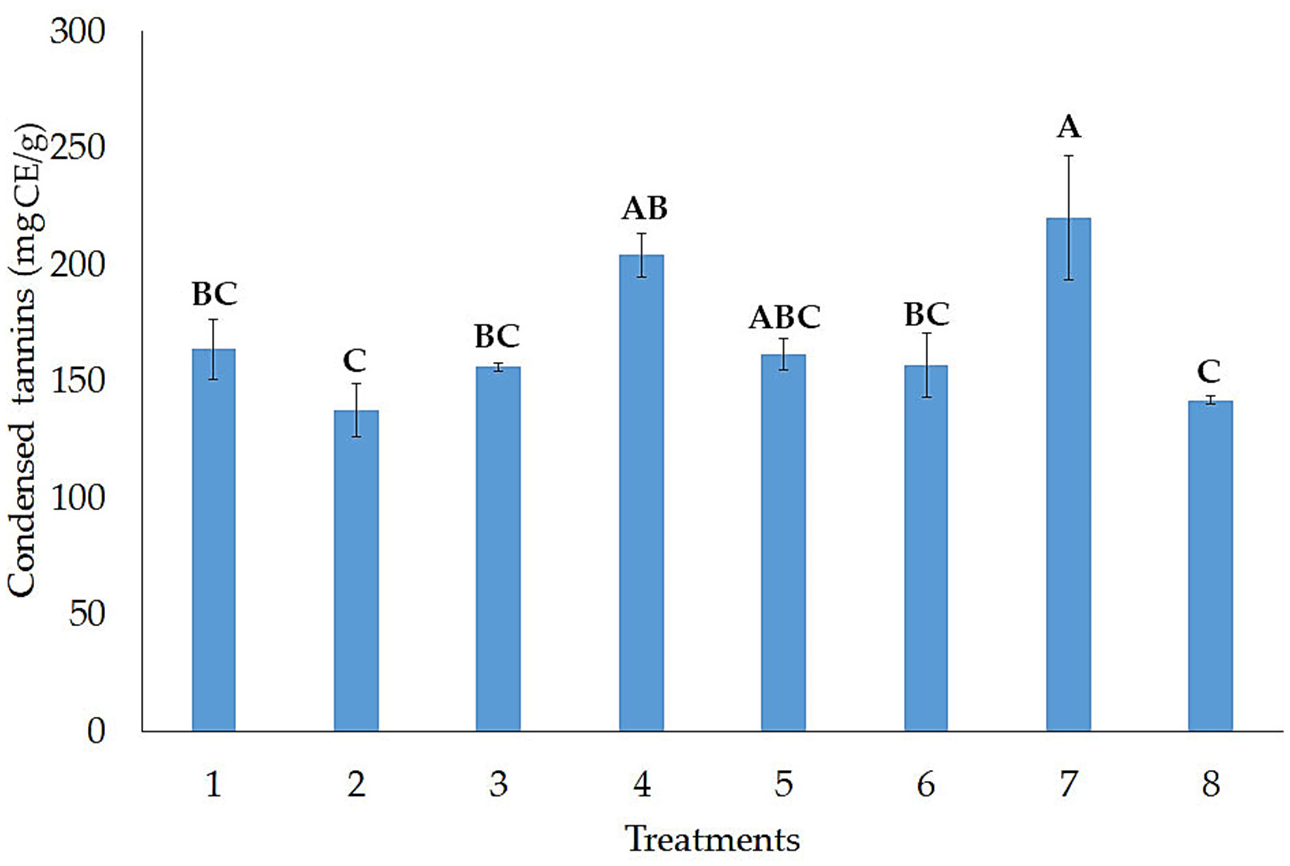
Figure 2 shows the content of condensed tannins obtained from the fermentation process. Tukey’s test (p < 0.05) indicated that treatment 7 showed significant differences in condensed tannin content, whereas other treatments differed according to the letter-based groupings presented in Figure 2. Treatment 7 obtained the highest concentration of 220.63 ± 26.582 mg CE/g. The substantial increase in condensed tannins observed in our study is consistent with previous reports, where solid-state fermentation promotes the release of bound phenolics due to fungal enzymatic hydrolysis and disruption of cell wall architecture [25]. Moreover, Aspergillus spp. has been widely reported to enhance phenolic liberation through biotransformation pathways [26]. Treatments 2 and 8 had the lowest concentrations of 137.99 ± 11.458 and 142.20 ± 1.833 mg CE/g, respectively. However, these results ensure that the fermentation process is efficient for tannin release. For example, the content of condensed tannins in unfermented orange peel powder can reach 4.2 mg/g [27]. The accumulation of condensed tannins using orange peel waste by solid-state fermentation has been little studied but can be cited as a similar system. For example, the conditions of the solid-state fermentation process from chickpeas for producing changes in some compounds and characterizing the physicochemical and nutritional properties of the product were evaluated. In this process, only 2.65 mg/g of condensed tannins were obtained. The authors concluded that the fermentation process can produce chemical changes in the substrate and help develop cereal-based food products for human consumption [28].
Londoño-Hernández et al. [29] evaluated the removal and transformation of organic compounds from coffee pulp through solid-state fermentation using Rhizopus oryzae under controlled conditions of temperature, moisture content, and inoculum size. Fermentation was carried out at 30 °C with moisture levels close to 65–70%, and the study reported condensed tannin contents of approximately 25 mg/g after fermentation. The present work demonstrates substantially higher condensed tannin levels from orange peel when fermentation variables such as mineral salt concentration and inoculum size are systematically evaluated. This comparison highlights that substrate type and targeted process conditions play a critical role in enhancing tannin liberation, and underscores the relevance of the experimental design applied in the present study. The enhancement in tannin release observed in this study is consistent with recent evidence showing that fungal solid-state fermentation promotes the degradation of plant cell wall components and the subsequent liberation of bound phenolics. Several recent studies have demonstrated that filamentous fungi secrete a broad spectrum of hydrolytic enzymes, such as β-glucosidases, which facilitate the breakdown of lignocellulosic matrices and increase the extractability of phenolic compounds from agro-industrial residues [30]. In addition, recent studies have highlighted that solid-state fermentation is a robust strategy for valorizing fruit peels and other agricultural by-products, improving their phenolic profiles and antioxidant properties through biotransformation pathways driven by fungal metabolism [31]. Although the present study did not quantify enzyme activities or fungal growth kinetics, the observed increases in tannin content align with the mechanisms described in the current literature, supporting the role of fungal enzymatic systems in enhancing phenolic release during fermentation.

3.2. Effect of Independent Factors on the Release of Condensed Tannins

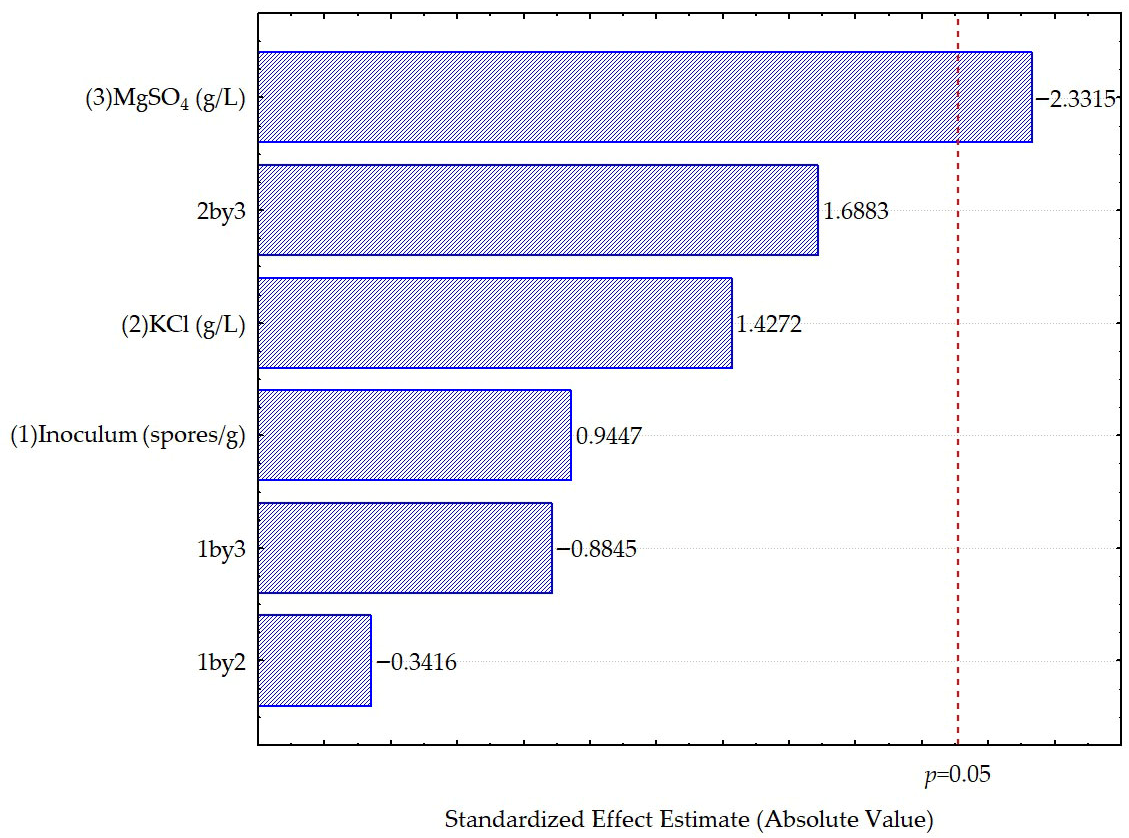
Figure 3 shows the estimated standardized effect of the independent factors on the release of condensed tannins. The dotted line delimits the effect with a 95% confidence value according to p = 0.05. Only MgSO4 exceeded this line, indicating that it directly affects the fermentation process for the release of condensed tannins. The negative effect of this factor indicates that decreasing the values of the intervals tends to improve the response. The remaining independent factors did not directly affect the fermentation process, indicating that in future studies, these levels should be kept to a minimum to significantly reduce the costs of the fermentation process. Some micronutrient minerals, such as MgSO4 in the form of Mg2+ ions, are used for microbial growth because they may work as enzymatic cofactors to enhance microbial growth [32]. Other authors have mentioned that several factors, such as salts of culture media, may contribute to the release of polyphenolic compounds using solid-state fermentation, such as the enzymatic release of bound phenolics from the cell wall matrix or the potential bioconversion of polyphenolic compounds by microorganisms [33].
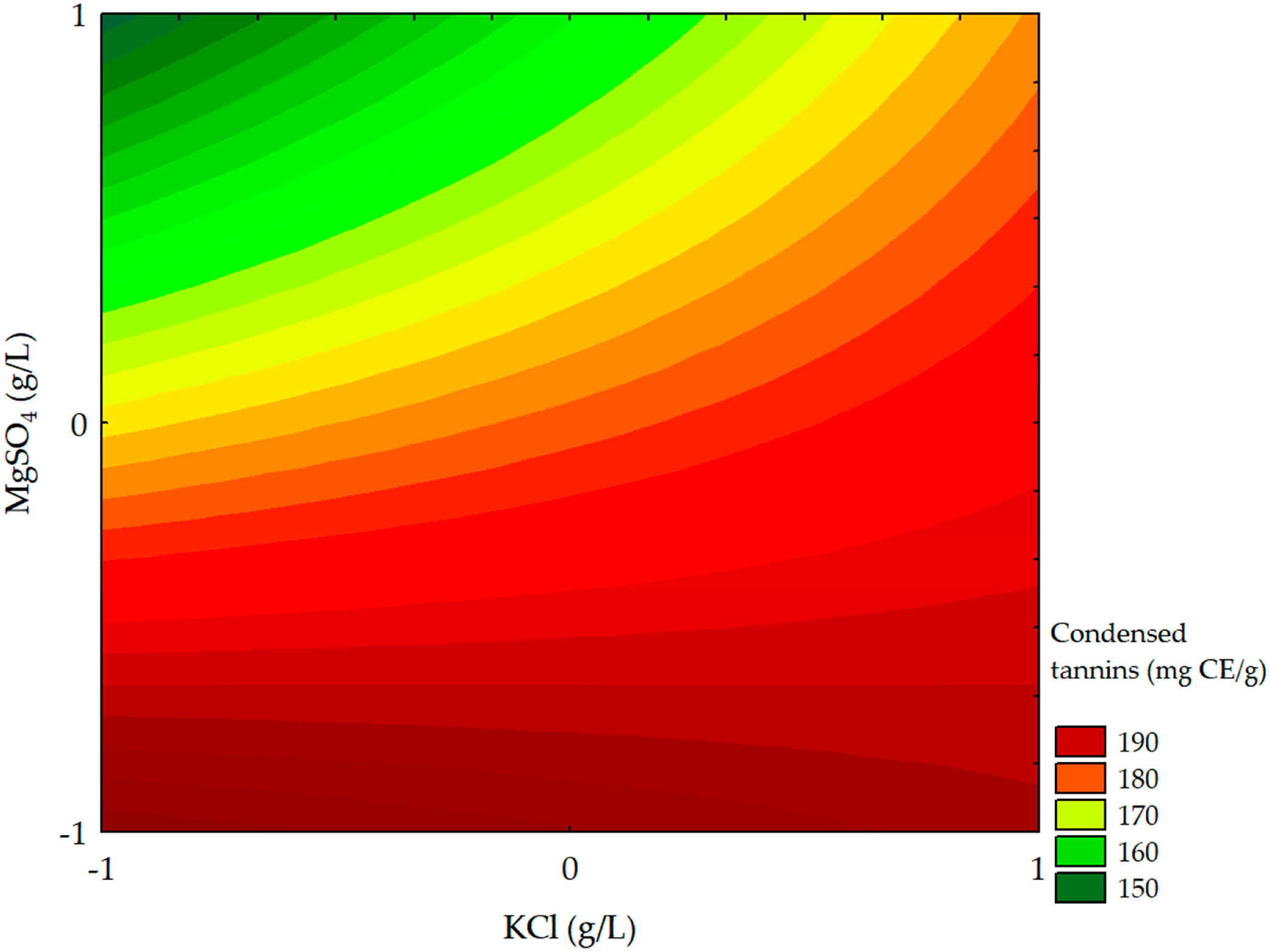
Figure 4 shows a contour plot of the effect of MgSO4 and KCl on the release of condensed tannins. The clear zone shows the minimum values of approximately 150 mg CE/g of condensed tannins that can be released, while the dark zone shows the maximum values of approximately 190 mg CE/g of condensed tannins that can be released. The contour plot showed a tendency towards low values of MgSO4 and no difference between the KCl values to achieve maximum release of condensed tannins. Magnesium (Mg2+) is a key structural component of ribosomes and an essential cofactor for ATP-dependent reactions [34].
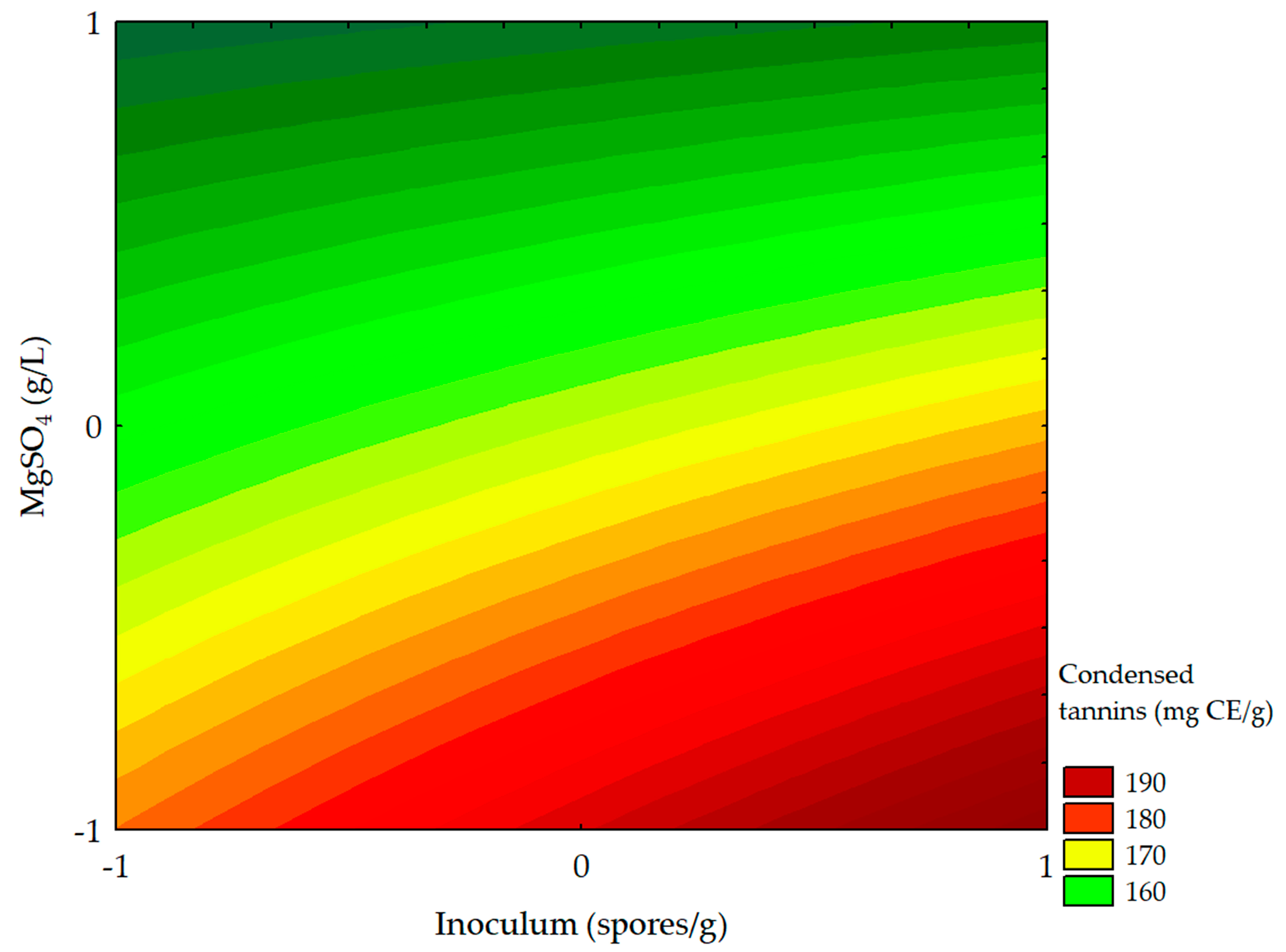
Figure 5 shows a contour plot of the effect of MgSO4 and inoculum on the release of condensed tannins. The clear zone showed minimum values of approximately 160 mg CE/g of condensed tannins that could be released, whereas the dark zone showed the maximum values of approximately 190 mg CE/g of condensed tannins that could be released. The diagram shows a trend towards high values of inoculum and low values of MgSO4 to obtain a maximum response. Inoculum is one of the most important parameters in the fermentation process. Some authors explain that microbial growth in the fermentation process is dependent on the inoculum size; however, a low concentration of inoculum may not be adequate to start the growth of the microorganism, and a high concentration of inoculum leads to issues such as limitation in mass transfer [35]. On the other hand, the variation in the condensed tannin concentration values is due to the age of the inoculum, the medium used for its cultivation, and its physiological state in the solid-state fermentation [36].
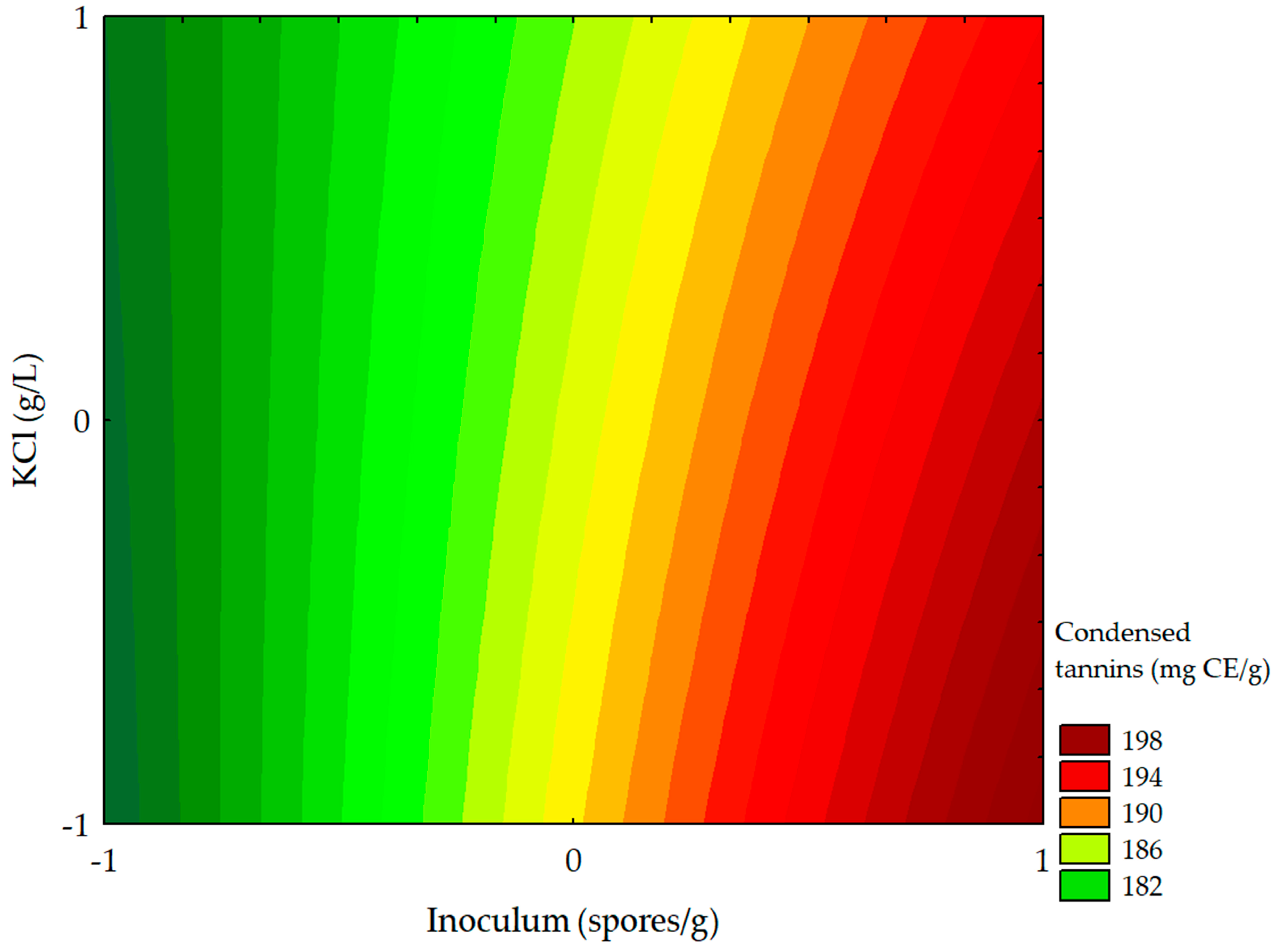
Figure 6 shows a contour plot of the effects of KCl and the inoculum on the release of condensed tannins. The clear zone showed minimum values of approximately 182 mg CE/g of condensed tannins that could be released, whereas the dark zone showed maximum values of approximately 198 mg CE/g of condensed tannins that could be released. The diagram shows a trend without differences in the values of KCl and high values of inoculum to find a maximum response to the release of condensed tannins. Potassium (K+) is essential for the maintenance of osmotic balance, intracellular pH regulation, and activation of several transport systems in Aspergillus spp., which influences nutrient uptake and enzyme secretion [37,38]. An adequate supply of KCl can stimulate fungal biomass formation and enhance the synthesis of hydrolytic enzymes such as cellulases [39], which contribute to the breakdown of the orange peel matrix and the subsequent release of hydrolysable and condensed tannins.

3.3. Identification of Polyphenolic Compounds from Solid-State Fermentation by HPLC-ESI-MS

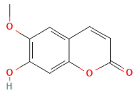
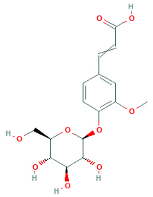
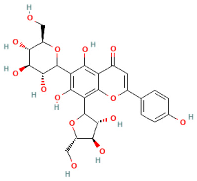
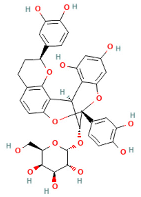
According to the results shown in Table 2 obtained from chromatography analysis, it was observed that all the treatments had the following compounds in common: scopoletin, ferulic acid, (−)-epicatechin, cirsimaritin, 5-O-galloylquinic acid, ferulic acid 4-O-glucoside, 3-feruloylquinic acid, quercetin 3-O-xylosyl-glucuronide, and isoramnetin 3-O-glucoside 7-O-rhamnoside. In treatments two to eight, p-cumaroyl glycolic acid and apigenin 6,8-di-C-glucoside were identified. In treatments two, six, seven, and eight, 1, 2, and 2′triferuloylgentiobiose were identified. In treatments three and seven, (−)-epicatechin-(2a-7)-(4a-8) and epicatechin 3-O-galactoside were identified. In treatments two and three, apigenin 6-C-glucoside 8-C-arabinoside was identified; in treatment three, vitisin A; in treatment four, petunidin 3-O-(6″-p-cumaroyl-glucoside); and in treatment seven, (−)-epicatechin 3-O-gallate.
The formation of hydroxycinnamic acids (ferulic acid and its derivatives) and some glycoside flavonoids (apigenin, luteolin, quercetin, and isorhamnetin derivatives) is due to the action of enzymes produced by filamentous fungi. During biotransformation, cellulase and pectinase likely hydrolyzed most of the compounds in the cell wall of orange peel waste [40]. In another study, Aspergillus niger tannase was reported to be responsible for the formation of compounds such as catechins (epicatechin derivatives) and some hydroxycinnamic acids [41]. In contrast to the study by Mamy et al. [42], which focused on enhancing total phenolics, flavonoids, and antioxidant activity in citrus peels under optimized solid-state fermentation conditions, the present work specifically targets the release of hydrolyzable and condensed tannins. Moreover, while their study employed fixed optimized parameters, our approach systematically evaluates the influence of inoculum size and mineral salt composition using an exploratory experimental design. This distinction allows a more targeted assessment of how specific fermentation variables modulate tannin release, rather than general phenolic enrichment.
Recent studies have shown that changes in fermentation conditions (e.g., inoculum level, mineral composition, moisture, and time) lead to distinct phenolic profiles and antioxidant responses in different plant matrices, confirming that enzyme production is highly condition-dependent [42,43]. In addition, it has been reported that specific salts such as MgSO4 and KH2PO4 can differentially affect the accumulation of hydrolyzable versus condensed tannins during solid-state fermentation with A. niger by influencing enzyme activities and the extent of depolymerization of phenolic conjugates [44]. Therefore, the distinct combinations of inoculum size and KCl/MgSO4 concentration tested in this work are expected to generate different enzymatic environments, which rationally explains the variability in tannin composition observed among treatments, rather than random or unspecific effects.
Table 2. Polyphenolic compounds identified in each treatment from solid-state fermentation.
CompoundStructure 1[M-H]MS2Treatment
ScopoletinProcesses 14 00622 i001190.9146, 111, 1021 to 8
Ferulic acidProcesses 14 00622 i002192.9149, 134, 1211 to 8
p-Cumaroyl glycolic acidProcesses 14 00622 i003221.91632 to 8
(−)-EpicatechinProcesses 14 00622 i004288.9273, 1391 to 8
CirsimaritinProcesses 14 00622 i005313.0299, 2851 to 8
5-O-Galloylquinic acidProcesses 14 00622 i006342.91911 to 8
Ferulic acid 4-O-glucosideProcesses 14 00622 i007354.91931 to 8
3-Feruloylquinic acidProcesses 14 00622 i008366.9193, 1911 to 8
(−)-Epicatechin 3-O-gallateProcesses 14 00622 i009442.9289, 1697
Vitisin AProcesses 14 00622 i010560.93993
Apigenin 6-C-glucoside 8-C-arabinosideProcesses 14 00622 i011563.0545, 503, 473, 455, 4432 and 3
Apigenin 6,8-di-C-glucosideProcesses 14 00622 i012593.0575, 503, 473, 455, 4372 to 8
Delphinidin 3-O-sambubiosideProcesses 14 00622 i013596.0355, 3271
Quercetin 3-O-xylosyl-glucuronideProcesses 14 00622 i014609.0479, 303, 285, 2391 to 8
Isorhamnetin 3-O-glucoside 7-O-rhamnosideProcesses 14 00622 i015623.0477, 461, 3141 to 8
Petunidin 3-O-(6″-p-coumaroyl-glucoside)Processes 14 00622 i016624.0330, 4784
(−)-Epicatechin-(2a-7) (4a-8)-epicatechin 3-O-GalactosideProcesses 14 00622 i017706.9353, 2893 and 7
1,2,2′-TriferuloylgentiobioseProcesses 14 00622 i018868.8717, 4992, 6, 7, and 8
1 Structures obtained in PubChem [45].
Solid-state fermentation is an efficient methodology for obtaining polyphenolic compounds and can be compared with some conventional methods. Chen and colleagues [46], using the solvents n-hexane, ethyl acetate and n-butanol, identified hesperidin, hesperitin, nobiletin and tangeretin in sweet orange peel. Wang et al. [47] extracted compounds from orange peels using methanol at 85 °C for 12 h and identified the flavonone compounds of naringin, hesperidin, and neohesperidin, the flavones diosmin and luteolin, and the flavonols routine, quercetin, and kaempferol. In another study, Escobar-Blanco [48] extracted compounds from grapefruit peels and sour oranges using 80% ethanol at 25 °C and identified naringin, quercetin, and luteolin-7-glucoside. Tenorio-Domínguez [49] obtained flavonoid-rich extracts using the soxhlet method in tangelo orange peels (Citrus reticulata × Citrus paradisi) in four types of organic solvents, ethyl ether, ethyl acetate and water. In the methanol, ethyl acetatate and accusative extracts, the following compounds were identified: naringin, hesperidin, neohesperidin, rutin, quercetin, kaempferol, and luteolin. In the ethyl ether, rutin, quercetin, kaempferol, and luteolin were identified. These differences may be due to the different genotypic and phenotypic characteristics of each fruit. Beyond conventional solvent-based extraction methods, several recent studies have demonstrated that solid-state fermentation significantly enhances the release and biotransformation of phenolic compounds from plant residues. In citrus by-products, solid-state fermentation using filamentous fungi has been shown to increase extractable phenolics due to the action of hydrolytic enzymes that disrupt the lignocellulosic matrix and cleave phenolic conjugates. For example, Araújo et al. [50] reported that solid-state fermentation of orange peels using Aspergillus ibericus and Rhizopus oryzae resulted in a marked increase in phenolic content and antioxidant activity compared to unfermented material. Similar solid-state fermentation-driven enhancements in phenolic fractions have also been reported in non-citrus plant matrices, where fungal enzymatic depolymerization promoted the liberation of bound phenolic compounds and improved their extractability [43]. Moreover, comprehensive reviews have highlighted solid-state fermentation as a robust strategy to increase phenolic availability from agro-industrial by-products, emphasizing the role of microbial metabolism and process conditions in driving these transformations [33].

4. Conclusions

The results of this study demonstrated that solid-state fermentation of orange peel by Aspergillus niger is an efficient strategy for the release and biotransformation of polyphenolic compounds. The evaluated culture conditions significantly increased the hydrolyzable and condensed tannin content. HPLC-ESI-MS analysis confirmed the presence of hydroxycinnamic acids, flavanones, and flavonols in free and glycoside forms, suggesting that fungal enzymes are capable of hydrolyzing the cellular matrix and promoting structural transformations that favor the production of bioactive molecules in the culture medium. These findings highlight the potential of solid-state fermentation as a technology for valorizing agro-industrial waste, contributing to the development of value-added extracts, and potential applications in the food, nutraceutical, and pharmaceutical industries. Although solid-state fermentation is recognized in the literature as a low-resource bioprocess owing to its minimal water requirements, simple operational setup, and use of inexpensive agro-industrial residues, the present study did not include a techno-economic assessment. Future research should incorporate economic modeling, scalability evaluation, and life cycle analysis to quantitatively validate the sustainability and potential industrial feasibility of this valorization strategy.

Author Contributions

Conceptualization, S.M.C.-L. and L.S.; methodology, S.M.C.-L., E.I.L.-A., X.R.-C., C.N.A., J.A.A.-V. and L.S.; software, L.S.; investigation, S.M.C.-L.; resources, E.I.L.-A. and X.R.-C.; writing—original draft preparation, S.M.C.-L., J.A.A.-V. and L.S.; writing—review and editing, S.M.C.-L., J.A.A.-V. and L.S.; supervision, E.I.L.-A., X.R.-C., C.N.A., J.A.A.-V. and L.S. All authors have read and agreed to the published version of the manuscript.

Funding

This research received no external funding.

Data Availability Statement

The original contributions presented in this study are included in the article. Further inquiries can be directed to the corresponding authors.

Acknowledgments

The authors thank the School of Chemistry of the Autonomous University of Coahuila and the Autonomous Agrarian University “Antonio Narro” for the facilities provided for this research. During the preparation of this manuscript, the authors used ChatGPT, version 5 Plus, for the generation and analysis of text and Paperpal, version Prime, for the English grammar check. The authors have reviewed and edited the output and take full responsibility for the content of this publication.

Conflicts of Interest

The authors declare no conflicts of interest.

References

  1. Liu, N.; Li, X.; Zhao, P.; Zhang, X.; Qiao, O.; Huang, L.; Guo, L.; Gao, W. A Review of Chemical Constituents and Health-Promoting Effects of Citrus Peels. Food Chem. 2021, 365, 130586. [Google Scholar] [CrossRef]
  2. SIAP. Anuario Estadístico de la Producción Agrícula. Available online: https://nube.agricultura.gob.mx/cierre_agricola/ (accessed on 15 October 2025).
  3. Li, S.; Lo, C.Y.; Ho, C.T. Hydroxylated Polymethoxy-Flavones and Methylated Flavonoids in Sweet Orange (Citrus sinensis) Peel. J. Agric. Food Chem. 2006, 54, 4176–4185. [Google Scholar] [CrossRef]
  4. Rezzadori, K.; Benedetti, S.; Amante, E.R. Proposals for the Residues Recovery: Orange Waste as Raw Material for New Products. Food Bioprod. Process. 2012, 90, 606–614. [Google Scholar] [CrossRef]
  5. Shah, M.A.; Tariq, S.; Abuzar, S.M.; Ilyas, K.; Qadees, I.; Alsharif, I.; Anam, K.; Almutari, R.T.; Al-Regaiey, K.A.; Babalghith, A.O.; et al. Peel Waste of Citrus Fruits: A Valuable and Renewable Source of Polyphenols for the Treatment of Diabesity. Curr. Res. Biotechnol. 2024, 7, 100204. [Google Scholar] [CrossRef]
  6. Wang, L.; Wang, J.; Lianying, F.; Zheng, Z.; Zhi, D.; Wang, S.; Li, S.; Ho, C.; Zhao, H. Anticancer Activities of Citrus Peel Polymethoxyflavones Related to Angiogenesis and Others. BioMed Res. Int. 2014, 2014, 453972. [Google Scholar] [CrossRef]
  7. Xi, W.; Zhang, Y.; Sun, Y.; Shen, Y.; Ye, X.; Zhou, Z. Phenolic Composition of Chinese Wild Mandarin (Citrus reticulata Blanco) Pulps and Their Antioxidant Properties. Ind. Crops Prod. 2014, 52, 466–474. [Google Scholar] [CrossRef]
  8. Cavia-Saiz, M.; Busto, M.D.; Pilar-Izquierdo, M.C.; Ortega, N.; Pérez-Mateos, M.; Muñiz, P. Antioxidant Properties, Radical Scavenging Activity and Biomolecule Protection Capacity of Flavonoid Naringenin and Its Glycoside Naringin: A Comparative Study. J. Sci. Food Agric. 2010, 90, 1238–1244. [Google Scholar] [CrossRef] [PubMed]
  9. Anagnostopoulou, M.A.; Kefalas, P.; Papageorgiou, V.P.; Assimopoulou, A.N.; Boskou, D. Radical Scavenging Activity of Various Extracts and Fractions of Sweet Orange Peel (Citrus sinensis). Food Chem. 2006, 94, 19–25. [Google Scholar] [CrossRef]
  10. Barragán-Ocaña, A.; Silva-Borjas, P.; Olmos-Peña, S.; Polanco-Olguín, M. Biotechnology and Bioprocesses: Their Contribution to Sustainability. Processes 2020, 8, 436. [Google Scholar] [CrossRef]
  11. Siddiqui, S.A.; Erol, Z.; Rugji, J.; Taşçı, F.; Kahraman, H.A.; Toppi, V.; Musa, L.; Di Giacinto, G.; Bahmid, N.A.; Mehdizadeh, M.; et al. An Overview of Fermentation in the Food Industry—Looking Back from a New Perspective. Bioresour. Bioprocess. 2023, 10, 85. [Google Scholar] [CrossRef]
  12. Kumar, V.; Bansal, V.; Madhavan, A.; Kumar, M.; Sindhu, R.; Awasthi, M.K.; Binod, P.; Saran, S. Active Pharmaceutical Ingredient (API) Chemicals: A Critical Review of Current Biotechnological Approaches. Bioengineered 2022, 13, 4309–4327. [Google Scholar] [CrossRef] [PubMed]
  13. Salas-Millán, J.Á.; Aguayo, E. Fermentation for Revalorisation of Fruit and Vegetable By-Products: A Sustainable Approach Towards Minimising Food Loss and Waste. Foods 2024, 13, 3680. [Google Scholar] [CrossRef] [PubMed]
  14. Kaur, S.; Singh, V.; Vern, P.; Panesar, P.S. From Citrus Waste to Value-Added Products: Exploring Biochemical Routes for Sustainable Valorization. Process Biochem. 2025, 158, 81–98. [Google Scholar] [CrossRef]
  15. Mahato, N.; Sharma, K.; Sinha, M.; Dhyani, A.; Pathak, B.; Jang, H.; Park, S.; Pashikanti, S.; Cho, S. Biotransformation of Citrus Waste-I: Production of Biofuel and Valuable Compounds by Fermentation. Processes 2021, 9, 220. [Google Scholar] [CrossRef]
  16. Mamy, D.; Duah Boateng, I.; Chen, X. Metabolomic Changes in Citrus Reticulata Peel After Conventional and Ultrasound-Assisted Solid-State Fermentation with Aspergillus niger: A Focus on Flavonoid Metabolism. Food Chem. 2025, 467, 142224. [Google Scholar] [CrossRef] [PubMed]
  17. Madeira Junior, J.V.; Teixeira, C.B.; Macedo, G.A. Biotransformation and Bioconversion of Phenolic Compounds Obtainment: An Overview. Crit. Rev. Biotechnol. 2015, 33, 191–205. [Google Scholar] [CrossRef]
  18. Lopez-Hernández, B.N.; Escamilla-Alvarado, C.; Albalate-Ramírez, A.; Rodríguez-Valderrama, S.; Rivas-García, P.; Paredes, M.G. Transforming Orange Peel Waste into Hydrogen: The Effect of Biocompound Extraction and Inoculum-to-Substrate Ratio on Dark Fermentation. Int. J. Hydrogen Energy 2025, 141, 1261–1270. [Google Scholar] [CrossRef]
  19. De la Rosa-Esteban, K.; Sepúlveda, L.; Buenrostro-Figueroa, J.J.; Chávez-González, M.L.; Sáenz-Galindo, A.; Aguilar, C.N.; Ascacio-Valdés, J.A. Sustainable Production of Ellagic Acid via Solid-State Fermentation with Saccharomyces cerevisiae in Column Reactors. Environ. Qual. Manag. 2025, 35, e70232. [Google Scholar] [CrossRef]
  20. Yepes-Betancur, D.P.; Márquez-Cardozo, C.J.; Cadena-Chamorro, E.M.; Martinez-Saldarriaga, J.; Torres-León, C.; Ascacio-Valdés, A.; Aguilar, C.N. Solid-State Fermentation-Assisted Extraction of Bioactive Compounds from Hass Avocado Seeds. Food Bioprod. Process. 2021, 126, 155–163. [Google Scholar] [CrossRef]
  21. Cerda-Cejudo, N.D.; Buenrostro-Figueroa, J.J.; Sepúlveda, L.; Estrada-Gil, L.E.; Torres-León, C.; Chávez-González, M.L.; Aguilar, C.N.; Ascacio-Valdés, J.A. Enhancing the Release of Ellagic Acid from Mexican Rambutan Peel Using Solid-State Fermentation. Biomass 2024, 4, 1005–1016. [Google Scholar] [CrossRef]
  22. Mantzouridou, F.; Paraskevopoulou, A.; Lalou, S. Yeast Flavour Production by Solid State Fermentation of Orange Peel Waste. Biochem. Eng. J. 2015, 101, 1–8. [Google Scholar] [CrossRef]
  23. Yuan, Y.; Zhou, J.; Zhang, N.; Xing, X.; Zhao, L.; Zhou, F. In Vivo Study of Orange Peel Fermentation and Improvement of Androgen Overproduction Causing Acne. Food Biosci. 2023, 56, 103124. [Google Scholar] [CrossRef]
  24. Gómez-Mejía, E.; Rosales-Coronado, N.; León-González, M.E.; Madrid, Y. Citrus Peels Waste as a Source of Value-Added Compounds. Food Chem. 2019, 295, 289–299. [Google Scholar] [CrossRef]
  25. Kumar, A.; Saranyadevi, S.; Thirumalaisamy, S.K.; Dapana Durage, T.T.; Jaiswal, S.G.; Kavitake, D.; Wei, S. Phenolic Acids in Fermented Foods: Microbial Biotransformation, Antioxidant Mechanisms, and Functional Health Implications. Front. Mol. Biosci. 2025, 12, 1678673. [Google Scholar] [CrossRef]
  26. Huynh, N.T.; Van Camp, J.; Smagghe, G.; Raes, K. Improved Release and Metabolism of Flavonoids by Steered Fermentation Processes: A Review. Int. J. Mol. Sci. 2014, 15, 19369–19388. [Google Scholar] [CrossRef]
  27. Omoba, O.S.; Obafaye, R.O.; Salawu, S.O.; Boligon, A.A.; Athayde, M.L. HPLC-DAD Phenolic Characterization and Antioxidant Activities of Ripe and Unripe Sweet Orange Peels. Antioxidants 2015, 4, 498–512. [Google Scholar] [CrossRef]
  28. Reyes-Moreno, C.; Cuevas-Rodríguez, E.O.; Millán-Carrillo, J.; Cárdenas-Valenzuela, O.G.; Barrón-Hoyos, J. Solid state fermentation process for producing chickpea (Cicer arietinum L.) tempeh flour. Physicochemical and nutritional characteristics of the product. J. Sci. Food Agric. 2004, 84, 271–278. [Google Scholar] [CrossRef]
  29. Londoño-Hernández, L.; Ruiz, H.A.; Ramírez, T.C.; Ascacio, J.A.; Rodríguez-Herrera, R.; Aguilar, C.N. Fungal Detoxification of Coffee Pulp by Solid-State Fermentation. Biocatal. Agric. Biotechnol. 2020, 23, 101417. [Google Scholar] [CrossRef]
  30. Dulf, F.V.; Vodnar, D.C.; Socaciu, C. Effects of Solid-State Fermentation with Two Filamentous Fungi on the Total Phenolic Contents, Flavonoids, Antioxidant Activities and Lipid Fractions of Plum Fruit (Prunus domestica L.) By-Products. Food Chem. 2016, 209, 27–36. [Google Scholar] [CrossRef] [PubMed]
  31. De La Rosa-Esteban, K.; Sepúlveda, L.; Buenrostro-Figueroa, J.J.; Chávez-González, M.L.; Estrada-Gil, L.E.; Saenz-Galindo, A.; Aguilar, C.N.; Ascacio-Valdés, J.A. Solid-State Fermentation: An Alternative for Continuous and Discontinuous Production of Bioactive Compounds with Biological Activity. Explor. Foods Foodomics 2025, 3, 101085. [Google Scholar] [CrossRef]
  32. Srivastava, N.; Srivastava, M.; Ramteke, P.W.; Mishra, P.K. Solid State Fermentation Strategy for Microbial Metabolites Production. In New and Future Developments in Microbial Biotechnology and Bioengineering; Gupta, V.K., Pandey, A., Eds.; Elsevier: Amsterdam, The Netherlands, 2019; pp. 345–352. [Google Scholar]
  33. Roasa, J.; De Villa, R.; Mine, Y.; Tsao, R. Phenolics of cereal, pulse and oilseed processing by-products and potential effects of solid-state fermentation on their bioaccessibility, bioavailability and health benefits: A review. Trends Food Sci. Technol. 2021, 116, 954–974. [Google Scholar] [CrossRef]
  34. Fiorentini, D.; Cappadone, C.; Farruggia, G.; Prata, C. Magnesium: Biochemistry, Nutrition, Detection, and Social Impact of Diseases Linked to Its Deficiency. Nutrients 2021, 13, 1136. [Google Scholar] [CrossRef]
  35. Kumar, V.; Ahluwalia, V.; Saran, S.; Kumar, J.; Patel, A.K.; Singhania, R.R. Recent developments on solid-state fermentation for production of microbial secondary metabolites: Challenges and solutions. Bioresour. Technol. 2021, 323, 124566. [Google Scholar] [CrossRef]
  36. López-Gómez, J.P.; Manan, M.A.; Webb, C. Solid-State Fermentation of Food Industry Wastes. In Food Industry Wastes, 2nd ed.; Kosseva, M.R., Webb, C., Eds.; Elsevier: London, UK, 2020; pp. 135–161. [Google Scholar]
  37. Rodríguez-Pupo, E.C.; Pérez-Llano, Y.; Tinoco-Valencia, J.R.; Sánchez, N.S.; Padilla-Garfias, F.; Calahorra, M.; Sánchez, N.d.C.; Sánchez-Reyes, A.; Rodríguez-Hernández, M.d.R.; Peña, A.; et al. Osmolyte Signatures for the Protection of Aspergillus sydowii Cells under Halophilic Conditions and Osmotic Shock. J. Fungi 2021, 7, 414. [Google Scholar] [CrossRef]
  38. Markina-Iñarrairaegui, A.; Spielvogel, A.; Etxebeste, O.; Ugalde, U.; Espeso, E.A. Tolerance to Alkaline Ambient pH in Aspergillus nidulans Depends on the Activity of ENA Proteins. Sci. Rep. 2020, 10, 14325. [Google Scholar] [CrossRef]
  39. Mostafa, F.A.; Wehaidy, H.R.; Sharaf, S.; El-Hennawi, H.M.; Mahmoud, S.A.; Saleh, S.A. Aspergillus awamori MK788209 cellulase: Production, statistical optimization, pea peels saccharification and textile applications. Microb. Cell Factories 2024, 23, 11. [Google Scholar] [CrossRef] [PubMed]
  40. Madeira, J.V., Jr.; Macedo, G.A. Simultaneous Extraction and Biotransformation Process to Obtain High Bioactivity Phenolic Compounds from Brazilian Citrus Residues. Biotechnol. Prog. 2015, 31, 1273–1279. [Google Scholar] [CrossRef] [PubMed]
  41. Ni, H.; Chen, F.; Jiang, Z.D.; Cai, M.Y.; Yang, Y.F.; Xiao, A.F.; Cai, H.N. Biotransformation of tea catechins using Aspergillus niger tannase prepared by solid state fermentation on tea byproduct. LWT 2015, 60, 1206–1213. [Google Scholar] [CrossRef]
  42. Mamy, D.; Huang, Y.; Akpabli-Tsigbe, N.D.K.; Battino, M.; Chen, X. Valorization of Citrus Reticulata Peels for Flavonoids and Antioxidant Enhancement by Solid-State Fermentation Using Aspergillus niger CGMCC 3.6189. Molecules 2022, 27, 8949. [Google Scholar] [CrossRef] [PubMed]
  43. Cao, C.; Lin, D.; Zhou, Y.; Li, N.; Wang, Y.; Gong, W.; Zhu, Z.; Liu, C.; Yan, L.; Hu, Z.; et al. Solid-state fermentation of Apocynum venetum L. by Aspergillus niger: Effect on phenolic compounds, antioxidant activities and metabolic syndrome-associated enzymes. Front. Nutr. 2023, 10, 1125746. [Google Scholar] [CrossRef]
  44. Casas-Rodríguez, A.D.; Ascacio-Valdés, J.A.; Dávila-Medina, M.D.; Medina-Morales, M.A.; Londoño-Hernández, L.; Sepúlveda, L. Evaluation of Solid-State Fermentation Conditions from Pineapple Peel Waste for Release of Bioactive Compounds by Aspergillus niger spp. Appl. Microbiol. 2024, 4, 934–947. [Google Scholar] [CrossRef]
  45. PubChem. Available online: https://pubchem.ncbi.nlm.nih.gov/ (accessed on 31 October 2025).
  46. Chen, Z.T.; Chu, H.L.; Chyau, C.C.; Chu, C.C.; Duh, P.D. Protective effects of sweet orange (Citrus sinensis) peel and their bioactive compounds on oxidative stress. Food Chem. 2012, 135, 2119–2127. [Google Scholar] [CrossRef]
  47. Wang, Y.C.; Chuang, Y.C.; Hsu, H.W. The Flavonoid, Carotenoid and Pectin Content in Peels of Citrus Cultivated in Taiwan. Food Chem. 2008, 106, 277–284. [Google Scholar] [CrossRef]
  48. Escobar-Blanco, M. Extracción de Compuestos Fenólicos de las Cáscaras de Cítricos Producidos en México. Master’s Thesis, Instituto Politécnico Nacional, Ciudad de México, Mexico, 2010. [Google Scholar]
  49. Tenorio-Domínguez, M. Flavonoids extracted from orange peelings tangelo (Citrus reticulata × Citrus paradisi) and their application as a natural antioxidant in sacha inchi (Plukenetia volubilis) vegetable oil. Sci. Agropecu. 2016, 7, 419–431. [Google Scholar] [CrossRef]
  50. Araújo, L.P.; Vilela, H.; Solinho, J.; Pinheiro, R.; Belo, I.; Lopes, M. Enrichment of Fruit Peels’ Nutritional Value by Solid-State Fermentation with Aspergillus ibericus and Rhizopus oryzae. Molecules 2024, 29, 3563. [Google Scholar] [CrossRef] [PubMed]
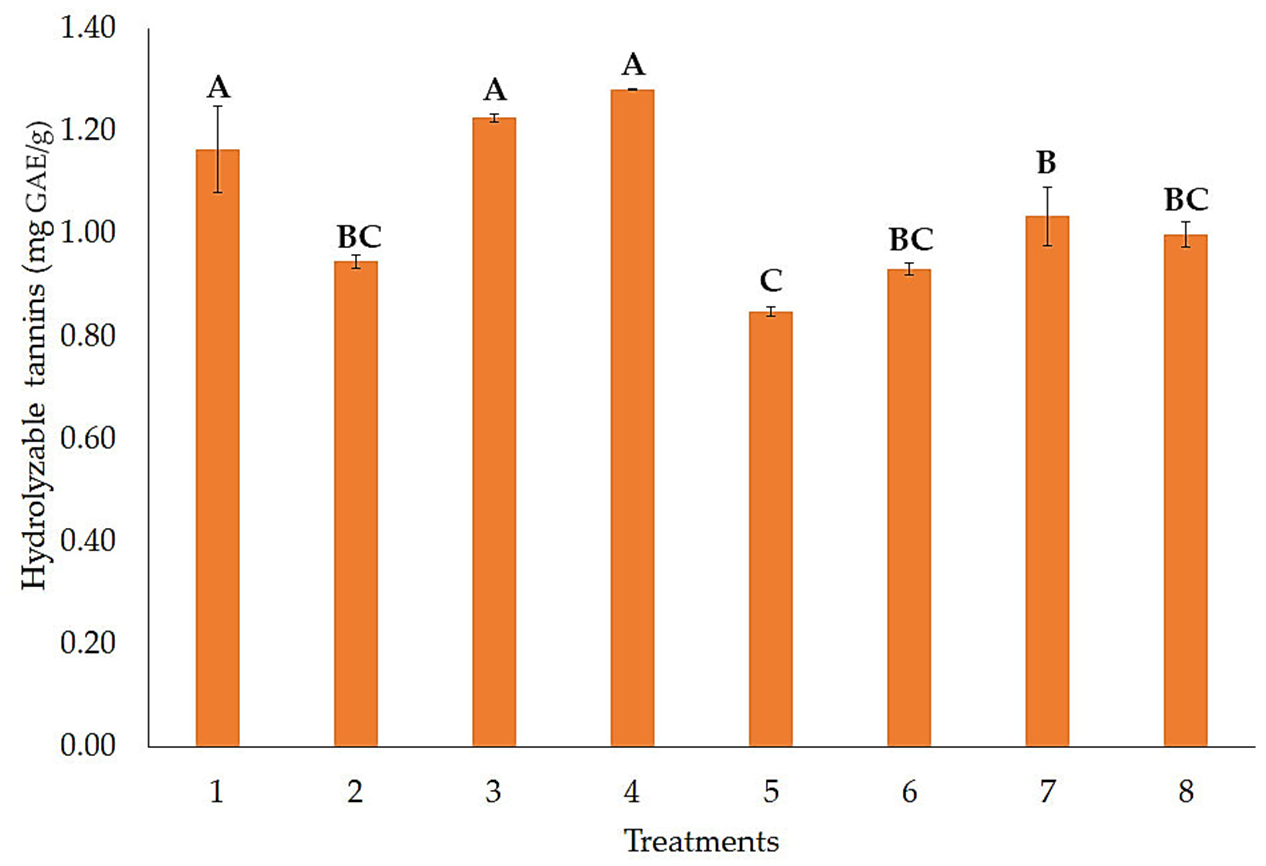
Figure 1. Concentration of hydrolyzable tannins from solid-state fermentation. Error bars represent standard deviation (n = 3). Means with a common letter are not significantly different (p > 0.05). Treatment numbers correspond to the experimental conditions described in Table 1.
Processes 14 00622 g001
Figure 2. Concentration of condensed tannins from solid-state fermentation. Error bars represent standard deviation (n = 3). Means with a common letter are not significantly different (p > 0.05). Treatment numbers correspond to the experimental conditions described in Table 1.
Processes 14 00622 g002
Figure 3. Pareto chart of the factors evaluated on the release of condensed tannins in the fermentation process.
Processes 14 00622 g003
Figure 4. Effect of MgSO4 and KCl on the release of condensed tannins.
Processes 14 00622 g004
Figure 5. Effect of MgSO4 and inoculum on the release of condensed tannins.
Processes 14 00622 g005
Figure 6. Effect of KCl and inoculum on the release of condensed tannins.
Processes 14 00622 g006
Table 1. Matrix of treatments, levels, and factors of exploratory Box–Hunter and Hunter design.
TreatmentsInoculum (Spores/g)KCl (g/L)MgSO4 (g/L)
1−1−1−1
21−11
3−1−11
41−1−1
5−111
611−1
7−11−1
8111
9−1−1−1
101−11
11−1−11
121−1−1
13−111
1411−1
15−11−1
16111
17−1−1−1
181−11
19−1−11
201−1−1
21−111
2211−1
23−11−1
24111
Levels
Factors+1−1
Inoculum (spores/g)1 × 1081 × 106
KCl (g/L)1.560.76
MgSO4 (g/L)1.560.76
Disclaimer/Publisher’s Note: The statements, opinions and data contained in all publications are solely those of the individual author(s) and contributor(s) and not of MDPI and/or the editor(s). MDPI and/or the editor(s) disclaim responsibility for any injury to people or property resulting from any ideas, methods, instructions or products referred to in the content.