Performance Impact of the Nano-Colloidal Aphron-Based Drilling Fluids on Rheological and Filtration Properties



Abstract
1. Introduction
2. Materials and Methods
2.1. Materials
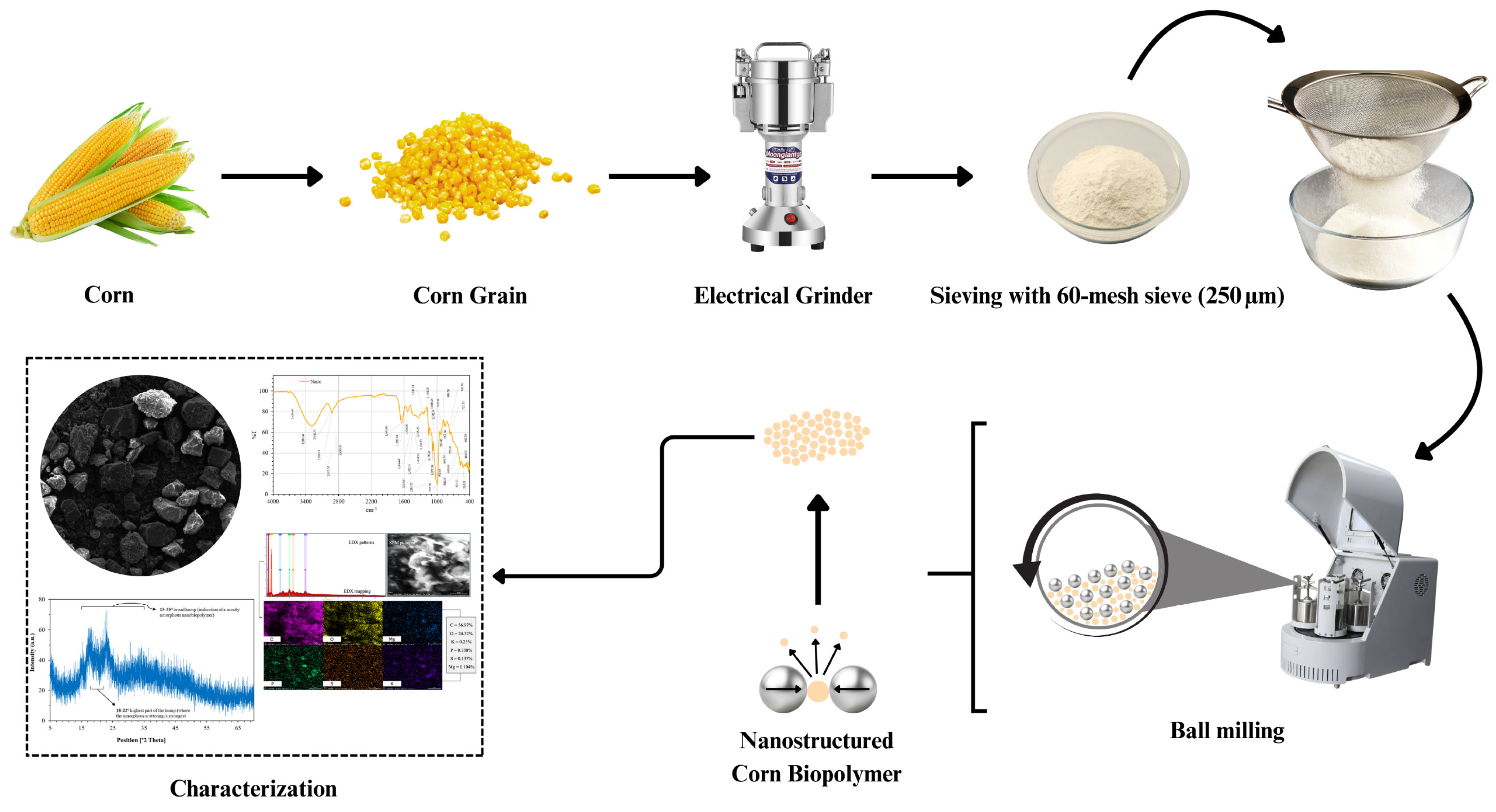
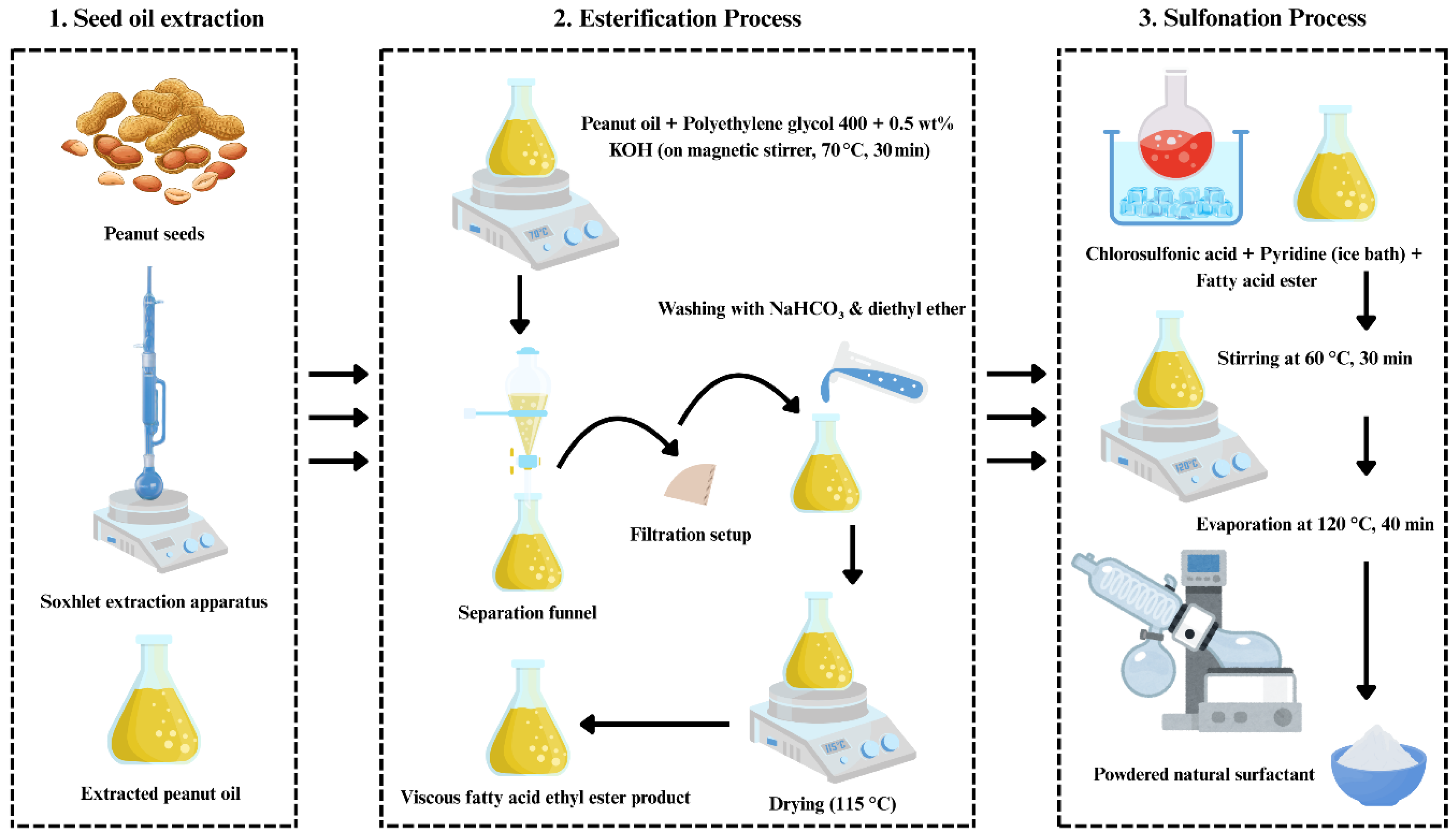
2.2. Preparation of Nanostructured Corn Biopolymer and Natural Surfactant
2.3. Formulation of the CGA Drilling Fluid
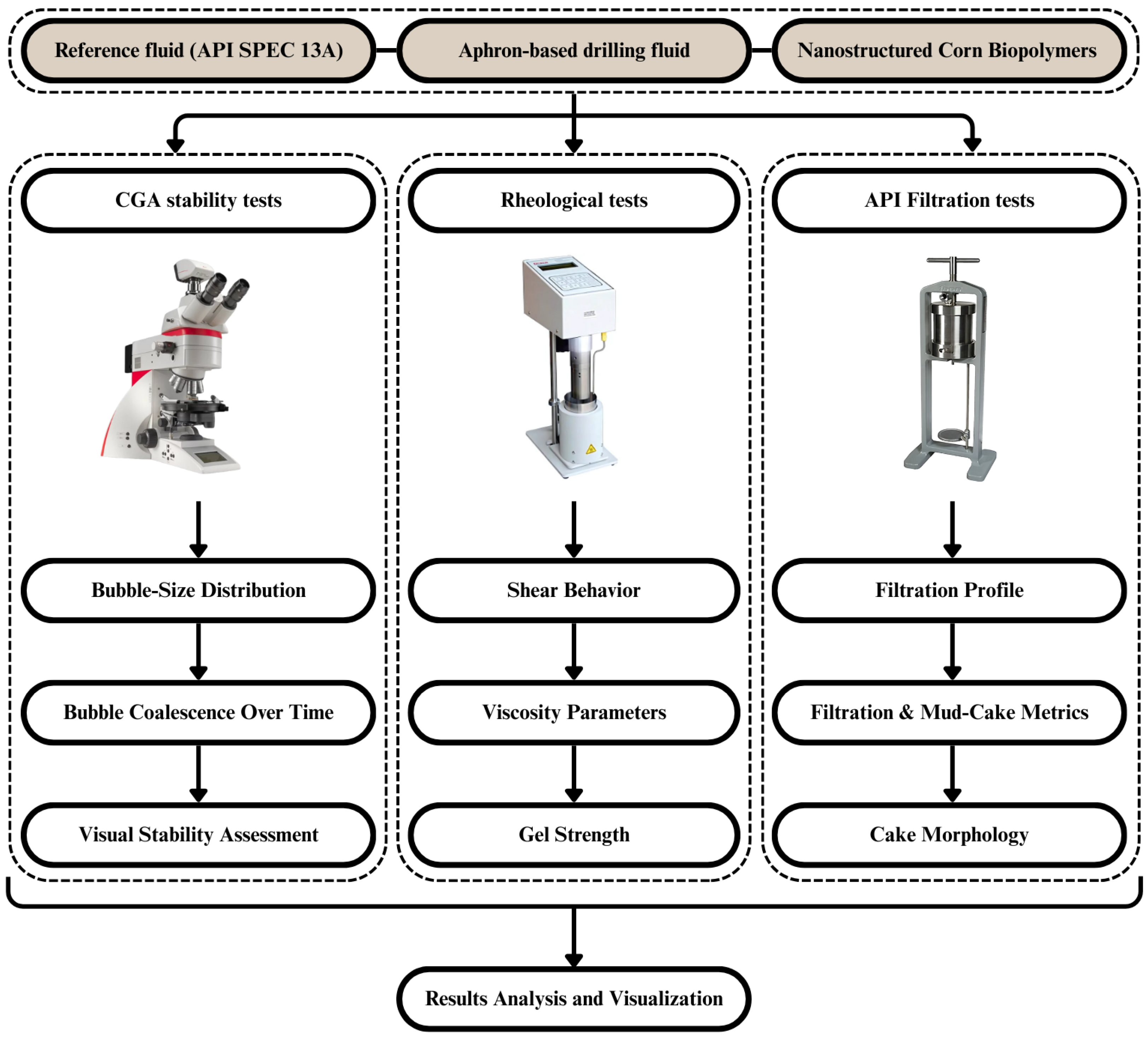
2.4. CGA Stability Tests
2.5. Rheological Tests
2.6. API Filtration Test
3. Results and Discussion
3.1. Characterization of the Nanobiopolymer and Natural Surfactant
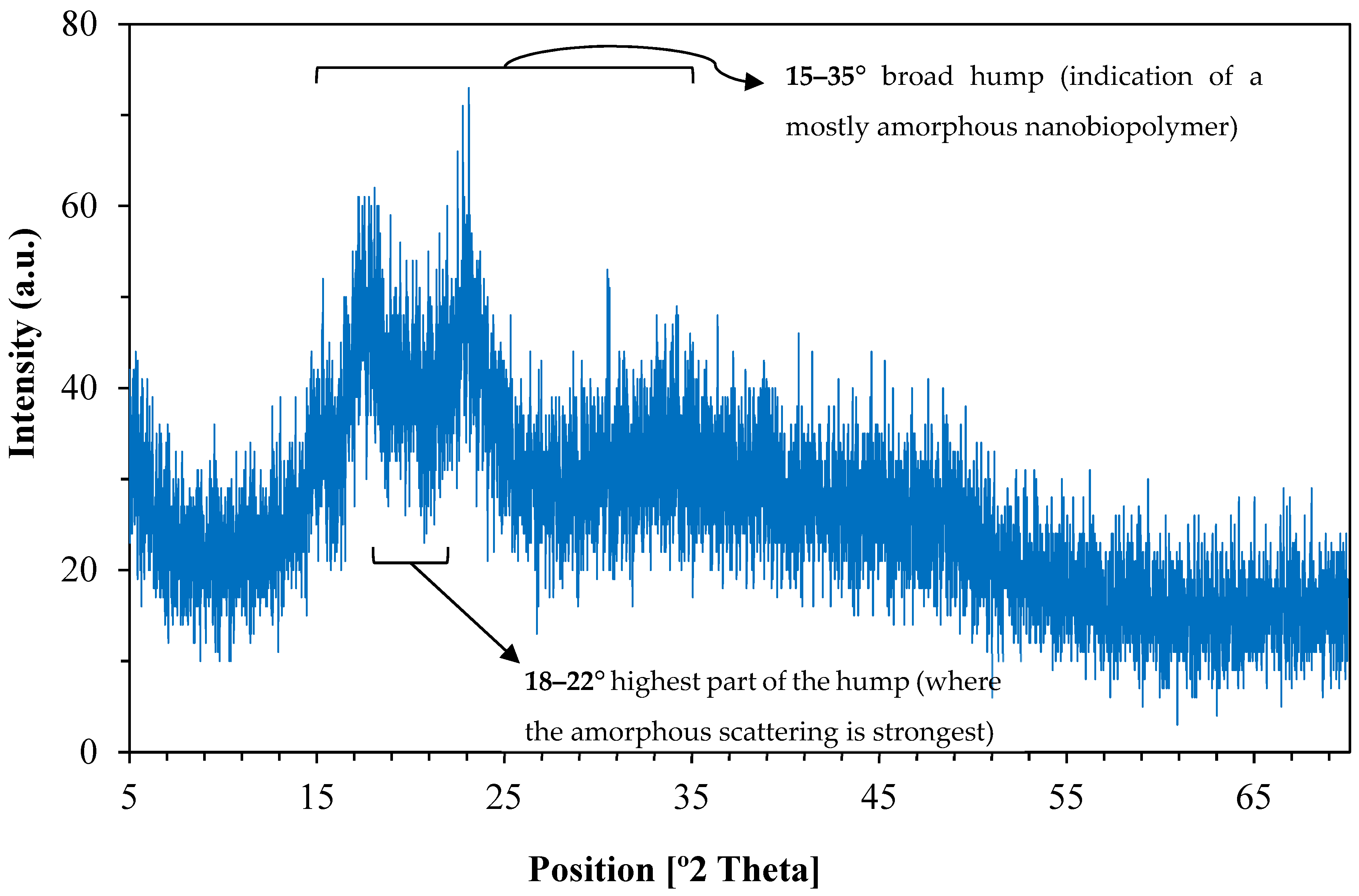
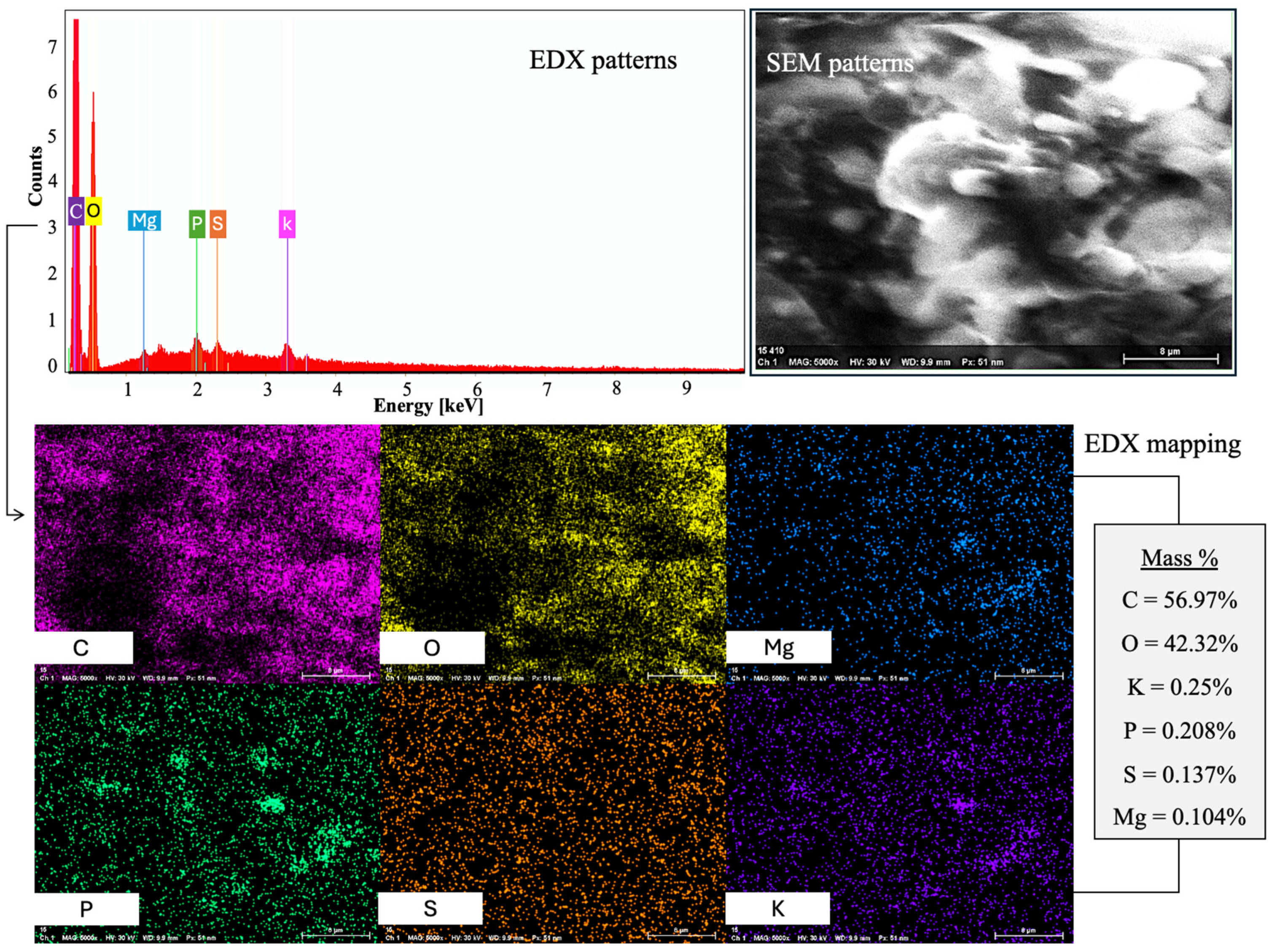
3.1.1. XRD and EDX Analyses of Nanostructured Corn Biopolymer
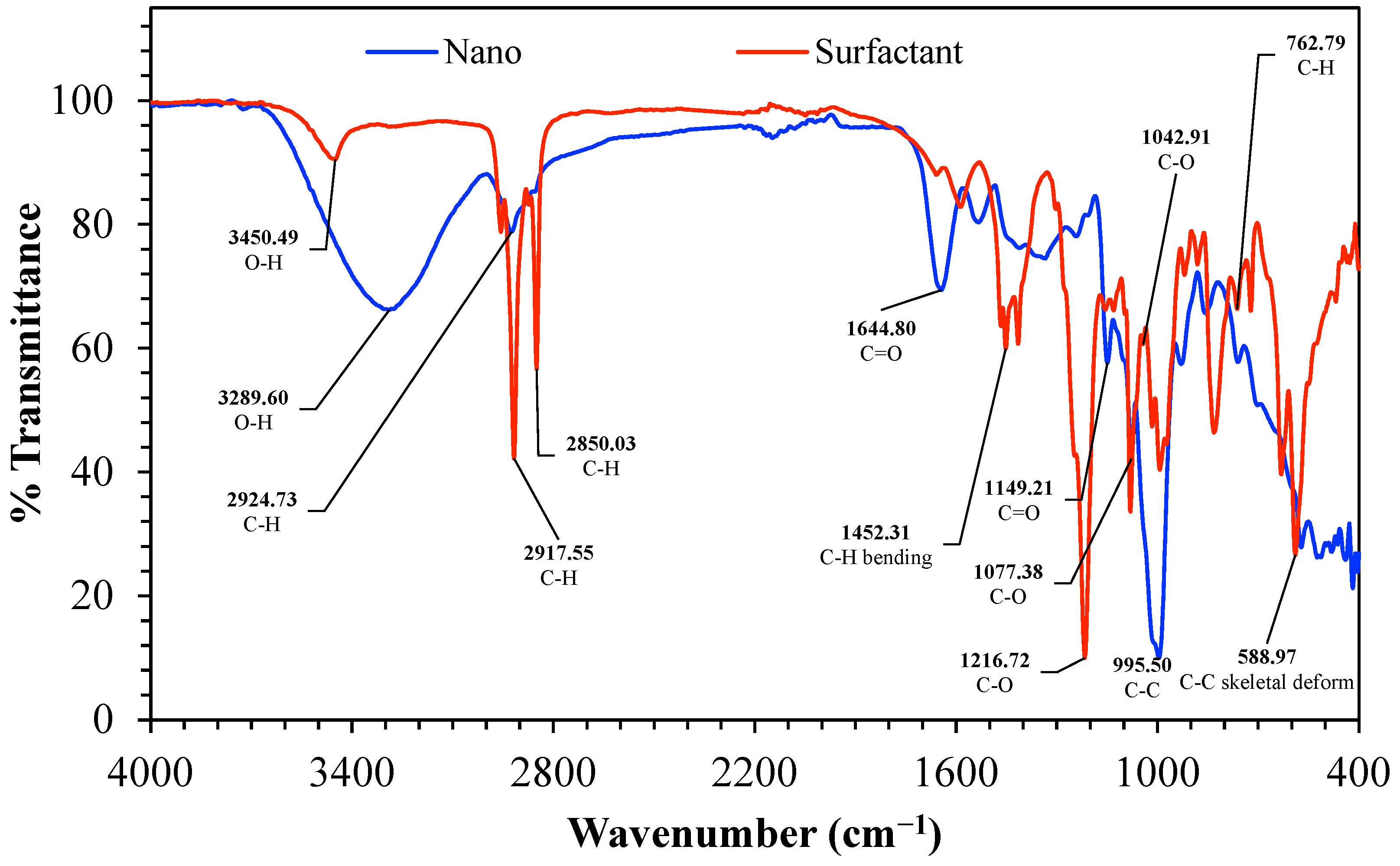
3.1.2. FTIR Spectrum
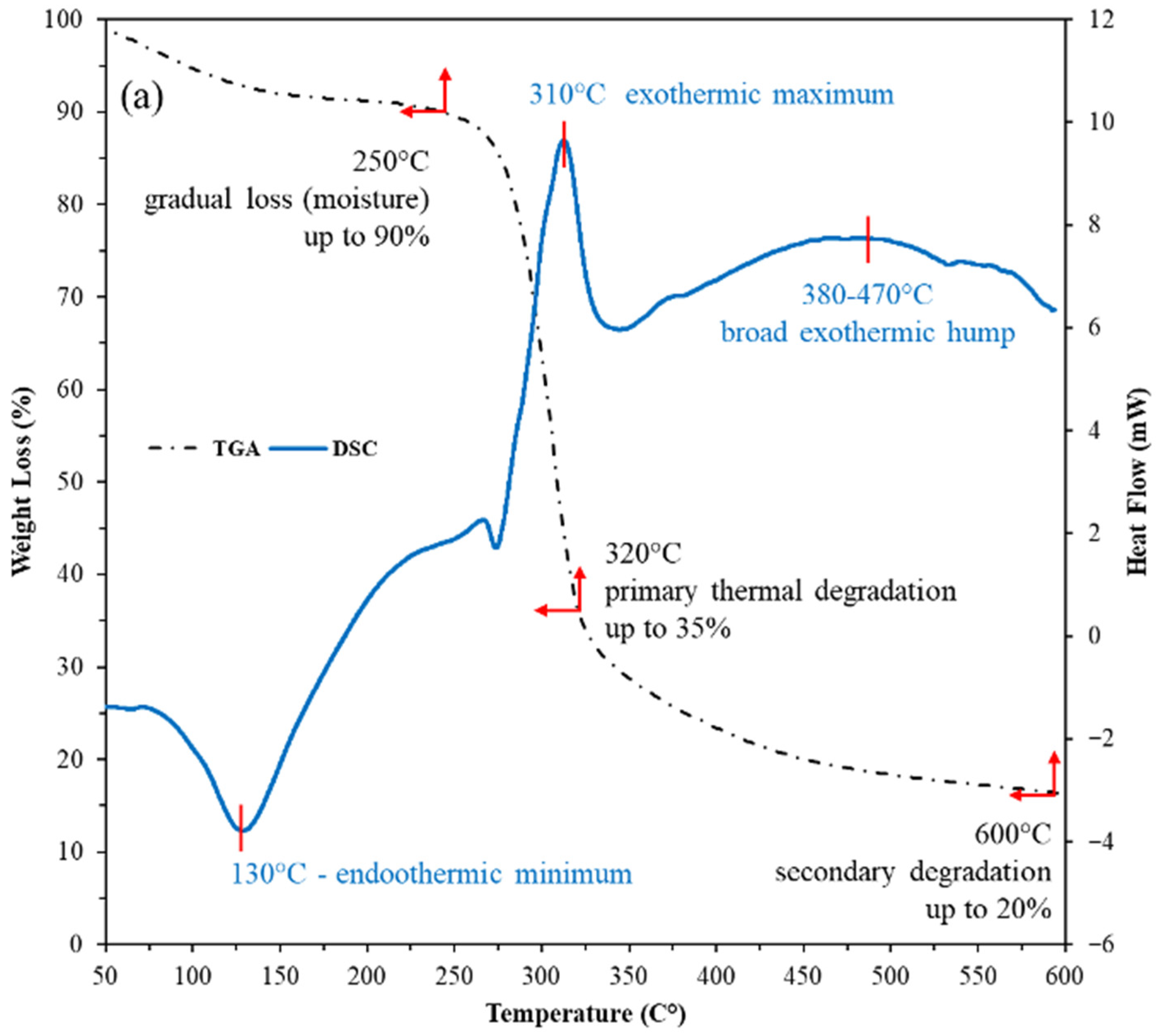
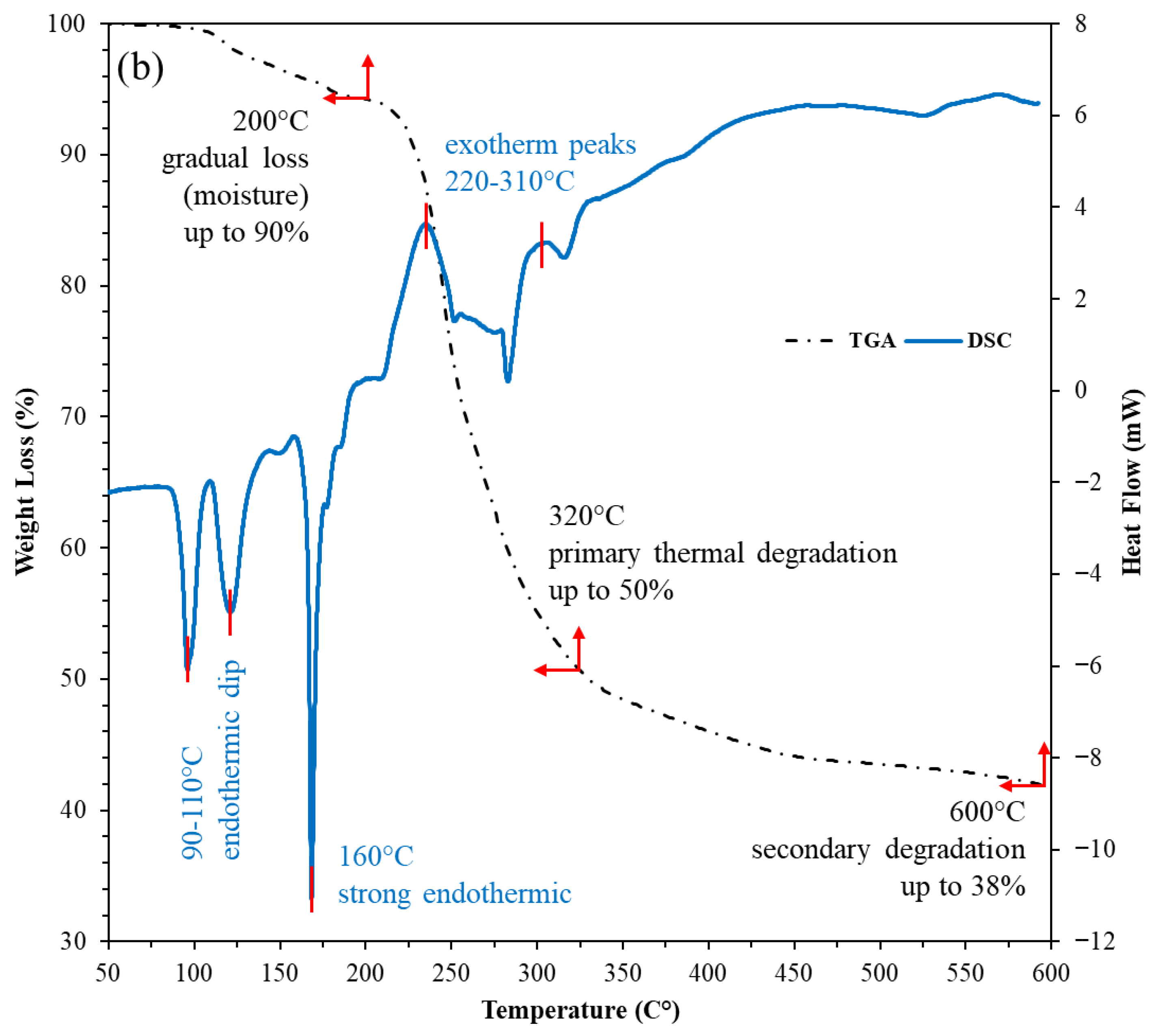
3.1.3. TGA and DSC Thermal Analyses
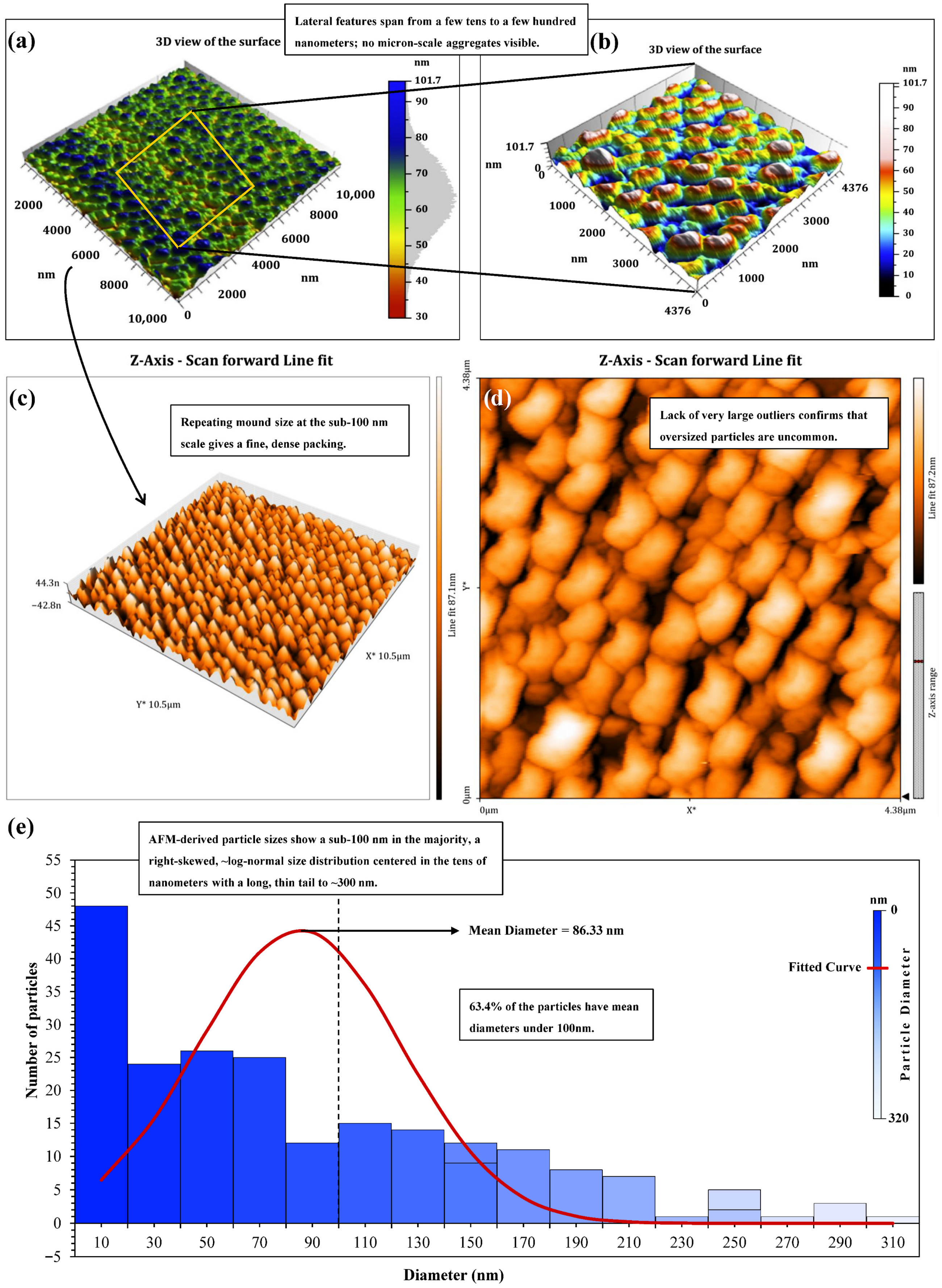
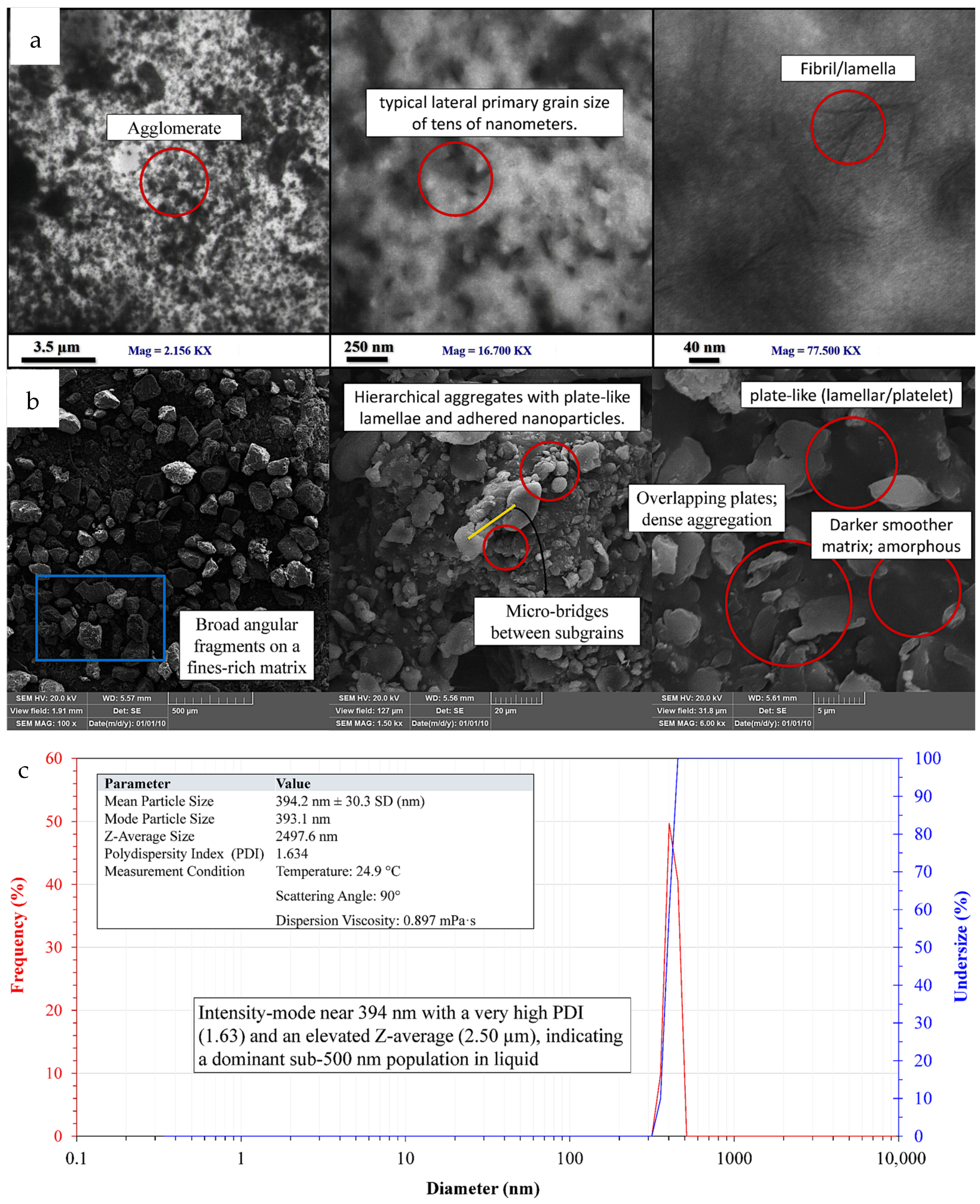
3.1.4. Morphological and Particle-Size Scattering Analyses (AFM, SEM, TEM, and DLS) of Nanostructured Corn Biopolymer
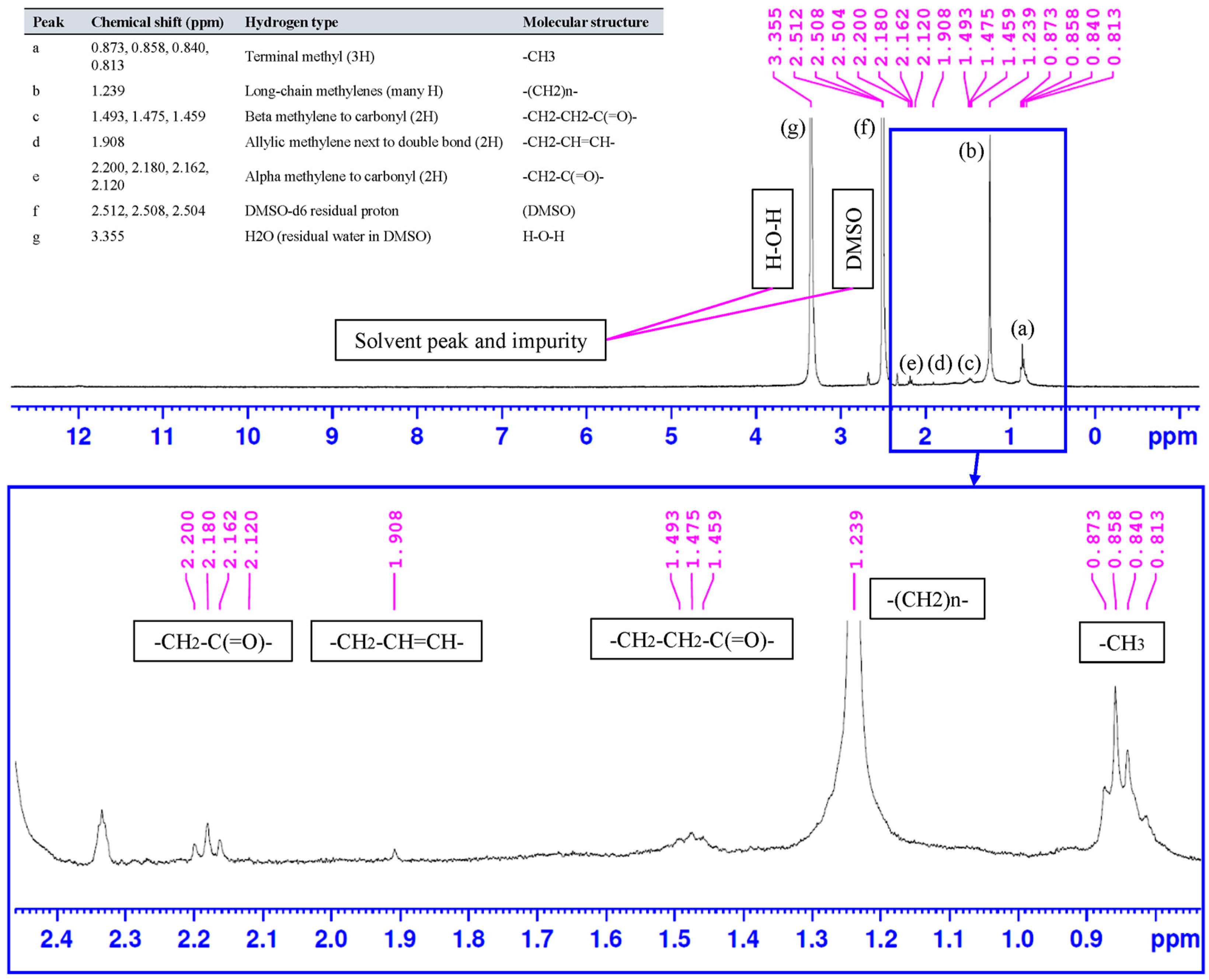
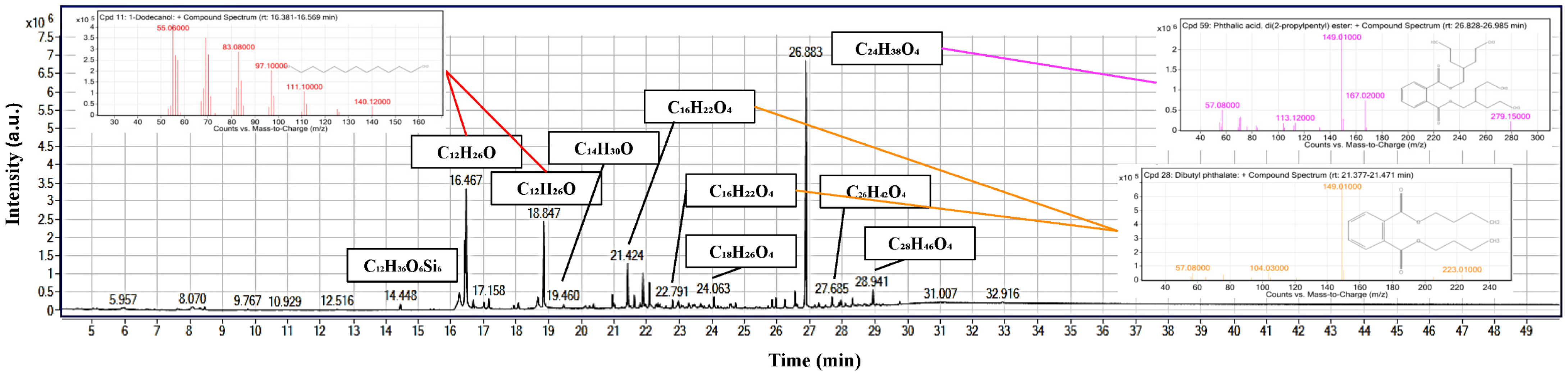
3.1.5. 1H NMR and GC-Based Analysis of Surfactant
3.2. Stability of the CGA
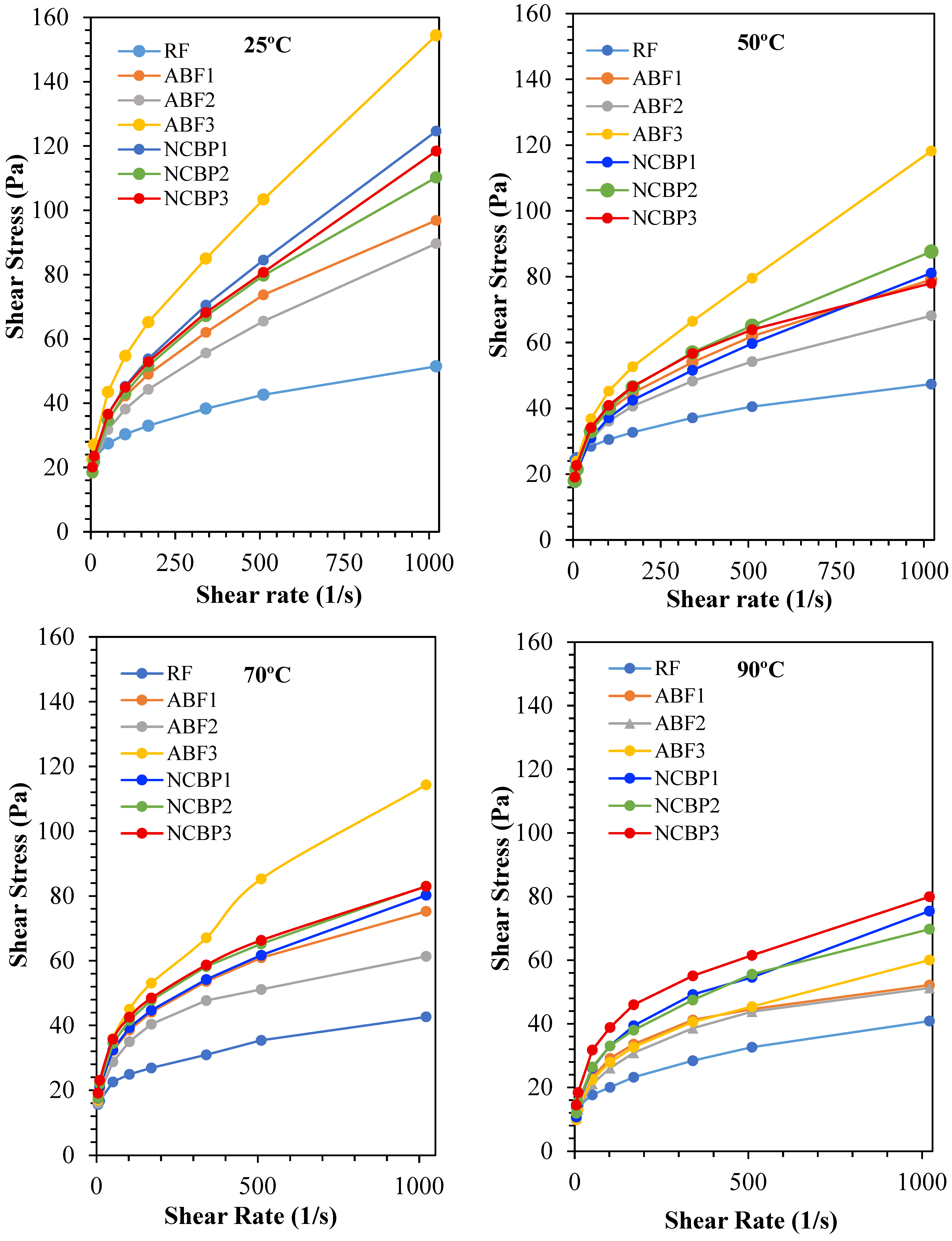
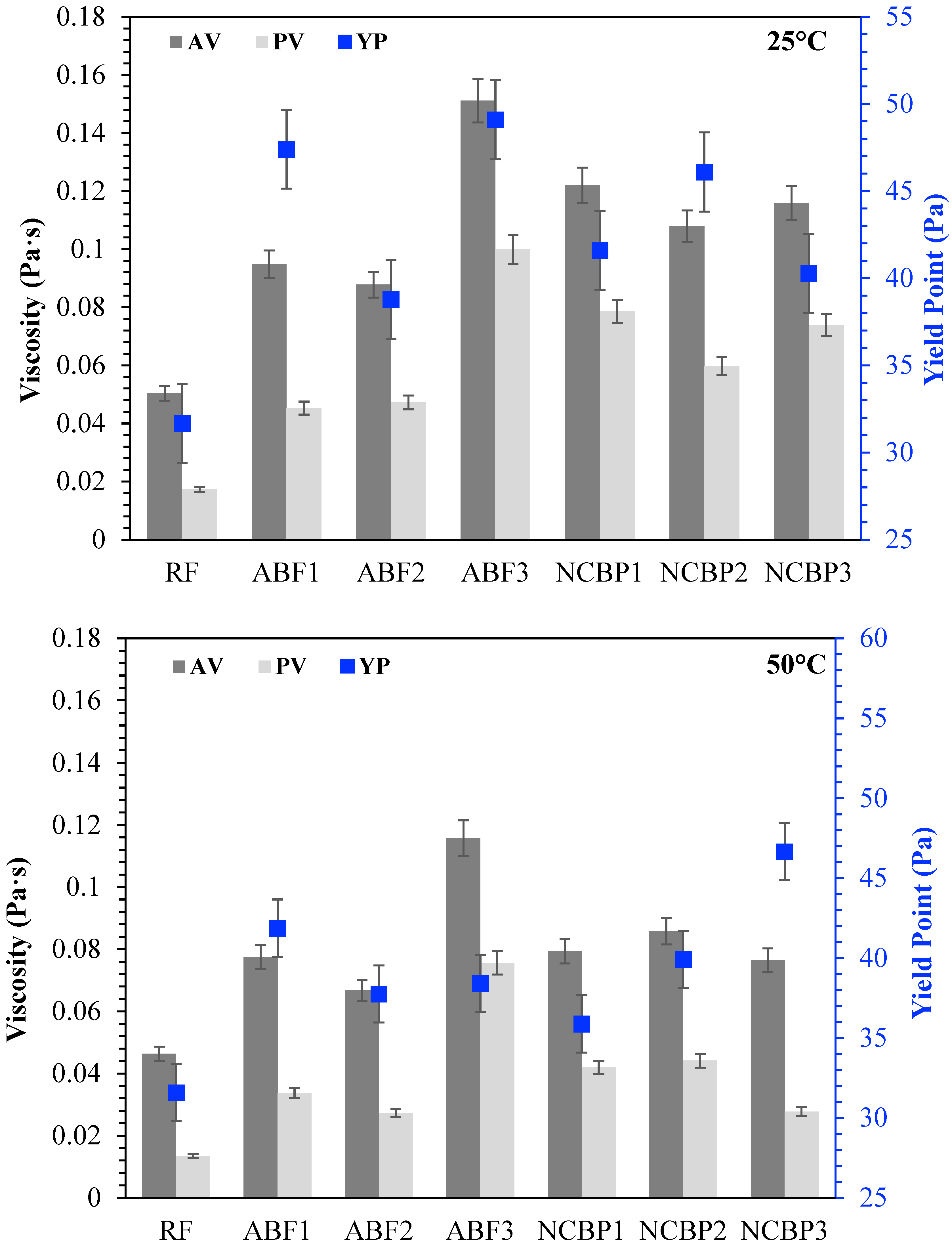
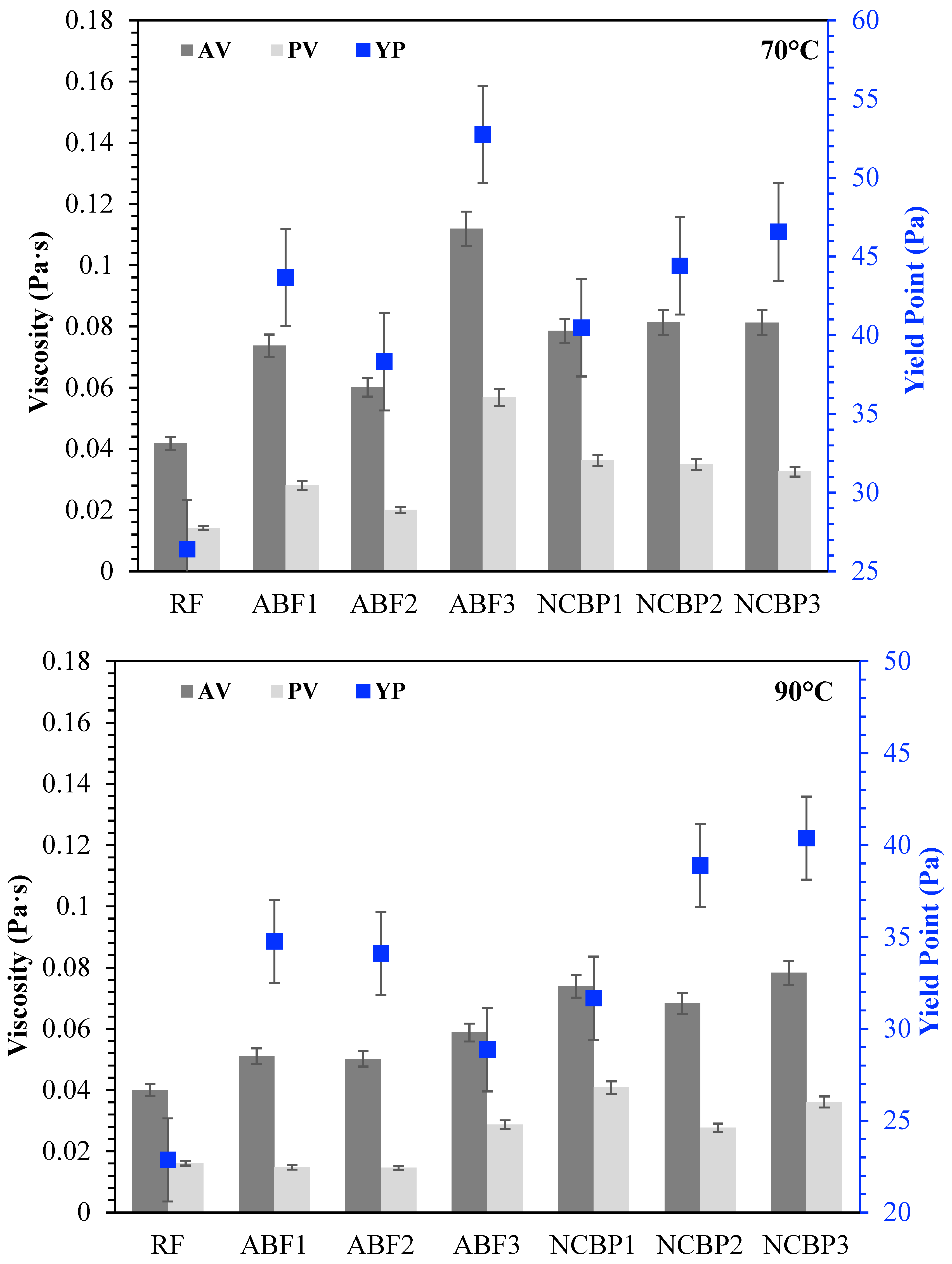
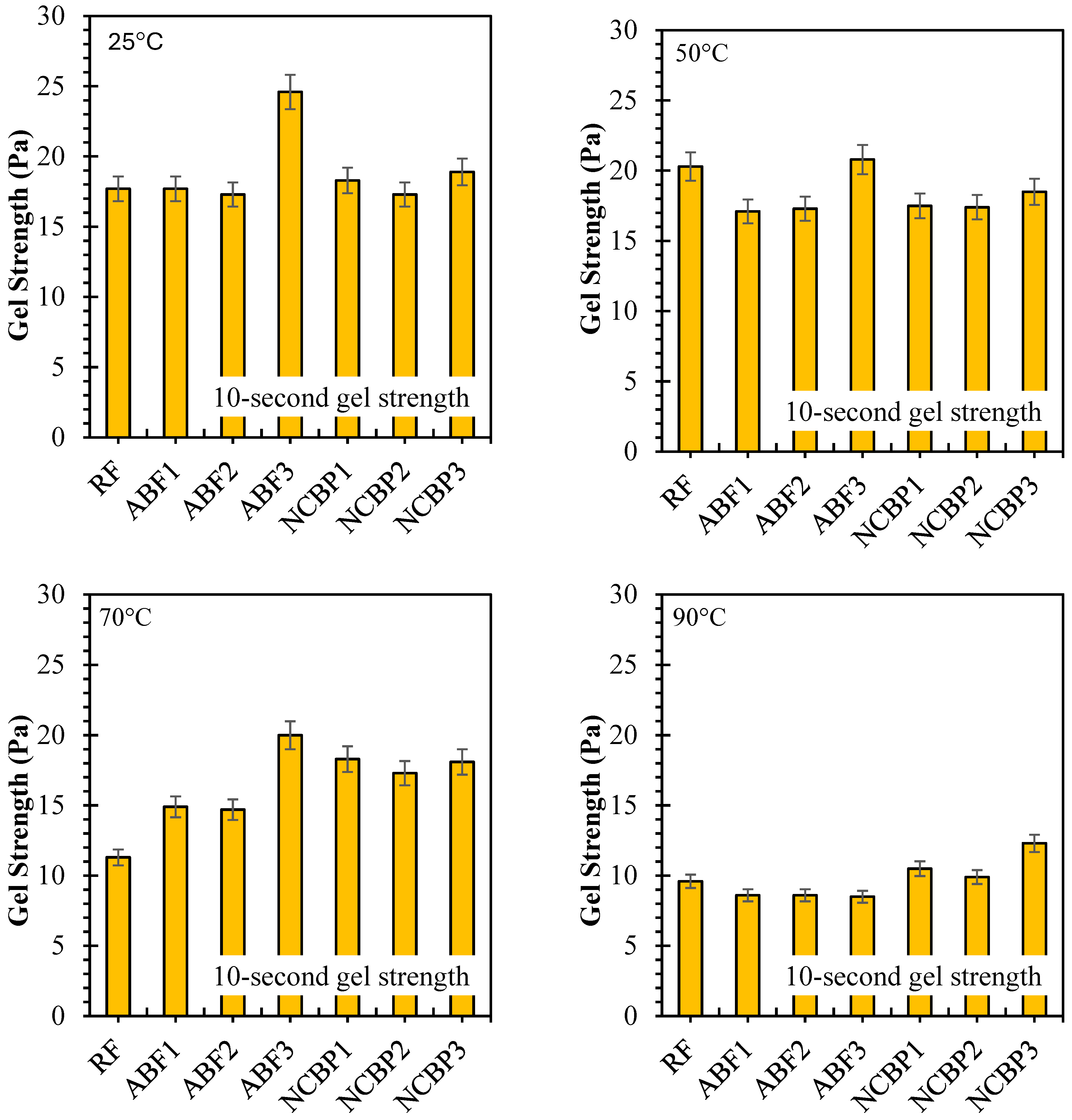
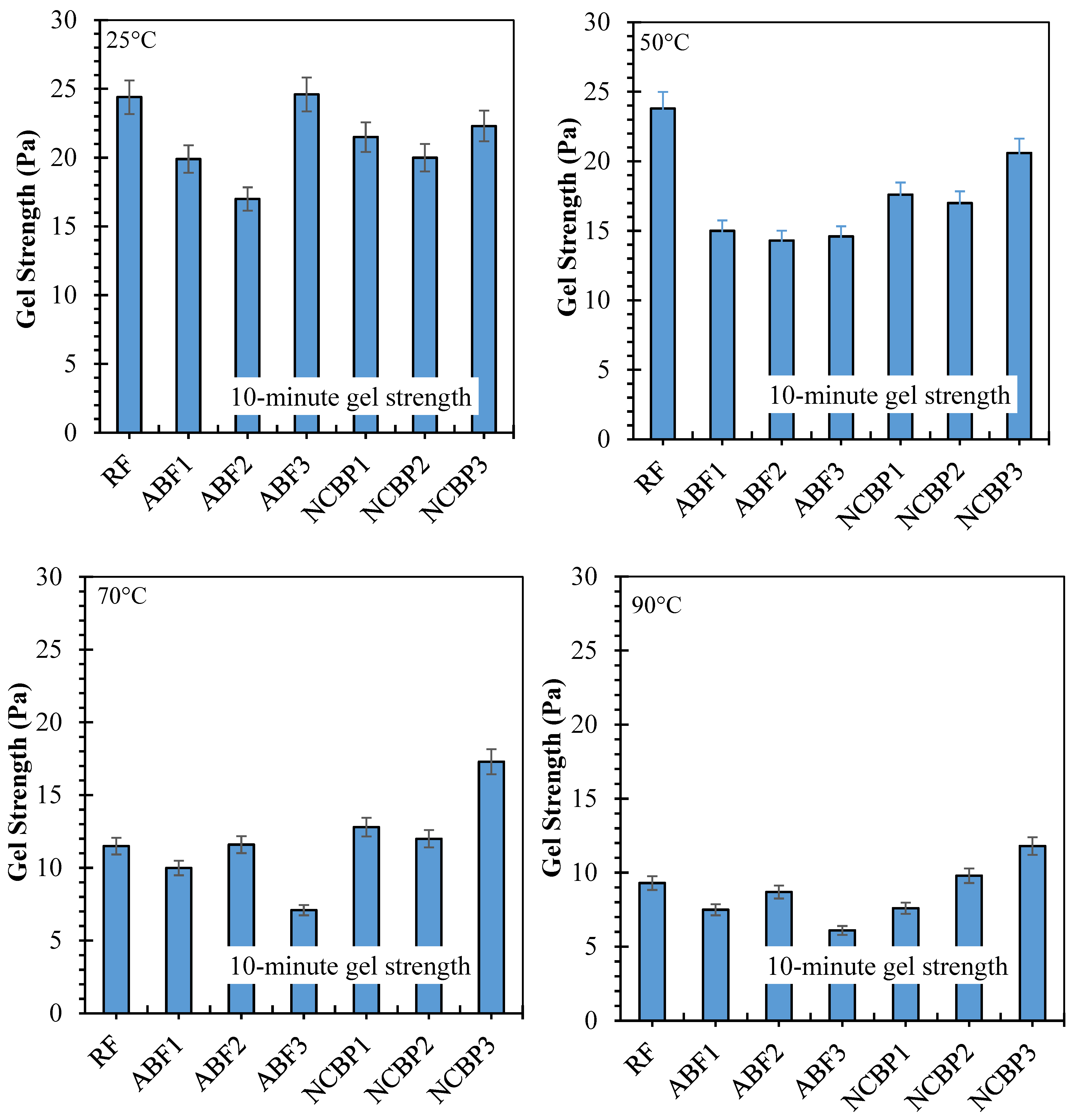
3.3. Rheological Behavior of the CGA
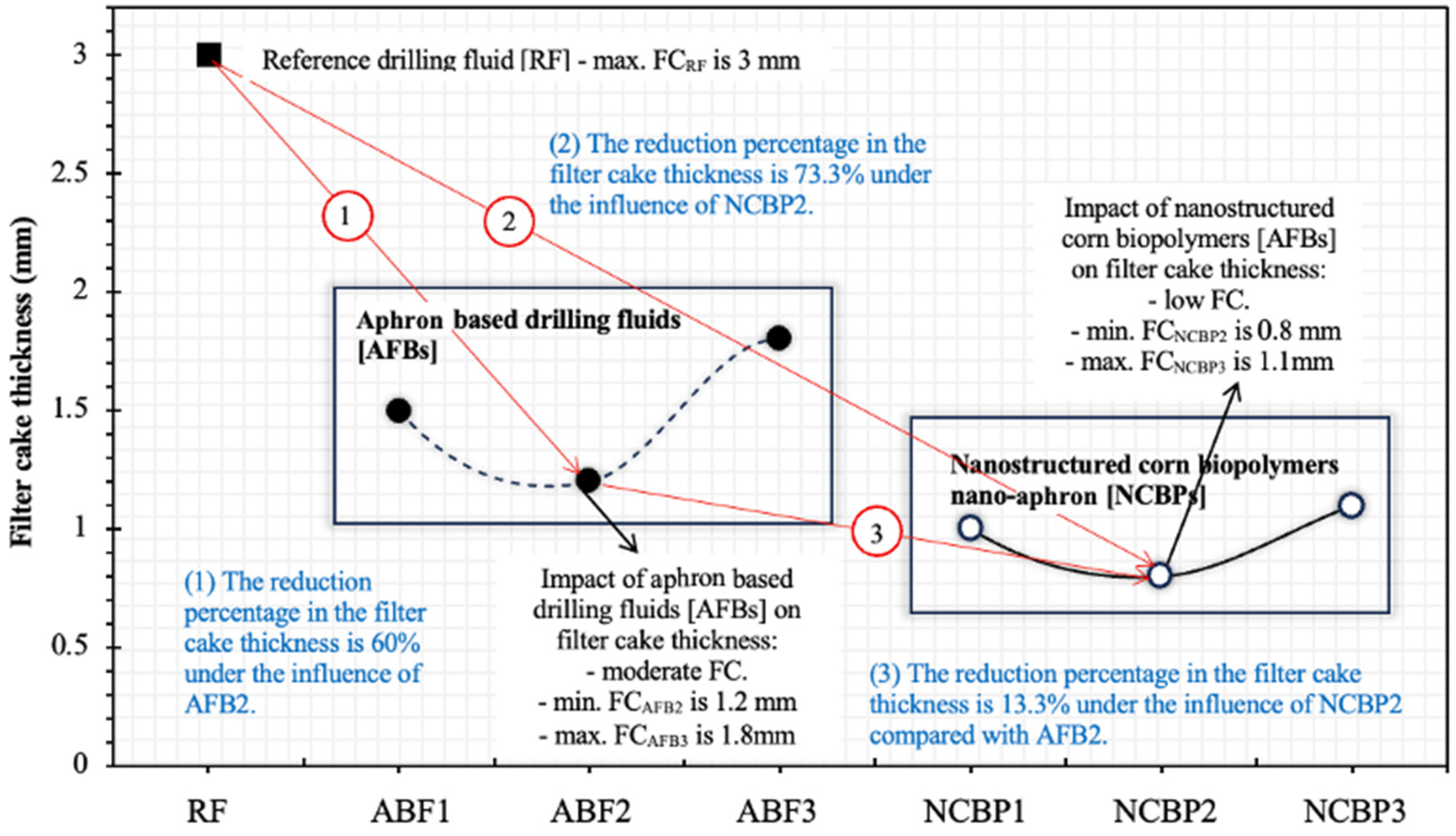
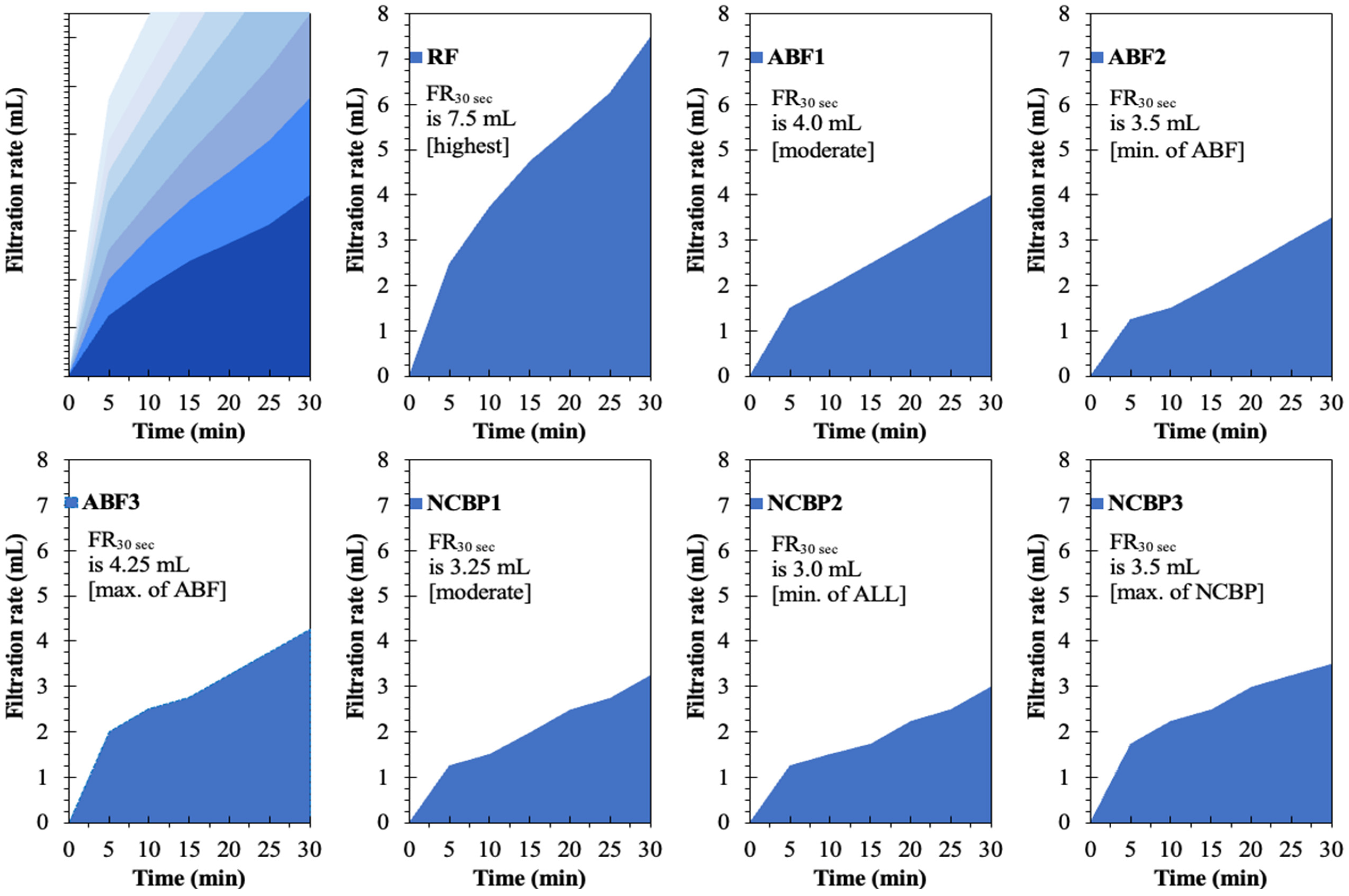
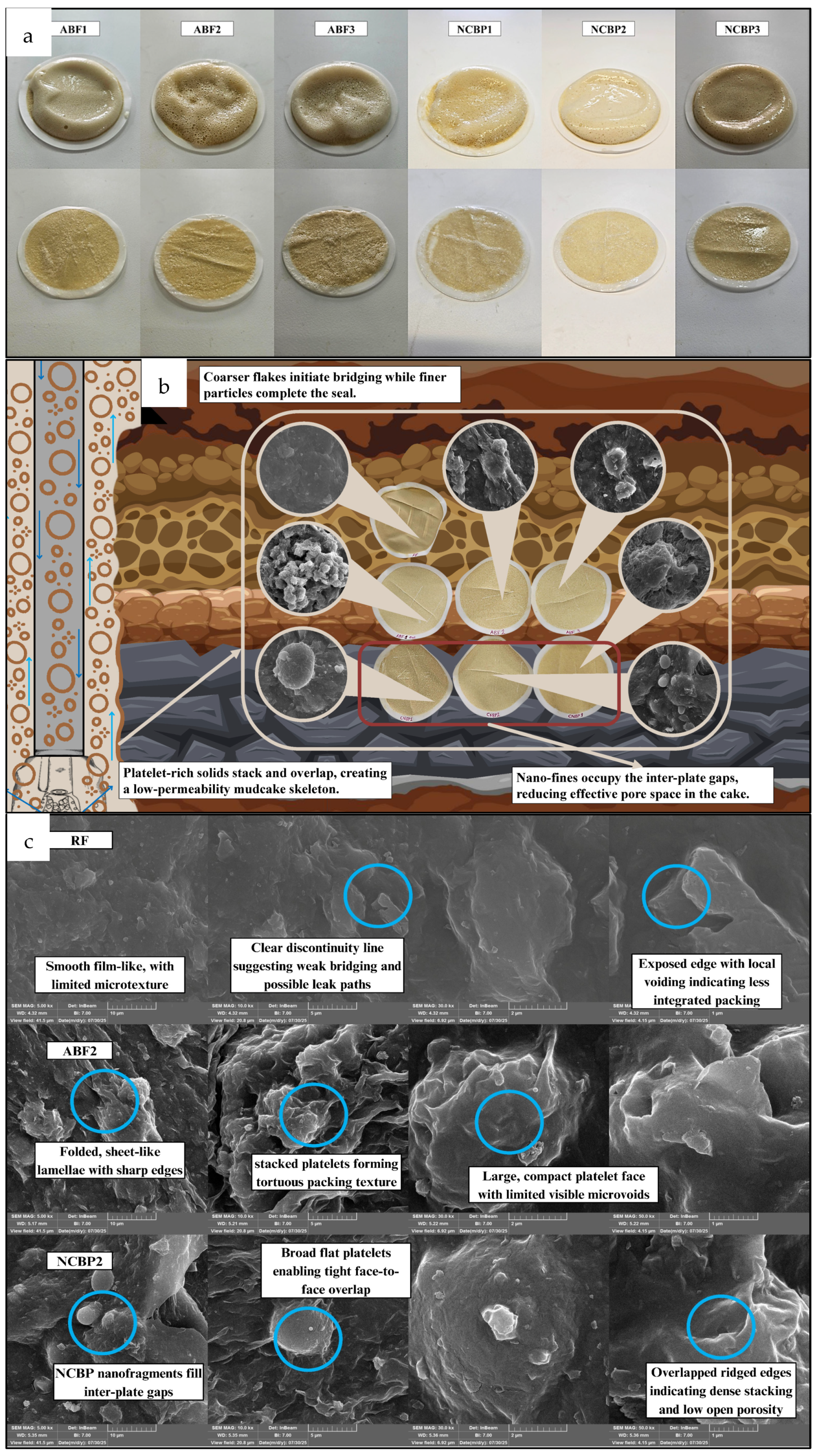
3.4. Filtration Performance and Fluid Loss Control
4. Mechanism and Environmental Impact
5. Conclusions
- Synthesis as well as characterization of nanostructured corn biopolymer (NCBP) by AFM, which showed an average particle size 86.33 nm confirmed that this nanotechnology is suitable for the modification of drilling fluid;
- In the system a biodegradable surfactant developed by a two-step esterification and sulfonation process yielded a functional anionic agent, which stabilized CGA bubbles and dispersed them more efficiently;
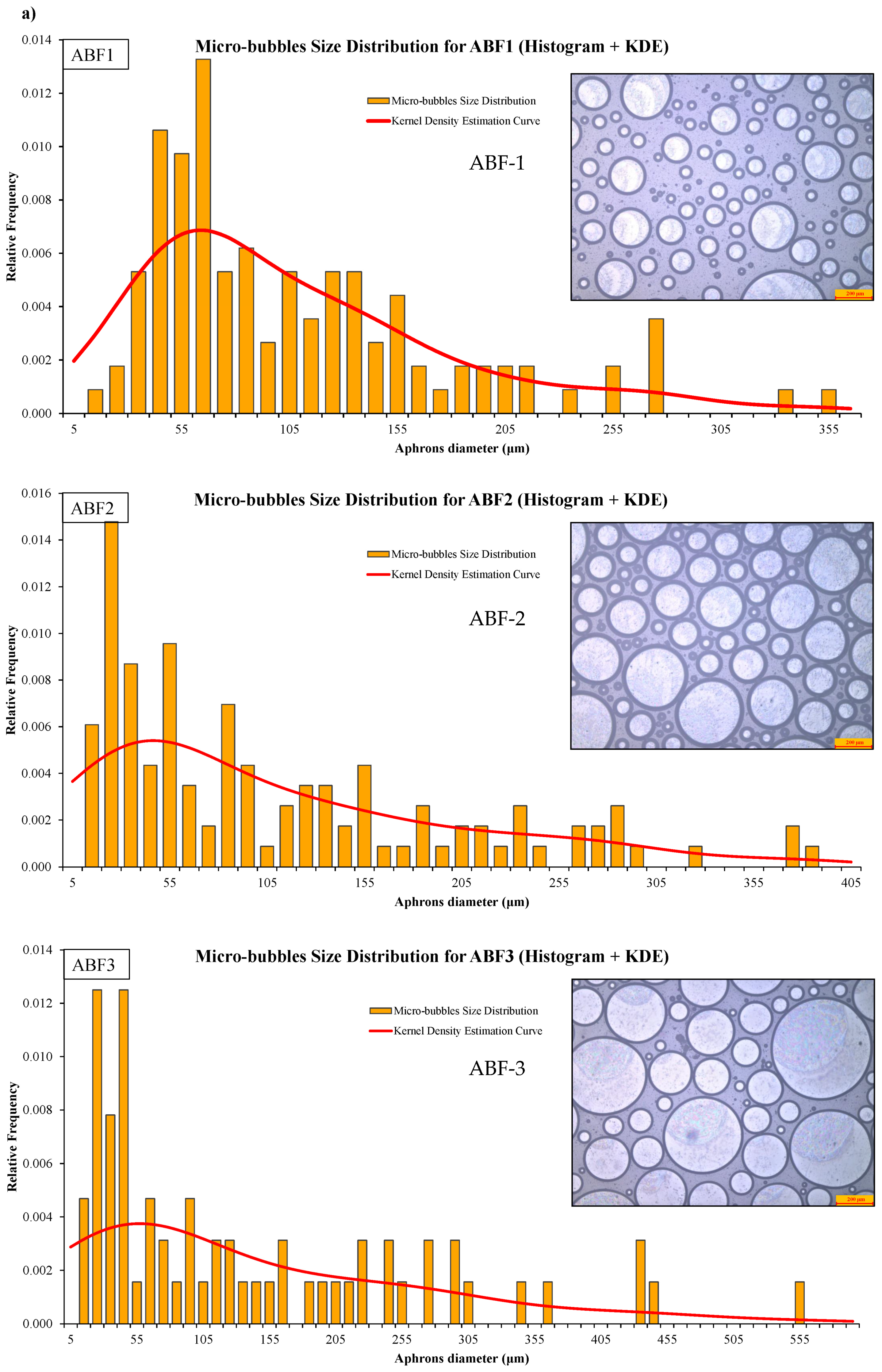
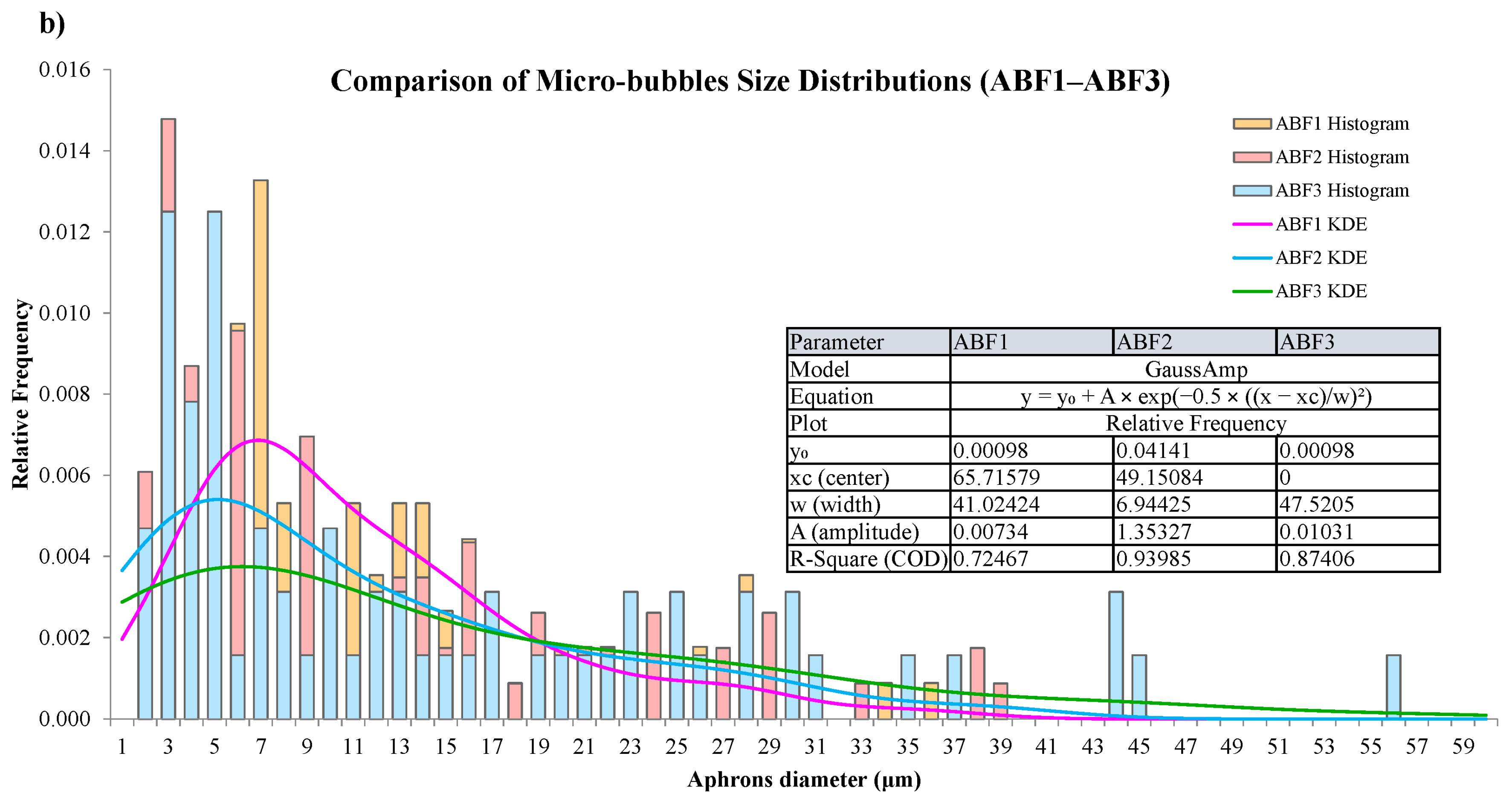
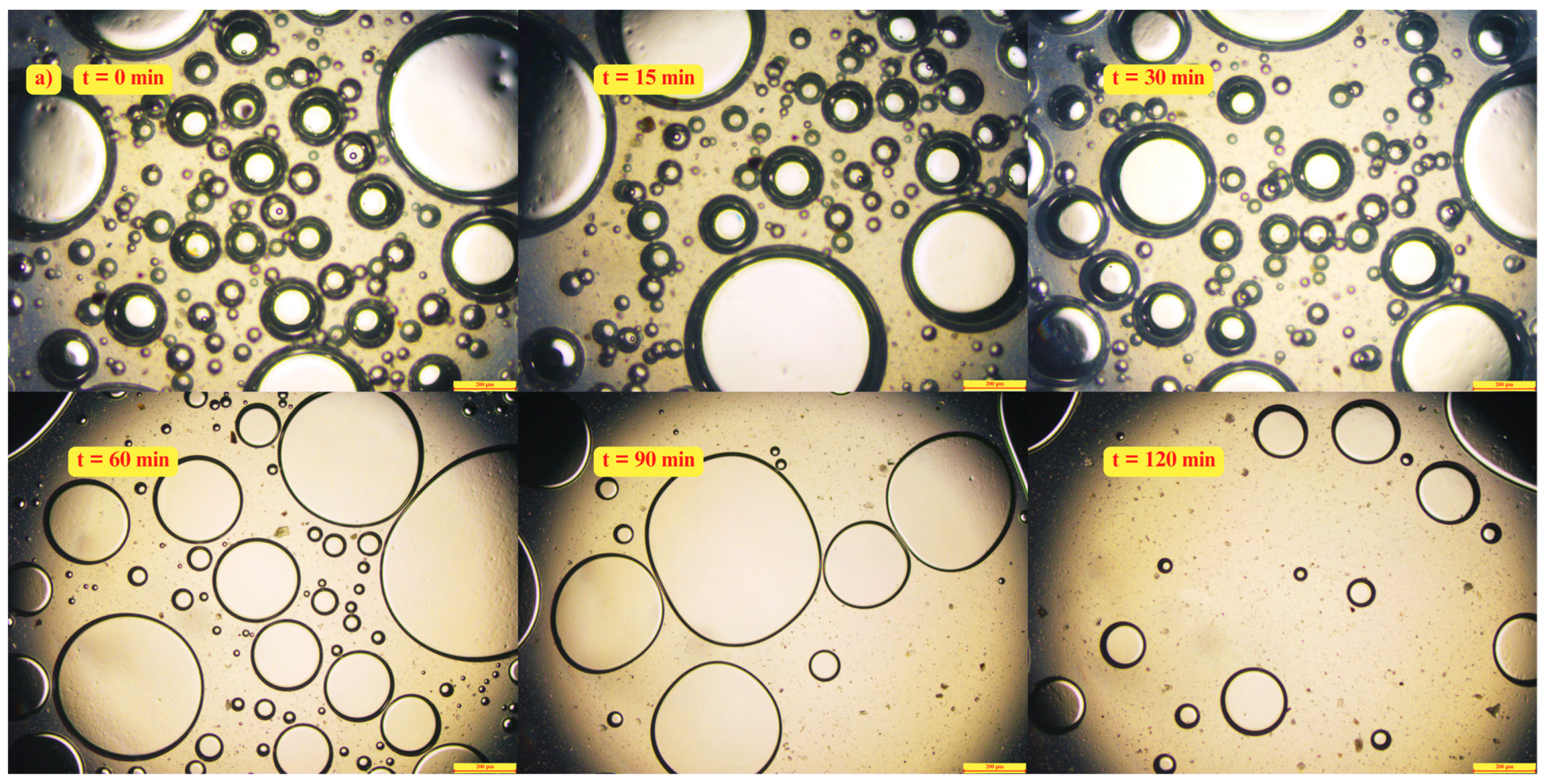
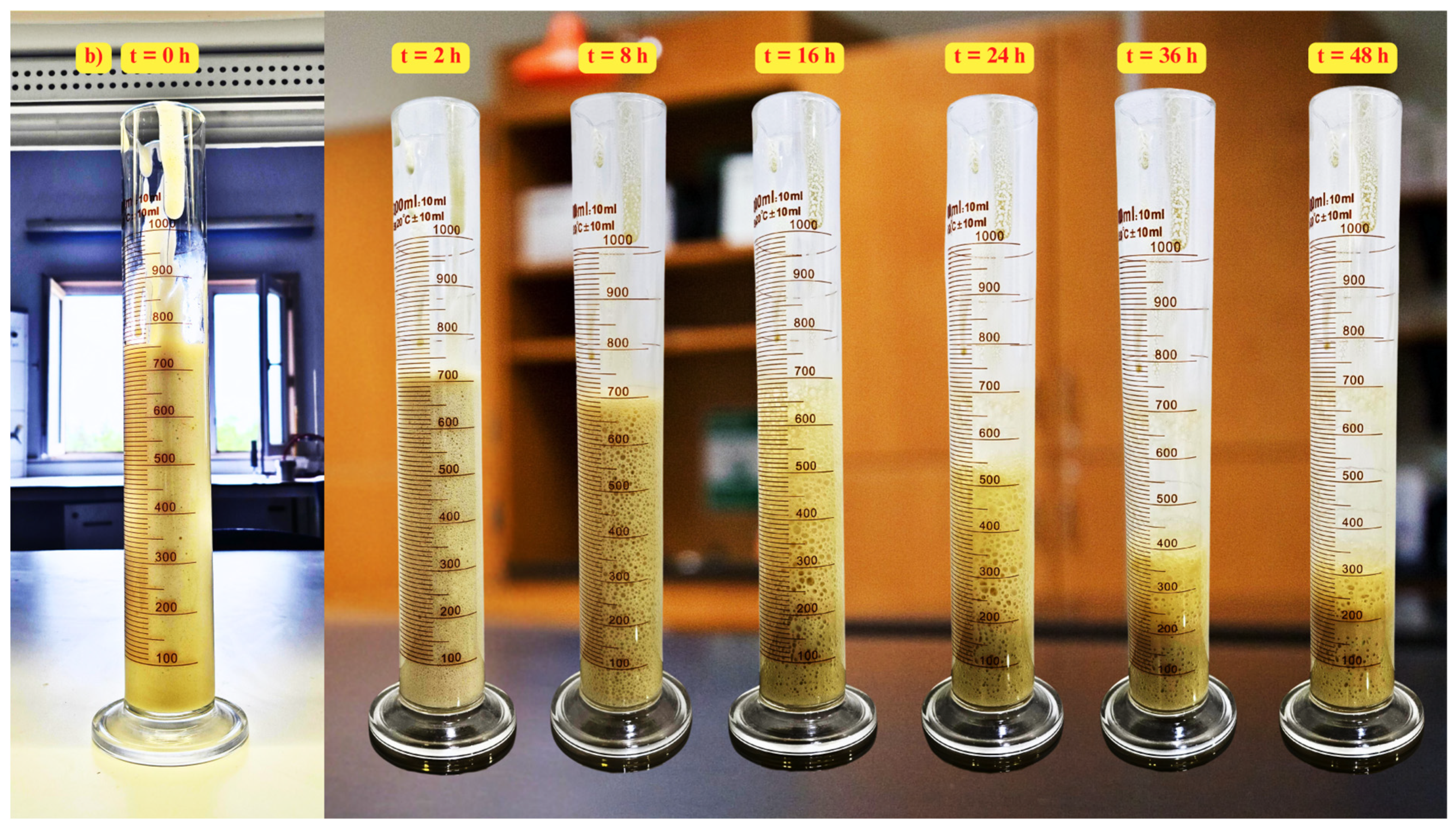
- In microscopic and visual investigations, the presence of NCBP additives contributed to increasing the bubble film thickness and stability, decreasing the coalescence and improving aphron structural integrity;
- NCBP fluids showed superior shear-thinning properties and greater gelling strength from 25 °C to 90 °C. At 90 °C, NCBP3 retained 65.1% (10 s) and 52.9% (10 min) of its room-temperature gels as compared to 39.0% and 30.5% for the best surfactant-only ABF.
- NCBP2 produced the lowest filtrate (3.0 mL) and the thinnest mud cake (0.8 mm), which is −60.0% filtrate and −73.3% mud cake compared to reference fluid. Compared to the best aphron-only system (ABF2), NCBP2 further reduced filtrate by 14.3% and mud cake thickness by 33.3%;
- NCBP formulations produced more compact and uniform mud cakes, supporting wellbore stability and lowering invasion risk;
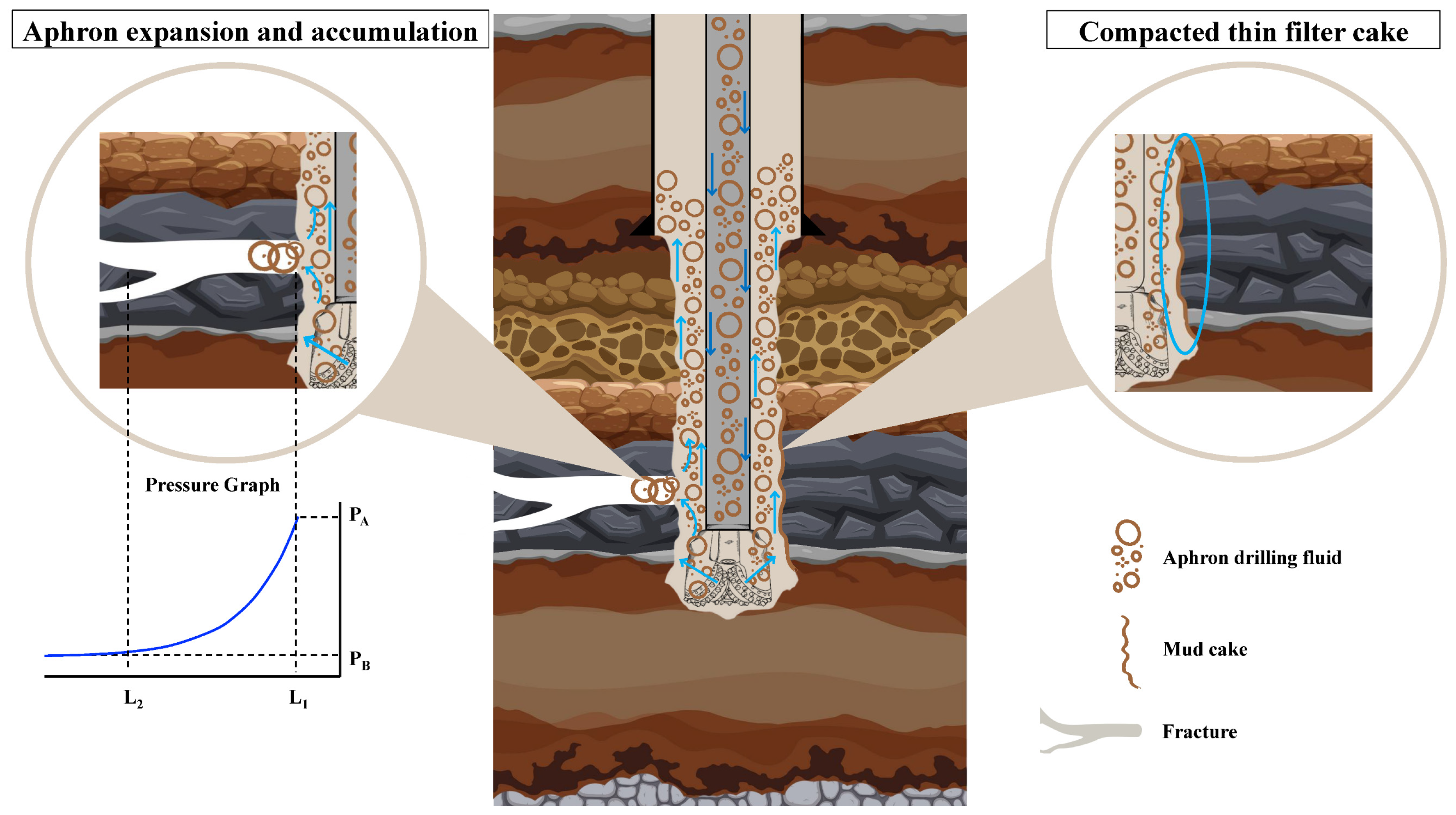
- The schematic illustration (Figure 20) visualizes how CGA fluids function in fractured formations: aphrons enlarge as they enter fractures, supported by bentonite, xanthan gum, and nanobiopolymers that collectively build a dense seal at the fracture mouth, reducing loss and invasion.
Author Contributions
Funding
Data Availability Statement
Conflicts of Interest
Abbreviations
| CGA | Colloidal Gas Aphron |
| ABF | Aphron-Based Fluid |
| NCBP | Nanostructured Corn Biopolymer |
| RF | Reference Fluid |
| WBDF | Water-Based Drilling Fluid |
| LCM | Lost Circulation Material |
| API | American Petroleum Institute |
| API RP 13B-1 | API Recommended Practice for Field Testing Water-Based Drilling Fluids |
| LTLP | Low Temperature Low Pressure |
| AV | Apparent Viscosity |
| PV | Plastic Viscosity |
| YP | Yield Point |
| LSRV | Low Shear Rate Viscosity |
| CMC | Critical Micelle Concentration |
References
- Sebba, F. Microfoams—An unexploited colloid system. J. Colloid Interface Sci. 1971, 35, 643–646. [Google Scholar] [CrossRef]
- Sebba, F. Separations Using Aphrons. Sep. Purif. Methods 1985, 14, 127–148. [Google Scholar] [CrossRef]
- Brookey, T. “Micro-Bubbles”: New Aphron Drill-In Fluid Technique Reduces Formation Damage in Horizontal Wells. In Proceedings of the SPE Formation Damage Control Conference, Lafayette, LA, USA, 18–19 February 1998. [Google Scholar]
- Growcock, F.B.; Belkin, A.; Fosdick, M.; Irving, M.; O’Connor, B.; Brookey, T. Recent Advances in Aphron Drilling-Fluid Technology. SPE Drill. Complet. 2007, 22, 74–80. [Google Scholar] [CrossRef]
- Pasdar, M.; Kamari, E.; Kazemzadeh, E.; Ghazanfari, M.H.; Soleymani, M. Investigating fluid invasion control by Colloidal Gas Aphron (CGA) based fluids in micromodel systems. J. Nat. Gas Sci. Eng. 2019, 66, 1–10. [Google Scholar] [CrossRef]
- Mehrjoo, H.; Kazemzadeh, Y.; Ismail, I.; Gaganis, V. A Comprehensive Review of Colloidal gas aphrons applications in the Oil Industry. J. Pet. Explor. Prod. Technol. 2025, 15, 44. [Google Scholar] [CrossRef]
- Kinchen, D.; Peavy, M.A.; Brookey, T.; Rhodes, D. Case history: Drilling techniques used in successful redevelopment of low pressure H2S gas carbonate formation. In Proceedings of the Drilling Conference, Amsterdam, The Netherlands, 27 February–1 March 2001. [Google Scholar]
- Gaurina-Međimurec, N.; Pašić, B. Aphron-based drilling fluids: Solution for low pressure reservoirs. Rud.-Geološko-Naft. Zb. 2009, 21, 65–72. [Google Scholar]
- Montilva, J.; Ivan, C.; Friedheim, J.; Bayter, R. Aphron Drilling Fluid: Field Lessons from Successful Application in Drilling Depleted Reservoirs in Lake Maracaibo. In Proceedings of the Offshore Technology Conference, Houston, TX, 6–9 May 2002. [Google Scholar] [CrossRef]
- Molaei, A.; Waters, K.E. Aphron applications—A review of recent and current research. Adv. Colloid Interface Sci. 2015, 216, 36–54. [Google Scholar] [CrossRef]
- Rea, A.B.; Paiuk, B.P.; Miguel Climaco, J.; Vallejo, M.; Leon, E.; Inojosa, J. Application of Aphrons Technology in Drilling Depleted Mature Fields. In Proceedings of the SPE Latin American and Caribbean Petroleum Engineering Conference, Port of Spain, Trinidad and Tobago, 27–30 April 2003. [Google Scholar]
- Growcock, F.B.; Simon, G.A.; Rea, A.B.; Leonard, R.S.; Noello, E.; Castellan, R. Alternative Aphron-Based Drilling Fluid. In Proceedings of the IADC/SPE Drilling Conference, Dallas, TX, USA, 2–4 March 2004. [Google Scholar]
- Arabloo, M.; Shahri, M.P.; Zamani, M. Characterization of Colloidal Gas Aphron-Fluids Produced from a New Plant-Based Surfactant. J. Dispers. Sci. Technol. 2013, 34, 669–678. [Google Scholar] [CrossRef]
- Schaneman, B.D.; Jones, T.; Rea, A.B. Aphrons Technology—A Solution. In Proceedings of the AADE 2003 National Technology Conference: Practical Solutions for Drilling Challenges, Houston, TX, USA, 1 April 2003; Available online: https://www.aade.org/application/files/4915/7304/4596/AADE-03-NTCE-41-Schaneman.pdf (accessed on 10 October 2025).
- Tabzar, A.; Ziaee, H.; Arabloo, M.; Ghazanfari, M.H. Physicochemical properties of nano-enhanced colloidal gas aphron (NCGA)-based fluids. Eur. Phys. J. Plus 2020, 135, 312. [Google Scholar] [CrossRef]
- Tabzar, A.; Ghazanfari, M.H. Pore-scale analysis of filtration loss control by Colloidal Gas Aphron Nano-Fluids (CGANF) in heterogeneous porous media. Exp. Therm. Fluid Sci. 2016, 77, 327–336. [Google Scholar] [CrossRef]
- Ahmadi, M.A.; Galedarzadeh, M.; Shadizadeh, S.R. Colloidal gas aphron drilling fluid properties generated by natural surfactants: Experimental investigation. J. Nat. Gas Sci. Eng. 2015, 27, 1109–1117. [Google Scholar] [CrossRef]
- Zhu, W.; Zheng, X. High Temperature Sealing Performance of Novel Biodegradable Colloidal Gas Aphron (CGA) Drilling Fluid System. J. Jpn. Pet. Inst. 2021, 64, 331–339. [Google Scholar] [CrossRef]
- Zhu, W.; Zheng, X. Study on the Rheological Properties of Ultra-High Temperature CGA Drilling Fluids. In Proceedings of the 2nd International Conference on Green Energy, Environment and Sustainable Development (GEESD2021), Online, China, 26 June 2021. [Google Scholar]
- Hossein Hassani, A.; Hossein Ghazanfari, M. Impact of Hydrophobicity of SiO2 Nanoparticles on Enhancing Properties of Colloidal Gas Aphron Fluids: An Experimental Study. J. Energy Resour. Technol. 2017, 140, 012901. [Google Scholar] [CrossRef]
- Zhu, W.; Zheng, X. High temperature performance of bentonite-based colloidal gas aphron (CGA) drilling fluid: Stability, rheology and filtration. In Proceedings of the 8th Academic Conference of Geology Resource Management and Sustainable Development, Beijing, China, 19 December 2020; pp. 329–337. [Google Scholar]
- Zhu, W.; Zheng, X. Effective Modified Xanthan Gum Fluid Loss Agent for High-Temperature Water-Based Drilling Fluid and the Filtration Control Mechanism. ACS Omega 2021, 6, 23788–23801. [Google Scholar] [CrossRef]
- Zhu, W.; Zheng, X.; Li, G. Micro-bubbles size, rheological and filtration characteristics of Colloidal Gas Aphron (CGA) drilling fluids for high temperature well: Role of attapulgite. J. Pet. Sci. Eng. 2020, 186, 106683. [Google Scholar] [CrossRef]
- Zhu, W.; Wang, B.; Zheng, X. Preparation and Foam Stabilization Mechanism of an Ultrahigh-Temperature Colloidal Gas Aphron (CGA) System Based on Nano-SiO2. ACS Omega 2023, 8, 46091–46100. [Google Scholar] [CrossRef]
- Arabloo, M.; Pordel Shahri, M. Experimental studies on stability and viscoplastic modeling of colloidal gas aphron (CGA) based drilling fluids. J. Pet. Sci. Eng. 2014, 113, 8–22. [Google Scholar] [CrossRef]
- Bjorndalen, N.; Kuru, E. Physico-Chemical Characterization of Aphron-Based Drilling Fluids. J. Can. Pet. Technol. 2008, 47, PETSOC-08-11-15-CS. [Google Scholar] [CrossRef]
- Arabloo, M.; Pordel Shahri, M. Effect of surfactant and polymer on the characteristics of aphron-containing fluids. Can. J. Chem. Eng. 2016, 94, 1197–1201. [Google Scholar] [CrossRef]
- Chen, C.; Tong, F.; Sun, R.; Yang, J.; Pang, Z.; Liu, X. Plasma Effects on Properties and Structure of Corn Starch: Characterization and Analysis. Foods 2023, 12, 4042. [Google Scholar] [CrossRef]
- Hosseini, S.A.; Khamehchi, E.; Dabir, B.; Alizadeh, A.; Mansoori, Z. Experimental Investigation of Water Based Colloidal Gas Aphron Fluid Stability. Colloids Interfaces 2019, 3, 31. [Google Scholar] [CrossRef]
- Ramirez, F.; Greaves, R.; Montilva, J. Experience Using Microbubbles-Aphron Drilling Fluid in Mature Reservoirs of Lake Maracaibo. In Proceedings of the International Symposium and Exhibition on Formation Damage Control, Lafayette, LA, USA, 20–21 February 2002. [Google Scholar]
- White, C.C.; Chesters, A.P.; Ivan, C.D.; Maikranz, S.; Nouris, R. Aphron-based Drilling Fluid: Novel Technology for Drilling Depleted Formations in the North Sea. In Proceedings of the SPE/IADC Drilling Conference, Amsterdam, The Netherlands, 19–21 February 2003. [Google Scholar]
- Ziaee, H.; Arabloo, M.; Ghazanfari, M.H.; Rashtchian, D. Herschel–Bulkley rheological parameters of lightweight colloidal gas aphron (CGA) based fluids. Chem. Eng. Res. Des. 2015, 93, 21–29. [Google Scholar] [CrossRef]
- Zhu, W.; Zheng, X.; Li, G.; Liu, K. Impact of foaming agent on the performance of colloidal gas aphron drilling fluid for geothermal drilling. GRC Trans. 2019, 43, 1–10. [Google Scholar]
- Tabzar, A.; Arabloo, M.; Ghazanfari, M.H. Rheology, stability and filtration characteristics of Colloidal Gas Aphron fluids: Role of surfactant and polymer type. J. Nat. Gas Sci. Eng. 2015, 26, 895–906. [Google Scholar] [CrossRef]
- Tabzar, A.; Wood, D.A. Chapter 11—Gas-aphron drilling fluids enhanced with silica nanoparticles and biosurfactant. In Sustainable Natural Gas Drilling; Wood, D.A., Cai, J., Eds.; Elsevier: Amsterdam, The Netherlands, 2024; Volume 4, pp. 325–354. [Google Scholar]
- Zhu, W.; Zheng, X. Alkyl Glycine Surfactant: An Efficient High-Temperature Resistant and Biodegradable Foaming Agent for Colloidal Gas Aphron (CGA) Drilling Fluid. Pet. Chem. 2021, 61, 1305–1318. [Google Scholar] [CrossRef]
- Hama, S.M.; Manshad, A.K.; Ali, J.A. Experimental investigation of new derived anionic natural surfactant from peanut oil: Application for enhanced oil recovery. J. Mol. Liq. 2024, 395, 123876. [Google Scholar] [CrossRef]
- Riazi, M.; Hemmati-Sarapardeh, A.; Schaffie, M.; Zabihi, R.; Riazi, M. A comparative analysis of alpha olefin sulfonate and dodecyl sulfate in aphronic fluid containing xanthan gum in a wide range of temperatures. Sci. Rep. 2025, 15, 2507. [Google Scholar] [CrossRef]
- API. Drilling Fluids Materials. In API Specification 13A, 9th ed.; American Petroleum Institute: Washington, DC, USA, 2019. [Google Scholar]
- API RP 13B-1; Field Testing Water-Based Drilling Fluids. American Petroleum Institute: Washington, DC, USA, 2019.
- Lu, K.; He, X.; Burhani, D.; Hu, J.; Rudolf, P.; Maniar, D.; Folkersma, R.; Voet, V.S.D.; Loos, K. Self-Healing, Remoldable, and Conductive Starch-Based Dual Reversible Cross-Linking Hydrogels for Strain Sensors. ACS Appl. Mater. Interfaces 2025, 17, 38438–38450. [Google Scholar] [CrossRef]
- Hasan, M.; Khaldun, I.; Ulva, M.; Nisa, K.; Gani, A.; Habibati, H. Bio-nanocomposite films from sugar palm starch/chitosan nanoparticle enriched with butterfly pea anthocyanins. Case Stud. Chem. Environ. Eng. 2025, 11, 101174. [Google Scholar] [CrossRef]
- Huang, Z.-Q.; Xie, X.-l.; Chen, Y.; Lu, J.-p.; Tong, Z.-F. Ball-milling treatment effect on physicochemical properties and features for cassava and maize starches. Comptes Rendus Chim. 2008, 11, 73–79. [Google Scholar] [CrossRef]
- Al-Ziyadi, H.; Verma, A. Smart additives for fluid loss control in water-based drilling fluid: A review of recent developments. Pet. Res. 2025, 10, 882–893. [Google Scholar] [CrossRef]
- Masłowski, M.; Aleksieiev, A.; Miedzianowska, J.; Strzelec, K. Potential Application of Peppermint (Mentha piperita L.), German Chamomile (Matricaria chamomilla L.) and Yarrow (Achillea millefolium L.) as Active Fillers in Natural Rubber Biocomposites. Int. J. Mol. Sci. 2021, 22, 7530. [Google Scholar] [CrossRef] [PubMed]
- Belardi, I.; Marrocchi, A.; Alfeo, V.; Sileoni, V.; De Francesco, G.; Paolantoni, M.; Marconi, O. Sequential Extraction and Attenuated Total Reflection–Fourier Transform Infrared Spectroscopy Monitoring in the Biorefining of Brewer’s Spent Grain. Molecules 2023, 28, 7992. [Google Scholar] [CrossRef] [PubMed]
- Pasieczna-Patkowska, S.; Cichy, M.; Flieger, J. Application of Fourier Transform Infrared (FTIR) Spectroscopy in Characterization of Green Synthesized Nanoparticles. Molecules 2025, 30, 684. [Google Scholar] [CrossRef]
- Aussanasuwannakul, A.; Singkammo, S. Multiscale Characterization of Rice Starch Gelation and Retrogradation Modified by Soybean Residue (Okara) and Extracted Dietary Fiber Using Rheology, Synchrotron Wide-Angle X-Ray Scattering (WAXS), and Fourier Transform Infrared (FTIR) Spectroscopy. Foods 2025, 14, 1862. [Google Scholar] [CrossRef]
- Mao, Y.; Gong, J.; Zhu, M.; Ito, H. Crystal Transition Behavior and Thermal Properties of Thermal-Energy-Storage Copolymer Materials with an n-Behenyl Side-Chain. Polymers 2019, 11, 1512. [Google Scholar] [CrossRef]
- Gao, W.; Liu, K.; Su, Y.; Sheng, L.; Cao, C.; Dou, X.; Zhang, L. Active Cooling Method for Downhole Systems in High Temperature Environment. In Proceedings of the SPE Western Regional Meeting, San Jose, CA, USA, 23–26 April 2019. [Google Scholar]
- Ali, J.A.; Gailani, R.; Abdullah, A.D.; Jaf, P.T.; Simo, S.M.; Abdalqadir, M.; Faris, V.M. Performance evaluation of the nano-biodegradable drilling fluid using the greenly synthesized zinc nanorods and gundelia seed waste. Environ. Sci. Pollut. Res. 2024, 31, 51381–51400. [Google Scholar] [CrossRef]
- Gokapai, V.; Pothana, P.; Ling, K. Nanoparticles in Drilling Fluids: A Review of Types, Mechanisms, Applications, and Future Prospects. Eng 2024, 5, 2462–2495. [Google Scholar] [CrossRef]
- Ren, H.; Zhang, Z.; Li, Y.; Liu, S.; Zhang, X. A New Method for Preparing Cross-Sections of Polymer Composite Membranes for TEM Characterization by Substrate Stripping and Double-Orientation Embedding. Membranes 2025, 15, 288. [Google Scholar] [CrossRef]
- Zarski, A.; Kapusniak, K.; Ptak, S.; Rudlicka, M.; Coseri, S.; Kapusniak, J. Functionalization Methods of Starch and Its Derivatives: From Old Limitations to New Possibilities. Polymers 2024, 16, 597. [Google Scholar] [CrossRef]
- Stern, T. Transcrystalline Mechanism of Banded Spherulites Development in Melt-Crystallized Semicrystalline Polymers. Polymers 2024, 16, 2411. [Google Scholar] [CrossRef] [PubMed]
- Joudeh, N.; Linke, D. Nanoparticle classification, physicochemical properties, characterization, and applications: A comprehensive review for biologists. J. Nanobiotechnol. 2022, 20, 262. [Google Scholar] [CrossRef] [PubMed]
- Murgueitio-Herrera, E.; Carpio, P.; Bungacho, P.; Tapia, L.T.; Camacho, C.; Debut, A. Removal of Cadmium and Lead from Tires Discarded in the Open Sea with Multicomponent Nanoparticles from Sugarcane Bagasse. Nanomaterials 2025, 15, 1700. [Google Scholar] [CrossRef] [PubMed]
- Błaż, S.; Zima, G.; Jasiński, B.; Kremieniewski, M. Invert Drilling Fluids with High Internal Phase Content. Energies 2021, 14, 4532. [Google Scholar] [CrossRef]
- Huang, S.; Dong, T.; Jiang, G.; Yang, J.; Yang, X.; Wang, Q. Synthesis and Performance Evaluation of High-Temperature-Resistant Extreme-Pressure Lubricants for a Water-Based Drilling Fluid Gel System. Gels 2024, 10, 505. [Google Scholar] [CrossRef]
- Błaż, S.; Zima, G.; Jasiński, B.; Kremieniewski, M. Increasing the Thermal Resistance of Water-Based Mud for Drilling Geothermal Wells. Energies 2024, 17, 4537. [Google Scholar] [CrossRef]
- Wu, P.-C.; Lin, S.-Y.; Tsay, R.-Y. Phase transition phenomena of the adsorbed 1-dodecanol monolayer at the air–water interface. J. Chin. Inst. Chem. Eng. 2007, 38, 443–450. [Google Scholar] [CrossRef]
- Myrick, S.H.; Franses, E.I. Effect of Dispersed Tetradecanol Particles or Droplets on the Dynamic Surface Tension of Aqueous Tetradecanol Systems. Langmuir 1999, 15, 1556–1561. [Google Scholar] [CrossRef]
- Liu, Z. (Ed.) Introduction. In Green Catalytic Hydrogenation of Phthalate Plasticizers; Springer Nature: Singapore, 2022; pp. 1–31. [Google Scholar]
- Zamani, M.; Fasihi, M.; Rasouli, S. Enhancing the flexibility and thermal properties of polylactic acid/thermoplastic starch blends through selective plasticization. Carbohydr. Polym. Technol. Appl. 2025, 10, 100780. [Google Scholar] [CrossRef]
- Zhu, W.; Zheng, X.; Shi, J.; Wang, Y. A high-temperature resistant colloid gas aphron drilling fluid system prepared by using a novel graft copolymer xanthan gum-AA/AM/AMPS. J. Pet. Sci. Eng. 2021, 205, 108821. [Google Scholar] [CrossRef]
- Jena, U.; McCurdy, A.T.; Warren, A.; Summers, H.; Ledbetter, R.N.; Hoekman, S.K.; Seefeldt, L.C.; Quinn, J.C. Oleaginous yeast platform for producing biofuels via co-solvent hydrothermal liquefaction. Biotechnol. Biofuels 2015, 8, 167. [Google Scholar] [CrossRef]
- Zia, N.; Iqbal, Z.; Raza, A.; Zia, A.; Shafique, R.; Andleeb, S.; Walker, G.C. Glycol-Chitosan-Based Technetium-99m-Loaded Multifunctional Nanomicelles: Synthesis, Evaluation, and In Vivo Biodistribution. Nanomaterials 2022, 12, 2198. [Google Scholar] [CrossRef]
- Awogbemi, O.; Kallon, D.V.V.; Aigbodion, V.S.; Mzozoyana, V. Property Determination, FA Composition and NMR Characterization of Palm Oil, Used Palm Oil and Their Methyl Esters. Processes 2022, 10, 11. [Google Scholar] [CrossRef]
- Braga, E.; Damasceno, L.; Barros de Sousa Silva, C.; Silva, L.; Cavalcante, M.; Barreto, C.; Silva, S.; Murilo Tavares de Luna, F.; Bertini, L.; Nascimento, T.; et al. 1H NMR and UV-Vis as Analytical Techniques to Evaluate Biodiesel Conversion and Oxidative Stability. Fuels 2024, 5, 107–122. [Google Scholar] [CrossRef]
- Richard, A.M.; Tao, D.; LeClair, C.A.; Leister, W.; Tretyakov, K.V.; White, E.V.; Lewis, K.C.; Sefler, A.; Shinn, P.; Collins, B.J.; et al. Analytical Quality Evaluation of the Tox21 Compound Library. Chem. Res. Toxicol. 2025, 38, 15–41. [Google Scholar] [CrossRef] [PubMed]
- Zhou, W.; Huang, J.; Xiao, Q.; Hu, S.; Li, S.; Zheng, J.; Du, Z.; Peng, J.; Chen, H. Glu-Urea-Lys Scaffold Functionalized Superparamagnetic Iron Oxide Nanoparticles Targeting PSMA for In Vivo Molecular MRI of Prostate Cancer. Pharmaceutics 2022, 14, 2051. [Google Scholar] [CrossRef]
- Bello, A.; Ivanova, A.; Rodionov, A.; Aminev, T.; Mishin, A.; Bakulin, D.; Grishin, P.; Belovus, P.; Penigin, A.; Kyzyma, K.; et al. An Experimental Study of High-Pressure Microscopy and Enhanced Oil Recovery with Nanoparticle-Stabilised Foams in Carbonate Oil Reservoir. Energies 2023, 16, 5120. [Google Scholar] [CrossRef]
- Sakhaei, Z.; Ghorbani-Saadatabadi, N.; Escrochi, M.; Riazi, M. Mechanistic insight into the colloidal gas aphrons stability in the presence of petroleum hydrocarbons. Fuel 2024, 368, 131576. [Google Scholar] [CrossRef]
- Hadian Nasr, N.; Mahmood, S.M.; Akbari, S.; Hematpur, H. A comparison of foam stability at varying salinities and surfactant concentrations using bulk foam tests and sandpack flooding. J. Pet. Explor. Prod. Technol. 2020, 10, 271–282. [Google Scholar] [CrossRef]
- Hassani, A.H.; Ghazanfari, M.H. Improvement of non-aqueous colloidal gas aphron-based drilling fluids properties: Role of hydrophobic nanoparticles. J. Nat. Gas Sci. Eng. 2017, 42, 1–12. [Google Scholar] [CrossRef]
- Bjorndalen, N.; Alvarez, J.M.M.; Jossy, W.E.E.; Kuru, E. A Study of the Effects of Colloidal Gas Aphron Composition on Pore Blocking. SPE Drill. Complet. 2010, 26, 139–150. [Google Scholar] [CrossRef]
- Belkin, A.; Irving, M.; O’Connor, R.; Fosdick, M.; Hoff, T.; Growcock, F.B. How Aphron Drilling Fluids Work. In Proceedings of the SPE Annual Technical Conference and Exhibition, Dallas, TX, USA, 9–12 October 2005. [Google Scholar]
- Cheraghian, G. Nanoparticles in drilling fluid: A review of the state-of-the-art. J. Mater. Res. Technol. 2021, 13, 737–753. [Google Scholar] [CrossRef]
- Wang, X.; Lei, Q.; Luo, J.; Wang, P.; Xiao, P.; Ye, Y.; Wu, X.; Liu, Y.; Zhang, G. Application of Nanocellulose in Oilfield Chemistry. ACS Omega 2021, 6, 20833–20845. [Google Scholar] [CrossRef]
- Shivhare, S.; Kuru, E. A study of the pore-blocking ability and formation damage characteristics of oil-based colloidal gas aphron drilling fluids. J. Pet. Sci. Eng. 2014, 122, 257–265. [Google Scholar] [CrossRef]




| Category | Polymer | Surfactant | Additives | Concentration | Key Finding | Ref. |
|---|---|---|---|---|---|---|
| Eco-friendly (bio-surfactant) | Xanthan Gum (XG), Starch | Natural biosurfactant (Saponin from Glycyrrhiza glabra) | Silica nanoparticles (12 nm), NaCl | XG: 0.286–0.571% w/v; Starch: 1.429–4.286% w/v; Surf.: 0.286–0.857% w/v; SiO2: 0.0285–0.428% w/v; NaCl: 1.429–4.286% w/v. | NCGA fluids showed improved rheology, reduced API filtrate loss (<10 mL/30 min), enhanced bubble stability; optimum at XG 0.571%, Starch 4.286%, Surfactant 0.857%, SiO2 0.428%, NaCl 1.429%. | [15] |
| Modified starch polymer (EST) | Lauryl glycine surfactant (RN-12, amino acid surfactant) | Bentonite (3 wt.%), Na2CO3 (0.2 wt.%) | EST: 2 wt.%; RN-12: 3 wt.%; Bentonite: 3 wt.%; Na2CO3: 0.2 wt.% | EST-based CGA maintained ultra-high temperature stability; LSRV = 234,000 cP (120 °C) → 23,995 cP (300 °C), still >20× higher than XG-based CGA; Herschel–Bulkley model gave best rheology fits (R2 > 0.99); fluids showed shear-thinning (n = 0.267–0.691 up to 280 °C, 0.876 at 300 °C); proved suitable up to 280 °C, but flow regulator recommended beyond 300 °C. | [19] | |
| Non-eco-friendly | Bentonite, Xanthan Gum (XG) | Sodium dodecyl sulfate (SDS) | Na2CO3 (0.2%) as alkalinity adjuster | Bentonite: 1–5 wt.%; XG: 0.571% w/v; SDS: 0.286% w/v; Na2CO3: 0.2% w/v | Aphrons generated at 25–150 °C; highest stability at 90 °C; Power-Law model best described rheology (shear-thinning, n = 0.20–0.55); high viscosity maintained up to 90 °C, but declined at 120–150 °C; API fluid loss controlled at 12.4 mL at 120 °C, but >60 mL at 150 °C (failure of filtration control); mud cakes showed double layer (aphrons + bentonite), which degraded at 150 °C. | [21] |
| Xanthan graft copolymer (XG-g-AAA: XG grafted acrylic acid (AA), acrylamide (AM, AMPS) | ---- | Bentonite (3 wt.% base mud), Na2CO3 (0.2 wt.%), NaCl (up to 35 wt.%), CaCl2 (up to 2 wt.%) | XG-g-AAA: 0.5–3 wt.% | Complete solubility within 15 min; viscosity decay reduced by 23% vs. XG at 150–180 °C; stable shear thinning (n = 0.45–0.62 at 150–200 °C); API fluid loss <15 mL up to 200 °C (3% dosage gave 10 mL); resisted 0.75% CaCl2 and 5% NaCl after 150 °C aging; mud cakes thin (0.6 mm) and dense, SEM confirmed compact structure; compatible with sulfonated drilling fluids, could replace commercial fluid loss agents. | [22] | |
| Semi-eco-friendly | Xanthan Gum (XG, 0.571% w/v) | Sodium dodecyl sulfonate (SDS, 0.286% w/v) | Attapulgite (1–5% w/v), Bentonite (3% w/v control), Na2CO3 (0.2% w/v) | XG 0.571%; SDS 0.286%; Attapulgite 1–5%; Bentonite 3% | Addition of attapulgite reduced aphron size (<100 µm at ≥2% dosage) and improved bubble size distribution; optimal stability at 3% attapulgite; enhanced LSRV (up to 106,000 mPa·s) and shear thinning; API filtrate loss reduced to 8.4–16.8 mL at 25 °C and <16 mL at 120 °C; at 150–180 °C, 3% attapulgite gave lowest fluid loss (35–36 mL, 46–78% lower vs. 3% bentonite); mud cake analysis showed “embedded” aphron-attapulgite structure improving fluid loss control. | [23] |
| Modified starch polymer (EST) | Alkyl glycine surfactant (AGS-12, zwitterionic) | SiO2 (1.5–3 wt.%, KH570 surface-modified, 20 nm) | EST: 3 wt.%; AGS-12: 3 wt.%; Nano-SiO2: 1.5–3 wt.% | SiO2 + EST enhanced foam stability at 120–200 °C (T1/2 = 6–12 h vs. <30 min in control); surface tension reduced by 14%; potential increased by 12–19%; viscosity increased by 20–26%; TEM showed cross-linked EST/SiO2 network; mechanism: adsorption at gas–liquid interface + viscosity increase + cross-linking; foams remained stable with uniform morphology at 200 °C. | [24] |
| Sample | Acronym | Surfactant Conce. (wt.%) | NPs Concentration (wt.%) | Distilled Water | Soda Ash (w/v) | NaOH (w/v) | Bentonite (w/v) | Xanthan Gum (w/v) |
|---|---|---|---|---|---|---|---|---|
| Reference fluid | RF | -- | -- | 350 mL | 0.143% | 0.029% | 3% | 0.571% |
| Aphron-based fluid | ABF1 | 0.143% | -- | 200 mL | 0.143% | 0.029% | 3% | 0.571% |
| ABF2 | 0.286% | -- | ||||||
| ABF3 | 0.429% | -- | ||||||
| Nanostructured corn biopolymer | NCBP1 | 0.286% | 0.5% | 200 mL | 0.143% | 0.029% | 3% | 0.571% |
| NCBP2 | -- | 1% | ||||||
| NCBP3 | -- | 2% |
Disclaimer/Publisher’s Note: The statements, opinions and data contained in all publications are solely those of the individual author(s) and contributor(s) and not of MDPI and/or the editor(s). MDPI and/or the editor(s) disclaim responsibility for any injury to people or property resulting from any ideas, methods, instructions or products referred to in the content. |
© 2026 by the authors. Licensee MDPI, Basel, Switzerland. This article is an open access article distributed under the terms and conditions of the Creative Commons Attribution (CC BY) license.
Share and Cite
Dizayee, R.; Ali, J.; Omar, H. Performance Impact of the Nano-Colloidal Aphron-Based Drilling Fluids on Rheological and Filtration Properties. Processes 2026, 14, 587. https://doi.org/10.3390/pr14040587
Dizayee R, Ali J, Omar H. Performance Impact of the Nano-Colloidal Aphron-Based Drilling Fluids on Rheological and Filtration Properties. Processes. 2026; 14(4):587. https://doi.org/10.3390/pr14040587
Chicago/Turabian StyleDizayee, Raboon, Jagar Ali, and Hewa Omar. 2026. "Performance Impact of the Nano-Colloidal Aphron-Based Drilling Fluids on Rheological and Filtration Properties" Processes 14, no. 4: 587. https://doi.org/10.3390/pr14040587
APA StyleDizayee, R., Ali, J., & Omar, H. (2026). Performance Impact of the Nano-Colloidal Aphron-Based Drilling Fluids on Rheological and Filtration Properties. Processes, 14(4), 587. https://doi.org/10.3390/pr14040587