1. Introduction
Steam-Assisted Gravity Drainage (SAGD) is a widely used thermal recovery method for heavy oil in which a continuous steam injection creates an expanding steam chamber that mobilizes the oil toward the production well [
1,
2]. Maintaining uniform chamber conformance remains a key operational challenge because fingering instabilities—uneven steam or gas intrusions—cause non-uniform heating and reduced sweep efficiency [
3]. Co-injecting non-condensable gas (NCG) with steam (Steam-and-Gas Push, SAGP) can improve the oil–steam ratio (OSR), but may slightly reduce the oil rate [
4,
5,
6]. This trade-off reflects competing mechanisms: NCG forms an insulating blanket that reduces the overburden heat loss and improves steam utilization [
7,
8], yet it lowers the steam partial pressure, reducing the interface saturation temperature and keeping the oil viscosity higher in the drainage zone, thereby decreasing mobility and the gravity-drainage rates [
9,
10]. Consequently, understanding how NCG modifies fingering is essential, as fingering may enhance heat transfer and chamber growth or, conversely, trigger premature gas override and uneven sweep [
11]. Below, the literature on these fingering mechanisms and their impacts on SAGD/SAGP performance is reviewed.
In SAGD/SAGP, fingering instabilities—the unstable penetration of one phase into another—are commonly classified into three mechanisms. First, viscous fingering is a Saffman–Taylor instability driven by the strong viscosity contrast between the injected steam and cold bitumen [
12]. Its tendency is governed by the mobility ratio [
13]. Simulations and theory predict small-scale fingers along the chamber edge that increase the interfacial area and can enhance heat transfer despite front irregularity [
14,
15]. Second, gravitational fingering follows a Rayleigh–Taylor mechanism: during upward chamber growth, dissolved gas exsolves in the heated zone and buoyant gas forms upward channels into the overlying oil, producing gas-override fingers and a gas-rich cap near the chamber top [
16]. This mechanism is primarily vertical due to gravity segregation. Third, thermal–viscous fingering arises from the strong temperature dependence of heavy oil viscosity; heated, lower-viscosity bitumen can intrude into colder, more viscous oil, forming oil fingers that transfer heat forward by convection. Fingering is generally stronger during vertical chamber expansion, whereas laterally spreading fronts tend to be more stable and conduction-dominated [
17]. Understanding these mechanisms underpins NCG optimization: NCG accumulation at the chamber top can intensify gravitational override, gas co-injection modifies lateral-front stability through viscous fingering, and NCG-induced changes in temperature gradients and viscosity couple to produce thermal–viscous fingering. Distinguishing these effects enables strategies that suppress detrimental fingering while preserving beneficial heat transfer enhancement.
Building on the above mechanistic classification, existing studies indicate that fingering is not universally detrimental in SAGD/SAGP. Mild fingering can increase steam–oil interfacial corrugation, enlarge the effective heat transfer area and promote local convection, thereby accelerating heating and chamber growth [
18]. In contrast, fingering becomes detrimental when it evolves into persistent gas/steam channeling (e.g., strong gas override and preferential pathways) that decouples gas migration from effective heating, leaving bypassed cold regions and reducing the sweep efficiency [
19]. Therefore, a practical criterion for the transition should quantify whether fingering-induced pathways remain thermally coupled to the heated zone or instead evolve into heat-bypass channels.
Extensive simulations and field/pilot research have examined how NCG co-injection affects fingering in SAGD/SAGP. Early stability analyses by Gotawala and Gates showed that condensate drainage and capillarity limit finger growth, implying that perfectly uniform steam chambers are unlikely even in homogeneous reservoirs [
3,
14]. Furthermore, Zhu and Gates further identified a dual mechanism: viscous fingering along the lateral edges and gravitational fingering at the chamber top driven by gas exsolution [
16]. Subsequent simulations indicated that top instability from dissolved-gas release is inherent; however, moderate fingering can expand the thermal contact area and improve the heat transfer efficiency and drainage performance [
18]. These studies also emphasized that the NCG distribution is critical, as excessive gas can prematurely occupy the chamber and promote fingering that bypasses the oil [
19]. The laboratory and field evidence similarly shows that NCG can reshape the flow and heat distribution: in physical models, NCG preferentially accumulates near the chamber top to form an insulating gas cap that reduces upward heat loss and redirects the steam front laterally and downward, yielding incremental oil recovery [
20]. X-ray monitoring further suggests that the gas can extend beyond the purely thermal boundary, consistent with gas fingers penetrating ahead of the steam zone [
21]. Field operations have reported comparable benefits, including an improved OSR at Christina Lake and a reduced chamber-top temperature to delay contact with the overlying water in Liaohe pilots [
9,
22]. Overall, these studies underscore NCG’s dual role: gas cap formation can improve energy efficiency and containment, but associated instabilities must be controlled to avoid excessive gas override and uneven sweep.
Despite substantial progress, important knowledge gaps remain regarding NCG-induced fingering in SAGD/SAGP [
23]. One underappreciated factor is in situ NCG generation via aquathermolysis, in which steam or hot water cleaves the C–S, C–O, and C–N bonds in the heavy oil components to produce lighter hydrocarbons and gases [
24]. Concurrently, the initial dissolved gas within the reservoir is also subject to exsolution, driven by the influence of local thermal and pressure conditions. The role of these in situ-generated gases in fingering remains poorly understood. Specifically, it remains unclear whether these gases accumulate and drive gas fingering in a manner comparable to injected NCG, or whether their time- and location-dependent release produces distinct instability patterns. On the other hand, the industry still lacks a complete mechanistic model for when fingering goes from “beneficial” to “detrimental”. There is limited understanding of the threshold conditions that trigger transitions between stable displacement, mild fingering, and aggressive channeling. A more comprehensive stability theory that includes three-phase flow, thermal effects, and reservoir heterogeneity is needed to predict fingering onset and extent under NCG co-injection. This literature review and introduction demonstrate that controlling fingering is key to unlocking the full benefits of SAGP processes while avoiding their pitfalls. NCG injection in SAGD/SAGP has a profound impact on fingering phenomena, introducing both opportunities for efficiency gains and risks of uneven sweep.
This study advances SAGD/SAGP/NCG understanding and operation in three ways. First, we couple in situ-generated gas with externally injected NCG in fine-grid thermal simulations and examine how reservoir heterogeneity amplifies gas override and uneven sweep. Second, we propose two novel dimensionless indexes—heat–gas overlap index (overlap effect between the heat and gas zones) and Y-index (convective-to-conductive heat flux ratio)—to quantitatively diagnose the fingering severity and the dominant heat transfer regime (convection vs. conduction), thereby clarifying when fingering helps or hurts performance. Third, NCG injection in SAGD/SAGP has a profound impact on fingering phenomena, introducing both opportunities for efficiency gains and risks of uneven sweep. Based on the identified concentration-dependent mechanisms, we translate the findings into a practical, stage-wise NCG operating window for injection timing and concentration, providing actionable guidance for tuning NCG to mitigate detrimental fingering while retaining the energy efficiency benefits. These additions clarify how our contributions go beyond prior studies that typically focused on single mechanisms, single injection schedules, or lack a quantitative diagnostic/operational criterion for tuning NCG to manage fingering.
2. Methodology: Numerical Simulation Model Setup
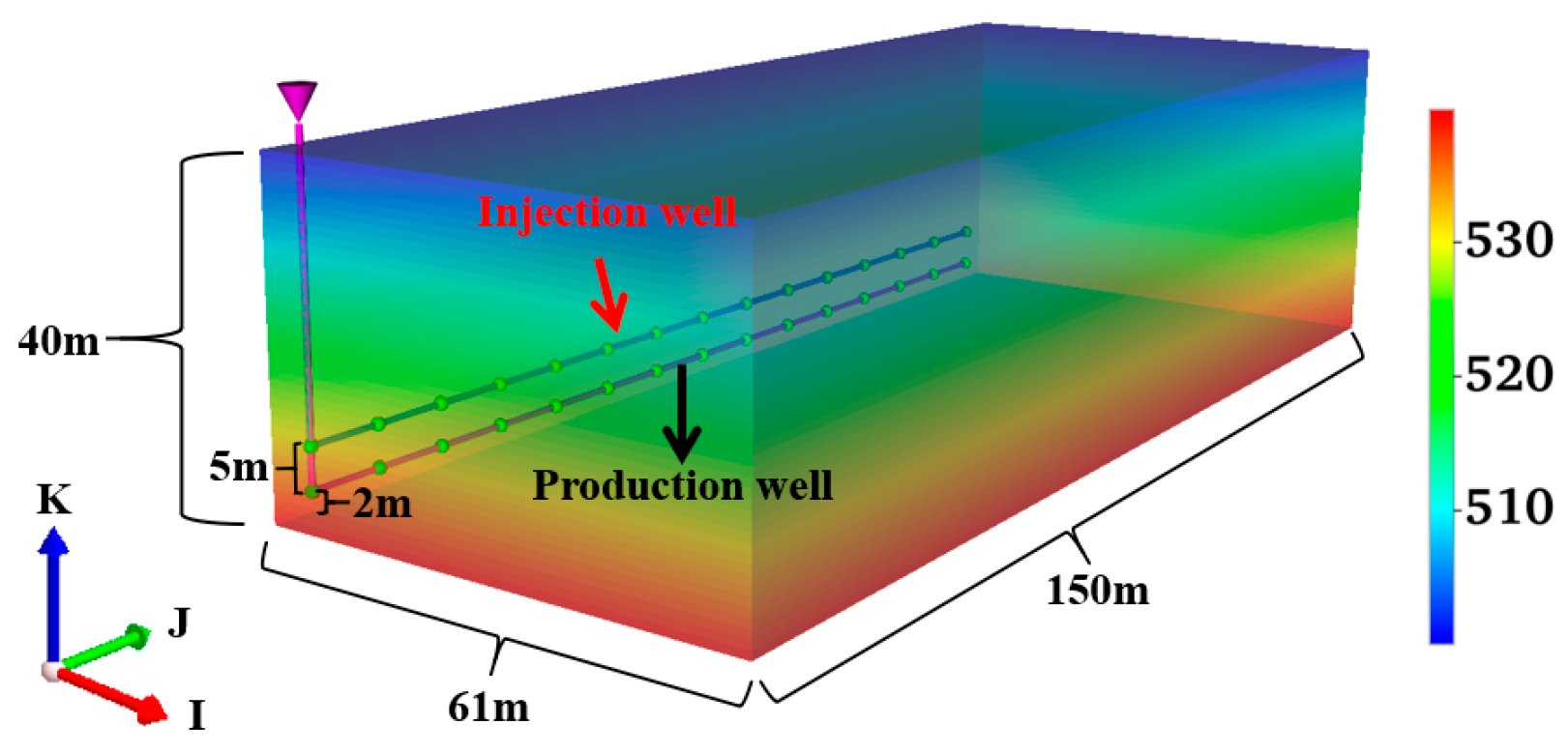
The numerical experiments were conducted in CMG-STARS (2022.10) to simulate SAGD and SAGP under various gas-injection strategies. A two-dimensional homogeneous model (61 × 1 × 40 cells) representing a 61 m × 150 m × 40 m reservoir (width × length × height) was used, consistent with the common practice for analyzing SAGD steam chamber growth and fingering behavior [
25]. A dual horizontal well pair was placed with a 5 m vertical separation; the producer was located 2 m above the reservoir base (
Figure 1). The Du-84 Block in the Liaohe Oilfield (Panjin, China), representative of thick, high-permeability, medium-to-fine sandstone heavy oil reservoirs developed by thermal methods, serves as an ideal benchmark for studying the mechanisms of SAGD/SAGP due to its long history of thermal production as a typical thick, extra-heavy oil reservoir [
22]. The conclusions of this study are therefore expected to apply mainly to extra-heavy oil reservoirs where SAGD/SAGP is feasible and where the reservoir thickness and permeability are of a similar order of magnitude [
26].
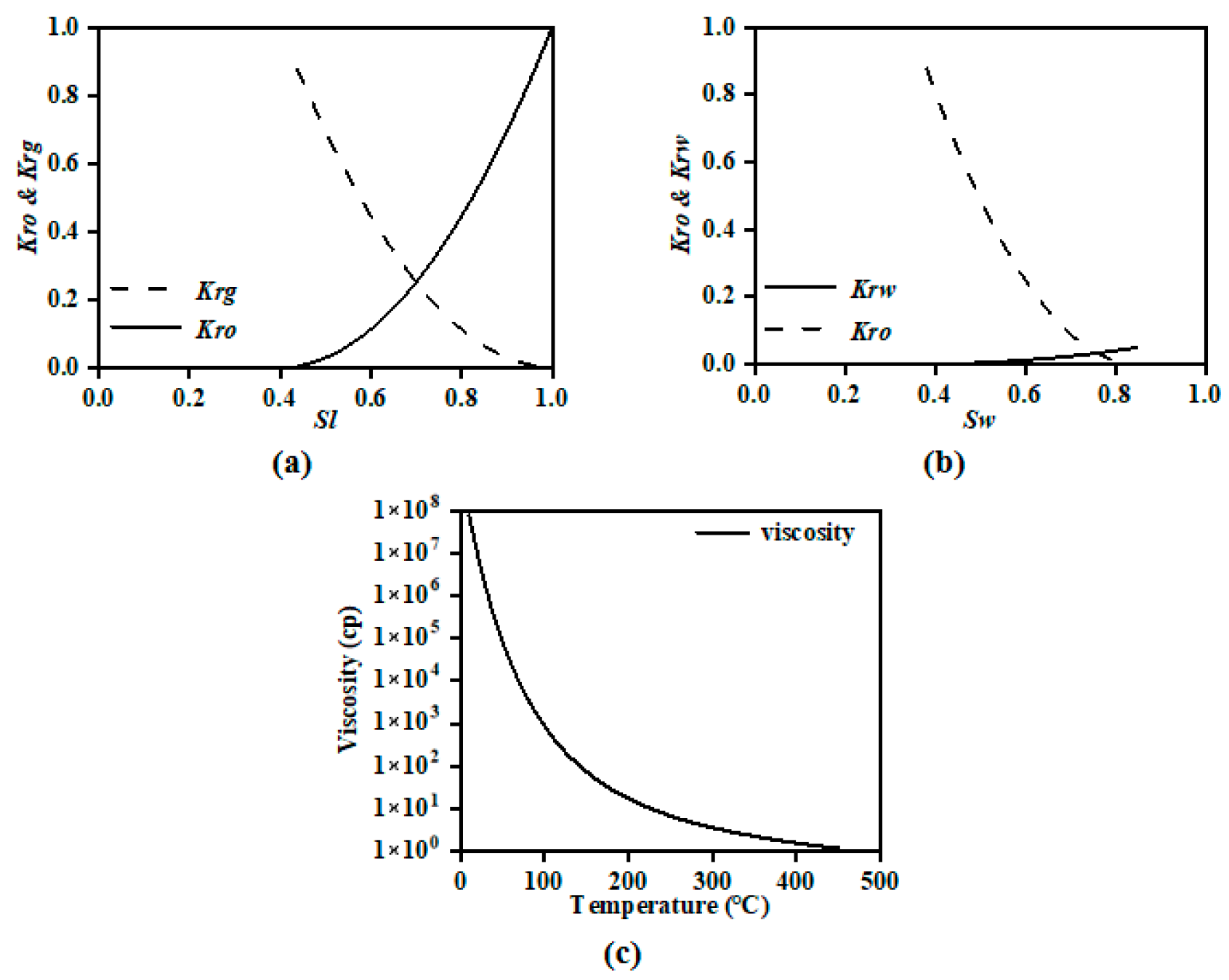
Table 1,
Table 2 and
Table 3 summarize the petrophysical and fluids properties, reflecting the Du-84 heavy oil reservoir (Liaohe Oilfield) [
22], with the relative permeability and viscosity–temperature relationships shown in
Figure 2.
To assess the impact of in situ gas on fingering, we adopted an equivalent dissolved-gas approach to represent aquathermolysis-driven gas generation. Because aquathermolysis primarily affects the flow by increasing gas saturation and promoting gas–liquid instabilities—hydrodynamically similar to dissolved-gas exsolution—we approximated its effect by increasing the initial dissolved-gas content rather than explicitly coupling the reaction kinetics. Because heavy oils and aquathermolysis products are too complex to fully characterize, we represented them using lumped pseudo-components based on the available experimental data. Given the extensive reaction network, we focused on the net non-condensable gas generation rather than detailed product speciation. As gas yields depend on the oil composition, mineralogy, and local temperature/pressure, the estimated in situ gas addition was treated as a representative value (or range), not a fixed constant. The base case contained 1 mol% CH
4 dissolved in oil; using the kinetic parameters from our Xinjiang heavy oil aquathermolysis experiments (gasification degree ≈ 0.32 wt%; Arrhenius parameters including Ea, CO
2 ≈ 18.19 kJ/mol) over 200–240 °C, we estimated an additional 0.65 mol% gas generation under SAGD conditions, yielding an initial dissolved-gas level of 1.65 mol% [
24]. Given the compositional similarity between the Xinjiang and Liaohe oils in the major heavy components, this parameter transfer was considered a reasonable approximation for capturing a realistic gas-fingering intensity.
Although aquathermolysis generates a mixed gas (e.g., CO2, CH4, and light hydrocarbons), we represented it using CH4 as a single-gas surrogate to reduce the computational cost and isolate the hydrodynamic effect of total NCG volume fraction on fingering. Component simplification is a common practice to reduce compositional complexity in reservoir simulation while preserving the dominant phase-behavior effects. This simplification captures the buoyancy and gas-override effects of NCG while not accounting for gas-specific solubility and transport differences.
The model uses adaptive time stepping, with a maximum time step of 10 days (DTMAX) and a well control update step of 0.01 days (DTWELL). The nonlinear system is solved using a Newton method (maximum 30 Newton cycles and 300 iterations) with a time step cutback control of 15 (NCUTS). A direct linear solver (PARASOL) is used, and convergence is checked using tolerances on pressure, saturation, and temperature (100, 0.1, and 10, respectively), together with an overall residual criterion. The outer-flow boundaries are closed, and the heat exchange with overburden/underburden is represented using the volumetric heat capacity and thermal conductivity specified in the heat-loss settings. The operating conditions follow field practice. After 4 months of steam circulation (inter-well temperature ≈ 90 °C), production is simulated for 20 years with steam injected at 240 °C and 90% quality at a constant cold-water-equivalent rate of 0.33 m
3/(day·m) [
27]. The producer bottom-hole pressure is fixed at 2 MPa with a 5 m
3/d condensate trim to maintain the sub-cool. A linear-log mixing rule is assumed for the oleic-phase components viscosities (
) [
28], as shown in Equation (1):
Methane is partitioned in both oleic and gaseous phases and the gas–liquid K-value is correlated using Equation (2):
where
P and
T are expressed in kPa and °C, respectively. Given the operating temperature (240 °C) and the pressure level around 2 MPa, CH
4 stays in the gas phase. The phase-behavior assumptions are as follows: heavy oil is non-volatile (with a near-zero K-value) and confined to the oleic phase [
29], while the water partitions between aqueous and gas phases with equilibrium governed by Henry’s law. Under these assumptions, using a fixed set of relative permeability curves is a common and reasonable way to isolate the hydrodynamic effect of NCG, namely how its saturation distribution changes the mobility contrast and fingering behavior [
9].
In the SAGP cases, methane was co-injected with steam or steam partially replaced by methane, simulating a variety of gas-addition strategies, including continuous co-injection and late-stage gas injection. The thermal model captured the full phase behavior (multi-component oil, water, and gas) and heat transfer, while neglecting capillarity and molecular diffusion for computational tractability [
25,
30]. The qualitative validation showed that the simulated multiphase flow, steam chamber evolution, and production trends agree with established theory and reported field observations [
9,
16,
17,
22,
31]. Although fingering is inherently local, the fine-grid resolution and inclusion of both in situ gas exsolution and injected NCG phase behavior provide a credible representation of the dominant fingering mechanisms.
3. Fingering Mechanisms in SAGD
This section investigates the fingering phenomena induced by the in situ gas during SAGD steam chamber development.
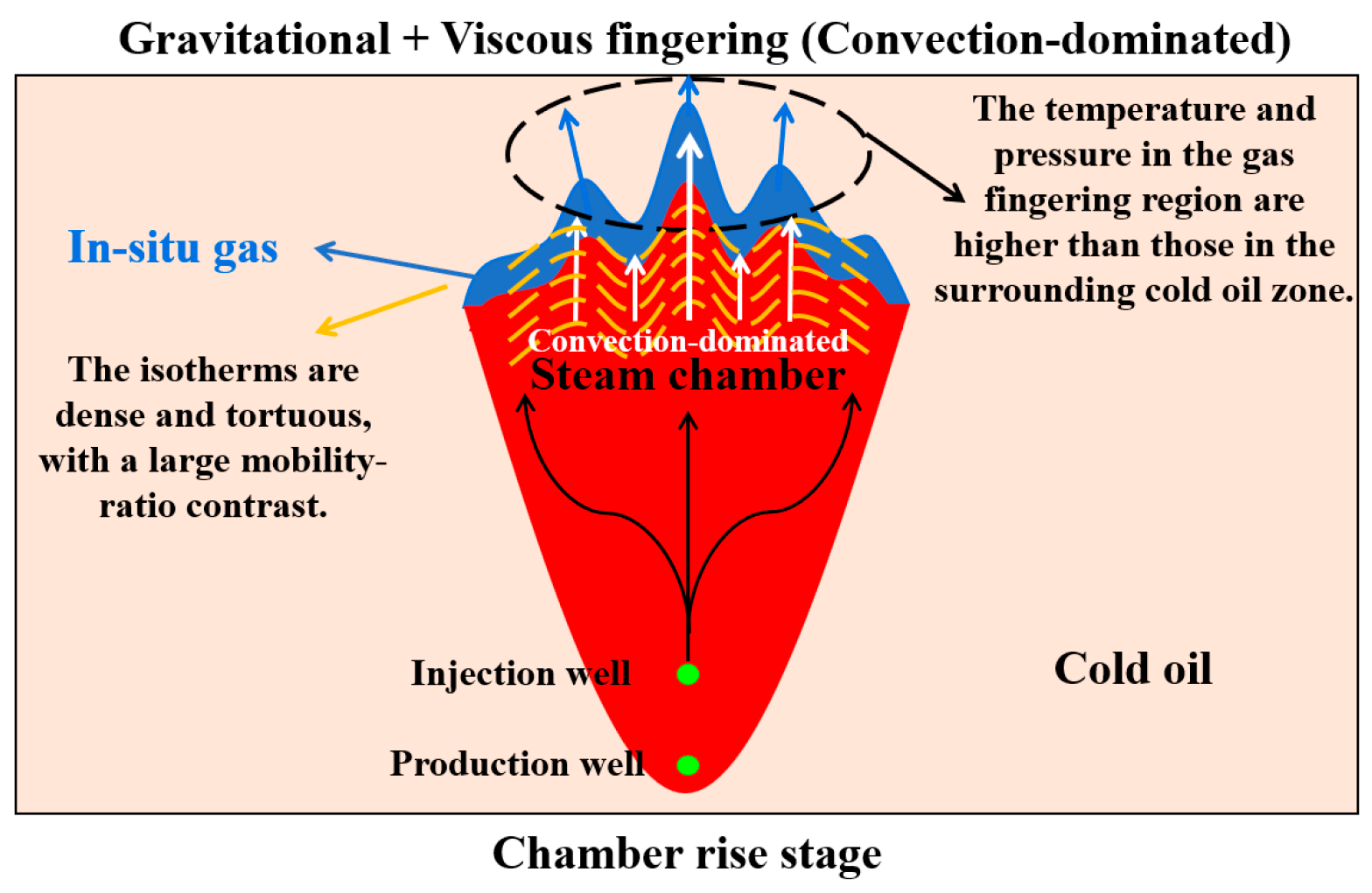
Figure 3 schematically illustrates the chamber-rise stage, and
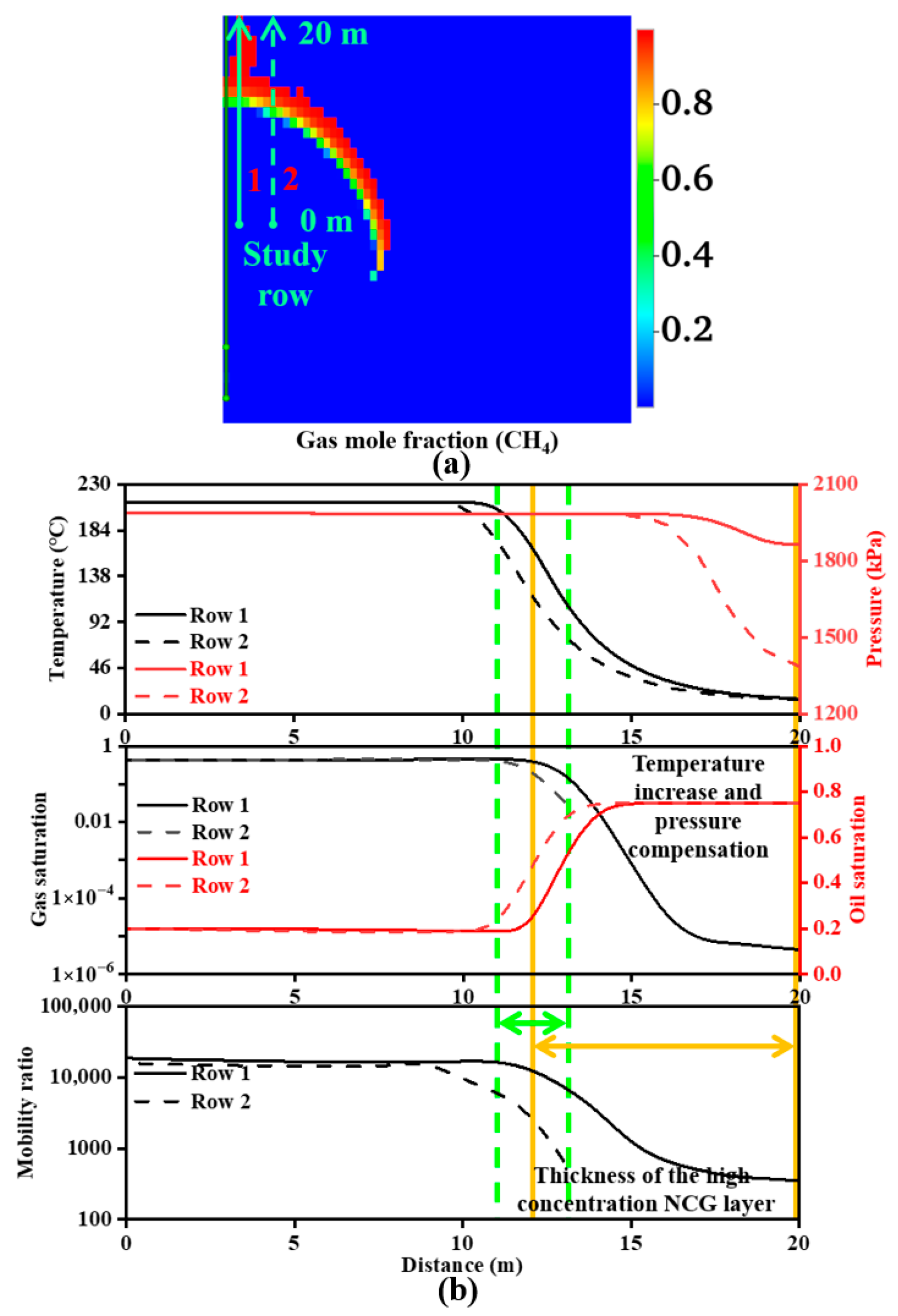
Figure 4 shows the simulation results. Early in chamber rise, the gas generated from the heated oil accumulates near the chamber top and forms buoyant bubbles and finger-like plumes that intrude upward into the colder oil, as shown in
Figure 4a. These features appear as narrow, high-gas-saturation vertical zones (~2–5 m wide, limited by the grid resolution) extending beyond the main steam zone, consistent with prior observations [
32,
33]. Row 1 and Row 2 denote two sampling lines (used to compare the flow/thermal behaviors at different positions along the chamber boundary, shown in
Figure 4b.
Figure 4b illustrates the associated temperature, pressure, saturation, and mobility ratio distributions. The thickness of the high-concentration NCG layer (defined as the distance between the vertical green dashed lines and the yellow solid line for Row 1 and Row 2, respectively) serves as a quantitative indicator for assessing the severity of fingering. Notably, the gas fingers are hotter than the surrounding oil, implying upward transport of latent heat and locally enhanced convective heating ahead of the front [
18]. Fingering also helps maintain pressure continuity along the chamber height, mitigating vertical pressure depletion in
Figure 4b [
10]. Inside the chamber, the gas–oil mobility ratio remains high, allowing the steam and gas to keep advancing. In contrast, at the boundary, the increased oil phase ratio reduces the mobility ratio. It is precisely due to the variation in the mobility ratios at different positions along the boundary that the instability of gas fingering between the gas and cold oil occurs. The mobility ratio is relatively high at each fingertip, reflecting low-viscosity gas displacing high-viscosity oil. This corresponds to a classic Saffman–Taylor instability: a lighter, more mobile gas displacing heavy oil, amplified by gravity [
12]. These results indicate that even in a homogeneous reservoir, the chamber top becomes corrugated and gas-override fingers increase the steam–oil interfacial area [
3,
14,
16].
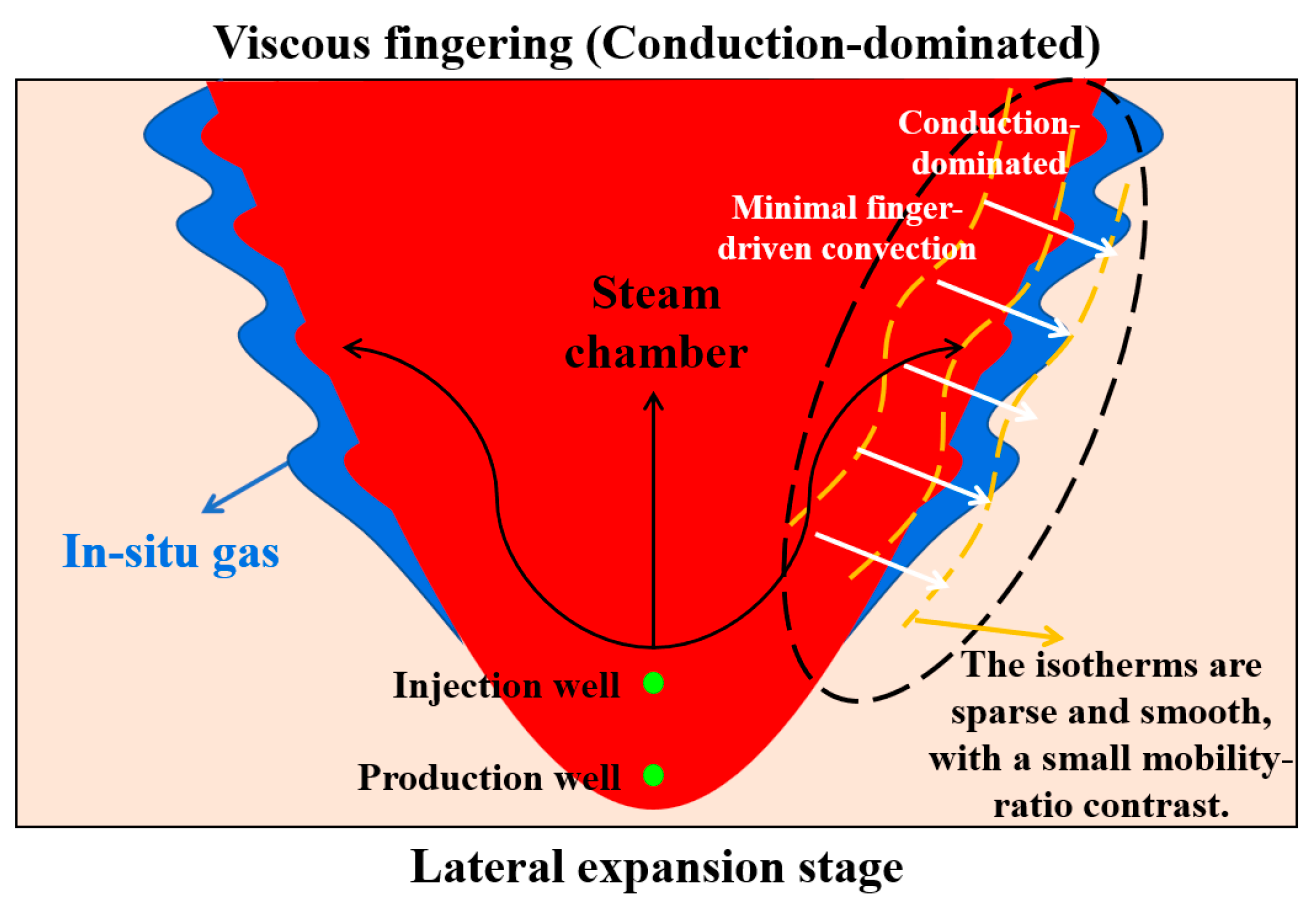
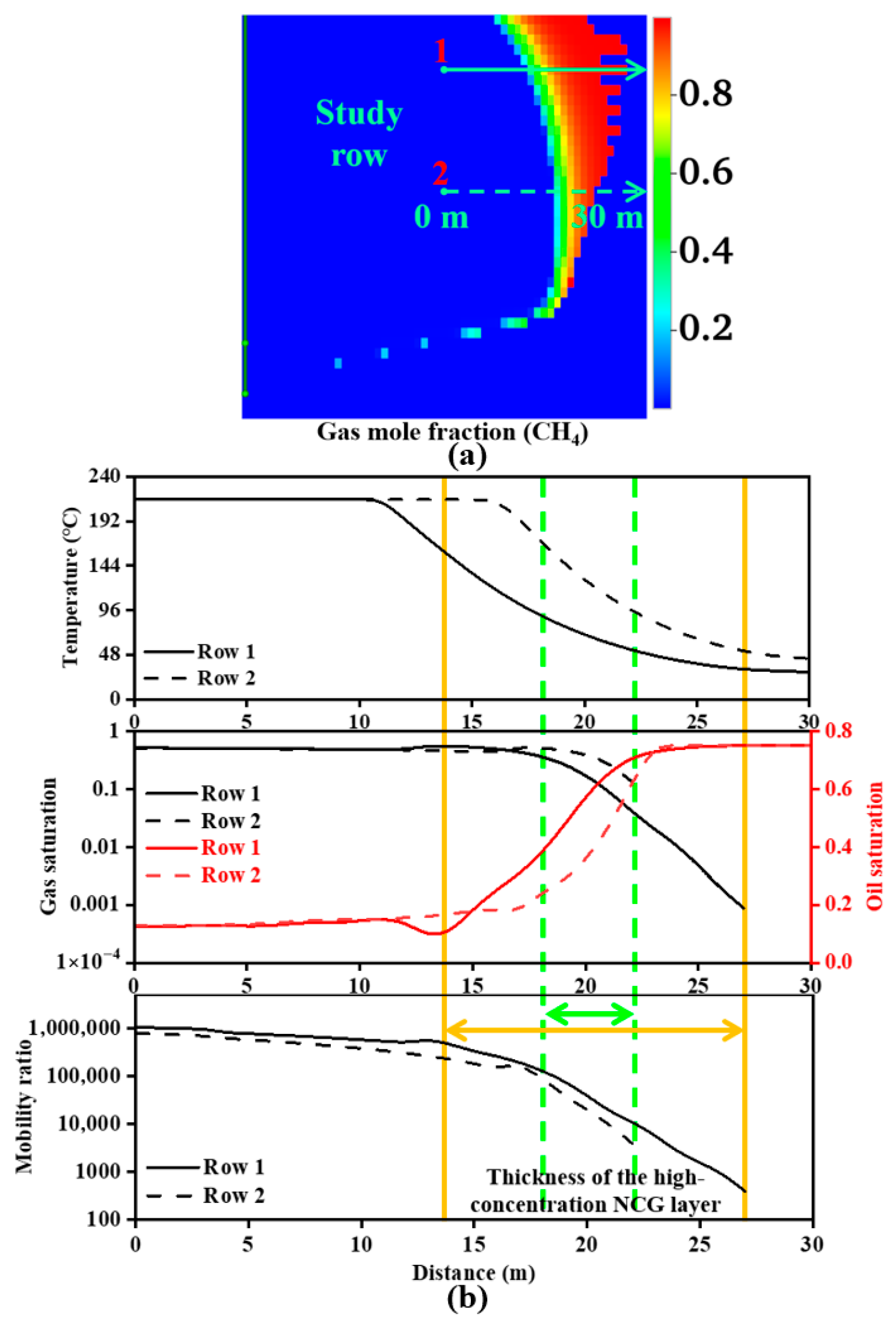
Figure 5 schematically illustrates the chamber lateral-expansion stage, and
Figure 6 shows the corresponding simulation results. Row 1 and Row 2 denote two sampling lines (used to compare the flow/thermal behaviors at different positions along the chamber boundary, shown in
Figure 6b. During this horizontal-expansion stage, the fingering instabilities become much less pronounced compared to the vertical rise stage. The lateral steam front advances more uniformly, with only minor undulations in gas saturation at the chamber edge [
17]. Consistent with
Figure 4b and
Figure 6b, the gas–oil mobility ratio contrast at the boundary is lower in the lateral stage, and the lateral temperature contours are smoother and extend farther outward. These features indicate conduction-dominated heat transfer along the side interface, with minimal convective, finger-driven transport relative to the early vertical phase.
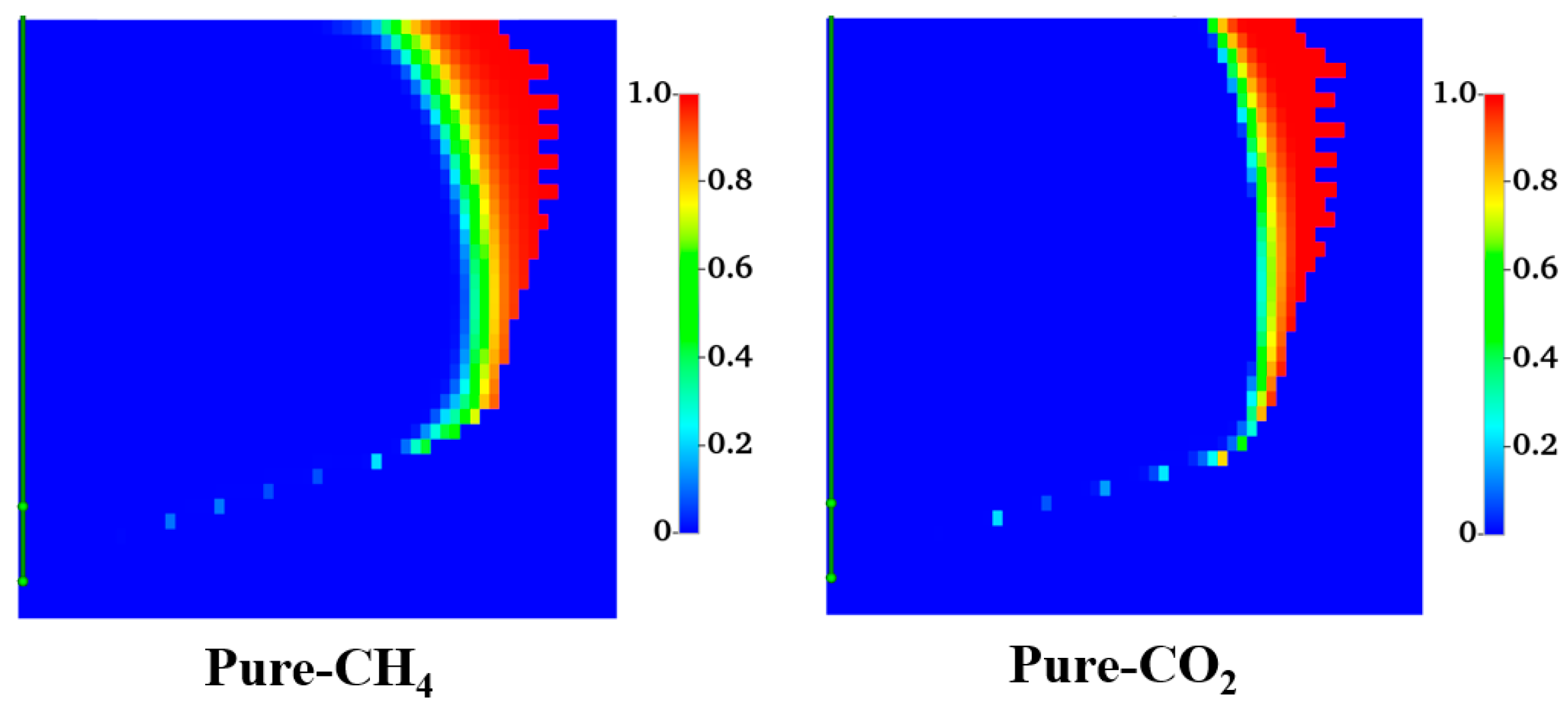
SAGD/SAGP is a long-duration thermal process. Although CO
2 and CH
4 have different solubilities and may affect the early timing of free-gas appearance, long-term fingering is governed primarily by the extent of the free-gas layer and mobility contrast, and solubility differences cause only minor quantitative changes [
30]. The CO
2 sensitivity check at the same total NCG fraction confirms that the qualitative trends and conclusions remain unchanged, as shown in
Figure 7.
In summary, the base case SAGD simulation with only in situ gas indicates that while in situ gas generation can create vertical gas-override fingers during the initial chamber rise (which may slightly accelerate the chamber reaching the formation top [
33]), this fingering effect diminishes once the chamber begins to spread laterally. At that point, the chamber boundary becomes fairly smooth and the process is primarily controlled by conductive heat transfer.
4. The Influence of Reservoir Heterogeneity and NCG Co-Injection on the Fingering Phenomenon
Building on the base SAGD behavior with in situ gas, this section examines how external NCG co-injection modifies steam chamber growth and fingering in a homogeneous reservoir.
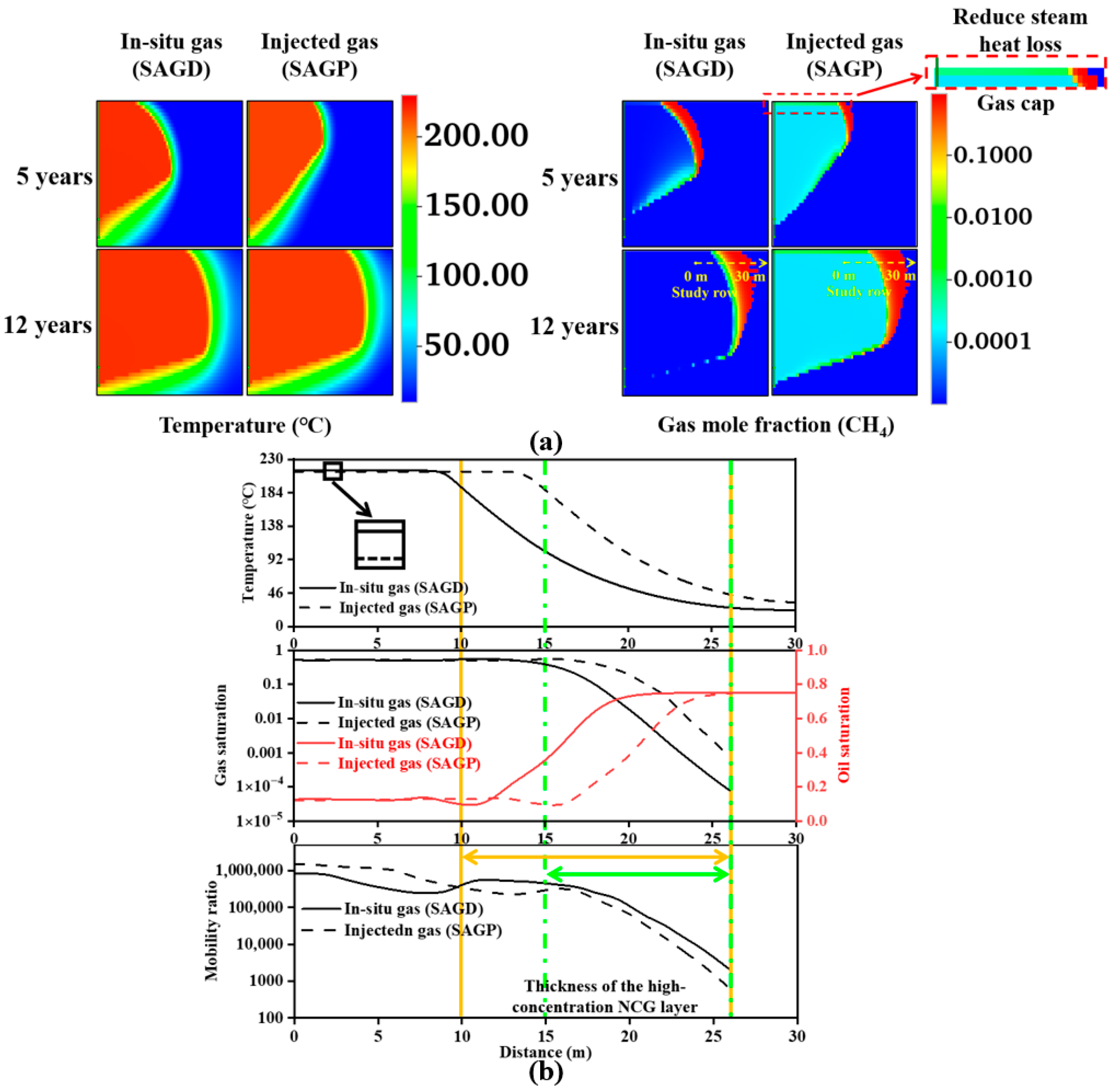
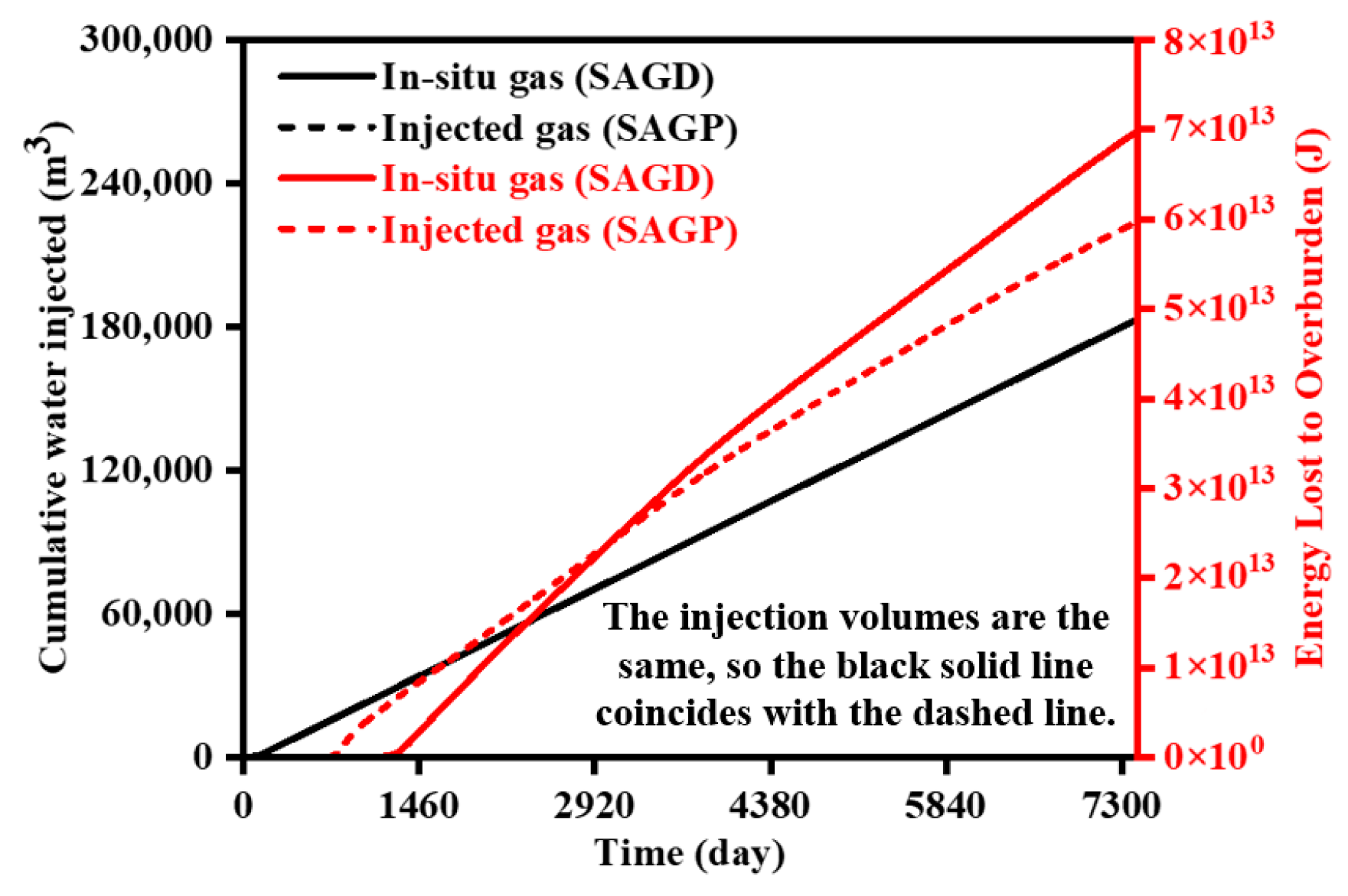
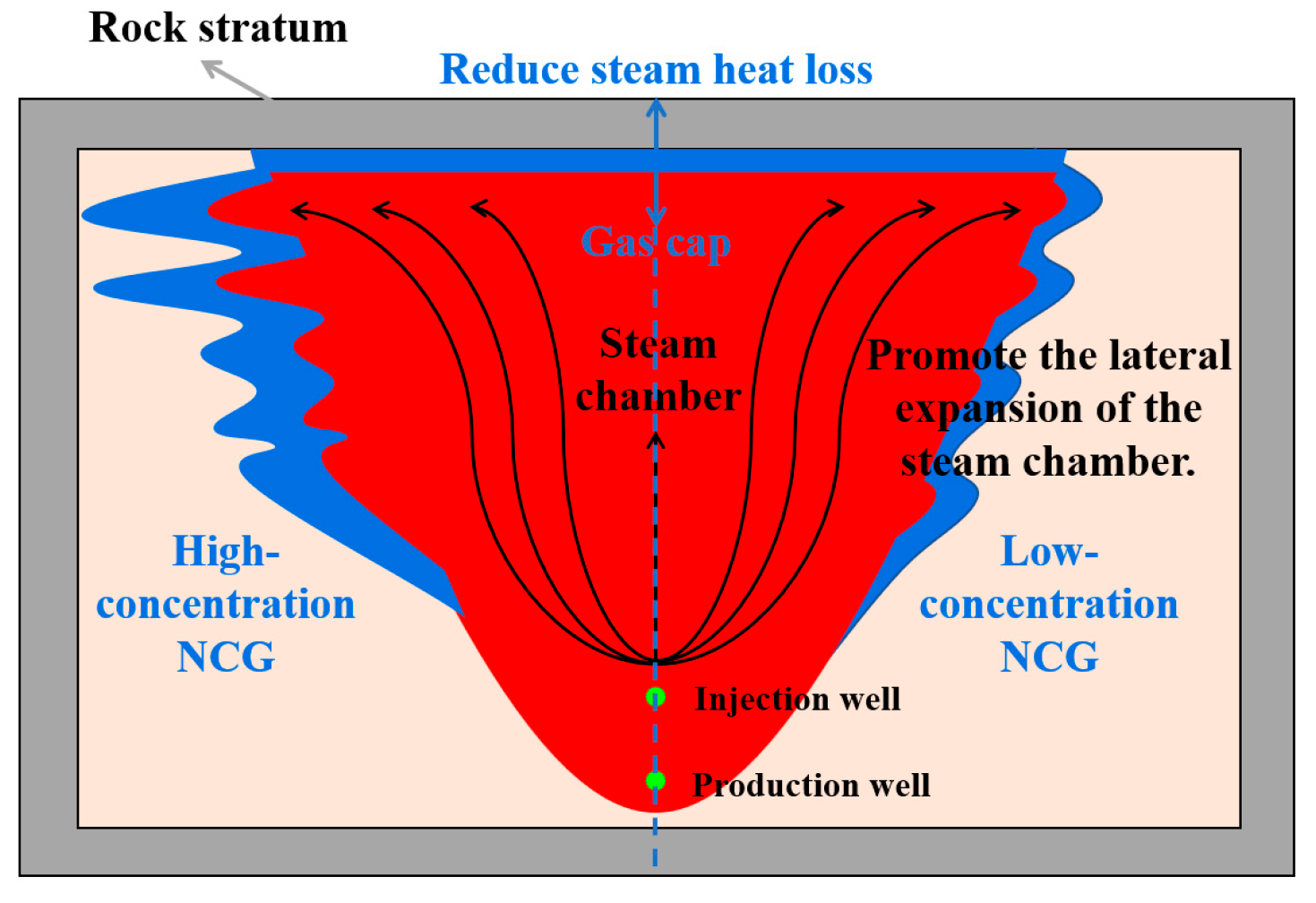
Figure 8a compares steam-only SAGD with SAGP (steam + 0.5 mol% methane) during lateral expansion. In SAGD, gradually generated in situ gas forms discrete, irregular gas fingers that patchily cap the chamber. In contrast, continuous NCG co-injection produces a uniform methane-rich gas cap along the chamber roof, suppressing small-scale fingering. As a result, the SAGP chamber top remains cooler due to reduced overburden heat loss (in
Figure 9) [
34,
35], and exhibits a lower gas–oil mobility ratio near the interface (
Figure 8b), improving the steam thermal efficiency and promoting lateral chamber growth [
36,
37].
Figure 8a shows that at 12 years, the steam chamber front in the SAGP case is closer to the reservoir’s lateral boundary. By contrast, in SAGD without NCG, the gas that evolves from the solution does so slowly and is distributed in isolated pockets rather than a continuous cap, resulting in a narrower steam chamber increase and more pronounced local fingers. These observations are consistent with the field and simulation reports in the literature [
15,
25,
33].
Although the SAGP gas cap enlarges the chamber volume and interfacial area, it can also suppress the minor fingering that would otherwise renew contact with the cold oil. As illustrated in
Figure 10, excessive NCG thickens the gas zone and can partially decouple steam from the oil interface, increasing the risk of local gas breakthrough and leaving some oil insufficiently heated. Therefore, moderate NCG co-injection tends to produce a broader, more stable chamber, whereas excessive gas becomes counterproductive by impairing heat delivery.
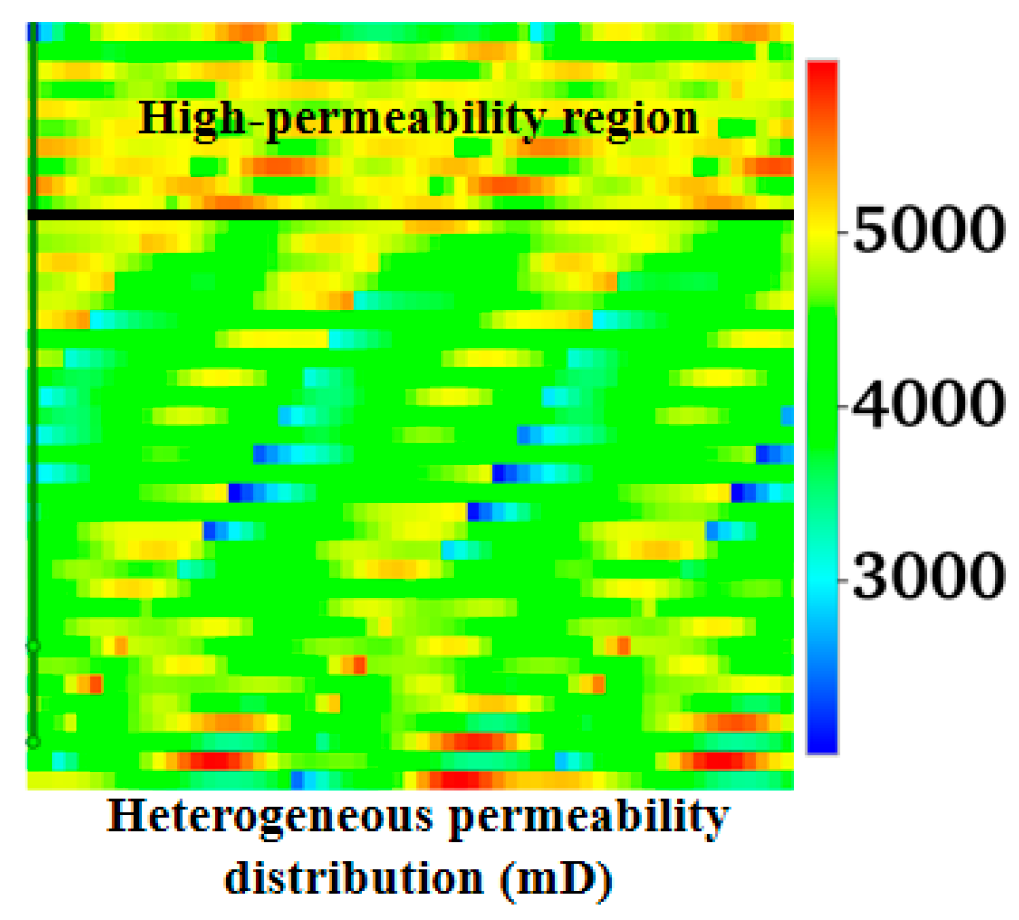
To examine how reservoir heterogeneity modulates fingering in SAGD/SAGP, we consider a heterogeneous permeability field (
Figure 11) with high-permeability streaks embedded in a lower-permeability matrix, which creates preferential flow paths that accelerate steam and gas transport and disrupt uniform chamber growth [
38]. The model also includes vertical–horizontal permeability anisotropy (
= 4.0 D,
= 3.0 D;
= 0.75). For Du-84-type extra-heavy oil reservoirs, the flow is mainly through the matrix, and fractures are not required for successful SAGD/SAGP operation [
39].
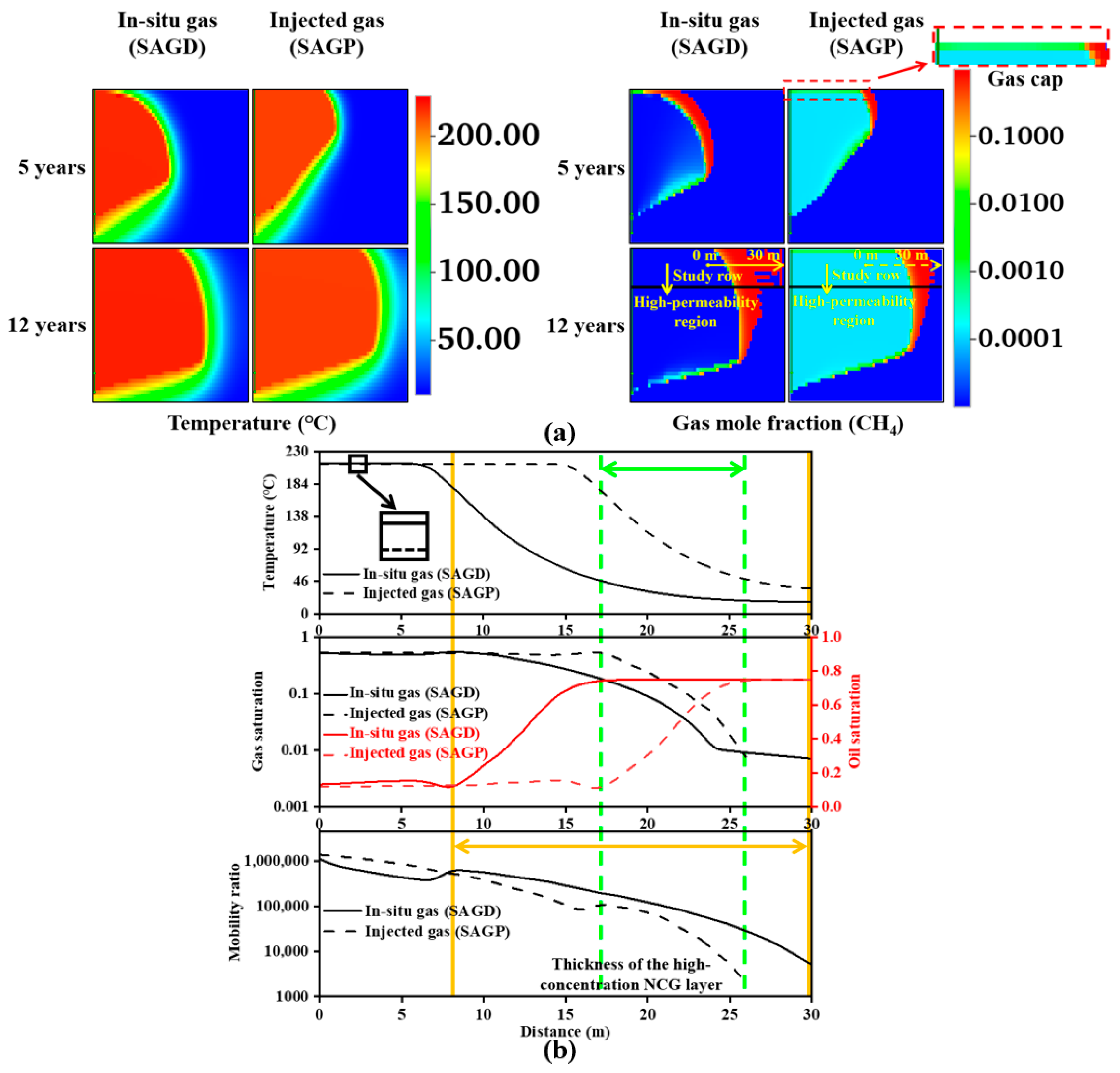
Figure 12a compares heterogeneous SAGD (steam only) with SAGP (steam + methane). In SAGD, gas can finger deeply into the high-k layers while the temperatures there remain low, indicating cold-gas bypass that leaves the oil unheated and reduces thermal efficiency. In contrast, SAGP produces a pressure-driven gas sweep that better couples the heat and mass transfer, allowing the steam and heat to spread more uniformly and sustain higher temperatures along a broader front, thereby improving the oil mobility. In the heterogeneous model, the gas saturation profile shows pronounced jumps wherever a high-permeability layer is encountered. Correspondingly, the local temperature in those high-perm zones remains low (in
Figure 12b). In contrast, the homogeneous case yields a mutually matching saturation and temperature profile along the same cross-section, with a smoother steam front (in
Figure 8b). These results confirm that heterogeneity amplifies the fingering severity [
40,
41] by providing thief zones that promote uneven chamber growth, premature breakthrough, and fragmented heat distribution.
The spatial variations in porosity and thermophysical properties can locally reshape the gas migration effect and thermal diffusivity and alter the balance between conductive and convective heat transfer [
42]. At the pore or molecular scale, advanced seepage mechanism research further demonstrates that gas transport pathways in confined porous structures are strongly controlled by the fluid state and interfacial effects as well as temperature, which can effectively modify gas mobility [
43,
44,
45]. In this study, the porosity and thermal physical properties of the reservoir were regarded as being uniform spatially, and the effects of fluid state and interfacial effects were not taken into account, with the aim of isolating how the permeability structure and operating conditions influence heat and mass coupling at the continuum scale.
In summary, in homogeneous reservoirs, moderate NCG co-injection forms a thin, methane-rich cap that stabilizes the chamber roof and promotes lateral growth, whereas excessive NCG thickens the gas zone and partially decouples steam from the oil interface. In heterogeneous reservoirs, permeability contrasts amplify gas fingering and cold-gas bypass in SAGD, while SAGP provides a more pressure-driven sweep that better couples the heat and mass transfer and mitigates detrimental bypass pathways.
5. Heat–Gas Overlap Index () and Y-Index-Based Diagnosis of Heat Transfer Regime and Fingering–Performance Linkage
To quantify how fingering affects the thermal efficiency and production performance, we introduce a dimensionless index to diagnose the heat transfer regimes and relate the fingering severity to production outcomes. Thermal recovery performance is strongly governed by fluid and rock thermophysical properties. Temperature-dependent viscosity controls drainage mobility and the propensity for viscous and thermo-viscous instability, while effective thermal conductivity and volumetric heat capacity (i.e., thermal diffusivity) govern the rate of heat penetration and energy storage in a porous matrix. Prior SAGD studies have shown that incorporating temperature-dependent thermal properties, such as thermal conductivity, heat capacity and rock density, can materially change the predicted chamber evolution and recovery trends [
46,
47]. The index is obtained from a local energy-transport balance, where the transient accumulation term is neglected. In this way, the index provides a quasi-steady indicator of the relative roles of convection and conduction near the chamber edge [
48,
49]. This is consistent with Butler’s SAGD framework, which treats chamber growth as a moving-boundary problem and assumes an approximately steady (or quasi-steady) temperature profile at the interface during the main drainage stage [
1]. Its expression is as shown in Equation (3):
where
is the volumetric heat capacity of the fluid–rock system (J·m
−3·K
−1),
is the Darcy velocity of the penetrating hot fluid (m·s
−1),
is the temperature (K),
is the distance (m), and
is the effective thermal conductivity (W·m
−1·K
−1).
By non-dimensionalizing the governing equation, a Péclet number is introduced as the key dimensionless parameter, expressed as Equation (4):
where
L is the characteristic length scale (i.e., chamber half-width or well spacing, m). The Péclet number represents the ratio of convective-to-conductive heat transfer.
Accordingly, we define the Y-index as a convective-to-conductive heat flux ratio as shown in Equation (5):
where
is the vertical permeability, which governs the upward fluid flow (m
2);
is the fluid viscosity (Pa·s);
represents the buoyancy pressure difference across the reservoir thickness (Pa);
is the reservoir thickness (m);
is the well spacing or chamber half-width (m);
is. the porosity (dimensionless); and
denotes the inverse thermal diffusivity (s·m
−2), i.e., porosity-scaled volumetric heat capacity divided by thermal conductivity.
Therefore, Y is non-negative and typically spans (10
−2–10) for SAGD/SAGP conditions: Y < 1 indicates a conduction-dominated regime with a relatively smooth front (mild fingering), Y ≈ 1 indicates mixed conduction–convection, and Y > 1 indicates convection-dominated heat transfer commonly associated with pronounced buoyant gas fingering/override. We perform the computations using the CMG-STARS (2022.10) outputs by extracting the local temperature-dependent properties (e.g., viscosity and thermal properties) and estimating the buoyancy driving term from the simulated density field. The Darcy velocity is then obtained from the permeability–viscosity and the buoyancy pressure difference. During the early chamber-rise stage, heat transfer can be strongly transient, so the Y-index should be used with caution. Accordingly, we use the Y-index primarily once the steam chamber edge is clearly established, when the boundary can be identified more reliably and the diagnosis better reflects the prevailing conformance behavior [
50].
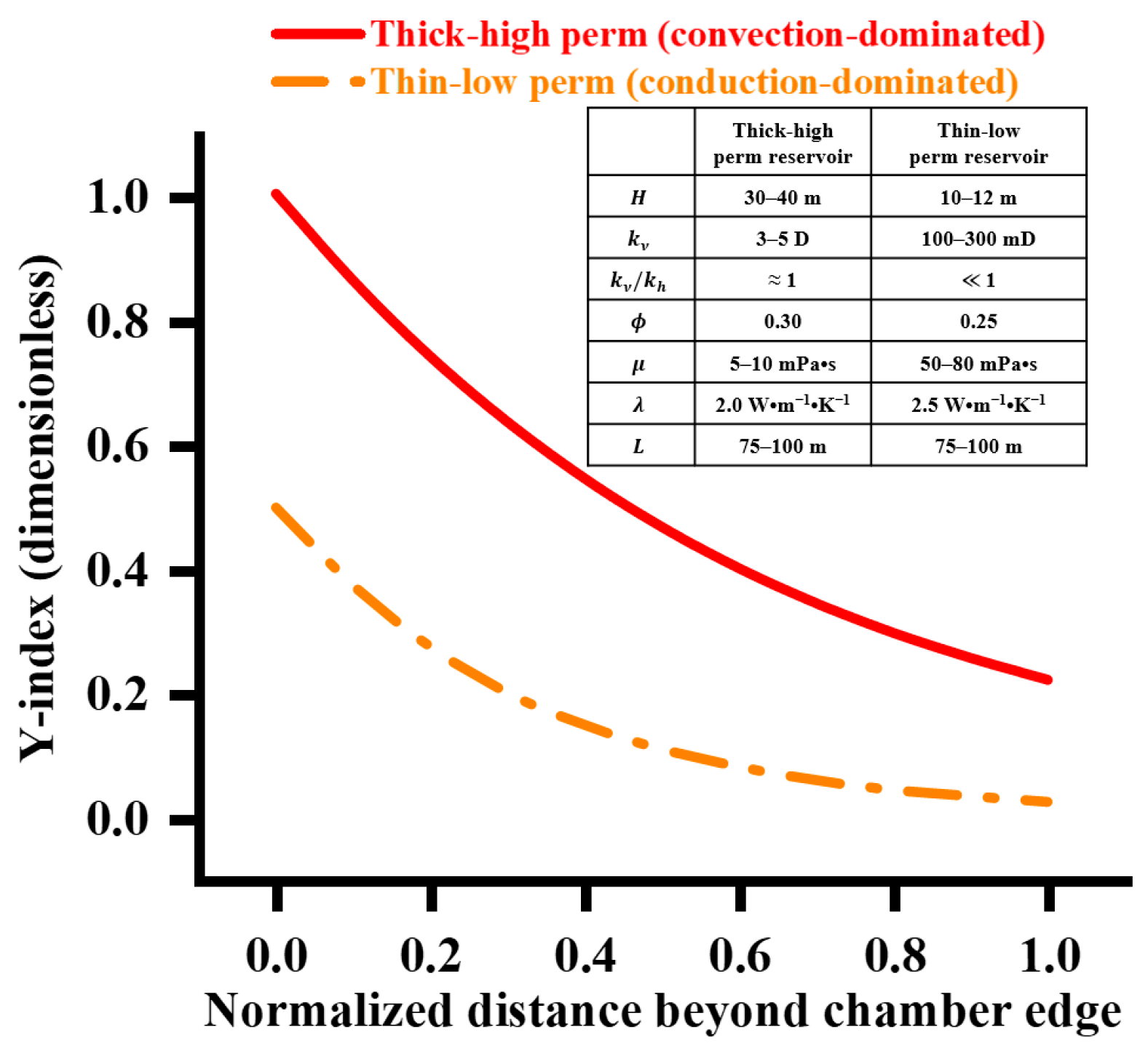
Given the Y-index expression, we can analyze how different reservoir environments exhibit distinct heat transfer behaviors. The Y-index increases with reservoir thickness, vertical permeability and the porosity–heat capacity term, but decreases with well spacing, viscosity, and thermal conductivity. A thicker pay and better vertical connectivity promote stronger convective heat transport and vertical fingering, whereas larger well spacing, higher viscosity, or more conductive rock favors conduction-dominated regimes. Substituting the representative values for a “thick, high permeability” reservoir and a “thin, low permeability” reservoir into the Y-index highlights the stark contrasts. As an illustrated example,
Figure 13 compares the Y-index for two extreme cases. In a thick, high-permeability reservoir with good vertical connectivity (
= 30–40 m;
= 3–5 D;
≈ 1;
= 0.3;
= 5–10 cp;
= 2 W·m
−1·K
−1;
= 75–100 m), the Y-index remains high near the steam chamber edge and decays gradually with distance, indicating convection-dominated heat transfer. By contrast, in a thin, low-permeability reservoir (
= 10–12 m;
= 0.1–0.3 D;
<< 1;
= 0.25;
= 50–80 cp;
= 2.5 W·m
−1·K
−1;
= 75–100 m), the Y-index is much lower at the interface and decays steeply, signifying a conduction-dominated regime. These contrasting profiles emphasize that the reservoir thickness, permeability anisotropy, and viscosity collectively dictate whether convection or conduction governs chamber-edge heating. A full-factorial sensitivity analysis across all reservoir types is beyond the scope of this study. Nonetheless, within the parameter range examined, the proposed indices provide a consistent basis for classifying the fingering severity and guiding operational adjustments.
From an operational perspective, the analysis highlights that thick, high-perm reservoirs can sustain strong convective fingering, suggesting a delayed or minimized NCG co-injection strategy to prevent compromising oil production rates; conversely, thin or tight reservoirs benefit from an earlier or modest NCG addition to conserve heat and enhance lateral steam chamber spread. Thus, the Y-index analysis reveals why a “one-size-fits-all” approach to NCG co-injection may fail. By evaluating the Y-index profile from either the simulation or field thermal data, engineers can diagnose the prevailing heat transfer mode around a chamber and adjust the timing and amount of NCG/SAGP accordingly. This extended model thus bridges the gap between heat transfer theory and field operation, guiding a more reservoir-specific optimization of SAGD/SAGP processes.
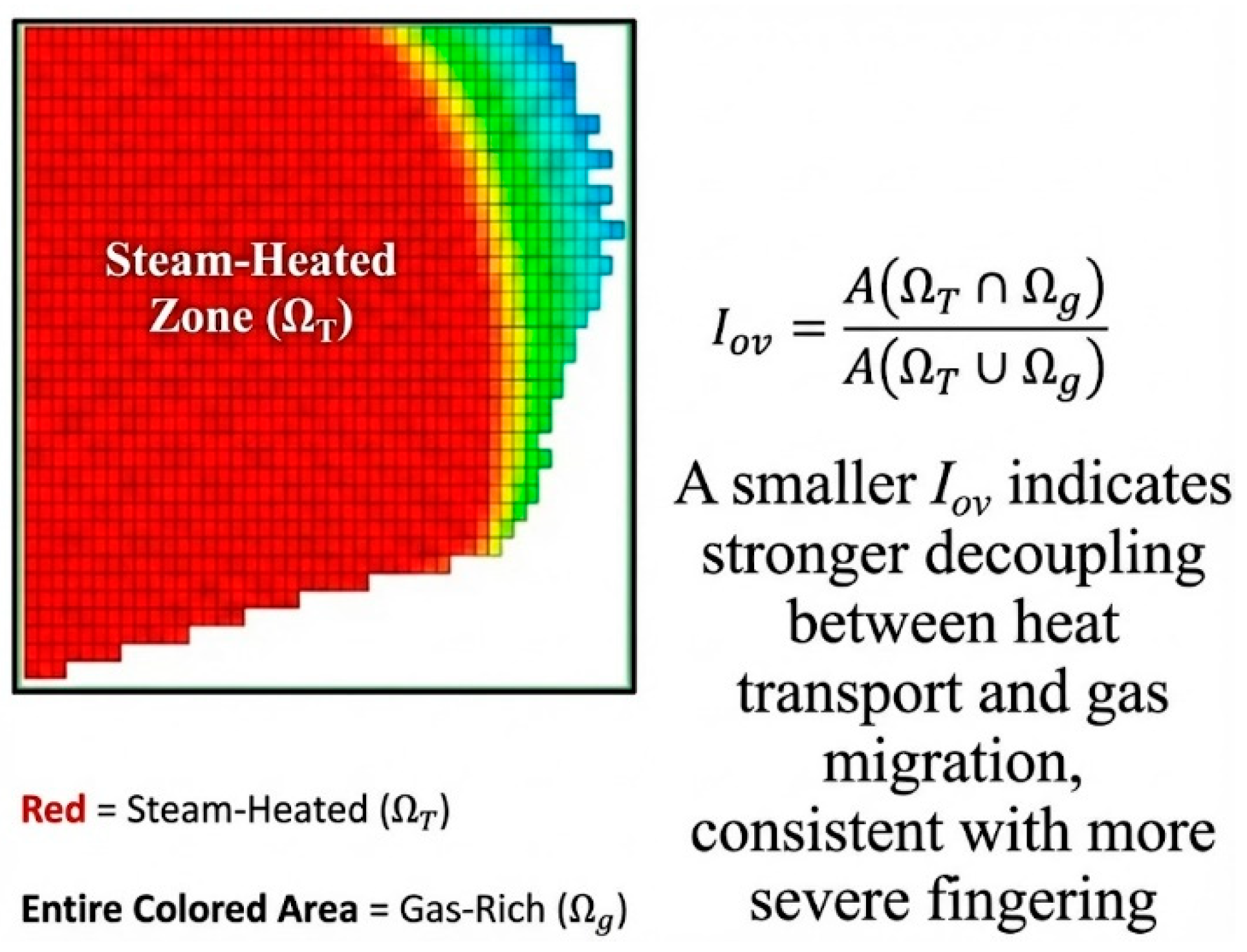
We quantify the fingering-induced non-uniformity by measuring the spatial match between the steam-heated zone and the gas-rich zone (
Figure 14). The steam-heated zone is defined as
, and the gas-rich zone is defined as
. In this study, we set
= 210 °C to robustly identify the steam-heated region under the operating pressure (~2 MPa), while allowing for a reduced steam partial pressure in SAGP, and we set
= 0.01 to capture the continuous gas pathways associated with fingering while filtering numerical traces of gas at the front. The area of each region can be obtained by setting the range through the “Property Filter” in the “CMG-Results (2022.10)” and then reading it using “Blocks displayed”. The overlap index (
) is defined as a dimensionless metric in Equation (6):
where A denotes the area of cells satisfying the stated criteria in this model. A larger
implies better overlap between the gas and heating (mild fingering), whereas a smaller
indicates worse overlap caused by gas channeling (severe fingering). In this work, we interpret
≥ 0.80 as mild fingering and
≤ 0.70 as severe fingering (0.70–0.80 as medium).
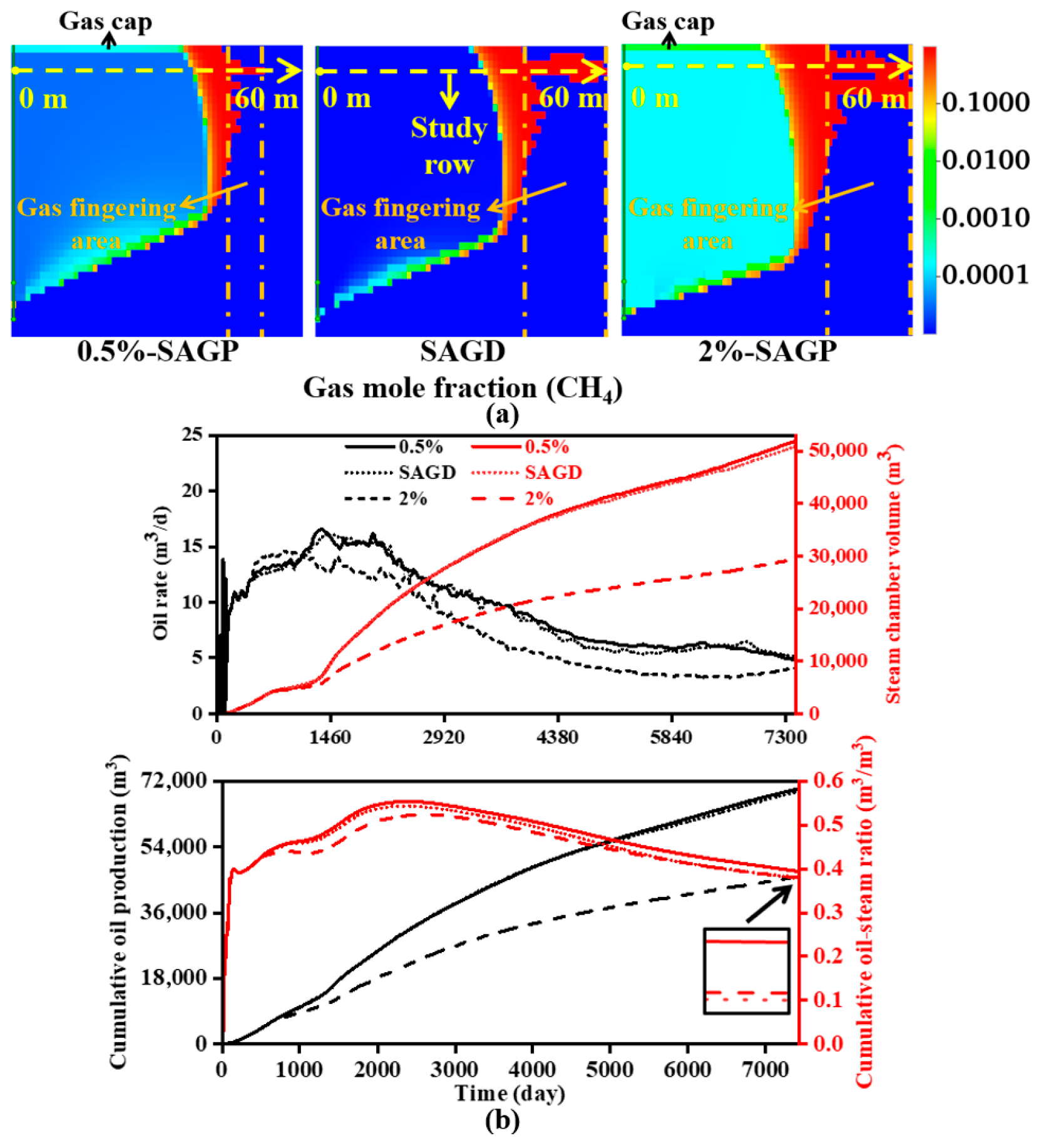
To validate these theoretical insights and determine when fingering helps or hurts SAGD performance, we simulated SAGD/SAGP in a heterogeneous reservoir while varying the methane co-injection (0%, 0.5%, and 2% NCG, mole fraction). The results, summarized in
Figure 15a, reveal a non-monotonic relationship between the fingering intensity and SAGD performance. With 0% NCG (SAGD), the chamber grows relatively uniformly, with only moderate fingering from the in situ gas, leading to stable but limited lateral expansion. With 2% NCG, a thick gas-override zone develops and expands the chamber footprint, but traps heat within the gas region. Consequently, although the 2% case yields a higher final OSR (
Figure 15b), it reduces the peak oil rate and delays ramp-up; the cumulative oil is 34% lower than with SAGD by the end of the forecast. In this convection-dominated, thick, high-permeability setting, lower NCG concentrations are therefore preferred. The 0.5% case represents mild fingering: a thin gas cap improves insulation and sweep while maintaining a relatively smooth front. It delivers the best overall outcome—the highest cumulative oil recovery among the three—and improves the OSR relative to SAGD (+3.6%), with an almost unchanged peak oil rate. The 0.5% NCG case shows a larger
(≈0.85), indicating better heat–gas coupling (mild fingering), which is consistent with improved sweep and the best production/OSR performance. In contrast, the 2% NCG case exhibits a smaller
(≈0.68), implying stronger channeling where the gas migrates ahead of effective heating, consistent with a reduced peak oil rate and lower cumulative oil. Sensitivity checks varying
by ±10 °C and
within 0.005–0.02 do not change the ranking of cases or the conclusions.
Overall, mild fingering induced by optimized NCG can enhance heat distribution and recovery, whereas strong fingering from excessive NCG promotes early gas override and heat bypass. The heat–gas overlap index () and Y-index can be used as practical tools to gauge and thus manage this balance.
6. SAGP Production Optimization: Timing and Concentration Window
Building on the understanding of fingering mechanisms and the impact on production, we explore SAGP optimization by tuning NCG injection timing and concentration across SAGD development stages. A staged injection strategy is critical because phase-specific adjustments can improve steam utilization, enhance recovery efficiency, and increase ultimate oil recovery [
11,
51]. Such phasing also addresses key SAGD limitations, including mid-stage production bottlenecks and late-stage efficiency losses associated with high water cut, enabling more effective control over the full SAGD lifecycle.
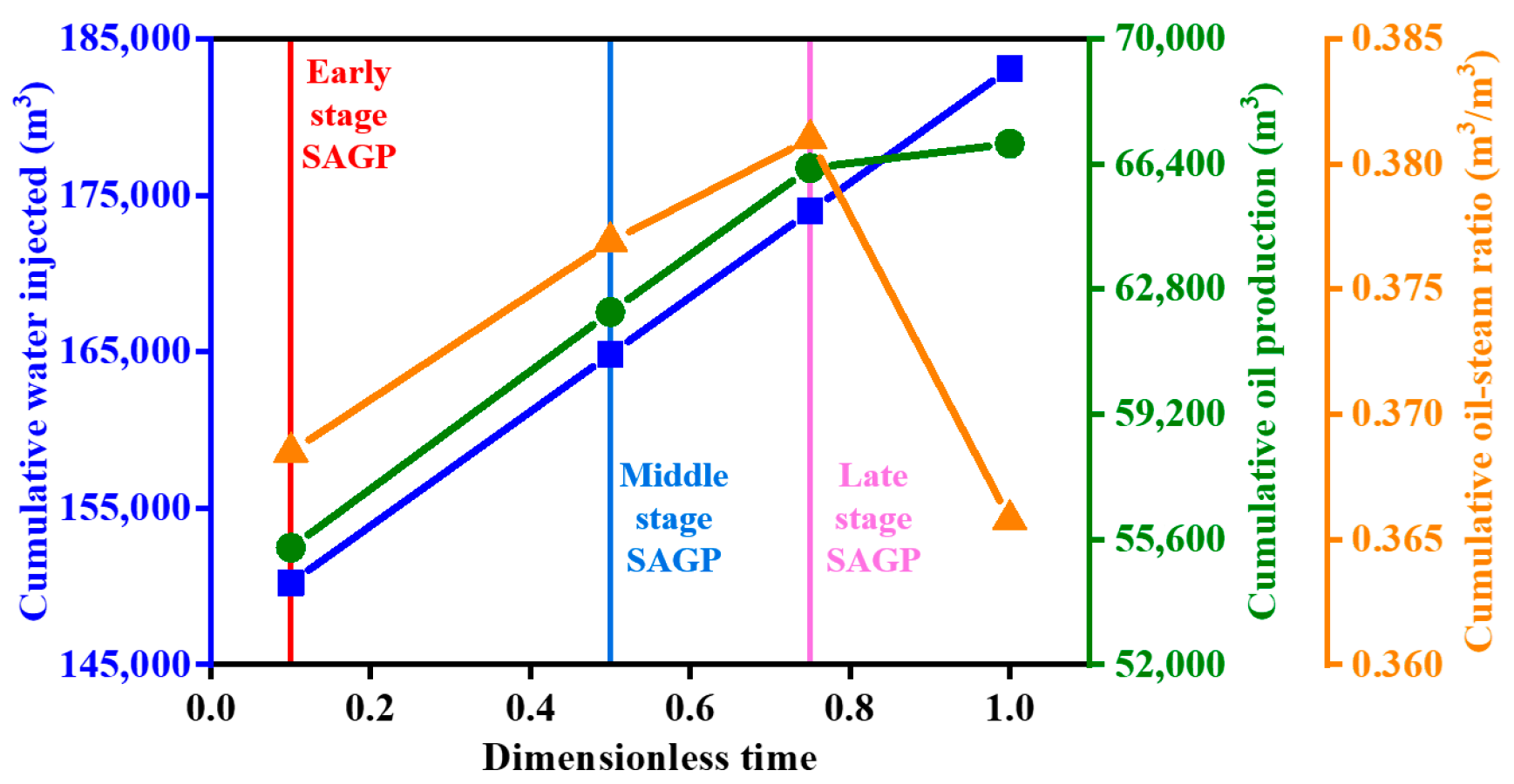
Figure 16 evaluates NCG timing by comparing three switch points from SAGD to SAGP: early, middle, and late stage. In this work, “energy efficiency” refers to steam-use (thermal) efficiency quantified by OSR (cumulative oil produced per cumulative steam injected, cold-water equivalent). OSR improvements do not necessarily imply economic optimality, as project economics depend on site-specific factors (e.g., energy and oil prices, facility constraints, and emissions policies) that are beyond the scope of this study. Accordingly, “optimization” is defined in an OSR-focused sense and is interpreted alongside oil-rate and cumulative-oil responses to reflect trade-offs. The results show that switching too early impedes chamber growth and lowers cumulative OSR: when the chamber is still immature, added gas dilutes steam and weakens the driving force, limiting upward expansion. In contrast, switching very late substantially increases OSR because a mature, laterally expanded chamber can be effectively capped to reduce heat loss with minimal impact on ongoing oil rates. Because the chamber-rise period is short relative to lateral expansion, fingering control is most relevant during lateral growth. Accordingly, an effective strategy is to initiate NCG injection in mid-stage (once lateral spreading begins) to modulate fingering and enhance oil rates, and then increase gas co-injection in late stages to further improve OSR [
52,
53]. Importantly, the purpose of this study is not to pursue short-term, small-scale oil production increases, but rather to maximize long-term recovery and steam utilization efficiency.
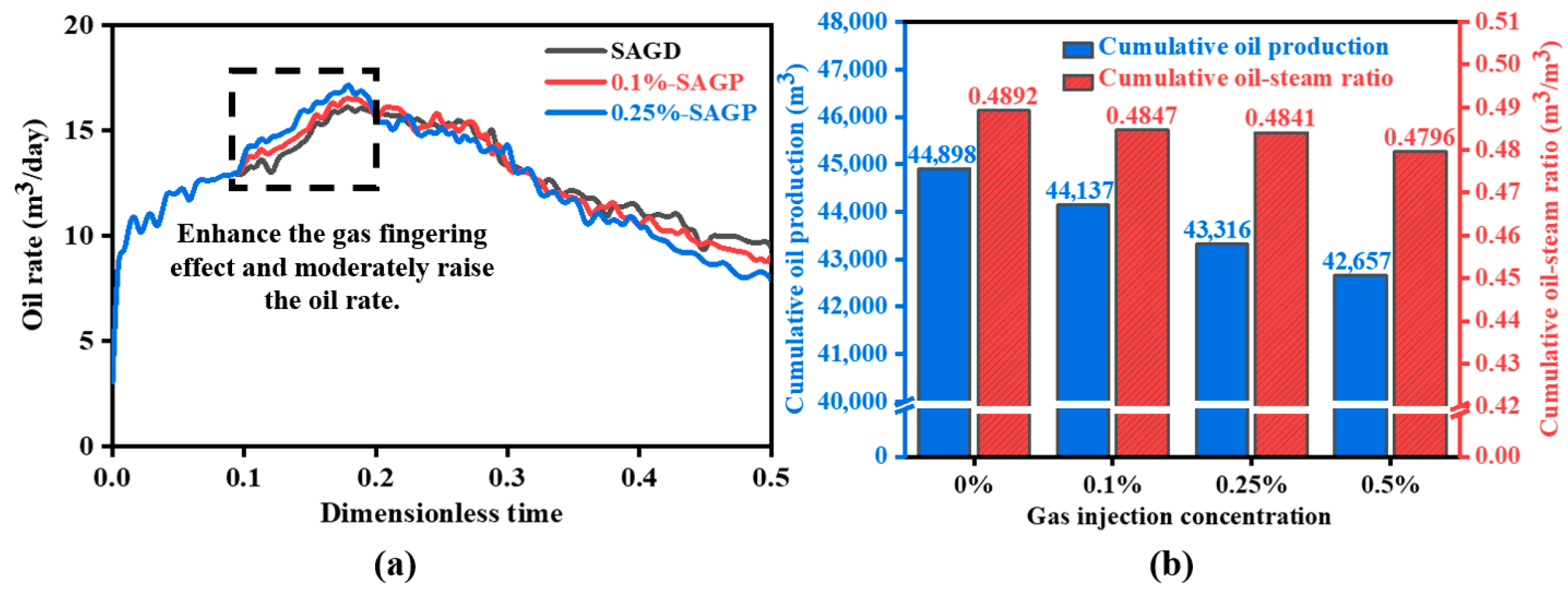
Figure 17 further examines the early-stage NCG effects by showing the oil rate, cumulative oil production and OSR for low methane fractions injected from the initial chamber-rise stage. Low gas concentrations (0.1–0.25 mol%) can temporarily increase the local mobility ratio in the override zone, intensify gas fingering, and moderately raise the oil rate. However, because the rise stage is short and transient, the injected gas does not redistribute effectively; instead, it accumulates near the chamber apex, thickens the gas cap, and impedes subsequent steam propagation. Consequently, when early gas injection continues into the mid-stage, all the tested concentrations yield lower oil production and a lower cumulative OSR than conventional SAGD (
Figure 17b), with worsening performance at higher gas fractions. The early-stage uplift is transient, and the net long-term effect is negative for both cumulative oil production and the cumulative OSR. Therefore, to maximize recovery and steam utilization efficiency, NCG co-injection should be avoided during the early stage.
A late switch to SAGP, after the chamber is well developed, typically delivers larger incremental recovery and OSR gains [
54], consistent with Zhao et al. [
20], who showed late-stage N
2 injection enhanced recovery by creating extra sweep area. However, to capture the benefits earlier without sacrificing production, a mid-stage injection offers a better balance.
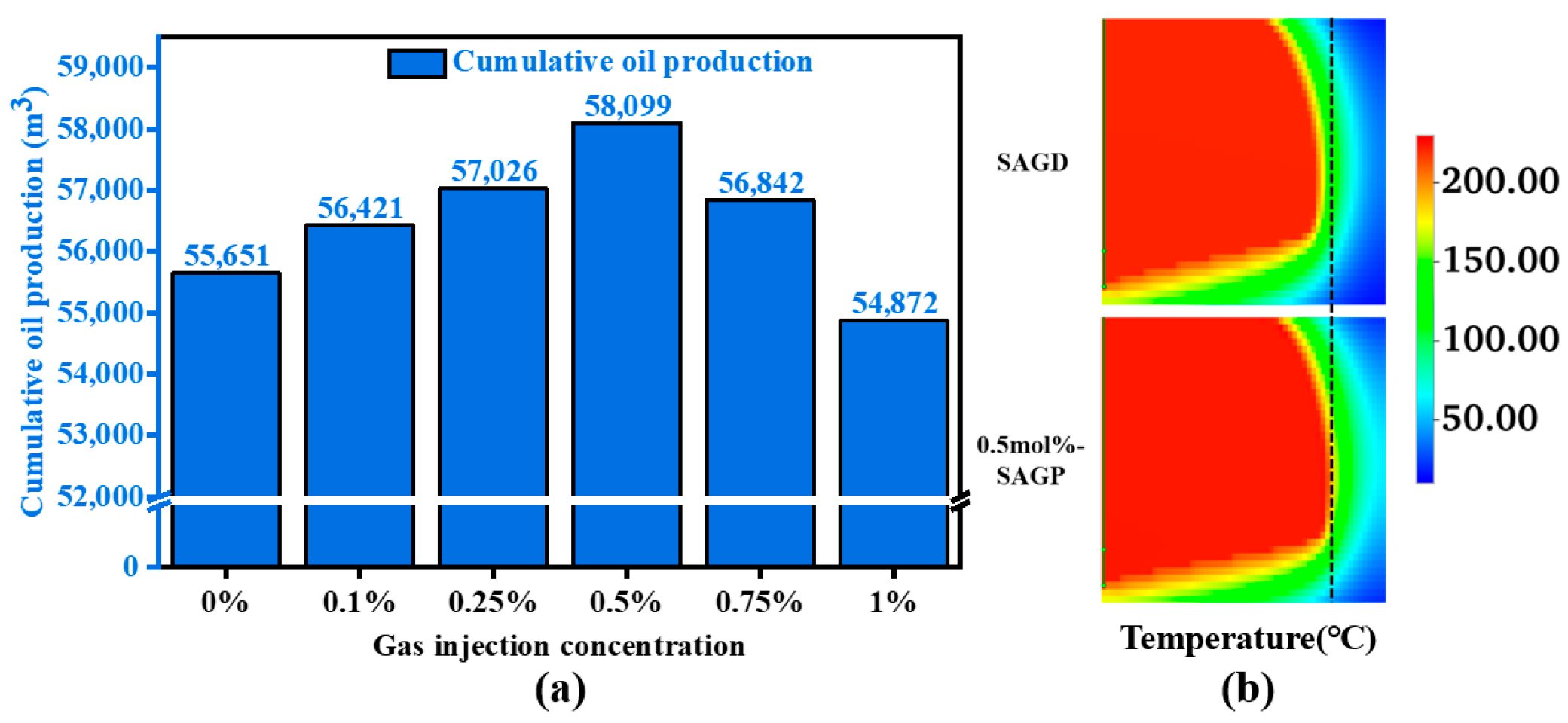
Figure 18 evaluates the methane fractions injected at mid-stage. At this stage, the mobility ratio at the gas accumulation front remains relatively high, making fingering control important for improving the latent heat utilization, sustaining chamber propagation, and increasing the oil rate. Consistent with
Figure 15b, low-to-moderate methane fractions (~0.1–0.5%) maximize the oil output per unit steam by suppressing excessive gas fingering. When the NCG injection concentration reaches 0.5%, cumulative oil production increases by ~4.4% compared to conventional SAGD. This improvement is attributed to a thinner gas cap and a modest reduction in the mobility ratio at the leading edge, which stabilizes the front, promotes more uniform steam advance, and concentrates the latent heat release near the chamber interface rather than within an extensive gas zone. In contrast, a very low NCG yields a negligible improvement, whereas high concentrations (>1%) thicken the gas cap and begin to reduce production. Overall, the mid-stage “sweet spot” is ~0.5 mol%: sufficient to insulate the chamber top and support lateral expansion, but insufficient to trigger strong override fingering that degrades the thermal effectiveness.
After improving the mid-stage performance by regulating fingering, late-stage optimization becomes important for maximizing the energy efficiency. In late-stage SAGD, NCG co-injection can further reduce the oil viscosity and form an insulating top layer that limits heat loss [
9,
22]; therefore, the primary objective shifts to increasing the OSR by reducing the steam input.
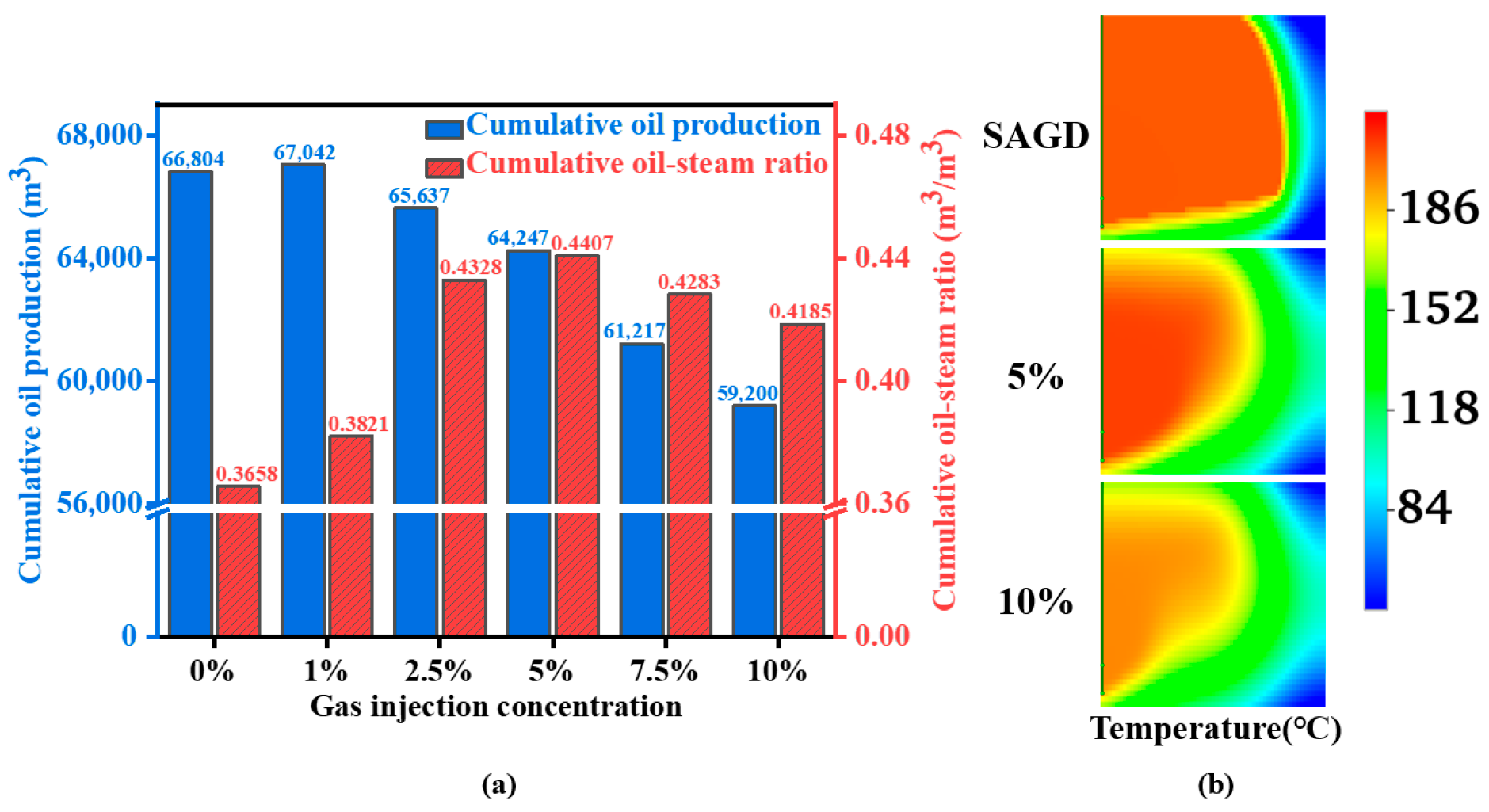
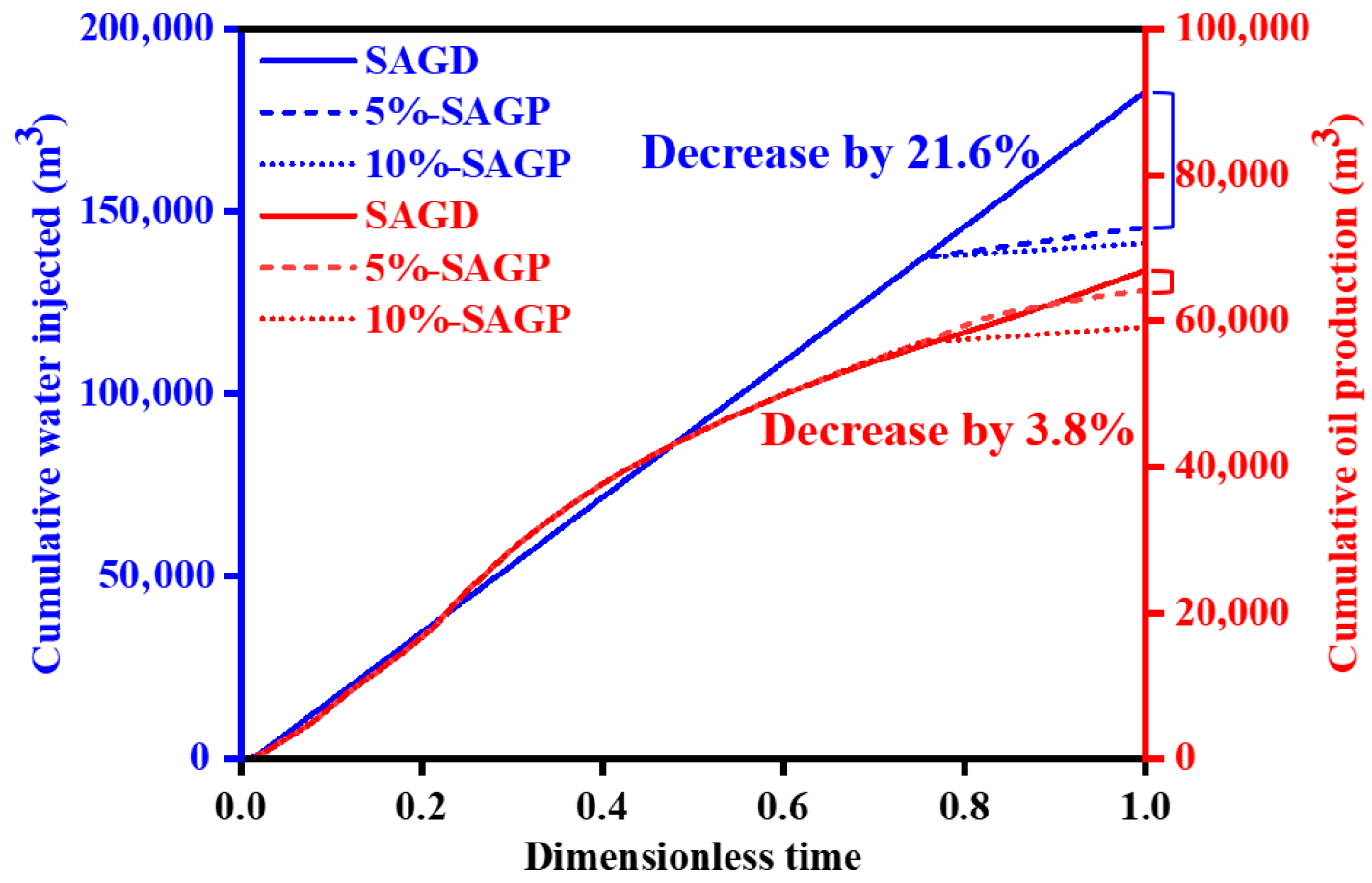
Figure 19 shows that as the NCG concentration increases, the cumulative oil and OSR exhibit a non-monotonic trend (increase then decline). A low late-stage fraction (1%) provides only minor gains (+0.35% cumulative oil; ~+4.5% OSR) relative to steam-only operation, whereas higher fractions reduce performance: at 7.5%, the OSR drops from its peak and the cumulative oil declines. As illustrated in
Figure 20, the excessive gas (e.g., 10%) expands rapidly in the chamber, impedes steam penetration, and limits reservoir heating, leading to a sharp production drop. Overall, ~5% NCG is optimal for late-stage operation: steam consumption decreases by ~21.6% versus SAGD, cumulative oil decreases only ~3.8%, and the OSR increases by ~20.5% [
55], representing a favorable trade-off between thermal efficiency and recovery.
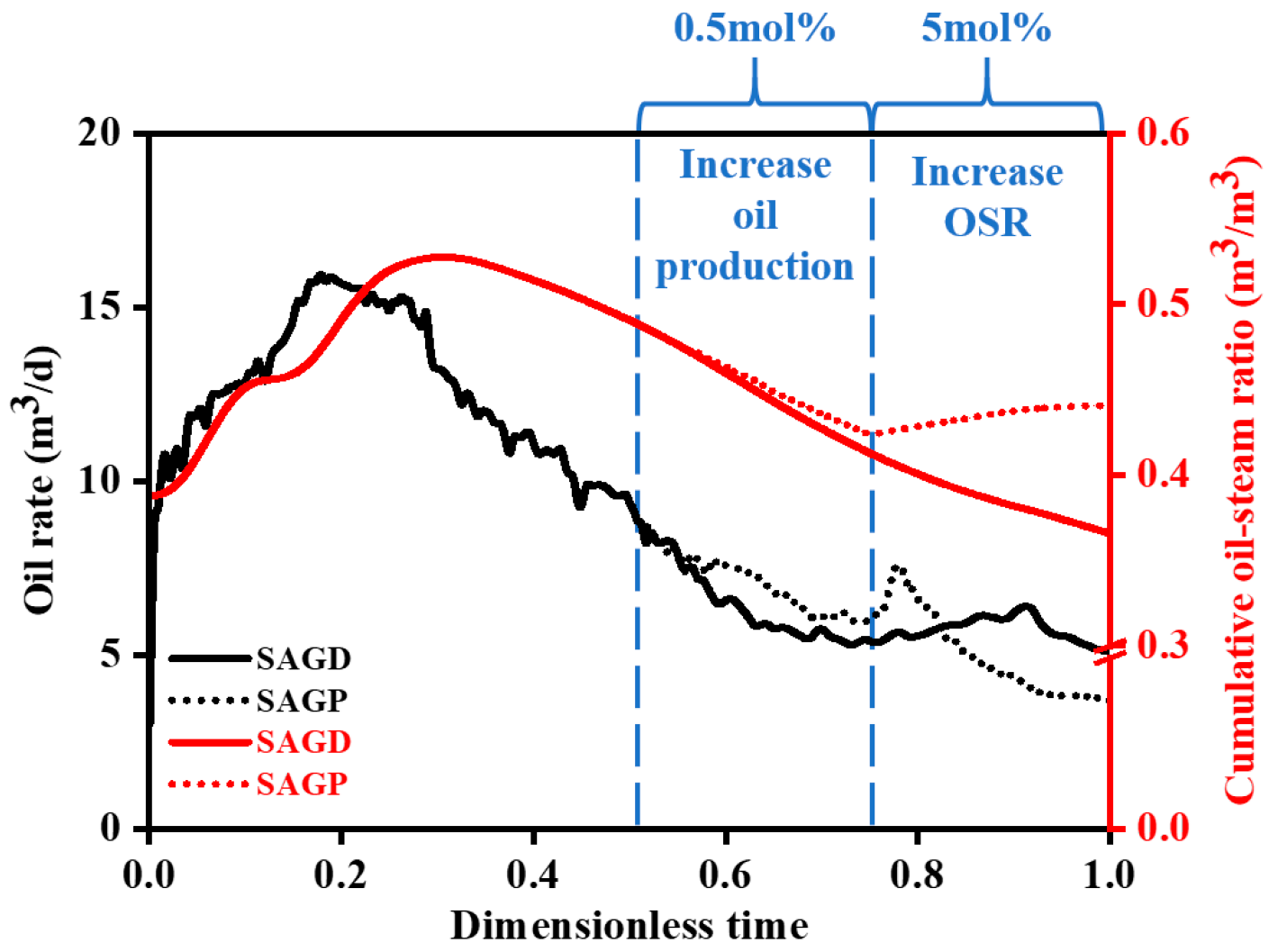
Figure 21 provides a final comparison that aggregates these findings. It contrasts an optimized SAGP strategy against a pure SAGD baseline. The optimized SAGP yields markedly higher energy efficiency while maintaining competitive oil rates. In essence, the simulations suggest that SAGP should be applied only after the steam chamber is well established, and then with a modest NCG concentration tailored to improve the thermal efficiency without excessively curtailing the oil rates. This is consistent with field pilots and other modeling studies: co-injected NCG can indeed reduce the heat losses and enhance the OSR, but the timing and dosage must be carefully tuned to the reservoir conditions to avoid negative effects [
22].
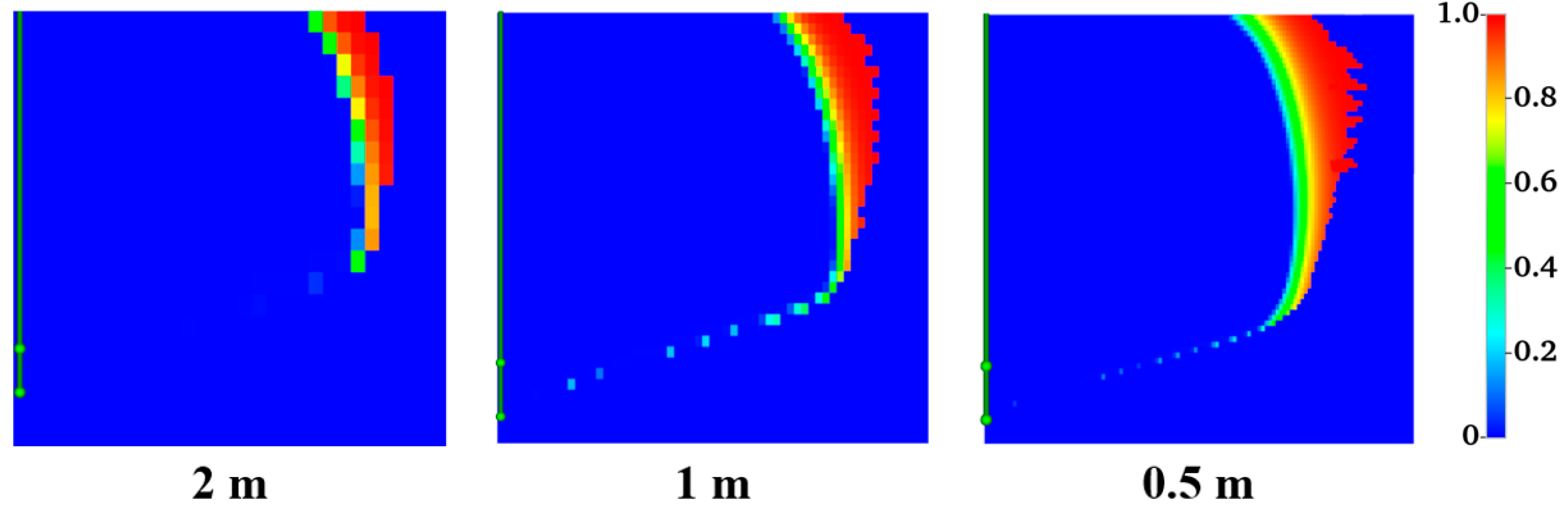
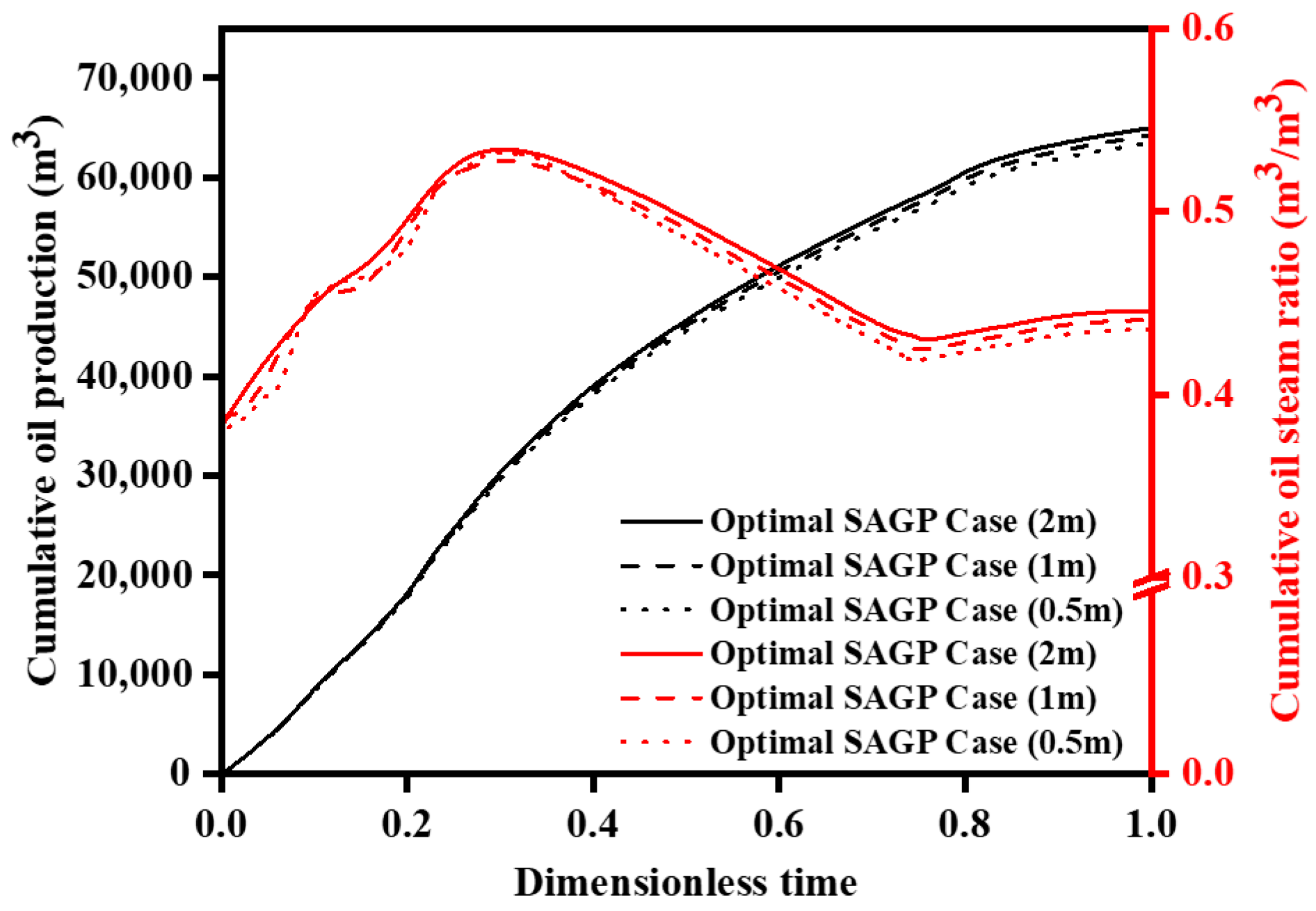
To assess the reliability of the numerical simulations and ensure that the proposed NCG timing–concentration operating window is not a grid-resolution artifact [
56], we performed both coarsening (2 m) and refining (0.5 m) of the model grid, and repeated the representative subsets of the SAGD/SAGP cases (baseline SAGD, mid-stage critical concentration of 0.5 mol%, and late-stage critical concentration of 5 mol%) on these two grid sizes. The comparison results are presented in
Table 4 and
Figure 22 and
Figure 23. The results show that although the local fingering morphology becomes more detailed on the finer grid, the main conclusions remain unchanged across grid resolutions: the mid-stage low-dose (~0.5 mol%) case and the late-stage moderate-dose (~5 mol%) case show differences of less than 5% in cumulative oil production and cumulative OSR between the base grid and the refined/coarsened grids. Moreover, the mid-stage low-dose (~0.5 mol%) case can still effectively regulate gas fingering. This confirms that, within the evaluated resolution range, the main conclusions are independent of the grid.
Overall, the results define a stage-wise SAGP operating window: avoid NCG during the early stage, apply low-dose NCG (~0.5 mol%) during the mid-stage to maximize oil recovery, and increase to a moderate dose (~5 mol%) during the late stage to maximize the OSR with a limited oil rate penalty. This provides practical timing-and-concentration guidelines to balance production and energy efficiency.