1. Introduction
As the energy structure transformation continues to advance and the low-carbon development of power systems deepens, the role of VPPs as a key vehicle for enhancing energy utilization efficiency and promoting renewable energy integration has become increasingly prominent. Characterized by multi-energy complementarity and efficient coordination, these systems feature complex internal structures and tightly coupled energy flows. Consequently, their direct participation in grid dispatch operations faces numerous challenges, necessitating the development of external characteristic models that can accurately characterize their control capabilities. Furthermore, the limited control capacity of individual IES makes regional-level clustering and coordinated optimization of multiple systems a vital approach to enhancing overall system resilience and operational efficiency. Against this backdrop, accurately characterizing the external operational features of VPPs, establishing cluster aggregation optimization models, and designing equitable and efficient benefit distribution mechanisms have become prominent research focuses and core challenges in the field [
1].
While virtual power plants (VPPs) have significantly enhanced the electricity grid, their development still faces numerous challenges. In the field of uncertainty modeling, existing research has primarily employed quantitative methods such as scenario generation, robust optimization, distribution robust optimization, and point estimation. Lin et al. [
2] constructed an uncertainty-minimizing operational cost model for cotton field microgrids based on static and dynamic scenarios; Shi et al. [
3] established a two-stage stochastic optimization model considering the randomness of hydro, wind, and solar power generation; and Ahmadi et al. [
4] addressed wind power uncertainty through scenario trees and developed a stochastic optimization model. To overcome potential optimistic estimation limitations in scenario generation, robust optimization methods have also been employed, such as Zhou et al. [
5] who developed a robust optimization model for the uncertainty of prosumer photovoltaic aggregated output, while Erol et al. [
6] designed a billing scheme using the Stackelberg game to enhance the robustness of microgrid energy-sharing management. However, these approaches tend to be conservative. Consequently, distributed robust optimization, which combines the advantages of stochastic and robust methods, has gained widespread application: Chen et al. [
7] proposed a distributed robust coordinated dispatch method based on the consistent alternating direction of multipliers (ADM) for multi-region integrated energy systems; Li et al. [
8] constructed a two-stage distributed robust optimization model based on Wasserstein distance to determine power supply strategies; while [
9] introduced this framework into the joint optimization of distribution grids and charging/swapping systems to enhance coordinated dispatch capabilities. Additionally, point estimation methods have been employed for quantifying parameter uncertainties. For instance, Shayegan-Rad et al. [
10] addressed multiple uncertain parameters including wind power, electric vehicle behavior, and market prices, while Zamani et al. [
11] applied it to modeling uncertainties in electricity prices, power output, and load demand within virtual power plant dispatch.
For scheduling control strategies of various adjustable resources, Tu et al. [
12] constructed linear and nonlinear response models and proposed a dynamic economic scheduling strategy incorporating demand-side response. Wang et al. [
13] established an interruptible load scheduling model considering user subsidy rates, effectively reducing peak grid loads and system operating costs. Gao et al. [
14] constructed a revenue model for controllable load aggregators, comprehensively considering the game relationship between users and aggregators to formulate an optimal compensation pricing strategy for aggregators. Sun et al. [
15] reviewed the operational models of foreign aggregators, analyzing the operational mechanisms and dispatch control strategies for multiple types of controllable resources, including controllable loads, energy storage devices, and distributed power sources. Xu et al. [
16] proposed a multi-timescale optimization dispatch model accounting for wind power uncertainty and demand response, leveraging demand response to drastically reduce control deviations caused by wind power variability. Do Prado et al. [
17] developed a decision model for retail electricity suppliers incorporating short-term demand response to maximize profits in electricity market transactions. Saavedra et al. [
18] proposed a flexible load control model based on elastic bands, enabling aggregated responses from large-scale flexible loads. Ryu et al. [
19] designed operational strategies for virtual power plants participating in electricity markets, enhancing the flexibility of demand response resources and improving virtual power plant operational revenues. Wang et al. [
20] proposed demand response based on real-time electricity prices, maximizing user profits by adjusting total load while alleviating power supply–demand imbalances. Zhang et al. [
21] constructed a two-layer model with a single master and multiple slaves to optimize real-time trading strategies for demand-response aggregators. Zare Oskouei et al. [
22] proposed a load decomposition algorithm that identifies distinct user electricity consumption behaviors and derives optimal dispatch strategies for demand-response aggregators.
Although existing research has made some progress in modeling external characteristics and cluster aggregation for IES, the following limitations remain: First, when constructing virtual unit models, dynamic cost characteristics and spatiotemporal flexibility are not sufficiently coupled, limiting the accuracy of adjustment potential assessments. Second, multi-objective trade-offs in cluster aggregation lack systematic representation, and insufficient attention is paid to individual execution willingness and benefit distribution mechanisms, affecting model practicality. Third, external feature modeling and cluster aggregation are often treated as independent phases, lacking an integrated optimization framework spanning from individual units to clusters.
To address these gaps, this paper proposes an integrated methodology spanning external feature modeling to cluster aggregation optimization.
Section 2 uniformly represents internal system resources as virtual units with power boundaries, marginal costs, and ramp rates to quantify their regulation capabilities;
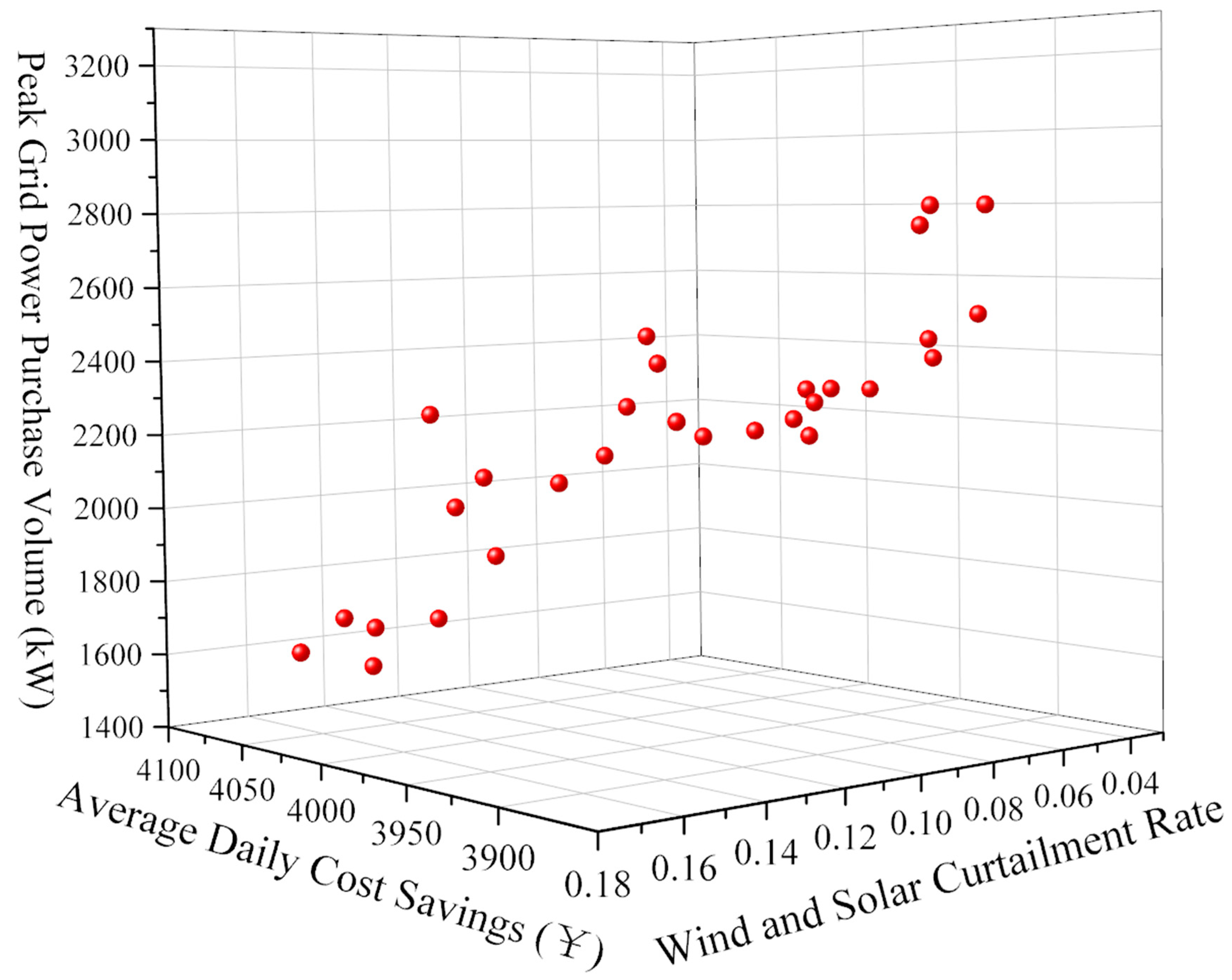
Section 3 constructs a cluster aggregation optimization model considering regional autonomy. Targeting cost–benefit matching, renewable energy integration, and peak external purchase control, it introduces a fair distribution mechanism and employs NSGA-II for solution.
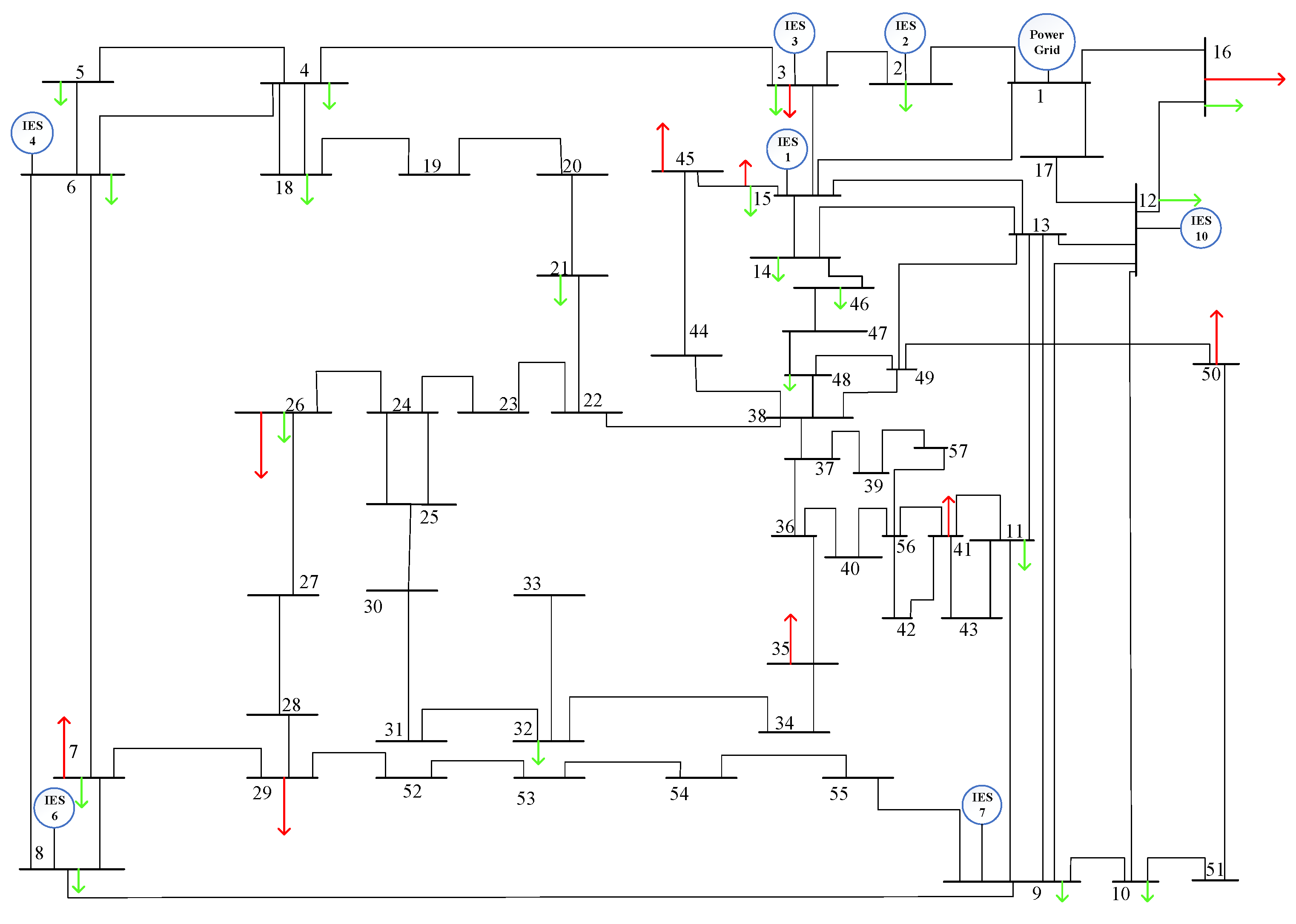
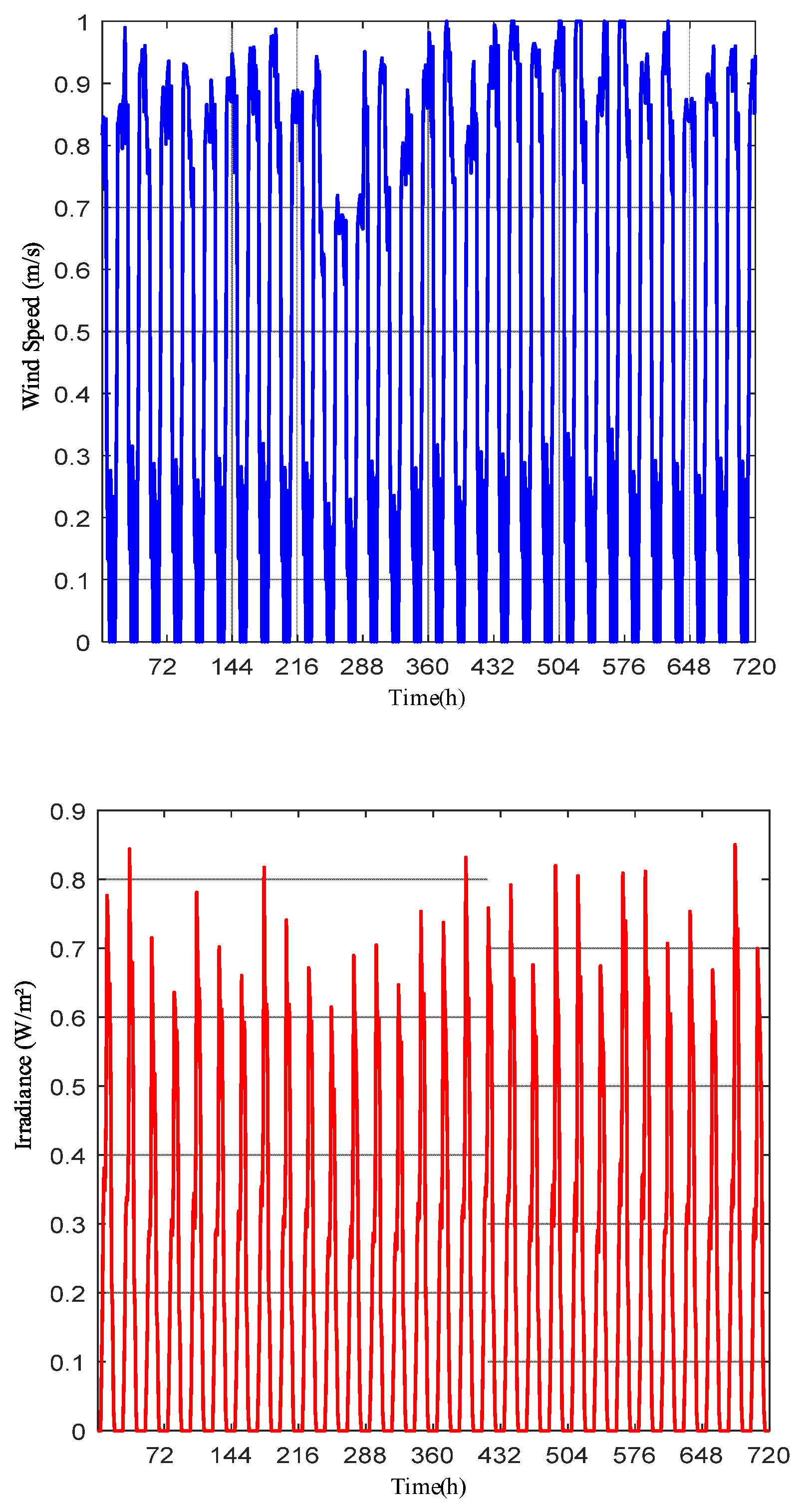
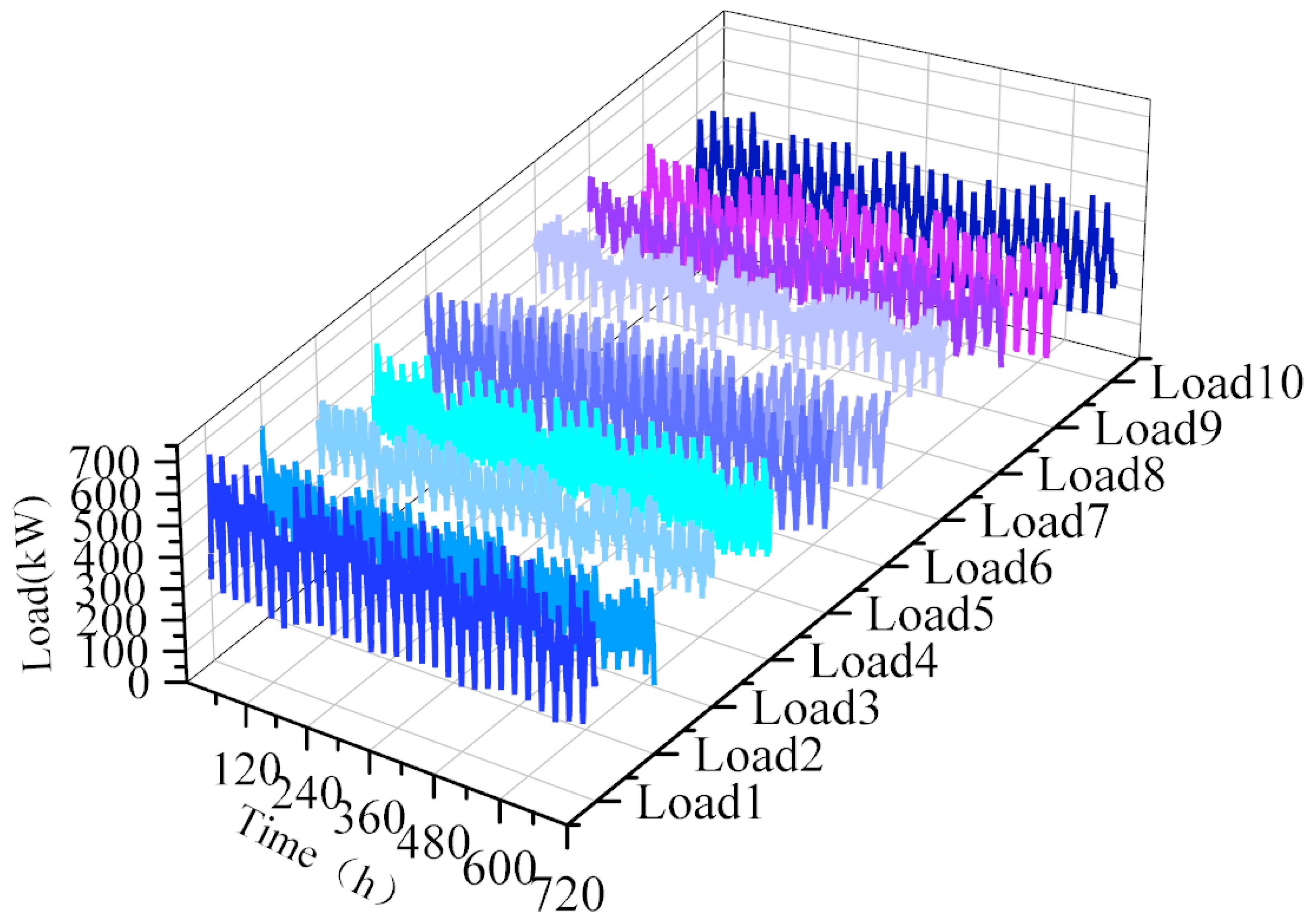
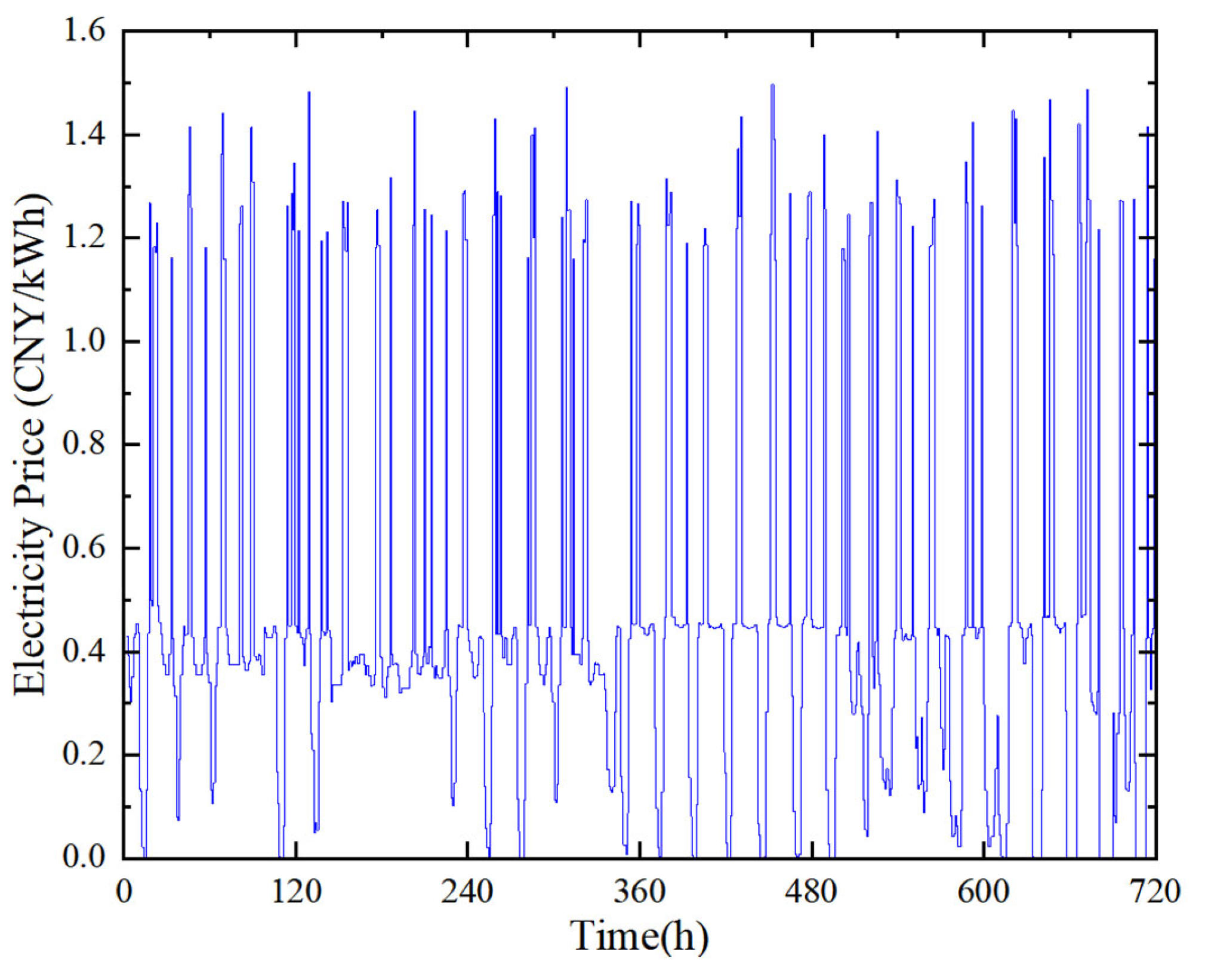
Section 4 validates the approach through IEEE-57 node system simulations, demonstrating its effectiveness in reducing average daily costs, minimizing wind and solar curtailment, and controlling peak external electricity purchases. Fair benefit distribution further incentivizes stakeholder participation.
2. Considering the Virtual Energy Storage Integrated Energy System Under High and Low Frequency Decomposition
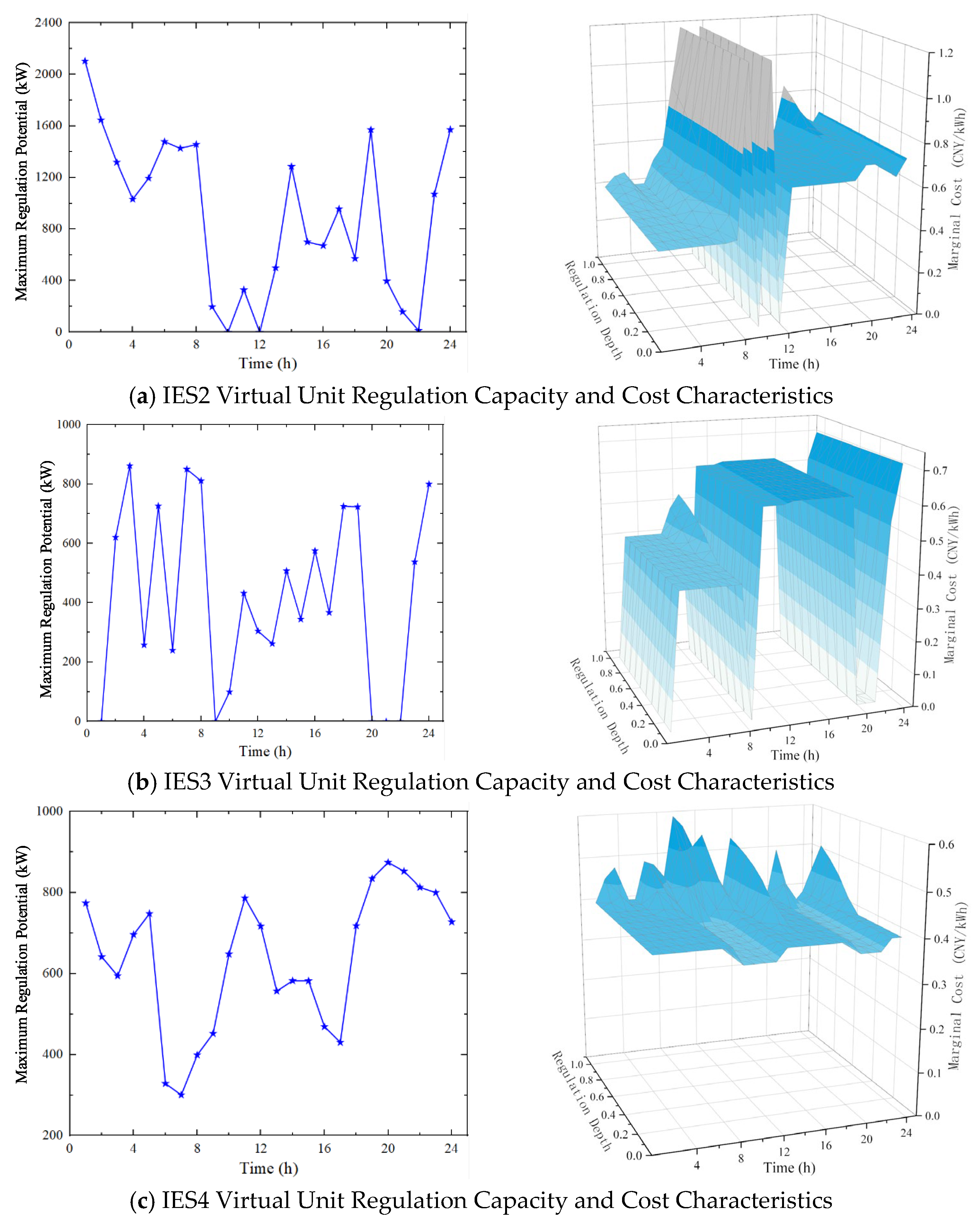
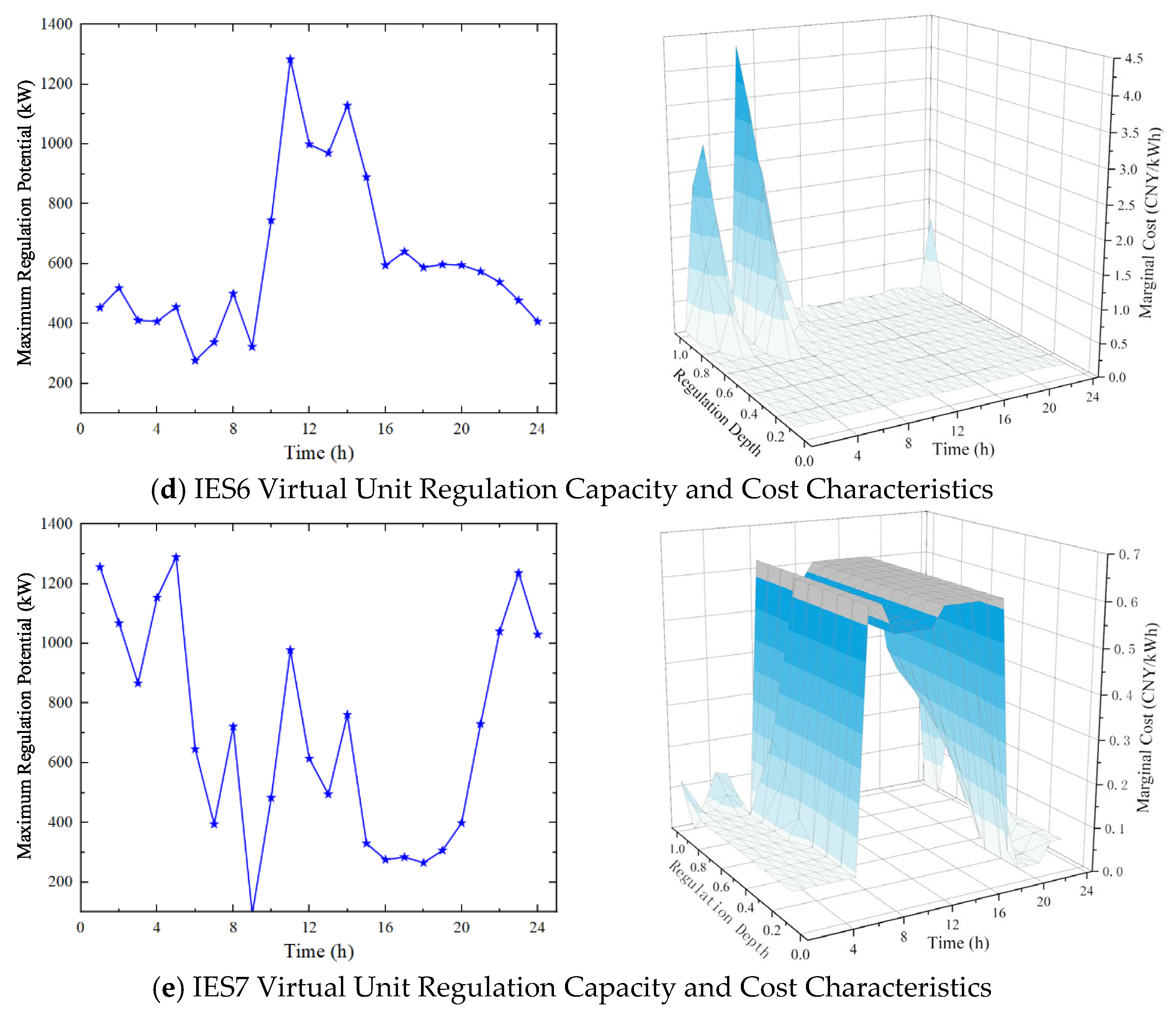
As an aggregate of multiple heterogeneous internal energy resources, the integrated energy system (IES) features a complex internal structure, making it difficult to directly participate in power grid dispatching. Therefore, it is essential to construct an external characteristic model for the IES, which uniformly equates internal flexible resources to virtual units, thereby quantifying the IES’s overall regulatory potential. The main contents of this model include the following: depicting the active power output boundary of the virtual unit through the projection of the operating feasible region, establishing the marginal cost characteristics of the virtual unit at different output levels, and describing its dynamic response features such as ramping rate. This enables a clear characterization of the IES’s ability to participate in the market or accept dispatching instructions as a whole.
When the IES participates in the market or responds to dispatch instructions as a whole, its internal structure must be taken into account. Considering the feasibility of power decomposition, it can be derived that for a given total output power of the IES
, the corresponding set of feasible internal flexible resource dispatch schemes is as follows:
where
represents the flexibility regulation capability of the IES at time t, composed of the regulation capacities of internal multiple resources (kW);
denotes distributed energy storage;
represents combined cooling, heating, and power units;
signifies building air conditioning;
represents electric boilers; and
denotes air-source heat pumps.
represents the power of each flexible resource (kW). Meanwhile, regulation resources such as thermal storage, gas boilers, and flexible loads are reflected through the balance of cooling/heating systems and coupled electrical–thermal/cooling devices.
Each flexible resource within the IES is subject to its own operational constraints. The feasible region of each flexible resource’s operation forms a bounded region in the power space. The feasible region of the set of internal flexible resource dispatch schemes for the IES constitutes a high-dimensional space
, as shown in Equation (2):
where
and
are parameter matrices for the linear operational constraints of flexible resources, corresponding to their technical characteristics;
and
represent the energy capacity of distributed storage and building thermal storage at time t and the previous time step, respectively (kWh);
denotes the change in energy storage capacity between time t and the previous time step (kWh); and
and
represent the maximum ramp-up and ramp-down rates per unit time for each flexible resource (kW/min). This expression encompasses both linear and nonlinear constraints of various flexibility resources, forming the high-dimensional space
.
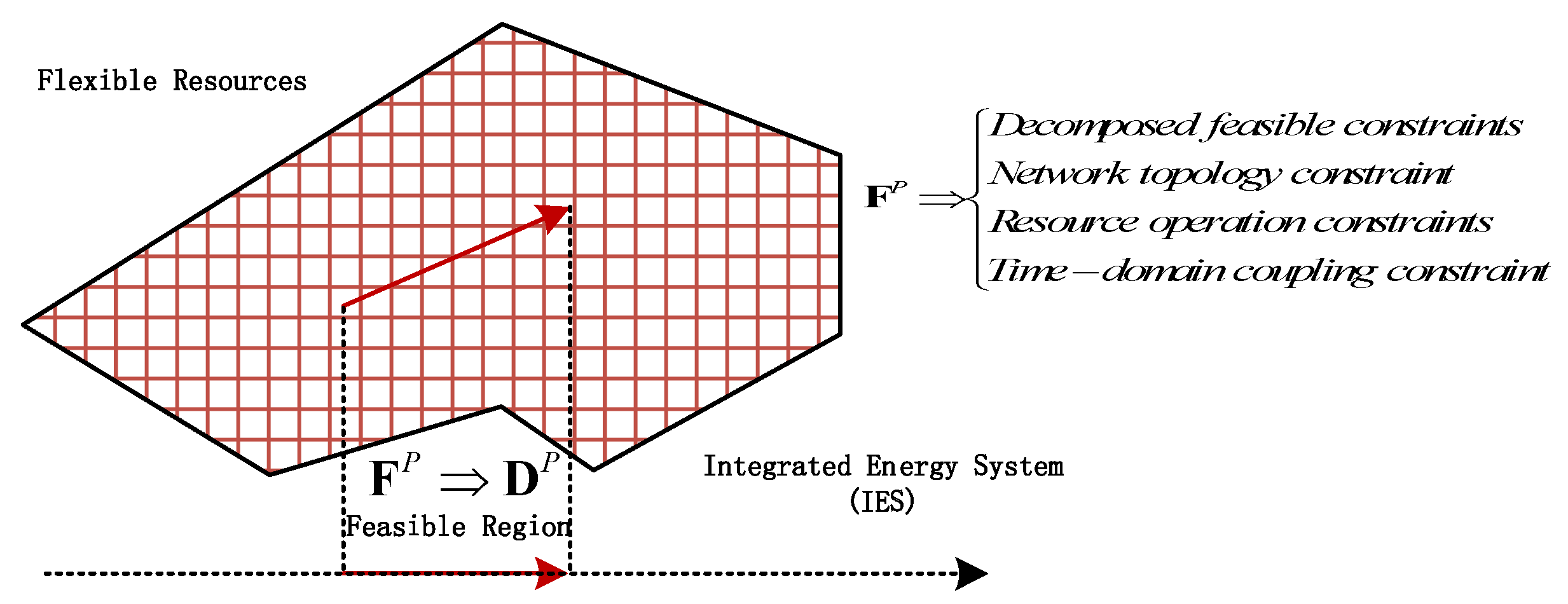
Furthermore, the overall output power of the IES can be obtained from the set of internal flexible resource dispatch schemes through power flow calculation. Therefore, a mapping relationship exists between the two. Consequently, the operational feasible region
of the IES is the projection of the feasible region in the high-dimensional space
of the flexible resource which dispatches schemes onto the IES power plane. This section considers only the active-power feasible region. The high-dimensional space
is equivalent to the plane
, and the operational feasible region
of the IES is equivalent to the active power operational feasible region
, as shown in Equation (3) and illustrated in
Figure 1.
The feasible region of the IES’s regulatory potential is generated by reducing the external power purchase load or increasing the external power supply capacity on the basis of the IES’s internal optimal regulatory strategy. Therefore, it is necessary to first solve the optimal operating strategy of the IES and treat it as the system’s baseline load. The optimal operating scheme of the IES has been introduced in
Section 3 of this paper, and its solution model is as follows, which will not be repeated here:
where
represents the baseline curve of the IES’s electrical energy interaction with the distribution network (kW).
When addressing external regulation demands, the multi-energy resources within the IES will be converted into electrically adjustable resources through power-coupled devices for flexibility regulation. Therefore, this section models the flexibility regulation potential of the IES, solving for the maximum operational feasible region
of the IES and optimizing the boundaries of the power interaction curve between the IES and the distribution grid.
where
: Power exchange curve between the IES and the distribution grid at time t (kW).
, : Output of PV and wind turbine at time t (kW).
: Electricity purchased from the external grid under optimal system operation cost conditions at time t (kW).
: System net load (kW). Positive values indicate surplus power; negative values indicate power deficit.
: Power generation efficiency of the CCHP unit.
: Set of electricity-consuming devices within the system (excluding storage devices).
: Output of the j-th electricity-consuming device at time t (kW).
: Efficiency of the j-th electricity-consuming device.
: Output of the electrical energy storage device at time t (kW). Positive when charging; negative when discharging.
The IES can achieve increases or decreases in electrical load through energy storage charging/discharging and gas–power coupling, possessing bidirectional regulation capability. Therefore, this study treats it as a fixed load plus an independent energy storage unit (a conventional generator capable of negative output) for power flow optimization.
(1) VPU Output Power Boundaries
The upper and lower limits of the power exchange between the IES and the distribution grid are
and
, respectively. Combining these with the baseline
from the optimal IES dispatch yields the maximum generation upper limit and maximum consumption upper limit of the IES VPU.
where
represents the maximum generation power of the VPU in discharge mode at time t (kW), and
represents the maximum consumption power of the VPU in charge mode at time t (kW).
(2) VPU Cost Characteristic Model
Within the VPU’s output boundaries, it is necessary to discuss the cost curve corresponding to different charging/discharging power levels of the VPU. This requires analyzing cost variations under different external electricity purchase constraints based on the operational optimization model. With the objective of minimizing operational cost in the optimization model, and considering regulation demands at different time periods, a load rebound period constraint is added to the original constraints. Combined with Equation (4), the system operational cost after load increase in a specific period is calculated.
Assuming the increased electrical load in each period does not exceed the maximum regulation potential of a single IES, a linear system load growth coefficient is defined:
where
is the load growth coefficient and
is the number of predefined regulation potential levels.
For a single IES, the marginal cost is as follows:
In the formula,
: Marginal cost of the system when load is increased to level at time t (CNY/kW).
: System operational cost at time t under regulation demand level (CNY).
: Optimized system operational cost (CNY).
: Increased system electrical load at time t (kW).
(3) VPU Ramping Rate Characteristics
The VPU ramping rate characteristics include the ramp-up rate and ramp-down rate, representing the maximum increase/decrease in the overall output power of the VPU per unit time relative to the power baseline at that time. That is, when the VPU receives a regulation command at dispatch time
t, the maximum increase and decrease in the overall output power at dispatch time
are calculated as follows:
where
: Ramp-up amount (kW), difference between IES output at t + 1 and baseline at .
: Ramp-down amount (kW).
: Time interval between two dispatch time steps (min).
3. Aggregated Optimization Model for IES Clusters Considering Regional Autonomy
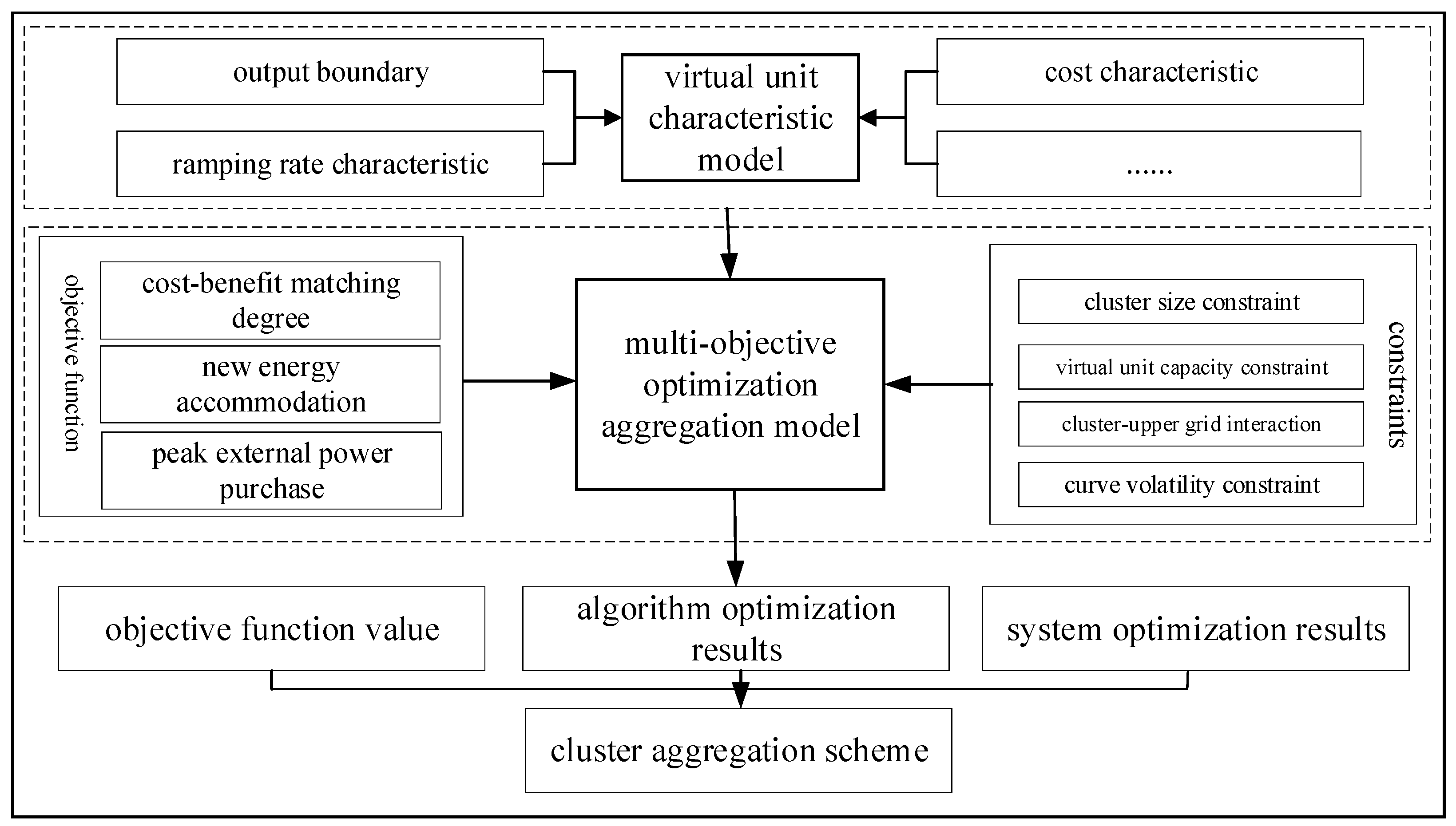
After completing the external characteristic modeling of a single integrated energy system (IES), which uniformly equates its internal multiple resources to a virtual unit with clear output boundaries, cost, and ramping characteristics, this research further focuses on the regional level, constructing an aggregated optimization model for IES clusters considering regional autonomy [
23]. The core of this model lies in treating multiple characterized VPPs as dispatchable units for coordinated optimization at a higher level. Aiming to enhance the overall efficiency of the cluster, the model establishes a multi-objective function set including cost–benefit matching degree, maximization of renewable energy consumption rate, and minimization of peak external electricity purchase, while considering key constraints such as cluster scale, VPP dispatch, grid interaction, and resource complementarity. The NSGA-II algorithm is employed to solve this complex multi-objective problem. The solution framework is illustrated in the
Figure 2.
3.1. Objective Functions
(1) Cost–Benefit Matching Degree
In IES cluster optimization, the fairness of the “benefit–cost” matching among various entities is a core prerequisite for ensuring the long-term stable operation of the cluster. The Gini coefficient, a classic statistical indicator for measuring distribution inequality, can quantitatively characterize the imbalance degree of the “benefit–cost” differences among multiple entities. This paper constructs an objective function to minimize the Gini coefficient, transforming the fairness requirement into a quantifiable goal, as shown below:
where
is the number of IES entities,
is the revenue of the i-th IES entity,
is the cost of the i-th IES entity, and
is the mean net surplus of all IES entities.
(1) Composition of IES Costs
The cost of an IES entity comprises four parts: energy procurement cost
, equipment operation and maintenance cost
, auxiliary service cost
, and grid loss cost
. The formulas for each component are as follows:
where
,
are the electricity and gas purchase amounts of entity i at time t, respectively;
,
are the electricity and gas market prices at time t, respectively; and
is the power generation cost of distributed generation (e.g., PV, gas turbine) for entity i at time t.
where equip is the set of equipment of entity i,
is the installed capacity of equipment k, ris the discount rate, nis the equipment lifespan, and
is the maintenance cost of equipment at time t.
where
,
are the upward and downward ancillary service capacities provided by the entity at time t, respectively;
,
are the prices for upward and downward ancillary services at time t, respectively.
where
is the grid loss power attributable to entity i at time t, and
is the unit price for loss power.
(2) IES Revenue Distribution
Although the aggregation and dispatch optimization model for IES clusters can improve comprehensive resource utilization efficiency from physical and economic perspectives, it does not fully consider the willingness of individual entities to participate, nor does it achieve reasonable benefit distribution among users. Therefore, the Shapley value method from game theory is introduced. It allocates benefits by calculating the average marginal contribution of each member to the participating coalition, reflecting contribution differences, avoiding egalitarianism, and offering good fairness and rationality.
where
: Shapley value representing the benefit allocation for individual i in the cooperation.
: Characteristic function of cooperative, representing the obtained by cooperation among elements.
: Set of all subsets containing individual .
: Number of elements in subset .
: Corresponding weighting factor.
: Total number of elements in the grand coalition.
After calculating the Shapley values of each element with respect to the benefit, the Shapley values of all elements are normalized to obtain the proportion of each element in the total benefit, which is defined as the contribution degree of that element, as shown in Equation (21):
where
is the benefit allocation result for individual
in the cooperation.
(2) Highest Renewable Energy Consumption Rate
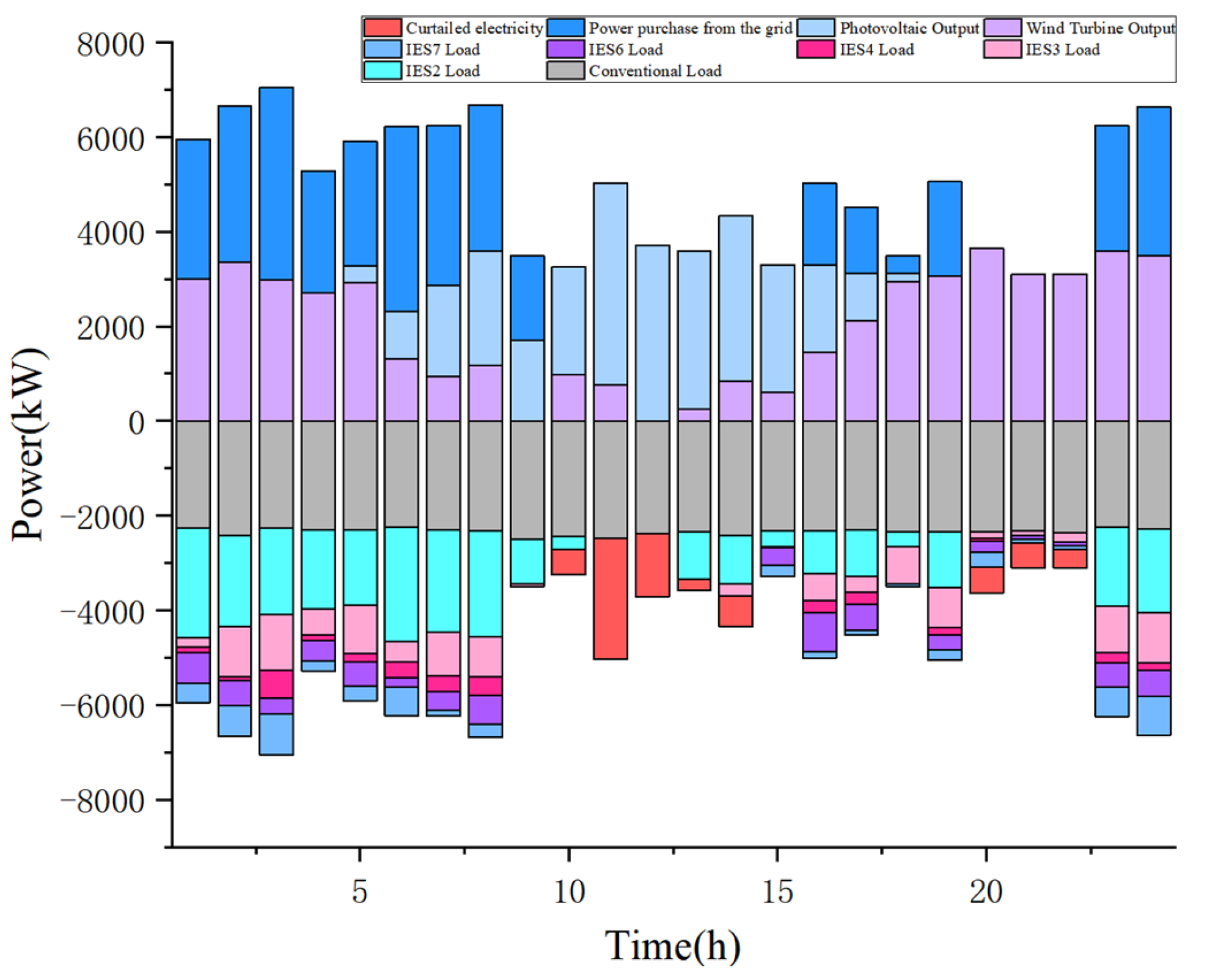
One purpose of optimized aggregation is to promote the consumption of distributed generation. The renewable energy consumption objective for the IES cluster needs to consider both the internal renewable energy consumption within individual IES and the consumption of distributed renewable energy in the distribution network. Therefore, this chapter constructs the following objective function:
: Renewable energy consumption rate of the IES cluster.
, : Net load curves of the IES and the IES cluster relative to the distribution grid (kW). Negative indicates surplus generation exported.
: Installed capacity of renewable energy for the k-th IES individual (kW).
: Installed capacity of the l-th distributed renewable energy entity (kW).
: Monthly utilization hours (h).
(3) Minimum Peak External Electricity Purchase
The aggregation of IES clusters aims to balance internal supply and demand, enhance renewable energy consumption, and reduce pressure on the upper-level grid. This objective is mainly reflected in two aspects: power and energy dependence on the grid. The energy dependence is positively correlated with the renewable energy consumption rate and is not modeled separately here. The power dependence depends on the cluster’s maximum power reserve demand from the upper-level grid, modeled as follows:
where
represents the peak electricity purchase power of the IES cluster from the upper-level grid (kW). In summary, the set of objective functions for optimized aggregation is as follows:
That is, the objective function represents the optimization goal set for IES cluster aggregation, including minimizing daily average cost, maximizing renewable energy consumption rate, and minimizing peak external electricity purchase.
3.2. Constraints
(1) Cluster Scale Constraints
The primary purpose of IES clusters is to balance the supply and demand of distributed renewable energy and conventional loads through aggregation. Therefore, within a cluster, regional distribution network distributed renewable energy and conventional load entities must exist. IES individuals can be aggregated based on regulation demands and supply-demand needs. Meanwhile, the cluster aggregation scale should not be too small to leverage the advantages of IES individuals in enhancing regional grid security and resilience. Thus, the following cluster scale constraints are established:
where
, , : State variables indicating whether the k-th IES individual, d-th load entity, and l-th distributed renewable energy entity in the regional distribution network participate in cluster aggregation (binary 0–1 variables).
Considering the purpose of cluster aggregation is to balance load entities and renewable energy entities, and are set to 1.
: Minimum number of required resources.
: Minimum electricity consumption in period k (kWh).
(2) Virtual Power Unit Dispatch Constraints
During the IES cluster aggregation process, the regulation strategies for each IES must adhere to its adjustable upper and lower limits and ramping constraints.
where
, : Minimum and maximum electricity purchase power of the k-th IES at time (kW).
, : Downward and upward ramping rates of the k-th IES at time (kW/min).
(3) Cluster Interaction Constraints with the Upper-level Grid
The IES cluster interacts with the upper-level grid through the distribution transformer, which must satisfy the transformer capacity constraint.
where
and
represent the maximum allowed power of the distribution transformer and the maximum renewable energy reverse power flow acceptable by the upper-level grid (kW), respectively.
(4) Curve Fluctuation Rate Constraint
To reduce the requirement for frequency regulation and ramping reserve resources from the upper-level grid for the IES cluster and improve system operational stability, the fluctuation rate of the curve
should not be too high.
where
is the upper limit of the fluctuation rate.
(5) Regulatory Characteristic Complementarity Constraint
To minimize the impact of uncertain factors on the IES cluster and enhance operational stability, the complementarity of regulatory characteristics among various resources should be fully considered during cluster aggregation. The correlation degree between different types of resources is as follows:
where
: Weighting function constructed based on different complementarity requirements (e.g., for active power, response speed, ramping rate) at different time points.
, : Standard deviations of resource sequences and , respectively.
The resource complementarity coefficient between resources
and
is then as follows:
In this paper, the resources participating in the aggregate construction include distributed generation, energy storage devices, and flexible loads. Therefore, the overall complementarity coefficient of the aggregate is defined as the sum of complementarity coefficients between different resource pairs, denoted as .
To ensure complementarity among multiple resources, the constraint is as follows:
where
is the lower limit for complementarity.
3.3. Solution Algorithm
The IES cluster aggregation optimization model developed in this study constitutes a typical multi-objective, high-dimensional, nonlinear optimization problem. Its complexity manifests in three primary aspects: First, the solution objectives encompass three distinct dimensions—minimizing the daily average cost, maximizing the renewable energy consumption rate, and minimizing the peak of external electricity purchases. Second, the constraint set is extensive and intricate, including cluster scale constraints, virtual power unit dispatch constraints, grid interaction constraints, curve volatility constraints, and complementary regulation characteristics constraints, collectively defining a highly complex feasible solution space. Finally, the model involves a large number of mixed continuous and discrete decision variables, as well as nonlinear relationships arising from the aggregation of individual IES behaviors, which pose significant challenges to traditional optimization algorithms in terms of direct and efficient solving [
24].
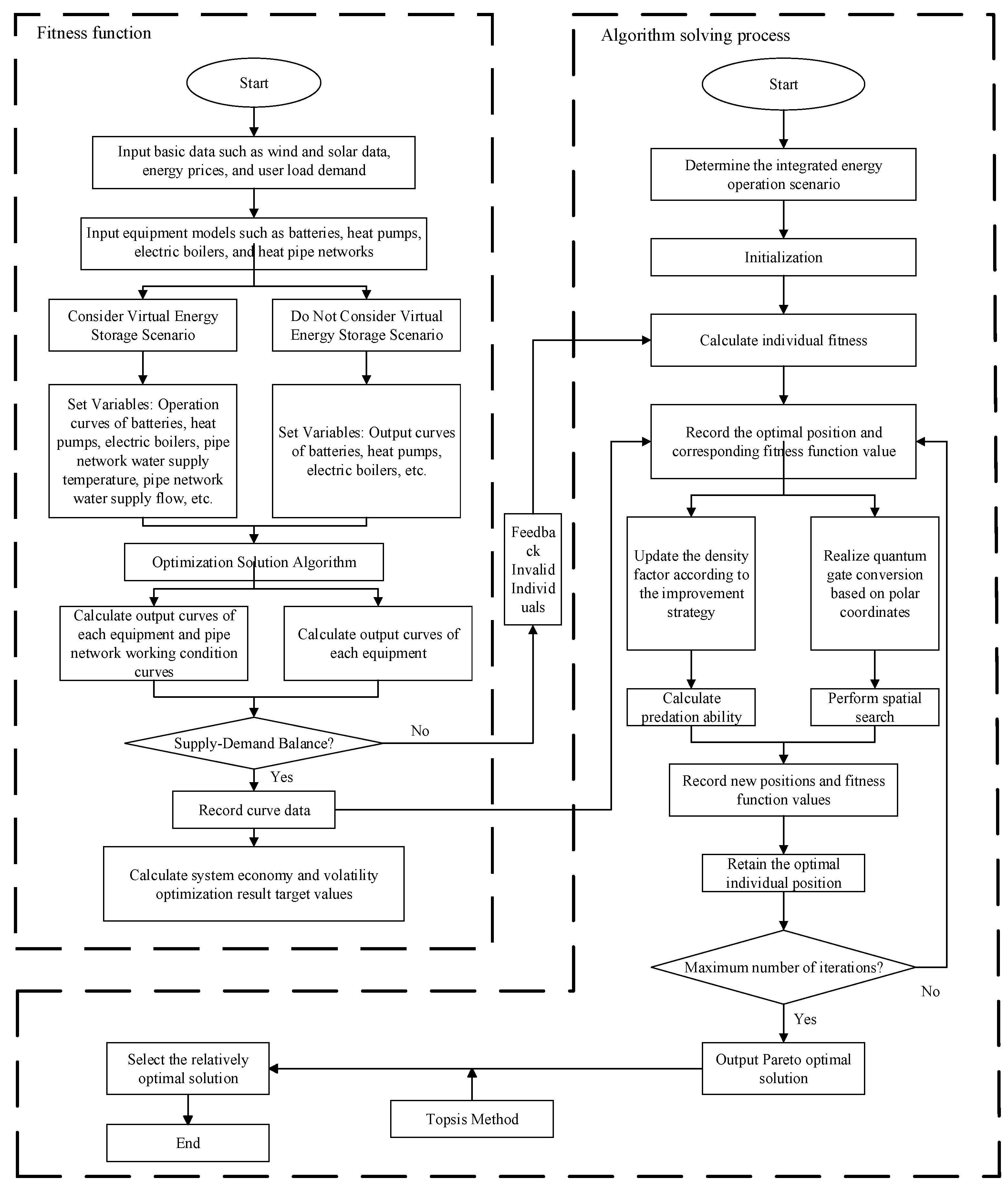
To address these characteristics, this paper employs the multi-objective genetic algorithm NSGA-II. Its mechanisms of population-based search, non-dominated sorting, and crowding distance computation enable effective handling of complex constraints and the direct acquisition of a well-distributed Pareto optimal set, thereby elucidating the trade-offs among the three objectives. Key algorithm parameters were calibrated through preliminary experimentation to balance convergence and diversity: a population size of 100 and a maximum of 200 generations govern the search scope; a crossover probability of 0.9 and a mutation probability of 0.1 guide the exploration–exploitation balance. Additionally, a convergence stability criterion (improvement in hypervolume indicator < 0.1% over 100 consecutive generations) ensures solution maturity. The overall solution procedure is illustrated in
Figure 3.