Article

Effects of Scrap Steel Charging Structure on the Fluid Flow Characteristics in a Physical Model of a Converter Melt Pool


by
Fei Yuan
,
Xuan Liu
,
Anjun Xu
* and
Xueying Li
School of Metallurgical and Ecological Engineering, University of Science and Technology Beijing, Beijing 100083, China
*
Author to whom correspondence should be addressed.
Processes 2026, 14(3), 501; https://doi.org/10.3390/pr14030501
Submission received: 9 January 2026 / Revised: 26 January 2026 / Accepted: 29 January 2026 / Published: 31 January 2026
(This article belongs to the Section Materials Processes)

Abstract

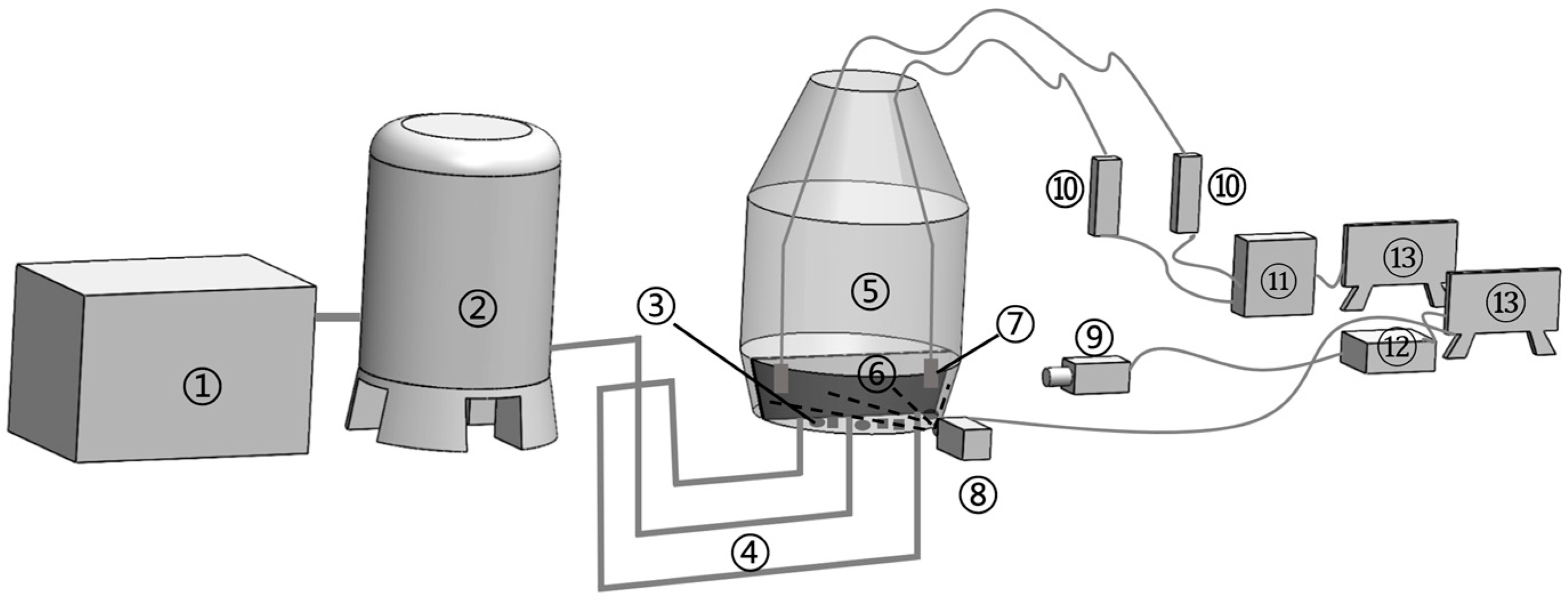
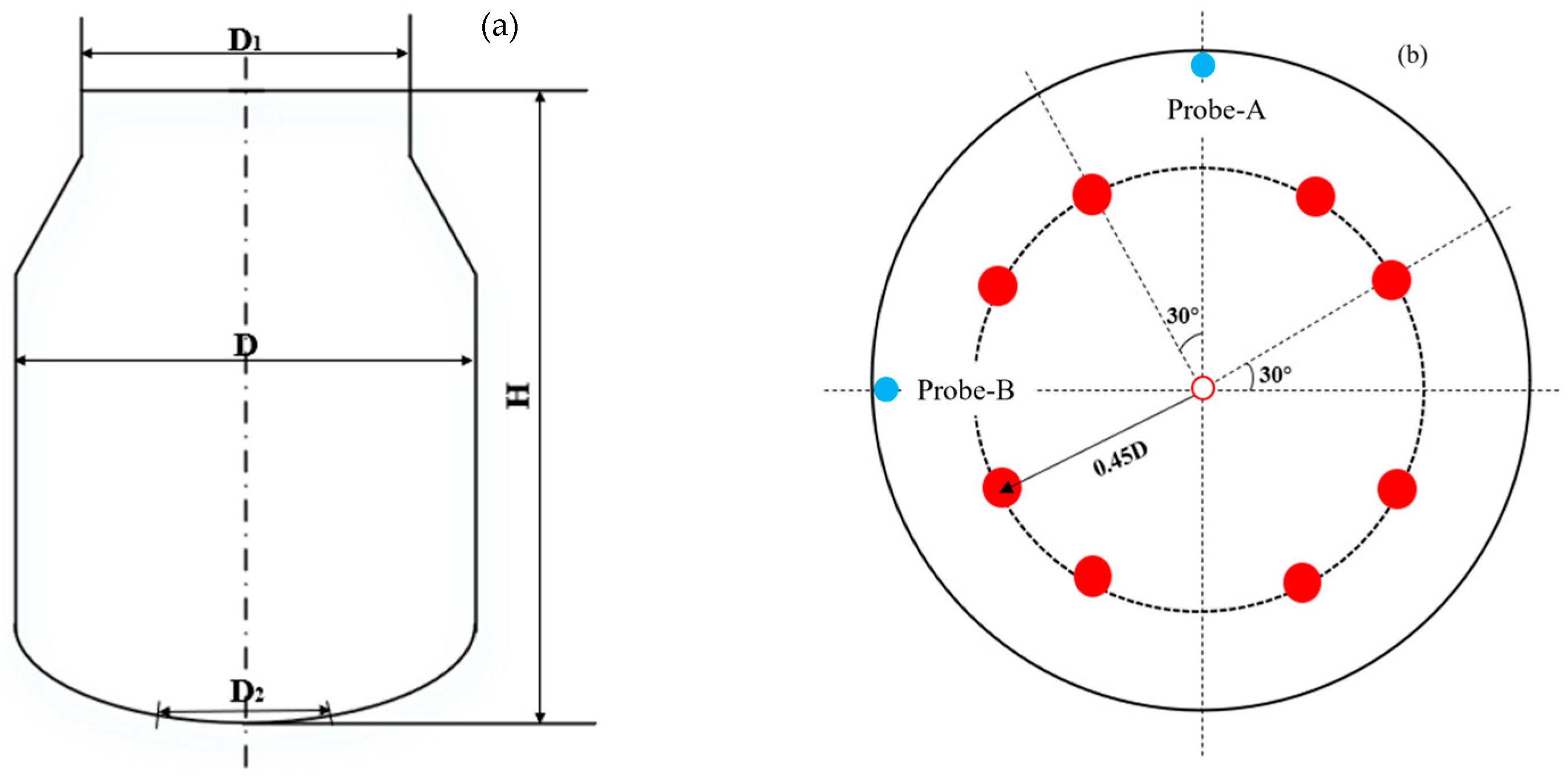
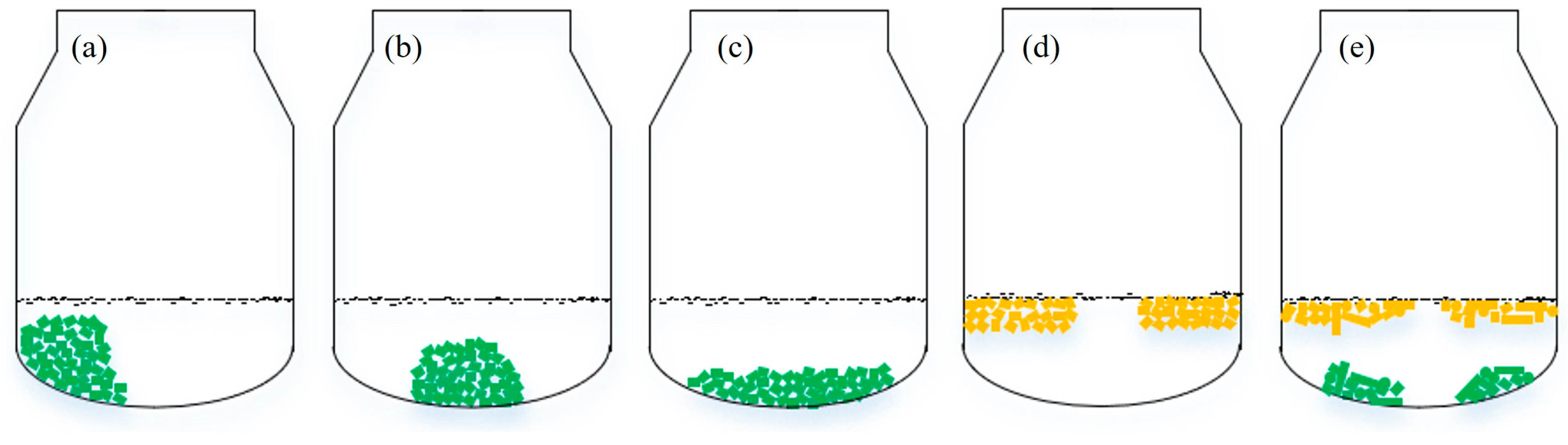
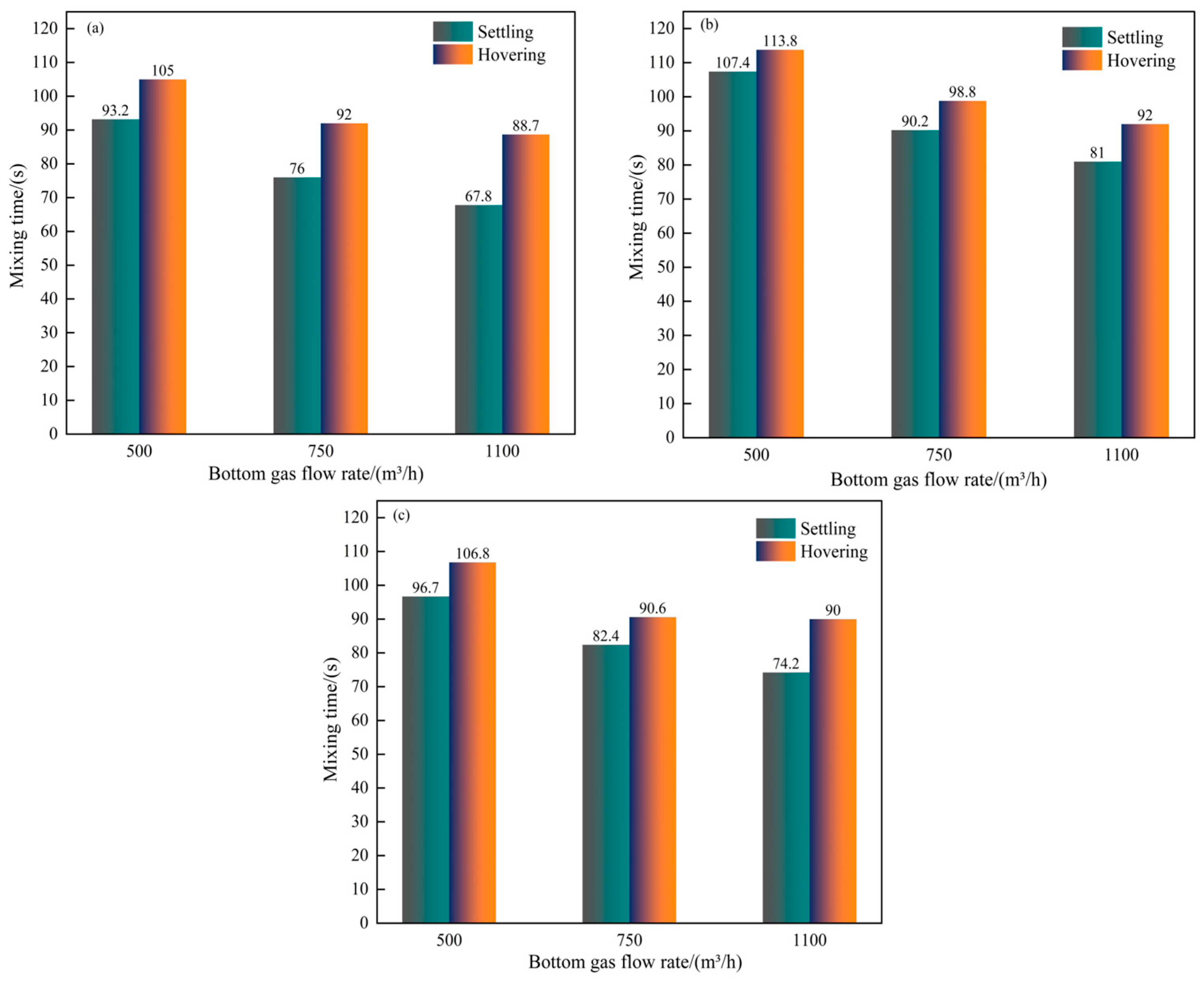
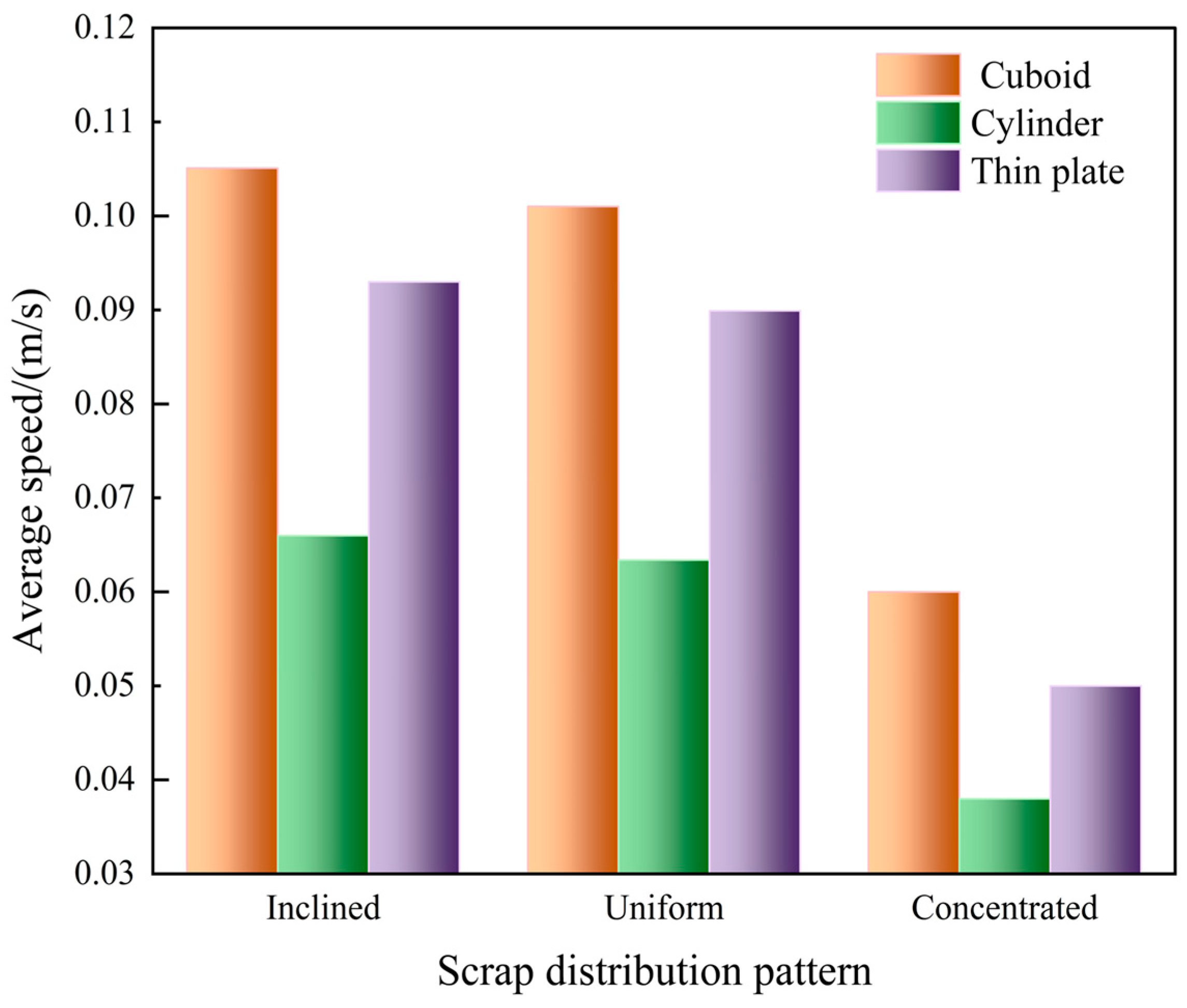
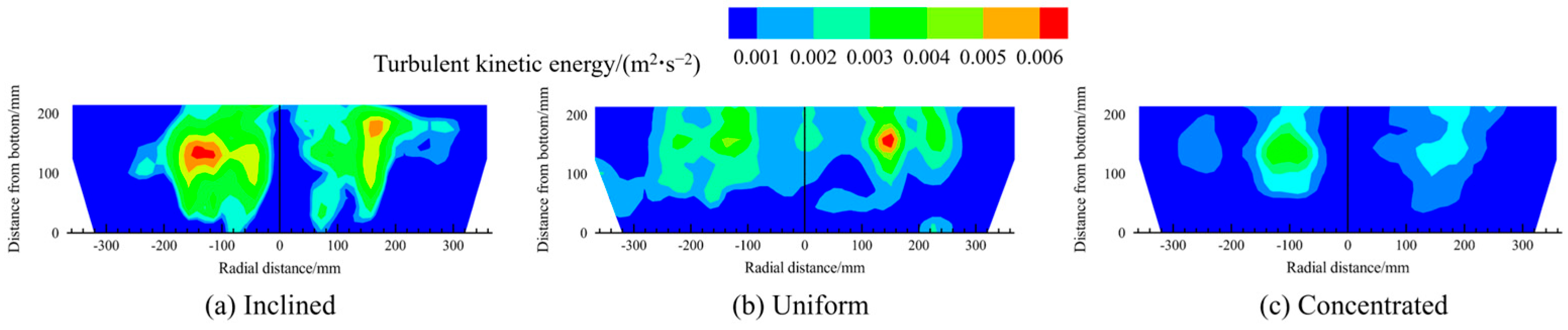
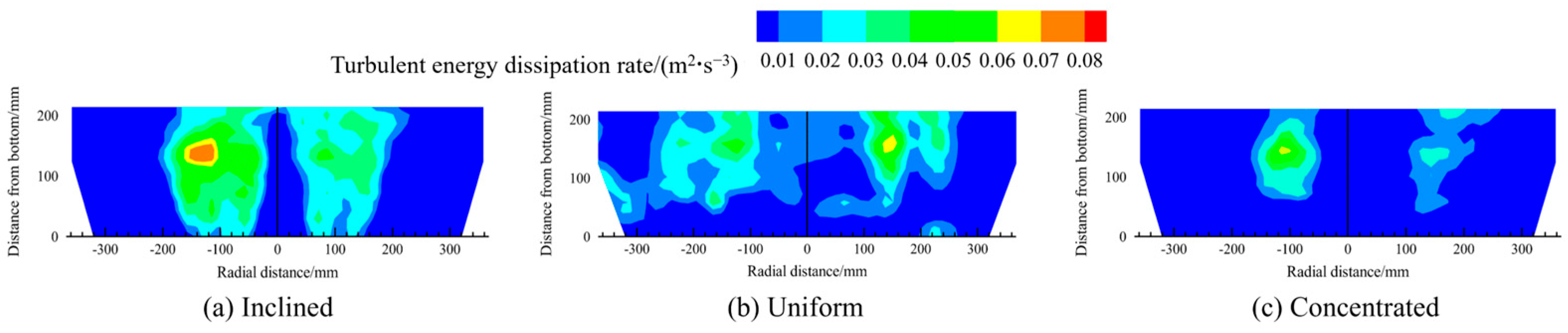
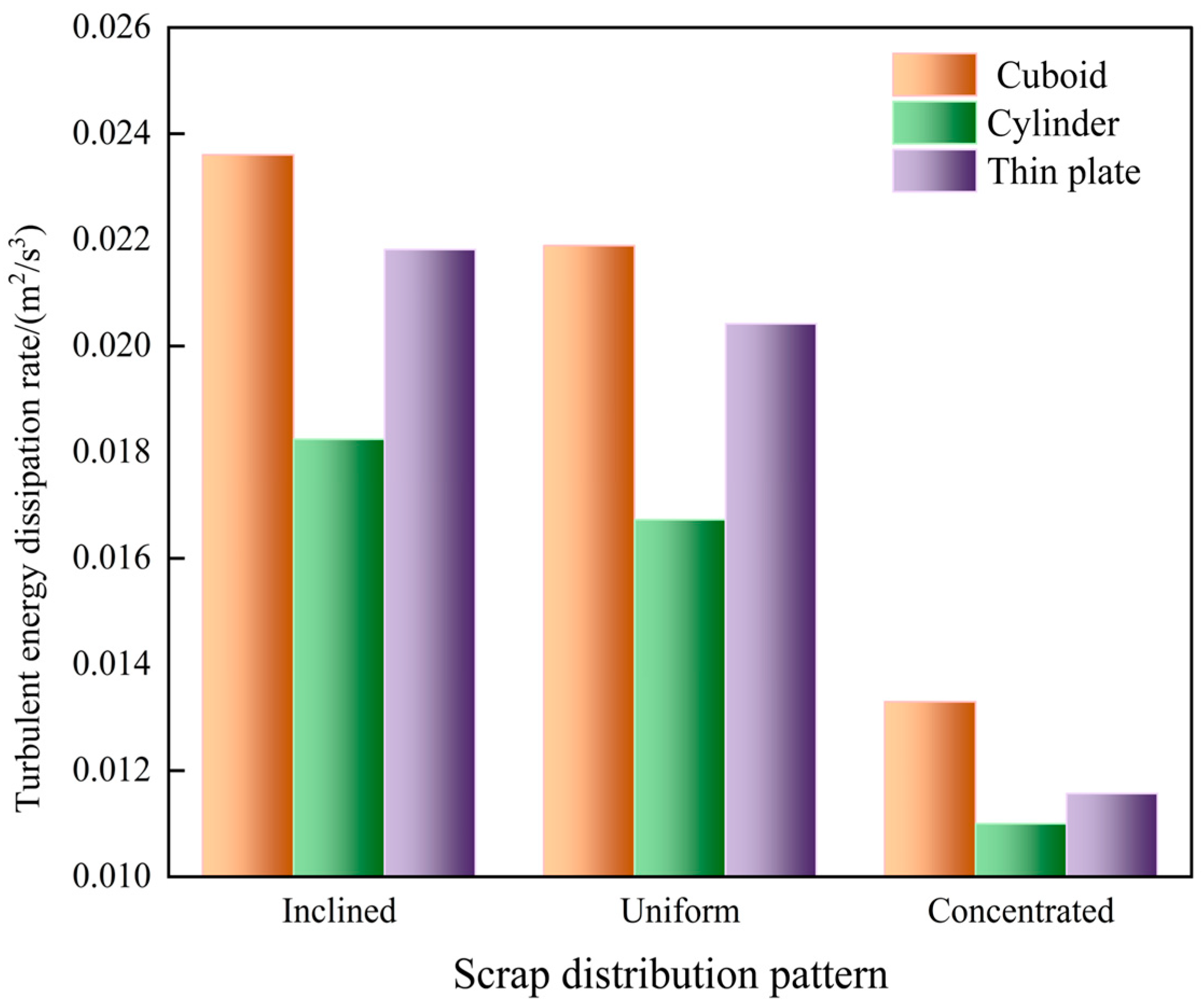
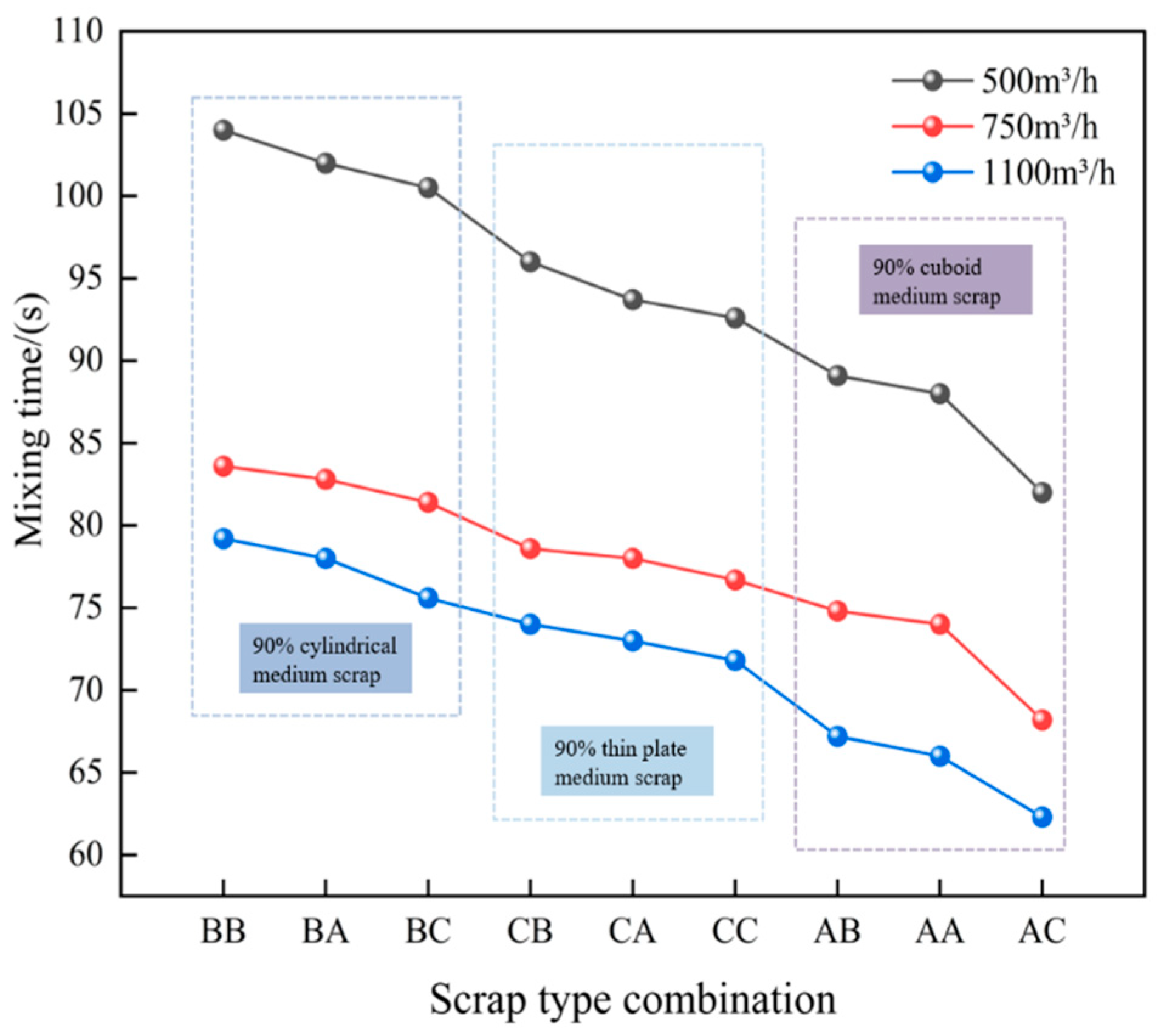
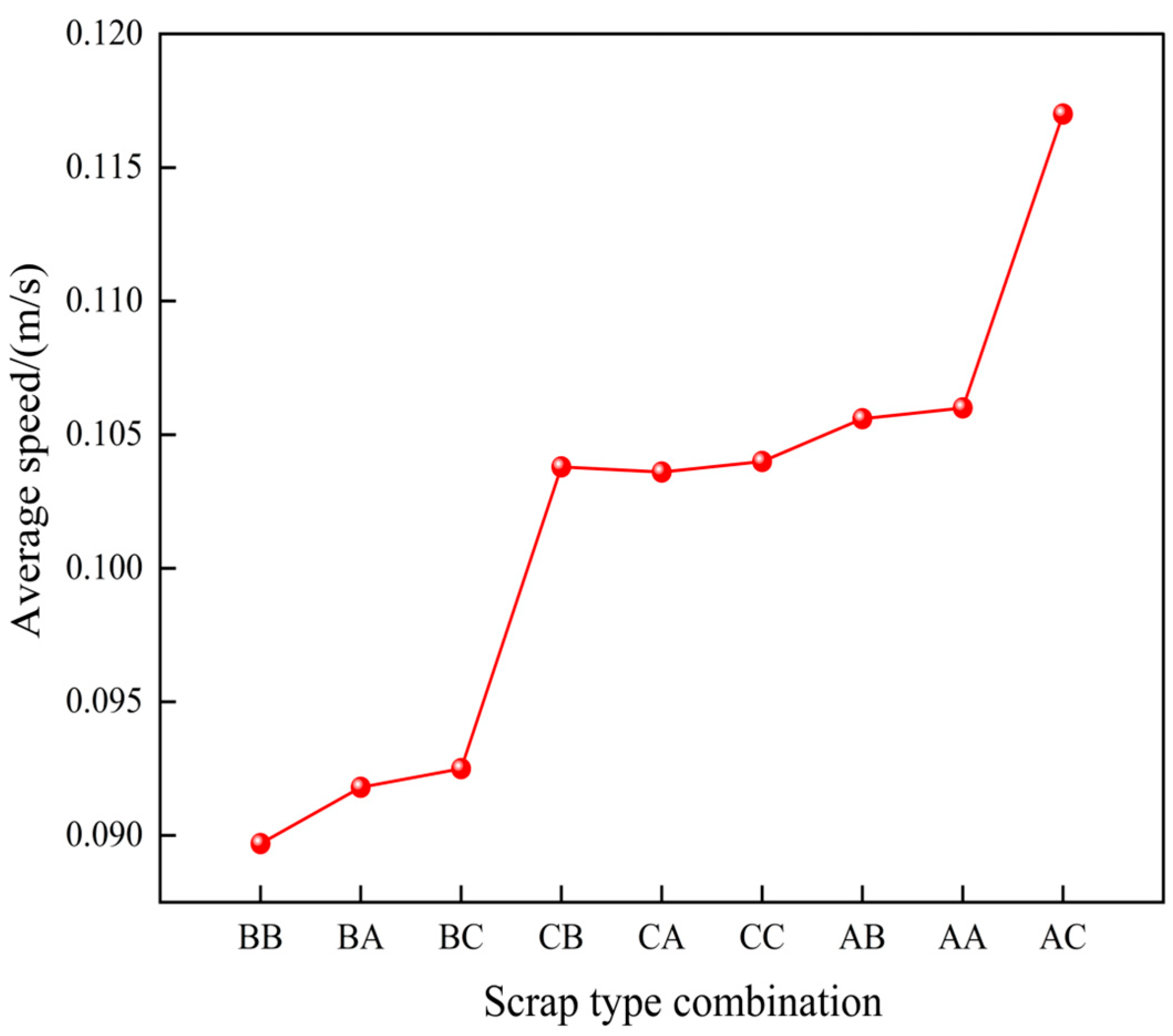
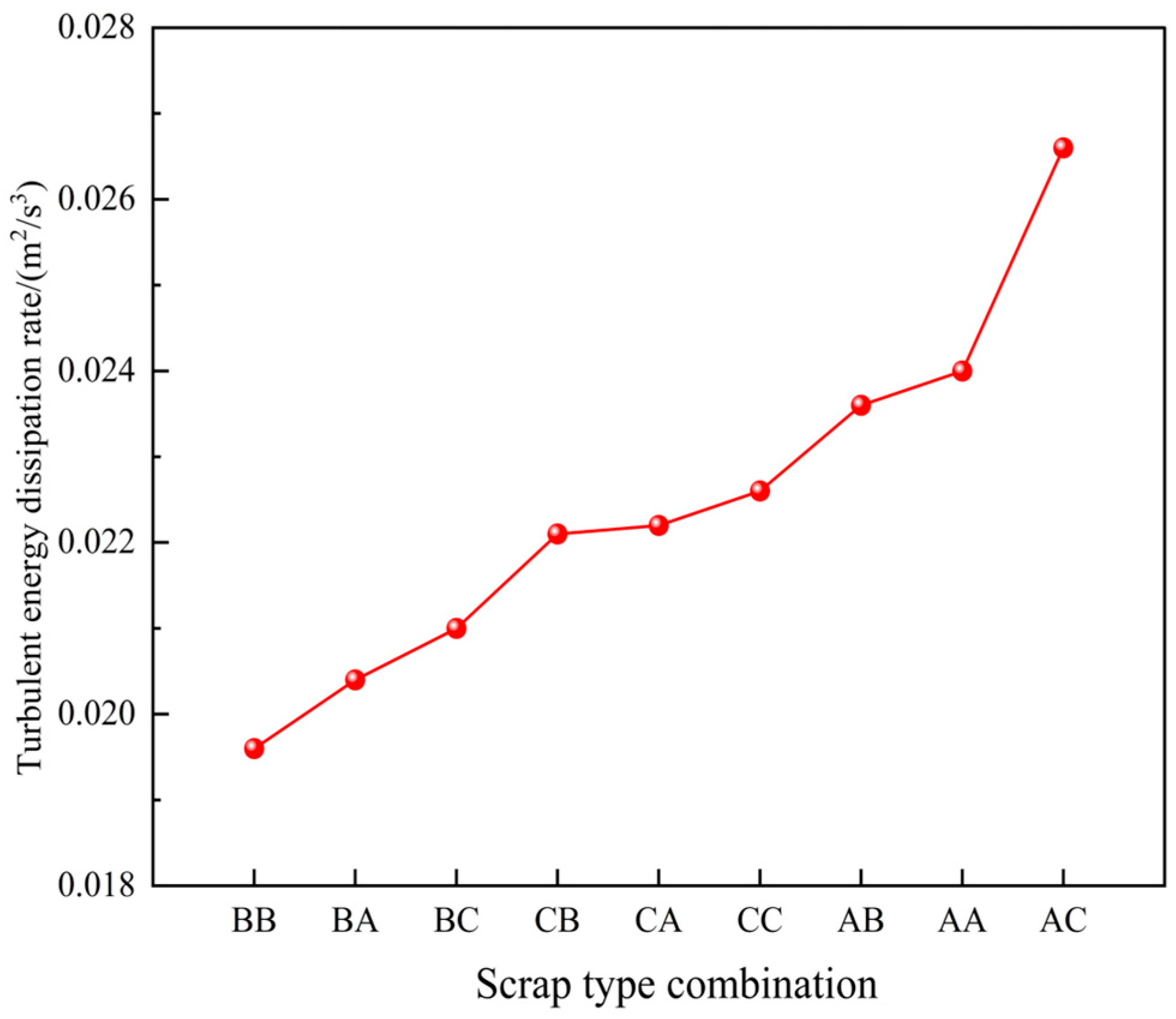
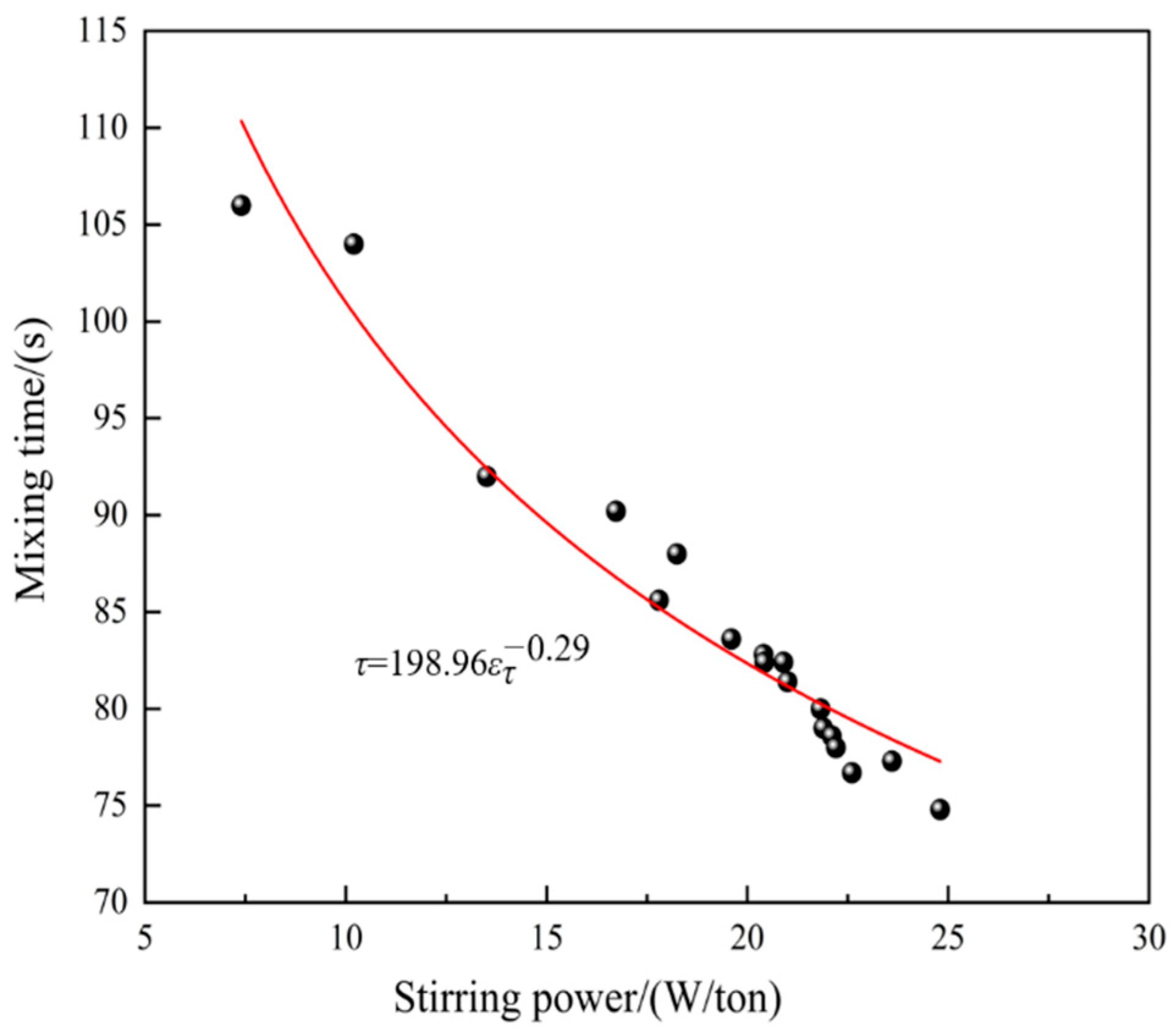
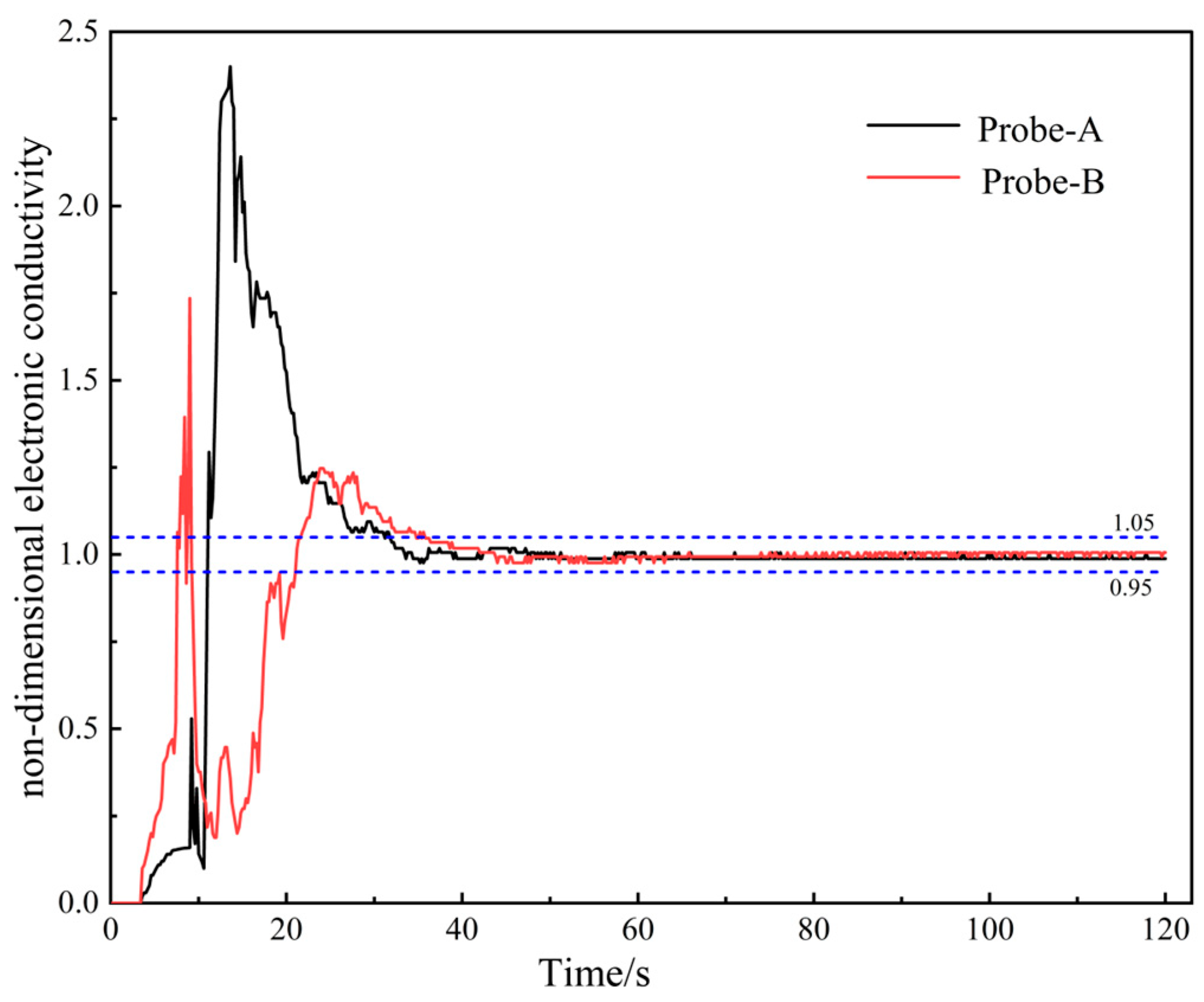
Scrap steel is known to influence the fluid flow characteristics of the melt pool in converter steelmaking. However, few studies have considered the effects of the scrap steel charging structure. In this study, a physical model of a 1:8.8 steel–scrap–gas three-phase flow converter was established to investigate the effects of scrap steel state, distribution, material type and shape on the fluid flow characteristics of the converter melt pool. The velocity distribution within the molten pool was measured using particle image velocimetry, while mixing time under various operating conditions was determined using the stimulus–response method. Considering the melting behaviour of scrap steel and the gas utilisation rate comprehensively, the results indicate that when scrap steel is arranged in a uniform position at the bottom of the converter—comprising 90% medium scrap in rectangular scrap and 10% heavy scrap in thin-plate form—and the gas flow rate is 750 m3/h, the overall dynamic conditions of the melt pool are optimal. At this time, the mixing time is 68.2 s (a reduction of up to 45.4%), average velocity is 0.117 m/s (a maximum increase of 207.9%) and turbulent energy dissipation rate is 0.0266 m2/s3 (a maximum increase of 141.8%). Finally, a relationship was established between stirring power and mixing time at different scrap steel charging structures, providing a methodological reference and data support for optimising the charging structure of scrap steel and efficiently using scrap steel in converters.
Keywords: basic oxygen furnace steelmaking; scrap steel charging structure; physical simulation; mixing time; turbulent characteristics basic oxygen furnace steelmaking; scrap steel charging structure; physical simulation; mixing time; turbulent characteristics