Article

Mobile Device with IoT Capabilities for the Detection of R-32 and R-134a Refrigerants Using Infrared Sensors


by
Nikolaos Argirusis
1,2,*,
Achilleas Achilleos
3,
John Konstantaras
4,
Petros Karvelis
5 and
Antonis A. Zorpas
2,*
1
mat4nrg GmbH, 38678 Clausthal-Zellerfeld, Germany
2
Laboratory of Chemical Engineering and Engineering Sustainability, Faculty of Pure and Applied Sciences, Open University of Cyprus, Gianni Kranidioti 89, 2231 Latsia, Nicosia, Cyprus
3
Department of Mechanical Engineering, Division LMSD, KU Leuven, Celestijnenlaan 300, P.O. Box 2420, 3001 Leuven, Belgium
4
Energy and Environmental Research Laboratory, National and Kapodistrian University of Athens, 34400 Psachna, Evia, Greece
5
Department of Informatics and Telecommunications, University of Ioannina, 45110 Ioannina, Epirus, Greece
*
Authors to whom correspondence should be addressed.
Processes 2026, 14(3), 466; https://doi.org/10.3390/pr14030466
Submission received: 5 December 2025 / Revised: 12 January 2026 / Accepted: 23 January 2026 / Published: 28 January 2026
(This article belongs to the Section Environmental and Green Processes)

Abstract

Fluorinated greenhouse gases (FGGs) are classified as worldwide pollutants and have a high global warming potential compared to other greenhouse gases. Detecting the existence and concentration of new and older refrigerant gases is crucial for assessing system functionality and determining whether they can be recycled or need to be disposed of. Additional justifications for the necessity of quantitative measurements of these gases include the manufacturing of air conditioning components; leak detection is conducted to ensure they are free of leaks. Classical laboratory Fast Fourier transform spectrometers enable the detection and measurement of substances while being delicate, unwieldy, and costly, and typically requiring a skilled technician to operate them. For the estimation of refrigerants in the field, a portable, user-friendly, and cost-effective detection device must be deployed. This article provides an in-depth analysis of the categorization of refrigerant gases using an Internet of Things (IoT) gas detection device. The functionality in effectively differentiating between important refrigerant gases, like R-32 and R-134a, with low delay, is demonstrated through practical tests. With the portable device, this study utilizes Fourier-Transformed infrared spectra measured from the refrigerants R-32 and R-134a, collected using a custom-made 3D-printed tubular reactor equipped with two BaF2 windows, suitable for use in the beamline of a Bruker IR Spectrometer. Calibration was performed by exposing the infrared sensor to controlled gas environments with varying amounts of refrigerant gases using accurately produced gas mixtures. Following the on-field analysis of the reclaimed refrigerants, the obtained data was immediately processed, and both the data and the results were uploaded to an IoT platform, making them available to business-to-business (B2B) clients. The functionality of the device is demonstrated.

1. Introduction

The field of infrared science has had a transformative impact on the advancement of the modern technological era. The infrared region of the electromagnetic spectrum ranges from approximately 0.75 µm to 1000 µm. There are a lot of technological uses for infrared radiation due to its physical properties. As an example, some of them are presented below [1,2,3]:
  • Every physical entity releases electromagnetic radiation, which is contingent upon the wavelength and is governed by the temperature of the body. The detected radiation may be utilized to quantify the temperature of the body, as employed in contactless temperature measurement, mostly known as pyrometry.
  • Thermal imaging with modern infrared cameras visualizing temperature distribution and allowing quantification of, e.g., the thermal isolation of buildings.
  • IR radiation can also be used for the detection of the motion of humans, animals, and hot parts, e.g., in a production line. Because of the ability of infrared radiation to propagate in the dark or fog, it is used in night vison systems and in modern automated car driving systems.
  • The detection of molecules and atoms as they adsorb infrared radiation, inducing oscillations that have characteristic resonance frequences and allow for the identification of chemical substances.
Infrared sensors are divided, based on their function principle, into thermal and photon sensors. Thermal infrared sensors detect and convert the temperature change resulting from the absorption of infrared radiation into an electrical output signal. The operational basis of these sensors differs from that of semiconductor-based photon or quantum sensors, as the photons of the radiation form charge carriers owing to distinct photoelectric phenomena. To detect low-energy infrared light, photon sensors must be significantly chilled below the prevailing ambient temperature. In contrast, thermal infrared sensors may be operated at room temperature [4]. When infrared-based technology is used in conjunction with computed-tomography (CT) equipment, very sensitive portable optoelectronic devices are suitable for screening baggage and shipping containers for evidence of explosives, plastic explosives, chemical and biological weapons, and other organic compounds. Passive infrared sensors can detect emissions from concealed weapons or explosives. In this respect, FTIR spectroscopy is one of the most important technologies. Additionally, the use of FT-Raman spectroscopy (FTRS) [5,6] enables the fast identification of chemical compounds without the need for intricate preprocessing. This nondestructive technique offers several additional benefits, such as the capability to scan through glasses or commonly used plastic bags [7].
Infrared sensors have the ability to provide instantaneous data required for the development, optimization, monitoring, and control of industrial processes. Gas chromatography and mass spectrometry, respectively, are commonly employed for gas analysis; however, besides the high costs of those techniques, they lack the ability to offer real-time process control and monitoring capabilities. Among the costly high definition FTIR spectrometers that may be too expensive for routine industrial applications, one can also use a low-cost, non-dispersive infrared (NDIR) spectrometer [8].
Climate change is a serious problem caused primarily by using fossil fuels, although greenhouse gas (GHG) emissions are also regarded as a major contributor. Globally, greenhouse gas emissions cause an increase in average temperature, a decrease in ice mass, which causes sea level rise, and extreme climate events. Surface temperature has risen by 1.4 °C since the 1900s, with an exceptional increase of 0.18 °C recorded for June 2023 [9]. Fluorinated greenhouse gases (FGGs) are categorized as global pollutants [10]. Most fluorinated greenhouse gases have an extremely high global warming potential (GWP) when compared to other greenhouse gases [11]. Historically, chlorofluorocarbons (CFCs) have been utilized as propellants for packaging materials, aerosol solvents, and refrigerants, and they have been identified as potential contributors to ozone depletion [12]. The Montreal Protocol of 1987 [13] agreed to eliminate the use of CFCs. This led to the replacement of CFCs with hydrofluorocarbons [HFCs] [14,15]. As a result of recent changes in environmental legislation, new refrigerant categories have evolved, with the goal of making refrigerant gases “greener” in terms of their impact on the ozone layer. It is crucial to be able to detect the existence and concentration of these new gases, as well as older gases, in order to evaluate if the systems are operational and whether they can be recycled or destroyed. Additional reasons why quantitative measurements of the presence of such gases are required include leak detection during the manufacturing of air conditioning components to ensure that they are leak-free, as well as testing newer systems to ensure that they are running at maximum efficiency and mixing ratios.
Yuan et al. [16] also mentioned the problem arising from the increasing vehicle population, meaning that mobile air-conditioning (MAC) has the potential to be a significant contributor to GHG emissions. They found that using alternative low-GWP refrigerant gases can successfully decrease the emissions of greenhouse gases from MAC systems.
Fault detection and diagnosis are crucial for systems to achieve optimal operational efficiency by ensuring correct commissioning, efficient system control, and effective predictive and preventive maintenance. Therefore, many works and publications focus on the detection of gas leakage [17] from residential heating, ventilation, and air conditioning systems. In particular, residential air conditioner and air-source heat pump systems, on average, operate at least 17% below their rated efficiency due to defects, resulting in additional and avoidable energy costs. Winkler et al. [18] demonstrated that addressing installation difficulties such as interior airflow rate and refrigerant charge can result in an annual energy saving of 20.7 TWh (equivalent to 2.5 billion USD) [19]. This is also of the utmost importance considering the possible negative effects on human health throughout the life cycles of refrigerants on a global level. However, they can also present a health hazard due to direct exposure on a local level [20].
Delpha et al. [21] suggested a system for the primary detection of refrigerant R-134a gas leakage in air conditioning systems and environments using an electronic nose application. This application focused on the effects of relative humidity and an antagonist gas, carbon dioxide, as interfering gases on the R-134a gas and concentration discrimination. The gas sensor array, consisting of six elements, was primarily coupled with discriminant factorial analysis for pattern recognition.
A recent investigation by Xue et al. [22] quantified the time-dependent circulation of substances and quantities, and evaluated the impact of refrigerants (R-22, R-410a, and R-32) in residential air conditioning units in Japan. The total supply of R-22 reached its highest point at 49,147 metric tons in 2000, while the stock of R-410a peaked at 55,994 metric tons in 2017. In 2005, the highest amount of R-22 released into the waste stream was 3417 t/yr. Similarly, in 2023, the maximum flow of R-410a to the waste stream reached 4011 t/yr. The cumulative impact of refrigerant gases on global warming, measured as the overall global warming potential (GWP), rose from 3.6 kilotons of carbon dioxide equivalent (kt CO2 equation) in 1952 to 6999 kt CO2 equation in 2019, and thereafter declined to 5314 kt CO2 equation by 2030. In 2002, the ozone depletion potential (ODP) reached its highest point at 141 t CFC-11 equation When replacing R-22 with R-410a, the ODP fell by 50%, while the GWP increased by 8%. When replacing R-410a with R-32, the ozone depletion potential (ODP) remained the same, while the GWP fell by 6%.
R-32 is marketed as an environmentally friendlier alternative to R-134a and R-410A, yet it still has a significant influence on the climate. It has exceptional thermal conductivity and exhibits little resistance to heat transfer and pressure changes, both during the process of condensation and vaporization [23]. Its atmospheric lifespan is around five years [24] and is presently employed in both residential and commercial air-conditioning systems and heat pumps.
In accordance with the Clean Air Act Amendments of 1990, it is mandatory to recycle ozone-depleting substances. No individual is allowed to sell, distribute, or offer for sale or distribution any Class I (CFCs) or Class II (HCFCs) substances, which include used refrigerants, unless the refrigerant has undergone reclamation [25]. Refrigerant reclamation involves the process of filtering, drying, distillation, and chemical treatment to restore the substance to the specifications outlined in the Air-Conditioning, Heating, and Refrigeration Institute’s (AHRI) Standard 700-1995 (CFR, 2010) [26]. Yasaka et al. [27] recently published results of a study evaluating refrigerants in terms of GHG emissions, energy consumption, and life-cycle impact. They found that regardless of the refrigerant type and location, reclamation of the refrigerants has a milder environmental impact than their destruction. From the above statements, it is evident that the recovery and recycling of refrigerants is of the utmost importance. The current recovery procedures are insufficient, as they are complicated and prone to misuse [28]. The refrigerant is collected by technicians in small bottles, mostly without quality control, and then mixed in larger containers. The quality is then assessed, and certain measures (e.g., addition of pure refrigerant in order to adjust concentration) are taken in order to reuse the refrigerant; or the contamination is such that costly distillation is necessary.
Fast Fourier transform spectroscopy can be utilized for the detection and quantification of refrigerant gases. However, this equipment is sensitive, heavy, and expensive, and they frequently require the assistance of a skilled technician while operating in the field. As a result, mobile, user-friendly, and cost-effective detecting equipment is beneficial if it is used in the field. Nevertheless, a qualitative or quantitative estimation of the quality using a mobile device can only help to reduce some of the adjustment steps mentioned above.
For real-time environmental monitoring and safety applications, the integration of IoT with infrared sensors for refrigerant gas categorization offers a potential solution. In addition to improving operational efficiency, this technique helps with environmental sustainability and regulatory compliance by allowing the accurate and fast identification of harmful gases, helping to reclaim and recycle them, and thus to avoid their release into the atmosphere. The swift advancement of the Internet of Things (IoT) has led to a proliferation of networked devices, producing extensive data with significant potential to improve system and process efficiency [29]. One of the interesting applications is mobile gas detection and identification, where the integration of IoT with machine learning techniques can offer a more accurate and reliable approach for identifying diverse gaseous chemicals, including refrigerants [30]. In the IoT domain, gas sensors can be systematically implemented in a networked configuration, enabling ongoing monitoring and instantaneous analysis of the environment [31]. The data gathered from these sensors can subsequently be processed and analyzed using machine learning techniques, either locally on edge devices or remotely on cloud-based platforms, contingent upon the unique requirements of the application [32]. Our group has also published an approach for the Classification of Refrigerant Gases using Machine Learning algorithms [33].
Recently, different approaches using machine learning models and procedures in the detection and classification of gases in general, and refrigerants in particular, have been published. Lai et al. [34] developed an ensemble machine learning model to integrate commercial gas sensors for the precise concentration detection of different gases like CO, O3, and NO2. Al-Okby et al. [35] assessed the effectiveness of Indoor Air Quality index (IAQ-index) and Total Volatile Organic Compounds (TVOC), two important parameters to measure air impurities or air pollution using Parameter-Based Sensors, in detecting 12 distinct organic solvents in indoor environments. These sensors provide a flexible approach for defining the critical air quality threshold in hazardous/toxic gas detection and warning systems.
To the best of our knowledge, besides some low-quality, hand-sketched near-infrared (NIR) spectra from 1998 based on FLICS (Fiber Laser Intra-Cavity Spectroscopy) [36], there are no reliable data on the IR spectra of R-32 and R-134a published [37,38]. Recently, infrared spectra for R-32 were published in the spectral range 850–1335cm−1 [39]. Data in the whole infrared range is necessary for the reliable detection and classification of refrigerants. Therefore, we constructed a 3D-printed reactor, and with it, measured detailed IR spectra of R-32 and R-134a refrigerants in the whole spectral range of 400–4000 cm−1.
In the present manuscript, we publish the obtained detailed infrared spectra, and additionally, we report a detailed study on the classification of refrigerant gases in mobile IoT-based gas detection systems based on the collected detailed spectra. Based on these IR spectra, a device for the identification of the two refrigerants has been developed and calibrated, allowing the measurement of the purity of reclaimed R32 and R134a refrigerants. Besides the ability to detect the refrigerants, this device also possesses IoT capabilities, and it uploads the results to B2B platforms automatically, protected from any manipulation—offering, in real time, the recovered refrigerant to potential buyers in order to re-use it. The novelty relies on the direct and immediate B2B interaction between the seller and buyer. The buyer has direct proof that the purchased refrigerant has the required quality and purity to be reused. The data are saved securely on the cloud platform. Through experimental assessments, we demonstrate the advantages of our approach in accurately discriminating between important refrigerant gases such as R-32 and R-134a, with low latency. Following the measurement, the post-processed data is immediately sent to an IoT platform and made available to B2B clients.

2. Materials and Methods

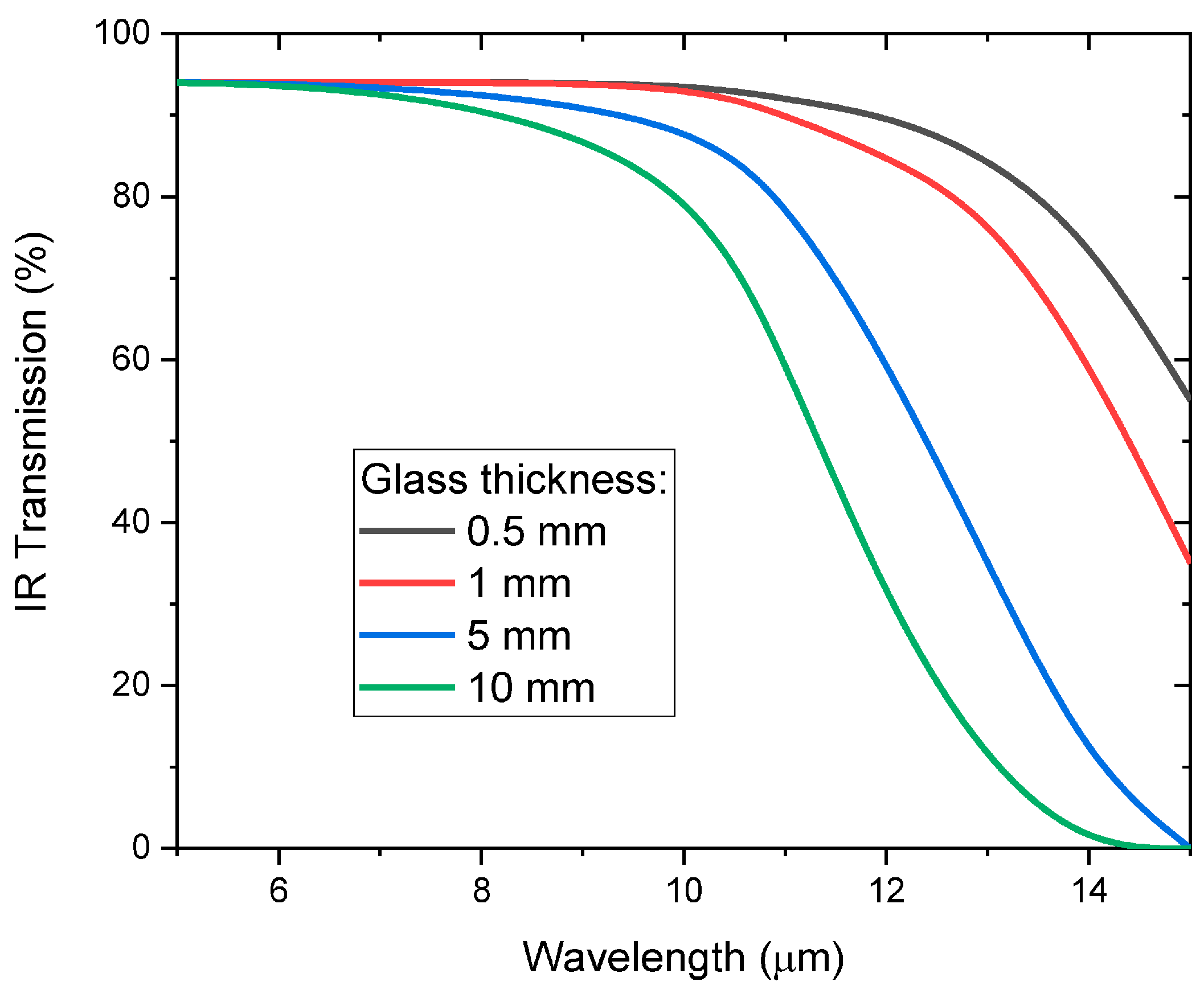
As mentioned above, FTIR data for the widely available refrigerant gases R-32 and R-134a, used in the present research, is scarce. Therefore, thorough FTIR spectra of the individual refrigerants are required. These were achieved utilizing an in-house 3D-printed tubular reactor with two BaF2 windows, which can be integrated into the beamline of a Bruker (Billerica, MA, USA) FTIR Spectrometer. The BaF2 windows (purchased by Crystran Ltd., Poole, UK) have a thickness of 1 mm and 8 mm diameter. The transmission range of the BaF2 windows is from 0.15 µm to 12 µm, and the refractive index 1.45 at 5 µm, with a reflection loss of 6.5% at 5 µm (2 surfaces) [40]. There is a direct relationship between window thickness and infrared wavelength, as the window should allow a high transmittance at a specified temperature (Figure 1). If a significant proportion of infrared radiation is transmitted beyond the reaction cell, the material is appropriate for IR measurements [41].
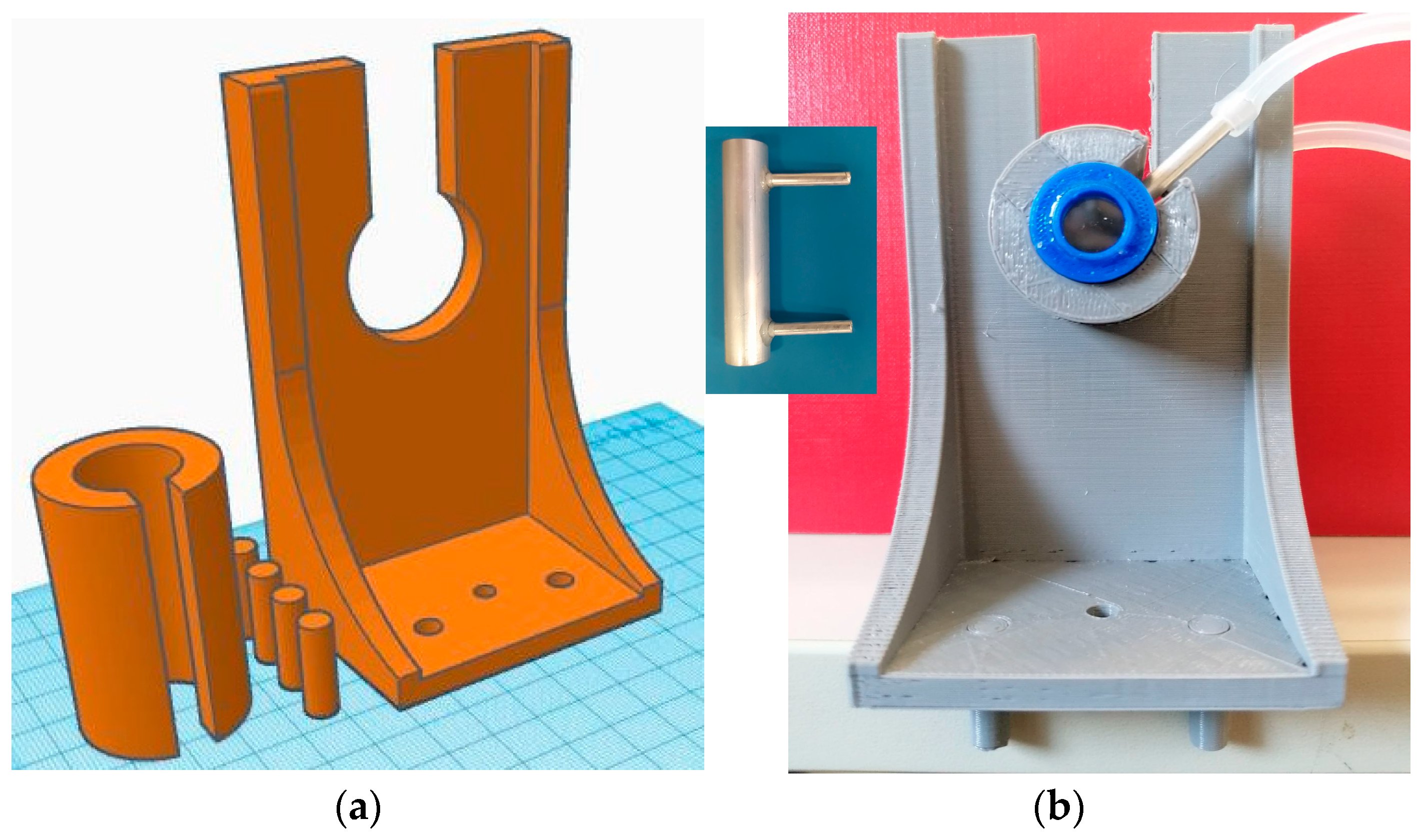
The data collecting process required exposing the IR sensor to controlled gas environments containing refrigerant gases at various concentrations using precisely produced gas combinations. This was achieved by fixing the two BaF2 windows on the aluminum reactor using the blue caps (Figure 2). The gases were directed through the reactor from gastight bags without any contamination with ambient air, and thus without humidity that could influence the spectra. The obtained spectra will be used for the identification of characteristic peaks for each refrigerant in Section 3.
For the tests, pure commercial R-32 and R-134a refrigerant gases were purchased in 10 L bottles. These gases were also used for the calibration of the device by diluting them with ambient air.
For the mobile device, Axetris® AG, Switzerland, provided the wide-band IR source (Model EMIRS200, Axetris® AG, Kägiswil, Switzerland) used in the present study. The EMIRS200 source has the following main characteristics: typical current at 460 °C = 75 mA, typical voltage at 460 °C = 5.2 V, broadband emission power = 28 mW, maximum peak temperature = 500 °C, medium cold resistance = 45 Ω, medium hot resistance = 72 Ω, modulation depth at 20 Hz = 0.8, and a working temperature of 460 °C [42]. The source in the device has been driven at 10Hz with a duty cycle of 62%.
The IR sensor (Thermopile Sensor HTS A21 F-BaF2) has been purchased from Heimann Sensor GmbH (Dresden, Germany). The HTS Series of CMOS-compatible thermopile sensor chips, housed in a TO39 size transistor casing, has excellent sensitivity, a minimal temperature sensitivity coefficient, and high reproducibility, and is reliable [43].
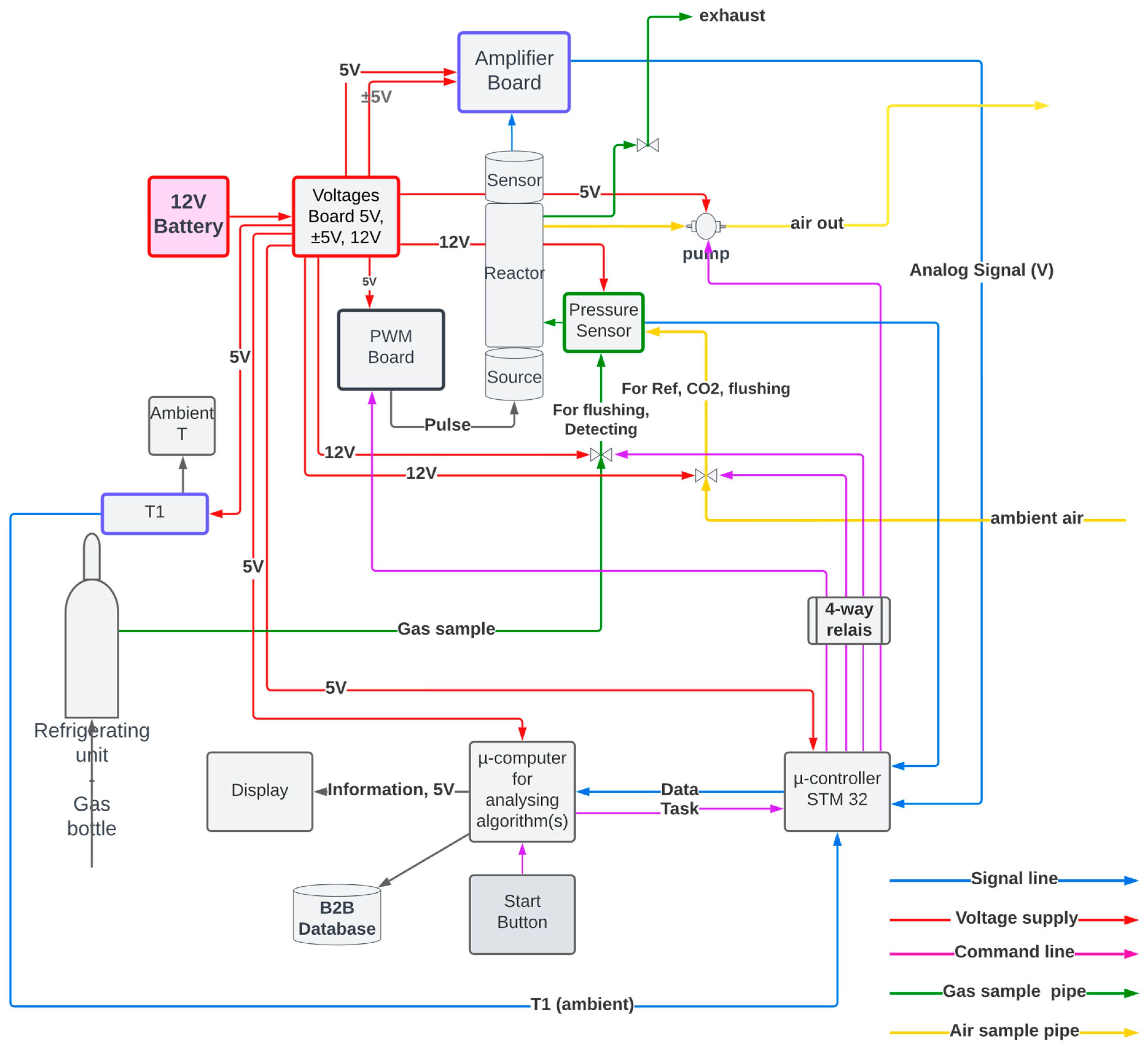
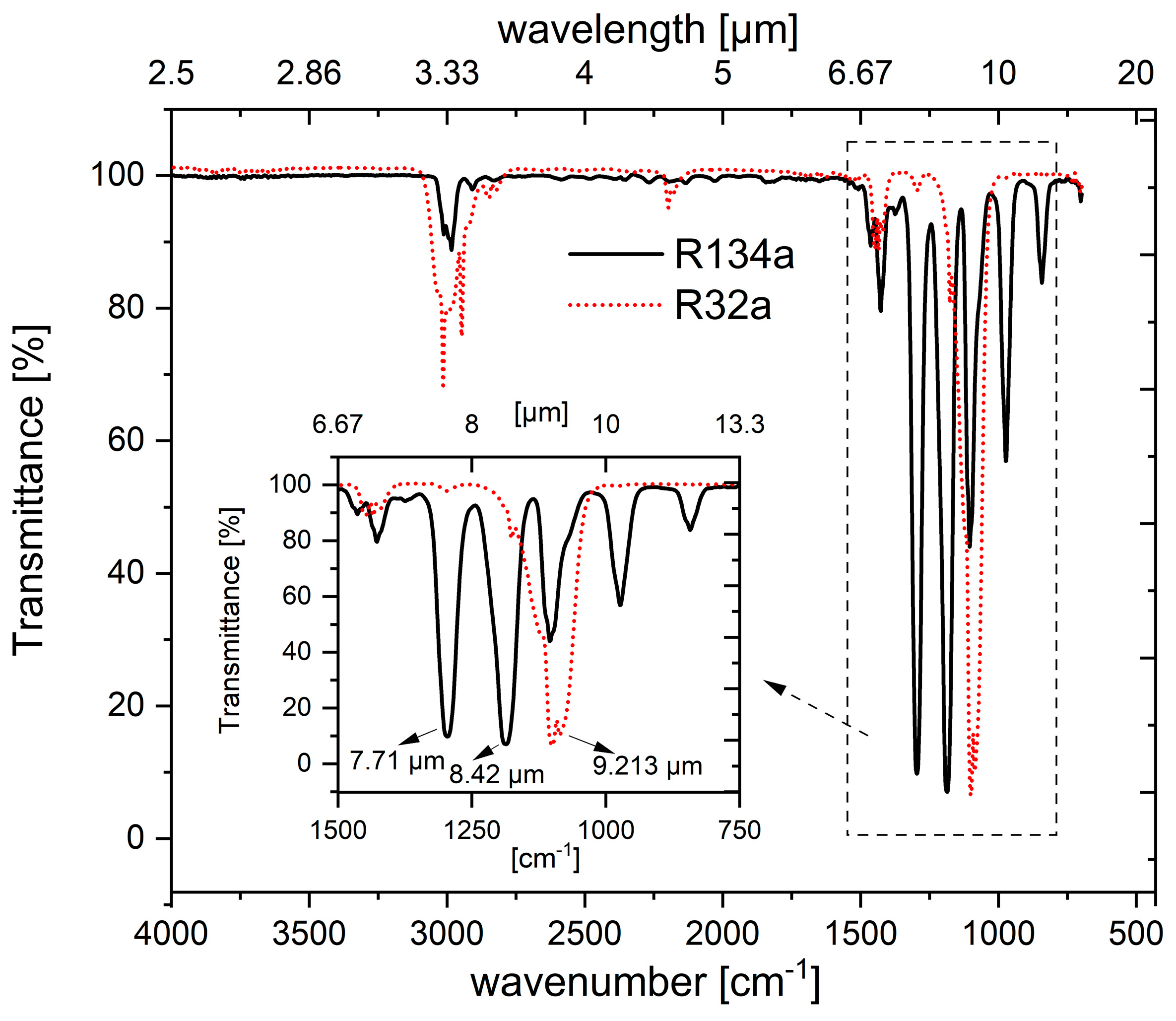
In Figure 3, the process flowchart of the mobile device is presented. An STM-32 µ-controller (STMicroelectronics, Geneva, Switzerland) has been used for controlling the measuring hardware, the main components of which were temperature (SMT172-T2020 Smartec, Breda, The Netherlands) and pressure sensors (MPX2200GP NXP, Eindhoven, The Netherlands), a 12 V Li-Ion battery (JuBaTec, Heek, Germany), and several voltage dividers and stabilizers for different outputs, as needed by the 4-way relays (HR0051 Haitronic, Hongkong, China) and the air and gas pumps (FIT0801 DFRobot, Shanghai, China) and valves (Onpira® B08CZRLT7D, Zittau, Germany) for the automated gas inlet/outlet. Furthermore, a PWM module (XY-KPWM HUISHENGYUFA, Shenzhen, China) was used to drive the Axetris® (Kägiswil, Switzerland) EMIRS200 IR source at a frequency of 10 Hz with a duty cycle of 62%, as advised by the producer. Special printed circuits and a reference voltage of 1.23 V were also implemented, which were needed for the stabilization and amplification of the sensor signals. The IR optical filters with the appropriate wavelengths that resulted from the IR spectra (Figure 4 in Section 3), are custom made by Spectrogon SE, (Täby, Sweden). We used the following IR optical filters: (7700 ± 465) nm, (8440 ± 173) nm, and (9127 ± 545) nm. An additional IR optical filter at a wavelength of (3900 ± 200) nm was used as a reference signal taken with ambient air (blank), because at this wavelength, no signal is expected from the refrigerants, as can be concluded from the spectra presented in Figure 4. The IR optical filters are placed in front of the IR sensor, allowing the measurement of the transmittance of each gas at the respective wavelength. The measuring time for each channel was set to 5 s at a rate of 10 Hz, resulting in a total of 50 cycles measured with a value taken every 100 ms, totaling in 100 values per cycle and 5000 values per measurement. For the calibration, a mean value of the s50 measurements was built. These 50 measurements were conducted over several days. After the calibration was finished, control measurements were carried out at specific time intervals. The device measures all the IR optical filters, with each one for a specific IR peak. Each refrigerant has one or two unique IR peaks. The device checks for which filter/IR peak a signal was detected, and can decide, based on this information, which gas was measured. Afterwards, the measured value for the one specific IR peak is compared with the calibration line for this gas/IR peak, and the purity of the refrigerant is calculated.
In order to protect the optics of both the BF2 window and the sensor, an in-line filter is placed just before the gas inlet valve, in which oil droplets and possible dust particles are removed.
The measurement procedure starts with purging the system with ambient air to remove possible gas remaining from previous measurements. Afterwards, the user is asked to open the manifold valves and start the measuring procedure. Then, the refrigerant is let into the device, and the measuring procedure starts. After all sensors have been addressed, the measurement is finished, and the data stored in the µ-controller are transferred from the µ-controller to the raspberry µ-computer (Cambridge, England) via a USB connection and stored there permanently. Afterwards, the raw data are transformed into plain text files and saved as *.csv files, followed by normalization and calculation of the final mean values for each channel. The mean values of all 50 calibration measurements are then used for calculating the mean value for each calibration point (each concentration). The raw data, as well as the result, are finally transferred and stored to a cloud-based platform for B2B applications.

IoT Functionalities of the Device

The device must be initially set up in order to use Internet of Things (IoT) capabilities. A user interface has been programmed in Python code that allows interaction with the user. In this interface, the user can set up the device for the first time to wirelessly connect to the internet. Therefore, the user must manually input the IP address and the password to connect to the internet access point.
Once the device is set up, the measuring procedure is initiated by the user by simply switching on the device. The device, via the i/o interface, asks the user to confirm performing several steps, like purging the reactor with air, and connecting the tubes to connect the device and the refrigerant source directly—e.g., an air-conditioner of a bottle in which the gas is reclaimed. The user is then asked to open the valve on the bottle and to confirm the connection. The measuring procedure runs automatically. At the end, the device transforms the raw data into plain text, and transfers it via USB connection to the µ-computer (a Raspberry Pi 4.0), which calculates the concentration and automatically uploads the final result via Wi-Fi-IEEE 802.11 protocol to the cloud-based B2B-database—the internet address of which is previously implemented in the device. Finally, the user is informed about the purity of the reclaimed refrigerant gas and asked to switch off the device.
If, for some reason, the connection to the internet is broken, the device sets the file attributes so that the files are not archived, and automatically submits the data as soon as internet access is available.

3. Results

FT-IR Spectra

The FT-IR spectra of the refrigerants R-134a and R-32 obtained according to the procedure described in the previous section are presented in Figure 4. From this figure, one can obtain characteristic wavelengths for the identification of each refrigerant. The obtained detailed IR spectra allow clearly distinguishable peaks for both gases. For R-32, it is 9.213 µm, and for R-134a, it is 7.71 µm and/or 8.42 µm.
Figure 4. FT−IR spectra of the refrigerants R−134a and R−32, with the characteristic peaks for the identification of the two refrigerants inserted.
Processes 14 00466 g004
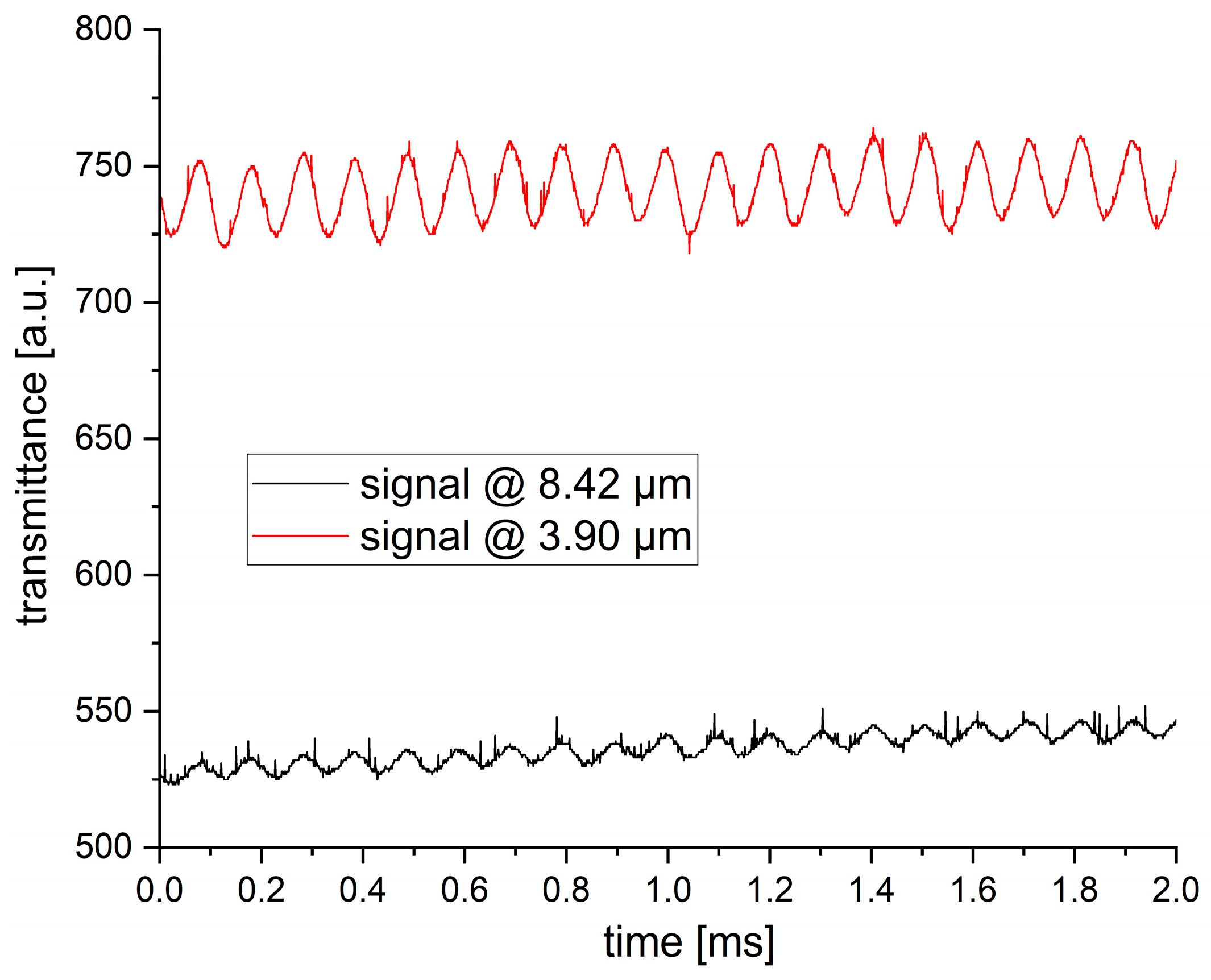
In Figure 5, typical signals at 8.42 µm and the blank signal at 3.90 µm are presented, as they result from a run with R-134a. Similar signals are obtained from all the used optical filters using both refrigerants. All obtained signals are then normalized to the blank signal (at 3.90 µm), resulting in a thermal compensated signal (rel. transmittance) according to the Beer–Lambert law.
The mean value of this signal is then the result for the calibration point at this gas concentration. The intensity I of light traveling into an absorbing homogeneous medium is ln I 0 I = ε c d , where ε is the molar absorption coefficient of the body/medium, c is the concentration, and d is the length of the cuvette. In our case, the distance between source and sensor is fixed to 5 mm because of the dimensions of the reactor flown by the refrigerant.
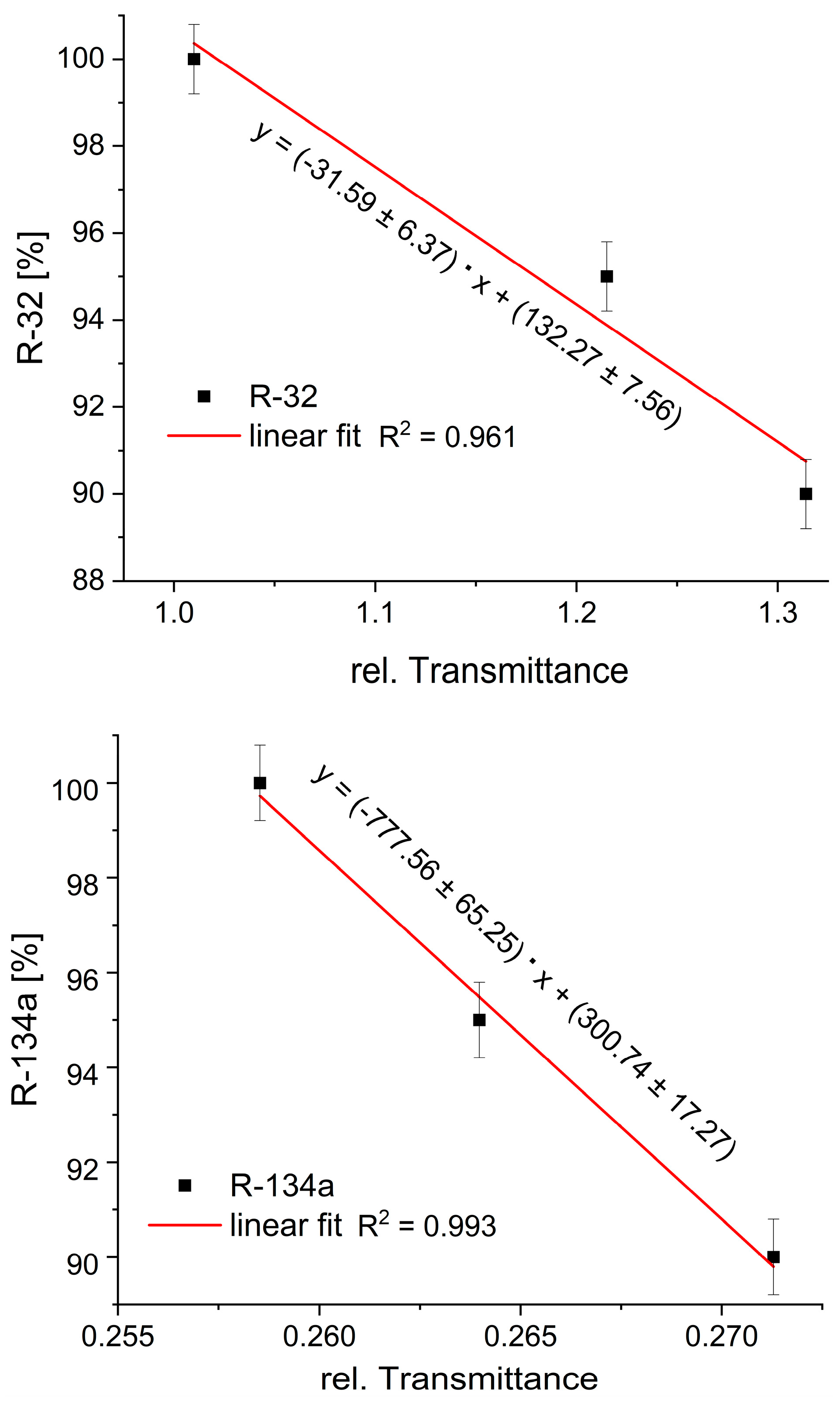
For the calibration, we used both refrigerants at concentrations of 90%, 95%, and 100%, as according to the AHRI standard [26,44], concentrations below 98% (not including max. 5% oily liquids) are not considered grade A (pure), and thus are not directly reusable without any further treatment. The sampling of the refrigerants is performed as the vapor phase and not the liquid phase of the bottle or the installed device, by collecting a small liquid amount in the manifold and letting it expand in the inlet tubing of the device via a small orifice. This way, the flow rate of each refrigerant is kept constant during the measurement. The oil contamination is not considered in the calculation of the gas concentration. The linearity of the signal was confirmed by gas chromatogpraphy by deploying gas dilutions of 1:4.3, 1:5.6, 1:7, and 1:12, corresponding to 23.3% to 8.3%.
At least 50 measurements have been performed for the calibration of each point (concentration) of the calibration line. For each gas, we obtained calibration lines as presented in Figure 6 for R-32 (top) and R-134a (bottom). Every point in these diagrams is a mean value of at least 50 calibration measurements, and the error bars are calculated using the standard deviation with scaling factor 0.02. Deviations can stem from inaccurate prepared gas mixtures (dilution from 100% to 95% and 90% with air), or from temperature deviations due to the cooling effect upon expansion which influence the sensor signal.
Despite the accuracy of the sensors at room temperature, the device can exhibit deviations at extreme conditions.

4. Conclusions

In this manuscript, firstly, the problem of the dispersion of cooling gases in the atmosphere is addressed and its importance is discussed. This highlights the necessity of the on-site analysis of gas leaks and the analysis of the purity of recovered cooling gases in order to enable their reuse. Therefore, an IoT-based mobile device for the automated classification of the refrigerant gases R32 and R134a has been developed and tested. The main components used are given, and the applied methods are described.
For the identification of the refrigerant gases R-32 and R-134a, detailed IR spectra were necessary and have been obtained using an in-house 3D-printed reactor for gaseous substances. Based on these IR spectra, a method for the identification of the two refrigerants has been developed and calibrated. With this method, the purity of reclaimed R32 and R134a refrigerants was successfully measured, and a classification decision was taken, demonstrating the functionality of the mobile device. The device also possesses, besides the ability to detect and classify the refrigerants, IoT capabilities to upload the results to B2B platforms, offering in real time the recovered refrigerant to potential buyers in order to re-use it. This presumes that the quality (purity) of the recovered gas meets the purity standards set by AHRI for Grade A refrigerants.

Author Contributions

Conceptualization, N.A.; methodology, N.A. and J.K.; software, A.A., P.K. and J.K.; validation, N.A.; formal analysis, N.A., A.A. and P.K.; investigation, N.A.; resources, N.A. and A.A.Z.; data curation, N.A. and A.A.; writing—original draft preparation, N.A.; writing—review and editing, N.A., P.K. and A.A.Z.; supervision, A.A.Z.; project administration, N.A.; and funding acquisition, N.A. All authors have read and agreed to the published version of the manuscript.

Funding

This research received funding through the project “Circular economy ecosystem to Recover, Recycle and Re-use F-gases contributing to the depletion of greenhouse gases” (LIFE Retradeables) from the LIFE Programme of the European Union under grant agreement LIFE19 CCM/AT 001226-LIFE Retradeables.

Data Availability Statement

Data sharing is not applicable to this article, as all necessary data is included in the manuscript. High-resolution IR spectra can be provided by the authors upon request.

Acknowledgments

Funding by the European Union under grant agreement LIFE19 CCM/AT 001226-LIFE Retradeables is acknowledged. We are indebted to Vaios Papaspyros for his valuable advice on software programming.

Conflicts of Interest

Author Nikolaos Argirusis was employed by the company mat4nrg GmbH. The remaining authors declare that the research was conducted in the absence of any commercial or financial relationships that could be construed as a potential conflict of interest.

References

  1. Budzier, H.; Gerlach, G. Thermal Infrared Sensors—Theory, Optimisation and Practice; John Wiley & Sons: Hoboken, NJ, USA, 2011. [Google Scholar]
  2. Caniou, J. Passive Infrared Detection, Theory and Application; Kluwer Academic Publishers: Dordrecht, The Netherlands, 1999. [Google Scholar]
  3. Argirusis, N.; Achilleos, A.; Alizadeh, N.; Argirusis, C.; Sourkouni, G. IR Sensors, Related Materials, and Applications. Sensors 2025, 25, 673. [Google Scholar] [CrossRef]
  4. Graf, A.; Arndt, M.; Sauer, M.; Gerlach, G. Review of micromachined thermopiles for infrared detection. Meas. Sci. Technol. 2007, 18, R59–R75. [Google Scholar] [CrossRef]
  5. McCreery, R.L. Raman Spectroscopy for Chemical Analysis; John Wiley & Sons: Hoboken, NJ, USA, 2000. [Google Scholar] [CrossRef]
  6. Kukura, P.; McCamant, D.W.; Mathies, R.A. Femtosecond Stimulated Raman Spectroscopy. Annu. Rev. Phys. Chem. 2007, 58, 461–488. [Google Scholar] [CrossRef] [PubMed]
  7. Krauklis, A.E.; Gagani, A.I.; Echtermeyer, A.T. Near-Infrared Spectroscopic Method for Monitoring Water Content in Epoxy Resins and Fiber-Reinforced Composites. Materials 2018, 11, 586–599. [Google Scholar] [CrossRef]
  8. Chen, K.; Cui, D.; Qi, H. Multi-component Freon gas detection based on infrared tunable Fabry-Perot detector. Sens. Actuators B Chem. 2024, 420, 136488. [Google Scholar] [CrossRef]
  9. Rohde, R. June 2023 Temperature Update. Berkeley Earth Analysis Posted on 11 July 2023. Available online: https://berkeleyearth.org/june-2023-temperature-update/#:~:text=The%20global%20mean%20temperature%20in,C%20(0.27%20°F) (accessed on 29 August 2024).
  10. Harrison, J.J. New and improved infrared absorption cross sections for dichlorodifluoromethane (CFC-12). Atmos. Meas. Tech. 2015, 8, 3197–3207. [Google Scholar] [CrossRef]
  11. Hansen, J.; Ruedy, R.; Sato, M.; Lo, K. Global surface temperature change. Rev. Geophys. 2010, 48, 1–29. [Google Scholar] [CrossRef]
  12. Wallington, T.J.; Schneider, W.F.; Worsnop, D.R.; Nielsel, O.J.; Debruyn, W.J.; Shorter, J.A. The environmental impact of CFC replacements—HFCs and HCFCs. Environ. Sci. Technol. 1994, 28, 320A–326A. [Google Scholar] [CrossRef]
  13. The Montreal Protocol. UN Environment Programme. Available online: https://www.unenvironment.org/ozonaction/who-we-are/about-montreal-protocol (accessed on 15 July 2024).
  14. Sheraz, M.; Anus, A.; Le, V.C.T.; Swamidoss, C.M.A.; Kim, E.-K.; Kim, S. A comprehensive review of contemporary strategies and approaches for the treatment of HFC-134a. Greenh. Gases Sci. Technol. 2021, 11, 1118–1133. [Google Scholar] [CrossRef]
  15. Chen, Y.; Zhang, J.; Shi, S.; Fu, W.; Ganesan, V.; Miljkovic, N. Enhanced pool boiling and hysteresis of refrigerant R-134a and its potential alternatives R-1336mzz(E), and R-1336mzz(Z). Int. J. Heat Mass Transf. 2026, 254, 127620. [Google Scholar] [CrossRef]
  16. Yuan, Z.; Ou, X.; Peng, T.; Yan, X. Development and application of a life cycle greenhouse gas emission analysis model for mobile air conditioning systems. Appl. Energy 2018, 221, 161–179. [Google Scholar] [CrossRef]
  17. Li, Y.; Yang, J.; Wu, X.; Liu, Y.; Zhuang, Y.; Zhou, P.; Han, X.; Chen, G. Leakage, diffusion and distribution characteristics of refrigerant in a limited space: A comprehensive review. Therm. Sci. Eng. Prog. 2023, 40, 101731. [Google Scholar] [CrossRef]
  18. Winkler, J.; Das, S.; Earle, L.; Burkett, L.; Robertson, J.; Roberts, D.; Booten, C. Impact of installation faults in air conditioners and heat pumps in single-family homes on U.S. energy usage. Appl. Energy 2020, 278, 115533. [Google Scholar] [CrossRef]
  19. U.S. Energy Information Administration. Residential Energy Consumption Survey. 2015. Available online: https://www.eia.gov/consumption/residential/data/2015/ (accessed on 18 July 2024).
  20. Xue, M.; Kojima, N.; Zhou, L.; Machimura, T.; Tokai, A. Trade-off analysis between global impact potential and local risk: A case study of refrigerants. J. Clean. Prod. 2019, 217, 627–632. [Google Scholar] [CrossRef]
  21. Delpha, C.; Lumbreras, M.; Siadat, M. Discrimination and identification of a refrigerant gas in a humidity controlled atmosphere containing or not carbon dioxide: Application to the electronic nose. Sens. Actuators B 2004, 98, 46–53. [Google Scholar] [CrossRef]
  22. Xue, M.; Kojima, N.; Machimura, T.; Tokai, A. Flow, stock, and impact assessment of refrigerants in the Japanese household air conditioner sector. Sci. Total Environ. 2017, 586, 1308–1315. [Google Scholar] [CrossRef]
  23. Longo, G.A.; Mancin, S.; Righetti, G.; Zilio, C. HFC32 vaporisation inside a Brazed Plate Heat Exchanger (BPHE): Experimental measurements and IR thermography analysis. Int. J. Refrig. 2015, 57, 77–86. [Google Scholar] [CrossRef]
  24. Andersen, S.O.; Halberstadt, M.L.; Borgford-Parnell, N. Stratospheric ozone, global warming, and the principle of unintended consequences—An ongoing science and policy success story. J. Air Waste Manag. Assoc. 2013, 63, 607–647. [Google Scholar] [CrossRef] [PubMed]
  25. Stratus Consulting. Analysis of Equipment and Practices in the Reclamation Industry—Draft Report; Stratus Consulting: Boulder, CO, USA, 2010. [Google Scholar]
  26. AHRI Standard 700-2015; Specifications of Refrigerants. AHRI Air-Conditioning, Heating, & Refrigeration Institute: Arlington, VA, USA, 2015.
  27. Yasaka, Y.; Karkour, S.; Shobatake, K.; Itsubo, N.; Yakushiji, F. Life-Cycle Assessment of Refrigerants for Air Conditioners Considering Reclamation and Destruction. Sustainability 2023, 15, 473. [Google Scholar] [CrossRef]
  28. Moreno, J.; Karpov, I.; Ahmed, A.; Foglia, J.; Wu, H.; Gadekar, A.; Swinkels, P.L.J.; Gani, R. Sustainable recycling of refrigerants: Analysis of alternatives. Comput. Aided Chem. Eng. 2023, 52, 2501–2507. [Google Scholar] [CrossRef]
  29. Al-Fuqaha, A.; Guizani, M.; Mohammadi, M.; Aledhari, M.; Ayyash, M. Internet of Things: A Survey on Enabling Technologies, Protocols, and Applications. IEEE Commun. Surv. Tutor. 2015, 17, 2347–2376. [Google Scholar] [CrossRef]
  30. Narkhede, P.; Walambe, R.; Mandaokar, S.; Chandel, P.; Kotecha, K.; Ghinea, G. Gas Detection and Identification Using Multimodal Artificial Intelligence Based Sensor Fusion. Appl. Syst. Innov. 2021, 4, 3. [Google Scholar] [CrossRef]
  31. Ahmed, S.; Rahman, M.J.; Razzak, M.A. Design and Development of an IoT-Based LPG Gas Leakage Detector for Households and Industries. In Proceedings of the 2023 IEEE World AI IoT Congress (AIIoT), Seattle, WA, USA, 7–10 June 2023; pp. 0762–0767. [Google Scholar] [CrossRef]
  32. Gomes, J.B.A.; Rodrigues, J.J.P.C.; Rabêlo, R.A.L.; Kumar, N.; Kozlov, S. IoT-Enabled Gas Sensors: Technologies, Applications, and Opportunities. J. Sens. Actuator Netw. 2019, 8, 57. [Google Scholar] [CrossRef]
  33. Argirusis, N.; Konstantaras, J.; Argirusis, C.; Dimokas, N.; Thanopoulos, S.; Karvelis, P. A Machine Learning Approach for the Classification of Refrigerant Gases. Appl. Sci. 2024, 14, 6230. [Google Scholar] [CrossRef]
  34. Lai, W.-I.; Chen, Y.-Y.; Sun, J.-H. Ensemble Machine Learning Model for Accurate Air Pollution Detection Using Commercial Gas Sensors. Sensors 2022, 22, 4393. [Google Scholar] [CrossRef] [PubMed]
  35. Al-Okby, M.F.R.; Neubert, S.; Roddelkopf, T.; Fleischer, H.; Thurow, K. Evaluating of IAQ-Index and TVOC Parameter-Based Sensors for Hazardous Gases Detection and Alarming Systems. Sensors 2022, 22, 1473. [Google Scholar] [CrossRef] [PubMed]
  36. Morse, T.F. Infrared Analysis of Refrigerant Mixtures; Hope Technologies, Corp.: Providence, RI, USA, 1998; Available online: https://www.ahrinet.org/system/files/2023-06/Infrared%20Analysis%20of%20Refrigerant%20Mixtures-Morse-1998-DOE-CE-23810-82.pdf (accessed on 29 August 2024).
  37. Calm, J.M.; Hourachan, G.C. Physical, Safety, and Environmental Data for Current and Alternative Refrigerants. In Proceedings of the Refrigeration for Sustainable Development-Proceedings of the 23rd International Congress of Refrigeration (ICR 2011), Prague, Czech Republic, 21–26 August 2011; International Institute of Refrigeration (IIRF/IIF): Paris, France. Available online: https://www.hourahan.com/wp/wp-content/uploads/2010/08/2011-Physical-Safety-and-Environmental-Data2.pdf (accessed on 29 August 2024).
  38. Miyawaki, K.; Shikazono, N. Experimental evaluation of NIR spectroscopic characteristics of liquid R32, R1234yf and R454C refrigerants. Int. Commun. Heat Mass Transf. 2024, 156, 107633. [Google Scholar] [CrossRef]
  39. Harrison, J.J. New infrared absorption cross sections of difluoromethane (HFC-32) for atmospheric remote sensing. J. Quant. Spectrosc. Radiat. Transf. 2021, 270, 107639. [Google Scholar] [CrossRef]
  40. Crystran Ltd. Barium Fluoride Properties. Available online: https://www.crystran.com/optical-materials/barium-fluoride-baf2 (accessed on 17 October 2025).
  41. Mutschler, R.; Moioli, E. Infrared Thermography as an Operando Tool for the Analysis of Catalytic Processes: How to Use It? Catalysts 2021, 11, 311. [Google Scholar] [CrossRef]
  42. Axetris AG. EMIRS200 IR Sources. Available online: https://www.axetris.com/en/product/EMIRS200/600-347#Details (accessed on 17 October 2025).
  43. Heimann Sensor GmbH. Thermopile Sensor HTS A21. Available online: https://www.heimannsensor.com/HTS-A-Series (accessed on 17 October 2025).
  44. AHRI Standard 740-2015; Standard for Performance Rating of Refrigerant Recovery Equipment and Recovery/Recycling Equipment. AHRI Air-Conditioning, Heating, & Refrigeration Institute: Arlington, VA, USA, 2015.
Figure 1. The IR transmittance of barium fluoride (BF2) as a function of wavelength and thickness of the window glass (adapted from Ref. [41] with permission).
Processes 14 00466 g001
Figure 2. 3D-printed reactor for FTIR measurements of gaseous samples: (a) scheme and (b) photograph of the aluminum reactor (insert) mounted on the holder.
Processes 14 00466 g002
Figure 3. Process flowchart showing the core components of the device.
Processes 14 00466 g003
Figure 5. Typical IR sensor raw signal with the optical filter at a wavelength of 8.42 µm and the reference optical filter at 3.90 µm.
Processes 14 00466 g005
Figure 6. Calibration line for R−32 (top) and R−134a (bottom) at high concentrations.
Processes 14 00466 g006
Disclaimer/Publisher’s Note: The statements, opinions and data contained in all publications are solely those of the individual author(s) and contributor(s) and not of MDPI and/or the editor(s). MDPI and/or the editor(s) disclaim responsibility for any injury to people or property resulting from any ideas, methods, instructions or products referred to in the content.