Article

In Situ Self-Assembled Particle-Enhanced Foam System for Profile Control and Enhanced Oil Recovery in Offshore Heterogeneous Reservoirs

1
School of Petroleum Engineering, Yangtze University, Wuhan 430100, China
2
Hubei Key Laboratory of Oil and Gas Drilling and Production Engineering, Yangtze University, Wuhan 430100, China
3
National Engineering Research Center for Oil & Gas Drilling and Completion Technology, School of Petroleum Engineering, Yangtze University, Wuhan 430100, China
4
State Key Laboratory of Low Carbon Catalysis and Carbon Dioxide Utilization, Wuhan 430100, China
*
Authors to whom correspondence should be addressed.
Processes 2026, 14(3), 411; https://doi.org/10.3390/pr14030411
Submission received: 24 December 2025 / Revised: 16 January 2026 / Accepted: 21 January 2026 / Published: 24 January 2026
(This article belongs to the Special Issue Applications of Intelligent Models in the Petroleum Industry)

Abstract

Severe reservoir heterogeneity in offshore oilfields often leads to dominant flow channels, high water cut, and low sweep efficiency during long-term water flooding. In this study, an in situ self-assembled composite foam system combining soft polymer particles with a low-interfacial-tension foaming agent was developed for profile control and enhanced oil recovery (EOR) in offshore heterogeneous reservoirs. The self-assembly characteristics and physicochemical properties of different particle systems were evaluated to optimize the composite foam structure. Static and dynamic experiments were conducted to assess foam stability, plugging performance, injectivity behavior, and oil displacement efficiency. Results show that the optimized composite foam undergoes in situ self-assembly under reservoir conditions, forming a stable particle–foam structure that enhances selective plugging and mobility control. Core flooding experiments demonstrate that the system increases oil recovery by up to 27.2% across a wide permeability range. Field application further confirms its effectiveness in regulating interlayer water absorption, stabilizing injection pressure, and reducing water cut. These results indicate that the proposed in situ self-assembled composite foam is a promising technique for integrated profile control and enhanced oil recovery in offshore heterogeneous reservoirs.

1. Introduction

Offshore oilfields play an important role in oil and gas production [1,2,3], yet many have entered the middle and late stages of development and are increasingly challenged by high water cut and declining oil production. Due to loose cementation and strong reservoir heterogeneity [4], long-term water and polymer injection commonly lead to the formation of high-permeability flow channels [5,6], resulting in inefficient water circulation and poor sweep efficiency [7,8,9].
Chemical profile control and enhanced oil recovery (EOR) technologies, such as polymer flooding, gel treatments, particle plugging, and foam flooding, have been widely applied to mitigate water channeling [10]. However, conventional polymer and gel systems often suffer from limited stability and short effective periods, while rigid particle systems show poor adaptability to complex pore–throat structures [11]. Foam flooding offers effective mobility control, but its performance in offshore reservoirs is frequently constrained by insufficient stability under high salinity and crude oil conditions [12].
To improve foam stability and profile control performance, particle-stabilized foam systems have attracted increasing attention [13]. Nevertheless, most existing systems rely on pre-formed particle–foam mixtures, in which particles mainly act as external stabilizers and lack adaptability to dynamic reservoir conditions [14]. In contrast, soft polymer particles capable of in situ self-assembly can undergo deformation and aggregation under reservoir conditions, enabling dynamic reconstruction and selective plugging at the pore scale [15].
Unlike conventional rigid particle systems that rely on fixed mechanical jamming, the adaptability of the proposed system is defined as the ability of soft polymer particles to undergo in situ softening and viscoelastic deformation under reservoir temperature and salinity conditions, allowing them to migrate through narrow pore throats and achieve deep profile control. Based on this concept, an in situ self-assembled composite foam system consisting of soft nano/micron-sized polymer particles and a low-interfacial-tension foaming agent is developed for offshore heterogeneous reservoirs. Under reservoir conditions, the system forms a dynamic particle–foam structure that enables simultaneous mobility control and profile modification. Experimental results from static foam tests, core flooding, and field applications indicate that particle morphology and surface charge dominate the balance between foam stability and plugging performance, while particle size mainly affects transport behavior. Particles with loose layered or three-dimensional network morphologies and moderate negative surface charges exhibit superior dispersion stability and foam strength, whereas positively charged particles tend to agglomerate, enhancing plugging but reducing injectivity. Accordingly, the HK system with a nanoscale layered morphology and moderate electronegativity is identified as the optimal formulation.

2. Experimental Section

2.1. Experimental Materials and Conditions

2.1.1. Main Reagents

The primary chemicals used in this study included acrylamide (AM, Meryer, Shanghai, China), 2-acrylamido-2-methylpropane sulfonic acid (AMPS, Meryer, Shanghai, China), N,N′-Methylenebisacrylamide (MBA, Meryer, Shanghai, China), sorbitan monolaurate (Span 20, J&K Scientific, Beijing, China), polyethylene glycol mono-octylphenyl ether (OP-10, J&K Scientific, Beijing, China), sodium hydroxide (NaOH, Energy Chemical, Shanghai, China), ammonium persulfate (APS, Energy Chemical, Shanghai, China), sodium bisulfite (NaHSO3, Meryer, Shanghai, China), anhydrous ethanol, a dodecyl-based foaming agent (ZHDB-5, Meryer, Shanghai, China), and polyacrylamide (PAM, J&K Scientific, Beijing, China) with an average molecular weight of approximately 12 million.
The main experimental instruments employed were a constant-temperature water bath (JingCheng Instrument, QingDao, China), a JJ-1B digital constant-speed stirrer (JingCheng Instrument, QingDao, China), an EVOS optical microscope (KEYENCE, Osaka, Japan), a Fourier transform infrared (FTIR) spectrometer (JingCheng Instrument, QingDao, China), a JEM-2100F transmission electron microscope (TEM, KEYENCE, Osaka, Japan), a Phenom ProX scanning electron microscope (SEM, Phenom, Shanghai, China), a Zetasizer Nano ZS90 dynamic/static light scattering analyzer (Malvern Panalytical, Great Malvern, UK), a Mastersizer 3000 laser particle size analyzer (Malvern Panalytical, Great Malvern, UK), and a Teclis Foamscan foam analyzer (TECLIS, Lyon, France).

2.1.2. Sand-Packed Tube Model

A rectangular sand-packed tube model with dimensions of 30.0 cm × 4.5 cm × 4.5 cm was used in this study. The model was packed with quartz sand and encapsulated in resin to ensure structural integrity. Three pressure measurement ports were evenly distributed along the main flow direction of the sand-packed core. By adjusting the sand packing conditions, the model was designed to represent three levels of formation permeability: 500 mD, 1000 mD, and 3000 mD.

2.1.3. Experimental Conditions

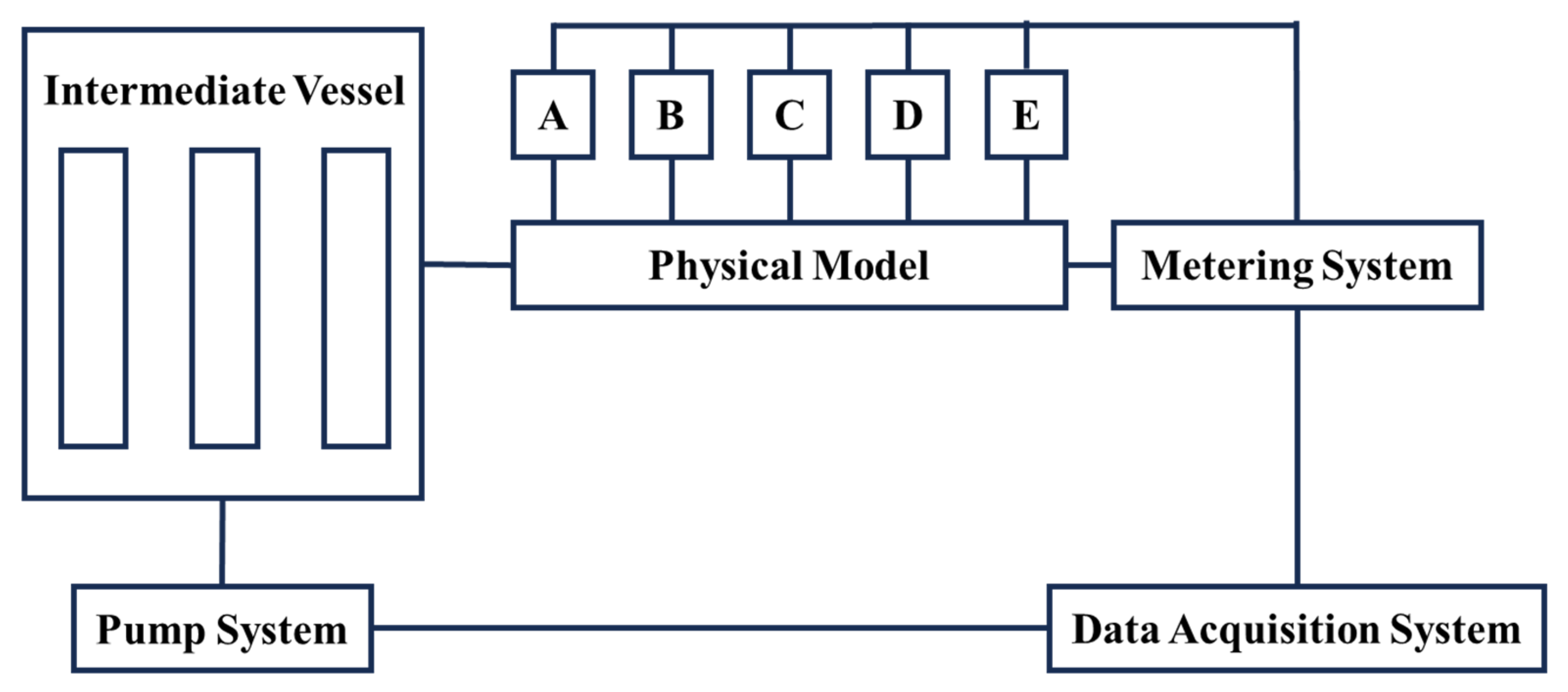
Crude oil used in this study was obtained from the J oilfield. Particle size analysis of the mechanical impurities in the raw crude oil revealed a wide distribution, with a median diameter (D50) of 12.5 μm and a D90 of 58.2 μm. To eliminate experimental errors caused by end-face plugging from macro-aggregates while retaining the oil’s native emulsification characteristics, the crude oil was filtered through a stainless-steel screen with a mesh size of 0.045 mm at 60 °C. The filtered oil was subsequently dehydrated at temperatures below 120 °C for more than 1 h, until the water content was reduced to less than 0.5%. The experimental water was field injection water collected from the J oilfield. The schematic of the experimental procedure is presented in Figure 1.

2.2. Experimental Procedures

2.2.1. Preparation of Self-Assembled Systems

Nano-sized polyacrylamide microspheres were synthesized via a reverse microemulsion polymerization method under strictly controlled conditions to ensure reproducibility. A composite emulsifier composed of sorbitan monolaurate and polyethylene glycol mono-octylphenyl ether was first prepared, followed by the addition of acrylamide and 2-acrylamido-2-methylpropane sulfonic acid at predetermined molar ratios, with a total monomer concentration fixed at 15 wt%. The crosslinking agent N and initiator were introduced at 0.05 wt% and 0.3 wt% of the total monomer content, respectively. Polymerization was carried out at 55–60 °C for 4 h under continuous stirring. After completion of the reaction, anhydrous ethanol was added to the emulsion at a volume ratio of 1:14, and the mixture was stirred and filtered to remove residual surfactants and unreacted species, yielding polyacrylamide nanospheres. The obtained microspheres were subsequently surface-modified to form functionalized particles, which are capable of softening and bonding with one another under reservoir conditions, leading to in situ self-assembly.
In this study, six self-assembled systems with different particle sizes, pore–throat adaptability, and surface charge characteristics were prepared and designated as PMB-1 (nanoscale), PMB-2 (micron scale), PMB-3, PMB-4, PMB-5, and HK. Six self-assembled particle–foam systems were rationally designed to investigate the effects of particle scale, surface charge, and morphology on profile control performance. A multiscale pore-matching strategy was adopted by tuning particle sizes from the nanometer scale (PMB-1, HK) to the micron scale (PMB-2, PMB-5) to evaluate transportability across heterogeneous reservoirs (500–3000 mD). Most systems (HK, PMB-1/2/4/5) were engineered with negative zeta potentials to enhance dispersion stability, while PMB-3 was functionalized with a positive surface charge to assess electrostatic hetero-coagulation as a mechanism for intensified plugging in high-permeability channels. In addition, discrete spherical particles (PMB-1, PMB-5) were designed for deep migration, whereas layered or three-dimensional network structures (PMB-2, HK) were intended to enhance foam film stability and viscoelasticity, enabling systematic correlation between particle characteristics and profile control functions.

2.2.2. Characterization and Performance Evaluation of Self-Assembled Systems

Prior to characterization, the self-assembled systems were pretreated through extraction, filtration, drying, and grinding. The morphological characteristics of the treated samples were then examined using scanning electron microscopy (SEM, Phenom, Shanghai, China).
The particle size, particle size distribution, and zeta potential of the self-assembled systems were measured using a dynamic/static laser light scattering analyzer and a laser particle size analyzer. Based on the pore–throat characteristics of the target oilfield in the Bohai Sea, the optimal self-assembled system was determined.
The dynamic performance of the self-assembled foam drive systems was evaluated in terms of sealing performance, pressure reduction, and injectivity behavior, as well as displacement efficiency.

3. Experimental Results and Discussion

3.1. Morphological Characteristics of Self-Assembled Particles

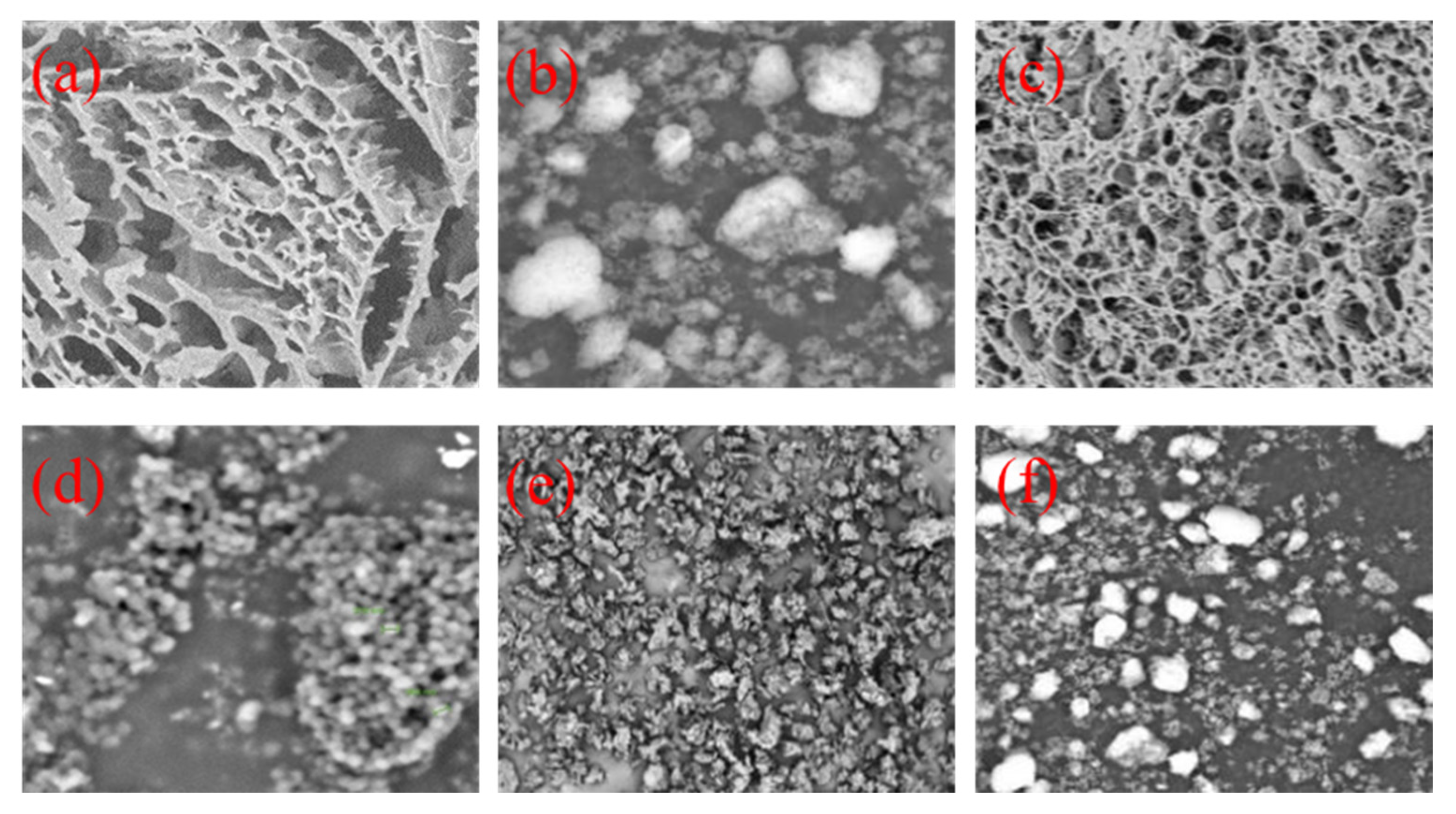
The morphologies of the self-assembled systems HK, PMB-1, PMB-2, PMB-3, PMB-4, and PMB-5 were examined using a Phenom ProX scanning electron microscope, and the corresponding images are presented in Figure 2. As shown in Figure 2, the HK sample is uniformly dispersed and exhibits a loose layered structure. After extraction with ethanol and subsequent drying, the PMB-1 sample appears as discrete spherical particles with an average particle size of approximately 200 nm.
In contrast, the PMB-2 sample is well dispersed and displays a three-dimensional network structure with uniformly distributed pores. The PMB-3 and PMB-4 samples show a pronounced tendency to agglomerate, indicating reduced dispersion stability. The PMB-5 sample consists of irregular, small spherical particles with uniformly dispersed microspheres.
These distinct morphological characteristics directly govern the pore-scale transport and selective plugging mechanisms of the system. The discrete spherical structures (PMB-1, PMB-5) exhibit low flow resistance and superior dispersibility, facilitating deep migration into tight pore throats. In contrast, the loose layered and 3D network structures (HK, PMB-2) provide enhanced viscoelasticity and steric hindrance; they effectively adsorb at gas–liquid interfaces to stabilize foam lamellae while retaining the ability to deform and pass through narrow constrictions. Conversely, the agglomerated structures (PMB-3, PMB-4) tend to form bridge plugging at pore throats, which enhances localized blockage but may limit deep penetration. Therefore, the HK system’s deformable layered morphology offers an optimal physical architecture for balancing deep propagation with effective mobility control.

3.2. Particle Size and Zeta Potential of Self-Assembled Particles

3.2.1. Particle Size Distribution Characteristics

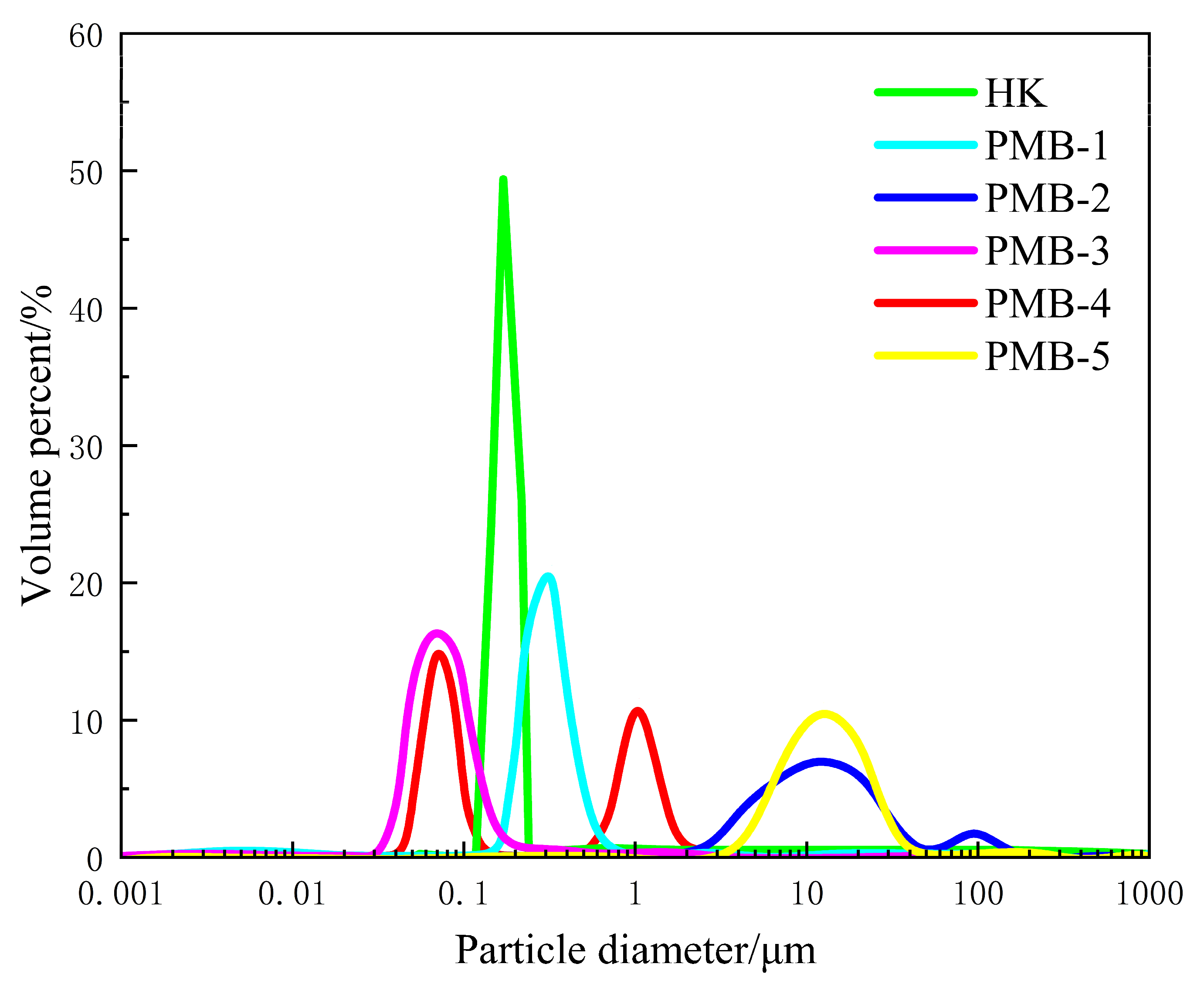
The particle size distributions of the HK, PMB-1, PMB-2, PMB-3, PMB-4, and PMB-5 self-assembled systems were measured using a dynamic/static laser light scattering analyzer and a laser particle size analyzer. The corresponding results are presented in Figure 3.
As shown in Figure 3, PMB-2 and PMB-5 fall within the category of micron-sized microspheres. In contrast, PMB-1, PMB-3, and HK are classified as nanometer-sized microspheres. Notably, the PMB-4 self-assembled system exhibits a bimodal particle size distribution, containing both micron-sized and nanometer-sized microspheres.

3.2.2. Zeta Potential of Self-Assembled Particles

The zeta potentials of the HK, PMB-1, PMB-2, PMB-3, PMB-4, and PMB-5 self-assembled systems were determined using a dynamic/static laser light scattering analyzer. The results are summarized in Table 1.
As summarized in Table 1, only PMB-3 exhibits a positive zeta potential, whereas all other self-assembled microspheres possess negative surface charges. In general, an increase in the absolute value of the zeta potential enhances electrostatic repulsion between dispersed oil droplets, thereby reducing the likelihood of oil–water separation and improving emulsion stability. However, dispersion observations reveal that PMB-3 and PMB-4 exhibit a pronounced tendency toward agglomeration and mutual adhesion, which may induce formation plugging, whereas HK and PMB-2 remain uniformly dispersed with good dispersion stability and a lower propensity for aggregation. Although PMB-2 and PMB-5 are both micron-sized and exhibit similar zeta potential values, their dispersion behaviors differ markedly, highlighting the coupled influence of surface charge and particle morphology.
Notably, while higher absolute zeta potentials generally favor dispersion stability via electrostatic repulsion, the proposed in situ self-assembly mechanism requires an optimal stability window. Excessive electrostatic repulsion may suppress the particle–particle interactions necessary for controlled aggregation and network formation, whereas insufficient repulsion leads to premature agglomeration and poor injectivity. The results indicate that the HK and PMB-2 systems, with zeta potentials of −10 mV and −20.3 mV, respectively, fall within this favorable range. These systems maintain adequate dispersion during injection while permitting controlled aggregation and dense interfacial packing under reservoir salinity conditions, thereby achieving a critical balance between transport efficiency and structural reconstruction capability.

3.3. Performance of Self-Assembled Foam Systems

3.3.1. Foam Performance

Static foam performance evaluation experiments were conducted in accordance with the Experimental Evaluation Methods for Foaming Agents Used in Oil and Gas Fields. The foam performance of different self-assembled systems combined with the foaming agent was evaluated, and the results are summarized in Table 2.
As shown in Table 2, the addition of self-assembled systems to the foaming agent does not result in a significant change in foam height. However, the foam half-life is markedly prolonged, leading to a substantial improvement in the comprehensive foam performance. These results indicate that the self-assembled systems exhibit strong foam-stabilizing ability and good compatibility with the foaming agent.
By comparing the foam properties of different self-assembled systems, the HK-based self-assembled foam system was selected for subsequent experiments.

3.3.2. Sealing Performance

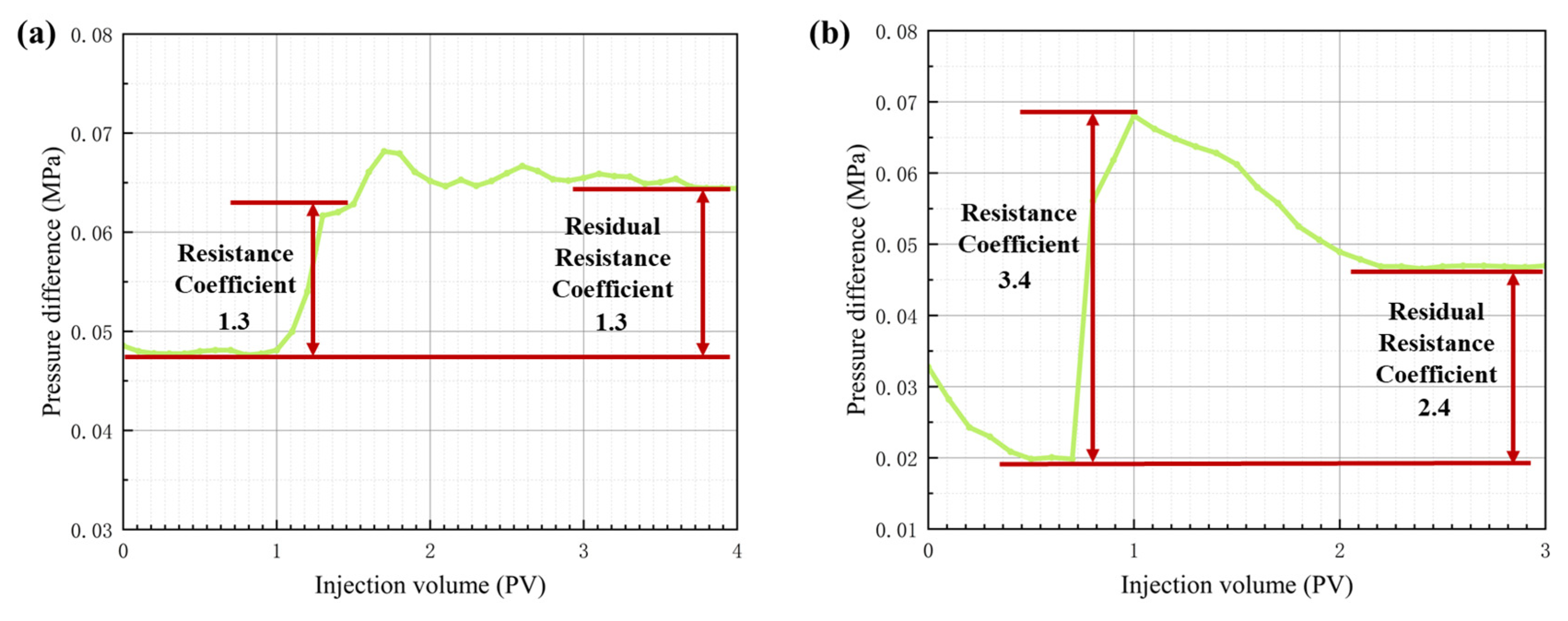
The sealing performance of the self-assembled foam system was evaluated by comparing the HK single-agent system with the HK composite system, as shown in Figure 4. The results demonstrate that the sealing performance of the composite system is significantly enhanced. Specifically, the resistance coefficient increased from 1.3 to 3.4, indicating a robust plugging capability. Crucially, this magnitude is well within the safe operational limits of offshore injection wells. Unlike rigid plugging agents that often risk exceeding the formation fracture pressure, the observed resistance factor provides sufficient diversion force to modify the flow profile without causing hazardous pressure spikes. This moderate yet effective resistance confirms the system’s field usability, ensuring that the injection pressure remains manageable and significantly below the safety threshold of the reservoir caprock.

3.3.3. Pressure Reduction and Injectivity Performance

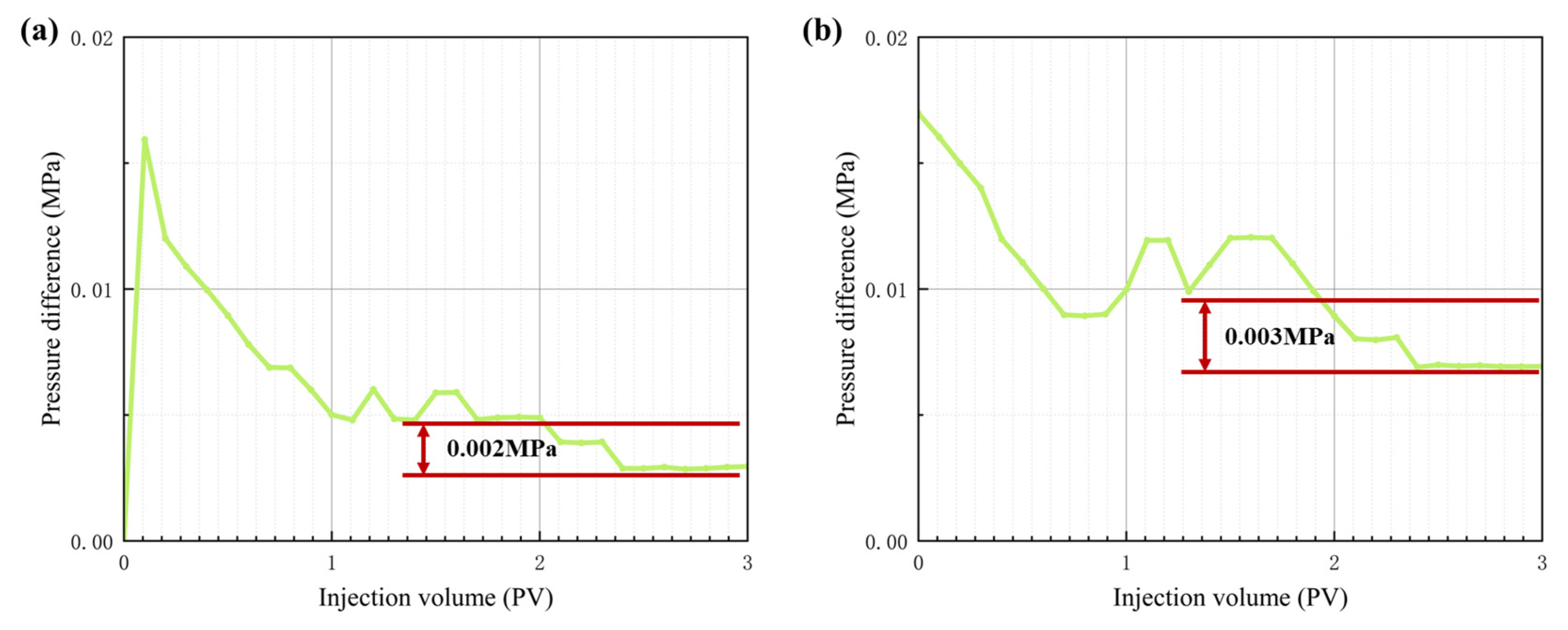
The pressure reduction and injectivity performance of the self-assembled foam system were evaluated by comparing the HK foam system with the HK composite system, as illustrated in Figure 5. Both systems exhibit pronounced pressure reduction and injectivity enhancement effects, with the injection pressure decreasing by approximately 0.002–0.003 MPa during the later stage of injection.
Furthermore, the addition of a foam stabilizer to the HK composite system not only enhances the early-stage sealing performance but also achieves effective pressure reduction and injectivity improvement. This behavior indicates that the composite system can provide a balanced combination of plugging and pressure relief during the injection process. This behavior reflects an inherent trade-off between plugging strength and pressure relief, which can be characterized by a plugging–injectivity balance window defined by the ratio of the resistance coefficient to the injection pressure response. The HK-based composite foam system operates within this favorable window, achieving sufficient flow diversion without inducing excessive pressure buildup, thereby supporting a generalized and quantitative design criterion for self-assembled foam systems.

3.3.4. Oil Displacement Performance

To validate the reliability of the core flooding data, each displacement experiment was repeated four times under identical conditions. The results presented in this section represent the arithmetic mean of these independent runs. The experimental error, calculated as the standard deviation of the final oil recovery, was found to be within 1.9%, demonstrating excellent reproducibility. The oil displacement performance of different systems was evaluated under a permeability condition of 3000 mD, and the statistical results are presented in Table 3. The “Enhanced recovery” is calculated as the difference between the “Final recovery rate” and the recovery after the initial water flooding stage. The average water flooding recovery for these core samples was approximately 62.0% ± 0.8%.
To further investigate the adaptability of the self-assembled composite foam system under different reservoir conditions, oil displacement experiments were conducted in both low-permeability (500 mD) and high-permeability (3000 mD) cores. The results are summarized in Table 4. As shown in Table 4, the self-assembled composite foam system exhibits permeability-dependent displacement behaviors, reflecting distinct dominant mechanisms. Under low-permeability conditions (500 mD), mobility control dominates, where deformable particles and stabilized foam lamellae penetrate tight pore–throat structures, reduce water mobility, and enhance microscopic sweep efficiency, resulting in a 22.5% improvement in oil recovery. In contrast, under high-permeability conditions (3000 mD), selective plugging and flow diversion prevail. The composite particle–foam structure preferentially accumulates in dominant flow channels, increases local flow resistance, and redirects fluids into unswept regions, yielding a higher oil recovery enhancement of 27.2%. Overall, reservoir permeability governs the dominant displacement mechanism, transitioning from mobility control in low-permeability media to channel plugging in high-permeability formations.
These results demonstrate that the self-assembled composite foam system is effective across a wide permeability range, highlighting its strong potential for enhanced oil recovery applications in heterogeneous reservoirs.

3.4. Mechanism of In Situ Self-Assembly and Composite Foam Stabilization

The enhanced profile control and oil displacement performance of the composite foam system originate from the in situ self-assembly of soft polymer particles and their synergistic interaction with the foam structure under reservoir conditions. Unlike conventional rigid particles, the polymer particles exhibit temperature- and salinity-induced softening and deformability, which enables deep migration into pore spaces and effective adaptation to complex pore–throat geometries. During injection, the particles are transported with the foaming solution into high-permeability channels, where partial softening facilitates subsequent structural evolution.
The in situ self-assembly process involves three coupled and sequentially overlapping mechanisms: particle softening, particle aggregation, and interfacial adsorption. Particle softening, initiated by reservoir temperature and salinity, reduces particle rigidity and primarily governs the feasibility of structure formation rather than its kinetics. As injection proceeds, particle aggregation driven by electrostatic interactions and polymer chain entanglement becomes the dominant kinetic process, controlling the rate and extent of dynamic network formation within pore spaces. Upon in situ foam generation, the self-assembled particle aggregates preferentially adsorb at gas–liquid interfaces and within foam lamellae, where they reinforce the liquid films and suppress drainage and coalescence.
Consequently, particle aggregation predominantly controls the kinetic behavior of structure formation, while particle softening serves as a prerequisite, and interfacial adsorption functions as a stabilization step. This kinetic hierarchy explains the delayed yet controllable development of the particle–foam composite structure, allowing effective deep transport during injection, followed by selective plugging and prolonged foam stabilization under reservoir conditions.

4. Application of Self-Assembled Foam Drive Technology

The KA3 and KA5 well groups in the offshore K oilfield are characterized by low permeability and uneven vertical water absorption, leading to severe interlayer flow conflicts. To address these challenges, a self-assembled composite foam drive technology was applied for profile control and water absorption regulation. Field results show that injection pressure remained stable during foam injection, indicating reliable injectivity and operational safety. After resuming conventional water injection, injection pressure decreased while the water absorption index increased, reflecting improved vertical sweep efficiency and flow redistribution. The application resulted in a notable enhancement in oil recovery, with an average reduction of approximately 5% in comprehensive water cut and a cumulative incremental oil production of about 5000 m3 from the two wells. Compared with conventional foam treatments previously applied in the same block, the self-assembled composite foam system exhibited a longer effective period and superior water cut control. Moreover, the enhanced oil recovery accumulated steadily over time without rapid performance decay, and no abnormal pressure buildup or injectivity deterioration was observed, indicating a durable yet controllable modification of dominant flow channels. Overall, these field results confirm the robustness, scalability, and practical applicability of the self-assembled foam drive technology in offshore low-permeability heterogeneous reservoirs.

5. Conclusions

(1)
This study introduces an in situ self-assembled particle-enhanced foam system tailored for profile control and enhanced oil recovery in offshore heterogeneous reservoirs. The core innovation lies in the use of soft polymer particles with temperature- and salinity-responsive self-assembly behavior, which fundamentally differs from conventional rigid particle or pre-formed foam systems. This design enables dynamic structural reconstruction within the reservoir, allowing for deep transport during injection followed by effective in situ structure formation.
(2)
A mechanism-guided structure–function framework is established, clarifying how particle morphology, surface charge, and self-assembly characteristics collectively govern macroscopic engineering responses, including injectivity, flow diversion, and foam stabilization. The identification of an optimal electrostatic and morphological window provides a rational basis for formulation design, shifting particle–foam systems from empirical selection toward controllable and predictable performance optimization.
(3)
From an engineering perspective, the proposed system demonstrates strong industrial applicability for offshore reservoirs characterized by severe heterogeneity and limited operational tolerance. Its ability to deliver moderate and controllable flow resistance, maintain injection safety, and exhibit temporal stability under field conditions highlights its robustness and scalability. These findings indicate that in situ self-assembled composite foam technology represents a promising and adaptable solution for integrated water control and enhanced oil recovery in offshore oilfields.

Author Contributions

Conceptualization: S.T. Data curation: M.J. and Y.X. Formal analysis: M.J., S.T. and Y.X. Investigation: S.T. and Y.X. Methodology: M.J. Project administration: M.J. Supervision: S.T. Writing—original draft: M.J. and Y.X. Writing—review & editing: S.T. All authors have read and agreed to the published version of the manuscript.

Funding

This research was funded by Basic Research on High-Temperature-Resistant Clean Fracturing Fluid Constructed from Anionic Gemini Surfactant-Nanoparticles. Grant Number 51474035.

Data Availability Statement

The original contributions presented in this study are included in the article. Further inquiries can be directed to the corresponding authors.

Conflicts of Interest

The authors declare no conflict of interest.

References

  1. Zhao, W.; Wang, Z.; Li, J.; Li, J.; Xie, Z.; Wang, Z. Natural gas resources of the sedimentary basins in China. Mar. Pet. Geol. 2008, 25, 309–319. [Google Scholar] [CrossRef]
  2. Zhao, R.; Hynes, S.; He, G.S. Defining and quantifying China’s ocean economy. Mar. Policy 2014, 43, 164–173. [Google Scholar] [CrossRef] [PubMed]
  3. Zheng, M.; Li, J.; Wu, X.; Wang, S.; Guo, Q.; Yu, J.; Zheng, M.; Chen, N.; Yi, Q. China’s conventional and unconventional natural gas resources: Potential and exploration targets. J. Nat. Gas Geosci. 2018, 3, 295–309. [Google Scholar] [CrossRef]
  4. Zhang, Q.; Liu, J.F.; Gao, Z.H.; Chen, S.-Y.; Liu, B.-Y. Review on the challenges and strategies in oil and gas industry’s transition towards carbon neutrality in China. Pet. Sci. 2023, 20, 3931–3944. [Google Scholar] [CrossRef]
  5. Wang, Q. Offshore Wind Power: An Important Opportunity for Traditional Oil and Gas Industry to Realize Low-Carbon Transformation. In Annual Report on China’s Petroleum, Gas and New Energy Industry (2021); Springer Nature: Singapore, 2022; pp. 231–245. [Google Scholar]
  6. Xiao, P. Experimental Investigation on CO2 Injection in the Daqing Extra/Ultra-Low Permeability Reservoir. J. Pet. Sci. Eng. 2017, 149, 765–771. [Google Scholar] [CrossRef]
  7. Lai, W. Gas exploration potential in Bohai Sea. China Offshore Oil Gas 2000, 14, 168–173. [Google Scholar]
  8. Jiang, Y.; He, S.; Lu, X. The distribution characteristics of natural gas and its controlling factors in Bohai Bay Basin. In Proceedings of the Harbin: Seminar on Medium-Deep Gas Exploration Technology, Harbin, China, 1–3 August 2005. [Google Scholar]
  9. Lao, J. Micro/Nanoparticle Characteristics and Flow in Porous Media: A Review towards Enhanced Oil Recovery. Energies 2024, 17, 4136. [Google Scholar] [CrossRef]
  10. Xu, C.; Yu, H.; Jun, W.; Liu, X. Formation conditions and accumulation characteristics of Bozhong 19-6 large condensate gas field in offshore Bohai Bay Basin. Pet. Explor. Dev. 2019, 46, 27–40. [Google Scholar] [CrossRef]
  11. Liu, Y.; Ge, L.; Ma, K.; Chen, X.; Zhu, Z.; Hou, J. Study on surfactant–polymer flooding after polymer flooding in high-permeability heterogeneous offshore oilfields: A case study of Bohai S Oilfield. Polymers 2024, 16, 2004. [Google Scholar] [CrossRef] [PubMed]
  12. Kang, X.; Zhang, J.; Sun, F.; Zhang, F.; Feng, G.; Yang, J.; Zhang, X.; Xiang, W. A review of polymer EOR on offshore heavy oil field in Bohai Bay, China. In Proceedings of the SPE Asia Pacific Enhanced Oil Recovery Conference, Kuala Lumpur, Malaysia, 19–21 July 2011. SPE-144932-MS. [Google Scholar]
  13. Guo, Y.; Zhang, J.; Liu, Y.; Liu, G.; Xue, X.; Luo, P.; Ye, Z.; Zhang, X.; Liang, Y. Successful scale application of associative polymer flooding for offshore heavy oilfield in Bohai Bay of China. In Proceedings of the SPE Asia Pacific Oil and Gas Conference and Exhibition, Virtual, 17–19 November 2020. D012S003R010. [Google Scholar]
  14. Feng, Q.; Zhou, J.; Li, S.; Chen, X.; Sun, Y.; Zhang, X.; Gao, P.; Zhang, F.; She, Y. Research on characterization technology and field test of biological nano-oil displacement in offshore medium-and low-permeability reservoirs. ACS Omega 2022, 7, 40132–40144. [Google Scholar] [CrossRef] [PubMed]
  15. Liu, Y.; Zou, C.; Zhou, D.; Li, H.; Gao, M.; Zhao, G.; Dai, C. Novel chemical flooding system based on dispersed particle gel coupling in-depth profile control and high efficient oil displacement. Energy Fuels 2019, 33, 3123–3132. [Google Scholar] [CrossRef]
Figure 1. Dynamic performance evaluation experimental process diagram.
Processes 14 00411 g001
Figure 2. Morphological characteristics of the self-assembled systems. (a) HK original liquid at 1000× magnification; (b) PMB-1 extract at 30,000× magnification; (c) PMB-2 undiluted solution at 1000× magnification; (d) PMB-3 undiluted solution at 10,000× magnification; (e) PMB-4 undiluted solution at 10,000× magnification; (f) PMB-5 undiluted solution at 1000× magnification.
Processes 14 00411 g002
Figure 3. Particle size distribution of self-assembled systems.
Processes 14 00411 g003
Figure 4. Sealing performance of the self-assembled foam system. (a) HK single-agent system; (b) HK composite system.
Processes 14 00411 g004
Figure 5. Pressure reduction and injectivity performance of the self-assembled foam system. (a) HK foam system; (b) HK composite system.
Processes 14 00411 g005
Table 1. Zeta potential test results for self-assembled systems.
Sample NameZeta (mV)
HK−10
PMB-1−5.23
PMB-2−20.3
PMB-318.6
PMB-4−4.1
PMB-5−17.2
Table 2. Statistical table of performance evaluation results for self-assembled foam systems.
Foaming Agent/Self-Assembly System/Foam StabilizerFoam Height, mmHalf-Life of Water Analysis, sComprehensive Value
ZHDB-5/PMB-1/A-2
0.5%/0/0
810381308,610
ZHDB-5/PMB-1/A-2
0.5%/0.2%/0
850355301,750
ZHDB-5/PMB-2/A-2
0.5%/0.2%/0
830382317,060
ZHDB-5/HK/A-2
0.5%/0.2%/0
810372301,320
ZHDB-5/PMB-1/A-2
0.5%/0/0.05%
770599461,230
ZHDB-5/PMB-1/A-2
0.5%/0.2%/0.05%
750582436,500
ZHDB-5/PMB-2/A-2
0.5%/0.2%/0.05%
750605453,750
ZHDB-5/HK/A-2
0.5%/0.2%/0.05%
780594463,320
Table 3. Oil displacement results of different systems at a permeability of 3000 mD.
Oil Displacement Effect3000 mD-Foaming Agent3000 mD-HK3000 mD-HK + Foaming Agent
Water cut, %61.962.762.6
Final recovery rate, %73.273.389.8
Enhance recovery, %11.410.527.2
Table 4. Oil displacement results of the self-assembled composite foam system under low- and high-permeability conditions.
Oil Displacement Effect500 mD-HK + Foaming Agent3000 mD-HK + Foaming Agent
Water cut, %24.062.6
Final recovery rate, %46.689.8
Enhance recovery, %22.527.2
Disclaimer/Publisher’s Note: The statements, opinions and data contained in all publications are solely those of the individual author(s) and contributor(s) and not of MDPI and/or the editor(s). MDPI and/or the editor(s) disclaim responsibility for any injury to people or property resulting from any ideas, methods, instructions or products referred to in the content.