1. Introduction
Driven by energy transition strategies [
1], the distribution network is undergoing a profound transformation from unidirectional power supply to bidirectional supply–demand interaction through the extensive integration of distributed resources [
2]. However, the intermittent nature of renewable generation challenges the effective utilization of clean power [
3]. Meanwhile, disorderly consumption patterns on the user side exacerbate supply–demand imbalances [
4]. Together, these factors undermine effective peak shaving in the distribution network and consequently increase overall operational costs.
To address these challenges, game-theoretic modeling has been widely adopted to characterize strategic interactions among heterogeneous agents in smart grids. Saad et al. [
5] provided a comprehensive overview of representative game-theoretic architectures for microgrid operation, demand-side management, and smart grid communications, offering a unified methodological perspective for distribution network–microgrid coordination. Building on this foundation, a typical research direction focuses on coordinating distribution network decisions with microgrid operations through hierarchical pricing or leader–follower interactions. Ref. [
6] developed a leader–follower scheduling framework for distribution networks and microgrid clusters based on dynamic microgrid aggregation, where pricing signals guide microgrid-side responses to improve overall economic performance. To improve tractability, decomposed coordination strategies have also been investigated for economic dispatch in active distribution networks [
7,
8]. In addition, pricing–incentive-based interaction designs were studied to link dynamic networking with economically efficient DN–MGs operation [
9], while peer-to-peer energy trading mechanisms were explored to enable decentralized exchanges among microgrids with rational loss allocation [
10]. Overall, these studies establish implementable coordination paradigms between the grid and microgrids. Nevertheless, in a number of related formulations, microgrids are often represented as price-responsive agents or aggregated loads, while the coordination of internal flexibility—such as controllable loads, shared-storage service participation, and inter-microgrid power support—is not always modeled in a unified way. This may lead to under-utilization of heterogeneous flexibility when grid-level pricing, storage services, and alliance-level cooperation are jointly involved [
11,
12].
To further exploit load-side flexibility, demand response has been investigated as an effective means to reshape load profiles and support coordinated operation. A representative contribution is the autonomous demand-side management framework proposed by Mohsenian-Rad et al. [
13], which employed a game-theoretic formulation to guide distributed load scheduling driven by price signals. Subsequent studies extended DR modeling in several directions, including user utility and comfort modeling [
14], incentive-based coordination among coupled loads [
15], aggregation of diverse flexible resources such as electric vehicles and distributed generation [
16], and joint utilization of DR and storage resources for improved energy management [
17,
18]. Despite these advances, existing studies also indicate that the regulation capability of DR is constrained by user participation and sustainability over time, making it challenging to rely on DR alone to support deep peak shaving when high levels of flexibility are required [
19].
Energy storage provides another important flexibility resource for balancing supply and demand. However, self-owned storage systems are often hindered by high investment costs and low utilization rates. Shared energy storage offers a service-oriented alternative by aggregating storage capacity and providing leasing services to multiple users [
20]. In microgrid-oriented settings, Ref. [
21] investigated coordinated operation strategies between SESO and multiple microgrids to improve storage utilization and economic performance. Other studies examined SESO from complementary perspectives, such as lifecycle cost reduction for microgrid clusters [
22], interaction modeling between storage operators and microgrids [
23], and hybrid self-built–leased configuration strategies [
24]. While these works demonstrate the economic and operational benefits of SESO within microgrid or user domains, the role of shared storage as an explicit decision-making entity in distribution network–level peak shaving and coordinated operation has been less explicitly examined [
25].
To coordinate the operation of distribution networks, storage services, flexible loads, and multiple microgrids, several multi-layer coordination frameworks have been proposed. These include three-layer coordination architectures integrating demand-side management [
26,
27], two-stage or two-layer dispatch strategies balancing distribution network and microgrid objectives [
28], and hybrid-game-based mechanisms for multi-microgrid energy trading [
29]. From a coordination-architectural perspective, existing approaches can be broadly categorized into centralized optimization, distributed coordination, and hierarchical pricing-based frameworks. Centralized approaches facilitate system-wide optimization but typically require extensive global information aggregation, raising concerns regarding scalability and data privacy in multi-agent settings [
30,
31]. Distributed approaches, by contrast, improve scalability through information decomposition but often rely on frequent information exchange and iterative coordination [
32]. Hierarchical and price-driven coordination provides a practical compromise by reducing information exchange requirements; however, when multiple decision entities and coupled decisions (pricing, leasing, and dispatch) are involved, achieving unified and implementable coordination across pricing signals, storage services, and load-side flexibility within a multi-agent operational framework remains challenging.
Accordingly, this article proposes a hybrid game-theoretic economic scheduling method based on grid–storage–load interaction, which integrates time-of-use pricing, shared energy storage services, demand response, and microgrid alliance operation within a hierarchical coordination structure. The main contributions are as follows:
- (1)
A two-layer game framework is developed for the DN–SESO–MGA system, where time-of-use pricing is used as an implementable coordination signal to link DN-level objectives with storage service provision and microgrid-side decisions.
- (2)
Within the framework, a two-stage operational mechanism is designed to couple shared storage leasing decisions with alliance-side scheduling and price-based demand response, enabling sequential coordination between storage capacity utilization and demand-side flexibility.
- (3)
A cooperative operation model for the microgrid alliance is incorporated to coordinate internal power support, together with a marginal-contribution-based benefit allocation scheme to support economically stable participation under the adopted scheduling horizon.
The article is structured as follows:
Section 2 introduces the system architecture and game framework;
Section 3 establishes the scheduling model for the distribution network, shared energy storage, and microgrid alliance;
Section 4 designs cases to validate the proposed method’s effectiveness;
Section 5 discusses the operating mechanisms and analyzes its limitations;
Section 6 summarizes conclusions and outlines future research directions.
2. System Architecture and Game Framework
2.1. System Architecture
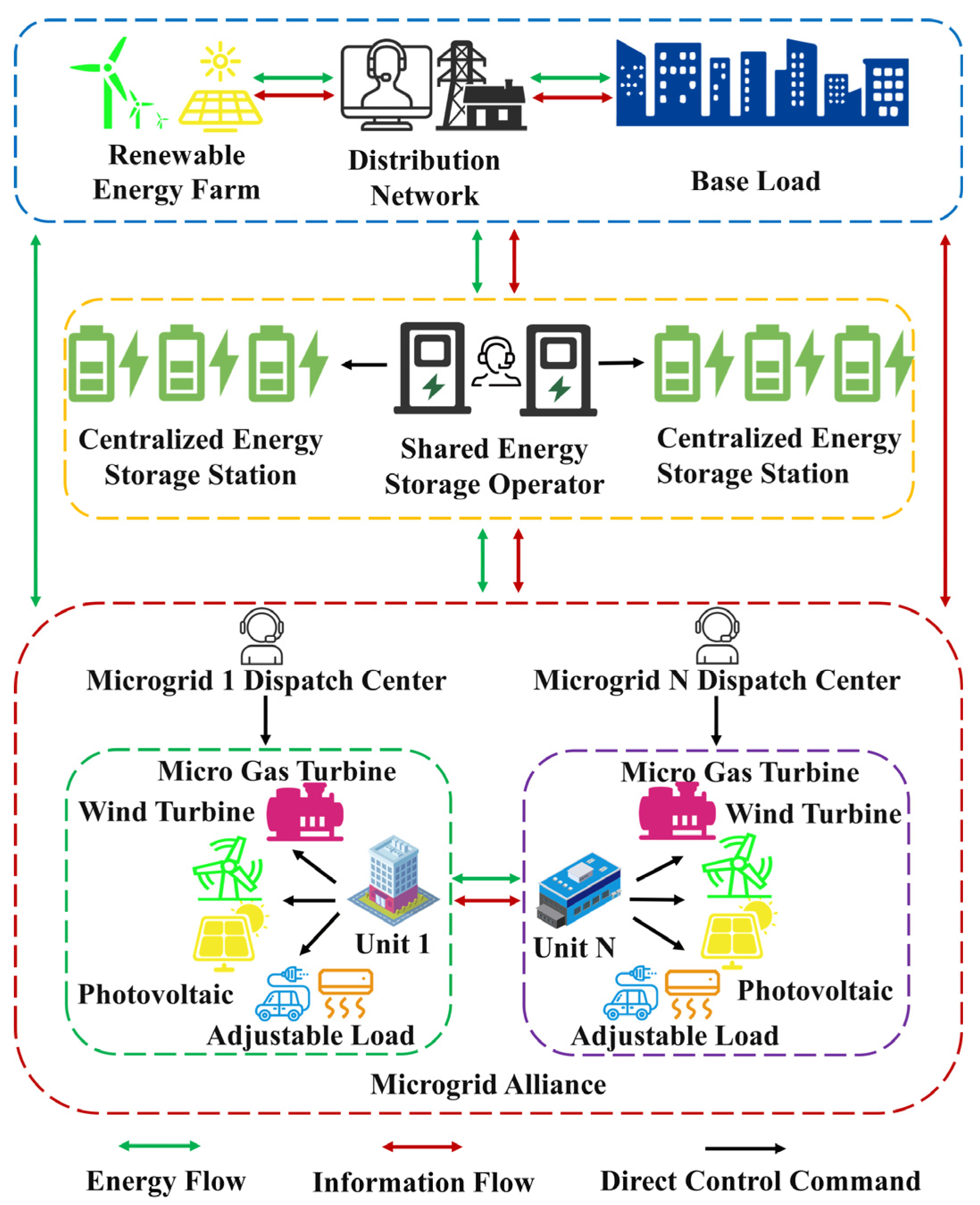
An operational system encompassing the distribution network, shared energy storage operator, and microgrid alliance is designed to enable sufficient interactions of flexible resources across grid, storage, and load sides. The system architecture is shown in
Figure 1.
The distribution network connects upward to the main grid and downward to centralized energy storage and multiple microgrids, incorporating distributed renewable energy sources and base load. The adjustable resource for DN is the electricity purchase and sale price. By setting different prices during peak, flat, and valley periods, it guides downstream users to adjust their electricity consumption strategies. Peak prices incentivize users to reduce purchases and increase sales, while valley prices encourage increased purchases and reduced sales. This facilitates system peak shaving and valley filling while maintaining economic operation. The DN time-of-use pricing model is shown in Equation (1).
where
/
/
represent the DN electricity prices during peak/flat/valley periods, and
/
/
represent the peak/flat/valley periods of the system, respectively.
To prevent DN from excessively raising prices and harming user interests, electricity prices must be constrained, as shown in Equation (2).
where
represents the upper limit of the electricity sales price in DN.
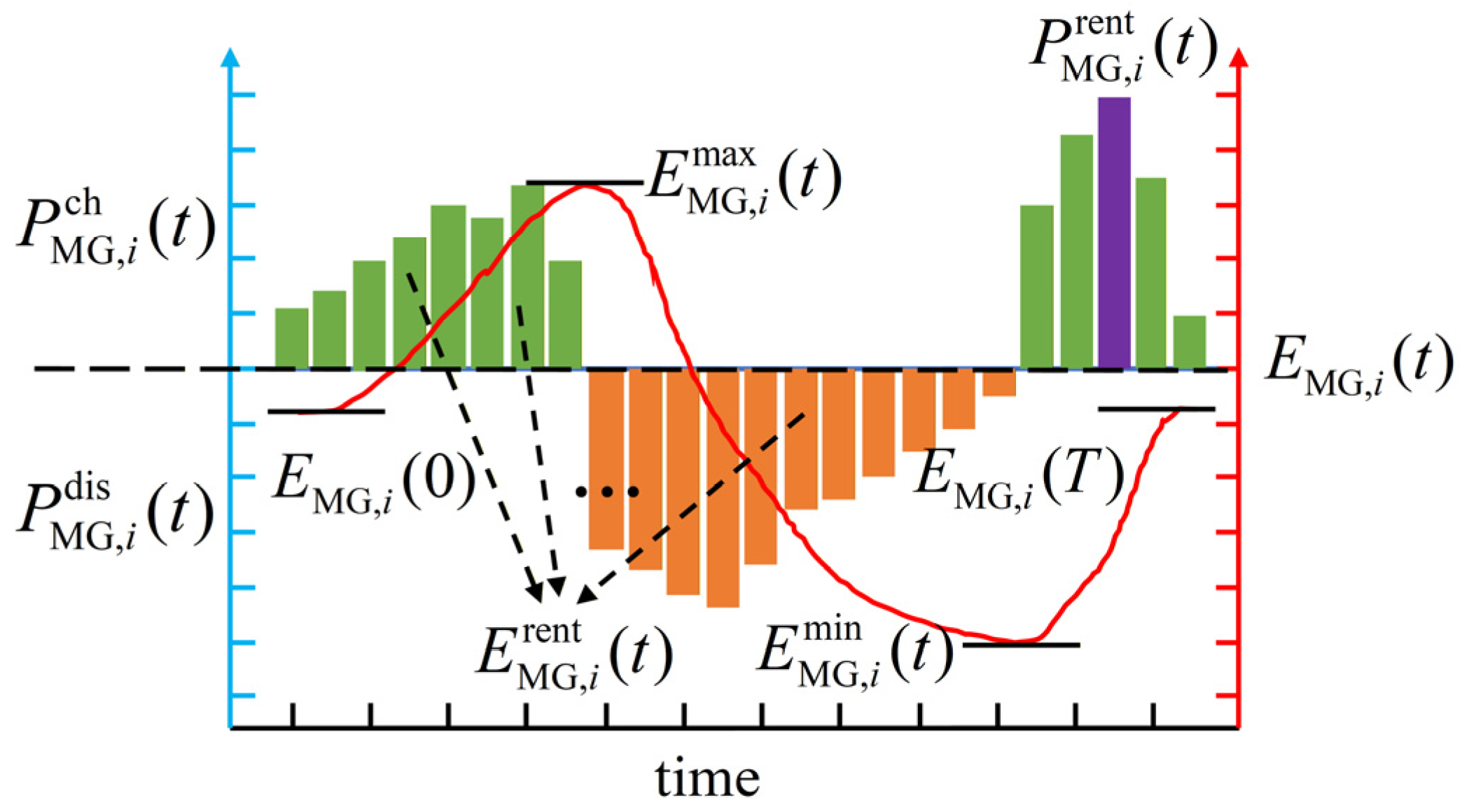
The shared energy storage operator manages the charging and discharging behavior of centralized energy storage stations, engaging in power exchange with the distribution network and multiple microgrids. SESO’s controllable resources include energy storage capacity and charging/discharging power. By providing charging and discharging services to multiple microgrids, it enhances the utilization rate and economic benefits of energy storage equipment.
Figure 2 illustrates the operational status of microgrid
i during leased energy storage charging and discharging, with the energy storage resource demand model shown in Equations (3)–(5).
where
/
/
represent the power/capacity/flow demand for energy storage leased by microgrid
i, respectively;
/
represent the charging/discharging power of microgrid
i, respectively;
represent the electricity consumption of microgrid
i;
/
represent the charging/discharging efficiency of microgrid
i, respectively;
represents the energy storage capacity margin ensuring full satisfaction of microgrid demands, and
represents the dispatch cycle (24 h).
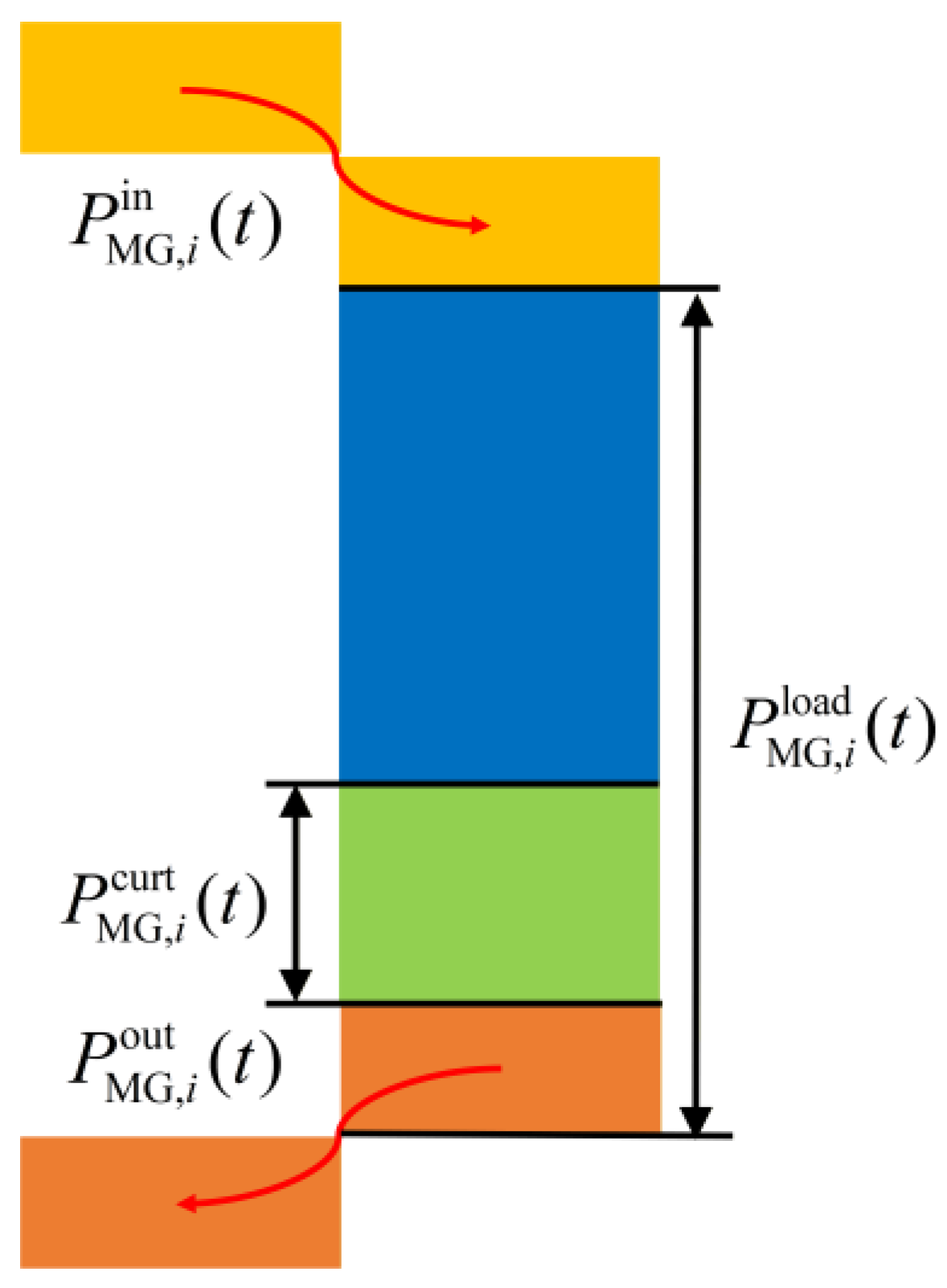
Multiple microgrids form the microgrid alliance based on economic considerations. The alliance coordinates load-side electricity consumption through unified control and collaborative management, while achieving resource complementarity to reduce operational costs for both individual members and the alliance as a whole. The MGA’s controllable resources include micro gas turbines (MTs) and flexible loads. In this study, flexible loads are modeled in an aggregated form as interruptible and transferable loads, whose adjustable ratios and compensation prices capture users’ comfort, participation willingness, and price responsiveness for each microgrid. Through a price-based demand response mechanism, MGA temporarily interrupts portions of load during peak consumption periods to alleviate supply pressure. Simultaneously, it transfers some load to valley periods without altering total consumption, achieving peak shaving and valley filling.
Figure 3 illustrates the types and magnitudes of adjustable loads within microgrid
i, with the load-side demand response model expressed as in Equation (6).
where
represents the load power reduced by demand response in microgrid
i;
represents the interrupted load power in microgrid
i, and
/
represent the load power transferred into/out of microgrid
i, respectively.
2.2. Game Framework
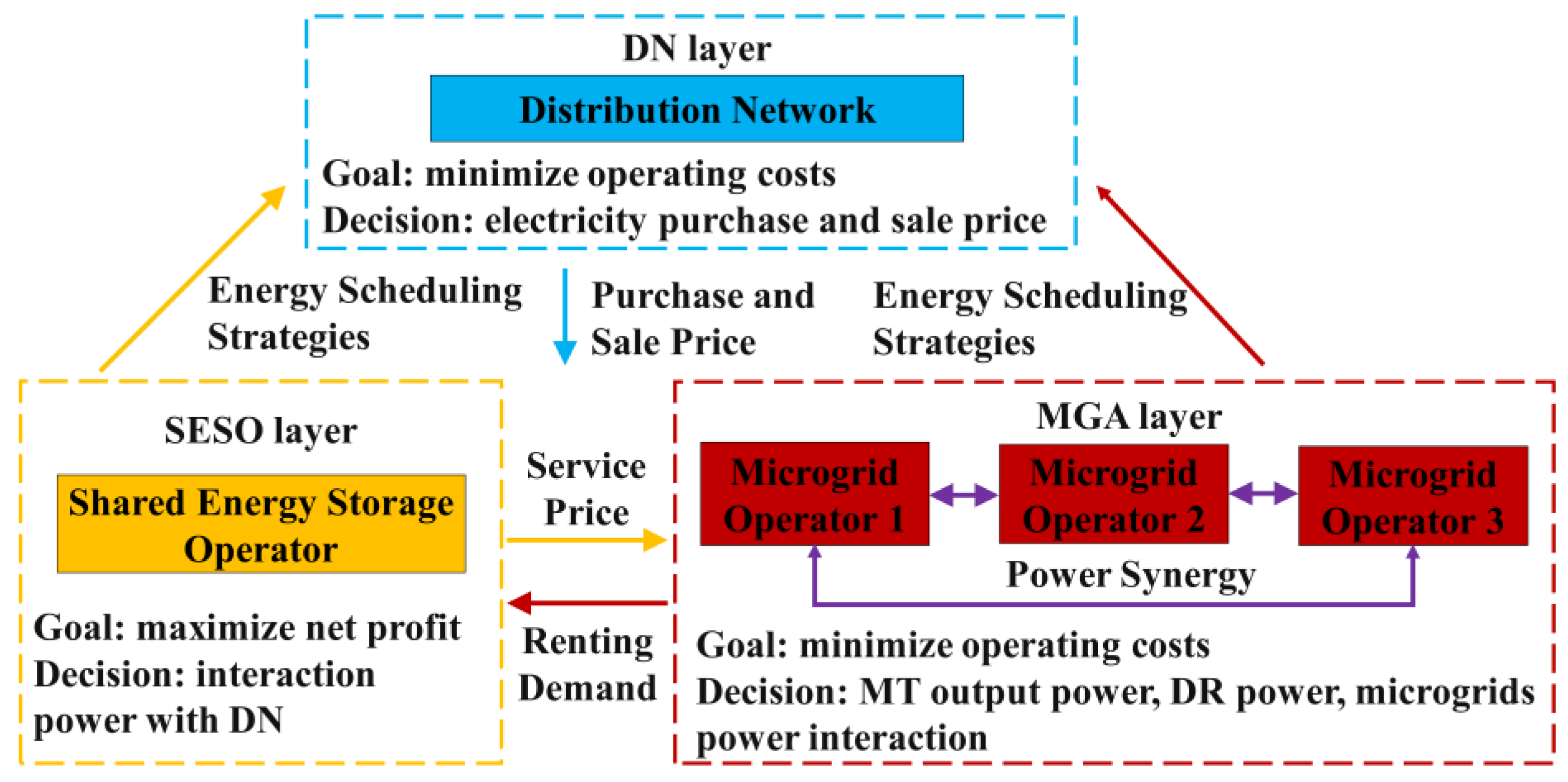
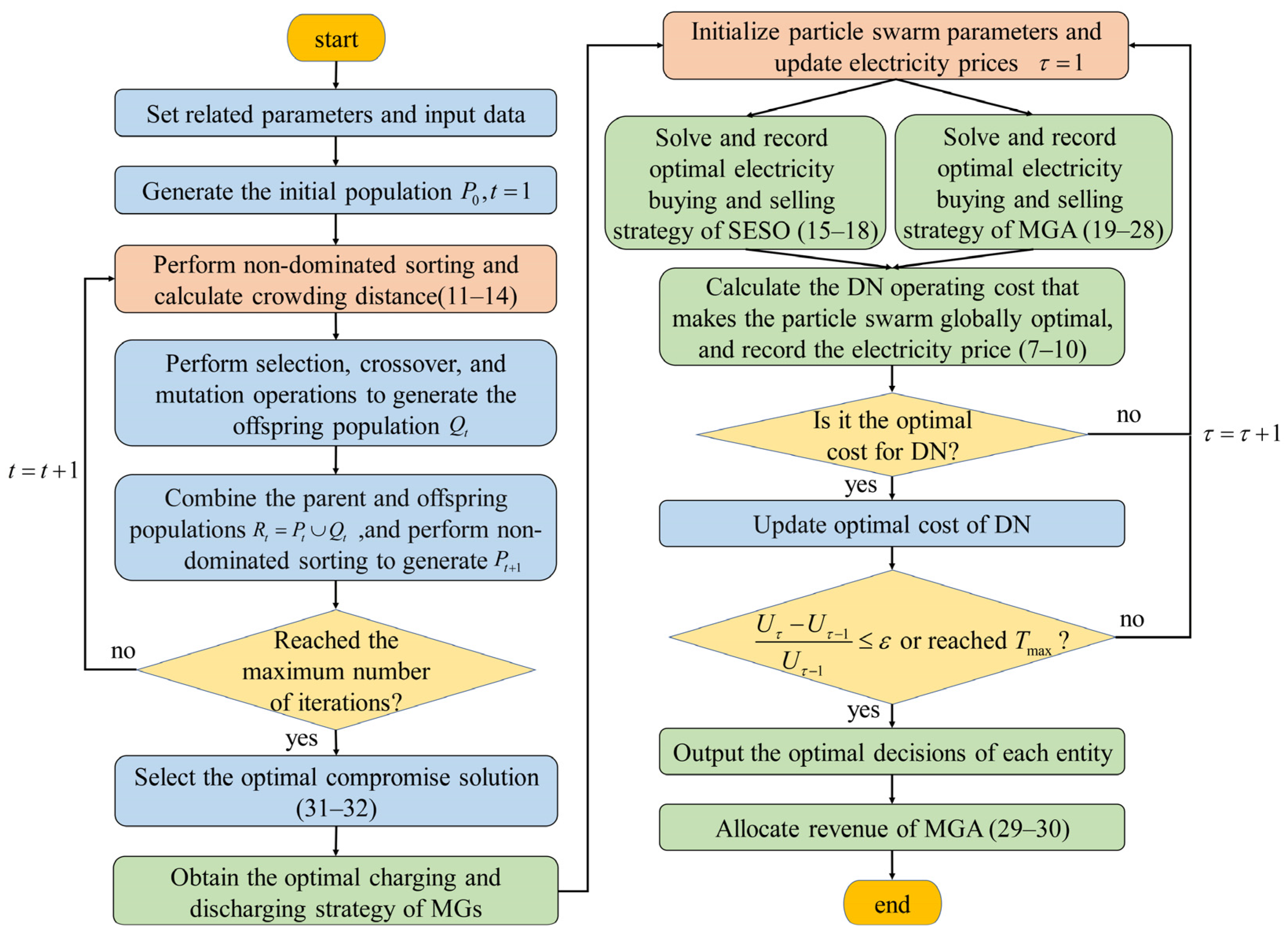
As the flexible resources belong to independent stakeholders, coordinating the interactions among DN, SESO, and MGA is crucial for resource integration. Therefore, a hybrid game-theoretic economic scheduling method for the distribution network based on grid–storage–load interaction is designed. The game framework is illustrated in
Figure 4.
Among them, DN, SESO, and MGA form a leader–follower game relationship, with multiple microgrids forming a microgrid alliance through cooperative game-theoretic interactions. As the game leader, DN optimizes time-of-use electricity prices with operational economy as the objective, guiding SESO and MGA to participate in system peak shaving. SESO and MGA follow the electricity price signals, adjusting their electricity purchase and sale strategies, respectively. Because DN’s pricing directly affects the purchase and sale decisions of SESO and MGA, and thereby influences DN’s own operational costs, all three agents iteratively adjust their strategies until convergence to a stable solution within a prescribed tolerance. Concurrently, multiple microgrids achieve complementary utilization of distributed resources through power mutual support, thereby reducing the alliance’s overall energy consumption costs.
To achieve sufficient coordination of storage and load-sides resources, SESO and MGA engage in a two-stage interaction. In Stage 1, each microgrid formulates its charging/discharging strategy to flatten its net load profile. MGA aggregates these plans and transmits them to SESO, which satisfies the charging/discharging demands of all microgrids through centralized storage stations while utilizing surplus capacity for power exchange with the distribution network. In Stage 2, MGA conducts internal power dispatch within the alliance. It prioritizes power supply from microgrids with surplus renewable energy output to those experiencing power deficits. Additionally, it centrally coordinates the demand response resources and schedules the controllable generation units across all member microgrids. This achieves internal power balance within the alliance and facilitates peak shaving and valley filling by interacting with the distribution network.
To characterize the strategic interactions among DN, SESO, and MGA in a tractable manner, the following modeling assumptions are adopted:
First, all participating agents are assumed to be rational decision-makers that optimize their respective economic objectives. Second, during the scheduling horizon, agents are assumed to have access to the necessary price signals and operational information required for strategy adjustment. Third, renewable generation outputs and load profiles are represented using deterministic forecasts at the day-ahead scheduling level.
4. Case Analysis
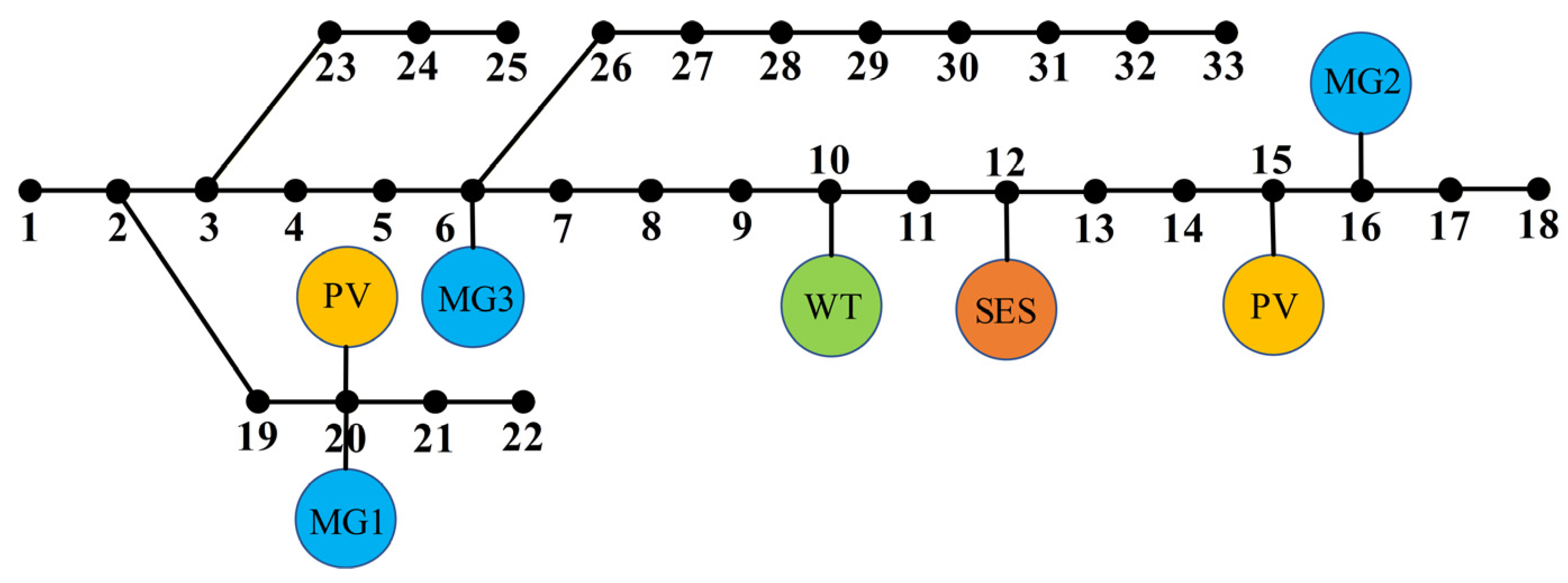
To validate the effectiveness of the proposed method, a modified IEEE 33-bus distribution network is analyzed. As shown in
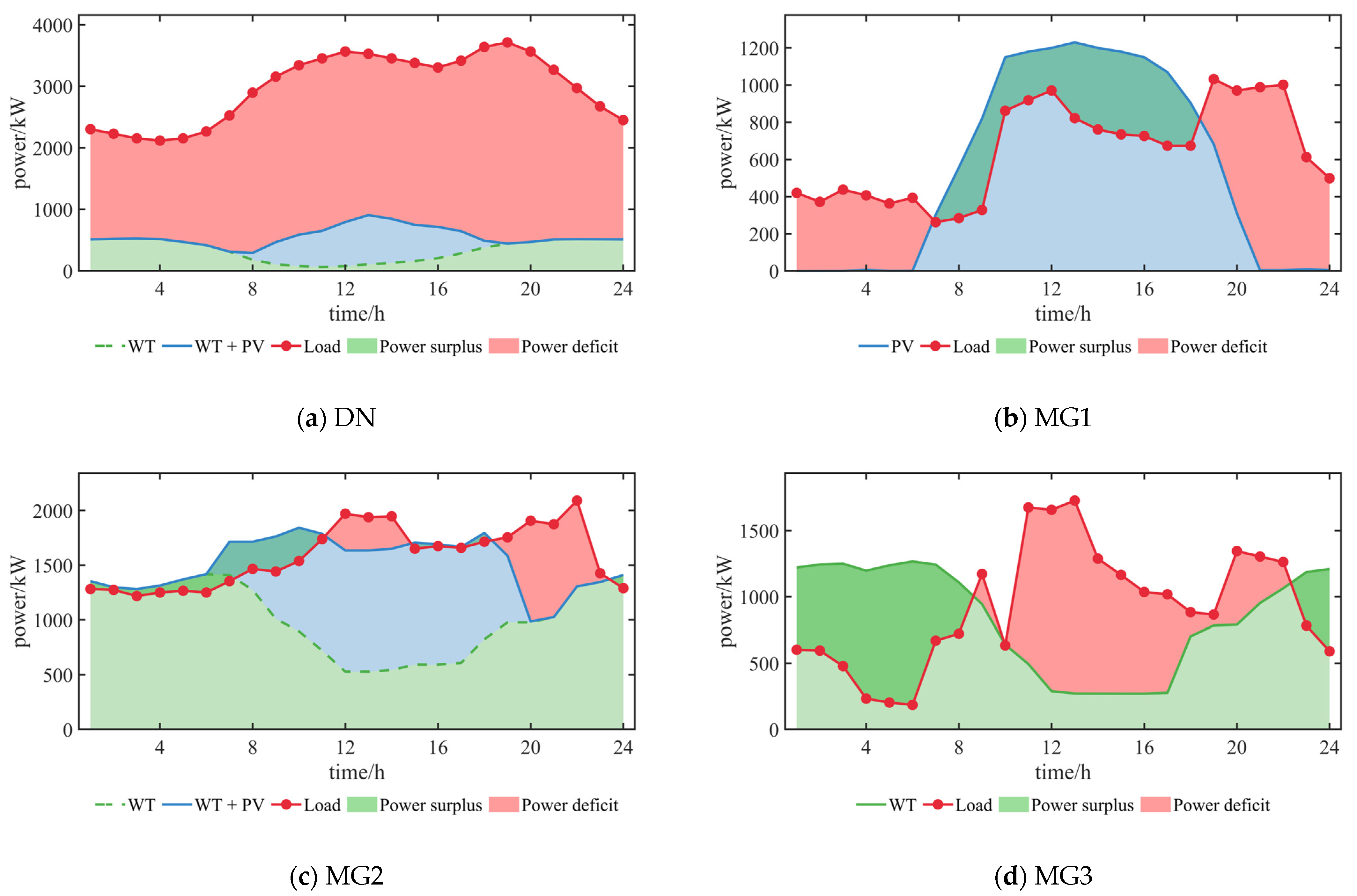
Figure 6, the system comprises three heterogeneous microgrids and one shared energy storage operator. SESO is connected to node 12, while the three microgrids are connected to nodes 20, 16, and 6, respectively. The distribution network includes a wind farm (WT) at node 10, and two photovoltaic farms (PV) at nodes 15 and 20. The generation–load profiles for DN and each microgrid are provided in
Appendix B Figure A1, and the paraments of DN, SESO, and MGs are shown in
Appendix B,
Table A1,
Table A2,
Table A3 and
Table A4. The key hyperparameter settings and termination tolerance for PSO are listed in
Appendix B Table A5. Simulations were conducted using the MATLAB R2024a environment, using the YALMIP modeling toolbox and solved with the CPLEX 12.10 solver. The hardware configuration comprised an Intel Core i5-14400F processor (2.50 GHz).
Table 1 illustrates the game-theoretic process among the three stakeholders: DN, SESO, and MGA. After 42 iterations, the costs/revenues of all agents converge to a stable solution that satisfies the response condition in Equation (34) under the adopted tolerance. The outcome of their interactions is as follows: DN’s operating cost is 38,096.71 CNY, SESO’s operational revenue is 7400.09 CNY, and MGA’s operating cost is 13,017.94 CNY. Following the game, the final time-of-use electricity purchase and sale prices for the distribution network are shown in
Table 2.
To comprehensively evaluate the proposed strategy, five comparative cases are designed, as summarized below:
Case 1: The distribution network implements time-of-use pricing; microgrids form an alliance; a shared energy storage operator facilitates bidirectional interaction between DN and MGs, and MGA fully mobilizes demand response resources.
Case 2: Based on Case 1, but without cooperation among microgrids.
Case 3: Based on Case 2, but without demand response from the microgrids.
Case 4: Based on Case 3, but SESO only serves the microgrids without engaging in energy arbitrage with DN.
Case 5: Based on Case 4, but DN adopts fixed electricity prices.
4.1. Analysis of Distribution Network Optimization Effects
To highlight the effectiveness of the proposed strategy in enhancing the overall system performance, the following analysis examines the system’s operational characteristics from three perspectives: economic efficiency, peak shaving and valley filling capabilities, and operational stability.
4.1.1. Analysis of Economic Effect
Given the interdependencies among the costs and revenues of DN, SESO, and MGA, the following analysis focuses on their operational costs.
Table 3 presents the system operational costs for Cases 1–5.
As shown in
Table 3, the implementation of time-of-use pricing in Case 4 leads microgrids to adjust their energy consumption, reducing their electricity procurement from DN. Accordingly, electricity procurement costs and network loss costs decrease by 423.05 CNY and 84.17 CNY, respectively, compared to Case 5. In Case 3, SESO interacts with both DN and the microgrids, resulting in higher charging/discharging power. This increases its operational and maintenance costs by 604.20 CNY compared to Case 4. However, by participating in peak shaving for DN, SESO helps reduce DN’s electricity purchase costs and network loss costs by 731.52 CNY and 97.58 CNY, respectively, thereby improving overall system economy.
In Case 2, due to load compensation, the comprehensive demand response implemented by microgrids increases their operating cost by 2834.28 CNY compared to Case 3. However, by assisting DN in peak shaving and valley filling, DR reduces DN’s electricity purchase cost and network loss cost by 2985.55 CNY and 195.95 CNY, respectively, further enhancing system economy. In Case 1, full cooperation among microgrids leads to more rational energy flows. DN’s transmission loss costs decrease by 75.93 CNY compared to Case 2. Meanwhile, the complementary effects within the alliance reduce its electricity purchases from DN, lowering DN’s electricity purchase costs by 213.99 CNY and achieving optimal economic performance.
Comparing Case 1 with Case 5, leveraging electricity pricing, energy storage, and flexible load resources reduces the system’s external electricity procurement costs by 4354.11 CNY (an 11.28% decrease). Optimized power flow also reduces network loss costs by 453.63 CNY (a 22.09% reduction), ultimately saving 601.44 CNY in total system operating costs. This demonstrates that implementing time-of-use pricing to mobilize grid resources, guiding shared energy storage for bidirectional interaction, and fully utilizing DR resources within a microgrid alliance can significantly enhance system operational economy.
4.1.2. Analysis of Peak Shaving and Valley Filling Effect
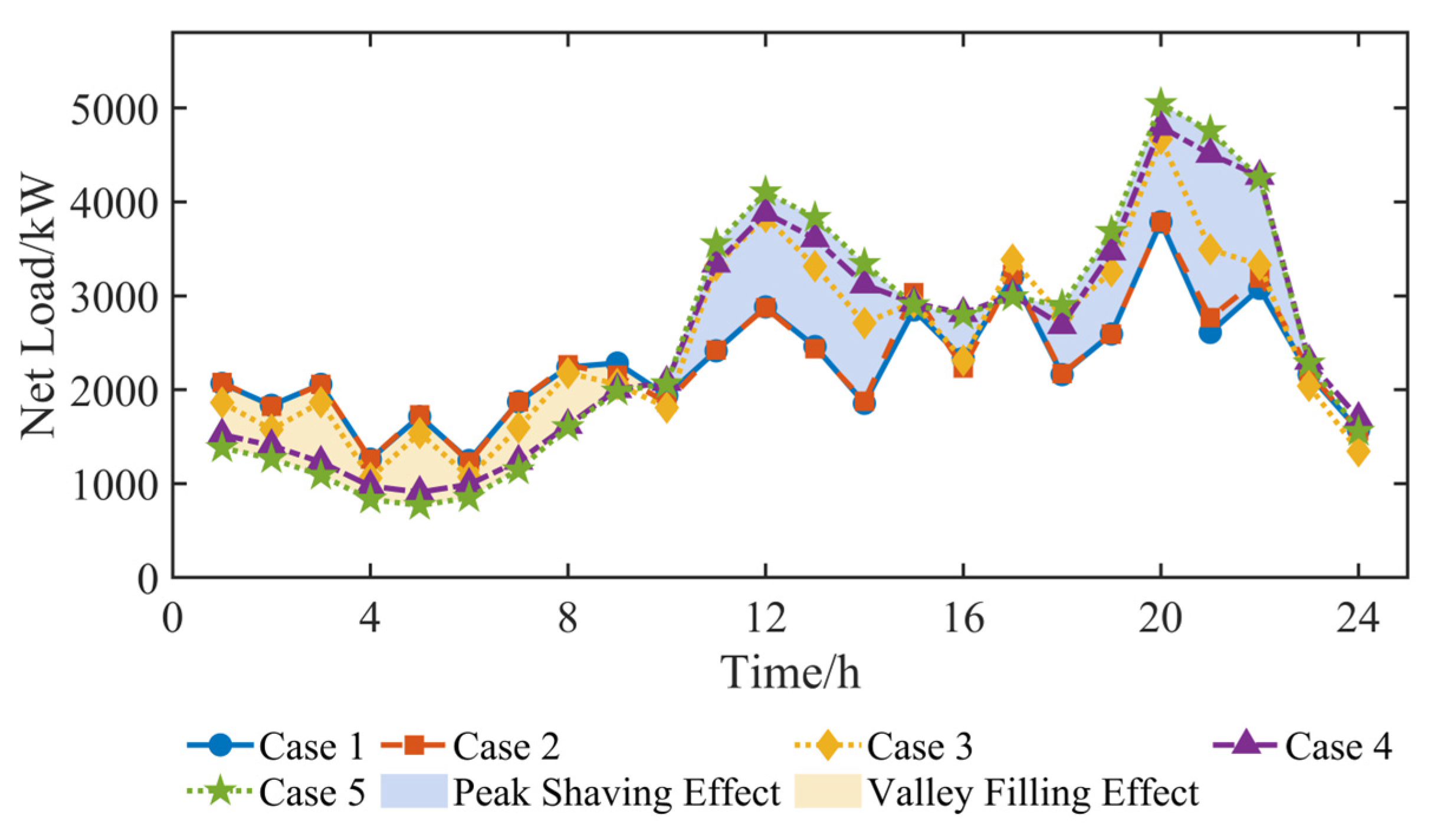
Figure 7 and
Table 4 illustrate the net load characteristics of the distribution network in Cases 1–5.
Figure 7 and
Table 4 show that under Case 4’s time-of-use pricing, microgrids reduce power purchases during peak periods and increase demand during valley periods. This reduces the DN’s net peak-to-valley load difference by 388.12 kW, indicating an initial improvement in the net load profile. In Case 3, SESO also responds to time-of-use pricing by charging during low-cost periods and discharging during high-value periods. This enhances its own profitability while assisting the distribution network in peak shaving and valley filling, significantly lowering the system’s net load at 14:00 and 21:00. Compared to Case 4, the average net load decreases by 44.02 kW, and the total net load is reduced by 1056.56 kW. In Case 2, DR significantly reduces load during peak periods, with the maximum net load power decreasing by 18.91% compared to Case 3. Concurrently, load increases during valley periods, with the minimum net load power rising by 16.03%. This resulted in a substantial reduction of 33.77% in the system’s peak-to-valley ratio. A comparison between Cases 2 and 3 reveals that while energy storage charging/discharging mitigates some net load fluctuations, its capacity limits the peak-shaving and valley-filling effects, and demand response is required to achieve broader load shifting.
In Case 1, full power sharing among microgrids further reduces electricity purchases from DN, decreasing the total net load by 230.1 kW. Using 10:00 as the dividing point, a comparison between Case 1 and 5 shows that, due to the synergy of time-of-use pricing, energy storage, and demand response, Case 1 exhibits significantly higher net load demand than Case 5 during 1:00–10:00 and lower demand during 10:00–24:00. The peak-to-valley load difference rate in Case 1 decreased by 56.53% compared to Case 5, demonstrating effective load shifting. The analysis confirms that peak shaving and valley filling can be achieved by leveraging electricity pricing, energy storage, and demand-side resources. DR yields the most pronounced effect, followed by the regulatory roles of shared energy storage and time-of-use pricing. While the contribution of microgrid alliance operation is relatively minor, it remains indispensable. This validates the significant effectiveness of the proposed strategy in load optimization.
4.1.3. Analysis of Operational Stability Effect
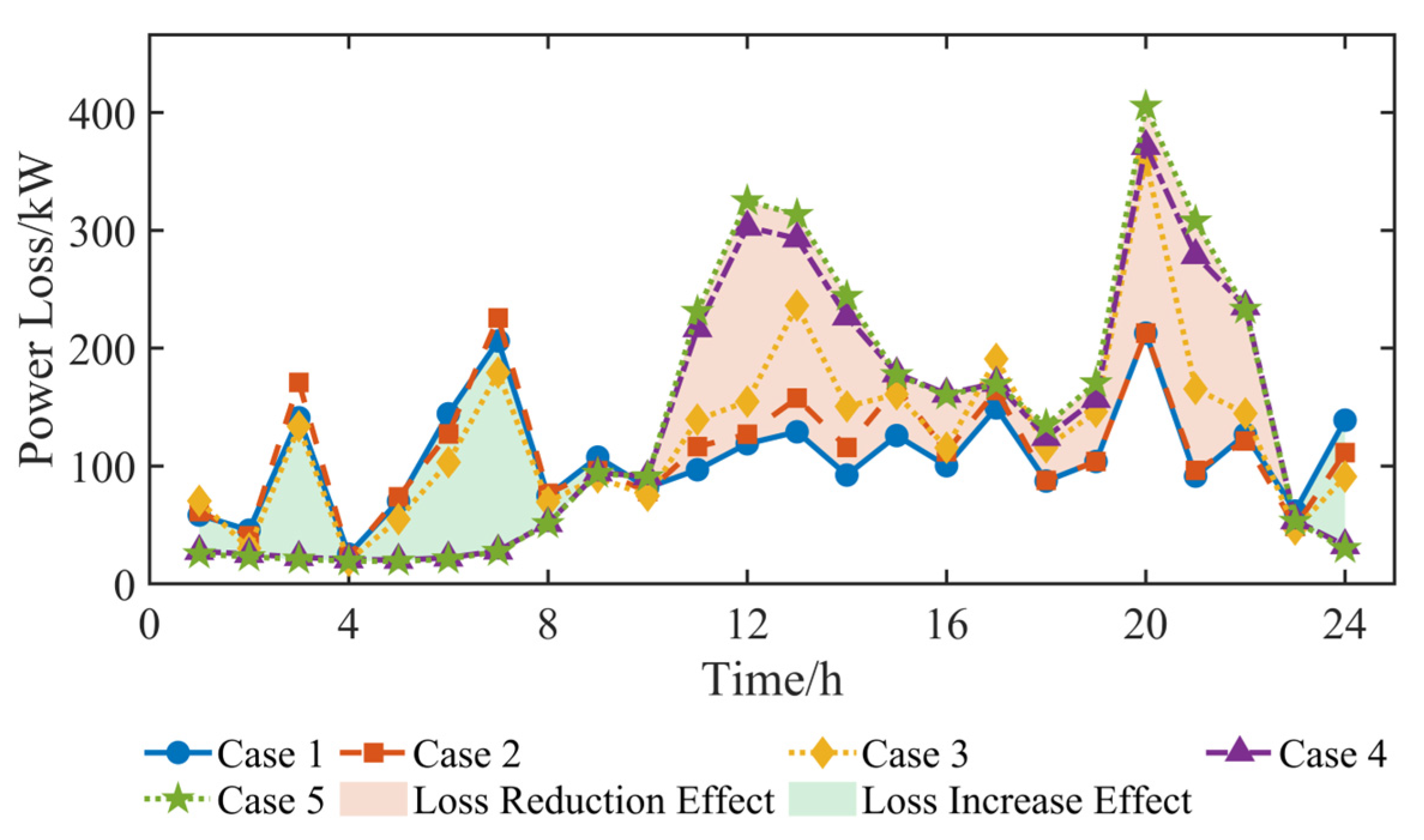
Figure 8 and
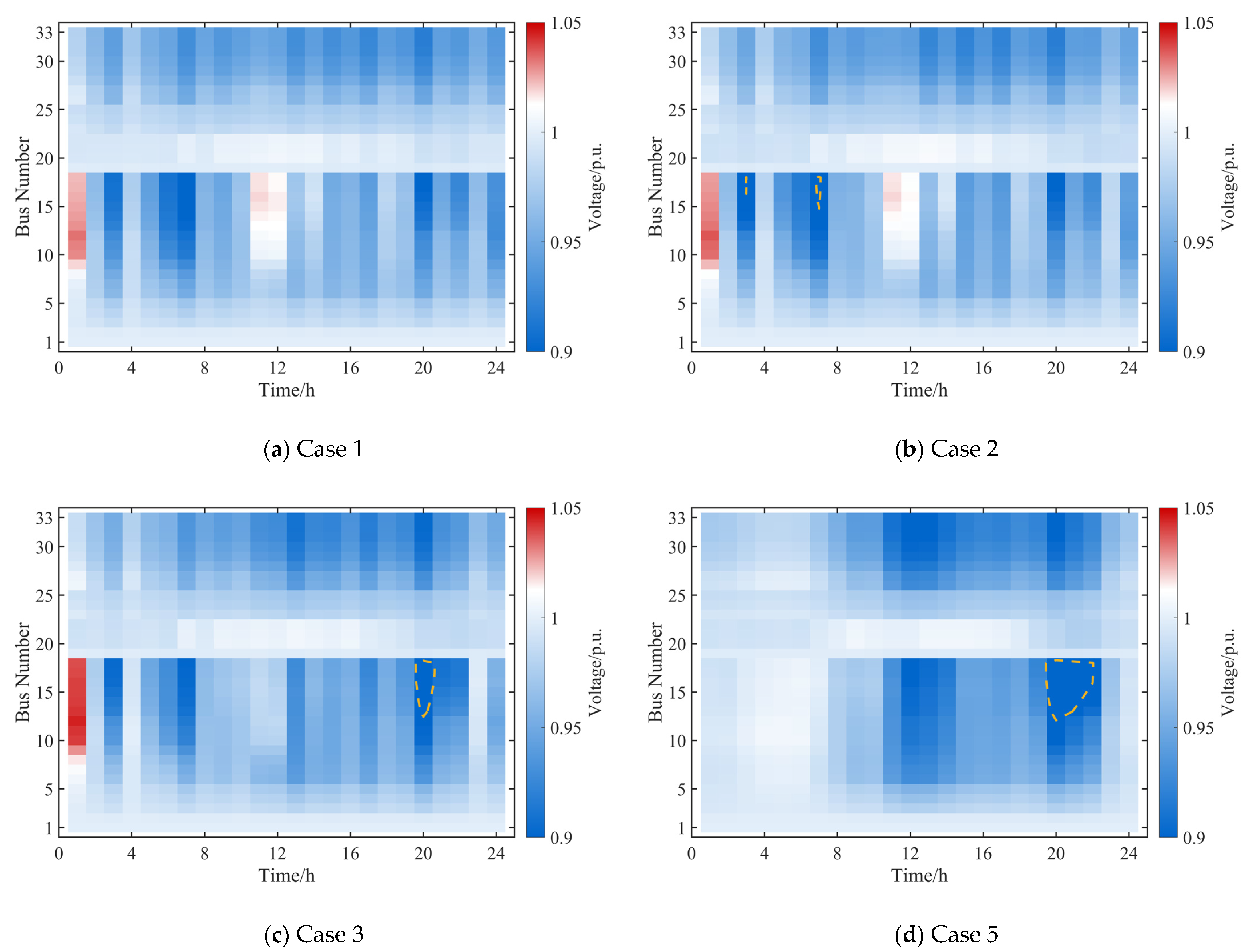
Figure 9 show the distribution of network losses and node voltages in the distribution network, respectively.
Figure 7 and
Figure 8 reveal a strong correlation between DN’s net load power and its network losses. In Case 5, with fixed electricity pricing, microgrids purchase substantial power from DN during dual peak periods (11:00–15:00, 19:00–22:00), significantly increasing losses. At the peak consumption time of 20:00, system losses reach 413.64 kW. In Case 4, time-of-use pricing leads microgrids to reduce demand during peak periods through energy management, improving system losses. In Case 3, SESO’s participation in system peak shaving significantly reduces losses during 11:00–16:00 and 21:00–22:00. However, because the storage purchases large amounts of electricity during valley periods (0:00–8:00), losses in this period are higher than in Case 4, and losses during peak periods are not fully mitigated. In Case 2, DR enhances peak shaving and valley filling. Compared to Case 3, system network losses are further reduced during the dual-peak periods, dropping to 198.38 kW at peak periods—a 52.04% reduction.
In Case 1, MG1 transmits surplus PV power to MG3 during 11:00–17:00, reducing the alliance’s power exchange with the distribution network. This results in a more rational power flow and the lowest network losses among all Cases. Notably, grid loss in Case 1 decreased by 52.04% compared to Case 5, significantly exceeding the 24.97% reduction in net load power during the same period. This indicates that the proposed strategy not only optimizes the total load but also improves power flow distribution, thereby substantially enhancing the operational efficiency and environmental benefits of the distribution network.
As shown in
Figure 9, in Case 5, the absence of time-of-use pricing leads microgrids to purchase large amounts of electricity during the evening peak period, causing low voltages at end-of-line nodes (13–18) and compromising power quality. Case 3 mitigates this by integrating shared energy storage. Guided by time-of-use pricing, storage discharge covers part of the load, compressing the voltage deviation period from 20:00 to 22:00 to just 20:00 and reducing the risk of voltage deviation. In Case 2, comprehensive DR optimizes load behavior, enabling end-of-line voltage to meet stability requirements during the evening peak period. However, excessive reliance on DR for load shifting introduces a new challenge: excessive load demand at 3:00 and 7:00 causes voltage overlimit issues.
In Case 1, the reliable alliance allows MG3 to transfer surplus wind power to MG1 at night, and MG1 to supply excess PV output to MG3 during the day. This reduces the alliance’s electricity purchases from DN, resulting in a more balanced voltage distribution across all nodes. The above analysis demonstrates that as the resources of microgrids, shared energy storage, and distribution network are utilized extensively, the synergistic effects among the agents become increasingly pronounced, significantly enhancing system stability.
4.2. Analysis of Shared Energy Storage and Demand Response Optimization Effects
To validate the enhancement effects of energy storage and load-side resources on system operational performance, this section analyzes three aspects: the microgrid’s energy storage leasing decisions, shared energy storage operational behavior, and the synergistic contribution of energy storage and demand response.
4.2.1. The Microgrid’s Energy Storage Leasing Decisions
Taking MG1 as an example, three sets of weighting parameters are configured to validate the necessity of multi-objective optimization for the microgrid’s energy storage leasing.
Table 5 presents MG1’s energy storage demand, leasing cost, and net load smoothing effect under these three parameter sets.
As shown in
Table 5, Parameter 2 prioritizes net load smoothing performance, requiring the microgrid to perform deep charge–discharge cycles. This results in a capacity demand of 2607.32 kWh—an 86.30% increase compared to Parameter 3. Given the strong correlation between leasing costs and capacity, the cost for Parameter 2 is 2094.76 CNY, a 14.30% increase over Parameter 3. However, it achieves a net load mean square of 5.46 × 10
6 kW
2, a 10.64% reduction compared to Parameter 3, indicating the most effective suppression of net load variability among the three parameter sets.
Parameter 3 prioritizes leasing cost efficiency, controlling costs at 1832.33 CNY with a capacity requirement of 1399.50 kWh. However, due to shallow charge/discharge cycles, it fails to effectively balance renewable energy output with load demand, resulting in the highest net load mean square among the three sets.
Parameter 1 assigns equal weight to both objectives, leasing 2199.00 kWh of storage capacity at a moderate cost of 1907.35 CNY while controlling net load mean square to 5.90 × 10⁶ kW2. This configuration offers the most balanced trade-off between rental cost and net load smoothing effectiveness. The above analysis demonstrates a significant trade-off between microgrid energy storage leasing costs and net load smoothing, validating the necessity of a multi-objective optimization strategy. It also provides a theoretical basis for microgrids to flexibly formulate leasing strategies according to their operational needs.
4.2.2. Shared Energy Storage Operational Behavior
MG1, MG2, and MG3 set their energy storage leasing target weights using Parameter sets 1, 2, and 3 from
Section 4.2.1, respectively.
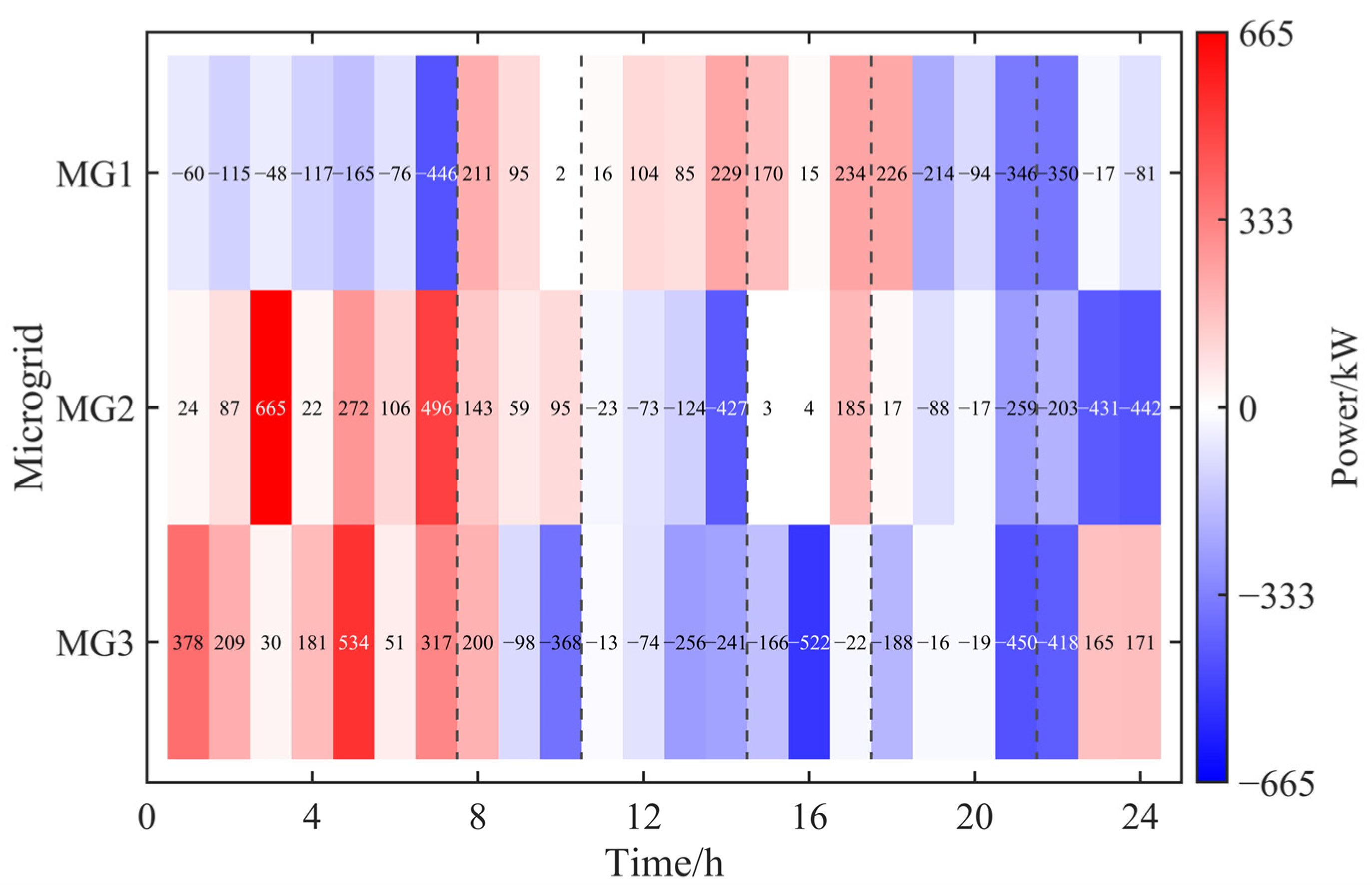
Figure 10 illustrates the charging and discharging behavior of each microgrid via the leased storage, where red indicates discharging power from the microgrid to SESO and blue indicates charging power from SESO to the microgrid.
As shown in
Figure 10, MG1 is equipped solely with a photovoltaic system, and it requires leasing storage to charge during nighttime to meet load demands, with charging power peaking at 446 kW at 7:00. During daytime, when PV output exceeds demand, MG1 discharges to facilitate clean energy consumption. MG2 achieves wind–solar complementarity. During 1:00–10:00, leased storage stores surplus renewable power, with discharge power peaking at 665 kW at 3:00. During 14:00 and 21:00–24:00, high-power charging is enabled, averaging approximately 430 kW during these periods. MG3, equipped solely with wind power, exhibits a severe temporal mismatch between generation and load. It discharges during nighttime wind surpluses, peaking at 534 kW at 5:00. Daytime charging persists with sustained high power during peak loads, reaching a maximum of 522 kW at 16:00.
The analysis shows that each microgrid’s charging/discharging strategy closely aligns with its source–load characteristics, and the behaviors of the three microgrids exhibit distinct complementary traits, providing a viable operational pathway for shared energy storage.
Table 6 presents the microgrids’ demand for shared energy storage and the corresponding energy storage equipment configuration.
As shown in
Table 6, the complementary charging/discharging behaviors among microgrids enable MGA to reduce the overall storage capacity requirement to 5947.94 kWh, a 13.42% decrease compared to the sum of individual demand (6870.18 kWh). The alliance’s charge–discharge power demand is 1170.03 kW, a 37.00% reduction compared to the sum of individual power demand (1857.12 kW). After meeting the MGA’s requirements, SESO retains a surplus capacity of 2052.06 kWh, enabling further power exchange with the distribution network and boosting equipment utilization efficiency by 25.7%.
This demonstrates that shared energy storage significantly reduces system storage configuration requirements by serving multiple microgrids simultaneously. Furthermore, interaction with the distribution network further enhances equipment utilization efficiency.
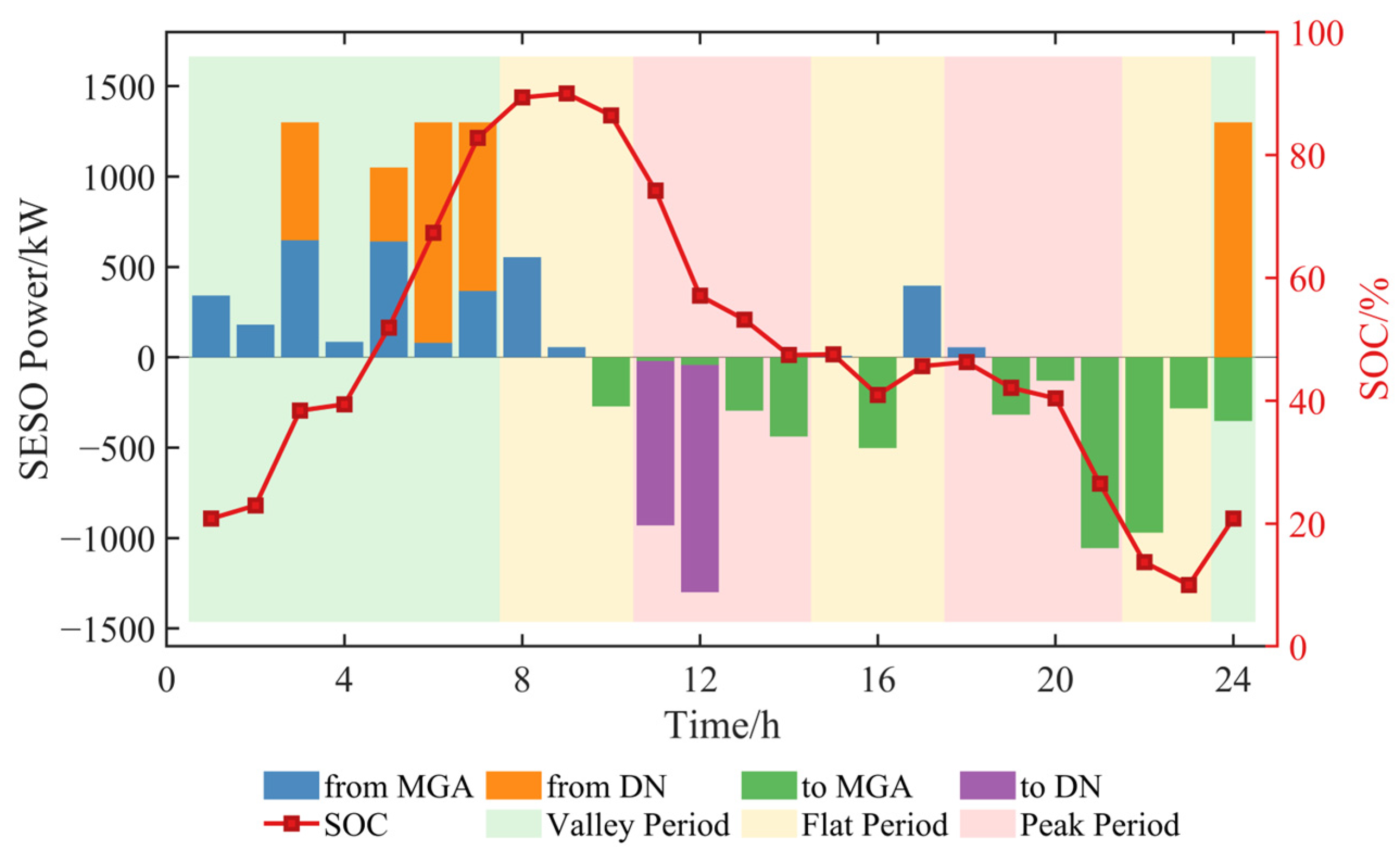
Figure 11 illustrates the operational status of the shared energy storage operator.
As shown in
Figure 11, the storage system receives discharge power from the microgrid alliance during 1:00–9:00 and 17:00–18:00 to store surplus clean energy. During peak consumption periods during 10:00–14:00 and 19:00–24:00, it charges the alliance to meet load demands. Meanwhile, SESO purchases electricity from the distribution network during valley periods (3:00–7:00, 24:00) at lower price to replenish its state of charge. Conversely, it sells electricity back to the distribution network during peak periods (11:00–12:00) at higher prices to capture arbitrage profits. Within a single dispatch cycle, the storage SOC reaches its operational upper limit at 9:00 and its lower limit at 23:00.
This demonstrates that while meeting the alliance’s demands, the shared energy storage operator can maximize operational revenue by responding to the distribution network’s time-of-use pricing, fully utilizing its capacity for peak–valley arbitrage.
Battery cycling during SESO operation inevitably induces degradation, which may affect the revenue accounting of storage service. Therefore, a simplified cycle-based degradation estimation is introduced to quantify the potential magnitude of degradation-related cost under the obtained day-ahead dispatch. Based on the SOC trajectory in
Figure 11, the cycling intensity is characterized by equivalent full cycles, and the associated degradation-related cost is converted into a monetary value to adjust SESO revenue. The estimation procedure and symbol definitions are provided in
Appendix A, and the corresponding parameter settings are listed in
Appendix B Table A2. The estimation results and the resulting revenue adjustment are summarized in
Table 7.
As shown in
Table 7, SESO experiences 0.8546 equivalent full cycles within a single day-ahead dispatch cycle, and the corresponding degradation-related cost is estimated as 683.71 CNY. Consequently, SESO’s revenue decreases from 7400.09 CNY to a degradation-adjusted net revenue of 6716.38 CNY, and the degradation impact ratio reaches 9.24%. This demonstrates that when SESO operates with frequent intra-day cycling while serving the alliance and performing peak–valley arbitrage, the associated life-loss component will lead to a reduction in net revenue.
4.2.3. Synergistic Contribution Effect of Shared Energy Storage and Demand Response
Table 8 shows the demand response contribution of each microgrid in Case 1.
As shown in
Table 8, MG1 has the smallest scale, with its total load regulation accounting for only 27.47% of the alliance’s total. Its average net load power after demand response is 12.14 kW, still requiring significant electricity purchases from the distribution network. Consequently, it contributes the least to the overall system’s peak shaving and valley filling effect, at 7.29%.
MG2, the largest in scale, increased its total interrupted and transferred load by 1127.44 kW compared to MG1, accounting for 40.52% of the total adjustment. With an average net load power of 2.30 kW after DR, it can reduce its impact on the distribution network by relying on its own load-side resources, achieving a system regulation effect of 17.34%.
MG3 exhibits an average net load power of −15.75 kW after DR, capable of providing power support to the distribution network during certain periods. It demonstrates the most pronounced peak shaving and valley filling effect at 21.56%.
The analysis indicates that each microgrid contributes to the system’s peak shaving and valley filling through demand response, with contribution levels highly correlated to their scale. By reasonably setting the response ratio and compensation cost for each microgrid, more reliable support can be provided to the distribution network.
Table 9 presents the overall operational economy of microgrids in Cases 1 and 3.
As shown in
Table 9, in the absence of demand response in Case 3, the output from renewable energy units and gas turbines is insufficient to meet load demand. Consequently, each microgrid must purchase significant electricity from the distribution network, incurring a cost of 4071.38 CNY, leading to a total operating cost of 8151.15 CNY. In Case 1, the alliance’s comprehensive demand response implementation increases its interaction revenue with the distribution network by 5768.69 CNY. This resulted in a 33.26% reduction in total operating costs compared to Case 3. The analysis demonstrates that by controlling internal electricity demand, microgrid alliance can significantly reduce energy costs while increasing interaction revenue, thereby achieving more economical operation.
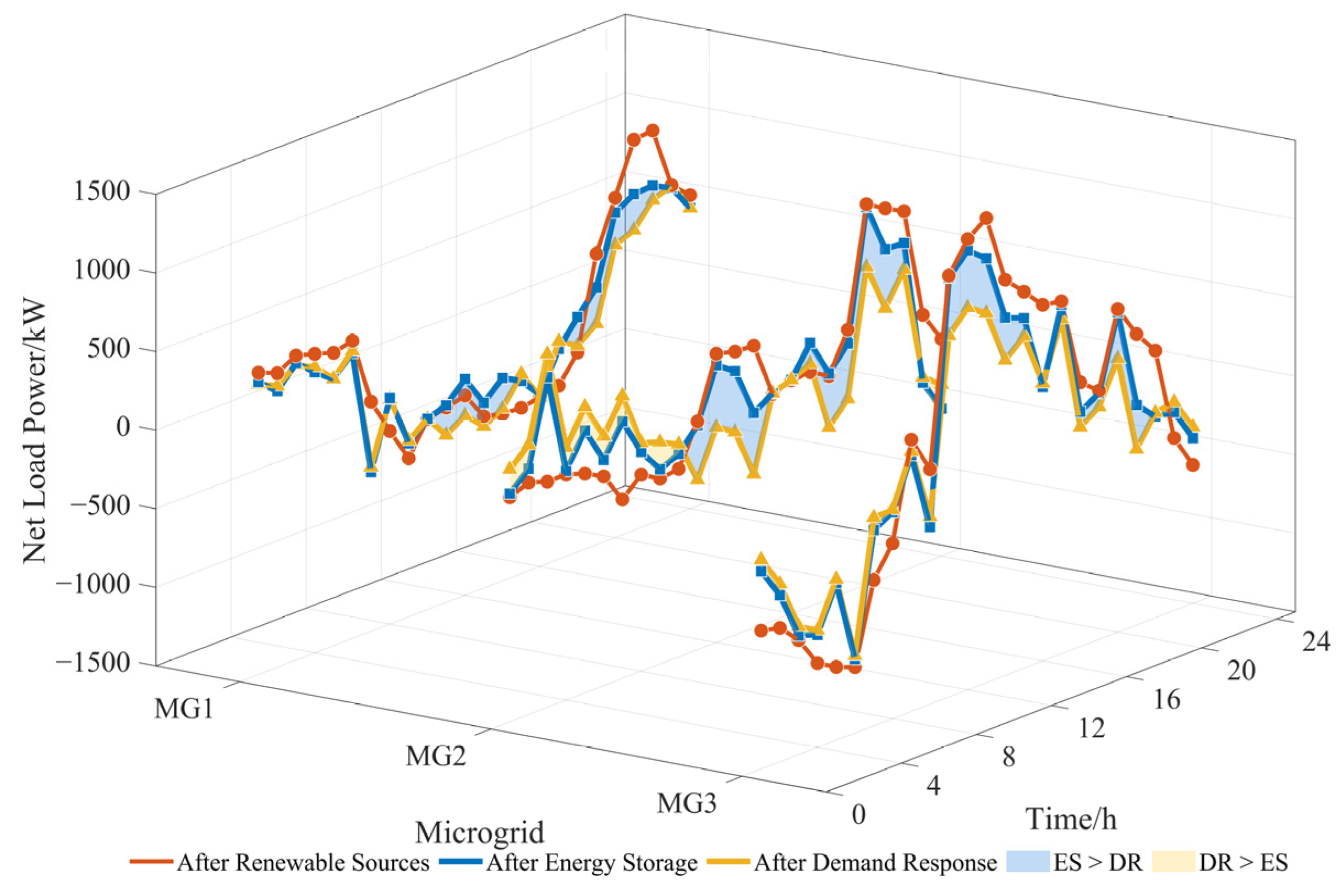
Figure 12 displays the net load curves for each microgrid after utilizing generation-side, storage-side, and demand-side regulation resources.
Table 10 presents the average net load values for each microgrid after employing these three resource types.
Figure 12 visually demonstrates the regulatory effects of generation, storage, and load-side resources on system net load. Using MG3 as an example,
Table 10 analyzes the contribution of these three resource categories to its peak shaving and valley filling effect. MG3 possesses only wind generation resources, with significant output at night, leading to a severe temporal mismatch. Relying solely on renewable energy output reduces the average net load to 8.65% of its original value. Leasing storage to charge during peak consumption periods further reduces the average net load to 5.87% of the original value, achieving a compensation effect of 2.78%. Implementing demand-side response on this basis further lowers the average net load to −1.71% of the original value, achieving a compensation effect of 10.36%.
The analysis demonstrates that integrating generation, storage, and demand-side resources significantly mitigates microgrid impacts on the distribution network. Moreover, synergies among these resources further enhance the improvement outcomes, enabling certain microgrids with favorable resource endowments to transition into providing power support to the distribution network.
4.3. Analysis of Microgrid Alliance Optimization Effects
To validate the economic benefits of forming microgrid alliance, the following analysis examines two aspects: microgrid energy management strategies and alliance revenue distribution.
4.3.1. Microgrids’ Energy Management Strategies
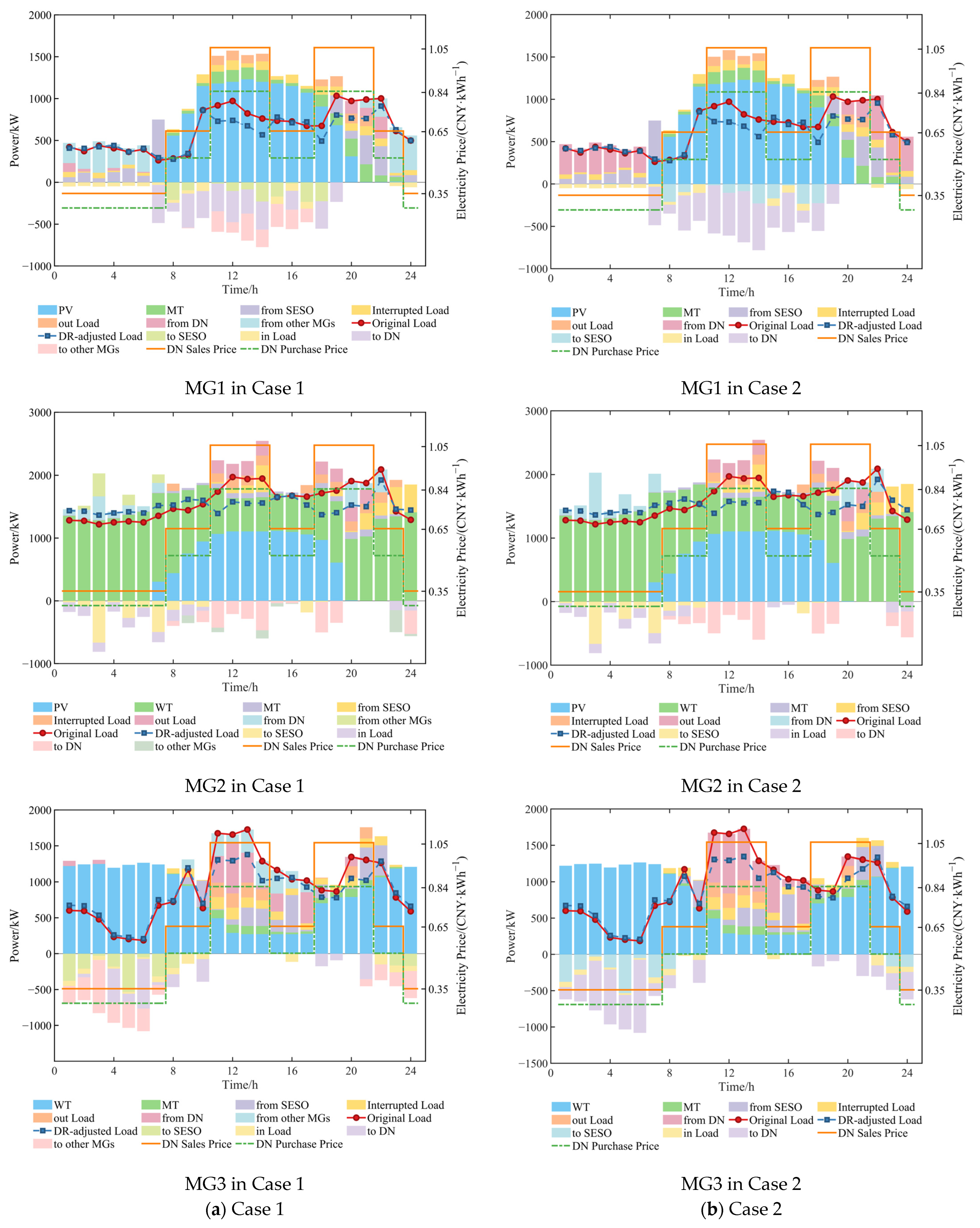
Figure 13 illustrates the power balance of each microgrid in Case 1 and Case 2. The energy management strategies of MG2 across different time periods are analyzed below.
In Case 1, during the valley periods (1:00–6:00), wind generation exceeds load demand. MG2 leases storage for discharging and acquires surplus wind power from MG3. This reduces purchases from the distribution network and part of the load is transferred in to utilize lower electricity rates, thereby lowering energy costs.
During the ramp-up period (7:00–10:00), as wind and solar generation increase, MG2 maintains a power surplus. It continues leasing storage, provides power support to MG1 (which has insufficient PV output), and sells electricity to the distribution network for revenue. Supply–demand balance is maintained by transferring some load in and activating a small number of gas turbines.
During the midday peak period (11:00–14:00), the entire system reaches peak load. MG2’s renewable generation cannot meet local demand, requiring leased storage for charging. To maximize revenue during high-price periods and alleviate MG3’s power shortage, MG2 exports significant power. The internal deficit is compensated by interruptible and transferable loads, along with MT generation, thereby suppressing peak-period electricity costs.
During the midday balancing period (15:00–17:00), MG2 achieves near-balance between generation and load, maintaining minimal MT output while selling small amounts of electricity to the distribution network for revenue.
During the evening peak period (18:00–22:00), PV generation ceases, leaving only wind power below load demand. Given the high purchase price, MG2 chooses to sell electricity to DN for maximum revenue, resulting in severe internal power shortages. This gap is addressed by fully mobilizing interruptible and transferable load resources and relying on MT generation.
During the nighttime balancing period (23:00–24:00), source–load equilibrium is regained. However, due to supplying power to MG1 and some loads transferring into this period, the system faces insufficient supply, necessitating storage for charging and minor MT adjustments to maintain power balance.
A comparison between Case 1 and Case 2 shows that within the alliance, MG2 reduces electricity purchases from the distribution network and supplies power to other microgrids. This effectively alleviates energy shortages within the alliance, thereby lowering operational costs. The analysis demonstrates that under the proposed strategy, microgrids can achieve economic operation by rationally dispatching internal demand response resources while facilitating mutual power support within the alliance.
4.3.2. Analysis of Alliance Revenue Distribution
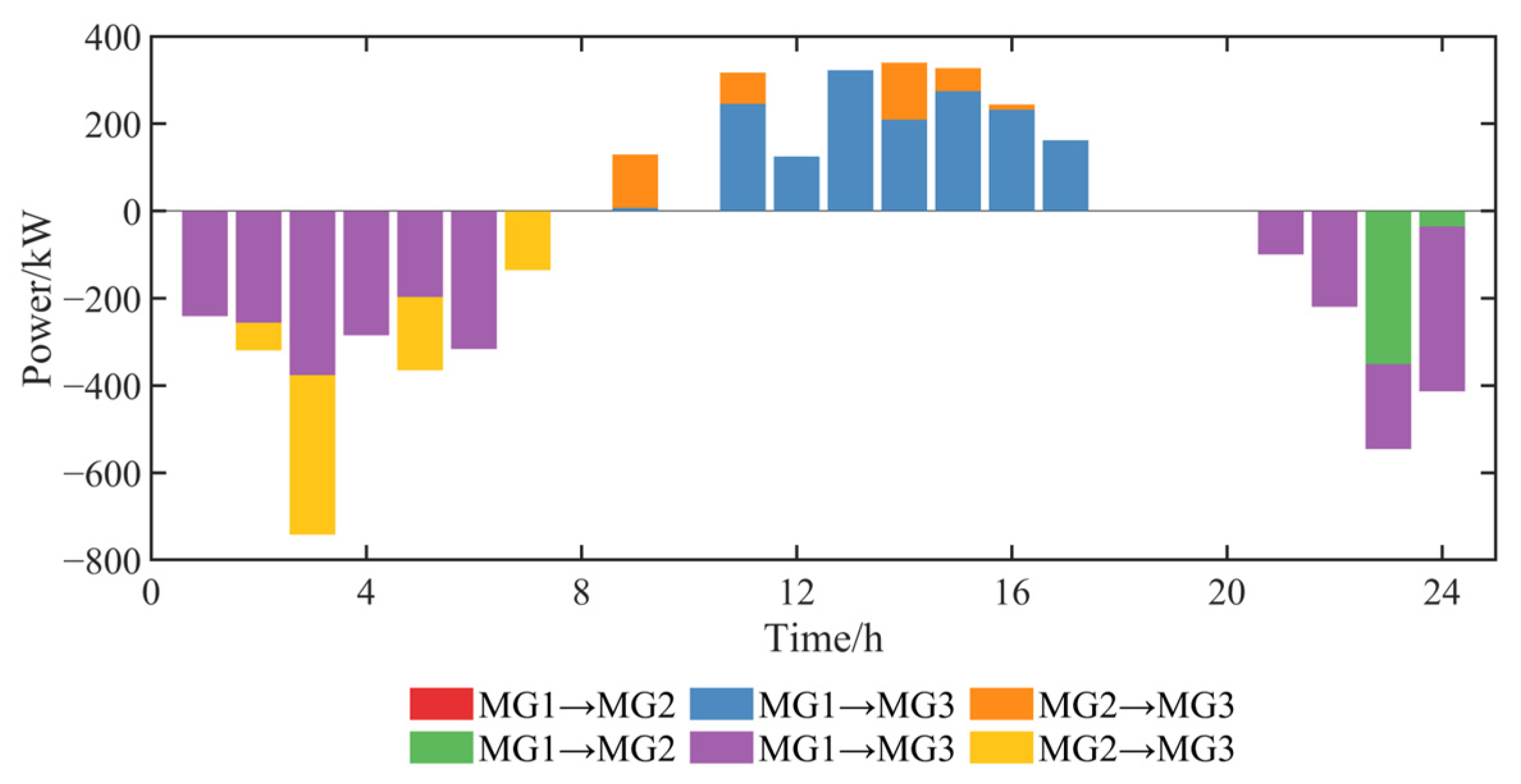
Figure 14 illustrates the mutual power support among microgrids in Case 1.
Table 11 and
Table 12 present the operational economy and revenue distribution results of the microgrid alliance, respectively.
As shown in
Figure 14, Case 1 demonstrates substantial power exchange among microgrids. During 1:00–7:00, MG3 transfers surplus wind power to MG1 and MG2, alleviating electricity demand and reducing the alliance’s purchases from the distribution network. During 9:00–17:00, MG1 and MG2 transfer surplus photovoltaic power to MG3, preventing the alliance from incurring high costs by purchasing large amounts of electricity from DN during peak pricing periods. During 21:00–24:00, MG2 and MG3 transfer surplus wind power to MG1, again reducing the alliance’s electricity purchase costs. This demonstrates that the alliance operation significantly enhances the complementary efficiency of internal resources, thereby reducing the overall external electricity procurement demand.
As shown in
Table 11, the total cost of independent operation for each microgrid in Case 2 is 6081.65 CNY. MG3 incurs the highest interaction cost with DN at 1729.60 CNY due to the most severe source–load mismatch. MG1, being the smallest in scale, utilizes PV generation to sell electricity to DN during peak periods, generating 1554.30 CNY in revenue and resulting in the lowest operating cost. In Case 1, the alliance operation further unleashed the potential of demand-side resources. Although DR costs increase by 157.54 CNY compared to Case 2, the overall reduction in electricity procurement led to an increase of 799.9 CNY in the alliance’s total interaction revenue with the distribution network. Consequently, the total operating cost decreased to 5440.31 CNY, a 10.55% reduction. This alliance model satisfies collective rationality in resource integration and operational cost reduction, significantly enhancing overall efficiency.
The revenue distribution results in
Table 12 further reveal that due to strong complementarity in renewable output characteristics, frequent power support occurs between MG1 and MG3. Consequently, MG1 and MG3 receive cooperative surpluses of 234.34 CNY and 307.75 CNY, with distribution rates of 36.54% and 47.98%, respectively. MG2, with its large load base and limited external support capacity, receives a cooperative surplus of 99.26 CNY, accounting for 15.48%. The formation of the alliance reduces operational costs for each microgrid compared to independent operation, indicating that this alliance structure also satisfies individual rationality. The analysis demonstrates that the proposed strategy reasonably reflects each microgrid’s contribution to the alliance, thereby supporting its long-term stable operation.
4.4. Analysis of System Robustness, Sensitivity, and Scalability
4.4.1. Robustness Analysis Under Prediction Uncertainty
To validate the robustness of the proposed model under uncertain generation and load conditions, this section conducts a prediction uncertainty assessment on the selected distribution system. Specifically, uniform disturbances
are applied to the system load and renewable energy output prediction sequences at an error level
, with 30 independent samples taken for each level.
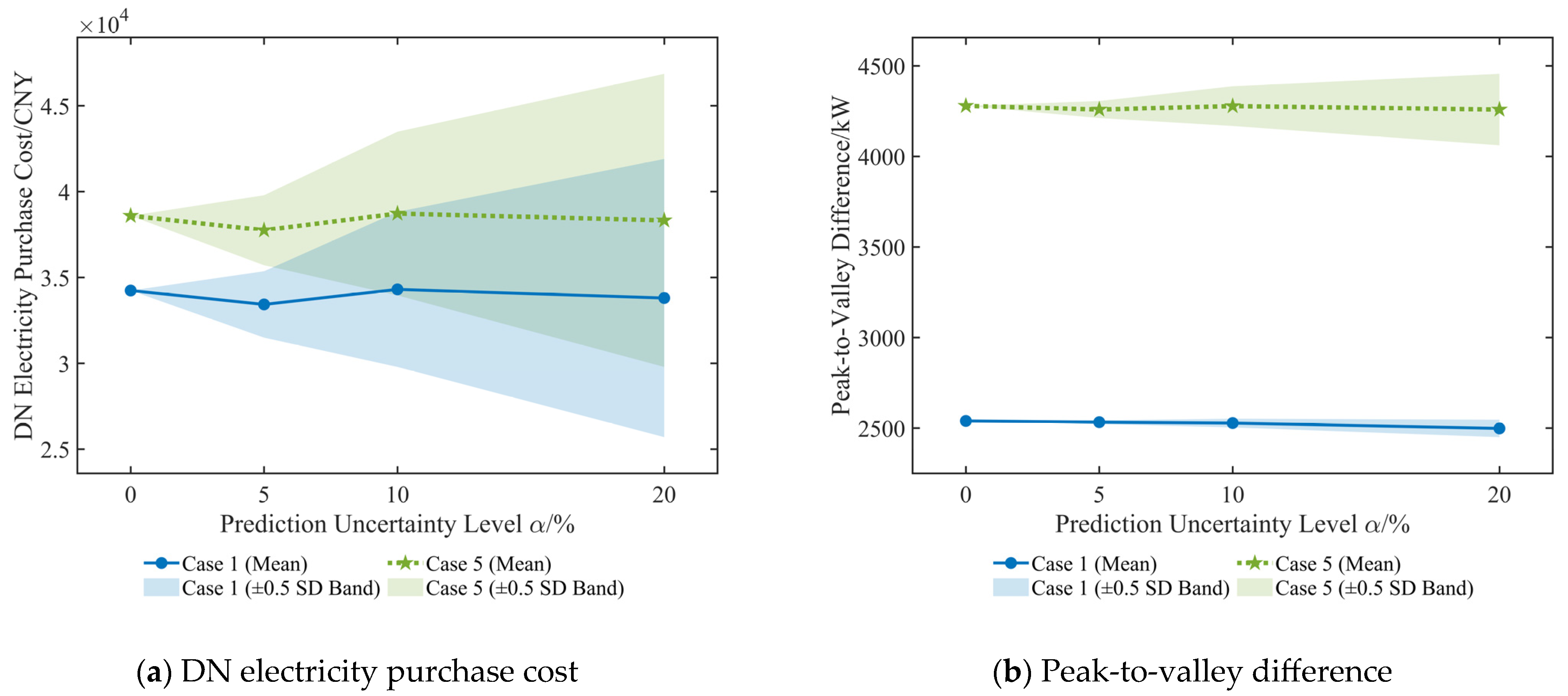
Table 13 and
Figure 15 present the average and standard deviation of net load peak-to-valley differences and the electricity procurement costs for the distribution network under fully coordinated and uncoordinated resource allocation schemes.
Table 13 shows that in terms of economic efficiency, the average power purchase cost for the distribution network in Case 5 ranges from 37,752.14 to 38,725.05 CNY, while Case 1 ranges from 33,431.00 to 34,307.86 CNY. The reduction in average costs falls within the range of 11.40–11.80%, largely consistent with the cost reduction achieved under deterministic prediction conditions. This demonstrates that the proposed coordination mechanism can still effectively organize shared energy storage and demand response to continuously reduce system operating costs, even after accounting for prediction errors in generation and load. Regarding peak shaving and valley filling, the average net peak-to-valley load difference in Case 5 ranged from 4258.57 to 4277.61 kW, while Case 1 recorded 2498.50–2533.14 kW, corresponding to an average reduction of approximately 40.52–41.33%. Compared to the peak–valley difference reduction under deterministic conditions, this represents a decrease of about 16.01%. This indicates that the peak-shaving and valley-filling effect of the proposed coordination mechanism is appropriately weakened under uncertainty conditions, yet it still holds a significant advantage over the uncoordinated scenario.
Notably,
Figure 15 visually demonstrates that under varying levels of uncertainty disturbance, the standard deviation of the distribution network’s net peak-to-valley difference decreased from 93.97–394.62 kW in Case 5 to 21.01–96.08 kW in Case 1, representing a reduction of 75.65–78.03%. This indicates that under random disturbances, the proposed coordination framework not only improves the average peak-to-valley difference level but also reduces the sensitivity of the peak-to-valley difference to prediction errors, thereby enhancing the stability and controllability of system operation.
4.4.2. Analysis of Key Parameter Sensitivity
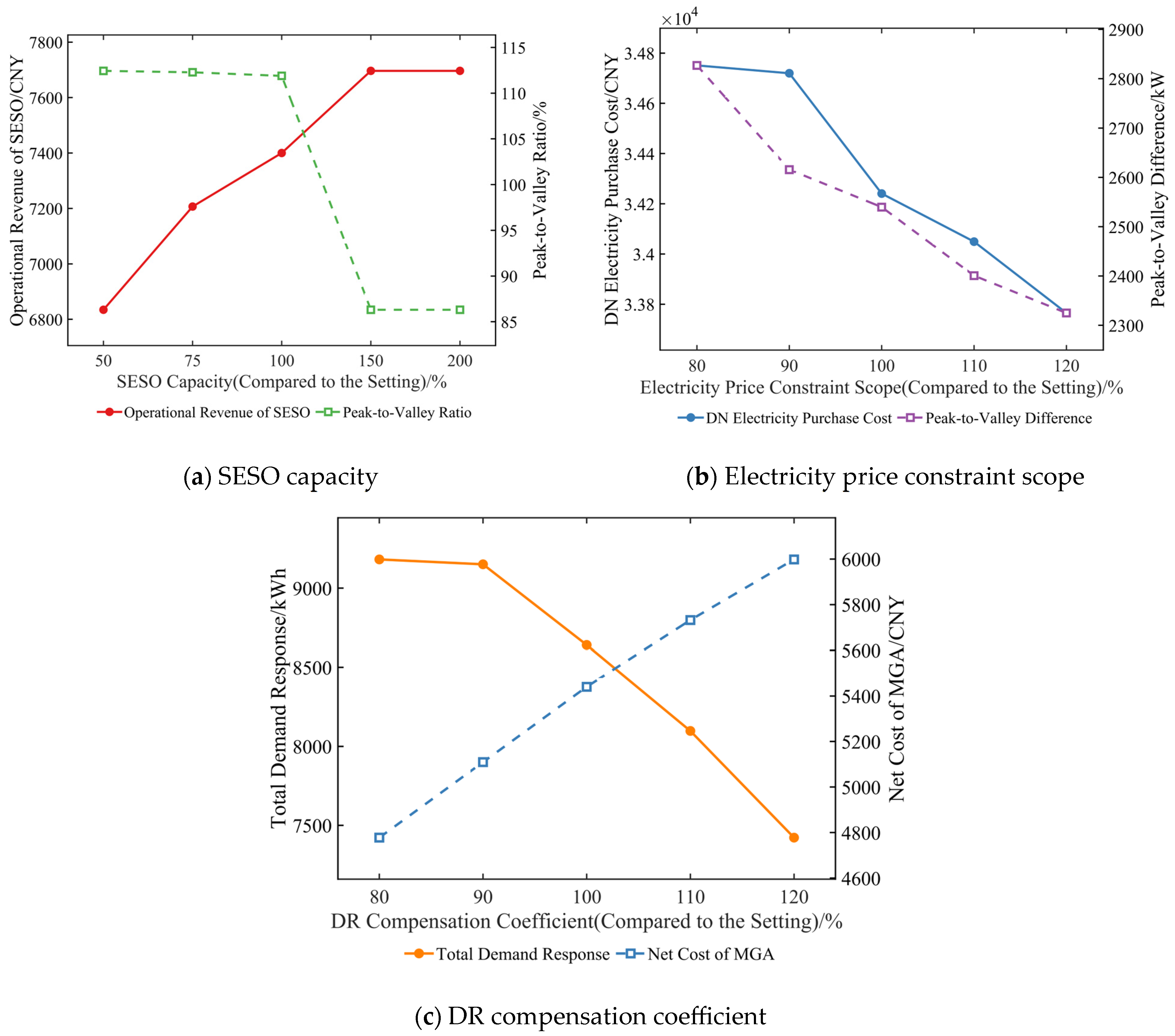
To validate the sensitivity and robustness of the experimental conclusions to variations in key parameters, this section conducts sensitivity tests on shared energy storage capacity, electricity price upper and lower bounds, and demand response compensation coefficients. These tests maintain consistency in system topology, computational method settings, and coordination frameworks.
Figure 16a shows that as energy storage capacity increases from −50% to +50%, relative to the current setting, the storage operational revenue rises from 6834.45 CNY to 7696.46 CNY, with the growth rate gradually slowing. This indicates that capacity expansion can provide additional arbitrage and regulation opportunities, but the marginal revenue diminishes significantly. When capacity further increases to +100% relative to the current setting, the storage operational benefit and distribution network peak-to-valley ratio remain unchanged. This indicates that under the power limit of 1300 kW and source–load sequencing conditions defined in this study, the system’s regulation capacity exhibits redundancy. Concurrently, the peak-to-valley ratio showed significant improvement after capacity reached +50% relative to the current setting, decreasing from 111.89% to 86.31%. This indicates that when capacity crosses a certain threshold, energy storage can more effectively participate in peak shaving and valley filling, thereby improving the distribution network’s net load curve. A sensitivity analysis of energy storage capacity reveals that the peak-shaving effect of the proposed mechanism exhibits a monotonic trend within a certain range of capacity variations.
Figure 16b shows that when the electricity price fluctuation range expands by 20% relative to the current setting, the distribution network’s electricity procurement cost decreases from 34,240.64 CNY to 33,765.02 CNY, a reduction of 1.39%, while the peak-to-valley difference decreased from 2539.76 kW to 2325.00 kW, a reduction of 8.46%. Conversely, narrowing the range weakens price signals, reduces scheduling flexibility, and causes both costs and peak-to-valley differences to rebound. Boundary sensitivity analysis of electricity prices demonstrates that the proposed coordination framework maintains consistent adjustment directions and incentive compatibility across different pricing policy boundaries. This guides the interaction among grid, load, and storage resources, enabling adaptive adjustments to energy consumption strategies in response to changes in price boundaries.
Figure 16c shows that when the demand response compensation coefficient is increased by 20% relative to the current setting, the total DR response decreases from 8640.58 kW to 7421.89 kW, a reduction of 14.10%, while the net cost for the microgrid alliance increases from 5440.31 CNY to 5998.36 CNY, representing a 10.26% rise. Sensitivity analysis of the demand response compensation coefficient indicates that higher compensation prices result in lower DR volumes mobilized by the alliance and higher net costs, with changes occurring smoothly. This trend aligns with price elasticity logic, demonstrating that under cost parameter perturbations, the proposed framework can still automatically optimize and converge to a new equilibrium point.
4.4.3. Analysis of Computational Complexity and Scalability
To evaluate the performance of the proposed strategy in larger-scale systems, this section scales the system size to IEEE-69 and IEEE-118 bus distribution networks and expands the number of microgrids from 3 to 6 and 9 while maintaining consistent solution methods.
Table 14 presents the outer iteration counts and computational time for the algorithm across different system scales.
As shown in
Table 14, as the number of microgrids increased from 3 to 9 and the network scale expanded from 33 buses to 118 buses, the total computation time rises from 1154.47 s to 2040.88 s, while the iteration count remained stable within the range of 42–45 iterations. This demonstrates that the proposed hierarchical solution framework maintains stable convergence during scale expansion. Concurrently, the time increase primarily stems from the rising computational overhead due to the expanded scale of the alliance-side subproblem. The SESO subproblem and power flow calculations account for a relatively minor proportion of the time, indicating that the computational burden grows mainly with the increase in the number of participating entities. This exhibits relatively stable characteristics, with no occurrence of uncontrolled computational explosion. The above computational complexity analysis demonstrates the applicability of the PSO + CPLEX-based two-layer nested solution framework in large-scale systems, thereby providing a numerical solution for multi-resource coordination problems in the distribution network.
5. Discussion
Based on the case study results, this section discusses the operating mechanisms of the proposed hierarchical coordination framework by clarifying the respective roles and interactions among time-of-use pricing, shared energy storage, demand response, and microgrid alliance operation, and then summarizes limitations related to practical deviations from ideal assumptions, uncertainty handling, storage techno-economics, and large-scale computational efficiency.
5.1. Mechanism of Hierarchical Pricing in Multi-Agent Coordination
Introducing time-of-use pricing improves both the operational economy and peak-load level of the distribution network. In the IEEE 33-bus case, the coordinated scenario achieves an 11.28% reduction in DN electricity procurement cost and reduces the DN net-load peak-to-valley difference by 388.12 kW under the adopted settings. Under the same configuration, the 601.44 CNY reduction reported in
Table 3 serves as an additional day-ahead operating-cost indicator under the assumed service-fee and operating-cost parameters. Overall, the improvement is driven by price-induced coordinated responses across DN, SESO, and MGA, rather than by a single agent’s localized optimization.
Compared with centralized unified dispatch, the proposed framework achieves indirect coordination through price signals, thereby reducing the reliance on fine-grained microgrid information while preserving cross-layer coordination effects. Conceptually, it is aligned with hierarchical scheduling approaches [
6]. Meanwhile, the present work further integrates shared storage services and alliance internal cooperation into a unified framework, such that the same price signal can jointly govern coupled decisions, including DN energy transactions, storage leasing, and energy-arbitrage operation. In contrast to distributed coordination frameworks that emphasize decentralization and robustness via iterative information exchange [
7], this study emphasizes implementable time-of-use pricing to avoid frequent communication and complex iterative coordination. The robustness test further indicates that the cost-improvement trend is preserved under the tested 5–20% forecasting disturbances, supporting the stability of the price-driven coordination effect within the adopted day-ahead setting.
5.2. Complementary Regulation of Shared Energy Storage and Demand Response
Shared energy storage provides inter-temporal energy shifting and peak support, which is a key enabler of system-level regulation in the proposed framework. In the case study, the reported 25.7% increase in utilization reflects the day-ahead extent to which storage is dispatched for energy shifting and peak support. Relative to SESO leasing/pricing studies [
20] and SESO–MGs interaction modeling [
23], the present work treats SESO as an explicit decision-making entity in the DN-level interaction and links its service revenue and regulation revenue within the same operating cycle by allowing residual capacity participation in DN-side peak–valley regulation. With cycling-induced degradation considered, the SESO net revenue is 9.24% lower than its operating revenue.
Demand response further expands the regulation space when storage regulation is constrained. With shared storage participation, adding DR reduces the maximum DN net load by 18.91%, increases the minimum net load by 16.03%, and decreases the peak-to-valley ratio by 33.77%, indicating that DR amplifies peak shaving and valley filling under the coupled coordination setting. Compared with studies emphasizing fine-grained user behavior and learning-based incentives [
15], the aggregated constraint-based model adopted here preserves tractability while remaining compatible with storage leasing and alliance scheduling. The sensitivity study provides additional evidence that key indicators vary smoothly with price bounds and DR compensation coefficients under the adopted parameter ranges.
5.3. Role of Microgrid Alliance in Internal Coordination
The microgrid alliance plays a more pronounced role in internal coordination and cost reduction than in directly suppressing the system peak load. Through mutual support and coordinated dispatch, the alliance reduces reliance on DN electricity procurement and decreases the total operating cost by 10.55% compared with independent operation. This also stabilizes the executability of intra-horizon schedules by smoothing members’ net-load fluctuations and coordinating DR and storage-related actions.
In terms of cooperation mechanisms, multi-microgrid trading or exchange schemes often rely on fair allocation rules to improve acceptability [
10]. This study adopts alliance-coordinated dispatch and Shapley marginal-contribution-based allocation to discuss stability at the scheduling-horizon scale under individual rationality, which is consistent with synthesis insights in the energy-sharing literature [
31]. In addition, the scalability tests indicate that the outer-iteration count remains in a narrow range when scaling to larger DN sizes and more microgrids, while the computational time increases mainly due to the enlarged alliance-side subproblem, providing empirical evidence for runnable expansion under the same solution structure.
5.4. Limitations
First, this study formulates the grid–storage–load interaction at the day-ahead scheduling level under deterministic forecasts and rational decision-making. In practical operation, limited rationality, information asymmetry, and prediction errors may weaken incentive consistency, slow coordination, and lead to more conservative resource responses, with amplified impacts in large-scale networks. A more robust implementation can integrate uncertainty-aware decision-making with a rolling operation layer, so that the day-ahead coordination is periodically updated and complemented by real-time correction.
Second, this study represents shared storage in an aggregated form and reports economic performance at the operating-cost level, with a simplified cycling-based degradation adjustment reported for SESO revenue. In practical settings, neglecting investment recovery metrics and technology heterogeneity may change the relative attractiveness of storage dispatch and affect cost-effectiveness assessments. A more informative implementation can introduce technology-group parameterization within the same operator model, so that efficiency and lifetime characteristics are reflected together with investment-level indicators.
Third, this study adopts an outer coordination procedure with lower-level mixed-integer subproblems under unified solver settings. With increasing scale, the mixed-integer burden may dominate the computational cost and reduce the timeliness of coordination in larger systems. A practical acceleration route is to decompose microgrid-side decisions and solve them in parallel under a distributed coordination layer, with consistent information and communication assumptions to enable fair architectural comparisons.