Article

A Machine Learning Approach for the Completion, Augmentation and Interpretation of a Survey on Household Food Waste Management


by
Athanasia Barka-Papadimitriou
1,2,
Vassilis Lyberatos
3,*,
Eleni Desiotou
2,
Kostas Efthimiou
2 and
Gerasimos Lyberatos
1,2
1
School of Chemical Engineering, National Technical University of Athens, Iroon Polytechneiou 9, Zografou, 15780 Athens, Greece
2
Food Loss and Waste Prevention Unit, Municipality of Halandri, Solomou10 Str., Halandri, 15232 Athens, Greece
3
School of Electrical and Computer Engineering, National Technical University of Athens, Iroon Polytechneiou 9, Zografou, 15780 Athens, Greece
*
Author to whom correspondence should be addressed.
Processes 2026, 14(2), 302; https://doi.org/10.3390/pr14020302
Submission received: 27 November 2025 / Revised: 10 January 2026 / Accepted: 11 January 2026 / Published: 15 January 2026
(This article belongs to the Special Issue 1st SUSTENS Meeting: Advances in Sustainable Engineering Systems)

Abstract

Households are the major contributor to food waste generation in the European Union according to the recently published data from Eurostat. Promoting food systems sustainability and aspiring to achieve the United Nations SDG 12.3 requires a better insight to the underlying drivers of the household food waste occurrence. The present study presents the combination of a well-established method of acquiring information, the questionnaire surveys, with a state-of-the-art technology for data imputation and interpretation using machine learning (ML). The Food Loss and Waste Prevention Unit (FLWPU) of the municipality of Halandri employed two surveys within the framework of the European funded projects Food Connections and FOODRUS. The first questionnaire was designed for rapid completion, to maximize response rates and minimize respondent burden, ensuring the collection of a consistent core dataset. A total of 154 replies were collected. The second questionnaire, associated with FOODRUS, was more detailed, enabling the participants to provide more in-depth information on their household food waste (HHFW) practices. In total, 43 responses were collected. ML algorithms were applied for data enhancement and data clustering. Specifically, ML and statistical techniques are applied for data imputations. An XGBoost algorithm was trained so as to capture complex relationships between variables. Behavioral intentions and effective strategies for reducing food waste at the community level are identified from the responses of both questionnaires, while a clustering of respondents in five groups emerged by using k-means, thus providing valuable insight into targeted HHFW prevention action plans.

1. Introduction

Sustainable food systems supplying safe and healthy food for all is the primary requisite for a decent life and well-being of humankind. The transition to sustainable food systems requires a collective approach involving public authorities at all levels of governance, private sector actors, non-governmental organizations, social partners, academics, and citizens [1]. A public consultation of the European Commission on Circular Economy Act (CEA) was completed in November 2025 and the new act will be adopted by the end of 2026 so as to enable the European Union to enhance its economic security, resilience, competitiveness and decarbonization [2]. Forming the future circular and regenerative production systems, including food systems, is in line with the United Nations Sustainable Development Goals (UN SDGs) and more specifically Goal Target 12.3 “to reduce food loss and waste by 50% throughout the food supply chain” and the European Commission’s Directive 2008/98/EC. Revised in October 2025, the Waste Framework Directive introduces the first legally binding targets for Member States to reduce food waste by 10% in processing and manufacturing, and by 30% per capita at retail and consumption by 2030 [3]. The EU Farm-to-Fork Strategy (F2F) addresses more sections of the food supply chain (FSC), promoting the decrease in pesticide use, organic farming and increase in healthy dietary habits for mitigating Food Loss and Waste (FLW) [4]. FLW incurs in each one of the five stages of the food supply chain; production, processing and packaging, transportation and distribution, retail and consumption [5]. The FAO defines FLW as the decrease in food quantity or quality of food intended for human consumption [6]. Food loss (FL) occurs at the production, post-harvest, and processing levels up until the end of the supply stage, while food waste (FW) occurs at the retail and consumption level. Food or foodstuff means any substance or product, whether processed or unprocessed, intended to be, or reasonably expected to be, ingested by humans [7,8]. The wasted amount of food reflects an intrinsically significant loss of calories and nutrients [9], and it also exercises significant environmental pressures generating 8 to 10% of global greenhouse gas emissions, while it raises social and economic concerns [10].
Household food waste is pivotal towards reducing food waste because the generation of waste in the final stage of the FSC not only cumulates the environmental, economic and social impacts, but it also accounts for 60% of the total food waste according to the UNEP 2024 report [11]. In EU HHFW accounts for 53% of the annually produced food waste according to the most recently published data [12]. More than 70% of all food produced is consumed in cities [13]. Estimated urbanization rates will exacerbate this issue in the coming decades, with 2.5 billion people estimated to move towards urban settlements [14]. Urban systems represent a significant segment of post consumption FW and are an ideal field to deploy food systems sustainability practices [15].
In order to identify key factors that motivate, enable or prevent household food waste generation, information and data are necessary. Standardized methodologies and minimum quality requirements have been recommended to ensure the collection of harmonized measurements across the EU Member States [16]. Surveys by means of questionnaires and/ or interviews is a recommended method for collecting information on FLW perceptions and behaviors [17,18,19]. Artificial Intelligence (AI) has the capacity to retrieve underlying patterns of cognitive science. In relation to FW, the capacity of AI has been demonstrated so far via operational efficiencies and environmental outcomes. There is clear evidence that AI can revolutionize food waste management, offering solutions that not only reduce waste, but also contribute to a more secure and sustainable global food supply [20,21].
This study employed two different questionnaires as part of the research of the Food Loss and Waste Prevention Unit (FLWPU) of the Municipality of Halandri within the framework of the European-funded projects Food Connections and FOODRUS [22,23]. The purpose was to identify household food waste patterns in the extended area of the Municipality of Halandri. Several food planning, purchasing, handling and disposing behavioral aspects were explored while the effectiveness of FW mitigation strategies was assessed. Machine learning algorithms were subsequently employed to enhance incomplete and impute missing values. The outcomes of ML data are cross validated with the questionnaires’ data, therefore setting an example of ML application to other data categories and fields of research.

2. Materials and Methods

In this study, the term “food waste” comprised all food residues generated at the consumption level, meaning avoidable and unavoidable fractions of food waste according to the EU and FAO definitions.
Specifically, unavoidable food waste was defined as the inedible parts of food that are not intended for human consumption [24]. The questionnaires surveyed comprised an introductory part that included an explanation of food waste and a consent form explaining the purpose of the study and the general data protection regulation of the European Union 679/2016. The eligibility criteria for participation in the survey were the respondent’s age, which should be at least 18 years old, the respondent’s primary residence, which should be Halandri, and the participant’s informed consent prior to submitting the survey. The participation was voluntary and confidential. The research method used was the simple random sampling that has been previously employed in relevant studies [25].
The first questionnaire, henceforth referred to as Q1 was part of the Erasmus+ EU funded project called Food Connections. It was formulated by the lead partner of the consortium and applied to all the involved partner regions of the project translated to the regional language. It consisted of 30 questions. The employed questions and possible responses are provided in Table A1. The first two were related to sociodemographic parameters with open-ended responses, question 3 was also related to sociodemographic factors but its response is binary. Questions 4–29 were close-ended binary questions and question 30 was a close-ended multiple choice question. Questions 4–14 explored shopping habits, questions 15–19 cooking habits, questions 20–24 food waste generation and disposal behaviors and questions 25–28 food donation perceptions. Question 29 was researching the respondents’ knowledge on food waste environmental implications and question 30 focused on preferred educational means on FW. The questionnaire was distributed in printed format starting in December 2022 until February 2023 to the beneficiaries of the social grocery of the municipality of Halandri and also forwarded electronically as a Google Form to citizens that expressed interest in completing the second questionnaire. The aim was to collect as many responses as possible because household food waste is an issue that concerns all citizens regardless of their social profile. The golden rules mentioned in the questionnaire pertain to the publication of the German Federal Ministry of Food and Agriculture [26].
The second questionnaire, henceforth referred to as Q2 was employed in the framework of the project FOODRUS. It was developed by Halandri’s FLWPU and consisted of questions on behavioral intentions to collect qualitative as well as quantitative information. The design of the questionnaire was based on a thorough study of the relevant literature contributions [27,28,29]. The questionnaire was created using Google Forms (Google, 2023, https://docs.google.com/forms, accessed on 15 November 2025). The call to participate in the survey was published electronically as an announcement on the webpage and the social media pages of the Municipality and was also circulated by email.
The questionnaire consisted of 47 questions. The employed questions and possible responses are provided in Table A2. Apart from the questions regarding the number of household members, all questions were close-ended. All questions were obligatory apart from the sociodemographic one. The replies were binary or multiple choice or Likert scale with the possibility to select one option, with the exception of questions 7 and 30 for which the respondent could provide more than one reply. Questions 5–7 explored shopping habits, questions 8–21 waste generation habits, questions 22–25 cooking and dining habits and question 26 was used as a control of question 22. Questions 27, 28 and 29 were used as control for questions 8 and 9, meaning that after the respondent had spontaneously given their reply to questions 8 and 9, they were called again to consider that food waste consists of inedible parts and that edible food waste is not only expired packaged food but also plate leftovers. Questions 30 to 44 researched food waste prevention and food waste management habits. Question 45 sought to discover whether participants were informed about food waste management in the geographical area of interest in this study. Question 46 explored the consumer’s perception of food expiry dates and the last question, 47, acted as a highlight of the environmental implications of food waste.
Machine learning algorithms were subsequently applied to the collected data of both questionnaires. Specifically, missing values within the questionnaires were assumed to be Missing at Random (MAR), as item nonresponse was primarily attributable to respondents’ reluctance to disclose personal information (e.g., age), survey fatigue, or questionnaire length, rather than to the unobserved values themselves. To address the incomplete data, Multiple Imputation by Chained Equations (MICE) were employed, a robust and widely accepted technique for handling missingness that leverages the observed data to iteratively impute plausible values [30]. Imputation was conducted separately for each questionnaire to preserve their distinct data structures and context.
Prior to machine learning-based inference, correlation analysis between shared Q1 and Q2 variables indicated consistent, non-random relationships (see Supplementary Materials), supporting the use of a supervised learning approach to infer missing responses in the shorter dataset.
To enable a complete and consistent analysis across both questionnaires, a supervised machine learning approach was implemented to infer the missing responses in the shorter dataset. Specifically, an XGBoost (Python) v3.1.2 classifier was trained on the fully observed extended questionnaire, using only the features common to both datasets, i.e., the Q1 questions, as predictors. XGBoost is an ensemble method that builds multiple decision trees sequentially, where each new tree corrects the errors of the previous ones, allowing the model to learn complex non-linear interactions between questionnaire items [31]. XGBoost was selected because it performs well on structured tabular data with categorical variables, captures non-linear relationships and higher-order interactions between questionnaire items, and does not require strong parametric assumptions. For each target question missing in the Q1 survey, a separate model was trained using the following configuration: 100 boosting trees, a maximum tree depth of 5 to control model complexity, and a learning rate of 0.05, which ensures gradual optimization and prevents overfitting. The models used the softmax multi-class objective, enabling the prediction of categorical response classes, and the Num class parameter was dynamically matched to the number of response categories for each target, with a fixed random seed applied to ensure reproducibility. Robustness was ensured through stratified k-fold cross-validation. After training, each model predicted the corresponding missing variables in the shorter questionnaire, producing a fully populated dataset for downstream statistical and clustering analyses.
To uncover natural groupings within the sample, the imputed dataset was analyzed using k-means clustering, an unsupervised learning algorithm that partitions observations into sets of internally similar cases [32]. The method operates by iteratively assigning each data point to the nearest cluster center and then recalculating these centers until the solution stabilizes, ensuring that individuals within the same cluster share the most comparable response patterns. Clustering solutions were evaluated for k ranging from 2 to 10 using the elbow method based on within-cluster sum of squares and average silhouette scores. A five-cluster solution was selected as it represented the point of diminishing returns in explained variance while maintaining well-separated and interpretable clusters. For each of the five clusters, the centroid—representing the average position of all members in multidimensional feature space—served as a prototype summarizing the characteristic response profile of that social group (see Supplementary Materials). Examining these centroids enabled a detailed interpretation of the distinct household patterns reflected in the data, offering insight into how different respondent segments relate to food waste behaviors.

3. Results

3.1. Machine Learning Cured Household Food Waste Questionnaires

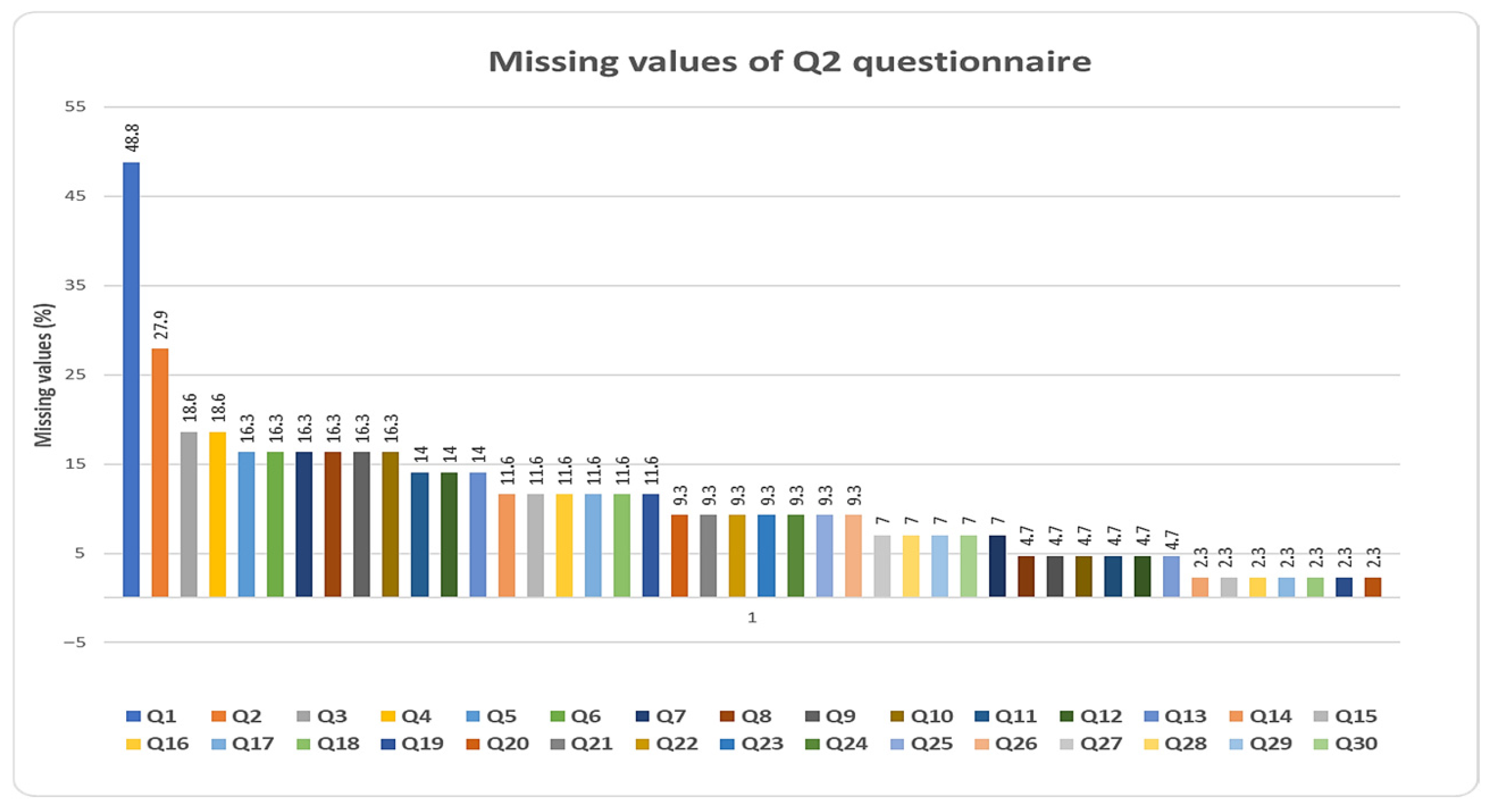
Q1 questionnaire was completed by 154 respondents, while Q2 questionnaire by 43 respondents. Completeness of the dataset is the primary step to proper augmentation. Both datasets were treated and cured using ML. The absence of data was considered to be Missing at Random (MAR), meaning that the missing data were considered to be completely unrelated to both the observed data (the data that are present) and the unobserved data (the data that are missing). After the evaluation of the missing values per question, Multiple Imputation by Chained Equations (MICE) was employed to impute missing data. Each questionnaire was treated separately, therefore preserving its distinct data structure and context. The results of the MAR analyses of both surveys are presented in Table A3 and Table A4 and Figure 1 and Figure 2, respectively. The questions are ordered in diminishing number of missing values.

3.2. Responses for the Small Group Questionnaire Along with the Projection Using ML

An XGBoost regressor was trained to facilitate further the comprehensive analysis of the entire dataset of 197 responses. The XGBoost regressor was trained on the fully observed extended questionnaire responses, so as to decipher complex relationships between variables. Once the model was trained, the algorithm imputed missing values to the shorter questionnaires. To evaluate the performance of the XGBoost Regressor, a 5-fold cross-validation on the training data was conducted. The model achieved a high accuracy score of approximately 0.80, indicating that the machine learning-based imputations are effective. In addition, the average macro F1-score was 0.65, reflecting balanced performance across response categories, while the average AUC-ROC reached 0.75, further supporting the model’s discriminative capability.
The main results are presented in the following section. For comparison purposes, for some of the results, the findings of the group that completed the Q2 questionnaire (indicated by the terms “small group”) are presented along with the responses for the entire dataset (indicated by the term “all”) as estimated using the XGBoost regressor.

3.2.1. Demographic Findings

Based on the responses, the average age of respondents is 52 years old. The majority of participants (64%) were aged between 41 and 65 years old, based on enhanced values. The small group exhibited a decreased average age, 44 years old.
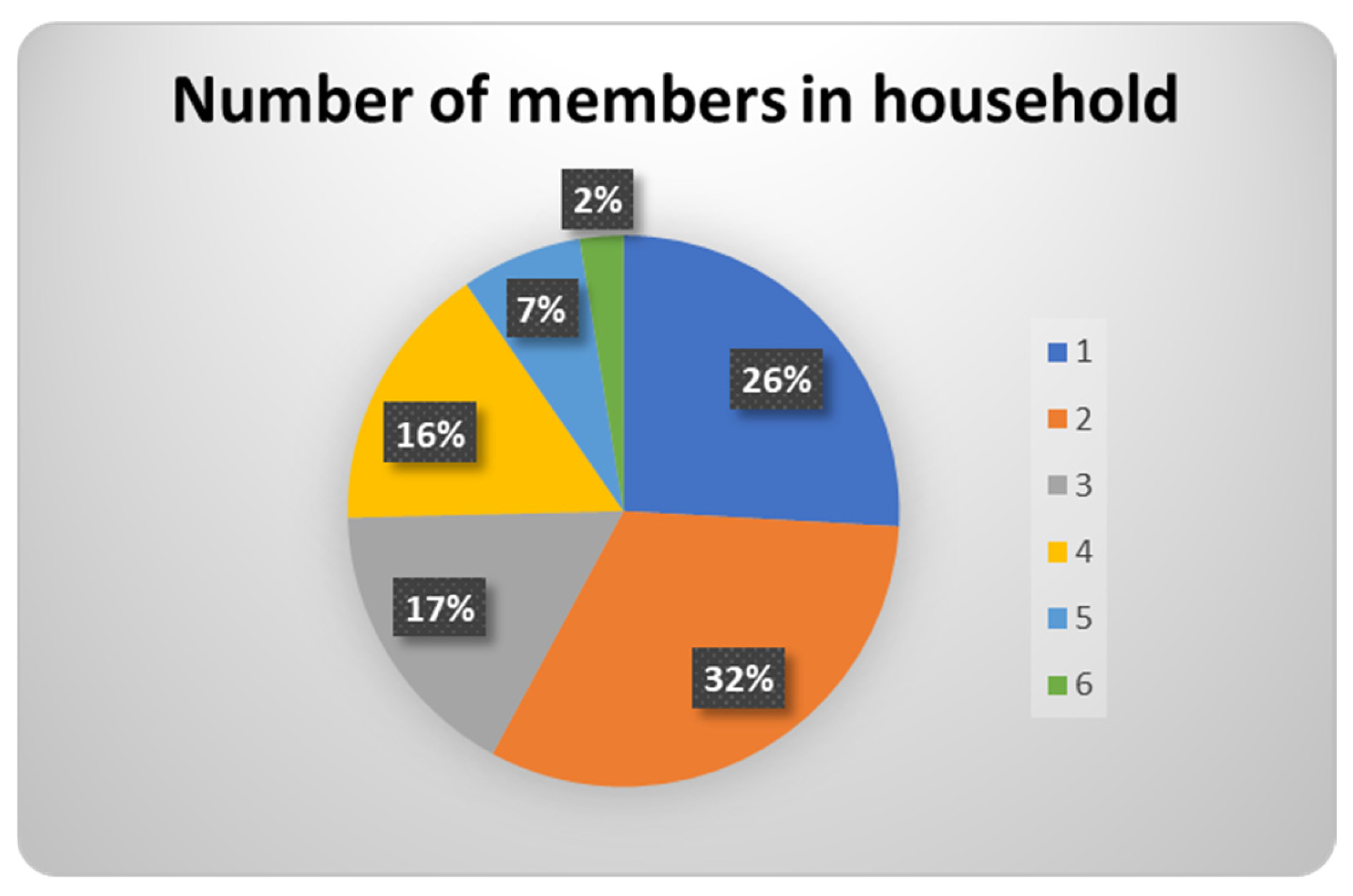
Regarding the average number of household members, it was found that those consist of 2.5 members on average, while this slightly increased to 2.8 members/household for the small group of respondents. The majority of participating households are comprised by two members (32%), followed by single-member households (26%). Figure 3 shows the household number of members distribution for the entire set (all).

3.2.2. Food Management Habits

Several behavioral aspects that affect food waste generation at the household level have been recorded in the literature. Pre-shopping planning, purchase, storing, inventory management, cooking, consumption and surplus food management are proximal to food waste prevention and reduction [33,34].

3.2.3. Shopping Habits

Purchasing routines like the usually chosen establishment for food supplies, affect food wasting due to a multitude of factors. These factors may range from the available format of food quantities, e.g., shopping fruits in bundles or per gross weight, up until the pricing policy of suboptimal produce and marketing rules that can be encountered in more commercial establishments [35,36,37,38].
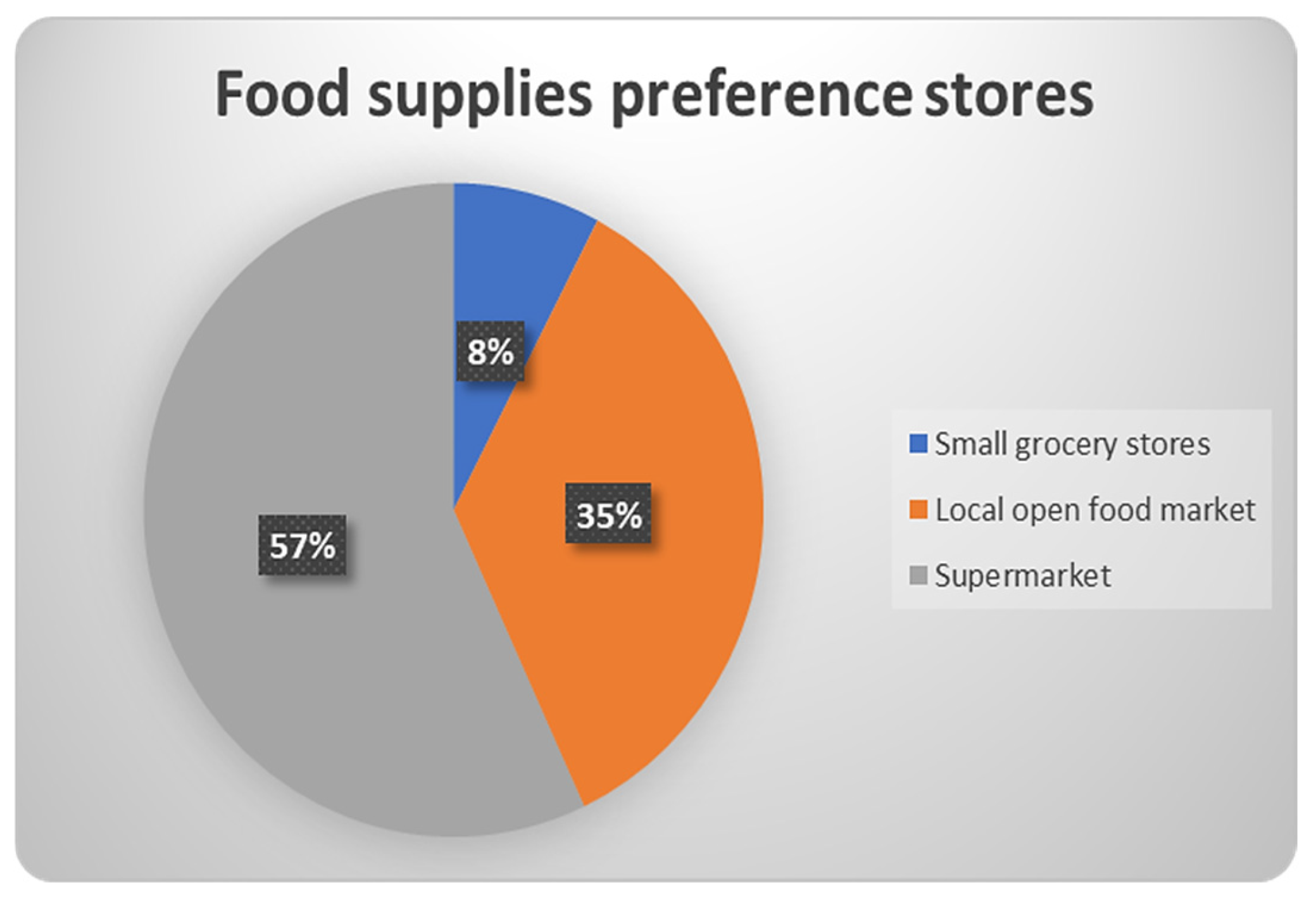
The shopping preferences of the ML projected replies are similar to those of the small group. A total of 57% usually purchase food from supermarkets and 35% from local open markets (Figure 4).
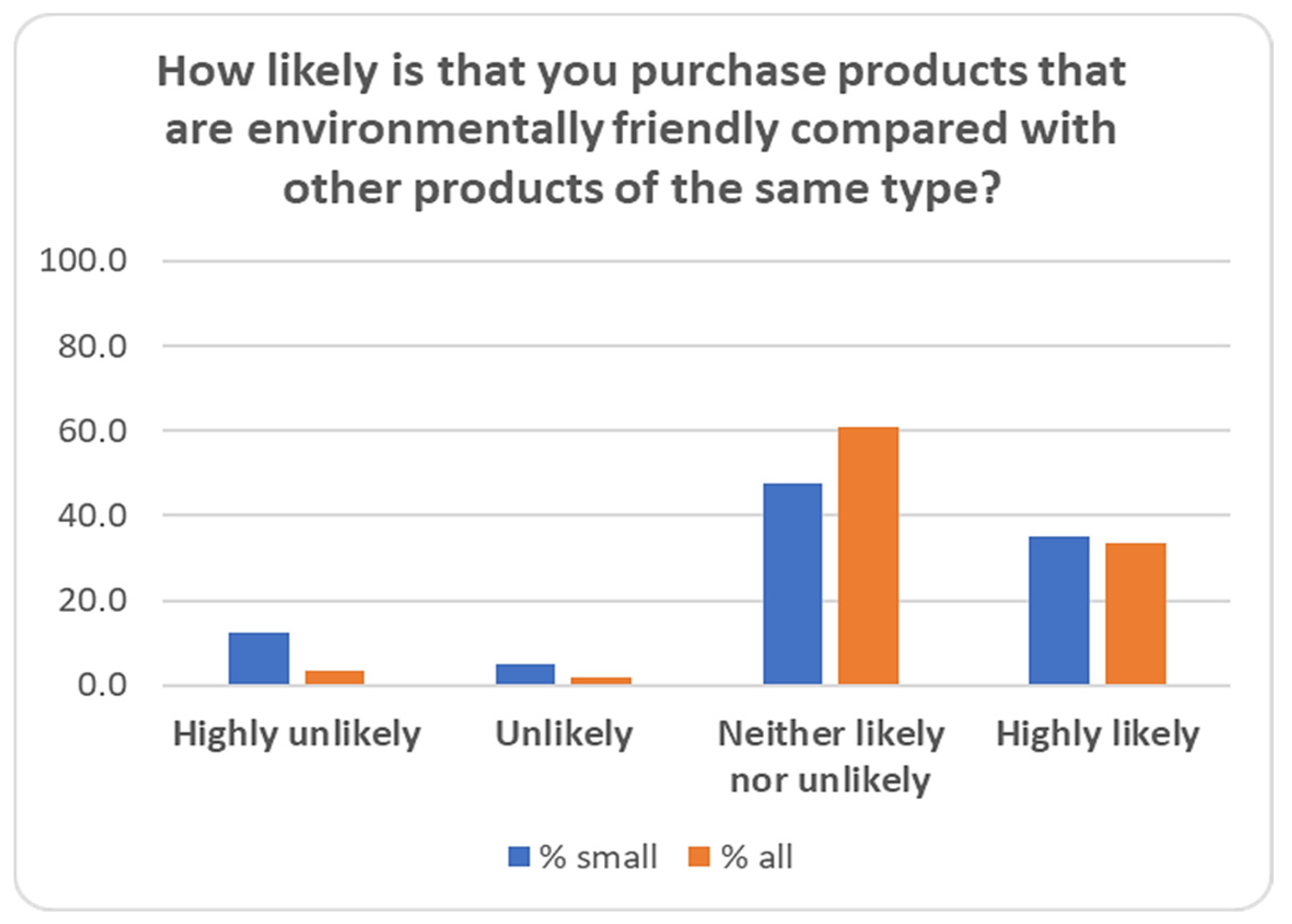
The estimated results on the preference to purchase environmentally friendly products is similar to the results of the small group, especially regarding the higher probability response (Figure 5).

3.2.4. Food Storage

Regarding food storage habits, our research showed that 86% are familiar with the rules for proper food storage, with a slightly lower percentage, 79%, replying positively in the small group.

3.2.5. Cooking and Dining Habits

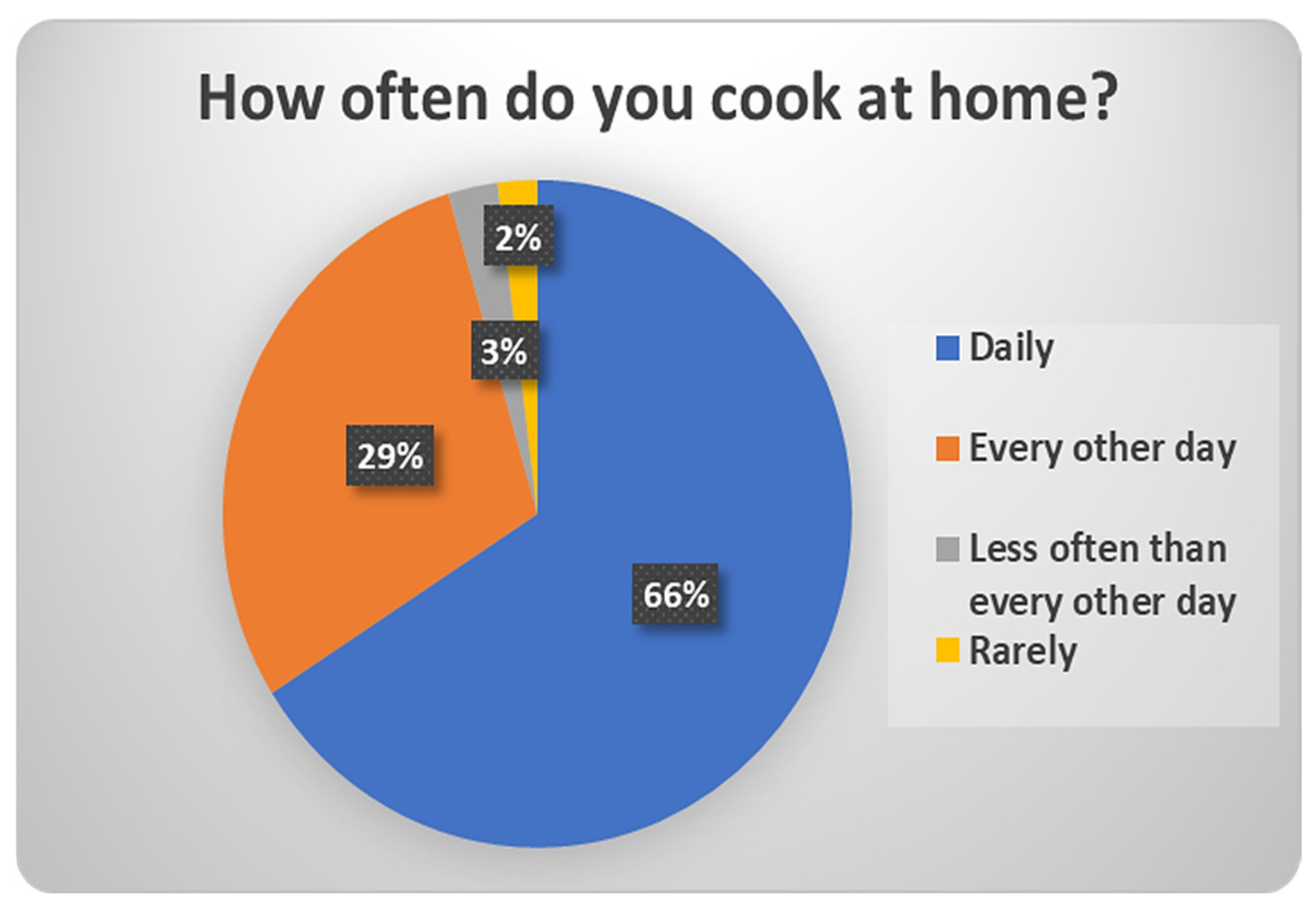
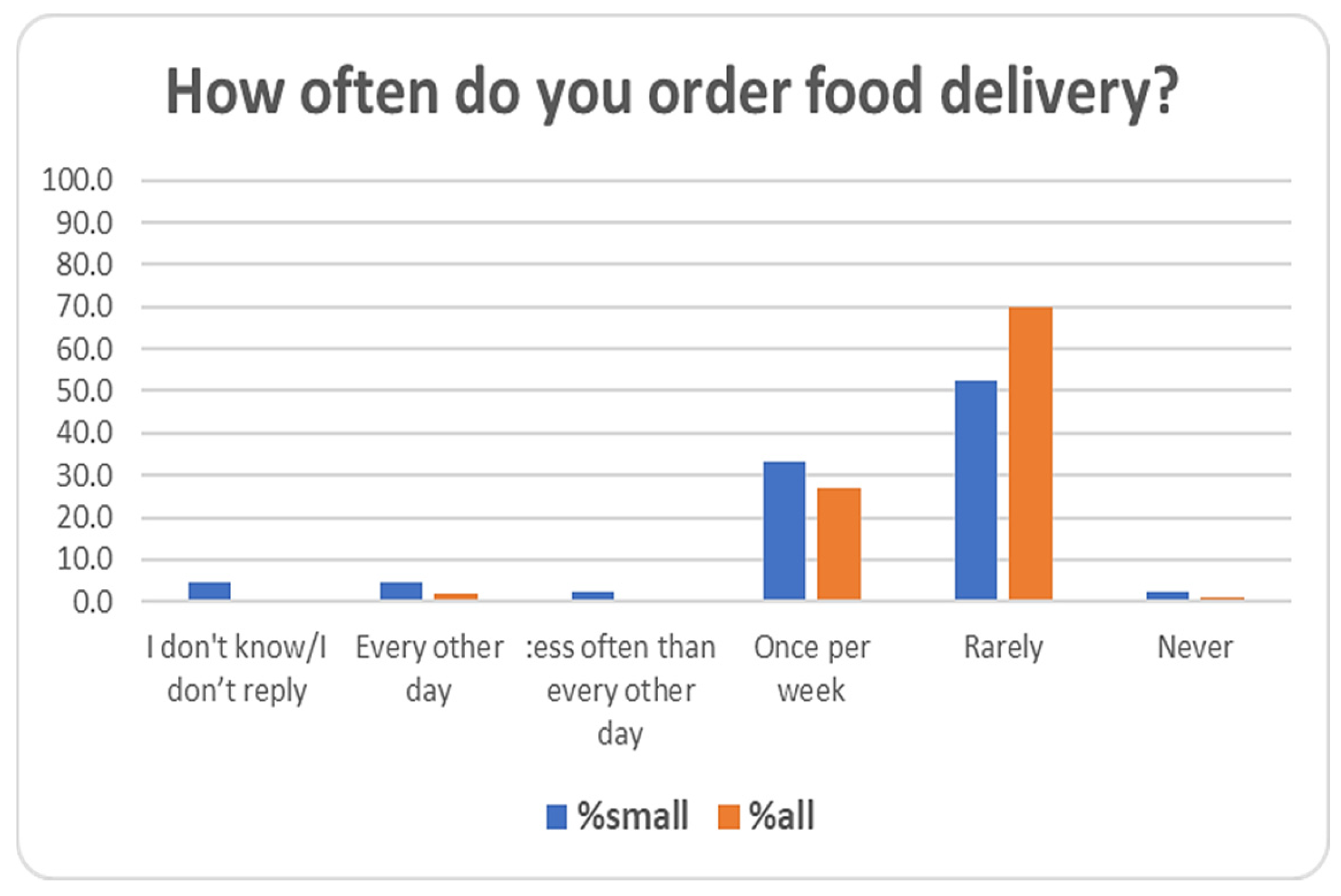
Cooking and dining habits are linked to the production of FW, with cooking being directly linked to the production of unavoidable food waste and surplus utilization to prepare new meals, a prevailing method for avoidable food waste reduction [39,40]. The projected responses on the cooking frequency led to a similar distribution with the responses of the small group (Figure 6), while the projected percentage of “rarely” is higher than that for the small group when asked “how often do you order food delivery”. Most, however, seem to either use food delivery rarely or once per week (Figure 7).
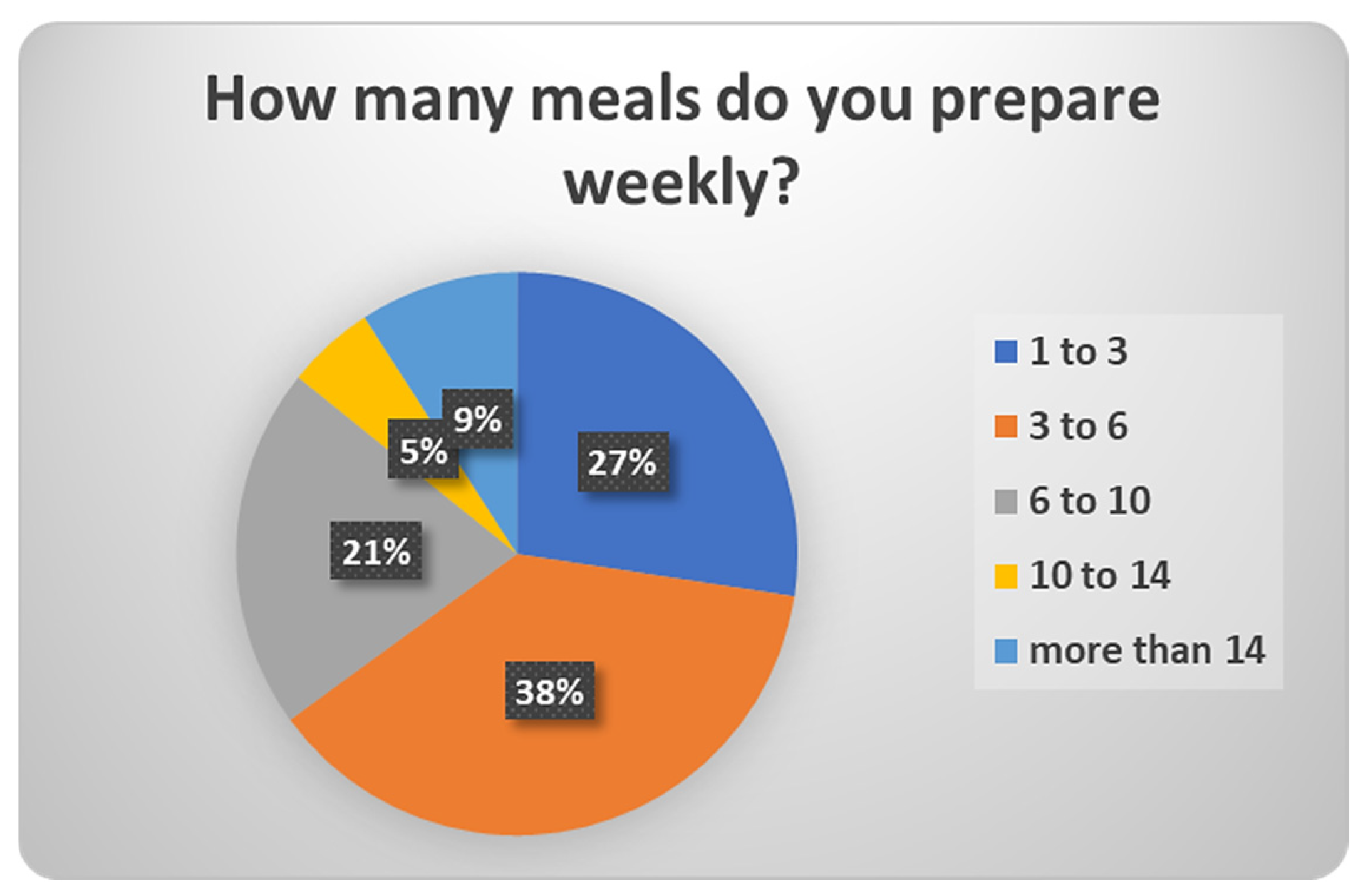
The question on the number of meals prepared weekly, is encountered in the Q2 questionnaire after the question of cooking frequency. It is meant to act as a control question so as to validate the due diligence that the participants pay to the survey. It is confirmed that the participants replied to both questions with reasonable relevance, i.e., the majority of them cook daily, preparing at least 6 meals per week (50%). ML estimated similar responses to those of the small group. On the average, 6–7 meals are prepared per week (Figure 8).
Cooking habits differ between the ML estimated (all) and the small group of participants. A total of 50% use recipes for cooking, while this percentage is 71% for the small group. Surplus food or food residues, such as cold cuts, are further used to prepare new meals according to 71% (all), which decreases to 62% for the small group. Moreover, 53% say they know the golden rules for effective cooking, a level of awareness that was only 26% for the small group. The participants who are unaware of effective cooking rules, declare that they are willing to learn some tips for effective storage, cooking and food processing that can save money and reduce food wasting.
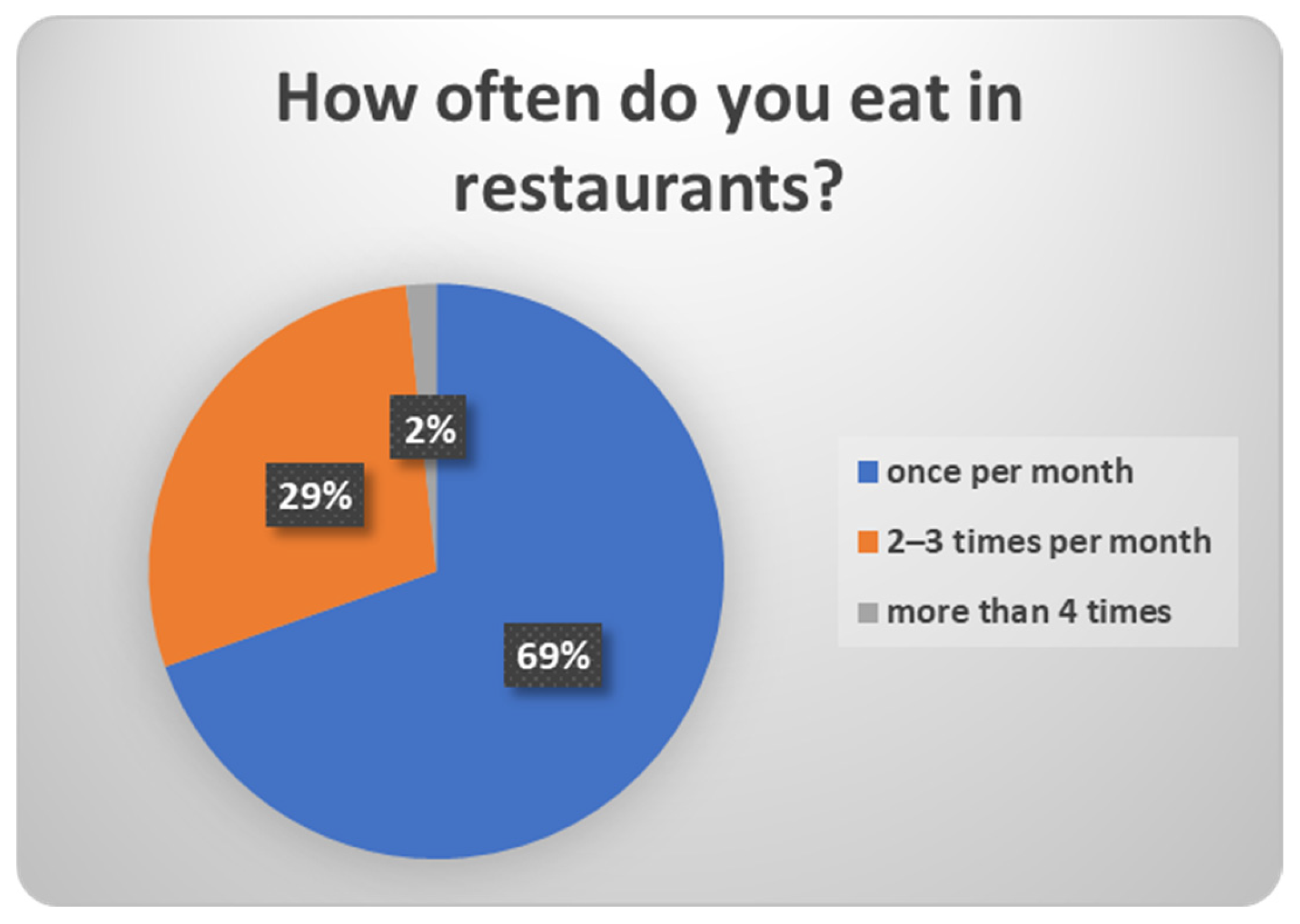
Dining out is one more factor influencing the occurrence of food waste produced by consumer. The replies of the small group are similar to those augmented using ML. The majority eat in restaurants once per month (Figure 9).

3.2.6. Food Wasting Habits

Our research showed that 77% of participants think they do not generate a lot of food waste, which is 71% for the small group, without requesting to specify the quantity the respondent considers “a lot”. Regardless of the quantity, 65% (54% for the small group) declare that they separate food waste from other waste at home. Of those separating their HHFW, 64% state that they place food waste in the corresponding bin (50% for the small group).
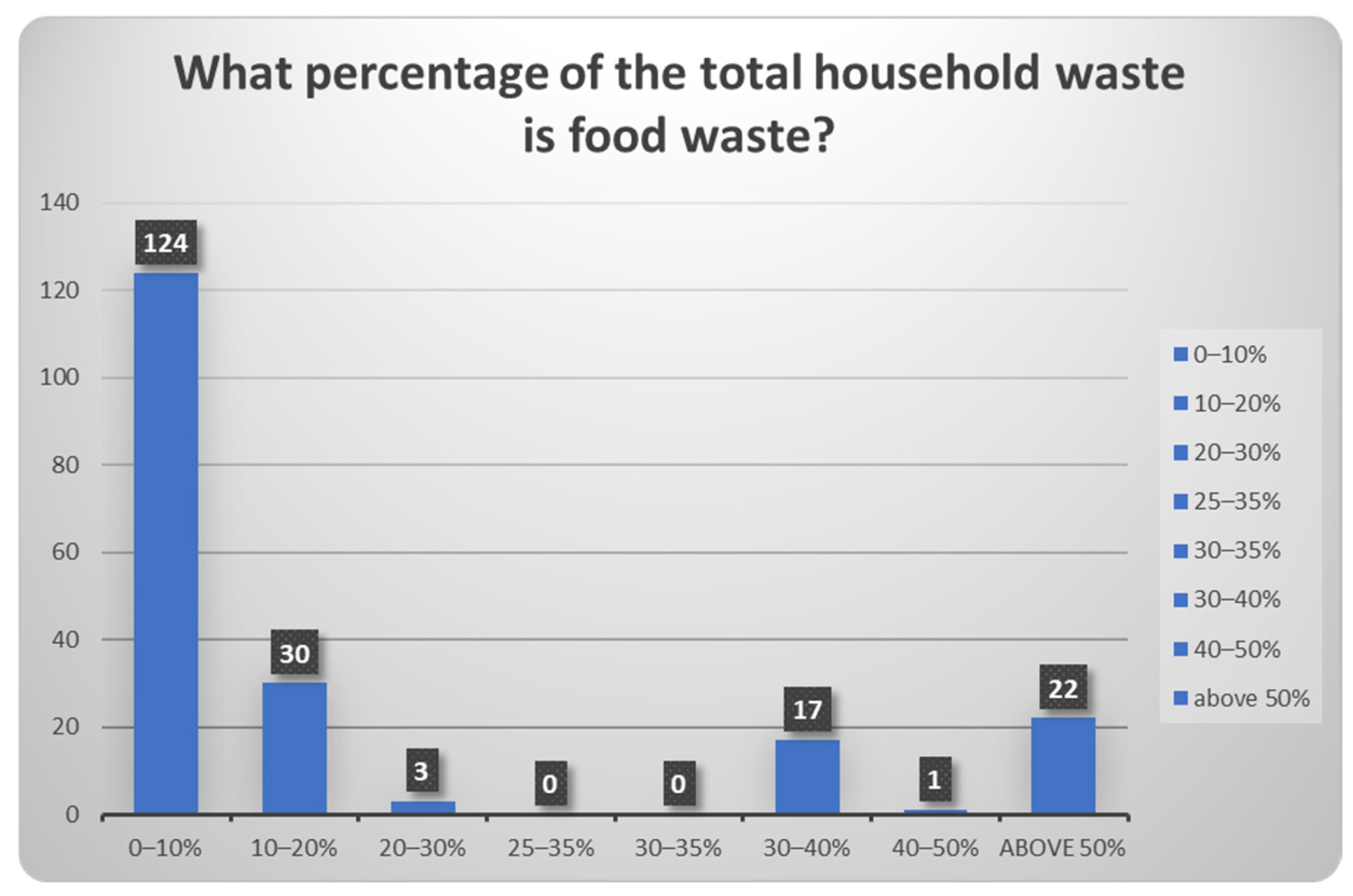
An affirmation of food wasting underestimation are the replies to the question “What percentage of the total household waste is food waste”. The quantity of the HHFW corresponds to 30–50% of the total Municipal Solid Waste (MSW) generated quantities [41]. The ML projected answers imply an estimated average of only 14.6% HHFW, while the small group estimated average is 11.7%. In any case, it is clear that all underestimate the percentage of the total HHFW (Figure 10).
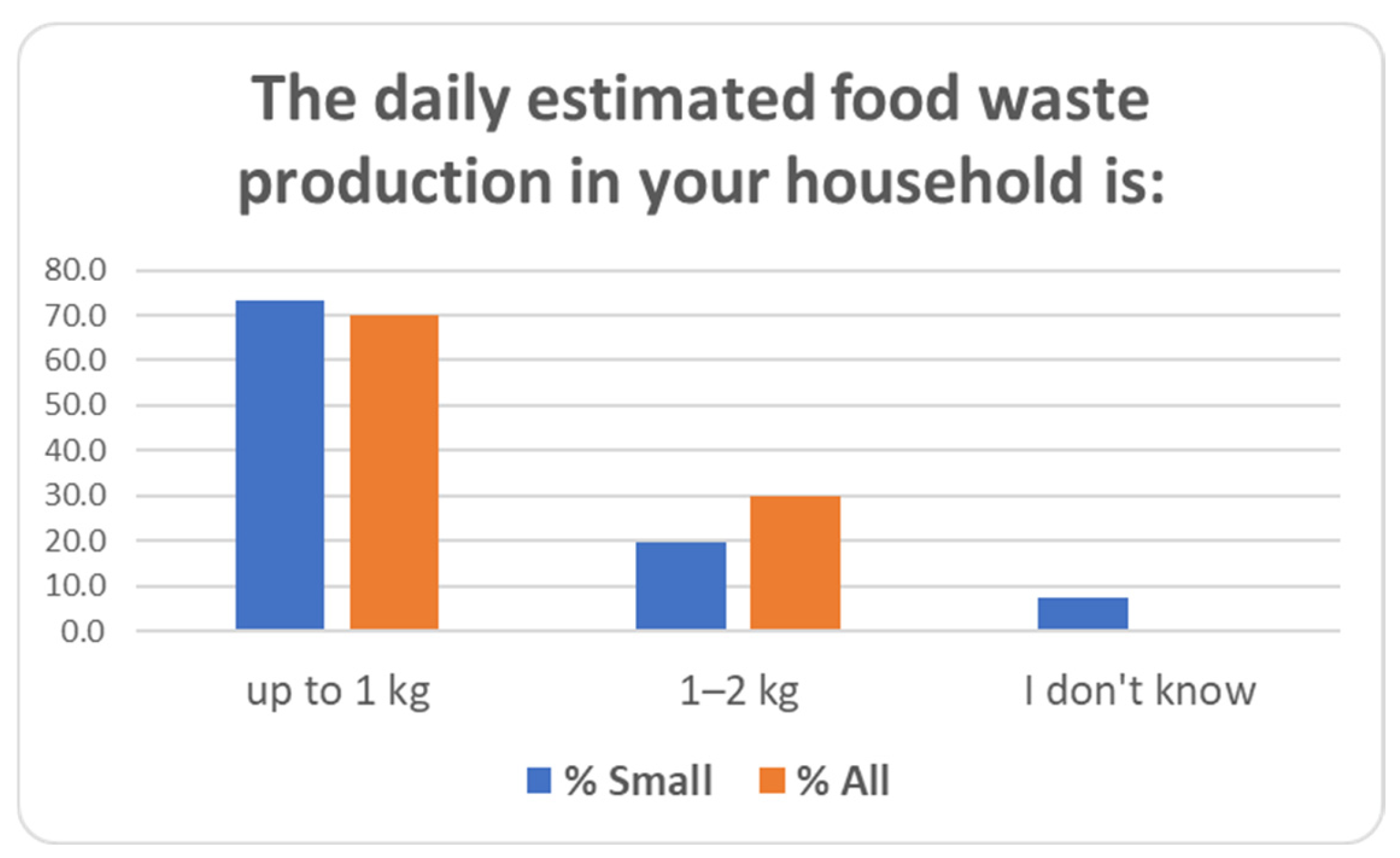
Waste separation requires significant efforts on the part of the individual as household waste must be sorted, prepared and disposed [42,43]. In-depth understanding of the factors shaping consumers’ perception and behavior are important not only to promote waste separation, but also to reduce food waste in the last two tiers of the FSC, i.e., retail and consumption. Social desirability bias and the frequently observed Hawthorne effect, a situation in which people change their waste disposal habits or underreport their waste in order to portray themselves more positively, influence negatively the subjectivity of the responses to surveys [44,45,46]. Machine learning-estimated responses indicate that 30% of the researched people would declare throwing away 1–2 kg/d HHFW (20% of the small group) (Figure 11). The average HHFW is estimated to be 0.25–0.32 kg daily per person.
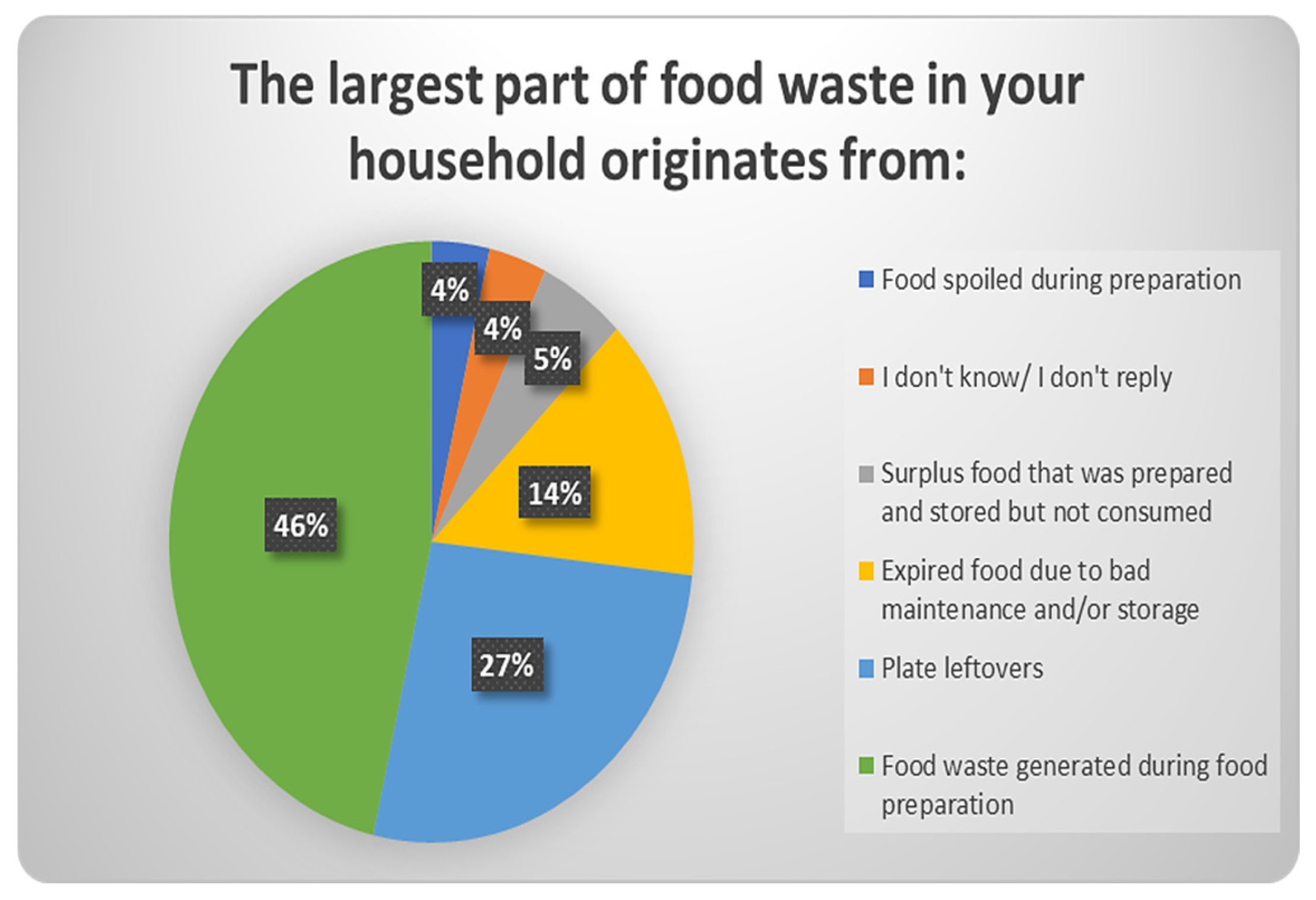
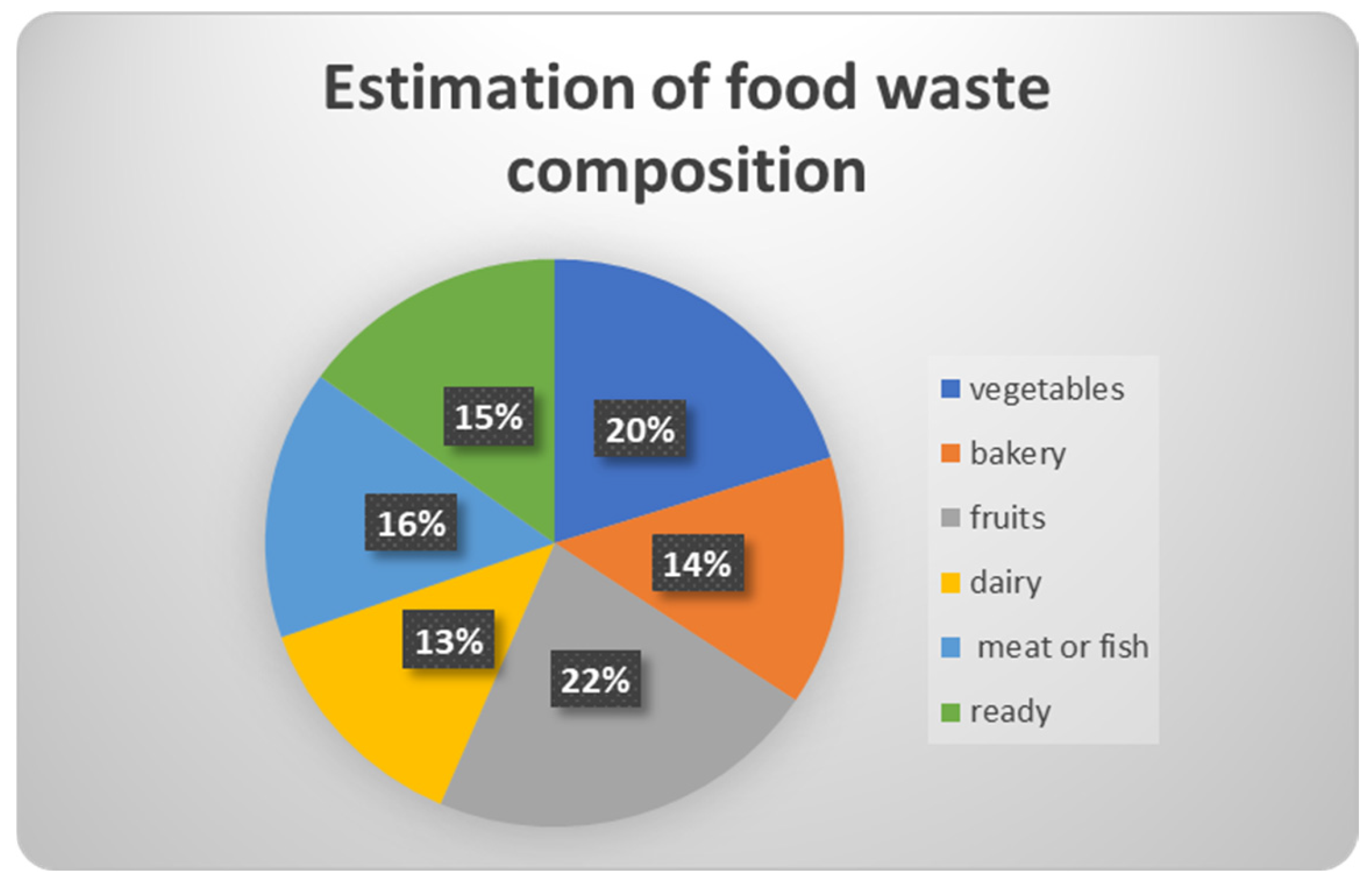
Concerning the generation sources of HHFW the ML projected data show that 33% of the waste is plate leftovers, 46% occurs mainly during food preparation, 14% is expired food due to bad maintenance and/or storage and the rest is caused as depicted in Figure 12.
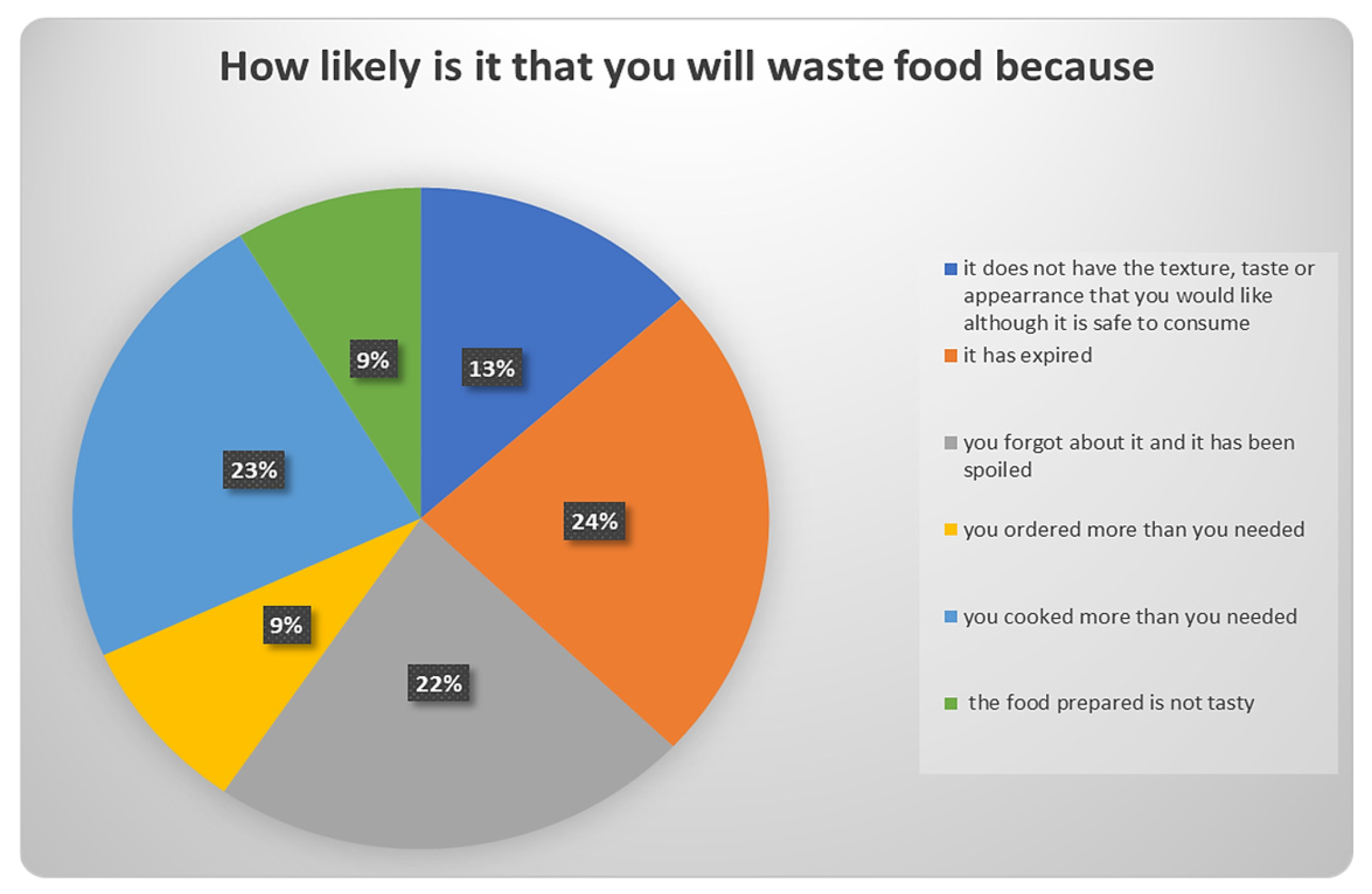
The following finding on the causes of FW generation, is the result of responses to questions 10–15 of the Q2 questionnaire. Each question provided the possibility to respond on a scale (Highly unlikely/Neither likely, nor unlikely/Likely/Highly likely/I don’t know) and each point of the scale was assigned a grade (Highly unlikely = 0, Neither likely, nor unlikely = 1, Likely = 2, Highly likely = 3). After the proper processing of the responses based on the frequency of each response (by multiplying the number of responses with the respecting weighing factor of each response and then dividing the result by the total number of responses) a grade was calculated for each question and those graded responses compiled the combined response presented under the question: “The largest part of food waste in your household originates from:”. The projected responses lead to a similar distribution with the responses of the small group (Figure 13).
The estimated food species that are wasted is an outcome of questions 16–21 of the Q2 questionnaire. The projected responses lead to a similar distribution with the responses of the small group (Figure 14).
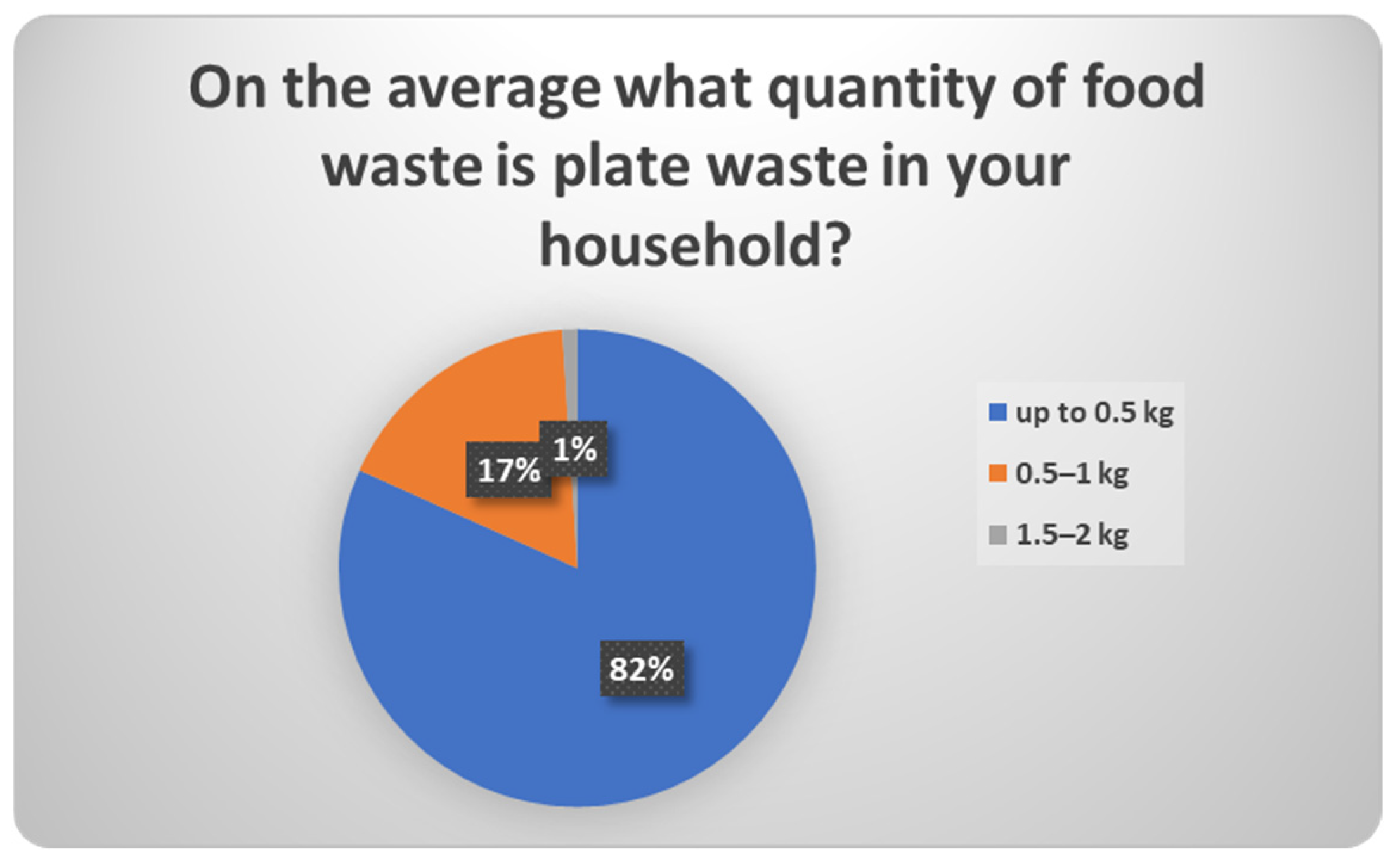
The replies using ML and the small group replies are in good agreement in the case of the plate waste response (Figure 15).
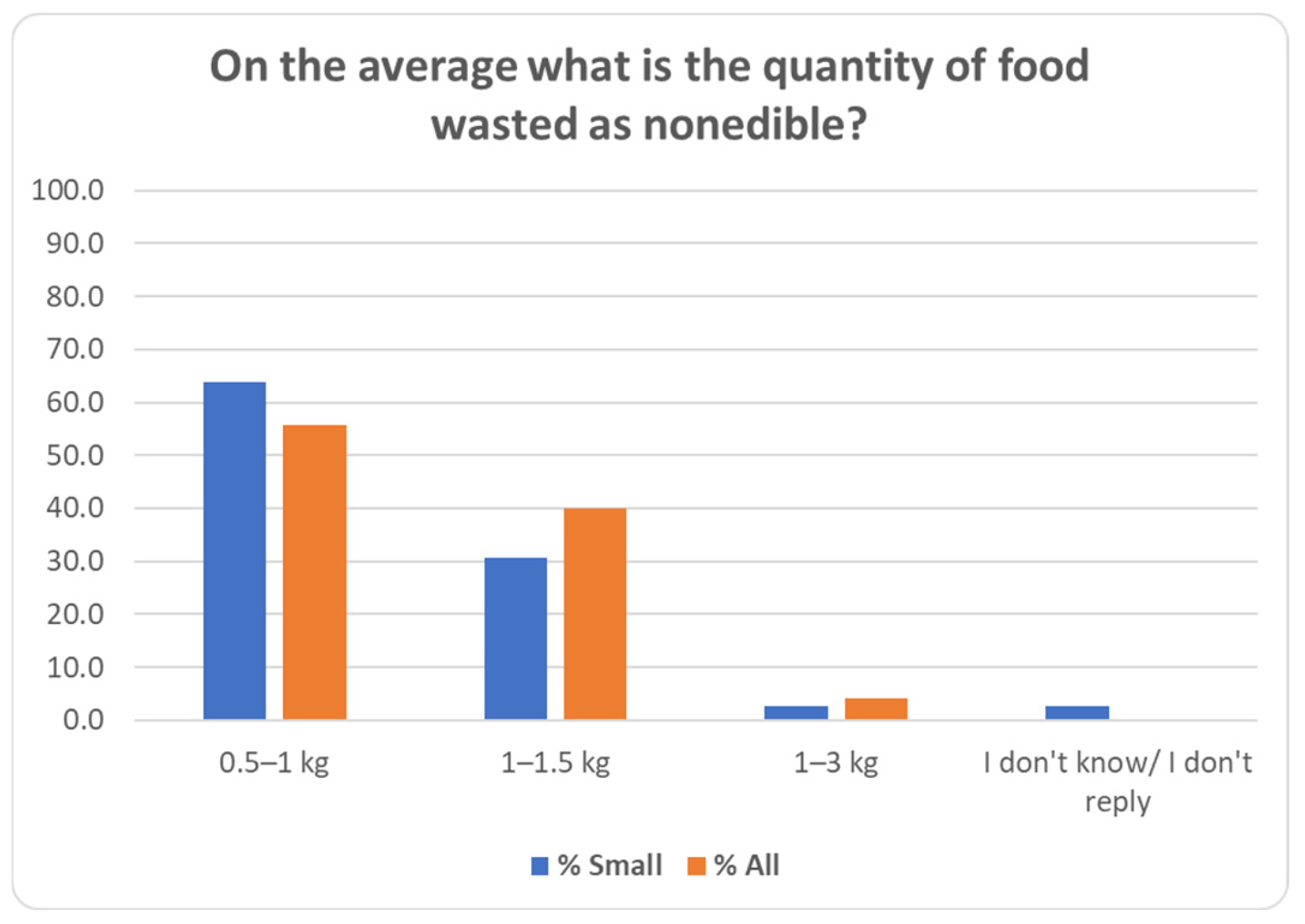
Edible food quantities versus nonedible quantities are reported in Figure 16. When the evaluation of a HHFW to nonedible and edible fraction is requested, the projected group estimates a slightly higher quantity of inedible food waste.
When it comes to the perceptions of rules with regard to food wasting, the majority of the questioned people, 78%, say that they are aware of them. This percentage is 60% for the small group. For the 78% of those that are not informed, they say they would like to learn tips for food storage and wasting.
Exploring food waste management behaviors is relevant to the management of food resources before they become inedible and therefore wasted. Surplus supplies, cooked food that has not been served, cooked food that has been served but not consumed and packaged food beyond its “best before” or “used by” date are segments of the household food that often end up discarded. In response to the question of food donations, 90% would be willing to donate food that they have not used the before expiry date and 62% know locations where they can donate food (71% for the small group).
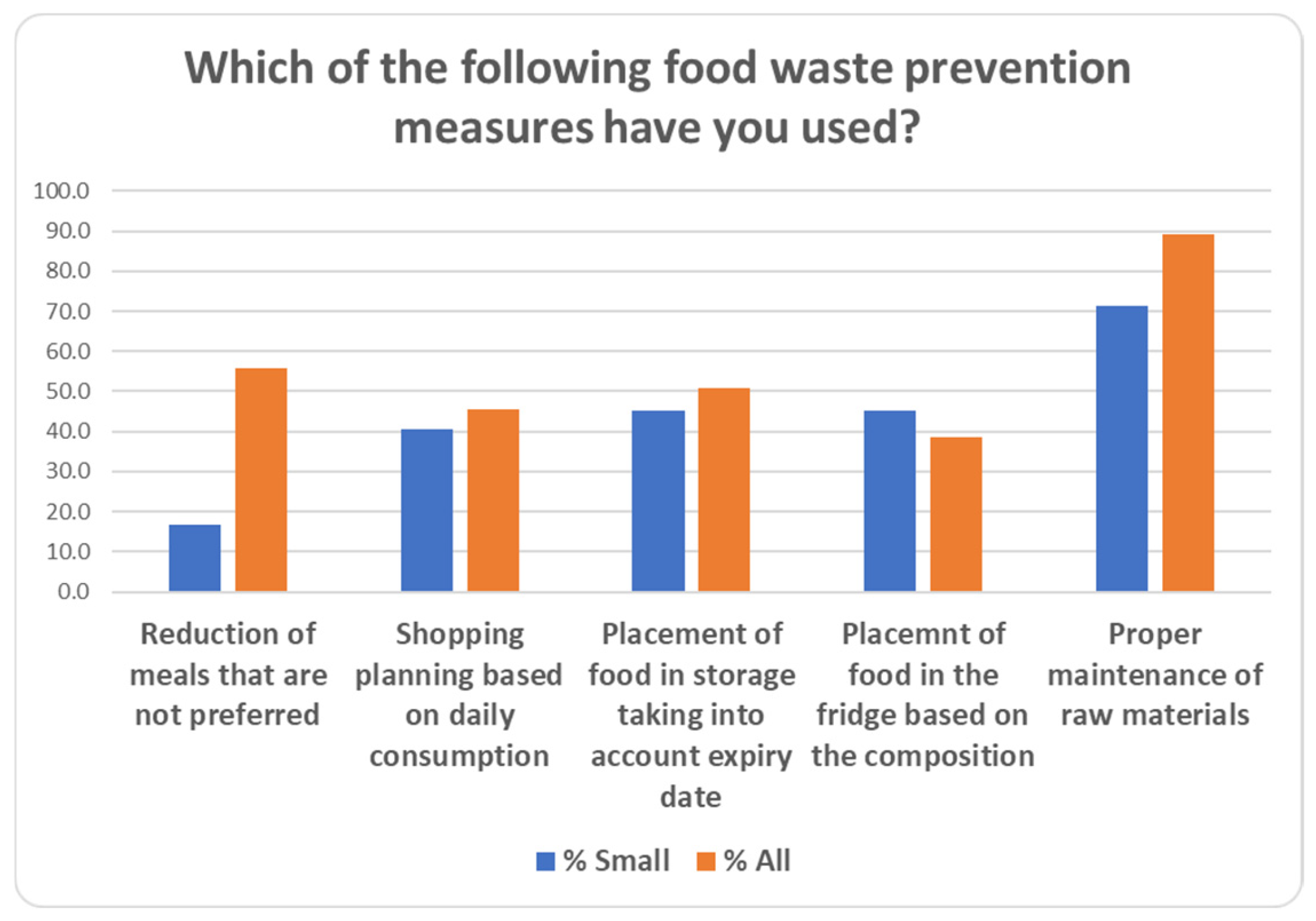
Food waste prevention practices are also in good agreement between the small group and the augmented values, with proper management of food supplies being the most prominent choice (Figure 17).
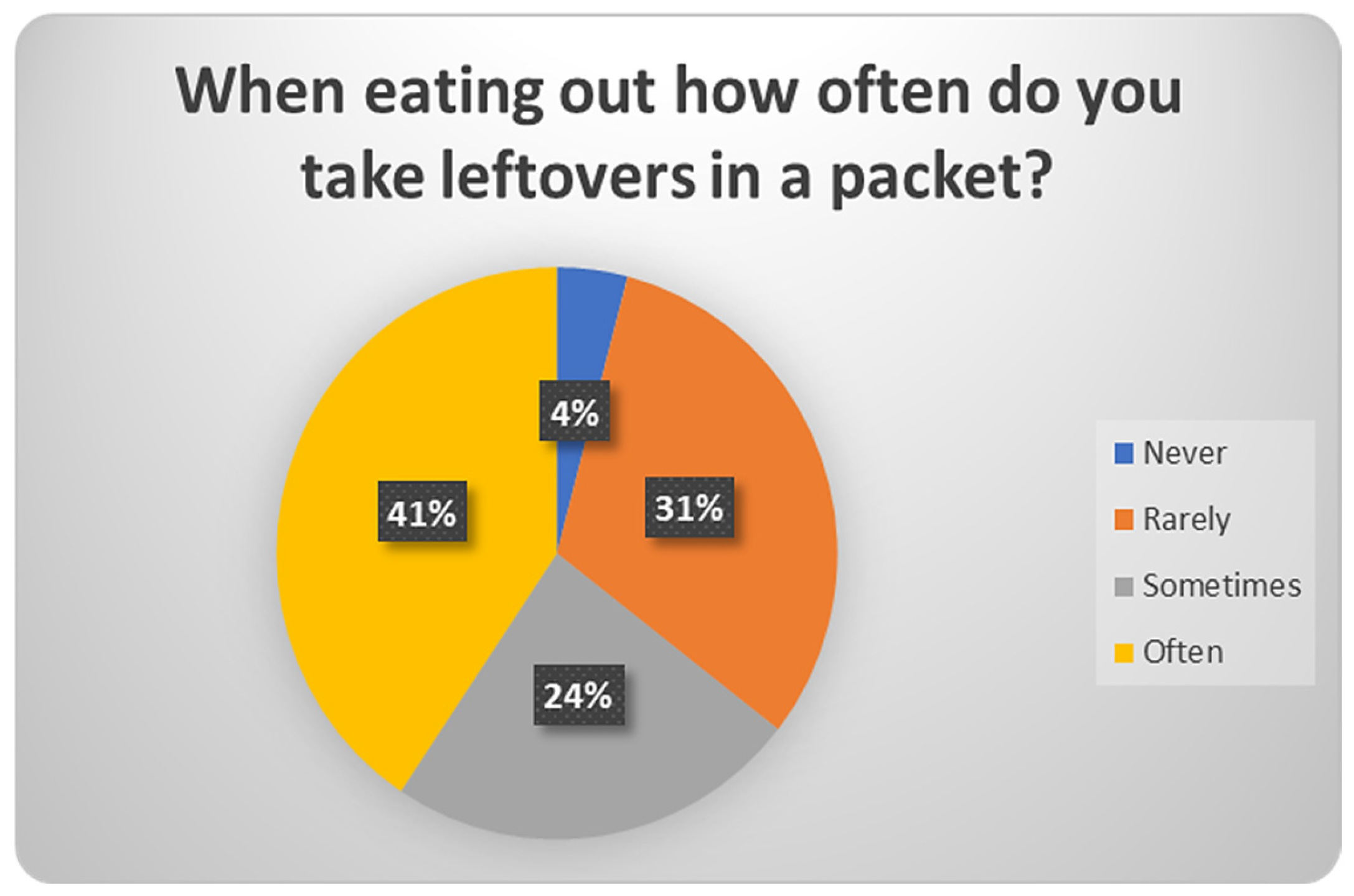
In the cases of eating out, respondents appear to be conscious of preventing food waste by asking to take away the leftovers of their order. Again, there is no significant differentiation between the small group and ML augmented dataset (Figure 18).
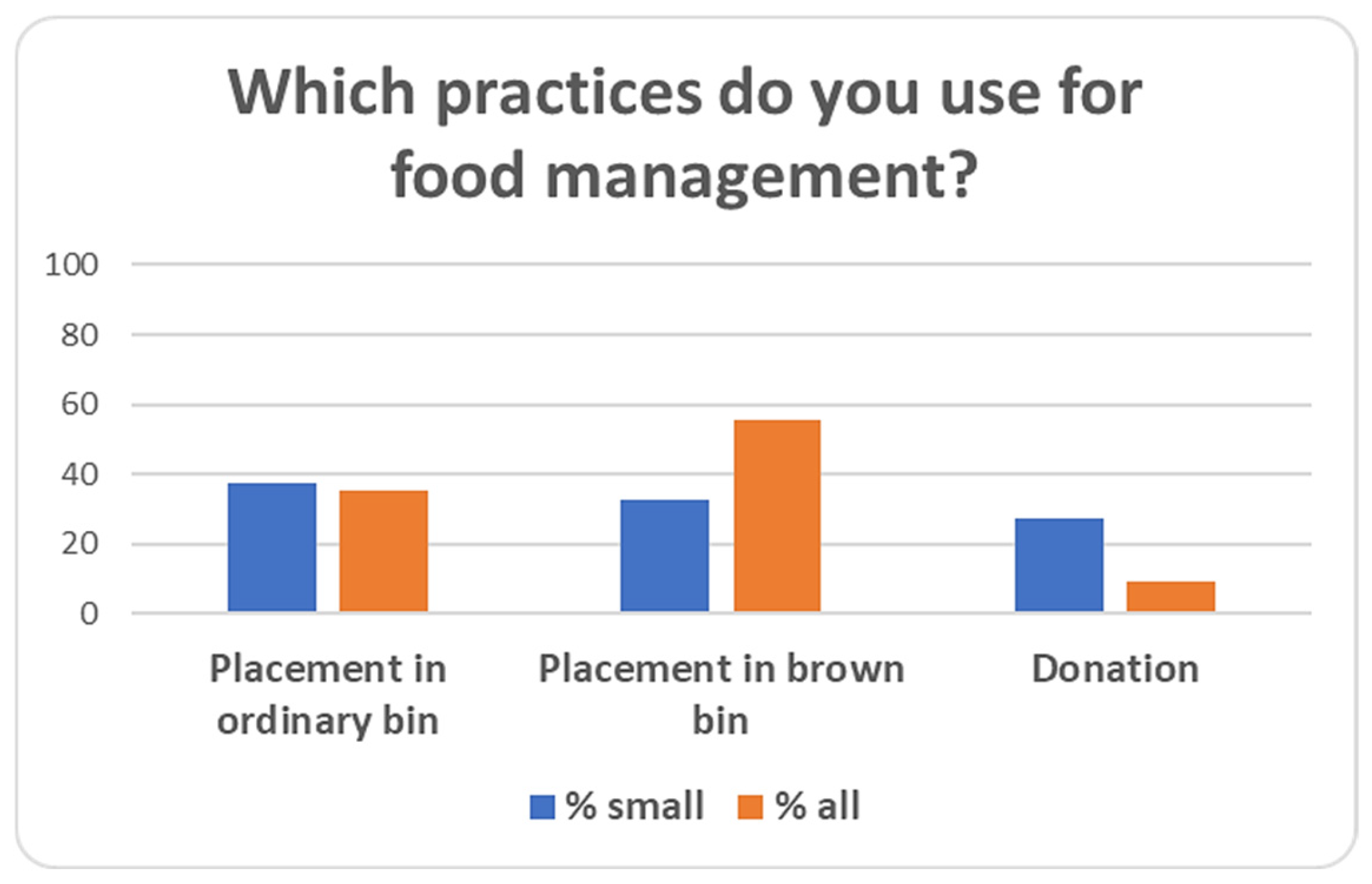
Regarding FW management, the option of placement in ordinary bins is in good agreement between the small group and the projected’s overall responses. Difference is observed in the other options, with the small group saying that they donate higher amounts (Figure 19).
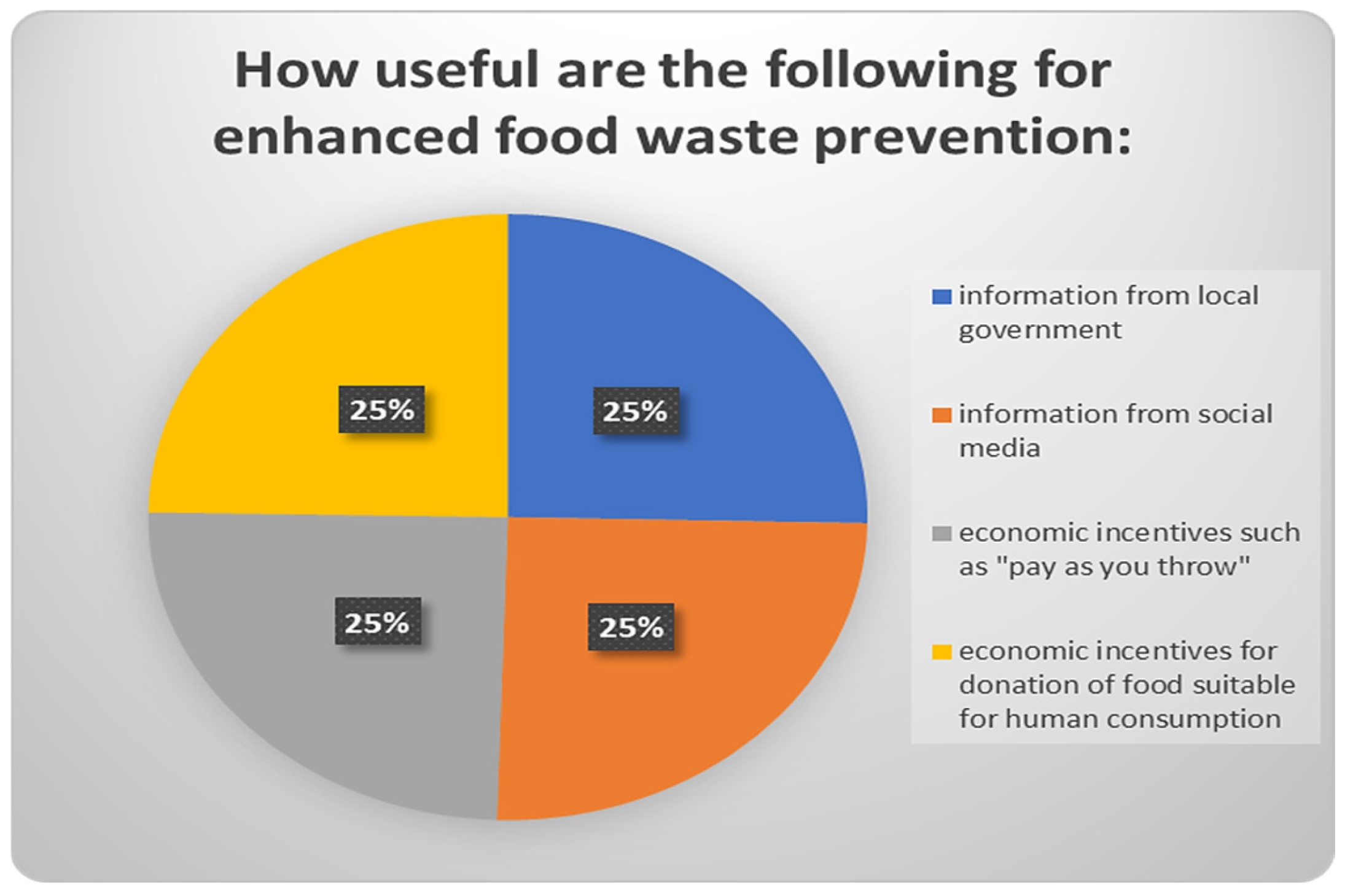
Attempting to explore the most efficient and preferable channel of information and awareness raising of FW, the small group and the ML-estimated replies are found to be in agreement, responding that every given option is almost equally evaluated (Figure 20)
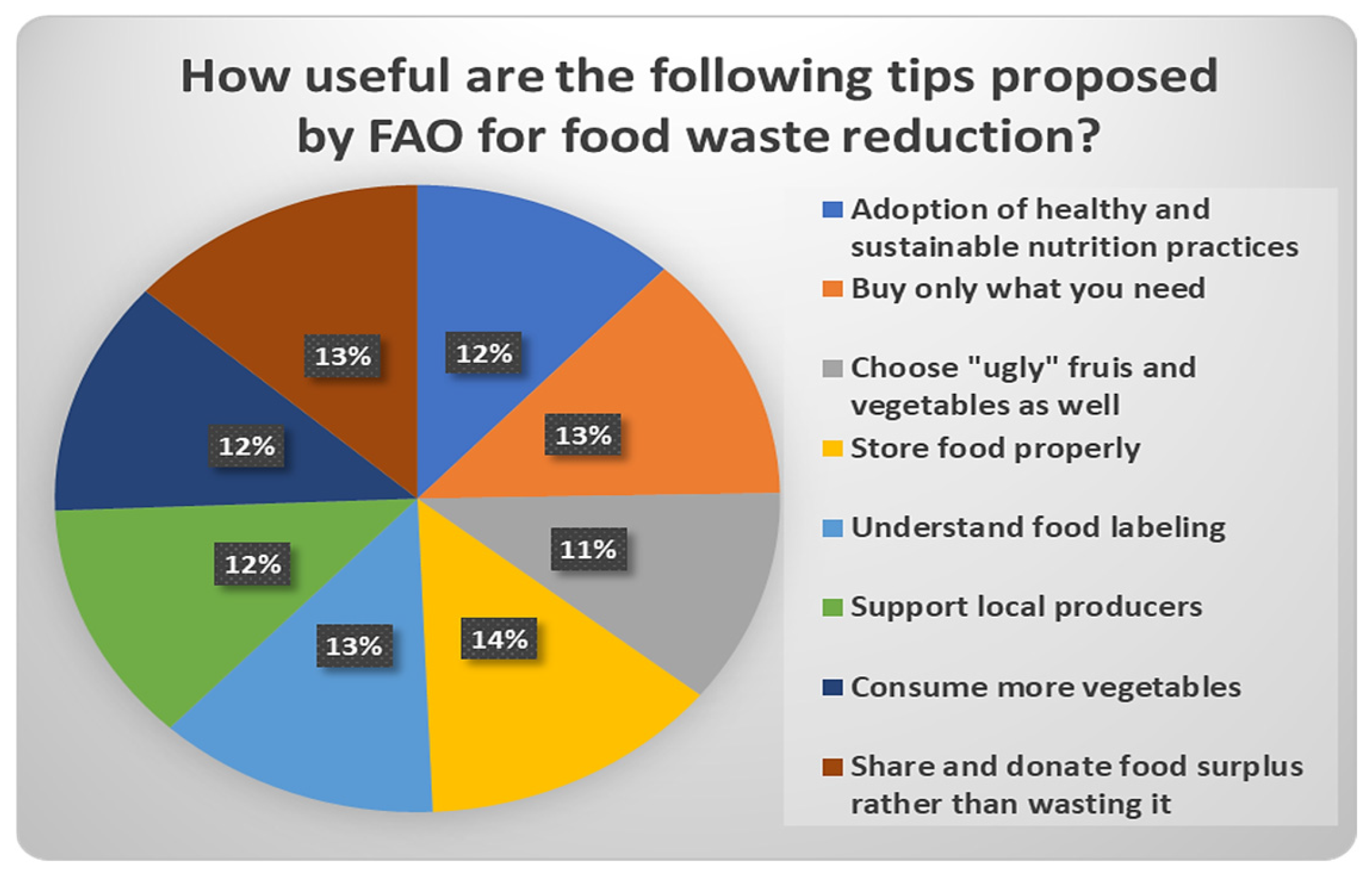
The following finding, concerning tips for HHFW reduction, is the result of responses to the questions numbered 36–43 of the Q2 questionnaire. Each question uses a Likert gradient scale (Not at all/Barely/Moderately/Substantially/Significantly/Very Much), to which a weighing factor is attributed (Not at all = 1 up to Very Much = 5), then each question is attributed a grade by multiplying the frequency of the respective response with its weighing factors and dividing by the total number of responses to the certain question. The grade of each question is computed and the response to the overall query “how useful are the following tips proposed by FAO for food waste reduction” is calculated. The ML augmented data indicate a general good agreement of the projected responses in relation to the small group’s responses of the scale from 0 to 5 (Figure 21).
Moreover, 95% (87% in the small group) are aware that in the Municipality of Halandri there is a separate collection of HHFW using the brown bin. In total, 60% (69% in small group) know that the “use by” label on a food product refers to the time until it may be safely consumed whereas the phrase “best before” refers to the taste and texture of the product, which is still safe to consume. Finally, the participants appear to be familiar with certain environmental implications of food. In total, 74% of the ML-augmented results (58% in the small group) stated that they are aware that food wasting increases CO2 emissions and contributes to climate change. Regarding the 70% of the respondents that are not familiar with the environmental implications, they say they would like to learn how they can help needy people and help fight climate change.
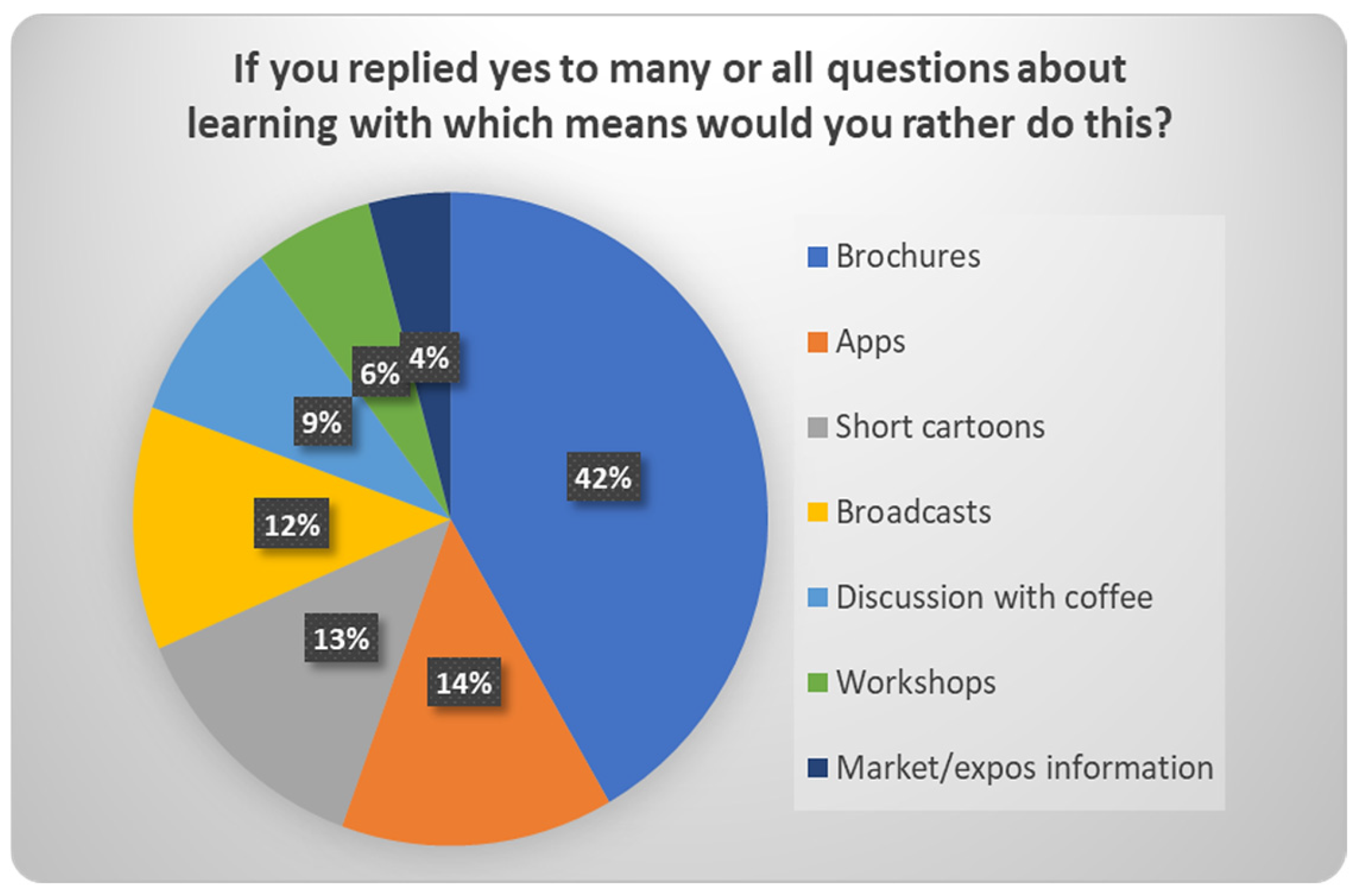
The possible channels of informing consumers as evaluated are presented in Figure 22. It is found out that brochures are the most preferred means of information, followed by apps.

3.3. Clustering

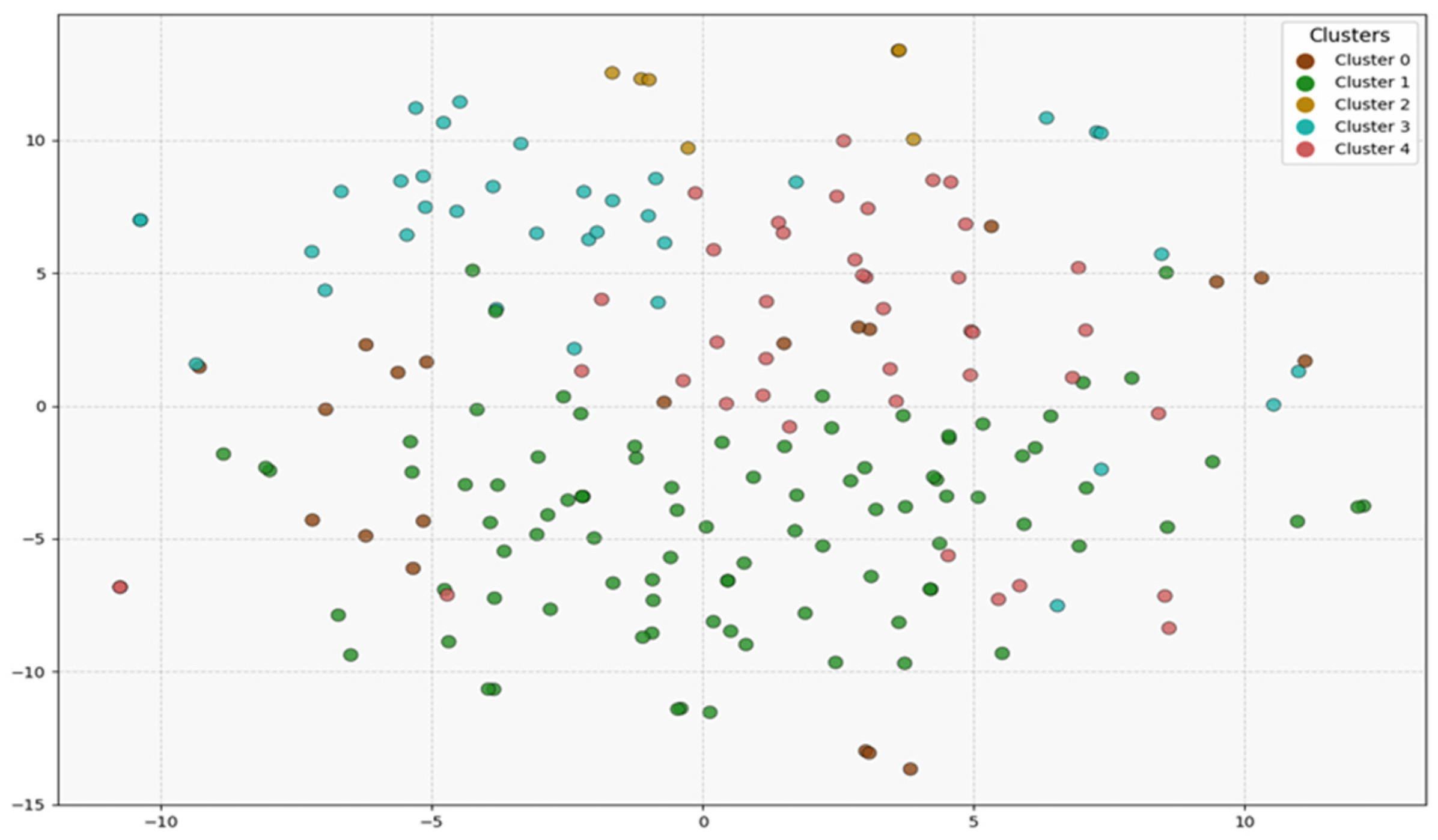
K-means clustering, an unsupervised machine learning algorithm, was applied to the imputed dataset to identify natural groupings within the sample. The algorithm partitioned the observations into five clusters, each represented by its centroid, enabling a structured interpretation of the underlying patterns present in the respondents’ answers.
Figure 23 presents the results of the five clusters obtained from all questionnaire responses, visualized in a two-dimensional space using the t-SNE algorithm for dimensionality reduction.
To interpret the resulting clusters, we examined each cluster’s centroid—used as a prototype summarizing the typical response pattern of its members—and inferred five distinct social groups that may emerge based on respondents’ answers. By comparing the prototype characteristics across clusters, we identified meaningful differences in household consumption and HHFW behaviors, allowing us to hypothesize how each social group reflects a specific pattern of attitudes and practices. The prototypes of each cluster are provided in the Supplementary Materials.
Cluster 0 (Green)—“Households with High Environmental Engagement” (93 households)
Households in this cluster are the clear environmental champions of the survey. Typically composed of two members, they consistently demonstrate exemplary food waste management practices: creating detailed shopping lists, checking expiry dates, and disposing of waste properly. They are highly informed about food donation opportunities and understand the link between food waste and climate change. Their purchasing habits reflect strong values—actively choosing environmentally friendly products and prioritizing sustainable eating. This group’s strong commitment and awareness position them as potential role models or advocates in community-level sustainability initiatives.
Cluster 1 (Indian Red)—“Environmentally Aware Family Households” (41 households)
This cluster consists of busy three-member family households that successfully balance an active lifestyle with mindful food management. They exhibit a strong awareness of food waste issues, regularly practicing meal planning, proper storage, and creative reuse of leftovers. Home cooking is frequent, and their approach is underpinned by high environmental consciousness. They are knowledgeable about food donation channels and the climate change implications of waste, making them proactive participants in sustainability. This group’s combination of awareness, consistent practices, and family-oriented routines positions them as a model demographic for promoting practical, scalable waste reduction strategies.
Cluster 2 (Light Sea Green)—“Single-Person Households with Moderate Food Waste Awareness” (36 households)
Composed primarily of elderly individuals living alone, this cluster faces unique challenges in managing food purchases and waste. They tend to create shopping lists but rarely plan their purchases on a weekly basis, often buying in quantities that can be difficult to manage for one person. While they possess moderate knowledge of food storage and disposal, their practices could be refined to reduce waste. They show openness to learning and an awareness of the connection between food waste and climate change. Waste patterns—particularly moderate levels of plate leftovers—reflect the practical difficulties of cooking for a single person. Tailored interventions, such as guidance on portion sizes, storage tips for small households, and creative single-serving recipes, could be particularly effective.
Cluster 3 (Brown)—“Households with Intermediate Food Waste Practices” (20 households)
This cluster comprises households with a moderate understanding of food waste issues. Typically consisting of four members, these families shop regularly and often prepare shopping lists to guide their purchases. They make a habit of checking expiry dates and creatively reusing leftovers in new dishes. However, their knowledge of broader food waste management practices is limited, and their likelihood of discarding food for various reasons remains at a moderate level. Environmental consciousness is average, suggesting room for improvement. These families could benefit from targeted educational campaigns focusing on efficient storage methods, better meal planning, and practical waste reduction techniques to help them progress from awareness to consistent action.
Cluster 4 (Dark Goldenrod)—“Households with Limited Food Waste Awareness” (7 households)
This smaller cluster represents households with low levels of awareness about food waste and its environmental consequences. Typically, with three members, they neither prepare shopping lists nor follow weekly meal plans, often relying on impulsive shopping decisions. Home cooking is infrequent, and waste prevention practices are minimal. Despite these gaps, they express a willingness to learn, showing genuine interest in improving their food storage habits and waste reduction knowledge. This segment would benefit greatly from basic, hands-on educational programs—such as cooking workshops or storage demonstrations—designed to build foundational awareness and create lasting habits.

4. Discussion

The two diversified surveys originated from the needs of two different projects that were implemented in the same geographical region during the same time frame. This unique opportunity presented the possibility to apply the same methodology, which is questionnaires, but with different parameters. The current study had a three-fold purpose: to shed light to the underlying causes of HHFW in an urban environment, to interchangeably compare the responses of a subgroup to those of a larger group in relation to purchasing, storage, cooking and food waste disposal habits, to implement advanced methodologies based on ML and unsupervised learning algorithms so to impute missing values and compare the artificially augmented results to the ones obtained by humans.
In terms of research design, the findings indicate that the use of questionnaires as a methodology to HHFW policy interventions should be adapted to the targeted audience and would probably benefit by the existence of an incentive to participate in the respective survey. The design of the present study, which was a voluntary call to the public for participation, distributed through the departments and the media channels of a municipality for a limited time frame, was sufficient to collect valuable information but entailed limitations consisting mostly of nonselective sample composition and limited number of responses. Similar studies have shown that the existence of a reward could probably increase the number of responses. Moreover, the decreased average age of the participants of the small group indicated that the digital illiteracy and the level of details required to complete the lengthy questionnaire influence the decision to complete the survey. A short survey, distributed digitally appears more appealing to younger individuals. Despite the difference in mean age and the number of responses, the representativeness of the selected data is supported by the household size which is similar for the two groups, and in accordance with the average sample household size of 2.3 members/household of the Greek population in the 2021 Population-Housing Census [47].
Moderate quantities of generated HHFW is a misperception commonly encountered in relevant studies [48]. In the present study this is affirmed despite the limited number of responses. Moreover, the responses are comparable between the two groups (77% for all, 71% for the small group). Regardless of the actual or perceived HHFW quantity, 65% of the informants go the extra mile of separating food waste at home and likewise 64% would dispose of their HHFW to the designated MSW bin, should ease of access be provided. Self-evaluation showed that a significant number of informants are familiar with food wasting rules, and in the opposite case, of not being informed, they would be willing to learn more. This finding is frequently encountered in the literature [49].
Food donations are found to be very popular amongst the surveyed, who appear to be aware of available schemes too. This can be attributed to the existence of a municipal social grocery in Halandri that actively supports beneficiaries in various formats, apart from providing food supplies. Moreover, there is a long-standing volunteering tradition in the city of Halandri and an additional long-term scheme of surplus food management from the farmers markets of the city. Nonetheless, the small group of respondents are less informed on possible donations receivers. Targeted informational campaigns on surplus food donations could improve the later finding. Except for the social implications and intrinsic financial losses of wasting food, 62% of the small group correlate greenhouse gases emissions and climate change with food waste, which increases to 73% regarding the ML “all” group. There is abundant room for improvement on the educational and informational aspects of consumers’ food waste, and this could be performed through multiple channels, with brochures and applications being the most preferable. The elaboration of electronic means of information is a conclusion drawn to similar studies [50,51,52].
The findings of comparative analyses of the two questionnaires suggest that short questionnaires can serve as reliable surrogates enabling broader participation and cost-effective data collection without significant loss of analytical depth. This methodology holds potential for scaling up food waste monitoring efforts where frequent or large-scale data collection is required. The potential of AI methods, specifically machine learning algorithms, to enhance data quality and expand analytical capabilities in food waste questionnaire research is evaluated in the present study with positive outcomes. Missing at Random (MAR) mode of missing values is confirmed and Multiple Imputation by Chained Equations (MICE) followed by an XGBoost regression model are successfully applied to generate realistic responses resembling those that participants would have provided had they completed the extended version.
Moreover, the k-means implemented algorithm, was capable of capturing underlying behavioral and attitudinal patterns associated with household food waste and demonstrated five distinct clusters of consumers: the families that exhibit moderate FW prevention and reduction awareness (cluster 0); the eco conscious couples (cluster 1), who are the role model representatives; the waste unaware households; senior singles and environmentally responsible families (clusters 2, 3 and 4, respectively).
From a methodological perspective, this approach demonstrates the value of integrating ML-driven methods with traditional social science tools. While classical imputation techniques (e.g., mean or regression-based imputation) can address missing values to some extent, the use of advanced ensemble models such as XGBoost allows for the preservation of non-linear relationships and complex feature interactions often present in behavioral datasets. Moreover, the capacity of the model to predict full-length questionnaire responses from shorter inputs indicates a promising path toward designing more efficient survey instruments with minimal respondent burden.
However, several limitations should be acknowledged. Machine learning-augmented data, while statistically similar to observed responses, may not fully capture latent psychological constructs or contextual nuances influencing food waste behaviors. The generalizability of the trained model depends on the representativeness of the training dataset and the stability of the relationships between variables across populations or time. Ethical considerations also arise regarding the generation and use of synthetic data, particularly in ensuring transparency and the avoidance of bias amplification. Future studies could incorporate explainable AI methods to further interpret model decisions and validate the robustness of predictions across diverse demographic groups and contexts.
In addition, the representativeness of the sample warrants careful consideration. Participation in both questionnaires was voluntary and limited to a single municipality, which may introduce self-selection bias, as individuals with higher environmental awareness or interest in food-related topics may have been more inclined to respond. This limitation is particularly relevant for attitudinal and behavioral variables related to food waste, which are known to be sensitive to social desirability effects. Moreover, differences in response rates and demographic composition between the short and extended questionnaires further constrain external validity and suggest that observed patterns should not be interpreted as population-level estimates. From a methodological perspective, although the machine learning framework was evaluated using cross-validation and complementary performance metrics, the relatively small size of the extended questionnaire sample restricts the complexity of patterns that can be reliably learned and limits generalization beyond the studied context. Consequently, conclusions regarding the scalability of the proposed approach should be regarded as conditional and exploratory, highlighting the need for future studies employing larger and more diverse training samples to validate the robustness of machine learning-based imputation in household food waste research.

5. Conclusions

Understanding and mitigating household food waste is a growing priority in the quest for sustainable food systems as it contributes significantly to environmental degradation and entails significant social and economic implications. Households are responsible for a substantial portion of global food waste, making the study of their behaviors and decision-making processes essential. The present study presents households’ food wasting, focusing on the residents of the extended area of the Municipality of Halandri elaborating a short, easy to complete, and a lengthier, more detailed, questionnaire as analytical instruments. The awareness level of citizens on food supplies provision, storing, inventory management, cooking, surplus utilization and waste disposal is satisfactory.
The ML-predicted values are credible and can be safely used to generate large datasets using short and simplified questionnaires. This offers a robust framework for accuracy, efficiency, and scalability of behavioral research in the context of food waste prevention and beyond. The observed clusters support the use of AI methodologies in social surveys as reliable proxies in cases where survey fatigue, nonresponse, or resource limitations prevent the collection of detailed data and are useful for informing policy interventions.
Overall, the surveys conducted in Halandri provided a detailed insight into households’ consumer habits. The applied AI methods produced validated results and disclosed behavioral nuances of clusters that were not readily apparent using the classical methods of data analysis. It is therefore recommended to advance the credibility and applicability of this approach in environmental and sustainability research.

Supplementary Materials

The following supporting information can be downloaded at https://www.mdpi.com/article/10.3390/pr14020302/s1, Table S1: Prototypes of the identified clusters; Table S2: Final version of the anonymized and augmented questionnaire; Figure S1: Correlation heatmap illustrating relationships between questions from the first and second questionnaires.

Author Contributions

Conceptualization, A.B.-P., V.L. and G.L.; methodology, V.L. and G.L.; software, V.L.; validation, A.B.-P. and V.L.; formal analysis, A.B.-P. and V.L.; investigation, A.B.-P., E.D. and K.E.; resources, A.B.-P., E.D. and K.E. data curation, V.L.; writing—original draft preparation, A.B.-P., V.L. and G.L.; writing—review and editing, G.L.; supervision, G.L.; project administration, A.B.-P. and G.L.; funding acquisition, G.L. All authors have read and agreed to the published version of the manuscript.

Funding

This research was funded by the project HORIZON EUROPE (CEE) FOODRUS—An innovative collaborative circular food system to reduce food waste and losses in the agri-food chain under Grant agreement ID: 101000617 and ERASUMS+ Food Connections under reference number 2022-2-DE02-KA210-ADU-000098503.

Data Availability Statement

Data that may become available are to be found in the Supplementary Material. Part of the data are not available due to GDPR.

Acknowledgments

Views and opinions expressed are however those of the author(s) only and do not necessarily reflect those of the European Union or the European Education and Culture Executive Agency (EACEA). Neither the European Union nor EACEA can be held responsible for them.

Conflicts of Interest

The authors declare no conflicts of interest. The funders had no role in the design of the study; in the collection, analyses, or interpretation of data; in the writing of the manuscript; or in the decision to publish the results.

Abbreviations

SDGSustainable Development Goal
FLWPUFood Loss and Waste Prevention Unit
HHFWHouseholds Food Waste
AIArtificial Intelligence
MLMachine Learning
CEACircular Economy Act
UN SDGsUnited Nations Sustainable Development Goals
EUEuropean Union
F2FFarm-to-Fork Strategy
FSCFood Supply Chain
FLWFood Loss and Waste
FAOFood and Agriculture Organization
FLFood Loss
FWFood Waste
UNEPUnited Nations Environmental Programme
MARMissing At Random
MICEMultiple Imputation by Chained Equations
MSWMunicipal Solid Waste

Appendix A

Table A1. Q1 questionnaire and possible responses.
QuestionQuestionResponse
1Age
2Number of members in household
3Do you live in a town?Yes/No
4Shopping frequencySeveral times per week/weekly
5Is weekly planning the basis for food shopping?Yes/No
6Do you use a shopping list?Yes/No
7Is shopping influenced by offers, sales etc.?Yes/No
8Do you use apps for shopping planning?Yes/No
9Do you shop impulsively, e.g., sweets upon checkout?Yes/No
10Do you shop on your own or with family?With family/On my own
11Do you check expiry date for products?Yes/No
12Does your mood influence your shopping?Yes/No
13Are you aware of the golden rules for shopping?Yes/No
14If no, would you like to learn more about small things that you should take into account in order to save money and reduce food wasting?Yes/No
15Do you know the rules for food storage?Yes/No
16Do you use cooking recipes?Yes/No
17Do you use food residues for preparing new meals?Yes/No
18Do you know the golden rules for effective cooking?Yes/No
19If no, would you like to learn some tips for effective storage, cooking and food processing that can save money and reduce food wasting?Yes/No
20Do you think that you generate a lot of food waste?Yes/No
21Do you separate food waste from other waste at home?Yes/No
22Do you put food waste in the corresponding bin?Yes/No
23Do you know the rules for food storage and food wasting?Yes/No
24If no, would you like to learn some tips for food storage and food wasting in order to reduce food wasting and help combat climate change?Yes/No
25Do you know if there are people in need of food?Yes/No
26Would you be willing to donate food that you will not use before expiry date?Yes/No
27Do you know where you can donate food?Yes/No
28If no, would you like to learn how you can help needy people and help fight climate change?Yes/No
29Are you aware that food wasting increases CO2 emissions and contributes to climate change?Yes/No
30If you replied yes to many or all questions about learning with which means, would you rather do this?Brochures/Apps/Short cartoons/Broadcasts/Discussion with coffee/Workshops
Table A2. Q2 questionnaire and possible responses.
QuestionQuestionResponse
1Do you agree with the declaration of consent to the processing of personal data?Yes/No
2Household members
3Age groups<30/30–40/41–50/51–65/>65
4OccupationPupil/Student/Employee/Freelancer-self-employed/Pensioner/Housekeeping- not employed
5Do you participate in grocery shopping for your home?Yes/No
6Have you ever heard the term “food waste” or “food loss” or “organic food waste”?Yes/No
7You usually select for food shopping:Delicatessen/Local producers/Small grocery stores/Internet purchasing/Local open food market/Supermarkets
8The daily estimated food waste production in your household is:Up to 1 kg/1–2 kg/I don’t know
9What percentage of the total household waste is food waste?0–10/10–20/20–30/30–40/40–50/above 50%/I don’t know-I do not wish to reply
10How likely is it that you will waste food because it does not have the texture, taste or appearance that you would like although it is safe to consume?Highly unlikely/Neither likely, nor unlikely/Likely/Highly likely/I don’t know-I do not wish to reply
11How likely is it that you will waste food because it has expired?Highly unlikely/Neither likely, nor unlikely/Likely/Highly likely/I don’t know-I do not wish to reply
12How likely is it that you will waste food because you forgot about it and it has been spoiled?Highly unlikely/Neither likely, nor unlikely/Likely/Highly likely/I don’t know-I do not reply
13How likely is it that you will waste food because you ordered more than you needed?Highly unlikely/Neither likely, nor unlikely/Likely/Highly likely/I don’t know-I do not reply
14How likely is it that you will waste food because you cooked more than you needed?Highly unlikely/Neither likely, nor unlikely/Likely/Highly likely/I don’t know-I do not reply
15How likely is it that you will waste food because the food prepared is not tasty?Highly unlikely/Neither likely, nor unlikely/Likely/Highly likely/I don’t know-I do not reply
16Percentage of food waste that is vegetables0–10/10–20/20–30/30–40/40–50/50–60/60–70/70–80/80–90
17Percentage of food waste that is bread, cereals, bakery products0–10/10–20/20–30/30–40/40–50/50–60/60–70/70–80/80–90
18Percentage of food waste that is fruits0–10/10–20/20–30/30–40/40–50/50–60/60–70/70–80/80–90
19Percentage of food waste that is dairy products0–10/10–20/20–30/30–40/40–50/50–60/60–70/70–80/80–90
20Percentage of food waste that is meat or fish0–10/10–20/20–30/30–40/40–50/50–60/60–70/70–80/80–90
21Percentage of food waste that is ready meals0–10/10–20/20–30/30–40/40–50/50–60/60–70/70–80/80–90
22How often do you cook at home?Daily/Every other day/Less often than every other day/Rarely/I don’t know-I don’t wish to reply
23How often do you order food delivery?Every other day/Less often than every other day/Once per week/Rarely/Never/I don’t know-I don’t wish to reply
24How often do you eat in restaurants?Once per month/2–3 times per month/more than 4 times/I don’t know-I don’t wish to reply
25When eating out how often do you take leftovers in a packet?Never/Rarely/Sometimes/Often
26How many meals do you prepare weekly?1 to 3/3 to 6/6 to 10/10 to 14/more than 14
27On the average what is the quantity of food wasted as nonedible? (kg)up to 0.5/0.5–1/1–1.5/1–3/3–5/ more than 5/I don’t know-I don’t wish to reply
28On the average what quantity of food waste is plate waste in your household? (kg)up to 0.5/0.5–1/1.5–2/more than 2/I don’t know-I do not wish to reply
29The largest part of food waste in your household is attributed to:Food generated during food preparation (unavoidable)/Plate leftovers/Expired food due to inappropriate management and- or storage/Surplus food that was prepared and stored but not consumed/Food spoiled during preparation/I don’t know-I do not wish to reply
30Which of the following food waste prevention measures have you used?Reduction of meals that are not preferred/Shopping planning based on daily consumption/Placement of food in storage considering expiry date/Placement of food in the fridge based on the composition
31Which practices do you use for food management?Placement in ordinary bin/Placement in brown bin/Donation/I don’t know- I do not wish to reply
32How useful is the following for enhanced food waste prevention: information from local governmentNot at all/Barely/Moderately/Substantially/Significantly/Very much
33How useful is the following for enhanced food waste prevention: information from social mediaNot at all/Barely/Moderately/Substantially/Significantly/Very much
34How useful is the following for enhanced food waste prevention: economic incentives such as “pay as you throw”Not at all/Barely/Moderately/Substantially/Significantly/Very much
35How useful is the following for enhanced food waste prevention: economic incentives for donation of food suitable for human consumption?Not at all/Barely/Moderately/Substantially/Significantly/Very much
36How likely is that you purchase products that are environmentally friendly compared with other products of the same type?Not at all/Highly unlikely/Unlikely/Neither likely nor unlikely/Highly likely
37How useful are the following tips proposed by FAO for food waste reduction? Adoption of healthy and sustainable nutrition practicesNot at all/Barely/Moderately/Substantially/Significantly/Very Much
38How useful are the following tips proposed by FAO for food waste reduction? Buy only what you needNot at all/Barely/Moderately/Substantially/Significantly/Very Much
39How useful are the following tips proposed by FAO for food waste reduction? Choose “ugly” fruits and vegetables as wellNot at all/Barely/Moderately/Substantially/Significantly/Very Much
40How useful are the following tips proposed by FAO for food waste reduction? Store food properlyNot at all/ Barely/ Moderately/ Substantially/ Significantly/ Very Much
41How useful are the following tips proposed by FAO for food waste reduction? Understand food labelingNot at all/Barely/Moderately/Substantially/Significantly/Very Much
42How useful are the following tips proposed by FAO for food waste reduction? Support local producersNot at all/Barely/Moderately/Substantially/Significantly/Very Much
43How useful are the following tips proposed by FAO for food waste reduction? Consume more vegetablesNot at all/Barely/Moderately/Substantially/Significantly/Very Much
44How useful are the following tips proposed by FAO for food waste reduction? Share and donate food surplus rather than wasting itNot at all/Barely/Moderately/Substantially/Significantly/Very Much
45Do you know if in the Municipality of Halandri there is separate collection of food waste using the brown bin?Yes/No
46Do you know that “use by” label on a food product refers to the time until it may be safely consumed whereas the phrase “ best before” refers to the taste and texture of the product, which is still safe to consume?Yes/No
47Do you know that food wasting is responsible for the emission of a significant amount of greenhouse gases?Yes/No
Table A3. The missing values for the Q1 questionnaire.
QuestionQuestionMissing Values (%)Number of Missing Values
1Do you use apps for shopping planning?10.416
2Is weekly planning the basis for food shopping?9.114
3Do you shop impulsively, e.g., sweets upon checkout?8.413
4Do you shop on your own or with family?8.413
5Does your mood influence your shopping7.812
6Do you check expiry date for products?7.111
7Are you aware of the golden rules for shopping?7.111
8Is shopping influenced by offers, sales etc.?6.510
9Age5.28
10If no, would you like to learn more about small things that you should take into account in order to save money and reduce food wasting?5.28
11Are you aware that food wasting increases CO2 emissions and contributes to climate change?4.57
12If no, would you like to learn how you can help needy people and help fight climate change?4.57
13Number of members in household3.96
14Do you use a shopping list?3.96
15Do you know the rules for food storage and food wasting?3.96
16If no, would you like to learn more about small things about food storage and proper disposal of food waste so as to reduce waste and help combat climate change?3.25
17Do you separate food waste from other waste at home?3.25
18Do you know where you can donate food?2.64
19Would you be willing to donate food that you will not use before expiry date?2.64
20If no, would you like to learn some tips for effective storage, cooking and food processing that can save money and reduce food wasting?2.64
21Do you use food residues for preparing new meals?2.64
22Do you think that you generate a lot of food waste?2.64
23Shopping frequency1.93
24Do you know the golden rules for effective cooking?1.93
25Do you know the rules for food storage?1.93
26Do you use cooking recipes?1.93
27Do you know if there are people in need of food?1.32
28Do you put food waste in the corresponding bin?1.32
29Do you live in a town?0.61
Table A4. The missing values for the Q2 questionnaire.
QuestionQuestionMissing Values (%)Number of Missing Values
1Age48.821
2How often do you eat in restaurants?27.912
3Percentage of food waste that is dairy products18.68
4Percentage of food waste that is meat or fish18.68
5How likely is it that you will waste food because you ordered more than you needed?16.37
6How useful is the following for enhanced food waste prevention: economic incentives for donation of food suitable for human consumption16.37
7On the average what is the quantity of food wasted as nonedible?16.37
8How useful is the following for enhanced food waste prevention: information from social media?16.37
9How useful is the following for enhanced food waste prevention: economic incentives such as “pay as you throw”16.37
10Percentage of food waste that is fruits16.37
11Percentage of food waste that is ready meals146
12How useful are the following tips proposed by FAO for food waste reduction? Share and donate food surplus rather than wasting it146
13How useful are the following tips proposed by FAO for food waste reduction? Support local producers146
14How likely is it that you will waste food because the food prepared is not tasty?11.65
15The daily estimated food waste production in your household is11.65
16How likely is it that you will waste food because it does not have the texture, taste or appearance that you would like although it is safe to consume11.65
17How useful are the following tips proposed by FAO for food waste reduction? Choose “ugly” fruits and vegetables as well11.65
18How useful are the following tips proposed by FAO for food waste reduction? Adoption of healthy and sustainable nutrition practices11.65
19How useful are the following tips proposed by FAO for food waste reduction? Understand food labeling11.65
20What percentage of the total household waste is food waste9.34
21How likely is it that you will waste food because you cooked more than you needed?9.34
22How useful are the following tips proposed by FAO for food waste reduction? Consume more vegetables9.34
23Percentage of food waste that is vegetables9.34
24How useful are the following tips proposed by FAO for food waste reduction? Store food properly9.34
25Percentage of food waste that is bread, cereals, bakery products9.34
26On the average what quantity of food waste is plate waste in your household?9.34
27How useful are the following tips proposed by FAO for food waste reduction? Buy only what you need73
28How many meals do you prepare weekly?73
29Do you know that “use by” label on a food product refers to the time until it may be safely consumed whereas the phrase “ best before” refers to the taste and texture of the product, which is still safe to consume?73
30Do you know that food wasting is responsible for the emission of a significant amount of greenhouse gases?73
31How useful is the following for enhanced food waste prevention: information from local government73
32How often do you order food delivery?4.72
33How likely is it that you will waste food because you forgot about it and it has been spoiled?4.72
34Do you agree with the declaration of consent to the processing of personal data?4.72
35Have you ever heard the term “food waste” or “food loss” or “organic food waste”?4.72
36How likely is it that you will waste food because it has expired?4.72
37Occupation4.72
38Do you participate in grocery shopping for your home?2.31
39When eating out, how often do you take leftovers in a packet?)2.31
40How often do you cook at home?2.31
41How likely is that you purchase products that are environmentally friendly compared with other products of the same type2.31
42Do you know if in the Municipality of Halandri there is separate collection of food waste using the brown bin?2.31
43Age groups2.31
44Household members2.31

References

  1. Thomsen, M.; Ahrné, L.; Ohlsson, T. Chapter 49—Sustainability and Food Systems. In Food Safety Management, 2nd ed.; Andersen, V., Lelieveld, H., Motarjemi, Y., Eds.; Academic Press: San Diego, CA, USA, 2023; pp. 1021–1039. ISBN 9780128200131. [Google Scholar]
  2. Commission Launches Consultation for Upcoming Circular Economy Act—Environment. Available online: https://environment.ec.europa.eu/news/commission-launches-consultation-upcoming-circular-economy-act-2025-08-01_en (accessed on 15 November 2025).
  3. Communication from the Commission to the European Parliament, the Council, the European Economic and Social Committee and the Committee of the Regions a New Circular Economy Action Plan for a Cleaner and More Competitive Europe. 2020. Available online: https://eur-lex.europa.eu/legal-content/EN/TXT/?uri=celex:52020DC0098 (accessed on 15 November 2025).
  4. Food Waste and Food Waste Prevention—Estimates. Available online: https://ec.europa.eu/eurostat/statistics-explained/index.php?title=Food_waste_and_food_waste_prevention_-_estimates (accessed on 15 November 2025).
  5. Directive-EU-2025/1892-EN-EUR-Lex. Available online: https://eur-lex.europa.eu/eli/dir/2025/1892/oj/eng (accessed on 15 November 2025).
  6. Farm to Fork Strategy—Food Safety—European Commission. Available online: https://food.ec.europa.eu/horizontal-topics/farm-fork-strategy_en (accessed on 15 November 2025).
  7. FAO Knowledge Repository. Available online: https://openknowledge.fao.org/items/4a463cff-586d-433f-9124-af4b99246f91 (accessed on 15 November 2025).
  8. Regulation-178/2002-EN-EUR-Lex. Available online: https://eur-lex.europa.eu/eli/reg/2002/178/oj/eng (accessed on 15 November 2025).
  9. Abbade, E.B. Estimating the Nutritional Loss and the Feeding Potential Derived from Food Losses Worldwide. World Dev. 2020, 134, 105038. [Google Scholar] [CrossRef]
  10. Schanes, K.; Dobernig, K.; Gözet, B. Food Waste Matters—A Systematic Review of Household Food Waste Practices and Their Policy Implications. J. Clean. Prod. 2018, 182, 978–991. [Google Scholar] [CrossRef]
  11. United Nations Environment Programme. Food Waste Index Report 2024. Think Eat Save: Tracking Progress to Halve Global Food Waste; United Nations Environment Programme: Nairobi, Kenya, 2024. [Google Scholar]
  12. Publications-Waste-Eurostat. Available online: https://ec.europa.eu/eurostat/web/waste/publications (accessed on 15 November 2025).
  13. FAO. The State of Food and Agriculture 2017. Available online: https://www.fao.org/family-farming/detail/en/c/1043688/ (accessed on 15 November 2025).
  14. Zhang, X.Q. The Trends, Promises and Challenges of Urbanisation in the World. Habitat Int. 2016, 54, 241–252. [Google Scholar] [CrossRef]
  15. Casonato, C.; García-Herrero, L.; Caldeira, C.; Sala, S. What a Waste! Evidence of Consumer Food Waste Prevention and Its Effectiveness. Sustain. Prod. Consum. 2023, 41, 305–319. [Google Scholar] [CrossRef]
  16. Directive-2008/98-EN-Waste Framework Directive-EUR-Lex. Available online: https://eur-lex.europa.eu/eli/dir/2008/98/oj/eng (accessed on 15 November 2025).
  17. Soloha, R.; Dace, E. Research on Quantification of Food Loss and Waste in Europe: A Systematic Literature Review and Synthesis of Methodological Limitations. Resour. Conserv. Recycl. Adv. 2025, 28, 200287. [Google Scholar] [CrossRef]
  18. Amicarelli, V.; Bux, C. Food Waste Measurement toward a Fair, Healthy and Environmental-Friendly Food System: A Critical Review. Br. Food J. 2021, 123, 2907–2935. [Google Scholar] [CrossRef]
  19. Sigala, E.G.; Chroni, C.; Boikou, K.; Abeliotis, K.; Panagiotakos, D.; Lasaridi, K. Quantification of Household Food Waste in Greece to Establish the 2021 National Baseline and Methodological Implications. Waste Manag. 2024, 190, 102–112. [Google Scholar] [CrossRef]
  20. Onyeaka, H.; Akinsemolu, A.; Miri, T.; Nnaji, N.D.; Duan, K.; Pang, G.; Tamasiga, P.; Khalid, S.; Al-Sharify, Z.T.; Ugwa, C. Artificial Intelligence in Food System: Innovative Approach to Minimizing Food Spoilage and Food Waste. J. Agric. Food Res. 2025, 21, 101895. [Google Scholar] [CrossRef]
  21. Harikrishnan, S.; Kaushik, D.; Rasane, P.; Kumar, A.; Kaur, N.; Reddy, C.K.; Proestos, C.; Oz, F.; Kumar, M. Artificial Intelligence in Sustainable Food Design: Technological, Ethical Consideration, and Future. Trends Food Sci. Technol. 2025, 163, 105152. [Google Scholar] [CrossRef]
  22. Erasmus+. Available online: https://erasmus-plus.ec.europa.eu/projects/search/details/2022-2-DE02-KA210-ADU-000098503 (accessed on 15 November 2025).
  23. An Innovative Collaborative Circular Food System to Reduce Food Waste and Losses in the Agri-Food Chain. FOODRUS. Project. Fact Sheet. H2020. Available online: https://cordis.europa.eu/project/id/101000617 (accessed on 15 November 2025).
  24. De Laurentiis, V.; Corrado, S.; Sala, S. Quantifying Household Waste of Fresh Fruit and Vegetables in the EU. Waste Manag. 2018, 77, 238–251. [Google Scholar] [CrossRef] [PubMed]
  25. Papamonioudis, K.; Zabaniotou, A. Exploring Greek Citizens’ Circular Thinking on Food Waste Recycling in a Circular Economy—A Survey-Based Investigation. Energies 2022, 15, 2584. [Google Scholar] [CrossRef]
  26. BMLEH-Publications-10 Golden Rules to Prevent Food Waste. Available online: https://www.bmleh.de/SharedDocs/Downloads/EN/Publications/zgfdt-10rulespreventfoodwaste.html (accessed on 15 November 2025).
  27. Graham-Rowe, E.; Jessop, D.C.; Sparks, P. Identifying Motivations and Barriers to Minimising Household Food Waste. Resour. Conserv. Recycl. 2014, 84, 15–23. [Google Scholar] [CrossRef]
  28. Kritikou, T.; Panagiotakos, D.; Abeliotis, K.; Lasaridi, K. Investigating the Determinants of Greek Households Food Waste Prevention Behaviour. Sustainability 2021, 13, 11451. [Google Scholar] [CrossRef]
  29. Theodoridis, P.; Zacharatos, T.; Boukouvala, V. Consumer Behaviour and Household Food Waste in Greece. Br. Food J. 2024, 126, 965–994. [Google Scholar] [CrossRef]
  30. van Buuren, S.; Groothuis-Oudshoorn, K. Mice: Multivariate Imputation by Chained Equations in R. J. Stat. Softw. 2011, 45, 1–67. [Google Scholar] [CrossRef]
  31. Chen, T.; Guestrin, C. XGBoost: A Scalable Tree Boosting System. In Proceedings of the 22nd ACM SIGKDD International Conference on Knowledge Discovery and Data Mining, San Francisco, CA, USA, 13–17 August 2016; ACM: New York, NY, USA, 2016; pp. 785–794. [Google Scholar]
  32. Murphy, K.P. Machine Learning: A Probabilistic Perspective; MIT Press: Cambridge, UK, 2012; ISBN 9780262304320. [Google Scholar]
  33. Ponis, S.T.; Papanikolaou, P.-A.; Katimertzoglou, P.; Ntalla, A.C.; Xenos, K.I. Household Food Waste in Greece: A Questionnaire Survey. J. Clean. Prod. 2017, 149, 1268–1277. [Google Scholar] [CrossRef]
  34. Richter, B.; Bokelmann, W. Explorative Study about the Analysis of Storing, Purchasing and Wasting Food by Using Household Diaries. Resour. Conserv. Recycl. 2017, 125, 181–187. [Google Scholar] [CrossRef]
  35. Jungowska, J.; Kulczyński, B.; Sidor, A.; Gramza-Michałowska, A. Assessment of Factors Affecting the Amount of Food Waste in Households Run by Polish Women Aware of Well-Being. Sustainability 2021, 13, 976. [Google Scholar] [CrossRef]
  36. Van Herpen, E.; Van Der Lans, I.A.; Holthuysen, N.; Nijenhuis-de Vries, M.; Quested, T.E. Comparing Wasted Apples and Oranges: An Assessment of Methods to Measure Household Food Waste. Waste Manag. 2019, 88, 71–84. [Google Scholar] [CrossRef]
  37. Jones, S.L.; Gibson, K.E.; Ricke, S.C. Critical Factors and Emerging Opportunities in Food Waste Utilization and Treatment Technologies. Front. Sustain. Food Syst. 2021, 5, 781537. [Google Scholar] [CrossRef]
  38. De Hooge, I.E.; Oostindjer, M.; Aschemann-Witzel, J.; Normann, A.; Loose, S.M.; Almli, V.L. This Apple Is Too Ugly for Me! Food Qual. Prefer. 2017, 56, 80–92. [Google Scholar] [CrossRef]
  39. Aloysius, N.; Ananda, J.; Mitsis, A.; Pearson, D. Why People Are Bad at Leftover Food Management? A Systematic Literature Review and a Framework to Analyze Household Leftover Food Waste Generation Behavior. Appetite 2023, 186, 106577. [Google Scholar] [CrossRef]
  40. Schulte, H.; Stelloh, T.D.; Schleyerbach, U.; Bornkessel, S. Food Upcycling Focusing on Private Households: The Potential of Food Upcycling in Rural Areas. Front. Sustain. Food Syst. 2025, 9, 1662557. [Google Scholar] [CrossRef]
  41. Karim Ghani, W.A.W.A.; Rusli, I.F.; Biak, D.R.A.; Idris, A. An Application of the Theory of Planned Behaviour to Study the Influencing Factors of Participation in Source Separation of Food Waste. Waste Manag. 2013, 33, 1276–1281. [Google Scholar] [CrossRef]
  42. Dou, Z.; Toth, J.D. Global Primary Data on Consumer Food Waste: Rate and Characteristics—A Review. Resour. Conserv. Recycl. 2021, 168, 105332. [Google Scholar] [CrossRef]
  43. Hartl, B.; Hofmann, E. To Sort or Not to Sort?—Consumers’ Waste Behavior in Public. J. Clean. Prod. 2024, 475, 143677. [Google Scholar] [CrossRef]
  44. Aschemann-Witzel, J.; De Hooge, I.; Amani, P.; Bech-Larsen, T.; Oostindjer, M. Consumer-Related Food Waste: Causes and Potential for Action. Sustainability 2015, 7, 6457–6477. [Google Scholar] [CrossRef]
  45. Merian, S.; O’Sullivan, K.; Stöckli, S.; Beretta, C.; Müller, N.; Tiefenbeck, V.; Fleisch, E.; Natter, M. A Field Experiment to Assess Barriers to Accurate Household Food Waste Measurements. Resour. Conserv. Recycl. 2024, 206, 107644. [Google Scholar] [CrossRef]
  46. Ananda, J.; Karunasena, G.G.; Kansal, M.; Mitsis, A.; Pearson, D. Quantifying the Effects of Food Management Routines on Household Food Waste. J. Clean. Prod. 2023, 391, 136230. [Google Scholar] [CrossRef]
  47. 2021 Population-Housing Census—ELSTAT. Available online: https://www.statistics.gr/en/2021-census-pop-hous (accessed on 15 November 2025).
  48. Falasconi, L.; Cicatiello, C.; Franco, S.; Segrè, A.; Setti, M.; Vittuari, M. Such a Shame! A Study on Self-Perception of Household Food Waste. Sustainability 2019, 11, 270. [Google Scholar] [CrossRef]
  49. Reynolds, C.; Goucher, L.; Quested, T.; Bromley, S.; Gillick, S.; Wells, V.K.; Evans, D.; Koh, L.; Carlsson Kanyama, A.; Katzeff, C.; et al. Review: Consumption-Stage Food Waste Reduction Interventions—What Works and How to Design Better Interventions. Food Policy 2019, 83, 7–27. [Google Scholar] [CrossRef]
  50. Simões, J.; Carvalho, A.; Gaspar De Matos, M. How to Influence Consumer Food Waste Behavior with Interventions? A Systematic Literature Review. J. Clean. Prod. 2022, 373, 133866. [Google Scholar] [CrossRef]
  51. Read, Q.D.; Muth, M.K. Cost-Effectiveness of Four Food Waste Interventions: Is Food Waste Reduction a “Win–Win?”. Resour. Conserv. Recycl. 2021, 168, 105448. [Google Scholar] [CrossRef]
  52. Agya, B.A. Technological Solutions and Consumer Behaviour in Mitigating Food Waste: A Global Assessment across Income Levels. Sustain. Prod. Consum. 2025, 55, 242–256. [Google Scholar] [CrossRef]
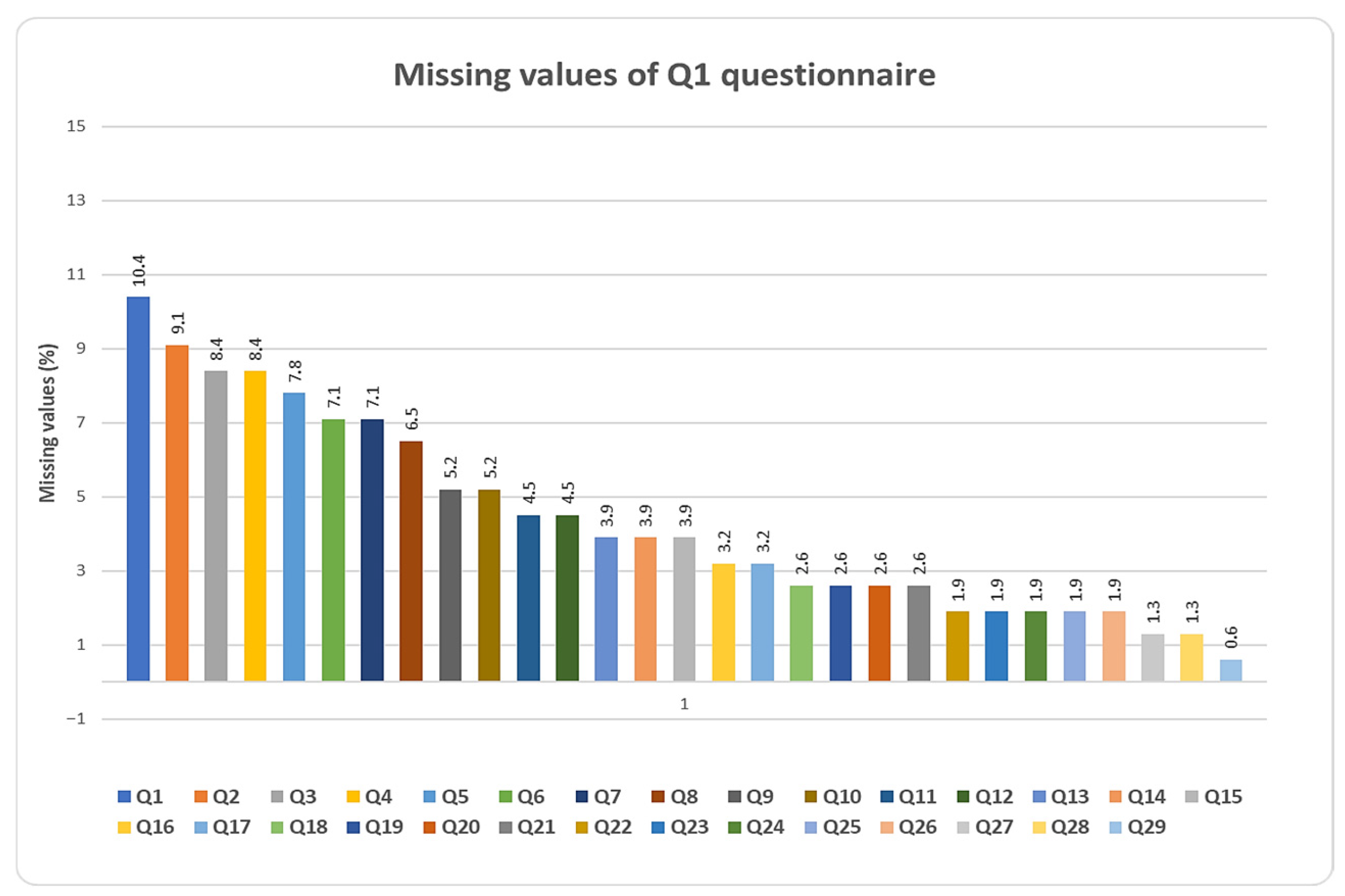
Figure 1. Percentage of missing responses in the Q1 questionnaire dataset.
Processes 14 00302 g001
Figure 2. Percentage of missing values of the Q2 questionnaire dataset.
Processes 14 00302 g002
Figure 3. Percentage distribution of households by number of members (1 to 6).
Processes 14 00302 g003
Figure 4. Percentage distribution of shopping preferences based on machine learning algorithmic projection of responses. Potential answers include small grocery stores, local open food markets, and supermarkets.
Processes 14 00302 g004
Figure 5. Percentage distribution of preferences toward environmentally friendly products. Potential answers include highly unlikely, unlikely, neither likely nor unlikely, and highly likely.
Processes 14 00302 g005
Figure 6. Percentage distribution of cooking frequency based on machine learning estimation. Categories include daily, every other day, less often than every other day, and rarely.
Processes 14 00302 g006
Figure 7. Percentage distribution of food delivery frequency based on machine learning projection, ranging from every other day to never.
Processes 14 00302 g007
Figure 8. Percentage distribution of the machine learning-estimated number of meals prepared per week, ranging from 1 to 3 to more than 14.
Processes 14 00302 g008
Figure 9. Percentage distribution of the frequency of dining out of home based on machine learning-processed responses, ranging from once per month to more than four times.
Processes 14 00302 g009
Figure 10. Percentage distribution of the machine learning-estimated proportion of household food waste relative to total household waste, ranging from 0 to 10% to above 50%.
Processes 14 00302 g010
Figure 11. Percentage distribution of daily estimated household food waste for small groups, based on machine learning-projected values, ranging from up to 1 kg to 1–2 kg.
Processes 14 00302 g011
Figure 12. Percentage distribution of the origins of household food waste generation based on machine learning-projected data.
Processes 14 00302 g012
Figure 13. Percentage of the ML-estimated food wasting causes in households.
Processes 14 00302 g013
Figure 14. Percentage of the estimated distribution of food waste.
Processes 14 00302 g014
Figure 15. Percentage of the plate waste ML estimations.
Processes 14 00302 g015
Figure 16. Estimation of edible and nonedible FW quantities for ML-projected (all) and small group dataset.
Processes 14 00302 g016
Figure 17. Percentage of FW prevention practices comparison of predicted versus small group.
Processes 14 00302 g017
Figure 18. Percentage of conscious behavior regarding plate leftovers of ML dataset.
Processes 14 00302 g018
Figure 19. Percentage of food waste management preferences.
Processes 14 00302 g019
Figure 20. Percentage of projected values of usefulness of certain FW prevention interventions.
Processes 14 00302 g020
Figure 21. Percentage of usefulness of the tips of FAO on FW reduction. Machine learning-projected values are indicated as “all”.
Processes 14 00302 g021
Figure 22. Percentage of preferred methods for information of FW.
Processes 14 00302 g022
Figure 23. K-means ML algorithm clustering of datasets for K equal to 5.
Processes 14 00302 g023
Disclaimer/Publisher’s Note: The statements, opinions and data contained in all publications are solely those of the individual author(s) and contributor(s) and not of MDPI and/or the editor(s). MDPI and/or the editor(s) disclaim responsibility for any injury to people or property resulting from any ideas, methods, instructions or products referred to in the content.