


Abstract
The water produced from coalbed methane (CBM) wells contains abundant geochemical information; therefore, analyzing the geochemical information available therein is of great significance for the efficient exploitation of CBM wells. Based on the geochemical characteristics of water from four CBM wells in eastern Yunnan, this paper analyzes the relationship between the geochemical characteristics of the produced water and gas production. The results indicate that the underground environment in which water is produced in the four CBM wells in the study area exists in a closed state. The water sourced from wells L-1 and L-2 is of the Na-Cl-HCO3 type, whereas the water sourced from wells L-3 and L-4 is of the Na-HCO3 type. Gas production is approximately positively correlated with high concentrations of HCO3−, up to concentrations of 2800 mg/L, beyond which gas production decreases. Both D drift and 18O isotope drift in the produced water are beneficial for the production of CBM. The trace element content of the well water is influenced by the trace elements found in the coal seams and surrounding rocks, especially at peak trace element contents. The dissolved inorganic carbon isotope (13CDIC) in the well water is affected by microbial methanogenesis and carbonate dissolution, and gas production is high when 13CDIC is approximately −4‰.
1. Introduction
Coalbed methane (CBM) is a mixed gas composed mainly of methane, an unconventional clean natural gas resource that is found in coal seams mostly in an adsorbed state. Enhancing the development and utilization of CBM not only reduces the gas content in coal seams, thereby helping to prevent coal mine accidents, but also plays an important role in environmental protection. The generation and migration of CBM are influenced by a range of factors. The hydrologic conditions of the coal seam exert a critical influence on the transport of CBM, thereby directly impacting its occurrence [1,2,3,4,5,6,7]. The fundamental process of CBM extraction involves discharging groundwater from the coal reservoir, causing the reservoir pressure to continuously decrease to the critical desorption pressure. At this point, the gas adsorbed in the coal reservoir begins to desorb and migrate to the wellbore through pores and cracks, resulting in CBM production [8,9,10,11].
During the process of CBM extraction, a large amount of water needs to be discharged from the coal reservoir to enable CBM to be desorbed and produced, and this water undergoes physical and chemical interactions with the reservoir during the discharge process. As the discharge time increases, the properties of the produced water also change [10,12,13]. Minerals undergo dissolution in aquifers over time, leading to changes in the quality of the produced water [14,15,16,17,18]. The hydraulic fracturing additives introduced during coal seam stimulation significantly alter the chemistry of the produced water, typically elevating sodium ion concentrations and trace element profiles [14,19].
In the initial stage of CBM well drainage, the discharged water is mainly affected by the fracturing fluid. In the middle stage of drainage and extraction, the concentration of fracturing fluid gradually decreases, and the water quality begins to approach that of the water originally found in the formation [15,20,21]. In the stable stage of drainage and production, the geochemical characteristics of the produced water tend to remain stable and continue to approach those of the formation’s original water [5,12]. By comparing the produced waters from different CBM extraction wells, it is possible to better understand these changes in water quality [8,22]. Although research has been conducted on the geochemical characteristics of well water [15,16,19,20,22,23,24,25,26,27,28,29,30,31], no systematic analysis has been carried out on the relationship between the geochemical characteristics of the produced water and gas production, especially regarding development wells in eastern Yunnan. Based on experimental analyses of conventional ions, trace elements, hydrogen and oxygen isotopes, and dissolved inorganic carbon isotopes (13CDIC) in water samples from four CBM development wells in eastern Yunnan, this paper systematically assesses the relationship between the geochemical characteristics of well water and gas production, and provides suggestions for future CBM production.
2. Geological Background
The Enhong and Laochang blocks are both located in Fuyuan County, Qujing, Yunnan Province, China, and exhibit climate characteristics typical of strong terrain cutting and plateau mountain topography. The Enhong block is bounded to the west by the Fuyuan–Mile Fault; the remaining boundaries are mainly the bottom boundaries of the Upper Permian coal-bearing strata. The Enhong syncline is a composite syncline composed of the Enhong syncline and the Pingguan–Daping syncline, which have complex geologic structures. The main coal-bearing stratum is the Upper Permian Xuanwei Formation, which has a thickness of 15.99–67.68 m. The minable coal seams are Nos. 7 + 8, 9, 16, 17 + 18, and 21. Petrographically, the coal is mainly composed of bright and dark coal with local scales and flakes. The fault zones within this block are mostly enclosed, with poor water abundance and conductivity.
The Laochang block is to the south and east of the Enhong block. The faults within the Laochang area mainly strike northeast and are predominantly distributed at the edges of the block. Most of the faults with a drop greater than 100 m are boundary faults and are primarily distributed near folds. The main coal-bearing stratum is the Longtan Formation of the Upper Permian, which has a thickness of 415–475 m. The minable coal seams are Nos. 13, 14, 16, 18, and 19. The coal grade is anthracite with high hardness and low brittleness. This block is characterized by its high elevation, steep terrain, and underdeveloped surface water systems.
Hydrogeological conditions significantly influence CBM accumulation, which can be categorized into three types: hydraulic escape, hydraulic sealing, and hydraulic plugging. The first type leads to methane loss, whereas the latter two are beneficial for its preservation [3,4]. The geological structure of the study area is complex, with the coal-bearing strata and related aquifers composed of detrital sediments. Overlying and underlying strata develop karst aquifers, while aquitards with a thickness of tens to hundreds of meters separate the coal-bearing strata from aquifers. These aquitards are hard and dense, with undeveloped fractures and extremely weak water yield. Groundwater in coal-bearing strata primarily relies on atmospheric precipitation or surface water. Fault zones are mostly closed, exhibiting poor water yield and hydraulic conductivity. Hydrogeochemical characteristics significantly influence daily CBM production, and high-yield well drainage often correlates with high mineralization.
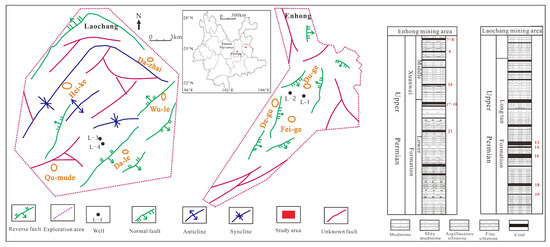
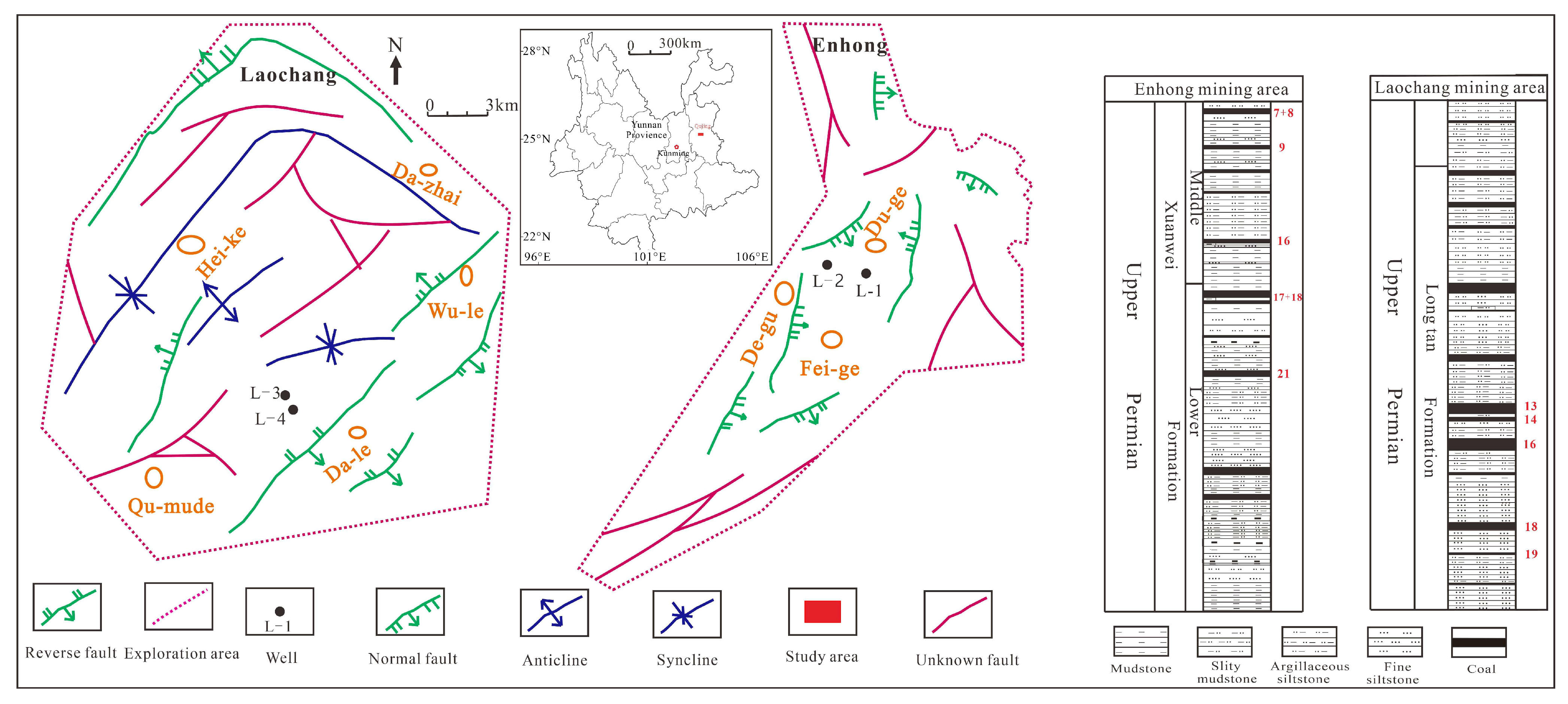
Two CBM development wells, L-1 and L-2, were selected from the Enhong block. The coal seams discharged from well L-1 are Nos. 7 + 8, 9, 16, and 21, and the well’s depth is 1182.9 m. The coal seams in well L-2 are Nos. 16 and 17 + 18, with a depth of 1031.0 m. Well L-1 has been producing water since February 2018. As of October 2019, the average water production was 0.71 m3/d, and the average gas production was 63.9 m3/d. Well L-2 has been producing water since January 2018. As of October 2019, the average water production was 0.96 m3/d, and the average gas production was 123.77 m3/d (Figure 1 and Table 1).
Figure 1.
Well locations and structural map of the study area.
Table 1.
Data on the development wells in the study area.
Two CBM development wells, L-3 and L-4, were selected from the Laochang block. The mining-relevant coal seams in well L-3 are Nos. 13, 16, 18, and 19, and the well’s depth is 717.9–780 m. The coal seams fractured by well L-4 are Nos. 16, 18, and 19, with a depth of 713.2 m. Well L-3 has been producing water since May 2018. As of October 2019, its average water production was 1.19 m3/d, and its average gas production was 327.8 m3/d. Well L-4 has been producing water since May 2018. As of October 2019, its average water production was 0.94 m3/d, and its average gas production was 398.81 m3/d (Figure 1 and Table 1).
3. Test Methods and Results
Water samples have been collected from the four CBM development wells in the Enhong and Laochang blocks since September 2018, and the mass concentrations of conventional anions and cations, along with trace elements in the produced water, stable nuclides of hydrogen and oxygen, and 13CDIC, have been determined experimentally. The water samples were collected directly from the outlet of the development well using 0.5 L sampling bottles. Prior to collection, the sampling bottle was flushed more than three times with well water, and the collected water samples were transferred within 72 h to the Institute of Geochemistry of the Chinese Academy of Sciences in Guiyang City for testing.
Routine anion and cation detection in water samples uses an ion chromatograph (DIONEX, USA; Model ICS-90). Trace element analysis employs an inductively coupled plasma optical emission spectrometer (ICP-OES) and an inductively coupled plasma mass spectrometer (ICP-MS) (Thermo Elemental, USA; Models: ICP-OES/ICP-MS). Hydrogen/oxygen isotope measurements utilize a liquid water isotope analyzer (Model 912-0026). For dissolved inorganic carbon (DIC) carbon isotope analysis, CO2 is extracted via phosphoric acid digestion on a vacuum line, purified, and analyzed with a gas isotope ratio mass spectrometer (Finnigan MAT, Germany; Model MAT 252). As of October 2019, seven well water samples were collected from the four CBM development wells in the study area. The test results are shown in Table 2, Table 3 and Table 4.
Table 2.
Concentrations of conventional ions and 13CDIC in well water samples.
Table 3.
Hydrogen and oxygen isotopes in well water samples.
Table 4.
Concentrations of trace elements in produced water.
4. Analysis and Discussion
4.1. Variation in the Conventional Ion Concentrations and Their Effects on Productivity
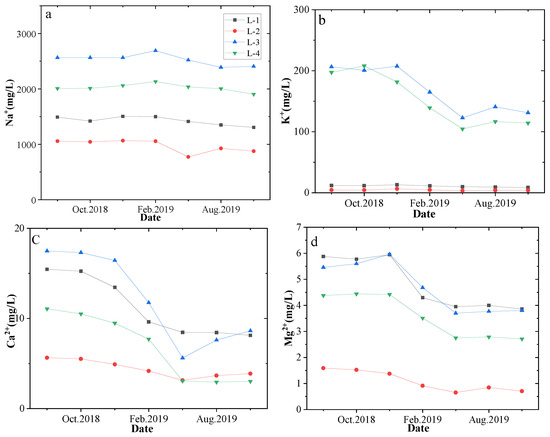
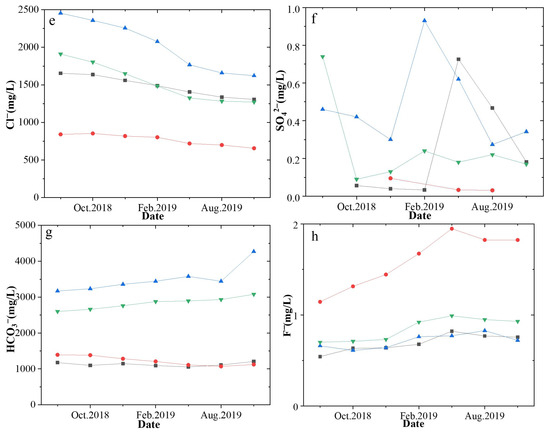
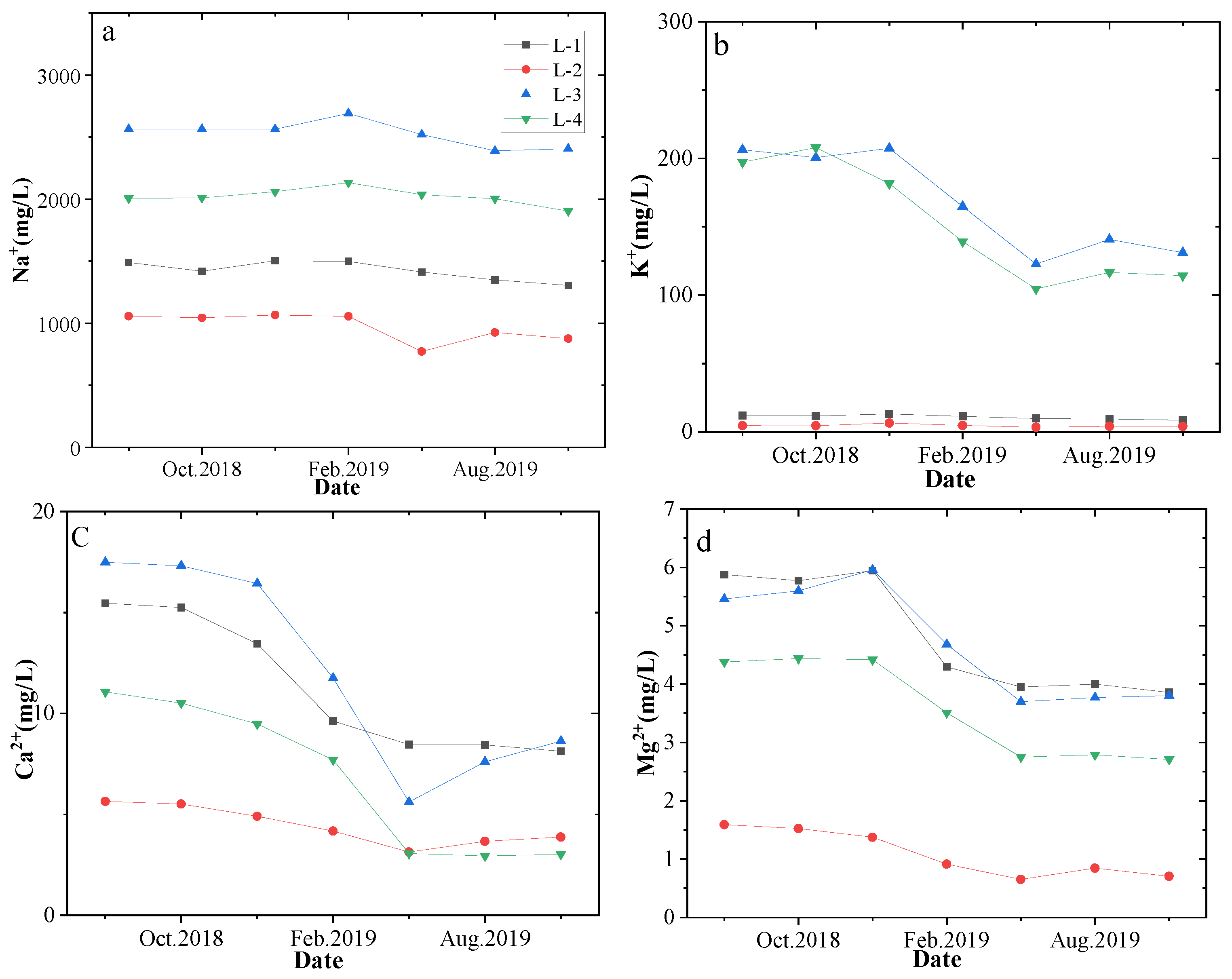
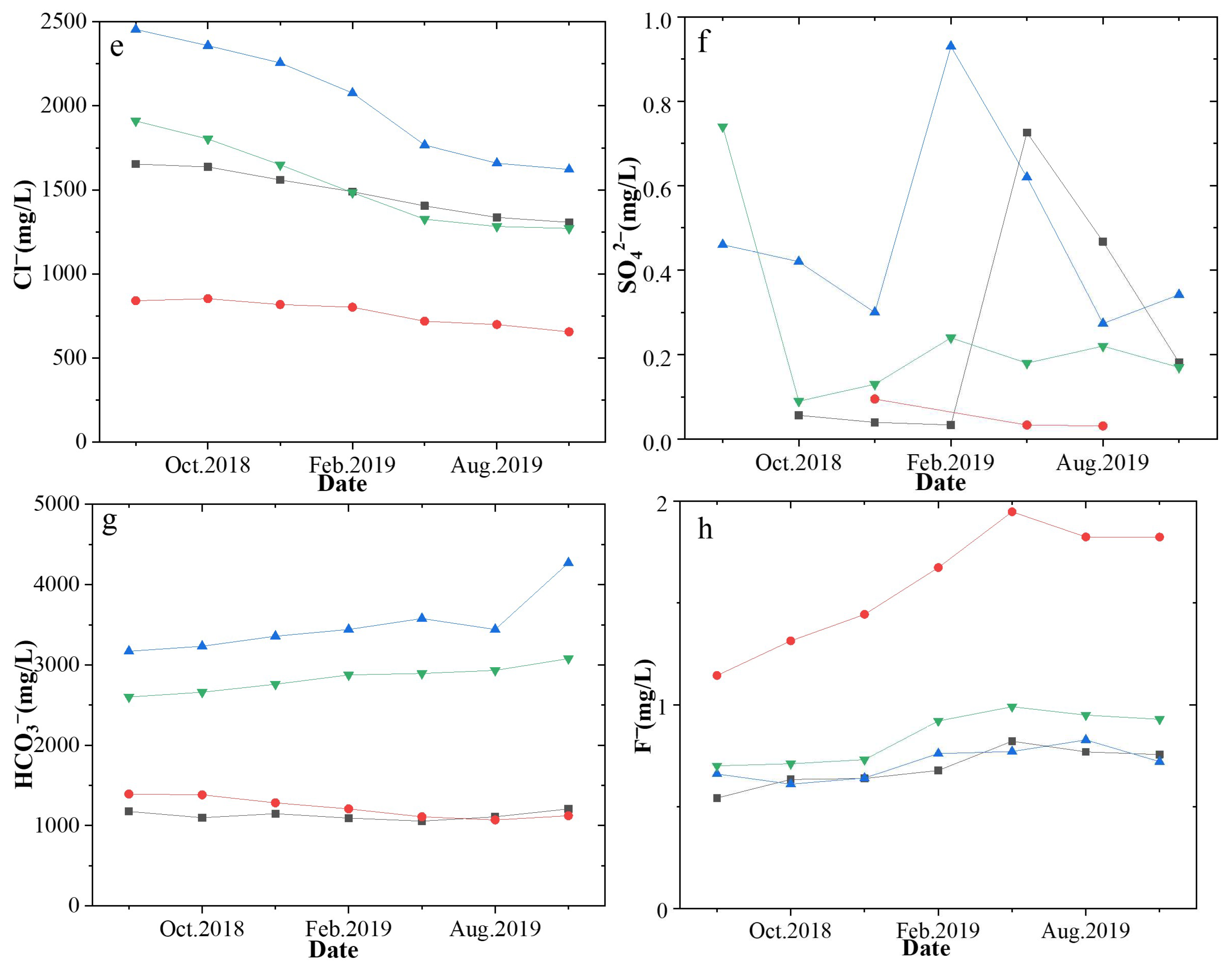
The Na+ concentration in the produced water from well L-1 ranged from 1305.55 to 1503.94 mg/L with an average of 1426.12 mg/L. The K+ concentration ranged from 8.47 to 13.03 mg/L with an average of 10.73 mg/L. The Ca2+ concentration ranged from 8.13 to 15.46 mg/L with an average of 11.26 mg/L. The Mg2+ concentration ranged from 3.86 to 5.95 mg/L with an average of 4.81 mg/L. The Cl− concentration ranged from 1306.94 to 1654.14 mg/L with an average of 1484.02 mg/L. The concentration of SO42− ranged from 0.03 to 0.73 mg/L with an average of 0.25 mg/L. The concentration of HCO3− ranged from 1055.94 to 1208.13 mg/L with an average of 1127.31 mg/L. The concentration of F− ranged from 0.54 to 0.82 mg/L with an average of 0.69 mg/L (Table 2).
The Na+ concentration in the produced water from the L-2 well ranged from 773.43 to 1067.69 mg/L with an average of 971.93 mg/L. The K+ concentration ranged from 3.27 to 6.38 mg/L with an average of 4.45 mg/L. The Ca2+ concentration ranged from 3.14 to 5.65 mg/L with an average of 4.42 mg/L. The Mg2+ concentration ranged from 0.65 to 1.59 mg/L with an average of 1.09 mg/L. The Cl− concentration ranged from 656.30 to 853.38 mg/L with an average of 770.03 mg/L. The SO42− concentration ranged from 0.03 to 0.10 mg/L with an average of 0.05 mg/L. The HCO3− concentration ranged from 1071.13 to 1392.79 mg/L with an average of 1224.36 mg/L. The F− concentration ranged from 1.14 to 1.95 mg/L with an average of 1.60 mg/L (Table 2).
The Na+ concentration in the produced water from the L-3 well ranged from 2389.69 to 2690.99 mg/L with an average of 2529.08 mg/L. The K+ concentration ranged from 122.77 to 207.43 mg/L with an average of 167.71 mg/L. The Ca2+ concentration ranged from 5.62 to 17.49 mg/L with an average of 12.12 mg/L. The Mg2+ concentration ranged from 3.70 to 5.96 mg/L with an average of 4.71 mg/L. The Cl− concentration ranged from 1621.63 to 2454.66 mg/L with an average of 2027.50 mg/L. The concentration of SO42− ranged from 0.27 to 0.93 mg/L with an average of 0.48 mg/L. The concentration of HCO3− ranged from 3170.55 to 4271.04 mg/L with an average of 3499.10 mg/L. The concentration of F− ranged from 0.61 to 0.83 mg/L with an average of 0.71 mg/L (Table 2).
The Na+ concentration in the produced water from well L-4 ranged from 1904.04 to 2132.75 mg/L with an average of 2022.27 mg/L. The K+ concentration ranged from 104.57 to 207.93 mg/L with an average of 151.64 mg/L. The Ca2+ concentration ranged from 2.94 to 11.07 mg/L with an average of 6.83 mg/L. The Mg2+ concentration ranged from 2.71 to 4.44 mg/L with an average of 3.57 mg/L. The Cl− concentration ranged from 1271.20 to 1910.23 mg/L with an average of 1532.29 mg/L. The concentration of SO42− ranged from 0.09 to 0.74 mg/L with an average of 0.25 mg/L. The concentration of HCO3− ranged from 2600.91 to 3078.40 mg/L with an average of 2828.89 mg/L. The concentration of F− ranged from 0.70 to 0.99 mg/L with an average of 0.85 mg/L (Table 2).
As shown in Figure 2, as the drainage time increased, it became clear that the water produced from wells L-1 and L-2 was of the Na-Cl-HCO3 type, whereas the water produced from wells L-3 and L-4 was of the Na-HCO3 type. The concentrations of Na+, K+, Ca2+, Mg2+, Cl−, and SO42− fluctuated and exhibited a decreasing trend over time, while the concentrations of HCO3− and F− fluctuated but tended to increase over time. As the fracturing fluid, which contains Na+, K+, and Cl−, is gradually discharged during the drainage process of the CBM wells, the concentrations of Na+, K+, and Cl− in the produced water decrease.
Figure 2.
Concentrations of conventional ions in well water over time.
Water produced by CBM wells is generally considered to come from two types of groundwater environments: open and closed. Open groundwater environments are close to the source of water recharge and have relatively high concentrations of Ca2+ and Mg2+. Closed groundwater environments are far from the water recharge source and exhibit relatively high concentrations of Na+, Cl−, and HCO3− [8,9,12,32].
The water samples produced by the four selected CBM wells all exhibited similar conventional ion concentrations (Figure 2 and Table 2); specifically, high concentrations of Na+, Cl−, and HCO3−, and low concentrations of Ca2+ and Mg2+. Therefore, the water produced by the four selected CBM wells comes from a closed environment. The observed decreases in the concentrations of Ca2+ and Mg2+ indicate weakened water–rock interactions. In August, due to the influence of the rainy season, the water–rock interactions were strengthened, and the concentrations of Ca2+ and Mg2+ increased. The dissolution rate of calcite in the water is far greater than that of dolomite; thus, the concentration of Ca2+ in the water increased significantly. The presence of SO42− is related to desulfurization [33]; in a reducing environment, the sulfate in the coal seam water can act on the organic matter to generate bicarbonate, which reduces the concentration of SO42− and increases the concentration of HCO3−.
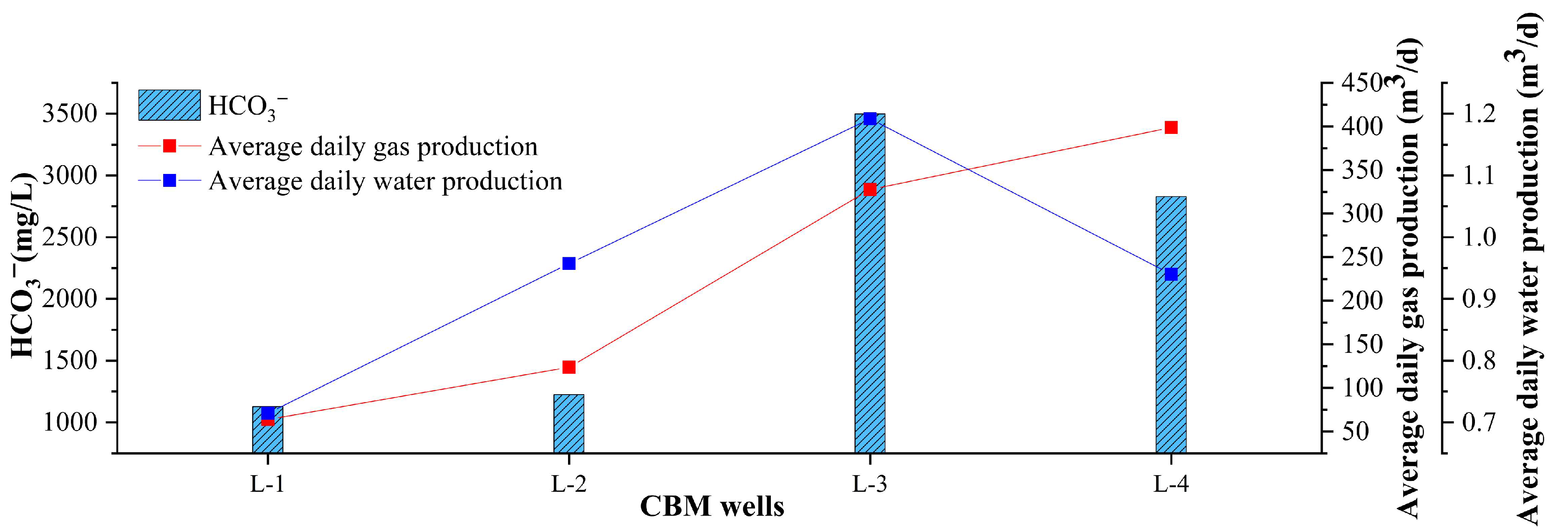
From the above analysis, it can be seen that the underground environment of the four selected CBM wells is in a closed state with high concentrations of Na+, Cl−, and HCO3−. Due to the presence of Na+ and Cl− in the fracturing fluid, HCO3− was selected as the ion most likely to correspond to production capacity. Figure 3 shows that the concentration of HCO3− was roughly positively correlated with gas production; however, when the concentration of HCO3− exceeded 2800 mg/L, gas production decreased. The relationship between the characteristics of the well water and gas production can be divided into two stages: when gas production is low, gas production is roughly positively correlated with water production; when the gas production exceeds approximately 330 m3/d, the production levels of water and gas are negatively correlated.
Figure 3.
Relationships between HCO3−, average daily gas production, and average daily water production in the water produced from the four CBM wells in the study area.
4.2. Variation in Hydrogen and Oxygen Isotopes and Their Effects on Productivity
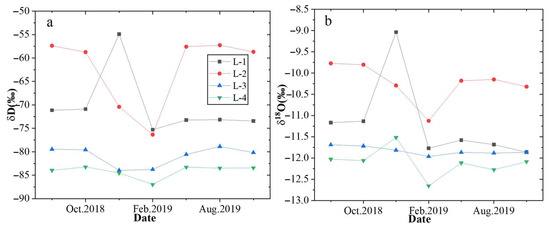
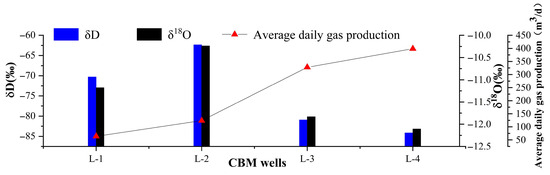
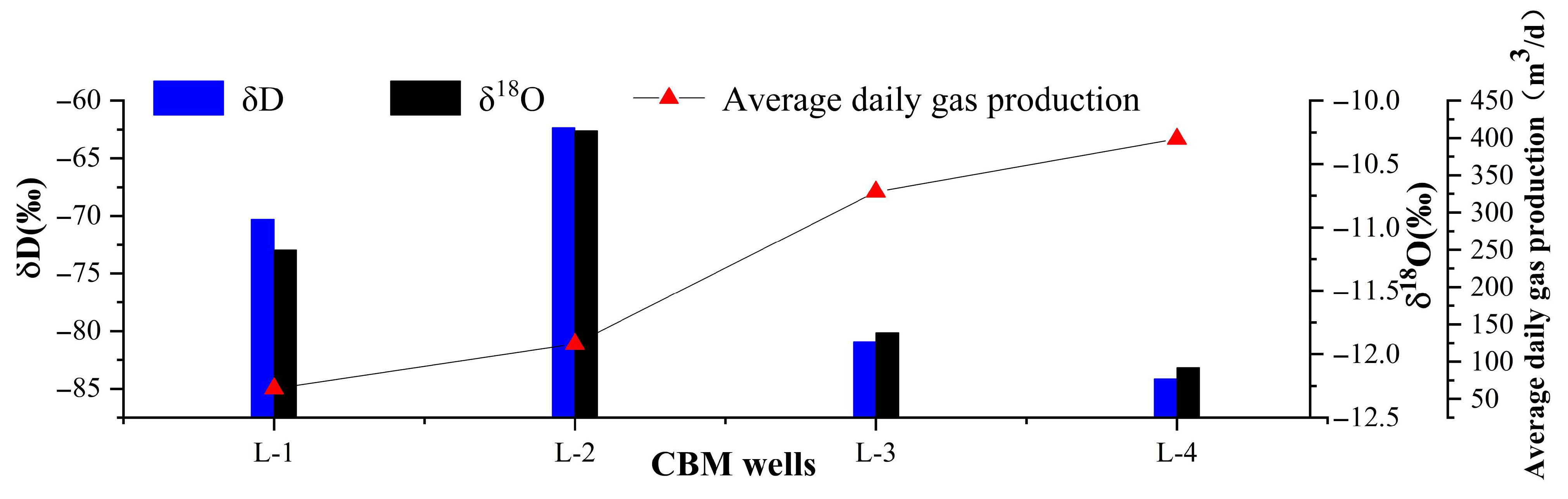
The δD value in the water produced by well L-1 ranged from −75.28‰ to −54.90‰, with an average of −70.29‰. The δ18O value in water from this well ranged from −11.86‰ to −9.04‰ with an average of −11.18‰. For the water produced by well L-2, the δD value ranged from −76.35‰ to −57.26‰, with an average of −62.34‰, and the δ18O value ranged from −11.13‰ to −9.77‰, with an average of −10.24‰. The δD value in the water produced by well L-3 ranged from −83.97‰ to −78.87‰, with an average of −80.91‰. The δ18O value in water from this well ranged from −11.96‰ to −11.69‰, with an average of −11.83‰. In the water produced from well L-4, the δD value ranged from −86.98‰ to −83.23‰, with an average of −84.13‰. Here, the δ18O value ranged from −12.66‰ to −11.52‰, with an average of −12.11‰ (Table 3).
The δD and δ18O values of the water produced from wells L-1 and L-2 changed significantly with time (The δD value in the water produced ranged from −76.35‰ to −54.90‰, with an average of −66.32‰; The δ18O value ranged from −11.86‰ to −9.04‰ with an average of −10.71‰), whereas the δD and δ18O values of the water produced from wells L-3 and L-4 exhibited relatively small changes over time (The δD value in the water produced ranged from −86.98‰ to −78.87‰, with an average of −82.52‰; The δ18O value ranged from −12.66‰ to −11.52‰ with an average of −11.97‰) (Figure 4).
Figure 4.
Variations in the δD and δ18O isotopes in water produced from the four selected CBM wells over time.
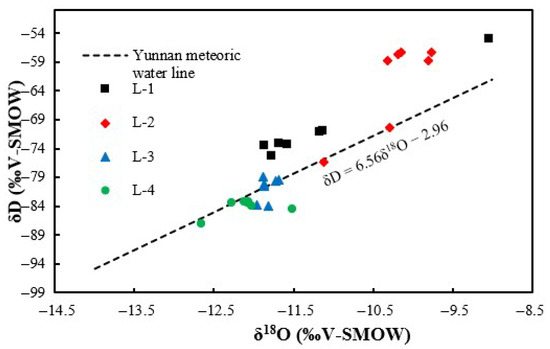
The hydrogen and oxygen isotope composition was studied using the Yunnan atmospheric precipitation line equation: δD = 6.56δ18O − 2.96 [34]. Previous studies found that water from coal-bearing formations undergoes isotopic exchange with organic matter and rocks during production, resulting in D or 18O isotope drift [12,22,24,35,36,37,38].
As shown in Figure 4 and Figure 5, the isotope values of the water produced from wells L-1 and L-2 fall roughly above the atmospheric precipitation line, which is indicative of D drift, presumably due to the influence of the coal seam on the water it produces. The isotope values of the water produced from wells L-3 and L-4 are located on both sides of the precipitation line, indicating both D drift and 18O drift. Figure 6 shows that the values of isotopes δD and δ18O in the water produced from wells L-3 and L-4 are more indicative of long-term CBM production than those of water from wells L-3 and L-4. Based on the above analysis, when the water produced from a CBM well shows both D drift and 18O drift, this is indicative of good CBM production prospects.
Figure 5.
Relationship between the δD and δ18O values of water produced from the four CBM wells in the study area.
Figure 6.
Relationships between gas production and isotopes δD and δ18O in water produced from the four selected CBM wells.
4.3. Variation in the Concentrations of Trace Elements and Their Effects on Productivity
The concentrations of 10 trace elements (Ba, Zr, Cr, Cu, Zn, V, Sr, Rb, Li, and As) were analyzed in the main coal seams of the CBM wells and their surrounding rocks, and the effects of the coal seams and their surrounding rocks on the trace element concentrations in the produced water were assessed.
The content of trace elements differs between well water that has been in contact with coal seams and well water that has been in contact with the surrounding rocks. Water that has been in contact with the surrounding rocks is mainly enriched with elements such as Ba, Cr, Rb, and Sr, whereas water that is mainly enriched with As has been in contact with coal seams [39,40,41,42,43].
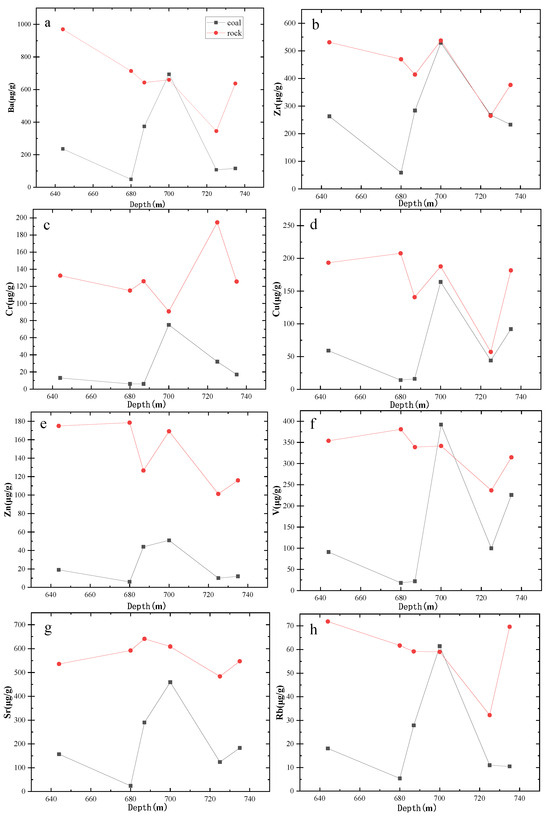
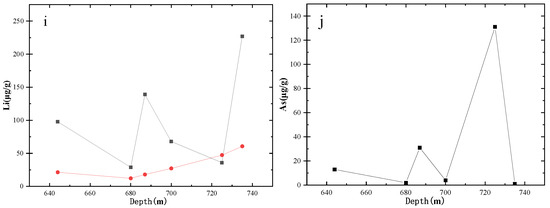
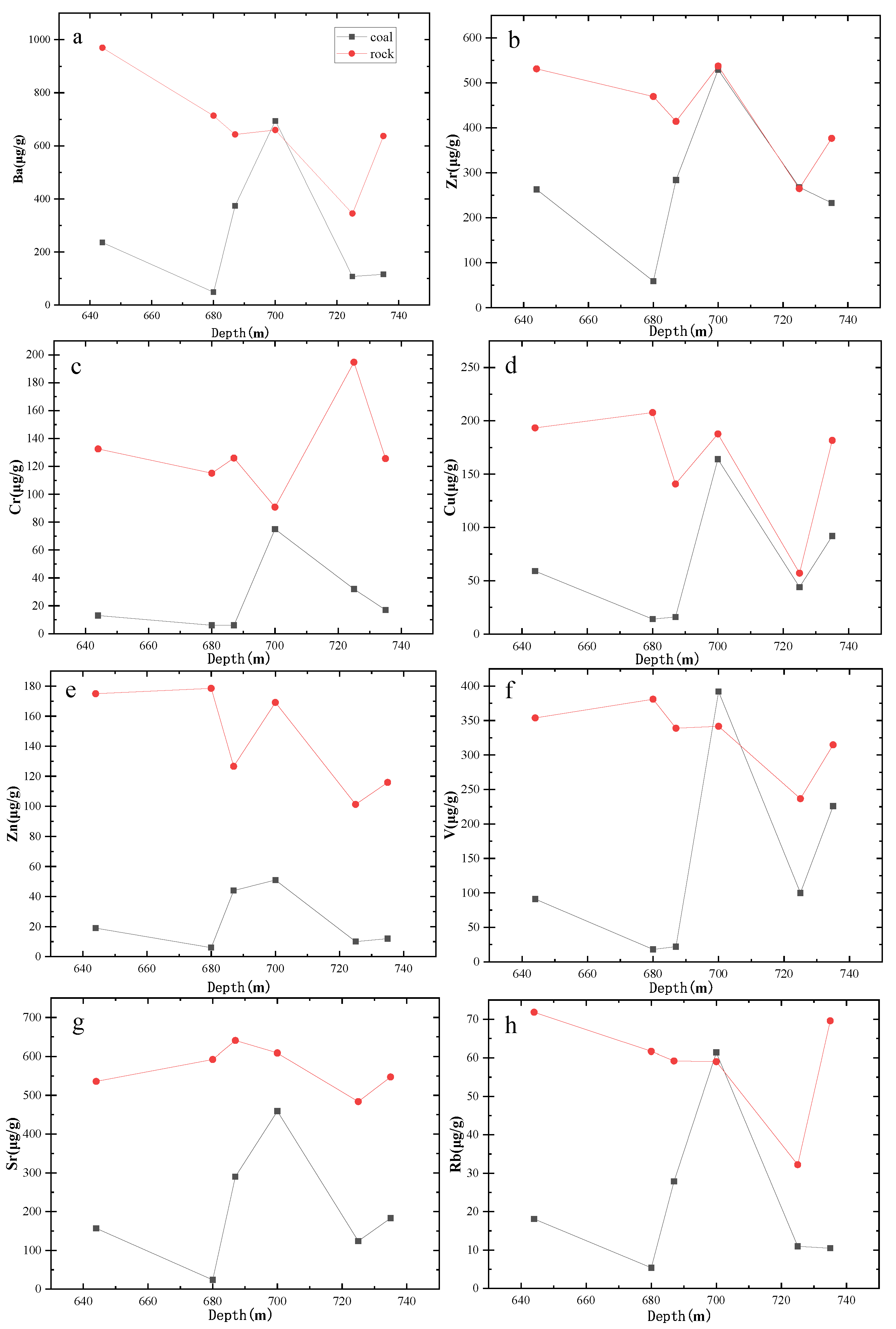
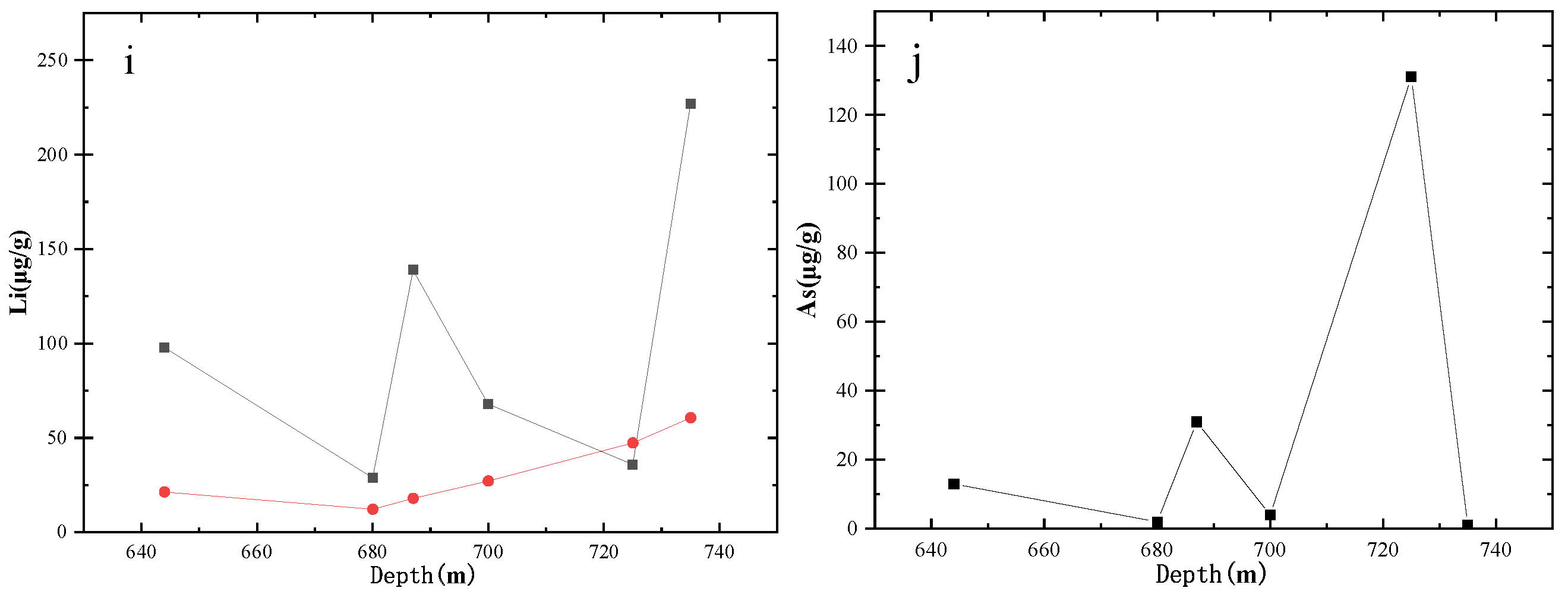
The contents of Ba, Zr, Cr, Cu, Zn, V, Sr, and Rb were much higher in water that had been in contact with the surrounding rock than that which had been in contact with the coal seam, whereas the contents of Li and As (As was not detected in the evaluated water samples) were much higher in the water that had been in contact with the coal seams (Figure 7). Therefore, the presence of trace elements Ba, Zr, Cr, Cu, Zn, V, Sr, and Rb was used as an indicator of the influence of the coal seam roof and floor on the corresponding trace elements in the produced water.
Figure 7.
Variations in the concentrations of trace elements in the coal seams and surrounding rocks with depth.
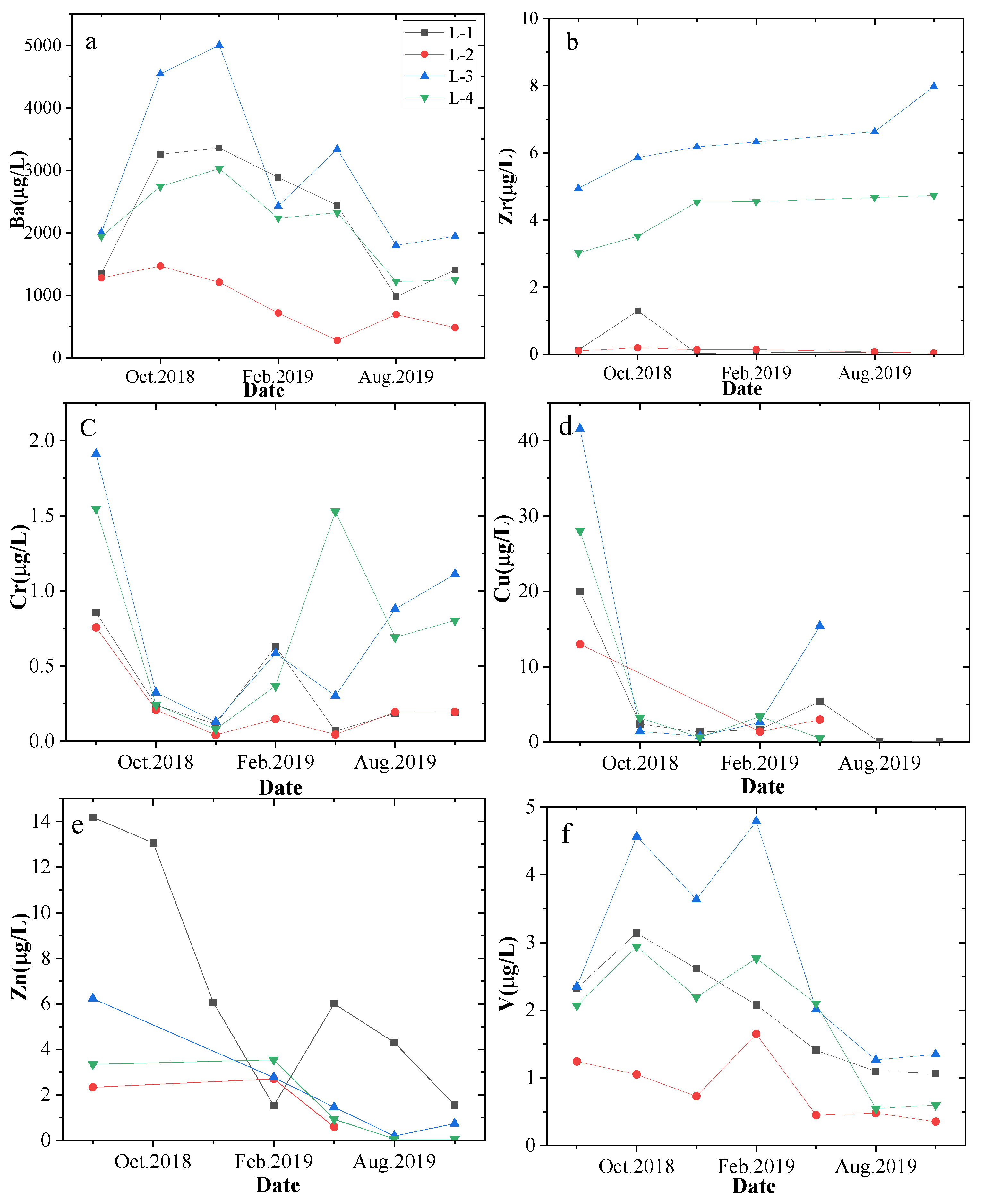
The contents of the trace elements fluctuated with depth (Figure 7). In the surrounding rock, the trace element concentrations exhibited a “double peak” with increasing depth, while the trace element contents in the coal seams showed a “single peak” (the As content reached its highest value at a depth of 720 m). The maximum trace element contents in both the coal seams and surrounding rocks appeared at a depth of approximately 700 m.
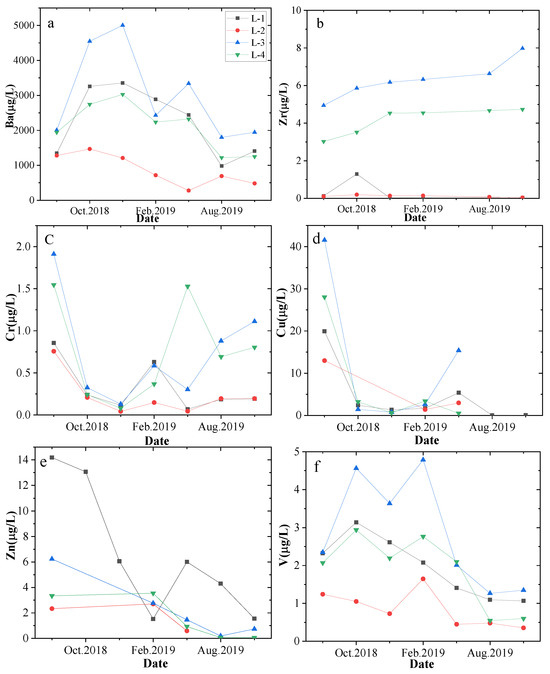
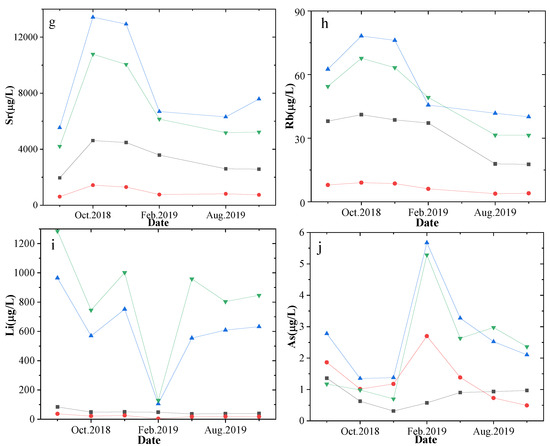
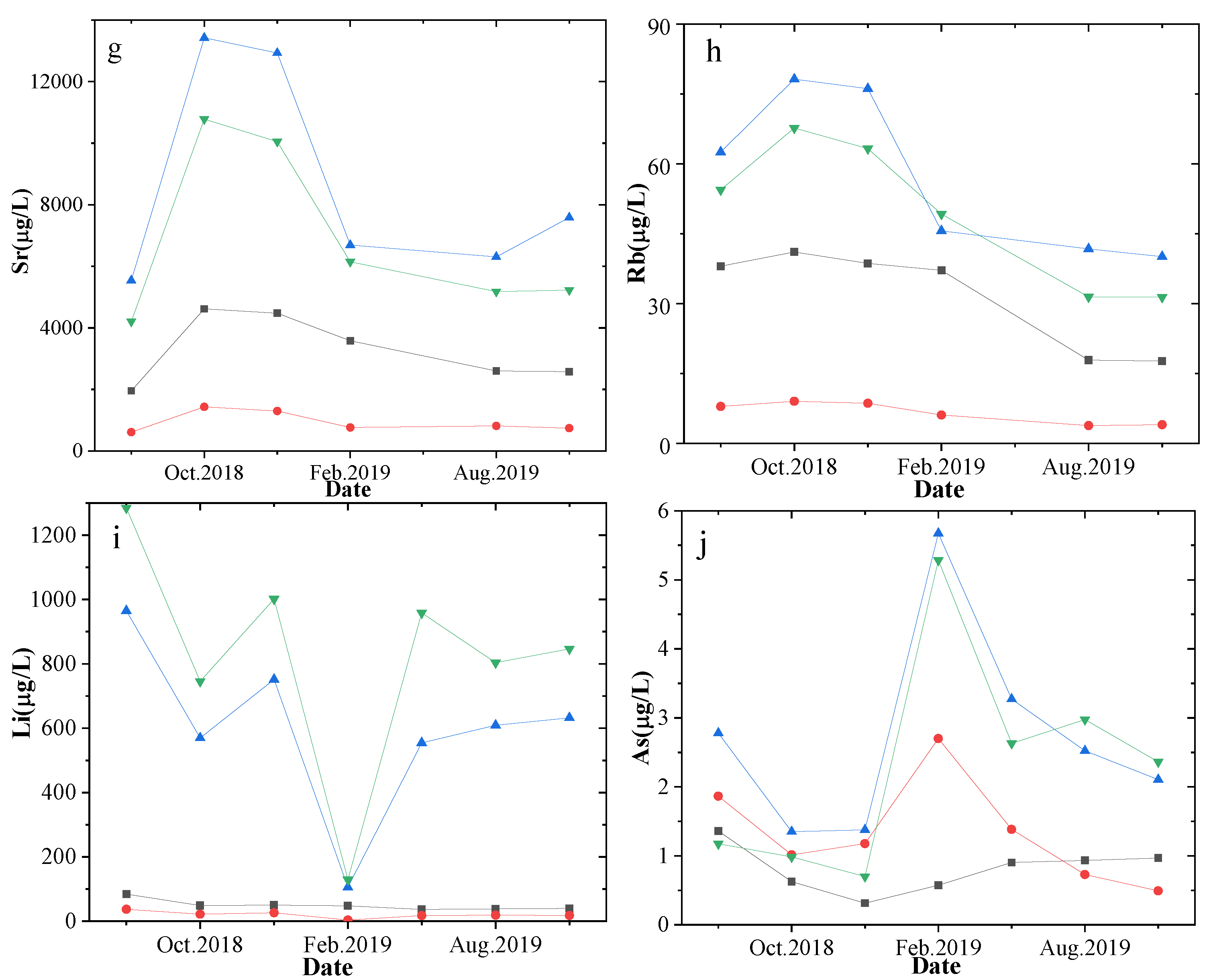
The contents of trace elements in the produced water also fluctuated with increasing drainage time (Figure 8). The contents of Ba, Zn, V, Sr, and Rb tended to decrease with increasing drainage time, whereas the Zr content showed an increasing trend. The contents of trace elements in the water produced from wells L-1 and L-2 were generally lower than those in the water produced from wells L-3 and L-4.
Figure 8.
Variation in trace element concentrations in the produced water over time.
The above analysis shows that the trace element contents in the coal seams and surrounding rocks reach their maximum values at a depth of approximately 700 m. The corresponding coal seams at this depth are coal seam No. 16 in wells L-3 and L-4 (in wells L-1 and L-2, the depth of coal seam No. 16 is approximately 1000 m). Therefore, the contents of trace elements in the coal seams and surrounding rocks affect the composition of the water produced, especially at the peak trace element contents.
4.4. Variation in δ13CDIC and Its Effect on Productivity
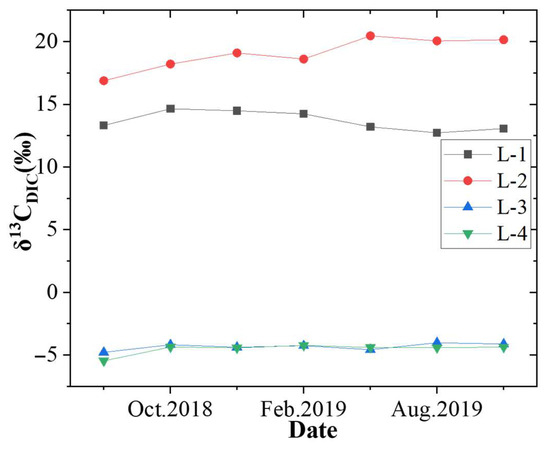
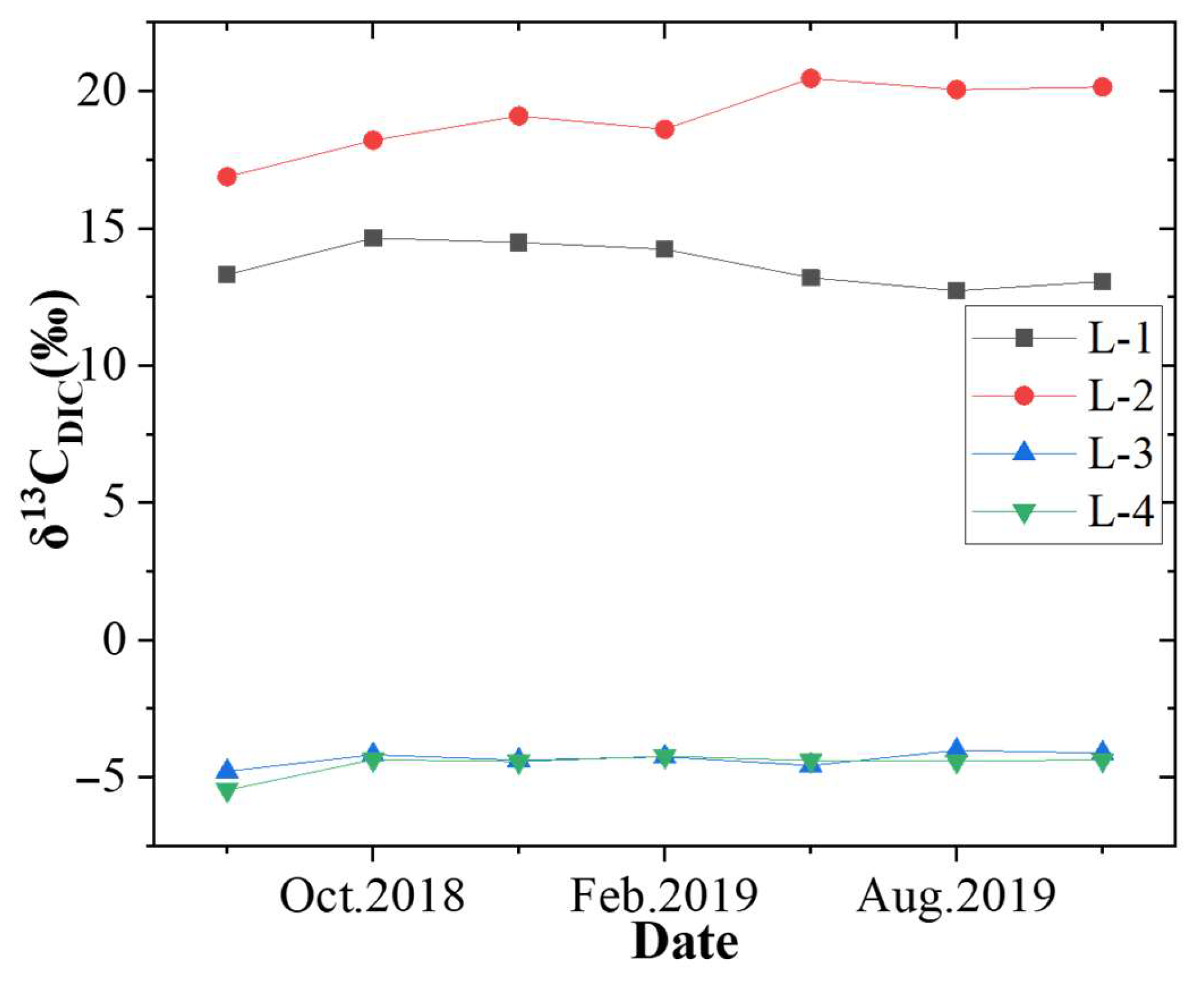
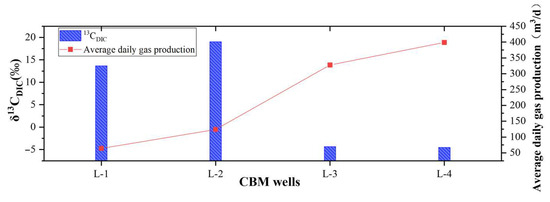
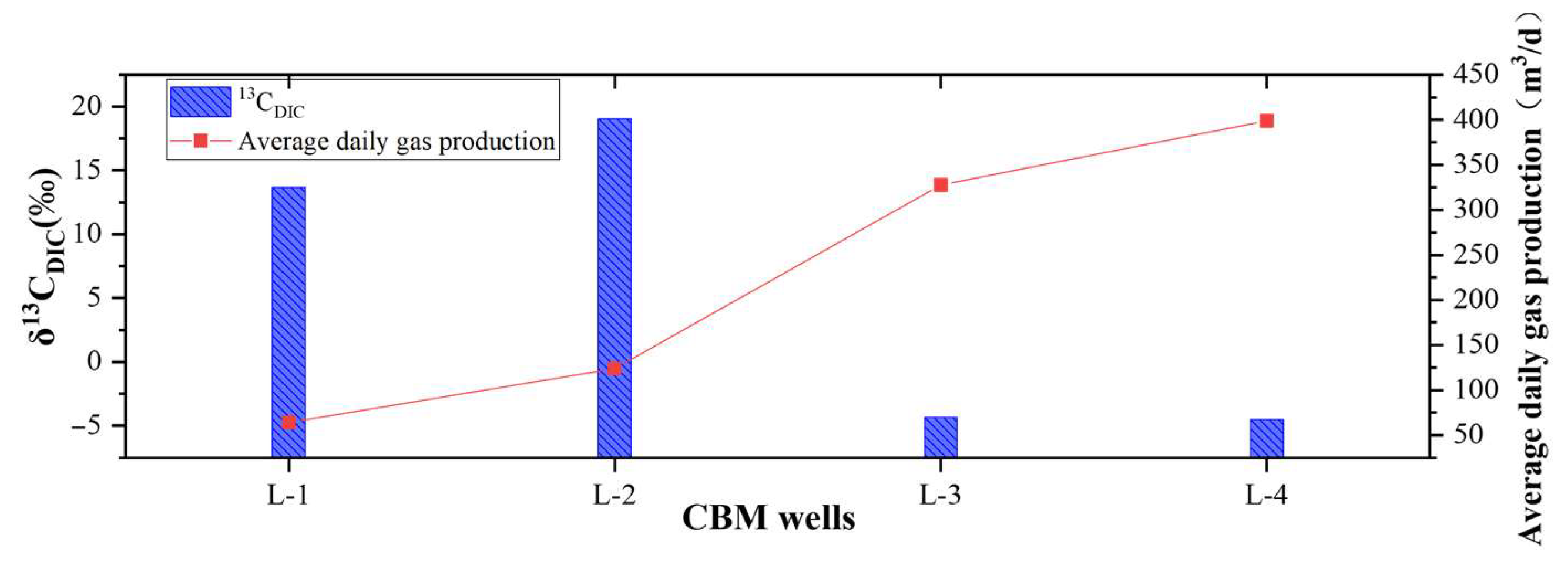
The δ13CDIC value in the water produced from well L-1 ranged from 12.72‰ to 14.64‰, with an average of 13.66‰. The δ13CDIC value in the water produced from well L-2 ranged from 16.88‰ to 20.46 ‰, with an average of 19.06‰. The δ13CDIC value in the water produced from well L-3 ranged from −4.78‰ to −4.02‰, with an average of −4.33‰. The δ13CDIC value in the water produced from well L-4 ranged from −5.46‰ to −4.23‰, with an average of −4.52‰ (Table 2).
Different sources of δ13CDIC result in different compositions of this isotope. Generally, a δ13CDIC value of less than −8‰ is thought to indicate an organic origin, while a δ13CDIC value of approximately 0‰ suggests an inorganic origin. The δ13CDIC value in the coal seam was between −7‰ and 0‰, which can be attributed to methane production by microorganisms and carbonate dissolution. When the depth reached approximately 1000 m, the δ13CDIC value was between 10‰ and 30 ‰ due to the action of methanogens [25,44,45,46,47,48,49,50].
As shown in Figure 9, the δ13CDIC values in the water samples produced from wells L-1 and L-2 were between 12‰ and 21‰, indicating that these values were mainly affected by methanogens. The depth of coal seam No. 16, the main coal seam of wells L-1 and L-2, is approximately 1000 m. The δ13CDIC values in the water produced from wells L-3 and L-4 were between −6‰ and −4‰, which can be attributed mainly to microbial methanogenesis and carbonate dissolution.
Figure 9.
Variation in δ13CDIC in the produced water over time.
As shown in Figure 10, the δ13CDIC value in the water produced from wells L-1 and L-2 was positively correlated with gas production, but the gas production in these wells was lower than in wells L-3 and L-4. It can be seen that the factors affecting gas production are approximately the same within the same block. According to Figure 9 and Figure 10, it can be broadly concluded that when δ13CDIC in the produced water is affected by methane production by microorganisms and carbonate dissolution, and its value is approximately −4‰, the gas production is relatively high, which is beneficial for the production of CBM.
Figure 10.
Relationship between δ13CDIC in the produced water and gas production.
5. Conclusions
Based on a comparative analysis of the characteristics of conventional ions, hydrogen and oxygen isotopes, trace elements, and δ13CDIC in the water produced from the four selected CBM wells, we obtained the following conclusions:
- (1)
- The water from the selected four CBM wells is produced in a closed environment. The water produced from wells L-1 and L-2 is of the Na-Cl-HCO3 type, whereas the water produced from wells L-3 and L-4 is of the Na-HCO3 type. The concentration of HCO3− is positively correlated with gas production; however, when the concentration of HCO3− exceeds 2800 mg/L, the gas production decreases.
- (2)
- The isotope values of the water produced from wells L-1 and L-2 exhibit the characteristics of D drift, and the isotope values of the water produced from well L-3 and L-4 exhibit the characteristics of both D drift and 18O drift, which are indicative of good CBM production.
- (3)
- The contents of trace elements in the produced water are affected by the contents of trace elements in the coal seams and surrounding rocks, especially at the peak trace element concentrations in the rocks and coal seams.
- (4)
- The 13CDIC in the produced water is influenced by microbial methanogenesis and carbonate dissolution; when its value is approximately −4‰, gas production is high, which is beneficial for the production of CBM.
Author Contributions
Software, M.D. and W.J.; formal analysis, X.X. and M.D.; data curation, H.Z. and A.Z.; writing—original draft, M.D.; writing—review and editing, C.W. and M.D. All authors have read and agreed to the published version of the manuscript.
Funding
This work was supported by the Start-up Fund for Doctoral Research of Suzhou University (2020BS024), the Key Laboratory of Coalbed Methane Resources and Reservoir Formation Process of the Ministry of Education (China University of Mining and Technology) (2025-002), the Postdoctoral Scientific Research Foundation of Suzhou University (2023BSH004), the Open Project Funding from the Geophysical Survey Team of Shandong Coalfield Geological Bureau (2025-003).
Data Availability Statement
The original contributions presented in this study are included in the article. Further inquiries can be directed to the corresponding authors.
Conflicts of Interest
Author Xiongfei Xia was employed by the company China United Coalbed Methane Corp., Ltd. The remaining authors declare that the research was conducted in the absence of any commercial or financial relationships that could be construed as a potential conflict of interest.
References
- Bachu, S.; Michael, K. Possible controls of hydrogeological and stress regimes on the producibility of coalbed methane in upper Cretaceous-Tertiary strata of the Alberta basin, Canada. AAPG Bull. 2003, 87, 1729–1754. [Google Scholar] [CrossRef] [Scilit]
- Pashin, J.; McIntyre-Redden, M.; Mann, S.; Kopaska-Merkel, D.; Varonka, M.; Orem, W. Relationships between water and gas chemistry in mature coalbed methane reservoirs of the Black Warrior Basin. Int. J. Coal Geol. 2014, 126, 92–105. [Google Scholar] [CrossRef] [Scilit]
- Qin, Y.; Shen, J.; Shi, R. Strategic Value and Choice on Construction of CMG Industry in China. J. China Coal Soc. 2022, 47, 371–387. [Google Scholar]
- Ye, J.; Wu, Q.; Wang, Z. Controlled characteristics of hydrogeological conditions on the coalbed methane migration and accumulation. J. China Coal Soc. 2001, 26, 459–462. [Google Scholar]
- Wei, M.; Ju, Y. Chemical characteristics and origin of produced waters from coalbed gas field in the southern of Qinshui Basin. J. China Coal Soc. 2015, 40, 629–635. [Google Scholar]
- Zhang, X.; Wu, C.; Liu, S. Characteristic analysis and fractal model of the gas-water relative permeability of coal under different confining pressures. J. Pet. Sci. Eng. 2017, 159, 488–496. [Google Scholar] [CrossRef] [Scilit]
- Zhang, L.; Kan, Z.; Zhang, C.; Tian, S.; Zeng, S.; Hao, D. Permeability and Stress Sensitivity of Coals with Different Fracture Directions Under Cyclic Loading-Unloading Conditions: A Case Study of the Xutuan Coal Mine in Huaibei Coalfield, China. Rock Mech. Rock Eng. 2025, 1–19. [Google Scholar] [CrossRef] [Scilit]
- Van Voast, W. Geochemical signature of formation waters as-sociated with coalbed methane. AAPG Bull. 2003, 87, 667–676. [Google Scholar]
- Taulis, M.; Milke, M. Chemical variability of groundwater samples collected from a coal seam gas exploration well, Maramarua, New Zealand. Water. Res. 2013, 47, 1021–1034. [Google Scholar] [CrossRef] [Scilit]
- Wu, C.; Yao, S.; Du, Y. Production systems optimization of a CBM well based on a time series BP neural network. J. China Univ. Min. Technol. 2015, 44, 64–69. [Google Scholar]
- Hou, X.; Zhang, J.; Liu, S.; Zhu, Y.; Hu, J. Estimation of multitype diffusion behaviors of CH4 and CO2 in coal under pore structure-induced restrictions. J. Chem. Eng. 2025, 525, 170144. [Google Scholar] [CrossRef] [Scilit]
- Wu, C.; Yang, Z.; Qin, Y.; Chen, J.; Zhang, Z.; Li, Y. Characteristics of Hydrogen and Oxygen Isotopes in Produced Water and Productivity Response of Coalbed Methane Wells in Western Guizhou. Energy Fuels 2018, 32, 11203–11211. [Google Scholar] [CrossRef] [Scilit]
- Li, C.; Tang, S.; Zhang, S.; Wang, S.; Li, Z. Chemical Characteristics and Significance of CBM well Produced Water in Shizhuang South Area, Qinshui Basin. Coal Geol. China 2013, 25, 25–29. [Google Scholar]
- Zhang, S.; Tang, S.; Li, Z.; Pan, Z.; Shi, W. Study of hydrochemical characteristics of CBM co-produced water of the Shizhuangnan Block in the southern Qinshui Basin, China, on its implication of CBM development. Int. J. Coal Geol. 2016, 159, 169–182. [Google Scholar] [CrossRef] [Scilit]
- Huang, H.; Sang, S.; Miao, Y.; Dong, Z.; Zhang, H. Trends of ionic concentration variations in water coproduced with coalbed methane in the Tiefa Basin. Int. J. Coal Geol. 2017, 182, 32–41. [Google Scholar] [CrossRef] [Scilit]
- Tao, S.; Pan, Z.; Tang, S.; Chen, S. Current status and geological conditions for the applicability of CBM drilling technologies in China: A review. Int. J. Coal Geol. 2019, 202, 95–108. [Google Scholar] [CrossRef] [Scilit]
- Han, J.; Xu, J.; Yi, L.; Chang, Z.; Wang, J.; Ma, H.; Zhang, B.; Jiang, H. Seasonal Interaction of River Water-Groundwater-Salt Lake Brine and Its Influence on Water-Salt Balance in the Nalenggele River Catchment in Qaidam Basin, NW China. J. Earth Sci. 2022, 33, 1298–1308. [Google Scholar] [CrossRef] [Scilit]
- Bao, Y.; Hu, Y.; Huang, H.; Meng, J.; Zheng, R. Evidence of Coal Biodegradation from Coalbed-Produced Water—A Case Study of Dafosi Gas Field, Ordos Basin, China. ACS Omega 2023, 8, 41885–41896. [Google Scholar] [CrossRef] [Scilit]
- Yang, M.; Ju, Y.; Liu, G.; Tong, L.; Kang, Y.; Hou, Q. Geochemical characters of water coproduced with coalbed gas and shallow groundwater in Liulin Coalfield of China. Acta Geol. Sin. 2013, 87, 1690–1700. [Google Scholar] [CrossRef] [Scilit]
- Li, Z.; Tang, S.; Wang, X.; Zheng, G.; Zhang, J. Relationship between water chemical composition and production of coalbed methane wells, Qinshui basin. J. China Univ. Min. Technol. 2011, 40, 424–429. [Google Scholar]
- Li, Z.; Luo, Z. Environmental impact of hydraulic fracturing on groundwater by isotope composition and hydrochemistry. Environ. Earth Sci. 2024, 83, 580. [Google Scholar] [CrossRef] [Scilit]
- Yang, Z.; Wu, C.; Zhang, Z.; Jin, J.; Zhao, L.; Li, Y. Geochemical significance of CBM produced water: A case study of developed test wells in Songhe block of Guizhou province. J. China Univ. Min. Technol. 2017, 46, 710–717. [Google Scholar]
- Yu, B. Chemical Characteristic of Produced Water of JunLian CBM Well and Its Intention. China Coalbed Methane 2015, 12, 32–35+8. [Google Scholar]
- Rice, C.; Flores, R.; Stricker, G.; Ellis, M. Chemical and stable isotopic evidence for water and rock interaction and biogenic origin of coalbed methane, Fort Union Formation, Powder River Basin, Wyoming and Montana U.S.A. Int. J. Coal Geol. 2008, 76, 76–85. [Google Scholar] [CrossRef] [Scilit]
- Rive, K.; Agrinier, P.; Gaillardet, J. DIC dynamics in stream water of volcanic settings: Climatic and lithology impact on the CO2 chemical weathering (Lesser Antilles, Reunion, French Massif Central and Iceland). In Proceedings of the AGU Fall Meeting Abstracts, San Francisco, CA, USA, 11–15 December 2006. [Google Scholar]
- Du, M.; Chen, S.; Wu, C. Geochemical characteristics and productivity evaluation of water produced from coalbed methane wells in the Laochang Block, Eastern Yunnan. ACS Omega 2023, 8, 47585–47594. [Google Scholar] [CrossRef] [Scilit]
- Dai, Q.; Zhang, L.; Zhang, K.; Chen, G.; Chen, Z.; Xue, X.; Wang, Y.; Wang, Z.; Di, C.; Zhao, F. Carbon-pricing optimization framework for oilfield carbon dioxide-water alternation with economic and environmental gains. Energy Convers. Manag. 2026, 348, 120613. [Google Scholar] [CrossRef] [Scilit]
- Li, Y.; Tang, S.; Zhang, S.; Xi, Z.; Wang, P. Biogeochemistry and Water-Rock Interactions of Coalbed Methane Co-Produced Water in the Shizhuangnan Block of the Southern Qinshui Basin, China. Water 2020, 12, 130. [Google Scholar] [CrossRef] [Scilit]
- Guo, C.; Qin, Y.; Wu, C.; Lu, L. Hydrogeological control and productivity modes of coalbed methane commingled production in multi-seam areas: A case study of the Bide-Santang Basin, western Guizhou, South China. J. Petrol. Sci. Eng. 2020, 189, 107039. [Google Scholar] [CrossRef] [Scilit]
- Zhang, Z.; Qin, Y.; Yang, Z.; Li, G.; You, Z. Primary Controlling Factors of Coalbed Methane Well Productivity and High Productive Well Patterns in Eastern Yunnan and Western Guizhou, China. Nat. Resour. Res. 2023, 32, 2711–2726. [Google Scholar] [CrossRef] [Scilit]
- Liu, S.; Zhang, D.; Lun, Z.; Zhao, C.; Wang, H. Occurrence of water within different rank coals: A review. Energy Sources Part A Recovery Util. Environ. Eff. 2024, 46, 10231–10249. [Google Scholar] [CrossRef] [Scilit]
- Baublys, K.; Hofmann, H.; Esterle, J.; Cendon, D.; Vink, S.; Golding, S. Geochemical influences on methanogenic groundwater from a low rank coal seam gas reservoir: Walloon Subgroup, Surat Basin. Int. J. Coal Geol. 2021, 246, 103841. [Google Scholar] [CrossRef] [Scilit]
- Birkle, P.; Rosillo Aragon, J. Evolution and orgin of deep reservoir water at the Activo Luna oil field, Gulf of Mexico, Mexico. AAPG Bull. 2002, 86, 457–484. [Google Scholar]
- Hu, H.; Wang, J. On Characteristics of Hydrogen and Oxygen Isotope in Precipitation in Yunnan and Analysis of Moisture Sources. J. Southwest China Norm. Univ. (Nat. Sci. Ed.) 2015, 40, 142–149. [Google Scholar]
- Chen, L.; Gui, H.; Yin, X.; Qian, J. Composing Characteristic of 18O and D and Current Field in Deep Groundwater. J. China Univ. Min. Technol. 2008, 37, 854–859. [Google Scholar]
- Mao, Q.; Wang, J.; Wang, J.; Li, W. Analysis of the Characteristics of δD and δ18O in the Meteoric Precipitation in Anshun, Guizhou Province and Beibei Chongqing. J. Southwest Univ. (Nat. Sci. Ed.) 2017, 39, 114–120. [Google Scholar]
- Bao, Y.; An, C.; Wang, C.; Guo, C.; Wang, W. Hydrogeochemical Characteristics and Water-Rock Interactions of Coalbed-Produced Water Derived from the Dafosi Biogenic Gas Field in the Southern Margin of Ordos Basin, China. Geofluids 2021, 2021, 5972497. [Google Scholar] [CrossRef] [Scilit]
- Ju, Y.; Xiao, L.; Wang, G.; Yang, M.; Sun, Y.; Zhang, S.; Yang, Z.; Li, Y.; Wu, H.; Wei, M.; et al. Water-gas-rock interactions and their variations in coal measures during evolution of the North China Craton Basin. GSA Bull. 2026, 138, 512–526. [Google Scholar] [CrossRef] [Scilit]
- Chen, P.; Kuang, H.; Tang, X. Research on the distribution and occurrence of arsenic in coal. J. China Coal Soc. 2002, 27, 259–263. [Google Scholar]
- Li, D.; Chen, K.; Deng, T.; Cheng, F.; Yang, J. Distribution and Enrichment Factors of Arsenic in Coals of Southwestern China. J. China Univ. Min. Technol. 2002, 31, 419–422. [Google Scholar]
- Wang, M.; Zheng, B.; Hu, J.; Li, S.; Wang, B. Distribution of arsenic in southwest coals. J. China Coal Soc. 2005, 30, 344–348. [Google Scholar]
- Du, M.; Zhao, M.; Wu, C. Hydrochemical characteristics and significance of coalbed water and coalbed methane well–produced water in the Suzhou mining area. Sci. Rep. 2025, 15, 43047. [Google Scholar] [CrossRef] [Scilit] [PubMed]
- Li, Y.; Tang, S.; Chen, J.; Zhang, S.; Xi, Z. Geochemical Characteristics and Development Significances of Constant and Trace Elements from Coalbed Methane Co-Produced Water: A Case Study of the Shizhuangnan Block, the Southern Qinshui Basin. J. Earth Sci. 2024, 35, 51–61. [Google Scholar] [CrossRef] [Scilit]
- Lemay, T.; Konhauser, K. Water Chemistry of Coalbed Methane Reservoirs; Special Report; Alberta Energy and Utilities Board, EUB/AGS: Edmonton, AB, Canada, 2006. [Google Scholar]
- Chen, L.; Gui, H.; Yin, X. Composing characteristic and evolution law of carbon and oxygen stable isotopes in groundwater dissolved carbonate. J. China Coal Soc. 2008, 33, 537–542. [Google Scholar]
- Brinck, E.; Drever, J.; Frost, C. The geochemical evolution of water coproduced with coalbed natural gas in the Powder River Basin, Wyoming. Environ. Geosci. 2008, 15, 153–171. [Google Scholar] [CrossRef] [Scilit]
- McLaughlin, J.; Frost, C.; Sharma, S. Geochemical analysis of Atlantic Rim water, Carbon County, Wyoming: New applications for characterizing coalbed natural gas reservoirs. AAPG Bull. 2011, 95, 191–217. [Google Scholar] [CrossRef] [Scilit]
- Quillinan, S.; Frost, C. Carbon isotope characterization of powder river basin coal bed waters: Key to minimizing unnecessary water production and implications for exploration and production of biogenic gas. Int. J. Coal Geol. 2014, 126, 106–119. [Google Scholar] [CrossRef] [Scilit]
- Bao, Y.; Hao, Y.; Guo, Z.; Hu, Y.; Li, J.; Meng, J.; Wang, F. Hydrogeochemical Disparities and Constraints of Water Produced from Various Coal Seams in the Baode Block, Ordos Basin, China. ACS Omega 2024, 9, 4905–4919. [Google Scholar] [CrossRef] [Scilit]
- Guo, Z.; Bao, Y.; Wang, Y.; Yuan, Y.; Li, Z.; Wang, Y.; Xia, L.; Liu, W.; Ma, J. Hydrogeochemical characteristics and water-rock interaction mechanism of coalbed-produced water in the Linfen mining area, eastern margin of Ordos Basin, China. Front. Earth Sci. 2023, 10, 1108520. [Google Scholar] [CrossRef] [Scilit]

Disclaimer/Publisher’s Note: The statements, opinions and data contained in all publications are solely those of the individual author(s) and contributor(s) and not of MDPI and/or the editor(s). MDPI and/or the editor(s) disclaim responsibility for any injury to people or property resulting from any ideas, methods, instructions or products referred to in the content. |
© 2026 by the authors. Licensee MDPI, Basel, Switzerland. This article is an open access article distributed under the terms and conditions of the Creative Commons Attribution (CC BY) license.