Article

Drilling Performance Experiment and Working Load Modeling Calculation of Diamond Coring Bit

1
CNPC Chuanqing Drilling Engineering Co., Ltd., Chengdu 610051, China
2
School of Mechanical and Electrical Engineering, Southwest Petroleum University, Chengdu 610500, China
*
Author to whom correspondence should be addressed.
Processes 2026, 14(2), 267; https://doi.org/10.3390/pr14020267
Submission received: 6 December 2025 / Revised: 29 December 2025 / Accepted: 9 January 2026 / Published: 12 January 2026

Abstract

Diamond coring bits exhibit stable rock-breaking and coring processes as well as a long service life. However, when drilling in complex and challenging formations are characterized by high hardness, strong plasticity, and high abrasiveness, issues such as low rock-breaking efficiency, rapid failure, and shortened service life frequently occur. To prevent premature bit failure and enhance rock-breaking efficiency, this study investigated the effects of drilling pressure and rotational speed on rock-breaking performance through bench-scale experiments using typical rock samples. A total of 15 experimental groups were included in this study, with one independent trial performed for each group. ROP is calculated as the ratio of effective drilling depth to time consumed, and MSE is derived based on axial force, torque, and rock-breaking volume. The experimental results indicated that (1) sandstone is more sensitive to rotational speed, whereas limestone and dolomite are more sensitive to drilling pressure; (2) the minimum mechanical specific energy (MSE) of sandstone was achieved at a drilling pressure of 15 kN and rotational speed of 50 r/min; (3) limestone exhibited the lowest MSE at 10 kN drilling pressure and 50 r/min rotational speed; and (4) dolomite showed the minimum energy consumption at 10 kN drilling pressure and 25 r/min rotational speed. On this basis, this paper establishes a cutting mechanics model for single-crystal diamond and a working load calculation model for the entire bit, respectively. The cutting mechanics model for single-crystal diamond is re-established based on Hertzian contact theory and elastic-plastic deformation theory. The findings of this study are expected to provide a working load calculation method for diamond coring bits in typical complex and challenging drilling formations and offer technical support for the design of coring bit cutting structures and the development of customized new products. It should be noted that the conclusions of this study are limited to the experimental parameter range (drilling pressure: 5–15 kN; rotational speed: 25–80 r/min), and their applicability under higher load conditions requires further verification.

1. Introduction

With the gradual depletion of shallow oil and gas resources, the focus of exploration has shifted to deep formations, making the drilling of deep and ultra-deep wells an inevitable trend [1,2,3,4,5]. Surface-set diamond coring bits (hereafter referred to as “diamond coring bits”) are widely used due to their stable rock-breaking and coring processes and long service life. However, in the complex environment of deep and ultra-deep wells—characterized by high temperature, high pressure, and high in situ stress—diamond coring bits often suffer from low rock-breaking efficiency, and the failure of diamond particles further shortens their service life [6,7,8,9,10]. Therefore, it is crucial to study the failure modes and causes of diamond particles and explore ways to maximize the rock-breaking efficiency of diamond coring bits while avoiding premature failure.
In 2011, Fang et al. [11] compared the failure characteristics of double-nozzle ultra-high matrix diamond bits with those of ordinary impregnated bits. Their results showed that the rock powder discharge effect on the lip surface of the bottom-hole bit in the double-nozzle transition zone was poor, and the temperature difference stress and stress concentration between the double-nozzles (caused by inadequate cooling) were the main causes of bit failure. In 2014, Ruan et al. [12] investigated the performance of a new type of sharp-tooth polycrystalline diamond compact (PDC) bit for elastic-plastic tight mudstone formations. Field tests demonstrated that when the welding angle was negative (ranging from 10° to 15°), the average rate of penetration (ROP) reached 3.8 m/h, the average bit life was approximately 300 m, and the maximum life extended to 400 m.
In 2015, Wang et al. [13] proposed an impregnated diamond bit with matrix wear resistance weakening. This bit weakens the matrix surface through “weakening particles” to accelerate the exposure of diamond particles; additionally, the detached weakening particles can collaborate with diamond particles to achieve micro-cutting of rock. Field experiments showed that the ROP of the new bit was 64% higher than that of conventional impregnated diamond bits. In 2019, Loginov et al. [14] developed a binder to improve the wear resistance of diamond particles by incorporating Fe-Ni-Mo additives into the diamond bit matrix. The results indicated that the wear resistance of tools using the nano-modified Fe-Ni-Mo binder was twice that of tools using the original binder.
Also in 2019, Zhao et al. [15] employed orthogonal experiments and electron microscopy to observe diamond surfaces, investigating the effects of various parameters on diamond wear. They found that the order of influence (from strongest to weakest) was cutting depth, feed rate, and spindle speed; the minimum diamond wear was achieved at a cutting depth of 1 mm, feed rate of 2 mm/min, and spindle speed of 2400 r/min. In 2021, Gao et al. [16] proposed a composite structure design for the main and auxiliary working layers of bits. Experimental results showed that optimizing diamond parameters for the main-auxiliary structure improved bit performance and altered the wear mechanism between the bit and rock. Compared with ordinary bits, drilling efficiency increased by 0.30 m/h, and the average bit life was extended by 10.75 m.
In 2021, Wang et al. [17] developed a continuous coring bit suitable for deep-sea hard rocks. The internal core clipper can cut rock to a fixed length, and the core is continuously retrieved via a circulating medium—avoiding core blockage of the upper reverse channel due to excessive length. Field tests showed that the core recovery rate of this bit exceeded 80% in limestone and sandstone formations. In 2023, Wang et al. [18] analyzed the force of single diamond particles at ultra-high speeds via numerical simulation. Their results revealed that the cutting force of single diamond particles at ultra-high speeds was smaller than that at conventional speeds, with a narrower fluctuation range; thus, less energy was required for rock breaking.
The core functions of coring bits—rock breaking and coring—are equally important, yet they face numerous challenges during drilling. For example, (1) tooth density affects coring bit efficiency; (2) core jamming occurs during coring in complex formations; (3) the retrieved core has an irregular shape; (4) wear of the upper teeth shortens bit life; and (5) poor bit stability during drilling [19,20,21]. For diamond bits, the main failure modes are diamond detachment from the matrix and diamond crushing.
To achieve efficient drilling in deep hard formations, this study analyzed the rock-breaking mechanism and working mechanical behavior of surface-set diamond bits, as well as the working mechanics and drilling performance of coring bits. Through in-depth laboratory experiments and theoretical analysis, this study explored the design theory of diamond bit tooth arrangement, providing reliable theoretical support for the design of diamond coring bits.

2. Experimental Test Method and Experimental Scheme of Diamond Coring Bit

2.1. Experimental Equipment and Experimental Methods

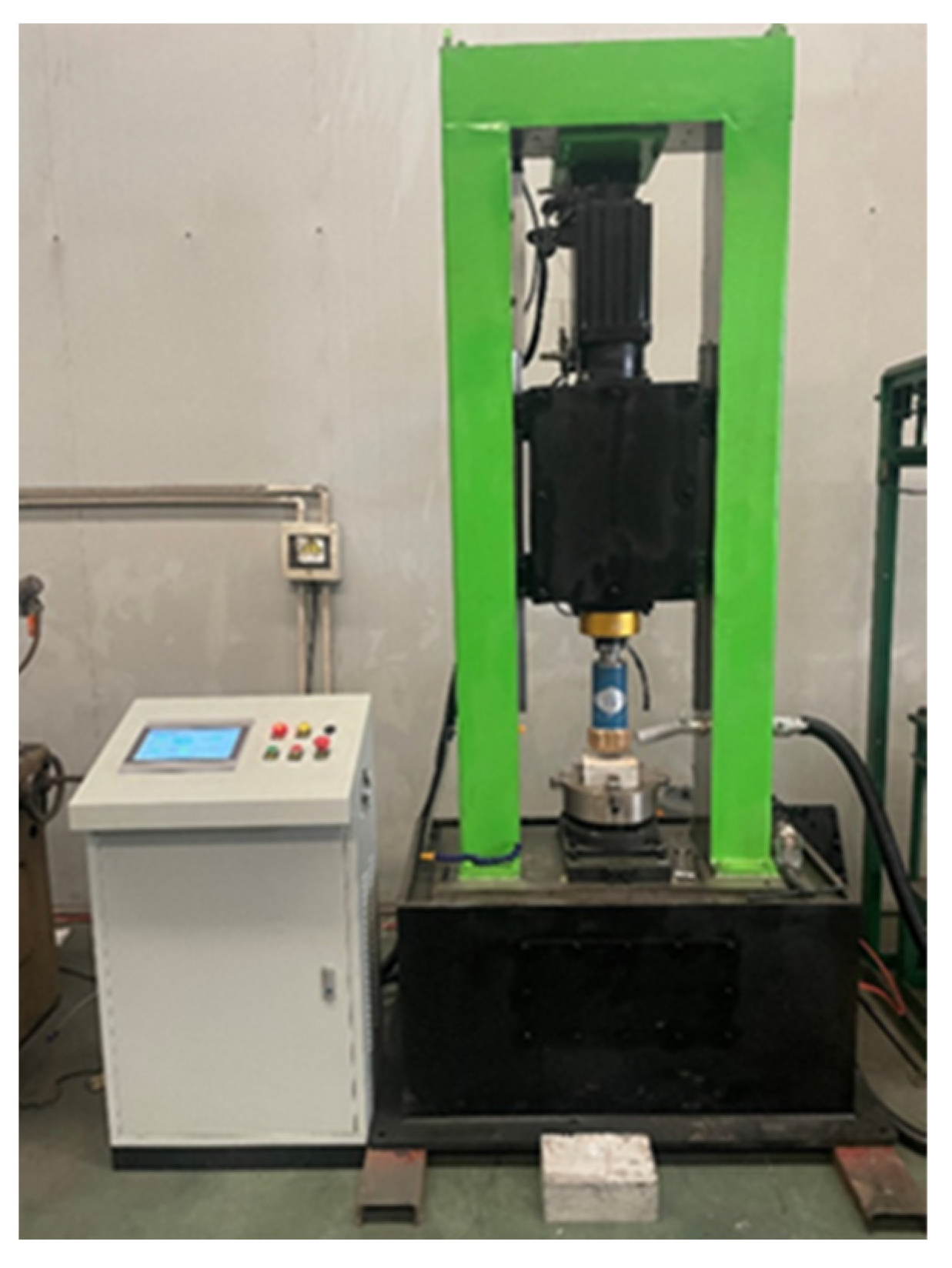
The diamond coring rock-breaking experiments were conducted on a YD-300 rock micro-drilling comprehensive test machine (Beijing Tianhe Zhongbang Exploration Technology Co., Ltd. (CORTECH) Beijing, China) (Figure 1). The bit loading and lifting were controlled by a hydraulic system, and the test machine was equipped with built-in sensors. A proportional–integral–derivative (PID) control system was used to collect real-time data, including drilling pressure, torque, and displacement footage during bit operation. The collected data were displayed as real-time detection values on the operation panel.
Key specifications of the experimental equipment:
Hydraulic control system: Maximum loading capacity = 300 kN; control accuracy = ±0.5% FS; Built-in sensors: Drilling pressure sensor range = 0–200 kN, accuracy = ±0.3% FS; torque sensor range = 0–500 N·m, accuracy = ±0.3% FS; displacement sensor range = 0–500 mm, accuracy = ±0.01 mm; PID control system: Sampling frequency = 100 Hz; response time < 0.1 s.

2.2. Experimental Samples and Scheme

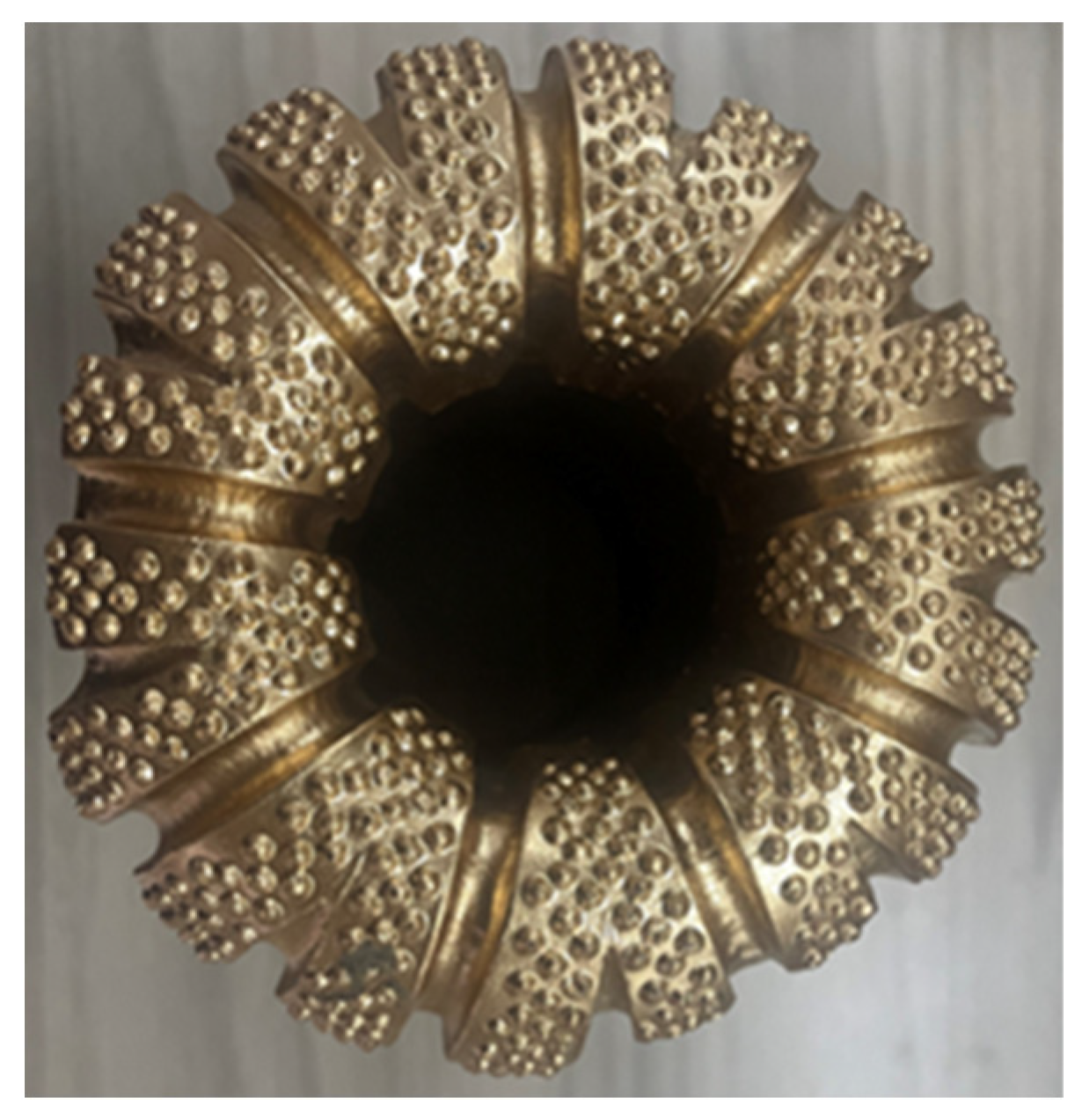
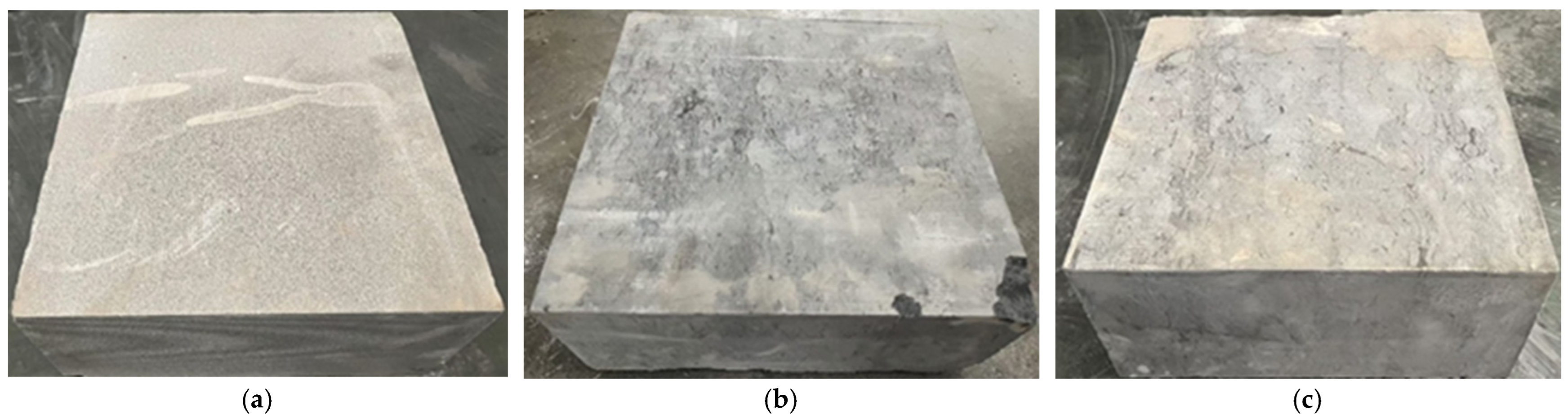
A diamond coring bit was employed with an outer diameter of Φ114 mm an inner diameter of Φ46 mm diamond particle size ranging from 30 to 50 μm and a matrix material of WC-Co alloy with a Co content of 12 wt% the bottom surface of the bit was embedded with 48 diamond particles while the arc surface was equipped with 24 diamond particles as illustrated in Figure 2 three types of rock samples including sandstone limestone and dolomite were prepared with dimensions of 200 mm × 200 mm × 90 mm (length × width × height) all rock samples underwent precision cutting and grinding processes to guarantee surface flatness with a flatness error less than 0.05 mm and uniform density with a density variation less than 0.02 g/cm3 as presented in Figure 3.
The physical and mechanical properties of the rock samples were measured using a uniaxial compressive strength tester (WAW-600) (Shandong Wanchen Testing Machine Co., Ltd./Jinan Chenda Testing Machine Manufacturing Co., Ltd., Jinan, Shandong Province, China) and an ultrasonic elastic modulus tester (NM-4B) (Beijing Kangkerui Engineering Testing Technology Co., Ltd., Beijing, China), as shown in Table 1.
The experiment was designed to investigate the effects of drilling pressure (5, 10, 15 kN) and rotational speed (25, 50, 80 r/min) on rock-breaking performance. The selection of parameters was based on the actual working conditions of diamond coring bits in deep formations (typical drilling pressure: 5–20 kN; typical rotational speed: 20–100 r/min) and the load capacity of the experimental equipment.
The experimental scheme consists of a total of fifteen groups of experiments, with one independent experiment conducted for each group. Details of the experimental scheme are shown in Table 2.

3. Experimental Data and Rock-Breaking Efficiency Analysis of Diamond Coring Bits

3.1. Experimental Results and Data Analysis

Rate of Penetration (ROP) defined as the displacement of the bit per unit time, calculated using the following formula:
R O P = Δ h Δ t × 3600 ,
where Δh = stable drilling displacement (m); Δt = stable drilling time (s); and ROP unit = m/h.
Torque was directly measured using the built-in torque sensor, and the obtained data were averaged over the stable drilling period, with the initial transient stage excluded from the calculation.
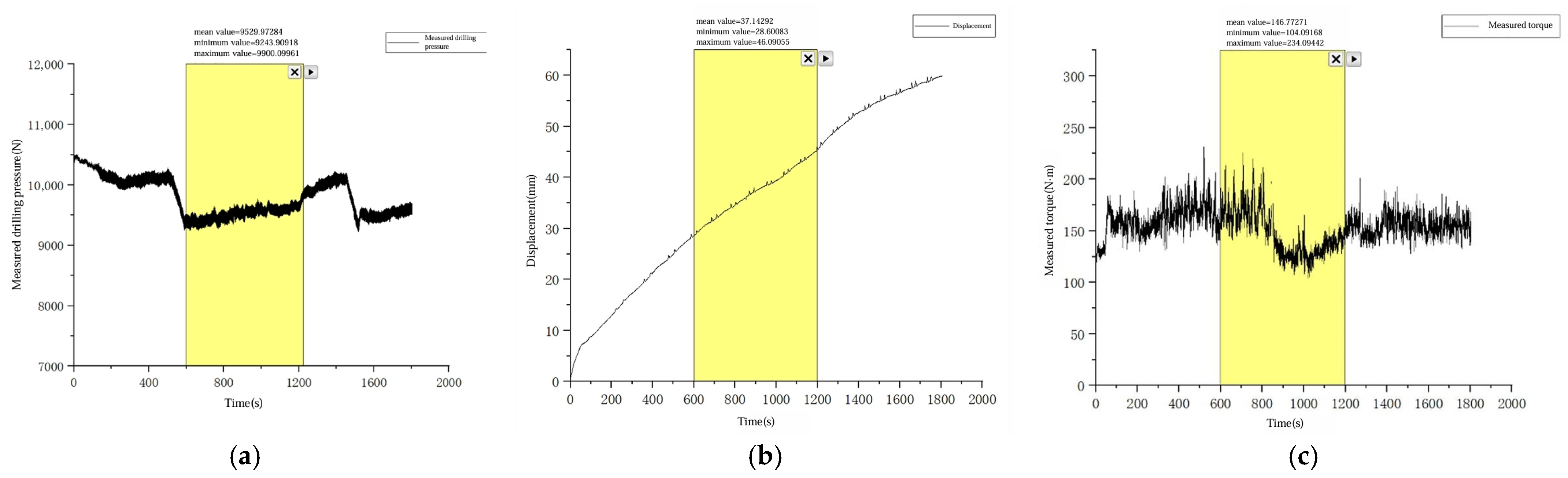
Figure 4 shows the real-time drilling pressure, displacement, and torque data for limestone drilling under a preset drilling pressure of 10 kN and rotational speed of 50 r/min. The stable drilling period (yellow shaded area in the figure) was selected for data processing to avoid the influence of initial transient fluctuations.
During the stable period,
Average drilling pressure = 9529.97 ± 125.63 N (relative error = 1.32%);
Average torque = 146.77 ± 8.92 N·m (relative error = 6.08%);
Average ROP = 0.072 ± 0.005 m/h (relative error = 6.94%).
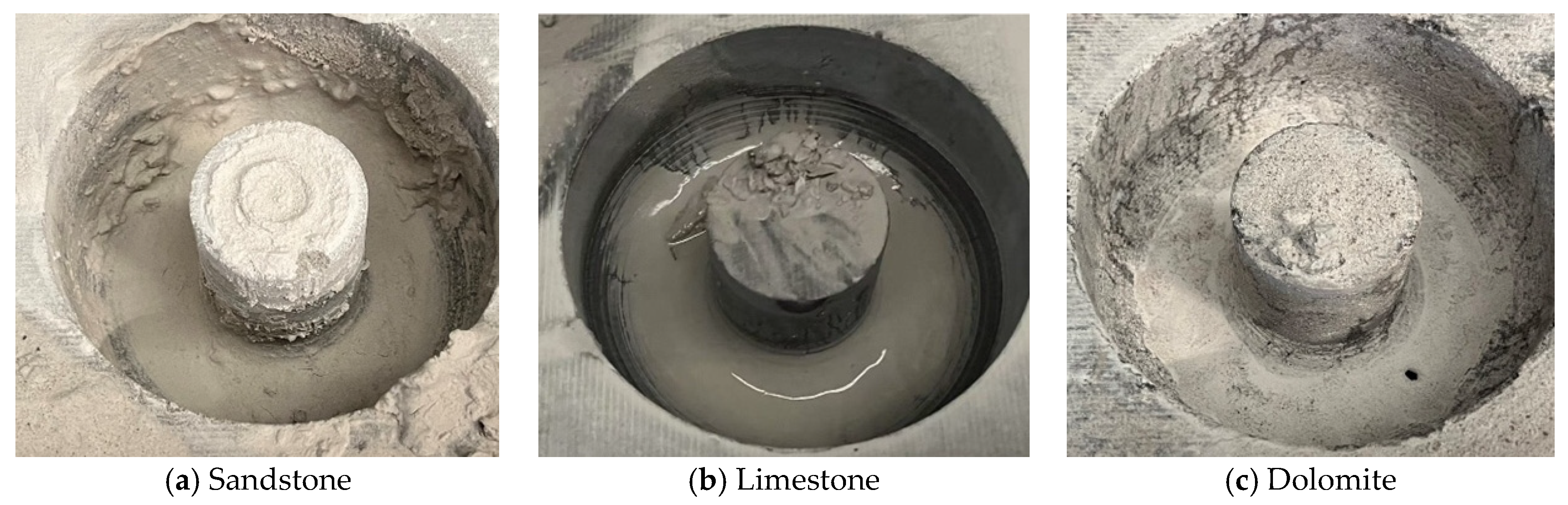
The bottom hole morphology of diamond coring bit in drilling sandstone, limestone and dolomite is shown in Figure 5.
Analysis of experimental data processing:
(1)
Experimental data of drilling sandstone
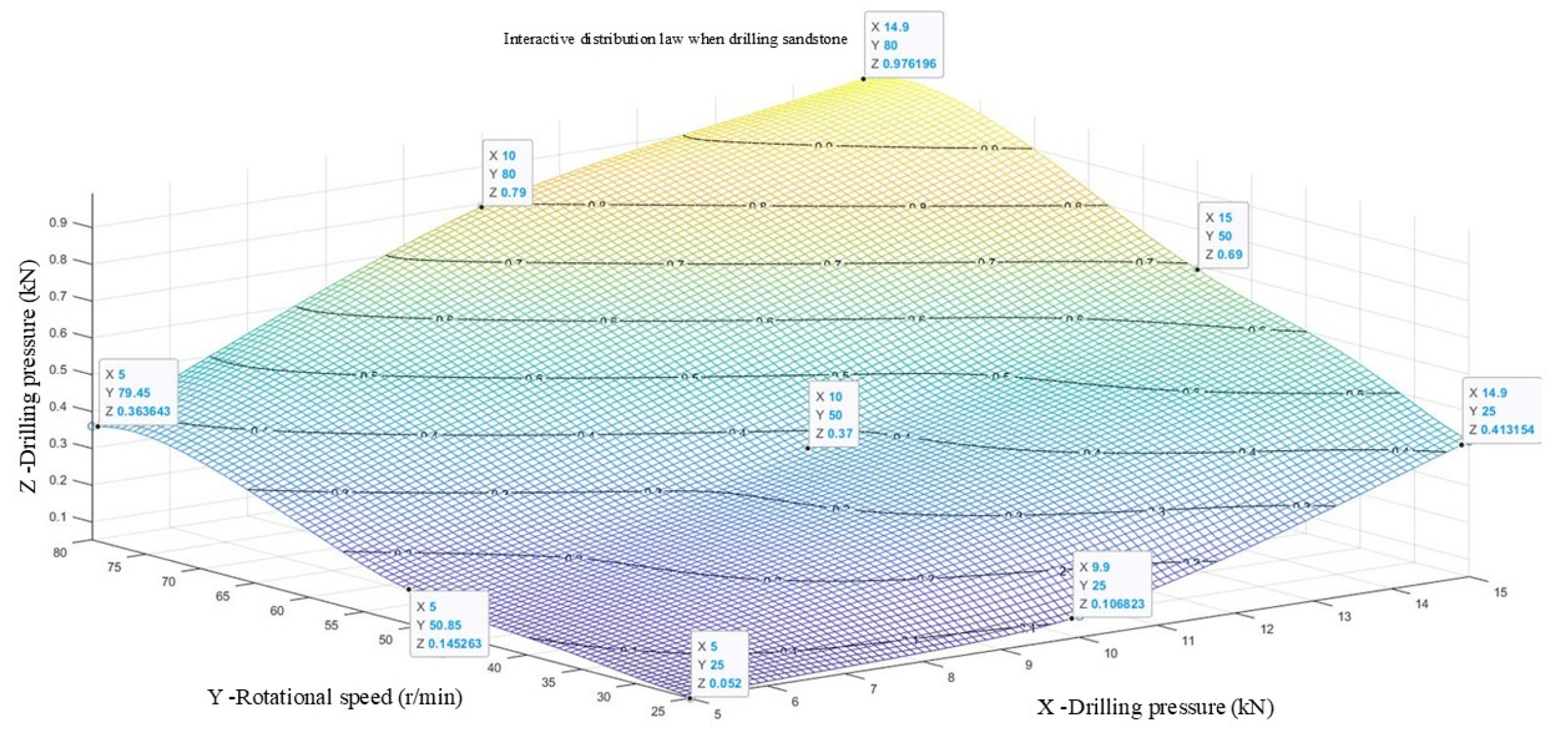
Table 3 shows the average torque and ROP results for sandstone drilling under different parameters. Figure 6 presents the interactive distribution of drilling pressure and rotational speed on ROP.
As shown in Figure 6 and Table 3,
(a) At a rotational speed of 25 r/min, the ROP increment in the 10–15 kN drilling pressure range was 281.82%, which was higher than the 111.54% increment in the 5–10 kN range;
(b) At a rotational speed of 50 r/min, the ROP increment in the 10–15 kN range was 86.49%, lower than the 164.29% increment in the 5–10 kN range;
(c) At a rotational speed of 80 r/min, the ROP increment in the 10–15 kN range was 24.05%, lower than the 119.44% increment in the 5–10 kN range.
At low rotational speeds, increased drilling pressure enhances rock-breaking work, resulting in a more significant ROP increment in the 10–15 kN range; at high rotational speeds, rapid cuttings generation leads to inadequate removal by drilling fluid (water), increasing bit-rock friction and reducing ROP increments in the 10–15 kN range. With a 200% increase in drilling pressure (5–15 kN), the average ROP increment was 406.89%, while a 220% increase in rotational speed (25–80 r/min) yielded an average ROP increment of 473.77%, confirming that sandstone is more sensitive to rotational speed for improved drilling efficiency.
(2)
Experimental data of drilling limestone
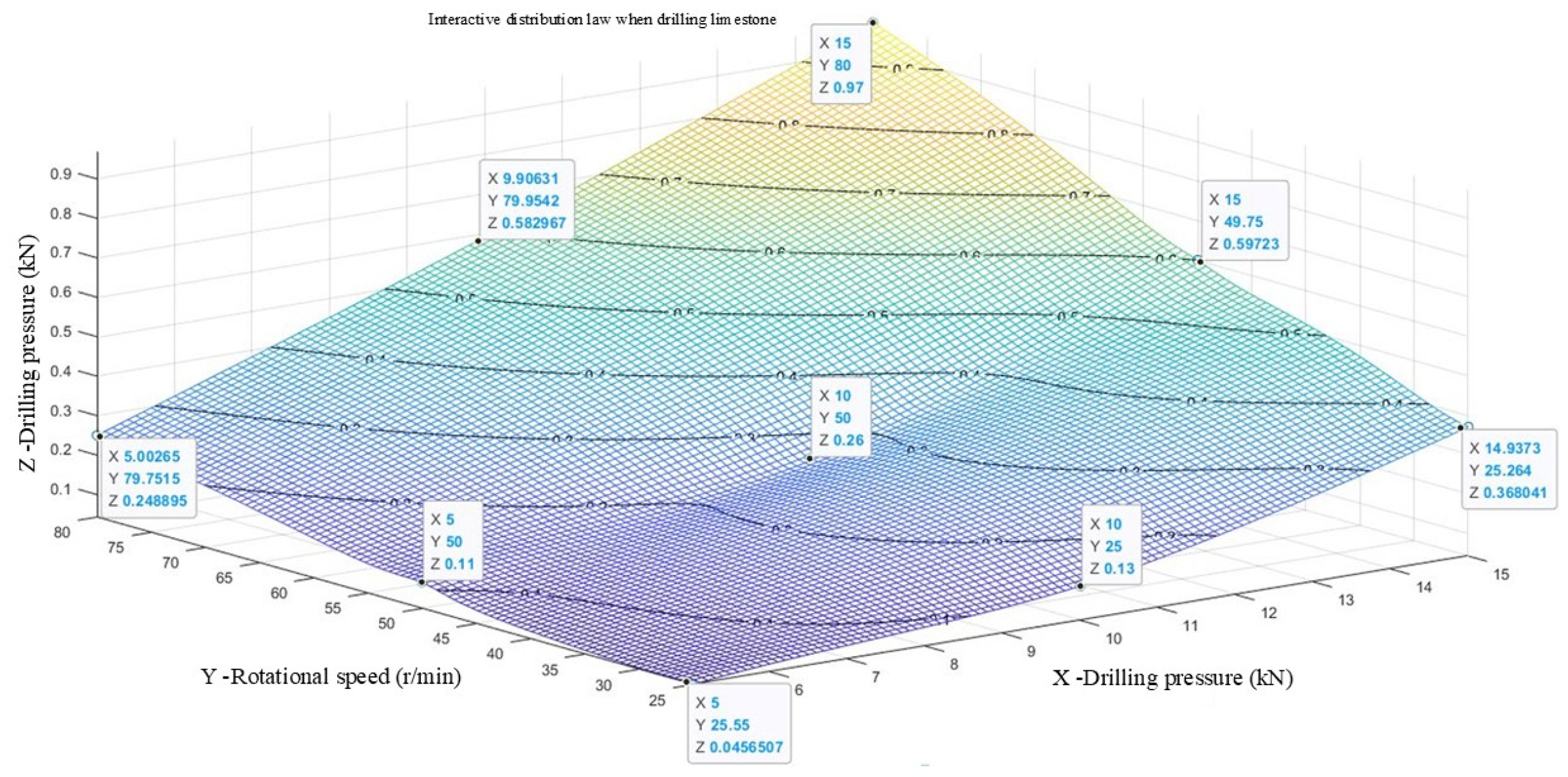
Table 4 shows the average torque and ROP results for limestone drilling. Figure 7 presents the interactive distribution of drilling pressure and rotational speed on ROP.
As shown in Figure 7 and Table 4:
(a) At a rotational speed of 25 r/min: The ROP increment in the 10–15 kN range was 184.62%, lower than the 202.33% increment in the 5–10 kN range;
(b) At a rotational speed of 50 r/min: The ROP increment in the 10–15 kN range was 130.77%, lower than the 136.36% increment in the 5–10 kN range;
(c) At a rotational speed of 80 r/min: The ROP increment in the 10–15 kN range was 64.41%, lower than the 136% increment in the 5–10 kN range.
A 200% increase in drilling pressure (5–15 kN) resulted in an average ROP increment of 473.21%, while a 220% increase in rotational speed (25–80 r/min) led to an average ROP increment of 329.9%, demonstrating that limestone is more sensitive to drilling pressure and that increasing drilling pressure is the preferred approach to enhance drilling efficiency.
(3)
Experimental data of drilling dolomite
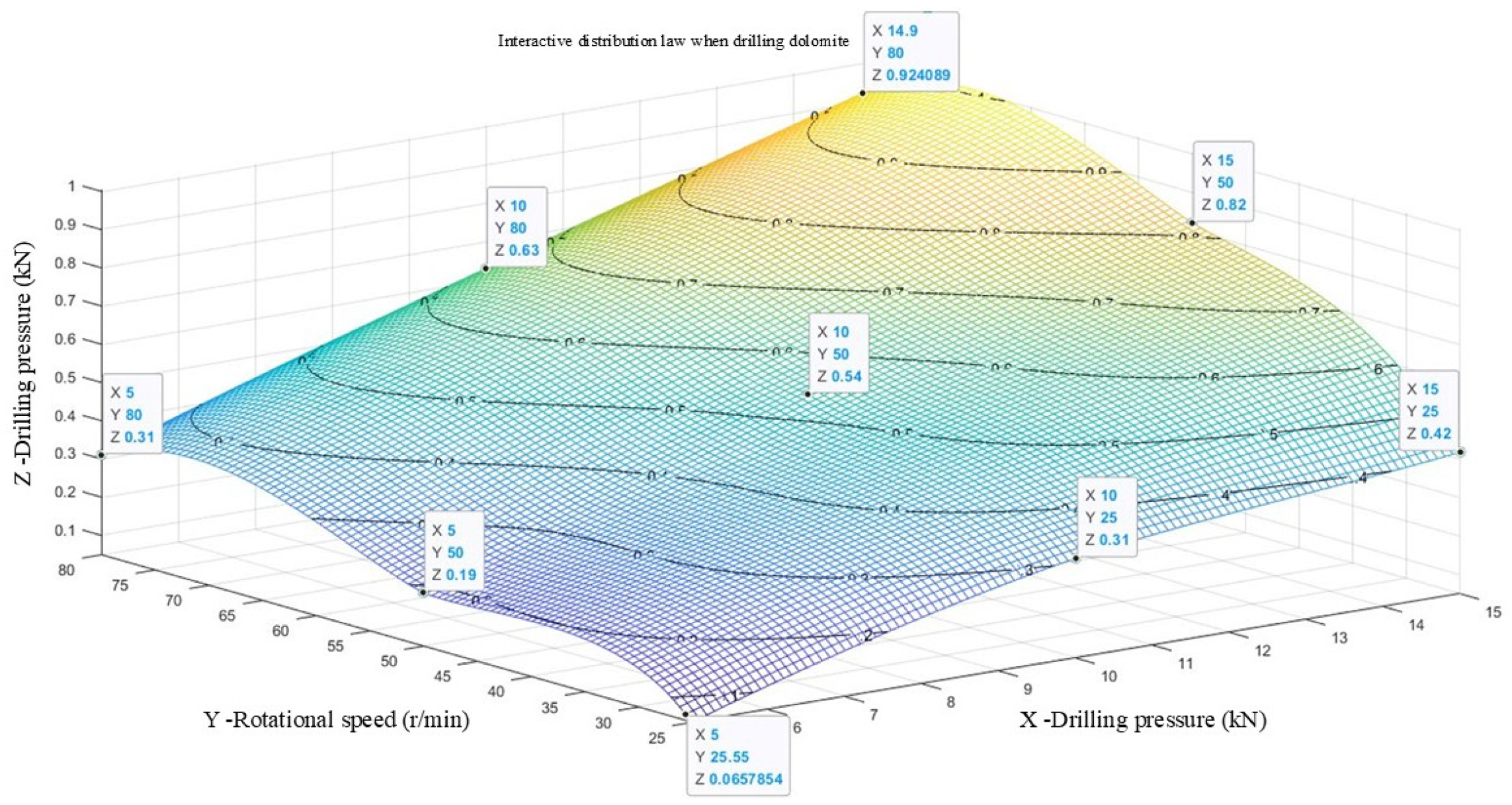
Table 5 shows the average torque and ROP results for dolomite drilling. Figure 8 presents the interactive distribution of drilling pressure and rotational speed on ROP.
As shown in Figure 8 and Table 5,
(a) At a rotational speed of 25 r/min, the ROP increment in the 10–15 kN range was 184.62%, lower than the 532.65% increment in the 5–10 kN range;
(b) At a rotational speed of 50 r/min, the ROP increment in the 10–15 kN range was 51.85%, lower than the 184.21% increment in the 5–10 kN range;
(c) At a rotational speed of 80 r/min, the ROP increment in the 10–15 kN range was 47.62%, lower than the 103.23% increment in the 5–10 kN range.
With a 200% increase in drilling pressure (5–15 kN), the average ROP increment reached 354.9%, compared to 197.32% from a 220% increase in rotational speed (25–80 r/min), indicating that dolomite is more sensitive to drilling pressure and that prioritizing increased drilling pressure is more effective for improving drilling efficiency.

3.2. Rock-Breaking Efficiency Analysis

To intuitively evaluate the rock-breaking efficiency of diamond coring bits under different drilling pressures, rotational speeds, and lithologies, mechanical specific energy (MSE) was introduced as the evaluation index. MSE is defined as the energy consumed to break a unit volume of rock, and it is calculated using the following formula:
M S E = 4 × ( F × R O P + 2 π   N T ) D 2 × R O P × 10 6 ,
where
F = drilling pressure (N);
T = torque (N·m);
N = rotational speed (r/s);
ROP = rate of penetration (m/s);
D = bit outer diameter (m);
MSE unit = J/cm3.
Table 6 shows the calculated MSE values for diamond coring bits drilling sandstone, limestone, and dolomite.
Key findings from Table 6:
1. Sandstone: The minimum MSE (23.01 J/cm3) was achieved at 15 kN drilling pressure and 50 r/min rotational speed—indicating the lowest energy consumption for breaking unit volume rock;
2. Limestone: The minimum MSE (23.89 J/cm3) was achieved at 10 kN drilling pressure and 25 r/min rotational speed;
3. Dolomite: The minimum MSE (14.39 J/cm3) was achieved at 10 kN drilling pressure and 25 r/min rotational speed.
In summary, the optimal drilling parameters for minimum energy consumption are as follows: Sandstone: 15 kN, 50 r/min;Limestone: 10 kN, 25 r/min;Dolomite: 10 kN, 25 r/min.

4. Working Mechanics Modeling and Load Calculation of Diamond Coring Bits

4.1. Cutting Force Modeling of Single-Crystal Diamond

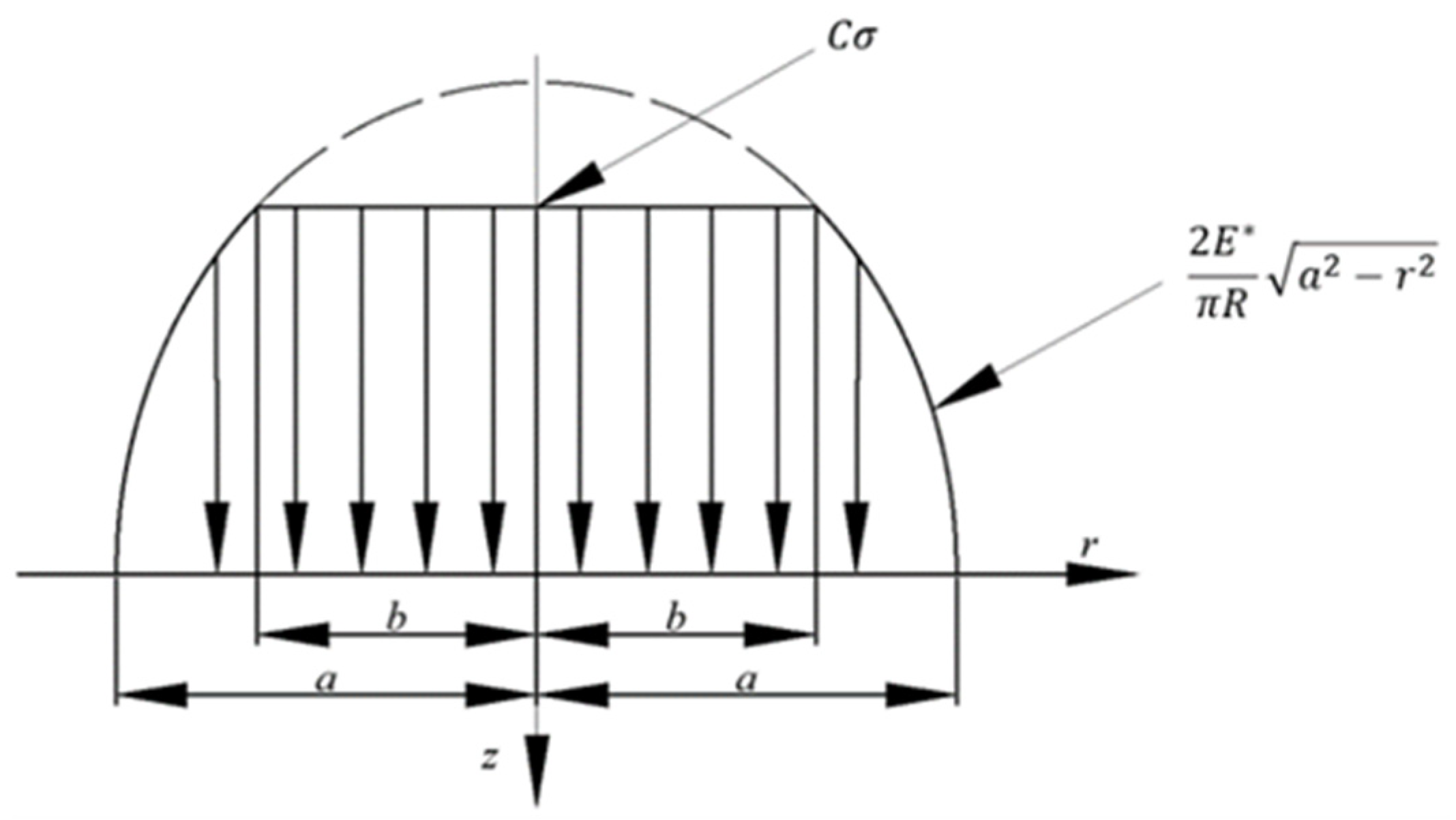
When the diamond particles are in the elastic deformation stage, according to Hertz theory, the two contact bodies can be considered as an elastic half space, and they are subjected to the same contact pressure in the contact area. When the diamond particles are pressed deeper than the critical pressing depth, the compressive body begins to undergo plastic deformation and enters the elastic-plastic deformation stage. At this time, the elastic deformation becomes inelastic deformation. Yu et al. [22] proposed the concept of ‘finite contact pressure‘ and its distribution model. It is assumed that the contact pressure in the middle part of the contact area is uniformly distributed, and its value is equal to the contact pressure at the critical plastic deformation. The contact pressure outside this area is Hertz elliptic pressure distribution, and its value changes from the maximum pressure value to 0, as shown in Figure 9.
When the diamond bit drills the formation rock, the elastic-plastic deformation is more obvious than the elastic deformation. According to the correction of the Hertz theory, the contact stress generated when the elastic-plastic deformation occurs can be obtained, and this is defined as the pressure   F n   of the diamond single particle:
F n = 2 3 π A σ h R 1 3 ( π A σ R 3 E * ) 2 ,
where A is a function related to Poisson ‘s ratio; σ is rock yield strength; h is invasion depth; E * is reduced elastic modulus; R is diamond particle radius.
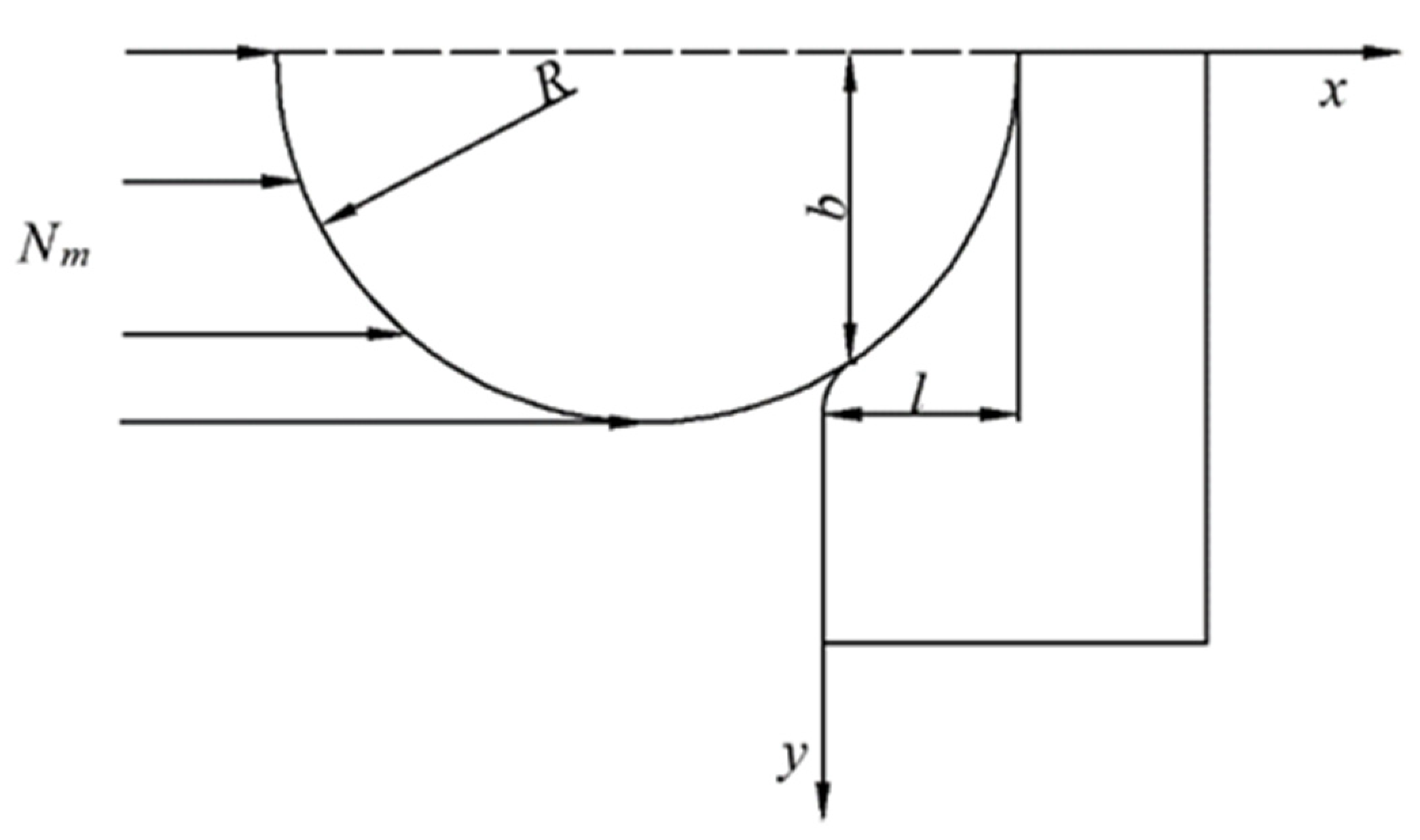
As shown in Figure 10 (the schematic diagram of tangential force of diamond single-particle cutting rock), the cutting force of diamond cutting rock is similar to the drilling pressure of diamond particles. Both diamond particles and rock can be considered as elastic half-space. According to Hertz theory, the cutting force of diamond in rotation is
N m = 1 3 π A σ l R 1 3 ( π A σ R 3 E * ) 2 .

4.2. Working Load Modeling of Full Drill Bit

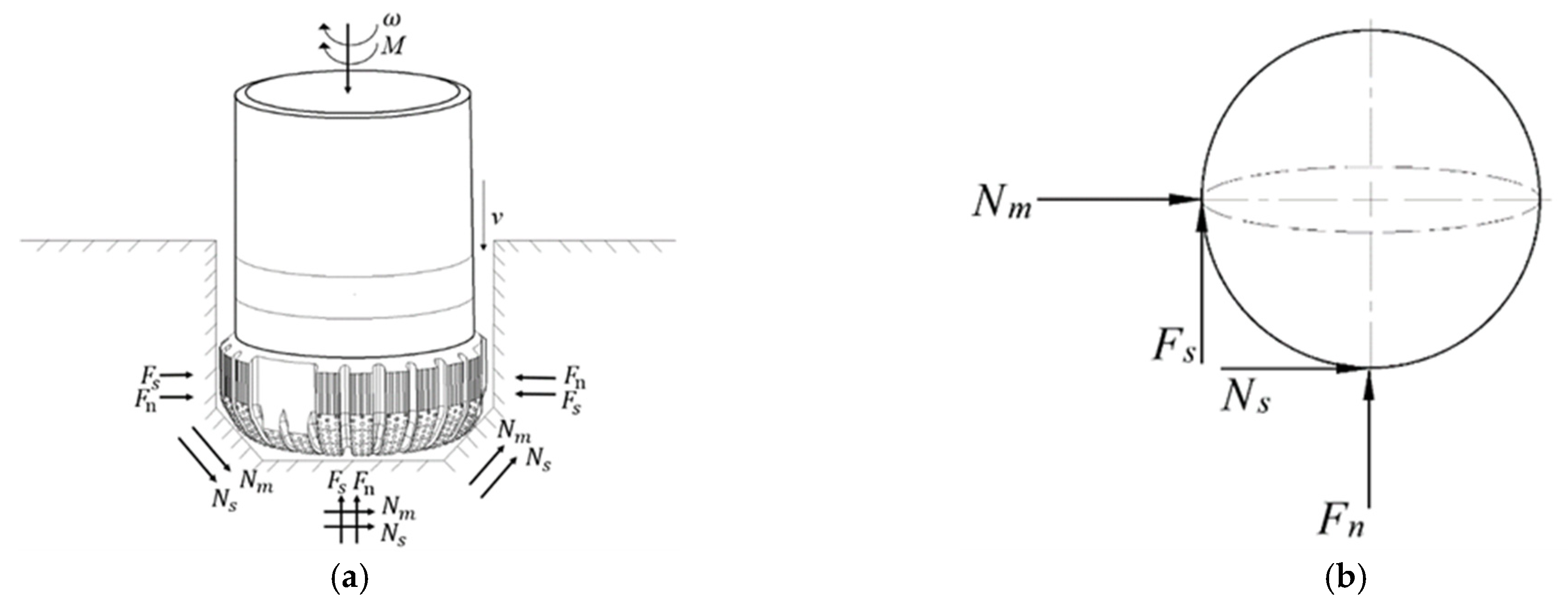
After the analysis of the drilling pressure and cutting force of the diamond particles, the pressure and torque of the diamond bit body should be modeled and analyzed. Figure 11a is a schematic diagram of the force analysis of the diamond coring bit. It is assumed that the number of diamond particles on the bottom surface of the drill bit is a i , and the number of diamond particles on the arc surface of the drill bit is a j . For single-grain diamond, F n in Figure 11b is the drilling pressure on the diamond particles, N m is the cutting force on the diamond particles, F s and N s are the friction forces on the diamond bit during drilling and rotation, respectively.
The expression for calculating the drilling pressure and cutting force on the diamond coring bit is
N s = μ F n F s = μ N m ,
where μ is coefficient of friction.
Yongji Zou et al. [23] made a theoretical analysis of the relationship between the friction coefficient and the internal friction angle of the rock, and concluded that the internal relationship between the two is
μ = tan θ ,
where θ is internal friction angle of rock.
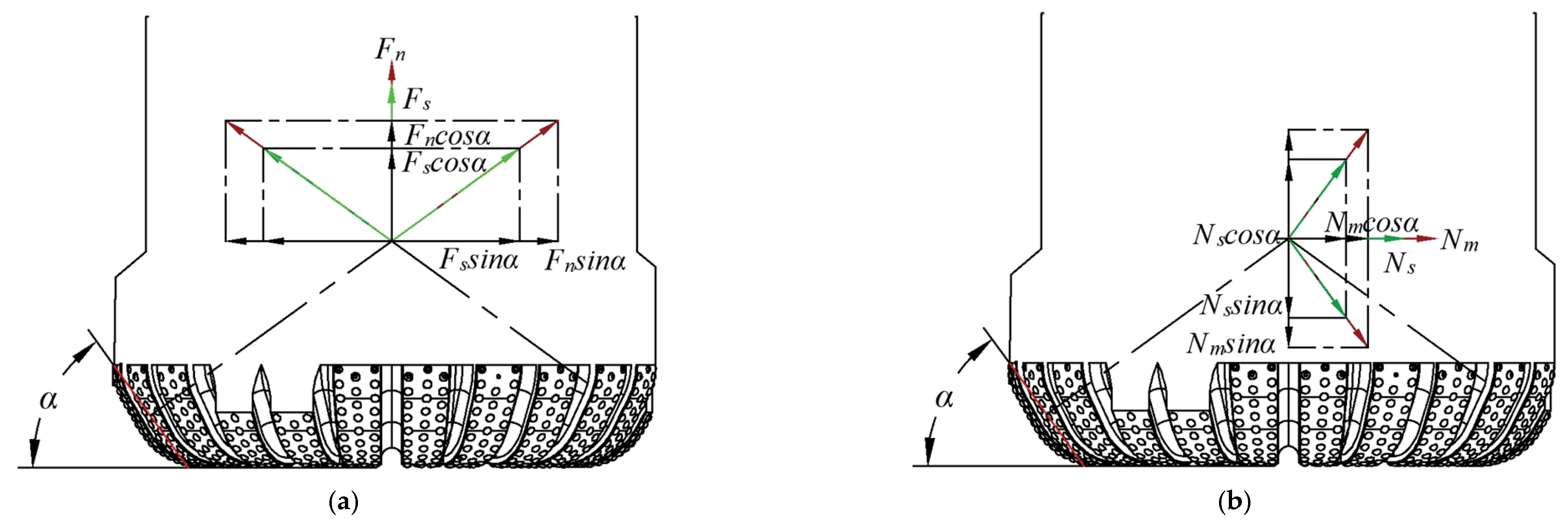
The inclination angle of the bit lip surface is approximately α, as shown in Figure 12, and the stress analysis of the whole bit can be obtained.
From Figure 12a,b, the pressure and torque of the diamond bit are
F = F n a i + a j F n cos α + F s a i + a j F s cos α M = ( N m a i + a j N m cos α + N s a i + a j N s cos α ) L ,
where L is the average distance between diamond particles and the axis of the drill bit, its unit is mm.
  • where L is
L = D + d 4 ,
where D is outer diameter of drill bit, its unit is mm; d is drill bit inner diameter, its unit is mm.
The cutting depth h per revolution of the drill bit is
h = l = 1000 v 60 ω = 50 v 3 ω ,
where v is drilling rate, its unit is m/h; and ω is rotating speed, its unit is r/min.

5. Conclusions and Limitations

5.1. Conclusions

1. Sensitivity of rock types to drilling parameters:
Sandstone is more sensitive to rotational speed; the average ROP increment from increasing rotational speed (473.77%) is higher than that from increasing drilling pressure (406.89%); Limestone and dolomite are more sensitive to drilling pressure; their average ROP increments from increasing drilling pressure (473.21% and 354.9%, respectively) are higher than those from increasing rotational speed (329.9% and 197.32%, respectively).
2. Optimal drilling parameters for minimum energy consumption:
Sandstone: 15 kN drilling pressure, 50 r/min rotational speed (minimum MSE = 23.01 J/cm3); Limestone: 10 kN drilling pressure, 25 r/min rotational speed (minimum MSE = 23.89 J/cm3); Dolomite: 10 kN drilling pressure, 25 r/min rotational speed (minimum MSE = 14.39 J/cm3).
3. Working load model:
A cutting mechanics model for single-crystal diamond was established based on the Hertz theory and elasto-plastic deformation theory; A working load model for the entire bit was derived, considering the number of diamond particles, friction forces, and bit geometry; The model prediction error is <2%, indicating high accuracy.
In summary, this study provides direct engineering guidance for the practical design of diamond coring bits and the scientific selection of drilling parameters—specifically, optimizing cutter layout based on lithological sensitivity and matching drilling pressure/rotational speed with minimum MSE requirements to enhance drilling efficiency and extend bit service life.

5.2. Limitations and Future Work

1. Experimental limitations: The experiments were conducted under atmospheric pressure and room temperature (25 °C), which differ from the high-temperature, high-pressure environment of deep formations. Future studies should incorporate a confining pressure system to simulate deep formation conditions.
2. Model limitations: The model assumes uniform distribution of diamond particles, while actual bits may have non-uniform tooth arrangements. Future work should optimize the model by considering the actual tooth distribution.
3. Parameter extension: The conclusions are limited to the experimental parameter range (drilling pressure: 5–15 kN; rotational speed: 25–80 r/min). Higher load conditions (e.g., 60–80 kN drilling pressure, 160 MPa confining pressure) require further experiments to verify applicability.

Author Contributions

Conceptualization, J.Y.; software, B.L.; investigation, K.Y. and H.R.; writing—original draft preparation, J.Y.; All authors have read and agreed to the published version of the manuscript.

Funding

This research was supported by CNPC Chuanqing Drilling Engineering Company Limited, grant number (2023ZG19).

Data Availability Statement

The original contributions presented in this study are included in the article. Further inquiries can be directed to the corresponding author.

Conflicts of Interest

Author Jianlin Yao, Bin Liu and Kunpeng Yao were employed by CNPC Chuanqing Drilling Engineering Company Limited. The remaining author declares that the research was conducted in the absence of any commercial or financial relationships that could be construed as a potential conflict of interest. The authors declare that this study received funding from CNPC Chuanqing Drilling Engineering Company Limited. The funder was not involved in the study design, collection, analysis, interpretation of data, the writing of this article or the decision to submit it for publication.

References

  1. Chen, C.; Ji, G.; Wang, H.; Chen, C.; Ji, G.; Wang, H.; Huang, H.; Wu, Q.; Liu, L. Safe speed-up drilling technology for ultra-deep well based on geology-engineering integration. Springer Ser. Geomech. Geoeng. 2023, 2023, 2784–2798. [Google Scholar] [CrossRef]
  2. Dvoynikov, M.V.; Sidorkin, D.I.; Yurtaev, S.L.; Grokhotov, E.I.; Ulyanov, D.S. Drilling of deep and ultra-deep wells for prospecting and exploration of new raw mineral fields. J. Min. Inst. 2022, 258, 945–955. [Google Scholar] [CrossRef]
  3. Zhu, X.; Li, R.; Liu, W. Development status of high-efficiency rock-breaking and speed-increasing technologies for deep shale gas horizontal wells. J. Southwest Pet. Univ. 2023, 45, 1–18. [Google Scholar]
  4. Hou, Z.; Jia, X.; Li, S.; Deng, W.; Zeng, D. Research on the torsion impact generator for speeding up drilling in deep formation of Yubei area. Oil Drill. Prod. Technol. 2013, 35, 132–136. [Google Scholar]
  5. Zhang, G.; Ma, F.; Liang, B.; Zhao, J.; Qin, H.; Liu, X.; Zhang, K.; Ke, W. Global progress in deep oil and gas exploration theories and technologies. Acta Pet. Sin. 2015, 36, 1156–1166. [Google Scholar]
  6. Chen, X. Current status and development trend of deep and ultra-deep well drilling technology. Chem. Eng. Equip. 2023, 312, 211–213. [Google Scholar]
  7. Chen, G.; Wu, J.; Liu, Y.; Wu, S.; Zhang, J.; Zhang, X. New progress and challenges in deep shale gas exploration and development in the southern Sichuan Basin. Nat. Gas Ind. 2022, 42, 24–34. [Google Scholar]
  8. Wang, H.; Huang, H.; Ji, G.; Chen, C.; Lv, Z.; Chen, W.; Bi, W.; Liu, L. Progress and challenges of deep, ultra-deep, and horizontal well drilling and completion technologies in China. Chin. Pet. Explor. 2023, 28, 1–11. [Google Scholar]
  9. Wang, D.; Liu, H.; Han, S.; Zhong, S.; Xiong, J.; Ye, L. Research on deep rock mechanics and deep well drilling technology. Drill. Prod. Technol. 2006, 3, 6–10. [Google Scholar] [CrossRef]
  10. Wang, H.; Huang, H.; Bi, W.; Ji, G.; Zhou, B.; Zhuo, L. Deep and ultra-deep oil and gas well drilling technologies: Progress and prospect. Nat. Gas Ind. B 2022, 9, 141–157. [Google Scholar] [CrossRef]
  11. Fang, J.; Yan, T.; Li, T. Analysis on bottom-hole wear process of double-nozzle ultra-high matrix diamond drill bit. Coal Geol. Explor. 2011, 39, 74–77. [Google Scholar]
  12. Ruan, H.; Shen, L.; Li, C.; Ouyang, Z.; Wu, H.; Chen, Y. Development and application of a new type of sharp-tooth PDC bit for elastic-plastic dense mudstone. Explor. Eng. 2014, 41, 80–83. [Google Scholar]
  13. Wang, J.; Zhang, S. Experimental study and rock-breaking mechanism analysis of matrix-wear-weakened impregnated diamond drill bit. J. Cent. South Univ. 2015, 46, 1436–1441. [Google Scholar]
  14. Loginov, P.A.; Sidorenko, D.A.; Bychkova, M.Y.; Zaitsev, A.A.; Levashov, E.A. Performance of diamond drill bits with hybrid nanoreinforced Fe-Ni-Mo binder. Int. J. Adv. Manuf. Technol. 2019, 102, 2041–2047. [Google Scholar] [CrossRef]
  15. Zhao, M.; Zhang, K. Experimental study on wear of diamond milling cutter in stone cutting. Mech. Des. Manuf. 2019, 4, 143–145. [Google Scholar]
  16. Gao, Y.; Chen, Y. Experimental study on diamond drill bit for drilling hard and dense rock formations. Superhard Mater. Eng. 2021, 33, 1–6. [Google Scholar]
  17. Wang, Y.; Yin, X.; Yin, G.; Chen, H.; Wang, L.; Feng, Y.; Xu, L. Development of continuous coring bit for deep-sea hard rock. Drill. Eng. 2021, 48, 26–32. [Google Scholar]
  18. Wang, Y.; Zhang, K.; Li, Q.; Zhou, Q.; Ling, X.; Liu, B. Study on the interaction between single diamond particle and rock under ultra-high speed. Drill. Eng. 2023, 50, 21–29. [Google Scholar]
  19. Li, X.; Li, K.; Liang, J.; Yin, H.; Wang, Z.; Sun, J.; Zhang, Y. Analysis of core jamming causes and preventive measures in coring drilling in complex formations. Explor. Eng. 2018, 45, 12–15. [Google Scholar]
  20. Li, X.; Liu, X.; Yin, H. Optimization design concept of wireline coring tools for deep holes in complex formations. Explor. Eng. 2017, 44, 56–59. [Google Scholar]
  21. Kong, Z.; Yu, X. Coring drilling technology for ancient buried hill reservoirs in Liaohe Oilfield. Pet. Drill. Technol. 2014, 42, 50–54. [Google Scholar]
  22. Yu, W.; Blanchard, J.P. An elastic-plastic indentation model and its solution. J. Mater. Res. 1996, 11, 2358–2367. [Google Scholar] [CrossRef]
  23. Zou, Y.J. Understanding and Comprehension of Soil Cohesion and Internal Friction Angle. For. Constr. 2014, 4, 40–42. [Google Scholar]
Figure 1. YD-300 micro-drill experimental machine.
Processes 14 00267 g001
Figure 2. Diamond coring bit for experiment.
Processes 14 00267 g002
Figure 3. Experimental rock samples, (a) Sandstone; (b) Limestone; (c) Dolomite.
Processes 14 00267 g003
Figure 4. Real-time data for limestone drilling (preset drilling pressure: 10 kN; rotational speed: 50 r/min): (a) drilling pressure; (b) displacement; (c) torque. The yellow shaded area indicates the stable drilling period.
Processes 14 00267 g004
Figure 5. Comparison of bottom-hole morphology characteristics of different rock samples. Note: (ac) in the figure represent the bottom-hole morphologies of sandstone, limestone, and dolomite under the optimal rock-breaking parameters, respectively. The bottom surface of sandstone shows fine cutting grooves without obvious fracture zones, which is related to the characteristic that sandstone is sensitive to rotational speed and rock-breaking is dominated by cutting action. The bottom hole of limestone presents a morphology of interweaved local spalling pits and cutting grooves, which originates from its well-developed bedding structure and the synergistic effect of brittle spalling and cutting rock-breaking under the action of drilling pressure. The bottom-hole morphology of dolomite is rough with a small amount of debris adhesion, which is attributed to the high hardness and low plasticity of dolomite; rock-breaking is dominated by crushing and grinding, and cutting action is relatively weak. This figure was obtained from laboratory bench-scale experiments with the experimental parameter range of drilling pressure 5–15 kN and rotational speed 25–80 r/min.
Processes 14 00267 g005
Figure 6. The interactive distribution diagram of drilling pressure and rotational speed on sandstone when drilling sandstone.
Processes 14 00267 g006
Figure 7. The interactive distribution law of drilling pressure and rotation speed on limestone during drilling limestone.
Processes 14 00267 g007
Figure 8. The interactive distribution law of drilling pressure and rotational speed on dolomite during drilling dolomite.
Processes 14 00267 g008
Figure 9. The contact pressure distribution diagram of the contact area.
Processes 14 00267 g009
Figure 10. The schematic diagram of tangential force of diamond single particle cutting rock.
Processes 14 00267 g010
Figure 11. Force analysis diagram of diamond coring bit, (a) The overall force analysis diagram of diamond coring bit; (b) The schematic diagram of force analysis of single diamond particle.
Processes 14 00267 g011
Figure 12. The overall stress analysis plan of diamond drill bit, (a) The drilling pressure and friction force of diamond drill bit during drilling, (b) The cutting force and friction force of diamond bit when it rotates.
Processes 14 00267 g012
Table 1. Physical and mechanical properties of rock samples.
Rock TypeCompressive Strength (MPa)Elastic Modulus (GPa)Poisson’s RatioDrillability GradeHardness (MPa)
Sandstone67.548 ± 2.1311.54 ± 0.420.062 ± 0.0055.07 ± 0.12630.96 ± 15.72
Limestone105.951 ± 3.4731.2 ± 0.890.171 ± 0.0088.58 ± 0.151495.1 ± 28.63
Dolomite110.973 ± 3.8234.42 ± 0.950.201 ± 0.0098.67 ± 0.161574.4 ± 31.29
Table 2. Experimental scheme.
Serial NumberDrilling Pressure (kN)Rotating Speed (r/min)Rock TypeNumber of Repeats
1525Sandstone3
21050Sandstone3
31080Sandstone3
41550Sandstone3
51025Limestone3
6550Limestone3
71050Limestone3
81580Limestone3
91025Dolomite3
101525Dolomite3
11550Dolomite3
121050Dolomite3
131550Dolomite3
14580Dolomite3
151080Dolomite3
Table 3. Average experimental results for sandstone drilling.
Drilling Pressure (kN)Rotating Speed (r/min)Torque (N·m)Drilling Rate (m/h)
525120.51 ± 7.230.052 ± 0.004
1050187.19 ± 9.450.37 ± 0.021
1080194.39 ± 10.120.79 ± 0.038
1550252.54 ± 12.670.69 ± 0.042
Table 4. Average experimental results for limestone drilling.
Drilling Pressure (kN)Rotating Speed (r/min)Torque (N·m)Drilling Rate (m/h)
55058.85 ± 3.530.11 ± 0.007
1025119.49 ± 6.080.13 ± 0.008
1050126.77 ± 7.610.15 ± 0.009
1580243.04 ± 12.150.97 ± 0.058
Table 5. Experimental results of variable parameter drilling in dolomite.
Drilling Pressure (kN)Rotating Speed (r/min)Torque (N·m)Drilling Rate (m/h)
55086.52 ± 4.330.19 ± 0.011
58085.21 ± 4.260.31 ± 0.015
1025171.59 ± 8.580.31 ± 0.016
1050177.53 ± 8.880.54 ± 0.027
1080192.77 ± 9.640.63 ± 0.031
1525310.77 ± 15.540.42 ± 0.021
1550329.81 ± 16.490.82 ± 0.041
Table 6. MSE results for different rock types.
Drilling Pressure (kN)Rotational Speed (r/min)MSE (J/cm3)—SandstoneMSE (J/cm3)—LimestoneMSE (J/cm3)—Dolomite
52560.16 ± 3.61//
550/32.97 ± 1.9823.65 ± 1.42
580//25.52 ± 1.53
1025/23.89 ± 1.4314.39 ± 0.86
105026.29 ± 1.5829.33 ± 1.7621.86 ± 1.31
108024.59 ± 1.48/25.44 ± 1.53
1525//19.24 ± 1.15
155023.01 ± 1.38/20.92 ± 1.25
1580/33.18 ± 1.99/
Disclaimer/Publisher’s Note: The statements, opinions and data contained in all publications are solely those of the individual author(s) and contributor(s) and not of MDPI and/or the editor(s). MDPI and/or the editor(s) disclaim responsibility for any injury to people or property resulting from any ideas, methods, instructions or products referred to in the content.