A Review of Eddy Current In-Line Inspection Technology for Oil and Gas Pipelines


Abstract
1. Introduction
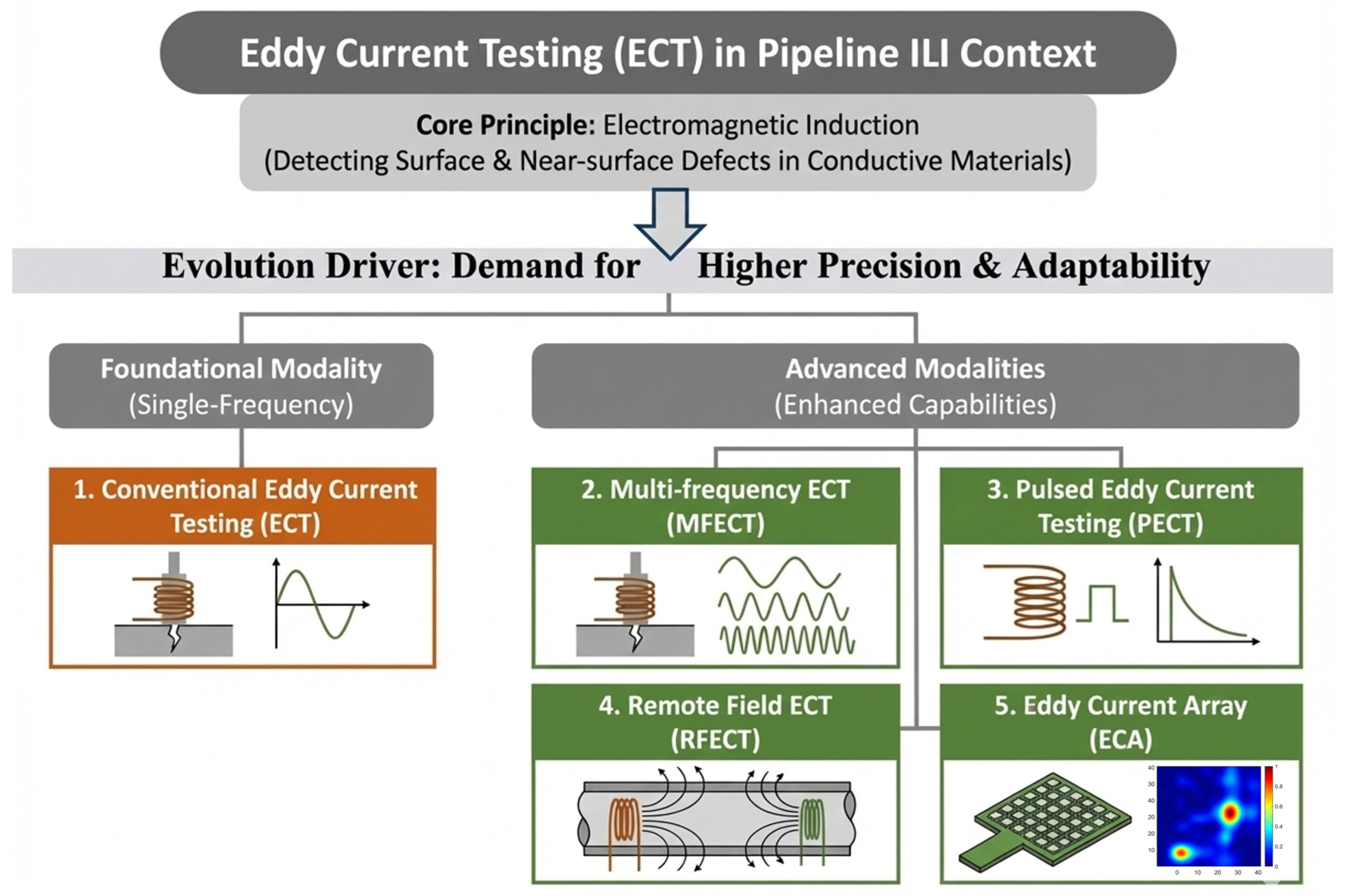
2. Development of Eddy Current Testing Technology
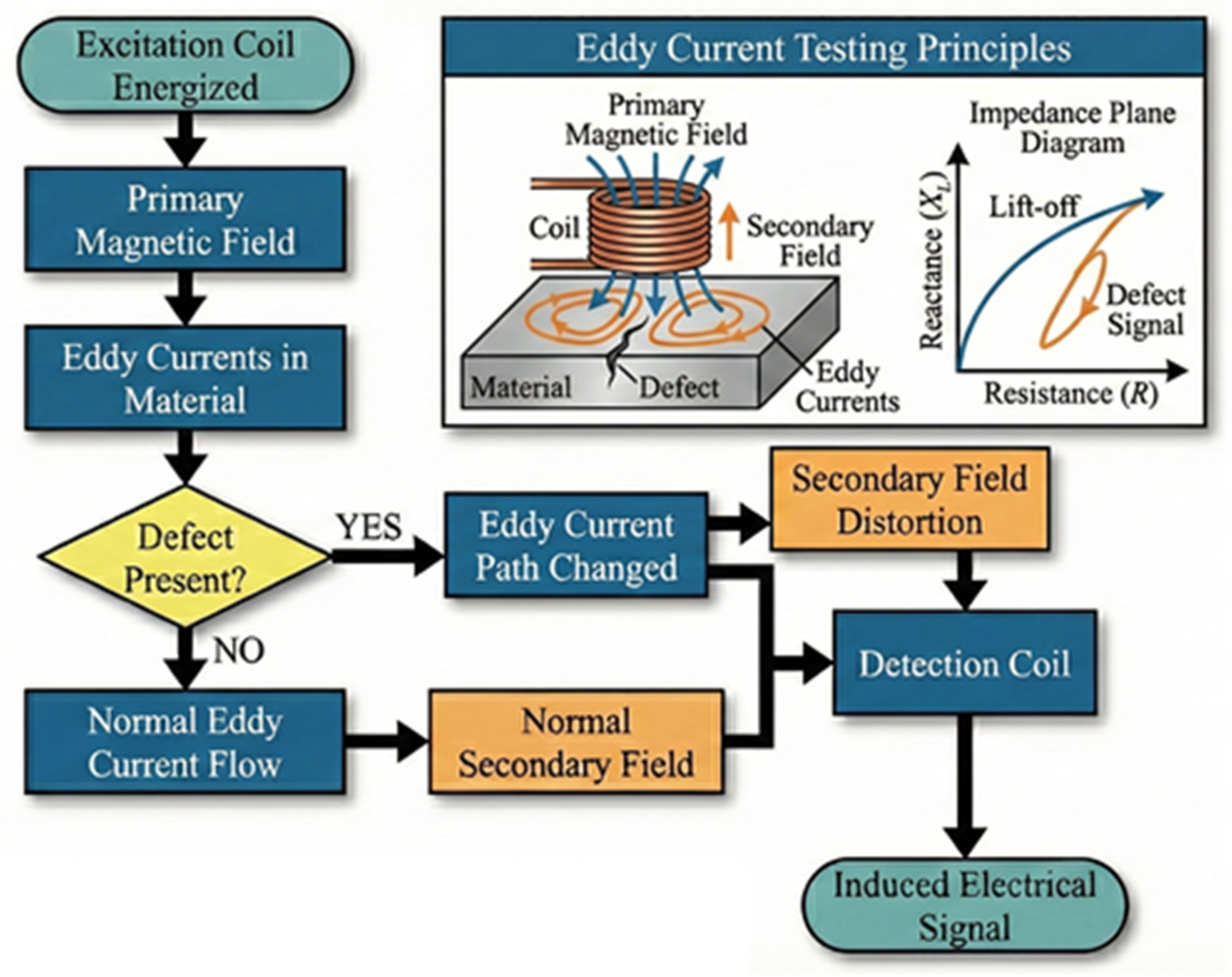
2.1. Fundamental Principles of Eddy Current Testing
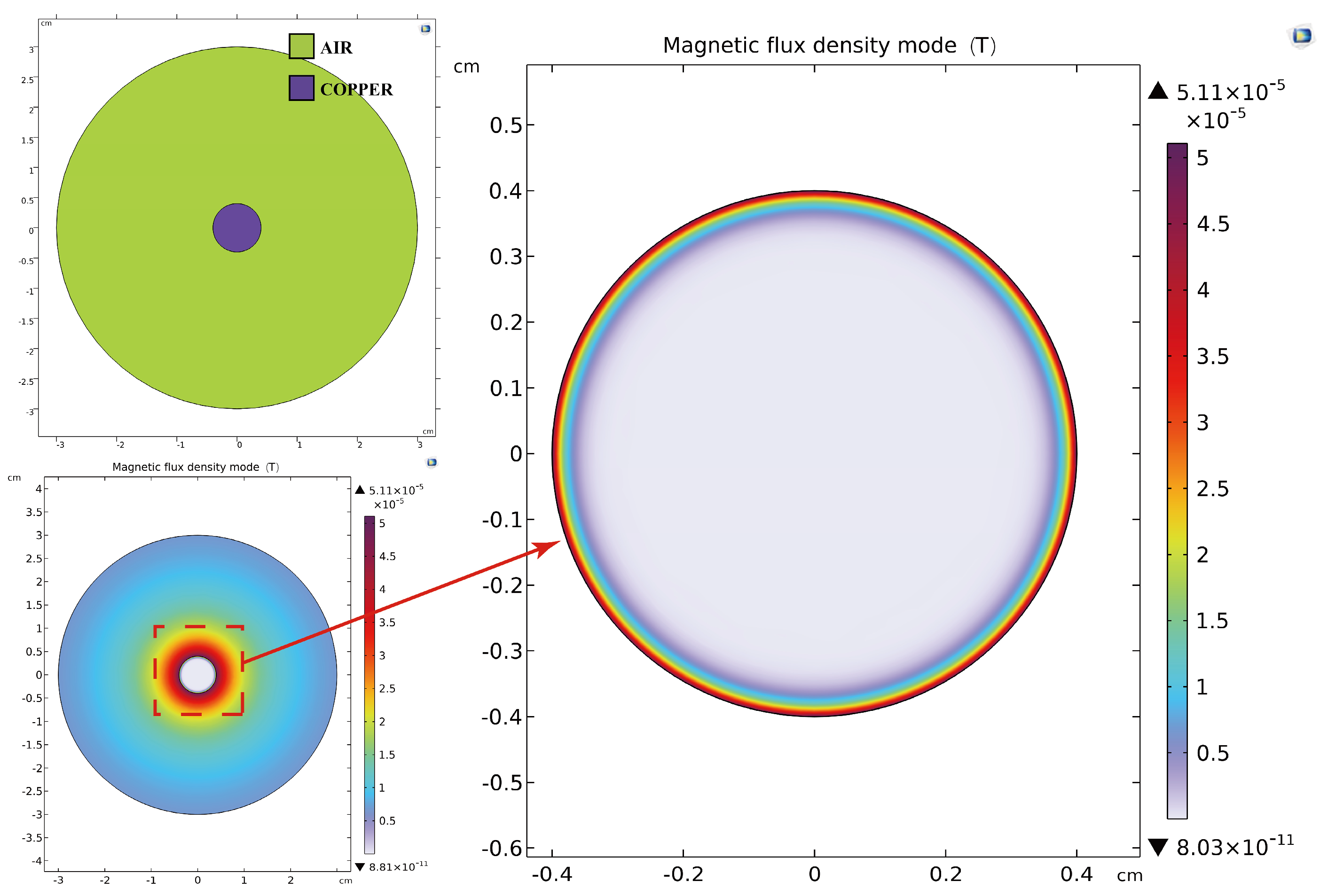
2.1.1. Formation of Eddy Currents and Fundamentals of Electromagnetic Induction
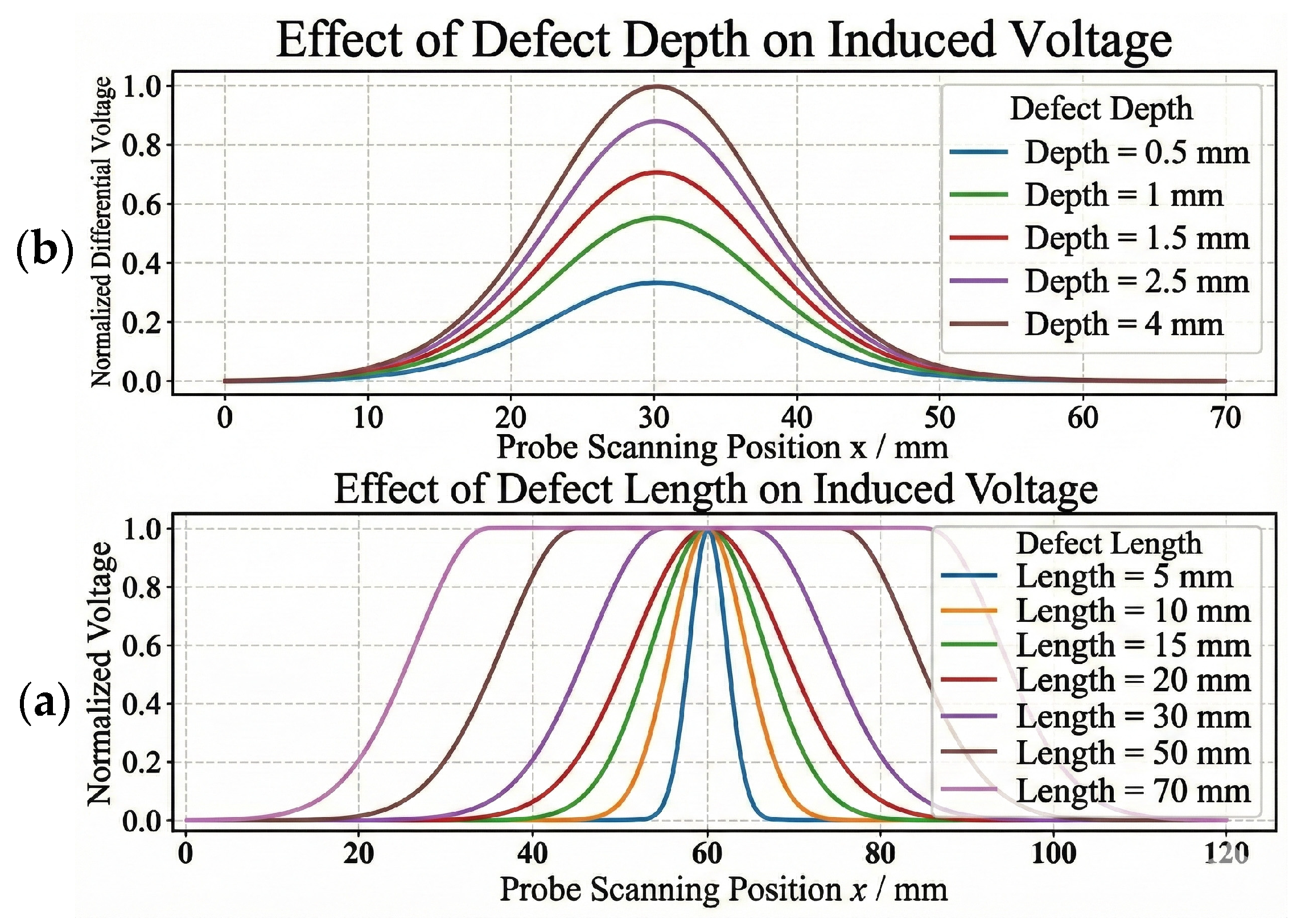
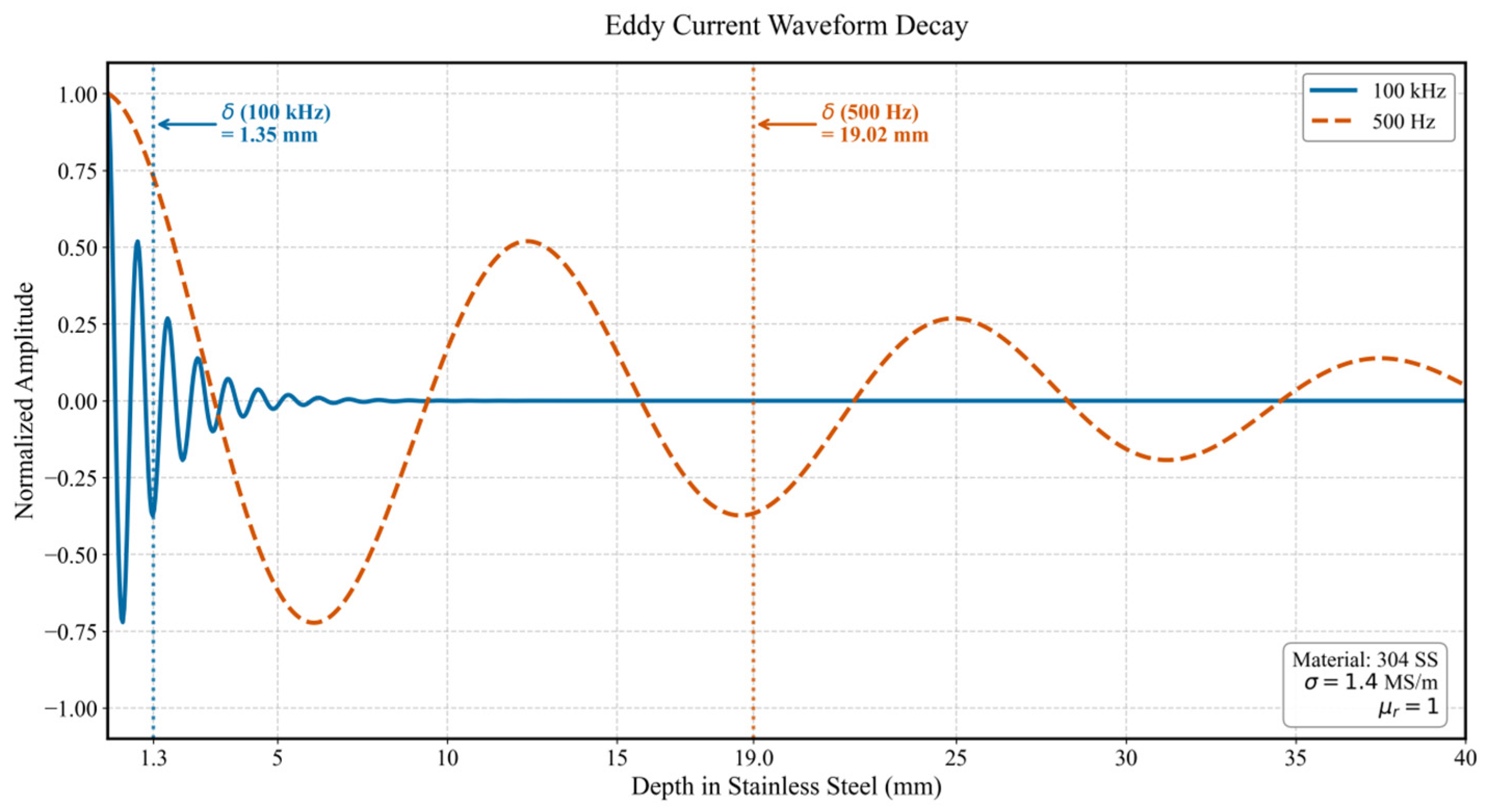
2.1.2. Factors Affecting Induction Parameters
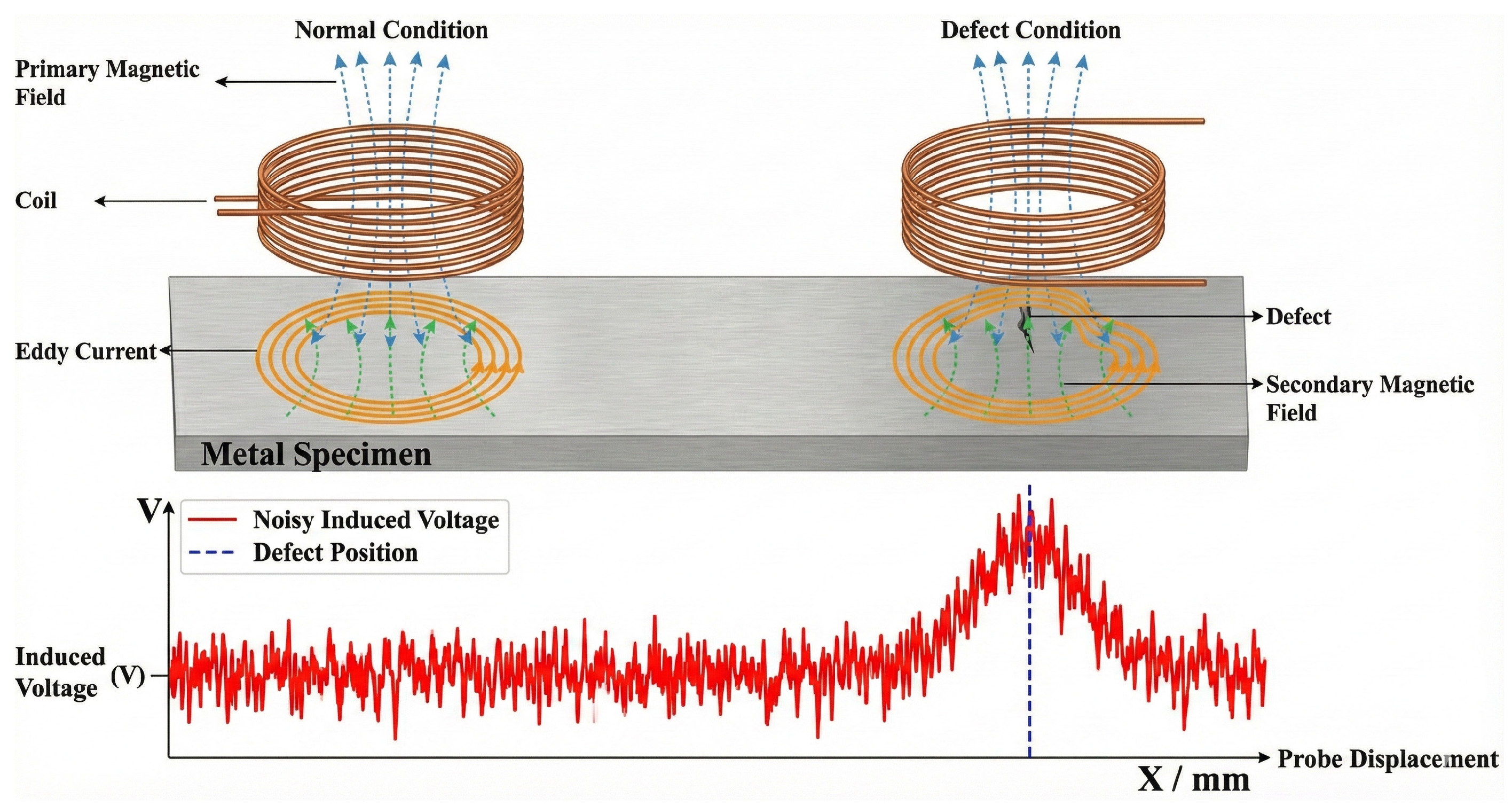
2.1.3. Defect Perturbations and Signal Response Characteristics
2.2. Conventional Eddy Current Testing
2.3. Multi-Frequency Eddy Current Testing
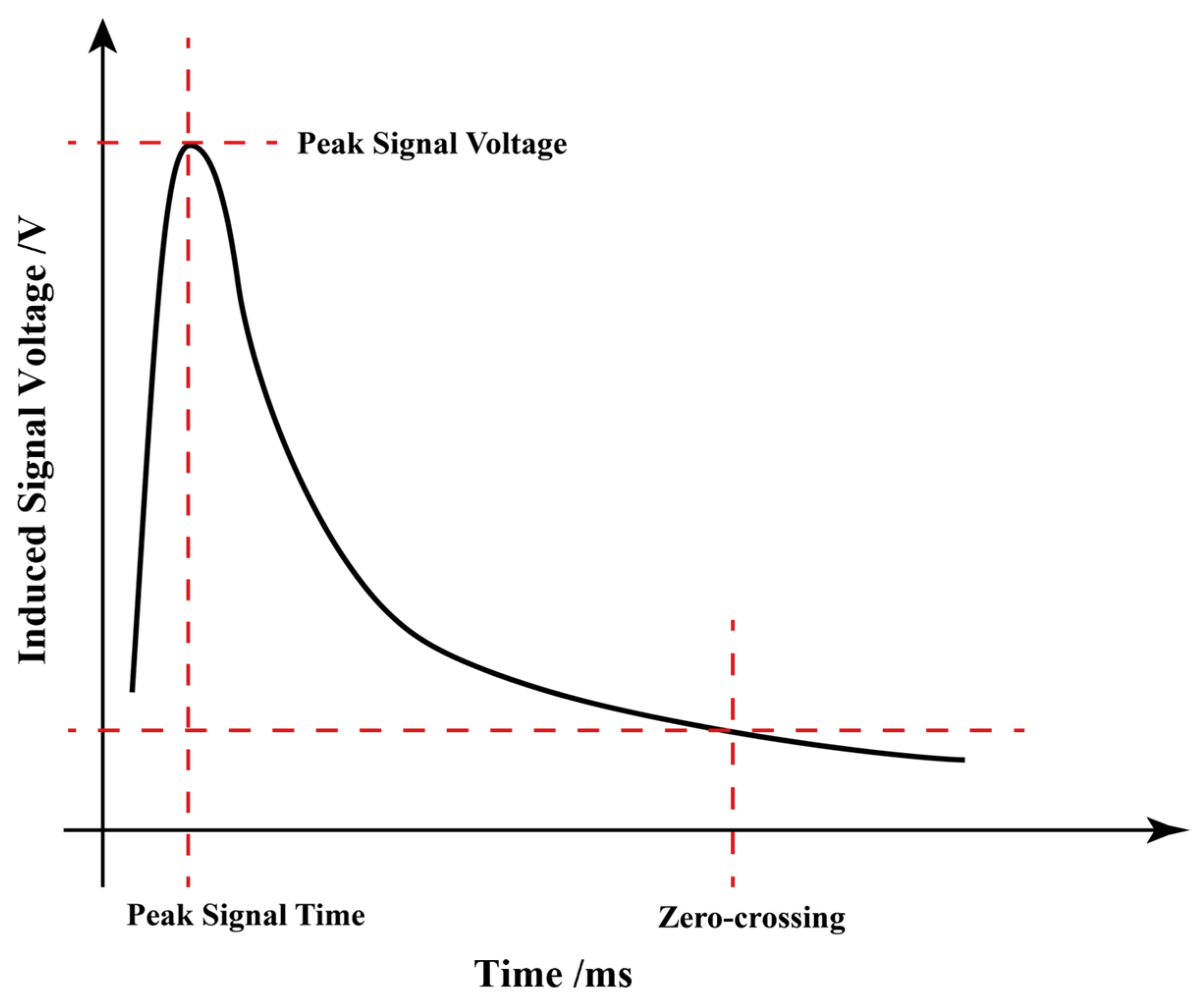
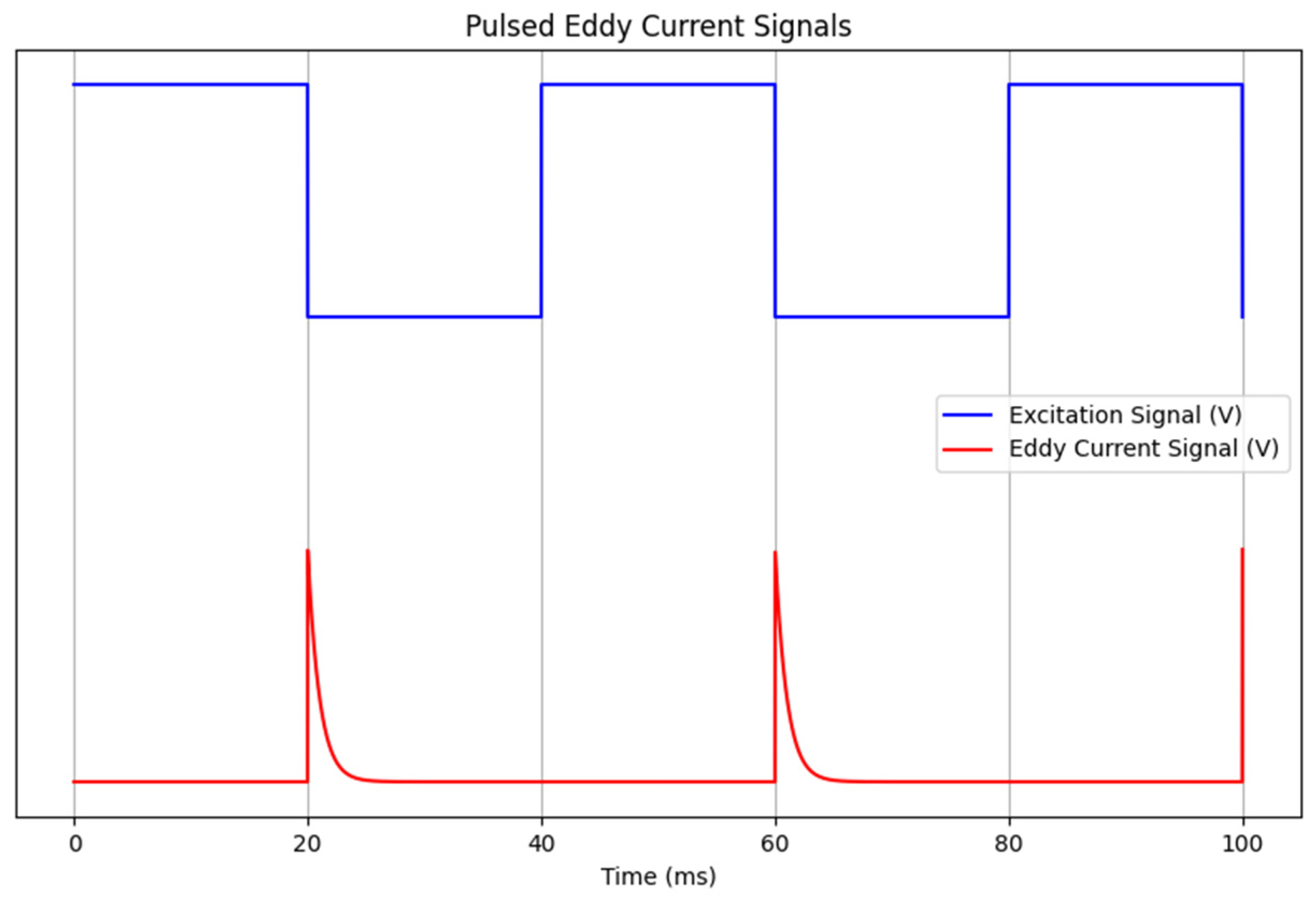
2.4. Pulsed Eddy Current Testing
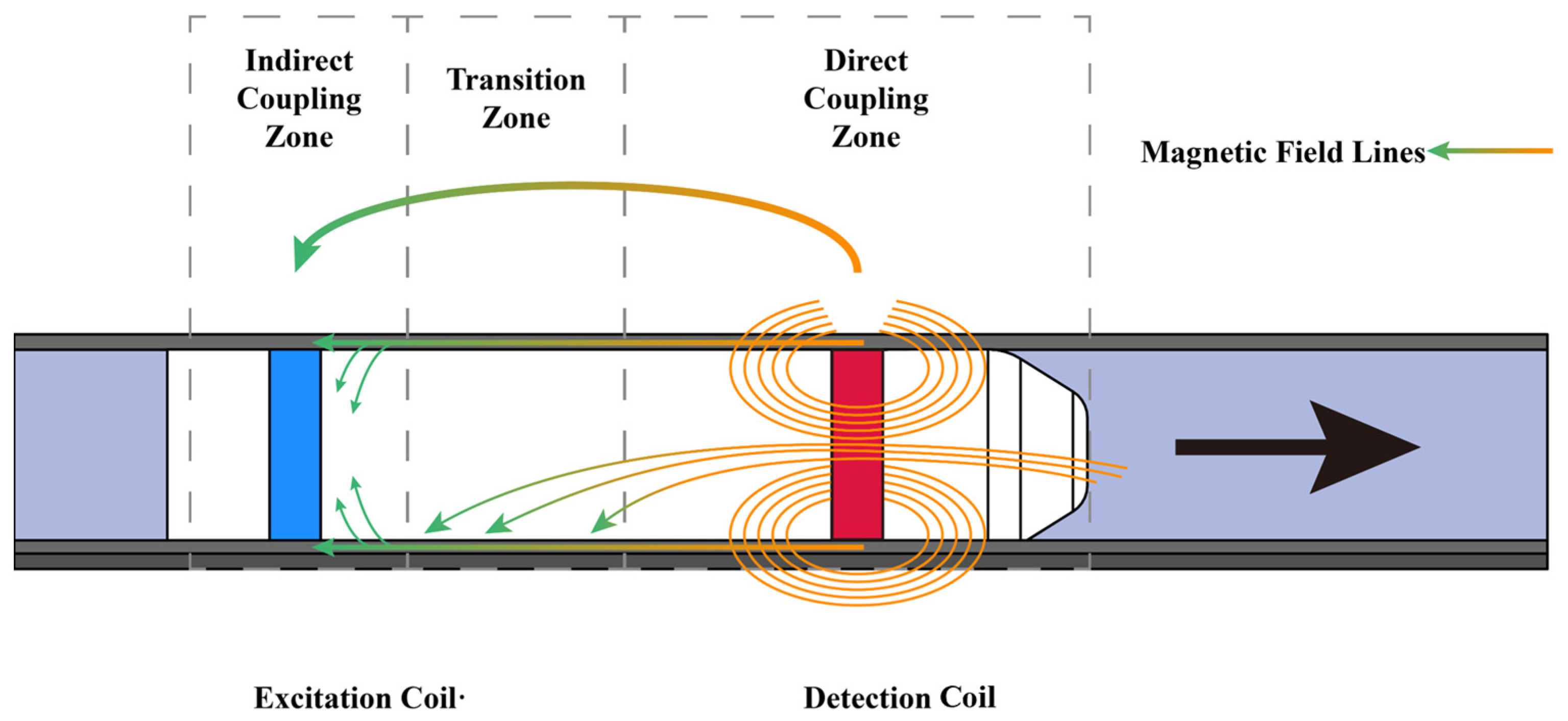
2.5. Remote Field Eddy Current Testing
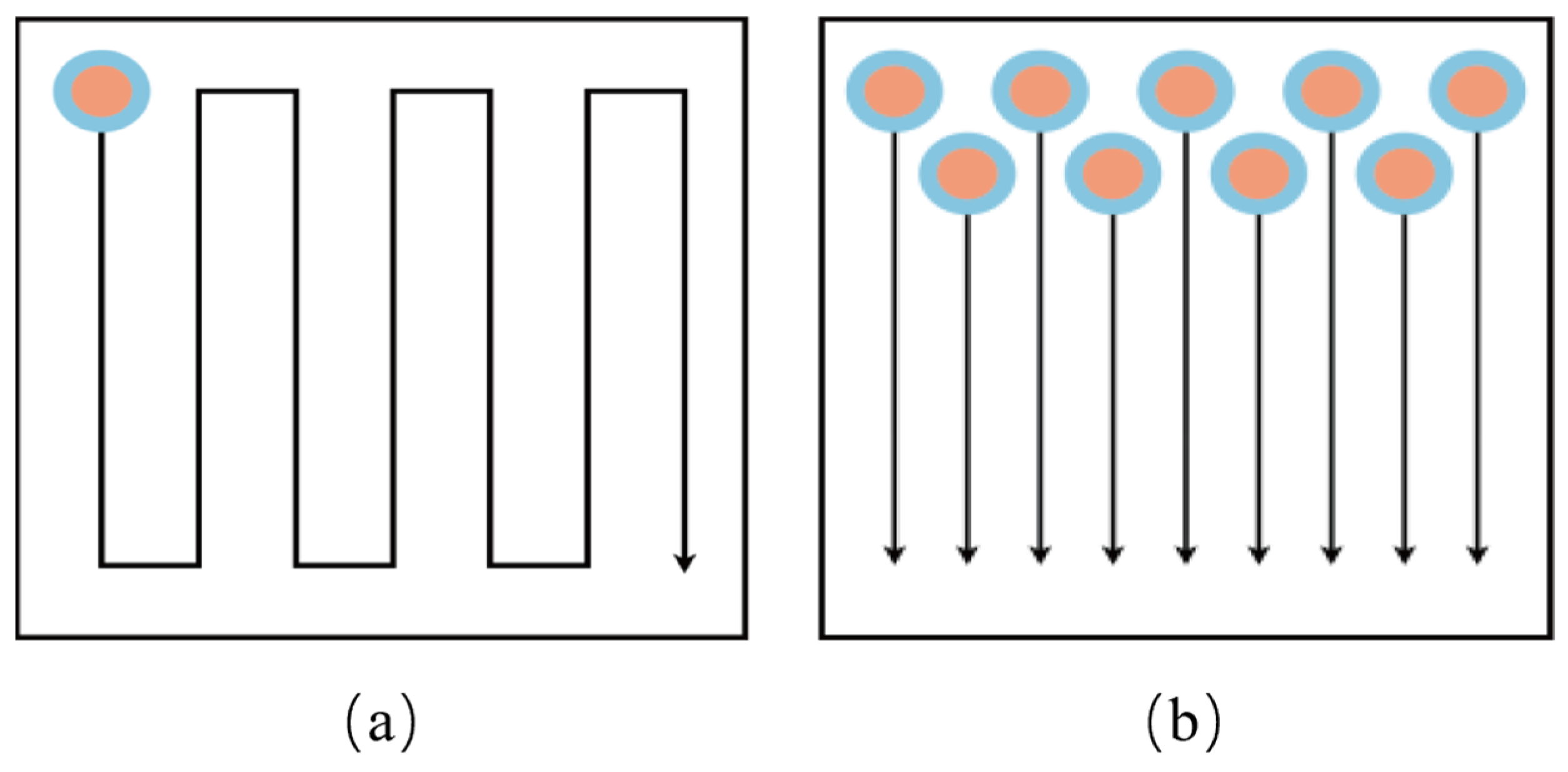
2.6. Eddy Current Array Testing Technology
2.7. Summary of Eddy Current Testing Technologies
2.8. Predictions for Future Development of Eddy Current Detection Technology
3. Applications of In-Pipe Eddy Current Inspection Devices
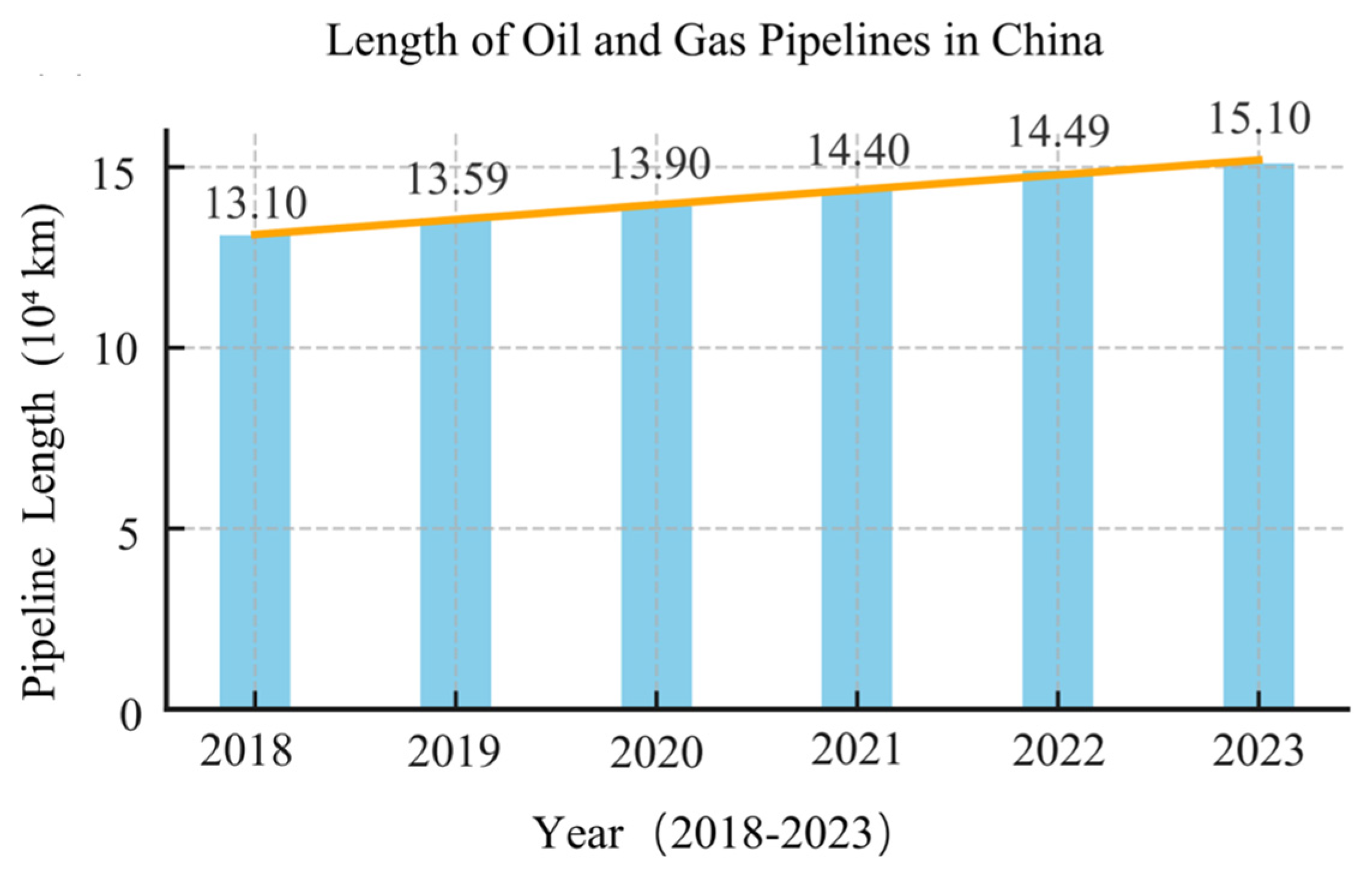
3.1. Market Demand and Global Context for Pipeline In-Line Inspection
3.2. Classification of Common In-Pipe Inspection Device Structures
3.3. Representative Industrial Applications and Case Studies
3.4. Predictions for Future Development of In-Pipe Eddy Current Detectors
4. Conclusions
- (1)
- Enhanced Defect Identification: Improve defect detection accuracy and enable qualitative and quantitative analysis by optimizing detection probes and information processing algorithms. Specifically, CNNs enable the automated super-resolution of ECA images, while LSTM and Transformer networks improve PECT defect quantification by extracting deep temporal features from transient signals.
- (2)
- Integration of Multiple Technologies: Overcome the limitations of single detection methods by developing combined detection systems, such as multi-eddy current technologies or hybrid approaches (e.g., pulsed + remote field, eddy current + ultrasonic, eddy current + thermal imaging), to enhance defect detection capabilities through multi-source data integration.
- (3)
- Device Miniaturization: Further reduce the size of inspection devices while maintaining operational duration.
- (4)
- Transition from Passive Detection to Proactive Prevention: Enable the detection of pipeline stress in addition to traditional defects, facilitating early warnings for high-risk pipeline sections.
- (5)
- Development of Digital Pipelines: Leverage big data and Internet of Things (IoT) technologies to transform offline inspection into online monitoring, enabling real-time assessment of pipeline conditions.
Author Contributions
Funding
Data Availability Statement
Conflicts of Interest
Abbreviations
| ECT | Eddy Current Testing |
| ILI | In-line Inspection |
| NDT | Nondestructive Testing |
| MFL | Magnetic Flux Leakage |
| UT | Ultrasonic Testing |
| MFECT | Multi-frequency Eddy Current Testing |
| PECT/PEC | Pulsed Eddy Current Testing/Pulsed Eddy Current |
| RFECT | Remote Field Eddy Current Testing |
| ECA | Eddy Current Array |
| EMAT | Electromagnetic Acoustic Transducer |
| EMF | Electromotive Force |
| PCB | Printed Circuit Board |
| ICA | Independent Component Analysis |
| IoT | Internet of Things |
References
- Liang, Y.T.; Tu, R.F.; Zhang, H.; Liu, C.Y.; Fu, G.T.; Qiu, R.; Liao, Q.; Xu, N. Role of oil and gas pipelines in the construction of a new energy system with multi-energy integration. Oil Gas Storage Transp. 2025, 44, 361–378. [Google Scholar] [CrossRef]
- Li, Z.C.; Liang, Y.T.; Liang, Y.Y.; Liao, Q.; Wang, B.H.; Huang, L.J.; Zheng, J.Q.; Zhang, H.R. Review on intelligent pipeline technologies: A life cycle perspective. Comput. Chem. Eng. 2023, 175, 108283. [Google Scholar] [CrossRef]
- Mukharror, D.A.; Maulana, I.; Yusuf, M.; Devianto, H.; Sommeng, A.N.S.; Kartohardjono, S.; Hermansyah, H. Collection and analysis of hydrocarbon gas buried onshore pipeline accidents in Indonesia as the databases for failure frequency assessment in a quantitative risk analysis. Process Saf. Prog. 2024, 43, S128–S133. [Google Scholar] [CrossRef]
- Silva, A.; Evangelista, L.; Ferreira, C.; Valença, J.; Mendes, M.P. Towards resilient pipeline infrastructure: Lessons learned from failure analysis. Discov. Appl. Sci. 2024, 6, 11. [Google Scholar] [CrossRef]
- GB 32167-2015; Specifications for Integrity Management of Oil and Gas Transmission Pipelines. Standardization Administration of China: Beijing, China, 2015.
- Wang, Y.T.; Lü, Y.X.; Yang, W.L.; Sun, X.; Zhu, X.X. Review of gas pipeline accident research at home and abroad. Chem. Eng. Equip. Pipelines 2022, 59, 78–84. [Google Scholar] [CrossRef]
- Li, R. Current status and prospects of pipeline inspection technology and data analysis methods. Oil Gas Storage Transp. 2024, 43, 241–256. [Google Scholar]
- Shi, Y.; Zhang, C.; Li, R.; Cai, M.; Jia, G. Theory and application of magnetic flux leakage pipeline detection. Sensors 2015, 15, 31036–31055. [Google Scholar] [CrossRef] [PubMed]
- Feng, B.; Wu, J.; Tu, H.; Tang, J.; Kang, Y. A review of magnetic flux leakage nondestructive testing. Materials 2022, 15, 7362. [Google Scholar] [CrossRef]
- Zang, X.; Xu, Z.D.; Lu, H.; Zhu, C.; Zhang, Z. Ultrasonic guided wave techniques and applications in pipeline defect detection: A review. Int. J. Press. Vessels Pip. 2023, 206, 105033. [Google Scholar] [CrossRef]
- Lyu, F.; Zhou, X.; Ding, Z.; Qiao, X.; Song, D. Application research of ultrasonic-guided wave technology in pipeline corrosion defect detection: A review. Coatings 2024, 14, 358. [Google Scholar] [CrossRef]
- Zhang, X.; Li, B.; Zhang, X.; Song, X.; Tu, J.; Cai, C.; Yuan, J.; Wu, Q. Internal and external pipe defect characterization via high-frequency lamb waves generated by unidirectional EMAT. Sensors 2023, 23, 8843. [Google Scholar] [CrossRef]
- Tian, Y.; Palaev, A.G.; Shammazov, I.A.; Ren, Y. Non-destructive testing technology for corrosion wall thickness reduction defects in pipelines based on electromagnetic ultrasound. Front. Earth Sci. 2024, 12, 1432043. [Google Scholar] [CrossRef]
- Wang, Y.; Li, P.; Li, J. Methods of monitoring and non-destructive testing for sewer pipelines. Water Sci. Technol. 2022, 85, 2563–2583. [Google Scholar] [CrossRef]
- Zhang, Y.; Guan, E.; Li, P.; Zhao, Y. An automatic nondestructive testing system for pressure pipeline weld surface. J. Field Robot. 2023, 40, 1735–1750. [Google Scholar] [CrossRef]
- Waqar, M.; Memon, A.M.; Sabih, M.; Alhems, L.M. Composite pipes: Assessing defects and advancements in nondestructive testing techniques. Eng. Fail. Anal. 2024, 157, 107914. [Google Scholar] [CrossRef]
- Komatsubara, K.; Gao, Y.; Gotoh, Y.; Guan, W.; Muramatsu, K. Frequency characteristics analysis of remote field eddy current testing for ferromagnetic pipes. IEEE Trans. Magn. 2023, 59, 6200605. [Google Scholar] [CrossRef]
- Noguchi, Y.; Tsunokai, M.; Nakata, K.; Takeda, N. Applicability of eddy current technique to nondestructive inspection tool for inner bore of welded joints in ITER hydraulic piping. Fusion Eng. Des. 2019, 146, 2311–2314. [Google Scholar] [CrossRef]
- Urayama, R.; Uchimoto, T.; Takagi, T. Application of EMAT/EC dual probe to wall thickness monitoring in high-temperature environments. Int. J. Appl. Electromagn. Mech. 2010, 33, 1317–1327. [Google Scholar] [CrossRef]
- French, P.C.; Bond, L.J. Finite-element modeling of eddy-current nondestructive evaluation (NDE). J. Nondestruct. Test. Eval. 1988, 7, 85–97. [Google Scholar] [CrossRef]
- Griffiths, D.J. Introduction to Electrodynamics, 4th ed.; Cambridge University Press: Cambridge, UK, 2017. [Google Scholar] [CrossRef]
- Ammari, H.; Buffa, A.; Nédélec, J.C. A justification of eddy currents model for the Maxwell equations. SIAM J. Appl. Math. 2000, 60, 1805–1823. [Google Scholar] [CrossRef]
- Chu, Z.; Jiang, Z.; Mao, Z.; Shen, Y.; Gao, J.; Dong, S. Low power consumption eddy current testing with 1–1 type magnetoelectric sensor for monitoring pipeline cracks. Sens. Actuators A Phys. 2021, 320, 112496. [Google Scholar] [CrossRef]
- García-Martín, J.; Gómez-Gil, J.; Vázquez-Sánchez, E. Non-destructive techniques based on eddy current testing. Sensors 2011, 11, 2525–2565. [Google Scholar] [CrossRef]
- Chen, T.; Zhang, S.; Xiao, X.; Song, X.; Li, D.; Liao, C.; Tu, J. Design and performance study of runway-type differential eddy-current probe. J. Eng. Des. 2020, 27, 781–785. [Google Scholar] [CrossRef]
- Chen, G.; Zhang, S.; Cao, Z.; Li, Z.; Jin, W. Research on crack detection performance of absolute Koch fractal planar eddy current sensors. Chin. J. Sci. Instrum. 2022, 43, 98–107. [Google Scholar] [CrossRef]
- Chen, G.; Zhang, W.; Pang, W. Koch curve fractal geometry excitation probe for eddy current non-destructive testing. Measurement 2018, 124, 470–478. [Google Scholar] [CrossRef]
- Li, Z.M.; Chen, M.J.; Zhang, J.H. A new-developed multi-frequency impedance analyzing instrument used for eddy current testing based on DSP. In Proceedings of the 2013 Fifth International Conference on Measuring Technology and Mechatronics Automation (ICMTMA), Hong Kong, China, 16–17 January 2013; IEEE: Piscataway, NJ, USA, 2013; pp. 55–58. [Google Scholar] [CrossRef]
- Zhang, X.D.; Bai, S.; Liu, Z.Y.; Lin, Y.X.; Zhang, Z.; Zhao, Y.X.; Wang, G.; Zhang, S. Multi-channel and multi-frequency eddy current testing of aviation lithium battery welds. Weld. J. 2024, 45, 85–94. [Google Scholar] [CrossRef]
- Yuan, X.; Zhao, J.; Li, W.; Yin, X.; Li, X.; Zhao, J.; Fan, M. Novel phase reversal feature for inspection of cracks using multi-frequency alternating current field measurement technique. Mech. Syst. Signal Process. 2023, 186, 109857. [Google Scholar] [CrossRef]
- Gan, F.; Li, W.; Liao, J. New feature for evaluation of subsurface defects via multi-frequency alternating current field signature method. AIP Adv. 2018, 8, 015026. [Google Scholar] [CrossRef]
- Zhou, Z.M.; Du, T.C.; Wan, F.; Zhang, J.; Yin, W.L. Experimental study on grain size measurement of offset welds in continuous oil pipes by multi-frequency eddy current testing. J. Electron. Meas. Instrum. 2022, 36, 188–195. [Google Scholar] [CrossRef]
- Sophian, A.; Tian, G.; Fan, M. Pulsed eddy current non-destructive testing and evaluation: A review. Chin. J. Mech. Eng. 2017, 30, 500–514. [Google Scholar] [CrossRef]
- Zhou, D.Q.; Wang, J.; Pan, M.; Li, K.; Su, L.; Hua, C.J. Defect detection mechanism of pulsed eddy current rectangular differential probe. Chin. Mech. Eng. 2016, 27, 3032–3037. [Google Scholar] [CrossRef]
- Chen, G.L.; Han, Y.; Zhang, Y.L.; Zhang, G.; Li, Y.X.; He, J.; Chen, Y.L.; Luo, X.H. Microcrack imaging method for planar flexible Koch fractal eddy current sensors excited by pulse square. Mech. Syst. Signal Process. 2025, 236, 112990. [Google Scholar] [CrossRef]
- Yang, F.; Fu, Y.W.; Huang, W.F.; Li, B.S.; Li, Z.Y. Research on pulsed eddy current testing of pipeline with complex structure parts with coating based on focused probe. Fail. Anal. Prev. 2022, 17, 353–361+391. [Google Scholar] [CrossRef]
- Yang, F.; Fu, Y.W.; Huang, W.F.; Li, B.S.; Li, Z.Y. Research on pulsed eddy current testing of pipeline with U-shaped magnetic conductor focused probe. Chin. J. Sens. Actuators 2022, 35, 267–276. [Google Scholar] [CrossRef]
- Yang, F.; Li, Z.Y.; Fu, Y.W.; Huang, W.F.; Tang, C.H.; Cao, A.S. Comparison of different types of focusing probes in pulsed eddy current testing. AIP Adv. 2022, 12, 075010. [Google Scholar] [CrossRef]
- Tran, T.H.D.; Le, Q.T.; Kasai, N.; Le, M.; Luong, V.S. Development of differential Hall sensors for pulsed eddy current testing using Gaussian pulse excitation. Sens. Actuators A Phys. 2024, 379, 115998. [Google Scholar] [CrossRef]
- Xiao, Y.R.; Xu, Q.Z.; Duan, Z.Q.; Chi, L.; Kang, Y.H. Pulse eddy current probe based on rotation of blade-type excitation coil. Nondestr. Test. 2024, 46, 22–27. [Google Scholar] [CrossRef]
- Yang, S.Y.; Zhao, R.X.; Duan, Z.R.; Hu, P.; Chen, Z.M.; Xie, S.J.; Wan, Q.; Yan, S.P.; Zheng, Y.A. A novel enhanced sensitive sensor for small-diameter pipe based on the PECT-EMAT hybrid testing method. Mech. Syst. Signal Process. 2025, 226, 112350. [Google Scholar] [CrossRef]
- Yin, X.F.; Cheng, Q.L.; Dou, F.J.; Cui, J.J. Research on lift-off height detection method based on pulsed eddy current. Press. Vessel. Technol. 2021, 38, 81–86. [Google Scholar] [CrossRef]
- Duan, S.Y.; Song, Y.; Wu, X. Research on lift-off distance measurement method of pulsed eddy current based on persistent homology. Chem. Autom. Instrum. 2022, 49, 54–59. [Google Scholar] [CrossRef]
- Sreevatsan, S.; George, B. Simultaneous detection of defect and lift-off using a modified pulsed eddy current probe. IEEE Sens. J. 2020, 20, 2156–2163. [Google Scholar] [CrossRef]
- Shin, Y.K.; Choi, D.M.; Kim, Y.J.; Lee, S.S. Signal characteristics of differential-pulsed eddy current sensors in the evaluation of plate thickness. NDT E Int. 2009, 42, 215–221. [Google Scholar] [CrossRef]
- Tian, Y. Lift-off height and wall thickness detection based on pulsed eddy current technology. Press. Vessel Technol. 2024, 41, 71–78. [Google Scholar] [CrossRef]
- Tian, Y.; Xiang, A.; Lai, Y. Wall thickness measurement of stainless steel based on the slope of late-time signal in pulsed eddy current. Nondestruct. Test. 2022, 44, 18–21+31. [Google Scholar] [CrossRef]
- Zhang, J.Z.; Fan, S.W.; Lu, G.H.; Yang, S.Y.; Xie, S.J.; Chen, Z.M.; Zheng, Y.; Uchimoto, T.; Takagi, T. Wall thinning quantification with a lift-off distance for ferromagnetic structures using pulsed ECT equipped with ICA-Gauss filter and Hough transform. NDT E Int. 2025, 149, 103272. [Google Scholar] [CrossRef]
- Xiao, Q.; Feng, J.; Xu, Z.Y.; Zhang, H.G. Receiver signal analysis on geometry and excitation parameters of remote field eddy current probe. IEEE Trans. Ind. Electron. 2022, 69, 3088–3098. [Google Scholar] [CrossRef]
- She, S.B.; Chen, Y.F.; He, Y.Z.; Zhou, Z.J.; Zou, X. Optimal design of remote field eddy current testing probe for ferromagnetic pipeline inspection. Measurement 2021, 168, 108306. [Google Scholar] [CrossRef]
- Zhou, D.Q.; Jiao, T.Q.; Gao, X.; Zhou, R.T.; Sheng, W.F. Investigation on magnetic shield thickness of remote field eddy current probes for inspection of ferromagnetic and non-ferromagnetic plates. Int. J. Appl. Electromagn. Mech. 2023, 71, 325–339. [Google Scholar] [CrossRef]
- Yang, B.F.; Xu, J.M.; Wu, H.; He, Y.Z. Magnetic field shielding technique for pulsed remote field eddy current inspection of planar conductors. NDT E Int. 2017, 90, 48–54. [Google Scholar] [CrossRef]
- Vijayachandrika, T.; Thirunavukkarasu, S.; Kumar, A. Radial field detector to improve sensitivity of localized defects in remote field eddy current technique. Res. Nondestruct. Eval. 2024, 35, 247–267. [Google Scholar] [CrossRef]
- Zhou, R.Q.; Zhou, D.Q.; Hu, Y.Q.; Chen, J.W.; Sheng, W.F. Research and optimization of flat-plate remote field eddy current detection probe based on energy flow. Comput. Digit. Eng. 2023, 51, 2763–2768. [Google Scholar] [CrossRef]
- Zhu, G.C.; Liu, D.S. Signal denoising methods for array pulse remote field eddy current detection. Electron. Meas. Technol. 2024, 47, 79–87. [Google Scholar] [CrossRef]
- Sun, H.; Shi, Y.B.; Zhang, W.; Li, Y.J. RFEC based oil downhole metal pipe thickness measurement. J. Nondestruct. Eval. 2021, 40, 35. [Google Scholar] [CrossRef]
- Luo, Q.W.; Shi, Y.B.; Wang, Z.G.; Zhang, W.; Ma, D. A method for locating large-area defects in pipelines based on remote field eddy current. Chin. J. Sci. Instrum. 2015, 36, 2790–2797. [Google Scholar] [CrossRef]
- Li, T.; Ma, S.; Li, B.; Wang, M.; Wang, Y. Fuzzy Theory based control method for an in-pipe robot to move in variable resistance environment. Chin. J. Mech. Eng. 2015, 28, 1160–1170. [Google Scholar] [CrossRef]
- Sun, H.; Shi, Y.B.; Gao, X. Secondary peak separation of remote field eddy current testing in ferromagnetic pipes. In Proceedings of the 2019 IEEE International Instrumentation and Measurement Technology Conference (I2MTC), Auckland, New Zealand, 20–23 May 2019; IEEE: Piscataway, NJ, USA, 2019; pp. 1–5. [Google Scholar] [CrossRef]
- Du, J.Q.; He, Y.T.; Li, P.Y. Influence of mutual interference on crack detection performance of eddy current array sensors. J. Huazhong Univ. Sci. Technol. (Nat. Sci. Ed.) 2015, 43, 22–26. [Google Scholar] [CrossRef]
- Liu, S.W.; Guo, Q. Optimized design of array eddy current sensors based on coil mutual inductance. Sens. Microsyst. 2015, 34, 107–109+119. [Google Scholar] [CrossRef]
- Nie, J.; Li, Y.; She, S. Magnetic shielding analysis for arrayed eddy current testing. J. Magn. 2019, 24, 328–332. [Google Scholar] [CrossRef]
- Zhang, W.M.; Zeng, W.Q.; Yang, X.J.; Qin, F.; Yu, X. Eddy current testing of cracks in aluminum plate material based on planar coil array sensors. Trans. Beijing Inst. Technol. 2014, 34, 1101–1105. [Google Scholar] [CrossRef]
- Li, X.B.; Ye, Z.H.; Luo, N.Z.; Li, S.L.; Zhang, Y. Research on pulsed eddy current C-scan imaging technology based on TMR sensors. J. Electron. Meas. Instrum. 2022, 36, 105–113. [Google Scholar] [CrossRef]
- Bui, L.V.; Jeng, J.T.; Huang, H.C.; Nguyen, H.T.; Doan, V.D.; Nguyen, T.H. High-resolution flaw detection using eddy current probe array based on giant magnetoresistance sensors. IEEE Trans. Magn. 2024, 60, 6200205. [Google Scholar] [CrossRef]
- Le, H.; Le, Q.T.; Phuong, T.V.; Le, M.; Lee, J.; Kasai, N. Optimising signal quality for corrosion detection using the innovative Mag_FSRCNN model to minimise Hall sensor array in eddy current testing. Nondestruct. Test. Eval. 2025, 40, 2020–2043. [Google Scholar] [CrossRef]
- Abdou, A.; Bouchala, T.; Abdelnadi, B.; Guettafi, A. 3D surface crack characterization by eddy current array image and a fast algorithm search. J. Electr. Eng. 2023, 74, 127–131. [Google Scholar] [CrossRef]
- Chen, T.; Xia, X.R.; Lü, C.; Zhang, L.H.; Deng, Z.Y.; Song, X.C. Research on array eddy current signal processing method based on lock-in technology. Sens. Microsyst. 2023, 42, 70–73+78. [Google Scholar] [CrossRef]
- Xing, H.Y.; Wu, X.Y.; Cai, Z.H.; Zhao, L.W.; Su, T.; Han, Q. Quantitative identification of oil and gas pipeline defect grade based on ResGNNet multimodal fusion and magnetic memory. China Mech. Eng. 2025, 36, 2150–2157. [Google Scholar] [CrossRef]
- Yuan, F.; Yu, Y.T.; Wang, W.; Xue, K.; Tian, G.Y. Pulsed eddy current array design and electromagnetic imaging for defects detection in metallic materials. Nondestruct. Test. Eval. 2021, 36, 371–391. [Google Scholar] [CrossRef]
- Li, E.L.; Guo, W.X.; Cao, X.; Zhu, J.Z. A magnetic head-based eddy current array for defect detection in ferromagnetic steels. Sens. Actuators A Phys. 2024, 379, 115862. [Google Scholar] [CrossRef]
- Zhang, W.P.; Wang, C.L.; Xie, F.Q.; Zhang, H.Y. Defect imaging curved surface based on flexible eddy current array sensor. Measurement 2020, 154, 107280. [Google Scholar] [CrossRef]
- Zhang, J.; Sun, M.N.; Qin, L.; Lin, D.; Liu, C.; Li, J.; Li, C.L.; Wen, S.M.; Han, C.J. In-line inspection methods and tools for oil and gas pipeline: A review. Int. J. Press. Vessel. Pip. 2025, 214, 105409. [Google Scholar] [CrossRef]
- Hu, C.; Luo, S.; Li, W.; Lv, F.; Cai, D.; Kong, L. Research and evaluation of measurement uncertainty of pipeline robot. J. Phys. Conf. Ser. 2021, 1894, 012036. [Google Scholar] [CrossRef]
- Thung-Od, K.; Kanjanawanishkul, K.; Maneewarn, T.; Sethaput, T.; Boonyaprapasorn, A. An in-pipe inspection robot with permanent magnets and omnidirectional wheels: Design and implementation. Appl. Sci. 2022, 12, 1226. [Google Scholar] [CrossRef]
- Liu, G.D.; Ye, L.Z.; Liu, P.D.; Li, F.; Zhu, X.J. Analysis of a tracked in-pipe robot’s obstacle-crossing performance. Appl. Sci. 2025, 15, 5905. [Google Scholar] [CrossRef]
- Hong, S.; Lee, J.; Shin, D.; Hahm, J.; Baek, J.; Suh, J. Robotic system for detecting and grinding pipe spatters. Appl. Sci. 2022, 12, 11045. [Google Scholar] [CrossRef]
- Ling, Z.W.; Kong, S.; Chen, Y.G.; Miao, C.J.; Guo, W.C. Variable-diameter in-pipe inspection robot for industrial pipelines. Nondestruct. Test. 2021, 43, 17–20. [Google Scholar] [CrossRef]
- Ren, T.; Zhang, Y.; Li, Y.J.; Chen, Y.H.; Liu, Q.Y. Driving mechanisms, motion, and mechanics of screw drive in-pipe robots: A review. Appl. Sci. 2019, 9, 2514. [Google Scholar] [CrossRef]
- Ab Rashid, M.Z.; Mohd Yakub, M.F.; Shaikh Salim, S.A.Z.; Mamat, N.; Syed Mohd Putra, S.M.; Roslan, S.A. Modeling of in-pipe inspection robot: A comprehensive review. Ocean Eng. 2020, 208, 107206. [Google Scholar] [CrossRef]
- Okuma, R.; Matsuo, S.; Ito, F.; Nakamura, T. Basic study on a peristaltic motion-type in-pipe inspection robot using a hyper-extension unit for improving locomotion speed. In Lecture Notes in Networks and Systems; Springer: Cham, Switzerland, 2024; pp. 105–116. [Google Scholar] [CrossRef]
- Xu, Z.L.; Lu, S.; Yang, J.; Feng, Y.H.; Shen, C.T. A wheel-type in-pipe robot for grinding weld beads. Adv. Manuf. 2017, 5, 182–190. [Google Scholar] [CrossRef]
- Yaqub, S.; Ali, A.; Usman, M.; Zuhalb, K.M.; Khan, A.M.; An, B.; Moon, H.; Lee, J.Y.; Han, C.S. A spiral curve gait design for a modular snake robot moving on a pipe. Int. J. Control Autom. Syst. 2019, 17, 2565–2573. [Google Scholar] [CrossRef]
- You, Y.Q.; Zheng, Y.C.; Huang, K.L.; He, Y.L.; Huang, Z.Q.; Zhan, L.L. Development of a Small-Sized Inspection Robot for Urban Cable Ducts. Actuators 2024, 13, 349. [Google Scholar] [CrossRef]
- Yeh, C.Y.; Chen, C.Y.; Juang, J.Y. A soft hopping and crawling robot for in-pipe locomotion. Extreme Mech. Lett. 2020, 37, 100854. [Google Scholar] [CrossRef]
- Wang, G.R.; Yan, H.W.; Kou, Z.M.; Wei, H.M.; Ren, H.J.; Ma, Y.H. Design and traction performance analysis of a deformable tracked pipeline robot for mining. Ind. Mine Autom. 2025, 51, 71–80. [Google Scholar] [CrossRef]
- Ren, T.; Liu, Q.Y.; Li, Y.J.; Chen, Y.H. Design, analysis and innovation in variable radius active screw in-pipe drive mechanisms. Int. J. Adv. Rob. Syst. 2017, 14, 1729881417703564. [Google Scholar] [CrossRef]
- Granosik, G.; Borenstein, J. Integrated joint actuator for serpentine robots. IEEE/ASME Trans. Mechatron. 2005, 10, 473–481. [Google Scholar] [CrossRef]
- Wu, Y.F.; Li, Y.L.; Xue, W.; Guo, P.; Xiao, T.F.; Luo, H.J.; Li, X.H.; Zhu, X.J.; Yang, J. Flexible, wideband triboelectric accelerometer integrated into quadruped robot legs for vibration source detection and localization. Compos. Part B Eng. 2025, 305, 112710. [Google Scholar] [CrossRef]
- I2I Pipelines. SmartFoam Mk 2 for Utility Pipeline Inspection. Available online: https://www.i2ipipelines.com/latest-news/smartfoam-mk-2-for-utility-pipeline-inspection/ (accessed on 25 July 2025).
- Rosen Group. Combined In-Line Inspection Services. Available online: https://www.rosen-group.com/en/expertise/product-and-service-finder/combined-in-line-inspection-services#combined-metal-loss-and-geometry-inspections (accessed on 25 July 2025).
- Rosen Group. In-Line Inspection Services for Corrosion. Available online: https://www.rosen-group.com/en/expertise/product-and-service-finder/in-line-inspection-services-for-corrosion#ro-corr-iec-service (accessed on 25 July 2025).
- Ma, Q.P.; Tian, G.Y.; Zeng, Y.L.; Li, R.; Song, H.D.; Wang, Z.; Gao, B.; Zeng, K. Pipeline in-line inspection method, instrumentation and data management. Sensors 2021, 21, 3862. [Google Scholar] [CrossRef]
- Parlak, B.O.; Yavasoglu, H.A. A comprehensive analysis of in-line inspection tools and technologies for steel oil and gas pipelines. Sustainability 2023, 15, 2783. [Google Scholar] [CrossRef]






| Technique | Excitation Method | Typical Application Scenarios | Target Defects | Advantages | Limitations | Key Performance Parameters & Notes | References |
|---|---|---|---|---|---|---|---|
| Conventional ECT | Single-frequency sinusoidal excitation | Surface and near-surface defect detection on pipe inner wall | Surface cracks, corrosion pits | Simple configuration, low cost, fast response | Limited depth, lift-off interference | Typical Frequency: 1 kHz–2 MHz. Sensitivity: Typically detects surface cracks with depth ≥ 0.1 mm. Susceptible to lift-off and material variations. | [10,11,12,21,22] |
| MFECT | Multi-frequency excitation | Multilayered structures, weld inspection, coating thickness measurement | Layered defects, subsurface flaws | Layer-specific detection, strong electromagnetic noise immunity | Complex system, signal processing complexity | Typical Frequency: Multi-frequency mix (e.g., 100 Hz & 10 kHz). Enables defect detection under coating and thickness assessment via frequency mixing to suppress interference. | [24,25,29,30,31] |
| Remote Field ECT (RFECT) | Low-frequency excitation | Thick-walled pipes, full wall-thickness assessment, simultaneous ID/OD defect detection | Deep wall thinning, internal/external corrosion | Strong penetration, lift-off independent | Low efficiency, poor axial sensitivity | Typical Frequency: 10–500 Hz. Capable of full wall-thickness inspection. Sensitive to uniform wall thinning. Weak signal requires high-gain amplification. | [42,49,50,51,52] |
| Pulsed ECT (PECT) | Square-wave pulse excitation | Pipes with coating, non-ferromagnetic materials | Deep subsurface and under-coating corrosion | High lift-off tolerance, rich time-domain signal, fast signal acquisition | Limited penetration depth, high power consumption | Typical Excitation: Millisecond-level pulses. Sensitive to subsurface corrosion. Defect depth can be evaluated via time-domain analysis. Suitable for rapid screening. | [33,34,35,36] |
| Eddy Current Array (ECA) | Spatially arranged probe arrays | Large-diameter pipelines, complex geometrical areas | Cracks, corrosion, geometric anomalies | High efficiency, defect imaging, high spatial resolution | Complex equipment, probe interference | Typical Frequency: 100 Hz–1 MHz (depends on element design). Provides C-scan images. Spatial resolution depends on element pitch and scan step. | [60,61,62,63,65] |
Disclaimer/Publisher’s Note: The statements, opinions and data contained in all publications are solely those of the individual author(s) and contributor(s) and not of MDPI and/or the editor(s). MDPI and/or the editor(s) disclaim responsibility for any injury to people or property resulting from any ideas, methods, instructions or products referred to in the content. |
© 2026 by the authors. Licensee MDPI, Basel, Switzerland. This article is an open access article distributed under the terms and conditions of the Creative Commons Attribution (CC BY) license.
Share and Cite
Liang, X.; Xu, C.; Zhang, X.; Jiang, W. A Review of Eddy Current In-Line Inspection Technology for Oil and Gas Pipelines. Processes 2026, 14, 247. https://doi.org/10.3390/pr14020247
Liang X, Xu C, Zhang X, Jiang W. A Review of Eddy Current In-Line Inspection Technology for Oil and Gas Pipelines. Processes. 2026; 14(2):247. https://doi.org/10.3390/pr14020247
Chicago/Turabian StyleLiang, Xianbing, Chaojie Xu, Xi Zhang, and Wenming Jiang. 2026. "A Review of Eddy Current In-Line Inspection Technology for Oil and Gas Pipelines" Processes 14, no. 2: 247. https://doi.org/10.3390/pr14020247
APA StyleLiang, X., Xu, C., Zhang, X., & Jiang, W. (2026). A Review of Eddy Current In-Line Inspection Technology for Oil and Gas Pipelines. Processes, 14(2), 247. https://doi.org/10.3390/pr14020247