
Article

Sustainable Hydrogel Composite of Alginate and Opuntia ficus-indica Mucilage for Neutral Red Dye Adsorption in Synthetic Water


by
Estefane Caetano Nazzari
1,*,
Grace Anne Vieira Magalhães Ghiotto
1,
Alexandre Diório
2,
Rosângela Bergamasco
2 and
Raquel Guttierres Gomes
3
1
Department of Biotechnology, Genetics and Cell Biology, Biological Sciences Center, State University of Maringá, Maringá 87020-900, Paraná, Brazil
2
Department of Chemical Engineering, Technology Center, State University of Maringá, Maringá 87020-900, Paraná, Brazil
3
Department of Food Engineering, Technology Center, State University of Maringá, Maringá 87020-900, Paraná, Brazil
*
Author to whom correspondence should be addressed.
Processes 2026, 14(19), 3208; https://doi.org/10.3390/pr14193208
Submission received: 29 July 2026 / Revised: 14 September 2026 / Accepted: 1 October 2026 / Published: 8 October 2026
(This article belongs to the Special Issue Natural Low-Cost Adsorbents in Water Purification Processes)

Abstract

Wastewater treatment remains a pressing global challenge due to the continuous discharge of recalcitrant pollutants from anthropogenic activities. Among these, synthetic dyes are particularly problematic due to their persistence and toxicity, requiring advanced and sustainable removal strategies. In this study, a novel bio-based hydrogel was synthesized via a green process, avoiding the use of harmful chemicals. The hydrogel, composed of alginate and mucilage extracted from Opuntia ficus-indica, was applied as an adsorbent for the removal of Neutral Red dye from a synthetic aqueous solution. Characterization revealed a rough surface morphology, mesoporosity, and a specific surface area of 0.14 m2/g. The material exhibited a point of zero charge at pH 9.0, and its surface was rich in functional groups, including hydroxyl, deprotonated carboxyl, and ether groups, which contributed to dye adsorption through non-electrostatic mechanisms. Optimal removal was achieved at acidic pH, with a maximum adsorption capacity of 26.6 mg/g at pH 5.0. The adsorption kinetics followed a pseudo-second-order model, reaching equilibrium within 200 min, with a maximum uptake of 24.8 mg/g after 720 min. Thermodynamic analysis indicated a spontaneous, exothermic, and reversible adsorption process, with maximum capacities of 1420, 1432, and 1308 mg/g at 25, 35, and 45 °C, respectively. Competitive adsorption studies showed a decrease in capacity in the presence of electrolytes (KCl, NaCl, and MgCl2). The hydrogel demonstrated excellent reusability, retaining over 90% efficiency after five consecutive cycles, and showed no toxicity in lettuce seed germination tests. These results highlight the potential of alginate-Opuntia ficus-indica hydrogel as a sustainable, non-toxic, and efficient adsorbent for dye removal in water treatment applications.

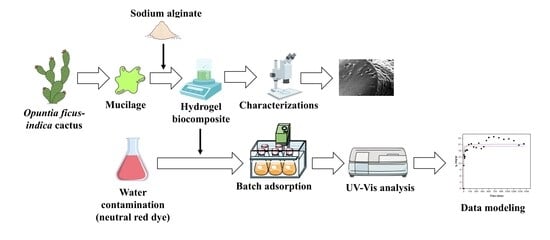
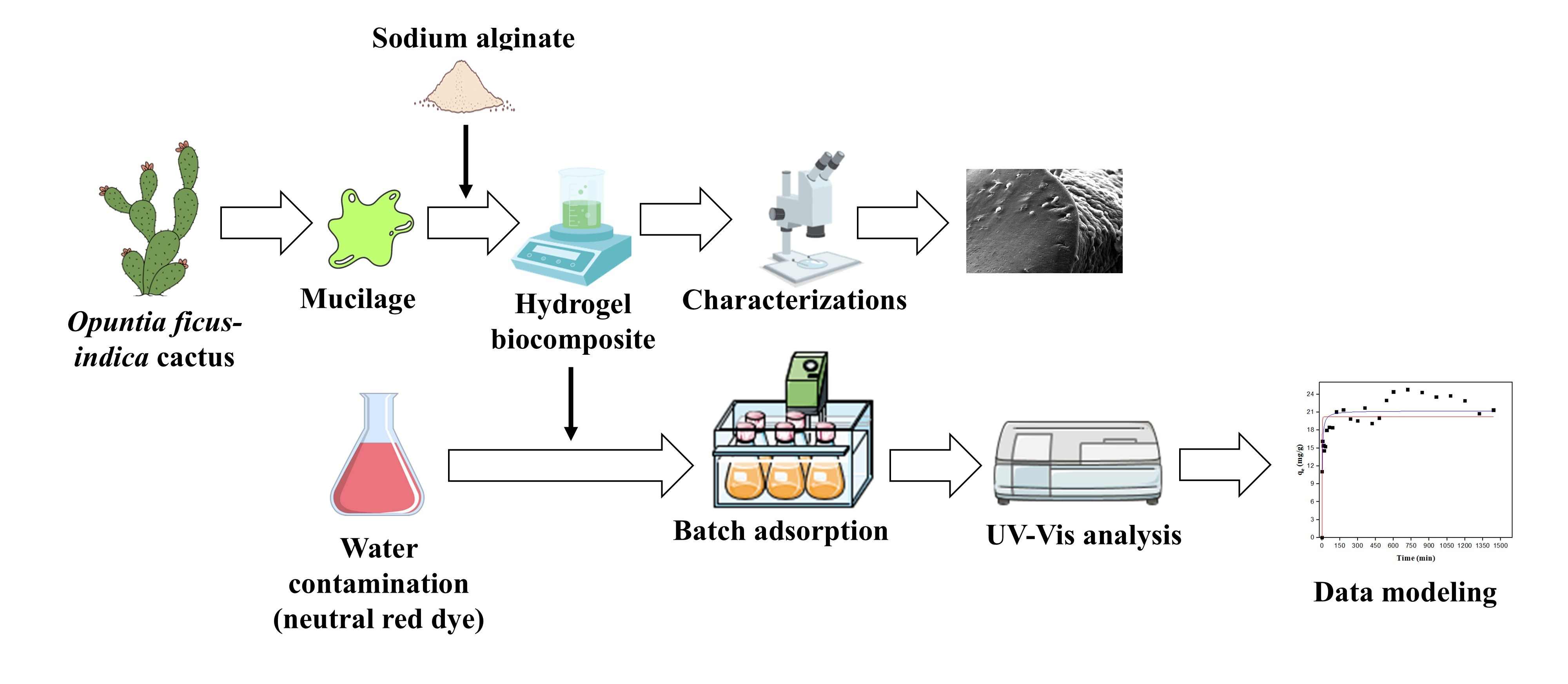
Graphical Abstract

1. Introduction

Synthetic dyes are among the most problematic contaminants released into aquatic environments due to their extensive use in textiles, printing, leather, pharmaceutical, and food-related industries [1,2]. The presence of dyes in wastewater is of environmental concern because they exhibit high chemical stability, limited biodegradability, and resistance to conventional treatment processes. Even at relatively low concentrations, dyes can impart intense coloration to water, reducing light penetration and consequently impairing photosynthetic activity and ecosystem functioning. Dye persistence may also contribute to oxygen depletion, trophic disruption, toxic effects, and adverse impacts on aquatic organisms [3]. Furthermore, depending on their molecular structure and degradation pathway, some dyes (e.g., indigo carmine and methyl orange dyes) and their transformation products may exhibit cytotoxic, mutagenic, or other harmful biological effects, reinforcing the need for effective strategies to prevent their discharge and persistence in aquatic environments [4,5,6,7,8,9].
The increasing occurrence of persistent contaminants in water systems represents not only a technological challenge but also a broader sustainability concern. Sustainable Development Goal 6 (SDG 6), established by the United Nations (UN), emphasizes the need to improve water quality and promote sustainable water management [10]. However, conventional water and wastewater treatment systems may involve substantial energy consumption, resource use, and environmental burdens, indicating the need for treatment strategies that combine pollutant-removal efficiency with improved environmental sustainability [11,12]. From a broader perspective, the One Health concept recognizes the close interdependence between environmental, animal, and human health, further highlighting the importance of preventing the release of hazardous contaminants into aquatic ecosystems [13].
Among the numerous synthetic dyes used in industrial applications, Neutral Red (C.I. 50040; C15H17ClN4) is a cationic dye employed in biological research and in the textile, leather, and printing industries [14,15]. Its presence in wastewater is relevant because experimental ecotoxicological studies have demonstrated potentially harmful effects on microorganisms and plants, even at relatively low concentrations [15]. In addition, conventional degradation processes may be insufficient for its complete removal, supporting the development of more effective treatment technologies for Neutral Red-contaminated water [16].
Several technologies have been applied for water and wastewater treatment, including coagulation-flocculation, sedimentation, flotation, membrane separation, oxidation processes, and adsorption [17]. Although these approaches can be effective under specific operational conditions, they may present limitations related to chemical consumption, energy demand, operational costs, sludge generation, membrane fouling, or limited efficiency toward recalcitrant contaminants. Among these technologies, adsorption has received considerable attention because of its operational simplicity, flexibility, and potential effectiveness for the removal of a wide range of pollutants [18]. The process relies on the transfer of contaminants from the liquid phase to the surface or internal structure of an adsorbent, thereby reducing the pollutant concentration in the treated water [19,20]. Consequently, significant research efforts have focused on improving adsorption performance while developing low-cost and environmentally sustainable adsorbent materials.
In this context, the search for a new generation of cost-effective and sustainable adsorbents has intensified in recent years, particularly through the use of bio-based materials and compounds derived from renewable resources [21,22]. Hydrogels have emerged as promising materials for aqueous contaminant removal because they consist of three-dimensional hydrophilic polymer networks capable of absorbing and retaining substantial amounts of water while maintaining their structural integrity [23,24,25,26,27]. Their physicochemical properties can be tailored according to the polymeric composition and network structure, allowing the control of characteristics such as swelling behavior, porosity, mechanical stability, and responsiveness to environmental conditions, including pH, temperature, and ionic strength [26].
The potential of hydrogels for water treatment is closely associated with their high water affinity, internal network structure, and the presence of functional groups capable of interacting with contaminants [28,29]. Composite hydrogels prepared from multiple polymeric sources may provide complementary functional properties and a greater diversity of adsorption sites. Natural polymers containing hydroxyl, carboxyl, and other oxygen-containing groups are especially attractive because they can contribute to contaminant interactions while supporting the development of non-toxic, biodegradable, and potentially low-cost materials [21,30]. However, despite the growing interest in bio-based hydrogels, the development of materials that combine efficient adsorption performance, renewable components, and a simplified synthesis route remains an important challenge.
Alginate is a particularly attractive natural polymer for hydrogel preparation because of its hydrophilic character and ability to form stable three-dimensional networks. The incorporation of additional natural components into an alginate matrix may further modify its structural and functional properties, potentially improving swelling behavior and contaminant interactions. In this regard, mucilage obtained from Opuntia ficus-indica (OFI), a cactus native to the Americas [31], represents an interesting bio-based component because of its polymeric nature and desirable functional properties, including elasticity and ease of cross-linking [32]. OFI has been extensively investigated because of its anti-inflammatory, antimicrobial, and antioxidant properties, as well as its emulsifying, gelling, and thickening characteristics [33,34]. These properties have supported its application in different sectors, including cosmetics, pharmaceuticals, medicine, and food production [35,36,37,38]. In addition, OFI-derived materials have demonstrated potential for environmental applications, including adsorption and coagulation/flocculation processes [39], while cellulose obtained from OFI seeds has also been investigated for methylene blue dye removal [34].
Despite growing interest in alginate-based hydrogels and OFI-derived materials for environmental applications [34,39], comparatively limited information is available regarding their integration into a composite hydrogel specifically designed for Neutral Red adsorption through a simplified and environmentally benign synthesis route. In particular, the effects of incorporating OFI mucilage into an alginate matrix on the physicochemical characteristics and functional properties of the resulting hydrogel remain insufficiently understood. Furthermore, comprehensive information regarding the relationship between the structural characteristics of this type of composite, its adsorption behavior, regeneration potential, and environmental compatibility is still limited.
Therefore, the present study aimed to synthesize and characterize a non-toxic, biodegradable, and cost-effective hydrogel based on alginate and OFI mucilage using an environmentally benign synthesis strategy. The proposed material was subsequently evaluated for the removal of Neutral Red dye from aqueous solutions through adsorption. The scientific contribution of this work lies in the incorporation of OFI mucilage into an alginate hydrogel matrix through a simplified synthesis approach, followed by an integrated evaluation of its physicochemical and functional properties and its performance as a sustainable adsorbent. By combining renewable natural components with adsorption, material characterization, and environmental assessment, this study contributed to the development of sustainable hydrogel-based materials for water treatment applications.

2. Materials and Methods

2.1. Mucilage Extraction

The cactus cladodes (Opuntia ficus-indica) were obtained from the central campus of the State University of Maringá (UEM, Brazil). Once harvested, the cladodes were washed with tap water and neutral dish soap to remove impurities. The thorns were then removed, and the epidermal layer was manually peeled, washed, and cut into small pieces (1–2 cm cubes). Finally, the chopped cladodes were ground in a blender; the liquid phase was transferred to a Falcon tube and centrifuged at 4000 rpm for 30 min in order to extract the mucilage from the supernatant [40]. This mild aqueous and mechanical approach allowed the recovery of the pristine water-soluble mucilage fraction as supernatant while minimizing chemical modification of its naturally occurring components.

2.2. Hydrogel Biocomposite Synthesis

The hydrogel biocomposite was synthesized in the form of granules through the dilution of 1.0 g of sodium alginate (90% purity, Dinâmica—Brazil) with the extracted mucilage (40 mL) and distilled water (40 mL). The suspension was maintained under constant magnetic stirring for approximately 60 min until a homogeneous mixture was observed. To obtain and crosslink the hydrogel biocomposite granules, the suspension was transferred dropwise to a 10% solution of calcium chloride (CaCl2, >99%, Anidrol—Brazil), and the formation of small spheres was observed. Calcium chloride was used as the crosslinking agent because Ca2+ ions enable the ionic crosslinking of alginate and the formation of the hydrogel network. Afterward, the obtained material was thoroughly washed with distilled water to remove excess CaCl2 and subsequently freeze-dried [41]. The obtained material was named hydrogel biocomposite and was synthesized in a simplified and environmentally benign method (green synthesis); the synthesis followed the methodology described by [42].

2.3. Characterizations

The surface morphology of the material was characterized by Scanning Electron Microscopy (SEM; Quanta FEI-250, Maringá, Brazil) after freeze-drying. An accelerating voltage of 30 kV was used to obtain adequate image contrast for evaluation of the general morphology and porous structure of the material. Because hydrogel-based biopolymers are non-conductive and may be susceptible to charging and electron-beam-induced alterations, the SEM images were considered primarily qualitative rather than definitive measurements of nanoscale surface features. The superficial chemistry of the hydrogel biocomposite was analyzed through Fourier Transform-infrared (FT-IR; Avatar 360-FTIR, ThermoNicolet Instrument, Maringá, Brazil), wavenumber ranging from 400 to 4000 cm−1. X-ray diffraction (XRD) analysis was performed on a Shimadzu Lab X 6000 X-ray diffractometer (Maringá, Brazil) with a CuK α-radiation (λ = 1.54056 Å) with the following settings: 40 kV, 30 mA, rotational rate of 2° 2θ/min from 5 ≤ º 2θ ≤ 60, and acquisition time of 1 s. N2-physisorption experiments at 77 K (Micrometrics ASAP 2020, Maringá, Brazil) were conducted to determine the specific surface area (SBET) and pore volume of the hydrogel biocomposite granules according to the BET (Brunauer-Emmett-Teller) method [43]. In addition, the single-point method was used for total pore volume at P/P0 = 1. The pHPZC (pH of the point of zero charge) was obtained by the “11-points’ methodology” from [44].

2.4. Hydrogel Biocomposite Swelling Degree

The hydrogel biocomposite swelling degree (HSD) was determined according to [28]. Briefly, the biocomposite was dried in an oven (40 °C) and weighed on an analytical balance until constant mass. Then, dry granules were immersed in 200 mL of deionized water at different pH values (from 2.0 to 11.0, adjusted with HCl 0.1 mol/L or NaOH 0.1 mol/L, as needed) at room temperature (~25 °C). The HSD was calculated according to Equation (1) from the mass difference between the dry granules (Md) and swollen granules (Mt) at different times (t).
HSD   ( % ) = M t − M d M d × 100 %

2.5. Adsorption Experiments

Batch adsorption experiments were performed using Neutral Red dye (C15H17ClN4; MW = 288.78 g/mol) as the model contaminant and the hydrogel biocomposite as the biosorbent. Unless otherwise specified, the experiments were performed using 30 mL of Neutral Red solution at an initial concentration of 20 mg/L, under agitation at 150 rpm and at 25 °C. All experiments were performed in duplicate, and the mean values are reported. The following experimental conditions were selected to allow systematic evaluation of the main variables governing Neutral Red adsorption while maintaining a controlled and reproducible batch system.
The effect of the hydrogel dosage was evaluated using hydrogel masses of 25, 50, 75, 100, 125, and 150 mg. The effect of solution pH was investigated at 4.0, 5.0, 6.0, 7.0, 8.0, 9.0, and 10.0. These pH values were selected to represent acidic, near-neutral, and alkaline conditions to encompass the pHPZC = 9.0 of the hydrogel biocomposite. The influence of ionic strength was also evaluated using KCl, NaCl, and MgCl2 at concentrations of 0.1 and 0.3 mol/L.
For the kinetic and isotherm experiments, 25 mg of hydrogel biocomposite was used. The experiments were conducted under agitation (150 rpm) in a temperature-controlled water bath at 298 K, except for the isotherm experiments, and were performed in duplicate. The mean values are reported herein.
After performing the adsorption experiments, the hydrogel biocomposite was separated from the contaminated solution using a thin membrane as filtration media and washing the cake with 5 mL of deionized water for each sample. The resulting liquid phase was then analyzed using a UV-Vis spectrophotometer at λ = 530 nm, and the absorbance result was converted to initial (C0; mg/L), residual (Ct; mg/L), or final concentrations (Cf; mg/L) of Neutral Red by means of a standard curve. The hydrogel biocomposite adsorption capacity (qe; mg/g) and the removal efficiency (R%) were estimated by means of Equations (2) and (3), respectively.
q e = C 0 − C f m × V
R   ( % ) = C 0 − C f C 0 × 100 %
where V (mL) is the volume of contaminated solution, and m is the hydrogel biocomposite mass (mg).
The kinetic experiments were conducted at 25 °C, with samples collected at predetermined times of 5, 10, 15, 20, 30, 40, 60, 90, 120, 180, 210, 240, 300, 360, 480, 600, 720, 840, 960, 1080, 1200, 1320 and 1440 min. The Pseudo-First Order (PFO) [45] and Pseudo-Second Order (PSO) [46] kinetic models were adjusted to the experimental data points according to Equations (4) and (5), respectively. The model parameters were obtained by selecting the best fit according to the R2-value criteria.
q t =   q e 1 − e - k 1 t
q t = k 2 q e 2 1 +   k 2 q e t
where qt (mg/g) is the biosorbent adsorption at time t (min), k1 is the PFO model rate constant (min−1), and k2 is the PSO model rate constant (g mg−1 min−1).
Isotherm experiments were conducted for 24 h to ensure equilibrium conditions. The adsorption isotherms were obtained using initial Neutral Red dye concentrations ranging from 10 to 600 mg/L at 25, 35, and 45 °C, and the Langmuir (Equation (6)), Freundlich (Equation (7)), Temkin (Equation (8)), and Sips (Equation (9)) models were fitted to the experimental data. The Langmuir and Freundlich models were used due to their classical and historical importance in adsorption. Temkin model was selected as it helps to identify indirect interactions, i.e., attractive and repulsive forces, between adsorbent and adsorbate. Sips model was used because it is useful for describing adsorption in heterogeneous materials.
q e = q m K L C e 1 + K L C e
q e =   K F C e 1 / nF
q e = B · Ln K T C e
q e = q m K S C e 1 / n S 1 + K S C e 1 / n S
where qe (mg/g) is the biosorbent adsorption capacity at equilibrium; Ce (mg/L) is the equilibrium concentration (mg/L); KL, KF, KT, and KS are the equilibrium constants for Langmuir, Freundlich, Temkin, and Sips models, respectively; B is the Temkin constant (-); nF and nS are the Freundlich and Sips exponential factors, respectively.

2.6. Thermodynamic Analysis of Neutral Red Adsorption

The thermodynamic parameters of the Neutral Red dye adsorption with hydrogel biocomposite were determined to better understand the underlying mechanisms in the process. The analysis was carried out using the isotherm experimental results for estimating the Gibbs free energy (ΔG°; Equation (10)), enthalpy (ΔH°; Equation (11)), and entropy (ΔS°, Equation (11)).
∆ G ° = − R · T · Ln K c
Ln K c = - ∆ H ° RT + ∆ S ° R
where R is the universal gas constant of the gases (8.314 J mol−1 K−1), T is the absolute temperature (K); Kc is the equilibrium constant of the adsorption process, which was obtained for each temperature by extrapolating the q e   → 0 curve from the Ln q e C e - 1   ×   q e plot.

2.7. Regeneration and Reuse Experiments

The hydrogel regeneration/reuse tests were carried out through 5 successive adsorption-desorption cycles, and the conditions used were the same as previously reported. Distilled water, HCl (0.1 M), NaOH (0.1 M), and ethyl alcohol P.A were used for the desorption step, then the adsorbent was washed with distilled water, and the cycle was repeated.

2.8. Toxicity Test

The germination of lettuce seeds (Lactuca sativa) was analyzed for toxicity tests in relation to the contaminant and the adsorbent [47]. In 90 mm diameter Petri dishes containing filter paper, the seeds were germinated with the addition of 3 mL of deionized water as the control, as well as with pure Neutral Red dye as the contaminant treatment. Tests were also carried out with the contaminant solution after treatment with the adsorbents and at 25% and 50% dilution in water. The effluent resulting from the agitation of deionized water and the adsorbent under the same conditions used in the adsorption tests was also used to check the toxicity of the adsorbent.
Subsequently, 20 lettuce seeds were sown in plates moistened with the test effluents, and the plates were placed in a germination greenhouse at 18 °C for 7 days; subsequently, the root, shoot, and total size of the seeds [48].
ANOVA followed by a Tukey test was performed to assess the influence of the compounds on seedling size and germination.

3. Results and Discussion

3.1. Hydrogel Biocomposite Characterization

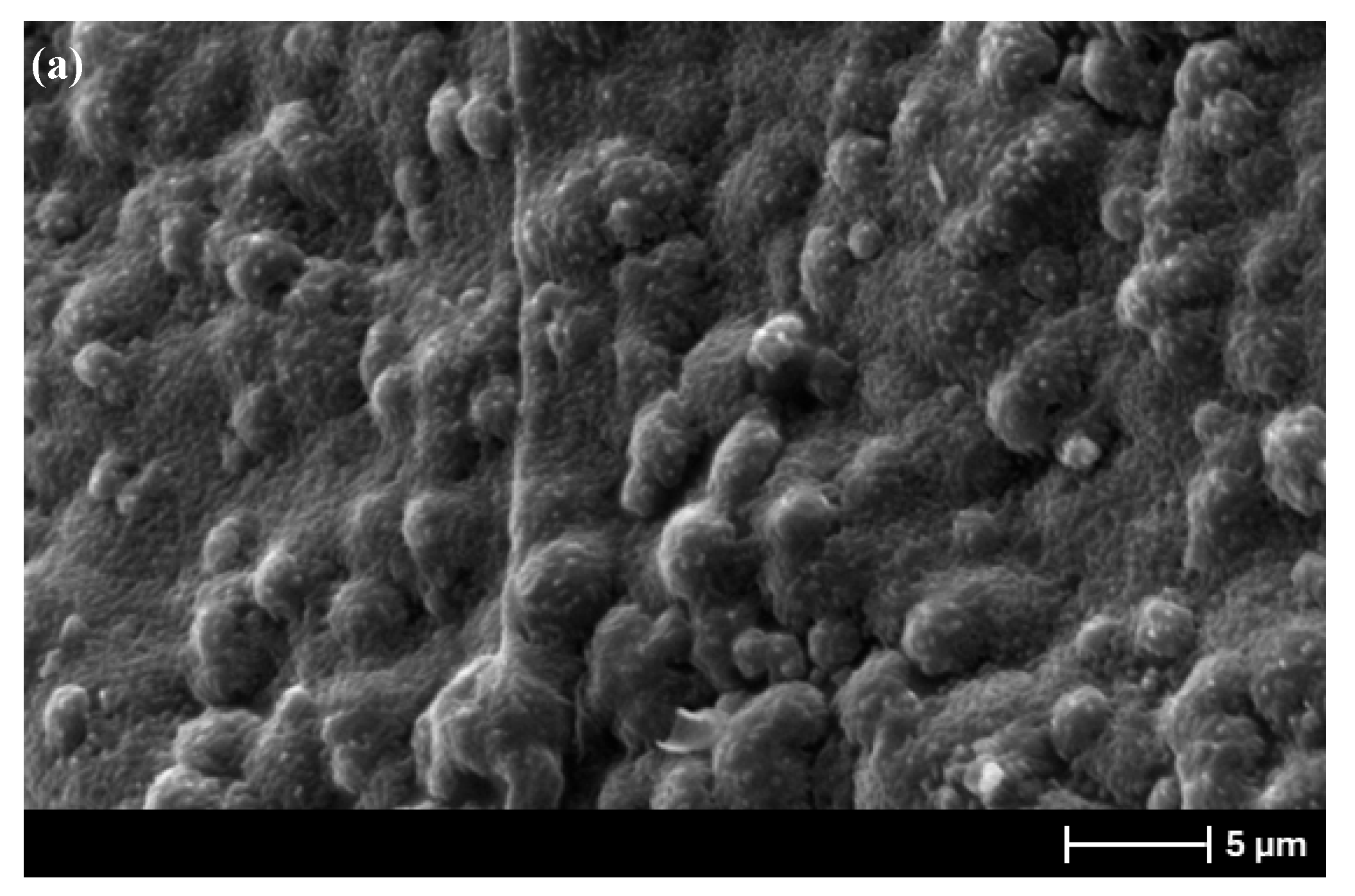
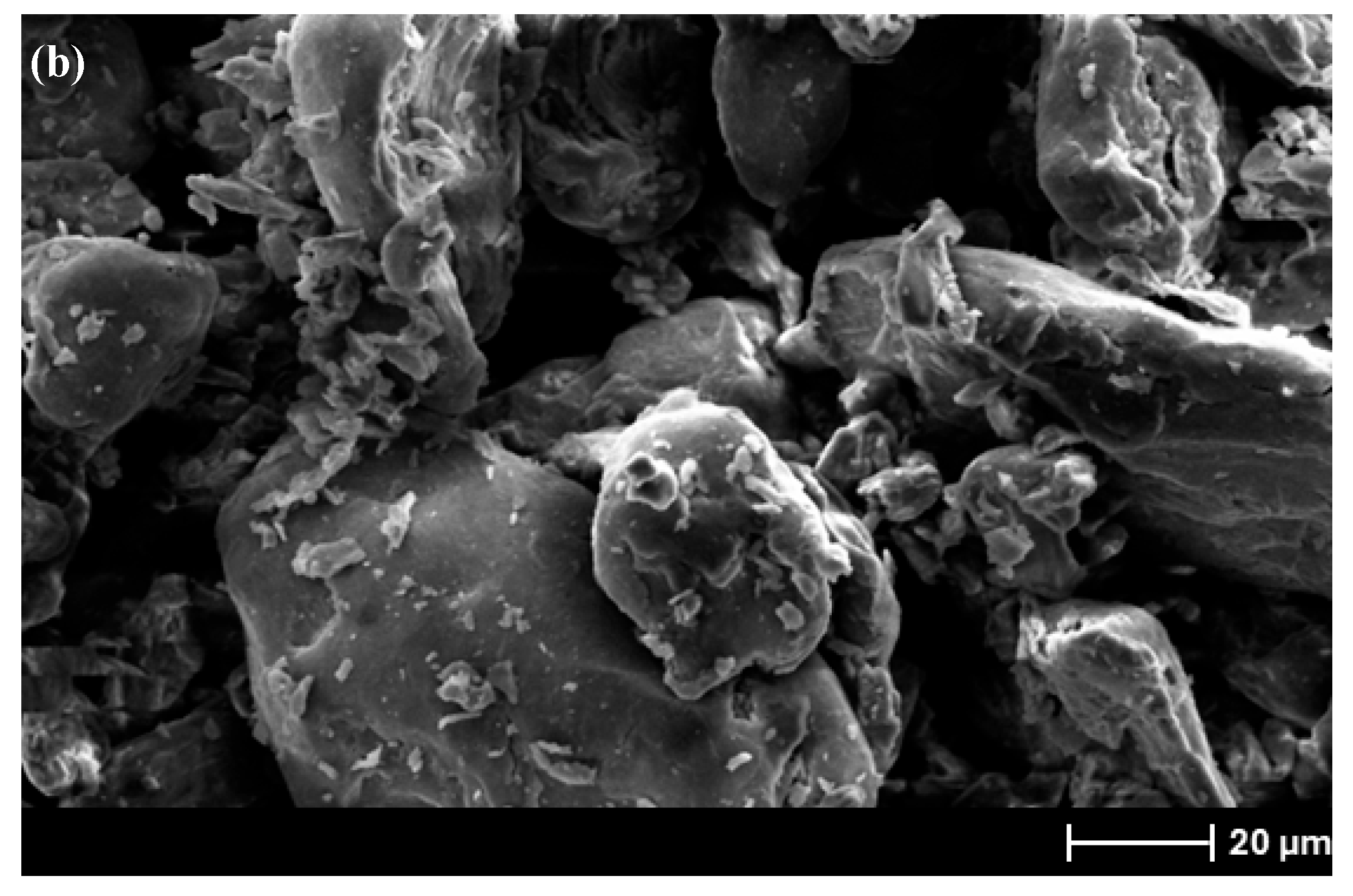
Surface texture is related to surface heterogeneity, which can influence adsorption behavior [49]. In this sense, the micrography of the alginate and synthesized hydrogel biocomposite is shown in Figure 1. The heterogeneous and rough surface may favor contact between the aqueous phase and the polymeric matrix, while the observed structural features may facilitate water penetration into the hydrogel and access to available functional groups.
The SEM image of the hydrogel revealed a rough surface with bubble-like structures, which were attributed to the incorporation of the alginate into the OFI matrix. The material surface was relatively regular, but its roughness was associated with the encapsulation of the gelled granules, while the bubble-like structures were attributed to electrostatic repulsion between the negatively charged polymer chains contained in the crosslinked mucilage extract [34]. Similar results were obtained by [39]. However, their hydrogel was synthesized through a lengthy process using toxic chemicals, whereas the method herein is rapid and environmentally friendly.
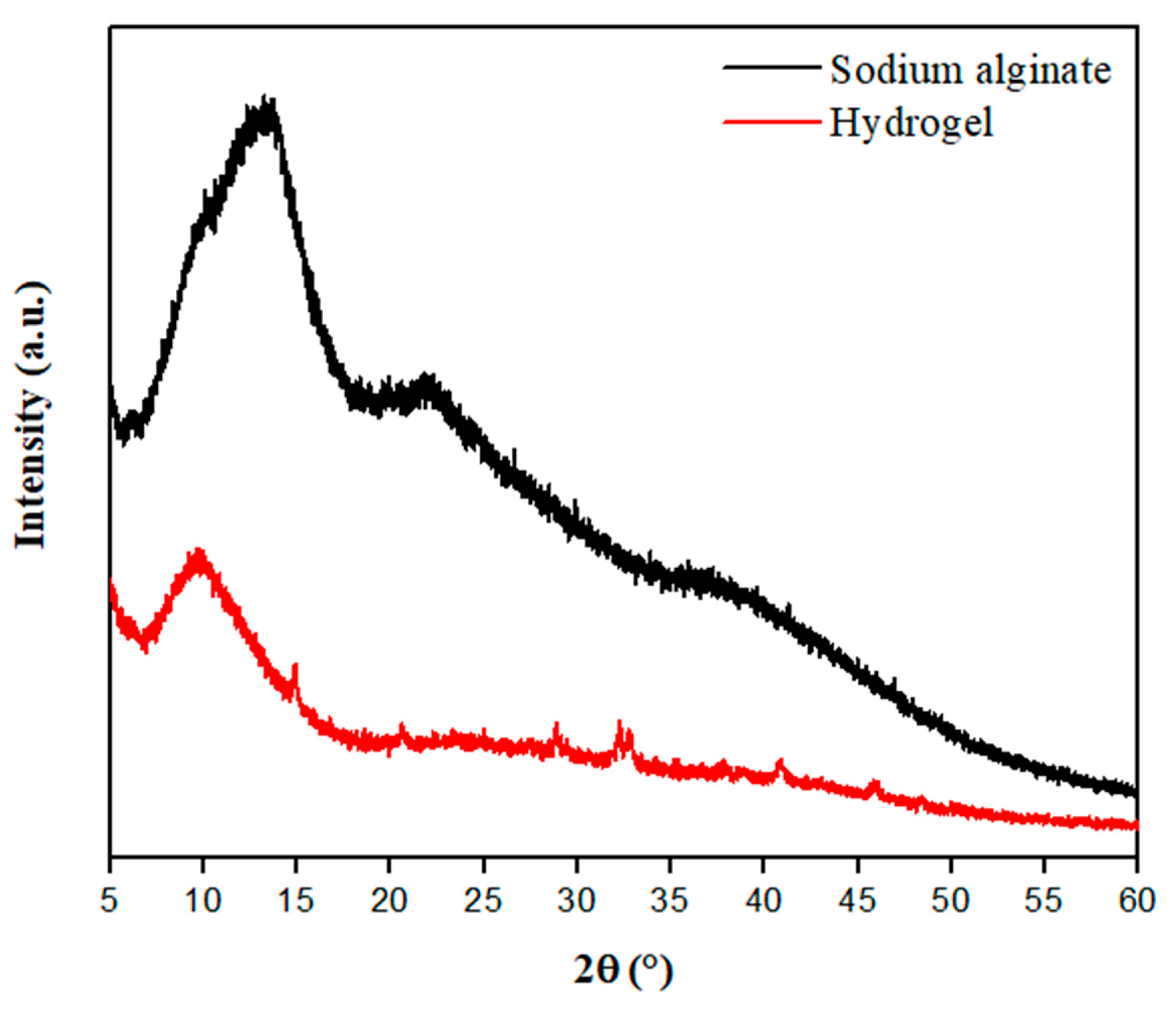
The XRD for the sodium alginate and the synthesized hydrogel is shown in Figure 2.
The XRD diffractograms (Figure 2) of sodium alginate and hydrogel exhibited the typical broad amorphous or semi-crystalline patterns reported for polysaccharide-based materials. Sodium alginate showed a diffuse peak centered at 13–14°, followed by a low-intensity shoulder at 22°, associated with short-range ordering within the alginate chains rather than long-range crystallinity. After formation of the hydrogel, these signals became less intense and broadened, consistent with reduced polysaccharide chain packing and increased structural disorder upon ionic crosslinking or incorporation of mucilage. The overall amorphous pattern has been widely observed in alginate films and alginate-based hydrogels and can be interpreted as evidence of composite formation and increased polymer network disorder without the generation of new crystalline phases [50,51,52]. The XRD behavior, therefore, corroborated the FT-IR and SEM analysis and indicated that the composite is predominantly an amorphous, crosslinked polysaccharide network. This structural organization is compatible with adsorption mechanisms involving interactions with accessible functional groups and diffusion into the hydrated polymer network rather than adsorption associated exclusively with specific crystalline domains.
The hydrogel porosity and specific surface area are paramount for the adsorption process. Thus, they were analyzed using N2-physisorption isotherms. The obtained results were as follows: SBET = 0.14 m2/g, predominantly mesoporous (0.11 m2/g), total pore volume of 0.02 cm3/g, and an average particle size of 42,6 µm. The obtained SBET is low compared with that of conventional biochar, but is within the range commonly reported for hydrogels [53], e.g., for Opuntia ficus-indica powder, only 1.6 m2/g was reported [54]. No values were found in the literature for corroboration of a similarly synthesized hydrogel biocomposite. It is important to note that the porosity formed was attributed to the lyophilization step, which provided the surface area necessary for adsorbate interaction, important for adsorptive processes [34]. Generally, high adsorption is linked to high surface area, which, in turn, promotes more potential binding sites [55]. However, while SBET for our hydrogel was low, the material presented high adsorption capacity (see Section 3.4), meaning that the adsorption driving force is due to other factors, such as a high density of adsorption sites within its pores [19], strong chemical affinity [56] or even the presence of specific binding sites [57]. For comparison, the maximum adsorption capacity of Congo Red dye in an alginate-crosslinked-cellulose adsorbent reached up to 518 mg/g, with a low SBET varying from 5 to 13 m2/g according to alginate and cellulose proportions [58]. In another study, a magnetic chitosan/alginate hydrogel was employed to remove methylene blue from contaminated water in the form of 0.65 m2/g beads, revealing an adsorption capacity of 1–2 mg/g [59]. These findings support the conclusion that the low specific surface area of hydrogels is not necessarily a limiting factor for adsorption because other mechanisms may contribute to pollutant uptake. In fact, natural or modified biobased hydrogels such as chitosan and alginate ones can possess an adsorption capacity that varies from 100 to more than 2000 mg/g depending on the hydrogels’ properties and the different adsorption mechanisms [60].
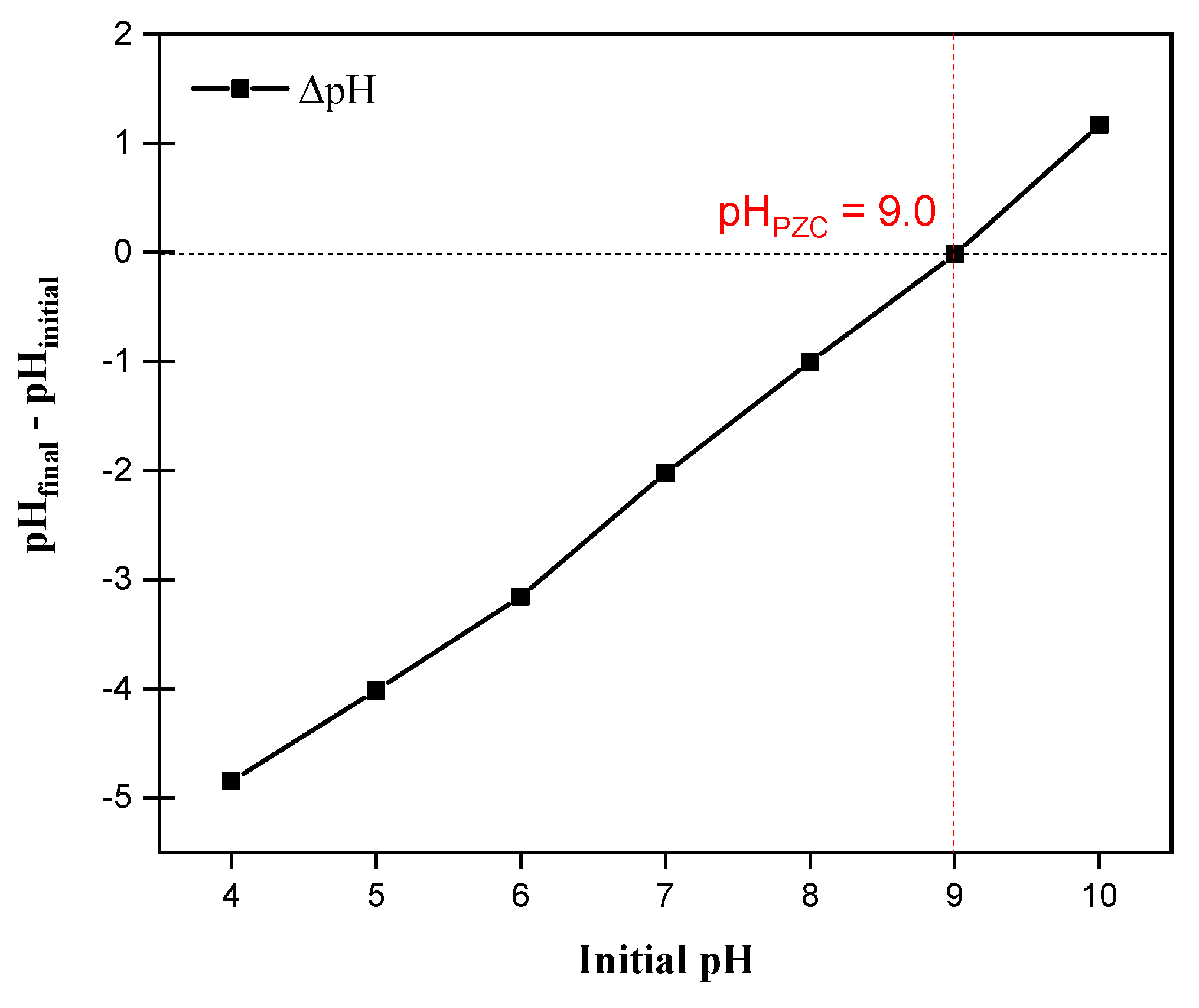
BET surface area is not the sole determinant of adsorption capacity in a swollen hydrogel. Understanding other parameters involved in adsorption, such as the electrical characteristics of the adsorbent, is of paramount importance to acknowledge the interactions and mechanisms involved in Neutral Red adsorption [61]. The pH of the point of zero charge (pHPZC) for the hydrogel biocomposite is shown in Figure 3.
As shown in Figure 3, the pHPZC of the hydrogel is 9.0, indicating that the positive and negative charges on the material surface of the material are balanced at this pH, resulting in no net surface charge. Besides that, at the pH of the point of zero charge, there is no movement for particles under an electric field, and no diffuse ion transport occurs [62]. Furthermore, Figure 3 indicates that the material surface is positively charged at pH < 9.0 and negatively charged above this threshold. It is important to note that the sign of the ΔpH curve does not directly represent the net surface charge of the adsorbent, which is a common misconception, but reflects the acid-base interactions between the solid surface and the solution that lead to the shifts in equilibrium pH [63]. However, an opposite trend was reported by [54], who observed a negative surface charge throughout the studied pH range based on zeta potential analysis of Opuntia ficus-indica powder, which the authors explained is characteristic of cellulosic material due to a high concentration of hydroxyl groups.
The relatively high pHPZC value for our hydrogel suggests that the material retains positive surface charge over a wide pH range, which is advantageous for the removal of anionic pollutants from natural and wastewater streams [64], typically characterized by near-neutral pH values. The positive surface charge observed on the surface of the hydrogel at pH < pHPZC was attributed to the deprotonated carboxylic groups of the uronic acids (mannuronic and guluronic) contained in the mucilage (deprotonated -COOH → protonated -COO−) [65].
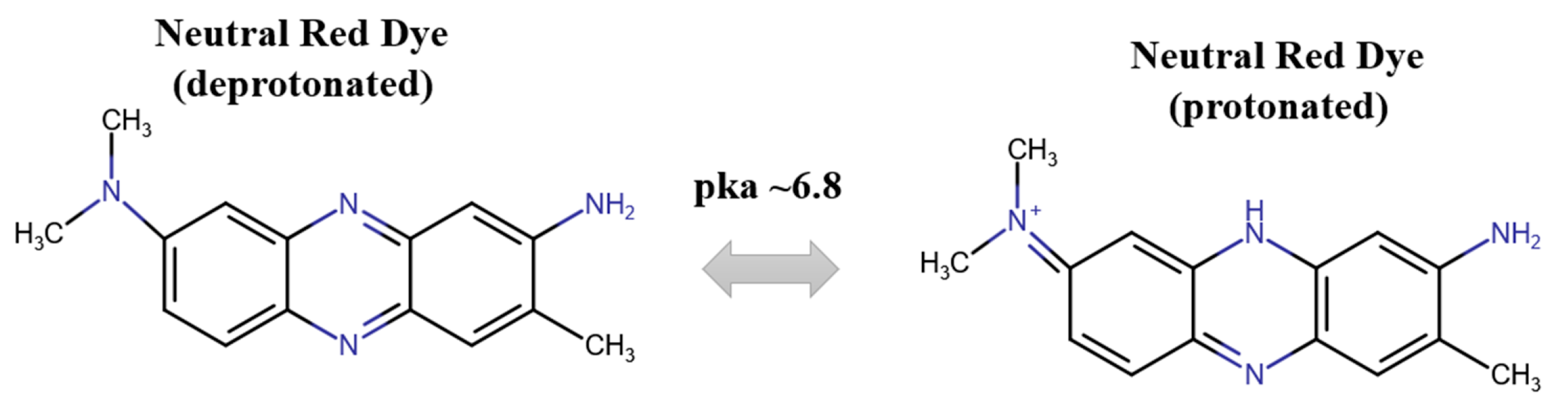
Although a pHPZC of 9.0 implies that the hydrogel surface is positively charged at the solution pH (7.0) used during adsorption, this condition would be expected to promote electrostatic repulsion of cationic dyes such as Neutral Red [66]. The Neutral Red dye structures are shown in Figure 4. Therefore, several complementary factors must be responsible for the adsorption mechanism. For example, natural polysaccharides contained in hydrogels containing mucilage/alginate prepared from Opuntia ficus-indica possess abundant hydroxyl, carboxyl, and other polar groups that promote dye binding via hydrogen bonding, van der Waals interactions, and pore-entrainment [53,54], mechanisms which are independent of surface net charge.
Moreover, extracted cellulose and mucilage from Opuntia ficus-indica often contain uronic acids and other ionizable moieties or can be modified by chemical and physical methodologies (alginate blending, activation, nanoparticle decoration) to introduce negatively charged sites or increase surface area in order to enhance adsorption of cationic molecules such as Neutral Red dye [54,67]. In addition, the high swelling capacity and open network of such hydrogels also increase dye diffusion and contact time, improving apparent affinity even when electrostatic attraction is weak or unfavorable [24]. Consequently, hydrogels prepared from Opuntia ficus-indica can still be advantageous for Neutral Red dye adsorption.
Figure 4. Neutral Red dye structures for deprotonated and protonated states. Based on [68].
Processes 14 03208 g004
It is worth noting that our findings, despite the higher pHPZC values, are consistent with those reported by El Bouazzaoui et al. (2022) [39] which obtained pHPZC = 6.3 and a net positive charge distribution for values below it; however, the authors provided no discussion on this topic.
The analysis of the pHPZC revealed an increase in pH variation when increasing the solution initial pH, meaning an increase in negative charge distribution on the surface of the hydrogel biocomposite material, and the charge-neutrality condition, i.e., equal positive and negative charge distribution on the material surface, was observed at pHPZC = 9.0. This result was associated with the presence of an amino-containing group in proteins extracted from the cactus mucilage (pKa ~9.5) [34]. However, polysaccharides obtained from natural materials such as the mucilage extracted from cactus cladodes usually exhibit approximately 5–11%w of pectin, depending on the purification method employed, and this should be related to a pKa = 3.5 [36,69], but no variation in pHPZC was observed in the studied range. It is worth noting that pectin, a water-soluble polymer, poses a considerable fraction content in the cladodes of Opuntia ficus-indica, comprising 4–5% of its dry mass [34]. In addition, the pKa for Neutral Red dye is considerably higher, approximately 6.8 [68].
The swelling degree of the synthesized hydrogel biocomposite was 236 ± 22% on average. The swelling behavior of the hydrogel plays a crucial role in the adsorption process for this material. Swelling occurs due to the ionic groups and hydrophilic behavior of the polymer network, allowing water to diffuse into the gel and increase its volume, exposing the adsorption sites and facilitating pollutant diffusion, with the adsorption being more efficient [70,71]. In addition, swelling can influence the water absorption capacity of the material through interactions between the polymeric components of the hydrogel and the chemical species in the surrounding medium, which may alter the material’s functional groups [72]. The swelling properties of the hydrogel biocomposite underscore the material’s adaptability across a wide range of pH, supporting its use in neutral pH environments for water and effluent treatment processes, which facilitates effective adsorption through enhanced interaction with adsorbates [70,73]. Thus, while electrostatic interactions are a significant mechanism in the adsorption of cationic dyes such as Neutral Red dye, the swelling property of the hydrogel may contribute to its efficiency in pollutant removal, highlighting the multifunctional nature of the hydrogel biocomposite for adsorptive applications under diverse environmental conditions.
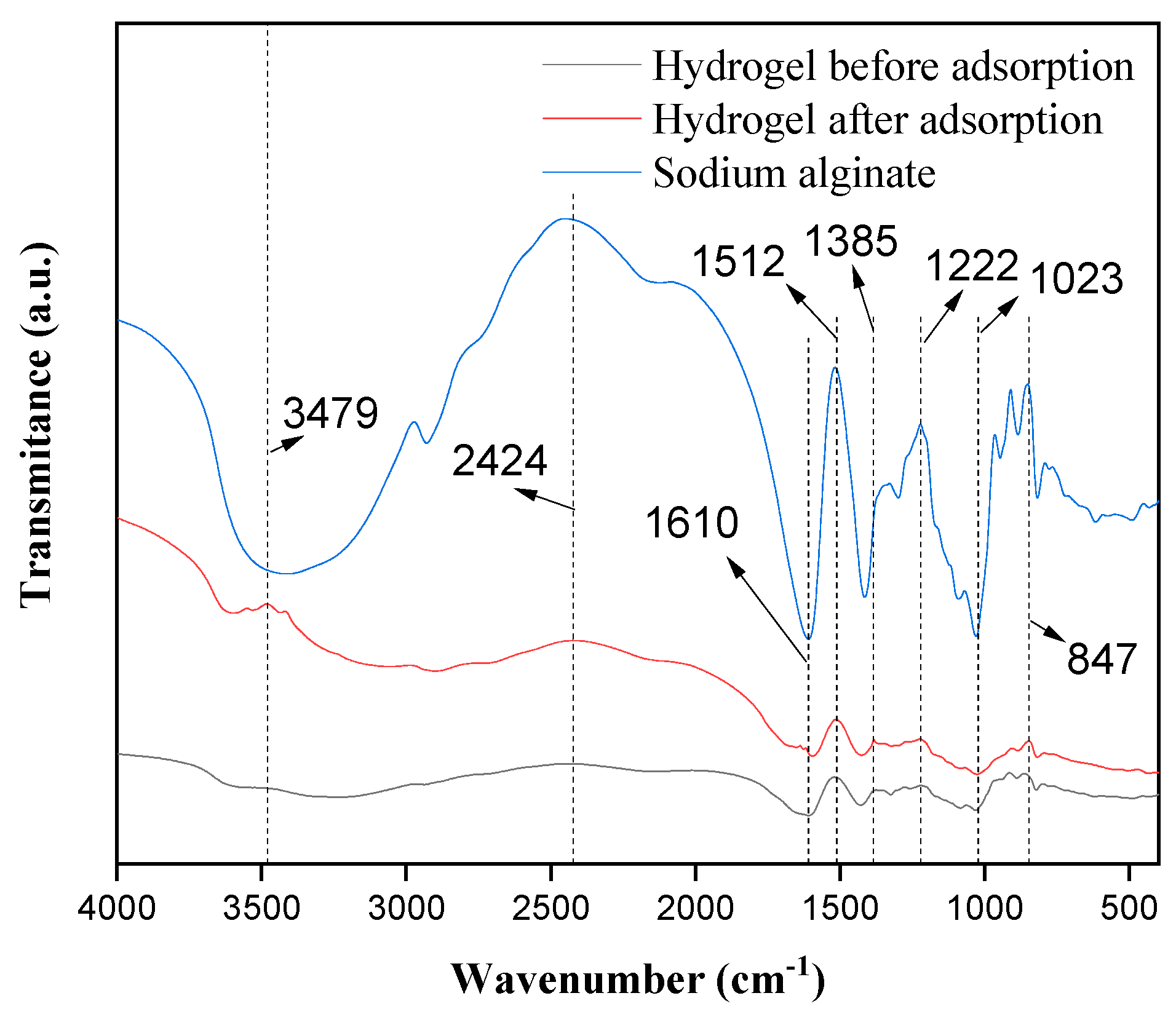
The FT-IR spectra of the hydrogel biocomposite before and after the Neutral Red dye adsorption are shown in Figure 5.
The analysis of Figure 5 revealed that most vibrational features of the FT-IR spectra of the composite hydrogel before and after adsorption corresponded to those of the sodium alginate, which was expected since alginate constitutes the main structural matrix of the hydrogel. The main changes in the FT-IR intensity occurred at 3479, 2424, 1512, 1385, 1222, 1023, and 847 cm−1. The peak intensity at 3479 cm−1 was attributed to the hydroxyl vibration of alcohol groups [34,74]. The presence of hydroxyls is advantageous because they can improve the mechanical and thermal resistance of the hydrogel by increasing crosslinking strength and density [27]. The band near 1610 cm−1 became more pronounced after Neutral Red adsorption. This region is associated with asymmetric stretching of carboxylate groups in alginate and OFI mucilage and may also contain contributions from the adsorbed dye [75].
A small peak intensity at 1610 cm−1 was observed after the adsorption but not before, meaning that it was due to the Neutral Red dye.
Wulandari et al. (2016) [76], working with sugarcane bagasse, a cellulosic material, reported that the peak intensity at 1644 cm−1 was due to the O-H vibration of absorbed water. However, Asnan et al. (2022) [34] found that the peak intensity at 1601–1610 cm−1 corresponds to -COO− (deprotonated carboxylic acid), meaning that this group acts as a proton donor and, since Neutral Red dye is positively charged in aqueous solution, this is an important group for adsorption [75].
The band at 1512 cm−1 can be associated with the symmetric stretching vibration of carboxylate (COO−) groups, which have been attributed to uronic acid residues [34]. Together with the band near 1610 cm−1, assigned to asymmetric COO− stretching, this feature indicates the presence of ionized carboxyl groups within the alginate-OPI polysaccharide matrix [77]. These groups are particularly relevant to Neutral Red adsorption because they may contribute to electrostatic interactions with the cationic dye.
El Bouazzaoui et al. (2022) [39] was able to extract non-cellulosic components from Opuntia ficus-indica seeds due to bands located at 1160–1025 cm−1; therefore, the peak at 1222 cm−1 was attributed to the C-O-C stretching of cellulose ether.
The broad spectra observed near 1023 cm−1 were attributed to the stretching of the C-O group in sodium alginate [74]. The peak intensity at near 813 cm−1 is characteristic of the Na-O stretching in sodium alginate [74], but at near-824 cm−1 is due to S=O stretching [78]. However, the hydrogel biocomposite showed peak intensity at 847 cm−1 which is closely related to the C-C vibrations that are found in polysaccharides [34] such as the pectin-containing mucilage extracted from the cactus cladodes.

3.2. Effect of Different Parameters on Neutral Red Dye Batch Adsorption

3.2.1. Hydrogel Biocomposite Mass Effect

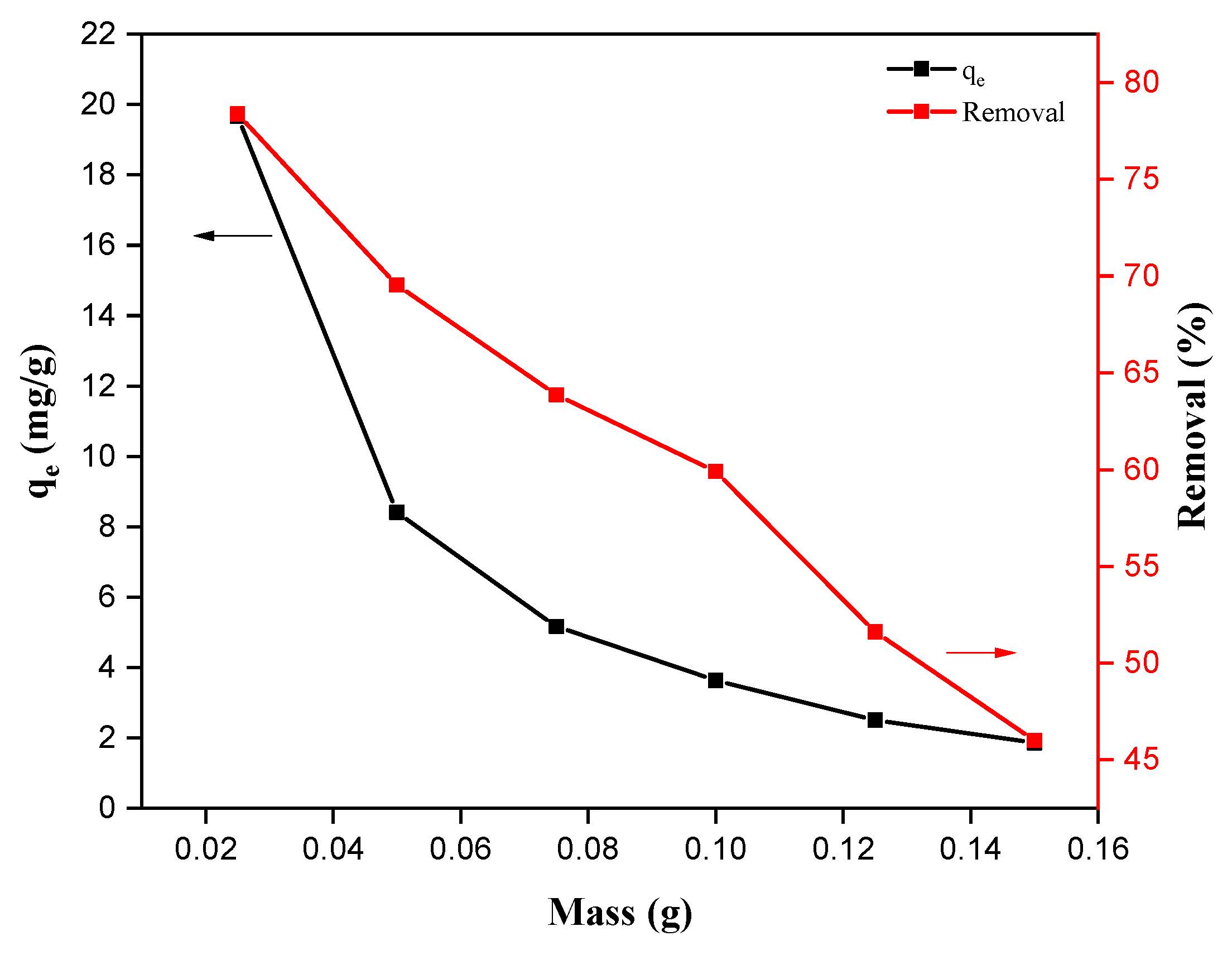
The study of adsorbent mass variation in adsorption is important for understanding the behavior between the adsorbent dosage related to the availability of active sites on the adsorbent and the osmotic pressure on the contaminant [39]. The adsorbent mass effect on the Neutral Red adsorption process is shown in Figure 6.
The mass effect of the hydrogel biocomposite on Neutral Red dye adsorption revealed that increasing the adsorbent mass from 25 to 150 mg decreased the removal percentage from 78.3 to 46.0% and the adsorption capacity from 19.7 to 1.9 mg/g. Higher adsorbent dosages promoted particle aggregation and overlap of available binding sites, reducing the accessible surface area per unit mass, a phenomenon known as site blocking. In addition, this effect was associated with the positive surface charge that repelled the cationic Neutral Red dye. El Bouazzaoui [39] reported the opposite trend with methylene blue dye, a cationic dye, which exhibited a maximum removal efficiency when increasing the adsorbent mass from 0.1 to 0.8 g (<50% to ~85%, respectively). Further increase in adsorbent mass would have a negative effect on methylene blue removal efficiency due to osmotic pressure from the material swelling. Our data agree with those reported for Neutral Red adsorption using Opuntia ficus-indica powder [54].

3.2.2. Effect of the pH of the Contaminated Solution

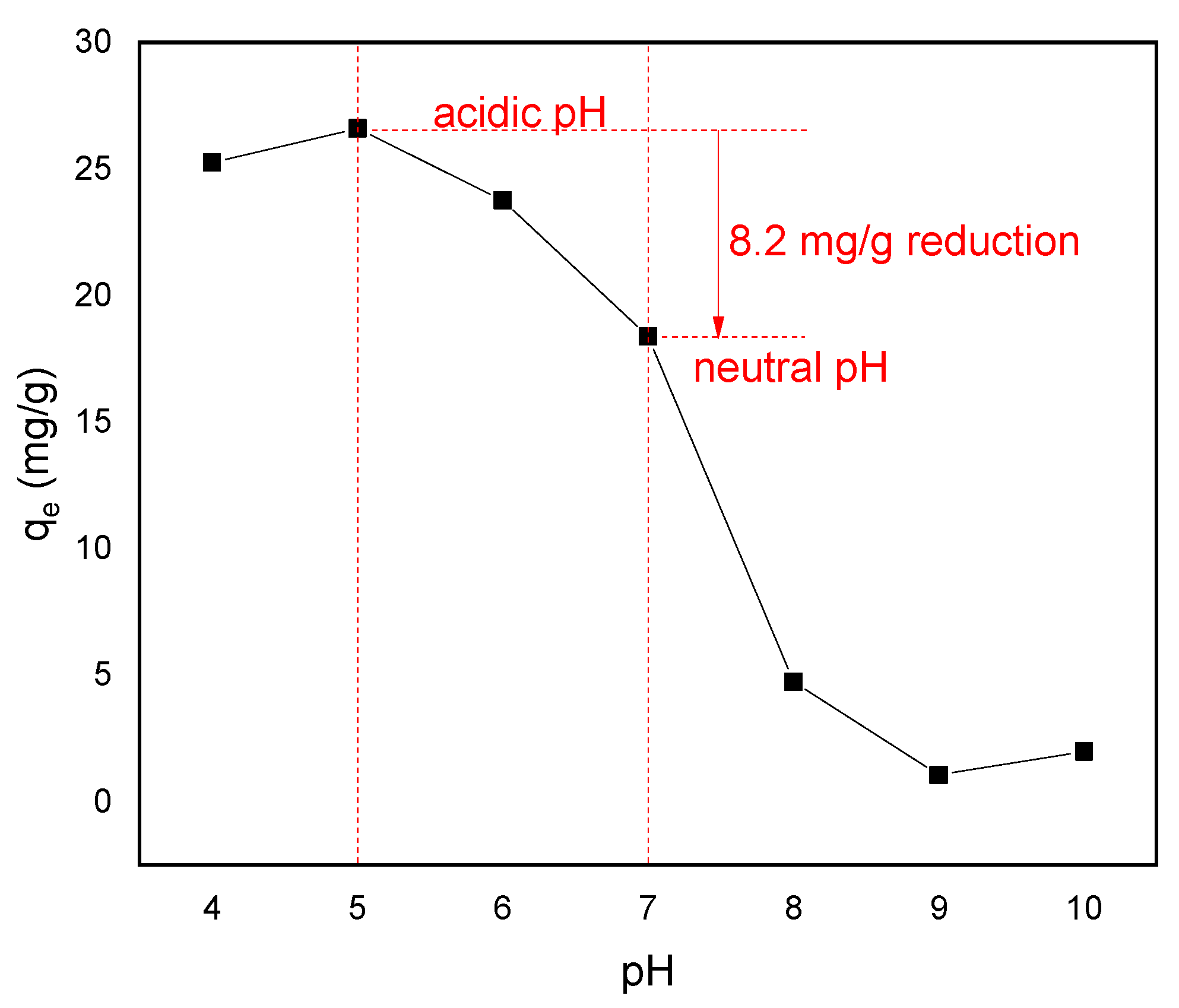
The pH of the Neutral Red solution can directly influence the adsorption process by altering the surface charge of the adsorbent and, consequently, the attractive or repulsive interaction between the adsorbent and contaminant [79]. In this study, the effect of pH was evaluated over the range of 4–10, with the highest adsorption capacities being obtained at pH ranging from 4 to 6; the highest maximum adsorption capacity of 26.6 mg/g was determined at pH 5, as shown in Figure 7. At more acidic pH, adsorption may be unfavored due to the presence of H+ in the solution, which increases the repulsion between the molecules, whereas the dye in question is cationic [80]. The pH limits of 4 and 10 were selected because partial degradation occurred below pH 4, whereas hydrogel instability was observed above pH 10. However, the hydrogel remained stable for up to 24 h at 25 to 40 °C.
The pH dependence should be interpreted considering both the surface charge of the hydrogel and the acid-base speciation of the Neutral Red (pKa ~ 6.8), rather than being attributed exclusively to electrostatic attraction. The higher adsorption for Neutral Red dye at acidic pH, despite its cationic nature and the positive surface charge of the hydrogel below pHPZC (9.0), can be explained by additional mechanisms beyond simple electrostatic interaction. At lower pH, protonation of surface functional groups may enhance hydrophilicity and facilitate hydrogen bonding, van der Waals interactions, and pore entrapment of the dye molecules within the hydrogel matrix. Moreover, Opuntia ficus-indica-derived hydrogels possess polysaccharide chains rich in hydroxyl, carboxyl, and other polar groups (e.g., uronic acids) that can participate in non-electrostatic interactions, while the high swelling capacity also increases dye diffusion and accessibility to the internal and more energetic binding sites [24,53,54,67].
Similar observations have been reported for textile dye adsorption using Opuntia ficus-indica fruit waste [81] and for neutral red adsorption onto modified activated carbons [82], where acidic conditions favored uptake through specific functional group interactions and textural effects rather than electrostatic interactions only. Therefore, the improved Neutral Red dye adsorption observed under acidic conditions in this study can be attributed to a synergistic effect of functional group availability, hydrogel swelling, and non-electrostatic binding mechanisms, consistent with the findings in related systems.
Similarly, the highest adsorption capacity for Opuntia ficus-indica powder over Neutral Red dye was reported at pH between 3 and 4 [54]. Although the highest adsorption capacity results occurred at acidic pH~5.0 (26.6 mg/g) in this study, the remaining adsorption experiments were conducted at pH~7.0 (18.4 mg/g), since this is the natural pH of the contaminated solution and modifying the solution’s pH for adsorption is impractical for real wastewater treatment plants due to costs for chemical products purchase and, later, water salinity problems [83]. A nanocomposite of alginate modified with Prussian blue and graphene oxide also reported higher adsorption capacity for acidic solutions (maximum at pH~6.0) for radioisotope 137Cs adsorption, and the experiments were conducted in the range 5–8 [21].

3.2.3. Electrolyte Types and Ionic Driving Force Effect

Ionic strength is an important factor influencing adsorption efficiency. To investigate this effect, simulated real textile effluents were prepared by dissolving salt in the dye solution. For this purpose, KCl, NaCl, and MgCl2 were employed as electrolytes at concentrations of 0.1 and 0.3 mol L−1. The results revealed that increasing salt concentrations led to a reduction in adsorption capacity, with maximum qe values of 11.2, 12.4 and 11.9 mg g−1 for KCl, NaCl and MgCl2 at 0.1 mol L−1, respectively. The adsorption capacity exhibited no significant variation with the type of salt used, suggesting that it was primarily influenced by electrolyte ionic charge, whether divalent (Mg2+) or monovalent (Na+ and K+) [84]. This result indicates that competition for active sites on the hydrogel occurred, resulting in decreased adsorption capacity. Similar reductions in adsorption capacity with increasing ionic strength have also been reported in studies involving dye removal [44,85,86].

3.3. Adsorption Kinetic Study

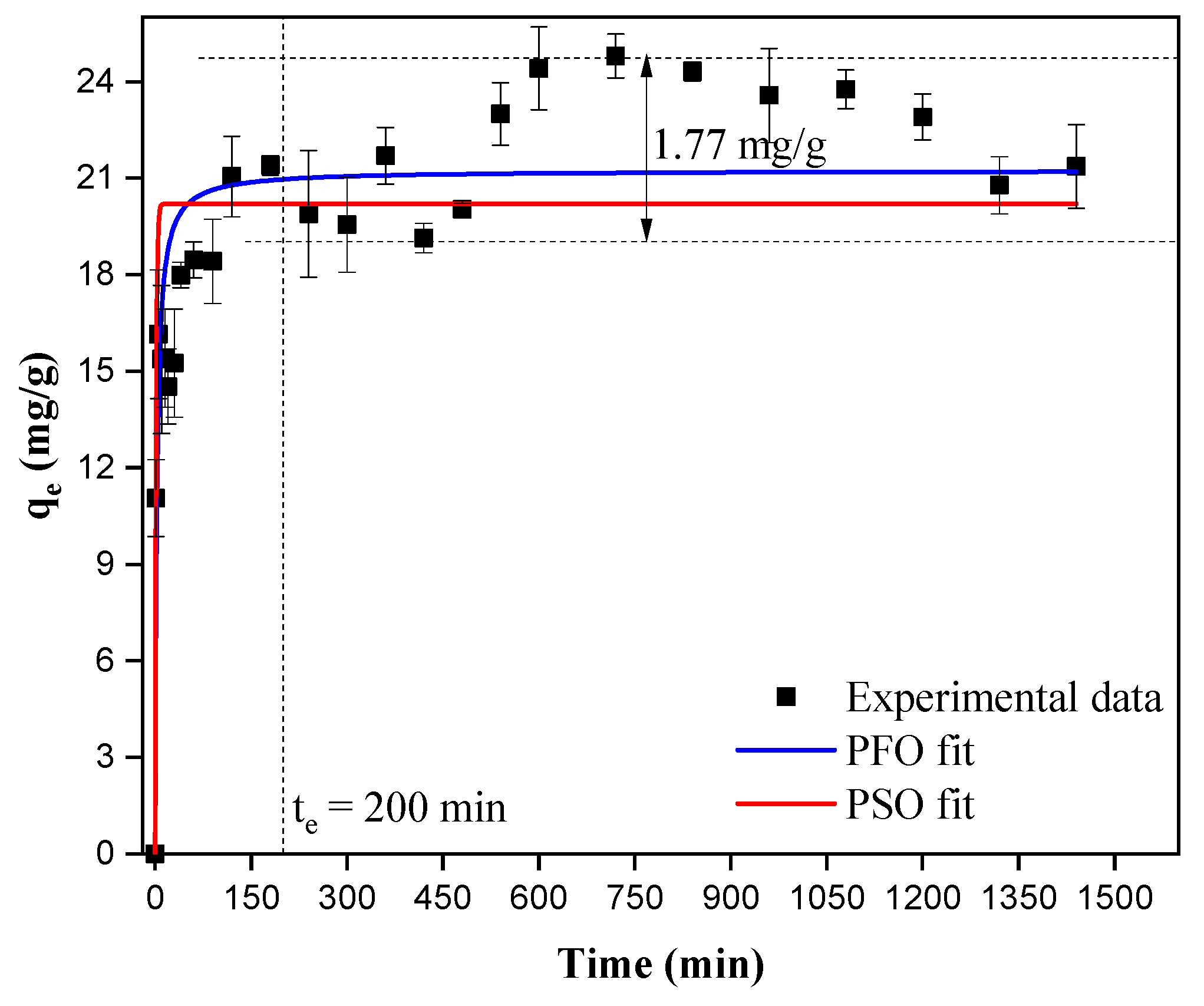
The experimental adsorption kinetics and model fittings are shown in Figure 8. The PFO and PSO models were adjusted to experimental data because they are widely used empirical kinetic models for describing adsorption from aqueous solutions and provide complementary descriptions of the time-dependent uptake of contaminants. These models should not be used as definitive evidence of a specific adsorption mechanism.
The adsorption kinetic experiments revealed an equilibrium time of approximately 200 min. Although small variations in adsorption capacity were observed at longer contact times, these variations were consistent with dynamic equilibrium. The highest adsorption capacity was observed after 720 min (24.79 mg g−1). After dynamic equilibrium conditions, a 1.77 mg g−1 variation was observed (approximately 7%). This reported value is similar to the 120 min for Opuntia ficus-indica powder removal of 96% of Neutral Red dye [54]. The initial rapid adsorption can be attributed to the alginate used in the synthesis of our hydrogel biocomposite since it is a polysaccharide with gel-forming capacity that serves as a matrix for various contaminant removal, including dyes [25]. Typically, the early stages of adsorption involve physical interactions, whereas intraparticle diffusion may contribute at later stages and can be described by the PFO model [87]. The slow-adsorption stage (200 < t < 1500 min) was associated with dye transport mechanisms within the hydrogel, hindering diffusion toward higher-energy sites inside the adsorbent structure [54]. In contrast, a biomass-derived carbon aerogel demonstrated a 60 min adsorption kinetic towards the removal of tetracycline due to the presence of macro- and mesoporous structure [57]. Also, a sustainable MOF (metal-organic framework) nanocomposite was applied for the adsorption of cadmium (II), lead (II), and chromium (VI) ions with adsorption capacities of 693, 536, and 1092 mg/g, respectively, requiring 40, 20, and 30 min to reach equilibrium conditions, respectively [88]. MOFs’ high adsorption capacity and fast metal ion adsorption are well documented [89,90].
The PFO and PSO kinetic models’ fittings to the experimental data are displayed in Table 1. The best-fitted model was assigned in bold text according to the R2 → 1.0 criteria.
Even though the R2 parameter seems to be low, for chemical experiments in which molecules are present, such as adsorption experiments, a value of 60% or higher is considered adequate since the molecules’ behavior can be predicted and described to some degree of certainty, but randomness persists [91]. In addition, a low value obtained for R2 may indicate that the corresponding mathematical formulation does not fully capture the complexity of the adsorption systems. For example, in the present case, the heterogeneous nature of the biocomposite, together with the swelling of the polymeric network, may not be completely represented by a single empirical model.
Among the kinetic models evaluated, the PSO model provided a comparatively better fit to the experimental data, suggesting that the adsorption mechanism may involve relatively strong dye-hydrogel, with electron sharing between the Neutral Red dye molecules and the hydrogel functional groups [87]. This agrees with the kinetic adsorption of methylene blue using Opuntia ficus-indica cultivated in Morocco, which was best described by the PSO model, with an equilibrium time varying from 100–200 min, approximately, for 50 to 500 mg/L contaminated solution concentration [92].

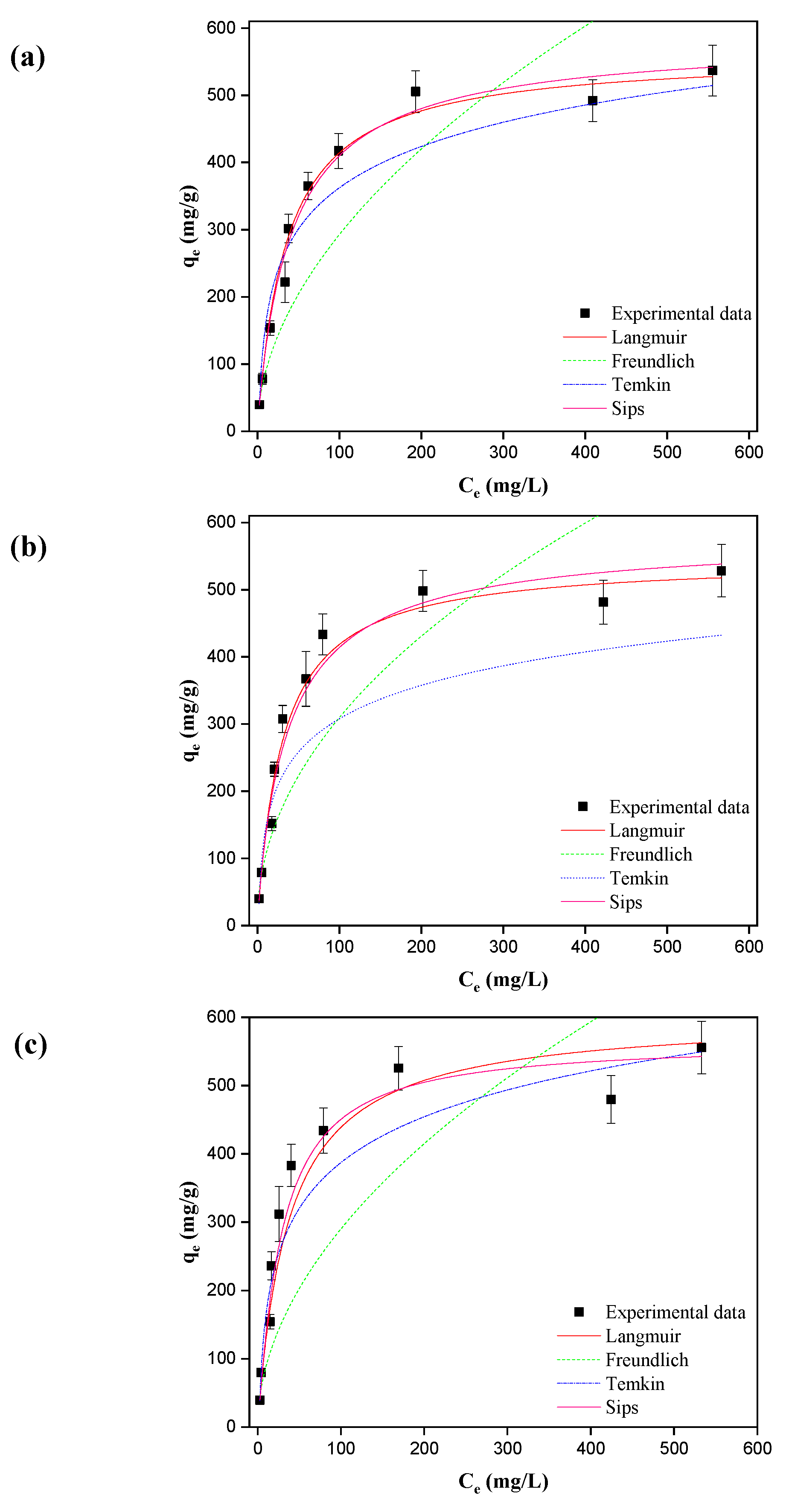
3.4. Adsorption Isotherm

The experimental adsorption isotherm data and model fits are presented in Figure 9. The maximum adsorption capacities observed for Neutral Red were 588, 582 and 565 mg/g at 25, 35 and 45 °C, respectively. Ref. [92] investigated the methylene blue dye removal using Opuntia ficus-indica cultivated in two different cities in Morocco and reported maximum adsorption capacities ranging from 263 to 333 mg/g, with the Langmuir isotherm providing the best fit to experimental data. Slightly lower adsorption capacities than those obtained in the present study were reported for alginate-cellulose hydrogel beads used for Congo Red removal. The reported maximum adsorption capacity was 519 mg/g, attributed to the cationic and anionic nature of the adsorbent and dye, respectively, and predominantly to hydrogen bonds and an electrostatic mechanism [58]. Another study with hydrogel beads (alginate-CTAB composite) for Congo Red adsorption reported lower capacities ranging from 141–153 mg/g, and the experimental data were modeled by the Freundlich isotherm [93]. In both cases, the lower values were attributed to the relatively closed bead structure, which reduced pore availability and increased mass transfer resistance.
Similarly, Ref. [21] evaluated cesium sorption using an alginate nanocomposite and reported a Langmuir fit with a maximum adsorption capacity of 281 mg/g. These values are lower than those obtained in the present study. It should be noted, however, that the Langmuir model assumes monolayer saturation of the adsorbent surface, which implies a limited number of available adsorption sites [94]. In contrast, Ref. [23] reported that the adsorption isotherm of a plant-based adsorbent for pharmaceutical removal was best described by the Hill model, which is generally recommended for systems involving interactions that cannot be adequately represented by the assumptions of the Langmuir or Freundlich models.
Even though the chemical surface of the hydrogel significantly influences the adsorption capacity, i.e., the affinity between the adsorbate/adsorbent, the discrepancies between calculated and experimental adsorption capacities may be attributed to the pore-filling effect, meaning that the pore size is the main factor controlling the adsorption process, especially for pore size-to-adsorbate diameter ratio between 1.7 and 3 [56].
The adsorption isotherm model parameters fitted to the experimental data are shown in Table 2. The best-fitted model was assigned in bold text according to the R2 → 1.0 criteria. According to the experimental data obtained (Table 2), the results fit better with the Sips model, with theoretical qe values close to the experimental ones and better R2 values of 0.9946, 0.9791 and 0.9730 for temperatures of 25, 35 and 45 °C, respectively. The Sips model combines characteristics of the Langmuir and Freundlich formulations and is, therefore, useful for describing adsorption on heterogeneous surfaces such as the hydrogel biocomposite, thus avoiding the assumption of complete homogeneity of adsorption sites.

3.5. Thermodynamic Parameters

To better understand the adsorption process, the thermodynamic parameters were estimated. To explain the energetics of sorption, standard Gibbs free energy change (ΔG°), standard enthalpy change (ΔH°), and standard entropy change (ΔS°) were determined.
The thermodynamic parameters estimated for Neutral Red adsorption onto the hydrogel biocomposite are shown in Table 3. The negative ΔG° values obtained at the temperatures studied indicated that Neutral Red adsorption was thermodynamically favorable under all experimental conditions, confirming its spontaneous nature. In addition, the positive value of ΔH° (11.55 kJ/mol) indicated that this process was endothermic and that the adsorption needed energy to occur; also, an increase in temperature was followed by an increase in the Kc constant. The process may be driven by increased dye-hydrogel interactions, while a positive ΔS° value indicated increased randomness at the interface. The better fit obtained with the PSO model is consistent with adsorption kinetics that may involve relatively strong interactions between Neutral Red and the hydrogel. In addition, the magnitude of ΔH° is also consistent with energetic interactions between the dye and the hydrogel, suggesting chemisorption (see Section 3.3) and monolayer coverage (see Section 3.4).
According to the results presented in Table 3, the Neutral Red adsorption was spontaneous and endothermic, suggesting the possible contribution of chemisorption and a reversible adsorption process.
An increase in temperature from 25 to 56 °C decreased the methylene blue dye removal in Opuntia ficus-indica cultivated in Morocco, meaning that the process was exothermic [44,92]. In addition, the authors revealed that an increase in the initial concentration of the contaminated solution favored the adsorption rate due to easier diffusion of the dye, but this was expected since their material had a negatively charged surface and methylene blue dye is cationic.

3.6. Reusability Experiments

An important parameter for assessing the practical applicability of the hydrogel in the water treatment process is the regeneration/reuse capacity of the material, without decreasing its adsorption efficiency, even after several adsorption-desorption cycles [95]. Therefore, to analyze the possible reusability of the hydrogel, the adsorbent was placed in a dye solution under the same conditions as previously described; after this process, they were immersed in solutions of water, HCl (0.1 mol/L), NaOH (0.1 mol/L), and ethanol P.A., in order to release the adsorbed Neutral Red dye. These adsorption/desorption steps were repeated successively, and water was found to provide the best elution results.
A total of 5 adsorption/desorption cycles were carried out, and the Neutral Red dye adsorption efficiency was greater than 90% in all cycles. These preliminary results indicate potential for repeated application in water treatment processes. However, longer-term regeneration studies and post-cycle structural characterization are still required before its durability and industrial feasibility can be established. Similar studies that also used cationic dyes showed results of efficiency in removing these pollutants greater than 90% [96,97,98].

3.7. Ecotoxicity of Neutral Red Dye and Adsorbent by Means of Germination Analysis of Lettuce Seed

Although alginate and Opuntia ficus-indica hydrogel are natural materials generally considered non-toxic, adsorption-desorption cycles may produce residual compounds with increased toxicity. In this sense, the lettuce seed assay can be used as a precautionary ecotoxicity assessment to provide preliminary information on the environmental safety of the hydrogel and the treated water. For the ecotoxicity tests analyzing the germination of lettuce seeds, the control group (germinated in water), contaminated solution, and hydrogel-treated solution were used, and the results showed little difference between the germinated seeds, as displayed in Table 4. These results indicate that, under the tested conditions, both the synthesized adsorbent and Neutral Red exhibited relatively low ecotoxicity at the concentrations evaluated.
The analysis of the roots, aerial part, and total size of the lettuce seedling showed differences among the experimental conditions, as shown in Table 4.
The average size of the roots in the control samples was 16.4 mm, with no significant changes for the roots exposed to the contaminant solution, with a size of 16.75 mm, as well as in the roots with 25% treated effluent, which had an average size of 16.0 mm, with no statistical differences between these treatments. The roots exposed to the untreated effluent showed growth of 29%. After treatment, the growth showed a slight impact, with a reduction to 6.55 and 13.64 mm in the roots with treated effluent concentrations of 100% and 50%, respectively. However, the results showed that there was only a significant difference in the treated effluent sample at 100%, with a reduction of approximately 60% in the root length compared with the control.
For the aerial part analyses, the average size of the control samples was 20.75 mm, while the seedlings exposed to the adsorbent showed a significant average increase of 21.5%, with the average aerial part sizes being 25.8, 25.18, 25.82 and 24.61 mm for pure adsorbent, pure Neutral Red contaminant, and the effluent treated at 25%, 50% and 100%, respectively. The results showed no apparent inhibitory effect on the aerial part development, and neither did the use of the hydrogel, in comparison to the control group.
Regarding total seedling length, the average values were 37.15, 48.75, and 41.93 mm for the control group and for seedlings exposed to the adsorbent and contaminant, respectively. There was a significant increase in the size of seedlings in the control group, while the contaminant group had no significant difference. Comparing the control group and the 25, 50, and 100% treated effluent, the seedlings had an average size of 41.22, 39.47, and 31.17 mm.
Several authors have reported the effectiveness and sensitivity of lettuce seeds as an indicator of ecotoxicity, enabling the rapid and efficient assessment of different parameters [99]. Ref. [100] carried out ecotoxicity tests with Lactuca sativa in hospital effluent, rich in medical drugs, observing that, although not commonly used, L. sativa showed sensitivity to the effluent, indicating that it may be a more sensitive indicator of contamination than Daphnia magna. After treating the effluent, the tests showed no evident ecotoxic effects under the conditions evaluated. In the studies conducted by [101], the authors found growth inhibition of ≥20% in the germination index of L. sativa, even in treated effluents, indicating that the presence of drugs may contribute to phytotoxicity. Seeking to specify the ecotoxicity of drugs, Ref. [102] observed metmorphine toxicity in Lemma minor and Haworthiopsis attenuata, with CE 50 values of 53.7 mg L−1 and 701.8 mg L−1, respectively.
Thus, the adsorbents developed based on alginate hydrogel and cactus mucilage showed relatively low toxicity to L. sativa, as well as in the germination tests with the contaminant before and after treatment. This may be related to the low concentration of the contaminant, since concentrations of up to 10 mM are not reported to cause any level of toxicity in L. sativa plants [15]. In this way, the application of the new adsorbent can be considered a safe water-treatment option with relatively low impact on phyto-organisms.

4. Conclusions

This work demonstrated the successful synthesis and application of a novel hydrogel biocomposite prepared from Opuntia ficus-indica mucilage and alginate through a bio-based process for Neutral Red adsorption from aqueous solution. The hydrogel exhibited favorable surface properties, mesoporosity, and abundant functional groups that contributed to dye removal, particularly under acidic conditions. Adsorption kinetic and isotherm analyses indicated that the process was better described by the pseudo-second-order kinetic model and the Sips isotherm. Thermodynamic analysis indicated that the adsorption was spontaneous and endothermic under the conditions evaluated. In addition, the hydrogel maintained high adsorption performance over repeated adsorption-desorption cycles, highlighting its stability and reusability under the tested conditions. The lettuce seed assay indicated relatively low phytotoxic effects, although some differences in seedling development were observed in the evaluated conditions. Taken together, these findings highlight the potential of this sustainable and biodegradable hydrogel as an alternative adsorbent for Neutral Red removal from aqueous media. Future research may expand its application to real effluents containing multiple contaminants and evaluate its long-term performance, regeneration, environmental effects, and process scalability, contributing to the development of a more sustainable water treatment strategy.

Author Contributions

E.C.N.: data analysis, investigation, writing—original draft, writing—review and editing. G.A.V.M.G.: formal analysis, writing—original draft, writing—review and editing. A.D.: data analysis, writing—original draft, writing—review and editing. R.B.: supervision, project administration, funding acquisition and resources. R.G.G.: supervision, project administration, funding acquisition and resources. All authors have read and agreed to the published version of the manuscript.

Funding

This work was supported by Conselho Nacional de Desenvolvimento Científico e Tecnológico—CNPQ, for supporting the Project financially (Process number 303503/2023-8 DT2023—CNPq call no. 04/2023).

Data Availability Statement

All relevant data were cited in the article.

Acknowledgments

The authors would like to acknowledge the Laboratory of Adsorption and Ion Exchange (LATI/DEQ/UEM) and COMCAP/UEM for the characterization analysis.

Conflicts of Interest

The authors declare no conflict of interest.

References

  1. Januário, E.F.D.; Vidovix, T.B.; Beluci, N.d.C.L.; Paixão, R.M.; da Silva, L.H.B.R.; Homem, N.C.; Bergamasco, R.; Vieira, A.M.S. Advanced Graphene Oxide-Based Membranes as a Potential Alternative for Dyes Removal: A Review. Sci. Total Environ. 2021, 789, 147957. [Google Scholar] [CrossRef] [Scilit] [PubMed]
  2. Garcia, V.S.G.; Rosa, J.M.; Borrely, S.I. Toxicity and Color Reduction of a Textile Effluent Containing Reactive Red 239 Dye by Electron Beam Irradiation. Radiat. Phys. Chem. 2020, 172, 108765. [Google Scholar] [CrossRef] [Scilit]
  3. Natal, J.P.S.; Cusioli, L.F.; Magalhães-Ghiotto, G.A.V.; Bergamasco, R.; Gomes, R.G. Removal of Methylene Blue and Safranin Orange Pollutants from Liquid Effluents by Soy Residue. Can. J. Chem. Eng. 2023, 101, 5561–5575. [Google Scholar] [CrossRef] [Scilit]
  4. Foroughi, M.; Peighambardoust, S.J.; Ramavandi, B.; Foroutan, R.; Peighambardoust, N.S. Simultaneous Degradation of Methyl Orange and Indigo Carmine Dyes from an Aqueous Solution Using Nanostructured WO3 and CuO Supported on Zeolite 4A. Sep. Purif. Technol. 2024, 344, 127265. [Google Scholar] [CrossRef] [Scilit]
  5. Ristea, M.-E.; Zarnescu, O. Effects of Indigo Carmine on Growth, Cell Division, and Morphology of Allium Cepa L. Root Tip. Toxics 2024, 12, 194. [Google Scholar] [CrossRef] [Scilit] [PubMed]
  6. Ristea, M.-E.; Zarnescu, O. Indigo Carmine: Between Necessity and Concern. JoX 2023, 13, 509–528. [Google Scholar] [CrossRef] [Scilit] [PubMed]
  7. Kishor, R.; Purchase, D.; Saratale, G.D.; Romanholo Ferreira, L.F.; Hussain, C.M.; Mulla, S.I.; Bharagava, R.N. Degradation Mechanism and Toxicity Reduction of Methyl Orange Dye by a Newly Isolated Bacterium Pseudomonas Aeruginosa MZ520730. J. Water Process Eng. 2021, 43, 102300. [Google Scholar] [CrossRef] [Scilit]
  8. Pandey, A.; Pathak, V.M.; Navneet; Rajput, M. A Feasible Approach for Azo-Dye (Methyl Orange) Degradation by Textile Effluent Isolate Serratia Marcescens ED1 Strain for Water Sustainability: AST Identification, Degradation Optimization and Pathway Hypothesis. Heliyon 2024, 10, e32339. [Google Scholar] [CrossRef] [Scilit] [PubMed]
  9. Wu, L.; Liu, X.; Lv, G.; Zhu, R.; Tian, L.; Liu, M.; Li, Y.; Rao, W.; Liu, T.; Liao, L. Study on the Adsorption Properties of Methyl Orange by Natural One-Dimensional Nano-Mineral Materials with Different Structures. Sci. Rep. 2021, 11, 10640. [Google Scholar] [CrossRef] [Scilit] [PubMed]
  10. WHO. W.H.O. Safer Water, Better Health; WHO: Geneva, Switzerland, 2019. [Google Scholar]
  11. Sørup, H.J.D.; Brudler, S.; Godskesen, B.; Dong, Y.; Lerer, S.M.; Rygaard, M.; Arnbjerg-Nielsen, K. Urban Water Management: Can UN SDG 6 Be Met within the Planetary Boundaries? Environ. Sci. Policy 2020, 106, 36–39. [Google Scholar] [CrossRef] [Scilit]
  12. Rajendrakumar, S.; Mavhaire, D.; Shimly, S.; Rahut, D.B.; Tharanidevi, N.; Ramachandran, V.S.; Timilsina, R.R. Drivers and Barriers towards Achieving SDG 6 on Clean Water and Sanitation for All—An Indian Perspective. World Dev. Sustain. 2025, 7, 100228. [Google Scholar] [CrossRef] [Scilit]
  13. Pitt, S.J.; Gunn, A. The One Health Concept. Br. J. Biomed. Sci. 2024, 81, 12366. [Google Scholar] [CrossRef] [Scilit] [PubMed]
  14. Pelalak, R.; Soltani, R.; Heidari, Z.; Malekshah, R.E.; Aallaei, M.; Marjani, A.; Rezakazemi, M.; Kurniawan, T.A.; Shirazian, S. Molecular Dynamics Simulation of Novel Diamino-Functionalized Hollow Mesosilica Spheres for Adsorption of Dyes from Synthetic Wastewater. J. Mol. Liq. 2021, 322, 114812. [Google Scholar] [CrossRef] [Scilit]
  15. Kastury, F.; Juhasz, A.; Beckmann, S.; Manefield, M. Ecotoxicity of Neutral Red (Dye) and Its Environmental Applications. Ecotoxicol. Environ. Saf. 2015, 122, 186–192. [Google Scholar] [CrossRef] [Scilit] [PubMed]
  16. Sarwan, B.; Pare, B.; Acharya, A.D.; Jonnalagadda, S.B. Mineralization and Toxicity Reduction of Textile Dye Neutral Red in Aqueous Phase Using BiOCl Photocatalysis. J. Photochem. Photobiol. B Biol. 2012, 116, 48–55. [Google Scholar] [CrossRef] [Scilit] [PubMed]
  17. Yadav, A.; Bagotia, N.; Sharma, A.K.; Kumar, S. Simultaneous Adsorptive Removal of Conventional and Emerging Contaminants in Multi-Component Systems for Wastewater Remediation: A Critical Review. Sci. Total Environ. 2021, 799, 149500. [Google Scholar] [CrossRef] [Scilit] [PubMed]
  18. Maeda, C.H.; Moretti, A.L.; Diório, A.; Braga, M.U.C.; Scheufele, F.B.; Barros, M.A.S.D.; Arroyo, P.A. The Influence of Electrolytes in the Adsorption Kinetics of Reactive BF-5G Blue Dye on Bone Char: A Mass Transfer Model. Environ. Technol. 2024, 45, 794–810. [Google Scholar] [CrossRef] [Scilit] [PubMed]
  19. Bansal, R.C.; Goyal, M. Activated Carbon Adsorption; CRC Press: Boca Raton, FL, USA, 2005. [Google Scholar]
  20. de Albuquerque, V.F.; de Barros, A.L.; Lopes, A.C.; dos Santos, A.B.; do Nascimento, R.F. Removal of the Metal Ions Zn2+, Ni2+, and Cu2+ by Biogenic Sulfide in UASB Reactor and Speciation Studies. Desalin. Water Treat. 2013, 51, 2093–2101. [Google Scholar] [CrossRef] [Scilit]
  21. Basu, H.; Saha, S.; Pimple, M.V.; Singhal, R.K. Graphene-Prussian Blue Nanocomposite Impregnated in Alginate for Efficient Removal of Cesium from Aquatic Environment. J. Environ. Chem. Eng. 2018, 6, 4399–4407. [Google Scholar] [CrossRef] [Scilit]
  22. Loureiro, S.N.; Oviedo, L.R.; Druzian, D.M.; Moreno, Y.P.; Pavoski, G.; Romano Espinosa, D.C.; Sangoi, G.G.; Machado, A.K.; Da Silva, W.L. A Novel Green Lithium Oxide Nanoparticle for Adsorption of the Escitalopram Oxalate and In Vitro Safety Profile. ACS Omega 2025, 10, 42335–42345. [Google Scholar] [CrossRef] [Scilit] [PubMed]
  23. Jiang, M.; Jing, C.; Lei, C.; Han, X.; Wu, Y.; Ling, S.; Zhang, Y.; Li, Q.; Yu, H.; Liu, S.; et al. A Bio-Based Nanofibre Hydrogel Filter for Sustainable Water Purification. Nat. Sustain. 2024, 7, 168–178. [Google Scholar] [CrossRef] [Scilit]
  24. Nazzari, E.C.; Beluci, N.d.C.L.; Ghiotto, G.A.V.M.; Natal, J.P.S.; Bergamasco, R.; Gomes, R.G. Hydrogel Applications to Microbiological Water Treatment. Sep. Purif. Rev. 2023, 52, 155–163. [Google Scholar] [CrossRef] [Scilit]
  25. Tyagi, U.; Anand, N. Sustainable and Low-Cost Biomass Derived Adsorbents for the Removal of Toxic Contaminants from Wastewater: Approaches and Future Perspective. Waste Manag. Bull. 2024, 2, 308–325. [Google Scholar] [CrossRef] [Scilit]
  26. Deligkaris, K.; Tadele, T.S.; Olthuis, W.; Van Den Berg, A. Hydrogel-Based Devices for Biomedical Applications. Sens. Actuators B Chem. 2010, 147, 765–774. [Google Scholar] [CrossRef] [Scilit]
  27. Ma, R.; Duan, C.; Yan, C.; Yang, K.; Fan, Q.; Nie, X.; Dai, L.; Ni, Y. Bio-Based Composite Hydrogel/Film Reinforced by Hyperbranched Lignin Nanoparticles: Robustness, Thermostability, Thermal Insulation and UV Shielding. Int. J. Biol. Macromol. 2025, 307, 142175. [Google Scholar] [CrossRef] [Scilit] [PubMed]
  28. Anne Vieira Magalhães-Ghiotto, G.; Rogério Guilherme, M.; Natal, J.P.S.; Diório, A.; Wellington Rinaldi, A.; Guttierres Gomes, R.; Bergamasco, R. Composite Hydrogel Based on Chemically Modified Gelatin and PVA Containing Graphene Oxide Nanoparticles (CHGP-GOn). Environ. Nanotechnol. Monit. Manag. 2023, 20, 100877. [Google Scholar] [CrossRef] [Scilit]
  29. Quesada, H.B.; de Araújo, T.P.; Cusioli, L.F.; de Barros, M.A.S.D.; Gomes, R.G.; Bergamasco, R. Caffeine Removal by Chitosan/Activated Carbon Composite Beads: Adsorption in Tap Water and Synthetic Hospital Wastewater. Chem. Eng. Res. Des. 2022, 184, 1–12. [Google Scholar] [CrossRef] [Scilit]
  30. Al-Gethami, W.; Qamar, M.A.; Shariq, M.; Alaghaz, A.-N.M.A.; Farhan, A.; Areshi, A.A.; Alnasir, M.H. Emerging Environmentally Friendly Bio-Based Nanocomposites for the Efficient Removal of Dyes and Micropollutants from Wastewater by Adsorption: A Comprehensive Review. RSC Adv. 2024, 14, 2804–2834. [Google Scholar] [CrossRef] [Scilit] [PubMed]
  31. Nharingo, T.; Moyo, M. Application of Opuntia Ficus-Indica in Bioremediation of Wastewaters. A Critical Review. J. Environ. Manag. 2016, 166, 55–72. [Google Scholar] [CrossRef] [Scilit] [PubMed]
  32. Barka, N.; Ouzaouit, K.; Abdennouri, M.; Makhfouk, M.E. Dried Prickly Pear Cactus (Opuntia Ficus Indica) Cladodes as a Low-Cost and Eco-Friendly Biosorbent for Dyes Removal from Aqueous Solutions. J. Taiwan Inst. Chem. Eng. 2013, 44, 52–60. [Google Scholar] [CrossRef] [Scilit]
  33. Hikal, W.M.; Mahmoud, A.A.; Ahl, H.A.H.S.-A.; Bratovcic, A.; Tkachenko, K.G.; Kačániová, M.; Rodriguez, R.M. Pineapple (Ananas Comosus L. Merr.), Waste Streams, Characterisation and Valorisation: An Overview. Open J. Ecol. 2021, 11, 610–634. [Google Scholar] [CrossRef]
  34. Asnam, A.; Bouras, O.; Aouabed, A.; Bourven, I.; Baudu, M. Structuration of Biosorbents in the Form of Reinforced Gelled and Porous Composites Based on Opuntia Ficus Indica (Cactus) Extract and Sodium Alginate. J. Water Process Eng. 2022, 46, 102612. [Google Scholar] [CrossRef] [Scilit]
  35. Ribeiro, R.C.d.A.; Barreto, S.M.A.G.; Ostrosky, E.A.; da Rocha-Filho, P.A.; Veríssimo, L.M.; Ferrari, M. Production and Characterization of Cosmetic Nanoemulsions Containing Opuntia ficus-indica (L.) Mill Extract as Moisturizing Agent. Molecules 2015, 20, 2492–2509. [Google Scholar] [CrossRef] [Scilit] [PubMed]
  36. Kaur, M.; Kaur, A.; Sharma, R. Pharmacological Actions of Opuntia Ficus Indica: A Review. J. Appl. Pharm. Sci. 2012, 2, 15–18. [Google Scholar] [CrossRef] [Scilit]
  37. García-Barradas, O.; Esteban-Cortina, A.; Mendoza, M.; Ortiz Basurto, R.; Díaz-Ramos, D.; Jiménez-Fernández, M. Chemical Modification of Opuntia Ficus-Indica Mucilage: Characterization, Physicochemical, and Functional Properties. Polym. Bull. 2022, 80, 1–16. [Google Scholar] [CrossRef] [Scilit]
  38. González Sandoval, D.C.; Luna Sosa, B.; Martínez-Ávila, G.C.G.; Rodríguez Fuentes, H.; Avendaño Abarca, V.H.; Rojas, R. Formulation and Characterization of Edible Films Based on Organic Mucilage from Mexican Opuntia Ficus-Indica. Coatings 2019, 9, 506. [Google Scholar] [CrossRef] [Scilit]
  39. El Bouazzaoui, Y.; Habsaoui, A.; Touhami, M.E. Hydrogel Synthesis Using Extracted Cellulose from Opuntia Ficus Indica Seeds and Its Application in Methylene Blue Dye Removal. Chem. Data Collect. 2022, 41, 100918. [Google Scholar] [CrossRef] [Scilit]
  40. de Andrada, L.V.P.; do Nascimento Souza, J.F.; de Sousa, L.D.C.; Brito, A.M.S.S.; de Lima Silva, I.D.; Vinhas, G.M.; da Silva, T.G.F.; Ferreira, N.L.; de Brito, F.A.L.; do Nascimento Simões, A. A New Protocol for Obtaining Mucilage and Biopolymeric Ecofilms From Cacti. Packag. Technol. Sci. 2024, 37, 365–377. [Google Scholar] [CrossRef] [Scilit]
  41. Tan, A.X.; Michalski, E.; Ilavsky, J.; Jun, Y.-S. Engineering Calcium-Bearing Mineral/Hydrogel Composites for Effective Phosphate Recovery. ACS ES&T Eng. 2021, 1, 1553–1564. [Google Scholar] [CrossRef] [Scilit] [PubMed]
  42. Nazzari, E.C.; Wernke, G.; Magalhães Ghiotto, G.A.V.; Bergamasco, R.; Gomes, R.G. Hydrogel Biocomposite of Alginate and Mucilage of Opuntia Ficus-Indica Cactus in the Adsorption of Methylene Blue in Aqueous Solution. ACS Omega 2025, 10, 627–636. [Google Scholar] [CrossRef] [Scilit] [PubMed]
  43. Brunauer, S.; Emmett, P.H.; Teller, E. Adsorption of Gases in Multimolecular Layers. J. Am. Chem. Soc. 1938, 60, 309–319. [Google Scholar] [CrossRef] [Scilit]
  44. Robles, J.O.; Regalbuto, J. The Engineering of Pt/Carbon Catalyst Preparation for Application on Proton Exchange Fuel Cell Membrane (PEFCM); University of Illinois: Champaign, IL, USA, 2004. [Google Scholar]
  45. Lagergren, S. Zur Theorie der sogenannten Adsorption gelöster Stoffe. K. Sven. Vetenskapsakademiens Handl. 1898, 24, 1–39. [Google Scholar]
  46. Ho, Y.S.; McKay, G. Pseudo-second order model for sorption processes. Process Biochem. 1999, 34, 451–465. [Google Scholar] [CrossRef] [Scilit]
  47. US Environmental Protection Agency. Ecological Effects Test Guidelines. OPPTS 850.4200. Seed Germination/Root Elongation Toxicity Test; EPA 712–C–96–154; US Environmental Protection Agency: Washingtong, DC, USA, 1996.
  48. Uber, T.M.; Buzzo, A.J.d.R.; Scaratti, G.; Amorim, S.M.; Helm, C.V.; Maciel, G.M.; Peralta, R.A.; Moreira, R.d.F.P.M.; Bracht, A.; Peralta, R.M. Comparative Detoxification of Remazol Rrilliant Blue R by Free and Immobilized Laccase of Oudemansiella Canarii. Biocatal. Biotransformation 2022, 40, 17–28. [Google Scholar] [CrossRef] [Scilit]
  49. Mandal, A.; Singh, N.; Nain, L. Agro-Waste Biosorbents: Effect of Physico-Chemical Properties on Atrazine and Imidacloprid Sorption. J. Environ. Sci. Health Part B 2017, 52, 671–682. [Google Scholar] [CrossRef] [Scilit] [PubMed]
  50. Carrasco, S.; González, L.; Tapia, M.; Urbano, B.F.; Aguayo, C.; Fernández, K. Enhancing Alginate Hydrogels as Possible Wound-Healing Patches: The Synergistic Impact of Reduced Graphene Oxide and Tannins on Mechanical and Adhesive Properties. Polymers 2024, 16, 1081. [Google Scholar] [CrossRef] [Scilit] [PubMed]
  51. Marangoni Júnior, L.; Jamróz, E.; Gonçalves, S.D.Á.; Da Silva, R.G.; Alves, R.M.V.; Vieira, R.P. Preparation and Characterization of Sodium Alginate Films with Propolis Extract and Nano-SiO2. Food Hydrocoll. Health 2022, 2, 100094. [Google Scholar] [CrossRef] [Scilit]
  52. Wulandari, W.; Islami, D.M.; Wellia, D.V.; Emriadi, E.; Sisca, V.; Jamarun, N. The Effect of Alginate Concentration on Crystallinity, Morphology, and Thermal Stability Properties of Hydroxyapatite/Alginate Composite. Polymers 2023, 15, 614. [Google Scholar] [CrossRef] [Scilit] [PubMed]
  53. Stanciu, M.-C.; Teacă, C.-A. Natural Polysaccharide-Based Hydrogels Used for Dye Removal. Gels 2024, 10, 243. [Google Scholar] [CrossRef] [Scilit] [PubMed]
  54. Jandoubi, A.; Krimi, M.; Hassen, R.B. An Investigation into the Cationic Dye Adsorption Capacity of Prickly Pear Cactus-Derived Cellulose. J. Renew. Mater. 2025, 13, 1389–1411. [Google Scholar] [CrossRef] [Scilit]
  55. Guru, P.S.; Panda, B.; Parida, K.N. Adsorption of Textile Dyes on Hydroxyapatite Based Adsorbent: A Review of Surface Functionality and Adsorption Mechanism. Next Mater. 2025, 9, 101042. [Google Scholar] [CrossRef] [Scilit]
  56. Schneider, L.T.; Módenes, A.N.; Scheufele, F.B.; Borba, C.E.; Trigueros, D.E.G.; Alves, H.J. Soybean Hulls Activated Carbon for Metronidazole Adsorption: Thermochemical Conditions Optimization for Tailored and Enhanced Meso/Microporosity. J. Anal. Appl. Pyrolysis 2024, 177, 106339. [Google Scholar] [CrossRef] [Scilit]
  57. Li, H.; Gao, Y.; Zhang, Z.; Yan, M.; Miao, J.; Zhai, Z. Comparative Investigation on Biomass-Derived Carbon Aerogels: Unraveling Their Superior Adsorption Performance for Tetracycline in Water Environment. Ind. Crops Prod. 2025, 236, 121889. [Google Scholar] [CrossRef] [Scilit]
  58. Wu, M.; Zhang, Y.; Feng, X.; Yan, F.; Li, Q.; Cui, Q.; Li, B. Fabrication of Cationic Cellulose Nanofibrils/Sodium Alginate Beads for Congo Red Removal. iScience 2023, 26, 107783. [Google Scholar] [CrossRef] [Scilit] [PubMed]
  59. Aksu Demirezen, D.; Demirezen Yılmaz, D.; Yıldız, Y.Ş. Magnetic Chitosan/Calcium Alginate Double-Network Hydrogel Beads: Preparation, Adsorption of Anionic and Cationic Surfactants, and Reuse in the Removal of Methylene Blue. Int. J. Biol. Macromol. 2023, 239, 124311. [Google Scholar] [CrossRef] [Scilit] [PubMed]
  60. ALSamman, M.T.; Sánchez, J. Recent Advances on Hydrogels Based on Chitosan and Alginate for the Adsorption of Dyes and Metal Ions from Water. Arab. J. Chem. 2021, 14, 103455. [Google Scholar] [CrossRef] [Scilit]
  61. Harnsilawat, T.; Pongsawatmanit, R.; McClements, D.J. Characterization of β-Lactoglobulin–Sodium Alginate Interactions in Aqueous Solutions: A Calorimetry, Light Scattering, Electrophoretic Mobility and Solubility Study. Food Hydrocoll. 2006, 20, 577–585. [Google Scholar] [CrossRef] [Scilit]
  62. Guilhen, S.N.; Watanabe, T.; Silva, T.T.; Rovani, S.; Marumo, J.T.; Tenório, J.A.S.; Mašek, O. Role of Point of Zero Charge in the Adsorption of Cationic Textile Dye on Standard Biochars from Aqueous Solutions: Selection Criteria and Performance Assessment. Recent Prog. Mater. 2022, 4, 1–30. [Google Scholar] [CrossRef] [Scilit]
  63. Nasiruddin Khan, M.; Sarwar, A. DETERMINATION OF POINTS OF ZERO CHARGE OF NATURAL AND TREATED ADSORBENTS. Surf. Rev. Lett. 2007, 14, 461–469. [Google Scholar] [CrossRef] [Scilit]
  64. Kosmulski, M. The pH Dependent Surface Charging and Points of Zero Charge. X. Update. Adv. Colloid Interface Sci. 2023, 319, 102973. [Google Scholar] [CrossRef] [Scilit] [PubMed]
  65. Quinzio, C.; Ayunta, C.; Alancay, M.; De Mishima, B.L.; Iturriaga, L. Physicochemical and Rheological Properties of Mucilage Extracted from Opuntia Ficus Indica (L. Miller). Comparative Study with Guar Gum and Xanthan Gum. Food Meas. 2018, 12, 459–470. [Google Scholar] [CrossRef] [Scilit]
  66. Ducel, V.; Richard, J.; Saulnier, P.; Popineau, Y.; Boury, F. Evidence and Characterization of Complex Coacervates Containing Plant Proteins: Application to the Microencapsulation of Oil Droplets. Colloids Surf. A Physicochem. Eng. Asp. 2004, 232, 239–247. [Google Scholar] [CrossRef] [Scilit]
  67. de Freitas, F.P.; Carvalho, A.M.M.L.; Carneiro, A.d.C.O.; de Magalhães, M.A.; Xisto, M.F.; Canal, W.D. Adsorption of Neutral Red Dye by Chitosan and Activated Carbon Composite Films. Heliyon 2021, 7, e07629. [Google Scholar] [CrossRef] [Scilit] [PubMed]
  68. Ericson, M.N.; Shankar, S.K.; Chahine, L.M.; Omary, M.A.; Herbing, I.H.V.; Marpu, S.B. Development of Neutral Red as a pH/pCO2 Luminescent Sensor for Biological Systems. Chemosensors 2021, 9, 210. [Google Scholar] [CrossRef] [Scilit]
  69. Soltani, M.; Bordes, C.; Ariba, D.; Majdoub, M.; Majdoub, H.; Chevalier, Y. Emulsifying Properties of Biopolymer Extracts from Opuntia Ficus Indica Cladodes. Colloids Surf. A Physicochem. Eng. Asp. 2024, 683, 133005. [Google Scholar] [CrossRef] [Scilit]
  70. Rehman, T.U.; Shah, L.A.; Khan, M.; Irfan, M.; Khattak, N.S. Zwitterionic Superabsorbent Polymer Hydrogels for Efficient and Selective Removal of Organic Dyes. RSC Adv. 2019, 9, 18565–18577. [Google Scholar] [CrossRef] [Scilit] [PubMed]
  71. Li, D.; Zhan, W.; Zuo, W.; Li, L.; Zhang, J.; Cai, G.; Tian, Y. Elastic, Tough and Switchable Swelling Hydrogels with High Entanglements and Low Crosslinks for Water Remediation. Chem. Eng. J. 2022, 450, 138417. [Google Scholar] [CrossRef] [Scilit]
  72. Magalhães-Ghiotto, G.A.V.; Natal, J.P.S.; Guilherme, M.R.; Gomes, R.G.; Bergamasco, R. Evaluation of the Removal of Cyanobacteria and Cyanotoxins with a Composite Hydrogel Based on Chemically Modified Gelatin and PVA-Containing Graphene Oxide Nanoparticles. Environ. Nanotechnol. Monit. Manag. 2024, 22, 100995. [Google Scholar] [CrossRef] [Scilit]
  73. Jiao, J.; Xin, X.; Shen, J.; Song, Z.; Xie, Z.; Xu, G. The Effect of pH on the Properties of 3D Welan Gum–Graphene Oxide Composite Hydrogels and Their Excellent Adsorption Capacity. RSC Adv. 2016, 6, 94373–94381. [Google Scholar] [CrossRef] [Scilit]
  74. Verma, A.; Thakur, S.; Mamba, G.; Prateek; Gupta, R.K.; Thakur, P.; Thakur, V.K. Graphite Modified Sodium Alginate Hydrogel Composite for Efficient Removal of Malachite Green Dye. Int. J. Biol. Macromol. 2020, 148, 1130–1139. [Google Scholar] [CrossRef] [Scilit] [PubMed]
  75. Kul, A.R.; Sogut, E.G. Necla Çalışkan Kılıç Adsorption of Neutral Red Dye from Aqueous Solutions by Natural Adsorbent: An Equilibrium, Kinetic and Thermodynamic Study. Commun. Fac. Sci. Univ. Ank. Ser. B Chem. Chem. Eng. 2021, 63, 37–60. [Google Scholar]
  76. Wulandari, W.T.; Rochliadi, A.; Arcana, I.M. Nanocellulose Prepared by Acid Hydrolysis of Isolated Cellulose from Sugarcane Bagasse. IOP Conf. Ser. Mater. Sci. Eng. 2016, 107, 012045. [Google Scholar] [CrossRef] [Scilit]
  77. Wang, S.; Ren, J.; Li, W.; Sun, R.; Liu, S. Properties of Polyvinyl Alcohol/Xylan Composite Films with Citric Acid. Carbohydr. Polym. 2014, 103, 94–99. [Google Scholar] [CrossRef] [Scilit] [PubMed]
  78. Abrane, R.; Hazourli, S.; Eulmi, A. Comparative Study between Electrocoagulation and Adsorption on the Opuntia Ficus Indica Powder for Industrial Dairy Wastewater Treatment. Desalin. Water Treat. 2021, 228, 153–164. [Google Scholar] [CrossRef] [Scilit]
  79. Arab, C.; El Kurdi, R.; Patra, D. Effect of pH on the Removal of Anionic and Cationic Dyes Using Zinc Curcumin Oxide Nanoparticles as Adsorbent. Mater. Chem. Phys. 2022, 277, 125504. [Google Scholar] [CrossRef] [Scilit]
  80. Aragaw, T.A.; Alene, A.N. A Comparative Study of Acidic, Basic, and Reactive Dyes Adsorption from Aqueous Solution onto Kaolin Adsorbent: Effect of Operating Parameters, Isotherms, Kinetics, and Thermodynamics. Emerg. Contam. 2022, 8, 59–74. [Google Scholar] [CrossRef] [Scilit]
  81. Peláez-Cid, A.A.; Velázquez-Ugalde, I.; Herrera-González, A.M.; García-Serrano, J. Textile Dyes Removal from Aqueous Solution Using Opuntia Ficus-Indica Fruit Waste as Adsorbent and Its Characterization. J. Environ. Manag. 2013, 130, 90–97. [Google Scholar] [CrossRef] [Scilit] [PubMed]
  82. Zhang, J.; Shi, Q.; Zhang, C.; Xu, J.; Zhai, B.; Zhang, B. Adsorption of Neutral Red onto Mn-Impregnated Activated Carbons Prepared from Typha Orientalis. Bioresour. Technol. 2008, 99, 8974–8980. [Google Scholar] [CrossRef] [Scilit] [PubMed]
  83. Straioto, H.; Viotti, P.V.; Moura, A.A.D.; Diório, A.; Scaliante, M.H.N.O.; Moreira, W.M.; Vieira, M.F.; Bergamasco, R. Modification of Natural Zeolite Clinoptilolite and ITS Application in the Adsorption of Herbicides. Environ. Technol. 2023, 44, 3949–3964. [Google Scholar] [CrossRef] [Scilit] [PubMed]
  84. Albo Hay Allah, M.A.; Alshamsi, H.A. Green Synthesis of ZnO NPs Using Pontederia Crassipes Leaf Extract: Characterization, Their Adsorption Behavior and Anti-Cancer Property. Biomass Conv. Bioref. 2024, 14, 10487–10500. [Google Scholar] [CrossRef] [Scilit]
  85. Alver, E.; Metin, A.Ü.; Brouers, F. Methylene Blue Adsorption on Magnetic Alginate/Rice Husk Bio-Composite. Int. J. Biol. Macromol. 2020, 154, 104–113. [Google Scholar] [CrossRef] [Scilit] [PubMed]
  86. Oloo, C.M.; Onyari, J.M.; Wanyonyi, W.C.; Wabomba, J.N.; Muinde, V.M. Adsorptive Removal of Hazardous Crystal Violet Dye Form Aqueous Solution Using Rhizophora Mucronata Stem-Barks: Equilibrium and Kinetics Studies. Environ. Chem. Ecotoxicol. 2020, 2, 64–72. [Google Scholar] [CrossRef] [Scilit]
  87. Scheufele, F.B.; Módenes, A.N.; Borba, C.E.; Ribeiro, C.; Espinoza-Quiñones, F.R.; Bergamasco, R.; Pereira, N.C. Monolayer–Multilayer Adsorption Phenomenological Model: Kinetics, Equilibrium and Thermodynamics. Chem. Eng. J. 2016, 284, 1328–1341. [Google Scholar] [CrossRef] [Scilit]
  88. Mahmoud, M.E.; Amira, M.F.; Seleim, S.M.; Mohamed, A.K. Amino-Decorated Magnetic Metal-Organic Framework as a Potential Novel Platform for Selective Removal of Chromium (Vl), Cadmium (II) and Lead (II). J. Hazard. Mater. 2020, 381, 120979. [Google Scholar] [CrossRef] [Scilit] [PubMed]
  89. Li, J.; Lin, G.; Liang, H.; Wang, S.; Hu, T.; Li, S.; Zhang, L. Recent Advances in the Synthesis of MOF-Based Composites for Heavy-Metal Ion Adsorption. Coord. Chem. Rev. 2025, 545, 217010. [Google Scholar] [CrossRef] [Scilit]
  90. Sriram, G.; Bendre, A.; Mariappan, E.; Altalhi, T.; Kigga, M.; Ching, Y.C.; Jung, H.-Y.; Bhaduri, B.; Kurkuri, M. Recent Trends in the Application of Metal-Organic Frameworks (MOFs) for the Removal of Toxic Dyes and Their Removal Mechanism-a Review. Sustain. Mater. Technol. 2022, 31, e00378. [Google Scholar] [CrossRef] [Scilit]
  91. Ozili, P.K. The Acceptable R-Square in Empirical Modelling for Social Science Research. SSRN J. 2022. [Google Scholar] [CrossRef] [Scilit]
  92. Ifguis, O.; Ziat, Y.; Belkhanchi, H.; Ammou, F.; Moutcine, A.; Laghlimi, C. Adsorption Mechanism of Methylene Blue from Polluted Water by Opuntia Ficus Indica of Beni Mellal and Sidi Bou Othmane Areas: A Comparative Study. Chem. Phys. Impact 2023, 6, 100235. [Google Scholar] [CrossRef] [Scilit]
  93. Hidayat, E.; Sarbani, N.M.M.; Susanto, H.B.; Situngkir, Y.V.; Chrisandi, M.W.; Samitsu, S.; Mitoma, Y.; Yonemura, S.; Harada, H. Performance of Hydrogel Beads Composites Derived from Sodium Alginate-Cetyltrimethylammonium Bromide toward Congo Red Dye Adsorption from Aqueous Solution. Desalin. Water Treat. 2024, 318, 100313. [Google Scholar] [CrossRef] [Scilit]
  94. Swenson, H.; Stadie, N.P. Langmuir’s Theory of Adsorption: A Centennial Review. Langmuir 2019, 35, 5409–5426. [Google Scholar] [CrossRef] [Scilit] [PubMed]
  95. Ahmaruzzaman, M.; Roy, P.; Bonilla-Petriciolet, A.; Badawi, M.; Ganachari, S.V.; Shetti, N.P.; Aminabhavi, T.M. Polymeric Hydrogels-Based Materials for Wastewater Treatment. Chemosphere 2023, 331, 138743. [Google Scholar] [CrossRef] [Scilit] [PubMed]
  96. Yuan, Z.; Wang, J.; Wang, Y.; Liu, Q.; Zhong, Y.; Wang, Y.; Li, L.; Lincoln, S.F.; Guo, X. Preparation of a Poly(Acrylic Acid) Based Hydrogel with Fast Adsorption Rate and High Adsorption Capacity for the Removal of Cationic Dyes. RSC Adv. 2019, 9, 21075–21085. [Google Scholar] [CrossRef] [Scilit] [PubMed]
  97. Li, K.; Yan, J.; Zhou, Y.; Li, B.; Li, X. β-Cyclodextrin and Magnetic Graphene Oxide Modified Porous Composite Hydrogel as a Superabsorbent for Adsorption Cationic Dyes: Adsorption Performance, Adsorption Mechanism and Hydrogel Column Process Investigates. J. Mol. Liq. 2021, 335, 116291. [Google Scholar] [CrossRef] [Scilit]
  98. Ren, J.; Wang, X.; Zhao, L.; Li, M.; Yang, W. Double Network Gelatin/Chitosan Hydrogel Effective Removal of Dyes from Aqueous Solutions. J. Polym. Environ. 2022, 30, 2007–2021. [Google Scholar] [CrossRef] [Scilit]
  99. Silveira, G.L.; Lima, M.G.F.; dos Reis, G.B.; Palmieri, M.J.; Andrade-Vieria, L.F. Toxic Effects of Environmental Pollutants: Comparative Investigation Using Allium Cepa L. and Lactuca Sativa L. Chemosphere 2017, 178, 359–367. [Google Scholar] [CrossRef] [Scilit] [PubMed]
  100. Rodríguez-Rodríguez, C.E.; Ramírez-Morales, D.; Masis-Mora, M.; Montiel-Mora, J.R.; Soto-Garita, C.; Araya-Valverde, E.; Cambronero-Heinrichs, J.C.; Sànchez-Melsió, A.; Briceño-Guevara, S.; Mendez-Rivera, M.; et al. Occurrence and Risk Assessment of Pharmaceuticals in Hospital Wastewater in Costa Rica. Chemosphere 2023, 339, 139746. [Google Scholar] [CrossRef] [Scilit] [PubMed]
  101. Ramírez-Morales, D.; Masís-Mora, M.; Montiel-Mora, J.R.; Cambronero-Heinrichs, J.C.; Briceño-Guevara, S.; Rojas-Sánchez, C.E.; Méndez-Rivera, M.; Arias-Mora, V.; Tormo-Budowski, R.; Brenes-Alfaro, L.; et al. Occurrence of Pharmaceuticals, Hazard Assessment and Ecotoxicological Evaluation of Wastewater Treatment Plants in Costa Rica. Sci. Total Environ. 2020, 746, 141200. [Google Scholar] [CrossRef] [Scilit] [PubMed]
  102. Godoy, A.A.; Domingues, I.; Arsénia Nogueira, A.J.; Kummrow, F. Ecotoxicological Effects, Water Quality Standards and Risk Assessment for the Anti-Diabetic Metformin. Environ. Pollut. 2018, 243, 534–542. [Google Scholar] [CrossRef] [Scilit] [PubMed]
Figure 1. SEM image of the (a) hydrogel biocomposite and (b) pure sodium alginate. Parameters: electron acceleration of 30 kV, spot 4.0, ETD detector, and WD 9.7 mm.
Processes 14 03208 g001aProcesses 14 03208 g001b
Figure 2. XRD of pure sodium alginate and OFI hydrogel.
Processes 14 03208 g002
Figure 3. pH of the point of zero charge for the hydrogel biocomposite.
Processes 14 03208 g003
Figure 5. FT-IR spectra of the alginate and hydrogel biocomposite before and after the Neutral Red dye adsorption.
Processes 14 03208 g005
Figure 6. Adsorbent mass effect on Neutral Red dye adsorption with hydrogel biocomposite.
Processes 14 03208 g006
Figure 7. Effect of pH on the adsorption of Neutral Red dye with hydrogel biocomposite.
Processes 14 03208 g007
Figure 8. Neutral Red dye kinetic adsorption on hydrogel biocomposite. Parameters: 30 mL of [NRD]0 = 20 mg/L; hydrogel biocomposite mass of 25 mg, agitation of 150 rpm, temperature constant at 25 °C, solution pH = 6.99.
Processes 14 03208 g008
Figure 9. Neutral Red dye adsorption isotherm at (a) 25 °C, (b) 35 °C, and (c) 45 °C. Parameters: 30 mL of a [NRD]0 varying from 10 to 600 mg/L; temperatures constant at 25, 35, or 45 °C; hydrogel biocomposite mass of 25 mg; agitation at 150 rpm; solution pH = 6.99.
Processes 14 03208 g009
Table 1. Kinetic parameters for Neutral Red dye (NRD) adsorption with hydrogel biocomposite as the adsorbent.
Parameters[NRD]0 = 20 mg/L
Pseudo-First-Order (PFO)
qe,calc (mg/g)20.20
k1 (min−1)0.6582
R20.6533
Pseudo-Second-Order (PSO)
qe,calc (mg/g)21.24
k2 (g mg−1 min−1)0.0179
R20.7706
[NRD]0: Neutral Red dye initial concentration; qe,calc: adsorption capacity (mg g−1) estimated from Equations (4) or (5); k1: PFO model rate constant (min−1); k2: PSO model rate constant (g mg−1 min−1); and R2: adjusted coefficient of determination.
Table 2. Adsorption isotherm parameters for NRD adsorption using hydrogel biocomposite as adsorbent.
Parameters25 °C35 °C45 °C
Langmuir
qm (mg/g)561.95545.51602.10
KL (L/mg)0.0280.0330.027
R20.99360.97610.9684
Freundlich
KF (mg g−1 (mg L−1)−1/nF26.4334.4926.88
n1.922.011.94
R20.86680.84170.7980
Temkin
B (-)88.9171.7996.94
KT (g/mg)0.58840.72830.5435
R20.95630.88210.9569
Sips
qm (mg/g)587.75581.84564.53
KS (g/mg)0.02840.03460.0252
nS1.0471.0790.910
R2 0.9946 0.9791 0.9730
KL, KF, KT, and KS: equilibrium constants for Langmuir, Freundlich, Temkin, and Sips models, respectively; nF and nS are the Freundlich and Sips exponential factors, respectively; qm is the maximum adsorption capacity estimated by the respective model.
Table 3. Thermodynamic parameters for Neutral Red dye adsorption with hydrogel biocomposite.
T (K)KcΔG° (kJ/mol)ΔH° (kJ/mol)ΔS° (kJ mol−1 K−1)
298 21.35−7.59
308 27.31−8.4711.550.0644
318 28.56−8.87
Table 4. Ecotoxicity analysis using the lettuce seed germination test.
ControlAdsorbentsCont. NRTreatment 25%Treatment 50%Treatment 100%
Germinated seeds192016181718
Germination rate95%100%80%90%85%86%
Average root length (mm)16.422.9516.7516.013.6516.56
Average length of the aerial part (mm)20.8425.7925.1325.5325.8124.41
Average length of seedlings (mm)37.5348.7941.641.5939.5631.06
Disclaimer/Publisher’s Note: The statements, opinions and data contained in all publications are solely those of the individual author(s) and contributor(s) and not of MDPI and/or the editor(s). MDPI and/or the editor(s) disclaim responsibility for any injury to people or property resulting from any ideas, methods, instructions or products referred to in the content.