Agro-Industrial Wastewaters as Feedstocks for Microbial Lipase Production: Integrating Enzyme Bioprocessing, Effluent Valorization and Wastewater Management



Abstract
1. Introduction
2. Materials and Methods
2.1. Review Design
2.2. Eligibility Criteria
2.3. Information Sources and Search Strategy
2.4. Study Selection
2.5. Data Extraction
- -
- Publication year and country;
- -
- Type, origin, and initial characteristics of the wastewater;
- -
- Pretreatment, dilution, sterilization, and supplementation procedures;
- -
- Microorganism, strain, and inoculum characteristics;
- -
- Fermentation mode, scale, duration, temperature, pH, aeration, and agitation;
- -
- Carbon and nitrogen sources, lipid inducers, and other medium supplements;
- -
- Lipase assay substrate, analytical conditions, and activity units;
- -
- Reported maximum lipase activity, productivity, and specific activity;
- -
- Changes in wastewater parameters, including COD, BOD, lipid content, oil and grease, and phenolic compounds;
- -
- Enzyme recovery, concentration, purification, formulation, or direct use of crude enzymes or whole-cell biocatalysts;
- -
- Reported limitations and proposed applications.
2.6. Data Synthesis
3. Results
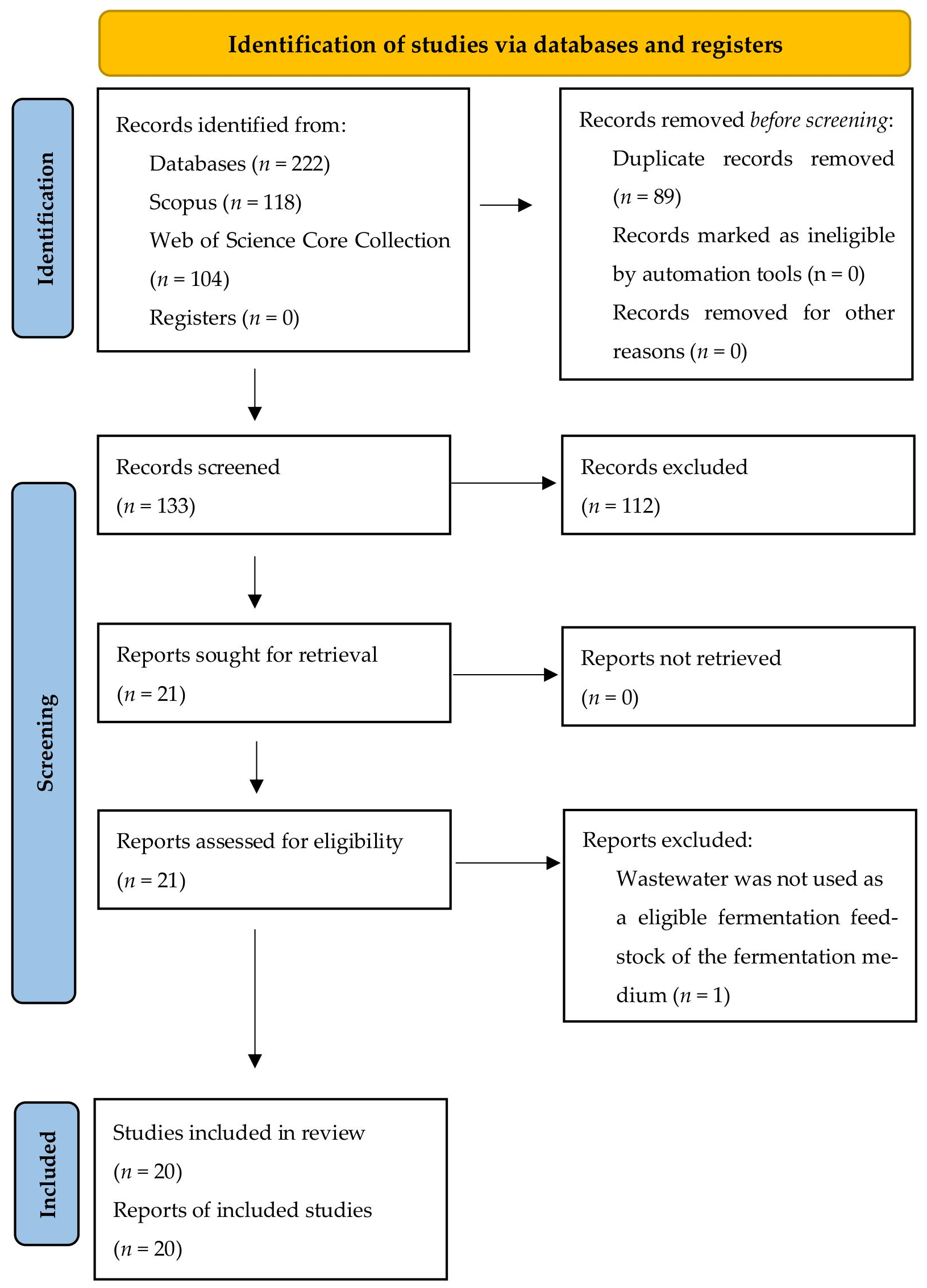
3.1. Literature Search Results and Study Selection
3.2. General Characteristics of the Included Studies
3.3. Wastewater Characteristics and Conditioning Prior to Fermentation
3.4. Microbial Cultivation Strategies and Lipase Production
3.5. Wastewater-Treatment Performance
3.6. Lipase Recovery, Characterization and Applications
3.7. Technological Readiness and Research Gaps
4. Discussion
4.1. Agro-Industrial Wastewaters as Fermentation Feedstocks for Lipase Production
Microbial Diversity and Physiological Adaptation to Wastewater Matrices
4.2. Coupling Lipase Production with Wastewater Treatment
4.3. From Lipase Production to Functional Biocatalysts
4.4. Sustainability and Prospects for Integrated Wastewater Biorefineries
5. Conclusions
Author Contributions
Funding
Data Availability Statement
Conflicts of Interest
Abbreviations
| BOD | biochemical oxygen demand |
| CALB | Candida antarctica lipase B |
| CBL | cell-bound lipase |
| CCD | central composite design |
| CER | carbon dioxide evolution rate |
| COD | chemical oxygen demand |
| FAEE | fatty acid ethyl ester |
| FAME | fatty acid methyl ester |
| kLa | volumetric oxygen-transfer co-efficient |
| O&G | oil and grease |
| OFAT | one-factor-at-a-time |
| OMW | olive mill wastewater |
| OUR | oxygen uptake rate |
| PCC | Population–Concept–Context |
| POME | palm oil mill effluent |
| RSM | response surface methodology |
| TKN | total Kjeldahl nitrogen |
| TOC | total organic carbon |
| TRL | Technology Readiness Level |
| VORW | vegetable oil refinery wastewater |
| VS | winery vinasse |
| WCO | waste cooking oil |
| WFO | waste frying oil |
| YNB | yeast nitrogen base |
| YP | yeast extract–peptone medium |
References
- UN-Water. Progress on Wastewater Treatment-2024 Update|UN-Water; UN-Water: Geneva, Switzerland, 2024. [Google Scholar]
- Nikolić, I.; Mijić, K.; Mitrović, I. Characteristics of Food Industry Wastewaters and Their Potential Application in Biotechnological Production. Processes 2025, 13, 2401. [Google Scholar] [CrossRef] [Scilit]
- SDG 6 Data. Available online: https://sdg6data.org/en/indicator/6.3.1 (accessed on 4 August 2026).
- Yadav, A.; Rene, E.R.; Sharma, M.; Jatain, I.; Mandal, M.K.; Dubey, K.K. Valorization of wastewater to recover value-added products: A comprehensive insight and perspective on different technologies. Environ. Res. 2022, 214, 113957, Correction in Environ. Res. 2024, 252, 119006.. [Google Scholar] [CrossRef] [Scilit] [PubMed]
- Asgharnejad, H.; Khorshidi Nazloo, E.; Madani Larijani, M.; Hajinajaf, N.; Rashidi, H. Comprehensive Review of Water Management and Wastewater Treatment in Food Processing Industries in the Framework of Water-Food-Environment Nexus. Compr. Rev. Food Sci. Food Saf. 2021, 20, 4779–4815. [Google Scholar] [CrossRef] [Scilit] [PubMed]
- Alibardi, L.; Strazzabosco, A.; Cossu, R. Characterisation and Anaerobic Digestion of Fat, Oil and Grease (FOG) Waste from Wastewater Treatment Plants. J. Environ. Manag. 2025, 375, 124193. [Google Scholar] [CrossRef] [Scilit] [PubMed]
- Gonçalves, M.R.; Costa, J.C.; Marques, I.P.; Alves, M.M. Strategies for Lipids and Phenolics Degradation in the Anaerobic Treatment of Olive Mill Wastewater. Water Res. 2012, 46, 1684–1692. [Google Scholar] [CrossRef] [Scilit] [PubMed]
- Gonçalves, C.; Oliveira, F.; Pereira, C.; Belo, I. Fed-batch Fermentation of Olive Mill Wastewaters for Lipase Production. J. Chem. Technol. Biotechnol. 2012, 87, 1215–1218. [Google Scholar] [CrossRef] [Scilit]
- Chandra, P.; Enespa; Singh, R.; Arora, P.K. Microbial Lipases and Their Industrial Applications: A Comprehensive Review. Microb. Cell Fact. 2020, 19, 169. [Google Scholar] [CrossRef] [Scilit] [PubMed]
- Szymczak, T.; Cybulska, J.; Podleśny, M.; Frąc, M. Various Perspectives on Microbial Lipase Production Using Agri-Food Waste and Renewable Products. Agriculture 2021, 11, 540. [Google Scholar] [CrossRef] [Scilit]
- Adetunji, A.I.; Olaniran, A.O. Production Strategies and Biotechnological Relevance of Microbial Lipases: A Review. Braz. J. Microbiol. 2021, 52, 1257–1269. [Google Scholar] [CrossRef] [Scilit] [PubMed]
- D’Annibale, A.; Sermanni, G.G.; Federici, F.; Petruccioli, M. Olive-Mill Wastewaters: A Promising Substrate for Microbial Lipase Production. Bioresour. Technol. 2006, 97, 1828–1833. [Google Scholar] [CrossRef] [Scilit] [PubMed]
- Laribi, A.; Zieniuk, B.; Bouchedja, D.N.; Hafid, K.; Elmechta, L.; Becila, S. Valorization of Olive Mill Wastewater via Yarrowia lipolytica: Sustainable Production of High-Value Metabolites and Biocompounds—A Review. Fermentation 2025, 11, 326. [Google Scholar] [CrossRef] [Scilit]
- Sayın, B.; Polat, Z.; Kaban, G.; Kaya, M. Production of Single-Cell Oil from Olive Mill Wastewater: Effects of Process Variables on Lipid Content and Fatty Acid Profile. Fermentation 2026, 12, 289. [Google Scholar] [CrossRef] [Scilit]
- Puyol, D.; Batstone, D.J.; Hülsen, T.; Astals, S.; Peces, M.; Krömer, J.O. Resource Recovery from Wastewater by Biological Technologies: Opportunities, Challenges, and Prospects. Front. Microbiol. 2016, 7, 2106. [Google Scholar] [CrossRef] [Scilit] [PubMed]
- Ferri, E.N.; Bolelli, L. Wastewater Remediation Treatments Aimed at Water Reuse: Recent Outcomes from Pilot- and Full-Scale Tests. Appl. Sci. 2025, 15, 2448. [Google Scholar] [CrossRef] [Scilit]
- Nimkande, V.D.; Bafana, A. A Review on the Utility of Microbial Lipases in Wastewater Treatment. J. Water Process Eng. 2022, 46, 102591. [Google Scholar] [CrossRef] [Scilit]
- Tricco, A.C.; Lillie, E.; Zarin, W.; O’Brien, K.K.; Colquhoun, H.; Levac, D.; Moher, D.; Peters, M.D.J.; Horsley, T.; Weeks, L.; et al. PRISMA Extension for Scoping Reviews (PRISMA-ScR): Checklist and Explanation. Ann. Intern. Med. 2018, 169, 467–473. [Google Scholar] [CrossRef] [Scilit] [PubMed]
- Peters, M.D.J.; Marnie, C.; Tricco, A.C.; Pollock, D.; Munn, Z.; Alexander, L.; McInerney, P.; Godfrey, C.M.; Khalil, H. Updated Methodological Guidance for the Conduct of Scoping Reviews. JBI Evid. Synth. 2020, 18, 2119–2126. [Google Scholar] [CrossRef] [Scilit] [PubMed]
- Jallouli, R.; Bezzine, S. Lipase Production by a Tunisian Fusarium solani Strain Cultivated on Olive Oil Wastewater-Based Media and a Biotreatment Assay. Desali. Water Treat. 2016, 57, 20327–20331. [Google Scholar] [CrossRef] [Scilit]
- Louhasakul, Y.; Cheirsilp, B.; Prasertsan, P. Valorization of Palm Oil Mill Effluent into Lipid and Cell-Bound Lipase by Marine Yeast Yarrowia lipolytica and Their Application in Biodiesel Production. Waste Biomass Valorization 2016, 7, 417–426. [Google Scholar] [CrossRef] [Scilit]
- Salgado, J.M.; Abrunhosa, L.; Venâncio, A.; Domínguez, J.M.; Belo, I. Combined Bioremediation and Enzyme Production by Aspergillus sp. in Olive Mill and Winery Wastewaters. Int. Biodeterior. Biodegrad. 2016, 110, 16–23. [Google Scholar] [CrossRef] [Scilit]
- Theerachat, M.; Tanapong, P.; Chulalaksananukul, W. The Culture or Co-Culture of Candida rugosa and Yarrowia lipolytica Strain rM-4A, or Incubation with Their Crude Extracellular Lipase and Laccase Preparations, for the Biodegradation of Palm Oil Mill Wastewater. Int. Biodeterior. Biodegrad. 2017, 121, 11–18. [Google Scholar] [CrossRef] [Scilit]
- Geoffry, K.; Achur, R.N. Optimization of Novel Halophilic Lipase Production by Fusarium solani Strain NFCCL 4084 Using Palm Oil Mill Effluent. J. Genet. Eng. Biotechnol. 2018, 16, 327–334. [Google Scholar] [CrossRef] [Scilit] [PubMed]
- Hermansyah, H.; Maresya, A.; Putri, D.N.; Sahlan, M.; Meyer, M. Production of Dry Extract Lipase from Pseudomonas aeruginosa by the Submerged Fermentation Method in Palm Oil Mill Effluent. Int. J. Technol. 2018, 9, 325–334. [Google Scholar] [CrossRef] [Scilit]
- Ganapathy, B.; Yahya, A.; Ibrahim, N. Bioremediation of Palm Oil Mill Effluent (POME) Using Indigenous Meyerozyma guilliermondii. Environ. Sci. Pollut. Res. Int. 2019, 26, 11113–11125. [Google Scholar] [CrossRef] [Scilit] [PubMed]
- Oyedele, S.A.; Ayodeji, A.O.; Bamidele, O.S.; Ajele, J.O.; Fabunmi, T.B. Enhanced Lipolytic Activity Potential of Mutant Bacillus niacini EMB-5 Grown on Palm Oil Mill Effluent (POME) and Biochemical Characterization of Purified Lipase. Biocatal. Agric. Biotechnol. 2019, 18, 101017. [Google Scholar] [CrossRef] [Scilit]
- Darvishi, F.; Salmani, N.; Hosseini, B. Biovalorization of Vegetable Oil Refinery Wastewater into Value-added Compounds by Yarrowia lipolytica. J. Chem. Technol. Biotechnol. 2019, 94, 2961–2968. [Google Scholar] [CrossRef] [Scilit]
- Salgado, V.; Fonseca, C.; Lopes da Silva, T.; Roseiro, J.C.; Eusébio, A. Isolation and Identification of Magnusiomyces capitatus as a Lipase-Producing Yeast from Olive Mill Wastewater. Waste Biomass Valorization 2020, 11, 3207–3221. [Google Scholar] [CrossRef] [Scilit]
- Dias, B.; Lopes, M.; Ramôa, R.; Pereira, A.S.; Belo, I. Candida tropicalis as a Promising Oleaginous Yeast for Olive Mill Wastewater Bioconversion. Energies 2021, 14, 640. [Google Scholar] [CrossRef] [Scilit]
- Rachmadona, N.; Quayson, E.; Amoah, J.; Alfaro-Sayes, D.A.; Hama, S.; Aznury, M.; Kondo, A.; Ogino, C. Utilizing Palm Oil Mill Effluent (POME) for the Immobilization of Aspergillus oryzae Whole-cell Lipase Strains for Biodiesel Synthesis. Biofuel. Bioprod. Biorefin. 2021, 15, 804–814. [Google Scholar] [CrossRef] [Scilit]
- Fibriana, F.; Upaichit, A.; Cheirsilp, B. Statistical Optimization for Cost-Effective Production of Yeast-Bacterium Cell-Bound Lipases Using Blended Oily Wastes and Their Potential Applications in Biodiesel Synthesis and Wastewater Bioremediation. Fermentation 2022, 8, 411. [Google Scholar] [CrossRef] [Scilit]
- Fibriana, F.; Upaichit, A.; Cheirsilp, B. Low-Cost Production of Cell-Bound Lipases by Pure and Co-Culture of Yeast and Bacteria in Palm Oil Mill Effluent and the Applications in Bioremediation and Biodiesel Synthesis. Biomass Convers. Biorefin. 2021, 13, 10823–10844. [Google Scholar] [CrossRef] [Scilit]
- Paz, A.; Zerva, A.; Topakas, E. Evaluation of Olive Mill Wastewater as Culture Medium to Produce Lipolytic Enzymes by Bacillus aryabhattai BA03. Biocatal. Agric. Biotechnol. 2023, 48, 102643. [Google Scholar] [CrossRef] [Scilit]
- El Okki, A.A.K.-E.H.; Djekrif-Dakhmouche, S.; Bennamoun, L.; El Okki, M.E.H.; Labani, F.Z.K. Statistical Optimization of Lipase Production by Aspergillus oryzae Using Olive Mill Wastewater. Acta Microbiol. Bulg. 2024, 40, 373–382. [Google Scholar] [CrossRef] [Scilit]
- Benhoula, M.; Azzouz, Z.; Bettache, A.; Le Roes-Hill, M.; Djoudi, W.; Maibeche, R.; Hamma, S.; Bensaad, M.S.; Amghar, Z.; Boudjelal, A.; et al. Olive Mill Wastewater Biodegradation for Bacterial Lipase Production Using a Response Surface Methodology. Biomass Convers. Biorefin. 2023, 14, 1187–1200. [Google Scholar] [CrossRef] [Scilit]
- Fibriana, F.; Upaichit, A.; Cheirsilp, B. Promoting Magnusiomyces spicifer AW2 Cell-Bound Lipase Production by Co-Culturing with Staphylococcus hominis AUP19 and Its Application in Solvent-Free Biodiesel Synthesis. Curr. Microbiol. 2023, 80, 307. [Google Scholar] [CrossRef] [Scilit] [PubMed]
- Dar, M.A.; Loedji, M.A.C.; Lunggani, A.T.; Napitupulu, T.P.; Kanti, A.; Sudiana, I.M. Statistical Optimization of Culture Media Components for Enhanced Production of Lipase by Lipolytic Yeasts, Pichia sp. and Trichosporon coremiiforme Using Response Surface Methodology. Biomass Convers. Biorefin. 2025, 15, 17869–17885. [Google Scholar] [CrossRef] [Scilit]
- Laribi, A.; Bryś, J.; Selmania, A.; Ikhlef, A.; Btaïche, I.; Mouzai, A.; Zieniuk, B.; Bouchedja, D.N. Impact of Ethanol Stress on Yarrowia lipolytica for Sustainable Bioconversion of Agro-Food Oil Wastes into Lipases and Lipids. Foods 2025, 14, 3696. [Google Scholar] [CrossRef] [Scilit] [PubMed]
- Visualization Gallery. Available online: https://www.chiplot.online/ (accessed on 6 August 2026).
- Chia, W.Y.; Chong, Y.Y.; Chew, K.W.; Vimali, E.; Jayaram, M.; Selvarajoo, A.; Muthuvelu, K.S.; Varalakshmi, P.; Show, P.L.; Arumugasamy, S.K. Outlook on Biorefinery Potential of Palm Oil Mill Effluent for Resource Recovery. J. Environ. Chem. Eng. 2020, 8, 104519. [Google Scholar] [CrossRef] [Scilit]
- Franzen Ramos, L.; Pluschke, J.; Bernardes, A.M.; Geißen, S.-U. Polyphenols in Food Processing Wastewaters: A Review on Their Identification and Recovery. Clean. Circ. Bioecon. 2023, 5, 100048. [Google Scholar] [CrossRef] [Scilit]
- Cheng, Y.W.; Chong, C.C.; Lam, M.K.; Leong, W.H.; Chuah, L.F.; Yusup, S.; Setiabudi, H.D.; Tang, Y.; Lim, J.W. Identification of Microbial Inhibitions and Mitigation Strategies towards Cleaner Bioconversions of Palm Oil Mill Effluent (POME): A Review. J. Clean. Prod. 2021, 280, 124346. [Google Scholar] [CrossRef] [Scilit]
- Fickers, P.; Benetti, P.-H.; Waché, Y.; Marty, A.; Mauersberger, S.; Smit, M.S.; Nicaud, J.-M. Hydrophobic Substrate Utilisation by the Yeast Yarrowia lipolytica, and Its Potential Applications. FEMS Yeast Res. 2005, 5, 527–543. [Google Scholar] [CrossRef] [Scilit] [PubMed]
- Zhu, F.; Zhang, L.; Wen, J. Utilization, Metabolic Regulation and Applications of Hydrophobic Substrates in Yarrowia lipolytica. Synth. Syst. Biotechnol. 2026, 13, 292–305. [Google Scholar] [CrossRef] [Scilit] [PubMed]
- Lu, Z.; Chen, Z.; Liu, Y.; Hua, X.; Gao, C.; Liu, J. Morphological Engineering of Filamentous Fungi: Research Progress and Perspectives. J. Microbiol. Biotechnol. 2024, 34, 1197–1205. [Google Scholar] [CrossRef] [Scilit] [PubMed]
- Rosa, F.M.; Mota, T.F.M.; Busso, C.; Arruda, P.V.; Brito, P.E.M.; Miranda, J.P.M.; Trentin, A.B.; Dekker, R.F.H.; Cunha, M.A.A. Filamentous Fungi as Bioremediation Agents of Industrial Effluents: A Systematic Review. Fermentation 2024, 10, 143. [Google Scholar] [CrossRef] [Scilit]
- Kumar, A.; Gudiukaite, R.; Gricajeva, A.; Sadauskas, M.; Malunavicius, V.; Kamyab, H.; Sharma, S.; Sharma, T.; Pant, D. Microbial Lipolytic Enzymes-Promising Energy-Efficient Biocatalysts in Bioremediation. Energy 2020, 192, 116674. [Google Scholar] [CrossRef] [Scilit]
- Hama, S.; Noda, H.; Kondo, A. How Lipase Technology Contributes to Evolution of Biodiesel Production Using Multiple Feedstocks. Curr. Opin. Biotechnol. 2018, 50, 57–64. [Google Scholar] [CrossRef] [Scilit] [PubMed]
- Quayson, E.; Amoah, J.; Hama, S.; Kondo, A.; Ogino, C. Immobilized Lipases for Biodiesel Production: Current and Future Greening Opportunities. Renew. Sustain. Energy Rev. 2020, 134, 110355. [Google Scholar] [CrossRef] [Scilit]
- Sheldon, R.A.; Woodley, J.M. Role of Biocatalysis in Sustainable Chemistry. Chem. Rev. 2018, 118, 801–838. [Google Scholar] [CrossRef] [Scilit] [PubMed]


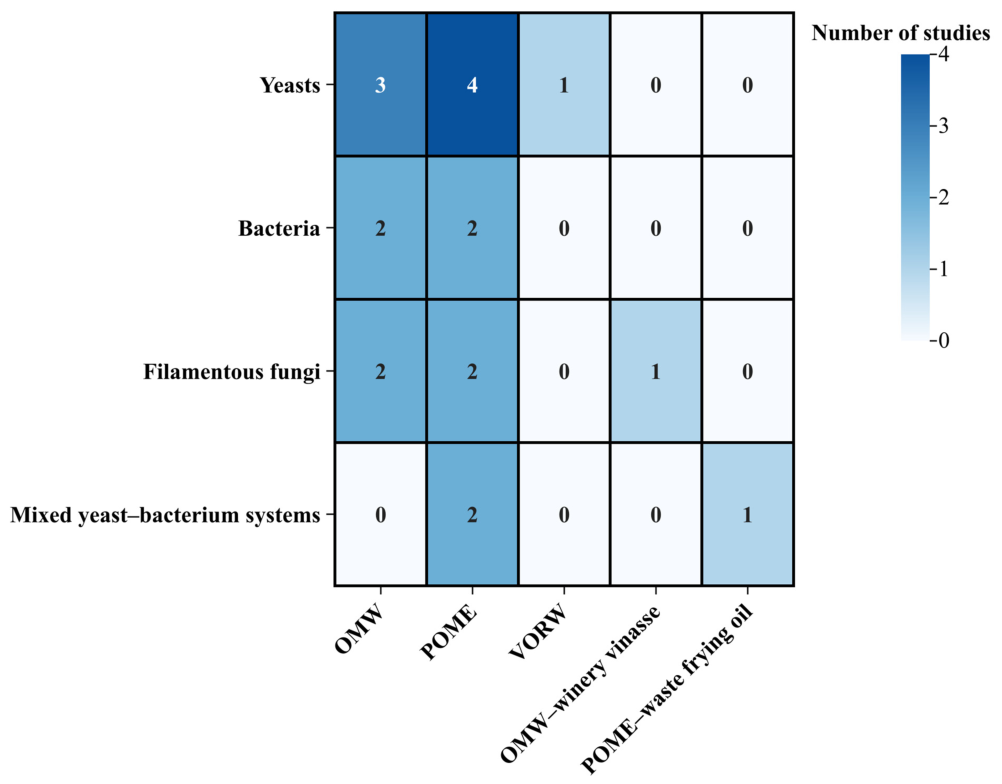
| Country | Wastewater Type | Microorganism | Microbial Group | Culture System | Main Study Objective | Reference |
|---|---|---|---|---|---|---|
| Tunisia | OMW | Fusarium solani | Filamentous fungus | Monoculture; batch shake-flask cultivation; biotreatment assay | Lipase production in an OMW-based medium combined with evaluation of COD, oil, sugar, and phenolic-compound removal | [20] |
| Thailand | POME | Yarrowia lipolytica TISTR 5151 | Yeast | Initial strain screening followed by monoculture optimization in POME | Valorization of POME into microbial lipid and cell-bound lipase for direct biodiesel production | [21] |
| Portugal | OMW, winery vinasse, and an OMW–vinasse mixture | Different strains of Aspergillus ibericus; A. uvarum; A. niger | Filamentous fungi | Separate fungal monocultures; batch cultivation in individual and mixed effluents | Combined bioremediation of olive-mill and winery wastewaters with production of lipase, protease, and tannase | [22] |
| Thailand | POME | Candida rugosa CU1; Y. lipolytica rM-4A; their co-culture | Yeasts | Single cultures and co-culture in undiluted POME; parallel treatment with crude extracellular enzymes | Comparison of live-cell and crude-enzyme approaches for POME biodegradation, including lipase production and pollutant removal | [23] |
| India | POME | F. solani NFCCL 4084 | Filamentous fungus | Monoculture; shake-flask cultivation; Plackett–Burman, OFAT, and face-centred CCD | Statistical optimization of low-cost halophilic lipase production in a POME-based medium | [24] |
| Indonesia | POME | Pseudomonas aeruginosa B2290 | Bacterium | Monoculture; submerged shake-flask fermentation; OFAT optimization; spray drying | Optimization of lipase production in POME and preparation of a dry crude-lipase extract | [25] |
| Malaysia | POME | Meyerozyma guilliermondii | Yeast | Monoculture; aerobic shake-flask cultivation in unsupplemented and supplemented POME | Evaluation of an indigenous yeast for POME bioremediation and extracellular lipase production | [26] |
| Nigeria | POME | Mutant Bacillus niacini EMB-5 | Bacterium | Isolate screening and mutagenesis; POME cultivation; downstream enzyme purification | Enhancement of POME-based lipase production and characterization of the purified alkaline thermostable enzyme | [27] |
| Iran | VORW | Y. lipolytica CBS 6303 | Yeast | Monoculture; shake-flask optimization followed by bioreactor cultivation | Simultaneous production of lipase, microbial oil, and lipid-rich biomass with reductions in wastewater COD | [28] |
| Portugal | OMW | M. capitatus JT5 | Yeast | Isolation and screening; shake-flask optimization; stirred-tank bioreactor | Isolation of an OMW-adapted lipase-producing yeast, optimization of extracellular lipase production, and bioreactor scale-up | [29] |
| Portugal | OMW | C. tropicalis ATCC 750 | Yeast | Monoculture; shake-flask optimization followed by stirred-bioreactor cultivation | Combination of OMW detoxification with production of lipase, protease, microbial lipids, and biomass | [30] |
| Indonesia | POME | Recombinant A. oryzae expressing C. antarctica lipase B | Recombinant filamentous fungus/whole-cell biocatalyst | Whole-cell cultivation and immobilization in biomass-support particles using POME as carbon source | Use of POME to support immobilized whole-cell lipase preparation and its application in biodiesel synthesis | [31] |
| Thailand | POME blended with waste frying oil | M. spicifer AW2; Staphylococcus hominis AUP19 | Yeast–bacterium co-culture | Synthetic co-culture; statistically optimized blended-waste medium; subsequent application assays | Optimization of cell-bound lipase production and demonstration of applications in biodiesel synthesis and POME bioremediation | [32] |
| Thailand | POME | M. spicifer AW2; S. hominis AUP19 | Yeast–bacterium system | Pure cultures and synthetic co-culture; batch cultivation in diluted POME | Production of cell-bound lipases integrated with POME bioremediation and biodiesel synthesis | [33] |
| Greece | OMW | B. aryabhattai BA03 | Bacterium | Monoculture; shake-flask cultivation; sterile and non-sterile media; factorial optimization | Evaluation of OMW as a low-cost lipase-production medium and assessment of wastewater concentration, pH, temperature, and sterilization | [34] |
| Algeria | OMW | A. oryzae 1042.72 | Filamentous fungus | Monoculture; submerged fermentation; Plackett–Burman design and CCD/RSM | Optimization of OMW-based medium components for enhanced extracellular lipase production | [35] |
| Algeria | OMW | Streptomyces sp. SC1 | Bacterium (actinobacterium) | Monoculture; submerged shake-flask fermentation; Box–Behnken design/RSM | Isolation of lipase-producing actinobacteria and optimization of OMW-based bacterial lipase production | [36] |
| Thailand | POME | M. spicifer AW2; Staphylococcus hominis AUP19 | Yeast–bacterium co-culture | Synthetic 1:1 co-culture; submerged batch cultivation in POME50; PBD followed by RSM-CCD | Integrated optimization of cell-bound lipase and biomass production with COD/O&G removal, followed by storage-stability evaluation and solvent-free biodiesel synthesis | [37] |
| Indonesia | POME | Pichia sp. Y1440; T. coremiiforme Y771 | Yeasts | Separate monocultures; shake-flask cultivation; OFAT and central composite design/RSM | Optimization of POME concentration and pH for lipase production by two lipolytic yeasts | [38] |
| Algeria | OMW; waste frying oil as comparator | Y. lipolytica L2 | Yeast | Monoculture; shake-flask cultivation under increasing ethanol stress | Assessment of ethanol-stress effects on lipase production, microbial growth, lipid accumulation, and fatty-acid remodeling in OMW-based cultivation | [39] |
| Wastewater Type and Source | Reported Initial Characteristics | Wastewater Proportion and Use In Culture Medium | Pretreatment and Storage | Sterilization | pH Management | Supplementation | References |
|---|---|---|---|---|---|---|---|
| OMW. Local olive-oil manufacturer, Sfax, Tunisia | pH: 5.46 ± 0.04; COD: 80.59 ± 0.25 g/L; Lipids: 2.40 ± 0.36 g/L; phenolics: 12.24 ± 0.15 g/L (gallic acid equivalents); other: Total sugars: 40.11 ± 0.29 g/L; total nitrogen: not detected | Undiluted OMW; 50 mL in 250-mL flasks | Centrifuged at 4000× g for 15 min to remove solids; stored at −20 °C | Sterilized before cultivation | Adjusted to pH 6 before cultivation; no further pH correction | Nitrogen sources tested at 5 g/L: yeast extract, soy peptone, and (NH4)2SO4; yeast extract selected | [20] |
| POME. Industrial palm-oil plants, Songkhla Province, Thailand | pH: 4.3–4.5; COD: 37–48 g/L; Oil and grease: 0.200–0.282 g/L; phenolics: NR; other: TKN: 0.103–0.262 g/L | Twofold-diluted and undiluted POME were compared; undiluted POME selected for optimization | Centrifuged before use | Autoclaved before cultivation | Raw pH 4.3 and adjusted pH 5.0, 5.5, and 6.0 tested; pH 5.5 used in the optimized process | (NH4)2SO4 added at 1 g N/L to undiluted POME | [21] |
| OMW; VS. OMW: olive mill in Trás-os-Montes, Portugal; VS: winery in Minho, Portugal | pH: NR; COD: OMW: 122.9 ± 0.42 g/L; VS: 48.07 ± 1.43 g/L; OMW lipids: 4.10 ± 0.42 g/L; VS: not detected; phenolics: OMW: 5.91 ± 0.09 g/L; VS: 0.54 ± 0.03 g/L; other: OMW: TOC 21.4 ± 1.2, sugars 12.7 ± 1.3, solids 15.48 ± 0.54 g/L, N 5.2 ± 0.2 mg/L; VS: TOC 3.53 ± 0.02, sugars 0.68 ± 0.01, solids 22.24 ± 0.09 g/L, N 218.67 ± 35.27 mg/L | Undiluted OMW; OMW:nutrient medium 1:1 (v/v); OMW:VS 1:1 (v/v) | Effluents homogenized and stored separately at −20 °C | 121 °C for 15 min | No explicit pH adjustment reported | Nutrient medium: NaNO3 3 g/L, K2HPO4 1 g/L, KCl 0.5 g/L, MgSO4·7H2O 0.5 g/L, CaCl2·2H2O 0.5 g/L, and trace-metal solution | [22] |
| POME. Palm-oil mill, Chonburi Province, Thailand | pH: 4.3; COD: 34,584 mg/L; Oil and grease: 2762 mg/L; phenolics: 9782.5 mg/L; other: BOD 33,090; TS 56,100; TSS 12,430; VS 46,930; TKN 1693; total P 44.3; reducing sugars 3449.8 mg/L | Live-cell cultures: undiluted POME; separate crude-enzyme treatment also used twofold-diluted POME | Stored at −20 °C; diluted-enzyme-treatment arm was centrifuged at 4000 rpm for 15 min | Live-cell undiluted POME was autoclaved; sterile and non-sterile enzyme-treatment arms were also examined | Raw pH used for live-cell cultivation; diluted enzyme-treatment medium adjusted to pH 5.6 | Live-cell cultivation supplemented with 0.5% (w/v) palm oil; no additional nutrient supplementation | [23] |
| POME. Palm-oil plant near Kuvempu University, Shankaraghatta, India | pH: NR; COD: NR; NR; phenolics: NR; other: Initial physicochemical composition not reported | POME varied in statistical screening and OFAT experiments (approximately 0.25–1.25%, w/v) | Collected in a clean container and stored at 4 °C | 121 °C, 15 psi, 20 min | Adjusted with 1 M HCl or NaOH; pH ranges defined by experimental designs | Malt extract, (NH4)2SO4, CaCl2, MgSO4, olive oil, peptone, K2HPO4, NaNO3, and Tween 80; K2HPO4, NaNO3, and Tween 80 subsequently optimized | [24] |
| POME. Palm-oil company, Bengkulu, Indonesia | pH: NR; COD: NR; NR; phenolics: NR; other: Initial physicochemical composition not reported | POME used as the basal medium (100 mL per flask) | Stored at 4 °C | Sterilized POME used | NR | Initial medium: olive oil 0.2% (v/v), peptone 0.5% (w/v), CaCl2·2H2O 10 mM, Tween 80 0.7% (v/v); reported optimum: olive oil 0.4%, peptone 0.9%, Ca2+ 4 mM, Tween 80 0.9% | [25] |
| POME. Local palm-oil mill, Johor, Malaysia | pH: 4.6 ± 0.1; COD: 35,983.5 ± 110 mg/L; Oil and grease: 3750 ± 11 mg/L; phenolics: Phenolic compounds analyzed qualitatively by FTIR/GC–MS; initial total concentration NR; other: Total N 833.4 ± 12; ammoniacal N 91.7 ± 4; TOC 3119 ± 22; phosphate 581.7 ± 8 mg/L | Undiluted POME used as the sole carbon source | Transported on ice and stored at 4 °C; autoclaved and then centrifuged at 4000 rpm, 4 °C, 15 min to remove particulates | 121 °C for 15 min | Main treatment used raw POME without pH adjustment; acclimatization medium was adjusted to pH 4.5 | Carbon sources screened at 1.0% (w/v) and nitrogen sources at 0.5% (w/v); glycerol 1% and yeast extract 0.5% were most effective | [26] |
| POME. Oil-palm processing industries, Ipinsa, Akure, southwest Nigeria | pH: NR; COD: NR; NR; phenolics: NR; other: Initial physicochemical composition not reported | Quantitative screening: 10 mL POME in 50 mL basal medium; production-scale description reports 10 mL POME in approximately 1 L medium | NR | Not explicitly reported | Adjusted to pH 5.0 | (NH4)2SO4, Na2HPO4, KH2PO4, MgSO4, and CaCl2; POME was emulsified with Tween 80 | [27] |
| VORW. Pars Vegetable Oil Company, Tehran, Iran | pH: NR; COD: NR; Oil and grease: 3–4 g/L; palmitic 36.68%, stearic 28.18%, oleic 32.00%, linoleic 3.14%; phenolics: NR; other: Initial COD and other wastewater-composition data not reported | Primary medium: 30 mL/L; RSM range: 25–75 mL/L; optimized at 75 mL/L | NR | NR | Optimized at pH 6; bioreactor pH maintained at 6 using KOH or H3PO4 | Primary medium included yeast extract, peptone, KH2PO4, NaH2PO4, and MgSO4·7H2O; optimized medium reported as yeast extract 0.5 g/L and peptone 4 g/L | [28] |
| OMW. Three-phase olive mill, Algarve, Portugal; sampled during the final month of the campaign | pH: 4.99; COD: 55.2 g/L; Lipids: 3.20 g/L; phenolics: 3.97 g caffeic acid equivalents/L; other: Reducing sugars 35 g/L; TSS 21.9 g/L; NO3− 1.42 g/L; NH4+ 1.70 g/L | Growth screening: 10–75% OMW in YEP; lipase-production and bioreactor experiments: undiluted OMW | Filtered through gauze and centrifuged at 8600× g for 15 min | 121 °C for 20 min | Adjusted to pH 6.8 in shake-flask production and pH 6.1 before bioreactor sterilization | Yeast extract 2 g/L; olive oil 1–3 g/L; NH4Cl 0.2–2.8 g/L | [29] |
| OMW (three batches). Olive mills in northern Portugal | pH: OMW-1: 5.03 ± 0.01; OMW-2: 4.83 ± 0.02; OMW-3: 4.94 ± 0.09; COD: OMW-1: 108.7 ± 0.4; OMW-2: 51.3 ± 1.3; OMW-3: 36.7 ± 3.0 g/L; NR; phenolics: OMW-1: 4.83 ± 0.05; OMW-2: 2.60 ± 0.10; OMW-3: 1.80 ± 0.10 g/L; other: OMW-1/2/3, respectively: TOC 46.6/20.1/15.0 g/L; reducing sugars 36.3/13.2/10.1 g/L; TN 285.7/152.4/626.8 mg/L | Screening: 5–50% (v/v); main shake-flask and bioreactor experiments: 50% OMW | NR | Sterile OMW used in screening; sterilization details for the main flask/bioreactor media were not explicitly stated | Initial pH values of 5 and 7 tested; maintained at pH 5.5 or 7 in the bioreactor using HCl/NaOH | YNB without amino acids; NH4Cl, (NH4)2SO4, or urea supplied at an equivalent 1.06 g N/L; bioreactor medium contained 4.05 g/L NH4Cl | [30] |
| POME. PT Agricinal Palm Oil Mills, Bengkulu, Indonesia | pH: NR; COD: NR; Acid value 169.72 ± 0.46 mg KOH/g oil; saponification value 211.70 ± 8.51 mg KOH/g oil; iodine value 53.54 ± 1.50 g I2/100 g lipid; phenolics: NR; other: Total carbon 15.82 ± 0.01 g/L; TOC 15.07 ± 0.01 g/L | Whole POME without separation, 2 g per 100 mL medium (2%, w/v), used instead of glucose | Whole POME used without separation | Not explicitly reported for the POME-based culture medium | NR | Per 100 mL: polypeptone 2 g, KH2PO4 0.5 g, NaNO3 0.1 g, MgSO4·7H2O 0.05 g; polyurethane biomass-support particles | [31] |
| POME blended with WFO. POME: Larp Tavee Palm Oil Co., Ltd., Satun, Thailand; WFO: local fried-chicken stalls, Songkhla, Thailand | pH: POME50: approximately 3.8 before adjustment; COD: POME50: 29,747 mg/L; POME50 oil and grease: 5562 mg/L; phenolics: NR; other: POME50 TKN: 277 mg/L | Base medium: centrifuged POME diluted 1:1 to 50% (POME50) | Raw POME centrifuged at 4000× g, 4 °C, 15 min; centrifuged sample stored at −20 °C | 121 °C, 15 psi, 15 min | Production media adjusted to pH 7.0 | WFO, crude glycerol, or molasses initially tested at 2% (v/v); nitrogen sources at 0.5% (w/v); surfactants at 0.1%. Optimized medium contained WFO, (NH4)2SO4, and gum Arabic | [32] |
| POME. Palm-oil industrial plant, Satun Province, Thailand | pH: Raw POME 3.84 ± 0.02; POME100 3.80 ± 0.03; POME50 3.80 ± 0.00; POME25 3.92 ± 0.02; COD: Raw 67,145 ± 563; POME100 50,581 ± 350; POME50 29,747 ± 557; POME25 18,889 ± 278 mg/L; O&G: raw 11,382 ± 300; POME100 7733 ± 197; POME50 5562 ± 106; POME25 2783 ± 399 mg/L; phenolics: NR; other: TKN: raw 1462 ± 167; POME100 526 ± 25; POME50 277 ± 38; POME25 114 ± 6 mg/L; TS and TSS also reported | POME100, POME50 (1:1 dilution), and POME25 (1:3 dilution) compared | Raw POME centrifuged at 4000× g, 4 °C, 15 min; stored at 4 °C before processing and at −20 °C after centrifugation | 121 °C, 15 psi, 15 min | Natural pH approximately 3.8 and pH-adjusted media at 7.0 were compared | No external nutrients in POME media; standard synthetic BSM served as comparator | [33] |
| OMW. Three-phase olive mill, Kalamata, Peloponnese, Greece | pH: Initial wastewater pH NR; COD: NR; NR; phenolics: Initial concentration NR; sterilization increased measured phenols by 17.25 ± 0.05%; other: Sterilization reduced total sugars by 14.99 ± 0.10% | Undiluted, 50%, and 25% OMWW; best activity obtained with 50% non-sterile OMWW | Frozen at −20 °C until use | Sterile and non-sterile media compared; sterilization at 121 °C for 20 min | Adjusted to pH 6, 7, or 8 | Yeast extract 10 g/L | [34] |
| OMW. Disposal ponds of a three-phase olive-oil process, Jijel, Algeria | pH: NR; COD: NR; Lipids: 1.50 ± 0.30% (as reported); phenolics: NR; other: Sugars 0.12 ± 0.04%; total nitrogen 3.06 ± 0.50%; minerals 6.15 ± 0.06% | OMW-based medium; exact OMW fraction not reported | Centrifuged at 3800× g for 20 min | Not explicitly reported | pH 5–6 evaluated in Plackett–Burman design | Peptone, glucose, CaCl2, Tween 80, NaNO3, and yeast extract; glucose, yeast extract, and CaCl2 selected for CCD/RSM | [35] |
| OMW. OMW source and collection procedure not reported; actinobacteria were isolated from olive-mill-associated sites in Béjaïa, Algeria | pH: NR; COD: NR; NR; phenolics: NR; other: Initial physicochemical composition not reported | OMW 5–45% (v/v) in Box–Behnken design; optimum predicted/validated at approximately 6% (v/v) | NR | NR | Initial pH 4–10 studied; optimum at pH 4 | OMW described as the sole carbon source; other production-medium constituents were not clearly specified for the optimization stage | [36] |
| POME. Larp Tavee Palm Oil Co., Ltd., Satun, Thailand | POME100 after centrifugation: pH 3.80; COD 50,581 ± 350 mg/L; O&G 7733 ± 198 mg/L; TKN 526 ± 25 mg/L. POME50: pH 3.80; COD 29,747 ± 557 mg/L; O&G 5562 ± 106 mg/L; TKN 277 ± 38 mg/L | POME100 was diluted 1:1 with deionized water to obtain POME50; POME50 was used as the cultivation medium | POME centrifuged at 4000× g, 4 °C, 15 min; supernatant designated POME100 and diluted 1:1 with deionized water | Autoclaved at 121 °C for 15 min | Initial pH was included in PBD and RSM-CCD; optimized process at pH 7.0 | (NH4)2SO4 evaluated as nitrogen source; optimized concentration 1.23% (w/v) | [37] |
| POME. POME source not reported | pH: NR; COD: NR; NR; phenolics: NR; other: Initial physicochemical composition not reported | Initial comparison used 50% POME; OFAT tested 10, 25, 50, and 75%; RSM extended the tested range; confirmation optima were 80% for Pichia sp. and 53.1% for T. coremiiforme | NR | Media prepared fresh and autoclaved at 121 °C for 15 min | OFAT tested pH 5–8; RSM optima were pH 5 for Pichia sp. and pH 8 for T. coremiiforme | Enriched 50% POME medium contained peptone 10 g, yeast extract 0.5 g, Tween 80 1.5 mL, and olive oil 2.5 mL per 100 mL POME–water base | [38] |
| OMW; WCO as a separate comparator. OMW obtained in May 2024 from an olive-oil extraction facility in Béjaïa, Algeria | pH: NR; COD: NR; NR; phenolics: Polyphenols: 2 g/L; other: Other initial OMW characteristics not reported | OMW added at 200 g/L as the hydrophobic carbon source in YP medium | No OMW pretreatment or storage conditions reported | Not explicitly reported for OMW | NR | YP medium: peptone 20 g/L and yeast extract 10 g/L; ethanol added after 24 h at 0, 3, 5, or 7% (v/v) | [39] |
| Microorganism | Culture Mode and Scale | Principal Cultivation Conditions | Optimization Strategy | Lipase Localization | Activity-Assay Method | Maximum Lipase Activity | Time to Maximum Activity | Reference |
|---|---|---|---|---|---|---|---|---|
| F. solani | Submerged batch culture in 250-mL shake flasks; 50 mL working volume | Undiluted OMW supplemented with a nitrogen source (5 g/L); yeast extract was selected; 1% (v/v) inoculum. Temperature: 30 °C; pH: Initial pH 6; mixing/aeration: 160 rpm; cultivation duration: 5 d. | Comparison of yeast extract, soy peptone, and (NH4)2SO4; no formal statistical design | Extracellular; crude culture supernatant | Potentiometric pH-stat titration of fatty acids released from an olive-oil emulsion at 37 °C. 1 U = 1 µmol fatty acid released per min. | Approximately 14 U/mL | 5 d | [20] |
| Y. lipolytica TISTR 5151 | Submerged batch culture in 250-mL shake flasks; 50 mL working volume | Undiluted POME supplemented with (NH4)2SO4 at 1 g N/L; 10% (v/v) seed culture. Temperature: 30 ± 2 °C; pH: Raw pH and pH 5.0–6.0 tested; optimum pH 5.0; mixing/aeration: 140 rpm; cultivation duration: 72 h. | Strain screening followed by comparisons of POME dilution, nitrogen supplementation, and initial pH | Cell-bound lipase | Hydrolysis of palm oil by wet yeast cells; released free fatty acids quantified as palmitic acid. 1 U = 1 µmol free fatty acid released per min. | 4081 ± 48 U/L | 48 h | [21] |
| A. ibericus, A. uvarum, and A. niger | Submerged batch culture in 250-mL flasks; 100 mL working volume; static incubation | Undiluted OMW, OMW:nutrient medium 1:1 (v/v), or OMW:winery vinasse 1:1 (v/v); inoculum 2 mL at 107 spores/mL. Temperature: 25 °C; pH: No explicit pH adjustment reported; mixing/aeration: No agitation reported; cultivation duration: 10 d. | Comparative screening of three Aspergillus species and three wastewater-based media; no formal statistical design | Extracellular | Spectrophotometric hydrolysis of p-nitrophenyl butyrate in acetate buffer; absorbance measured at 405 nm. Activity defined by the authors from p-nitrophenol release per min. | 1253.7 ± 161.2 U/L (A. ibericus in undiluted OMW) | 10 d | [22] |
| C. rugosa CU1 and Y. lipolytica rM-4A, individually and as a co-culture | Submerged batch culture in shake flasks; single cultures and 1:1 co-culture | Sterile undiluted POME supplemented with 0.5% (w/v) palm oil; no additional nutrient supplementation. Temperature: 30 °C; pH: Raw POME pH used for live-cell cultivation; mixing/aeration: 200 rpm; cultivation duration: 120 h. | Direct comparison of single cultures, co-culture, and separately produced crude enzyme preparations | Extracellular lipase | Spectrophotometric p-nitrophenyl butyrate assay at 37 °C and pH 7.2. Defined by the authors from butyric-acid release per min. | NR for POME-grown cultures; activity was presented mainly in relative terms | Monitored up to 120 h | [23] |
| F. solani NFCCL 4084 | Submerged batch culture in 100-mL shake flasks; 30 mL working volume | POME-based medium containing statistically screened carbon, nitrogen, mineral, oil, and surfactant components; inoculated with a 6-mm mycelial disc. Temperature: 28 °C; pH: Included as a design factor; mixing/aeration: 130 rpm; cultivation duration: 5 d. | Plackett–Burman screening → OFAT range selection → face-centred central composite design | Extracellular; culture filtrate | Spectrophotometric hydrolysis of p-nitrophenyl palmitate; absorbance measured at 410 nm. 1 U = 1 µmol p-nitrophenol released per min. | 7.80 U/mL predicted; 6.93 U/mL in the confirmation experiment | 5 d | [24] |
| P. aeruginosa B2290 | Shake-flask submerged fermentation; subsequently scaled to a 30-L bioreactor with 20 L medium | POME basal medium; optimized additions: 3% (v/v) inoculum, 4 mM Ca2+, 0.4% (v/v) olive oil, 0.9% (w/v) peptone, and 0.9% Tween 80. Temperature: 30 °C; pH: NR; mixing/aeration: 170 rpm in shake flasks; bioreactor agitation NR; cultivation duration: 96 h. | One-factor-at-a-time optimization of inoculum and medium supplements | Extracellular; cell-free supernatant; spray-dried downstream | Alkali titration of fatty acids released from an olive-oil substrate. Volumetric activity reported in U/mL; dry-extract activity in U/g. | 1.327 U/mL in crude supernatant; 28.5 U/g in the spray-dried extract | 96 h | [25] |
| M. guilliermondii | Aerobic submerged batch treatment in shake flasks | Undiluted POME used as the sole carbon source; carbon and nitrogen supplements were also screened; glycerol 1% and yeast extract 0.5% gave the best treatment response. Temperature: 30 °C; pH: Raw POME pH; no adjustment in the principal treatment; mixing/aeration: 150 rpm; cultivation duration: 7 d. | Comparative screening of carbon and nitrogen supplementation; no formal statistical design | Extracellular lipolytic activity inferred from the culture | Qualitative Tween 20–CaCl2 agar assay based on formation of an insoluble calcium–fatty acid precipitate. No quantitative enzyme-activity unit reported. | Qualitative activity only; no U value reported | Treatment evaluated after 7 d | [26] |
| Mutant B. niacini EMB-5 | Shake-flask submerged culture; screening at 50 mL and larger-scale production at approximately 1 L | POME in a mineral-salt basal medium and emulsified with Tween 80. Temperature: 37 °C; pH: Initial pH 5.0; mixing/aeration: 150 rpm; cultivation duration: Up to 72 h; production harvest at 36 h. | Isolation and screening followed by ethidium-bromide mutagenesis; no statistical medium design | Extracellular; cell-free supernatant; subsequently purified | Spectrophotometric hydrolysis of p-nitrophenyl palmitate. Activity reported in U/mL. | 38.01 U/mL for mutant EMB-5; 29.23 U/mL for the wild-type strain | 36 h for mutant; 42 h for wild type | [27] |
| Y. lipolytica CBS 6303 | Shake-flask batch culture; optimized medium subsequently evaluated in a 5-L bioreactor with 2.5 L working volume | Primary medium contained 30 mL/L VORW plus yeast extract, peptone, phosphate salts, and MgSO4·7H2O; RSM later optimized the medium primarily for microbial oil production. Temperature: 29 °C; pH: Bioreactor maintained at pH 6; mixing/aeration: 200 rpm in flasks; 500 rpm and 1 vvm in bioreactor; cultivation duration: 48 h in flasks; 20 h in bioreactor. | Central composite design/response surface methodology focused mainly on microbial oil production | Culture-derived lipase; enzyme fraction not described in sufficient detail | Titration-based lipase-activity assay. Activity reported in U/mL. | 8 U/mL in the primary shake-flask medium | 48 h | [28] |
| M. capitatus JT5 | Shake-flask batch culture followed by cultivation in a 2-L stirred-tank bioreactor with 1 L working volume | Undiluted OMW supplemented with yeast extract 2 g/L, NH4Cl 2.8 g/L, and olive oil; bioreactor experiments compared 1 and 3 g/L olive oil. Temperature: 30 °C; pH: Initial pH 6.8 in flasks and 6.1 in the bioreactor; mixing/aeration: 180 rpm in flasks; 100 rpm and 1 vvm in bioreactor; cultivation duration: 120 h in initial flasks; ≥96 h in bioreactor. | Doehlert response-surface design for oxygen availability and NH4Cl concentration; bioreactor scale-up and olive-oil comparison | Extracellular; cell-free culture supernatant | Spectrophotometric hydrolysis of p-nitrophenyl butyrate. 1 U = 1 µmol p-nitrophenol released per min. | 3.96 U/mL in the stirred-tank bioreactor with 3 g/L olive oil | 96 h; activity was still increasing at the final reported time | [29] |
| C. tropicalis ATCC 750 | Shake-flask batch cultures followed by a 2-L stirred-tank bioreactor with 0.5 L working volume | 50% (v/v) OMW with YNB and nitrogen supplementation; bioreactor medium contained OMW-3, YNB, and NH4Cl. Temperature: 30 °C; pH: Initial pH 5 or 7; controlled at pH 5.5 or 7 in the bioreactor; mixing/aeration: 200 rpm in flasks; 200 or 500 rpm and 1 vvm in bioreactor; cultivation duration: 6 d. | Comparison of OMW batches, nitrogen sources, pH, and agitation; PCA used for descriptive interpretation | Extracellular | Spectrophotometric p-nitrophenyl butyrate assay at 37 °C; absorbance measured at 410 nm. 1 U = 1 µmol p-nitrophenol released per min. | 203 ± 18 U/L in the bioreactor at pH 5.5 and 200 rpm | Exact time NR; maximum reported for the 6-d cultivation | [30] |
| Recombinant A. oryzae expressing C. antarctica lipase B | Whole-cell cultivation and simultaneous immobilization in polyurethane biomass-support particles; 500-mL Sakaguchi flasks with 100 mL medium | POME at 2% (w/v), used instead of glucose, with polypeptone, KH2PO4, NaNO3, and MgSO4·7H2O. Temperature: 30 °C; pH: NR; mixing/aeration: 150 oscillations/min; cultivation duration: 96 h. | Direct comparison of POME and additional carbon-source concentrations; no formal statistical design | Immobilized whole-cell, membrane-bound recombinant CALB | Titrimetric hydrolysis of olive oil at 40 °C using immobilized whole-cell particles. Activity reported as U/mg of whole-cell biocatalyst. | 2.23 ± 0.02 U/mg | 96 h | [31] |
| M. spicifer AW2 and S. hominis AUP19 co-culture | Submerged batch co-culture in shake flasks; yeast:bacterium inoculum ratio 1:1 | Twofold-diluted POME supplemented with 2.08% (v/v) waste frying oil, approximately 1.72% (w/v) (NH4)2SO4, and 0.1% (w/v) gum Arabic. Temperature: 30 ± 2 °C; pH: Initial pH 7.0; mixing/aeration: 150 rpm; cultivation duration: 5 d. | Nutrient screening followed by central composite design/response surface methodology | Predominantly cell-bound; extracellular activity also monitored | Modified cupric-acetate method using palm oil in isooctane; released fatty acids measured at 715 nm. 1 U = 1 µmol palmitic acid released per min; cell-bound activity converted to U/L. | 4708.9 U/L | 24 h | [32] |
| M. spicifer AW2 and S. hominis AUP19, individually and as a co-culture | Submerged batch cultures in shake flasks; synthetic 1:1 yeast–bacterium co-culture | POME concentrations of 25%, 50%, and 100% and natural versus pH-adjusted media were evaluated; POME50 at pH 7 was selected. Temperature: 30 ± 2 °C; pH: Natural pH approximately 3.8 or adjusted to pH 7.0; mixing/aeration: 150 rpm; cultivation duration: 120 h. | Strain screening followed by comparisons of POME concentration, initial pH, and mono- versus co-culture | Predominantly cell-bound; extracellular activity also measured | Modified cupric-acetate assay with a palmitic-acid calibration standard. 1 U = 1 µmol palmitic acid released per min. | 3860 U/L for the co-culture | 24 h | [33] |
| B. aryabhattai BA03 | Submerged batch culture in shake flasks under sterile and non-sterile conditions | Undiluted, 25%, or 50% OMW supplemented with yeast extract 10 g/L. Temperature: 20, 27, and 37 °C tested; pH: Initial pH 6, 7, and 8 tested; optimum pH 8; mixing/aeration: 150 rpm; cultivation duration: Up to 7 d; recommended process 4 d. | Factorial comparisons of wastewater concentration, pH, temperature, and sterilization status | Extracellular; cell-free supernatant | Spectrophotometric hydrolysis of p-nitrophenyl ester substrate at 37 °C; absorbance measured at 410 nm. 1 U = 1 µmol p-nitrophenol released per min. | 28.34 ± 1.15 U/mL in 50% non-sterile OMW | 4 d | [34] |
| A. oryzae 1042.72 | Submerged batch culture in 250-mL shake flasks; 50 mL working volume | OMW-based medium; optimized additions were glucose 3.49 g/L, yeast extract 5.58 g/L, and CaCl2 0.72 g/L; inoculum 106 spores/mL. Temperature: 30 °C; pH: Initial pH 6; mixing/aeration: 200 rpm; cultivation duration: 72 h. | Plackett–Burman design followed by central composite design/response surface methodology | Extracellular; crude enzyme extract | Titrimetric hydrolysis of an olive-oil emulsion at 37 °C; liberated fatty acids titrated with NaOH. 1 U/mL = 1 µmol fatty acid released per min. | 212.53 U/mL | 48 h | [35] |
| Streptomyces sp. SC1 | Submerged shake-flask culture | OMW used as the sole carbon source; optimum approximately 6% (v/v) OMW with an inoculum of 1.7 × 10⁷ spores/mL. Temperature: 30 °C; pH: Initial pH 4; mixing/aeration: Agitation NR; cultivation duration: 9 d. | Box–Behnken design/response surface methodology evaluating incubation time, pH, temperature, inoculum size, and OMW concentration | Extracellular; culture supernatant | Titrimetric hydrolysis of an olive-oil/gum-arabic emulsion at 37 °C. Activity reported in U/mL from NaOH consumption. | 8.4 U/mL measured; 8.82 U/mL predicted by the model | 9 d | [36] |
| M. spicifer AW2 + S. hominis AUP19 | Submerged batch co-culture in 250-mL shake flasks; yeast:bacterium inoculum ratio 1:1 | POME50 supplemented with 1.23% (w/v) (NH4)2SO4; 10% (v/v) inoculum; 30 ± 2 °C; initial pH 7.0; 150 rpm; time-course cultivation up to 144 h | Plackett–Burman screening followed by RSM-CCD; ammonium sulfate concentration, incubation time, and initial pH optimized | Predominantly cell-bound; extracellular activity also monitored | Modified cupric-acetate assay; 1 U = activity releasing 1 µmol palmitic acid per min | 4103 U/L | 24 h | [37] |
| Pichia sp. Y1440 and T. coremiiforme Y771 | Submerged batch culture on a rotary shaker | Pure and nutrient-enriched POME were initially compared; subsequent OFAT/RSM experiments varied POME concentration and pH. Temperature: Room temperature; pH: pH 5–8 examined; RSM optima approximately pH 5 for Pichia and pH 8 for T. coremiiforme; mixing/aeration: 150 rpm; cultivation duration: 72 h. | OFAT followed by response surface methodology | Extracellular; centrifuged culture extract | Spectrophotometric hydrolysis of p-nitrophenyl palmitate at 410 nm. Activity reported in U/mL. | Observed OFAT maxima: 11.6 U/mL (Pichia) and 30 U/mL (T. coremiiforme) | 72 h | [38] |
| Y. lipolytica L2 | Submerged batch culture in 250-mL shake flasks; 100 mL working volume | YP medium containing OMW at 200 g/L; ethanol added progressively 24 h after inoculation at 0, 3, 5, or 7% (v/v). Temperature: 29 ± 1 °C; pH: NR; mixing/aeration: 180 rpm; cultivation duration: 96 h. | One-factor comparison of ethanol-stress levels and incubation times; OMW and waste cooking oil studied as separate carbon-source systems | Extracellular; cell-free supernatant | Spectrophotometric hydrolysis of p-nitrophenyl laurate at 37 °C; absorbance measured at 410 nm. 1 U = 1 µmol p-nitrophenol released per min. | 0.55 ± 0.11 U/mL in OMW medium with 5% ethanol | 48 h | [39] |
| Wastewater | Microorganism | Assessment Configuration | Treatment Conditions and Duration | COD/Organic-Load Reduction | Oil, Grease, or Lipid Reduction | Phenolic-Compound Reduction | Other Reported Changes | Integration with Lipase Production | Reference |
|---|---|---|---|---|---|---|---|---|---|
| OMW | F. solani | Simultaneous cultivation, lipase production, and OMW treatment | Undiluted OMW supplemented with yeast extract; 30 °C, 160 rpm, 5 d | 24.1% reduction after 5 d | 100% oil removal after 5 d | Maximum 46% removal | Total sugars decreased by 68%; maximum sugar reduction was reported on day 2 | Yes—treatment occurred during lipase-producing fungal growth | [20] |
| POME | Y. lipolytica TISTR 5151 | Simultaneous cultivation, cell-bound lipase/lipid production, and COD removal | Undiluted POME with ammonium sulfate; 30 ± 2 °C, 140 rpm, 72 h; initial pH varied | Maximum 93.4 ± 5.1% at initial pH 5.0; 92.4 ± 6.7% at raw pH 4.3; 81.2 ± 7.6% with ammonium sulfate at pH 5.5 | NR | NR | Final pH increased in most cultures | Yes—COD removal was measured in the same cultures used for lipase and lipid production | [21] |
| OMW; OMW–winery vinasse mixture | A. ibericus, A. uvarum, and A. niger | Simultaneous submerged fungal treatment and enzyme production | Undiluted OMW, twofold-diluted OMW with nutrients, or OMW:vinasse 1:1; 25 °C, static, 10 d | Best reduction: 66.9 ± 2.0% with A. niger in OMW:vinasse; 65.1 ± 3.1% with A. uvarum in OMW:vinasse | NR | Best reduction: 43.3 ± 0.8% with A. uvarum in OMW:vinasse | Maximum colour reduction with A. uvarum in OMW:vinasse: 56.1 ± 0.6% at 395 nm and 71.6 ± 1.5% at 525 nm | Yes—lipolytic, proteolytic, and tannase activities were detected during bioremediation | [22] |
| POME | C. rugosa CU1 and Y. lipolytica rM-4A, alone and in co-culture | Both simultaneous live-cell treatment and separate application of pre-produced crude lipase/laccase | Live cells: sterile undiluted POME, 30 °C, 200 rpm, up to 120 h. Enzyme arm: separate crude enzyme preparations applied to diluted non-sterile or undiluted sterile POME | Live-cell co-culture: 60.30 ± 4.89% after 120 h. Separate enzyme arm: 64.1% in non-sterile diluted POME and 39.5% in sterile undiluted POME using lipase + laccase | Live-cell co-culture: 98.53 ± 1.70% triglyceride degradation after 120 h. Separate C. rugosa lipase: 93% after 48 h | Live-cell Y. lipolytica: 36.1% removal after 96 h; C. rugosa 28.4%; co-culture 31.7%. Separate enzyme arm: maximum 17.5% with laccase | Reducing sugars decreased during live-cell cultivation; no decolorization was observed | Partly—live-cell results were simultaneous, but crude-enzyme treatment used enzymes produced previously in synthetic media | [23] |
| POME | F. solani NFCCL 4084 | Lipase-production optimization only | POME-based shake-flask fermentation; 28 °C, 130 rpm, 5 d | NR | NR | NR | No wastewater-quality parameters were monitored after cultivation | No treatment outcome assessed | [24] |
| POME | P. aeruginosa B2290 | Lipase-production and downstream spray-drying study | Shake-flask and 30-L bioreactor cultivation; 30 °C, up to 96 h | NR | NR | NR | No post-cultivation wastewater-treatment parameters were reported | No treatment outcome assessed | [25] |
| POME | M. guilliermondii | Simultaneous aerobic bioremediation and extracellular lipolytic activity | Undiluted POME; 30 °C, 150 rpm, 7 d; nutrient supplementation was also evaluated | 72% reduction | 92.4% oil-and-grease removal | Disappearance of several detected phenolic/hydrocarbon compounds by GC–MS; total phenolic removal not quantified | Total N 49.2%; ammoniacal N 45.1%; TOC 46.6%; phosphate 60.6% removal. pH increased from 4.6 to 8.2; seed-germination index increased from 59.1 to 74.3% | Yes—pollutant removal and extracellular lipolytic activity occurred in the same aerobic treatment | [26] |
| POME | Mutant B. niacini EMB-5 | Lipase production, purification, and biochemical characterization | POME-containing submerged fermentation; 37 °C, 150 rpm | NR | NR | NR | No wastewater-treatment indicators were measured | No treatment outcome assessed | [27] |
| VORW | Y. lipolytica CBS 6303 | Simultaneous wastewater valorization, microbial-oil production, and COD reduction | Optimized shake-flask and 5-L bioreactor cultures; 29 °C; COD evaluated after fermentation | Approximately 80% reduction after 20 h | NR as a treatment endpoint | NR | Microbial oil and lipid-rich biomass were produced; no additional effluent-quality indicators were reported | Yes—COD reduction occurred as part of the wastewater-based fermentation | [28] |
| OMW | M. capitatus JT5 | Lipase-production optimization and bioreactor scale-up | Undiluted OMW; shake flasks and 2-L stirred-tank reactor | NR | NR | NR | Initial OMW composition was characterized, but changes after cultivation were not reported | No quantitative treatment outcome assessed | [29] |
| OMW | C. tropicalis ATCC 750 | Simultaneous OMW bioconversion, pollutant removal, and production of lipase, protease, biomass, and lipids | 50% OMW; shake flasks and 2-L bioreactor; 30 °C, 200 or 500 rpm, 1 vvm, 6 d | Maximum 68.2 ± 6.0% in the bioreactor at pH 7 and 500 rpm | NR | Maximum 39.1 ± 0.2% in the bioreactor at pH 7 and 500 rpm | Reducing sugars 86.4 ± 0.7%; TOC 58.7 ± 4.1%; total N maximum 52.7 ± 3.7% reduction | Yes—wastewater-component consumption and enzyme production were monitored in the same cultures | [30] |
| POME | Recombinant A. oryzae expressing C. antarctica lipase B | Whole-cell lipase production/immobilization followed by a separate biodiesel application | POME-based culture for 96 h; immobilized cells subsequently used to esterify POME-derived lipids | NR | No removal percentage reported as a wastewater-treatment endpoint | NR | No conventional wastewater-remediation outcome was assessed | No conventional remediation assessment; downstream valorization was evaluated separately | [31] |
| POME blended with WFO for production; POME for subsequent treatment | M. spicifer AW2 + S. hominis AUP19 | Combined production-medium valorization plus separate post-production application of harvested cell-bound lipases | Production: optimized POME50–WFO medium, 24 h. Separate treatment: harvested wet cells added at 10% (v/v) to heat-treated POME for 72 h | Separate treatment: 73.6% removal in twofold-diluted POME after 72 h | Production fermentation: 58.3% O&G removal after 24 h. Separate treatment: 73.3% O&G removal after 72 h | NR | During separate treatment, pH increased from approximately 3.8 to 6.7–7.9 depending on POME concentration | Both—O&G removal occurred during production, whereas the highest COD/O&G treatment values came from a separate application | [32] |
| POME | M. spicifer AW2 + S. hominis AUP19 | Simultaneous co-culture growth, cell-bound lipase production, and POME treatment | POME50 adjusted to pH 7.0; 30 ± 2 °C, 150 rpm, 120 h | 75.9 ± 2.8% with the co-culture; concentration decreased from 29,747 to 7169 mg/L | 80.1 ± 1.3% O&G removal with the co-culture; concentration decreased from 5562 to 1107 mg/L | NR | Final pH 8.17 ± 0.07 under the optimal POME50 co-culture condition | Yes—treatment and cell-bound lipase production occurred in the same POME culture | [33] |
| OMW | B. aryabhattai BA03 | Simultaneous non-sterile/sterile cultivation, lipase production, and reductions in OMW constituents | Treatment outcomes quantified in 25% OMW at initial pH 8 and 27 °C; 150 rpm, 4 d | NR | NR | 21.19 ± 0.70% in sterile medium and 27.81 ± 0.33% in non-sterile medium | Sugars metabolized: 66.41 ± 1.45% in sterile medium and 82.37 ± 0.13% in non-sterile medium; pH increased to >8 | Yes—phenol and sugar reductions accompanied lipase production | [34] |
| OMW | A. oryzae 1042.72 | Statistical optimization of lipase production | OMW-based shake-flask cultivation; 30 °C, 200 rpm, 72 h | NR | NR | NR | No before/after wastewater-quality measurements were reported | No treatment outcome assessed | [35] |
| OMW | Streptomyces sp. SC1 | Lipase-production optimization with OMW described as undergoing biodegradation | Approximately 6% OMW; 30 °C, initial pH 4, 9 d | NR | NR | NR | The authors stated that OMW biodegradation was followed, but no quantitative pollutant-removal result was presented | Potentially simultaneous, but treatment performance was not reportable | [36] |
| POME | M. spicifer AW2 + S. hominis AUP19 | Simultaneous co-culture growth, cell-bound lipase production, biomass formation, and POME bioremediation | POME50 + 1.23% (w/v) (NH4)2SO4; initial pH 7.0; 30 ± 2 °C; 150 rpm; optimized confirmation at 140 h | 84.5 ± 1.4% | 87.9 ± 2.3% O&G removal | NR | Cell biomass 13.8 ± 1.2 g/L; CBL activity 3391 ± 83 U/L under the combined optimized condition | Yes—CBL production, biomass formation, COD removal, and O&G removal were evaluated in the same cultivation process | [37] |
| POME | Pichia sp. Y1440 and T. coremiiforme Y771 | Lipase-production optimization with carbohydrate consumption monitored | Pure or nutrient-enriched POME; room temperature, 150 rpm, 72 h | NR | NR | NR | Pure POME carbohydrate concentration decreased from 119.1 to 36.3 mg/L for Pichia sp. and from 122.7 to 51.9 mg/L for T. coremiiforme between 24 and 72 h; smaller declines occurred in enriched POME | Limited—substrate consumption was monitored during lipase production, but standard wastewater-treatment endpoints were not assessed | [38] |
| OMW | Y. lipolytica L2 | Lipase/lipid production under ethanol stress | OMW-containing YP medium; 29 ± 1 °C, 180 rpm, 96 h; ethanol 0–7% (v/v) | NR | NR as wastewater-treatment performance | NR | The study evaluated microbial lipid accumulation, fatty-acid remodeling, lipase activity, and oxidative stability rather than final effluent quality | No treatment outcome assessed | [39] |
| Microorganism | Lipase Form | Recovery or Downstream Processing | Purification or Immobilization | Biochemical Characterization | Application Tested | Main Application or Downstream Outcome | Reference |
|---|---|---|---|---|---|---|---|
| F. solani | Extracellular lipase in crude culture supernatant | Culture liquid used as a crude enzyme source; no concentration or formulation reported | None reported | No biochemical characterization of the enzyme was performed | No separate post-production application; lipase production occurred during OMW biotreatment | The cultivation combined lipase production with 100% oil removal, 24.1% COD reduction, and partial removal of phenols and sugars | [20] |
| Y. lipolytica TISTR 5151 | Cell-bound lipase associated with wet yeast cells | Wet cells harvested by centrifugation and used directly; drying and lipid extraction were avoided | Natural cell-surface immobilization; no enzyme purification | Optimum pH 7.5 and temperature 30 °C; greatest pH stability around pH 6–7; high thermal stability at 25–35 °C, with rapid activity loss at higher temperatures | Direct extraction and transesterification of intracellular yeast lipids using methanol in a solvent-free whole-cell process | FAME yield reached 32.1% after 24 h and 40.9% after 72 h | [21] |
| A. ibericus, A. uvarum, and A. niger | Extracellular lipolytic activity in crude culture liquid | Culture liquid analyzed directly; no concentration or formulation reported | None reported | No biochemical characterization of the lipase was performed | No separate enzyme application; lipolytic activity was generated during fungal bioremediation | The process simultaneously produced hydrolytic enzymes and reduced COD, phenols, and colour, particularly in the OMW–vinasse mixture | [22] |
| C. rugosa CU1 and Y. lipolytica rM-4A | Extracellular lipase in live POME cultures; separate crude enzyme preparations were also examined | Culture broths were centrifuged and filtered through a 0.2-µm membrane to obtain crude extracellular enzyme preparations | None reported | No biochemical characterization beyond activity determination with p-nitrophenyl butyrate | Live mono- and co-cultures were used for POME treatment; a separate treatment arm applied crude lipase and laccase produced previously in synthetic media | The live co-culture degraded 98.53 ± 1.70% of triglycerides and reduced COD by 60.30 ± 4.89%; the separate C. rugosa lipase preparation degraded 93% of triglycerides after 48 h | [23] |
| F. solani NFCCL 4084 | Extracellular lipase in crude culture filtrate | Culture filtrate used directly for the activity assay | None reported | No systematic biochemical characterization; the study focused on production optimization and described the enzyme as alkaline/halophilic | No application evaluated in the reported experiments | The optimized process increased crude lipase activity to 7.80 U/mL, with 6.93 U/mL obtained in the confirmation experiment | [24] |
| P. aeruginosa B2290 | Extracellular lipase in cell-free supernatant and spray-dried extract | Fermentation broth centrifuged to obtain cell-free supernatant; supernatant subsequently spray-dried | No chromatographic purification or immobilization | No biochemical characterization of pH, temperature, stability, kinetics, or substrate specificity | No catalytic application tested | Spray drying yielded 15.643 g of dry extract from 500 mL supernatant; activity was 28.5 U/g and specific activity 2.417 U/g protein | [25] |
| M. guilliermondii | Extracellular lipolytic activity detected qualitatively | No enzyme recovery beyond culture-based detection | None reported | No quantitative enzyme characterization; activity was demonstrated using a Tween 20–CaCl2 plate assay | No separate lipase application; lipolytic activity accompanied aerobic POME bioremediation | The live treatment removed 92.4% O&G and 72% COD and reduced nitrogen, TOC, phosphate, hydrocarbons, and phytotoxicity | [26] |
| Mutant B. niacini EMB-5 | Purified extracellular alkaline lipase | Cells removed by centrifugation; enzyme recovered from cell-free supernatant | 60% ammonium-sulfate precipitation, dialysis, DEAE-Sephadex A-50 ion exchange, and Sephadex G-100 gel filtration; 19.05-fold purification, 7.18% yield, 641.42 U/mg; apparent molecular mass 59 kDa | Optimum pH 9.0 and temperature 40 °C; alkaline stability at pH 8–11; substantial thermal stability up to 90 °C; Ca2+, Na+, K+, Mn2+, and Al3+ stimulated activity, whereas Cu2+, Hg2+, EDTA, and β-mercaptoethanol inhibited it; Km 6.1 mg/mL and Vmax 59 µmol/min/mg | Hydrolysis of different natural oils | Relative hydrolytic activity was highest for olive oil (96%), followed by vegetable oil (92%), palm oil (89%), corn oil (78%), soybean oil (70%), and canola oil (61%) | [27] |
| Y. lipolytica CBS 6303 | Culture-derived lipase reported as volumetric activity | No downstream recovery procedure described for the lipase | None reported | No biochemical characterization of the lipase | No application of the produced lipase was evaluated | The study focused on simultaneous production of lipase, microbial oil, and lipid-rich biomass and on COD reduction | [28] |
| M. capitatus JT5 | Extracellular lipase in cell-free culture supernatant | Culture samples centrifuged and supernatant used as the crude enzyme source | None reported | No biochemical characterization; the study focused on production optimization and bioreactor scale-up | No catalytic application evaluated | Bioreactor cultivation increased extracellular activity to 3.96 U/mL in undiluted OMW supplemented with olive oil | [29] |
| C. tropicalis ATCC 750 | Extracellular lipase in crude culture broth | Activity measured in culture samples; no concentration or formulation reported | None reported | No enzyme-focused biochemical characterization | No separate lipase application; production was integrated with OMW bioconversion | The process produced lipase and protease while reducing COD, phenols, sugars, TOC, and nitrogen and generating biomass and microbial lipids | [30] |
| Recombinant A. oryzae expressing C. antarctica lipase B (r-CALB) | Immobilized recombinant whole-cell lipase | Whole cells cultivated and retained within polyurethane biomass-support particles; particles recovered as the catalyst | Simultaneous cell growth and immobilization in polyurethane foam; no enzyme purification | SEM confirmed cell immobilization; hydrolytic activity reached 2.23 ± 0.02 U/mg in POME medium; activity decreased to 1.59 U/mg after ten cycles, corresponding to 71.47% residual activity | Ethanolysis/esterification of POME to fatty acid ethyl esters; comparison with commercial Novozym 435; repeated-batch reuse | FAEE content increased to 97.52 ± 0.21%; more than 95% FAEE was maintained after the tenth batch, and the catalyst showed a better conversion rate than Novozym 435 under the tested conditions | [31] |
| M. spicifer AW2 + S. hominis AUP19 | Mixed cell-bound lipases in wet co-culture biomass | Cells harvested from the optimized broth by centrifugation and used directly as wet whole-cell catalysts | Natural cell-bound immobilization; no enzyme purification | Hydrolytic activity quantified, but no systematic pH, temperature, kinetic, or stability characterization | Solvent-free esterification of oleic acid, transesterification of palm oil, and separate POME bioremediation | FAME reached 76.2 ± 0.1% in esterification and 87.7 ± 0.5% in transesterification; separate whole-cell treatment removed 73.3% O&G and 73.6% COD | [32] |
| M. spicifer AW2 + S. hominis AUP19 | Mixed cell-bound lipases in wet yeast–bacterium biomass | Wet cells harvested by centrifugation and used directly | Natural cell-bound immobilization; no enzyme purification | Hydrolytic, esterification, and transesterification activities were evaluated; no broader biochemical characterization | Solvent-free esterification of oleic acid and transesterification of palm oil; simultaneous POME treatment was also assessed | After 72 h, mixed cells produced 73.5 ± 3.3% FAME from oleic acid and 82.5 ± 0.3% from palm oil, outperforming both monocultures | [33] |
| B. aryabhattai BA03 | Extracellular lipase in cell-free supernatant | Cells removed and crude supernatant used for the activity assay; no further processing reported | None reported | No biochemical characterization of the produced enzyme | No separate lipase application; production accompanied the reduction of sugars and phenols in OMW | The study established the feasibility of producing lipase in non-sterile OMW-based medium but did not evaluate a recovered enzyme preparation | [34] |
| A. oryzae 1042.72 | Extracellular lipase in crude enzyme extract | Crude enzyme preparation used directly for activity determination | None reported | No biochemical characterization; work was limited to statistical optimization of production | No application evaluated | Optimized medium increased crude activity from 110.21 to 212.53 U/mL | [35] |
| Streptomyces sp. SC1 | Extracellular lipase in culture supernatant | Culture supernatant used as the crude enzyme source | None reported | No biochemical characterization; production variables were optimized by response surface methodology | No application evaluated | The measured and model-predicted activities were approximately 8.4 and 8.82 U/mL, respectively | [36] |
| M. spicifer AW2 + S. hominis AUP19 | Mixed CBLs associated with yeast–bacterium biomass | Cells harvested by centrifugation and used directly as wet whole-cell catalysts; for storage-stability testing, the CBL preparation was air-dried for 1 h and stored at 4 °C or room temperature for 5 weeks | No enzyme purification or external immobilization; lipase remained cell-bound | Storage stability evaluated for 5 weeks; approximately 80% residual activity at 4 °C and 60% at room temperature after 5 weeks | Solvent-free esterification of oleic acid and transesterification of palm oil using fresh and stored CBLs | Fresh CBLs yielded 78.1% FAME from oleic acid and 86.8% from palm oil after 72 h; after 5 weeks at 4 °C, yields remained 77.3% and 86.4%, respectively | [37] |
| Pichia sp. Y1440 and T. coremiiforme Y771 | Extracellular lipase in centrifuged crude culture extract | Culture broth centrifuged and supernatant used directly | None reported | No biochemical characterization of the enzymes | No catalytic application evaluated | The work focused on optimizing POME concentration and pH for crude lipase production | [38] |
| Y. lipolytica L2 | Extracellular lipase in cell-free supernatant | Culture samples centrifuged and supernatant used for activity measurement; no enzyme formulation reported | None reported | No biochemical characterization of the lipase; ethanol-stress effects on activity were assessed | No application of the produced lipase was tested | The study focused on stress-modulated lipase secretion and the production and characterization of intracellular microbial lipids | [39] |
| Process Area | Current Evidence | Readiness Assessment | Principal Limitation | Recommended Research Priority | Evidence Basis |
|---|---|---|---|---|---|
| Wastewater feedstock diversity | The evidence base is concentrated on OMW and POME. VORW and combined effluent streams were investigated only sporadically. | Narrow proof-of-concept evidence | The technological potential of many other agro-industrial wastewaters remains unknown, and conclusions are dominated by oil-processing effluents. | Expand screening to other lipid-containing and nutrient-rich agro-industrial effluents and compare their performance under a common experimental framework. | [20,21,22,23,24,25,26,27,28,29,30,31,32,33,34,35,36,37,38,39] |
| Wastewater characterization and batch variability | Some studies reported COD, lipids or O&G, phenols, sugars, nitrogen, solids, and pH, but several publications provided only partial or no initial characterization. | Laboratory characterization is inconsistent | Incomplete feedstock data and limited information on batch, seasonal, and storage-related variability restrict reproducibility and cross-study interpretation. | Adopt a minimum characterization panel covering pH, COD, BOD where relevant, TOC, lipids/O&G, phenols, sugars, nitrogen, phosphorus, solids, conductivity, and batch-to-batch variability. | [20,21,22,23,26,29,30,31,32,33,34,35,37,38,39] |
| Wastewater conditioning and medium formulation | Centrifugation, filtration, dilution, autoclaving, pH correction, nitrogen supplementation, mineral salts, oils, surfactants, and emulsifiers were frequently used. | Optimized laboratory media | Additional water, chemicals, and energy may offset the environmental and economic benefit of replacing conventional fermentation substrates. | Develop minimally conditioned, low-supplement, and non-sterile processes; quantify water, chemical, and energy inputs through complete process mass and energy balances. | [20,21,22,23,24,25,26,27,28,29,30,31,32,33,34,35,36,37,38,39] |
| Microbial robustness and process reproducibility | Yeasts, bacteria, filamentous fungi, mixed cultures, and one recombinant whole-cell system were evaluated, usually in single-batch laboratory experiments. | Strain-level feasibility demonstrated | Tolerance to fluctuating wastewater composition, contamination, repeated cultivation, and long-term operation was rarely tested. | Validate selected strains and consortia across multiple independently collected wastewater batches and extended cultivation campaigns, including contamination resilience and genetic or phenotypic stability. | [20,21,22,23,24,25,26,27,28,29,30,31,32,33,34,35,36,37,38,39] |
| Fermentation engineering and scale-up | Most studies used shake flasks. Only a few progressed to stirred-tank bioreactors, generally at bench scale. | Limited bench-scale validation | Information on oxygen transfer, aeration efficiency, mixing, foaming, rheology, heat transfer, online monitoring, and scale-dependent productivity is scarce. | Perform controlled scale-up studies reporting kLa or equivalent oxygen-transfer indicators, OUR/CER where feasible, power input, foam control, mixing time, and volumetric productivity; evaluate fed-batch and continuous operation. | [25,28,29,30] |
| Lipase activity measurement and reporting | Different natural oils and p-nitrophenyl esters, assay conditions, enzyme fractions, unit definitions, and expression bases were used. | Analytical methods are not standardized | Activities reported in U/mL, U/L, U/g, and U/mg cannot be used for reliable ranking of strains, wastewaters, or process configurations. | Report complete assay conditions and unit definitions together with volumetric activity, specific activity, productivity, protein or biomass concentration, recovery yield, and enzyme output per unit volume or organic load of wastewater processed. | [20,21,22,23,24,25,26,27,28,29,30,31,32,33,34,35,36,37,38,39] |
| Integrated wastewater-treatment validation | Several studies reported reductions in COD, O&G or triglycerides, phenols, sugars, TOC, nitrogen, phosphorus, color, or phytotoxicity. | Partial bioremediation demonstrated | Pollutant removal was monitored inconsistently, and treated effluents were rarely compared with discharge or reuse criteria. | Evaluate a standardized final-effluent panel, including residual COD/BOD, O&G, phenols, nutrients, solids, color, toxicity, microbial safety, and compliance with locally relevant discharge or reuse standards. | [20,21,22,23,26,28,30,31,32,33,34,37,38] |
| Downstream recovery, formulation, and storage | Most extracellular lipases remained as crude supernatants or filtrates. Spray drying, multistep purification, whole-cell immobilization, and explicit storage-stability testing were reported only occasionally. | Downstream proof-of-concept | Recovery yield, concentration losses, formulation performance, storage life, and downstream costs remain poorly characterized, although one mixed CBL system retained substantial activity during five weeks of storage. | Determine enzyme mass balances, recovery and activity yields, concentration factors, storage stability, formulation performance, and the cost and environmental burden of each downstream operation. | [21,25,27,31,32,33,37] |
| Catalytic application and catalyst reuse | Selected cell-bound, immobilized, or purified lipases were tested in biodiesel synthesis, natural-oil hydrolysis, and POME bioremediation. Storage stability was evaluated for one additional whole-cell system, whereas repeated catalytic reuse was investigated comprehensively in only one immobilized recombinant whole-cell system. | Application-level proof-of-concept | Most studies did not evaluate repeated use, long-term operational stability, continuous processing, product quality, or performance against commercial catalysts. | Conduct repeated-batch and continuous trials, quantify activity decay and catalyst lifetime, verify product specifications, and benchmark wastewater-derived systems against commercial lipases under identical conditions. | [21,27,31,32,33,37] |
| Biosafety and regulatory suitability | The reviewed studies focused primarily on enzyme production and pollutant removal; systematic assessment of production-strain safety, residual viable cells, microbial contaminants, or intended-use regulatory requirements was uncommon. | Not sufficiently evaluated | Use of opportunistic or non-food-grade microorganisms may constrain enzyme handling, effluent discharge, and applications in food, feed, pharmaceutical, or environmental settings. | Select appropriate production hosts, define containment and inactivation procedures, assess residual viable cells and relevant microbial contaminants, and align product specifications with the intended application. | [20,21,22,23,24,25,26,27,28,29,30,31,32,33,34,35,36,37,38,39] |
| Techno-economic and environmental performance | Formal techno-economic assessments and life-cycle assessments were absent. One study reported a simplified laboratory-scale profitability analysis for CBL and biodiesel production [37]. | Preliminary economic indication; industrial feasibility not demonstrated | The simplified analysis considered mainly raw-material and utility costs and excluded labor and facility-maintenance costs. Capital expenditure, scale-dependent costs, sensitivity analysis, environmental impacts, and comparisons with conventional production routes remain unknown. | Perform formal techno-economic and life-cycle assessments, including sensitivity analysis and complete carbon, water, nutrient, and energy balances, using conventional lipase production and wastewater treatment as reference scenarios. | [20,21,22,23,24,25,26,27,28,29,30,31,32,33,34,35,36,37,38,39] |
Disclaimer/Publisher’s Note: The statements, opinions and data contained in all publications are solely those of the individual author(s) and contributor(s) and not of MDPI and/or the editor(s). MDPI and/or the editor(s) disclaim responsibility for any injury to people or property resulting from any ideas, methods, instructions or products referred to in the content. |
© 2026 by the authors. Licensee MDPI, Basel, Switzerland. This article is an open access article distributed under the terms and conditions of the Creative Commons Attribution (CC BY) license.
Share and Cite
Laribi, A.; Bouchedja, D.N.; Zieniuk, B. Agro-Industrial Wastewaters as Feedstocks for Microbial Lipase Production: Integrating Enzyme Bioprocessing, Effluent Valorization and Wastewater Management. Processes 2026, 14, 2989. https://doi.org/10.3390/pr14182989
Laribi A, Bouchedja DN, Zieniuk B. Agro-Industrial Wastewaters as Feedstocks for Microbial Lipase Production: Integrating Enzyme Bioprocessing, Effluent Valorization and Wastewater Management. Processes. 2026; 14(18):2989. https://doi.org/10.3390/pr14182989
Chicago/Turabian StyleLaribi, Amina, Doria Naila Bouchedja, and Bartłomiej Zieniuk. 2026. "Agro-Industrial Wastewaters as Feedstocks for Microbial Lipase Production: Integrating Enzyme Bioprocessing, Effluent Valorization and Wastewater Management" Processes 14, no. 18: 2989. https://doi.org/10.3390/pr14182989
APA StyleLaribi, A., Bouchedja, D. N., & Zieniuk, B. (2026). Agro-Industrial Wastewaters as Feedstocks for Microbial Lipase Production: Integrating Enzyme Bioprocessing, Effluent Valorization and Wastewater Management. Processes, 14(18), 2989. https://doi.org/10.3390/pr14182989