Experimental Study on CO2–Crude Oil Phase Behavior, Miscibility and Threshold Pressure Gradient for CCUS in Ultra-Low Permeability Reservoir
 ,
,
Abstract
1. Introduction
2. Experimental Apparatus and Steps
2.1. CO2–Crude Oil High-Pressure Physical Property Experiments
2.1.1. Single Degassing Experiment
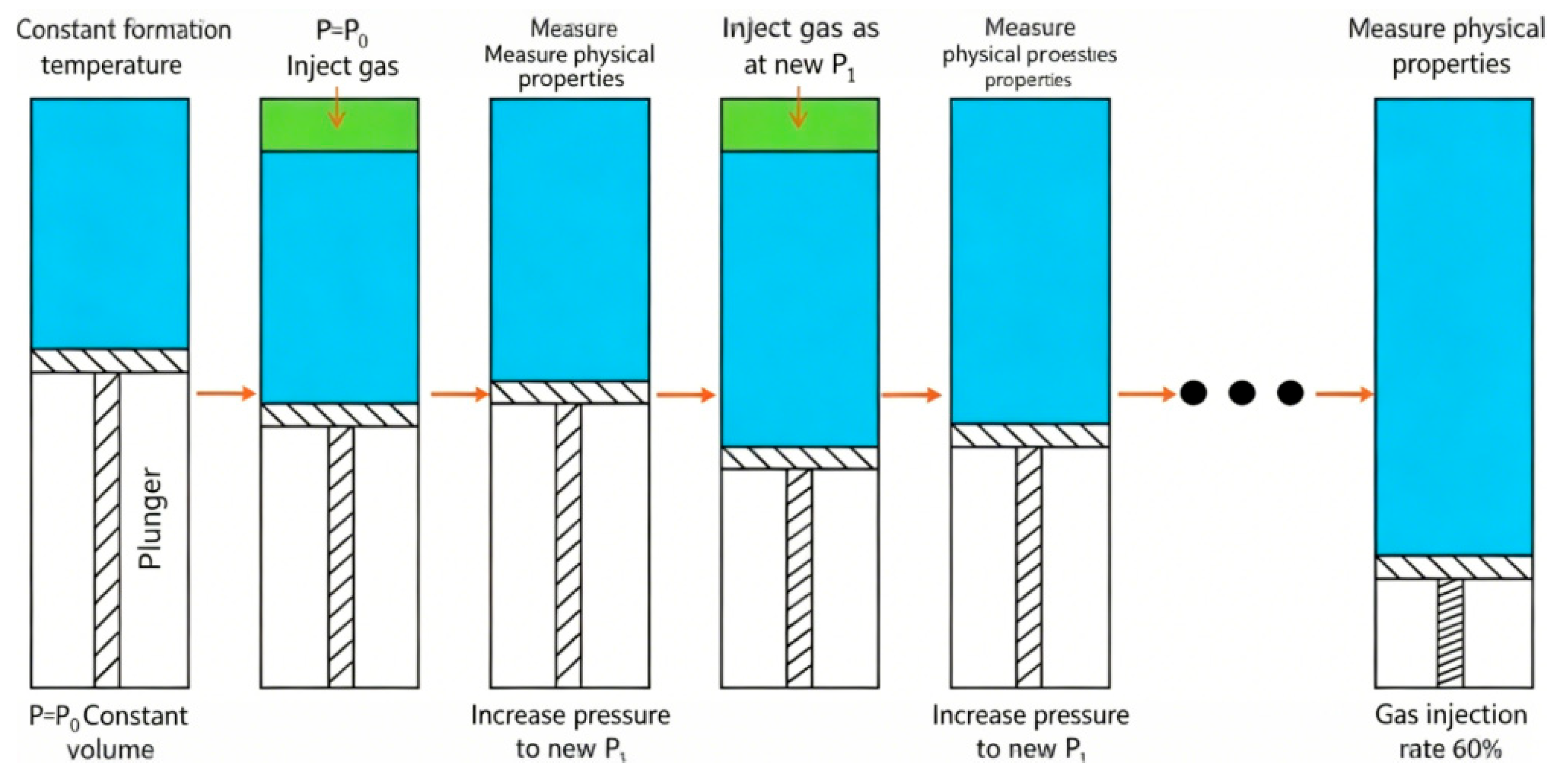
2.1.2. CO2 Injection Constant Mass Expansion (CCE) Experiment
2.2. Minimum Miscibility Pressure Experiment
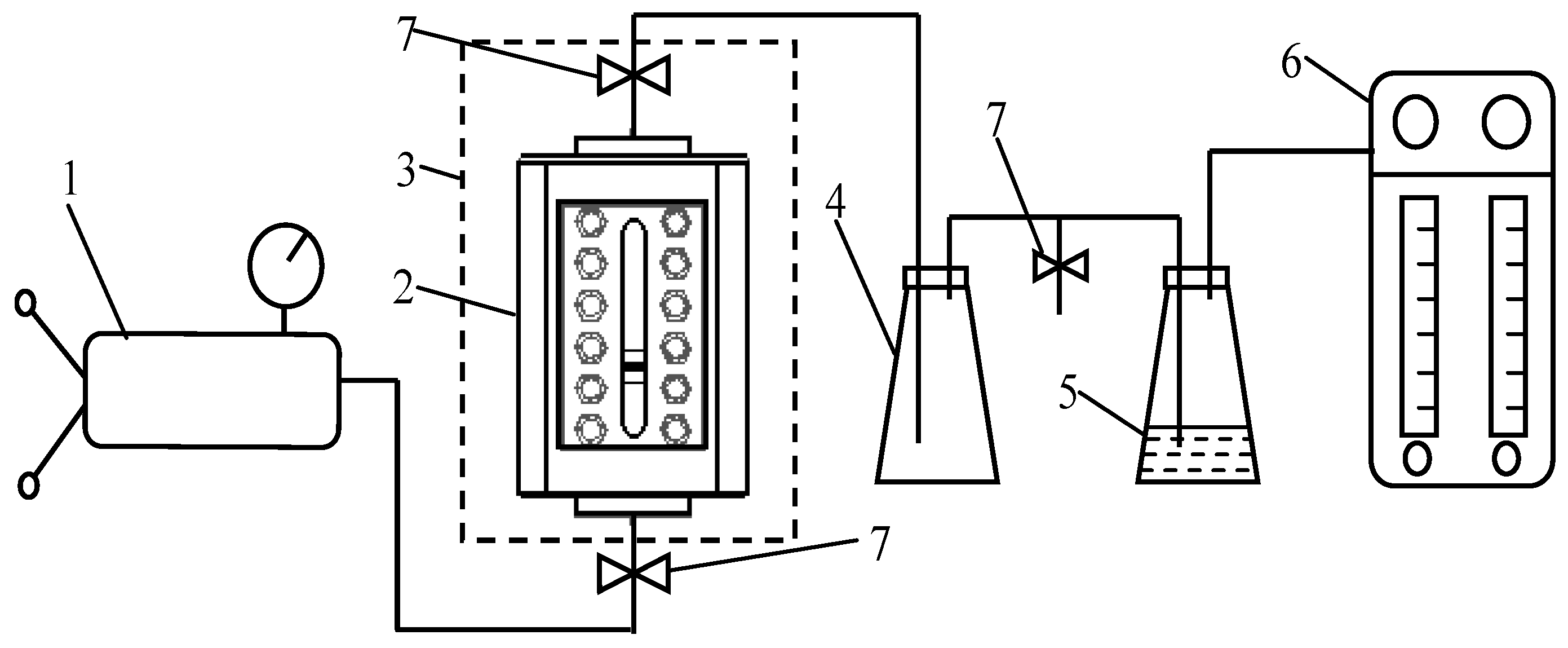
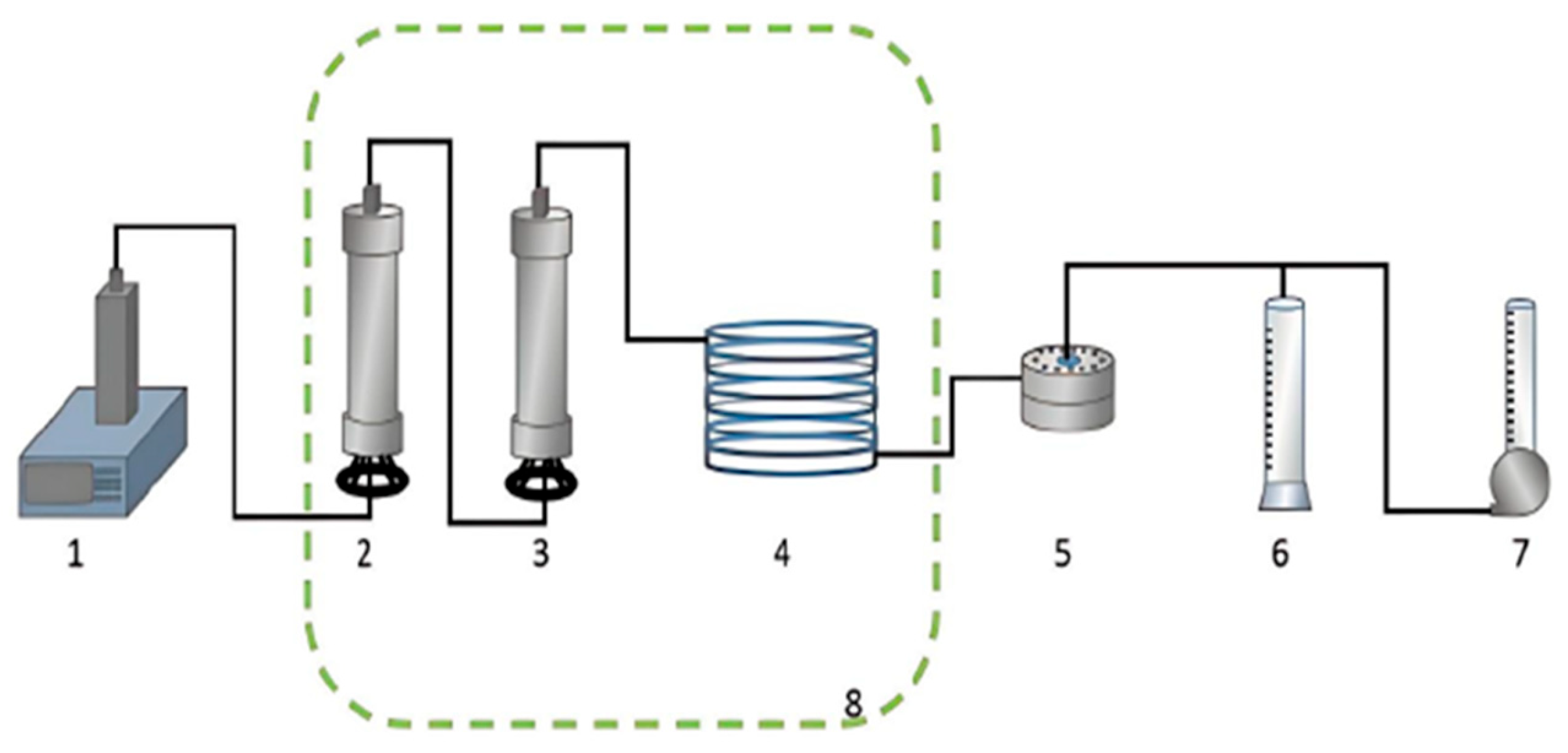
2.2.1. Slim-Tube Experiment Instruments and Scheme
2.2.2. Experimental Steps of Slim-Tube Experiment
- (1)
- Preparation of the slim tube and airtightness test: Sand with a mesh size of 160–200 was sieved and dried, and the clean, dry slim tube was filled with the sand under continuous vibration to ensure even and dense packing. The experimental pipeline was connected, and high-pressure nitrogen was introduced for 1 h; if the pressure drop was ≤0.15 MPa, the airtightness was considered qualified.
- (2)
- Evacuation and back-pressure setting: A vacuum pump was used to evacuate the slim tube and the downstream pipeline until the vacuum degree at the front and rear ends of the slim tube was consistent, and the pressure was held stable for 6 h. The back-pressure pump was then adjusted manually to set the back-pressure valve to the target experimental pressure
- (3)
- Oil-sample saturation: Under constant-temperature conditions, the oil sample was transferred from the sampler to an intermediate container and stabilized to the experimental pressure with a high-pressure displacement pump. The valve was then slowly opened, and the water in the slim tube was displaced with the oil sample at a low flow rate of 0.1 mL/min to establish a water-cut system of 0–80%.
- (4)
- CO2 oil displacement experiment: CO2 oil displacement was injected under constant temperature, constant pressure, and constant flow rate of 0.1 m/min; the oil production, displacement pump readings, and inlet and outlet pressures of the thin tube were recorded for every 0.1 PV injection. When the cumulative gas injection was ≥1.4 PV or oil production was completely stopped, the displacement was terminated.
- (5)
- Reset and repetition: CO2 was removed from the pipeline, and the slim tube and accessories were disassembled, cleaned, and dried (or replaced); the above steps were then repeated for the next pressure point.
- (6)
- Recovery rate calculation: After injecting 1.4 PV CO2, the final crude oil recovery rate was calculated by dividing the volume of degassed crude oil extracted by the volume of saturated oil sample.
2.3. Experiment on Interfacial Tension of CO2 and Crude Oil at Different Pressures
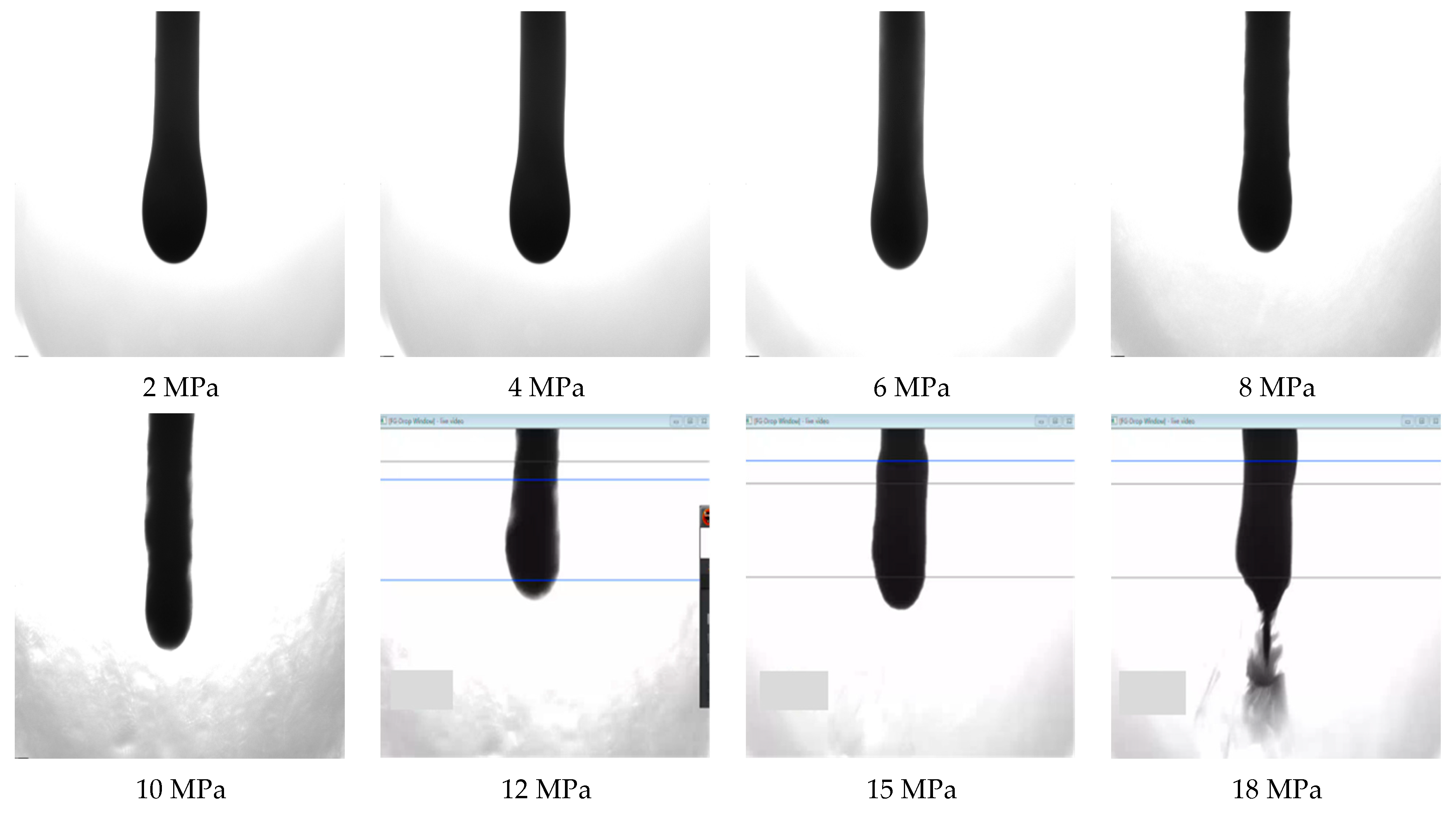
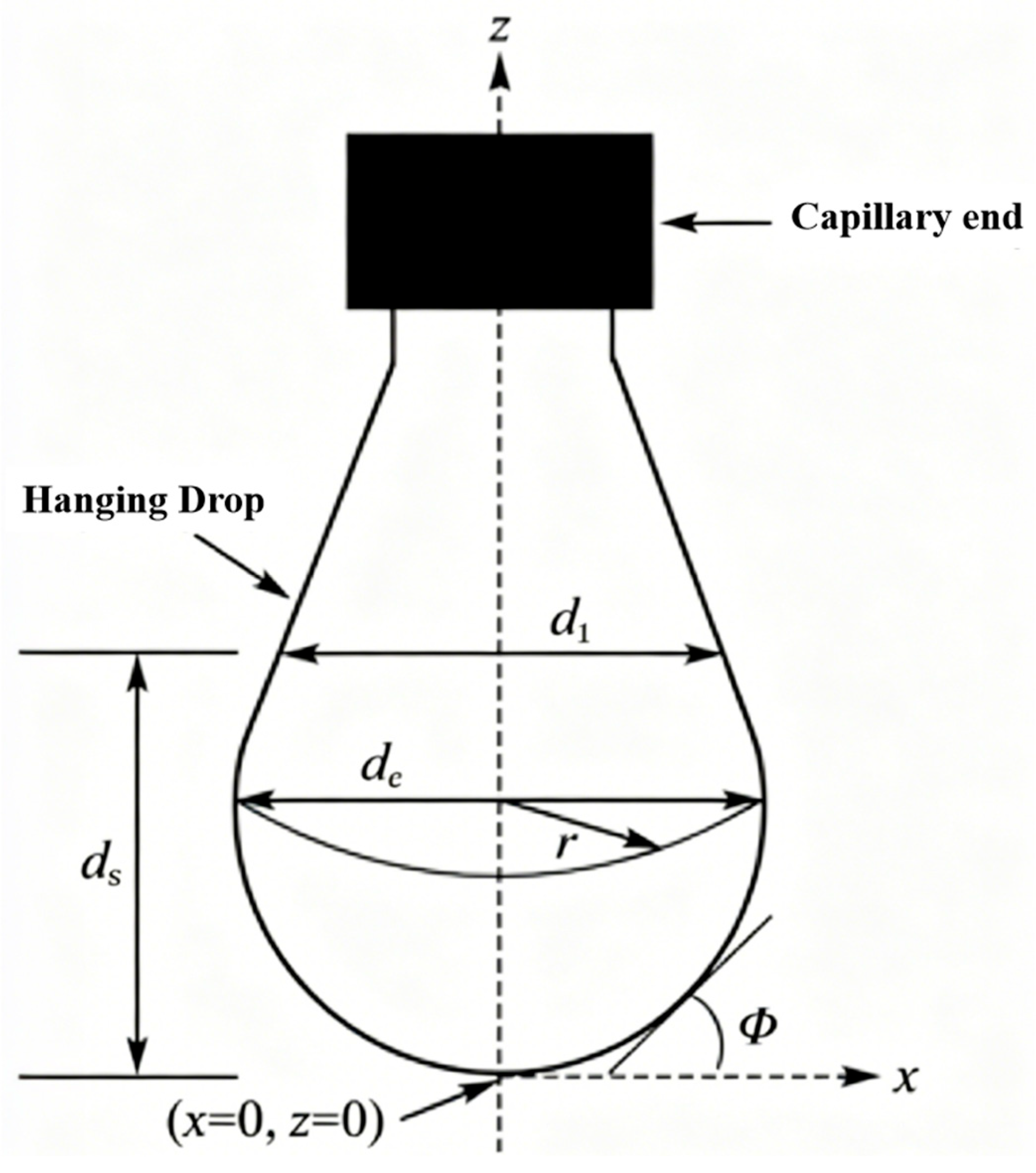
Pendant-Drop Method: Procedure and Principle
2.4. CO2 Drive Start Pressure Gradient Experiment
2.4.1. Experimental Steps and Plan
- (1)
- Experimental plan
- (2)
- Experimental steps
- −
- Pre-treatment before the experimentSelect ten natural rock cores with different permeabilities, and measure porosity and permeability after high-temperature oil washing and drying. Load the core into the gripper and apply a constant confining pressure, then vacuum and saturate the formation water for at least 6 h. After saturation, oil-drive the core at a flow rate of 0.1 mL/min, stop the pump after the effluent state stabilizes, and age at 70 °C for 48 h to establish the bound water saturation of the core.After the core preparation is completed, water flooding was carried out at a flow rate of 0.1 mL/min. After the water content stabilized at 60%, the flooding was stopped and aged for 6 h to complete the experimental preparation.
- −
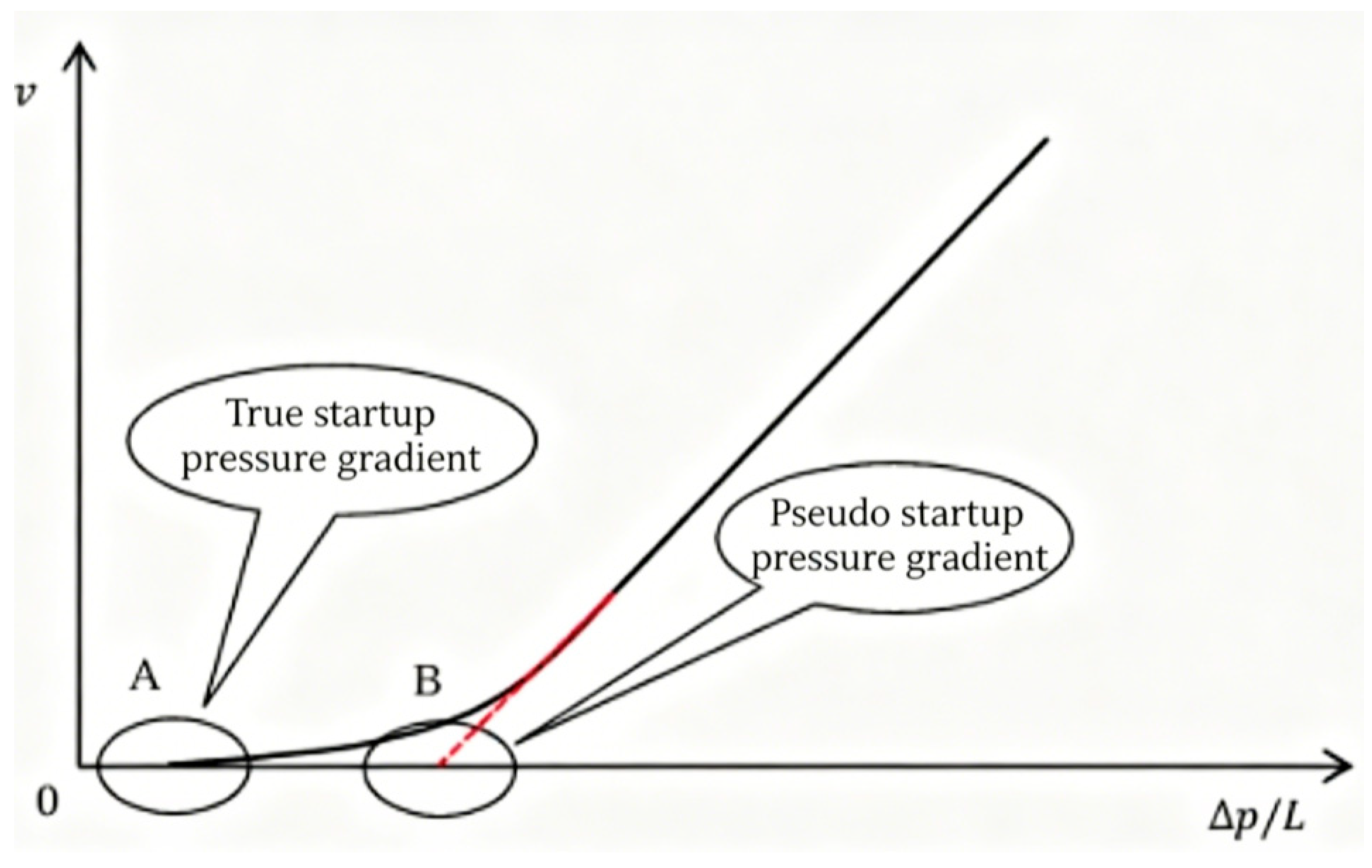
- CO2 flooding start-up pressure gradient testLoad CO2 into an intermediate container and inject it into the core at a constant flow rate of 0.5 mL/min. Monitor the inlet and outlet pressures and obtain the minimum start-up pressure difference for CO2 flooding after the pressure stabilizes. Set four levels of back pressure, namely, 2 MPa, 4 MPa, 6 MPa, and 8 MPa, and test the stable displacement pressure difference under each back pressure to determine the starting pressure under different operating conditions. Calculate the corresponding CO2 drive starting pressure gradient.
2.4.2. Experimental Principle
3. Results and Discussion
3.1. CO2–Crude Oil High-Pressure Physical Property Analysis
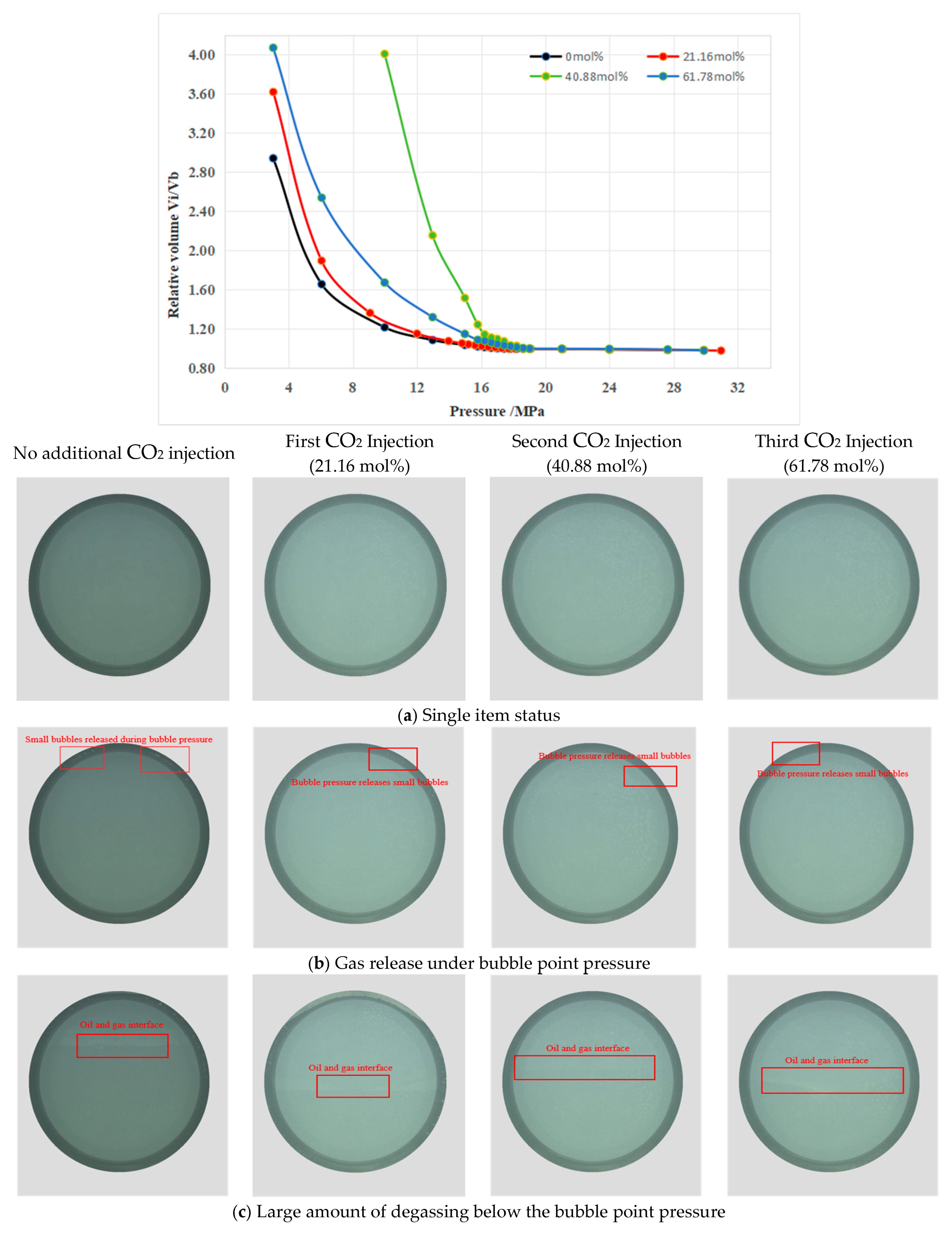
3.1.1. Relationship Between Different CO2 Injection Amounts and Bubble Point Pressure
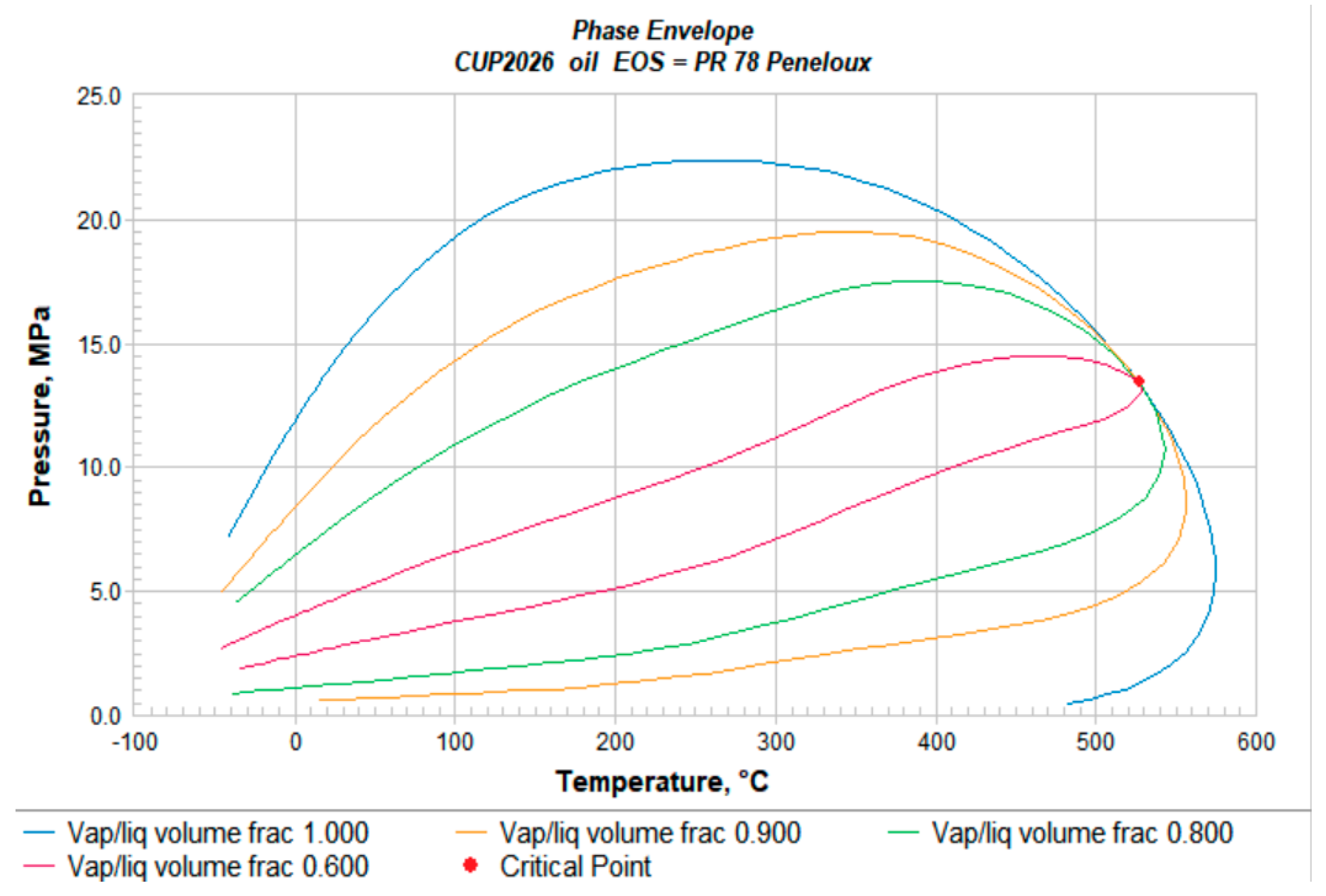
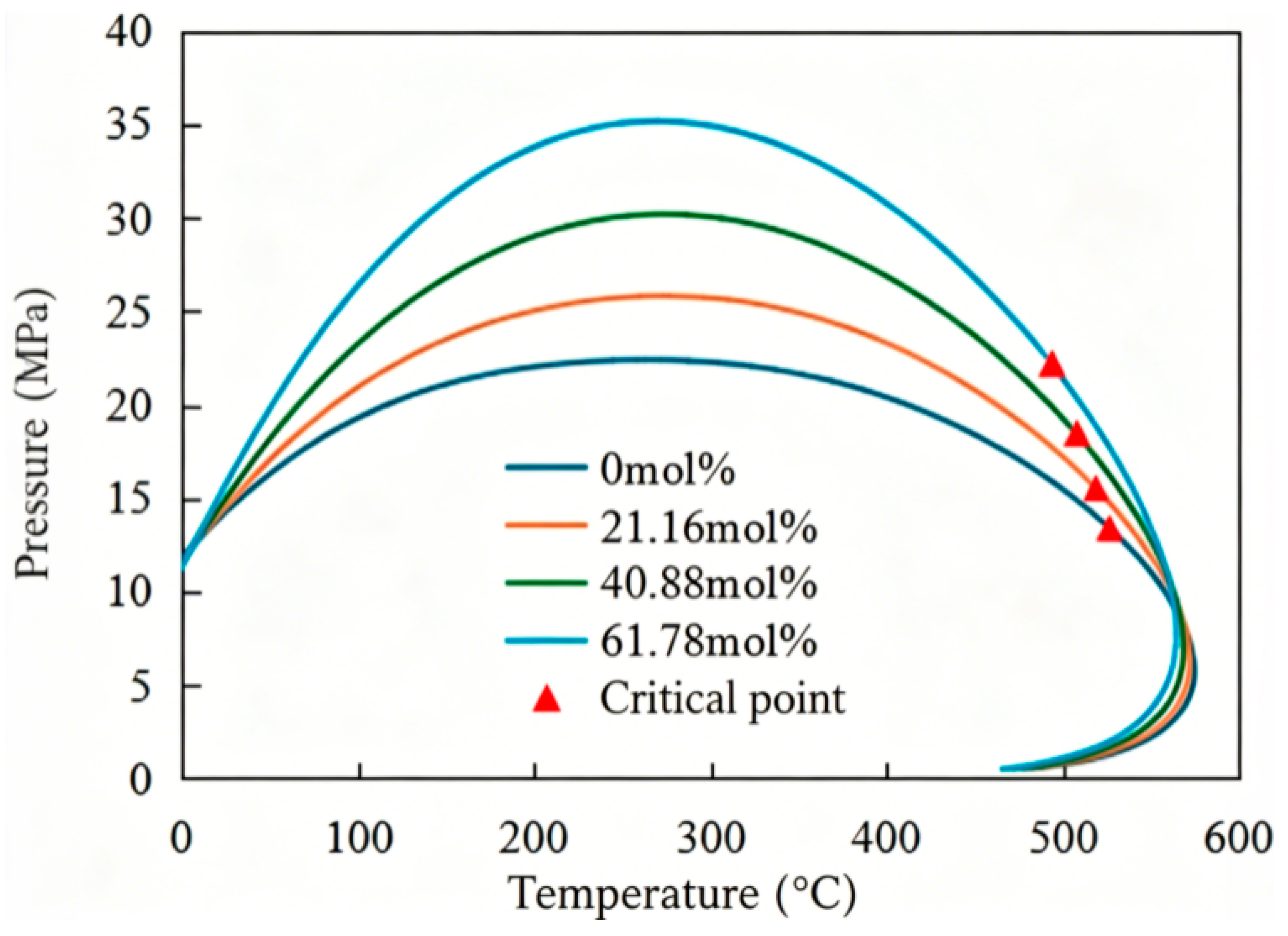
3.1.2. Phase Diagram Analysis of Crude Oil with Different Gas–Liquid Ratios and CO2 Injection Amounts
3.2. Analysis of Minimum Mixed-Phase Pressure in Slim-Tube Experiment
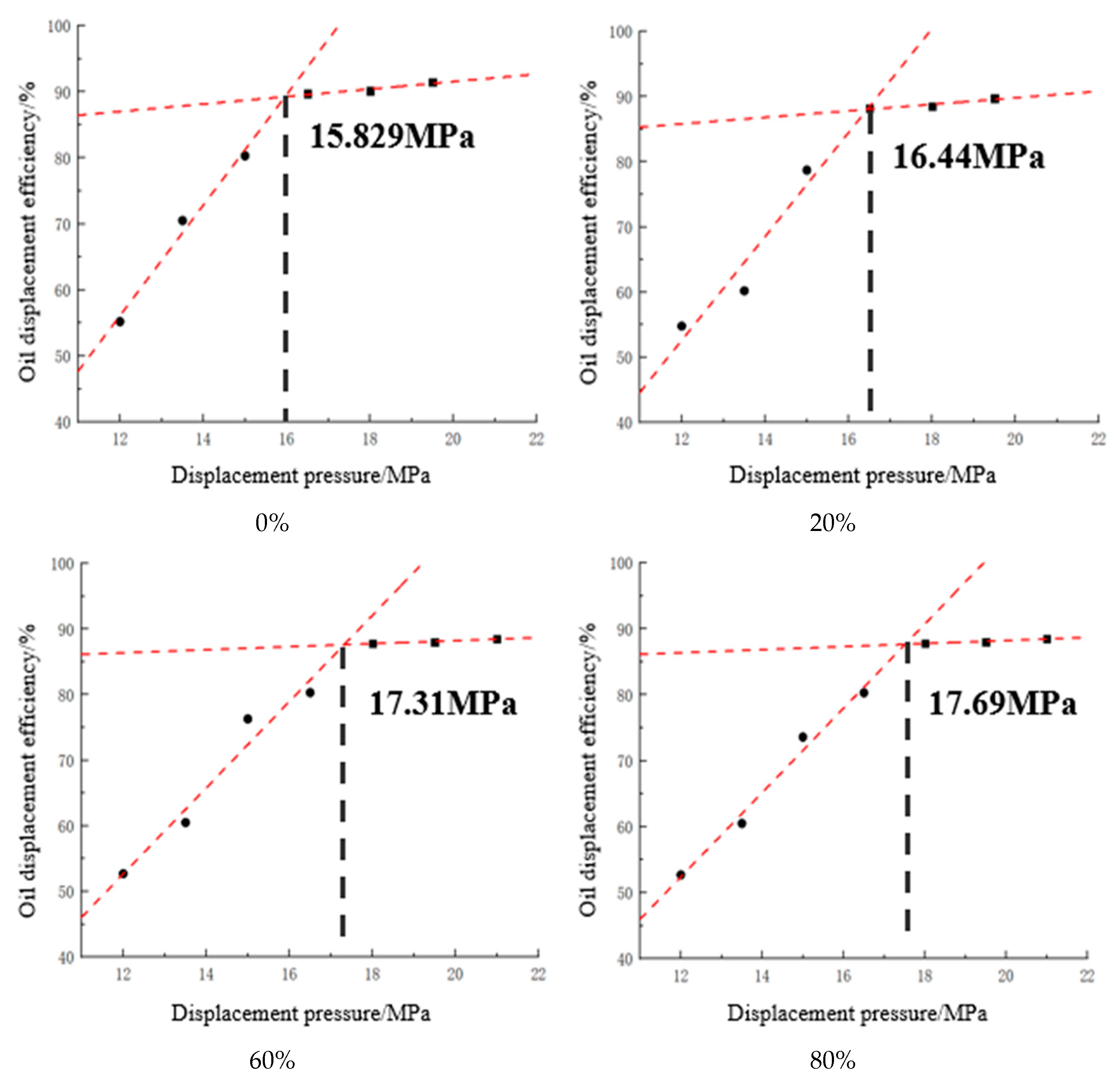
Analysis of Minimum Mixed-Phase Pressure of CO2 Under Different Moisture Content Conditions
3.3. Analysis of Interfacial Tension Between CO2 and Crude Oil
3.4. Analysis of CO2 Drive Pressure Gradient
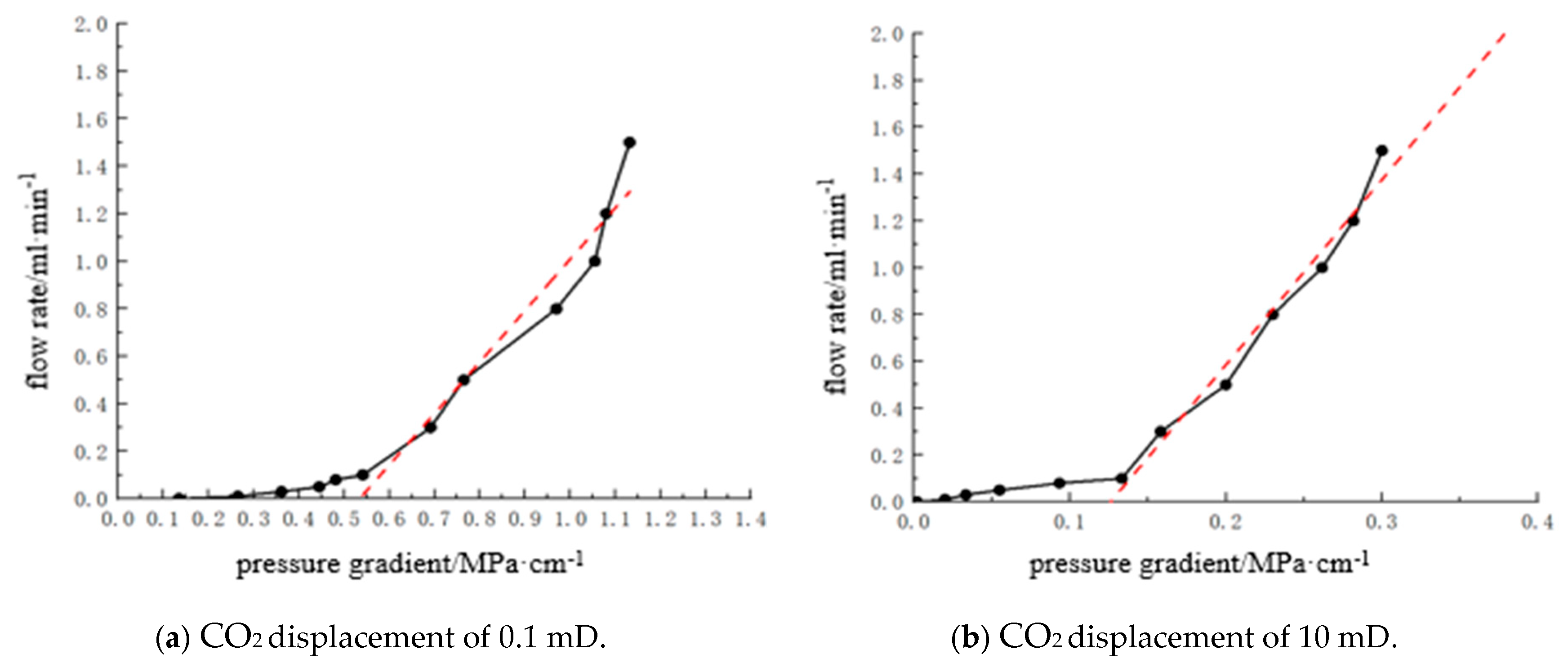
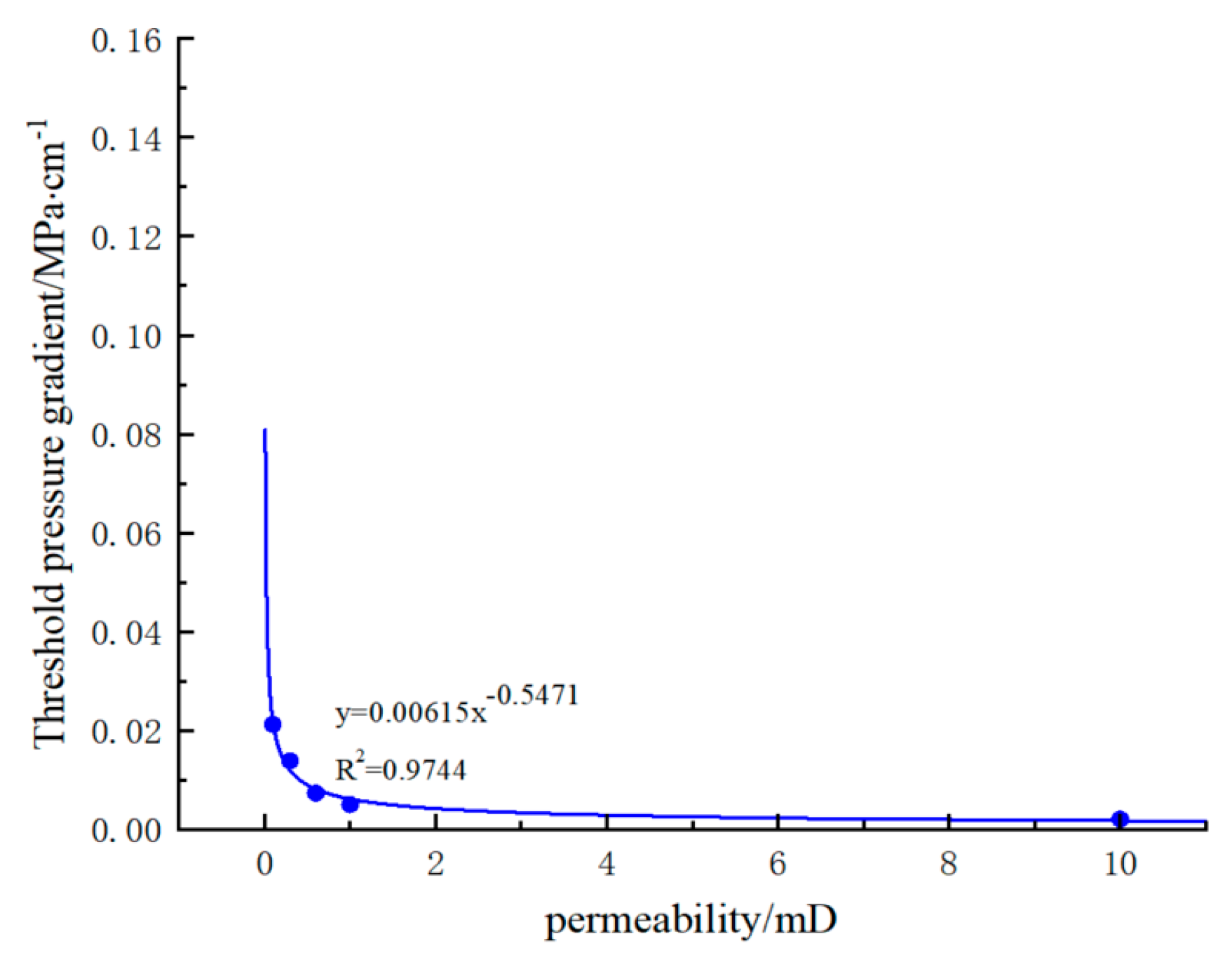
CO2 Flooding Start-Up Pressure Gradient Under Different Permeability Conditions
- ➢
- Analysis of the starting pressure gradient of CO2 flooding in rock cores with different permeabilities:
4. Conclusions
- The injection ratio of CO2 directly affected the physical properties and displacement effect of crude oil. As the molar fraction of CO2 injection increased from 0 to 61.78%, the system bubble point pressure rose to 22.575 MPa, the volume expansion coefficient increased to 1.1454, and the viscosity of single-phase crude oil decreased to 4.906 mPa·s. This confirms that CO2 dissolution has significant solubilization, expansion, and viscosity reduction effects on formation crude oil, expands crude oil, and broadens the gas–liquid two-phase zone. On site, it is necessary to maintain the formation pressure above the bubble point pressure to avoid the influence of free gas on the displacement effect.
- The results of the slim-tube experiment showed that an increase in moisture content significantly increased the difficulty of mixing, and the minimum mixing pressure continued to increase with the increase in moisture content, rising from 15.83 MPa under 0% moisture content to 17.69 MPa under 80% moisture content.
- The measurement of interfacial tension under different pressures using the hanging drop method showed that the oil–gas interfacial tension gradually declined with the increase in pressure. At low pressure of 2–10 MPa, crude-oil droplets were full and regular. When the pressure approached the apparent minimum miscibility pressure at high pressure, the droplets broke and atomized. Under high-pressure conditions, a large amount of CO2 dissolved into crude oil, the physical properties of the two-phase fluids converged, the interfacial energy decreased significantly, and it was difficult to maintain a stable oil–gas interface. Low pressure 2–10 MPa crude oil droplets were full and regular. When the high pressure approached the minimum mixed-phase pressure, the droplets broke and atomized. Under high pressure, a large amount of CO2 was dissolved in crude oil, and the physical properties of the two phases converged. The interfacial energy was significantly reduced, and the interfacial tension almost disappeared, making it difficult to maintain a stable oil–gas interface.
- The core-flooding experiments demonstrated that the threshold pressure gradient decreased with permeability following a power-law relationship. Within the limited dataset of this study, a knee-like trend appeared near 0.5 mD: for the measured samples with K < 0.5 mD, the threshold pressure gradient increased sharply as the permeability decreased, whereas for the samples with K > 0.5 mD, the decreasing rate became much slower, and the gradient gradually approached zero. This practical threshold was derived from the present core-flooding measurements and requires further experimental data for broader validation
Author Contributions
Funding
Data Availability Statement
Conflicts of Interest
References
- Shen, B.; Yang, S.; Zhang, Y.; Gao, X.-Y.; Bi, L.-F.; Du, K.; Zhao, E.-M.; Zeng, H.-B. An integrated deep learning framework for full-cycle CCUS-EOR evaluation and optimization under carbon neutrality. Pet. Sci. 2026, 23, 2288–2307. [Google Scholar] [CrossRef] [Scilit]
- Lyu, W.; Zhang, H.; Zhou, T.; Gao, M.; Zhang, D.; Yang, Y.; Zhang, K.; Yu, H.; Ji, Z.; Lyu, W.; et al. Progress in CO2 flooding and storage techniques for lacustrine oil reservoirs and development directions of their large-scale application in China. Pet. Explor. Dev. 2025, 52, 1086–1101. [Google Scholar] [CrossRef] [Scilit]
- Wang, J.; Zhou, Y.; Zhang, X.; Lao, J.; Song, H. Development of a large language model-driven intelligent agent for predicting relative permeability in oil and gas reservoirs. Theor. Appl. Mech. Lett. 2026, 16, 94–101. [Google Scholar] [CrossRef] [Scilit]
- Tian, Z.; Xia, Y.; Zhang, J.; Wang, D.-L.; Liu, Z.-J.; Zhao, C.-Y.; Xia, Y.-X.; Su, J.-W.; Liu, D.-K.; Cai, J.-C. Feasibility of underground gas storage construction from large-scale low-permeability lithologic gas reservoirs: Insights into microscopic storage spaces. Pet. Sci. 2026, 23, 1606–1623. [Google Scholar] [CrossRef] [Scilit]
- Zhao, H.; Luo, J.; Li, X.; Yao, W.-J.; Ji, L.; Zhen, H.-B. Experimental investigation into the fracture propagation behavior of horizontal well multi-stage and multi-cluster fracturing within the roof of crushed soft coal seams. Pet. Sci. 2025, 22, 4682–4713. [Google Scholar] [CrossRef] [Scilit]
- Sennaoui, B.; Ling, K. Numerical Analysis of CO2 Storage Associated with CO2-EOR Utilization in Unconventional Reservoirs. Energies 2026, 19, 1311. [Google Scholar] [CrossRef] [Scilit]
- Khalili, Y.; Abbasi, S.; Bagheri, M. A comprehensive review of gas-based enhanced oil recovery (gas-based EOR) techniques: Mechanisms, applications, and future trends. Can. J. Chem. Eng. 2026, 104, 3546–3573. [Google Scholar] [CrossRef] [Scilit]
- Dabiri, A.; Karaei, A.M. Reducing CO2-crude oil minimum miscibility pressure through tailored SiO2 nanoparticle size and concentration: Experimental insights and response surface optimization for enhanced oil recovery and CCUS applications. Sep. Purif. Technol. 2026, 386, 136645. [Google Scholar] [CrossRef] [Scilit]
- Garifullina, A.C.; Indrupskiy, M.I.; Klimov, S.D.; Ibragimov, I.I.; Lutfullin, A.A.; Zakiev, B.F.; Akhmetzyanov, F.M. Experimental and simulation study of geochemical processes during interaction of carbonated formation water with terrigenous and carbonate rocks. Pet. Sci. 2025, 22, 4954–4974. [Google Scholar] [CrossRef] [Scilit]
- Kang, N.; Sarsenbekuly, B.; Wu, H. Progress of CCUS technology with enhanced oil recovery. J. CO2 Util. 2025, 102, 102103233. [Google Scholar] [CrossRef] [Scilit]
- AlRassas, M.A.; Alimi, A.D.; Zosseder, K.; Al-Qaness, M.A. AI-driven predictive framework for CO2 sequestration and enhanced oil recovery: Insights from a depleted oil reservoir. J. Clean. Prod. 2025, 519, 146054. [Google Scholar] [CrossRef] [Scilit]
- Cui, L.; Xiu, H.; Wang, W. Analysis of Factors Influencing Overflow in Changqing Advanced Water Injection Areas. Acad. J. Sci. Technol. 2026, 19, 88–94. [Google Scholar] [CrossRef] [Scilit]
- Chen, Z.; Liu, H.; Han, W.; Li, H. An experimental study of the effect of electric field enhancement on the adsorption characteristics of coalbed methane. Sci. Rep. 2025, 16, 2296. [Google Scholar] [CrossRef] [Scilit]
- Han, W.; Chen, Z.; Liu, H.; Yuan, Q. Influences of electric field action on methane adsorption properties in anthracite: An experimental study. Acta Geophys. 2025, 74, 2. [Google Scholar] [CrossRef] [Scilit]
- He, Y.; Li, W.; Yang, R.; Chen, R.; Yi, C.; Xu, H.; Jiang, H. Research on Profile Control Potential Evaluation and Optimization Design Technology in Block M of Gudong Oilfield. Processes 2025, 13, 3131. [Google Scholar] [CrossRef] [Scilit]
- Pi, Z.; Hui, G.; Wang, Y.; Chen, Z.; Li, J.; Qin, G.; Meng, F.; Song, Y.; Yao, F.; Bao, P.; et al. Coupled 4D Flow-Geomechanics Simulation to Characterize Dynamic Fracture Propagation in Tight Sandstone Reservoirs. ACS Omega 2025, 10, 1735–1747. [Google Scholar] [CrossRef] [Scilit]
- Lin, L.; Xu, C.; Lyu, H.; Chen, Y.; Cong, S.; Yang, X.; Bu, W. Property Changes of Low-Permeability Oil Reservoirs Under Long-Term Water Flooding. Processes 2024, 12, 2317. [Google Scholar] [CrossRef] [Scilit]
- Chen, J.; Cai, D.; Zhang, T.; Yu, L.; Zhou, D.; Cheng, S. Asynchronous Injection–Production Method in the High Water Cut Stage of Tight Oil Reservoirs. Energies 2024, 17, 4838. [Google Scholar] [CrossRef] [Scilit]
- Lei, Z.; Wang, Z.; Mu, L.; Peng, H.; Li, X.; Bai, X.; Tao, Z.; Li, H.; Peng, Y. A technique for enhancing tight oil recovery by multi-field reconstruction and combined displacement and imbibition. Pet. Explor. Dev. Online 2024, 51, 152–163. [Google Scholar] [CrossRef] [Scilit]
- Wang, F.; Liao, G.; Su, C.; Wang, F.; Ma, J.; Yang, Y. Carbon emission reduction accounting method for a CCUS-EOR project. Pet. Explor. Dev. 2023, 50, 989–1000. [Google Scholar] [CrossRef] [Scilit]
- Li, X.; Dong, C.; Quaye, A.J.; Tang, Y.; Zhang, B.; Hu, C. Carbon dioxide storage in carbonate rocks: Review and perspectives. J. Earth Sci. 2026, 1–56. Available online: https://link.oversea.cnki.net/urlid/42.1788.P.20260520.1813.019 (accessed on 14 September 2026).
- Liang, X.; Hu, Q.; Pu, X.; Wang, Q.; Zhang, T.; Han, W. Lithofacies-dependent pore structure heterogeneity governing microscopic oil mobilization during supercritical CO2 huff-and-puff in shale. Energy Geosci. 2026, 7, 100589. [Google Scholar] [CrossRef] [Scilit]
- Zhao, Y.; Fan, Y.; Zhang, T.; Wang, Q.; Zhang, T.; Han, W. Microscopic investigation of pore structure effects on salt precipitation mechanisms during CO2 flooding. Gas. Sci. Eng. 2026, 152, 205943. [Google Scholar] [CrossRef] [Scilit]
- Li, Y.; Li, Z.; Zhao, Q.; Wang, R.; Liu, Y. Carbon capture, utilization, and storage: Advances made by Sinopec and future prospects. Energy Geosci. 2026, 7, 100561. [Google Scholar] [CrossRef] [Scilit]
- Zhang, F.; Cao, W.; Lu, R.; Rui, Z.; Babadagli, T.; Xia, Q.; Ji, Z. Multiphase flow model of CO2 and formation fluid for production wellbores in CO2 geological storage. Fuel 2026, 410, 137903. [Google Scholar] [CrossRef] [Scilit]
- Pu, W.; Kuang, J.; Yang, F.; Li, B.; Li, J.; Wang, A. CO2 flooding technology for enhanced oil recovery in tight oil reservoirs: A review. Energy Geosci. 2026, 7, 4–21. [Google Scholar] [CrossRef] [Scilit]
- Liu, X.; Chen, H.; Li, Y.; Zhu, Y.; Liao, H.; Zhao, Q.; Zhou, X.; Zeng, H. Oil production characteristics and CO2 storage mechanisms of CO2 flooding in ultra-low permeability sandstone oil reservoirs. Pet. Explor. Dev. 2025, 52, 196–207. [Google Scholar] [CrossRef] [Scilit]
- Chen, S.; You, H.; Xu, J.; Wei, M.; Xu, T.; Wang, H. Leakage monitoring of carbon dioxide injection well string using distributed optical fiber sensor. Pet. Res. 2025, 10, 166–177. [Google Scholar] [CrossRef] [Scilit]
- Xiong, Y.; Chen, F.P.; Pu, F.W.; Jiang, R.; Pang, Q. Study on the phase behavior and minimum miscible pressure of CO2-shale oil in nanopores with confinement effect. Pet. Sci. 2026, 23, 777–790. [Google Scholar] [CrossRef] [Scilit]
- Einspänner, E.; Mattern, H.; Grossmann, H.; Khadhraoui, E.; Müller, S.J.; Garza, A.P.; Dunay, I.R.; Schregel, K.; Guttmann, C.R.; Fuchs, E.; et al. A multimodal 7T MRI and biomarker study reveals reversible brain changes following acute sleep deprivation. Sleep Med. 2025, 137, 108663. [Google Scholar] [CrossRef] [Scilit]
- Elsayyad, E.M.N.; Elkady, A.O.; Swidan, M.M.; Rashed, H.M.; Sakr, T.M.; Abdelhamid, A.M.; Zaafan, M.A.; El-Laithy, H.M. Zonisamide nanodiamonds for brain targeting: A comprehensive study utilising in silico, in vitro, in vivo, and molecular investigation for successful nose-to-brain delivery for epilepsy management. Drug Deliv. Transl. Res. 2025, 16, 3286–3309. [Google Scholar] [CrossRef] [Scilit]
- Hao, H.; Xian, B.; Peng, M.; Deng, S.; Cheng, L.; Wu, H.; Gao, X.; Qu, M.; Zhao, K. Study of Different Gas Floodings on Minimum Miscibility Pressure and Oil Recovery in a Low-Permeability Reservoir with Medium Viscous Oil. ACS Omega 2025, 10, 9426–9440. [Google Scholar] [CrossRef] [Scilit]
- Du, X.; Li, X.; Thakur, C.G. Enhanced Solubility and Miscibility of CO2-Oil Mixture in the Presence of Propane under Reservoir Conditions to Improve Recovery Efficiency. Energies 2024, 17, 4790. [Google Scholar] [CrossRef] [Scilit]
- Zhao, Y.; Chen, J.; Li, M.; Liu, S.; Huang, M.; Zhang, Y.; Liu, Y.; Song, Y. In situ measurement of CO2-oil mixture phase behavior properties in porous media for CO2-enhanced oil recovery. Fuel 2025, 379, 132970. [Google Scholar] [CrossRef] [Scilit]
- Du, X.; Salasakar, S.; Thakur, G. A Comprehensive Summary of the Application of Machine Learning Techniques for CO2-Enhanced Oil Recovery Projects. Mach. Learn. Knowl. Extr. 2024, 6, 917–943. [Google Scholar] [CrossRef] [Scilit]
- Yan, Y.; Lyu, W.; Yu, H.; Lv, W.; Ni, S. Mechanisms of CO2 flooding front migration and injection-production regulation in heterogeneous reservoirs: A large-scale visual physical simulation study. J. CO2 Util. 2026, 105, 103339. [Google Scholar] [CrossRef] [Scilit]
- Yang, G.; Cui, H.; Huang, T.; Liang, B.; Zhang, J.; Wang, L.; Liu, Z.; Du, C.; Li, X. Stress corrosion cracking behavior and mechanism of stainless steel coiled tubing served for CO2 flooding injection well in CCUS-EOR environments. Eng. Fail. Anal. 2025, 180, 109847. [Google Scholar] [CrossRef] [Scilit]
- Qian, C.; Rui, Z.; Liu, Y.; Zhou, K.; Du, K.; Zhao, Y.; Zou, J.; Song, K.; Li, X. Microfluidic investigation on microscopic flow and displacement behavior of CO2 multiphase system for CCUS-EOR in heterogeneous porous media. Chem. Eng. J. 2025, 505, 505159135. [Google Scholar] [CrossRef] [Scilit]
- Zhang, M.; Li, B.; Zheng, L.; Xin, Y.; Xing, W.; Li, Z. Experimental study on CO2 flooding within a fractured low-permeability reservoir: Impact of high injection rate. Fuel 2025, 384, 134002. [Google Scholar] [CrossRef] [Scilit]
- Wen, X.; Rui, Z.; Zhao, Y.; Liu, Y.; Du, K. An improved prediction model for miscibility characterization and optimization of CO2 and associated gas co-injection. Geoenergy Sci. Eng. 2024, 242, 213284. [Google Scholar] [CrossRef] [Scilit]
- Zhang, Z.; Sun, L.; Huo, X.; Liu, X.; Pan, X. Rheological properties and gas channeling plugging ability in CO2 flooding of a hydrophobic nanoparticle-enhanced smart gel system constructed with wormlike micelles. Chem. Eng. Res. Des. 2024, 202, 506–516. [Google Scholar] [CrossRef] [Scilit]
- Wang, R.; Zhang, Y.; Lyu, C.; Lun, Z.; Cui, M.; Lang, D. Displacement characteristics of CO2 flooding in extra-high water-cut reservoirs. Energy Geosci. 2024, 5, 216–222. [Google Scholar] [CrossRef] [Scilit]
- Yanping, M. Experimental Study on Starting Pressure Gradient of Percolation in Low Permeability Sandstone Reservoir Based on Single Well Productivity Sequence. Institute of Management Science and Industrial Engineering. In Proceedings of the 2019 4th International Workshop on Materials Engineering and Computer Sciences (IWMECS 2019), Xi’an, China, 16–17 March 2019; Francis Academic Press: London, UK, 2019; pp. 150–154. [Google Scholar]
- GB/T26981-2020; Analysis Methods for Fluid Properties in Oil and Gas Reservoirs. Standardization Administration of the People’s Republic of China: Beijing, China, 2020.






| Slim-Tube Parameters | Maximum Working Pressure | Temperature | Length | Outer Diameter | Inner Diameter | Permeability |
|---|---|---|---|---|---|---|
| Value | 70 MPa | 200 °C | 1200 cm | 0.6 cm | 0.4 cm | 1 D |
| Water Cut | Experimental Pressure (MPa) | ||||||
|---|---|---|---|---|---|---|---|
| 0% | 12 | 13.5 | 15 | 16.5 | 18 | 19.5 | / |
| 20% | 12 | 13.5 | 15 | 16.5 | 18 | 19.5 | / |
| 60% | 12 | 13.5 | 15 | 16.5 | 18 | 19.5 | 21 |
| 80% | 12 | 13.5 | 15 | 16.5 | 18 | 19.5 | 21 |
| Experimental Temperature (°C) | Water Cut (%) | Penetration Rate (mD) | Inject Medium |
|---|---|---|---|
| 70 | 60 | 0.1 | CO2 displacement |
| 0.3 | |||
| 0.5 | |||
| 1 | |||
| 10 |
| Stage | CO2 Injection Mole Fraction (mol%) | Bubble Point Pressure (MPa) | Solution Gas–Oil Ratio (m3/m3) | Oil Formation Volume Factor at Bubble Point Pressure | Density at Bubble Point Pressure (g/cm3) | Viscosity (mPa·s) | Volume Expansion Coefficient |
|---|---|---|---|---|---|---|---|
| No Gas Injection | 0.00 | 17.424 | 77.59 | 1.1963 | 0.7761 | 9.026 | 1.0000 |
| Stage 1 | 21.16 | 17.690 | 93.70 | 1.2698 | 0.7713 | 7.824 | 1.0534 |
| Stage 2 | 40.88 | 19.951 | 124.08 | 1.3615 | 0.7735 | 6.227 | 1.1015 |
| Stage 3 | 61.78 | 22.575 | 161.37 | 1.4596 | 0.7777 | 4.906 | 1.1454 |
| Displacement Pressure (MPa) | Water Content | |||
|---|---|---|---|---|
| 0% | 20% | 60% | 80% | |
| Oil Displacement Efficiency (%) | ||||
| 12 | 55.2 | 54.8 | 52.7 | 49.6 |
| 13.5 | 70.5 | 60.2 | 60.5 | 57.2 |
| 15 | 80.3 | 78.7 | 76.3 | 73.6 |
| 16.5 | 89.7 | 88.2 | 80.3 | 77.5 |
| 18 | 90.1 | 88.5 | 87.8 | 87.5 |
| 19.5 | 91.4 | 89.7 | 88 | 87.9 |
| 21 | / | / | 88.5 | 88.2 |
| MMP (MPa) | 15.83 | 16.44 | 17.31 | 17.69 |
| Temperature °C | Pressure (MPa) | CO2 Density (kg/m3) | Interfacial Tension (mN/m) |
|---|---|---|---|
| 70 | 2 | 63.012 | 19.69 |
| 3 | 63.012 | 16.59 | |
| 4 | 63.012 | 15.51 | |
| 5 | 100.14 | 14.02 | |
| 6 | 100.14 | 12.50 | |
| 7 | 142.15 | 10.95 | |
| 8 | 142.15 | 10.45 | |
| 9 | 189.99 | 7.72 | |
| 10 | 189.99 | 6.25 | |
| 11 | 244.29 | 4.84 | |
| 12 | 244.29 | 4.48 |
| Penetration Rate (mD) | Proposed to Initiate Pressure Gradient (MPa/cm) | Threshold Pressure Gradient (MPa/cm) |
|---|---|---|
| 0.1 | 0.2416 | 0.0212 |
| 0.3 | 0.2603 | 0.0138 |
| 0.5 | 0.2103 | 0.0073 |
| 1 | 0.2333 | 0.0050 |
| 10 | 0.1260 | 0.0021 |
Disclaimer/Publisher’s Note: The statements, opinions and data contained in all publications are solely those of the individual author(s) and contributor(s) and not of MDPI and/or the editor(s). MDPI and/or the editor(s) disclaim responsibility for any injury to people or property resulting from any ideas, methods, instructions or products referred to in the content. |
© 2026 by the authors. Licensee MDPI, Basel, Switzerland. This article is an open access article distributed under the terms and conditions of the Creative Commons Attribution (CC BY) license.
Share and Cite
Gao, C.; Yuan, Y.; Fan, W.; Song, J.; Lei, X.; Ma, J.; Yang, C. Experimental Study on CO2–Crude Oil Phase Behavior, Miscibility and Threshold Pressure Gradient for CCUS in Ultra-Low Permeability Reservoir. Processes 2026, 14, 2970. https://doi.org/10.3390/pr14182970
Gao C, Yuan Y, Fan W, Song J, Lei X, Ma J, Yang C. Experimental Study on CO2–Crude Oil Phase Behavior, Miscibility and Threshold Pressure Gradient for CCUS in Ultra-Low Permeability Reservoir. Processes. 2026; 14(18):2970. https://doi.org/10.3390/pr14182970
Chicago/Turabian StyleGao, Chunning, Yingjie Yuan, Wei Fan, Jiawen Song, Xinhui Lei, Jiahao Ma, and Changhua Yang. 2026. "Experimental Study on CO2–Crude Oil Phase Behavior, Miscibility and Threshold Pressure Gradient for CCUS in Ultra-Low Permeability Reservoir" Processes 14, no. 18: 2970. https://doi.org/10.3390/pr14182970
APA StyleGao, C., Yuan, Y., Fan, W., Song, J., Lei, X., Ma, J., & Yang, C. (2026). Experimental Study on CO2–Crude Oil Phase Behavior, Miscibility and Threshold Pressure Gradient for CCUS in Ultra-Low Permeability Reservoir. Processes, 14(18), 2970. https://doi.org/10.3390/pr14182970