Article

Wellbore Instability Mechanisms and Prediction of Four-Pressure Profiles in Deep Marine Carbonate Rocks

1
Oil and Gas Technology Research Institute, PetroChina Southwest Oil & Gasfield Company, Chengdu 610017, China
2
State Key Laboratory of Oil and Gas Reservoir Geology and Exploitation, Southwest Petroleum University, Chengdu 610500, China
*
Author to whom correspondence should be addressed.
Processes 2026, 14(18), 2969; https://doi.org/10.3390/pr14182969 (registering DOI)
Submission received: 27 July 2026 / Revised: 27 August 2026 / Accepted: 9 September 2026 / Published: 18 September 2026
(This article belongs to the Special Issue Research Progress in Oil and Gas Well Engineering)

Abstract

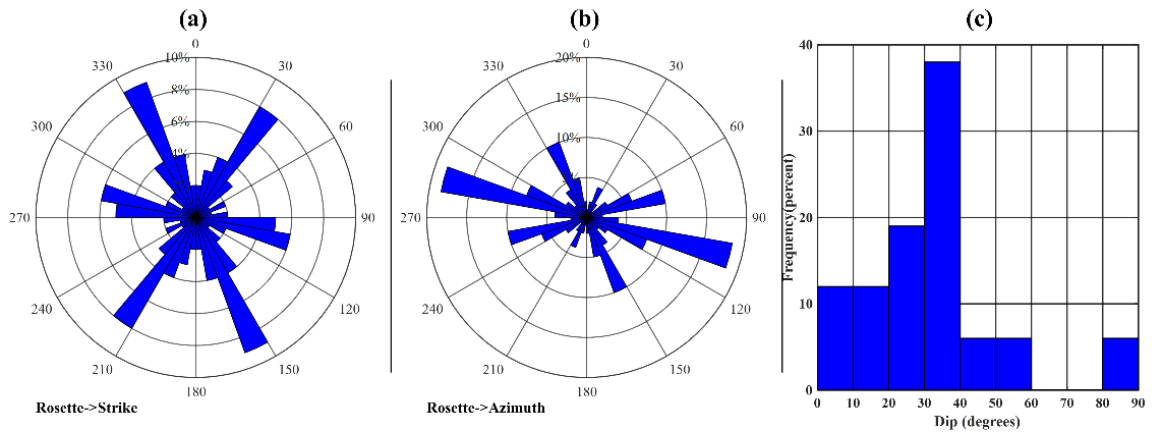
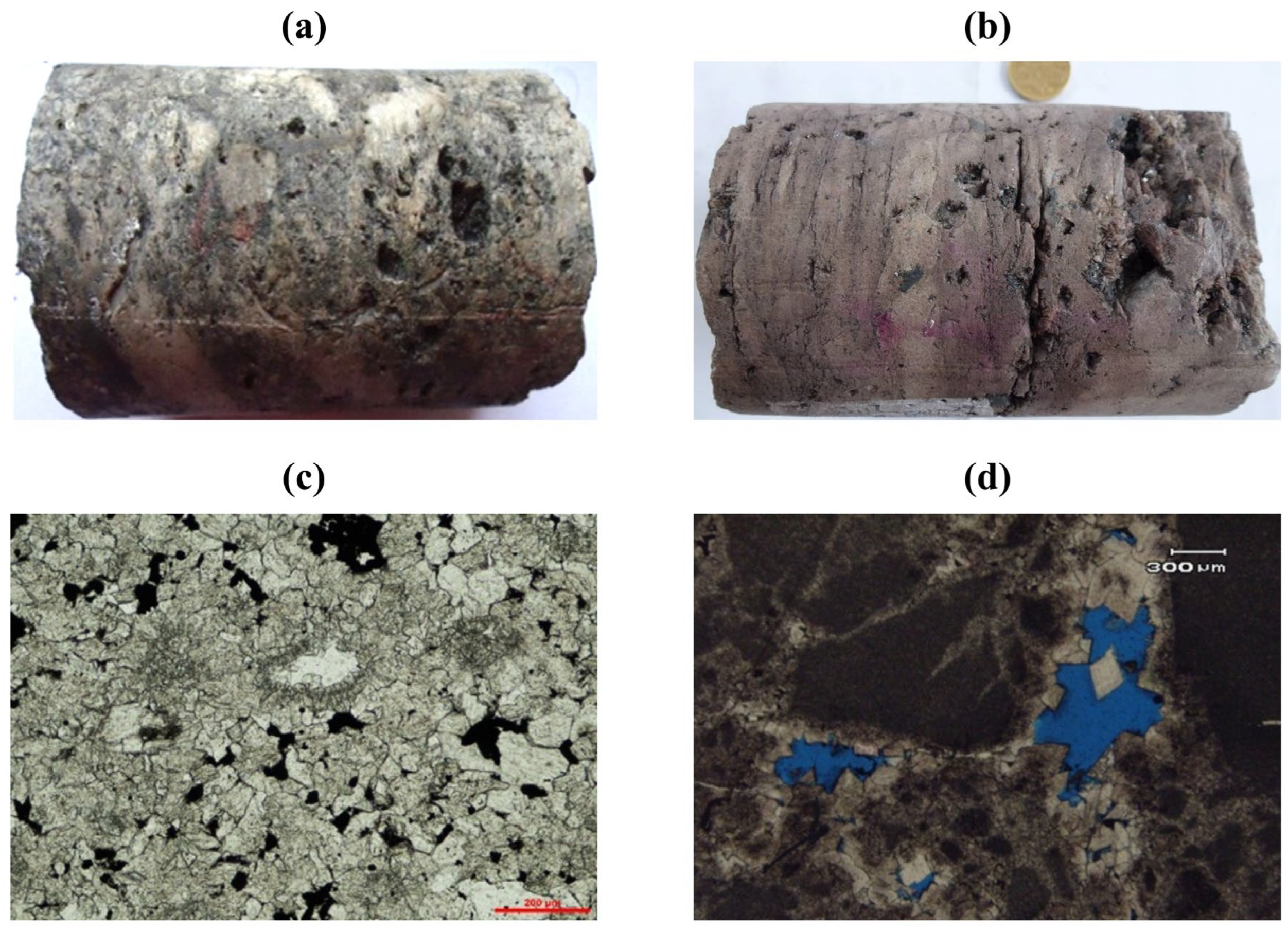
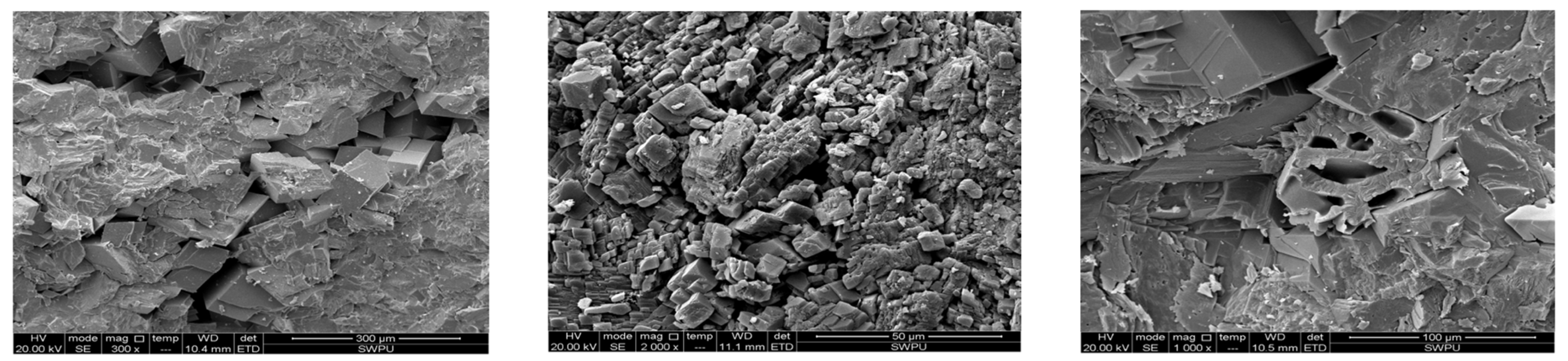
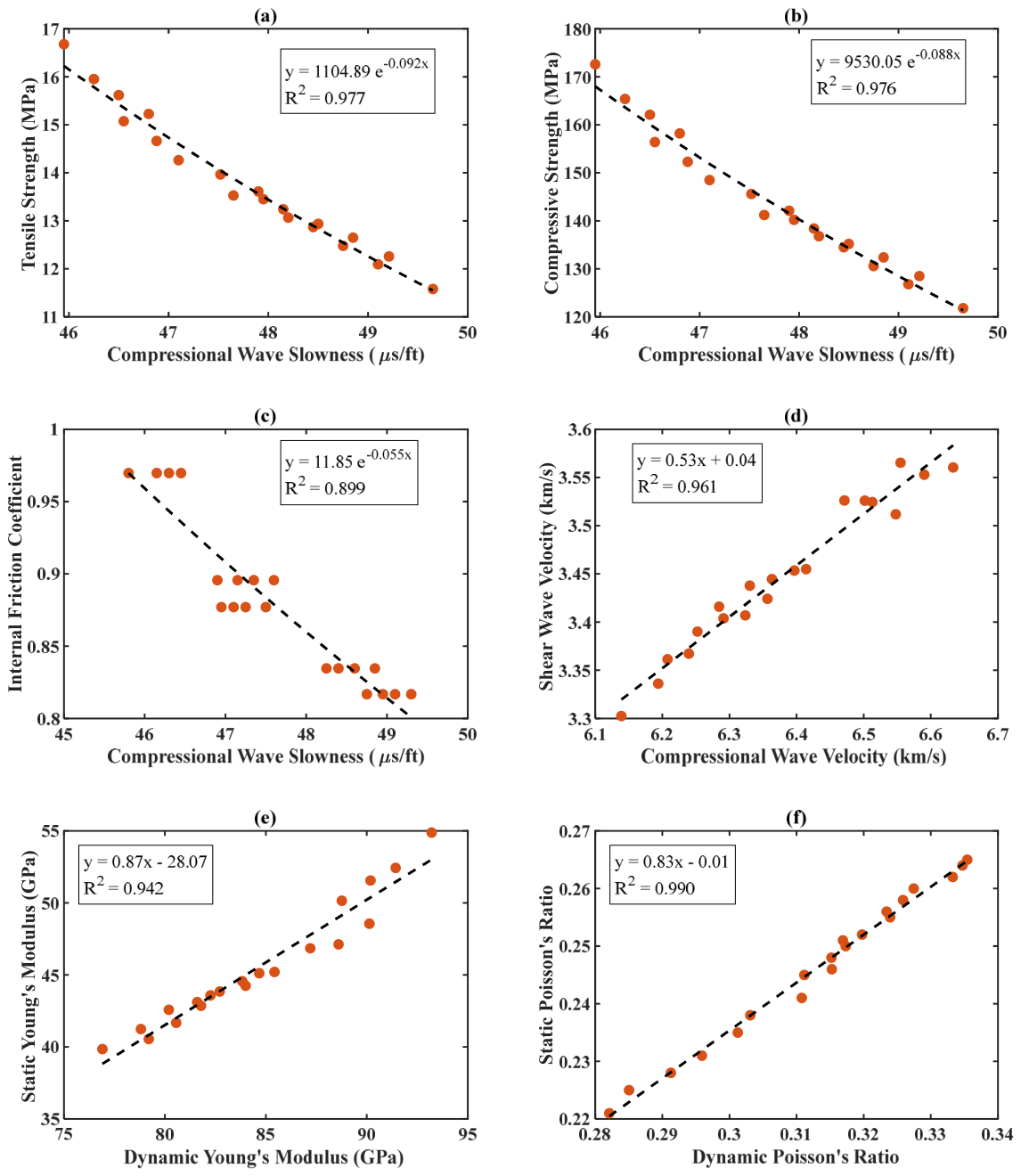
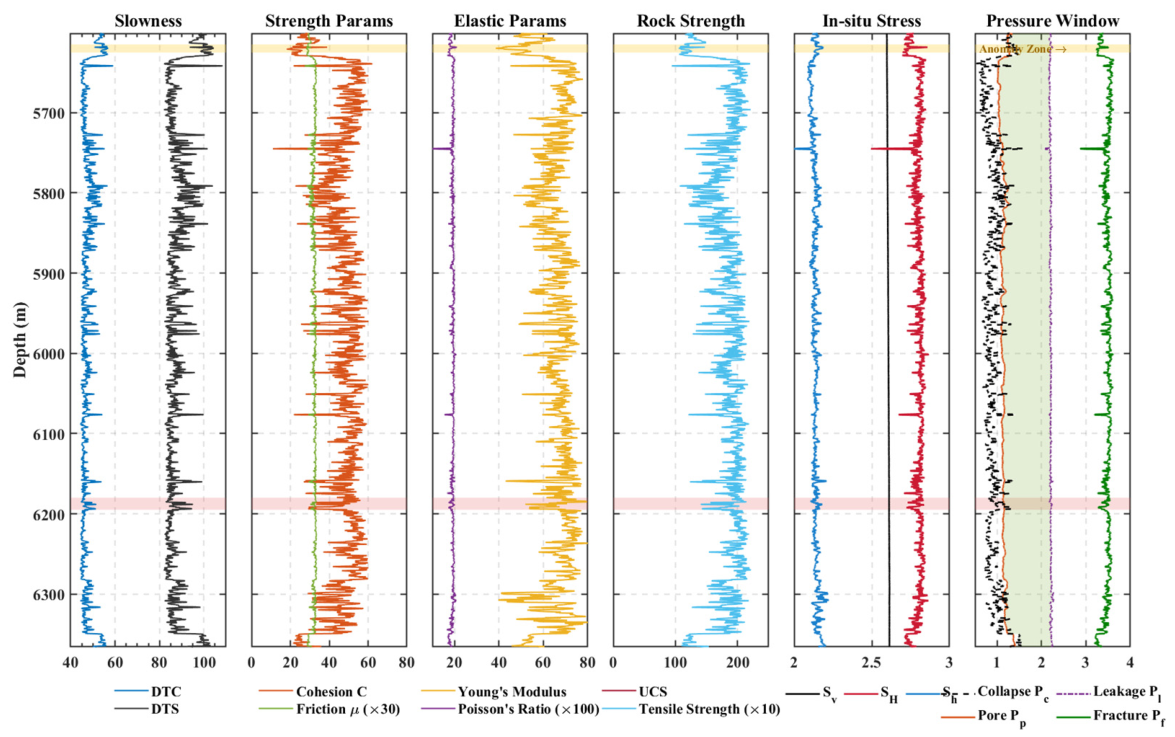
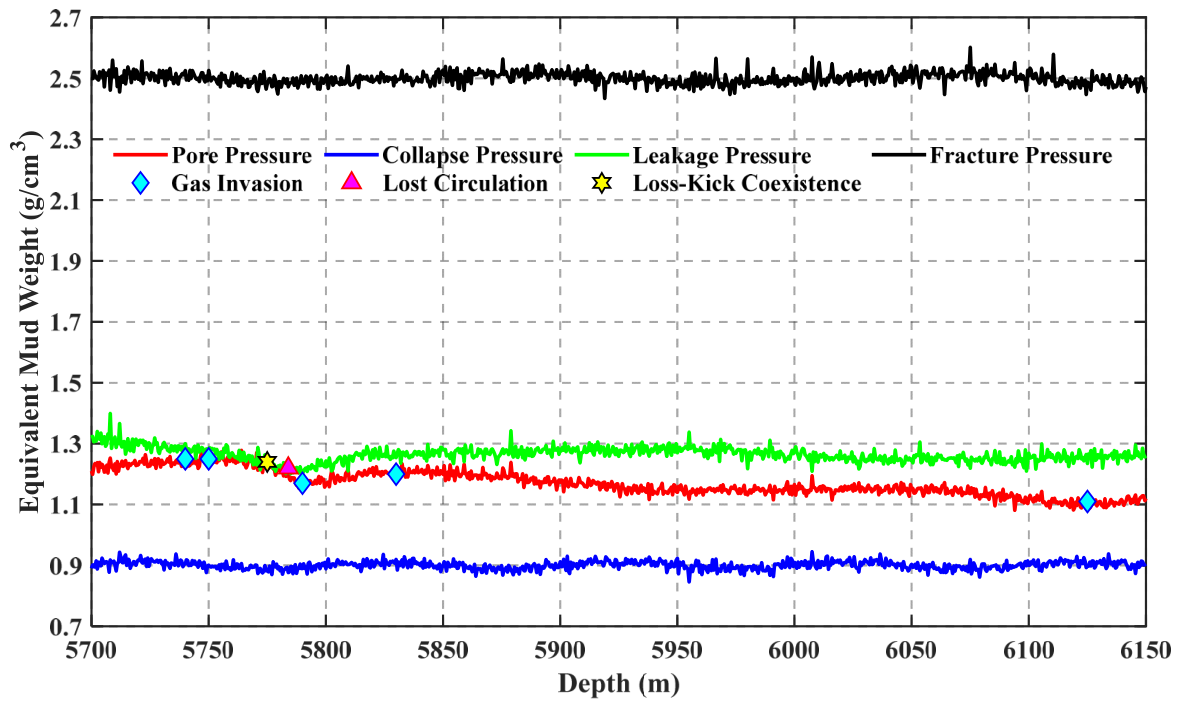
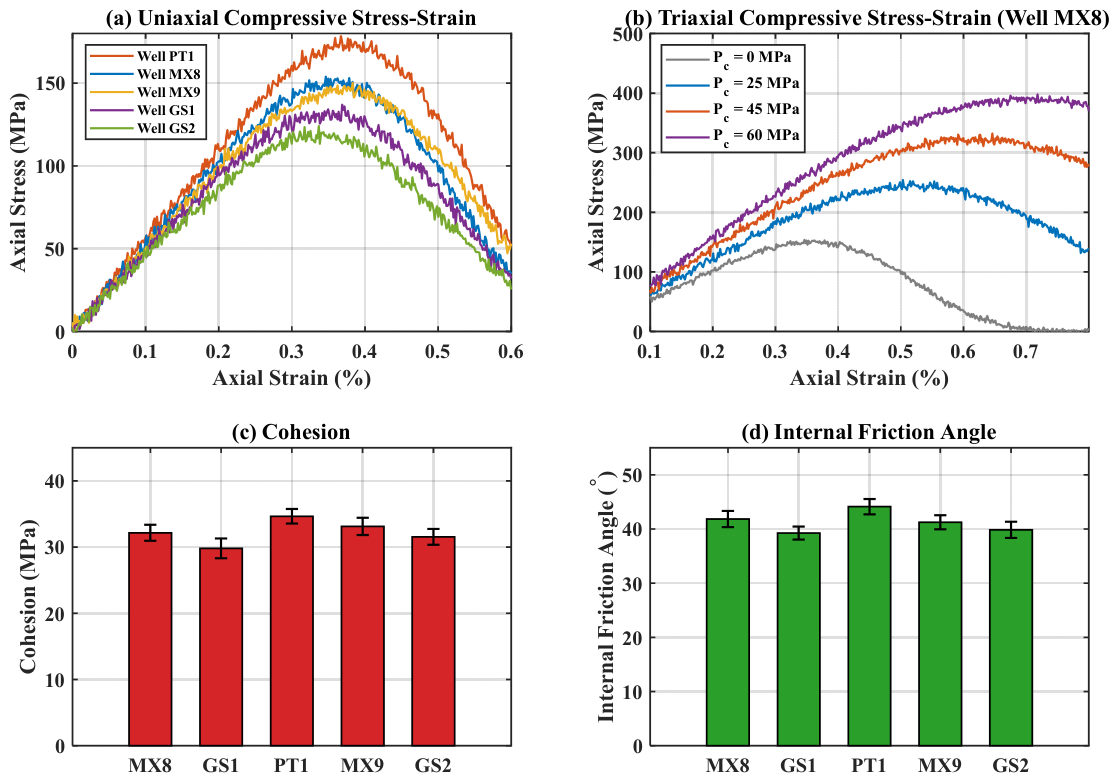
Deep marine carbonate formations are affected by multi-stage tectonism and dissolution, causing frequent wellbore instability and complex drilling events. This study integrates electrical imaging logs (FMI), core observations, and environmental scanning electron microscopy (SEM) to characterize the multi-scale structural features of the target formation. These features include macroscopic fractures 1~5 mm wide, mesoscopic dissolution vugs 3–10 mm in diameter, and microscopic loose grain boundaries. Mechanical parameters were obtained via a multi-field coupled rock testing platform, identifying a pronounced confining-pressure strengthening effect. A continuous well-log inversion model with correlation coefficients > 0.89 was established. By incorporating a weak-plane slip criterion and leakage mechanism, a four-pressure profile prediction model was developed. Field application in Well PT-101 demonstrated that natural fractures and vugs drastically reduced the local leakage pressure equivalent density from a theoretical matrix baseline of 2.10~2.20 g/cm3 down to 1.22~1.35 g/cm3. This degradation narrows the safe mud-weight window to near zero in localized anomaly zones. The predicted pressure profiles matched precisely with field records, including multiple gas invasions, a lost-circulation event at 5784 m, and a severe loss-kick coexistence at 5775 m. These results provide a quantitative basis for wellbore structure optimization and precise mud-weight design in deep fractured-vuggy carbonates.
Keywords: deep carbonate rocks; multi-scale fractures; rock mechanics; wellbore instability; four-pressure profiles; safe mud density window deep carbonate rocks; multi-scale fractures; rock mechanics; wellbore instability; four-pressure profiles; safe mud density window