1. Introduction
Sand production in oil and gas wells is one of the major technical challenges in oil and gas exploitation and is widely encountered in production operations in major oilfields both in China and abroad. It generally refers to the phenomenon in which the formation structure near the bottomhole is damaged due to the combined effects of drilling, completion, production, workover, and other factors, causing partially detached formation sand to enter the wellbore together with formation fluids [
1]. Sand production can not only accumulate in the wellbore to form sand plugs, resulting in a sharp decline in oil well productivity [
2], but also cause severe wear and corrosion of equipment and may even lead to well-control failure [
3]. Traditionally, sand production has mainly occurred in conventional unconsolidated sandstone oil and gas reservoirs [
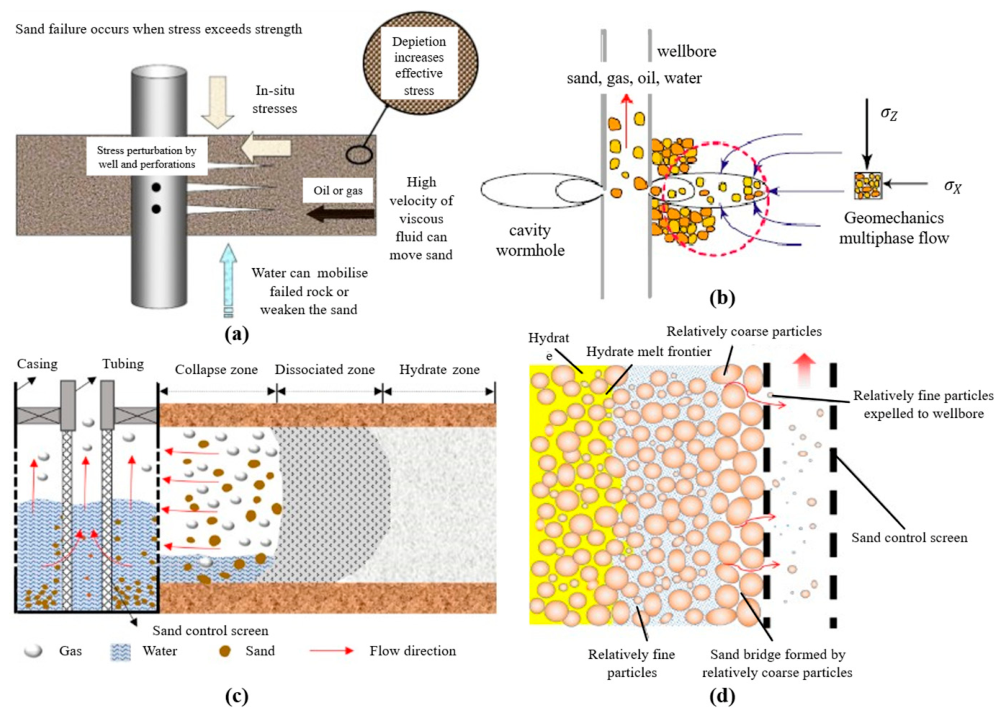
4]. However, in recent years, as geological energy development has extended toward deeper and more complex domains, severe sand production problems have also been successively exposed in natural gas hydrate reservoirs [
5], underground gas storage reservoirs [
6], geothermal gas production wells [
7], and tight oil and gas reservoirs subjected to hydraulic fracturing [
8] or perforation stimulation [
9], as shown in
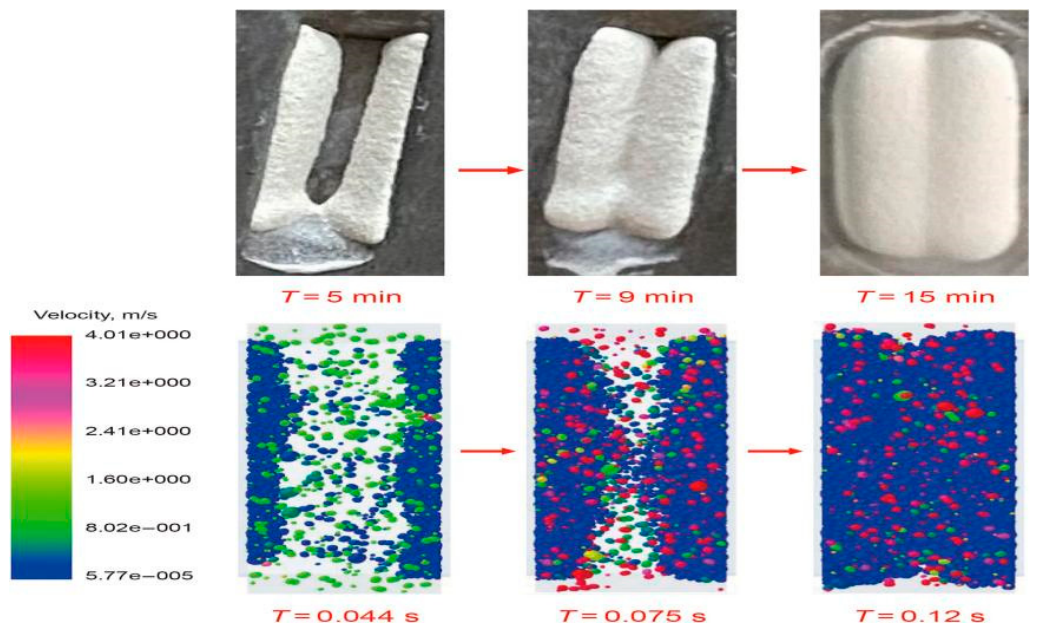
Figure 1. In particular, for high-velocity gas wells, sand production has become a primary safety hazard. To ensure safe and efficient production, sand-control operations are the core means of solving this problem. However, the interplay between sand control and sand production is extremely complex: some oil and gas wells produce sand immediately after being put into production, whereas others induce particle detachment only when operation intensity, production pressure drawdown, or formation pressure depletion reaches a specific threshold. Therefore, it is necessary to conduct an in-depth analysis of sand production patterns and characteristics according to the geological features and production conditions of different oilfields, clarify the principles of sand control, and further formulate scientifically sound and reasonable sand-control strategies.
Mechanical sand-control screens have become the most widely used sand-control technologies in current oil and gas well completions because of their simple structure, strong adaptability, and relatively low operational risk [
14]. Typical mechanical screens include slotted liners, wire-wrapped screens, metal-mesh screens, composite screens, prepacked screens, and expandable screens [
15]. Their core function is to effectively retain formation sand while allowing fluids to pass through efficiently, thereby seeking an optimal balance between sand-control reliability and productivity maximization. Existing studies have shown that the matching relationship between the sand-retention accuracy of the screen and the particle-size distribution of the reservoir is a key factor governing sand-control performance and production pressure drop [
16].
However, during long-term service, screen plugging becomes particularly prominent. Under the combined effects of production pressure drawdown and radial fluid convergence, formation sand and ultrafine particles continuously migrate toward the screen surface. Coarse particles tend to form bridging structures at the entrances of screen openings or slots, whereas fine particles are prone to invade the interior of the filtration medium and become retained at pore throats. This process can lead to a substantial reduction in the effective flow area and a sharp decrease in seepage capacity [
17]. Screen plugging directly deteriorates the seepage boundary conditions of the completion system. It not only causes an abnormal increase in production pressure drawdown, a sharp reduction in flow rate, and a decline in the productivity index but also shortens the effective service life of the sand-control system. In addition, under locally high flow velocities, plugging may induce screen erosion and ultimately result in complete sand-control failure [
18,
19,
20].
To restore productivity after screen plugging, various plugging-removal technologies, including hydraulic, mechanical, physical-field-assisted, and chemical methods, have been developed in field applications and experimental studies both domestically and internationally. Specifically, high-pressure water jetting, backwashing, and pulsed jetting mainly rely on kinetic-energy impact, fluid shear, pressure-differential reverse flow, and local turbulent disturbance to destroy the plugging layer [
21]. Mechanical vibration, impact, and rotational disturbance weaken the interparticle contact forces and the adhesion strength of plugging materials through periodic excitation, thereby promoting particle detachment and flowback [
22]. Ultrasonic plugging removal achieves the deep stripping of plugging materials through acoustic cavitation, acoustic streaming, and microjet effects. Chemical systems, such as acids, chelating agents, organic solvents, and surfactants, are mainly used to dissolve and remove inorganic scale, organic deposits, drilling and completion fluid residues, and polymer-induced plugging [
23]. The applicability of different plugging-removal technologies is highly dependent on the composition of the plugging materials, screen structure, wellbore conditions, and reservoir sensitivity. Particularly for mechanical sand-control screens, an ideal plugging-removal operation should not only efficiently restore flow capacity but also strictly avoid secondary damage to the screen, such as mechanical erosion, damage to the filtration medium, slot deformation, or metal corrosion. Meanwhile, secondary damage to the formation caused by the plugging-removal working fluid should also be prevented.
Based on the above issues, this paper aims to conduct a systematic review of the plugging mechanisms and plugging-removal technologies associated with mechanical sand-control screens during service. The objective is to clarify the intrinsic relationship between plugging formation mechanisms and the optimization of plugging-removal methods, thereby providing theoretical support for the development and field application of efficient plugging-removal technologies for mechanical sand-control screens.
Review methodology and scope: To improve the transparency of this review, the literature was collected from commonly used databases and search platforms, including Web of Science, Scopus, ScienceDirect, SPE OnePetro, Google Scholar, and CNKI. The main search terms included “mechanical sand-control screen”, “screen plugging”, “slotted liner plugging”, “sand retention test”, “plugging removal”, “screen plugging-removal”, “ultrasonic plugging removal”, “acidizing”, and “chemical scaling”. The reviewed literature mainly covers experimental studies, numerical simulations, field case reports, and recent review articles related to screen plugging and remediation. Studies were selected when they provided mechanistic explanations, measurable performance indicators, field evidence, or engineering design guidance for mechanical sand-control screens.
2. Types of Mechanical Screens
Mechanical sand-control screens are the most widely used downhole filtration technologies in sand-control completions of oil and gas wells. Their core function is to prevent formation sand and fine particles from entering the wellbore while maintaining effective communication between the wellbore and the reservoir. In essence, a mechanical screen is a solid–liquid separation structure with controlled-pore-scale openings. Its long-term service performance not only depends on the pore structure and mechanical strength of the screen itself but is also comprehensively constrained by multiple factors, including the particle-size distribution of formation sand, fluid properties, production pressure drawdown, wellbore flow regime, and completion conditions.
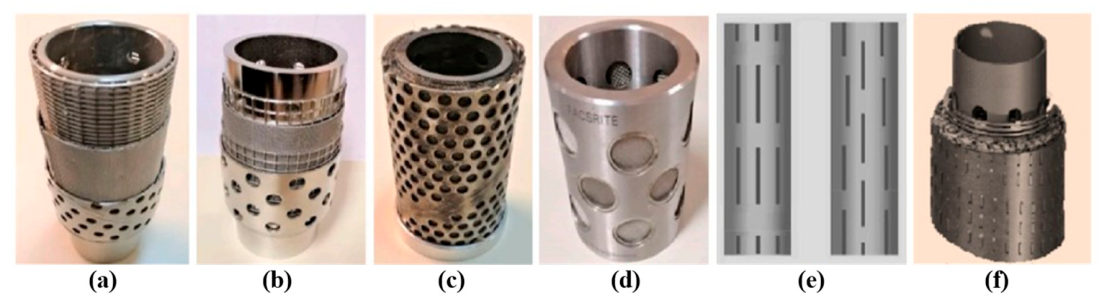
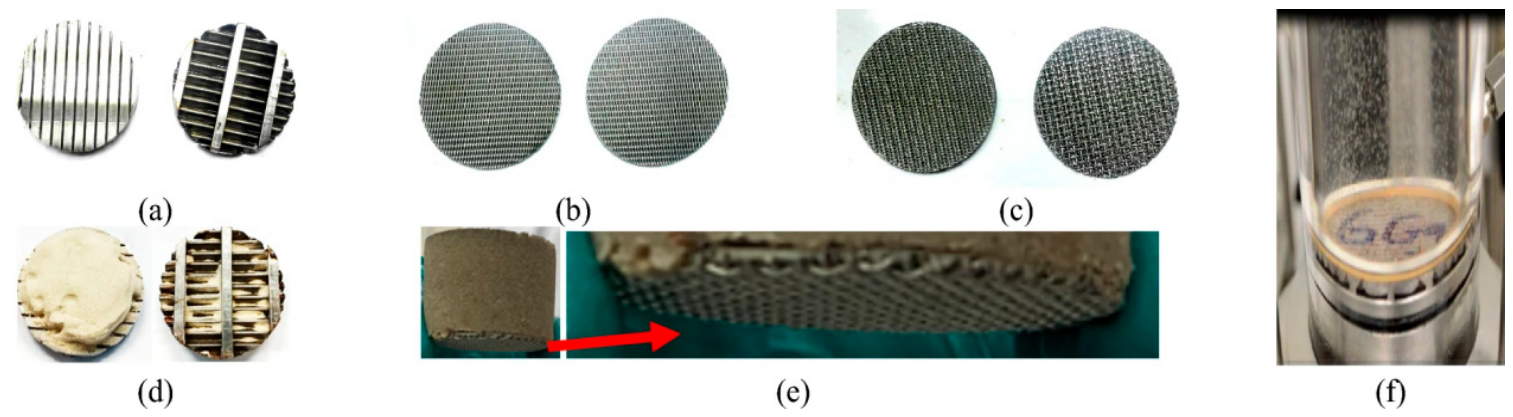
At present, commonly used mechanical sand-control screens in field applications mainly include slotted liners (SLs) [
24], stainless-steel wire-wrapped screens (WWSs), expandable screens, prepacked gravel screens (PPGSs), and premium metal-mesh screens (premium screens) [
25], as shown in
Figure 2. Among them, slotted liners are widely favored in conventional sand control because of their simple manufacturing process and low cost. Stainless-steel wire-wrapped screens (WWSs), owing to their large flow area, low flow pressure drop, and good corrosion resistance, exhibit superior sand-control performance [
26,
27]. The structure of prepacked gravel screens (PPGSs) is similar to that of WWSs, but high-permeability gravel is used as the core filtration medium [
28]. The high permeability of the internal gravel pack can minimize the pressure drop during fluid penetration, and both the thickness of the packed layer and the gravel size can be custom-designed according to specific well conditions [
29,
30,
31].
Regardless of the type of mechanical screen, its fundamental sand-control mechanism originates from the structural characteristics of a solid porous medium. The permeability and porosity of the medium ensure sufficient fluid-flow capacity, whereas the pore-throat size determines its sand-retention accuracy. However, after a sand-control screen is put into production, formation sand particles and various fluid-associated materials gradually invade and deposit within the porous medium of the screen as production continues, resulting in the severe plugging of pores and seepage channels. This process of increasing physical flow resistance significantly reduces the effective permeability of the screen, causes an abnormal increase in production pressure drawdown, and ultimately leads to continuous productivity decline in oil and gas wells. In severe cases, it may even result in complete well shut-in, which has become one of the key bottlenecks restricting the long-term and efficient development of oil and gas wells.
Although all mechanical sand-control screens are designed to retain formation sand while maintaining sufficient flow conductivity, their plugging-prone locations and dominant plugging modes differ significantly because of differences in structural configuration. For slotted liners, plugging usually initiates at the slot entrance and in the external annulus, where coarse particles form stable bridges and subsequently capture fine particles behind the bridges. Wire-wrapped screens exhibit similar surface-dominated plugging behavior, but particle accumulation mainly occurs in the wire gaps and on the outer screen surface, where clay-rich or poorly sorted sands may rapidly compact into a low-permeability filter cake. In contrast, premium metal-mesh screens, prepacked gravel screens, and metal-foam or composite screens possess more complex internal pore networks. Although these structures provide higher sand-retention accuracy and larger filtration capacity, fine particles can invade deeply into mesh layers, gravel pores, or tortuous skeleton surfaces, causing internal pore-throat blockage, clay adhesion, and gradual permeability loss. Therefore, the plugging behavior of mechanical screens is strongly controlled by the coupling among screen structure, pore or slot size, formation particle-size distribution, and fluid-flow conditions. Screen selection should not only focus on sand-retention accuracy and open flow area but should also comprehensively consider plugging resistance, cleanability, and collapse strength under long-term production conditions.
3. Sources and Mechanisms of Mechanical Screen Plugging
3.1. Sources of Screen Plugging Materials
Plugging materials in mechanical sand-control screens originate from highly complex sources and can generally be grouped into three categories: inherent solid particles from the reservoir; exogenous materials introduced during drilling, completion, and production operations; and solid-phase precipitates formed from produced fluids during production [
21].
Among them, formation sand, silt, clay minerals, and argillaceous particles are the most direct solid-phase sources of screen plugging [
18]. Particularly in unconsolidated sandstone and weakly cemented reservoirs, as production pressure drawdown increases, water cut rises, and formation effective stress increases, the cementation strength of the rock framework in the near-wellbore zone gradually deteriorates. As a result, sand grains and fine particles detach under the action of fluid drag forces and migrate toward the wellbore. Studies related to fines migration have shown that fluid velocity, salinity, pH, ionic strength, mineral composition, and molecular interactions on particle surfaces all profoundly affect the release, migration, and retention behavior of fine particles, thereby causing reservoir permeability reduction and productivity loss [
32]. For mechanical screens, once these argillaceous and fine particles reach the screen surface or invade the interior of the filtration medium with the flowing fluid, they can readily act as “nuclei” or frameworks, inducing subsequent particle deposition, bridge formation, and pore-throat plugging.
In addition, solid residues in drilling and completion fluids are also key foreign factors that induce screen plugging. Ladva et al. [
33] investigated sand-control screen plugging caused by drill-in fluids and showed that solids-containing drill-in fluids can form dense plugging on the screen surface and within its pores, which usually requires chemical treatments such as acids, oxidants, or enzymatic breakers for removal. Beldongar et al. [
20] further pointed out that during open-hole sand-control completion operations, if wellbore fluid conditioning and displacement are incomplete, the local plugging of the screen may occur even before production begins. This not only leads to an abnormal increase in pumping pressure and nonuniform gravel packing during operations but also creates hidden risks of severe productivity impairment in subsequent production.
Furthermore, inorganic scale and organic deposits precipitated during fluid production can also greatly aggravate screen plugging. Inorganic scales mainly include calcium carbonate, calcium sulfate, barium sulfate, strontium sulfate, iron scales, and sulfide deposits [
34,
35], whereas organic deposits are mainly composed of asphaltenes, resins, paraffin, and heavy components [
36,
37]. These chemical scales and organic deposits not only plug flow channels themselves but also act as “binders” that firmly cement dispersed sand grains and argillaceous materials together, forming a “solid-phase–chemical” composite plugging layer that is extremely difficult to remove.
3.2. Chemical Scaling Coupled Plugging Mechanism
Chemical scaling should not be regarded merely as an independent source of solid deposits but rather as a coupled physical–chemical process that can strongly reinforce mechanical plugging in sand-control screens. In oilfield production systems, inorganic scale is mainly generated when produced or injected brines become supersaturated with respect to sparingly soluble salts. Supersaturation can be induced by the mixing of incompatible waters, changes in temperature and pressure, CO
2 degassing, pH variation, evaporation, and water–rock reactions. Common oilfield scales include carbonate scales, such as CaCO
3; sulfate scales, such as CaSO
4, BaSO
4, and SrSO
4; sulfide scales; iron scales; and other metal–oxide deposits [
34]. The location of scale precipitation is controlled by the local saturation state, ion transport, hydrodynamic conditions, and the availability of nucleation sites. Chen et al. further demonstrated that bulk precipitation and metal-surface deposition of CaCO
3 may exhibit different dependencies on the supersaturation index, indicating that scaling location is jointly governed by solution chemistry and surface conditions [
38].
From the perspective of surface processes, scale formation on screen metal generally involves both deposition and adhesion. Deposition refers to heterogeneous nucleation and subsequent crystal growth on the screen surface, especially at surface asperities, corrosion products, scratches, or other high-energy sites. Adhesion refers to the attachment of pre-formed crystals that have nucleated in the bulk fluid and subsequently adhere to the metal surface or existing deposits [
35]. Surface roughness, wettability, corrosion state, flow regime, ion concentration, and induction time can all affect the rate of scale deposition and the stability of the formed scale layer. Once crystals grow on the screen surface, slot entrances, wire gaps, or narrow pore throats, the effective flow area decreases, local velocity and pressure gradients increase, and subsequent particle retention becomes more severe. More importantly, chemical scaling can interact with formation sand, clay minerals, and other fine particles to form a rigid composite plugging structure. Within particle packs or external sand bridges, scale crystals may precipitate at grain contacts, pore throats, and stagnant-flow zones. The newly formed crystals can cement loose sand grains and clay particles together, transforming a relatively permeable particle bridge into a dense low-permeability plugging layer. In deep filtration media, such as prepacked gravel screens, metal-mesh screens, and porous composite screens, scale deposition within tortuous pore networks can significantly reduce pore-throat radius and promote the retention of ultrafine particles. Chen et al. experimentally demonstrated that BaSO
4 deposition in porous media can cause permeability reduction and productivity impairment, with deposition distribution related to transport and reaction conditions [
39]. Naseri et al. also showed that mixed BaSO
4, CaSO
4, and SrSO
4 scale deposition can lead to more severe permeability damage than single-scale deposition [
40]. This coupling among crystallization, adhesion, and particle cementation explains why inorganic scaling often aggravates both external and internal screen plugging.
Therefore, chemical scaling provides an important mechanistic bridge between plugging-material sources and plugging-removal technologies. Carbonate and metal–oxide scales are generally more responsive to acidizing or chelating systems, whereas sulfate and sulfide scales are usually more difficult to dissolve because of their low solubility and strong cementation. In field applications, scale-related screen plugging is often accompanied by sand accumulation, clay adhesion, corrosion products, polymer residues, and organic deposits. As a result, chemical dissolution alone may not be sufficient, and a staged physical–chemical strategy involving chemical weakening, hydraulic or ultrasonic stripping, and post-treatment flowback is often required for effective plugging removal.
3.3. External Plugging Mechanism
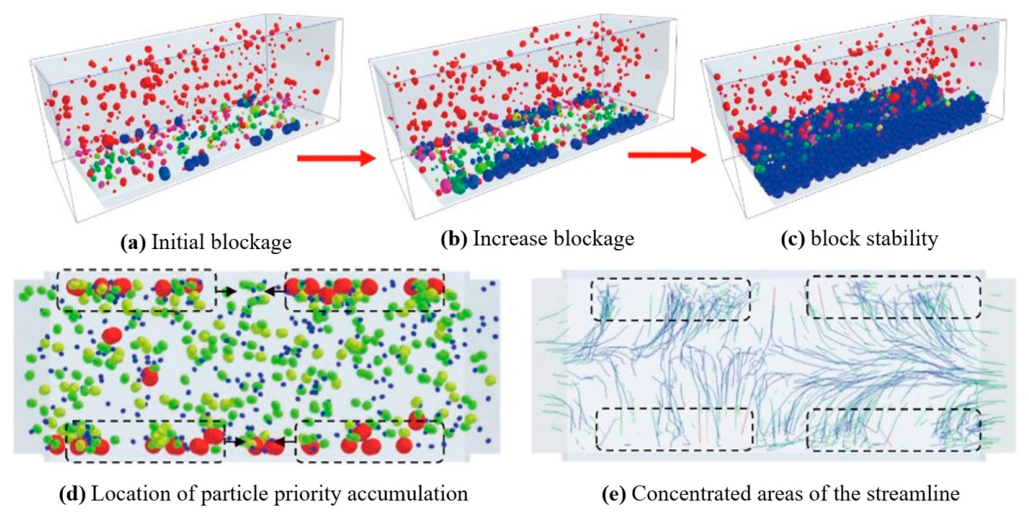
After an oil well is put into production, formation fluids carrying solid particles flow toward the wellbore. The interception and deposition of particles outside and on the surface of the screen constitute the most fundamental sand-retention mechanism of mechanical screens while also representing the main pathway leading to plugging. When multiple particles simultaneously reach the pores, wire-wrapped gaps, or slot entrances of the screen, and the size of the particle cluster satisfies a specific geometric matching relationship with the pore-throat scale, the particles squeeze against each other through contact forces and frictional forces, forming a stable “mechanical arch” structure, namely, bridging plugging, as shown in
Figure 3,
Figure 4 and
Figure 5. This bridging structure not only directly intercepts coarse particles larger than the pore openings but also significantly reduces the local flow area and provides a framework for the subsequent deposition of fine particles. Deng et al. [
41], based on a CFD-DEM coupled model for the plugging mechanism of punched screens, further indicated that the local flow-field distribution and the coordinated motion characteristics of particle clusters are key dynamic factors controlling the formation of aperture bridging and particle accumulation behavior.
Once a bridging structure forms on the screen surface, it can trigger a chain reaction. This is particularly evident in mechanical screen completions without gravel packing, such as open-hole or cased-hole stand-alone screen completions, where the “unpacked annulus” between the screen and the wellbore wall is highly prone to becoming a severely plugged zone. During the early stage of production, ultrafine particles can still pass through the screen. However, as coarse-particle bridges accumulate outside the screen, the bridges themselves act as a “secondary filtration medium.” The pore network formed within this medium gradually becomes smaller and begins to capture finer sand particles and argillaceous materials. This filling mechanism, characterized by “stepwise sorting, bridging, and retention,” ultimately causes the entire unpacked space to be completely filled. From the screen surface to the formation, the particle size of the deposits gradually becomes finer, the permeability decreases in a gradient manner, and the flow resistance increases sharply, eventually forming a dense external low-permeability plugging layer [
43,
44].
The degree of particle plugging outside the screen is highly dependent on the matching relationship between formation-sand characteristics and screen parameters. In a review of sand-retention experiments [
16], researchers emphasized that formation sands with high clay content and poor sorting are highly likely to cause severe screen plugging and a reduction in seepage capacity. The optimization of screen sand-retention accuracy is essentially a balance between sand-retention capability and allowable pressure drop. Although smaller pore throats or slot widths can improve retention accuracy, they sharply increase the risk of particle retention and pore-throat plugging. Conversely, if the slot width is too large, the initial pressure drop can be reduced, but bridge instability, massive sand penetration, and even severe sand production may occur. Therefore, external particle plugging is not caused simply by excessive sand production; rather, it is a filtration-instability process induced by an imbalance between particle-size distribution and the pore structure of the screen.
From the perspective of engineering application, bridging plugging has a significant dual effect. A moderate and stable sand bridge helps construct a highly permeable natural sand-retention barrier around the screen, effectively reducing the risk of formation sand entering the wellbore [
45]. However, if the bridging structure becomes overly dense or if a large amount of argillaceous fine particles continuously invades and fills the bridge pores, it will evolve into severe low-permeability plugging, resulting in an abnormal increase in production pressure drawdown and a substantial decline in productivity. Therefore, the modern design concept of sand-control screens is not simply to pursue the complete avoidance of particle bridging, but rather to promote the formation of a stable, controllable, and moderately retained structure with high flow-conducting capacity.
3.4. Internal Plugging Mechanism
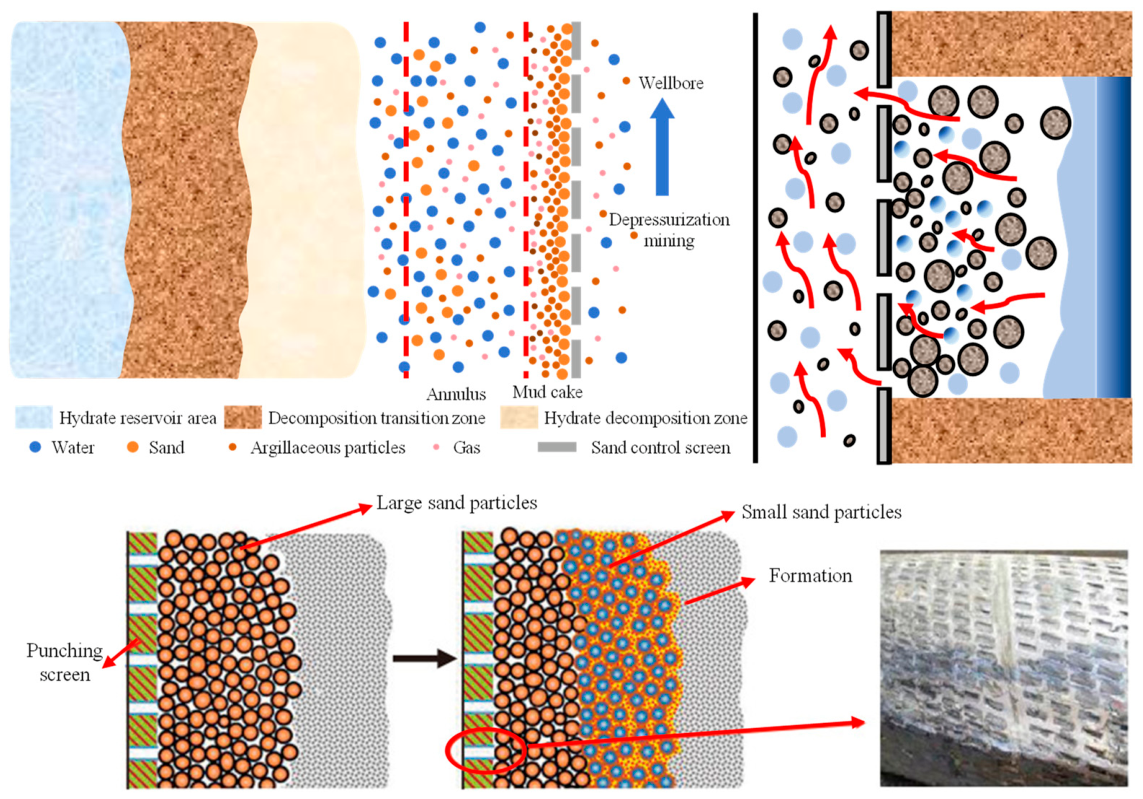
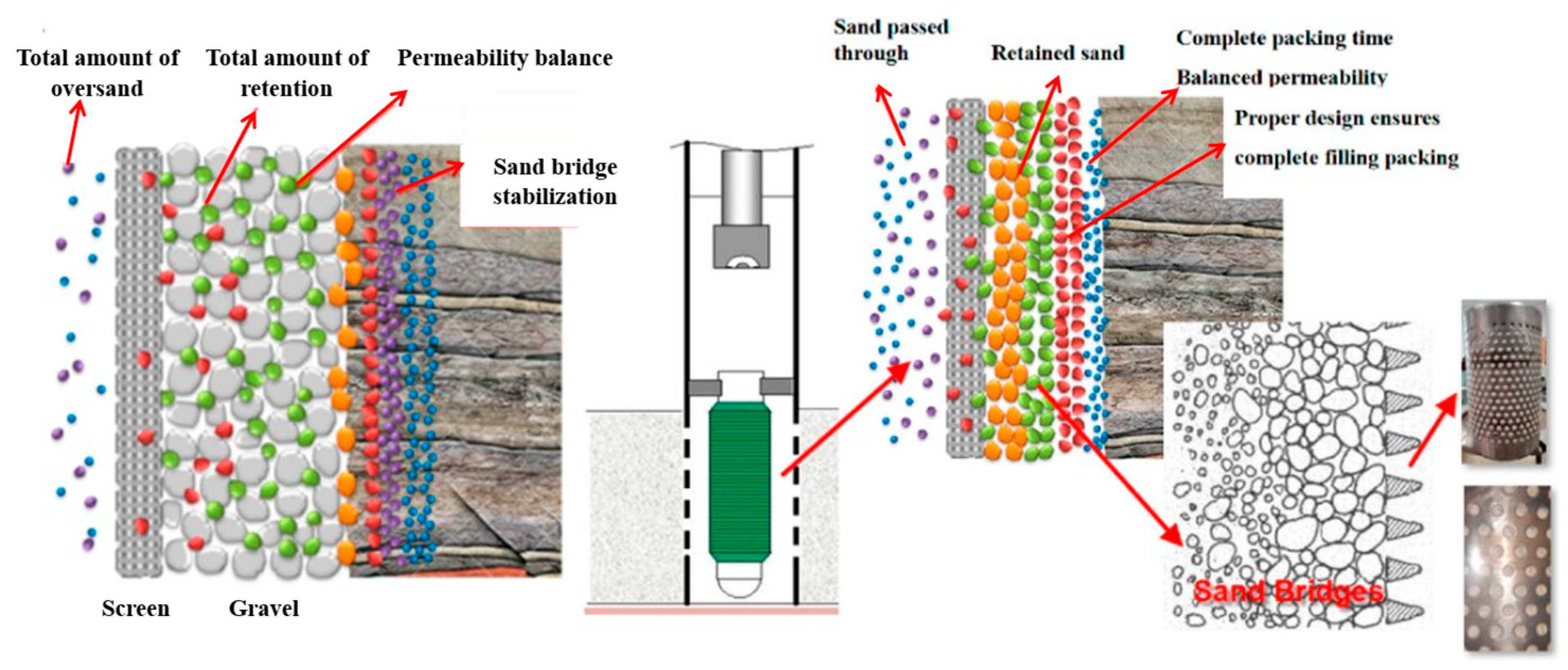
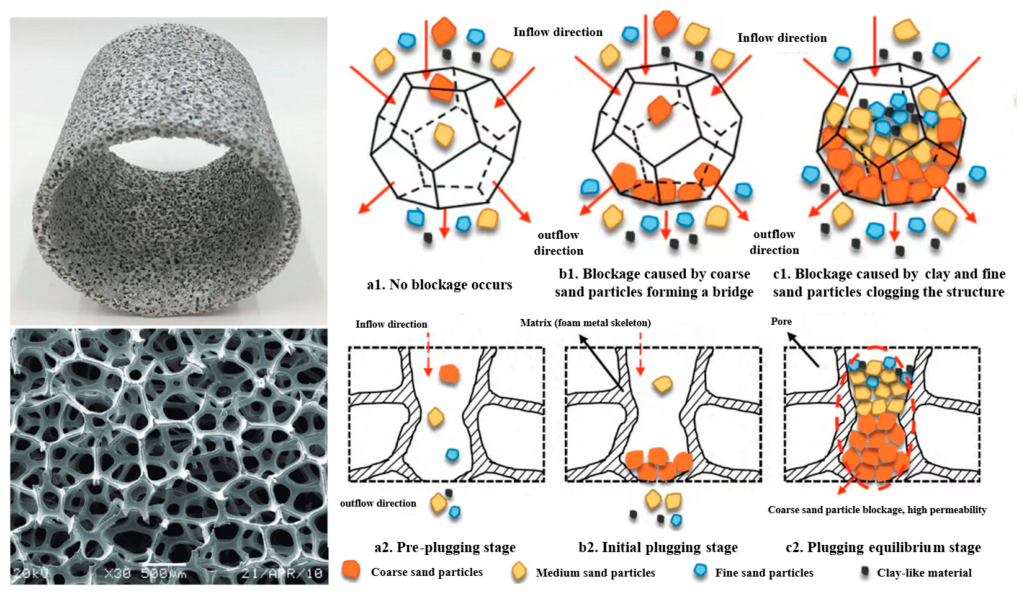
Unlike particle deposition on the screen surface and bridging plugging at pore entrances, internal plugging mainly refers to the deep retention of fine particles after they invade the filtration medium of the screen, the prepacked layer, or the pore throats in the near-screen formation. This type of plugging widely occurs in sand-control media with extremely complex pore structures, such as multilayer metal-mesh screens, metal-foam screens, multilayer composite screens, and prepacked screens, as shown in
Figure 6,
Figure 7 and
Figure 8. Because the plugging materials are not simply attached to the outer surface of the screen but are deeply embedded within the tortuous internal pore network, the difficulty of plugging-removal operations is usually much greater than that of external particle deposition and bridging plugging.
When sand-laden fluid penetrates a porous filtration medium, ultrafine particles can pass through the outer barrier and continuously migrate within the tortuous internal pore-throat network. When flowing through pore-throat constrictions or local low-velocity zones, fine particles are highly prone to adsorption, bridging, and retention. As internally retained particles continuously accumulate, the effective pore-throat radius decreases sharply, forcing the fluid to converge into the remaining connected pores. This not only causes a sudden increase in local flow velocity, which may induce internal erosion, but also leads to an exponential increase in flow pressure drop.
Different types of screens with complex structures exhibit distinct internal plugging characteristics. In prepacked screens, the internal gravel-packed layer functions as an artificial porous medium and is highly susceptible to deep particle invasion. Studies have shown that the particle-size distribution of prepacked gravel determines the spatial location and evolution rate of plugging, whereas the concentration and properties of invading fine particles play a dominant role in determining the final plugging severity and the degree of permeability impairment [
46,
47]. In multilayer metal-mesh screens, although the densely interwoven mesh structure greatly improves sand-retention accuracy, the intricate flow channels also significantly increase the probability of fine-particle retention and embedment between mesh layers. For metal-foam sand-control screens, Liu Chenfeng et al. [
48], based on their high-porosity three-dimensional reticulated skeleton characteristics and sand-particle migration dynamics, indicated that their plugging mechanism is not governed by a single particle-retention process but rather by a composite plugging mode jointly dominated by microscopic bridging plugging inside the medium and adhesive cementation of argillaceous fine particles.
Figure 6.
Migration and plugging of reservoir sand within gravel pack [
49].
Figure 6.
Migration and plugging of reservoir sand within gravel pack [
49].
Figure 7.
Plugging mechanism of gravel-packed sand-control screens [
50].
Figure 7.
Plugging mechanism of gravel-packed sand-control screens [
50].
Figure 8.
Plugging mechanism and process of metal-foam sand-retention media.
Figure 8.
Plugging mechanism and process of metal-foam sand-retention media.
External and internal plugging differ significantly in plugging location, material composition, pressure response, and removal difficulty. External plugging mainly occurs on the screen surface, at slot entrances, wire gaps, or in the unpacked annulus and is usually dominated by coarse particles, sand clusters, clay-rich deposits, and filter cakes. Its main mechanisms include mechanical bridging, stepwise sorting, surface deposition, and cake compaction, which commonly result in a rapid pressure-drop increase or even abrupt pressure fluctuation when the bridge collapses. By contrast, internal plugging mainly develops within mesh layers, porous screen media, prepacked gravel layers, and near-screen pore throats. It is generally caused by ultrafine particles, clay minerals, polymer residues, scale crystals, and organic deposits that invade and accumulate in tortuous pore networks, leading to adsorption, internal bridging, retention, adhesive cementation, and progressive permeability loss. Therefore, external plugging can often be mitigated by backwashing, hydraulic jetting, pulsed flow, or vibration when deposits remain near the surface, whereas internal plugging usually requires chemical dissolution or dispersion, ultrasonic assistance, or physical–chemical combined treatment. The distinction between these two mechanisms is essential to subsequent evaluation of plugging severity and selection of suitable plugging-removal technologies.
4. Evaluation Indicators for Mechanical Sand-Control Screen Plugging and Evaluation Methods for Plugging-Removal Effectiveness
4.1. Evaluation Indicators for Mechanical Sand-Control Screen Plugging
On the basis of clarifying the plugging mechanisms of mechanical sand-control screens, the establishment of a scientific and quantifiable evaluation index system is a key prerequisite for accurately determining the plugging degree, evaluating the anti-plugging performance of screens, and verifying the effectiveness of plugging-removal technologies. Screen plugging is not merely a physical structural failure but also a complex dynamic process involving the accumulation of plugging materials, reduction in flow area, variation in particle retention behavior, and sharp increase in flow resistance, which ultimately manifest macroscopically as continuous productivity decline in oil and gas wells. Therefore, the systematic evaluation of screen plugging and its plugging-removal effectiveness should comprehensively consider macroscopic seepage responses, particle retention/production characteristics, and the evolution of microscopic pore morphology. Specifically, the macroscopic evaluation indicators mainly include the following aspects.
4.1.1. Pressure Drop and Pressure Gradient
Pressure drop (ΔP) is the most intuitive and fundamental seepage-response indicator for characterizing screen plugging and is commonly defined as the pressure difference before and after the fluid flows through the sand-control medium, namely, ΔP = Pin − Pout. Under constant-flow injection or production conditions, the continuous increase in ΔP with time directly indicates the thickening of the external filter cake on the screen, bridging and retention in internal pore throats, or compaction and densification of the deposited layer. Conversely, under constant-pressure-difference production conditions, a sharp decline in flow rate reflects the progressive failure of flow channels. For long horizontal wells or multistage completion screens, introducing the pressure gradient (ΔP/L) can effectively eliminate evaluation bias caused by differences in screen length and achieve normalization of the evaluation criteria.
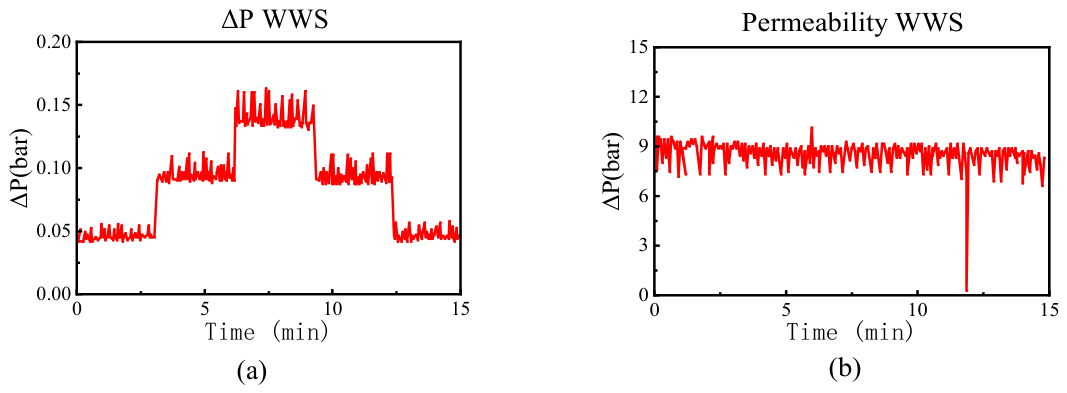
Existing sand-retention experimental studies have shown that pressure signals can be used not only to inversely determine the effective permeability of the screen medium but also to provide a dynamic early warning of sand-control failure. For example, when local damage occurs in the screen or when the plugging layer suddenly collapses and causes massive sand production, the pressure-drop curve often exhibits a typical abrupt decrease or fluctuation [
16,
51], as shown in
Figure 9. In addition, the pressure-drop indicator is also widely used for the quantitative evaluation of plugging-removal effectiveness. Dong et al. [
21] conducted rotary water-jet plugging-removal experiments using field screens with actual plugging. By monitoring pressure-difference fluctuations in real time and comparing the recovery degree of flow capacity before and after cleaning, they accurately evaluated the cleaning efficiency of the plugging-removal tool. This fully demonstrates that pressure drop and pressure gradient are not only “diagnostic indicators” for assessing plugging but also important reference indicators for optimizing field plugging-removal processes.
4.1.2. Permeability and Its Derived Indicators
Permeability is the key parameter linking laboratory-scale mechanistic experiments with field productivity evaluation. According to Darcy’s law, the effective permeability of a sand-control medium can be calculated from the flow rate, fluid viscosity, test-section length, flow area, and pressure drop. To enable normalized comparison among different screen structures, particle-size distributions, and plugging-removal processes, several permeability-derived indicators are commonly used. In this study,
, kc, and kr denote the initial permeability, the permeability after plugging, and the permeability after plugging-removal treatment, respectively. The retained permeability,
, is defined as shown in Equation (1) [
16]:
The permeability damage rate,
, is calculated using Equation (2) [
52]:
The permeability recovery after plugging-removal treatment can be evaluated using either the absolute recovery rate,
, or the relative recovery rate,
. The absolute recovery rate is defined as shown in Equation (3) [
53]:
The relative recovery rate is defined as shown in Equation (4):
where
is the initial permeability of the screen medium,
is the permeability after plugging, and kr is the permeability after plugging-removal treatment. Miri et al. [
54] quantified the dynamic plugging behavior of screens based on the evolution relationship between pressure drop and initial permeability. Deng et al. [
41] and Ma et al. [
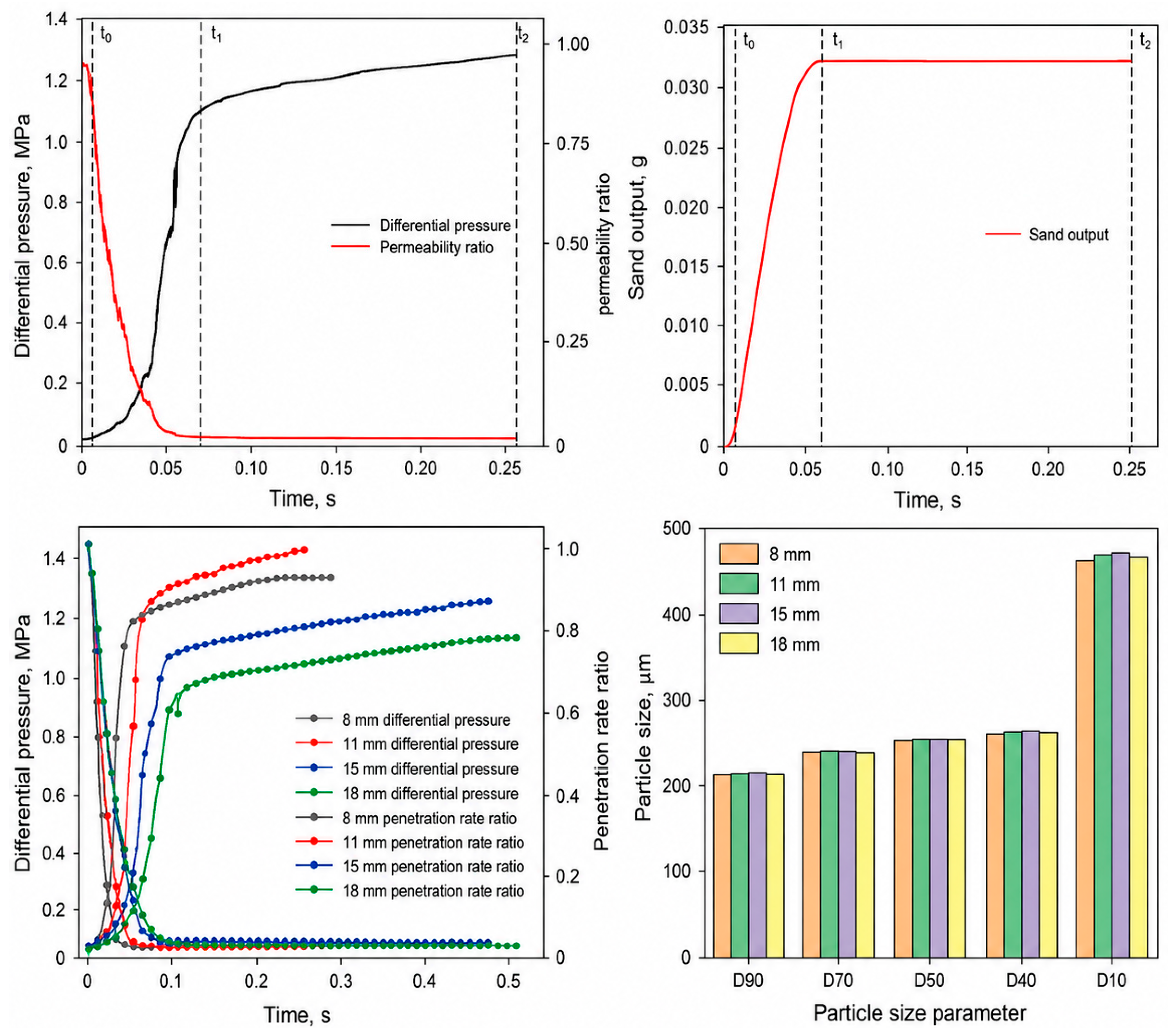
46] also characterized plugging severity using permeability attenuation curves, as shown in
Figure 10. Therefore, permeability-derived indicators provide a quantitative basis for comparing different screen structures, particle-size distributions, and plugging-removal efficiency.
4.1.3. Sand Production and Particle-Size Distribution (PSD) of Produced Particles
The evaluation of sand-control screens and plugging-removal effectiveness must not solely be limited to the reduction in flow resistance, namely, pressure drop, but should also consider the stability of the sand-retention barrier. The cumulative mass of produced sand (Ms), sand concentration per unit volume of fluid, real-time sand-production rate curve, and particle-size distribution characteristics of produced particles, such as D10, D50, and D90, can accurately reflect the particle-retention capacity of the screen and the penetration degree of fine particles [
16]. Khan et al. [
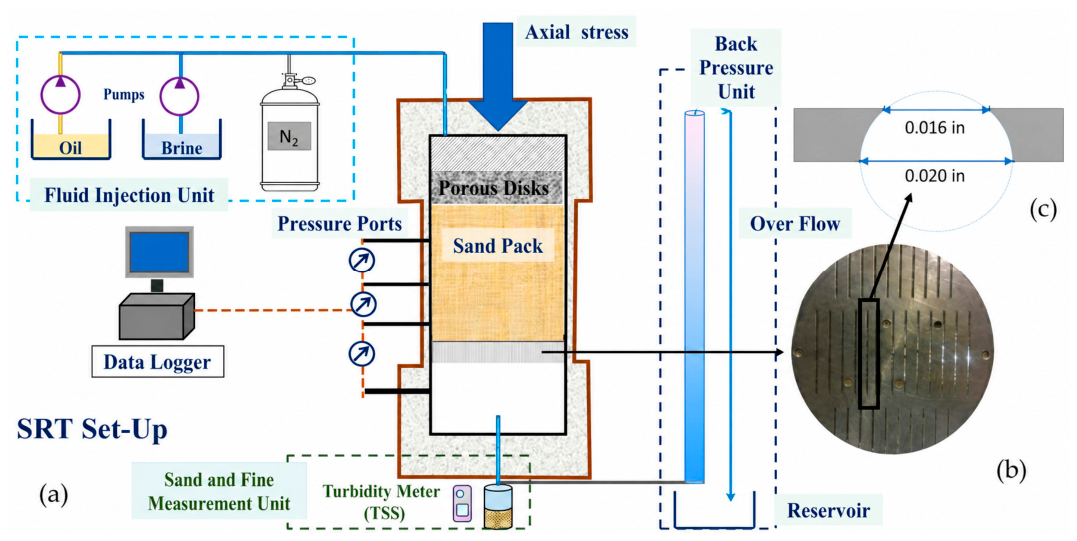
16] pointed out in their review that standard sand-retention tests (SRTs) require the produced solid phase to be collected throughout the entire test, followed by weighing and particle-size analysis after drying, as shown in
Figure 11. Tananykhin et al. [
55], in their study on wire-wrapped screens, also demonstrated that structural details such as wire width can significantly alter the formation mechanism of sand bridges and the final sand-production behavior. It should be particularly emphasized that when evaluating the effectiveness of plugging-removal technologies, care must be taken to avoid the pitfall of misinterpreting a sharp increase in sand production as successful plugging removal. If a significant decrease in pressure drop is accompanied by a large influx of formation sand, it often indicates complete instability of the external natural sand bridge or structural damage to the sand-retention function of the screen itself.
4.1.4. Evolution of Plugging Morphology and Microstructural Characterization
To further reveal the plugging mechanisms of mechanical sand-control screens, micromorphological indicators are usually introduced to decipher the physical mechanisms underlying macroscopic seepage behavior. Existing characterization methods mainly include visualized fluid-flow experiments, digital image processing, scanning electron microscopy (SEM) observations, X-ray micro-computed tomography (Micro-CT) scanning, and mineral composition analysis of flowback solids. For example, Deng et al. [
41] clearly reproduced the dynamic formation process of internal plugging structures in punched screens using high-speed photography and digital images obtained from numerical simulations. Ma et al. [
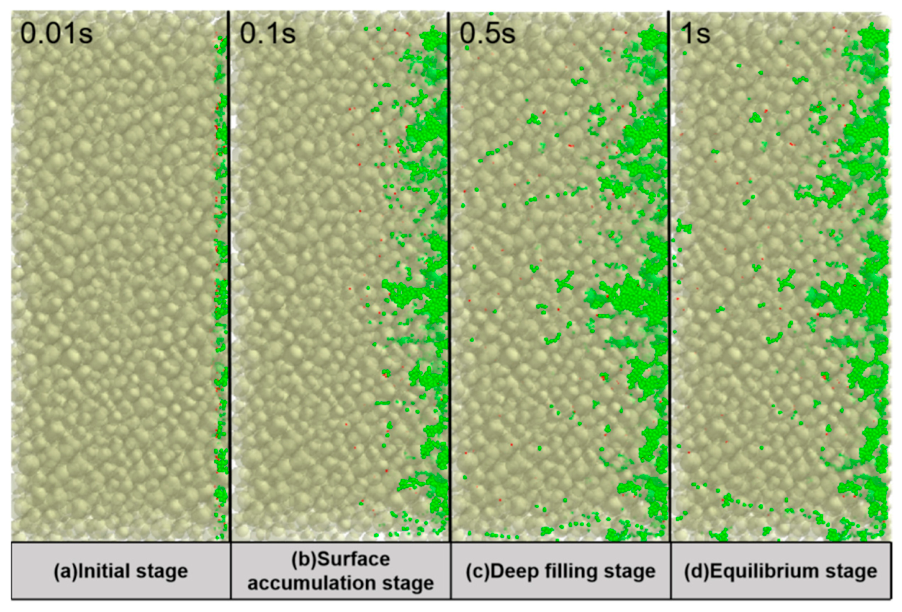
56,
57], through visualization experiments, finely divided the plugging life cycle of prepacked gravel screens into four stages: initial invasion, bridging interception, cumulative plugging, and dynamic equilibrium, as shown in
Figure 12. Ochmann et al. [
51] further emphasized that fluctuations in macroscopic pressure-test signals must be mutually verified with microscopic image evidence of screen-aperture plugging or damage in order to draw scientifically rigorous conclusions.
4.2. Evaluation Methods for Mechanical Sand-Control Screen Plugging
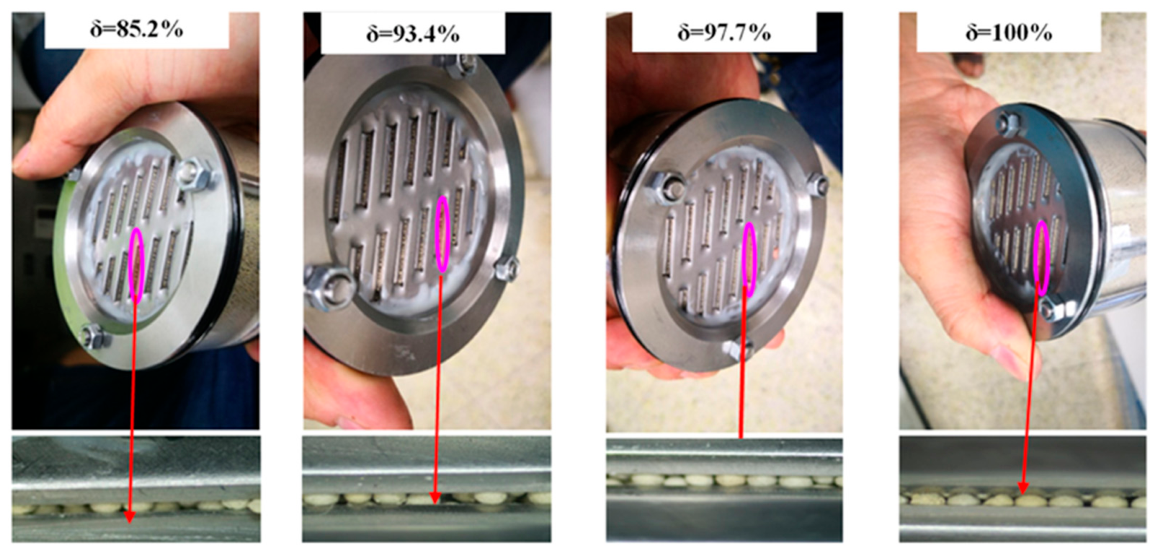
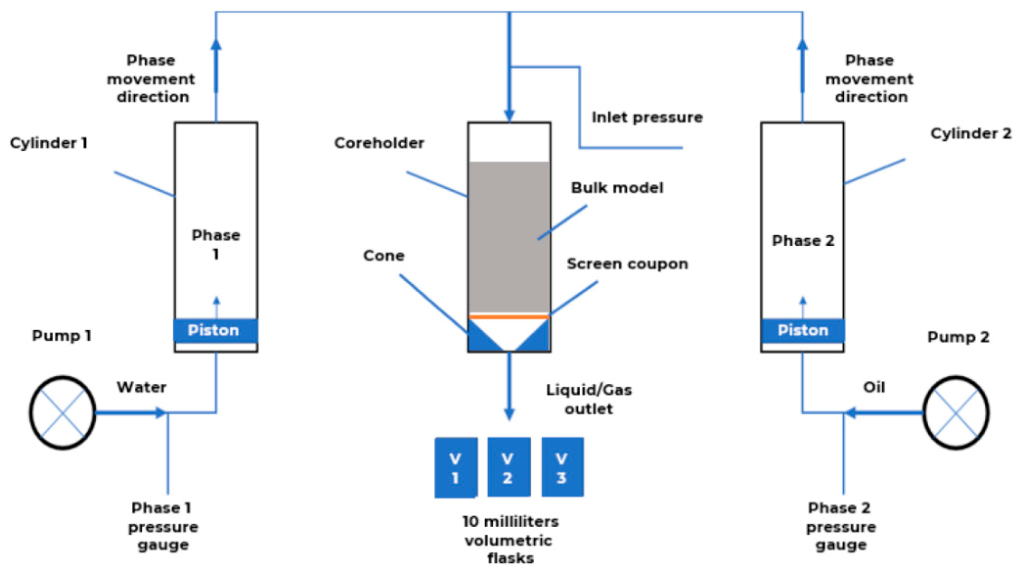
Laboratory physical simulation experiments are the core means for investigating the evolution process of screen plugging and guiding field screen selection, among which sand-retention tests (SRTs) are the most widely used, as shown in
Figure 13 and
Figure 14. As a fundamental method for evaluating the sand-retention stability, plugging sensitivity, and plugging-removal effectiveness of mechanical screens, SRTs quantitatively characterize the particle-retention efficiency and permeability damage degree of screens under specific sand particle-size distributions, fluid properties, production flow rates, and pressure drawdowns. This is achieved by realistically reproducing, under highly controllable experimental conditions, the dynamic processes of formation sand migrating with the fluid toward the screen, deposition, bridging, and even plugging removal and flowback.
According to differences in the initial contact mode between the sand-control medium and formation sand, existing SRT methods are mainly classified into two categories: slurry tests and prepack tests.
Slurry test [
16]: In this type of test, a sand-laden fluid containing a specified concentration of solid particles is continuously pumped through the screen sample at a prescribed flow rate. This mode is suitable for simulating the dynamic process during the stable production stage of oil and gas wells, in which low-concentration formation fines migrate over a long distance with the fluid and are gradually retained, accumulated, and compacted into plugging deposits on the screen surface and within its pores.
Prepack test [
15]: Before fluid injection, a representative formation sand sample is pre-compacted and placed on the screen surface, after which fluid circulation and pressure drawdown are applied. This mode is more suitable for simulating extreme production conditions under open-hole sand-control completions, where loose unconsolidated reservoirs undergo wellbore-wall collapse, causing a large amount of formation sand to directly surround and compress the sand-control screen.
5. Plugging-Removal Technologies and Mechanisms for Mechanical Sand-Control Screens
Once severe plugging occurs in mechanical sand-control screens, the effective seepage channels between the wellbore and the reservoir are substantially reduced or even completely cut off. This not only causes a sharp decline in oil and gas well productivity but also greatly shortens the overall service life of the sand-control system. To address the complex and variable plugging problems of screens, current plugging-removal technologies for mechanical screens can be mainly classified, according to their plugging-removal mechanisms and dominant energy sources, into hydraulic plugging removal, mechanical plugging removal, physical-field-assisted plugging removal, chemical plugging removal, and multi-technology combined plugging removal.
5.1. Hydraulic Plugging-Removal Technology
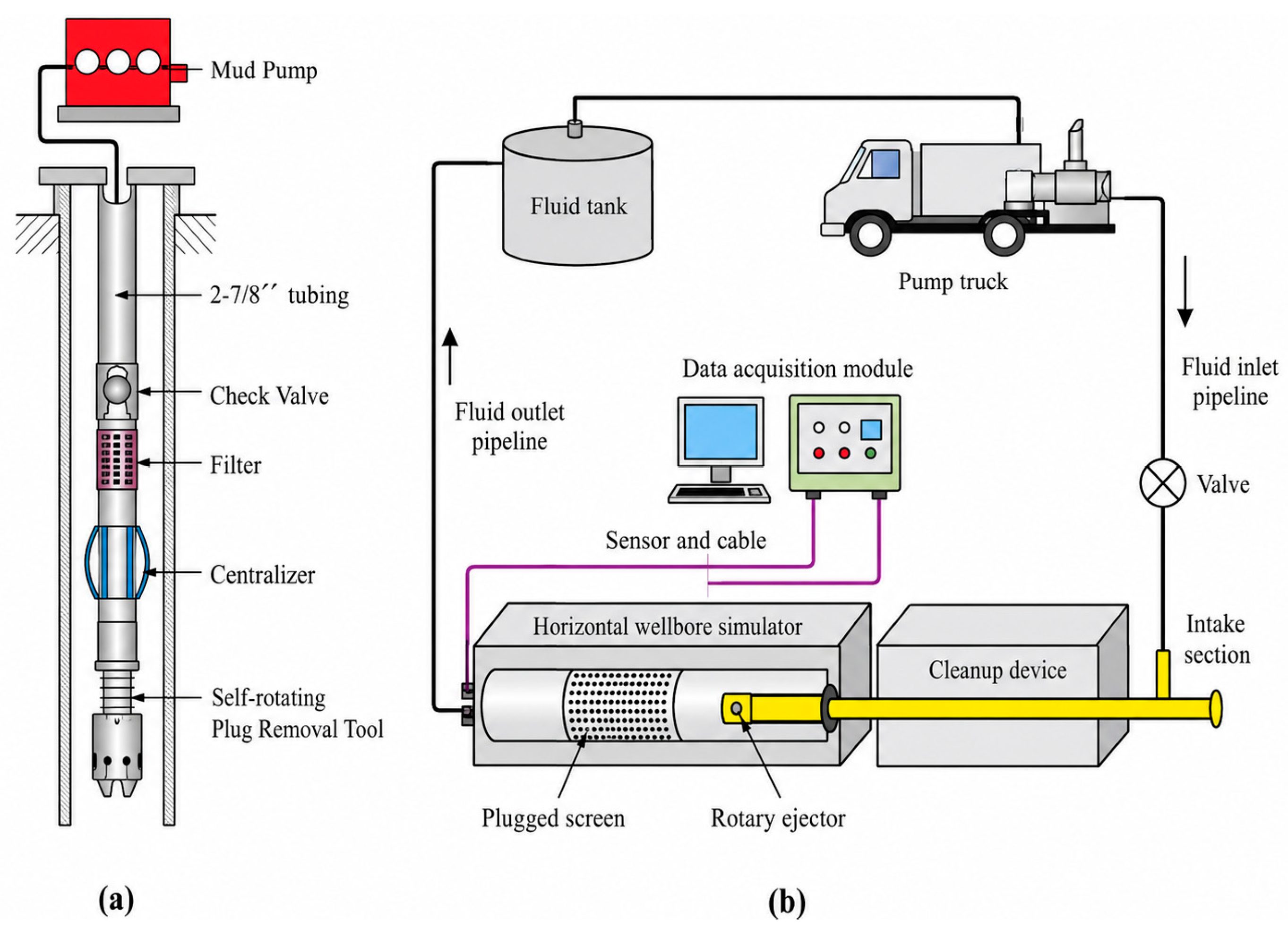
High-pressure water jetting is currently the most widely used hydraulic physical technology in oilfield applications. This technology usually involves running a specially designed high-pressure rotary nozzle into the plugged screen through coiled tubing or a workover string and using high-velocity fluid generated by surface high-pressure pumping units to strongly impact the inner wall of the screen. Its plugging-breaking mechanism not only depends on the direct impact and cutting action of macroscopic high-velocity water flow but also involves high-frequency oscillatory hydraulic waves and cavitation effects induced by the jet in confined spaces [
59,
60]. This combined hydraulic action can effectively crush and disperse compacted mud–sand filter cakes and solid deposits attached to the inner and outer surfaces of the screen medium, as shown in
Figure 15. High-pressure water jetting has significant advantages, including concentrated energy, adjustable pressure thresholds, and absence of chemical pollution.
In practical engineering applications, the final effectiveness of hydraulic plugging removal is highly dependent on the optimization of hydraulic parameters and operational modes. To address this issue, Dong Changyin’s research group conducted systematic optimization studies. Dong Changyin et al. [
21], through physical simulation of the cleaning of plugged screens in horizontal wells, clearly indicated that nozzle pressure drop, pumping rate, nozzle diameter, and standoff distance, namely, jet impact distance, are the core parameters determining the cleaning efficiency of microscopic pore throats in screens. At the field-operation level, Dong Changyin et al. [
61] further proposed replacing the traditional “constant-speed dragging” cleaning mode with a “stepwise advancement and dwelling” mode. Specifically, after the plugging-removal tool advances 1.5–2.0 m each time, it remains stationary at the target position for jetting for 2–4 min. The results showed that this optimized process provides sufficient time for hydraulic energy to break and penetrate the plugged materials, thereby significantly improving the removal efficiency of deep plugging materials in the screen.
5.2. Ultrasonic Plugging-Removal Technology
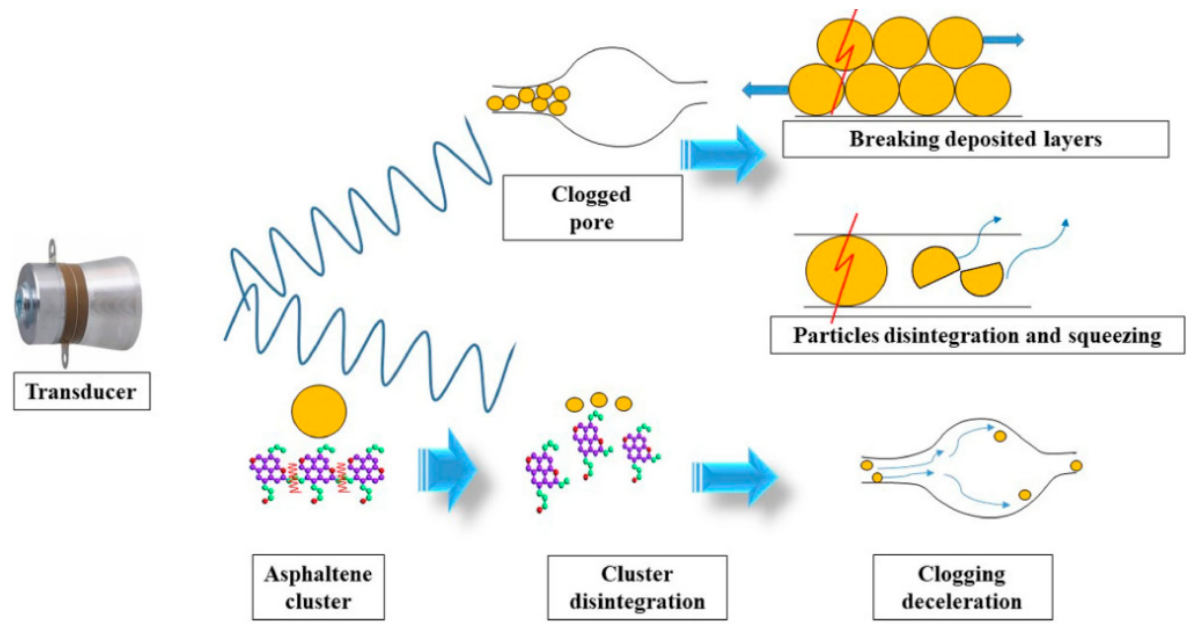
As an emerging physical-field-assisted technology, ultrasonic plugging removal is governed by core plugging-breaking mechanisms including cavitation-induced stripping, acoustic-streaming transport, and interfacial fatigue disturbance. When ultrasonic waves act on the downhole liquid medium, tiny cavitation bubbles are generated within the dense plugging layer or on the screen surface and then collapse instantaneously, releasing microscale high-pressure shock waves and microjets, thereby strongly disrupting the skeleton structure of the deposits. Meanwhile, the acoustic-streaming effect induced by ultrasonic waves enhances local fluid microcirculation, effectively entraining detached particles and preventing the secondary deposition of stripped materials. In addition, the periodic alternating acoustic pressure promotes the initiation of microcracks within the dense plugging layer and accelerates fatigue-induced stripping at the solid–liquid interface, as shown in
Figure 16 [
62,
63,
64].
Laboratory physical simulations have confirmed that the plugging-removal efficiency of ultrasonic technology is mainly controlled by the combination of acoustic-field parameters, treatment duration, and plugging-material characteristics. Pu Chunsheng et al. [
65] pointed out that increasing the emission frequency and power of the transducer can significantly enhance the system energy input and cavitation intensity, thereby improving the stripping rate of plugging materials and the permeability recovery value. For specific types of crude-oil deposits, Xu et al. [
66] investigated the removal behavior of near-wellbore asphaltene plugging using a sonochemical method and found that under their specific operating conditions, a frequency of 20 kHz and a power of 1000 W were the optimal physical-field parameters for efficient plugging removal. It is particularly noteworthy that Habibi et al. conducted high-power shock-wave intervention experiments specifically on severely plugged stand-alone mechanical sand-control screens [
67]. The results confirmed that high-energy physical acoustic waves can completely break up the dense sand-bridge network within the micropores of the screen and rapidly restore its flow capacity, providing critical experimental support for the direct application of acoustic-field technology in sand-control screen plugging removal.
In field engineering practice, ultrasonic plugging-removal technology has demonstrated significant production-enhancement potential. Field pilot tests conducted by Chen Meizhu in the Daqing Oilfield showed that after ultrasonic plugging-removal operations, the average daily oil increment per well in the test well group reached 3.3 t, and flow-field operating conditions such as pump efficiency and submergence depth were greatly improved [
68]. Dai Wen et al. applied downhole ultrasonic intervention to highly viscous and easily plugged oil and gas reservoirs in the South China Sea. After treatment, the target well achieved a 38.2% increase in liquid production and an 8.7-fold increase in oil production. These field data fully verify the reliability of this technology in improving the flow capacity of the near-wellbore zone and completion string [
69].
Overall, ultrasonic plugging-removal technology, relying on its non-contact and highly penetrative acoustic vibration effects, greatly compensates for the limitation of conventional hydraulic cleaning, which has difficulty penetrating into complex mesh interiors. This technology is not only suitable for removing deep fine-particle retention within multilayer mechanical screens but can also serve as a powerful auxiliary method for chemical plugging removal when dealing with organic wax deposition, inorganic scaling, and dense “solid-phase–chemical” composite plugging.
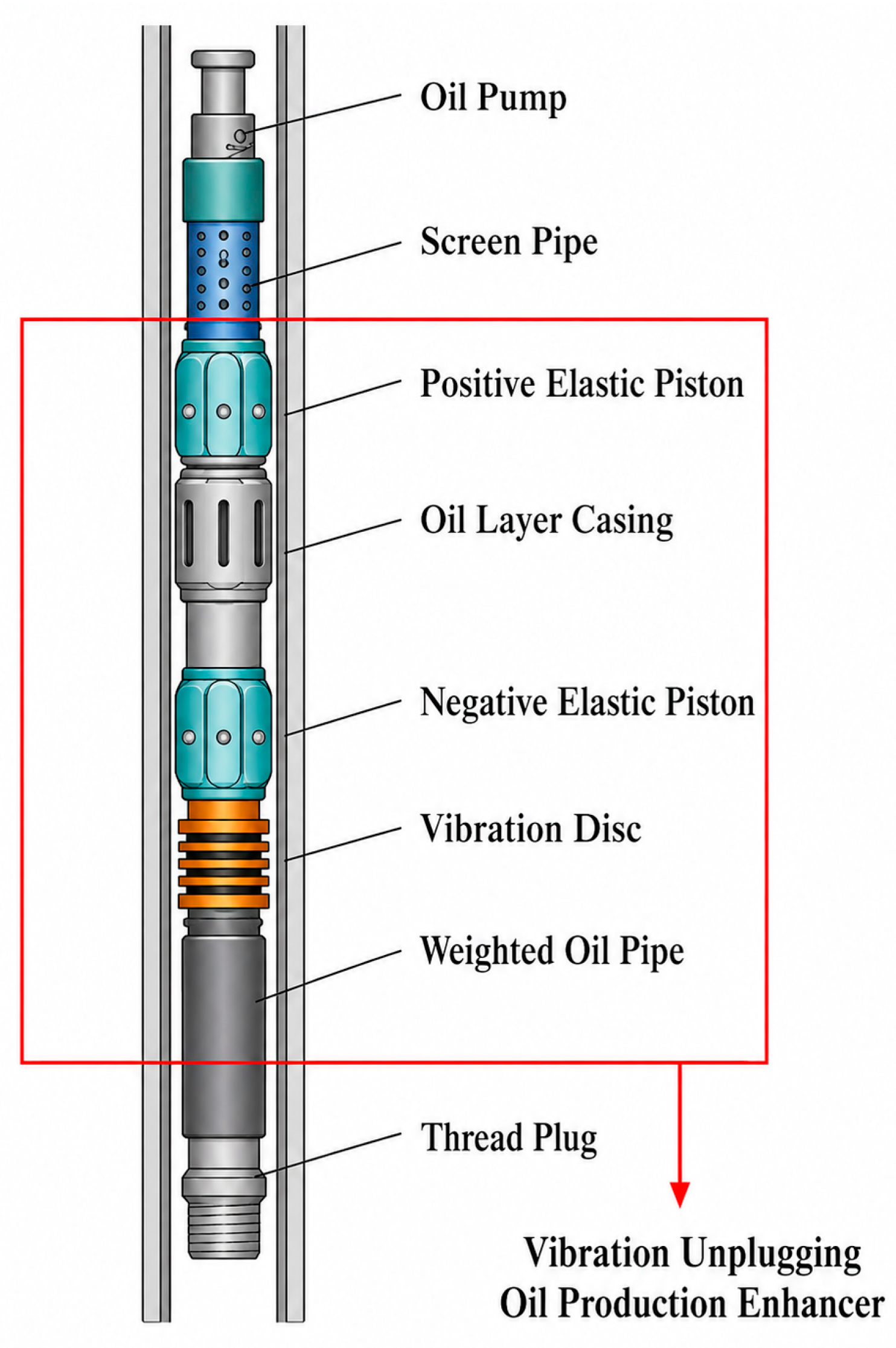
5.3. Mechanical Vibration Plugging-Removal Technology
Mechanical vibration plugging-removal technology mainly relies on high-frequency vibration and shock waves generated by downhole excitation devices to induce fatigue fragmentation, loosening, and eventual detachment of dense plugging materials, thereby unclogging the pores of sand-control media and the near-wellbore zone and effectively restoring oil and gas seepage channels, as shown in
Figure 17 [
22,
70]. The plugging-removal mechanism of this technology can be systematically summarized at three levels. First, interfacial drag reduction: Periodic alternating vibration forces high-frequency relative displacement between the screen skeleton and the attached plugging layer, greatly reducing the static friction and physical adhesion strength between particles and the pipe wall. Second, structural instability: Continuous vibration loading causes slight deformation and repeated reconstruction of particle-bridging structures outside or inside the screen. When local contact force chains reach the fatigue limit and fracture, the bridging structure collapses immediately. Third, fluid entrainment: Oscillatory waves induce intense fluid disturbance in confined spaces, imparting higher kinetic energy to detached particles and making them more likely to be carried back out of the wellbore by the fluid.
In terms of device development and process optimization, researchers have conducted extensive investigations. For example, Li Xu et al. [
71] through laboratory simulations, systematically quantified the effects of vibration-plate parameters, including sinking depth, diameter, spacing, and vortex grooves, on self-excited vibration frequency and flow-field pressure and calibrated the lateral propagation boundary of vibration waves in porous media. Zhang Jianguo et al. [
72] developed a self-excited hydraulic oscillator driven by fluid kinetic energy and clarified the coupled response relationships among resonant-cavity depth, nozzle parameters, and vibration amplitude. These studies provide important design bases for using mechanical vibration to disrupt dense filter cakes around sand-control screens.
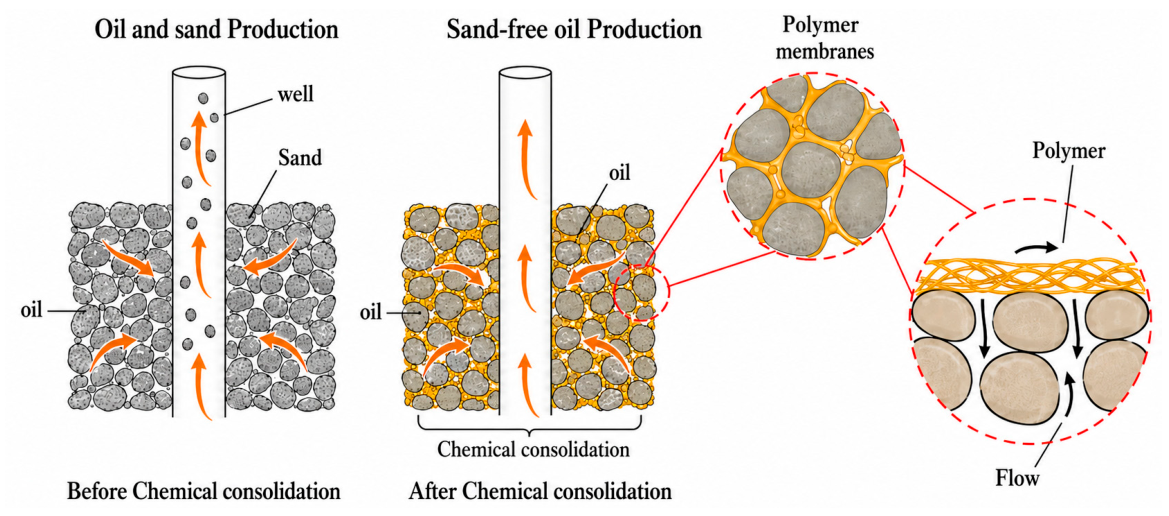
5.4. Chemical Plugging-Removal Technology
Chemical plugging-removal technology mainly relies on the dissolution, chelation, oxidative degradation, and dispersion-control effects of chemical solvents to selectively remove solid deposits inside and outside the pore throats of screens. This technology plays an irreplaceable role in treating composite plugging caused by inorganic scaling, heavy organic deposits, and residual polymer filter cakes from drilling and completion fluids [
23,
73]. Compared with hydraulic or purely mechanical physical methods, chemical fluids can deeply penetrate into the microscopic pores of complex sand-control media, such as multilayer metal meshes or prepacked gravel, and alter the phase state and cementation network of plugging materials at the molecular level. Therefore, they exhibit excellent removal performance for plugging with high cementation strength, deep embedment, and multicomponent composite characteristics, as shown in
Figure 18 [
74]. In recent years, chemical plugging-removal processes for sand-control screens have evolved into the following three major technical branches.
5.4.1. Conventional Acidizing Plugging-Removal Technology
This technology efficiently dissolves inorganic crystals, such as carbonates and metal oxides, through chemical reactions between the acid and the target substances, accompanied by the generation of soluble salts or gases [
4]. To address the commonly encountered “inorganic–organic composite targets” in field operations, modern acid systems are often compounded with high-efficiency surfactants. Through their emulsification and wettability-reversal effects, surfactants can strip organic components, such as asphaltic and waxy substances, that are wrapped around the outer layer of inorganic scale, thereby achieving synergistic removal [
75,
76]. It should be noted that because conventional hydrochloric acid poses a serious corrosion risk to metal screens, organic acid and chelating-agent systems have been widely promoted in recent years owing to their low corrosivity and high-temperature resistance. Vazirian et al. [
35] emphasized that the design of modern scale-removal systems should not only improve the “scale dissolution rate” but also focus on breaking the “adhesion bonds” between scale crystals and the metal screen surface. In addition, Kristanto et al. [
77] successfully implemented matrix acidizing in a gas well completed with a shape-memory polymer (SMP) sand-control screen. This treatment not only removed formation impurities but also increased well productivity from 30 MMSCFD to 44 MMSCFD while preserving the integrity of the sand-control medium.
5.4.2. Oxidative Plugging-Removal Technology
This technology uses strong oxidants to destroy polymer molecular structures and shows significant advantages in degrading drilling and completion fluid filter cakes and biofouling. For example, chlorine dioxide (ClO
2) can effectively break C-C and C-O bonds in the main chains of high-molecular-weight polymers, causing rapid degradation and liquefaction while greatly reducing fluid viscosity [
78]. More importantly, when ClO
2 and acid fluids are combined to form an “oxidation–acidizing synergistic system, ”chlorine dioxide can preferentially oxidize and decompose stubborn iron sulfides (FeS/FeS2) and dense biofilms, thereby exposing the encapsulated inorganic scales for rapid dissolution by subsequent acid treatment. This synergistic mechanism enables efficient “full-component removal” of sulfides, bacterial colonies, polymers, and carbonate scales [
33,
79].
5.4.3. Thermochemical Plugging-Removal Technology
This technology is essentially a “physical–chemical composite” method, with its core mechanism lying in the use of massive heat and gas released by in situ downhole chemical reactions, such as heat- and gas-generating systems, to break hard plugging materials. It is particularly effective for plugging caused by heavy components such as asphaltenes and resins. Its mechanisms include the following: (a) the high-temperature thermal effect sharply reduces the viscoelastic modulus of organic matter, transforming it from a solid state to a flowable plastic state; (b) local high temperature induces thermal cracking and degradation of heavy macromolecules; and (c) microbubbles generated by the reaction produce in situ self-generated expansion forces within confined pores, greatly enhancing the flowback displacement efficiency of residual materials [
34,
80].
5.5. Composite Plugging-Removal Technology
Because plugging materials in field sand-control screens are often a tightly mixed assemblage of formation sand, filter-cake residues, organic matter, inorganic scale, and rust corrosion products, any single plugging-removal method can hardly simultaneously achieve structural disintegration, deep dissolution, and complete flowback. Therefore, multi-technology composite plugging removal based on “physical fields + chemical fluids” has become an inevitable development trend under complex operating conditions. Its core guiding principle is to first use chemical agents to weaken the cementation strength and interfacial adhesion of plugging materials and then employ physical kinetic energy, such as hydraulic jetting, mechanical vibration, or ultrasonic waves, to thoroughly crush, strip, and carry the loosened residues back to the wellbore, thereby achieving a synergistic effect of “1 + 1 > 2”.
Multiple field applications and experimental studies have confirmed the great potential of composite plugging removal. For low-permeability tight oil reservoirs, Dong Zhitao [
81] proposed a combined plugging-removal process involving “dual-source mechanical vibration + chemical acidizing,” which achieved significant production-enhancement benefits. In heavy-oil sand-control wells, Zhang Rongjun [
82] adopted a combination of “controllable acoustic vibration pretreatment + steam injection,” effectively removing high-viscosity asphaltene plugging. For mechanical completion strings, Dong Changyin et al. [
61] innovatively used a composite acid fluid as the cleaning medium for high-pressure water jetting, achieving an effective integration of hydraulic kinetic-energy breaking and chemical dissolution. In addition, Liu Haiwei et al. evaluated nanocomposite plugging-removal technology in four injection wells and two production wells in the Zibei Oilfield. The treatment fluid, composed of SUNO surfactant, anti-swelling agent, nanocomposite plugging-removal agent, HJV sandstone acid, corrosion inhibitor, and scale inhibitor, was applied to wells with favorable reservoir properties and clear injection–production connectivity. Following treatment, the daily liquid production of Wells Li 840-4 and 8325-1 increased from 0.2 to 1.68 m
3 and from 0.2 to 1.42 m
3, respectively, indicating that hydrophobic and oleophilic nanocomposite materials can improve the efficiency of chemical plugging removal in low-permeability reservoirs [
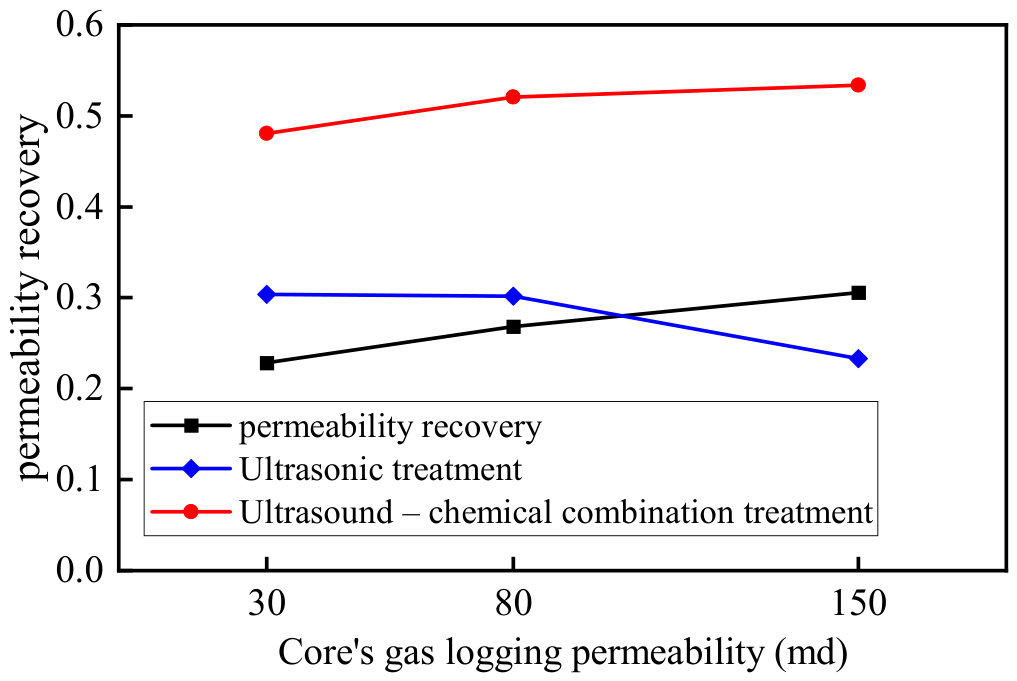
83]. In the field of acoustic-field-assisted chemistry, Xu et al. [
66] confirmed that the ultrasonic cavitation effect can greatly accelerate the diffusion and reaction rates of chemical agents and that the permeability recovery achieved by the combined treatment is far superior to that obtained by either a single physical or a single chemical intervention, as shown in
Figure 19.
5.6. Mechanism-Based Selection Strategy for Plugging-Removal Technologies
The selection of plugging-removal technologies should be based on the type of plugging material, plugging location, and dominant plugging mechanism. As summarized in the preceding sections, mechanical sand-control screen plugging may originate from sand bridging, clay-rich fines retention, inorganic scaling, organic deposition, polymer filter-cake residue, corrosion products, and mixed solid–chemical composite plugs. Surface or external plugging is usually more suitable for physical methods, such as backwashing, hydraulic jetting, pulsed flow, and mechanical vibration, whereas deep internal plugging generally requires chemical dissolution, dispersion, ultrasonic assistance, or physical–chemical combined treatment. For composite plugging, a staged strategy involving chemical weakening, physical stripping, and post-treatment flowback is usually more effective than a single treatment method. The correspondence among plugging materials, typical characteristics, recommended treatments, and key cautions is summarized in
Table 1.
It should be noted that oil wells and gas wells should not be evaluated using exactly the same operational criteria. Oil wells are commonly affected by wax, resin, asphaltene, emulsion, polymer-residue, and water-blocking problems, whereas gas wells are more sensitive to high-velocity erosion, severe sand impact, condensate or water accumulation, hydrate-related blockage, and safety risks caused by sudden sand production. Therefore, treatment selection should consider not only the plugging material but also the well type, fluid-phase behavior, production rate, and allowable pressure drawdown.
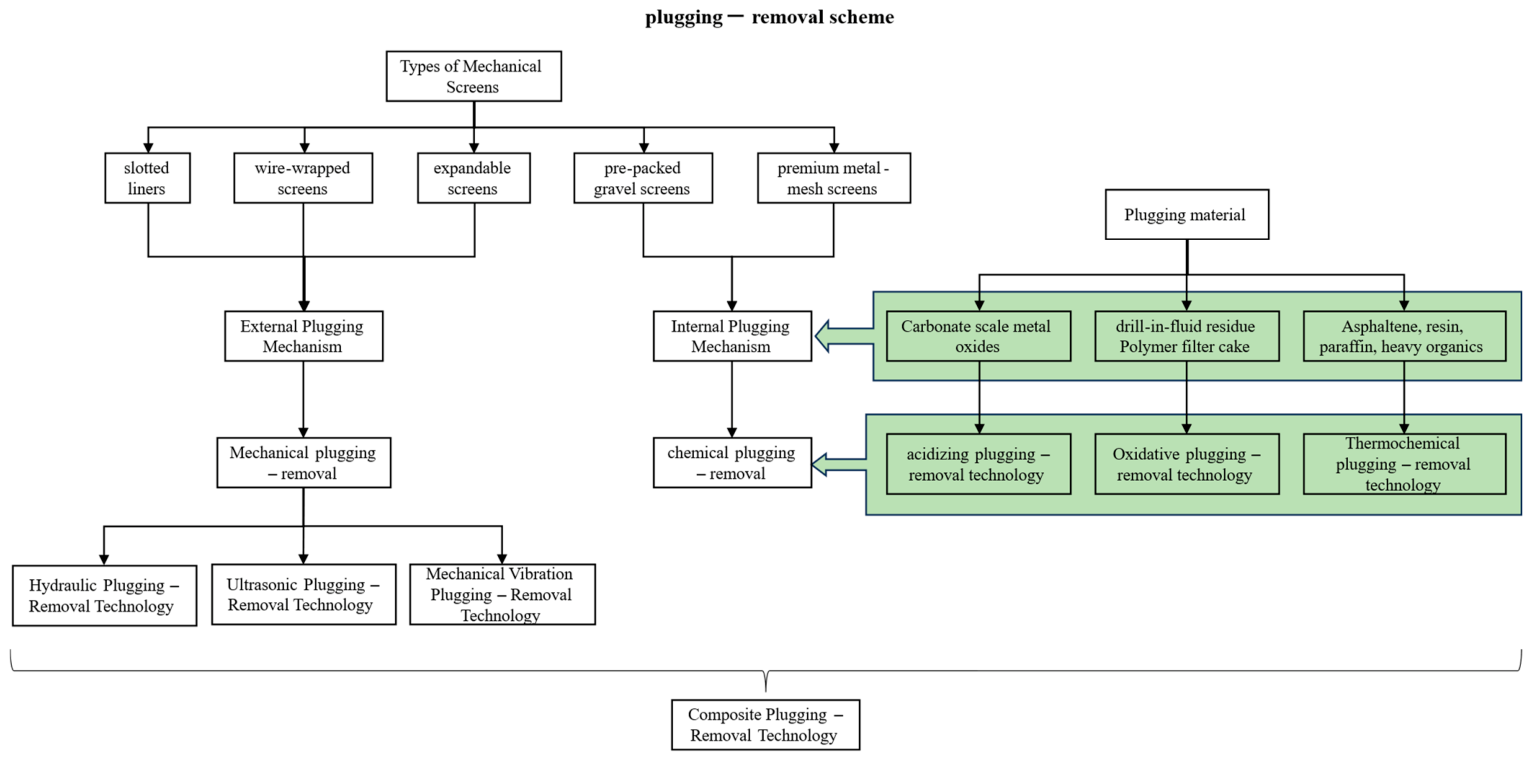
Based on the above analysis, plugging-removal design should follow a diagnosis-driven workflow rather than directly applying a fixed treatment. First, pressure response, production decline, injection difficulty, sand-production data, and produced-solid composition should be analyzed to identify whether the plugging is mainly external, internal, chemical, organic, or composite. Then, the treatment method should be selected according to the plugging location and material composition. Finally, the treatment effect should be verified by pressure-drop reduction, permeability or injectivity recovery, production improvement, and sand-control stability. A simplified workflow linking plugging diagnosis to plugging-removal method selection is proposed in
Figure 20.
6. Conclusions and Prospects
This paper systematically analyzed the microscopic plugging mechanisms of various mechanical sand-control screens and clarified the characteristic plugging modes of different screen types, including “sorting-induced bridging in unpacked spaces and internal densification” in stand-alone screens, “strongly adhesive montmorillonite mud cakes” in metal-wool screens, the dynamic evolution of “bridging–collapse–re-bridging” in prepacked gravel screens, and the composite plugging mode of “coarse-particle interception and argillaceous cementation” in metal-foam screens. On this basis, the effectiveness and limitations of existing plugging-removal technologies were comprehensively evaluated. Chemical plugging removal, owing to its deep penetration and strong dissolution capability, plays a dominant role in treating organic deposits and inorganic scaling but is constrained by the bottlenecks of secondary formation damage and high environmental-protection costs. Physical plugging-removal methods, such as high-pressure water jetting and ultrasonic treatment, have the significant advantages of being non-invasive and pollution-free but suffer from severe kinetic-energy attenuation when stripping target materials deep within complex mesh structures. The results indicate that a single intervention method can no longer effectively address the complex and variable composite plugging encountered in modern oilfields. A multi-mechanism synergistic composite plugging-removal strategy, characterized by the “chemical weakening of cementation first, followed by strong physical stripping,” has become an inevitable trend for achieving efficient and precise plugging removal.
Although considerable progress has been made in plugging-removal technologies for mechanical sand-control screens, the increasingly harsh production environments of deep, ultra-deep, and unconventional reservoirs, such as high-temperature and high-pressure conditions, high sulfur content, and long horizontal sections, urgently require a transition from “passive remediation” to “intelligent and controllable management”. Future research is recommended to focus on the following three key areas.
(1) Development of green/intelligent chemical systems under extreme operating conditions: Future efforts should break through the limitations of traditional strong-acid and strong-alkali systems and develop novel plugging-removal agents that combine strong dissolution capacity, low environmental toxicity, high selectivity, and excellent corrosion inhibition performance. Particular attention should be paid to the phase stability of fluids under extreme conditions of high temperature, high salinity, and high pressure. In addition, intelligent fluids with environmental responsiveness, such as pH- or temperature-responsive behavior, and in situ degradable bioenzymatic plugging-removal systems should be explored in a forward-looking manner.
(2) Deep “physical–chemical” coupling and targeted, precise plugging removal: The traditional mode of simply superimposing physical fields and chemical fluids should be overcome, and the microscopic coupling mechanisms among ultrasonic cavitation, high-frequency vibration, and chemical molecular reaction–diffusion processes should be determined. Supported by downhole intelligent optical-fiber/acoustic monitoring technologies, precise identification of plugging locations and targeted placement of plugging-removal agents can be achieved. For example, an intelligent composite plugging-removal process based on “ultrasonic targeted activation–in situ release of bioenzymes/nanofluids” can be constructed to thoroughly remove deep and complex filter cakes.
(3) Design of integrated intelligent screen architectures combining “prevention–discharge–plugging removal”: The passive situation of “plugging first and removal later” should be changed by improving the anti-plugging immunity of screens from the source. Based on topological and bionic principles, intelligent sand-control media with gradient pore-size distributions, self-cleaning surface modifications such as superhydrophobic or anti-scaling coatings, and adaptive flow-regulation functions should be developed. At the same time, in situ plugging-removal channels should be reserved at the initial stage of completion-string design to realize life-cycle “health management” of screens.
Through continuous research in the above frontier directions, it is expected that the fundamental contradiction between sand retention and efficient seepage in oil and gas wells can be resolved, thereby providing strong theoretical support and engineering assurance for the long-term, safe, and economically efficient development of complex and extreme oil and gas reservoirs.




 ,
,