1. Introduction
The rapid expansion of the global semiconductor industry has generated substantial volumes of semiconductor processing sludge (SPS), posing an escalating environmental burden. While converting this industrial waste into bioenergy aligns with circular economy principles, conventional anaerobic digestion frequently encounters conversion bottlenecks when treating such high-solid and complex substrates [
1]. From a physicochemical perspective, industrial sludges like SPS are typically enveloped by highly cross-linked extracellular polymeric substances (EPSs) [
2]. Recent investigations into the resistance of different EPS layers demonstrate that this colloidal network creates strong steric hindrance and mass transfer barriers [
3]. Furthermore, from a cross-scale thermodynamic perspective, this structural complexity maintains a high activation energy (Ea) for the hydrolysis reaction. This structural recalcitrance inherently limits the efficiency of conventional biodegradation pathways, a phenomenon closely tied to the specific chemical characteristics and factors influencing EPS properties across different sludge types [
4,
5,
6].
To overcome these barriers, previous studies have primarily relied on energy-intensive physicochemical pretreatments to disrupt the EPS structure. However, the existing literature often treats physical structural decomposition and chemical toxicity release as independent events, leaving a mechanistic gap. Recognizing this coupled dynamic is critical for understanding the environmental triggers that precipitate process instability [
7]. Within the microscopic network of complex industrial sludge, EPS frequently binds high concentrations of inorganic salts and inhibitory substances via electrostatic forces [
8], a phenomenon largely attributed to the strong cation-associated binding capacity of the polymeric matrix [
9]. Forcibly dismantling this barrier in a single-stage methanogenic reactor can trigger a sudden release of these compounds. As the macromolecular skeleton disintegrates, previously confined ions rapidly enter the liquid phase, inducing an acute osmotic shock that critically alters microbial adaptation and biogas production [
10,
11]. Governed by foundational principles of water potential and corroborated by recent microbial dynamic analyses under varying salinity and extreme pH stresses, this physical dehydration impact poses a severe risk of inhibiting sensitive methanogenic communities before gas production metabolism can effectively initiate [
12,
13,
14,
15].
To address this mechanistic gap, treatment strategies for extreme substrates may require a shift from aggressive structural disruption toward controlled microenvironmental regulation and spatiotemporal decoupling. In the present study, waste resource sludge (WRS) was introduced as a complementary aqueous matrix rather than as a solely dielectric agent. Its relatively high free-water content and low initial electrical conductivity can provide hydraulic attenuation of the ionic load released during SPS deconstruction, whereas its intrinsic bicarbonate alkalinity can mitigate VFA-induced acidification. In addition to these bulk physicochemical effects, the aqueous WRS matrix may promote cation hydration and reduce localized electrostatic interactions, providing a potential ion-hydration/dielectric contribution to microenvironmental stabilization. Because dielectric permittivity was not directly measured in the present study, this molecular-scale contribution is treated as a mechanistic hypothesis rather than as an independently verified dielectric phenomenon.
On this basis, the proposed framework combines WRS-mediated physicochemical buffering with two-stage phase separation. The first stage employs a stress-resistant HMb consortium to promote EPS deconstruction and acidogenic liquefaction under controlled ionic stress, whereas the second stage employs an acclimated S-CHMb consortium for subsequent methanogenic mineralization. This configuration spatially and temporally separates the high-activation-energy hydrolysis step from the more environmentally sensitive methane-forming process, thereby reducing the simultaneous exposure of methanogenic microorganisms to structural disruption, salinity stress, and acidification. Specifically, this framework introduces waste resource sludge (WRS) as an auxiliary substrate to provide a WRS-mediated physicochemical buffering, exploring cross-substrate synergy within broader industrial symbiosis networks [
16,
17,
18,
19] alongside two-stage phase separation, a configuration well-documented for its ability to isolate sensitive methanogens from initial acidification and toxicity [
20,
21,
22]. To effectively execute this phase separation, engineering and deploying specialized microbial consortia tailored to each specific microenvironment is imperative. This involves utilizing thermal selection—a proven strategy for suppressing methanogens while retaining robust, spore-forming or stress-resistant bacteria [
23]—to enrich highly resilient, Gram-positive acidogens (e.g., Firmicutes) as biological “icebreakers”. The robust cell wall architecture of these specific taxa allows them to undergo structural modifications to withstand severe initial osmotic stress [
24]. Consequently, they can actively drive EPS hydrolysis and rapid acidogenic fermentation, a process often characterized by efficient lactic acid production [
25,
26], followed by the deployment of a well-acclimated syntrophic microbiome to seamlessly convert the liquefied intermediates into biomethane. By utilizing cross-validation from Fourier-transform infrared spectroscopy (FTIR), taxonomic profiling, and macroscopic kinetic evaluations [
27,
28], this strategy aims to safely manage and dilute potential toxicity. It leverages WRS-driven microenvironmental buffering—particularly the stabilization of volatile fatty acid to alkalinity ratios—and reaction phase separation (segregating HMb-mediated acidogenesis from S-CHMb-mediated methanogenesis) to bypass the need for extreme pretreatments [
29,
30]. By attempting to decouple thermodynamic and kinetic conflicts at the source [
31,
32], this systematic approach seeks to provide a pathway for the conversion of complex wastes that aligns with microbial characteristics and genome-based metabolic potentials [
33,
34,
35]. Ultimately, the underlying concept of microenvironmental regulation explored herein may offer new perspectives for biological conversion strategies in extreme environments [
36,
37] while suggesting a potential blueprint for establishing cross-industry circular symbiosis between the semiconductor sector and municipal environmental facilities.
2. Materials and Methods
2.1. Physicochemical Properties and Strategic Positioning of Substrates
Waste resource sludge (WRS) was obtained from the secondary sedimentation tank of a semiconductor processing water resource recovery center utilizing a conventional activated sludge process. It possessed a Total Solids (TS) content of 2.5 +/− 0.2% and a volatile solid to total solids (VS/TS) ratio of 72.4 +/− 1.5%. The total chemical oxygen demand (COD) was approximately 25,400 +/− 850 mg/L, with an initial liquid phase electrical conductivity (EC) of only 3.2 +/− 0.1 mS/cm. WRS was strategically positioned as the physicochemical buffering and startup medium for the system.
Semiconductor processing sludge (SPS) was sampled from the dewatering unit of a specialized facility treating organic effluents from semiconductor packaging processes. It exhibited a TS of 18.6 +/− 0.5%, a VS/TS ratio of 58.2 +/− 1.2%, and a total COD reaching 94,500 +/− 2100 mg/L. The initial EC was approximately 12.5 +/− 0.4 mS/cm. SPS contained a substantial amount of potential industrial salts bound within the extracellular polymeric substances (EPSs) and was positioned as the high energy carrying but potentially osmotically toxic target substrate.
2.2. Microbial Inocula Preparation and Community Characteristics
Two distinct microbial consortia were prepared and characterized to drive the spatiotemporal decoupling system.
The hydrogen and acid producing microbial consortium (HMb), utilized for frontline deconstruction, was obtained from a laboratory scale continuous hydrogen fermentation reactor. To selectively deactivate methanogens and enrich for stress-resistant acidogens, the inoculum underwent a heat shock pretreatment at 100 °C for 15 min. Prior to inoculation, the treated HMb biomass was concentrated and washed, presenting a volatile suspended solids (VSS) concentration of approximately 4500 ± 200 mg/L. Taxonomic profiling of the initial HMb revealed an absolute dominance of the phylum Firmicutes (approaching 100% relative abundance), specifically concentrated in the class Bacilli, order Lactobacillales, and family Lactobacillaceae. This extreme thermal selection effectively eliminated environmentally sensitive methanogens and enriched for resilient, Gram-positive bacteria capable of withstanding high salinity and low water activity. Subdominant taxa, including Actinobacteriota (Micrococcaceae) and Proteobacteria (Enterobacteriaceae), were also present to assist in extracellular enzyme secretion and facultative oxygen consumption. This specific community structure equipped HMb with robust biological resilience to drive macromolecular liquefaction and rapid acidogenesis.
The screened and acclimated methanogenic consortium (S-CHMb), functioning as the core conversion phase inoculum, was sourced from the anaerobic digester of a swine wastewater treatment plant. The S-CHMb inoculum was selected from a mature anaerobic swine-wastewater digester because it provided a high-density, metabolically active methanogenic biomass and an established syntrophic community suitable for evaluating the conversion of Stage-I liquefaction products. In contrast, WRS originated from the secondary clarifier of a conventional activated-sludge process and therefore consisted predominantly of aerobic and facultative biomass rather than a stable methanogenic consortium. Accordingly, WRS was used primarily as a physicochemical buffering and co-substrate matrix rather than as the principal methanogenic seed. The potential benefit of saline-adapted anaerobic inocula should be evaluated in future comparative studies. To ensure optimal performance and adaptation to the target operational conditions, the S-CHMb was pre-acclimated at 41 °C for over 30 days using a diluted organic substrate mixture. The final enriched inoculum possessed a VSS concentration of approximately 12,500 ± 500 mg/L and a stable pH of 7.2 ± 0.1, ensuring sufficient biomass and methanogenic activity for the batch assays. This consortium is characterized as a highly specialized and adaptable syntrophic microbiome. Its bacterial community is co-dominated by Proteobacteria (specifically Gammaproteobacteria and Alphaproteobacteria, including the orders Burkholderiales, Rhizobiales, and Rhodobacterales) and Firmicutes (predominantly Lactobacillaceae and the genus Lentilactobacillus). These dominant taxa are responsible for the degradation of complex organics, syntrophic acetate oxidation, and the rapid conversion of first-stage effluents into short-chain volatile fatty acids and lactic acid. Furthermore, a highly diverse subdominant community—comprising Acidobacteriota, Bacteroidota, Campylobacterota, Nitrospirota, Planctomycetota, and Chloroflexota—maintains microenvironmental resilience by facilitating the slow metabolism of recalcitrant carbohydrates, amino acid fermentation, and potential extracellular electron transfer. This consortium is strategically designed to seamlessly couple with methanogenic archaea for deep mineralization.
To characterize the bacterial community structure, genomic DNA was extracted from the sludge samples, and the V3–V4 hypervariable region of the bacterial 16S rRNA gene was amplified and sequenced using the Illumina MiSeq platform following the standard bacterial V3–V4 amplicon workflow of the sequencing service provider. The exact oligonucleotide primer sequences were not retained in the archived experimental documentation available for the present revision and are therefore not reported to avoid introducing unverified methodological information. The sequencing protocol was designed primarily for bacterial community profiling and was not an archaeal-specific assay. Consequently, the microbial succession described herein primarily reflects bacterial community structure and potential bacterial syntrophic partners rather than a comprehensive taxonomic characterization of methanogenic archaea.
2.3. Two-Stage Biological Deconstruction System Design via Spatiotemporal Decoupling
The system separated the high activation energy hydrolysis reaction from the environmentally sensitive methanogenic reaction in both space and time. The first stage, designated as frontline deconstruction, was inoculated with the prepared HMb. This stage utilized the high tolerance of HMb to low water activity (aw) to focus on solid hydrolysis and the controlled release of potential toxicity.
The second stage, functioning as the core conversion phase, was inoculated with the S-CHMb. This stage received the purified and diluted liquefied products from the first stage to execute deep mineralization. Anaerobic batch experiments were conducted at 41 °C using a rotary cell culture device set at 1.5 rpm to ensure consistent mixing. The experiments utilized a defined culture medium containing essential nutrients and trace elements (including NH4HCO3, KH2PO4, MgSO4, and trace metals) to support microbial growth, with the initial pH adjusted to 7.0. All two-stage experiments in the present study were performed as controlled laboratory-scale batch assays. The WRS:SPS ratio of 50:50 was selected as the principal co-digestion condition to retain a substantial SPS fraction while providing sufficient aqueous buffering capacity from WRS. This ratio was used as an effective experimental formulation under the tested conditions and should not be interpreted as a globally optimized mixing ratio because a complete gradient-based mixture optimization was outside the scope of the present study.
2.4. Analytical Methods for Water Quality and Gas Composition
Chemical Oxygen Demand (COD), TS, and Volatile Solids (VS) were determined according to the standard protocols outlined by the American Public Health Association (APHA). Biogas composition, including hydrogen, methane, and carbon dioxide, was quantified using a Shimadzu 8A gas chromatograph equipped with a thermal conductivity detector (GC-TCD). A Porapak Q column was utilized for hydrogen analysis, while a Porapak T column was employed for methane and carbon dioxide, with nitrogen serving as the carrier gas at a flow rate of 30 mL/min. Electrical conductivity (EC) was monitored as an operational indicator of changes in the dissolved ionic environment and salinity-associated osmotic stress. EC was not used as a direct measurement or quantitative surrogate of dielectric permittivity. Direct dielectric spectroscopy was not conducted in this study. Accordingly, the dielectric and ion-hydration mechanisms discussed below represent physicochemical interpretations supported by established ion-hydration theory rather than directly measured dielectric properties. Likewise, water activity (aw) is discussed as a conceptual descriptor of osmotic stress and was not used as a direct dielectric measurement. Furthermore, Fourier-transform infrared spectroscopy (FTIR) was employed to investigate the chemical composition and structural degradation of the sludge matrices. FTIR spectra were interpreted using OMNIC software (version 9.2), and characteristic absorption bands were identified through spectral library matching algorithms to evaluate the molecular transformations during the decoupling process.
2.5. Statistical Analysis and Kinetic Modeling
All experiments were conducted in triplicate (n = 3), and data are expressed as the mean +/− standard deviation (SD). Statistical analyses were performed using SPSS software (version 23). A one-way analysis of variance (ANOVA) followed by Tukey’s honestly significant difference (HSD) test was utilized to evaluate differences among groups, with the statistical significance level set at p < 0.05.
The cumulative gas production data were evaluated using a non-linear fitting approach based on the modified Gompertz model to determine kinetic parameters. The model is expressed as M(t) = P × exp {−exp[(Rm × e/P) × (λ − t) + 1]}, where M(t) represents the cumulative methane production at time t, P is the maximum methane potential, Rm denotes the maximum gas production rate, λ is the lag phase, and e is the mathematical constant 2.718. The goodness of fit for the model was assessed using the coefficient of determination (R2).
3. Results
To systematically evaluate the efficacy of the proposed spatiotemporal decoupling strategy, the experimental results are presented through a progressive mechanistic framework. Initially, the inherent limitations of conventional single-stage digestion, specifically the thermodynamic collapse triggered by synchronized structural deconstruction and toxicity release, are empirically validated to establish a baseline. Building upon this critical blind spot, the subsequent sections elucidate the sequential performance of the engineered two-stage system. The analysis first demonstrates how WRS-mediated physicochemical buffering facilitates safe macromolecular liquefaction and mitigates salinity stress in the initial stage. Finally, it validates the ultimate achievement of deep mineralization and enhanced methanogenic kinetics in the second stage. Throughout this section, macroscopic performance metrics are continuously bridged with microscale molecular trajectories to provide a comprehensive understanding of the phase transition mechanisms.
3.1. Baseline Limitations: Salinity Stress and Thermodynamic Collapse in Single-Stage Digestion
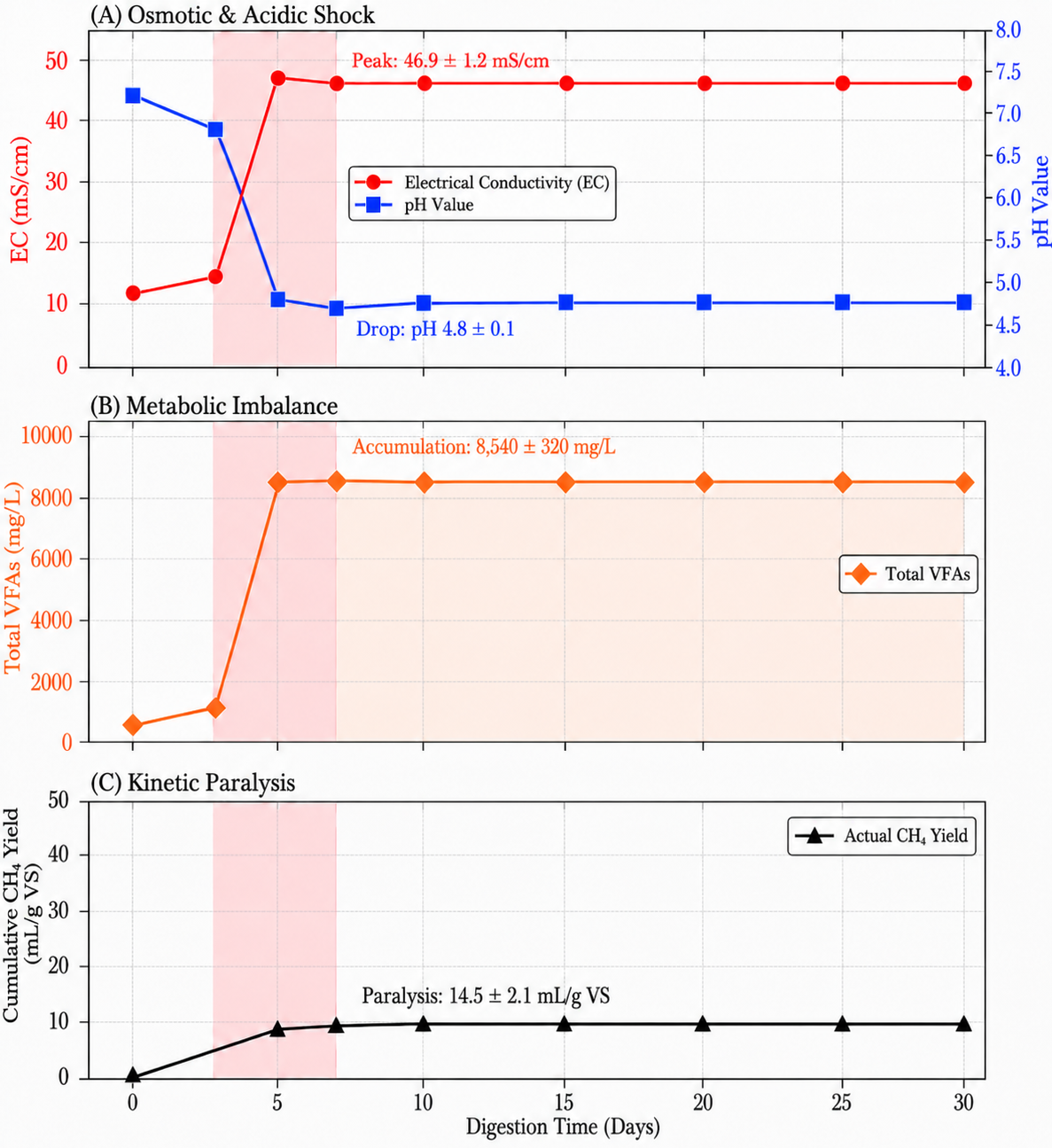
To elucidate the inherent limitations of conventional degradation strategies for SPS and to verify the coupled dynamics of structural deconstruction and toxicity release, a baseline test was conducted in a single-stage methanogenic system. The quantitative results corroborated the “chemical time bomb” hypothesis proposed in the introduction. As illustrated by the dynamic monitoring curves (
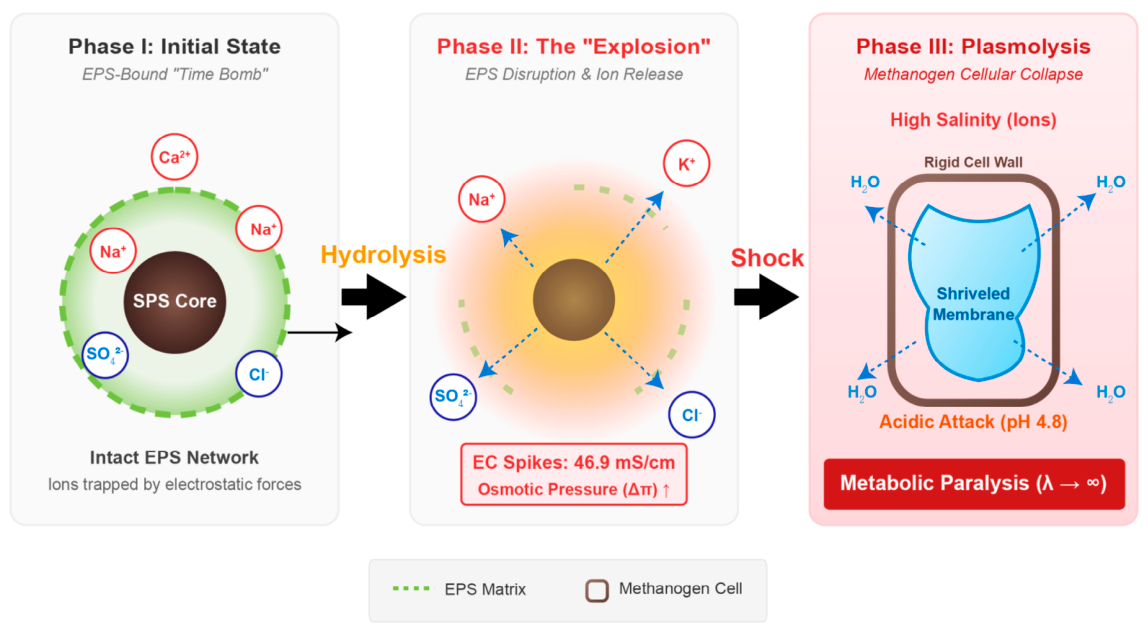
Figure 1), introducing SPS directly into a conventional system initiated a weak deconstruction driven by residual hydrolytic enzymes, which rapidly escalated into an irreversible thermodynamic and biochemical imbalance. The microscale mechanisms driving this macroscopic failure are conceptualized through the salinity stress and plasmolysis schematic in
Figure 2.
As hydrolysis disrupted the EPS colloidal network (
Figure 2, Phase II), dissolved ionic species associated with the EPS matrix were inferred to enter the liquid phase. EPS is known to exhibit substantial cation-binding and ion-exchange capacity [
38], including interactions with alkali and multivalent cations. Consistent with an increase in the dissolved ionic environment, EC increased from 12.5 ± 0.4 to 46.9 ± 1.2 mS/cm (
Figure 1A). Because individual Na
+ and K
+ concentrations were not temporally quantified in the present study, the identity and magnitude of specific cation release cannot be directly resolved from EC alone. At the cellular level, this elevated EC indicated the formation of a hypersaline environment, a condition well documented to deteriorate anaerobic digestion performance by disrupting microbial metabolic pathways [
13]. Physicochemically, this acute osmotic shock reduces available water activity (aw) and forces substantial water efflux, causing the inner cell membrane to shrivel while the rigid cell wall remains intact [
39], ultimately leading to the severe plasmolysis depicted in
Figure 2 (Phase III).
This physical dehydration precipitated systemic metabolic stagnation. Given that environmentally sensitive methanogenic consortia possess significantly lower salt tolerance compared to upstream acidogens [
8], they were preferentially inactivated by the initial salinity stress. Consequently, the volatile fatty acids (VFAs) rapidly produced during acidogenesis encountered a metabolic bottleneck. VFA concentrations accumulated exponentially, rapidly exceeding 8540 +/− 320 mg/L (
Figure 1B), a level far beyond the toxicity tolerance threshold of methanogens. Extensive research confirms that such excessive VFA accumulation triggers severe metabolic inhibition and disrupts process stability in anaerobic systems [
40,
41]. This massive accumulation of acidic products overwhelmed the system’s buffering capacity, causing the pH to plummet to 4.8 +/− 0.1 (
Figure 1A). As methanogenesis is highly vulnerable to extreme pH conditions, this sharp acidification fundamentally damaged methanogen metabolism and community structure [
14], resulting in the severe external acidic attack illustrated in
Figure 2 (Phase III).
Under the dual physicochemical stresses of hypersalinity and severe acidification, the methanogens entered a state of complete metabolic paralysis. The synergistic suppression caused by such combined environmental stressors is highly lethal to anaerobic microbial consortia [
19]. This combined inhibition reduced the substrate conversion efficiency to near zero, yielding a final cumulative methane yield (MY) of only 14.5 +/− 2.1 mL CH
4/g VS. As observed in the methane production curves and kinetic model fitting (
Figure 1C), the actual production trajectory exhibited a complete horizontal plateau, with the lag phase (λ) approaching infinity. These quantitative findings and microscale mechanisms conclusively demonstrate that ignoring the coupled relationship between structural deconstruction and toxicity release inevitably leads to systemic failure. The inherent flaw of forced single-stage deconstruction highlights a critical mechanistic prerequisite: to safely harness the bioenergy potential of SPS, the release of intracellular toxins must be spatially or temporally decoupled from the sensitive methanogenic process, necessitating a controlled pre-deconstruction strategy equipped with robust environmental buffering.
3.2. First-Stage Acidogenesis: WRS-Mediated Physicochemical Buffering
Process instability in the mono-digestion of complex organic wastes often stems from the coupled dynamics of structural breakdown and the rapid accumulation of inhibitory compounds [
42]. To resolve the system failure caused by the synchronization of structural deconstruction and toxicity release, this study implemented a spatiotemporal decoupling strategy during the initial stage. By integrating the cross-substrate co-digestion of WRS and SPS with HMb-mediated acidogenic deconstruction at a selected mixing ratio (WRS:SPS = 50:50), cascading inhibition was successfully averted. This formulation was selected to balance SPS loading with the aqueous and alkalinity-buffering contribution of WRS and is therefore interpreted as an effective condition within the present experimental design rather than as a globally optimized ratio.
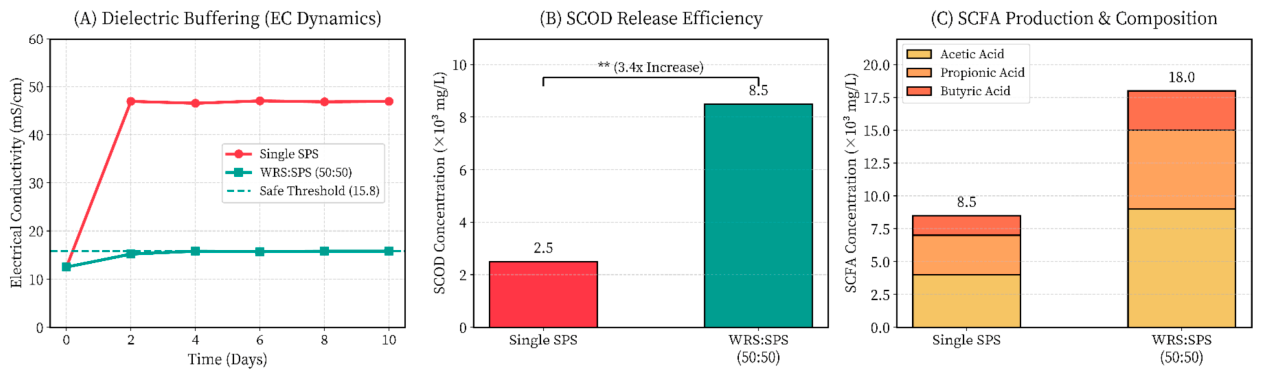
Central to the improved stability was the composite physicochemical buffering provided by WRS. EC was monitored as a macroscopic indicator of changes in the dissolved ionic environment (
Figure 3A). Because WRS contained substantially more free water and exhibited a much lower initial EC than SPS, hydraulic dilution necessarily contributed to attenuation of the bulk ionic strength after mixing. In parallel, the intrinsic alkalinity of WRS provided additional acid–base buffering against the accumulation of acidic fermentation products. Under the selected 50:50 condition, these combined effects constrained the peak EC to 15.8 ± 0.6 mS/cm, whereas the mono-SPS system reached 46.9 mS/cm, a hypersaline condition well beyond typical biological tolerance limits that inevitably leads to severe microbial inhibition and community collapse [
11,
13]. At the molecular scale, the aqueous WRS matrix may additionally favor cation hydration and reduce localized electrostatic interactions. Physicochemical studies have demonstrated that ion hydration is sensitive to the dielectric characteristics of aqueous electrolyte environments [
27]. However, because dielectric permittivity was not directly measured in the present study, this ion-hydration effect should be interpreted as a plausible mechanistic contribution rather than as an independently quantified dielectric phenomenon.
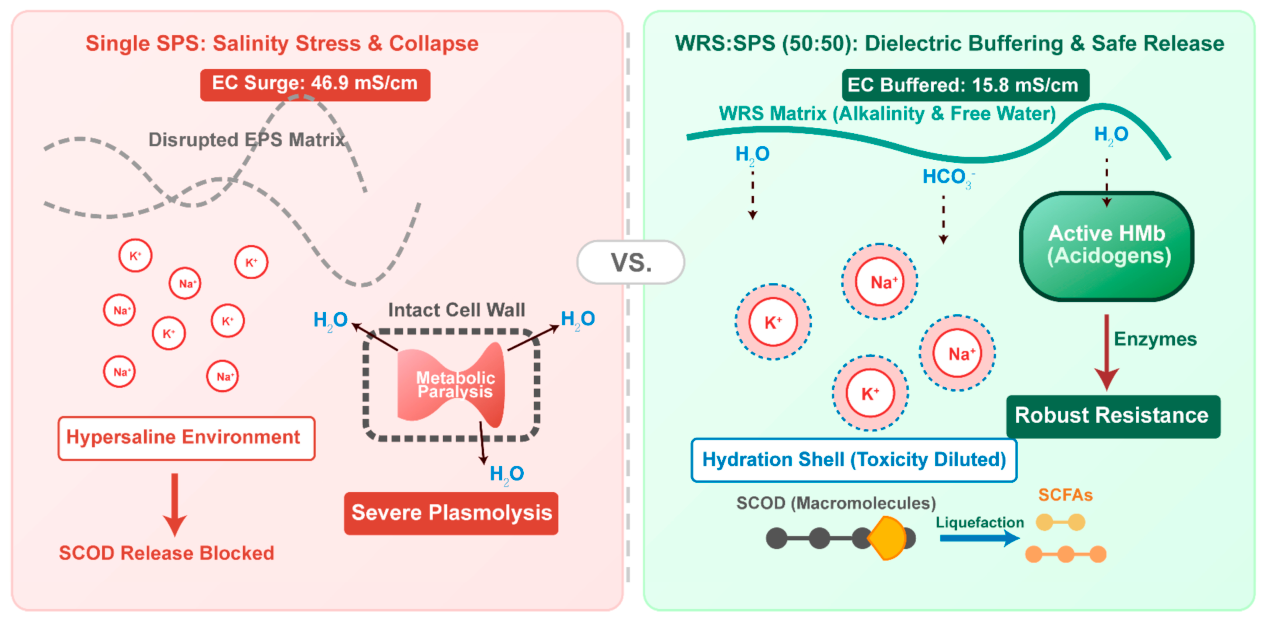
To bridge these macroscopic EC variations with cellular-level phenomena, the microscale mechanisms driving this buffering process are conceptualized in
Figure 4. In the mono-SPS system, the inferred release of EPS-associated dissolved ionic species from the disrupted extracellular polymeric substance (EPS) matrix generated an extreme hypersaline microenvironment. This induced severe microbial plasmolysis and water efflux, culminating in metabolic paralysis that obstructed the release pathway of EPS-bound organics [
43]. In the 50:50 co-digestion system, however, the free water and bicarbonate alkalinity from WRS promoted the formation of stable hydration shells around the metal ions. Physicochemical studies indicate that a high dielectric constant in an aqueous medium mitigates strong electrostatic interactions, thereby stabilizing ion hydration and diminishing localized ionic activity [
44,
45,
46]. Consequently, this mechanism was consistent with attenuation of localized ionic stress through WRS-mediated physicochemical buffering.
Translating this microenvironmental stability into biological performance, the right panel of
Figure 4 illustrates how the HMb consortium, supported by this WRS-mediated physicochemical buffering environment, maintained functional hydrolytic activity, as inferred from SCOD solubilization and subsequent acidogenic conversion to rapidly cleave macromolecular organics, a biological adaptation essential for maintaining hydrolysis in potentially inhibitory environments [
10]. As a direct consequence of this enzymatic cleavage, the quantitative liquefaction analysis (
Figure 3B) revealed a substantial increase in soluble chemical oxygen demand (SCOD) release in the 50:50 mixture, reaching a concentration 3.4-fold higher than that of the mono-SPS group (
p < 0.01). Specific extracellular hydrolytic enzyme activities were not independently quantified in the present study. Therefore, preservation of HMb enzymatic functionality was inferred from process-level responses rather than from direct enzyme assays. In particular, the 3.4-fold increase in SCOD and the subsequent formation of short-chain VFAs indicate that substantial hydrolytic and acidogenic functionality was retained under the buffered ionic condition. These observations should nevertheless not be interpreted as quantitative measurements of individual enzyme activities. Subsequently, the acidogenic profile (
Figure 3C) confirmed the efficient conversion of these released macromolecules into short-chain volatile fatty acids (VFAs), with core components such as acetic and propionic acids constituting the dominant fractions. Although the complex structural network of EPS layers typically poses formidable resistance to microbial fermentation and hydrolysis [
3,
4], the current strategy successfully bypassed this high-activation-energy barrier. It safely released the EPS-bound chemical toxicity without triggering system failure, thereby generating high-quality precursor substrates for the subsequent methanogenic stage. While these macroscopic metrics confirm the successful deconstruction of the EPS matrix, the specific functional group transformations dictating this process remain to be unraveled through a deeper exploration of the phase transition trajectories at the molecular level.
3.3. Second-Stage Methanogenesis: Kinetic Enhancement and Molecular Validation of Deep Mineralization
Following the initial liquefaction stage, the system transitioned to the S-CHMb-mediated methanogenic mineralization phase. With reduced substrate toxicity and diminished steric hindrance from macromolecular structures, the methanogenic consortium efficiently utilized the carbon source under high buffering conditions, leading to a statistically significant performance improvement. To quantify this enhanced methanogenic kinetics, the modified Gompertz model, a well-established mathematical tool for evaluating anaerobic digestion dynamics, was employed [
47]. As illustrated in
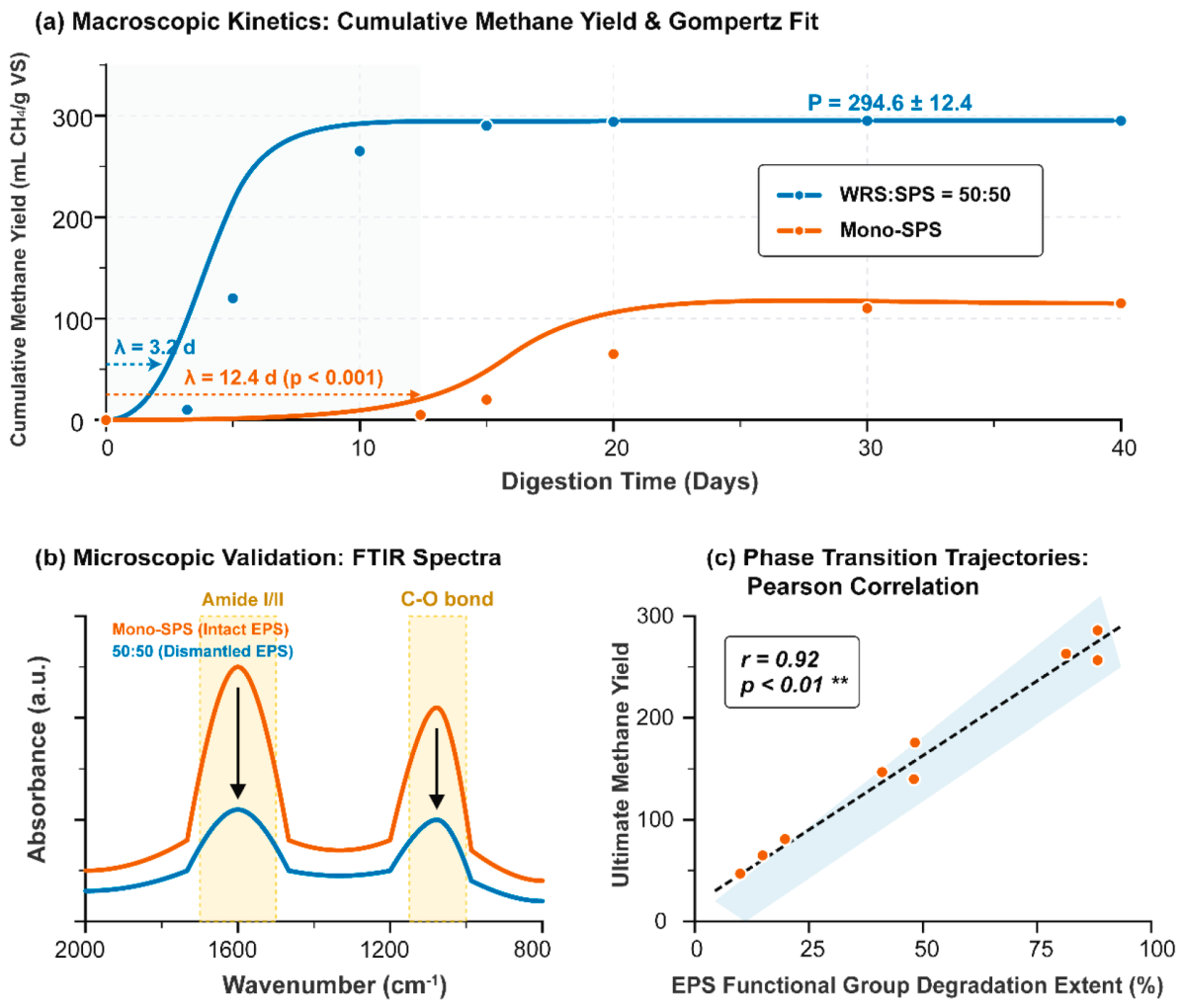
Figure 5a, the cumulative methane production curve demonstrated a high goodness-of-fit to the model, with a coefficient of determination (R2) exceeding 0.98. The kinetic parameters revealed a maximum methane production potential (P) of 294.6 +/− 12.4 mL CH4/g VS. Furthermore, the lag phase (λ) was significantly shortened from 12.4 +/− 0.8 days in mono-digestion to 3.2 +/− 0.4 days (
p < 0.001). Ultimately, the system achieved a total chemical oxygen demand (COD) removal efficiency of 90.6 +/− 2.1%.
To elucidate the microscopic mechanisms driving the kinetic improvements observed in
Figure 5a, the underlying physicochemical changes were investigated using Fourier-transform infrared spectroscopy (FTIR). As depicted in the dynamic spectral evolution (
Figure 5b), the absorption peaks of protein Amide I/II (1700 to 1500 cm
−1) and polysaccharide C-O bonds (1150 to 1000 cm
−1), which are closely associated with the structural integrity and composition of the EPS matrix [
5,
48], exhibited noticeable attenuation in the co-digestion system. Because the breakdown of these complex polymeric layers is a prerequisite for enhancing substrate bioavailability [
49], a Pearson correlation analysis was conducted to statistically link these molecular-level structural shifts with macroscopic biomethane generation (
Figure 5c). The results confirmed a significant positive correlation between the degradation extent of these functional groups and the final cumulative methane yield (r = 0.92,
p < 0.01). It should be emphasized that the attenuation of the Amide I/II and polysaccharide C–O bands provides direct spectroscopic evidence of changes in EPS-associated biopolymers, rather than direct evidence of individual cation release. Dissolved Na
+ and K
+ concentrations were not monitored as time-resolved variables during the two-stage process. Therefore, the proposed linkage between EPS deconstruction and ionic release is supported indirectly by the concurrent EC response and by the established cation-binding behavior of EPSs, but it cannot be quantitatively resolved for individual ions from the present dataset. Future studies employing ion chromatography or ICP-based analyses are required to track Na
+, K
+, Ca
2+, and Mg
2+ during the deconstruction process.
Collectively, the integration of macroscopic kinetic profiles and molecular-level dynamics presented in
Figure 5 substantiates the proposed mechanism of structural dismantling followed by energy release. These findings indicate that the spatiotemporal decoupling strategy, facilitated by WRS-mediated physicochemical buffering, effectively disrupts the robust hydrogen-bond network maintaining the EPS architecture [
50]. Concurrently, this buffering effect is critical for mitigating salinity toxicity to the microbial consortia. While elevated sodium concentrations typically induce severe osmotic stress and disrupt methanogenic metabolic activity, thereby impairing biomethane recovery [
51,
52], the current system successfully alleviated this common inhibitory factor in high-salt anaerobic environments [
15]. Consequently, this structural disruption facilitated the release of encapsulated organics, converting resistant waste into bioenergy and enabling the deep mineralization observed during the second stage.
3.4. Taxonomic Profiling and Microbial Community Succession
To elucidate the biological drivers associated with the spatiotemporal decoupling, the taxonomic profiles of the two engineered inocula (HMb and S-CHMb) were analyzed. The observed community structures corresponded closely with their respective functional roles in the two-stage system. The visual representation of this microbial succession is presented in
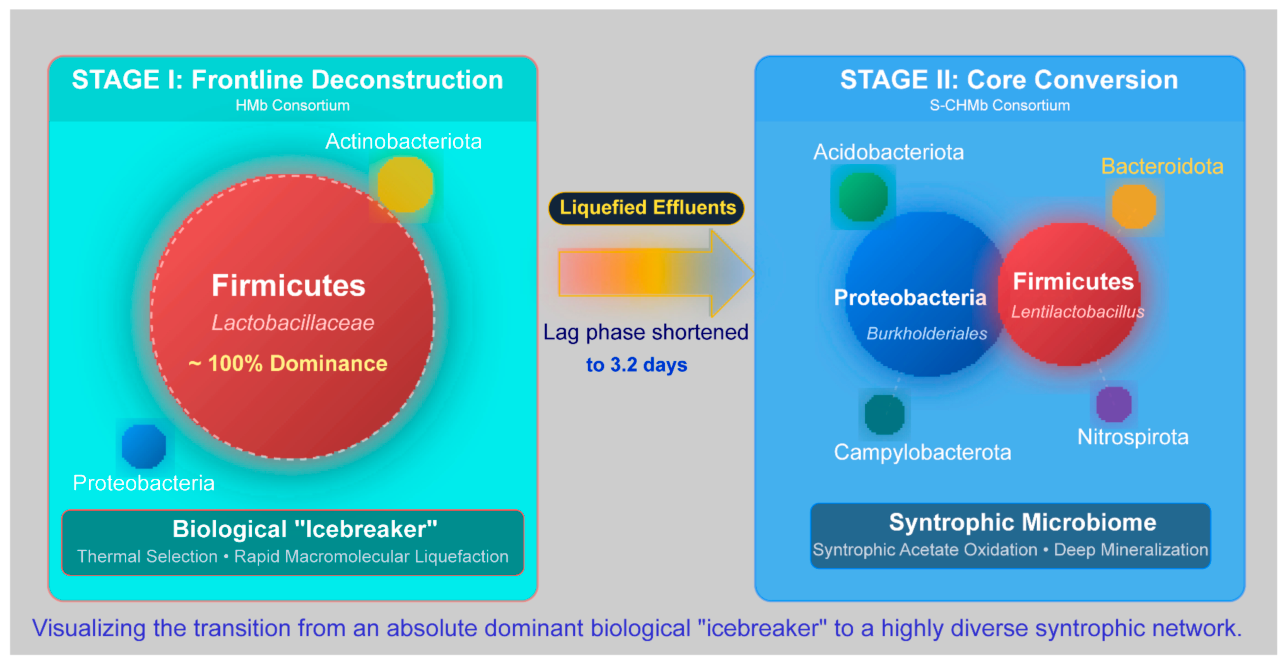
Figure 6, illustrating the transition from a highly enriched community in the first stage to a diverse syntrophic network in the second stage.
As depicted in the left panel of
Figure 6, the initial HMb consortium utilized for the frontline deconstruction stage exhibited a pronounced structural convergence following the thermal selection process. Taxonomic profiling revealed that the phylum Firmicutes accounted for nearly the entirety of the relative abundance, primarily concentrated in the class Bacilli, the order Lactobacillales, and the family Lactobacillaceae. This high degree of enrichment indicates that the heat shock pretreatment effectively suppressed environmentally sensitive methanogens while selecting for resilient Gram-positive bacteria, a mechanism supported by previous research on anaerobic microflora [
23]. In addition to the dominant populations, several subdominant taxa, including Acidobacteriota, Bacteroidota, Campylobacterota, Nitrospirota, Planctomycetota, and Chloroflexota, were detected within the S-CHMb consortium. Based on previously reported ecological functions, these groups may contribute to community resilience through recalcitrant-carbon degradation, amino-acid fermentation, and other complementary metabolic processes. However, these functional assignments represent literature-supported ecological interpretations rather than direct causal measurements in the present study. Because high-resolution longitudinal sequencing was not conducted throughout the Stage-I-to-Stage-II transition, temporal changes in the relative abundance of individual subdominant taxa could not be quantitatively resolved. Furthermore, the sequencing strategy primarily targeted bacterial 16S rRNA genes and did not provide archaeal-specific taxonomic resolution. Therefore, the identity and temporal succession of the methanogenic archaea responsible for methane formation remain to be directly determined using archaeal 16S rRNA and/or mcrA-targeted analyses. The presence of these specific groups is notable, as they have been documented to assist in extracellular enzyme secretion and the decomposition of complex structural components [
53]. Consequently, this Lactobacillaceae dominated structure appeared to serve as the primary driver for initial deconstruction, providing the first stage with the resilience required to tolerate the initial toxicity release. This observation aligns with studies demonstrating the capability of lactic acid producing bacteria to facilitate rapid macromolecular liquefaction during acidogenic fermentation [
25,
26].
In contrast, the right panel of
Figure 6 shows that the S-CHMb consortium in the second stage developed a specialized yet diverse syntrophic microbiome. The bacterial community was co-dominated by the phyla Proteobacteria (specifically Gammaproteobacteria and Alphaproteobacteria, including the orders Burkholderiales, Rhizobiales, and Rhodobacterales) and Firmicutes (predominantly Lactobacillaceae and the genus Lentilactobacillus). These taxa are documented for their involvement in complex organic degradation and syntrophic acetate oxidation. Such metabolic pathways are generally considered essential for preventing the accumulation of inhibitory intermediates and supporting methane formation under elevated organic loads [
54,
55]. Furthermore, the presence of diverse subdominant taxa, such as Acidobacteriota, Bacteroidota, Campylobacterota, and Nitrospirota, likely contributed to microenvironmental stability. The retention of this rare biosphere has been recognized as a factor in buffering microbial communities against environmental disturbances during digestion processes [
56]. As summarized in the central transition of
Figure 6, this community architecture allowed S-CHMb to effectively process the liquefied effluents from the first stage. The consortium converted these intermediate products into methanogenic precursors, facilitating energy recovery within a shortened lag phase of 3.2 days. The distinct functional shift between these two stages suggests an underlying mechanism of kinetic regulation and environmental adaptation.
4. Discussion
Unlocking the bioenergy potential of extreme industrial waste streams, such as semiconductor sludge, has conventionally been hindered by intertwined thermodynamic and kinetic bottlenecks. Rather than relying on energy-intensive physicochemical pretreatments, this study explores an alternative systemic framework that synergizes WRS-mediated physicochemical buffering with phase-separated anaerobic digestion. The following discussion examines the mechanistic pathways driving this bioconversion process. Systematically decoupling these inherent barriers involves addressing thermodynamic constraints through cross-matrix complementation and resolving kinetic conflicts via spatiotemporal segregation. Ultimately, this framework may not only foster microbial resilience but also provide broader implications for establishing cross-industry circular symbiosis.
4.1. Overcoming Thermodynamic Barriers via WRS-Mediated Physicochemical Buffering and Cross-Matrix Complementation
Single-stage anaerobic digestion of high-salinity industrial sludge frequently encounters severe operational instability. Previous research has extensively documented the vulnerability of anaerobic consortia, particularly methanogens, to severe saline stress [
10,
36]. Macroscopic and microscopic cross-validation in this study suggested that a primary driver of this phenomenon was likely a physicochemical osmotic shock. As shown in the baseline trajectory of
Figure 1, when the system electrical conductivity reached an extreme value of 46.9 ± 1.2 mS/cm, the sharp decrease in environmental water activity (aw) inverted the osmotic gradient. Such a severe gradient inversion can physically impede the water uptake pathways of microorganisms [
12,
57]. From the microscopic perspective in
Figure 2, this macroscopic salinity stress induced plasmolysis, subsequently leading to the stagnation of the methanogenic metabolic network.
To address this limitation, the spatiotemporal decoupling framework and the WRS-mediated physicochemical buffering appeared to provide a targeted abiotic intervention. As illustrated in
Figure 4, the abundant free water in the aqueous WRS matrix may favor cation hydration and reduce localized electrostatic interactions to weaken intermolecular electrostatic forces, facilitating the formation of stable hydration shells around metal cations. This observation aligns with recent molecular dynamics investigations demonstrating that high-dielectric aqueous systems effectively modulate ion hydration and reduce localized electrostatic toxicity [
27]. Concurrently, based on acid–base equilibrium principles, the high intrinsic alkalinity (3500 ± 150 mg CaCO
3/L) of WRS helped neutralize the volatile fatty acids (VFAs) abruptly released during SPS deconstruction. The critical role of inorganic carbon speciation and the VFA-to-alkalinity ratio in maintaining thermodynamic stability is well supported by the recent literature [
29,
58]. Furthermore, providing sufficient buffering capacity helps prevent severe acidification and supports the continuous degradation of VFAs [
31,
59]. As indicated by the macroscopic monitoring data in
Figure 3, this cross-matrix physicochemical complementarity appeared to constrain the fluctuations of ionic strength and pH within the biological tolerance window of the S-CHMb consortia.
The establishment of this buffering mechanism was reflected in the kinetic profiles. Previous studies on microbial adaptations indicate that mitigating extreme osmotic and pH stresses is essential to prevent protein denaturation and preserve the structural integrity of biological catalysts [
37,
60]. By preserving the conformational stability of key metabolic enzymes within this stabilized microenvironment, the methanogenic lag phase (λ) was shortened to 3.2 days, as demonstrated by the model fitting results in
Figure 5a. This result indicates that the system mitigated the initial inhibition bottleneck and transitioned into the deep mineralization phase. Ultimately, these findings imply that precise regulation of the physicochemical microenvironment could provide a versatile mechanistic framework, potentially offering an adaptable pathway to extend the viability of biological treatments to a broader spectrum of complex, high-salinity, or toxic waste streams.
A critical distinction is required between the experimentally observed attenuation of bulk ionic stress and the individual physicochemical mechanisms contributing to this response. At the selected WRS:SPS ratio of 50:50, hydraulic dilution necessarily contributes to the reduction in ionic strength because WRS possesses substantially higher free-water content and a lower initial EC than SPS. A second contribution arises from the intrinsic bicarbonate alkalinity of WRS (~3500 ± 150 mg CaCO3/L), which buffers VFA-induced acidification and helps maintain acid–base stability. Beyond these bulk effects, ion hydration within the aqueous WRS matrix may provide an additional molecular-scale contribution by reducing localized electrostatic interactions around dissolved cations. However, dielectric permittivity was not directly measured, and the present dataset cannot quantitatively partition hydraulic dilution, alkalinity buffering, and ion-hydration effects. Accordingly, the term “dielectric buffering” is used herein only to describe a proposed molecular contribution within a broader WRS-mediated physicochemical buffering mechanism, rather than an independently verified dielectric phenomenon.
The observed stabilization should also not be regarded as intrinsically unique to WRS. In principle, other low-salinity aqueous residual matrices or engineered bicarbonate-buffering systems possessing comparable free-water content and alkalinity may provide similar physicochemical protection. Nevertheless, matrix-specific characteristics—including dissolved organic composition, multivalent-ion content, background salinity, and inhibitory constituents—may alter the response. Comparative cross-matrix experiments will therefore be necessary to determine the generalizability of this mechanism.
4.2. Spatiotemporal Segregation: Overcoming Kinetic Limitations
While the WRS-mediated physicochemical buffering established a favorable microenvironment for microbial activity, the two-stage configuration further contributed to system stability by separating the high-activation-energy hydrolysis step from the sensitive methanogenic process. As foundational studies on phase separation have demonstrated, this spatial segregation reduced the exposure of methanogens to sudden osmotic and pH shocks that typically destabilize single-reactor systems [
20]. Indeed, unraveling these underlying microbial dynamics and environmental triggers remains essential to circumventing process instability [
7]. This mechanistic shift operates through two distinct phases:
Phase I: Pre-deconstruction and controlled release (HMb-mediated acidogenesis). The chemical characteristics and structural recalcitrance of sludge EPS inherently limit overall anaerobic digestion efficiency [
4], largely because this polymeric network tightly binds high concentrations of cations and organic matter [
9]. To dismantle this barrier, the osmotolerant HMb consortia facilitated the initial deconstruction of the SPS EPS architecture. As evidenced by the taxonomic profiling, the absolute dominance of Lactobacillaceae (Firmicutes) provided the system with exceptional biological resilience. This resilience is intrinsically linked to their biological architecture; shielded by their robust Gram-positive cell walls capable of structural modification under osmotic stress [
24], and further supported by the WRS-mediated physicochemical buffering environment, these specific taxa actively secreted extracellular enzymes, which contributed to lowering the activation energy (Ea), driving solid hydrolysis, and cleaving complex macromolecules into smaller polar molecules (
Figure 3B). Such structural deconstruction acts as a critical regulatory step [
6]. Crucially, this disruption facilitated a more controlled, rather than abrupt, release of encapsulated inorganic salts, setting a stabilized foundation for subsequent methanogenesis.
Phase II: Mineralization and kinetic enhancement (S-CHMb-mediated methanogenesis). Following the initial deconstruction, the steric hindrance of macromolecules was reduced, aligning with mass transfer principles. The attenuation of the FTIR spectra (
Figure 5b) suggested an enhanced substrate diffusion coefficient. Concurrently, the localized ionic stress was mitigated by the WRS-mediated physicochemical buffering. Receiving this optimized, low-toxicity feeding stream, the highly specialized S-CHMb microbiome rapidly initiated syntrophic metabolism. The co-dominant Proteobacteria (e.g., Burkholderiales) facilitated complex organic degradation, while Firmicutes (Lentilactobacillus) efficiently drove short-chain metabolite conversion. Concurrently, under the elevated stress conditions typical of such extreme substrates, the observed bacterial community structure was consistent with metabolic functions associated with syntrophic acetate oxidation (SAO). The activation of the SAO pathway is a well-documented microbial adaptation to bypass inhibited acetoclastic methanogenesis under environmental stress [
55], and such bacterial syntrophic functions could support subsequent methanogenic conversion when coupled with methanogenic archaea. Because archaeal populations were not specifically resolved in the present sequencing dataset, the relative contributions of acetoclastic and hydrogenotrophic methanogenic pathways cannot be directly assigned and should be investigated using archaeal-specific 16S rRNA profiling, mcrA-based quantification, and longitudinal community analysis. As recent genome-based assessments suggest, unlocking the metabolic potential of specialized consortia relies heavily on tailoring such specific environmental conditions [
35]. This dynamic maintained a favorable environment for the methanogenic pathway, corroborating the kinetic data (
Figure 5a) where the second stage achieved a biomethane yield of 294.6 ± 12.4 mL CH
4/g VS and a significantly shortened lag phase. By resolving these inherent kinetic conflicts, this spatiotemporal segregation strategy offers a potential blueprint for optimizing microbial synergies in highly restrictive environment.
4.3. Implications for Cross-Industry Synergistic Waste Bioconversion
To unlock the bioenergy potential of semiconductor sludge, the observations in this study offer an alternative perspective for re-evaluating current treatment paradigms. While previous research has extensively explored various high-intensity physicochemical pretreatments to disrupt complex sludge matrices [
53], recent comprehensive assessments indicate that these conventional approaches frequently encounter operational and economic limitations [
1]. Consequently, our findings imply that heavy reliance on such intensive pretreatments might not be strictly necessary. Instead, the evolutionary trajectory from the osmotic shock and metabolic stagnation observed in the single-stage system (
Figure 1 and
Figure 2), to the stabilized microenvironment established via phase-separated anaerobic digestion and WRS-mediated physicochemical buffering (
Figure 3 and
Figure 4), suggests a cohesive systemic solution.
Facilitated by this mild intervention, the cross-validation of macroscopic kinetics and microscopic molecular evidence (
Figure 5) indicates that precise cross-matrix pairing appears to guide specialized microbial consortia in gradually unlocking their metabolic capacity to deconstruct complex wastes in extreme environments. By circumventing conventional mass transfer and toxicity bottlenecks, this mechanistic dynamic aligns with recent research emphasizing the necessity of spanning traditional operational boundaries to foster microbial resilience [
18]. Ultimately, this strategy reflects the environmental adaptability of microbial synergies and outlines a potential integration direction worth further exploration for establishing a cross-industry resource circular symbiosis between the semiconductor sector and municipal environmental facilities. As supported by foundational design concepts for eco-industrial clusters [
16], and recent successful implementations of regional waste minimization networks [
17], integrating such buffered and phase-separated systems may provide an adaptable framework for broader sustainable industrial development.
The present configuration should nevertheless be interpreted as a laboratory-scale mechanistic proof of concept rather than as a complete continuous-process design. Engineering scale-up will require a site-specific mass balance linking SPS generation rates with WRS availability. In particular, continuous-flow studies are needed to determine the minimum Stage-I hydraulic retention time required for EPS solubilization and ionic stabilization and the Stage-II hydraulic and solids retention times required to sustain stable methanogenesis. Organic loading rate, ionic loading rate, biomass washout, internal recycle, feedstock variability, and recovery following loading disturbances should also be quantified. These parameters will ultimately determine practical reactor volumes, WRS:SPS supply requirements, and the feasibility of cross-industry implementation.
5. Conclusions
The integration of WRS-mediated physicochemical buffering and spatiotemporal decoupling provides a mechanistically supported framework for addressing the coupled structural and environmental constraints associated with SPS bioconversion. Under controlled laboratory-scale batch conditions at 41 °C, separating acidogenic deconstruction from methanogenic conversion prevented the severe metabolic inhibition observed in conventional single-stage SPS digestion. By shifting from aggressive physicochemical pretreatments to a mild, biologically driven phase separation, the coupled dynamics of structural deconstruction and toxicity release were effectively managed. This strategy successfully prevented the irreversible metabolic paralysis (pH 4.8, 14.5 mL CH4/g VS) observed in conventional single-stage operations. The core mechanistic insights and operational boundaries are summarized as follows:
Physicochemical Stabilization via WRS-Mediated Buffering: Strategic co-digestion with WRS attenuated bulk ionic stress, constraining the peak EC to 15.8 mS/cm compared with 46.9 mS/cm in mono-SPS digestion, while supporting a 3.4-fold increase in SCOD release. The stabilization observed under the 50:50 condition reflects combined hydraulic dilution and alkalinity buffering, with ion hydration being proposed as an additional molecular-scale contribution. Because dielectric permittivity was not directly measured, the relative contribution of the dielectric component remains to be quantitatively resolved.
Spatiotemporal segregation allowed distinct microbial consortia to perform complementary functions. A Lactobacillaceae-dominated HMb consortium supported initial deconstruction, whereas the second-stage S-CHMb consortium provided a diverse bacterial syntrophic network associated with subsequent methanogenic conversion. The system achieved a maximum methane potential of 294.6 ± 12.4 mL CH4/g VS and shortened the lag phase to 3.2 ± 0.4 days. Because archaeal-specific sequencing was not conducted, the taxonomic composition and temporal dynamics of methanogenic archaea remain to be resolved.
The present findings should be interpreted as laboratory-scale mechanistic validation rather than direct evidence of industrial-scale readiness. The experiments were performed under controlled batch conditions at 41 °C; consequently, the current dataset does not define continuous-flow hydraulic loading, reactor sizing, or long-term stability. Future studies should evaluate hydraulic retention time, solids retention time, organic and ionic loading rates, biomass retention, feedstock variability, and process recovery under continuous operation. Site-specific mass-flow analysis will also be required to determine the practical balance between SPS generation and WRS availability.
Within these limitations, the present work demonstrates that separating EPS deconstruction from methane-forming metabolism, together with WRS-mediated physicochemical buffering, can substantially alleviate the mismatch between substrate disruption and microbial tolerance. Future investigations integrating continuous-flow validation, ion-specific measurements, enzyme-activity assays, and longitudinal bacterial and archaeal profiling will be essential to establish the generalizability and engineering scalability of this strategy for SPS and other high-salinity industrial residuals.
Author Contributions
Conceptualization, C.-M.Y., C.-L.H. and J.-J.L.; Methodology, C.-L.H. and J.-J.L.; Validation, C.-M.Y., C.-L.H., F.-C.L. and J.-J.L.; Formal analysis, C.-M.Y., C.-L.H., F.-C.L. and J.-J.L.; Investigation, C.-M.Y., C.-L.H. and F.-C.L.; Resources, J.-J.L.; Data curation, C.-M.Y., C.-L.H. and F.-C.L.; Writing—original draft, C.-M.Y.; Writing—review & editing, C.-L.H. and J.-J.L.; Visualization, C.-M.Y., C.-L.H., F.-C.L. and J.-J.L.; Supervision, J.-J.L.; Project administration, J.-J.L. All authors have read and agreed to the published version of the manuscript.
Funding
This research was financially supported by the Carbon Neutral & Energy Research Center at the National Kaohsiung University of Science and Technology (NKUST).
Data Availability Statement
The original contributions presented in this study are included in the article. Further inquiries can be directed to the corresponding author.
Acknowledgments
The authors extend their sincere gratitude to the Nanzih Wastewater Treatment Plant (Kaohsiung City, Taiwan) for their invaluable support in providing the sludge samples and operational data essential for this study. During the preparation of this manuscript, the authors utilized artificial intelligence (AI) tools (large language models) solely to polish the academic language and improve the overall readability of the text. Additionally, AI-assisted image generation tools were employed in conjunction with Adobe Illustrator (Adobe Creative Cloud Pro) to aid in the conceptualization and rendering of the schematic illustrations (e.g., graphical abstract and mechanism diagrams). After using these tools, the authors thoroughly reviewed, edited, and validated all textual and graphical contents. The authors take full responsibility for the scientific accuracy, integrity, and originality of the final publication.
Conflicts of Interest
The authors declare no conflicts of interest.
References
- Akinbomi, J.G.; Patinvoh, R.J.; Taherzadeh, M.J. Current challenges of high-solid anaerobic digestion and possible measures for its effective applications: A review. Biotechnol. Biofuels Bioprod. 2022, 15, 52. [Google Scholar] [CrossRef] [Scilit] [PubMed]
- Flemming, H.-C.; Wingender, J.; Szewzyk, U.; Steinberg, P.; Rice, S.A.; Kjelleberg, S. Biofilms: An emergent form of bacterial life. Nat. Rev. Microbiol. 2016, 14, 563–575. [Google Scholar] [CrossRef] [Scilit] [PubMed]
- Li, S.; Zhang, Y.; Duan, W.; Deng, R.; Gu, L.; Shi, D. Insights into the resistance of different extracellular polymeric substance (EPS) layers to the fermentation environment in sludge anaerobic digestion. Chem. Eng. J. 2022, 449, 137844. [Google Scholar] [CrossRef] [Scilit]
- Hu, T.; Chen, X.; Zhao, W.; He, S.; Feng, L.; Zhao, Q.; Wei, L. To what content the chemical characteristics of sludge extracellular polymeric substances affect anaerobic digestion efficiency: A review. Chem. Eng. J. 2024, 498, 155490. [Google Scholar] [CrossRef] [Scilit]
- Liu, X.; Liu, J.; Deng, D.; Li, R.; Guo, C.; Ma, J.; Chen, M. Investigation of extracellular polymeric substances (EPS) in four types of sludge: Factors influencing EPS properties and sludge granulation. J. Water Process Eng. 2021, 40, 101924. [Google Scholar] [CrossRef] [Scilit]
- Ping, Q.; Chen, X.; Jin, Y.; Chen, Y.; Zheng, M.; Wang, L.; Li, Y. Deciphering the structural and stoichiometric regulation of anaerobic digestion: A cross-scale perspective from molecular thermodynamics to methanogenic pathways. Bioresour. Technol. 2026, 460, 135314. [Google Scholar] [CrossRef] [Scilit] [PubMed]
- Wei, Y.; Zhou, Y.; Wang, S.; Chen, H. Understanding the mechanism of thermal hydrolysis to improve sludge dewaterability based on surface thermodynamics and XDLVO theory. J. Water Process Eng. 2024, 68, 106514. [Google Scholar] [CrossRef] [Scilit]
- Li, J.; Xu, X.; Chen, C.; Xu, L.; Du, Z.; Gu, L.; Xiang, P.; Shi, D.; Huangfu, X.; Liu, F. Conductive materials enhance microbial salt-tolerance in anaerobic digestion of food waste: Microbial response and metagenomics analysis. Environ. Res. 2023, 227, 115779. [Google Scholar] [CrossRef] [Scilit] [PubMed]
- Park, C.; Novak, J.T. Characterization of activated sludge exocellular polymers using several cation-associated extraction methods. Water Res. 2007, 41, 1679–1688. [Google Scholar] [CrossRef] [Scilit] [PubMed]
- Song, Q.; Chen, X.; Hua, Y.; Chen, S.; Ren, L.; Dai, X. Biological treatment processes for saline organic wastewater and related inhibition mechanisms and facilitation techniques: A comprehensive review. Environ. Res. 2023, 239, 117404. [Google Scholar] [CrossRef] [Scilit] [PubMed]
- Zhang, J.; Zhang, R.; He, Q.; Ji, B.; Wang, H.; Yang, K. Adaptation to salinity: Response of biogas production and microbial communities in anaerobic digestion of kitchen waste to salinity stress. J. Biosci. Bioeng. 2020, 130, 173–178. [Google Scholar] [CrossRef] [Scilit] [PubMed]
- Harris, R. Effect of water potential on microbial growth and activity. Water Potential Relat. Soil Microbiol. 1981, 9, 23–95. [Google Scholar] [CrossRef] [Scilit]
- Gao, M.; Yang, J.; Liu, Y.; Zhang, J.; Li, J.; Liu, Y.; Wu, B.; Gu, L. Deep insights into the anaerobic co-digestion of waste activated sludge with concentrated leachate under different salinity stresses. Sci. Total Environ. 2022, 838, 155922. [Google Scholar] [CrossRef] [Scilit] [PubMed]
- Qiu, S.; Zhang, X.; Xia, W.; Li, Z.; Wang, L.; Chen, Z.; Ge, S. Effect of extreme pH conditions on methanogenesis: Methanogen metabolism and community structure. Sci. Total Environ. 2023, 877, 162702. [Google Scholar] [CrossRef] [Scilit] [PubMed]
- Gao, Q.; Zhang, Y.; Li, L.; Jiang, J.; Ding, J.; Wei, L.; Wang, G.; Zhao, Q. Dissecting the response mechanisms of microorganisms in anaerobic digestion to salt stress in food waste. ACS EST Eng. 2025, 5, 1921–1932. [Google Scholar] [CrossRef] [Scilit]
- Baldassarre, B.; Schepers, M.; Bocken, N.; Cuppen, E.; Korevaar, G.; Calabretta, G. Industrial Symbiosis: Towards a design process for eco-industrial clusters by integrating Circular Economy and Industrial Ecology perspectives. J. Clean. Prod. 2019, 216, 446–460. [Google Scholar] [CrossRef] [Scilit]
- Domini, M.; Vahidzadeh, R.; Vaccari, M.; Sbaffoni, S.; De Marco, E.; Beltrani, T.; Bertanza, G. Regional industrial symbiosis networks for waste minimisation: A case study from Italy. J. Environ. Manag. 2025, 394, 127376. [Google Scholar] [CrossRef] [Scilit] [PubMed]
- Palagonia, C.; Michelini, L.; Mattelin-Pierrard, C. Spanning the industrial symbiosis within the circular economy: Critical issues and future research agenda. J. Ind. Ecol. 2025, 29, 746–765. [Google Scholar] [CrossRef] [Scilit]
- Van Duc, L.; Inoue, D.; Ike, M. Combined inhibition of anaerobic digestion by sulfate, salinity, and ammonium: Potential inhibitory factors in forward osmosis-concentrated municipal wastewater. Chemosphere 2025, 377, 144318. [Google Scholar] [CrossRef] [Scilit] [PubMed]
- Demirer, G.N.; Chen, S. Two-phase anaerobic digestion of unscreened dairy manure. Process Biochem. 2005, 40, 3542–3549. [Google Scholar] [CrossRef] [Scilit]
- da Silva Júnior, F.d.C.G.; Almeida, P.D.S.; de Menezes, C.A.; Duarte, M.S.; Silva, T.P.; Dos Santos, A.B.; Zaiat, M.; Leitao, R.C. Anaerobic digestion of the liquid fraction of fruit and vegetable waste: Two-stage versus single-stage process. ACS Omega 2025, 10, 22847–22857. [Google Scholar] [CrossRef] [Scilit] [PubMed]
- Simeonov, I.; Chorukova, E.; Kabaivanova, L. Two-stage anaerobic digestion for green energy production: A review. Processes 2025, 13, 294. [Google Scholar] [CrossRef] [Scilit]
- Lay, J.J.; Lee, Y.J.; Noike, T. Feasibility of biological hydrogen production from organic fraction of municipal solid waste. Water Res. 1999, 33, 2579–2586. [Google Scholar] [CrossRef] [Scilit]
- Piuri, M.; Sanchez-Rivas, C.; Ruzal, S.M. Cell wall modifications during osmotic stress in Lactobacillus casei. J. Appl. Microbiol. 2005, 98, 84–95. [Google Scholar] [CrossRef] [Scilit] [PubMed]
- Marques, S.; Santos, J.A.; Gírio, F.M.; Roseiro, J.C. Lactic acid production from recycled paper sludge by simultaneous saccharification and fermentation. Biochem. Eng. J. 2008, 41, 210–216. [Google Scholar] [CrossRef] [Scilit]
- Tang, J.; Wang, X.C.; Hu, Y.; Zhang, Y.; Li, Y. Effect of pH on lactic acid production from acidogenic fermentation of food waste with different types of inocula. Bioresour. Technol. 2017, 224, 544–552. [Google Scholar] [CrossRef] [Scilit] [PubMed]
- Lahmidi, A.; Rabii, S.; Chliyah, S.; Chtita, S.; El Kouali, M.H.; Errougui, A. Molecular Dynamics Simulations and Spectroscopic Investigation of the Hydration, Dynamic, and Dielectric Properties of the {Na2CO3–H2O} System at 298.15 K across Various Concentrations. J. Phys. Chem. B 2026, 130, 777–787. [Google Scholar] [CrossRef] [Scilit] [PubMed]
- Pilarski, K.; Pilarska, A.A. Kinetics and energy yield in anaerobic digestion: Effects of substrate composition and fundamental operating conditions. Energies 2025, 18, 6262. [Google Scholar] [CrossRef] [Scilit]
- Elazhar, M.; Bouchabchoub, A.; Elazhar, F.; Elmidaoui, A.; Taky, M. Influence of volatile fatty acids/alkalinity ratio on methane production during mesophilic anaerobic digestion: Stability, efficiency and optimization. Desalin. Water Treat. 2022, 257, 142–149. [Google Scholar] [CrossRef] [Scilit]
- Li, D.; Huang, T.; Wu, B.; Wang, C.; Jiang, X.; Huang, S.; Dai, X.; Chai, X. Facilitating anaerobic digestion of kitchen waste through diatomite-mediated spatial ecological niches construction. Waste Manag. 2025, 201, 114792. [Google Scholar] [CrossRef] [Scilit] [PubMed]
- Wu, D.; Liu, H.; Xing, T.; Xiao, F.; Liu, Y.; Zhen, F.; Sun, Y. An integrated evaluation strategy for anaerobic digestion monitoring based on acid-base balance and thermodynamics of volatile fatty acid degradation. Chem. Eng. J. 2024, 486, 150340. [Google Scholar] [CrossRef] [Scilit]
- Yeghiazaryan, S.; Capson-Tojo, G.; Steyer, J.-P.; Westerholm, M.; Bernet, N.; Labarthe, S.; Quemener, E.D.-L. Modeling thermophilic syntrophic VFA oxidation using thermodynamic principles: Insights from enrichment cultures. Bioresour. Technol. 2026, 449, 134365. [Google Scholar] [CrossRef] [Scilit] [PubMed]
- Chang, H.; Yin, Q.; He, K.; De Vrieze, J.; Wu, G. Feeding regime selectively enriching acetoclastic methanogens to enhance energy production in anaerobic digestion systems. Biochem. Eng. J. 2025, 220, 109764. [Google Scholar] [CrossRef] [Scilit]
- Martínez-Mendoza, L.J.; Munoz, R.; García-Depraect, O. Enhanced methane production from food waste: A systematic comparison between conventional single-stage and lactate-based two-stage anaerobic digestion processes. Biomass Bioenergy 2024, 188, 107312. [Google Scholar] [CrossRef] [Scilit]
- Nguyen, T.V.; Trinh, H.P.; Park, H.-D. Genome-based analysis reveals niche differentiation among Firmicutes in full-scale anaerobic digestion systems. Bioresour. Technol. 2025, 418, 131993. [Google Scholar] [CrossRef] [Scilit] [PubMed]
- McGenity, T.J.; Sorokin, D.Y. Methanogens and methanogenesis in hypersaline environments. In Handbook of Hydrocarbon And Lipid Microbiology; 2010; pp. 665–680. [Google Scholar] [CrossRef] [Scilit]
- Sarwa, N.; Kumari, P.; Meena, D.; Udawat, P.; Chaudhary, N. Alkaline proteases from haloalkaliphiles: Unveiling nature’s catalysts for diverse applications. Appl. Biochem. Microbiol. 2024, 60, 855–870. [Google Scholar] [CrossRef] [Scilit]
- Sudmalis, D.; Mubita, T.; Gagliano, M.; Dinis, E.; Zeeman, G.; Rijnaarts, H.; Temmink, H. Cation exchange membrane behaviour of extracellular polymeric substances (EPS) in salt adapted granular sludge. Water Res. 2020, 178, 115855. [Google Scholar] [CrossRef] [Scilit] [PubMed]
- Zhang, A.; Gao, C.; Chen, T.; Xie, Y.; Wang, X. Treatment of fracturing wastewater by anaerobic granular sludge: The short-term effect of salinity and its mechanism. Bioresour. Technol. 2022, 345, 126538. [Google Scholar] [CrossRef] [Scilit] [PubMed]
- Yan, M.; Hu, Z.; Duan, Z.; Sun, Y.; Dong, T.; Sun, X.; Zhen, F.; Li, Y. Microbiome re-assembly boosts anaerobic digestion under volatile fatty acid inhibition: Focusing on reactive oxygen species metabolism. Water Res. 2023, 246, 120711. [Google Scholar] [CrossRef] [Scilit] [PubMed]
- Wang, S.; Li, D.; Zhang, K.; Ma, Y.; Liu, F.; Li, Z.; Gao, X.; Gao, W.; Du, L. Effects of initial volatile fatty acid concentrations on process characteristics, microbial communities, and metabolic pathways on solid-state anaerobic digestion. Bioresour. Technol. 2023, 369, 128461. [Google Scholar] [CrossRef] [Scilit] [PubMed]
- Sanjaya, E.H.; Cheng, H.; Li, Y.-Y. Mesophilic methane fermentation performance and ammonia inhibition of fish processing wastewater treatment using a self-agitated anaerobic baffled reactor. Bioresour. Technol. 2020, 313, 123644. [Google Scholar] [CrossRef] [Scilit] [PubMed]
- Dai, X.; Duan, N.; Dong, B.; Dai, L. High-solids anaerobic co-digestion of sewage sludge and food waste in comparison with mono digestions: Stability and performance. Waste Manag. 2013, 33, 308–316. [Google Scholar] [CrossRef] [Scilit] [PubMed]
- Mahler, J.; Persson, I. A study of the hydration of the alkali metal ions in aqueous solution. Inorg. Chem. 2012, 51, 425–438. [Google Scholar] [CrossRef] [Scilit] [PubMed]
- Gavish, N.; Promislow, K. Dependence of the dielectric constant of electrolyte solutions on ionic concentration: A microfield approach. Phys. Rev. E 2016, 94, 012611. [Google Scholar] [CrossRef] [Scilit] [PubMed]
- Boyn, J.-N.; Carter, E.A. Probing pH-dependent dehydration dynamics of Mg and Ca cations in aqueous solutions with multi-level quantum mechanics/molecular dynamics simulations. J. Am. Chem. Soc. 2023, 145, 20462–20472. [Google Scholar] [CrossRef] [Scilit] [PubMed]
- Lay, J.J.; Li, Y.Y.; Noike, T. Mathematical model for methane production from landfill bioreactor. J. Environ. Eng. 1998, 124, 730–736. [Google Scholar] [CrossRef] [Scilit]
- Yin, C.; Meng, F.; Chen, G.-H. Spectroscopic characterization of extracellular polymeric substances from a mixed culture dominated by ammonia-oxidizing bacteria. Water Res. 2015, 68, 740–749. [Google Scholar] [CrossRef] [Scilit] [PubMed]
- Peng, S.; Hu, A.; Ai, J.; Zhang, W.; Wang, D. Changes in molecular structure of extracellular polymeric substances (EPS) with temperature in relation to sludge macro-physical properties. Water Res. 2021, 201, 117316. [Google Scholar] [CrossRef] [Scilit] [PubMed]
- Flemming, H.C.; Wingender, J. The biofilm matrix. Nat. Rev. Microbiol. 2010, 8, 623–633. [Google Scholar] [CrossRef] [Scilit] [PubMed]
- Chen, W.-H.; Han, S.-K.; Sung, S. Sodium inhibition of thermophilic methanogens. J. Environ. Eng. 2003, 129, 506–512. [Google Scholar] [CrossRef] [Scilit]
- He, X.; Deng, C.; Li, P.; Yu, W.; Chen, H.; Lin, R.; Shen, D.; Baroutian, S. The impact of salinity on biomethane production and microbial community in the anaerobic digestion of food waste components. Energy 2024, 294, 130736. [Google Scholar] [CrossRef] [Scilit]
- Wang, C.; Dong, D.; Wang, H.; Müller, K.; Qin, Y.; Wang, H.; Wu, W. Metagenomic analysis of microbial consortia enriched from compost: New insights into the role of Actinobacteria in lignocellulose decomposition. Biotechnol. Biofuels 2016, 9, 22. [Google Scholar] [CrossRef] [Scilit] [PubMed]
- Hao, L.P.; Lü, F.; He, P.J.; Li, L.; Shao, L.M. Predominant contribution of syntrophic acetate oxidation to thermophilic methane formation at high acetate concentrations. Environ. Sci. Technol. 2011, 45, 508–513. [Google Scholar] [CrossRef] [Scilit] [PubMed]
- Dyksma, S.; Jansen, L.; Gallert, C. Syntrophic acetate oxidation replaces acetoclastic methanogenesis during thermophilic digestion of biowaste. Microbiome 2020, 8, 105. [Google Scholar] [CrossRef] [Scilit] [PubMed]
- Shaw, G.T.W.; Weng, C.Y.; Chen, C.Y.; Weng, F.C.H.; Wang, D. A systematic approach re-analyzing the effects of temperature disturbance on the microbial community of mesophilic anaerobic digestion. Sci. Rep. 2019, 9, 6560. [Google Scholar] [CrossRef] [Scilit] [PubMed]
- Yeo, J.; Kim, C.-G.; Lee, J.-H.; Song, E.; Yoon, Y.-M. Effects of water potential on anaerobic methane production and a microbial consortium. Fermentation 2023, 9, 244. [Google Scholar] [CrossRef] [Scilit]
- Pera, A.L.; Sellaro, M. Inorganic carbon in anaerobic digestion: Carbonate speciation, stability interpretation, and monitoring. Bioresour. Technol. 2026, 459, 135225. [Google Scholar] [CrossRef] [Scilit] [PubMed]
- Yi, M.; Blanco, E.; Campos, L.; Borrion, A. Investigating the influence of volatile fatty acids and buffering capacity on anaerobic digestion of food waste in lab-scale mesophilic reactors. Bioresour. Technol. Rep. 2026, 35, 102896. [Google Scholar] [CrossRef] [Scilit]
- Rao, A.S.; Nair, A.; Nivetha, K.; More, V.S.; Anantharaju, K.S.; More, S.S. Molecular adaptations in proteins and enzymes produced by extremophilic microorganisms. In Extremozymes and Their Industrial Applications; Academic Press: Cambridge, MA, USA, 2022; pp. 205–230. [Google Scholar] [CrossRef] [Scilit]
| Disclaimer/Publisher’s Note: The statements, opinions and data contained in all publications are solely those of the individual author(s) and contributor(s) and not of MDPI and/or the editor(s). MDPI and/or the editor(s) disclaim responsibility for any injury to people or property resulting from any ideas, methods, instructions or products referred to in the content. |