Calcium-Rich Industrial Wastes as Potential Sorbents for Cyclic CO2 Capture in the Gas–Solid Carbonation–Calcination Looping



Abstract
1. Introduction
2. Materials and Methods
2.1. Sample Preparation
2.2. Material Characterization
2.3. Carbonation Experiments
3. Results and Discussion
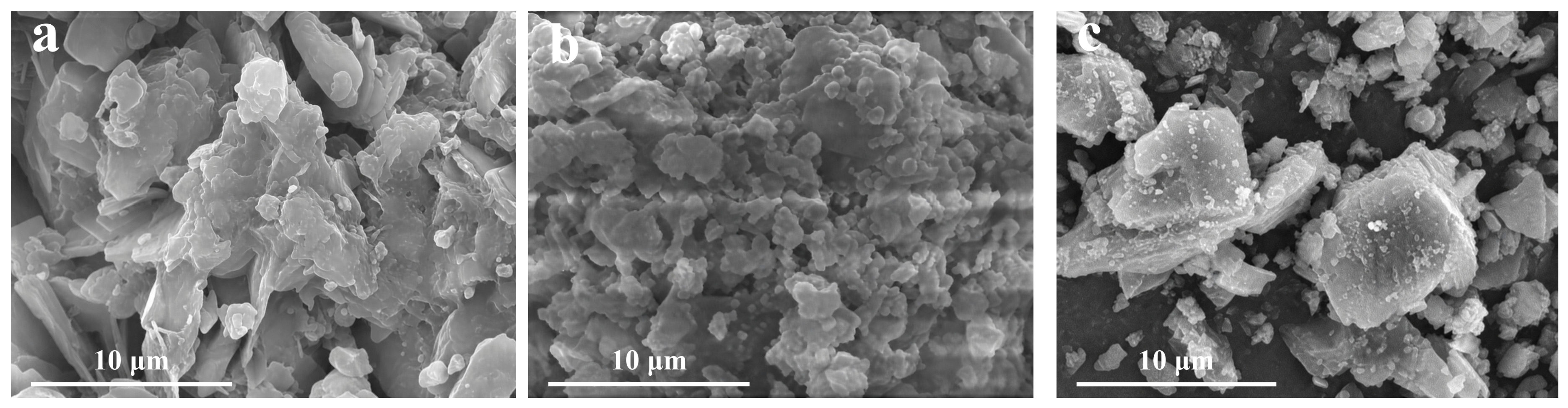
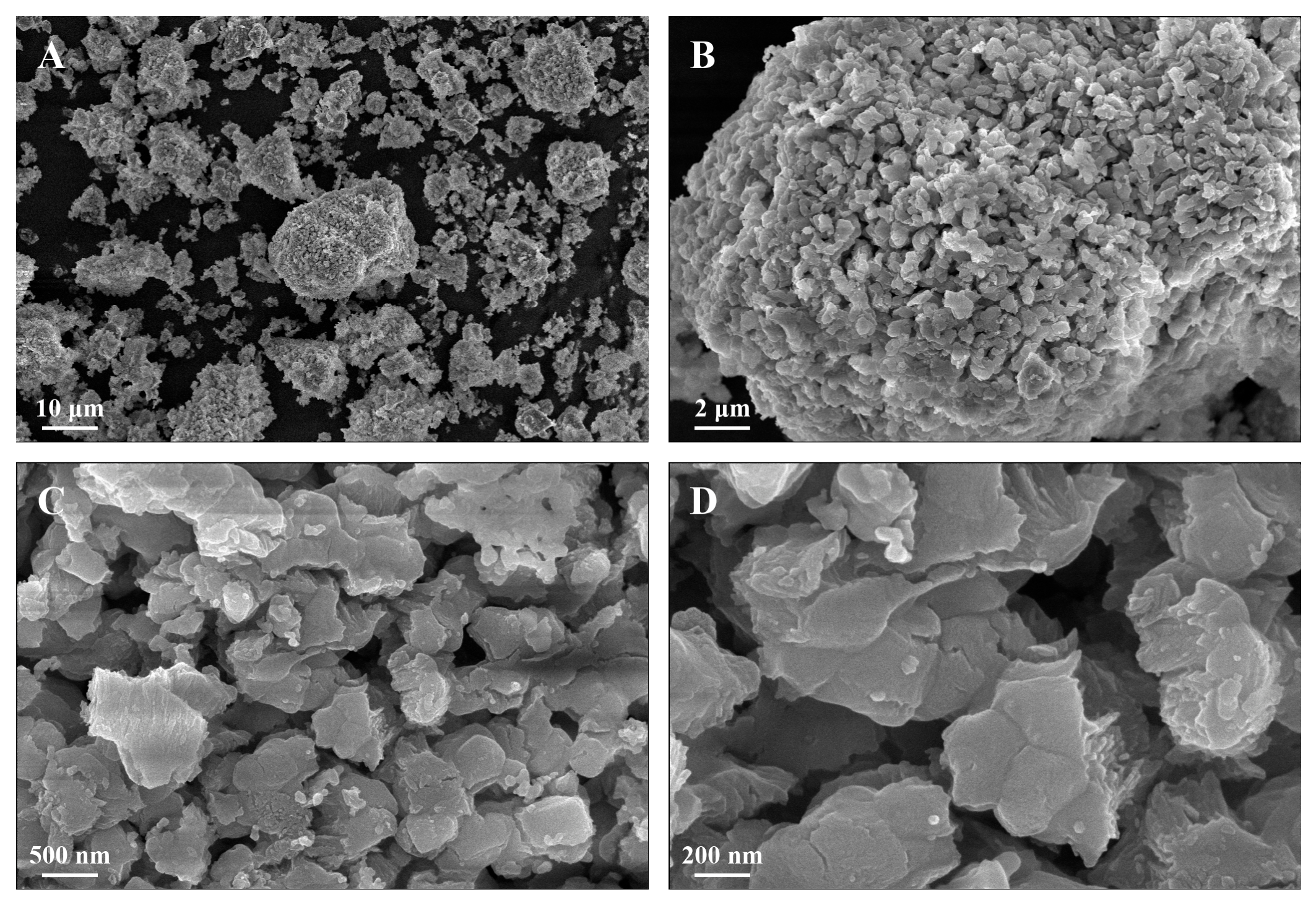
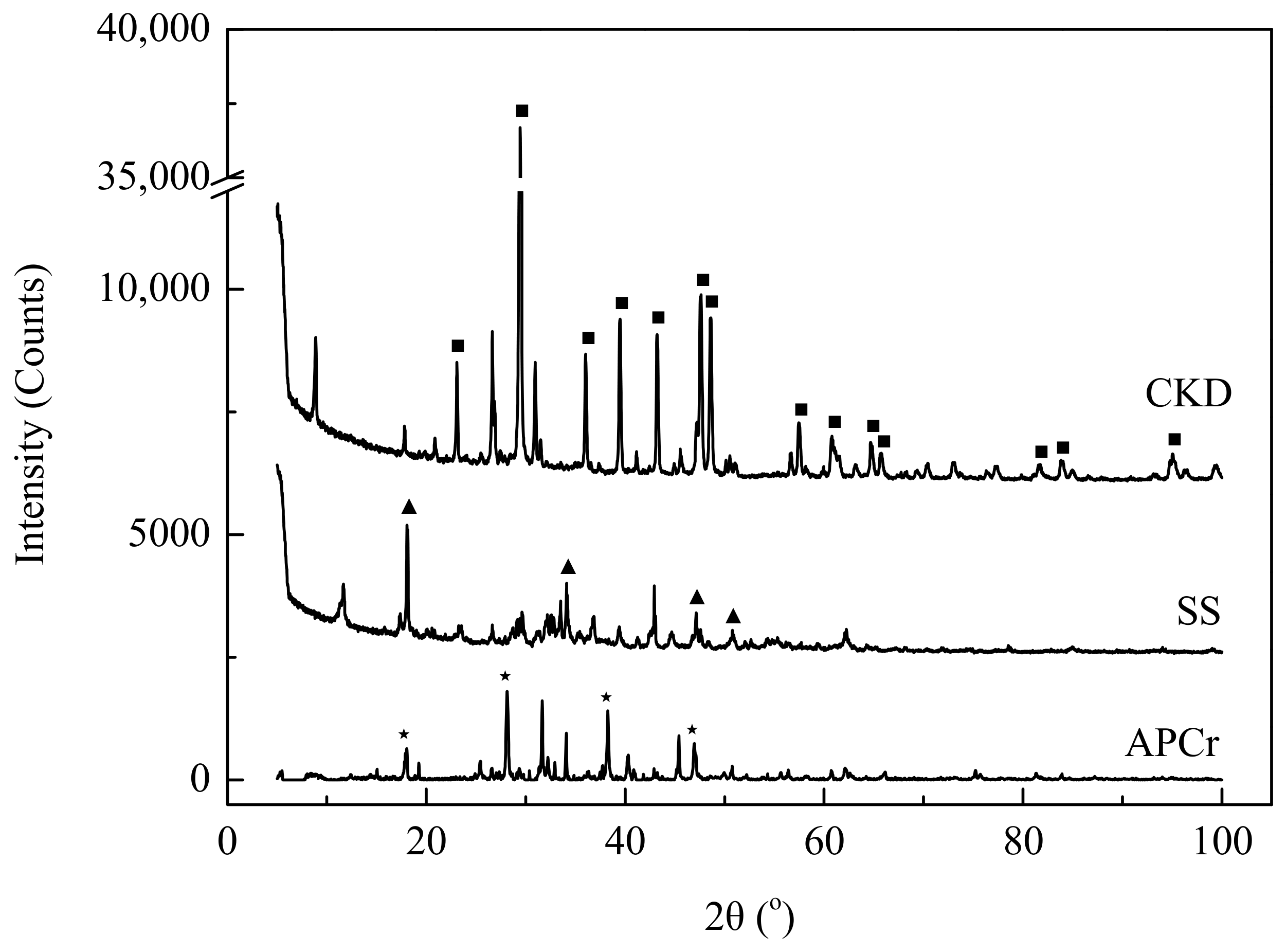
3.1. Physicochemical Characterization of the Sampled Wastes
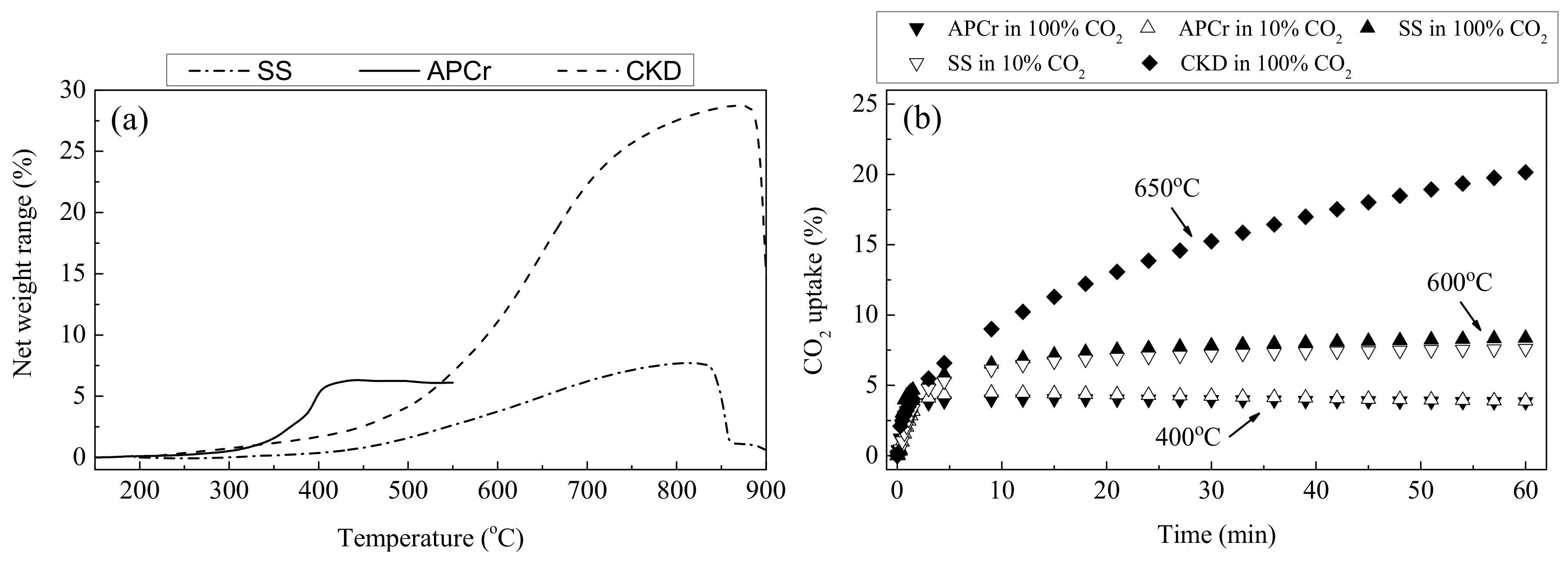
3.2. Evaluation of the CO2 Uptake Capacity
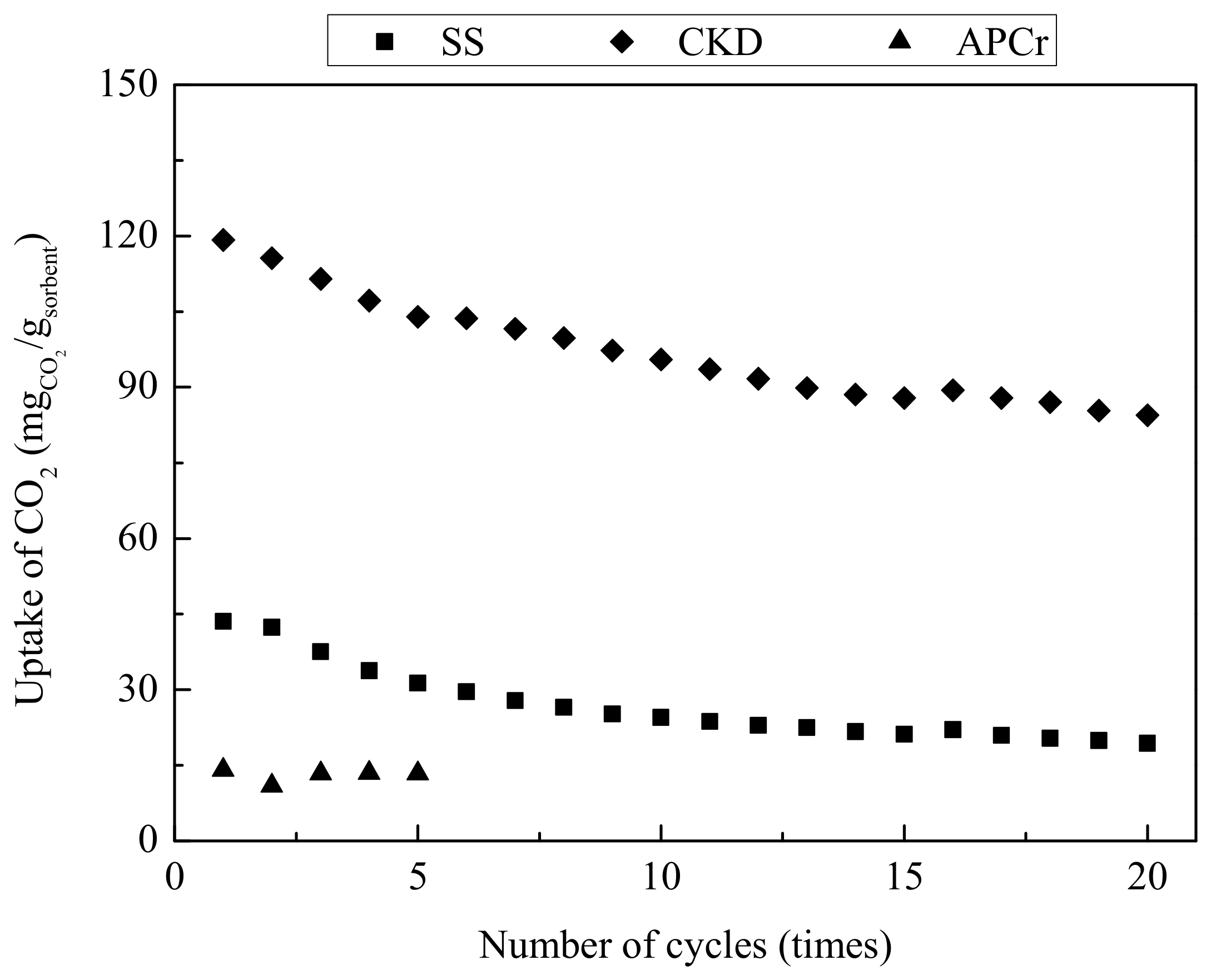
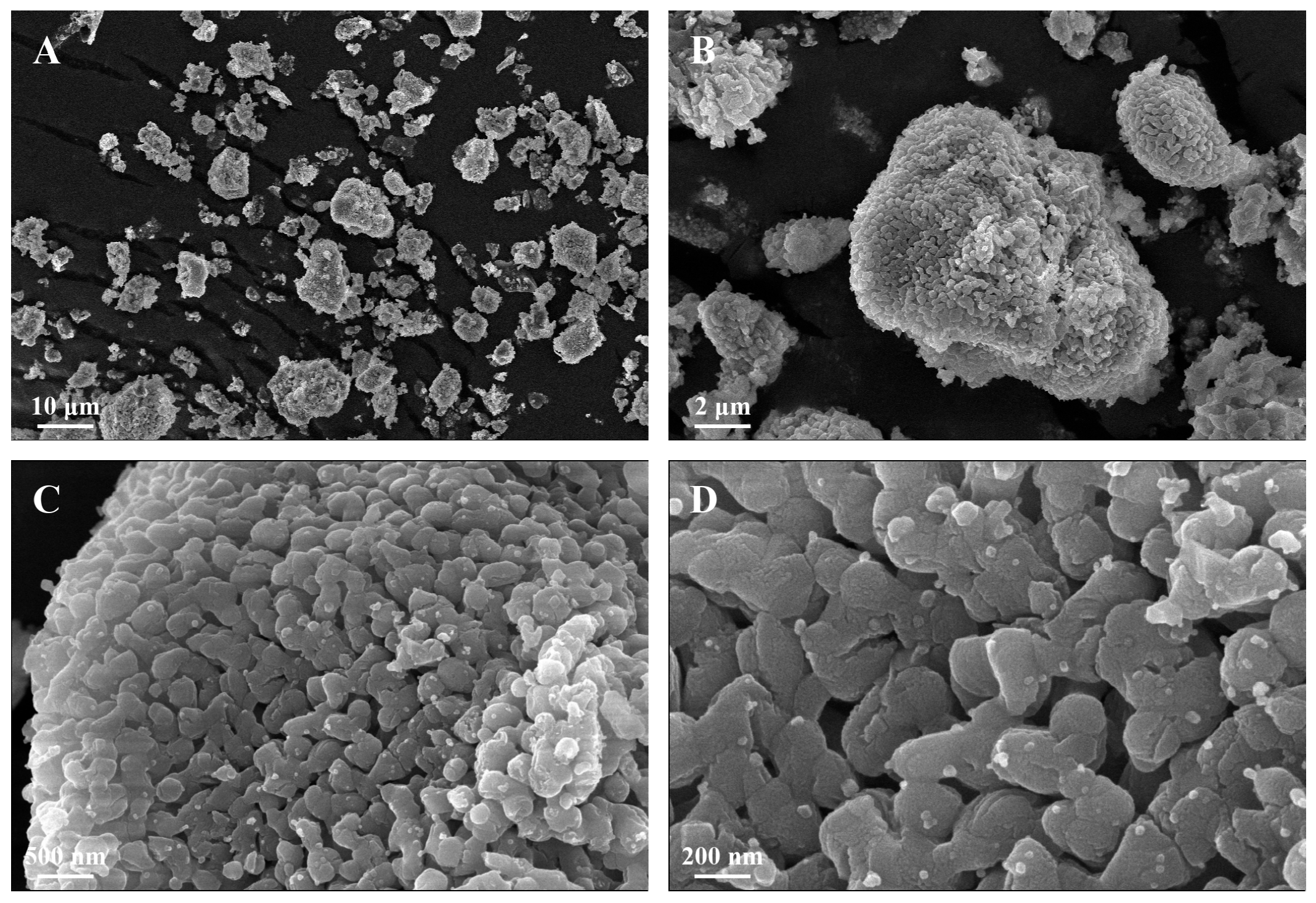
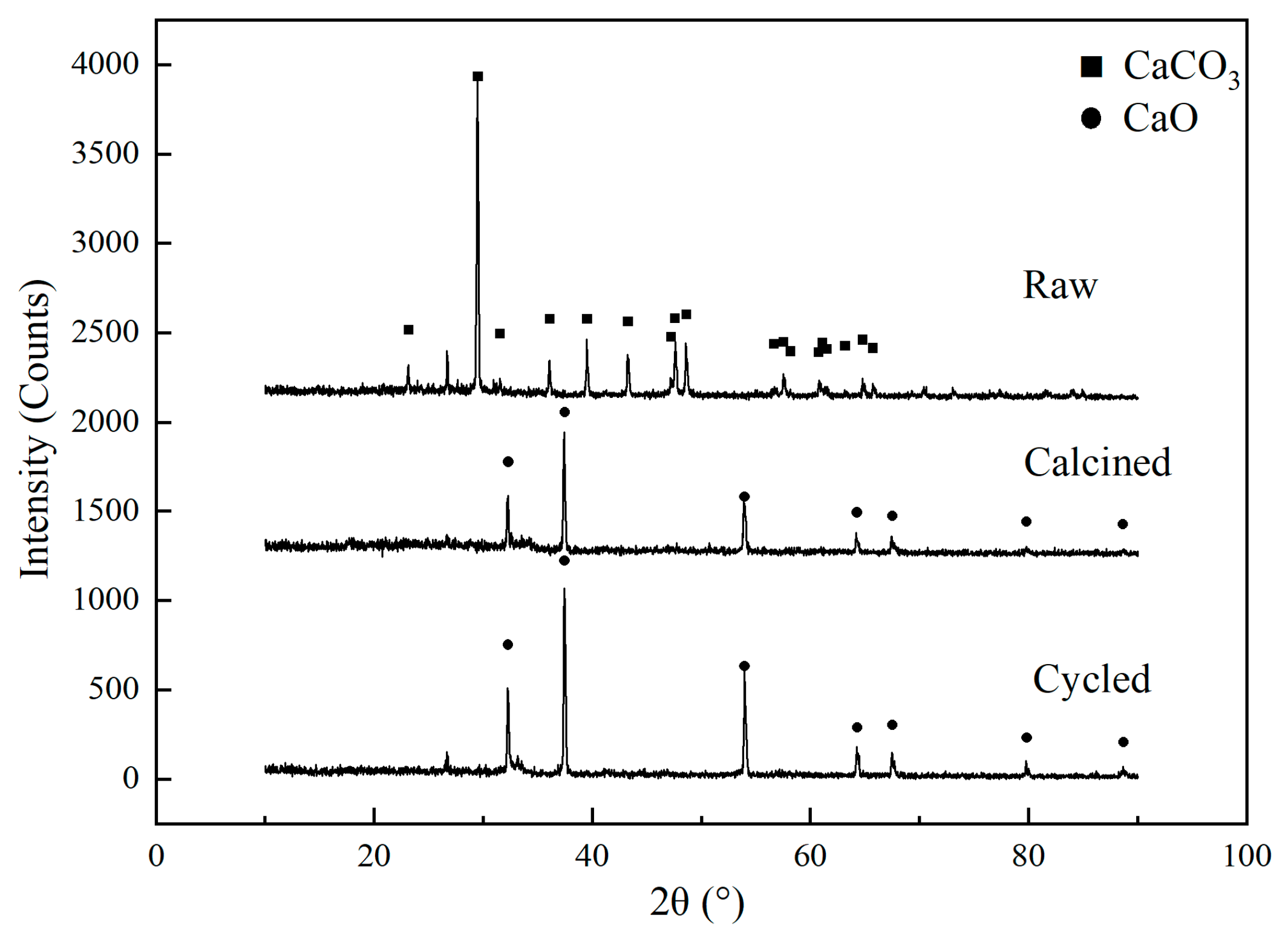
3.3. Performance of the Sampled Wastes in Carbonation–Calcination Looping
4. Conclusions
Author Contributions
Funding
Data Availability Statement
Conflicts of Interest
References
- Fernández Bertos, M.; Simons, S.J.R.; Hills, C.D.; Carey, P.J. A review of accelerated carbonation technology in the treatment of cement-based materials and sequestration of CO2. J. Hazard. Mater. 2004, 112, 193–205. [Google Scholar] [CrossRef] [Scilit] [PubMed]
- Gerdemann, S.J.; O’Connor, W.K.; Dahlin, D.C.; Penner, L.R.; Rush, H. Ex situ aqueous mineral carbonation. Environ. Sci. Technol. 2007, 41, 2587–2593. [Google Scholar] [CrossRef] [Scilit] [PubMed]
- Gunning, P.J.; Hills, C.D.; Carey, P.J. Accelerated carbonation treatment of industrial wastes. Waste Manag. 2010, 30, 1081–1090. [Google Scholar] [CrossRef] [Scilit] [PubMed]
- Huijgen, W.J.J.; Comans, R.N.J.; Witkamp, G.J. Cost evaluation of CO2 sequestration by aqueous mineral carbonation. Energy Convers. Manag. 2007, 48, 1923–1935. [Google Scholar] [CrossRef] [Scilit]
- International Energy Agency. Energy Technology Transitions for Industry: Strategies for the Next Industrial Revolution; OECD Publishing: Paris, France, 2009. [Google Scholar] [CrossRef] [Scilit]
- International Energy Agency. Tracking Clean Energy Progress 2013; International Energy Agency: Paris, France, 2013; Available online: https://www.iea.org/reports/tracking-clean-energy-progress-2013 (accessed on 2 July 2026).
- Kelemen, P.B.; Matter, J. In situ carbonation of peridotite for CO2 storage. Proc. Natl. Acad. Sci. USA 2008, 105, 17295–17300. [Google Scholar] [CrossRef] [Scilit]
- Nyambura, M.G.; Mugera, G.W.; Felicia, P.L.; Gathura, N.P. Carbonation of brine impacted fractionated coal fly ash: Implications for CO2 sequestration. J. Environ. Manag. 2011, 92, 655–664. [Google Scholar] [CrossRef] [Scilit] [PubMed]
- Renforth, P.; Washbourne, C.-L.; Taylder, J.; Manning, D.A.C. Silicate production and availability for mineral carbonation. Environ. Sci. Technol. 2011, 45, 2035–2041. [Google Scholar] [CrossRef] [Scilit] [PubMed]
- Seifritz, W. CO2 disposal by means of silicates. Nature 1990, 345, 486. [Google Scholar] [CrossRef] [Scilit]
- Van Gerven, T.; Van Baelen, D.; Dutré, V.; Vandecasteele, C. Influence of carbonation and carbonation methods on leaching of metals from mortars. Cem. Concr. Res. 2004, 34, 149–156. [Google Scholar] [CrossRef] [Scilit]
- Dunstan, M.T.; Donat, F.; Bork, A.H.; Grey, C.P.; Müller, C.R. CO2 capture at medium to high temperature using solid oxide-based sorbents: Fundamental aspects, mechanistic insights, and recent advances. Chem. Rev. 2021, 121, 12681–12745. [Google Scholar] [CrossRef] [Scilit] [PubMed]
- Liu, W.; Teng, L.; Rohani, S.; Qin, Z.; Zhao, B.; Xu, C.C.; Ren, S.; Liu, Q.; Liang, B. CO2 mineral carbonation using industrial solid wastes: A review of recent developments. Chem. Eng. J. 2021, 416, 129093. [Google Scholar] [CrossRef] [Scilit]
- Baena-Moreno, F.M.; Leventaki, E.; Riddell, A.; Wojtasz-Mucha, J.; Bernin, D. Effluents and residues from industrial sites for carbon dioxide capture: A review. Environ. Chem. Lett. 2023, 21, 319–337. [Google Scholar] [CrossRef] [Scilit]
- Lin, X.; Zhang, Y.; Liu, H.; Boczkaj, G.; Cao, Y.; Wang, C. Carbon dioxide sequestration by industrial wastes through mineral carbonation: Current status and perspectives. J. Clean. Prod. 2024, 434, 140258. [Google Scholar] [CrossRef] [Scilit]
- Tan, Y.; Liu, W.; Zhang, X.; Wei, W.; Wang, S. Conventional and optimized testing facilities of calcium looping process for CO2 capture: A systematic review. Fuel 2024, 358, 130337. [Google Scholar] [CrossRef] [Scilit]
- Chen, J.; Chen, Z.; Lin, X.; Li, X.; Yan, J. A systematic review of accelerated carbonation technology for municipal solid waste incineration fly ash: Carbon sequestration, reuse and heavy metal risk assessment. Chem. Eng. J. 2025, 508, 160926. [Google Scholar] [CrossRef] [Scilit]
- DiGiovanni, C.; Hisseine, O.A.; Awolayo, A.N. Carbon dioxide sequestration through steel slag carbonation: Review of mechanisms, process parameters, and cleaner upcycling pathways. J. CO2 Util. 2024, 81, 102736. [Google Scholar] [CrossRef] [Scilit]
- Leventaki, E.; Couto Queiroz, E.; Krishnan Pisharody, S.; Kumar Siva Kumar, A.K.; Hoang Ho, P.; Andersson-Sarning, M.; Haase, B.; Baena-Moreno, F.M.; Cuin, A.; Bernin, D. Aqueous mineral carbonation of three different industrial steel slags: Absorption capacities and product characterization. Environ. Res. 2024, 252, 118903. [Google Scholar] [CrossRef] [Scilit] [PubMed]
- Hamedi, H.; Gonzales-Calienes, G.; Shadbahr, J. Ex situ carbon mineralization for CO2 capture using industrial alkaline wastes—Optimization and future prospects: A review. Clean Technol. 2025, 7, 44. [Google Scholar] [CrossRef] [Scilit]
- Biava, G.; Depero, L.E.; Bontempi, E. Accelerated carbonation of steel slag and their valorisation in cement products: A review. Span. J. Soil Sci. 2024, 14, 12908. [Google Scholar] [CrossRef] [Scilit]
- Dal Pozzo, A.; Armutlulu, A.; Rekhtina, M.; Müller, C.R.; Cozzani, V. CO2 uptake potential of Ca-based air pollution control residues over repeated carbonation–calcination cycles. Energy Fuels 2018, 32, 5386–5395. [Google Scholar] [CrossRef] [Scilit]
- Wehrung, Q.; Bernasconi, D.; Destefanis, E.; Caviglia, C.; Curetti, N.; Di Felice, S.; Bicchi, E.; Pavese, A.; Pastero, L. Aqueous carbonation of waste incineration residues: Comparing BA, FA, and APCr across production scenarios. Minerals 2024, 14, 1269. [Google Scholar] [CrossRef] [Scilit]
- Biava, G.; Zacco, A.; Zanoletti, A.; Sorrentino, G.P.; Capone, C.; Princigallo, A.; Depero, L.E.; Bontempi, E. Accelerated direct carbonation of steel slag and cement kiln dust: An industrial symbiosis strategy applied in the Bergamo–Brescia area. Materials 2023, 16, 4055. [Google Scholar] [CrossRef] [Scilit] [PubMed]
- Flipkens, G.; Lembregts, G.; Meysman, F.J.R. The carbon dioxide removal potential of cement and lime kiln dust via ocean alkalinity enhancement. Biogeosciences 2026, 23, 399–420. [Google Scholar] [CrossRef] [Scilit]
- Elyasi Gomari, K.; Rezaei Gomari, S.; Hughes, D.; Ahmed, T.; Aboelazayem, O. Optimised steel slag carbonation for enhanced CO2 sequestration: A comprehensive study using response surface methodology (RSM). J. Environ. Manag. 2025, 391, 126496. [Google Scholar] [CrossRef] [Scilit] [PubMed]
- Tian, S.C.; Jiang, J.G.; Li, K.M.; Yan, F.; Chen, X.J. Performance of steel slag in carbonation–calcination looping for CO2 capture from industrial flue gas. RSC Adv. 2014, 4, 6858–6862. [Google Scholar] [CrossRef] [Scilit]
- Chianese, C.; Dal Pozzo, A.; Scognamiglio, V.; Masi, G.; Bignozzi, M.C.; Cozzani, V. Analysis of the performance of air pollution control residues as CO2 sorbents in the calcium looping process. Waste Manag. 2026, 214, 115390. [Google Scholar] [CrossRef] [Scilit] [PubMed]
- Chen, T.L.; Chen, Y.H.; Dai, M.Y.; Chiang, P.C. Stabilization-solidification-utilization of MSWI fly ash coupling CO2 mineralization using a high-gravity rotating packed bed. Waste Manag. 2021, 121, 412–421. [Google Scholar] [CrossRef] [Scilit] [PubMed]
- Wang, X.; Yue, C.; Lu, G.; Huo, X.; Yi, G.; Li, H.; Guo, M.; Zhang, M. Steam efficiently enhancing CO2 direct mineralization of steel slag towards actual production: Phase evolution, microstructure, and mechanisms. Materials 2025, 18, 4786. [Google Scholar] [CrossRef] [Scilit] [PubMed]
- Tian, S.C.; Jiang, J.G.; Chen, X.J.; Yan, F.; Li, K.M. Direct gas–solid carbonation kinetics of steel slag and the contribution to in situ sequestration of flue gas CO2 in steel-making plants. ChemSusChem 2013, 6, 2348–2355. [Google Scholar] [CrossRef] [Scilit] [PubMed]
- Tian, S.C.; Jiang, J.G. Sequestration of flue gas CO2 by direct gas–solid carbonation of air pollution control system residues. Environ. Sci. Technol. 2012, 46, 13545–13551. [Google Scholar] [CrossRef] [Scilit] [PubMed]
- Hubbard, C.R.; Snyder, R.L. RIR—Measurement and use in quantitative XRD. Powder Diffr. 1988, 3, 74–77. [Google Scholar] [CrossRef] [Scilit]
- Bonenfant, D.; Kharoune, L.; Sauvé, S.; Hausler, R.; Niquette, P.; Mimeault, M.; Kharoune, M. Molecular analysis of carbon dioxide adsorption processes on steel slag oxides. Int. J. Greenh. Gas Control 2009, 3, 20–28. [Google Scholar] [CrossRef] [Scilit]
- Navarro, C.; Díaz, M.; Villa-García, M.A. Physico-chemical characterization of steel slag: Study of its behavior under simulated environmental conditions. Environ. Sci. Technol. 2010, 44, 5383–5388. [Google Scholar] [CrossRef] [Scilit] [PubMed]
- Sun, J.; Fernández Bertos, M.; Simons, S.J.R. Kinetic study of accelerated carbonation of municipal solid waste incinerator air pollution control residues for sequestration of flue gas CO2. Energy Environ. Sci. 2008, 1, 370–377. [Google Scholar] [CrossRef] [Scilit]
- Wang, X.; Ji, G.; Zhu, K.; Li, C.; Zhang, Y.; Li, A. Integrated thermal behavior and compounds transition mechanism of municipal solid waste incineration fly ash during thermal treatment process. Chemosphere 2021, 264, 128406. [Google Scholar] [CrossRef] [Scilit] [PubMed]
- Zhao, C.; Lin, S.; Zhao, Y.; Lin, K.; Tian, L.; Xie, M.; Zhou, T. Comprehensive understanding the transition behaviors and mechanisms of chlorine and metal ions in municipal solid waste incineration fly ash during thermal treatment. Sci. Total Environ. 2022, 807, 150731. [Google Scholar] [CrossRef] [Scilit] [PubMed]
- Zhao, K.; Hu, Y.; Tian, Y.; Chen, D.; Feng, Y. Chlorine removal from MSWI fly ash by thermal treatment: Effects of iron/aluminum additives. J. Environ. Sci. 2020, 88, 112–121. [Google Scholar] [CrossRef] [Scilit] [PubMed]
- Tian, S.C.; Jiang, J.G.; Hosseini, D.; Kierzkowska, A.M.; Imtiaz, Q.; Broda, M.; Müller, C.R. Development of a steel-slag-based, iron-functionalized sorbent for an autothermal carbon dioxide capture process. ChemSusChem 2015, 8, 3839–3846. [Google Scholar] [CrossRef] [Scilit] [PubMed]






| Route | Main Advantages | Main Limitations | Most Suitable Use |
|---|---|---|---|
| Direct gas–solid carbonation | Simple route; little wastewater; suitable for near-source flue-gas coupling | Product-layer diffusion and limited late-stage conversion | Rapid screening and dry mineralization |
| Direct aqueous carbonation | Enhanced CO2 dissolution and Ca2+ migration | Water use, salt migration, liquid–solid separation and wastewater treatment | High-rate fixation and stabilization |
| Indirect carbonation | Higher Ca extraction and better product control | Leaching-agent consumption, regeneration and by-product handling | High-value CaCO3 or coupled resource recovery |
| Carbonation–calcination looping | Regenerable CaO and high cumulative capture capacity | Sintering, pore collapse and the energy-intensive calcination for CO2 release | High-temperature cyclic capture when CO2 stream is managed |
| SS (%) | APCr (%) | CKD (%) | |||
|---|---|---|---|---|---|
| Ca | 28.34 | Ca | 32.67 | Ca | 31.17 |
| Al | 6.42 | Cl | 32.66 | C | 9.97 |
| Mg | 6.03 | Na | 7.96 | Si | 5.83 |
| Fe | 5.34 | K | 5.10 | Al | 2.62 |
| Si | 5.08 | S | 3.95 | Fe | 1.86 |
| F | 1.02 | Si | 2.39 | Mg | 1.71 |
| Mn | 0.61 | Zn | 1.24 | K | 1.24 |
| Ti | 0.38 | Mg | 1.25 | Ti | 0.17 |
| K | 0.20 | Fe | 1.07 | Cl | 0.16 |
| Parameter | Unit | Calcined CKD | Cycled CKD |
|---|---|---|---|
| BET specific surface area | m2 g−1 | 9.395 | 5.869 |
| Total pore volume | cm3 g−1 | 0.039 | 0.024 |
| Average pore diameter | nm | 16.644 | 16.181 |
| DFT pore-size mode | nm | 2.897 | 3.169 |
| DFT surface area | m2 g−1 | 7.409 | 5.250 |
| Study | Material/Route | Key Results | Comparison with the Present Results |
|---|---|---|---|
| Dal Pozzo et al. [22] | Ca-based APC residues; carbonation–calcination looping | Repeated uptake was feasible with composition-dependent effects of chlorinated phases on the diffusion resistance and uptake retention. | Total chloride alone does not determine the cyclic uptake retention. |
| Chen et al. [29] | MSWI fly ash; wet dechlorination and high-gravity carbonation | 258.5 g CO2 kg−1 fly ash with coupled dechlorination and stabilization. | Higher than CKD in this study, but the intensified wet route is not directly comparable with dry TGA carbonation. |
| Biava et al. [21] | Steel-slag carbonation review and material valorization | Temperature, pressure, liquid-to-solid ratio, CO2 partial pressure, particle size, and mineralogy control performance. | Supports the interpretation that limited exposure of reactive Ca constrains SS under the present conditions. |
| Elyasi Gomari et al. [26] | Steel slag; response-surface optimization | Optimized uptake of 149.32 g CO2 kg−1. | Higher than 84 g CO2 kg−1 for SS here, demonstrating the importance of operating-condition optimization. |
| Flipkens et al. [25] | CKD/LKD; ocean alkalinity enhancement | Kiln dust showed CO2-removal potential, but turbidity and environmental risks required attention. | Both studies indicate CKD potential, but ocean-alkalinity metrics cannot be equated with gas–solid carbonation. |
Disclaimer/Publisher’s Note: The statements, opinions and data contained in all publications are solely those of the individual author(s) and contributor(s) and not of MDPI and/or the editor(s). MDPI and/or the editor(s) disclaim responsibility for any injury to people or property resulting from any ideas, methods, instructions or products referred to in the content. |
© 2026 by the authors. Licensee MDPI, Basel, Switzerland. This article is an open access article distributed under the terms and conditions of the Creative Commons Attribution (CC BY) license.
Share and Cite
Cheng, J.; Liang, Z.; Jia, X.; Tian, S. Calcium-Rich Industrial Wastes as Potential Sorbents for Cyclic CO2 Capture in the Gas–Solid Carbonation–Calcination Looping. Processes 2026, 14, 2650. https://doi.org/10.3390/pr14162650
Cheng J, Liang Z, Jia X, Tian S. Calcium-Rich Industrial Wastes as Potential Sorbents for Cyclic CO2 Capture in the Gas–Solid Carbonation–Calcination Looping. Processes. 2026; 14(16):2650. https://doi.org/10.3390/pr14162650
Chicago/Turabian StyleCheng, Juhe, Zhengxi Liang, Xiaobo Jia, and Sicong Tian. 2026. "Calcium-Rich Industrial Wastes as Potential Sorbents for Cyclic CO2 Capture in the Gas–Solid Carbonation–Calcination Looping" Processes 14, no. 16: 2650. https://doi.org/10.3390/pr14162650
APA StyleCheng, J., Liang, Z., Jia, X., & Tian, S. (2026). Calcium-Rich Industrial Wastes as Potential Sorbents for Cyclic CO2 Capture in the Gas–Solid Carbonation–Calcination Looping. Processes, 14(16), 2650. https://doi.org/10.3390/pr14162650